[{"name":"Everest Base Camp Helicopter Tour","duration":"1","image_url":"https:\/\/www.havenholidaysnepal.com\/storage\/trip-galleries\/1\/thumb_6cd53005d75a86e373d31419d1b14d78.webp","offer_price":1195,"url":"https:\/\/www.havenholidaysnepal.com\/trips\/everest-base-camp-helicopter-tour"},{"name":"Everest Mountain Flight","duration":"1","image_url":"https:\/\/www.havenholidaysnepal.com\/storage\/trip-galleries\/4\/thumb_3b0b4f1d6f72b0ad224daf4752f2c6e0.jpg","offer_price":285,"url":"https:\/\/www.havenholidaysnepal.com\/trips\/everest-mountain-flight"},{"name":"Everest Short Trek","duration":"9","image_url":"https:\/\/www.havenholidaysnepal.com\/storage\/trip-galleries\/5\/thumb_BXPP3621.JPEG0.02033800 1727957098.webp","offer_price":995,"url":"https:\/\/www.havenholidaysnepal.com\/trips\/everest-short-trek"},{"name":"Gokyo Valley Trek","duration":"12","image_url":"https:\/\/www.havenholidaysnepal.com\/storage\/trip-galleries\/6\/thumb_10bc469b14731f23d3ce84a7092ad53f.jpg","offer_price":1195,"url":"https:\/\/www.havenholidaysnepal.com\/trips\/gokyo-valley-trek"},{"name":"15 days Annapurna Base Camp Trek","duration":"15","image_url":"https:\/\/www.havenholidaysnepal.com\/storage\/trip-galleries\/7\/thumb_87d1533bc45faf070990aef0579e4be4.jpg0.81855100 1728285496.webp","offer_price":785,"url":"https:\/\/www.havenholidaysnepal.com\/trips\/15-days-annapurna-base-camp-trek"},{"name":"Nepal Pilgrimage Tour","duration":"14","image_url":"https:\/\/www.havenholidaysnepal.com\/storage\/trip-galleries\/8\/thumb_02c3bcf2ad2e8a4c1703e90ae747b5f1.jpg","offer_price":1475,"url":"https:\/\/www.havenholidaysnepal.com\/trips\/nepal-pilgrimage-tour"},{"name":"UNESCO World Heritage Site Tour","duration":"10","image_url":"https:\/\/www.havenholidaysnepal.com\/storage\/trip-galleries\/9\/thumb_unesco-world-heritage-site-Lumbani-temple-buddhists-hindus-kathmandu-nepal0.36988600 17347617740.93089500 1737469667.webp","offer_price":715,"url":"https:\/\/www.havenholidaysnepal.com\/trips\/unesco-world-heritage-site-tour"},{"name":"Island Peak Climbing","duration":"16","image_url":"https:\/\/www.havenholidaysnepal.com\/storage\/trip-galleries\/11\/thumb_Island peak0.53947000 1734692503.webp","offer_price":2495,"url":"https:\/\/www.havenholidaysnepal.com\/trips\/island-peak-climbing"},{"name":"Upper Mustang Trek","duration":"18","image_url":"https:\/\/www.havenholidaysnepal.com\/storage\/trip-galleries\/12\/thumb_upper mustang 7 Oct-2024.jpg0.95398900 1728286166.webp","offer_price":2995,"url":"https:\/\/www.havenholidaysnepal.com\/trips\/upper-mustang-trek"},{"name":"Annapurna Circuit Trek","duration":"16","image_url":"https:\/\/www.havenholidaysnepal.com\/storage\/trip-galleries\/15\/thumb_tibetan-flags.jpg0.04843900 1728289138.webp","offer_price":985,"url":"https:\/\/www.havenholidaysnepal.com\/trips\/annapurna-circuit-trek"},{"name":"Gosainkunda Lake Trek","duration":"10","image_url":"https:\/\/www.havenholidaysnepal.com\/storage\/trip-galleries\/16\/thumb_5A8083B3-C007-41A8-853F-D0C37C97D235_1_105_c.jpeg0.52581200 1731845258.webp","offer_price":595,"url":"https:\/\/www.havenholidaysnepal.com\/trips\/gosainkunda-lake-trek"},{"name":"Zip-lining in Pokhara and Dhulikhel","duration":"1","image_url":"https:\/\/www.havenholidaysnepal.com\/storage\/trip-galleries\/18\/thumb_215f765e2ebc995dd5c800b4bfdbacc3.jpg","offer_price":82,"url":"https:\/\/www.havenholidaysnepal.com\/trips\/zip-lining-in-pokhara-and-dhulikhel"},{"name":"Annapurna Heli Tour","duration":"1","image_url":"https:\/\/www.havenholidaysnepal.com\/storage\/trip-galleries\/19\/thumb_d71a6bbb9fd4da8d1b567a5cdbdec85d.jpg","offer_price":555,"url":"https:\/\/www.havenholidaysnepal.com\/trips\/annapurna-heli-tour"},{"name":"Paragliding in Pokhara","duration":"1","image_url":"https:\/\/www.havenholidaysnepal.com\/storage\/trip-galleries\/20\/thumb_de788d2dd9726783431f882c007efae1.jpg","offer_price":65,"url":"https:\/\/www.havenholidaysnepal.com\/trips\/paragliding-in-pokhara"},{"name":"Ultra-Flight in Pokhara","duration":"1","image_url":"https:\/\/www.havenholidaysnepal.com\/storage\/trip-galleries\/21\/thumb_e27a9fb572a5c21611bb2a3c18e4b8f0.jpeg","offer_price":175,"url":"https:\/\/www.havenholidaysnepal.com\/trips\/ultra-flight-in-pokhara"},{"name":"Sarangkot Hiking","duration":"1","image_url":"https:\/\/www.havenholidaysnepal.com\/storage\/trip-galleries\/22\/thumb_100ef822fea19987166c6c1366215f15.jpg","offer_price":55,"url":"https:\/\/www.havenholidaysnepal.com\/trips\/sarangkot-hiking"},{"name":"Mera Peak Climbing","duration":"18","image_url":"https:\/\/www.havenholidaysnepal.com\/storage\/trip-galleries\/24\/thumb_d16ae3895f678cf26ffbf2455f541fb5.jpg0.31883400 1732617790.webp","offer_price":2475,"url":"https:\/\/www.havenholidaysnepal.com\/trips\/mera-peak-climbing"},{"name":"Lower Dolpo Trek","duration":"18","image_url":"https:\/\/www.havenholidaysnepal.com\/storage\/trip-galleries\/26\/thumb_Dolpo Galary - 1.JPG0.37725200 1727939952.webp","offer_price":2995,"url":"https:\/\/www.havenholidaysnepal.com\/trips\/lower-dolpo-trek"},{"name":"Nagarkot Sunrise\/Sunset Tour","duration":"1","image_url":"https:\/\/www.havenholidaysnepal.com\/storage\/trip-galleries\/27\/thumb_5147a5532644283a380f2e86f3857c13.jpg0.17748000 1728488108.webp","offer_price":30,"url":"https:\/\/www.havenholidaysnepal.com\/trips\/nagarkot-sunrise-sunset-tour"},{"name":"16 day Everest Base Camp Trek","duration":"16","image_url":"https:\/\/www.havenholidaysnepal.com\/storage\/trip-galleries\/28\/thumb_IMG_4311.JPG0.64984800 1727942213.webp","offer_price":1695,"url":"https:\/\/www.havenholidaysnepal.com\/trips\/16-day-everest-base-camp-trek"},{"name":"Ghorepani Poon Hill trek with Jungle Safari and Trishuli River Rafting -13 days","duration":"13","image_url":"https:\/\/www.havenholidaysnepal.com\/storage\/trip-galleries\/29\/thumb_Ghorepani Poon hill.jpg0.48460800 1728281439.webp","offer_price":795,"url":"https:\/\/www.havenholidaysnepal.com\/trips\/ghorepani-poon-hill-trek-with-jungle-safari-and-trishuli-river-rafting--13-days"},{"name":"Mardi Himal Trek","duration":"12","image_url":"https:\/\/www.havenholidaysnepal.com\/storage\/trip-galleries\/30\/thumb_s1.jpg0.62112600 1728200721.webp","offer_price":795,"url":"https:\/\/www.havenholidaysnepal.com\/trips\/mardi-himal-trek"},{"name":"Langtang Valley Trekking","duration":"10","image_url":"https:\/\/www.havenholidaysnepal.com\/storage\/trip-galleries\/31\/thumb_IMG_4702.JPG0.84916500 1727958504.webp","offer_price":685,"url":"https:\/\/www.havenholidaysnepal.com\/trips\/langtang-valley-trekking"},{"name":"Real Adventure Tour in Nepal","duration":"9","image_url":"https:\/\/www.havenholidaysnepal.com\/storage\/trip-galleries\/32\/thumb_ebd1b8cc78d90abe8b9003dd9a2f25bf.jpg0.82151300 1728213516.webp","offer_price":695,"url":"https:\/\/www.havenholidaysnepal.com\/trips\/real-adventure-tour-in-nepal"},{"name":"Luxury Tour in Nepal","duration":"10","image_url":"https:\/\/www.havenholidaysnepal.com\/storage\/trip-galleries\/33\/thumb_8574e61b252b18676b042caf30d830df.jpg","offer_price":1675,"url":"https:\/\/www.havenholidaysnepal.com\/trips\/luxury-tour-in-nepal"},{"name":"Luxury Everest Panorama Trek With EBC Heli Sightseeing","duration":"8","image_url":"https:\/\/www.havenholidaysnepal.com\/storage\/trip-galleries\/34\/thumb_URZL2397.JPEG0.01209600 1728027820.webp","offer_price":2395,"url":"https:\/\/www.havenholidaysnepal.com\/trips\/luxury-everest-panorama-trek-with-ebc-heli-sightseeing"},{"name":"13 day Everest Base Camp Trek with Helicopter","duration":"13","image_url":"https:\/\/www.havenholidaysnepal.com\/storage\/trip-galleries\/35\/thumb_IMG_4292.JPG0.70131500 1728029276.webp","offer_price":2095,"url":"https:\/\/www.havenholidaysnepal.com\/trips\/13-day-everest-base-camp-trek-with-helicopter"},{"name":"Manaslu Circuit Trek","duration":"16","image_url":"https:\/\/www.havenholidaysnepal.com\/storage\/trip-galleries\/36\/thumb_Mt Manaslu 03-Oct-2024.jpg0.65804900 1727938470.webp","offer_price":1055,"url":"https:\/\/www.havenholidaysnepal.com\/trips\/manaslu-circuit-trek"},{"name":"Kanchenjunga Base Camp Trek","duration":"21","image_url":"https:\/\/www.havenholidaysnepal.com\/storage\/trip-galleries\/37\/thumb_Kanchanjunga Trek -!.jpg0.54744400 1727938497.webp","offer_price":2275,"url":"https:\/\/www.havenholidaysnepal.com\/trips\/kanchenjunga-base-camp-trek"},{"name":"Ganesh Himal and Sing-La Trek","duration":"14","image_url":"https:\/\/www.havenholidaysnepal.com\/storage\/trip-galleries\/38\/thumb_Ganesh Himal slider-1.jpg0.43764500 1727937722.webp","offer_price":1775,"url":"https:\/\/www.havenholidaysnepal.com\/trips\/ganesh-himal-and-sing-la-trek"},{"name":"Island Peak Climb with Everest Base Camp Trek","duration":"21","image_url":"https:\/\/www.havenholidaysnepal.com\/storage\/trip-galleries\/39\/thumb_2be428730fe83525bc85a010564f99de.jpg","offer_price":2750,"url":"https:\/\/www.havenholidaysnepal.com\/trips\/island-peak-climb-with-everest-base-camp-trek"},{"name":"Students' Adventure Tour in Nepal","duration":"12","image_url":"https:\/\/www.havenholidaysnepal.com\/storage\/trip-galleries\/41\/thumb_a926d22fbfe08cba271c41ac289b3fd2.jpg","offer_price":995,"url":"https:\/\/www.havenholidaysnepal.com\/trips\/students-adventure-tour-in-nepal"},{"name":"7 Day Poonhill Trek","duration":"7","image_url":"https:\/\/www.havenholidaysnepal.com\/storage\/trip-galleries\/42\/thumb_6196bd69036473293a2c24cc21ed57d7.jpg0.10880600 1728205378.webp","offer_price":555,"url":"https:\/\/www.havenholidaysnepal.com\/trips\/7-day-poonhill-trek"},{"name":"7 Days Annapurna Base Camp Trek","duration":"7","image_url":"https:\/\/www.havenholidaysnepal.com\/storage\/trip-galleries\/43\/thumb_IMG_2214.JPG0.08204900 1728202033.webp","offer_price":355,"url":"https:\/\/www.havenholidaysnepal.com\/trips\/7-days-annapurna-base-camp-trek"},{"name":"3 days Poonhill Trek","duration":"3","image_url":"https:\/\/www.havenholidaysnepal.com\/storage\/trip-galleries\/44\/thumb_Poon hill.jpg0.60816600 1731412954.webp","offer_price":165,"url":"https:\/\/www.havenholidaysnepal.com\/trips\/3-days-poonhill-trek"},{"name":"Poon Hill Luxury Trek with Chitwan-12 days","duration":"12","image_url":"https:\/\/www.havenholidaysnepal.com\/storage\/trip-galleries\/45\/thumb_Poom hill.jpg0.52074500 1730180532.webp","offer_price":1175,"url":"https:\/\/www.havenholidaysnepal.com\/trips\/poon-hill-luxury-trek-with-chitwan-12-days"},{"name":"Everest Luxury Trek-7 days","duration":"7","image_url":"https:\/\/www.havenholidaysnepal.com\/storage\/trip-galleries\/46\/thumb_ACRX9330.JPEG0.93236200 1728031275.webp","offer_price":2195,"url":"https:\/\/www.havenholidaysnepal.com\/trips\/everest-luxury-trek-7-days"},{"name":"Hindu Pilgrimage Tour in Nepal-10 days","duration":"10","image_url":"https:\/\/www.havenholidaysnepal.com\/storage\/trip-galleries\/47\/thumb_a94bf96a4d31decb419f6f828a3280d2.jpg","offer_price":995,"url":"https:\/\/www.havenholidaysnepal.com\/trips\/hindu-pilgrimage-tour-in-nepal-10-days"},{"name":"Everest Base Camp Short Trek-12 days","duration":"12","image_url":"https:\/\/www.havenholidaysnepal.com\/storage\/trip-galleries\/48\/thumb_IMG_4311.JPG0.52680100 1727945154.webp","offer_price":995,"url":"https:\/\/www.havenholidaysnepal.com\/trips\/everest-base-camp-short-trek-12-days"},{"name":"Everest Base Camp Hike 12 Days","duration":"12","image_url":"https:\/\/www.havenholidaysnepal.com\/storage\/trip-galleries\/49\/thumb_IMG_4260.JPG0.51729100 1728061234.webp","offer_price":1295,"url":"https:\/\/www.havenholidaysnepal.com\/trips\/everest-base-camp-hike-12-days"},{"name":"11 Days Everest Base Camp Trek","duration":"11","image_url":"https:\/\/www.havenholidaysnepal.com\/storage\/trip-galleries\/50\/thumb_IMG_4249.JPG0.21392500 1727946959.webp","offer_price":1055,"url":"https:\/\/www.havenholidaysnepal.com\/trips\/11-days-everest-base-camp-trek"},{"name":"6 Days Annapurna Base Camp Trek","duration":"6","image_url":"https:\/\/www.havenholidaysnepal.com\/storage\/trip-galleries\/51\/thumb_6 days Abc.jpg0.58185400 1728200798.webp","offer_price":285,"url":"https:\/\/www.havenholidaysnepal.com\/trips\/6-days-annapurna-base-camp-trek"},{"name":"Annapurna Base Camp Trek","duration":"8","image_url":"https:\/\/www.havenholidaysnepal.com\/storage\/trip-galleries\/52\/thumb_IMG_2214.JPG0.29415700 1729487656.webp","offer_price":585,"url":"https:\/\/www.havenholidaysnepal.com\/trips\/annapurna-base-camp-trek"},{"name":"Everest Base Camp Trek with Helicopter Fly Out 10 Days","duration":"10","image_url":"https:\/\/www.havenholidaysnepal.com\/storage\/trip-galleries\/53\/thumb_IMG_4328.JPG0.52056600 1728058444.webp","offer_price":1875,"url":"https:\/\/www.havenholidaysnepal.com\/trips\/everest-base-camp-trek-with-helicopter-fly-out-10-days"},{"name":"Everest Base Camp Trek 14 Days","duration":"14","image_url":"https:\/\/www.havenholidaysnepal.com\/storage\/trip-galleries\/54\/thumb_Everest Base Camp Trek 14 days Oct 3 2024.JPG0.43202700 1727939745.webp","offer_price":1335,"url":"https:\/\/www.havenholidaysnepal.com\/trips\/everest-base-camp-trek-14-days"},{"name":"ABC Trek with Poonhill 11 Days","duration":"11","image_url":"https:\/\/www.havenholidaysnepal.com\/storage\/trip-galleries\/55\/thumb_ABC with fishtail.JPG0.21441100 1728277965.webp","offer_price":555,"url":"https:\/\/www.havenholidaysnepal.com\/trips\/abc-trek-with-poonhill-11-days"},{"name":"Muldai Hill Trek 9 Days","duration":"9","image_url":"https:\/\/www.havenholidaysnepal.com\/storage\/trip-galleries\/56\/thumb_7efee59f0a8c6817c8255bd2b9f3539d.jpeg0.19479300 1728213091.webp","offer_price":675,"url":"https:\/\/www.havenholidaysnepal.com\/trips\/muldai-hill-trek-9-days"},{"name":"Mardi Himal Trek 6 days","duration":"6","image_url":"https:\/\/www.havenholidaysnepal.com\/storage\/trip-galleries\/57\/thumb_slider 1.jpeg0.36909700 1728184981.webp","offer_price":590,"url":"https:\/\/www.havenholidaysnepal.com\/trips\/mardi-himal-trek-6-days"},{"name":"Mardi Himal Trek 7 days","duration":"7","image_url":"https:\/\/www.havenholidaysnepal.com\/storage\/trip-galleries\/58\/thumb_slider1.jpg0.61666600 1728206414.webp","offer_price":620,"url":"https:\/\/www.havenholidaysnepal.com\/trips\/mardi-himal-trek-7-days"},{"name":"Mardi Himal Trek 8 Days","duration":"8","image_url":"https:\/\/www.havenholidaysnepal.com\/storage\/trip-galleries\/59\/thumb_sli1.jpg0.38569100 1728206631.webp","offer_price":695,"url":"https:\/\/www.havenholidaysnepal.com\/trips\/mardi-himal-trek-8-days"},{"name":"14 Days Manaslu Trek","duration":"14","image_url":"https:\/\/www.havenholidaysnepal.com\/storage\/trip-galleries\/60\/thumb_sunrise-mt-manaslu-during-manaslu-circuit-larke-pass-trekking-himalaya-nepal (1)0.81855800 1738673284.webp","offer_price":885,"url":"https:\/\/www.havenholidaysnepal.com\/trips\/14-days-manaslu-trek"},{"name":"Dhampus-Sarangkot Trek with Chitwan 8 days","duration":"8","image_url":"https:\/\/www.havenholidaysnepal.com\/storage\/trip-galleries\/61\/thumb_Sarangkot Bhangyang.jpg0.75461400 1728210333.webp","offer_price":790,"url":"https:\/\/www.havenholidaysnepal.com\/trips\/dhampus-sarangkot-trek-with-chitwan-8-days"},{"name":"7 Days Golden Triangle Tour","duration":"7","image_url":"https:\/\/www.havenholidaysnepal.com\/storage\/trip-galleries\/62\/thumb_311ce1d117ee0ba75402a7c301bcdf830.73532400 1739179809.webp","offer_price":845,"url":"https:\/\/www.havenholidaysnepal.com\/trips\/7-days-golden-triangle-tour"},{"name":"Annapurna Circuit Trek 12 days","duration":"12","image_url":"https:\/\/www.havenholidaysnepal.com\/storage\/trip-galleries\/63\/thumb_IMG_20161024_092237.jpg0.57796600 1728289938.webp","offer_price":695,"url":"https:\/\/www.havenholidaysnepal.com\/trips\/annapurna-circuit-trek-12-days"},{"name":"Everest Base Camp Budget Trek 16 Days","duration":"16","image_url":"https:\/\/www.havenholidaysnepal.com\/storage\/trip-galleries\/64\/thumb_IMG_4423.JPG0.92579200 1728144669.webp","offer_price":958,"url":"https:\/\/www.havenholidaysnepal.com\/trips\/everest-base-camp-budget-trek-16-days"},{"name":"Poonhill Budget Trek 7 Days","duration":"7","image_url":"https:\/\/www.havenholidaysnepal.com\/storage\/trip-galleries\/65\/thumb_5be067852d0c5228d6f3155bc425c6b5.jpg","offer_price":395,"url":"https:\/\/www.havenholidaysnepal.com\/trips\/poonhill-budget-trek-7-days"},{"name":"Annapurna Base Camp Budget Trek 8 Days","duration":"8","image_url":"https:\/\/www.havenholidaysnepal.com\/storage\/trip-galleries\/66\/thumb_Pokhara.jpg0.16188000 1728212001.webp","offer_price":375,"url":"https:\/\/www.havenholidaysnepal.com\/trips\/annapurna-base-camp-budget-trek-8-days"},{"name":"The Real UNESCO Seven World Heritage Tour in Kathmandu 4 days","duration":"4","image_url":"https:\/\/www.havenholidaysnepal.com\/storage\/trip-galleries\/67\/thumb_Baudha Stupa.JPG0.63906900 1728201021.webp","offer_price":380,"url":"https:\/\/www.havenholidaysnepal.com\/trips\/the-real-unesco-seven-world-heritage-tour-in-kathmandu-4-days"},{"name":"Everest Base Camp Jeep Ride with Helicopter Return","duration":"14","image_url":"https:\/\/www.havenholidaysnepal.com\/storage\/trip-galleries\/68\/thumb_788ee5b63a6efb6f3c3d048b4270daca.JPG","offer_price":1995,"url":"https:\/\/www.havenholidaysnepal.com\/trips\/everest-base-camp-jeep-ride-with-helicopter-return"},{"name":"Annapurna Base Camp Jeep Ride with Helicopter Return 7 days","duration":"7","image_url":"https:\/\/www.havenholidaysnepal.com\/storage\/trip-galleries\/69\/thumb_abc jeep.jpg0.10280600 1728204064.webp","offer_price":1455,"url":"https:\/\/www.havenholidaysnepal.com\/trips\/annapurna-base-camp-jeep-ride-with-helicopter-return-7-days"},{"name":"Everest Base Camp Trek","duration":"15","image_url":"https:\/\/www.havenholidaysnepal.com\/storage\/trip-galleries\/70\/thumb_Everest Base Camp Trek 3 oct- 2024.JPG0.58445300 1727941472.webp","offer_price":1375,"url":"https:\/\/www.havenholidaysnepal.com\/trips\/everest-base-camp-trek"},{"name":"7 UNESCO World Heritage Tour Kathmandu 2 days","duration":"2","image_url":"https:\/\/www.havenholidaysnepal.com\/storage\/trip-galleries\/72\/thumb_Bhaktipur 3.jpg0.05559600 1728201496.webp","offer_price":150,"url":"https:\/\/www.havenholidaysnepal.com\/trips\/7-unesco-world-heritage-tour-kathmandu-2-days"},{"name":"Day Tour to UNESCO Heritage Sites","duration":"1","image_url":"https:\/\/www.havenholidaysnepal.com\/storage\/trip-galleries\/73\/thumb_228A1018.jpg0.79892500 1728199793.webp","offer_price":55,"url":"https:\/\/www.havenholidaysnepal.com\/trips\/day-tour-to-unesco-heritage-sites"},{"name":"Golden Triangle Tour in Nepal","duration":"8","image_url":"https:\/\/www.havenholidaysnepal.com\/storage\/trip-galleries\/74\/thumb_f54139cf9100f00015ffe0400687e946.webp","offer_price":588,"url":"https:\/\/www.havenholidaysnepal.com\/trips\/golden-triangle-tour-in-nepal"},{"name":"Everest Base Camp Honeymoon Tour by Helicopter with Pokhara","duration":"7 days","image_url":"https:\/\/www.havenholidaysnepal.com\/storage\/trip-galleries\/76\/thumb_RJTL7517.JPEG0.40261600 1731499989.webp","offer_price":9999,"url":"https:\/\/www.havenholidaysnepal.com\/trips\/everest-base-camp-honeymoon-tour-by-helicopter-with-pokhara"},{"name":"Yoga and Meditation Retreat Tour in Nepal","duration":"10 days","image_url":"https:\/\/www.havenholidaysnepal.com\/storage\/trip-galleries\/77\/thumb_decf8e33-6617-4400-9df0-63bf75509adf.JPG0.51948300 1731574810.webp","offer_price":2575,"url":"https:\/\/www.havenholidaysnepal.com\/trips\/yoga-and-meditation-retreat-tour-in-nepal"},{"name":"Chisapani-Nagarkot Trek","duration":"3","image_url":"https:\/\/www.havenholidaysnepal.com\/storage\/trip-galleries\/78\/thumb_0b64dfceaeab48ac36d685476bdebafb.webp","offer_price":165,"url":"https:\/\/www.havenholidaysnepal.com\/trips\/chisapani-nagarkot-trek"},{"name":"Chitwan Jungle Safari Tour","duration":"2","image_url":"https:\/\/www.havenholidaysnepal.com\/storage\/trip-galleries\/79\/thumb_IMG_1696.JPG0.28467800 1733054554.webp","offer_price":175,"url":"https:\/\/www.havenholidaysnepal.com\/trips\/chitwan-jungle-safari-tour"},{"name":"Kailash Overland Tour","duration":"16","image_url":"https:\/\/www.havenholidaysnepal.com\/storage\/trip-galleries\/80\/thumb_PA2605230.68496700 1735818657.webp","offer_price":2495,"url":"https:\/\/www.havenholidaysnepal.com\/trips\/kailash-overland-tour"},{"name":"4 nights 5 days Bhutan Tour","duration":"5","image_url":"https:\/\/www.havenholidaysnepal.com\/storage\/trip-galleries\/81\/thumb_PB0508470.23069500 1735828937.webp","offer_price":1265,"url":"https:\/\/www.havenholidaysnepal.com\/trips\/4-nights-5-days-bhutan-tour"},{"name":"Everest Base Camp Trek Without Flying","duration":"16","image_url":"https:\/\/www.havenholidaysnepal.com\/storage\/trip-galleries\/82\/thumb_308b054484eddc042e092e1ae2ae5586.webp","offer_price":685,"url":"https:\/\/www.havenholidaysnepal.com\/trips\/everest-base-camp-trek-without-flying"},{"name":"Everest Base Camp Trek by Land","duration":"16","image_url":"https:\/\/www.havenholidaysnepal.com\/storage\/trip-galleries\/83\/thumb_8f0f2784a3ae7343d193b64fe8d47c96.webp","offer_price":675,"url":"https:\/\/www.havenholidaysnepal.com\/trips\/everest-base-camp-trek-by-land"},{"name":"Everest Base Camp Trek by Jeep","duration":"16","image_url":"https:\/\/www.havenholidaysnepal.com\/storage\/trip-galleries\/84\/thumb_f82b3acdfc933bc3e0197624c001b0a6.webp","offer_price":675,"url":"https:\/\/www.havenholidaysnepal.com\/trips\/everest-base-camp-trek-by-jeep"},{"name":"Everest Base Camp Trek without Lukla Flight","duration":"16","image_url":"https:\/\/www.havenholidaysnepal.com\/storage\/trip-galleries\/85\/thumb_2d0acc76dc958e3122a3745074989914.webp","offer_price":675,"url":"https:\/\/www.havenholidaysnepal.com\/trips\/everest-base-camp-trek-without-lukla-flight"},{"name":"Langtang Valley Trek","duration":"7","image_url":"https:\/\/www.havenholidaysnepal.com\/storage\/trip-galleries\/86\/thumb_a845db06c5feada1478e8aed659fce97.webp","offer_price":195,"url":"https:\/\/www.havenholidaysnepal.com\/trips\/langtang-valley-trek"},{"name":"Everest Base Camp Trek with Gokyo Lake","duration":"17","image_url":"https:\/\/www.havenholidaysnepal.com\/storage\/trip-galleries\/87\/thumb_c6aa32f7654f2eda78134bc84ac70b79.webp","offer_price":1885,"url":"https:\/\/www.havenholidaysnepal.com\/trips\/everest-base-camp-trek-with-gokyo-lake"},{"name":"Everest Three Passes Trek","duration":"19","image_url":"https:\/\/www.havenholidaysnepal.com\/storage\/trip-galleries\/88\/thumb_db5364eaab56f5755da55868f8ca4258.webp","offer_price":1735,"url":"https:\/\/www.havenholidaysnepal.com\/trips\/everest-three-passes-trek"},{"name":"Annapurna Base Camp Trek From Pokhara","duration":"5","image_url":"https:\/\/www.havenholidaysnepal.com\/storage\/trip-galleries\/89\/thumb_49c813cf1054ff06108963924a78ee88.webp","offer_price":255,"url":"https:\/\/www.havenholidaysnepal.com\/trips\/annapurna-base-camp-trek-from-pokhara"},{"name":"Sarangkot Sunrise Tour from Pokhara","duration":"1","image_url":"https:\/\/www.havenholidaysnepal.com\/storage\/trip-galleries\/90\/thumb_932d995b8fb702634a23e8f9a0432c6e.webp","offer_price":35,"url":"https:\/\/www.havenholidaysnepal.com\/trips\/sarangkot-sunrise-tour-from-pokhara"},{"name":"Langtang Valley Trek-8 days","duration":"8","image_url":"https:\/\/www.havenholidaysnepal.com\/storage\/trip-galleries\/91\/thumb_81d3d0a6979c9ed01f65d5ade53820b2.webp","offer_price":250,"url":"https:\/\/www.havenholidaysnepal.com\/trips\/langtang-valley-trek-8-days"},{"name":"Manaslu Circuit Trek 12 days","duration":"12","image_url":"https:\/\/www.havenholidaysnepal.com\/storage\/trip-galleries\/92\/thumb_d8251bbef0c8a246a02bda5c150a27c2.webp","offer_price":675,"url":"https:\/\/www.havenholidaysnepal.com\/trips\/manaslu-circuit-trek-12-days"},{"name":"2 Days Poon Hill Trek","duration":"2","image_url":"https:\/\/www.havenholidaysnepal.com\/storage\/trip-galleries\/93\/thumb_9d8fa8f60767538857d6c7cb3a7fee8b.webp","offer_price":135,"url":"https:\/\/www.havenholidaysnepal.com\/trips\/2-days-poon-hill-trek"},{"name":"Upper Mustang Jeep Tour","duration":"6","image_url":"https:\/\/www.havenholidaysnepal.com\/storage\/trip-galleries\/94\/thumb_9a3098a6c860b87ad3339773ef5435b9.webp","offer_price":1095,"url":"https:\/\/www.havenholidaysnepal.com\/trips\/upper-mustang-jeep-tour"},{"name":"Tsum Valley Trek","duration":"11","image_url":"https:\/\/www.havenholidaysnepal.com\/storage\/trip-galleries\/95\/thumb_704a6a1eb293553827633dbd8ad7d22c.webp","offer_price":775,"url":"https:\/\/www.havenholidaysnepal.com\/trips\/tsum-valley-trek"},{"name":"Mardi Himal Trek from Pokhara","duration":"4","image_url":"https:\/\/www.havenholidaysnepal.com\/storage\/trip-galleries\/96\/thumb_c92e9ee49c2564a11c7a9ba593439efc.webp","offer_price":295,"url":"https:\/\/www.havenholidaysnepal.com\/trips\/mardi-himal-trek-from-pokhara"},{"name":"4 Days Poon Hill Trek","duration":"4","image_url":"https:\/\/www.havenholidaysnepal.com\/storage\/trip-galleries\/97\/thumb_c349e182edd0858f3e3409d945f0d2ec.webp","offer_price":215,"url":"https:\/\/www.havenholidaysnepal.com\/trips\/4-days-poon-hill-trek"},{"name":"Poon Hill Sunrise Jeep Tour from Pokhara","duration":"2","image_url":"https:\/\/www.havenholidaysnepal.com\/storage\/trip-galleries\/98\/thumb_509875052b16f6f9156db386e3592eb8.webp","offer_price":260,"url":"https:\/\/www.havenholidaysnepal.com\/trips\/poon-hill-sunrise-jeep-tour-from-pokhara"},{"name":"Muktinath Jeep Tour from Pokhara","duration":"3","image_url":"https:\/\/www.havenholidaysnepal.com\/storage\/trip-galleries\/99\/thumb_1651790cb7422703fe86d472a35d4f90.webp","offer_price":255,"url":"https:\/\/www.havenholidaysnepal.com\/trips\/muktinath-jeep-tour-from-pokhara"},{"name":"Ghorepani Poon Hill Trek from Pokhara","duration":"5","image_url":"https:\/\/www.havenholidaysnepal.com\/storage\/trip-galleries\/100\/thumb_27fa62452af4ea8e08544aaa035cc446.webp","offer_price":295,"url":"https:\/\/www.havenholidaysnepal.com\/trips\/ghorepani-poon-hill-trek-from-pokhara"},{"name":"Ghandruk, Poon Hill, Muktinath and Upper Mustang Tour","duration":"7 days","image_url":"https:\/\/www.havenholidaysnepal.com\/storage\/trip-galleries\/101\/thumb_a7dd15032cd9693005233b1df7dc63d3.webp","offer_price":685,"url":"https:\/\/www.havenholidaysnepal.com\/trips\/ghandruk-poon-hill-muktinath-and-upper-mustang-tour"},{"name":"Nar Phu Valley Trek with Annapurna Circuit","duration":"16 days","image_url":"https:\/\/www.havenholidaysnepal.com\/storage\/trip-galleries\/102\/thumb_21f5af1d6f698a6898b64413bcc19c69.webp","offer_price":1395,"url":"https:\/\/www.havenholidaysnepal.com\/trips\/nar-phu-valley-trek-with-annapurna-circuit"},{"name":"Poon Hill-Jhino Danda Hot Spring Trek","duration":"4","image_url":"https:\/\/www.havenholidaysnepal.com\/storage\/trip-galleries\/103\/thumb_b1a8563edaf102468aab613332282c6c.webp","offer_price":215,"url":"https:\/\/www.havenholidaysnepal.com\/trips\/poon-hill-jhino-danda-hot-spring-trek"},{"name":"Annapurna Base Camp Trek with Helicopter Return","duration":"4","image_url":"https:\/\/www.havenholidaysnepal.com\/storage\/trip-galleries\/104\/thumb_928d650987e2db5f449127b41966da53.webp","offer_price":895,"url":"https:\/\/www.havenholidaysnepal.com\/trips\/annapurna-base-camp-trek-with-helicopter-return"},{"name":"Annapurna Circuit with Tilicho Lake Trek","duration":"10","image_url":"https:\/\/www.havenholidaysnepal.com\/storage\/trip-galleries\/105\/thumb_a8c9d8bf4041c0fa676d6c239abfd24c.webp","offer_price":615,"url":"https:\/\/www.havenholidaysnepal.com\/trips\/annapurna-circuit-with-tilicho-lake-trek"}]
Why Ghorepani Poon Hill Trek 2026 is the Perfect Himalayan Beginning
Meanwhile, the Ghorepani Poon Hill Trek 2026 still remains the most popular gateway for serious mountain enthusiasts heading into Nepal's Himalayas. It remains your quintessential passage because of the hiking ease and range of sights on offer. The exciting hike to Poon Hill combined culture and moderate exertion. Adventure-pioneers can soak in stellar mountain panoramas on an easier path than the full arduous Annapurna circuit. Tremendously cozy modern tea-houses then make the mountain suddenly, surprisingly friendly. For no-more-perils with only a week or two to spare, this stands out as an ideal starting point for your Himalayan conquests.
Mostly, beginners can enjoy the Poon Hill trek since the paths are constructed to cater for people of healthy varying standards of fitness. Visitors can walk through shady, centuries-old woodlands and through picturesque, long-settled communities of indigenous Gurungs, icons of Nepal's heritage. The most recent, 2026 season has now engineered an upgraded, greener scheme for tourism to safeguard this now-vulnerable ecosystem. Your own mountain-wanderings will be guided by well-honed professionals to maintain your security and take you to town with interesting mountain tales.
March–May (Spring) and Sept–Nov (Autumn) Can be done all round the year
Starting Point
Nayapul or Ulleri (Drive from Pokhara) Ghandruk ( Anticlockwise)
Quick Facts about the Poon Hill Trek: 2026 edition
Essential Requirements for Beginners:
Permits: Ensure you have the ACAP (Annapurna Conservation Area Permit) and TIMS card.
Physical Training: Build up your endurance with daily jogging, stair climbing for example.
Equipment: Remember essentials like waterproof hiking boots, water-resistant multi-layers, good headlamp.
Water: Bring your own reusable water bottles so you can use less plastic walking on the trek.
Wi-Fi: most tea houses in 2026 will have wifi and solar charging, for sure.
Iconic Views: Highlights of Ghorepani Poon Hill Trek 2026
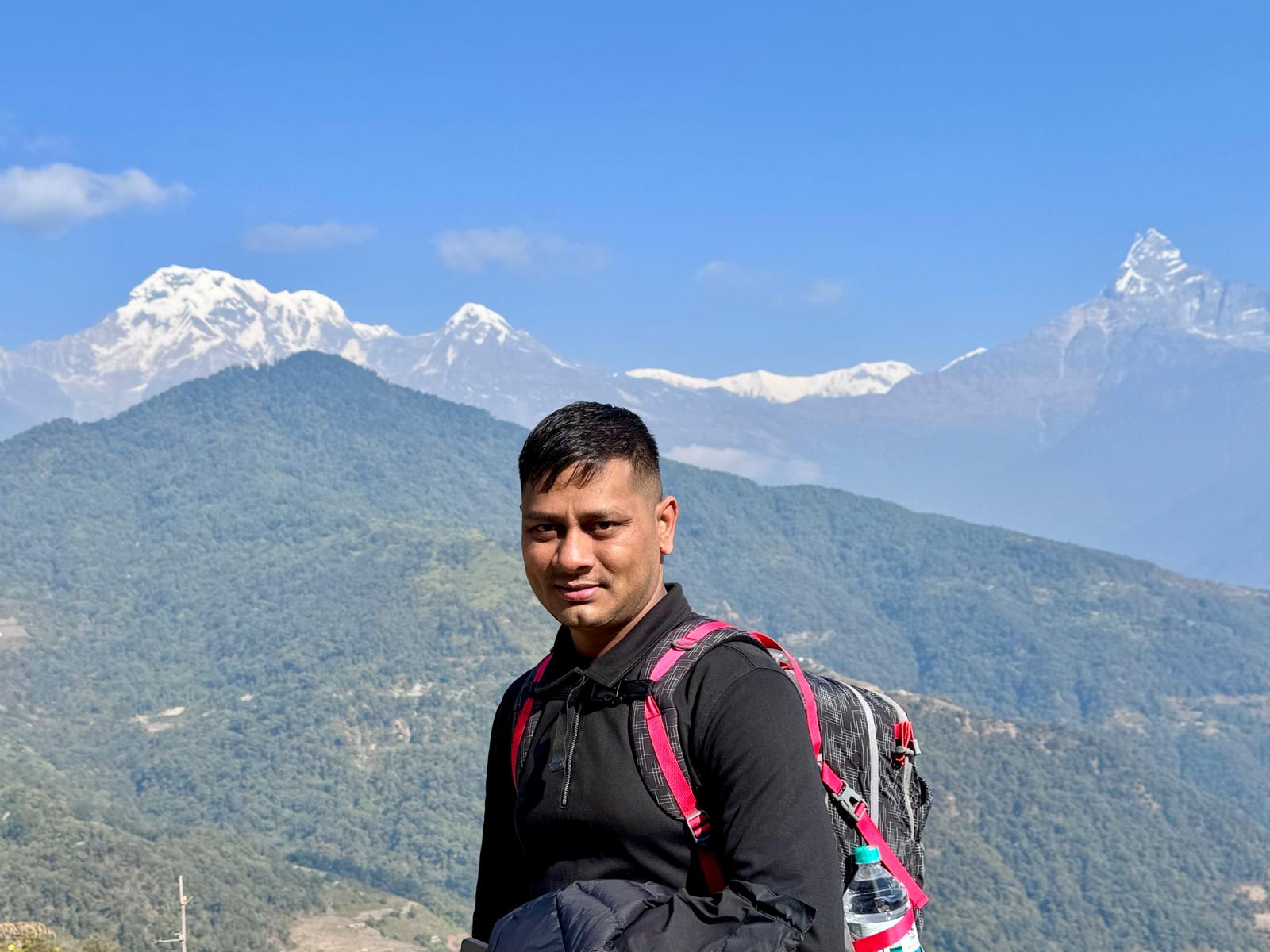
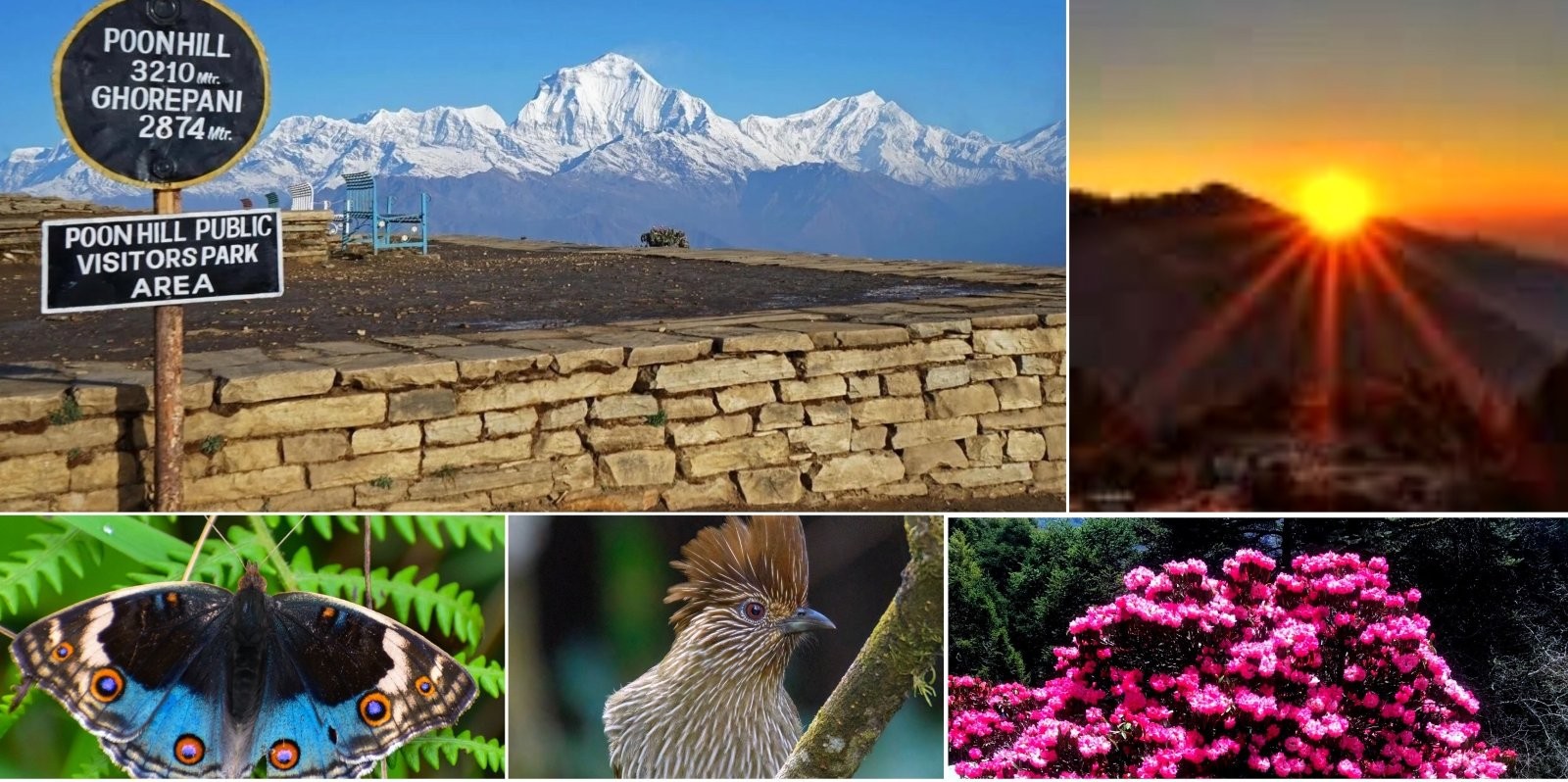
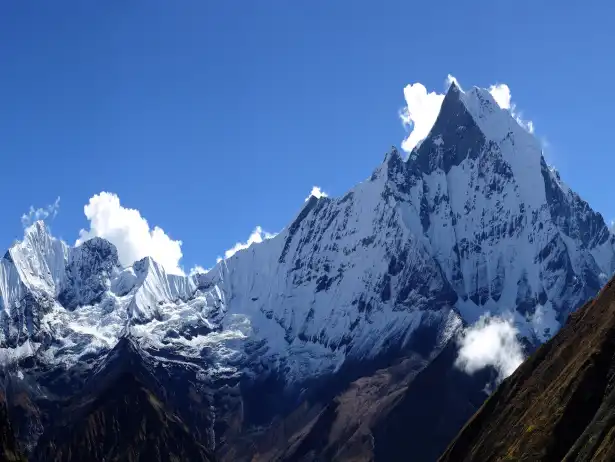
Witness unforgettable sunrise views from Poon Hill, admire the majestic peaks of Annapurna Massif, Dhaulagiri, and Machhapuchhre, and trek through vibrant rhododendron forests, charming Gurung and Magar villages, and breathtaking Himalayan landscapes.
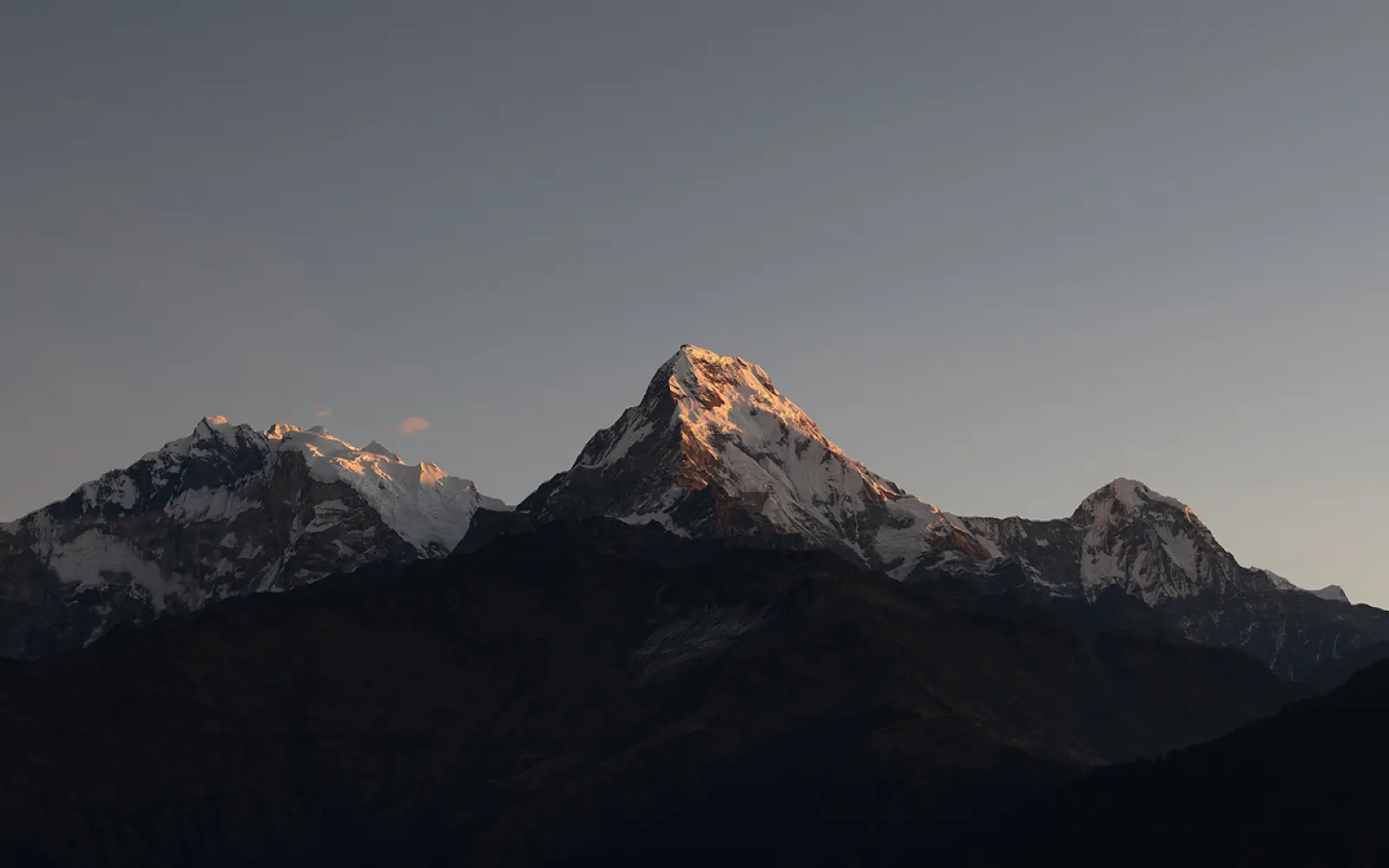
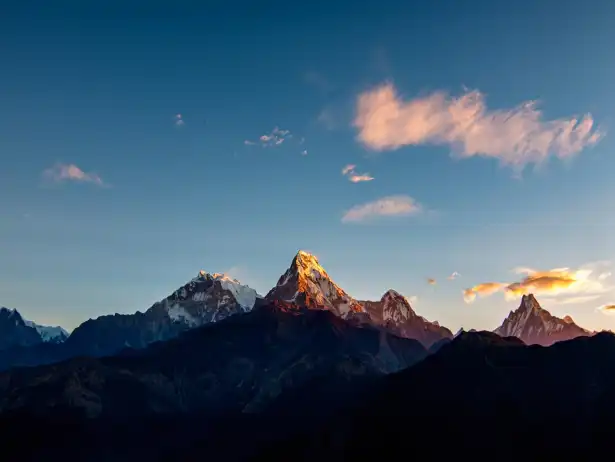
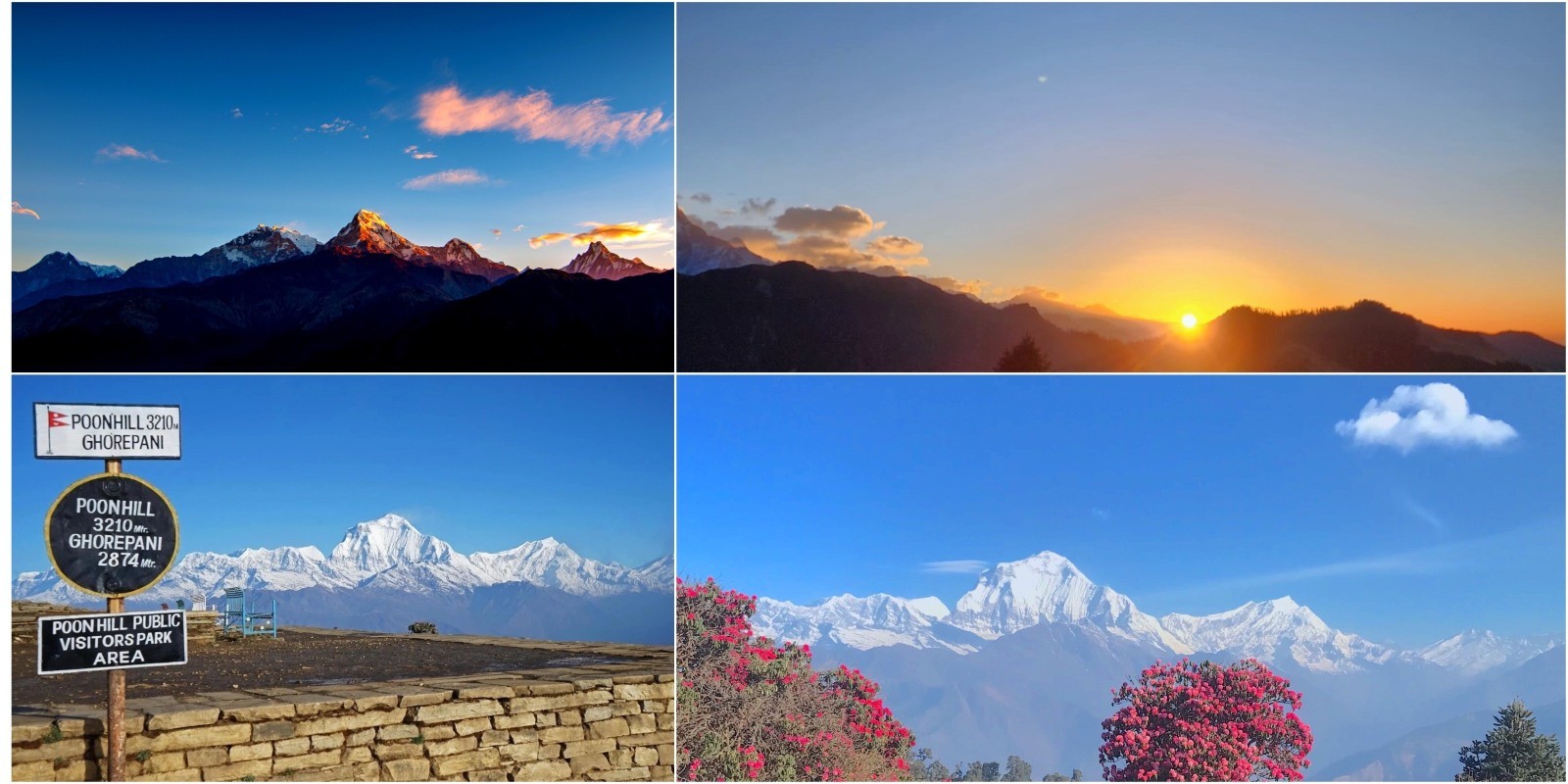
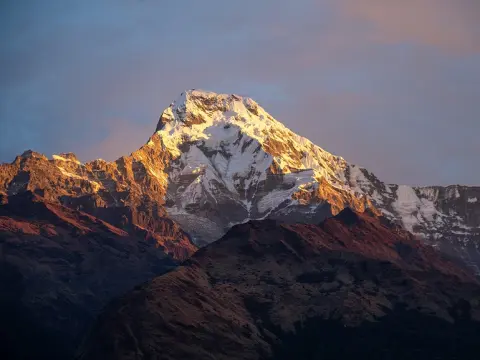
Meanwhile, a stunning sunrise at Poon Hill paints an awe-inspiring picture that captures the essence of Himalaya. Trekkers start early in the morning to catch the first rays of sun falling on the colossal heights of Dhaulagiri and Annapurna. Over 20 high peaks radiate in myriad shades of gold and orange under 360-degree views. This moment offers a deep feeling of stillness as the sprawling mountain range awakens to reveal its magnitude. It remains the most photographed destination in all of the Annapurna region for very good reasons.
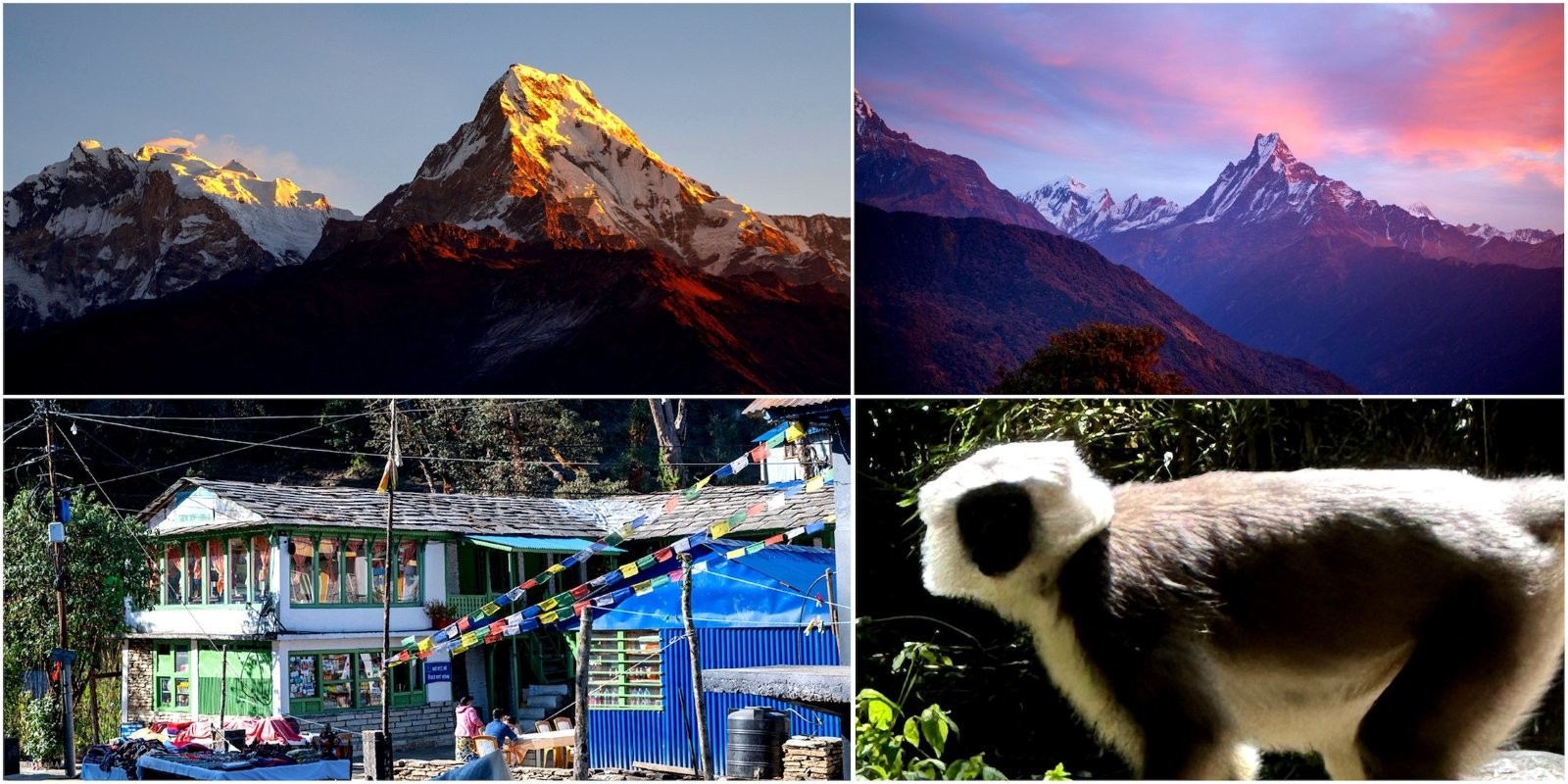
Moreover, budding ecologists will love the lush rhododendron passages that blossom during the rosy spring. The flora and fauna are very exciting to experience here. These age-old woods turn into a blaze of crimson, mauve, and white amidst snow while exotic parrots and daft grey langur monkeys often pop up in the gentle meandering forest tracks. The route follows glittering waterfalls and cavernous valleys that depict the varied topography of Nepal. Turn after turn reveals yet another angle of the awe-inspiring majesty of high-altitude wasteland.
Mountain Peak
Elevation (Meters) | Notable Feature
Dhaulagiri I
8,167m | The 7th highest mountain in the world.
Annapurna I
8,091m | The first 8,000m peak ever climbed.
Machhapuchhre
6,993m | The iconic "Fishtail" mountain, sacred and unclimbed.
Annapurna South
7,219m | Towers directly over the Ghorepani village.
Nilgiri
7,061m | Known for its massive, shimmering ice faces.
Major Peak to Witness:
Sightseeing & Cultural Highlights:
Colorful Rhododendron: Admire the vibrant hues of the world's largest rhododendron groves in the spring months of March to April.
Gurung Museum &Ghandruk Village: Discover the stone built houses and specialists' museums of the village of Ghandruk.
Waterfalls of Birethanti: Relax with the invigorating cascades of water at the water falls near the beginning of your trek.
Ghorepani's Mosques and Culture: Take pleasure in the energetic "Namaste" greeting and native dances of the high altitude settlement of Ghorepani.
Modi Khola River: Trace the jewel blue color of the flowing glacial water as it weaves its way through the valley floor.
Green Fields: Enjoy taking photos of the verdant rice fields carved into the harsh hillside.
The 2026 “New Normal": New Rules and Compulsory Guide Rules
In 2026, Nepal implemented a set of new trekking rules to make it safer for all international mountain travelers. It is now required for all foreigners to hire a registered local guide if they choose the Ghorepani Poon Hill trek. The government has now suspended granting permits for independent trekking on this route so that nobody would be at risk of becoming lost or some kind of accident happening. It is now the law to travel with a professional along the traverse so that assistance can always be easily available should anything occur and the often ruthless climatic and landscape changes encountered along the trail can be navigated skillfully and quickly. A top trekking agency must be used for your trip so all necessary paperwork could be obtained.
Likewise, the new 2026 scheme has proved popular in making the long checkpost procedures much easier by using satellite monitors and barcodes on documents that are scanned by the government-licensed guides. They make sure all time-consuming paperwork is done with speed so that clients can look at the amazing Himalayas without any distraction. It also creates employment opportunities for mountain communities and highly trained mountain guides who can add valuable insights to the trip that you would not experience if traveling entirely alone. It is also a dedication to responsible tourism that puts the needs of the client and the mountain environment high on the agenda.
Requirement
2026 Status
Cost (Approx. USD)
Licensed Guide
Mandatory
$25 – $30 per day
ACAP Permit
Required
$25 (NPR 3,000)
TIMS Card
Required (via Agency)
$15 (NPR 2,000)
Solo Trekking
Banned
Not Applicable
Insurance
Mandatory (Rescue Cover)
Varies by provider
2026 Permit & Regulation Overview:
Why the 2026 Rules Work for You:
Emergency Navigation: Guides will be equipped with satellite/local phone so helicopter evacuation can be ordered on the spot.
Trail & Safety Knowledge: Guides will be familiar with then status of all trails, bridges, and landslides in the Annapurna foothills.
Cross Cultural Co-operation: Your guide will be able to interpret and serve as go-between for the Magar and Gurungpeople.
Logistic Planning: The guides' agency will make the necessary bureaucracy and file your rooms- during the height of climbing season this is of prime importance.
Conservation: Guides will see that the principle of Leave No Trace is observed in the burgeoning rhododendront forests.
Designing your adventure: The ultimate Poon Hill trek itinerary 2026
The spectacular panorama from Poon Hill showcases the majestic peaks of Annapurna Massif, and Machhapuchhre from Tadapani.
Here, the classic four to five day loop is still the best way to see the scenery of the heart of Annapurna. Most people start off with a drive from Pokhara to the foot of the trail at Nayapul or Hile. From this point, the trail climbs through fields and forests to the attractive high-trust village of Ghorepani. Morning hours are spent at viewing sunrise, and afternoons are spent visiting the veritable stone-parallel villages en route. This route offers a great approach to time-to-altitude and superb views of massive Dhaulagiri and Annapurna masifs throughout.
Actually, the Ghorepani Poon Hill trek back through Ghandruk offers a superb insight into the culture of the Gurung due to it being a prominent cultural center with a visiting museum and the chance to experience traditional wear. The state-of-the-art infrastructure of 2026 has endeavored to make the stone stairs and trail indicators easier to manage when descending. The conclusion of the trek will leave you cultivating a greater respect for the towering summits as well as the cultures of the Himalayas.
Tikhedhunga | Scenic drive, river walk, and crossing suspension bridges.
Day 2
Tikhedhunga
Ghorepani | The famous 3,000-step Ulleri climb and rhododendron forests.
Day 3
Ghorepani
Tadapani | Poon Hill sunrise (3,210m) and panoramic peak views.
Day 4
Tadapani
Ghandruk | Forest descent and exploration of the Gurung Museum.
Day 5
Ghandruk
Pokhara | Final descent to Nayapul and private jeep return to the city.
The Classic 5-Day Loop Itinerary (2026):
Practical Itinerary advice
Get an early start: Leave the tea house no later than 8:00AM to beat the searing midday sun and the competing trail traffic.
Bring a refillable water bottle: There are "safe water stations" in most villages, such as Ulleri, to refill your drinking vessel.
Reach Poon Hill before sunrise: The summit walk begins around 4:30AM for the best light of a sunset in motion.
Get a cultural lesson in Ghandruk: Hang out at the Gurung Cultural Museum to learn about a tribe from valley people who fought for the British in the Gurkha Regiment, as well as to meet and mingle with residents of the village.
Bonus! Do side trips from Ghandruk: Take a brief side trip to the Jhinu Danda hot springs to ease your muscles (if you get a half-day spare).
Actually, certain financial planning is very important for a hassle-free trip to the Annapurna region in season 2026. The overall Poon Hill trek cost will vary depending upon how much you want to spend and the comfort level you are seeking. Most participants should at least be prepared to pay for eight to ten essential permits, guides and porters, and costs of decent, cheap food and accommodation while in the mountains. Prices at high altitude tea houses begin to go up as you get away from the larger centers of transport on the bus routes. A fixed, daily budget will make your Nepalese Rupees last the entire the trip through the mountains.
Here, expect to pay for three huge meals a day and a warm room with a simple Mt. Side motel style setting. Other normal costs may include hot water for bucket baths, phone, camera and computer re-charging, airplane Internet. A few tea houses now take bank cards but cash in the local currency will still be your main method of payment for small purchases in the mountains. A large factor to consider is tipping guides and porters who have looked after you while in the Himalayas.
Category
Description
Cost (USD)
Accommodation
Twin-sharing room in a standard tea house
$3 – $8
Meals
Breakfast, lunch, and dinner (Local & Western)
$28 – $34
Beverages
Tea, coffee, and bottled/filtered water
$2 – $4
Service Fees
Hot showers, Wi-Fi, and device charging
$2 – $4
Total Daily
Estimated base spending per day
$35 – $50
Estimated Daily Expenses (Per Person):
Fixed Logistical Costs for 2026:
Mandatory Guide Fee: A licensed professional may cost between $25 and $40 per day to lead you through the mountains.
Permit Fees: For the ACAP and TIMS permit combined you will most likely end up paying around $40 for each international trekker.
Transportation: If you hire out a private jeep from Pokhara to the trailhead you might expect to pay between $60 and $80 per vehicle.
Porter Fees: To hire out a porter to lug your heavy luggage around might run you between $20 and $25 per day.
Gear Rental: Hot high quality sleeping bags or down jackets can be rented in Pokhara for between $1 and $3 per day.
Planning with Haven Holidays Pvt. Ltd.: The right choice for planning your trek in 2026
Booking with Haven Holidays Pvt. Ltd. ensures a smooth, well- organized, and ethically responsibly trekking experience. Our professional guides are very familiar with the local terrain and will take all measures to make sure your trip, including your safe arrival and departure during 2026. We will take care of all the difficult permit laws and administrative aspects for you. We employ our guides and porters fairly and support a sustainable local mountain economy. A trip with a company you can trust to handle all arrangements will turn an ordinary journey into an extraordinary experience.
Moreover, we create flexible travel programs based on your desired amount of fitness and your particular interests around the Annapurna region. Our team of experts is highly trained in walking safety and first aid preparation for ease in any unforeseen situation in the mountains. You will stay in individual tea houses equipped with the best quality of expectations and the cleanest facilities in 2026. Our prices are competitive and there are no hidden fees. Our dedicated team with assist you with your Himalayan Travel dreams into a reality.
Service Feature
Benefit to the Trekker
Certified Guides
Deep insights into local culture and guaranteed safety on steep trails.
Ethical Standards
Fair treatment and insurance for all field staff and local porters.
Tailored Routes
Flexible walking paces and extra rest days for better acclimatization.
Pre-Trip Support
Comprehensive gear lists and physical preparation advice before you arrive.
Quality Control
Regular inspections of tea house partners to ensure high hygiene standards.
Why Choose Haven Holidays Pvt. Ltd.?
What is Included in Our 2026 Trekking Packages:
Permits: We obtain your ACAP and TIMS documentation on your behalf prior to your arrival in Kathmandu.
Transport: Overnight private transportation between Pokhara and the start point of your trek.
Guides & Porters: One licensed English speaking guide and 1 porter for every 2 trekkers.
Medical equipment: Oxygen saturation meters and large, modern medical kit, carried by guide.
Local Touches: Traditional Nepalese dinners, presentations on NP and visits to authentic Gurung village museums.
Eco-friendly: We supply carafes and reusable water transport systems so as to minimize mountain waste.
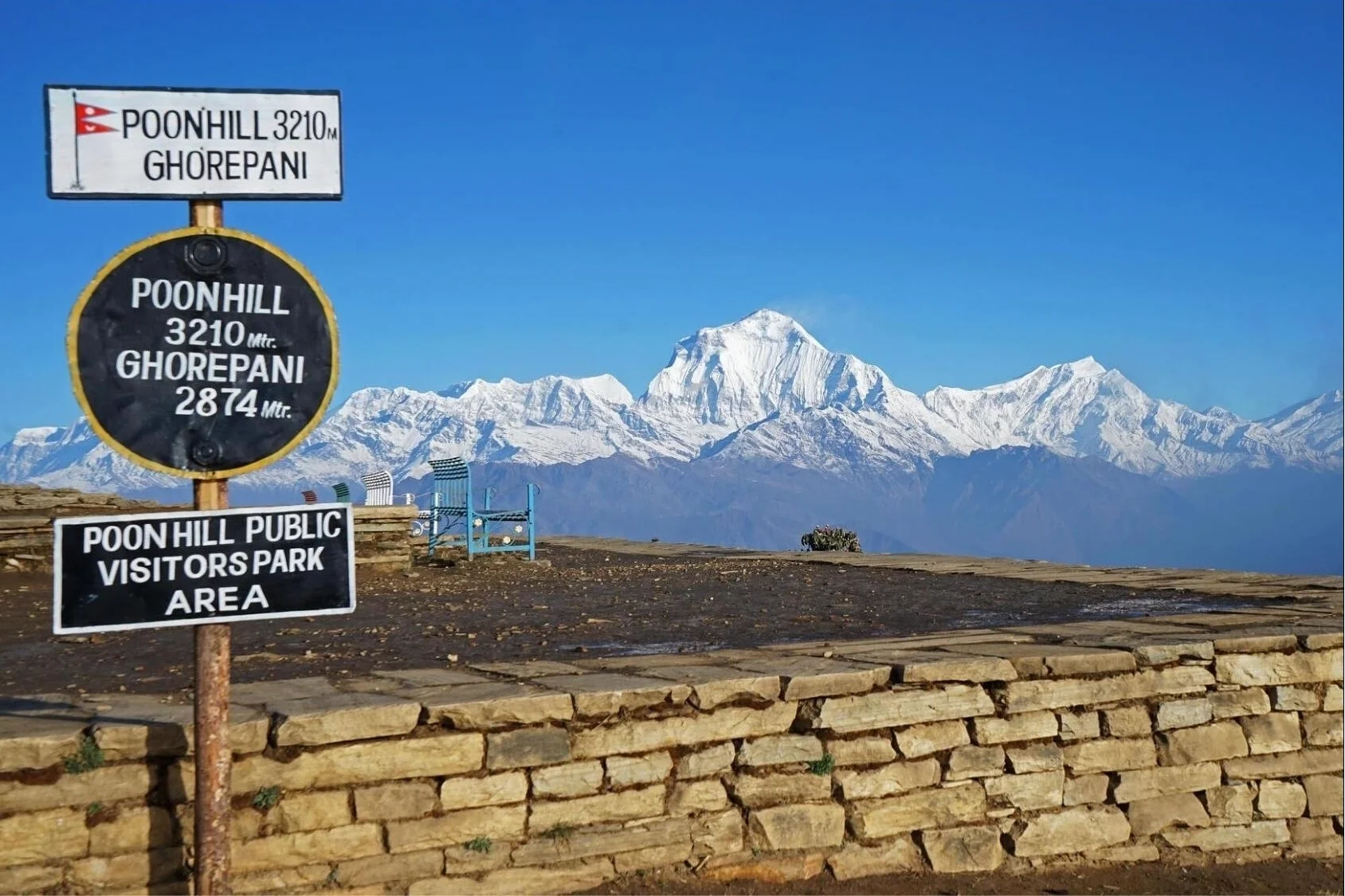
The Sunrise Show: Exploring the Poon Hill Viewpoint (3,210m)
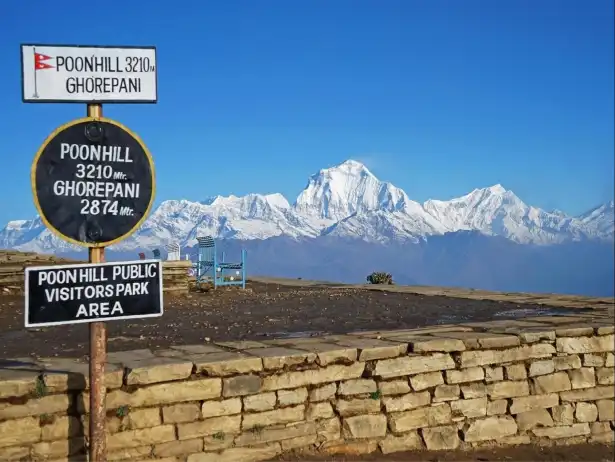
Actually, the pre-dawn trek from Ghorepani takes you along switch-back stony paths, leading to the summit of the Poon Hill viewpoint. You will head westward from the base camp at approximately 4:30 am, making it to the ridge just in time to see the first rays of the sun. The cold, high-altitude mountain air is sharp and bitingly cold before first light, and most trekkers will be climbing the final slopes with hot tea, small head lamps, and gloves to keep warm while traversing the well-paved path of Indian granite. Once the enormous Dhaulagiri and Annapurna massifs begin to glow in brilliant shades of yellow, orange, and pink, that mental and physical toll disappears as the glorious views bathe you in warm hues. This is undoubtedly the ultimate climb up a mountain you can ever experience.
Experience the unforgettable sunrise from Poon Hill (3,210m), where the first rays of sunlight paint Annapurna Massif, Dhaulagiri, Machhapuchhre, and other Himalayan peaks in brilliant shades of gold. This iconic viewpoint is the highlight of the Ghorepani Poon Hill Trek and offers one of Nepal's most breathtaking mountain panoramas.
Likewise, photographers flock to Poon Hill to revel in its golden hour, as the snow-capped mountains change through sensual hues of fuchsia, tangerine, and amber. In the glow of indirect sunlight, the glacier textures are stark and crisp, free of problematical shadows cast by shining image-spheres. Find vantage points adjacent to the main viewing tower or the prayer-flag laced chortan to catch the best wide-angle impulses of the swirling valley of glorious sights.
During the 2026 tourist season, many trekker will be capturing this swirling landscape with high-powered stabilizers and smartphones, from every dynamic perspective, imparting a precise idea of exactly how stunning it is. Travelers generally wait at least an hour or so for this influx of prism-like mountain resources. It is undoubtedly why Poon Hill has become the most popular sunrise destination within the entire Annapurna region.
Item
Importance
2026 Pro-Tip
Headlamp
Essential
Ensure your batteries are fully charged for the dark climb.
Down Jacket
Critical
Temperatures at 3,210m often drop to -5°C before sunrise.
Gloves & Beanie
High
Protect your extremities from the biting wind at the viewpoint.
Cash (NPR)
Useful
The hilltop tea shop sells hot ginger lemon tea for around 200-500 NPR.
Camera/Phone
Essential
Keep batteries inside your jacket to prevent them from draining in the cold.
Summit Morning Checklist:
Photography tips for the Golden Hour:
Get up early: Get to the summit at least 30 minutes before the official sunrise to secure a solid tripod location.
Keep an eye to the West: The sun might rise in the East, but the best shot or light comes to the western face of Dhaulagiri.
Use wide lenses: Use a lens between 16mm and 24mm for a shot showing the full 360 degrees of the Himalaya.
Contrast: Seek out lighting contrast across the snow covered faces of Machhapuchhre (Fishtail) and Annapurna South.
Include the foreground: Use the numerous colored Buddhist prayer flags as part of your composition.
Poon Hill Luxury Trek with Chitwan-12 days | 12 days
Physical Preparation: Is the Ghorepani Poon Hill Trek 2026 trekking route a good choice for you?
Actually, the Ghorepani Poon Hill Trek 2026 is one of the most accessible routes up the Himalaya for most healthy and energetic individuals. Merely preparing yourself for the notorious 3,300 stone steps up to Ulleri will go a long way toward your preparedness. While this is the aerobic challenge of the trek, it is completely doable with a slow, steady pace.
Most hikers find that walking distance at home 2-3 times a week and simple builds up to the steady pace necessary to conquer the four hours of daily hiking on the trails. There is no need to be a professional alpinist to walk any of the well-maintained, signposted 2026 trekking routes to Poon Hill and beyond. It is often the mental stamina rather than raw athletic strength that dictates the ultimate trek experience.
In fact, moderate levels of fitness allow many in the group to simply enjoy the exotic forests of deep pink rhododendron and cultural visits at tea houses along the way. We encourage any trekker to begin a simple preparatory fitness regime about 4 weeks before your scheduled flight to Nepal. Build simply in the final month up to your departure every week by focusing on quad and calf strength particularly over the course of the final 2 weeks. When walking over uneven or rocky, stone-paved acres, using trekking poles will minimize impact upon your knees. All trekkers will eventually reach the summit by listening to your body and taking many short rests in tea houses along the way. This trek will feel fulfilling for everyone, physically and spiritually.
Exercise
Target Level
Benefit
Daily Walking
5 – 7 Kilometers
Builds general endurance for 4-6 hours of daily trekking.
Stair Climbing
15 – 20 Minutes
Prepares your quads for the legendary Ulleri staircase.
Squats/Lunges
3 Sets of 15
Strengthens joints for the steep descent into Ghandruk.
Cardio (Jog/Cycle)
30 Minutes (3x weekly)
Improves lung capacity for the 3,210m altitude.
Fitness Benchmarks for Poon Hill Trek 2026:
How to Reach the "3,300 Steps" Tips:
"Bistari" Approach: Repeat the Nepali word for "slowly;" this will facilitate a slow and steady pace that manages fatigue.
Trekking poles: These are definitely necessary to preserve knee health on your downhill, impact-intensive trek out of Ghorepani.
Light Bag: Pack only your absolutely necessary items into your 3-5kg daypack, and send the rest of your trekking gear with the porters.
Hydration: Consume at least 3 liters of fluids daily to sustain energy and subdue moderate altitude-related headaches.
Comfortable Shoes: Prior to the route avoid the laundry, and prepare your trekking boots so as not to suffer sore, painfulblisters on the huge stone stairs.
Seasonal Guide: What is the best month for Poon Hill Trekking 2026?
Here, the flowers bloom through the foothills of Annapurna from March to May ( Spring) making the entire region a colorful spectacle. The temperatures are warm enough to the vibrant red and pink tinge of the world's largest Rhododendron forest in bloom. As you make your way through the green canopy of the forest, the aroma of fresh Wildflowers float through the mountain air. The presence of 12 hours of daylight provide plenty of time to explore the culture of popular villages such as Ghorepani and Ghandruk. With moderate climate, the foothills of Ulleri become a more comfortable hike for all the travelers. It is undoubtedly the perfect season for naturalists to capture the Himalaya in their full biotic glory.
Likewise, the Poon Hill Trek in autumn seasons fall in the months of September and November providing the best weather and perfect mountain visions. The post-monsoon winds have cleared away all the haze and dust, revealing the clearest of the Himalayan vistas. Sunny blue skies give life to the series of sunrise images at high viewpoint. Breezy mountain air keeps the trekker fresh through the golden fields of the little peasant farms. Most of the seasoned trekkers choose this season to make a visit because mountain visibility remains high throughout the day. One can be sure of clear blue sky to mark the departure from the viewpoint of 3210meters.
Month
Season | Temperature (Day/Night)
Highlight
March - April
Spring | 15°C / 2°C
Peak rhododendron blooms and active wildlife.
May
Late Spring | 20°C / 5°C
Warmest weather before the summer monsoon starts.
Sept - Oct
Autumn | 16°C / 3°C
Best visibility and vibrant local Dashain festivals.
Nov - Dec
Late Autumn | 12°C / -5°C
Deep blue skies and very few crowds on trails.
Monthly Comparison for 2026:
Weather realties and Occurrences:
Spring rains: Short rains during the afternoon in the month of May keep the forest trails dust free.
Autumn peak: October is the peak month so plan your guide at least in advance.
Winter window: The month of January has pristine snow views but the temperature at Poon Hill drops a fair bit.
Pause in the monsoon: Most agencies would not advise to trek in July especially because of leech bites and no mountain views.
Packing Smart: What Gear Is Required for 2026 Poon Hill Trek
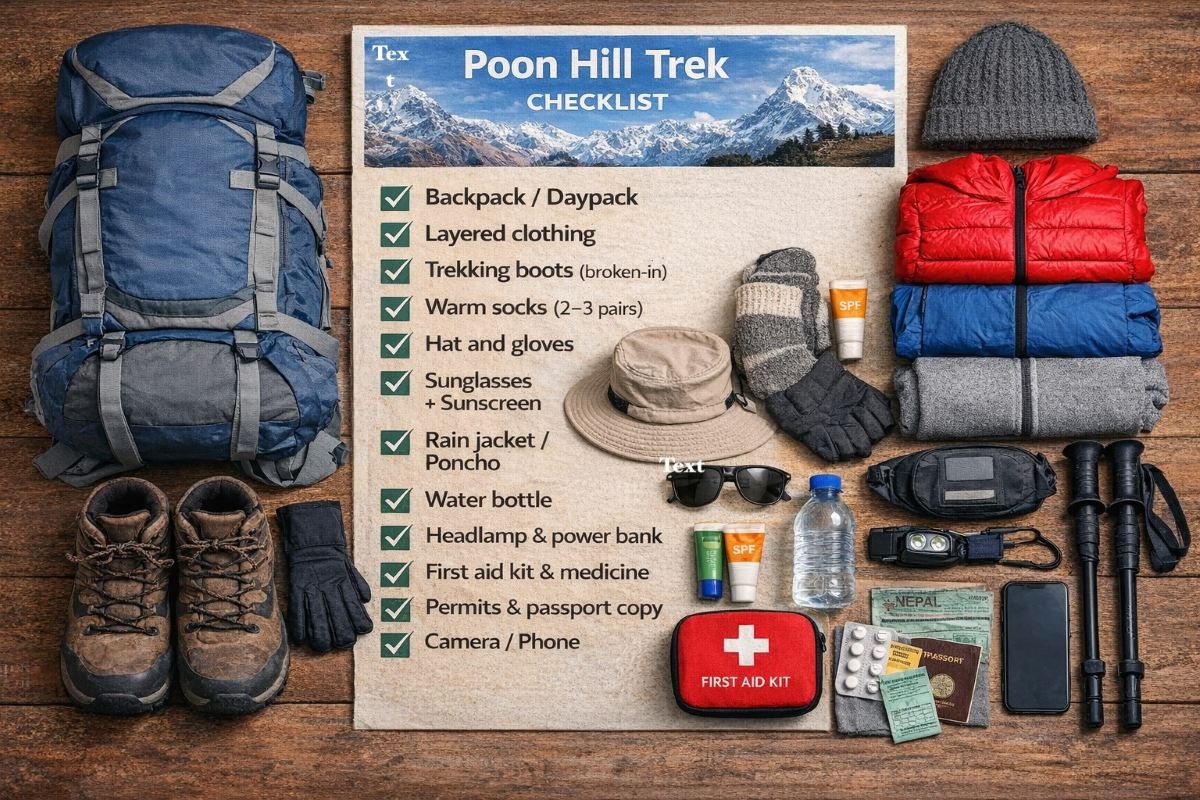
Pack smart for the Ghorepani Poon Hill Trek with essential gear including sturdy hiking boots, layered clothing, a waterproof jacket, trekking poles, a daypack, reusable water bottle, sleeping bag, headlamp, sunscreen, first-aid kit, and personal essentials. A well-prepared packing list ensures a safe, comfortable, and enjoyable Himalayan trekking adventure in every season.
In 2026, eco-minded travelers will want to select high-efficiency gear and minimal impact options for their time in the rugged Himalayas. Lightweight, moisture- wicking garments allowing for breathability and layer system are now common in the latest generations of off-the-grid trekking apparel. Recycled filling insulation offers the warmth of high-end natural options, but is purchased now with energy-conscious shoppers in mind. Quality down insulated jackets are still a necessity for the frigid pre-dawn departure up the face of Poon Hill.
Likewise, quality, durable hiking boots must be known to your feet before your trek to avoid unnecessary blisters on the tarnished stone surface. Consideration for your small yet significant contribution to the well-being of the mountain environment will determine the extent of your personal selections for long-lasting, eco-friendly production.
In many cases, power availability looms large in decision-making as most tea houses have only limited capabilities through their small pilot solar systems. Bring with you plenty of power for your camera and iPhone in a long lasting power bank. A portable solar panel unit is a highly popular 2026 innovation for independence-seeking hikers. Refillable containers for water treatment are now the norm to reduce plastic consumption on the trail. Make sure you bring a good headlamp and a supply of batteries for the uneventful start up Poon Hill in the dark. Smart packing reflects care for your well-being in addition to a contribution to the mountain environment.
Equipment Category
Item
Specification
Outer Shell
Wind/Waterproof Jacket
Gore-Tex or similar breathable material.
Insulation
Down Jacket
Rated for -10°C for the Poon Hill sunrise.
Footwear
Hiking Boots
Mid-cut with ankle support and Vibram soles.
Electronics
Power Bank
Minimum 20,000mAh for 4-5 days of use.
Hydration
Reusable Bottle
1-2 Liter capacity with a life-straw or tablets.
2026 Essential Gear Checklist:
Eco-Enhancements & Technology:
Solar Chargers: Power up small electronics by placing a solar panel on your pack while outdoors.
Bamboo Cutlery: Keep Indian villages plastic-free by taking your own sustainable silverware along the trail.
Biodegradable Toiletries: Pack environmentally safe soaps to preserve village water resources.
Offline Maps: Save GPS maps to your mobile device, as coverage can be unreliable in remote canyons.
Waterproof Cases: Use slick dry bags to keep delicate electronics safe.
Clothing Layers System:
Base Layers: lightweight synthetic or merino wool tops to transport moisture away from the skin for the Ulleri ascent
Mid Layers: fleece jacket or lightweight sweater for the cool evenings of the tea houses
Trekking Pant: Convertible trekking pant is a good choice for the shifting temperatures of valley to mountain top
Socks: Wool-blend trekking sock that will prevent chafing and keep toes warm
Living culture: Gurung and Magar communities in Ghandruk
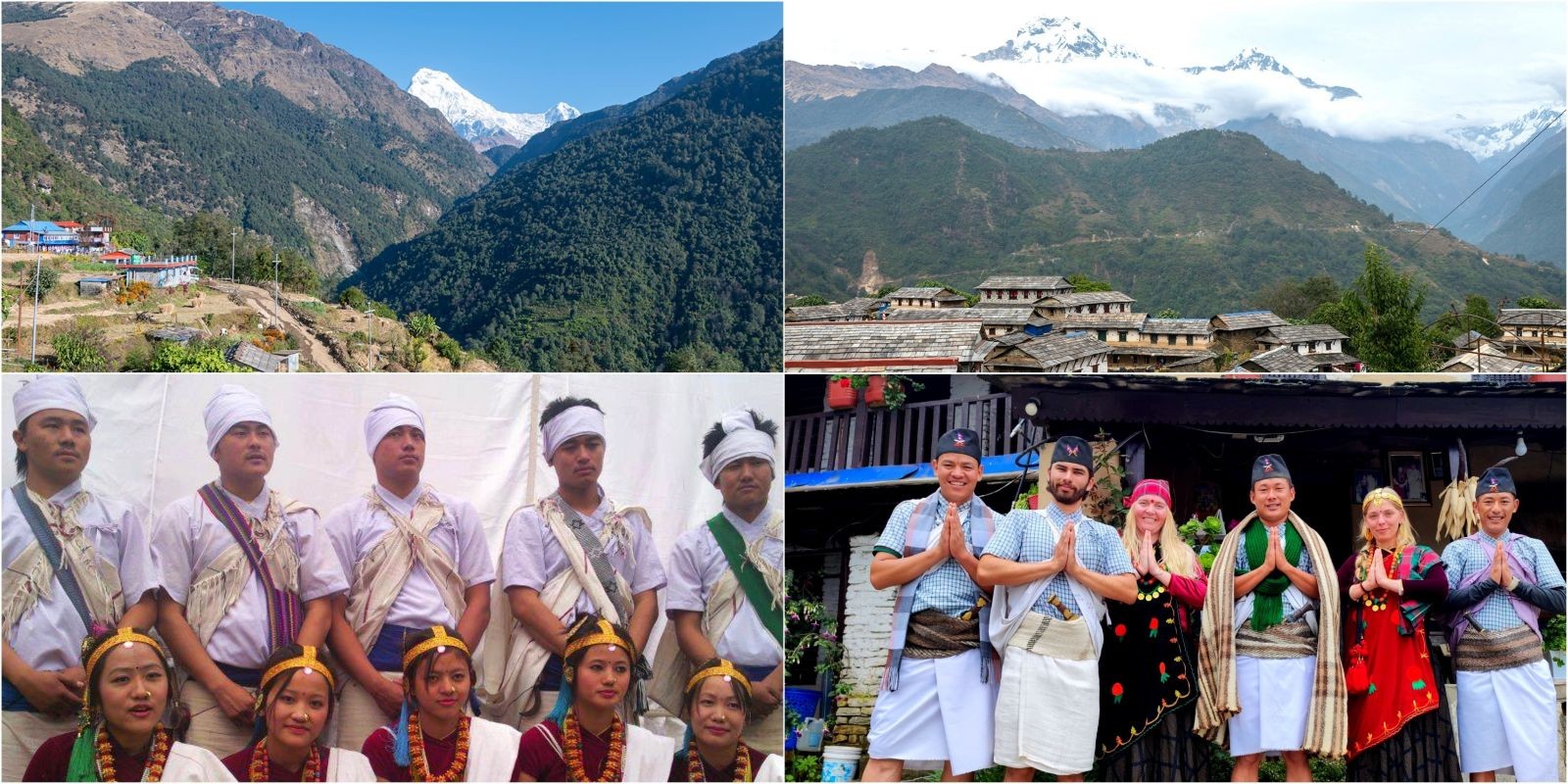
Discover the rich traditions of the Ghandrukand Ulleri, home to the welcoming Gurung and Magar communities. Along the Ghorepani Poon Hill Trek, visitors can experience authentic mountain culture, traditional stone houses, local cuisine, warm hospitality, and breathtaking views of the Annapurna Massif and Machhapuchhre.
Actually, the village of Ghandruk is a living museum of Gurung and Magar heritage in the middle of the Annapurna mountains. Explore places of traditional build out of locally sourced stones and slate roofs coupled with seemingly endless paths in the old village. Hospitality from locals welcomes travelers of all nationalities like family members. These places stand opportunity to refresh your mind from and to help you comprehend the renaissance of the glacial world and long-lasting community culture as there is described by new interchange of cultural performances and village exploration.
Here, you can even try the hardware ethnic dresses for a memorable Himalayan picture. It helps to get ample engagement with inhabitants, producing deep understanding of the residents who have being inhabiting these high summits since generations.
Moreover, the Main museum at Ghandruk Village gives cultural insight to the visitors providing ancient artifacts, custom tools, and Gorkha armed forces memorabilia. Stare into the local women weaving elaborate woolen textiles with seemingly old manual instruments. Many community groups hold nightly singing and dancing rituals for storytelling about processes of the ancestral shift from Tibet. Modern homestays offer you to taste genuinely new cookery ("dhido," a Slovak-style district brewing) with natural/ organic local tea from the households in these areas. Each lesson at Ghandruk gives your trip to this truly natural bio-region a strand of a greater understanding of Nepal's intuitive new Cultural Spectrum.
Attraction
Category
Highlights
Old Gurung Museum
History
Ancient weapons, traditional jewelry, and 200-year-old household tools.
Ghandruk Tea Garden
Agriculture
Organic tea plantations with stunning views of Annapurna South.
Monastery (Gompa)
Religion
A peaceful site for observing Buddhist rituals and colorful prayer flags.
Local Homestays
Hospitality
Authentic stay in stone houses with home-cooked Gurung meals.
Handicraft Center
Art
Live demonstrations of traditional wool weaving and local knitting.
Cultural Landmarks and Experiences in Ghandruk:
The Gurung and Magar Customs to Follow:
Traditional clothing: Spot the men dressed in "Bhangra" (vests), and women' s 'Guniu Cholo ' (brightly coloured blouses) during festivals.
Traditional dance: Gaze upon the "Ghatu" & "Sorathi" that retell heroic story through rhythmic animation.
Construction: Observe the distinctive dry- stone walls and heavy slate to endure the area ' dreaded Monsoon season ' in the Himalayan mountains.
Military distinction: Many homes proudly display medals earned by family members within the Khmer 'epic' British and Indian regiments.
Food: Discover "Sukuti" (dried meat), or "Gundruk" (pickled greens), both common decor of high-altitude habitation.
Sustainability in Focus: Responsible Trekking with Haven Holidays Pvt. Ltd.
Actually, Haven Holidays Pvt. Ltd. Is committed towards sustainable mountain tourism by practice of the "Leave No Trace" policy on all its treks. For minimizing the use of plastic, we gift all our trekkers re-usable water bottles and advanced filtration systems. The porters and guides of our company frequently conduct trail cleanup drives to keep the blooming rhododendron woods clean for our future trekkers.
Likewise, the entire team of our company considers Greening of environment as vital as fresh mountain air. Every 2026 mobilization of the trekkers helps in the smoothening and preventing erosion of Annapurna foothills through our reforestation initiatives. You will be indirectly assisting in maintaining the health of one of the world’s most glorious mountain ranges- Himalaya.
In respect of community based tourism, our company sponsor the local porters and guides with full insurance and good wages who assist in trek routes. As a corporate member of the nearby backward schools, we always contribute a part of our trekking proceeds towards the provision of required stationary and school supplies. We prefer our guests to indulged in local homemade food served by locals in tea houses to keep the income stream flowing in mountain rural economy. Our guides educate our trekkers about local culture and traditions to keep the culture win-win for ever. By choosing Haven Holidays as your trekking partner, you contribute directly in keeping your dreams of beautiful Himalaya alive…Alive !
Initiative
Goal
Impact in 2026
Zero Plastic Policy
Reduce waste
Eliminated approximately 5,000 plastic bottles from the trail last season.
Fair Wage Program
Social Equity
Guides and porters receive 20% above the industry average plus health insurance.
Carbon Offsetting
Climate Action
Planted over 500 native trees along the Ghorepani trekking corridor.
Local Sourcing
Economic Support
90% of food and supplies are purchased directly from village cooperatives.
Education Fund
Future Growth
Supported three primary schools with new library books and digital tools.
Our Sustainability Commitment (2026):
Ways to Be a Conscious Trekkers:
Pack it out : Keep your trash with you until you reach a place where there are proper arrangements to dispose them off such as Pokhara in Western Nepal.
Respect the path: Do not turn off trails to avoid trampling on sensitive plant life or causing further soil erosion on hillsides.
Respect privacy of local people: Ask before taking photographs of the villagers and or their homes and ceremonies.
Conserve power: Turn off the lights and unplug computers, computers and other electrical devices wherever possible as solar and hydro power are limited in the area.
Support local craft workshop: Buy hand made souvenirs from village ladies such as woolen hats or hand carved wooden mask etc.
Logistics update: transportation, permits, and connectivity in 2026:
To save you hours of unnecessary travel time between Pokhara and the Annapurna basecamp or Jomsom trailheads in 2026, traffic authorities have upgraded the black-topped road from Pokhara to the new Annapurna gateway at Hile or Ulleri in just under three hours. Also, trekkers doing Poon Hill Trek can get jeep or bus easily from Pokhara to Ulleri/Banthanti. Most international visitors now request private 4WD jeep rental to negotiate the remaining rugged safely enter the trailhead, and maximize stamina for the upcoming trekking expedition.
To avoid the bottlenecks, speed up your check-in experience at regional entry points, and update the constantly evolving permit process, authorities partnered with the Nepal Tourism Board to digitize the process by allowing it to be requested ahead of time. These logistical updates allow for extra trekking hours instead of transit time. They mark a giant step forward in making the Himalaya wilderness accessible to international visitors.
Likewise, your essential ACAP and TIMS permits for Poon Hill Trek can now easily be obtained all in one place by your registered trekking agency in digital format, but the hard copy must be produced in order to pass through the checkpoints along the route. The new ACAP regulations require all foreign non-guided trekkers to employ an officially registered guide especially if entering the conservation zone. Most high-altitude trekker tea houses now provide upgraded satellite Wi-Fi and more dependable solar-charging stations for a 5$ surcharge. Cellular service remains excellent once beyond Pokhara and Besisahar in established towns like Ghorepani to keep in touch with your family.
Requirement
2026 Status
Approximate Cost (USD)
ACAP Permit
Mandatory
$23 (NPR 3,000)
TIMS Card
Mandatory
$15 (NPR 2,000)
Private Jeep
Recommended
$60 – $80 (Per Vehicle)
Local Bus
Budget Option
$5 – $8 (Per Person)
Satellite Wi-Fi
Optional
$3 – $5 (Daily/Per Lodge)
2026 Permit & Transport Costs:
Important Transport & Connective Details:
Road conditions: The highway to Nayapul from Pokhara is fully paved; the extension to Hile is still on a good level gravel track.
Checkpoint timings: Permit stations such as Birethanti are open from 7am to 5pm.
SIM Cards: 4G networks from both NTC and Ncell are available in Ghorepani. However signals are lost frequently in deep forested rhododendron areas.
Cashless Payments: Only some agencies based in Pokhara will you find to take cards, so bring cash in NPR to exchange on the trail. Gateways is one such agency.
Rescue Links & Scheme: All guides licensed in 2026 are registered on a digital tracking system so lost guides can be searched for immediately.
Resting up in Pokhara: Wellness, Dining & Relaxation While off the mountain
After the long trek through the high-altitudes, Pokhara is the ideal place for exhausted trekkers to recuperate their depleted bodies and minds. The lively Lakeside neighborhood is home to top-rated spas providing acclaimed deep-tissue "Trekker's Massages." Indulge in traditional Ayurvedic oil therapies while admiring the placid surface of Phewa Lake. Numerous spas now feature 2026-exclusive healing programs comprising Himalayan salt exfoliations and cleansing steam beds. The tranquil surroundings of the valley offer the ultimate setting to reflect on all you've achieved in the mountains in utter bliss. It is the most satisfying way to reenter the world after the challenging trek.
Likewise, Pokhara's burgeoning café scene boasts a myriad of organic farm-to-table cafes catering to ravenous hikers. Sip on hand-roasted Himalayan coffee and local confections as you exchange adventures with fellow globetrotters. Most lakeside cafes have outdoor tables to enjoy the sundown casting reflections over Machhapuchhre summit. Contemporary 2026 cafes often have dedicated lounges for zooming travelers or those simply penning down their odyssey. Nighttime brings lively live vocals and civic dances celebrating Himalayan culture. All these factors firmly establish Pokhara as the ultimate trekking destitution in terms of recovery.
Activity
Recommendation
Est. Cost (USD)
Trekker's Massage
90-minute Deep Tissue
$25 – $45
Yoga Class
Hatha or Yin Yoga
$8 – $12
Phewa Boating
Sunset Rowboat
$5 – $10
Spa Package
Sauna, Steam & Scrub
$35 – $60
Movie Night
Open-air Cinema
$6 – $10
Top Post-Trek Recovery Options:
Must-Visit Relaxation Spots:
Middle Path Spa: Known for its expert muscle therapy and unique, focused treatments directly targeted to the hiker in the Himalayas.
Perky Beans: An ever-popular lakeside retreat serving organic coffee and unparalleled views of the Annapurna range.
Pema Tibetan Restaurant: Enjoying a celebratory “Post-Trek"beer and a genuine momos and Thukpa is obligatory here.
The Juice Bar: Re-vitalize with fresh, cold-pressed juices from sweet, mountain-grown produce.
Lakeside Cinema: Snuggle up in a beanbag and watch some of the great classic mountaineering films under an equally great starlit Pokhara sky.
Conclusion: Book Your Ghorepani Poon Hill Trek 2026 with us today
Booking your Ghorepani Poon Hill Trek 2026 is the beginning of an extraordinary Himalayan adventure. The classic route combines that gentle level of physical challenge with some of the most stunning high mountain scenery—accessible for every trekker. You will be in a community of travelers from all over the globe journeying toward the legendary sunrise overlooking the Annapurna and Dhaulagiri mountain ranges.
Actually, booking your Poon Hill trek early ensures you will be assigned the most knowledgeable licensed guides and the best possible tea house lodging options. Secure your dates now to start getting ready for an experience of a lifetime in the beautiful country of Nepal. We can help you make your highland fantasies come true with our thoughtful and capable services.
Likewise, booking your Ghorepani Poon Hill trekwith Haven Holidays Pvt. Ltd. Guarantees a well-managed, safe, culturally-immersive adventure to the Himalayas. We will take care of all 2026 trekking-related logistics and authorizations so you can put your full focus on the trail. We will continue to offer tailored support from your first curiosity about the Annapurna Poon Hill Trek 2026 until you are farewellled from Pokhara. You will have the opportunity to contribute back to the local communities that make this adventure possible as you test your own limits in the mountains—plus, experience the emerald green of the rhododendron bloom and the show of the high peaks. Contact us now to launch an epic journey over the Tibetan border to the GPS point!
Advantage
Benefit
Peak Season Access
Secure rooms in popular villages like Ghorepani and Ghandruk before they sell out.
Elite Guide Selection
Gain access to our most senior, English-speaking mountain experts for your safety.
Fixed Price Guarantee
Protect your budget from potential 2026 seasonal price hikes or currency shifts.
Preparation Window
Receive our 4-week fitness guide and packing checklist immediately upon booking.
Permit Priority
Ensure all digital ACAP and 2026 green fees are processed without arrival delays.
Why Book Your 2026 Trek Now?
Booking Procedure with Haven Holidays Pvt. Ltd.:
Step 1: Enquire: Inform us by email or WHATSAPP about available trekking dates 2026 and number of travelers.
Step 2: Tailor-make: Whether fine tune the itinerary, incorporate wellness packages at Pokhara.
Step 3: Confirm: Choose your travel dates, make a secure deposit and book your holidays at current 2026 rates.
Step 4: Confirm: Furnish us with a copy of your passport and insurance details, while we enable the permit process.
Step 5: Final Brief: Complete gear checks and trail safety rules via a pre-trip virtual or foot-based prep meeting.
2026 Booking Essentials in summary:
Booking Deposit: To secure your specific dates generally a deposit of 25% of the complete package price is required.
Accepted Payment Agents: The use of most of the allowed credit cards, bank transfer, transfer to the most recognized digital payment gateways etc.
Cancellations: We have rescheduling options for your tour 2026 when your international flight schedule changes unexpectedly.
Emergency Support: 2026 all bookings also gives you and your group access to our friendly ground support team to the majority of the medical and logistical requirements 7 days a week.
Discounts for 2026: For families, students and groups of 4 or more traveling together we have special fares.
FAQS:The Ghorepani Poon Hill Trek 2026
1. What makes the Ghorepani Poon Hill Trek so special in 2026? The Ghorepani Poon Hill Trek is still the popular short trek in Nepal in 2026. It has mountain views and comfortable teahouses. You also get to experience the culture of the Gurung and Magar people. The trail is easy to walk on and suitable for trekkers. When you watch the sunrise from Poon Hill, which's 3,210 meters high you see Annapurna, Dhaulagiri and Machhapuchhre. This creates memories of the Himalayas that you will never forget.
2. How hard is the Ghorepani Poon Hill Trek for people who're new to trekking? The Ghorepani Poon Hill Trek is not very hard. It is easy to moderate. So people who are new to trekking and have fitness can do it comfortably. The trail has stone steps, paths through the forest and gradual climbs. Some parts are steep. You do not have to walk for too many hours each day. If you pace yourself and prepare well you can reach Poon Hill. Enjoy the experience.
3. What is the highest point on the Poon Hill Trek? The highest point on the Ghorepani Poon Hill Trek is Poon Hill, which's 3,210 meters high. Luckily this height does not pose a risk of altitude sickness. Most trekkers walk up to Poon Hill gradually through Ulleri and Ghorepani. Since the height is moderate many travelers get to see the Himalayan scenery without facing serious problems with acclimatization.
4. How days do you need to complete the Ghorepani Poon Hill Trek? Most trekkers complete the Ghorepani Poon Hill Trek in 4 to 5 days. Some people take 6 or 7 days to do the trek at a pace. The trek starts from Nayapul or Birethanti. Goes through beautiful villages. So trekkers have time to enjoy the mountain views the local culture and comfortable overnight stays.
5. When is the best time to do the Poon Hill Trek? The best time to do the Ghorepani Poon Hill Trek is in the spring and autumn. In the spring the rhododendron forests are beautiful along the trail. In the autumn the skies are clear. You can see the mountains very clearly. Although you can trek in the winter it gets very cold. So experienced guides recommend going between March and May or September and November.
6. What mountain views can you see from Poon Hill? Poon Hill offers one of the views of the Himalayas in Nepal. From the viewpoint you can see Dhaulagiri, which's 8,167 meters high Annapurna I which is 8,091 meters high Annapurna South, Hiunchuli and Machhapuchhre which is 6,993 meters high. Also when the sun rises the colors make the snowy peaks look golden. Because of these views Poon Hill is a place for photographers and people who love nature.
7. Do you need permits, for the Ghorepani Poon Hill Trek? Trekkers need an Annapurna Conservation Area Permit, which is also known as an ACAP for the Ghorepani Poon Hill Trek. The rules for these permits can change,. It is a good idea to check what is required before you leave. Most of the time trekking agencies can arrange the permits easily. This means that visitors can just focus on enjoying the Ghorepani Poon Hill Trek while they are following the conservation rules and supporting tourism that's sustainable.
8. Can people who are new to trekking and families complete the Poon Hill Trek? The Ghorepani Poon Hill Trek is a choice for people who are new to trekking and for families. The route has lodges places to stop and eat and walking distances that are manageable. Children and older people who go on the Ghorepani Poon Hill Trek often complete it successfully. If you plan carefully and walk at a pace families can enjoy the mountains, forests and villages together on the Ghorepani Poon Hill Trek.
9. How much does the Ghorepani Poon Hill Trek cost? The cost of the Ghorepani Poon Hill Trek depends on the services you use. How long you trek. You will need to pay for permits, transportation, accommodation, meals and guides. People who are traveling on a budget can spend money while packages that include guides can be more convenient. It is an idea to plan your budget ahead of time so that you are not surprised by the cost of the Ghorepani Poon Hill Trek.
10. What kind of accommodation is available on the Poon Hill Trek? On the Ghorepani Poon Hill Trek you can stay in teahouses. The rooms are usually simple and clean. They are a good choice for trekkers. Most of the lodges have beds, blankets and shared bathrooms. The dining halls are also a place to socialize in the evenings. Because the facilities are well-developed trekkers can be comfortable while they experience the hospitality of the mountains on the Ghorepani Poon Hill Trek.
11. How do you get to the starting point of the Ghorepani Poon Hill Trek? To get to the starting point of the Ghorepani Poon Hill Trek most people travel from Pokhara to Nayapul or Birethanti by vehicle or local transportation. The drive usually takes one or two hours. Then the trek begins through villages and farmland. It is easy to get to the starting point of the Ghorepani Poon Hill Trek, which makes it a good choice for people who do not have a lot of time.
12. Is altitude sickness a concern on the Poon Hill Trek? Altitude sickness is not usually a problem on the Ghorepani Poon Hill Trek because the highest point is 3,210 meters. However it is still important to walk at a pace and stay hydrated on the Ghorepani Poon Hill Trek. Most people can adapt to the altitude without any preparation. This is why the Ghorepani Poon Hill Trek is often recommended for people who want to see the Himalayas without worrying about the altitude.
13. What should you pack for the Ghorepani Poon Hill Trek? You should pack hiking boots, warm clothing, rain gear, a water bottle and other essential items for the Ghorepani Poon Hill Trek. The weather can change quickly in the mornings and evenings. It is an idea to wear layers of clothing on the Ghorepani Poon Hill Trek. You should also bring sunscreen, sunglasses and a small first-aid kit to make sure you have an comfortable trek.
14. Can you do the Ghorepani Poon Hill Trek without a guide? The rules about guides can change so you should check what is required before you plan your trek. Even if you do not need a guide it can be helpful to hire one for the Ghorepani Poon Hill Trek. Guides can provide information and support which can make your trek safer and more enjoyable. They can also explain the culture and help you have a smoother journey on the Ghorepani Poon Hill Trek.
15. Why is the sunrise at Poon Hill famous? The sunrise at Poon Hill is famous because it is very beautiful. When the sun rises over the Himalayas the mountains look golden. The view from Poon Hill is also very panoramic which means you can see for a distance in many directions. This is why many people think that the sunrise is the part of the Ghorepani Poon Hill Trek.