Teej, also known as Haritalika Teej, is one of the most significant celebration days among the Hindu community in Nepal. It is widely celebrated at the Bhadra month (mostly in the August or September) according to the Hindu lunar calendar.
Meanwhile, the festival is devoted to Goddess Parvati and God Shiva and is filled with the themes of devotion, faithfulness, and marriage. Meanwhile, Teej is also a social holiday where women gather, sing and dance, and strengthen social ties with relatives and friends.
Teej is a popular festival that is celebrated with feasting, fasting, puja, singing, dancing, and visiting Shiva temples. Married women usually pray for the prosperity of their families and husbands while fasting. Unmarried women pray to get a good partner.
Moreover, this festival holds great religious significance. Nevertheless, its importance in Nepal has turned it into a social and cultural event with unique traditions.
Likewise, Teej songs can also serve as a woman’s emotional release and a way of expressing feelings, experiences, and concerns.
Main Features of Teej Festival :
Here, the list of rituals and practices may vary depending on family traditions and beliefs. That is why Teej cannot be considered an identical holiday celebrated in exactly the same way by all Nepalese people.
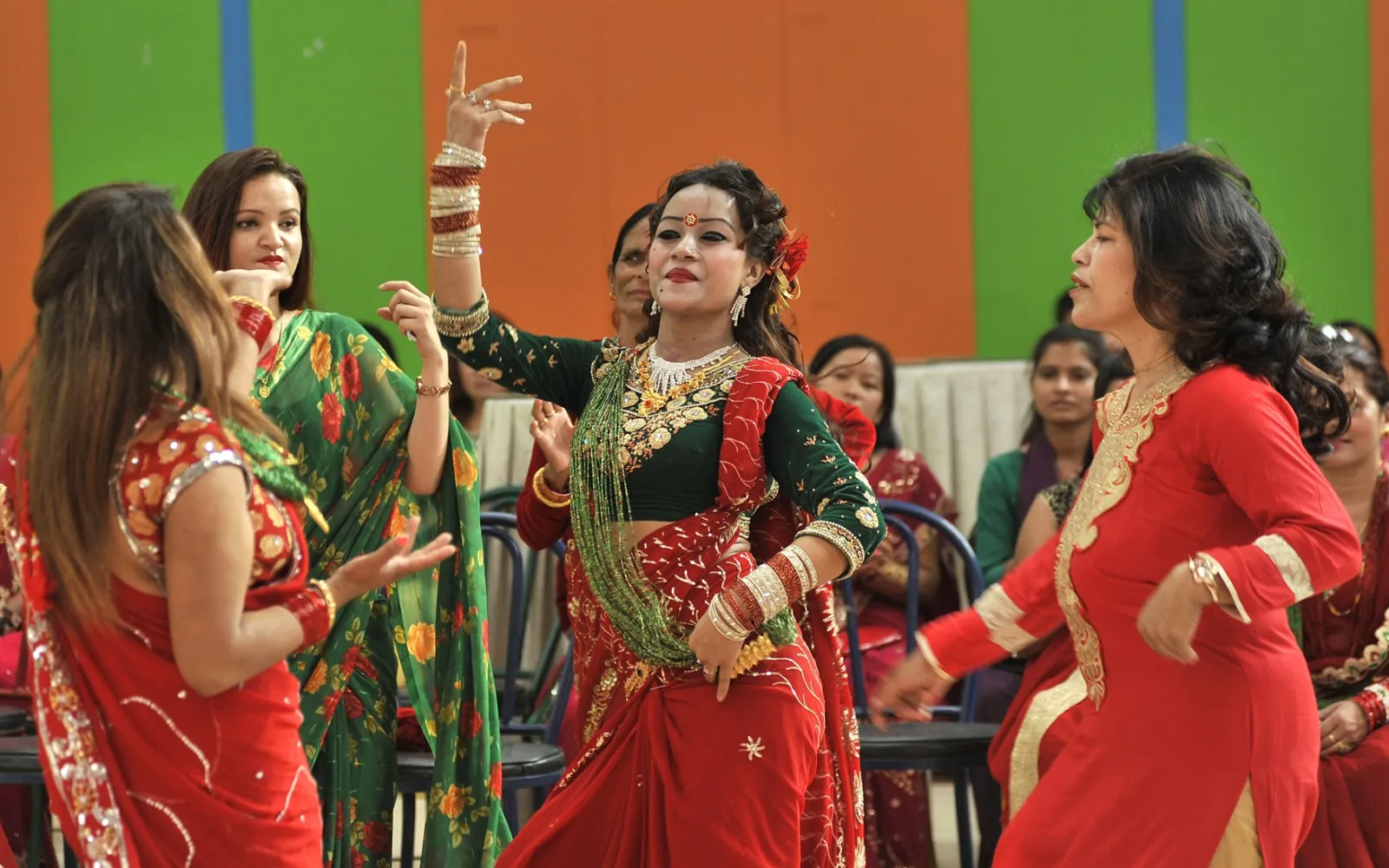
The color red has symbolic importance in Hinduism, being the color of marriage, celebration, prosperity, and cultural identity. In particular, women wear traditional red sarees and jewelry during the festival, which makes them remarkable in red and green color.
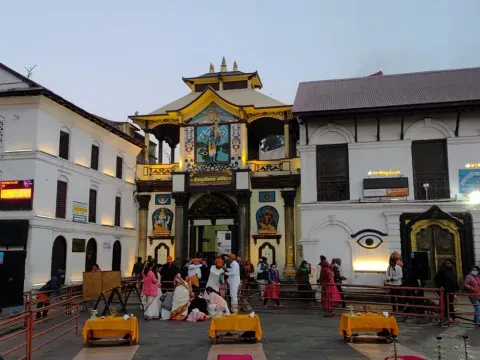
Meanwhile, the number of women in traditional attires gathers at Shiva temples, and the Pashupatinath Temple in Kathmandu is one of the most visited places during this holiday.
Pashupatinath Temple is one of the most sacred places to visit during Teej because of its religious significance. Thousands of women gather here to sing, dance, and wait for their turn to worship at this sacred place.
In fact, this festival reflects women’s internal religiosity and serves as a symbol of female solidarity and identity. The gathering of women from different families and social groups strengthens the sense of community.
Nowadays, the Teej holiday in Nepal has acquired a new cultural and social significance. Nepal Tourism Board notes that aside from its religious significance, Teej has a modern interpretation related to women’s rights.
Likewise, the tradition of Teej songs and the gathering of women serve as a reminder of women’s social and economic empowerment.
More importantly, women from different communities and social groups gather to visit their parents’ houses, especially before the fasting day. Close relatives and friends have an opportunity to meet and have a meal together before the holiday.
Therefore, Teej is not only a religious festival but also a social event combining family values and community relations.
| Aspect | Importance |
|---|---|
| Religious | Worship of Parvati & Shiva |
| Historical | Connection with ancient Hindu traditions |
| Cultural | Preservation of songs, dance, rituals |
| Social | Gathering of women, families, community |
| Spiritual | Fasting, devotion, faith |
Teej is one of the most vibrant and culturally significant holidays in Nepal, which combines social and religious aspects of the celebration.
Over time, it has developed from a purely religious observance to a dynamic cultural event. The unique beliefs, customs, and rituals load this festival with great historical and cultural significance.
Moreover, women express their inner feelings during the Teej songs, which serve as a reminder of the festival’s historical importance.
The historical importance of Teej Festival is largely attributed to its ancient Hindu religious traditions and cultural significance. Haritalika Teej holiday is closely related to Hindu mythology about Goddess Parvati and Lord Shiva.
According to ancient legend, Parvati’s father wanted to give his daughter in marriage to Lord Vishnu. Nevertheless, Goddess Parvati was determined to marry Shiva and performed severe penance.
Thus, her devotion was rewarded, and she reached her goal as her wish came true and she married Shiva.
Parvati and Shiva are central deities of Hinduism, and Shiva is one of the most revered gods. He is also called the destroyer and transformer and plays a crucial role in the creation and destruction of the universe.
Meanwhile, goddess Parvati is the daughter of Himavat and Menaka. She is also worshipped as the goddess of love who brings devotion and prosperity.
In Hindu mythology, Parvati is considered one of the most powerful goddesses as she has overcome numerous challenges in her life.
| Historical Element | Importance |
|---|---|
| Goddess Parvati | Central figure of devotion |
| Lord Shiva | Main deity of worship |
| Penance and devotion | Religious significance |
| Parvati and Shiva marriage | Legendary event |
| Haritalika tradition | Identity of Teej |
The rich history of this holiday is filled with legends and religious practices. It is noteworthy that the historical importance of Teej cannot be fully evaluated using a single page of history.
Rather, the religious beliefs about Parvati and Shiva and the cultural heritage passed from generation to generation are responsible for such a bright and memorable holiday.
Determining the precise date when Teej tradition started is rather difficult because this holiday is related to Hindu mythology. Researchers and historians try to find out the origin of this festival using literature, epics, and other sources.
However, the word Teej is believed to have originated from Tritiya which means the third day. Haritalika Teej is called Bhadra Shukla Tritiya in Nepal and this name reflects the time when the festival takes place.
For centuries, Teej has been an important holiday in Nepalese culture, representing a unique synthesis of religious traditions.
In particular, the cultural traditions related to this festival reflect social customs and lifestyles. The holiday cements women’s devotion to Lord Shiva through fasting and special worship.
In addition, the tradition of gathering with friends and family is also an essential part of celebrating Teej.
More precisely, women used to gather together to strengthen social ties and support each other. They usually visited their maternal houses before the fasting day. Such celebrations helped preserve cultural traditions and folk customs.
Historical Development of Teej in Nepal :
In summary, the historical development of Teej covers a long period of time and is related to various socio-cultural and spiritual aspects. Thus, this tradition has become an indispensable part of Nepal’s cultural heritage.
The tradition of singing Teej songs plays a vital role in the history and culture of this festival. Such folk songs usually describe women’s daily life and reflect their joys and worries.
Over centuries, this type of oral literature has been passed from generation to generation.
In particular, Teej songs represent the feminine side of the festival, which is a kind of women’s self-expression at the communal level.
What is more, through these literary songs, one can learn about the social and historical aspects of Nepal’s culture.
| Cultural Role | Historical Importance |
|---|---|
| Oral literature | Preserving traditional folklore |
| Women’s stories | Sharing experiences of women |
| Social development | Demonstrating the historical processes |
| Language richness | Valuable linguistic heritage |
| Music and dance | Essential attribute of Teej |
| Social commentary | Representing societal events |
Therefore, Teej songs are an important part of Nepalese cultural heritage. A wide range of topics reflected in this type of literature demonstrates the significance of this holiday in Nepalese history.
The rich history of Teej holiday is filled with various traditions and customs. Over time, these rituals evolved and were adjusted to meet the needs of modern society.
Nevertheless, the essential elements of Teej remain the same, and the festival continues to unite people. Historically, the social importance of this festival was related to women’s gathering.
Thus, the tradition of visiting maternal houses and socializing with relatives and friends is still central to this holiday.
The meaning and significance of Teej have changed throughout the years. This festival has been popular in Nepal for centuries.
Although it is primarily connected with religious practices such as fasting and worshipping, over time it acquired social and cultural significance. The devotion to Goddess Parvati and Lord Shiva is at the heart of Teej traditions.
In fact, the historical importance of Teej lies in its socio-cultural and religious aspects. Today, in Nepal, this festival is celebrated with traditional songs, dance, and feasting.
Moreover, modern society reinterprets the religious traditions and rituals of Teej, giving it new social meanings and reflecting women’s status in society.
| Area | Historical Importance |
|---|---|
| Religion | Preservation of Hindu beliefs |
| Mythology | The story of Goddess Parvati |
| Ancient tradition | Long-standing cultural practices |
| Culture | Folklore, dance, songs, and rituals |
| Women | The leading figures of the celebration |
| Family | Family and social connections |
| Temples | Religious worship and traditions |
| Modern society | The dynamic changes in culture |
Thus, the historical importance of this holiday is tremendous because it reflects Nepal’s cultural and social history. This festival demonstrates how the traditions of the past had been adapted to the needs of different communities and how they influenced the development of this society.
The primary myth related to the festival Teej, or Haritalika Teej, is the story of Goddess Parvati and Lord Shiva.
According to the myth, Parvati wanted to become Shiva’s wife and engaged in a severe penance to reach this goal.
Actually, her father wanted Parvati to become Lord Vishnu’s wife, but the goddess was not willing to accept this proposal.
Similarly, her father told her that she had to return home, but Parvati convinced her friends to take her to an isolated place for further penance. This is reflected in the name Hari, which means to take away or carry off, and Alika, which means a female friend or companion.
Here, the myth tells about Parvati’s determination to become Shiva’s wife despite the obstacles. As a result of her efforts, Shiva agreed to marry her.
Therefore, the story is the reason for the festival, which is dedicated to Parvati. In addition, Hindu women observe a vow of fasting as a sign of devotion to the goddess.
Moreover, married women pray for the well-being and longevity of their husbands, and unmarried women ask for a groom-to-be.
What Does the Parvati and Shiva Myth Symbolize ?
| Symbol | Meaning |
|---|---|
| Parvati’s devotion | Faith and determination |
| Penance | Spiritual discipline and commitment |
| Parvati’s friends | Support and companionship among women |
| Shiva and Parvati’s union | Devoted marital relationship |
| Fasting | Religious dedication, prayer |
| Worship | Seeking blessings, spiritual well-being |
Thus, the story is the reason for the festival because it is part of the religion and mythology of Hindus. It is a myth because it is sacred to the Hindus and has a symbolic meaning; therefore, it should not be treated as a historical event.
Moreover, it is essential to distinguish the myth from history because it presents a significant cultural and religious context for the festival.
Additionally, the story explains the themes and symbols of the festival. It is why the festival is related to marriage, fasting, devotion, and women’s friendship.
Over time, the myth has helped shape the festival’s themes and rituals. The festival is famous for its community of women, where they gather to celebrate the holiday with their relatives and friends.
Therefore, over the years, the religious aspect of the festival has acquired new social meanings.
Teej is usually celebrated with a feast, fasting, worshipping, singing, dancing, and visiting temples with relatives and friends.
Specifically, Haritalika Teej is considered the most important day of the festival and is dedicated to Goddess Parvati. It is celebrated on the third day of the bright fortnight in Bhadra month (August or September).
The preparation for Teej usually starts with Dar, which is a feast, where women and their relatives gather, eat, sing, and dance before fasting begins.
Meanwhile, women usually wear traditional clothing, such as a red sari, and adorn themselves with jewelry, bangles, tika, and other decorations in red color. It is because red is synonymous with marriage and other auspicious occasions in Nepal.
Many Hindu women keep a fast on Haritalika Teej and spend the day in prayers. Traditionally, women observe a strict fast, and they do not eat or drink anything during the day.
However, many factors affect fasting, such as a person’s health, family, and personal beliefs. Moreover, fasting is strongly related to the religious aspect of Teej since it is kept in honor of Lord Shiva and Goddess Parvati.
Furthermore, fasting is also a prayer for the well-being of family members and prosperity. In addition, women who have not been married yet pray for the groom to appear soon.
Today, the tradition is mainly connected with married women, and unmarried girls can participate in almost any aspect of the festival.
Worshipping is an essential part of Teej, and women go to Shiva temples to pray and offer their food, flowers, fruits, lights, and incense.
Moreover, they usually devote themselves to Lord Shiva and Goddess Parvati. One of the most popular temples to visit on this day is Pashupatinath Temple in Kathmandu. Women gather in large numbers, and the place becomes very crowded.
But, It is worth noting that women from different communities, temples, villages, and families can gather at one temple, providing a more significant gathering of people.
Usually, women decorate the temples, wear traditional dresses, and jewelry, sing devotional songs, and pray to Lord Shiva. The songs they perform mostly relate to Goddess Parvati, Lord Shiva, love, marriage, homesickness, family, and community.
However, the specific ritual practices might differ from one family or community to another.
Singing and dancing are an indispensable part of the festival because they symbolize the spirit and cultural heritage of the festival. Community participation is essential, and women gather in groups to perform traditional songs and dances.
In addition, traditional dances and songs are a way of bringing communities together with the family. Moreover, songs are essential to the festival because they represent the feelings and attitudes towards marriage, love, and family in Nepali culture.
Meanwhile, songs performed on Teej can be either traditional or modern, relating to different aspects of women’s lives or social issues. Modern songs are more connected with women’s rights, social rights, family values, and the reflection on contemporary Nepali society rather than religious themes.
The day after Teej is known as Rishi Panchami, where religious rites and rituals are performed. Similarly to other days, people keep fasting and perform various Hindu rituals after the main day of the festival.
Here, Rishi Panchami is believed to wash away all the sins, and there are different rites performed to achieve this goal. Overall, the religious aspect is the core of the festival, which is reflected in the numerous rituals and offerings.
Therefore, apart from the main day of fasting and celebrating, Teej is also characterized by other days of religious observance and family gatherings.
In this way, the community gathers more frequently during the festival, contributing to the festival’s popularity as an important holiday.
Modern Teej is celebrated in the communities as a cultural and religious festival with traditional and modern practices.
Moreover, women participate in the festival in both traditional and non-traditional ways, which reflects the different aspects of culture and social life.
In addition, the festival is not only limited to villages but is also gaining increasing popularity among the urban population.
Apart from observing the traditional rituals of the festival, women also participate in singing and dance performances.
Moreover, community centers, workplaces, social groups, and government organizations arrange cultural programs and special gatherings.
In addition, Teej has become a popular cultural event where women express their views, opinions, and concerns about their daily lives.
Moreover, modern songs performed on this day reflect current social issues faced by women in Nepali society.
Therefore, the festival is an important celebration, incorporating its religious aspects while also reflecting contemporary issues.
| Activity | Description |
|---|---|
| Dar feast | Families gather for a feast before beginning the daily fast. |
| Fasting | Devotees observe a daily fast, which varies from person to person. |
| Shiva worship | Women worship Lord Shiva and Goddess Parvati at temples. |
| Temple visits | Women visit Shiva temples, including Pashupatinath Temple. |
| Singing | Women perform traditional and modern songs related to Parvati. |
| Dancing | Women perform traditional dances and songs in groups. |
| Traditional dress | Clothing and jewelry in red are the most popular ones. |
| Family gathering | Married women and their families gather for the holidays. |
| Rishi Panchami | Religious rites and rituals are performed on this day after Teej. |
Teej is an essential festival in Nepal because it embodies the cultural beliefs and traditions of the Nepalese people.
Although the practices performed during the festival might differ from community to community, the central themes of devotion to Parvati and Shiva and the cultural traditions are the core of the festival.
While Teej is mostly celebrated by Hindu women in Nepal and other areas of the world inhabited by Hindus, it is good to mention that there is an official link to Goddess Parvati and Lord Shiva.
Traditionally, married women pray for the well-being and longevity of their husbands and families, while unmarried women traditionally pray for a good match and husband
Still, there is a lot more to it than just one group of women celebrating the festival for one particular purpose. Different women engage in various rituals, events, songs, dances, and family gatherings while observing the festival in their own way, according to their status and family traditions.
Who Traditionally Celebrates Teej ?
| Traditional Participants | Description |
|---|---|
| Married Hindu women | Pray for the well-being and longevity of husbands and families |
| Unmarried women | Traditionally pray for a good match and husband |
| Women of all ages (young and old) | Engage in songs, dances, gatherings, and other rituals |
| Mothers and daughters | Exchange family and festival traditions |
| Women living away from home | Visit relatives and participate in the festival |
| Hindu communities | Traditionally observe religious rituals and practices |
In addition to this, it is worth mentioning that Teej has traditionally been a good opportunity for women to visit their maternal families and have a celebration with their relatives and close ones.
Most importantly, the married women go back to their birthplace to join the parents ( Maiti) on the occasion the Teej festival and share about how is the married life going on.
As mentioned above, the main reason is related to religious practices and the story of Goddess Parvati. According to legend, she once performed a severe penance to convince Lord Shiva to marry her. This episode is still remembered on the day of Haritalika Teej, when women observe religious rituals fasting on an empty stomach.
In terms of married and unmarried women, the latter traditionally pray to goddess Parvati for a good match and a happy marriage.
Meanwhile, married women usually pray for the well-being and longevity of their husbands and children.
Nevertheless, there are also many other reasons why women choose to observe this festival.
Women love to celebrate Teej due to the numerous occasions to gather with relatives and friends, sing and dance together.
Moreover, traditional Teej songs have always been a reflection of women’s life, including themes related to love, separation from relatives, hard work, difficulties, joys, and many other topics.
In this respect, it is worth noting that many females in Nepal continue to observe Teej even if they do not follow all the fasting rules during the celebrations.
Thus, it is evident that the festival has become a symbol of women’s friendship, family ties, cultural identity, and expression of their joy and gratitude.
In this sense, Teej has become an essential holiday for Nepalese women as it reflects their attitude toward family, marriage, community, and cultural traditions.
More importantly, the festival is widely popular in Kathmandu and other regions of Nepal as people gather for various events, including visiting temples and friends, attending cultural performances, and participating in public entertainment programs.
Therefore, it is essential to emphasize that this holiday continues to be an important cultural and social event in Nepal that reflects the identity and spirituality of the Nepalese people.
The religious and cultural significance of Teej is related to the rich history of this festival, which is reflected in various rituals and traditions.
On the one hand, it is a religious holiday dedicated to Goddess Parvati and Lord Shiva. On the other hand, it is a cultural event that brings together families and communities, as well as a chance for women to demonstrate their talents through songs, dances, and other performances.
Haritalika Teej is dedicated to Goddess Parvati. In particular, this holiday is celebrated in honor of her marrying Lord Shiva after a long and painful penance.
On this day, women observe religious rituals fasting on an empty stomach as a sign of their devotion to her. They pray and seek the goddess’s blessing for a happy family life and prosperous marriage.
Nevertheless, the rules and rituals concerning fasting are different for everyone on this day.
In addition, married women usually pray for the well-being and longevity of their husbands, while unmarried women pray for finding a good match for marriage. From this perspective, the worship of Lord Shiva and Goddess Parvati is an essential part of the festival.
The cultural significance of Teej is difficult to overestimate, given that this holiday is traditionally associated with the visit of women to their maternal homes.
Here, they are supposed to gather with relatives and friends, celebrate this day together, and participate in various cultural events organized for them.
In this respect, Teej is when Nepalese women pay special attention to cultural traditions related to their ethnic identity, including folk crafts, music, dance, cuisine, and language.
In particular, this day is an excellent opportunity for families and communities to come together through music, singing, dancing, and special foods. In this sense, it is possible to say that Teej has become a symbol of women’s cultural identity, social interactions, and their positive attitude toward folk traditions.
In addition, it is a great inspiration for young people to observe this festival in an extended family circle and learn the cultural and traditional values of their ancestors.
| Aspect | Description |
|---|---|
| Importance of Parvati and Shiva | The main gods of the holiday; Parvati’s penance is the reason for the festival |
| Significance of fasting | Religious observance; women demonstrate devotion to the gods |
| Praying to Parvati and Shiva | Religious observance; married women pray for themselves and their families |
| Themes of marriage and marriageability | Marriages are an essential part of Teej traditions |
| Importance of family and community | As the holiday is mainly celebrated by women, family and community connections become more significant |
| Women’s solidarity and socialization | The tradition of singing and dancing helps women interact more with each other |
| Importance of songs during the festival | Songs reflect women’s concerns; both the past and present issues are covered |
| The role of dance in Teej festivals | It is a way to demonstrate women’s creativity and interact with each other |
| The significance of red color in women’s traditional clothing | Symbolism of red color: marriage, fertility, wealth, and good luck. |
More importantly, visiting Pashupatinath Temple for prayers and worship This is one of the most important shrines in Nepal, so many people come to observe the holiday and get into the spirit of the festival.
As mentioned above, Teej songs are crucial to women as they represent their concerns and aspirations. They are also entertaining and can be performed solo or in groups. They can relate to various topics, ranging from marriage and family to love and friendship. In this respect, the significance of these songs cannot be denied.
Moreover, traditional songs contain invaluable cultural meanings and help pass them on to future generations. This is especially true for those containing religious and folklore mythology. In this sense, the role of Teej music is significant not only culturally but historically as well.
Red color is a symbol of good fortune, marital status, fertility, happiness, and wealth. It is a distinctive feature of the traditional costumes of Hindu women in Nepal.
As a result, they put on red-colored sari as a full dress, as well as various ornaments and make up. In this sense, the popularity of this color during the holiday makes it more festive and memorable.
Pashupatinath Temple is one of the most revered places of worship in Nepal, so it is not surprising that this religious site is closely associated with the Teej festival.
During this holiday, a large number of people gather to attend various events, including performances and celebrations. In this sense, the importance of Pashupatinath is difficult to overestimate.
It should be clear from the previous paragraphs that the cultural significance of Teej is manifested in different things for different people.
While it is believed that on this day women should gather together and pray, today it has gone beyond of this as women engage in all sorts of performances and events.
Here, it would be wrong to say that this changed something fundamental about the essence and history of this holiday. Rather, its cultural and social importance keeps changing as it continues to evolve.
In summary, it is possible to argue that the main strengths of Teej are its diverse cultural significance, connection to Nepal’s rich history and tradition, and the presence of spiritual values which unite people.
On this day, one can observe traditional rituals, folk dances and songs, special foods, and unique customs.
In addition, Teej is a great holiday for women who unite for various performances, contests, and events. It is an important day for all Nepalese people as it strengthens family bonds and community relationships.
Therefore, this festival is also an excellent cultural experience for tourists who want to become acquainted with the ethnic traditions of the local people. It is worth remembering that observing this religious holiday is mainly a matter of personal beliefs.
Thus, people should treat this festival with respect and understanding that this holiday is celebrated in different ways in different communities and countries.
Teej Festival is basically a Hindu and cultural event that celebrates devotion to gods, familial love, women’s role in culture, music, dancing, and more. Associated with Goddess Parvati and Lord Shiva, and with stories involving the creation of the universe, this is a deeply religious festival with thousands of years of history behind it.
Added to that are the traditions and folklore associated with Teej Day, which have become an inseparable part of Nepali culture.
Though fasting and praying at temples are traditional activities, modern festivals see women gathering with their families and friends, visiting their parents, wearing red clothes, singing and dancing, and much more.
Depending on a person’s beliefs or family traditions, there might not be elements like fasting or visiting temples, and there is no single rule or tradition that applies to the festival as a whole.
As such, as much as it is a Hindu religious festival with ancient roots, it still sees Nepalis from many backgrounds and beliefs celebrating it in their own way.
As a cultural phenomenon, it is a great way for tourists to experience local color, learn about the culture and history of Nepal, and observe the traditions and superstitions of Nepalis.
However, visitors are encouraged to be respectful of the religion and beliefs of locals, as Teej is primarily a religious festival for many people in Nepal.
In conclusion, it is a living tradition that has connected ancient Hindu culture with Nepali traditions, making it one of the most famous and recognizable festivals in the country.
Teej Festival, especially Haritalika Teej in Nepal, is a significant Hindu festival linked with women, worships of Lord Shiva and Goddess Parvati, marriage, family welfare, and purity. It is a three-day festival in Nepal where women wear red clothes, go to temples, and dance and sing while they fast.
Hindu women, both single and married, observe this festival in Nepal. Married women pray for the well-being of their husbands, and those who are not married pray for a suitable groom for them, and currently, it has turned into a festival of women’s friendship and culture.
This festival is celebrated in houses, communities, and temples, including Pashupatinath Temple in Kathmandu, where thousands of women go to pray. They wear traditional attires, apply tika and mehendi, put on bangles, and jewelry while dancing and singing folk songs, visit their parents’ houses, and enjoy the Dar feast with family and friends while fasting.
The religious significance of Teej Festival is the worship of Goddess Parvati and Lord Shiva, and women observe this festival by praying for the well-being of their families, husband’s long life, happiness, and prosperity.
In terms of cultural significance, the festival allows women to communicate with each other, including their siblings and parents, and express their love through songs and dances and reaffirm their cultural identity.
The legend of Goddess Parvati and Lord Shiva is linked with the festival. According to the epic, Goddess Parvati performed rigorous penance for a long time to convince Lord Shiva to accept her as his wife, and they got married, which resulted in Teej.
Therefore, women celebrate this festival in the name of Goddess Parvati as an expression of their devotion and gratitude to her for giving them husbands and wives and for granting them happiness and long life.
Yes, Teej is also celebrated in India, but there are variations in customs and names of the festival as well as its traditions and the scale of the events.
For instance, in Rajasthan, Jaipur organizes a festival of Teej with a significant number of people participating in traditional attires, folk songs and dances, and a Teej Mata procession, and other events.
In fact, this is the largest festival of Teej in India, which symbolizes the monsoon season and is celebrated with extraordinary enthusiasm.

Our travel experts are ready to assist you with any questions.
Send us a message.Have a question before you book? Send your enquiry below and our travel experts will get back with the required information.