[{"name":"Everest Base Camp Helicopter Tour","duration":"1","image_url":"https:\/\/www.havenholidaysnepal.com\/storage\/trip-galleries\/1\/thumb_6cd53005d75a86e373d31419d1b14d78.webp","offer_price":1195,"url":"https:\/\/www.havenholidaysnepal.com\/trips\/everest-base-camp-helicopter-tour"},{"name":"Everest Mountain Flight","duration":"1","image_url":"https:\/\/www.havenholidaysnepal.com\/storage\/trip-galleries\/4\/thumb_3b0b4f1d6f72b0ad224daf4752f2c6e0.jpg","offer_price":285,"url":"https:\/\/www.havenholidaysnepal.com\/trips\/everest-mountain-flight"},{"name":"Everest Short Trek","duration":"9","image_url":"https:\/\/www.havenholidaysnepal.com\/storage\/trip-galleries\/5\/thumb_BXPP3621.JPEG0.02033800 1727957098.webp","offer_price":995,"url":"https:\/\/www.havenholidaysnepal.com\/trips\/everest-short-trek"},{"name":"Gokyo Valley Trek","duration":"12","image_url":"https:\/\/www.havenholidaysnepal.com\/storage\/trip-galleries\/6\/thumb_10bc469b14731f23d3ce84a7092ad53f.jpg","offer_price":1195,"url":"https:\/\/www.havenholidaysnepal.com\/trips\/gokyo-valley-trek"},{"name":"15 days Annapurna Base Camp Trek","duration":"15","image_url":"https:\/\/www.havenholidaysnepal.com\/storage\/trip-galleries\/7\/thumb_87d1533bc45faf070990aef0579e4be4.jpg0.81855100 1728285496.webp","offer_price":785,"url":"https:\/\/www.havenholidaysnepal.com\/trips\/15-days-annapurna-base-camp-trek"},{"name":"Nepal Pilgrimage Tour","duration":"14","image_url":"https:\/\/www.havenholidaysnepal.com\/storage\/trip-galleries\/8\/thumb_02c3bcf2ad2e8a4c1703e90ae747b5f1.jpg","offer_price":1475,"url":"https:\/\/www.havenholidaysnepal.com\/trips\/nepal-pilgrimage-tour"},{"name":"UNESCO World Heritage Site Tour","duration":"10","image_url":"https:\/\/www.havenholidaysnepal.com\/storage\/trip-galleries\/9\/thumb_unesco-world-heritage-site-Lumbani-temple-buddhists-hindus-kathmandu-nepal0.36988600 17347617740.93089500 1737469667.webp","offer_price":715,"url":"https:\/\/www.havenholidaysnepal.com\/trips\/unesco-world-heritage-site-tour"},{"name":"Island Peak Climbing","duration":"16","image_url":"https:\/\/www.havenholidaysnepal.com\/storage\/trip-galleries\/11\/thumb_Island peak0.53947000 1734692503.webp","offer_price":2495,"url":"https:\/\/www.havenholidaysnepal.com\/trips\/island-peak-climbing"},{"name":"Upper Mustang Trek","duration":"18","image_url":"https:\/\/www.havenholidaysnepal.com\/storage\/trip-galleries\/12\/thumb_upper mustang 7 Oct-2024.jpg0.95398900 1728286166.webp","offer_price":2995,"url":"https:\/\/www.havenholidaysnepal.com\/trips\/upper-mustang-trek"},{"name":"Annapurna Circuit Trek","duration":"16","image_url":"https:\/\/www.havenholidaysnepal.com\/storage\/trip-galleries\/15\/thumb_tibetan-flags.jpg0.04843900 1728289138.webp","offer_price":985,"url":"https:\/\/www.havenholidaysnepal.com\/trips\/annapurna-circuit-trek"},{"name":"Gosainkunda Lake Trek","duration":"10","image_url":"https:\/\/www.havenholidaysnepal.com\/storage\/trip-galleries\/16\/thumb_5A8083B3-C007-41A8-853F-D0C37C97D235_1_105_c.jpeg0.52581200 1731845258.webp","offer_price":595,"url":"https:\/\/www.havenholidaysnepal.com\/trips\/gosainkunda-lake-trek"},{"name":"Zip-lining in Pokhara and Dhulikhel","duration":"1","image_url":"https:\/\/www.havenholidaysnepal.com\/storage\/trip-galleries\/18\/thumb_215f765e2ebc995dd5c800b4bfdbacc3.jpg","offer_price":82,"url":"https:\/\/www.havenholidaysnepal.com\/trips\/zip-lining-in-pokhara-and-dhulikhel"},{"name":"Annapurna Heli Tour","duration":"1","image_url":"https:\/\/www.havenholidaysnepal.com\/storage\/trip-galleries\/19\/thumb_d71a6bbb9fd4da8d1b567a5cdbdec85d.jpg","offer_price":555,"url":"https:\/\/www.havenholidaysnepal.com\/trips\/annapurna-heli-tour"},{"name":"Paragliding in Pokhara","duration":"1","image_url":"https:\/\/www.havenholidaysnepal.com\/storage\/trip-galleries\/20\/thumb_de788d2dd9726783431f882c007efae1.jpg","offer_price":65,"url":"https:\/\/www.havenholidaysnepal.com\/trips\/paragliding-in-pokhara"},{"name":"Ultra-Flight in Pokhara","duration":"1","image_url":"https:\/\/www.havenholidaysnepal.com\/storage\/trip-galleries\/21\/thumb_e27a9fb572a5c21611bb2a3c18e4b8f0.jpeg","offer_price":175,"url":"https:\/\/www.havenholidaysnepal.com\/trips\/ultra-flight-in-pokhara"},{"name":"Sarangkot Hiking","duration":"1","image_url":"https:\/\/www.havenholidaysnepal.com\/storage\/trip-galleries\/22\/thumb_100ef822fea19987166c6c1366215f15.jpg","offer_price":55,"url":"https:\/\/www.havenholidaysnepal.com\/trips\/sarangkot-hiking"},{"name":"Mera Peak Climbing","duration":"18","image_url":"https:\/\/www.havenholidaysnepal.com\/storage\/trip-galleries\/24\/thumb_d16ae3895f678cf26ffbf2455f541fb5.jpg0.31883400 1732617790.webp","offer_price":2475,"url":"https:\/\/www.havenholidaysnepal.com\/trips\/mera-peak-climbing"},{"name":"Lower Dolpo Trek","duration":"18","image_url":"https:\/\/www.havenholidaysnepal.com\/storage\/trip-galleries\/26\/thumb_Dolpo Galary - 1.JPG0.37725200 1727939952.webp","offer_price":2995,"url":"https:\/\/www.havenholidaysnepal.com\/trips\/lower-dolpo-trek"},{"name":"Nagarkot Sunrise\/Sunset Tour","duration":"1","image_url":"https:\/\/www.havenholidaysnepal.com\/storage\/trip-galleries\/27\/thumb_5147a5532644283a380f2e86f3857c13.jpg0.17748000 1728488108.webp","offer_price":30,"url":"https:\/\/www.havenholidaysnepal.com\/trips\/nagarkot-sunrise-sunset-tour"},{"name":"16 day Everest Base Camp Trek","duration":"16","image_url":"https:\/\/www.havenholidaysnepal.com\/storage\/trip-galleries\/28\/thumb_IMG_4311.JPG0.64984800 1727942213.webp","offer_price":1695,"url":"https:\/\/www.havenholidaysnepal.com\/trips\/16-day-everest-base-camp-trek"},{"name":"Ghorepani Poon Hill trek with Jungle Safari and Trishuli River Rafting -13 days","duration":"13","image_url":"https:\/\/www.havenholidaysnepal.com\/storage\/trip-galleries\/29\/thumb_Ghorepani Poon hill.jpg0.48460800 1728281439.webp","offer_price":795,"url":"https:\/\/www.havenholidaysnepal.com\/trips\/ghorepani-poon-hill-trek-with-jungle-safari-and-trishuli-river-rafting--13-days"},{"name":"Mardi Himal Trek","duration":"12","image_url":"https:\/\/www.havenholidaysnepal.com\/storage\/trip-galleries\/30\/thumb_s1.jpg0.62112600 1728200721.webp","offer_price":795,"url":"https:\/\/www.havenholidaysnepal.com\/trips\/mardi-himal-trek"},{"name":"Langtang Valley Trekking","duration":"10","image_url":"https:\/\/www.havenholidaysnepal.com\/storage\/trip-galleries\/31\/thumb_IMG_4702.JPG0.84916500 1727958504.webp","offer_price":685,"url":"https:\/\/www.havenholidaysnepal.com\/trips\/langtang-valley-trekking"},{"name":"Real Adventure Tour in Nepal","duration":"9","image_url":"https:\/\/www.havenholidaysnepal.com\/storage\/trip-galleries\/32\/thumb_ebd1b8cc78d90abe8b9003dd9a2f25bf.jpg0.82151300 1728213516.webp","offer_price":695,"url":"https:\/\/www.havenholidaysnepal.com\/trips\/real-adventure-tour-in-nepal"},{"name":"Luxury Tour in Nepal","duration":"10","image_url":"https:\/\/www.havenholidaysnepal.com\/storage\/trip-galleries\/33\/thumb_8574e61b252b18676b042caf30d830df.jpg","offer_price":1675,"url":"https:\/\/www.havenholidaysnepal.com\/trips\/luxury-tour-in-nepal"},{"name":"Luxury Everest Panorama Trek With EBC Heli Sightseeing","duration":"8","image_url":"https:\/\/www.havenholidaysnepal.com\/storage\/trip-galleries\/34\/thumb_URZL2397.JPEG0.01209600 1728027820.webp","offer_price":2395,"url":"https:\/\/www.havenholidaysnepal.com\/trips\/luxury-everest-panorama-trek-with-ebc-heli-sightseeing"},{"name":"13 day Everest Base Camp Trek with Helicopter","duration":"13","image_url":"https:\/\/www.havenholidaysnepal.com\/storage\/trip-galleries\/35\/thumb_IMG_4292.JPG0.70131500 1728029276.webp","offer_price":2095,"url":"https:\/\/www.havenholidaysnepal.com\/trips\/13-day-everest-base-camp-trek-with-helicopter"},{"name":"Manaslu Circuit Trek","duration":"16","image_url":"https:\/\/www.havenholidaysnepal.com\/storage\/trip-galleries\/36\/thumb_Mt Manaslu 03-Oct-2024.jpg0.65804900 1727938470.webp","offer_price":1055,"url":"https:\/\/www.havenholidaysnepal.com\/trips\/manaslu-circuit-trek"},{"name":"Kanchenjunga Base Camp Trek","duration":"21","image_url":"https:\/\/www.havenholidaysnepal.com\/storage\/trip-galleries\/37\/thumb_Kanchanjunga Trek -!.jpg0.54744400 1727938497.webp","offer_price":2275,"url":"https:\/\/www.havenholidaysnepal.com\/trips\/kanchenjunga-base-camp-trek"},{"name":"Ganesh Himal and Sing-La Trek","duration":"14","image_url":"https:\/\/www.havenholidaysnepal.com\/storage\/trip-galleries\/38\/thumb_Ganesh Himal slider-1.jpg0.43764500 1727937722.webp","offer_price":1775,"url":"https:\/\/www.havenholidaysnepal.com\/trips\/ganesh-himal-and-sing-la-trek"},{"name":"Island Peak Climb with Everest Base Camp Trek","duration":"21","image_url":"https:\/\/www.havenholidaysnepal.com\/storage\/trip-galleries\/39\/thumb_2be428730fe83525bc85a010564f99de.jpg","offer_price":2750,"url":"https:\/\/www.havenholidaysnepal.com\/trips\/island-peak-climb-with-everest-base-camp-trek"},{"name":"Students' Adventure Tour in Nepal","duration":"12","image_url":"https:\/\/www.havenholidaysnepal.com\/storage\/trip-galleries\/41\/thumb_a926d22fbfe08cba271c41ac289b3fd2.jpg","offer_price":995,"url":"https:\/\/www.havenholidaysnepal.com\/trips\/students-adventure-tour-in-nepal"},{"name":"7 Day Poonhill Trek","duration":"7","image_url":"https:\/\/www.havenholidaysnepal.com\/storage\/trip-galleries\/42\/thumb_6196bd69036473293a2c24cc21ed57d7.jpg0.10880600 1728205378.webp","offer_price":555,"url":"https:\/\/www.havenholidaysnepal.com\/trips\/7-day-poonhill-trek"},{"name":"7 Days Annapurna Base Camp Trek","duration":"7","image_url":"https:\/\/www.havenholidaysnepal.com\/storage\/trip-galleries\/43\/thumb_IMG_2214.JPG0.08204900 1728202033.webp","offer_price":355,"url":"https:\/\/www.havenholidaysnepal.com\/trips\/7-days-annapurna-base-camp-trek"},{"name":"3 days Poonhill Trek","duration":"3","image_url":"https:\/\/www.havenholidaysnepal.com\/storage\/trip-galleries\/44\/thumb_Poon hill.jpg0.60816600 1731412954.webp","offer_price":165,"url":"https:\/\/www.havenholidaysnepal.com\/trips\/3-days-poonhill-trek"},{"name":"Poon Hill Luxury Trek with Chitwan-12 days","duration":"12","image_url":"https:\/\/www.havenholidaysnepal.com\/storage\/trip-galleries\/45\/thumb_Poom hill.jpg0.52074500 1730180532.webp","offer_price":1175,"url":"https:\/\/www.havenholidaysnepal.com\/trips\/poon-hill-luxury-trek-with-chitwan-12-days"},{"name":"Everest Luxury Trek-7 days","duration":"7","image_url":"https:\/\/www.havenholidaysnepal.com\/storage\/trip-galleries\/46\/thumb_ACRX9330.JPEG0.93236200 1728031275.webp","offer_price":2195,"url":"https:\/\/www.havenholidaysnepal.com\/trips\/everest-luxury-trek-7-days"},{"name":"Hindu Pilgrimage Tour in Nepal-10 days","duration":"10","image_url":"https:\/\/www.havenholidaysnepal.com\/storage\/trip-galleries\/47\/thumb_a94bf96a4d31decb419f6f828a3280d2.jpg","offer_price":995,"url":"https:\/\/www.havenholidaysnepal.com\/trips\/hindu-pilgrimage-tour-in-nepal-10-days"},{"name":"Everest Base Camp Short Trek-12 days","duration":"12","image_url":"https:\/\/www.havenholidaysnepal.com\/storage\/trip-galleries\/48\/thumb_IMG_4311.JPG0.52680100 1727945154.webp","offer_price":995,"url":"https:\/\/www.havenholidaysnepal.com\/trips\/everest-base-camp-short-trek-12-days"},{"name":"Everest Base Camp Hike 12 Days","duration":"12","image_url":"https:\/\/www.havenholidaysnepal.com\/storage\/trip-galleries\/49\/thumb_IMG_4260.JPG0.51729100 1728061234.webp","offer_price":1295,"url":"https:\/\/www.havenholidaysnepal.com\/trips\/everest-base-camp-hike-12-days"},{"name":"11 Days Everest Base Camp Trek","duration":"11","image_url":"https:\/\/www.havenholidaysnepal.com\/storage\/trip-galleries\/50\/thumb_IMG_4249.JPG0.21392500 1727946959.webp","offer_price":1055,"url":"https:\/\/www.havenholidaysnepal.com\/trips\/11-days-everest-base-camp-trek"},{"name":"6 Days Annapurna Base Camp Trek","duration":"6","image_url":"https:\/\/www.havenholidaysnepal.com\/storage\/trip-galleries\/51\/thumb_6 days Abc.jpg0.58185400 1728200798.webp","offer_price":285,"url":"https:\/\/www.havenholidaysnepal.com\/trips\/6-days-annapurna-base-camp-trek"},{"name":"Annapurna Base Camp Trek","duration":"8","image_url":"https:\/\/www.havenholidaysnepal.com\/storage\/trip-galleries\/52\/thumb_IMG_2214.JPG0.29415700 1729487656.webp","offer_price":585,"url":"https:\/\/www.havenholidaysnepal.com\/trips\/annapurna-base-camp-trek"},{"name":"Everest Base Camp Trek with Helicopter Fly Out 10 Days","duration":"10","image_url":"https:\/\/www.havenholidaysnepal.com\/storage\/trip-galleries\/53\/thumb_IMG_4328.JPG0.52056600 1728058444.webp","offer_price":1875,"url":"https:\/\/www.havenholidaysnepal.com\/trips\/everest-base-camp-trek-with-helicopter-fly-out-10-days"},{"name":"Everest Base Camp Trek 14 Days","duration":"14","image_url":"https:\/\/www.havenholidaysnepal.com\/storage\/trip-galleries\/54\/thumb_Everest Base Camp Trek 14 days Oct 3 2024.JPG0.43202700 1727939745.webp","offer_price":1335,"url":"https:\/\/www.havenholidaysnepal.com\/trips\/everest-base-camp-trek-14-days"},{"name":"ABC Trek with Poonhill 11 Days","duration":"11","image_url":"https:\/\/www.havenholidaysnepal.com\/storage\/trip-galleries\/55\/thumb_ABC with fishtail.JPG0.21441100 1728277965.webp","offer_price":555,"url":"https:\/\/www.havenholidaysnepal.com\/trips\/abc-trek-with-poonhill-11-days"},{"name":"Muldai Hill Trek 9 Days","duration":"9","image_url":"https:\/\/www.havenholidaysnepal.com\/storage\/trip-galleries\/56\/thumb_7efee59f0a8c6817c8255bd2b9f3539d.jpeg0.19479300 1728213091.webp","offer_price":675,"url":"https:\/\/www.havenholidaysnepal.com\/trips\/muldai-hill-trek-9-days"},{"name":"Mardi Himal Trek 6 days","duration":"6","image_url":"https:\/\/www.havenholidaysnepal.com\/storage\/trip-galleries\/57\/thumb_slider 1.jpeg0.36909700 1728184981.webp","offer_price":590,"url":"https:\/\/www.havenholidaysnepal.com\/trips\/mardi-himal-trek-6-days"},{"name":"Mardi Himal Trek 7 days","duration":"7","image_url":"https:\/\/www.havenholidaysnepal.com\/storage\/trip-galleries\/58\/thumb_slider1.jpg0.61666600 1728206414.webp","offer_price":620,"url":"https:\/\/www.havenholidaysnepal.com\/trips\/mardi-himal-trek-7-days"},{"name":"Mardi Himal Trek 8 Days","duration":"8","image_url":"https:\/\/www.havenholidaysnepal.com\/storage\/trip-galleries\/59\/thumb_sli1.jpg0.38569100 1728206631.webp","offer_price":695,"url":"https:\/\/www.havenholidaysnepal.com\/trips\/mardi-himal-trek-8-days"},{"name":"14 Days Manaslu Trek","duration":"14","image_url":"https:\/\/www.havenholidaysnepal.com\/storage\/trip-galleries\/60\/thumb_sunrise-mt-manaslu-during-manaslu-circuit-larke-pass-trekking-himalaya-nepal (1)0.81855800 1738673284.webp","offer_price":885,"url":"https:\/\/www.havenholidaysnepal.com\/trips\/14-days-manaslu-trek"},{"name":"Dhampus-Sarangkot Trek with Chitwan 8 days","duration":"8","image_url":"https:\/\/www.havenholidaysnepal.com\/storage\/trip-galleries\/61\/thumb_Sarangkot Bhangyang.jpg0.75461400 1728210333.webp","offer_price":790,"url":"https:\/\/www.havenholidaysnepal.com\/trips\/dhampus-sarangkot-trek-with-chitwan-8-days"},{"name":"7 Days Golden Triangle Tour","duration":"7","image_url":"https:\/\/www.havenholidaysnepal.com\/storage\/trip-galleries\/62\/thumb_311ce1d117ee0ba75402a7c301bcdf830.73532400 1739179809.webp","offer_price":845,"url":"https:\/\/www.havenholidaysnepal.com\/trips\/7-days-golden-triangle-tour"},{"name":"Annapurna Circuit Trek 12 days","duration":"12","image_url":"https:\/\/www.havenholidaysnepal.com\/storage\/trip-galleries\/63\/thumb_IMG_20161024_092237.jpg0.57796600 1728289938.webp","offer_price":695,"url":"https:\/\/www.havenholidaysnepal.com\/trips\/annapurna-circuit-trek-12-days"},{"name":"Everest Base Camp Budget Trek 16 Days","duration":"16","image_url":"https:\/\/www.havenholidaysnepal.com\/storage\/trip-galleries\/64\/thumb_IMG_4423.JPG0.92579200 1728144669.webp","offer_price":958,"url":"https:\/\/www.havenholidaysnepal.com\/trips\/everest-base-camp-budget-trek-16-days"},{"name":"Poonhill Budget Trek 7 Days","duration":"7","image_url":"https:\/\/www.havenholidaysnepal.com\/storage\/trip-galleries\/65\/thumb_5be067852d0c5228d6f3155bc425c6b5.jpg","offer_price":395,"url":"https:\/\/www.havenholidaysnepal.com\/trips\/poonhill-budget-trek-7-days"},{"name":"Annapurna Base Camp Budget Trek 8 Days","duration":"8","image_url":"https:\/\/www.havenholidaysnepal.com\/storage\/trip-galleries\/66\/thumb_Pokhara.jpg0.16188000 1728212001.webp","offer_price":375,"url":"https:\/\/www.havenholidaysnepal.com\/trips\/annapurna-base-camp-budget-trek-8-days"},{"name":"The Real UNESCO Seven World Heritage Tour in Kathmandu 4 days","duration":"4","image_url":"https:\/\/www.havenholidaysnepal.com\/storage\/trip-galleries\/67\/thumb_Baudha Stupa.JPG0.63906900 1728201021.webp","offer_price":380,"url":"https:\/\/www.havenholidaysnepal.com\/trips\/the-real-unesco-seven-world-heritage-tour-in-kathmandu-4-days"},{"name":"Everest Base Camp Jeep Ride with Helicopter Return","duration":"14","image_url":"https:\/\/www.havenholidaysnepal.com\/storage\/trip-galleries\/68\/thumb_788ee5b63a6efb6f3c3d048b4270daca.JPG","offer_price":1995,"url":"https:\/\/www.havenholidaysnepal.com\/trips\/everest-base-camp-jeep-ride-with-helicopter-return"},{"name":"Annapurna Base Camp Jeep Ride with Helicopter Return 7 days","duration":"7","image_url":"https:\/\/www.havenholidaysnepal.com\/storage\/trip-galleries\/69\/thumb_abc jeep.jpg0.10280600 1728204064.webp","offer_price":1455,"url":"https:\/\/www.havenholidaysnepal.com\/trips\/annapurna-base-camp-jeep-ride-with-helicopter-return-7-days"},{"name":"Everest Base Camp Trek","duration":"15","image_url":"https:\/\/www.havenholidaysnepal.com\/storage\/trip-galleries\/70\/thumb_Everest Base Camp Trek 3 oct- 2024.JPG0.58445300 1727941472.webp","offer_price":1375,"url":"https:\/\/www.havenholidaysnepal.com\/trips\/everest-base-camp-trek"},{"name":"7 UNESCO World Heritage Tour Kathmandu 2 days","duration":"2","image_url":"https:\/\/www.havenholidaysnepal.com\/storage\/trip-galleries\/72\/thumb_Bhaktipur 3.jpg0.05559600 1728201496.webp","offer_price":150,"url":"https:\/\/www.havenholidaysnepal.com\/trips\/7-unesco-world-heritage-tour-kathmandu-2-days"},{"name":"Day Tour to UNESCO Heritage Sites","duration":"1","image_url":"https:\/\/www.havenholidaysnepal.com\/storage\/trip-galleries\/73\/thumb_228A1018.jpg0.79892500 1728199793.webp","offer_price":55,"url":"https:\/\/www.havenholidaysnepal.com\/trips\/day-tour-to-unesco-heritage-sites"},{"name":"Golden Triangle Tour in Nepal","duration":"8","image_url":"https:\/\/www.havenholidaysnepal.com\/storage\/trip-galleries\/74\/thumb_f54139cf9100f00015ffe0400687e946.webp","offer_price":588,"url":"https:\/\/www.havenholidaysnepal.com\/trips\/golden-triangle-tour-in-nepal"},{"name":"Everest Base Camp Honeymoon Tour by Helicopter with Pokhara","duration":"7 days","image_url":"https:\/\/www.havenholidaysnepal.com\/storage\/trip-galleries\/76\/thumb_RJTL7517.JPEG0.40261600 1731499989.webp","offer_price":9999,"url":"https:\/\/www.havenholidaysnepal.com\/trips\/everest-base-camp-honeymoon-tour-by-helicopter-with-pokhara"},{"name":"Yoga and Meditation Retreat Tour in Nepal","duration":"10 days","image_url":"https:\/\/www.havenholidaysnepal.com\/storage\/trip-galleries\/77\/thumb_decf8e33-6617-4400-9df0-63bf75509adf.JPG0.51948300 1731574810.webp","offer_price":2575,"url":"https:\/\/www.havenholidaysnepal.com\/trips\/yoga-and-meditation-retreat-tour-in-nepal"},{"name":"Chisapani-Nagarkot Trek","duration":"3","image_url":"https:\/\/www.havenholidaysnepal.com\/storage\/trip-galleries\/78\/thumb_0b64dfceaeab48ac36d685476bdebafb.webp","offer_price":165,"url":"https:\/\/www.havenholidaysnepal.com\/trips\/chisapani-nagarkot-trek"},{"name":"Chitwan Jungle Safari Tour","duration":"2","image_url":"https:\/\/www.havenholidaysnepal.com\/storage\/trip-galleries\/79\/thumb_IMG_1696.JPG0.28467800 1733054554.webp","offer_price":175,"url":"https:\/\/www.havenholidaysnepal.com\/trips\/chitwan-jungle-safari-tour"},{"name":"Kailash Overland Tour","duration":"16","image_url":"https:\/\/www.havenholidaysnepal.com\/storage\/trip-galleries\/80\/thumb_PA2605230.68496700 1735818657.webp","offer_price":2495,"url":"https:\/\/www.havenholidaysnepal.com\/trips\/kailash-overland-tour"},{"name":"4 nights 5 days Bhutan Tour","duration":"5","image_url":"https:\/\/www.havenholidaysnepal.com\/storage\/trip-galleries\/81\/thumb_PB0508470.23069500 1735828937.webp","offer_price":1265,"url":"https:\/\/www.havenholidaysnepal.com\/trips\/4-nights-5-days-bhutan-tour"},{"name":"Everest Base Camp Trek Without Flying","duration":"16","image_url":"https:\/\/www.havenholidaysnepal.com\/storage\/trip-galleries\/82\/thumb_308b054484eddc042e092e1ae2ae5586.webp","offer_price":685,"url":"https:\/\/www.havenholidaysnepal.com\/trips\/everest-base-camp-trek-without-flying"},{"name":"Everest Base Camp Trek by Land","duration":"16","image_url":"https:\/\/www.havenholidaysnepal.com\/storage\/trip-galleries\/83\/thumb_8f0f2784a3ae7343d193b64fe8d47c96.webp","offer_price":675,"url":"https:\/\/www.havenholidaysnepal.com\/trips\/everest-base-camp-trek-by-land"},{"name":"Everest Base Camp Trek by Jeep","duration":"16","image_url":"https:\/\/www.havenholidaysnepal.com\/storage\/trip-galleries\/84\/thumb_f82b3acdfc933bc3e0197624c001b0a6.webp","offer_price":675,"url":"https:\/\/www.havenholidaysnepal.com\/trips\/everest-base-camp-trek-by-jeep"},{"name":"Everest Base Camp Trek without Lukla Flight","duration":"16","image_url":"https:\/\/www.havenholidaysnepal.com\/storage\/trip-galleries\/85\/thumb_2d0acc76dc958e3122a3745074989914.webp","offer_price":675,"url":"https:\/\/www.havenholidaysnepal.com\/trips\/everest-base-camp-trek-without-lukla-flight"},{"name":"Langtang Valley Trek","duration":"7","image_url":"https:\/\/www.havenholidaysnepal.com\/storage\/trip-galleries\/86\/thumb_a845db06c5feada1478e8aed659fce97.webp","offer_price":195,"url":"https:\/\/www.havenholidaysnepal.com\/trips\/langtang-valley-trek"},{"name":"Everest Base Camp Trek with Gokyo Lake","duration":"17","image_url":"https:\/\/www.havenholidaysnepal.com\/storage\/trip-galleries\/87\/thumb_c6aa32f7654f2eda78134bc84ac70b79.webp","offer_price":1885,"url":"https:\/\/www.havenholidaysnepal.com\/trips\/everest-base-camp-trek-with-gokyo-lake"},{"name":"Everest Three Passes Trek","duration":"19","image_url":"https:\/\/www.havenholidaysnepal.com\/storage\/trip-galleries\/88\/thumb_db5364eaab56f5755da55868f8ca4258.webp","offer_price":1735,"url":"https:\/\/www.havenholidaysnepal.com\/trips\/everest-three-passes-trek"},{"name":"Annapurna Base Camp Trek From Pokhara","duration":"5","image_url":"https:\/\/www.havenholidaysnepal.com\/storage\/trip-galleries\/89\/thumb_49c813cf1054ff06108963924a78ee88.webp","offer_price":255,"url":"https:\/\/www.havenholidaysnepal.com\/trips\/annapurna-base-camp-trek-from-pokhara"},{"name":"Sarangkot Sunrise Tour from Pokhara","duration":"1","image_url":"https:\/\/www.havenholidaysnepal.com\/storage\/trip-galleries\/90\/thumb_932d995b8fb702634a23e8f9a0432c6e.webp","offer_price":35,"url":"https:\/\/www.havenholidaysnepal.com\/trips\/sarangkot-sunrise-tour-from-pokhara"},{"name":"Langtang Valley Trek-8 days","duration":"8","image_url":"https:\/\/www.havenholidaysnepal.com\/storage\/trip-galleries\/91\/thumb_81d3d0a6979c9ed01f65d5ade53820b2.webp","offer_price":250,"url":"https:\/\/www.havenholidaysnepal.com\/trips\/langtang-valley-trek-8-days"},{"name":"Manaslu Circuit Trek 12 days","duration":"12","image_url":"https:\/\/www.havenholidaysnepal.com\/storage\/trip-galleries\/92\/thumb_d8251bbef0c8a246a02bda5c150a27c2.webp","offer_price":675,"url":"https:\/\/www.havenholidaysnepal.com\/trips\/manaslu-circuit-trek-12-days"},{"name":"2 Days Poon Hill Trek","duration":"2","image_url":"https:\/\/www.havenholidaysnepal.com\/storage\/trip-galleries\/93\/thumb_9d8fa8f60767538857d6c7cb3a7fee8b.webp","offer_price":135,"url":"https:\/\/www.havenholidaysnepal.com\/trips\/2-days-poon-hill-trek"},{"name":"Upper Mustang Jeep Tour","duration":"6","image_url":"https:\/\/www.havenholidaysnepal.com\/storage\/trip-galleries\/94\/thumb_9a3098a6c860b87ad3339773ef5435b9.webp","offer_price":1095,"url":"https:\/\/www.havenholidaysnepal.com\/trips\/upper-mustang-jeep-tour"},{"name":"Tsum Valley Trek","duration":"11","image_url":"https:\/\/www.havenholidaysnepal.com\/storage\/trip-galleries\/95\/thumb_704a6a1eb293553827633dbd8ad7d22c.webp","offer_price":775,"url":"https:\/\/www.havenholidaysnepal.com\/trips\/tsum-valley-trek"},{"name":"Mardi Himal Trek from Pokhara","duration":"4","image_url":"https:\/\/www.havenholidaysnepal.com\/storage\/trip-galleries\/96\/thumb_c92e9ee49c2564a11c7a9ba593439efc.webp","offer_price":295,"url":"https:\/\/www.havenholidaysnepal.com\/trips\/mardi-himal-trek-from-pokhara"},{"name":"4 Days Poon Hill Trek","duration":"4","image_url":"https:\/\/www.havenholidaysnepal.com\/storage\/trip-galleries\/97\/thumb_c349e182edd0858f3e3409d945f0d2ec.webp","offer_price":215,"url":"https:\/\/www.havenholidaysnepal.com\/trips\/4-days-poon-hill-trek"},{"name":"Poon Hill Sunrise Jeep Tour from Pokhara","duration":"2","image_url":"https:\/\/www.havenholidaysnepal.com\/storage\/trip-galleries\/98\/thumb_509875052b16f6f9156db386e3592eb8.webp","offer_price":260,"url":"https:\/\/www.havenholidaysnepal.com\/trips\/poon-hill-sunrise-jeep-tour-from-pokhara"},{"name":"Muktinath Jeep Tour from Pokhara","duration":"3","image_url":"https:\/\/www.havenholidaysnepal.com\/storage\/trip-galleries\/99\/thumb_1651790cb7422703fe86d472a35d4f90.webp","offer_price":255,"url":"https:\/\/www.havenholidaysnepal.com\/trips\/muktinath-jeep-tour-from-pokhara"},{"name":"Ghorepani Poon Hill Trek from Pokhara","duration":"5","image_url":"https:\/\/www.havenholidaysnepal.com\/storage\/trip-galleries\/100\/thumb_27fa62452af4ea8e08544aaa035cc446.webp","offer_price":295,"url":"https:\/\/www.havenholidaysnepal.com\/trips\/ghorepani-poon-hill-trek-from-pokhara"},{"name":"Ghandruk, Poon Hill, Muktinath and Upper Mustang Tour","duration":"7 days","image_url":"https:\/\/www.havenholidaysnepal.com\/storage\/trip-galleries\/101\/thumb_a7dd15032cd9693005233b1df7dc63d3.webp","offer_price":685,"url":"https:\/\/www.havenholidaysnepal.com\/trips\/ghandruk-poon-hill-muktinath-and-upper-mustang-tour"},{"name":"Nar Phu Valley Trek with Annapurna Circuit","duration":"16 days","image_url":"https:\/\/www.havenholidaysnepal.com\/storage\/trip-galleries\/102\/thumb_21f5af1d6f698a6898b64413bcc19c69.webp","offer_price":1395,"url":"https:\/\/www.havenholidaysnepal.com\/trips\/nar-phu-valley-trek-with-annapurna-circuit"},{"name":"Poon Hill-Jhino Danda Hot Spring Trek","duration":"4","image_url":"https:\/\/www.havenholidaysnepal.com\/storage\/trip-galleries\/103\/thumb_b1a8563edaf102468aab613332282c6c.webp","offer_price":215,"url":"https:\/\/www.havenholidaysnepal.com\/trips\/poon-hill-jhino-danda-hot-spring-trek"},{"name":"Annapurna Base Camp Trek with Helicopter Return","duration":"4","image_url":"https:\/\/www.havenholidaysnepal.com\/storage\/trip-galleries\/104\/thumb_928d650987e2db5f449127b41966da53.webp","offer_price":895,"url":"https:\/\/www.havenholidaysnepal.com\/trips\/annapurna-base-camp-trek-with-helicopter-return"},{"name":"Annapurna Circuit with Tilicho Lake Trek","duration":"10","image_url":"https:\/\/www.havenholidaysnepal.com\/storage\/trip-galleries\/105\/thumb_a8c9d8bf4041c0fa676d6c239abfd24c.webp","offer_price":615,"url":"https:\/\/www.havenholidaysnepal.com\/trips\/annapurna-circuit-with-tilicho-lake-trek"}]
Introduction: The September Shift-Is It Really the Best Time to Trek in Nepal?
Actually, September stands out as a highly intriguing transitional month for trekkers in Nepal. Falling right in between the waning monsoon season and the burgeoning peak autumn months, September offers a unique shoulder season that most trekkers can immensely appreciate, even though the rain can sometimes still pose an issue.
Some of the perks of trekking in September include:
Very few other trekkers on the trails and viewpoints
Lower accommodation costs and availability in tea-houses
Vibrant greenery and roaring waterfalls
Nice mornings which are pleasant to trek in
A great opportunity for photography due to post-monsoon freshness.
Trait
Advantages
Disadvantages
Crowds
Very few to moderately few trekkers
Fewer tea houses in the remote regions
Scenery
Green hills and waterfalls
Showers in the afternoons, occasional
Weather
More stable than July-August with fair mornings
Unpredictable showers, early in the month
Cost
Relatively inexpensive as compared to October-November
A bit higher chance of flights being delayed
The Pros and Cons of September Trekking :
Is September the perfect time to go trekking in Nepal? Yes, definitely starting from mid-September. It's a wonderful period combining the refreshing post-monsoon lush green valleys and dramatically fewer trekkers than in October or November, a great time if you prefer to trek in peace while still enjoying fairly stable weather at a more affordable cost.
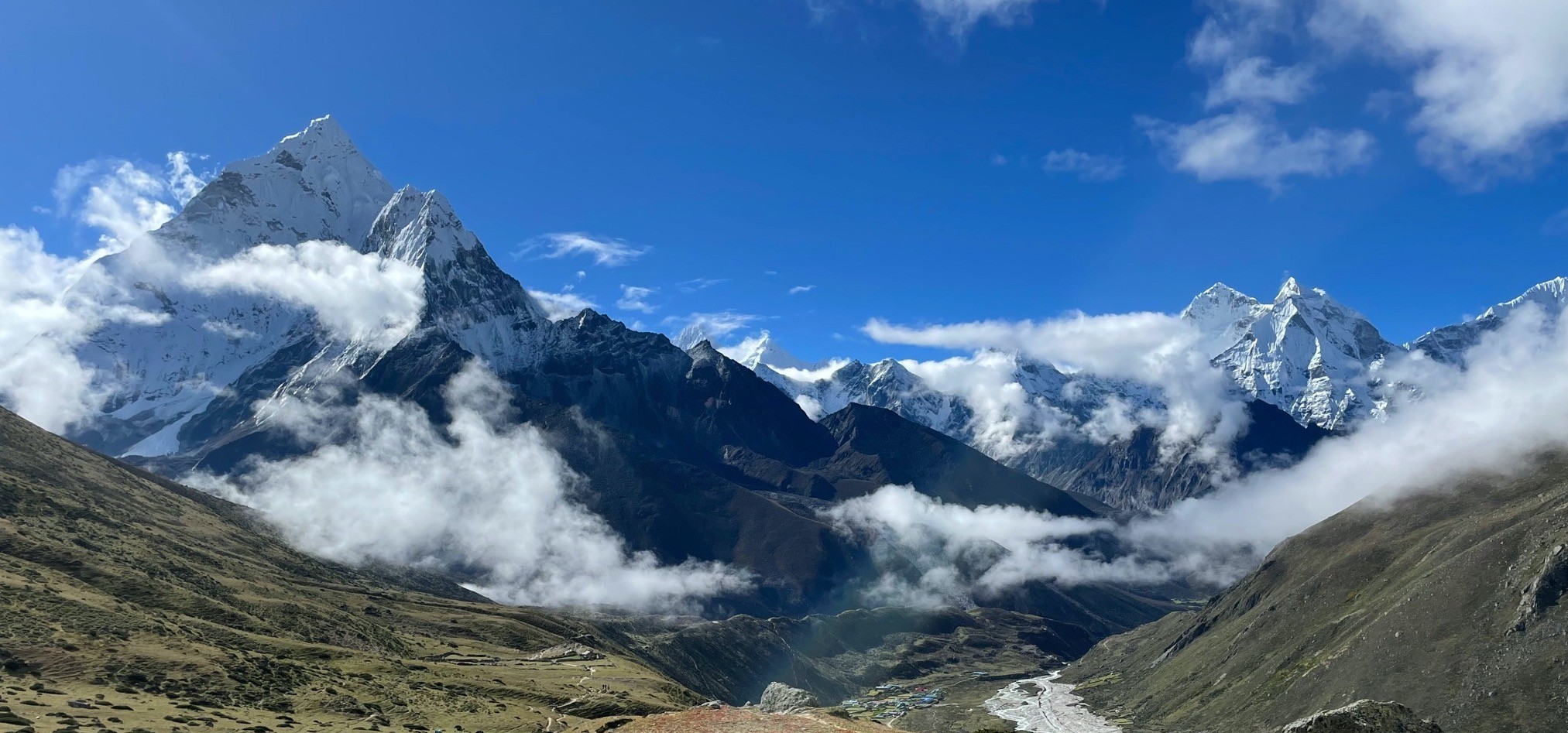
Ama Dablam towering over Pheriche Valley with dramatic Himalayan clouds.
In short, September provides a good shoulder season window for those who love a green landscape and less crowds, and with proper planning you will be able to enjoy one of Nepal's most relaxing trekking experiences.
The Great Divide: When exactly in September will your trekking trail change?
The month of September is not monolithic; it can be divided into two clearly distinct periods, early and late September, that dictate various aspects of your trek.
Early September (Sept 1 - Sept 15) :
Still exhibits signs of the monsoon season, bringing along a possibility of showers and frequent cloud cover.
Late September (Sept 16 - Sept 30) :
Signals the beginning of a more stable autumn climate with the arrival of clear skies and less frequent rain.
However, even in the first half of the month, it will only rain for parts of the day, i.e. Late afternoon/evening shower and not for the whole day, giving you plenty of opportunity for mornings trekking in the pleasant weather.
Feature & weather related information
Early September (1-15 Sept)
Late September (16-30 Sept).
Probability of Rainfall
Moderate (due to remnants of monsoon)
Very low (dry, fair weather)
Visibility of the Himalayas
Sporadic, particularly in afternoons due to clouds
Excellent, crisp mountain panoramas
Crowds
Very Low
Low to moderate
Best Trekking Areas
Rain-shadowed regions of Nepal (e.g. Upper Mustang, Dolpa)
High passes and classic regions (e.g. Everest, Annapurna, Manaslu)
Comparison between early and late September :
Good to know and how to best prepare:
Late September is ideal for higher passes.
The first half of the month is only recommended if you don't mind slight weather uncertainties and desire more solitude.
n experienced local guide is crucial as they can monitor the changing weather conditions and adapt the trek itinerary accordingly.
In summary, late September will always be the prime season to trek in Nepal whereas trekking in early September may be ideal for trekkers who can withstand slight unpredictability in the weather.
Escaping the Mob: Why September is Your Secret Solitude Haven Before the October Stampede
Here, let's be honest, one of the biggest draws of September for trekking is the almost unbelievable absence of crowds. While October and November are famously jam-packed with trekkers and teahouses booked solid, September feels like a wonderfully unhurried, personal affair.
What makes September so darn peaceful?
The trails are noticeably quieter than in the peak autumn months.
You don't have to stress about getting the best rooms in teahouses, as they are much less likely to be full.
Your interactions with local guides and villagers will feel more personal and less rushed.
You have more freedom to take your time and adjust your itinerary on the fly.
You'll feel a genuine sense of solitude on iconic routes like Everest, Annapurna, and Manaslu.
Month | Trail Congestion
Teahouse Openings
Vibe | Best suited for
Early September | Super light
Open & plentiful
Ultra-peaceful | Maximum solitude seeker
Late September | Light
Very open
Relaxed, unhurried | Balanced trekkers
October (Peak season) | Very busy
Highly competitive
Bustling, social | Those who enjoy lots of company
November | Busy
Competitive
Popular, energetic | Peak autumn colors lover
A Quick Look at Crowd Levels:
In fact, this lack of crowds allows you to really soak in the mountain views at your own pace and forge a deeper connection with the landscape without feeling rushed by large trekking parties. Many experienced trekkers agree that September is perhaps the quietest month of the year to explore the Himalayas.
So, if avoiding hordes of trekkers is a top priority, September is your ideal window. It's a fantastic time for a truly personal and peaceful Himalayan adventure.
The Post-Monsoon Picture Perfect: Why the Himalayas Look Absolutely Stunning Right Now
Meanwhile, the visual treats in September are absolutely incredible. After the three long months of the monsoon, the entire Himalayan landscape is literally sparkling, washed clean, and bursting with life.
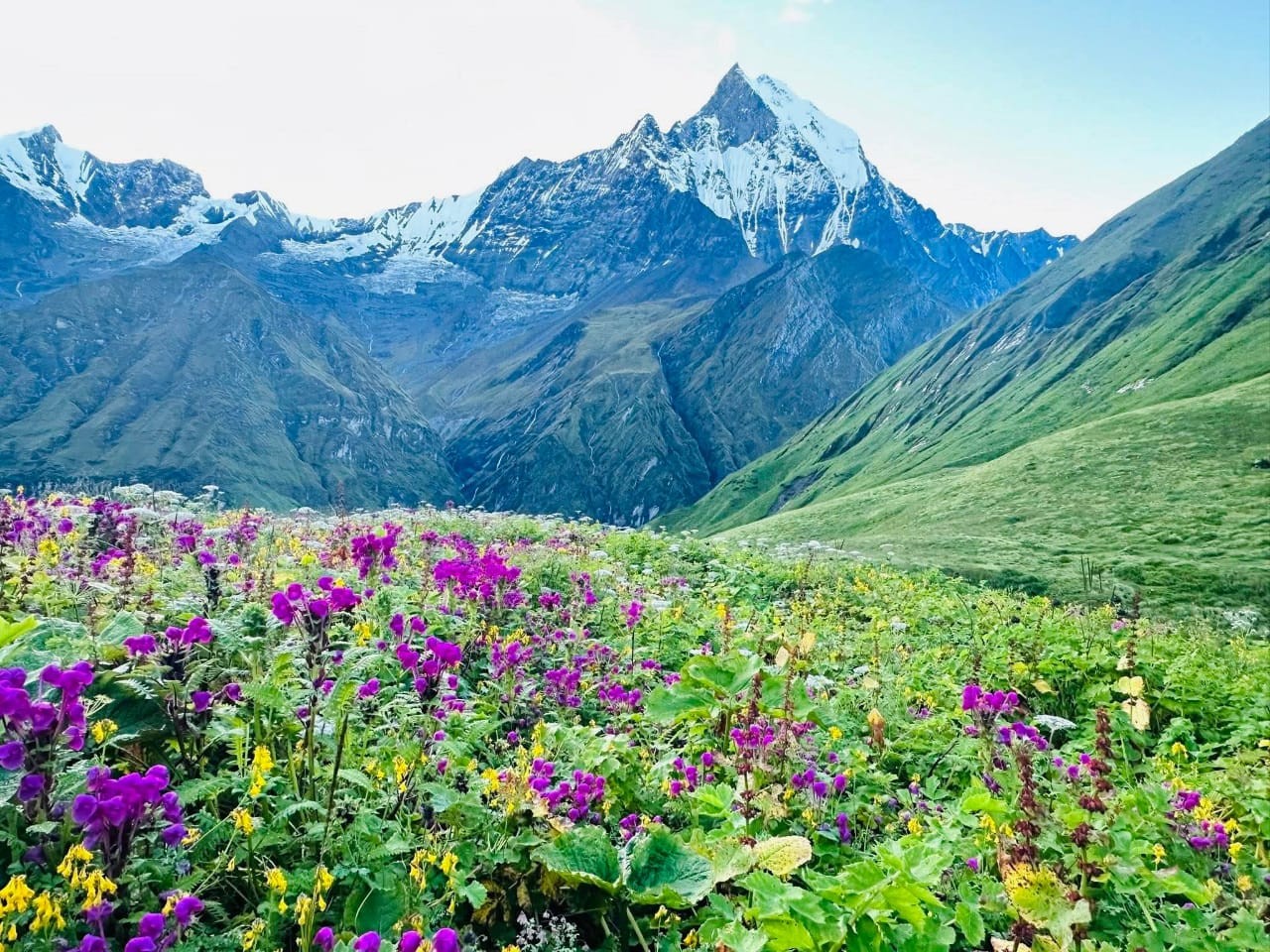
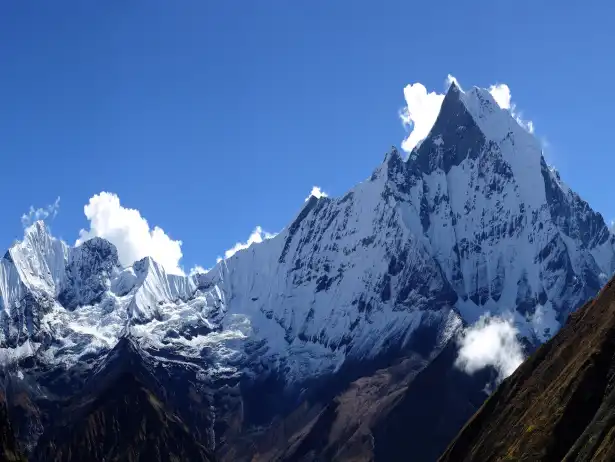
Machapuchare (Fishtail Mountain) with alpine flowers at Annapurna Base Camp.
What makes September landscapes so special?
The valleys and forests are at their vibrant, emerald green best. Waterfalls and streams are roaring and cascading with impressive power. The morning air is crystal clear, and visibility is phenomenal. Fresh snow adorns the higher peaks, creating a stunning contrast with the lush green slopes below. The alpine meadows are dotted with beautiful wildflowers.
Feature
September View
How it benefits you
Valleys & Forests
Bright, rich green
Vibrant, refreshing scenery
Waterfalls & Rivers
Powerful, loud
Dramatic and very photogenic
Mountain Visibility
Sharp, clear (especially mornings)
Amazing photos and sweeping views
Overall Ambiance
Fresh, clean, energetic
A sense of renewal after the rain
The Advantages of the Post-Monsoon Views:
In fact, the combination of the impossibly green valleys and the crystal-clear mountain views makes for some of the most spectacular trekking in Nepal. Photographers particularly find September to be an absolute dream with its saturated colors and dramatic cloud formations.
In conclusion, the sheer visual beauty of the landscape after the monsoon makes September one of the most rewarding trekking months in Nepal. The scenery is simply at its peak freshness and vibrance, offering a beauty unlike any other.
Temperature tracking: What to expect from lowlands to high passes
Here, September is an ideal trekking month for Nepal, as temperatures range comfortably between warm, late autumn highs, to crisp, autumn lows on the high passes.
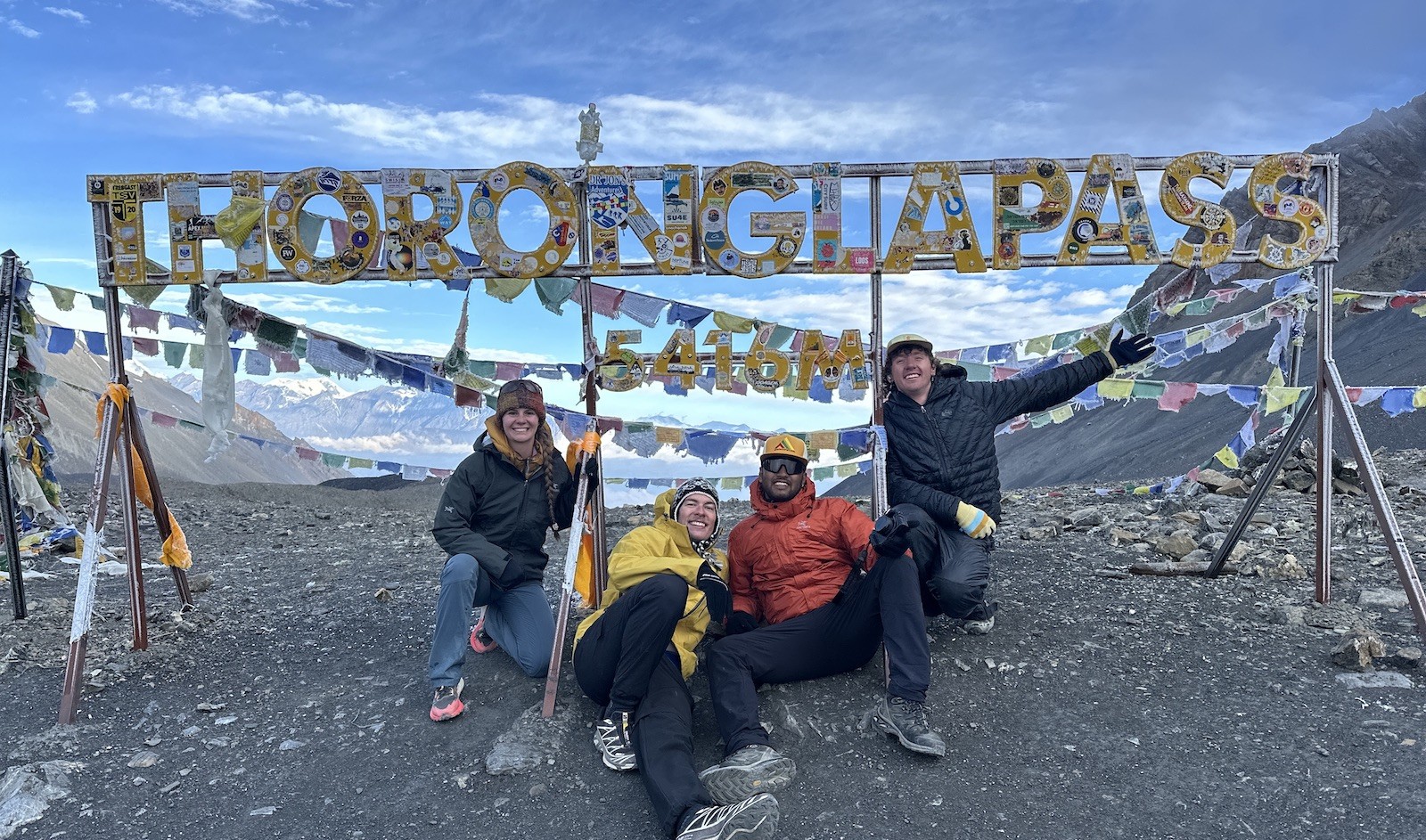
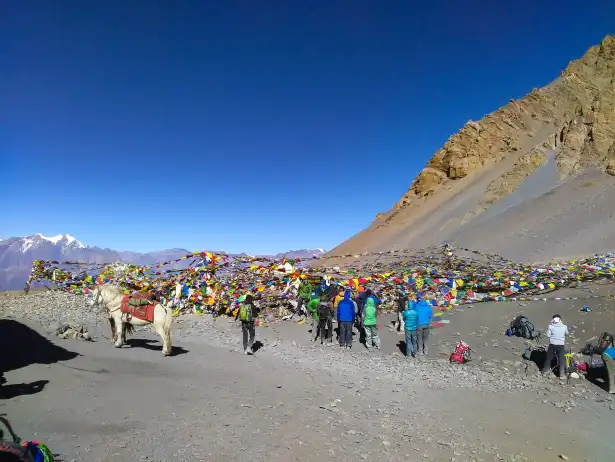
Crossing Thorong La Pass – the highest point of the Annapurna Circuit.
Temperatures expected across altitudinal variations:
Lowlands (Pokhara / Kathmandu area): Temperature should be consistently mild, 25-30°C during the day.
Mid-altitudes (2000 - 3500 m): Day temperatures, between 15-22°C, with cooler evenings.
High altitudes (4000 m +): Day highs around 5-12°C and nights dropping to 0-5°C or less.
Altitude Zone
Day Temperature | Night Temperature
Recommended Layering
Lowlands (< 1500m)
25-30°C | 18-22°C
Light t-shirt and a quick-dry pant.
Mid-altitudes
15-22°C | 8-12°C
Base layer and a fleece/light jacket.
High altitudes (>4000 m)
5-12°C | 0°C to -5°C (or lower)
Base layer, fleece, a hard-shell, and down/synthetic warm jacket.
Always use the "onion technique", layering up/down easily when required.
A good down/synthetic warm jacket is essential for the passes and evenings at altitude.
Carry a warm cap, gloves, and buff for chilly mornings.
Consider a light-weight rain jacket even toward end of the month.
To conclude, September in Nepal is an excellent time to trek, with mild weather across most altitudes and temperatures that allow for pleasant trekking through the hills. Layering up and down correctly will be essential when moving from the lowlands to the higher passes, but temperatures in September are an ideal transition between post-monsoon green and pre-winter clear, crisp views.
Conquering the Icons: How the Everest Base Camp trek behaves in September
Here, the Everest Base Camp Trek is well-trafficked and September offers some advantages due to its position as shoulder season.
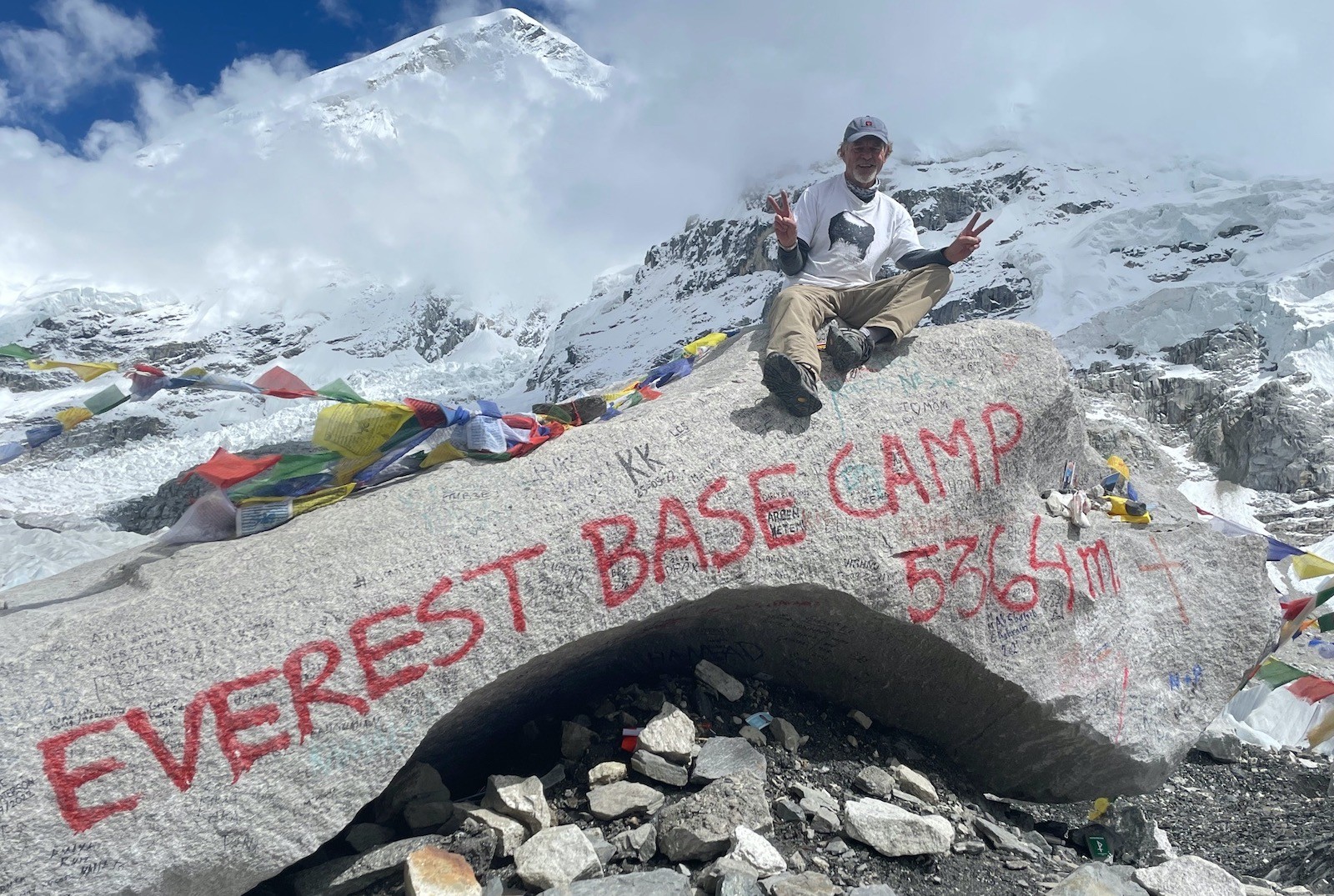
Everest Base Camp with the iconic rock marker and Himalayan views.
EBC trekking in September :
Early September: Some morning mist lingers and there's a high possibility of delays at Lukla due to cloud cover.
September: Visibility dramatically improves to what is typically considered the peak trekking season: the skies are incredibly clear and you can often have magnificent Everest views throughout the entire journey.
Lukla flight reliability :
Early September: Moderate chance of delays at Lukla airport.
Generally stable, very clear skies and spectacular mountain views
High | Low | Very high recommendation.
September EBC Conditions Summary:
Advantages of trekking EBC in September:
Significantly less crowded at major sites like Namche Bazaar, Tengboche Monastery and Kala Patthar.
Waterfalls are at their full flow and the lower valleys look beautifully lush with green.
Pleasant day temperatures at moderate altitudes and crisper, colder temperatures at high altitudes.
Better chance for truly exceptional and wide Everest views from Kala Patthar.
In conclusion, for those looking for fewer trekkers on the trail and a significantly increased chance of outstanding views, there really is no better time to trek EBC than in the second half of September. The mountain scenery at this time of year is at its best and you can explore without being in the height of tourist season.
Everest Base Camp Trek with Helicopter Fly Out 10 Days | 10 days
Actually, September offers a great opportunity to hike the Annapurna region. Trails are less crowded, giving you plenty of space to appreciate the quintessential Annapurna ridge walks and breathtaking mountain views.
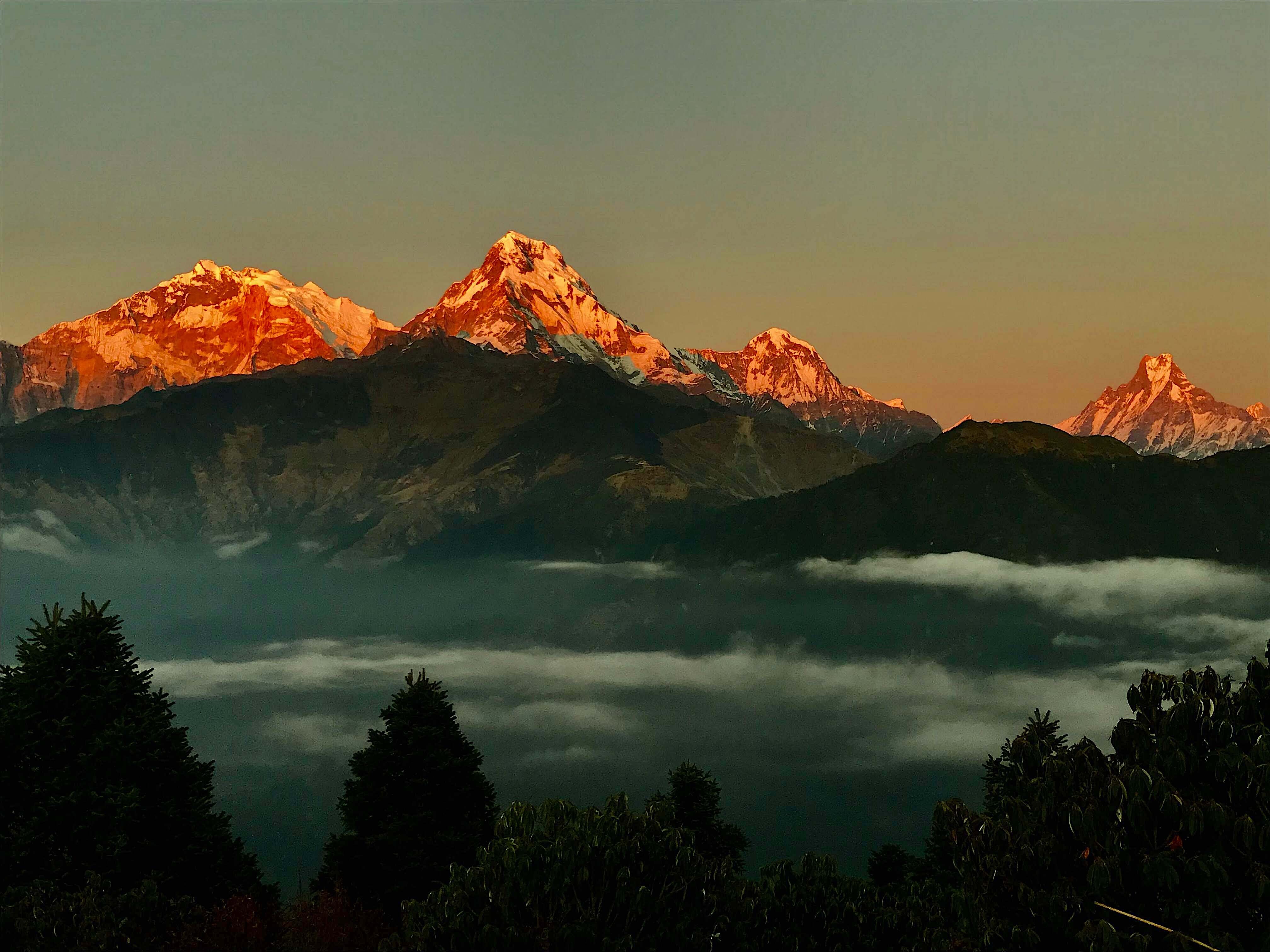
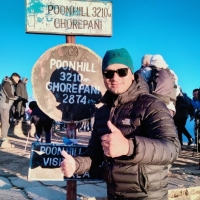
Poon Hill sunrise with golden peaks and clouds over the valley.
Why the end of September is a perfect time for the Annapurna trek:
Comfortable daytime temperatures and chilly evenings.
Few trekkers compare to October/November, the peak season.
Still retains the lush greenery and active waterfalls from the monsoon.
On clear days the visibility is superb, particularly at high elevations.
The majority of teahouses will have availability and more individual service.
Trek Route | Distance
Usual length of trek
How busy are the trails? | Main advantages for September hiking
Annapurna Circuit | 160–180 km
14-16 days
Low | Peaceful high passes & remote villages.
Annapurna Base Camp (ABC) | 100-120 km
7-10 days
Very Low | Dense forests & dramatic sanctuary.
Poon Hill + Jhinu Hot Springs | 45-55 km
4-6 days
Very Low | Outstanding sunrises & restorative hot springs.
Annapurna Trek Options (September) :
In fact, the Annapurna Circuit and ABC trekkers benefit immensely from the lack of foot traffic in September. You'll have no trouble finding rooms in teahouses, you'll walk at your own pace and become deeply immersed in the stunning mountain surroundings, which can be rather difficult to accomplish during the bustling October or November period. In conclusion, there is likely no better time than the end of September to enjoy some incredible ridge walks in Annapurna and have ample room to do it!
Smart Rain-Shadow Alternative: Upper Mustang & Dolpo in early September
If you plan to trek in Nepal during early September, when many parts of the Himalayas are still emerging from the monsoon, it's wise to aim for the rain-shadow regions.
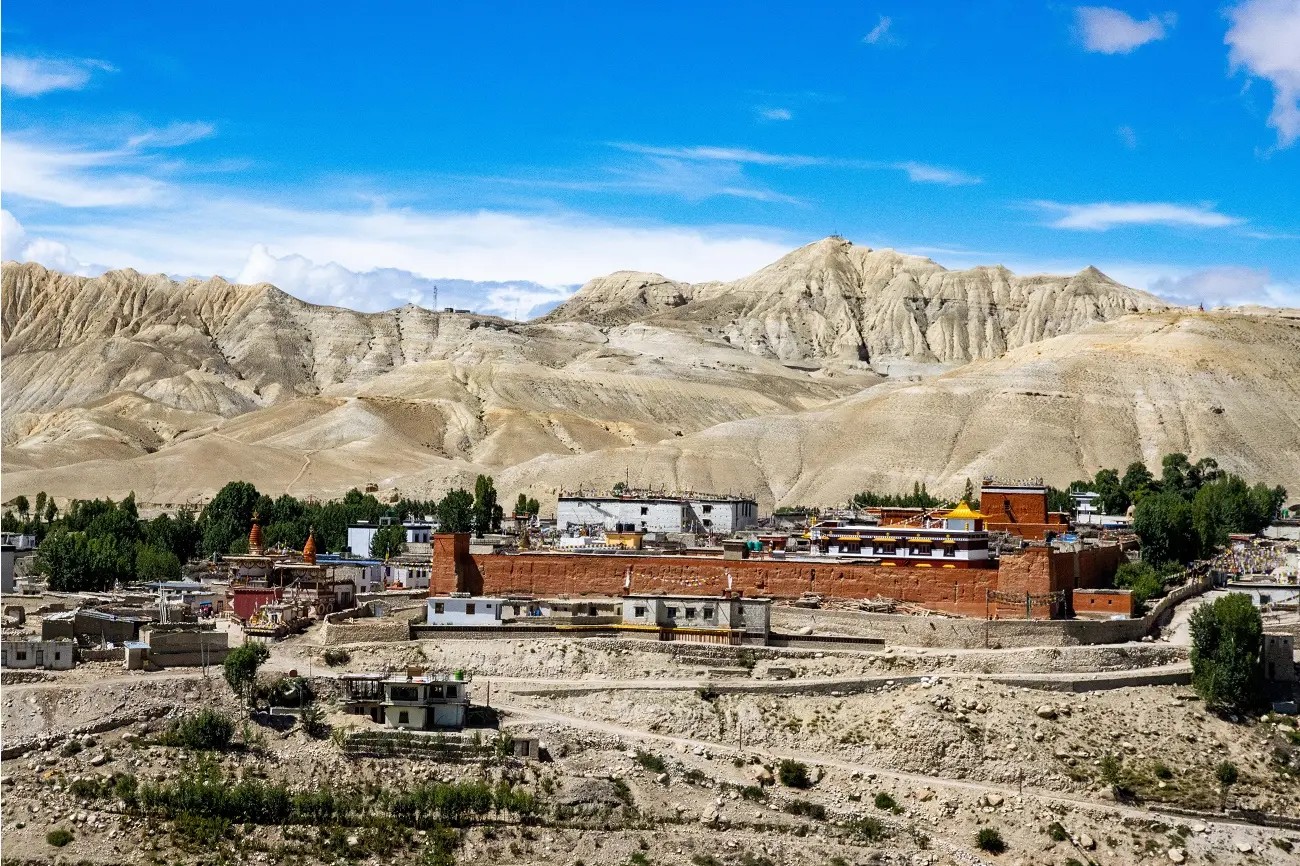
Rain-shadow beauty of Upper Mustang with dramatic Himalayan landscapes.
Why rain-shadow regions are perfect for early September hiking:
The massive Himalayan mountain range shields these regions from monsoon rain.
Upper Mustang and Upper Dolpo generally receive little to no rain, even during heavy monsoons elsewhere.
Enjoy guaranteed weather, stark and breathtaking, desert-like topography, and timeless Tibetan culture without the crowds.
Region | Rainfall Risk
Landscape Description
Crowd Level | Perfect for
Upper Mustang | Very Low
Arid, barren canyons resembling a desert.
Extremely Low | The best for cultural experience and scenery.
Upper Dolpo | Low
Isolated high valleys
Very Low | The most rewarding option for the rugged adventurer.
Classical Annapurna/EBC | Moderate to High
Green and vibrant, but prone to rain
Low | Only a good idea if you are very flexible with the weather.
Comparison of Rain-Shadow Treks (early September) ;
In fact, both Upper Mustang and Upper Dolpo trekking routes offer trekkers the chance for a safe and pleasurable trekking experience even as late as early September. The views they offer are truly otherworldly, making them the perfect alternative to traditional trekking routes during the pre-peak season.
Ridge Walking in Pure Serenity: Conquering the Annapurna Region
Meanwhile, September provides one of the most serene trekking experiences in the Annapurna region. The trails quieten considerably, giving you ample opportunities to indulge in classic ridge walks and enjoy the dramatic mountain vistas with a relative absence of crowds.
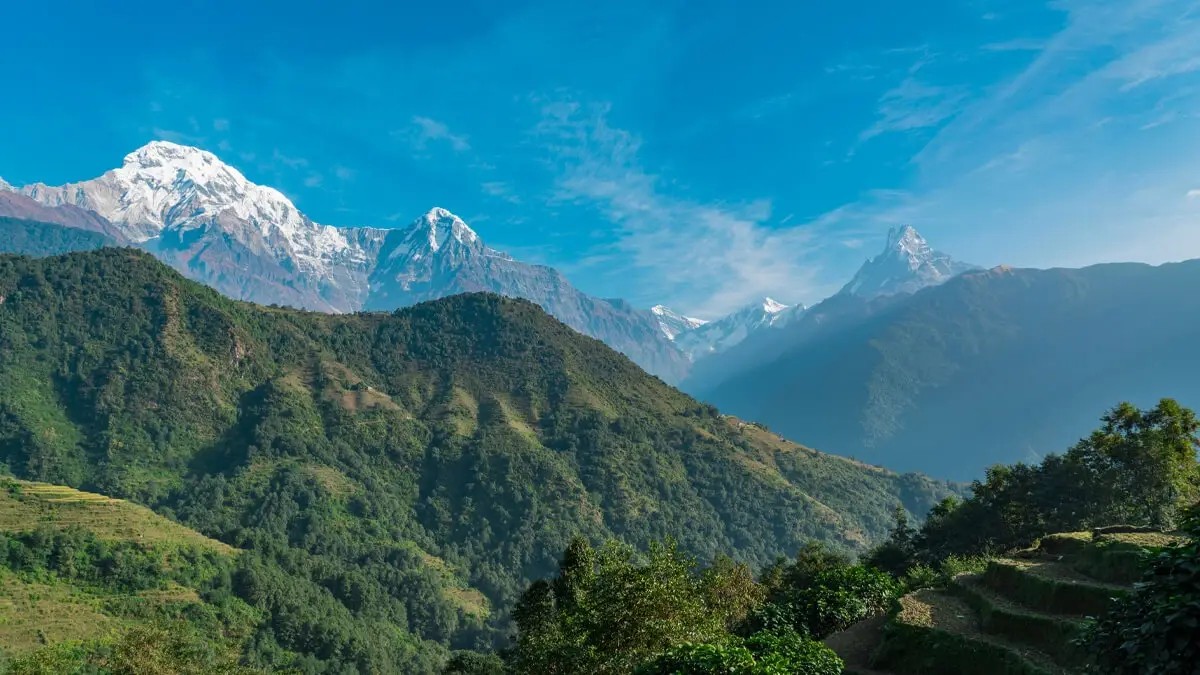
Stunning Annapurna mountain views from Ghandruk village.
Advantages of Late September Trekking in Annapurna :
Pleasant daytime temperatures, tempered with cool, refreshing evenings
Significantly reduced number of trekkers as opposed to October-November
Vibrant green landscapes accompanied by active waterfalls from the recent monsoon
Superb visibility on clear days, particularly along the high ridges
Increased availability of teahouses with more personalized services
Trekking Trail
Approximate Distance | Average Duration
Crowd Level in September | Key Attractions in September.
Annapurna Circuit
160 - 180 km | 14-16 days
Low | Peaceful high mountain passes and villages.
Annapurna Base Camp (ABC)
100-120 km | 7-10 days
Very Low | Lush forests and dramatic glacial sanctuary.
Poon Hill & Jhinu Hot Springs
45-55 km | 4-6 days
Very Low | Sunrise vistas and relaxing hot springs.
September Annapurna Trekking Options :
In fact, the Annapurna Circuit and ABC treks can really capitalize on the quieter trails of September, enabling you to walk at a comfortable pace, secure the best accommodation at teahouses, and absorb the breathtaking landscapes with unhurried delight.
To sum up, late September is a fantastic time for unadulterated ridge walking in the Annapurna region and is particularly ideal for trekkers who prefer a more personal and undisturbed experience of the mountains.
The Weather-Wise Choice: Upper Mustang and Dolpo in Early September
If you find yourself trekking in Nepal in early September when the monsoon may still be retreating across the majority of the country, opt for a destination within the Himalayan rain-shadow for a tactical and safe experience.
Early September in Upper Mustang and Dolpo—perfect weather-wise trekking with dry trails and clear Himalayan views.
Reasons to Trek in Rain-Shadow Regions in Early September :
The primary Himalayan range acts as a barrier to the monsoon, thus preventing significant rainfall.
Upper Mustang and Upper Dolpo have extremely low rainfall, even during monsoon season in other areas.
Enjoy stable conditions, arid, desert-like scenery, and a glimpse of ancient Tibetan culture without being bothered by other trekkers.
Region
Likelihood of Rain | Landscape Type
Crowd Level | Best Suited For
Upper Mustang
Very Low | Dry, canyon-like desert
Extremely Low | cultural & scenic exploration
Upper Dolpo
Low | Undeveloped, high altitude valleys
Very Low | wilderness & authenticity
Classic Annapurna / EBC
Moderate to High | Lush and potentially wet
Low | for the highly flexible trekkers
Comparison of Rain-Shadow Treks in Early September :
In fact, these rain-shadow regions offer a safe and enjoyable trekking adventure in early September, with spectacular, surreal landscapes combined with remarkably few trekkers, rendering them a superb choice when other trekking routes may be subject to monsoon's erratic behavior.
To conclude, making a choice to trek in the rain-shadow of the Himalayas, like in Upper Mustang or Upper Dolpo, is the ideal strategy for an early September trip to Nepal; you'll have a peaceful, authentic, and beautiful trek.
Culture in its Full Glory: Experience Nepal's Magnificent Autumn Festivals
Here, one of the hidden gems of trekking in Nepal in September is the opportunity to be part of Nepal's grand autumn festivals. Once the monsoon recedes, the country is alive with a spectacular array of colorful celebrations, adding a beautiful cultural dimension to your journey.
Key September Festivals:
Indra Jatra (Late August/Early September): This vibrant festival is celebrated in Kathmandu, featuring masked dances, chariot processions and traditional music. It is an offering to the god Indra, and a signal to the start of the festival season.
Dashain (Mid-September to Early October): The biggest and most important festival in Nepal, Dashain involves families gathering, kite flying, and numerous rituals. You can feel the buzz even if your trek starts later in the month, especially in and around Kathmandu.
Why attend?
Authentic cultural immersion that most peak-season trekkers miss out on
Vibrant atmosphere, lively music and welcoming locals
Connect deeper with the local culture and traditions
Unforgettable start and/or end to your Himalayan adventure
Festival
When in September?
Where is it biggest? | Main attractions
Indra Jatra
Beginning of September
Kathmandu | Masked dancing, chariot parades
Dashain
Mid- to end of September
All across Nepal | Family reunions, religious ceremonies, kite-flying
A Glance at Nepal's September Festivals:
To sum up, trekking in September is your best bet to combine phenomenal hiking with an explosion of Nepalese culture. The festival celebrations undoubtedly make this month one of the most rewarding for travelers.
Conclusion: The Final Word on trekking in Nepal during September
Is it a good time to trek in Nepal in September?
Yes, especially during the latter half of the month. September is one of the Himalayas' most understated secrets, presenting the perfect mix of ideal weather, stunning landscapes and extremely low tourist numbers.
Summary of final decision:
The latter half of September is excellent for trekking as it offers good weather and clear skies, while you won't encounter the throngs of October.
The first half of September is for those who want the maximum peace and quiet and don't mind the occasional downpour.
Ideal for trekkers wanting an equally beautiful trekking experience without the October crowds.
Benefits from low prices and better availability at teahouses.
Weather Stability
Number of trekkers
Visibility | General recommendation
Early September
Fairly unpredictable with the possibility of occasional rain showers
Very low numbers | The rains might make some areas harder to traverse; best suited to rain-shadow regions.
Late September
Mostly dry with clear skies and stable weather
Very low. | Perfect for treks that traverse the higher passes where clear mountain views are crucial.
September: Early versus Late
Booking recommendation: Book in advance if you want to trek in September, particularly if you want to coincide with a festival, to secure reliable guides and well-located teahouses.
In essence, trekking in Nepal in September (especially the second half of the month) is an absolutely fantastic choice for an intimate, green, and rewarding Himalayan adventure. Planning in advance can guarantee that September becomes your most memorable trekking experience.
[trrip:langtang-valley-trek]
Trekking in Nepal in September - FAQs
1. Is September a good time to trek in Nepal? September is considered a very good time for trekking in Nepal. Especially from mid-September onwards, as the monsoon recedes and the atmosphere begins to clear up, giving rise to fresh and crisp air and picturesque mountain landscapes.
2. How is the weather in Nepal in September for trekking? The weather during September in Nepal is typically transitional between the wet summer and dry autumn season. Expect occasional rain showers especially during the first two weeks of the month. However, by mid to late September, the rain subsides and the skies become clear with brilliant blue views.
3. What are the average temperatures during a September trek? Average temperatures range between 15C to 25 during the day in the lower altitudes (up to 3000 meters), while they dip between 10C -15C for higher altitudes. Nights in high altitudes can be cold and hover around 0C or just below.
4. Does it rain a lot while trekking in Nepal in September? Actually, September sees significantly less rainfall than the preceding months of the monsoon. Early September can still experience occasional showers, particularly in the afternoons or evenings. However, the frequency and intensity decrease rapidly throughout the month, offering dry and pleasant trekking conditions by late September.
5. Are the trekking trails crowded during September? September is not the peak tourist season and therefore is much less crowded than October. You'll enjoy quieter trails and teahouses, which can provide a more peaceful and authentic experience. This makes it ideal for those seeking a less congested trek.
6. Can I do the Everest Base Camp trek in September? Yes, the Everest Base Camp trek in September is highly recommended, especially the latter part of the month. Eastern Nepal dries out much quicker, offering stunning views of Mount Everest against a clear, azure sky. Early September may still have some lingering rain, so mid-to-late September is preferable.
7. Is the Annapurna Circuit safe to hike in September? The Annapurna Circuit is a good option for September, though certain sections can still be a bit wet in early September. By mid-month, the trails usually dry out considerably. The views are beautiful, and the mountain scenery is captivating. Always check the trail conditions from local guides before starting.
8. What are the trail conditions like in early September? In early September, trails, especially those below 2,000 meters, can be damp, muddy, and slippery due to residual monsoon rains. You may also encounter leeches in heavily forested areas. It’s important to wear appropriate waterproof gear and waterproof boots. Trails tend to dry up rapidly as the month progresses.
9. Are flights to Lukla or Jomsom reliable in September? Flights to mountain airports like Lukla and Jomsom can be unpredictable in early September due to potential afternoon valley fog and lingering monsoon clouds. It's wise to build a couple of buffer days into your itinerary, especially when connecting to international flights, to account for potential flight delays.
10. What rain gear should I pack for a September trek? You should pack a reliable, breathable, and waterproof jacket and pants, along with a good quality pack cover. Waterproof hiking boots are also essential, especially for early September treks. Quick-drying clothing layers are also recommended.
11. Do I need heavy winter clothing for September trekking? While the daytime temperatures are generally mild to warm, the nights at higher altitudes (above 3,500 meters) can be quite cold. You'll need warm layers such as a fleece jacket and a down jacket for evenings and early mornings. Thermal base layers are also advisable.
12. Are teahouses and mountain lodges open in September? Yes, teahouses and lodges along popular trekking routes are fully operational in September, as they gear up for the busier autumn season. Due to the lesser number of trekkers, you'll likely have ample choices and good service.
13. Which treks are best for early September to avoid rain? For early September, consider trekking in the rain shadow regions of Nepal, such as Upper Mustang or Upper Dolpo. These regions are on the other side of the main Himalayan range and receive minimal rainfall during the monsoon.
14. Are there leeches on the trail in September? Leeches can still be an issue in humid, vegetated areas below 2,000 meters in early September. Stick to the center of well-worn paths, wear long trousers and socks, and carry salt or an anti-leech spray to remove them effectively.
15. Can I see mountain views clearly in September? Morning views in September are often spectacular, with crystal-clear skies after the night has settled. However, clouds can build up in the afternoons. An early start each day will maximize your chances of enjoying stunning mountain panoramas.
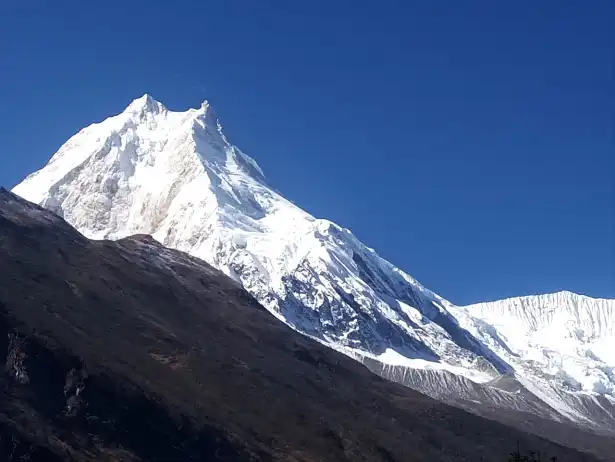
16. Is the Manaslu Circuit trek recommended in September? The Manaslu Circuit is highly recommended in late September once the rains have passed and the trails have stabilized. The landscape is exceptionally green and vibrant after the monsoon, and the views of Mount Manaslu are breathtaking. It's still relatively uncrowded compared to October.
17. Are permits easily available for September trekking? Yes, all necessary permits, such as the National Park and TIMS cards, are readily available in Kathmandu and at designated entry points. There are usually no issues obtaining permits in September.
18. How do rivers and waterfalls look in September? Following the monsoon, rivers and waterfalls in Nepal are at their most powerful and impressive in September. They are swollen with rainwater, creating dramatic and roaring cascades and rushing waters that add to the beauty of the landscape.
19. Do any major cultural festivals happen in September? Yes, September can be a vibrant month for cultural experiences as several major Nepali festivals, such as Dashain (the biggest festival), often fall in late September or early October. Trekking during this time allows you to witness and participate in local celebrations.
20. What is the number one tip for trekking Nepal in September? Plan your trek for the second half of September to catch the best weather. This period offers a beautiful blend of clear skies, green landscapes, and significantly less rain and fewer crowds before the peak October season begins.