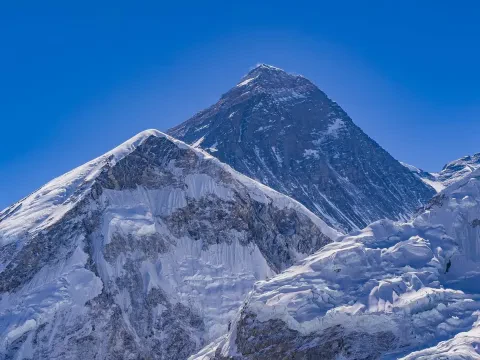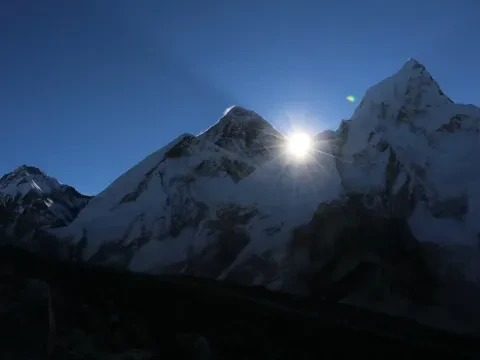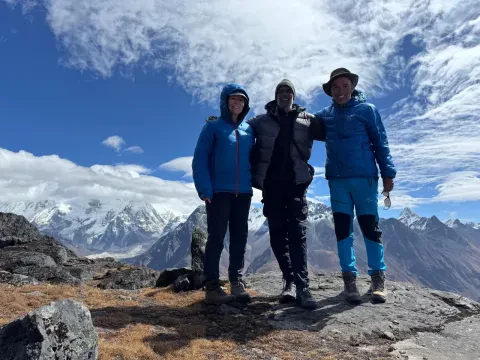
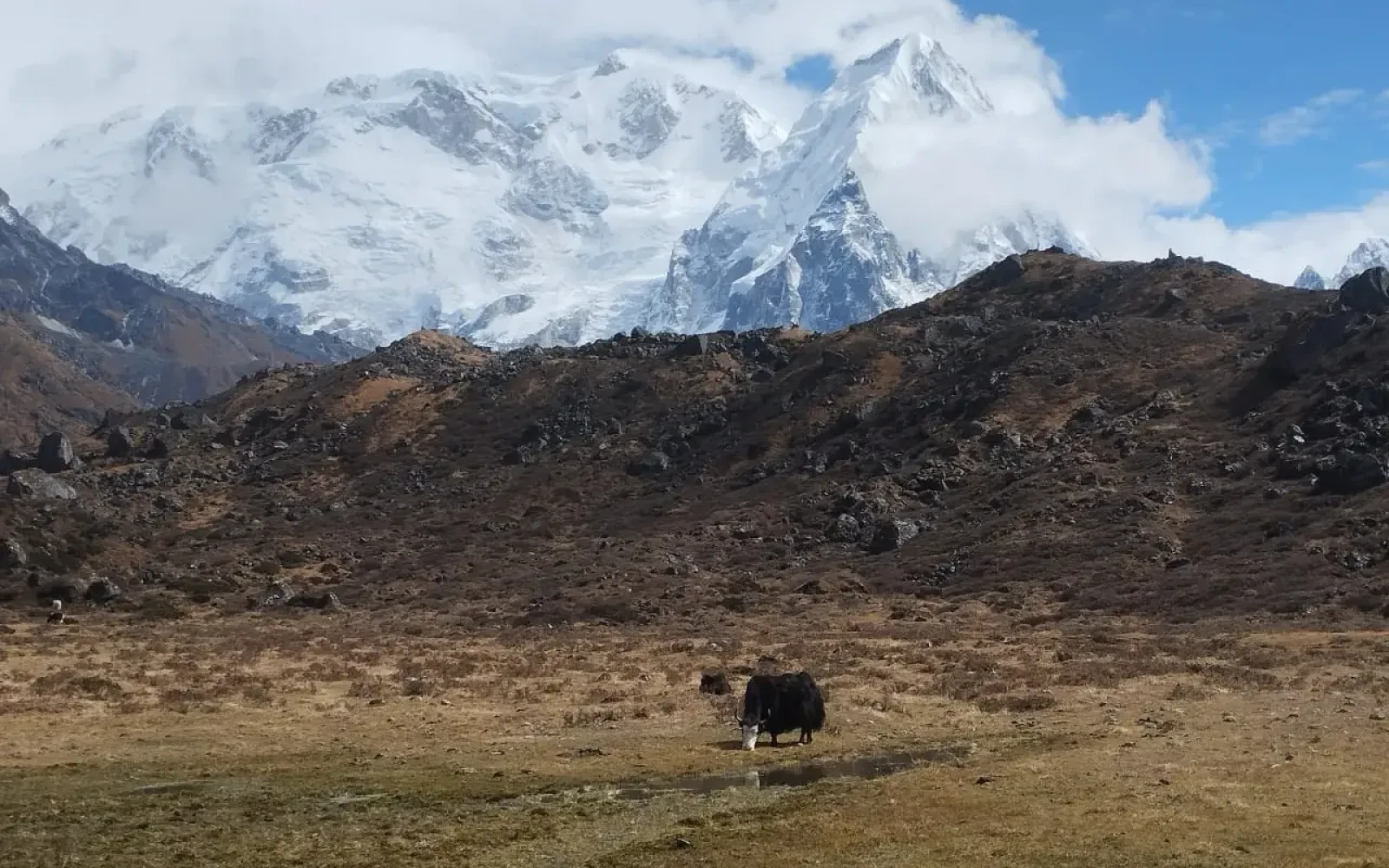
While most of the trekkers opt for the Everest or Annapurna region treks, which involves moderately difficult trails, tea houses, and large crowds, but the Kanchenjunga Trek is an unparalleled wilderness adventure. As such, this trail is less crowded, restricted area trekking of Nepal, and offers a unique insight into the far-eastern part of Nepal, with the majestic Mount Kanchenjunga (8,586m) rising isolated and wild over the region.
Likewise, this trail provides an authentic wilderness experience while also being a challenging trek. In addition, due to its remoteness and restricted status in Nepal, this trail requires permits and a licensed guide.
Moreover, it is a tough trek, involving long walks, isolated camping, and high altitude. The trails can be steep and unpredictable. As such, this trail is not suitable for inexperienced hikers. However, the scenery is worth experiencing for the hard-core adventurer. The forests, meadows, and snow peaks are unique to this region and provide unparalleled views of the Himalayas. There are also some unique cultural heritages to be explored by the trekkers on the trail.
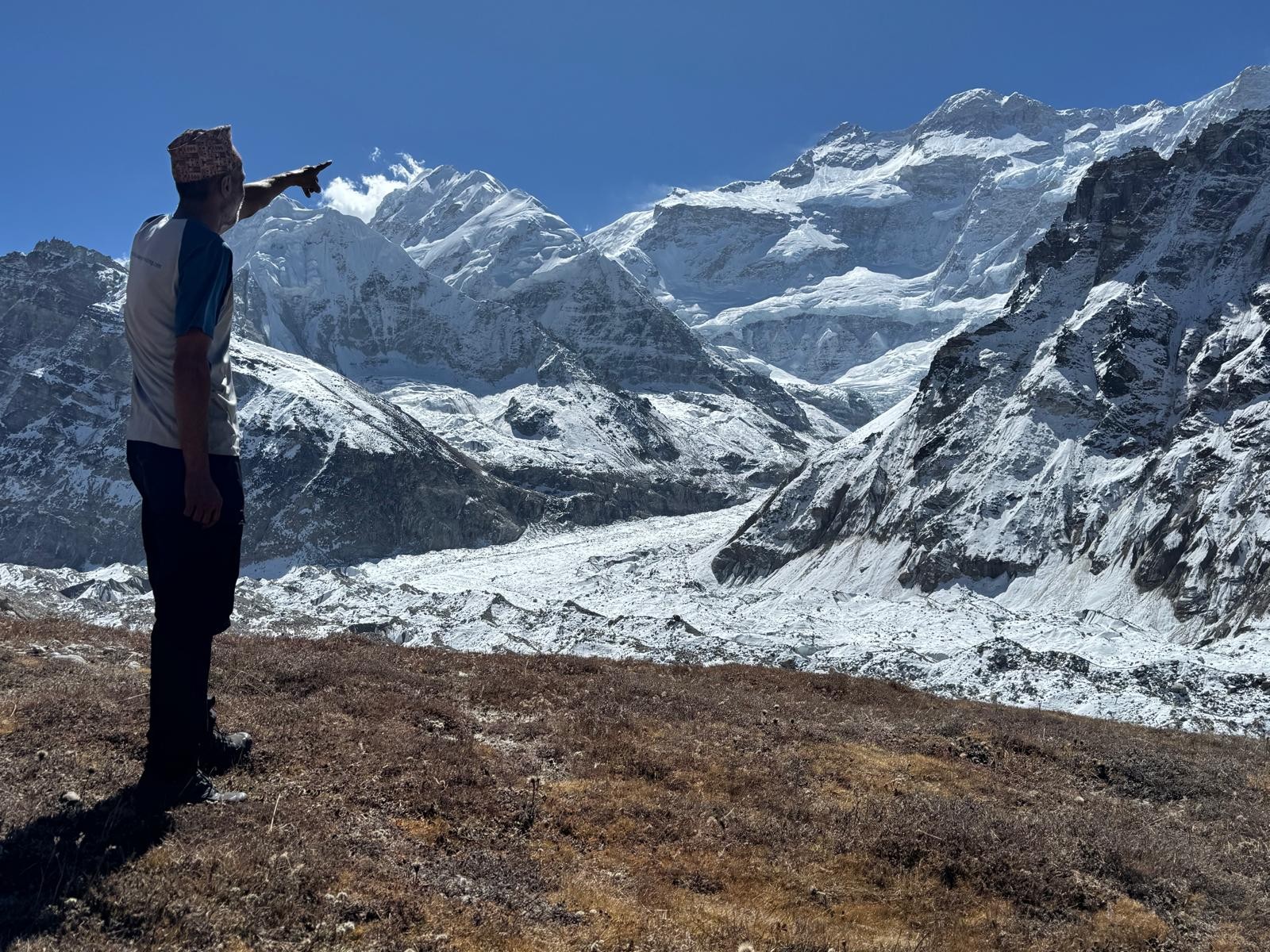
Why Kanchenjunga Trek over Everest Base Camp Trek?
Therefore, the Kanchenjunga Base Camp Trek is the ultimate far-eastern region wilderness experience for a trekker. Similarly, this trail is a great adventure for a serious trekker seeking to have authentic wilderness experiences in remote mountainous regions of Nepal.
Moreover, this trail is very rewarding due to the pristine view of the mountains and the unique tribal culture that the trekkers can learn about. Here, the Kanchenjunga trekking circuit is a great adventure that any mountain trekker should consider in their lifetime.
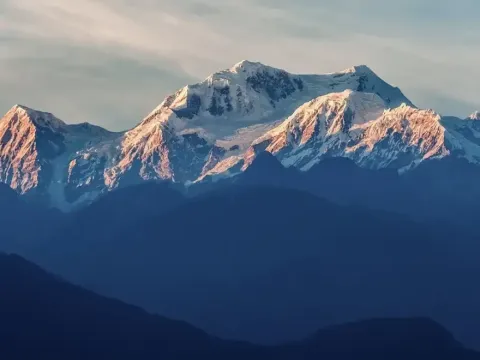
The Kanchenjunga Trek is long, and as such, one must consider the distance and other related aspects before embarking on the adventure. Here, a brief overview of the trail provides prospective trekkers with a much-needed insight into what they will experience on the trail. Firstly, the trail entails a circuitous route that covers approximately 220 Km before leading the trekkers back to the trailhead. Secondly, the trail reaches up to the 5,143 meters high Pangpema (North Base Camp). Therefore, given the challenging distance and altitude, the route is considered to be extremely strenuous and can take up to 24 days to complete.
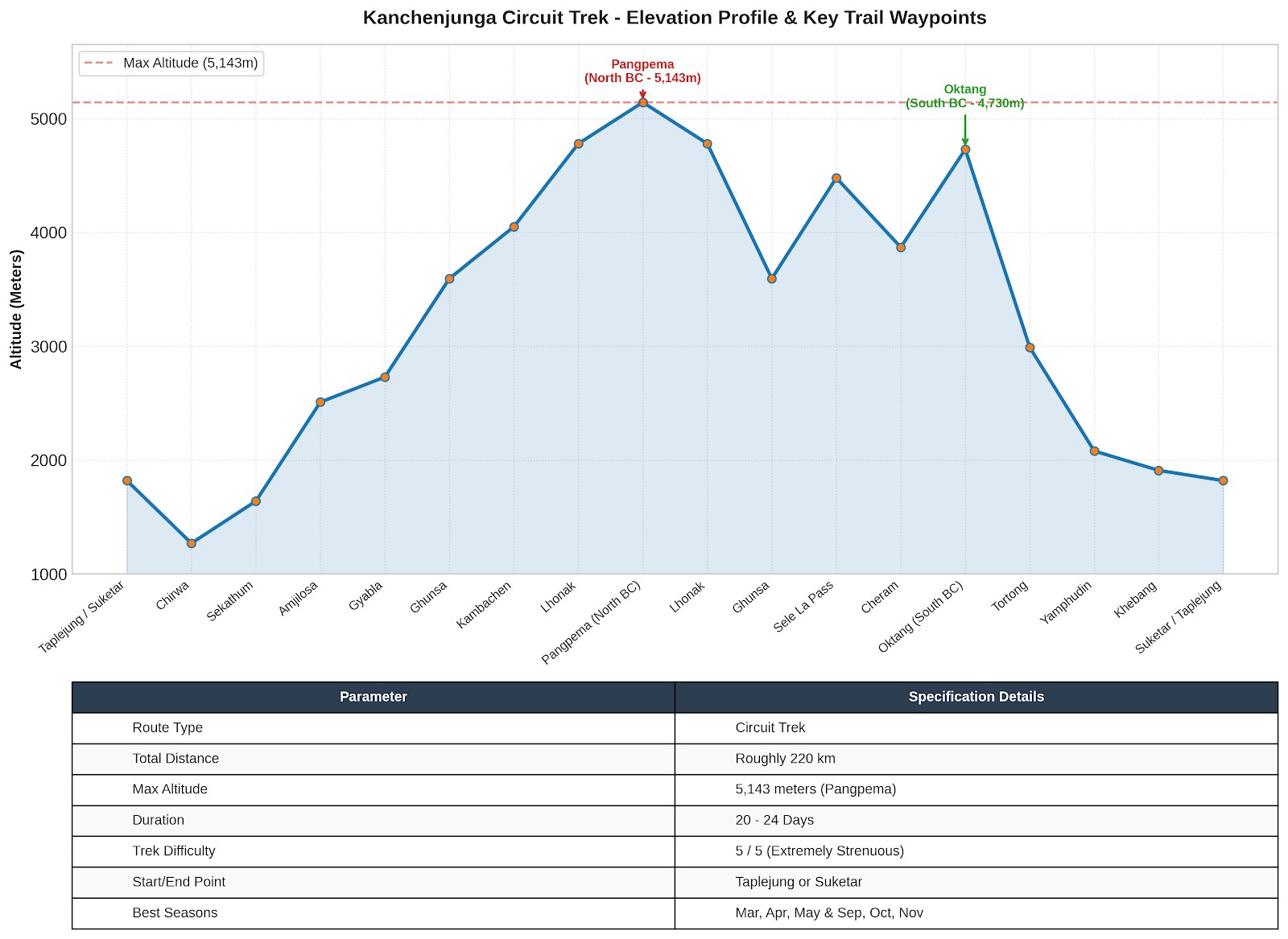
Accordingly, the trek difficulty score is 5/5, with 1 being the easiest and 5 being the most challenging.
| Route | Overview |
|---|---|
| Route Type | Circuit trek |
| Distance Roughly | around 220 Km |
| Max. Altitude | 5,143 meters – Pangpema |
| Trekking Duration | Around 20-24 days |
| Trek Difficulty | Extremely strenuous |
| Trek Starting Point | Taplejung or Suketar |
| Best Highlights | North & South Base camps, high mountain passes, and Limbu village |
| Best Seasons | March, April, May, September, October, and November |
| Challenging | Trekking circuit |
Moreover, the trail typically involves long days of walking, with some days covering 6-9 hours of hiking. Secondly, the route also reaches extremely high altitudes, which can be very challenging to some hikers. Thirdly, the trail is relatively uncongested and remote with no roads, which implies that there are limited facilities. Lastly, the trail also involves restricted permits and a licensed guide due to its remoteness and lack of infrastructure. Moreover, the trail is typically a combination of the North and South base camps route, which involves crossing high-altitude ridges and mountain passes.
Therefore, the trail requires good fitness, extensive trekking experience, and adequate acclimatization before starting the trek. As such, the trail can only be enjoyed by hard-core adventurers willing to test their abilities against one of the Himalayas’ most challenging trekking experiences. Thus, with this brief overview and description, it is clear that the Kanchenjunga trek is among the most challenging trekking trails that one can consider.
Your journey to Kanchenjunga Base Camp begins with a flight to Bhadrapur or Suketar from Kathmandu. As a result, the Flight to Bhadrapur Kanchenjunga is the preferred option, as it saves you hours of driving through the mountains. In addition, you get lovely views of the hills from the airplane as soon as you arrive.
Likewise, you have a scenic but bumpy ride through the tea plantations of Ilam on a long jeep ride. So, in addition to saving you time, the flight gives you spectacular vistas. However, keep in mind that the roads are not smooth, so you should prepare for a long day of driving. Thus, the Taplejung to Sekathum route is a lowland journey that begins as you leave the highway and head for the lowlands. However, the temperature will also rise as you follow the trail through the green countryside.
In addition, you will pass through Rai and Limbu villages on the way to Sekathum, providing you with spectacular views of the lowland jungle. This is also much less precipitous terrain than you will experience on the mountainous routes. As a result, the trek is much more accessible, allowing you to acclimatize for the higher altitudes.
| Segment | Duration / Distance | Elevation | Highlights |
|---|---|---|
| Kathmandu To Bhadrapur | 45–60 min flight | Lowland | Scenic air views |
| Bhadrapur To Taplejung | 6–8 hour jeep ride | Up to 1,800 m | Tea Gardens in Ilam |
| Taplejung To Sekathum | 1–2 day walk | Around 1,600 m | Tropical forests and local villages |
Getting to the Start of Kanchenjunga Trek Tips :
As a result, you have completed the first stage of your journey into the Kanchenjunga Conservation Area. In fact, the lowland trek to Kanchenjunga is an excellent chance to get accustomed to the region’s natural beauty. In addition, because it follows a low traverse through the forest, it is much gentler on your legs than most other treks. Therefore, as you make your way to Sekathum, prepare yourself for the Kanchenjunga high passes trek’s more challenging routes.
Furthermore, leaving the lowlands, you will notice that the forested landscape transitions from tropical to bamboo and pine. Consequently, you climb steadily throughout the trek, with spectacular views of the valley opening up ahead. In addition, because of the rising altitude, the climate in Ghunsa becomes noticeably chilly at night.
So, given the number of days required to get to Ghunsa from Sekathum, you will have plenty of time to acclimatize. Nevertheless, you will pass through two little hamlets on the trek called Amjilosa and Gyabla that offer traditional teahouses for overnight stays. For example, the trail to Ghunsa (3,410 meters) is a critical link in the Kanchenjunga trekking circuit. Therefore, given the number of days spent walking to this region, Ghunsa offers a variety of teahouses and is an essential rest stop for the trek ahead. However, Ghunsa village also has a small temple where you may spend your extra night in the region.
| Village /Stop | Approx. Elevation | Highlights |
|---|---|---|
| Amjilosa | 2,500 m | Bamboo forests |
| Gyabla | 2,730 m | River views, simple teahouses |
| Ghunsa | 3,410 m | Sherpa culture, monastery, rest day |
Trekking through Kanchenjunga Conservation Area Villages Tips :
Therefore, as you trek through the valley in the second stage of your adventure, you have a fantastic view of the mountains. However, Ghunsa trek village is also a fantastic place to witness and experience Sherpa culture. Furthermore, since it is your first Himalayan trek, Ghunsa is an excellent area to get used to higher altitudes.
Ghunsa village is located at 3410 m, so you have to consider one more rest day while getting accustomed to the altitude. Consequently, your body needs time to adapt to the new conditions before proceeding to higher places. Additionally, it will significantly reduce the risks of acute mountain sickness.
Therefore, the rule for acclimatizing on Kanchenjunga trekking is climbing high and sleeping low. In this case, the Ghunsa rest day is the perfect opportunity to follow this rule. Hence, most hikers also use this day to make a side-trip to the Yamatari glacier.
Accordingly, this walk will help your body to produce more red blood cells, as you will be returning to the lower altitudes to sleep. Besides, during these two days, you should drink a lot of water, eat healthy food, and be careful about the symptoms of AMS.
So, Ghunsa rest day is an essential part of your journey. For this reason, choosing the best options for Ghunsa rest day activities might be challenging.
Hence, here are a few straightforward acclimatization suggestions:
| Acclimatization Activities | Time | Description |
|---|---|---|
| Easy walk around the village | 1-2 hours | An easy stroll to loosen up |
| A hike towards Yamatari glacier | 3-5 hours | Walking high and sleeping low |
| Full rest in the tea house | All day | A complete rest if you feel ill |
How to prevent altitude sickness on Kanchenjunga trek :
Here, following all these rules will give you the ultimate rest and prepare your body for higher altitudes. Therefore, the Ghunsa day off and hikes are among the most crucial activities to prevent AMS. Consequently, a proper acclimatization allows you to explore Kanchenjunga comfortably. Moreover, it helps you enjoy the magnificent views without being worried about your health. So, the Ghunsa rest day is when you leave the village better and stronger than you found it.
As you leave Ghunsa village, you will enter the high Himalayas. For this reason, expect some quite challenging parts ahead. Consequently, you will leave the forest area and enter the open rocky space. Additionally, the air will be drier and thinner, and the landscapes will become more dramatic.
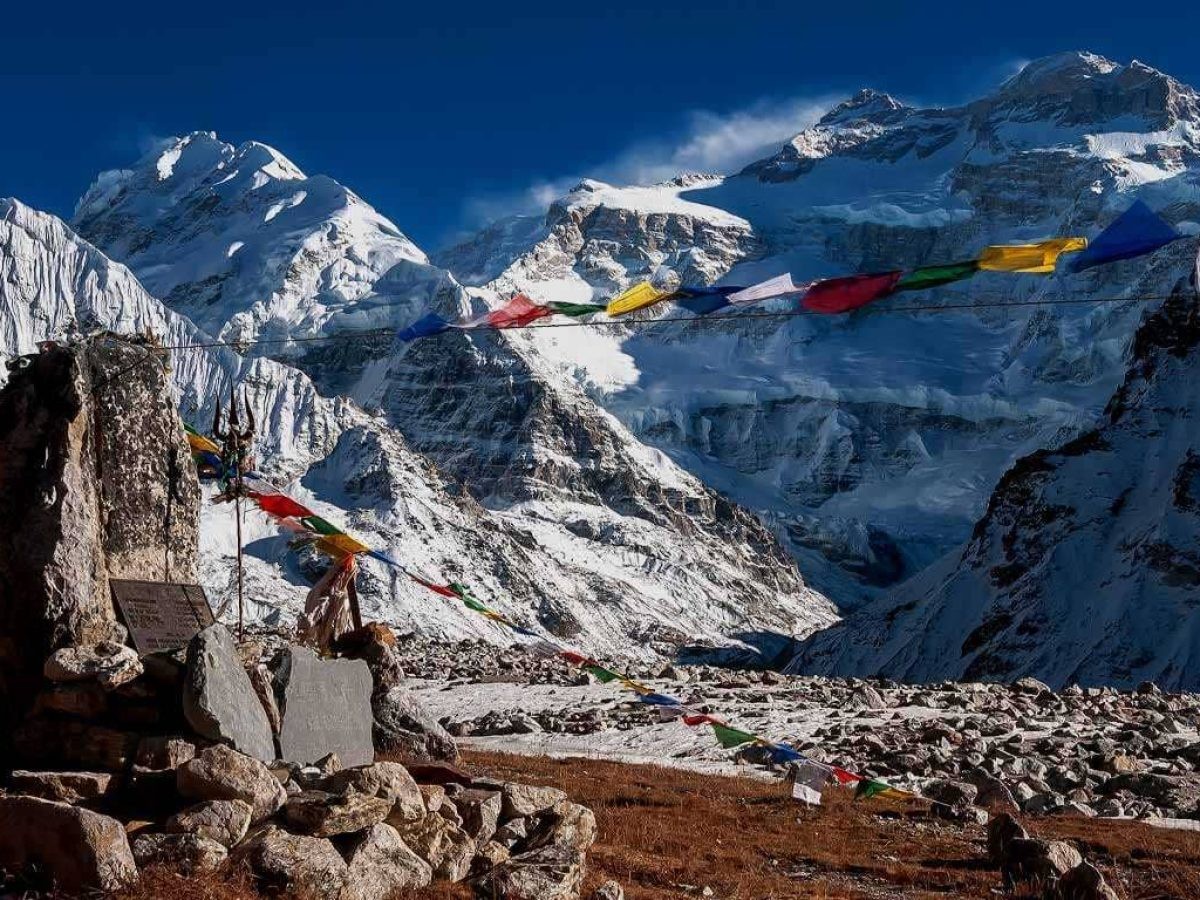
Accordingly, you will be passing the glaciated riverbeds and pass near the North Face of Mt. Jannu. Therefore, to see the incredible views, you have to hike past the spectacular and remote north faces of Jannu. As a result, you will reach Khambachen and then Lhonak (4780 meters), where only a few teahouses survive the extreme weather conditions. Finally, the last stage of Kanchenjunga trekking is Pangpema or Kanchenjunga North Base Camp at 5143 meters.
Furthermore, the Lhonak to Pangpema day hike is an incredible adventure. First of all, you can see the most outstanding view of the North Face of the giant Kanchenjunga. The highlight of this stage is the unforgettable experience of seeing the Kanchenjunga massif with its glaciers and massive crevasses. Therefore, many hikers say that the sight of the Kanchenjunga north face is the highlight of their trekking adventure.
| Stop | Elevation | Description |
|---|---|---|
| Khambachen | 4140 m | Alpine pastures, first views |
| Lhonak | 4780 m | A remote village stay |
| Pangpema | 5143 m | North Base Camp, Kanchenjunga views |
High altitude hiking tips:
In this way, every trekker agrees that the highest point of the journey is stage 3. As a result, reaching the North Base Camp at 5143 meters will be one of the most memorable experiences in your life. Moreover, the views from the top are breathtaking, as there is a chance to see multiple high peaks. Hence, the beauty of the high altitudes and the remoteness of the Kanchenjunga trail make Pangpema unforgettable.
This stage represents the formidable link between the North and the South sides of the trek. As such, it involves crossing high passes, over 4,600 m, with potentially unforgiving weather conditions. In particular, it is not uncommon for snow to appear in the trail during this stage.
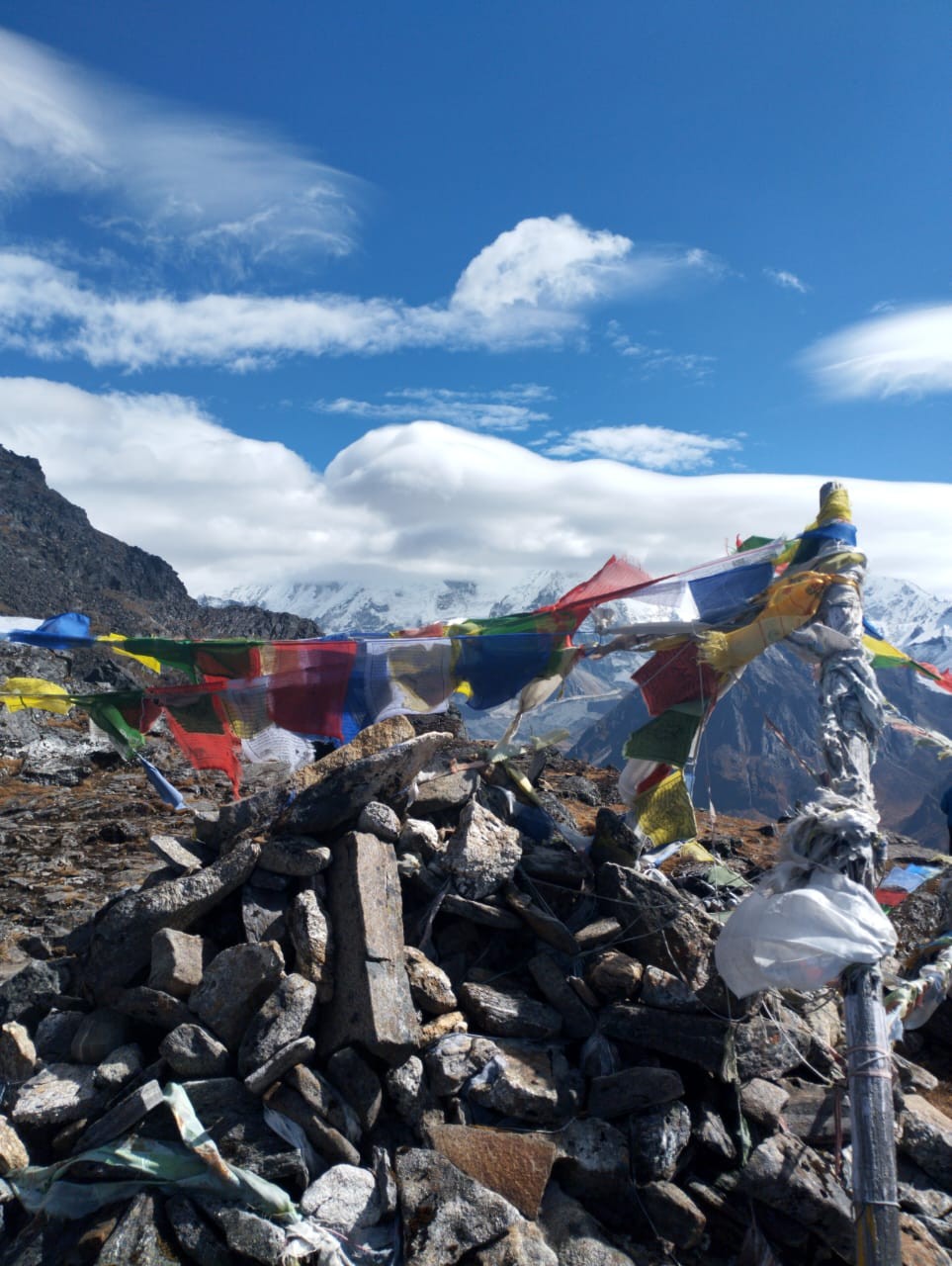
Therefore, one of the most challenging parts is linked to crossing the pass Sele La Kanchenjunga. In addition, you will also cross Sinion La and Mirgin La, high altitude passes with exposed and cold conditions. Altogether, these passes are demanding and require a certain degree of technical experience, fitness, and caution. On a more positive note, the view from the passes is worth the effort, as they offer spectacular 360-degree views of the snow-capped summits of Kanchenjunga.
In fact, crossing the high mountain passes between North and South Kanchenjunga base camp involves long walks at significant heights. As such, it is recommended that you start very early in the morning, to take advantage of the clear weather. In addition, your guide will have to make decisions concerning the route, depending on the snow and weather conditions.
| Pass Name | Approx. Elevation | Difficulty Notes |
|---|---|---|
| Sele La | 4,290 – 4,600 m | Steeper sections and potential snow. |
| Sinion La | Around 4,660 m | Exposed with high winds. |
| Mirgin La | Around 4,663 m | Long and open with spectacular views. |
High Pass Safety Tips:
So, it goes without saying that Stage 4 is quite demanding and one of the most technically challenging parts of the trek. As such, it is necessary to pace yourself when crossing the high mountain passes. At the same time, the adrenalin rush and the view from the passes will certainly last long in your memory. Altogether, this stage represents the link between the North and the South base camps of Kanchenjunga, completing the circuit.
Descending from the high mountain passes, you enter the vast glacial amphitheater of South Kanchenjunga. As such, the landscape becomes even more spectacular, providing you with increasingly impressive views of the South Face.
In particular, the dry and cold climate of these lower valleys allows you to contemplate the majesty of the Kanchenjunga South Face on a daily basis.
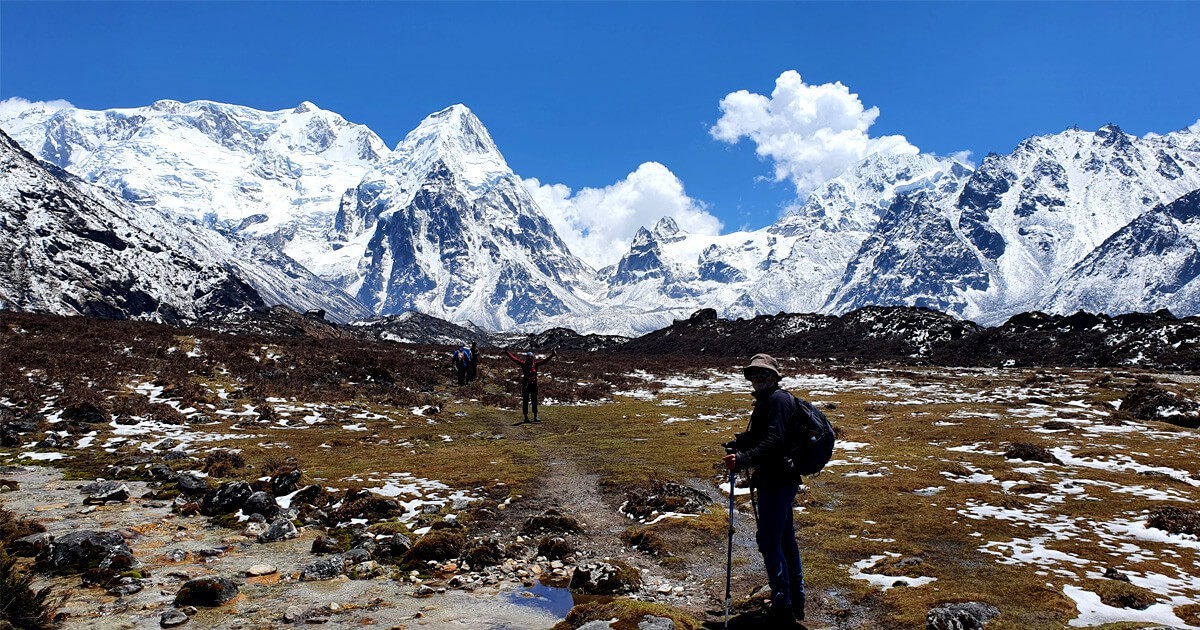
As such, this stage involves first visiting Tseram and then Ramche. In particular, the glacier of Yalung Ramche trek is both spectacular and intimidating. As such, most trekkers spend the night in Ramche before heading towards the South Base Camp.
Altogether, the most impressive part of the day is the walk from Ramche to the viewpoint at the South Base Camp Oktang (4,730 m). Altogether, this hike allows you to enjoy the view of the South Face of Mount Kanchenjunga and the Yalung Glacier – a unique and unmissable Himalayan experience.
| Stop / Viewpoint | Elevation | Highlights |
|---|---|---|
| Tseram | 3,870 m | Southwestern corner of the Kanchenjunga range. |
| Ramche | 4,580 m | Views of the Yalung Glacier and cold nights. |
| Oktang | 4,730 m | Spectacular views of both the South Face and the Yalung Glacier. |
South Base Camp Tips:
Meanwhile, it goes without saying that Stage 5 offers the second major Himalayan highlight of the trek. In particular, the view from the Oktang South Base Camp viewpoint is unique and worth the effort. Altogether, this stage provides you with spectacular views of the South Face of Mount Kanchenjunga and the Yalung Glacier, concluding the circuit of the range. As such, the South Base Camp represents another major experience and a lasting memory for any trekker who contemplates the majesty of the Kanchenjunga South Face.
When is the best time to trek Kanchenjunga? Choosing the right season can have a major impact on the trip. As a result, Kanchenjunga trek is good throughout the year, apart from the monsoon season. Nonetheless, both spring and autumn have their own benefits.
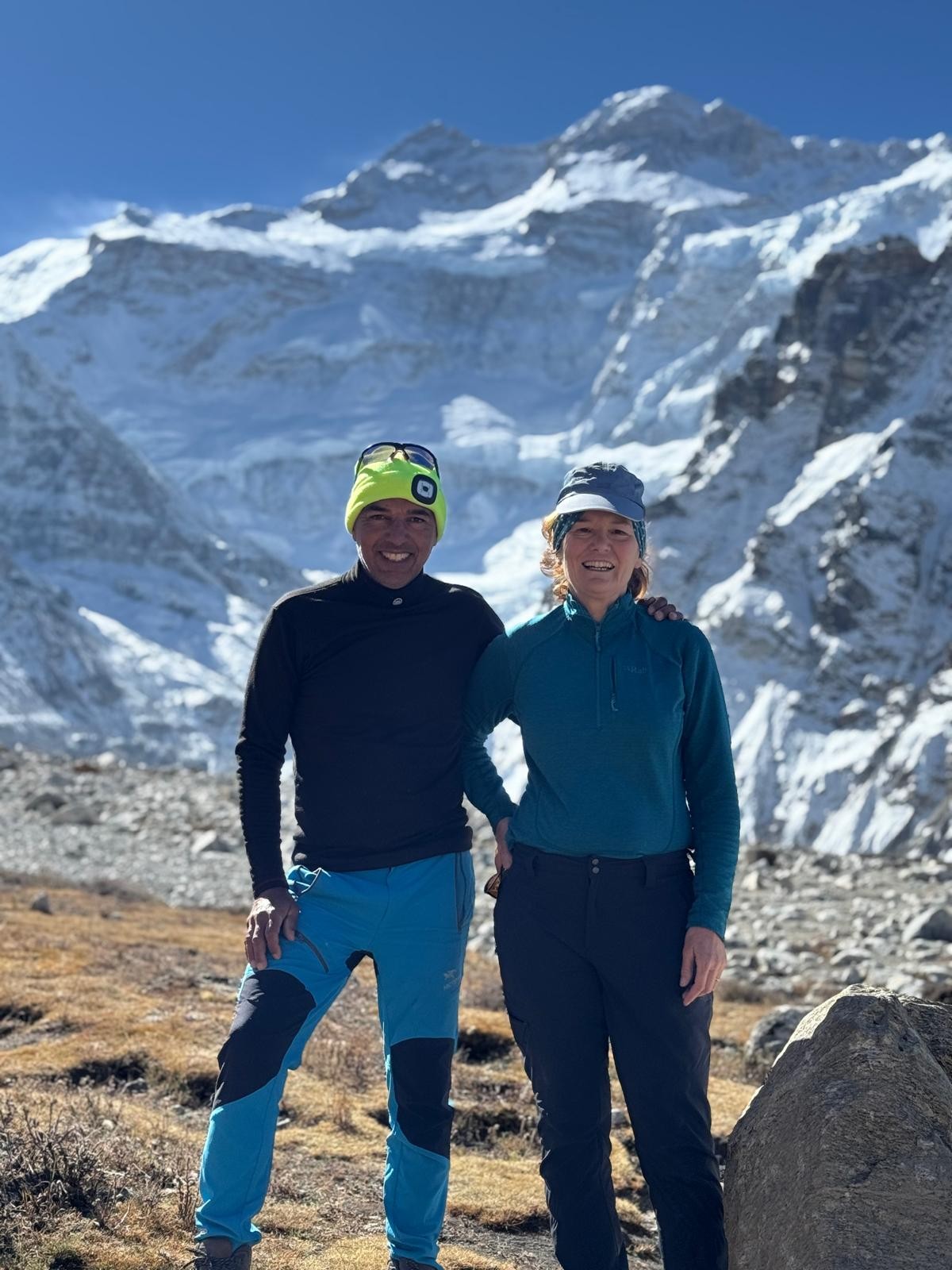
Firstly, spring (March-May) offers rhododendron blooms and warmer days. Additionally, mornings are clear and offer great photo opportunities. As a result, the Kanchenjunga trek weather is not as severe as higher-altitude expeditions. Moreover, the forests are full of color, and the lower trails are enjoyable.
Furthermore, autumn (September-November) comes after the monsoon season and is known for its cloudless skies. Consequently, mountain views are at their best, and the air is quite chilly.
However, the post-monsoon weather is drier, with more predictable conditions. Thus, overall, Kanchenjunga trek in autumn has steadier temperatures than in spring.
| Season | Months | Advantages | Disadvantages |
|---|---|---|
| Spring | March-May | Rhododendrons, warm days | Occasional afternoon clouds |
| Autumn | Sept-Nov | Clear skies, dry weather | Cold nights, rare snowfall |
| Monsoon | June-August | Leeches, poor visibility | Poor weather, no views |
So, the choice of when to trek Kanchenjunga depends on individual preferences. Therefore, Kanchenjunga trek in spring offers floral landscapes and milder temperatures than autumn. On the other hand, Kanchenjunga trek in autumn provides the best views of the mountain. Thus, both seasons have tremendous potential to provide an unforgettable experience.
The Kanchenjunga Base Camp Trek is undoubtedly one of the most challenging adventures in Nepal. As a result, the preparation process needs to be taken seriously. Moreover, only those who adequately train and equip themselves can fully enjoy all the beauty of the region.
Firstly, it is necessary to conduct a physical training course to prepare for the Kanchenjunga trek. Secondly, hikers need to bring appropriate clothing and gear. Most importantly, Kanchenjunga trek preparation involves both physical and psychological aspects. Therefore, following all the guidelines will increase the chance of a successful expedition.
Kanchenjunga Base Camp Packing List Essentials:
How to Prepare Physically for the Kanchenjunga Circuit Trek :
Therefore, all these tips will help get ready for the Kanchenjunga expedition. Thereby, adequate preparation will ensure an unforgettable journey through the heart of the Kanchenjunga National Park. Moreover, the challenging trail will test one’s physical and mental limits. Besides, Kanchenjunga Base Camp Trek is bound to be among the most meaningful experiences in one’s life.
Contact us and book your Kanchenjunga Trek with us. Our professional team will make your adventure to Kanchenjunga safe and memorable.
Have safe travels and happy trekking!!!
1 How long is the Kanchenjunga Base Camp Trek itinerary?
The round trip Kanchenjunga Base Camp Trekking from Kathmandu to North and South Base Camps generally takes 18-26 days. The North Base Camp only trek takes 14-17 days. The South Base Camp is comparatively shorter. The duration depends on the days spent on acclimatization, the pace of the trek, and the weather in the remote eastern Nepal region.
2. What is the highest altitude on the Kanchenjunga Trek?
The highest altitude on the Kanchenjunga Trek is at Pangpema or North Base Camp which is at 5143 meters. The South Base Camp or Oktang is at 4730 meters. It is essential to acclimatize well as the trail involves crossing several passes of over 4000 meters.
3. How difficult is the Kanchenjunga Base Camp Trek?
This trekking package is suitable for serious trekkers only. The trail is remote, rugged, and challenging, and it involves a steep climb. The trail also requires 6-8 hours of walking per day. Prior experience of trekking at high altitudes is highly recommended.
4. When is the best season for the Kanchenjunga Base Camp Trek?
The best seasons to trek to Kanchenjunga Base Camp are spring (March to May) and autumn (September to November). The weather is clear, and the mountain views are spectacular. Spring season is a blooming season whereas the autumn season provides the clearest views. It is best to avoid monsoon and winter seasons.
5. Do I need a guide for the Kanchenjunga Trek?
Yes, you will need a guide for this trek. The region is restricted, and it is mandatory to have a licensed guide. The guide will assist you in navigating through the trails and will also help with other formalities. You can hire a guide through trekking agencies in Nepal.
6. What permits are required for the Kanchenjunga Base Camp Trek?
You will need a Restricted Area Permit (RAP) and a Kanchenjunga Conservation Area Permit (KCAP) for this trek. You can get these permits from the trekking agencies in Nepal. The RAP costs around USD 20 for a week with the first four weeks costing USD 20 per person.
7. How much does the Kanchenjunga Base Camp Trek cost?
The cost of the Kanchenjunga Base Camp Trek package varies from USD 1800 to USD 3500 per person for an 18 to 25-day trip. The cost depends on the services provided and the group size. The package generally includes the cost of permits, guide, porter, food, accommodation, and transport from Kathmandu.
8. Where does the Kanchenjunga Base Camp Trek start?
The Kanchenjunga Base Camp Trek generally starts with a flight from Kathmandu to Bhadrapur followed by a road trip to Taplejung or Suketar. The trek then begins from Sekathum or Chiruwa in the far eastern region of Nepal.
9. Can I trek to both North and South Base Camps?
Yes, it is possible to trek to both the North and South Base Camps. The most popular itinerary includes a circuit trek to Kanchenjunga which involves visiting both the base camps. It is a challenging but rewarding trek. You can cross high mountain passes like Sele La while visiting the North Base Camp followed by a trek to the South Base Camp.
10. What kind of accommodation is available on the Kanchenjunga Trek?
On the Kanchenjunga Base Camp Trek, you can stay in the teahouses and lodges in the villages such as Ghunsa, Kambachen, and Tseram. Accommodation and food are generally simple. You may have to stay in tents at times, depending on the itinerary of the trek.
11. How many hours of trekking per day does the itinerary involve?
The daily trekking hours range from 6-8 hours on an average day. There are also some days when you may have to trek for 8-9 hours. These long days are generally spent crossing high mountain passes or reaching the base camps. The itinerary also includes some rest days for acclimatization.
12. Is the Kanchenjunga Base Camp Trek suitable for beginners?
The Kanchenjunga Base Camp Trek is not suitable for novice trekkers. This trek is challenging and involves long days of hiking. It is recommended that you have had prior experience of trekking to high altitudes.
13. What is the distance of the Kanchenjunga Base Camp Trek?
The Kanchenjunga Base Camp Trek is around 220-250 kilometers long. The trek to the North Base Camp only is comparatively shorter and is around 120-150 kilometers long. The distance can vary depending on the itinerary chosen.
14. Why is acclimatization important for this trek?
The Kanchenjunga Base Camp Trek requires proper acclimatization as it involves trekking to altitudes of over 5000 meters. It is recommended that you take rest days while trekking to higher altitudes. This allows your body to adjust to the change in altitude. The itinerary generally includes acclimatization days at Ghunsa (around 3400-3600 m) and Lhonak.
15. What are the cultural experiences on the Kanchenjunga Trek?
The Kanchenjunga Trek takes you through the remote regions of Nepal inhabited by the Limbu, Rai, and Sherpa people. You can experience the local culture and traditions while staying in the villages and interacting with the locals. It is a great opportunity to visit unique places such as Ghunsa and Phale.
16. How does this trek compare to the Everest Base Camp Trek?
The Kanchenjunga Base Camp Trek is longer, more remote, challenging, and less crowded compared to the Everest Base Camp Trek. The trails are generally more difficult, and the facilities are fewer. Whereas the Everest Base Camp Trek is well-established, Kanchenjunga offers a more secluded and pristine Himalayan wilderness around the world’s third-highest peak.
17. What kind of gear is recommended for the Kanchenjunga Base Camp Trek?
Some of the essential items for this trek include a good sleeping bag that is suitable for sub-zero temperatures, warm clothing, a reliable pair of trekking shoes, trekking poles, and a rain jacket. You will also need a backpack with a capacity of 50-65 liters. A detailed list can be provided upon request.
18. Do I need travel insurance for this trek?
Yes, it is mandatory to have travel insurance that covers high-altitude trekking and helicopter rescue if necessary. As this trek involves remote areas, it is important to have sufficient coverage in case of an emergency.
19. Can the itinerary for the Kanchenjunga Base Camp Trek be customized?
Yes, the itinerary for the Kanchenjunga Base Camp Trek can be customized depending on your preferences and time availability. You can choose to trek to either the North or the South Base Camp or even both. You can also customize the itinerary for a shorter trek of around 13-17 days. However, it is recommended that you spend enough days on acclimatization.
20. What makes the Kanchenjunga Base Camp Trek unique?
The Kanchenjunga Base Camp Trek offers unique opportunities to witness the natural beauty of one of the most remote and pristine regions of Nepal. It provides unparalleled views of the Kanchenjunga massif and is less crowded than other popular trekking routes such as Everest and Annapurna.
Our travel experts are ready to assist you with any questions.
Send us a message.Have a question before you book? Send your enquiry below and our travel experts will get back with the required information.