[{"name":"Everest Base Camp Helicopter Tour","duration":"1","image_url":"https:\/\/www.havenholidaysnepal.com\/storage\/trip-galleries\/1\/thumb_6cd53005d75a86e373d31419d1b14d78.webp","offer_price":1195,"url":"https:\/\/www.havenholidaysnepal.com\/trips\/everest-base-camp-helicopter-tour"},{"name":"Everest Mountain Flight","duration":"1","image_url":"https:\/\/www.havenholidaysnepal.com\/storage\/trip-galleries\/4\/thumb_3b0b4f1d6f72b0ad224daf4752f2c6e0.jpg","offer_price":285,"url":"https:\/\/www.havenholidaysnepal.com\/trips\/everest-mountain-flight"},{"name":"Everest Short Trek","duration":"9","image_url":"https:\/\/www.havenholidaysnepal.com\/storage\/trip-galleries\/5\/thumb_BXPP3621.JPEG0.02033800 1727957098.webp","offer_price":995,"url":"https:\/\/www.havenholidaysnepal.com\/trips\/everest-short-trek"},{"name":"Gokyo Valley Trek","duration":"12","image_url":"https:\/\/www.havenholidaysnepal.com\/storage\/trip-galleries\/6\/thumb_10bc469b14731f23d3ce84a7092ad53f.jpg","offer_price":1195,"url":"https:\/\/www.havenholidaysnepal.com\/trips\/gokyo-valley-trek"},{"name":"15 days Annapurna Base Camp Trek","duration":"15","image_url":"https:\/\/www.havenholidaysnepal.com\/storage\/trip-galleries\/7\/thumb_87d1533bc45faf070990aef0579e4be4.jpg0.81855100 1728285496.webp","offer_price":785,"url":"https:\/\/www.havenholidaysnepal.com\/trips\/15-days-annapurna-base-camp-trek"},{"name":"Nepal Pilgrimage Tour","duration":"14","image_url":"https:\/\/www.havenholidaysnepal.com\/storage\/trip-galleries\/8\/thumb_02c3bcf2ad2e8a4c1703e90ae747b5f1.jpg","offer_price":1475,"url":"https:\/\/www.havenholidaysnepal.com\/trips\/nepal-pilgrimage-tour"},{"name":"UNESCO World Heritage Site Tour","duration":"10","image_url":"https:\/\/www.havenholidaysnepal.com\/storage\/trip-galleries\/9\/thumb_unesco-world-heritage-site-Lumbani-temple-buddhists-hindus-kathmandu-nepal0.36988600 17347617740.93089500 1737469667.webp","offer_price":715,"url":"https:\/\/www.havenholidaysnepal.com\/trips\/unesco-world-heritage-site-tour"},{"name":"Island Peak Climbing","duration":"16","image_url":"https:\/\/www.havenholidaysnepal.com\/storage\/trip-galleries\/11\/thumb_Island peak0.53947000 1734692503.webp","offer_price":2495,"url":"https:\/\/www.havenholidaysnepal.com\/trips\/island-peak-climbing"},{"name":"Upper Mustang Trek","duration":"18","image_url":"https:\/\/www.havenholidaysnepal.com\/storage\/trip-galleries\/12\/thumb_upper mustang 7 Oct-2024.jpg0.95398900 1728286166.webp","offer_price":2995,"url":"https:\/\/www.havenholidaysnepal.com\/trips\/upper-mustang-trek"},{"name":"Annapurna Circuit Trek","duration":"16","image_url":"https:\/\/www.havenholidaysnepal.com\/storage\/trip-galleries\/15\/thumb_tibetan-flags.jpg0.04843900 1728289138.webp","offer_price":985,"url":"https:\/\/www.havenholidaysnepal.com\/trips\/annapurna-circuit-trek"},{"name":"Gosainkunda Lake Trek","duration":"10","image_url":"https:\/\/www.havenholidaysnepal.com\/storage\/trip-galleries\/16\/thumb_5A8083B3-C007-41A8-853F-D0C37C97D235_1_105_c.jpeg0.52581200 1731845258.webp","offer_price":595,"url":"https:\/\/www.havenholidaysnepal.com\/trips\/gosainkunda-lake-trek"},{"name":"Zip-lining in Pokhara and Dhulikhel","duration":"1","image_url":"https:\/\/www.havenholidaysnepal.com\/storage\/trip-galleries\/18\/thumb_215f765e2ebc995dd5c800b4bfdbacc3.jpg","offer_price":82,"url":"https:\/\/www.havenholidaysnepal.com\/trips\/zip-lining-in-pokhara-and-dhulikhel"},{"name":"Annapurna Heli Tour","duration":"1","image_url":"https:\/\/www.havenholidaysnepal.com\/storage\/trip-galleries\/19\/thumb_d71a6bbb9fd4da8d1b567a5cdbdec85d.jpg","offer_price":555,"url":"https:\/\/www.havenholidaysnepal.com\/trips\/annapurna-heli-tour"},{"name":"Paragliding in Pokhara","duration":"1","image_url":"https:\/\/www.havenholidaysnepal.com\/storage\/trip-galleries\/20\/thumb_de788d2dd9726783431f882c007efae1.jpg","offer_price":65,"url":"https:\/\/www.havenholidaysnepal.com\/trips\/paragliding-in-pokhara"},{"name":"Ultra-Flight in Pokhara","duration":"1","image_url":"https:\/\/www.havenholidaysnepal.com\/storage\/trip-galleries\/21\/thumb_e27a9fb572a5c21611bb2a3c18e4b8f0.jpeg","offer_price":175,"url":"https:\/\/www.havenholidaysnepal.com\/trips\/ultra-flight-in-pokhara"},{"name":"Sarangkot Hiking","duration":"1","image_url":"https:\/\/www.havenholidaysnepal.com\/storage\/trip-galleries\/22\/thumb_100ef822fea19987166c6c1366215f15.jpg","offer_price":55,"url":"https:\/\/www.havenholidaysnepal.com\/trips\/sarangkot-hiking"},{"name":"Mera Peak Climbing","duration":"18","image_url":"https:\/\/www.havenholidaysnepal.com\/storage\/trip-galleries\/24\/thumb_d16ae3895f678cf26ffbf2455f541fb5.jpg0.31883400 1732617790.webp","offer_price":2475,"url":"https:\/\/www.havenholidaysnepal.com\/trips\/mera-peak-climbing"},{"name":"Lower Dolpo Trek","duration":"18","image_url":"https:\/\/www.havenholidaysnepal.com\/storage\/trip-galleries\/26\/thumb_Dolpo Galary - 1.JPG0.37725200 1727939952.webp","offer_price":2995,"url":"https:\/\/www.havenholidaysnepal.com\/trips\/lower-dolpo-trek"},{"name":"Nagarkot Sunrise\/Sunset Tour","duration":"1","image_url":"https:\/\/www.havenholidaysnepal.com\/storage\/trip-galleries\/27\/thumb_5147a5532644283a380f2e86f3857c13.jpg0.17748000 1728488108.webp","offer_price":30,"url":"https:\/\/www.havenholidaysnepal.com\/trips\/nagarkot-sunrise-sunset-tour"},{"name":"16 day Everest Base Camp Trek","duration":"16","image_url":"https:\/\/www.havenholidaysnepal.com\/storage\/trip-galleries\/28\/thumb_IMG_4311.JPG0.64984800 1727942213.webp","offer_price":1695,"url":"https:\/\/www.havenholidaysnepal.com\/trips\/16-day-everest-base-camp-trek"},{"name":"Ghorepani Poon Hill trek with Jungle Safari and Trishuli River Rafting -13 days","duration":"13","image_url":"https:\/\/www.havenholidaysnepal.com\/storage\/trip-galleries\/29\/thumb_Ghorepani Poon hill.jpg0.48460800 1728281439.webp","offer_price":795,"url":"https:\/\/www.havenholidaysnepal.com\/trips\/ghorepani-poon-hill-trek-with-jungle-safari-and-trishuli-river-rafting--13-days"},{"name":"Mardi Himal Trek","duration":"12","image_url":"https:\/\/www.havenholidaysnepal.com\/storage\/trip-galleries\/30\/thumb_s1.jpg0.62112600 1728200721.webp","offer_price":795,"url":"https:\/\/www.havenholidaysnepal.com\/trips\/mardi-himal-trek"},{"name":"Langtang Valley Trekking","duration":"10","image_url":"https:\/\/www.havenholidaysnepal.com\/storage\/trip-galleries\/31\/thumb_IMG_4702.JPG0.84916500 1727958504.webp","offer_price":685,"url":"https:\/\/www.havenholidaysnepal.com\/trips\/langtang-valley-trekking"},{"name":"Real Adventure Tour in Nepal","duration":"9","image_url":"https:\/\/www.havenholidaysnepal.com\/storage\/trip-galleries\/32\/thumb_ebd1b8cc78d90abe8b9003dd9a2f25bf.jpg0.82151300 1728213516.webp","offer_price":695,"url":"https:\/\/www.havenholidaysnepal.com\/trips\/real-adventure-tour-in-nepal"},{"name":"Luxury Tour in Nepal","duration":"10","image_url":"https:\/\/www.havenholidaysnepal.com\/storage\/trip-galleries\/33\/thumb_8574e61b252b18676b042caf30d830df.jpg","offer_price":1675,"url":"https:\/\/www.havenholidaysnepal.com\/trips\/luxury-tour-in-nepal"},{"name":"Luxury Everest Panorama Trek With EBC Heli Sightseeing","duration":"8","image_url":"https:\/\/www.havenholidaysnepal.com\/storage\/trip-galleries\/34\/thumb_URZL2397.JPEG0.01209600 1728027820.webp","offer_price":2395,"url":"https:\/\/www.havenholidaysnepal.com\/trips\/luxury-everest-panorama-trek-with-ebc-heli-sightseeing"},{"name":"13 day Everest Base Camp Trek with Helicopter","duration":"13","image_url":"https:\/\/www.havenholidaysnepal.com\/storage\/trip-galleries\/35\/thumb_IMG_4292.JPG0.70131500 1728029276.webp","offer_price":2095,"url":"https:\/\/www.havenholidaysnepal.com\/trips\/13-day-everest-base-camp-trek-with-helicopter"},{"name":"Manaslu Circuit Trek","duration":"16","image_url":"https:\/\/www.havenholidaysnepal.com\/storage\/trip-galleries\/36\/thumb_Mt Manaslu 03-Oct-2024.jpg0.65804900 1727938470.webp","offer_price":1055,"url":"https:\/\/www.havenholidaysnepal.com\/trips\/manaslu-circuit-trek"},{"name":"Kanchenjunga Base Camp Trek","duration":"21","image_url":"https:\/\/www.havenholidaysnepal.com\/storage\/trip-galleries\/37\/thumb_Kanchanjunga Trek -!.jpg0.54744400 1727938497.webp","offer_price":2275,"url":"https:\/\/www.havenholidaysnepal.com\/trips\/kanchenjunga-base-camp-trek"},{"name":"Ganesh Himal and Sing-La Trek","duration":"14","image_url":"https:\/\/www.havenholidaysnepal.com\/storage\/trip-galleries\/38\/thumb_Ganesh Himal slider-1.jpg0.43764500 1727937722.webp","offer_price":1775,"url":"https:\/\/www.havenholidaysnepal.com\/trips\/ganesh-himal-and-sing-la-trek"},{"name":"Island Peak Climb with Everest Base Camp Trek","duration":"21","image_url":"https:\/\/www.havenholidaysnepal.com\/storage\/trip-galleries\/39\/thumb_2be428730fe83525bc85a010564f99de.jpg","offer_price":2750,"url":"https:\/\/www.havenholidaysnepal.com\/trips\/island-peak-climb-with-everest-base-camp-trek"},{"name":"Students' Adventure Tour in Nepal","duration":"12","image_url":"https:\/\/www.havenholidaysnepal.com\/storage\/trip-galleries\/41\/thumb_a926d22fbfe08cba271c41ac289b3fd2.jpg","offer_price":995,"url":"https:\/\/www.havenholidaysnepal.com\/trips\/students-adventure-tour-in-nepal"},{"name":"7 Day Poonhill Trek","duration":"7","image_url":"https:\/\/www.havenholidaysnepal.com\/storage\/trip-galleries\/42\/thumb_6196bd69036473293a2c24cc21ed57d7.jpg0.10880600 1728205378.webp","offer_price":555,"url":"https:\/\/www.havenholidaysnepal.com\/trips\/7-day-poonhill-trek"},{"name":"7 Days Annapurna Base Camp Trek","duration":"7","image_url":"https:\/\/www.havenholidaysnepal.com\/storage\/trip-galleries\/43\/thumb_IMG_2214.JPG0.08204900 1728202033.webp","offer_price":355,"url":"https:\/\/www.havenholidaysnepal.com\/trips\/7-days-annapurna-base-camp-trek"},{"name":"3 days Poonhill Trek","duration":"3","image_url":"https:\/\/www.havenholidaysnepal.com\/storage\/trip-galleries\/44\/thumb_Poon hill.jpg0.60816600 1731412954.webp","offer_price":165,"url":"https:\/\/www.havenholidaysnepal.com\/trips\/3-days-poonhill-trek"},{"name":"Poon Hill Luxury Trek with Chitwan-12 days","duration":"12","image_url":"https:\/\/www.havenholidaysnepal.com\/storage\/trip-galleries\/45\/thumb_Poom hill.jpg0.52074500 1730180532.webp","offer_price":1175,"url":"https:\/\/www.havenholidaysnepal.com\/trips\/poon-hill-luxury-trek-with-chitwan-12-days"},{"name":"Everest Luxury Trek-7 days","duration":"7","image_url":"https:\/\/www.havenholidaysnepal.com\/storage\/trip-galleries\/46\/thumb_ACRX9330.JPEG0.93236200 1728031275.webp","offer_price":2195,"url":"https:\/\/www.havenholidaysnepal.com\/trips\/everest-luxury-trek-7-days"},{"name":"Hindu Pilgrimage Tour in Nepal-10 days","duration":"10","image_url":"https:\/\/www.havenholidaysnepal.com\/storage\/trip-galleries\/47\/thumb_a94bf96a4d31decb419f6f828a3280d2.jpg","offer_price":995,"url":"https:\/\/www.havenholidaysnepal.com\/trips\/hindu-pilgrimage-tour-in-nepal-10-days"},{"name":"Everest Base Camp Short Trek-12 days","duration":"12","image_url":"https:\/\/www.havenholidaysnepal.com\/storage\/trip-galleries\/48\/thumb_IMG_4311.JPG0.52680100 1727945154.webp","offer_price":995,"url":"https:\/\/www.havenholidaysnepal.com\/trips\/everest-base-camp-short-trek-12-days"},{"name":"Everest Base Camp Hike 12 Days","duration":"12","image_url":"https:\/\/www.havenholidaysnepal.com\/storage\/trip-galleries\/49\/thumb_IMG_4260.JPG0.51729100 1728061234.webp","offer_price":1295,"url":"https:\/\/www.havenholidaysnepal.com\/trips\/everest-base-camp-hike-12-days"},{"name":"11 Days Everest Base Camp Trek","duration":"11","image_url":"https:\/\/www.havenholidaysnepal.com\/storage\/trip-galleries\/50\/thumb_IMG_4249.JPG0.21392500 1727946959.webp","offer_price":1055,"url":"https:\/\/www.havenholidaysnepal.com\/trips\/11-days-everest-base-camp-trek"},{"name":"6 Days Annapurna Base Camp Trek","duration":"6","image_url":"https:\/\/www.havenholidaysnepal.com\/storage\/trip-galleries\/51\/thumb_6 days Abc.jpg0.58185400 1728200798.webp","offer_price":285,"url":"https:\/\/www.havenholidaysnepal.com\/trips\/6-days-annapurna-base-camp-trek"},{"name":"Annapurna Base Camp Trek","duration":"8","image_url":"https:\/\/www.havenholidaysnepal.com\/storage\/trip-galleries\/52\/thumb_IMG_2214.JPG0.29415700 1729487656.webp","offer_price":585,"url":"https:\/\/www.havenholidaysnepal.com\/trips\/annapurna-base-camp-trek"},{"name":"Everest Base Camp Trek with Helicopter Fly Out 10 Days","duration":"10","image_url":"https:\/\/www.havenholidaysnepal.com\/storage\/trip-galleries\/53\/thumb_IMG_4328.JPG0.52056600 1728058444.webp","offer_price":1875,"url":"https:\/\/www.havenholidaysnepal.com\/trips\/everest-base-camp-trek-with-helicopter-fly-out-10-days"},{"name":"Everest Base Camp Trek 14 Days","duration":"14","image_url":"https:\/\/www.havenholidaysnepal.com\/storage\/trip-galleries\/54\/thumb_Everest Base Camp Trek 14 days Oct 3 2024.JPG0.43202700 1727939745.webp","offer_price":1335,"url":"https:\/\/www.havenholidaysnepal.com\/trips\/everest-base-camp-trek-14-days"},{"name":"ABC Trek with Poonhill 11 Days","duration":"11","image_url":"https:\/\/www.havenholidaysnepal.com\/storage\/trip-galleries\/55\/thumb_ABC with fishtail.JPG0.21441100 1728277965.webp","offer_price":555,"url":"https:\/\/www.havenholidaysnepal.com\/trips\/abc-trek-with-poonhill-11-days"},{"name":"Muldai Hill Trek 9 Days","duration":"9","image_url":"https:\/\/www.havenholidaysnepal.com\/storage\/trip-galleries\/56\/thumb_7efee59f0a8c6817c8255bd2b9f3539d.jpeg0.19479300 1728213091.webp","offer_price":675,"url":"https:\/\/www.havenholidaysnepal.com\/trips\/muldai-hill-trek-9-days"},{"name":"Mardi Himal Trek 6 days","duration":"6","image_url":"https:\/\/www.havenholidaysnepal.com\/storage\/trip-galleries\/57\/thumb_slider 1.jpeg0.36909700 1728184981.webp","offer_price":590,"url":"https:\/\/www.havenholidaysnepal.com\/trips\/mardi-himal-trek-6-days"},{"name":"Mardi Himal Trek 7 days","duration":"7","image_url":"https:\/\/www.havenholidaysnepal.com\/storage\/trip-galleries\/58\/thumb_slider1.jpg0.61666600 1728206414.webp","offer_price":620,"url":"https:\/\/www.havenholidaysnepal.com\/trips\/mardi-himal-trek-7-days"},{"name":"Mardi Himal Trek 8 Days","duration":"8","image_url":"https:\/\/www.havenholidaysnepal.com\/storage\/trip-galleries\/59\/thumb_sli1.jpg0.38569100 1728206631.webp","offer_price":695,"url":"https:\/\/www.havenholidaysnepal.com\/trips\/mardi-himal-trek-8-days"},{"name":"14 Days Manaslu Trek","duration":"14","image_url":"https:\/\/www.havenholidaysnepal.com\/storage\/trip-galleries\/60\/thumb_sunrise-mt-manaslu-during-manaslu-circuit-larke-pass-trekking-himalaya-nepal (1)0.81855800 1738673284.webp","offer_price":885,"url":"https:\/\/www.havenholidaysnepal.com\/trips\/14-days-manaslu-trek"},{"name":"Dhampus-Sarangkot Trek with Chitwan 8 days","duration":"8","image_url":"https:\/\/www.havenholidaysnepal.com\/storage\/trip-galleries\/61\/thumb_Sarangkot Bhangyang.jpg0.75461400 1728210333.webp","offer_price":790,"url":"https:\/\/www.havenholidaysnepal.com\/trips\/dhampus-sarangkot-trek-with-chitwan-8-days"},{"name":"7 Days Golden Triangle Tour","duration":"7","image_url":"https:\/\/www.havenholidaysnepal.com\/storage\/trip-galleries\/62\/thumb_311ce1d117ee0ba75402a7c301bcdf830.73532400 1739179809.webp","offer_price":845,"url":"https:\/\/www.havenholidaysnepal.com\/trips\/7-days-golden-triangle-tour"},{"name":"Annapurna Circuit Trek 12 days","duration":"12","image_url":"https:\/\/www.havenholidaysnepal.com\/storage\/trip-galleries\/63\/thumb_IMG_20161024_092237.jpg0.57796600 1728289938.webp","offer_price":695,"url":"https:\/\/www.havenholidaysnepal.com\/trips\/annapurna-circuit-trek-12-days"},{"name":"Everest Base Camp Budget Trek 16 Days","duration":"16","image_url":"https:\/\/www.havenholidaysnepal.com\/storage\/trip-galleries\/64\/thumb_IMG_4423.JPG0.92579200 1728144669.webp","offer_price":958,"url":"https:\/\/www.havenholidaysnepal.com\/trips\/everest-base-camp-budget-trek-16-days"},{"name":"Poonhill Budget Trek 7 Days","duration":"7","image_url":"https:\/\/www.havenholidaysnepal.com\/storage\/trip-galleries\/65\/thumb_5be067852d0c5228d6f3155bc425c6b5.jpg","offer_price":395,"url":"https:\/\/www.havenholidaysnepal.com\/trips\/poonhill-budget-trek-7-days"},{"name":"Annapurna Base Camp Budget Trek 8 Days","duration":"8","image_url":"https:\/\/www.havenholidaysnepal.com\/storage\/trip-galleries\/66\/thumb_Pokhara.jpg0.16188000 1728212001.webp","offer_price":375,"url":"https:\/\/www.havenholidaysnepal.com\/trips\/annapurna-base-camp-budget-trek-8-days"},{"name":"The Real UNESCO Seven World Heritage Tour in Kathmandu 4 days","duration":"4","image_url":"https:\/\/www.havenholidaysnepal.com\/storage\/trip-galleries\/67\/thumb_Baudha Stupa.JPG0.63906900 1728201021.webp","offer_price":380,"url":"https:\/\/www.havenholidaysnepal.com\/trips\/the-real-unesco-seven-world-heritage-tour-in-kathmandu-4-days"},{"name":"Everest Base Camp Jeep Ride with Helicopter Return","duration":"14","image_url":"https:\/\/www.havenholidaysnepal.com\/storage\/trip-galleries\/68\/thumb_788ee5b63a6efb6f3c3d048b4270daca.JPG","offer_price":1995,"url":"https:\/\/www.havenholidaysnepal.com\/trips\/everest-base-camp-jeep-ride-with-helicopter-return"},{"name":"Annapurna Base Camp Jeep Ride with Helicopter Return 7 days","duration":"7","image_url":"https:\/\/www.havenholidaysnepal.com\/storage\/trip-galleries\/69\/thumb_abc jeep.jpg0.10280600 1728204064.webp","offer_price":1455,"url":"https:\/\/www.havenholidaysnepal.com\/trips\/annapurna-base-camp-jeep-ride-with-helicopter-return-7-days"},{"name":"Everest Base Camp Trek","duration":"15","image_url":"https:\/\/www.havenholidaysnepal.com\/storage\/trip-galleries\/70\/thumb_Everest Base Camp Trek 3 oct- 2024.JPG0.58445300 1727941472.webp","offer_price":1375,"url":"https:\/\/www.havenholidaysnepal.com\/trips\/everest-base-camp-trek"},{"name":"7 UNESCO World Heritage Tour Kathmandu 2 days","duration":"2","image_url":"https:\/\/www.havenholidaysnepal.com\/storage\/trip-galleries\/72\/thumb_Bhaktipur 3.jpg0.05559600 1728201496.webp","offer_price":150,"url":"https:\/\/www.havenholidaysnepal.com\/trips\/7-unesco-world-heritage-tour-kathmandu-2-days"},{"name":"Day Tour to UNESCO Heritage Sites","duration":"1","image_url":"https:\/\/www.havenholidaysnepal.com\/storage\/trip-galleries\/73\/thumb_228A1018.jpg0.79892500 1728199793.webp","offer_price":55,"url":"https:\/\/www.havenholidaysnepal.com\/trips\/day-tour-to-unesco-heritage-sites"},{"name":"Golden Triangle Tour in Nepal","duration":"8","image_url":"https:\/\/www.havenholidaysnepal.com\/storage\/trip-galleries\/74\/thumb_f54139cf9100f00015ffe0400687e946.webp","offer_price":588,"url":"https:\/\/www.havenholidaysnepal.com\/trips\/golden-triangle-tour-in-nepal"},{"name":"Everest Base Camp Honeymoon Tour by Helicopter with Pokhara","duration":"7 days","image_url":"https:\/\/www.havenholidaysnepal.com\/storage\/trip-galleries\/76\/thumb_RJTL7517.JPEG0.40261600 1731499989.webp","offer_price":9999,"url":"https:\/\/www.havenholidaysnepal.com\/trips\/everest-base-camp-honeymoon-tour-by-helicopter-with-pokhara"},{"name":"Yoga and Meditation Retreat Tour in Nepal","duration":"10 days","image_url":"https:\/\/www.havenholidaysnepal.com\/storage\/trip-galleries\/77\/thumb_decf8e33-6617-4400-9df0-63bf75509adf.JPG0.51948300 1731574810.webp","offer_price":2575,"url":"https:\/\/www.havenholidaysnepal.com\/trips\/yoga-and-meditation-retreat-tour-in-nepal"},{"name":"Chisapani-Nagarkot Trek","duration":"3","image_url":"https:\/\/www.havenholidaysnepal.com\/storage\/trip-galleries\/78\/thumb_0b64dfceaeab48ac36d685476bdebafb.webp","offer_price":165,"url":"https:\/\/www.havenholidaysnepal.com\/trips\/chisapani-nagarkot-trek"},{"name":"Chitwan Jungle Safari Tour","duration":"2","image_url":"https:\/\/www.havenholidaysnepal.com\/storage\/trip-galleries\/79\/thumb_IMG_1696.JPG0.28467800 1733054554.webp","offer_price":175,"url":"https:\/\/www.havenholidaysnepal.com\/trips\/chitwan-jungle-safari-tour"},{"name":"Kailash Overland Tour","duration":"16","image_url":"https:\/\/www.havenholidaysnepal.com\/storage\/trip-galleries\/80\/thumb_PA2605230.68496700 1735818657.webp","offer_price":2495,"url":"https:\/\/www.havenholidaysnepal.com\/trips\/kailash-overland-tour"},{"name":"4 nights 5 days Bhutan Tour","duration":"5","image_url":"https:\/\/www.havenholidaysnepal.com\/storage\/trip-galleries\/81\/thumb_PB0508470.23069500 1735828937.webp","offer_price":1265,"url":"https:\/\/www.havenholidaysnepal.com\/trips\/4-nights-5-days-bhutan-tour"},{"name":"Everest Base Camp Trek Without Flying","duration":"16","image_url":"https:\/\/www.havenholidaysnepal.com\/storage\/trip-galleries\/82\/thumb_308b054484eddc042e092e1ae2ae5586.webp","offer_price":685,"url":"https:\/\/www.havenholidaysnepal.com\/trips\/everest-base-camp-trek-without-flying"},{"name":"Everest Base Camp Trek by Land","duration":"16","image_url":"https:\/\/www.havenholidaysnepal.com\/storage\/trip-galleries\/83\/thumb_8f0f2784a3ae7343d193b64fe8d47c96.webp","offer_price":675,"url":"https:\/\/www.havenholidaysnepal.com\/trips\/everest-base-camp-trek-by-land"},{"name":"Everest Base Camp Trek by Jeep","duration":"16","image_url":"https:\/\/www.havenholidaysnepal.com\/storage\/trip-galleries\/84\/thumb_f82b3acdfc933bc3e0197624c001b0a6.webp","offer_price":675,"url":"https:\/\/www.havenholidaysnepal.com\/trips\/everest-base-camp-trek-by-jeep"},{"name":"Everest Base Camp Trek without Lukla Flight","duration":"16","image_url":"https:\/\/www.havenholidaysnepal.com\/storage\/trip-galleries\/85\/thumb_2d0acc76dc958e3122a3745074989914.webp","offer_price":675,"url":"https:\/\/www.havenholidaysnepal.com\/trips\/everest-base-camp-trek-without-lukla-flight"},{"name":"Langtang Valley Trek","duration":"7","image_url":"https:\/\/www.havenholidaysnepal.com\/storage\/trip-galleries\/86\/thumb_a845db06c5feada1478e8aed659fce97.webp","offer_price":195,"url":"https:\/\/www.havenholidaysnepal.com\/trips\/langtang-valley-trek"},{"name":"Everest Base Camp Trek with Gokyo Lake","duration":"17","image_url":"https:\/\/www.havenholidaysnepal.com\/storage\/trip-galleries\/87\/thumb_c6aa32f7654f2eda78134bc84ac70b79.webp","offer_price":1885,"url":"https:\/\/www.havenholidaysnepal.com\/trips\/everest-base-camp-trek-with-gokyo-lake"},{"name":"Everest Three Passes Trek","duration":"19","image_url":"https:\/\/www.havenholidaysnepal.com\/storage\/trip-galleries\/88\/thumb_db5364eaab56f5755da55868f8ca4258.webp","offer_price":1735,"url":"https:\/\/www.havenholidaysnepal.com\/trips\/everest-three-passes-trek"},{"name":"Annapurna Base Camp Trek From Pokhara","duration":"5","image_url":"https:\/\/www.havenholidaysnepal.com\/storage\/trip-galleries\/89\/thumb_49c813cf1054ff06108963924a78ee88.webp","offer_price":255,"url":"https:\/\/www.havenholidaysnepal.com\/trips\/annapurna-base-camp-trek-from-pokhara"},{"name":"Sarangkot Sunrise Tour from Pokhara","duration":"1","image_url":"https:\/\/www.havenholidaysnepal.com\/storage\/trip-galleries\/90\/thumb_932d995b8fb702634a23e8f9a0432c6e.webp","offer_price":35,"url":"https:\/\/www.havenholidaysnepal.com\/trips\/sarangkot-sunrise-tour-from-pokhara"},{"name":"Langtang Valley Trek-8 days","duration":"8","image_url":"https:\/\/www.havenholidaysnepal.com\/storage\/trip-galleries\/91\/thumb_81d3d0a6979c9ed01f65d5ade53820b2.webp","offer_price":250,"url":"https:\/\/www.havenholidaysnepal.com\/trips\/langtang-valley-trek-8-days"},{"name":"Manaslu Circuit Trek 12 days","duration":"12","image_url":"https:\/\/www.havenholidaysnepal.com\/storage\/trip-galleries\/92\/thumb_d8251bbef0c8a246a02bda5c150a27c2.webp","offer_price":675,"url":"https:\/\/www.havenholidaysnepal.com\/trips\/manaslu-circuit-trek-12-days"},{"name":"2 Days Poon Hill Trek","duration":"2","image_url":"https:\/\/www.havenholidaysnepal.com\/storage\/trip-galleries\/93\/thumb_9d8fa8f60767538857d6c7cb3a7fee8b.webp","offer_price":135,"url":"https:\/\/www.havenholidaysnepal.com\/trips\/2-days-poon-hill-trek"},{"name":"Upper Mustang Jeep Tour","duration":"6","image_url":"https:\/\/www.havenholidaysnepal.com\/storage\/trip-galleries\/94\/thumb_9a3098a6c860b87ad3339773ef5435b9.webp","offer_price":1095,"url":"https:\/\/www.havenholidaysnepal.com\/trips\/upper-mustang-jeep-tour"},{"name":"Tsum Valley Trek","duration":"11","image_url":"https:\/\/www.havenholidaysnepal.com\/storage\/trip-galleries\/95\/thumb_704a6a1eb293553827633dbd8ad7d22c.webp","offer_price":775,"url":"https:\/\/www.havenholidaysnepal.com\/trips\/tsum-valley-trek"},{"name":"Mardi Himal Trek from Pokhara","duration":"4","image_url":"https:\/\/www.havenholidaysnepal.com\/storage\/trip-galleries\/96\/thumb_c92e9ee49c2564a11c7a9ba593439efc.webp","offer_price":295,"url":"https:\/\/www.havenholidaysnepal.com\/trips\/mardi-himal-trek-from-pokhara"},{"name":"4 Days Poon Hill Trek","duration":"4","image_url":"https:\/\/www.havenholidaysnepal.com\/storage\/trip-galleries\/97\/thumb_c349e182edd0858f3e3409d945f0d2ec.webp","offer_price":215,"url":"https:\/\/www.havenholidaysnepal.com\/trips\/4-days-poon-hill-trek"},{"name":"Poon Hill Sunrise Jeep Tour from Pokhara","duration":"2","image_url":"https:\/\/www.havenholidaysnepal.com\/storage\/trip-galleries\/98\/thumb_509875052b16f6f9156db386e3592eb8.webp","offer_price":260,"url":"https:\/\/www.havenholidaysnepal.com\/trips\/poon-hill-sunrise-jeep-tour-from-pokhara"},{"name":"Muktinath Jeep Tour from Pokhara","duration":"3","image_url":"https:\/\/www.havenholidaysnepal.com\/storage\/trip-galleries\/99\/thumb_1651790cb7422703fe86d472a35d4f90.webp","offer_price":255,"url":"https:\/\/www.havenholidaysnepal.com\/trips\/muktinath-jeep-tour-from-pokhara"},{"name":"Ghorepani Poon Hill Trek from Pokhara","duration":"5","image_url":"https:\/\/www.havenholidaysnepal.com\/storage\/trip-galleries\/100\/thumb_27fa62452af4ea8e08544aaa035cc446.webp","offer_price":295,"url":"https:\/\/www.havenholidaysnepal.com\/trips\/ghorepani-poon-hill-trek-from-pokhara"},{"name":"Ghandruk, Poon Hill, Muktinath and Upper Mustang Tour","duration":"7 days","image_url":"https:\/\/www.havenholidaysnepal.com\/storage\/trip-galleries\/101\/thumb_a7dd15032cd9693005233b1df7dc63d3.webp","offer_price":685,"url":"https:\/\/www.havenholidaysnepal.com\/trips\/ghandruk-poon-hill-muktinath-and-upper-mustang-tour"},{"name":"Nar Phu Valley Trek with Annapurna Circuit","duration":"16 days","image_url":"https:\/\/www.havenholidaysnepal.com\/storage\/trip-galleries\/102\/thumb_21f5af1d6f698a6898b64413bcc19c69.webp","offer_price":1395,"url":"https:\/\/www.havenholidaysnepal.com\/trips\/nar-phu-valley-trek-with-annapurna-circuit"},{"name":"Poon Hill-Jhino Danda Hot Spring Trek","duration":"4","image_url":"https:\/\/www.havenholidaysnepal.com\/storage\/trip-galleries\/103\/thumb_b1a8563edaf102468aab613332282c6c.webp","offer_price":215,"url":"https:\/\/www.havenholidaysnepal.com\/trips\/poon-hill-jhino-danda-hot-spring-trek"},{"name":"Annapurna Base Camp Trek with Helicopter Return","duration":"4","image_url":"https:\/\/www.havenholidaysnepal.com\/storage\/trip-galleries\/104\/thumb_928d650987e2db5f449127b41966da53.webp","offer_price":895,"url":"https:\/\/www.havenholidaysnepal.com\/trips\/annapurna-base-camp-trek-with-helicopter-return"},{"name":"Annapurna Circuit with Tilicho Lake Trek","duration":"10","image_url":"https:\/\/www.havenholidaysnepal.com\/storage\/trip-galleries\/105\/thumb_a8c9d8bf4041c0fa676d6c239abfd24c.webp","offer_price":615,"url":"https:\/\/www.havenholidaysnepal.com\/trips\/annapurna-circuit-with-tilicho-lake-trek"}]
Langtang Valley Trek: Spring vs Autumn- A Guick Glance
Compare Langtang Valley Trek Spring vs Autumn to have a wonderful experience. Find out which is the best season to visit Langtang Valley with pleasant weather and breathtaking views. Plan your Langtang Valley Trekking Package from Kathmandu.
Why Spring and Autumn Dominate Langtang Valley Trekking
Firstly, trekkers favor spring and autumn seasons for Langtang Valley Trekking overwhelmingly. The reason behind this is that these seasons offer reliable conditions for trekkers. Secondly, the location is easily accessible from Kathmandu, so trekkers find this trek convenient always. As a result, these seasons dominate the choices of trekkers for Langtang Valley Trekking.
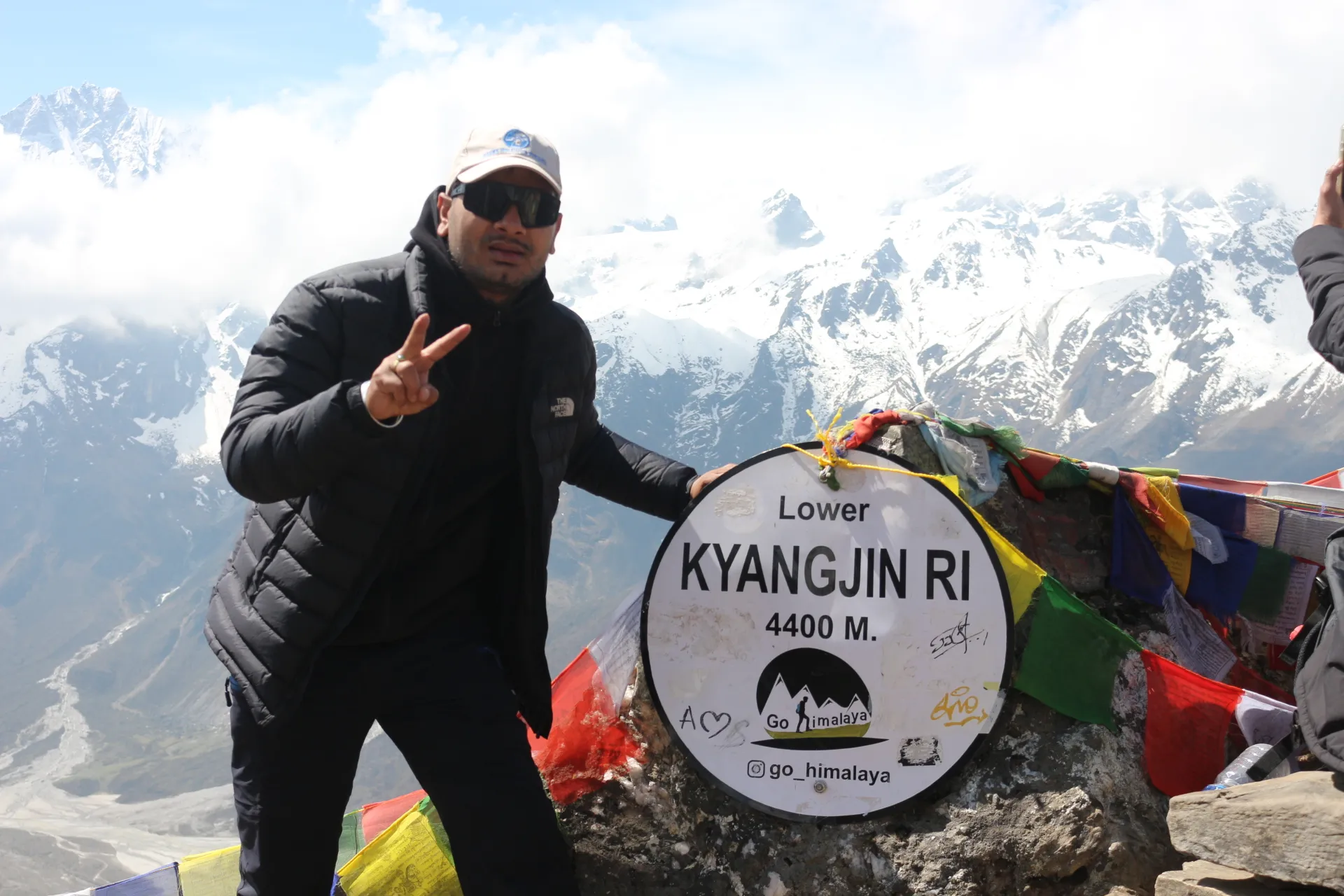
Furthermore, the trekking route starts from Syabrubesi (1550m) and reaches Kyanjin Gompa (3870m) as well. In addition, trekkers experience the rich Tamang culture during the journey. Besides, ancient monasteries and villages add flavor to the journey as well. In addition, trekkers enjoy the stunning views of Langtang Lirung (7245m) and Ganesh Himal (7422m) as well. As a result, these seasons offer the best Langtang Valley Trekking experiences.
Besides, during the other seasons, trekkers may have to face rain or snow as well. In addition, monsoon clouds hide the beautiful views of the Himalayas as well. Furthermore, in the winter season, the snow covers the paths near Kyanjin Ri (4773m) as well. As a result, these seasons offer the safest paths as well.
Likewise, the elevation of the trekking route remains moderate, so the conditions remain favorable for trekkers as well. In addition, the pleasant weather during the day allows trekkers to walk steadily as well. Besides, the festivals add colors to the journey as well, although these are rare events. In addition, the risk of altitude sickness remains low as well.
However, these seasons are the best compared to the other seasons in terms of the views as well. In addition, trekkers can take the best snaps of the snow-covered peaks as well. As a result, these seasons are the best for the Langtang Valley Trekking package as well.
Further, these seasons are the best compared to the other seasons in terms of the views as well. In addition, trekkers can take the best snaps of the snow-covered peaks as well. As a result, these seasons are the best for the Langtang Valley Trekking package.
Key Reasons Spring & Autumn Lead Langtang Valley Trek
Stable weather avoids rain or extreme cold risks
Easy access from Kathmandu (7-8 hours drive)
Rich Tamang culture and monasteries enrich journey
Clear views of Langtang Lirung (7245m) and Ganesh Himal (7422m)
Moderate altitude suits first-timers perfectly
Understanding Nepal’s Seasons and the Unique Experience of Langtang Compared to Everest/Annapurna Treks
Actually, Nepal’s seasons include four unique seasons in a calendar year. Trekkers have noted that Langtang Valley Trek is quite unique compared to Everest or Annapurna Treks. Moreover, the mid-altitude region’s milder climate is present throughout the seasons. Thus, this sets the perfect platform for comparison in the context of seasons in Nepal.
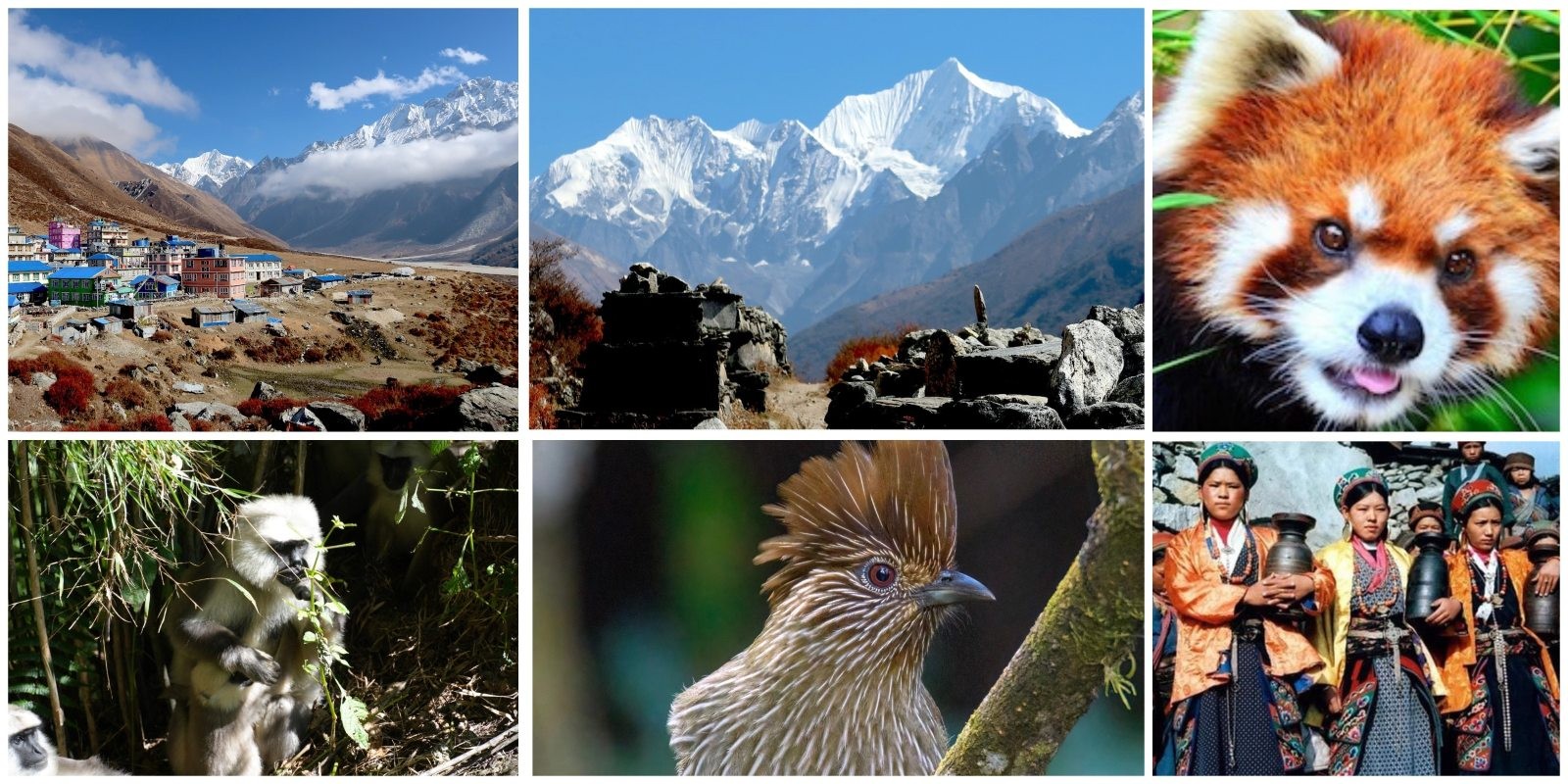
Langtang region in Nepal offers a perfect blend of stunning mountain landscapes, rare wildlife, and authentic Tamang cultural experiences along the trekking route
In addition, the season in Nepal in the spring is characterized by the beauty of rhododendrons in the valleys. The mild weather is pleasant as temperatures vary from 10-20°C. Furthermore, clear skies allow for a clear view of Langtang Lirung (7245m). Moreover, intermittent pre-monsoon rain is minimal and does not last long. Thus, Langtang is a much milder trekking experience in the spring compared to Everest or Annapurna Treks.
Besides, in the autumn season in Nepal, which is September to November, the weather is clear after the monsoon rains have cleared. The crisp air allows for clear visibility of the Ganesh Himal ranges (7422m). Moreover, consistent weather is present throughout the day. Thus, Langtang is a much less crowded experience compared to Everest Base Camp or Annapurna Treks.
However, Everest and Annapurna Treks face much harsher weather in the same seasons as Langtang. This is due to the much higher altitude, making the weather much colder and windier. Moreover, the monsoon rains have a much bigger impact in these regions due to landslides. Furthermore, snow in the winters makes these passes much harder to traverse. Thus, Langtang is in a much better position compared to Everest or Annapurna Treks.
Furthermore, the much lower altitude in Langtang compared to Everest or Annapurna Treks makes Kyanjin Gompa much safer in terms of acclimatization. Moreover, the proximity to Kathmandu makes this trek much quicker compared to Everest or Annapurna Treks.
Nepal Seasons Comparison: Langtang vs Everest/Annapurna :
Colder, possible haze/snow melt | Gentler, vibrant flora in Langtang.
Autumn Weather
Crisp, clear skies, dry trails
Very clear but colder nights | Similar clarity, milder in Langtang.
Crowds
Moderate
Very high | Less crowded, peaceful Langtang.
Altitude Max
3870m (Kyanjin Gompa)
5364m+ | Easier acclimatization in Langtang.
Accessibility
7-8 hrs from Kathmandu
Longer drives/flights | Quicker, more convenient Langtang.
Spring in Langtang Valley (March to May): Rhododendrons, Pleasant Weather, and Lively Experiences
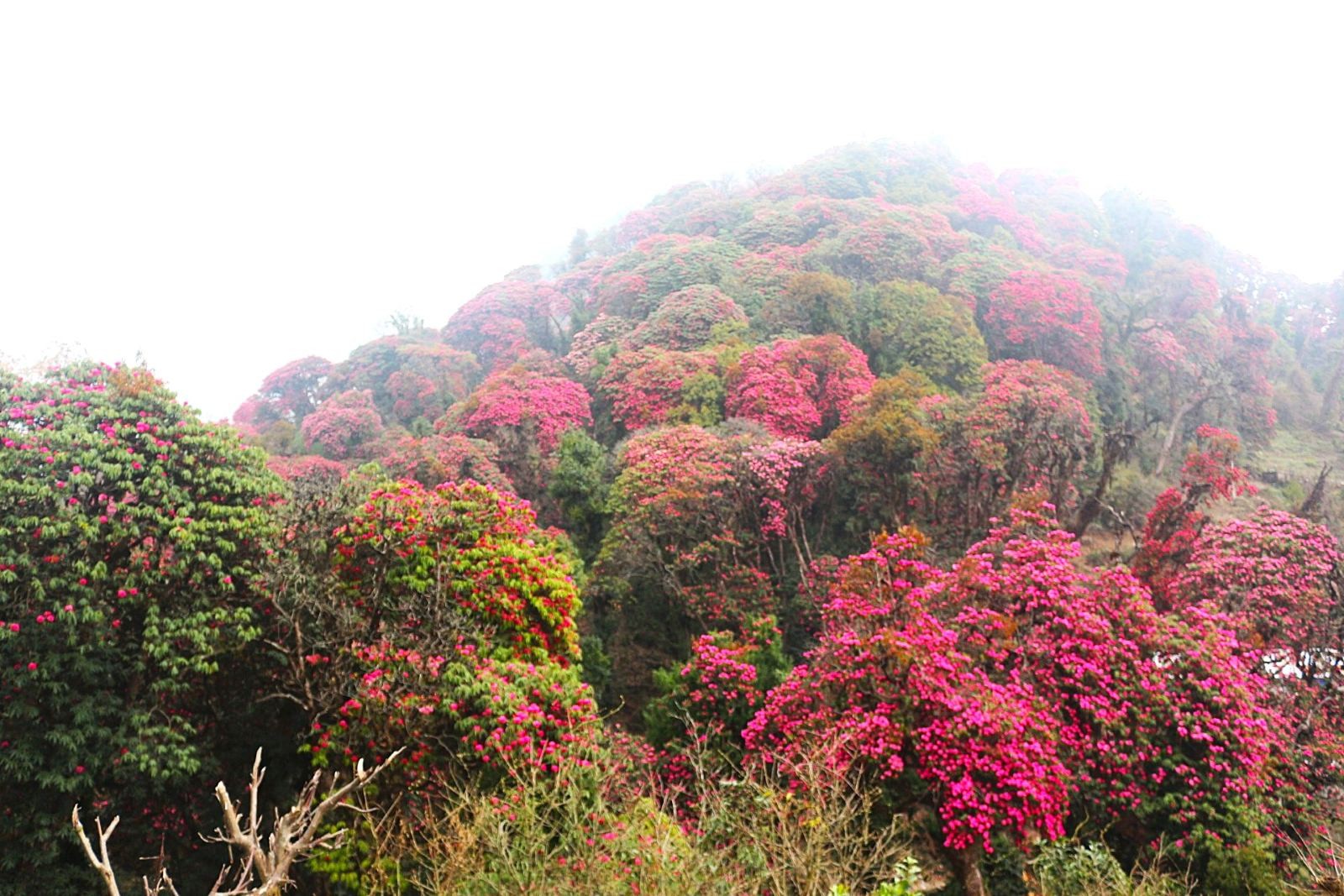
Here, imagine the Langtang Valley in the spring with rhododendron flowers in vibrant colors on all the lower routes. The weather is mild and pleasant, with temperatures ranging between 10-20°C. This is probably the most colorful time of the year for Langtang Valley trekking.
Based on our Langtang trekking experience, the rhododendron forests are at their best between March and May, adding stunning color to the trail.
In the month of March, the snowmelt creates spectacular waterfalls in the area around Lama Hotel (2480m). The sun is out, and the nights are cool. Wildlife is at its most lively in the region. Langurs play in the woods, and Himalayan birds fill the air with sweet songs. In the month of April, the rhododendron forests will be in full bloom, making it a photographer’s delight with the vibrant colors of spring all around.
In May, the weather is warm in the area around Kyanjin Gompa (3870m). The long days allow trekkers to explore the surrounding valleys. The glaciers melt, and the rivers thunder through the valleys. In the mornings, the Langtang Lirung (7245m) is in all its glory, and then the clouds cover it in the afternoon. This is the time of the year for Langtang trekking for all the nature lovers out there.
Actually, it is a good idea to take your rain gear with you in May since there may be occasional pre-monsoon showers. The routes below 3500m will not have snow, and the Tamang villages will be in the midst of their spring festivals. The weather is pleasant, and the altitude sickness risk is low. This is a good time of the year for families and new trekkers.
Rhododendron blooms: Peak April–May in lower forests
Daytime temperatures: 10–20°C, pleasant for hiking
Melting snow: Creates spectacular waterfalls and rivers
Wildlife activity: Increased sightings of monkeys and birds
Vibrant life: Active villages and cultural energy
Autumn in Langtang Valley (September to November): Clear Skies and Panoramic Views of the Mountains
Actually, the best season for the Langtang Valley Trek is autumn. The post-monsoon season offers the best trekking experience. The trek route is completely dry, and the skies are so clear that one could almost reach out and touch the mountains. Every day is an opportunity to enjoy the unobstructed view of the mountains. This is the best time for trekking in the Langtang area.
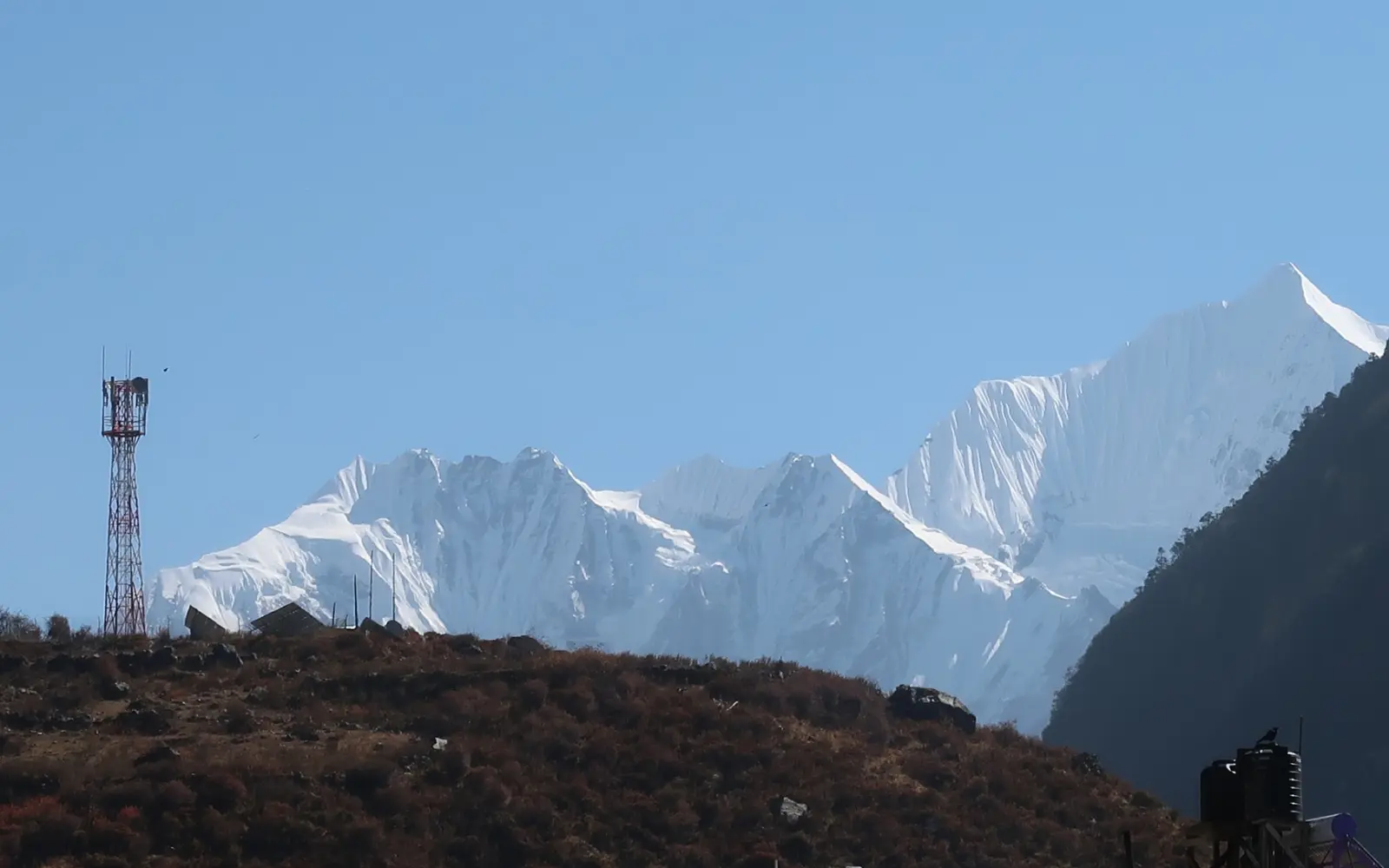
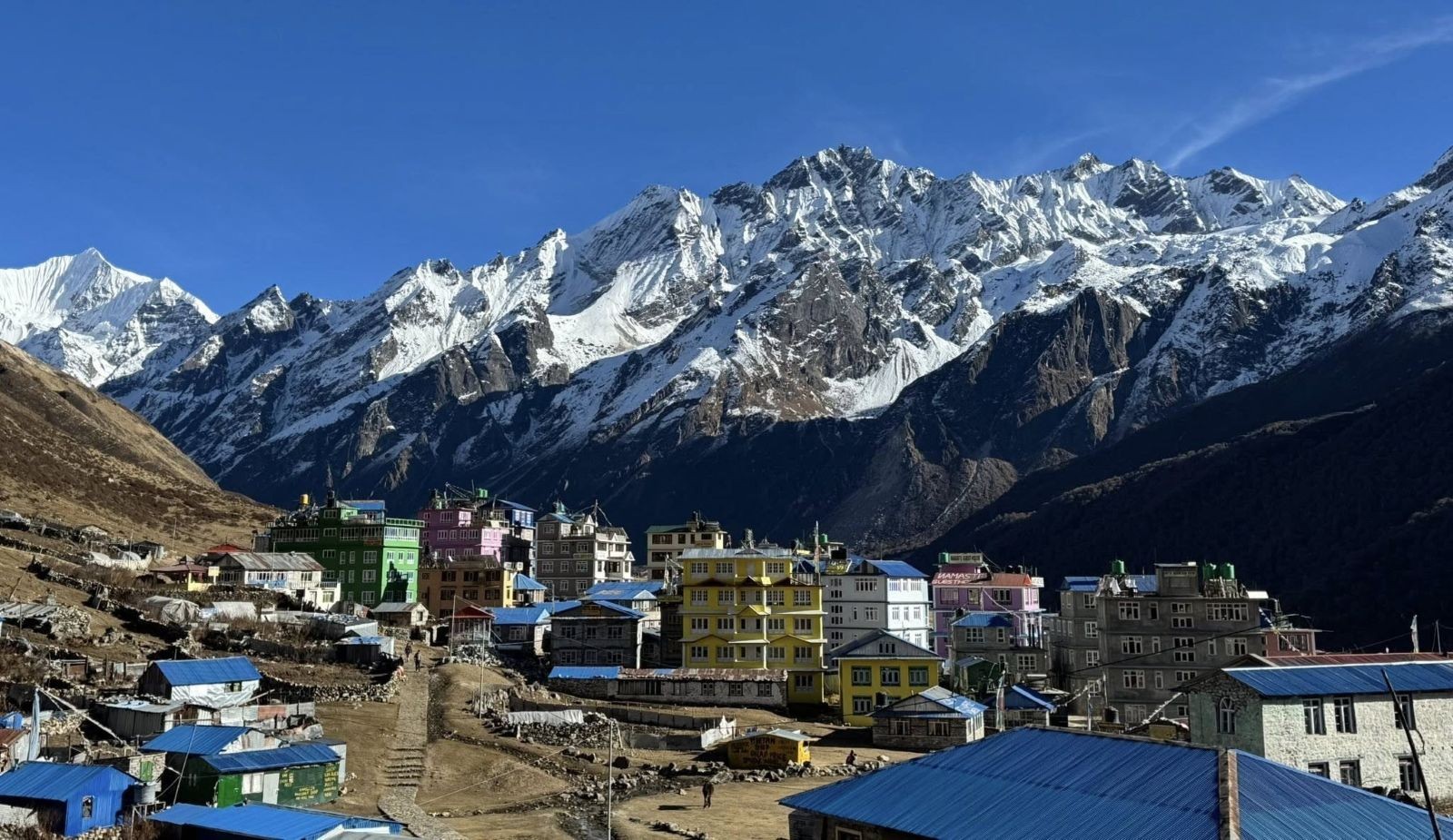
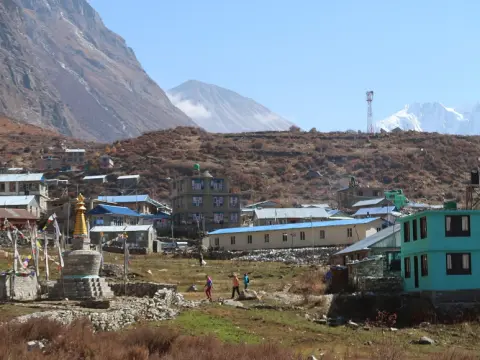
Kyanjin Gompa in Langtang Valley, Nepal—one of the most scenic highlights of the Langtang Valley Trek with stunning close-up mountain views.
Likewise, the weather in September is quite favorable for the trek. The monsoon rains are subsiding. The weather is stable and completely dry. The temperature ranges between 15°C and 22°C. The weather is quite comfortable. The mountains are also dust-free. The Langtang Lirung mountain (7245m) is visible in all its glory. The autumn season offers the best views of the Langtang Valley.
Moreover, the weather in October is also quite favorable. There is no wind. The views are quite unobstructed. One can trek up to the top of the Tserko Ri (5033m) and enjoy the breathtaking view. The view of the Ganesh Himal mountain (7422m) at sunrise is quite spectacular. The temperature ranges between 0°C and 5°C at Kyanjin Gompa (3870m). The autumn season offers the best trekking experience for the Langtang Valley.
Further, the weather in November is also quite favorable. The trek route is completely dry. The route is completely accessible. There are fewer chances of delays from Kathmandu. The view is completely unobstructed. Every view is spectacular. The autumn season offers the best trekking experience for the Langtang Valley.
In fact, the weather in the autumn season is quite favorable for photography. The golden light of the setting sun is quite spectacular. The autumn season offers the best trekking experience for the Langtang Valley.
Langtang Valley Trek in Autumn: Advantages :
Month
Weather Highlights
Temperature Range (Day/Night) | Key Features
September
Post-monsoon clarity, dry trails
18–22°C / 5–10°C | Fresh green turning golden, fewer crowds.
October
Crystal-clear skies, stable
15–20°C / 0–8°C | Sharpest views of Langtang Lirung (7245m).
November
Crisp air, excellent visibility
10–15°C / -5 to 5°C | Serene trails, golden forests persist.
Weather and Temperature Comparison: Spring vs Autumn Side-by-Side
Actually, Spring and Autumn are two distinct seasons that differ from each other in various ways in relation to day and night temperature, rainfall possibilities, and visibility. In this section, we will compare and contrast Spring and Autumn in relation to theLangtang Valley Trek and determine which season is more favorable for a trekking adventure.
Likewise, spring season occurs between March and May and presents a relatively more pleasant day temperature between 10 and 20 degrees Celsius. However, night temperatures in Kyanjin Gompa dip to between 0 and 8 degrees Celsius. Spring season presents a relatively lower probability of rainfall in early spring and a relatively high level of visibility, except for some haze in the afternoons.
Moreover, Autumn season occurs between September and November and presents a relatively more pleasant day temperature between 12 and 22 degrees Celsius and a relatively lower night temperature between -5 and 8 degrees Celsius in Kyanjin Gompa. Autumn season presents a relatively lower probability of rainfall and a relatively high level of visibility due to clear skies, which provide a better view of the Langtang Valley.
Here, wind speeds in both Spring and Autumn are relatively moderate and more pleasant in Autumn except in Spring when some wind gusts are felt during pre-monsoon season transitions. Autumn season presents better visibility due to clear skies and provides a better view of the Langtang Valley.
In fact, both Spring and Autumn present relatively low possibilities of bad weather and flight or road delays from Kathmandu. Moreover, the relatively lower altitude in Langtang Lirung Base (7245m) presents a relatively more forgiving weather pattern and makes both Spring and Autumn more favorable for a trekking adventure in Nepal. In conclusion, Spring vs Autumn weather and temperature comparison is a matter of choice and depends on your preferred weather and temperature conditions.
Spring vs Autumn Weather Comparison (Langtang Valley Trek):
Parameter
Spring (March–May)
Autumn (September–November) | Winner for Most Trekkers
Daytime Temperature
10–20°C
12–22°C | Autumn (warmer days).
Nighttime Temperature
0–8°C at 3870m
–5 to 8°C at 3870m | Spring (milder nights).
Rainfall Risk
Low–moderate (pre-monsoon showers)
Very low–none | Autumn.
Wind Level
Moderate, occasional gusts
Mostly calm–moderate | Autumn.
Visibility / Clarity
Good, occasional haze
Excellent, crystal-clear skies | Autumn.
Trail Conditions
Mostly dry, some muddy sections
Dry and firm | Autumn.
Scenery and Photography: Blooming Beauty vs Panoramic Clarity
For the Langtang Valley Trek, spring and autumn offer trekkers a unique form of magic in terms of the scenery they offer. The trekkers are offered a choice between the beauty of the blooms in the foreground and the razor-sharp Himalayan range in the backdrop, while the photographic conditions are also subject to the seasons. The balance of the scenery helps in the selection of the best season for the Langtang Valley Trek.
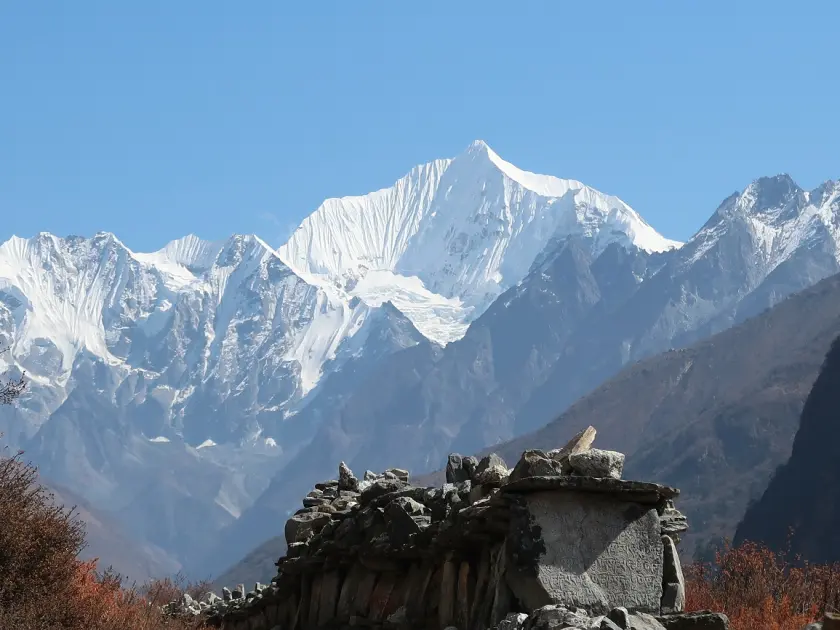
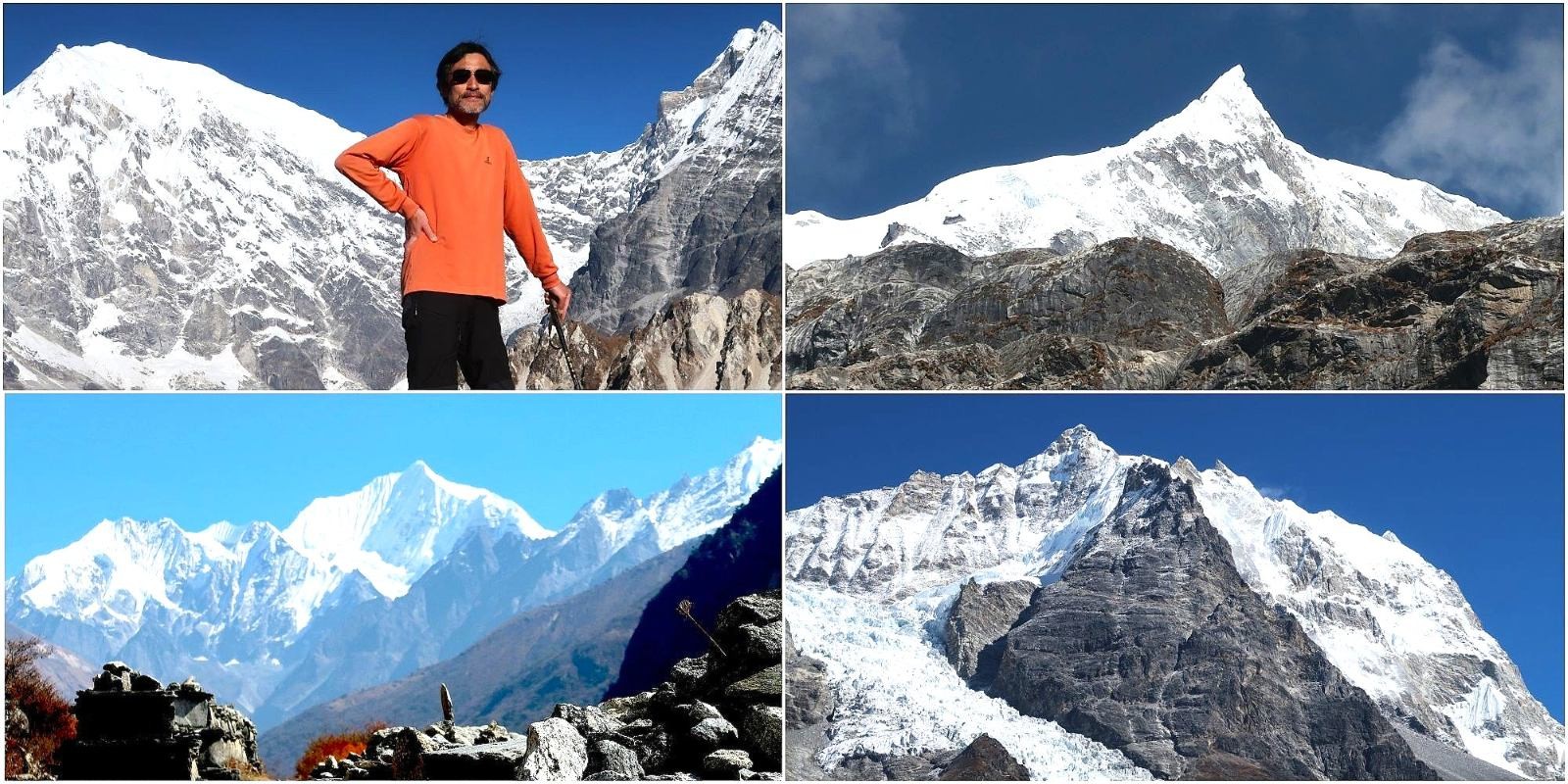
Highlights of the Langtang Valley Trek in Nepal, stunning Himalayan mountains, Kyanjin Gompa, Tserko Ri viewpoint, diverse wildlife, and rich Tamang culture—one of the best short trekking near Kathmand
Actually, Spring offers a plethora of rhododendrons and wildflowers in the Langtang Valley Trek, while the paths near the Lama Hotel, which lies at an altitude of 2480m, are filled with pinks and reds, while the snowmelt creates breathtaking waterfalls and greenery. The conditions are ideal for nature photography, especially in the spring season.
In the autumn season, the Langtang Valley Trek offers the viewer the golden hues of the forest, while the air is unusually clear after the monsoon rains, allowing trekkers to enjoy the unobstructed views of the Langtang Lirung (7245m) peak. The conditions are ideal for the razor-sharp Himalayan peaks, while the sunrise from the Tserko Ri (5033m) offers breathtaking Himalayan vistas, while the autumn season offers the best in terms of photography.
Likewise, Spring offers trekkers the chance for unique, colorful, and creative Langtang Valley Trek compositions, while the rhododendrons offer unique perspectives on the Ganesh Himal (7422m) peaks, while the increased wildlife activity in the region adds to the beauty of the blooms, while the conditions are ideal for artistic portraits.
For the autumn season, the conditions are ideal with minimal haze, while the clear blue skies offer the photographer the opportunity to capture the golden hour, while the minimal clouds offer the photographer the opportunity for all-day shooting, while the autumn season offers the best in terms of the Langtang Valley Trek scenery and photography conditions.
Crowds, Costs, and Trail Conditions: Which Season Has the Fewest Crowds?
Here, consider the Langtang Valley Trek in terms of crowds, costs, and trail conditions, and compare the seasons of autumn and spring with great care. For the Langtang Valley Trek, the crowds, costs, and trail conditions are taken into consideration, with autumn having a slightly busier, though dry, atmosphere compared to the rest of the seasons. So, the best season for the Langtang Valley Trek in terms of crowds is the early spring season.
In the spring season, from March to May, the crowds are moderate to low, especially in March and early April, as there are fewer trekkers passing through Syabrubesi (1,550m) on weekdays. The availability of teahouses is excellent, with easy availability of rooms in teahouses during the spring season. The cost of permits remains the same, i.e., low, during the entire season. So, the crowds in the spring season make the Langtang Valley Trek the best for trekkers seeking solitude.
In the autumn season, from September to November, the crowds are relatively larger, especially in October, as teahouses near Kyanjin Gompa (3,870m) are filled with trekkers on popular dates. The trail conditions are dry during the entire autumn season. In the autumn season, the cost of hiring guides/porters may increase slightly, though the trail conditions are solid during the entire season, indicating that the autumn season makes the Langtang Valley Trekking Trail slightly busier.
In both seasons, the cost of the Langtang Valley Trek remains relatively low compared to the Everest Base Camp Trek and the Annapurna Base Camp Trek, as the cost of teahouses, i.e., $5-10 per night, remains the same during the entire season, while the cost of transportation from Kathmandu remains the same in all seasons. In addition, there are no extra permits required, so the cost of the Langtang Valley Trekking remains relatively low in both seasons.
Furthermore, the early spring season has the least number of crowds, with the trail conditions near the village of Lama Hotel (2,480m) relatively quiet, while the late autumn season, i.e., after the Dasain festival in November, is relatively quiet as well. So, the late autumn season is the best in terms of the quiet atmosphere during the Langtang Valley Trekking.
Crowds, Costs & Trail Conditions Comparison: Spring vs Autumn :
Aspect
Spring (March–May)
Autumn (September–November) | Which Feels Less Busy?
Crowd Levels
Low–moderate (lowest in March–early April)
Moderate–high (peak in October) | Spring.
Teahouse Availability
Excellent, easy bookings
Good but fills fast in peak weeks | Spring.
Trail Conditions
Mostly dry, occasional muddy patches
Consistently dry and firm | Autumn.
Permit & Entry Costs
Fixed low rates (TIMS + park entry)
Same fixed low rates | Tie.
Overall Pricing
Slightly lower guide/porter demand
Marginally higher due to demand | Spring.
Best for Peace & Quiet
Early spring or late May
Late November | Spring.
Pros and Cons of Trekking Langtang in Spring
Meanwhile, Spring season presents a combination of both positive and negative aspects for a Langtang Valley Trek. The season is still a favorite among enthusiasts due to favorable climatic conditions and increased comfort during rest in the higher altitudes at night. Spring is a great choice for those planning a Langtang Valley Trek.
Likewise, the season presents a wonderful sight of rhododendron blossoms around the lower regions of the valley. The pink and red flowers provide a wonderful frame for the trails around Bamboo at 1950m. The pleasant weather during spring allows for comfortable day-long walks due to temperatures ranging from 10-20 degrees Celsius. The snowmelt adds beauty to the already spectacular scenery with waterfalls around Langtang Valley.
Likewise, Spring is also a season for increased wildlife activity in the valley. You will be able to spot a variety of birds and langurs and Himalayan monals in this season. The absence of crowds allows for a wonderful cultural experience in Tamang villages, providing a lively experience in Langtang Valley.
However, there are some negative aspects of a spring season trek in Langtang Valley. Late spring may present some cloudy afternoons and light rain in some regions. The pre-monsoon season may reduce visibility in some regions such as Tserko Ri at 5033m due to haze. There may be some snow around some mountain passes in early March due to unpredictable weather.
In fact, the warm nights in spring provide a welcome relief from a more fraught sleep in autumn. Sleeping in Kyanjin Gompa at 3870m is more comfortable in spring due to pleasant weather and rhododendron blossoms providing unique photography opportunities.
Spring Pros and Cons List for Langtang Valley Trek :
Pros:
Stunning rhododendron and wildflower blooms
Mild daytime temperatures 10–20°C
Active wildlife sightings
Fewer crowds, especially early spring
Spectacular waterfalls from melting snow
Milder nights for better rest
Cons:
Occasional afternoon clouds or light pre-monsoon showers
Possible residual snow on high passes in March
Variable visibility on some days
Slightly muddier sections after rain
Pros and Cons of Langtang Valley Trek in Autumn
Here, imagine a trek toLangtang Valley in autumn as a delicate balance between advantages and disadvantages. On the positive side, there are unobstructed mountain views, crisp air, and dry trails that remain firm throughout the trek. For this reason, autumn stands out as a favorite season for many Langtang trekkers.
Actually, the skies are clearer, visibility is sharper, and there are expansive, clean views of Langtang Lirung (7245m) every day of the week. Moreover, the dry weather that sets in after the monsoon ensures firm trails throughout the trek from Syabrubensi (1550m) to Kyanjin Gompa (3870m). Hence, unobstructed views make autumn a favorite season to trek to Langtang Valley.
Likewise, the golden leaves of autumn light up the lower slopes of the valley, and there is a crispness to the air that is perfect for photography at sunrise from Tserko Ri (5033m). Few pre-monsoon haze days mean photography is more consistent than in other seasons. For this reason, autumn is a favorite among landscape photographers planning to undertake the Langtang Valley trekking package.
On the flip side, as altitude increases, so does the coolness of the air. Nighttime temperatures at Kyanjin Gompa can drop as low as -5 degrees Celsius or colder. Moreover, post-Dasain crowds can start to gather in early October, which can mean teahouses get occupied faster than expected. For this reason, autumn has cold nights and moderately high crowds as drawbacks to a trek to Langtang Valley.
Sometimes, high demand can push up porter/guide charges a bit. However, if you book well in advance, you can lock in your preferred dates. And yes, dry air means drinking more water than usual every day. All things considered, autumn’s advantages outweigh the drawbacks for most travelers to Langtang Valley.
Langtang Valley Trek in Autumn Pros and Cons :
Pros:
Crystal-clear skies and best mountain views
Dry, firm trails with no mud or snow issues
Golden autumn foliage in forests
Stable weather, minimal rain risk
Sharp photography conditions all day
Excellent visibility of Langtang Lirung (7245m) and Ganesh Himal (7422m):
Cons:
Cooler nights (–5°C or lower at 3870m)
Higher crowds in October (post-festival peak)
Teahouses book up quickly in busy weeks
Slightly higher demand may raise service costs marginally
Dry air increases hydration needs
Which Season Fits You for the Langtang Valley Trek: Spring or Autumn?
Your season choice should be based on what you want to accomplish. Are you a photographer? Are you an animal enthusiast? Are you a first-time trekker? If you are a photographer or an animal enthusiast, then the chances are high that you will enjoy the Spring season. However, if you are a first-time trekker, you will enjoy the Autumn season.
In the Spring season, the rhododendrons and wildflowers are in full bloom in the lowlands. This season is also an ideal time for nature lovers because the wildlife is also active in the Spring season. The weather is also pleasant in the Spring season because the night temperature is low in Kyanjin Gompa, which is at an elevation of 3870m.
In the Autumn season, photographers will enjoy this season because the air is clear. The view of Langtang Lirung (7245m) is also clear in the Autumn season. The Autumn season is also good for photographers because they will be able to take good pictures.
For first-time trekkers or those who want an easy time in Nepal, the Autumn season is the best choice. This is because the Autumn season is clear and easy. This season is also budget-friendly because the cost is the same in both seasons. This season is also good for those who want to be alone in the wilderness because this season is peaceful in the area near Lama Hotel, which is at an elevation of 2480m.
In the end, it is up to you to choose the best season for the Langtang Valley Trek.
Choose Your Langtang Valley Trek Season by Preference :
Nature lovers / flower enthusiasts: Spring (rhododendrons, wildlife, vibrant colors)
Photography focused: Autumn (sharpest peaks, crystal-clear skies, golden light)
Budget travelers: Either (similar low costs, no major price difference)
Solitude seekers: Early spring or late autumn (lowest crowds)
Best overall mountain views: Autumn (unobstructed panoramas)
Packing and Preparation Tips for Langtang Trek in Spring and Autumn
Prepare for your Langtang Valley trek with the right packing gear for the season. The spring and autumn seasons require different preparations for the upper layers, while the altitude requirement at Kyanjin Gompa (3870m) remains the same. Proper preparation will make your Langtang Valley trekking package a success.
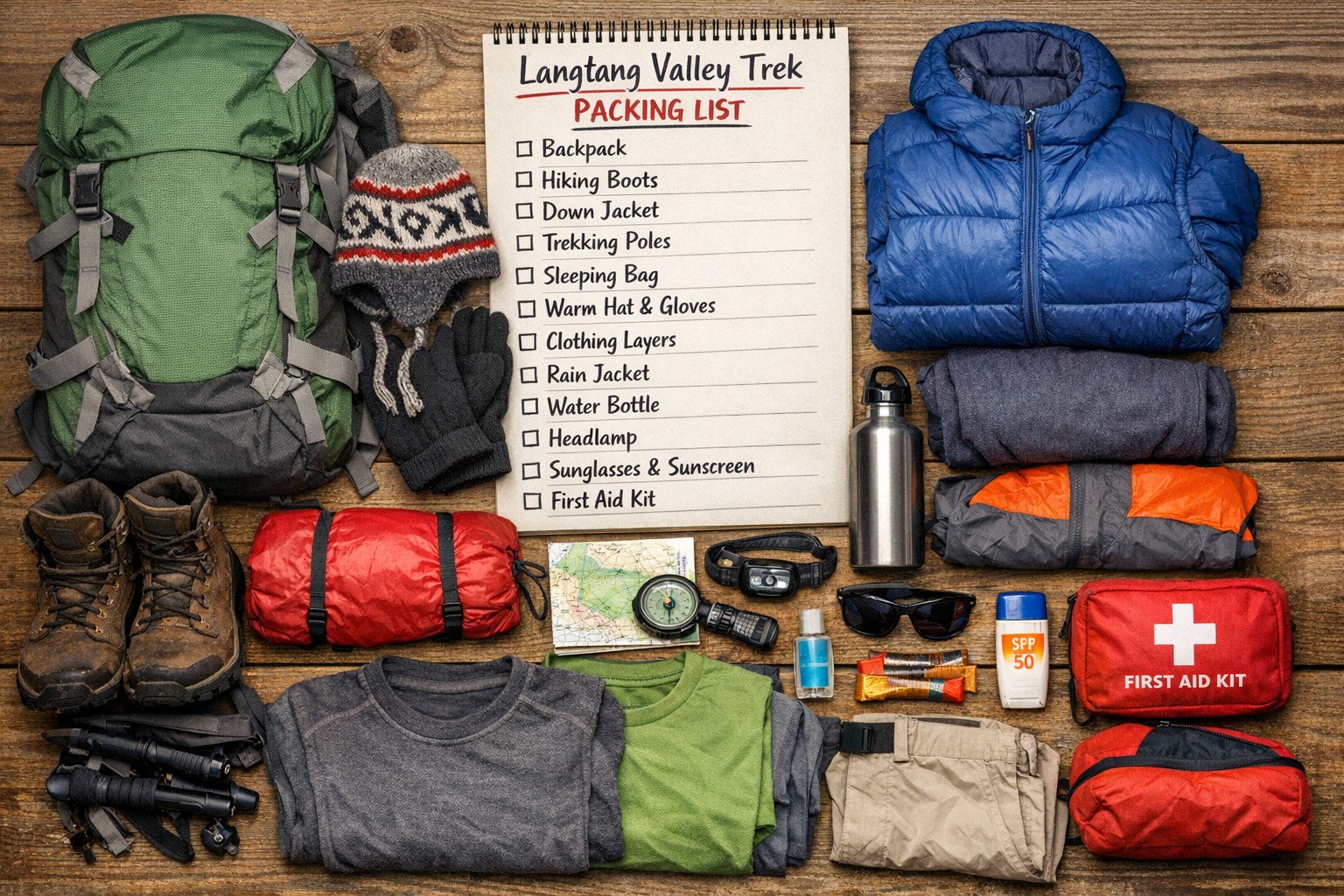
A practical packing list for the Langtang Valley Trek in Nepal, including essential gear and clothing based on real trekking experience to handle high-altitude conditions and unpredictable Himalayan weather.
In the spring season, the packing gear will need to be flexible in handling the changes in weather. The base layers will need to be moisture-wicking, while the mid-layers will need to be lightweight fleece. The upper layers will need to be windproof soft shell. A warm down jacket will be required for the nights, as the temperatures may drop to 0-5 degrees Celsius. The rain gear will need to be light, as occasional pre-monsoon rains may occur. The overall requirement in the spring season is to be versatile and mild-weather protective.
In the autumn season, the packing gear will need to be protective against the sun and wind. Sunscreen with a high SPF, sunglasses with a UV filter, and a buff neck gaiter will be required daily. A lightweight windbreaker will be required to protect against the wind in the afternoon. The wind is strong at Tserko Ri (5033m). A water bottle with a built-in filter and lip balm with sunscreen will be required to prevent dehydration.
Actually, the overall requirement in the autumn season is sun protection, wind protection, and staying hydrated. The rain gear will need to be light in the autumn season, so an emergency poncho will be required. Trekking poles will be required in the autumn season, as the terrain may be dry and rocky. Both seasons will require gradual acclimatization at Lama Hotel (2480m). The altitude requirement for the Langtang Valley Trek remains the same. Take it slow and stay hydrated.
In addition to the above requirements, there will be a need for a few non-seasonal requirements. These will include a headlamp, a power bank, a personal first aid kit, and a water bottle. A lightweight backpack and quick-drying clothing will also be required. Proper preparation will make your Langtang Valley trekking experience a success.
Spring vs Autumn Packing Essentials for Langtang Valley Trek :
Item/Category
Spring (March–May) Emphasis
Autumn (September–November) Emphasis | Reason
Layering System
Versatile: base + fleece + softshell + down
Warm base + fleece + windproof shell | Variable spring temps vs crisp autumn.
Rain Gear
Lightweight poncho or rain jacket
Minimal – emergency poncho only | Pre-monsoon showers vs dry autumn.
Sun/Wind Protection
Moderate sunscreen, hat, sunglasses
High-SPF sunscreen, buff, strong sunglasses | Intense UV and wind in clear autumn.
Altitude Preparation
Acclimatization days, hydration, optional Diamox
Same – slow ascent, pulse oximeter optional | Consistent need at 3870m max.
Footwear & Poles
Waterproof boots if muddy, trekking poles
Sturdy boots for dry trails, poles | Mud risk spring vs firm paths autumn.
Final Verdict: Langtang Valley Trek – Spring or Autumn?
Make your choice for a Langtang Valley adventure based on what you value most in your adventure. Do you seek a season filled with blossoming flowers or one that promises a clear and spectacular view of the Himalayas? It seems like a no-brainer when most adventurers opt for Autumn and its promise of clear and crisp views.
Actually, Springtime in Langtang Valley presents a different kind of magic with rhododendron trees in full bloom and a lively array of wildlife and waterfalls near Bamboo (1950m). The nights are cooler, and it’s less crowded with a promise of rich and wonderful scenery that’s just right for photography enthusiasts and flower lovers.
Likewise, Autumn inLangtang Valley presents clear skies and clear views that promise a spectacular panorama each day. You get to witness clear views of Langtang Lirung (7245m) and Ganesh Himal (7422m) each day. The trails are dry, and the weather is mostly clear and calm—a promise for a trouble-free adventure that’s just right for first-timers and those seeking a dramatic and postcard-worthy adventure.
While Langtang Valley Trek in Autumn presents a more crowded scene in October’s peak weeks, March and early April offer a more serene experience. The cost is relatively similar across seasons and easily accessible from Kathmandu. Altitude is low throughout the year, which makes it a safe adventure.
At the end of it all, it’s really about your style and what you seek in your adventure. If it’s clear views and a more reliable promise of a spectacular panorama that you seek in your adventure in Langtang Valley, Autumn is your best bet. If it’s a more vibrant and nature-filled adventure in a serene atmosphere that you seek in your adventure in Langtang Valley, Spring is your best bet. Talk to a trusted tour operator and book your adventure in Langtang Valley accordingly.
Quick Final Verdict Guide: Langtang Valley Trek- Autumn vs Spring
Choose Autumn if you want:
Sharpest mountain views & crystal-clear skies
Dry, stable trails with minimal weather risk
Best photography for panoramic landscapes
Choose Spring if you prefer:
Blooming rhododendrons & vibrant wildflowers
Active wildlife and powerful waterfalls
Fewer crowds & more peaceful trails
Overall slight winner: Autumn (common consensus for views & reliability)
Book early for autumn; spring offers more flexibility
FAQS:Langtang Valley Trek -Autumn Vs. Spring
1. What is the best season for Langtang Valley Trek – Spring or Autumn? The Langtang Valley Trek is great during both Spring and Autumn. Spring is from March to May. Autumn is from September to November. In the Spring you will see rhododendron flowers and the weather is warm. In the Autumn the skies are clear. You can see the mountains really well. You should choose the season that you like best.
2. How does weather in Langtang Valley differ between Spring and Autumn? In the Spring the days are mild. It can rain sometimes. The landscape is also very beautiful with lots of flowers. In the Autumn the weather is drier and more stable with nights and very clear skies. Both seasons are good because they do not have the rains that come during the monsoon. The Autumn is a little better for seeing the mountains clearly.
3. Which season has better mountain views for Langtang Valley Trek photography? Autumn is the time for taking pictures of the mountains because the skies are clear and blue. You can see the mountains like Langtang Lirung well. In the Spring the rhododendron forests are beautiful and green which is great for nature photography. Sometimes the mountains can be a little hazy in the Spring.
4. Is Langtang Valley Trek crowded in Spring or Autumn? The Autumn season is usually busier because many people want to see the mountain views. The Spring season is a little less crowded. It can still be busy in April when the rhododendrons are blooming. Both seasons are less crowded than the Everest or Annapurna treks so you can have a peaceful time.
5. What are the pros of trekking Langtang Valley in Spring? The Spring season is great because you can see the rhododendrons blooming the forests are green. The weather is warm. You can also see a lot of wildlife which's really nice. The trails are beautiful. It is a great time for nature lovers and photographers.
6. What are the cons of Langtang Valley Trek in Spring? Sometimes in the Spring it can be cloudy in the afternoons. It might rain a little. The mountain views can also be a little hazy. The trails can be dusty or muddy in some places. The lodges can be full in April when the rhododendrons are blooming.
7. What are the pros of Langtang Valley Trek in Autumn? The Autumn season is great because the weather is dry and stable and you can see the mountains well. The skies are clear and blue which is perfect for photographers. The trekking conditions are also very comfortable.
8. What are the cons of trekking in Autumn for Langtang Valley? The Autumn season is the peak season so there are people and the lodges can be more expensive. It can also be cold at night at higher elevations. You need to book your lodges and flights if you want to trek in the Autumn.
9. How do temperatures compare in Langtang Valley during Spring vs Autumn? In the Spring the days are warm. The nights are cool. In the Autumn the days are pleasant. The nights are chilly especially at higher elevations. You need to pack layers for both seasons. You need warmer clothes for the Autumn
10. Are trails easier in Spring or Autumn for Langtang Valley Trek? Both seasons have trail conditions. In the Autumn the trails are dry and firm. In the Spring the trails can be slippery or muddy after rain. Neither season is significantly harder than the other and your fitness level is more important than the season.
11. Which season is cheaper for the Langtang Valley Trek package? The Spring season can be a little cheaper because it is not as crowded as the Autumn season. The prices are similar for both seasons. You should book your trek early to get the deals and you should use a registered agency like Haven Holidays Nepal.
12. What should I pack differently for Spring vs Autumn in Langtang? For the Spring season you should pack rain gear, light layers and insect repellent. For the Autumn season you should pack layers, down jackets and gloves. You need boots, trekking poles and sun protection for both seasons.
13. Can beginners do the Langtang Valley Trek in the Spring or Autumn? Yes, the Langtang Valley Trek is great for beginners in both seasons. The trek is not too difficult. The infrastructure is good. The Spring season is a little better for beginners because the weather is warm and pleasant. The Autumn season is also great because the weather is clear and stable.
14. How does Langtang Valley Trek compare to Everest or Annapurna in seasons? The Langtang Valley Trek is less crowded than the Everest or Annapurna treks. It is more accessible. The Spring season is great for seeing rhododendrons and the Autumn season has mountain views. The Langtang Valley Trek is also shorter and lower in altitude, which makes it a great introduction to trekking.
15. Is a guide mandatory for Langtang Valley Trek? Yes, you need a guide for the Langtang Valley Trek. You must book your trek through a registered agency. This is for your safety. To ensure that you have support on the trail.
16. What permits are needed for Langtang Valley Trek? You need a Langtang National Park Entry Permit for the Langtang Valley Trek. Sometimes you also need a TIMS permit. Your registered agency will arrange all the permits for you and the cost is reasonable. The permit fees help to conserve the environment in the region.
17. When is the best time to see rhododendrons in Langtang Valley? The best time to see rhododendrons in Langtang Valley is from March to April. The forests are filled with red and pink flowers, which is a really amazing sight.
18. How long is the Langtang Valley Trek and is it suitable year-round? The classic Langtang Valley Trek is 7-10 days long. While you can trek in the region all year round the Spring and Autumn seasons are the best. The Winter season can be very cold and snowy. The monsoon season can make the trails slippery and dangerous.
19. What cultural experiences can I expect in either season? Both seasons offer a lot of experiences such as visiting the Tamang villages seeing the Kyanjin Gompa and interacting with the local people. In the Autumn season you might also be able to see the harvest festivals which're really interesting. In the Spring season you can see the renewal of community life, in the villages.
20. Which season should I choose for Langtang Valley Trek – final advice? You should choose the Spring season if you want to see the beautiful rhododendron flowers and experience the warm weather. You should choose the Autumn season if you want to see the mountain views and experience the stable weather. Both seasons are great. You should contact Haven Holidays Nepal to find the perfect package for you.