[{"name":"Everest Base Camp Helicopter Tour","duration":"1","image_url":"https:\/\/www.havenholidaysnepal.com\/storage\/trip-galleries\/1\/thumb_6cd53005d75a86e373d31419d1b14d78.webp","offer_price":1195,"url":"https:\/\/www.havenholidaysnepal.com\/trips\/everest-base-camp-helicopter-tour"},{"name":"Everest Mountain Flight","duration":"1","image_url":"https:\/\/www.havenholidaysnepal.com\/storage\/trip-galleries\/4\/thumb_3b0b4f1d6f72b0ad224daf4752f2c6e0.jpg","offer_price":285,"url":"https:\/\/www.havenholidaysnepal.com\/trips\/everest-mountain-flight"},{"name":"Everest Short Trek","duration":"9","image_url":"https:\/\/www.havenholidaysnepal.com\/storage\/trip-galleries\/5\/thumb_BXPP3621.JPEG0.02033800 1727957098.webp","offer_price":995,"url":"https:\/\/www.havenholidaysnepal.com\/trips\/everest-short-trek"},{"name":"Gokyo Valley Trek","duration":"12","image_url":"https:\/\/www.havenholidaysnepal.com\/storage\/trip-galleries\/6\/thumb_10bc469b14731f23d3ce84a7092ad53f.jpg","offer_price":1195,"url":"https:\/\/www.havenholidaysnepal.com\/trips\/gokyo-valley-trek"},{"name":"15 days Annapurna Base Camp Trek","duration":"15","image_url":"https:\/\/www.havenholidaysnepal.com\/storage\/trip-galleries\/7\/thumb_87d1533bc45faf070990aef0579e4be4.jpg0.81855100 1728285496.webp","offer_price":785,"url":"https:\/\/www.havenholidaysnepal.com\/trips\/15-days-annapurna-base-camp-trek"},{"name":"Nepal Pilgrimage Tour","duration":"14","image_url":"https:\/\/www.havenholidaysnepal.com\/storage\/trip-galleries\/8\/thumb_02c3bcf2ad2e8a4c1703e90ae747b5f1.jpg","offer_price":1475,"url":"https:\/\/www.havenholidaysnepal.com\/trips\/nepal-pilgrimage-tour"},{"name":"UNESCO World Heritage Site Tour","duration":"10","image_url":"https:\/\/www.havenholidaysnepal.com\/storage\/trip-galleries\/9\/thumb_unesco-world-heritage-site-Lumbani-temple-buddhists-hindus-kathmandu-nepal0.36988600 17347617740.93089500 1737469667.webp","offer_price":715,"url":"https:\/\/www.havenholidaysnepal.com\/trips\/unesco-world-heritage-site-tour"},{"name":"Island Peak Climbing","duration":"16","image_url":"https:\/\/www.havenholidaysnepal.com\/storage\/trip-galleries\/11\/thumb_Island peak0.53947000 1734692503.webp","offer_price":2495,"url":"https:\/\/www.havenholidaysnepal.com\/trips\/island-peak-climbing"},{"name":"Upper Mustang Trek","duration":"18","image_url":"https:\/\/www.havenholidaysnepal.com\/storage\/trip-galleries\/12\/thumb_upper mustang 7 Oct-2024.jpg0.95398900 1728286166.webp","offer_price":2995,"url":"https:\/\/www.havenholidaysnepal.com\/trips\/upper-mustang-trek"},{"name":"Annapurna Circuit Trek","duration":"16","image_url":"https:\/\/www.havenholidaysnepal.com\/storage\/trip-galleries\/15\/thumb_tibetan-flags.jpg0.04843900 1728289138.webp","offer_price":985,"url":"https:\/\/www.havenholidaysnepal.com\/trips\/annapurna-circuit-trek"},{"name":"Gosainkunda Lake Trek","duration":"10","image_url":"https:\/\/www.havenholidaysnepal.com\/storage\/trip-galleries\/16\/thumb_5A8083B3-C007-41A8-853F-D0C37C97D235_1_105_c.jpeg0.52581200 1731845258.webp","offer_price":595,"url":"https:\/\/www.havenholidaysnepal.com\/trips\/gosainkunda-lake-trek"},{"name":"Zip-lining in Pokhara and Dhulikhel","duration":"1","image_url":"https:\/\/www.havenholidaysnepal.com\/storage\/trip-galleries\/18\/thumb_215f765e2ebc995dd5c800b4bfdbacc3.jpg","offer_price":82,"url":"https:\/\/www.havenholidaysnepal.com\/trips\/zip-lining-in-pokhara-and-dhulikhel"},{"name":"Annapurna Heli Tour","duration":"1","image_url":"https:\/\/www.havenholidaysnepal.com\/storage\/trip-galleries\/19\/thumb_d71a6bbb9fd4da8d1b567a5cdbdec85d.jpg","offer_price":555,"url":"https:\/\/www.havenholidaysnepal.com\/trips\/annapurna-heli-tour"},{"name":"Paragliding in Pokhara","duration":"1","image_url":"https:\/\/www.havenholidaysnepal.com\/storage\/trip-galleries\/20\/thumb_de788d2dd9726783431f882c007efae1.jpg","offer_price":65,"url":"https:\/\/www.havenholidaysnepal.com\/trips\/paragliding-in-pokhara"},{"name":"Ultra-Flight in Pokhara","duration":"1","image_url":"https:\/\/www.havenholidaysnepal.com\/storage\/trip-galleries\/21\/thumb_e27a9fb572a5c21611bb2a3c18e4b8f0.jpeg","offer_price":175,"url":"https:\/\/www.havenholidaysnepal.com\/trips\/ultra-flight-in-pokhara"},{"name":"Sarangkot Hiking","duration":"1","image_url":"https:\/\/www.havenholidaysnepal.com\/storage\/trip-galleries\/22\/thumb_100ef822fea19987166c6c1366215f15.jpg","offer_price":55,"url":"https:\/\/www.havenholidaysnepal.com\/trips\/sarangkot-hiking"},{"name":"Mera Peak Climbing","duration":"18","image_url":"https:\/\/www.havenholidaysnepal.com\/storage\/trip-galleries\/24\/thumb_d16ae3895f678cf26ffbf2455f541fb5.jpg0.31883400 1732617790.webp","offer_price":2475,"url":"https:\/\/www.havenholidaysnepal.com\/trips\/mera-peak-climbing"},{"name":"Lower Dolpo Trek","duration":"18","image_url":"https:\/\/www.havenholidaysnepal.com\/storage\/trip-galleries\/26\/thumb_Dolpo Galary - 1.JPG0.37725200 1727939952.webp","offer_price":2995,"url":"https:\/\/www.havenholidaysnepal.com\/trips\/lower-dolpo-trek"},{"name":"Nagarkot Sunrise\/Sunset Tour","duration":"1","image_url":"https:\/\/www.havenholidaysnepal.com\/storage\/trip-galleries\/27\/thumb_5147a5532644283a380f2e86f3857c13.jpg0.17748000 1728488108.webp","offer_price":30,"url":"https:\/\/www.havenholidaysnepal.com\/trips\/nagarkot-sunrise-sunset-tour"},{"name":"16 day Everest Base Camp Trek","duration":"16","image_url":"https:\/\/www.havenholidaysnepal.com\/storage\/trip-galleries\/28\/thumb_IMG_4311.JPG0.64984800 1727942213.webp","offer_price":1695,"url":"https:\/\/www.havenholidaysnepal.com\/trips\/16-day-everest-base-camp-trek"},{"name":"Ghorepani Poon Hill trek with Jungle Safari and Trishuli River Rafting -13 days","duration":"13","image_url":"https:\/\/www.havenholidaysnepal.com\/storage\/trip-galleries\/29\/thumb_Ghorepani Poon hill.jpg0.48460800 1728281439.webp","offer_price":795,"url":"https:\/\/www.havenholidaysnepal.com\/trips\/ghorepani-poon-hill-trek-with-jungle-safari-and-trishuli-river-rafting--13-days"},{"name":"Mardi Himal Trek","duration":"12","image_url":"https:\/\/www.havenholidaysnepal.com\/storage\/trip-galleries\/30\/thumb_s1.jpg0.62112600 1728200721.webp","offer_price":795,"url":"https:\/\/www.havenholidaysnepal.com\/trips\/mardi-himal-trek"},{"name":"Langtang Valley Trekking","duration":"10","image_url":"https:\/\/www.havenholidaysnepal.com\/storage\/trip-galleries\/31\/thumb_IMG_4702.JPG0.84916500 1727958504.webp","offer_price":685,"url":"https:\/\/www.havenholidaysnepal.com\/trips\/langtang-valley-trekking"},{"name":"Real Adventure Tour in Nepal","duration":"9","image_url":"https:\/\/www.havenholidaysnepal.com\/storage\/trip-galleries\/32\/thumb_ebd1b8cc78d90abe8b9003dd9a2f25bf.jpg0.82151300 1728213516.webp","offer_price":695,"url":"https:\/\/www.havenholidaysnepal.com\/trips\/real-adventure-tour-in-nepal"},{"name":"Luxury Tour in Nepal","duration":"10","image_url":"https:\/\/www.havenholidaysnepal.com\/storage\/trip-galleries\/33\/thumb_8574e61b252b18676b042caf30d830df.jpg","offer_price":1675,"url":"https:\/\/www.havenholidaysnepal.com\/trips\/luxury-tour-in-nepal"},{"name":"Luxury Everest Panorama Trek With EBC Heli Sightseeing","duration":"8","image_url":"https:\/\/www.havenholidaysnepal.com\/storage\/trip-galleries\/34\/thumb_URZL2397.JPEG0.01209600 1728027820.webp","offer_price":2395,"url":"https:\/\/www.havenholidaysnepal.com\/trips\/luxury-everest-panorama-trek-with-ebc-heli-sightseeing"},{"name":"13 day Everest Base Camp Trek with Helicopter","duration":"13","image_url":"https:\/\/www.havenholidaysnepal.com\/storage\/trip-galleries\/35\/thumb_IMG_4292.JPG0.70131500 1728029276.webp","offer_price":2095,"url":"https:\/\/www.havenholidaysnepal.com\/trips\/13-day-everest-base-camp-trek-with-helicopter"},{"name":"Manaslu Circuit Trek","duration":"16","image_url":"https:\/\/www.havenholidaysnepal.com\/storage\/trip-galleries\/36\/thumb_Mt Manaslu 03-Oct-2024.jpg0.65804900 1727938470.webp","offer_price":1055,"url":"https:\/\/www.havenholidaysnepal.com\/trips\/manaslu-circuit-trek"},{"name":"Kanchenjunga Base Camp Trek","duration":"21","image_url":"https:\/\/www.havenholidaysnepal.com\/storage\/trip-galleries\/37\/thumb_Kanchanjunga Trek -!.jpg0.54744400 1727938497.webp","offer_price":2275,"url":"https:\/\/www.havenholidaysnepal.com\/trips\/kanchenjunga-base-camp-trek"},{"name":"Ganesh Himal and Sing-La Trek","duration":"14","image_url":"https:\/\/www.havenholidaysnepal.com\/storage\/trip-galleries\/38\/thumb_Ganesh Himal slider-1.jpg0.43764500 1727937722.webp","offer_price":1775,"url":"https:\/\/www.havenholidaysnepal.com\/trips\/ganesh-himal-and-sing-la-trek"},{"name":"Island Peak Climb with Everest Base Camp Trek","duration":"21","image_url":"https:\/\/www.havenholidaysnepal.com\/storage\/trip-galleries\/39\/thumb_2be428730fe83525bc85a010564f99de.jpg","offer_price":2750,"url":"https:\/\/www.havenholidaysnepal.com\/trips\/island-peak-climb-with-everest-base-camp-trek"},{"name":"Students' Adventure Tour in Nepal","duration":"12","image_url":"https:\/\/www.havenholidaysnepal.com\/storage\/trip-galleries\/41\/thumb_a926d22fbfe08cba271c41ac289b3fd2.jpg","offer_price":995,"url":"https:\/\/www.havenholidaysnepal.com\/trips\/students-adventure-tour-in-nepal"},{"name":"7 Day Poonhill Trek","duration":"7","image_url":"https:\/\/www.havenholidaysnepal.com\/storage\/trip-galleries\/42\/thumb_6196bd69036473293a2c24cc21ed57d7.jpg0.10880600 1728205378.webp","offer_price":555,"url":"https:\/\/www.havenholidaysnepal.com\/trips\/7-day-poonhill-trek"},{"name":"7 Days Annapurna Base Camp Trek","duration":"7","image_url":"https:\/\/www.havenholidaysnepal.com\/storage\/trip-galleries\/43\/thumb_IMG_2214.JPG0.08204900 1728202033.webp","offer_price":355,"url":"https:\/\/www.havenholidaysnepal.com\/trips\/7-days-annapurna-base-camp-trek"},{"name":"3 days Poonhill Trek","duration":"3","image_url":"https:\/\/www.havenholidaysnepal.com\/storage\/trip-galleries\/44\/thumb_Poon hill.jpg0.60816600 1731412954.webp","offer_price":165,"url":"https:\/\/www.havenholidaysnepal.com\/trips\/3-days-poonhill-trek"},{"name":"Poon Hill Luxury Trek with Chitwan-12 days","duration":"12","image_url":"https:\/\/www.havenholidaysnepal.com\/storage\/trip-galleries\/45\/thumb_Poom hill.jpg0.52074500 1730180532.webp","offer_price":1175,"url":"https:\/\/www.havenholidaysnepal.com\/trips\/poon-hill-luxury-trek-with-chitwan-12-days"},{"name":"Everest Luxury Trek-7 days","duration":"7","image_url":"https:\/\/www.havenholidaysnepal.com\/storage\/trip-galleries\/46\/thumb_ACRX9330.JPEG0.93236200 1728031275.webp","offer_price":2195,"url":"https:\/\/www.havenholidaysnepal.com\/trips\/everest-luxury-trek-7-days"},{"name":"Hindu Pilgrimage Tour in Nepal-10 days","duration":"10","image_url":"https:\/\/www.havenholidaysnepal.com\/storage\/trip-galleries\/47\/thumb_a94bf96a4d31decb419f6f828a3280d2.jpg","offer_price":995,"url":"https:\/\/www.havenholidaysnepal.com\/trips\/hindu-pilgrimage-tour-in-nepal-10-days"},{"name":"Everest Base Camp Short Trek-12 days","duration":"12","image_url":"https:\/\/www.havenholidaysnepal.com\/storage\/trip-galleries\/48\/thumb_IMG_4311.JPG0.52680100 1727945154.webp","offer_price":995,"url":"https:\/\/www.havenholidaysnepal.com\/trips\/everest-base-camp-short-trek-12-days"},{"name":"Everest Base Camp Hike 12 Days","duration":"12","image_url":"https:\/\/www.havenholidaysnepal.com\/storage\/trip-galleries\/49\/thumb_IMG_4260.JPG0.51729100 1728061234.webp","offer_price":1295,"url":"https:\/\/www.havenholidaysnepal.com\/trips\/everest-base-camp-hike-12-days"},{"name":"11 Days Everest Base Camp Trek","duration":"11","image_url":"https:\/\/www.havenholidaysnepal.com\/storage\/trip-galleries\/50\/thumb_IMG_4249.JPG0.21392500 1727946959.webp","offer_price":1055,"url":"https:\/\/www.havenholidaysnepal.com\/trips\/11-days-everest-base-camp-trek"},{"name":"6 Days Annapurna Base Camp Trek","duration":"6","image_url":"https:\/\/www.havenholidaysnepal.com\/storage\/trip-galleries\/51\/thumb_6 days Abc.jpg0.58185400 1728200798.webp","offer_price":285,"url":"https:\/\/www.havenholidaysnepal.com\/trips\/6-days-annapurna-base-camp-trek"},{"name":"Annapurna Base Camp Trek","duration":"8","image_url":"https:\/\/www.havenholidaysnepal.com\/storage\/trip-galleries\/52\/thumb_IMG_2214.JPG0.29415700 1729487656.webp","offer_price":585,"url":"https:\/\/www.havenholidaysnepal.com\/trips\/annapurna-base-camp-trek"},{"name":"Everest Base Camp Trek with Helicopter Fly Out 10 Days","duration":"10","image_url":"https:\/\/www.havenholidaysnepal.com\/storage\/trip-galleries\/53\/thumb_IMG_4328.JPG0.52056600 1728058444.webp","offer_price":1875,"url":"https:\/\/www.havenholidaysnepal.com\/trips\/everest-base-camp-trek-with-helicopter-fly-out-10-days"},{"name":"Everest Base Camp Trek 14 Days","duration":"14","image_url":"https:\/\/www.havenholidaysnepal.com\/storage\/trip-galleries\/54\/thumb_Everest Base Camp Trek 14 days Oct 3 2024.JPG0.43202700 1727939745.webp","offer_price":1335,"url":"https:\/\/www.havenholidaysnepal.com\/trips\/everest-base-camp-trek-14-days"},{"name":"ABC Trek with Poonhill 11 Days","duration":"11","image_url":"https:\/\/www.havenholidaysnepal.com\/storage\/trip-galleries\/55\/thumb_ABC with fishtail.JPG0.21441100 1728277965.webp","offer_price":555,"url":"https:\/\/www.havenholidaysnepal.com\/trips\/abc-trek-with-poonhill-11-days"},{"name":"Muldai Hill Trek 9 Days","duration":"9","image_url":"https:\/\/www.havenholidaysnepal.com\/storage\/trip-galleries\/56\/thumb_7efee59f0a8c6817c8255bd2b9f3539d.jpeg0.19479300 1728213091.webp","offer_price":675,"url":"https:\/\/www.havenholidaysnepal.com\/trips\/muldai-hill-trek-9-days"},{"name":"Mardi Himal Trek 6 days","duration":"6","image_url":"https:\/\/www.havenholidaysnepal.com\/storage\/trip-galleries\/57\/thumb_slider 1.jpeg0.36909700 1728184981.webp","offer_price":590,"url":"https:\/\/www.havenholidaysnepal.com\/trips\/mardi-himal-trek-6-days"},{"name":"Mardi Himal Trek 7 days","duration":"7","image_url":"https:\/\/www.havenholidaysnepal.com\/storage\/trip-galleries\/58\/thumb_slider1.jpg0.61666600 1728206414.webp","offer_price":620,"url":"https:\/\/www.havenholidaysnepal.com\/trips\/mardi-himal-trek-7-days"},{"name":"Mardi Himal Trek 8 Days","duration":"8","image_url":"https:\/\/www.havenholidaysnepal.com\/storage\/trip-galleries\/59\/thumb_sli1.jpg0.38569100 1728206631.webp","offer_price":695,"url":"https:\/\/www.havenholidaysnepal.com\/trips\/mardi-himal-trek-8-days"},{"name":"14 Days Manaslu Trek","duration":"14","image_url":"https:\/\/www.havenholidaysnepal.com\/storage\/trip-galleries\/60\/thumb_sunrise-mt-manaslu-during-manaslu-circuit-larke-pass-trekking-himalaya-nepal (1)0.81855800 1738673284.webp","offer_price":885,"url":"https:\/\/www.havenholidaysnepal.com\/trips\/14-days-manaslu-trek"},{"name":"Dhampus-Sarangkot Trek with Chitwan 8 days","duration":"8","image_url":"https:\/\/www.havenholidaysnepal.com\/storage\/trip-galleries\/61\/thumb_Sarangkot Bhangyang.jpg0.75461400 1728210333.webp","offer_price":790,"url":"https:\/\/www.havenholidaysnepal.com\/trips\/dhampus-sarangkot-trek-with-chitwan-8-days"},{"name":"7 Days Golden Triangle Tour","duration":"7","image_url":"https:\/\/www.havenholidaysnepal.com\/storage\/trip-galleries\/62\/thumb_311ce1d117ee0ba75402a7c301bcdf830.73532400 1739179809.webp","offer_price":845,"url":"https:\/\/www.havenholidaysnepal.com\/trips\/7-days-golden-triangle-tour"},{"name":"Annapurna Circuit Trek 12 days","duration":"12","image_url":"https:\/\/www.havenholidaysnepal.com\/storage\/trip-galleries\/63\/thumb_IMG_20161024_092237.jpg0.57796600 1728289938.webp","offer_price":695,"url":"https:\/\/www.havenholidaysnepal.com\/trips\/annapurna-circuit-trek-12-days"},{"name":"Everest Base Camp Budget Trek 16 Days","duration":"16","image_url":"https:\/\/www.havenholidaysnepal.com\/storage\/trip-galleries\/64\/thumb_IMG_4423.JPG0.92579200 1728144669.webp","offer_price":958,"url":"https:\/\/www.havenholidaysnepal.com\/trips\/everest-base-camp-budget-trek-16-days"},{"name":"Poonhill Budget Trek 7 Days","duration":"7","image_url":"https:\/\/www.havenholidaysnepal.com\/storage\/trip-galleries\/65\/thumb_5be067852d0c5228d6f3155bc425c6b5.jpg","offer_price":395,"url":"https:\/\/www.havenholidaysnepal.com\/trips\/poonhill-budget-trek-7-days"},{"name":"Annapurna Base Camp Budget Trek 8 Days","duration":"8","image_url":"https:\/\/www.havenholidaysnepal.com\/storage\/trip-galleries\/66\/thumb_Pokhara.jpg0.16188000 1728212001.webp","offer_price":375,"url":"https:\/\/www.havenholidaysnepal.com\/trips\/annapurna-base-camp-budget-trek-8-days"},{"name":"The Real UNESCO Seven World Heritage Tour in Kathmandu 4 days","duration":"4","image_url":"https:\/\/www.havenholidaysnepal.com\/storage\/trip-galleries\/67\/thumb_Baudha Stupa.JPG0.63906900 1728201021.webp","offer_price":380,"url":"https:\/\/www.havenholidaysnepal.com\/trips\/the-real-unesco-seven-world-heritage-tour-in-kathmandu-4-days"},{"name":"Everest Base Camp Jeep Ride with Helicopter Return","duration":"14","image_url":"https:\/\/www.havenholidaysnepal.com\/storage\/trip-galleries\/68\/thumb_788ee5b63a6efb6f3c3d048b4270daca.JPG","offer_price":1995,"url":"https:\/\/www.havenholidaysnepal.com\/trips\/everest-base-camp-jeep-ride-with-helicopter-return"},{"name":"Annapurna Base Camp Jeep Ride with Helicopter Return 7 days","duration":"7","image_url":"https:\/\/www.havenholidaysnepal.com\/storage\/trip-galleries\/69\/thumb_abc jeep.jpg0.10280600 1728204064.webp","offer_price":1455,"url":"https:\/\/www.havenholidaysnepal.com\/trips\/annapurna-base-camp-jeep-ride-with-helicopter-return-7-days"},{"name":"Everest Base Camp Trek","duration":"15","image_url":"https:\/\/www.havenholidaysnepal.com\/storage\/trip-galleries\/70\/thumb_Everest Base Camp Trek 3 oct- 2024.JPG0.58445300 1727941472.webp","offer_price":1375,"url":"https:\/\/www.havenholidaysnepal.com\/trips\/everest-base-camp-trek"},{"name":"7 UNESCO World Heritage Tour Kathmandu 2 days","duration":"2","image_url":"https:\/\/www.havenholidaysnepal.com\/storage\/trip-galleries\/72\/thumb_Bhaktipur 3.jpg0.05559600 1728201496.webp","offer_price":150,"url":"https:\/\/www.havenholidaysnepal.com\/trips\/7-unesco-world-heritage-tour-kathmandu-2-days"},{"name":"Day Tour to UNESCO Heritage Sites","duration":"1","image_url":"https:\/\/www.havenholidaysnepal.com\/storage\/trip-galleries\/73\/thumb_228A1018.jpg0.79892500 1728199793.webp","offer_price":55,"url":"https:\/\/www.havenholidaysnepal.com\/trips\/day-tour-to-unesco-heritage-sites"},{"name":"Golden Triangle Tour in Nepal","duration":"8","image_url":"https:\/\/www.havenholidaysnepal.com\/storage\/trip-galleries\/74\/thumb_f54139cf9100f00015ffe0400687e946.webp","offer_price":588,"url":"https:\/\/www.havenholidaysnepal.com\/trips\/golden-triangle-tour-in-nepal"},{"name":"Everest Base Camp Honeymoon Tour by Helicopter with Pokhara","duration":"7 days","image_url":"https:\/\/www.havenholidaysnepal.com\/storage\/trip-galleries\/76\/thumb_RJTL7517.JPEG0.40261600 1731499989.webp","offer_price":9999,"url":"https:\/\/www.havenholidaysnepal.com\/trips\/everest-base-camp-honeymoon-tour-by-helicopter-with-pokhara"},{"name":"Yoga and Meditation Retreat Tour in Nepal","duration":"10 days","image_url":"https:\/\/www.havenholidaysnepal.com\/storage\/trip-galleries\/77\/thumb_decf8e33-6617-4400-9df0-63bf75509adf.JPG0.51948300 1731574810.webp","offer_price":2575,"url":"https:\/\/www.havenholidaysnepal.com\/trips\/yoga-and-meditation-retreat-tour-in-nepal"},{"name":"Chisapani-Nagarkot Trek","duration":"3","image_url":"https:\/\/www.havenholidaysnepal.com\/storage\/trip-galleries\/78\/thumb_0b64dfceaeab48ac36d685476bdebafb.webp","offer_price":165,"url":"https:\/\/www.havenholidaysnepal.com\/trips\/chisapani-nagarkot-trek"},{"name":"Chitwan Jungle Safari Tour","duration":"2","image_url":"https:\/\/www.havenholidaysnepal.com\/storage\/trip-galleries\/79\/thumb_IMG_1696.JPG0.28467800 1733054554.webp","offer_price":175,"url":"https:\/\/www.havenholidaysnepal.com\/trips\/chitwan-jungle-safari-tour"},{"name":"Kailash Overland Tour","duration":"16","image_url":"https:\/\/www.havenholidaysnepal.com\/storage\/trip-galleries\/80\/thumb_PA2605230.68496700 1735818657.webp","offer_price":2495,"url":"https:\/\/www.havenholidaysnepal.com\/trips\/kailash-overland-tour"},{"name":"4 nights 5 days Bhutan Tour","duration":"5","image_url":"https:\/\/www.havenholidaysnepal.com\/storage\/trip-galleries\/81\/thumb_PB0508470.23069500 1735828937.webp","offer_price":1265,"url":"https:\/\/www.havenholidaysnepal.com\/trips\/4-nights-5-days-bhutan-tour"},{"name":"Everest Base Camp Trek Without Flying","duration":"16","image_url":"https:\/\/www.havenholidaysnepal.com\/storage\/trip-galleries\/82\/thumb_308b054484eddc042e092e1ae2ae5586.webp","offer_price":685,"url":"https:\/\/www.havenholidaysnepal.com\/trips\/everest-base-camp-trek-without-flying"},{"name":"Everest Base Camp Trek by Land","duration":"16","image_url":"https:\/\/www.havenholidaysnepal.com\/storage\/trip-galleries\/83\/thumb_8f0f2784a3ae7343d193b64fe8d47c96.webp","offer_price":675,"url":"https:\/\/www.havenholidaysnepal.com\/trips\/everest-base-camp-trek-by-land"},{"name":"Everest Base Camp Trek by Jeep","duration":"16","image_url":"https:\/\/www.havenholidaysnepal.com\/storage\/trip-galleries\/84\/thumb_f82b3acdfc933bc3e0197624c001b0a6.webp","offer_price":675,"url":"https:\/\/www.havenholidaysnepal.com\/trips\/everest-base-camp-trek-by-jeep"},{"name":"Everest Base Camp Trek without Lukla Flight","duration":"16","image_url":"https:\/\/www.havenholidaysnepal.com\/storage\/trip-galleries\/85\/thumb_2d0acc76dc958e3122a3745074989914.webp","offer_price":675,"url":"https:\/\/www.havenholidaysnepal.com\/trips\/everest-base-camp-trek-without-lukla-flight"},{"name":"Langtang Valley Trek","duration":"7","image_url":"https:\/\/www.havenholidaysnepal.com\/storage\/trip-galleries\/86\/thumb_a845db06c5feada1478e8aed659fce97.webp","offer_price":195,"url":"https:\/\/www.havenholidaysnepal.com\/trips\/langtang-valley-trek"},{"name":"Everest Base Camp Trek with Gokyo Lake","duration":"17","image_url":"https:\/\/www.havenholidaysnepal.com\/storage\/trip-galleries\/87\/thumb_c6aa32f7654f2eda78134bc84ac70b79.webp","offer_price":1885,"url":"https:\/\/www.havenholidaysnepal.com\/trips\/everest-base-camp-trek-with-gokyo-lake"},{"name":"Everest Three Passes Trek","duration":"19","image_url":"https:\/\/www.havenholidaysnepal.com\/storage\/trip-galleries\/88\/thumb_db5364eaab56f5755da55868f8ca4258.webp","offer_price":1735,"url":"https:\/\/www.havenholidaysnepal.com\/trips\/everest-three-passes-trek"},{"name":"Annapurna Base Camp Trek From Pokhara","duration":"5","image_url":"https:\/\/www.havenholidaysnepal.com\/storage\/trip-galleries\/89\/thumb_49c813cf1054ff06108963924a78ee88.webp","offer_price":255,"url":"https:\/\/www.havenholidaysnepal.com\/trips\/annapurna-base-camp-trek-from-pokhara"},{"name":"Sarangkot Sunrise Tour from Pokhara","duration":"1","image_url":"https:\/\/www.havenholidaysnepal.com\/storage\/trip-galleries\/90\/thumb_932d995b8fb702634a23e8f9a0432c6e.webp","offer_price":35,"url":"https:\/\/www.havenholidaysnepal.com\/trips\/sarangkot-sunrise-tour-from-pokhara"},{"name":"Langtang Valley Trek-8 days","duration":"8","image_url":"https:\/\/www.havenholidaysnepal.com\/storage\/trip-galleries\/91\/thumb_81d3d0a6979c9ed01f65d5ade53820b2.webp","offer_price":250,"url":"https:\/\/www.havenholidaysnepal.com\/trips\/langtang-valley-trek-8-days"},{"name":"Manaslu Circuit Trek 12 days","duration":"12","image_url":"https:\/\/www.havenholidaysnepal.com\/storage\/trip-galleries\/92\/thumb_d8251bbef0c8a246a02bda5c150a27c2.webp","offer_price":675,"url":"https:\/\/www.havenholidaysnepal.com\/trips\/manaslu-circuit-trek-12-days"},{"name":"2 Days Poon Hill Trek","duration":"2","image_url":"https:\/\/www.havenholidaysnepal.com\/storage\/trip-galleries\/93\/thumb_9d8fa8f60767538857d6c7cb3a7fee8b.webp","offer_price":135,"url":"https:\/\/www.havenholidaysnepal.com\/trips\/2-days-poon-hill-trek"},{"name":"Upper Mustang Jeep Tour","duration":"6","image_url":"https:\/\/www.havenholidaysnepal.com\/storage\/trip-galleries\/94\/thumb_9a3098a6c860b87ad3339773ef5435b9.webp","offer_price":1095,"url":"https:\/\/www.havenholidaysnepal.com\/trips\/upper-mustang-jeep-tour"},{"name":"Tsum Valley Trek","duration":"11","image_url":"https:\/\/www.havenholidaysnepal.com\/storage\/trip-galleries\/95\/thumb_704a6a1eb293553827633dbd8ad7d22c.webp","offer_price":775,"url":"https:\/\/www.havenholidaysnepal.com\/trips\/tsum-valley-trek"},{"name":"Mardi Himal Trek from Pokhara","duration":"4","image_url":"https:\/\/www.havenholidaysnepal.com\/storage\/trip-galleries\/96\/thumb_c92e9ee49c2564a11c7a9ba593439efc.webp","offer_price":295,"url":"https:\/\/www.havenholidaysnepal.com\/trips\/mardi-himal-trek-from-pokhara"},{"name":"4 Days Poon Hill Trek","duration":"4","image_url":"https:\/\/www.havenholidaysnepal.com\/storage\/trip-galleries\/97\/thumb_c349e182edd0858f3e3409d945f0d2ec.webp","offer_price":215,"url":"https:\/\/www.havenholidaysnepal.com\/trips\/4-days-poon-hill-trek"},{"name":"Poon Hill Sunrise Jeep Tour from Pokhara","duration":"2","image_url":"https:\/\/www.havenholidaysnepal.com\/storage\/trip-galleries\/98\/thumb_509875052b16f6f9156db386e3592eb8.webp","offer_price":260,"url":"https:\/\/www.havenholidaysnepal.com\/trips\/poon-hill-sunrise-jeep-tour-from-pokhara"},{"name":"Muktinath Jeep Tour from Pokhara","duration":"3","image_url":"https:\/\/www.havenholidaysnepal.com\/storage\/trip-galleries\/99\/thumb_1651790cb7422703fe86d472a35d4f90.webp","offer_price":255,"url":"https:\/\/www.havenholidaysnepal.com\/trips\/muktinath-jeep-tour-from-pokhara"},{"name":"Ghorepani Poon Hill Trek from Pokhara","duration":"5","image_url":"https:\/\/www.havenholidaysnepal.com\/storage\/trip-galleries\/100\/thumb_27fa62452af4ea8e08544aaa035cc446.webp","offer_price":295,"url":"https:\/\/www.havenholidaysnepal.com\/trips\/ghorepani-poon-hill-trek-from-pokhara"},{"name":"Ghandruk, Poon Hill, Muktinath and Upper Mustang Tour","duration":"7 days","image_url":"https:\/\/www.havenholidaysnepal.com\/storage\/trip-galleries\/101\/thumb_a7dd15032cd9693005233b1df7dc63d3.webp","offer_price":685,"url":"https:\/\/www.havenholidaysnepal.com\/trips\/ghandruk-poon-hill-muktinath-and-upper-mustang-tour"},{"name":"Nar Phu Valley Trek with Annapurna Circuit","duration":"16 days","image_url":"https:\/\/www.havenholidaysnepal.com\/storage\/trip-galleries\/102\/thumb_21f5af1d6f698a6898b64413bcc19c69.webp","offer_price":1395,"url":"https:\/\/www.havenholidaysnepal.com\/trips\/nar-phu-valley-trek-with-annapurna-circuit"},{"name":"Poon Hill-Jhino Danda Hot Spring Trek","duration":"4","image_url":"https:\/\/www.havenholidaysnepal.com\/storage\/trip-galleries\/103\/thumb_b1a8563edaf102468aab613332282c6c.webp","offer_price":215,"url":"https:\/\/www.havenholidaysnepal.com\/trips\/poon-hill-jhino-danda-hot-spring-trek"},{"name":"Annapurna Base Camp Trek with Helicopter Return","duration":"4","image_url":"https:\/\/www.havenholidaysnepal.com\/storage\/trip-galleries\/104\/thumb_928d650987e2db5f449127b41966da53.webp","offer_price":895,"url":"https:\/\/www.havenholidaysnepal.com\/trips\/annapurna-base-camp-trek-with-helicopter-return"},{"name":"Annapurna Circuit with Tilicho Lake Trek","duration":"10","image_url":"https:\/\/www.havenholidaysnepal.com\/storage\/trip-galleries\/105\/thumb_a8c9d8bf4041c0fa676d6c239abfd24c.webp","offer_price":615,"url":"https:\/\/www.havenholidaysnepal.com\/trips\/annapurna-circuit-with-tilicho-lake-trek"}]
Mardi Himal Trek: Best Less-Crowded Adventure for beginners
Mardi Himal Trek: Best Less-Crowded Adventure for beginners
Introduction: Why Mardi Himal is the Hidden Holy Grail for First-Time Trekkers
If you're after a less-crowded, authentic Himalayan trekking experience in Nepal that's not overwhelmingly difficult, the Mardi Himal Trek could be considered the hidden holy grail for first-time trekkers. This relatively short and beautiful trek provides you with an up-close, front-row seat to towering 7,000-meter peaks in a neat 4-5 day package, completely off the radar of the masses.
In fact, the Mardi Himal trek is the perfect short, intro to trekking for beginners as it offers dramatic mountain vistas, vibrant rhododendron forests, and rugged alpine ridges without the altitude and length of a bigger trek. The climax is a high viewpoint at around 4,500 meters (14,764 feet) with stunning close-up views of Machhapuchhre and the surrounding Annapurnas, and a sense of peace and wildness the popular trekking routes can rarely deliver.
Why Mardi Himal is perfect for beginners :
Short and manageable 4-5 day trek
Moderate difficulty, rewarding views
Low number of trekkers compared to Poon Hill or ABC
A brilliant introduction to Himalayan trekking
Amazing scenery with low risk of being overwhelmed
Trek |
Duration| Total distance
Number of trekkers | For beginners
Mardi Himal
4-5 days | 40-64 km
Very low | Best for beginners seeking peaceful views
Poon Hill
4-6 days | 45-55 km
Moderate - high | Classic sunrise and short walk
Annapurna Base Camp
7-12 days | 100+ km
High | For those who are experienced, and want longer trekking time
Mardi Himal vs Other short treks
Ultimately, Mardi Himal is the best intro short trek in Nepal for a combination of quality mountain views with a minimum number of trekkers.
The Crowd Filter: How This Hidden Ridge Escapes the Mainstream Annapurna Traffic
Here, the reason that the Mardi Himal trek is so wonderfully quiet and less-crowded is that it follows a remote ridge rather than dipping into the valley systems which serve as the bottlenecks for major trekking traffic. In comparison to the well-trodden routes which can sometimes have the feel of walking in line, the Mardi Himal follows a separate path along a distinct ridge, ensuring it stays off the beaten track for the majority.
Actually, the benefit of this secluded ridge line is that the quiet trekking paths Nepal provide a much more personal experience in the mountains. You'll enjoy long stretches with only the sounds of the wind and birds and connect intimately with the landscape. In addition to the secluded ridge line, the trail is entirely motor vehicle free from Landruk, preserving its pure foot travel essence and avoiding the dusty roads found on other trails.
Why the Mardi Himal trail is less-crowded :
Follows a separate ridge system away from valleys
Motor vehicle free upper trail
Not as widely advertised as more commercial treks
More effort required to reach the trailhead
Attracts trekkers seeking quiet solitude
Trek route
Trekkers per day | Trekking trail type
Vehicle access on trail | Overall atmosphere
Mardi Himal Ridge
Very low | Quiet & secluded
None | Peaceful & personal
Poon Hill Classic
High | Busy & social
Limited | Popular & accessible
Annapurna Base Camp
Very high | Crowded season
Significant | Commercial & bustling
Mardi Himal vs other trekking routes: Crowd levels :
In conclusion, the crowd filter established by Mardi Himal's position as a hidden ridge, rather than being channeled through valley routes with high foot-traffic, makes it one of the more peaceful less-crowded treks in Nepal.
Safety in Geometry: How the Ridge Ascent Shields Newcomers from Excessive Heights
Meanwhile, altitude sickness can be a real concern for trekkers embarking on their first adventure, and this is where the Mardi Himal Trek excels for beginners. This trek has been intelligently designed with its gradual altitude gain, staying within manageable limits at around 4,500 meters (14,764 feet) at its highest point. Unlike many other treks that plunge deep into higher altitudes, the Mardi Himal trek has a significantly smaller and gentler vertical profile.
Instead of abrupt, sharp rises in elevation, the trail slowly meanders along a picturesque ridge. This continuous and consistent upward movement allows your body to acclimatize gradually, drastically reducing the risk of acute mountain sickness. For this reason, the risk of Mardi Himal trek altitude sickness is far lower than compared to popular deeper Himalayan treks like Annapurna Base Camp or Everest Base Camp.
Safety for Beginners:
The altitude gain each day is moderate and steady.
Your exposure to extreme altitudes is minimized for a shorter duration.
The steady ridge walk promotes excellent natural acclimatization.
The inherent risk at this altitude is lower than for most major Himalayan circuit treks.
It is a perfect trial run for your lungs and stamina.
Trek
Maximum Altitude | Average Daily Altitude Gain
Altitude Sickness Risk | Beginner Safety Rating
Mardi Himal
4,500 m | Moderate and Gradual
Low | Very High
Poon Hill
3,210 m | Low
Very Low | Highest
Annapurna Base Camp
4,130 m | Higher
Moderate | Moderate
Comparison of Trek Altitudes:
In summary, the geometry of the Mardi Himal ridge ascent makes it one of the safest and most intelligently planned beginner treks in Nepal. It allows new trekkers to experience dramatic mountain scenery without compromising on their well-being.
Escaping the Ordinary: The Pokhara to Kande Drive Preserves Beginner Energy
Meanwhile, the logistical beginning to your Mardi Himal trek is refreshingly simple. Your smooth and easy introduction to the trek begins with a scenic drive from Pokhara at 822 meters (2,697 feet) directly to the trek's starting point in Kande (1,770 meters / 5,807 feet). The drive covers an approximate distance of 27 km, taking only about an hour. This short journey allows beginners to bypass dusty, low-altitude valley roads and get straight into the pristine alpine surroundings.
By skipping the long and often repetitive lower trails, you conserve precious energy for the more exciting ridge sections ahead. Additionally, the quick transfer from Pokhara to Kande means you start your trek feeling rested and eager rather than exhausted from several days of walking. This enables you to focus entirely on the stunning mountain views and vibrant forests from the get-go.
Logistical Benefits:
A short, comfortable one-hour drive from Pokhara.
You start the trek at a higher and more scenic elevation.
It saves your energy and time for the main trek.
You avoid the long, monotonous stretches on dusty valley roads.
It offers a rapid transition into the heart of the trail.
Starting Point
Drive time from Pokhara
Starting Elevation | Energy Conserved for Trek
Kande
1 hour
1,770 m | High.
Nayapul (Classic)
1.5 hours
1,070 m | Moderate.
Starting Point Comparisons:
In conclusion, the Pokhara to Kande drive provides an exceptionally smooth and efficient start to the Mardi Himal trek, making it a perfect choice for beginners.
Ascending through the Magic Green Tunnel: A Trek from Pothana to Forest Camp
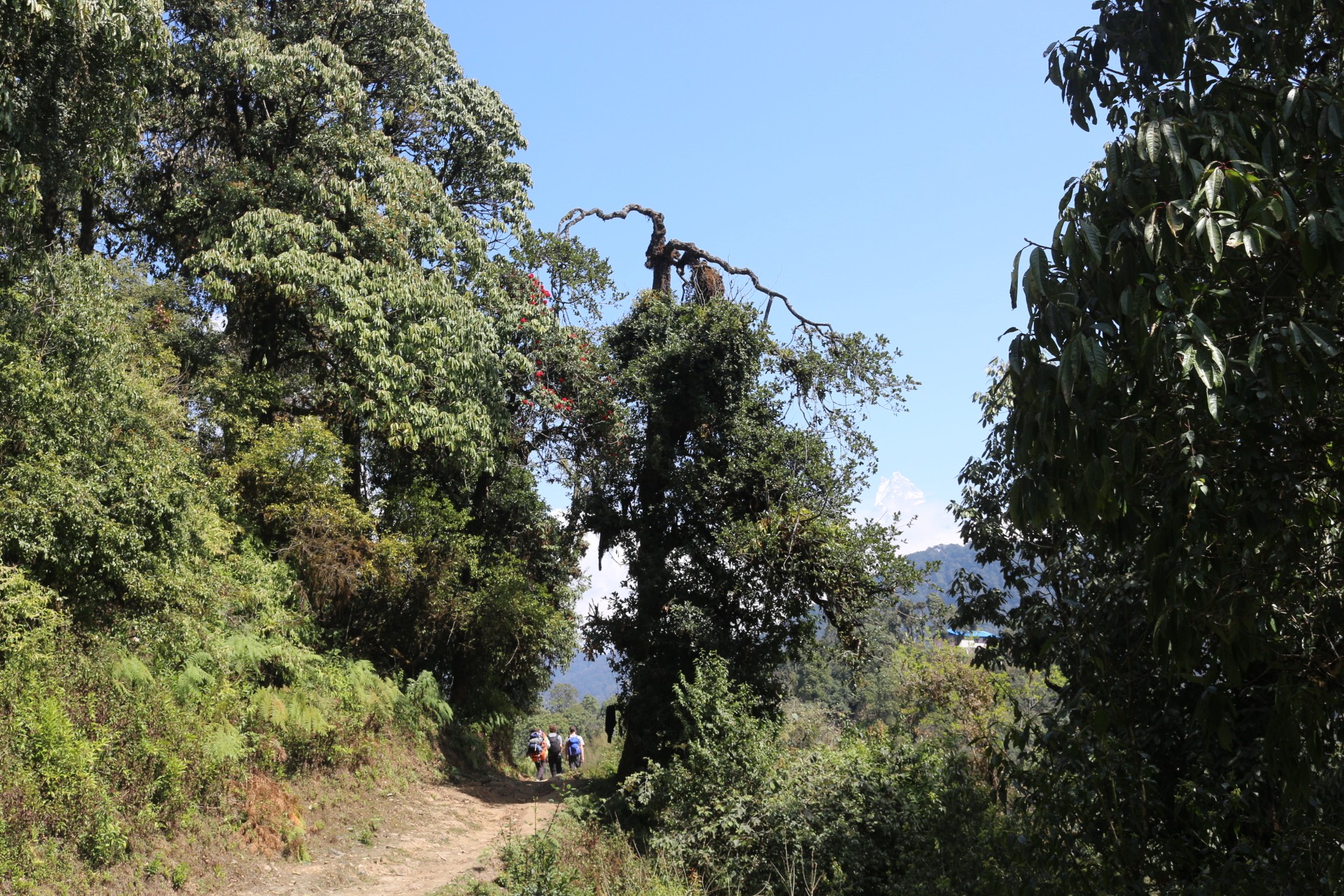
Actually, the initial days of the Mardi Himal Trek are like walking through a real-life fairy tale as you climb the magic green tunnel from Pothana through dense rhododendron and oak trees. Following the ACAP checkpoint in Pothana (1,890 m / 6,201 ft), the trail meanders into a green canopy, adorned with moss and overhead trees, and you follow a gradual ascent up into the Forest Camp at 2,550 meters (8,366 feet).
Magic green tunnel on the Pothana to Forest Camp trekking route.
Likewise, this section of the trail is exceptionally beautiful during spring as it is decorated with vibrant reds and pinks of blooming rhododendrons. The comfortable pace and the diffused light passing through the dense foliage make this walk a peaceful and comfortable one. These few hours allow you to find your rhythm with the trekking experience as you take in the surrounding sights and sounds.
Highlights of Pothana to Forest Camp :
Gradual and consistent rise in elevation.
Trail passes through dense oak and rhododendron trees.
Features a magical tunnel of green above your head.
You walk under shady canopy.
It provides a good introduction to the ridge system of Mardi Himal.
Segment | Distance
Elevation Gain
Walking Time | Key Feature
Pothana to Forest Camp | 8-10 km
1,890m to 2,550m
4-5 hours | Magic green tunnel and forests
Trail profile: Pothana to Forest Camp
All in all, climbing the magic green tunnel of Pothana to Forest Camp gives you one of the most wonderful beginnings to any short trek in Nepal. This lush walk under the dense canopy is a great way to ease into the higher ridges, taking in the beauty of nature with all your senses.
Breakthrough: Emergence from the Clouds from Low Camp to Badal Danda
Here, one of the most spectacular moments on the Mardi Himal Trek occurs as you climb from Low Camp to Badal Danda, breaking through the clouds. After starting the trek from Low Camp at 2,970 meters (9,744 feet), you ascend the steadily sloping trail passing through thin forests, and finally cross the tree-line barrier. You find yourself standing on a wide ridge in the middle of a vast sea of clouds with nothing but the mountains far above you.
Emerging above the clouds on the trail from Low Camp to Badal Danda.
Likewise, the vista of mountains, as seen from this point, is astonishing. After coming out of the canopy and onto wide ridges of grassy terrain, the panoramic views take your breath away, and the mountains appear much closer. Furthermore, the air here is very crisp and clear. This means that arriving at Badal Danda at 3,210 meters (10,531 feet) officially transforms your journey from a forest walk into a high-mountain adventure.
Highlights of Low Camp to Badal Danda :
Unforgettable crossing of the tree-line.
Emergence onto open and vast ridgelines.
You are walking high above a blanket of clouds.
Views of major peaks become clear.
You get a strong sense of height and accomplishment.
Segment
Distance | Elevation Gain
Walking Time | Key moment
Low Camp to Badal Danda
6-8 km | 2,970m to 3,210m
3-4 hours | Breaking through the clouds
Trail profile: Low Camp to Badal Danda
In conclusion, the climb from Low Camp to Badal Danda, where you break through the clouds, is one of the highlights of the Mardi Himal Trek. The incredible view of the mountains, now appearing much closer, from the wide, airy ridge makes this a very memorable part of the trek and truly marks the start of your high-mountain adventure.
The Ultimate Base Station: Why High Camp is the Perfect Staging Ground
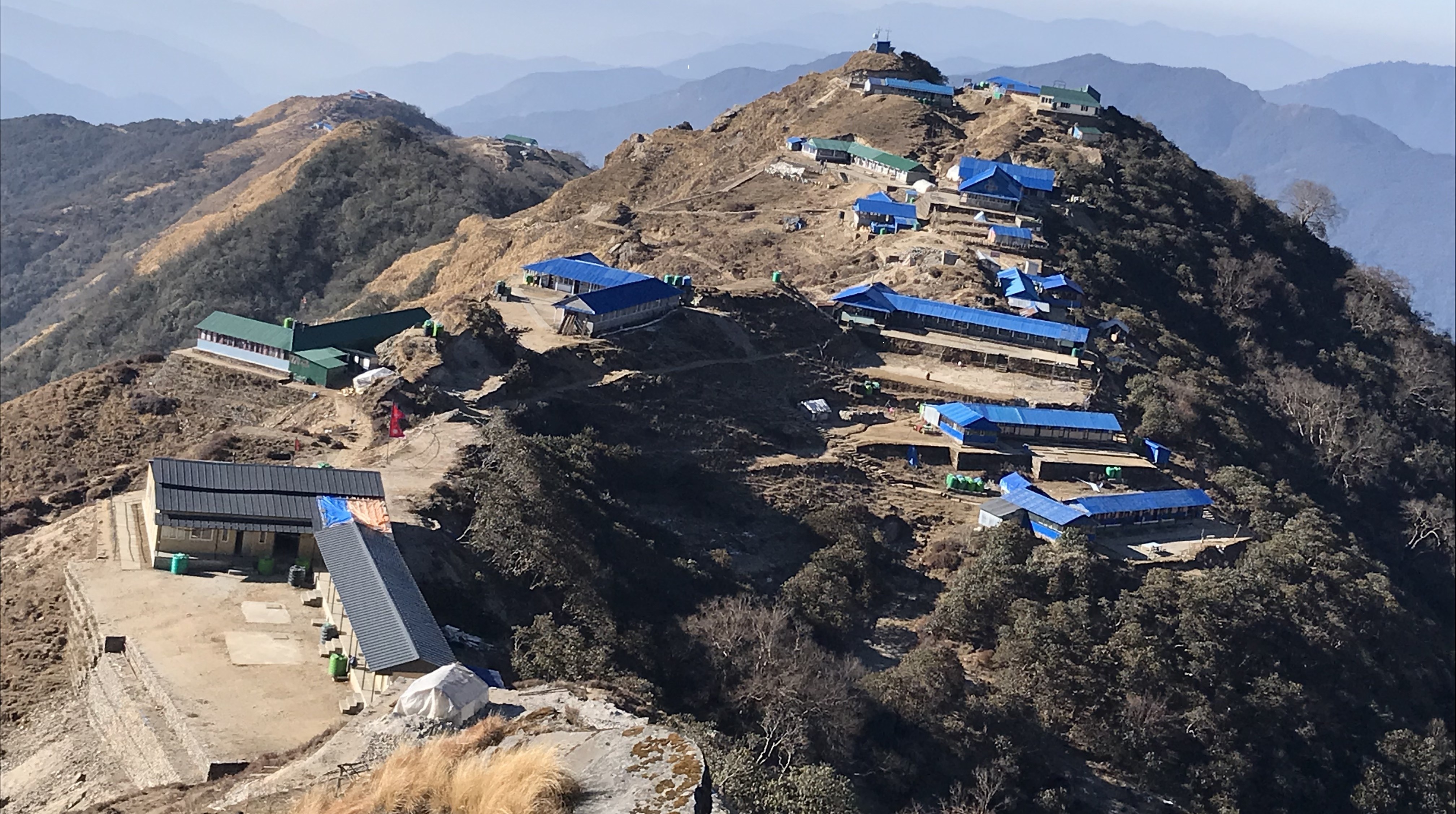
At 3,550 meters (11,646 feet), High Camp is the ultimate base station of the Mardi Himal Trek. This small alpine settlement provides a comfortable and easy-going setting especially for first-timers spending their first night over 3,500m. Accommodation is provided in cozy teahouses where trekking parties can find a warm and inviting atmosphere with simple yet comfortable rooms, hearty meals, and a dining area where trekkers will be seen sharing stories and encouraging each other.
Badal Danda above the clouds with stunning Himalayan views.
Here, located on an open ridge with stunning views, it provides a good natural acclimatization process and keeps the setting calm and uncrowded. Also, due to its manageable altitude and excellent facilities, it is the perfect staging ground before the final summit climb to the viewpoint. It is for these reasons why most trekkers depart High Camp fully rested, encouraged and ready for the dawn ridge walk ahead.
High Camp Facilities & Benefits :
Altitude: 3,550m (11,646ft); ideal for safe acclimatization.
Cozyl teahouses with a welcoming dining area.
Splendid views of the sun rise and surrounding peaks from the camp.
Supportive atmosphere for first-timers to spend a night over 3500m.
It’s a convenient resting spot before you commence your final climb to the viewpoint.
Aspect of the Camp
Details
What a Beginner can benefit from it
Altitude
3,550m (11,646ft)
A safe first night above 3,500m
Accommodation
Cozy teahouse rooms
A warm and comfortable place to stay
Atmosphere
Calm and welcoming
Encouraging and supportive for first-timers
Views
Panaromic ridge views
A motivational sight of the Himalayas
High Camp at a glance
To conclude, High Camp is the ideal staging ground offering a great combination of comforts and acclimatization for a successful first step toward the Mardi Himal Viewpoint.
The Dawn Ridge Walk: How to successfully trek to the Mardi Himal Viewpoint
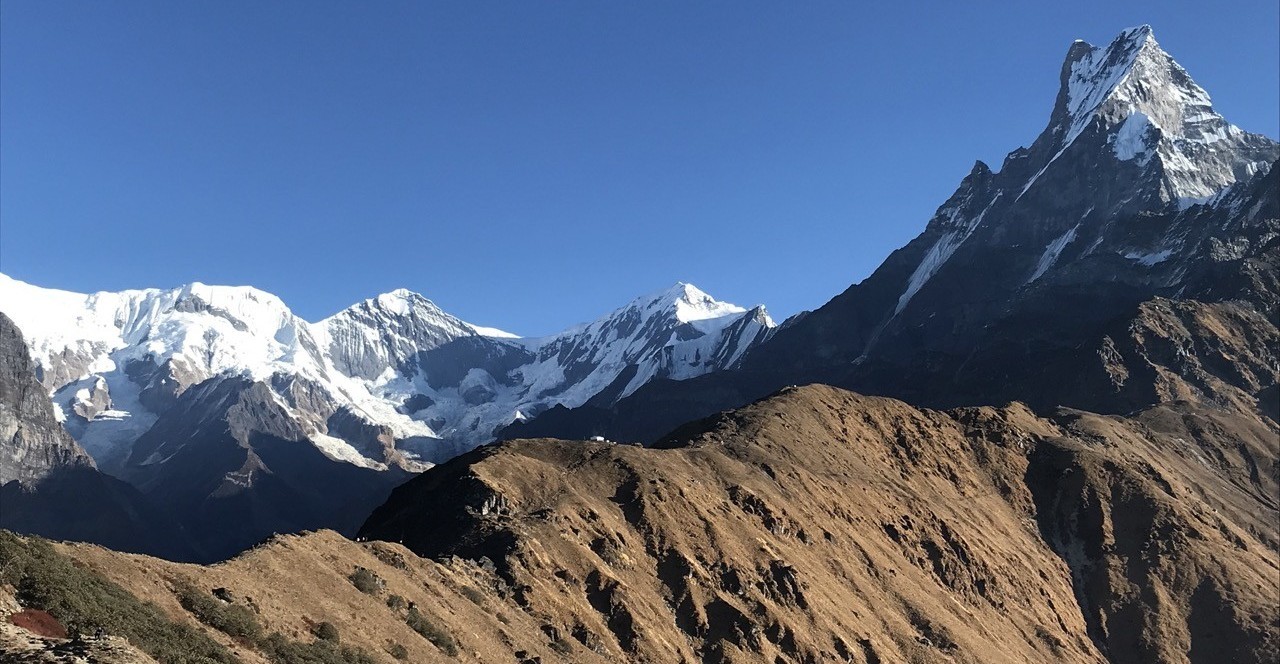
Meanwhile, the journey culminates in the magnificent dawn ridge walk to the Mardi Himal Viewpoint at 4,200 meters (13,779 feet). The brief, early morning journey along the open, narrow ridge is what many trekkers consider to be the defining moment that makes the entire trek an unforgettable experience.
Stunning Himalayan panorama from Mardi Himal Viewpoint.
Guide to the Dawn Ridge Walk :
Start the journey at 4-5 AM from High Camp while it is still dark.
Follow the obvious narrow ridge trail by using a headlamp.
Conserve energy by taking short breaths at intervals to manage the altitude.
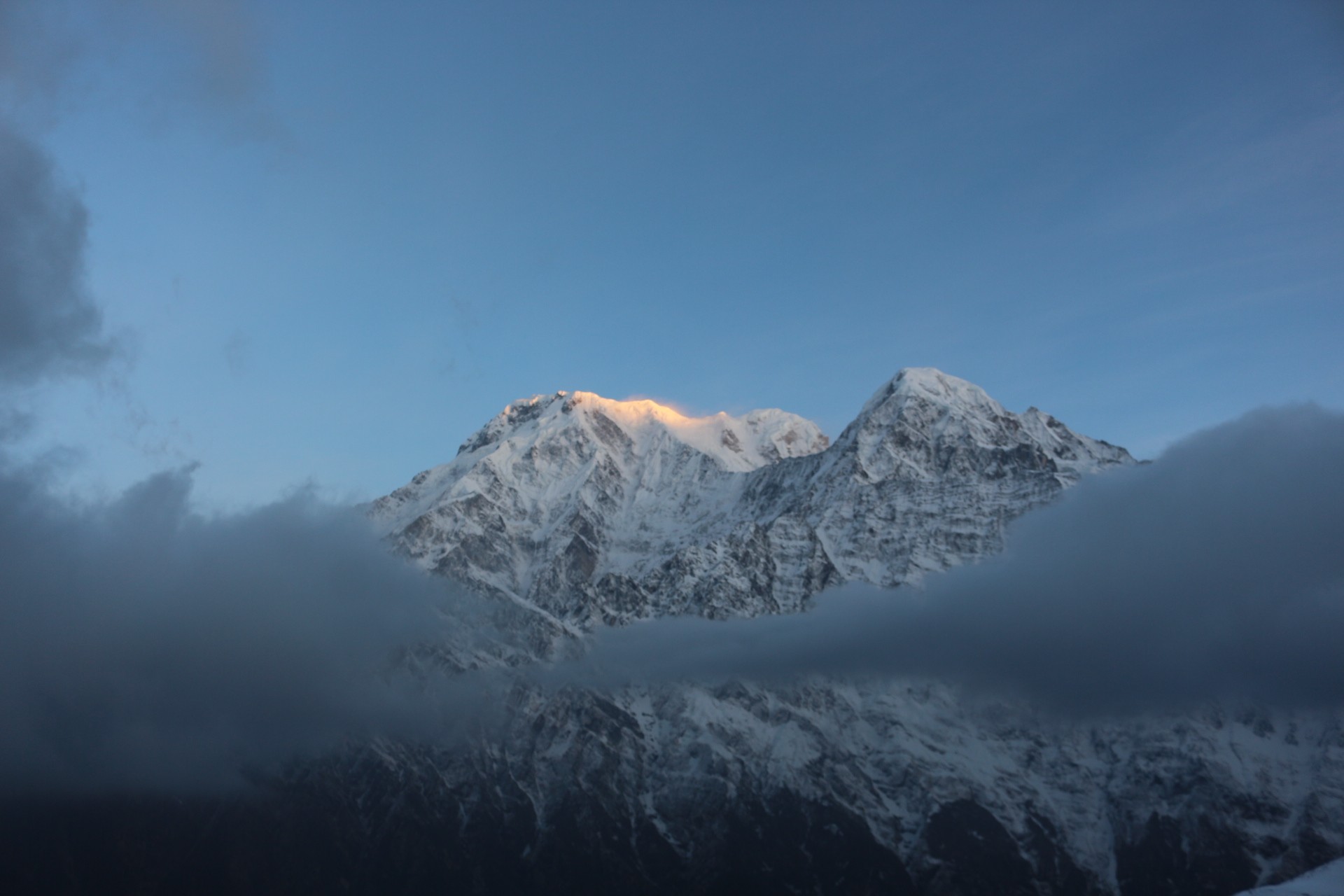
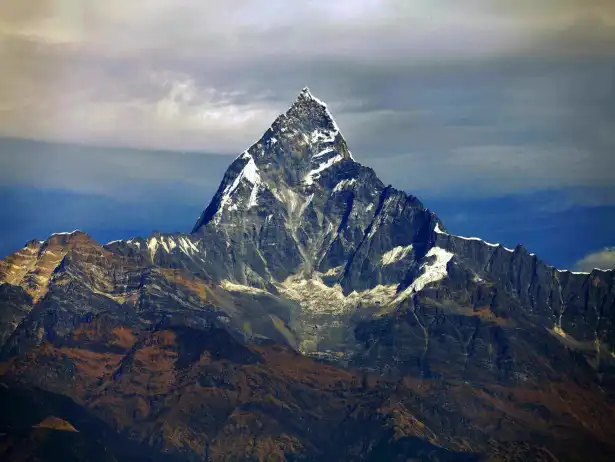
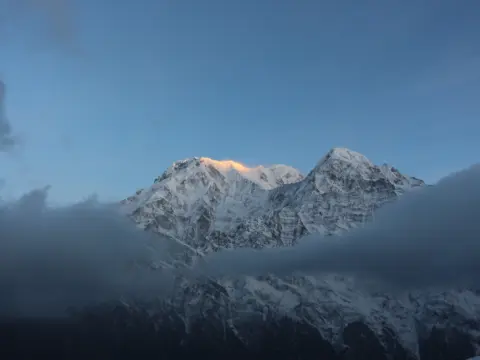
Wait for the sun to come up and capture the beautiful moment when the first golden rays hit the summit of Mt Machhapuchhre.
Reach the viewpoint and enjoy the spectacular 360-degree views of the Annapurnas and Mt Machhapuchhre.
Mardi Himal Viewpoint Information :
Altitude: 4,200 meters (13,779 feet)
Trek distance from High Camp: 3-4 km one way.
Time taken: 2-3 hours uphill.
Best views of Mt Machhapuchhre and its surroundings.
Tips for safely trekking the narrow ridge :
Pace yourself well and walk slowly on the exposed ridge sections.
Keep a steady rhythm while breathing to help you acclimatize.
Use trekking poles to support your balance.
Listen to the guide's instructions, particularly during strong winds.
In summary, a dawn trek to the Mardi Himal Viewpoint is an inspiring and doable activity for first-timers, it’s the unique experience of witnessing a golden sunrise on Machhapuchhre that will forever etch itself in your memory.
The Optional Apex: When to Venture to Mardi Himal Base Camp
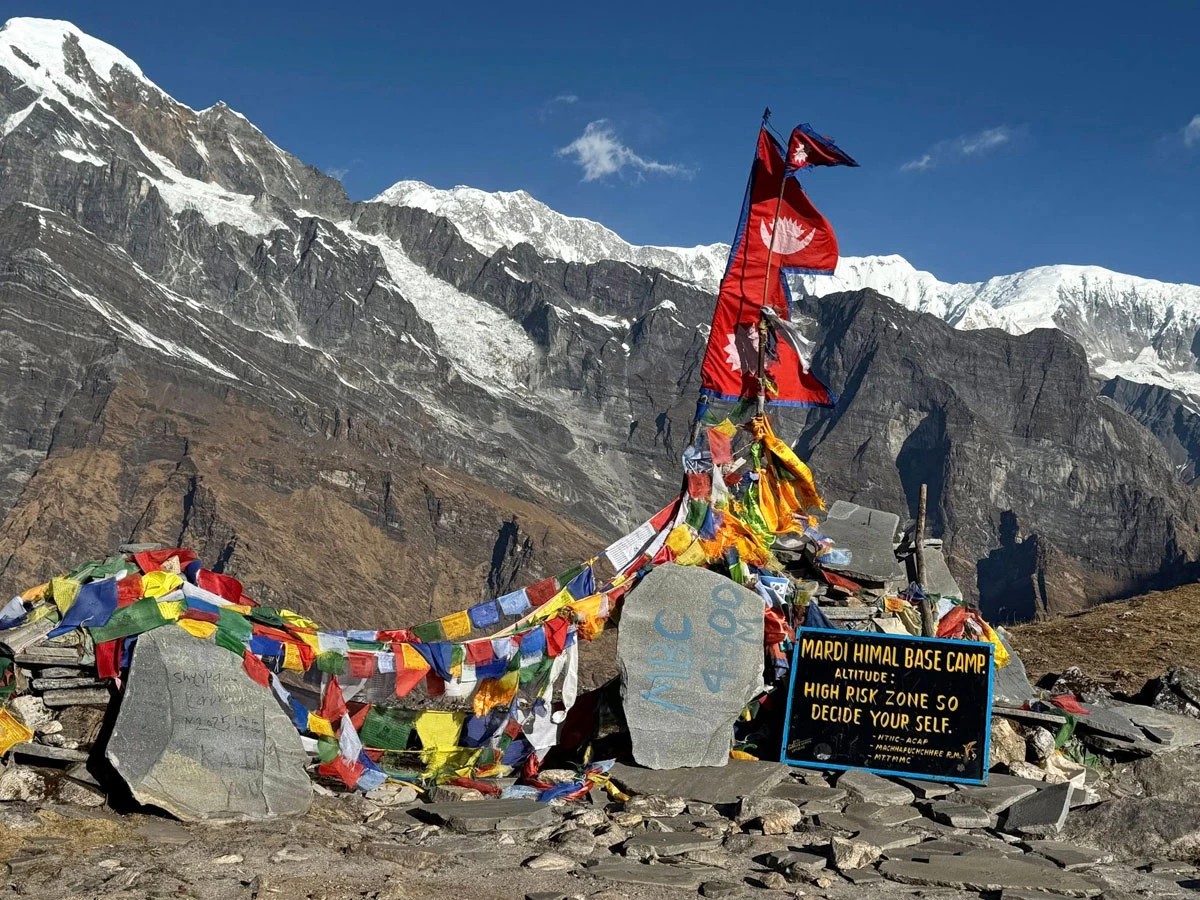
While the standard Mardi Himal Viewpoint is undeniably spectacular, fit beginners can extend their trek all the way to the true apex: Mardi Himal Base Camp at a dizzying 4,500m (14,764ft). Though the most famous views are from the main viewpoint, traveling the remaining stretch across the jagged alpine moraine gets you right in the heart of the mountain kingdom.
Mardi Himal Base Camp – a hidden Himalayan gem.
Actually, this optional detour is a trek across steep, rocky terrain. In addition to the 2-3 hours required, it demands considerably more effort, but the reward is an even more intimate encounter with Machhapuchhre and the surrounding peaks. This is why so many trekkers who feel energized at the viewpoint elect to tackle the full journey to Base Camp.
Mardi Himal Base Camp Decision Guide :
Standard Viewpoint: 4,200m-fine for the average beginner.
Base Camp Extension: 4,500m-good option for fit beginners.
Extra distance: 3-5km round trip from the viewpoint.
Terrain: Rocky moraine with sections of steep scree.
Recommended for: Anyone feeling strong and comfortable trekking along ridges.
Decision
Pros
Cons
Stop at Viewpoint
Less strenuous, offers stunning views
Less direct connection with the mountains
Go to Base Camp
Closer views, greater sense of achievement
Physically demanding, rocky and steep terrain
Going to Base Camp, Pro vs. Con
In fact, the optional trek to Mardi Himal Base Camp is an incredible final flourish for anyone looking to maximize their Mardi Himal experience. Both options, though, are equally rewarding in their own right.
The Math of the Vertical Climb: Tackling the Elevation Without Worry
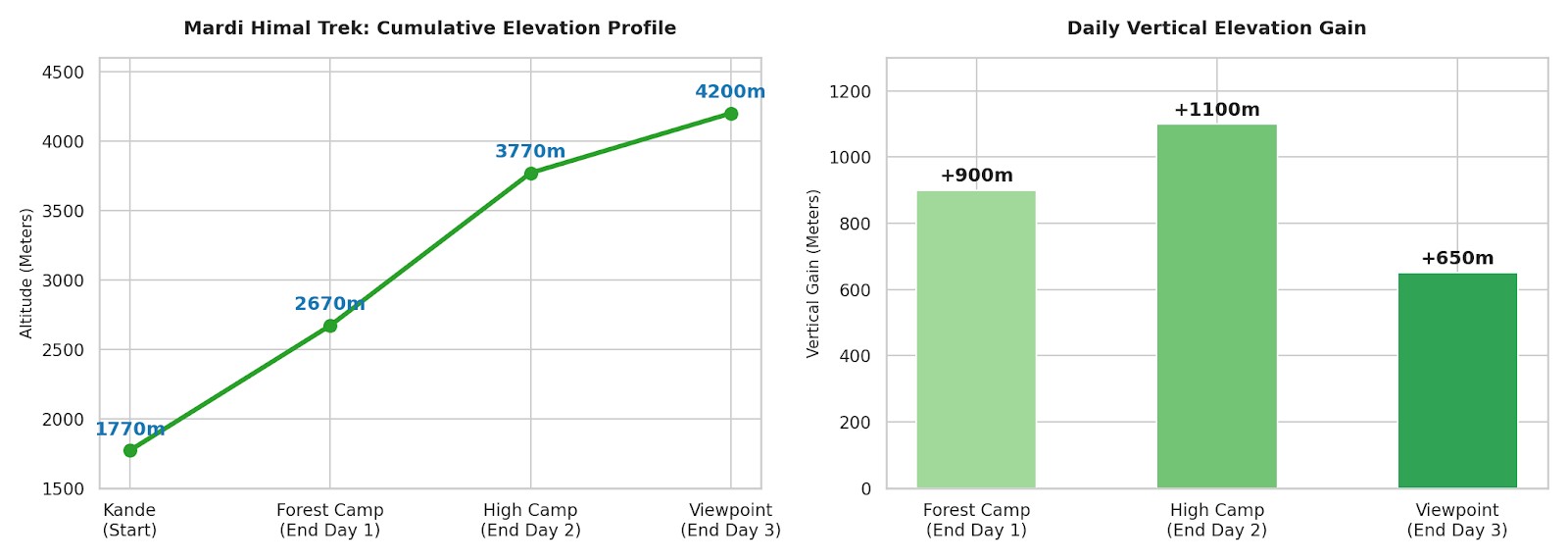
Beginners often express concern about the vertical ascent involved on the Mardi Himal trek. However, when broken down into the numbers, the figures are quite reasonable. Over the three main days of climbing, the trek goes from 1,770m in Kande up to 4,200m at the main viewpoint, which is a total net vertical gain of 2,430m.
The math of climbing Himalayas – steady elevation gain shows how trekking gets harder with altitude.
Since the gain is spread out over the days and the pace is adjusted appropriately, even those with average fitness will find the Mardi Himal trek to be fully achievable. The typical daily walking time for beginners on the trail is anywhere from 5-6 hours, giving ample time for breaks and enjoying the magnificent views.
Day | Starting Point
Ending Point | Vertical Gain
Daily Walking Hours | Beginner Level
1 | Kande
Forest Camp | 800-1000m
5-6hrs | Moderate
2 | Forest Camp
High Camp | 1000-1200m
5-6hrs | Moderate-Strenuous
3 | High Camp
Viewpoint | 650m
2-3hrs | Moderate
Vertical Gain on Mardi Himal Trek (for Beginners) :
Reassurance for Beginners :
Altitude gain is gradual across the trekking days.
You won't be suddenly encountering huge altitude increases.
You will have sufficient time for resting and staying hydrated.
Your average fitness level is all you need with the right preparation.
Your guide will pace the trek according to your ability.
To sum up, while the vertical gain for Mardi Himal trek seems considerable, the gradual increase in elevation across the three days makes this one of the most manageable high-viewpoint treks in Nepal.
The Secret Exit: Why The Siding Village Descent is Easy on the Knees
One of the most inspired routing decisions that the Mardi Himal Trek has to offer is the alternative descent to Siding at 1,700 meters (5,577 feet), a traditional Gurung village down the eastern flank instead of directly retracing the ridge. This choice not only creates an authentic cultural loop but it also cuts down on the total trek time and takes you to a more direct roadhead for the private jeep ride back to Pokhara.
In fact, most trekkers will find the Siding Village descent significantly gentler on the knees compared to the steepest direct ridge return, and trekking poles become incredibly helpful on the downhill for balance and absorbing impact. Trekking poles, along with careful footing, can greatly reduce the jarring effect and make this descent much more comfortable, especially if you've been trudging up a steep ascent for several days!
The Top Advantages of the Siding Village Descent:
Saves your knees on the less precipitous descent.
Offers a unique cultural immersion in a real Gurung settlement.
Takes you to a roadhead quicker than backtracking up and over the entire ridge line.
Provides beautiful views through forests and down terraced fields.
It closes the loop neatly without too much repetition.
Feature
Ridge Descent
Siding Village Descent
Knee Impact
Higher
Lower
Cultural Value
Moderate
High
Return to Roadhead
Moderate
Faster
Duration of Trek
Shorter
Slightly Longer
Siding Village Descent vs. The Ridge Descent
Ultimately, the Siding Village descent is the intelligent and rewarding finale to the Mardi Himal trek, offering an excellent option for saving your joints while adding a rich cultural dimension.
Final Word: Planning & Booking Your First Quiet Himalayan Adventure
For the quintessential low-crowd Nepalese trekking experience suitable for beginners, the Mardi Himal Trek reigns supreme. It provides all the iconic mountain scenery you desire, peaceful trails to enjoy, cultural encounters, and the perfect blend of physical challenge and comfortable accommodation, all in a manageable amount of time.
The Mardi Himal Trek: A Perfect Trek for First-Timers :
Minimal trekkers, meaning a much more serene and personal journey.
Jaw-dropping vistas without the intense difficulty often found on other Nepalese treks.
Stunning natural beauty, from lush forests to traditional villages.
The flexible 4 to 6 day timeline allows for customization.
A great introduction to trekking in the Himalayas.
Day | Destination
Distance | Elevation Gain
Walking Hours | Highlights
1 | Kande to Forest Camp
8-10 km | 800-1,000 m
5-6 hrs | Walking through an incredible, mossy green tunnel.
2 | Forest Camp to High Camp
9-11 km | 1,000 m
5-6 hrs | Ridge walking and mind-blowing mountain views.
3 | High Camp to Viewpoint & Base Camp
6-8 km | 650-1,000 m
4-6 hrs | Sunrise, Mardi Himal Base Camp.
4 | High Camp to Siding Village
10-12 km | Major downhill
5-6 hrs | Experiencing a beautiful and authentic Gurung village.
5 | Siding to Roadhead & Pokhara
8-10 km | Slight downhill
4-5 hrs | Final trekking stretch, jeep back to Pokhara.
Layers, layers, layers for chilly mornings and evenings
Waterproof jacket and quick-drying clothes
Headlamp (you never know when it’ll be helpful!)
Reusable water bottle and trail snacks
Here, contact Haven Holidays for a well-organized and stress-free booking of your first quiet Himalayan trek to Mardi Himal!
Mardi Himal Trek- FAQs
1. Why is the Mardi Himal trek called the best less crowded adventure for beginners? The Mardi Himal trek is widely considered the best less crowded adventure for beginners due to its significantly lower footfall compared to nearby routes like Poon Hill or Annapurna Base Camp. It offers a tranquil environment with well-maintained trails and comfortable teahouses that are ideally suited for those taking their first steps in high-altitude trekking.
2. What is the total Mardi Himal trek distance? The total round-trip Mardi Himal trek distance is approximately 35 to 40 kilometers (21 to 25 miles). This relatively compact distance allows beginners to experience a full Himalayan ridge hike without the need for prolonged and exhausting trekking through the wilderness.
3. How many days does a standard Mardi Himal trek itinerary take? A typical, beginner-friendly Mardi Himal trek itinerary takes 4 to 5 days from Pokhara and back. The short duration makes it a perfect choice for those who wish to experience a lodge-based high-altitude trek but have a limited amount of time in Nepal.
4. What is the maximum Mardi Himal trek elevation? The highest point on the trail is the Mardi Himal Base Camp, reaching an elevation of 4,500 meters (14,763 feet). However, many beginners opt to turn around at the Mardi Himal Upper Viewpoint (4,200 meters), which still provides spectacular panoramic mountain scenery.
5. Is the Mardi Himal trek difficulty suitable for a complete beginner? The official Mardi Himal trek difficulty is categorized as moderate. While there are steep and rocky uphill sections, particularly during the final ascent, the gradual daily altitude gains and shorter hiking distances make it highly achievable for beginners with reasonable physical fitness.
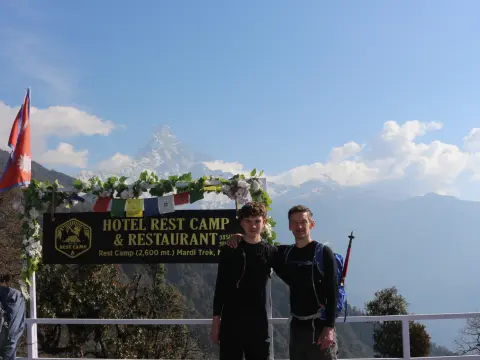
6. Where does the Mardi Himal trek route officially begin? The most common starting point for the Mardi Himal trek route is Kande, a short, hour-long drive from Pokhara. From Kande, the trail follows a beautiful forested path, leading up to Australian Camp, which serves as a gentle and scenic introduction to the mountainous landscape.
7. What mountains can you see on the Mardi Himal trek? Despite its relatively short length and low visitor numbers, the views on this trek are nothing short of breathtaking. You will find yourself face-to-face with the iconic Machhapuchhre (Fishtail Peak) and enjoy stunning close-up panoramas of Annapurna South, Hiunchuli, and the vast valleys below.
8. How much does a standard Mardi Himal trek cost? The estimated Mardi Himal trek cost typically ranges between $250 and $450 USD per person. As the trailhead is accessible by road from Pokhara and doesn't require costly domestic flights, it remains an excellent and budget-friendly option for solo travelers and beginners.
9. What is unique about the Mardi Himal trek altitude profile? In contrast to treks that primarily follow valley floors, this route features a classic ridge-line Mardi Himal trek altitude profile. The trail quickly ascends out of the dense rhododendron forests and winds along a narrow, elevated spine, offering unobstructed, 360-degree mountain views in all directions.
10. How long is the daily walking time on this trek? On average, the Mardi Himal trek walking time is about 4 to 6 hours per day. This leisurely pace allows plenty of time for photography, enjoying meals, and relaxing at the teahouses before the afternoon mountain clouds typically begin to gather.
11. What accommodation is available on this less crowded adventure? Accommodation on this less crowded adventure is provided by simple, comfortable, family-run mountain lodges known as teahouses. While they maintain a rustic charm, these lodges still offer hot meals, communal dining areas, and basic twin-sharing rooms.
12. Can I complete the Mardi Himal trek without a guide? Although trekking independently is possible, hiring a licensed local guide is highly recommended for safety, especially for beginners. A guide can assist with navigation on the narrow ridge paths, manage teahouse arrangements during busy periods, and ensure a secure high-altitude experience.
13. What permits do I need for the Mardi Himal trek route? To legally hike the Mardi Himal trek route, you are required to obtain two permits: the Annapurna Conservation Area Project (ACAP) permit and a Trekkers' Information Management Systems (TIMS) card. Both are readily available in Pokhara or Kathmandu.
14. What is the best season for a beginner to hike Mardi Himal? The most favorable seasons for a beginner hike are spring (March to May) and autumn (September to November). During these periods, you can expect clear skies, pleasant daytime temperatures, and minimal trail obstacles like mud, leeches, or significant snow cover.
15. Is altitude sickness common on the Mardi Himal trek profile? Mild symptoms of altitude sickness are possible since the trek ascends from 1,500 meters to over 4,000 meters in a matter of three days. Beginners should pace their ascent carefully, drink plenty of water, and spend their nights at lower altitudes (e.g., standard camps) to mitigate the risk of acute mountain sickness.
16. How difficult is the final push to Mardi Himal Base Camp? The final leg from High Camp (3,580m) to Mardi Himal Base Camp (4,500m) is indeed the most demanding part of the Mardi Himal trek difficulty. It requires an early start and involves navigating a steep, narrow, and frequently frozen ridge.
17. Are there alternative finishing points on the Mardi Himal trek route? Absolutely! The Mardi Himal trek route offers excellent flexibility. After descending the high ridges, you can choose to loop down through the charming Gurung village of Lwang or exit at Siding village, where local jeeps are available to take you back to Pokhara.
18. What gear is essential for the Mardi Himal trek difficulty? Essential gear includes a warm down jacket, windproof layers, well-broken-in trekking boots, thermal base layers, and sturdy trekking poles. Trekking poles are particularly beneficial for saving your knees during the steep, prolonged downhill section from High Camp.
19. How crowded do the Mardi Himal teahouses get? Even though it remains the best less crowded adventure for beginners, the teahouses at High Camp have limited capacity. Booking your accommodation through an agency is advisable to secure a room, especially during the popular autumn trekking season.
20. What is the success rate for beginners on the Mardi Himal trek? The success rate for completing the Mardi Himal trek is an impressive 98%. With its short duration, accessible start points, and progressive ridge ascent, virtually any healthy individual can successfully reach the viewpoint and experience this incredible Himalayan journey.