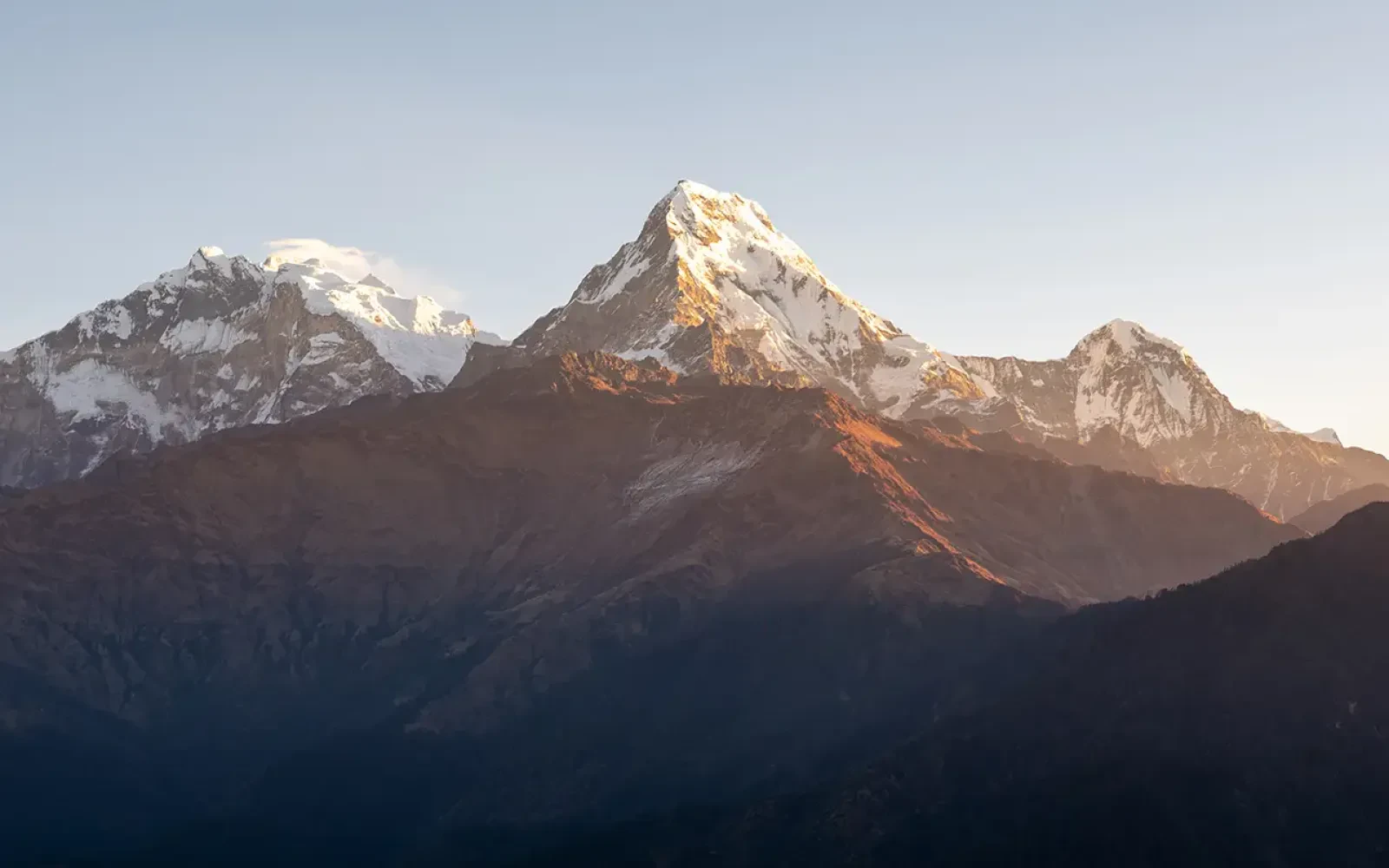
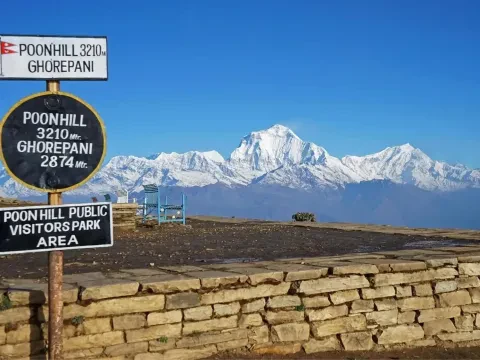
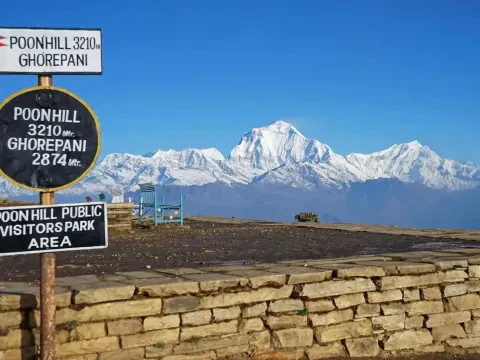
Actually, Poon Hill is Nepal’s go-to spot for jaw-dropping Annapurna Himalayan views—and you don’t have to be a hardcore trekker to get there. The trail takes you up to 3,210 meters without much fuss, and when you arrive, the payoff is huge. Picture this: sunrise breaking over giants like Annapurna I (8,091m) and Dhaulagiri (8,167m), with Machapuchare’s unmistakable fishtail silhouette cutting into the sky. There’s a full 360-degree sweep of towering peaks, many over 7,000 meters. Honestly, it’s hard not to just stand there, stunned.
Here, the climb to Poon hill from Ghorepani (2,860m) is short but packs a punch. At dawn, hikers gather around a cluster of prayer flags, waiting for that first golden light to hit the snow-capped mountains. Autumn brings crystal-clear skies, making the whole scene even more surreal. The moment you catch your first glimpse, you get it—this is what the Himalayas are all about. That’s why Poon Hill is a favorite, especially for beginners and families. It’s easy to reach, but the experience stays with you.
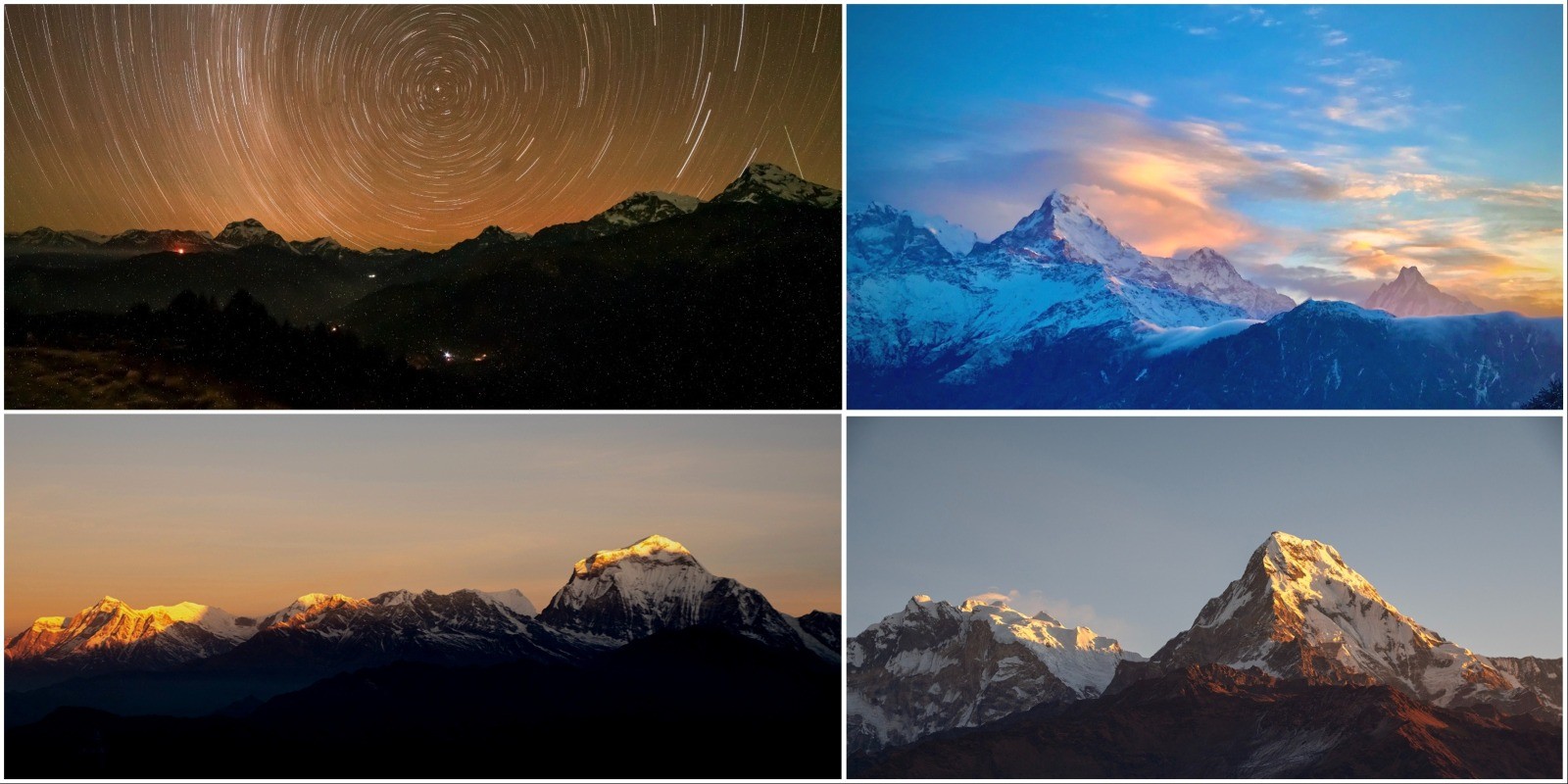
Key Features of Poon Hill Viewpoint (3,210m):
| Peak | Elevation | Location/Description | Highlight Feature |
|---|---|---|
| Dhaulagiri I | 8,167m | West, seventh-highest in the world | Massive massif, often first lit by sun. |
| Annapurna I | 8,091m | East, part of Annapurna massif | Towering central prominence. |
| Annapurna South | 7,219m | Central, sharp and dramatic | Close-up snow faces. |
| Machapuchare | 6,993m | Central, sacred fishtail shape | Iconic silhouette. |
| Hiunchuli | 6,441m | Near Annapurna South | Adds layered depth. |
| Nilgiri | 7,061m | Northern range | Rugged profile. |
Additional Panorama Facts:
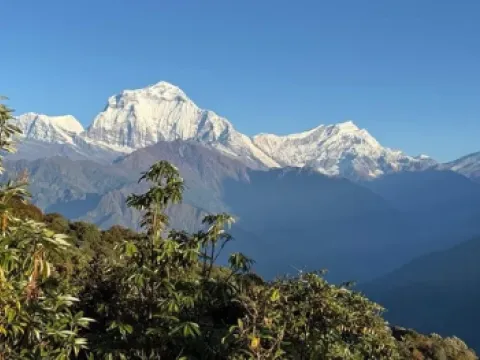
Down at Nayapul, 1,070 meters up, hints of the high peaks show right away. Travelers arrive by vehicle from Pokhara before setting off on foot. The route traces alongside the Modi Khola river without rushing. Paths at first twist past farmland and small settlements. Peaks like Annapurna South, standing 7,219 meters tall, along with Hiunchuli at 6,441 meters, peek through now and then. Little clues grow interest bit by bit. Because of this, early looks hint at what’s coming later.
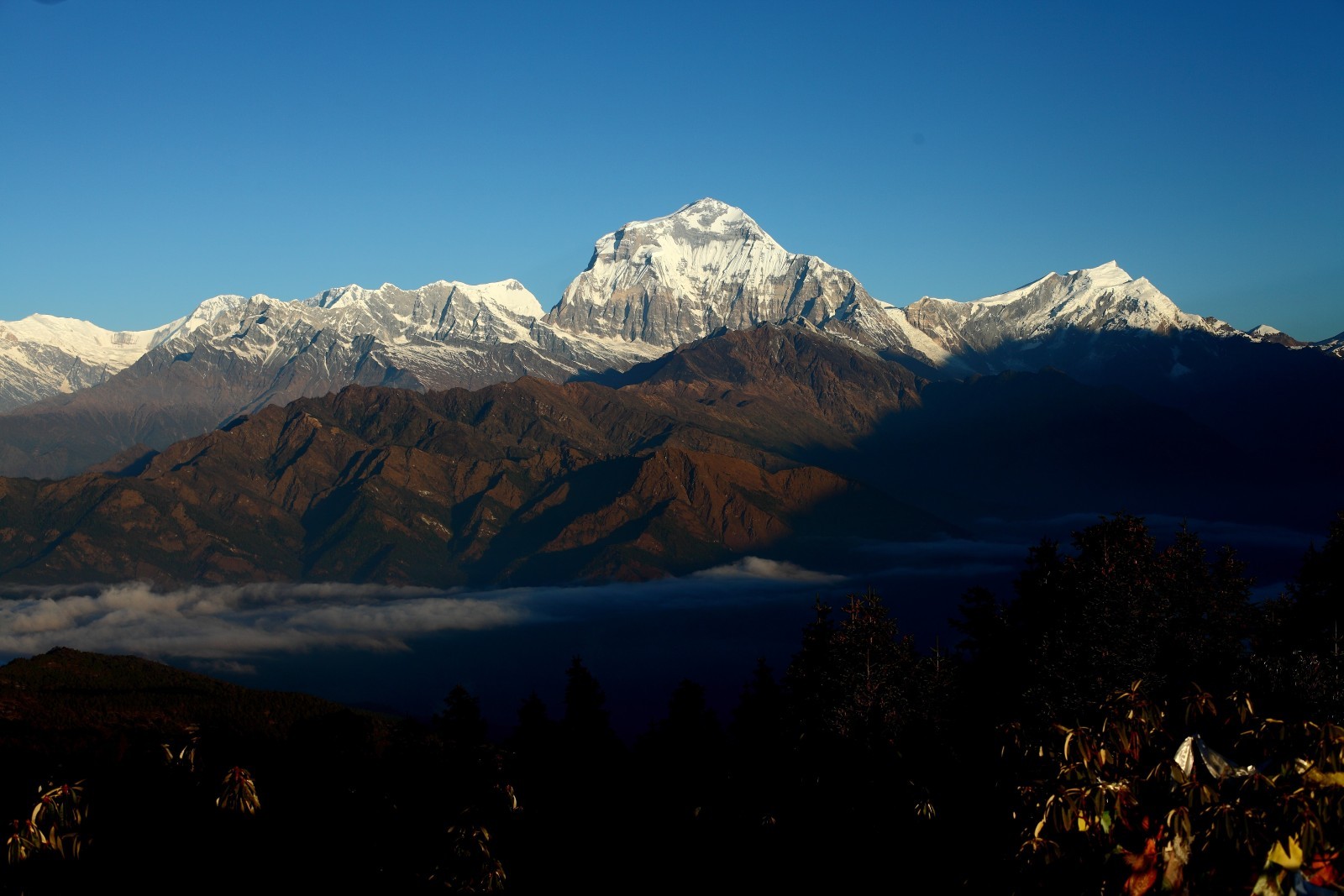
Higher up, past Tikhedhunga at 1,540 meters, the land begins to open. From there, heading toward Ulleri - now sitting at 2,070 meters - the air sharpens. Step after step, stone steps rise without hurry. Through gaps in the trees, Annapurna South shows itself piece by piece. Over westward edges, Dhaulagiri brushes the skyline like a smudge of chalk. Green thickets hold the snowcaps in place, almost cradling them. These early stretches whisper what comes later, further up.
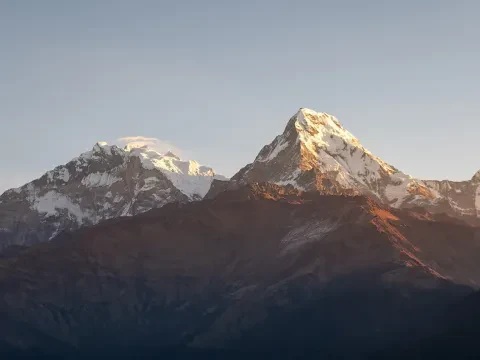
Early Trail Sections and Viewpoints:
| Location | Approx. Elevation | Visible Peaks Teased | View Characteristics |
|---|---|---|
| Nayapul/Birethanti | 1,070m | Distant Annapurna South (7,219m) | Subtle outlines over river valley. |
| Tikhedhunga | 1,540m | Hiunchuli (6,441m), Annapurna South | Emerging above terraces and villages. |
| Ulleri | 2,070m | Annapurna South, possible Dhaulagiri hints | Clearer from higher steps. |
| Banthanti area | 2,200m | Strengthening Annapurna range views | Framed by forests and ridges. |
Supporting Early Trek Facts:
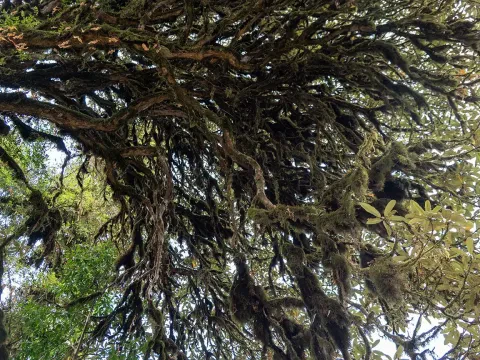
As you climb the Poon Hill Trek, the forest closes in around you—thick stands of rhododendron and oak on both sides. The stone steps from Ulleri(2,070m)up toward Ghorepani(2,860m) seem endless at times, but every now and then, the trees part just enough for a glimpse. Annapurna South breaks through first, a flash of white against the green. Then you spot Hiunchuli and the sharp peak of Machapuchare, one after the other. The massive Annapurna range doesn’t just appear all at once; it sneaks up on you, growing bigger and bolder with every turn.
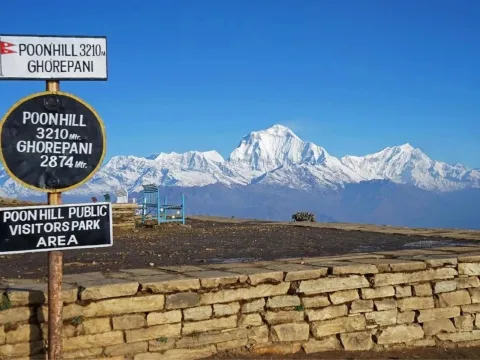
Once you get closer to Banthanti and Deurali, the forest starts to thin out. Suddenly, the view opens wide. In spring, rhododendrons explode with color, and sunlight spills through the leaves, lighting up the snow-capped faces of the mountains. Annapurna I(8,091m) finally takes over the horizon—huge, impossible to ignore. The forest frames these peaks perfectly, turning the climb into a steady reveal. With every step, the mountains feel a little closer, a little more real. The hike rewards you with new perspectives, each one better than the last.
Key Forest Sections and Elevation Gains:
| Peak | Elevation | First Clear Appearance | Forest Framing Notes |
|---|---|---|
| Annapurna South | 7,219m | Near Ulleri upper stairs | Sharp snow face through tree breaks |
| Hiunchuli | 6,441m | Mid-ascent around Banthanti | Adds layered depth to south views |
| Machapuchare | 6,993m | Higher near Deurali | Iconic fishtail shape framed by branches |
| Annapurna I | 8,091m | Distant from upper forest edges | Towering central massif silhouette. |
Supporting Facts on Forest Ascent Views:
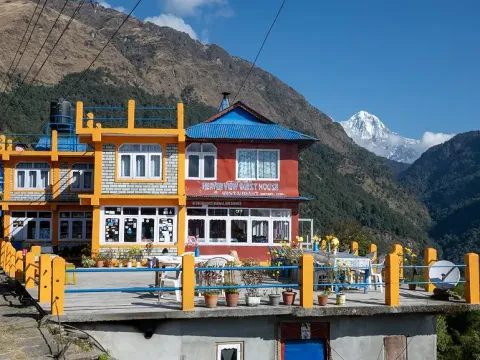
Actually, Ghorepani sits at 2,860 meters and honestly, it’s hard to find a better spot for that first taste of the Himalayas. Most trekkers wander in as the afternoon starts winding down, tired but excited. They drop their packs, settle into teahouses, and snag rooms with a view—always facing the mountains, of course.
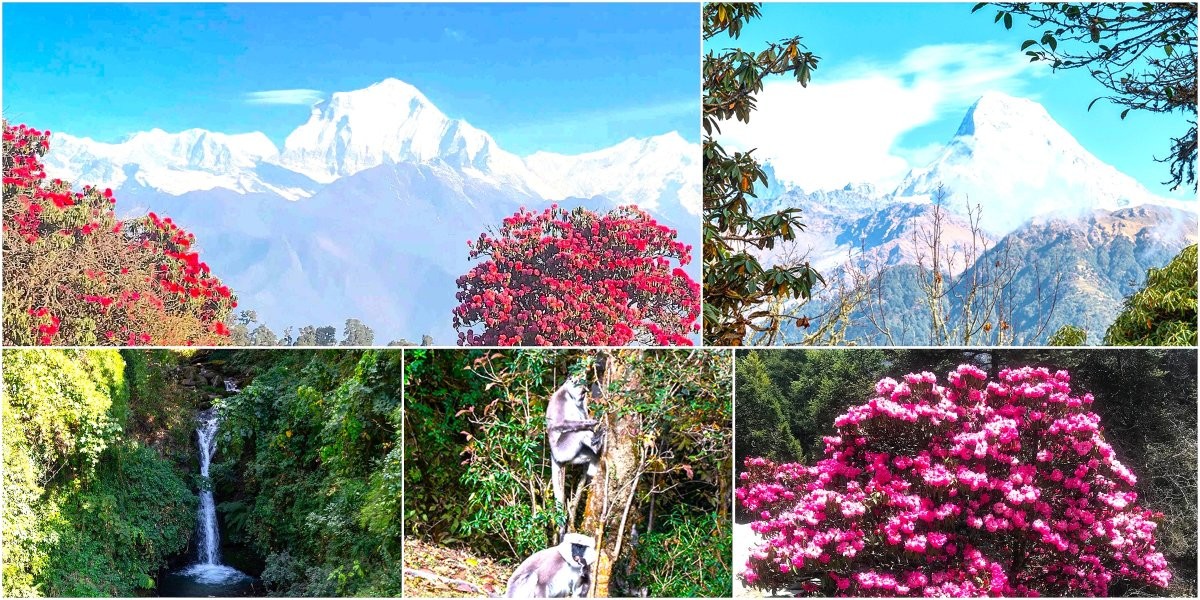
As the sun dips lower, the light turns softer, painting the peaks in gold and violet. Dhaulagiri (8,167m)and Annapurna South(7,219m) seem to glow from within, their outlines clear against the darkening sky. Evenings here aren’t just downtime—they’re a slow build-up, a sneak peek at what awaits at dawn.
Likewise, gold spills over the ridges during the golden hour, and you’ll see hikers stretching their legs, following little trails around the village just to catch another angle. Nilgiri (7,061m) and Annapurna I(8,091m) grab the last rays, while rows of prayer flags dance in the breeze. The whole scene feels peaceful, almost enchanted. Twilight in Ghorepani isn’t just the end of a day. It’s a quiet invitation to what comes next—serene, a little magical, and the perfect teaser for tomorrow’s sunrise.
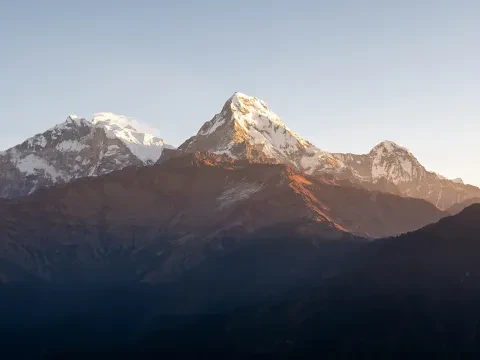
Twilight Highlights from Ghorepani (2,860m):
| Peak | Elevation | Twilight Appearance | Best Viewing Direction |
|---|---|---|
| Dhaulagiri I | 8,167m | Strong golden glow on massive face | West / northwest. |
| Annapurna South | 7,219m | Sharp outline with warm snow highlights | South. |
| Nilgiri | 7,061m | Rugged profile catches late light | North. |
| Annapurna I | 8,091m | Distant central peak softens in dusk | East / southeast. |
| Machapuchare | 6,993m | Fishtail shape darkens dramatically | Central south. |
Additional Evening Experience Facts:
Actually, Poon Hill sits at 3,210 meters and, honestly, this is the sunrise everyone comes for. Trekkers leave Ghorepani(2,860m) before dawn, climbing in the dark, half-awake and shivering. But then, right at the top, that first light hits. The sky bursts wide open—gold and orange flames streak across the horizon, and suddenly every snowy giant around you—Annapurna, Dhaulagiri, Machapucharelights up like they’re on fire. You get a full 360-degree view, and it changes by the second.
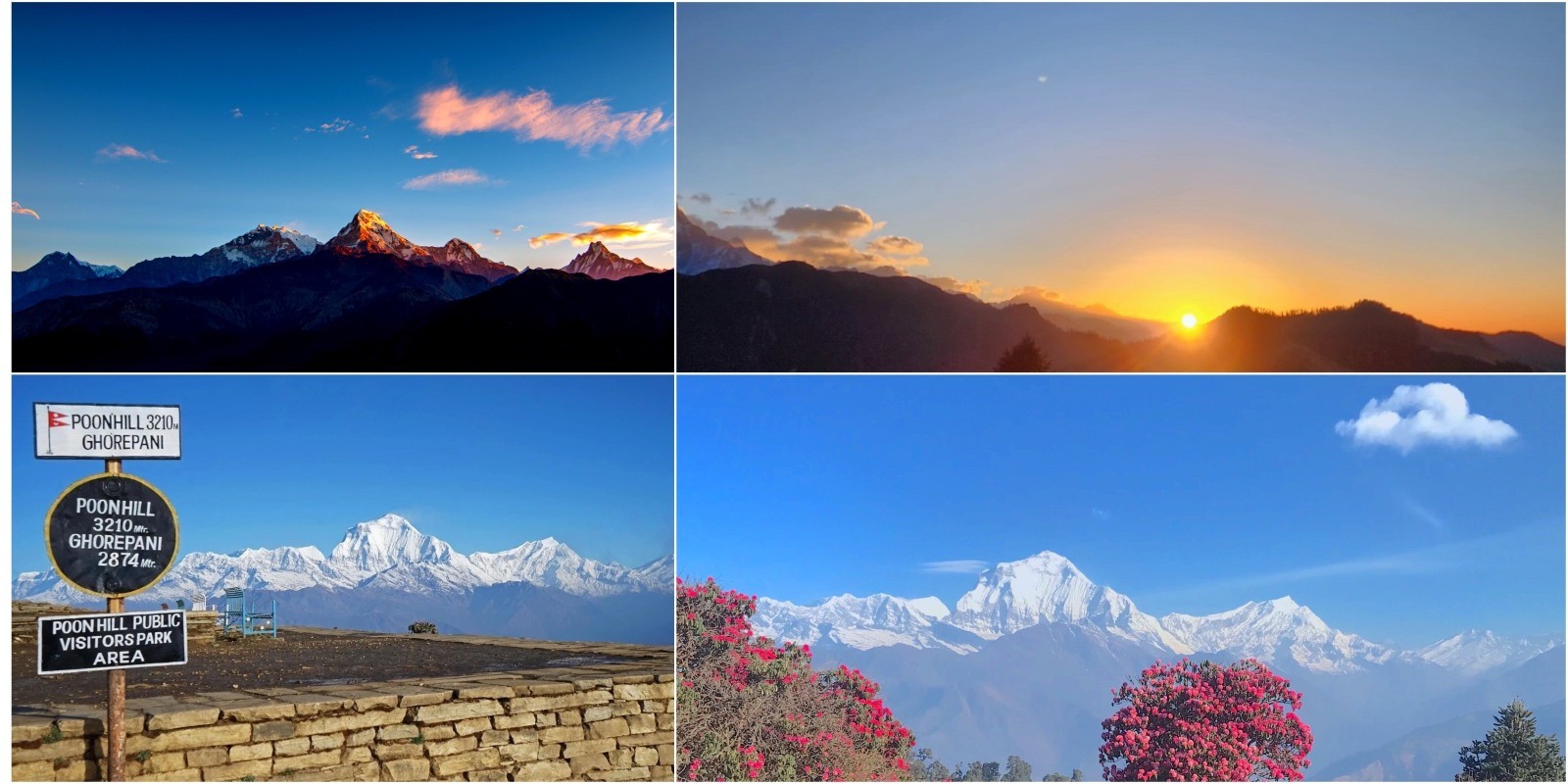
Here, prayer flags flutter around the ridge, framing everything in bright color. Nobody talks; everyone just stands there, soaking it in, as the light slides from pink to gold across the farthest peaks. If the sky’s clear—and in autumn, it usually is—the whole show feels even more unreal. Every hard step you took to get here pays off in that one moment. No question, Poon Hill’s sunrise is Nepal’s most stunning, and you don’t need to be a mountaineer to see it.

Sunrise Experience at Poon Hill (3,210m):
| Peak | Elevation | Sunrise Lighting Sequence | Visual Impact |
|---|---|---|
| Dhaulagiri I | 8,167m | First to catch direct eastern light | Massive glowing face dominates west |
| Annapurna I | 8,091m | Follows shortly after Dhaulagiri | Central towering peak turns golden |
| Machapuchare | 6,993m | Sharp fishtail catches dramatic rays | Iconic silhouette against bright sky |
| Annapurna South | 7,219m | Warms quickly in southern direction | Sharp snow faces glow intensely |
| Hiunchuli | 6,441m | Adds layered depth to south | Subtle pink-to-gold transition |
Supporting Sunrise Facts:
Here, you reach Poon Hill (3,210m), and suddenly there they are—Annapurna I (8,091m) and Annapurna II (7,937m), almost close enough to touch. Standing there, you’re face to face with the tenth-highest mountain on earth. Annapurna I dominates the center of the skyline, while Annapurna II rises just off to the northeast, both of them massive and absolutely covered in snow and ice. From this hilltop, the peaks don’t just look big—they feel like they’re right in your lap.
When the morning sun hits, every ridge, every icefall lights up. The scale is wild—one minute you’re staring at Annapurna I’s huge glacier, the next you’re noticing how Annapurna South (7,219m) frames the whole scene. The entire Annapurna range feels close and real, not just some far-off wall of mountains. Honestly, if you want a front-row seat to these legendary 8,000-meter peaks without a monster expedition, Poon Hill is the place.
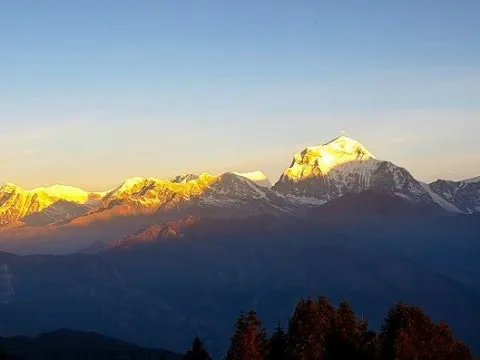
Annapurna I and II from Poon Hill Viewpoint:
| Peak | Elevation | Position from Poon Hill | Key Visual Features | Notable Aspect |
|---|---|---|
| Annapurna I | 8,091m | Central-east | Broad massif, huge south face | Tenth highest mountain in world. |
| Annapurna II | 7,937m | Northeast of I | Sharp ridges, prominent summit cone | Striking profile next to main peak. |
| Annapurna South | 7,219m | South-southeast | Sharp triangular face | Frames lower foreground beautifully |
| Annapurna III | 7,555m | Northeast near II | Rugged connecting ridges | Adds depth to northern skyline.. |
| Gangapurna | 7,455m | North-northeast | Glaciated summit plateau | Complements II in eastern views. |
Additional Facts Supporting Close-Up Views:
Meanwhile, Dhaulagiri (8,167m) steals the show from Poon Hill (3,210m). When you stand there, the seventh-highest mountain in the world sits right in front of you, rising straight up from the ridges around it. There’s no missing its sharp lines and those endless snowfields—it just towers over everything. As the sun comes up, Dhaulagiri catches the first light, turning the whole panorama into something unforgettable.
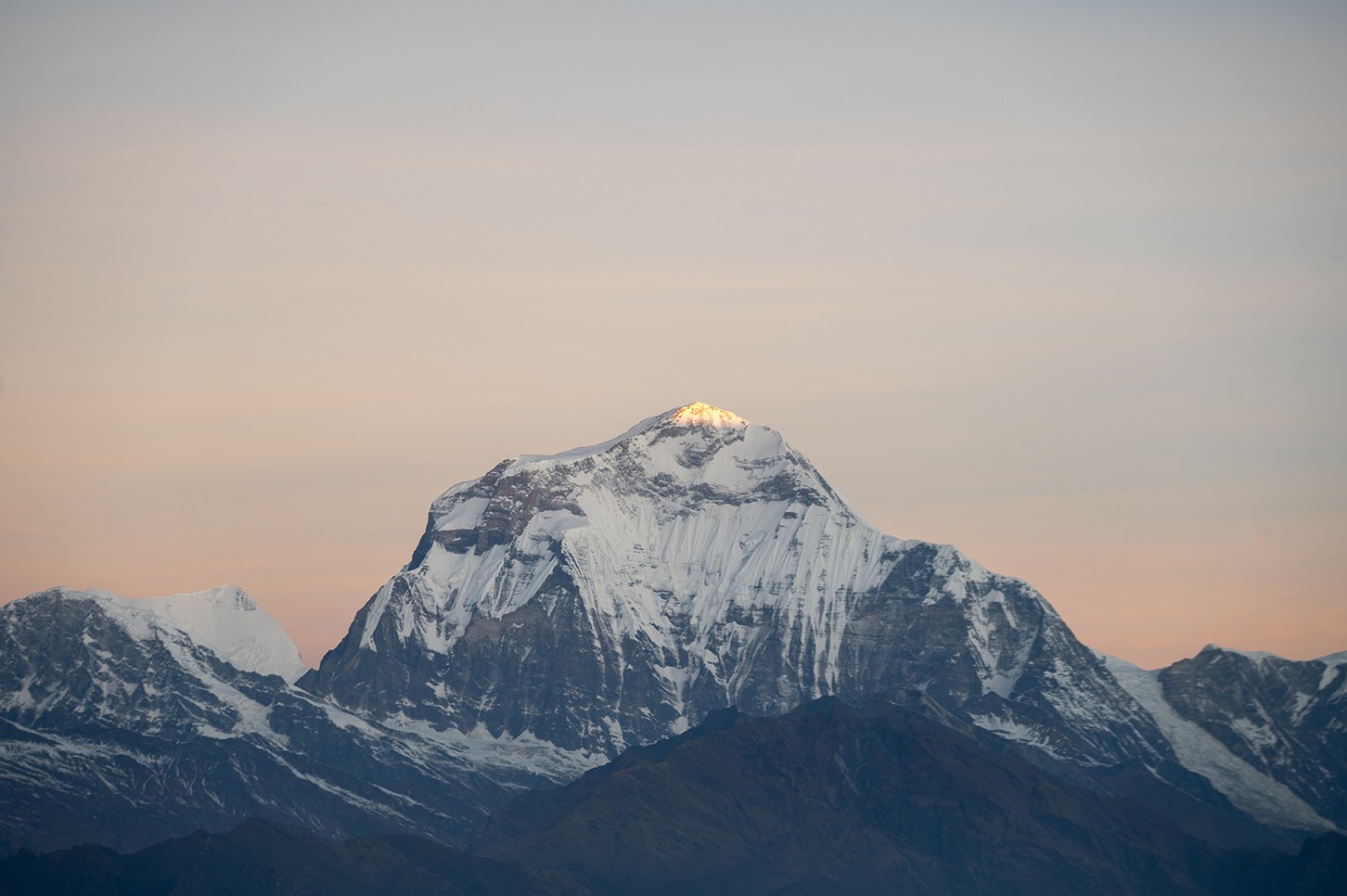
From the viewpoint, you can’t help but feel the mountain’s sheer size. Glaciers tumble down its sides, and when the sky’s clear, every line of ice and rock stands out in sharp detail. The peak doesn’t get lost in a crowd, either—it stands completely alone, not really connected to any other giants nearby. That’s what makes Poon Hill special: it gives you one of the boldest, closest looks at this Himalayan heavyweight.
Key Characteristics of Dhaulagiri from Poon Hill:
| Aspect | Description | Visual Impact |
|---|---|---|
| Main Summit | 8,167m, sharp western profile | Stark, imposing centerpiece. |
| Glacier Systems | Extensive icefalls on south and west faces | Adds texture and scale. |
| Sunrise Lighting | Catches direct first light from east | Turns snow golden-orange rapidly. |
| Surrounding Ridges | Sharp connecting ridges to Dhaulagiri II (7,751m) | Enhances sense of massive massif. |
| Distance Illusion | Appears closer due to elevation and clarity | Feels powerfully present. |
Supporting Facts on Dhaulagiri Dominance:
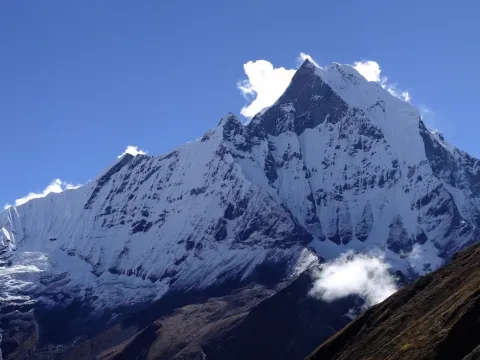
Actually, Machapuchare (6,993m) grabs your attention right away with its sharp, fishtail shape. As you hike the Poon Hill Trek, that sacred summit pops up again and again, never letting you forget it’s there. The two peaks form a silhouette you just can’t mistake for anything else. Walking up from the lower trails all the way to Poon Hill (3,210m), you keep catching new angles—each one more striking than the last. Because of its religious importance, nobody’s ever climbed it. That untouched feeling adds to the mountain’s mystique. Any way you look at it, the fishtail profile sticks with you.
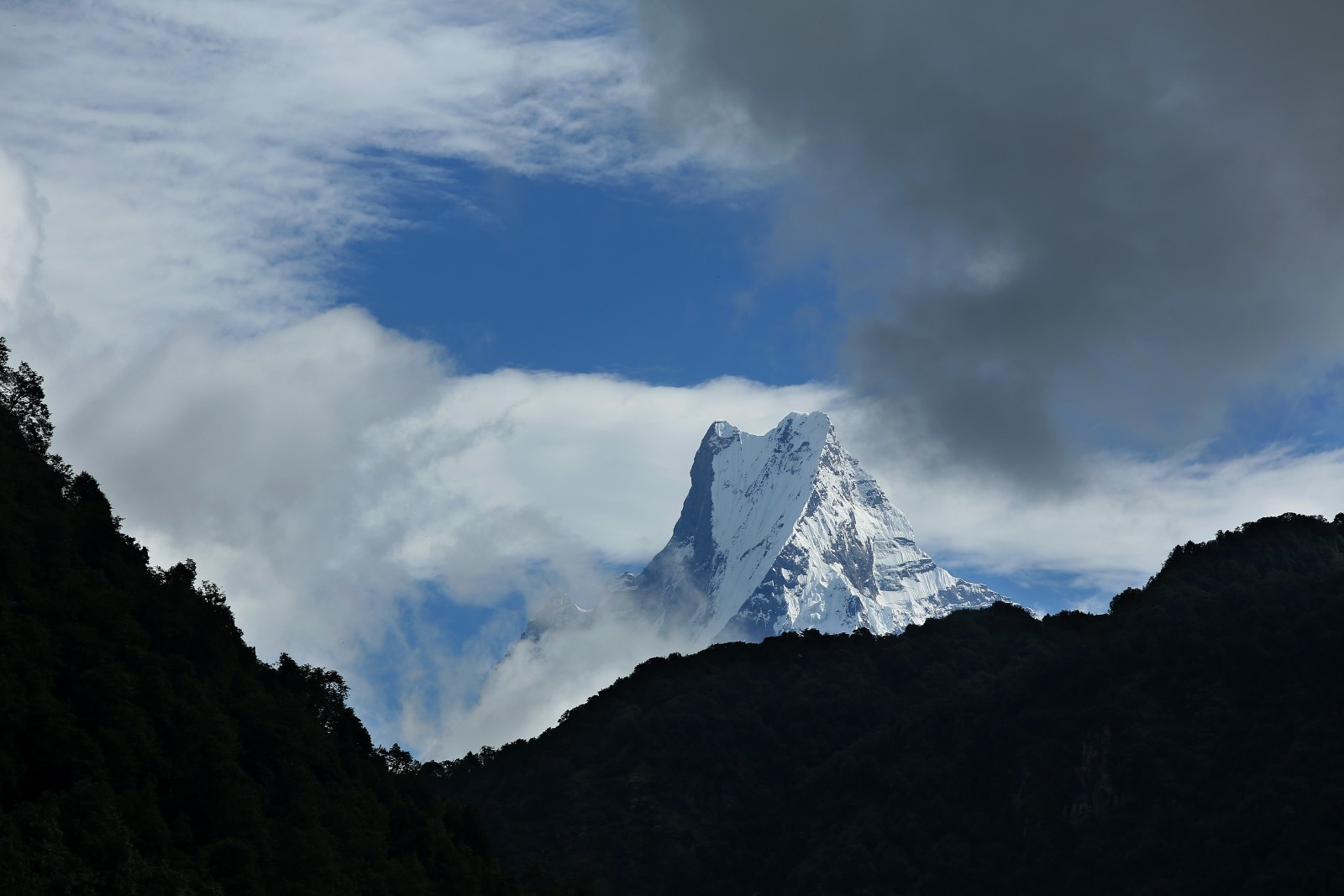
And the mountain views on Poon Hill Trek keep changing as you move along the trail. Early on, Machapuchare peeks out over lush green hills. Get higher, and suddenly it’s the centerpiece of the skyline. When the sun rises, golden light sharpens those twin points and the whole mountain glows. Sometimes, colorful prayer flags flutter in the foreground and the scene feels almost unreal. Honestly, if you want a photogenic Himalayan peak, Machapuchare’s silhouette is tough to beat.
Evolution of Machapuchare Views Along the Trek:
| Trek Location | Approx. Elevation | View Angle / Shape | Best Time for Photography. |
|---|---|---|
| Lower trail (Ulleri) | 2,070m | Side profile, emerging fishtail | Late afternoon golden light. |
| Ghorepani village | 2,860m | Near-perfect twin peaks symmetry | Twilight and early evening. |
| Poon Hill summit | 3,210m | Centered, symmetrical fishtail | Sunrise (golden-orange outline). |
| Upper forest clearings | 2,500m | Framed by rhododendrons | Morning mist lifting. |
Additional Facts Supporting Fishtail Fascination:
Meanwhile, the view from Poon Hill (3,210m) is always changing. Poon hill trek In spring, rhododendrons explode with color under the watchful peaks. On clear days, you can spot every ridge and glacier on Annapurna I (8,091m) and Dhaulagiri (8,167m). Summer rolls in with heavy monsoon clouds, sometimes hiding the mountains completely. Then autumn arrives, and suddenly the air’s crisp, the sky’s sharp, and the mountains stand out like they’ve been freshly painted.
If you do Poon Hill Trek in winter, snow covers everything in white. Mornings get icy, but the way sunlight bounces off the snow against a blue sky is just stunning. The colors shift too—spring’s soft pinks and greens fade into autumn’s deep golds at sunrise. Every season brings its own light and mood. Poon Hill never looks the same twice, so if you come back, you always find something new.
Seasonal Characteristics of Poon Hill Views (3,210m):
| Season | Average Visibility | Dominant Hues at Sunrise | Key Mountain Features Highlighted | Typical Conditions |
|---|---|---|
| Spring | Good to Very Good | Soft pinks, warm oranges | Fresh green forests frame Annapurna South (7,219m) | Mild temperatures; blooming rhododendrons. |
| Summer | Poor to Fair | Muted grays if visible | Glaciers hidden; Machapuchare (6,993m) rarely clear | Frequent rain, clouds, and mist. |
| Autumn | Excellent | Intense gold, fiery reds | Sharp ridges on Dhaulagiri (8,167m) and Annapurna I (8,091m) | Dry, stable, low humidity; best clarity. |
| Winter | Very Good to Excellent | Crisp white with blue shadows | Thick fresh snow on all 7,000m+ peaks | Freezing pre-dawn; bright when clear. |
Additional Seasonal Data:
Meanwhile, memories stick when Poon Hill (3,210m) opens up its many mountain faces. As light spills across the sky, Annapurna (8,091m) glows - Dhaulagiri (8,167m) right beside it, both sharp against dawn. Machapuchare (6,993m), shaped like a fin, shows itself differently at every turn. Footsteps fall softly on woodland trails where shadows stretch long before night comes. Each quiet moment builds something vivid, unforced. Deep inside, such instants leave a mark that stays. Because of this, walking through high trails ties feelings tightly to peaks.
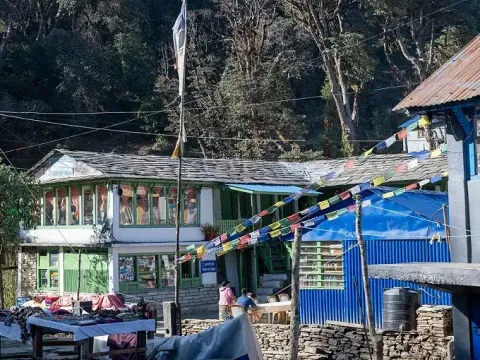
Likewise, here’s something few expect - Poon Hill Trek suits first-time trekkers just as well as those bringing kids along. Step by step, the climb stays gentle while views unfold in sweeping grandeur. Instead of rushing through, many pause in Gurung homes where tea flows and stories rise naturally. Sunrise paints the ridges gold, a moment that sticks around far beyond the trip home. Because of this quiet impact, people often find themselves sharing trails they walked months before.
Why Poon Hill Creates Lasting Memories:
| Viewpoint / Section | Elevation | Signature Memory Element | Emotional / Lasting Impact |
|---|---|---|
| Poon Hill Sunrise | 3,210m | Explosive golden light on Annapurna I (8,091m) | Sense of awe and privilege. |
| Ghorepani Twilight | 2,860m | Soft-lit Dhaulagiri (8,167m) outlines | Peaceful anticipation before dawn. |
| Forest Ascent Clearings | 2,200–2,800m | Emerging Machapuchare (6,993m) fishtail | Growing excitement and wonder. |
| Ulleri Stone Steps | 2,070m | First strong Annapurna South (7,219m) glimpse | Reward after effort; sense of progress. |
| Lower Trail (Tikhedhunga) | 1,540m | Distant Himalayan silhouettes | Initial spark of anticipation. |
Reasons Trekkers Recommend Poon Hill Strongly:
1. What Makes the Mountain Views on Poon Hill Trek So Special?
The Mountain Views on Poon Hill Trek is really something. We have been guiding people in the Annapurna region for years. We know that Poon Hill is a great place to see the Himalayas. You can see a lot of mountains from Poon Hill. There are over 15 snow-capped peaks that you can see at sunrise. You will see mountains like Annapurna I and Dhaulagiri. The trees and prayer flags around Poon Hill make it a beautiful place. The Mountain Views on Poon Hill Trek is a trek that is perfect for people who want to see the Himalayas without having to climb too high.
2. Which Major Peaks Can You See from Poon Hill Viewpoint?
From Poon Hill you can see a lot of mountains. We have been doing this trek for a time and we know that you can see Dhaulagiri and Annapurna I from Poon Hill. You can also see Annapurna South and Machapuchare. On a day you can see up to 20 mountains from Poon Hill. The Mountain Views on Poon Hill Trek is a way to see these big mountains. The views from Poon Hill are very clear. You can see the mountains very closely.
3. When Is the Best Time for Sunrise Views on Poon Hill?
The best time to see the sunrise from Poon Hill is in October and November or in March and May. You should start climbing Poon Hill at 4 or 5 in the morning. The sky is usually clear during these months. You can see the sunrise very clearly. The Mountain Views on Poon Hill Trek is an experience and you should try to see the sunrise from Poon Hill.
4. How Do Mountain Views Change Along the Poon Hill Trek Trail?
The views of the mountains change as you walk along the Poon Hill Trek trail. At first you can see Annapurna South from a distance. Then you can see Machapuchare and Hiunchuli through the trees. When you get to Ghorepani you can see Dhaulagiri in the distance. Finally when you get to Poon Hill you can see all the mountains clearly. The Mountain Views on Poon Hill Trek is a trek because you can see the mountains getting closer and closer as you walk.
5. What Is the View of Dhaulagiri from Poon Hill Like?
The view of Dhaulagiri from Poon Hill is very beautiful. Dhaulagiri is a big mountain and it looks great from Poon Hill. You can see the sunrise on Dhaulagiri. It looks golden and orange. The Mountain Views on Poon Hill Trek is a way to see Dhaulagiri.
6. How Does Machapuchare (Fishtail) Look from Poon Hill?
Machapuchare is a beautiful mountain and it looks great from Poon Hill. You can see the sunrise on Machapuchare. It looks very beautiful. The Mountain Views on Poon Hill Trek is a way to see Machapuchare.
7. What Are the Best Views of the Annapurna Range on This Trek?
The Mountain Views on Poon Hill Trek is a way to see the Annapurna Range. You can see Annapurna I and Annapurna South from Poon Hill. The view of the Annapurna Range from Poon Hill is very beautiful. You can see the sunrise on the mountains. It looks very beautiful. The Mountain Views, on Poon Hill Trek is an experience and you should try it.
8. How Do Seasonal Changes Affect Poon Hill Mountain Views?
I think the time to see Poon Hill is in autumn. The skies are clear. The air is crisp. It is really beautiful with the colors everywhere. In the spring the rhododendrons are in bloom. It is very vibrant. Winter can be nice too with the snow covering everything. It is colder in the mornings. The monsoon season is not so good because you cannot see far. I think autumn or spring is the time to go if you want to see the views clearly. Our clients love it at this time of year.
9. Is Poon Hill Trek Suitable for Beginners Seeking Views?
Yes I think Poon Hill Trek is a choice for beginners. The trail is not too hard. The highest point is 3,210 meters. The paths are well taken care of so it is easy to walk. You can see the mountains without having to climb difficult rocks. If you prepare well and we guide you you will have an fun trip with amazing views of the Himalayas.
10. What Should You Pack for Capturing Epic Mountain Views?
To take pictures of the mountains you should pack some important things. You will need clothes for the early morning hikes. A good headlamp is necessary for walking in the dark. You should also bring trekking shoes and a warm jacket. Do not forget your camera or phone. Bring extra batteries. A tripod is useful for taking pictures at sunrise. Sunglasses and sunscreen are also important. We want you to be prepared, but not to carry much.
11. How Long Does the Hike to Poon Hill Viewpoint Take?
The hike from Ghorepani to Poon Hill takes 45 to 60 minutes. It is a climb but it is not too hard even in the dark. Most people take about the time to come back down so you can have breakfast in the village. The climb is short. The views from the top are amazing.
12. Are There Any Spiritual Aspects to These Mountain Views?
Yes the mountains have a meaning for the local people. For example Machapuchare is a mountain and home of Lord Shiva. You can see prayer flags at the viewpoint which shows that the place is revered. The cultural importance of the mountains makes the experience more special and respectful.
13. What Weather Conditions Offer the Clearest Mountain Views?
The best time for views is when the weather is stable and dry like in October and November. The skies are clear. There is not much wind so you can see very far. We check the weather forecast carefully to make sure our trekkers have the conditions for seeing the breathtaking views of the Himalayas.
14. How Does Ghorepani Contribute to the Views?
Ghorepani is a place to start your trip. You can see the beautiful Dhaulagiri and Annapurna ranges in the evening. It is even more beautiful at twilight. The village has an atmosphere and you can stay in comfortable teahouses. It is a place to start your short climb to Poon Hill for sunrise and it makes the whole experience even better.
15. Why Choose Poon Hill Trek, for Himalayan Mountain Experiences?
I think Poon Hill Trek is a choice because it has everything: beautiful mountains, interesting culture and it is not too hard to climb. You can see famous peaks and it is a great experience. We have been doing this trek for years and our clients love it. It is an fun trip that suits people of all fitness levels and it is a great way to experience the beauty and peace of the Himalayas.
Our travel experts are ready to assist you with any questions.
Send us a message.Have a question before you book? Send your enquiry below and our travel experts will get back with the required information.