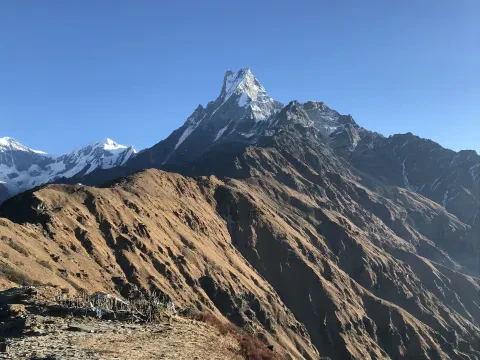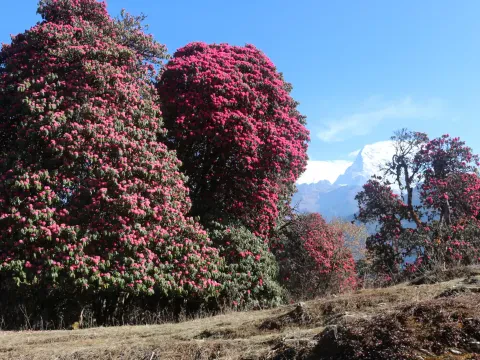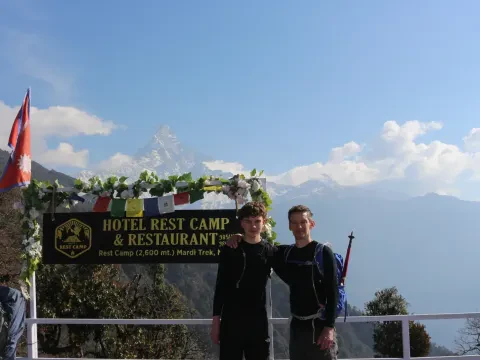
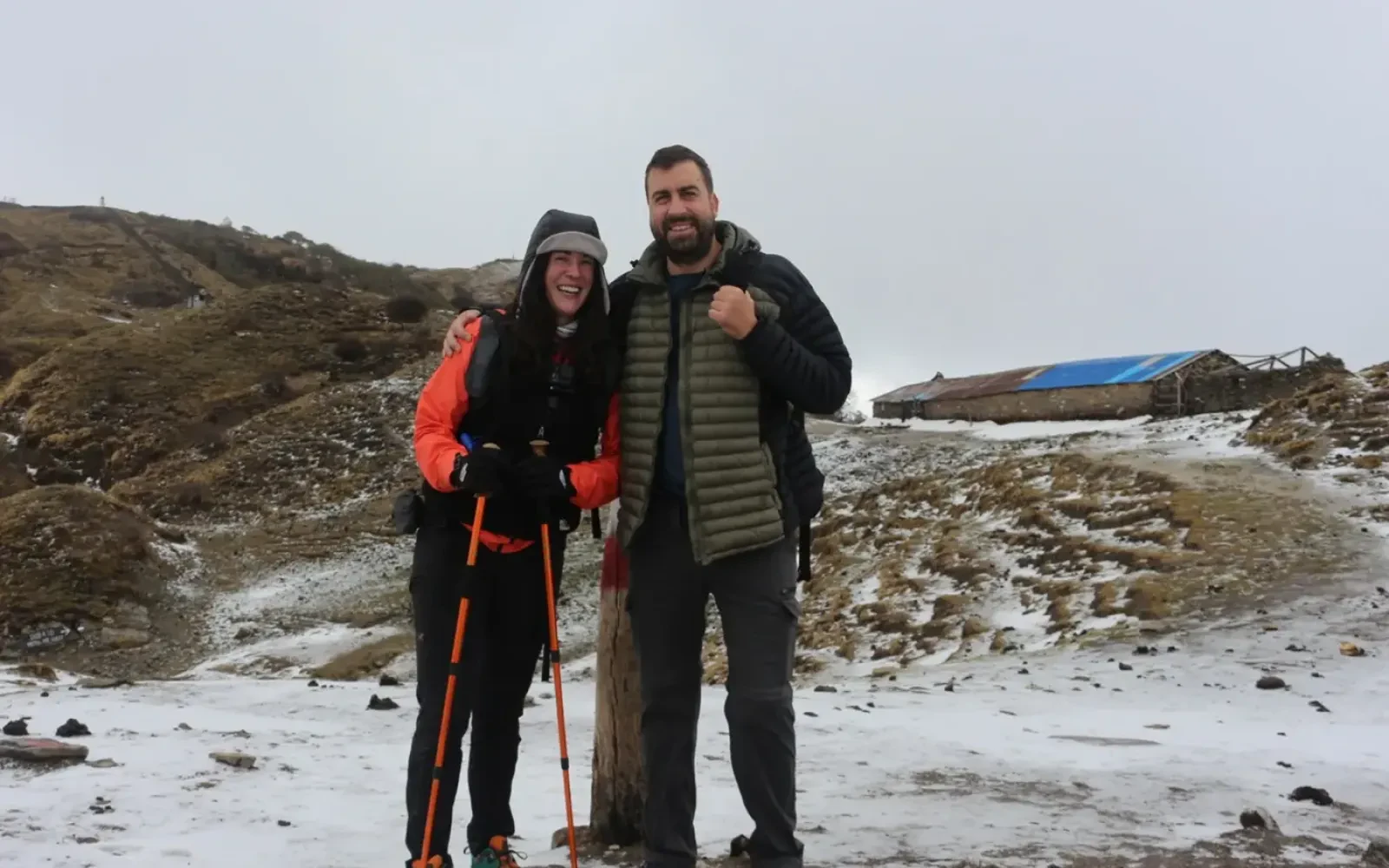
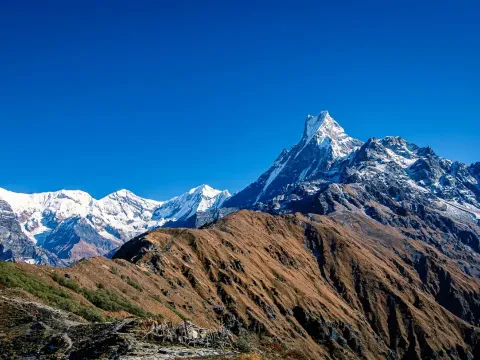
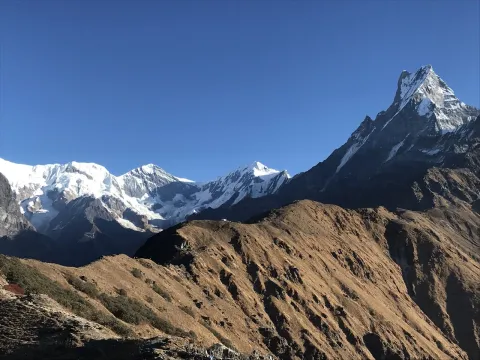
Actually, November brings the best visibility to Mount Machhapuchhre (Fishtail) and the Annapurna range. Also, November is the one of the best time for Mardi Himal Trek. So, you will experience spectacular blue skies and stunning golden mountain lighting on your hike. It is also a prime month for superb visibility, however, the sky is in transition from autumn to winter.
So, packing smart is very important for your comfort and safety. And the right Mardi Himal Trek packing list enables you to stay warm, dry and happy from warm valleys to freezing high camps. Our guide offers you a practical, tried-and-tested advice about What to pack for Mardi Himal in November.
Here, you're walking from the lower green areas to the high alpine viewpoints so temperatures vary a lot. Thus the most effective is to "dress to the weather", by putting on various layers. Besides, it's better to be well equipped to enjoy the beautiful landscape without concerning about the cold.
Why Packing Smart Matters for Mardi Himal in November :
| Category | Importance in November | Priority |
|---|---|---|
| Warm Layers | Freezing nights at High Camp | Essential |
| Waterproof Jacket | during sudden wind and light rain during mile 17 and 18 | Very Important |
| Good Boots & Socks | Rocky trails and cold feet | Critical |
| Good sun protection | Its quite bright out with clear sky overhead | The essentials |
Hence, if you pack wisely, your Mardi Himal in November then will be a wonderful and safe trip to experience. So, you keep warm while primarily gazing at the astounding snow-clad mountains. Additionally, an effective planning enables your body to acclimatize to the high altitude.
Actually, the weather on the Mardi Himal Trek in November varies with altitude. So you will require different gear on the same trip. In addition, while the weather and skies are nice and clear in November, the cold is much more intense than October.
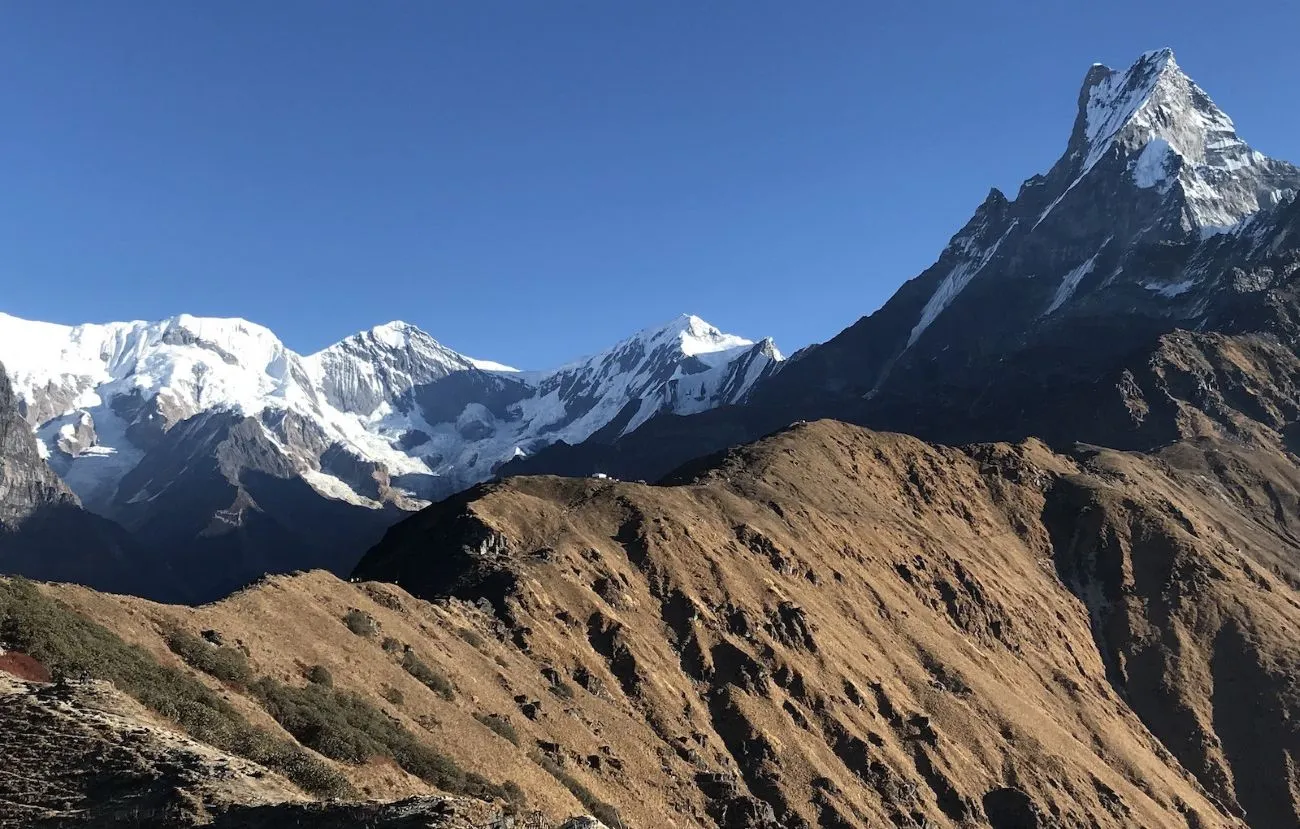
Likewise, during the day you can enjoy walking in warm sunshine with temperatures around 10C to 15C (on the lower trails) and relatively un-cold conditions, passing through lovely woods and villages. With comfortable weather, the first few days are enjoyable & refreshing.
However, it is not so warm during the night at High Camp - it easily slides to -5 C or slightly less. That makes the atmosphere extremely cold after sunset. Therefore, Mardi Himal weather November is requiring good warm layers, and desired insulation at high regions.
| Location / Area | Daily Temp (Aprox.) | Night Temp (Aprox.) | Describe the weather |
|---|---|---|
| Lower Trails | 10-15 C | 5-10 C | Sunny, pleasant) daylight walk) with enjoyable temperature-sights and sounds of nature; the exercises satisfying; breathing refreshing; shoes comfortable-shoes adequate-unable to stand long 10+ minutes. |
| Mid Trail (Forest Camp) | 5-12C | 0 to -5C | Cool days, cold evenings. |
| High Camp | 0-8c| -5-10c | Frost during the night, speed winds. |
Mountain Climate Tips :
Hence, familiar with even the coolest skies of the region of Mardi Himal in November would go a long way to prepare you well. So that; you never face to a trekker having to struggle with being unprepared for the cool conditions of the region.
Right and light Layering!!! This is the best way of keeping warm during the Mardi Himal Trek. It means that by wearing some warm clothes you are able to easily take off something if you feel sweaty or warm, and you have the rest of your warm clothes with you.
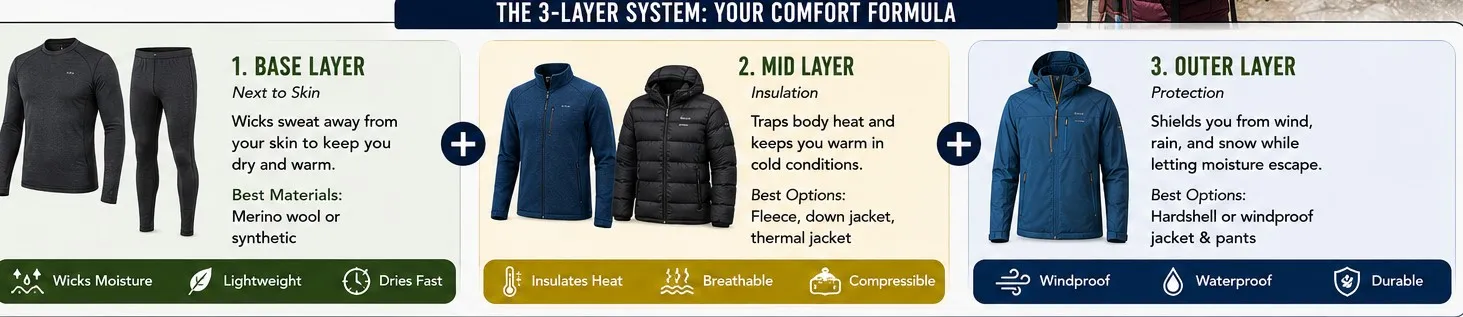
That's why the three layer system is nothing more than a way to layer that is simple and highly functional. Your first layer-removes moisture from the body. Second layer-provides insulation, removing moisture away from the skin while trapping body heat. Here, third layer-provide an outer shell.
For example, moisture wicking layers-dry quickly by evacuating moisture.
So, “The best clothes for trekking in Nepal" system should adapt to changing temperatures. Therefore, it makes you warm in both warm valleys & cold high camps. As a result, you keep your packing light & manageable.
| Layer Type | Recommended Item | Benefit |
|---|---|---|
| A base layer | Thermal top that wicks away moisture | Keeps your skin dry and dries fast |
| Mid Layer | Warm fleece sweater | Keeps the body warm |
| Outer Shell | Weather resistant wind proof jacket | Protects from winds and light rain, keeping you dry. |
Layering Tips for Mardi Himal Trek in November :
Thus, the 3-layer clothing concept allows you to be warm without being bearded and uncomfortable from carrying excessive weight. Hence, you can enjoy a comfortable trek and in all weather conditions. Besides, this system can be effectively applied for the entire Mardi Himal trek in November.
Meanwhile, walking is work, you do it by the hour each day, so that your garments for the day needs to be comfortable and radiant. Novembers can be bright and sunny however, the air still very fresh on the open ridges, so you need to be protected from the sun and comfortable to move in
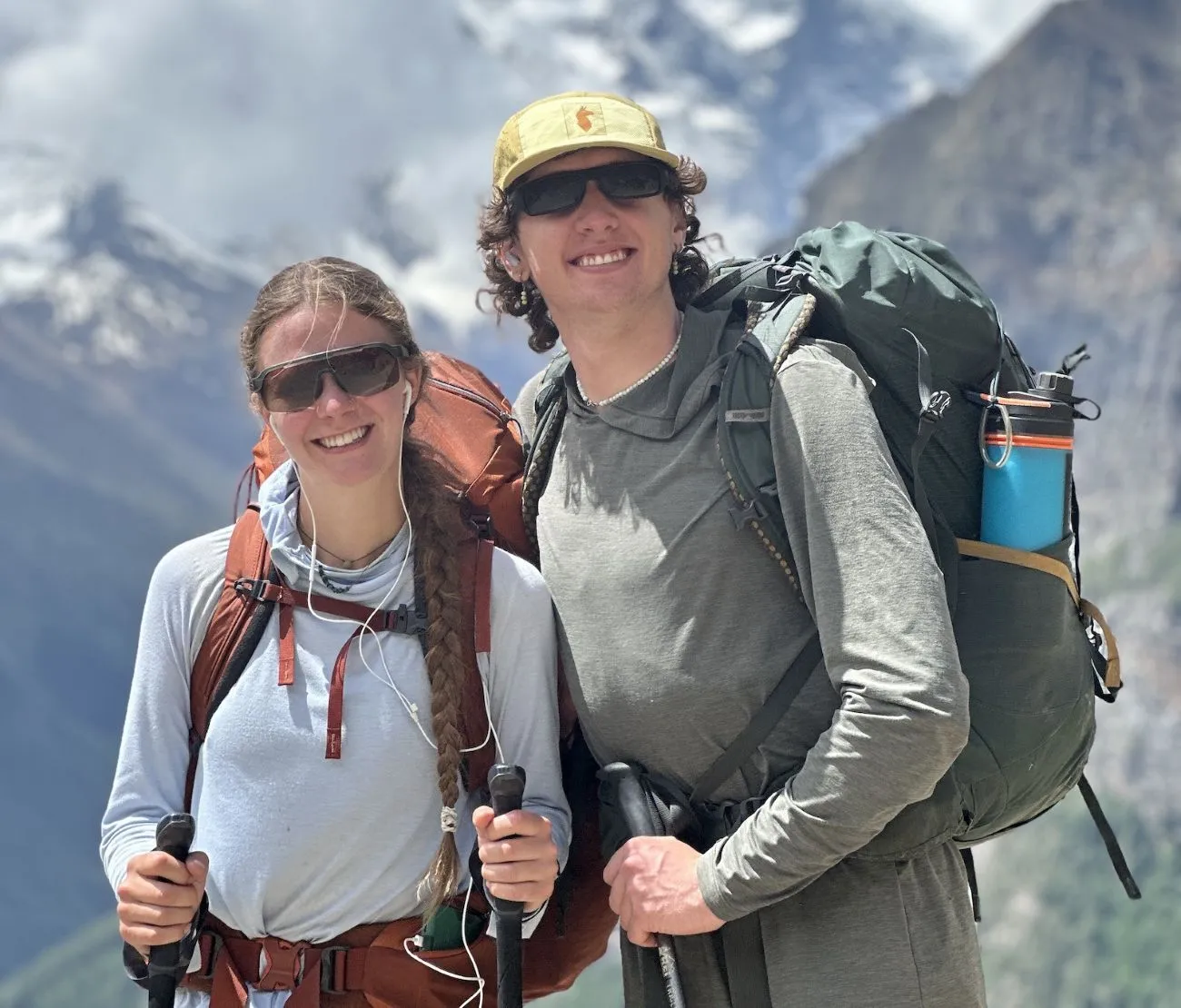
Importantly, bring 2 to 3 lightweight trekking shirts that are quick-dry and breathable. These hike shirts will keep you cool as you are climbing and avoid skin burns from the blazing hot sun. Also, they will dry fast if you happen to perspire a lot. Combine them with a pair of convertible hiking pants; which can be converted into shorts when it gets too hot.
Likewise, a sunhat and the high-UV sunglasses are also necessary for "sun protection gear". So, your face and eyes are protected from the open ledge. Hence you stay warm and safe for long walking days.
| Item | Key Features | Why It Works Well |
|---|---|---|
| ultra-light traveling shirts | rapid-dry, ventilate | sun screen and aversion to heat |
| Convertible Hiking Pants | Detachable Legs, stretch material | Adaptable to difficult weather conditions |
| Sun Protection Visor | Wide brim | Shields face and neck, blocks the rays |
| Polarized Sunglasses to help with | Very high UV protection | Cut down the glare in the saddle |
Daytime Clothing Tips :
In conclusion, the correct clothes for during the day will be very important for your comfort walking the ridge. This will allow you to enjoy the wonderful views and enjoy every step. Additionally, good lightweight trekking shirts and convertible pants will be very helpful to make 2-3 hours of walking each day less tiring and you will end each day with plenty of energy and excellent photographs on your Mardi Himal Trek in November.
Unfortunately, the bedrooms in the teahouses at High Camp are not heated. So it gets pretty freezing, as soon as the sun has set. Also, you need to have good insulation in order to keep warm and sleep comfortably in the evenings.
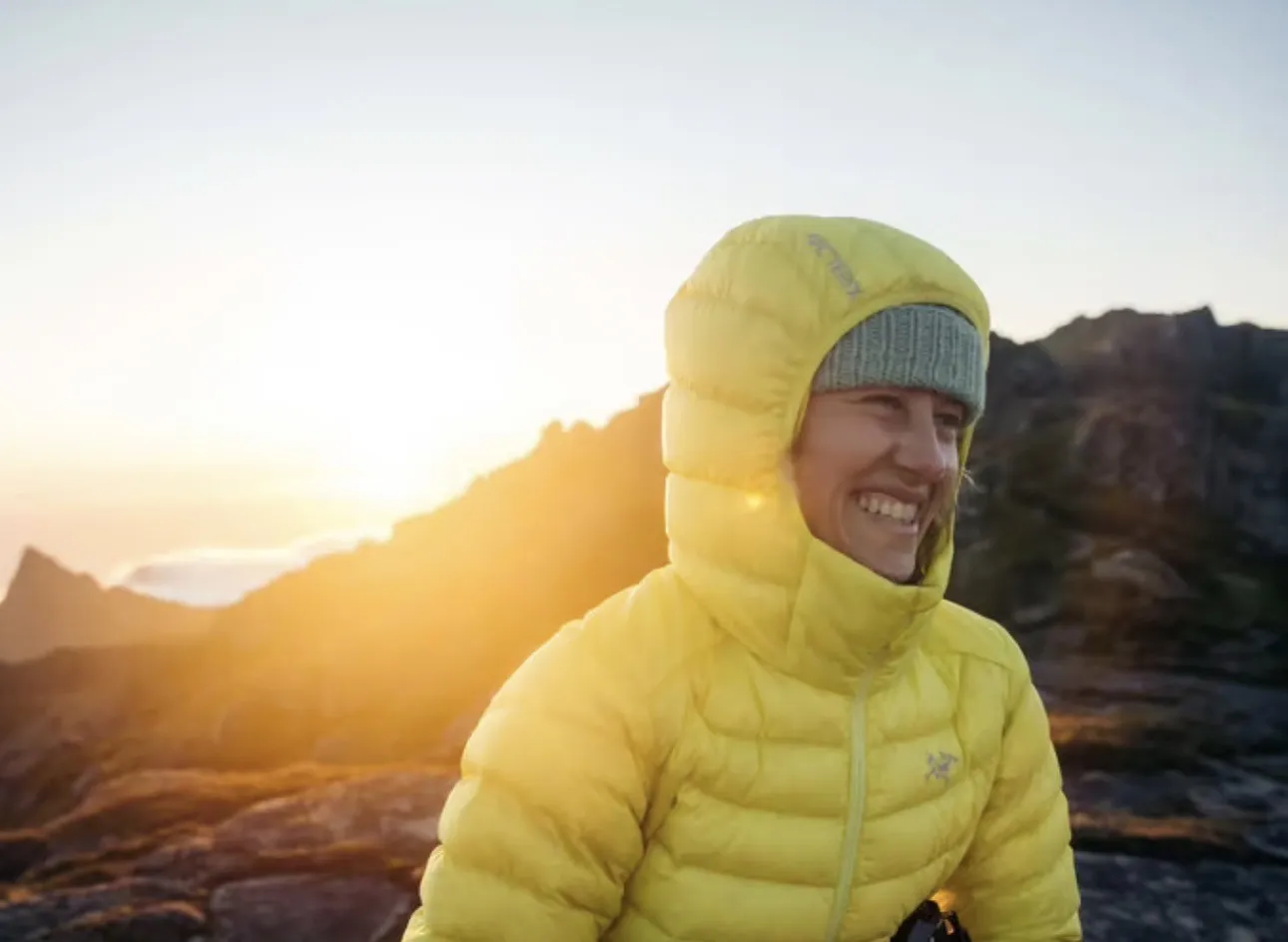
So pack a warmer, thicker best down jackets for Mardi Himal with a hood. You will need it to huddle in at night in the dining hall and when walking to the toilet. Pack also a high quality pair of thermal underwear wool as soon as you stop walking for the day. So a good fleece is nice mid-layer as it is thick and soft to wear.
When you use the right insulations, you will have a feeling of comfort but without any extra weight. You can sit comfortably, have hot meals and share your experiences with other travelers instead of shivering. Therefore, insulations is important at night time.
| Item | Key Features | Best Use |
|---|---|---|
| M S down | M's heavy stuffed down shawl | Most eve and cool season night. |
| Wool thermal underwear | Soft and warm | Put on after walking. |
| Fleece Jacket | Warm and comfortable | Ideal as an additional layer to keep warm during cold weather. |
| Use wool or fleece products for head and feet | Warm hats and socks | Wool or fleece | Keeps head and feet warm. |
Evening Warmth Tips for Guesthouses :
Hence, evening insulating gear is essential so that you can stay warm at High Camp teahouses. So that you are comfortable and have a good time during the evenings. And, good preparation makes having the Mardi Himal trek in November much more comfortable. So that you can have a good sleep and wake up feeling fresh for the upcoming day.
Actually, the Mardi Himal trail has both steep forest stairs and exposed, rocky ridges. As a result, your feet are under many stresses on long walking days. It is also critical to have good footwear for both safety and comfort reasons.
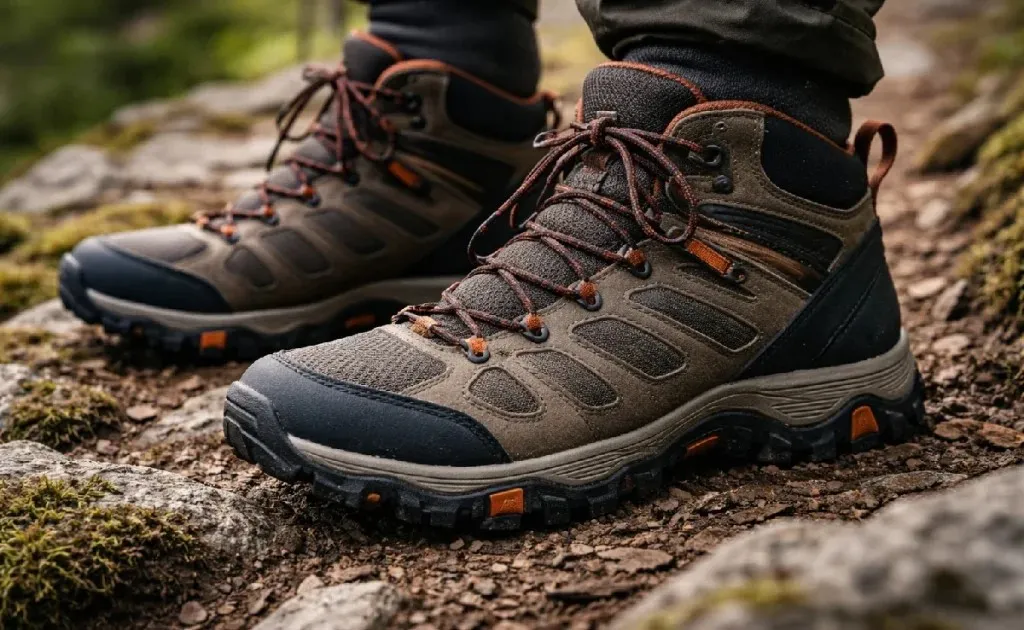
So, in the end, select the best hiking boots for Mardi Himal, which should be durable, water resistant, and provide better grip. Trekking shoes help you to avoid twisting ankles as well as keep your feet dry. But the most important consideration while choosing them is that, they should be well broken in prior to Mardi Himal trek as new boots tend to give painful blister. And also wear a thick pair of 5 merino wool socks, which provide the best padding and insulate your feet from cold.
In fact, having the right boots and socks will help you help. Prevent blisters hiking the steep trails on long hikes, allowing to walk confidently into High Camp without foot issues. Remember, treat your feet to good boots-they will be with you through it all!
| Item | Key Features | Why It Is Important |
|---|---|---|
| Hiking Boots | Waterproof and ankle support | Providing stability on steep and rocky mountain trails. |
| Merino Wool Socks | Thick padding, good moisture wicking | Stops blisters, stays dry |
| Gaiters (if required) | Lightweight | Prevents dirt and stones from entering |
| Blister Kit | basic first aid | Quick if needed |
Foot Safety Tips :
In conclusion, good footwear presumably, getting resilient boots with strong socks is nice protection for well steep trekking through forest. Hence, you savor each step of your Mardi Himal Trek in November without troubles. Furthermore, adequate foot treatment lets you complete each day with cheer till the end of your journey.
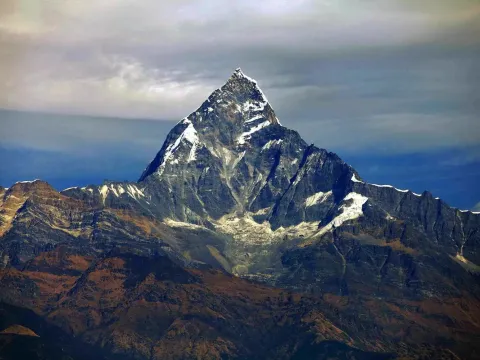
Actually, watching the sun rise over the Himalayas from the top of the Upper View Point (4,200 m.) is one of the best moments of this trek. That is why you have to start walking in the cold and dark at around 04:00. And your head & hands lose heat very quickly, so you will need to be well covered.
So, make sure you pack your toasty -fleece beanie hat- to hide your ears and keep your heat in. Also, bring a -neck buff gear- that you can drag over your mouth and nose to keep out the chilly air. Another -trekking gloves- is necessary, as your hands are bound to be cold from clicking at the viewpoint.
In fact, these can guide you in such a way that you will really enjoy this moment without getting much cold. So, proper head as well as hand protection will make this a memorable time for you.
| Item | Key Features | Why You Need It |
|---|---|---|
| Fleece Beanie Hat | Warm fleece beanie hat | Filled with thick warm fleece for added warmth and comfort |
| Neck Buff / Face Mask | Lightweight and multi functional | ideal for blocking wind and cold air! |
| Designed insulate trekking gloves | Keep you warm and windproof | Can prevented freezing of your hand |
| Additional Warm Socks | Wool mix | Warm in the cold dark mornings |
Hand and Head Accessories Tips :
Hence, these winter accessories of your head and hands will be kept warm during the early morning sunrise activity. Due to this, you will feel relaxed and comfortable while passing the chilly morning wind. And at the same time, you will be high on with the wonderful brilliance of golden sunshine on the mountains which will always remain in your memory in the whole of your Mardi Himal Trek in November.
Actually, November is the busiest time of the year on the Mardi Himal Trek. With the teahouses fully booked you will struggle to find any spare blankets, and the rooms are much the same temperature as outside as they have no heating.
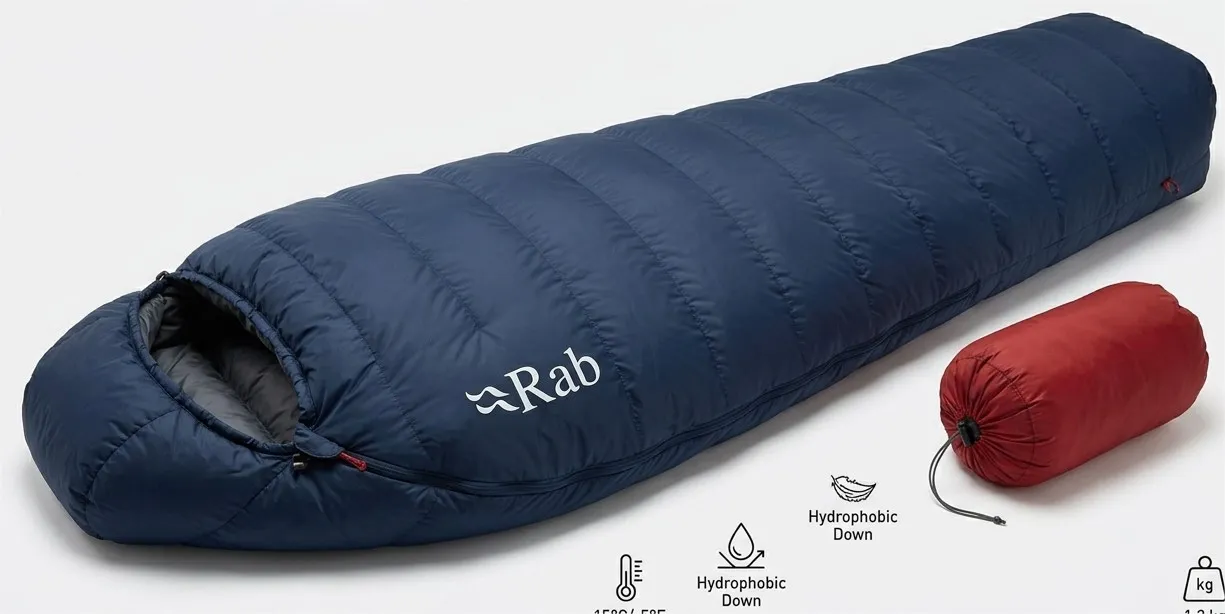
Hence, your own, sleeping bag rating for Mardi Himal is required. It is advisable to select a decent four-season rated sleeping bag to -10C or below. Such a warm sleeping bag will keep you nice and toasty, even on the coldest of nights at High Camp. Alternatively, you can take your own sleeping bag or renting a sleeping bag in Pokhara from a good shop in the town prior to your trek or can do it in Kathmandu, Thamel.
Moreover, a good sleeping bag is one of the essential items of teahouse blankets replacement equipment. You need to know that you will have a comfortable night’s sleep and will be up and raring to go in the morning. It really is all in the simple preparation.
| Item | Rating | Benefit | Tips |
|---|---|---|
| Four-Season Sleeping Bag | -10C or lower | Matched to keep you warm in the depths of winter | Mummy shape is classic for cellaring (or a topless Bivvi, teehee!) |
| Sleeping Bag Liner | Add an extra layer of heat | Keep it clean |Made from silk or cotton |
| Inflatable pillow | This thing can be wielded to be taken on flight | Small size and so can be brought easily. |Useful to sleep well. Can be squeezed and can be used to rest and for better sleep quality | We can inflate it. |
| Wool Socks | Not too tight and not too loose | Additional warmth on head and in feet | wear inside sleeping bag |
Sleeping Bag Tips :
Hence, a suitable sleeping bag is essential for a cozy and warm sleep throughout November. This way, you remain cozy and get a good night's sleep each morning. Also, appropriate sleep systems contribute to your body's recovery following long trekking days. As a result, you enjoy the whole trek with comfort and reminisces.
Because the trek over Mardi Himal is rather short, lasting only 4 or 5 days, it is not necessary to carry a large pack. For a self-supported trek a basic 35L to 45L backpack will be ideal. This size will be comfortable to carry as well as provide adequate capacity to store your clothing, sleeping bag and other kit.
So, I advise you to travel with a comfortable backpack, with padded straps and half comfortable. So, if you hire a porter bring a light daypack 30L for your water, their snacks and rain jacket. Anyway, put your main clothes and sleeping bag in a duffel bag for porters because this is what they carry.
In fact, an excellent backpack can make all your walkings more comfortable. You will walk and walk instead of carrying your heavy bag at your back looking at the magnificent sceneries. So, suitable backpack size for Mardi Himal is one of the most important accessories.
| Type | Size Recommendation | Best For |
|---|---|---|
| Main backpack | 35L-45L | (Pack your own gear) |
| Daypack | 20L to 30L | Water, snacks, rain jacket |
| Porter Duffel Bag | 60L to 80L | Main clothing and sleeping bag |
Backpack Tips :
Thus, selecting the perfect backpack for Mardi Himal Trek 4-5 days carries a real importance on your journey. So, you will walk comfortably and appreciate the stunning views. In addition, a feathery and properly arranged pack can keep you in joy during your Mardi Himal Trek in the month of November. In this way, you will keep your eyes on the mountains and have fantastic memories.
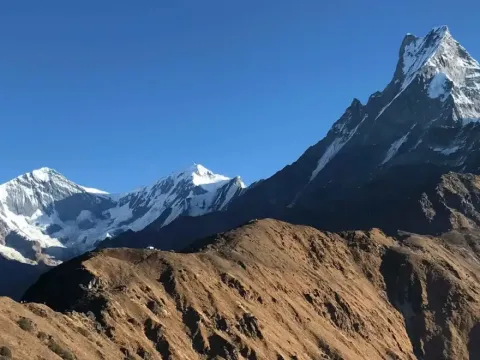
Actually, cold mountain air can really suck the battery life out of your phone and camera. Meaning your devices can die within minutes of being out of the car. Also the lodge charges cash ($2 to $4 USD) to plug your devices into the electricity.
Here, a 20,000mAh power bank is a good idea to carry this. Along the trek, this power bank will give a number of fully charged batteries. Also, tuck the device into a sleeping bag or inside your jacket to keep warm at night in case of your phone and digital camera. So, the phone battery cold weather issue will be a much smaller.
Likewise, you can if possible charge your devices in teahouses but don't rely solely on them. So, a good power bank is a money and stress saver. And you will also be able to take magical sunrise pictures at the viewpoint without any concern.
| Item | Recommendation | Benefit |
|---|---|---|
| Power Bank | 20,000mAh or more | Provides additional charges during hikes |
| Extra camera batteries | Stay warm | Prepared for early morning shots |
| Charging Cables | Extra set | Reliable connections |
| Small dry bag | Water proofing for your camera and any other devices you have with you | to stop them getting dusty and wet |
Power Management Tips :
So a good power bank is just 'The' thing that keeps all your gadgets alive in chilly white air. And this allows you to shoot fantastic pictures and keep in touch without putting any additional dinar in your pocket. Also, this being additionally its 'delita' would definitely make your Mardi Himal Trek in November trip way more convenient and fun. So, you would have more time to gaze at the glorious views rather than just looking into wires for power.
Here, forget about those single-use plastic water bottles! You're not allowed to bring them into the Annapurna conservation area. This means you'll need a more sustainable way to stay refreshed throughout your trek. And, let's be honest, carrying your own water purification tablets Nepal and reusable bottles is simply the most practical approach.
Actually, we recommend bringing along a couple of 1-liter reusable bottles. You can easily refill them at teahouses along the way, but you'll want those purification tablets to ensure the water is safe to drink. It's the easiest way to avoid buying plastic and stay properly hydrated.
Importantly, a quick dry microfiber towel is another game-changer. It's perfect for washing your face and hands, and it dries super fast. These simple items can make a world of difference in keeping you clean and feeling your best on the trail.
| Item | Why you need it | How to use it |
|---|---|---|
| Reusable Water Bottles | Sustainable hydration, avoid plastic | Refill at teahouses |
| Water Purification Tablets | Water Purification Tablets | Follow package directions |
| Biodegradable Wet Wipes | Freshen up when showers are scarce | Use as needed for face & body |
| Quick Dry Microfiber Towel | Fast-drying, lightweight, essential for washing | Use to wash hands and face |
Pro Tips for Staying Fresh during trekking in November:
By taking care of your water and hygiene, you'll be much less likely to encounter any stomach bugs or general discomfort. That means you can focus on soaking up the incredible mountain scenery and making unforgettable memories on your Mardi Himal Trek in November.
Now that you've got a handle on your water and hygiene needs, let's dive into your overall packing list. Being well-prepared is key to a safe and enjoyable trek, especially since November is one of the most popular months in the Annapurna region. And honestly, the short duration of the Mardi Himal Trek makes it accessible to many.
In fact, the golden rule here is pack light and pack right. A heavy backpack can make even the gentlest inclines feel like a struggle. Try to keep your main bag under 8-10 kg.
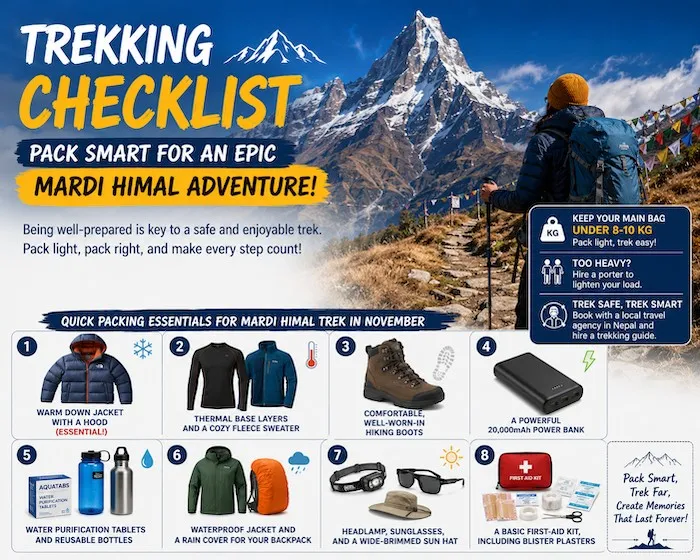
If it feels heavier than that, consider hiring a porter to help carry the load.
For added safety and ease, book your trek through a local travel agency Nepal and hire a trekking guide.
Quick Packing Essentials for Mardi Himal Trek in November :
Because November is peak season, teahouses can book up quickly. To avoid any last-minute stress, we highly recommend booking your trek in advance through a registered local trekking agency or hiring an authorized local guide from Pokhara. This will guarantee that your jeep, trekking permits, and accommodations are all confirmed.
Remember, a lighter load means a more enjoyable trek. So pack smart, embrace the incredible views, and get ready for an adventure that will stay with you for a lifetime!
Contact us and book your Mardi Himal Trek for a safe and exciting adventure to Mardi Himal Base Camp.
Happy Mardi Himal Trek and safe Moments in November!!!
1. Do I need a down jacket to do Mardi Himal Trek in November?
Definitely bring a heavy down jacket on your to trek in November because it can get so cold up there. During the day it will be warm trekking but the freezing nights up at High Camp (3,620m) is gonna need a thick insulated layer for staying happy in the teahouses.
2. What thermals do I need to take for the Mardi Himal Trek?
Carry a couple of pairs of thermal base layers in merino wool for your Mardi Himal Trek because of their excellent heat trapping capacity. Thermal underwear are must haves for the chilly nights of November and will under play to your usual hiking trousers.
3. What is the Best hiking boots to buy for a Mardi Himal Trek in November?
It's best to choose your Mardi Himal Itinerary in November waterproof hiking boots with heavy, deep ankle support, as these are required for climbing over the steep rocky ridges along the trail. Get them well broken-in prior to reaching the Pokhara (822m) trailhead to avoid getting painful blisters.
4. Do I have to bring a sleeping bag for Mardi Himal in November?
Yes-pack a four season sleeping bag (down rated to -10C for the Mardi Himal Trek. Unfortunately, the high-altitude, remote teahouses do not have central heating, so you must bring something suitable. While blankets are supplied for the length of your stay, I suggest you use your own sleeping bag when sleeping here to keep warm and hygienic in those cold November nights.
5. I should bring waterproof tops/bottoms for Mardi Himal Trek in November?
Definitely, bring a windproof and waterproof jacket on your Mardi Himal Trek kit list because mountain weather is unpredictable. A tough hardshell will shield your body from harsh chill winds, and will also keep you dry if there’s an unexpected winter snowstorm.
6. What kind of pants should I take for a November Mardi Himal Trek?
A good choice for a Mardi Himal itinerary in November are convertible trekking trousers the allow for easy adaptation to the changing daytime temperatures. You can have short-sleeved, breathable shorts on in the warm, lower forests of Forest Camp (2,500m); but you need to wear thick trousers higher up.
7. How many hiking socks do I need to packfor the Mardi Himal Trek?
Recommendation Pack 3 sets of hiking socks for the Mardi Himal Trek. It is best to have dry socks available after a full days' walk. It's wise to include four pairs of thick woolen hiking socks for your Mardi Himal Trek so your feet stay comfy and warm. You'll need a fresh pair every morning to avoid rubbing and skin irritation, and one that's always used solely for sleeping in order to keep your feet warm at night.
8. Do I need a sunhat for my Mardi Himal Trek in November?
Yes, you need a good wide-brimmed sunhat for your Mardi Himal in November-even more critical than any wind or bug protection. The autumn sun can be brutal-you need that brim when you're trekking along the largely exposed alpine ridges toward Badal Danda (3,210m).
9. What kind of gloves should I pack for my Mardi Himal Trek packing list?
You have to remember to bring light inner liner gloves and windproof outer gloves, when doing the Mardi Himal Trek because your fingers are going to get frozen. It's a must to put on your keep warm gloves during the morning expedition from High Camp (3,620m) to the snowy summit.
10. Do I require floatable trekking poles for the Mardi Himal hike?
Absolutely. Lightweight trekking poles are a must on the Mardi Himal because the steep stone staircase is so brutal. It will help you maintain balance across spindly ledges and take pressure off your joints on the long, downhill walk to Siding Village (1280m).
11. Do I need to take a headtorch got Mardi Himal trek in November?
A powerful LED headlamp and some spare cells are required for a MARDI HIMAL ITINERARY IN NOVEMBER as it is electricity-starved. We need a dependable headlamp for the early-morning trek to Mardi Himal Viewpoint (4,500m) for sunrise.
12. How large should my backpack be for the Mardi Himal Trek?
If you are self-catering for the 40-50ltr backpack with good hip strap is ideal for the Mardi Himal trek. If you are employing a local porter a smaller 20ltr daypack with your water, camera and warmer layers will suffice.
13. Do I need the high level UV-protection sunglasses Mardi Himal Trek in NOV?
Yes, polarized UVsun protection sunglasses are essential when having a 4 day Mardi Himal Itinerary in November as the great mountain glare high up causes problems with strained eyes. Good eye-glasses protect the eye against the powerful rays of the sun when you are peering into the illuminated snow on Mount Machhapuchhre (6,993m).
14. Which water purification method is most effective for the Mardi Himal Trek?
Be sure to bring water purification tablets or a portable filtration bottle for your Mardi Himal Trek Water purification saves money and cuts pollution in the conservation area.
15. will I require a microfibre towel on a Mardi Himal in November,?
Yes, bring along a quick dry micro fibre towel for your Mardi Himal Trek in November. Cotton towels tend to stay damp. Micro fibre towels are small to pack, and dry quickly after a hot shower at Low Camp (2,970m).
16. Do I need to bring a first aid kit for the Mardi Himal Trek?
Yes, you are required to carry with you a simple medical kit on your Mardi Himal Trek as there are no chemists on the route. Your kit should include Diamox (for helping your body to acclimatize to the high altitude), blister band-aids, pain killers and rehydration salts.
17. Do you need high-SPF sunscreen during a Mardi Himal Trek in November?
Indeed, high-SPF sunscreen along with a protective lip balm are must-haves for your Mardi Himal Trek in November during this time since the mountain air gets so thin that it heightens the risks of skin damage. Frequent use of sunscreen can save your skin from the enormous pain of burning while walking atop the high alpine trails above the tree line.
18. What electronic gear do i need to carry for the Mardi Himal Trek?
Bring a high capacity portable power bank and more batteries for your trek as electronics die quickly with cold weather. Teahouses charge a good premium for using their power, so bringing a portable power bank will save you a bunch of trek cash.
19. Will I need cash on hand during my Mardi Himal in November?
Yes, you'll need to take a sufficient amount of real Nepalese Rupees for you Mardi Himal Trek in November as there were zero trail ATMs. You will need cash to pay for the hot shower, snacks, boiled drinking water and tip your trekking team.
20. Is it advisable to carry special food (protein/energy bars, beverages) for the Mardi Himal trek?
Definitely for your Mardi Himal Trek, make sure to load up on energy bars, chocolates and trail mix to keep you going on long days. Snacks purchased on the ridge are quite costly as the porters are required to lug up all the supplies from the lower villages.
Our travel experts are ready to assist you with any questions.
Send us a message.Have a question before you book? Send your enquiry below and our travel experts will get back with the required information.