Learn about the Phaplu to Surke Jeep route in Solukhumbu (Nepal). Learn distance, altitude, cost, and why the route is popular among trekkers.
To begin with, the Phaplu to Surke Jeep trail is an important travel connection in Solukhumbu (Nepal). Phaplu (2,413m) is in the mid-hills while Surke (2,290m) is near Lukla (2,860m), the gateway to Everest. The trail allows travelers to link road transport with trekking trails. It reduces the reliance on flights to Lukla and offers scenic overland trips.
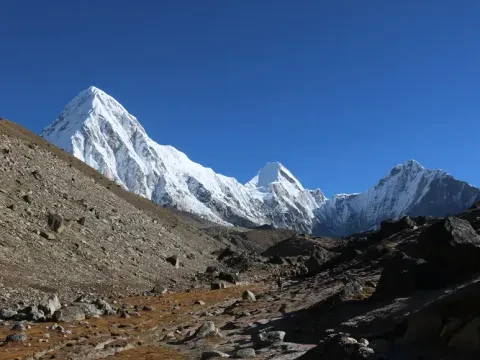
Moreover, the jeep ride from Phaplu to Surke offers trekkers a glimpse of actual village life in Solukhumbu. Along the way via Salleri (2,390m), the district capital, and small hamlets, the road passes serpentine roads on steep hillside slopes. Trekkers catch glimpses of Numbur Himal (6,959m) and distant Everest (8,849m). The drive usually takes six to eight hours based on road condition.
Just as important, this jeep trail provides an affordable and easy way for budget trekkers. Lukla flights are costly, USD 170–200 one way, while a jeep seat from Phaplu to Surke split costs around USD 25–35. The difference in cost makes overland travel an affordable option. This trail is also convenient for most local guides and porters because of easy access.
Therefore, the Phaplu–Surke connection is vital in linking the trekking trails in the Everest region. Foreigners arriving in Surke can trek for another two or three hours to arrive in Lukla or can skip hiking up to Lukla and get directly to Cheplung and then to Phakding. The standard Everest Base Camp Trek begins at Lukla. Therefore, road transport offers flexible and guaranteed access into the Khumbu region.
Furthermore, the jeep trip also introduces travelers to Solu and Khumbu's cultural diversity. Sherpa, Rai, and Tamang people populate villages along the way, and these people are known for their friendly hospitality. Buddhas, monasteries, traditional houses, and terraced fields bring vibrancy to the trip. Seasonal views, with rhododendron flowers in spring and unfettered Himalayan views in autumn, are part of the scenery.
In short, the Phaplu to Surke Jeep route is a cost-effective, reliable, and scenic option compared to flying. It encompasses cultural experience, mountain vistas, and access, making it an unforgettable beginning to an Everest experience.
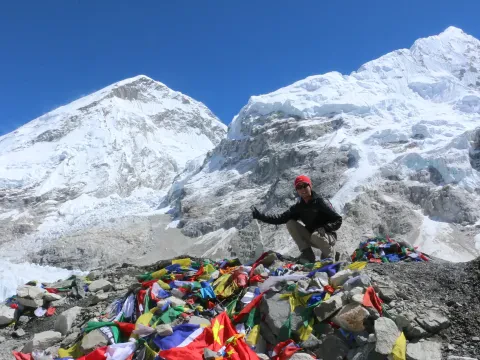
Locate Phaplu (2,413m) in Solukhumbu, Nepal. Understand its location, its position as a gateway to Everest, and why it's crucial for jeep travel to Surke.
To begin with, Phaplu (2,413m) is a small hill-town in Nepal's Solukhumbu district. Located approximately 267 kilometers from Kathmandu (1,400m) to the east, Phaplu lies along a ridgeline amidst pine forest. It is renowned for having an airport, Phaplu Airport, which connects Solu to Kathmandu with short domestic flights. However, the expanding road network has turned Phaplu into a favorite road transport destination.
In addition, Phaplu is also close to the district headquarters at Salleri (2,390m). Travelers are usually confused between Phaplu and Salleri because they are twin villages located side by side. While Salleri is the administrative center, Phaplu is the jeep and bus transport gateway to Surke, Lukla, and Phaplu's surrounding villages. The town has also basic hotels, lodges, and teahouses where travelers stay prior to going further.
Apart from this, Phaplu is highly important for trekkers making their way to the Everest region. Many tourists prefer the Phaplu to Lukla jeep and trekking route instead of expensive flights. The road connectivity of Phaplu makes it a more reliable option, especially during unfavorable weather when Lukla flights are frequently canceled or delayed. Jeep travel from Kathmandu to Phaplu is 8–10 hours and charges USD 25–30 for a seat.
Furthermore, Phaplu's cultural environment is also attractive to travelers. Sherpas dominate the region, and Buddhist monasteries reflect their religious tradition. On festive occasions, travelers will witness customary Sherpa dances, customs, and local festivities. Cultural encounters make the attraction to start treks from Faplu.
As such, the accessibility and location of Phaplu render it a prime spot for adventure tourism. Alternatively, one can drive further to Surke (2,290m) or trek directly to Khumbu. The town is also a stopover for people heading to other treks in Solu, such as the Pikey Peak Trek (4,065m).
In summary, Phaplu is not just a transportation point; it is a cultural and logistical point as well. Situated in Solukhumbu at 2,413m altitude and accessible by road and flight, Phaplu is a gateway that cannot be avoided for Surke and the entire Everest region trekkers.
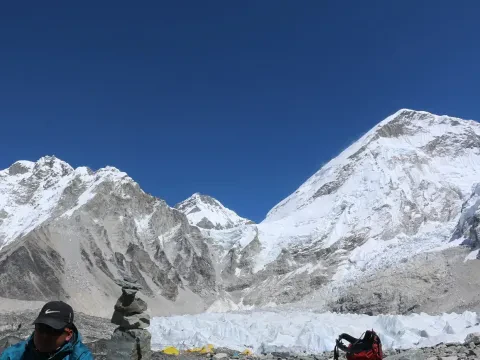
Jeep drive from Faplu to Surke (2,290m) offers cost-effective expenditure, culture exchange, and scenery before the climb up to Everest Base Camp.
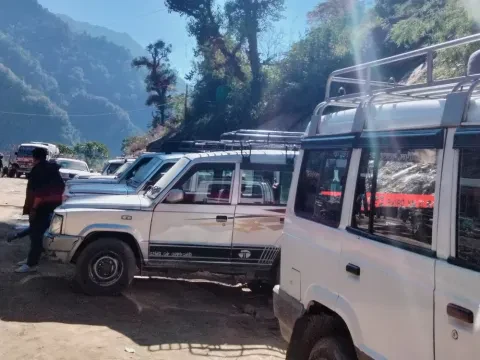
To begin with, the trip by jeep from Phaplu (2,413m) to Surke (2,290m) is cost-effective as well as comfortable. The jeep ride costs USD 25–35 per individual for shared space, whereas an exclusive jeep on rent will cost USD 200–250. It is thus a cheap option compared to flights to Lukla (2,860m), which are more expensive.
Moreover, the jeep ride provides cultural exposure along the Solukhumbu roads. Traveling through Salleri (2,390m), Kharikhola (2,040m), and surrounding villages, tourists are subjected to Sherpa, Rai, and Tamang cultures. The view of traditional farming, hillside fields, and Buddhist chortens along the way presents a rich cultural scenery. Such exposure is largely prevented when availing of a direct flight to Lukla.
Equally fascinating, the jeep trail offers scenery and mountain vistas. From certain sections, travelers can see peaks like Numbur Himal (6,959m) and Kongde Ri (6,187m). During spring, rhododendrons paint hills in colors, and autumn offers crystal clear Himalayan views. This natural landscape adds worth to the long jeep ride.
Thus, jeep journey provides reliability and convenience. Lukla flights tend to be delayed since weather conditions in the mountains are uncertain, creating tension among busy trekkers. Alternatively, the jeep journey, which is longer, ensures one reaches Surke without the danger of cancellation. Trekkers have a two- to three-hour walk before reaching Lukla and embarking on the Everest Base Camp Trek.
Additionally, the jeep transport has easy movement of gear. Unlike flights with strict baggage allowance, jeeps accommodate large backpacks and climbing equipment. This convenience is of great benefit to teams or climbers with tents and camping gear. Guides and porters also welcome the jeep movement because of its time- and money-saving component.
In general, the Phaplu to Surke Jeep route is a wonderful combination of price, dependability, cultural exposure, and scenery. It is cost-cutting and provides unique travel experiences before getting on to the Everest trekking route. For trekkers who prefer genuine and flexible travel experiences, jeep ride from Phaplu to Surke is the most suitable one in place of flight.
Find the distance and time of travel of the Phaplu to Surke Jeep ride. Obtain accurate route details, altitude, and mean journey time.
First, the Phaplu (2,413m) to Surke (2,290m) distance is about 65 to 70 kilometers. The travel goes through hilly, riverside, and rural village areas in Solukhumbu (Nepal). Since the distance is not far, the travelling time usually takes six to eight hours. It has a slow speed because of winding roads, continuous ascents, and rough roads.
Moreover, weather and road conditions significantly impact travel time. Under dry conditions during autumn and winter, the six-hour travel is feasible. However, during monsoon months, landslide and mud tracks double the time taken to eight or nine hours. This unpredictability forces travelers to plan with flexibility and allocate buffer days before trekking to Everest Base Camp.
No less interesting, the jeep ride passes through a series of notable settlements. They include Salleri (2,390m), Kharikhola (2,040m), and small Sherpa and Rai villages. Each one offers glimpses into lifestyles, terraced agriculture, and Buddhist temples. The ride also goes up and down quite often, breaking the pace but rendering it very scenic.
In the interest of clarity, the following is a brief overview of distance and approximate time:
| Route Segment | Distance (Approx) | Duration (Average) | Elevation |
| Faplu to Salleri | 9 km | 30–40 minutes | 2,390m |
| Salleri to Kharikhola | 35 km | 3–4 hours | 2,040m |
| Kharikhola to Surke | 25 km | 3–4 hours | 2,290m |
Therefore, visitors should mentally prepare for a day-long jeep trip. In contrast to highways in the flat parts of Nepal, the hilly landscape makes travel more sluggish. However, the trip pays off with magnificient views of Numbur Himal (6,959m) and adjacent ridgelines.
In brief, the Phaplu to Surke Jeep ride is around 70 kilometers but six to eight hours. Distance may be short but road conditions, terrain, and sightseeing stops make it the whole nine yards. For trekkers, this jeep ride is an experience and cultural encounter prior to reaching the Everest trail.
Find out the state of the Faplu to Surke road. Learn about the terrain, seasonality, and ease of travel along this Solukhumbu jeep road.
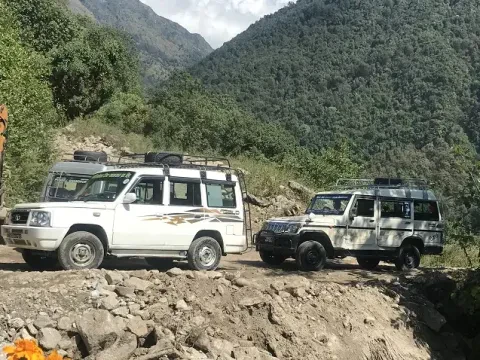
Foremost among these is the Phaplu to Surke road (2,413m to 2,290m), which is a rural mountain road. Unlike paved roads, the road is typically gravel with rocky and muddy sections. Even though it has improved with time, it is still a demanding road that demands skillful driving.
Moreover, seasonal weather conditions have an impact on the condition significantly. Autumn and winter seasons result in a very firm and dry track. Vehicles move very smoothly with very few delays. However, during monsoon months, there are landslides and slippery patches resulting from rainfall. The risks tend to obstruct the path and extend travel time significantly. Drivers often carry basic equipment and collaborate with local helpers in clearing obstructed areas.
No less challenging, the road winds through rugged country with tough bends. Sections trace rivers and cliffs, necessitating careful travel. Tourists enjoy the diversified landscape in spite of difficulties, with rhododendron woods and hamlets amidst terraced lands. The ruggedness of the road adds to the adventure experience.
In addition, officials and locals are gradually resurfacing the track. Road widening projects are underway in areas next to Salleri (2,390m) and Kharikhola (2,040m). Nevertheless, tourists do not have to expect smooth asphalt roads anytime soon. Instead, preparation is key for the uneven road.
The following are useful tips for understanding the road condition:
So, the tourists need to be patient and expect a rough ride. Comfortable attire, snacks, and water are useful for long hours in the jeep. Traveling during autumn or spring ensures the safest and most reliable ride.
In summary, the Phaplu–Surke road continues to be adventurous and rough. It is not a smooth one but gives true experiences of Himalayan rural travel. Flights notwithstanding, the road connects trekkers with the Everest region in its own ways.
Discover what types of jeeps are offered from Faplu to Surke. Compare shared jeeps, private jeeps, and comfort levels for Solukhumbu travelers.
To begin with, different types of jeeps operate between Faplu (2,413m) and Surke (2,290m). The vehicles cater to different budgets and preferences of trekkers. Options include shared jeeps, private jeeps, to luxury jeeps. The appropriate type is determined depending on cost, comfort, and size of the group.
First, shared jeeps are the most economical and readily available choice. A shared seat costs USD 25–35 per person. They normally have 7–9 seats with less leg space. They are slower as they halt often but remain budget-friendly for solo trekkers or budget tourists.

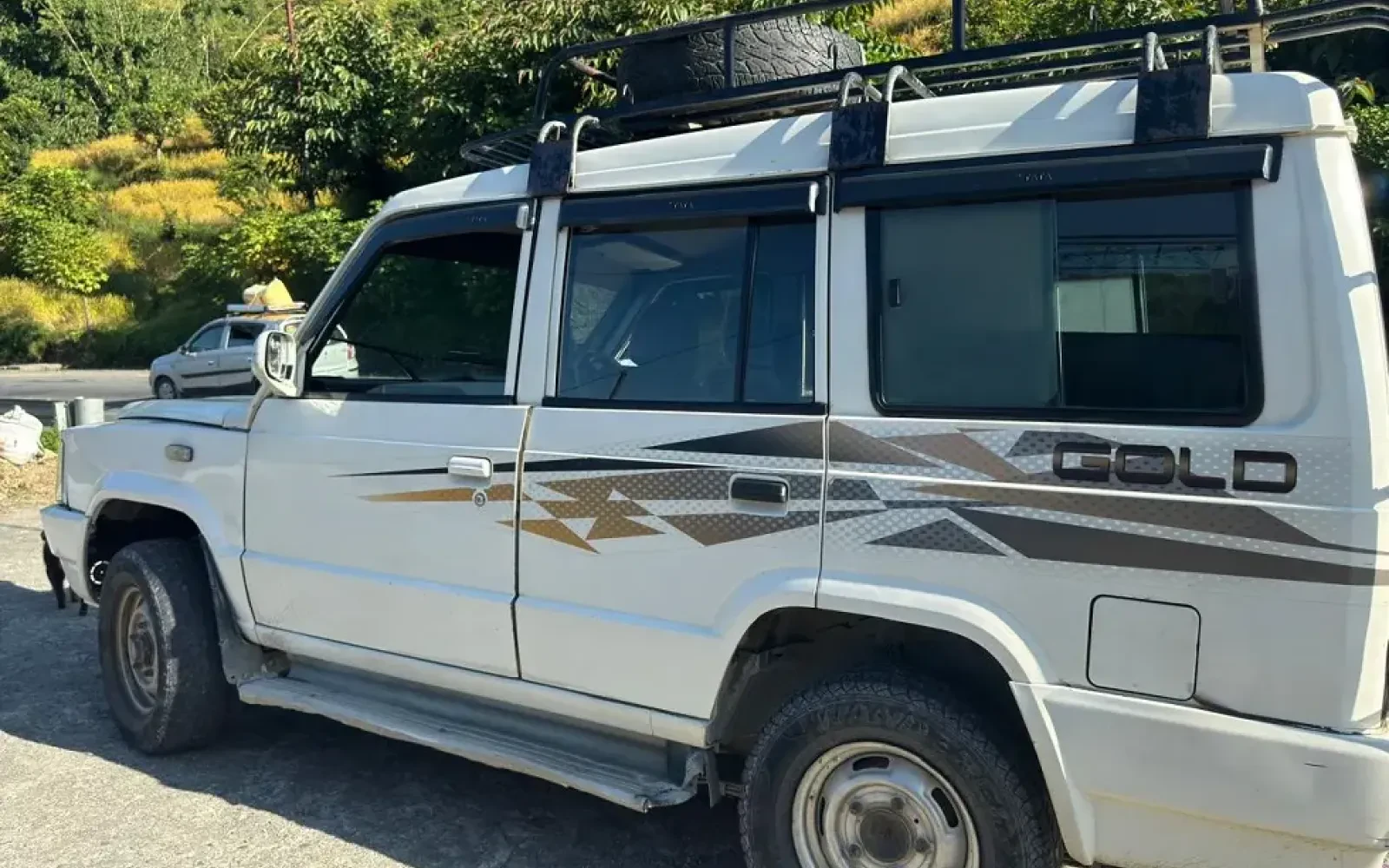
Second, private jeeps are more convenient and flexible. It is about USD 200–250 per vehicle. Tourists can hire the jeep for their group only without useless stops. Private jeeps are faster, reliable, and ideal for family, groups, or porters with huge luggage.
Third, there are certain operators who provide luxury jeeps or SUVs on request. They are in better maintenance, better seats and suspension. The prices are higher, around USD 300 or more per trip. Though not common, they provide smoother rides and extra comfort, especially for senior citizens.
To summarily compare, here is a useful break-up:
| Jeep Type | Approx Cost | Seating | Comfort Level | Best For |
| Shared Jeep | USD 25–35 per person | 7–9 | Basic | Independent trekkers, budget tourists |
| Private Jeep | USD 200–250 for the whole vehicle | 7–8 | Moderate | Groups, families, variable plans |
| Luxury Jeep/SUV | USD 300+ total | 6–7 | High | Comfort seekers, senior trekkers |
Similarly, jeeps are seasonal. During peak trekking season in spring and autumn, jeeps are available and readily bookable. But during lean months of off-seasons, travelers should book ahead through agencies in Kathmandu or Salleri.
Thus, the choice of the jeep is determined by cost and experience. Shared jeeps reduce costs at the expense of comfort. Private jeeps offer comfortable rides and easy stops. Luxury jeeps offer luxury at extra costs. Travelers should put priority to their needs before making the choice.
Briefly, the ranging from Phaplu to Surke jeep types provide solutions for every kind of traveler. From looking for affordability, longevity, to comfort, a jeep solution is available to suit individual needs. This makes overland travel around Solukhumbu more viable and enjoyable.
Find the Phaplu to Surke jeep ticket price. Find shared and private jeep rates, additional fees, and tips on cheap Solukhumbu travel.
To begin with, the Phaplu (2,413m) to Surke (2,290m) jeep ticket rate depends on whether travelers take shared or private services. Shared jeeps remain the most affordable option, costing between USD 25 and USD 35 per individual. The ride fare accompanies this but not lunch or side excursions.
Besides, one may also rent out private jeeps for groups or individuals seeking comfort. The entire jeep rental is between USD 200 and USD 250 per round trip. This varies with the quality of the vehicle, time of year, and level of haggling. Private jeeps are good for groups of six to eight people due to flexible departures, quicker travel time, and greater luggage space.
Equally valuable, luxury jeeps or SUVs are offered by other agencies. These are more comfortable and have better suspension on poor roads. They start from USD 300 and can go higher depending on demand and road conditions. Although expensive, they are chosen by older tourists or those requiring comfort.
In addition, prices might vary during peak trekking months such as spring and fall. Demand is greater when there are more hikers arriving in Solukhumbu for Everest Base Camp or another route. During off-month periods, visitors might receive lower rates or enjoy more negotiating room.
Here is a quick comparison chart for ticket prices:
| Jeep Type | Price (Approx) | Seats | Best For |
| Shared Jeep | USD 25–35 per head | 7–9 | Budget tourists, solo trekkers |
| Private Jeep | USD 200–250 per jeep | 7–8 | Groups, families, flexible itineraries |
| Luxury Jeep/SUV | USD 300+ per jeep | 6–7 | Comfort tourists, senior trekkers |
Thus, tourists need to budget for possible extra costs. Meal at road stops, water, and miscellaneous donations at monasteries will amount to a few dollars. Small Nepali rupees should be kept as card payment is not accepted in rural areas.
In short, the Phaplu to Surke jeep ticket price ranges from affordable shared seats to very expensive luxury buses. The travelers can choose based on budget, group, and comfort needs. Whatever the choice, this jeep ride offers an unforgettable
Learn how to book a jeep from Phaplu to Surke. Get the solutions through travel agencies, local drivers, and online booking for Solukhumbu jeep tours.
To start, hiring a jeep from Phaplu (2,413m) to Surke (2,290m) is simple but requires advance planning. Foreigners can arrange jeeps with tour operators in Kathmandu, local operators at Salleri (2,390m), or drivers personally in Phaplu. There are advantages of each route regarding cost, ease, and reliability.
In addition to, the easiest option is to book with a Kathmandu tour or trekking agency (1,400m). Agencies pre-book seats, ensuring confirmed departures in peak trekking season. This is a bit pricier but guarantees availability. Some agencies also provide package packages including jeeps, guides, and permits.
In addition, travelers entering Phaplu or Salleri can book jeeps with the local drivers. Small transport agencies near bus stops or tea houses serve as unofficial booking offices. Rates are negotiable, especially for groups who prefer private jeeps. Locally booked jeeps cost less but require flexibility of departure hours.
Equally important, online booking is becoming popular. Online bookings of jeep can be availed from selected Nepali travel sites and trekking communities. Payment by card or mobile transfers is convenient for international travelers. But the dependability relies on the operator, so the need to check credentials cannot be underestimated.
For simplicity, here are the typical options for booking:
Therefore, tourists must check the critical facts before booking: departure time, price, seat, and if the journey continues directly to Surke. There are jeeps that continue to an intermediate village, and some go directly to Surke without a halt. Asking beforehand avoids confusion.
Overall, one can book a Phaplu to Surke jeep through agencies, local taxi drivers, or online booking websites. All these choices are suitable for different budgets and types of tourists. If one books in advance, then tourists can enjoy spacious and timely rides to the Everest region.
Learn when to travel Solu Khumbu by jeep. Find out seasonal road conditions, safety, and best months for Phaplu to Surke rides.
Firstly, the best time to travel by jeeps in Solu Khumbu is autumn and spring. Autumn runs from September to November, while spring runs from March to May. These periods provide dry roads, good weather, and beautiful mountain landscapes. Jeeps also perform better, and less delay occurs compared to any other season of the year.
Also, autumn is the best time. Blue skies provide for spectacular views of Everest (8,849m), Numbur Himal (6,959m), and Kongde Ri (6,187m). The road is also dry after the monsoon, reducing possibilities of landslides or mudslides. Trekkers also have the advantage of witnessing cultural celebrations like Dashain and Tihar during this time, which makes their trek even more gratifying.
Apart from that, spring has good weather and beautiful colors. Rhododendrons bloom on hillsides, creating lovely scenery for the jeep trail. Weather is mild, and it's easy to travel. Road conditions are mostly solid, with only occasional rain showers that might occur in late May.
Conversely, monsoon and summer season months (June–August) are tricky. Heavy rains lead to muddy roads, landslides, and floods, making jeep travel uncertain and dangerous. Most automobile drivers avoid long drives during peak monsoon weeks. Winter months (December–February) are chilly with intermittent snow on higher ridges but are open to road travel. Travel is slower but feasible.
Here is a concise season-by-season contrast:
Thus, travelers making arrangements for jeep trips should choose autumn or spring seasons for safest and most pleasant trips. These seasons ensure smoother travel, cultural interactions, and improved visibility prior to traveling to Everest.
In conclusion, the best travel time in jeep in Solu Khumbu remains autumn and spring. While there is always other-time travel possible, the latter is more risky and inconvenient. Careful choice of the season guarantees reliability, security, and an unforgettable journey from Phaplu to Surke.
Learn what to expect on the Phaplu to Surke jeep ride. See duration, road quality, views, villages, and travel adventure in Solukhumbu.
To start with, guests can expect the Phaplu (2,413m) to Surke (2,290m) jeep drive to be long and bumpy but definitely worthwhile. While the distance itself is not considerable, the roller coaster-like nature of the road prevents smooth movement. The trip lasts six to eight hours on average, subject to conditions and weather.
Apart from it, the road is mostly gravel with spots of rocks and soil. Sudden bends, river crossings, and loose landslide spots demand driving expertise. The bumpy ride provides stunning Himalayan landscapes. Trekkers get a glimpse of Numbur Himal (6,959m) and distant peaks of the Everest range from certain ridges.
Equally noteworthy, the jeep passes through culturally rich villages. Salleri (2,390m), Kharikhola (2,040m), and similar hamlets provide Sherpa, Rai, and Tamang lifestyles with intermittent stops. Hillsides of terraced fields, cultural houses, Buddhist stupas, and prayer flags line the road. Such a cultural exposure provides meaning to the bumpy ride.
Besides, expect regular stops during the journey. Jeeps stop over at road tea shops where the travelers can take a bite of noodles, tea, or dal bhat. Breaks also serve drivers to cool the engine for steep slopes. Taking snacks and water along will also ensure comfort for long drives.
Travelers should also expect varying degrees of comfort. Shared jeeps with others are cramped and have seven to nine individuals crammed into them. Private jeeps offer more space and flexibility at higher cost. Whether or not, rocky roads and dust cannot be avoided, and therefore a mask or a scarf comes in handy.
Overall, the Phaplu to Surke drive switches between rough roads, cultural exposure, and beautiful mountain vistas. It is not a smooth journey, but it offers real experiences of Solukhumbu before reaching the Everest trekking trail.
Be safe on the Phaplu to Surke jeep drive. Get valuable safety tips on road conditions, seat, luggage, and choosing the right jeep.
Most importantly, the Phaplu to Surke jeep drive demands one to be safety-conscious. The roads are narrow, winding, and uneven, and hence, tourists must make proper preparations. Safety measures enhance comfort as well as confidence during the journey.
Also, travelers are required to choose seasoned drivers. Drivers who are locals know how to drive over difficult terrain, but checking their reputation is recommended. Reliable operators ensure safe driving, especially on steep or landslide-prone roads. Avoid booking with unknown drivers who might drive in haste or overload the jeep.
As crucial, choice of seat is a factor in safety. Mid-row seats are safer and cozier than rear seats. Avoid sitting towards the edge in a packed jeep. Carrying seat belts or having them operable provides additional security.
Secondly, effective packing helps during emergencies. Items include:
Here, passengers should also make preparation for unexpected delays. Landslides, climatic variations, and machinery breakdowns can delay the journey. Leaving an extra buffer day in the trekking schedule avoids stress. Patience and flexibility are still essential for Himalayan overland travel.
Hence, jeeps are reserved during autumn or spring, which is more secure. Roads are less soggy, and visibility is improved, and the chances of landslides are fewer. During monsoon, traveling requires extra care since roads get soggy and slippery.

In conclusion, the Phaplu to Surke jeep drive is secure if travelers embrace precautions. Selecting skilled drivers, bringing essentials, and remaining flexible make for a secure and enjoyable trip into Solukhumbu.
Compare shared versus reserved jeeps from Phaplu to Surke. Get costs, comfort levels, and benefits to choose the best travel option in Solukhumbu.
First, tourists often need to choose between reserved jeeps and shared jeeps from Phaplu (2,413m) to Surke (2,290m). Each has its own advantages and disadvantages, depending on budget, comfort, and party size.
First, shared jeeps are the cheapest. One seat costs USD 25–35, so it's wonderful for budget travelers or solo trekkers. Shared jeeps have seven to nine occupants, so it's packed to the limit. They have numerous stops to drop and pick locals en route, which extends the journey but provides cultural interaction.
Alternatively, reserved jeeps are convenient and comfortable. Renting the entire vehicle is USD 200–250. This is appropriate for groups of six to eight, families, or heavy loads. Reserved jeeps are more rapid with less stopping, making the journey more reliable.
To clarify, here is a short comparison table:
| Feature | Shared Jeep | Reserved Jeep |
| Cost | USD 25–35 per seat | USD 200–250 per vehicle |
| Comfort | Crowded, less legroom | Spacious, private seating |
| Flexibility | Frequent stops, fixed schedule | Flexible departure, direct |
| Best For | Solo trekkers, budget travel | Families, groups, comfort |
Moreover, the choice depends on personal preferences. Independent travelers benefit from shared jeeps due to low cost and exposure to the locals. Traveling parties, however, save money in total by reserving an exclusive jeep and having more space.
Also notable, hired jeeps eliminate delays, which is crucial for closely timed trekkers. Shared jeeps make frequent passenger stops and take longer, while private journeys go directly to Surke. This difference influences the way trekkers reach Lukla (2,860m) and start the Everest Base Camp trek.
Overall, shared jeeps and reserved jeeps both can be used by travelers. Shared jeeps are for low-budget travelers, whereas reserved jeeps offer comfort and speed. Selection between the two just relies on group size, flexibility in time, and individual traveling habit.
Discover alternative transport options between Faplu and Surke, including buses, motorbikes, walking trails, and porter services for visitors in Solu Khumbu.
Actually, the Phaplu (2,413m) to Surke (2,290m) path is not jeep-exclusive. Travelers can take advantage of several other means of transportation depending on budget, time, and personal factors. These provide convenience should there be cancellations of jeep services due to landslides or maintenance. Being aware of each prepares tourists better.
For starters, local buses are some of the cheapest. Buses usually operate between Phaplu and nearby towns, and indirect services to Surke can be had. Buses, though, are slow, crowded, and often delayed, so they might not be the best option for trekkers on tight schedules. However, for budget travelers, they are an option.
Moreover, motorbikes or scooters can also be hired in Phaplu. They provide faster connections and greater liberty compared to buses. Nevertheless, riders should be experienced as good handling is demanded by the unpaved roads and steep tracks. Hiring along with a local driver is safer for unfamiliar tourists.
Similarly, trekkers have the choice to walk from Phaplu to Surke on traditional trekking paths. The route passes through Sherpa villages, forests, and terraced fields. Walking takes time, usually a full day or even longer, but it offers authentic experiences and acclimatization for trekkers heading to higher elevations.
Besides, porter services can be hired for trekkers walking the trail. Employing a porter lessens baggage load and helps the local economy. Porters know the route and can offer useful advice. This alternative suits trekkers who prefer a more leisurely but more experiential trek.
Apart from this, helicopter services are occasionally provided, though rare and expensive. They are used mainly in cases of emergency or by that segment of tourists who like to have quick access to Surke or Lukla (2,860m). Helicopters save time but cannot be considered a daily mode of transport.
Thus, the choices are:
Here, these means of transport are fallbacks in the absence of jeep rides. Each is a factor of time, budget, and comfort preference. Making good choices ensures a smoother journey to Surke.
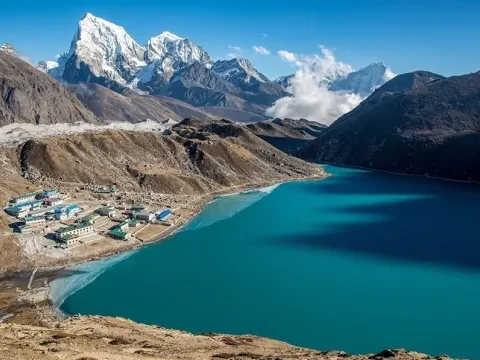
Discover how Surke connects to Lukla and the Everest area, with step-by-step itineraries, trekking durations, and access to the most important treks like EBC and Gokyo Lakes.
Actually, Surke (2,290m) is an important trailhead for trekkers heading towards Lukla (2,860m) and the Everest region. It connects road transport lines of Phaplu with trekking trails that head towards iconic destinations such as Everest Base Camp (5,364m) and Gokyo Lakes (4,790m). Surke is hence an important entry point for trekkers.
Meanwhile, Surke is situated just below Lukla, the most popular starting point for Everest treks. Surke trekkers can trek up slopes leading to Lukla in two to three hours. The climb is steep, however, but the trail is well-trodden and passes through scenic forests and small settlements.
In addition, from Lukla, trekkers merge with the classic Everest Base Camp route. The path continues to Phakding (2,610m), Namche Bazaar (3,440m), and higher up the Khumbu Valley. Surke thus offers an option to flying directly into Lukla Airport (2,845m), whose flights are often delayed due to the weather.
Also, Surke provides access to less crowded trails. Other trekkers bypass Lukla altogether by taking trails directly from Surke to Phakding. It is a quieter and longer trail with prospects for gradual height gain and authentic local contact. It also bypasses the busy Lukla trail sections.
Besides, trekkers aiming for the Gokyo Lakes or the Three Passes Trek can also begin from Surke. From Lukla or other paths, they can link with Namche and head off towards their target adventure. The location of Surke provides flexibility depending on the trekker's schedule.
So, Surke is both a gateway and a link hub. It links Faplu ground transport with the famous high Himalayan trekking trails of Solu Khumbu. Trekkers benefit by starting their trek from here instead of depending solely on Lukla flights.
So, Surke offers visitors diverse routes to Everest and further afield. With this strategic advantage, it remains a favorite among adventurers who seek flexibility, safety, and authenticity.
Discover travel time from Phaplu to Lukla, Everest Base Camp, and Gokyo Lakes and major trekking routes with realistic road and trail times.
In fact, Phaplu (2,413m) is a door to Solu Khumbu and some of the iconic trekking routes. The travel time from Phaplu to major destinations varies according to the road conditions, vehicle mode, and walking pace. Knowing these times is essential for efficient trek preparation and itinerary planning.
Then, it is 5 to 6 hours from Phaplu to Surke (2,290m) by jeep. The journey is 35 kilometers on a mountain road. From Surke, trekkers can trek on foot to Lukla (2,860m), two to three hours uphill. It forms a road-and-trek combination that replaces direct Lukla flights.
Similarly, from Lukla, the classic Everest Base Camp (5,364m) trek requires 12 to 14 days round trip. The trail passes through Phakding (2,610m), Namche Bazaar (3,440m), Tengboche (3,860m), Dingboche (4,410m), Lobuche (4,940m), and Gorakshep (5,164m). Travel from Phaplu to EBC therefore involves both road and trekking, normally taking about two weeks.
Moreover, Phaplu also connects to Gokyo Lakes (4,790m) and the Three Passes Trek. It requires 10 to 12 days from Phaplu to Gokyo via Surke, Lukla, and Namche. The return time depends on the route, but travelers need at least two weeks for a return trip.
Similarly, trekkers through Phaplu can approach the Pikey Peak Trek (4,065m). It takes approximately 3 to 4 days to hike from Phaplu to the Pikey Peak base camp. The shorter trekking offers panoramic views of Everest (8,848m), Makalu (8,485m), and Kanchenjunga (8,586m).
In short, approximate travel durations from Faplu are:
Thus, starting from Phaplu provides a number of trekking possibilities. Longer travel times than flights but more varied and scenic. This makes Phaplu the ideal choice for visitors seeking authentic experiences in Solu Khumbu.
Find best accommodation facilities in Phaplu and Surke, from budget teahouses to friendly lodges, offering facilities for climbers traveling to Everest region.
At first, Phaplu (2,413m) and Surke (2,290m) provide secure places of stay to tourists and travelers. These are popular resting points to tourists taking the jeep trail to the Everest region. Overnight halt here provides tourists with an opportunity to relax after or prior to long road journeys.
First, for tourists in Phaplu, tourists find more teahouses, guesthouses, and lodges. Since Phaplu has a tiny airport, most tourists stay overnight here before venturing on treks. Majority of the lodges in Phaplu tend to have private rooms, hot showers, en-suite bathrooms, as well as internet facilities. The rates range from USD 10 to USD 25 per night.
Further, budget teahouses in Phaplu offer common rooms with plain bedding. The toilets may be independent, but food and a warm welcome are always at hand. These teahouses are suitable for budget trekkers or travelers in search of local experience. Tourists in search of comfort have higher-priced hotels in Faplu offering bigger rooms and better amenities.
In comparison, Surke also has limited accommodation options but sufficient for trekkers. All teahouses provide clean rooms with simple bedding. Shared toilets are normal, and a hot shower may require additional money. Internet facilities are limited but found in a few places. The rates here range from USD 6 to 15 per night.
Moreover, both villages provide attached dining halls in lodges where trekkers can enjoy hot meals. Teahouse accommodation also facilitates better communication with locals. As Surke is near Lukla (2,860m), most trekkers utilize it as a stepping stone prior to ascending.
Thus, accommodation at Phaplu and Surke entails:
So, whether trekkers want to stay in affordable teahouses or nice lodges, Surke and Phaplu offer necessary stay. Sleeping here guarantees trekkers start their trek fresh and ready.
Learn about local food and facilities on the Phaplu to Surke jeep journey, including Nepali food, snack shops, health posts, and essential services.
Meanwhile, food and facilities do count when traveling from Phaplu (2,413m) to Surke (2,290m). Along the jeep trail and within the two settlements, one encounters traditional Nepali cuisine, small shops, and minimal services. These are a welcome and useful aspect of travel.
For the first time, both Surke and Phaplu have food with predominately local Nepali cuisine. Dal Bhat Tarkari, which is the rice, lentil soup, and vegetable dish, is still the menu. Lodges also offer noodles, fried rice, chapati, and momos. The visitors also get to experience warm tea or locally made butter tea to unwind.
Additionally, snacks such as biscuits, noodles, and packaged foods are sold at roadside tea stalls. Snacks are readily available on the jeep drive. In larger lodges, Western food such as spaghetti, omelets, and pancakes are ordered by trekkers. Although food is simple, it meets the nutritional need quite satisfactorily.
Apart from this, trekkers have sufficient facilities on the route. Phaplu contains local markets that sell minimum trekking accessories, wear, and drugs. Internet and charging facilities are available in the majority of the lodges. Surke also has limited facilities but shops with water bottles, snacks, and hygiene products.
Furthermore, basic health posts are present in Phaplu, where one receives medical aid if necessary. Standard medicines for altitude sickness, cold, or stomach problems are also available in pharmacies. Surke has hardly any medical facilities, but emergency treatment is within reach in Lukla (2,860m).
So, the infrastructures along the trip are:
As such, Phaplu and Surke both offer tourists with essential foods and services. These services enhance the comfort and support of the jeep ride for the trekkers.
Learn the cultural experiences along the Phaplu to Surke jeep road, including Sherpa traditions, Buddhist monasteries, and vibrant village lives.
Actually, the walk from Phaplu (2,413m) to Surke (2,290m) is more than an eye-facer. Trekkers enjoy prosperous cultural encounters in conjunction with Sherpa culture and Buddhist principles. These interactions are enriching to the whole trek and acclimatize the trekkers to the spiritual atmosphere of Everest territory.
Moreover, Surke and Phaplu are surrounded by Sherpa villages where customs are still preserved. The houses made of stone and wood show the skill of Himalayan artisans. People wear traditional clothes to festivals, and prayer flags are used on homes representing peace and prosperity.
Additionally, Buddhist monasteries and stupas are along the way. Multicolored prayer wheels and mani walls assure travelers of the rich spiritual presence in the area. Trekkers pass through spinning the wheels, getting to feel the local rituals themselves. This lends spiritual significance to the physical journey itself.
Furthermore, cultural interactions reach beyond the descriptive into food and hospitality. Mountain travelers are greeted by teahouse managers with hot meals and tales of the mountains. Drinking tea with the locals frequently results in hearing about their ways of life, agricultural cultivation, and seasonal celebrations. These experiences make for unforgettable trips.
Besides, travelers can witness festivals like Losar, the Sherpa New Year, if traveling in winter. Villages are abuzz with music, dance, and prayer during these seasons. Such cultural festivals identify the lively tradition that continues to thrive despite modernization.
The cultural places are therefore:
Find out how to reach Surke from Phaplu Airport by jeep, including distance, travel time, road conditions, and travel tips for Solukhumbu trekkers.
Actually, Phaplu Airport (2,413m) is an important entrance point for tourists to Surke (2,290m) and the Mount Everest region. After reaching by landing from Kathmandu or other national flights, the easiest way to reach Surke is by jeep. This road journey combines road beauty with effective transportation to trekking routes.
First, Phaplu Airport to Surke is approximately 65–70 kilometers. The jeep ride takes six to eight hours depending on weather and road conditions. It passes through hill country, river valleys, and villages. Although the distance is not very far, the winding road slows down movement, so careful planning is necessary.
Moreover, there are usually challenging road conditions between Surke and Phaplu. Gravel roads, bumpy roads, and scattered landslide areas require expert drivers. Movement is smoother during dry autumn and spring seasons, but movement during monsoon season is more time-consuming and hazardous. It is advisable to take local reports about road conditions before embarking.
No less important, the jeep tour allows for the chance to experience the local culture. Salleri (2,390m), Kharikhola (2,040m), and other villages allow contact with Sherpa, Rai, and Tamang people. Tea shops and lodges along the way offer short rest stops, refreshments, and sightseeing opportunities. The journey then becomes pleasant and informative as much as a simple transport.
In addition, jeep options vary in terms of quality and cost. Shared jeeps vary between USD 25–35 per person, private jeeps are USD 200–250 per jeep, and luxury jeeps may be USD 300 or more. Make the selection based on group size, comfort level, and timing. Advance booking ensures availability during peak trekking season.
Passengers also need to carry some essentials such as water, food, and warm clothing, as well as a first-aid kit. These contribute to comfort and safety during the long drive. Flexibility is also required because delays can happen due to weather conditions or road conditions.
In short, the Phaplu Airport to Surke jeep link is safe, scenic, and culturally authentic. It is indispensable for trekkers to Lukla (2,860m) and the Everest region. The journey safely brings tourists to Surke while sharing with them the authentic Solukhumbu country and culture.
Discover how the Phaplu to Surke jeep journey is ideal for tourists. Drive through panoramas, cultural encounters, comfort, and access to Everest trekking trails.
In fact, the jeep trip from Phaplu (2,413m) to Surke (2,290m) is an exclusive choice of tourists traveling to the Everest region. Compared to flights, trekking, or buses, jeeps are convenient, scenic, and culturally revealing, hence the best solution for the majority of trekking trails.
Firstly, the jeep ride is time-efficient compared to walking the same route. Covering approximately 65–70 kilometers, the journey takes six to eight hours. It allows trekkers to reach Surke and nearby trekking trails quickly, saving energy for subsequent treks toward Lukla (2,860m) or Everest Base Camp (5,364m).
Furthermore, the jeep trail offers magnificent Himalayan vistas. Visitors get glimpses of Numbur Himal (6,959m), Kongde Ri (6,187m), and nearby ridges from road points. Scenic spots and villages along the track offer photography opportunities and experiential sensations in nature landscapes.
No less important, the trek subjects travelers to an acquaintance with local culture. Sherpa, Rai, and Tamang villages are encountered en route, along with Buddhist stupas, prayer flags, and monasteries. Tea house or small lodge overnight stops provide interaction with locals, local food sharing, and an insight into village existence. This lends meaning to the trip over and above transportation.
Moreover, jeeps are spacious and convenient. One can choose shared jeeps if one desires budgeted transport or private jeeps if one desires comfort and speed. Luxury jeeps are available for added comfort so that families, senior tourists, or those carrying heavy luggage can travel safely.
Also, the jeep drive is more secure than bus travel or trekking in hilly terrain. Experienced local drivers handle sharp turns, river crossing, and rough roads with no problem. This reliability brings trekkers to Surke with no fatigue or danger, particularly those beginning high-altitude treks.
In short, the Phaplu to Surke jeep ride combines efficiency, scenery, exposure to culture, comfort, and safety. It is the most convenient and rewarding mode of transportation for travelers willing to explore the Everest region. Utilizing this form of transport guarantees a memorable trip and trouble-free connection to main trekking routes.
1. What is the distance and duration of Phaplu to Surke Jeep ride?
The Phaplu to Surke Jeep ride covers a distance of 65-70 kilometers. Takes around 7-8 hours. This journey is very scenic and a little bumpy. It goes through the Solu Khumbu area. Offers great views. It is also an alternative to flying to Lukla for people who want to go to Everest Base Camp.
2. How much does Phaplu to Surke Jeep ticket cost?
The cost of a shared seat on the Phaplu to Surke Jeep is around USD 25-30 per person. If you want a jeep, it will cost around USD 200-250. The prices can vary depending on the time of year how many people are in your group and who you book with. Booking with Haven Holidays Nepal is an idea because they are reliable.
3. What are the road conditions between Phaplu and Surke?
The road from Phaplu to Surke is mostly not. Is rough after Salleri. There are parts, river crossings and rocky areas. The drive can be bumpy. It is also an adventure. You will see landscapes in the Solu Khumbu area.
4. Why choose jeep from Phaplu to Surke for trekking?
Taking the jeep from Phaplu to Surke saves you time and money compared to flying to Lukla. You do not have to worry about flights being canceled because of the weather. You will also get to experience the culture and see nice views. The jeep will drop you off close to the trails for Everest Base Camp near Surke.
5. What types of jeeps are available for Phaplu to Surke?
There are shared jeeps that can fit 7-9 people and private jeeps for the trip from Phaplu to Surke. The shared jeeps are an option if you are on a budget. Private jeeps are more comfortable. Give you more flexibility especially if you are traveling with a group to the Everest area.
6. How to book Phaplu to Surke Jeep ride?
You can book the Phaplu to Surke Jeep ride online through the Haven Holidays Nepal website or by using WhatsApp. You need to give them your travel dates the number of people in your group and whether you want a shared or private jeep. They will pick you up from the Phaplu airport or town.
7. Is Phaplu to Surke Jeep safe for travelers?
Yes, the Phaplu to Surke Jeep is generally safe. The drivers are local. Know the route well. To be safe you should wear your seatbelt travel during the day. Choose a reputable company for your trip to the Solu Khumbu area.
8. What is the best season for Phaplu to Surke Jeep?
The best time to take the Phaplu to Surke Jeep is in the spring (March-May) or autumn (September-November). The weather is nice. The roads are stable during these times. You should avoid traveling during the monsoon season (June-August) because there can be landslides and the roads can be slippery.
9. Shared vs reserved Jeep: Which is better Phaplu to Surke?
Shared jeeps are cheaper. A good way to meet other people if you are traveling alone. Reserved or private jeeps are more comfortable. Give you more flexibility and privacy especially if you are traveling with your family or a group to the Phaplu to Surke route to Everest Base Camp.
10. What to expect during Phaplu to Surke Jeep journey?
During the Phaplu to Surke Jeep ride you can expect a bumpy road, mountain views stop in villages and interactions with local people. The trip takes around 7-8 hours. You should bring snacks, water and medicine for motion sickness to make yourself comfortable.
11. How to reach Everest base camp trail from Surke after jeep?
From Surke you can trek for 2-3 hours to Phakding. Continue on the trails to Everest Base Camp. Surke is a starting point for your adventure in the Himalayas because bypasses the Lukla airport.
12. Where is Phaplu located in Nepal?
Phaplu is located in the Solukhumbu District at an elevation of 2,413 meters. It is a hub with an airport and connects to Kathmandu by road. It is also the starting point for jeep rides to Surke and treks to Everest.
13. Are there accommodations in Phaplu and Surke?
Yes, there are guesthouses, lodges and tea houses in both Phaplu and Surke. They have rooms, local food and hot showers. You should book in advance during the peak trekking season.
14. What food and facilities are available on Phaplu to Surke Jeep route?
On the way you can get food like dal-bhat, momos, noodles and tea at roadside stops and villages like Salleri and Kharikhola. There are also toilet facilities. You should bring your snacks and water for the long trip.
15. Can I do airport transfer from Phaplu to Surke by Jeep?
Yes, you can take a jeep from Phaplu Airport to Surke. The operators will coordinate with your flight arrival. Pick you up to take you directly to Surke for your trek to Everest Base Camp.
16. How does Phaplu to Surke Jeep connect to trekking routes?
The Phaplu to Surke Jeep connects directly to the trails for Everest Base Camp, Three Passes and Gokyo Lakes. Surke joins the trail near Phakding, which saves you a few days compared to starting from Lukla.
17. What cultural experiences are there on Phaplu to Surke road?
On the way you will see Sherpa villages, monasteries and traditional settlements. This gives you a glimpse into the Buddhist culture, hospitality and Himalayan lifestyle along the scenic Solu Khumbu route.
18. What are alternative transport options to Phaplu Surke Jeep?
You can trek the way take a helicopter (which is expensive) or take a bus to Salleri and then a jeep. The jeep is the practical and popular option for most travelers.
19. Is Phaplu to Surke Jeep suitable for beginners?
Yes, the Phaplu to Surke Jeep is suitable for beginners because it reduces the number of days you need to trek at the start. The ride can be adventurous. It is manageable. You should prepare for the road and pack light to be comfortable.
20. Why choose Jeep ride for your Phaplu to Surke trip?
The Phaplu to Surke Jeep ride is an option because it is affordable, reliable and offers great scenery. It also gives you access to the Everest trails. It is an eco-friendly alternative to flying which makes your overall experience, in the Himalayas better.
Our travel experts are ready to assist you with any questions.
Send us a message.Have a question before you book? Send your enquiry below and our travel experts will get back with the required information.