It's the rare opportunity to spend a night at Everest Base Camp among real climbers in mid-April through May, with unique behind-the-scenes insights, views, and expedition life.
Meanwhile, an overnight stay at Everest Base Camp (5364m) during climbing season provides trekkers with a rare window into real expedition life. Further, this experience allows visitors to observe the depth of preparation climbers go through before attempting Mount Everest (8848.86m). This stay also offers incomparable exposure to teamwork, logistics, and high-altitude routines. As a result, it increases the appreciation for the mountaineering world among trekkers.
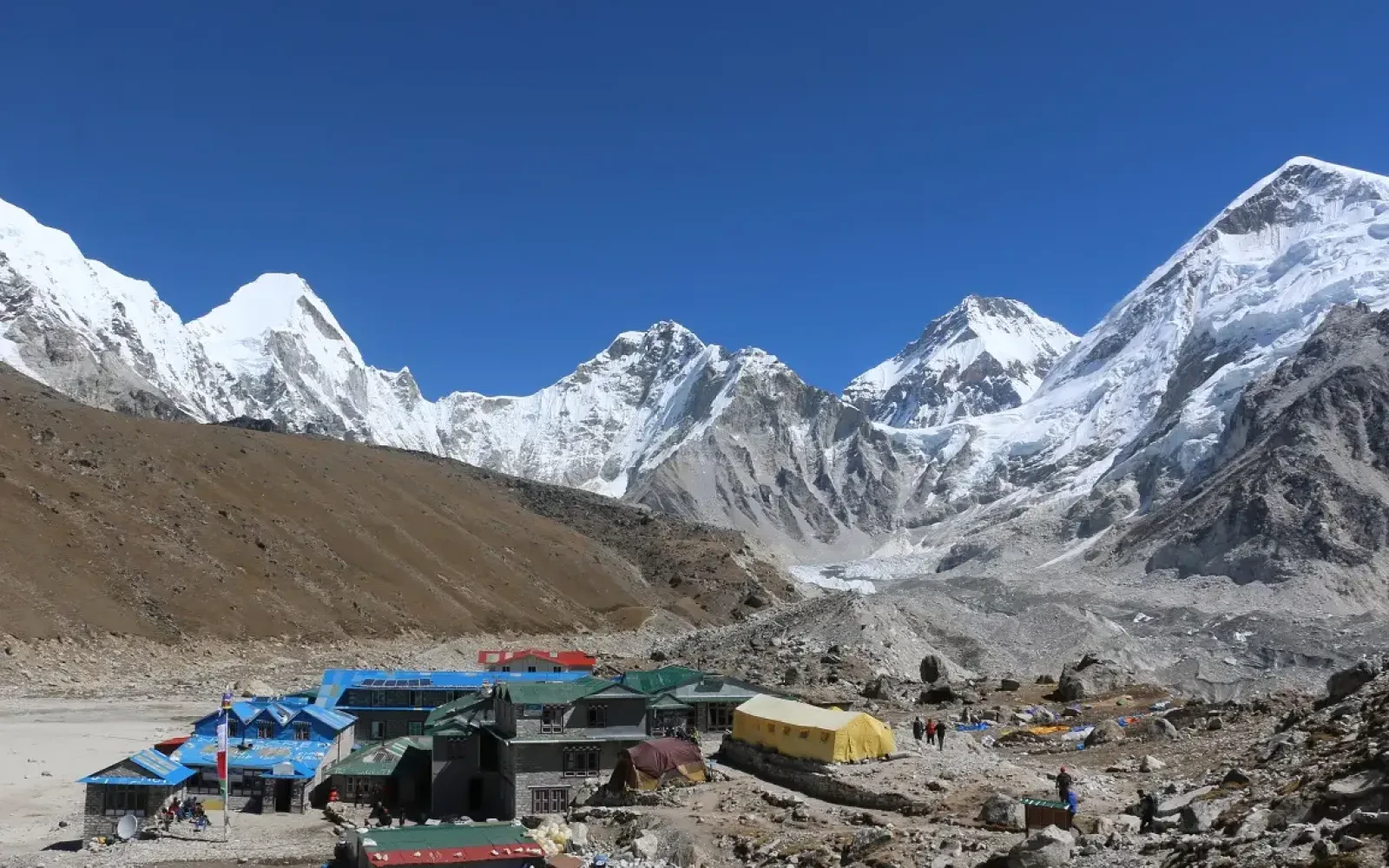
Furthermore, dozens of international expeditions arrive during the spring climbing season at Khumbu Glacier (4900m–7600m). Subsequently, the campsite turns into a working community with medical tents, communications centers, and dining domes, as well as areas for climbing equipment. Additionally, trekkers are able to observe how Sherpa teams organize and equip themselves with oxygen cylinders, ropes, ladders, and safety checks. Thus, one can observe all the minute details from inside the camp.
Likewise, this stay uniquely helps the visitors to understand the mental focus that the summiteers need. In addition, reviewing weather forecasts, testing crampons, and discussing the status of Khumbu Icefall (5486m) rotations take place. Further, controlled movements inside the Icefall make the season especially intense. As a result, trekkers sense both the excitement and pressure within the camp.
Consequently, it is very authentic to sleep next to climbers. Besides, trekkers hear distant avalanches rolling off the slopes of Nuptse (7861m) and Pumori (7161m). Additionally, clear nights reveal both Himalayan stars and sharp peaks glowing under moonlight. Hence, the atmosphere becomes one of the most unforgettable moments of the journey.

Similarly, the stay offers rich cultural experiences. Many expeditions also conduct traditional puja ceremonies and seek blessings before the climb. The rituals include prayer flags, juniper incense, and guidance from the local lama. Therefore, the trekkers get to see the deep spiritual connection between Sherpas and the mountains.
Thus, trekkers relate more to the emotional energy of the camp. Moreover, they know the risks and dreams that push the climbers toward the summit. Additionally, watching climbers adjust harnesses and discuss Icefall movements highlights the seriousness of the mission. Therefore, the stay becomes both educational and inspirational.
Furthermore, an overnight stay greatly enhances storytelling and photography opportunities. In addition, trekkers are in a position to capture early morning gear checks, team briefings, as well as Icefall headlamps. Besides, professional climbers often relate experiences over tea or meals. As such, the stay provides rich details for blogs, videos, and books.
In fact, the cost is different for each operator, but most expeditions are premium due to logistics and safety issues. In addition, full-service deals offer food, insulated tents, guides, and safe camp access. Additionally, helicopter options further increase the pricing for luxury stays. Therefore, comparison of packages by visitors and confirmation of weather windows should be done with due care.
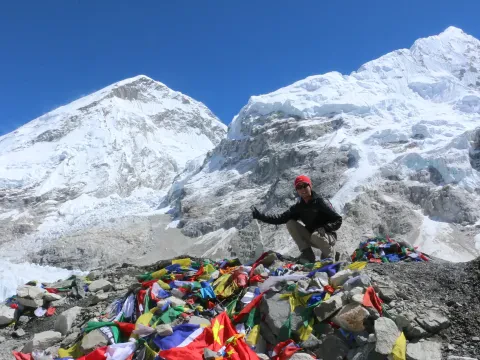
Key Benefits of Staying Overnight at EBC:
Understand why Everest's main climbing window falls between mid-April and late May, with stable weather, warmer temperatures, and safer Icefall movements.
Meanwhile, the main climbing window to Everest falls between mid-April and the end of May due to favorable and more predictable weather patterns. In this period, the jet stream shifts north, which reduces extreme winds over Mount Everest (8848.86m). Additionally, temperatures reach manageable levels for those attempting the summit. As a result, this brief phase is considered the safest time for expeditions.
Moreover, at the beginning of April, climbers reach Everest Base Camp (5364m) for the purpose of acclimatization. They also carry out a number of rotations up to Camp 1 (6050m), Camp 2 (6500m), and Camp 3 (7200m). In fact, these ascents prepare their bodies for the summit push. Thus, the weeks ahead of late May become critical for adaptation.
Similarly, the Khumbu Icefall (5486m) also plays a significant role in establishing the climbing window. Additionally, early in the season, the Icefall Doctors install ladders, ropes, and fixed lines. Added to this, colder nights during April and May keep the Icefall stable enough for safe crossings. As a result, climbers will trust this timeframe more than any other season.
Consequently, weather forecasts determine every step of the trip. On top of that, the climbers rely on wind forecasts from trusted Himalayan meteorologists. Summit winds below 30 km/h indicate potential summit pushes. Therefore, teams wait patiently until the weather presents a clear window in which to reach the summit.
Similarly, late May offers the best balance between wind and temperature for the climbers. In addition, the warmer air minimizes frostbite risks while the snow remains stable. This balance also enables the teams to move between the high camps with efficiency. Therefore, during this period, most of the summits are successful.
Hence, the short window creates an intense concentration of climbers at the upper slopes. Moreover, teams coordinate movements to avoid congestion on routes such as the Lhotse Face (7800m). Furthermore, Sherpa guides manage traffic flow between fixed lines. Consequently, proper timing becomes one of the most important factors in matters of safety.
Furthermore, this window supports better helicopter rescue operations. Furthermore, improved visibility allows pilots to reach Camp 2 (6500m) during emergencies. In addition, stable winds reduce flight risks greatly. As a result, operations become smoother during this seasonal phase.

In fact, this understanding of the window helps trekkers who plan to stay at base camp overnight. They can also see the most frenetic climbing activities during this peak season. They also witness acclimatization rotations, gear checks, and summit-preparation routines. Thus, a visit during this time definitely guarantees the real expedition experience for them.
Key Factors That Define the Everest Climbing Window:
| Factor | Why It Matters |
| Jet Stream Shift | Reduces extreme summit winds |
| Stable Icefall Conditions | Allows safe ladder and rope crossings |
| Optimal Temperatures | Balances warmth and snow stability |
| Reliable Forecasting | Helps identify summit push dates |
| Helicopter Access | Improves rescue reliability |
Understand the true nature of life with trekkers around Base Camp: from Icefall routines to Sherpa cooperation to the culture of high-altitude expeditions.
Meanwhile, the stay amidst climbers at Everest Base Camp (5364m) is a vivid view of the real expedition life. Similarly, trekkers enter a world molded by discipline, teamwork, and high-altitude challenges. Furthermore, they get to see how climbers prepare for rotations toward higher camps. Thus, the stay becomes a powerful learning experience.
Likewise, mornings at base camp start early with helicopter flights, gear checks, and weather briefings. Climbers meet in large dining tents to plan out the day. Sherpa teams organize ropes, tents, and oxygen cylinders. As such, the camp becomes a center of activity even before the sun is up.
Similarly, trekkers see turns towards the Khumbu Icefall (5486m). Also, climbers begin well before sunrise to make sure that the conditions of the Icefall are much colder and safer. Furthermore, headlamp movement in the glacier makes for a dramatic view. As a result, visitors feel the intensity of the mountaineering environment.
Here, the result is that the camp atmosphere remains focused yet friendly. Additionally, many climbers share stories about wind patterns, summit strategies, and adaptation to altitude. Further, meals are shared inside heated dining domes. Thus, the stay allows an authentic interaction with climbers from around the world.
Meanwhile, the cultural dimension deepens the experience even further. Then again, Sherpa teams organize puja ceremonies before icefall climbs. Along with that, the rituals involve chanting, offering, and blessing the climbing gear. In relation to that, trekkers witness respect for the mountains at its deepest level.
Hence, the camp environment also includes essential safety infrastructure. Besides, the medical tents monitor altitude sickness symptoms, while the communication tents coordinate rescue flights and forecast updates.
In effect, the trekkers understand the complex support system behind each summit attempt. Likewise, life at the camp includes rest, rehydration, and recovery. Climbers also read, write in journals, and/or prepare gear for upcoming rotations. The camp blocks harsh winds with rock walls and strategically placed tents. This way, visitors see how comfort is maintained at extreme altitude.
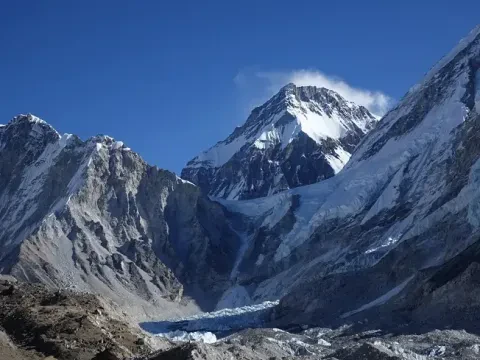
Finally, nights at base camp reveal breathtaking mountains such as Nuptse (7861m), Lhotse (8516m), and Pumori (7161m). Additionally, the silence around the glacier amplifies every crack and far-away avalanche. Moreover, the sky remains immensely clear above the Khumbu Valley. Thus, trekkers end the day with unforgettable Himalayan views.
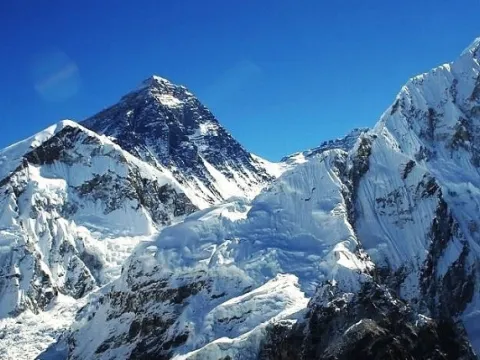
Daily Moments Trekkers Experience Among Climbers:
Learn how life inside Everest Base Camp works day in and day out during climbing season, including routines, meals, Sherpa support, and high-altitude logistics.
Meanwhile, life at Everest Base Camp at 5364m is regulated by altitude, logistics, and weather. Activities start early in the morning as climbers, along with Sherpa teams, head out to rotate to higher camps. Further included in the day's activities are meals, medical checks, and planning meetings. Every minute is important to contribute towards the climb at Mount Everest 8848.86m.
Besides, the mornings commence with hot drinks, weather briefings, and equipment inspections. Further, many climbers begin their rotation through the Khumbu Icefall at 5486m before sunrise. In addition, Sherpa teams confirm the fixed line conditions and safe timings. Hence, the first hours of daylight become the most active time of the day.
Similarly, breakfast inside the large dining domes brings together climbers, trekkers, and guides. Additionally, such meals include porridge, eggs, bread, and warm drinks to help support energy needs. Furthermore, kitchen staff works unceasingly to maintain hygiene under extremely difficult conditions. Because of this, base camp meals become vital for health and morale.
Because of this, mid-morning often turns quiet when climbers head toward Camp 1 at 6050m or Camp 2 at 6500m. Furthermore, those who are not rotating spend their time hydrating, resting, or preparing their gear. In addition, medical teams regularly check oxygen saturation and symptoms of altitude sickness. Proper rest and monitoring thus become central elements of the routine.
Likewise, afternoons at base camp involve training, planning, and communication updates. Additionally, expedition leaders go over weather forecasts and summit strategy. Further, Sherpa teams prepare rope loads, oxygen cylinders, and ice screws for upcoming Icefall carries. As a result of this process, order is maintained within the camp.
Thus, cultural and spiritual moments also shape daily life. Furthermore, Sherpa teams perform puja rituals in order to bless equipment and request safe passage. In addition, trekkers observe how deep cultural belief systems shape decisions about climbing. Consequently, the environment remains both functional and spiritual.
Further, dinner time reunites the camp together in warm dinners and conversations. In addition, meals consist of rice, pasta, vegetables, soups, and occasionally non-vegetarian dishes. Further, chefs customize meals based on dietary needs, providing safe and nutritious dishes. This is how dinner transforms into a moment of unison after long high-altitude hours.
At last, nights at base camp become very cold and quiet, with temperatures falling below freezing. In addition, climbers sleep in insulated tents on thick mattresses and sleeping bags. Furthermore, the serenity of the atmosphere enables them to recover for the next day's movements. Thus, the base camp routine provides stability in the extreme environment.
Important Aspects of Life at Everest Base Camp:
| Element | Description |
| Morning Routine | Current weather briefings, hot drinks, Icefall departures |
| Meals | High-calorie dishes prepared inside heated domes |
| Medical Monitoring | Oxygen checks, altitude assessments |
| Sherpa Support | Load carries, fixed line management, equipment checks |
| Evening Activities | Dinner, planning, rest, communication updates |
Understand the structure of climbers' camps at Everest Base Camp, from basic trekker tents to advanced expedition domes used by summit teams.
Actually, the climbers' camps at Everest Base Camp at 5364m reflect a variety of structure types for different needs. Furthermore, trekkers and climbers use various types of tents, shelters, and domes depending on comfort and purpose. Additionally, each zone in the camp performs a specific function. Thus, the camp functions like a temporary high-altitude village.
Furthermore, the trekker tents are situated in standard accommodation areas, which are provided by the local trekking agencies. These tents accommodate visitors who stay for one night only during the peak climbing season. It has a simple bed, sleeping bag, and insulated floor. Therefore, they are comfortable without interfering with expedition operations.
Similarly, the tents for basic climbers support the early acclimatization rotations. Additionally, these tents store personal climbing gear and technical equipment. Climbers also use these tents during short rest phases between training sessions. As a result, they maintain light functionality for daily climbing needs.
In addition to, large expedition domes therefore act as central gathering points for food, meetings, and briefings. Most of these domes have heating systems that are supported by solar energy or generators. They also contain long tables, thick carpets, and lighting for evening communication. These domes therefore become vital communal spaces in any expedition.
Further, the communication tents handle radios, satellite internet, and weather updates. They also house important equipment that links base camp with Camp 1 at 6050m and Camp 2 at 6500m. Besides, meteorologists often stay here to deliver precise summit forecasts. Consequently, these tents ensure safe coordination.
Thus, medical tents serve as emergency facilities for altitude issues and minor injuries. Additionally, they include oxygen cylinders, medication, and monitoring equipment. Moreover, they are run by doctors who have experience with high-altitude medicine. Therefore, climbers depend on such tents to ensure safety and recovery.

Additionally, Sherpa tents are used to accommodate climbing Sherpas who organize load carries and rope fixing. Besides that, such tents keep personal gear utilized for Icefall movements. Moreover, Sherpas conduct meetings here to discuss plans regarding the Lhotse Face at 7800m or upper camps. Because of this, these spaces are very important in terms of climbing logistics.
Finally, the VIP domes provide superior comfort: thicker insulation, larger beds, and heaters. Furthermore, the use of these spaces has been used by luxury expeditions for summit clients seeking upgraded amenities. Additionally, it helps climbers recover after hard rotations through the Khumbu Icefall at 5486m. Thus, the luxury dome represents the highest comfort level available in base camp.
Main Types of Structures at Everest Base Camp:
Understand how to organize an overnight stay at Everest Base Camp legally and safely during the climbing season: learn about the permits, rules, and operator requirements.
Requirements for Overnight Stay at EBC:
| Requirement | Details |
| Park Permits | Sagarmatha and Khumbu municipality permits |
| Operator Approval | Required for expedition zone access |
| Safety Rules | Follow Sherpa and guide instructions |
| Acclimatization | Gradual ascent recommended |
| Weather Compliance | Operator decision follows forecasts. |
Meanwhile, arranging an overnight stay at Everest Base Camp, at 5364m, calls for proper coordination with licensed agencies. Furthermore, visitors are supposed to abide by legal guidelines provided by the Nepal government and Sagarmatha National Park. In addition, special permission is supposed to be sought in order to access the main expedition zone. By this it means that one cannot stay there on their own or without permission.
Secondly, the pre-requisite is to get the Sagarmatha National Park Permit. Additionally, the Khumbu Pasang Lhamu Rural Municipality Permit has to be obtained prior to entering the area. In addition, all of them should record their particular details at checkpoints on the route. Thus, these documents confirm legal entry.
Similarly, camping in the expedition area requires collaboration with a certified expedition operator. In addition, agencies ensure controlled access to zones of climbers, meal tents, and accommodation tents. Further, the operator ensures that visitors do not interfere with the activities of the expedition. As a result, this coordination helps protect safety and privacy.
Consequently, tour operators offer special packages for staying overnight, but these are available only during mid-April to May. In addition, these packages include meals, insulated tents, and trained guides. The costs remain higher due to logistics and limited access. Visitors should, therefore, confirm the inclusions and compare the prices before booking.
Likewise, safety measures are necessary even for overnight camping. Secondly, tourists should respect rules proposed by base camp officials and Sherpa groups. Furthermore, tourists should not enter restricted areas in the Icefall and glaciers prone to hazards. As a result, the strict monitoring creates better safety.
Hence, another crucial demand becomes acclimatization. Additionally, from the town of Lukla at 2860m, visitors must reach Everest Base Camp gradually. In addition, staying overnight without proper altitude adjustment invites health-related risks. Consequently, trekking slowly enhances the safety factor.
Likewise, weather considerations influence stay-over. Moreover, heavy snowfall or strong winds may cause last-minute cancellations. Furthermore, operators follow professional meteorological advice to decide on go or no-go conditions. As a result, safety takes precedence over schedule flexibility. Legal and safe stays require advance planning and professional assistance. Choosing only reputable agencies further ensures adherence to national regulations.
Also, clear communication with staff supports smooth arrangements. Therefore, a responsible approach guarantees a successful base camp overnight experience.
Understand all the legal permits and regulations required for overnight camping at Everest Base Camp, including park entry, regional rules, and expedition access.
Required Permits for Overnight Stay:
| Permit | Purpose |
| Sagarmatha National Park Permit: | This is required for entry and conservation in the national park. |
| Khumbu Municipality Permit: | Required for trekking inside the Everest region |
| Expedition Zone Approval | Required for staying inside climbers' camp |
In fact, permits and regulations in spending a night at Everest Base Camp at 5364m follow strict government and regional guidelines. Additionally, this process ensures that trekkers, climbers, and expedition teams are safe during the busy climbing season. Furthermore, authorities regulate movement inside the expedition area to protect its fragile glacier environment. Thus, visitors need to follow a structured procedure before arranging any overnight stay.
Meanwhile, the first legal requirement is that of the Sagarmatha National Park Permit. This permit has to be obtained in Kathmandu or Monjo at 2835m before entry into the protected area. It supports conservation and local management programs, and for this reason, no tourist can enter the area without it.
Similarly, trekkers need to obtain the Khumbu Pasang Lhamu Rural Municipality Permit. This permit also replaces the previous TIMS Card for the Everest region. Furthermore, it covers the cost of local infrastructure, trails, and safety improvements. Hence, it becomes a mandatory document for every visitor.
Consequently, overnight stays at Everest Base Camp require more than a standard trekking permit. Furthermore, visitors need to obtain special permission through an acknowledged expedition operator. In addition, access into the zone where the climbers are can only be granted by licensed agencies. Thus, staying independently is strictly forbidden.
Further, regulations ensure the safety of visitors inside the expedition area. Moreover, guests should follow instructions from base camp managers and Sherpa teams. Additionally, certain zones, such as the Khumbu Icefall zone at 5486m, are completely restricted. As such, guests have to stay within their assigned areas.
Therefore, visitor behavior at base camp has been guided by environmental protection rules. Second, the disposal of waste on the Khumbu Glacier at 4900m is strictly forbidden; operators follow a principle of pack-in and pack-out to reduce damage. Consequently, visitors should respect such guidelines at all times.
Likewise, regulations stress acclimatization prior to staying at 5364m. Indeed, trekkers are supposed to reach base camp in stages from Lukla at 2860m. Furthermore, authorities and operators discourage rapid ascent because of growing medical risks. As such, the rule of thumb remains slow and steady.
Finally, compliance with permits and regulations ensures a safe and legal overnight experience. In addition, adhering to such requirements protects both visitors and promotes long-term conservation endeavors. Furthermore, cooperation with licensed agencies ensures responsible interaction with the mountain. Hence, respect for each and every rule is so crucial for the sustainability of Everest tourism.
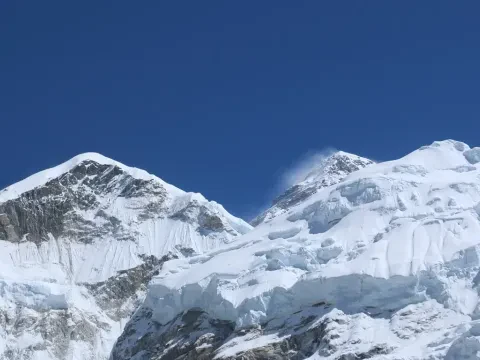
Compare trekker camps and expedition camps at Everest Base Camp with regard to comfort levels, facilities, sleeping arrangements, and seasonal access.
Meanwhile, accommodation at Everest Base Camp at 5364m varies between trekker camps and expedition camps. Additionally, each option caters to different needs, depending on comfort expectations and climbing activities. Secondly, both camps adhere strictly to the regulations set regarding the location to avoid environmental impact. Subsequently, two distinctly organized accommodation styles are experienced by visitors.
In addition, there are also trekker camps, which accommodate short-term visitors who spend one night during climbing season. These camps also feature standard tents with insulated floors and warm sleeping bags. Additionally, they provide basic comfort suitable for non-climbers. Thus, they will be the simplest options for overnight stays at base camp.
Similarly, trekker camps concentrate on basic services. In addition, the type of food consists of hot soup, rice, vegetables, eggs, bread, and other snacks sometimes. Furthermore, such camps have common dining and briefing areas. Thus, they are simple experiences with no deluxe amenities.
Consequently, expedition camps offer better comfort for climbers staying several weeks. In addition, large insulated domes in these camps come with beds, carpets, heaters, and lighting. Further, they include private rest tents for climbers and Sherpas. For this reason, they provide high altitude lodging at its best.
Furthermore, expedition camps also provide specialized services. Besides, they also comprise big dining domes, medical tents, communication tents, and equipment tents. Additionally, the teams have access to charging stations, satellite Wi-Fi, and weather forecasting systems. In turn, climbers receive complete logistical support for every rotation.
Hence, the visitors who stay with expeditions have greater privacy. Besides, the climbers sleep in individual sleeping tents with improved features that reduce condensation. Thicker mattresses and down sleeping bags further enhance comfort. Therefore, such tents support better recovery at altitude.
Similarly, trekker camps are cheaper because they have fewer facilities. Additionally, expedition camps will be more expensive due to the power generation and logistics. In addition to that, operators transport supplies using yaks or helicopters. This increases the overall cost. Hence, differences in comfort reflect the logistical complexity.
Here, the choice between a trekker and expedition camp will depend on budget, interest, and purpose. While trekkers interested in one-night experiences can opt for simplicity in the trekker camps, visitors who join climbers or need superior comfort may settle for expedition camps. With this understanding, tourists can further set up plans for an appropriate stay at 5364.
Main Differences Between Trekker and Expedition Camps:
Find out what climbers and trekkers eat at Everest Base Camp during the climbing season, including meals, hydration options, and nutritional planning.
Common Food and Drink:
| Items at EBC Meal | Typical Items |
| Breakfast | Porridge, eggs, bread, pancakes |
| Lunch | Rice, pasta, soups, vegetables |
| Dinner | Dal bhat, pasta, momos, curries |
| Drinks | Tea, coffee, hot chocolate, electrolytes |
Meanwhile, food and drinks at Everest Base Camp at 5364m are carefully timetabled to preserve energy and health. Additionally, because of increased metabolic demand due to altitude, climbers need high-calorie food. Expedition cooks also aim for a balance of carbohydrates, proteins, and essential fats in the meals they prepare. Thus, nutrition is one of the central focuses of daily life at Base Camp.
Additionally, it consists of porridge, eggs, breads, pancakes, muesli, fruits, and warm drinks. In addition to this, climbers like to have tea, coffee, ginger tea, and hot chocolate to make their bodies warm. Moreover, the cooks prefer preparing light food which can be easily digested at height. Thus, morning starts with energizing and soothing breakfast.
Similarly, for lunch, items like soups, rice, pasta, potatoes, lentils, vegetables, cheese, and noodles are included. Furthermore, cooks plan menus according to fresh supplies delivered by yaks or porters. In addition to that, most teams supplement with canned fish or meat as a source of extra protein. Hence, lunch becomes a balanced diet with altitude-friendly digestion.
Because of this, dinner is the most social meal of the day. Additionally, dinners entail momos, pasta, dal bhat, fried rice, curries, as well as thick soups. Desserts are prepared from time to time by cooks, including custard or fruit. Thus, evenings present climbers with warm and full meals.
Similarly, snacks and hydration are also important. Furthermore, the climbers drink three to four liters of warm liquids every day to counter dehydration at altitude. In addition, drinks consist of herbal teas, electrolytes, lemon water, and soups. Consequently, hydration prevents headaches and fatigue.
Therefore, climbers avoid alcohol as it accelerates dehydration processes. Heavier fried foods also stay within the limit because digestion at 5364m becomes a problem.
Likewise, spicy dishes remain minimal in number because they upset the stomach. Menus, therefore, remain simple, warm, and functional. Similarly, luxury expeditions boast high-end menus.
In fact, they also feature fresh vegetables, fruits, baked goods, cheeses, and, on occasion, meat dishes. Some teams also bring along gourmet coffee makers and dehydrated gourmet meals. As a result, the comfort for climbers during prolonged stays is increased. Finally, food and drink management influences the success of every expedition.

In addition, proper meals strengthen recovery and maintain performance. Furthermore, hydration and nutrition help climbers endure long rotations toward Camp 1 at 6050m and Camp 2 at 6500m.
Hence, thoughtful meal planning is crucial at Everest Base Camp.
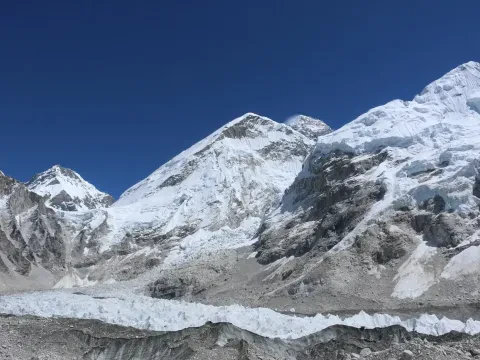
It's important to learn essential safety, security, and health considerations for staying overnight at Everest Base Camp during the climbing season.
Key Safety Priorities at Base Camp:
Meanwhile, safety, security, and health considerations at Everest Base Camp at 5364m gain paramount importance in the climbing season. Moreover, the environment demands informed decision-making because altitude and weather change quickly. Visitors have to follow the rules set forth by expedition teams and local authorities. Proper awareness ensures a safe and responsible stay.
Moreover, the first safety factor is related to altitude. In addition, it is required for trekkers to acclimate slowly by using the standard route from Lukla at 2860m through Namche Bazaar at 3440m. Also, staying hydrated and moving slowly reduces altitude sickness. Thus, all visitors must understand basic altitude management.
Similarly, Base Camp security relies on controlled access zones. Additionally, the areas used for expeditions are protected from unauthorized entry. Besides this, visitors who are allowed to stay overnight must stay within their camp space provided for them. As a result, these practices prevent any accidents or confusion among the teams.
Because of that, it's necessary to consider weather precautions. Moreover, at 5364m, temperatures drop extremely fast, especially at night after sunset. In addition, sudden storms are likely, which greatly impact the ability to see and move around inside camp. Consequently, wear adequate warm and layered clothing to reduce risks of exposure.
Likewise, the safety rules of the icefall are still strictly followed. Furthermore, at 5486m, Khumbu Icefall could not be approached without technical climb permission, and there is continuous movement of the ice and falling debris in the area. Therefore, only the climbers who have Sherpa support could enter that zone.
Therefore, medical support within Base Camp remains dependable throughout the season of climbing. In addition, most expeditions maintain a medical tent with many accomplished doctors. Further, these tents treat altitude sickness, dehydration, and light injuries. Therefore, medical care enhances overall safety.
Similarly, sanitation guidelines protect health in the camp. Additionally, litter follows strict regulations of pack-in and pack-out principles. Further, operators utilize designated toilet tents that minimize occurrences of contamination on the glacier. Proper hygiene hence reduces risks of illness.
Here, the understanding and following of set protocols ensure safety while in base camp. More importantly, cooperation with expedition staff heightens security and lessens unnecessary risk. Visitors also stay healthier by following hydration, acclimatization, and hygiene routines. For this reason, all travelers must respect safety measures before overnight privileges can be enjoyed at 5364m.
Learn about altitude challenges and considerations imperative for sleeping at Everest Base Camp, 5364m, during the climbing season.
Altitude Challenges and Solutions:
| Challenge | Solution |
| Low oxygen | Slow breathing and proper acclimatization |
| Cold nights | Use warm down sleeping bags |
| Dry air | Drink warm fluids regularly |
| Headaches | Rest and hydrate |
Meanwhile, altitude issues at Everest Base Camp at 5364m will impact all visitors, regardless of fitness. Furthermore, the low oxygen levels put the body under stress even when resting or sleeping. On top of all that, the temperature and dryness further add to nighttime discomfort. As a result, proper preparation becomes essential for safe and restful sleep.
However, the main problem is low oxygen saturation. Additionally, oxygen levels decrease to approximately fifty percent from that of sea level. Furthermore, breathing becomes shallow, especially during sleep. Consequently, many of the visitors experience periodic breathing or nighttime shortness of breath.
Similarly, even after acclimatization, mild altitude sickness is still common. Besides, headache, light dizziness, reduced appetite, and difficulty sleeping are the symptoms. In addition, these symptoms improve with hydration and slower movement. Therefore, it is important to avoid rapid ascent.
Consequently, more cold produces more problem. Additionally, in climbing season, the nighttime temperatures in 5364m often drop below minus ten degrees Celsius. Moreover, it requires sleeping in high-quality down bags for maintaining body temperature. Accordingly, proper insulation prevents stress caused by cold.

Likewise, arid air diminishes the quality of sleep. Furthermore, dehydration exacerbates since the cold and dry surroundings hasten the evaporation of moisture. In addition, the consumption of warm liquids before retiring to bed alleviates nighttime distress. Thus, tourists should hydrate constantly
Hence, acclimatization remains the best defense against altitude challenges. Besides, trekking from Lukla at 2860m through Namche Bazaar at 3440m and Dingboche at 4410m strengthens the body. Gradual rise also allows the body to get tuned to less oxygen. Thus, scheduled acclimatization days support comfortable rest at 5364m.
Likewise, sleeping strategies enhance recovery. In addition, tourists should not take heavy meals before going to sleep. Furthermore, insulated mats and layered clothes minimize discomfort. As a result, resting is better and more efficient.
Finally, knowledge of altitude challenges ensures that a night stay is safer. Further, proper acclimatization, hydration, and warm clothing reduce problems at night. Additionally, symptom monitoring remains key to the early detection of altitude sickness. Thus, all visitors need to prepare for altitude prior to an overnight stay at Base Camp.
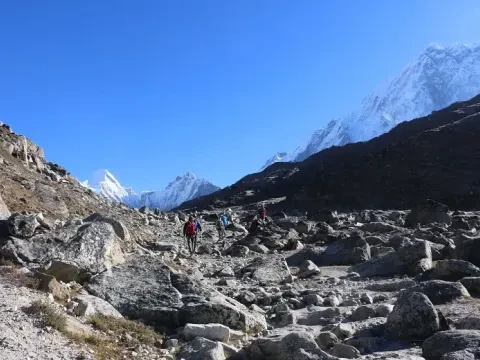
Learn exactly what to pack for a safe and comfortable overnight stay at Everest Base Camp during climbing season.
Key Items to Pack:
Meanwhile, packing for an overnight stay at Everest Base Camp at 5364m requires careful planning. In addition, visitors need to bring warm clothes, insulated equipment, and necessary safety tools. Efficient packing reduces weight while increasing comfort at altitude, so being well-prepared translates into a much safer experience.
At the same time, warm clothing comes to the fore. Besides, tourists need to take a down jacket, thermal layers, fleece, gloves, and warm socks. In addition, windproof outerwear defends against strong evening breezes. Dressing in layers will help to keep warm and comfortable.
Also, sleeping gear should correspond to extreme cold. This means a four-season sleeping bag keeps the body warm during subzero nights. An insulated sleeping mat provides comfort, reducing heat loss. As a result, sleep quality improves.
Consequently, essential electronics support safety and communication. Additionally, headlamps and spare batteries are electronics that visitors should pack. Additionally, batteries are quickly drained by cold temperatures. Therefore, storing electronics inside warm pockets becomes necessary.
Further, personal care items protect health. The packed items should also include sunscreen, lip balm, sanitizers, and basic medicines. Altitude medicine such as acetazolamide supports acclimatization when necessary. Proper care reduces discomfort related to health.
Consequently, hydration and nutrition items support endurance. In addition, warm teas, electrolytes, and energy snacks provide fast calories. Furthermore, insulated bottles can prevent liquid from freezing at night. As a result, visitors keep stable hydration.
Similarly, permits and identity documents are still a must-have. These tourists have to possess the Sagarmatha National Park Permit, the Khumbu permit, and clearance from expedition operators. In addition, such permits provide legal entry to Base Camp. As such, appropriate documentation prevents security concerns.
Finally, packing smart will ensure comfort and safety at 5364m. Additionally, warm layers, safe sleeping gear, and essential electronics support overall well-being. Besides, hydration supplies and legal documents round off the preparation list of things to bring with you.
Therefore, thoughtful packing ensures a successful overnight stay at Everest Base Camp.
The weather around Everest Base Camp during April and May includes daytime warmth, night temperatures, winds, storms, and seasonal conditions important for a safe overnight stay at 5364 meters.
Typical April and May Weather:
Meanwhile, the weather at Everest Base Camp, 5364 meters above the sea, dictates every moment of an overnight stay whenever possible. Thus, the spring brings the most stable patterns, particularly between mid-April and late May. Besides that, these weeks are the time when trekkers can experience the real atmosphere of climbing because the camps work at full strength. Understanding exact weather conditions helps visitors prepare properly for comfort and safety.
Besides, daytime temperatures rise sufficiently high to provide pleasant moments even at altitude. Moreover, the sun warms the rocky moraine, allowing for surprising pockets of heat around the tents. However, these winds increase swiftly after noon, reducing overall warmth and visibility. Therefore, trekkers should always carry layers even on those days that seem calm.
At night, temperatures drop rapidly as the sun disappears behind the Khumbu Icefall at 5500 meters. While the season eliminates extreme cold, the conditions still stay difficult for amateur trekkers. Besides, there are powerful katabatic winds blowing from the upper Western Cwm at 6400 meters, which makes it even chillier and noisier in tents. Thus, reliable sleeping gear becomes required to rest safely.
Similarly, the season witnesses snowfall in the afternoon at times. Although it may melt the next day, it could hide crevasses and slippery spots between the tents. Besides this, the high altitude ensures that the weather changes in minutes from bright to cloudy conditions. Hence, the trekkers should not move out on their own without the advice of the team.

As a result, the jet-stream movement is watched closely by climbers because its position determines summit windows. Even though trekkers do not climb above Base Camp, this pattern impacts safety within the confines of the camp. The jet stream can also create sudden gusts that will collapse weak tents or scatter gear across the moraine. Self-managed camps, therefore, remain the safest choice.
Lastly, the season gives the right mix of stability and climbing activity. Thus, by going through both calm mornings and windy evenings, trekkers understand the environment more clearly. Similarly, staying overnight allows for a deeper look at Everest's true conditions.
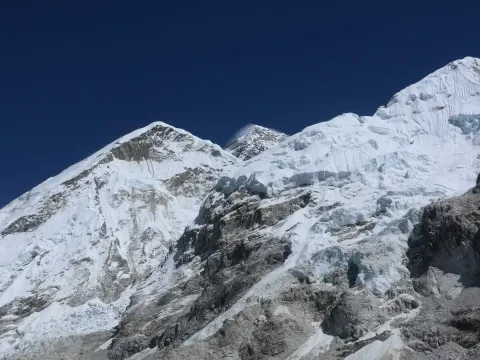
Explore the climbing culture at Everest Base Camp, learn how trekkers interact with expedition teams, and discover the stories, teamwork, and traditions of peak climbing season.
Common Topics Climbers Discuss:
While meeting climbers at Everest Base Camp at 5364 meters itself is one of the most rewarding aspects of an overnight stay, the dense gathering of teams makes it a unique cultural environment forged by ambition, risk, and resilience. Such interactions give trekkers an idea of how real expeditions prepare for the world's highest mountain. Thus, the setting encourages authentic conversations with climbers from across the globe.
Here, each team develops its own rhythm also, from structured training to relaxed downtime in their domes. Besides, climbers quite often spend weeks acclimatizing at Camp 1 (6065 meters) and Camp 2 (6500 meters), so Base Camp becomes a sort of temporary home. Their stories therefore offer unusual glimpses into the emotional and physical challenges of high-altitude mountaineering.
Further, Sherpa culture, too, shapes each expedition through leadership and skill, and knowledge passed down over generations. Furthermore, Sherpa guides maintain ladders, fix ropes, and manage safety inside the Khumbu Icefall at 5500 meters. Spending time with Sherpa team members aids trekkers in learning what Himalayan mountaineering traditions truly mean.
Similarly, the social areas of Base Camp draw the expedition teams closer. While all members maintain their respective operation areas, community tents and lounging grounds frequently host casual banter. Furthermore, there is information sharing on route conditions, weather forecasts, and future rotations among climbers. Thus, trekkers feel intense comradeship within this bone-chilling setting.
Thus, stories from climbers cover everything from first attempts to past failures, from personal motivations to difficult choices during altitude challenges. Furthermore, climbers often describe the emotional tension of long acclimatization cycles on the Lhotse Face (7200 meters). In this way, such moments allow trekkers to appreciate the human depth behind summit attempts.
More importantly, encountering climbers makes what would otherwise have been a simple visit a more enriching cultural experience. Thus, trekkers return with stories far more powerful than photos alone. Therefore, the Base Camp community shapes lasting memories of resilience, teamwork, and adventure.
Meanwhile, learn the rules of access to Everest Base Camp, when trekkers can actually visit expedition camps, and what safety regulations exist to help control movement during peak climbing season.
Access Rules and Permissions:
| Access Type | Allowed or Not |
| Entering expedition domes | Permission required Walking between tent lines -Only with guide |
| Crossing Icefall route entrance | Not allowed |
| Entering kitchen tents | Not allowed |
| Speaking with climbers | Allowed when invited |
Moreover, access regulations at Everest Base Camp-5364 meters-guarantee safety and respect for climbers in the preparation of summit attempts. Because of this, trekkers have to stick to strict movement recommendations, particularly between mid-April and the end of May. Furthermore, the government of Nepal and expedition operators establish unambiguous restrictions to preserve operations. For this reason, all guests should be informed about access regulations in advance to plan an overnight stay.
Moreover, trekkers cannot just walk into any expedition camp without permission. Furthermore, the climbing teams treat their respective domes and tents as operation zones where the staff organizes oxygen systems, gear, and route plans; therefore, any uninvited movement may interfere with such essential preparations for the Khumbu Icefall at 5500 meters.
Similarly, guided visits remain the only legal mode of entry to climbing camps. Additionally, licensed agencies liaising directly with the leaders of expeditions organize controlled access. Because of this, trekkers have little interaction out of respect for the climbers' privacy.
Likewise, access is most restricted during the early morning hours. While climbers remain inside their tents, the support teams prepare loads and equipment for rotations. Moreover, the Icefall Doctors fix ladders and ropes during such times. Because of this, visitors must also wait for confirmation from the teams that it is clear to move about camp.
Consequently, all movement inside Base Camp requires attention to the dangers of terrain. Additionally, there are ice mounds, shifting boulders, and narrow passages hidden between the tents. Therefore, escorting staff guides trekkers through safe paths to avoid crevasses or weak points.
Access rules, lastly, provide a respectful and safe experience. In return, trekker interactions are meaningful, protecting the workflow of expeditions. Responsible behavior, therefore, brings harmony at the world’s highest base camp.
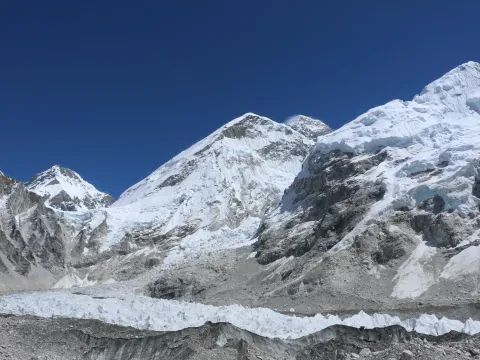
Learn how the Khumbu Icefall route works, understand morning climbing traffic, and discover why early movement is essential for safety during the Everest climbing season.
Key Sections of the Icefall Route
As far as possible, understanding the Khumbu Icefall-5500 meters to 6100 meters-helps trekkers appreciate the intensity of climbing mornings at Everest Base Camp, 5364 meters. Consequently, the route challenges climbers with deep crevasses, constantly shifting seracs, and towering ice blocks. Additionally, the Icefall demands perfect timing because temperature changes directly influence stability. Thus, each climber is dependent on early starts to cross it safely.
In addition, climbers typically depart Base Camp between midnight and 4 a.m. Moreover, the coldest hours of the day freeze the ice structure enough to reduce collapsing risks. Thereby, headlamps shine across the glacier as dozens of climbers and Sherpa guides commence their ascent toward Camp 1 (6065 meters). Subsequently, morning traffic is a normal part of the climbing rhythm.
Similarly, the Icefall Doctors play a central role in the upkeep of safety on the route. Furthermore, they install ladders, fix ropes, and check weak points before every window of climbing. Thus, they determine when teams may move and when the route must remain closed for repairs. Therefore, their decisions influence the whole schedule of Base Camp mornings.
Likewise, morning traffic builds when hundreds of climbers start rotations during summit windows. While teams usually follow staggered times, many continue to overlap on ladders and steep ice slopes. Added to this are Sherpa support members carrying oxygen bottles, tents, and ropes through these areas. Thus, the movements become slow, disciplined, and carefully regulated.

As a result, overnight trekkers hear radio calls, alarm clocks, and the constant metallic sound of crampons biting into the ice as. The atmosphere also changes from one of quiet rest to one of focused readiness as camp comes to life. Thus, visitors who observe this activity can gain an appreciation for the difficulty of high-altitude logistics.
Finally, the morning traffic in Icefall reveals the tremendous efforts invested by climbers even before higher camps are reached. Thus, trekkers learn to appreciate risks lurking behind every summit attempt through this observation. In other words, knowledge about the Icefall turns an overnight stay into a learning experience.
Learn what helicopter flights mean for noise, safety, scenery, and the logistics of life at Everest Base Camp during the height of climbing season in April and May.
Effects of Helicopter Traffic:
| Factor | Impact on Camp |
| Noise | High during morning flights |
| Safety | Enhanced rescue capability |
| Visibility | Dust and snow movement |
| Logistics | Delivery of supplies faster |
| Experience | Mix of excitement and disruption |
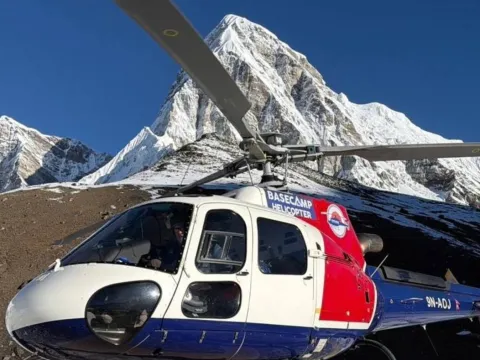
To the extent possible, helicopter traffic defines the modern Everest Base Camp (5364 meters) during climbing season. As such, flights run for rescues, supply missions, and transportation, which are weather-dependent. The sound of rotors becomes a part of daily life at the camp. Therefore, visitors need to be aware of this activity so that they can understand how this influences their overnight experience.
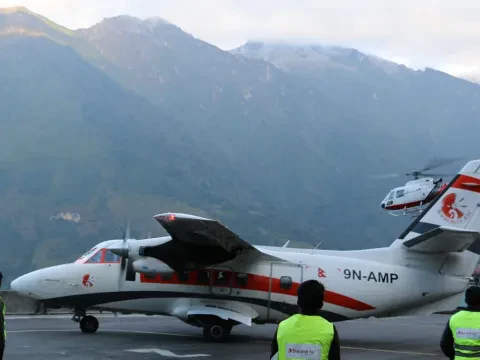
Besides, helicopters generally fly from Pheriche (4371 meters) or Lukla (2860 meters). Moreover, pilots land on tiny, uneven platforms carved into the glacier. Therefore, every landing requires high skill due to shifting ice, thin air, and winds that are unpredictable. Because of this, visibility conditions regulate when flights may operate.
Similarly, the primary effect on tourists is noise at busy hours. In addition, helicopters frequently come early in the morning for medical evacuations or transfers of climbers. As a result, trekkers may hear several take-offs prior to dawn time. Thus, light sleepers should be prepared for early awakenings.
Similarly, helicopter traffic supports the entire climbing ecosystem. While climbers used to carry gear manually, modern-day expeditions use fast transport for oxygen cylinders, food, and urgent supplies. Even rescue operations depend on these flights to carry altitude-sick climbers to safety. Thus, the helicopters add safety but produce temporary noise.
Because of this, trekkers are meant to keep their distance from the landing zones. Besides, rotor wash scatters unsecured rocks, tents, and personal items across the moraine. For this reason, staff always direct visitors to specific waiting areas whenever flight operations are in effect. Complying with what is ordered allows safe movement around Base Camp.
Finally, helicopter traffic remains a necessary part of modern Everest expeditions. In this regard, noise and movement become normal features of the atmosphere in peak season. As such, understanding these operations helps visitors appreciate the complicated logistics behind the world’s highest mountain.
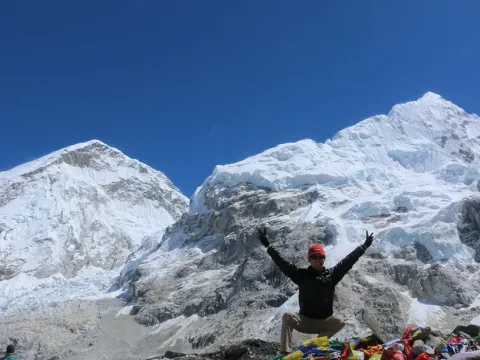
Understand the photography and drone rules around Everest Base Camp as related to legal requirements, privacy guidelines, permits, and safety precautions for visitors and climbers alike.
Photography and Drone Guidelines:
Meanwhile, photography at Everest Base Camp (5364 meters), as far as possible, demands responsibility and respect for climbers. Therefore, trekkers have to be conscious of privacy rules, as many expeditions consider their respective zones as work areas. Moreover, unauthorized filming of sensitive areas disrupts team focus. Therefore, visitors should always request permission before photographing individuals or equipment.
In addition, the Government of Nepal strictly regulates the use of drones in the Khumbu region. Operating a drone without official authorization remains illegal around Base Camp, particularly during climbing months. Thus, all users of drones are supposed to obtain permits from the Civil Aviation Authority of Nepal and the Sagarmatha National Park office. As such, unauthorized flying of drones will be confiscated.
Similarly, it poses safety risks in high-altitude environments. In addition, rotor noise distracts climbers who prepare for the Khumbu Icefall at 5500 meters. Most expeditions, therefore, would prefer drone-free zones around their tents. For this reason, trekkers must fly only in designated open areas under supervision.
Equally, weather conditions significantly affect drone control. While mornings present clearer skies, strong winds build up very fast across the glacier. Furthermore, low temperatures have impacts on battery performance and stability of flight. Therefore, there is a high risk of drone operators losing equipment if they disregard environmental factors.
Consequently, the rules of photography also protect the mental preparation of climbers. In addition, summit-preparation periods demand calm and focus within the camps. Hence, loud equipment or intrusive filming becomes unacceptable during these hours. Therefore, trekkers should maintain a distance from those climbers who are preparing for rotations or summit pushes.
As such, meaningful photography moments can be enjoyed by trekkers without disturbing climbers. For this reason, responsible camera and drone use complements the experience at the world’s highest expedition hub.
Haven Holidays Pvt. Ltd. provides an unforgettable and safe overnight stay at Everest Base Camp (5364m) with guided support, acclimatization, and trekking expertise.
Key Highlights with Haven Holidays:
Meanwhile, Haven Holidays Pvt. Ltd. offers a unique opportunity to stay overnight at Everest Base Camp, 5364 meters, during the peak climbing season from mid-April to late May. Thus, visitors benefit from fully organized logistics, permits, and expert guides who ensure safety and comfort at high altitude.
In addition to that, spending the night at Base Camp allows the trekker to experience the authentic climbing atmosphere of Base Camp, to see morning expeditions toward the Khumbu Icefall (5500 meters), and enjoy great views of Mount Everest, 8848.86 meters, with its surrounding peaks.
Besides that, Haven Holidays operates accommodation facilities within trekker-friendly camps with insulated tents, sleeping bags, and shared facilities. Also, guests are advised on acclimatization, nutrition, and high-altitude practices that ensure safety. Thus, it assures the least risk while maximizing comfort and adventure.
Also, nutrition and fluid intake are organized by professional guides and staff. The visitors enjoy hot soup, local food, and hot drinks to maintain energy at 5364 meters. Moreover, nutrition planning is very important because high altitude depresses one's appetite and upsets digestion. Thus, adequate meal support keeps trekkers healthy and energized throughout their stay at Base Camp.

Moreover, it ensures complete adherence to all Sagarmatha National Park and Khumbu Pasang Lhamu rules and regulations. Thus, the trekkers remain far away from legal issues and maintain respect toward the culture and environment of the area. Besides, the emergency management includes medical tents along with options for helicopter evacuation if required.
Finally, staying overnight at Everest Base Camp with Haven Holidays Pvt. Ltd. transforms a trek into a safe, organized, and unforgettable high-altitude adventure. Trekkers return with unique experiences, cultural insights, and close-up views of the world's highest peaks.
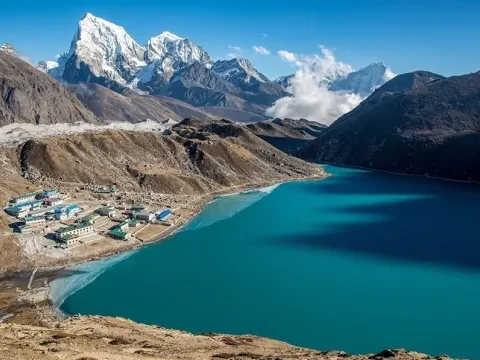
Find here a detailed Everest Base Camp Trek itinerary that includes an overnight stay at 5364m, with daily routes, distances, elevation, and some expert trekking tips to make your adventure safe.
Meanwhile, the Everest Base Camp trek, with an overnight stay at 5364 meters, is a combination of breathtaking scenery and authentic high-altitude adventure as far as possible. This itinerary thus focuses on offering trekkers clearly defined routes, realistic daily distances, and acclimatization days to ensure safety. The night at Base Camp itself also allows visitors to witness climbers in their preparation for summit attempts on Mount Everest, at 8848.86 meters, and other peaks nearby, such as Lhotse at 8516 meters and Nuptse at 7861 meters.
Key Trek Information:
| Section | Distance | Elevation | Duration |
| Lukla to Phakding | 8 km | 2610 m | 3-4 hrs |
| Phakding to Namche | 10 km | 3440 m | 5-6 hrs |
| Namche to Tengboche | 9 km | 3860 m | 5 hrs |
| Tengboche to Dingboche | 11 km | 4410 m | 5-6 hrs |
| Dingboche to Lobuche | 10 km | 4910 m | 5-6 hrs |
| Lobuche to Base Camp | 12 km | 5364 m | 6-7 hrs |
Finally, this itinerary provides a safe, unforgettable, and well-paced Everest Base Camp trek with an authentic overnight stay. Trekkers can enjoy stunning Himalayan landscapes, local culture, and the thrill of witnessing climbers preparing for world-record ascents.
Understand the major do's and don'ts for responsible, ethical behavior at Everest Base Camp, relating to respect towards climbers, taking care of the environment, and cultural awareness.
Meanwhile, responsible behavior wherever possible at Everest Base Camp (5364 meters) protects a fragile high-altitude environment. Every visitor, therefore, must adhere to strict ethics in order to support climbers and protect the glacier. Further, respect for expedition teams ensures that daily operations run smoothly during busy climbing seasons. Thus, trekkers are required to act thoughtfully from the time they enter camp.
In addition, it is of great relevance to protect the environment. Base Camp lies on a moving glacier with sensitive layers of ice. Waste management requires discipline, as every piece of trash impacts the landscape. Consequently, trekkers must pack out all personal waste and follow staff instructions regarding the disposal areas.
Similarly, noise control supports climbers who rest between rotations. Moreover, teams require quiet hours during the early evening since many start for the Icefall, at 5500 meters, before dawn. Thus, loud conversations, music, or unnecessary movement disrupts their preparation. Therefore, visitors must respect the calm atmosphere around sleeping tents.
Moreover, respect for privacy is important to keep the environment professional. As much as Base Camp is a haven for photographers, not all climbers are comfortable being captured unless permission is sought from them. Besides, most of the expedition tents house medical equipment, oxygen bottles, and personal effects. Therefore, accessing any tent without permission is against camp etiquette. This compels visitors to remain in designated guest areas unless accompanied by staff.

Consequently, ethical behavior also involves respecting Sherpa staff and their work routines. More so, Sherpas manage loads, fix ropes, and support rotations through the Khumbu Icefall. Thus, interfering with their tasks or blocking walking paths causes delays. Hence, trekkers should give priority to staff while moving between supply areas.
Key Ethical Responsibilities:
Moreover, safety behavior is part of responsible conduct. In addition, Base Camp features crevasses, unstable ice mounds, and slippery moraine slopes. Therefore, straying away from marked routes creates more risks of accidents. As a result, visitors should walk only on guided paths to avoid hidden glacier hazards.
In addition, cultural respect is important because the majority of the Sherpa staff use Buddhist traditions. Additionally, the mani stones, prayer flags, and chortens are spiritually important. Therefore, touching or rearranging them is an act of offense. Consequently, trekkers should appreciate the cultural sites without tampering with them.
Finally, responsible behavior creates positive conditions for the acclimatization of climbers heading to the highest point of Mount Everest, at an elevation of 8848.86 meters. In this regard, trekkers contribute to a safe, comfortable environment that protects the ecological balance in the high-altitude community. In this respect, ethical behavior turns the night-stay into a respectful and memorable experience.
Below are a few important last tips for planning a safe, comfortable, and rewarding overnight at Everest Base Camp during the peak climbing months of April and May.
Final Planning Essentials:
| Category | Key Tip |
| Permits | Secure Sagarmatha and Khumbu Pasang Lhamu permits |
| Health | Keep Hydrated and at a slow pace |
| Gear | Bring insulated sleeping bag and layers |
| Safety | Follow guide instructions inside camp |
| Comfort | Prepare for noise and early climbing activity |
Meanwhile, weather permitting, a night's stay at Everest Base Camp at 5364 meters involves a lot of planning regarding weather conditions and regulations with respect to one's health. Due to this fact, visitors need to prepare documents, packing lists, and physical training ahead of time. Further, the climbing season enhances camp activities; thus, early arrangements translate to smoother experiences. Thoughtful planning shapes every part of such a journey.
Moreover, tourists must liaise with approved trekking agencies. In addition, agencies obtain permission to enter specific zones for expeditions and provide guides with experience. Therefore, entry through legal means eliminates friction with expedition staff and law enforcement officials. As such, agency assistance enables visitors to observe the rules and regulations at camps easily.
Likewise, the weather planning also remains indispensable in terms of comfort. Besides, nights at Base Camp drop below freezing even in April and May; hence, warm sleeping bags and insulated clothes become essential. It means visitors need to pack high-altitude gear suitable for subzero temperatures.
Similarly, success for the overnight experience depends on acclimatization. While the hikers reach Base Camp gradually, an overnight sleep at 5364 meters challenges the body further. Furthermore, for the final approach from Gorak Shep (5164 meters), the visitor needs to avoid over-exertion. Hence, the less the altitude sickness risk can be reduced by moving slowly. Thus, hydration, rest, and gradual ascent remain important.
As a result, communication preparation supports safety. In addition, network signals around the glacier change with the weather. Consequently, visitors should have backup power with them and download all maps for offline use in advance. Therefore, with this, the communication tools remain functional throughout the stay.
Moreover, time is of essence during climbing season. Further, early morning hours are busier owing to climbers who prepare to tackle the Icefall at 5500 meters. Therefore, tourists should be ready for chatter of radio headsets, boots, and headlamps. Thus, light sleepers need to be ready for early morning wake-ups.
Similarly, meal planning is another factor that influences comfort during their stay. Additionally, trekkers depend on the expedition kitchens for a simple meal like soup, rice dishes, and warm drinks. Thus, one has to notify the staff about dietary restrictions beforehand. Therefore, communication on time assures good arrangements.
Finally, the planning of the return route completes the overnight experience. Visitors, therefore, need to schedule sufficient time for the descent to Gorak Shep and further down to Lobuche (4910 meters) or Dingboche (4410 meters). A flexible schedule prevents hurried movement and altitude stress. Finally, thorough preparation ensures that a night at Everest Base Camp will be worthwhile, safe, and memorable.
1. Can I stay overnight at Everest Base Camp during climbing season?
Yes, you can stay overnight at Everest Base Camp during the climbing season from mid-April to May. You need permits and support from a company like Haven Holidays. They will help you experience life among climbers in expedition camps. Be prepared for the altitude of 5,364m, cold nights and a thrilling community atmosphere at Everest Base Camp.
2. What permits are needed for overnight stay at Everest Base Camp?
To stay overnight at Everest Base Camp, you need a valid Sagarmatha National Park permit and a Trekkers Information Management System (TIMS) card. For climbing season access you need to make expedition camp arrangements through operators like Haven Holidays. This ensures a safe overnight stay at Everest Base Camp.
3. How cold does it get at night at Everest Base Camp?
At night the temperature at Everest Base Camp can drop to -10°C to -20°C in April and May. The strong winds make it feel even colder. To stay comfortable, you need a sleeping bag, warm layers and a strong expedition tent at Everest Base Camp.
4. What is daily life like staying overnight at Everest Base Camp?
When you stay overnight at Everest Base Camp your day starts with a breakfast. Then you go for walks to get used to the altitude. You also have team briefings and evening meals. You will see climbers getting ready share stories and use the facilities at the expedition camp during your stay at Everest Base Camp.
5. What food is served during overnight stay at Everest Base Camp?
The food at Everest Base Camp is high in energy to help climbers. You get meals like dal bhat, pasta, soups, eggs and snacks. You also get drinks and packed lunches to keep you full. Haven Holidays makes sure that the food is clean and nutritious for your stay at Everest Base Camp.
6. Is it safe to sleep at 5,364 meters at Everest Base Camp?
If you get used to the altitude slowly and drink plenty of water sleeping at Everest Base Camp is generally safe. You might get a headache. Feel breathless but with help from professionals like Haven Holidays you can minimize the risks during your overnight stay at Everest Base Camp.
7. What accommodation options exist for overnight stay at Everest Base Camp?
There are trekker camps with tents that you share with another person. There are also expedition domes that're more luxurious. Haven Holidays can arrange a place for you to stay at Everest Base Camp.
8. How do I arrange legal overnight stay at Everest Base Camp?
To stay overnight at Everest Base Camp legally you should book through a licensed Nepali operator like Haven Holidays Pvt. Ltd. They will take care of the permits, logistics and camp access so you follow all the rules for a stay at Everest Base Camp.
9. What should I pack for overnight stay at Everest Base Camp?
You should pack a sleeping bag, a down jacket, base layers, a headlamp, sunscreen, water purification tablets, snacks and any medications you need. Having the gear will keep you comfortable and safe during your stay at Everest Base Camp.
10. Can trekkers enter climbers’ camps at Everest Base Camp?
Visitors can enter the climbers’ camps. They need to arrange it in advance through a licensed operator. Haven Holidays can coordinate visits so you can see what expedition life is like in a way during your stay at Everest Base Camp.
11. How does weather affect overnight stay at Everest Base Camp?
In April and May the days be sunny but the nights are freezing. There can be snow or wind. If you are well prepared and have support you can handle the weather during your stay at Everest Base Camp.
12. What is the Khumbu Icefall and why is it important?
The Khumbu Icefall is a part of the Everest route. When you stay overnight at Everest Base Camp you can see climbers getting ready to go through the icefall in the morning. It is a part of the experience at Everest Base Camp.
13. Are drones allowed at Everest Base Camp?
Drones are not usually allowed at Everest Base Camp without permits. You should respect the rules about photography to keep everyone safe and private during your stay at Everest Base Camp.
14. How does helicopter traffic impact Base Camp experience?
Helicopters bring supplies and fly tourists in and out which can be noisy and windy. They are a normal part of life at Everest Base Camp. When you stay overnight you get to see what it is like to be in a high-altitude logistics hub at Everest Base Camp.
15. Can I meet real Everest climbers at Base Camp?
Yes, you can meet climbers from over the world when you stay overnight at Everest Base Camp during the climbing season. You can hear their stories. Learn about expedition culture in a really exciting community atmosphere at Everest Base Camp.
16. What is the best itinerary for EBC trek with overnight stay?
Haven Holidays has a good plan that includes days to get used to the high altitude leading up to an unforgettable stay at Everest Base Camp during the climbing season.
17. How to behave responsibly at Everest Base Camp campsites?
You should follow the principles of leaving no trace, respect the privacy of the climbers use the toilets that are provided and do not make much waste. This will help keep the environment safe during your stay at Everest Base Camp.
18. Is overnight stay at Everest Base Camp suitable for beginners?
If you are fit have some experience trekking and have support from Haven Holidays you can enjoy this adventure. Getting ready properly will make your stay at Everest Base Camp fun.
19. What health precautions are needed before staying at Base Camp?
You should get a check-up get medicine for altitude sickness drink plenty of water and ascend to high altitudes slowly. Haven Holidays will monitor your health to ensure a stay at Everest Base Camp.
20. Why choose Haven Holidays for overnight stay at Everest Base Camp?
Haven Holidays provides expert guides, good camps, permits and ethical practices for a safe, memorable and responsible stay at Everest Base Camp during the climbing season. We will help you have an experience, at Everest Base Camp.
Our travel experts are ready to assist you with any questions.
Send us a message.Have a question before you book? Send your enquiry below and our travel experts will get back with the required information.