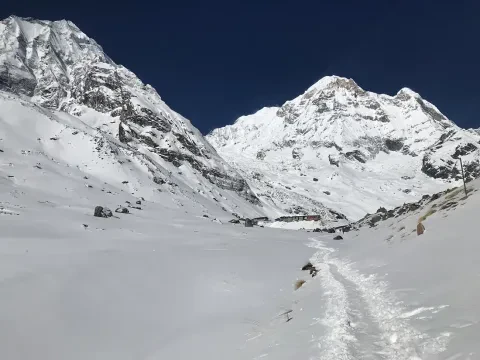
Imagine yourself in a large natural amphitheater, surrounded by glaciers and snow-capped peaks that seem to be silent giants. This is the magic of the Annapurna Base Camp Trek!
Meanwhile, this trek includes a visit to the mountain village, dramatic landscapes, cultural heritage, and unforgettable Himalayan adventures.
In addition, it offers you a chance to see different views every day. On the way to the Annapurna Sanctuary, you will witness fascinating views of rhododendron forests, terrace farming, and deep gorges.
Likewise, there are many highlights of this trekking route, including Annapurna Base Camp (4,130 m), Machhapuchhre, the Annapurna Sanctuary, and the famous Jhinu Danda hot springs.
Moreover, you will find the local Gurung community very friendly there. Therefore, the Annapurna Base Camp Trek is worth exploring if you want to enjoy the beauty of the Himalayas and experience local culture.
Whether you are a novice hiker or a professional trekker, this hiking trail will surprise you with tremendous views over the beautiful Annapurna massif. Dramatic landscapes and unique cultural heritage make this trek unforgettable and exciting.
Here, let’s explore the Annapurna Base Camp Trek top highlights/attractions and discover unforgettable adventures that await you during the trek to Annapurna Sanctuary.
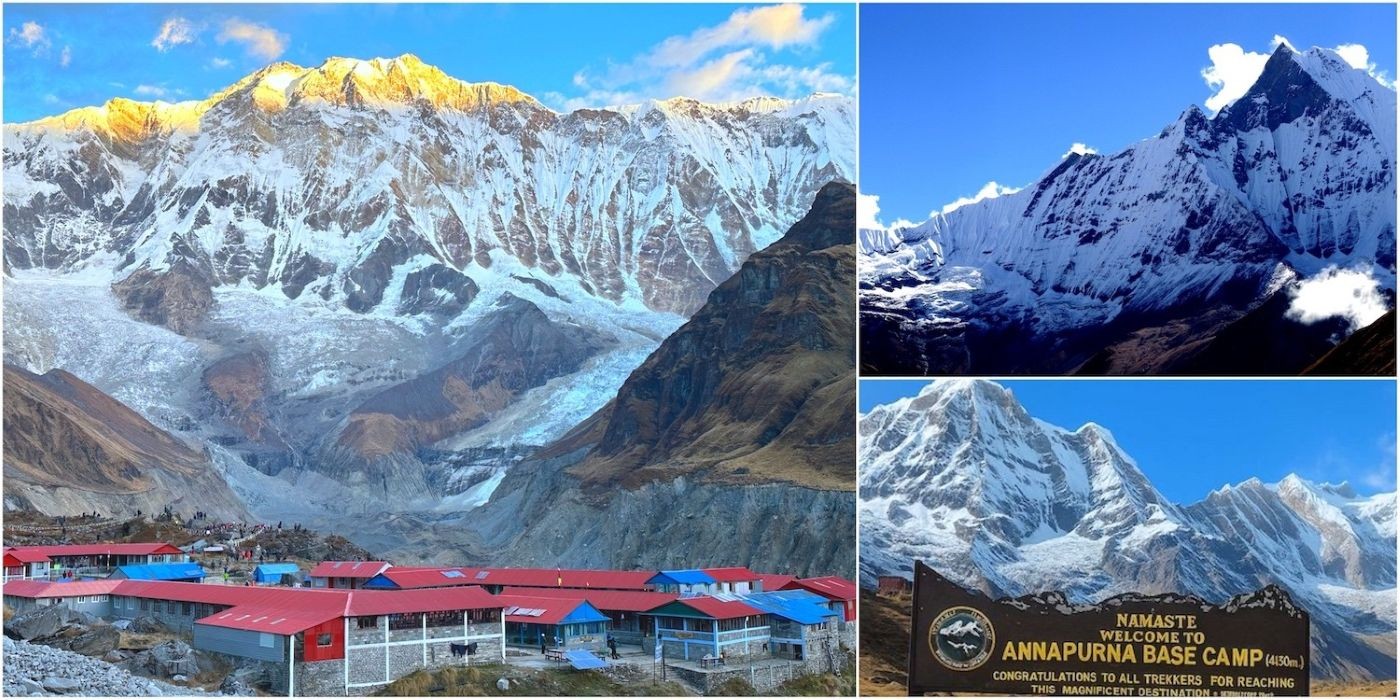
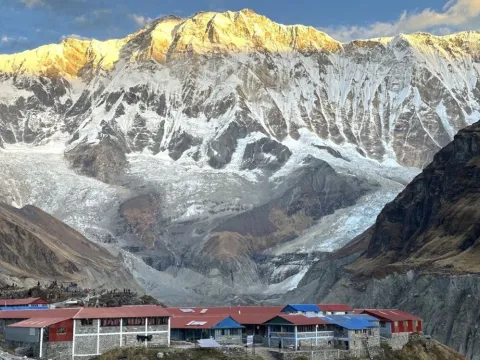
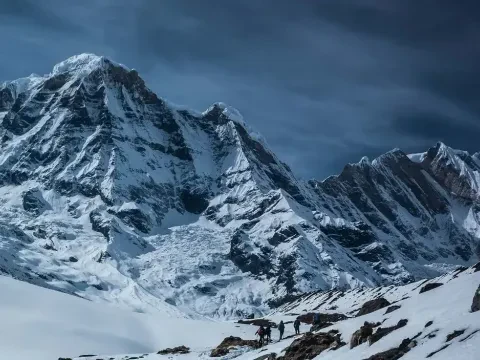
The Annapurna Sanctuary, which is a fascinating natural amphitheater surrounded by numerous Himalayan peaks, is one of the main attractions of the Annapurna Base Camp Trek. The spectacular Annapurna massif, including the 8,091-meter-tall Annapurna I peak and 7,219-meter-tall Annapurna South, dominates the Annapurna Sanctuary from above.
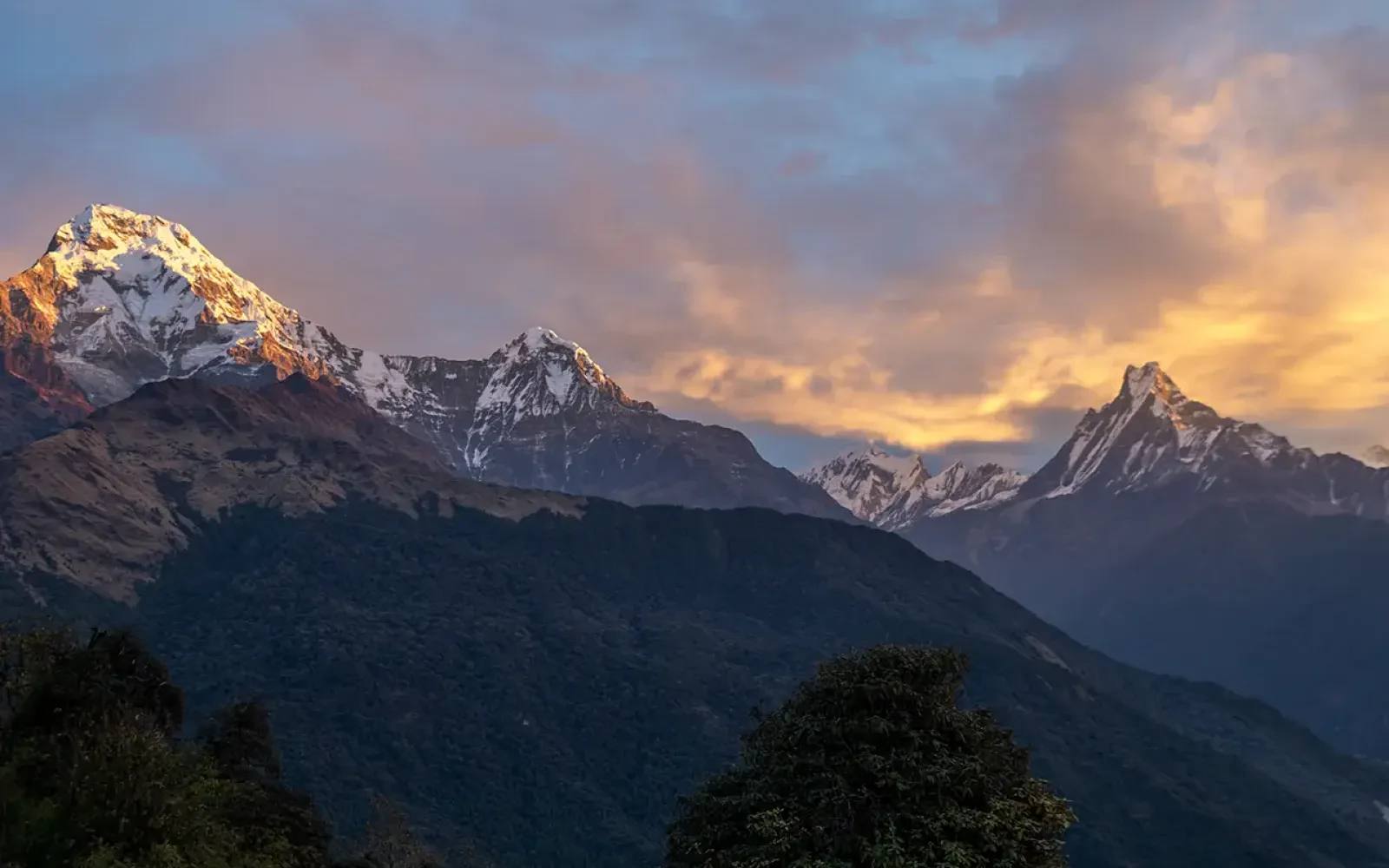
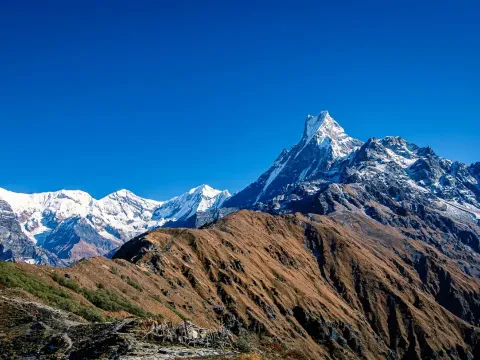
Meanwhile, the Annapurna Sanctuary is located at an elevation of about 4,130 meters and is surrounded by high mountains on three sides. In addition, a popular 6,993-meter-tall Machhapuchhre Peak, also known as the Fish Tail peak, rises impressively above the Himalayan landscape.
Meanwhile, the view over the impressive Himalayan peaks is simply breathtaking! It is hard to describe this place with words. When you get closer to the Annapurna Sanctuary, the forests become sparse, and rocky slopes take the majority of the view. Then, the sight opens up to reveal dramatic peaks of the Annapurna massif. At dawn, the view is especially mesmerizing because the peaks are covered with pink and orange tones.
“Here, the mountains seem to embrace you!”
Actually, these Himalayan geological formations were created by glacial activity, which carved out the gorges and valleys in the mountainous terrain of the Annapurna Sanctuary.
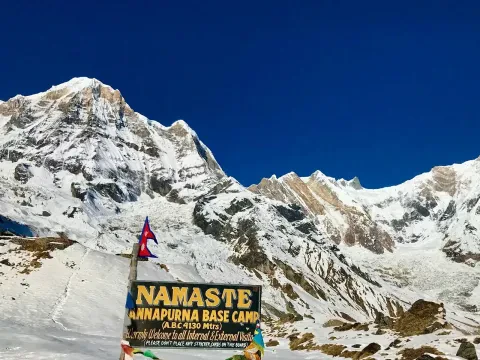
Likewise, the view over the mountains from the Annapurna Sanctuary becomes even more spectacular after you reach the Annapurna Base Camp. Here, you can stop and take a break, taking in the stunning landscape before your eyes. There are few places in the world where nature offers such Himalayan adventure and Himalayan views.
After exploring this amazing natural amphitheater, you will be able to enjoy the fantastic sight of changing landscapes on the trail to Annapurna Sanctuary.
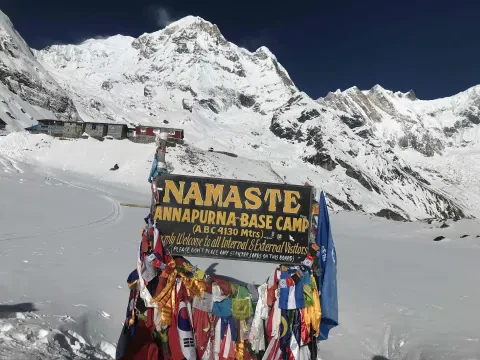
Annapurna base camp 4,130m is the peak of the climb for most of the trekkers. After a few days of exploring forests, villages, and valleys, suddenly there is a complete transformation ahead. Annapurna base camp is a huge relief as you enter the enclosure of Himalayan mountains from all sides.
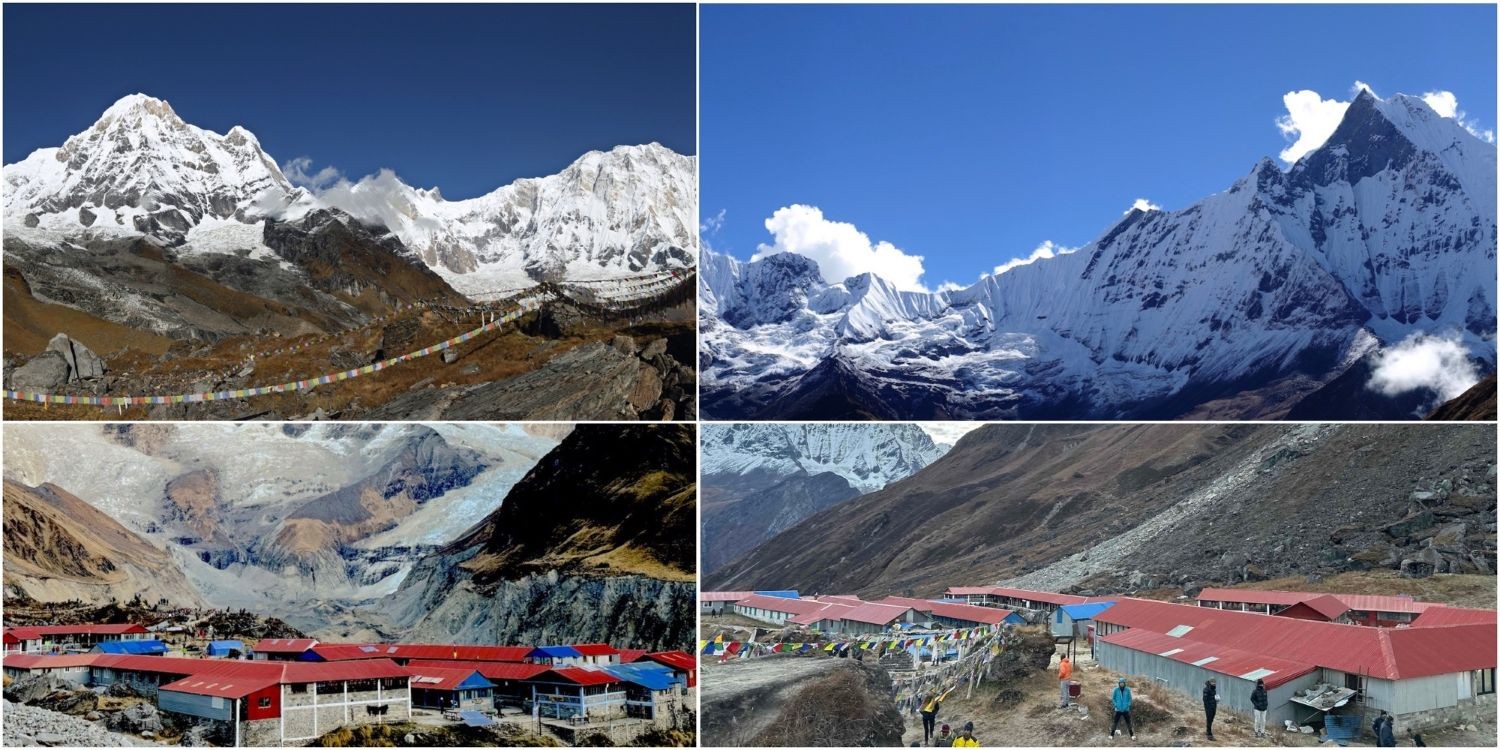
In fact, there is a mix of emotions as you enter the region. Sometimes it is silence as the wind blows across the basin. There is an amazing view of snow-capped mountain peaks around you. The sight of endless ranges comes as a surprise to most of the travelers and adventurers who visit the region.
| Mountain | Elevation | Description |
|---|---|---|
| Annapurna | 8,091 m | World’s 10 th highest mountain peak |
| Annapurna South | 7,219 m | Huge southern wall |
| Hiunchuli | 6,441 m | Beautiful peak near the sanctuary |
| Gangapurna | 7,455 m | Fantastic peak |
| Machhapuchhre | 6,993 m | Famous Fishtail peak |
| Annapurna III | 7,555 m | Impressive peak |
Sunrise Annapurna Base Camp :
Sunrise is one of the top attractions of Annapurna base camp. The sky starts clearing, and the dark silhouettes of the mountains transform into the beautiful range. The first rays of the sun crest the highest peaks. Annapurna’s ridges are tinged pink, and the golden light spreads across the huge rocky walls.
Here, the amazing view of sunrise along with the clear sky and the cold mountainous air keeps everyone amazed. Most of the travelers capture pictures outside their lodge. Some people even watch the sunrise with a camera in their hand. Even if you do not have a camera, it is worth spending some time enjoying this fantastic view.
Sunset at ABC :
Sunset provides a unique experience as compared to sunrise.
Actually, the afternoon sun casts long shadows over the glaciers and rocky peaks. As the sun sets below the horizon, the rocky and icy summits turn from bright white to orange and then to dark purple.
Likewise, the world seems to become hushed as the sun sets. The experience is even more exhilarating on a clear night as you can see the brilliant stars peppered across the Himalayan sky.
Moreover, the view from the 360-degree panorama at Annapurna Base Camp is simply incredible. It is hard to believe how beautiful and colossal the Himalayas can be. Looking in any direction, you will have a marvelous view of the mountain peaks.
In addition to, Annapurna I towers over the northern horizon. Annapurna South rises majestically beside it. The view of Hiunchuli is spectacular as it soars over the Annapurna base camp. Gangapurna is another fantastic peak that rises impressively over the valley. In addition, Machhapuchhre offers a distinct profile. The glaciers are mesmerizing, and there are multiple other dramatic Himalayan ranges around you.
What Makes Annapurna Base Camp Worth Visiting?
| Feature | Attractions |
|---|---|
| Top Elevation | 4,130 m |
| Main Attraction | 360° view of the Himalayan mountains |
| Best Time to Visit | Sunrise and sunset |
| Landscape | Glaciers |
| Photography Opportunity | Mountain walls |
| Atmosphere | Peaceful and remote |
In summary, you have a breathtaking view from the Annapurna base camp 4,130m. From where you can see the entire panorama, and you can imagine why people choose the region for Annapurna trekking. Your journey through this trail has just begun, and you are yet to witness other spectacular sights. From here, the trail leads you to another crucial point, Machapuchare base camp. The highlight of this region is the beautiful Fishtail mountain.
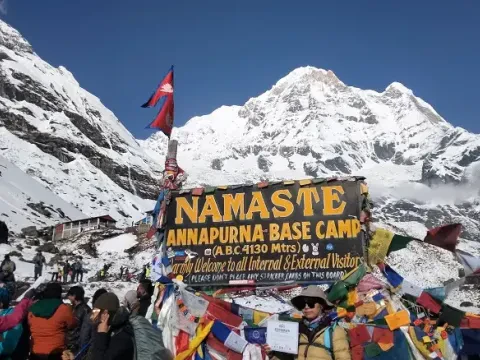
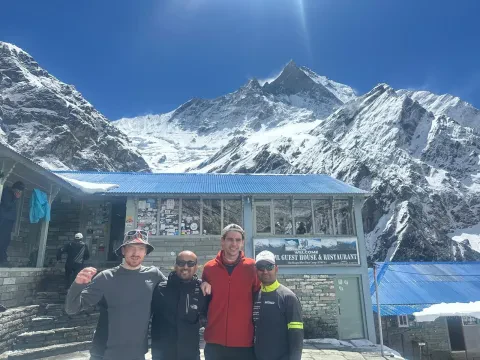
Machapuchare base camp is one of the interesting places situated at around 3,700 meters on the trek towards Annapurna base camp. It is popularly known as MBC. You can witness the beautiful Fishtail mountain from a near location. The view from the MBC makes it a perfect place to enjoy the amazing sight of Machhapuchhre.
Meanwhile, Machhapuchhre is also called Fish Tail. This mountain is around 6,993 m in height above the sea level. You can have an incredible view of Fishtail from MBC due to its distinct double summit. The prominent rock formation is the main highlight of this region. It is even more prominent from MBC. In addition, it offers fantastic opportunities for capturing pictures.
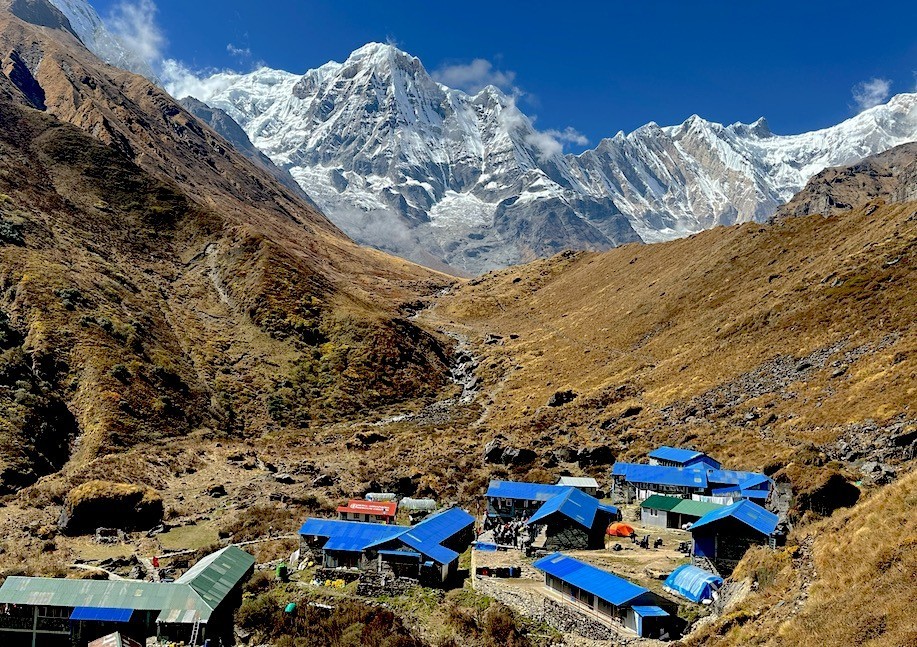
Why is Fishtail Sacred?
Machhapuchhre holds immense religious significance for the local people. The locals consider Lord Shiva to live on the peak of this mountain. It is also regarded as a holy mountain by the people living near the Annapurna region.
In fact, there was an attempt to climb this mountain many years ago. The expedition team even reached near the summit in 1957, but they failed to conquer the peak. After that, the mountain was declared officially closed for climbing by Nepal government authorities. Therefore, you must respect this site and consider the local traditions before visiting the location.
| Experiences | Annapurna Base Camp | Machapuchare Base Camp |
|---|---|---|
| Elevation | 4,130 m | 3,700 m |
| Main Attraction | 360° view of the Himalayas | Close view of Fishtail Mountain |
| Mountains | Dramatic view of the peak | Prominent view of the double summit |
| Panorama | Majestic 360° view | Panoramic mountain view |
| Atmosphere | Vast and dramatic | Peaceful and beautiful |
| Typical Visit | Trek’s major destination | It is where visitors rest |
What to Expect at Machapuchare Base Camp?
While in MBC, you will feel as if you have entered an entirely different world. You will witness an alpine landscape as you will not see many trees.
You will notice the following features along your journey:
Here, you will find the view from MBC more intriguing as compared to the one from Annapurna base camp. At MBC, you will have an incredible close view of the Fishtail mountain, and you will get an opportunity to enjoy a dramatic landscape. In addition, it is the perfect place to capture pictures of Fishtail before heading towards the Annapurna base camp.
When to Visit MBC?
It is always recommended to arrive early to witness the mountainous view while the sky is clear. You will notice that the mountain peaks are often covered with clouds during the day, especially during the cloudy season.
Tips for Visiting Machapuchare Base Camp:
Therefore, MBC is not merely a halt on your journey. It allows you to experience a unique view of Fishtail and prepares you for the beautiful mountainous panorama at the Annapurna base camp.
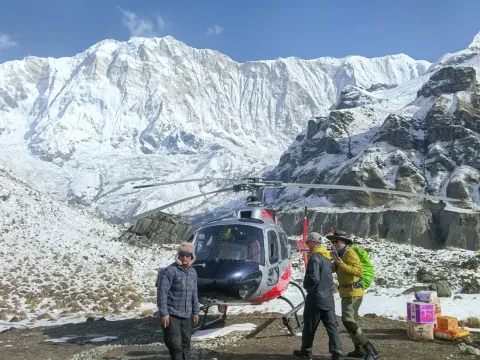
A sunrise at Poon Hill is one of the most unique experiences on the Annapurna trail if you are going ABC via Poon Hill. From around 3,210 m, the Poon Hill viewpoint offers a magnificent view over the high mountains without having to attempt a challenging high altitude trek.
In fact, the sunrise from Poon Hill is often one of the most anticipated highlights of a Ghorepani Poon Hill trekking itinerary. For hikers looking to capture extraordinary and unforgettable photos of the Himalayas at dawn, this would be the best sunrise viewpoint in Nepal – with a relatively easy climb!
Here, the sunrise trek from Ghorepani to Poon Hill is a short and easy one. Most trekkers set off from their overnight hotel around 4:45 – 5:15 am, depending on the season and the expected sunrise time. The trail is mostly composed of stone steps and forest path, climbing steadily upwards to the viewpoint. It is a good idea to carry a headtorch or a flashlight on this early morning adventure – at least until you get to the viewpoint.
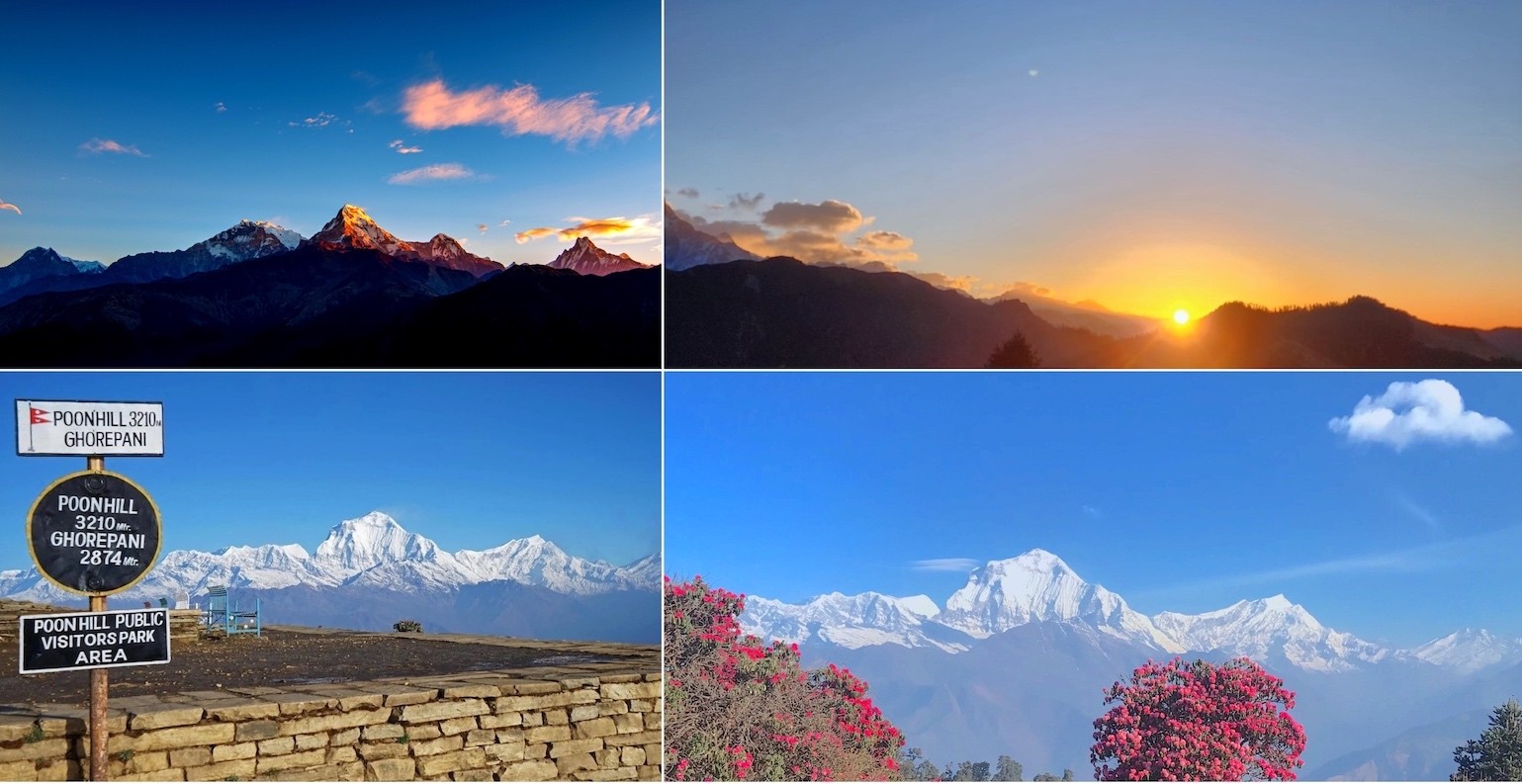
As you climb up the trail before sunrise, everything looks dark, gloomy and mysterious under the shadow of the mountain peaks. But then – the East starts to lighten up
In fact, the dark outlines of mountains start to appear in the horizon, set aglow by the colors of the morning sky. And then – the golden rays of dawn pierce through the darkness, painting the snow-capped peaks of the high Himalayas in brilliant hues of orange and gold.
| Peak | Elevation | Comments |
|---|---|
| Dhaulagiri I | 8,167 m | Often gets the first golden light |
| Annapurna I | 8,091 m | High Himalayan range panorama |
| Nilgiri | 7,061 m | A popular peak in Annapurna region |
| Machhapuchhre | 6,993 m | the most alluring peak in Annapurna region |
| Annapurna South | 7,219 m | the most popular peak to be seen from ABC |
In essence, it does not take long for the mountains to transform from dark silhouettes to glowing peaks in a blaze of colors. This is one of the most spectacular experiences that a trekker can witness in the Annapurna region – the magical light at dawn over the Himalayas.
Why Sunrise at Poon Hill is Unique ?
Easy access :
As with all sunrise views in Nepal, the time of dawn changes depending on the season.
| Activity | Time |
|---|---|
| Wake up | 4:15 – 4:45 am |
| Leave Ghorepani | 4:45 – 5:15 am |
| Reach viewpoint | 5:30 – 6:15 am |
| Sunrise | Typically: 5:15 – 7:00 am |
| Return to Ghorepani | After sunrise |
As a rule of thumb, it is a good idea to reach the viewpoint 30-45 minutes before sunrise. This will give you a chance to get comfortable and settle down a bit – as well as capture great photos!
Make sure to bring warm clothing, a pair of gloves, a headlamp and your camera – it can get surprisingly cold at this height!
For a traveler seeking the best sunrise view in Nepal without an expensive and strenuous high altitude trek, the Poon Hill sunrise viewpoint is hard to beat. Once you have caught the amazing sunrise from Poon Hill, the next leg of your journey will take you through traditional villages that dot the mountain slopes – and offer a glimpse into Nepal’s unique mountainous culture.
The mountainous trail through the Annapurna region takes through some fascinating traditional villages. Ghandruk and Chhomrong are two such interesting mountain villages located along the Annapurna Base Camp trail. These are local Gurung and Magar villages – and visiting them offers a unique cultural insight into the lives of people living in the Annapurna region. Plus, they are perfect for acclimatization and offer spectacular views over the high Himalayan peaks of the Annapurna South and Machhapuchhre ranges.
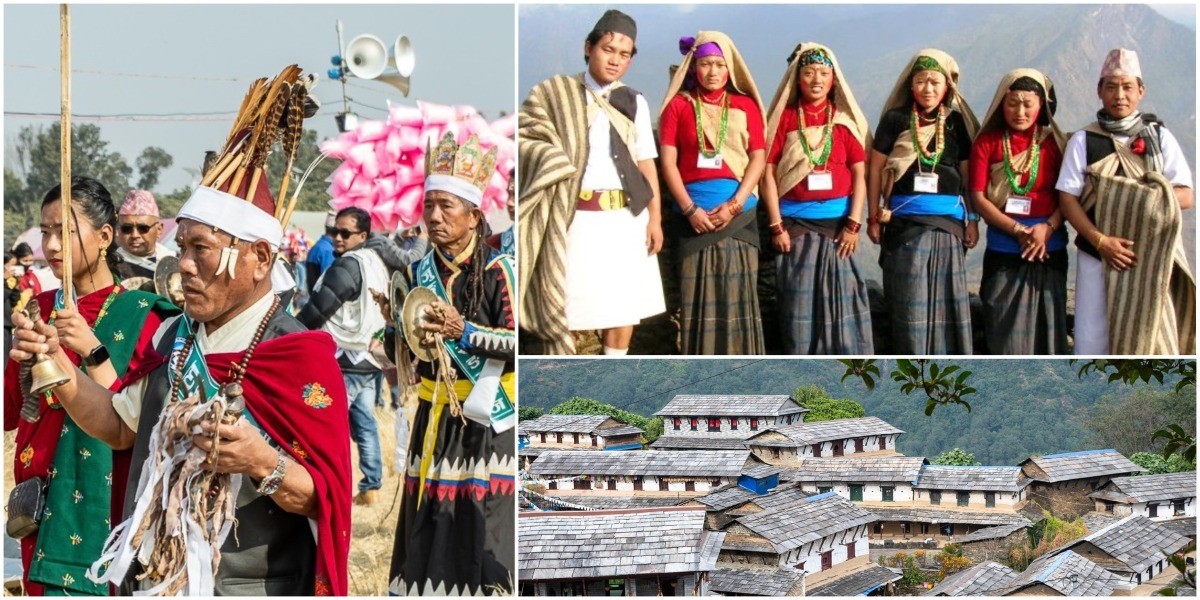
Ghandruk is one of the most enchanting mountain villages in the Annapurna region. The traditional stone-paved roads, slate-roofed houses and the terraced fields create a unique mountain village charm. But what makes this place special is that you can actually experience the local community and its culture first hand. The cultural experiences offered in Ghandruk village are an integral part of a trek through the Annapurna region. The local Gurung people are very hospitable and happy to share stories about their culture with you.
| Experience | Details |
|---|---|
| Cultural experiences | Explore traditional Gurung village. |
| Lodging | Unique local guesthouses and family-run teahouses. |
| Local Cuisine | Traditional tea, meals, breads and snacks. |
Other activities :
Chhomrong: Overlooking the Modi Khola Valley,
| Cultural Experiences | Details |
|---|---|
| Traditional homes | Slate-roofed houses built from local materials |
| Village lanes | Winding stone-paved paths |
| Local meals | Variety of traditional Nepalese dishes and baked goods |
| Community life | Interesting to watch the local lifestyle |
| Cultural insights | Local museums, history and cultural customs |
| Hospitality | Friendly and welcoming village atmosphere |
The Annapurna region is home to diverse communities, each with their own unique cultures, lifestyles and traditions.
Most Important Cultural Trekking Etiquette,
The best cultural trek in Nepal is one where you are respectful towards the local traditions and customs.
Here are some quick pointers to help you with that:
With a sense of respect and cultural awareness, even the simplest of interactions can become memorable cultural encounters during your Annapurna trek. In fact, a warm local hospitality – a chat over a simple cup of tea – can be much more precious than the view of the Himalayas at sunrise.
With this, the trail from Ghandruk and Chhomrong also leads deeper into the mountains – and towards the Annapurna Sanctuary.
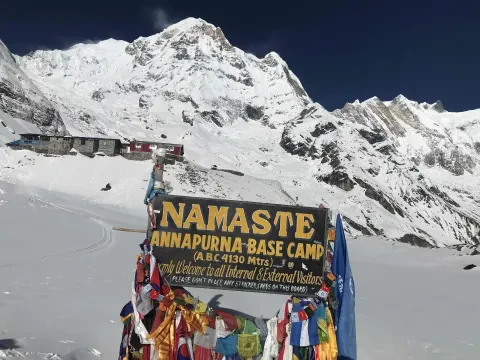
Jhinu Danda hot springs is one of the most enjoyable activities on Annapurna Base Camp Trek. It is a perfect opportunity to relax after days of climbing up and down and walking along rocky paths.
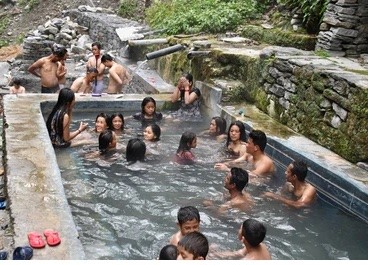
From Jhinu Danda, there is a nice trail leading down to the river. It takes about 20-40 minutes to reach the natural hot springs. While walking down, you will be able to hear the sound of the river getting louder and louder. Finally, you will see natural hot springs along the Modi Khola River.
In fact, the place looks amazing with green mountains surrounding the river. Thick forest coverage can also be seen along the slopes. Meanwhile, warm water is waiting for you to enjoy a short break from the trek.
Why Jhinu Danda Hot Springs are Special
Most hikers and trekkers consider this place one of the highlights of the Annapurna Base Camp Trek. It is a great opportunity to relax after several days of walking and climbing.
Meanwhile, the water in the pools is naturally warm. However, the temperature may vary depending on the season. Most trekkers spend about 20-30 minutes soaking in the warm water.
Hot-Spring Soaking Guide :
The entry fees and conditions of the hot springs may change. Therefore, it is better to check with the local authorities when you arrive.
Meanwhile, soaking in warm water is not the only benefit of visiting this place. Sitting along the river is a great chance to reflect on the amazing trek you have experienced. The sound of the river perfectly replaces the sound of your footsteps. Your tired legs also have a chance to rest for a while.
Here, it is like nature has prepared a unique hot-spring spa for you in the mountains.
In conclusion, many hikers and trekkers consider this place one of the highlights of Annapurna Base Camp Trek. From Jhinu Danda, you will have a great view of the mountains. The trail will then lead you through forests and along the Modi Khola River once again. It is heading towards more dramatic landscapes.
Rhododendron forests, bamboo groves, and Modi Khola Valley are some of the most captivating natural sights on the Annapurna Base Camp Trek. The trail goes up and down, and the landscape changes constantly. You will find yourself walking along narrow paths covered with thick vegetation. In some places, you may see huge rock walls rising on both sides of the trail.
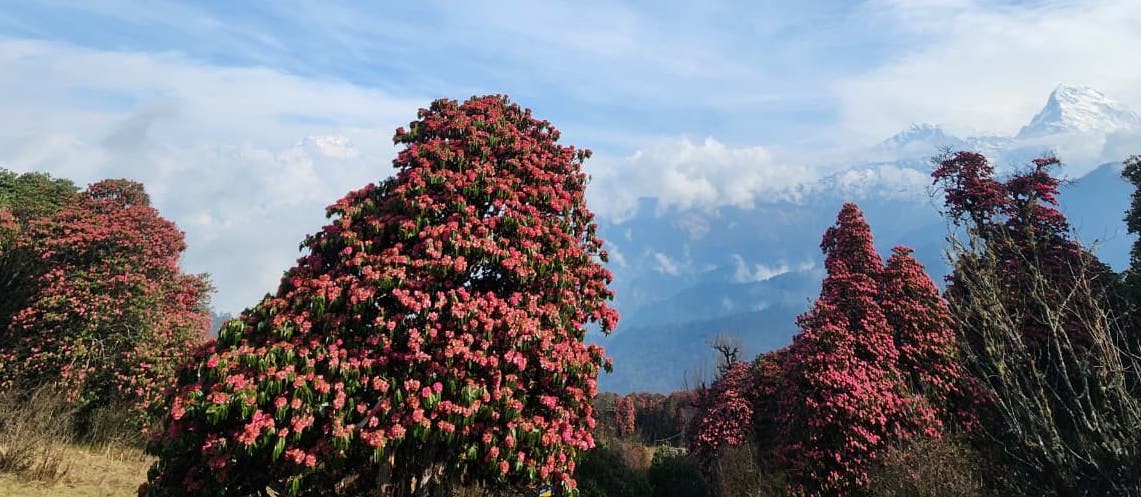
On the lower altitudes, you will be able to see beautiful forests consisting of Rhododendron, bamboo, and oak trees. Narrow trails twist and turn through these forests. Mossy rocks are also common along the path. Water is another common sight in these forests. It can be seen flowing down the slopes after rainy seasons.
Spring Flowers in the Forests,
The spring season is one of the best times to see the forests on the Annapurna Base Camp Trek. During this season, Rhododendron flowers begin to bloom. Depending on the altitude, different types of these flowers can be seen. Their colors can range from deep red to pink and white.
| Season | Flowers Views |
|---|---|
| March | Early bloom |
| April | Flowers in full bloom |
| May | Late bloom |
| Monsoon | Very green |
| Autumn | Clear skies |
| Winter | Cold season |
Bamboo groves are another highlight of Annapurna Base Camp Trek. They provide a unique view and a chance to experience different wildlife.
Tall bamboo trees grow thickly along the trails. Their leaves sway from side to side when the wind blows. You can also hear birds chirping from time to time. Annapurna Conservation Area is home to a variety of wildlife species. However, the chance to see some of them is limited.
Some of the animals you may be able to see include:
In fact, the trail through the bamboo groves is great for wildlife spotting. The more quietly you move, the more wildlife you are likely to see.
Another amazing sight on the Annapurna Base Camp Trek is the Modi Khola Valley. It provides a unique natural background for the trail. The river flows down the valley and makes a unique sound.
Moreover, the sound of the river becomes even more noticeable after rainy seasons. Water flows down the valley forcefully. Waterfalls can also be seen spilling from the cliffs above the valley.
One of the most fascinating aspects of Annapurna Base Camp Trek is its ecological transition. The trail leads through dense forests to the open mountainside. It is a chance to experience a variety of landscapes in a single trek.
Meanwhile, the trail through forests and bamboo groves on lower altitudes is very different from the one on higher altitudes. On the lower altitude, there is a lot of vegetation. It includes Rhododendron trees, bamboo groves, and terraced fields. The air is also warmer and more humid.
On higher altitudes, the trail takes you through rocky slopes and valleys. It then opens up to snow-capped mountains. The vegetation also changes with altitude. It becomes sparser as you move up.
In fact, this unique aspect of Annapurna Base Camp Trek allows you to have an amazing experience. It is like you are on two different treks at the same time.
Likewise, the forests provide an interesting view as well. Especially when you are able to see Machhapuchhre or Annapurna South through them. As you move up, the forest coverage disappears. The trail then leads you through open land towards the base camp. The Modi Khola River can be heard flowing nearby. Meanwhile, the mountains appear larger and more majestic with every step.
Suspension bridges on the Annapurna Base Camp route are simply one element of the thrill of this trek. The bridges are found throughout the trail, connecting together the steep sided valleys and river banks. Some crossings offer breathtaking heights above the fast flowing water
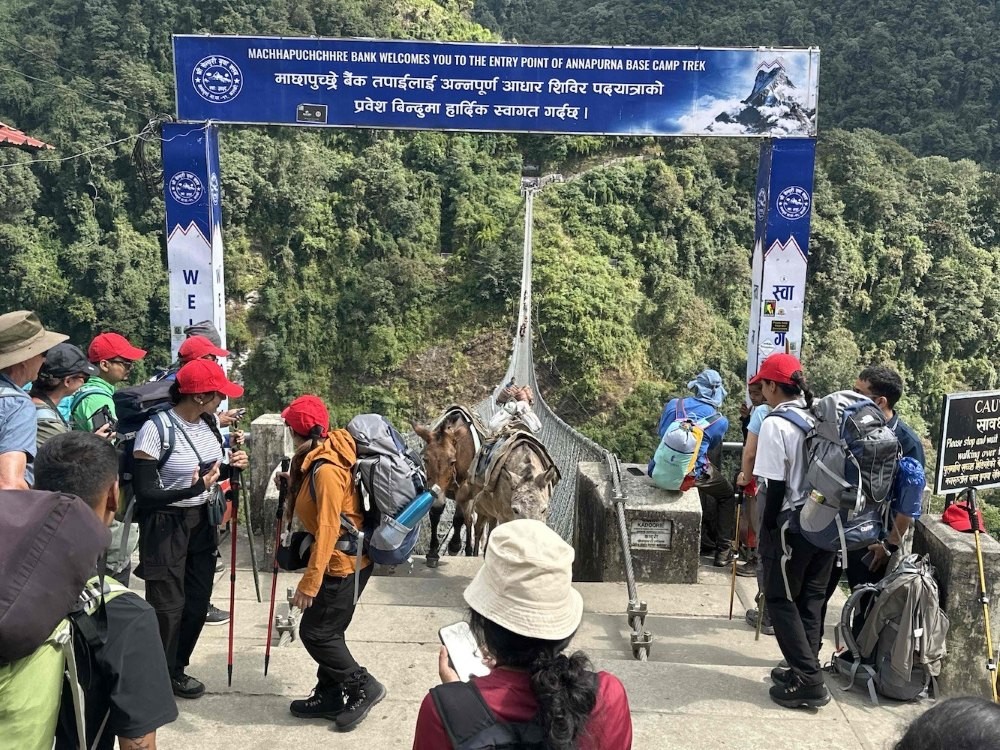
When on the bridge you may well feel the gentle movement of this unusual transport with the cool mountain air, adding to the challenge. And as you look down you will see streams and rivers, fed from the glaciers above cascading down the valleys.
What makes them special ?
Here, the Modi Khola bridges are a particular highlight as the river snakes its way along the valley and around the forested foothills up to the Himalaya peaks.
Although you may feel apprehensive about crossing these dramatic bridges, these feelings are likely to be short lived and you may well find yourself thinking how easy it was. If you feel particularly wobbly stop right in the centre and look out over the valley rather than at the dangerous drop ahead.
In summary, glacial rivers, bridges and mountain peaks really do help to create the special experiences, memories and excitement of this Himalayan trekking holiday. But as soon as you get to the other side of those bridges, you are rewarded with the wonderful wilderness of the conservation area and a chance to explore one of Nepals most diverse protected areas.
The Annapurna Conservation Area covers a huge range of different Himalayan habitats. From the subtropical forest it is possible to see dramatic changes in vegetation as we head up the valley towards the towering peaks of the Annapurna Himalaya.
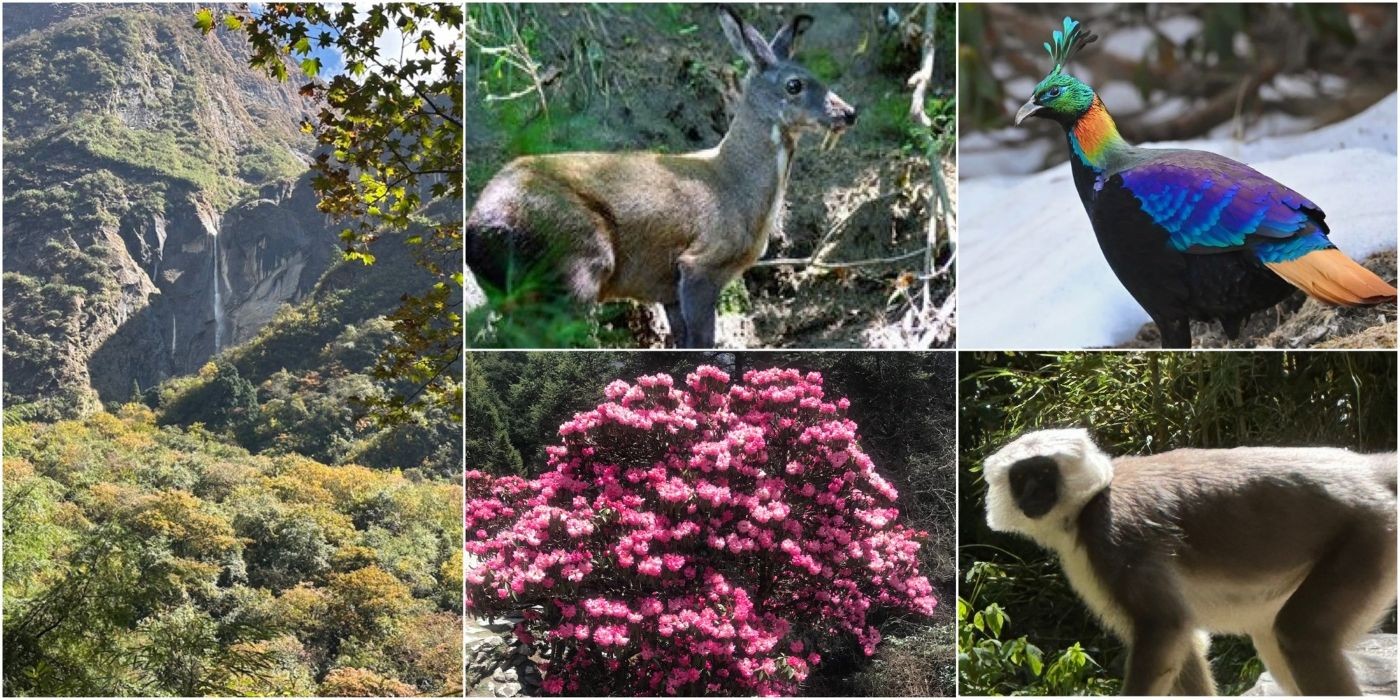
Meanwhile, this range in altitude means that the area is home to a number of different Himalayan wildlife and wildflowers. Although wildlife watching is not guaranteed, it is well worth keeping an eye out for the variety of animals that can be seen in the region. This applies to all sizes and species from the smallest butterflies and songbirds to the Himalayan big game animals. And when you can't see them, you can always enjoy the spectacular mountain views!
Some of the wildlife you might spot on your Annapurna trek includes,
Wildlife Watching Opportunities on your Annapurna Trek :
Besides, the forest of Annapurna Conservational Area has a wealth of plant life which bursts into bloom in spring. Taking in the wonderful colors and fragrance of the rhododendrons and other flowering shrubs. Particularly spectacular are the bamboo forests which cover many of the lower slopes and valleys.
Even higher up, the trail is often flanked with oak and other deciduous trees. As you near the higher reaches of the trail, the forest starts to thin out before eventually giving way to the open mountainous terrain.
In fact, the amazing wildlife and bio-diversity of the Annapurna Conservation Area is more than just a scenic spectacle. The forest plays a fundamental role in maintaining the local ecosystem. It helps to conserve the mountain water catchment areas, prevent soil erosion and protect the local mountain village communities who live in this region.
Likewise, the Annapurna Conservation Area also provides a vital link with the local communities who live in this mountainous region. Due to the popularity of this trekking region, the local economy benefits from the income generated by the conservation area through tourism.
There are a number of things you can do to help the local environment while you are visiting this wonderful region :
The Annapurna region of Nepal demonstrates the importance of protected areas within the country. Everyone visiting these spectacular mountains has a part to play in protecting them.
Here, the beauty of the mountain peaks is only one element of the Annapurna experience. The amazing mountain wilderness combined with the local forest, wildlife, rivers and communities all contribute to making the Annapurna Base Camp Trek such a truly special Himalayan adventure.
The best photography spots are found along the way. You don’t need expensive equipment to take great pictures. The right timing, patience, and composition will help capture the best Annapurna Base Camp photos.
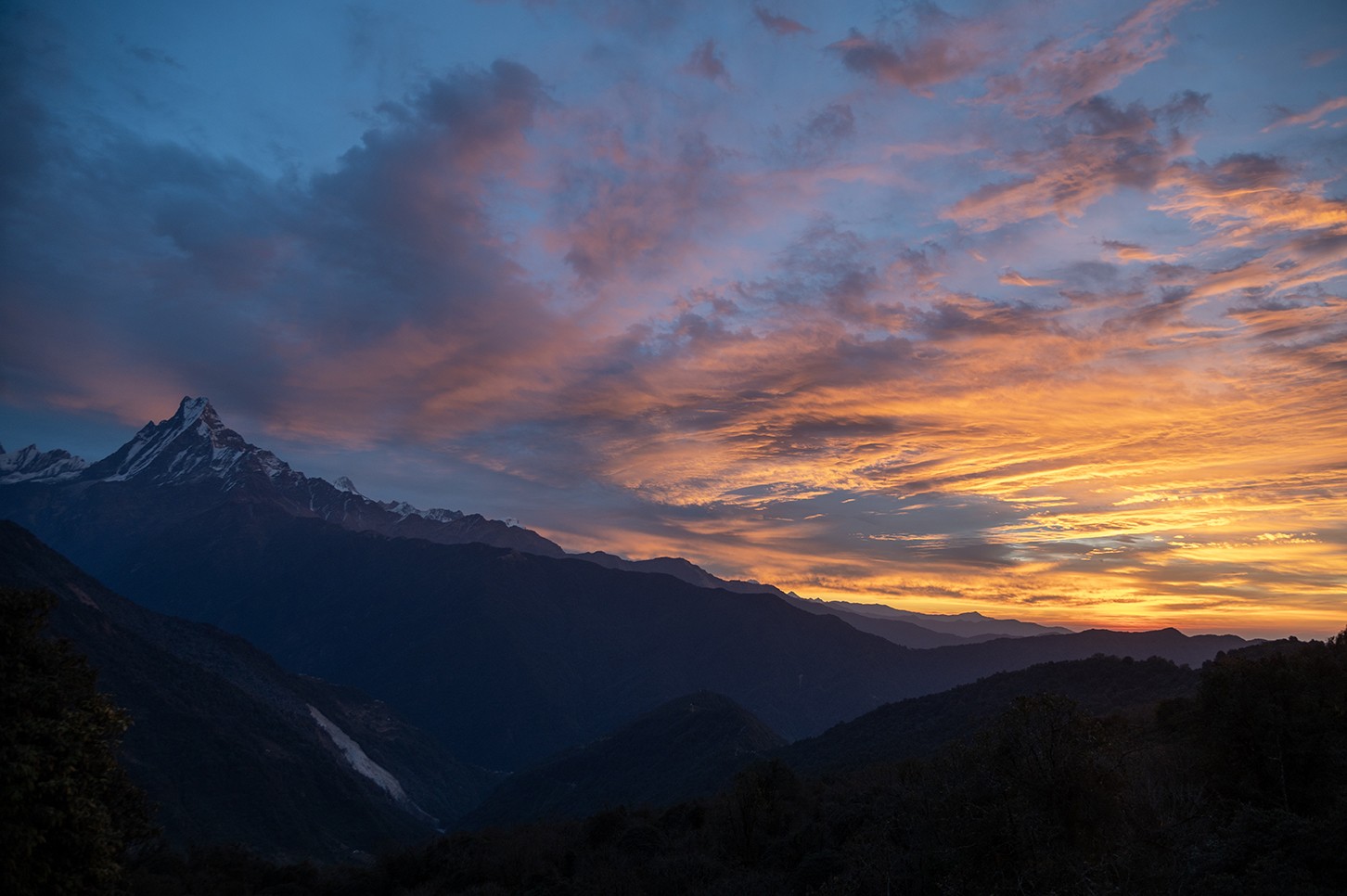
Meanwhile, the mountains change colors throughout the day. They are bluish in the morning and more yellow in the evening. So, it’s always a good idea to have your camera or phone at hand!
| Location | Best Time | What to Photograph |
|---|---|---|
| Ghorepani | Sunrise | Dhaulagiri and Annapurna ranges |
| Poon Hill | Sunrise | Golden mountain panorama |
| Tadapani | Sunrise | Annapurna South and Machhapuchhre |
| Chhomrong | Morning | Villages and mountains |
| Sinuwa | Morning | Forest trails and peaks |
| Machapuchare Base Camp | Morning | Fishtail views |
| Annapurna Base Camp | Sunrise/sunset | 360 mountain amphitheater |
| Jhinu Danda | Afternoon | River, forest, and village views |
The sunrise from Poon Hill is fantastic for photography. It’s the perfect opportunity to capture the magnificent mountain panorama. Get there early and frame your shot before the sun peeks out.
Possible composition:
Sunrise from Annapurna Base Camp,
Sunset from Annapurna Base Camp,
The conditions for sunset photos are usually warmer and softer. The mountains turn orange and pink as the sun sets behind them. It’s a great time for capturing the beautiful sky as well. Some trails stay open long after sunset, so you can try shooting during the blue hour and the following golden hour.
Tips for Himalaya Photography :
The best Annapurna photos come from waiting. Look at the mountains and the sky before hitting the shutter button.
The Annapurna Base Camp trek offers more than just Poon Hill and Annapurna Base Camp views. There are plenty of smaller attractions along the trail to enjoy the scenery. The trail constantly surprises you with wonderful views and opportunities for great pictures.
Terraced Fields near Lower Villages :
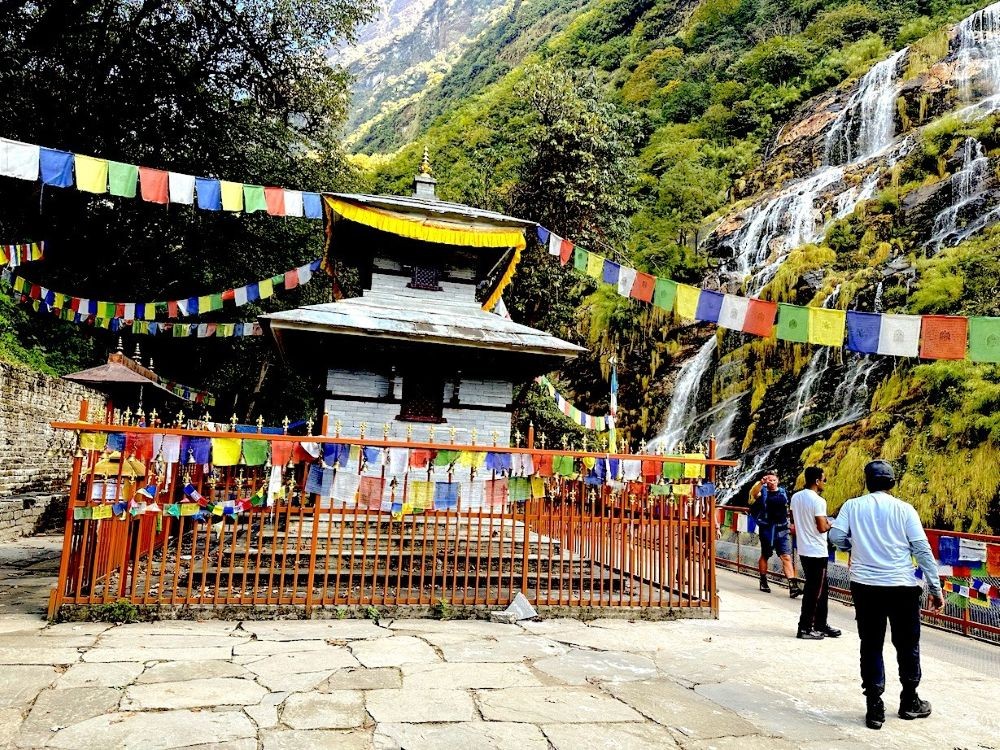
Best time to photograph: early mornings and evenings.
Waterfalls,
There are many waterfalls in the Modi Khola valley. They were formed by the melting snow and summer rains. Some of them are just small streams while others have a considerable flow rate.
It’s best to listen to the waterfalls while exploring the trail. The Modi Khola valley has many beautiful viewpoints.
Forest Views,
It’s a surprise to stumble upon a viewpoint in the forest. There are some amazing photo opportunities there as well!
The most remarkable one is a glimpse of Machhapuchhre mountain peak through the leaves. It looks even more majestic than an open vista. Take a picture with the trees as a frame!
Chhomrong Viewpoint,
Chhomrong viewpoint offers great views of both the mountains and the village below. See the Annapurna South and Machhapuchhre ranges while enjoying the terraced fields scenery. It’s one of the best places to take photos of the trail’s villages.
Best time to photograph: morning hours.
Machapuchare Base Camp :
Best time to photograph: early mornings.
Annapurna Sanctuary :
Best time to photograph: sunrise and evenings.
| Attraction | What to Photograph | Best Time |
|---|---|---|
| Terraced fields | Rural scenery | Morning |
| Waterfalls | Forest view | Day |
| Chhomrong | Village + mountains | Morning |
| MBC | Close-up Fishtail view | Early morning |
| Annapurna Sanctuary | Alpine scenery | Sunrise/sunset |
| Modi Khola | River valley | Day |
In summary, the beauty of the Annapurna trail lies in the variety of landscapes. It starts from the terraced fields, continues with the forest view, and ends in the alpine sanctuary of Annapurna Mountains. This diversity makes the Annapurna Base Camp trek so special!
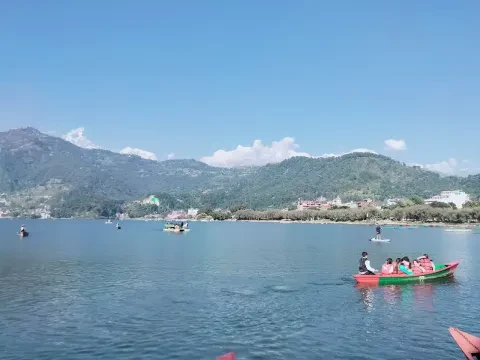
The best time for Annapurna Base Camp Trek depends on what we want to see and experience. Spring and autumn are both popular for trekking in Nepal. Still, each has its own charm that makes it unique. Winter and monsoon seasons are also possible in some parts of the trail, but the experience will be entirely different.
Spring – March to May
Trekking in Annapurna region during spring has one of the most beautiful landscapes. The rhododendron forests bloom in full glory on the trail to Annapurna Base Camp (ABC). Thus, if we want to see colorful landscapes in Ghorepani, Tadapani, and other forests on the route, we should plan our adventure during spring.
As the trail progresses upwards towards a higher altitude, the blooming rhododendron turns into the landscape typical of the alpine desert.
The beauty and attraction of springtime include:
April is an excellent month to witness blooming flowers, so it is a popular period for photography. Nevertheless, we might encounter a cloudy sky in the afternoon around the mountain peak.
Autumn – September to November
Autumn is probably the best season for most trekkers who want to enjoy clear mountain views. During the monsoon season, mountain peaks are covered with clouds. Thus, once it finishes, the sky clears up, giving us a magnificent view of the Annapurna range.
Meanwhile, it is an excellent time for photography, as we can capture mountain peaks almost on a clear day. It is specifically the case for viewing points around Poon Hill, MBC, and ABC.
Autumn attractions:
In fact, October is the most bustling month for trekking in Annapurna. It is because the monsoon season has finished, and the trails are drier. Thus, the popularity of this season for Annapurna Base Camp trekking makes the accommodations and teahouses busier than expected.
Winter – December to February,
Trekking in the Annapurna region during winter involves freezing temperatures. In addition, due to the snowfall, some trails are blocked and inaccessible. Nevertheless, in winter, we can experience the best mountain views in the Annapurna region.
Here, the best time to witness the snow-covered landscape is around the Annapurna Sanctuary, which becomes inaccessible during severe snowstorms.
A trek during the winter season is suitable for:
On the other hand, we should also consider these winter limitations:
Monsoon – June to August,
Monsoon season is typically not the best time for trekking due to extreme weather conditions. Moreover, the trail becomes slippery, obstructed by landslides, and washed out by heavy rains. Nevertheless, the lower areas are rich in greenery. Waterfalls become more prominent and powerful while the landscape turns into lush, green vegetation.
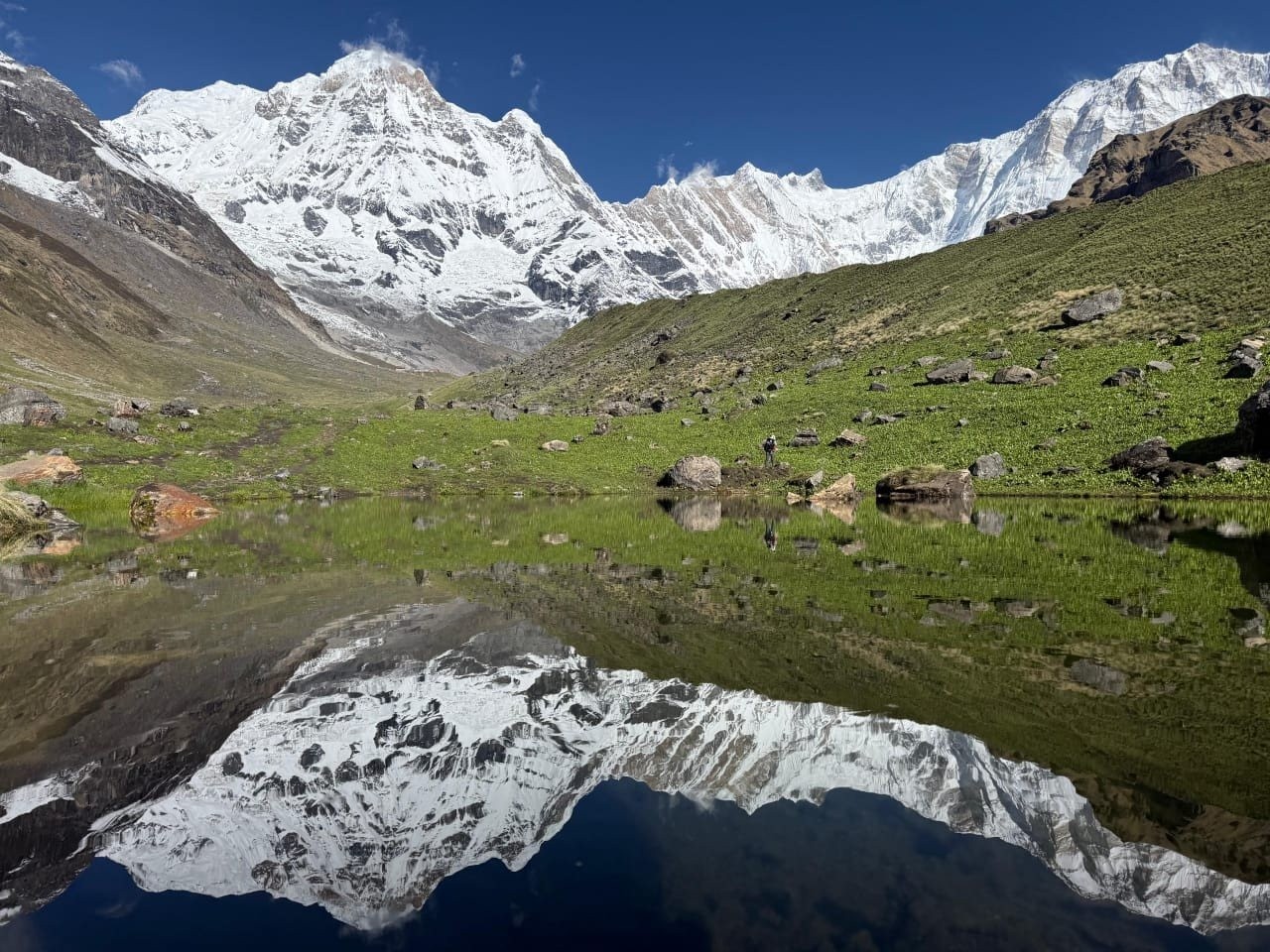
Monsoon attractiveness mainly includes:
| Season | Main attraction | Mountain visibility | Trail condition | Crowds |
|---|---|---|
| Spring | Rhododendrons | Very good | Good | Moderate |
| Autumn | Mountains | Excellent | Generally stable | High |
| Winter | Snowy scenery | Often excellent | Cold/snowy | Low |
| Monsoon | Lush landscapes | Limited | Wet/slippery | Low |
Which One Is The Best Season To Trek to ABC?
If we want to experience the beauty of the forest with blooming rhododendrons, spring is the best season to go for a trek. On the other hand, if we want to capture magnificent views of the mountain peaks, the best season is autumn. Both seasons have tremendous potential for photography.
While the spring season will provide excellent foregrounds, the autumn season offers brilliant backgrounds for capturing mountain scenery. Ultimately, what determines the best time to trek to Annapurna Base Camp is the preferences, priorities, and considerations mentioned above.
We can make the most of the Annapurna Base Camp Trek (ABC) experience by being prepared. First of all, we should know that it is not necessary to run from one viewpoint to another. Instead, let us take our time, as the mountain range provides unforgettable views at different trail stations. Furthermore, altitude, weather, and overall trail conditions are crucial for our trek, so let us think about the essential ABC trekking tips.
We must not underestimate the challenges associated with high altitude. It is of utmost importance that we allow our bodies to adjust to the changing environment. As such, following the recommended itinerary is essential, as is avoiding unnecessary elevation gain while sleeping.
Meanwhile, it is critical to pay attention to the warning signs our body might give us. For instance, headaches, nausea, dizziness, extreme tiredness, loss of appetite, and sleep disturbances can be an indicator of altitude sickness. In the event that we experience any of these, it is vital to consult with our guide and, if necessary, move to a lower altitude.
It is not a good idea to walk with other people. Let us try our best to maintain a steady pace throughout the day. We also need to take regular breaks to avoid getting exhausted. If we slow down, it will give us a chance to admire the views of forests, waterfalls, villages, and mountain peaks. Thus, we will see more and be more relaxed at the same time.
We must stay hydrated as we hike at high altitudes. The demand for water depends on how much we exercise. We should drink water whenever we feel thirsty. At the same time, it is a good idea to carry a reusable bottle and only use potable water. We can filter the water at tea houses or bring water treatment tablets.
Moreover, we should not drink too much alcohol at high altitudes because it impairs our judgment, affects our sleep, and dehydrates us.
It is of utmost importance that we dress wisely since the weather in the mountains can be unpredictable. In terms of ABC packing list, warm clothes, raincoats, trekking pants, hiking boots, warm gloves, headwear, etc., are some of the must-have items. Other useful accessories include a headlamp, a reusable water bottle, sunscreen, sunglasses, and a first aid kit.
Importantly, we should keep the waterproof clothing on top and never push it to the bottom of our backpack. It is essential to keep it accessible in case of rain.
Cold weather significantly reduces battery power. Therefore, we should try to keep spare batteries with us in an inner pocket close to our body. As for the camera equipment, it is vital that we do not expose it to extreme temperatures and always have a microfiber cloth and waterproof cover with us. In addition, we must be aware of the location of our devices at all times, especially near steep paths. It is always a good idea to double-check if any photos have been saved securely on the camera or phone.
We must understand that the Annapurna region is inhabited by many people. Therefore, it is critical that we do not disturb the locals while taking photos. Taking pictures of people is considered impolite and should be avoided. If anything, we have to ask their permission before clicking a shot. Similarly, we must be mindful when taking pictures of monasteries and other sacred places.
It is essential to understand that villages are not tourist attractions. Therefore, we have to treat them with respect and never act rudely. We should be conscious of our appearance around the village and the nearby temples. In addition, we should support local shops and people by shopping at their stores. Lastly, we can greet the locals with a simple “Namaste.”
Not all the viewpoints we see are equal. Therefore, it is always a good idea to save some of the viewpoints for later. This way, we will have unforgettable memories and photo opportunities.
Moreover, we should stop and look around while hiking. Sometimes, the most scenic view is right in front of our eyes. It could be a beautiful waterfall or a mountain peak peeking through the trees. Either way, we should take our time and enjoy the Annapurna scenery.
The Annapurna region is a sensitive ecological region. Therefore, we have to follow the trail rules and regulations strictly. For instance, we should always collect our trash. In addition, we must not litter, use single-use plastics, or stray from the marked trails. We ought to avoid picking wildflowers or harming the local wildlife in any way. It is also a good idea to refrain from talking loudly and use designated toilet facilities if available. Most importantly, we should respect local regulations and wildlife conservation efforts.
The most practical ABC trek tip is to listen to the advice of our guides and common sense. Our guides can take care of altitude, weather, and trail regulations. However, they cannot do everything else. That is why we have to share our concerns openly with them. It is critical to tell our guides if we feel tired or sick or if we need something else.
Let us also remember that the most prominent concern during our trek should be our body. We must never hesitate to notify our guide if something is not comfortable or if we experience unusual dizziness or nausea.
| Priority | What to remember |
|---|---|
| Altitude | Do not ascend rapidly |
| Hydration | Stay hydrated |
| Pacing | Do not hike too quickly |
| Weather | Pack appropriately |
| Photography | Carefully handle your equipment |
| Culture | Be respectful |
| Environment | Be mindful of the surroundings |
| Health | Pay attention to your body |
| Trail safety | Follow trail rules and local regulations |
| Enjoyment | Take your time |
Annapurna Base Camp Trek is an extraordinary experience with unforgettable views of snow-covered mountains. It is a one-of-a-kind adventure, offering amazing opportunities for hikers.
Here, the Poon Hill golden sunrise and panoramic views, the rhododendron forests, the Gurung village, Jhinu Danda hot springs, Modi Khola valley, and many other attractions are waiting for you. The most spectacular sight is the view from the Annapurna Base Camp (4,130 m), where you can see the Himalayan peaks around you in an amphitheater.
Likewise, few activities are as impressive as hiking in the Annapurna region and admiring the beauty of nature. A Himalayan trek to Annapurna Base Camp is an unforgettable journey that will fill your heart with joy. Therefore, get ready for a once-in-a-lifetime experience and have fun exploring this beautiful place.
1. What are the top attractions on the Annapurna Base Camp Trek?
The top attractions on the Annapurna Base Camp Trek comprise Annapurna Base Camp, Machhapuchhre, Annapurna South, Hiunchuli, Poon Hill, and Jhinu Danda hot springs. In addition, the trek features Gurung villages, rhododendron forests, waterfalls, glaciers, and mountainous landscapes. Overall, this trail presents some of Nepal’s most attractive Himalayan views and is among the region’s premier hiking vacations.
2. Why is Annapurna Base Camp the main attraction?
Annapurna Base Camp (ABC) is the main attraction of this trekking route. It is located at an elevation of 4,130 meters. The mountain peak of ABC creates a stunning Himalayan backdrop for this trail. In addition, the trek offers superb views of Annapurna I, Annapurna South, Hiunchuli, and Machhapuchhre. Hence, visiting Annapurna Base Camp is a once-in-a-lifetime Himalayan adventure.
3. What mountains can you see from Annapurna Base Camp?
Himalayan peaks are prominent sights on the Annapurna Base Camp Trek. From Annapurna Base Camp, one can see the towering mountain ranges of Annapurna I, Annapurna South, Machhapuchhre, and Hiunchuli. For instance, the height of Annapurna I reaches 8,091 meters, whereas Hiunchuli’s pinnacle attains 6,441 meters. The mountain peaks around Annapurna Sanctuary comprise an astonishing Himalayan backdrop, forming a natural amphitheater.
4. Why is Machhapuchhre a major attraction on ABC Trek?
Machhapuchhre, also referred to as Fishtail Mountain, is a significant attraction on the Annapurna Base Camp Trek. This mountain range is famous for its distinctive twin summits that reach an elevation of around 6,993 meters. In addition, it has a rich cultural history and offers excellent photo opportunities along the trail. Moreover, hikers can capture the breathtaking view of this peak at Chhomrong and Annapurna Sanctuary.
5. Is Annapurna Sanctuary an attraction on the ABC Trek?
Annapurna Sanctuary is among the most renowned attractions of the ABC Trek. This site consists of a natural amphitheater encircled by towering peaks and is ideal for a Himalayan adventure. Annapurna Sanctuary provides spectacular views of various mountains, including Annapurna I, Annapurna South, Machhapuchhre, and Hiunchuli. In addition, this region offers stunning alpine landscapes, ranging from lowland forests to high-altitude glaciers.
6. What makes Poon Hill an attraction near Annapurna Base Camp?
Poon Hill is a prominent attraction and one of the most scenic trekking destinations in Nepal. It is a fantastic viewpoint from which one can witness panoramic sunrise views over the Himalayas. In particular, Poon Hill provides spectacular sunrise over the Annapurna and Dhaulagiri ranges. Hence, many people include this 3,210-meter peak in their itineraries for the Annapurna Base Camp Trek.
7. What are the best villages on the Annapurna Base Camp Trek?
Ghandruk, Chhomrong, Bamboo, and Jhinu Danda are the best villages on the Annapurna Base Camp Trek. Ghandruk is a popular village known for its breathtaking mountain vistas and is a great place to experience local culture. Chhomrong offers spectacular Himalayan panoramas and is perfect for a short Himalayan adventure. In addition, Jhinu Danda has hot springs, whereas teahouse accommodations are readily accessible in these villages.
8. Why is Ghandruk a top attraction on the ABC Trek?
Ghandruk is undoubtedly one of the most scenic attractions on the Annapurna Trek. This village is surrounded by stunning landscapes of snow-capped mountains and terraced fields. In particular, Ghandruk provides magnificent views of Annapurna South, Hiunchuli, and Machhapuchhre. Furthermore, this region is a fantastic place to immerse oneself in the local culture and sample traditional cuisine.
9. What is special about Jhinu Danda hot springs?
Jhinu Danda hot springs are a popular tourist destination and an unmissable stop on the Annapurna Base Camp Trek. After days of hiking, visitors can unwind at these hot springs located along the Modi Khola River. In addition, the forest around the hot springs adds to their beauty and creates a serene environment. Therefore, Jhinu Danda hot springs offer a unique chance to enjoy the surrounding forest while relaxing.
10. Are waterfalls attractions on the Annapurna Base Camp Trek?
Waterfalls are natural attractions that can be discovered on the Annapurna Base Camp Trek. Various waterfalls can be seen along the trail, providing spectacular views of the surrounding environment. Particularly, one can witness beautiful waterfalls cascading from the mountainside to the valley below. Moreover, the sound of the cascading water adds to the beauty of the forest. Hence, these Himalayan waterfalls are also a great photography spot.
11. What forests are attractions on the Annapurna Base Camp Trek?
Forests are among the most scenic and beautiful attractions on the Annapurna Base Camp Trek. The trail boasts various forest landscapes ranging from subtropical forests to alpine forests at higher altitudes. In particular, one can see dense subtropical forests at lower elevations and rhododendron forests at higher altitudes. In addition, the forest scenery changes with the seasons, being the most vibrant during the spring season. These forest views offer a fantastic backdrop for the trek.
12. Why are rhododendron forests famous on the ABC Trek?
Rhododendron forests are among the most famous attractions on the Annapurna Base Camp Trek. These ecosystems are home to Nepal’s national flower and offer beautiful views, particularly during the spring season. This trail boasts a range of forest landscapes, including rhododendron woods, subtropical forests, and alpine forests. Moreover, visiting the rhododendron forests on the ABC Trek is a fantastic chance to witness Nepal’s rich floral biodiversity.
13. What rivers can you see during the Annapurna Base Camp Trek?
The Modi Khola River is a prominent natural attraction on the Annapurna Base Camp Trek. In particular, one can see this river within the confines of the Annapurna Sanctuary. Moreover, several waterfalls can be seen along this river, including those at Poon Hill. Thus, Modi Khola River is a great Himalayan draw, offering spectacular views of the surrounding valley and peaks.
14. What cultural attractions can you experience on the ABC Trek?
Cultural tourism is a significant component of the Annapurna Base Camp Trek. In particular, this trekking route offers glimpses into the rich cultures of the Gurung people and other ethnic groups inhabiting the region. For example, Ghandruk and Chhomrong villages are renowned for their traditional homes of stone and wood. In addition, one can discover Buddhist traditions, such as prayer flags and monasteries. Hence, the cultural heritage of the Annapurna region is a fantastic attraction for this trekking trail.
15. What are the best photography attractions on the ABC Trek?
The best photography attractions on the Annapurna Base Camp Trek encompass Machhapuchhre, Annapurna South, Annapurna I, Hiunchuli, Poon Hill, Ghandruk, rhododendron forests, waterfalls, and Jhinu Danda hot springs. In particular, the sunrise view from Poon Hill offers fantastic photo opportunities as does the sunset view from Annapurna Sanctuary. Consequently, the diverse natural and cultural landscapes of the Annapurna region provide a great photo opportunity for photography lovers. However, it is necessary to protect the camera from the cold weather at higher altitudes.
16. Can you see glaciers during the Annapurna Base Camp Trek?
Yes, one can witness glaciers and glacial landscapes on the Annapurna Base Camp Trek. In particular, there are interesting glacial formations around the Annapurna Sanctuary and near the Annapurna Base Camp. As the trail progresses towards higher altitudes, the scenery becomes rocky and severe around the Himalayan ranges. Therefore, glaciers are among the last attractions one sees before reaching the Annapurna Base Camp.
17. What is the most scenic section of the Annapurna Base Camp Trek?
The trail from Machhapuchhre Base Camp to Annapurna Base Camp is the most scenic part of the trek. In particular, the valley narrows as the trail progresses, offering spectacular views of the Himalayan peaks around the Annapurna Sanctuary. Consequently, the scenery becomes more dramatic as one approaches Annapurna Base Camp, located 4,130 meters above sea level.
18. Which attraction is best for sunrise on the Annapurna Trek?
Poon Hill is the best attraction for viewing the sunrise on the Annapurna Trek. This 3,210-meter peak offers panoramic views of the Annapurna and Dhaulagiri mountain ranges. In particular, one can witness the sunrise over the Himalayas from this vantage point. Accordingly, it is a fantastic opportunity to capture sunrise photos and enjoy the view. Moreover, Poon Hill is one of the most popular hiking trails in Nepal.
19. What makes the Annapurna Base Camp Trek different?
The Annapurna Base Camp Trek is unique since it combines natural and cultural tourism, including forests, waterfalls, hot springs, mountainous landscapes, and local villages. In particular, Annapurna Sanctuary is a spectacular Himalayan attraction that can be accessed relatively easily. Furthermore, this trail offers an array of landscapes and activities that makes it a preferred option for first-time hikers in Nepal.
20. Which attractions should you not miss on the ABC Trek?
Some of the top attractions on the ABC Trek that one should not miss comprise Annapurna Base Camp, Machhapuchhre, Annapurna South, Hiunchuli, Annapurna Sanctuary, Poon Hill, Ghandruk, rhododendron forests, waterfalls, and Jhinu Danda hot springs. Altogether, these Himalayan sights provide a fantastic opportunity to view some of the most remarkable natural and cultural landscapes in Nepal. Consequently, they should be included in every trekker’s itinerary.
Our travel experts are ready to assist you with any questions.
Send us a message.Have a question before you book? Send your enquiry below and our travel experts will get back with the required information.