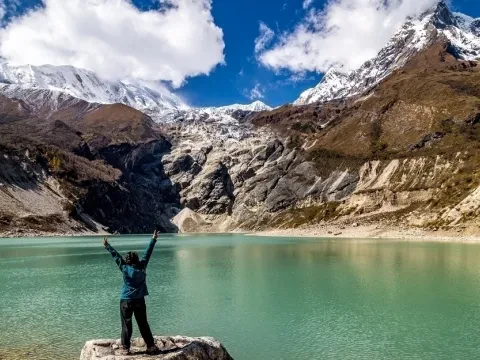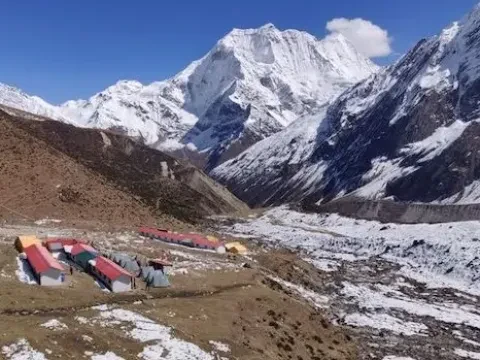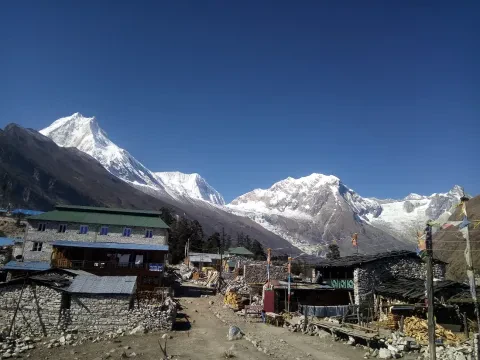
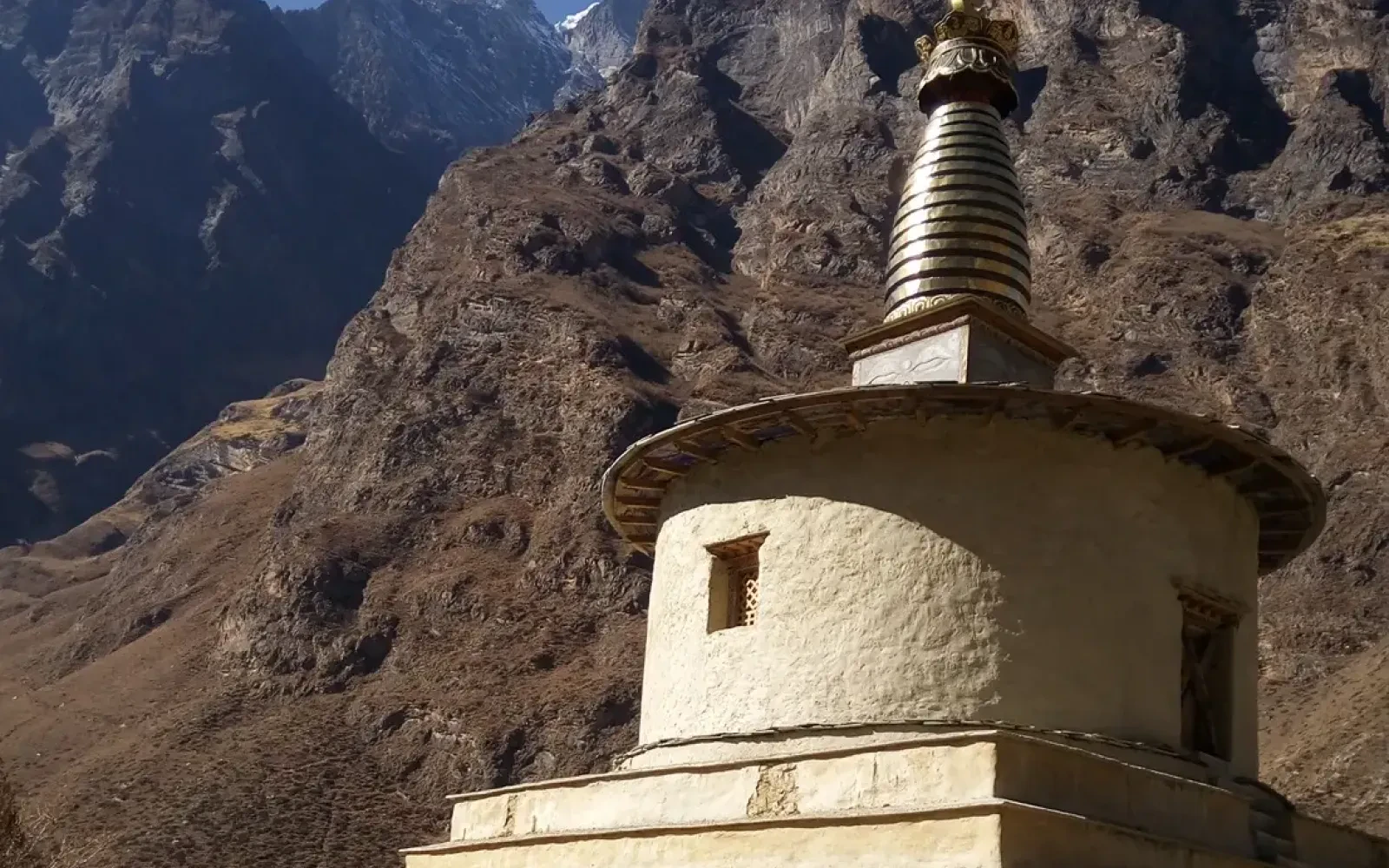
The Tsum Valley Trek is a true Himalayan trekking trip in Nepal that explores the beautiful and secluded Tsum Valley in the upper Manaslu regions of Nepal. Surrounded by high mountains, this trekking route passes through traditional Tibetan Buddhist villages with unique culture and ancient monasteries.
Here, the journey gains access to the Tsum Valley, which is a hidden Himalayan world of Tibetan Buddhist culture, serene mountain villages, ancient monasteries and dramatic mountain landscapes. This valley lies in the Manaslu region near the Tibetan border.
After getting accustomed to the high altitudes around Machha Khola (900 m), the trek winds its way up towards the Tsum Valley. Following a gradual trek through traditional hillside villages, forested mountain slopes, deep gorges and over hanging Himalayan ridges, the trail opens up to charming mountain valley with villages at its heart.
Likewise, the Tsum Valley Trek is famous for its ancient Tibetan Buddhist culture, as well as its spectacular mountain ranges. Landmarks along the way include mountain monasteries like Mu Gompa (3,700 m), and Rachen Gompa.
In addition, the trail involves wonderful mountain views with high peaks like Ganesh Himal (7,422 m), Himalchuli (7,893 m), Manaslu (8,163 m) and Shringi Himal (7,187 m).
Compared to other popular trek routes in Nepal, Tsum Valley has been little traveled by tourists. In fact, the valley is home to the most authentic Tibetan Buddhist culture that can still be experienced in Nepal.
As such, this region is an excellent destination for travelers that want to explore Himalayan Buddhist culture and mountain landscapes, while also searching for solitude and seclusion.
| Feature | Tsum Valley Trek |
|---|---|
| Region | Manaslu |
| Maximum elevation | Mu Gompa (3,700 m) |
| Main cultural influence | Tibetan Buddhist |
| Famous sites | Mu Gompa, Rachen Gompa, Milarepa Piren Phu |
| Major mountains | Manaslu, Ganesh Himal, Himalchuli, Shringi Himal |
| Trek characteristic | Remote, peaceful and cultural |
| Suits best | Culture, nature and quieter trekking |
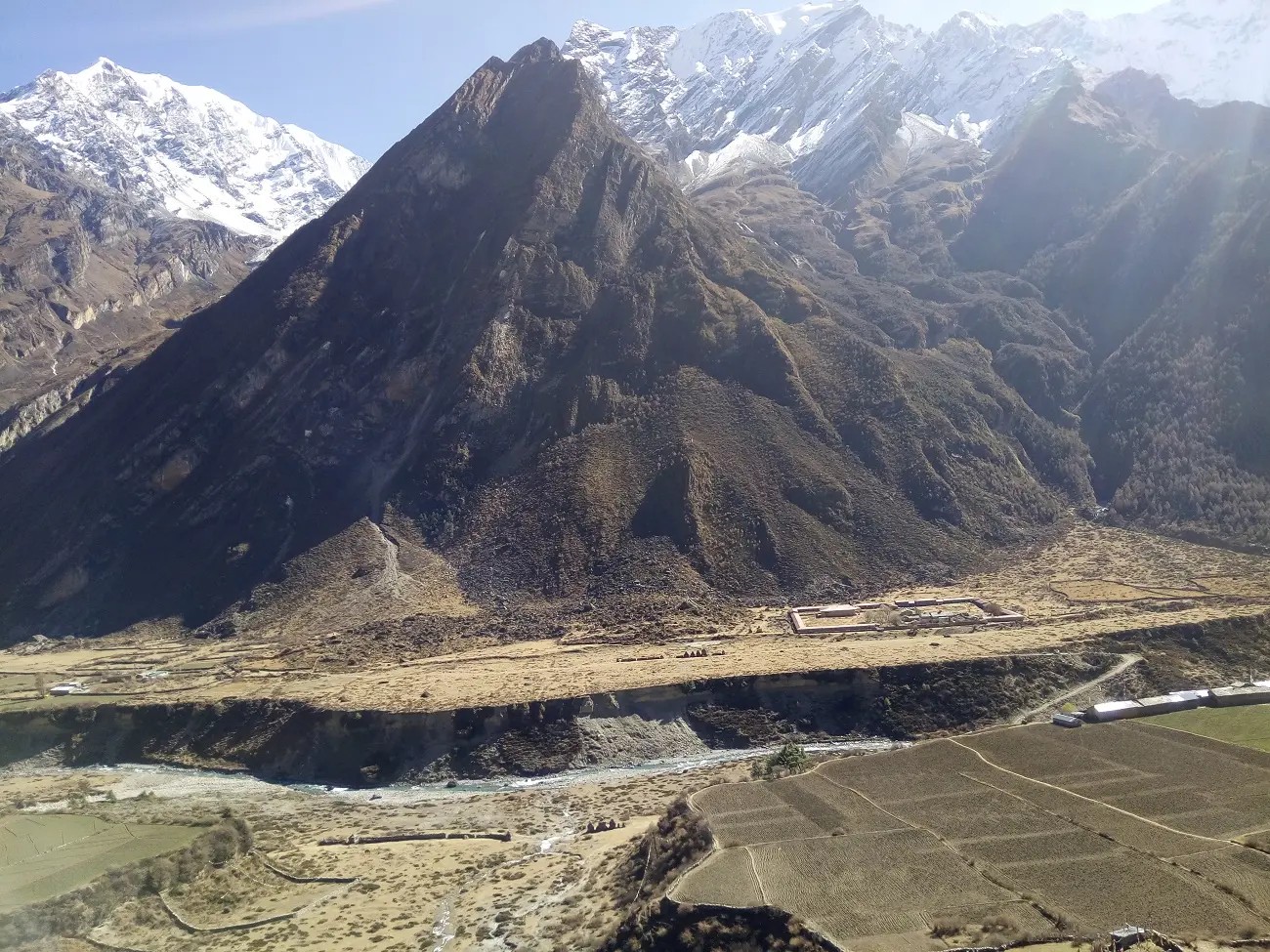
The Tsum Valley Trek makes for an ideal Himalayan hiking tour for those who want to experience an alternative to the most popular trekking destinations in Nepal. In fact, it is less-crowded trekking in Nepal for solitary lovers. It also offers the best form of authentic culture in the remote area of Nepal.
At its core, the Tsum Valley Trek appeals to those that want to experience a more authentic Himalayan experience, far away from the teeming hotels and crowded trails of the Everest or Annapurna regions.
Here, the first reason why this trekking tour is worth doing is because of its remarkable blend of Tibetan Buddhist culture and Himalayan nature.
Ancient monasteries and chortens dot the mountain landscape with their golden roofs. Particularly noteworthy is the Mu Gompa (3,700 m) monastery which is one of the highest in the region.
Further along the trail, the Rachen Gompa monastery offers a unique insight into the Tibetan Buddhist religion. Notably, this area is also the cultural heart of the Tsum Valley region.
Second, the Tsum Valley Trek offers incredible panoramic mountain views and a diverse range of natural wonders.
Looking closer, the lower part of the trail involves dense forests and steep river gorges, whilst the upper reaches unveil alpine meadows, glaciers, yaks pastures and even the spectacular Himalayan mountain peaks.
In addition, the dramatic landscape features such as Milarepa Piren Phu caves, as well as Ganesh Himal (7,422 m) and Manaslu (8,163 m) mountain views are unforgettable.
Finally, compared to other popular trekking routes such as the Everest or Annapurna Base Camp treks, the Tsum Valley region remains less commercialized and less crowded.
As a result of this, the Tsum Valley Trek offers a more authentic Himalayan experience, where travelers have the chance to interact with the local culture and village life.
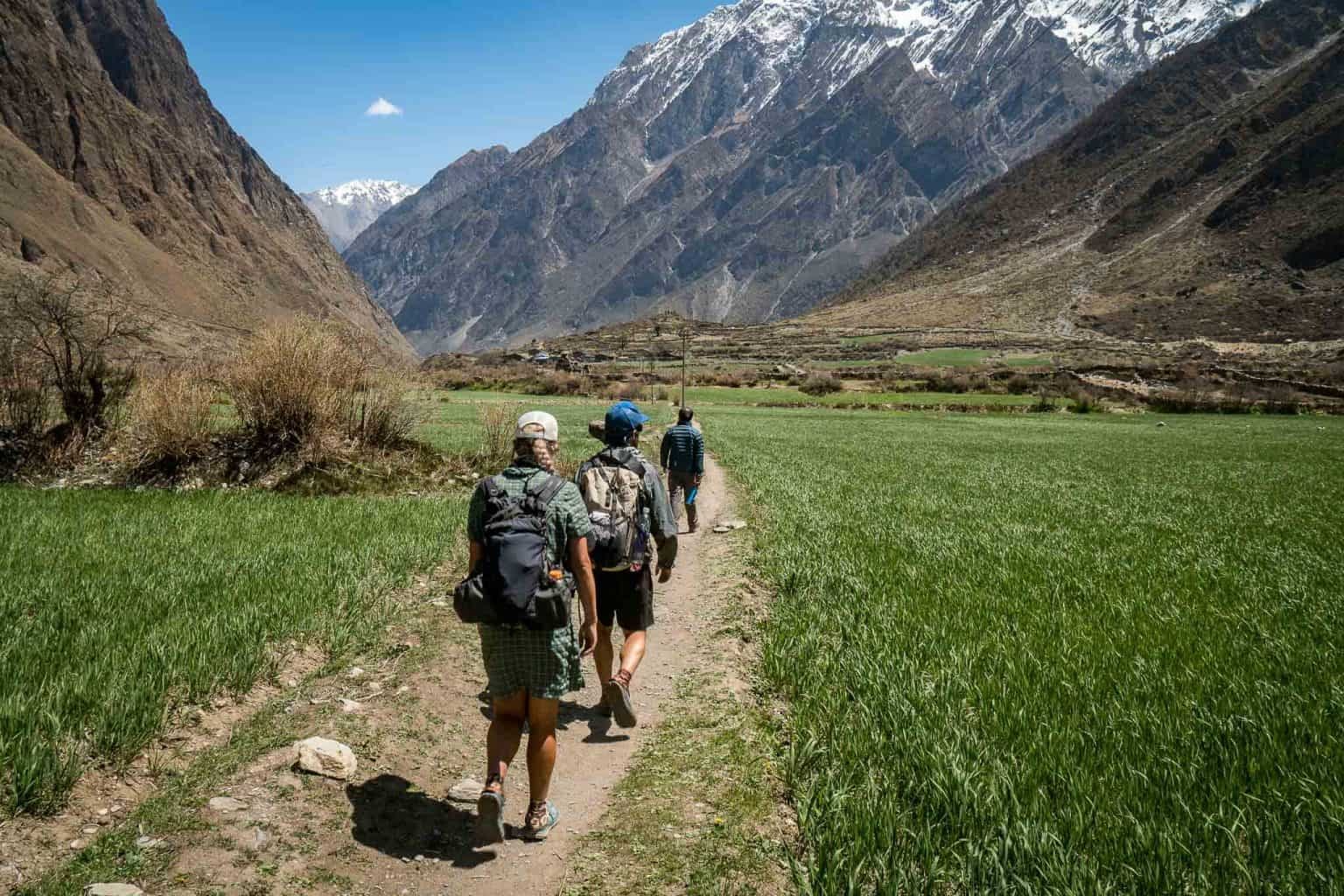
Top reasons to choose Tsum Valley :
Why trek Tsum Valley? What you experience ?
In short, the Tsum Valley Trek is an outstanding choice for those that seek more than just mountain views. This trekking tour combines Himalayan nature, ancient Tibetan Buddhist culture and unique mountain village life, offering an unforgettable experience in one of the least explored corners of Nepal.
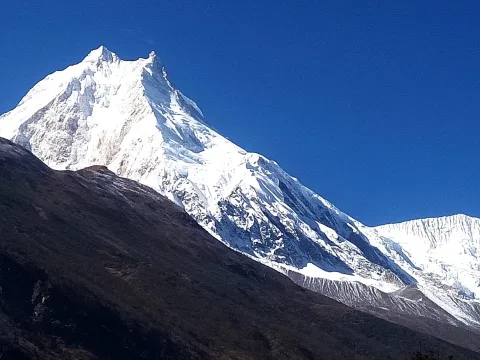
The Tsum valley trek route is a high altitude trail through the northern Manaslu region leading gradually into the remote Tsum Valley. This trek usually begins in Machha Khola (900 m) after the drive from Kathmandu. The trail leads through the Budhi Gandaki valley towards Tsum Valley at Lokpa (2,240 m).
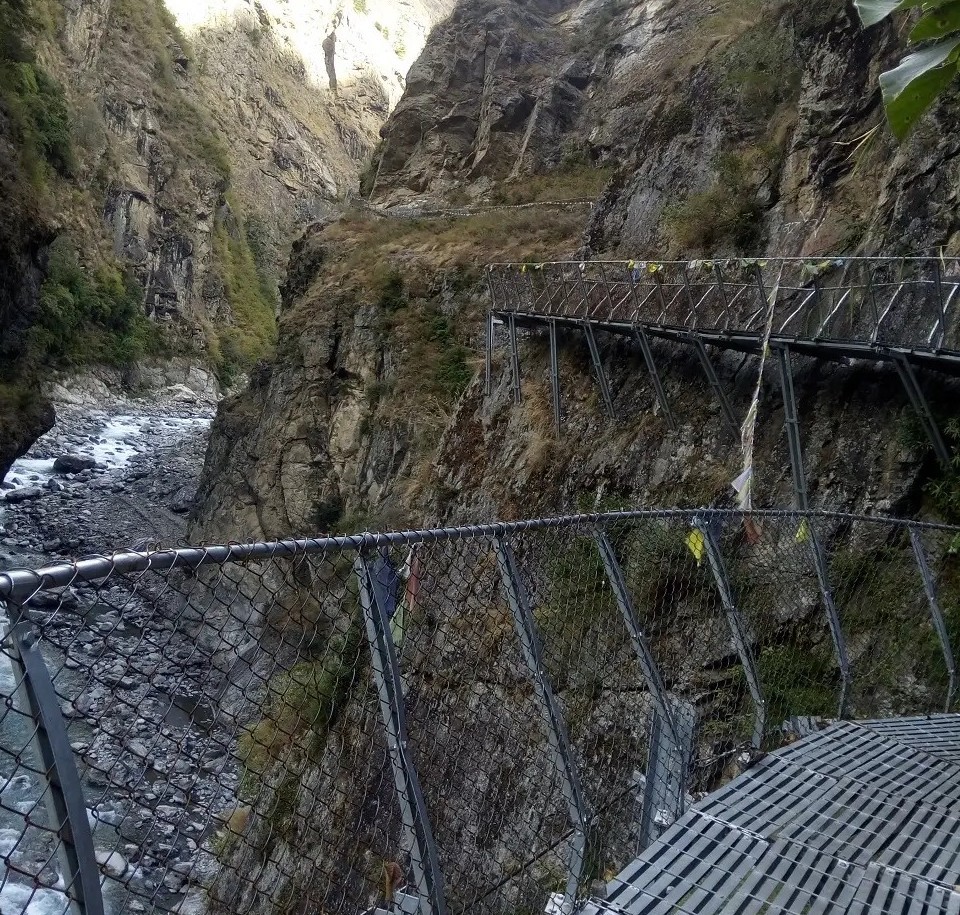
Here, this trek goes through traditional villages, forests, and suspension bridges, and passes by Buddhist monasteries. It includes a passage through Chumling (2,386 m), Chhokangparo (3,010 m), Nile (3,360 m), and Mu Gompa (3,700 m).
Mostly after exploring the upper valley, one goes back the same way through the Tsum Valley trail. In addition, instead of heading back, it is sometimes possible to extend the trek to the Manaslu Circuit.
Elevation (in meters) Approximate :
Here, the route is particularly attractive since there is a gradual change in landscape and culture from lower elevations to the higher reaches of the Tsum Valley. Lower trails have the vegetation and river gorges typical of Nepal while Tibetan-style villages, monasteries, chortens, and prayer walls are seen at higher altitudes.
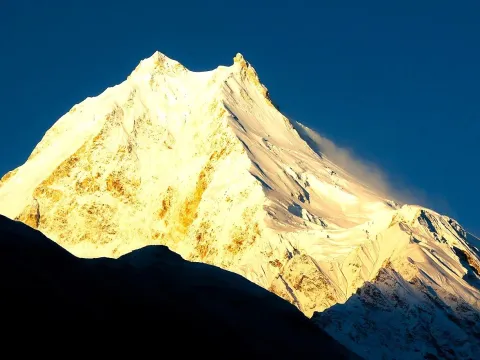
Normally, the Tsum Valley trek takes around 14-18 days from Kathmandu to Kathmandu. This depends on where you start the trek, how long you spend acclimatizing, your transport arrangements, and whether you decide to do the Tsum Valley trek and the Manaslu Circuit together or only the Tsum Valley trek.
Here, a 16-day trek is a realistic option that gives you enough time to complete the trek up to Mu Gompa (3,700 m) and return back to Kathmandu.
| Trek Type | Estimated Trek Duration |
|---|---|
| Short Tsum Valley Trek | 12-14 days |
| Classic Tsum Valley Trek | 14-18 days |
| Tsum Valley + Manaslu Circuit | 20-24+ days |
Sample Itinerary of 16 Days :
Meanwhile, this means that if you have roughly two weeks, the Tsum Valley trek can be a good option for your Nepal trip. If you prefer a more leisurely pace and have more time, 16-18 days is an ideal window.
Here, I recommend a 16-day itinerary of the Tsum Valley Trek, departing and finishing in Kathmandu. It gives a good balance between altitude, time for acclimatization, and exploring the most interesting part of the valley.
| Day Route | Elevation |
|---|---|
| 1 Kathmandu – Machha Khola | 900 m |
| 2 Machha Khola – Jagat | 1,340 m |
| 3 Jagat – Lokpa | 2,240 m |
| 4 Lokpa – Chumling | 2,386 m |
| 5 Chumling – Chhokangparo | 3,010 m |
| 6 Chhokangparo – Nile | 3,360 m |
| 7 Nile – Mu Gompa – Nile | 3,700 m |
| 8 Explore Nile and Mu Gompa | 3,360 m |
| 9 Nile – Chhokangparo | 3,010 m |
| 10 Chhokangparo – Chumling | 2,386 m |
| 11 Chumling – Lokpa | 2,240 m |
| 12 Lokpa – Jagat | 1,340 m |
| 13 Jagat – Machha Khola | 900 m |
| 14 Machha Khola – Kathmandu | 1,338 m |
| 15 Kathmandu | 1,338 m |
Why this itinerary?
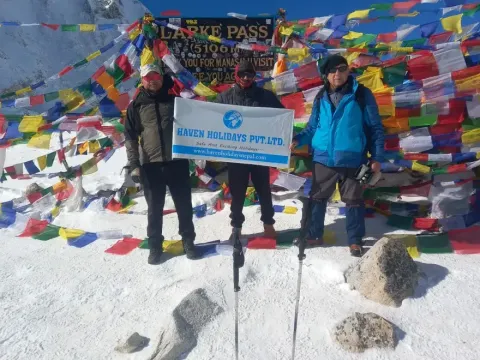
Importantly, I suggest adding the Manaslu Circuit to this trip if you want a more challenging experience. It is a considerably longer route, with much higher altitudes (Larke Pass 5,106 m).
The best time for the Tsum Valley Trek is spring and autumn – March to May, September to November.
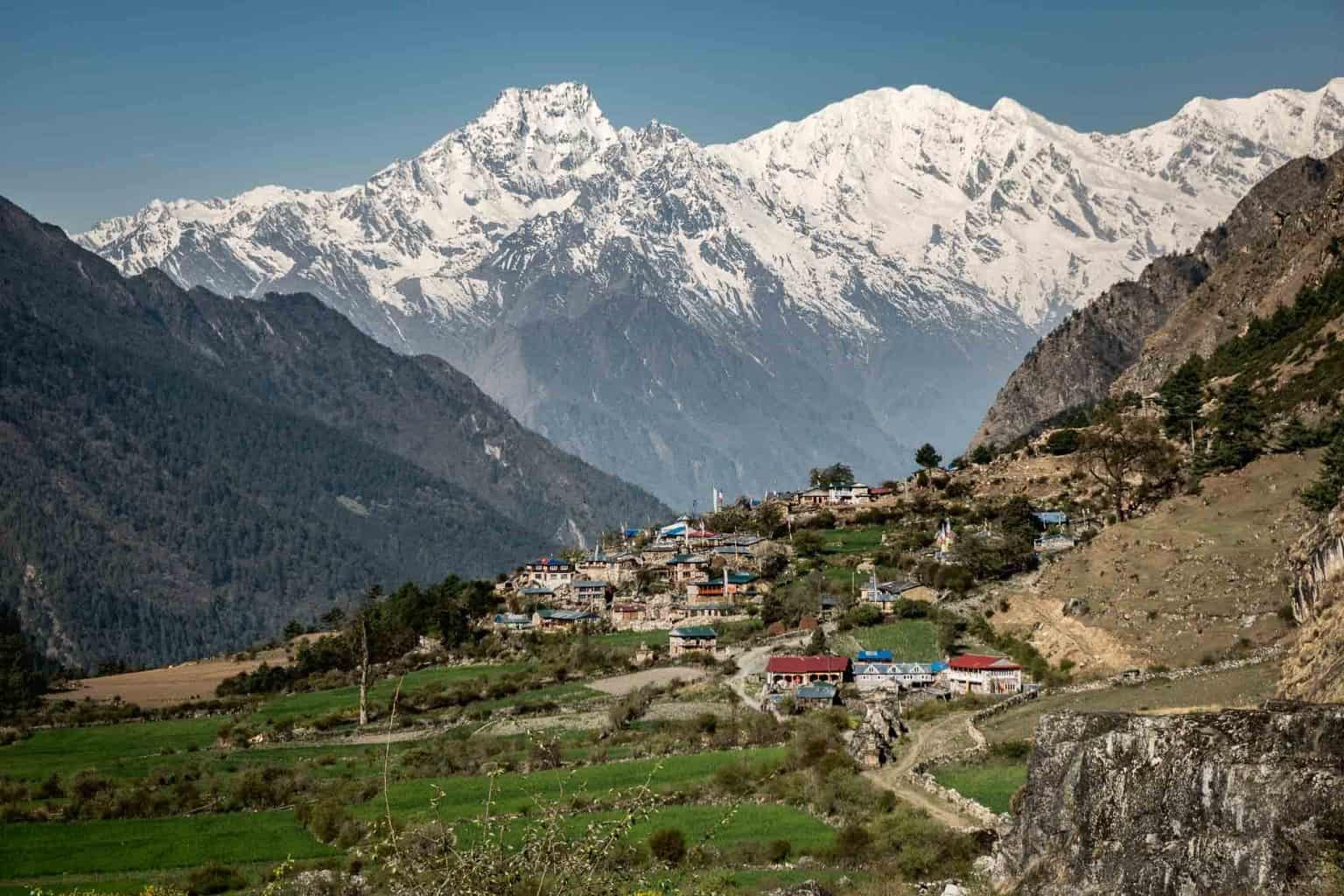
Meanwhile, Nepal Tourism Board generally considers February to May and September to November to be a good time for trekking in Nepal, with pleasant weather conditions on average.
Particularly, Tsum Valley is a high-altitude Himalayan region, so I recommend October to November for the best views of the mountains and the best weather conditions for trekking.
Likewise, March to April are also great for trekking in Tsum Valley – the temperatures are higher than in winter and the flowers start blooming.
In fact, the weather varies a lot depending on the year, so it is a good idea check the forecasts closer to the time of departure. It could snow in Tsum Valley even in May or April, but temperatures are warm enough to make trekking pleasant, especially in the lower altitude areas.
| Season | Months | Conditions | Recommendation |
|---|---|---|
| Spring | March – May | Clear mornings, warm days, flowers in bloom | ⭐⭐⭐⭐⭐ |
| Autumn | September – November | Clear, dry, great mountain views | ⭐⭐⭐⭐⭐ |
| Winter | December – February | Cold, snow on higher passes | ⭐⭐⭐ |
| Monsoon | June – August | Rainy, risky to trek due to landslides | ⭐⭐ |
October to November – Best months for trekking in Tsum Valley. You can expect the most predictable weather and the greatest mountain visibility.
If you want the best possible weather, mountain views, and overall trekking conditions, I recommend October to November for the Tsum Valley Trek. If you want to see the spring blossoms, aim for March or April.
As Tsum Valley Trek is a remote Himalayan trek, you may want to double-check the weather forecast closer to your departure date, even if it is in one of the recommended seasons.
There are three permits required for the Tsum Valley Trek – the Tsum Valley restricted area permit, the Manaslu conservation area permit (MCAP) and the TIMS card.
Actually, the Tsum Valley region is located within the restricted area of Manaslu and a special permit must be obtained through a government-registered trekking agency. The Nepal Tourism Board specifies that Tsum Valley is one of the itineraries that require a licensed guide and agency-issued TIMS.
| Permit | Requirement | Current fee for foreign trekkers |
|---|---|---|
| Tsum Valley restricted area permit | Mandatory | USD 40 / week in Sep–Nov; USD 30 / week in Dec–Aug |
| MCAP | Mandatory | NPR 3,000 |
| TIMS card | Mandatory | NPR 2,000 for non-SAARC trekkers |
| Licensed trekking guide | Mandatory | Must trek with a registered guide |
Here, the Tsum Valley Restricted Area Permit is issued for the Tsum Valley area, which covers Sirdibas, Lokpa, Chumling, Chhekampar, Nile and Chule. The current official fee is USD 40 per person per week for the period of September–November and USD 30 per person per week for the period of December–August.
Moreover, the Manaslu Conservation Area Permit is also mandatory since the Tsum Valley Trek passes through the Manaslu Conservation Area. The current foreigner entry fee listed by the Nepal Tourism Board is NPR 3,000 per person.
Note: Since the Tsum Valley area is a restricted area, it is not an ordinary trek and the permit and TIMS should be obtained through a government-registered trekking agency. A licensed trekking guide should be hired.
Beginners can go on a Tsum Valley Trek, if they have reasonable levels of fitness and do proper preparation.
However, it should be noted that this is more of a moderate to challenging trek than an easy beginner trek.
Not that there is much technical climbing involved, but trekkers must deal with long walking days, uneven mountain trails, continuous ascents and altitude. The trail reaches Mu Gompa (3,700 m), so altitude acclimatization is an important consideration.
| Factor | Tsum Valley |
|---|---|
| Technical climbing | No |
| Maximum elevation | Mu Gompa (3,700 m) |
| Trail type | Mountain paths, stone steps and suspension bridges |
| Fitness requirement | Moderate |
| Altitude concern | Moderate |
| Guide requirement | Yes |
| Beginner suitability | Yes, with preparation |
Most importantly, it would be good for beginners to spend a few weeks training before they arrive in Nepal. They can go on regular walks, hikes, stairs-climbing sessions and other cardio exercises. In addition, it is good for a beginner hiker to walk at their own pace and get used to the altitude, rather than trying to race up the mountainsides.
Also notice the difference in the itinerary. A 14–18-day itinerary would give a beginning hiker more time to adjust to the altitude than a shortened version of the trek. The longer schedule also allows for greater flexibility should bad weather arise or the beginning hiker feel tired.
Why beginners can enjoy Tsum Valley :
Nevertheless, beginners should not take this trek lightly. The remote location means that professional assistance is recommended and the restrictions in the area require a licensed guide. According to the Nepal Tourism Board, the best seasons for the Manaslu region are March–May and September–November.
Yes, it is possible for fit beginners to enjoy trekking in the Tsum Valley, especially with a slow-paced itinerary and the help of a good mountain guide. If this is your first Himalayan trek, opt for a comfortable 16–18-day itinerary, do your training, climb slowly and do not rush to reach Mu Gompa (3,700 m).
If you are a first-time trekker who wants an authentic Himalayan experience, including culture, solitude, monasteries and breathtaking landscapes, the Tsum Valley Trek offers a great introduction to Nepal’s more remote trekking areas.
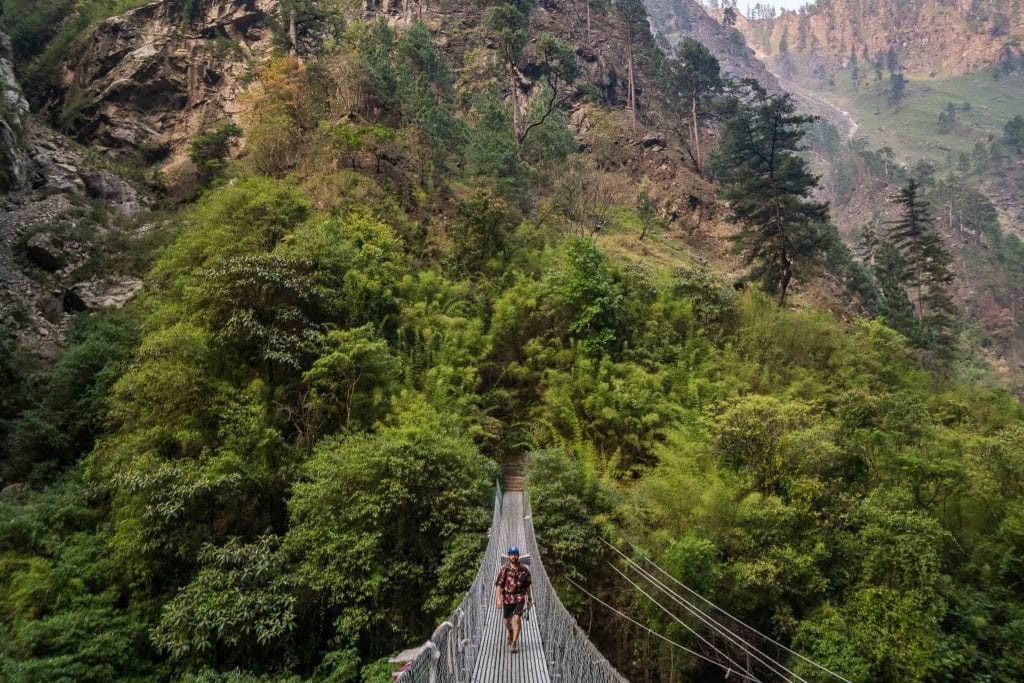
Tsum Valley trek is a moderately difficult. The trekking is not very difficult, but requires above-average level of fitness due to long trekking days, steep slopes, uneven trails, stone stairs and high altitude. The highest point on the regular itinerary is Mu Gompa (3,700 m).
Compared to the Everest Base Camp Trek, the Tsum Valley trek has lower maximum altitude. However, Tsum Valley is a more isolated trail with fewer facilities. Therefore, trekkers should be prepared that there is no easy option for the Tsum Valley track.
| Difficulty factor | Level | Details |
|---|---|---|
| Overall difficulty | Moderate | Suitable for reasonably fit trekkers |
| Maximum elevation | 3,700 m | Mu Gompa |
| Daily walking | 5-7 hours | Varies with itinerary |
| Technical climbing | Not required | Trekking skills are sufficient |
| Steep sections | Moderate | There are several ones |
| Trail surface | Uneven | There are stone steps, dirt paths and bridges |
| Altitude concern | Moderate | Gradual ascent is important |
| Remote location | High | Less developed than popular trails |
Here, the first reason is that trekkers should consider the Tsum Valley trail as an ever-increasing altitude route. The trail starts in Machha Khola (around 900 m) and gradually gains altitude to reach Chhokangparo (3,010 m), Nile (3,360 m) and Mu Gompa (3,700 m).
Likewise, the second cause is that there are steep parts during the climb and the suspension bridges as well as uneven ground.
Moreover, the last reason is that the Tsum Valley trek is a remote one. There are fewer facilities along the way compared to, for instance, the Everest Base Camp trail.
Generally, the Tsum Valley trek is not extremely difficult for a reasonably fit trekker who is patient enough to walk slowly and steadily and who hires a licensed guide. A 16-18 day itinerary gives enough time to adjust to the altitude.
The Tsum Valley Trek usually costs USD 675–855 per person for a full organized trip, depending on the chosen itinerary, group size, level of comfort, mode of transportation, guide, and porter.
According to the 2026 offers, the prices per trekking company vary significantly by group size, with the overall cost range for a single, family, or group stay in the 15–20 day size bracket as follows:
For a comfortable 14–18 day Tsum Valley Trek, the average price is usually between USD 1100–1400 per person for an organized trek.
| Cost component | Estimated Cost |
|---|---|
| Hotel in Kathmandu | USD 60–110 |
| Transportation to/from Machha Khola | USD 50–100 |
| Mountain accommodation | USD 100–180 |
| Meals | USD 250–350 |
| Guide | USD 250–300 |
| Porter | USD 180–200 |
| Tsum Valley Restricted Area Permit | USD 30–40+ |
| MCAP permit | NPR 3,000 |
| Local permit | Around NPR 1,000 |
| Miscellaneous expenses | Around USD 50–100 |
| Typical organized trek | USD 675–855 |
The current Restricted Area Permit for the Tsum Valley costs USD 40 per person, for the first 7 days of your trek, from September to November, and USD 30 for the same period, from December to August. Subsequent days will cost you an additional USD 7. You can check all the necessary information on the website of the Immigration Department of Nepal .
Here, the Manaslu Conservation Area Permit (MCAP) costs NPR 3000 for foreign visitors. According to the official NTNC permit system , the foreigner entry fee is NPR 3,000, which covers the cost of the permit for conservation and sustainable management of the area.
Also, you may need to pay a local fee of approximately NPR 1,000 to visit the Tsum or Chumnubri area. This is a community contribution, which usually goes directly to the local community. You can find more information here
A reputable trekking company will usually include the following services in their Tsum Valley Trek package:
In addition to the services listed above, most trekking companies advise you to carry some extra money for:
Note that prices vary significantly from company to company and even from season to season. For example, Haven Holidays Pvt. Ltd. offers 2026 Tsum Valley Trekking from USD 855 per person, while for groups of 6–10 people, it is already USD 725 per person for 11 day Itinerary.
In my opinion, for a 16-day trip, a comfortable trek for one person will cost on average between USD 1100–1400. Larger groups will have a lower cost per person, while private tours, higher levels of comfort, extra hotel nights in Kathmandu, or porter service will increase the cost.
To put it another way, the Tsum Valley Trek is not the cheapest option in Nepal, as it is a remote region that requires special permits and a guide. However, the ancient monasteries, Tibetan-style villages, and stunning mountain landscapes are well worth the extra cost.
The best way to prepare for the Tsum Valley trek is to build endurance, gain strength, train cardiovascular system and think about other gear and health concerns. It is better to start preparing 6-8 weeks before the departure.
Here, you do not need to be an athlete to complete the Tsum Valley trek, but you should be able to walk up and down hills for several hours.
The most important thing is to develop a good level of walking fitness. The best way to develop walking fitness is to go for walks.
Here is a sample training plan :
You need to strengthen your legs to tackle steep slopes in the Himalayas. It is recommended to do leg training exercises and to do cardio.
Do not forget about core workouts.
Sample leg training and cardio exercises:
The best way to train your cardiovascular system is to do various exercises.
| Exercise | How often to do it |
|---|---|
| Brisk walking | 4-5 days per week |
| Hiking | 1-2 days per week |
| Stair climbing | 2-3 days per week |
| Biking | 1-2 days per week |
| Strength training | 2-3 days per week |
The maximum altitude of the Tsum Valley Trek is 3,700 m. However, it is a good idea to be prepared for higher altitudes just in case.
Here, walk at a steady pace and do not try to run. Stay well-hydrated and eat healthy foods. Limit alcohol consumption and inform your guide in case of any health issues. Most importantly, do not ignore altitude sickness.
Do not wear new boots: break them in before the trek. Use comfort-oriented backpacks and trekking sticks. Practice with your gear to see how comfortable it is.
How To Prepare For The Tsum Valley Trek?: 10 Things To Do
Final tips on how to prepare for the Tsum Valley trek: Do not overtrain and do not put excessive pressure on yourself. You do not have to be an athlete to complete this beautiful trek.
However, you should be reasonably fit. It means that you should be able to walk at least 2-3 hours continuously and carry a backpack. Moreover, you should be prepared to walk several hours a day for 15-18 days.
It is essential to prepare a Tsum Valley Trek packing list according to the weather, which may vary from a cold night to a sunny day, sudden showers, challenging trails, and high altitudes. As the trail gains altitude to Mu Gompa (3,700 m), acclimatization is necessary, and warm clothing and gear are crucial.
Moreover, avoid bringing unnecessary items on the trail; only bring the essentials, and hire a porter for extra luggage.
Clothing :
| Trekking boot | Protection, comfort, and stability on the mountain trails |
|---|---|
| Camp shoes or sandals | Comfortable footwear for teahouse stays |
| Trekking poles | Balance and stability on slopes and uneven ground |
| Daypack | Storing daily necessities |
| Duffel bag | Luggage carried by a porter |
| Sleeping bag | Extra protection from the cold |
| Headlamp | Navigating in the dark |
| Water bottle | Staying hydrated |
| Water purification tablets or filter | Filtering water from streams and springs |
| Sunglasses | UV protection |
| Sunscreen | Applying sun protection cream |
| Quick-dry towel | Personal hygiene |
Personal and Emergency Items :
Instead of bringing a heavy jacket, layer clothing will help keep you warm and allow easy adjustment to the changing temperatures.
As you travel from lower altitude (900 m above sea level) in Machha Khola to a higher altitude (3,700 m above sea level) in Mu Gompa, dress in light clothing.
Always pack your day pack with ease and have it ready for the next day. Your daypack should include your rain jacket, water, snacks, and other essential items that you will need during the day. It is also recommended that you use waterproof bags and dry bags to pack your clothes and other gear to protect them from the weather.
Additionally, it is advisable to keep your belongings as light as possible and invest in a comfortable backpack for trekking.
Tsum Valley Trek is an outstanding option for those who want to explore the Himalayas’ authentic hidden valley, discover Tibetan Buddhist culture, and enjoy the tranquility of rural Himalayan villages, all while avoiding the crowds of other popular treks.
Meanwhile, this trail provides a fantastic insight into the traditional Tibetan Buddhist village lifestyle and stunning mountainous landscapes with diverse flora and wildlife.
It begins in the village of Machha Khola (900 m above sea level) and gradually rises to Lokpa (2,240 m), Chumling (2,386 m), Chhokangparo (3,010 m), Nile (3,360 m), and finishes at Mu Gompa (3,700 m).
Although it is a moderate trek, not a high-risk one, it demands a good level of fitness and proper planning and preparation to ensure a safe and pleasant experience. Moreover, as this trekking route is in a remote region, it is essential to bring appropriate gear and equipment.
The Tsum Valley is a perfect option if you are considering a cultural trekking holiday in Nepal. It is an unforgettable experience with fascinating monasteries and chortens, isolated mountain villages, and unique wildlife.
In fact, it is a fantastic alternative for those who want to avoid the busy trails of Langtang or Manaslu.
Additionally, it is a great chance to acclimatize before attempting more strenuous high-altitude trekking in the Annapurna region or the Manaslu Circuit. Finally, the Tsum Valley Trek is an incredible opportunity to experience one of Nepal’s most beautiful and authentic Himalayan valleys.
1. What is the Cost of Tsum Valley Trek?
The price range for a Tsum Valley Trek is between USD 900-1,600 per person depending on the package deal offered. Accommodation, meals, transportation, permits, guides, and porters are some of the expenses that are considered while estimating the price of a Tsum Valley Trek. A private group expedition might cost more than a group one.
2. Can I do Tsum Valley Trek as a Beginner?
Beginners can do the Tsum Valley Trek as there are no extreme physical demands except for a certain level of fitness. This trek is moderate with long trekking hours and high altitudes which make it a bit challenging. The highest altitude encountered is at Mu Gompa which is at 3,700 meters above sea level.
3. What are the Starting & Ending Points of Tsum Valley Trek?
The Tsum Valley Trek starts at Machha Khola which is a drive from Kathmandu and ends at the same place. The journey involves trekking through various villages and towns in Jagat, Lokpa, Chumling, Chhokangparo, Nile, and Mu Gompa. On the way back, trekkers should follow the same trail to Machha Khola before heading back to Kathmandu via a vehicular ride.
4. Is it Compulsory to Hire a Guide for Tsum Valley Trek?
It is mandatory to hire a tour guide for the Tsum Valley Trek. One can arrange for a guide through any registered and licensed trekking agency. The reason why a guide is necessary is because the Tsum Valley region is a restricted area and no one can access it without appropriate permissions from the Nepal government. Independent and solo treks are not allowed anywhere in Nepal including the Tsum Valley region.
5. How much does the Tsum Valley Trek Permit cost?
The Tsum Valley Trek permit costs around USD 40 per person for the first seven days if one arrives between September and November. From December to August, the cost of the daily permit is about USD 30 for the first seven days. The additional day cost approximately USD 7 for each extra day of the trek. Moreover, one will also have to pay the MCAP and government taxes.
6. Can I do Tsum Valley Trek by Myself?
One cannot do the Tsum Valley Trek independently. However, travelers can hire a guide and a trekking agency to help them with the expedition. Nepal had announced the abolishment of the two-trekker rule in March 2026. The new guideline states that solo adventurers can do the Tsum Valley Trek independently with authorization from a trekking agency.
7. What are the Accommodations Available on Tsum Valley Trek?
Lodging options during the Tsum valley trek are tea houses, guesthouses, and homestays. Tea houses and homestays are comparatively more affordable than the ones found in the Everest or Annapurna Circuit regions. Accommodation in the Tsum Valley region has twin sharing and single occupancy. On the other hand, tea houses offer board and lodging, hot shower facilities, laundry services, internet café, and TV. However, one cannot find these luxuries in the higher altitudes.
Our travel experts are ready to assist you with any questions.
Send us a message.Have a question before you book? Send your enquiry below and our travel experts will get back with the required information.