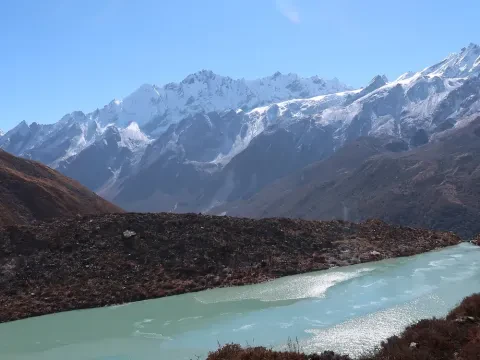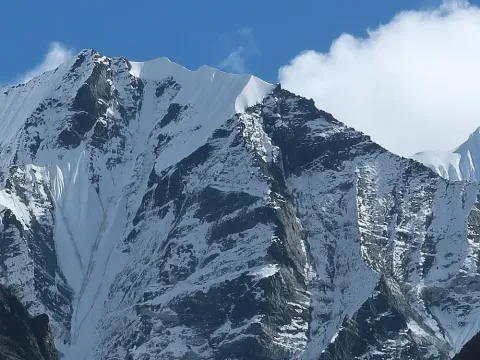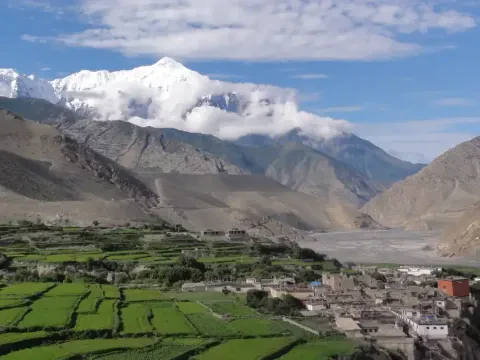
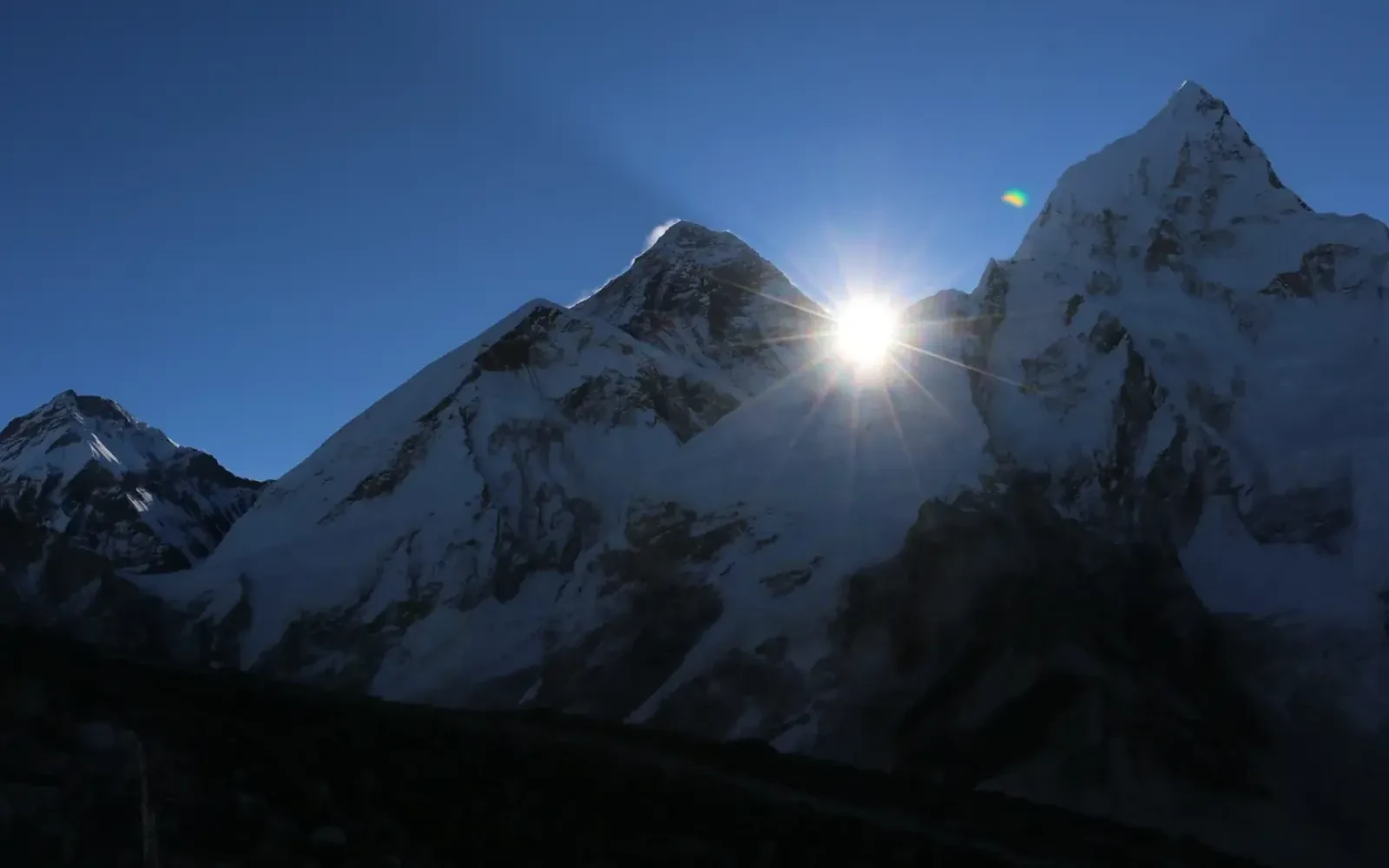
Nepal offers some of the best mountain sunrise views in the world. From easy hikes up local hills to grueling treks up distant Himalayan peaks, each offers something unique and special. Every sunrise in Nepal paints the towering snow-capped mountains in hues of gold. Watching the first light of dawn break over mountains many thousands of feet above sea level is a truly magical experience for hikers and nature lovers alike
Whether you have a short or long hike in front of you, the best sunrise viewpoints in Nepal promise to deliver excellent photo ops, great hikes, and picture-perfect mornings. Some of the best sunrise viewpoints in Nepal include the Poon Hill (3210 m), Kala Patthar, Gokyo Ri, Sarangkot, Pikey Peak, and Mohare Danda. Each of these trails provides a unique view of the towering Himalayas and varying degrees of difficulty for hikers of all levels.
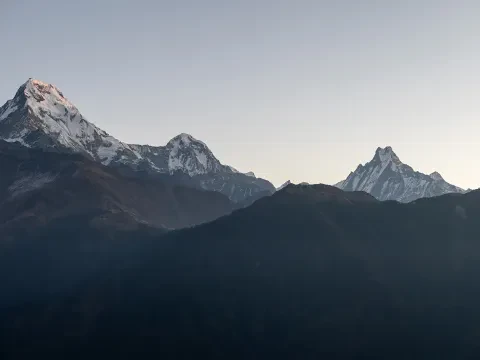
However, the most popular and arguably the easiest sunrise view in Nepal is the Poon Hill sunrise and its relatively short 1.5 km pre-dawn hike. The summit offers unparalleled sunrise views over the Annapurna massif and other peaks in the region. Some of the most notable mountain peaks seen from the Poon Hill viewpoint include the Dhaulagiri I (8167 m), Annapurna I (8091 m), Machhapuchhre (6993 m), Annapurna South (7219 m), Hiunchuli (6441 m), Nilgiri (7061 m) mountain peaks, and many others. It is no surprise that this trail is one of the most visited sunrise treks in Nepal.
Having said that, let’s talk about the 10 best sunrise viewpoints in Nepal, the best time to visit them, what to expect on your hike, the temperatures, photography tips, and other important information to help you choose the best Himalayan sunrise trek for you.
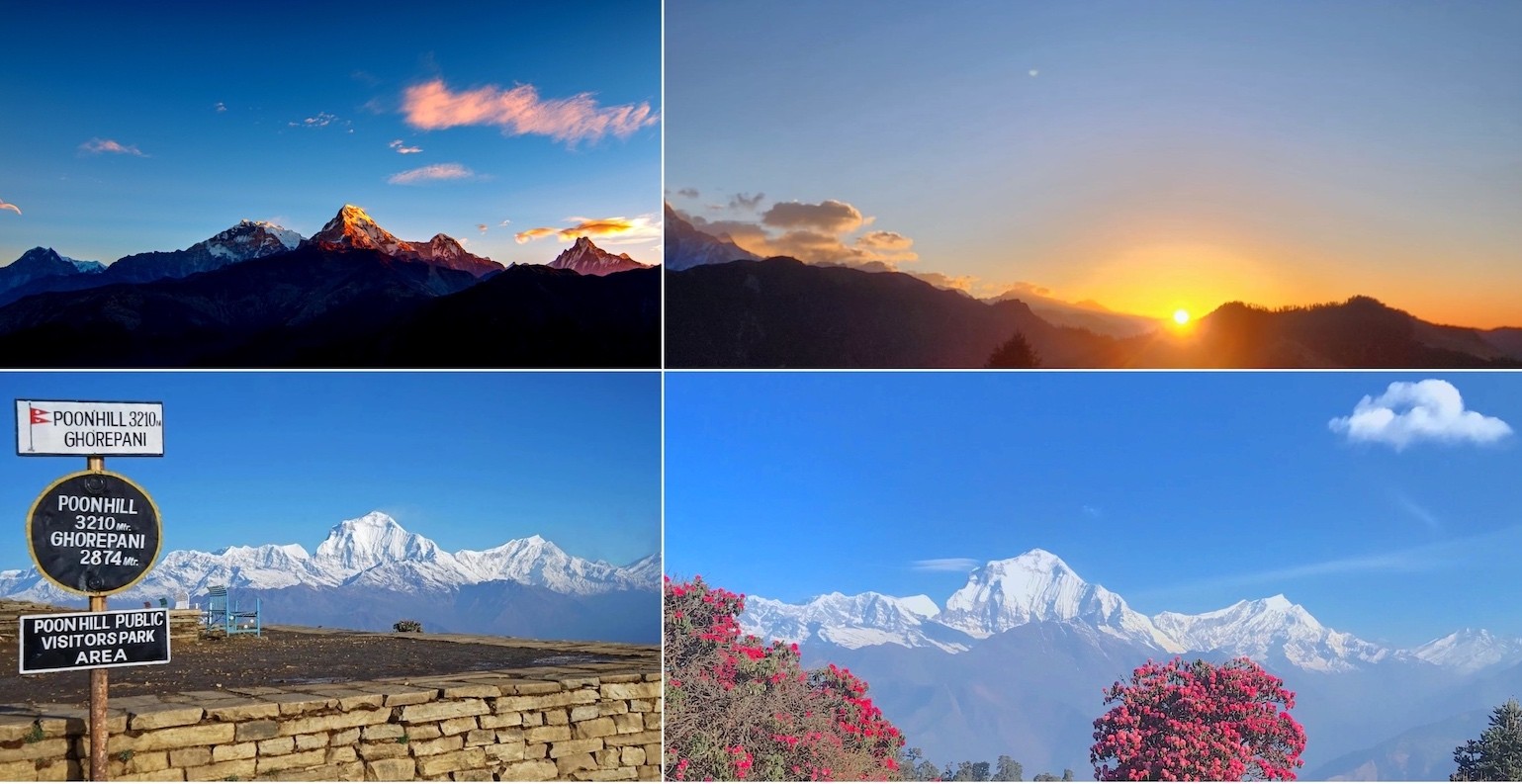
Poon Hill sunrise is undoubtedly one of the best and most accessible Himalayan sunrise views in Nepal. Located 3210 meters above sea level in the Annapurna Conservation Area, Poon Hill offers fantastic sunrise views over the Annapurna massif peaks without demanding any hard-core technical skills. It is a great option for families and beginner-level hikers. The famed Ghorepani Poon Hill sunrise trek is a popular short and scenic trail offering fantastic 360-degree views over the Annapurna and Dhaulagiri mountain ranges. As the night comes to an end, the first rays of light from the rising sun paint the mountains in different shades of gold, creating this magical effect.
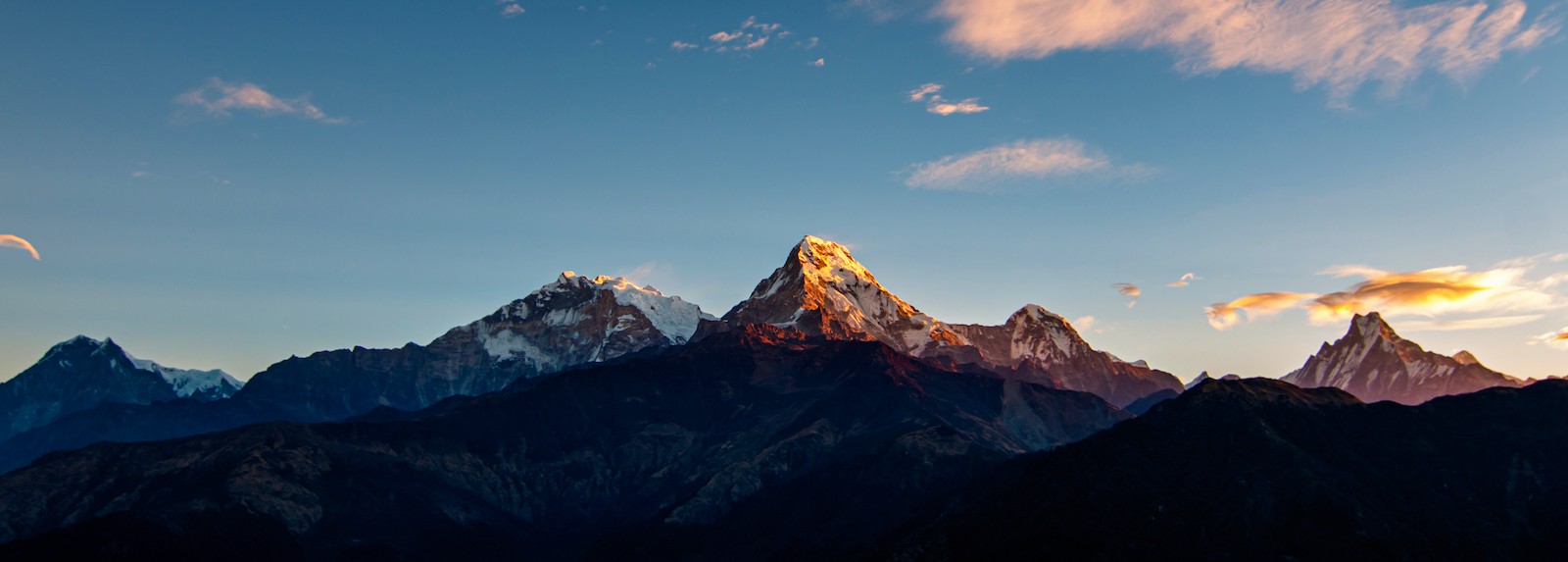
When it comes to the question, is Poon Hill sunrise worth it, there is no doubt that the short 1.5 km uphill hike is worth the effort and time. The trail offers spectacular sunrise views framed by the Himalayan peaks, the comfort of local teahouses, and affordable prices, which is why it is one of the most popular sunrise hikes in Nepal. Let’s look at other details you might want to consider before planning your sunrise trek to Poon Hill viewpoint.
| Information | Details |
|---|---|
| Viewpoint | Poon Hill |
| Elevation | 3210 m / 10531 ft |
| Region | Annapurna Conservation Area |
| Starting | Village Ghorepani (2874 m) |
| Approximate Distance | 1.5 km |
| Hiking time | 45–60 min uphill |
The elevation gain is not very high, which means there should not be any major problems with altitude sickness.
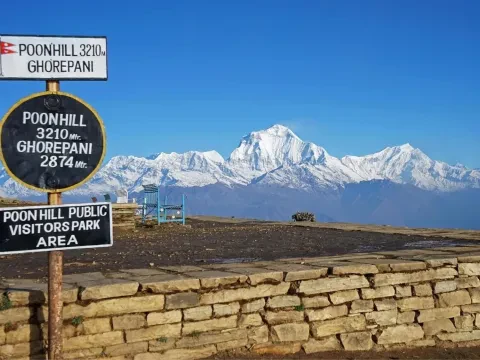
The morning trek to Poon Hill is not difficult but steep enough to provide a good workout. The trail starts before sunrise from the Ghorepani village and leads you up a stone staircase to the top of the Poon Hill. The staircase coils up the side of the mountain through the forest before opening up to spectacular sunrise views over the Annapurna mountains.
| Activity | Time |
|---|---|
| Wake up | 4:15–4:45 am |
| Breakfast (optional) | Light breakfast |
| Leave Ghorepani | 4:45–5:15 am |
| Reach Poon Hill | 5:30–6:00 am |
| Sunrise Around | 5:45–6:30 am (depends on the season) |
Here, you should arrive at the Poon Hill viewpoint at least 45–60 minutes before sunrise to watch the first light of dawn over the Annapurna Himalayas. The best seasons for experiencing the magical sunrise views are autumn (September–November) and spring (March–May). In the next section, we will discuss the best time to visit Poon Hill for sunrise viewing.
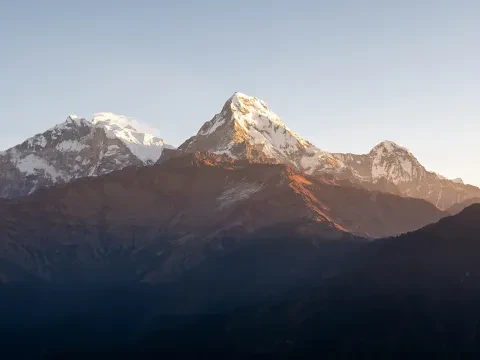
The best time to witness the sunrise from the Poon Hill viewpoint depends on several factors. For instance, the temperature at the 3210 meters elevation is usually quite low.
| Season | Average morning temperature in Poon Hill |
|---|---|
| Autumn(Sep–Nov) | 2°C – 8°C |
| Spring(Mar–May) | 4°C – 10°C |
| Winter(Dec–Feb) | 0°C – 5°C |
| Monsoon (Jun–Aug) | 6°C – 11°C |
As you can see, during the winter season, temperatures in Poon Hill can drop below freezing point. It is also important to note that the monsoon season brings frequent rains, so the trail to Poon Hill can be quite slippery and dangerous.
Now, let’s look at the best months for sunrise viewing at Poon Hill.
In fact, Autumn is the best season for a sunrise trek to Poon Hill. With stable weather and clear skies, chances of cloudiness are minimal.
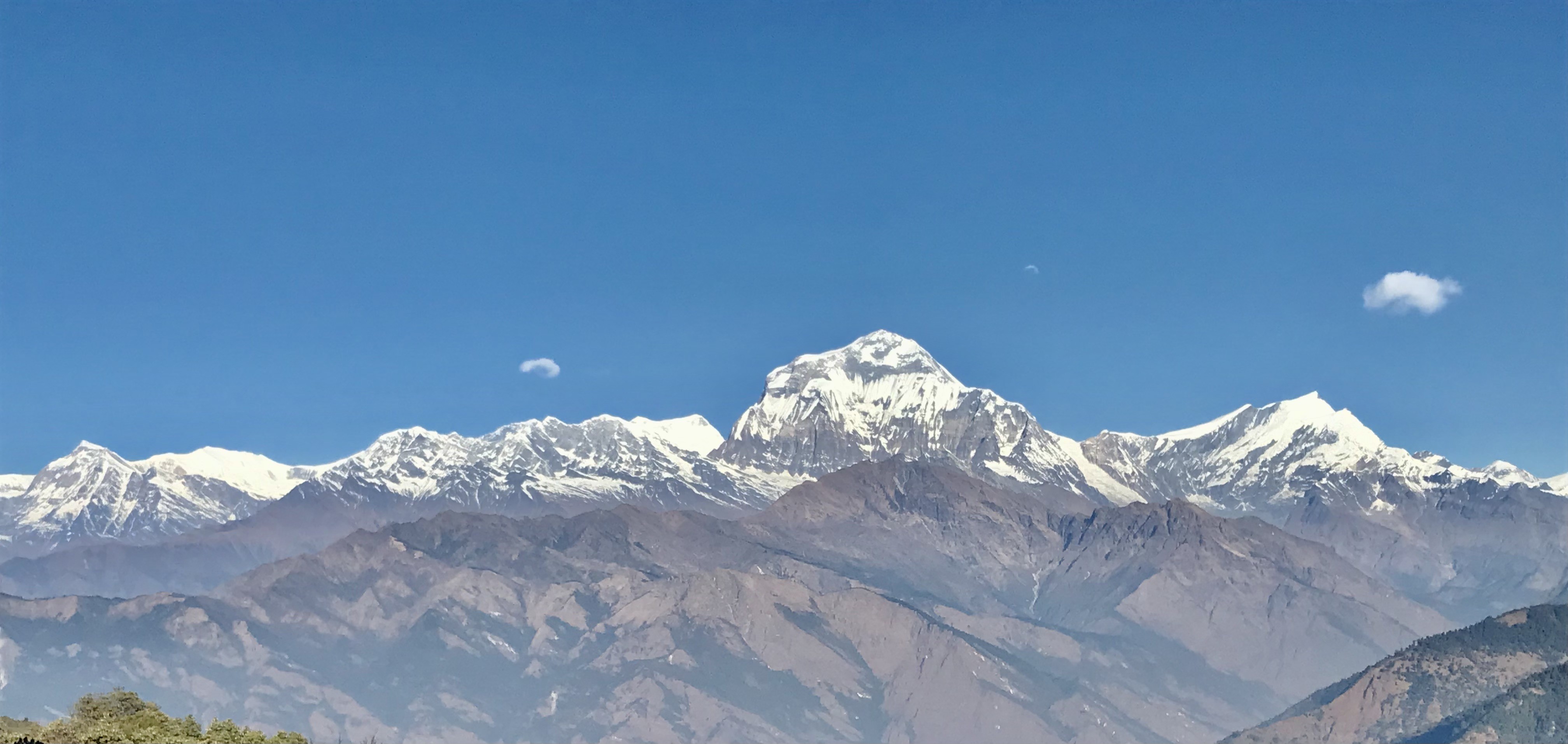
Likewise, reasons to visit Poon Hill in autumn Clear skies and favorable weather conditions for sunrise viewing Memorable golden-hour photography opportunities Mild temperatures (not too cold) Night temperature around -5°C
During the month of September, the skies tend to be a bit cloudy, and the nights are still relatively cold. October and November are the best months for sunrise viewing in Poon Hill. Similarly, the spring season is also a great time to witness the sunrise views over the Annapurna massif with moderately warm temperatures. However, there are only limited days suitable for sunrise viewing during the monsoon and winter seasons.
On the other hand, if you don’t want to endure extremely cold weather in Poon Hill, you can always consider the alternative sunrise viewpoint in Nepal called Sarangkot. Located in the Pokhara valley at around 1600 meters above sea level, this is one of the most popular viewpoints in Nepal. However, compared to Poon Hill, Sarangkot provides only limited views of the Annapurna Mountains and requires only a short walk to the viewpoint. It has its own unique charm that we will discuss shortly.
One of the most fascinating aspects of Poon Hill sunrise views is that you will witness different mountain peaks being illuminated one after another.
| Peak | Approximate Elevation | First Illuminated by Sunrise |
|---|---|---|
| Dhaulagiri | I 8167 m | First peak to catch the morning light |
| Tukuche peak | 6920 m | Second peak to receive the morning illumination |
| Nilgiri | 7061 m | Third peak to be spotted in the dawn light |
| Annapurna South | 7219 m | Fourth mountain peak to catch fire |
| Hiunchuli | 6441 m | Fifth mountain peak to witness the dawn |
| Annapurna I | 8091 m | Sixth mountain peak to view the sunrise |
| Machhapuchhre | 6993 m | Seventh peak to catch the morning sun |
Moreover, the Poon Hill sunrise photography is unique and awe-inspiring, as you capture the magical moment of the first light of dawn being seen over the Himalayan mountains. One of the best things about Poon Hill sunrise views is that there are plenty of opportunities to take great photos. Let’s look at some practical tips to capture the best sunrise pictures in Nepal.
Essential Tips for Sunrise Photography at Poon Hill
To capture the best sunrise pictures at Poon Hill, consider the following photography tips:
Tip Description :
When it comes to sunrise viewpoints in Nepal, the debate between Poon Hill vs Sarangkot is one of the most popular topics among hikers and travelers.
| Comparison category | Poon Hill | Sarangkot |
|---|---|
| Elevation | 3210 m | 1600 m |
| Hiking needed | Yes | Minimal |
| Proximity to mountains | Excellent | Good |
| Annapurna panorama | Outstanding | Very Good |
| Views over Dhaulagiri | Excellent | Limited |
| Best for | Trekkers | Day visitors |
| Crowds | Moderate | High |
In fact, Poon Hill offers unparalleled sunrise views of the Annapurna Himalayas, but Sarangkot is a great alternative for day visitors who want to enjoy the sunrise views without any hiking. It has excellent views of the Annapurna Mountains and is a popular viewpoint among local residents and tourists visiting the Pokhara region. Now, let’s move on to the next topic, which includes the best itinerary for your sunrise trek to Poon Hill.
Sample Poon Hill Sunrise Trek Itinerary :
| Day | Description | Overnight |
|---|---|---|
| Day 1 | Pokhara -> Ulleri -> Ghorepani | Ghorepani |
| Day 2 | Sunrise trek to Poon Hill -> Trek to Tadapani / Ghandruk | Tadapani / Ghandruk |
| Day 3 | Trek to Nayapul -> Drive back to Pokhara | Pokhara |
Many hikers choose to extend their Poon Hill sunrise trek into a longer 5–7 day Annapurna Base Camp trek.
Expert Tips for Better Sunrise Views in Poon Hill,
Here are a few expert-level sunrise trekking tips for Poon Hill:
Stay at the summit and enjoy the view for 30 minutes or longer after sunrise
Importantly, the best time to witness the Poon Hill sunrise views is during the months of October and April when the skies are clear and the weather is pleasant
Avoid visiting Poon Hill during the winter season, as it can get extremely cold at the 3210 meters elevation
Always carry extra warm clothes and a good pair of hiking boots if you want to witness the magical sunrise from the Poon Hill viewpoint
The Ghorepani Poon Hill sunrise trek is one of the most popular short and scenic hikes around Pokhara. The main attraction of the trek is the spectacular sunrise views over the Annapurna Mountains. Only a short uphill hike separates you from the magical sunrise views. Few other sunrise viewpoints in Nepal provide such an easy-accessible and fulfilling mountain experience. For these reasons, the Poon Hill sunrise trek is one of the best sunrise viewpoints in Nepal that is worth visiting anytime soon.
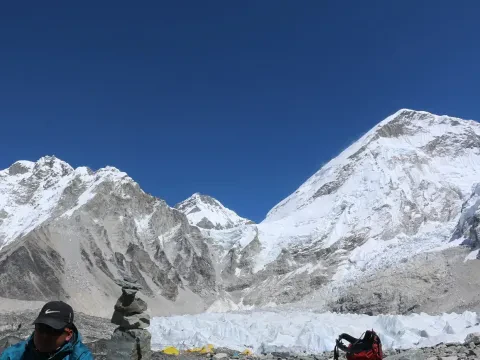
The Kala patthar sunrise is undoubtedly the best Himalayan sunrise for seasoned trekkers. The Everest region viewpoint offers the closest and most unobstructed panoramic view of Mount Everest (8,848.86 m) and other great Himalayan peaks such as Nuptse (7,861 m), Lhotse (8,516 m), Pumori (7,161 m), Lingtren (6,749 m), and others.
Unlike the Everest base camp view of the Sagarmatha peak, which is partially obscured by Nuptse, the Kala patthar sunrise hikers enjoy an uninterrupted view of the world’s highest mountain.
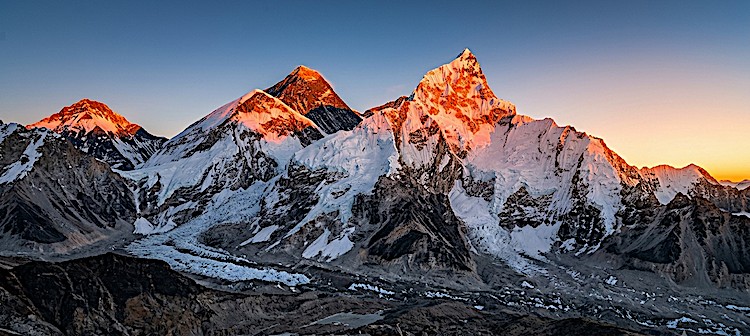
Here, photographers and trekkers consider the best place to see Everest at sunrise is Kala Patthar and not the Everest base camp.
The first light of dawn paints the summit of Everest in brilliant golden and orange hues before spreading to the other peaks, creating the most spectacular alpenglow over the Khumbu Himalayas.
| Information | Details |
|---|---|
| Viewpoint | Kala Patthar |
| Elevation | 5,545 m (18,192 ft) |
| Region | Everest (Khumbu) Region |
| Starting point | Gorak Shep (5,164 m) |
| Distance | Approximately 1.5 km one way |
| Duration | 2-3 hours uphill |
The Kala patthar altitude is considerably higher than most other trekking trails, including the Everest base camp. Therefore, it is essential to acclimatize before attempting to trek to the viewpoint.
Gorak Shep to Kala Patthar
The Gorak Shep to Kala Patthar trail generally starts before sunrise.
| Activity | Time |
|---|---|
| Wake up | 3:00 – 3:30 AM |
| Leave Gorak Shep | 3:30 – 4:00 AM |
| Reach Kala Patthar | 5:15 – 5:45 AM |
| Sunrise | Approx. 5:45 – 6:15 AM (varies) |
Actually, the trail to Kala Patthar is extremely steep, rocky, and challenging due to the significant altitude. It is advisable to bring a good headlamp as the path to the summit is pitch black until dawn.

Extreme Cold During Sunrise,
| Season | Temperature |
|---|---|
| Autumn | -12 °C to -18 °C |
| Spring | -10 °C to -15 °C |
| Winter | below -20 °C |
Cold weather combined with strong winds can make the temperature feel even colder, especially at higher altitudes.
Here is a list of essential clothing gear to help stay warm:
Acclimatization Is Key,
Most trekkers who intend to trek to Kala Patthar spend a couple of days acclimatizing before the sunrise hike. A typical Everest region acclimatization trek includes overnight stays at Namche Bazaar (3,440 m), Dingboche (4,410 m), and Lobuche (4,940 m).
Spending a couple of days at these mountain villages helps the body adapt to the drastic elevation changes and reduces the risks of altitude sickness.
The Kala Patthar viewpoint offers the best Himalayan sunrise photography opportunities. Some of the best tips to capture the golden alpenglow on Everest include:
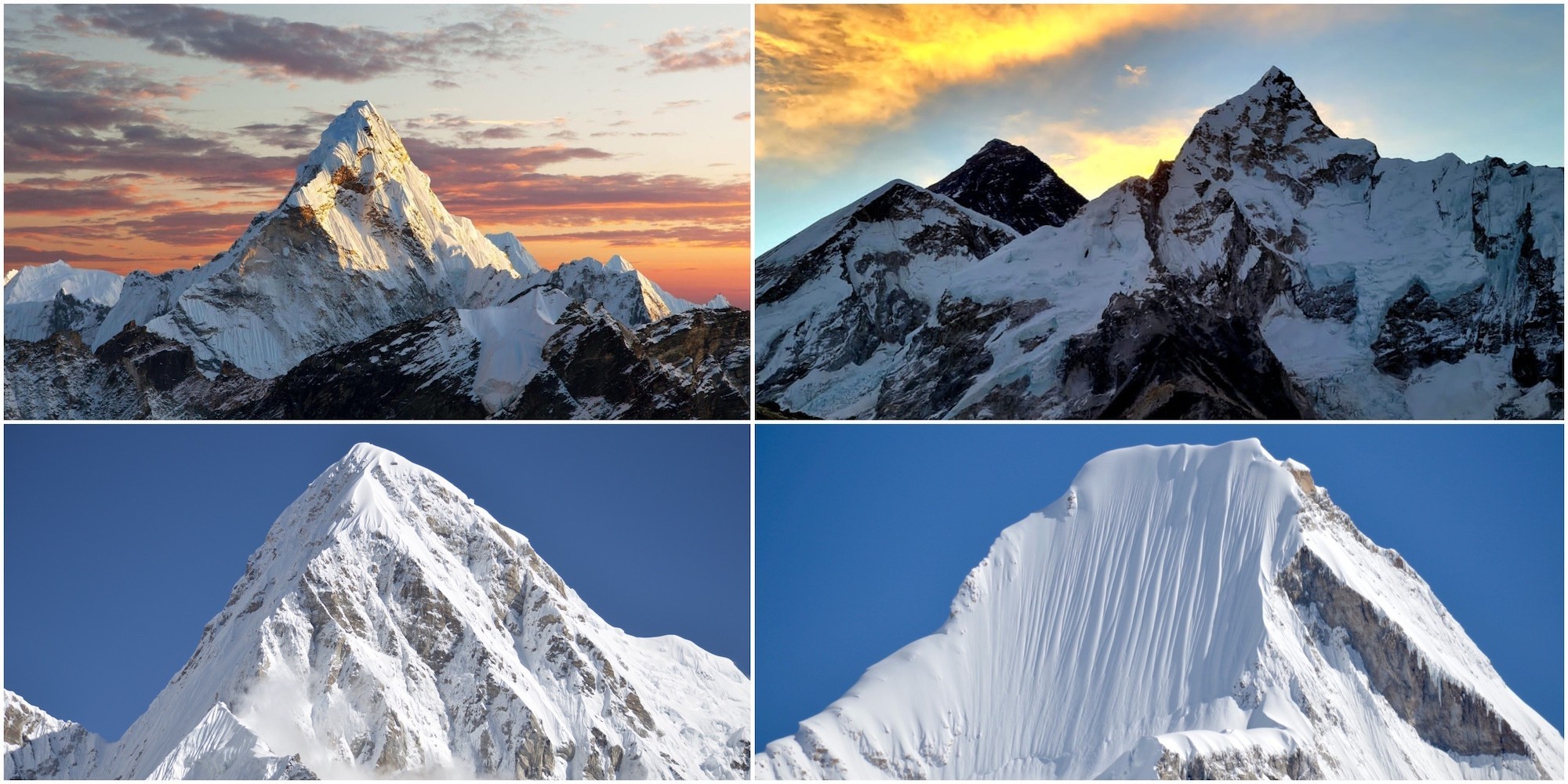
Here, the dramatic light show during the Kala patthar sunrise makes it one of the best places to see Everest at sunrise.
Is Kala Patthar Worth It?
If you are wondering whether Kala Patthar is worth it, here are a few reasons why most trekkers consider it an unforgettable Himalayan experience:
Although the summit is strenuous, Kala Patthar sunrise trek offers one of the world’s most incredible mountain-viewing opportunities.

Expert Tips :
Best For,
Best for: Serious trekkers who want the best view of Mt. Everest at sunrise, high-altitude photography, and panoramic Himalayan views.
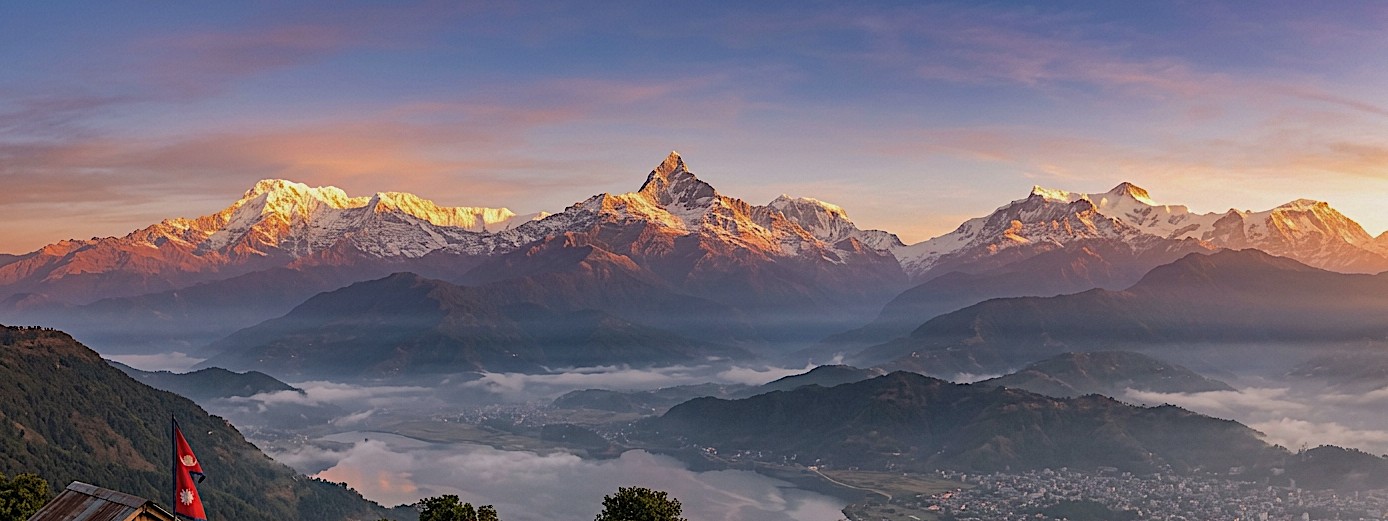
The Sarangkot sunrise view is one of the best day-trip activities in Nepal. Sarangkot viewpoint in Pokhara offers unparalleled sunrise photography opportunities over the beautiful Pokhara valley, Phewa Lake, and the majestic Annapurna Himalayas.
Unlike most Himalayan viewpoints, you do not have to spend days trekking to Sarangkot. Sarangkot sunrise Pokhara is a family-friendly, short, and scenic day adventure suitable for hikers and photographers with limited time.
As the sun rises over the Annapurna Himalayas, the still waters of Phewa Lake mirror the early morning sky while the snow-capped Machhapuchhre (6,993 m), Annapurna South (7,219 m), Hiunchuli (6,441 m), and Annapurna I (8,091 m) bask in the golden morning light.
Most travelers agree that Sarangkot sunrise is the best view of the sunrise in Pokhara.
| Information | Details |
|---|---|
| Viewpoint | Sarangkot |
| Elevation | Approx. 1,600 m |
| Distance from Pokhara | 12 km |
| Hiking Required | Optional |
| Suitable for | Families, photographers, and travelers |
Sarangkot Sunrise Time Table,
The Sarangkot sunrise time varies depending on the season.
| Activity | Time |
|---|---|
| Leave Lakeside | 4:30 – 5:00 AM |
| Arrive viewpoint | 5:00 – 5:30 AM |
| Sunrise | Approx. 5:30 – 6:15 AM |
Importantly, it is advisable to arrive earlier than 5:00 AM, especially during the peak trekking seasons (October – November) when the viewpoint is exceptionally busy.
How to Get to Sarangkot for Sunrise ?
By Taxi,
By Cable Car
The Sarangkot cable car is an excellent option for those who want to enjoy the sunrise without hiking.
Pros:
By Hiking,
For the most adventurous travelers, it is possible to hike Sarangkot from Lakeside ?
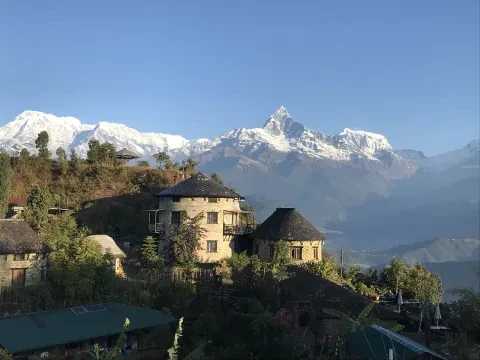
One of the best things about the Sarangkot sunrise is the spectacular view of the Machhapuchhre. The iconic Fishtail Mountain is lit up majestically against the early morning sky.
In fact, the distinctive pyramid shape of the Machhapuchhre makes it one of the most photographed mountains in Nepal.
Sarangkot Sunrise Tour Packages
Most sightseeing tours in Pokhara offer a Sarangkot sunrise experience. In general, the sunrise tours include:
Some tour operators also organize the following adventure activities:
Paragliding Combination Tour,
Actually, the Sarangkot viewpoint is also Nepal’s premier paragliding destination. Most paragliding companies offer a sunrise-viewing, breakfast, and paragliding combination adventure for an affordable price.
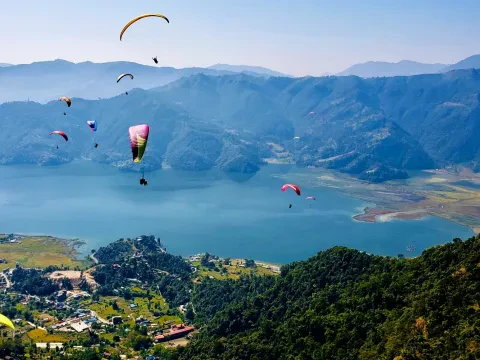
This exciting activity is undoubtedly one of the best things to do in Pokhara during the early morning.
Sarangkot vs Nagarkot – Which Is Better?
| Feature | Sarangkot | Nagarkot |
|---|---|---|
| Region | Pokhara | Kathmandu Valley |
| Elevation | 1,600 m | 2,175 m |
| Panoramic view | Annapurna Himalayas | Everest, Langtang, and Ganesh Himal |
| Lake View | Yes (Phewa Lake) | No |
| Cable Car | Yes | No |
| Paragliding | Yes | No |
| Accessibility | Good | Good |
Compared to Nagarkot, Sarangkot offers more spectacular sunrise views of the Annapurna range and Phewa Lake.
Best Sunrise Photography Tips,
Here are some expert tips for getting the best sunrise pictures in Sarangkot:
Best For
Best for: Families, first-timers, and photography lovers who want the best sunrise views in Pokhara without going through a multi-day trek.
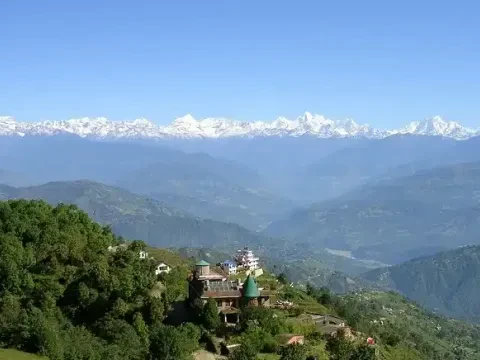
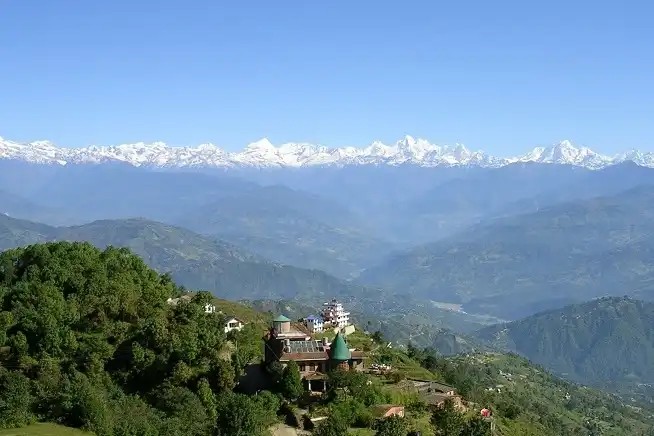
The Nagarkot sunrise is one of the most accessible and rewarding mountain sunrise experiences near the capital city of Nepal. Located 32 km east of Kathmandu at an elevation of 2,195 m (7,201 ft), Nagarkot Viewpoint offers spectacular views of the Himalayas without requiring a strenuous trek. If you are short on time, this is the best option for a sunrise view near Kathmandu.
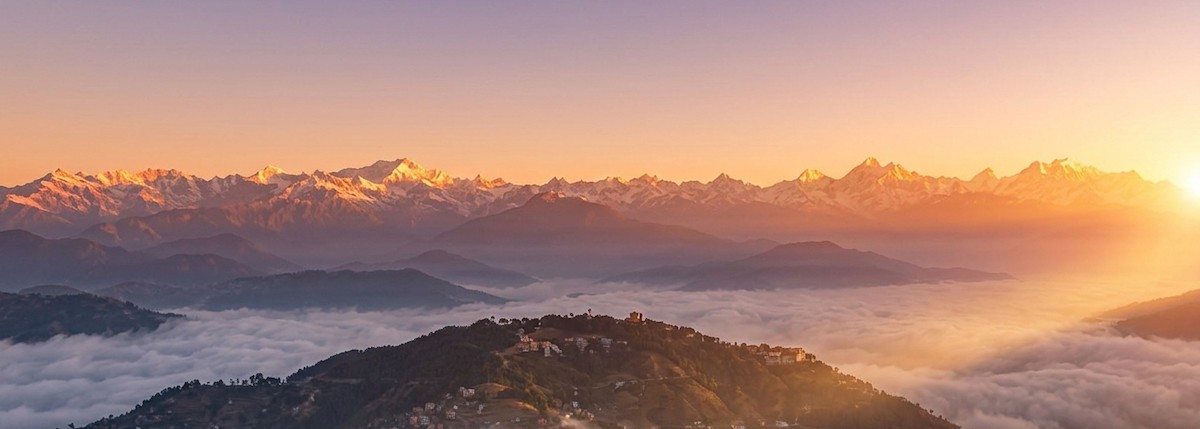
On a clear morning, you can see the Langtang range to the west and the Everest region to the east from Nagarkot. On days with good visibility, you can even see the summit of Mount Everest (8,848.86 m) from Nagarkot Viewpoint, making it one of the most sought-after destinations for seeing the Himalayas in Nepal. The view from Nagarkot is especially good during the autumn and winter seasons.
Unlike many high-altitude trekking viewpoints, Nagarkot has several comfortable hotels and is easily accessible by road, making it a good option for families, couples, and first-time visitors to Nepal who want to enjoy the Himalayan views without a long and strenuous trek.
| Information | Details |
|---|---|
| Viewpoint | Nagarkot |
| Elevation | 2,195 m (7,201 ft) |
| Distance from Kathmandu | 32 km |
| Driving Time | 1.5-2 hours |
| Hiking Required | Optional |
| Best For | Families, photographers, day-trippers |
| Month | Approx. Sunrise Time | Visibility |
|---|---|
| January | 6:50 AM | ★★★★★ |
| February | 6:35 AM | ★★★★★ |
| March | 6:10 AM | ★★★★☆ |
| April | 5:45 AM | ★★★★☆ |
| May | 5:20 AM | ★★★☆☆ |
| June | 5:10 AM | ★★☆☆☆ |
| July | 5:15 AM | ★☆☆☆☆ |
| August | 5:25 AM | ★★☆☆☆ |
| September | 5:40 AM | ★★★★☆ |
| October | 5:55 AM | ★★★★★ |
| November | 6:15 AM | ★★★★★ |
| December | 6:35 AM | ★★★★★ |
The best time to see the sunrise from Nagarkot is during the autumn and winter months (October to February) when the skies are generally clear.
Best Time to Visit Nagarkot
Autumn (October – November),
Advantages:
Winter (December – February),
Winter is another great season to visit Nagarkot:
Make sure to bring warm clothing, as it can get quite chilly before sunrise.
Spring (March – May),
Spring is also a good time to visit Nagarkot:
Monsoon (June – September),
The mountain views are often obstructed by clouds during the monsoon season:
However, the forests are lush and green, making them a good photo opportunity.
Nagarkot Everest View,
Many visitors to Nagarkot ask about the view of Everest from this viewpoint.
While you cannot see Everest as clearly as from the Khumbu region, on a clear morning, you may be able to see the summit with binoculars or a telephoto lens. You can also see other high peaks such as Langtang Lirung, Ganesh Himal, Dorje Lakpa, Gaurishankar, and Jugal Himal from Nagarkot.
How to Get to Nagarkot for Sunrise ?
There are several ways to get to Nagarkot for sunrise:
Private Car,
Taxi,
Tourist Tour,
Nagarkot Overnight Stay,
Many visitors choose to spend the night in Nagarkot rather than drive back and forth from Kathmandu. This way, they can wake up early and enjoy the sunrise without the stress of the drive. Staying overnight in Nagarkot also allows you to enjoy the evening view of the sunset from the mountains.
Actually, the hotel room in Nagarkot offers a stunning view of the valley, and many have a balcony from which you can enjoy the sunrise view.
| Features | Hotel Balcony | Nagarkot View Tower |
|---|---|
| Comfort | Excellent | Basic |
| Privacy | High | Low |
| Crowd Level | Low | High |
| 360 Panorama View | Limited | Excellent |
| Photo Opportunity | Very Good | Outstanding |
Here, the view from the Nagarkot View Tower is much better than most hotel balconies, although the latter offers more comfort and privacy.
Nagarkot vs Dhulikhel,
| Features | Nagarkot | Dhulikhel |
|---|---|
| Distance from Kathmandu | 32 km | 30 km |
| Elevation | 2,195 m | 1,550 m |
| Sunrise Popularity | Excellent | Very Good |
| Everest View | Occasionally | Occasionally |
| Hotels | More | Moderate |
| Crowds | More | Less |
Meanwhile, Nagarkot is the more popular destination for seeing the sunrise over the Himalayas, while Dhulikhel is a good option if you want a more tranquil experience.
Photography Tips,
Here are a few tips for taking sunrise pictures in Nagarkot:
Best For,
Best for: Visitors to Kathmandu, families, photographers, and couples who want to enjoy the best sunrise view near Kathmandu without a long trek.
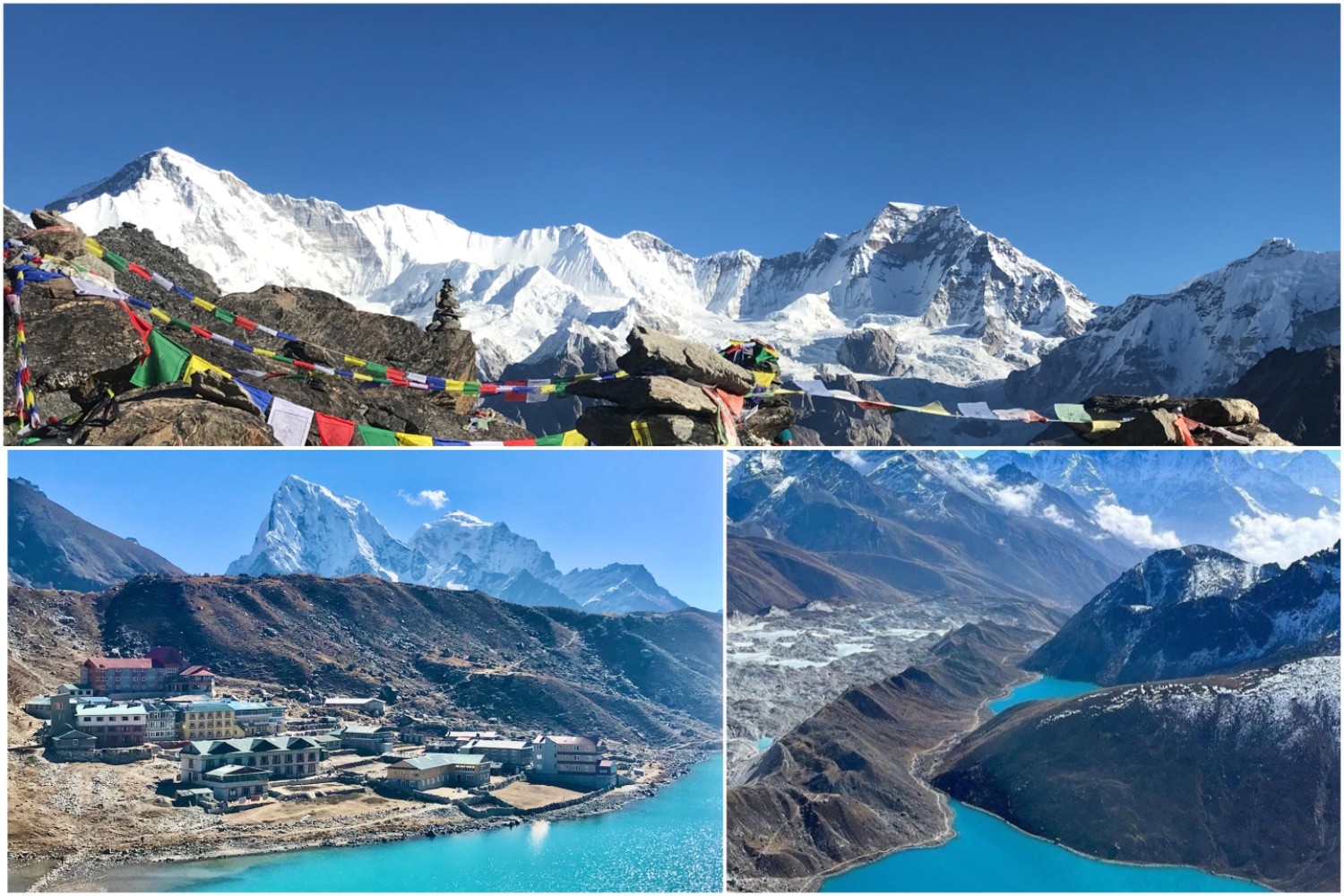
The Gokyo Ri sunrise is one of the most popular ways to experience the Himalayas in the Everest region. At 5,357 m (17,575 ft), Gokyo Ri Viewpoint offers spectacular sunrise views over the turquoise Gokyo Lakes, the Ngozumpa Glacier, and four of the world’s highest peaks. Unlike the busier Kala Patthar viewpoint, Gokyo Ri sunrise is a more tranquil Himalayan experience. It is also a great alternative to the crowded Everest Base Camp trek.
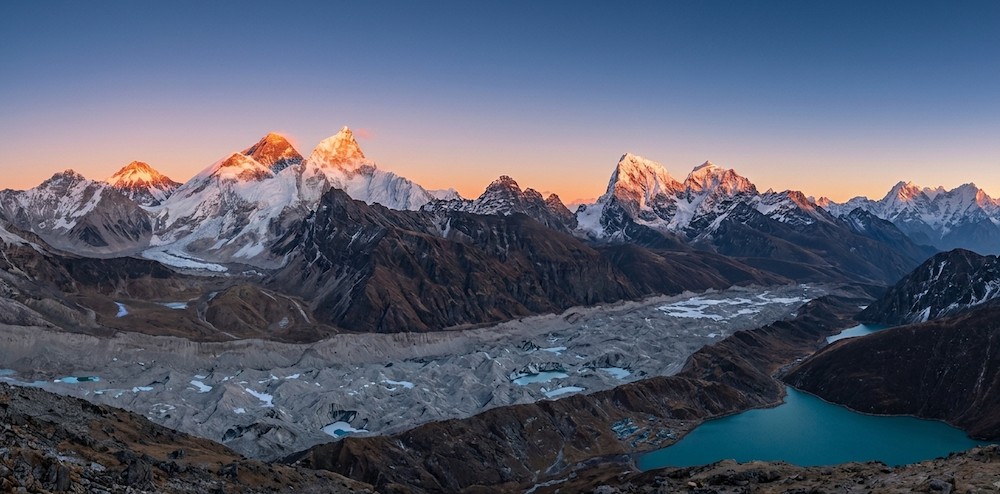
Witnessing the sunrise from Gokyo Ri is an unforgettable experience for trekkers and photographers who want panoramic views of the Everest region.
| Information | Details |
|---|---|
| Viewpoint | Gokyo Ri |
| Elevation | 5,357 m (17,575 ft) |
| Region | Everest (Khumbu) |
| Starting Point | Gokyo Village (4,790 m) |
| Hiking Time | 2-3 hours round trip |
Moroever, Gokyo Ri is slightly lower than Kala Patthar, but it is still a high-altitude trek. It is important to acclimatize properly before attempting the Gokyo Ri hike.
Four 8,000-Meter Peaks from Gokyo Ri
One of the reasons why the Gokyo Ri viewpoint is so popular is because of the incredible panorama it offers.
| Peak | Elevation |
|---|---|
| Mount Everest | 8,848.86 m |
| Lhotse | 8,516 m |
| Makalu | 8,485 m |
| Cho Oyu | 8,188 m |
Few places in Nepal offer such a spectacular view of four 8,000-meter peaks.
Gokyo Lakes Sunrise,
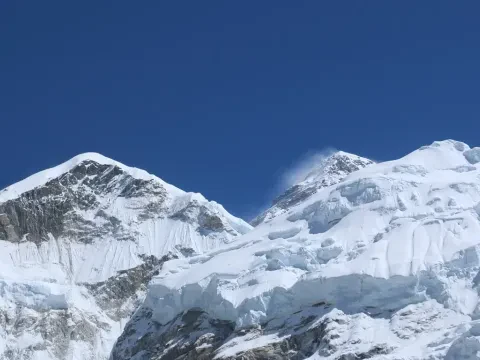
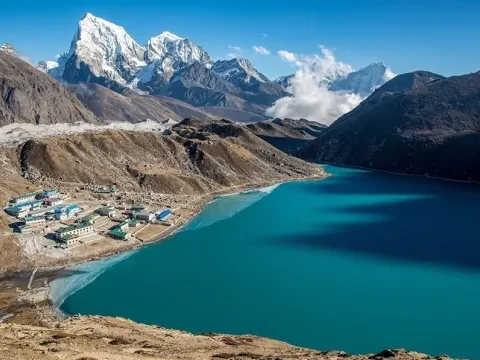
The turquoise Gokyo Lakes are located at the foot of Gokyo Ri. As the first rays of sunlight hit the valley, the ice-covered lakes begin to glow in shades of blue and gold. The glacier turns shades of silver and blue as the sun rises higher in the sky. The reflection of the mountains is also visible on calm mornings. This is one of the most unique sunrise experiences in the Everest region.
Ngozumpa Glacier Views,
Gokyo Ri offers spectacular views of the Ngozumpa Glacier. This is the longest glacier in Nepal and stretches for 36 km.
The Ngozumpa Glacier offers incredible views of:
Gokyo Ri vs Kala Patthar Comparison,
| Features | Gokyo Ri | Kala Patthar |
|---|---|
| Elevation | 5,357 m | 5,545 m |
| Everest View | Excellent | Outstanding |
| Four 8,000 m Peaks | Yes | Mostly Everest & Lhotse |
| Glacial Lakes | Yes | No |
| Glacier Views | Outstanding | Good |
| Crowds | Lower | Higher |
| Photography | Excellent | World-class |
While Kala Patthar offers the closest view of Everest, Gokyo Ri has a more panoramic view of the Everest region.
Best Time for Gokyo Ri Sunrise,
The best time for Gokyo Ri sunrise is during the following seasons:
Autumn (September – November),
Advantages:
Spring (March – May),
Advantages:
Both seasons are great for sunrise photography in Gokyo Ri.
Gokyo Ri Photography
The golden hour is an excellent time for sunrise photography in Gokyo Ri. Some of the best photo opportunities in Gokyo Ri include:
Expert Tips :
Best For,
Best for: Trekkers who want a more panoramic view of the Everest region and a less crowded alternative to Kala Patthar.
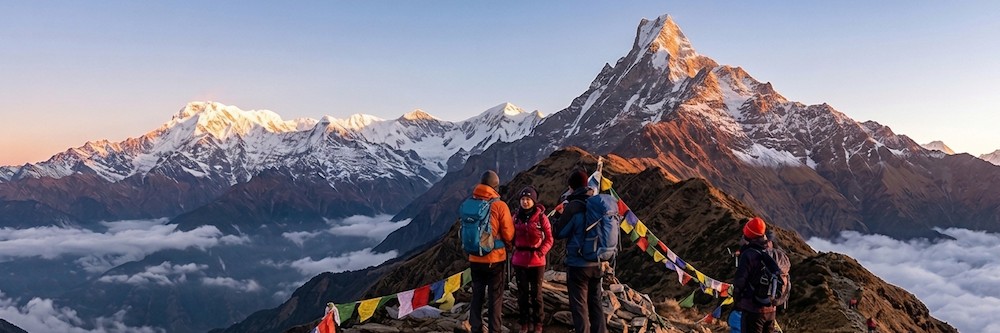
The Mardi Himal sunrise is one of Nepal’s most stunning, but lesser-known mountain vistas. This hidden Himalaya gem takes place near the Mardi Himal (5,587 m) peak, which is located at an altitude of 4,200 m.
Actually, it’s a fantastic option for those seeking peace and solitude while being able to enjoy nature and a spectacular sunrise over the Machhapuchhre (Fishtail) (6,993 m) mountain range.
Moreover, the Mardi Himal trail is less crowded than Poon Hill, so you may expect to see fewer hikers during your journey.
In fact, the Mardi Himal trek sunrise is renowned for the spectacular sight of the golden rays of the sun illuminating the Machhapuchhre’s pyramid-shaped peak. The Machhapuchhre (6,993 m), Annapurna South (7,219 m), Hiunchuli (6,441 m), Mardi Himal (5,587 m), and Annapurna Sanctuary are among the many Himalayan peaks that become visible at dawn.
If you’re looking for a popular but less busy trekking region, the Mardi Himal Viewpoint would be a fantastic choice.
So, let’s begin with some essential Mardi Himal sunrise information.
| Information | Details |
|---|---|
| Viewpoint | Mardi Himal Upper Viewpoint |
| Elevation | Approximately 4,200 m |
| Trekking Region | Annapurna Conservation Area |
| Starting Point | High Camp (≈3,580 m) |
| Hiking Time | 2–3 hours |
| Difficulty | Moderate |
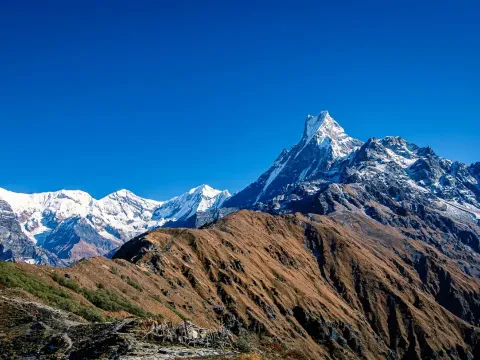
High Camp to Mardi Himal Upper Viewpoint,
The most exhilarating part of the trek begins before sunrise at High Camp. Here’s a sample timeline for your Mardi Himal trek:
Activity Timing Wake-up 3:30–4:00 am Breakfast (tea or snacks) 4:00–4:15 am Trek start 4:15–4:45 am Sunrise at the upper viewpoint Around sunrise
As you make your way up the rocky path, you may have a chance to see thousands of stars twinkling in the clear night sky. Just before sunrise, the Machhapuchhre peak will be visible to the east. The last leg of the climb is rather taxing.
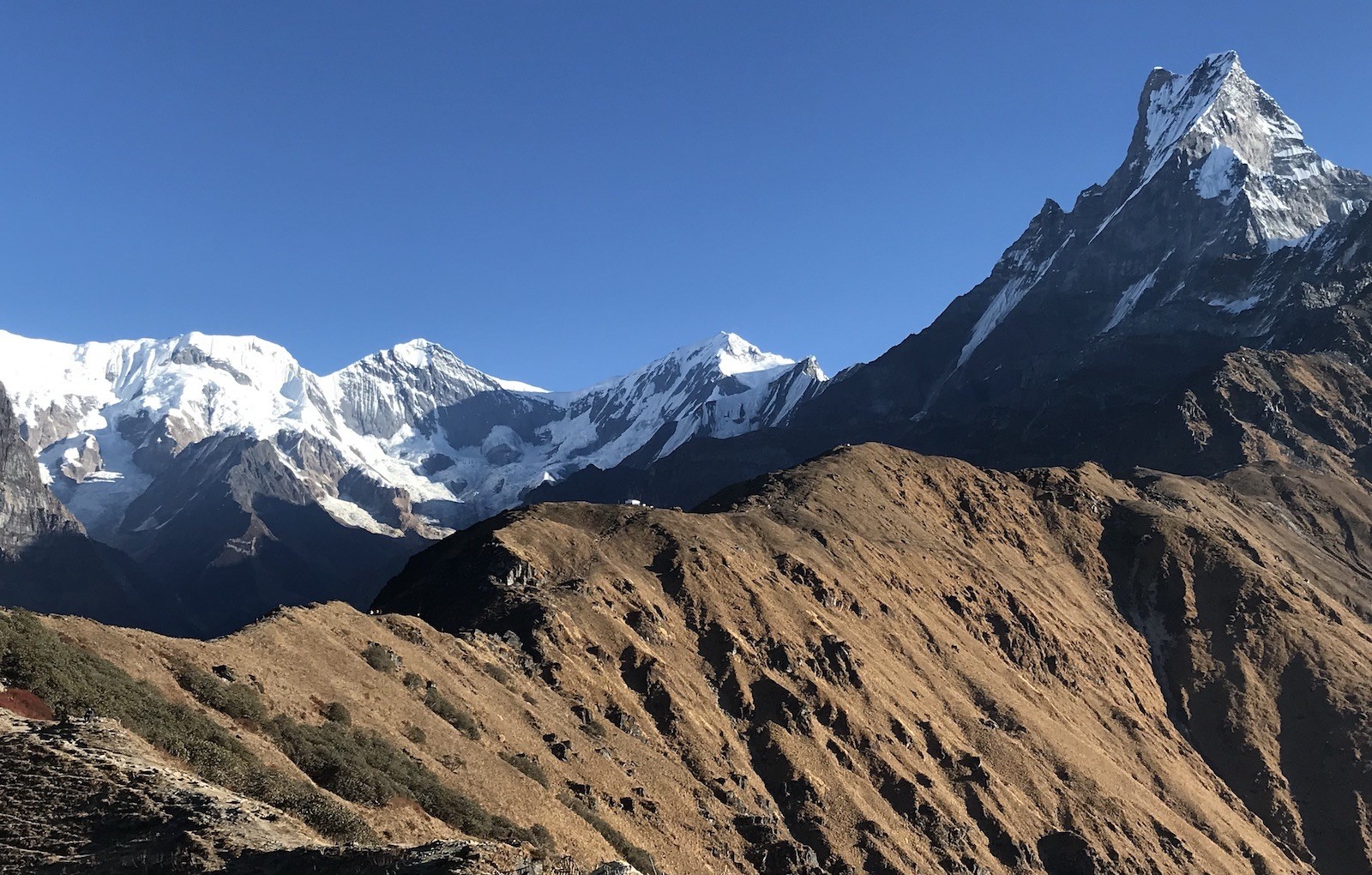
Thus, Mardi Himal’s upper viewpoint is considered one of the most incredible sunrise-viewing destinations in Nepal.
Close-Up Machhapuchhre Sunrise
One of the most appealing aspects of the Mardi Himal trek is that you have an unparalleled opportunity to witness the Machhapuchhre’s sunrise. It seems close enough to touch because it’s a steep mountain with a distinctive indigenous appearance. The Machhapuchhre’s pyramid-shaped peak is aglow with orange-yellow hues when the morning sun hits it.
The following Himalayan peaks are also visible:
The Machhapuchhre (6,993 m)
Annapurna South (7,219 m)
Hiunchuli (6,441 m)
Mardi Himal (5,587 m) and the Annapurna Sanctuary
From a vantage point close to the Machhapuchhre, you may see several towering mountain peaks that appear to be within reach.
Why Mardi Himal is Less Crowded?
The Mardi Himal Trek is becoming more well-known and is seeing an increasing number of hikers each year. However, it still has a long way to go before it equals the popularity of the classic Annapurna routes. Furthermore, because it is a recent addition to the trekking regions, there are just a few teahouses.
Some of the reasons why Mardi Himal is less crowded are as follows:
Because Mardi Himal is not well-known, it lacks the commercialization of the well-established trails, such as Poon Hill. Many hikers opt for the more traditional ABC (Annapurna Base Camp) and/or Poon Hill hikes.
| Feature | Mardi Himal | Poon Hill |
|---|---|---|
| Elevation | Approximately 4,200 m | Approximately 3,210 m |
| Main Attraction | Close-up view of Machhapuchhre (6,993 m) | Panoramic view of Annapurna Himalayas |
| Difficulty level | Moderate | Easy to Moderate |
| Crowds | Fewer | Busesier |
| Sunrise | Experience Dramatic alpine ridge hike | Classic panoramic view |
| Photography Opportunities | Outstanding | Excellent |
Both routes have their own appeal; nevertheless, the decision between Poon Hill and Mardi Himal is dependent on individual preferences.
In conclusion, those who want to have a unique but not extremely difficult trek and take pictures of the Machhapuchhre’s sunrise should consider Mardi Himal. In contrast, Poon Hill is a fantastic option for individuals who enjoy more accessible routes and are uninterested in haggling with other hikers for a front-row seat to the sunrise over the Annapurna Himalayas.
The Best Time to Do Mardi Himal Sunrise Trek,
The best seasons to experience the sunrise view from Mardi Himal are:
Autumn (October–November)
Spring (March–April)
Although winters have clear skies, hikes in the mornings may be chilly.
Mardi Himal Sunrise Photography Tips
To capture incredible sunrise photographs, keep the following suggestions in mind:
Arrive early to get a front-row seat to the event. Don’t forget to bring a headlamp. Take advantage of the telescope-like view of the Machhapuchhre peak. Try to take a panoramic picture of the sunrise. Don’t forget to capture photos of the prayer flags! Wait until after sunrise; the mountains will be less contrasty.
Best For
Best for: Those looking to have a less busy trek than Poon Hill, with wonderful Himalayan views, spectacular sunrise photography possibilities, and a hidden-gem experience in the Annapurna region.
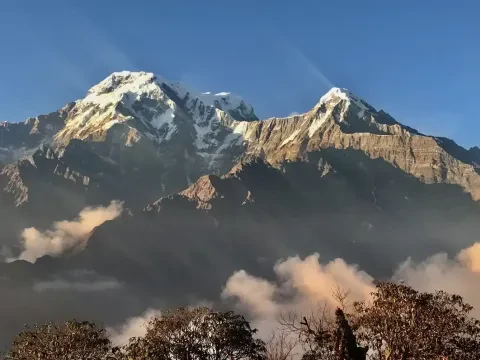
The Pikey Peak sunrise, which offers one of the most extensive Himalayan views in Nepal, is a fantastic choice for those seeking to escape the crowds in the Solukhumbu area. This breathtaking viewpoint is ideally located at an elevation of around 4,065–4,070 m.
As a result, trekkers who wish to witness the sunrise over Mount Everest and enjoy a fantastic view of numerous Himalayan giants have selected Pikey Peak as their preferred option.
Moreover, the Pikey Peak trek sunrise has gained worldwide renown since Sir Edmund Hillary claimed that he had one of his favorite views of the Everest from this location. Today, because of its spectacular beauty and relative seclusion, the Pikey Peak trek sunrise has acquired immense popularity among hikers who want to see Everest without encountering the crowds of the Everest Base Camp.
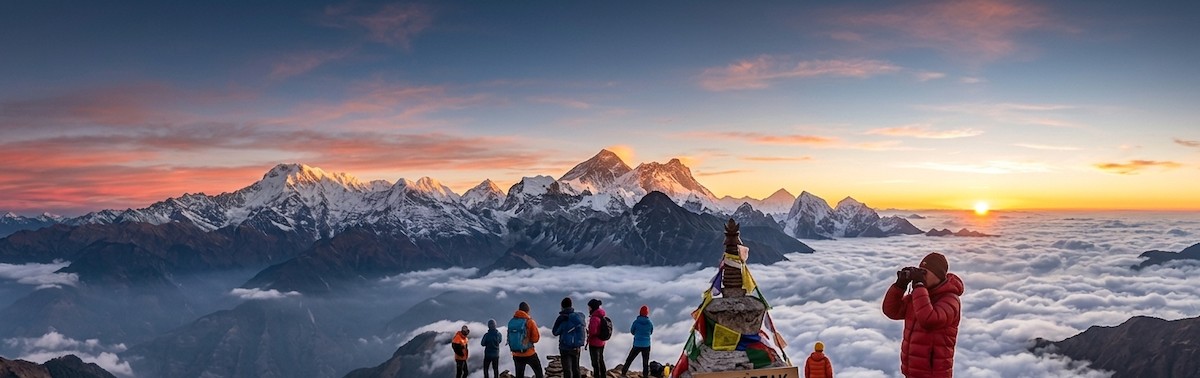
With its spectacular natural forest setting, Sherpa culture, high altitude, and beautiful Himalayan vistas, the Pikey Peak trek is undoubtedly one of the most scenic hidden gems in Nepal.
Pikey Peak Viewpoint Information,
One of Sir Edmund Hillary’s Favorite Viewpoints,
Edmund Hillary, one of the most renowned climbers in the world and the first person to successfully summit Mount Everest, claimed that Pikey Peak was one of his favorite viewpoints for watching Mount Everest.
Importantly, the most significant advantage of the Pikey Peak trek sunrise is that it provides a spectacular 360-degree view of the Everest Himalaya. Unlike many other viewpoints within the Khumbu region, Pikey Peak is the ideal location to see Everest and the surrounding Himalayan peaks.
As a result, the Pikey Peak trek sunrise has seen an explosion in popularity among hikers who want to see the Everest Himalayas without dealing with the crowds of the Everest Base Camp.
Pikey Peak Everest View,
Actually, the Everest view from Pikey Peak is unquestionably some of the finest in Nepal. On a clear day, you’ll be able to see an astonishing number of Himalayan peaks stretching out in front of you.
Why the Pikey Peak is Less Crowded ?
There are fewer hikers on the trails leading to Pikey Peak than there are on the well-trodden Everest Base Camp trails.
Some of the reasons for this are as follows:
Best Time For Pikey Peak Sunrise,
The most popular seasons for visiting Pikey Peak are:
Autumn (October–November)
Benefits: The skies are typically clear and the weather is pleasant throughout the region.
Spring (March–May)
Highlights: There is a spectacular blooming display of rhododendrons throughout the forest.
The weather is generally excellent for trekking and viewing the sunrise over the Himalayas during this time of year. In addition, the temperatures are quite pleasant for day hikes.
Winters also have excellent visibility, but the mornings might be freezing cold.
| Feature | Pikey Peak | Everest Base Camp |
|---|---|---|
| Highest Viewpoint | 4,065–4,070 | 5,545 (Kala Patthar) Trek Duration| 5–7 days| 12–14 days | |
| Everest View | Excellent | Outstanding |
| Crowds | Fewer | Higher |
| Cost | Lower | Higher |
| Difficulty | Moderate | Challenging |
In fact,Tthe Pikey Peak trek is undoubtedly one of the most sought-after excursions by travelers who wish to view Everest and experience a different Himalayan adventure. If you have limited time but want to experience the Everest Himalayas, the Pikey Peak trek is an excellent option.
Photographic Composition Tips,
To capture excellent sunrise pictures, keep the following tips in mind:
Best For
Best for: Nature lovers who want to view Everest and experience a Himalayan trekking adventure in the isolated Solukhumbu region with spectacular sunrise views and excellent photo opportunities.
Why Chandragiri Hills Sunrise Is the Best Sunrise Near Kathmandu
The Chandragiri Hills sunrise is one of the easiest ways to enjoy a Himalayan sunrise. Located at 2,551 m (8,369 ft) on the southwestern edge of the Kathmandu Valley, the Chandragiri Viewpoint offers a combination of mountainous scenery, valley views, and convenient cable car access. For limited time visitors and families with children, this is one of the best sunrise options near the capital of Nepal.
Likewise, Chandragiri Hills are one of the closest viewpoints for seeing sunrise over Kathmandu Valley and the Himalayas. From Chandragiri Viewpoint, you can enjoy spectacular views of the Kathmandu Valley and the snow-capped Himalayas. On a clear day, you can see Langtang Lirung (7,227 m), Ganesh Himal, Dorje Lakpa (6,966 m), Gaurishankar (7,134 m), and even Mount Everest (8,848.86 m) from the viewpoint.
Unlike high-altitude trekking, Chandragiri viewpoint offers a relaxing mountain experience within easy reach of almost everyone. Chandragiri Viewpoint is one of the best places to watch the sunrise over the Kathmandu Valley and the Himalayas. It is a popular destination for local families and international tourists alike. The viewpoint offers spectacular views of the valley and the surrounding mountains. The cable car ride to the top is a must-do activity for anyone visiting the area.
| Information | Details |
|---|---|
| Viewpoint | Chandragiri Hills |
| Elevation | 2,551 m (8,369 ft) |
| Distance from Kathmandu | Approx. 16 km |
| Main Access | Cable car |
| Hiking Required | Optional |
| Best For | Families, day visitors, photographers |
Chandragiri Cable Car Sunrise,
The Chandragiri cable car sunrise is the main attraction for most visitors. The cable car from Thankot to Chandragiri summit is a scenic 10-12 minutes ride, offering great views of the forest and valley. The key thing to note is that the cable car does not always operate before sunrise. It is a good idea to check the operating hours in advance, as the timing can vary depending on the season, weather, and holidays.
If the cable car is not operating early enough, you may want to consider spending the night near the Chandragiri Hill or arriving early enough to catch the first cable car.
| Season | Sunrise |
|---|---|
| Winter | 6:35-6:50 AM |
| Spring | 5:40-6:15 AM |
| Summer | 5:10-5:30 AM |
| Autumn | 5:45-6:15 AM |
Here, it is recommended to reach the viewpoint 30-45 minutes before sunrise to capture the changing colors of the sky and enjoy the early morning photography opportunities.
Chandragiri Hills Kathmandu Experience
In addition to sunrise views, there are several other attractions in Chandragiri Hills:
These are some of the reasons why Chandragiri is a great option for a half-day or full-day trip from Kathmandu.
Chandragiri vs Nagarkot,
| Feature | Chandragiri Hills | Nagarkot |
|---|---|
| Elevation | 2,551 m | 2,195 m |
| Access | Cable car | Road |
| Hiking | Not Required | Optional |
| Valley Views | Excellent | Limited |
| Himalayan Views | Excellent | Excellent |
| Overnight Hotels | Limited | Numerous |
| Day Trip Convenience | Outstanding | Very Good |
Both Chandragiri and Nagarkot offer spectacular views of the Himalayas and the Kathmandu Valley. However, if you are looking for a more comfortable and less strenuous option for a day trip, Chandragiri is the way to go. If you are willing to hike and spend the night, Nagarkot offers more opportunities for sunrise viewing.
Photography Tips,
To capture the best sunrise photos at Chandragiri:
Best For
Best for: Families, seniors, day-trippers, photographers, and those who want a convenient no-trek option for sunrise viewing near Kathmandu with beautiful views of the Himalayas and the valley.
The Mohare Danda sunrise is one of the best-kept secrets for experiencing the Himalayas. Unlike the busy Ghorepani trail, the Mohare Danda Trek is a lesser-known trail that offers equally stunning views of the Annapurna mountain range. The Mohare Danda Viewpoint is a fantastic option for those seeking a more authentic Himalayan experience.
While the Ghorepani-Poon Hill trek is the most popular trek in the Annapurna region, it can be crowded and stressful. The Mohare Danda Trek is a fantastic alternative for those seeking a more authentic Himalayan experience. The trail is less crowded and offers equally stunning views of the Annapurna mountain range. As the sun rises over the horizon, the snow-capped peaks of Dhaulagiri I, Annapurna I, Annapurna South, Machhapuchhre, Nilgiri, and many other mountains turn a brilliant shade of gold and orange.
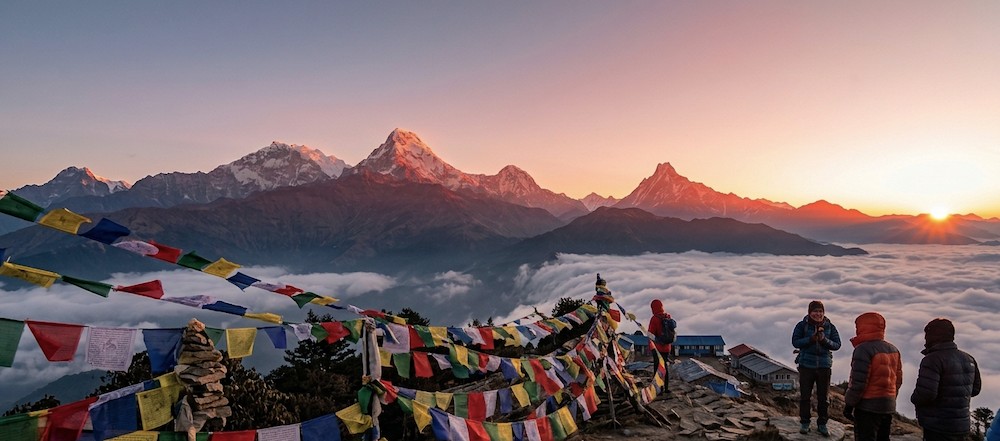
In fact, the Mohare Danda Trek is a fantastic option for those seeking a more authentic Himalayan experience. The trail is less crowded and offers stunning views of the Annapurna mountain range.
| Information | Details |
|---|---|
| Viewpoint | Mohare Danda |
| Elevation | Approx. 3,300 m |
| Region | Annapurna Conservation Area |
| Trek Duration | 4-6 days from Pokhara |
| Difficulty | Easy to Moderate |
| Crowd Level | Low |
Mohare Danda Community-Based Trek,
One of the unique things about the Mohare Danda Trek is that it is a community-based trek. Many of the overnight stays are in community-run lodges, where the profits go back to the local villages. This is a fantastic opportunity to experience the local culture and support the local economy.
Here are some of the benefits of a community-based trek:
This is just a small sample of the many advantages of a community-based trekking experience.
Mohare Danda Sunrise Experience,
The sunrise experience at Mohare Danda is peaceful and serene. Before sunrise, hikers gather on the ridge while the eastern sky turns from deep blue to orange. As the sun rises, the forested hills and valleys around the viewpoint are bathed in golden light. The panoramic views of the Annapurna and Dhaulagiri mountain ranges are truly breathtaking.
Meanwhile, the calmness of the sunrise at Mohare Danda is a stark contrast to the busy Poon Hill sunrise. While Poon Hill is undoubtedly a fantastic viewpoint, Mohare Danda offers a more authentic Himalayan experience.
| Feature | Mohare Danda | Poon Hill |
|---|---|---|
| Elevation | Approx. 3,300 m | 3,210 m |
| Crowd Level | Low | High |
| Sunrise Views | Excellent | Excellent |
| Community Lodges | Limited | Yes |
| Trek Style | Quiet & cultural | Popular & classic |
| Photography | Outstanding | Outstanding |
Poon Hill sunrise is the more popular option, but Mohare Danda offers a more authentic Himalayan experience.
Cultural Experience,
One of the unique things about the Mohare Danda Trek is that it takes you through traditional Magar villages.
Here are some of the cultural experiences you can expect on this trek:
These are just some of the cultural experiences you can expect on the Mohare Danda Trek.
Best Time for Mohare Danda Sunrise,
The best seasons for sunrise views are:
Autumn (October-November),
Spring (March-May),
Photography Tips,
To capture the best sunrise photos at Mohare Danda:
Best For,
Best for: Those seeking a quiet alternative to the busy Poon Hill trek, community-based tourism, authentic cultural experiences, and stunning Himalayan sunrise views.
If you are looking for a hidden Poon Hill with less crowds and equally spectacular mountain views, consider Muldai Viewpoint and Khopra Danda. These two lesser-known viewpoints in the Annapurna region offer unforgettable sunrise views over the Himalayas. At an altitude of 3,637 m and 3,660 m, respectively, Muldai Viewpoint and Khopra Danda provide spectacular sunrise opportunities, peaceful trails, and panoramic mountain views.
Unlike Poon Hill, which can be crowded by hikers, Muldai Viewpoint and Khopra Danda are less known, offering a more secluded sunrise experience. While Poon Hill is one of the most popular and accessible viewpoints in Nepal, Muldai Viewpoint and Khopra Danda provide a unique opportunity to enjoy the sunrise without the crowds.
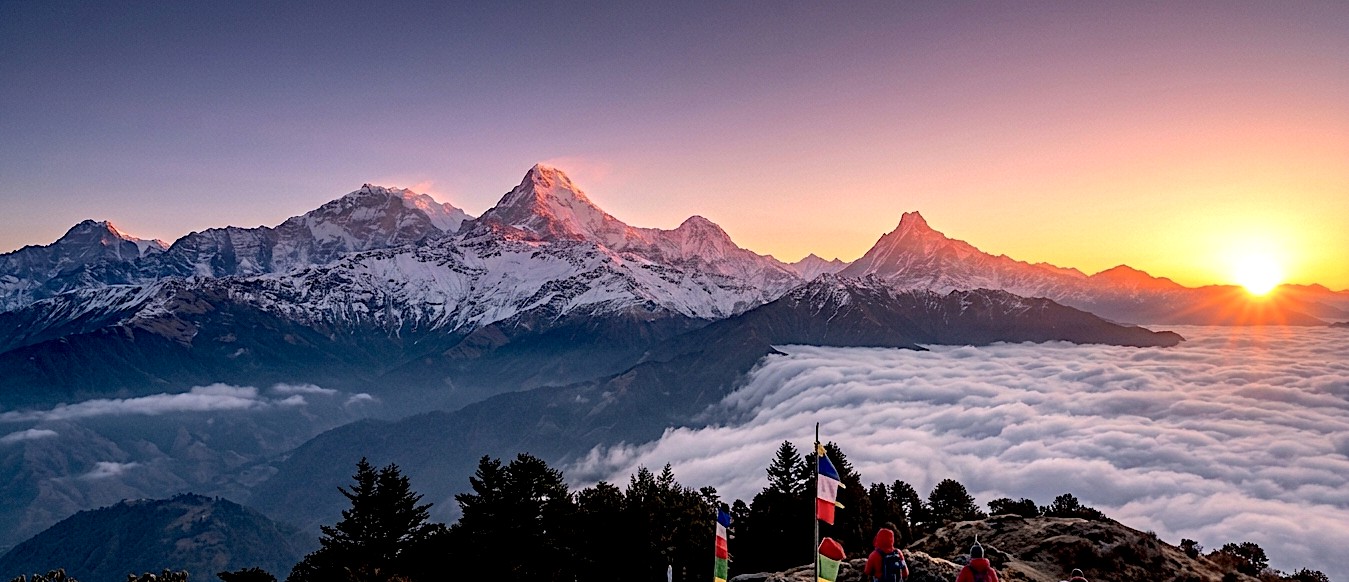
Whether you want to experience the Muldai Viewpoint sunrise or a spectacular Khopra Danda sunrise, these are excellent options for an authentic Annapurna trekking experience.
| Information | Details |
|---|---|
| Viewpoint | Muldai Viewpoint |
| Elevation | 3,637 m |
| Region | Annapurna Conservation Area |
| Trek Duration | 5-7 days |
| Difficulty | Moderate |
| Crowds | Very Low |
Why Muldai Viewpoint Sunrise is a Great Option,
The Muldai Viewpoint sunrise is a popular choice among experienced trekkers who want to enjoy a less crowded alternative to Poon Hill.
From the Muldai viewpoint, you can enjoy unobstructed sunrise views over:
Since Muldai Viewpoint is less known and less accessible, it attracts few visitors, and you can enjoy the sunrise in peace and solitude. It is one of the best-kept secrets in the Annapurna region, offering spectacular sunrise views over the Annapurna and Dhaulagiri ranges.
Khopra Danda Sunrise,
The sunrise from Khopra Danda is one of the most spectacular mountain-viewing opportunities in Annapurna. From the exposed ridge at 3,660 m, you can enjoy sunrise views over the Annapurna and Dhaulagiri ranges. The best part about the Khopra Danda sunrise is that you can see the mighty Dhaulagiri I (8,167 m) rising over the horizon in the west.
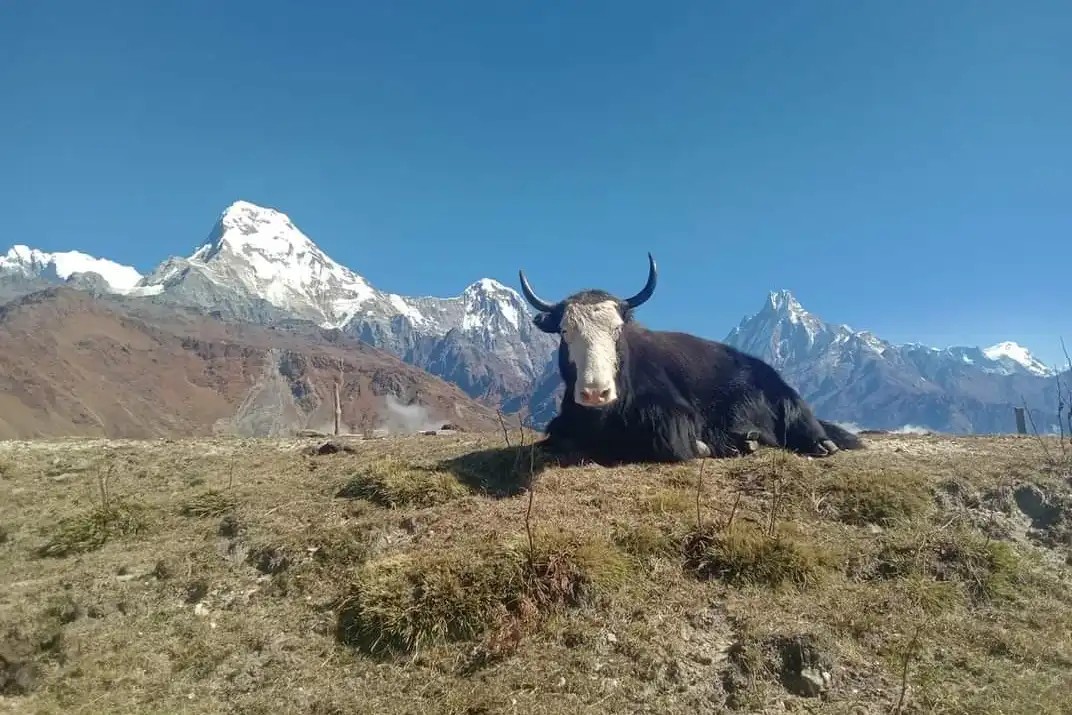
Another advantage of the Khopra Danda sunrise is that it is less crowded than Poon Hill. In addition, the ridge and community-run lodges offer a more laid-back experience than most other trekking routes in Nepal.
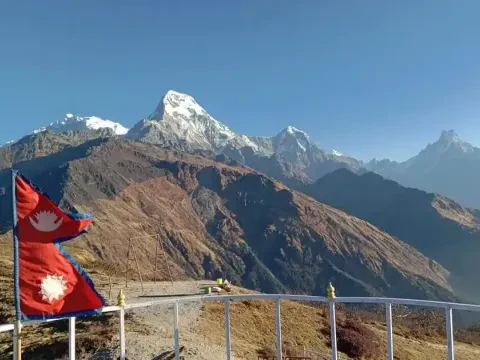
Many trekkers like to extend the Khopra Danda trek to include the picturesque Khayer Lake. At 4,660 m, the sacred alpine lake is one of the most spectacular sights in the Annapurna region.
The Khayer Lake trek is a great way to experience:
The extra day needed to complete the Khayer Lake trek is well worth it.
Muldai vs Poon Hill,
| Feature | Muldai Viewpoint | Poon Hill |
|---|---|---|
| Elevation | 3,637 m | 3,210 m |
| Crowds | Very Low | High |
| Difficulty | Moderate | Easy to Moderate |
| Sunrise Views | Outstanding | Outstanding |
| Photography | Excellent | Excellent |
| Trail Atmosphere | Peaceful | Bustling |
Muldai Viewpoint is a fantastic option if you want a more authentic trekking experience.
| Feature | Khopra Danda | Poon Hill |
|---|---|
| Elevation | 3,660 m | 3,210 m |
| Community Lodges | Yes | Limited |
| Khayer Lake Option | Yes | No |
| Crowds | Low | High |
| Trek Duration | Longer | Shorter |
| Cultural Experience | Excellent | Very Good |
Khopra Danda is a fantastic option if you want a more wilderness-oriented trekking experience.
Best Time for Sunrise,
The best time for sunrise in Nepal is during the dry seasons:
Autumn (October to November)
Spring (March to May)
Sunrise Photography Tips,
Here are some sunrise photography tips:
Best For,
Best for: Trekkers seeking a less crowded Annapurna sunrise, photographers, nature lovers, and those who want a hidden Poon Hill experience with more authentic mountain solitude.
Nepal has some of the best mountain sunrise viewing opportunities in the world. From the famed Kala Patthar to the more accessible but equally stunning Mohare Danda, every sunrise in Nepal is a unique and unforgettable experience. In fact, Nepal has the most spectacular mountain landscapes in the world.
If you are wondering what are the best sunrise viewpoints in Nepal, the choice ultimately depends on your preferences and itinerary.
| Viewpoint | Elevation | Best For | Difficulty | Crowd Level |
|---|---|---|
| Poon Hill | 3,210 m | Beginner-friendly | Easy | High |
| Kala Patthar | 5,545 m | Mount Everest panorama | Challenging | High |
| Sarangkot | 1,600 m | Day hikes | Very Easy | Moderate |
| Nagarkot | 2,195 m | Near Kathmandu | Very Easy | Moderate |
| Gokyo Ri | 5,357 m | Panoramic Everest views | Challenging | Moderate |
| Mardi Himal Viewpoint | 4,200 m | Hidden-gem trekking | Moderate | Low |
| Pikey Peak | 4,065-4,070 m | Quiet Everest panorama | Moderate | Low |
| Chandragiri Hills | 2,551 m | No-trek sunrise | Very Easy | Moderate |
| Mohare Danda | 3,300 m | Community trekking | Easy to Moderate | Low |
| Muldai / Khopra Danda | 3,637-3,660 m | Solitude and photography | Moderate | Very Low |
| Traveler Type | Recommended Sunrise Viewpoint |
|---|---|
| First-time visitors | Sarangkot or Nagarkot |
| Families | Poon Hill or Chandragiri Hills |
| Photographers | Gokyo Ri or Kala Patthar |
| Adventure seekers | Mardi Himal or Kala Patthar |
| Quiet-trail lovers | Mohare Danda, Muldai Hill, Khopra Danda, or Pikey Peak |
| Everest panorama enthusiasts | Kala Patthar, Gokyo Ri, or Pikey Peak |
Whether you are looking for an easy morning hike near Kathmandu or a challenging trek in the Everest or Annapurna regions, sunrise in Nepal is a truly unforgettable experience. Watching the first golden rays of the sun illuminate the snow-capped peaks, fluttering prayer flags, and distant valleys is something that stays with you for life.
From the most popular viewpoints to the best-kept secrets, these are truly the best places to watch sunrise in Nepal. No matter which destination you choose, visiting them during the dry seasons will provide the best mountain views and photography opportunities.
Pro Sunrise Tips in Nepal :
Build the Perfect Nepal Sunrise Itinerary,
For the best sunrise planning experience, build or discover the ultimate “10 Best Sunrise Viewpoints in Nepal” guide and connect it with related pages to your guide. This way, you can easily compare and contrast the most popular sunrise destinations in Nepal and choose the best one for your preferences and itinerary.
Whether you dream of seeing the golden glow on top of Mount Everest or a quiet sunrise from a remote Himalayan ridge, Nepal has some of the best sunrise viewing opportunities in the world.
1. What are the 10 best sunrise viewpoints in Nepal?
The 10 best sunrise viewpoints in Nepal are Poon Hill, Kala Patthar, Gokyo Ri, Muldai Viewpoint, Khopra Danda, Sarangkot, Nagarkot, Pikey Peak, Mardi Himal Viewpoint, and Mohare Danda. These popular viewpoints offer amazing sunrise views over Everest, Annapurna, Dhaulagiri, Langtang, and Machhapuchhre peaks in Nepal. These trekking destinations draw thousands of hikers and photographers every year.
2. Which is the best sunrise viewpoint in Nepal for Everest views?
Kala Patthar is the best sunrise viewpoint in Nepal for Mount Everest views. This is the best place to see sunrise over Everest (8,848.86 m), Nuptse, Pumori, and Lhotse glaciers. It is an unforgettable experience to watch the morning sun rising over the beautiful Himalayan mountains.
3. Which sunrise viewpoint is best for beginners in Nepal?
Sarangkot is one of the best sunrise viewpoints in Nepal for beginners as it is situated very near to Pokhara city from where it is reachable via a short road journey. It offers a spectacular view of Annapurna I (8,091 m), Dhaulagiri (8,167 m), Machhapuchhre (6,993 m), and Lamjung Himal peaks at sunrise.
4. Is Poon Hill the most popular sunrise viewpoint in Nepal?
Yes, Poon Hill (3,210 m) is considered the most popular sunrise viewpoint in Nepal. It offers unparalleled sunrise views over Annapurna South, Dhaulagiri, Hiunchuli, Nilgiri, and Machhapuchhre peaks. Moreover, this trekking trail is good for family-friendly trekkers as it has easy trails and comfortable teahouses.
5. Which sunrise viewpoint offers fewer crowds in Nepal?
Muldai Viewpoint is one of the best hidden sunrise viewpoints in Nepal. It is an excellent alternative to Poon Hill as it has amazing sunrise views over Annapurna and Dhaulagiri peaks. Also, Muldai Viewpoint has fewer crowds than Poon Hill. Moreover, Muldai Viewpoint is situated at an elevation of around 3,637 m in Nepal.
6. What is the highest sunrise viewpoint in Nepal?
Kala Patthar (5,545 m) is one of the highest sunrise viewpoints in Nepal. From Kala Patthar, you can see Mount Everest at sunrise majestically. Most trekkers trek Kala Patthar the night before to watch the sunrise over the Everest massif.
7. Which sunrise viewpoint in Nepal is best for photographers?
Gokyo Ri (5,357 m) is one of the best sunrise viewpoints in Nepal for photography purposes. At sunrise, the beautiful turquoise lakes of Gokyo become a fantastic foreground for the towering Everest, Cho Oyu, Makalu, and Lhotse peaks. This viewpoint is a paradise for nature lovers and professional photographers.
8. Which sunrise viewpoint near Kathmandu is most popular?
Nagarkot is one of the best sunrise viewpoints near Kathmandu. It is around an hour’s drive from Kathmandu city. Nagarkot offers panoramic sunrise views over the Langtang range, Ganesh Himal, Dorje Lakpa, and Gaurishankar peaks. You may also be able to see Mount Everest on a clear morning.
9. What is the best sunrise viewpoint near Pokhara?
Sarangkot is the best sunrise viewpoint near Pokhara. You can either drive or trek to Sarangkot peak and enjoy the morning sun rising over Machhapuchhre, Annapurna South, Hiunchuli, and Dhaulagiri peaks at sunrise. Sunrise photography from this viewpoint is quite popular in Nepal.
10. Is Pikey Peak worth visiting for sunrise?
Yes, Pikey Peak (4,065 m) is worth visiting for sunrise views over Mount Everest. In fact, you might get a chance to see the Everest sunrise views from Pikey Peak as even Sir Edmund Hillary was fascinated by the sunrise views over the Everest massif from this peak. Besides, Pikey Peak is also less crowded than Everest Base Camp.
11. Which sunrise viewpoint offers the best Annapurna panorama?
Khopra Danda (3,660 m) is one of the best sunrise viewpoints in Nepal for capturing panoramic views of the Annapurna range. At sunrise, you can witness the glowing Annapurna South, Nilgiri, Dhaulagiri, Fang, and Tukuche Peak from this viewpoint. Also, Khopra Danda is less crowded than most other sunrise viewpoints in Nepal.
12. Can beginners reach Nepal’s sunrise viewpoints?
Yes, beginners can reach some of the best sunrise viewpoints in Nepal. Sarangkot, Nagarkot, and Poon Hill are some of the best sunrise viewpoints for beginners, whereas Kala Patthar, Gokyo Ri, and Mardi Himal Viewpoint are for experienced trekkers. Moreover, most sunrise viewpoints in Nepal require a good level of fitness and endurance.
13. Which sunrise viewpoint is best during October in Nepal?
October is one of the best months to visit Nepal as the skies are clear on most days. During this month, you can witness sunrise views from Poon Hill, Kala Patthar, Gokyo Ri, Sarangkot, Nagarkot, Mardi Himal Viewpoint, and Khopra Danda. These viewpoints offer the best sunrise views on clear mornings in Nepal.
14. What is the best sunrise viewpoint during spring in Nepal?
The spring season is one of the best times to visit Nepal’s sunrise viewpoints. During this season, most trails are clear, and you can capture great sunrise views from Poon Hill, Mohare Danda, Muldai Viewpoint, and Khopra Danda. At sunrise, these viewpoints offer spectacular views of the Himalayas along with beautiful rhododendron blooms.
15. Which sunrise viewpoint shows Mount Everest most clearly?
Kala Patthar offers you the clearest view of Mount Everest in Nepal. Likewise, Pikey Peak, Gokyo Ri, and Nagarkot also offer you great sunrise views of Mount Everest. However, Kala Patthar is the most popular viewpoint for watching sunrise over Mount Everest as it is the closest viewpoint to the Everest massif.
16. Do I need a guide for Nepal’s sunrise viewpoints?
A guide is necessary for exploring remote sunrise viewpoints such as Khopra Danda, Muldai Viewpoint, Mardi Himal Viewpoint, and Gokyo Ri. However, you do not need a guide for easily accessible sunrise viewpoints such as Sarangkot and Nagarkot. Hiring a local guide can also help you immensely if you want to explore trekking trails in Nepal.
17. What should I pack for visiting sunrise viewpoints in Nepal?
You must pack warm clothing, gloves, a down jacket, Most sunrise viewpoints in Nepal are at a higher altitude, so it can be pretty cold in the morning. Even in warm seasons such as spring and autumn, it can be freezing at sunrise in Kathmandu, Pokhara, and other mountainous regions of Nepal.
18. What time should I start hiking for sunrise viewpoints?
Most trekking agencies suggest departing for sunrise viewpoints between 4:00 AM and 5:00 AM. This gives you a generous amount of time to get to the best sunrise viewpoints in Nepal and witness the sunrise views over the towering Himalayan mountain ranges.
19. Which hidden sunrise viewpoints are becoming popular in Nepal?
Muldai Viewpoint, Mohare Danda, and Khopra Danda are some of the popular hidden sunrise viewpoints in Nepal these days. They are quickly gaining popularity among trekkers who want to avoid the crowds at popular sunrise viewpoints such as Poon Hill. These hidden viewpoints offer spectacular sunrise views over Annapurna and Dhaulagiri peaks, comfortable teahouses, and fewer crowds.
20. Why are sunrise viewpoints among Nepal’s top tourist attractions?
The best sunrise viewpoints in Nepal offer you breath-taking views of the Himalayas, amazing trekking opportunities, and great photo opportunities. Watching the sunrise views over Everest, Annapurna, Dhaulagiri, Langtang, and Machhapuchhre peaks is an experience of a lifetime, and that is why these viewpoints are among the most popular tourist attractions in Nepal.
Our travel experts are ready to assist you with any questions.
Send us a message.Have a question before you book? Send your enquiry below and our travel experts will get back with the required information.