Here, this article examines the best photography Spots on Everest Base Camp Trek. In fact, both the photographers and the trekkers with interest of photography will be benefitted by this article while planning and doing Everest Base Camp Trek.
Now, let’s see all best photography sports on Everest Base Camp Trek one by one in detail.
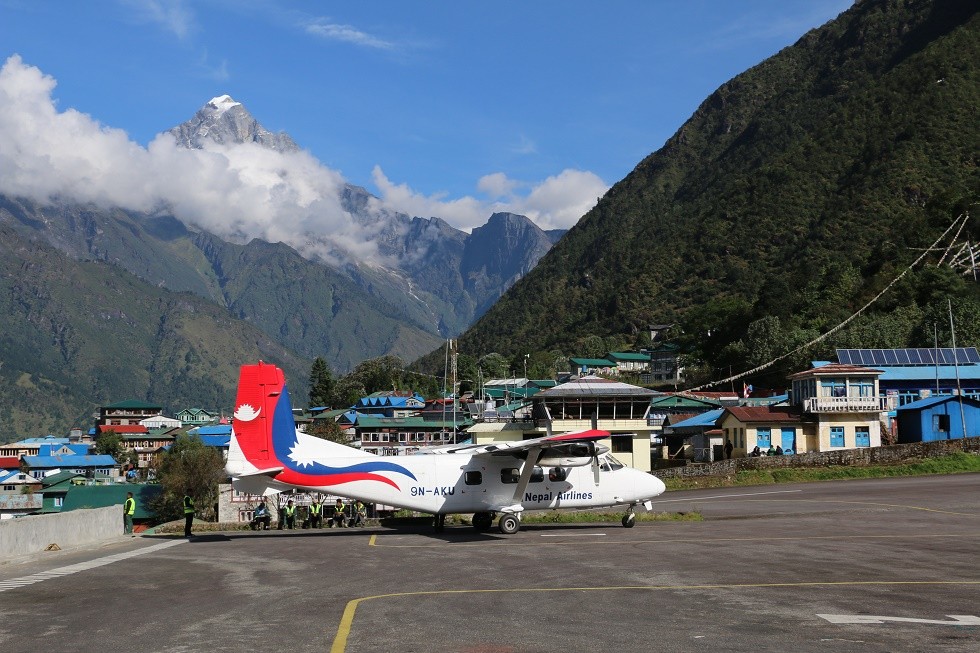
Lukla Airstrip: Capturing the World’s Most Dramatic Mountain Airport
The iconic shot of Lukla Airstrip, the most dramatic entrance to the Everest Base Camp Trek, captures iconic Himalayan photography of mountains, flights, culture scenes, or adventure themes.
Lukla Airstrip: Home to the world's most dramatic mountain airport 2,860m
Photography Highlights at Lukla Airstrip
Actually, the first place to capture the best photography on Everest Base Camp Trek is Lukla Airstrip, 2,860 meters above sea level, which is one of the most dramatic photography locations on the Everest Base Camp Trek. The small runway lies between steep hills and deep valleys, thus attaining intense visual contrasts. Photographers shoot the landing of aircraft with the Himalayas as a backdrop and full-of-life Sherpa village life. As a result, Lukla continues to be the epitome, thus a must-photograph entrance to Everest Base Camp Trek packages.
Here, early morning light at Lukla Airstrip (2,860m) brings dramatic shadows and makes mountain textures glow. Clear skies usually make Kongde Ri at 6,187m appear directly above the village. Photographers are in their element because the air is crisp, while haze appears minimal in the hours of sunrise. Because of this particular environment of clarity and purity, timing is everything for professional-quality Everest Base Camp Trek photography.
Moreover, Lukla village at 2,860m offers cultural photography apart from aviation drama. Stone houses, prayer wheels, and colored prayer flags create a natural framing of mountain views. Local Sherpa movements introduce storytelling in the images while trekking. Thus, Lukla photography is a perfect blend of human culture with the rugged Himalayan landscapes.
Moreover, the weather at Lukla Airstrip (2,860m) changes in an instant, giving different moods within brief moments of time. Clouds move over hills and often silhouette aircraft and terminals, simultaneously highlighting them in sunlight. This unpredictability enhances creative opportunities for photography. Hence, patience rewards photographers trekking toward Everest Base Camp.
Similarly, all wide-angle lenses act successfully at Lukla Airstrip (2,860m) because of the tight spatial composition. Photographers frame planes, mountains, and villages in one shot. Elevated viewpoints above the runway reveal dynamic perspectives. As a result, Lukla remains ideal for landscape and action photography.
Meanwhile, Lukla Airstrip at 2,860m presents the Everest Base Camp Trek logistics in a visual manner for the trekkers. This is also where porters, guides, and trekkers amass with equipment and eagerness. These scenes signify the start of a mythical journey. Hence, Lukla images obtain emotional storytelling value in travel photography.
Equally importantly, Kongde Ri dominates the skyline of Lukla during clear conditions: 6,187m. Snow textures contrast sharply against green hills below. Photographers capture seasonal variation throughout spring and autumn treks. This, therefore, means that photography in Lukla can support the marketing of Everest Base Camp Trek all year round.
Besides that, the aerial photography from the nearest viewpoints over Lukla village at 2,860m gives depth. Trails to climb up towards Phakding reveal layered landscapes. These angles strengthen visual narratives for trekking packages. Thus, Lukla will support various photographic styles.
Finally, Lukla Airstrip at 2,860m defines the visual beginning of the Everest Base Camp Trek. Its drama, culture, and mountains make Lukla a magnet for photographers around the world. Images from Lukla enhance promotional value for trekking companies. Thus, Lukla is indispensable in the case of photography portfolios on Everest Base Camp Trek.
Scenic riverside photography at Phakding on the Everest Base Camp Trek offers breathtaking views of Himalayan vistas, suspension bridges, forests, and mountain peaks.
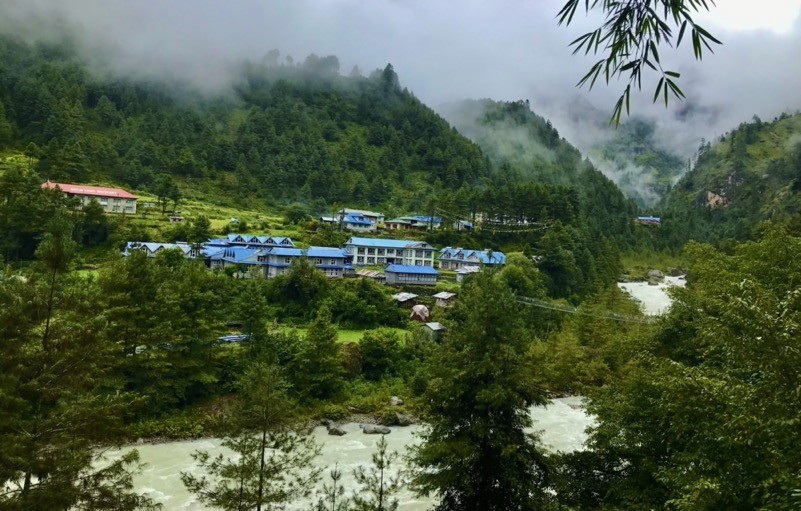
Phakding Riverside Shots: First Himalayan Landscapes on the EBC Trail (2,610m),
Photography on Everest Base Camp Trek Highlights at Phakding
First, Phakding village 2,610m offers the first classic Himalayan photography scenery on the Everest Base Camp Trek. On one side, Dudh Koshi River 2,610m flows with milky turquoise color beside the trail. The forested hills and suspension bridges develop the natural composition. Therefore, it becomes the favorite early photography stop for the trekkers.
Second, suspension bridges lining the route near Phakding 2,610m add dynamic foreground elements. Above, prayer flags fly over the water of a flowing river. Trekkers across the bridges add scale and movement to the scene. Therefore, Phakding photography feels alive and immersive.
Additionally, soft morning and evening light enhance the riverside reflections at Phakding (2,610m). With long exposures, one achieves smooth water effects against rocky banks. The river gets framed by pine forests naturally. This way, photographers practice classic landscape techniques early on the trek.
Moreover, the nearby viewpoints unveil Thamserku (6,608m) during clear conditions. Snow-capped mountains form a beautiful view against green valleys. Photographers click on a perfect balance of water, forest, and peaks. Thus, Phakding introduces mountain photography in gentle ways to Everest Base Camp Trek.
Similarly, cultural aspects enhance photography around the village of Phakding, which stands at a height of 2,610 meters. Mani stones, prayer wheels, and lodges dot the way. These information adds storytelling depth to images. Thus, nature and culture balance out for Phakding photography.
Meanwhile, autumn skies provide sharp visibility around Phakding at 2,610 meters. Spring brings across rhododendrons in bloom along riverbanks. The more the seasonality differs, the more creative possibilities it opens. Thus, Phakding allows photography across the seasons for trekking.
Similarly significant is the occasional appearance of wildlife photography near Phakding at 2,610 meters. Birds and grazing animals enhance riverside scenes. Patience rewards the quiet observation of photographers. Phakding photography is thus peaceful and rewarding.
Further, viewpoints over Phakding above 2,610m develop in elevated river views. The descending paths create natural leading lines. Such compositions strengthen visual storytelling. Thus, imagery of Phakding works well for Everest Base Camp Trek promotions.
Finally, Phakding village at 2,610m reflects the visual transition into the Khumbu region. Calm rivers, bridges, and forests mark early trekking memories. Images from Phakding build emotional connection for trekkers. Therefore, Phakding remains essential for Everest Base Camp Trek photography.
Monjo Village photography on the Everest Base Camp Trek offers an array of landscapes from Dudh Koshi Valley, cultural frames, forests, and views concerning Sagarmatha National Park.
Monjo Village &Dudh Koshi Valley: Natural Frames before Sagarmatha National Park-2,835m,
EBC Trek Photography Highlights at Monjo Village
First, the Monjo Village is at an elevation of 2,835 meters, which provides serene moments for photography during EBC Trek before reaching Sagarmatha National Park at 3,000 meters. This village lies along the Dudh Koshi Valley at 2,835 meters, surrounded by dramatic natural frames. The early scenery of the Himalayas is made up of stone houses, forests, and views of the rivers that flow through them. Thus, photography in Monjo helps to support real Everest Base Camp Trek storytelling.
Moreover, Dudh Koshi River flows strongly at 2,835m near Monjo Village, creating dynamic composition. Long exposure can soften water textures against rocky banks. Adding prayer flags and wooden bridges improves visual balance. Consequently, photographers shoot calm yet powerful scenes of the Himalayas.
Besides that, forest trails around Monjo Village (2,835m) form natural framing effects. The valley is beautifully surrounded by pine and rhododendron trees that guide the viewer’s eye in frames naturally. Thus, Monjo images feel immersive and professionally composed.
Further, Monjo Village at 2,835m introduces the trekkers to Sagarmatha National Park at 3,000 meters gradually. The transition from open villages to protected forest dramatically feels like being in another world. Photographers can capture this clear shift. Hence, photography at Monjo adds depth to the storyline of Everest Base Camp Trek packages.
Here, the state of cultural life in Monjo Village (2,835m) enhances the photography of telling a story. The local lodges, mani stones, and prayer wheels come into view naturally when following a trail, usually blending well with Sherpa life and nature. Therefore, photography in Monjo balances culture and landscape effectively.
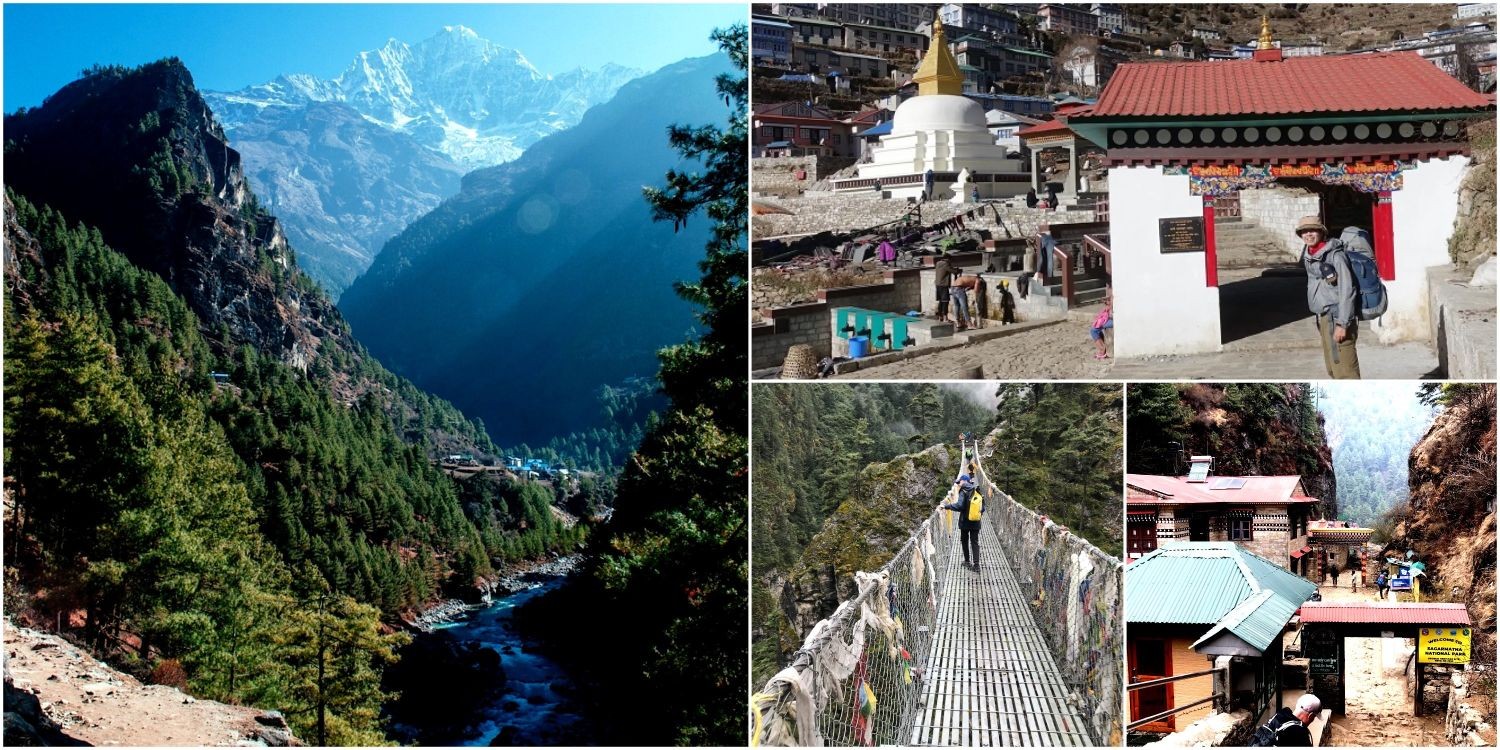
Meanwhile, the morning light in Monjo Village/2,835m considers soft contrasts along Dudh Koshi Valley/2,835m. Mist rises from the river. Thus, this atmosphere enhances the mood and texture of early shoots, delivering high-quality images.
Equally important, autumn clarity reveals distant peaks like Thamserku at 6,608 meters from viewpoints near Monjo Village at 2,835 meters. Snow peaks contrast against forested hills. These shots strengthen the Himalayan identity. Consequently, Monjo photography supports the promotion of Everest Base Camp Trek.
Adding to that, the trail angles above Monjo Village (2,835m) give elevated valley views. Descending trails naturally frame in river bends. These are the elements that create depth and scale. Hence, Monjo works for travel marketing imagery.
Finally, Monjo Village at 2,835m above sea level presents a visual threshold before Sagarmatha National Park at 3,000 meters. These tranquil sceneries mentally prepare trekkers for height. Photographs from Monjo create emotional transitions. Therefore, Monjo remains a valued photography point on the Everest Base Camp Trek.
The Hillary Suspension Bridge on the Everest Base Camp Trek presents iconic long-exposure photography featuring rivers, prayer flags, and Himalayan scale.
Hillary Suspension Bridge: The iconic, long-exposure photography hot spot-3,440m,
Supporting Highlights at Hillary Suspension Bridge
Actually, the Hillary Suspension Bridge is one of the most photographed landmarks on the Everest Base Camp Trek at an altitude of 3,440m. This suspension bridge spans the deep Dudh Koshi Gorge at an altitude of 3,440m. It is characterized by prayer flags and dramatic drops, hence it is an attraction point for photographers looking for iconic shots of the Himalayas.
Moreover, long-exposure photography works ideally on the Hillary Suspension Bridge (3,440m); the flowing river water softens below the bridge. The static structure outlines a sharp contrast to motion. So, photographers achieve striking visual balance.
Likewise, the altitude of the Hillary Suspension Bridge-3,440m-creates strong vertical perspective. Trekkers crossing add scale and human interest. Flags are fluttering continuously due to the wind. Thus, the images feel dynamic and alive.
In fact, early morning light showcases the steel cables and prayer flags well at the Hillary Suspension Bridge (3,440m). Shadows deepen dramatically in the gorge. The clarity of the sky creates color saturation. Therefore, timely photography captures a better image.
Similarly, the views from higher viewpoints than the Hillary Suspension Bridge (3,440m) also give layered compositions. Naturally, the forested slopes frame the bridge. Some peaks in the distance may also be seen during clear conditions. Therefore, wide-angle lenses perform exceptionally well here.
Meanwhile, the Hillary bridge can be seen as crossing to progress toward Namche Bazaar (3,440m) and Everest Base Camp (5,364m). Certain shots make for emotional captures of the trekking milestones of photographers. These shots relate very well with trekkers. Thus, the bridge can be a marketing point of view for Everest Base Camp Trek packages.
Equally importantly, the weather changes very fast around the Hillary Suspension Bridge, at 3,440m. The clouds move through the gorge quite dramatically, and the light conditions change within minutes. Consequently, it is patience that rewards photographers with unique frames.
Additionally, photography at the Hillary Suspension Bridge is enriched by cultural symbolism at 3,440 meters. The prayer flags mean protection and safe passage. Such meaning adds depth to visual storytelling. Thus, images communicate more than a scenery of it alone.
Finally, iconic Everest Base Camp Trek imagery is defined by the Hillary Suspension Bridge at 3,440m, with a scale, movement, and symbolism that is unparalleled. Photographs here strengthen any trekking portfolio. As such, the bridge is a must-capture photography point.
First panorama of Everest and Lhotse from Namche Bazaar Viewpoint on the Everest Base Camp Trek: iconic peaks, sunrise light, acclimatization scenery.
Namche Bazaar Viewpoint: First Everest and Lhotse Panorama (3,880m/12,730ft.),
Photography Highlights at Namche Bazaar Viewpoint,
First, Namche Bazaar Viewpoint (3,880m) is the first point on the Everest Base Camp Trek from where one gets a clear view of Everest panorama. The trekkers could see Mount Everest (8,848.86m) and Lhotse (8,516m) together. This viewpoint forms one big emotional milestone. Hence, this forms one of the most important photography locations.
Moreover, early morning light at Namche Bazaar Viewpoint (3,880m) creates dramatic alpine colors. Snow peaks glow while valleys remain shadowed. This contrast enhances depth and realism. Hence, sunrise photography delivers the strongest result.
Furthermore, Ama Dablam 6,812m often dominates the foreground near Namche Bazaar Viewpoint 3,880m. Its sharp ridges frame Everest 8,848.86m beautifully. Photographers achieve layered Himalayan compositions. Thus, the viewpoint suits both wide-angle and telephoto lenses.
Besides, clear views often appear on acclimatization days at Namche Bazaar (3,440m). People revisit the viewpoint with fresher bodies. This improves patience and creative framing. Hence, acclimatization supports better photography outcomes.
Here, the walking trail to the viewpoint has natural leading lines. Prayer flags guide the eye, as do stone paths. These are elements that strengthen visual storytelling. Compositions feel meaningful and balanced.
At the same time, seasonal variation adds diversity to the Namche Bazaar Viewpoint, 3,880 meters above sea level. Spring showcases sharp snow against blue skies, while autumn gives clear visibility and warm light. This leads to photographers capturing distinct seasonal moods.
In fact, equally significant is the human scale that adds depth to the images at the viewpoint in Namche Bazaar at 3,880m, where trekkers are silhouetted against Everest 8,848.86m with added emotional depth. The contrast of magnitude is eminent in the mountains. Therefore, the images strike a chord with the viewer.
Besides, the perspective justifies the promotion of Everest Base Camp Trek packages. First-ever photos of Everest appeal to any future trekkers. These images convey a sense of achievement and inspiration. Consequently, images of Namche enhance marketability.
Finally, Namche Bazaar Viewpoint-3,880m represents the visual awakening of the Khumbu region. The first sight of Everest defines trekking memories. Photographs taken from here remain timeless. Thus, the viewpoint stands essential for Everest Base Camp Trek photography.
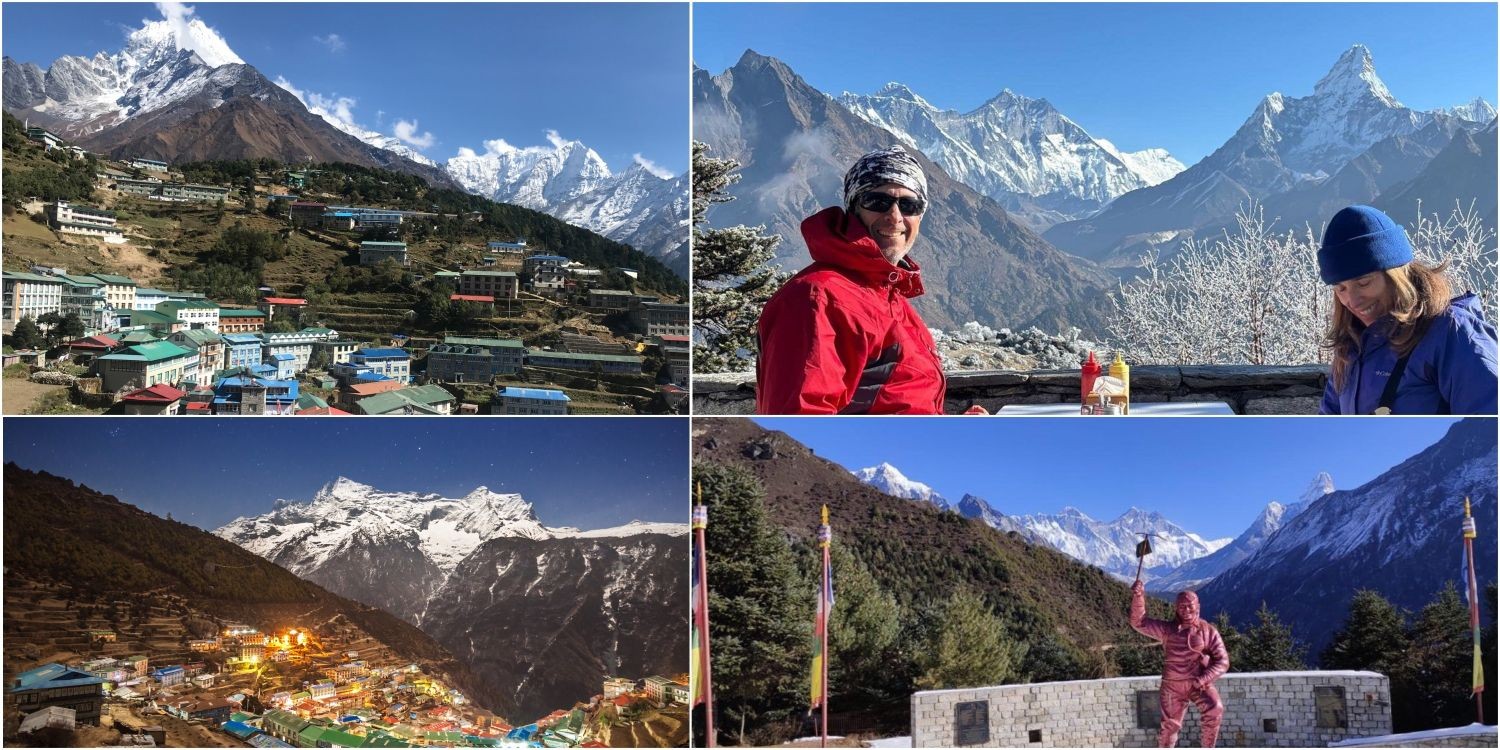
Namche Bazaar Amphitheater on Everest Base Camp Trek - A mixture of Sherpa culture and Himalayan peaks blended together in layered mountain and village photography. Photo Session of layering, mountain, and village at Namche Bazaar Amphitheatre (3,440m)
Photography Highlights for Namche Bazaar Amphitheatre
In the first place, Namche Bazaar Amphitheater (3,440m) is a naturally formed bowl of villages and mountains. In detail, colorful houses clamber up steep slopes. Snow peaks rise behind the settlement. In turn, this sets up one of the most iconic Everest Base Camp Trek scenes.
Furthermore, photography at the Namche Bazaar Amphitheater is defined by layered composition: foreground rooftops leading toward forested hills, and background peaks completing the frame naturally to achieve strong depth and balance in the images.
Further, Kongde Ri rises to 6,187m above Namche Bazaar, which is at 3,440m. Its snow-covered ridges contrast with the colors of villages. This relation strengthens visual storytelling. Thus, photographers make sure to highlight the harmony between mountains and villages.
Furthermore, morning and evening light transform Namche Bazaar Amphitheater to an altitude of 3,440m. The soft light accentuates texture in homes and trails, shadowing acts to dimensional contrast. Thus, timing enhances both architectural and landscape photography.
Similarly, high vantage points over Namche Bazaar (3,440m) show the amphitheatre symmetry quite clearly. Curving lines of settlement lead the eye in. Such views merit wide-angle lenses. Hence, composition remains visually strong.
Meanwhile, daily life rejuvenates photography among the dramatic settings of Namche Bazaar Amphitheater at 3,440 meters above sea level. Markets are colorful, yaks have character, and trekkers are at home-a cultural activity that gives authenticity to the captured images. Pictures tend to be more vivid and storytelling.
Equally important, the weather changes often at Namche Bazaar (3,440m). Clouds drift across slopes with dramatic effect. Light breaks create spotlight effects. In consequence, photographers shoot varied moods in quick succession.
Additionally, Namche Bazaar Amphitheater at 3,440m supports photography for acclimatization. Trekkers explore the nearby hills calmly, maintaining a relaxed pace to encourage creative observation. Thus, the quality of photography improves naturally.
Finally, Namche Bazaar Amphitheater-3,440m-represents Sherpa resilience and Himalayan beauty. Picturesque village life keeps going underneath towering peaks. Images from here define Everest Base Camp Trek identity. Therefore, it remains a must-capture photography destination.
Frame the iconic Everest–Ama Dablam composition along the Everest View Hotel Trail, one of the breathtaking photography routes on the Everest Base Camp Trek.
Everest View Hotel Trail: Classic Everest–Ama Dablam Composition 3,880m
Photography Highlights on Everest View Hotel Trail,
Actually, the Everest View Hotel Trail (3,880m) presents one of the most classic Himalayan photography compositions on the Everest Base Camp Trek. This trail reveals the beautiful alignment of Mt. Everest (8,848.86m) with Ama Dablam (6,812m). The open ridge presents unhindered panoramic views. For photographers, therefore, this is a priority location.
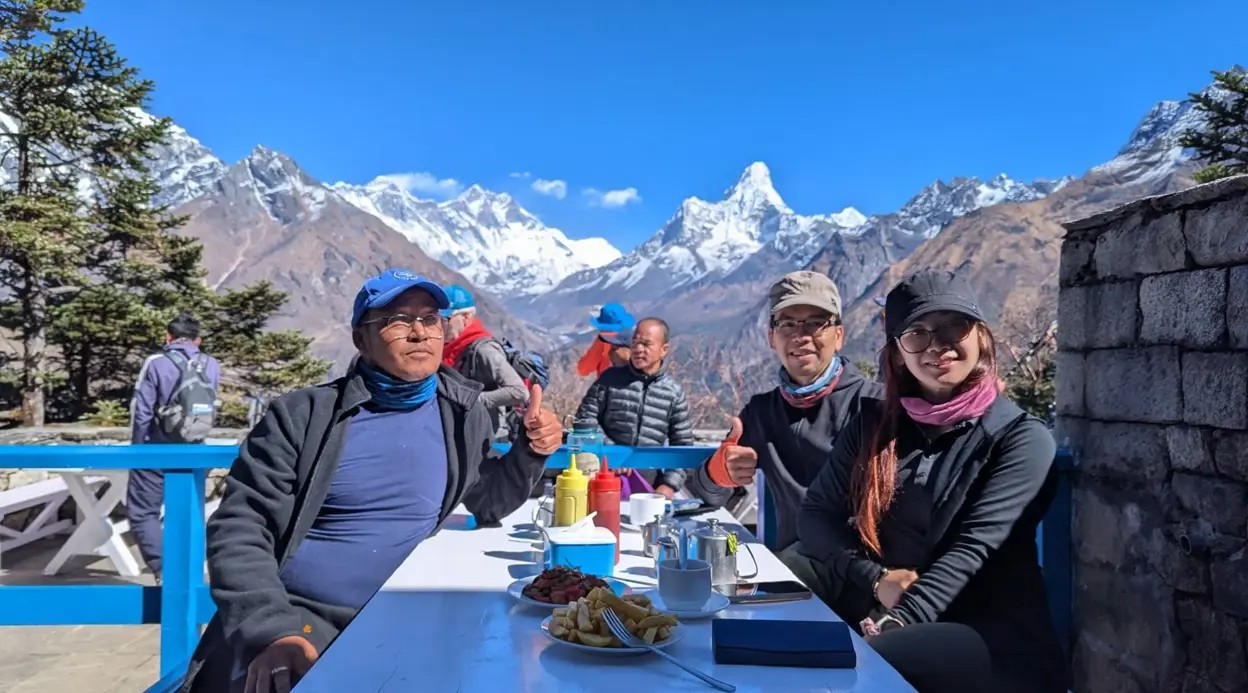
Also, morning light along the Everest View Hotel Trail enhances snow textures incredibly-3,880 meters. Golden sunlight strikes Everest, 8,848.86 meters, and Ama Dablam, 6,812 meters, aglow with softer light. Valleys remain in shade, pushing the contrast higher. The sunrise sessions will have the strongest visual impact.
Likewise, the gradual rise in this trail allows framing in controlled conditions. Stone paths and prayer flags create natural leading lines that point toward the peaks. Thus, compositions feel balanced and more deliberate.
Moreover, Everest View Hotel at 3,880m acts as a stable photographic base. Trekkers rest while observing shifting light patterns. The change in weather brings varied moods in front of the camera very fast. Hence, patience produces unique frames.
Similarly, wide-angle lenses also do an excellent job on this trail. Foreground ridges add depth to mountain panoramas. Mid-ground hills enhance scale perception. Hence, images communicate the sense of Himalayan vastness.
However, the trail is reachable during acclimatization days from Namche Bazaar at 3,440 meters. Slower walking improves observation and creativity. Besides, photographers don't feel altitude pressure here. Therefore, the quality of images improves automatically.
Equally important, seasonal clarity strengthens photography along the Everest View Hotel Trail at 3,880 meters. Autumn brings in crisp skies and sharp details while spring highlights fresh snow and color contrast. The trail therefore fits numerous seasons of trekking.
Furthermore, the trekkers often cover this trail in Everest Base Camp Trek packages without any extra cost. The viewpoint doesn't require any permits other than that of Sagarmatha National Park at 3,000m. This is one more reason for its growing popularity. Hence, photos taken from here find immense coverage in trek promotions.
Finally, the Everest View Hotel Trail at 3,880m defines classic Everest photography. It is as if the alignment of Everest at 8,848.86m and Ama Dablam at 6,812m is timeless. This pathway inspires future trekkers through the images captured on it. Thus, this remains a must-capture spot in photography.
Immerse in spiritual Himalayan photography at Tengboche Monastery, with Everest backdrops, prayer flags, and sacred landscapes on the Everest Base Camp Trek.
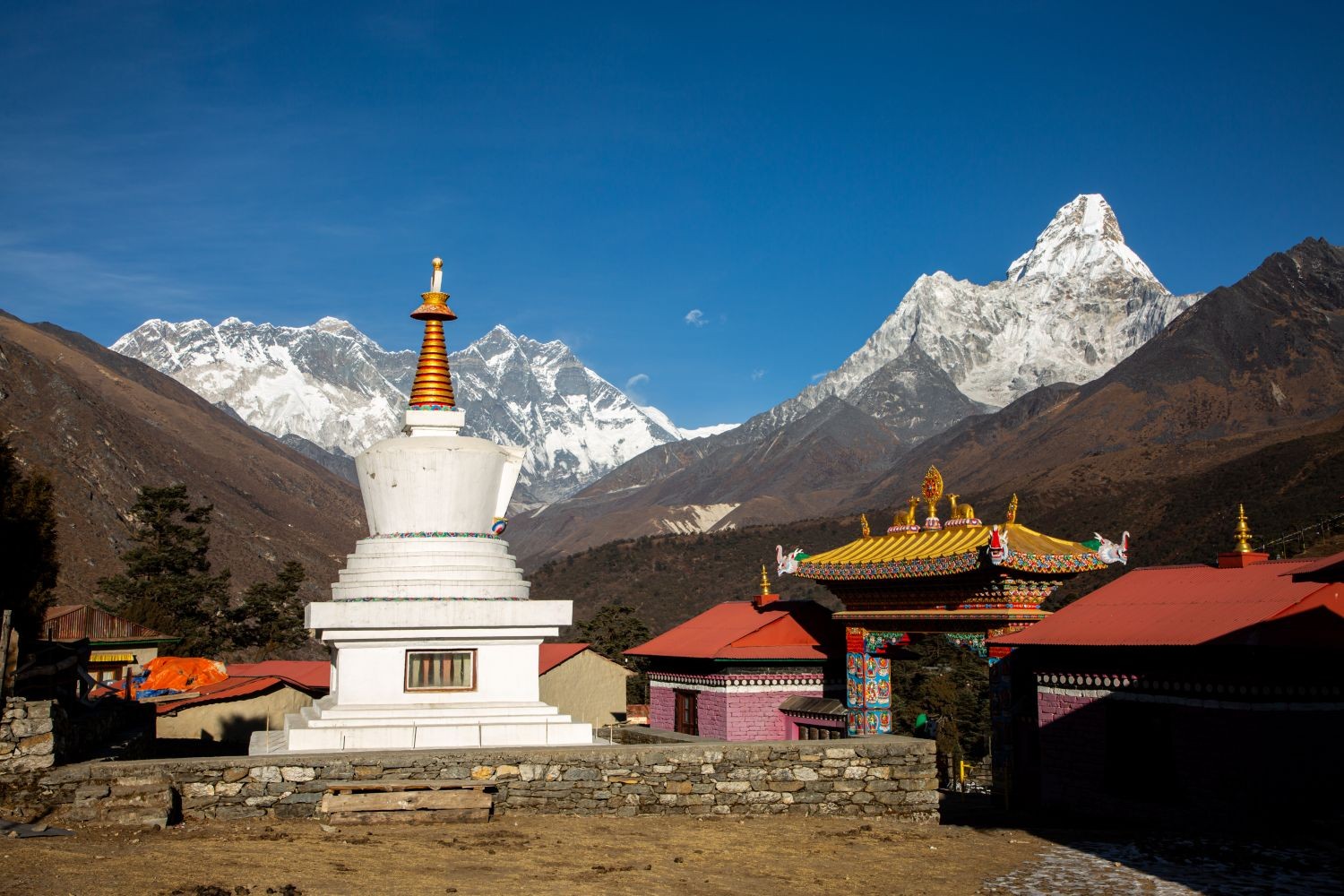
Tengboche Monastery: Spiritual Photography with Everest Backdrop (3,867m)
Photography Highlights at Tengboche Monastery,
First of all, Tengboche Monastery at 3,867m provides the most spiritual setting for photography on the Everest Base Camp Trek. It stands facing Mount Everest 8,848.86m, Lhotse 8,516m, and Ama Dablam 6,812m. Prayer flags frame the sacred architecture with mani walls. Thus, Tengboche provides unrivaled cultural depth.
Moreover, spiritual atmosphere at Tengboche Monastery (3,867m) is enhanced by morning light. The soft sunlight sheds on the monastery walls gently. The peaks of snow faced behind the structure glow. As a result, images are peaceful and powerful.
Likewise, at the backdrop of Tengboche Monastery (3,867m), there is Ama Dablam (6,812m). Its sharp pyramid shape is a contrast to monastery lines. Thereafter, iconic Himalayan compositions result from the balance. Therefore, photographers attain visual harmony in such shots.
Further, the village of Tengboche is at 3,867 meters above sea level, providing forest frames around the monastery. Rhododendron trees soften the architectural edges. The trails also weave their way naturally toward the monastery, hence compositions appear organic and complete.
Similarly, cultural photography can be done in prayer ceremonies inside Tengboche Monastery (3,867m). Likewise, moving robed monks add life and spirit. It is a symphony of sound and color, really. Thus, the images carry emotional storytelling value.
Afternoon light, meanwhile, creates dramatic cloud movement around Tengboche Monastery at 3,867 meters. Peaks appear and disappear behind mist. Because of this unpredictability, creative options increase; hence, patience is highly rewarded for photographers.
Equally valuable, Tengboche Monastery (3,867m) epitomizes Sherpa spiritual identity. Photography here is a means of respecting sacred space and tradition. These values undergird and strengthen trekking narratives. Consequently, images resonate deeply with audiences.
Besides that, the monastery lies directly on standard Everest Base Camp Trek routes. No additional cost applies beyond trekking permits. This accessibility increases photographic inclusion. Thus, Tengboche remains central to trek itineraries.
Finally, Tengboche Monastery at 3,867m defines spiritual Himalayan photography. Sacred architecture meets towering peaks. Images from Tengboche remain timeless symbols. Therefore, it stands as an essential photography point on the Everest Base Camp Trek.
Photography from the Pangboche Village showcases Sherpa culture, images of Ama Dablam up close, and the surrounding cultural landscapes during the Everest Base Camp Trek.
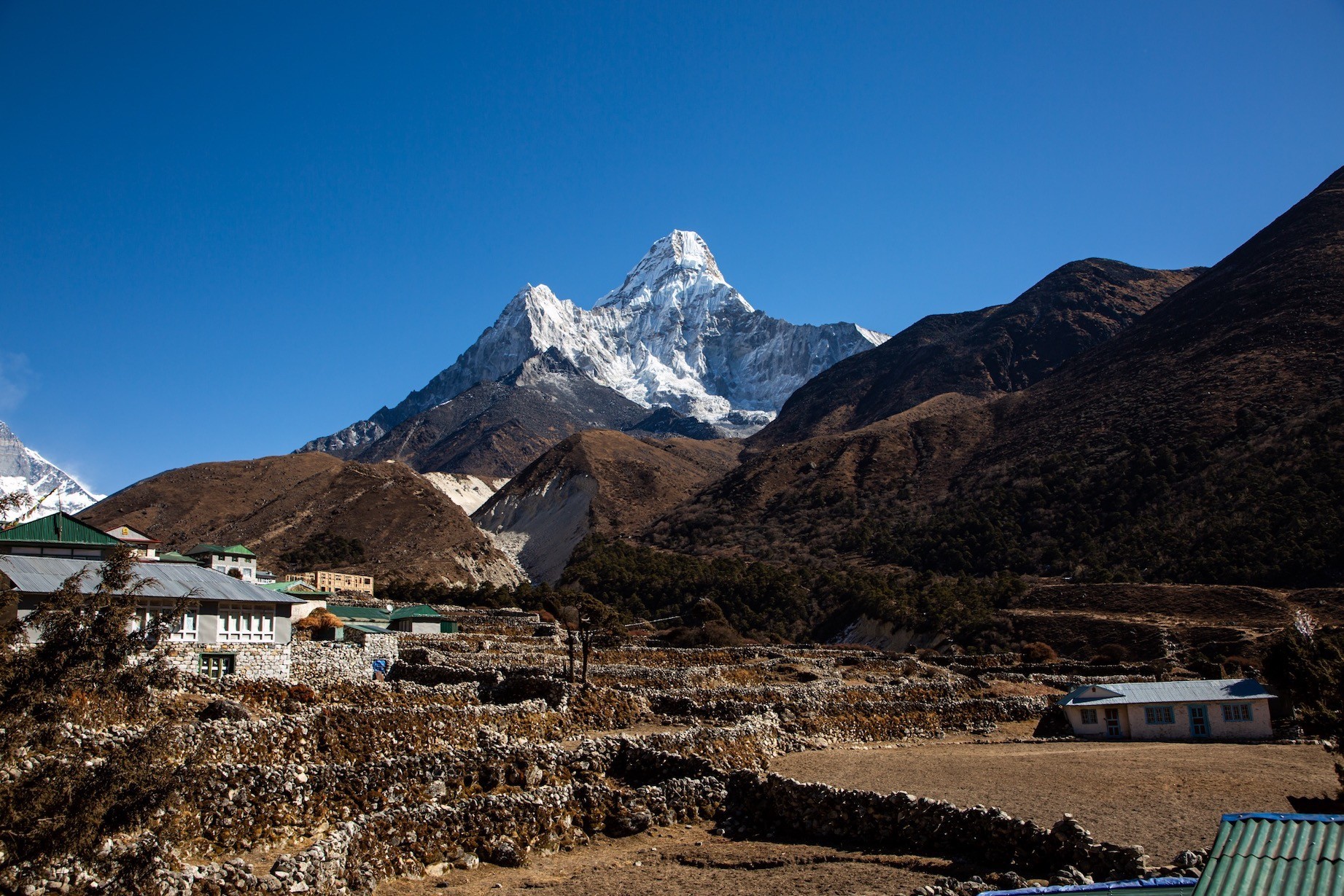
Photography Highlights at Pangboche village
To begin with, the Pangboche Village (3,985m) features Sherpa life photography. The Pangboche Village photography, the Everest Base Camp Trek, and the close-ups of the Ama Dablam are the features of the place. The rock buildings and the yak grazing land, together with the old culture, come into view. Consequently, the Pangboche Village exudes tradition.
In addition to this, Ama Dablam Mountain stands remarkably tall above the Pangboche Village at an elevation of 3,985m above sea level with a height of 6,812m. Close-up shots of Ama Dablam Mountain, photographing the Pangboche Village, and the Everest Base Camp Trek form the actual subject of the photographs taken at this location
Moreover, Sherpa daily activities add to the photography of Pangboche Village (3,985m). Culture of Everest Base Camp Trek, Sherwa culture or Sherpa culture photography, and Ama Dablam photographs are taken together. The people of this region grow their own land and raise animals. This makes their photographs look realistic.
Moreover, there’s spiritual enrichment in photographing Pangboche Monastery (3,985m) in this composition. Everest Base Camp Trek’s cultural heritage, Sherpa Buddhism, and Ama Dablan close-ups complement each other seamlessly. Prayer flags provide frames to views of mountains.
Similarly, light in Pangboche Village (3,985m) results in soft shades and texture. Taking photos in Pangboche Village, Everest Base Camp Trek Sunrise, and Close-up photos of Ama Dablam will greatly benefit from this. The snow accents the mountain ranges nicely. Early shoots are therefore recommended.
Meanwhile, the clarity during autumn helps to improve visibility as one moves to Pangboche Village (3,985m). Portraits during Everest Base Camp Trek, Pangboche Village scenes, and shots of Ama Dablam offer clarity. That is why photographs are professional.
Moreover, the spring season enhances colors around the Pangboche Village area (3,985m). Capture Pangboche Village pictures, Everest Base Camp Trek routes, and Ama Dablam photographs feature flowers. Variations between seasons are important to capture photographs of high artistic merit.
Furthermore, the elevated position above Pangboche Village (3,985m) provides layered views. The scale of the Everest Base Camp Trek, the photograph of the Pangboche Village, and the close-up pictures of the Ama Dablam provide a clear link. The foreground elements provide depth.
In addition, Pangboche Village is right on the way to the Everest Base Camp Trek. There are no additional fees to take photos of Pangboche Village, Everest Base Camp Trek packages, and Ama Dablam up close. Permits are included in the cost. Photographers can photograph Pangboche without difficulty.
Additionally, portraits of humanity succeed in Pangboche Village (3,985m). There is a link between Sherpa culture photography, Everest Base Camp Trek, and Pangboche Village photography. The faces are a display of mountain resilience. As such, there is an enhancement of storytelling.
Finally, Pangboche Village (3,985m) ensures Himalayan authenticity. "Pangboche Village photography," Everest Base Camp Trek identity, or "Ama Dablam close-ups": such memories are impossible to forget. Photos characterize cultural identity. Hence, Pangboche is imperative for Everest Base Camp Trek photography.
The photo opportunity in the Deboche Forest Trail includes the misty pine forests and the light of the Himalayas on the Everest Base Camp Trek.
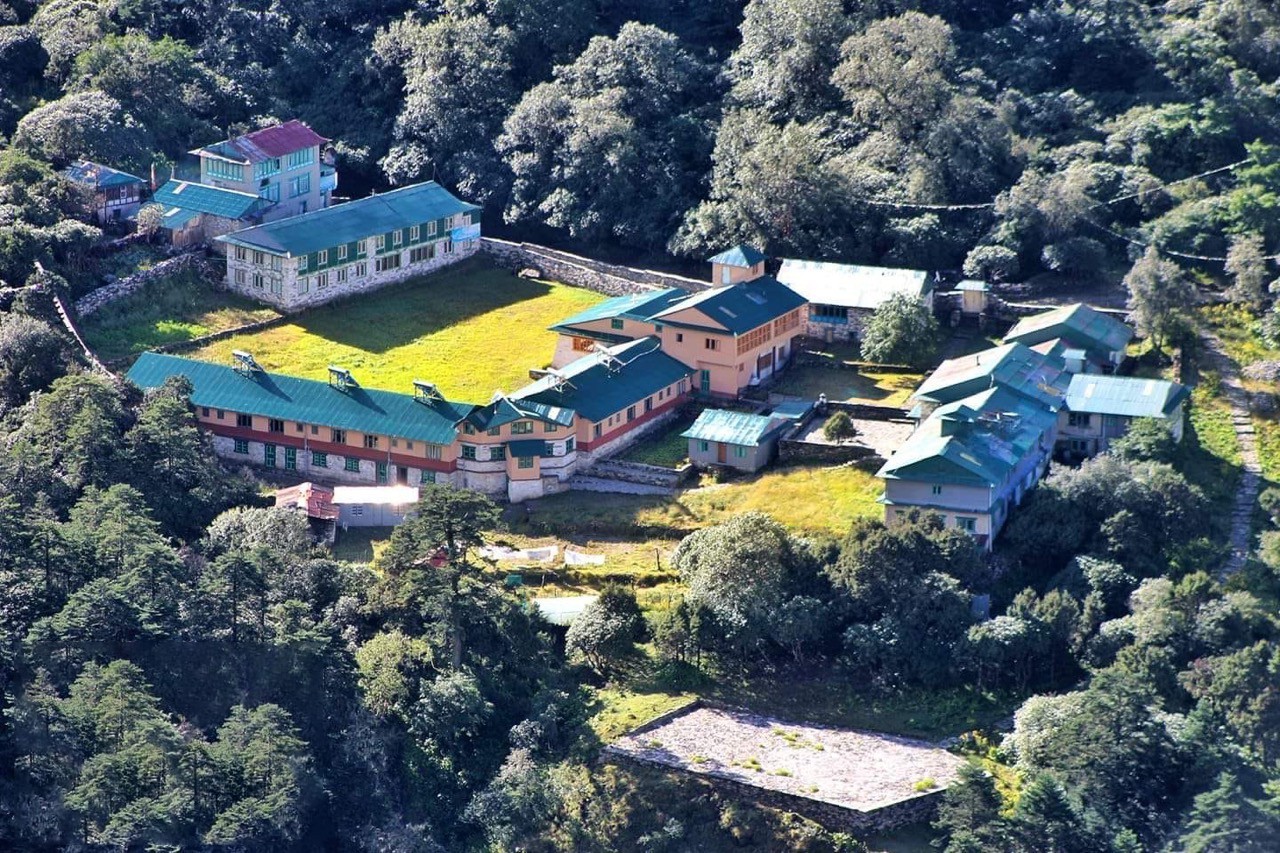
Deboche Forest Trek: Mood-Inducing Pine Forest & Himalayan Lights Photography (3,820m),
Major Photography Focus – Deboche Forest Trail
Firstly, the Deboche Forest Trail (3,820m) offers pictorial photography opportunities on the Everest Base Camp Trek. Deboche Forest Trail photography, Everest Base Camp Trek, and light photography of the Himalayans illustrate this point. Deboche Forest Trail photograph, Everest Base Camp Trek, and Himalayan light photograph. There are tall pine trees along the trails. Consequently, a serene atmosphere inspires cinematic photography.
Additionally, the filtered Himalayan light changes the Deboche Forest Trail (3,820m). Deboche Forest Trail photos, foreboding forest photography, and Everest Base Camp Trek photos are enhanced by changes in lighting. Sunlight filters through the tree branches. As a direct result, photographers make the most of contrasting images.
Also, Deboche Forest Trail photography is further aided by the morning fog (3,820m). There’s a seamless transition between Everest Base Camp Trek atmosphere, pine forest photography, and photography of light in the Himalayas. The fog blurs backgrounds. This results in a dreamlike effect.
Moreover, it also connects Tengboche Monastery (3,867m) to Pangboche Village (3,985m). Deboche Forest Trail photography, photography of the continuity of the Everest Base Camp Trek route, and the photograph of the light in the Himalayas require movement as a photographic tool.
In the same way, tree lines in the vertical direction enhance Deboche Forest Trail photography (3,820m). Forest mood photography, Everest Base Camp Trek trails, and Himalayan light photography are aesthetically similar. Natural symmetry helps in composition. As a result, images are arranged.
Later, the colors of the season become stronger at Deboche Forest Trail (3,820m). The photography capturing the Everest Base Camp Trek, the photography conducted at DebocheForest Trail, and the mood photography of the pine forest enhance. The golden needles stand out against the shadows. Consequently, the images obtain richness.
Importantly, spring provides new foliage to Deboche Forest Trail (3,820m). The light in the Himalayas, Everest Base Camp Trek forest, &Deboche Forest Trail photography seems less sharp. The new foliage deflects light softly. Therefore, the light is balanced.
Additionally, sounds from the wild enhance the Deboche Forest Trail (3,820m). Nature photography for the Everest Base Camp Trek, forest discouragement photography, and Himalayan light photography improve with the absence of noise. Silence leads to greater emotional effect.
Further, weather protection for photography in Deboche Forest Trail, found at 3,820m, is also available from Everest Base Camp Trek. Moreover, reliability in misty pine forest and Himalayan lights photography is also possible during cloud formation. Light is not completely lost.
Moreover, there is no additional fee required for Deboche Forest Trail (3,820m). Deboche Forest Trail Photography, Everest Base Camp Trek, and Himalayan Light Photography are still inclusive. This is automatically considered among photographers since it is already a standard permit.
Finally, the Deboche Forest Trail (3,820m) acts as a good balance for the Everest Base Camp Trek. Deboche Forest Trail photography, pine forests, and light in the Himalayas still the trek. Contrasting images of alpine zones. Thus, Deboche is still a must for the Everest Base Camp Trek photography.
Dingboche Valley photography offers wide-angle views of Himalayan mountains, stone-walled fields, and dramatic alpine scenery on the Everest Base Camp Trek.
Dingboche Valley: wide-angle landscapes and stone-walled fields 4,410m,
Photography Focuses in Dingboche Valley
First, Dingboche Valley at 4,410m provides extensive wide-angle photography during the Everest Base Camp Trek. Dingboche Valley photography on the Everest Base Camp Trek is a landscape coupled with stone-walled fields. Open terrain replaces forested trails here; therefore, photographers capture broad Himalayan scale.
Here, pictured dominantly in photography, the stone-walled fields of Dingboche Valley rule at 4,410m. Landscapes of Dingboche Valley, Everest Base Camp Trek agriculture, and wide-angle photography go together. These walls protect crops from strong winds. Hence, foreground textures strengthen compositions.
Moreover, Ama Dablam-6,812 meters-appears strikingly from Dingboche Valley-4,410 meters. Dingboche Valley photography, the Ama Dablam views, and the Everest Base Camp Trek scenery go in tune. The mountain goes steeply up above the fields. Thus, images acquire iconic depth.
Furthermore, Island Peak is clearly seen at 6,189m from Dingboche Valley, which stands at an altitude of 4,410m. The combination of Dingboche Valley landscapes with the photography of Island Peak and Everest Base Camp Trek visuals is really strong. The lines of snow juxtapose with the aridity of the ground. Hence, the drama of visual snapshots increases.
Similarly, photography in Dingboche Valley is accentuated by morning light at 4,410m. Thus, it brings wide-angle landscape, Everest Base Camp Trek sunrise, and stone-walled fields into warm tones. The shadows begin to lengthen over fields. Thus, early shoots remain optimal.
Meanwhile, afternoon winds shape Dingboche Valley photography-4,410m. Everest Base Camp Trek conditions, Dingboche Valley landscapes, and wide-angle photography-feels raw. Moving clouds bring in texture. And as a result, mood intensifies.
More importantly, the valley of Dingboche at 4,410m supports the acclimatization photography days. Everest Base Camp Trek pacing allows walks in Dingboche Valley for wide-angle landscapes, hence rest helps. Slow movement improves observation; thus, improving composition.
Moreover, the photography of Dingboche Valley is affected by seasonal changes (4,410m). In autumn, Everest Base Camp Trek is very clear, presenting sharp landscapes in Dingboche Valley and wide-angle views. Spring introduces contrasts of snow. Thus, variety increases.
Furthermore, the trails around Dingboche Valley at 4,410m offer commanding views. During Dingboche Valley photography, the Everest Base Camp Trek scale and stone-walled fields visually align. The foreground layers give more depth. Therefore, images feel balanced.
Here, no extra cost is levied for Dingboche Valley at 4,410m for the Photography in Dingboche Valley. Dingboche Valley photography and Everest Base Camp Trek packages and wide-angle landscapes keep on being inclusive. The trekkers have standard trekking permits. Therefore, photographers have access easily.
Finally, Dingboche Valley at 4,410m defines open Himalayan photography. Dingboche Valley photography, Everest Base Camp Trek identity, and stone-walled fields remain memorable. Images express altitude and isolation. Therefore, Dingboche stands essential.
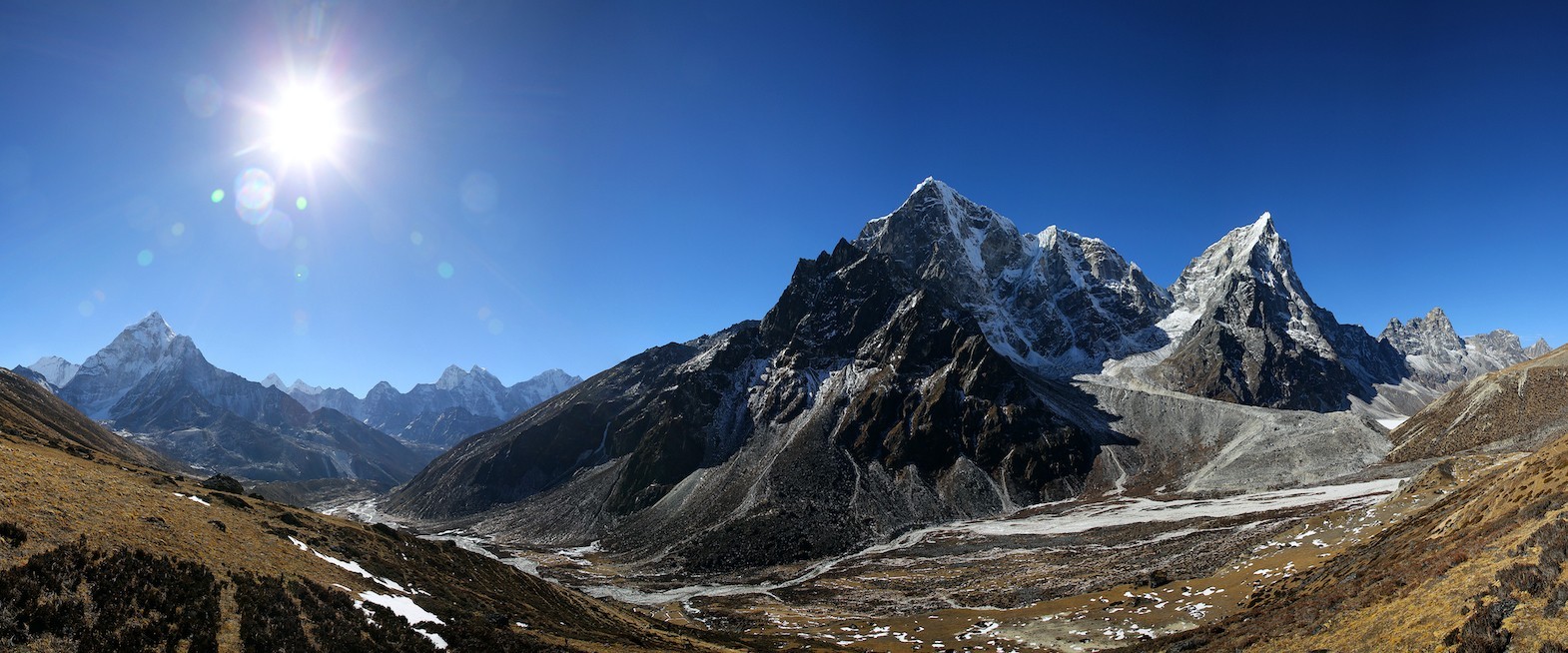
The best sunset view of Makalu and Lhotse in the Everest Base Camp Trek, Nagarjun Hill photography above Dingboche.
Nagarjun Hill-Dingboche: Best Sunset Photography Over Makalu and Lhotse 5100m
Photography Focuses at Nagarjun Hill,
First, Nagarjun Hill (5,100m) above Dingboche (4,410m) offers the best photography on an Everest Base Camp Trek sunset. Photography of Nagarjun Hill, Everest Base Camp Trek sunsets, and Himalayan viewpoints describe the nature of this climb. The climb is steep yet rewarding because of this fact. This means that photographers achieve unparalleled views.
Furthermore, Makalu at 8485 meters is seen clearly from Nagarjun Hill at 5100 meters. Nagarjun Hill photography, Makalu sunset views, and Everest Base Camp Trek panoramas go well. When the peak glows during evening light, consequently, images feel dramatic.
Besides this, Lhotse (8,516m) dominates the western skyline from Nagarjun Hill (5,100m). Photography at Nagarjun Hill, sunset photography of Lhotse, and Everest Base Camp Trek sceneries combine powerfully. The snow reflects warm hues; thus, the contrast strengthens.
Besides, photography in Nagarjun Hill at 5,100 meters is defined by the timing of sunset. Light on Everest Base Camp Trek, Nagarjun Hill sunset, and the color shift in the Himalayas changes rapidly; shadows deepen very fast, so preparation matters.
Similarly, the ridge line makes every Nagarjun Hill photo shooting opportunity (5,100m) better. The altitude of Everest Base Camp Trek, Nagarjun Hill view, and sunset composition demand openness. No obstacles in sight. Hence, framing stays clean.
Meanwhile, the photography in Nagarjun Hill is affected by the wind conditions. The weather of Everest Base Camp Trek, the exposure in Nagarjun Hill, and the photography of sunset are carried out intensively. Clouds move fast, hence dramatic skies emerge.
Equally important, acclimatization hikes have Nagarjun Hill at 5,100m. Everest Base Camp Trek safety, photography on Nagarjun Hill, and Dingboche acclimatization align naturally. Slower ascent improves focus. Consequently, image quality improves.
Besides, Nagarjun Hill photography is dominated by autumn sunsets. Sharp views of Everest Base Camp Trek autumn clarity, Makalu, and Lhotse sunsets keep colors saturated, which is why photographers prefer this season.
Here, spring light gives way to softer tones on Nagarjun Hill-5,100m. The photography of Nagarjun Hill, Everest Base Camp Trek during spring and sunset gradients feels gentle. Added to this is the reflection the snow gives. Hence, the mood varies.
Further, there is no extra charge for Nagarjun Hill (5,100m) photography during EBC Trek. The photo shooting of Nagarjun Hill, Everest Base Camp Trek package, and sunset hike are also included. The standard permit covers the access, hence photographers include it for free.
Finally, Nagarjun Hill (5,100m) provides the most rewarding sunset photography near Dingboche. Nagarjun Hill photography, Everest Base Camp Trek panora, and Makalu–Lhotse views are unforgettable. Images define high-altitude beauty. For this, Nagarjun Hill is essential.
Thukla Pass Memorials photography captures emotional storytelling, mountaineering history, and powerful high-altitude landscapes on the Everest Base Camp Trek.
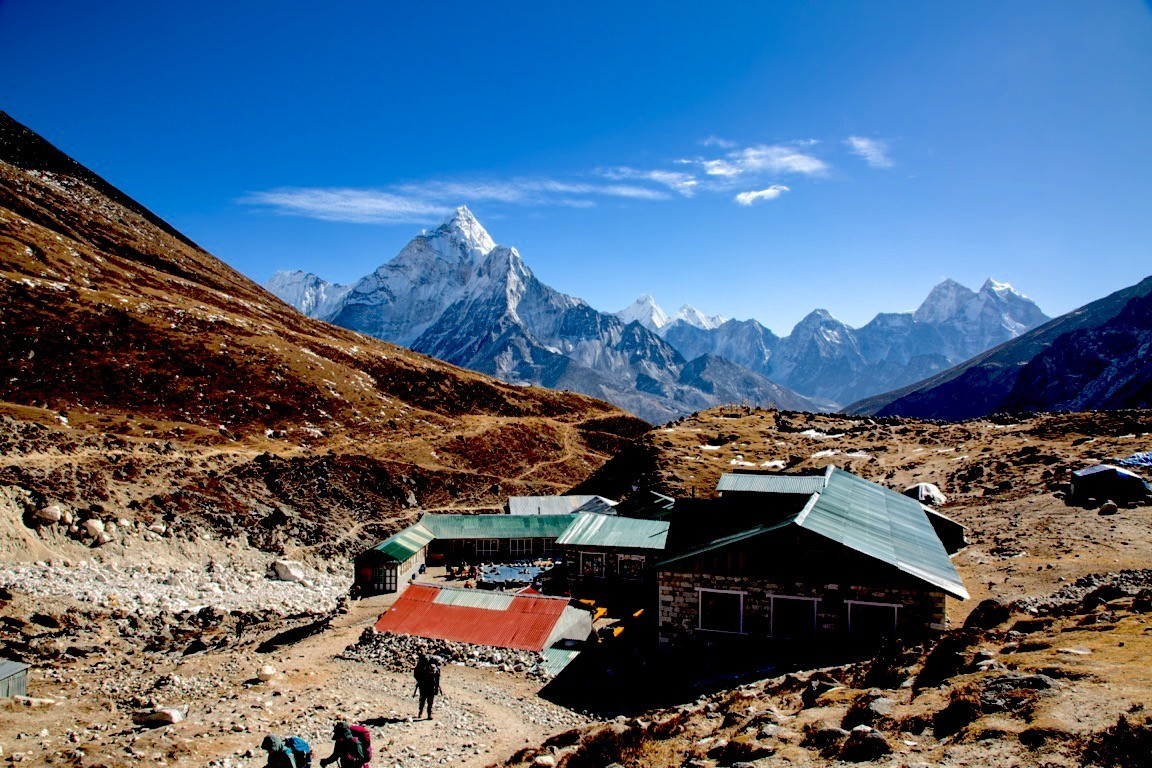
Thukla Pass Memorials: Pictured Moments of Emotions (4,830m),
Photography Focuses – Thukla Pass Memorials
Of course, Thukla Pass Memorials (4,830m) deliver the most emotional photography on the Everest Base Camp Trek. Thukla Pass Memorials photography, Everest Base Camp Trek storytelling, and emotional mountain photography are what this site is all about. Stone memorials honor the fallen climbers. Therefore, images carry deep meaning.
Furthermore, the climb from Thukla 4,620m to Thukla Pass Memorials 4,830m intensifies photographic emotion. Gradually, it builds up in Thukla Pass Memorials photography, Everest Base Camp Trek ascent, and emotional storytelling. The steep trail reflects struggle. Consequently, the images feel powerful.
Besides, memorial chortens dominate the photography of Thukla Pass Memorials, which is at an altitude of 4,830m. The emotional mountain photography, Everest Base Camp Trek history, and the photography of Thukla Pass Memorials come together. Names and plaques tell the stories silently. Thus, the photos communicate respect.
Additionally, Nuptse at 7,861m rears behind Thukla Pass Memorials at 4,830 meters. Thukla Pass Memorials photography, with the Nuptse backdrop, and Everest Base Camp Trek scenery, all align pretty strongly. Mountain scale increases gravity. Hence, compositions feel monumental.
Similarly, morning light enhances Thukla Pass Memorials photography 4,830m. There is a softening of emotional storytelling, Everest Base Camp Trek atmosphere, and memorial photography. Shadows stretch across stone. Therefore, early light suits respectful imagery.
Meanwhile, clouds often swirl around Thukla Pass Memorials 4,830m. Adds drama to the photography of Thukla Pass Memorials, Everest Base Camp Trek weather, and emotional mountain photography. Light breaks over randomly. Consequently, moments feel raw.
Likewise, at the Thukla Pass Memorials, photographers should also respect distance for their shots at 4,830 meters above sea level. This is supported by the fact that ethical photography in Everest Base Camp Trek simultaneously becomes an issue of great responsibility and emotional storytelling. Quiet observation improves framing; hence, images remain as authentic as they get.
Additionally, Thukla Pass Memorials photography (4,830m) has the added advantage of less human interruption. Everest Base Camp Trek loneliness and the telling of mountains with emotion through their photography, including memorials, would not feel interfered with. The scenes are dominated by silence. Thus, it has a deeper emotional impact.
Besides, autumn clarity enhances Thukla Pass Memorials photography at 4,830 meters. The Everest Base Camp Trek autumn skies are emotional in telling a story through photography or memorials. That is where the snow peaks contrast the stone structures; hence, visual clarity improves.
Moreover, there are no extra charges for Thukla Pass Memorials (4,830m) photography. Photography at Thukla Pass Memorials, Everest Base Camp Trek packages, and emotional storytelling are still included. There are basic charges for standard trekking permits. Thus, the place is easily accessible.
Finally, Thukla Pass Memorials at 4,830 meters above sea level repute remembrance on the Everest Base Camp Trek. Thukla Pass Memorials photography covers some of the most emotional mountain stories; let alone Everest Base Camp Trek history that is not easy to forget. Images honor sacrifice hence this site is crucial.
Abstract ice textures, unyielding landscape, and high-altitude drama-these are only a few keywords to describe Lobuche Glacier photography on the Everest Base Camp Trek.
Photography Focuses – Lobuche Glacier
First of all, Lobuche Glacier at 4,940m provides abstract landscape photography on the Everest Base Camp Trek. This area is defined by Lobuche Glacier photography, Everest Base Camp Trek terrain, and abstract ice textures. The views here are dominated by jagged ice formations; hence, the compositions feel raw and geological.
Besides, strong visual patterns can be created on the surface of the glacier at Lobuche Glacier (4,940m); abstract ice photography flows naturally into Everest Base Camp Trek landscapes and Lobuche Glacier photography. Cracks and ridges repeat in rhythmic lines. This way, images become artistic.
Moreover, lateral moraines frame Lobuche Glacier photography, 4,940m. High-altitude terrain photography, Everest Base Camp Trek geology, and abstract ice textures align clearly. Dark rock contrasts with pale ice. Hence, tonal balance strengthens.
Moreover, Nuptse-7,861m and Lobuche East-6,119m above the Lobuche Glacier-4,940m are very fascinating. Powerful mergers of Lobuche Glacier photography with mountain views of Everest Base Camp Trek and abstract terrain compositions. Adding peaks adds scale. Hence, perspective improves.
Similarly, the photography of Lobuche Glacier (4,940m) is enhanced during overcast conditions. For abstract textures of ice, Everest Base Camp Trek weather, and high-altitude terrain photography, soft light helps. The shadows reduce the glare; hence, details are seen more clearly.
In the meantime, afternoon light gives super-contrast on Lobuche Glacier 4,940m. Everest Base Camp Trek light, Lobuche Glacier photography, and abstract ice pattern intensify to high. The highlights and shadows are more accentuated. Because of that, textures are more visible.
Of equal importance, Lobuche Glacier at 4,940m requires being careful while moving along the glacier. Safety on the Everest Base Camp Trek, high-altitude terrain, and photography at Lobuche Glacier depend on awareness. A stable footing enhances focus. Images hence remain controlled.
Besides, the way photography works on Lobuche Glacier is affected by seasonal changes. Autumn clarity gives abstract textures to ice, and glacier photography seems so crisp during an Everest Base Camp Trek. In spring, patterns get softened by snow. Thus, variation increases.
Furthermore, the glacier is a visual representation of the harshness of the Everest Base Camp Trek. The photography of the Lobuche Glacier, realism of Everest Base Camp Trek, and imagery of high-altitude terrain convey challenge. Undeniably, barren surroundings dominate frames, and therefore storytelling deepens.
Besides that, Lobuche Glacier at an altitude of 4,940m lies directly on the standard trekking route. There is no extra cost for Lobuche Glacier photography, Everest Base Camp Trek packages, and abstract terrain shots, as permits already apply; hence, access remains easy.
Finally, Lobuche Glacier (4,940m) defines abstract Himalayan photography. Abstract ice textures and terrain from Lobuche Glacier photography and Everest Base Camp Trek continue to strike the eye. The images reflect an altitude that is raw, so the Lobuche Glacier is one of those essential places.
Photography in Gorak Shep reveals raw high-altitude landscapes, glacial terrain, and extreme sceneries of the Himalayas on the Everest Base Camp Trek.
Gorak Shep: Raw High-Altitude Landscape Photography (5,164m),
Photography Focuses – Gorak Shep
First, there is Gorak Shep at 5,164m, which provides the most raw high-altitude photography during the Everest Base Camp Trek. The photography of Gorak Shep, landscapes of the Everest Base Camp Trek, and high altitude terrain are dominative here. The topography looks so barren and exposed. Hence, the pictures appear so intense and uncompromising.
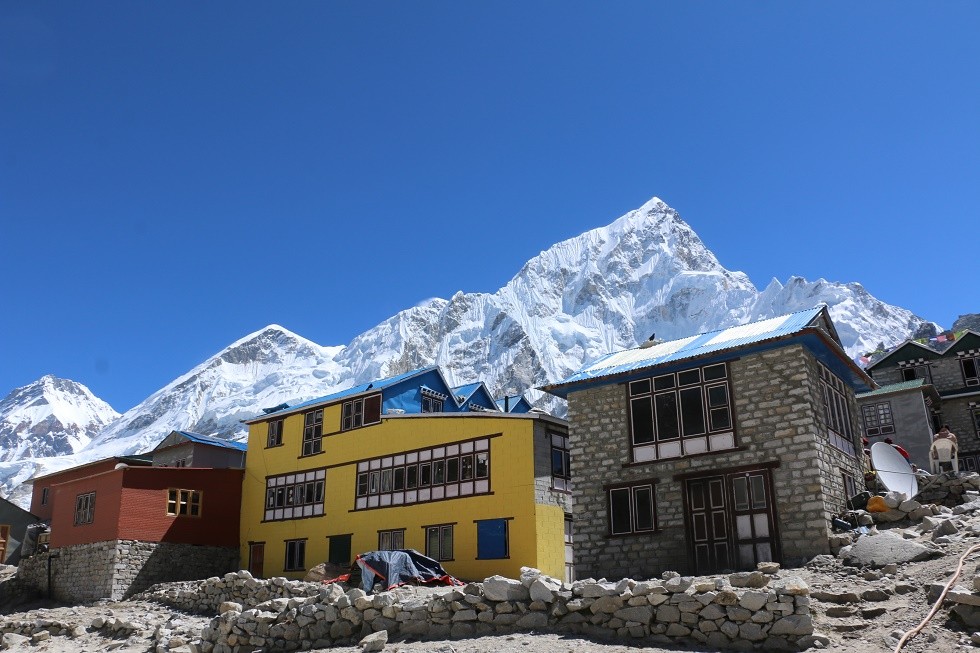
Furthermore, the photography at Gorak Shep is defined by glacial surroundings. High altitude landscape photography and the realism of Everest Base Camp Trek seem stark. And the terrain of Gorak Shep is replaced by sand, ice, and rock at the high altitude. Hence, compositions feel minimal and powerful.
In addition, the Khumbu Glacier-4,900m stretches beside Gorak Shep-5,164m. The photography at Gorak Shep, the views of the Khumbu Glacier, and Everest Base Camp Trek scenery are strongly aligned. Added to this are the jagged ice formations, giving texture to it. Hence, visual complexity increases.
Besides, morning light promotes picturing in Gorak Shep at an altitude of 5,164m. High-altitude photography, Everest Base Camp Trek lighting, and raw landscape textures are present more vividly. With a low sun angle, details of the surface get reflected. Thus, early shoots can also be prevailing.
Similarly, clouds move fast around Gorak Shep 5,164m. Gorak Shep photography or the Everest Base Camp Trek weather and high-altitude landscapes gain drama, as the visibility changes within minutes. So, it is with great patience that you will manage to get unique frames.
Meanwhile, Nuptse summons abruptly above Gorak Shep. Photography at Gorak Shep, with Nuptse as the backdrop and Everest Base Camp Trek scale, is combined in powerful proportions. The mountain dominates the composition, so images convey immensity.
Equally importantly, trekkers add scale to photography at Gorak Shep (5,164m). Everest Base Camp Trek storytelling, Gorak Shep landscapes, and high-altitude realism are improved with the presence of human subjects. Figures emphasize harsh conditions. Consequently, narratives strengthen.
Besides, this Evening light softens the photography at Gorak Shep 5,164m, high altitude landscape photography, and the sunset tones in Everest Base Camp Trek and the terrain in Gorak Shep would be subdued. Shadows lengthen across sand. The mood thus shifts dramatically.
More importantly, Gorak Shep at 5,164m is the last habitation on the Everest Base Camp Trek. That makes any form of photography in Gorak Shep, the hike's progress toward Everest Base Camp, and its high-altitude environment interrelated with feelings of isolation. This place really makes images feel final and decisive.
Additionally, there is no additional cost for photography at Gorak Shep-5,164m. Everest Base Camp Trek packages, access to Gorak Shep, and high-altitude landscapes are still covered. Entry is covered under a standard permit. Therefore, photographers include it by default.
Finally, Gorak Shep at 5,164m represents extreme exposure to the Himalayas. Photo shootings in Gorak Shep, Everest Base Camp Trek identity, and raw landscapes at high altitude are unforgettable. Images reflect survival and endurance. Therefore, Gorak Shep remains essential.
Kala Patthar sunrise photography yields the best close-up views of Mount Everest and dramatic Himalayan panoramas on the Everest Base Camp Trek.
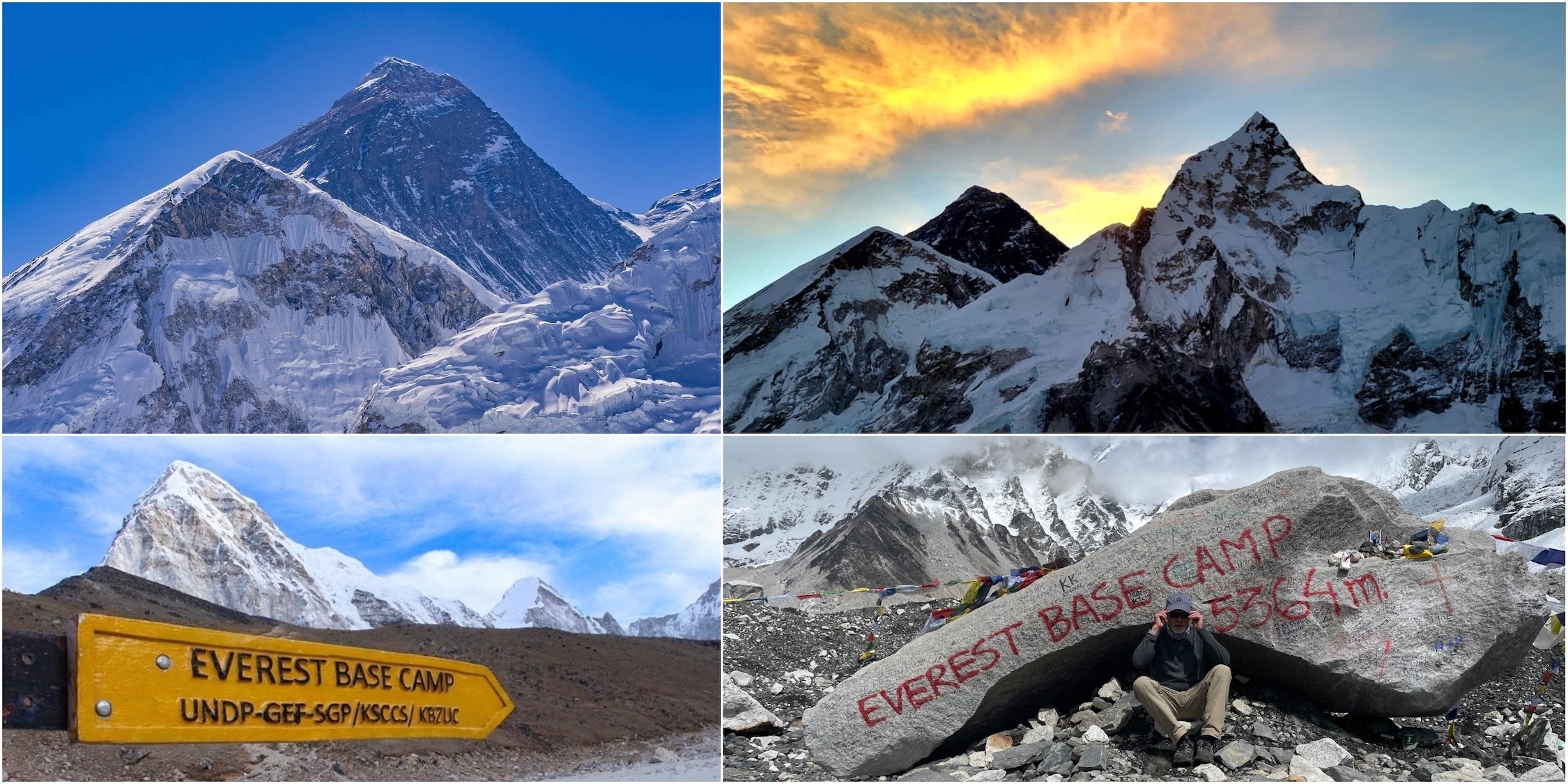
Kala Patthar Sunrise: The best viewpoint for photography of Everest peak-5545m.
Photographic Emphasis – Kala Patthar
First, Kala Patthar (5,545m) offers the best viewpoint for Everest photography on the Everest Base Camp Trek. This climb is highlighted by the Kala Patthar sunrise photography, Mount Everest views, and Everest Base Camp Trek highlights. This ridge fronts Everest directly, meaning the visibility stays unmatched.
Besides, sunrise timing defines Kala Patthar photography-5,545m. Everest peak photography, Kala Patthar sunrise, and Himalayan golden light combine perfectly. First light strikes Mount Everest 8,848.86m. Consequently, images feel iconic.
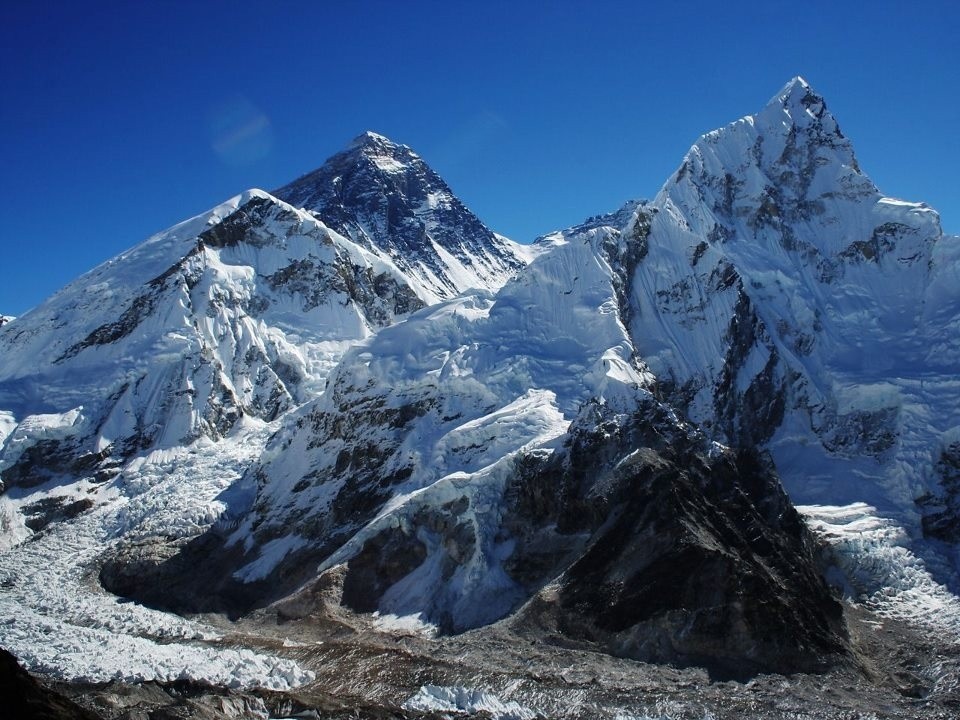
Additionally, from Kala Patthar at 5,545m, Nuptse at 7,861m fills the foreground. Consequently, photography at Kala Patthar, views of the Nuptse wall, and panoramas featuring Everest Base Camp Trek line up very strongly. The mountain gives scale and layering. Hence, compositions are dramatic.
Besides, from Kala Patthar, Mount Everest's summit-8,848.86m fully comes into view. As such, Everest summit photography, Kala Patthar sunrise, and Everest Base Camp Trek views reach their peak here. The summit stands unobstructed. Hence, photographers achieve definitive Everest shots.
Similarly, Pumori is seen beautifully rising at 7,161m next to Kala Patthar at 5,545m. Kala Patthar photography, Pumori mountain views, and Everest Base Camp Trek composition balance frames. Sunrise colors reflected on the snow textures. Therefore, contrast strengthens it.
Meanwhile, cold conditions enhance the photography in Kala Patthar even more. High-altitude, cold sunrise photography, Everest Base Camp Trek exposure, and windy conditions in Kala Patthar test the endurance level. Again, it makes the breathing clouds appear naturally. As a result, photos seem natural.
Equally importantly, silhouettes add to Kala Patthar photography 5,545 meters. Everest Base Camp Trek storytelling of Kala Patthar sunrise and views of Mount Everest become more emotionally deep. Trekkers frame the skyline, which consequently deepens the storytelling.
Moreover, the clarity of the weather defines success at Kala Patthar, 5,545 meters. The best time for photography of the Everest peak, the sunrise view at Kala Patthar, and the conditions of the Himalayas depend on time. Early morning still remains the best time. Hence, it is all about planning.
Besides this, Kala Patthar (5,545m) does not require any extra permit fees. Kala Patthar photo shoots, Everest Base Camp Trek packages, and sunrise hikes maintain access. Standard trekking permits apply: thus, access is easy.
Additionally, the autumn season brings the sharpest Kala Patthar photography at 5,545 meters. The skies of autumn during Everest Base Camp Trek, Everest peak photography, and Kala Patthar sunrise scenes all appear quite clear. Maximum visibility can be achieved. Hence, photographers love autumn.
Finally, Kala Patthar-5,545m represents the ultimate Everest photography moment. This is where Kala Patthar sunrise photography merges with Mount Everest peak views and with the achievement of Everest Base Camp Trek. Images define success; hence, Kala Patthar remains irreplaceable.
First of first, Everest Base Camp at 5,364m above sea level is known to be the symbolic destination of the Everest Base Camp Trek. In short, Everest Base Camp photography, views of the Khumbu Icefall, and expedition camp scenes define this location. The terrain feels raw and historic. Therefore, images carry deep mountaineering meaning.
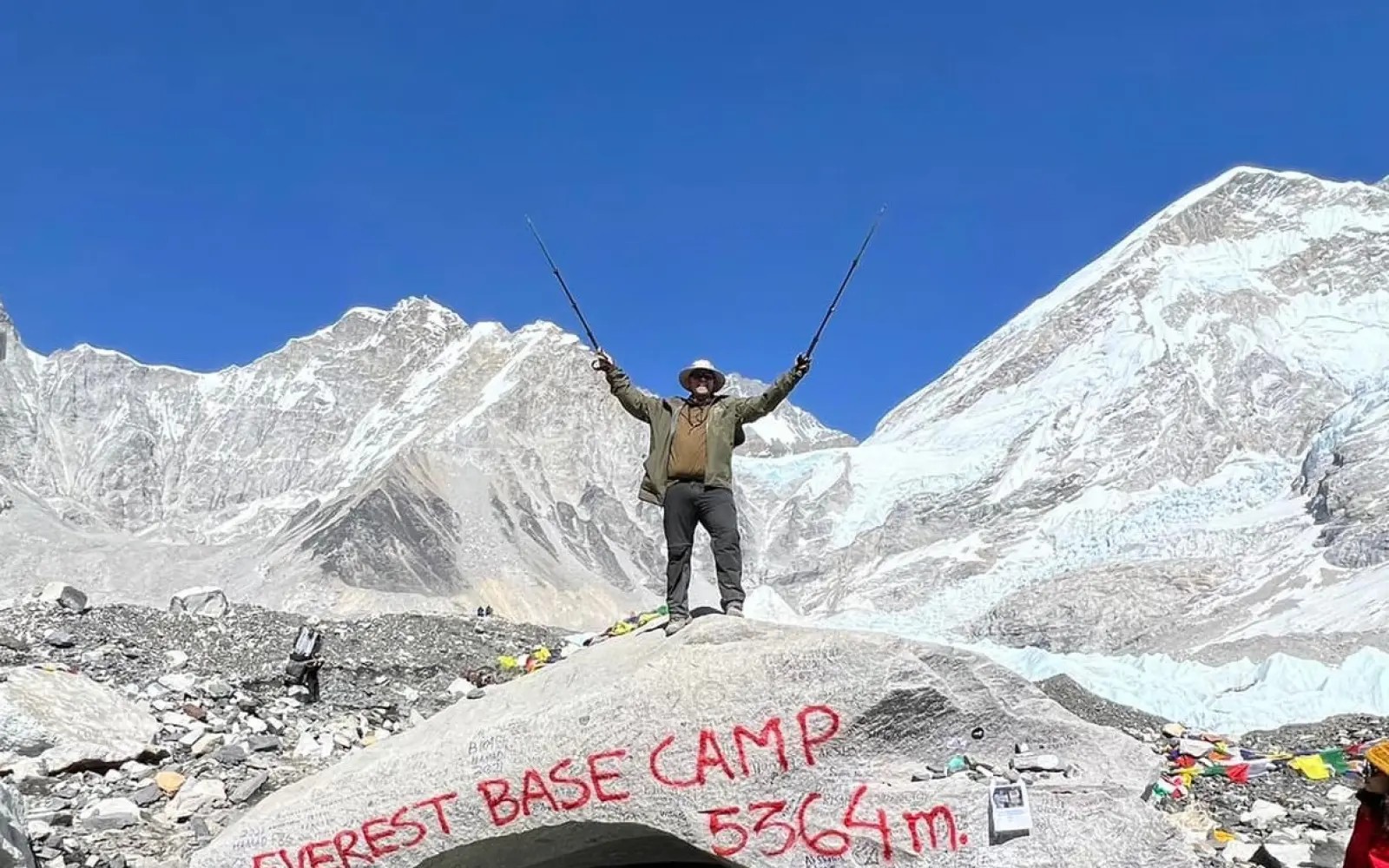
Photography Focus – Everest Base Camp
Besides, the photography of Everest Base Camp at 5,364m is dominated by the Khumbu Icefall at 5,400m. The textures of Khumbu Icefall, drama of Everest Base Camp Trek, and movement of glaciers create visual intensity. The towers of ice are in constant movement. Hence, every image seems as if it can never be repeated.
And, of course, expedition tents transform Everest Base Camp photography into a very different place-5,364 above sea level. Clearly visible are the Everest expedition camps, Everest Base Camp Trek culture, and mountaineering logistics. In sum, a colorful variation of tents contrasting ice and rock means storytelling strengthens visually.
Besides, climbers prepare near Everest Base Camp-5,364m. Everest Base Camp photography, climbing preparation scenes, and Khumbu Icefall routes naturally connect. Ropes and ladders appear nearby. Hence, realism increases.
Similarly, the surrounding peaks frame the Everest Base Camp photography, lying at 5,364m. This seems to dominate the landscapes of the Everest Base Camp Trek, views of Pumori at 7,161m, and walls of Nuptse at 7,861m. The camp is enclosed by mountains. Thus, the scale seems to be enormous.
Meanwhile, the weather at Everest Base Camp changes in a split second. And because of this, photography at Everest Base Camp, light changes of the Himalayas, and shadows of Khumbu Icefall take place very rapidly. Clouds can roll in without warning. So, patience pays off in rewarding snapshots.
Equally importantly, Everest Base Camp-5,364m does not have permanent structures. The authenticity of Everest Base Camp Trek, expedition camp visuals, and seasonal settlements mark this area. Everything appears temporary. Consequently, images feel fleeting.
Moreover, it enhances the shoots at Everest Base Camp, which is at 5,364m, with morning light. It reflects Khumbu Icefall and gives clarity to Everest Base Camp Trek; the cold conditions sharpen the details. The early hours remain best, thus timing matters.
Additionally, there are no additional fees charged at Everest Base Camp itself (5,364m). Access is included in the package costs of an Everest Base Camp Trek, a standard permit, and a guided itinerary. Photography also has no restrictions. Therefore, tourists plan freely.
Moreover, Everest Base Camp stands at an altitude of 5,364 meters above sea, symbolizing attainment and expectation. Everest Base Camp photography comes together with closeness to the Khumbu Icefall and emotion from the expedition. This very atmosphere keeps feeling electric. Hence, images take on narrative power.
Finally, Everest Base Camp at 5,364 meters offers classic Himalayan storytelling. Photography in Everest Base Camp, the presence of the Khumbu Icefall, and expedition camp life come together in perfect unison; every frame tells history. Thus, this site is unforgettable.
First, Khumbu Icefall at 5,400 meters has the most dramatic glacier photography along the Everest Base Camp Trek. The photography of Khumbu Icefall, Everest Base Camp Trek danger, and moving ice dominate the scenes. Above are looming ice towers, and for that reason alone, caution remains of importance.
Photography Focuses – Khumbu Icefall
Actually, timing defines successful photography in Khumbu Icefall. Early morning light, Khumbu Icefall textures, and Everest Base Camp Trek clarity align best. The ice remains stable briefly. Hence, mornings remain safest.
Furthermore, sunrise enhances the photography of Khumbu Icefall-5,400m with golden light of Himalayas; trek drama in Everest Base Camp will be intensified by glacial shadows, which enhance depth. Sunlight displays crevasses sharply. Therefore, this enhances contrast.
Also, photography at Khumbu Icefall is controlled by rules on safety issues, as the level of height is 5,400m. khumbu Icefall danger, Everest Base Camp Trek guidelines, and restricted zones matter greatly. Trekkers avoid climbing routes. Hence, compliance protects lives.
Similarly, the photography of Khumbu Icefall can be supported by telephoto lenses since it is at 5,400m. Safe distance shooting, photography of Everest Base Camp Trek, and the compressed pattern of ice are appropriate. It is not yet safe for close approaches. Hence, it should consider choosing lenses.
Meanwhile, weather stability is in charge of Khumbu Icefall photography, 5,400 above sea level. Clear skies, visibility of Everest Base Camp Trek, and not extreme temperatures minimize risk. Wind destabilizes blocks of ices. Therefore, the conditions dictate the accesses.
Equally importantly, the climbers bring in the levels of storytelling depth near Khumbu Icefall (5,400 meters). The Everest expedition scenes, Khumbu Icefall ladders, and Everest Base Camp Trek narratives do look powerful. Human scale gives a boost to drama. Resulting images feel alive.
In addition, shooting images in the afternoon still becomes risky at Khumbu Icefall at an altitude of 5,400m because the rising temperatures increase the movement of Khumbu Icefall and hazards during Everest Base Camp Trek. The ice tends to move really fast. Hence, photographers go back very early.
Besides that, at Khumbu Icefall 5,400m, there are no extra charges for taking photos. A viewing zone is included in the permit for the Everest Base Camp Trek standard access and guided route. Only safety limits apply: so planning stays simple.
More importantly, Khumbu Icefall at 5,400m signifies the greatest challenge for Everest. Khumbu Icefall photography, Everest Base Camp Trek danger, and mountaineering reality come together strongly. The glacier demands respect. Hence, images carry weight.
Finally, Khumbu Icefall at 5,400m rewards only the disciplined photographer. Safe timing, awareness of Everest Base Camp Trek, and mastery of glacial light promise success. Most importantly, responsible practice is what truly matters. Preparation, therefore, defines results.
Explanation of the best light conditions on the Everest Base Camp Trek; morning and evening photography tips for mountains, villages, and Himalayan landscapes.
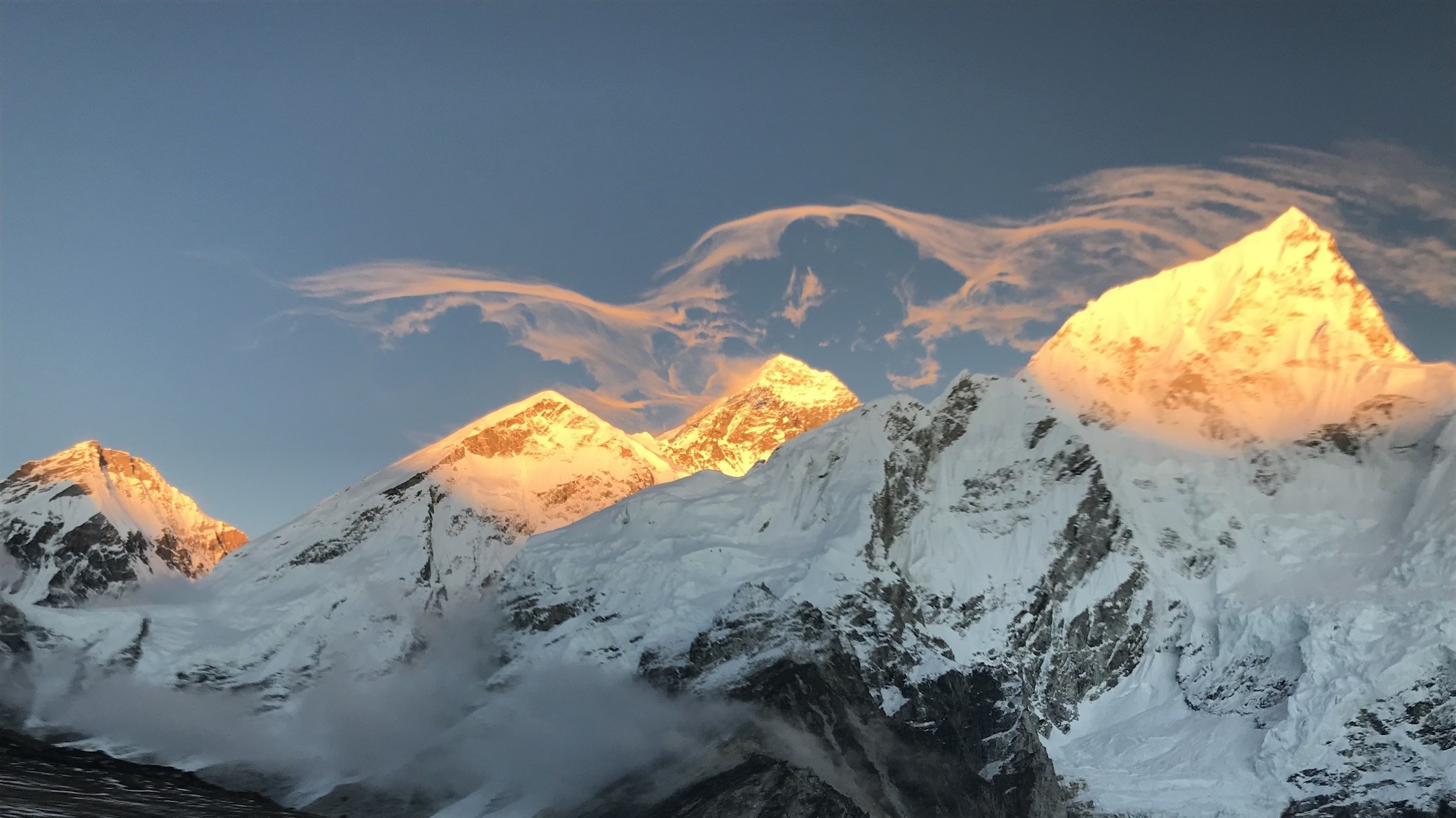
Best Light Conditions on the EBC Trail: Morning or Evening? Photography
Comparing Lights Support for Photography on EBC Trail
First, light conditions define success on the Everest Base Camp Trek: different light conditions between morning photography, evening photography, and EBC trail light elevate shadows strongly. Thus, understanding light timing improves results.
Furthermore, EBC Trail morning photography favors clarity and sharpness. Morning light, Everest Base Camp Trek visibility, and cold air diminish haze. Thereby, the snow peaks appear crisp. Thus, mountain photography gets better.
Additionally, sunrise moments feature Mount Everest, 8,848.86m; Lhotse, 8,516m; and Ama Dablam, 6,812m. The composition of morning photography in the Himalayas within alpenglow and the EBC trails proves to be perfect. Shadows are controlled. Consequently, depth is balanced effectively.
Besides this, morning shots benefit villages such as Namche Bazaar (3,440m) and Dingboche (4,410m), where soft light is combined with the culture and village textures of Everest Base Camp Trek. Activity commences slowly. Hence, storytelling feels calm.
Actually, evening photography on the EBC Trail is, likewise, all about capturing mood and drama. The evening light, Everest Base Camp Trek atmosphere, and extended shadows bring an intensity to the emotion. Colors warm up fast, and hence scenes turn cinematic.
Meanwhile, the photography of sunset develops enhanced ridges near Kala Patthar 5,545m and Nagarjun Hill 5,100m. In such conditions, evening photography, Himalayan silhouettes, and glowing horizons combine. Contrast builds up very fast. Thus, timing becomes very crucial.
Similarly, evening photography faces weather instability. Clouds build, winds rise in Everest Base Camp Trek, and temperature drops rapidly. Light rapidly decays, so preparation matters.
In addition, mornings offer much safer conditions for trekking: stable trails, easier Everest Base Camp Trek logistics, and predictable light support enable better planning. Energy levels stay higher, too. Efficiency therefore improves.
Besides, such evening photography suits creative experimentation. Long exposure, Everest Base Camp Trek motion blur, and dramatic skies appeal artistically. However, cold affects equipment, and protection is thus necessary.
Moreover, photographers should strike a balance between the two light conditions. While morning photography captures detail, evening photography delivers emotion. Everest Base Camp Trek diversity supports both. Hence, flexibility ensures success.
Finally, knowledge about light transforms EBC Trail photography. It is at this time that choices over morning or evening photography shape the outcome of a picture. Landscapes in Everest Base Camp Trek reward advance planning. Therefore, knowledge of light defines excellence.
First and foremost, success with photography on the Everest Base Camp Trek means being prepared. Every picture is affected by the kind of photography gear carried, planning for the weather, and trail realities. Elevation brings great challenges to equipment reliability. Accordingly, smart choices do count.
Photography Tips – EBC Trek
Besides, shooting gear has to correspond to unfriendly conditions. Lightweights, ease of Everest Base Camp Trek, and weather sealing work in the best way. Heavy kits involve slow trekkers; therefore, efficiency improves.
Moreover, the selection of a lens contributes to the composition of the photograph very much. The panoramic views of wide-angle lenses will work for Everest Base Camp Trek landscapes and mountain scale. Telephoto lenses allow isolating details. Thus, more versatility is achieved.
Further, weather affects photography on a daily basis. Gear suffers due to the cold temperature, wind, and sudden snow on Everest Base Camp Trek. Batteries drain quite fast; therefore, spares remain essential.
Similarly, altitude affects photographers on a physiological level. High elevation, Everest Base Camp Trek fatigue, and reduced movement decrease reaction time. Rest days help recovery, so pacing matters.
Meanwhile, trail reality requires flexibility. Crowded trails, Everest Base Camp Trek logistics, and confinement of space limit the angles. Patience opens opportunities. In turn, timing improves.
Equally important, it protects the equipment in making sure that the equipment lasts long. Protection against dust, weathering at Everest Base Camp Trek, and storage in dry places prevents damage. Moisture seems to pop up everywhere. Thus, being prepared means cost savings.
Besides, photographic expenses are still low on the EBC Trail. There are no photography permits, Everest Base Camp Trek access, and standard park fees. Additional costs include only gear. Therefore, budgeting remains easy.
Besides that, ethical photography means it matters to them deeply. Always respect locals, Everest Base Camp Trek culture, and monastery rules. Always ask before portraits. Thus, trust is built rather naturally.
Further, backup strategies prevent loss. Having several memory cards, safety of Everest Base Camp Trek data, and frequent backups protect the work of one. The availability of power is still limited; thus, a plan cannot be done without it.
Finally, successful Everest Base Camp Trek photography combines preparation and realism. The proper gear, weather awareness, and understanding of the trail are guides to proper results. Challenges sharpen creativity; thus, readiness defines achievement.
A summary of the best locations for photography during the Everest Base Camp Trek including tips on viewpoints and lighting for Himalayan photo enthusiasts.
To start with, the photography adventure of Everest Base Camp Trek relates to different landscapes, cultures, and altitudes in a single imagery. Everest Base Camp Trek photography, mountain photography of the Himalayas, and high-altitudinal landscape photography are always the same. Start from Lukla (2,860m) to Everest Base Camp (5,364m) – all havens valuable.
Additionally, traditional perspectives shape the Everest Base Camp Trek photography journey. The viewpoints offered at Namche Bazaar (3,440m), the Tengboche Monastery (3,867m), and the surroundings at Dingboche (4,410m) are legendary. Everest (8,848.86m), Lhotse (8,516m), and Ama Dablam (6,812m).
Furthermore, altitude gain improves the view of depth in terms of the Everest Base Camp Trek. Landforms, the scale of photography in Everest Base Camp Trek, and expanding valleys vary on a daily basis. Stone villages give way to glaciers.
Additionally, the cultural photographs in the Everest Base Camp Trek package complete the imagery. Sherpa culture in Pangboche (3,985m), their monasteries, and prayer flags provide the human element. The Everest Base Camp Trek cultural photographs appear natural. As such, the stories are complete.
Similarly, glacier regions enhance drama considerably. Khumbu Glacier (4,900m), Khumbu Icefall (5,400m), and Gorak Shep (5,164m) contribute to raw images. The Everest Base Camp Trek altitude enhances emotion to make photographs more impactful.
Conditions of light, however, remain important in the Everest Base Camp Trek Photography. Light in the morning enhances clarity, photography focus, and definition of the mountains in the Everest Base Camp Trek. Light in the evening enhances ambiance and warmth. There is, therefore, a need to plan properly.
Importantly, this awareness of the weather enables one to succeed while taking photographs. It is difficult to work well in cold climates and wind, as well as when the clouds suddenly appear. Preparing photographers is vital because they are able to adjust quickly to such situations.
Furthermore, physical fitness allows for the generation of creativity. Acclimatization days in Namche Bazaar (3,440m) and Dingboche (4,410m) help with concentration. Camera Everest Base Camp Trek physical endurance level enhances steadily. Hence, regularity enhances.
Additionally, accessibility makes the photography sites feasible. All major viewpoints are included in the standard Everest Base Camp Trek. Permit fees are fixed; there are no photography fees. This makes budgeting easier.
Moreover, integrity in photography promotes visual worth. When people show respect, cultural sensitivity, and care for the environment, authenticity is upheld. This is why people trust photographs. As a result, photographs appear genuine.
Also, gear selection has an impact on overall outcomes. Lightweight cameras, photography lenses for Everest Base Camp Trek, and protection against weathers are vastly important. Simplicity promotes mobility. As a result, efficiency increases.
"Meanwhile," storytelling is always the aim. There is a mix of mountain, people, and grit in Everest Base Camp Trek photography. This means all images are an exercise in both effort and environment. This enables images to be recognized internationally.
More specifically, the Everest Base Camp at 5,364m offers equal importance to the itinerary. Perspectives of the Khumbu Icefall, camps of the expeditions, and the surrounding mountains bring closure to the story or storylines created through photography.
Lastly, the best photography spots on the Everest Base Camp Trek reward preparedness and patience. There is a perfect amalgamation of photography, Himalayan landscapes, and cultural aspects of the Everest Base Camp Trek. Each altitude has its own story to tell. Hence, this trek is an artist’s masterpiece.
Note: We here at Haven Holidays Pvt. Ltd. Photography Tour to Everest Base Camp Trek is always available with Photography Guide.
1. What is the best time for photography on the Everest Base Camp Trek?
The best time for photography on the Everest Base Camp Trek is during the spring season from March to May. The autumn season, from September to November. These months are great because the skies are clear and the weather is stable. You will get golden light in the morning and vibrant sunsets, which are perfect for capturing the beauty of Everest Ama Dablam and the Himalayan mountains with very little cloud cover.
2. Do I need professional photography gear for the EBC Trek?
You do not need the expensive photography gear for the Everest Base Camp Trek. A good camera, like a DSLR or mirrorless camera with angle and telephoto lenses is a good idea. Bring batteries, memory cards and a sturdy tripod. However, even a good smartphone can take photos if you know how to use it properly.
3. How difficult is photography at high altitudes on the Everest Base Camp Trek?
Photography at high altitudes can be challenging because the air is thin and it can be very cold. Make sure to acclimatize to the altitude move slowly and protect your equipment from the cold and dust. For example: Kala Patthar and Nagarjun Hill are spots for photography but you need to start early in the morning to get the best shots.
4. Is the Hillary Suspension Bridge a good photography spot?
The Hillary Suspension Bridge is a spot for photography. You can take long-exposure shots of the Dudh Koshi River with the beautiful mountains in the background. The best time to take these shots is early in the morning or late in the afternoon when the light's golden.
5. What is the best viewpoint for Everest photography on the trek?
The best viewpoint for photography on the Everest Base Camp Trek is Kala Patthar, which's 5,545 meters high. You get the spectacular views of Everest from here especially during sunrise. Nagarjun Hill near Dingboche is also great for sunset photography with views of Makalu and Lhotse.
6. Can beginners do photography on the Everest Base Camp Trek?
Yes, beginners can definitely do photography on the Everest Base Camp Trek. The trail has easy-to-reach photography spots, such as Phakding, Namche Bazaar and Tengboche. Focus on taking photos by using the right composition, light and timing rather than worrying about having the most expensive gear. Local guides can also help you find the angles.
7. How cold does it get for photography at Everest Base Camp?
It can get very cold at Everest Base Camp at night with temperatures sometimes dropping to -10°C or lower. Make sure to bring clothes, gloves and hand warmers to keep yourself and your camera batteries warm during early morning photography sessions.
8. Is drone photography allowed on the Everest Base Camp Trek?
Drone photography is not allowed in Sagarmatha National Park without a permit. With a permit there are many restrictions, especially near Everest Base Camp and sensitive areas. Always check the rules before planning to use a drone for photography.
9. What photography tips work best for Namche Bazaar?
The best photography tip for Namche Bazaar is to wake up to get the famous viewpoint that shows the first views of Everest and Lhotse. Explore the village. Take photos of the layered houses and mountains. The golden hour light is beautiful. Illuminates the terraced houses.
10. How many days are needed for photography-focused EBC Trek?
A standard 12-14 day itinerary is an amount of time for a photography-focused Everest Base Camp Trek. However, it is an idea to add a few extra days to acclimatize and to take sunrise and sunset shots at key spots like Kala Patthar, Dingboche and Tengboche Monastery.
11. What should I wear for photography sessions on the trail?
It is an idea to wear layered clothing, including moisture-wicking base layers insulating mid-layers and a windproof jacket. Good trekking boots, gloves and a warm hat are also essential for early morning photography sessions at higher altitudes.
12. Is Tengboche Monastery good for spiritual photography?
Yes, Tengboche Monastery is a spot for spiritual photography. The monastery is beautiful and the surrounding mountains, including Everest and Ama Dablam make for a backdrop. The morning light is especially beautiful. Adds to the spiritual atmosphere.
13. How safe is photography at Khumbu Icefall?
Photography at Khumbu Icefall can be dangerous due to the risk of avalanches. It is essential to visit with guides during stable weather conditions. Always respect the expedition zones. Never venture too close to the unstable ice.
14. What filters are recommended for Himalayan photography?
Polarizing filters are great for reducing glare on snow and enhancing the colors of the sky. ND filters are useful for taking long-exposure shots of waterfalls. UV filters protect your lenses from the sunlight and dust at high altitudes.
15. Can I charge camera batteries on the Everest Base Camp Trek?
Yes, you can charge your camera batteries on the Everest Base Camp Trek. Solar chargers and power banks are options. Many teahouses also offer electricity for a fee, especially in Namche Bazaar and Dingboche. It is an idea to carry multiple batteries as the cold weather can drain them quickly.
16. What makes Dingboche a great photography location?
Dingboche is a photography location because it offers wide-angle landscapes, stone-walled potato fields and dramatic mountain backdrops. Nagarjun Hill above the village is especially great for sunset photography with views of Makalu, Lhotse and the surrounding peaks.
17. How do I protect my camera from dust on the EBC trail?
To protect your camera from dust use weather-sealed camera bodies and lenses. Keep your equipment in bags when you are not using it and clean your lenses regularly. It is also an idea to avoid changing lenses in dusty or windy conditions on the trail.
18. Is sunrise or sunset better for EBC photography?
Both sunrise and sunset are great for photography on the Everest Base Camp Trek. Sunrise at Kala Patthar is legendary for the light on Everests peak. Sunsets at Nagarjun Hill and Namche offer alpenglow on multiple peaks. Plan your photography sessions according to the location and time of day.
19. What permits are needed for the photography trek to Everest Base Camp?
You need a Sagarmatha National Park entry permit and a Khumbu Pasang Lhamu Rural Municipality permit for the photography trek to Everest Base Camp. No special photography permit is usually required for use.
20. What makes this the best photography trek in Nepal?
The Everest Base Camp Trek is the photography trek in Nepal because it offers a combination of dramatic landscapes, cultural richness and iconic viewpoints like Kala Patthar and Ama Dablam. Every day on the trek offers exciting photographic opportunities, from lush valleys, to high glacial terrain.
Our travel experts are ready to assist you with any questions.
Send us a message.Have a question before you book? Send your enquiry below and our travel experts will get back with the required information.