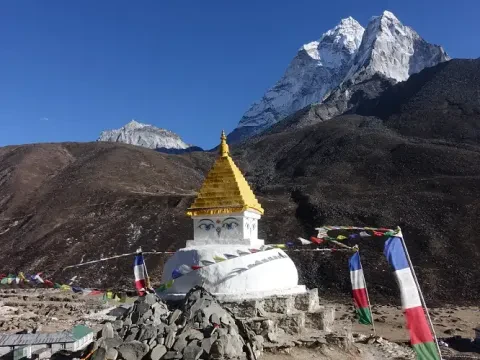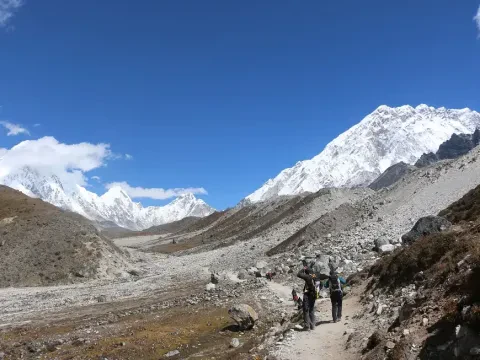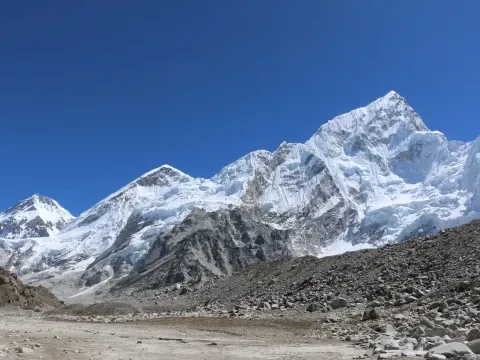
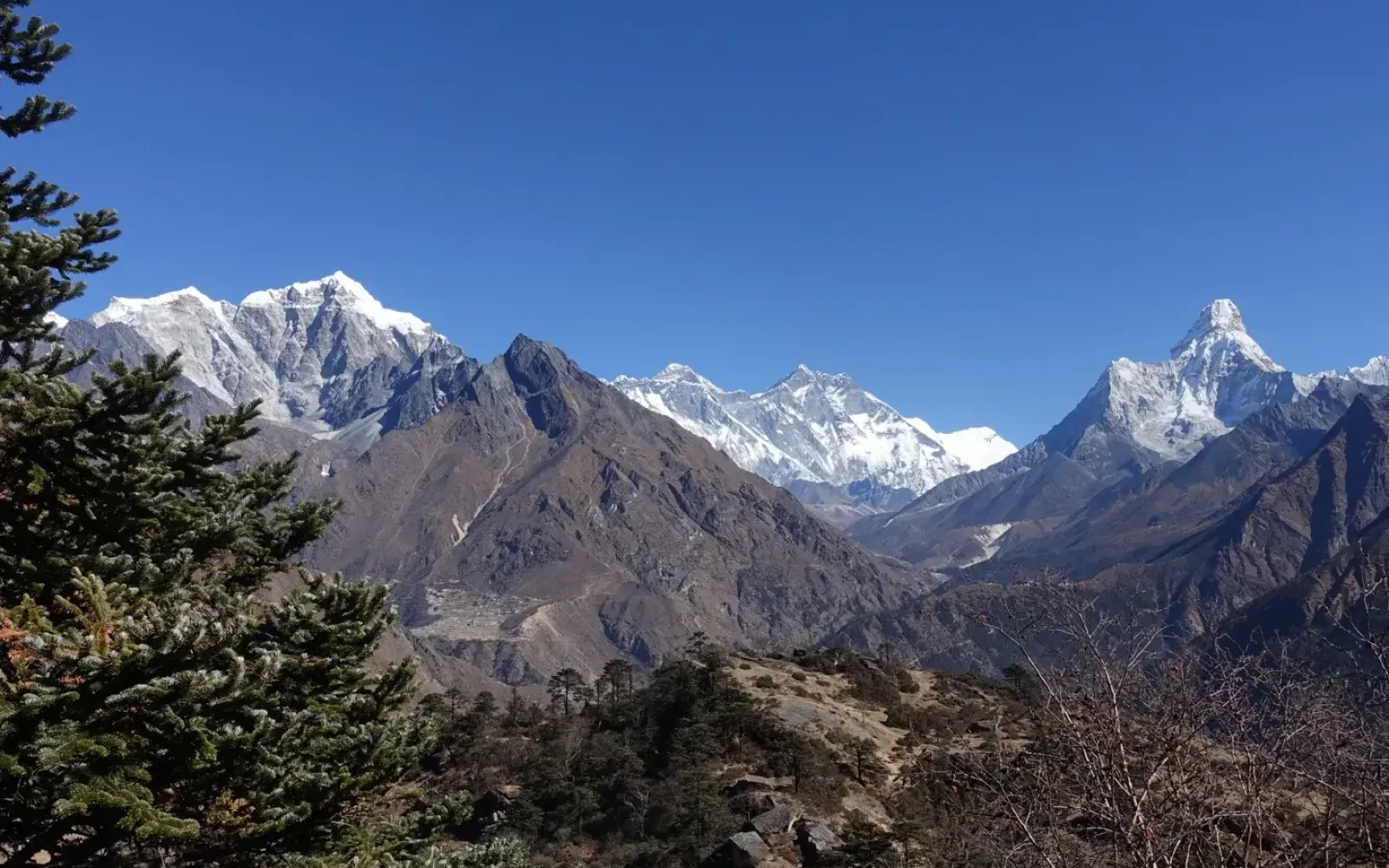
Explore the striking biodiversity along Everest Base Camp Trek in Nepal Himalayas, hosting lively flora and fauna for enriching trekking joy.
Likewise, integrating the branches growing up to Everest Base Camp Trek, find some examples. They include the elements derived for analyzing flora and fauna diversity:
Meanwhile, travelers wander the Everest Base Camp Trek for experiencing Nepal’s Himalayan biodiversity. This route takes to Everest Base Camp (5,364m) and covers contrasting habitats. Besides, it reveals several distinct flora and fauna throughout. As a result, trekkers experience nature’s beauty along the footpath.
Actually, the EBC Trekking trail starts from Lukla (2,860m) through subtropical woods exhibiting diverse plant life. Pine trees form thick blanket along trail and furnish moist islands probably full of mosses. Further, bamboo forests persist near Phakding (2,610m). Hence, trekking sections have shown brightest greenery earlier.
Now, the elevations up to Namche Bazaar (3,440m) bring in widespread blooming rhododendrons amid temperate climate. The woodlands shelter the striking Himalayan monals. And, orchids hang from branches coated in humid surroundings. Therefore, whole extent of fauna and flora dazzle the travelers.
Ascending parts to Tengboche (3,860m) split in oak and fir forests around subalpine zones. Few medicinal plants such as kutki grow in prime condition here. Furthermore, butterflies ride along the dry wildflowers. Thus, moderate altitudes reveal a brilliant settlement of hardy flora and fauna.
Moreover, the lands climbed up to Dingboche (4,410m) consist of scattered junipers. The alpine pastures bring in plentiful primulas during summer. The stones are quite soaked in lichens. So, the regions exhibit a significant shift of flora and fauna tolerant to extreme conditions.
As the altitude watches a dramatic decline in vegetation to Lobuche (4,910m) in the exclusive glacial environment, mountain lions wander the streamless hills and colossal rocks. The agile Himalayan tahrs climb on huge cliffs. Accordingly, flora and fauna at the highest point emphasize untraceable wildlife.
Finally, Everest Base Camp (5,364m) and nearby Kala Patthar (5,545m) provide best worldwide views. The steep slopes carry blue sheep grazing on them. Likewise, the concealed meadows carry blood pheasants' cries. Hence, the trek ends into a magnificent discovery of flora and fauna.

In fact, this Himalayan biodiversity, Sagarmatha National Park holds the strong ground here in Khumbu region. It encompasses 1,148 sq.km of all possible habitats. Withal, it preserves a huge number of 118 bird species. Hence, responsible trekking helps in conserving the miracle of Everest Base Camp Trek.
Further, Springtime promotes flora and fauna to appear prominent. The animals form large groups for migrating. Further, the local guides gather precise data. Therefore, spring trekking brings out maximum Everest Base Camp Trek sightings.
In brief, Everest Base Camp Trek safaris unveil incredible biodiversity of lush flora and fauna. They attract colorful species ranging from highest to lowest altitudes. Moreover, they promote spiritual links with nature. So, trekkers cherish the true mountain treasures.
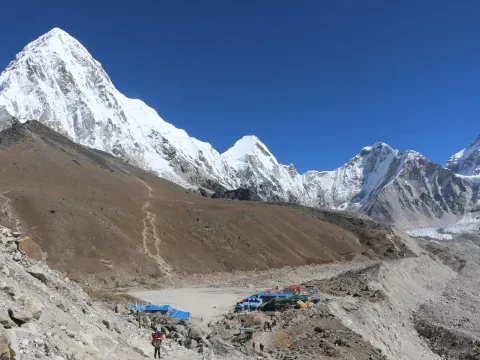
Entering Sagarmatha National Park: The heart of Conservation of the Himalayas
Sagarmatha National Park, the Conservation Heart of the Himalayas provides protection of biodiversity, endangered species such as red pandas and sustainability efforts.
Major conservation efforts made within Sagarmatha National Park:
| Conservation Focus | Key Initiatives | Targeted Elements | Outcomes |
| Habitat Protection | Buffer zones, reforestation | Rhododendrons, medicinal plants | Sustained forest diversity in lower elevations. |
| Wildlife Safeguarding | Anti-poaching, camera traps | Snow leopards, red pandas | Reduced threats to endangered species. |
| Tourism Management | Permit systems, waste programs | Eco-trekking guidelines | Minimized environmental impact from visitors. |
| Community Involvement | Education, revenue sharing | Sherpa traditions, livelihoods | Empowered locals for ongoing conservation. |
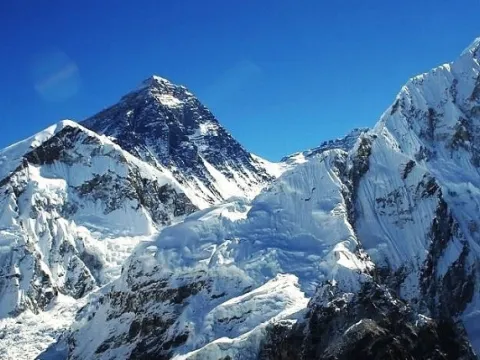
Established in 1976 by authorities to protect the Himalayan ecosystems, Sagarmatha National Park covers an area of 1,148 square kilometers situated around Mount Everest (8,848m) and habitats of various flora and fauna species; thus functions as the Conservation Heart of the Himalayas.
Here, the park ranges from Monjo (2,845m) to the highest peaks of over 8,000 m.s.l. Below the subtropical zone at the lower elevations, the blue pines and rhododendrons flourish along with bamboo groves, which provide scats for the red pandas; hence sustainability programs aim to preserve these habitats effectively.
Ascending to the temperate zone at the 3,000m altitudes, the fir and birch trees dominate throughout, while the yarsagumba and other herbal medicines grow in plenty; while vibrant orchids bloom in spring. Therefore, the Conservation Heart manages to protect diverse floral species via conservation programs.
In the sub-alpine regimes near 4,000m, the habitat is available for juniper bushes, which provide cover for the wildlife, and the seasonal vibrant primulas and lichens grow on the rocky slopes. Consequently, Conservation Heart sustains these high-altitude adaptations.
In the alpine zones above 5,000m, plants are only limited to mosses and hardy grasses while the snow leopards stalk the valleys stealthily and the Himalayan tahrs browse on the precipitous ledges; therefore, conservation programs manage to protect endangered species successfully.
In 1979, the site was inscribed as a World Heritage Site by UNESCO in recognition of its valuable ecological conditions, while local Sherpa communities are involved in buffer zone management and antigun guns patrols are in place to monitor the musk deer; thus, the conservation programs promote sustainability with the local people.
Meanwhile, climate effects on the glaciers has been addressed by the programs, while camera traps are used to monitor the diverse biodiversity; meanwhile, waste disposal has been improved to cut back the tourist impacts. Hence, the active conservations promote eco-friendly practices.
Now, the revenue is being generated through the permit fees for economical park management, while trekkers pay NPR 3,000 entrance fee, and the guides comply with leave no trace rule to protect natural environments; consequently, the ongoing revenue has been utilized in the long-term conservation of the Himalayas. The international partnerships support researches into the flora and fauna, while reforestation programs are run to plug the deforestation areas, and eco-awareness has been raised through education campaigns. The possible expectations are the larger scale monitorings for the red pandas, using the technology to track hot spots and limiting numbers of tourists via sustainable measures.
Ultimately, Sagarmatha National Park encapsulates Himalayan conservation at its best. It protects irreplaceable biodiversity. It also assures a future worth protecting. It is the heart of the Himalaya and will be protected for the future.
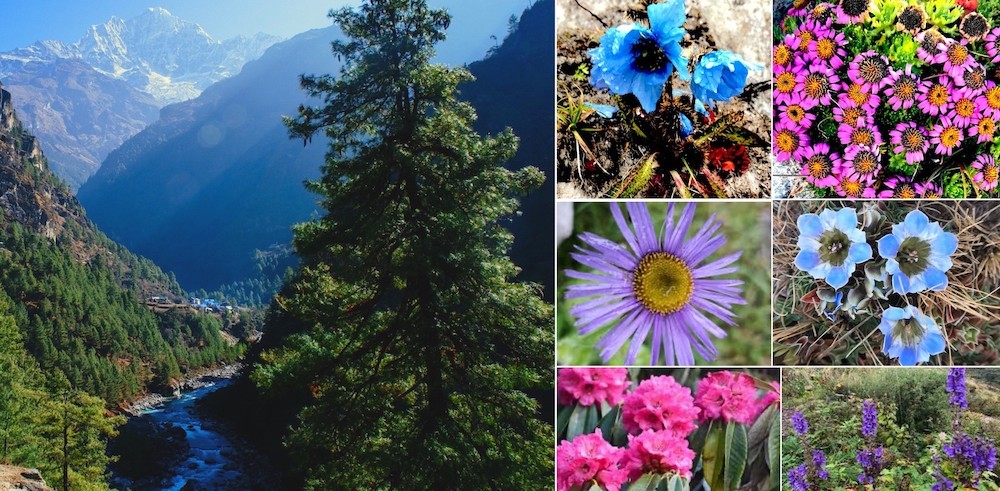
Discover lower altitude forests of Everest Base Camp Trek featuring subtropical flora like bamboo and oaks, and blooming rhododendrons in Sagarmatha National Park.
Some chief of the lower altitude forests as could be set out on the Everest Base Camp Trek explorations:
Meanwhile, trekkers begin the Everest Base Camp Trek immersed in subtropical lower altitude forests near Lukla (2,860m). Here, luxuriant plants thrive in damp atmosphere, while the brilliant national flowers of Nepal, the rhododendrons, flourish in bloom. Consequently, early sections of the Everest trek introduce spectacular subtropical wonders immediately.
Here, blue pines (Pinus wallichiana) dominate the mountain trails near Phakding (2,610m). Tall blue pines create natural umbrellas over walkways, creating lush environs perfect for display of understory goodies like wild azaleas and mosses. Along river banks, large bamboo stands appear in tall clusters. Altogether, subtropical wonders have fully populated lower altitude forests.
Likewise, Rhododendrons adorn lower altitude forests of Everest Base Camp Trek with eye-popping bright blooms in red, white, and pink shades during March-May. The yellow and orange orchid species cling to pines and maples beautifully in these forests. Fir trees (Abies spectabilis) further offer evergreen contrast besides adding cool colors. Thus, subtropical wonders are anything but subtle here.
Moreover, reaching near Monjo (2,835m), fragrant fern, mosses, and wild roses thrive under oaks and maples with thick moss cover. Out in the middle, verdant bushes of junipers are spotted here and there, and shrub patches add to subtropical wonders, offering delightful liveliness. Finally, entering the borders of Sagarmatha National Park, the forest cover intensifies in density, the rhododendrons mingle happily with blue pines, orchids cling to bole, and subtropical paradise surpasses one’s imagination.
Additionally, Everest National Park has isolated ecological zones where delicate subtropical flora are protected for long time. Buffer zones have been situated to restrict devastating deforestation, while responsible eco-trekking advice ensures minimal impact from the footfalls of trekkers. Besides, guides highlight significant subtropical species of northern Himalaya including the flowering rhododendrons for eager observers with enthusiasm. In addition to, telescopes, binoculars, and magnifying glasses reveal the intricacies of pale subtropical wonders worth treasuring forever.
Here, the best season to watch the subtropical wonders of subtropical forests is when the rhododendrons are in the full bloom state, as it visually wow the participants with color as appearing magical on the horizon. The relative mild weather is favoring nature walks more peacefully, and fewer numbers of the Everest Base Camp trekkers mean great terms of highly enjoyable sightseeing. Thus, for scenic splendors of the subtropical wonderlands, skip the trekking seasons except spring.
More importantly, nature photography helps in spending worthwhile moments of vivid views of subtropical wonders from lower altitude forests, while on Everest Base Camp Trek. Focusing on returning magic of azaleas, magnifying the details in orchids, and shoot with the backdrops of green pines help the visits to echo memorable liveliness. Not only that, images of subtropical wonders as capturing the beguiling flowers and trees would convey the eco-friendly messages forever.
In conclusion, the lower altitude forests of Everest Base Camp Trek offer a stunning array of subtropical wonders. The presence of rhododendrons and pines adds magical scenery, while the rich flora supports diverse visibility. Overall, these habitats provide unparalleled wonders of majesty in Himalayan subtropics.
View red pandas, musk deer and Himalayan black bears in the lower regions of Everest Base Camp Trek in forests of Sagarmatha National Park for great wildlife memories.
Highlighting common mammal species to look for along the lower (and higher) sections of Everest Base Camp Trek:
| Habitat Elevation | Mammal Species | Key Locations | Spotting Tips |
| Red Pandas 2,500-3,500m | Bamboo groves near | Phakding, Jorsalle | Dawn/dusk in rhododendron forests, look up trees. |
| Musk Deer 2,800-4,000m | Undergrowth around | Monjo, Namche trails | Quiet trails, listen for rustling, avoid sudden moves. |
| Himalayan Black Bears 2,500-3,500m | Oak-pine forests near lower park entry | Fruiting seasons, make noise to avoid surprises. |
| Himalayan Tahr 2,800-4,200m | Rocky slopes in lower subalpine zones | Cliffs during day, use binoculars for distant views. |
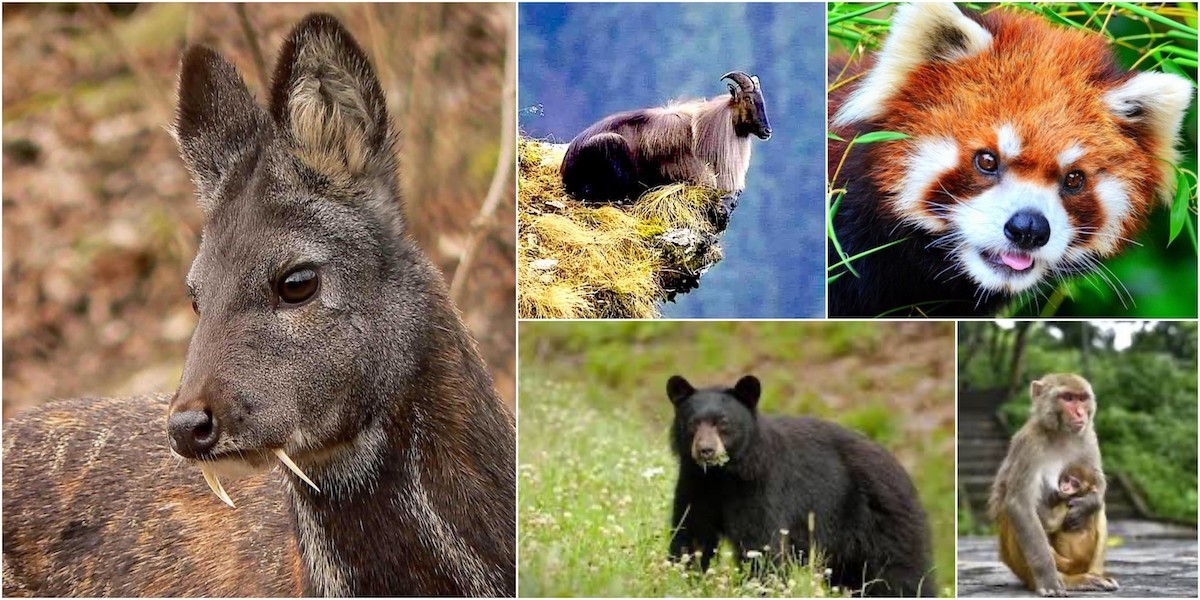
Actually, mammals can be seen by wildlife enthusiasts in the lower regions of the Everest Base Camp Trek. Forested areas along the trekking route from Lukla (2,860m) to Namche Bazaar (3,440m) have plenty of other species of mammals. Red pandas forage in the nearby bamboo thickets. Therefore, the lower altitudinal zones are ideal for mammal watching.
In fact, habitats of red pandas (Ailurus fulgens) can be seen in the moist forests near Phakding (2,610m). The orangey red fur of red pandas makes it difficult to be noticed amidst the rhododendrons. Furthermore, they move around decisively and nimbly in the tree tops early in the morning. As a result, watching red pandas would excite travelers.
Likewise, Musk Deer (Moschus leucogaster) are seen encircling the Monjo (2,835m) in the undergrowth. Myst deer are microscopic shy creatures that possess a valuable musk gland. Besides, they jump through herbs all around the dense patches peacefully. Hence, mammals like musk deer are skillful at hiding from eagle eye.
Moreover, Himalayan black bears (Ursus thibetanus) can be seen foraging in oak and pine woodlands near Jorsalle (2,835m). They feed on berries and roots during certain seasons. Moreover, they ascend the trees when faced with threats. So, finding Himalayan black bears requires efficient observation skills.
Here, Sagarmatha National Park safeguards the aforementioned mammals effectively. Regularly patrols against poachers are attended to monitor the respective species. Besides, maintaining personal safety is important for sightings. Equally, investment on research work generates positive results. Accordingly, conservation-minded approach sustains the population of mammals in the lower altitudinal zone.
Moreover, experts guide trackers in finding red pandas. The guides provide tips on the habits of musk deer. Besides, carrying out early birdings is effective. For this reason, professional assistance is advantageous for mammal viewing.
In fact, the mighty east Asian migratory birds make the lower regions clearer. Therefore, the Himalayas like black bears does spend more time in summer and clearer views can be obtained. So, Red panda counting techniques better take advantage.
In brief, lower zones are responsible for the legendary attraction of the Everest Base Camp Trek. Cutely red pandas captured the visitors. New challenge was brought by brilliant musk deer and Himalayan black bears. This is why, lower zones provide unforgettable association with wildlife.
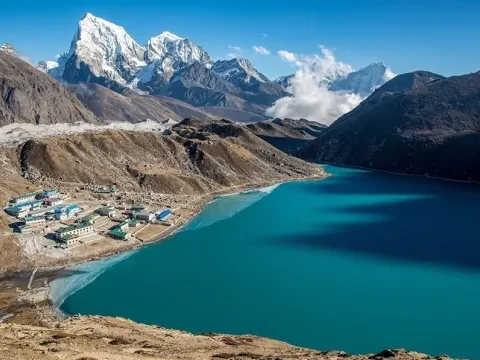
Likewise, experience the birdlife along the path of Everest Base Camp Trek with Himalayan monals, blood pheasants, choughs, and over 200 species for inspiring Himalayan avian adventures.
To emphasize best birdlife along the path on Everest Base Camp Trek, reveal these iconic itinerants:
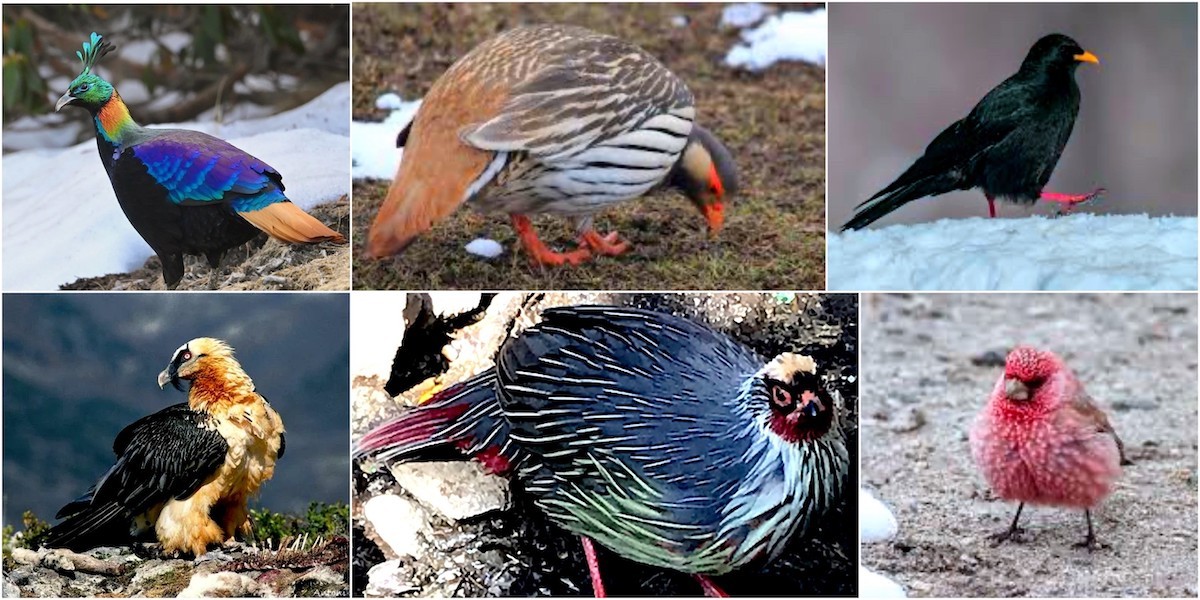
Moreover, discover birdlife along the path in Sagarmatha National Park. Over 200 species flourish in various altitudes on Everest Base Camp Trek. Notably, Himalayan monals dazzle with brilliant wings. Red blood pheasants and choughs also entertain avid observers.
In lower forests near Phakding (2,610m), colorful birds opt for sap from tender rhododendrons. Himalayan monals strut through temperate zones bold and brazen. Additionally, blood pheasants rest in thick bush. Hence, birdlife along the path begins with such amazing adaptations.
As pathways ascend to Namche Bazaar (3,440m), choughs rule the open environment. Red-billed choughs scavenge near villagers cleverly. And, yellow-billed choughs perform aerobatics above ridges. Accordingly, Himalayan monals join blood pheasants in mid-altitude birdlife.
Ascending to Tengboche (3,860m), pheasants enter subalpine scrub. Blood pheasants forage searching for opportunistic eats actively. Furthermore, Himalayan monals shine with metallic moods during genre and battles. So, choughs soar overhead temples generally.
Arriving at Dingboche (4,410m), alpine species convert to elevated elements. Snow pigeons cluster around jagged bits effectively. Plus, blood pheasants progress into transition fields intrepidly. So, birdlife along the path includes tough choughs at high elevation.
Near Lobuche (4,910m), raptors enhance the avivauna. Lammergeiers soar-rows for carrion from summits. Yet again, Himalayan griffons drone gliding airspaces intricately. Thus, Himalayan monals and blood pheasants complement these choughs.
At Gorak Shep (5,140m), choughs survive open harsh spaces. Yellow-billed choughs bark sharply around base. On the other hand, red-billed choughs adapt to winter blasts. Therefore, birdlife along the path concludes with resilient choughs.
In fact, protection of birdlife along the path in Sagarmatha National Park occurs. Anti-poaching has protected Himalayan monal majestically. Eco-tourism has promoted love of blood pheasants considerably. So, responsible tourism will guarantee the future of birdlife along the path.
Expert guides observe birdlife along the path during the expedition. They reserve binoculars for distant Himalayan monals. They usher dawn jaunts to utilize blood pheasants to full effect. The guiding experts can reveal choughs in themselves.
Springtime migration increases birdlife along the path. Himalayan monals gather melodiously in themselves. Further, blood pheasants enter clearing conspicuously. Overall, this seasonal timing optimizes birdlife along the path awareness.
In briefly, birdlife along the path paints colorful pictures in Himalayan skies. Himalayan monals turn scenes narrative. Besides, blood pheasants and choughs excite bird-watching experts.
Embark upon mid-altitude encounters on Everest Base Camp Trek with Himalayan tahrs, martens, pikas amidst Sagarmatha national park transition zones for stunning Himalayan wildlife encounters.
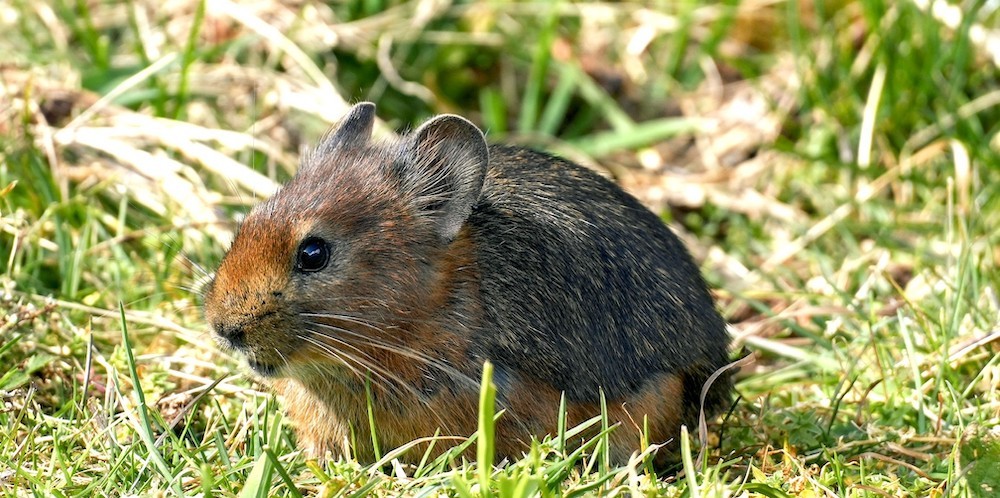
Check out this table of important species in the Everest region. It shows the habitats and habits of Himalayan tahrs, martens and pikas, and provides a useful resource of contrast and detail of mid-altitude encounters in the Everest region:
| Mammal Species | Habitat Elevation | Key Locations | Behaviors |
| Himalayan Tahrs | 2,800-4,200m | Rocky slopes near Namche, Tengboche cliffs | Graze in herds, climb agilely, curved horns |
| Yellow-Throated Martens | 2,500-3,500m | Mixed forests around Dingboche, lower transitions | Hunt nimbly, display stripes, tree climbing. |
| Himalayan Pikas | 3,000-4,800m | Rocky burrows in meadows near higher zones | Collect grasses, whistle warnings, burrow living. |
| Himalayan Marmots | 3,500-4,500m | Alpine meadows in transition areas | Hibernate seasonally, stand sentinel, dig extensively. |
Here, trekkers encounter mid-altitude encounters amidst transition zones generally on 3,000-4,000m altitudes around Everest Base Camp Trek. The transition zones blend pine woods with meadows in Sagarmatha national park. In addition, Himalayan tahrs mainly graze slope sides. Next, the transition zones bring marmots and pikas for Himalayan wildlife sightings.
Along Namche Bazaar (3,440m), Himalayan tahrs skillfully scale hill slopes. The crescent-shaped horns occur among sexually mature males very clearly. Moreover, the herd of Himalayan tahrs protects the bighorns by giant leaps. As a result, the mid-altitude encounters feature these mountain goats prevalently.
By the time paths reach Tengboche (3,860m), martens predate nimble small preys in hybrid clusters. The yellow-throated martens display squinting sharp as they sprint through the climbers. Thus, the transition zones generate these nimble predators during the mid-altitude encounters.
In meadowlands of Dingboche (4,410m), pikas nest in rocky burrows. The Himalayan pikas gather grasses industriously. Besides, the Indian pikas shed sharp whistles when woken up. So, the mid-altitude encounters have these rabbit-like creatures plentily.
Likewise, heritage protection hangs on the mid-altitude encounters in Sagarmatha national park. Preservation of habitat controls overgrazing effectively. Aside from that, the tracking Himalayan tahrs population is watched. Consequently, sustainable conservation strives to save martens and pikas.
In fact, guides from Haven Holidays Pvt. Ltd. make the mid-altitude encounters worthwhile on treks. They understand well the tracks of martens. Furthermore, binoculars link the distantly visible Himalayan tahrs. Therefore, the knowledgeable guiding professionals enhance the pikas sightings in transition zones.
Likewise, the autumn presents unobstructed spectacles of the mid-altitude encounters. The sweep of leaves takes the cover off the indiscernible martens. Too, the advent of migratory habits raises the Himalayan tahrs sights. Accordingly, the seasonal timing brings forth the pikas observations.
Overall, the mid-altitude wild life encounters are a highlight of the Everest Base Camp trek. Himalayan tahr frequent rugged terrain throughout these regions. Further, martens and pikas visit with warmth. Consequently, transition areas facilitate meaningful wildlife experiences.

Discover high altitude fauna experiences on Everest Base Camp Trek through foraging yaks, rare sightings in Sagarmatha National Park and elusive snow leopards for Himalayan wilderness trekking.
Here, high altitude fauna commonly watches trekkers over 4,000m high through Sagarmatha National Park. Elusive snow leopards prowling into remote valleys quietly inside the montane ecology. Likewise, yaks grazing stretch on above the meadlowing plains dutifully. Hence, rare sightings suddenly near base camp startle explorers greatly.
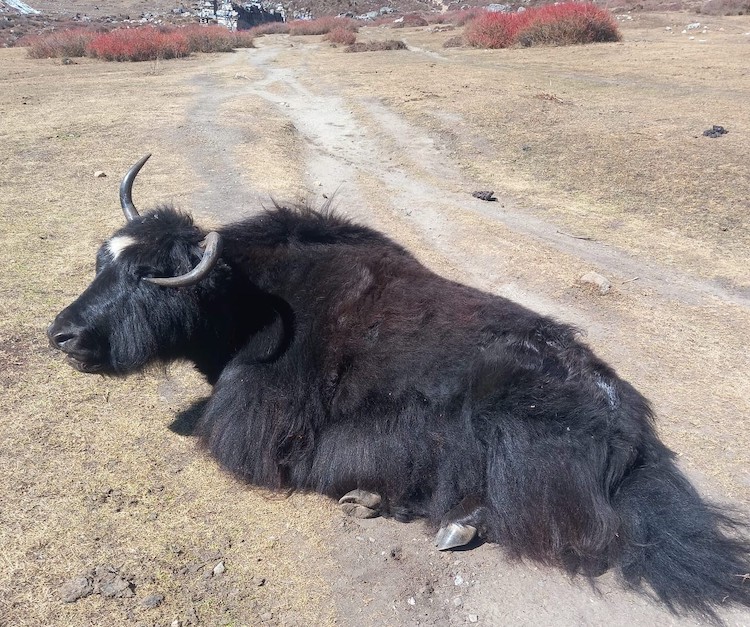
As scaling Dingboche (4,410m) blue sheep herding while navigating rocky regions above gather mount. These high altitude fauna excel at escaping the low pressure. Moreover, taking flight in the event of snow leopards stalking their hiding place in twilight, the yaks persistently roust the agile snow leopards to hunt them down.
Reaching Lobuche (4,910m), woolly hares hopping high above on icy ground at paradoxically maximum speed entertain viewers. Care rare sightings include Tibetan wolves sometimes. In addition, high altitude fauna including yaks dragging loads for migrants perform a crowning act. Thus, snow leopards remain most admired in the shadows.
Near Gorak Shep (5,140m), Himalayan tahrs climbing as expertly could be truly admired from ever closer. These high altitude fauna serve to sustain an overdue die hard wildlife enthusiast. All the while, elusive snow leopards tracking down these infrareds, make the scene mesmerizing. Consequently, yaks hosting rare sightings at the base camp make a happy scene.
At Everest Base Camp (5,364m), ravens feeding among the icy wastes catch visitors. Care high altitude fauna also includes rare sightings of pikas staying in underground tunnels. Equally, yaks resting miraculously in exhaustion require a keen high altitude fauna guide. So, snow leopards excite the visitors more than ever.
Here, it must be remembered that foot patrols in Sagarmatha National Park help observe high altitude fauna including elusive snow leopards heavily. Besides, use of camera traps better tracks elusive snow leopards. Meanwhile, sustainable herdsman herding improves the lot of yaks greatly. Therefore, eco friendly trekking raises care yaks, rare sightings and snow leopards.
Moreover, it's paramount that guides offer tracking expertise to identify elusive snow leopards. Furthermore, observing their pugmarks deliver valuable insights. Similarly, binoculars to focus on distant yaks can lead to a more fruitful high altitude fauna trip.
In fact, photographers find perfect views of high altitude fauna without disturbing them. They emphasis capturing the elusive snow leopards gracefully stalking. Not to mention, group congregations of yaks steady the scene. Therefore, photography represents a cherished record of the high altitude fauna journey.
Now, you can find the best ways to experience high altitude fauna including the appealing high altitude fauna that the Everest Base Camp Trek should incorporate. To make the best out of this journey, find the interesting high altitude fauna special places and species easily appealing in the wonderful Sagarmatha National Park. These topics best blend the alluring presents of elusive snow leopards, yaks, and some rare sightings. For the purpose, it offers you some world-class goings on to optimize
In brief, high altitude fauna on Everest Base Camp Trekking trail drive the atmosphere. Stealth snow leopards thrill to the core. Hardworking yaks excite endlessly. Therefore, the Everest begins with the feeling of awe and awe-inspiring wild feeling.
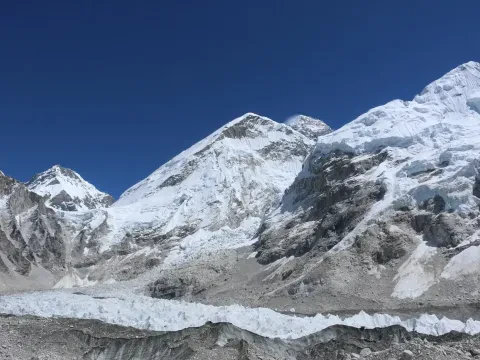
Explore alpine flora, hardy plants such as shrubs, lichens, and meadows above treeline during Everest Base Camp Trek for exceptional Himalayan vegetation.
Below is a table featuring some of the more popular alpine plants and resilient plant species for Everest Base Camp Trek, available for viewing. It displays the common shrubs, lichens and meadows found by the treeline:
| Plant Type | Examples | Habitat Features | Adaptations |
| Shrubs | Dwarf junipers, cushion plants | Rocky slopes near Dingboche | Compact growth withstands winds in alpine flora. |
| Lichens | Colorful patches, symbiotic forms | Barren surfaces at Lobuche | Tolerate extreme cold in hardy plants ecosystems. |
| Meadows Plants | Primulas, saxifrages, edelweiss | Sparse grasses above treeline near Gorak Shep | Brief blooming in summer for resilient alpine flora. |
| Mosses | Moist crevice species | Crevices in high zones | Retain water efficiently amid hardy plants. |
Trekkers witness alpine flora while above treeline on Everest Base Camp Trek above 4,000 m in Sagarmatha National Park. Resilient growths such as dwarf junipers speckle rocky terrain while lichens spread in various hues across stones. Meadows above treeline epitomize extreme accommodation of life.
Reaching Dingboche (4,410 m) reveals cushion plants in clustered coverings. Chilly weather results in resilient alpine flora and hardy plants thriving. Edelweiss plants exhibit sprouting in slightly warmer conditions. Bushes mold comfortably with lichens.
Summit Lobuche (4,910 m) activates resilient mosses on damp crevices. Sparse grasses emerge at times forming meadows above treeline. Saxifrages cling strongly on rocks. Hardy plants demonstrate solutions to survive.
Everest Base Camp (5,364 m) harbors thinnest hardy plants such as cushion types. Coldest climatic conditions dictate mastery of alpine flora adaptation. Lichens support the basic habitat cycle. Hardy plants flourish in insulation.
Sagarmatha National Park preservation efforts ensure minimum impact on alpine flora. Prevention from erosion by hardy plants is a focus area. Tracks are inspected to monitor lichens' health. Sustainable measures ensure meadows above treeline.
Guided groups are told of alpine flora. Identification of hardy plants such as edelweiss occurs during hiking. Close up snapshots reveal textures of lichens. Educational sessions add knowledge about meadows above treeline.
Summer is a short period that triggers fleeting alpine flora blossoming phase. Hardy plants bloom during warmers. Lichens keep shining continuously. Periods optimizing meadows above treeline exploration are chosen.
Photographers visually define alpine flora objects. They define hardy plants boldly according to contrasting snow. Macro lenses emphasize the details of lichens objects. Published photos mainstream meadows above treeline.
Overall, alpine flora is endearing with a fighting spirit. Tough plants excel in harsh conditions. Furthermore, shrubberies, lichens and high meadows are fantastic to see. Therefore, the trek celebrates Himalayan plants for all times.
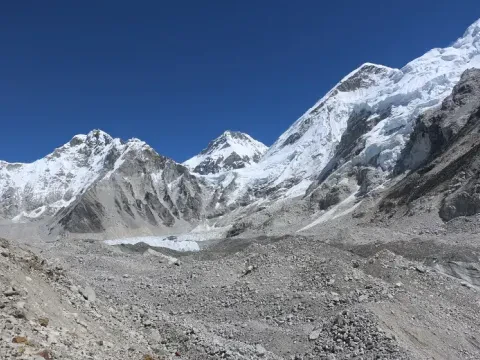
Discover the real trail experiences in the Everest Base Camp Trek with wildlife stories including red panda sightings, snow leopard pugmarks, and trekker conservation insights in Sagarmatha National Park.
To add the attractive real flora and fauna on EBC trail experiences, refer to these trekker highlights during Everest Base Camp Trek:
Meanwhile, trekkers recount real trail experiences in Sagarmatha National Park along the Everest Base Camp Trek. They share wildlife stories about rare encounters. Likewise, conservation insights reveal community-led initiatives. Therefore, trekkers advocate for conservation while sharing memorable trail anecdotes.
Near Phakding (2,610m), hikers talk about encountering red pandas in bamboo clusters in subtropical forests. One trekker noticed the strolling red pandas during morning. Also, real trail experiences mention encountering musk deer quietly foraging. Consequently, diverse wildlife stories highlight the secluded wildlife realms.
At Namche Bazaar (3,440m), hikers recall video-recording Himalayan tahrs atop steep cliffs in snowfields. They met herds amid the daytime foraging. Likewise, conservation insights describe community patrolling to stop poachers. As a result, trip stories combine entertainment with conservation awareness.
As hikers reach Tengboche (3,860m), stories reveal Himalayan monal stalking colorful feathers in rhododendron groves. They describe seeing blood pheasants running flustered nearby. Besides, conservation insights emphasize protecting their habitats.
At Dingboche (4,410m), trekkers announce rare snow leopard pugmarks seen in canyons. One story tells about spotting fresh pugmarks near rocky deposits. Similarly, real trail experiences include blue sheep's prey experience with Trekker comments. Hence, wildlife stories evoke bewilderment.
In Lobuche (4,910m), stories introduce yak herds guiding mountain traders to higher passes. Trekker-speaking yak herds effortlessly maneuver among trail explorers. Furthermore, conservation insights stress installing barriers to thwart overgrazing. Consequently, their excess grazings are limited effectively.
As trekking pioneers approach Gorak Shep (5,140m), stories report pika living in bunks. Wildlife stories on the trails unveil hearing their high-pitched whistles in snow-free slopes. Additionally, conservation insights provide sustainable measures on waste dispose.
During the explorations at Everest Base Camp (5,364m), stories reflect the threats to fragile ecosystems. Wildlife stories include warming temperatures affecting flora and fauna. Besides, conservation insights involve raising awareness of eco-tourism. Therefore, trekkers encourage global organizations towards sustainable management.
Here, experienced guides focus on local knowledge sharing about efforts to reforestation. They also influence thoughts about buffer zones. Moreover, trekkers acquire conservation insights. Thus, wildlife stories motivate the preservation of fragile eco systems.
Authentic blogs and reviews prove their conservation insights. They highlight UNESCO registration improvements at Sagarmatha National Park. Also, wildlife stories commence during the spring to enhance the sightings. Hence, adventure stories motivate travelers for safaris and trekking in Everest Region of Nepal.
In conclusion, real trail experiences of flora and fauna are packed with engaging travel stories. Wildlife encounters span many altitudes. Moreover, conservation insights back up each tale. Thus, travelers value Everest's nature profoundly.
Protecting plants and animals in himalain in the Everest Area through conservation in Sagarmatha National Park including anti-poaching, sustainable tourism and community programs.
Here is a list of the major conservation activities at work in the Everest Region from this table about Sargarmatha National Park: It shows what is being done to conserve flora & fauna for current & future generations:
| Initiative Type | Key Projects | Targeted Elements | Future Outcomes |
| Anti-Poaching | Patrols, camera traps | Snow leopards, red pandas | Reduced threats to endangered fauna. |
| Habitat Restoration | Reforestation, erosion control | Rhododendrons, alpine meadows | Sustained flora diversity at high elevations. |
| Community Programs | Buffer zones, education | Sherpa traditions, livelihoods | Empowered locals for ongoing safeguarding |
| Tourism Management | Permits, waste initiatives | Eco-guidelines, visitor limits | Balanced impact for flora and fauna future. |
Here, the Department of National Parks and Wildlife Conservation (which controls Sagarmatha National Park) is serious about protecting the plants and animals in the Everest Area. If it didn't do a good job, many rare and vulnerable plants and animals wouldn't hold on any longer.
Likewise, protection of Nepal's plants and animals is also a fine protection for others, both in the Himalayans and the world, because it is sustainable. Here, populations are surviving despite the effects of very bad elecrical storms, climate change and many other phenomena. Plants and animals survive here for coming generations.
Moreover, the Department of National Parks and Wildlife Conservation is responsible for anti-poaching patrols. They keep a close watch on snow leopards and Red Pandas, among others. Protection of plants and animals also accounts for habitat conservation and restoration. So the efforts to protect the plants and animals are both successful and sustainable.
Similarly, the local Sherpa folks are valuable for applying community options to curbing poaching. Furthermore, very useful revenue from park and trekking permits is ploughed back into poverty alleviation projects. Only then can Flora and fauna endure for future.
Furthermore, the protection of plants and animals will be strengthened by UNESCO World Heritage Membership and improved co-operation internationally. This will help with research into the alpine ecosystem and means to reforest it. As a result, the spectacular rhododendronic species and junipers will endure.
In fact, the way the Everest Region reduces the impact of tourists with waste disposal efforts would have been impossible without membership of UNESCO World Heritage. Trekking guidelines and use of Eco biogas plants led directly to less pollution. In effect, stunning native species benefit.
Actually, monitoring the impact of climate change on plants and animals is another form of protection. Camera traps record the movements of animals trying to find suitable green and snowy corridors. There is no doubt that scientific reports and policies about the protecting of flora and fauna are based on evidence. So the flora and fauna will be protected whatever Christmas throw at them.
In fact, the fees paid in permits for Sagarmatha National Park is about 3000 Nepali Rupees, are actually used in protection of plants and animals. Funding is given for local people to undertake projects. In addition, eco tourism reduces foot fall per year. So, in future, there will be monetary resources to help these natural organisms.
With various groups and individuals share in protecting flora and fauna, the ecosystems of Nepal can set effective templates. Human interests are placed side by side with the interest of nature and the effectiveness of any changes will be high.
Basically, the preservation of nature in Himalayas characterizes the legacy of Everest. The undertaken conservation activities custodial irreplaceable gems to protect Sagarmatha National Park. Above all, the prospective heirs encourage ongoing endeavors. Hence the realm exists as an infinite Himalayan shining light.
1. What is the Flora and Fauna on Everest Base Camp Trek package about?
The Flora and Fauna on Everest Base Camp Trek are about seeing all the plants and animals that live on Everest Base Camp Trek. You will walk through forests with rhododendrons. See mammals like red pandas and snow leopards. The Flora and Fauna on Everest Base Camp Trek will also teach you about taking care of these animals and their homes.
2. Which plants can I see in lower altitude forests on this trek?
In the parts of the Everest Base Camp Trek, you can see many beautiful plants like rhododendrons, pines and firs. These plants are especially pretty in the spring. The lower altitude forests are the start of your Flora and Fauna on Everest Base Camp Trek. They are very colorful.
3. Are red pandas visible during the Everest Base Camp Trek?
Yes, you can see red pandas on the Everest Base Camp Trek near Ghat and Thadokhosi. They live in the parts of the trek with other animals like musk deer and Himalayan black bears. If you get up early or walk quietly you might see a panda. This is what you will learn in the part of the Flora and Fauna on Everest Base Camp Trek about mammals.
4. What birds might I spot along the Everest Base Camp Trail?
On the Everest Base Camp Trail, you can see birds like the Himalayan Monal, which is Nepal’s national bird and other birds like Blood Pheasants and Choughs. These birds are very colorful and fun to watch. The Flora and Fauna on Everest Base Camp Trek are great for people who like birds.
5. Which mammals live in the mid-altitude zones of the trek?
In the parts of the Everest Base Camp Trek, you can see animals like Himalayan Tahrs, martens and pikas. These animals live in areas where the forests meet the alpine zones. Seeing these animals is a part of the Flora and Fauna on Everest Base Camp Trek.
6. Can I see snow leopards near Everest Base Camp?
Yes, it is possible to see snow leopards near Everest Base Camp. They are very hard to find. If you are patient and have a guide you might see a snow leopard. This is what makes the Flora and Fauna on Everest Base Camp Trek so exciting.
7. What alpine plants grow above the tree line on this trek?
Above the tree line on the Everest Base Camp Trek, you can see plants like shrubs, lichens and mosses. These plants can survive in the conditions above the tree line. They are a part of the Flora and Fauna on Everest Base Camp Trek.
8. Are there real trekkers’ wildlife stories included in the package?
Yes, the Flora and Fauna on Everest Base Camp Trek includes stories from trekkers about the animals they saw. You will hear about their experiences with rhododendrons, red pandas and other animals. This makes the Flora and Fauna on Everest Base Camp Trek more interesting and fun.
9. How does this package support conservation in the Everest region?
The Flora and Fauna on Everest Base Camp Trek helps take care of the plants and animals in the Everest area. It teaches you about tourism and how to preserve the biodiversity of the region. This is a part of the Flora and Fauna on Everest Base Camp Trek.
10. What is the best season for flora and fauna on Everest Base Camp Trek?
The best time to see plants and animals on the Everest Base Camp Trek is in the spring or autumn. In the spring the rhododendrons are. The animals are active. In the autumn the views are clear. Both seasons are great for the Flora and Fauna on Everest Base Camp Trek.
11. Do I need special permits for wildlife viewing on this trek?
No, you do not need special permits to see animals on the Everest Base Camp Trek. The standard Sagarmatha National Park permits are enough. Your guide will make sure you see the animals without disturbing them. This is all part of the Flora and Fauna on Everest Base Camp Trek.
12. Is the trek suitable for beginner nature enthusiasts?
Yes, the Flora and Fauna on Everest Base Camp Trek is great for people who're new to nature and animals. The trek starts in forests and goes up gradually. If you are in shape, you can enjoy the Flora and Fauna on Everest Base Camp Trek.
13. What equipment helps with wildlife photography on the trek?
To take pictures of animals on the Everest Base Camp Trek you should bring binoculars zoom lenses and clothes that help you blend in. These will help you see and photograph animals like pandas and snow leopards. This is a part of the Flora and Fauna on Everest Base Camp Trek.
14. How rare are snow leopard sightings near Base Camp?
Snow leopards are very hard to find near Everest Base Camp. If you have a good guide and are patient you might see one. The Flora and Fauna on Everest Base Camp Trek will teach you about these animals.
15. Are yaks part of the high-altitude fauna experience?
Yes, yaks are common in the parts of the Everest Base Camp Trek. They carry loads. Eat grass near Everest Base Camp. Yaks are a part of the Flora and Fauna on Everest Base Camp Trek.
16. What conservation insights will I learn on this package?
On the Flora and Fauna on Everest Base Camp Trek you will learn about taking care of the animals and plants in the Everest area. You will hear stories from trekkers. Learn about sustainable practices. This is a part of the Flora and Fauna on Everest Base Camp Trek.
17. Can children join the Flora and Fauna on Everest Base Camp Trek?
Yes, older kids can join the Flora and Fauna on Everest Base Camp Trek if they are in shape. They can see the animals and plants in the parts of the trek. The Flora and Fauna on Everest Base Camp Trek are a way for families to learn about nature.
18. How does altitude affect flora and fauna visibility?
As you go higher onto the Everest Base Camp Trek, the plants and animal’s change. You will see plants and animals at different heights. This is what makes the Flora and Fauna on Everest Base Camp Trek so interesting.
19. What makes this package unique compared to standard EBC treks?
The Flora and Fauna on Everest Base Camp Trek are special because it focuses on the plants and animals of the Everest area. You will have a guide who knows a lot about nature and can teach you about the animals and plants. This makes the Flora and Fauna on Everest Base Camp Trek an experience.
20. How can I prepare for the best flora and fauna sightings?
To see the animals and plants on the Everest Base Camp Trek you should learn about the trek go during the right season walk quietly and have a good guide. This will help you have a time, on the Flora and Fauna on Everest Base Camp Trek.
Our travel experts are ready to assist you with any questions.
Send us a message.Have a question before you book? Send your enquiry below and our travel experts will get back with the required information.