
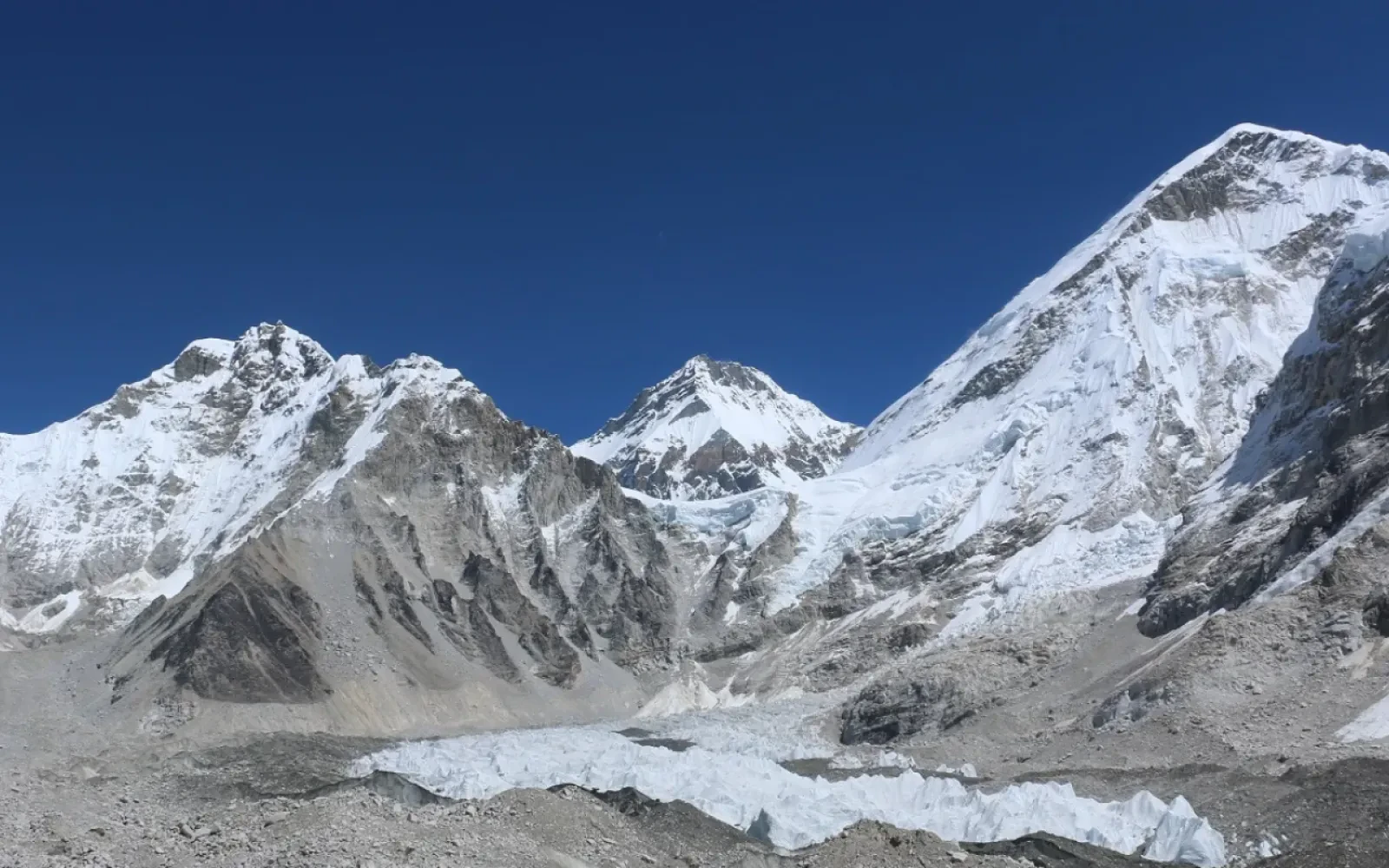
Annapurna Base Camp Trek: A Journey into the Heart of the Himalayas
The Annapurna Base Camp (ABC) Trek is an incredible adventure that takes trekkers to the heart of the Annapurna Massif, at an elevation of 4,130 meters.
ABC trek offers breathtaking views of majestic peaks such as Annapurna I (8,091m), Machhapuchhre (6,993m), and Hiunchuli (6,441m).
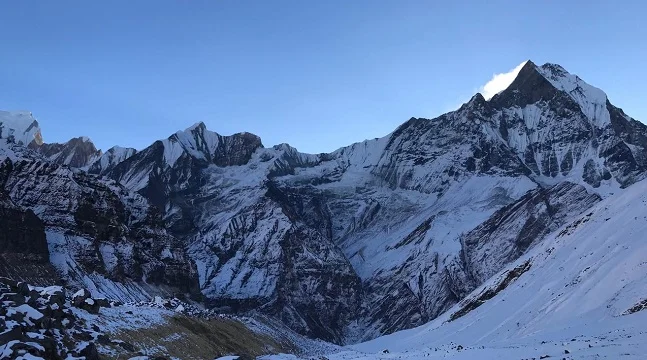
ABC Trekking starts from Nayapul or Ghandruk at 1,940 meters and winds its way through the picturesque villages of Chhomrong at 2,170 meters and Bamboo at 2,310 meters, steeply uphill to Deurali at 3,230 meters, to finally reach the Annapurna Base Camp(4130m).
The ABC Trekking trail also offers breathtaking scenery, varying from lush terraced fields and dense rhododendron forests to alpine meadows and glacial moraines in the largest protected area of the world, Annapurna Conservation Area.
trip:annapurna-base-camp-trek-from-pokhara]
Ghorepani Poon Hill Trek Route
Ghorepani Poon Hill Trek: A Complete Trekkers' Guide
How long does it take to trek Poon Hill?
How much does it cost to trek to Poon Hill?
How difficult is Annapurna Base Camp Trek?
Where is the best view of Annapurna range?
Annapurna Base Camp Trek vs Everest Base Camp Trek
Annapurna Base Camp Trek in Winter
Annapurna Base Camp Trek in Spring
Annapurna Base Camp Trek in April
50 Facts about Annapurna Base Camp Trek
Annapurna Base Camp Trek in May
Annapurna Base Camp Trek in November
Annapurna Base Camp Trek in October
Annapurna Base Camp Trek in April from Kathmandu
Annapurna Base Camp Trek in September
Annapurna Base Camp Trek in Autumn
Manaslu Circuit Trek vs Annapurna Circuit Trek
Best Time for Annapurna Circuit Trek
Key highlights of the Annapurna Base Camp trekking are the panoramic sunrise view from Poon Hill at 3,210m ( if you are going via Poon Hill) and Annapurna Base Camp with entire Annapurna mountain range, the culturally vibrant village of Chhomrong, and soothing natural hot springs at Jhinu Danda, 1,780m, perfect for unwinding after long trekking days.
Before arriving at ABC, trekkers stop at Machhapuchhre Base Camp (3,700m), where they can enjoy spectacular views of Machhapuchhre, often referred to as the "Fishtail Mountain."
The ABC trek Route features significant altitude changes, with daily ascents and descents ranging from 500 to 1,200 meters, making acclimatization crucial to avoid altitude sickness with slow pacing. Actually, no extra acclimatization is required for Annapurna trekking.
Accommodations in Annapurna Base Camp Trek range from teahouses offering basic but comfortable rooms, hot showers for a fee, and local food such as dal bhat, noodles, and momos, which are available for vegetarians and non-vegetarians. Even the glutton foods are available on the ABC Trekking Trail.
The ABC trek is graded as moderately difficult because of steep ascents, rocky trails, and long periods of walking like 5-7 hours a day covering 8-10 kilometers; it demands good physical fitness, though prior trekking experience is not necessary.
Annapurna Base Camp trek is easily done even by beginners with some preparation, including cardio and strength training; guided treks offer safety and support.
Annapurna Base Camp Trek transportation options include a drive from Pokhara to Nayapul to Jhino Danda with jeep and public bus and flights to Pokhara from Kathmandu ensure ease of access.
The Annapurna Base Camp Trekking Route lies in the Annapurna Conservation Area, which boasts a diversified flora of rhododendrons and orchids and a fauna of langurs, Himalayan thar, and radiant pheasants.
The Annapurna Base Camp Trek is a life-changing trekking experience that involves great landscapes, cultural discovery, and excitement in the Annapurna Himalayas, thus making the trek accessible and memorable to all kinds of trekkers from beginners to experienced trekkers.
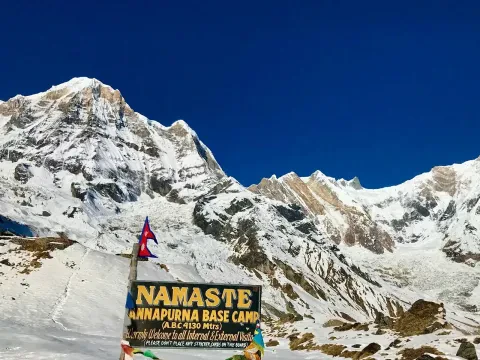
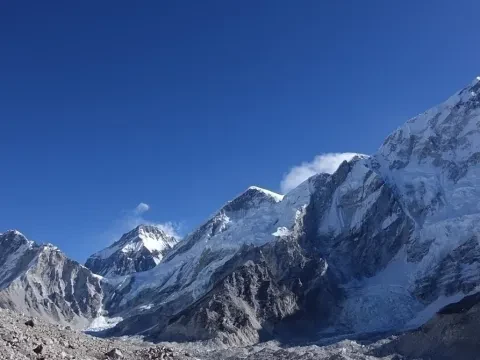
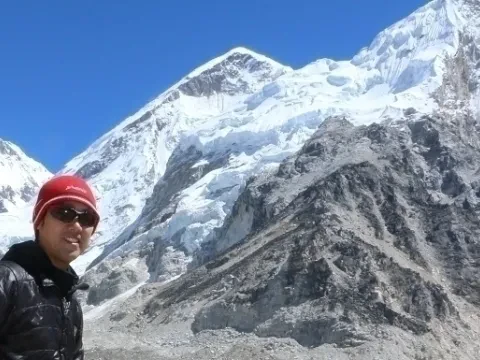
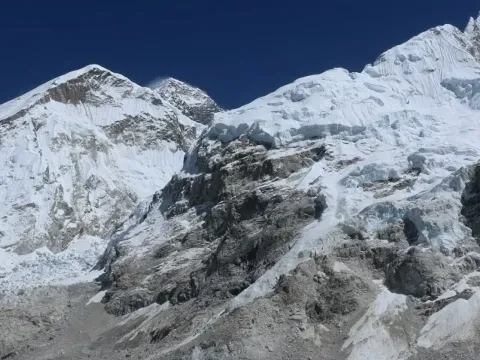
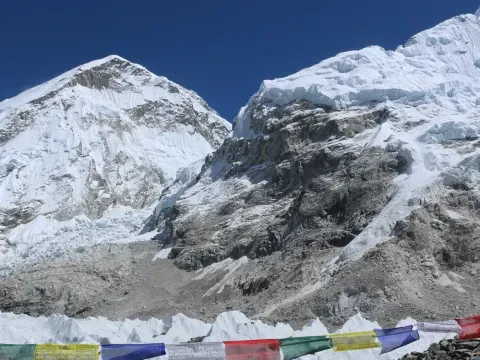
The EBC TREK is deep in the Himalayas, offering outstanding views of the world's highest peaks: Everest at 8,848 m, Lhotse 8,516 m, Nuptse 7,861 m, and Ama Dablam 6,812 m. Everest Base Camp trek leads as one of the famous routes in the world.
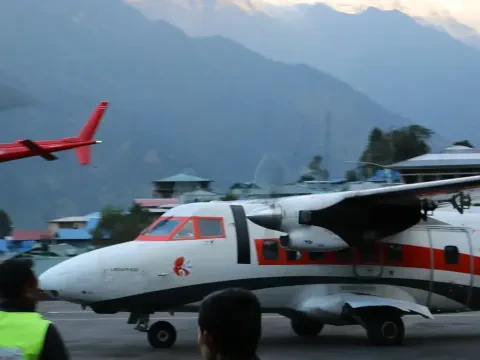
The Everest Hiking begins with an exciting flight to Lukla (2,860m) either directly from Kathmandu or from Ramechhap and then descends to Phakding (2,610m). In Phakding, trekkers will get a chance to enjoy the warm hospitality of the Sherpa people in teahouses serving simple yet satisfying meals like dal bhat, momos, and noodle soup, while offering accommodation from dormitory-style to private rooms with basic amenities.
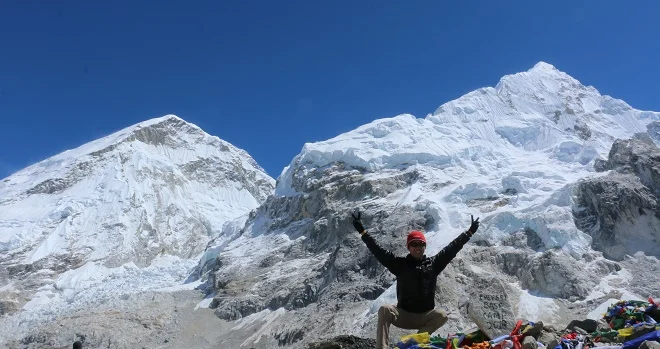
From there, the EBC hike will take you to Namche Bazaar at 3,440 meters, a bustling Sherpa town and gateway to Everest, from where acclimatization is a must, due to gaining height to avoid altitude sickness. There are also opportunities to visit nearby viewpoints such as Syangboche (3,780m) for stunning panoramas of Everest and its neighboring peaks.
The Everest Base Camp Trek Route then continues to Tengboche at 3,860 meters, a village known for Tengboche Monastery, which offers views of spiritual Buddhist ceremonies against the stunning backdrops of Ama Dablam and Everest. From there, the Ebc trekking trails goes to Dingboche at 4,410 meters and Lobuche at 4,940 meters, where the landscape becomes increasingly rugged and sparse.
Everest Base Camp Trek 14 Days Itinerary
Laundry and Hot Shower in Everest Base Camp Trek
Toilet Facilities in Everest Base Camp Trek
10 Best Tips for Everest Base Camp Trek
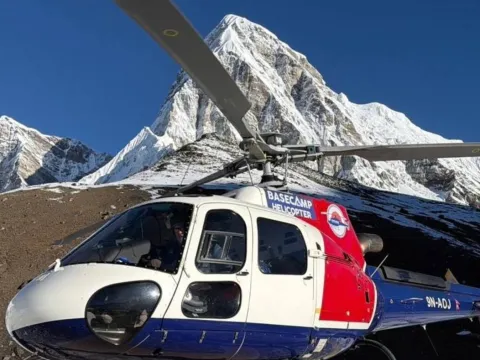
Everest Base Camp Helicopter Tour with Landing Cost
Everest Base Camp Short Trek Cost
Everest Base Camp Trek Itinerary
30 Everest Base Camp Trek FAQs Replied
Challenges on Everest Base Camp Trek
Top 20 Things to do in Everest Base Camp Trek
Trip to Everest Base Camp Trek: All You Require to Know
How hard is the trek to Everest Base Camp?
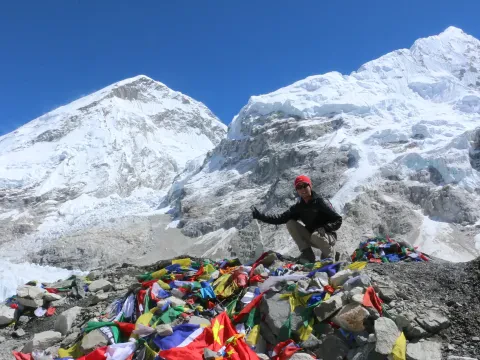
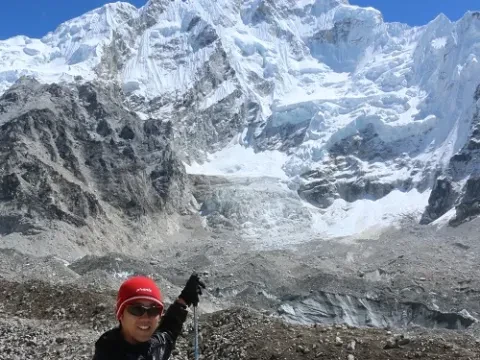
It was on the last settlement before the Everest Base Camp Hiking route, the trekkers reach the place called Gorakshep (5,164m), and from there, they have the tiring hike to Kala Patthar at 5,545m for excellent sunrise views of Everest; finally, to the very Everest base camp at 5,364m, it stands surrounded by glaciers and seracs.
The trekking to EBC encompasses everything from the dense forests of Lukla to the barren alpine landscapes of Gorakshep, with the possibility of spotting flora and fauna like rhododendrons, blue sheep, and Himalayan monals within Sagarmatha National Park.
Rated as moderately difficult, the EBC Trek presents challenges due to high altitude above 5000m, long walking days (6-8 hours), and cold temperatures. While prior trekking experience and fitness are beneficial, beginners can also successfully complete the trek with adequate preparation, slow pacing and right acclimatization ( at least 2 days- one at Namche and the other at Dingboche).
Connectivity along the EBC trekking trail features Wi-Fi and mobile networks in the main villages, while transportation usually consists of flights to and from Lukla.
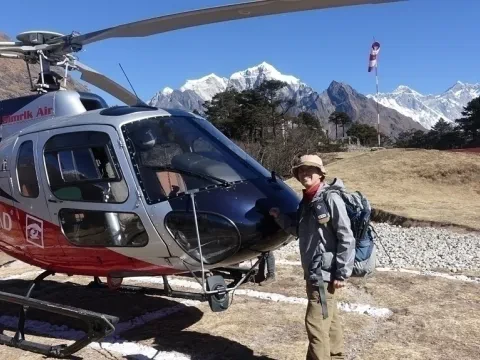
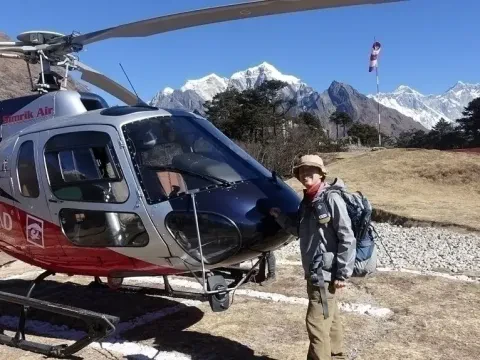
Some trekkers prefer taking a jeep ride to Phaplu (2,413m) or Salleri and Thamdanda from Kathmandu to begin their EBC trek if they want to avoid unpredictable Lukla flight and costly helicopter flights for Everest region.
Proper preparation, acclimatization, and respect for the environment and local culture will ensure that the Everest Base Camp Trek is an unforgettable adventure for trekkers of all levels of experience.
Annapurna Base Camp (ABC) Trek Highlights
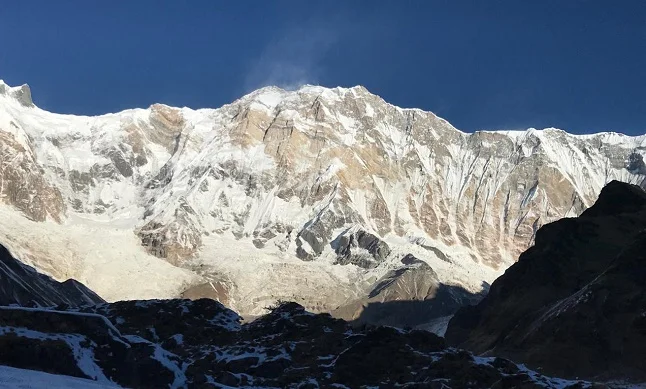
Annapurna Sanctuary: This is a trek to the Annapurna Base Camp at 4,130 m (13,550 ft), which happens to be a natural amphitheater surrounded by some of the most beautiful peaks in the Himalayas, like Annapurna I (8,091 m) and Machapuchare (6,993 m).
Machapuchare Views: Enjoy stunning views of the sacred, fish-tail-shaped Machapuchare, which is never climbed to retain its sanctity.
Diverse Landscapes: Enter into lush rhododendron forests, terraced farmlands, and high-altitude meadows. Local Culture: Take a walk through the traditional Gurung and Magar villages such as Ghandruk and Chhomrong, which give insight into the unique lifestyles of the Himalayas in Annapurna Conservation Area.
Hot Springs: Soak yourself in the natural hot springs located at the bank of Modi River at Jhinu Danda for the perfect unwind after a day of trekking.
Duration Accessible: Compared to the Everest Base Camp trek, this trek has a shorter duration, hence ideal for trekkers with limited time; the duration is 7-12 days.
The Annapurna Base Camp trek is filled with lush landscapes, vibrant villages, and moderate altitudes, making it perfect for trekkers looking to have a shorter yet culturally enriched adventure.
On the other hand, the Everest Base Camp trek is more demanding because it reaches greater heights with iconic views of entire Everest mountain ranges.
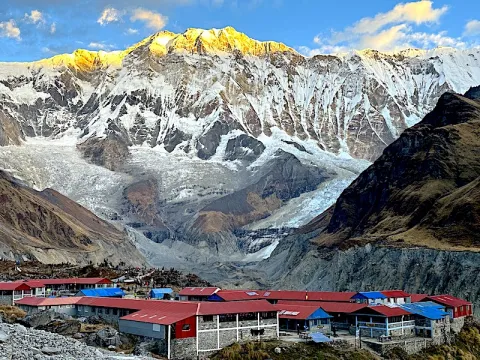
Annapurna Base Camp is considered a moderately difficult trek, whereas Everest Base Camp is more challenging with a higher altitude gain, taking a longer time and hence requiring more acclimatization.
The ABC Trek starts at about 1,070 meters in Nayapul and then to Jhino Danda or Poon Hill, then gradually goes up to 4,130 meters at Annapurna Base Camp.
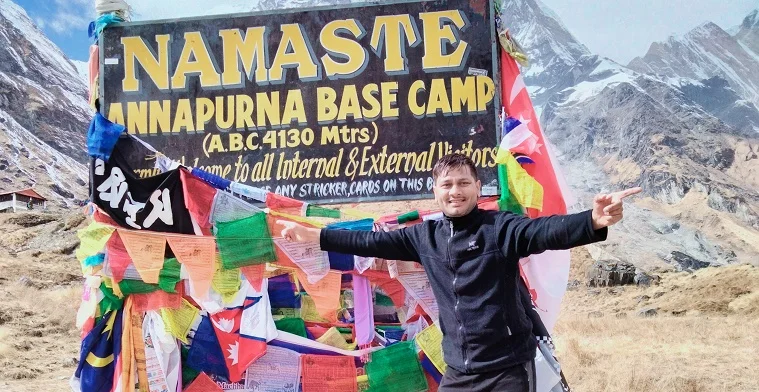
On the other hand, the EBC Trek starts in Lukla itself at 2,860 meters and goes up to 5,364 meters at Everest Base Camp. Usually, Kala Patthar, at 5,545 meters, forms part of a side trek in this area for fabulous views.
Daily hiking distances on ABC Trek are around 6 to 10 kilometers requiring about 4 to 7 hours of walking in a day. On an EBC Trek, usually, longer stretches of the day would be about 10 to 15 kilometers continuously for 5 to 8 hours, depending upon the itinerary and terrain factors.
The ABC route takes around 7 to 10 days, thus the acclimatization process is more natural since the elevation is lower. The EBC Trek takes approximately 12 to 16 days, with at least two days of acclimatization at Namche Bazaar (3,440 meters) and Dingboche (4,410 meters).
The ABC Trek requires moderate stamina, and its elevation makes it suitable for fit beginners. On the other hand, the higher altitude of the EBC Trek requires greater physical endurance and prior trekking experience or training to mitigate risks such as Acute Mountain Sickness (AMS).
Thus, though ABC trek can be a possible trip for novices, properly prepared, and an EBC one involves greater physical challenges because it is not only higher and longer, it calls for some relevant past experience with trekking activities.
The ABC Trek starts with altitudes much lower than others do, starting at around 1,070 meters or 3,510 feet in either Nayapul or Ghandruk or Jhino Danda, continuously stretching upward to reach 4,130 meters or 13,550 feet at at the Annapurna Base Camp. This allows much more time for gradual ascension, unlike the Everest Base Camp Trek, whose paths begin higher at 2,860 meters or 9,383 feet in Lukla, reaching a staggering 5,364 meters or 17,598 feet at its base camp.
The ABC trek generally involves daily ascents that are not very extreme, mostly averaging 400-600 meters per day (1,300-2,000 feet). On the other hand, EBC has a height gain of around 500-800 meters in one day (1,600-2,600 feet) on some days, such as going to Namche Bazaar at 3,440 meters (11,290 feet) and to Gorakshep and EBC.
Acclimatization days on the EBC trek are usually taken at Namche Bazaar (3,440 meters) and Dingboche (4,410 meters). Acclimatization on the ABC trek is less formal and it is, actually, not required at all because of its overall lower altitude.
Kala Patthar, at 5,545 meters (18,192 feet), is the highest point on the EBC trek and far surpasses that of ABC, thus increasing the risk of Acute Mountain Sickness, which is an issue above 3,000 meters, especially on the steeper, higher EBC route.
Even with its higher altitude and increased AMS risk, the EBC trek's gradual itinerary and acclimatization days help reduce health issues. Meanwhile, the ABC trek, though less demanding, still offers breathtaking alpine landscapes.
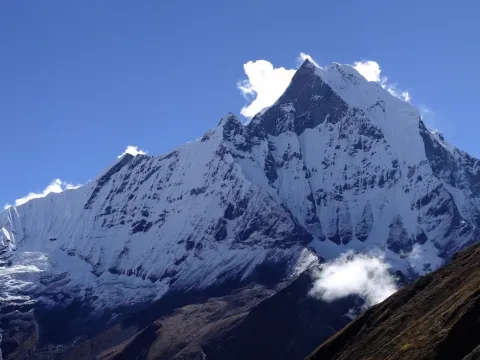
The EBC and ABC trails are two of the most famous routes in Nepal for trekking, each with its unique challenges and experiences awaiting the trekkers.
The EBC trail is steeper and more challenging, especially the section from Namche Bazaar to Tengboche at 3,440-3,860 m and the ascent from Lobuche to Gorakshep at 4,910-5,164 m.
In comparison, the ABC trail has a more gradual ascent, but it still features steep climbs, such as the stretch from Chhomrong (2,170 m) to Sinuwa (2,340 m), which includes many steep stone steps and descents that can be hard on the knees for the beginners.
The EBC trek includes high-altitude challenges like crossing the moraine of the Khumbu Glacier, especially near Gorakshep, where the thin air makes each trekkers hard to breath. Therefore, trekkers doing EBC Trek should be careful about it.
The difference between the Annapurna Base Camp and Everest Base Camp treks becomes somewhat more pronounced when it comes to transportation and logistics.
For ABC, the starting point is usually Pokhara. To get to Pokhara from Kathmandu, one can take either a 25-minute domestic flight or a 6-8-hour drive by a tourist bus. From Pokhara onward, jeeps or buses take trekkers to the trailheads like Nayapul or Jhinu Danda, depending on the itinerary. These starting points are reached via a 2- to 4-hour drive north of Pokhara on rugged and sometimes dusty roads. Of course, jeep rides confer flexibility, but sometimes be affected by landslides or poor road conditions throughout the monsoon season.
In contrast, EBC requires a flight from Kathmandu to Lukla-35 minutes but most usually delayed or canceled due to weather conditions. Lukla is the only access to the trail, and as such, trekkers are at the mercy of this flight. During peak seasons, delays at Lukla create logistical headaches. Other options include helicopter flights or driving by jeep for 10-12 hours to Phaplu/ Salleri or Thamdanda, with an additional 2-3 days of trekking to Lukla.
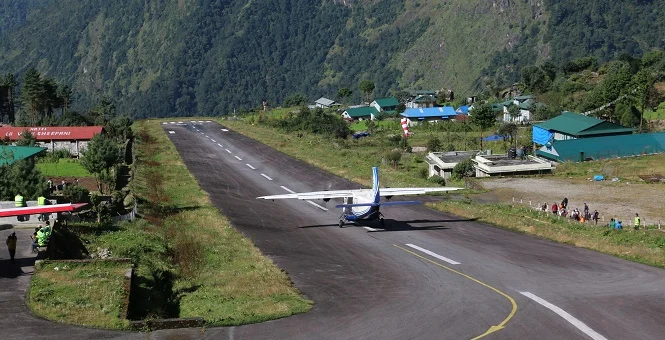
ABC relies on road transport, and that gives more flexibility compared to EBC, which relies on the airport at Lukla. At the same time, while the road trips for ABC while driving along the Prithvi Highway from Kathmandu to Pokhara can be quite rough, the flights for EBC, though efficient, are more susceptible to disruptions.
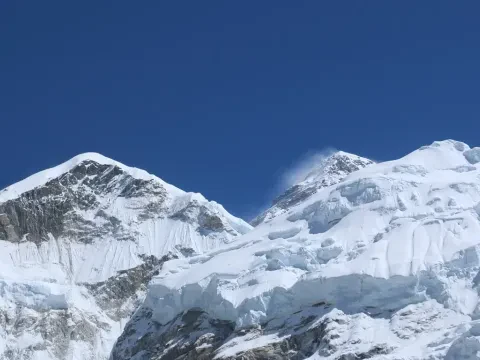
The two permits required to begin the Everest Base Camp Trek are the Sagarmatha National Park Entry Permit and the Khumbu Pasang Lhamu Rural Municipality Entry Permit. Foreigners will have to pay NPR 3,000 for a Sagarmatha permit, whereas the permit at the municipality costs NPR 3,000. The permits are available at both Kathmandu and Monjo.
For the Annapurna Base Camp Trek, trekkers need the Annapurna Conservation Area Permit (ACAP) and the Trekkers' Information Management System (TIMS) card. The ACAP is also NPR 3,000 for foreigners, and the TIMS card costs NPR 2,000 for independent trekkers or NPR 1,000 if arranged through an agency. These permits are available in Kathmandu or Pokhara.
Both permits can be obtained in Kathmandu or Pokhara from the Nepal Tourism Board offices, though they are also issued at the various entry points en route. However, there might be minor delays and/or added fees. Travelers are advised to bring along their passports, passport photos, and cash to pay for it.
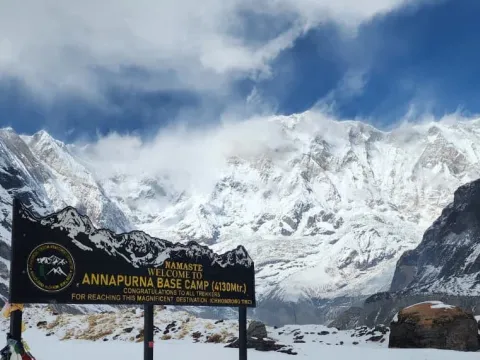
The ABC was one of the first treks in Nepal to open up to international trekkers after the Annapurna region opened in the 1950s. It's a rich combination of natural beauty and culture, stopping at iconic Gurung and Magar villages like Ghandruk and Chhomrong.
The EBC is closely connected with the history of mountaineering and follows the footsteps of great legends such as Sir Edmund Hillary and Tenzing Norgay, who conquered the summit in 1953. It is a dream journey for people inspired by the world's tallest peak.
ABC Trek is famous for its spectacular landscape with an amphitheater-like shape, surrounded by towering peaks such as Annapurna I, Machhapuchhre, and Hiunchuli. It is also noted for its rich biodiversity in the Annapurna Conservation Area.
EBC generally proffers dramatic landscapes, iconic Khumbu Glacier,
and an extremely rich Sherpa culture depicted in villages like Namche Bazaar, Tengboche, and Dingboche.
Both treks are very popular, though EBC is a favorite of tourists who want to experience the worldwide fame of Everest, while ABC is preferred by trekkers seeking varied cultural and natural experiences, including brilliant mountain scenery within a shorter period.
The ABC and EBC treks have different preparations owing to the fact that they come with different challenges and altitudes.
In the case of the ABC trek, trekkers should be in good physical shape, but it usually involves a less demanding climb and shorter ascent compared to the EBC trek.
In contrast, the EBC trek requires more intense physical training because of the higher altitude and longer days of trekking.
Both treks require knowledge of how to prevent altitude sickness, but the risk is higher on the EBC trek due to the higher altitude of 5,364 meters.
In packing for ABC, general trekking equipment is enough, but EBC needs extra gear for cold weather, as the temperature significantly drops at Everest Base Camp and Kalapattar.
While both treks have teahouse accommodations, EBC is more remote, and the facilities can be very basic, which means trekkers will need to bring extra supplies like light foodstuffs.
Many trekkers who are planning to go on an EBC trek start training with inclines or go on altitude hikes to get ready for the challenging ascents and changes in elevation.
Speaking of mental preparation, the EBC trek requires more resilience because of its longer duration, colder conditions, and higher altitude.
To put it in a nutshell, the Everest Base Camp Trek requires more intense preparation with respect to physical fitness, gear, and mental preparedness, especially in response to higher altitude.
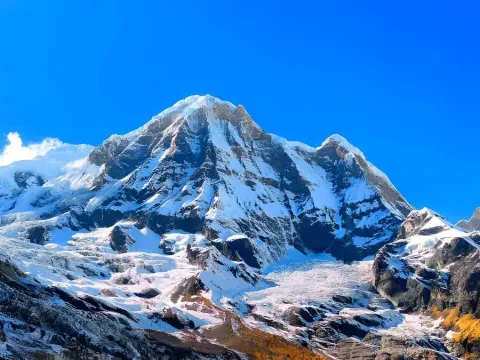
Annapurna Base Camp Trek encompasses the diversity of landscapes: from the lush forest to breathtaking mountain scenery; likewise, it shows diverse flora and fauna that amazes trekkers during their trek. A lot of tourists consider ABC peaceful and prefer this camp compared to the noisy EBC.
On the other hand, EBC trekkers have mostly spoken about the great view of Mount Everest and the fulfillment that one gets when he reaches the highest peak in the world. The trail tends to be more crowded and commercialized, which can affect the overall trekking experience for some.
At the end of the ABC trek, many adventurers feel a deep sense of satisfaction, as the trail is relatively easier compared to other trails, even though it has its own challenges. For many, the journey is less about extreme physical exertion and more about appreciating the beauty and cultural richness of the Annapurna region in grand Annapurna Conservation Area.
EBC trekkers often refer to the enormous mental and physical strength required for reaching the base camp, while the feeling of accomplishment is overwhelming after one has faced altitude sickness and tough conditions. Both treks are rewarding in their own ways, but they differ greatly in terms of difficulty, crowd, and landscapes that trekkers get to see.
Although similar in many ways, there are some striking differences in food options and accommodations between the Annapurna Base Camp Trek and the Everest Base Camp Trek. Both trails have staple meals like dal bhat, momo, and thukpa. These are filling and happen to be pretty standard dishes in both regions for the purpose of energizing trekkers. However, at the higher altitudes of the Everest Base Camp Trek, it often has a more limited selection, with fewer local specialties beyond the basics. While in contrast, Annapurna Base Camp Trek will normally have a wide range of food,
including some international dishes like pasta, pizza, and fried rice, due to its greater volume of tourists.
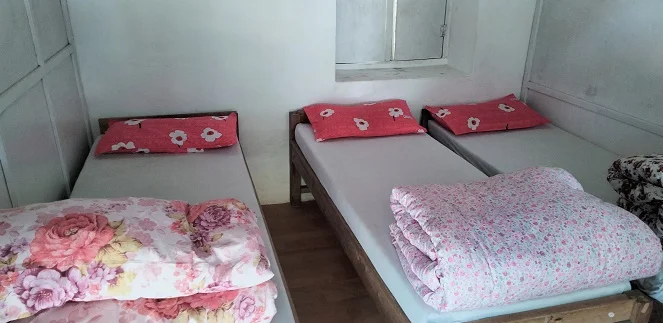
In terms of costs, the prices of food on the Everest Base Camp Trek are higher, especially as you ascend. For example, a meal in Namche Bazaar might cost around $5-$8, but as you go further up, it could increase to $10 or more. On the Annapurna side, meals in Pokhara start at a lower price, around $3-$6, but do rise slightly with altitude.
Accommodation prices are somewhat similar on both treks, with basic guesthouses on both routes. However, the Everest region has fewer options at higher elevations for food and lodging that costs little costly in Everest region accommodation. One night accommodation in Everest Base Camp Trekking Trails costs between USD 6-15.
On the whole, the Everest Base Camp Trek is more costly and less varied than the Annapurna Base Camp, especially at higher elevations such as Dingboche or Gorak Shep.
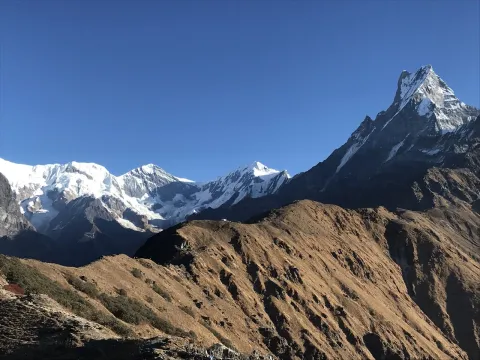
Comparing Annapurna Base Camp (ABC) with Everest Base Camp (EBC) in terms of equipment requirements, both treks will require similar gear; however, they differ in terms of altitude and conditions. For both treks, important gear includes a good, strong backpack, waterproof jacket, trekking shoes, sleeping bag, and layers of warm clothes. However, the
EBC Trek requires more detailed gear owing to its higher altitude, cold temperature, and longer time. Trekkers on the EBC route should have an oxygen mask, insulated gloves, and a more robust sleeping bag.
Trekkers can buy all the gear along the trails, but it is widely available in Pokhara for the ABC trek and Lukla or Kathmandu for the EBC trek. Actually, there are shops selling jackets, boots, and gloves along these parts, but the quality and prices vary. Generally, gear bought along the trail tends to be more expensive than what you would find in Kathmandu or Pokhara because of limited availability.
To get the best prices and quality, it is better to purchase trekking gear in Kathmandu or Pokhara before embarking on the trek. Both Kathmandu and Pokhara have various shops that deal in trekking gear, such as The North Face, Sherpa Adventure Gear, and Mountain Hardwear, offering a wide selection of durable and reliable equipment.
The most important things to do are test your gear beforehand, wear breathable fabrics, and break in your boots to avoid blisters. If you do not want to carry everything, you might consider renting things like sleeping bags from Kathmandu for EBC Trek or from Pokhara for ABC Trek .
The Annapurna Base Camp (ABC) and Everest Base Camp (EBC) treks are among the most sought-after trekking routes in Nepal, each providing distinct experiences and challenges.
The Annapurna Base Camp trek reaches the height of 4,130 meters (13,550 feet). The death rate for trekkers along this route is relatively low, usually less than 1%. Most deaths are related to complications from acute mountain sickness (AMS), which can be prevented with proper preparation and acclimatization.
The success rate of ABC Trek is 99% every year. Very few trekkers return back from either Deurali (3200m) and or from Machhapuchhre Base Camp (MBC) without reaching ABC (4130m) with altitude sickness issue. Otherwise, there is no such failure rate of ABC Trek.
The Everest Base Camp trek rises to 5,364 meters (17,598 feet). Estimates put the success rate for trekkers reaching the base camp at over 95%. However, about 70% of trekkers reach EBC, while only around 50% reach the summit of Kala Patthar at 5,645 meters (18,520 feet). About 30% of trekkers return to Lukla by helicopter, avoiding the trek down.
Key factors contributing to success rates for both treks are altitude sickness, poor acclimatization, physical fitness, and weather conditions. In the case of the ABC trek, AMS is a huge factor, even at much lower altitudes. In the case of the EBC trek, the higher altitude increases the risk of AMS, and therefore proper acclimatization becomes necessary.
Tips for a Successful Trek :
Proper Acclimatization: Go up the altitude gradually to give time to your body to adjust.
Physical Training: Do regular aerobic and muscular exercises before going on a trek.
Keep Your Body Hydrated and Fed: Drink plenty of water and eat nutritious food to keep your energy levels up.
Pay Attention to Health: Watch for signs and symptoms of AMS and visit the hospital if necessary.
Season: The best time to do this trek is during the recommended seasons: from March to May and September to December.
Read Our Blog Post: 30 Tips to make a Day-Trek or Day- Tour Productive and get success over ABC and EBC.
These are some basic tips that can help trekkers in having a safe and successful adventure to Annapurna or the Everest Base Camp.
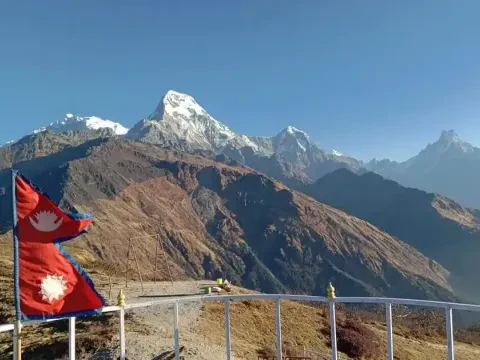
Altitude sickness is a big factor in both the Annapurna Base Camp and Everest Base Camp treks, though the risk of altitude sickness is different because of the altitudes reached during trekking and the acclimatization strategies. In the EBC trek, higher altitudes increase the risk of altitude sickness, especially when the trekkers reach 5,364 meters at Everest Base Camp. The risk increases with height and could affect trekkers at over 4,000 meters, especially places such as Dingboche,
which is 4,410 meters above sea level, and Lobuche, which stands at 4,940 meters.
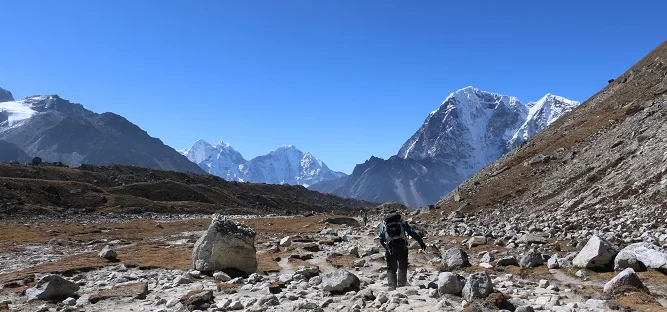
In contrast, the Annapurna Base Camp trek reaches its peak at 4,130 meters at Base Camp and generally remains at a lower altitude, which reduces the risk of altitude sickness. However, trekkers might still face symptoms as they climb to areas like Machapuchare Base Camp (3,700 meters) and Annapurna Base Camp, making proper acclimatization essential.
Both treks require acclimatization planning to avert altitude sickness. Acclimatization for EBC involves one rest day at Namche Bazaar, 3,440 meters above sea level, and another at Dingboche to adapt to the higher altitudes. In the case of ABC, the resting at Tadapani for a day allows a gradual ascent to the height of 2,630 meters but it is not mandatory.
Prevent altitude sickness by ascending slowly, staying well-hydrated, avoiding alcohol, and consuming light meals. If symptoms arise, it's important to descend to lower altitudes without delay.
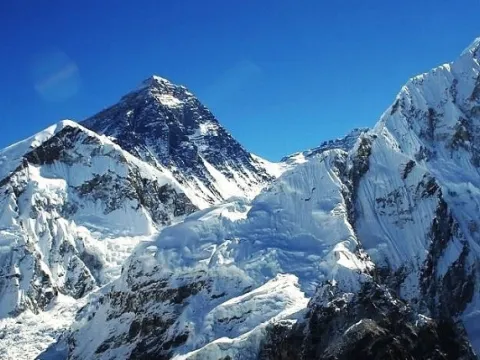
The ABC and EBC treks are the two most popular destinations in Nepal for trekking, as both offer unique experiences. While both treks promise breathtaking views and a sense of adventure, they differ in terms of difficulty and landscape.
While the maximum elevation one can gain from Everest Base Camp Trek is 5,364 meters at EBC, whereas the Annapurna Base Camp Trek only offers a maximum height of 4,130 meters and is normally more moderate in trekking grade. Thus, it has become suitable for trekkers looking for something less stressful.
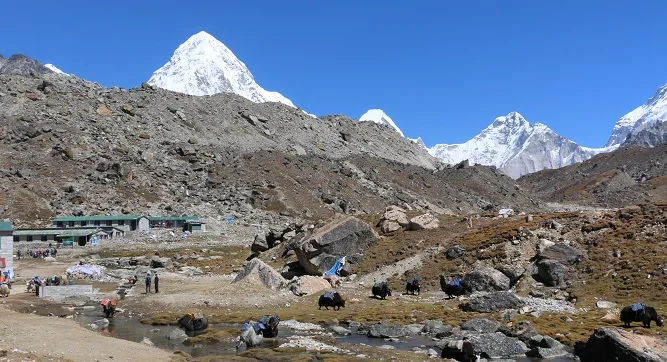
The Everest trek provides views of the highest peaks in the world, such as Mount Everest, Lhotse, and Nuptse, while the Annapurna trek presents great vistas of the Annapurna, Machapuchare, and Dhaulagiri mountains. Besides that, the Annapurna trek is famous for its varied landscapes, from lush forests to alpine meadows.
Both treks are accessible from the nearest airports: Lukla for Everest and Pokhara for Annapurna. However, the EBC Trek attracts more tourists annually, making it a busier and more popular choice.
In the end, this is going to be a question of your personal preference regarding adventure, scenery, and difficulty level, but both will create lifetime memories.
1. Which Trek is Better: Annapurna Base Camp or Everest Base Camp?
Annapurna Base Camp Trek and Everest Base Camp Trek are both great. They are just different. Annapurna Base Camp Trek is good for people who're new to trekking and want to see nice green trails. Everest Base Camp Trek is better for people who want to see Mount Everest close and learn about the Sherpa people. You should think about how fit you're how much time you have. We can help you choose the trek for you.
2. How Long is the Annapurna Base Camp Trek Compared to Everest Base Camp?
The Annapurna Base Camp Trek takes around 7 to 12 days. The Everest Base Camp Trek takes around 12 to 16 days. We make sure you have time to get used to the high altitude. Annapurna Base Camp Trek is more relaxed. Goes through nice villages and forests. Everest Base Camp Trek is longer and harder because it goes higher up. We always make sure you are safe and have a time on the trek.
3. How is the Annapurna Base Camp Trek different from the Everest Base Camp Trek in terms of difficulty?
The Annapurna Base Camp Trek is not too hard. It has some steps and uphill climbs. It is okay. The highest point is 4,130 meters. The Everest Base Camp Trek is harder because it goes up to 5,364 meters. You need to be pretty fit to do the Everest Base Camp Trek.. If you prepare well you can do both treks.
4. What is the difference between the elevation of the Annapurna Base Camp Trek and the Everest Base Camp Trek?
The Annapurna Base Camp Trek starts at around 1,070 meters. Goes up to 4,130 meters. This is a thing because you can get used to the high altitude slowly. The Everest Base Camp Trek starts higher at around 2,860 meters. Goes up to 5,364 meters. Our guides have taken people on both treks and they are safe. The Annapurna Base Camp Trek is a bit safer because it does not go high up.
5. How difficult are the trails for the Annapurna Base Camp Trek and the Everest Base Camp Trek?
The trails for the Annapurna Base Camp Trek go through forests and villages. They are pretty and varied. The trails, for the Everest Base Camp Trek are more rugged. Go through high mountains. They have views of glaciers and Sherpa villages. We think the Annapurna Base Camp Trek trails are nicer and more varied. The Everest Base Camp Trek trails are more rugged and exciting. Both trails are well taken care of.
6. What is the difference between Annapurna Base Camp Trek transportation and Everest Base Camp transportation?
You can get to Annapurna Base Camp easily by taking a drive from Pokhara and then trekking. You do not need to take a flight. For Everest Base Camp most people fly to Lukla, which's exciting but depends on the weather. Our local partners help us make sure that everything goes smoothly on both routes. Annapurna Base Camp is easier to get to, which is why a lot of people like it especially if they are trekking for the time.
7. How do Annapurna Base Camp Trek permits compare to Everest Base Camp Trek permits?
To go to Annapurna Base Camp you need to get the Annapurna Conservation Area Permit and a TIMS card which's easy and not too expensive. For Everest Base Camp you need to get the Sagarmatha National Park Permit and the Khumbu Rural Municipality Permit. We can help you with all the paperwork so you can focus on your trek. These permits help make sure that people are trekking responsibly and that the trails are maintained.
8. What are the differences between the highlights of Annapurna Base Camp Trek and Everest Base Camp Trek?
Some of the things about Annapurna Base Camp Trek are the Annapurna Sanctuary, the views of Machhapuchhre and the rich Gurung culture. Everest Base Camp has views of Everest, beautiful sunrises from Kala Patthar and famous monasteries. Our guides love both treks because they are so unique. Annapurna Base Camp Trek feels cozy. Has a lot of color while Everest Base Camp Trek is big and adventurous.
9. How do you prepare for Annapurna Base Camp Trek compared to Everest Base Camp Trek?
For both treks you need to be in physical shape have the right gear and know about high altitude. You should start training your heart and legs a months before you go. We can help you make a plan that's just for you. Annapurna Base Camp Trek is a bit easier to prepare for because it is not as high. Everest Base Camp Trek is harder and you need to be more careful about getting used to the high altitude. If you train regularly and have the mindset you will have a great time on your trek.
10. Is there any difference between the food and accommodation on Annapurna Base Camp Trek and Everest Base Camp Trek?
On both treks you can eat food like Dal Bhat, noodles and pancakes at the tea houses. Annapurna Base Camp Trek has variety and comfortable places to stay because it is easier to get things there. Everest Base Camp Trek has lodges, with great Sherpa hospitality. We make sure that you have food and a comfortable place to stay so you have the energy to keep going on your trek. Annapurna Base Camp Trek food and accommodation are great. So are Everest Base Camp Trek food and accommodation.
11. What is the difference between the Annapurna Base Camp Trek pack list and the Everest Base Camp Trek pack list?
The Annapurna Base Camp Trek and the Everest Base Camp Trek both require you to pack clothing, sturdy boots, trekking poles and a good sleeping bag. However the Everest Base Camp Trek requires warm layers for the colder nights. Our experts have made checklists that cover the items you need for safety and comfort. If you pack light and smart you will not get tired easily. We will check your gear list personally to make sure you have everything you need to be fully prepared for the Annapurna Base Camp Trek and the Everest Base Camp Trek.
12. How successful is the Annapurna Base Camp Trek?
If you prepare properly and get used to the altitude the Annapurna Base Camp Trek has a very high success rate of over 90%. Our guided groups do well because our leaders are experienced and we ascend gradually. Many happy trekkers come back from the Annapurna Base Camp Trek with memories that will last a lifetime. We make sure you are safe and happy every step of the way on the Annapurna Base Camp Trek.
13. How successful is the Everest Base Camp Trek?
The Everest Base Camp Trek has a success rate of around 85-95% if you plan well and have good guides. Since the Everest Base Camp Trek is at an altitude you need to be careful with your pace. Our professional teams do a job because they are experts at helping you get used to the high altitude and they support you. If you prepare properly the Everest Base Camp Trek can be an achievable adventure.
14. What factors affect the success rate of the Annapurna and Everest Base Camp Treks?
There are key factors that affect the success rate of the Annapurna Base Camp Trek and the Everest Base Camp Trek including how physically fit you are, how well you get used to the high altitude, the weather and whether you have experienced guides. It is also important to stay hydrated pace yourself and listen to your body. We have been doing this for decades so we know how to help you succeed on both the Annapurna Base Camp Trek and the Everest Base Camp Trek. We focus on what you need as an individual so you can complete your dream trek safely and happily on the Annapurna Base Camp Trek and the Everest Base Camp Trek.
15. What is the risk of altitude sickness on the Annapurna Base Camp Trek compared to the Everest Base Camp Trek?
The Annapurna Base Camp Trek has a risk of altitude sickness because the highest point is 4,130m and you climb gradually. The Everest Base Camp Trek has a risk because it is, at 5,364m. From our experience guiding thousands of people we know that it is essential to ascend slowly stay hydrated and take Diamox if needed. Our teams keep an eye on your health. Most trekkers can enjoy both the Annapurna Base Camp Trek and the Everest Base Camp Trek safely if they take care.
16. Is there a difference between Annapurna Base Camp Trek Reviews and Everest Base Camp Trek Reviews?
People who have done the Annapurna Base Camp Trek say it's great because its easy to get to you get to experience the culture and the views of the Annapurna Sanctuary are amazing. On the hand people who have done the Everest Base Camp Trek say it's awesome because you get to be close to Mount Everest and see incredible landscapes. Our guests like both treks and say they are safe have good support and are well organized. Real stories show that both treks can create memories of the Himalayas if you have a good guide.
17. What is the legacy of Annapurna Base Camp Trek versus Everest Base Camp Trek?
The Annapurna Base Camp Trek has a history of friendly Gurung people and conservation of the Annapurna Sanctuary. The Everest Base Camp Trek is known for the Everest region and the deep Buddhist heritage of the Sherpa people. Both treks have inspired adventurers over the years. Our experience shows that they offer a connection to the local culture and natural beauty.
18. What is the best time to do the Annapurna Base Camp Trek versus the Everest Base Camp Trek?
The best time to do both treks is in the spring (March to May). Autumn (September to November) when the weather is clear and stable. Our expert teams recommend these seasons for the most scenic experiences. The Annapurna Base Camp Trek can be done all year round. Its still more accessible during these seasons. We help you choose dates that fit your goals perfectly.
19. How much does the Annapurna Base Camp Trek cost compared to the Everest Base Camp Trek?
The Annapurna Base Camp Trek is generally less expensive because its shorter and easier to get to. The Everest Base Camp Trek costs more because you need flights and longer support. We offer packages that're transparent and good value for both treks with professional guides and quality services. Contact us for a customized quote that suits your needs.
20. How do you choose between the Annapurna Base Camp Trek and the Everest Base Camp Trek?
If you're new to trekking and want a rewarding experience with less commitment choose the Annapurna Base Camp Trek. If you want to experience the glory of Mount Everest and a greater challenge opt, for the Everest Base Camp Trek. With our expertise both treks become safe and memorable. We listen to your fitness level, interests and time to recommend the trek for you.
Our travel experts are ready to assist you with any questions.
Send us a message.
Have a question before you book? Send your enquiry below and our travel experts will get back with the required information.