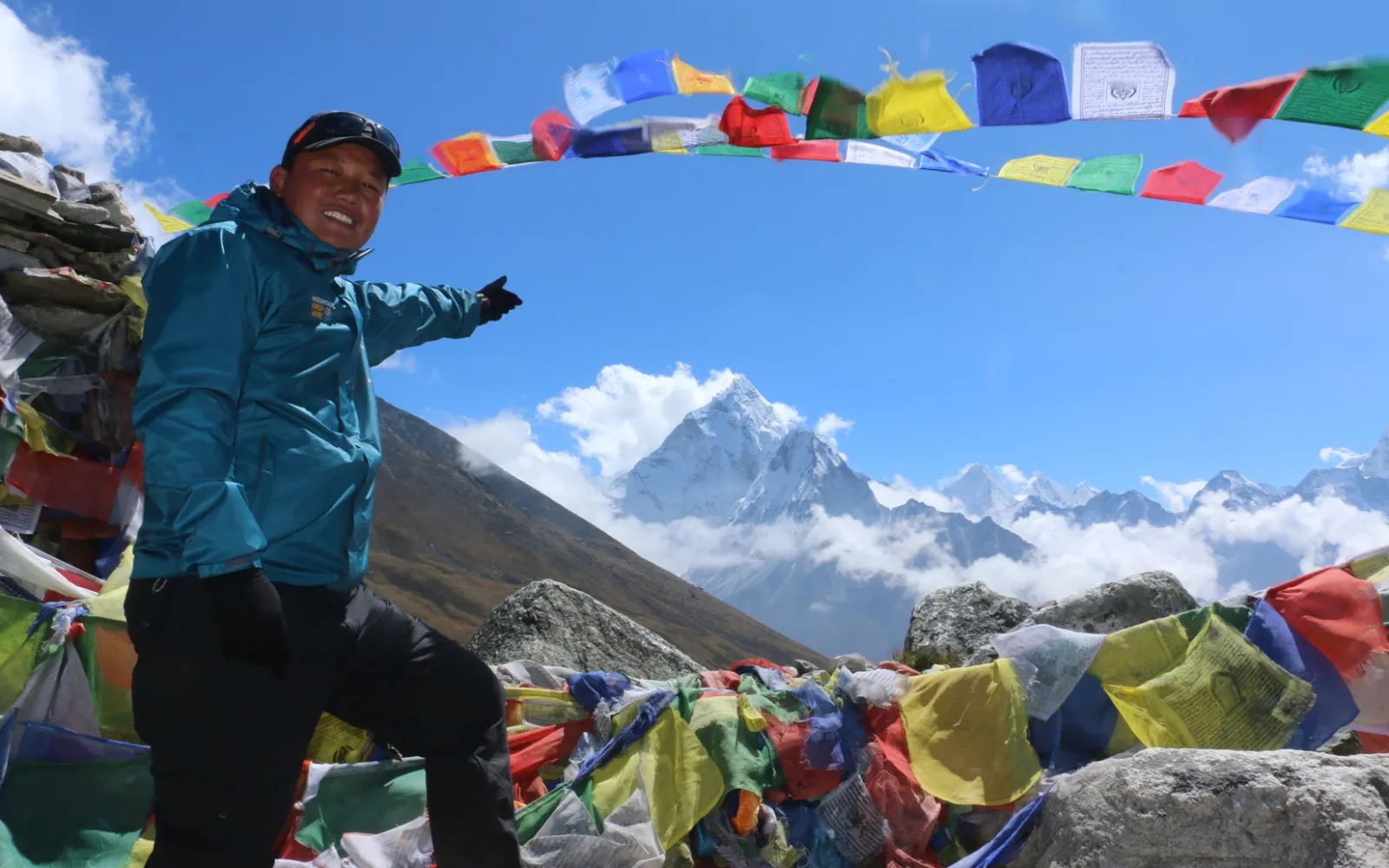
A Guided Everest Base Camp Trek includes a licensed local guide to manage the route, accommodations coordination, permits and daily trekking support.
In addition, a guide offers practical assistance with altitude, information about local culture, weather, trail conditions, communication and emergency situations.
| Service | Typical Arrangement |
|---|---|
| Licensed guide | Route guidance and daily support |
| Porter | Shared trekking luggage |
| Accommodation | Tea shops/lodges along the route |
| Permits | Khumbu local entry + Sagarmatha National Park |
| Meals | Breakfast, lunch and dinner |
| Safety support | Altitude monitoring and emergency assistance |
| Navigation | Trail and itinerary management |
In addition, a local guide can adjust walking pace and daily plans according to weather, trail conditions and the group’s condition.
As a result, a guided EBC trek offers better logistics while allowing trekkers to focus primarily on walking, acclimatization and enjoying the Himalayan environment.
Who Is It Suitable For?
A guided Everest Base Camp Trek is ideal for first-time Himalayan trekkers, solo travelers, families and those who prefer organized logistics.
However, trekkers must prepare physically and understand that a guide cannot cancel altitude challenges, long days walking or changing mountain weather.
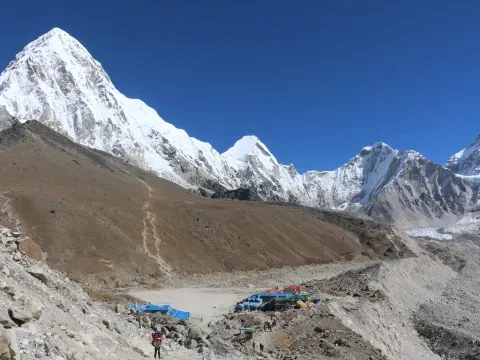
An Independent Everest Base Camp Trek means arranging the trek independently rather than booking a guided trek with a trekking agency.
However, trekking independently does not mean trekking alone since you can organize your own accommodation, meals, permits, transportation and other services on your own.
Besides, trekkers must explore the local culture and the people’s lifestyles on their own.
What Do You Arrange Yourself ?
| Arrangement | Independent trekker’s responsibility |
|---|---|
| Permits | Acquiring needed trekking permits |
| Accommodation | Booking or finding teahouses |
| Meals | Ordering and paying directly |
| Transport | Flights/road transfers arrangement |
| Navigation | Following the route |
| Luggage | Personal carrying or porter hiring |
| Safety | Personal trekking decision making |
In addition, the Everest region has many teahouses, marked trails, shops and communication options to make self-organized trekking easier.
Nevertheless, altitude, unpredictable weather, flight cancellations, illness and emergency situations can complicate independent logistics.
Important Things to Consider :
Therefore, an independent EBC trek offers more flexibility but requires more personal organization.
Meanwhile, Spring and autumn months have more traffic, so booking accommodations and transport in advance is recommended, while current regulations should always be checked before departure.
One important update: the official Nepal Tourism Board page currently lists Everest Base Camp Trek as one of the routes where a licensed guide and agency issued TIMS is mandatory.
However, it is not completely in practice on the real trail. One can go without guide on the Everest Base Camp Trail and even without TIMS Card. The local Khumbu Area Entry Card has replaced the TIMS.
Therefore, the rule of taking guide for Everest Base Camp Trek can be changed. So, please check the latest updates about hiring guide for Everest Bas Camp Trek before you depart on the trail
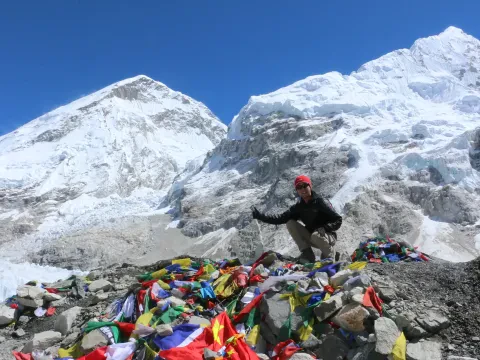
Under the current Nepal Tourism regulation, a licensed trekking guide is mandatory for the Everest Base Camp Trek. However, it is not completely implemented on the real trail.
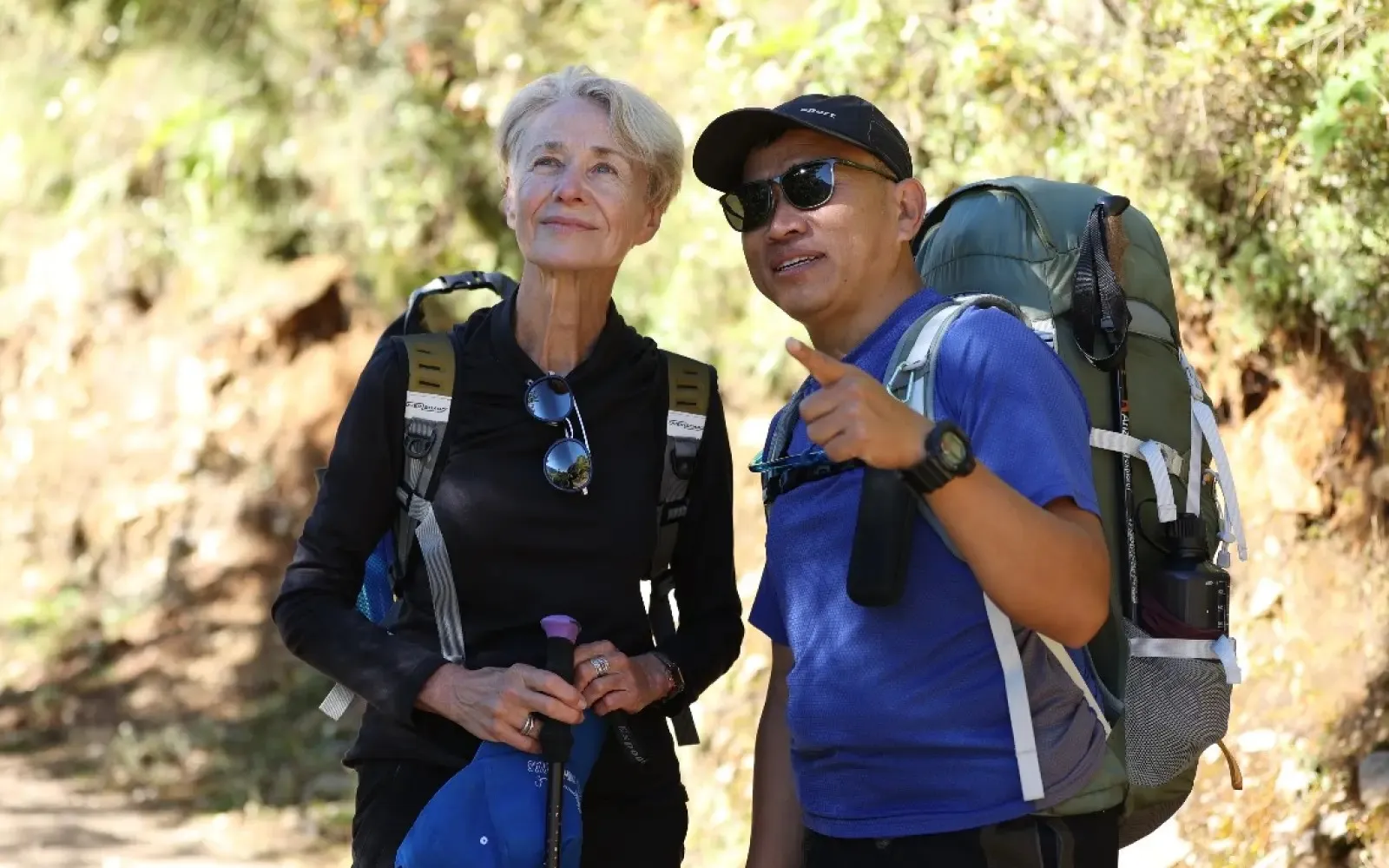
In fact, trekkers are doing Everest Base Camp Trek independently without guide in Everest region (24/09/2026).
But the revised TIMS provision from March 31, 2023, includes EBC specifically among the routes where a licensed trekking guide and agency issued TIMS are mandatory.
| Item | Current Situation |
|---|---|
| Licensed guide | Required under current NTB rule |
| Registered Trekking Agency | Required for the applicable TIMS arrangement |
| TIMS | Listed as required by NTB ( not in practice recently) |
| Local Khumbu permit | Required |
| Sagarmatha National Park permit | Required |
Moreover, the Everest trail has well established teahouses, marked sections, check gate and regular trekkers, but altitude and changing mountain conditions can create real danger.
Therefore, while older sources may describe the independent EBC trek as viable option, current official regulations should prevail over the past practice.
However, it is not mandatory to take guide for Everest Base Camp Trek as per Khumbu Local Area Rule.
Before the EBC trek, make sure to consult with a local government registered trekking company about the current practice, as trekking regulations are frequently updated.
Hiring a local guide will provide practical support during the Everest Base Camp Trek, especially when walking along trails at high altitude and changing weather conditions.
Moreover, local guide can give important insights about the route, community, accommodation system and other aspects of the Everest trek.
| Benefit | How it helps |
|---|---|
| Route guidance | Helps you follow the correct trail |
| Acclimatization | Makes sensible suggestions for the walking and rest schedule |
| Safety | Monitors your condition during the trek |
| Accommodation | Helps you book suitable teahouses |
| Local knowledge | Shares information about the Sherpa people and the mountain community |
| Communication | Facilitates communication with the lodge and transport staff |
| Emergencies | Coordinates help when needed |
| Weather decisions | Helps modify the plans according to changing conditions |
Furthermore, altitude sickness risk increases with the elevation, as the trail quickly gains altitude from Lukla [2,860m / 9,383ft] towards Everest Base Camp [5,364m / 17,598ft].
Meanwhile, an experienced guide can identify-altitude-related issues, suggest the necessary precautions, and organize emergency help when needed.
However, a guide cannot replace professional medical treatment.
Other Practical Advantages :
Therefore, a local guide provides multiple benefits for the EBC trek, not only navigation support.
Under the current NTB rules, guided trek is also the official EBC trek arrangement, instead of the independent one.
Nevertheless, one can trek to EBC without taking guide. Here, the individual trekker must take all the responsibilities of logistics and safety by himself.
Some trekkers prefer to be more independent minded and self reliant trekkers who enjoy having more control over their walking pace and itinerary.
Furthermore, they might also be confident to navigate the established Everest trail themselves
| Reason | What trekkers prefer |
|---|---|
| More freedom | Walk and stop wherever they want |
| Flexible timetable | Adjust the daily schedule themselves |
| Lower personal cost | Avoid paying separate guide fee |
| Privacy | Travel independently or with friends |
| Experience | Use trekking and navigation skillset |
| Simplicity | Make the accommodation and meal choice themselves |
Furthermore, independent minded trekkers might want to spend extra time in places like Namche Bazaar [3,440m / 11,286ft] or leave earlier for sunrise views.
However, personal preference cannot override the current trekking regulation which is that the Nepal Tourism Board currently lists EBC among the routes requiring a licensed guide and agency issued TIMS.
Though the NTB has a rule of taking guide for Everest Base Camp, trekkers are doing the EBC Trek independently.
Important to Remember :
Therefore, the preference of independent trekking over guide led trekking is mainly due to freedom, flexibility, privacy and cost control, whilst the legal requirement should be double checked from the latest regulation.
The cost of hiring a guide for Everest Base Camp Trek varies depending on the experience level of the guide, the services the guide offers, the length of the trek, season, and if hiring the guide privately or through a trekking company.
As a rule of thumb, a private licensed guide might cost around USD 30-50 per day, whilst an experienced guide might charge higher.
| Guide Arrangement | Approximate Cost |
|---|---|
| Basic licensed guide | USD 30-40/day |
| Experienced guide | USD 40-50/day |
| Senior/specialized guide | USD 50+/day |
| Guide through full trekking package | Included in package price |
Moreover, the daily guide fee represent the entire cost of guides services as accommodation, meals, transportation, insurance, permits.
And other guide expenses cab be separate or included in the trekking package. Fix all the costs and includes and excludes before you finalize the deal.
Therefore, always ask the trekking company to clarify what the quoted guide fee includes.
What should be included ?
Importantly, The Nepal Tourism Board currently requires a licensed guide for the EBC Trek according to their revised trekking provision.
However, trekkers are doing the EBC Trek independently without guide. This is permitted so far (24/09/2026).
Therefore, when budgeting for your EBC Trek, rather than looking at the guide's daily wage, compare the complete cost of hiring a guide.
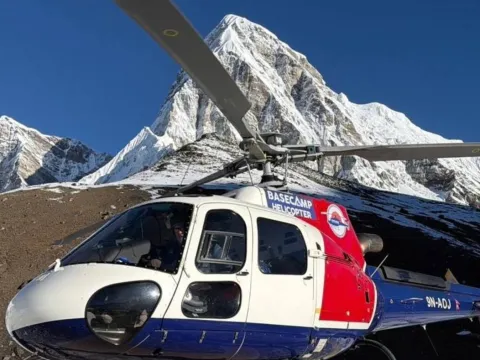
The safest way to book a guide for the Everest Base Camp Trek is to find a government-registered trekking company that offers a properly licensed trekking guide.
Furthermore, as of the current Nepal Tourism Board provision, the EBC is among the trekking route where trekkers must be accompanied by a licensed guide.
Thus, booking a guide via a registered agency also aids the correct arrangements of necessary guides.
| Check | Why It Matters |
|---|---|
| Registered Trekking Company | Provides accountable local service |
| Licensed Trekking Guide | Meets current trekking requirements |
| Guide's Experience | Helps with route and altitude challenges |
| First-aid/AMS knowledge | Assists with basic safety management |
| Insurance | Provides protection for trekking staff |
| Clear service cost | Avoids unexpected expenses |
However, an unknown individual directly hired from the trail may raise questions about the guide's qualification, responsibility, experience, insurance, and emergency support.
Therefore, it is better to book ahead with a registered company on the arrangements for your guide, including their qualification and covered services.
How to Book ?
Furthermore, registered trekking agencies in Nepal are required to keep government registration documents.
Likewise, TAAN membership also identifies agencies and their registration details.
Therefore, proper verification is suggested rather than just hiring a guide available at the trailhead.
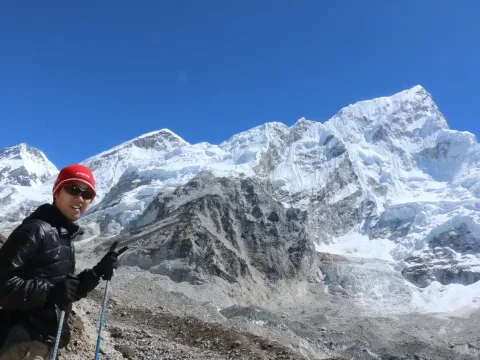
A good Everest Base Camp trekking guide is expected to have professional qualification, mountain experience, safety knowledge, communication skills, and local knowledge.
Furthermore, a good guide must be able to manage both the practical organization and emergent circumstances of the high-altitude trek.
| Quality | Why It Is Important |
|---|---|
| Licensed Guide | Confirms professional authorization |
| Good Language Command | Makes communication easier |
| Leadership Skills | Keeps the group organized |
| AMS Knowledge | Recognizes altitude-related concerns |
| First-aid Training | Provides basic emergency assistance |
| Local Trail Knowledge | Helps with route and conditions |
| Cultural Knowledge | Explains Sherpa culture and traditions |
| Logistic Skills | Manages accommodation and daily arrangements |
| Experience | Helps handle changing situations |
| Registered-company Affiliation | Provides greater accountability |
Furthermore, a good guide should be able to communicate, ask, and not force trekkers to rush, and have an understanding of when the group needs to rest, acclimatize, or change plans.
Likewise, the guide must also be able to organize accommodations, transportation, rescue, and the trekking company when necessary.
Before Hiring a Guide :
Therefore, a good EBC guide is not only someone who knows the trail, but should also have leadership, safety, communication, and local knowledge while maintaining professional accountability.
Importantly, the last point is especially relevant as the current NTB provision requires licensed guides on the Everest Base Camp route.
However, it is not in practice that the independent trekkers are permitted to do Everest Base Camp Trek(24/09/2026).
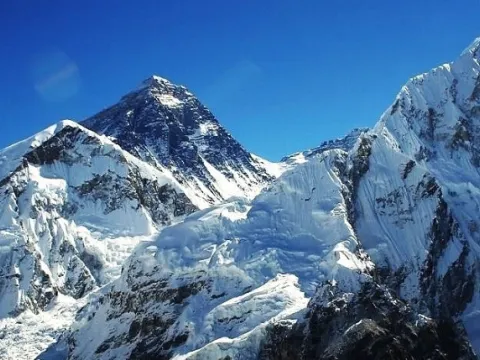
As a matter of fact, guide is not mandatory for EBC Trek though Nepal Tourism Board officially mentions that it is compulsory.
Moreover, independent trekkers are doing EBC Trek without guide so far. (24/09/2026).
Meanwhile, a guide is not only a narrator of the tale but can also assist with daily logistics, offer local insights, and ensure safety considering the challenging environment and conditions of the EBC Trek.
The reasons for this recommendation are presented in the table below:
On the other hand, a guide can also be helpful in adjusting the pace and plans if an individual is tired or the weather conditions change suddenly.
In addition, they could also help in finding accommodations during peak seasons when many trekkers opt for a similar route and lodgings fill up fast.
Therefore, a guide offers flexibility, convenience, and assists in exploring the mountainous region with ease.
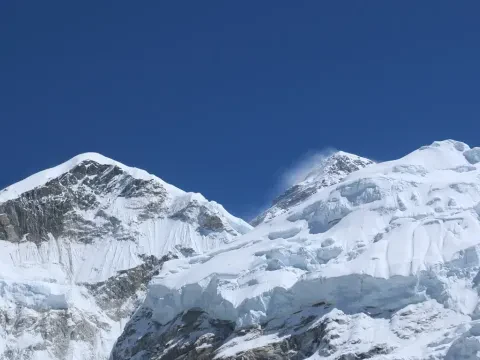
As mentioned above, a licensed guide is recommended for the Everest Base Camp Trek, though it is not entirely implemented on the trail and the current Nepal Tourism Board provision requires that a trekker must hire a licensed guide for this mountainous adventure
Consequently, a guide can always be beneficial for a seamless and safe EBC Trek and current Nepal government provisions should also be considered while planning the trek.
Note: Recently, the EBC Trek doesn’t require guide as a mandatory rule, one can do the trek independently if they are confident about the trail and safety.
However, the rule of hiring guide for EBC Trek can change. Check latest updates before planning the EBC.
Here, you can contact us before booking Everest Base Camp Trek for the recent updates about taking guide for EBC Trek.
Yes. According to the current published guidance on the Nepal Tourism Board, the Everest Base Camp Trek is one of the Everest-region routes which requires trekkers to be accompanied by a licensed trekking guide.
But, recently (24/09/2026), taking guide for Everest Base Camp Trek is not compulsory and not entirely implemented on the trail.
Here, it means, independent trekkers can do the EBC Trek without guide.
Travelers planning to make this trek therefore need to arrange the EBC journey through a registered trekking agency and to use a properly licensed guide, rather than an unregistered trail guide.
The guide offers support with route navigation, accommodation, altitude management, local conditions, and emergencies.
Furthermore, the Everest Base Camp trail has high altitude, variable weather, and includes suspension bridges, glacial terrain, and remote communities, so a local professional guide offers practical support in difficult conditions.
According to the current published rule from the Nepal Tourism Board, Everest Base Camp is listed among the routes where trekkers need to be accompanied by a licensed trekking guide, so this should not be presented as an option.
However, it is true that the EBC trek route which can be travelled independently, or with an independent, unregistered guide.
But the current EBC regulation requires trekkers to make this journey under the supervision of a licensed guide. Therefore, is highly recommended taking a licensed guide for Everest Base Camp Trek.
The most reliable option is to book a guide and the necessary trekking documentation through a Nepal government registered trekking agency.
Before making any booking, always check the guide's qualifications, the languages they speak, their first-aid and altitude-safety knowledge, and the services included in the price of your trek.
A good Everest Base Camp guide needs to have the correct Nepal trekking-guide license and to have previous experience of the Everest region.
Other useful skills include first-aid and altitude-sickness training, a knowledge of English or other languages, and good communication and route-planning skills
The guide on Everest Base Camp Trek will normally organize the daily route, the walking pace, the place of accommodation, meals, permits, and any communications with the local lodges.
Most importantly, they will monitor the group's altitude conditions, explain the itinerary, and assist you with any changes in the trail or with altitude-related problems.
A guide is particularly important on the EBC trail, since this trek reaches altitudes in excess of 5,000 metres, and can monitor the condition of the group, recommend suitable acclimatization, recognize the symptoms of altitude sickness, and make any necessary changes to the itinerary, but a guide is not responsible for altitude-related conditions, and trekkers still need to take altitude precautions.
A porter is not the same as a guide, and it is up to you whether you wish to employ one. Many trekkers like the option of a porter, since it means that they only have to carry a daypack, while the guide can concentrate on the route and on altitude conditions, and the porter can carry the guide's equipment as well as yours.
It is not advisable to arrange a guide after you arrive, since you need to ensure that the guide has the correct license and that the necessary documentation, insurance, and itinerary planning has been made in advance.
Importantly, it is much more reliable to make an agreement with a local agency before you set off, and to take advantage of their support throughout your trek.
Before you make a booking, it is important to discuss the guide's qualifications, experience on the EBC trail, knowledge of first aid and altitude conditions, and their insurance.
Likewise, you should also confirm exactly what the guide does, the hours they work per day, accommodation and meals, and whether the price quoted for your trek includes the cost of the guide, the daily wage, and emergency support.
Our travel experts are ready to assist you with any questions.
Send us a message.Have a question before you book? Send your enquiry below and our travel experts will get back with the required information.