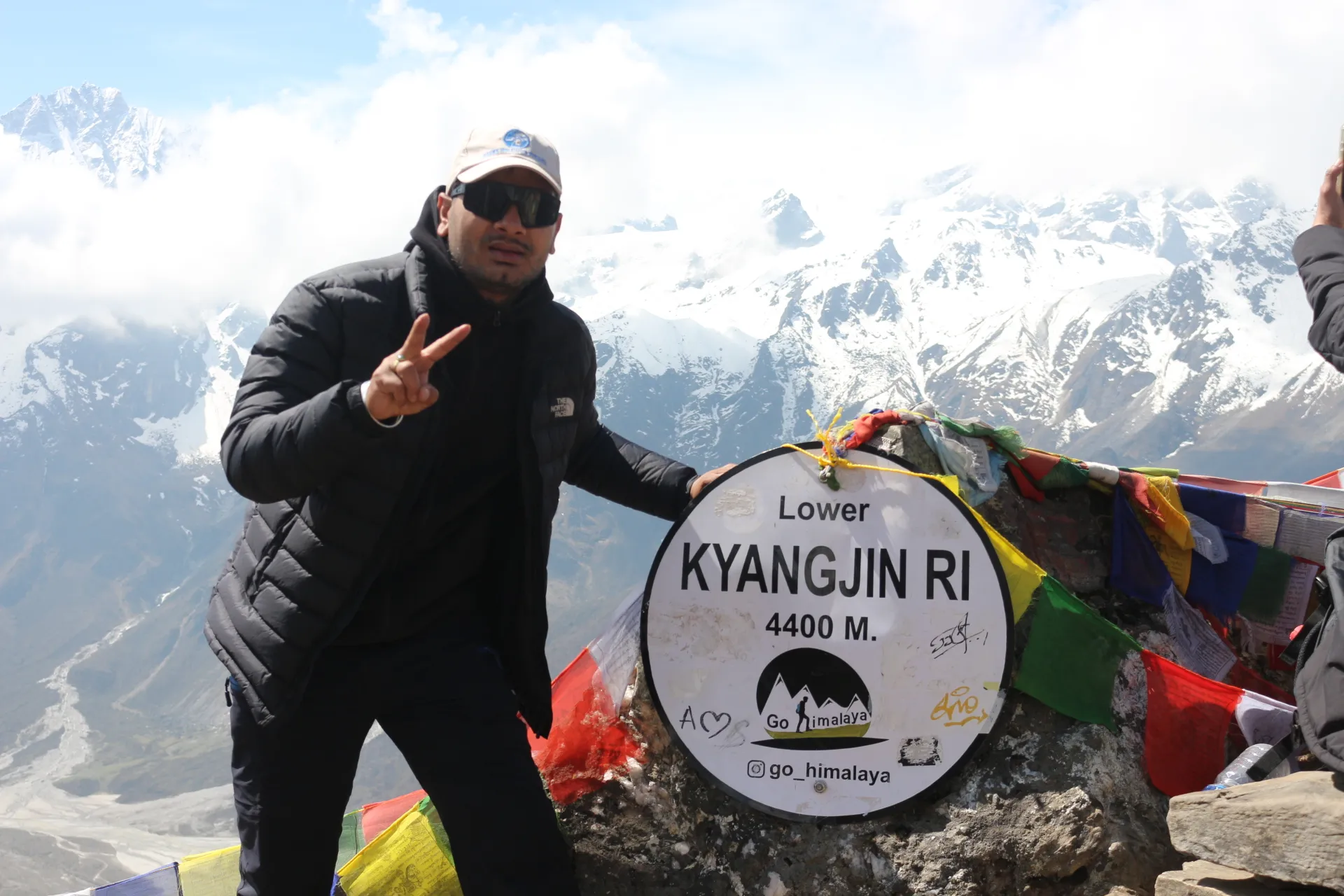
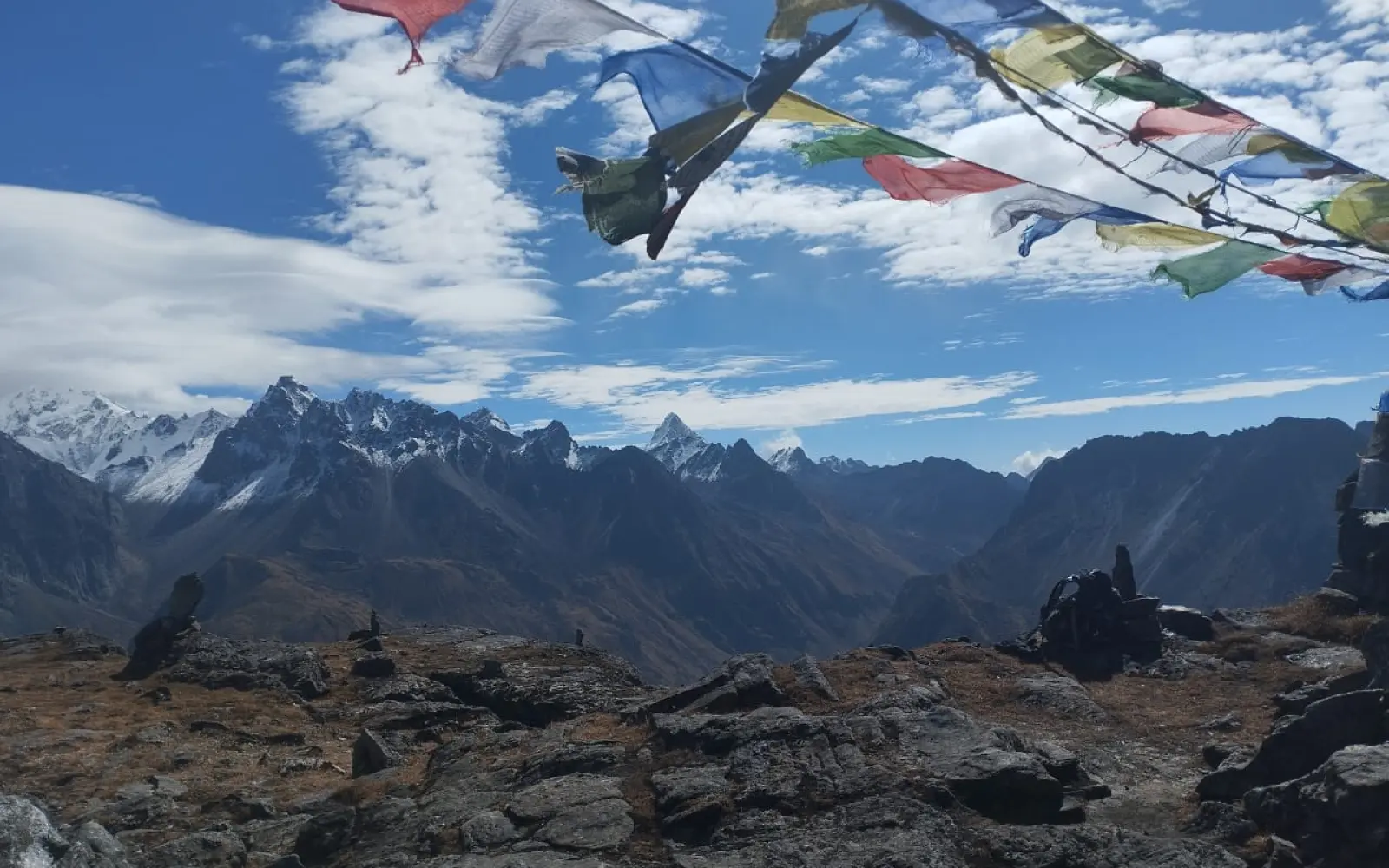
Kanchenjunga Base Camp Trek is a remote highland trekking tour in Eastern Nepal, where you witness the beauty of nature’s mountains and the cultural heritages of local people.
Here, the trail leads you to the base camps of the world’s third-highest mountain, Kanchenjunga 8,586m / 28,169ft.
Compared to the crowded trekking trails in the Everest and Annapurna regions, Kanchenjunga Base Camp offers a less traveled path with a longer route and more wilderness.
Further, the trail goes through unique ecosystems ranging from tropical forests to alpine meadows, glaciers, and high passes. Therefore, trekkers should be prepared for a demanding adventure.
| Feature | Value |
|---|---|
| Location | Eastern Nepal |
| Highest Mountain | Mount Kanchenjunga |
| Elevation | 8,586m / 28,169ft |
| Trek Region | Kanchenjunga Conservation Area |
| Duration Range | 20 – 26 days |
| Difficulty Level | Challenging |
| Trek Style | Teahouse / Camping |
| Special Attractions | Kanchenjunga Base Camps and Glaciers |
| SUITABLE FOR | Well-prepared trekkers |
| Crowds | Fewer than Everest, Langtang, Manaslu and Annapurna |
Thus, Kanchenjunga Base Camp typically includes the northern and southern base camps of Kanchenjunga. The actual routes and itineraries may vary depending on different factors.
Importantly, the longer itineraries allow more time for acclimatization, rest, and exploring the Kanchenjunga region.
Kanchenjunga trekking trail covers a wide range of ecosystems and cultural heritages as the trail passes through diverse landscapes from lower valleys to high mountains.
Likewise, you can also witness outstanding peaks such as Kanchenjunga, Jannu, Kabru, Rathong, etc.
Some of the main attractions of Kanchenjunga Base Camp Trek are listed below:
The Kanchenjunga trekking route usually starts the journey towards Taplejung and then enters the mountainous region towards Kanchenjunga North or South Base Camp.
Then, the trail crosses various villages and landforms, including valleys, rivers, and high mountain passes. Hence, trekkers must be well-prepared for a long and strenuous adventure.
Actually, the northern side of Kanchenjunga trek passes through Ghunsa, Khangpachen, Lhonak, and Pangpema, while the southern side goes through Yamphudin, Tseram, and Ramche.
In fact, the combined trip of Kanchenjunga North and South Base Camps is much longer and tiring, but it offers a comprehensive view of the region and its wilderness.
Kanchenjunga Base Camp Trek is a demanding adventure compared to other populartreks in Nepal.
As a result, trekkers should have prior trekking experience and prepare adequately for the long and high-altitude journey.
Therefore, some of the essential preparations for Kanchenjunga Base Camp include :
In summary, Kanchenjunga Base Camp Trek is a wonderful opportunity to explore the wilderness and experience the culture of local people in a less-crowded region.
However, as a remote highland trek, Kanchenjunga Base Camp requires meticulous preparations for trekkers.
Therefore, hire professional guides and porters and allocate more time for acclimatization and exploration.
The Kanchenjunga Base Camp Trek cost ranges from USD 1,975 to USD 2,855 per person depending on the duration, group size, comfort level, and other factors.
As Kanchenjunga is a remote mountainous region, transportation and other expenses may constitute a significant portion of the trek cost range.
| Trek Package | Approximate Cost per Person | Suitable For |
|---|---|---|
| Budget/Group | USD 1,975 | Budget trekkers |
| Standard | USD 2,200 – USD 2,500 | Most common travelers |
| Comfortable/Private | USD 2,550 – USD 2,855 | Private groups / Comfort seekers |
Importantly, the final price of Kanchenjunga Base Camp trek depends on many things such as the duration, group size, transportation, and other amenities.
Hence, you should compare the details and inclusions of each package before selecting the most suitable one according to your needs and preferences.
A well-organized Kanchenjunga Base Camp Trek package usually covers all the necessary expenses such as transportation, accommodation, meals, permits, and guide support.
However, the inclusions and exclusions may vary from one trekking agency to another. Therefore, before booking the Kanchenjunga trek, make sure that the selected agency covers all the required costs within the specified price range.
Usually, personal expenses and other costs that are not mentioned in the inclusions of the Kanchenjunga trek package are not covered by the trek organizers.
Here, expenses not included in the Kanchenjunga Base Camp trek cost range widely as it depends on the expenses incurred during the trek.
The duration of the trek is one of the primary factors affecting the cost of the Kanchenjunga Base Camp trek. The longer the trek, the more the cost as the additional days will require more staff, resources, and logistics on the part of the trek organizers.
Similarly, the larger the size of the trek group, the lower the cost per trekker and the smaller the group, the higher the cost.
| Affecting Factor | Price Increase / Decrease |
|---|---|
| Trek duration | Directly proportional |
| Size of the group | Inversely proportional |
| Private transportation | Increased |
| Number of staff | Increased |
| Accommodation | Increased |
| Camping | Increased |
| Route and Itinerary | Increased |
| Season | ncreased (Peak season)/decreased ( low season) |
However, a reasonable range of the Kanchenjunga Base Camp Trek cost is USD 1,975 – USD 2,855. However, it is always advisable to compare the details of the package before finalizing your bookings as the lowest price range may hide many things.
Thus, for a safe and memorable trekking experience in Kanchenjungaquality that the selected trek package covers all the necessary expenses without compromising on the quality and safety.
The Kanchenjunga Base Camp Trek cost is generally between USD 1,975–2,855 per person for a guided trekking package in Nepal. The exact amount depends on the length and complexity of the route, group size, transport, permits, accommodation, meals, staff, and whether to include the North or South Base Camp.
The route does have an impact, as the North Base Camp and South Base Camp itineraries involve different walking periods and logistical needs.
Here, a combined North and South Base Camp trek takes longer and therefore costs more in terms of accommodation, meals, staff, transportation, and equipment.
Meanwhile, the North Base Camp route commonly includes Ghunsa, Khangpachen, Lhonak, and Pangpema, whereas the South Base Camp route generally goes via Yamphudin, Tseram, and Ramche.
Group trekking generally has a lower price per person, as transportation, guides, porters, and other expenses can be shared between several travelers.
Here, a private Kanchenjunga Trek package costs more, as it can be planned around the preferred dates, pace, route, and transportation.
The Kanchenjunga region is in eastern Nepal, so getting there involves extra transportation compared with more central Nepal trekking routes.
According to the itinerary and current transport options travelers need domestic flights ( Kathmandu to Bhadrapur) combined with road transportation to reach the trailhead.
Some remote sections of the Kanchenjunga region have fewer teahouses, so camping may be necessary depending on the chosen route and current accommodation availability.
However, people rarely do organize camping trek on Kanchenjunga trail. They mostly go with teahouse trek as the teahouses are easily available at every stop.
But, camping requires tents, equipment, cooks, porters, food supplies, and other logistics that can significantly increase the cost of the Kanchenjunga trekking.
Before choosing a Kanchenjunga Trek package it is important to check what the advertised price actually includes rather than comparing the headline figures.
Here, a cheaper package may miss out on domestic transportation, permits, meals, porter services, camping equipment, or other logistics.
Check the following points before booking:
Therefore, USD 1,975–2,855 is a realistic price range for a guided Kanchenjunga Base Camp Trek, although the final price should reflect the actual itinerary and inclusions. The most relevant comparison is the Kanchenjunga Trek service package because remote trekking costs primarily involves the logistics rather than accommodation.
The Kanchenjunga Trek is more expensive than many popular Nepal treks primarily because of the remote location, longer duration, restricted-area regulations, and complex logistics in the region.
Unlike the more developed Everest and Annapurna regions, the Kanchenjunga region has fewer roads, teahouses, transport options, and other facilities.
| Reason | Why It Increases the Cost |
|---|---|
| Remote location | Supplies and staff must travel farther |
| Longer duration | More days require more food, accommodation and wages |
| Restricted-area permits | Additional permits and regulations apply |
| Special regulations | Certain routes require organized trekking arrangements |
| Limited road access | Road journeys can be longer and less direct |
| Domestic transportation | Flights and connecting road travel adds expenses |
| Fewer teahouses | Accommodation is less widely available |
| Camping | Remote sections may require tents and kitchen support |
| Larger logistics | Food, equipment and staff need careful planning |
| Fewer services | Less competition and fewer facilities are available |
The Kanchenjunga region is relatively remote and far from the main tourist centers and trekking hubs. Travelers need to plan additional transportation to get to the trailhead, and it may take longer to deliver food and other supplies to the remote valleys.
Actually, the route also passes through areas where roads and other infrastructure are limited, so transport cannot always reach the trekking villages.
Therefore, porters, pack animals, vehicles, and trekking staff may be needed to carry supplies over greater distances.
A Kanchenjunga Base Camp Trek commonly takes substantially more days than shorter Nepal trekking routes due to the remote nature of the region and the distance from the roadhead to the base camps.
Here, every additional trekking day involves extra costs in terms of accommodation, meals, guide and porter wages, permits, equipment, and other support.
Certain sections of the Kanchenjunga region are subject to special trekking regulations and permit requirements.
Thus, these restrictions help to control access to some of the most remote areas, and the permit costs and arrangements are an added cost to the Kanchenjunga trekking.
Therefore, trekkers should avoid relying on old permit prices, as government fees and regulations can change. A professional Kanchenjunga Trek package should clearly state which permits are required for the chosen route before departure.
The Kanchenjunga region is less popular than famous routes like Everest Base Camp and Annapurna Base Camp, so there is less demand for teahouses and other tourism facilities.
As a result, some sections only have basic lodges or require camping, and food and accommodation choice is more limited.
Camping requires significantly more equipment and staff than a standard teahouse trek, because the trekking team needs to carry or transport tents, kitchen supplies, cooking equipment, food, and other necessities.
Moreover, additional cooks, porters, camping staff, and support equipment can therefore increase the Kanchenjunga Trek price.
Everest Base Camp has a much more developed trekking infrastructure with many teahouses, well-established trails, regular transport links, and a large tourism workforce.
But, the Kanchenjunga region has fewer services and longer remote sections, so food, accommodation, staff, equipment, transportation, and other logistics require more planning.
| Feature | Kanchenjunga | Everest/Annapurna |
|---|---|---|
| Tourism infrastructure | Limited | More developed |
| Teahouse availability | Fewer | More widespread |
| Road access | Limited in remote areas | Better on many routes |
| Trek duration | Usually longer | Many shorter options |
| Camping | Required on some routes | Less common on main routes |
| Food choices | More limited | Generally more varied |
| Transportation | More complex | More established |
| Logistics | More demanding | Generally simpler |
| Overall cost | Higher | Wider range of prices |
Thus, the higher Kanchenjunga Trek cost is therefore not necessarily because the destination is more exclusive, but because the trek requires more time, staff, transportation, supplies, and logistics.
For travelers interested in remote trekking in Nepal, the additional cost supports the infrastructure and support needed to operate safely in an area with fewer services.
The Kanchenjunga Base Camp Trek cost of USD 1,975–2,855 offers a wide range of trekking services when booked as a fully organized package.
However, the inclusions vary between different operators, and travelers should see the detailed package before booking to avoid misinterpretation of what comes with the price.
| Service Included? | Coverage |
|---|---|
| Airport transfers | Yes Arrival / departure transfers in Kathmandu |
| Kathmandu accommodation | Package dependent(normally included) / Pre- and post-trek hotel accommodation |
| Domestic flights | Package dependent(mostly included) / Flights towards eastern Nepal when included |
| Ground transportation | Yes Road transfers to and from trekking trailhead |
| Licensed guide | Yes Experienced trekking guide |
| Porter | Usually Porters per group and package |
| Restricted-area permits | Yes Required permits for the chosen route |
| Conservation permits | Yes Kanchenjunga Conservation Area and fees |
| Teahouse accommodation | Yes Lodging during the trekking section |
| Meals | Yes Breakfast, lunch, and dinner |
| Camping equipment | Route dependent Tents and related equipment (if required) |
| Cook | Route dependent Cook for sections requiring camping |
| Kitchen staff | Route dependent Support staff for remote camping section |
| Staff insurance | Yes Required insurance or coverage |
| Government taxes | Yes Applicable government taxes |
| Company service charges | Yes Agency charges for administration |
| Emergency support | Yes Trekking team support and emergency assistance |
Importantly, the combination varies depending on whether you choose the North or South Base Camp or combined itinerary.
Therefore, a transparent Kanchenjunga Base Camp package should provide this information in writing before you make the booking.
An organized Kanchenjunga Trek package usually includes the essential logistics for a remote high-altitude trek.
Depending on the selected itinerary, it may cover :
Importantly, note that the exact combination depends on the specific itinerary, and should be explained clearly as part of the package.
Personal expenses, services outside the agreed itinerary, and additional expenses should be budgeted separately as some can add up considerably on a remote trek.
The standard exclusions normally cover :
The advertised Kanchenjunga Trek cost includes different components depending on the operator and itinerary, and two trekking packages with similar prices may have widely differing inclusions.
Meanwhile, it is especially important to pay attention to flights, permits, meals, accommodation, camping, staff, and transportation, since Kanchenjunga requires more support than many other trekking routes. Travelers should therefore review the entire itinerary and inclusions rather than basing the decision solely on the package price.
The main cost components behind the Kanchenjunga Base Camp Trek price are transportation, permits, accommodation, food, guides, porters, camping logistics, staff, equipment, and insurance.
Since Kanchenjunga is a remote trek requiring a considerably longer itinerary than many other trekking routes, the expenses in these categories can also be higher.
| Major Expense | What the Cost Covers |
|---|---|
| Transportation | Kathmandu, Bhadrapur, Taplejung/Suketar Flight and road transfers |
| Permits | Restricted-area and conservation fees |
| Accommodation | Teahouses, lodges, and camping nights |
| Food | Meals, cooking supplies, and food transportation |
| Guide | Licensed guide, wages, meals, accommodation, and support |
| Porter | Porter or porter-guide services |
| Camping | Tents, kitchen, dining, and sleeping equipment |
| Staff | Cook, kitchen staff, camping crew, and support workers |
| Equipment | Trekking and camping equipment required |
| Insurance | Traveler's insurance and relevant staff coverage |
Transportation can contribute significantly to the Kanchenjunga Trek cost since the trekking region is far from Kathmandu and involves limited road connectivity.
Meanwhile, travelers require domestic flights and multiple road transfers depending on the itinerary, and a typical logistics chain may include:
Kathmandu → Bhadrapur → Taplejung/Suketar (domestic flight) → road transfer → trekking trailhead
Actually, the two way flight Kathmandu-Bhadrapur/Taplejung-Kathmandu costs around USD 515.
Here, the road conditions can vary greatly with weather and local construction, while journey times can also vary between seasons.
Therefore, transportation costs should include provisions for remote road travel, rather than typical city travel times.
Kanchenjunga trekking involves conservation and route-specific permit requirements, and some sections are subject to restricted-area regulations.
The permits, therefore, constitute an important component of the package cost and should be clearly stated as part of the itinerary.
Accommodation normally covers teahouse/lodge stays at sections where these facilities are available.
Meanwhile, remote sections may require camping, and the cost may therefore also cover tents, dining arrangements, sleeping equipment, kitchen facilities, and camping staff.
Food has to be transported to remote mountain settlements through road and porter-supported supply chains, while some camping sections require the trekking crew to carry cooking equipment and supplies.
The cost of meals, therefore, reflects not only the food itself, but also the transportation, storage, preparation, and staff requirements.
Common trekking meals include:
The guide's cost is not just for showing the way, since he or she will also be responsible for route planning, accommodation, staff, meals, and emergency support.
In addition, the guide may coordinate with permits, transportation, and other elements throughout the trek.
Porters carry trekking equipment and personal baggage, reducing the load for the individual trekkers during long walking days.
Here, the porter's package cost normally covers wages, food, accommodation, insurance, and transportation relevant to the trek.
Camping becomes a significant expense when the chosen route extends beyond the teahouse accommodation.
Meanwhile, tents, kitchen equipment, dining tents, cooking supplies, food, fuel, cooks, kitchen staff, and additional porters all have to be transported and managed.
Camping logistics include:
A remote Kanchenjunga trek can involve more staff to support the trekking team, covering food, accommodation, camping, equipment, and transportation over long distances.
Likewise, equipment costs can also involve tents, sleeping bags, kitchen equipment, dining equipment, first-aid supplies, and other necessities for remote sections.
Staff insurance is an important operational expense since guides, porters, cooks, and other trekking workers operate in challenging mountain conditions. Moreover, travelers should also take out their own travel insurance with appropriate coverage for high-altitude trekking and emergency situations.
The Kanchenjunga trekking package cost is therefore not the price of accommodation and food. A considerable part of the budget goes into transportation, permits, staff wages, equipment, food logistics, camping operations, and the coordination required for a safe trek in a remote area.
For a USD 1,975–2,855 Kanchenjunga Base Camp Trek, travelers should consider the complete logistics behind the package, rather than trying to interpret the price in the way they would for a short teahouse trek.
Therefore, a responsible and transparent operator should clearly explain what is included, what is not, and how the remote nature of Kanchenjunga affects the price of the trek.
The Kanchenjunga permit cost and transportation expenses represent a major part of the overall trekking budget due to the region’s remoteness and multiple stages of travel.
In fact, the flight from Kathmandu to Bhadrapur/Taplejung and back to Kathmandu costs around USD 515 and extra USD 120 cost for road transportation to the trailhead and back.
Meanwhile, the specific cost depends on the route, current government fees, domestic flight tariffs, road conditions, vehicle type, and the starting point of the trek.
Transportation usually comprises several modes of travel as there is no direct road from Kathmandu to the trekking areas. A possible travel itinerary involves a domestic flight, road travel, and local jeep transportation to the trailhead.
The travel sequence consists of the following:
The Kanchenjunga transportation cost depends on shared versus private transportation and whether the package includes domestic flights. Private jeeps offer flexibility, while shared transportation reduces the cost, with potential delays for other passengers.
| Transportation | Main Cost Factor |
|---|---|
| Kathmandu-Bhadrapur Flight | Airline, season, and booking (USD 255 one way) |
| Bhadrapur-Taplejung Road | Road distance and vehicle USD 100-120 |
Here, road transportation toward Taplejung can be lengthy and variable, especially during the monsoon season and road maintenance works.
Therefore, budgetary provisions should be made for delays in transport rather than specific timing.
Kanchenjunga is more distant from Kathmandu than popular trekking destinations, while the road access to the trailheads remains limited.
Hence, the travel distance and required connections increase compared to easier trekking regions.
A trekking package, therefore, often includes transportation expenses that are not evident from the walking route.
When comparing such packages, it is important to clarify what domestic flights, road transfers, local jeeps, and return transportation are included.
For the Kanchenjunga Base Camp Trek, the current 2026 official Nepal Tourism Board information lists two main permits, the Kanchenjunga Restricted Area Permit (RAP) and the Kanchenjunga Conservation Area Permit (KCAP).
Here, the first charges USD 20 per person per week for the first four weeks, while the second charges NPR 3,000 for foreign nationals ($ 3,000), based on current 2026 trekking information.
| Permit / Fee | Cost for Foreign Trekkers | Validity / Basis | Where / How it is obtained |
|---|---|---|
| Kanchenjunga Restricted Area Permit /(RAP) | USD 25 per person /week | For the first 4 weeks | Arranged through a registered trekking agency; issued under the Department of Immigration’s rules |
RAP | beyond 4 weeks | USD 25 per person/week from the 5th week |Through the trekking agency
Kanchenjunga Conservation Area Permit (KCAP) |NPR 3,000 per person | Single entry/trek within the conservation are | Nepal Tourism Board / authorized Kanchenjunga Conservation Area checkpoint/ Local Trekking company
TIMS Card | Check current requirement prior to departure |Varies according to current trekking regulations | Through registered trekking agency.
Importantly, the official Nepal Tourism Board currently lists the restricted areas of Taplejung covering parts of Phantanglung, Mikwakhola and Sirijunga rural municipalities at USD 20 per person/week ($20) for the first 4 weeks and USD 25 per week beyond.
For Kanchenjunga trek within the restricted area for 2 weeks, the main permit costs would therefore be in the region of:
Permit | Cost
Kanchenjunga RAP – 2 weeks | USD 40
KCAP | NRP 3,000
Approximate total | USD 40 + NPR 3,000
What should you check before the 2027 trek?
The permit cost and transportation method change before the trekking season due to varying government regulations, airline tariffs, road conditions, and local transportation rates.
Therefore, a traveler should double-check the Kanchenjunga Trek permits and transportation cost before departure.
It is essential to confirm the following:
Current conservation-area permit cost
Current restricted-area permit cost
Current TIMS requirement
Domestic flight schedule and cost
Road conditions Bhadrapur-Taplejung
Local jeep availability
Shared or private transportation
Return transportation method
Additional transport costs
For a Kanchenjunga Base Camp Trek package, the transportation budget should be transparent as the remoteness of the trailheads affects both the cost and itinerary of the trek.
Therefore, the package cost should explicitly state what flights, road transfers, local jeeps, permits, and return transportation are included.
The Kanchenjunga accommodation cost, food cost, and camping expenses vary depending on the route and available services on the trail.
In contrast to the well-developed Everest and Annapurna regions, Kanchenjunga trekking involves fewer teahouses and more remote areas that require additional logistics.
What kind of accommodation is available?
Accommodation consists of basic teahouse stays or camping due to the trail’s isolation. Lodge rooms are simple and typically twin-sharing, without attached bathrooms.
Accommodation |Typical Situation
Teahouse| Available in villages
Twin-sharing |Room arrangement
Shared bathroom| Common in teahouses
Attached bathroom| Limited
Camping| May be necessary in remote areas
Dining room| Available in teahouses
Heating |Limited at higher altitudes
How much does teahouse accommodation cost in Kanchenjunga?
The Kanchenjunga teahouse cost depends on the village, season, room availability, and package inclusions. Accommodation is generally simpler than on the Everest and Annapurna routes and possibly limited in remote areas.
In fact, accommodation on Kanchenjunga Trail costs between USD 5-10 per night for twin sharing room.
However, higher-altitude villages offer fewer accommodation options due to the challenges of delivering building materials and supplies. The trekking package, therefore, should include a planned accommodation itinerary when visiting less-developed areas.
What food is available on the Kanchenjunga Trek?
The Kanchenjunga trekking meals consist of local and teahouse cuisine, with dal bhat as a staple dish. Further into the mountains, the variety of meals reduces due to the limited supply chains.
Common meals:
Dal bhat
Rice and vegetables
Noodles
Pasta
Soup
Potatoes
Eggs
Bread
Porridge
Momos
Tibetan-style dishes
How much does food cost on the Kanchenjunga Trek?
The Kanchenjunga food cost depends on whether meals are purchased at teahouses or included in a trekking package. The menu variety reduces in remote areas due to the higher transportation cost of food supplies.
In fact, one item of meal cost between USD 3-9 at the local lodges on Kanchenjunga Base Camp Trekking Trail.
Normally, a package that includes breakfast, lunch, and dinner simplifies the budget as the main meals are covered. However, additional food items, such as snacks, drinks, alcohol, and special refreshments, may incur extra costs.
What about camping costs?
Camping increases the Kanchenjunga camping cost due to the need for transporting additional equipment, as well as employing extra staff and purchasing supplies. But, people rarely do organize camping trek these days.
Camping logistics:
Sleeping tents
Dining tent
Kitchen tent
Sleeping mattresses
Tables and chairs
Cooking equipment
Food supplies
Cooking fuel
Kitchen utensils
Toilet arrangements
Cook and kitchen staff
Additional porters
What about showers, charging and Wi-Fi?
Hot showers, electricity, charging, and Wi-Fi are only available in select settlements and can be limited in remote trekking areas. These services also involve an additional cost, and a traveler should not expect the same level of convenience as on the Everest or Annapurna routes.
Facility | Availability
Hot shower | Limited and paid
Electricity | Some villages
Charging | In Selected teahouses
Wi-Fi| Limited
Mobile network| Variable
Heating |Limited at altitude
Why are food and accommodation more expensive in remote areas?
Remote mountain villages have fewer teahouses and less frequent supply deliveries, while some areas require camping instead of staying at teahouses.
Hence, the overall cost is affected not only by the price of a room or meal but also by the logistics of delivering these services.
Thus, this is one of the reasons why the Kanchenjunga Trek cost can be higher than a similar number of trekking days on a more developed route.
Travelers, therefore, should compare the full package of food, accommodation, and camping logistics when receiving a quote for the Kanchenjunga Trek price.
The cost of a Kanchenjunga guide can vary according to the length of the trek, the group size, the route and the level of logistical support. Because Kanchenjunga is a remote region with long stretches of poor infrastructure, professional trekking staff can be a significant factor in any trekking budget.
But, generally the guide costs USD 40-50 per day for Kanchenjunga Trek. And the porter costs USD 35-40 per day and two people can share the same porter with the maximum baggage weight 25 kk.
Guide and Trekking Staff Cost Comparison
Trekking Support | Typical Role | Cost Impact
Guide only | Navigation, route management, safety and communication | Lower
Guide + porter | Guide duties plus baggage carrying | Moderate
Guide + porter + cook | Adds dedicated food preparation and kitchen support | Higher
Full trekking crew | Guide, porters, cook and kitchen/support staff | Higher
Private trekking group | Dedicated staff and logistics for one group | Highest
What Does a Kanchenjunga Guide Do?
A professional guide manages the route, daily walking schedule, accommodation arrangements and communication with local communities.
Likewise, the guide also monitors altitude-related symptoms, assesses weather and trail conditions, coordinates staff, and arranges emergency support when necessary.
More importantly, navigation is of particular importance on remote stretches of the trail where conditions can be more challenging than on popular trekking regions such as Everest and Annapurna.
In addition to, a local guide can also adjust the itinerary due to weather, trail conditions, health issues or other local factors that may arise.
What Is the Kanchenjunga Porter Cost?
The porter cost for Kanchenjunga covers more than just a porter carrying a tourist's personal backpack from village to village.
In addition to carrying luggage, porters assist with camp logistics, accommodation arrangements and luggage transfers on remote sections of the trail.
Importantly, a good porter can make a significant difference on a long trek because trekkers can carry a reduced personal daypack.
However, porter pricing depends on the number of trekking days, group size, luggage weight, route and whether accommodation and meals for staff is included.
What Does a Cook Do on Kanchenjunga?
A cook can be particularly useful on a Kanchenjunga itinerary that includes camping or remote sections without teahouse food services.
Meanwhile, the cook acquires or manages food supplies, prepares meals, ensures kitchen hygiene and works with porters to transport cooking equipment and fuel.
Camping, therefore, requires more staff than a teahouse trek because food preparation is part of the logistics. On longer routes, kitchen staff may also be needed to assist the cook and manage meals for larger groups.
Why Can a Full Trekking Crew Cost More?
A full trekking crew can include a guide, assistant guide, porters, cook, kitchen staff and other support workers depending on the route and group size.
In addition to their wages, the company may also have to cover staff meals, accommodation, transport, insurance, equipment and other expenses.
On a remote Kanchenjunga trek, staffing is closely related to safety and logistics rather than comfort.
As a result, a lower-priced package should be carefully examined to determine whether it provides an adequate level of staff for the specific route and group size.
What About a Private Kanchenjunga Trekking Group?
A private group usually comes at a higher price because the staff and transportation resources are dedicated exclusively to the group rather than shared among several parties.
Importantly, the advantage is greater flexibility with walking pace, rest days, accommodation, transportation and itinerary changes.
For groups planning a North and South Base Camp itinerary, dedicated staff can also simplify supply management and route coordination. The choice depends on the group size, physical ability, level of comfort and whether camping is required.
What Should You Check Before Booking?
Before booking, the trekking company should be asked:
Is a licensed or experienced guide included?
How many porters are provided for the group?
What is the maximum luggage weight per porter?
Are staff meals and accommodation included?
Is a cook included on camping sections?
Are assistant guides needed for larger groups?
Are staff wages, insurance and transportation included?
Does the guide carry a first-aid kit and communication equipment?
Is emergency coordination included?
Are tips excluded from the package price?
The trekking staff are part of the operational system of the trek, and their experience should be considered in relation to the package price.
Actually, a transparent Kanchenjunga guide and porter price should reveal who is included, what they do and which staff-related expenses are already covered.
In addition to the advertised trek price, there are a number of potential personal expenses that should be considered for a Kanchenjunga Base Camp Trek.
Here, planning for these additional costs upfront can help prevent any surprises, especially since services become more expensive and less available in remote mountain regions.
Common Extra and Hidden Costs
Extra Expense | Why You May Need It | Budget Advice
Nepal visa | Required for most foreign visitors | Check current visa fee (USD 30)
Travel insurance | Covers medical and trip-related risks | Choose high-altitude coverage
Emergency evacuation | Helicopter rescue may be necessary | Confirm coverage before trekking
Extra Kathmandu nights | Flight or road delays Keep a contingency budget
Flight delays | Weather can affect domestic flights | Allow spare days
Additional transportation | Route or road changes |Keep emergency transport funds ( USD 300-400)
Hot showers | Usually limited and paid separately | Carry small cash in Nepali rupees (NPR.300-500 per shower)
Charging | Electricity may be limited | Budget for charging fees ( NPR. 300-500 per device)
Wi-Fi | Available only at selected locations | Usually paid separately ( USD 3-5 per device per connections)
Bottled drinks | Water and drinks cost more remotely | Use safe refill options ( bottled water NPR. 300-500 per liter)
Snacks | Trail and lodge snacks cost extra | Carry preferred snacks
Personal medicines | Not normally included |Bring a complete personal supply
Gear rental | Sleeping bags, down jackets and other items | Rent in Kathmandu, Thamel if needed
Tips | Usually paid directly to staff | Plan before departure
Extra accommodation | Weather, illness or itinerary changes | Keep contingency funds
Itinerary changes | Local conditions may require changes | Maintain an emergency reserve
How Much Should You Budget for Personal Expenses?
There is no specific figure because expenses vary greatly between trekkers and trekking styles. A trekker who uses included meals and accommodation may only spend a small amount, whereas a trekker who buys drinks, snacks, showers, Wi-Fi, charging services and extra nights will need to have a larger personal budget.
Thus, budget USD 500-600 for personal expenses except the services included in the package.
Why Is Travel Insurance Important?
Travel insurance should cover high-altitude trekking and emergency medical evacuation because regular policies often exclude activities above certain elevations.
Before departure, check the maximum covered altitude, trekking conditions, helicopter evacuation provisions, medical treatment, trip interruption and whether remote-area rescue is covered.
Meanwhile, emergency evacuation should not be treated as an ordinary trekking expense because helicopter rescue can be extremely expensive without appropriate coverage.
Importantly, keep your insurance policy details available during the trek and ensure that your trekking company knows how to coordinate with the insurer during an emergency.
What About Flight Delays and Extra Nights?
Domestic flights and road transportation can be subject to weather, operational problems, road conditions or other local factors.
As a result, trekkers should keep at least some flexible funds for an additional night in Kathmandu, extra meals, transportation or itinerary changes.
In summary, this is particularly true for situations where an international flight schedule leaves little flexibility after the trek. A small contingency budget can help avoid an unexpected delay turning into a major problem.
Which Services Usually Cost Extra?
Hot showers, Wi-Fi, battery charging, bottled drinks, snacks, laundry and some personal services are commonly charged separately when available. Prices can also rise in remote villages because supplies have to travel long distances by road, porter or other means of transport.
Likewise, water is another expense to consider because bottled water can be expensive and causes additional plastic waste. Many trekkers prefer to use treated or filtered water with purification tablets or another reliable purification method.
Do You Need to Budget for Gear Rental?
You may have to rent or buy a sleeping bag, down jacket, trekking poles, duffel bag or other high-altitude gear. Rental can reduce the cost of buying equipment for a single trek, but you should examine the quality, warmth rating, condition and suitability for Kanchenjunga's altitude.
How Much Should You Keep for Tips and Emergencies?
Tips are normally separate from the trekking package and should be allocated according to the quality of service, group size, trek duration and number of staff.
Likewise, you should also keep a separate emergency reserve for unexpected accommodation, transportation, communication, medical or itinerary-related expenses.
What Are the Most Important Hidden Costs?
The most important Kanchenjunga hidden costs are usually travel insurance, emergency coverage, delays, extra accommodation, additional transportation, personal purchases and optional lodge services.
Here, understanding these Kanchenjunga extra expenses before departure gives you a more realistic picture of the total Kanchenjunga Trek additional cost.
In summary, a good budget should therefore include the package price plus a separate personal-expense and emergency reserve. This is safer than planning around the advertised trek price, particularly on a remote and long-distance trek such as Kanchenjunga.
As a general rule, the cost is reduced for group treks. This is because a group will be able to share the guide, transport, staff, and some other expenses.
Here, Haven Holidays Nepal cost range averages USD 1,975–2,855 per trekker based on the group size, services, route, and type of trek.
How Does Group Size Affect the Kanchenjunga Trek Cost?
| Group Size | Trek Style | Approx. Cost Per Person | Primary Advantages
1 person | Private |USD 2,855 | Maximum flexibility
2 people | Private/Small group | USD 2,650–2,855 | More personal service
3–4 people | Small group | USD 2,450–2,650 | Shared logistics
5–8 people | Group USD 2,250–2,450 | Better cost sharing
9–12 people | Larger group | USD 2,050–2,250 | Lower per person cost
13–16 people | Group | USD 1,975–2,100| Maximum cost sharing
Importantly, please note that these are example rates, and the final quotation can differ based on the route, transport, season, permits, and other services. Larger groups do not always mean less cost for all services, as additional staff may be needed to support a bigger party.
Is Small Group Trek Cheaper?
A small group normally provides the best combination of price, flexibility, and personal service. By sharing the transport, guide, porters, and some other expenses a group of between 4 and 8 trekkers will normally be cheaper than a private single trek but remain a manageable size both in logistics and social terms.
In fact, it is also useful if you are looking for a group experience but want to avoid the hassle and complexity of very large parties.
Is a Private Kanchenjunga Trek More Expensive?
A private arrangement will normally cost more per person because your group has dedicated staff, transport, and an itinerary.
However, a private trek will also give you more flexibility in terms of walking speed, rests, accommodation, transport, and any changes to the route.
Likewise, a private trek makes sense for families, friends, serious trekkers, photographers, and people with other specific requirements. Thus, the extra cost buys flexibility rather than comfort.
Does a Larger Group Always Reduce the Price?
A larger group will reduce the per person share of vehicles, guides, cook, camping equipment, and other expenses.
However, the company may require more staff to support a large group, and the cost will not reduce indefinitely.
For a remote route such as Kanchenjunga, staff: trekker ratios are also important since guides have to manage navigation, communication, safety, accommodation, and any emergencies that may arise.
Thus, the company should balance the reduction in costs per trekker against the need for extra staff.
What About Camping Treks?
Camping is normally more expensive than a teahouse trek because you have to pay for tents, equipment, cooks, food, fuel, mattresses, tables, chairs, and additional porters to carry these items.
Thus, you will see that camping groups of 4–8 people are normally cheaper than teahouse arrangements but more expensive than single or 2-person treks. This is because camps do not require teahouse accommodation but need more staff and equipment.
That is why the cheapest option is not always the best one if part of your itinerary involves camping.
Before booking, make sure that the quoted price includes camping equipment, cooks, staff, food, porters, and staff accommodation.
Which Option Is Best for You?
Choose a small group if you want to reduce the price while retaining professional support. Choose a private expedition if flexibility and personal service are more important to you than the overall price, and larger groups if you are looking for the lowest per person cost.
Here, the most important consideration is to compare the services behind the price rather than focusing on the lowest number. A remote trek such as Kanchenjunga requires appropriate staff, transport, food, and emergency support, and this is where the value has to be compared.
When essential services are professionally organized, a realistic Kanchenjunga Base Camp Trek budget should be around USD 1,975–2,855 per person.
At Haven Holidays Nepal, the final price will depend on the group size, route, transport, accommodation, guide and porter support, camping requirements, and the level of private services.
What Are the Three Main Budget Levels?
Budget Level| Approx. Price Per Person| Suitable For |Main Services Included
Budget Kanchenjunga Trek| USD 1,975–2,200| Cost-conscious group trekkers| Shared logistics, basic accommodation, guide, porter and essential services
Standard Kanchenjunga Trek| USD 2,200–2,550| Most independent travelers| Professional guide, porter, meals, accommodation, permits and transportation
Private/Full-Service Trek| USD 2,550–2,855| Private groups and comfort-focused trekkers| Dedicated guide, staff, logistics and camping support
What Is a Budget Kanchenjunga Trek?
A budget arrangement focuses on essential services and uses shared transport, staff, accommodation, and other expenses wherever possible. It is suitable for travelers who are happy to compromise on comfort in favor of lower cost but still expect professional support.
Here, the reduced rate should not come at the expense of your safety, and a responsible budget should still include appropriate permits, trekking staff, transport, accommodation, meals, and emergency support.
What Does a Standard Kanchenjunga Trek Cost?
A standard package costing USD 2,200–2,550 provides a good balance between cost and comfort. It also includes professional guiding and porters, accommodation, meals, permits, transport, and the logistics necessary for such a remote route.
Meanwhile, it is suitable for most trekkers who want professional support without paying for private services.
Likewise, it also provides more flexibility to manage difficult sections of the itinerary where accommodation, meals, and transport may be restricted.
What Does a Private or Full-Service Trek Cost?
A private or full-service trek normally costs around USD 2,550–2,855 per person depending on the group size and the services requested. It can include dedicated guides and staff, private transport, additional logistics, camping services, and more flexibility in the itinerary.
Likewise, it is useful if you require private arrangements or if the route involves more camping and staff support. The price should be confirmed based on the number of people since private groups are able to share some costs.
How Much Money Should You Prepare?
For a Kanchenjunga Trek cost per person, a realistic starting range is USD 1,975–2,855 depending on the style of trekking that you prefer.
In addition to the package price, you should also plan for your personal expenses, such as the visa fee, insurance, personal snacks, drinks, battery charging, Wi-Fi, and hot showers.
For this, prepare extra USD 600-700 for the hidden costs and expenses.
Importantly, you should always leave an emergency fund for unforeseen circumstances such as bad weather, transport difficulties, illness, or changes to the itinerary. Travel insurance covering high-altitude trekking and emergency helicopter rescue should also be considered.
What Should You Check Before Booking?
Before comparing prices, make sure that the package includes the following:
Domestic flights and ground transportation
Restricted area and conservation permits
Licensed or experienced guide
Porter services and luggage limits
Accommodation and meals
Camping equipment where required
Cook and kitchen staff for camping sections
Staff wages, meals, accommodation and insurance
Airport transfers and Kathmandu accommodation
First-aid and emergency coordination
Government taxes and service charges
In conclusion, the final price should always be based on the complete package rather than the starting rate. Sometimes a slightly higher package can be more cost-effective because it includes transport, permits, experienced staff, and other items that a cheaper package may not provide.
Final Answer: How Much Does Kanchenjunga Base Camp Trek Really Cost?
For a realistic Kanchenjunga Base Camp Trek, prepare approximately USD 1,975–2,855 per person for a professionally organized package through Haven Holidays Nepal. A group arrangement can start from around USD 1,975, a standard itinerary normally costs USD 2,200–2,550, while private services can reach up to USD 2,855.
Thus, the right price is not simply the cheapest option but one that transparently covers the services that you need. Always compare what is included, what is not, the group size, staff support, transport, permits, and other logistics before making your final booking.
Kanchenjunga Base Camp Trek Cost: FAQs
How much does Kanchenjunga Base Camp Trek cost?
The cost for Kanchenjunga Base Camp Trek can be approximately USD 1,975-2,855 per person depending on group size, itinerary, transport, guides and porters, accommodation and meals. Larger groups can reduce the base cost for Kanchenjunga Trek because more people divide the expenses for guides, staff, transport, etc.
How much does Kanchenjunga Trek cost per person?
The price for Kanchenjunga Trek per person normally varies between USD 1,975 and USD 2,855 for well-organized treks. It is defined mainly by the size of your group, number of trekking days, transport, level of comfort, accommodation and meals.
Why is Kanchenjunga Trek so expensive?
Kanchenjunga Trek is more expensive compared to local, short, and well-known treks because of its remoteness and longer duration, which increases guide, staff, transport, and food costs. This region is a restricted area, which requires extra permits and organized trekking, and transport is mostly by road due to the high altitude.
What is included in Kanchenjunga Base Camp Trek cost?
The base cost of Kanchenjunga Base Camp Trek normally includes Kathmandu accommodation, transport to and from the trek, required permits, accommodation and meals during the trek, a guide, porter, staff insurance, wages and meals plus basic equipment. Permits, food, accommodation, and other inclusions depend on the specific organizer and group size.
How much are Kanchenjunga trekking permits?
Permits for Kanchenjunga Trek depend on the specific restrictions (normally cost extra) and the season while conservation and other local area fees may apply. Since government fees and restrictions change before 2027, it is best to ask the trekking company about the official cost per person when you book the permits.
How much does a guide cost for Kanchenjunga Trek?
An experienced guide for Kanchenjunga Trek normally costs more than a local trek guide because of the duration of the route and the need for their services in a remote area. A day guide's pay combines with their food, accommodation, insurance, and transport included in the cost.
How much does a porter cost for Kanchenjunga Trek?
The daily porter cost for Kanchenjunga Trek depends on the duration of your trek and the agreed daily rate while food, accommodation, insurance, and transport can add to the cost. Employing a porter for your Kanchenjunga Trek is a good idea because of the load and long days of walking, especially at higher altitudes.
How much does food cost on Kanchenjunga Trek?
Food expenses on Kanchenjunga Trek normally cost more than in Kathmandu or lower altitude areas due to the distance and difficulty of transportation. Most food is dal bhat, noodles, rice, potatoes, soups, eggs, and Tibetan dishes, and drinks, tea, coffee, and other items are extra.
What are the hidden costs of Kanchenjunga Trek?
The hidden costs of Kanchenjunga Trek include hot showers and electricity, Wi-Fi (if available), extra meals and drinks, laundry, and small gifts/tips to staff. Travel insurance covering emergencies, altitude sickness, medication, additional accommodation, and emergency transport are also extra.
Is Kanchenjunga Base Camp Trek worth the cost?
Kanchenjunga Base Camp Trek is worth the cost and time if you want a remote Himalayan experience with fewer crowds, spectacular views, and local village encounters leading to the third-highest mountain in the world. It is more costly than shorter and lower treks in Nepal, but the remoteness and duration are different compared to the Everest and Annapurna regions.