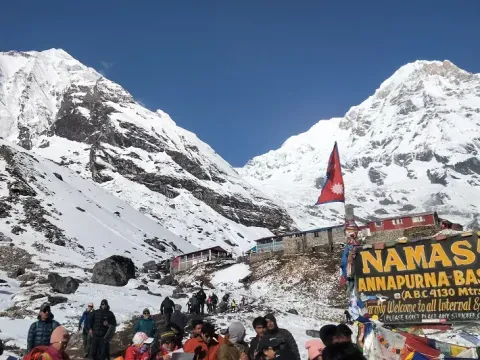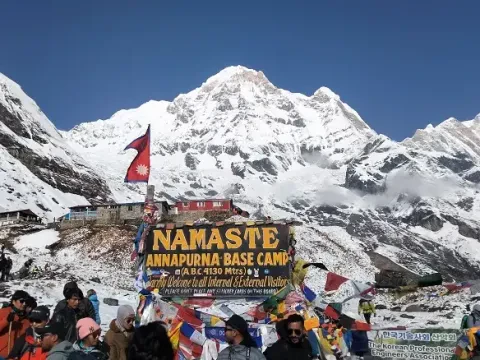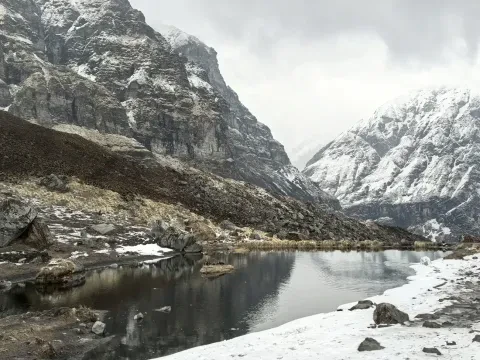
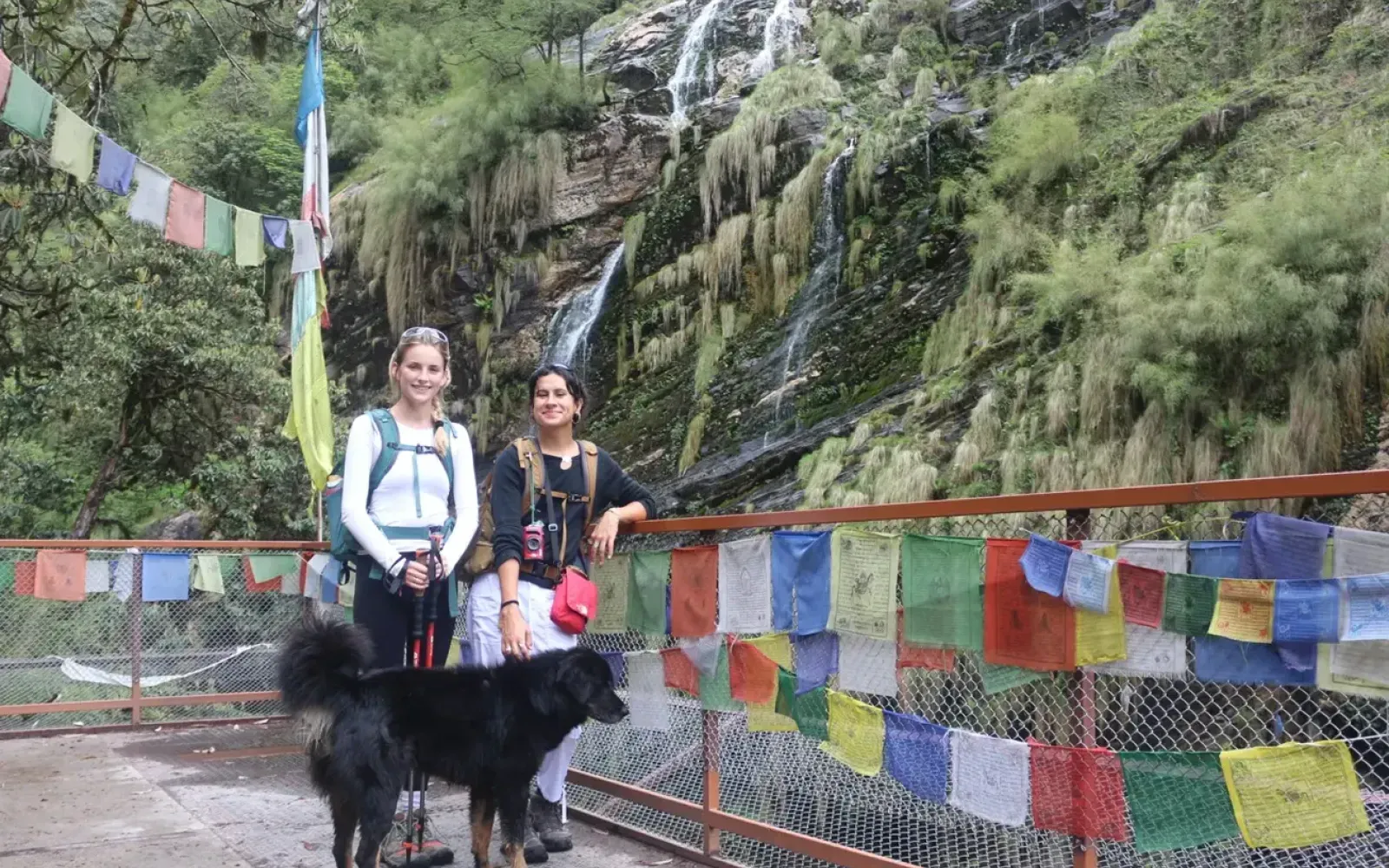
Here, you can really have an ideal trekking season for your Annapurna Base Camp Trek October journey by packing appropriately. But the skies in October are the clearest you will find for the ABC trip, so you can spend your days with amazing mountain views on your Annapurna Base Camp trek in October. However, the most important part is packing correctly, as the wrong clothes will make this journey freezing and miserable.
So, a perfect Annapurna Base Camp packing list can keep you warm, happy and safe while trekking. This will allow you to admire the beauty rather than be exhausted fighting the weather. Hence, smart packing keeps you on the safe and happy side.
Actually, what to pack for Annapurna Base Camp in October relies heavily on massive elevation change and rapid temperature drops. Smart preparation is what turns okay days into lifetime experiences. Below is a breakdown with practical insights based on the trail:
Why October Packing is Crucial:
| Category | Significance in October | Priority Level |
|---|---|---|
| Layering Clothes | Adapts to warm days and cold nights. | Essential |
| Warm Sleep Gear | Survives sub-zero night temperatures | Critical |
| Rain Protection | Shields from sudden and unexpected showers | Very Important |
| Sun & Eye Protection | Mitigates strong UV rays in clear air. | Must-Have |
Most importantly, pack right, and your ABC trek in October will be all you have dreamed of. Get ready for an unforgettable mountain adventure!
Meanwhile, temperatures can shift drastically while walking the Annapurna Base Camp trek depending on elevation. You’ll start at lower elevations and hike to cooler heights, with October bringing the autumn’s typically pleasant atmosphere with mostly sunny skies. In the lower areas, like Jhinu Danda, you’ll experience temperatures near the summery 20°C (68°F) throughout the day, but will fall dramatically at higher altitudes.
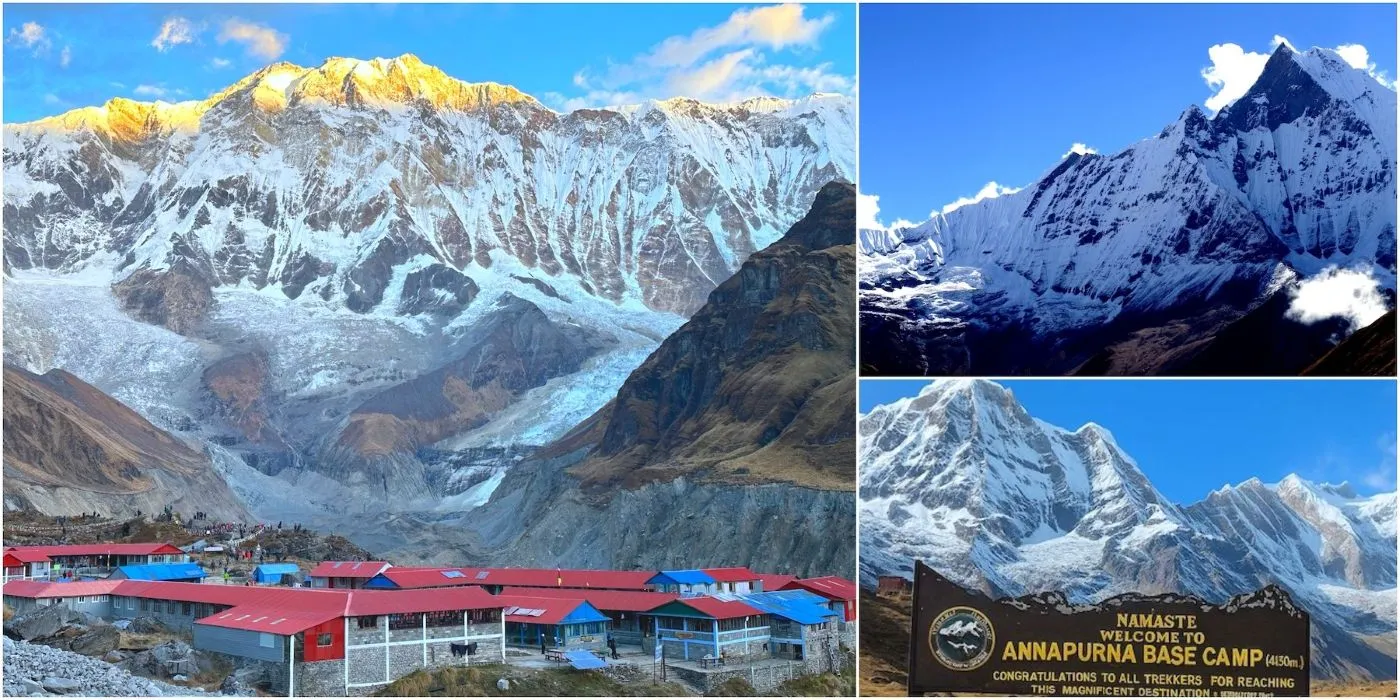
At 4,130 meters (13,551 feet), Annapurna Base Camp can drop below freezing in October, to as low as -10°C (14°F).
Actually, Annapurna Base Camp October weather makes preparation a must to prevent a trip that gets more chilling than you bargained for. Nevertheless, during autumn, you get favorable Nepal trekking weather, with less rainfall compared to the monsoons.
| Location | Day Temperature (approx.) | Night Temperature (approx.) | Expected Conditions |
|---|---|---|
| Jhinu / Lower Trail | 18°C - 22°C | 8°C - 12°C | Warm, bright days, mild evenings. |
| Sinuwa / Mid Trail | 12°C - 18°C | 2°C - 6°C | Cooler, some clouds possible in the afternoon. |
| Deurali / MBC | 5°C - 12°C | -5°C - 0°C | Chilly days, freezing evenings with potential wind. |
| Annapurna Base Camp (ABC) | 0°C - 8°C | -10°C or lower | Clear days, frigid and extremely cold nights. |
Key Weather Tips:
In conclusion, understanding the ABC trek temperature variations will ensure you pack smart. So you can enjoy every moment of your memorable October adventure!

Actually, cotton clothing creates major headaches high in the altitude. Whenever sweat erupts during your hike, cotton stubbornly clinging to your skin, absorbing moisture like a sponge, leading you into an uncomfortable zone of cold wind. Henceforth you soon catch a chill; that's not fun on your ABC trekking in October adventure!
Thus, stick to synthetic materials or wool; these draw sweat away from your skin and dry in minutes. Thus you stay comfy and warm all through your break for snacks and snaps! Indeed, this very precept is at the nucleus of assembling the best clothes for trekking in Nepal.
| Fabric Type | Perks | Application |
|---|---|---|
| Synthetics | Ultra-quick dry, incredibly light | Base layer essentials |
| Merino Wool | Odor resistance naturally | Base layer bliss, socks |
| Cotton | Banned entirely! | Absolutely never on trails! |
Critical Golden Rule Reminders:
By diligently following this moisture-wicking shirt advice, you'll trek with more power and greater happiness! Henceforth your Annapurna Base Camp packing list is going to be sharp and effective the whole way!
Meanwhile, the trail's lower altitudes are hot and brilliantly sunny, especially during October. Accordingly, you need a clothing setup that’s breezy and exceptionally comfortable for walking. Plus, the correct daytime wear protects you from the intense sun’s harsh rays.
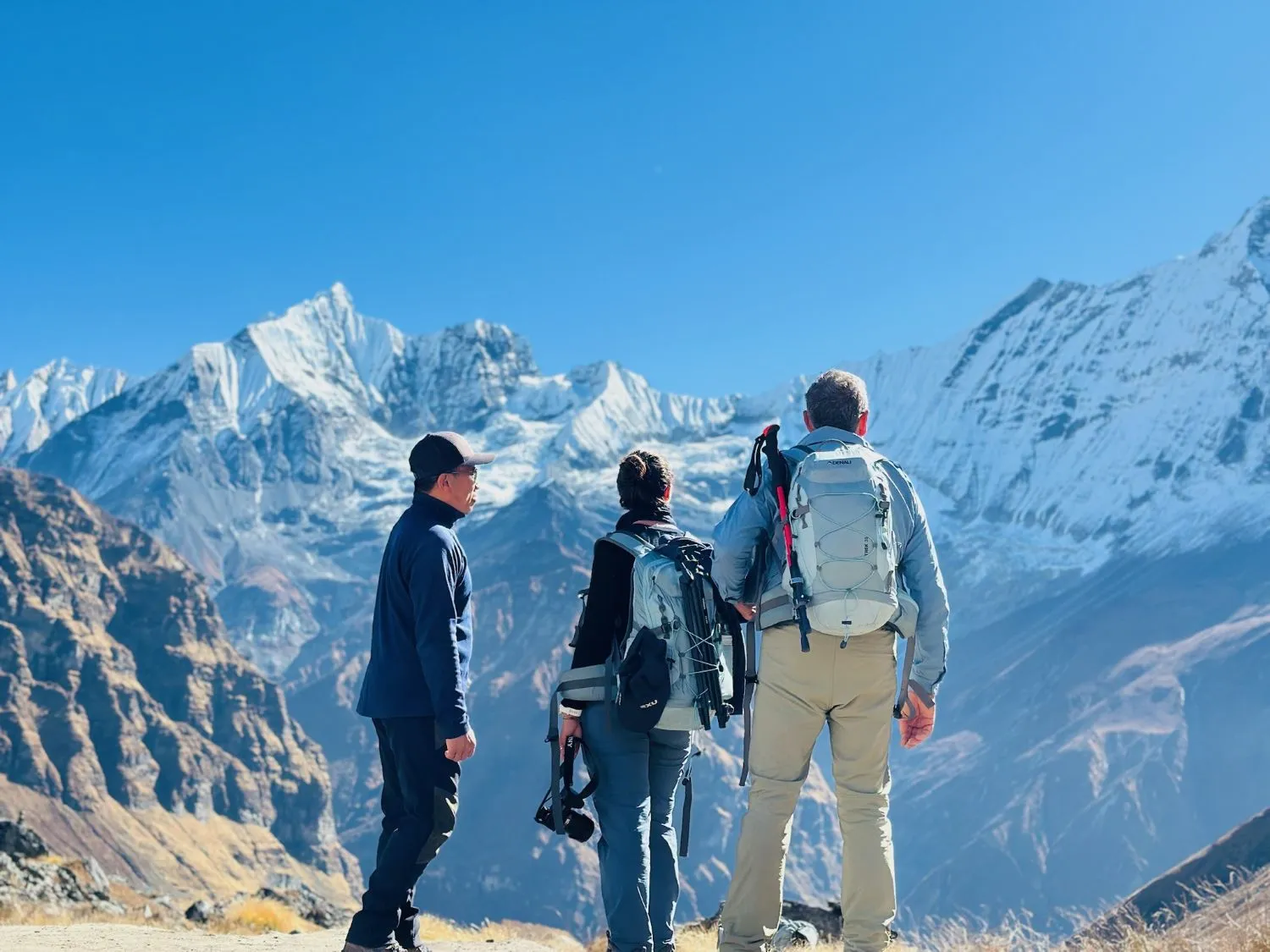
For the trek itself, grab some of those quick-dry t-shirts and some lightweight trekking pants that breathe exceptionally well. Convertibles pants with zips are brilliant here: detach the bottom half for maximum airflow as the day heats up! Thus, comfort is the name of the game all day long.
Here, remember to include sun protection gear, including a wide sun hat and polarized sunglasses. This way you shielded from the blinding October sun and kept comfy. Long sleeves also offer great UV protection and keep you cool under pressure!
| Gear Item | Key Features | Rationale |
|---|---|---|
| Hiking Shirts | Moisture-wicking, fast-drying | Keep your body cool & dry |
| Trekking Pants (lightweight) | Convertible zips, airflow | Easily adjustable to temp |
| Wide Sun Hat | Extra-broad brim | Faces and neck protection |
| Polarized Sunglasses | Complete UV protection | Reduce glaring sun on trail |
Hot Weather Packing Essentials:
As such, your clothes for sunny days won't just be practical but utterly comfortable. Therefore, this aspect makes your Annapurna Base Camp packing list comprehensive for every condition!
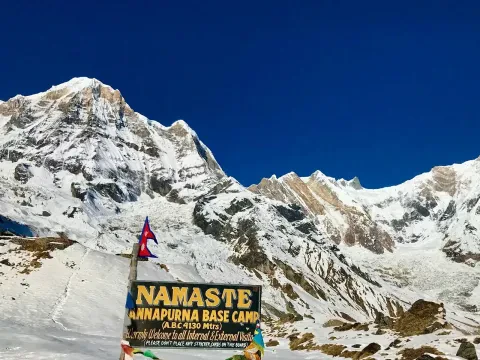
But the nights can get VERY cold on the Annapurna Base Camp Trek, and the unheated teahouses feel like ice boxes after sunset, particularly higher up at places like Deurali and ABC. Nights are usually freezing at these altitudes.
So here are the layers you really, really need for your nights to sleep well and remain at a tolerable temperature:
Thermal Base Layer Wool - Get one top and bottom. Put them on immediately after you've finished walking and changed out of your sweaty hiking clothes. This layer will trap your body heat and wick away any residual dampness from your skin.
Warm Fleece Sweater - This is your mid-layer. It adds more insulation and feels lovely and soft as you sit in the teahouse dining room eating dinner.
Thick Best Down Jacket for Nepal Trek with Hood - this is your crucial outer-layer. The windchill is significant up there. Wearing a warm, hooded down jacket will keep you insulated. It must be a really warm one.
| Layer | What You Need | Why |
|---|---|---|
| Base Layer | Wool thermal top & bottom | Wicks moisture & traps heat |
| Mid Layer | Warm fleece sweater | Insulation & comfort |
| Outer Layer | Thick, warm down jacket with hood | Wind protection & ultimate warmth |
| Sleeping Bag | Rated -10°C or lower | Essential for freezing overnight temperatures |
Extra Tips for Sleeping Warm:
In concluding lines, these layers will help you manage the cold weather high altitude easily and help you wake up refreshed for another glorious day rather than shivering and exhausted. Without proper layers, you really risk having a cold and miserable experience which would be a shame considering just how magical your night spent sleeping near Annapurna’s glaciers can be!

Actually, mountains can have crazy weather changes like that, even when it’s sunny. So, be prepared for rain or heavy wind – these can hit you fast, especially in higher regions. Don't even think about hitting those trails without something solid to keep the elements at bay, even if the season forecast says it's mostly dry. You’ll be super glad you did.
And no, we’re not just talking about a flimsy poncho. You need a proper waterproof hiking jacket. Look for something that is lightweight but also breathable, because you do not want to be sweating and feeling sticky inside a jacket, even on cooler days. Think waterproof and with a good hood, and most importantly, it needs to have sealed seams so no little raindrops can sneak through!
On top of that, an essential item to pack is a backpack rain cover. This is your little hero that saves your gear – clothes, camera, phone, everything – from those unexpected downpours. It makes a huge difference and ensures your valuables stay dry and ready to go when you need them. And if you’re prone to feeling a chill, a good windproof jacket for trekking makes a perfect additional layer on blustery afternoons as you ascend.
| Item | Top Features to Look For | Why it’s a Game Changer |
|---|---|---|
| Waterproof Hiking Jacket | Breathable material, an adjustable hood, sealed seams | Keeps you bone dry, no overheating, comfortable in changing conditions |
| Backpack Rain Cover | Lightweight, easily attachable, designed for your pack size | Protects all your belongings, saves you money and hassle from damp things |
| Windproof Jacket | Packable, effectively blocks cold air gusts | Essential for high altitude passes and windy ridges. |
| Waterproof Pants (optional, but recommended!) | Lightweight and easy to pull on/off, Gore-Tex or similar material | Adds another level of protection for your legs on wet and very windy days |
Pro Tips for Rain and Wind Gear:
In conclusion, Having these bits and bobs makes a massive difference. It’s not just about staying dry; it’s about confidence. Knowing you can handle whatever Mother Nature throws at you on your ABC trek in October between Jhinu Danda and Annapurna Base Camp really allows you to relax and enjoy the stunning scenery around you. Pack well and trek happy.
Now, let's talk feet. Because as you trek toward Annapurna Base Camp in October, you’re going to be dealing with a whole lotta, and I mean a whole LOTTA, steep stone steps, especially as you navigate your way through villages like Chomrong. Your feet will take a serious beating! That’s where some seriously good footwear comes into play. We're talking about preventing blisters the size of ping pong balls and ensuring your feet don’t ache so much you can’t stand them at the end of each day on your Annapurna Base Camp trek.
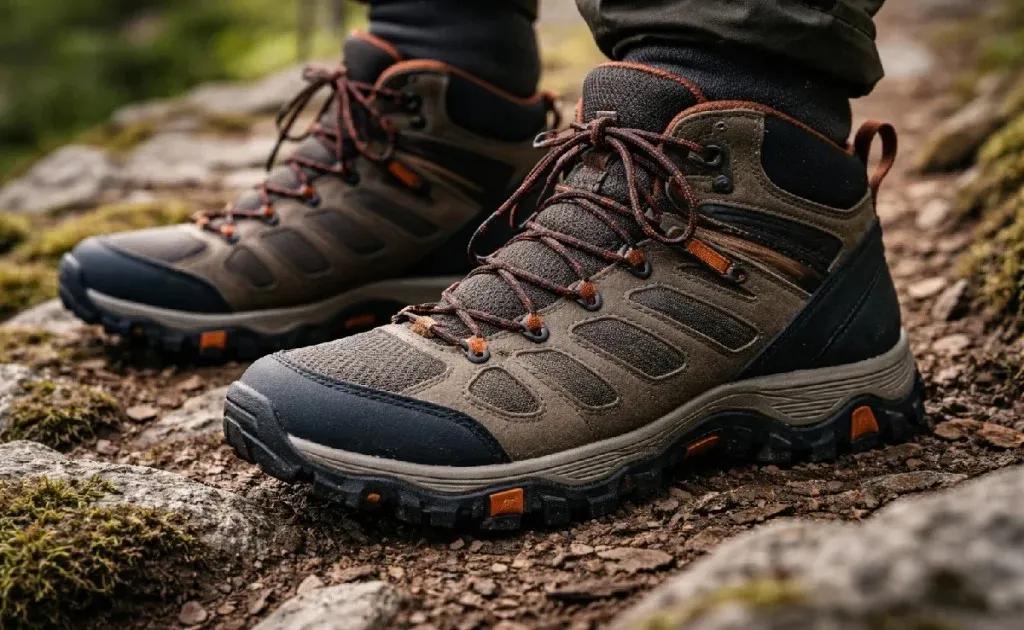
Also, make sure they’re waterproof! You’ll inevitably have to cross a few small streams, and having soggy socks is the worst. Oh, and a word to the wise: NEVER, and I mean NEVER, wear brand-new boots on the trek. Give them plenty of break-in time beforehand, or your feet will hate you.
They stay dry, manage odor (your trekking buddies will thank you!), and provide a lovely cushioning for your feet all day long. Trust me, they make a world of difference on those long days of climbing and descending. Aim to pack about three to four pairs, so you can swap out into fresh, dry socks every morning.
| Item | What to Look For (for Anapurna in October) | How It Will Help You on the Trail |
|---|---|---|
| Hiking Boots | Excellent ankle support, waterproof outer, durable and deeply treaded sole | Provides stability on uneven stone steps, prevents twists/sprains, keeps feet dry from streams. |
| Merino Wool Socks (x3-4 pairs) | Good cushioning, moisture-wicking properties, seamless design (if possible) | Prevents blisters, keeps feet warm when cool and dry when hot, reduces smell |
| Gaiters (optional, but very useful!) | Lightweight, waterproof and breathable material | Keeps dust, dirt, small stones, and water out of your boots, protecting your feet |
| Blister Kit | Assortment of plasters, antiseptic wipes, medical tape | Allows you to treat blisters or hot spots quickly on the trail, before they become serious. |
Foot Care Reminders for the Trail:
So, those trusty boots and comfy socks are your best friends on the trail to Annapurna Base Camp. They mean you can focus on soaking in the incredible views and enjoying the challenge of the ABC trek in October without being crippled by foot pain or, worse, blisters. Good feet are happy feet, and happy feet are what make an unforgettable adventure.
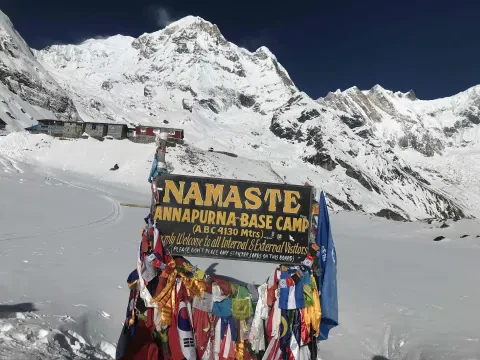
Here, you feel even better the minute you can take off those muddy, heavy boots you've been wearing for eight hours. Your feet deserve some room to breathe. And lucky you, you’ve just made it to the teahouse! After a long day on your feet, comfort in a teahouse is paramount.
Likewise, you can change into some lightweight camp shoes for trekking, like Crocs or easy-to-wear flip-flops. They slip off at the door before you track mud throughout the lodge, but it’s the little comforts that matter! Wear them around the teahouse in your clean, relaxing clothes.
Moreover, you'll want to have clothes specifically for lounging and sleeping to change into. They’ll make a huge difference in your enjoyment after hours of hiking uphill. Just pack a comfy T-shirt or tank top along with soft pants or leggings you can slip on when you first arrive at the lodge.
| Item | Key Features | Why It Helps |
|---|---|---|
| Camp Sandals / Crocs | Very lightweight, quick-drying material | Simple on-off after hiking boots |
| Lightweight, Loose Clothing | Made of breathable fabrics | Great for lounging |
| Wool or Thicker Cotton Socks | Absorbs sweat and keeps feet warm | Comfort and warmth on chilly evenings |
| Lightweight Jacket or Fleece | Easy to throw on for warmth | Keeps you comfortable in the dining hall |
Teahouse Comfort Tips:
In conclusion, these seemingly small things will make your evening feel absolutely heavenly, keeping you cozy and ready for a great night's sleep. You’ll begin to look forward to that moment when you can kick back and relax at the teahouse! You'll sleep much better after a day of arduous trekking, so be sure to pack these items and make the most of the relaxing hours you spend at teahouses during your ABC trek in October. These little items are just a part of having the best teahouse clothing Nepal has to offer.
Actually, October is the most popular trekking month, especially for trails like the Annapurna Base Camp (ABC) trek. The teahouses often run out of their few spare blankets, and those available might be a bit thin. Even when the blankets aren’t scarce, they usually won’t be enough to keep you truly warm at night.
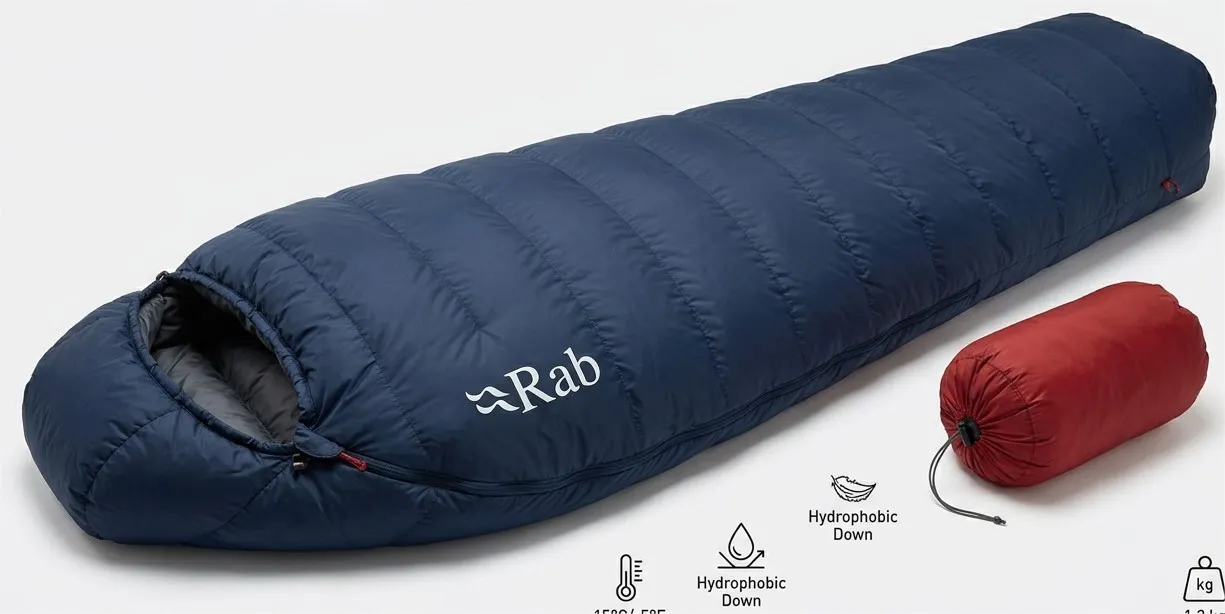
Therefore, your own sleeping bag is essential for the ABC trek. Ideally, you’ll want a four-season bag that can withstand temperatures down to -10°C (14°F). This will ensure you have a snug, peaceful sleep, even on frigid nights at the higher altitudes of the Annapurna Sanctuary.
In fact, it's crucial to remember that many unheated teahouses in Nepal do not have central heating. The only heat source you can count on is your own cozy bag. Waking up refreshed and ready to go the next day-not cold and exhausted-is a huge advantage. This is particularly important during the chillier parts of your trip to Deurali or Annapurna Base Camp.
| Item | Rating | Best For |
|---|---|---|
| Four-Season Sleeping Bag | Down to -10°C (14°F) | Trekking above 3,000 meters, October trips |
| Sleeping Bag Liner | Adds warmth and keeps the bag clean | Enhances comfort for all sleeping bag types |
| Warm Hat & Socks (Wool) | Essential for retaining body heat | Wear inside the sleeping bag for extra warmth |
| Inflatable Pillow | Compact and lightweight | Improves comfort and sleeping quality |
Sleeping Bag Tips:
In conclusion, Having your own warm sleeping bag truly enhances autumn trekking in Nepal. You'll find yourself eagerly anticipating the end of each day's hike, knowing a comfortable night's sleep awaits you. More importantly, a well-rested body is crucial for adapting to the altitude, and a quality bag ensures you get that much-needed rest. Your Annapurna Base Camp packing list should definitely include this vital piece of gear for a memorable October trek.
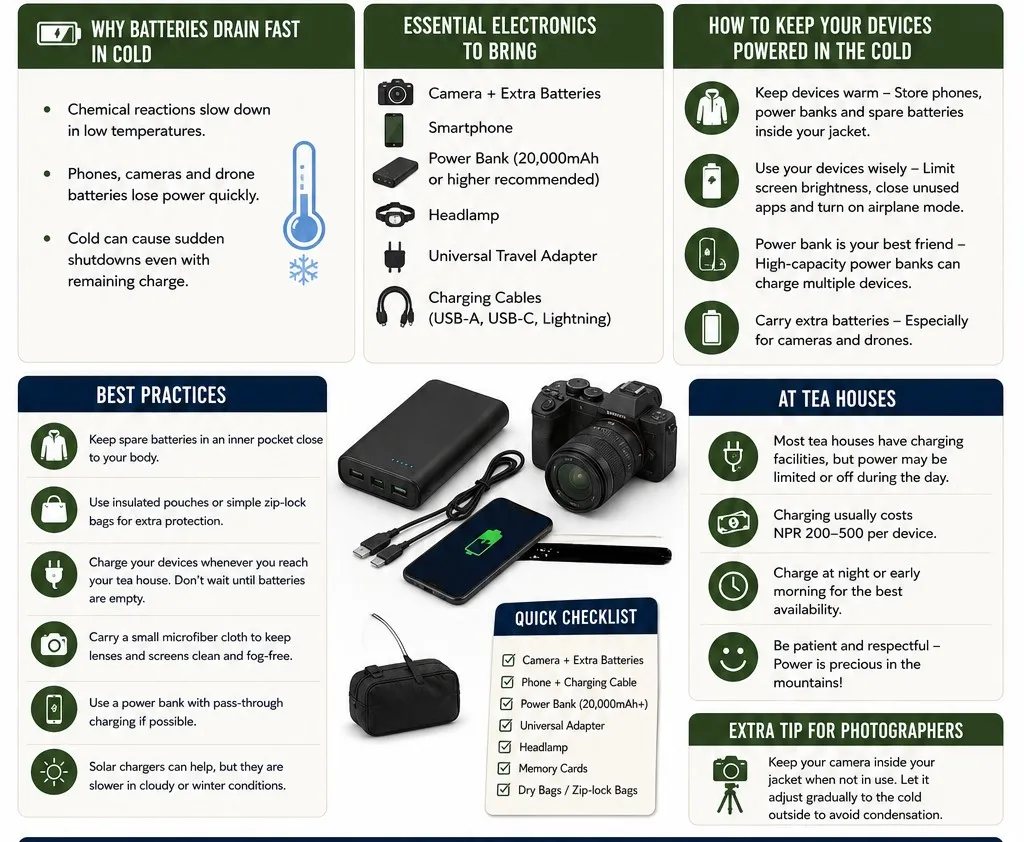
Actually, cold air drains your phone and camera batteries very fast at high altitude. So you need some smart strategies to maintain them throughout your ABC trek in October. It is important to note that teahouses charge $2 to $5 USD per hour to charge devices! This makes keeping things powered a critical part of your packing list.
Importantly, invest in a power bank of at least 20,000mAh capacity. This should be your most essential electronics item, as it gives you numerous full charges. This way, you can snap photos to your heart’s content, while also staying in touch with loved ones.
Also ensure that you keep all your gadgets in warm pockets, preferably your jacket or sleeping bag overnight. Keeping them warm also ensures the batteries hold charge longer in the cold. For any camera battery cold weather needs, you should always carry at least two spare batteries for shooting any incredible early-morning sunrises.
| Item | Recommendation | Why It Is Useful |
|---|---|---|
| Power Bank | 20,000mAh or more | Allows for multiple charges on the trail |
| Spare Camera Batteries | Extra batteries for shooting | Ready for the incredible sunrise views |
| Charging Cables | An extra-long one with protective case | For ease of use in teahouses |
| Small Solar Panel | Optional | Backup power on sunny days |
Power Tips:
Meanwhile, applying these techniques will allow your electronic devices to survive and even thrive on your trek. You’ll also avoid paying out expensive fees to teahouses and can focus on capturing the beauty of the Annapurna region on your October journey.
In conclusion, you can rest easy, knowing that your devices are functioning as they should. These simple tips are essential for a complete and responsible trekking gear list, allowing you to create unforgettable memories without the hassle.
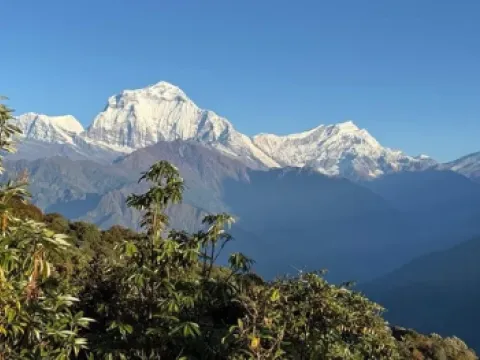
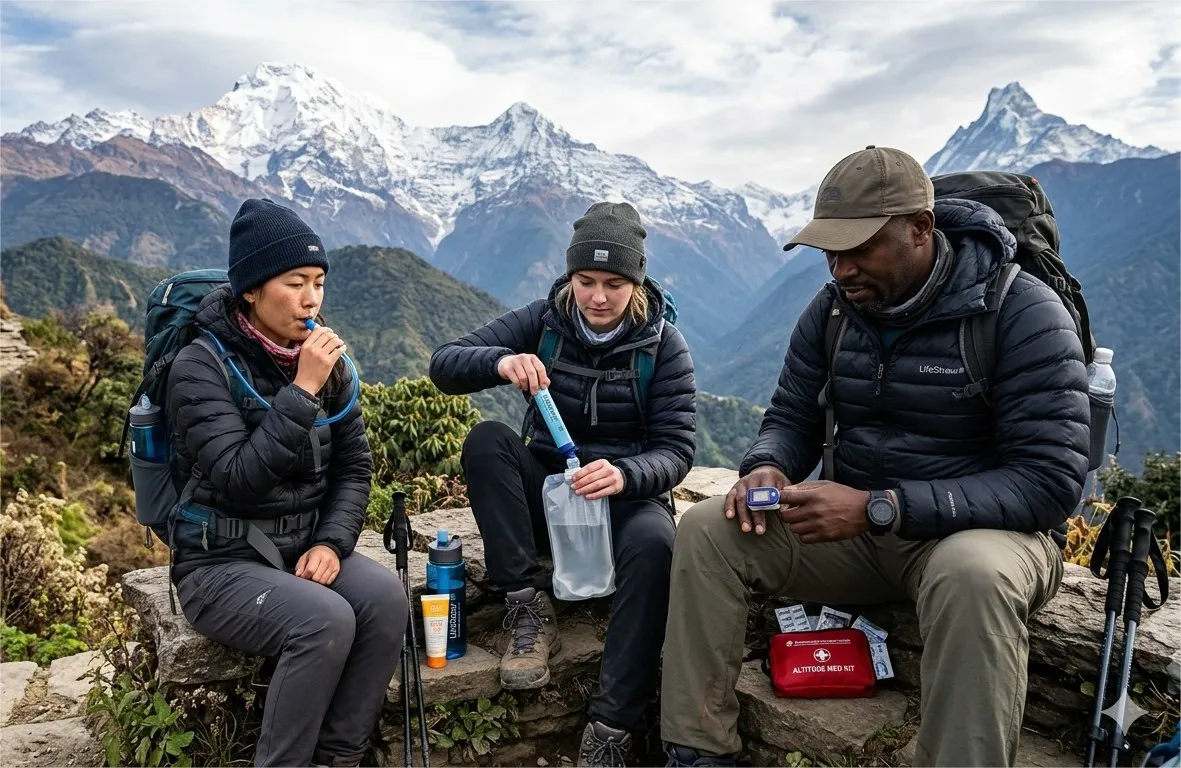
Actually, staying hydrated is crucial on the Annapurna Base Camp trek, and you'll need clean water throughout. Importantly, to protect the environment, plastic bottles are strictly banned within the Annapurna Sanctuary, so be prepared.
Likewise, it’s essential to pack a couple of reusable water bottles and a good supply of water purification tablets Nepal. This allows you to drink safely from streams and taps in the teahouses and significantly reduces the cost of your trek. These tablets are very effective.
Moreover, a comprehensive but compact trekking first-aid kit should contain items like band-aids, blister plasters, pain relief, and altitude sickness medicine Diamox if your doctor has prescribed it. It’s important to address any issues immediately before they escalate. Always remember to keep drinking plenty of water, even when you don’t feel thirsty.
| Item | Purpose | How to Use |
|---|---|---|
| Reusable Water Bottles | Minimum 2 liters capacity | Refill at teahouses |
| Water Purification Tablets | Makes water safe to drink | Follow provided instructions carefully |
| Blister Plasters | Treating foot friction | Apply at first signs of rubbing |
| Basic First Aid Kit | Small wounds, minor pains, cold symptoms | Keep easily accessible |
| Altitude Medicine (Diamox) | May help with headache, breathing, and swelling | Use only as per doctor’s advice |
Health and Hydration Tips:
In conclusion, these practical items will help ensure your journey through the Annapurna Base Camp is a safe and healthy one. You'll not only save money and help preserve the pristine beauty of the region, but also be better equipped to handle any unexpected situations.
When you approach your trip with careful preparation in mind, you feel more secure, and that is reflected in your overall experience. These small but important additions ensure that your Annapurna Base Camp packing list is one that sets you up for success, allowing you to fully appreciate the magnificent scenery and cultural encounters.
Actually, it goes without saying that packing light significantly lightens your load on the mountain, letting you walk a lot easier and enjoy the trek even more. " Less is more " truly goes for a trek into the mountain. Do not carry anything which does not support in walking more and better.
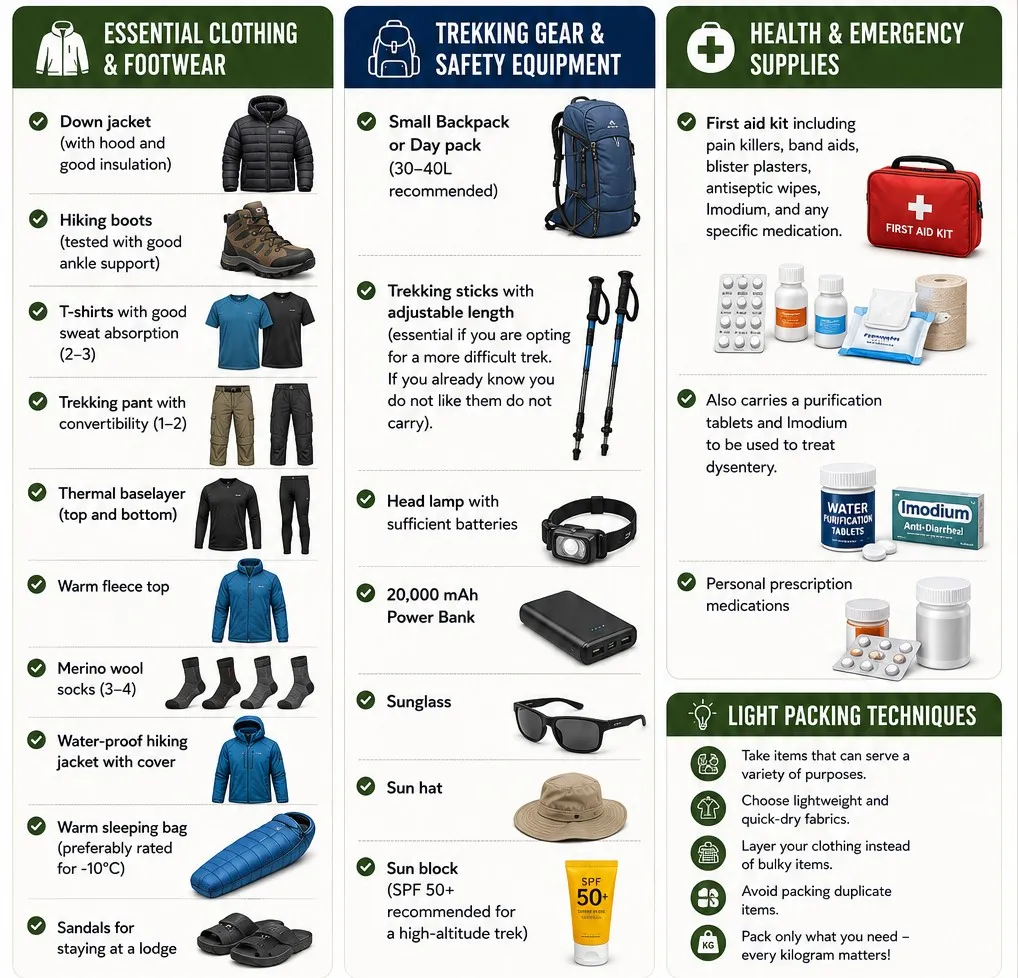
Here, following is the ABC trek packing list in October so that you will do all the preparations properly, check everything at home.
Now you are ready.
Final Packing List :
Warm fleece top :
Trekking sticks with adjustable length(essential if you are opting for a more difficult trek. If you already know you do not like them do not carry).
Small Backpack or Day pack.
First aid kit including pain killers, band aids, blister plasters, antiseptic wipes, Imodium, and any specific medication. Also carries a purification tablets and Imodium to be used to treat dysentery.
Sunglass, sun hat, sun block(SPF 50 + recommended for a high-altitude trek )
Head lamp with sufficient batteries
Light packing Techniques :
With proper preparation like these and a will to pack smartly, you are free to wander amidst some breathtaking views, warm local people, and some remarkable experiences without feeling weighted down. With ideal weather in October during Annapurna Base Camp Trek, there is nothing stopping you to enjoy the mountains.
Last Minute Local Tips For October trek booking,
Due to increased numbers during October months, booking rooms in trek trail in prior in needed. Thus for having smooth journey, in advance booking in with license and expert local trekking company like Haven Holidays Pvt. Ltd. would be great. A local company will provide guide who knows the mountain very well and he is responsible to carry heavy gear along with their porter to keep your duffel bag. So you have just have the day bag pack on you and trek.
So, now you’re well on the way to undertaking an amazing Annapurna Base Camp Trek in October. Travel safely, trek on and have fun!
Contact us and book your Annapurna Base Camp Trek and enjoy it with our professional team.

Q1. Do I need a heavy down jacket for the Annapurna Base Camp Trek in October?
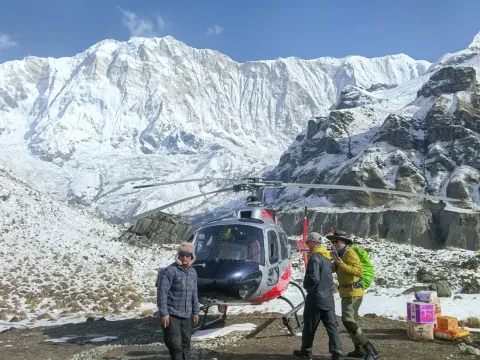
Yes, you definitely need a heavy down jacket. Nighttime temperatures can drop well below zero, especially at higher elevations like Machhapuchhre Base Camp and ABC, even if you fly back by helicopter.
Q2. Can I take a big, heavy suitcase on an Annapurna Base Camp trek with helicopter return?
No. For the helicopter return, you are limited to a 15 kg flexible duffel bag. Use a compact, foldable duffel bag instead of a hard-shell suitcase to stay within the strict weight limit.
Q3. Which thermals are best for an Annapurna Base Camp Trek in October?
Merino wool thermal base layers are the best choice. They effectively wick away moisture during the day and provide excellent warmth at night. Layering with merino wool ensures comfort throughout the trek.
Q4. Do I need windproof and waterproof outer shells when packing for October?
Yes. A quality windproof and waterproof outer jacket (and trousers) is essential. Himalayan weather can change rapidly, with strong winds common on exposed sections of the trail.
Q5. What kind of footwear is recommended for Annapurna Base Camp Trek in October?
Pack sturdy, well-broken-in, waterproof hiking boots with good tread. They provide excellent grip on the many stone steps and uneven terrain, making both the ascent and overall experience safer.
Q6. Should I bring a 4-season sleeping bag for ABC Trek in October?
Absolutely. A 4-season sleeping bag rated to at least -10°C is highly recommended. Teahouses at higher altitudes are not heated, and good sleep is vital during an October trek.
Q7. Do I need trekking poles for an Annapurna Base Camp Trek with helicopter return?
Yes. Adjustable trekking poles are strongly advised. They offer stability on steep climbs and help protect your knees, especially on the way up to ABC (4,130 m) before your helicopter flight.
Q8. Is a sun hat essential for Annapurna Base Camp Trek in October?
Yes. A wide-brimmed sun hat is important. October brings clear skies and intense high-altitude sunlight, so protecting your face and neck from sunburn is crucial.
Q9. What type of gloves should I carry for ABC Trek in October?
Bring two pairs: lightweight liner gloves and warm, windproof outer gloves. This combination keeps your hands comfortable during cold mornings and evenings.
Q10. How many pairs of hiking socks do I need for Annapurna Base Camp Trek?
Pack at least four pairs of thick woolen or synthetic hiking socks. Rotating fresh pairs daily helps prevent blisters on the long hiking days.
Q11. Is a headlamp necessary for Annapurna Base Camp Trek in October?
Yes. A bright LED headlamp is essential for early morning hikes (e.g., sunrise at base camp), navigating teahouses after dark, and general use during the trip.
Q12. Should I wear sunglasses during Annapurna Base Camp Trek in October?
Absolutely. Polarized UV-protection sunglasses are a must. Intense glare from snow and bright sunlight at altitude can cause snow blindness.
Q13. What water purification method do you recommend for Annapurna Base Camp Trek in October?
Carry water purification tablets or a portable filter bottle. Staying well hydrated is critical for acclimatization and preventing altitude sickness.
Q14. Do I need a quick-drying towel for Annapurna Base Camp Trek in October?
Yes. A lightweight microfiber towel is ideal. It dries quickly in the cold, high-altitude air, unlike regular towels.
Q15. Are convertible trekking pants a good choice for Annapurna Base Camp Trek in October?
Yes. Convertible (zip-off) trekking pants are practical. They let you adapt quickly to changing temperatures from lower subtropical areas to high alpine zones.
Q16. What electronic devices are essential for Annapurna Base Camp Trek in October?
A high-capacity portable power bank is a top priority. Cold temperatures drain batteries quickly, so keep your phone and camera charged for photos and navigation.
Q17. Are wet wipes useful for Annapurna Base Camp Trek in October ?
Yes, very. Hot showers are limited and expensive at higher elevations. Wet wipes offer a convenient way to freshen up.
Q18. Should I pack emergency altitude sickness medication for Annapurna Base Camp Trek in October?
Yes. Carry Diamox (acetazolamide) along with a basic first-aid kit. Being prepared helps manage symptoms quickly and safely.
Q19. How much cash should I carry for Annapurna Base Camp Trek in October?
Bring sufficient Nepalese Rupees (NPR). Card payments are rarely accepted in teahouses, especially higher up. Cash is needed for meals, hot drinks, Wi-Fi, and other expenses.
Q20. Do I need high-energy snacks for Annapurna Base Camp Trek in October?
Yes. Pack snacks like protein bars, nuts, and dried fruit. They provide quick energy between meals during long hiking days.
Our travel experts are ready to assist you with any questions.
Send us a message.Have a question before you book? Send your enquiry below and our travel experts will get back with the required information.