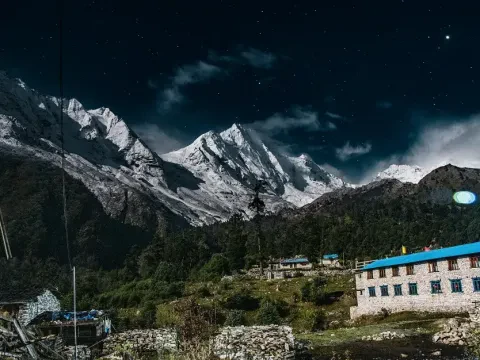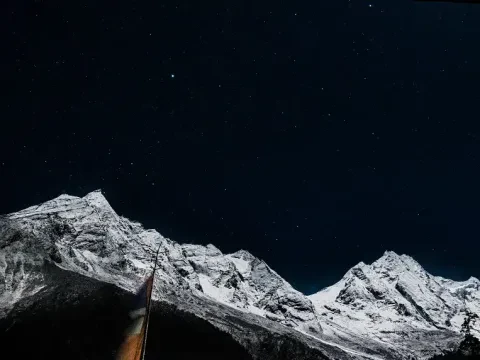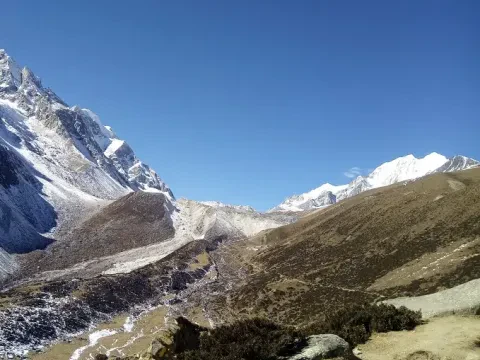
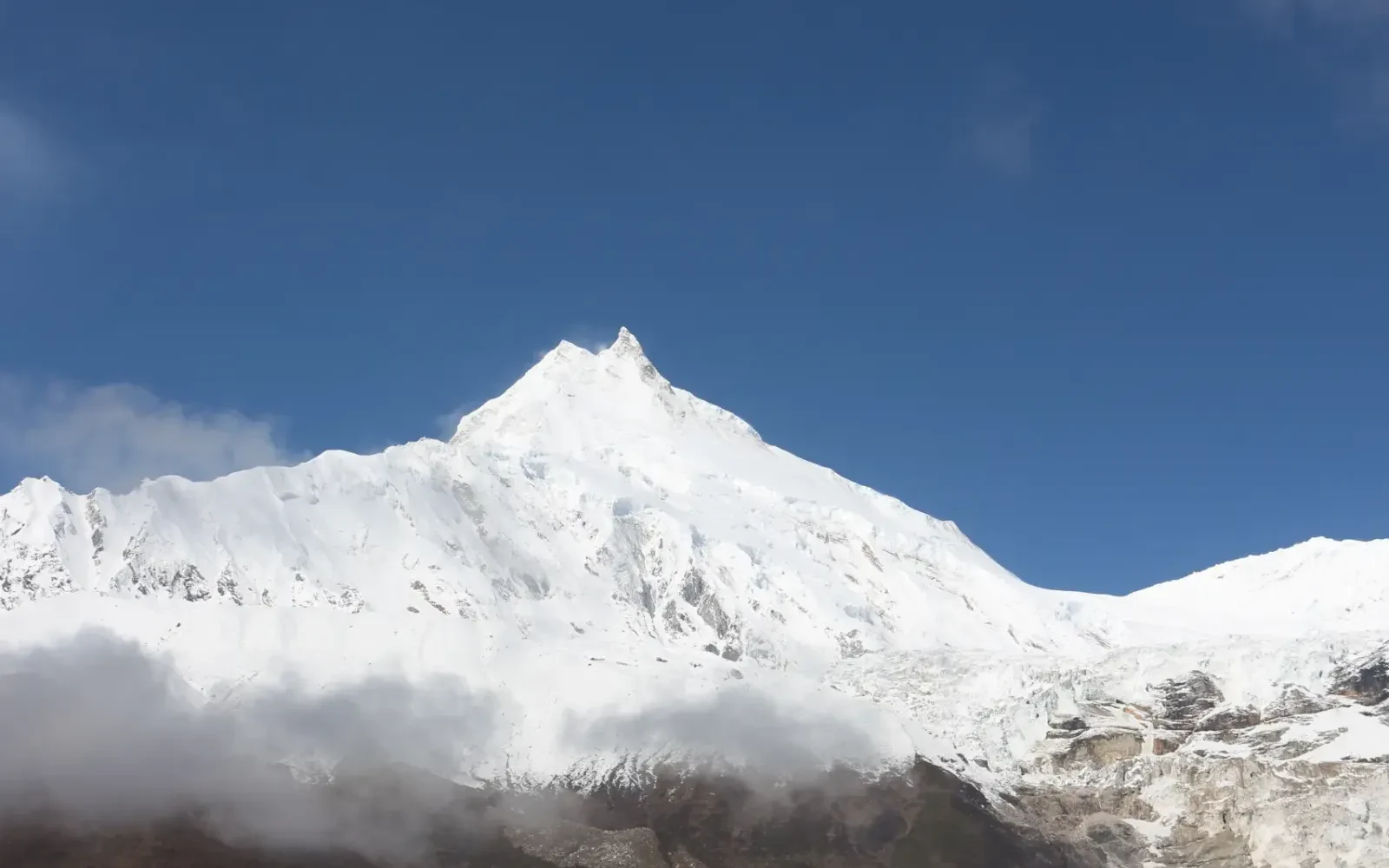
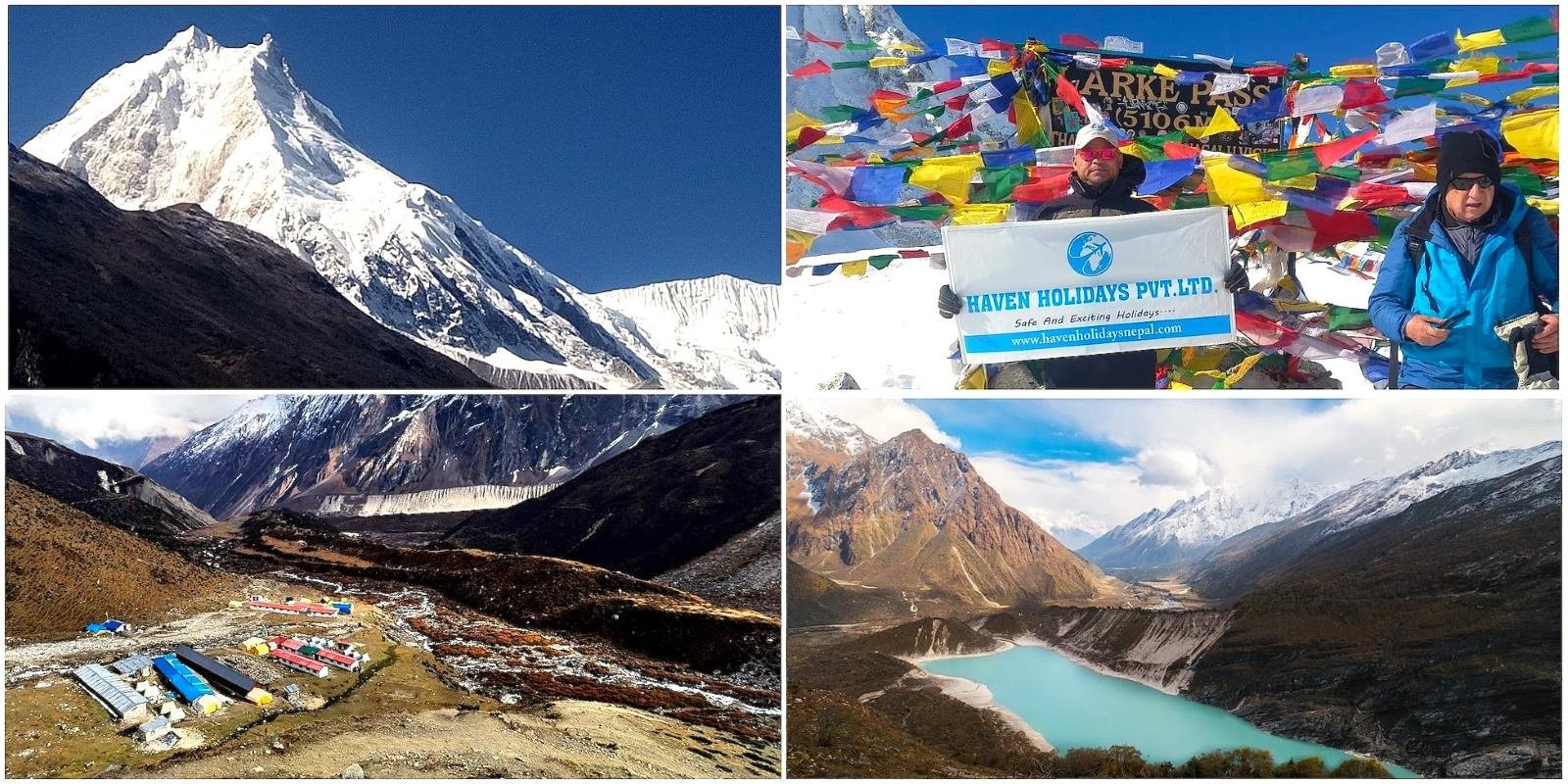
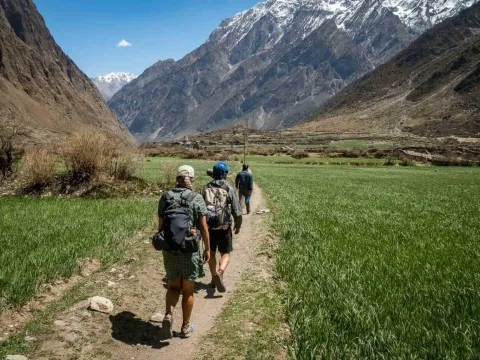
Imagine yourself taking a short Manaslu Circuit Trek and looking up at the great Manaslu 8,163 m. The snow-capped ridges rise steeply and majestically over the distant and remote Himalayan valley. From here, your trail leads you up and over the dramatic Larke Pass at 5,106 m.
Meanwhile, the 12-day Manaslu Circuit Trek makes a wonderful short Himalayan trek. This mountain circuit offers dramatic landscapes, Tibetan-style villages, ancient monasteries, and passes over the high altitude rocky trails.
Compared to the classic 14-18 day Manaslu Circuit, the short version is highly demanding and requires some careful planning. This is because to shorten the hike, some days are spent driving or walking long distances.
Therefore, a good level of fitness and previous trekking experience are essential.
Moreover, the Manaslu Circuit hike starts in the capital city of Kathmandu situated at 1,400 m. From there, it winds its way up through the narrow gorges of the Machha Khola, over the ridges of Jagat, Deng, and Namrung and through the beautiful village of Samagaon and Dharamsala on your way to the Larke Pass at 5,106 m. The trail then drops down towards Bhimtang.
Here, this article will provide you with all the details of the 12-day Manaslu Circuit Trek, including the elevation, walking hours, distance, difficulty level of the trail, costs, permits needed, accommodation, and other essential details.
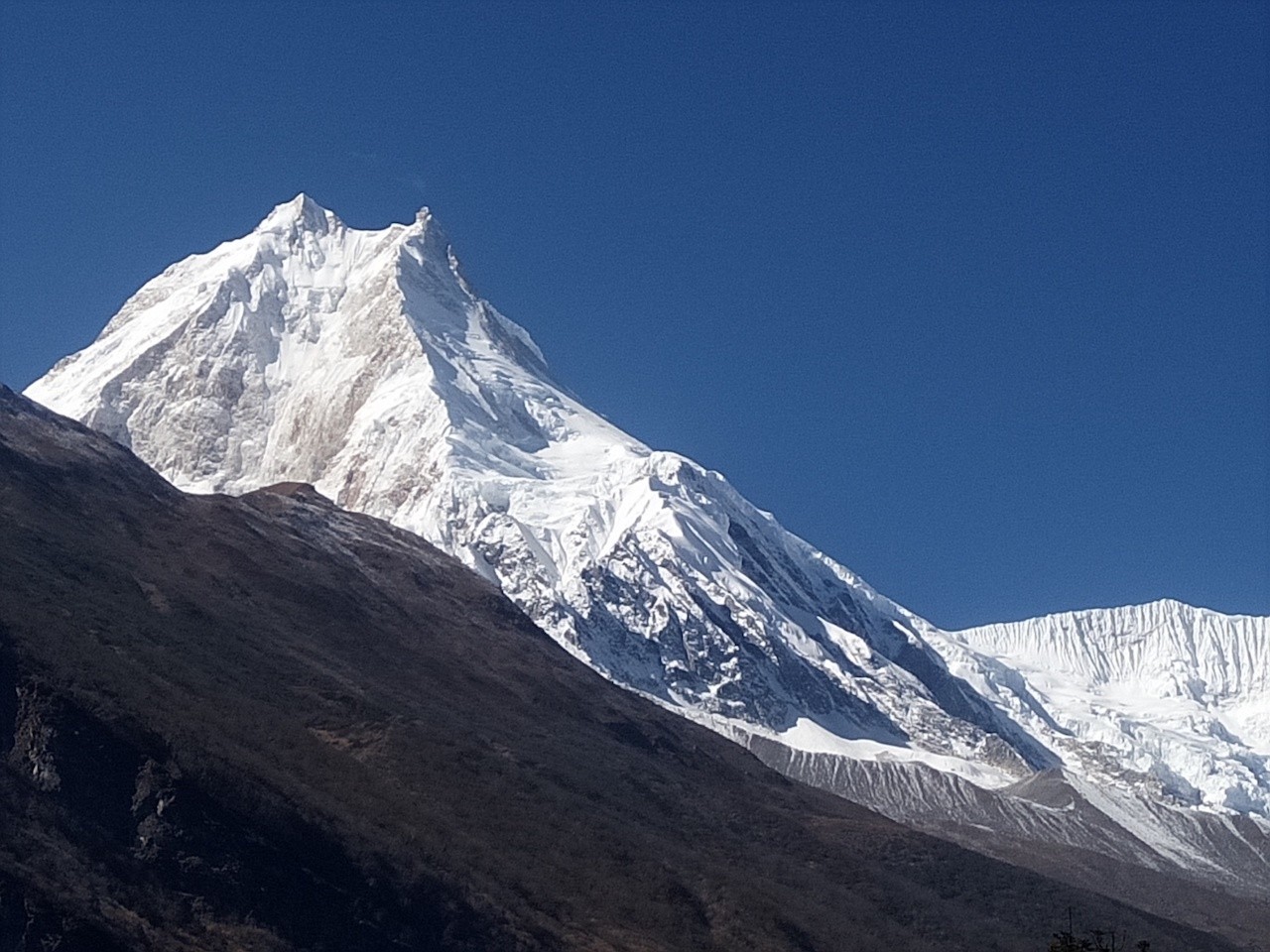
The 12-day Manaslu Circuit Trek is a fantastic option to complete the circuit in a short time. The trail offers the main attractions of the longer Manaslu Circuit, but without the extra days of resting and driving around.
However, the short version does not mean an easy one. You will need to have a good level of fitness, as the trek is demanding, and you will have to walk long distances on some days.
In addition, the dramatic Larke Pass crossing requires a good level of acclimatization. Therefore, you should prepare well for the short Manaslu Circuit Trek.
| Feature | 12 - day Short Trek | Classic Manaslu Circuit |
|---|---|---|
| Duration | 12 days | 14-18 days |
| Pace | Moderate | Slow |
| Acclimatization | Moderate | Good |
| Highest Point | Larke Pass 5,106 m | 5,106 m Larke Pass |
| Mt. Manaslu | 8,163 m | 8,163 m |
| Main trekking valley | Manaslu | Manaslu |
| Cultural experience | Good | Good |
| Fitness level | High Fitness is Required | Moderate |
| Best for | Fit and experienced | For moderate trekkers |
The area around Manaslu is one of the most isolated regions in the Himalayas. The Manaslu Circuit trail takes you through narrow gorges, steep cliffs, waterfalls, and glaciers.
As you climb higher, the trail offers great views of snow-capped peaks and alpine ridges. Even more dramatic are the views around Samagaon, which is situated at around 3,500 m.
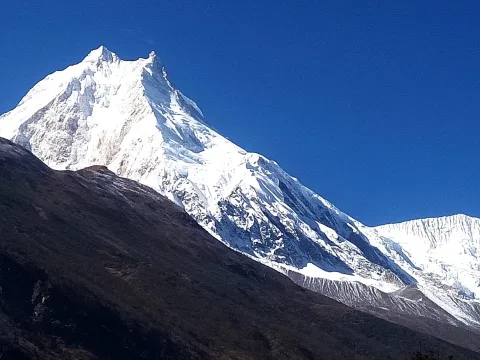
Manaslu at 8,163 m will accompany you throughout the trek. This impressive mountain peak dominates the ridge over the Manaslu region, providing fantastic views, especially from Namrung and Samagaon. The early morning view of Manaslu is particularly worth seeing.
In addition, you will also enjoy the view of other Himalayan peaks such as Himalchuli, Ngadi Chuli, and Ganesh Himal.
Larke Pass at 5,106 m is the highlight of the Manaslu Circuit Trek. As with most high mountain passes, you will need to wake up early to tackle Larke.
On the way up, the trail can be quite challenging, especially if there is snow on the path. Furthermore, the wind can be quite strong on the pass.
Nevertheless, the efforts are rewarded with great views of the Himalayan peaks from the summit. From the top of the pass, you will have great views of the Manaslu region.
Tibetan Buddhist traditions are particularly evident in the upper Manaslu region. For example, you will notice the unique stone buildings in many traditional villages.
In addition, prayer flags are perfectly blended with the mountainous landscape, creating a unique view. You will also find mani walls and chortens along the trail.
Another highlight of the circuit is the ancient monasteries, such as Samagaun Monastery. Samagaon village at 3,500 m is considered one of the best places to witness traditional Tibetan customs and Buddhist culture.
Compared to the Everest Base Camp trek, the Manaslu Circuit is much less popular among hikers.
Similarly, it is less crowded than the Annapurna Circuit trekking trail.
In addition, because it is a restricted area, only a limited number of people are allowed to enter Manaslu Conservationa Area.
Nevertheless, the trail can get busy during peak season. Thus, if you want to have a more peaceful experience, it is best to visit Manaslu region outside the peak season.
In addition, choosing a local tour operator that understands the area well is even better.
The Manaslu Circuit Trek 12-day version is suitable for anyone who is already experienced in trekking. It is essential to be prepared for long walks, as many days require you to walk for 7-9 hours per day. In addition, you may also have to climb steep mountain passes.
Furthermore, you will also have to acclimatize well, as you will spend several days above 4,500 m. Thus, a good level of fitness is needed, in addition to previous Himalayan trekking experience.
If you are new to Himalayan trekking, you may want to consider a longer version of the Manaslu trek.
Elevation on the 12 - day Manaslu Circuit Trek Trail
| Place | Approx. Elevation |
|---|---|
| Kathmandu | 1,338 m |
| Machha Khola | 900 m |
| Jagtal | 1,340 m |
| Deng | 1,860 m |
| Namrung | 2,660 m |
| Lho | 3,180 m |
| Samagaon | 3,500 m |
| Samdo | 3,875 m |
| Dharamsala | 4,450 m |
| Larke Pass | 5,106 m |
| Bhimtang | 3,590 m |
As you can see from the above table, the 12-day version of the Manaslu Circuit will take you from the relatively warm lowlands of Kathmandu to the high altitudes of the Manaslu region.
From there, you will have to tackle the even higher Larke Pass. Thus, it is essential to pace yourself well and acclimatize properly.
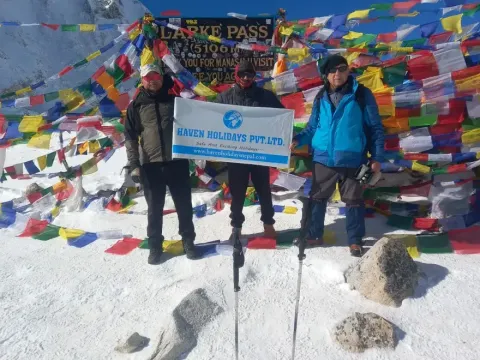
Choose the shorter and faster version of the Manaslu Circuit if you have limited time.
Furthermore, select the 12-day trek if you have good trekking fitness. In addition, this version is also good for more experienced Himalayan trekkers.
However, do not choose it only because you have little time. A longer version of the trek allows you more time to relax and explore the region. It also provides more flexibility, especially if you feel tired.
Nevertheless, for those with previous Himalayan trekking experience, the 12-day version of the Manaslu Circuit Trek offers an excellent opportunity to witness the dramatic landscapes and remote villages of the Manaslu region.
Furthermore, it will also allow you to experience the wonderful 5,106 m Larke pass, where you will enjoy great views of the Himalayan peaks.
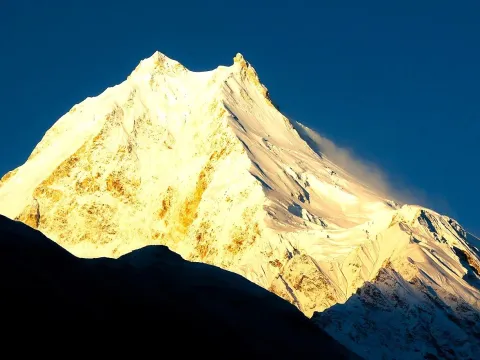
The 12-day Manaslu circuit trek is a moderate to challenging hike. It is more demanding than most short Himalayan treks due to relatively long days, significant elevation gain, rocky trail sections, and the Larke Pass crossing at around 5,106 m high.
Here, note that some hikers may encounter a similar height of 5,160 m, depending on the source or specific passage.
Meanwhile, the 12-day itinerary is particularly demanding due to its compressed nature. Thus, hikers should have good stamina and endurance. Previous high-altitude trekking experience is also beneficial.
Manaslu Trek Difficulty Overview :
Why the12-day Manaslu Circuit version of the trek is demanding
There is also a significant elevation gain, for example:
Here, Larke Pass is the highest point of the Manaslu circuit trek and one of the most prominent reasons why the 12-day version can be challenging.
Meanwhile, the crossing begins at a relatively high elevation and is frequently very cold, potentially with snow-covered patches and powerful winds that can affect even the fittest travelers.
In addition, since the air contains significantly less oxygen at higher altitudes, it becomes more difficult to breathe.
Therefore, hikers should be prepared for these potential challenges when crossing the pass.
You do not have to be in excellent shape for the Manaslu trek.
However, a good level of general fitness is essential, and it is always better to overestimate than underestimate the required level.
For example, if you want to attempt the 12-day Manaslu circuit trek, you should be able to walk 8-10 km per day without serious strain and be fit enough to hike several hours uphill. Furthermore, if you are not used to stair climbing, this can be quite a challenge for your knees, especially on the descent.
Thus, practicing stair climbing is critical, and hiking up and down hills will be an even better preparation.
In addition, it is helpful to do loaded walking to simulate the actual trek. A good starter pack would be a backpack weighing 5-8 kg; you can add more weight as you get fitter and closer to the trek start date. On the other hand, it is better to avoid overestimating your abilities and starting too intense an exercise regimen.
Some training recommendations for the 12-day Manaslu trek:
As you get closer to your trek, gradually add more walking time to your training to better acclimate to multi-day walking without breaks. This will help you get ready for the consecutive walking days in the 12-day Manaslu circuit trek.
Previous hiking experience and acclimatization to altitude :
For the 12-day itinerary, it is helpful but not mandatory to have previous trekking experience at elevations above 3,000 m.
If you have already been hiking at comparable altitudes, you have an idea of how your body reacts to higher elevations and understand how to pace yourself better.
At the same time, please note that even seasoned hikers can suffer from altitude sickness, so it is critical to be aware of the symptoms.
In general, if you have not been exposed to high altitude for a while, give yourself enough time to get used to the conditions again.
Although it is not impossible to complete the 12-day version of the Manaslu circuit trek without prior hiking experience, this type of multi-day adventure requires adequate training.
If you have not done much outdoor walking before, think carefully about such a trek. A 14-18 day itinerary is more appropriate for untrained or minimally trained hikers and a safer option for those who are unsure of their abilities. It also gives more flexibility if unexpected bad weather occurs, which can delay the trek.
In addition, a slower pace provides more opportunities for acclimatization to high altitude, which is critical for such a trek.
Thus, a 14-18 day itinerary is a safer option, especially for novice hikers.
The best time to go trekking in Manaslu is during spring and autumn because of the excellent weather, clear mountain views, and great trekking conditions.
Meanwhile, Autumn is from September to November, and spring is from March to May. Autumn months are preferred by most hikers because the skies tend to be the clearest after the rainy season.
However, springtime is also a fantastic opportunity to experience Manaslu Circuit trekking due to the blooming rhododendron forests and pleasant weather.
| Season | Months | Weather | Trail Conditions | Best time for Recommendation |
|---|---|---|
| Spring | Mar – May | Mild and clear | Generally good | ⭐⭐⭐⭐⭐ |
| Autumn | Sep – Nov | Clear and stable | Excellent | ⭐⭐⭐⭐⭐ |
| Winter | Dec – Feb | Very cold | Snow possible | ⭐⭐ |
| Monsoon | Jun – Aug | Wet and cloudy | Muddy/slippery | ⭐ |
Autumn is the most popular season for visiting Manaslu. After the rainy season, the trails in Manasla remain damp, but the mountains are covered in greenery.
In fact, October is a fantastic time to witness clear mountain views, while in November, it gets cold and snowy at night. The 8,163-meter Mount Manaslu is exceptionally beautiful around this time of year. The Larke Pass is also nice to trek through in autumn.
On the other hand, October is a busy month for treks, so be sure to plan ahead. Another advantage of visiting Manaslu in autumn is that you can expect great weather throughout the 12-day trek.
In spring, the temperature is relatively mild, so the mountain trails are not as hot as they can be in summer. It is also a great opportunity to see blooming rhododendron forests.
Moreover, the views of the Manaslu peaks are generally clear, especially on cloudy mornings.
Thus, both autumn and spring are great times for a Manaslu Circuit trek.
Unlike that, Winter in Manaslu is extremely cold, and heavy snowstorms are frequent. The cold weather and snowstorms make the Larke Pass crossing exceptionally challenging.
Besides, there might not be enough shelter or food in remote mountain villages.
Actually, these are some of the reasons why the Manaslu trek in winter is only suitable for the most experienced trekkers. On the other hand, a 12-day itinerary does not allow much flexibility in scheduling, so it is better to avoid the winter months.
Even if the weather clears up, heavy snowfall can stop you in your tracks, making it impossible to proceed further.
Likewise, monsoon season is associated with extreme weather conditions in the region. Heavily rainy weather affects the mountain trails and makes them slippery and difficult to trek on. Landslides can also occur during this season, cutting off access to certain trail sections.
In addition, heavy clouds often hide the mountain views, making photography challenging. Monsoon is also a season of leeches, which can be found in mountainous forested areas.
Moreover, road closures may be a problem, so it is better to postpone your Manaslu trek to a different season.
If you are wondering when exactly to go trekking in Manaslu, keep in mind that October and November are the best months for spotting extraordinary views of the mountains. April and May are wonderful for enjoying the scenic beauty of spring in the region.
Besides, walking in September is feasible since the rains have already finished.
Nevertheless, the best time for a Manaslu Circuit trek is during spring and autumn because of the stable weather, great mountain views, and great trekking conditions.
The price of a 12 - day Manaslu Circuit Trek usually depends on group size, transportation, teahouse accommodation, guide, and permits. The 12-day Manaslu Circuit Trek cost ranges from about US$800 – US$1500+
Here, it may be worth exploring how much different agencies charge before fixing your own.
Likewise, a private trip may also incur higher charges than a group adventure. Similarly, porter, private jeep, luxurious accommodations, and extra hotel nights in Kathmandu add to the final bill.
| Expense | Approximate Cost Per Person |
|---|---|
| Guided Trek Package | US$ 800 - 1500+ |
| Restricted Area Permit | (USD 75 - Low Season - USD 100 - Peak Season) |
| MCAP | Rs. 3000 for Foreigners, Rs 1000 for SAARC Nationals) |
| ACAP | Rs. 3000 for Foreigners, Rs 1000 for SAARC Nationals) |
| Kathmandu – Machha Khola Transport | US$ 10 – 100+ ( Bus or Private Jeep) |
| Guide | Included in Packages (USD 30-40 per day) |
| Porter | Included or Optional ( USD 25-30 Per day) |
| Teahouse Accommodation | US$ 5 – 15 per night |
| Food | US$ 20 – 35 per day |
| Drinks & Snacks | US$ 5 – 15 per day |
| Bottled Water, Personal Expenses | US$ 50 – 150+ |
Here, the figures are an overview. Permit prices and other expenses often vary.
The best 12-day Manaslu Circuit Trek packages usually include most expenses.
Some typical items offered include:
Importantly, it is worth checking what exactly is required before finalizing your booking.
Likewise, some agencies may lure you with low prices but then add hidden costs. Always compare what is on offer instead of focusing only on the headline price.
Transportation Cost :
A licensed guide is mandatory for the Manaslu Circuit Trek. Guide services are usually included in a trekking package. The cost of hiring guide costs USD 30-40 per day.
Likewise, the same goes for porters. If you are hiring an independent guide, you have to factor in their charges separately.
Here, a porter can carry about 15 – 20 kg depending on the agreement. You will find that porter services can ease the load considerably. This can be crucial on the steep ascent to Larke at around 5,106 m. The cost of porter ranges between USD 25-30 per day.
Moreover, porters can offer tremendous value on a 12-day Manaslu Circuit Trek. Their services are particularly in demand on longer treks where hikers carry minimal gear.
Food Budget for the Manaslu Circuit Trek ;
Food budget is one of the easiest to estimate. You can expect prices to rise with altitude.
At the lower altitudes around Samagaon at 3500 m, prices are relatively cheap.
However, they escalate sharply at higher altitudes such as in Dharamsala at 4450 m. A daily food budget of around US$20 – 35 is advisable.
Meanwhile, Dal bhat remains a staple dish all along the trail.
Other local specialties include noodles, pasta, soup, eggs, and Tibetan bread.
Moreover, snacks and drinks also add to the overall expenses. Tea and coffee are usually available but at higher prices.
Teahouse Accommodation Cost :
Teahouse accommodation is another critical expense. Most of the Manaslu Circuit Trek’s overnight stays are in local teahouses.
You can expect to pay between US$5 – 15 per night. Some lower altitude teahouses offer attached bathrooms.
However, at higher altitudes, the accommodations are rudimentary.
Likewise, hot water for showers usually comes at an extra cost. Charging electronic devices also incurs additional fees.
Moreover, Wi-Fi is sometimes available in some teahouses. However, it is invariably expensive. It is always advisable to budget separately for these extras.
Your overall 12-day Manaslu Circuit Trek budget should also include some contingency funds. As a rule of thumb, you should budget an additional US$ 50 – 150 or more.
This will provide some breathing space for extra expenses such as:
In summary, these extra expenses often add up, especially on a long trek. It is always better to have some contingency funds instead of being caught unaware.
Permits for the Manaslu Circuit Trek are slightly more involved than permits for many other popular trekking routes in Nepal. This is because the Manaslu region is classified as a restricted area. As such, you will need the Manaslu Restricted Area Permit (RAP)
In addition to the Manaslu Conservation Area Permit :
| Permit Requirement | Description |
|---|---|
| Manaslu Restricted Area Permit (RAP) | Mandatory Special permit for Manaslu region |
| MCAP | Mandatory Conservation permit for Manaslu region |
| ACAP | Mandatory Conservation permit for Annapurna region |
| TIMS Validity | Check Trekker Information Management System |
The RAP is the special permit for the restricted Manaslu region.
The permit fee depends on the season. During peak seasons ( Spring and Autumn), it costs USD 100 but in off seasons ( Winter and Monsoon), it costs USD 75 per entry. The RAP validity remains for a week.
As such, the total permit fee depends on the length of your trek. The 12-day Manaslu Circuit Trek is relatively long and should be taken into account when calculating the permit fee.
Here, the permit application process is usually handled by trekking agencies.
The Manaslu Circuit Trek trail eventually connects to the Annapurna Conservation Area. As such, you will also need the Annapurna Conservation Area Permit or ACAP.
Here, your trekking agency usually takes care of this permit.
If you are not from SAARC countries, you will pay Rs. 3000 for Annapurna Conservation Area Entry Permit but if you belong to SAARC nations, you will pay only Rs. 1000 per person
However, you should carry the documents with you at all times since officials might ask to see them. This is especially true when crossing the Larke pass at around 5106 m. The permit becomes valid once you cross the pass.
Once you have crossed Larke Pass, you will begin your descent into Bhimtang at 3590 m. From there, the trail continues downwards until it reaches the Annapurna Conservation Area.
The RAP fee changes with the season. The fee is generally higher during the popular autumn season which is USD 100 for a week.
Likewise, the spring season also has its own set of fees which is same as Autumn season-USD 100 for a week. Winter and summer fees are generally lower which is USD 75 per week.
If you surpass a week duration, you have to add USD 15 per day during peak seasons and in off seasons, you have to add USD 10 per day.
Moreover, the number of days in the restricted area also affects the permit fee.
Since government fees often change, it is best to double-check the latest permit costs before finalizing your booking.
Note: Do not rely on permit costs that might have been published in blog posts or other websites.
Need for Licensed Guide on Manaslu Circuit Trek :
Independent trekking is not allowed in the restricted Manaslu region. As such, it is mandatory to hire a licensed guide.
Here, the guide will also ensure that you follow the proper group and permit guidelines.
As such, it is best to rely on a trekking agency to help with the necessary logistic arrangements.
A trustworthy agency will be able to assist with:
Thus, this is especially important for longer treks such as the 12-day Manaslu Circuit Trek.
Permits allow the authorities to monitor and control traffic in ecologically and culturally sensitive regions such as the Manaslu region. The revenue from permits also plays a role in funding vital conservation efforts.
In addition, permits help ensure that trekkers follow government-mandated guidelines.
As such, it is extremely important to secure the appropriate permits before attempting to trek the Manaslu Circuit. This is especially true for longer treks such as the 12-day Manaslu Circuit Trek.
Moreover, permits are essential for the Manaslu region. It is best to let trekking agencies handle the sometimes complicated logistics of permit applications for you.
This way, you can focus on enjoying your trek from Machha Khola at 900 m, through Samagaon at 3500 m, over Larke at 5106 m, and finally down to Bhimtang at 3590 m.
A good packing list for the 12-day Manaslu Circuit should take into account the wide range of temperatures. The trek starts in Kathmandu at about 1,400 m and drops to the village of Machha Khola at roughly 900 m. Higher up it gets even colder at the Larke Pass at 5,106 m.
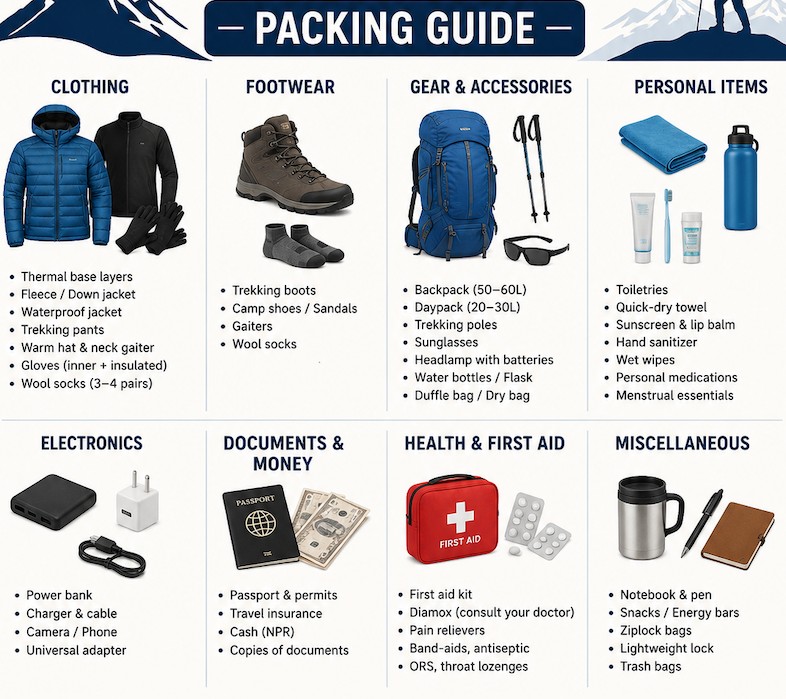
Here, it is best to pack a variety of layers rather than a large number of clothes.
Here is an essential list of clothing that you should consider bringing.
Essential Manaslu Circuit Packing List :
The Manaslu Circuit trek is known for its variety of climates. In lower altitudes, temperatures can be warm and comfortable in Machha Khola at 900 m.
As you hike towards the higher parts of the circuit, everything gets colder. Samagaon has an elevation of 3,500 m, Samdo – 3,875 m, Dharamsala – 4,450 m, and the highest point Larke – 5,106 m. This means that the temperatures can be highly variable, and a smart 3 - layer clothing system is the best option for a Manaslhu Circuit trekking.
Recommended 3-layer clothing system:
Meanwhile, it is a good idea to break them in before the trek. Do not wear new boots on the Manaslu Circuit hike, as blisters will inevitably occur.
Besides, a warm sleeping bag is essential, as teahouse rooms get colder at higher altitudes. This is especially important if you are going to spend the night in Dharmsala at 4,450 m. You may want to bring a bag that is suitable for sub-zero temperatures. A liner is a good idea to keep you warm at night.
Moreover, it is also crucial to protect your skin from the intense UV radiation at higher altitudes. It is a good idea to bring a high SPF sunscreen and UV protective sunglasses. A wide-brimmed or a baseball cap will protect your head from sunburn. Lip balm with SPF is also necessary.
In addition to, the Manaslu Circuit trek implies long walks above 3,500 m. The highest point on the trail is the Larke Pass at 5,106 m. You will need to dress warmly and have your warmest clothes at hand when crossing the pass. It is a good idea to bring insulated gloves and a warm hat. You will also need sunglasses and sunscreen.
Besides, it is essential to start crossing the Larke Pass early in the morning, according to your guide. The weather at higher altitudes is notoriously unpredictable, so it is better to prepare for the worst.
Days 1 to 3 set the scene for your Manaslu Circuit trek. The first leg of the journey takes you from Kathmandu at around 1,400 m to Machha Khola at approximately 900 m.
Here, the drive from Kathmandu to Machhakhola can be long, but it offers spectacular views of the mountains and valleys.
After reaching Machha Khola, you will start hiking the trail along the beautiful Budhi Gandaki River. You will see suspension bridges, waterfalls, cliffs, forests, and traditional villages. On the third day, the trail becomes more isolated.
| Day | Route | Elevation | Walking/driving time |
|---|---|---|
| Day 1 | Kathmandu – Machha Khola | 1,400 m – 900 m | 7 - 9 hour drive |
| Day 2 | Machha Khola – Jagat | 900 m – 1,340 m | 6 - 7 hour walk |
| Day 3 | Jagat – Deng | 1,340 m – 1,860 m | 6 - 7 hour walk |
Note: The time depends on the traffic, trail, and individual pace.
Your Manaslu Circuit trek starts in the capital city of Nepal, Kathmandu. Located at an elevation of 1,400 m, this ancient city offers spectacular views of the Himalayas.
Actually, Day 1 is a driving day: you will be heading northwest towards the Manaslu region. As you leave Kathmandu, you will see beautiful valleys and villages dotting the sides of the road. Your destination for the first day is a charming village of Machha Khola, located at around 900 m.
In fact, your drive may be long and bumpy, and the road conditions can vary dramatically. It is a good idea to hire a private jeep for this day.
Highlights of Day 1 :
In summary, Machha Khola is a charming place to spend your first night in the Manaslu region. The village offers spectacular views of the valley.
The second day is the first hiking day of your Manaslu Circuit trek. You will leave Machha Khola at around 900 m and follow the path alongside the Budhi Gandaki River. You will see several suspension bridges and waterfalls along the trail. Your route will be crossing steep hillsides with amazing views of the river. You will also see some local villages. Eventually, you will arrive in Jagat at around 1,340 m.
Day 2 route :
Machha Khola (~900 m) - Khorlabesi -Tatopani -Dobhan - Jagat (~1,340 m) :
The trail on Day 3 takes you deeper into the mountains of the Manaslu region. You will leave Jagat at around 1,340 m and continue hiking alongside the magnificent Budhi Gandaki. You will see beautiful forests and steep mountain slopes. Your trail will have several suspension bridges, so you will have great views of the valley. You will also pass through local villages. Eventually, you will arrive in Deng at around 1,860 m. The landscape starts to change: local architecture becomes more Tibetan-style, and mani walls become more common.
Day 3 route :
Jagat (~1,340 m) -Sirdibas -Philim (~1,590 m) -Pewa - Deng (~1,860 m),
The trail on Days 1 to 3 takes you through traditional villages inhabited by native peoples:
Likewise, you will also notice the increased presence of prayer flags, mani walls, and other Tibetan Buddhist symbols. This cultural heritage is one of the most fascinating characteristics of this long hike.
This part of the trek is a warm-up for the more challenging parts of the Manaslu Circuit. You will gradually adjust to the altitude: while Day 1 keeps you at a relatively low altitude of around 1,400 m, you will spend Day 2 and 3 hiking at roughly 1,860 m. The view also becomes more spectacular: you will see beautiful mountain landscapes, river valleys, and traditional villages.
Moreover, you will cross bridges suspended above the river. You will also notice that the trail is getting more remote. Days 1-3 give you a great view of the natural beauty the Manaslu Circuit has to offer.
Days 4-6 are crucial on a 12-day Manaslu Circuit Trek. The trail ascends from the lower Budhi Gandaki Valley into higher altitudes. Dense forests start giving way to alpine landscapes. At the same time, spectacular views of Manaslu at 8163 m become more frequent.
Furthermore, the trail leads through traditional mountain villages. Each has its own charm and offers incredible photo opportunities. On Day 6, Day 6, you arrive in Samagaon at around 3500 m. It is a crucial stop for acclimatization.
Days 4-6 at a Glance :
The hike starts at around Deng at 1860 m.
Then, it follows the same route along the Budhi Gandaki Valley. You will notice many suspension bridges and dense forests. The trail gradually climbs up to higher altitudes and enters mountainous terrain.
Furthermore, you will pass traditional villages like Bhi and Ghap. They are home to fascinating stone houses, and you will see more Buddhist cultural artifacts.
Finally, you reach Namrung at around 2660 m. It is the first high mountain village, and you can enjoy spectacular views of the valley below.
Key Attractions on Day 4 :
First stop: Namrung mountain village
On a clear day, Manaslu at 8163 m will become visible.
Day 5: Namrung to Lho
Highlights of Day 5 :
Furthermore, weather conditions permit, take a short walk around the village. Especially in the late afternoon, the view is absolutely breathtaking!
Day 6: Lho to Samagaon
Day 6 is yet another day of ascent. You begin your day at Lho at around 3180 m. The trail gently climbs up to higher altitudes and gradually becomes more exposed. You will see traditional villages and yak pastures.
In addition, spectacular views of Manaslu at 8163 m dominate the skyline. Finally, you arrive at Samagaon at around 3500 m. Samagaon is a crucial stop for acclimatization, so consider spending an extra day here if needed.
Moreover, Samagaon is a great place to stop and explore the surrounding area. For example, a fantastic acclimatization hike leads to Birendra Lake.
In addition, Samagaon is great as a base for side-excursions to Manaslu Base Camp, Birendra Lake, and other destinations.
Moreover, the village offers spectacular views of mountain peaks and an incredible natural amphitheater.
In addition, mountainous landscapes around Samagaon are among the most remarkable ones on the trek.
Specifically, Manaslu at 8163 m dominates the skyline. Other Himalayan peaks also provide fantastic photo opportunities! Especially early in the morning, sunrise creates incredible conditions for photography.
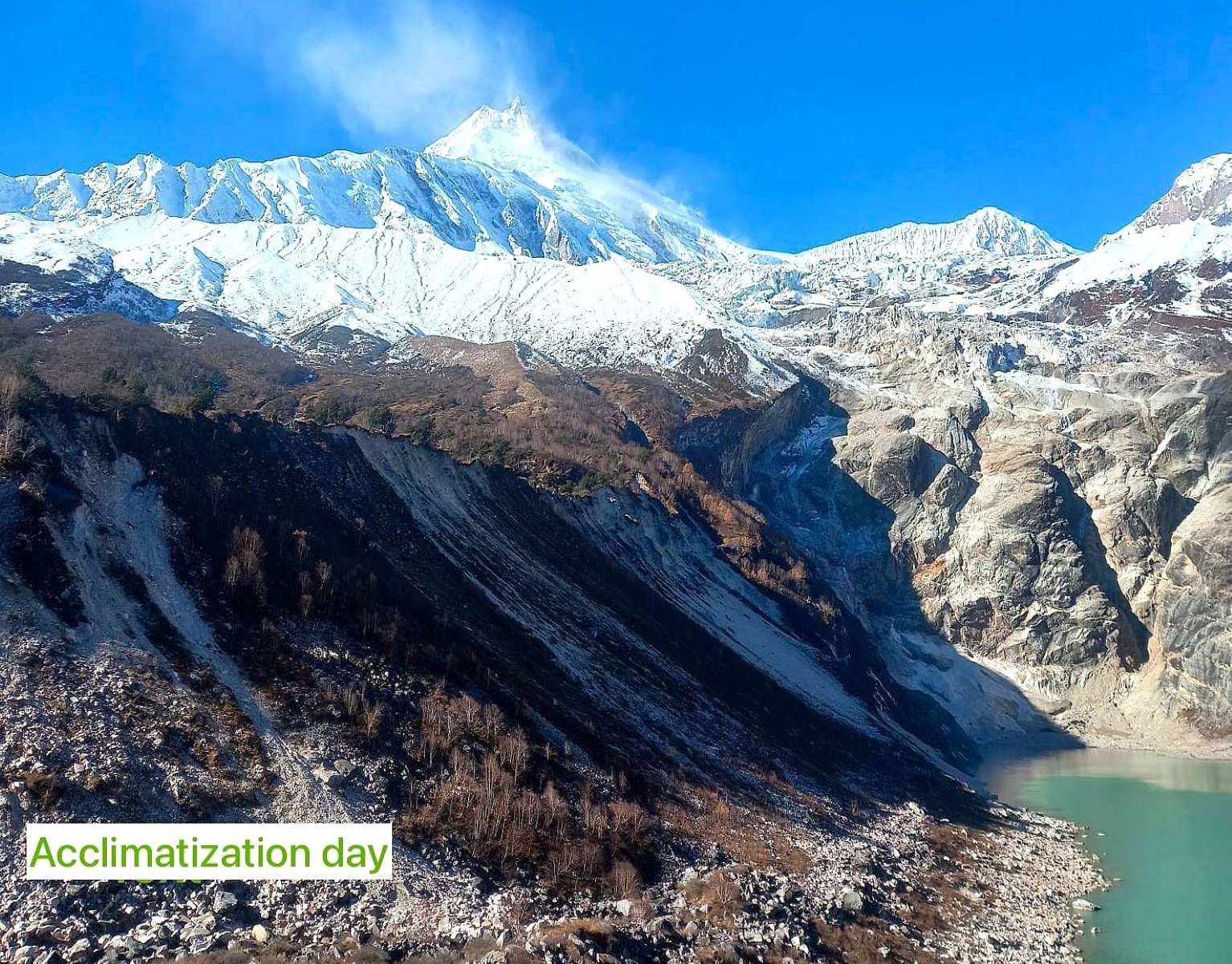
Day 7 is a crucial part of a 12-day Manaslu Circuit Trek. Basically, Day 7 is an acclimatization day that helps you adjust to the higher altitude.
Actually, ascent to Samagaon at 3500 m can be tiring, so you need extra time to rest and get used to the new elevation. Do not make it an ultra-short day, and try to include a short acclimatization hike. The purpose of the hike is to help your body adapt to the higher altitude. As such, it should neither be very long nor very strenuous.
First, you may want to consider a short and easy acclimatization hike to Birendra Lake at around 3600 m. The lake is famous for its turquoise color and remarkable scenery. The view from the lake is absolutely breathtaking!
Actually, Birendra Lake offers incredible views of surrounding peaks.
In summary, it will not take you long to get there from Samagaon. In addition, many trekkers consider it a fantastic option to acclimatize. Finally, since it is a short hike, you can always do it on your way back to Samagaon.
Second, if you feel up to it, you can have a longer excursion towards Manaslu Base Camp. The camp is located at around 4800 m, depending on the trail and weather conditions. As such, it is a serious endeavor, and you must consider it carefully. You should not treat it as an easy walk, so better prepare yourself!
Actually, it also depends on the weather, so you may want to consult with your guide before attempting it. Furthermore, if you feel tired or experience any altitude-related discomfort, better skip it and go for an easier acclimatization hike instead.
Acclimatization Day is Vital
As mentioned earlier, Day 7 is an acclimatization day. The reasons for this become apparent on Day 8, when you reach Samdo at 3875 m. On Day 9, you will further climb up to Dharamsala at 4450 m. Finally, you will reach Larke at around 5106 m on Day 10.
As such, an acclimatization day is essential, and you should make the best use of it. In addition to getting used to the new altitude, you may want to explore the local area.
Specifically, you may consider a short hike to Birendra Lake or a longer, but equally rewarding Manaslu Base Camp.
How to Acclimatize Better
Make sure you follow these simple yet effective tips:
Importantly, remember that the key to a successful Himalayan trek is gradual ascent and proper acclimatization. Make sure you listen to your body, and do not ignore any warning signs!
Days 4-6 take you from Deng at 1860 m up to Samagaon at 3500 m. You gradually hike from one village to another, while enjoying spectacular mountainous landscapes and views of Manaslu at 8163 m.
Specifically, you pass traditional mountain villages of Bhi, Ghap, Namrung, and Lho. Namrung is the first high mountain village, while Lho is a fascinating Tibetan-style village.
Finally, Samagaon is a crucial stop for acclimatization. On Day 7, you have an acclimatization day in Samagaon. As such, it is a relatively short day, but you may want to include a short acclimatization hike.
By Day 8, you will be hiking at even higher altitudes. Specifically, Day 8 leads you to Samdo at 3875 m. Then, on day 9, you will climb up to Dharamsala at 4450 m.
Finally, you will reach Larke at 5106 m on Day 10. As such, Day 7 is a crucial acclimatization day, and you should make the best use of it.
Days 8 and 9 are the highest and most isolated of the Manaslu Circuit Trek 12 day itinerary. You begin to really feel the altitude as you travel from Samagaon at around 3500 m to the Tibetan village of Samdo at 3875 m.
Further on you pass into an increasingly rocky and glaciated landscape. Here you find yourself climbing towards the village of Dharamsala at around 4450 m.
| Day | Route | Elevation | Walking Time | Main challenge |
|---|---|---|
| Day 8 | Samagaon to Samdo | 3,500 m to 3,875 m | 3–4 hours | Altitude |
| Day 9 | Samdo to Dharamsala (Larke Phedi) | 3,875 m to 4,450 m | 4–5 hours | Thin air |
Important: Times are approximate and will depend on many factors including walking pace and how long you take breaks.
Here, you set off from Samagaon at around 3500 m.
As you leave Samagaon, you climb slowly on a wide track towards ever more isolated and wild looking mountain valleys. The forests seem to disappear and are replaced by yak pasture. Snow-capped peaks loom over the valley.
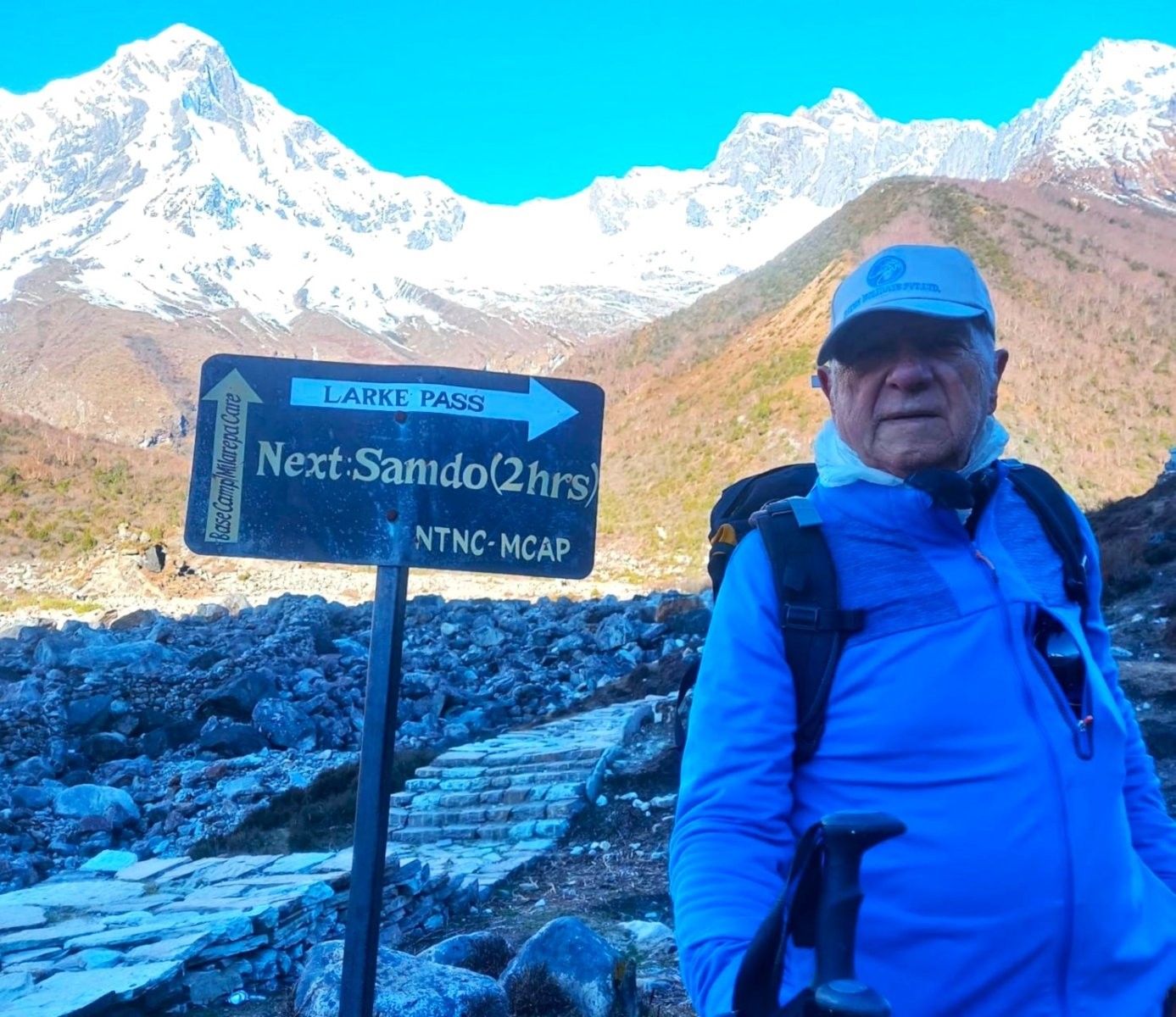
Further on, you reach the Tibetan village of Samdo at 3875 m.
Samdo village is one of the only two large settlements on the trek. It has a distinct Tibetan feel to it. Tibetan style stone houses cling to the mountain slopes and there are plenty of prayer flags and Buddhist shrines. You also get fabulous mountain views from Samdo.
On a clear day, the peaks look close enough to touch. Because of the altitude, it is a good idea to take it easy in Samdo and have an early night after exploring the village.
Day 9 is a relatively short day’s walk but has quite a bit of altitude gain.
Here, you begin your day’s walk from Samdo at 3,875 m and slowly climb up towards Dharamsala at around 4,450 m. The landscape becomes very rocky and you pass glaciers as you climb higher. The air begins to thin out as you approach Dharamsala. This village is also known as Larke Phedi.
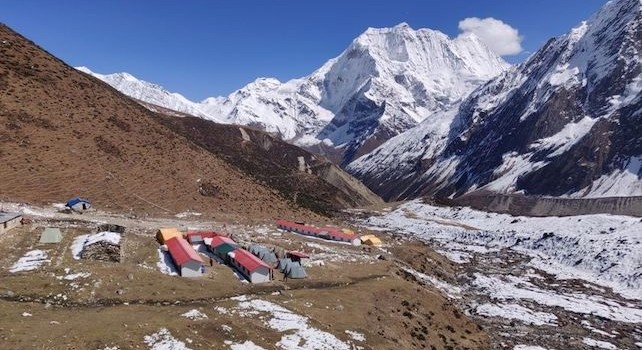
Larke Phedi – the final village before the pass
Larke Phedi is a small village, located on a ridge with fabulous views of the Himalayan peaks. You need to be careful as there are very few places to stay warm when the cold hits overnight. It is a good idea to bring along extra warm clothes especially a good sleeping bag. You will find that accommodation is minimal and you will need to pack warm clothes to sleep in.
Tomorrow is the day to walk across the highest pass on the Manaslu Circuit trek, Larke Pass. Larke Pass is one of the most formidable passes on the circuit and can reach up to 5160 meters. It is a good idea to prepare well especially by eating well and drinking enough fluids.
Similarly, it is also a good idea to put together your belongings for the next day and store your headlamps close by. You will also want to bring along warm gloves and thermals and have them close by at night. Finally, get a good rest.
Compared to previous days, you will find that days 8 and 9 are much more isolated and the landscape much rockier and more exposed. Snow-capped peaks tower over you and there are even patches of snow visible along the trail. The silence can be overwhelming at times. You also begin to feel that the big challenge of the Manaslu Circuit Trek is nearing. Hence, you will find that the village of Dharamsala offers fabulous photo opportunities.
Day 10 is the day when the Manaslu Circuit Trek reaches its peak. You set off just before sunrise from Dharamsala and begin your slow ascent to Larke Pass, before descending to Bimthang. You will find that the trail to Larke Pass is challenging but ultimately rewarding.
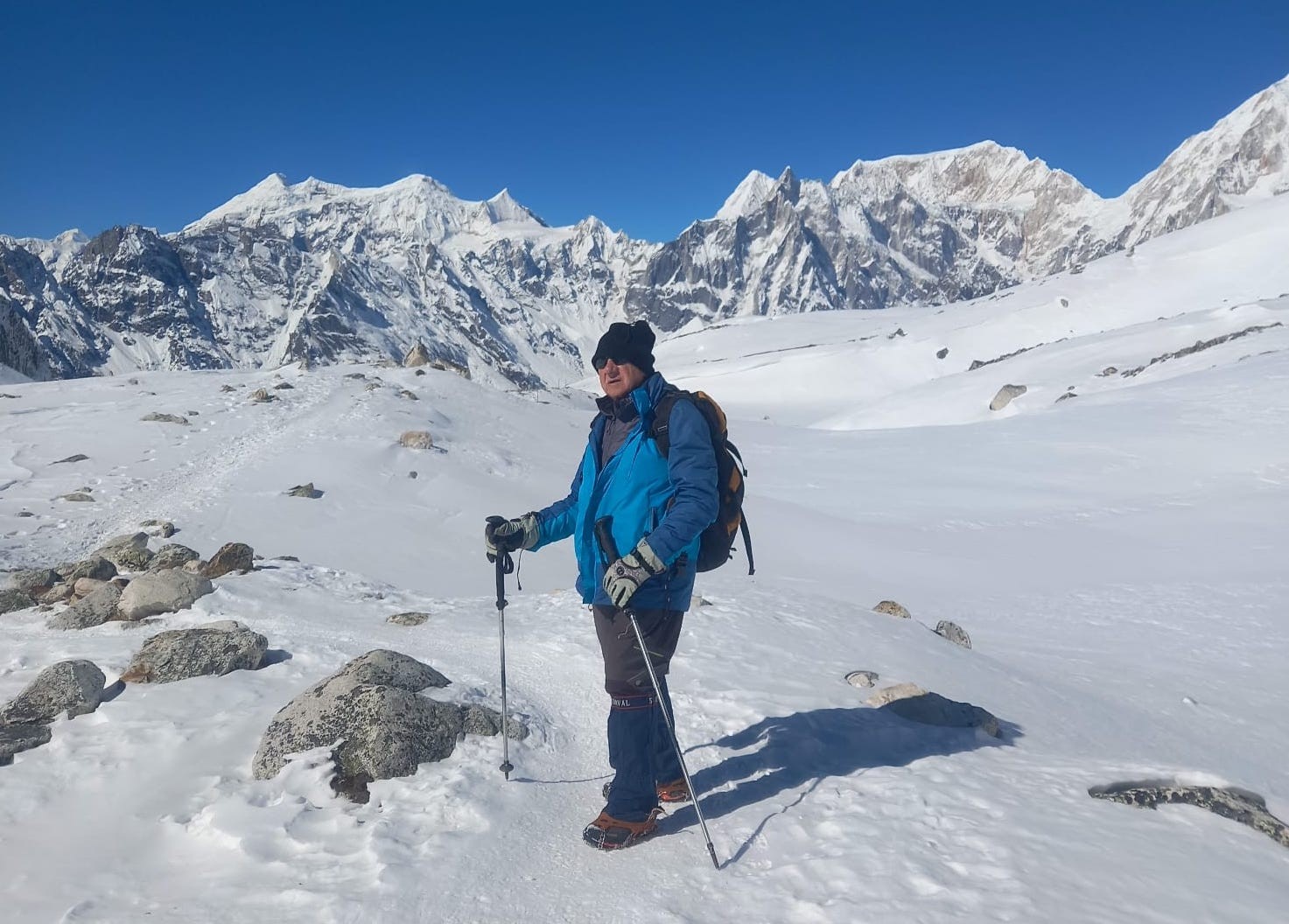
Actually, the pass can range from roughly 5106 m to 5160 m depending on sources (see below). From Larke you then descend to Bimthang at around 3590 m.
Day 10 at a glance :
Here, it is a good idea to set off towards the pass just before sunrise. A headlamp will be essential as it can get pretty dark on the trail before daylight. It is also very cold on top of the pass and you should wear plenty of warm clothing.
Likewise, it is a good idea to take things slow on the way to the pass, especially on day 1. You should be taking smaller steps so that you can adjust to this challenging altitude. It is also advisable to have regular breaks and to drink small amounts of water frequently.
Eventually, you will start to see the pass ahead of you and the trail will begin to flatten out. You will also start to see prayer flags around the pass. Just as you expected, you have reached the highest point of the Manaslu Circuit Trek at around 5,106 m. You will be rewarded with some spectacular views over the snow-capped Himalayan peaks. You can also take some pictures from here to mark the occasion.
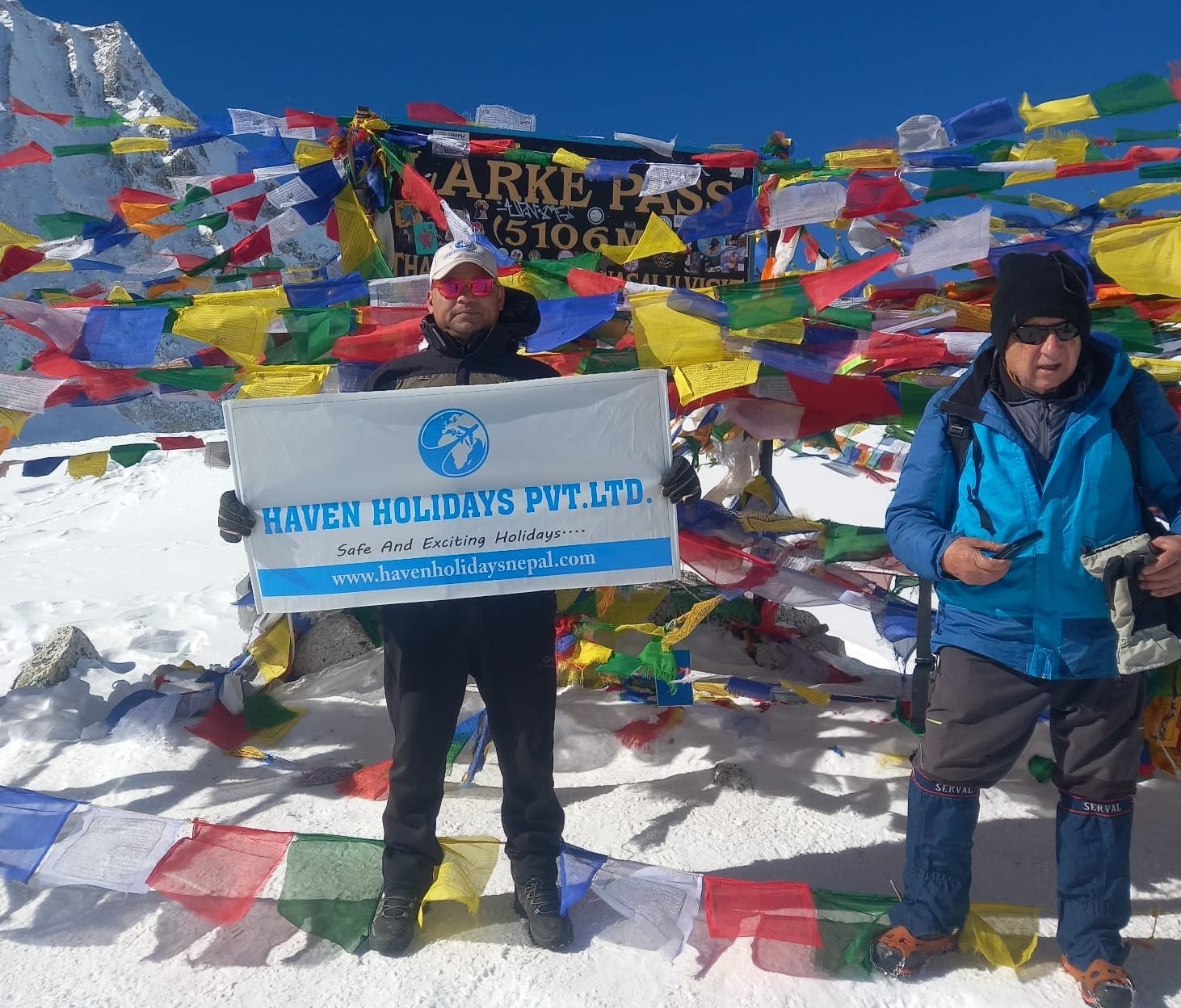
However, I would not advise lingering for very long at the top as it can get very windy and cold.
Mountains seen from the Larke Pass,
| Mountain Range | Elevation |
|---|---|
| Himlung Himal | 7126m |
| Cheo Himal | 6820m |
| Annapurna II | 7937m |
| Manaslu | 8163 m |
Meanwhile, the view from the top is spectacular especially with the snow-capped peaks and huge Himalayan mountain walls.
The view from the top of the pass might seem spectacular but the hardest part of Day 10 really lies ahead. You will also notice that while the trail on the way to the pass was fairly challenging, the trail back down to Bimthang becomes much easier.
Then, you will also find that the trail has much more oxygen as you descend. You also notice a change in terrain from snow to rock before gradually reaching forests. Next, you slowly descend on foot towards Bimthang at around 3590 m. The dramatic drop in elevation has kept you warm but it is still a relief to see more vegetation.
You have finally reached Bimthang. It feels like you have completed something pretty special on Day 10. This beautiful mountain village nestles within a lovely valley surrounded by towering forest and snow-capped Himalayan peaks.
Here, you can finally take a deep breath after battling with the altitude and harsh weather on Larke Pass Peak. Nothing can beat a hot meal after all that and a well-deserved early night.
Top tips for trekking on Day 10,
Here are some of the most useful day 10 trekking tips and notes:
Here, it is good to remember that the weather will dictate whether you should cross the pass or not. This decision should be left to your mountain guide.
As you can see from the above graph, Day 10 is certainly a special one on the Manaslu Circuit Trek. You set off from Dharamsala (4450 m) and ascend to Larke (5106 m) before descending to Bimthang (3590 m) the same day. You will notice that you spend much of the day battling with the altitude and enjoying fabulous views over glaciers, snow, and the Himalayas.
Similarly, you will also find that the conditions on Larke Pass can be very challenging. Nonetheless, Day 10 is one of the highlights of the Manaslu Circuit Trek – not least because of the views of the Manaslu, Annapurns, Cheo Himal, and Himlung Himal peaks from the top of the pass.
After crossing the Larke pass at a height of around 5,106 m, the views are nothing compared to what you have already seen on the Manaslu Circuit trek. As you go down, you leave the challenging high-pass trek behind.
Actually, the 12-day Manaslu Circuit trek is heading towards greener valleys and more traditional villages. It is now comparatively easy walking although your legs might be tired after the Larke Pass crossing so try to keep the pace comfortable and your knee pain to a minimum.
Days 11–12 Summary :
Note: Overnight stays can vary depending on the 12-day Manaslu Circuit itinerary option you have selected.
You will wake up today in Bimthang at around 3,590 m and you will have enjoyed a good night’s sleep. Your day eleven hike is comparatively short and mostly downhill.
Here, the scenery is simply breathtaking as you go down. The vegetation changes from sparse to thick and forested. You will see pine, rhododendron and other woodland plants and trees. You will also pass by the Dudh Khola.
Even though you may have enjoyed awesome mountainous scenery on your trek so far, the change in scenery today will remind you that you are on the Manaslu Circuit trail.
Yesterday, the landscape was covered in snow and consisted of rocky outcrops. Today, you will notice birds flying around and the sound of running water. You will also pass by more traditional villages. These changes in your surroundings are one of the best things about doing the Manaslu Circuit trek.
You walk through the forest until you reach Tilije (around 2,300 m). This is a good place to stop for the night. It is a traditional mountain village full of stone houses and perfect for unwinding after the long and challenging day.
Here, you have a change in altitude and you can also notice the improvement in the landscape as the hills turn greener. If you have planned your 12-day Manaslu Circuit trek itinerary differently, you can also go further towards Dharapani for the night.
Dharapani lies at around 1,860 m and is a famous village in the Annapurna region. You will notice a change in climate as you get here too.
In fact, it is much warmer here as compared to Dharamsala which is still around 4,400 m. You will also notice much better accommodations as compared to the ones in Dharamsala. Here, you will find teahouses and restaurants.
Similarly, you can also understand the difference between Dharapani and Dharamsala from a few days’ ago when you were still at an altitude of more than 4,400 m. You are now far away from the alpine desert with beautiful green valley landscapes around you. It is very difficult to believe that you had trekked for more than two weeks already. You must also remember to pack some snacks for the road today.
Day 11 Highlights :
Important: Have a good rest today as your body needs to recover from the stress of the high altitude
Today, you will be driving back to Kathmandu which means you will have an opportunity to enjoy the magnificent views around you as you slowly descend from the high altitudes.
Here, you will leave Dharapani for Kathmandu at an altitude of around 1,860 m. After you leave Dharapani, you will head for Besisahar where you change the vehicle and drive to Kathmandu. You will notice the changes in the scenery as you get going and then gradually move towards the lowlands.
As always, the mountainous views are awe-inspiring but it will be nice to be back in the city.
You can also enjoy the views of terraced hills along the way and the river is never too far either. As you get close to the city, the landscape changes and also becomes more developed as compared to the mountainous valleys.
When you get back to Kathmandu, you will be at 1,338 m. Depending on the day, the drive from Dharapani to Kathmandu can be very long via Besisahar. Therefore, it is always important to keep this in mind and plan your trip accordingly.
Once again, you are afforded the opportunity to see the country as you slowly descend to the city. You pass by mountain valley views and terraced fields. The river also winds its way down the valley. As you get close to the city, the view changes from the mountainous landscapes to the developed Kathmandu Valley. There are also more vehicles on the road as you get closer to the city. You are now back to the city from a different part of the country.
It is a good idea to keep some snacks and water with you as you will need them to keep you energized on the long road trip today. You should also keep some cash with you as you might have to make some purchases from road-side vendors.
Also keep in mind that you should not book any international flights out of Kathmandu on the same day as your day 12 drive. It is a good idea to leave a buffer day in your Manaslu trekking itinerary.
The 12-day Manaslu Circuit trek offers a great mix of mountainous views, village sights and Himalayan wilderness. There is much more than just the scenery and excitement of getting challenged on the high mountain trail.
Likewise, you will notice many changes as you trek around Manaslu. Starting from around 1,400 m in Kathmandu, you will go as high as 5,106 m on the Larke pass.
At 8,163 m, Manaslu is the main attraction of this trek. This beautiful Himalayan peak takes center stage at places like Namrung and Lho. The view gets better as you approach Samagaon. Manaslu takes a front seat at most points on this trail and presents you with incredible photo opportunities, especially on clear mornings.
The Larke pass is one of the main challenges you will face on the 12-day Manaslu Circuit trek. Larke Pass is around 5,106 m. Either way, it is one of the highest passes in Nepal. The pass offers some of the best views as it is surrounded by stunning peaks such as: Himlung Himal (7,126 m), Cheo Himal (6,820 m) and Annapurna II (7,937 m). It is one of the most popular trekking destinations in Nepal.
The culture is a big part of this trek. You will notice the Tibetan influence on the local culture as you get higher up on the Manaslu Circuit trail. You will see traditional houses and prayer flags on almost every mountain trail. You will also notice the many mani walls and chortens. There are some amazing Buddhist monasteries too. Places like Lho (around 3,180 m) and Samagaon (around 3,500 m) are great places to see traditional Tibetan-style cultural practices.
Samagaon village is one of the many highlights on the 12-day Manaslu Circuit trek. This small village at around 3,500 m is a great place to take a break. You can also enjoy the amazing views of the Birendra Lake from here. You can hike to the lake. Manaslu Base Camp is also a good place to spend a night. Samagaon looks out over the high altitude Himalayan valleys and mountains so it is a great place to unwind and be in awe of the wilderness around you.
There is an amazing variety of vegetation on the Manaslu Circuit trek. As you go higher up the trail, the environment changes.
Likewise, you will notice this as you trek up and then down again towards Bimthang and further to Dharapani. Starting from the subtropical valleys, you climb up to the forested hills and then to arid landscapes around the Larke Pass. You will see different types of plant life.
As you get closer to the lower altitudes again, you will notice more coniferous plants and trees. You can even notice this change in vegetation as you go from one day to the next on the 12-day Manaslu Circuit adventure.
The Manaslu Circuit trail is remote and wonderful. Although it is one of the most popular trails in Nepal, it cannot compare to the crowds that you can find around Everest Base Camp.
In fact, it is even more stunning than the Everest trek as you see amazing views of the wilderness. You may also come across some challenging and narrow parts of the trail but you will find it well worth the effort. The 12-day Manaslu Circuit trek is definitely one of the best remote hiking adventures you can find anywhere around Nepal.
Bimthang lies at around 3,590 m and provides a spectacular view of the Manaslu region. You can enjoy the views and take it easy a bit on the day after the Larke pass crossing. The mountains can still take your breath away but you will notice more vegetation around Bimthang valley. The climate is also warmer as you go down the mountainous trails. This is yet another great opportunity to enjoy a beautiful landscape.
There are multiple reasons why you should consider the Manaslu Circuit trek for twelve days:
Likewise, you might be wondering how you can manage to walk for around 12 long days during your Manaslu Circuit adventure. Well, it all comes down to how well you have prepared for this trek. And if you really want to get incredible views of the Himalayas without spending too much time on the trail, then this compressed and exciting trek is perfect for you.
Unlike a more leisurely 16-day Manaslu Circuit Trek, a 12-day Manaslu Circuit Hike requires you to be on a tight schedule. The good news is that a 12-day Manaslu Circuit itinerary allows you to see the best that the Manaslu Himalayas have to offer - from visiting the remote traditional villages of Namrung at 2,660 m, Buddhist monasteries at Lho village at 3,180 m, Samagaon at 3,500 m, Samdo at 3,875 m, and Bimthang at 3,590 m.
In addition, you will also get to see the beautiful Budhi Gandaki Valley while going through the highest pass, Larke pass at 5,106 m before descending back to the starting point of your trek.
However, given the short duration of just 12 trekking days, you might want to prepare for this Himalayan adventure. Here are our expert-level Manaslu trekking tips for your 12-day Manaslu Circuit expedition.
The 12-day Manaslu Circuit itinerary is not easy with days requiring you to trek for 6-9 hours or walk almost daily. As such, it is essential to get yourself accustomed to hiking, climbing stairs, and other fitness activities.
Likewise, try to get your lower body used to walking long distances with heavy bags as you would have on the trek. In addition, if you have not done long hikes during the weekends, it is time to start preparing for them.
Ideally, try to get a good fitness level at least 6-8 weeks ahead of your trek.
One of the significant challenges of trekking to Manaslu Circuit is the altitude. Your 12-day Manaslu Circuit trek will start at Machha Khola at around 900 m and go up to Samagaon at approximately 3,500 m and then to Samdo at 3,875 m.
From there, you will continue to Dharamsala at 4,450 m followed by the Larke pass at 5,106 m before descending down to Luka.
As such, it is advisable to take things slow, especially on the higher altitudes, and allow your body to acclimatize.
In addition, talk to your guide if you notice any irregularities with your body.
Make sure you use the Samagaon acclimatization day to trek a moderate trail somewhere around Birendra Lake at 3,600 m or even the Manaslu Base Camp.
As an experienced trekker, you could also consider pushing yourself to the Manaslu Base Camp area. Nevertheless, do not overexert yourself as the primary purpose of this day is to acclimatize.
The day you spend crossing the Larke pass is considered the most challenging day of the entire trek.
As such, it is essential to start hiking from Dharamsala at around 4,450 m early in the morning, preferably around 4 am or 5 am. The time you start hiking will depend on the weather condition, so it is advisable to follow your guide’s lead. In general, the earlier you start, the safer it is as you stand a better chance to finish before the evening sets in.
In addition, make sure you keep your headlamp handy in case you cannot see the trail ahead due to bad weather.
While trekking in the lower altitudes of the Budhi Gandaki Valley can be hot, the temperature tends to plummet as you climb higher up the mountain. As such, you will need a combination of lightweight and heavy clothing.
For instance, you will need warm clothing like a down jacket in addition to thermals, waterproof jackets, and hiking boots. What is more, you will also need a good sleeping bag that is rated for cold temperatures and trekking poles to aid you when walking down the steep trails.
It is essential to note that you will need more water than you expect when hiking the Manaslu Circuit. In addition to bringing your own water in reusable bottles, consider bringing water purification tablets or a reliable water filter and always drink plenty of water.
Likewise, you will also need to bring along energy-boosting snacks such as energy bars, nuts, chocolate, dried fruits, and electrolytes to supplement your daily meals. You should not entirely rely on the tea houses as they do not always have a wide variety of foods or healthy options.
It is always advisable to get travel insurance with an option of high altitude coverage for hiking or trekking. Make sure you understand your travel insurance policy and what it does not cover.
Ideally, you want to get a travel insurance policy that covers helicopter rescue and high altitude emergency treatment in case something goes wrong.
In addition, make sure you carry both a digital and a hard copy of your insurance documents in case you need to show them to the authorities when you have an emergency.
When hiking the Manaslu Circuit, you are required to hire a licensed trekking guide.
In addition to having a good knowledge of the area, a licensed guide will ensure you have a good experience while adhering to the local restrictions and avoiding getting into trouble with the local authorities.
Here, it is worth noting that hiking the restricted Manaslu region without a licensed guide comes with penalties.
The region around the Manaslu mountain is home to unique Tibetan communities. As such, it is advisable to respect their religious practices and cultural beliefs. Ask permission before taking photos of locals and always walk clockwise when walking around Buddhist stupas and monasteries. In addition, you should also refrain from touching or damaging prayer flags and mani stones.
When you are in the villages and monasteries, it is advisable to dress modestly. Supporting the locals is always a good idea as they deserve a share of the benefits reaped from the booming tourism industry.
When trekking in the Himalayas, you should always be wary of mountain weather conditions. In particular, unpredictable weathers are common, especially around the Larke pass.
Moreover, road closures due to snowstorms are also a frequent occurrence, so it is essential to have some flexibility in your schedule. The last thing you want is to waste precious trekking days waiting for the road to clear up.
Similarly, avoid rushing when going to higher altitudes as bad weather can always occur, and you do not want to expose yourself to unnecessary risks.
When choosing a trekking agency, always go for an established and reputable company. Make sure the company is registered and certified and that the agency’s guides have the appropriate licenses for the Manaslu Circuit trek.
Likewise, ask them exactly what is included and what is not, so you know what to expect when you arrive in Nepal. In addition, cross-check whether the agency has the right permits to take you on the Manaslu Circuit trek. Other things to consider when choosing a trekking agency include the staff-to-client ratio and the company’s emergency management procedures. A reliable trekking company will be transparent about its policies and pricing to avoid surprises later.
Although the 12-day Manaslu Circuit itinerary is good because it gives you a chance to hike the circuit within a short time while enjoying the best views, it can also be quite challenging. While it is always advisable to complete the trek within the 12-day itinerary, avoid rushing as much as possible.
More specifically, it is essential to take it slow on the long hiking days when trekking from one village to the other. In addition, you should also take it slow on the days when you feel unwell or tired. The primary objective of the Manaslu Circuit trek is to enable you to enjoy your adventure while being safe.
Apart from your passport, make sure you always have copies of your permit documents handy.
In case of an emergency, your guide will need your insurance details to get you the help you need. Always remember to save the emergency contact details provided by your travel insurance company.
In addition, it is also a good idea to carry some Nepalese Rupees for small expenses and souvenirs. Lastly, make sure you also have some extra money in case of any additional expenses or unforeseen circumstances.
A 12-day Manaslu Circuit trek is an incredible Himalayan adventure. For fit and well-prepared trekkers, it is a fantastic opportunity to experience one of the most spectacular trekking trails in the world.
Although the 12-day Manaslu Circuit is not the easiest option, the good news is that the trail is quite rewarding for those who love mountain trails.
Besides getting to see the 8,163 m Manaslu peak and crossing the challenging Larke pass, you will also enjoy the remote traditional Tibetan villages, stunning Buddhist monasteries, and beautiful mountainous wilderness on your way around the circuit.
Nevertheless, to have a fantastic time on your 12-day Manaslu Circuit trek, it is essential to prepare well in advance.
In addition to having good fitness levels, you will also need to get good travel insurance, hire a licensed guide, and obtain the right permits to go on this adventure.
1. What is the Short Manaslu Circuit Trek 12-day itinerary?
The Short Manaslu Circuit Trek 12-day itinerary is an abbreviated version of the classic Manaslu Circuit around the world’s eighth-highest peak. This 12-day Manaslu circuit covers the Budhi Gandaki Valley and crosses the high Larke pass at 5,106 meters. The trail passes through Machha Khola, Namrung, Samagaon, Dharamsala, and Bhimtang. It is suitable for an experienced trekker looking for a shorter Manaslu Circuit option.
2. Is 12 days enough for the Manaslu Circuit Trek?
Yes, you can do the Manaslu Circuit Trek in 12 days, but it is a tight schedule requiring proper acclimatization. A typical 12-day Manaslu circuit trek itinerary includes one day of acclimatization at Samagaon before crossing the Larke pass. However, trekkers should not hurry while climbing Larke pass, despite it being a short Manaslu circuit option.
3. What is the 12-day Manaslu Circuit Trek itinerary?
The 12-day Manaslu Circuit Trek usually begins with a drive from Kathmandu to Machha Khola. Other key stages include trekking through Jagat, Deng, Namrung, Lho, and Samagaon. It also involves a day of acclimatization at Samdo and Dharamsala before crossing the Larke pass. The trail then descends down Bhimtang through Dharapani back to Kathmandu.
4. What is the Manaslu Circuit Trek 12-day cost?
The Manaslu Circuit Trek 12-day cost depends on the season, group size, and services needed. Most trekking agencies charge between US$ 830 and US$1,300 for a short 12-day Manaslu Circuit. The price often includes teahouse accommodation, meals, a guide, and porter assistance. Note that some companies quote lower prices for groups of 2-4 people while private tours or higher-end services command a premium.
5. What does the 12-day Manaslu Circuit Trek cost include?
The 12-day Manaslu Circuit Trek cost typically includes teahouse accommodation, trekking meals, a guide, and a porter. It also covers transportation to and from the trailhead, and necessary permits. However, most agencies make it clear that the quoted price usually excludes international airfare, visa fees, special diet meals, WiFi, laundry, and gratuities.
6. How much are the Manaslu Circuit Trek permits?
The Manaslu Circuit Trek permit cost varies according to the trek season. Foreigners must obtain the Manaslu Conservation Area Permit (MCAP) and Annapurna Conservation Area Permit (ACAP). Additionally, the Restricted Area Permit (RAP) costs US$ 100 for seven days during September–November and US$ 75 for foreign hikers on the 12-day Manaslu circuit between December and August.
7. What permits are needed for the Manaslu Circuit Trek?
The most important permits for the Manaslu Circuit Trek are the Manaslu Conservation Area Permit (MCAP), the Annapurna Conservation Area Permit (ACAP), and the local Chumnubri Rural Municipality fee. The restricted area permit must be acquired through a trekking agency. You will also need a licensed guide for the entire Manaslu Circuit Trek.
8. What is the highest point of the Short Manaslu Circuit Trek?
Larke Pass is the highest point of the Short Manaslu Circuit Trek at 5,106 meters. In addition to being the most challenging part of the hike, the Larke pass is also one of the most spectacular. Trekkers should get an early start from either Dharamsala or the Larke Phedi village. The pass can be particularly difficult to navigate due to bad weather.
9. How difficult is the 12-day Manaslu Circuit Trek?
The 12-day Manaslu Circuit Trek is relatively challenging and needs a good level of fitness. While not technically difficult, the trek involves long days and steep ascents to cross the Larke pass at over 5,000 meters. It is recommended that hikers complete a few short 5-7 day hikes before attempting the 12-day Manaslu circuit.
10. What is the best season for the 12-day Manaslu Circuit Trek?
The best season for the 12-day Manaslu Circuit Trek is between March to May and September to November. These periods offer mostly clear weather with great views. Although still possible year-round, the Manaslu Circuit Trek is more challenging in the winter because of the snow on the Larke pass.
11. Can beginners do the Short Manaslu Circuit Trek in 12 days?
While it is possible for beginners to do the Short Manaslu Circuit Trek in 12 days, it is not the easiest option. The 12-day Manaslu circuit includes long hikes and requires good acclimatization. It is important that less experienced trekkers build their stamina and consider a longer than average trip. An experienced guide can also help during the 12-day Short Manaslu Circuit Trek.
12. Where does the 12-day Manaslu Circuit Trek start?
Although there are several trailheads, most 12-day Manaslu Circuit itineraries begin with a drive from Kathmandu to Machha Khola. The transportation depends on the season and how far you want to go. Another option is to fly into Lukla and follow the Everest Base Camp trail to Jiri. From there, you can trek up the Manaslu Circuit.
13. What villages are there in the Manaslu Circuit Trek itinerary?
The Manaslu Circuit Trek itinerary goes through several villages, including Machha Khola, Jagat, Deng, Namrung, Lho, Samagaon, Samdo, Dharamsala, and Bhimtang. These mountain villages dot the route through the Budhi Gandaki Valley and provide unique insights into the region’s culture.
14. Is there an acclimatization day on the 12-day Manaslu Circuit Trek?
Yes, most 12-day Manaslu Circuit itineraries include an acclimatization day at Samagaon. This is a crucial day that allows your body to adjust to the decreasing oxygen levels at higher altitudes. You should also spend the day exploring the local monasteries and scenery around Samagaon.
15. Do I need a guide for the Manaslu Circuit Trek?
Yes, you will need a licensed guide for the Manaslu Circuit Trek. The Manaslu region is a restricted area, so you cannot simply show up and start trekking. Instead, you must hire the services of an authorized trekking company. According to the latest 2026 guidelines, solo travelers are permitted as long as they have the right permits.
16. Can I do the Manaslu Circuit Trek solo in 2026?
The solo trekking guidelines for the Manaslu Circuit have changed in 2026. Recent policy updates indicate that you can now trek the Manaslu Circuit alone. However, solo hikers must acquire the required permits and have a licensed guide. In other words, solo trekking does not mean unassisted trekking.
17. What type of accommodation is available during the Manaslu Circuit Trek?
Most of the Manaslu Circuit accommodations are locally-owned teahouses that provide basic lodging. Rooms are simple with two beds, and amenities tend to be minimal at higher altitudes. Hot water, showers, and other comforts often come at an additional cost. It is advisable to book your teahouse stays in advance, especially during peak season.
18. What food is available during the 12-day Manaslu Circuit Trek?
The 12-day Manaslu Circuit Trek allows you to sample various local dishes and flavors. However, staple meals such as dal bhat, noodles, fried rice, soups, pasta, potatoes, eggs, and bread are available. Other local specialties include butter tea and Tibet-style dishes. You should also stay hydrated, especially on higher trails where the air is thin.
19. What should I pack for the Short Manaslu Circuit Trek?
For the Short Manaslu Circuit Trek, you need to pack warm clothes, sleeping bags, and trekking gear suitable for high altitudes. You should also bring items such as trekking poles, headlamps, water bottles, sunscreens, and sunglasses. Remember that it can get extremely cold at the Larke pass, so it is essential to have the right gear.
20. Is the Short Manaslu Circuit Trek worth doing in 12 days?
The Short Manaslu Circuit Trek is worth your time and money if you are an avid trekker with some experience. The 12-day Manaslu Circuit offers excellent value for money while giving you bragging rights for conquering the Larke pass. However, it is a challenging trek that requires a good level of fitness and acclimatization. So, choose a reliable trekking agency such as Haven Holidays Nepal for assistance.
Our travel experts are ready to assist you with any questions.
Send us a message.Have a question before you book? Send your enquiry below and our travel experts will get back with the required information.