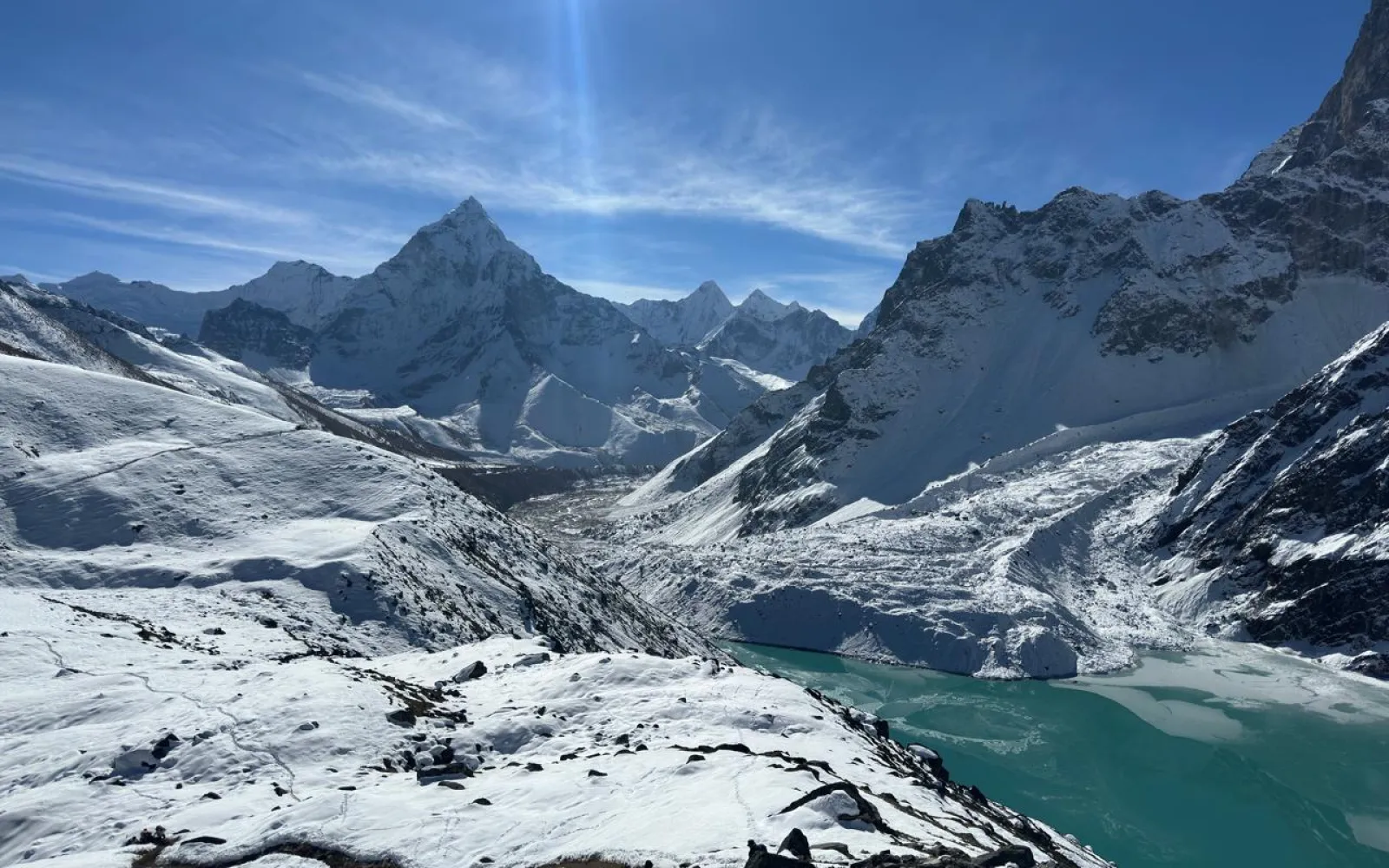
Trekking in Nepal in January is possible, however it is the coldest period of the winter trekking season. It is important to carefully consider which route you take.
Actually, many popular trekking routes in Nepal will be dry in January. As fewer people go trekking in January compared to Autumn/Spring, the trails are quiet. In clear conditions, the mountain views can be very good.
However, in some areas clouds, wind and snowfall can reduce visibility. Popular low to mid altitude routes include Ghorepani Poon Hill, Ghandruk and certain areas of Annapurna.
In fact, freezing temperatures, reduced daylight hours, and potential snowfall can be expected. Temperatures will be significantly colder above 3000m. Exposed trails may be very icy. In addition, some teahouses may be closed in remote villages and higher altitude areas.
Benefits of Trekking in Nepal in January :
( Note: Low altitude routes mean there are many options for short treks in winter).
| Factor | Expected in January |
|---|---|
| Temperature | Cold |
| Day temperatures | Mild in sunny, low altitude areas |
| Night temperatures | Often below freezing in higher altitudes |
| Snowfall | Likely in higher altitudes (Above 3000m) |
| Trail Conditions | Dry, snowy or icy depending on altitude |
| Accommodation | Some seasonal closures |
| Day Length | Approximately 10-11 hours |
Overall, if you are prepared, trekking in Nepal in January can be a great choice. Choosing an appropriate altitude, checking conditions in local areas, and ensuring that you have the correct winter gear will be key to a comfortable trek.
Generally cold and quite dry. There is a large difference in temperature between the low altitude areas and the higher altitude trekking areas. It can be pleasant in sunny low altitude areas in the day, but temperatures drop sharply once the sun sets.
Meanwhile, Kathmandu has an average maximum temperature of 19.3 degrees celsius and minimum of 3 degrees celsius in winter. Pokhara has an average temperature of 20.3 degrees celsius in the day, and 7.7 degrees celsius in the night.
| Trekking Area | Altitude (m) | Day temperatures | Night temperatures |
|---|---|---|
| Kathmandu | 1,338 | 15 - 19° | 2 - 4° |
| Pokhara | 822 | 17 - 20° | 5 - 8° |
| Ghorepani | 2874 | 5 - 10° | -5 to -8° |
| Namche Bazaar | 3440 | 0 - 7° | -6 to -10° |
| Dingboche | 4410 | -5 to 3° | -12 to -18° |
| Everest Base Camp | 5364 | -5 to 0° | -15 to -25° |
Importantly, these temperatures are indicative and experienced by Haven Holidays Team during the operation of the trip and not exact averages for each location. Temperatures will vary depending on amount of sunshine, wind, snowfall and local conditions. Temperatures in higher altitudes are indicative only.
Snowfall becomes more likely in higher altitude areas. Snowfall can occur across mountain passes and ridges. While low altitude areas may be dry, snowfall may occur above 3000m, making trail sections icy.
In addition to, strong wind can make exposed viewpoints feel much colder than the temperature. Daylight hours are approximately 10-11 hours, so leaving early and arriving at accommodation before nightfall is important.
| Low altitude areas | Generally comfortable in the day with warm clothing. |
|---|---|
| Mid altitude areas | Cold mornings and evenings. Warm insulated jackets and warm sleeping accommodation required. |
| High altitude areas | Very cold temperatures, snow and icy trails mean appropriate winter equipment is required. |
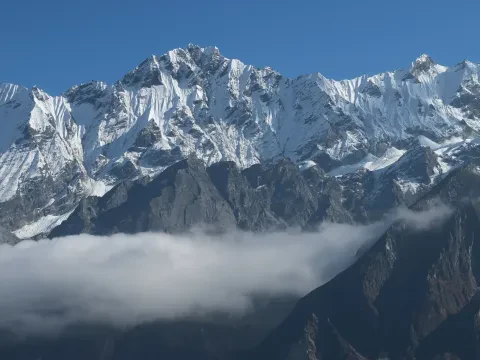
| Mountain Views | Potential for good views in clear conditions. Clouds and snowfall may affect visibility. |
Overall, it is important to be prepared for varying weather conditions in January. Check recent local weather and trail conditions, especially in areas over 3000m.
[ Important note from Haven Holidays Nepal Team: Please consider that while some lower altitude routes are suitable to trek in winter, higher altitude routes may present a challenge. Specifically, routes to Everest Base Camp, Mardi Himal High Camp and upper areas in Langtang Valley are not recommended as suitable for inexperienced trekkers in January.]
Low and medium altitude treks are best in January. However, several treks in the Himalayas can be enjoyed in January if trekkers are well prepared.
Generally, it is suitable to trek within the foothills of the Annapurna range, around Kathmandu and at select viewpoints of Everest. Treks above 3500m may be challenging in January due to snowfall, very cold temperatures and icy paths.
Therefore, trekkers should consider the altitude, length of walking, accommodation and recent weather conditions before choosing which trek to take.
Note: The length of walk and altitude may vary depending on starting point and route chosen.
| Trek | Length (days) | Altitude (m) | Best in January? |
|---|---|---|---|
| Ghorepani Poon Hill Trek | 4-5 | 3210 | Very suitable |
| Ghandruk Trek | 2-4 | 2012 | Very suitable |
| Mardi Himal Trek | 4-6 | 4500 | Conditional |
| Helambu Trek | 5-7 | 3650 | Suitable (with care) |
| Everest View Trek | 5-7 | 3880 | Suitable (with care) |
| Pikey Peak Trek | 5-7 | 4065 | Conditional |
| Langtang Valley Trek | 7-9 | 3870 | Conditional |
| Everest Base Camp Trek | 12-14 | 5364 | Challenging |
| Annapurna Base Camp Trek | 7-10 | 4130 | Challenging |
The Ghorepani Poon Hill Trek is ideal for trekkers in January as villages and trails are well accessible. From Poon Hill (3210m), clear visibility will allow trekkers to enjoy views of Annapurna South, Dhaulagiri, Machhapuchhre and surrounding Himalayan peaks.
Actually, this trek can be completed in 4-5 days from Pokhara. In total, trekkers can expect to walk 35-45km depending on the route. However, temperatures can get very cold at Ghorepani and there may be snow/ice in the final ascent to Poon Hill.
This low altitude trek is very comfortable in January. Ghandruk is located at around 2012m, and trekkers can enjoy views of the mountains, traditional Gurung villages and easy to access teahouse accommodation.
Typically, this trek can be completed in 2-4 days from Pokhara. As this trek is at a low altitude, extreme conditions are less likely to be experienced. However, temperatures can be cold in the morning and snow may occur.
It is possible to complete the Mardi Himal Trek in January. However, trekkers must exercise caution on the upper parts. The trek reaches a High Camp at 3550m, viewpoint at 4200-4250m and Base Camp at 4500m.
Typically, this trek can be completed in 4-6 days from Pokhara. However, snow, ice, strong winds and inaccessibility at teahouses can occur meaning the upper part of the trail may be unsuitable. Trekkers may need to descend earlier.
A quiet trek in January, this route takes trekkers through traditional Tamang and Hyolmo villages, forests and mountain viewpoints. There are many variations of this trek.
Typically, this trek can be completed in 5-7 days. The higher viewpoints and villages are around 3650m. However, snow may occur on the upper routes, and so it is preferable to walk at lower altitudes or different routes as conditions worsen.
This trek allows trekkers to get great views of the region without reaching Everest Base Camp. Trekkers will typically reach Namche Bazaar (3440m), Syangboche (3780m) and the area around the Everest View Hotel (approx. 3880m).
Generally, this trek can be completed in 5-7 days from Kathmandu. Including flights to Lukla and acclimatisation in Namche. However, in January it can be very cold at night, snow may fall and flights may be disrupted. Allow extra days of travel.
This is a great quieter trek to get great views of the Himalayas. From the main viewpoint trekkers can see Everest and other Himalayan peaks (weather permitting). The viewpoint is approximately at 4065m.
Actually, this trek can be completed in 5-7 days depending on starting point and transport. However, snow may occur on the upper section of the trail. Remote lodges may also have limited services in winter.
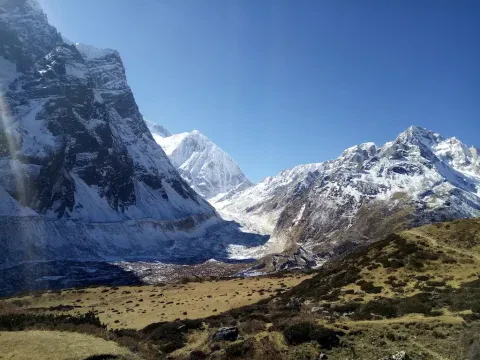
This trek can be completed in January by well equipped and well experienced trekkers. Kyanjin Gompa is located at approx. 3870m. However, viewpoints around the area (Kyanjin Ri etc.) can be reached at around 4773m.
Actually, this trek takes 7-9 days from Kathmandu. In total, trekkers can expect to walk 60-70km. However, snow, icy paths and limited services at lodges may occur in the upper part of the valley. It is therefore important to check the latest accessibility in the area around Syabrubesi and trekking route.
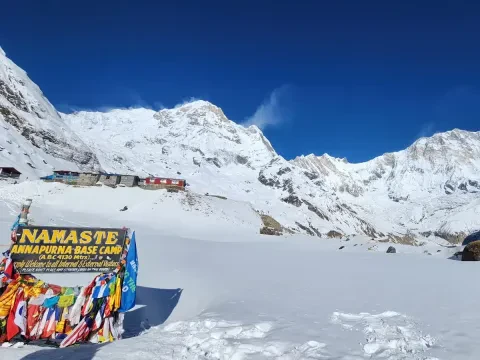
While it is possible to complete the Everest Base Camp and Annapurna Base Camp treks in January, these treks are challenging in winter. Everest Base Camp reaches 5364m and Annapurna Base Camp reaches approx. 4130m. Trekkers will be faced with very cold temperatures, snowfall and possibly difficult conditions along the path.
Actually, both treks take a long amount of time to complete. Everest Base Camp typically takes 12-14 days and Annapurna Base Camp typically takes 7-10 days. Therefore, these treks would be best suited to experienced and well equipped trekkers who have had adequate acclimatisation, flexibility in their schedule, and expert local support.
Depending on the route, not all treks in the Himalayas will be suitable to complete in January. It is safest to consider altitude, snowfall and availability of accommodation. Before booking, look up recent local reports, and create a flexible itinerary with an experienced trekking company such as Haven Holidays Pvt. Ltd
It may be possible to go trekking in Nepal in early January and late January. However, conditions can vary greatly from week to week. It may not be warmer in late January than early January, or vice versa. Snowfall, wind and local weather patterns may mean that the conditions on the trail vary throughout January.
In early January, treks will generally be in established winter conditions. Low altitude treks such as Ghandruk and Ghorepani are a good choice. However, freezing temperatures may occur in high altitude settlements. Some remote lodges may have reduced service or be closed in the winter.
In late January, there will be increasing daylight. Some low altitude treks may feel slightly warmer in the afternoon. However, temperatures in high altitude areas will still be extremely cold. Fresh snowfall may occur at viewpoints, ridge lines and passes. Therefore, treks in late January may not be easy.
| Condition | Early January (1-15) | Late January (16-31) |
|---|---|---|
| Temperatures (day) | Cold | Similar temperatures (sometimes slightly warmer) |
| Temperatures (night) | Often very cold at high altitude | Still often very cold at high altitude |
| Snowfall | Possible at high altitude | Possible at high altitude |
| Visibility in mountains | Possible clear mornings | Possible clear mornings |
| Ground conditions | Dry, snowy, icy | Dry, snowy, icy |
| Accommodation | Possibly closed | Possibly closed |
| Daylight Approx | 10 hours | Approx. 10-11 hours |
Trekking in early January is suitable for people who are prepared for cold winter conditions. Low altitude treks around Pokhara and Kathmandu are a good option. However, snow/ice may be present on high altitude treks.
Trekking in late January may provide slightly longer daylight and more comfortable conditions at lower altitudes. However, snowfall and very cold temperatures may still occur, especially in high altitude areas, high camps, viewpoints and on exposed paths.
Top Tips for choosing what date to trek in January:
Overall, both early and late January can be great months to go trekking in Nepal depending on the route. Choose a date to go depending on transport availability, accommodation and local weather reports rather than assuming conditions will improve significantly between early and late January.
Note Haven Holidays Nepal Team: Due to flooding in August 2026, parts of the access road to Syabrubesi in Langtang have been damaged. While Langtang Valley and Kyanjin Gompa are reported to be open, this does not necessarily mean that the road to the destination is completely repaired. Check the latest conditions of the road before suggesting/booking this trek.
Snowfall can occur in January in Nepal. However, snow will depend on location, altitude and weather patterns. Not all trekking destinations will receive snow in January.
During winter, cold temperatures and occasional western weather systems can cause snowfall. In lower altitude trekking regions such as Pokhara and Kathmandu, there may be no snowfall.
However, there may be snowfall on the mountain peaks. As a result, trekkers may find the lower altitudes comfortable to walk in during the morning but may encounter snow and ice at higher altitudes.
| Trekking Destination | Altitude | Potential Snowfall/ Ice in January |
|---|---|---|
| Ghorepani | 2874m | Occasional snow and ice |
| Poon Hill | 3210m | Snowfall possible |
| Mardi Himal High Camp | 3550m | Snow and ice on upper trails. |
| Mardi Himal Viewpoint | 4200-4250m | Significant snowfall with strong winds. |
| Namche Bazaar | 3440m | Occasional snow and freezing conditions. |
| Tengboche | 3860m | Snowfall possible in area and on trails. |
| Kyanjin Gompa | 3870m | Snow and icy conditions possible. |
| Everest Base Camp | 5364m | Very cold. Snow and exposed icy terrain. |
Snow and ice can make trekking in January challenging. Steep sections of trail and exposed areas are particularly challenging. In shaded areas, such as on stone steps in forests and under trees, icy conditions may persist even after snow has melted in sunny areas.
Common conditions on trekking routes in January:
Heavy snowfall can cause high altitude trekking routes, mountain passes and exposed viewpoints to be temporarily closed. For example, treks including Thorong La (5416m) and Larkya La (5106m) can be very challenging in snowy conditions.
In addition to, snowfall on upper routes of Mardi Himal and Langtang can also mean that changes to itineraries must be made. If local guides advise that it is unsafe to proceed to a viewpoint or pass, it is best not to do so.
Tips for Trekking in Nepal in January :
Although beautiful, snowfall in January can alter the accessibility of trails and increase difficulty. Consider recent snowfall conditions in the area when choosing a route. Not all destinations will be snow free or snowy.
Trekking in Nepal in January can be of moderate difficulty to high difficulty. While lower altitude routes can be manageable for well prepared beginners, high altitude winter treks require greater fitness, appropriate equipment and careful planning.
Meanwhile, the cold temperatures, icy trails and reduced daylight hours can make trekking in January challenging. Snowy Trails can increase trekking times, and descending steep trails can be difficult to balance. As a result, a route which is easy in Autumn may be significantly more challenging in Winter.
Cold temperatures
Temperatures can get very cold in high altitude villages and exposed areas, with temperatures dropping below -10 degrees Celsius at night. Appropriate clothing, warm sleeping bags and footwear should be worn to stay comfortable and reduce risk of cold injuries.
Icy conditions
Due to snowfall and freezing temperatures at night, stone steps, forest paths and exposed ridges may be very icy. Steep descents on icy trails should be done carefully with trekking poles, and sometimes with the help of grip aids.
Shorter daylight hours
There is only around 10-11 hours of daylight in January. To complete treks within this time, it is best to start early, make minimal stops and arrive at accommodation before it gets dark.
Difficulties due to Altitude
As the cold temperatures, physical demand and low oxygen levels are combined at high altitudes, treks can be very challenging. Above 2500m, acute mountain sickness (AMS) can be experienced. To reduce risk of this, it is important to ascend slowly and allow yourself to acclimatise.
Fewer options in Teahouses
Some remote teahouses may be closed in the winter, or may have fewer staff, food options and heating. Be sure to check that accommodation is available before heading to high altitude treks in the winter.
Safety Tips
To trek safely in January in Nepal, it is important to be well prepared and choose appropriate routes. A licensed local guide will be able to monitor changing weather conditions, identify alternative routes and advise if it is unsafe to continue trekking.
If snow/ice/weather conditions are making the trek too risky, it is best to turn back. Do not attempt to reach high viewpoints and mountain passes on your itinerary just because they are on your route.
| Warning | Action to take |
|---|---|
| Heavy snowfall and poor visibility | Stop and seek shelter. |
| Deep snow on trail | Do not continue unless the safety of the route can be assessed. |
| Strong winds on exposed ridges | Descend to a sheltered area. |
| Dangerous ice on steep areas | Turn back if it is uncertain whether it is safe to continue. |
| Symptoms of altitude sickness | Stop ascending and seek medical attention. |
| Severe symptoms of AMS (HACE/HAPE) | Descend immediately with assistance and seek urgent medical attention. |
| Teahouses are closed or accommodation is unavailable | Change route or descend. |
| Experience | Route | Notes |
|---|---|---|
| Beginner | Ghandruk/Poon Hill | Cold in mornings- Occasionally icy. |
| Moderate experience | Helambu/Everest View | Acclimatization and winter clothing. |
| Experienced | Mardi Himal/Pikey Peak/Langtang | Snow on upper areas- Check availability of accommodation. |
| Experienced (High altitude) | EBC/ABC | Very cold. Acclimatization and flexible itineraries. |
Ultimately, trekking in January can be safe in Nepal if realistic routes are chosen and you are prepared for winter conditions. If you follow suitable guidance and are flexible with your plans, you can enjoy the winter scenery in Nepal without putting yourself at unnecessary risk.
Basic accommodation, food and guides will still be available in popular trekking areas in Nepal during January, however, less may be available at higher altitudes. At lower altitudes such as Ghorepani, Ghandruk and Helambu, trekkers will be able to visit. However, some remote lodges in the mountains may be closed.
Despite these quiet treks, it is important to double check where you will be staying, what food will be available and what facilities will be offered, to ensure you have suitable accommodation during your trek.
Basic accommodation can be found in established trekking villages. Depending on the location, the amount of accommodation available may vary. More accommodation can generally be found at lower altitudes. Less may be available at higher altitudes.
Here, accommodation cost for Trekking in Nepal in January ranges between USD 5-25 for ordinary lodges rooms. But, if you want to upgrade the lodges, it can cost you USD 40-150 too.
Accommodation generally includes:
Many established trekking routes will have similar food to what is available in teahouses in January. However, in more remote areas, there may be less variety in food. Common foods include Dal Bhat, Noodles, Fried Rice, Soups, Potatoes, Eggs, Pancakes and Tibetan Bread.
Meanwhile, hot meals and drinks can make trekking in the cold much more comfortable. However, it is important to bring a bottle of water and purification tablets or filters as water may be frozen and difficult to get in some higher locations.
Here, one meals item during Nepal trekking in January will cost between USD 3-10. The local lodges have their own menu and can choose the item of food you like.
It may be beneficial to hire a licensed guide during January. This can help you make decisions on the best route to take, with snow, ice and variable weather. A guide can also help organise accommodation, and check conditions. They can adjust your walking schedule to be safe, if the higher routes become unsafe.
Using a porter can make your trek much more comfortable. They will carry heavy bags, meaning you can carry a lighter rucksack. Ensure you use a responsible company to ensure porters have appropriate insurance, equipment and working conditions.
Thus, hiring guide or porter can cost you USD 25-40 per day. This cost includes all the expenses including insurance.
Depending on where you are going, which route you are taking, and where you are starting from, different permits and transport costs may apply. For example, if you are trekking in the Annapurna region, you will need the correct permit for the Annapurna Conservation Area. If you are trekking in the Everest region, you will need correct entry arrangements for Sagarmatha National Park and local Khumbu areas.
Due to the cold weather in January, there may be issues with flights to Lukla, and road transport to more remote areas. Ensure that you have enough flexibility in transport options, and check what permits you need before you go.
Here, the ACAP costs NPR. 3000 and same does cost the Sagarmatha National Park Entry Permit.
But, if you are planning the restricted area trek in Nepal, it can cost USD 50 per day or USD 75-100 for a week depending on the route you choose.
Depending on where you are going, how long for, how many people, and what services you want, the price of trekking in Nepal during January may vary. Although trekking may be quieter, the prices may not be cheaper.
Overall, you will be paying for accommodation, food, transport, permits, guides, porters and personal equipment. If you are trekking in a remote area, transport and supply costs may be higher.
| Item | Cost to Consider |
|---|---|
| Accommodation | Prices in teahouses/lodges ( USD 5-25) |
| Food and Drinks | Breakfast, Lunch, Dinner and Drinks ( USD 5-10) |
| Guide | Guide fees ( USD 30-40) |
| Porter | Luggage carried, fair porter arrangements ( USD 20-30) |
| Transport | Tour Bus, Private Jeep, Local Transport or Domestic Flights ( USD 10-20 for luxury bus) |
| Permits | Conservation Area, National Park and Local Entry Fees ( USD 25-75) |
| Equipment | Sleeping Bag, Puffer Jacket, Boots and Winter Accessories ( USD 250-500) can also be rented in Kathmandu, Pokhara |
| Extra Costs | Hot Showers, Charging, Wi-Fi, Snacks ( USD 5-50) |
Booking with an experienced local company can make finding transport, accommodation and guides much easier. For example, Haven Holidays Pvt. can help you find the best routes for you, depending on how much time you have, your experience level and current conditions.
Check that the package includes:
Before booking treks in January, check that the overnight accommodation is operating in January, and what the current conditions of the trail are. Having flexibility in your itinerary can be very useful in case of snowfall, poor road conditions or flight disruptions.
As it can be very cold in January, with freezing nights, it is important to pack appropriate clothing. Even in lower altitude treks, it can be very cold in the evenings after sunset, particularly above 3000m.
Meanwhile, wearing layered clothing is recommended. It is important to wear waterproof boots, warm sleeping equipment and wind protection.
Wearing layered clothing means that you can easily adjust your clothing depending on the intensity of walking, the sun, wind and altitude.
| Layer | Purpose of Clothing | Recommended Clothing |
|---|---|---|
| Base Layer | Warmth and moisture management | Thermal Top and Bottom |
| Mid Layer | Extra Warmth | Fleece or Puffer Jacket |
| Outer Layer | Protection from wind, rain and snow | Waterproof and Windproof Jacket |
| Extra | Warmth | Warm Puffer Jacket |
During January, it can be very cold in the mornings and at higher altitudes in the evenings. It is important to wear warm accessories to protect your hands, feet, head and neck. Wearing appropriate footwear can help make the trek more comfortable and stable on slippery and snowy terrain.
A sleeping bag rated appropriately for cold temperatures is important to keep warm in unheated teahouse accommodation.
If you are trekking at higher altitudes in the winter, a sleeping bag rated to a comfort temperature of -10 to -15 degrees Celsius may be appropriate. This depends on the expected weather during the night, and how cold you personally get.
However, if trekking on extremely cold routes, you may need warmer equipment. It is best to check the comfort ratings of sleeping bags rather than extreme/minimum temperatures. To add extra warmth, try using a sleeping bag liner.
Having certain accessories can make trekking in the cold much more comfortable. Some items can be very useful in colder temperatures or in the darkness.
| Item | Reason |
|---|---|
| Sunglasses | Protection from bright sunlight and glare. |
| Sun Cream | (SPF 30+ or higher) Protection from UV rays. |
| Lip Balm | To stop lips becoming dry. |
| Moisturiser | Protection from dry, cold air. |
| Headtorch | Light in early mornings and late evenings. |
| Reusable Water Bottle | To carry water. |
| Water Purification Tablets/Filter | To treat water if safe sources are scarce. |
| Walking Poles | To help with balance on steep and slippery ground. |
| Microspikes | To help with grip on icy ground. |
| Power Bank | To keep electronic items charged. |
A small first aid kit will help with common issues that may occur on remote treks in the cold. Ensure you have any prescription medication prepared before leaving Kathmandu, as there may be limited medical supplies and pharmacies on the trail.
Items to include:
Checklist :
Footwear and Sleeping :
Accessories :
Personal Items :
You should base the items you pack on the highest altitude you will be sleeping at, and conditions of the trek. For example, you will not need to pack as specialist winter equipment for Ghandruk as you would for Mardi Himal High Camp or Everest Base Camp.
By packing appropriate winter clothing, you will be more comfortable during your trek in January. Check the current weather forecast, and ask your guide if you should pack extra protection from snow, and warmer sleeping equipment.
Transport, permits and accessibility will vary depending on which trek you take in January. It is important to be flexible due to possible disruptions caused by extreme weather in mountains.
Before your trek, be sure to know what permits are required, what transport is available, and the condition of the trekking routes. Checking availability of accommodation at lodges and ensuring you have appropriate clothing and equipment for winter can avoid problems in remote mountain villages.
Permits will vary depending on which area you are trekking in. Most popular trekking areas require certain permits, however permits in restricted areas may be different.
| Destination | Permit Required |
|---|---|
| Ghorepani Poon Hill | Annapurna Conservation Area Permit (ACAP) |
| Ghandruk | Annapurna Conservation Area Permit (ACAP) |
| Mardi Himal | Annapurna Conservation Area Permit (ACAP) |
| Annapurna Base Camp | Annapurna Conservation Area Permit (ACAP) |
| Langtang Valley | Langtang National Park permit |
| Helambu | Varies depending on region. Please check current regulations. |
| Everest Base Camp | Sagarmatha National Park and Khumbu Pasang Lhamu local permits |
| Everest View Trek | Khumbu Pasang Lhamu local permit and applicable Sagarmatha National Park permit |
| Manaslu Circuit | Manaslu Restricted Area Permit (MRAP), Annapurna Conservation Area Permit (ACAP) and Manaslu Conservation Area Permit (MCAP) |
Key Notes:
However, TIMS and licensed guides can be changed, so be sure to check the most up to date requirements from the Nepal Tourism Board and Department of Immigration, rather than from online sources.
Extra planning may be required for transport in January due to possible disruptions to flights and roads. Many popular trekking areas are accessible, however snow, fog and poor visibility may cause delays.
Flights to Lukla may still be available in January. However, due to poor visibility, strong winds and harsh weather, delays or cancellations may occur. Depending on airline, and seasonal variations, flights may leave from Kathmandu or Manthali Airport (Ramechhap).
If you are taking a trek with a stop at Manthali, you will generally be driving for approximately 4-5 hours from Kathmandu. Be sure to know which airport your flight leaves from by contacting your airline/ trekking company.
Tips:
Fog, road maintenance and weather disruptions may cause delays in driving to popular trekking start points in January. Pokhara is the main transport hub to start treks in the foothills of Annapurna. However, places such as Ghandruk and Kande may require further local transport.
Also, the jeep from Pokhara can take you directly to Banthanti/Ulleri or Jhino Danda.
Depending on the altitude of the treks, tourist minibuses or private jeeps may be common. In remote start points, shared jeeps/ local transport may be required. Be sure to double check transport availability and pick up arrangements.
If taking the Langtang Valley Trek in January 2027, be aware of road conditions in Syabrubesi. Flooding in August 2026 has caused damage to parts of the Rasuwa road corridor.
Whilst Langtang Valley and Kyanjin Gompa have been reported as being open, trekking access and road conditions may be different. Therefore, please double check road damage, bridge conditions and transport to ensure you can get to your destination.
Depending on road conditions, you may be able to access Langtang from Dhunche. However, it is important to be aware that not all alternative routes may be completely fixed and suitable. Please double check with locals.
In summary, planning well in advance will make trekking in January in Nepal much safer. As conditions in mountains can change quickly, please ensure you make final checks for transport, accessibility and accommodation in mountains shortly before departure.
January is a great opportunity to experience traditional culture in Nepal. Although it is not the busiest time for festivals, depending on when/where you are travelling to, you may be able to experience important Hindu, Buddhist and local festivals.
Meanwhile, important festivals to consider in January are Maghe Sankranti (mid January). Some years, Sonam Lhosar (Tamang New Year) may also be experienced in January/ early February. These allow you to experience local traditions, family events, seasonal food and community events.
Maghe Sankranti is an important festival in Nepal, celebrated by Hindus and in local communities. It is celebrated in mid January (14 th/15 th) and marks the start of the month of Magh and the move towards warmer weather.
Traditional food is eaten during this festival, including:
Actually, it is celebrated by Tharu communities as Maghi, especially in the Terai. Families will come together to greet each other and participate in traditional cultural activities.
Note: Maghe Sankranti is celebrated on 15 th January 2027, according to the 2083/84 holiday calendar published in Nepal.
Sonam Lhosar is a traditional New Year celebration for the Tamang community. This follows the Tibetan lunar calendar, meaning traditional music, dance, family events, traditional dress and community events occur.
Actually, this festival may occur in January, however the date varies depending on the lunar calendar. In 2027 it occurs on 7 th February, meaning if you are visiting Nepal in January 2027, you may not be able to experience the main celebration.
If you are visiting Kathmandu, you may be able to see Tamang culture in Boudhanath and other areas. However, events may depend on the local programme.
January is a great opportunity to experience traditional culture in villages. As it is not peak season (autumn/ spring), the villages along popular trekking routes may be less busy. You may be able to experience traditional mountain life including local architecture, farming, and hospitality.
Some good places to experience culture include:
Across the Himalayan regions of Nepal, you can experience Buddhist culture and visit monasteries. In January, you may be able to see prayer flags, traditional architecture, Buddhist art and religious activity.
Popular places to experience culture include:
However, please be respectful of prayer times, photography restrictions and local religious customs.
Being respectful in local festivals and villages will allow for a more enjoyable experience without disrupting local people. If you understand local customs in these places, it will give you a more meaningful experience.
Overall, January is a great time to experience the diverse cultures in Nepal. Although there may not be large festivals in all trekking areas, Maghe Sankranti, traditional villages and Buddhist culture are all great cultural experiences to take in.
January can be a great month to go trekking in Nepal depending on which trek you go on, and adequate preparation.
Although it is the coldest month of the trekking season, many treks will be very quiet, peaceful in the villages and with fresh, crisp mountain air. Many areas of trekking in Nepal will have relatively dry conditions.
If you have clear weather in the morning, great views can be had across the mountains, in particular around the Annapurna foothills and certain viewpoints within the Everest region.
However, due to cold temperatures, snowfall, icey paths and reduced daylight hours, extra preparation should be done. Teahouses at higher altitudes may be closed or have limited facilities.
Lower and mid altitude treks are best in January. Treks such as Ghorepani Poon Hill, Ghandruk and certain treks in Helambu will provide great experiences in winter without exposing you to the extreme conditions of higher altitude treks.
Likewise, Mardi Himal, Langtang Valley, Annapurna Base Camp, and Everest Base Camp require more consideration. Snowfall, icy paths, closed lodges and disrupted transport may occur. Therefore, experienced support and up-to-date information is very important.
By choosing the right treks in winter, you can have a great experience. At Haven Holidays Pvt. Ltd we can help you choose the best treks to do in January. We can provide licensed support staff (guides/ porters), permits, transport and suitable equipment.
Whether you are looking for great views from Poon Hill at sunrise, or traditional villages in Ghandruk, or want to take on a more challenging trek in the Himalayas, we can help design a trek based on your experience, time and current conditions within the mountains.
Here, check our winter trekking packages in Nepal here, or get in touch with Haven Holidays at [email protected] to receive up to date itineraries and bookings for January.
If you have planned correctly, with the correct equipment and treks, January can be a great time to see some of the quieter paths in the Nepalese Himalayas.
Important Note from Haven Holidays Pvt. Ltd. Team: As January can be very cold in high altitude areas, we recommend checking recent snowfall, access to high altitude trails, availability of accommodation and domestic flight conditions prior to confirming trekking. Do not guarantee access to high viewpoints/passes, especially on Mardi Himal, Annapurna Base Camp, Manaslu Circuit and Everest Base Camp treks.
Trekking in Nepal during January can be a great idea, depending on which route you take. Lower and middle altitude treks are generally very good in January due to dry conditions. High altitude treks can be a challenge however, due to very cold temperatures, snow and icy conditions.
Some great treks to consider during January in Nepal include Ghorepani Poon Hill, Ghandruk, lower Mardi Himal routes and select Helambu routes. Which trek to choose will depend on your level of fitness, previous experience of winter trekking and current trail conditions.
January is often very cold in Nepal. Villages in lower altitudes can be very comfortable in the day in the sun. However, temperatures can be quite cold in the morning and at night. In high altitude areas, temperatures can regularly drop below freezing. In very exposed areas, temperatures can be significantly colder due to wind and lack of sun.
Snow is possible in January in Nepal, particularly in high altitude areas. Snow can make some treks more challenging in January, with this being the case in Mardi Himal, Annapurna Base Camp and Everest Base Camp. Snowfall varies from year to year. It is advised to check recent snowfall and trail conditions for the area you are interested in.
Beginner trekkers can trek in Nepal in January. Shorter, low altitude treks, such as Ghandruk and Ghorepani Poon Hill would be a good choice. To cope with cold conditions and varying trail conditions, good footwear, warm clothing, a reasonable level of fitness and a flexible itinerary is important.
Ghorepani Poon Hill Trek can be done in January. If the weather is good, the walking during the day can be very pleasant. However, temperatures can be very cold at night in Ghorepani and other villages. As snow/ice may occur close to Poon Hill, warm clothing and grippy footwear is recommended.
Mardi Himal Trek can be done in January. However, care must be taken in the upper areas of the trek. Freezing temperatures, snow and icy conditions can occur in High Camp and at the viewpoint. Depending on current conditions, trekkers may not be able to reach the highest viewpoints. Check local conditions before the trek. If snow or ice means that the route is unsafe, it is best not to continue.
Everest Base Camp Trek can be done in January. However, it can be a challenging trek in the winter. Temperatures in high altitude villages can be very cold (well below freezing). Snowfall may cause issues on the trail, in lodges and with flights from Lukla. Winter appropriate kit, acclimatisation, experienced assistance and additional days in case of delays is very important.
Many teahouses will be open on popular treks, such as in parts of the Annapurna and Everest regions. However, some high altitude or remote lodges may be closed or offer limited service during the winter. We recommend contacting the accommodation directly, or a local trekking company, prior to departure. Particularly if you are on a route with limited accommodation options.
Foreign trekkers must book a licensed guide with a registered trekking company in Nepal. Due to snow, ice and varying weather in January, a guide can be very useful. They can help check conditions on the trail, book accommodation and help with any unexpected issues.
Our travel experts are ready to assist you with any questions.
Send us a message.Have a question before you book? Send your enquiry below and our travel experts will get back with the required information.