[{"name":"Everest Base Camp Helicopter Tour","duration":"1","image_url":"https:\/\/www.havenholidaysnepal.com\/storage\/trip-galleries\/1\/thumb_6cd53005d75a86e373d31419d1b14d78.webp","offer_price":1195,"url":"https:\/\/www.havenholidaysnepal.com\/trips\/everest-base-camp-helicopter-tour"},{"name":"Everest Mountain Flight","duration":"1","image_url":"https:\/\/www.havenholidaysnepal.com\/storage\/trip-galleries\/4\/thumb_3b0b4f1d6f72b0ad224daf4752f2c6e0.jpg","offer_price":285,"url":"https:\/\/www.havenholidaysnepal.com\/trips\/everest-mountain-flight"},{"name":"Everest Short Trek","duration":"9","image_url":"https:\/\/www.havenholidaysnepal.com\/storage\/trip-galleries\/5\/thumb_BXPP3621.JPEG0.02033800 1727957098.webp","offer_price":995,"url":"https:\/\/www.havenholidaysnepal.com\/trips\/everest-short-trek"},{"name":"Gokyo Valley Trek","duration":"12","image_url":"https:\/\/www.havenholidaysnepal.com\/storage\/trip-galleries\/6\/thumb_10bc469b14731f23d3ce84a7092ad53f.jpg","offer_price":1195,"url":"https:\/\/www.havenholidaysnepal.com\/trips\/gokyo-valley-trek"},{"name":"15 days Annapurna Base Camp Trek","duration":"15","image_url":"https:\/\/www.havenholidaysnepal.com\/storage\/trip-galleries\/7\/thumb_87d1533bc45faf070990aef0579e4be4.jpg0.81855100 1728285496.webp","offer_price":785,"url":"https:\/\/www.havenholidaysnepal.com\/trips\/15-days-annapurna-base-camp-trek"},{"name":"Nepal Pilgrimage Tour","duration":"14","image_url":"https:\/\/www.havenholidaysnepal.com\/storage\/trip-galleries\/8\/thumb_02c3bcf2ad2e8a4c1703e90ae747b5f1.jpg","offer_price":1475,"url":"https:\/\/www.havenholidaysnepal.com\/trips\/nepal-pilgrimage-tour"},{"name":"UNESCO World Heritage Site Tour","duration":"10","image_url":"https:\/\/www.havenholidaysnepal.com\/storage\/trip-galleries\/9\/thumb_unesco-world-heritage-site-Lumbani-temple-buddhists-hindus-kathmandu-nepal0.36988600 17347617740.93089500 1737469667.webp","offer_price":715,"url":"https:\/\/www.havenholidaysnepal.com\/trips\/unesco-world-heritage-site-tour"},{"name":"Island Peak Climbing","duration":"16","image_url":"https:\/\/www.havenholidaysnepal.com\/storage\/trip-galleries\/11\/thumb_Island peak0.53947000 1734692503.webp","offer_price":2495,"url":"https:\/\/www.havenholidaysnepal.com\/trips\/island-peak-climbing"},{"name":"Upper Mustang Trek","duration":"18","image_url":"https:\/\/www.havenholidaysnepal.com\/storage\/trip-galleries\/12\/thumb_upper mustang 7 Oct-2024.jpg0.95398900 1728286166.webp","offer_price":2995,"url":"https:\/\/www.havenholidaysnepal.com\/trips\/upper-mustang-trek"},{"name":"Annapurna Circuit Trek","duration":"16","image_url":"https:\/\/www.havenholidaysnepal.com\/storage\/trip-galleries\/15\/thumb_tibetan-flags.jpg0.04843900 1728289138.webp","offer_price":985,"url":"https:\/\/www.havenholidaysnepal.com\/trips\/annapurna-circuit-trek"},{"name":"Gosainkunda Lake Trek","duration":"10","image_url":"https:\/\/www.havenholidaysnepal.com\/storage\/trip-galleries\/16\/thumb_5A8083B3-C007-41A8-853F-D0C37C97D235_1_105_c.jpeg0.52581200 1731845258.webp","offer_price":595,"url":"https:\/\/www.havenholidaysnepal.com\/trips\/gosainkunda-lake-trek"},{"name":"Zip-lining in Pokhara and Dhulikhel","duration":"1","image_url":"https:\/\/www.havenholidaysnepal.com\/storage\/trip-galleries\/18\/thumb_215f765e2ebc995dd5c800b4bfdbacc3.jpg","offer_price":82,"url":"https:\/\/www.havenholidaysnepal.com\/trips\/zip-lining-in-pokhara-and-dhulikhel"},{"name":"Annapurna Heli Tour","duration":"1","image_url":"https:\/\/www.havenholidaysnepal.com\/storage\/trip-galleries\/19\/thumb_d71a6bbb9fd4da8d1b567a5cdbdec85d.jpg","offer_price":555,"url":"https:\/\/www.havenholidaysnepal.com\/trips\/annapurna-heli-tour"},{"name":"Paragliding in Pokhara","duration":"1","image_url":"https:\/\/www.havenholidaysnepal.com\/storage\/trip-galleries\/20\/thumb_de788d2dd9726783431f882c007efae1.jpg","offer_price":65,"url":"https:\/\/www.havenholidaysnepal.com\/trips\/paragliding-in-pokhara"},{"name":"Ultra-Flight in Pokhara","duration":"1","image_url":"https:\/\/www.havenholidaysnepal.com\/storage\/trip-galleries\/21\/thumb_e27a9fb572a5c21611bb2a3c18e4b8f0.jpeg","offer_price":175,"url":"https:\/\/www.havenholidaysnepal.com\/trips\/ultra-flight-in-pokhara"},{"name":"Sarangkot Hiking","duration":"1","image_url":"https:\/\/www.havenholidaysnepal.com\/storage\/trip-galleries\/22\/thumb_100ef822fea19987166c6c1366215f15.jpg","offer_price":55,"url":"https:\/\/www.havenholidaysnepal.com\/trips\/sarangkot-hiking"},{"name":"Mera Peak Climbing","duration":"18","image_url":"https:\/\/www.havenholidaysnepal.com\/storage\/trip-galleries\/24\/thumb_d16ae3895f678cf26ffbf2455f541fb5.jpg0.31883400 1732617790.webp","offer_price":2475,"url":"https:\/\/www.havenholidaysnepal.com\/trips\/mera-peak-climbing"},{"name":"Lower Dolpo Trek","duration":"18","image_url":"https:\/\/www.havenholidaysnepal.com\/storage\/trip-galleries\/26\/thumb_Dolpo Galary - 1.JPG0.37725200 1727939952.webp","offer_price":2995,"url":"https:\/\/www.havenholidaysnepal.com\/trips\/lower-dolpo-trek"},{"name":"Nagarkot Sunrise\/Sunset Tour","duration":"1","image_url":"https:\/\/www.havenholidaysnepal.com\/storage\/trip-galleries\/27\/thumb_5147a5532644283a380f2e86f3857c13.jpg0.17748000 1728488108.webp","offer_price":30,"url":"https:\/\/www.havenholidaysnepal.com\/trips\/nagarkot-sunrise-sunset-tour"},{"name":"16 day Everest Base Camp Trek","duration":"16","image_url":"https:\/\/www.havenholidaysnepal.com\/storage\/trip-galleries\/28\/thumb_IMG_4311.JPG0.64984800 1727942213.webp","offer_price":1695,"url":"https:\/\/www.havenholidaysnepal.com\/trips\/16-day-everest-base-camp-trek"},{"name":"Ghorepani Poon Hill trek with Jungle Safari and Trishuli River Rafting -13 days","duration":"13","image_url":"https:\/\/www.havenholidaysnepal.com\/storage\/trip-galleries\/29\/thumb_Ghorepani Poon hill.jpg0.48460800 1728281439.webp","offer_price":795,"url":"https:\/\/www.havenholidaysnepal.com\/trips\/ghorepani-poon-hill-trek-with-jungle-safari-and-trishuli-river-rafting--13-days"},{"name":"Mardi Himal Trek","duration":"12","image_url":"https:\/\/www.havenholidaysnepal.com\/storage\/trip-galleries\/30\/thumb_s1.jpg0.62112600 1728200721.webp","offer_price":795,"url":"https:\/\/www.havenholidaysnepal.com\/trips\/mardi-himal-trek"},{"name":"Langtang Valley Trekking","duration":"10","image_url":"https:\/\/www.havenholidaysnepal.com\/storage\/trip-galleries\/31\/thumb_IMG_4702.JPG0.84916500 1727958504.webp","offer_price":685,"url":"https:\/\/www.havenholidaysnepal.com\/trips\/langtang-valley-trekking"},{"name":"Real Adventure Tour in Nepal","duration":"9","image_url":"https:\/\/www.havenholidaysnepal.com\/storage\/trip-galleries\/32\/thumb_ebd1b8cc78d90abe8b9003dd9a2f25bf.jpg0.82151300 1728213516.webp","offer_price":695,"url":"https:\/\/www.havenholidaysnepal.com\/trips\/real-adventure-tour-in-nepal"},{"name":"Luxury Tour in Nepal","duration":"10","image_url":"https:\/\/www.havenholidaysnepal.com\/storage\/trip-galleries\/33\/thumb_8574e61b252b18676b042caf30d830df.jpg","offer_price":1675,"url":"https:\/\/www.havenholidaysnepal.com\/trips\/luxury-tour-in-nepal"},{"name":"Luxury Everest Panorama Trek With EBC Heli Sightseeing","duration":"8","image_url":"https:\/\/www.havenholidaysnepal.com\/storage\/trip-galleries\/34\/thumb_URZL2397.JPEG0.01209600 1728027820.webp","offer_price":2395,"url":"https:\/\/www.havenholidaysnepal.com\/trips\/luxury-everest-panorama-trek-with-ebc-heli-sightseeing"},{"name":"13 day Everest Base Camp Trek with Helicopter","duration":"13","image_url":"https:\/\/www.havenholidaysnepal.com\/storage\/trip-galleries\/35\/thumb_IMG_4292.JPG0.70131500 1728029276.webp","offer_price":2095,"url":"https:\/\/www.havenholidaysnepal.com\/trips\/13-day-everest-base-camp-trek-with-helicopter"},{"name":"Manaslu Circuit Trek","duration":"16","image_url":"https:\/\/www.havenholidaysnepal.com\/storage\/trip-galleries\/36\/thumb_Mt Manaslu 03-Oct-2024.jpg0.65804900 1727938470.webp","offer_price":1055,"url":"https:\/\/www.havenholidaysnepal.com\/trips\/manaslu-circuit-trek"},{"name":"Kanchenjunga Base Camp Trek","duration":"21","image_url":"https:\/\/www.havenholidaysnepal.com\/storage\/trip-galleries\/37\/thumb_Kanchanjunga Trek -!.jpg0.54744400 1727938497.webp","offer_price":2275,"url":"https:\/\/www.havenholidaysnepal.com\/trips\/kanchenjunga-base-camp-trek"},{"name":"Ganesh Himal and Sing-La Trek","duration":"14","image_url":"https:\/\/www.havenholidaysnepal.com\/storage\/trip-galleries\/38\/thumb_Ganesh Himal slider-1.jpg0.43764500 1727937722.webp","offer_price":1775,"url":"https:\/\/www.havenholidaysnepal.com\/trips\/ganesh-himal-and-sing-la-trek"},{"name":"Island Peak Climb with Everest Base Camp Trek","duration":"21","image_url":"https:\/\/www.havenholidaysnepal.com\/storage\/trip-galleries\/39\/thumb_2be428730fe83525bc85a010564f99de.jpg","offer_price":2750,"url":"https:\/\/www.havenholidaysnepal.com\/trips\/island-peak-climb-with-everest-base-camp-trek"},{"name":"Students' Adventure Tour in Nepal","duration":"12","image_url":"https:\/\/www.havenholidaysnepal.com\/storage\/trip-galleries\/41\/thumb_a926d22fbfe08cba271c41ac289b3fd2.jpg","offer_price":995,"url":"https:\/\/www.havenholidaysnepal.com\/trips\/students-adventure-tour-in-nepal"},{"name":"7 Day Poonhill Trek","duration":"7","image_url":"https:\/\/www.havenholidaysnepal.com\/storage\/trip-galleries\/42\/thumb_6196bd69036473293a2c24cc21ed57d7.jpg0.10880600 1728205378.webp","offer_price":555,"url":"https:\/\/www.havenholidaysnepal.com\/trips\/7-day-poonhill-trek"},{"name":"7 Days Annapurna Base Camp Trek","duration":"7","image_url":"https:\/\/www.havenholidaysnepal.com\/storage\/trip-galleries\/43\/thumb_IMG_2214.JPG0.08204900 1728202033.webp","offer_price":355,"url":"https:\/\/www.havenholidaysnepal.com\/trips\/7-days-annapurna-base-camp-trek"},{"name":"3 days Poonhill Trek","duration":"3","image_url":"https:\/\/www.havenholidaysnepal.com\/storage\/trip-galleries\/44\/thumb_Poon hill.jpg0.60816600 1731412954.webp","offer_price":165,"url":"https:\/\/www.havenholidaysnepal.com\/trips\/3-days-poonhill-trek"},{"name":"Poon Hill Luxury Trek with Chitwan-12 days","duration":"12","image_url":"https:\/\/www.havenholidaysnepal.com\/storage\/trip-galleries\/45\/thumb_Poom hill.jpg0.52074500 1730180532.webp","offer_price":1175,"url":"https:\/\/www.havenholidaysnepal.com\/trips\/poon-hill-luxury-trek-with-chitwan-12-days"},{"name":"Everest Luxury Trek-7 days","duration":"7","image_url":"https:\/\/www.havenholidaysnepal.com\/storage\/trip-galleries\/46\/thumb_ACRX9330.JPEG0.93236200 1728031275.webp","offer_price":2195,"url":"https:\/\/www.havenholidaysnepal.com\/trips\/everest-luxury-trek-7-days"},{"name":"Hindu Pilgrimage Tour in Nepal-10 days","duration":"10","image_url":"https:\/\/www.havenholidaysnepal.com\/storage\/trip-galleries\/47\/thumb_a94bf96a4d31decb419f6f828a3280d2.jpg","offer_price":995,"url":"https:\/\/www.havenholidaysnepal.com\/trips\/hindu-pilgrimage-tour-in-nepal-10-days"},{"name":"Everest Base Camp Short Trek-12 days","duration":"12","image_url":"https:\/\/www.havenholidaysnepal.com\/storage\/trip-galleries\/48\/thumb_IMG_4311.JPG0.52680100 1727945154.webp","offer_price":995,"url":"https:\/\/www.havenholidaysnepal.com\/trips\/everest-base-camp-short-trek-12-days"},{"name":"Everest Base Camp Hike 12 Days","duration":"12","image_url":"https:\/\/www.havenholidaysnepal.com\/storage\/trip-galleries\/49\/thumb_IMG_4260.JPG0.51729100 1728061234.webp","offer_price":1295,"url":"https:\/\/www.havenholidaysnepal.com\/trips\/everest-base-camp-hike-12-days"},{"name":"11 Days Everest Base Camp Trek","duration":"11","image_url":"https:\/\/www.havenholidaysnepal.com\/storage\/trip-galleries\/50\/thumb_IMG_4249.JPG0.21392500 1727946959.webp","offer_price":1055,"url":"https:\/\/www.havenholidaysnepal.com\/trips\/11-days-everest-base-camp-trek"},{"name":"6 Days Annapurna Base Camp Trek","duration":"6","image_url":"https:\/\/www.havenholidaysnepal.com\/storage\/trip-galleries\/51\/thumb_6 days Abc.jpg0.58185400 1728200798.webp","offer_price":285,"url":"https:\/\/www.havenholidaysnepal.com\/trips\/6-days-annapurna-base-camp-trek"},{"name":"Annapurna Base Camp Trek","duration":"8","image_url":"https:\/\/www.havenholidaysnepal.com\/storage\/trip-galleries\/52\/thumb_IMG_2214.JPG0.29415700 1729487656.webp","offer_price":585,"url":"https:\/\/www.havenholidaysnepal.com\/trips\/annapurna-base-camp-trek"},{"name":"Everest Base Camp Trek with Helicopter Fly Out 10 Days","duration":"10","image_url":"https:\/\/www.havenholidaysnepal.com\/storage\/trip-galleries\/53\/thumb_IMG_4328.JPG0.52056600 1728058444.webp","offer_price":1875,"url":"https:\/\/www.havenholidaysnepal.com\/trips\/everest-base-camp-trek-with-helicopter-fly-out-10-days"},{"name":"Everest Base Camp Trek 14 Days","duration":"14","image_url":"https:\/\/www.havenholidaysnepal.com\/storage\/trip-galleries\/54\/thumb_Everest Base Camp Trek 14 days Oct 3 2024.JPG0.43202700 1727939745.webp","offer_price":1335,"url":"https:\/\/www.havenholidaysnepal.com\/trips\/everest-base-camp-trek-14-days"},{"name":"ABC Trek with Poonhill 11 Days","duration":"11","image_url":"https:\/\/www.havenholidaysnepal.com\/storage\/trip-galleries\/55\/thumb_ABC with fishtail.JPG0.21441100 1728277965.webp","offer_price":555,"url":"https:\/\/www.havenholidaysnepal.com\/trips\/abc-trek-with-poonhill-11-days"},{"name":"Muldai Hill Trek 9 Days","duration":"9","image_url":"https:\/\/www.havenholidaysnepal.com\/storage\/trip-galleries\/56\/thumb_7efee59f0a8c6817c8255bd2b9f3539d.jpeg0.19479300 1728213091.webp","offer_price":675,"url":"https:\/\/www.havenholidaysnepal.com\/trips\/muldai-hill-trek-9-days"},{"name":"Mardi Himal Trek 6 days","duration":"6","image_url":"https:\/\/www.havenholidaysnepal.com\/storage\/trip-galleries\/57\/thumb_slider 1.jpeg0.36909700 1728184981.webp","offer_price":590,"url":"https:\/\/www.havenholidaysnepal.com\/trips\/mardi-himal-trek-6-days"},{"name":"Mardi Himal Trek 7 days","duration":"7","image_url":"https:\/\/www.havenholidaysnepal.com\/storage\/trip-galleries\/58\/thumb_slider1.jpg0.61666600 1728206414.webp","offer_price":620,"url":"https:\/\/www.havenholidaysnepal.com\/trips\/mardi-himal-trek-7-days"},{"name":"Mardi Himal Trek 8 Days","duration":"8","image_url":"https:\/\/www.havenholidaysnepal.com\/storage\/trip-galleries\/59\/thumb_sli1.jpg0.38569100 1728206631.webp","offer_price":695,"url":"https:\/\/www.havenholidaysnepal.com\/trips\/mardi-himal-trek-8-days"},{"name":"14 Days Manaslu Trek","duration":"14","image_url":"https:\/\/www.havenholidaysnepal.com\/storage\/trip-galleries\/60\/thumb_sunrise-mt-manaslu-during-manaslu-circuit-larke-pass-trekking-himalaya-nepal (1)0.81855800 1738673284.webp","offer_price":885,"url":"https:\/\/www.havenholidaysnepal.com\/trips\/14-days-manaslu-trek"},{"name":"Dhampus-Sarangkot Trek with Chitwan 8 days","duration":"8","image_url":"https:\/\/www.havenholidaysnepal.com\/storage\/trip-galleries\/61\/thumb_Sarangkot Bhangyang.jpg0.75461400 1728210333.webp","offer_price":790,"url":"https:\/\/www.havenholidaysnepal.com\/trips\/dhampus-sarangkot-trek-with-chitwan-8-days"},{"name":"7 Days Golden Triangle Tour","duration":"7","image_url":"https:\/\/www.havenholidaysnepal.com\/storage\/trip-galleries\/62\/thumb_311ce1d117ee0ba75402a7c301bcdf830.73532400 1739179809.webp","offer_price":845,"url":"https:\/\/www.havenholidaysnepal.com\/trips\/7-days-golden-triangle-tour"},{"name":"Annapurna Circuit Trek 12 days","duration":"12","image_url":"https:\/\/www.havenholidaysnepal.com\/storage\/trip-galleries\/63\/thumb_IMG_20161024_092237.jpg0.57796600 1728289938.webp","offer_price":695,"url":"https:\/\/www.havenholidaysnepal.com\/trips\/annapurna-circuit-trek-12-days"},{"name":"Everest Base Camp Budget Trek 16 Days","duration":"16","image_url":"https:\/\/www.havenholidaysnepal.com\/storage\/trip-galleries\/64\/thumb_IMG_4423.JPG0.92579200 1728144669.webp","offer_price":958,"url":"https:\/\/www.havenholidaysnepal.com\/trips\/everest-base-camp-budget-trek-16-days"},{"name":"Poonhill Budget Trek 7 Days","duration":"7","image_url":"https:\/\/www.havenholidaysnepal.com\/storage\/trip-galleries\/65\/thumb_5be067852d0c5228d6f3155bc425c6b5.jpg","offer_price":395,"url":"https:\/\/www.havenholidaysnepal.com\/trips\/poonhill-budget-trek-7-days"},{"name":"Annapurna Base Camp Budget Trek 8 Days","duration":"8","image_url":"https:\/\/www.havenholidaysnepal.com\/storage\/trip-galleries\/66\/thumb_Pokhara.jpg0.16188000 1728212001.webp","offer_price":375,"url":"https:\/\/www.havenholidaysnepal.com\/trips\/annapurna-base-camp-budget-trek-8-days"},{"name":"The Real UNESCO Seven World Heritage Tour in Kathmandu 4 days","duration":"4","image_url":"https:\/\/www.havenholidaysnepal.com\/storage\/trip-galleries\/67\/thumb_Baudha Stupa.JPG0.63906900 1728201021.webp","offer_price":380,"url":"https:\/\/www.havenholidaysnepal.com\/trips\/the-real-unesco-seven-world-heritage-tour-in-kathmandu-4-days"},{"name":"Everest Base Camp Jeep Ride with Helicopter Return","duration":"14","image_url":"https:\/\/www.havenholidaysnepal.com\/storage\/trip-galleries\/68\/thumb_788ee5b63a6efb6f3c3d048b4270daca.JPG","offer_price":1995,"url":"https:\/\/www.havenholidaysnepal.com\/trips\/everest-base-camp-jeep-ride-with-helicopter-return"},{"name":"Annapurna Base Camp Jeep Ride with Helicopter Return 7 days","duration":"7","image_url":"https:\/\/www.havenholidaysnepal.com\/storage\/trip-galleries\/69\/thumb_abc jeep.jpg0.10280600 1728204064.webp","offer_price":1455,"url":"https:\/\/www.havenholidaysnepal.com\/trips\/annapurna-base-camp-jeep-ride-with-helicopter-return-7-days"},{"name":"Everest Base Camp Trek","duration":"15","image_url":"https:\/\/www.havenholidaysnepal.com\/storage\/trip-galleries\/70\/thumb_Everest Base Camp Trek 3 oct- 2024.JPG0.58445300 1727941472.webp","offer_price":1375,"url":"https:\/\/www.havenholidaysnepal.com\/trips\/everest-base-camp-trek"},{"name":"7 UNESCO World Heritage Tour Kathmandu 2 days","duration":"2","image_url":"https:\/\/www.havenholidaysnepal.com\/storage\/trip-galleries\/72\/thumb_Bhaktipur 3.jpg0.05559600 1728201496.webp","offer_price":150,"url":"https:\/\/www.havenholidaysnepal.com\/trips\/7-unesco-world-heritage-tour-kathmandu-2-days"},{"name":"Day Tour to UNESCO Heritage Sites","duration":"1","image_url":"https:\/\/www.havenholidaysnepal.com\/storage\/trip-galleries\/73\/thumb_228A1018.jpg0.79892500 1728199793.webp","offer_price":55,"url":"https:\/\/www.havenholidaysnepal.com\/trips\/day-tour-to-unesco-heritage-sites"},{"name":"Golden Triangle Tour in Nepal","duration":"8","image_url":"https:\/\/www.havenholidaysnepal.com\/storage\/trip-galleries\/74\/thumb_f54139cf9100f00015ffe0400687e946.webp","offer_price":588,"url":"https:\/\/www.havenholidaysnepal.com\/trips\/golden-triangle-tour-in-nepal"},{"name":"Everest Base Camp Honeymoon Tour by Helicopter with Pokhara","duration":"7 days","image_url":"https:\/\/www.havenholidaysnepal.com\/storage\/trip-galleries\/76\/thumb_RJTL7517.JPEG0.40261600 1731499989.webp","offer_price":9999,"url":"https:\/\/www.havenholidaysnepal.com\/trips\/everest-base-camp-honeymoon-tour-by-helicopter-with-pokhara"},{"name":"Yoga and Meditation Retreat Tour in Nepal","duration":"10 days","image_url":"https:\/\/www.havenholidaysnepal.com\/storage\/trip-galleries\/77\/thumb_decf8e33-6617-4400-9df0-63bf75509adf.JPG0.51948300 1731574810.webp","offer_price":2575,"url":"https:\/\/www.havenholidaysnepal.com\/trips\/yoga-and-meditation-retreat-tour-in-nepal"},{"name":"Chisapani-Nagarkot Trek","duration":"3","image_url":"https:\/\/www.havenholidaysnepal.com\/storage\/trip-galleries\/78\/thumb_0b64dfceaeab48ac36d685476bdebafb.webp","offer_price":165,"url":"https:\/\/www.havenholidaysnepal.com\/trips\/chisapani-nagarkot-trek"},{"name":"Chitwan Jungle Safari Tour","duration":"2","image_url":"https:\/\/www.havenholidaysnepal.com\/storage\/trip-galleries\/79\/thumb_IMG_1696.JPG0.28467800 1733054554.webp","offer_price":175,"url":"https:\/\/www.havenholidaysnepal.com\/trips\/chitwan-jungle-safari-tour"},{"name":"Kailash Overland Tour","duration":"16","image_url":"https:\/\/www.havenholidaysnepal.com\/storage\/trip-galleries\/80\/thumb_PA2605230.68496700 1735818657.webp","offer_price":2495,"url":"https:\/\/www.havenholidaysnepal.com\/trips\/kailash-overland-tour"},{"name":"4 nights 5 days Bhutan Tour","duration":"5","image_url":"https:\/\/www.havenholidaysnepal.com\/storage\/trip-galleries\/81\/thumb_PB0508470.23069500 1735828937.webp","offer_price":1265,"url":"https:\/\/www.havenholidaysnepal.com\/trips\/4-nights-5-days-bhutan-tour"},{"name":"Everest Base Camp Trek Without Flying","duration":"16","image_url":"https:\/\/www.havenholidaysnepal.com\/storage\/trip-galleries\/82\/thumb_308b054484eddc042e092e1ae2ae5586.webp","offer_price":685,"url":"https:\/\/www.havenholidaysnepal.com\/trips\/everest-base-camp-trek-without-flying"},{"name":"Everest Base Camp Trek by Land","duration":"16","image_url":"https:\/\/www.havenholidaysnepal.com\/storage\/trip-galleries\/83\/thumb_8f0f2784a3ae7343d193b64fe8d47c96.webp","offer_price":675,"url":"https:\/\/www.havenholidaysnepal.com\/trips\/everest-base-camp-trek-by-land"},{"name":"Everest Base Camp Trek by Jeep","duration":"16","image_url":"https:\/\/www.havenholidaysnepal.com\/storage\/trip-galleries\/84\/thumb_f82b3acdfc933bc3e0197624c001b0a6.webp","offer_price":675,"url":"https:\/\/www.havenholidaysnepal.com\/trips\/everest-base-camp-trek-by-jeep"},{"name":"Everest Base Camp Trek without Lukla Flight","duration":"16","image_url":"https:\/\/www.havenholidaysnepal.com\/storage\/trip-galleries\/85\/thumb_2d0acc76dc958e3122a3745074989914.webp","offer_price":675,"url":"https:\/\/www.havenholidaysnepal.com\/trips\/everest-base-camp-trek-without-lukla-flight"},{"name":"Langtang Valley Trek","duration":"7","image_url":"https:\/\/www.havenholidaysnepal.com\/storage\/trip-galleries\/86\/thumb_a845db06c5feada1478e8aed659fce97.webp","offer_price":195,"url":"https:\/\/www.havenholidaysnepal.com\/trips\/langtang-valley-trek"},{"name":"Everest Base Camp Trek with Gokyo Lake","duration":"17","image_url":"https:\/\/www.havenholidaysnepal.com\/storage\/trip-galleries\/87\/thumb_c6aa32f7654f2eda78134bc84ac70b79.webp","offer_price":1885,"url":"https:\/\/www.havenholidaysnepal.com\/trips\/everest-base-camp-trek-with-gokyo-lake"},{"name":"Everest Three Passes Trek","duration":"19","image_url":"https:\/\/www.havenholidaysnepal.com\/storage\/trip-galleries\/88\/thumb_db5364eaab56f5755da55868f8ca4258.webp","offer_price":1735,"url":"https:\/\/www.havenholidaysnepal.com\/trips\/everest-three-passes-trek"},{"name":"Annapurna Base Camp Trek From Pokhara","duration":"5","image_url":"https:\/\/www.havenholidaysnepal.com\/storage\/trip-galleries\/89\/thumb_49c813cf1054ff06108963924a78ee88.webp","offer_price":255,"url":"https:\/\/www.havenholidaysnepal.com\/trips\/annapurna-base-camp-trek-from-pokhara"},{"name":"Sarangkot Sunrise Tour from Pokhara","duration":"1","image_url":"https:\/\/www.havenholidaysnepal.com\/storage\/trip-galleries\/90\/thumb_932d995b8fb702634a23e8f9a0432c6e.webp","offer_price":35,"url":"https:\/\/www.havenholidaysnepal.com\/trips\/sarangkot-sunrise-tour-from-pokhara"},{"name":"Langtang Valley Trek-8 days","duration":"8","image_url":"https:\/\/www.havenholidaysnepal.com\/storage\/trip-galleries\/91\/thumb_81d3d0a6979c9ed01f65d5ade53820b2.webp","offer_price":250,"url":"https:\/\/www.havenholidaysnepal.com\/trips\/langtang-valley-trek-8-days"},{"name":"Manaslu Circuit Trek 12 days","duration":"12","image_url":"https:\/\/www.havenholidaysnepal.com\/storage\/trip-galleries\/92\/thumb_d8251bbef0c8a246a02bda5c150a27c2.webp","offer_price":675,"url":"https:\/\/www.havenholidaysnepal.com\/trips\/manaslu-circuit-trek-12-days"},{"name":"2 Days Poon Hill Trek","duration":"2","image_url":"https:\/\/www.havenholidaysnepal.com\/storage\/trip-galleries\/93\/thumb_9d8fa8f60767538857d6c7cb3a7fee8b.webp","offer_price":135,"url":"https:\/\/www.havenholidaysnepal.com\/trips\/2-days-poon-hill-trek"},{"name":"Upper Mustang Jeep Tour","duration":"6","image_url":"https:\/\/www.havenholidaysnepal.com\/storage\/trip-galleries\/94\/thumb_9a3098a6c860b87ad3339773ef5435b9.webp","offer_price":1095,"url":"https:\/\/www.havenholidaysnepal.com\/trips\/upper-mustang-jeep-tour"},{"name":"Tsum Valley Trek","duration":"11","image_url":"https:\/\/www.havenholidaysnepal.com\/storage\/trip-galleries\/95\/thumb_704a6a1eb293553827633dbd8ad7d22c.webp","offer_price":775,"url":"https:\/\/www.havenholidaysnepal.com\/trips\/tsum-valley-trek"},{"name":"Mardi Himal Trek from Pokhara","duration":"4","image_url":"https:\/\/www.havenholidaysnepal.com\/storage\/trip-galleries\/96\/thumb_c92e9ee49c2564a11c7a9ba593439efc.webp","offer_price":295,"url":"https:\/\/www.havenholidaysnepal.com\/trips\/mardi-himal-trek-from-pokhara"},{"name":"4 Days Poon Hill Trek","duration":"4","image_url":"https:\/\/www.havenholidaysnepal.com\/storage\/trip-galleries\/97\/thumb_c349e182edd0858f3e3409d945f0d2ec.webp","offer_price":215,"url":"https:\/\/www.havenholidaysnepal.com\/trips\/4-days-poon-hill-trek"},{"name":"Poon Hill Sunrise Jeep Tour from Pokhara","duration":"2","image_url":"https:\/\/www.havenholidaysnepal.com\/storage\/trip-galleries\/98\/thumb_509875052b16f6f9156db386e3592eb8.webp","offer_price":260,"url":"https:\/\/www.havenholidaysnepal.com\/trips\/poon-hill-sunrise-jeep-tour-from-pokhara"},{"name":"Muktinath Jeep Tour from Pokhara","duration":"3","image_url":"https:\/\/www.havenholidaysnepal.com\/storage\/trip-galleries\/99\/thumb_1651790cb7422703fe86d472a35d4f90.webp","offer_price":255,"url":"https:\/\/www.havenholidaysnepal.com\/trips\/muktinath-jeep-tour-from-pokhara"},{"name":"Ghorepani Poon Hill Trek from Pokhara","duration":"5","image_url":"https:\/\/www.havenholidaysnepal.com\/storage\/trip-galleries\/100\/thumb_27fa62452af4ea8e08544aaa035cc446.webp","offer_price":295,"url":"https:\/\/www.havenholidaysnepal.com\/trips\/ghorepani-poon-hill-trek-from-pokhara"},{"name":"Ghandruk, Poon Hill, Muktinath and Upper Mustang Tour","duration":"7 days","image_url":"https:\/\/www.havenholidaysnepal.com\/storage\/trip-galleries\/101\/thumb_a7dd15032cd9693005233b1df7dc63d3.webp","offer_price":685,"url":"https:\/\/www.havenholidaysnepal.com\/trips\/ghandruk-poon-hill-muktinath-and-upper-mustang-tour"},{"name":"Nar Phu Valley Trek with Annapurna Circuit","duration":"16 days","image_url":"https:\/\/www.havenholidaysnepal.com\/storage\/trip-galleries\/102\/thumb_21f5af1d6f698a6898b64413bcc19c69.webp","offer_price":1395,"url":"https:\/\/www.havenholidaysnepal.com\/trips\/nar-phu-valley-trek-with-annapurna-circuit"},{"name":"Poon Hill-Jhino Danda Hot Spring Trek","duration":"4","image_url":"https:\/\/www.havenholidaysnepal.com\/storage\/trip-galleries\/103\/thumb_b1a8563edaf102468aab613332282c6c.webp","offer_price":215,"url":"https:\/\/www.havenholidaysnepal.com\/trips\/poon-hill-jhino-danda-hot-spring-trek"},{"name":"Annapurna Base Camp Trek with Helicopter Return","duration":"4","image_url":"https:\/\/www.havenholidaysnepal.com\/storage\/trip-galleries\/104\/thumb_928d650987e2db5f449127b41966da53.webp","offer_price":895,"url":"https:\/\/www.havenholidaysnepal.com\/trips\/annapurna-base-camp-trek-with-helicopter-return"},{"name":"Annapurna Circuit with Tilicho Lake Trek","duration":"10","image_url":"https:\/\/www.havenholidaysnepal.com\/storage\/trip-galleries\/105\/thumb_a8c9d8bf4041c0fa676d6c239abfd24c.webp","offer_price":615,"url":"https:\/\/www.havenholidaysnepal.com\/trips\/annapurna-circuit-with-tilicho-lake-trek"}]
Machhapuchhre Base Camp (3,700 m) – Annapurna Base Camp(4130).
However, the itinerary description for the Annapurna Base Camp Trek explains the conventional routes, realistic time, and elevation data. This trek goes up to the Annapurna Base Camp (4,130m), which lies beneath the Annapurna I (8,091m) mountain. Thus, the trekkers get appropriate elevation gain on the trails in the Annapurna Conservation Area.
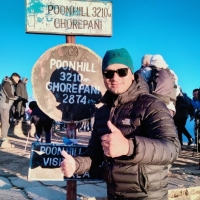
Additionally, the most well-liked trail starts from Nayapul at 1,070m and passes through Tikhedhunga at 1,540m and Ghorepani at 2,860m. Furthermore, trekkers proceed to the highest point at Poon Hill at 3,210m and witness the beauty of Dhaulagiri at 8,167m and Annapurna.
Further, the trekking trail leads to Sinuwa (2,340m), Bamboo (2,310m), and then a dense rhododendron forest. The trekkers will pass through Deurali (3,230m) and Machhapuchhre Base Camp (3,700m). Ultimately, the trekking trail ends at Annapurna Base Camp (4130m).
In addition to that, the duration of the trek to the base of Mount Annapurna takes between 7 to 12 days depending on the trekking schedule and trail. The short trek to and from the base of this Himalayan mountain bypasses Ghorepani (2,860m) through the trekking route of Jhinu Danda (1,780m).
Notably, the daily number of walking hours averages five to seven hours on well-defined stone trails. The gain in elevation is also gradual, minimizing the risk of any serious altitude problems. Acclimatization nights at Chhomrong (2,170m) and Machhapuchhre Base Camp (3,700m) remain essential here.
In similar way, prime seasons include spring and autumn with stable climatic conditions and visibility of the mountains. The region experiences snow during winter above Deurali at an altitude of 3,230 meters, and monsoon conditions can be experienced below Bamboo at an altitude of 2,310 meters.
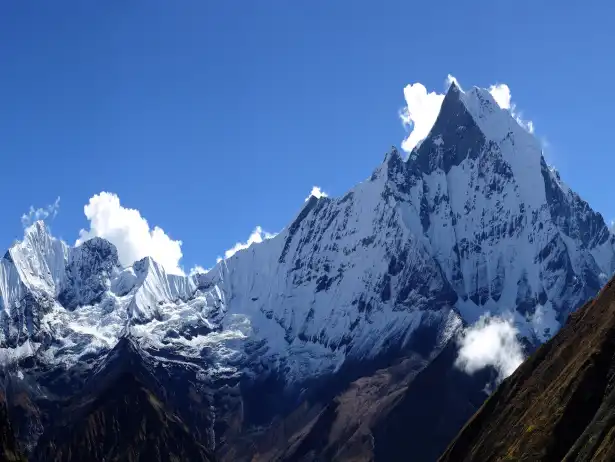
Trekkers enjoy breath-taking views from Annapurna Base Camp as the morning sun breaks through the clouds, illuminating the snow-covered Annapurna massif and creating an unforgettable Himalayan panorama.
Here, inclusion for permit charges includes ACAP and TIMS cards, which cost about USD 50 for trekkers. On the cost for a trek, which ranges between USD 700 and USD 1,200, expenditure varies based on guides and quality options for accommodation.
In conclusion, there are many reasons why the Annapurna Base Camp trek has remained a popular destination for adventure enthusiasts, but a major reason, perhaps, has to do with the reward that comes with a carefully planned itinerary that balances altitude, duration, and scenery, which makes for a very satisfying Himalayan adventure experience.
Annapurna Base Camp Trek itinerary from Kathmandu: Travel, Drive, and Trek Plan
Detailed itinerary of Annapurna Base Camp Trek from Kathmandu covering transportation, trekking distances, heights, and expenses.
Day
Location
Activity
Day 1 :
Kathmandu (1,338m)
Pokhara
Day 2:
Pokhara - Nayapul (1,070m)
Ulleri
Day 3:
Ulleri - Ghorepani (2,860m)
Poon Hill
Day 4:
Tadapani (2,630 )
Chhomrong/Sinuwa
Day 5:
Bamboo (2,310m)
Himalaya/Deurali
Day 6:
Machhapuchre Base Camp (3700m)
Annapurna Base Camp
Day 7:
Bamboo(2,310m)
Jhinu Danda (1,780m)
Day 8:
Jhinu Danda (1,780m)
Pokhara
The schedule of Kathmandu to Annapurna Base Camp Trek:
In the very first, the Annapurna Base Camp Trekking route from Kathmandu commences with overland transport to Pokhara (822m). The journey from Kathmandu (1,400m) takes seven hours by road. Therefore, Pokhara is the mains entrance point for trekking journeys.
Here, the journey proceeds to Nayapul or Ghandruk in a drive, albeit 1,070m or 1,940m high, as the trail may vary. The trekkers will trek to Ulleri or the Ghandruk Village when 2,070m or 1,940m high.
Next, the trail leads to Ghorepani at 2,860 meters via Banthanti at 2,250 meters. In the early morning, the trek continues to Poon Hill at 3,210 meters for a glimpse of Annapurna I at 8,091 meters and Machhapuchhre.
Actually, the next destination is Tadapani (2,630m), followed by Chhomrong (2,170m). The descent is through the Gurung village, from where one sees Annapurna South (7,219m). Thus, trekkers have time to prepare for the next day trip.
Next, the trail leads to Sinuwa (2,340m) and Bamboo (2,310m) along Modi Khola. There is a gradual gain in altitude towards Deurali (3,230m). Consequently, the pace of hiking becomes slower.
After this, trekkers ascend to Machhapuchhre Base Camp at 3,700 meters from Himalayan Hotel at 2,920 meters. The subsequent landscape will be Alpine from Machapuchhre at 6,993 meters. It is essential to hydrate enough for the next days trek.
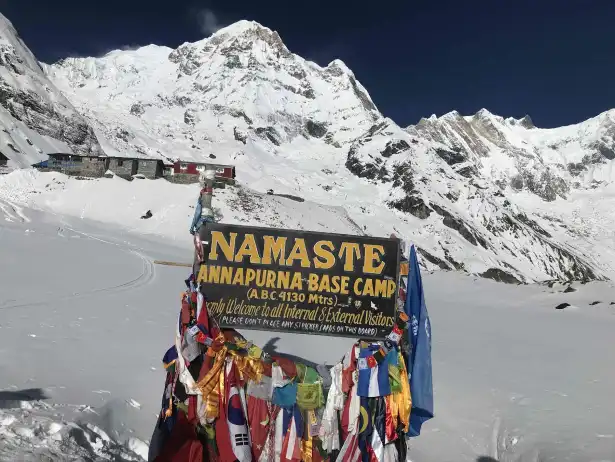
Lastly, the trek finally arrives at Annapurna Base Camp at a height of 4,130m, which is surrounded by Annapurna I at 8,091m, Hiunchuli at 6,441m, and Annapurna III at 7,555m. The major thing to do here at ABC is capturing mountain views and explore around.
Return trekking routes include retracing the route back to Bamboo (2,310m) and then Jhinu Danda (1,780m). Trekkers get to enjoy natural hot springs at Jhinu. Next, trekkers proceed to Nayapul (1,070m), from where they return to Pokhara finally by jeep drive.
Finally, the itinerary for trekking to Annapurna Base Camp from Kathmandu is a proper mix of efficiency of travel, sound gain in altitude, and variations in landscape features. On average, trekking cost ranges from 800 USD to 1,300 USD, which includes trekking permits and guides. This trek thus proves beneficial for beginners as well as senior trekkers for stunning Annapurna Himalayan ranges.
Annapurna Base Camp Trek from Pokhara: The Most Popular Starting Point Explained
Annapurna Base Camp Trek Pokhara - get all details about Annapurna Trek Routes, Annapurna Trek Heights, Annapurna Trekking Duration, Cost of Annapurna.
Advantages of undertaking the Annapurna Base Camp Trek from Pokhara are the following.
Easy road access to trailheads at Nayapul with an elevation of 1,070 meters and Ghandruk
Improved acclimatization protocols involving elevation gain
Reduced transportation and logistics costs
Well-developed safety and rescue services
Firstly, Annapurna Base Camp Trek from Pokhara (822m) has been the most preferred initial point of trek for trekkers from across the globe. Pokhara provides road access to trek routes, hence making trek logistics easier. Annapurna Base Camp treks begin from this beautiful lakeside town mostly.
Additionally, Pokhara has easy Jeep or bus access to Nayapul (1,070m), Ghandruk (1,940m), and Jhinu Danda (1,780m). This makes trekkers cover unnecessary days of walking times to access the hiking trails. As a result, trekkers trekkers can have rest and prepare well for the further trek to ABC.
Secondly, the climb begins from Pokhara, allowing for acclimatization to the elevation through the villages. The ascent passes through Ulleri (2,070m), Ghorepani (2,860m), and Tadapani (2,630m).
Moreover, the trail from Pokhara passes through Poon Hill, a key attraction at 3,210m. The Annapurna I (8,091m), Dhaulagiri (8,167m), and Machhapuchhre (6,993m) mountains are also visible during the trek you pass through Poon Hill.
Next, trekkers press on to Chhomrong (2,170m), the final substantial village before the protected area. The journey next leads to Sinuwa (2,340m) and then Bamboo (2,310m).
At the same time, treks in the Pokhara region make the process of acquiring permits for ACAP and TIMS easy. Trekking agencies, stores, and guide services are easily accessible. Preparation is therefore efficient and affordable.
Not to be underestimated is the fact that Pokhara has a low elevation and is suitable for acclimatization prior to trekking. The rest stops in Phewa Lake help in minimizing fatigue while traveling.
In like manner, the emergency access routes from Pokhara are also available through jeep and helicopter services. In this respect, it should be noted that this safety feature of Pokhara also helps solo travelers and families to feel safe while trekking to Annapurna Base Camp.
Regarding the Cost Analysis, the starting point from Pokhara saves money. Usually, the Cost of the Annapurna Base Camp Trek from Pokhara varies between USD 300 to USD 700. So, budget trekkers choose this point to start their journey.
Finally, a trek to Annapurna Base Camp, also beginning in Pokhara, is a perfect blend of ease of access, exciting scenery, and easy safety. Its well-rounded terrain makes it a favorable destination for trekkers of any skill level. In short, Pokhara is still the most convenient location to begin.
Annapurna Base Camp Trek Itinerary by Jeep from Pokhara
Annapurna Base Camp Trek itinerary including jeep ride from Pokhara. Information on routes, heights, durations, and costs. Time-saving aspect.
Day
Place | Elevation
Day 1:
Pokhara (822 m) -Sinuwa (2,340m)
Day 2:
Sinuwa -Deurali(3,230m)
Day 3:
Deurali (3,230m) – Machhapuchhre Base Camp (3,740m) - Annapurna Base Camp ( 4,130m)
Day 4:
Annapurna Base Camp to Bamboo.
Day 5:
Bamboo to Jhinu Danda(1780m) - Pokhara
Annapurna Base Camp Trek itinerary from Pokhara by jeep will be given below:
Firstly, the itinerary of Annapurna Base Camp Trek with a jeep ride from Pokhara (822m) is suited for those with limited time. The presence of jeeps will reduce walking distances substantially. Therefore, this itinerary is preferred by today’s modern trekkers, who always prefer efficiency.
Furthermore, trekkers take a vehicle from Pokhara (822m) to either Ghandruk (1,940m) or Jhinu Danda (1,780m) in a jeep. The trekking route goes along the rough roads of mountains in Nayapul (1,070m).
Moreover, beginning trekking from Ghandruk (1,940m) immediately exposes you to Gurung culture. The first day trek leads to Chhomrong (2,170m). In this way, the trekking program will be compressed without a high
Later on, the trail passes through Sinuwa (2,340m) and Bamboo (2,310m). Then the forested trails ensure that the climber is shaded and enjoys good grades. Consequently, Then, it ascends to Deurali (3,230m) and Machhapuchhre Base Camp (3,700m). The outlook of Machhapuchhre (6,993m) fills up the entire skyline.
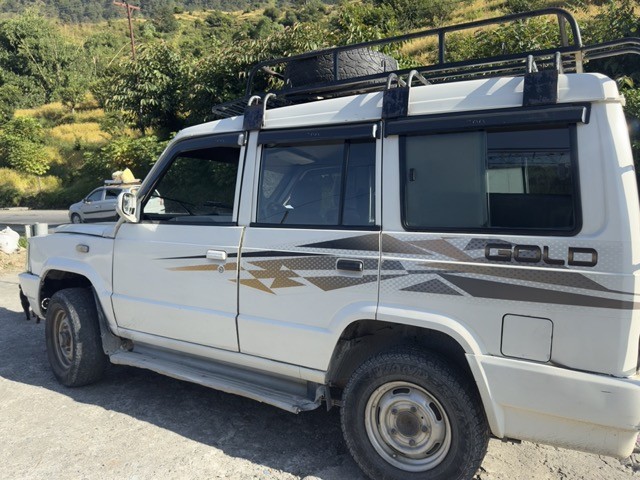
4WD jeeps navigate the rough mountain road to the Annapurna Base Camp Trek, offering an adventurous drive through the Annapurna region before the trekking journey begins
Next, trekkers move to Annapurna Base Camp, with a height of 4,130m, situated at the foot of Annapurna I, which has a height of 8,091m. Return trekking routes trace the same path into Bamboo (2,310m) and then on to Jhinu Danda (1,780m). Natural hot springs facilitate muscle relief. Finally, a jeep takes the trekker back to Pokhara (822m
Notably, jeep tours make it easy for beginners since they entail less physical activity. Nevertheless, such tours must be done in a way that avoids problems associated with high altitudes. Consequently, hiring professional guides is still advised.
Talking about expenses, Annapurna Base Camp Treks are slightly more expensive since their prices vary from USD 900 to USD 1,300 based on Jeep distance and group size.
Finally, the Annapurna Base Camp Trekking Itinerary with a jeep ride from Pokhara finds a balance between speed and security. The package will provide the complete experience in a shorter span of days. This will be ideal for those trekking for efficiency with beauty.
Jeep Ride to Ulleri and the change on Annapurna Base Camp Trek Itinerary
How the Jeep ride from Ulleri affects the Annapurna Base Camp Trek is discussed using elevations, changes in the trail, time difference, and financial aspects.
The important affects of a jeep ride to Ulleri can be listed as:
Saves one full day of trekking by omitting Tikhedhunga (1,540).
Decreases physical fatigue caused by climbing stairs made of stone.
Must be carefully acclimatized owing to rapid ascent in elevation.
Increases total trek cost marginally.
First of all, the jeep ride to Ulleri (2,070m) alters the format of the Annapurna Base Camp trekking route extensively. Ulleri comes above Nayapul (1,070m) and Tikhedhunga (1,540m). Therefore, it negates the need to trek through the stone stairs of Ulleri that normally people find very challenging to hit.
In addition to, trekkers begin driving from Pokhara, which is situated at a height of 822 meters, to Nayapul, which is located at a height of 1,070 meters, then to Banthanti with a height of 2,250 meters, finally to Ulleri with a height of 2,070.
In addition, not having to climb Tikhedhunga (1,540m) and Hile (1,430m) helps reduce exertion. Trekkers also avoid going up 3,000 stone steps.
Additionally, the jeep ride also influences acclimatization behavior. The swift ascent from Pokhara at 822m altitude to Ulleri at 2,070m needs proper acclimatization. Next, the trekking trail from Ulleri (2,070m) passes along the traditional forest trail. Trekkers arrive at Ghorepani (2,860m), then ascend Poon Hill (3,210m). On the other hand, the sight from Poon Hill (3,210m) encompasses Annapurna I (8,091m), Dhaulagiri (8,167m), and Machhapuchhre (6,993m).
Importantly, the Jeep ride affects the daily walking time. The days walked while trekking are reduced from six hours to four hours in the initial stages. As a result, trekkers save energy to walk to higher elevations.
Similarly, jeep accessibility enhances the flexibility of trekking itineraries. It is possible for trekkers to add a day’s rest at Ghorepani or Tadapani, at an altitude of 2780m.
4WD jeeps arrive at Ulleri, a popular starting point for the Annapurna Base Camp Trek, surrounded by traditional villages and beautiful Himalayan landscapes.
Concerning the costs incurred, jeep rides are a moderate source of added expenses. The cost for a shared jeep from Pokhara (822m) to Ulleri (2,070m) will amount to around USD 10 to 15 for each individual.
However, the road condition is still rugged and weather-dependent. Landslides during monsoon affect Jeep viability. Thus, trekkers need buffer days for their planning.
Finally, the jeep ride to Ulleri optimizes the Annapurna Base Camp Trek itinerary. This is because it cuts the approach time while still offering the classic highlights. Thus, it is the best choice for trekkers looking for comfort without compromising the experience in the Himalayas.
Annapurna Base Camp Trek Itinerary via Ulleri: Shortening the Classic Route
Information about the Itinerary of Annapurna Base Camp from Ulleri, including the stages, duration, and advantages of the shorter version of the classic trek.
Firstly, the Annapurna Base Camp Trek via Ulleri has an effective shortened version of the traditional trekking route. The trekking route has been shortened because Nayapul (1,070m) and Tikhedhunga (1,540m), which were formerly used as trekking points, have been replaced by jeep ride to Ulleri or Banthanti.
In addition, the trekking route often has its beginning at a jeep ride from Pokhara, which is at an elevation of 822m, to Ulleri at 2,070m. The trekking route also has oak and rhododendron forests along the way.
Further, from Ulleri (2,070m), trekkers begin walking to Ghorepani (2,860m). In fact, this trail has gradual ascents to Banthanti (2,250m).
In addition, there is also an early hike to Poon Hill (3,210m). The mountains visible from the hike include Annapurna South (7,219m), Annapurna I (8,091m), and Dhaulagiri.
Then, the trek goes down to arrive at Tadapani (2,630m) and onward to Chhomrong (2,170m). Chhomrong marks the final major settlement prior to entering the sanctuary. As a result, logistic supplies are available.
Next, trekkers encounter Sinuwa (2,340m) and Bamboo (2,310m) while proceeding into the Modi Khola Valley. The forest trail is a welcome respite from the weather and the gradients.
After that, the trail goes up to Deurali (3,230m) and Machhapuchre Base Camp (3,700m). Machhapuchre (6,993m) towers above.
Finally, trekkers arrive at Annapurna Base Camp at (4,130m), which is nested among Hiunchuli (6,441m), Annapurna III (7,555m), and Annapurna I (8,091m) peaks.
The return trekking route also takes the same trail back to Bamboo (2,310m) and Jhinu Danda (1,780m). Hot springs help in relaxing muscles. Later, the return to Pokhara takes place (822m).
In terms of time, the trekking duration for the Ulleri trekking trail will take seven to nine days. In traditional trekking trails, it takes ten to twelve days. Therefore, it takes relatively less time.
Finally, one of the Annapurna Base Camp Trekking itineraries, which takes you to Ulleri, is a good mix of traditionalism and efficiency. It is a shortened form of a typical trek, yet it is still very safe.
Annapurna Base Camp Trek Itinerary via Ghandruk Village
Overview of Annapurna Base Camp Trek from Ghandruk including distances, cultural attractions, trekking stages, prices, and Mt. Annapurna sightings.
Highlights of the Annapurna Base Camp Trek from Ghandruk include:
Authentic Gurung culture at Ghandruk (1,940m)
Steady increase in altitude, facilitating acclimatization
Views of Annapurna South (7,219m) and Machhapuchhre
Balanced trekking days with culture
Firstly, a trek to the Annapurna Base Camp via Ghandruk (1,940m) highlights culture, nature, and a gradual increase in altitude. In fact, Ghandruk is one of the largest Gurung settlements in the entire Annapurna region. Thus, this trek offers a mix of culture and a Himalayan trekking experience.
In addition, trekkers generally begin from Pokhara at 822m and then travel by vehicle to Ghandruk at 1,940m through Nayapul at 1,070m. Stone paved paths are used, and trekkers pass through houses and Buddhist monasteries.
It also gives ample opportunities to enjoy the views of Mount Annapurna South (7,219m), Hiunchuli (6,441m), and Machhapucchhre (6,993m). The local museums and Gurung cultures add to its charm.
Moreover, the route goes on from Ghandruk (1,940m) to Chhomrong (2,170m). Rice terraces and ridges of forests are the key features of this area. Thus, the walk is scenic and exciting.
Next, there is a passage through Sinuwa (2,340m) and Bamboo (2,310m) areas. Modi Khola valley leads the trekkers deeper into the mountains. Thus, the landscape changes from a village atmosphere to a natural ones.
Then, they ascend to Deurali (3,230m), followed by Machhapuchhre Base Camp (3,700m). Moreover, Machhapuchhre (6,993m) looms directly over the route.
Finally, in this trekking journey, travelers will reach the base of Annapurna (4,130m) which is surrounded by peaks of Annapurna I (8,091m), Annapurna III (7,555m), and Gangapurna (7,455m).
The return trekking trail usually passes through the same route to Bamboo (2,310m) and Jhinu Danda (1,780m). Natural hot springs offer a relaxing break. Finally, the trekking trail leads to Pokhara.
In regard to length of stay, Ghandruk trekking takes eight to ten days. Daily trekking time is five to six hours. So, it is well-organized treks for those needing a mix.
The Annapurna Base Camp Ghandruk trek regarding its cost may vary from USD 800 to USD 1,200. This is varied in respect to guide and accommodation services. This makes the budget flexible.
Lastly, the itinerary of the Annapurna Base Camp trek via Ghandruk is well-blended with culture, security, and natural scenery. The trek provides village experiences prior to reaching high-altitude wilderness areas. Thus, it remains perfect for those who are eager to learn and explore
Annapurna Base Camp Trek Itinerary via Landruk: Less Crowded Trails and Peak Scenic Views
Itinerary for Annapurna Base Camp Trek through the villages of Bhulbule, Tolka, Dhanqua, and Landruk, with information on quiet trails, altitude.
Day
Place and Elevation | Activity
Day 1:
Pokhara (822m) – Landruk (1,565m) | Drive
Day 2:
Chhomrong (2,170m) | Trek
Day 3:
Bamboo (2,310m) – Sinuwa (2,340m) | Trek
Day 4:
Deurali (3,230m) | Trek
Day 5:
Machhapuchhre Base Camp (3,700m) – Annapurna Base Camp (4,130m) | Trek
Day 6:
Jhinu Danda (1,780m) – Pokhara (822m) | Trek and drive
The trek itinerary for Annapurna Base Camp via Landruk is given below:
First, the itinerary for the Annapurna Base Camp Trek through Landruk (1,565m) is ideal for those who want a less crowded trail. Landruk is located above the Modi Khola Valley.
In addition to this, trekkers will drive from Pokhara to Landruk through Nayapul, which measures 1,070m to 1,565m to 822m respectively in height. The village will offer stone houses.
Furthermore, there are views of Annapurna South (7,219m) and Hiunchuli (6,441m) peaks. It receives fewer tourists. Hence, the experience is characterized by solitude.
Moreover, from Landruk (1,565m), it descends to Modi Khola, then ascends to Chhomrong (2,170m). For this portion of ascending, trekkers require average fitness.
Afterwards, trekkers press on into Sinuwa (2,340m) and Bamboo (2,310m). The forests are dense on this trail.
This is followed by a steady climb to Deurali (3,230m). Alpine meadows substitute the forested areas. This leads to a marked drop in temperature.
Then, trekkers arrive at Machhapuchre Base Camp (3,700m) where Machhapuchre Mountain (6,993m) towers in the background.
Finally, the trek ends at Annapurna Base Camp at a height of 4,130 meters. Annapurna I with a height of 8,091 meters, Annapurna South standing at a height of 7,219 meters, and Gangapurna.
The return journey follows the same path to Bamboo (2,310m) and Jhinu Danda (1,780m). Hot springs help relax the muscles. The final return is to Pokhara (822m).
Concerning the length of the journey, the Landruk trek requires eight to nine days. It is marginally longer than other jeep treks. Consequently, silence instead of speed becomes the hallmark of the journey.
Annapurna Base Camp trekking costs, which is done via Landruk, can vary between USD 800-1,100. A lower number of tea houses could mean planning. Booking in advance is thus advisable.
Finally, the Annapurna Base Camp Trek itinerary via Landruk prioritizes tranquility and views. It avoids crowds while maintaining full sanctuary access. Therefore, it suits trekkers seeking quiet Himalayan trails.
Annapurna Base Camp trek itinerary with Poon Hill Sunrise view point extension
Annapurna Base Camp Trekking route through Poon Hill with information regarding altitude, sunrise points, treks, time, and acclimatization advantages.
The benefits of the Annapurna Base Camp Trek via Poon Hill include the following.
Sunrise views of iconic Poon Hill (3,210 meters)
Improved acclimatization with elevation gain
More diversity in landscape and forest views
Greater photographic and visual incentives
First of all, the trekking route to the Annapurna Base Camp via Poon Hill (3,210m) adds a well-known spot for sunrise viewing to the traditional sanctuary trek. Ghorepani (2,860m) is where Poon Hill is situated in lower Annapurna. Thus, this adds to the aesthetic and acclimatization factors.
In fact, trekkers often begin their trek from Pokhara (822m) and take a drive to Nayapul (1,070m) or Ulleri (2,070m). The trek ascends through Banthanti (2,250m) and reaches Ghorepani.
Moreover, a morning hike to Poon Hill at 3,210m starts the day with breathtaking views of the Himalayas. The trekkers can have a sight of Annapurna I (8,091m), Dhaulagiri (8,167m), Annapurna South (7,219m), and Hieuchuli.
Additionally, after Poon Hill (3,210m), there is a descend towards Tadapani (2,630m). This part is characterized by forest ridges and rock stairs. Hence, the walk is both scenic and moderate.
Later, trekkers arrive at Chhomrong (2,170m), which is the last big village before entering the sanctuary. There are glimpses of Annapurna South (7,219m). Thus, there is a smooth transition between scopic and major mountains.
After this, the trail continues with Sinuwa (2,340m) and Bamboo (2,310m) into the Modi Khola valley. This is accompanied by a shift from the village environment to a natural one.
After this, the trek goes to Deurali (3,230m) and Machhapuchhre Base Camp (3,700m). Above the trek lies Machhapuchhre with a height of 6,993m.
Finally, trekkers reach the Annapurna Base Camp (4,130m), which is surrounded by Annapurna I (8,091m), Hiunchuli (6,441m), and Annapurna III (7,555m). This natural amphitheater shapes the culmination point of the trek.
Return trekking routes involve retracing the route to Bamboo (2,310m) and Jhinu Danda (1,780m). Hot springs aid in healing muscles. Next, trekkers head back to Pokhara (822m and relax at Lakeside with the massive Phewa Lake.
In respect of the length of the journey, the Annapurna Base Camp Trek through Poon Hill is carried out in nine to twelve days. For the direct journey, the number of days is relatively lower. Hence, the time requirement rises by a marginal amount.
From a cost perspective, the extension to Poon Hill has moderate costs. Usually, the costs will range from USD 900 to USD 1,300, depending on the duration and services involved. Accordingly, the costs will include extra days in the budget.
Finally, the trekking route through Poon Hill adds an incredible sunrise view to the normal trekking experience in the Annapurna Base Camp Trek. Thus, the trekking route through Poon Hill is suitable for trekkers in search of an enjoyable Himalayan trekking experience.
Annapurna Base Camp Trek Via Poon Hill vs Direct Route, Which Option is Better
Poon Hill Annapurna Base Camp trek vs Annapurna Base Camp trek, factors considered being altitude, days, scenery, costs, suitability.
Firstly, doing an Annapurna Base Camp Trek via Poon Hill (3,210m) vs. Annapurna Base Camp Trek direct via Jhino Danda helps trekkers make an educated decision. Both routes go to Annapurna Base Camp (4,130m).
In addition to this, the Poon Hill trek begins from Ghorepani (2,860m), and for those taking the direct trek, it begins from Ghandruk (1,940m) and Jhinu Danda (1,780m). As a result, acclimatization enhances.
Additionally, the Poon Hill trek also offers sunrise views of the Annapurna I (8,091m) and Dhaulagiri (8,167m) mountains, whereas in the direct trail, this point is missed altogether.
In addition, the direct trail leads to Chhomrong, a 2,170m altitude, quicker. Thus, this option is ideal for trekkers with less time.
Next, both trails meet at Chhomrong (2,170m). From there on, the route via Sinuwa (2,340m), Bamboo (2,310m), and Deurali (3,230m) is the same. Therefore, the experience
Then, both trails move on to the base camp of Machhapuchhre at 3,700m and the Annapurna Base Camp at 4,130m. The adjacent mountains are Hiunchuli at 6,441m and Annapurna.
In terms of physical effort needed, the trail in Poon Hill is relatively longer with more uphills. The trail is steeper for less distance. Therefore, there is a consideration for fitness levels.
In terms of cost consideration, the Poon Hill trekking program is more expensive because of the additional days. Generally, the average cost ranges from USD 900 to USD 1,300. The straightforward trekking method will be around USD 700 to USD 1,000.
Lastly, the Annapurna Base Camp trek through Poon Hill is best for trekkers looking for scenery and acclimatization. The direct trek route is best for trekkers looking to save time. Thus, the best route to take varies based on time, budget, and preference for scenery.
Annapurna Base Camp Trek with Jhinu Danda Hot Springs,
Primary benefits of Annapurna Base Camp Trek through Jhinu Danda:
Natural Hot Springs in Jhinu Danda at 1,780m for a post-trek dip
Reduced, more efficient return route
Full Annapurna Sanctuary experience
Well-balanced elevation profile
This variation of the Annapurna Base Camp trek includes a refreshing spin with a dip in the natural hot springs at Jhinu Danda’s (1,780m) hot springs following the standard haven trek. Jhinu Danda lies above the Modi Khola Valley; therefore, this schedule combines challenging high-altitude scenic landscapes with a much-needed break following a trekking adventure.
Actually, a large number of trekking routes for this region begin from Pokhara (822m) and continue to Nayapul (1,070m) and/or Ghandruk (1,940m) by road. The trek then continues to Chhomrong (2,170m) gradually and then ascends to Sinuwa and Bamboo.
Here, Chhomrong gives easy access to Annapurna South (7,219m) and Hiuchuli (6,441m) mountains, in addition to being a point of entry into the Annapurna Sanctuary.
Then, the ABC route ascends through Sinuwa (2,340m) and Bamboo (2,310m). The thick forests along the routes offer shade and easy trekking routes.
Then , you will follow the trails via Deurali (3,230m) and Machhapuchhre Base Camp (3,700m). The landscape is dominated by the presence of Machhapuchhre (6,993m).
At last, you reach the Annapurna Base Camp at 4,130m, which is nestled amidst mountains such as Annapurna I at 8,091m, Annapurna III at 7,555m, and Gangapurna at an elevation of 4130m at ABC.
On the way back, you'll trek downhill to Bamboo (2,310 meters) and Sinuwa (2,340 meters), then move towards Jhinu Danda (1,780 meters). There will be rapid altitude loss, and you might feel this particular impact in your knees.
It is the natural hot springs in Modi Khola that make it a major attraction in Jhinu Danda. A dip in the natural pools helps alleviate weary muscles from the higher trails.
One major advantage of taking the Jhinu Danda trail is that the return journey is shorter compared to going back on the same ascent trail. Additionally, most trekkers opt not to visit Ghorepani (2,860m) on the descent trail.
In terms of duration, this trekking variant takes around seven to ten days. The average trekking time for this duration is for around five to six hours.
The price is in the medium range, between USD 800 to USD 1,200, depending upon guides and options, and the hot springs are a net value-addition for the price.
In summary, this trail offers a combination of adventure and relaxation, treating you to breathtaking scenery of mountains and a natural health haven along the way.
Jeep option: Jhinu Danda, near Pokhara, for faster return times
It provides an alternative which cuts the return time by taking a jeep from Jhinu Danda (1,780m) towards Pokhara (822m). This way, trekkers can save time if they are on a tight schedule.
Actually, the trail leads down from Annapurna Base Camp at 4,130 meters to Bamboo at 2,310 meters and Chhomrong at 2,170 meters. Finally, you arrive at Jhinu Danda at 1,780 meters. Here you change to a jeep. The trail connects Jhinu Danda with Nayapul at 1,070 meters and Pokhara at 822 meters.
Here, a jeep reduces the strain on the knees caused by sustained descent routes, avoiding stairways. This includes a visit to each of the region’s “chortens,” which house points of personal significance. “The loop continues with a visit to each of the region’s chortens.
Take a 4WD jeep from Jhinu Danda for a faster return to Pokhara after completing the Annapurna Base Camp Trek, saving time while enjoying scenic mountain roads.
Also, Jeep routes make journey flexibility possible, especially where there is harsh weather or landslides that make trails difficult, besides ensuring safety and timeliness. Acclimatization is protected because the choice comes after descending below Chhomrong, which has an altitude of 2,170m.
Now, transportation costs from Jhinu Danda to Pokhara by shared jeep range between USD 10 to 15 for individuals, while private transport depends on the size of the group.
Annapurna Base Camp Trek with Overnight Stay in Jhinu Danda
Itinerary of Annapurna Base Camp trek including Jhinu Danda overnight halt involving aspects like elevation, hot springs, trekking stages, and recuperation.
To start with, the Annapurna Base Camp Trekking program with Jhinu Danda night stay at 1,780 meters primarily emphasizes acclimatization and relaxation following high-altitude treks. Jhinu Danda is located above the Modi Khola Valley.
Further, the trekkers normally start from Pokhara, which is at an elevation of 822m, and then reach Nayapul or Ghandruk, which are at an elevation of 1,070m or 1,940m, respectively, by road.
Secondly, Chhomrong (2,170m) offers glimpses of Annapurna South (7,219m) and Hiunchuli (6,441m). The village is the last permanent settlement prior to the sanctuary area.
In addition, there is a trail through Sinuwa (2,340 m) and then Bamboo (2,310 m). In some areas, there are very dense forests with shade.
Afterwards, trekkers climb towards Deurali (3,230m). The environment becomes alpine. Thus, temperatures are lower and awareness about altitude rises.
Next, trekkers arrive at Machhapuchhre Base Camp (3,700m). Machhapuchhre (6,993m) looms large all the way to Annapurna Base Camp.
After this, there is a trail that takes us to Annapurna Base Camp (4,130m). Annapurna I (8,091m), Annapurna III (7,555m), and Gangapurna (7,455m) form an amphitheater.
On the return journey, the routes go through Deurali (3,230m), Bamboo (2,310m), and Sinuwa (2,340m). The journey finally leads to Jhinu Danda (1,780m) and back to Pokhara by jeep ride.
Significantly, there is also the option of spending the night at Jhinu Danda (1,780m), which provides the benefit of using the natural hot springs there. Hot mineral water is beneficial for relieving muscle and joint strains that result from climbing.
Furthermore, another place that offers nice accommodation and nice sightseeing along the River Indus is Jhinu Danda. The trekkers get an easy evening after the difficult trekking activities.
Talking of the timing of this activity, this trekking activity may take eight to ten days. The number of walking hours each day is moderate.
Cost-wise, Annapurna Base Camp Trek with an overnight stay at Jhinu Danda costs between USD 850 and USD 1,200. These costs are subject to guide and accommodation rates. Thus, hot spring benefits are valuable and not very expensive.
The benefits associated with incorporating a night stay at Jhinu Danda include:
Natural hot spring recovery, Jhinu Danda (1,780m)
Relaxed rest after high altitude trekking
Efficient return route to Pokhara (822m)
Enhancing the general trek experience
Finally, the Annapurna Base Camp Trek with Jhinu Danda Overnight Stay has the trekking itinerary perfectly combined with comfort. The trekking experience is rewarded with health and wellness. So, this remains a vastly recommended trekking itinerary.
Short Annapurna Base Camp Trek Itinerary Using Jeep Access
Short Annapurna Base Camp Trek via Jeep Access details including elevation, trek route shortcuts, time-saving benefits, and costs.
First, the Annapurna Base Camp Trek, which takes a jeep route, is for time-restricted trekkers. The jeep routes minimize the number of walking days needed for the trek. Thus, the route presented is time-effective without compromising the essential attractions.
Furthermore, trekkers drive in a jeep to Ulleri (2,070m) or Ghandruk (1,940m) starting from Pokhara (822m). The trekking trail goes through Nayapul (1,070m) and Banthanti (2,250m).
Further, starting from a higher point cuts down the number of trekking days by two or three. Nevertheless, trekkers feel a progressive increase in elevation from Ulleri (2,070m) to Ghorepani (2,860m).
Additionally, the trip routine may include Poon Hill (3,210). Sunrise will offer sight of Annapurna I (8,091), Dhaulagiri (8,167), and Machhapuchre (6,993m)
Later, the trail leads downwards towards Tadapani (2,630m) and Chhomrong (2,170m). Then there is a path through Sinuwa (2,340m) and Bamboo (2,310m).
After that, climbers will reach Deurali (3,230 meters) and then Machhapuchhre Base Camp (3,700 meters). Indeed, Machhapuchre (6,993m).
Thus, trekkers reach the point of Annapurna Base Camp (4,130m). The surrounding mountains are Annapurna I (8,091m), Hiunchuli (6,441m), and Annapurna South (7,219m).
For the return, the trekkers follow the path to Jhinu Danda at 1,780m. They are then driven back in a jeep to Pokhara at 822m.
Significantly, the availability of jeeps reduces the strain on the knees and the fatigue involved. Downhill walking will significantly decrease on the days allocated for going downhill.
As far as the time taken is concerned, the shorter routes undertaken through the assistance of jeeps take around five to seven days. The normal routes take nine to twelve days. Thus, time efficiency is greatly improved.
Cost-wise, the jeep-assisted Annapurna Base Camp Treks are a bit more expensive. Generally, the cost will vary between USD 900 and USD 1,300. Hence, convenience affects the budget.
Finally, the trekking schedule to the base camp of Annapurna using jeep access packs the maximum possible outcome in the shortest time. The trekkers will therefore get to retain the best while incurring the lowest exertion.
Itinerary for The Classic Annapurna Base Camp Trek without Jeep Support
The typical Annapurna Base Camp Trek mapped out without the use of jeeps, including the detailed routes, heights, and prices involved in the actual trekking experience.
Advantages of the Classic Annapurna Base Camp Trek without Jeep Support include:
Entire traditional walking experience from Nayapul (1,070m)
Acclimatization and lower elevation risk
Village life and trail experience authenticity and consistency
Decreased costs of transportation
Beginning at Nayapul (1,070m) after an overland drive from Pokhara (822m), this classic trek follows original footpaths through lower hills and up. The trekkers will experience the complete range of valleys and landscapes that are subtropical to Alpine.
Here, the first couple of days involve passage through Tikhedhunga and then Ulleri at 1,540m and 2,070m, respectively. The stone staircase is challenging and helps condition the trekkers physically.
The trek then leads to Ghorepani (2,860m) through dense rhododendron trees and then to Poon Hill (3,210m) with optional hiking where one will get to enjoy the sunrise view of Mount Dhualgiri (8,167m) and Annapurna South (7,219m).
Going down to Tadapani (2,630m) and then to Chhomrong (2,170m), this village is actually the final major cultural exposure before entering the sanctuary.
Moving on down into Modi Khola valley, treks pass through Sinuwa (2,340m) and Bamboo (2,310m). Forested trails provide a degree of comfort as one passes through the higher reaches.
Then follows the ascent to Deurali (3,230m) through the Himalayan Hotel (2,920m). The environment will change to the alpine zone, with lower temperatures needing more attention to height.
A trekker enjoys breath-taking views at Annapurna Base Camp, surrounded by snow-covered peaks, dramatic alpine landscapes, and the heart of the Annapurna Sanctuary.
At Machhapuchre Base Camp (3,700m), the ambiance in the valley changes as the presence of Machhapuchre, the 6,993m-high Himal.
Finally, this trail culminates at the Annapurna Base Camp at a height of 4,130 meters. The trek is surrounded by mountains such as Annapurna I with a height of 8,091 meters, Annapurna III.
The return journey follows the same trail, which leads to Bamboo (2310m) and then to Jhinu Danda (1780m) with natural hot springs to soothe sore muscles, then to Nayapul (1070m).
A trek without jeep support results in a more constant rate of elevation gain, thereby naturally reducing the chances of altitude sickness. This type of trek is best suited for people who prefer the traditional method.
In terms of duration, this traditional trek commonly requires around ten to twelve days, involving around five to seven hours of walking per day. It can be considered a moderate level of fitness activity.
In terms of cost, it is still cost-effective, between USD 700-1,000 depending on guided services. Very affordable.
In summary, this trip maintains the original spirit of trekking in the Himalayas, where the reward for perseverance is insight and authenticity. This is indeed an ideal trip for those pure at heart.
7 to 12 Days Annapurna Base Camp Trek Itinerary Explained
Information on 7-12 day Annapurna Base Camp Trek routes, elevations, and suitability. Options from 7 to 12 days offer flexibility to trekkers. All treks have access to Annapurna Base Camp at 4,130m but differ in the trekking trail.
Here, 7 Day Annapurna Base Camp Trek Itinerary focuses on efficiency with jeep access. From Pokhara (822m), trek to either Ulleri (2,070m) or Ghandruk (1,940m) initially. You can also drive to Jhino Danda and trek to Suniwa directly.
Now , Eight to nine days ABC Trek Itinerary will offer a balance between comfort and scenic viewpoints and will likely include Ghorepani at 2,860 meters or Jhinu Danda at 1,780 meters.
Likewise, ten to twelve days Annapurna Base Camp Trek fit the conventional walk from Nayapul (1,070m). The trail passes through Tikhedhunga (1,540m) and Ulleri (2,070m), adding to the journey of the trekker.
Actually, both routes meet at Chhomrong (2,170m), followed by Sinuwa (2,340m) and then Bamboo (2,310m) to reach the sanctuary.
From there, the climb continues to Deurali (3,230m) and Machhapuchre Base Camp (3,700m), where the presence of Machhapuchre (6,993m) dominates the background
Eventually, each ABC trek itinerary concludes at the Annapurna Base Camp (4,130 meters). Then, peaks such as Annapurna I (8,091 meters), Annapurna South (7,219 meters),
Smaller routes call for a quicker and more physically demanding schedule. Longer routes mean you can easily walk and have a rest day. Your fitness level determines this.
Cost-wise, packages covering 7 days range from USD 500 to 700 based on the use of jeeps, while those covering 10 to 12 days range from USD 700 to 1,100.
Annapurna Base Camp Trek for Beginners: A Gentle Climb Up
Why this Works for Beginners:
Gradual ascent and acclimatization
Comfortable lodges and many villages
Easy-to-follow trails with no technical difficulties
Optional rests and flexible pace
Actually, Annapurna Base Camp Trek begins from Pokhara, which is about 822 meters, then takes you to Nayapul, which is 1,070 meters, to start your adventure. Their strategy is to introduce your body to trekking while acclimatizing you, meaning their approach is not very abrupt or shock
The first day trekking on foot begins with a descent to the villages along river valleys to the village of Tikhedhunga (1,540m), and the trail is wide and easily accessible even for a beginner.
On day two, you trek to Ulleri (2,070m). You ascend using stone stairs, building confidence in your legs. This is an optimal start for your legs to acclimate.
The trek then goes on through rhododendron forests to Ghorepani (2,860m). An early morning hike to the top of Poon Hill (3,210m) provides a breathtaking sight of Dhaulagiri (8,167m)
After Ghorepani, your descent will lead to Tadapani (2,630 meters) and further to Chhomrong (2,170 meters). Chhomrong offers quite comfortable lodging facilities to give your body sufficient.
Then follows the Modi Khola valley through Sinuwa (2,340m) and Bamboo (2,310m). The shaded and gradual forest trail provides ease even at the higher altitude.
Next, you climb up to Deurali (3230m) via the Himalayan Hotel (2920m). This is the point where the scenery unfolds and the temperature drops, heightening your awareness regarding acclimatization.
The trekking trail will proceed to Machhapuchhre Base Camp (3,700m) while being backed by the majestic Machhapuchhre (6,993m). It is an appropriate and easy route for those who trek to Annapurna for the first time.
Finally, you arrive at Annapurna Base Camp (4,130m), which is surrounded by peaks such as Annapurna I (8,091m), Annapurna South (7,219m), and Hiunchuli (6,441m)
Returning, you trek downwards through Bamboo (2,310 meters) and Jhinu Danda (1,780 meters), where hot springs will help soothe your muscles, finally to Nayapul (1,070 meters).
This trekking itinerary is around nine to eleven days long and has trekking of around five to six hours a day.
When it comes to cost, beginner-friendly Annapurna Base Camp Trek packages start from USD 800 to a maximum of USD 1,100. This assists you in planning your budget with confidence since all costs will be covered, including guides, accommodations,
In conclusion, this first-time trek to the Annapurna Base Camp balances safety and aesthetic appeal, while experiencing increasing confidence and acquiring trekking skills.
Annapurna Base Camp Trekking Itinerary - Daily Duration of Walk and Distance
The planning part becomes very easy with walking hours and walking distance, elevation, pace, cost, and clarity.
Day 1: Nayapul (1,070m) to Tikhedhunga (1,540m)
Day 2: Tikhedhunga to Ghorepani
Day 3: Ghorepani (2,860 m) to Tadapani (2,630 m) via Poon Hill (3,210 m) –
Day 4: Tadapani (2,630m) to Chhomrong (2,170m):
Day 5: Chhomrong (2,170m) to Bamboo (2,310m): 9 km,
Day 6: Bamboo (2,310m) to Deurali (3,230m) - 8km,
Day 7: Deurali (3,230 m) to Annapurna Base Camp (4,130 m) via Machhapuchhre Base Camp (3,700 m)
The descent days further decrease in number as the return journey from ABC to Bamboo takes approximately 6 hours for acclimatization.
The costs to follow guided packages generally vary between USD 750 and USD 1,100.
Daily Plan Snapshot:
Day 1: Nayapul – Tikhedhunga,
Day 2: Tikhedhunga to Ghorepani,
Day 3: Ghorepani – Tadapani,
Day 4: Tadapani-Chhomrong-10km-
Day 5: Chhomrong to Bamboo, 9 km,
Day 6: Bamboo – Deurali8 km
Day 7: Deurali-ABC, 7 km, This overall daily plan promotes pacing, security, and enjoyment so that the hike goes smoothly and successfully.
Annapurna Base Camp Trek Itinerary, Acclimatization, & Altitude Safety
Annapurna Base Camp trekking itinerary incorporating acclimatization and altitude precautions when trekking to the Annapurna Base Camp at high altitude.
Here are practices regarding safety on altitudes:
Gradual ascent below 500 meters every day above 3,000 meters
Hydration and carbohydrate loading
Abstaining from alcohol and smoking
Descend immediately if symptoms of AMS progress
To start with, the tour plan for Annapurna Base Camp Trek acclimatized and with altitude precautions accentuates deliberate ascent and acclimatization. The trekking begins from the starting point of Pokhara at 822m and reaches Nayapul at 1,070m. In other words, the body gets acclimatized
Further, the initial trekking route continues on to Tikhedhunga (1,540m) along the river valleys. The gain in elevation per day remains relatively low. Early altitude sickness, therefore, remains minimal.
Moreover, the ascent via Ulleri (2,070m) and Ghorepani (2,860m) is gradual. In fact, trekkers do not ascend over 800 meters in a day. Thus, ac
Moreover, an initial hike to Poon Hill (3,210m) promotes the climb high technique. The trekkers descend to a lower point after witnessing the sunrising. Thus, the body adjusts accordingly.
Then, there is a descent via Tadapani (2,630m) and through Chhomrong (2,170m). The descent helps in recovery and maintaining oxygen balance.
After this, the trail passes into the Modi Khola Valley and further on to Bamboo (2,310m) and then Deurali (3,230m). Wooded areas reduce the walking pace. Thus, breathing is normalized.
Then, trekkers arrive at Machhapuchre Base Camp (3,700 m) to acclimatize for the night. Machhapuchre (6,993 m).
Then comes the final climb to the base of Annapurna (4,130m) after a easy walk. The peaks of Annapurna I (8,091m), Annapurna South (7,219m), and Hiunchuli (6,441m) form.
Trekkers descend from Annapurna Base Camp, enjoying spectacular views of the snow-covered Annapurna massif, crisp mountain air, and one of the most scenic trails in the Himalayas.
It is also important to note that trekkers are provided guidelines on hydration, food, and rest throughout their journey. Their symptoms of altitude sickness, nausea, headache, and so on are also checked daily by guides.
In terms of cost, the price for the guided itinerary that includes acclimatization days is from USD 900 to 1,200. This includes the price of guides and safety considerations.
Finally, it can be said that the Annapurna Base Camp Trek has an itinerary that ensures acclimatization, making it safe for trekkers to venture into the Himalayas. Thus, they reach base camp with confidence.
Selecting the Best Annapurna Base Camp Trekking Trail: Ulleri, Ghandruk, Landruk, or Jhinu Danda
Choose the best route for your Annapurna Base Camp Trek by comparing options available via Ulleri, Ghandruk, and Landruk or through Jhinu Danda.
First, the selection of the best route for the Annapurna Base Camp Trek is based on the landscape, culture, and time. Indeed, all routes link Pokhara (822m) with the Annapurna Sanctuary (4,130m).
In addition, the Ulleri trail begins from Nayapul (1,070m) and ascends to Ulleri (2,070m) in a steeper manner. The stone staircases are an initial hurdle for the trekker to overcome. In fact, you can skip this steeper trail with the help of jeep ride from Pokhara to Ulleri/Banthanti directly.
Furthermore, the Ghandruk trail also starts from Phedi (1,130m) and then proceeds to the Ghandruk Village (1,940m). Culturally significant Gurung traditions add to the experience. Here, you can also get jeep ride/bus ride from Pokhara to Ghandruku directly.
Additionally, the Landruk trekking trail bifurcates from Dhampus at a height of 1,650m and leads to the village of Landruk at 1,565m. The trekking trail becomes even-less crowded.
Later, the route leads to Jhinu Danda through Chhomrong (2,170m) and Jhinu Danda (1,780m). The presence of natural hot springs makes for a relaxing experience.
As for the elevation ascent, all trails converge beyond Chhomrong (2,170m). The trail leads to Bamboo (2,310m), Deurali (3,230m), and Machhapuchhre Base Camp (3,700m).
Cost-wise, it is slightly affected by routes. Routes involving support from Jeep or Jhinu increase the cost of transport while decreasing the number of walking days. Thus, costs vary between USD 800 and 1,200.
Finally, selection of the best trail for Annapurna Base Camp Trekking depends upon trekking objectives. These trails lead to Annapurna Base Camp (4,130m), which is below Annapurna I (8,091m). Thus, no trail is disappointing if carefully selected.
FAQs to support the Annapurna Base Camp Trek Itinerary: A Guide
1. How days do I need for the Annapurna Base Camp Trek? The Annapurna Base Camp Trek usually takes 7 to 12 days. The exact number of days depends on where you start the Annapurna Base Camp Trek how fast you walk and what your plan is for the Annapurna Base Camp Trek. Most people who do the Annapurna Base Camp Trek choose to do it in 8 to 11 days. This gives them a chance to get used to the high altitude and have a more enjoyable time on the Annapurna Base Camp Trek. A good plan for the Annapurna Base Camp Trek also gives you time to see the beautiful mountains and visit the local villages without feeling rushed on the Annapurna Base Camp Trek.
2. What is the best plan for the Annapurna Base Camp Trek? The best plan for the Annapurna Base Camp Trek is one that balances the time you spend walking and the height you gain. Most people who do the Annapurna Base Camp Trek like to go through the villages of Chhomrong, Bamboo, Deurali and Machhapuchhre Base Camp before they get to the Annapurna Base Camp. This way is very pretty. Helps your body get used to the high altitude on the Annapurna Base Camp Trek. It also makes the trip tiring and more fun on the Annapurna Base Camp Trek.
3. Can people who are new to trekking do the Annapurna Base Camp Trek? Yes people who are new to trekking can do the Annapurna Base Camp Trek. The path is well marked. You do not need to know how to climb rocks to do the Annapurna Base Camp Trek.. You do need to be in good shape and get ready for the Annapurna Base Camp Trek. If you walk at a pace and follow a good plan for the Annapurna Base Camp Trek you can do the Annapurna Base Camp Trek safely and comfortably.
4. What is the highest point on the Annapurna Base Camp Trek? The highest point on the Annapurna Base Camp Trek is the Annapurna Base Camp. It is 4,130 meters above sea level. From the Annapurna Base Camp you can see the mountains of Annapurna I, Machhapuchhre, Hiunchuli and Annapurna South on the Annapurna Base Camp Trek. Getting to this point is the best part of the Annapurna Base Camp Trek.
5. Do I need to get used to the altitude on the Annapurna Base Camp Trek? Even though the Annapurna Base Camp Trek is not extremely high you still need to get used to the altitude on the Annapurna Base Camp Trek. If you go up slowly your body can adjust to the altitude on the Annapurna Base Camp Trek. Most plans for the Annapurna Base Camp Trek are made to reduce problems caused by the altitude. So if you follow the plan for the Annapurna Base Camp Trek you will be safer and more comfortable on the Annapurna Base Camp Trek.
6. Where does the Annapurna Base Camp Trek start? Most people start the Annapurna Base Camp Trek from the city of Pokhara. Then they drive to the villages of Jhinu Danda, Siwai or Ghandruk to start walking on the Annapurna Base Camp Trek. These villages are easy to get to and make the Annapurna Base Camp Trek shorter.
7. Which villages are on the Annapurna Base Camp Trek? Some popular villages on the Annapurna Base Camp Trek are Ghandruk, Chhomrong, Sinuwa, Bamboo, Dovan, Deurali and Jhinu Danda. Each village on the Annapurna Base Camp Trek has its special culture and beautiful views of the mountains. You can also stay in teahouses in these villages, on the Annapurna Base Camp Trek.
8. How hard is the Annapurna Base Camp Trek route? The Annapurna Base Camp Trek is considered moderate. You walk for five to seven hours every day on stone steps and mountain trails. The route can be tough. Most healthy and prepared trekkers can complete it successfully with a good plan.
9. Are there tea houses along the Annapurna Base Camp route? Yes tea houses are available all along the route. They offer accommodation, food and basic facilities for trekkers. So you do not need to carry camping equipment. Most plans rely on these mountain lodges.
10. What permits do I need for the Annapurna Base Camp route? You need the Annapurna Conservation Area Permit (ACAP). Depending on the rules you might also need trekking documents. Getting permits before starting the trek ensures entry into the protected Annapurna region.
11. Can I complete the Annapurna Base Camp route in 7 or 8 days? Yes there are routes for trekkers with limited time. These routes often start closer to the trailhead. Involve longer walking days. However you should keep a pace and allow enough time to adjust to the altitude.
12. What is the best time for the Annapurna Base Camp route? Spring and autumn are the seasons. The weather is stable. The mountain views are great during these months. Spring also offers rhododendron blooms while autumn provides clear skies and excellent visibility.
13. Does the route include Machhapuchhre Base Camp? Yes most routes pass through Machhapuchhre Base Camp (3,720 m) before reaching Annapurna Base Camp. This stop offers mountain views and helps trekkers acclimatize before ascending to the final destination.
14. Can I customize the Annapurna Base Camp Trek route? Yes you can customize the route according to your fitness level, time and travel preferences. Some trekkers add Poon Hill while others choose routes. A customized plan often creates a comfortable and rewarding trekking experience.
15. What should I prepare before following the Annapurna Base Camp route? You should prepare by training, for fitness getting trekking gear having travel insurance and understanding the route. Also it is important to carry clothing for changing weather conditions. Good preparation improves safety, confidence and overall enjoyment during the trek.