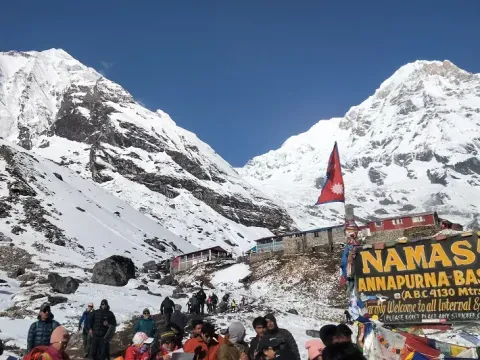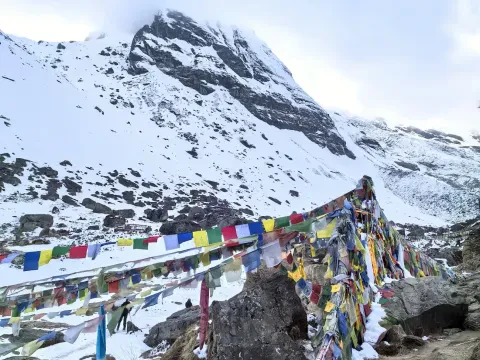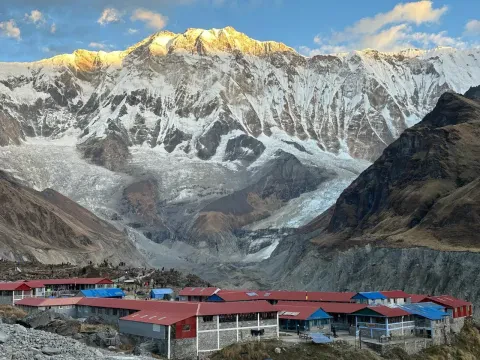
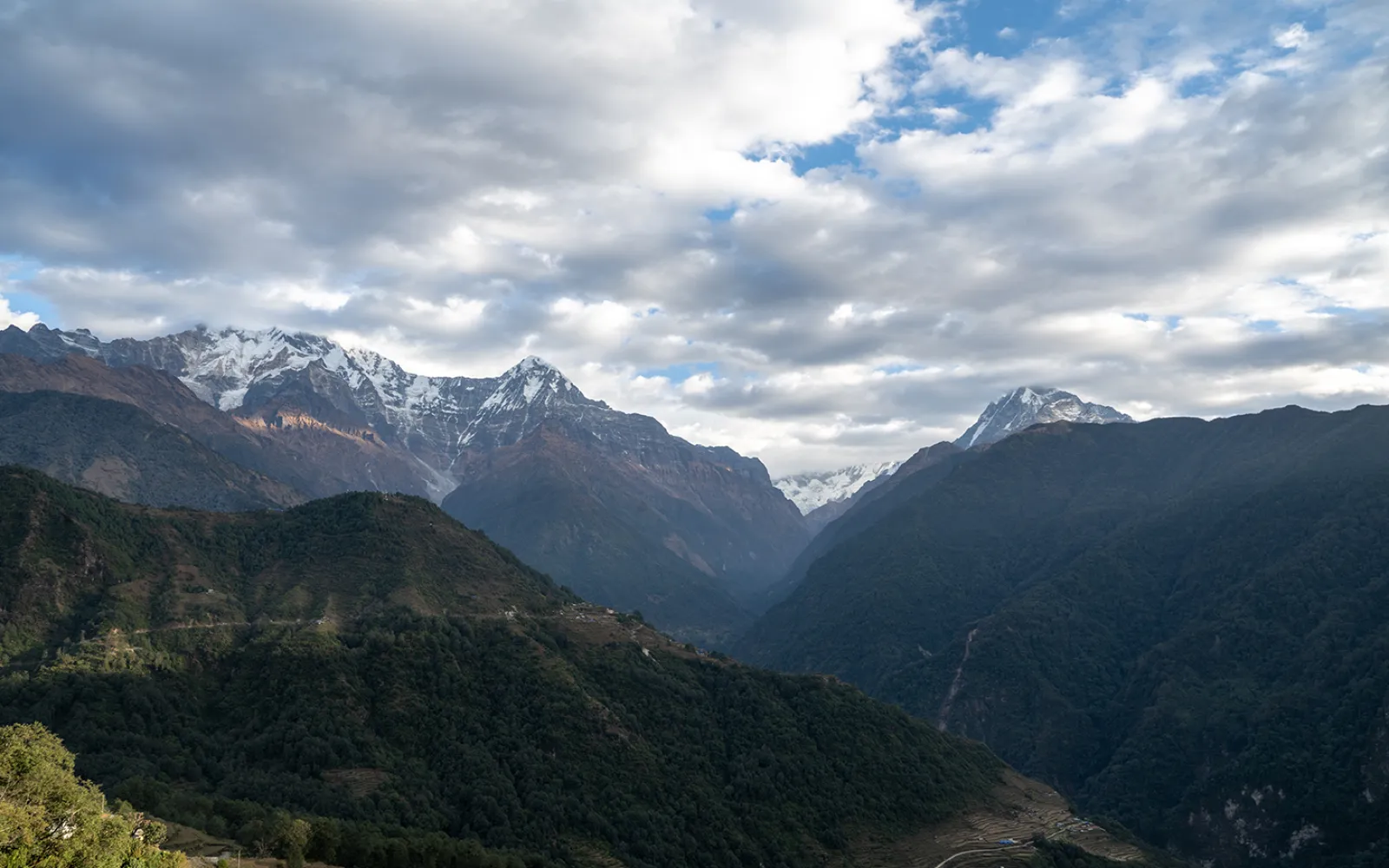
The Annapurna Base Camp Trek ( ABC)via Ghandruk is a popular classical way to explore this area. Instead of hiking the road section from Pokhara, you can take a shared jeep or private 4WD to Ghandruk and begin your trek from there.
Though one can go to ABC via Poon Hill and via Jhino Danda, trekkers will not miss popular Ghandruk village if they follow this route.
You can drive from Pokhara (822 m) to Ghandruk (~1,940 m), passing through Nayapul and Birethanti, and then head towards the Ghandruk area. This drive takes about 55-60 km and normally takes 3-3.5 hours, but road conditions, traffic and the type of vehicle can affect the travel time.
| Route | Elevation | Approx. Distance | Approx. Duration |
|---|---|---|---|
| Pokhara → Nayapul | 822 m → 1,070 m | 40 k | 1.5-2 hrs |
| Nayapul → Birethanti | 1,070 m → 1,065 | Short road section | 15-30 min |
| Birethanti → Ghandruk | 1,065 m → 1,940 m | 35-40 km | 1.5-2 hrs |
| Pokhara → Ghandruk | 822 m → 1,940 m | 55-60 km | 3-3.5 hrs |
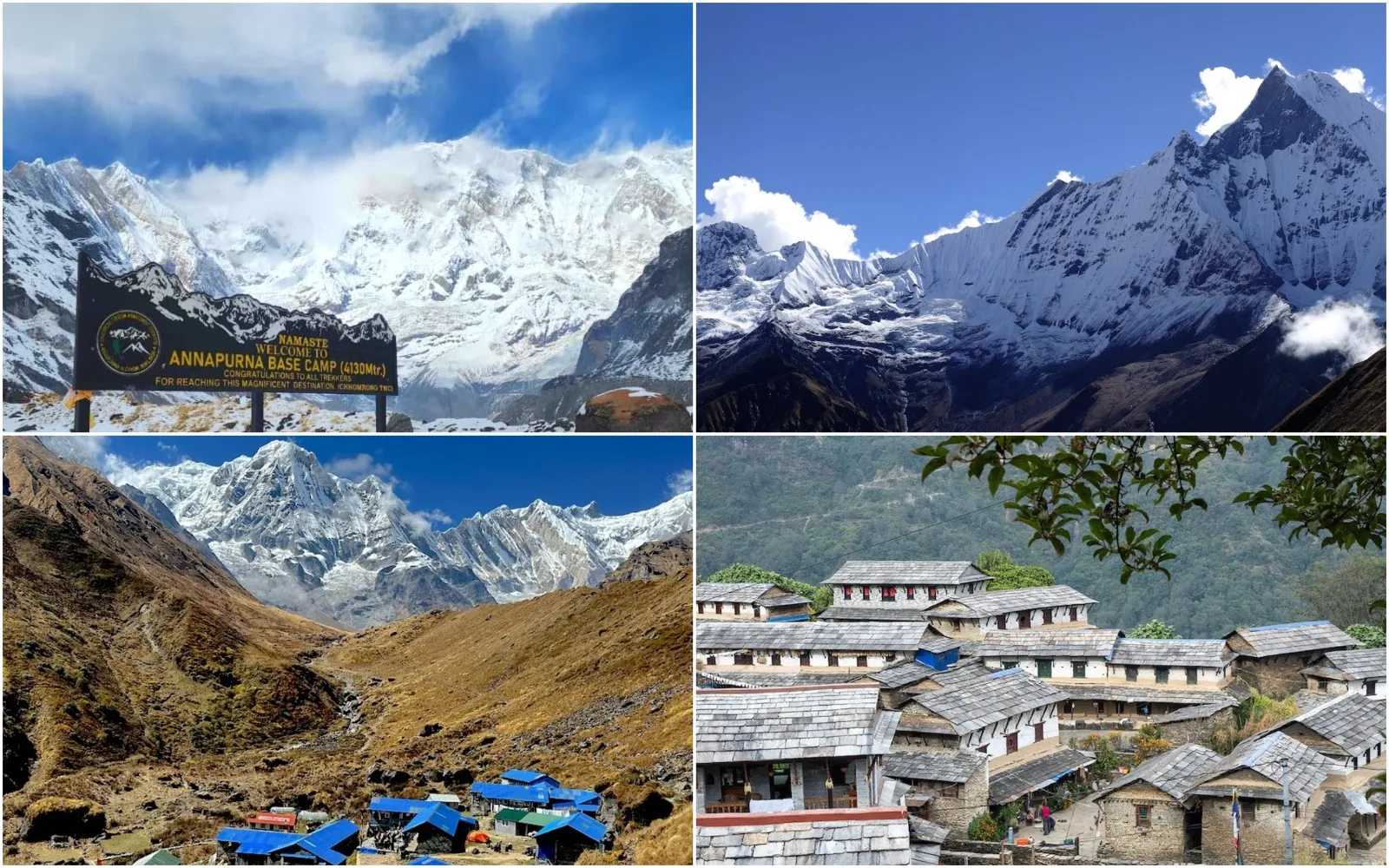
Ghandruk is a traditional Gurung village at about 1,940 m, where you'll find stone-paved paths, traditional houses, terraced farms and views of the Annapurna range.
Additionally, an overnight stay gives you time to explore the village and acclimatize before heading to Chhomrong the next day for Annapurna Base Camp.
However, note that this stop should be regarded primarily as a gradual acclimatization opportunity rather than a true acclimatization day, since the next day will involve a number of ups and downs before reaching higher ground.
Generally, you'll continue from Ghandruk through Kimrong Danda and Kimrong Khola to Chhomrong (~2,170 m).
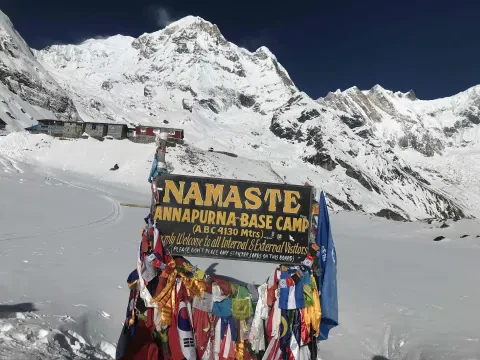
From there, you'll head down towards Chhomrong Khola and up through Sinuwa, Bamboo, Dovan, Himalaya and Deurali towards Machhapuchhre Base Camp. And finally, you'll arrive at Annapurna Base Camp (4,130 m).
| Trekking Point | Approx. Elevation | Typical Walking Time |
|---|---|---|
| Ghandruk | 1,940 m | Overnight |
| Chhomrong | 2,170 m | 5-6 hrs |
| Sinuwa | 2,360 m | 4-5 hrs |
| Bamboo | 2,310 m | 1-2 hrs from Sinuwa |
| Dovan | 2,600 m | 2-3 hrs |
| Himalaya | 2,920 m | 2-3 hrs |
| Deurali | 3,200 m | 1-2 hrs |
| Machhapuchhre Base Camp | 3,700 m | 2-3 hrs |
| Annapurna Base Cam | 4,130 m | 1.5-2 hrs |
In fact, the trail gradually goes from villages and farms to rhododendron, bamboo and oak forests, and then to the alpine landscape.
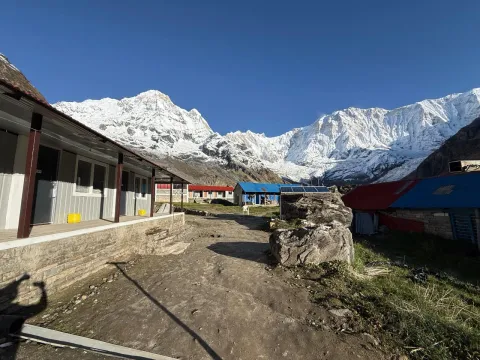
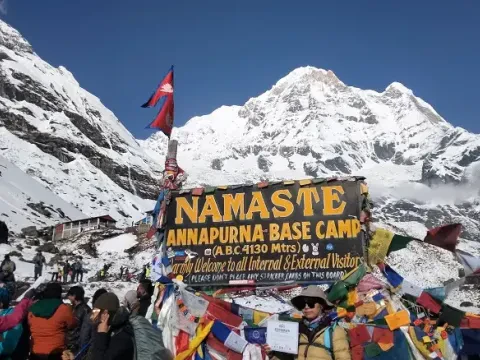
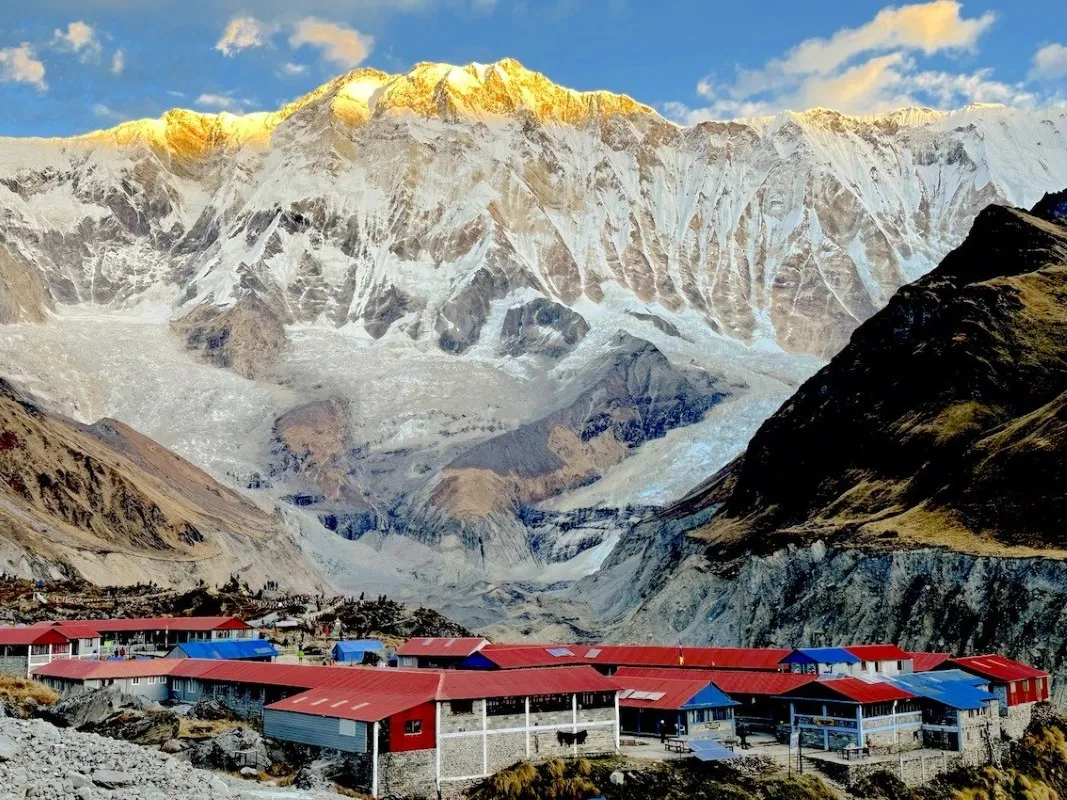
Finally, the valley opens up to reveal the Annapurna Sanctuary, with Annapurna I (8,091 m), Annapurna South (7,219 m), Hiunchuli (6,441 m) and Machhapuchhre (6,993 m) surrounding Annapurna Base Camp.
Key Features of the ABC via Ghandruk Route :
All in all, the Ghandruk approach provides a great combination of road access, cultural experience and a gradual climb to the high mountains.
Moreover, it's also a good choice if you want to get to the ABC in a more direct and condensed way while still enjoying everything the area has to offer.
The ABC route via Ghandruk is worth it because this is a convenient and interesting approach to the Annapurna Base Camp, with a few cultural and natural highlights along the way.
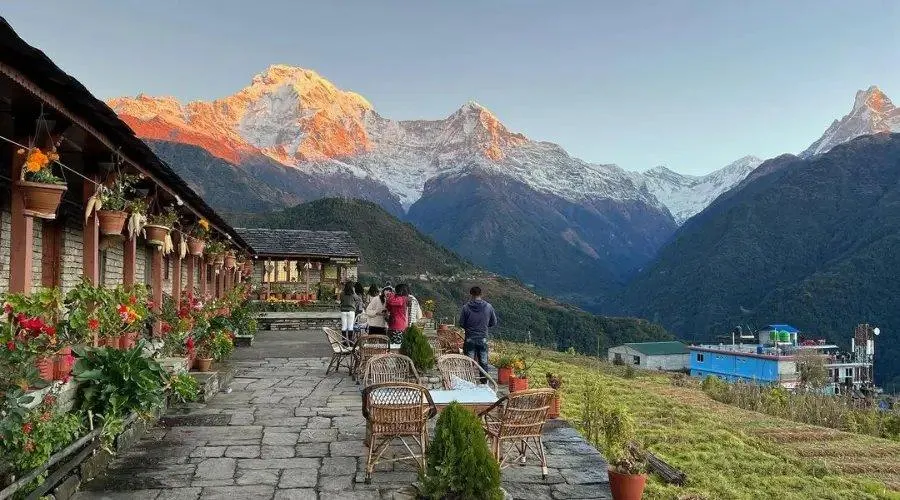
In addition to, the view from the high ground offers amazing views of some of the world's most famous mountains.
| Highlight | Elevation | Why It Matters |
|---|---|---|
| Pokhar | 822 m | Trekking gateway |
| Ghandruk | 1,940 m | Classical Gurung village and overnight experience |
| Chhomrong | 2,170 m | Important trail junction |
| Deurali | 3,200 m | High mountain environment begins |
| MBC | 3,700 m | Close views of Machhapuchhre |
| ABC | 4,130 m | Main trekking destination |
| Annapurna | 8,091 m | One of the world's highest mountains |
| Machhapuchhr | 6,993 m | Most popular Himalayan peak |
One of the main benefits of this route is that transportation from Pokhara to Ghandruk is straightforward.
Here, shared and private jeeps can be organized depending on your preferences and budget, making this a great option for couples, families, friends and groups of all sizes.
Importantly, note that the transportation doesn't make the trek easy, though.
After Ghandruk, you'll encounter stony steps on the trail as well as a number of ups and downs before reaching 4,130 m, so some level of fitness is required nonetheless.
The route involves much more than just getting to the Annapurna Base Camp, since the view keeps changing with the elevation.
Meanwhile, you'll gradually go from terraced farms and villages to rhododendron forests, deep valleys and the alpine meadows around MBC and ABC.
In short, the Ghandruk ABC trek offers an authentic Himalayan experience that combines cultural and natural highlights with high-mountain views.
Having said that, the route is a good choice if you want to get to the ABC in a more direct and condensed way while still taking in the sights along the way.
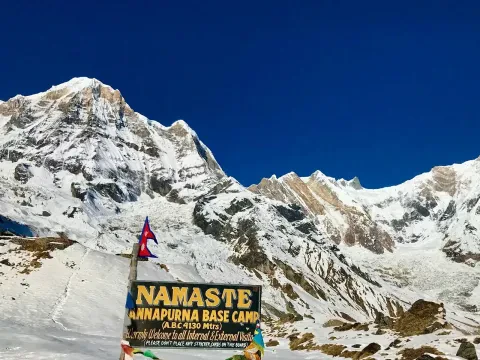
Annapurna Base Camp Trek via Ghandruk normally takes 7 days from Pokhara to Pokhara on this route (5 climbing days toward ABC + 2 return days to Pokhara via Jhinu Danda).
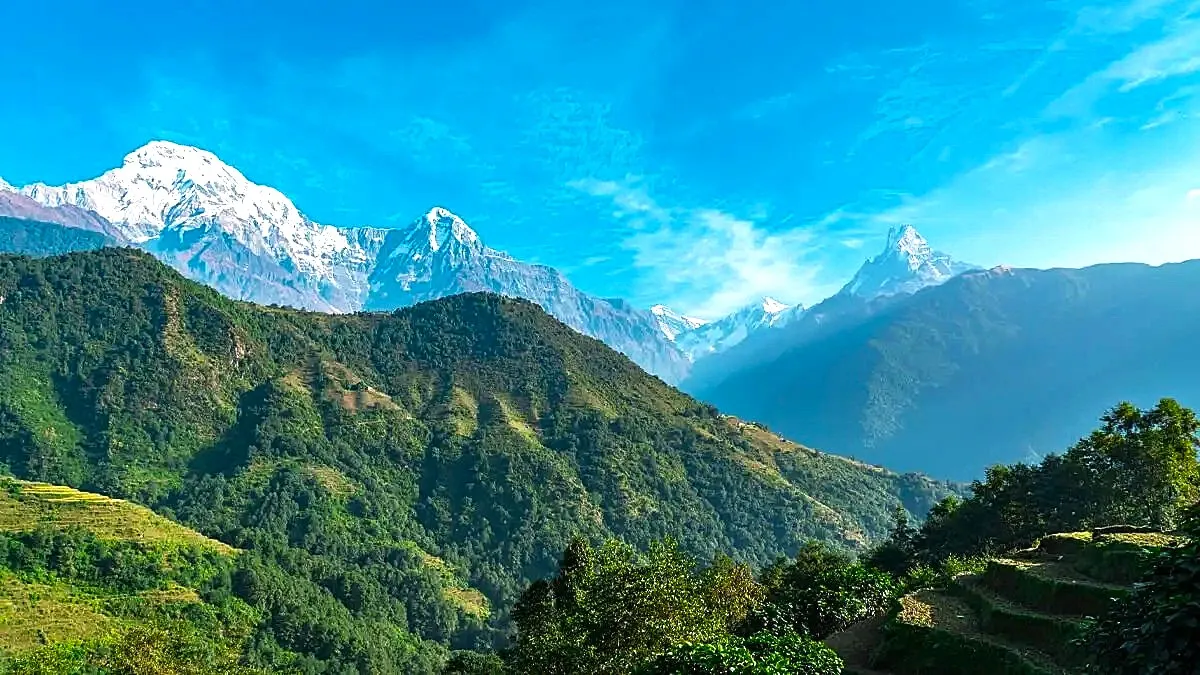
Here, it begins with the drive from Pokhara to Ghandruk before gradually climbing through Chhomrong, Dovan, Deurali and Machhapuchhre Base Camp toward Annapurna Base Camp at 4,130 m.
| Day | Route | Elevation | Approx. Walking/Travel |
|---|---|---|---|
| Day 1 | Pokhara → Ghandruk | 822 m → 1,940 m | 3–3.5 hrs drive |
| Day 2 | Ghandruk → Chhomrong | 1,940 m → 2,170 m | 5–6 hrs |
| Day 3 | Chhomrong → Dovan | 2,170 m → 2,600 m | 5–6 hrs |
| Day 4 | Dovan → Deurali | 2,600 m → 3,200 m | 4–5 hrs |
| Day 5 | Deurali → MBC → ABC | 3,200 m → 4,130 m | 5–6 hrs |
| Day 6 | ABC → Bamboo/Sinuwa | 4,130 m → 2,310 m | 6–7 hrs |
| Day 7 | Sinuwa → Jhinu Danda → Pokhara | 2,310 m → ~1,780 m → 822 m | 5–6 hrs + drive |
The trek begins with a shared jeep or private 4WD from Pokhara (822 m) to Ghandruk (~1,940 m) via the famous Nayapul and Birethanti passes.
Once you are in Ghandruk, trekkers can explore the Gurung village, enjoy the mountain views and overnight here before officially beginning the ABC trek.
This trekking day begins the climb out of Ghandruk toward Chhomrong (about 2,170 m). While this is not a major ascent, it includes a number of stone steps and uphill stretches through forests and fields.
The trail drops toward Chhomrong Khola before gradually climbing through Sinuwa and Bamboo toward Dovan. This trekking day also marks the transition to a dense forest environment and increasingly mountainous terrain.
From Dovan (~2,600 m), the trail gradually climbs through Bamboo and Himalaya toward the valley town of Deurali (~3,200 m).
Actually, walking becomes more difficult as the trail narrows and the altitude increases dramatically above Himalaya and while approaching Deurali.
This is the main high-altitude day of the ABC via Ghandruk trek as trekkers begin at Deurali and gradually climb toward Machhapuchhre Base Camp (3,700 m) before continuing on to Annapurna Base Camp (4,130 m).
Here, the Annapurna Sanctuary opens up around trekkers, revealing spectacular views of Annapurna I, Annapurna South, Hiunchuli and Machhapuchhre.
The return journey begins at Annapurna Base Camp and gradually descended toward Bamboo or Sinuwa before continuing on toward Jhinu Danda (~1,780 m).
After enjoying the natural hot springs at Jhinu, transport can be arranged for the final leg of the journey back to Pokhara (~822 m).
In summary, this 7-day ABC route via Ghandrukis ideal because it avoids unnecessary lowland trekking and provides a gradual ascent toward Annapurna Base Camp.
However, the trekking days from Deurali onward are quite challenging as the trail quickly reaches 4,130 m.
Annapurna Base Camp Trek via Ghandruk normally costs between USD 375 and USD 625 per person for the 7-day Pokhara-to-Pokhara itinerary, depending on the group size, transportation, accommodation, guide and other considerations because shared options normally reduce the cost per traveler.
| Group Size / Service Level | Approx. Cost Per Person | Main Difference |
|---|---|---|
| Larger group | From USD 375 | Shared transportation and services |
| Small group | Around USD 450–550 | More flexible arrangements |
| Private/smaller group | Up to USD 625 | Private transportation and upgraded services |
Meanwhile, the package covers most of the major expenses, so trekkers do not have to worry about arranging most services along the way.
Moreover, the package can be modified, customized, depending on the group size and preferred transportation.
The biggest price differences normally occur between larger and smaller groups and the preferred transportation option.
For example, a shared jeep will distribute the transportation costs among several trekkers, whereas a private 4WD offers greater flexibility and control at a higher cost per person.
Likewise, accommodation standards can also play a role in the final price, especially if trekkers want private rooms and/or higher-end teahouse/lodge standards.
Therefore, Haven Holidays confirms the exact itinerary, group size, vehicle type, accommodation standard, guide and porter arrangements and all inclusions before the deposit is paid.
The package includes everything from Pokhara to Ghandruk, Annapurna Base Camp and back to Pokhara via Jhinu Danda.
In other words, the USD 375–625 cost provides a reasonable budget range for transportation, accommodation, meals, guide, porter and permits rather than paying for each major service separately.
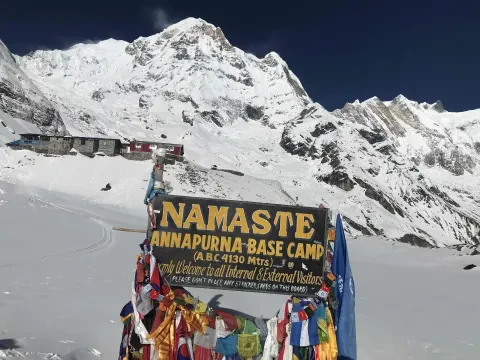
Let’s talk about how to prepare for the Annapurna Base Camp Trek via Ghandruk!
The preparation is crucial to the Annapurna Base Camp Trek via Ghandruk as the trail climbs from altitudes averaging 1,940 m at Ghandruk to 4,130 m at ABC.
Actually, there is no technical climbing, but one must get acclimatized to the gradual steepness, stone steps and high altitude gain on a trek that doesn’t involve long walks at first!
Time Before Trek What to Prepare ?
Begin training 6-8 weeks before hand, and do not overdo it in the first week or two – build up your stamina! Try walking uphill, using stairs, hiking and cardio exercises as the trail gets steeper above Chhromong.
| Training | Activity Suggestion |
|---|---|
| Walking | 4-5 days a week |
| Hiking | Gradually build up to 4-6 hour hikes |
| Stair training | 2-3 sessions per week |
| Strength training | Focus on legs, calves and core |
| Backpack practice | Walk with your daypack |
You will gradually acclimatize to higher altitudes from Ghandruk (around 1,940 m), Chhromong (2,170 m), Deurali (3,200 m), MBC (around 3,700 m) and ABC (4,130 m).
Therefore, walk at a steady pace, drink plenty of fluids, do not rush, and inform your guide if you feel any discomfort, headaches, unusual tiredness, dizziness or nausea.
Keep your original documents and digital copies in separate places, and have your emergency contacts on speed dial. Here, Haven Holidays Pvt. Ltd. will be able to assist with required trekking permits and other arrangements before departure.
Documentation checklist:
Importantly, choose a locally registered trekking company in Nepal, and confirm the whole itinerary before making the payment.
Furthermore, ensure that the package includes details about a licensed guide, porter, permits, transportation, accommodation, meals and staff arrangements.
At the same time, confirm transportation and accommodation
Confirm whether the Pokhara-Ghandruk transfer will be in a shared jeep or private 4WD, and the drop-off point.
Additionally, confirm the accommodation and meal arrangements, and whether you will have private rooms or facilities, as required.
Do not attempt to rush through the trek, as there are several ups and downs, even though the distances are relatively short.
Instead, maintain a steady walking pace, and take short breaks as required – let your guide decide the walking rhythm according to the group’s needs.
Most importantly, with sufficient fitness, appropriate gear, local support and realistic expectations, the Annapurna Base Camp Trek via Ghandruk can be a pleasant surprise.
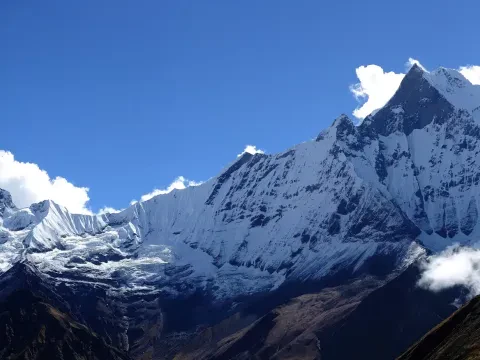
The ABC packing list should cover warm clothing, rain gear, comfortable footwear, personal medication and basic trekking equipment.
As the trail climbs from around 1,940 m at Ghandruk to 4,130 m at ABC, be prepared for both the warm lower village and the cold spell around MBC and ABC.
Clothing:
| Footwear | Item Use |
|---|---|
| Trekking boots | Walking on the trail |
| Trekking socks | Comfort and blister prevention |
| Camp sandals | After-walking relaxation |
| Waterproof gaiters | Protection from mud, rain and snow |
| Spare laces | Emergency replacement |
Importantly, choose well broken in trekking boots, as the trail involves stone steps, uneven paths and long downhill stretches – and do not wear brand new boots on the first day of trekking, as blisters can occur!
Backpack and luggage :
Note: Keep valuables, documents, medication, water and clothing in your daypack, and the rest of your luggage can be packed and carried by a porter, depending on luggage allowances.
Sleeping equipment :
In addition to, teahouse blankets may be available, but a personal sleeping bag adds warmth and hygiene, especially around Deurali (3,200 m), MBC (3,700 m) and ABC (4,130 m).
Water and food :
Drink plenty of fluids on the way up – and use treated or safe water. Do not litter on the trail, and use a reusable water bottle to cut down on single-use plastics.
Health and first aid :
Importantly, keep essential medication in your daypack and not in porter luggage, and inform your guide about any medical requirements before the trek.
Personal hygiene :
Generally, hot showers are available, but they are not guaranteed and subject to additional charges at certain lodges. Therefore, personal hygiene supplies can make a difference in comfort levels.
Documents and electronics :
Important: Keep your passport, insurance and cash in a waterproof pouch. A headlamp is useful as early morning starts and dim lighting are common in the mountains.
Trekking accessories :
Here, trekking poles will help you navigate the steep stone steps and long downhill stretches around Chhomrong and on the lower return trail. Additionally, they reduce stress on your knees when walking with a daypack.
Optional items :
Here, you do not need to carry all the optional items as they add to the weight, but choose what you need or want based on the season, weather forecast, personal requirements and recommendations from your trekking company.
Must-have: passport, insurance, permits, trekking boots, warm clothing, waterproof jacket, sleeping bag, daypack, water bottles, headlamp, personal medication, sunscreen and sunglasses
Highly useful: trekking poles, power bank, waterproof dry bags, water purifier, thermal clothing, gloves, buff and a waterproof rain cover
Optional: microspikes, camera equipment, thermos, binoculars and extra electronic accessories
Most importantly, the ideal packing list should only have enough to deal with the constantly changing Himalayan weather – and the Annapurna Base Camp Trek via Ghandruk offers porter support, in most cases.
Therefore, keep your day essentials in a small daypack and hand over the rest of the luggage with the agreed luggage weight allowance to the porter.
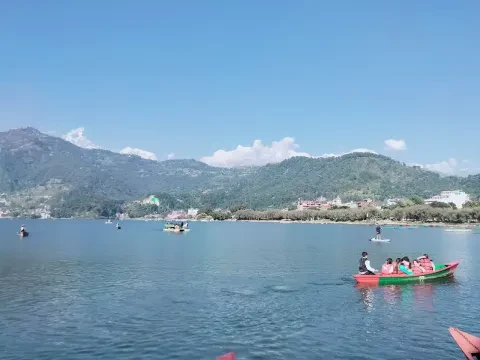
The best time for Annapurna Base Camp Trek via Ghandruk is October–November and March–May, when the weather tends to be at its best for trekking.
In fact, Nepal Tourism Board mentions September–November and February–May as ideal trekking months, while the Annapurna Base Camp route is especially favorable during the autumn and spring seasons.
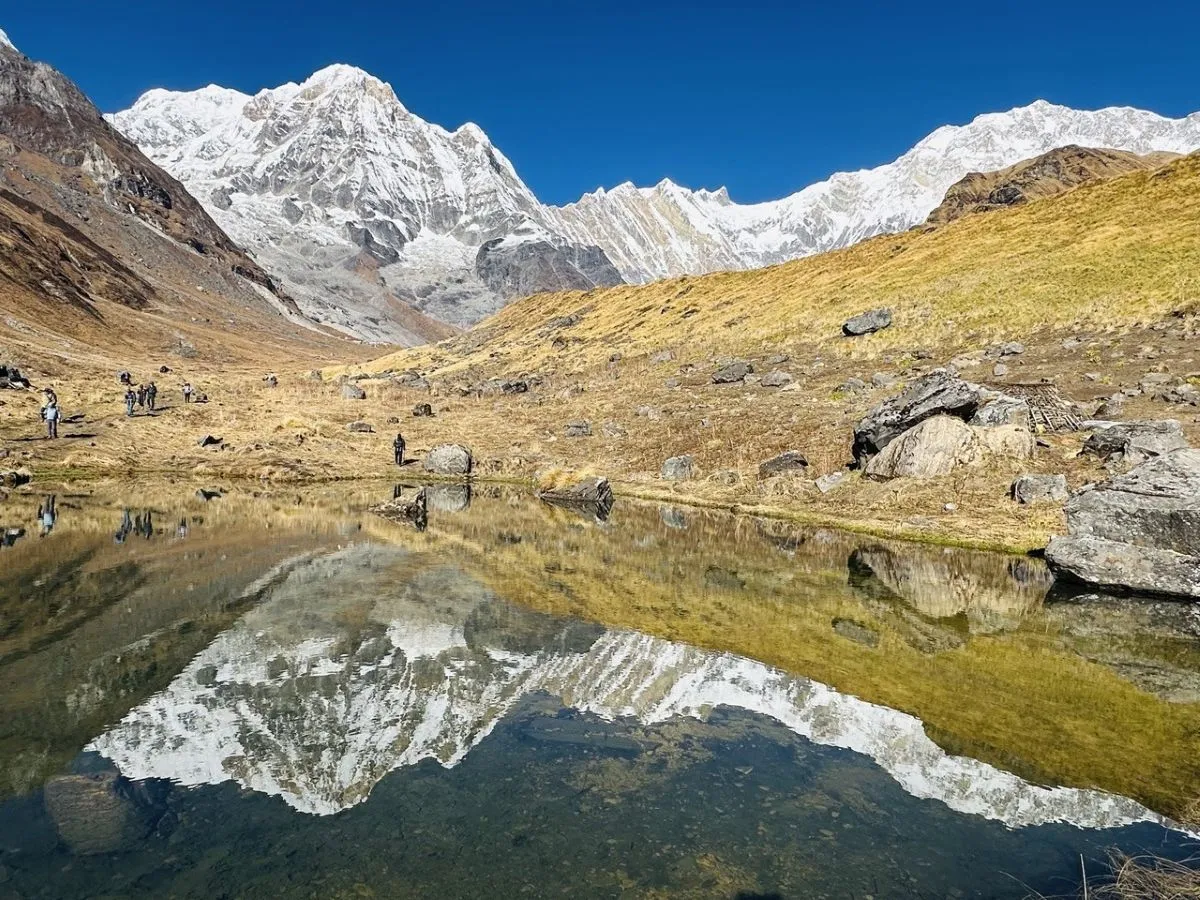
| Season | Months | Main Conditions | What You Can Expect ? |
|---|---|---|---|
| Autumn | October–November | Clear and stable | Excellent mountain views |
| Spring | March–May | Mild and generally dry | Rhododendron flowers and mountain scenery |
| Winter | December–February | Cold, especially above 3,000 m | Quieter trails but colder nights |
| Monsoon | June–September | Rain, cloud and wet trails | Less reliable visibility and trail conditions |
October and November are good months for the ABC trek via Ghandruk, as the summer monsoon has generally finished by then, and the atmosphere becomes clearer.
Hence, trekkers can usually enjoy nice views of Annapurna I (8,091 m), Annapurna South (7,219 m), Machhapuchhre (6,993 m) and Hiunchuli (6,441 m) along the way. ([Annapurna Rural Municipality][2])
Also, the trail from Ghandruk (1,940 m) to Chhomrong (2,170 m), Deurali (3,200 m) and onwards to MBC and then ABC is comfortable to walk on, when the conditions are stable.
However, October and early November is already a busy season, so it is wise to book accommodation, transportation and trekking services in advance.
March to May is another great period, as temperatures become milder, and the forests around Ghandruk and the Annapurna foothills bloom with rhododendron flowers.
Similarly, Spring also means longer daylight hours, although mountain visibility can get hazy toward late April and May.
Mainly, the ABC Trek route gets progressively more alpine, as you climb from Ghandruk at 1,940 m toward MBC at roughly 3,700 m, ABC at 4,130 m.
Hence, even in hot spring days, you should carry appropriate warm clothes for the higher altitudes.
For clear Himalayan views, plan your ABC trek via Ghandruk in October or November. For rhododendron forests, warmer conditions and spring scenery, choose March, April or May, while April is most attractive for spring landscapes.
Overall, keep October–November and March–May as your main seasons for this trek, and also consider current conditions, as well as weather and accommodation availability, before setting your final date.
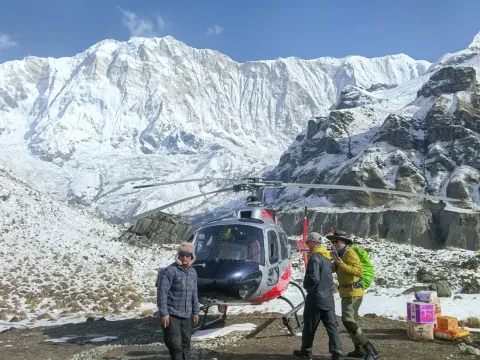
Yes, the Annapurna Base Camp Trek via Ghandruk is worth it, as the route offers Himalayan scenery, Gurung culture and a relatively short approach toward the Annapurna Sanctuary.
Meanwhile, the ABC trek via Ghandruk starts from around Pokhara at 830 m, goes through Ghandruk at 1,940 m, Chhomrong, Dovan, Deurali, MBC at 3,700 m and finishes at Annapurna Base Camp (ABC) at 4,130 m.
In conclusion, the Annapurna Base Camp route via Ghandruk is officially described as a trek through diverse landscapes, villages, forests and high Himalayan scenery, and the Ghandruk is specifically included in itinerary.
In fact, Ghandruk is the village that people do not really want to miss along the ABC Trail.
The trek is worth doing, if you want culture, forests, waterfalls, mountain views and a high Himalayan destination within one journey.
As the route gets up to 4,130 m, however, it should not be treated as an easy walk, and preparation remains important.
For travelers who want to see the Annapurna region with a Ghandruk village stay, licensed guide support, teahouse accommodation and a direct approach toward ABC, this route is a good choice.
Annapurna Base Camp Trek via Ghandruk costs around USD 375–625 per person for the 7-day package, depending on the group, transportation, accommodation and services included. The price covers the licensed guide, permits, teahouse accommodation, meals and ground transportation, while private services and upgrades may increase the final cost.
The 7-day ABC Trek via Ghandruk begins with the transportation from Pokhara to Ghandruk and follows to Chhomrong, Dovan, Machhapuchhre Base Camp and finally Annapurna Base Camp. After reaching the Annapurna Base Camp at 4,130m (13,549ft), the trail leads back through Bamboo and Jhinu Danda to Pokhara for a 7-day trekking itinerary.
The standard route is Pokhara-Ghandruk-Chhomrong-Dovan-Machhapuchhre Base Camp-Annapurna Base Camp-Bamboo-Jhinu Danda-Pokhara. Ghandruk offers a picturesque cultural introduction to the trail, while the walking trail gains altitude through forests, settlements and mountainous alpine terrain. This route also prevents the journey from becoming excessively long and still offers the full Annapurna Sanctuary experience.
The 7-day Annapurna Base Camp Trek via Ghandruk is moderate to challenging, as several trekking days involve 6–7 hours of walking, climbing on stone steps and increasing altitudes. The walk above Deurali becomes particularly strenuous due to the combination of cold temperatures, altitude and the gradual climb to Machhapuchhre Base Camp and ABC: good preparation and walking rhythm are important on this segment.
The highest overnight stop and the key objective on the ABC Trek via Ghandruk is 4,130m (13,549ft) at Annapurna Base Camp reached after passing Machhapuchhre Base Camp at 3,700m. The higher you walk above Deurali, the colder it becomes: slow walking pace, sufficient hydration and following the guide’s instructions are vital at higher altitudes.
A licensed trekking guide should be hired via a registered trekking agency, as Nepal Tourism Board’s listed TIMS provision notes the Poon Hill – ABC Trek as a route that requires a licensed guide and a TIMS issued by the trekking agency.
Likewise, a porter is recommended to carry your main luggage, though the availability and inclusion of porter services will depend on your package and group size.
For the ABC Trek via Ghandruk, an Annapurna Conservation Area entry permit is needed, and the current Nepal Tourism Board listings indicate an Annapurna Conservation Area entry fee of NPR 3,000 for foreign visitors (check the most recent fee before your 2027 departure). The necessary permits and TIMS can be obtained through your trekking company as part of the package.
Accommodation is available primarily in teahouses and mountain lodges, with simple twin-sharing rooms and shared bathrooms. Meals are generally local dishes and international cuisine popular among trekkers such as dal bhat, noodles, rice, pasta, soup and eggs. Accommodation and meals simplify as the higher-altitude MBC and ABC portions of the route begin.
Depending on the selected USD 375–625 range, the inclusions for the Annapurna Base Camp Trek via Ghandruk can involve transportation from Pokhara, licensed English-speaking guide, permits, accommodation during the trek, meals and return transportation. Porter services can also be included depending on the package: international flights, travel insurance, personal expenses, drinks, tips and other services are generally not included.
October, November, March and April are the best months for the Annapurna Base Camp Trek via Ghandruk, as they offer the best conditions and mountain views. Springtime brings rhododendron blossoms to the lower trail, while autumn provides clear mountain visibility.
Also, Nepal Tourism Board lists March-May and September-November as the ideal seasons for the Annapurna Conservation Area.
Our travel experts are ready to assist you with any questions.
Send us a message.Have a question before you book? Send your enquiry below and our travel experts will get back with the required information.