[{"name":"Everest Base Camp Helicopter Tour","duration":"1","image_url":"https:\/\/www.havenholidaysnepal.com\/storage\/trip-galleries\/1\/thumb_6cd53005d75a86e373d31419d1b14d78.webp","offer_price":1195,"url":"https:\/\/www.havenholidaysnepal.com\/trips\/everest-base-camp-helicopter-tour"},{"name":"Everest Mountain Flight","duration":"1","image_url":"https:\/\/www.havenholidaysnepal.com\/storage\/trip-galleries\/4\/thumb_3b0b4f1d6f72b0ad224daf4752f2c6e0.jpg","offer_price":285,"url":"https:\/\/www.havenholidaysnepal.com\/trips\/everest-mountain-flight"},{"name":"Everest Short Trek","duration":"9","image_url":"https:\/\/www.havenholidaysnepal.com\/storage\/trip-galleries\/5\/thumb_BXPP3621.JPEG0.02033800 1727957098.webp","offer_price":995,"url":"https:\/\/www.havenholidaysnepal.com\/trips\/everest-short-trek"},{"name":"Gokyo Valley Trek","duration":"12","image_url":"https:\/\/www.havenholidaysnepal.com\/storage\/trip-galleries\/6\/thumb_10bc469b14731f23d3ce84a7092ad53f.jpg","offer_price":1195,"url":"https:\/\/www.havenholidaysnepal.com\/trips\/gokyo-valley-trek"},{"name":"15 days Annapurna Base Camp Trek","duration":"15","image_url":"https:\/\/www.havenholidaysnepal.com\/storage\/trip-galleries\/7\/thumb_87d1533bc45faf070990aef0579e4be4.jpg0.81855100 1728285496.webp","offer_price":785,"url":"https:\/\/www.havenholidaysnepal.com\/trips\/15-days-annapurna-base-camp-trek"},{"name":"Nepal Pilgrimage Tour","duration":"14","image_url":"https:\/\/www.havenholidaysnepal.com\/storage\/trip-galleries\/8\/thumb_02c3bcf2ad2e8a4c1703e90ae747b5f1.jpg","offer_price":1475,"url":"https:\/\/www.havenholidaysnepal.com\/trips\/nepal-pilgrimage-tour"},{"name":"UNESCO World Heritage Site Tour","duration":"10","image_url":"https:\/\/www.havenholidaysnepal.com\/storage\/trip-galleries\/9\/thumb_unesco-world-heritage-site-Lumbani-temple-buddhists-hindus-kathmandu-nepal0.36988600 17347617740.93089500 1737469667.webp","offer_price":715,"url":"https:\/\/www.havenholidaysnepal.com\/trips\/unesco-world-heritage-site-tour"},{"name":"Island Peak Climbing","duration":"16","image_url":"https:\/\/www.havenholidaysnepal.com\/storage\/trip-galleries\/11\/thumb_Island peak0.53947000 1734692503.webp","offer_price":2495,"url":"https:\/\/www.havenholidaysnepal.com\/trips\/island-peak-climbing"},{"name":"Upper Mustang Trek","duration":"18","image_url":"https:\/\/www.havenholidaysnepal.com\/storage\/trip-galleries\/12\/thumb_upper mustang 7 Oct-2024.jpg0.95398900 1728286166.webp","offer_price":2995,"url":"https:\/\/www.havenholidaysnepal.com\/trips\/upper-mustang-trek"},{"name":"Annapurna Circuit Trek","duration":"16","image_url":"https:\/\/www.havenholidaysnepal.com\/storage\/trip-galleries\/15\/thumb_tibetan-flags.jpg0.04843900 1728289138.webp","offer_price":985,"url":"https:\/\/www.havenholidaysnepal.com\/trips\/annapurna-circuit-trek"},{"name":"Gosainkunda Lake Trek","duration":"10","image_url":"https:\/\/www.havenholidaysnepal.com\/storage\/trip-galleries\/16\/thumb_5A8083B3-C007-41A8-853F-D0C37C97D235_1_105_c.jpeg0.52581200 1731845258.webp","offer_price":595,"url":"https:\/\/www.havenholidaysnepal.com\/trips\/gosainkunda-lake-trek"},{"name":"Zip-lining in Pokhara and Dhulikhel","duration":"1","image_url":"https:\/\/www.havenholidaysnepal.com\/storage\/trip-galleries\/18\/thumb_215f765e2ebc995dd5c800b4bfdbacc3.jpg","offer_price":82,"url":"https:\/\/www.havenholidaysnepal.com\/trips\/zip-lining-in-pokhara-and-dhulikhel"},{"name":"Annapurna Heli Tour","duration":"1","image_url":"https:\/\/www.havenholidaysnepal.com\/storage\/trip-galleries\/19\/thumb_d71a6bbb9fd4da8d1b567a5cdbdec85d.jpg","offer_price":555,"url":"https:\/\/www.havenholidaysnepal.com\/trips\/annapurna-heli-tour"},{"name":"Paragliding in Pokhara","duration":"1","image_url":"https:\/\/www.havenholidaysnepal.com\/storage\/trip-galleries\/20\/thumb_de788d2dd9726783431f882c007efae1.jpg","offer_price":65,"url":"https:\/\/www.havenholidaysnepal.com\/trips\/paragliding-in-pokhara"},{"name":"Ultra-Flight in Pokhara","duration":"1","image_url":"https:\/\/www.havenholidaysnepal.com\/storage\/trip-galleries\/21\/thumb_e27a9fb572a5c21611bb2a3c18e4b8f0.jpeg","offer_price":175,"url":"https:\/\/www.havenholidaysnepal.com\/trips\/ultra-flight-in-pokhara"},{"name":"Sarangkot Hiking","duration":"1","image_url":"https:\/\/www.havenholidaysnepal.com\/storage\/trip-galleries\/22\/thumb_100ef822fea19987166c6c1366215f15.jpg","offer_price":55,"url":"https:\/\/www.havenholidaysnepal.com\/trips\/sarangkot-hiking"},{"name":"Mera Peak Climbing","duration":"18","image_url":"https:\/\/www.havenholidaysnepal.com\/storage\/trip-galleries\/24\/thumb_d16ae3895f678cf26ffbf2455f541fb5.jpg0.31883400 1732617790.webp","offer_price":2475,"url":"https:\/\/www.havenholidaysnepal.com\/trips\/mera-peak-climbing"},{"name":"Lower Dolpo Trek","duration":"18","image_url":"https:\/\/www.havenholidaysnepal.com\/storage\/trip-galleries\/26\/thumb_Dolpo Galary - 1.JPG0.37725200 1727939952.webp","offer_price":2995,"url":"https:\/\/www.havenholidaysnepal.com\/trips\/lower-dolpo-trek"},{"name":"Nagarkot Sunrise\/Sunset Tour","duration":"1","image_url":"https:\/\/www.havenholidaysnepal.com\/storage\/trip-galleries\/27\/thumb_5147a5532644283a380f2e86f3857c13.jpg0.17748000 1728488108.webp","offer_price":30,"url":"https:\/\/www.havenholidaysnepal.com\/trips\/nagarkot-sunrise-sunset-tour"},{"name":"16 day Everest Base Camp Trek","duration":"16","image_url":"https:\/\/www.havenholidaysnepal.com\/storage\/trip-galleries\/28\/thumb_IMG_4311.JPG0.64984800 1727942213.webp","offer_price":1695,"url":"https:\/\/www.havenholidaysnepal.com\/trips\/16-day-everest-base-camp-trek"},{"name":"Ghorepani Poon Hill trek with Jungle Safari and Trishuli River Rafting -13 days","duration":"13","image_url":"https:\/\/www.havenholidaysnepal.com\/storage\/trip-galleries\/29\/thumb_Ghorepani Poon hill.jpg0.48460800 1728281439.webp","offer_price":795,"url":"https:\/\/www.havenholidaysnepal.com\/trips\/ghorepani-poon-hill-trek-with-jungle-safari-and-trishuli-river-rafting--13-days"},{"name":"Mardi Himal Trek","duration":"12","image_url":"https:\/\/www.havenholidaysnepal.com\/storage\/trip-galleries\/30\/thumb_s1.jpg0.62112600 1728200721.webp","offer_price":795,"url":"https:\/\/www.havenholidaysnepal.com\/trips\/mardi-himal-trek"},{"name":"Langtang Valley Trekking","duration":"10","image_url":"https:\/\/www.havenholidaysnepal.com\/storage\/trip-galleries\/31\/thumb_IMG_4702.JPG0.84916500 1727958504.webp","offer_price":685,"url":"https:\/\/www.havenholidaysnepal.com\/trips\/langtang-valley-trekking"},{"name":"Real Adventure Tour in Nepal","duration":"9","image_url":"https:\/\/www.havenholidaysnepal.com\/storage\/trip-galleries\/32\/thumb_ebd1b8cc78d90abe8b9003dd9a2f25bf.jpg0.82151300 1728213516.webp","offer_price":695,"url":"https:\/\/www.havenholidaysnepal.com\/trips\/real-adventure-tour-in-nepal"},{"name":"Luxury Tour in Nepal","duration":"10","image_url":"https:\/\/www.havenholidaysnepal.com\/storage\/trip-galleries\/33\/thumb_8574e61b252b18676b042caf30d830df.jpg","offer_price":1675,"url":"https:\/\/www.havenholidaysnepal.com\/trips\/luxury-tour-in-nepal"},{"name":"Luxury Everest Panorama Trek With EBC Heli Sightseeing","duration":"8","image_url":"https:\/\/www.havenholidaysnepal.com\/storage\/trip-galleries\/34\/thumb_URZL2397.JPEG0.01209600 1728027820.webp","offer_price":2395,"url":"https:\/\/www.havenholidaysnepal.com\/trips\/luxury-everest-panorama-trek-with-ebc-heli-sightseeing"},{"name":"13 day Everest Base Camp Trek with Helicopter","duration":"13","image_url":"https:\/\/www.havenholidaysnepal.com\/storage\/trip-galleries\/35\/thumb_IMG_4292.JPG0.70131500 1728029276.webp","offer_price":2095,"url":"https:\/\/www.havenholidaysnepal.com\/trips\/13-day-everest-base-camp-trek-with-helicopter"},{"name":"Manaslu Circuit Trek","duration":"16","image_url":"https:\/\/www.havenholidaysnepal.com\/storage\/trip-galleries\/36\/thumb_Mt Manaslu 03-Oct-2024.jpg0.65804900 1727938470.webp","offer_price":1055,"url":"https:\/\/www.havenholidaysnepal.com\/trips\/manaslu-circuit-trek"},{"name":"Kanchenjunga Base Camp Trek","duration":"21","image_url":"https:\/\/www.havenholidaysnepal.com\/storage\/trip-galleries\/37\/thumb_Kanchanjunga Trek -!.jpg0.54744400 1727938497.webp","offer_price":2275,"url":"https:\/\/www.havenholidaysnepal.com\/trips\/kanchenjunga-base-camp-trek"},{"name":"Ganesh Himal and Sing-La Trek","duration":"14","image_url":"https:\/\/www.havenholidaysnepal.com\/storage\/trip-galleries\/38\/thumb_Ganesh Himal slider-1.jpg0.43764500 1727937722.webp","offer_price":1775,"url":"https:\/\/www.havenholidaysnepal.com\/trips\/ganesh-himal-and-sing-la-trek"},{"name":"Island Peak Climb with Everest Base Camp Trek","duration":"21","image_url":"https:\/\/www.havenholidaysnepal.com\/storage\/trip-galleries\/39\/thumb_2be428730fe83525bc85a010564f99de.jpg","offer_price":2750,"url":"https:\/\/www.havenholidaysnepal.com\/trips\/island-peak-climb-with-everest-base-camp-trek"},{"name":"Students' Adventure Tour in Nepal","duration":"12","image_url":"https:\/\/www.havenholidaysnepal.com\/storage\/trip-galleries\/41\/thumb_a926d22fbfe08cba271c41ac289b3fd2.jpg","offer_price":995,"url":"https:\/\/www.havenholidaysnepal.com\/trips\/students-adventure-tour-in-nepal"},{"name":"7 Day Poonhill Trek","duration":"7","image_url":"https:\/\/www.havenholidaysnepal.com\/storage\/trip-galleries\/42\/thumb_6196bd69036473293a2c24cc21ed57d7.jpg0.10880600 1728205378.webp","offer_price":555,"url":"https:\/\/www.havenholidaysnepal.com\/trips\/7-day-poonhill-trek"},{"name":"7 Days Annapurna Base Camp Trek","duration":"7","image_url":"https:\/\/www.havenholidaysnepal.com\/storage\/trip-galleries\/43\/thumb_IMG_2214.JPG0.08204900 1728202033.webp","offer_price":355,"url":"https:\/\/www.havenholidaysnepal.com\/trips\/7-days-annapurna-base-camp-trek"},{"name":"3 days Poonhill Trek","duration":"3","image_url":"https:\/\/www.havenholidaysnepal.com\/storage\/trip-galleries\/44\/thumb_Poon hill.jpg0.60816600 1731412954.webp","offer_price":165,"url":"https:\/\/www.havenholidaysnepal.com\/trips\/3-days-poonhill-trek"},{"name":"Poon Hill Luxury Trek with Chitwan-12 days","duration":"12","image_url":"https:\/\/www.havenholidaysnepal.com\/storage\/trip-galleries\/45\/thumb_Poom hill.jpg0.52074500 1730180532.webp","offer_price":1175,"url":"https:\/\/www.havenholidaysnepal.com\/trips\/poon-hill-luxury-trek-with-chitwan-12-days"},{"name":"Everest Luxury Trek-7 days","duration":"7","image_url":"https:\/\/www.havenholidaysnepal.com\/storage\/trip-galleries\/46\/thumb_ACRX9330.JPEG0.93236200 1728031275.webp","offer_price":2195,"url":"https:\/\/www.havenholidaysnepal.com\/trips\/everest-luxury-trek-7-days"},{"name":"Hindu Pilgrimage Tour in Nepal-10 days","duration":"10","image_url":"https:\/\/www.havenholidaysnepal.com\/storage\/trip-galleries\/47\/thumb_a94bf96a4d31decb419f6f828a3280d2.jpg","offer_price":995,"url":"https:\/\/www.havenholidaysnepal.com\/trips\/hindu-pilgrimage-tour-in-nepal-10-days"},{"name":"Everest Base Camp Short Trek-12 days","duration":"12","image_url":"https:\/\/www.havenholidaysnepal.com\/storage\/trip-galleries\/48\/thumb_IMG_4311.JPG0.52680100 1727945154.webp","offer_price":995,"url":"https:\/\/www.havenholidaysnepal.com\/trips\/everest-base-camp-short-trek-12-days"},{"name":"Everest Base Camp Hike 12 Days","duration":"12","image_url":"https:\/\/www.havenholidaysnepal.com\/storage\/trip-galleries\/49\/thumb_IMG_4260.JPG0.51729100 1728061234.webp","offer_price":1295,"url":"https:\/\/www.havenholidaysnepal.com\/trips\/everest-base-camp-hike-12-days"},{"name":"11 Days Everest Base Camp Trek","duration":"11","image_url":"https:\/\/www.havenholidaysnepal.com\/storage\/trip-galleries\/50\/thumb_IMG_4249.JPG0.21392500 1727946959.webp","offer_price":1055,"url":"https:\/\/www.havenholidaysnepal.com\/trips\/11-days-everest-base-camp-trek"},{"name":"6 Days Annapurna Base Camp Trek","duration":"6","image_url":"https:\/\/www.havenholidaysnepal.com\/storage\/trip-galleries\/51\/thumb_6 days Abc.jpg0.58185400 1728200798.webp","offer_price":285,"url":"https:\/\/www.havenholidaysnepal.com\/trips\/6-days-annapurna-base-camp-trek"},{"name":"Annapurna Base Camp Trek","duration":"8","image_url":"https:\/\/www.havenholidaysnepal.com\/storage\/trip-galleries\/52\/thumb_IMG_2214.JPG0.29415700 1729487656.webp","offer_price":585,"url":"https:\/\/www.havenholidaysnepal.com\/trips\/annapurna-base-camp-trek"},{"name":"Everest Base Camp Trek with Helicopter Fly Out 10 Days","duration":"10","image_url":"https:\/\/www.havenholidaysnepal.com\/storage\/trip-galleries\/53\/thumb_IMG_4328.JPG0.52056600 1728058444.webp","offer_price":1875,"url":"https:\/\/www.havenholidaysnepal.com\/trips\/everest-base-camp-trek-with-helicopter-fly-out-10-days"},{"name":"Everest Base Camp Trek 14 Days","duration":"14","image_url":"https:\/\/www.havenholidaysnepal.com\/storage\/trip-galleries\/54\/thumb_Everest Base Camp Trek 14 days Oct 3 2024.JPG0.43202700 1727939745.webp","offer_price":1335,"url":"https:\/\/www.havenholidaysnepal.com\/trips\/everest-base-camp-trek-14-days"},{"name":"ABC Trek with Poonhill 11 Days","duration":"11","image_url":"https:\/\/www.havenholidaysnepal.com\/storage\/trip-galleries\/55\/thumb_ABC with fishtail.JPG0.21441100 1728277965.webp","offer_price":555,"url":"https:\/\/www.havenholidaysnepal.com\/trips\/abc-trek-with-poonhill-11-days"},{"name":"Muldai Hill Trek 9 Days","duration":"9","image_url":"https:\/\/www.havenholidaysnepal.com\/storage\/trip-galleries\/56\/thumb_7efee59f0a8c6817c8255bd2b9f3539d.jpeg0.19479300 1728213091.webp","offer_price":675,"url":"https:\/\/www.havenholidaysnepal.com\/trips\/muldai-hill-trek-9-days"},{"name":"Mardi Himal Trek 6 days","duration":"6","image_url":"https:\/\/www.havenholidaysnepal.com\/storage\/trip-galleries\/57\/thumb_slider 1.jpeg0.36909700 1728184981.webp","offer_price":590,"url":"https:\/\/www.havenholidaysnepal.com\/trips\/mardi-himal-trek-6-days"},{"name":"Mardi Himal Trek 7 days","duration":"7","image_url":"https:\/\/www.havenholidaysnepal.com\/storage\/trip-galleries\/58\/thumb_slider1.jpg0.61666600 1728206414.webp","offer_price":620,"url":"https:\/\/www.havenholidaysnepal.com\/trips\/mardi-himal-trek-7-days"},{"name":"Mardi Himal Trek 8 Days","duration":"8","image_url":"https:\/\/www.havenholidaysnepal.com\/storage\/trip-galleries\/59\/thumb_sli1.jpg0.38569100 1728206631.webp","offer_price":695,"url":"https:\/\/www.havenholidaysnepal.com\/trips\/mardi-himal-trek-8-days"},{"name":"14 Days Manaslu Trek","duration":"14","image_url":"https:\/\/www.havenholidaysnepal.com\/storage\/trip-galleries\/60\/thumb_sunrise-mt-manaslu-during-manaslu-circuit-larke-pass-trekking-himalaya-nepal (1)0.81855800 1738673284.webp","offer_price":885,"url":"https:\/\/www.havenholidaysnepal.com\/trips\/14-days-manaslu-trek"},{"name":"Dhampus-Sarangkot Trek with Chitwan 8 days","duration":"8","image_url":"https:\/\/www.havenholidaysnepal.com\/storage\/trip-galleries\/61\/thumb_Sarangkot Bhangyang.jpg0.75461400 1728210333.webp","offer_price":790,"url":"https:\/\/www.havenholidaysnepal.com\/trips\/dhampus-sarangkot-trek-with-chitwan-8-days"},{"name":"7 Days Golden Triangle Tour","duration":"7","image_url":"https:\/\/www.havenholidaysnepal.com\/storage\/trip-galleries\/62\/thumb_311ce1d117ee0ba75402a7c301bcdf830.73532400 1739179809.webp","offer_price":845,"url":"https:\/\/www.havenholidaysnepal.com\/trips\/7-days-golden-triangle-tour"},{"name":"Annapurna Circuit Trek 12 days","duration":"12","image_url":"https:\/\/www.havenholidaysnepal.com\/storage\/trip-galleries\/63\/thumb_IMG_20161024_092237.jpg0.57796600 1728289938.webp","offer_price":695,"url":"https:\/\/www.havenholidaysnepal.com\/trips\/annapurna-circuit-trek-12-days"},{"name":"Everest Base Camp Budget Trek 16 Days","duration":"16","image_url":"https:\/\/www.havenholidaysnepal.com\/storage\/trip-galleries\/64\/thumb_IMG_4423.JPG0.92579200 1728144669.webp","offer_price":958,"url":"https:\/\/www.havenholidaysnepal.com\/trips\/everest-base-camp-budget-trek-16-days"},{"name":"Poonhill Budget Trek 7 Days","duration":"7","image_url":"https:\/\/www.havenholidaysnepal.com\/storage\/trip-galleries\/65\/thumb_5be067852d0c5228d6f3155bc425c6b5.jpg","offer_price":395,"url":"https:\/\/www.havenholidaysnepal.com\/trips\/poonhill-budget-trek-7-days"},{"name":"Annapurna Base Camp Budget Trek 8 Days","duration":"8","image_url":"https:\/\/www.havenholidaysnepal.com\/storage\/trip-galleries\/66\/thumb_Pokhara.jpg0.16188000 1728212001.webp","offer_price":375,"url":"https:\/\/www.havenholidaysnepal.com\/trips\/annapurna-base-camp-budget-trek-8-days"},{"name":"The Real UNESCO Seven World Heritage Tour in Kathmandu 4 days","duration":"4","image_url":"https:\/\/www.havenholidaysnepal.com\/storage\/trip-galleries\/67\/thumb_Baudha Stupa.JPG0.63906900 1728201021.webp","offer_price":380,"url":"https:\/\/www.havenholidaysnepal.com\/trips\/the-real-unesco-seven-world-heritage-tour-in-kathmandu-4-days"},{"name":"Everest Base Camp Jeep Ride with Helicopter Return","duration":"14","image_url":"https:\/\/www.havenholidaysnepal.com\/storage\/trip-galleries\/68\/thumb_788ee5b63a6efb6f3c3d048b4270daca.JPG","offer_price":1995,"url":"https:\/\/www.havenholidaysnepal.com\/trips\/everest-base-camp-jeep-ride-with-helicopter-return"},{"name":"Annapurna Base Camp Jeep Ride with Helicopter Return 7 days","duration":"7","image_url":"https:\/\/www.havenholidaysnepal.com\/storage\/trip-galleries\/69\/thumb_abc jeep.jpg0.10280600 1728204064.webp","offer_price":1455,"url":"https:\/\/www.havenholidaysnepal.com\/trips\/annapurna-base-camp-jeep-ride-with-helicopter-return-7-days"},{"name":"Everest Base Camp Trek","duration":"15","image_url":"https:\/\/www.havenholidaysnepal.com\/storage\/trip-galleries\/70\/thumb_Everest Base Camp Trek 3 oct- 2024.JPG0.58445300 1727941472.webp","offer_price":1375,"url":"https:\/\/www.havenholidaysnepal.com\/trips\/everest-base-camp-trek"},{"name":"7 UNESCO World Heritage Tour Kathmandu 2 days","duration":"2","image_url":"https:\/\/www.havenholidaysnepal.com\/storage\/trip-galleries\/72\/thumb_Bhaktipur 3.jpg0.05559600 1728201496.webp","offer_price":150,"url":"https:\/\/www.havenholidaysnepal.com\/trips\/7-unesco-world-heritage-tour-kathmandu-2-days"},{"name":"Day Tour to UNESCO Heritage Sites","duration":"1","image_url":"https:\/\/www.havenholidaysnepal.com\/storage\/trip-galleries\/73\/thumb_228A1018.jpg0.79892500 1728199793.webp","offer_price":55,"url":"https:\/\/www.havenholidaysnepal.com\/trips\/day-tour-to-unesco-heritage-sites"},{"name":"Golden Triangle Tour in Nepal","duration":"8","image_url":"https:\/\/www.havenholidaysnepal.com\/storage\/trip-galleries\/74\/thumb_f54139cf9100f00015ffe0400687e946.webp","offer_price":588,"url":"https:\/\/www.havenholidaysnepal.com\/trips\/golden-triangle-tour-in-nepal"},{"name":"Everest Base Camp Honeymoon Tour by Helicopter with Pokhara","duration":"7 days","image_url":"https:\/\/www.havenholidaysnepal.com\/storage\/trip-galleries\/76\/thumb_RJTL7517.JPEG0.40261600 1731499989.webp","offer_price":9999,"url":"https:\/\/www.havenholidaysnepal.com\/trips\/everest-base-camp-honeymoon-tour-by-helicopter-with-pokhara"},{"name":"Yoga and Meditation Retreat Tour in Nepal","duration":"10 days","image_url":"https:\/\/www.havenholidaysnepal.com\/storage\/trip-galleries\/77\/thumb_decf8e33-6617-4400-9df0-63bf75509adf.JPG0.51948300 1731574810.webp","offer_price":2575,"url":"https:\/\/www.havenholidaysnepal.com\/trips\/yoga-and-meditation-retreat-tour-in-nepal"},{"name":"Chisapani-Nagarkot Trek","duration":"3","image_url":"https:\/\/www.havenholidaysnepal.com\/storage\/trip-galleries\/78\/thumb_0b64dfceaeab48ac36d685476bdebafb.webp","offer_price":165,"url":"https:\/\/www.havenholidaysnepal.com\/trips\/chisapani-nagarkot-trek"},{"name":"Chitwan Jungle Safari Tour","duration":"2","image_url":"https:\/\/www.havenholidaysnepal.com\/storage\/trip-galleries\/79\/thumb_IMG_1696.JPG0.28467800 1733054554.webp","offer_price":175,"url":"https:\/\/www.havenholidaysnepal.com\/trips\/chitwan-jungle-safari-tour"},{"name":"Kailash Overland Tour","duration":"16","image_url":"https:\/\/www.havenholidaysnepal.com\/storage\/trip-galleries\/80\/thumb_PA2605230.68496700 1735818657.webp","offer_price":2495,"url":"https:\/\/www.havenholidaysnepal.com\/trips\/kailash-overland-tour"},{"name":"4 nights 5 days Bhutan Tour","duration":"5","image_url":"https:\/\/www.havenholidaysnepal.com\/storage\/trip-galleries\/81\/thumb_PB0508470.23069500 1735828937.webp","offer_price":1265,"url":"https:\/\/www.havenholidaysnepal.com\/trips\/4-nights-5-days-bhutan-tour"},{"name":"Everest Base Camp Trek Without Flying","duration":"16","image_url":"https:\/\/www.havenholidaysnepal.com\/storage\/trip-galleries\/82\/thumb_308b054484eddc042e092e1ae2ae5586.webp","offer_price":685,"url":"https:\/\/www.havenholidaysnepal.com\/trips\/everest-base-camp-trek-without-flying"},{"name":"Everest Base Camp Trek by Land","duration":"16","image_url":"https:\/\/www.havenholidaysnepal.com\/storage\/trip-galleries\/83\/thumb_8f0f2784a3ae7343d193b64fe8d47c96.webp","offer_price":675,"url":"https:\/\/www.havenholidaysnepal.com\/trips\/everest-base-camp-trek-by-land"},{"name":"Everest Base Camp Trek by Jeep","duration":"16","image_url":"https:\/\/www.havenholidaysnepal.com\/storage\/trip-galleries\/84\/thumb_f82b3acdfc933bc3e0197624c001b0a6.webp","offer_price":675,"url":"https:\/\/www.havenholidaysnepal.com\/trips\/everest-base-camp-trek-by-jeep"},{"name":"Everest Base Camp Trek without Lukla Flight","duration":"16","image_url":"https:\/\/www.havenholidaysnepal.com\/storage\/trip-galleries\/85\/thumb_2d0acc76dc958e3122a3745074989914.webp","offer_price":675,"url":"https:\/\/www.havenholidaysnepal.com\/trips\/everest-base-camp-trek-without-lukla-flight"},{"name":"Langtang Valley Trek","duration":"7","image_url":"https:\/\/www.havenholidaysnepal.com\/storage\/trip-galleries\/86\/thumb_a845db06c5feada1478e8aed659fce97.webp","offer_price":195,"url":"https:\/\/www.havenholidaysnepal.com\/trips\/langtang-valley-trek"},{"name":"Everest Base Camp Trek with Gokyo Lake","duration":"17","image_url":"https:\/\/www.havenholidaysnepal.com\/storage\/trip-galleries\/87\/thumb_c6aa32f7654f2eda78134bc84ac70b79.webp","offer_price":1885,"url":"https:\/\/www.havenholidaysnepal.com\/trips\/everest-base-camp-trek-with-gokyo-lake"},{"name":"Everest Three Passes Trek","duration":"19","image_url":"https:\/\/www.havenholidaysnepal.com\/storage\/trip-galleries\/88\/thumb_db5364eaab56f5755da55868f8ca4258.webp","offer_price":1735,"url":"https:\/\/www.havenholidaysnepal.com\/trips\/everest-three-passes-trek"},{"name":"Annapurna Base Camp Trek From Pokhara","duration":"5","image_url":"https:\/\/www.havenholidaysnepal.com\/storage\/trip-galleries\/89\/thumb_49c813cf1054ff06108963924a78ee88.webp","offer_price":255,"url":"https:\/\/www.havenholidaysnepal.com\/trips\/annapurna-base-camp-trek-from-pokhara"},{"name":"Sarangkot Sunrise Tour from Pokhara","duration":"1","image_url":"https:\/\/www.havenholidaysnepal.com\/storage\/trip-galleries\/90\/thumb_932d995b8fb702634a23e8f9a0432c6e.webp","offer_price":35,"url":"https:\/\/www.havenholidaysnepal.com\/trips\/sarangkot-sunrise-tour-from-pokhara"},{"name":"Langtang Valley Trek-8 days","duration":"8","image_url":"https:\/\/www.havenholidaysnepal.com\/storage\/trip-galleries\/91\/thumb_81d3d0a6979c9ed01f65d5ade53820b2.webp","offer_price":250,"url":"https:\/\/www.havenholidaysnepal.com\/trips\/langtang-valley-trek-8-days"},{"name":"Manaslu Circuit Trek 12 days","duration":"12","image_url":"https:\/\/www.havenholidaysnepal.com\/storage\/trip-galleries\/92\/thumb_d8251bbef0c8a246a02bda5c150a27c2.webp","offer_price":675,"url":"https:\/\/www.havenholidaysnepal.com\/trips\/manaslu-circuit-trek-12-days"},{"name":"2 Days Poon Hill Trek","duration":"2","image_url":"https:\/\/www.havenholidaysnepal.com\/storage\/trip-galleries\/93\/thumb_9d8fa8f60767538857d6c7cb3a7fee8b.webp","offer_price":135,"url":"https:\/\/www.havenholidaysnepal.com\/trips\/2-days-poon-hill-trek"},{"name":"Upper Mustang Jeep Tour","duration":"6","image_url":"https:\/\/www.havenholidaysnepal.com\/storage\/trip-galleries\/94\/thumb_9a3098a6c860b87ad3339773ef5435b9.webp","offer_price":1095,"url":"https:\/\/www.havenholidaysnepal.com\/trips\/upper-mustang-jeep-tour"},{"name":"Tsum Valley Trek","duration":"11","image_url":"https:\/\/www.havenholidaysnepal.com\/storage\/trip-galleries\/95\/thumb_704a6a1eb293553827633dbd8ad7d22c.webp","offer_price":775,"url":"https:\/\/www.havenholidaysnepal.com\/trips\/tsum-valley-trek"},{"name":"Mardi Himal Trek from Pokhara","duration":"4","image_url":"https:\/\/www.havenholidaysnepal.com\/storage\/trip-galleries\/96\/thumb_c92e9ee49c2564a11c7a9ba593439efc.webp","offer_price":295,"url":"https:\/\/www.havenholidaysnepal.com\/trips\/mardi-himal-trek-from-pokhara"},{"name":"4 Days Poon Hill Trek","duration":"4","image_url":"https:\/\/www.havenholidaysnepal.com\/storage\/trip-galleries\/97\/thumb_c349e182edd0858f3e3409d945f0d2ec.webp","offer_price":215,"url":"https:\/\/www.havenholidaysnepal.com\/trips\/4-days-poon-hill-trek"},{"name":"Poon Hill Sunrise Jeep Tour from Pokhara","duration":"2","image_url":"https:\/\/www.havenholidaysnepal.com\/storage\/trip-galleries\/98\/thumb_509875052b16f6f9156db386e3592eb8.webp","offer_price":260,"url":"https:\/\/www.havenholidaysnepal.com\/trips\/poon-hill-sunrise-jeep-tour-from-pokhara"},{"name":"Muktinath Jeep Tour from Pokhara","duration":"3","image_url":"https:\/\/www.havenholidaysnepal.com\/storage\/trip-galleries\/99\/thumb_1651790cb7422703fe86d472a35d4f90.webp","offer_price":255,"url":"https:\/\/www.havenholidaysnepal.com\/trips\/muktinath-jeep-tour-from-pokhara"},{"name":"Ghorepani Poon Hill Trek from Pokhara","duration":"5","image_url":"https:\/\/www.havenholidaysnepal.com\/storage\/trip-galleries\/100\/thumb_27fa62452af4ea8e08544aaa035cc446.webp","offer_price":295,"url":"https:\/\/www.havenholidaysnepal.com\/trips\/ghorepani-poon-hill-trek-from-pokhara"},{"name":"Ghandruk, Poon Hill, Muktinath and Upper Mustang Tour","duration":"7 days","image_url":"https:\/\/www.havenholidaysnepal.com\/storage\/trip-galleries\/101\/thumb_a7dd15032cd9693005233b1df7dc63d3.webp","offer_price":685,"url":"https:\/\/www.havenholidaysnepal.com\/trips\/ghandruk-poon-hill-muktinath-and-upper-mustang-tour"},{"name":"Nar Phu Valley Trek with Annapurna Circuit","duration":"16 days","image_url":"https:\/\/www.havenholidaysnepal.com\/storage\/trip-galleries\/102\/thumb_21f5af1d6f698a6898b64413bcc19c69.webp","offer_price":1395,"url":"https:\/\/www.havenholidaysnepal.com\/trips\/nar-phu-valley-trek-with-annapurna-circuit"},{"name":"Poon Hill-Jhino Danda Hot Spring Trek","duration":"4","image_url":"https:\/\/www.havenholidaysnepal.com\/storage\/trip-galleries\/103\/thumb_b1a8563edaf102468aab613332282c6c.webp","offer_price":215,"url":"https:\/\/www.havenholidaysnepal.com\/trips\/poon-hill-jhino-danda-hot-spring-trek"},{"name":"Annapurna Base Camp Trek with Helicopter Return","duration":"4","image_url":"https:\/\/www.havenholidaysnepal.com\/storage\/trip-galleries\/104\/thumb_928d650987e2db5f449127b41966da53.webp","offer_price":895,"url":"https:\/\/www.havenholidaysnepal.com\/trips\/annapurna-base-camp-trek-with-helicopter-return"},{"name":"Annapurna Circuit with Tilicho Lake Trek","duration":"10","image_url":"https:\/\/www.havenholidaysnepal.com\/storage\/trip-galleries\/105\/thumb_a8c9d8bf4041c0fa676d6c239abfd24c.webp","offer_price":615,"url":"https:\/\/www.havenholidaysnepal.com\/trips\/annapurna-circuit-with-tilicho-lake-trek"}]
Cheapest way to reach Everest Base Camp without flight
Cheapest way to reach Everest Base Camp without flight
Cheapest Way to Reach Everest Base Camp Without Flying
Firstly, traveling to Everest Base Camp by land is the most economical. Unlike a flight to Lukla at 2,860 meters for $200–$220, trekkers can avail themselves of jeep rides and walking. It is a saving to go by road from Kathmandu at 1,400 meters to Salleri at 2,390 meters. Likewise, a jeep from Salleri to Thamdanda at 2,300 meters saves time walking but is still inexpensive. Therefore, overland travel gives a double advantage of cost and scenery.
Likewise, trekking from Thamdanda offers genuine Himalayan views. The trail gradually ascends to Paiya at 2,730 meters before descending to Surke at 2,290 meters. Trekkers cross small streams, suspension bridges, and terraced fields along the way. Likewise, Surke also offers budget tea houses for overnight stays. Therefore, this route offers economy, culture, and gradual acclimatization.
Additionally, joining the classic Everest trail at Chaurikharka at 2,694 meters connects overland trekkers with standard itineraries. The path continues through Cheplung at 2,660 meters and Phakding at 2,610 meters with scenic vistas of the Dudh Koshi River and pine forests. Likewise, Namche Bazaar at 3,440 meters offers budget accommodation and meals. Accordingly, trekkers can proceed without expensive flights while enjoying the traditional trail.
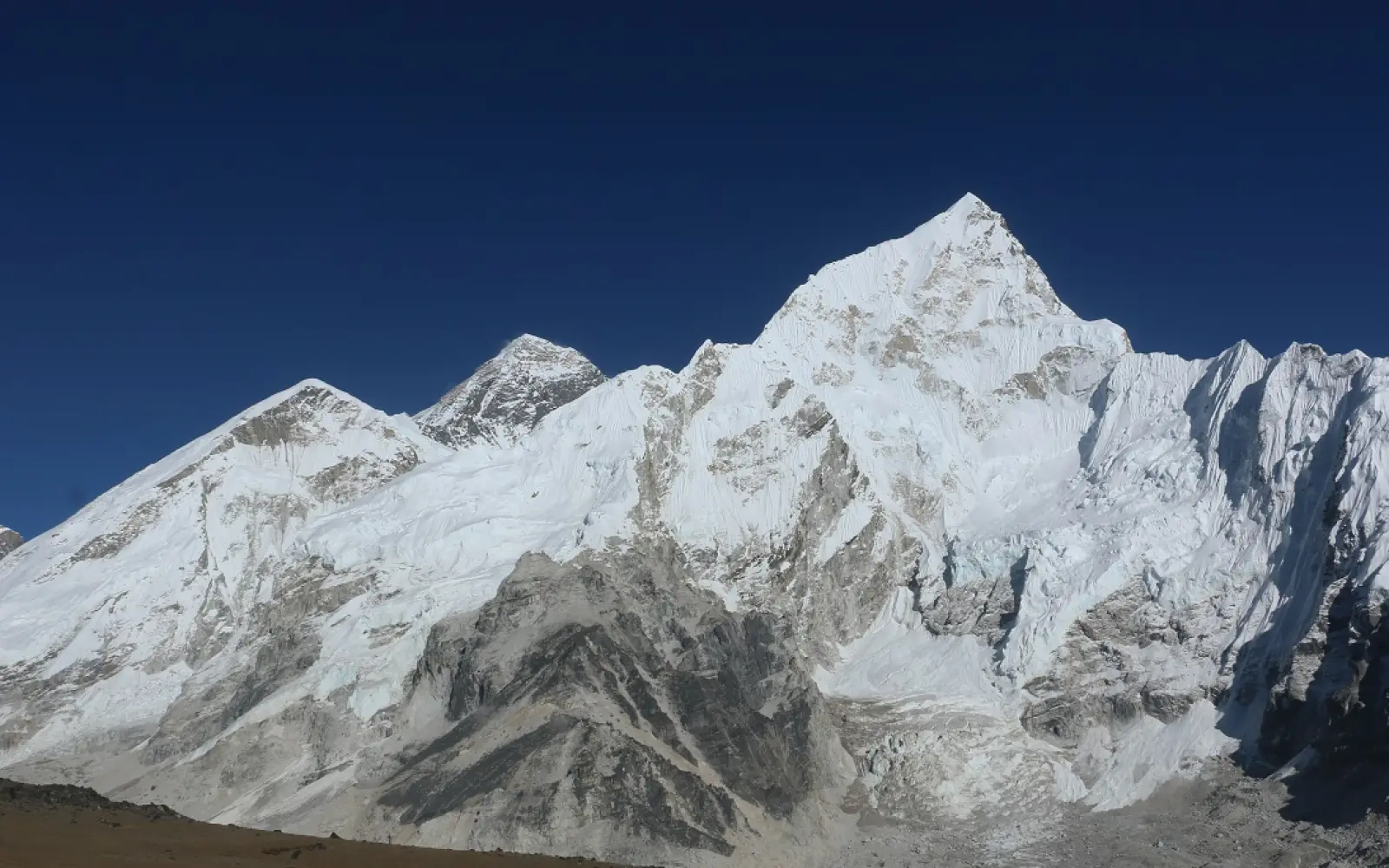
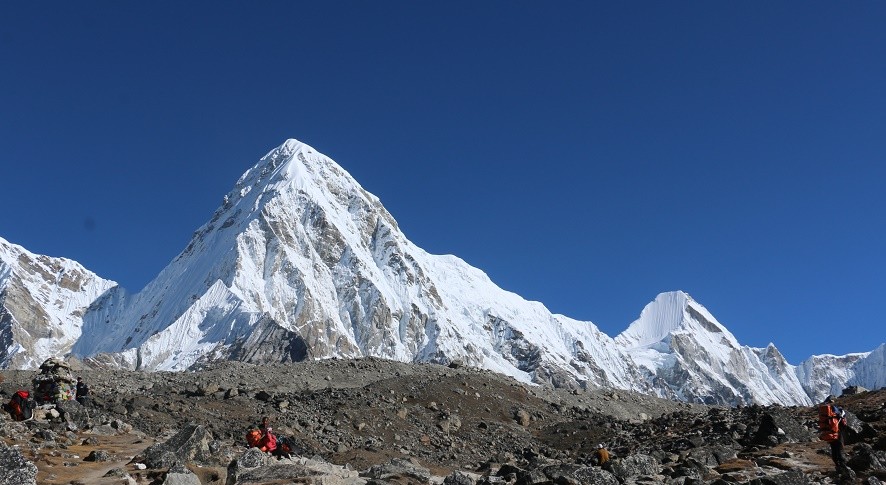
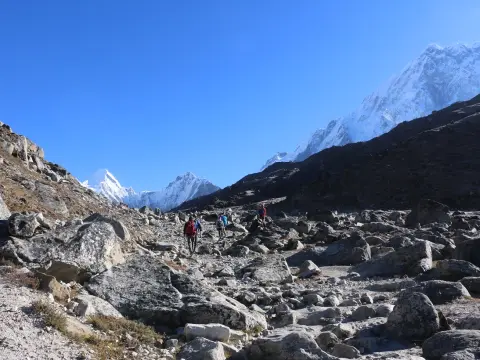
Trekking through the Khumbu region, offering an affordable adventure with breath-taking mountain scenery, traditional Sherpa villages, and unforgettable Himalayan landscapes.
Also, gradual acclimatization prevents altitude sickness, which lowers healthcare expenses. Extra days in Namche Bazaar or Dingboche at 4,410 meters reduce health risks. In the same way, carrying required gear and local food from Kathmandu minimizes high-altitude expenses. Overland travel, therefore, not only reduces expenses but also makes the trip safer.
Finally, the trek passes through Lobuche at 4,940 meters and Gorakshep at 5,164 meters to Everest Base Camp at 5,364 meters. Budget travelers rely on simple tea houses, Nepali food, and few guides or porters. Likewise, this style focuses on Sherpa culture, monasteries, and Himalayan scenery without overspending.
In conclusion, the cheapest way to reach to Everest Base Camp without flights includes jeep rides, gradual trekking, and careful budgeting. This route offers safety, cultural exposure, and cost savings. Therefore, overlanding remains the preferred method for budget travelers seeking unique Everest experiences.
Why Avoid Flights to Lukla?
First and foremost, a number of trekkers avoid flying to Lukla because of unpredictable weather and it costly as well. The Tenzing-Hillary Airport at an altitude of 2,860m often experiences delays and cancellations. Therefore, visitors remain in the dark and pay extra when flights don't operate according to schedule. For that purpose, road alternatives are a more secure choice for travelers on a budget.
In addition, Lukla flights are very expensive compared to overland travel. One-way fares usually cost between $200-230 per person. Likewise, rebooking charges add extra inconvenience if the weather deteriorates. Thus, overland routes save money and stress.
Also, road travel offers cultural experience that air travel cannot. Traveling through such towns as Salleri at 2,390 meters exposes trekkers to Sherpa and Rai people. Also, landscapes transition from low hills to high valleys slowly, facilitating acclimatization. This reduces the risk of altitude sickness before arriving at Phakding at 2,610 meters.
Lastly, avoiding flying to Lukla saves money, immerses one in culture, and reduces risk during Everest Base Camp Trek. Though longer in length, overland and on-foot travel provides genuine adventure. Therefore, budget trekkers prefer to do this over unreliable and costly flights.
Road Journey from Kathmandu to Salleri
First, the road journey from Kathmandu at 1,400 meters to Salleri at 2,390 meters is long but interesting. The 8 to 10 hours' drive varies with road conditions. However, the drive has mid-hill village views, river views, and views of terraced farms along the way. This gradually acclimatizes trekkers to elevation gain.
Besides, the journey passes through Okhaldhunga and Khurkot and winds up towards Salleri. Roads remain dusty and rugged, but plants are becoming greener with elevation. Due to that, tourists are able to witness changing lifestyles and cultures along the way. It makes them feel a greater connection with Nepal's rural areas.
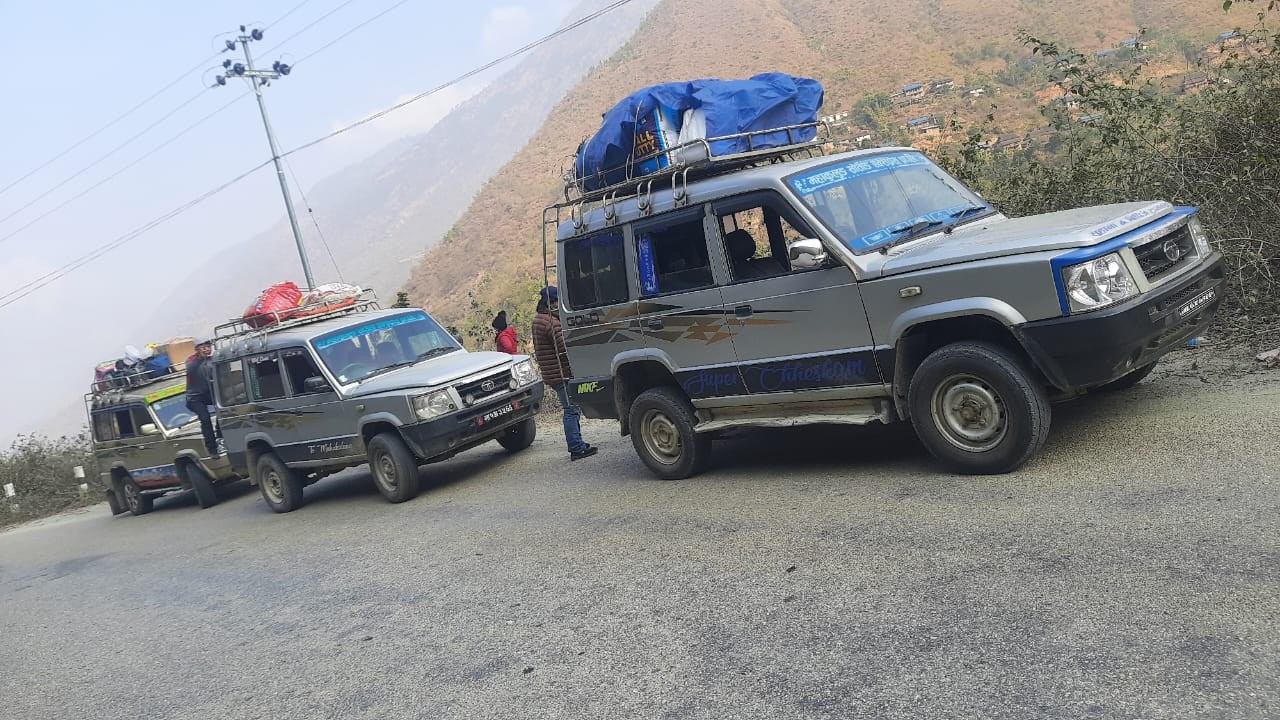
A rugged 4WD jeep navigates the scenic mountain roads to the Everest region, offering an adventurous, budget-friendly overland alternative to flying to Lukla before beginning the Everest Base Camp Trek.
Similarly, Salleri is a main base for Everest trekkers who avoid air travel. It has low-cost lodges and tea houses available for overnight stays. The trekkers also get a chance to interact with locals from Sherpa and Rai communities. Therefore, Salleri emerges as a resting point and cultural encounter.
Briefly, the road journey from Kathmandu to Salleri is challenging and adventurous beyond comfort. Though tiresome, it offers affordability and cultural richness before hitting the trek. Therefore, it remains an excellent option for the budget-adventure seekers.
Jeep Ride from Salleri to Thamdanda
First, jeep ride from Salleri at 2,390 meters to Thamdanda at 2,300 meters saves trekking days. The off-road drive lasts 6 to 7 hours on rough roads. However, the road is dusty and bumpy, and therefore, tourists must be patient and strong-willed. Hence, the majority of the trekkers prefer it to save time and energy.
In addition, Thamdanda is also the closest motor road to the trail of Everest. From here, the trekkers immediately start trekking to Paiya at 2,730 meters. The drive goes through tiny villages and terrace fields. Thus, it is an insight into the everyday life of farmers in this region.
In addition, jeep travel reduces trekking distance by at least two days. Otherwise, the trekkers would have to trek from Salleri through Ringmo and Kharikhola. Once more, going by jeep saves budget trekkers food and lodges costs. Thus, this option is viable for those having tight schedules.
Lastly, the jeep drive between Salleri and Thamdanda or Surke is rough but worth it. It is time-saving, cost-effective, and more rapid connectivity to the trail. Hence, budget travelers prefer taking it as a way of the trip.
To begin with, the road trek to Everest Base Camp begins from Thamdanka 2,300 meters and goes upwards towards Paiya 2,730 meters. The trek passes through villages and forests with Sherpa villages. Also, views of surrounding hills motivate the trekkers to go further upwards. Therefore, the part is scenic as well as culturally fascinating.
Besides, from Paiya, the path continues to Surke, which is at an elevation of 2,290 meters. Downhill paths challenge the knees but provide closer views of valleys. Likewise, trekkers walk over suspension bridges and streams that join distant villages. Therefore, this portion requires steady pace and balance.
Besides that, Surke is situated directly under Lukla, offering a straight connection to the airport. Trekkers here are able to access routes that go to Chaurikharka and Cheplung. Surke also offers simple tea houses with low-budget accommodation and meals. It is therefore an easy pit-stop for budget trekkers.
In short, the trek from Thamdanda to Paiya and Surke gives a glimpse into actual Himalayan life. Physically demanding, it balances natural beauty with cultural exposure. Therefore, it is an essential introduction to the original Everest route.
Joining the Classic Everest Trail at Chaurikharka
Firstly, after Surke at 2,290 meters, the trail climbs steeply to Chaurikharka at 2,694 meters. The village overlooks the Dudh Koshi River valley. Moreover, it directly connects trekkers to the iconic Everest trail from Lukla. Thus, budget trekkers finally merge with the standard EBC trail.
Moreover, Chaurikharka is a large Sherpa settlement with fertile farm lands. Trekkers pass through terraced potato, barley, and buckwheat fields. Likewise, mani walls and prayer flags decorate the trails. Therefore, it provides cultural experience before meeting other trekkers on the main trail.
Additionally, from Chaurikharka, the trail proceeds to Cheplung at 2,660 meters. The trail is wider and more crowded with tea houses. Therefore, trekkers have the initial blend of flying and overland tourists. This adds color and variety to the trekking atmosphere.
In brief, reaching the Everest Base Camp trek at Chaurikharka is satisfying. The overland journey connects with the world's famous trekking trail finally. So, this segment concludes the merger into the Everest Base Camp trek.
Everest Base Camp Trek without Lukla Flight | 16 days
Firstly, from Chaurikharka, trekkers walk towards Cheplung at 2,660 meters gradually. There are small monasteries, prayer stones, and traditional homes along the path. Moreover, the path is more comfortable than the earlier climbs. Therefore, trekkers can walk comfortably through Himalayan landscapes.
Besides, after Cheplung, the path descends to Phakding at 2,610 meters. There are suspension bridges spanning the Dudh Koshi River several times. Likewise, pine forests shade the path, which makes it peaceful. Therefore, this section provides both nature and cultural appeal.
In addition, Phakding is a regular overnight stop for trekkers. Tea houses offer budget accommodation and meals. Moreover, Kusum Kanguru at 6,367 meters mesmerizes visitors. Therefore, Phakding prepares trekkers for Phakding to Namche Bazaar's higher altitudes.
Finally, the Cheplung to Phakding trek is a blend of culture, nature, and comfort. It offers acclimatization in bearable altitude. Therefore, this phase is essential for the flawless commencement of the EBC trek.
Cost Breakdown of Jeep and Trekking Options
Firstly, budget trekkers should be aware of the cost of overland travel. A jeep to Salleri from Kathmandu would be $25 to $35 per seat. Then, a further jeep to Thamdanda would be $20 to $30. Thus, traveling by road is cheaper than a $200 flight to Lukla.
Furthermore, trekking costs differ depending on lodges and meals. Tea houses charge $5 to $10 for rooms. Similarly, meals cost between $3 and $7 depending on altitude. Thus, a daily budget of $25 to $35 is sufficient for most trekkers.
In addition, permits add up fixed costs to the Everest Base Camp trek. The Sagarmatha National Park permit is Rs. 3000, and the Khumbu Pasang Lhamu permit is Rs. 3000. Likewise, TIMS card is not required for solo trekkers here. So, permit fees are minimal and certain.
Lastly, jeep rides, permits, accommodation, and food have reasonable prices. Overland trip to Everest Base Camp is budget-friendly relative to flying to Lukla. Therefore, trekkers on a budget can do the EBC trek with little financial stress.
Everest Base Camp Trek with Helicopter Fly Out 10 Days | 10 days
To begin with, affordable tea houses can be easily found on the Everest Base Camp trail. In the villages of Paiya, Surke, and Phakding, rooms cost between $5 and $10. Moreover, prices increase with elevation. Therefore, trekkers must prepare budgets ahead of time.
Besides, tea houses provide basic rooms with twin beds and shared toilets. They are equipped with blankets, but it is recommended to carry a sleeping bag of your own. Likewise, dining halls are warm areas where trekkers can gather. Therefore, tea house accommodation is comfortable and social.
Moreover, higher settlements like Namche Bazaar at 3,440 meters offer more variety. There, trekkers are provided with lodges that have attached bathrooms and Wi-Fi. But there, these facilities cost a little more. Therefore, budget trekkers have to settle for simple rooms and eat local food.
In brief, tea houses make the trek comfortable and cheaper. Tea houses provide accommodation, food, and cultural experiences along the route. So, cheap accommodation ensures a low-cost Everest Base Camp trip.
Cheap Food during Trekking
First of all, food on the Everest trek is simple but nutritious. In lower villages like Phakding at 2,610 meters, cheap meals can be had by trekkers. Dal bhat, noodles, and fried rice are the preferred ones. Therefore, budget trekkers can afford to consume good and enough food without paying a big money.
Secondly, prices rise with altitude, but local food remains within reach. At Namche Bazaar at 3,440 meters, dal bhat is around $6 to $8. However, imported food items like pasta or pizza are pricey. Therefore, eating local foods save money and ensures health. The best way to save money during Everest Base Camp Trek is having Daal Bhat for every meal except breakfast.
In addition, meal packages with facilities are generally provided in tea houses. Purchasing dinner and breakfast guarantees affordable accommodation. In addition, the trekkers must carry snacks like biscuits, peanuts, or chocolate from Kathmandu to save money during EBC Trek. Therefore, supplemental food supplies cut costs at high altitudes.
Lastly, eating simple Nepali food minimizes costs. Budget trekkers must avoid the cost of Western menu items. Therefore, proper choice ensures nutrition and cost economy on the trek.
For one, it takes more time to travel overland than a flight would. From Kathmandu at 1,400 meters, the jeep journey to Salleri at 2,390 meters takes a day. A day is required to get to Thamdanda at 2,300 meters. Two days are therefore spent before trekking begins.
Additionally, trekking from Thamdanda to Surke at 2,290 meters is done in one day. From Surke trekkers can head to Phakding at 2,610 meters directly without ascending to Lukla. This section adds two days to those who choose to fly to Lukla. Consequently, the whole trip takes longer but gradual.
Apart from that, it takes 12 to 14 days to reach Everest Base Camp at an altitude of 5,364 meters. Adding road travel makes the trip take 15 to 17 days. There are also acclimatization days to be had in Namche Bazaar and Dingboche. Therefore, patience and proper planning are required for the trek.
Therefore, overland EBC treks last longer than the EBC Trek with flights. But gradual gain allows acclimatization. Therefore, budget trekkers compromise on longer trips for reliability and low cost.
Advantages of Jeep and Land Routes
To begin with, jeep routes to Everest Base Camp provide budget advantages for budget trekkers. Taking a road trip to Salleri and Thamdanda is less than $70. In contrast, flights to Lukla amount to almost $200. Thus, jeeps are cheaper options for initiating the trek.
Further, slow increase of altitude is possible by trekking. Travel on roads from 1,400 meters to 2,390 meters prevents the sudden shock. Trekkers also get exposed to diversified landscapes prior to trekking. Thus, the body is better adjusted for high altitude trekking.
Additionally, jeeps offer exposure to cultural diversity. Salleri and Kharikhola villages expose Sherpa, Rai, and Tamang life. Road segments also cut through farming valleys and monasteries. Therefore, trekkers gain cultural experiences before reaching higher Sherpa regions.
In all, land routes to EBC are affordable, step by step, and culturally diverse. They are time-consuming but provide better acclimatization. Therefore, budget trekkers gain jeep travel benefits despite its challenges.
Challenges of Road Travel to Everest Region
First of all, jeep travel is rough and tiring. Salleri and Thamdanda roads remain dusty and bumpy. Secondly, monsoon landslides may block the way. Thus, there are constant delays on this route.
Moreover, long drives are difficult to patience and comfort. The 8 to 10 hours drive from Kathmandu to Salleri is a good example. Similarly, Salleri to Thamdanda is also 6 to 7 hours. Therefore, road travel exhausts trekkers even before actual walking is started.
Secondly, jeep travel is more uncertain than flight. Breakdowns, jamming, or unfavorable weather postpone travelling time. Likewise, back roads have fewer facilities. Thus, trekkers have to prepare themselves for inconvenience and discomfort.
In short, land journeys to Everest are affordable but not easy. Trekkers compromise on convenience and comfort for economy. Therefore, preparation and patience are needed while choosing land trips.
Firstly, budget trekkers must plan Everest Base Camp treks in advance. Group booking of jeeps lowers the travel cost to Salleri at 2,390 meters. Likewise, room sharing in tea houses minimizes accommodation charges. Therefore, trekkers' coordination saves money on the trail.
Furthermore, food choices greatly affect the budget. Dal bhat at Phakding 2,610 meters or Namche Bazaar 3,440 meters is cheaper. Imported food costs double, especially above Dingboche at 4,410 meters. Therefore, eating local food prevents extra costs at higher altitudes.
In addition, carrying snacks from Kathmandu at 1,400 meters is economical. Nuts, energy bars, and tea bags reduce high-altitude purchasing of food. Similarly, carrying a reusable water bottle avoids pricey bottled water. Refilling with purified or boiled water is inexpensive and safe.
In addition, bypassing luxury services controls expenses. Wi-Fi, hot water showers, and power sockets for charging are extra charges. Moreover, at Gorakshep 5,164 meters, basic services are expensive. Therefore, making use of minimal facilities keeps trekking affordable.
To begin with, gear is necessary for the success of a trek like Everest Base Camp. The general items are trekking boots, warm clothing, and a sleeping bag. In addition, purchasing second-hand gear in Kathmandu 1,400 meters saves money. Or you can go with renting the gear for your EBC Trek. Thus, budget trekkers can make preparations without high expenditures.
Furthermore, clothing must match the altitude. At Namche Bazaar 3,440 meters, warm jackets are essential. Higher points like Lobuche 4,940 meters require gloves, thermal wear, and woolen hats. Therefore, packing appropriately avoids expensive purchases during the trek.
Further, basic gear reinforces affordability. A water bottle, headlamp, and trekking poles are money savers. It is common for Kathmandu stores to rent poles and down jackets. Thus, trekkers do not purchase expensive items for single use.
Further, sleeping bags enhance comfort in tea houses. There are blankets, but the temperature falls below freezing at Gorakshep 5,164 meters. Thus, bringing your own sleeping bag provides warmth and avoids rental expenses.
Briefly, required gear ensures comfort and safety. Budget trekkers can prepare in advance by purchasing second-hand or renting. Therefore, affordable packing makes an Everest Base Camp trek a success.
Travel Insurance and Safety on a Budget
First and foremost, travel insurance is a must even for budget trekkers. Policies must cover trekking to Everest Base Camp at 5,364 meters. They must also cover helicopter evacuation, which costs thousands of dollars without insurance. Therefore, cheap plans with no comprehensive coverage are worthless.
Besides, budget trekkers should compare prices before buying. Some companies offer trekking-specific policy at affordable rates. Likewise, policy for altitude sickness and delays is important. So, security is guaranteed and money conserved by selective choosing.
Moreover, safety depends on preparation. Carrying first aid kits avoids expensive medical charges along the route. There are minor health posts in Namche Bazaar 3,440 meters. However, higher settlements like Lobuche 4,940 meters possess simple facilities. Therefore, self-maintenance is still essential.
In addition, trekking with a guide adds safety. Guides cost about $25 a day, but they steer clear of hazards. They reserve accommodation, food, and secure itineraries. Therefore, employing a guide avoids costly mistakes.
In brief, budget safety is possible with proper planning. Affordable insurance and basic precautions protect trekkers. Therefore, cost and safety balancing ensures a safe Everest journey.
Best Time for Budget Overland Everest Base Camp Trek
For one, season impacts cost as well as experience. Spring between March and May brings with it clear skies and blossoms for Budget Overland Everest Base Camp Trek. Autumn between September and November promises settled weather. Hence, these are ideal seasons for affordable treks.
Besides, off-season trekking is less expensive. Winter from December to February receives fewer trekkers. Tea house prices fall in Namche Bazaar 3,440 meters and Dingboche 4,410 meters. However, extreme cold at Gorakshep 5,164 meters intimidates trekkers. Therefore, only experienced hikers attempt winter trips.
Similarly, monsoon between June and August lowers costs. Fewer trekkers mean cheaper accommodation and food. Nevertheless, landslides regularly block roads near Salleri 2,390 meters. Trails become muddy and leech-infested. Therefore, monsoon is not safe for overland schedules.
In total, spring and autumn balance cost, safety, and comfort. Off-season is cheaper but riskier. Therefore, budget trekkers need to choose cautiously according to priorities.
Hiring a Guide or Porter on a Budget
Firstly, to have a porter or guide ensures safety and efficiency. Guides cost about $25 per day, and porters $15–20. Secondly, they do all the heavy work, preserving trekkers' energies on slippery slopes. So even penny-pincher travelers are better off paying for local labor.
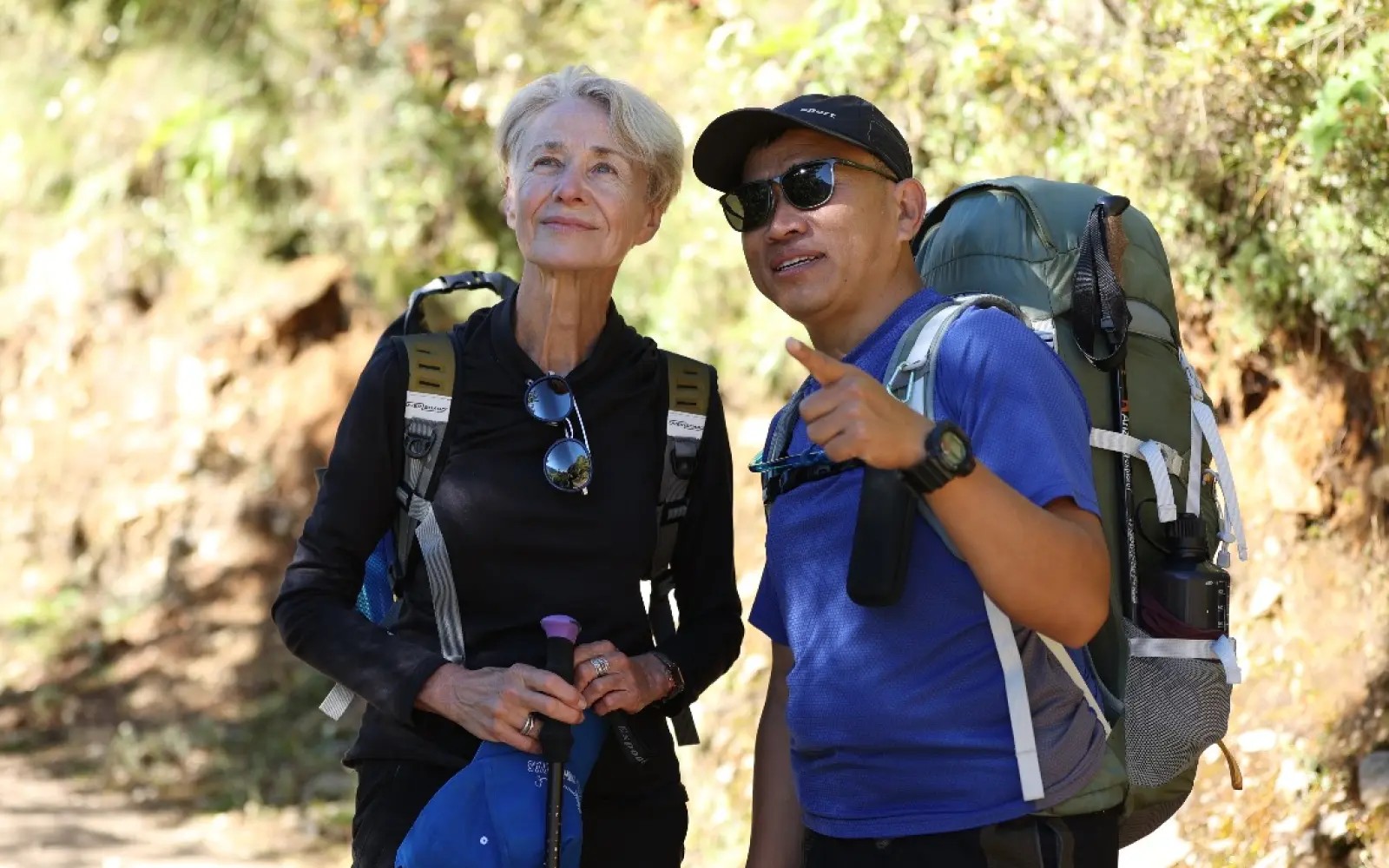
A knowledgeable local guide leads trekkers safely through the Everest region, sharing expert navigation, cultural insights, and altitude support while making the journey to Everest Base Camp safer and more enjoyable.
In addition, guides provide route information and cultural sensitivity. In Namche Bazaar at 3,440 meters, they explain local monasteries and festivals. Likewise, they assist in evasion of tea houses, permits, and acclimatization itineraries. Consequently, trekkers avoid confusion and delays.
In addition, porters help maintain the backpack light. A trek from Dingboche at 4,410 meters to Lobuche at 4,940 meters is easier with help. Additionally, carrying 10–15 kg less reduces exhaustion and prevents altitude sickness. Therefore, using a porter increases efficiency and health.
Moreover, local guides and porters are paid a good living. Encouraging them benefits the community as well as ensuring quality service. Equally, they also learn hidden trails, water sources, and sound overnight bases. Therefore, hiring locals maximizes safety and cultural immersion.
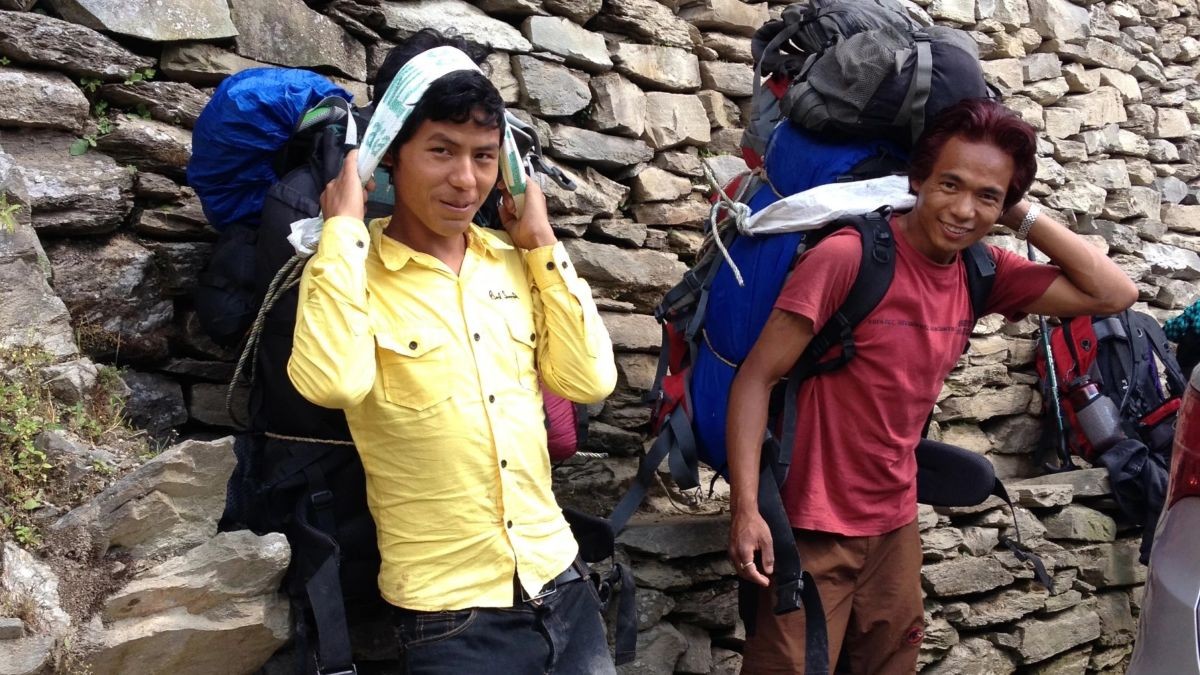
A dedicated porter carries trekking equipment through the Everest region, helping trekkers enjoy a safer and more comfortable journey while supporting the local mountain communities along the Everest Base Camp Trek.
In short, guides and porters do make sense on a shoestring. Their cost is offset by energy saving, safety, and cultural enrichment. Budget trekkers, therefore, must budget for engaging support at points strategic on the trek. In fact, you should hire either guide or porter to save money.
Cultural Experiences Along the Jeep and Trek Route
First of all, overland journey exposes trekkers to authentic Himalayan culture. Journey from Kathmandu at 1,400 meters to Salleri at 2,390 meters passes through Rai and Sherpa villages. Further, the visitors get to see local markets, monasteries, and terraced farms. For that reason, exposure to culture starts even before the trek begins.
Further, it is possible to visit villages like Surke at 2,290 meters and Chaurikharka at 2,694 meters. Buddhist traditions are observed through Mani walls, prayer flags, and tiny gompas. Likewise, meeting villagers leads to an insight into daily Himalayan life. Therefore, trekkers observe traditions that flight visitors usually miss.
In addition, festivals and rituals occur seasonally along the route. During spring, Mani Rimdu and other Sherpa festivals involve dances and ceremonies. Additionally, homestays provide trekkers with actual tastes of food and hospitality. Consequently, cultural understanding is enhanced through overland travel.
Lastly, the jeep road and trekking route are rich in cultural experience. Low-budget trekkers encounter more than landscape views—congeniality with people. Consequently, jeep and trekking routes are rich in reward apart from physical adventure.
Dealing with Altitude Sickness Affordably
Firstly, acclimatization avoids altitude sickness. Road travel to Salleri at an altitude of 2,390 meters and Thamdanda at an altitude of 2,300 meters will be better acclimatization for Everest Base Camp Trek. Likewise, trekking from Paiya 2,730 meters to Namche Bazaar 3,440 meters is a minimal rise in altitude. Therefore, the body acclimatizes naturally.
Moreover, budget tourists also use cheaper remedies for altitude sickness. Staying hydrated with lots of water, resting in upper villages, and not drinking alcohol prevent illness. Similarly, foods containing carbohydrates maintain energy in altitudes like Dingboche 4,410 meters. Therefore, simple precautions reduce risk without expensive medication.
Also, acclimatization days at Namche Bazaar or Dingboche prove to be effective. Early identification about symptoms and slow walking maintains health in place. In addition, oxygen cylinders can be hired by trekkers as an emergency measure, which is budget-friendly as against hospital evacuation. Therefore, budget-friendly measures ensure safety.
Therefore, altitude sickness during EBC Trek can be managed within one's means. Ascent gradually, hydration, and local treatments are the factors of importance. Therefore, careful planning and awareness make the Everest trek budget-friendly and safe.
Final Tips for the Cheapest EBC Journey
Foremost, planning is mandatory for a budget Everest Base Camp trek. Pre-booking jeeps, room-sharing, and bringing own food saves dollars. Additionally, combining overland travel with trekking avoids expensive Lukla flights. Therefore, preparation saves cost and stress.
Additionally, do use local food and simple tea house accommodation. Dal bhat, noodles, and fried rice are filling and cheap. Likewise, choosing simple rooms with shared facilities lowers accommodation expense. So, prioritizing essentials maintains the trek within budget.
Also, hire guides or porters selectively for efficiency and safety. Their cost and risk reduction pay for energy costs. Also, acclimatize gradually to avoid altitude sickness and high medical costs. Strategic support, therefore, realizes a maximum of economy and safety.
Finally, travel in spring or autumn for stable weather. Avoid monsoon and extreme winter unless experienced. Furthermore, carry essential gear like sleeping bags, warm layers, and trekking poles. Therefore, budget trekkers enjoy the Everest adventure safely and affordably.
In short, with careful planning, shrewd spending, and staged trekking, the cheapest EBC Trek is ensured. Local trails, home cooking, dormitory stays, and prudent assistance shave costs, comfort, and enjoyment. Therefore, budget travelers can experience Everest Base Camp to the fullest without overspending.
FAQS:
1. What is the cheapest way to reach Everest Base Camp without flying? The cheapest way to reach Everest Base Camp without flying is to take a bus or jeep from Kathmandu to Salleri to Surke. Then join the classic trail at Chaurikharka. This way you save a lot of money compared to flying to Lukla. You also get to see some really beautiful scenery and get used to the high altitude slowly.
2. Why should I avoid flights to Lukla for Everest Base Camp trek? Flights to Lukla are very expensive and the weather can be bad so they are not always safe. The runway at Lukla is also very short and scary. If you take a jeep and trek from Salleri to Surke it is cheaper and safer. You get to see more of the local culture and scenery. You will also feel better as you get used to the altitude slowly.
3. How do I travel by road from Kathmandu to Salleri? You can take a bus or a shared jeep from Kathmandu to Salleri. It costs $25-35 per person and takes 8-10 hours. The road is very scenic. You get to see the countryside. This is a way to start your budget Everest Base Camp adventure.
4. What is the jeep ride like from Salleri to Thamdanda? The jeep ride from Salleri to Surke costs $. Takes 4-6 hours. The road is very rough. You get to see some amazing views. This ride saves you time and energy so you can focus on trekking to altitudes. It is also a way to save money.
5. How is the trek from Thamdanda to Paiya and Surke? The trek from Thamdanda to Paiya and Surke is moderate. Takes 2-3 days. You walk through forests and villages. It is a good way to get fit and used to the high altitude. The trails are not too crowded. You can stay in budget teahouses that offer cheap food and accommodation.
6. Where does the overland route join the classic Everest Base Camp trail? The overland route joins the Everest Base Camp trail at Chaurikharka. From there you follow the path to Cheplung, Phakding and then Namche Bazaar. This way you get to experience the Everest Base Camp trek without having to fly to Lukla.
7. What is the full cost breakdown for the jeep and trekking option? The cost of the jeep ride to Salleri is $25-35. To Thamdanda is $20-30. You also need to pay for permits and teahouse stays which can cost $300-500. Food is cheap around $10-15 per day. Overall, this option is much cheaper than flying to Lukla.
8. What kind of accommodation is available along the trail? There are teahouses along the trail that offer rooms for $3-8 per night. You share facilities with others. It is a good way to save money. Some teahouses also offer stays if you eat there. This is a way to keep your costs low.
9. How can I find cheap food during the Everest Base Camp trek? You can find food at teahouses along the trail. Dal Bhat, noodles and momos cost around $3-6 per meal. It is an idea to stick to local food as it is cheaper and gives you energy. Avoid imported items as they are expensive.
10. How much time is required for the overland Everest Base Camp trek? The full overland journey from Kathmandu takes 16-20 days round trip. This includes 3-4 days of jeep and initial trekking to join the trail. You need to plan days in case of bad weather or if you need to rest.
11. What are the main advantages of choosing jeep and land routes? The main advantages of choosing jeep and land routes are that they save you money, around $150-200 and offer acclimatization. You also get to see more of the culture and scenery and the trails are less crowded. This makes the whole experience more enjoyable.
12. What challenges should I expect on the road travel to Everest region? The roads to the Everest region are very rough and dusty with hairpin bends. This can cause motion sickness. There may be delays due to landslides or bad weather. You should be prepared for these challenges. Have a flexible schedule.
13. What money-saving tips work best for budget trekkers to EBC? The best money-saving tips are to travel in groups trek independently eat food and stay in basic teahouses. You should also carry snacks from Kathmandu. Avoid peak season. These tips can help you save a lot of money.
14. What essential gears do I need for cheap trekking to Everest Base Camp? You need sturdy trekking boots, a down jacket, a sleeping bag liner, trekking poles, water purification and layered clothing. You can rent items in Kathmandu to save money. A good daypack is also essential.
15. Is travel insurance necessary for a budget Everest Base Camp trek? Yes, travel insurance is necessary for a budget Everest Base Camp trek. You need to make sure you have coverage for high-altitude trekking, evacuation and medical emergencies. There are options available that can provide you with the necessary safety without high premiums.
16. What is the best time for a budget overland Everest Base Camp trek? The best time for a budget overland Everest Base Camp trek is in the spring from March to May or in the autumn from September to November. The weather is stable. The views are clear. There are also crowds, which makes the experience more enjoyable.
17. Should I hire a guide or porter on a budget trek? You can hire a porter to help you with your luggage and support the local community. It costs around $15-20 per day. A guide is optional. It can be helpful if you are not experienced. Sharing services with others can also help reduce costs.
18. What cultural experiences can I enjoy along the jeep and trek route? You can visit Sherpa villages and monasteries. Experience local festivals and daily life. Homestays are also available which offer interactions with the local people. This can make your trek more enjoyable and meaningful.
19. How can I deal with altitude sickness affordably on this trek? You can deal with altitude sickness by acclimatizing staying hydrated and ascending slowly. You should also eat carbs. Avoid pushing yourself too hard. Diamox can help if needed. It is not always necessary. Teahouses can provide rest days cheaply.
20. What are the final tips for the cheapest Everest Base Camp journey? The final tips are to book your jeeps pack light monitor the weather respect local customs and maintain a steady pace. You should also carry cash for areas and be flexible with your schedule. With these tips you can have a memorable and budget-friendly trek, to Everest Base Camp.