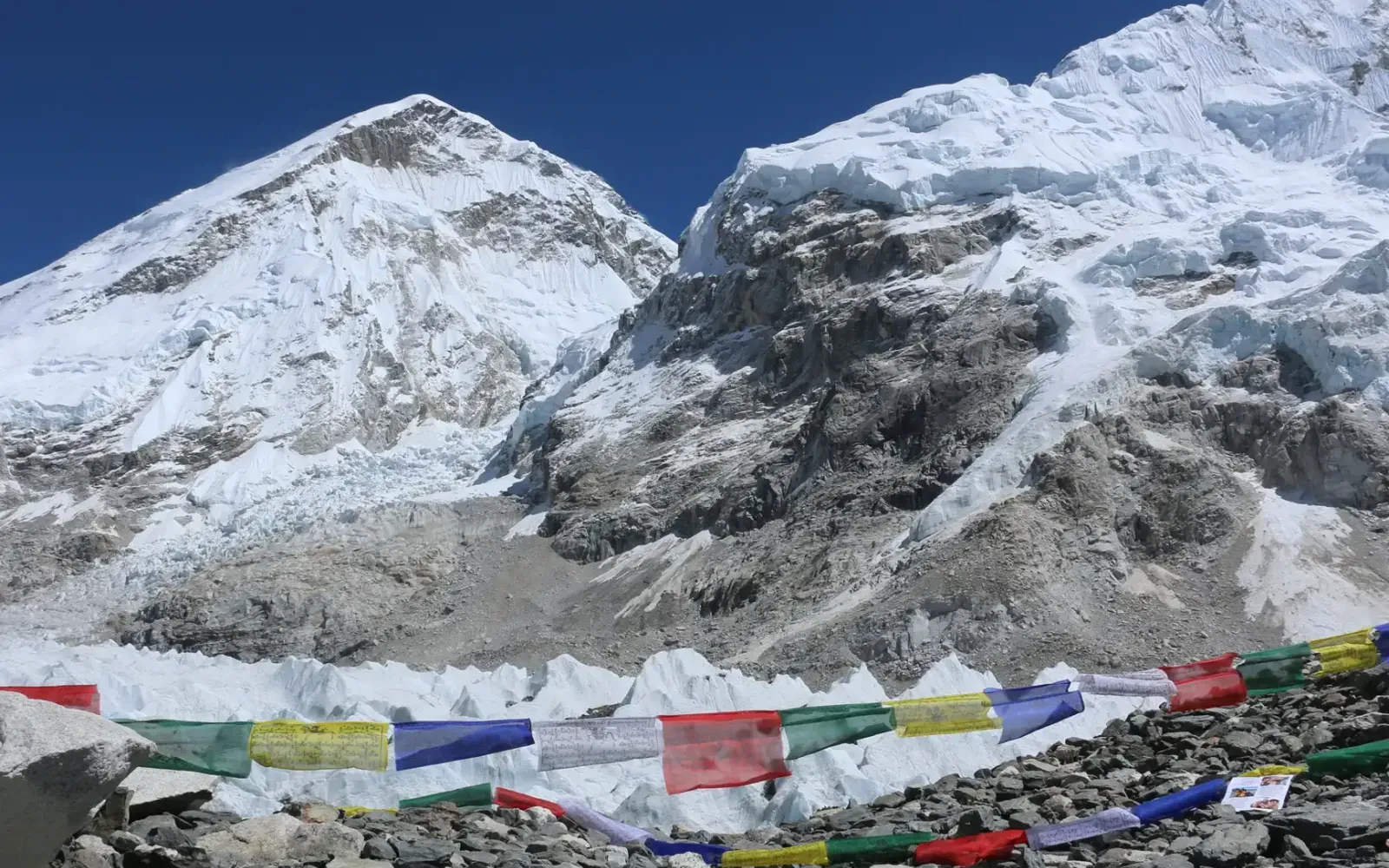
Thinking about taking on the Everest Base Camp trek by land ? You’re not alone. Budget travelers love this route—not just because it saves money, but because it lets you soak up the Himalayas at your own pace. You start down in Kathmandu at 1,400 meters and work your way up to EBC itself at 5,364 meters. No need to mess with expensive, nerve-wracking flights to Lukla. Just you, the trail, and those jaw-dropping mountains. All in, you’re looking at $1,100 to $1,600 for the full adventure.
Actually, there’s something raw and real about traveling overland to Everest. You see those snowy peaks slice into the sky and feel the old trails under your boots—a thrill you can’t fake. That’s why this trek attracts budget seekers from all corners of the world.
Here, people who want to keep costs in check skip the pricey flights to remote airstrips. You save hundreds right off the bat by sticking to the land route. It’s smart, it’s practical, and honestly, it’s still every bit as epic.
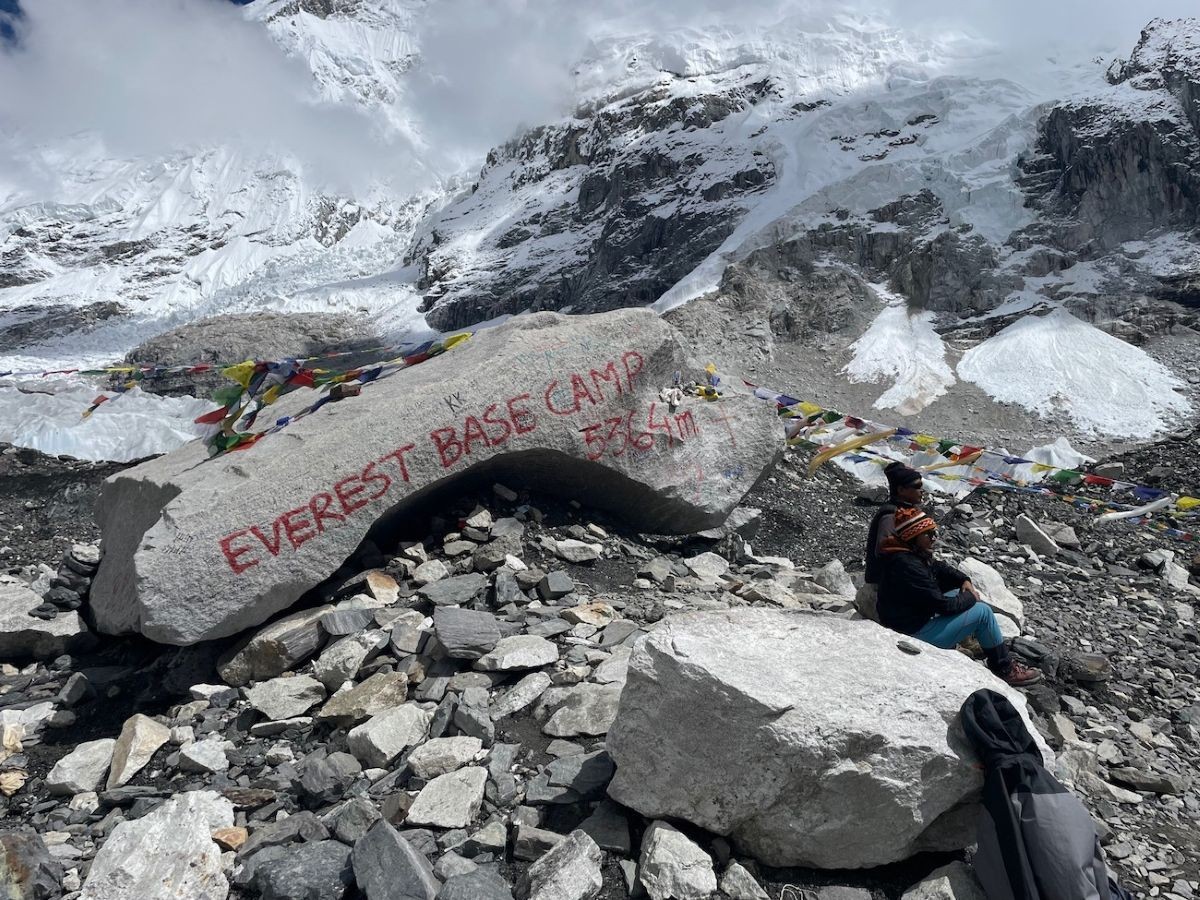
In fact, every step is a new scene—lush rhododendron forests, green terraces, raging rivers crossed on bouncy suspension bridges. Everest itself grows bigger and more impressive each day. These are the kinds of memories that stick with you.
Meanwhile, this blog breaks down the Everest Base Camp Trek by Land costs clearly. You’ll get all the numbers—permits, guides, lodges—so you know exactly what you’re paying for. Most packages cover everything important, so planning feels way less stressful.
Of course, the altitude deserves respect. You start low in Kathmandu, move on to Jiri, and climb steadily up to places like Namche Bazaar. The slow ascent helps your body adjust, which cuts down the risk of altitude sickness—something every trekker worries about.
Right from the start, you get the full budget picture: $595 to $900 per person for a 16- to 20-day adventure. It’s affordable, it’s doable, and the excitement just keeps building the closer you get. If you want the real Everest experience without breaking the bank, this is it.
Advantages of Everest Base Camp Trek by Land :
Why go for the overland Everest Base Camp trek from Kathmandu? Well, for starters, it’s easy on your wallet and gives you a more genuine taste of the Himalayas. If you’re comparing costs, the land route is way cheaper—no pricey Lukla flights to worry about. That alone draws in plenty of budget travelers looking for the real deal at EBC (5,364m).
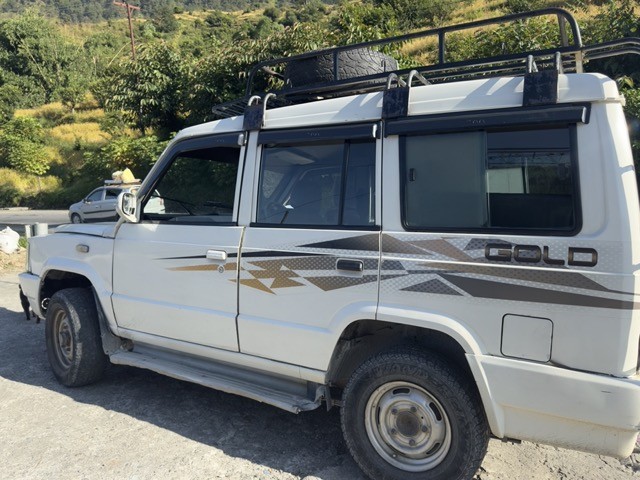
But it’s not just about saving money. Taking the overland route to Everest Base Camp feels a lot safer, too. You skip those nerve-wracking small plane rides and stick to steady ground transport. There’s a certain peace of mind in knowing you won’t be at the mercy of mountain weather or flight delays.
Another big plus: acclimatization. Starting from Kathmandu (1,400m), you climb gradually—first to Jiri (1,905m), then steadily up to Namche Bazaar (3,440m). Your body adjusts along the way, and the risk of altitude sickness drops. It’s a much smoother transition, and honestly, you just feel better by the time you reach the higher trails.
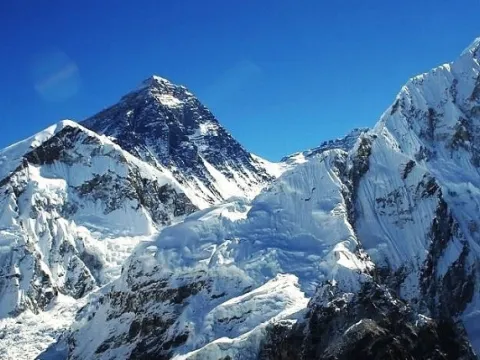
Here, and let’s not forget the drive itself. Winding through colorful villages and terraced hills, you get an up-close look at daily Nepali life. This isn’t just a trek—it’s a journey through the culture and scenery that makes the Himalayas famous. Those moments stick with you.
Likewise, people who’ve done it will tell you: the road preps you. One hiker said they felt fitter and more confident when they hit the trailhead. That early boost makes the tough climbs ahead less daunting.
Moreover, flying might sound easier, but you land high up, fast. You miss all the lowland beauty and the gradual climb. The overland route keeps costs down and gives you the full experience. For anyone who really wants to soak it all in, traveling by land just makes sense.
Sure, it takes a bit more time and planning, but the rewards are worth it. The overland Everest Base Camp trek offers unmatched value and a richer adventure. That’s why so many smart, budget-minded trekkers pick this path—and walk away with stories that last.
Overland vs Flying Comparison :
| Aspect | Overland Journey | Flying to Lukla |
| Everest Base Camp Trek Cost by Land | $1100-$1600 | $1300-$2000 |
| Duration | 16-20 days | 12-14 days |
| Acclimatization | Gradual from 1400m | Sudden at 2860m |
| Scenery Experience | Rural villages + drives | Quick high-altitude start. |
Actually, thinking about heading to Everest Base Camp by land? The jeep ride from Kathmandu to Salleri kicks things off. It’s about 266 kilometers of winding roads, mountain views, and a real taste of Nepal—no flights needed. If you’re looking to save money and see the countryside, this is the way to go.
Here, most people leave Kathmandu early in the morning. You start at 1,400 meters, rolling east along the BP Highway. The landscape changes fast—lush hills, scattered villages, and all that Himalayan anticipation building with every turn. The excitement just grows as you get farther from the city.
Actually, the whole ride takes anywhere from 8 to 12 hours. Some stretches are smooth and easy; others, not so much. There’s plenty of bumping and twisting, so buckle up for a wild ride. Still, knowing what to expect helps you enjoy it more.
Early on, you’ll twist through colorful towns and hills. Drivers usually pull over at Dhulikhel—breakfast with a view, not bad at all. Then it’s back on the road, passing places like Khurkot and Ghurmi. These quick stops break up the trip and keep things interesting.
Past Okhaldhunga, the road gets rougher. Steep climbs and rocky patches throw your jeep around a bit, but you can’t beat the views—terraced fields, deep valleys, rivers rushing far below. This stretch gives you a real slice of rural Nepal. The cultural immersion starts right from the window.
Eventually, you climb up to Salleri at 2,360 meters. By the time you arrive, you’re ready for the trek ahead. The road drops you right at the trailhead for the Everest Base Camp journey, so the transition’s easy and your energy’s still high.
Just a heads-up: weather matters a lot on this route. Monsoon season turns some stretches muddy and slippery. In the dry months, you’ll have a much smoother (and faster) trip. It’s smart to check the forecast before you go. Make it to Salleri, and you’ve already conquered your first challenge—the adventure’s only just begun.
Route Segments at a Glance :
| Segment | Distance | Time | Key Features |
| Kathmandu (1400m) to Dhulikhel | 30 km | 1-2 hrs | Highway, breakfast stops |
| Dhulikhel to Okhaldhunga | 120 km | 4-5 hrs | Hills, river views |
| Okhaldhunga to Salleri (2360m) | 116 km | 3-5 hrs | Bumpy tracks, scenic climbs. |
Here, let’s talk about what it actually costs to get to Everest Base Camp by land. If you’re thinking about getting there by jeep, you’ve got a couple of choices: shared or private. Shared jeeps are the budget pick. Most trekkers pay somewhere between NPR 2000 and 4000 for a seat, and these jeeps fill up fast at Naya Bus Park in Kathmandu. It’s a solid way to save money, which is why budget travelers like to go this route.
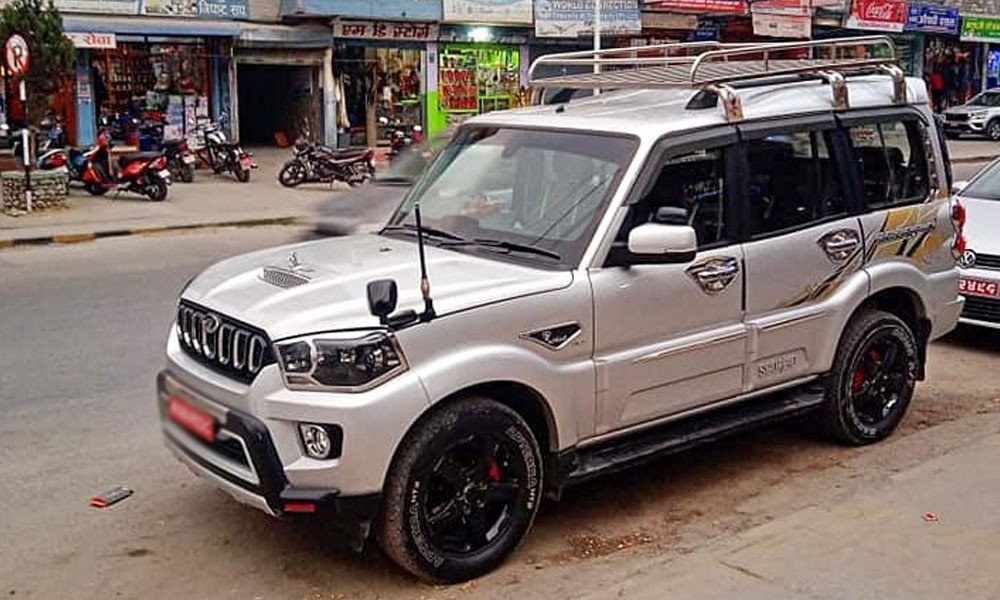
Now, if you’re after a little more comfort and want to travel on your own schedule, there’s the private jeep option. Renting the whole vehicle costs between NPR 20,000 and 25,000. That’s for the whole jeep, so if you split it between six or eight people, it doesn’t break the bank—and you get privacy and a smoother ride. Small groups love this.
But prices don’t stay the same all year. During the busy trekking months (March to May), shared fares go up a bit. When the monsoon hits, fewer people travel, so prices drop. Fuel costs can change things too, so trekkers pay attention to that. The time of year really does affect your trek budget.
If you want things to go smoothly, book ahead. It’s best to reserve seats through local operators you trust, and most will pick you up right from your hotel in Kathmandu. Local tourism boards can help you find reliable options, so you’re not left scrambling at the last minute.
For private jeeps, don’t be shy about bargaining—especially in the off-season. Groups who shop around and compare quotes usually land better deals, and those savings add up fast.
Planning to go beyond Salleri? If you’re heading all the way to Surke, ticket prices climb to NPR 7500 or even 9000. Still, for most people starting their Everest Base Camp trek, Salleri is the perfect drop-off. Jeep transportation costs are pretty straightforward, and when you know your options, you get the best value for your money.
Booking and Cost Saving Tips :
If you’re planning to reach Everest Base Camp overland, knowing how to get from Salleri to Surke (or Thamdanda) is key. The local jeeps run this stretch for about NPR 2500- 3500 per person. It’s not a huge hit to your budget, but it’s something you’ll notice. The road itself climbs from Salleri at 2360 meters up to Thamdanda at 2896 meters, or drops to Surke at 2290 meters, so you’re gaining or losing altitude fast.
From Salleri, most trekkers pile into shared jeeps and aim for Thamdanda. This ride isn’t just a boring transfer—it’s actually a big part of the adventure. You’ll cover around 55 to 64 kilometers, which doesn’t sound like much, but with these roads, it takes anywhere from five to eight hours. Expect to bounce around a lot. The tracks get rough, the views open up to Solu’s wild hills, and honestly, by the time you get out, you’re ready for whatever the trail throws at you.
Actually, the cost is fair for the distance, though if you’re on a tight budget, it adds up. Still, it saves you a whole day of walking, which means fewer nights paying for food and a bed along the way. For a lot of people, that’s worth the price.
Just a heads up—these roads get pretty hairy. Steep drops, plenty of dust, and sharp turns are normal. Hang on to your bags and yourself. If you like a bit of adrenaline, you’ll be in your element.
Of course, if you’d rather save money and don’t mind extra walking, you can skip the jeep and just hike from Salleri. You’ll save the fare, but you need to factor in another day on foot, so your fitness and schedule come into play.
In the end, this jeep extension makes the trek more manageable and efficient for most people. You get closer to the main trails, cut down on overall costs, and reach Surke or Thamdanda ready to start the real climb. For a lot of trekkers, it’s the smart move.
Pros and Cons of Extending the Jeep Ride :
If you’re planning the Everest Base Camp trek, you’ll want to get your permit fees sorted before you go. Here’s what you need to know: the Sagarmatha National Park entry costs NPR 3000, and the Khumbu Pasang Lhamu permit runs between NPR 3000, depending on how long you’ll be in the area. You can buy both in Kathmandu—just stick to official counters and you won’t run into any trouble with fakes.
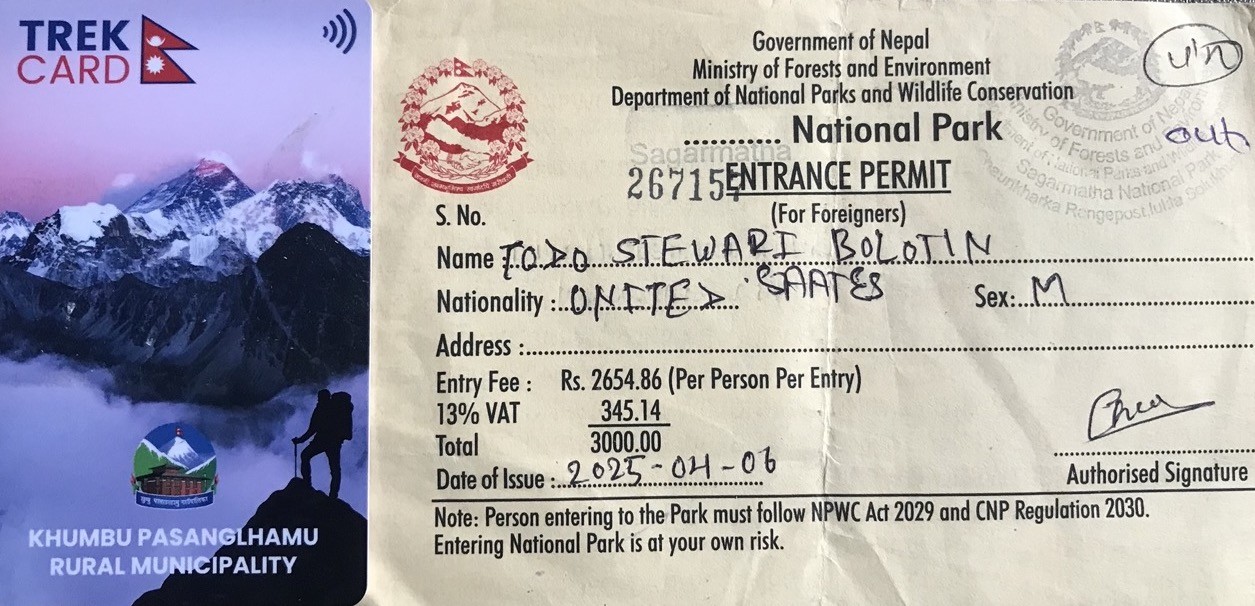
Actually, permits aren’t just red tape; they actually protect the Everest region. You start by getting the Sagarmatha National Park entry permit. The fee goes straight toward conservation efforts around Everest (all 8848 meters of it). It’s a quick process at the Kathmandu offices. Once you’ve got your permit in hand, you can relax.
Next, there’s the Khumbu Pasang Lhamu Rural Municipality permit. Foreigners pay NPR 2000 to 3000, depending on the duration of their trek. This permit has replaced the old TIMS card, so you don’t need both. It’s mandatory for the overland trek, and you’ll show it at entry checkpoints.
All in all, the permit fees are pretty reasonable—expect a total of NPR 5000 to 6000 per person, whether you’re trekking solo or with a group. No group discounts, just a flat rate for everyone, so budgeting is simple.
In fact, getting the permits is straightforward. Head to the Nepal Tourism Board in Kathmandu for your park permit. For the local municipality card, you’ll pick it up at the Monjo checkpoint on the way into the region. The whole process is set up to be smooth and hassle-free.
Be careful, though—counterfeit permits are still a thing. Never buy from street vendors or sketchy agents. Always check for official holograms and digital records. Fake permits can land you with heavy fines or delays, so stick to the official channels and you’ll be fine.
One last thing: those rural municipality fees go right back into the community. The money helps improve local trails and facilities, so every trekker is giving something back. Paying the Sagarmatha National Park and Khumbu permits isn’t just a rule—it’s a way to travel responsibly and help keep Everest special.
Permit Fees Breakdown :
| Permit Type | Foreigners (NPR) | SAARC (NPR) | Where to Obtain |
| Sagarmatha National Park Entry | 3000 | 1500 | Kathmandu NTB or Monjo |
| Khumbu Pasang Lhamu Municipality | 2000-3000 | 1000-1500 | Lukla or Monjo checkpoint. |
Here, let’s talk about where you’ll sleep and what it’ll cost during the Everest Base Camp trek from Salleri. Teahouses line the whole route, and they’re actually pretty welcoming. Expect to pay anywhere from NPR 500 to 2,000 per night, depending on where you are—from the lower villages at 2,360 meters up to Everest Base Camp at 5,364 meters.
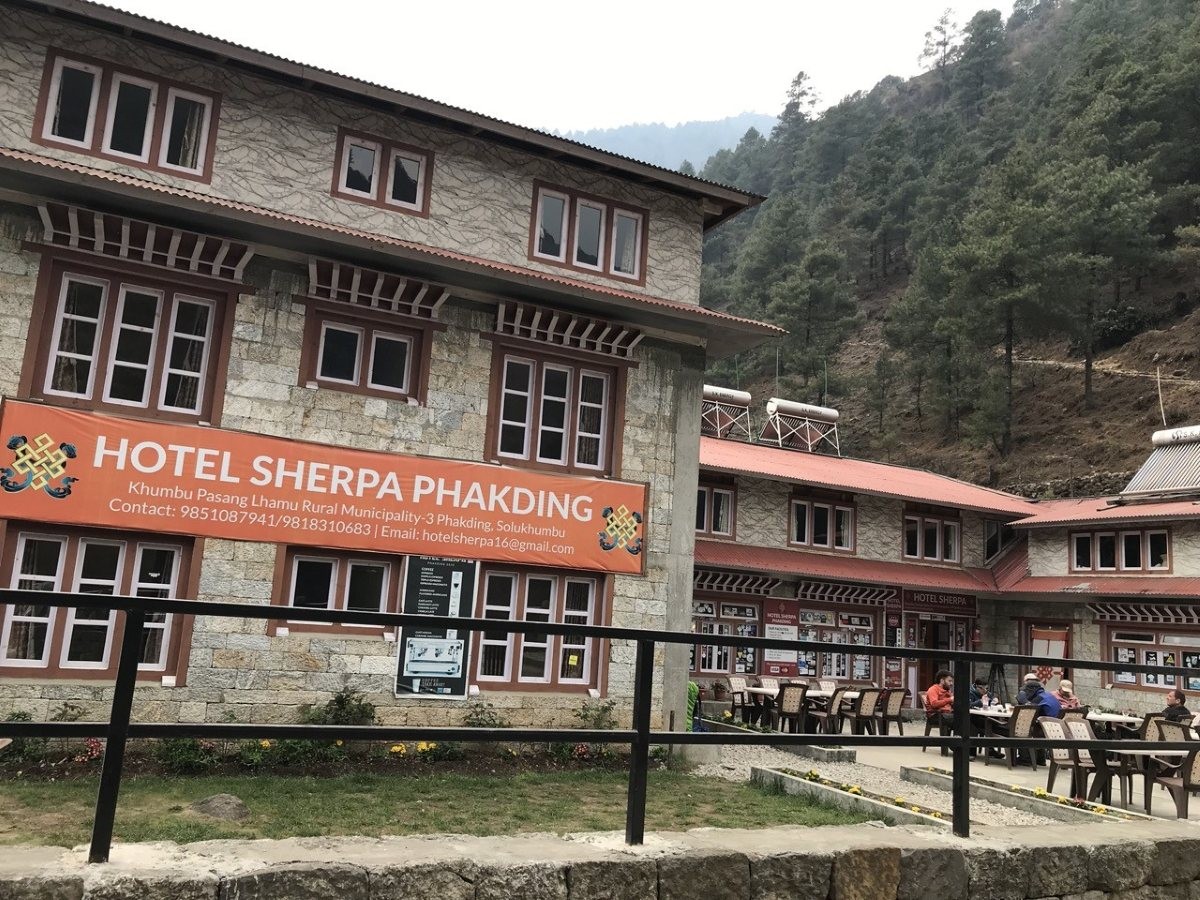
Now, down in the lowlands—places like Salleri and Phakding—rooms are cheapest. You can usually find a bed for NPR 500 to 1,000 a night, and you’ll share bathrooms. It’s basic, but it saves money, and honestly, it’s all you need after a long day hiking. Things start to get a little pricier as you climb higher. In spots like Namche Bazaar and Tengboche, rates jump to NPR 1,000 to 1,500. If you’re trekking during peak season, lodges sometimes tack on a 20% surcharge, so booking ahead makes a difference.
Likewise, once you’re up past Dingboche, heading toward Gorak Shep, you’ll notice prices climb even more—rooms go for NPR 1,500 to 3,000. The higher you go, the more you pay. It’s just harder to get supplies up there, so budget a little extra for these nights.
Actually, there’s a growing number of eco-friendly lodges, too. Some use solar power and try to reduce their impact on the environment. They don’t usually cost more, and a lot of trekkers prefer them for the sustainability factor.
Moreover, most people share twin rooms to keep costs down, and it really helps. If you want a room to yourself, expect to pay about NPR 500 extra. Groups can split costs, which makes things even cheaper and adds some good company at the end of the day.
If you plan ahead and know what to expect, your accommodation budget stays manageable—and you’ll have more peace of mind every night on the trail.
Cost Breakdown by Altitude :
When you’re trekking to Everest Base Camp by land, food is a big part of your daily budget. You’ll spend somewhere between NPR 500 to 1000 for each meal, and dal bhat is the go-to—filling, energizing, and always available. This meal keeps you fueled for those tough climbs, so even if you’re watching your budget, don’t skimp on it.

At lower elevations, food is a lot more affordable. Around Salleri (2360m), breakfast or lunch usually runs NPR 400 to 700. Dal bhat is not just the cheapest option, it’s also the most satisfying. Early in the trek, your meal expenses stay pretty low, which means your money stretches further.
But as you climb higher, prices climb too. In Namche Bazaar (3440m), expect to pay NPR 600 to 1000 for a meal. By the time you hit Gorak Shep (5164m), prices can hit NPR 800 or more. That’s because it just gets harder to get supplies up there. A smart move is to pack some snacks before you leave the lower villages.
Likewise, don’t forget about water—managing it saves you a lot over time. Purification tablets are cheap and do the job, while bottled water can add NPR 200 to 500 to your daily spending for no good reason. Just treat your own water, and you’ll keep costs down and stay safe.
Here, go for vegetarian meals when you can. Dal bhat often comes with unlimited refills, and veggie curries or soups are tasty and easy on your budget. Plant-based choices help you eat well without breaking the bank.
To give you an idea, here’s a sample daily menu: breakfast is porridge with tea for NPR 400, lunch is dal bhat at NPR 600, dinner could be noodles or soup for NPR 700, and snacks add up to about NPR 300. All in, you’re looking at roughly NPR 2000 a day. Not too bad for staying strong on the trail.
Sample Daily Menu with Prices :
| Meal | Item Example | Cost (NPR) |
| Breakfast | Porridge + tea | 400-600 |
| Lunch | Dal bhat (unlimited) | 500-80 |
| Dinner | Vegetable curry + rice | 600-900 |
| Snacks/Water | Fruits + purification | 200-400 |
If you’re trekking to Everest Base Camp by land, hiring a guide and porter isn’t just smart—it’s pretty much essential. Guides know the trails inside out, from the busy streets of Kathmandu (1,400m) all the way up to EBC at 5,364 meters. They keep you safe and on track, while experienced porters handle the heavy lifting so you can actually enjoy the walk instead of worrying about your pack.
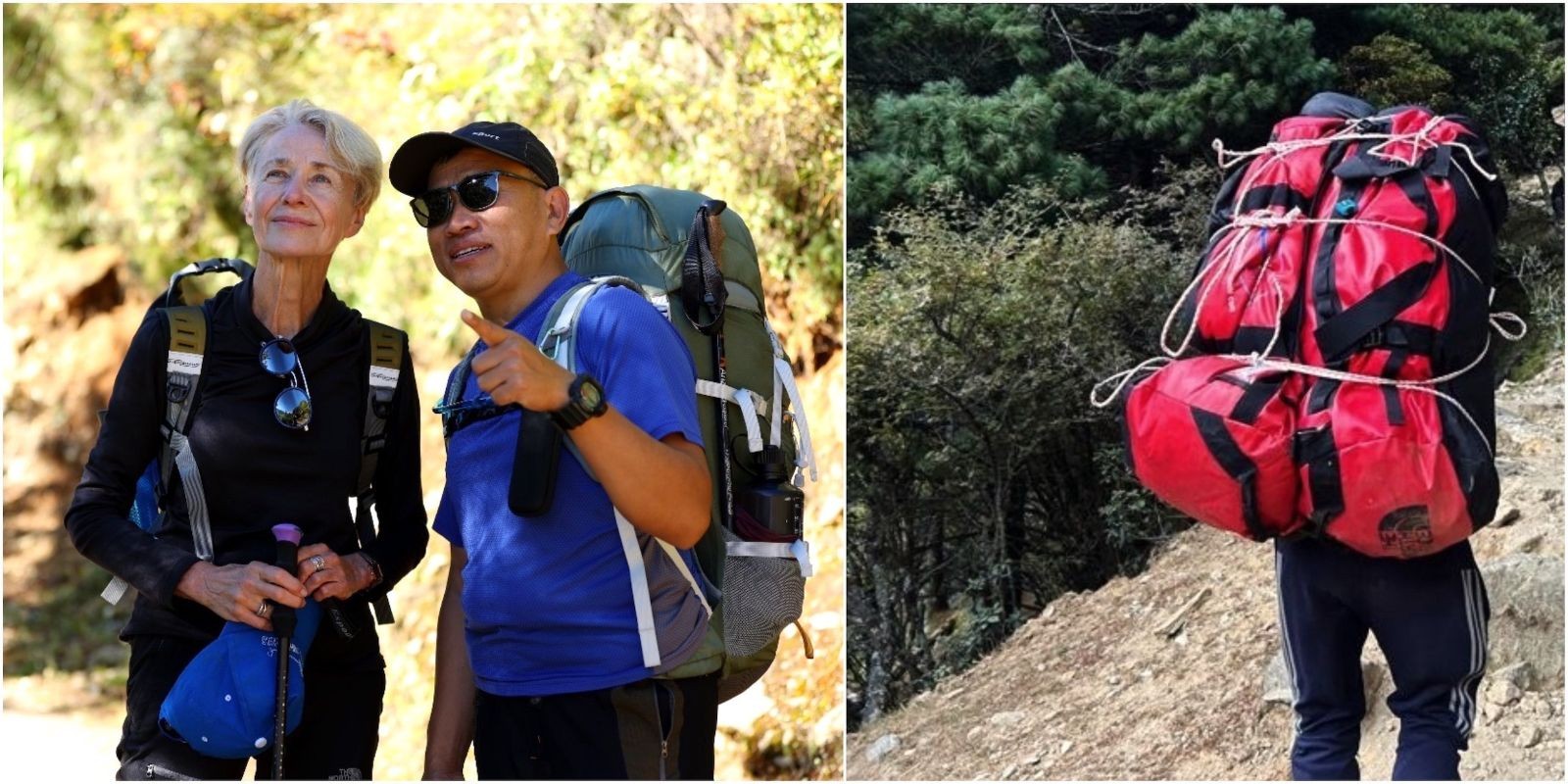
Likewise, let’s talk money. A licensed guide usually charges between NPR 3,000 and 4,000 per day. Porters typically earn between NPR 2,000 and 3,000 each day. These rates cover more than just their time—they include food and insurance, too. When you look at the expertise and safety they bring, it’s honestly a solid deal.
Here, most people arrange everything through Kathmandu agencies, especially those registered with TAAN. These companies make hiring easy, and they provide insured, reliable guides and porters. You can just walk into an office in Thamel and set things up without any hassle. The rates are clear and fair, so you know exactly what you’re paying for.
Likewise, some trekkers try to go it alone, but unless you’re really experienced with Himalayan routes and carrying heavy loads, it’s a tough road. Sure, you save some money, but the risks—getting lost, altitude sickness, injury—aren’t worth it for most people. That’s why hiring local professionals is not only safer, but it also puts money directly into the community.
And don’t forget the ethical side. Ask about fair wages, proper insurance, and whether your guide or porter has decent gear and training. These things matter. When you pay a bit more for a responsible company, you’re supporting the people who make these adventures possible.
Before you hire anyone, ask a few smart questions. Find out about their past EBC experience, what kind of emergency training they have, how much weight they’ll carry, and how they handle rest breaks. Good agencies are happy to answer. When you take the time to hire the right team, your trek is safer, smoother, and honestly, way more fun.
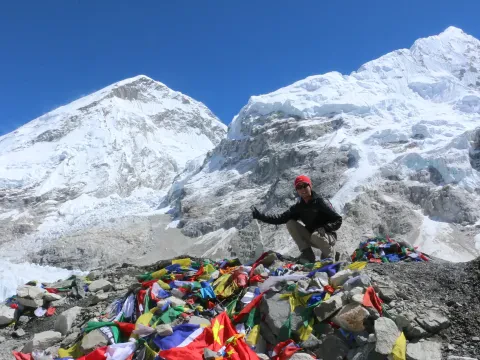
Hiring Tips and Cost Calculator :
If you’re heading to Everest Base Camp by land, you’ll want to sort out your gear in Kathmandu first. It’s easy — just rent what you need. Here, sleeping bags go for about NPR 150 to 300 a day, jackets range from NPR 150 to 250, and trekking poles cost around NPR 80 to 150. Whether you buy or rent depends on your plans and budget, but for most people, renting makes the trip lighter on your wallet and your back.
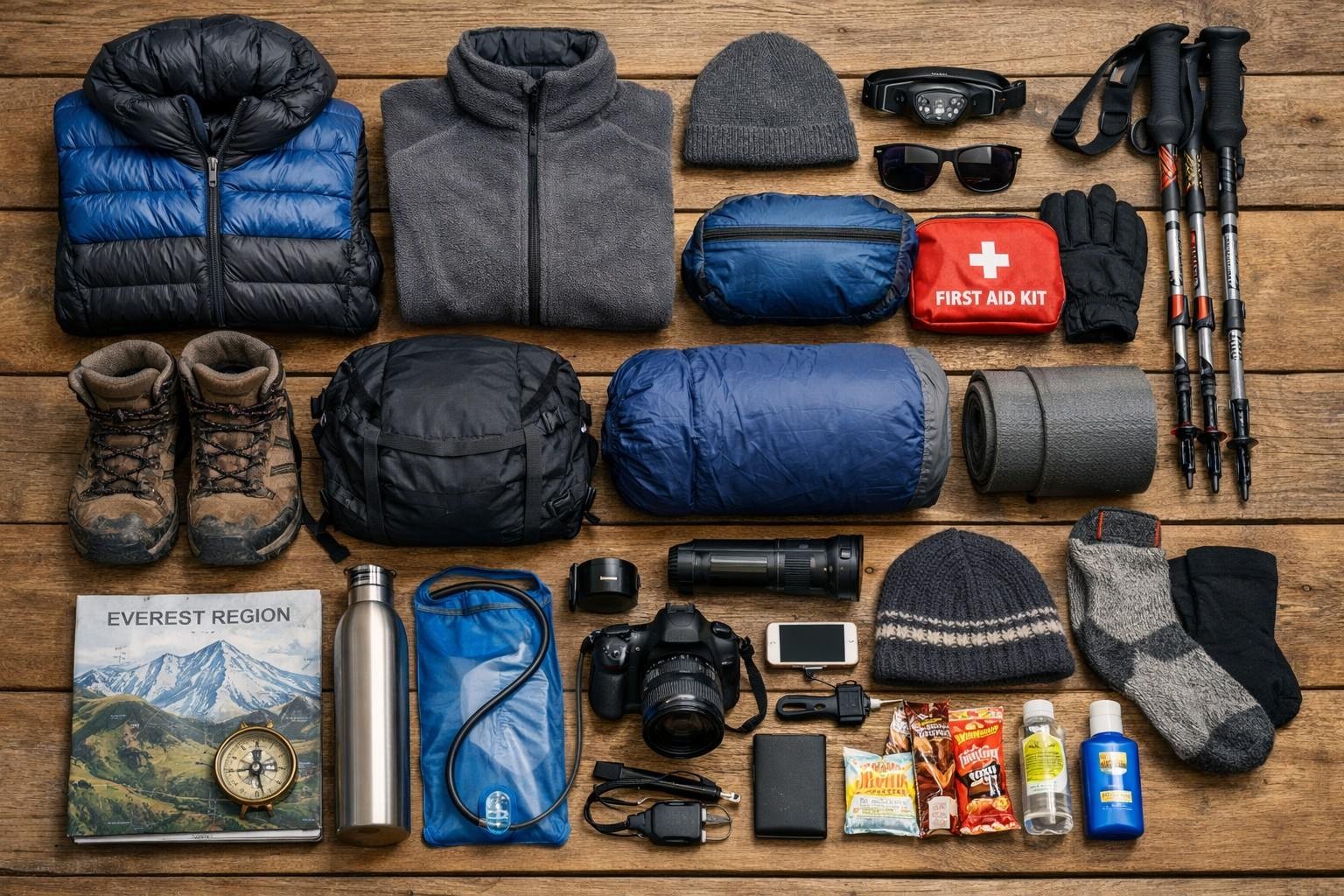
In fact, good gear isn’t just about comfort — it’s about staying safe. Kathmandu sits at 1400 meters, and shops there are packed with quality equipment made for exactly this trek. Renting means you don’t have to drag bulky stuff from home or worry about fitting it all into your luggage. Plus, you can pick up everything you need at once.
Let’s talk sleeping bags. Nights up there get freezing — we’re talking minus 15 degrees. For NPR 150 to 300 a day, you get a bag that keeps you warm when you need it most. Renting in Kathmandu is simple, and you rest easy knowing you’ll actually sleep, not shiver, after a long day’s hike.
More importantly, down jackets are another must. Above Namche Bazaar (3440m), the winds bite hard, and you’ll be glad for a solid layer. Rentals run NPR 150 to 250 a day, and you’ll find options that are both tough and light. No reason to haul a jacket from home when you can grab one here that’s made for these mountains.
Trekking poles? Don’t skip them. For NPR 80 to 150 a day, they take the strain off your knees—especially on the way down. Even if you’ve never used them before, you’ll notice the difference with every step.
If you plan to trek often, maybe buying makes more sense. In the long run, you save money, plus you always have your own gear. But for one-off trips, renting’s just smarter. You don’t have to worry about storing stuff you won’t use again, and you avoid the hassle of dragging it back and forth.
One thing that matters more than price is quality. The shops in Thamel, Kathmandu’s trekking hub, rent out gear that’s been tested on these mountains. Check the zippers and insulation before you head out. Reliable rentals mean you avoid nasty surprises halfway to Base Camp. In the end, good gear doesn’t just get you there — it makes the whole trek unforgettable.
Must-Have Gear Rental :
| Item | Daily Rent (NPR) | Why Essential |
| Sleeping Bag | 150-300 | Warmth at EBC (5364m) |
| Down Jacket | 150-250 | Wind protection high altitude |
| Trekking Poles | 80-150 | Stability on rough paths |
If you’re trekking to Everest Base Camp by land, getting the right insurance matters. Most people pay around $100 to $200 for a plan that covers high altitude and helicopter evacuation. It sounds like a lot, but this coverage really saves you if something goes wrong up there. With insurance, you don’t have to panic about surprise emergencies or huge bills—just focus on the trail and reaching Base Camp at 5,364 meters.
Good news: these comprehensive plans don’t break the bank. For about two weeks on the trail, you’re covered. Companies like World Nomads offer solid evacuation benefits, so even if altitude sickness hits, you’re not left stranded. That peace of mind? Worth every penny.
Now, let’s talk about your medical kit. You can pick up the basics in Kathmandu for NPR 1,000 to 2,000. Think bandages, painkillers, Diamox for altitude, stuff like that. Being prepared means you can handle minor issues right away and keep moving.
Here, altitude sickness is a real risk above Namche Bazaar (3,440m). People get hit every year, and rescue flights cost thousands if you’re not insured. So, don’t gamble—insurance for an EBC trek is essential. When things go sideways, you’ll be glad you didn’t skimp.
Likewise, not all insurance policies are the same, though. Some process claims quickly, others have strict limits on how many days you can spend at altitude. Take a close look before you buy—flexible policies usually work better for trekkers.
And don’t forget to pack smart. Bring blister plasters, rehydration salts, sunscreen, and any personal meds you need. That way, you’re not scrambling for supplies later. With a solid medical kit and proper insurance, you cut down on stress and avoid nasty surprises along the way.
Health Packing List :
Miscellaneous Expenses: Tips, Souvenirs, and Contingencies
When you’re budgeting for the Everest Base Camp Trek by land, don’t forget the little things—tips, Wi-Fi, souvenirs, and those “just in case” extras. For tipping, you’re looking at around NPR 1000 to 2000 per person for the whole trip. That money goes straight to the guides and porters who really do make the trek possible. It’s not just about the cash, either—it’s a way of saying thanks and it actually helps build real connections along the trail.
Now, Wi-Fi and charging your devices are almost never free up there. Expect to pay about NPR 100 to 300 each time you want to get online or power up at a teahouse. If you bring a power bank, you’ll cut down on those costs, but it’s smart to set aside some cash for connectivity. That way you can stay in touch without blowing your budget.
Here, souvenirs are another thing. In places like Namche Bazaar, handmade crafts run anywhere from NPR 500 to 2000. Buying from local artisans helps the community, so if you want something to remember the trip by, go for the authentic stuff. Tipping your crew and shopping sustainably both support the people who live along the route. You walk away with memories, and they get a boost to their livelihoods.
Likewise, it’s also important to plan for surprises. Add about 10 to 20 percent extra to your budget for contingencies. Flights get delayed, you might need to stay an extra night, or maybe you end up needing warmer clothes. Setting aside this buffer means you can relax, even when plans change.
Moreover, plenty of trekkers have their own stories about unexpected costs—maybe they got hit with high charging fees at a remote camp, or bought a last-minute jacket when the weather turned. These kinds of expenses sneak up on you, so being aware helps you avoid nasty surprises.
In fact, it helps to separate what you really need from what’s just nice to have. Essentials? Basic tips and a contingency fund. The extras? Daily Wi-Fi splurges or fancy souvenirs. Tipping the guides and porters is always essential, though. In the end, balancing your spending means you get the most out of your journey without regrets.
Avoidable vs Essential Expenses :
| Category | Essential Examples | Avoidable Examples |
| Tips | Guide and porter gratuity | Extra luxury tips |
| Connectivity | Emergency calls | Daily social media Wi-Fi |
| Contingency | 10-20% buffer fund | Impulse shopping. |
Let’s break down what you’ll actually spend on the Everest Base Camp Trek by land in 2026. If you’re trekking solo, you’re looking at a budget between NPR 1,30,000 and 1,80,000. Go as a couple or with friends, and it gets cheaper for everyone. Basically, the more people you have, the less each person pays.
When you hike alone, you end up covering all the guide and porter fees yourself. That’s why solo trips always cost more per person. The sample budget for the overland EBC trek makes this pretty clear. Planning gets way easier when you see these numbers upfront.
Now, taking the land route already saves you a chunk on transportation. For solo trekkers, that NPR 1,30,000 to 1,80,000 covers everything—driving from Kathmandu (1,400m) all the way to Base Camp (5,364m). Since the overland trip takes longer, you get more days for your money, so the overall value’s still great.
For couples, things look better. You split the jeep and lodging, so each person’s cost drops to around NPR 1,10,000 to 1,50,000. Groups save even more. If you’re four or more, you divide the guide and porter costs even further. That brings the per person total down to about NPR 1,00,000 to 1,40,000. So if you’re traveling with friends, you all save a good amount just by sharing.
And don’t forget—prices do go up a bit every year. Figure on a 5% rise in costs for things like food, guides, and permits in 2026. The sample budgets already factor this in, so you can trust the numbers to be up-to-date.
The best part? You can customize pretty much everything. Just multiply your daily trek rate by the number of days, add in permits, and adjust for your group size. These flexible formulas make it easy to plan and save, no matter how you want to do the trek.
Budget Breakdown Table (NPR, Land Route 2026) :
| Traveler Type | Total Estimate | Per Person Savings |
| Solo | 1,30,000-1,80,000 | Baseline |
| Couple | 2,20,000-2,80,000 | 20,000 each |
| Group of 4+ | 4,00,000-5,20,000 | 30,000+ each |
Want to save money on the Everest Base Camp trek by land? Here’s how real trekkers do it. These ten practical tips make a huge difference—think group sharing, off-season travel, and a few smart habits that add up to real savings.
First, go during the off-season. Seriously, it cuts your costs fast. During shoulder months, you’ll find cheaper lodge rates and jeep fares. Most trekkers pocket an extra NPR 10,000 to 20,000 just by timing it right. That’s more money for the rest of your trip.
Actually, traveling with friends or joining a group saves even more. When you split guides, porters, and vehicles, you can save NPR 15,000 to 25,000 each. Plus, it’s just more fun. There’s something about sharing the miles (and the laughs) that makes the whole thing better.
Likewise, don’t overlook where you eat. Local places serve hearty dal bhat for way less than the tourist teahouses. If you stick to these small shops, you’ll save about NPR 500 to 1,000 every day. You eat well, you pay less, and you get a real taste of local life.
Moreover, tech helps too. Free trekking apps handle your routes and weather checks, so you don’t need to buy pricey maps or hire guides just for navigation. That’s another NPR 2,000 to 5,000 saved with a couple of downloads.
Here, bring a reusable water bottle and purification tablets. Skip buying bottled water—those small purchases add up fast. Over the whole trek, that’s NPR 3,000 to 5,000 back in your pocket and a lot less plastic waste.
Most importantly, book early. Simple, but it works. If you reserve jeeps and lodges ahead of time, especially as a group, you’ll lock in better rates. Early planners can save another NPR 5,000 to 10,000 each.
Don’t be shy about bargaining for transport, especially when sharing with others. Deal directly with operators and you’ll beat the standard prices, saving NPR 2,000 to 4,000 per leg of the journey. The more you negotiate, the better you get at it.
When it comes to souvenirs, focus on small, meaningful local crafts. They make great mementos and support the communities you’re visiting, but you won’t spend a fortune—expect to save NPR 3,000 to 6,000 by skipping the touristy stuff.
In fact, these aren’t just theories—real trekkers make this work. One solo traveler cut their costs by 25% by joining a group. Another couple finished the whole land route under budget. With some planning and determination, you can turn your Everest Base Camp dream into an affordable reality.
10 Proven Cost-Saving Tips :
So, you’re ready to pin down your budget for the Everest Base Camp trek by land in 2026. Set aside somewhere between NPR 1,00,000 and 1,80,000 for the full journey from Kathmandu—no flights involved. It’s an affordable, safe, and honestly, pretty stunning way to reach EBC. If you want a real adventure without breaking the bank, it’s time to start planning your trek by land.
Here, let’s talk numbers. Most travelers get the job done for NPR 1,00,000 to 1,80,000 per person. That covers everything: the jeep ride, teahouse stays, meals, permits, and a guide. Compared to flying in, the overland trek gives you a lot more for your money. If you’re on a budget but still want that big Himalayan experience, this route just makes sense.
In fact, the costs are straightforward. Jeep rides from Kathmandu to Surke or Thamdanda run about NPR 2,000 to 5,000. Permits come to NPR 5,000 to 6,000. Daily food and lodging? Expect NPR 1,500 to 2,500. The land route also lets you acclimatize slowly, which means you stay healthier and save money at the same time.
But there’s more than just savings here. The overland route gives you a real taste of rural Nepal and helps you adjust to the altitude before you hit the heights. You skip the unpredictable Lukla flight and still make it safely to Everest Base Camp. That’s a big win for travelers who want value and peace of mind.
If you want the smoothest trip, plan ahead. Book your jeep, guide, and permits early to lock in better prices. Keep an eye on the seasons, and bring reusable gear to avoid last-minute spending. A little preparation goes a long way and makes the trek from Salleri onward way easier.
Moreover, small changes in your plan can save you a lot. Share rides with other trekkers, eat simple local meals like dal bhat, and consider trekking in the off-season. Just like that, you can cut your costs by NPR 20,000 to 40,000. The Everest Base Camp trek by land really rewards people who think ahead.
But honestly, this journey is about way more than money. You’ll see the sunrise over Ama Dablam, share stories with locals, and stand at Everest Base Camp feeling proud of what you’ve achieved. Every rupee you spend turns into memories you’ll never forget.
Like a seasoned trekker once said, “The mountains don’t care about your budget, but they reward those who respect the path.” So go on—book that jeep from Kathmandu. Take the slow, scenic way to Everest. Your Himalayan story is waiting.
Quick Cost Recap :
| Category | Estimated Cost (NPR) |
| Jeep Transport (Kathmandu-Surke) | 5,000-15,000 |
| Permits | 5,000-6,000 |
| Accommodation (15-18 nights) | 15,000-40,000 |
| Meals (daily) | 20,000-35,000 |
| Guide & Porter (shared) | 30,000-60,000 |
| Miscellaneous & Contingency | 15,000-30,000 |
| Total (per person) | 1,00,000-1,80,000 |
1. What is the total cost of Everest Base Camp Trek by Land?
The cost of the Everest Base Camp Trek by Land from Kathmandu is usually between 950 and 1450 United States dollars per person. This journey by land includes transfers by jeep to Salleri permits, accommodation in teahouses, meals, a guide and a porter which makes it a cheaper option than flying to get to the Everest Base Camp.
2. How does trekking Everest Base Camp by Land differ from flying?
The Everest Base Camp Trek by Land starts with a drive by jeep from Kathmandu to Salleri which's different from flying to Lukla. This journey by land takes two to three days longer. It saves you money reduces the risk of bad weather and gives you a chance to see the culture and landscapes of rural Nepal.
3. What is the jeep cost from Kathmandu to Salleri for EBC trek?
The cost of a jeep from Kathmandu to Salleri is between 150 and 250 United States dollars per vehicle one way. This cost can be shared among four to six trekkers, which makes it a good option for groups. If you want a jeep, it will be more comfortable but it will also be more expensive.
4. Which permits are required for Everest Base Camp Trek by Land?
You need to get a Sagarmatha National Park Entry Permit, which costs 30 United States dollars and a Khumbu Pasang Lhamu Rural Municipality Permit, which costs 20 United States dollars. You can get these permits in Kathmandu. They are necessary for the journey to the Everest Base Camp by Land.
5. How much does accommodation cost during Everest Base Camp Trek by Land?
The cost of accommodation in teahouses along the way to the Everest Base Camp is between 5 and 12 United States dollars per night for a room. The cost is a little higher in Namche Bazaar and at altitudes. However, if you are on a budget, you can still find accommodation.
6. What is the daily food expense on Everest Base Camp Trek?
You can expect to spend between 20 and 35 United States dollars per day on meals. You can get breakfast, lunch, dinner and hot drinks in teahouses. The cheapest and most popular option is dal bhat. The cost of food is a part of the total cost of the Everest Base Camp Trek by Land but it is still manageable.
7. Is a guide and porter necessary for Everest Base Camp by Land?
It is highly recommended that you hire a guide for safety and navigation and a porter can be helpful too. The cost of a guide is between 35 and 45 United States dollars per day and the cost of a porter is between 20 and 25 United States dollars per day. Having a guide and a porter will make your journey to the Everest Base Camp by Land much smoother.
8. How much does gear rental cost for Everest Base Camp Trek?
You can rent gear in Kathmandu for between 50 and 120 United States dollars for the entire trek. This includes a jacket, a sleeping bag, trekking poles and boots. Renting gear can help reduce the cost of the Everest Base Camp Trek by Land for budget travellers.
9. What insurance is needed for Everest Base Camp Trek by Land?
You need to have travel insurance that includes emergency helicopter evacuation up to 6000 meters. The cost of this insurance is between 80 and 150 United States dollars for three weeks. This insurance will protect you against altitude sickness and accidents during your journey to the Everest Base Camp by Land.
10. What is the budget for a solo trekker on Everest Base Camp by Land?
A solo trekker can complete the Everest Base Camp Trek by Land for between 1100 and 1400 United States dollars. This includes all transfers by land, permits, meals, accommodation in teahouses a guide and a porter. If you can share costs with trekkers, you can reduce your expenses even more.
11. How much does Everest Base Camp Trek Cost by Land for a couple?
A couple can complete the Everest Base Camp Trek by Land for between 900 and 1250 United States dollars per person. This is because you can share the cost of jeep transfers, rooms and porters which makes the journey by land a good option for couples.
12. What is the group discount for Everest Base Camp Trek by Land?
If you are in a group of four or more you can get a discount of 10 to 20 percent on jeep transfers, porters and sometimes accommodation in teahouses. This can significantly reduce the cost of the Everest Base Camp Trek by Land per person. It also makes the journey more fun and safer.
13. How many days does Everest Base Camp Trek by Land take?
The complete Everest Base Camp Trek by Land takes between 16 and 19 days, including two to three days of driving from Kathmandu to Salleri or Surke and back. The trekking part of the journey is similar to the route.
14. What is the best time for Everest Base Camp Trek by Land?
The best time for the Everest Base Camp Trek by Land is in the spring from March to May and in the autumn from September to November. During these seasons the weather is stable. The skies are clear which makes it ideal for the journey to the Everest Base Camp by Land.
15. How difficult is Everest Base Camp Trek by Land?
The Everest Base Camp Trek by Land is moderately difficult with days of walking and high altitude. The extra part of the journey by jeep can be tiring. It is manageable. You need to be physically fit and allow time for acclimatization to complete the journey successfully.
16. Can beginners do Everest Base Camp Trek by Land?
Beginners who are physically fit and prepared can attempt the Everest Base Camp Trek by Land. It is helpful if you have experience with hiking. Hiring a guide and allowing enough time for acclimatization can increase your chances of completing the journey successfully.
17. What is the altitude of Everest Base Camp?
The Everest Base Camp is at an altitude of 5364 meters or 17,598 feet. The journey to the Everest Base Camp by Land reaches the altitude as the journey by air. It is crucial to acclimatize to avoid altitude-related problems.
18. How to save money on Everest Base Camp Trek by Land?
You can save money by traveling in a group using shared jeeps eating Dal Bhat renting gear in Kathmandu and choosing standard teahouses. These strategies can reduce the cost of the Everest Base Camp Trek by Land by 15 to 25 percent.
19. What is included in the Everest Base Camp Trek Cost by Land package?
Most packages include transfers by jeep, permits, accommodation in teahouses three meals per day a guide, a porter and basic first aid. You should confirm what is included in the package before you book your journey to the Everest Base Camp by Land.
20. Is Everest Base Camp Trek by Land worth the extra days?
Yes, it is worth it. You save money on flights avoid cancellations to bad weather and get to see the beautiful landscapes and culture of rural Nepal. The cost of the Everest Base Camp Trek by Land is a value for travellers who are, on a budget.
Our travel experts are ready to assist you with any questions.
Send us a message.Have a question before you book? Send your enquiry below and our travel experts will get back with the required information.