
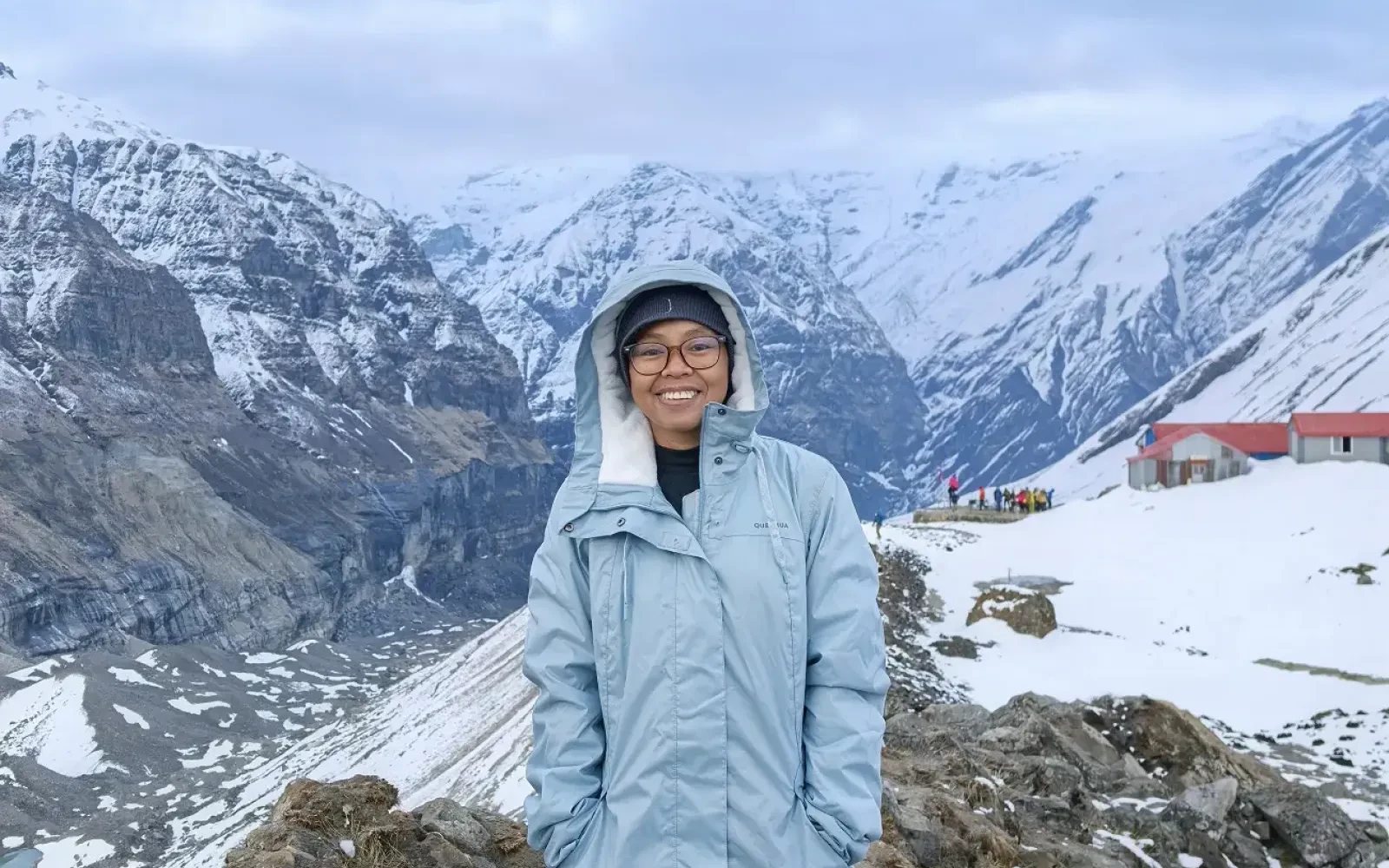
Understand the route of Annapurna Base Camp Trek, elevations of the trek, details on the trail, and why hiring a local guide ensures safety, cultural insight, and success with trekking.
Key route points and elevation include:
Actually, the Annapurna Base Camp Trek route goes from Pokhara, 822 m, to Annapurna Base Camp, 4,130 m via varied Himalayan landscapes. Another classic Annapurna Base Camp route traverses through Nayapul, 1,070 m, Tikhedhunga, 1,540 m, and Ghorepani, 2,860 m. Additionally, the trekkers closely see Annapurna South, 7,219 m, Hiunchuli, 6,441 m, and Machapuchare, 6,993 m. Thus, knowledge of the route taken by Annapurna Base Camp trek aids in effective time, altitude, and physical effort management.
Moreover, the path extends from Ghorepani to Tadapani and Chhomrong at an altitude of 2,860 m, 2,630 m, and 2,170 m, respectively, the trail leads into the Modi Khola valley. Continuing further, the path ascends through Bamboo 2,310 m, Dovan 2,600 m, and Deurali 3,230 m. Thus, the altitude gain starts increasing rapidly, and acclimatization is necessary in the Annapurna Base Camp Trek accordingly. Knowledge about the route reduces risks from altitude sickness, fatigue, and exposure to weather conditions.
Furthermore, Annapurna Base Camp (4,130 m) is situated at the center of the Annapurna Sanctuary, enclosed on all sides by Annapurna I (8,091 m) and Annapurna Fang (7,647 m). Furthermore, this trek encompasses a significant acclimatization site: Machapuchare Base Camp (3,700 m). Understanding topography and changes in elevation thus makes for far safer planning for the Annapurna Base Camp Trek. Hence, correct route awareness supports itinerary design, rest days, and altitude safety.
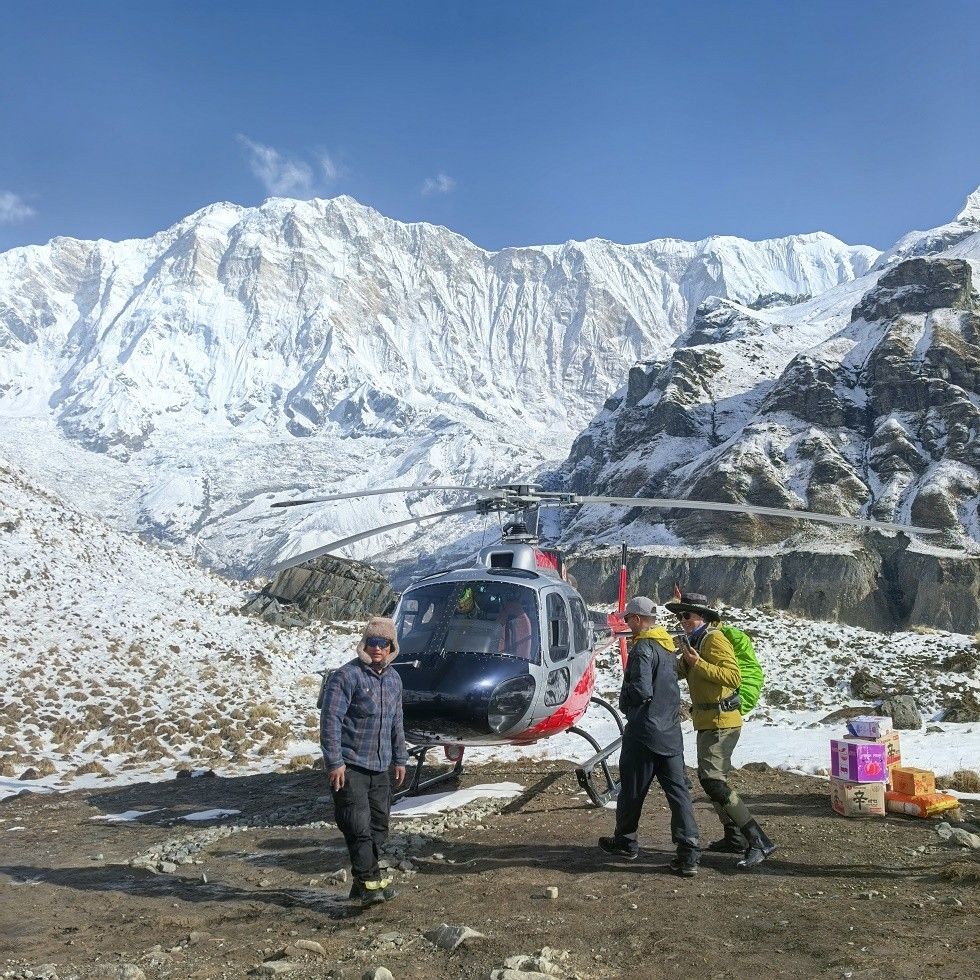
Importantly, local guidance matters, as guides know trail conditions, landslide zones, and seasonal risks. In addition, guides licensed by the governmental license authority monitor trekkers for Acute Mountain Sickness during the Annapurna Base Camp Trek. As a result, guides help to alter the walking pace and overnight stops accordingly. Thus, a local guide is imperative in enhancing Annapurna Base Camp Trek safety and success.
Similarly, cultural interpretation is provided by local guides in villages such as Ghandruk (1,940 m) and Chhomrong (2,170 m). In addition to that, they communicate with teahouse owners for accommodation management during peak seasons. Guided Annapurna Base Camp Trek packages thus assure much smoother logistics. Hence, trekkers enjoy cultural immersion without any planning stress.
Besides, porters are a help for physical comfort in carrying the loads up and down steep stone staircases during Annapurna Base Camp Trek. Furthermore, local teams in the Annapurna Conservation Area trek sustainably. In this light, responsible tourism on the Annapurna Base Camp Trek supports livelihoods within the community. Thus, guided trekking adds ethical value to the journey.
Finally, understanding the route at Annapurna Base Camp Trek and using local guidance guarantee safety, cultural depth, and Himalayan success. Therefore, guided trekking remains the best investment for first-time and repeat trekkers alike.
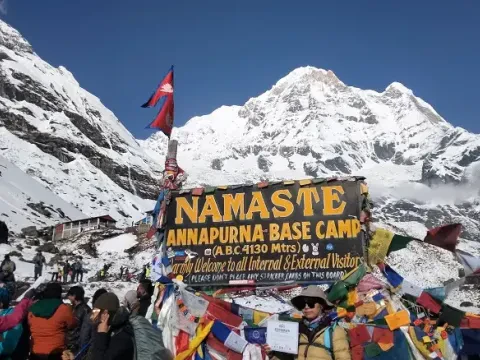
Find out actual challenges of Annapurna Base Camp Trek: altitude, weather conditions, trail difficulty, and why inexperienced trekkers have to be properly prepared.
Common underestimated challenges include:
First of all, numerous novice trekkers underestimate the physical efforts required for the Annapurna Base Camp Trek. The track contains endless stone staircases between Tikhedhunga (1,540 m) and Ulleri (2,070 m). Furthermore, daily ascents above 1,000 meters are exceeded in some parts. Therefore, most beginners are surprised by the difficulty of Annapurna Base Camp Trek.
Whereas above Bamboo at 2,310 meters and Deurali at 3,230 meters, altitude gain does become laborious. Additionally, the oxygen levels go down at an alarming rate near Machapuchare Base Camp at 3,700 meters. Therefore, unacclimatized trekkers get mild altitude sickness. Thus, altitude awareness on the Annapurna Base Camp Trek is crucial.
Above all, unpredictable weather develops into very real challenges along the route of the Annapurna Base Camp Trek. Trails get blocked by sudden snowfall near the Annapurna Base Camp at 4,130 m above sea level. Furthermore, the rain during the monsoon creates slippery paths and landslides. Therefore, ABC trekkers should be prepared for the variable weather.
Importantly, many first-time trekkers are shocked by the cold temperature, mainly at night. The temperatures drop below freezing point near the Annapurna Base Camp at 4,130 m above sea level. Added to that, not having proper sleeping gear increases discomfort and exhaustion. Thus, proper equipment will directly affect success in the Annapurna Base Camp Trek.
Similarly, mental stamina also challenges the trekkers more than expected. The long walking hours between Chhomrong (2,170 m) and Dovan (2,600 m) test the patience of many individuals. Moreover, limited entertainment in teahouses increases mental fatigue. Thus, mental preparation helps support physical performance.
Additionally, food expectations often disappoint first-time trekkers on the Annapurna Base Camp Trek. At higher elevations, the number of menus is reduced, hence a reduction in calorie variety. In addition, there is loss of appetite caused by altitude effects. Nutrition planning thus becomes very important during the trek.
Lastly, real understanding of the challenges in Annapurna Base Camp Trek will help first-time trekkers do better preparations. Thus, guided packages, proper gear, and realistic expectations guarantee safer Himalayan trekking experiences.
In this article, learn how a licensed guide improves safety on the Annapurna Base Camp Trek: managing altitude risks, weather hazards, navigation, and emergencies.
Key safety roles of guides include the following:
First of all, safety on the Annapurna Base Camp Trek relies on understanding altitude, terrain, and weather conditions. The trek initiates from the city of Pokhara, which is at an altitude of 822 m above sea level, and gradually rises up to Annapurna Base Camp, situated at 4,130 meters above sea level. Furthermore, altitude sickness risks increase after Chhomrong, at 2,170 meters, and Deurali, at 3,230 meters. Thus, a certified Annapurna Base Camp Trek guide plays a crucial role in safety.
In fact, the guides also monitor symptoms of altitude sickness throughout the route of Annapurna Base Camp Trek. They carefully observe trekkers at Bamboo (2,310 m), at Dovan (2,600 m), and finally at Machapuchare Base Camp (3,700 m). In addition, guides implement acclimatization and hydration routines, which include pacing. Thus, guided itineraries of Annapurna Base Camp Trek radically minimize health hazards.
Similarly, prolonged mountain weather is crucial around Annapurna Base Camp at 4,130 meters and Annapurna I at 8,091 meters. Annapurna Sanctuary often experiences sudden snowfall, strong winds, and whiteout conditions. The guides interpret the signs of weather using local experience. Thus, guides prevent cases of exposure-related accidents on the ABC Trek.
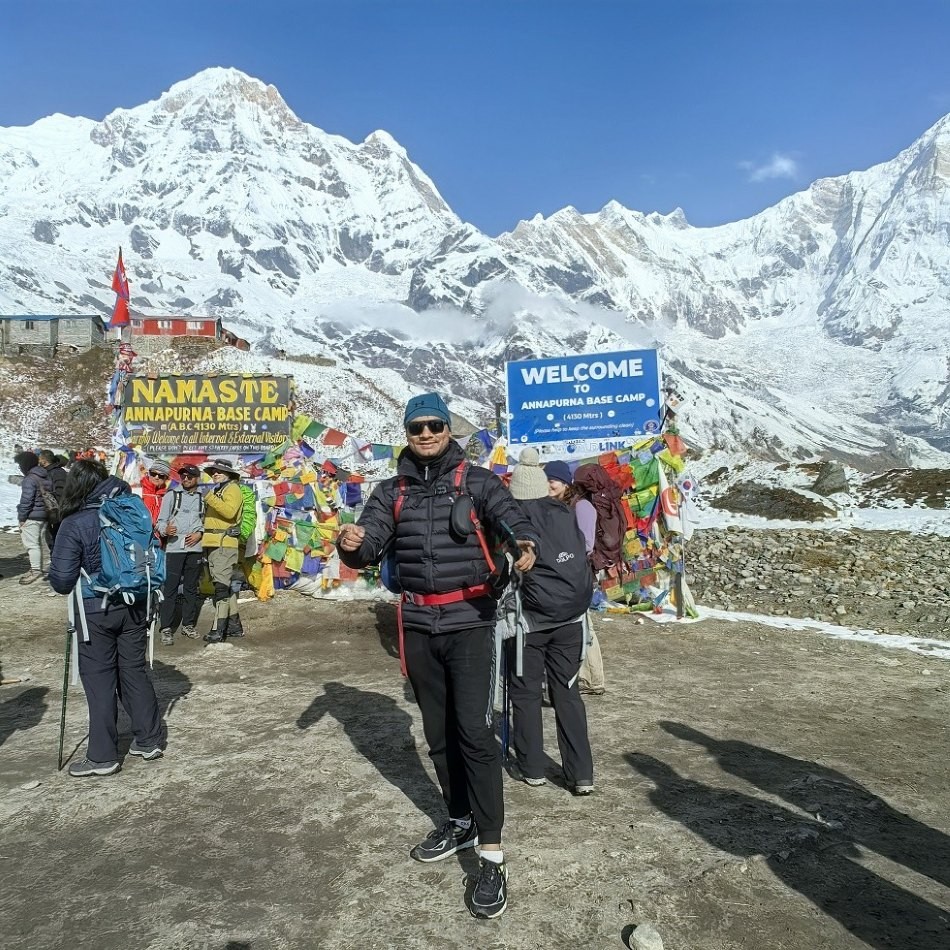
Importantly, the Annapurna Base Camp Trek promotes trail safety where improvement in local route knowledge is substantial. Injures are frequent due to steep staircases especially near Ulleri at 2,070 m and slippery sections near Deurali at 3,230 m. Furthermore, guides choose safer walking lines to control the movement of groups. Therefore, guided trekking reduces slips, falls, and fatigue injuries.
Likewise, emergency response is quicker with a licensed guide during the Annapurna Base Camp Trek. Guides manage to arrange helicopter rescues from Annapurna Base Camp (4,130 m) or Machapuchare Base Camp (3,700 m) when necessary. Besides that, they are equipped with first-aid kits and the knowledge of satellite communication. As a result, guided treks facilitate quicker medical intervention.
Besides this, the guides take necessary care regarding accommodation safety in high-altitude teahouses. They will choose lodges with proper insulation and hygiene at Deurali (3,230 m) and ABC (4,130 m). Furthermore, guides ensure warm meals and safe drinking water. Thus, food safety and shelter improve significantly.
Finally, it is through experience, preparation, and rapid response that guide hiring enhances safety on Annapurna Base Camp Trek. Guided trekking, therefore, remains the safest way to explore responsibly the beauty of the Annapurna Sanctuary.
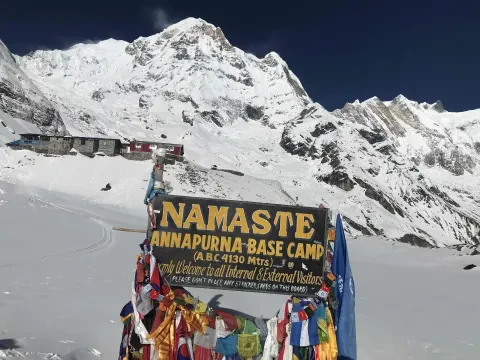
Take a closer look at the navigational challenges posed by the trails during the Annapurna Base Camp Trek, forest pathways, landslides, snow-filled pathways, and the assistance one derives from guides.
For ease of comprehension, major navigation challenges include:
Actually, many of the trekkers are also surprised by the navigation issues on the Annapurna Base Camp Trek. The dense forest between Nayapul (1,070 m) and Ghorepani (2,860 m) makes several confusing trail junctions. In addition, numerous local footpaths make crossways over the main ABC route. It follows that navigating errors may occur very commonly without a guide.
Second, the forested parts around Tadapani (2,630 m) and Ghandruk 1,940 m lower the visibility level considerably. The moss-covered stones and leaf-covered pathways mask the trail markers. In addition, rhododendron forests are usually foggy, which limits the distance of sight. As a result, it is easy to lose one's way while on the Annapurna Base Camp Trek.
Furthermore, landslide-prone zones pose a serious hazard to navigation along the Modi Khola valley. Heavy rain during the monsoon period makes the trails unstable near Bamboo (2,310 m) and Dovan (2,600 m). Moreover, rerouted paths tend to appear immediately after landslides. For this reason, outdated maps are unreliable on the ABC Trek.
Importantly, due to winter and early spring, snowy trails complicate the route above Deurali-3,230 m. Snow covers trail signs near Machapuchare Base Camp at 3,700 meters. Most importantly, white terrain blends together with surrounding glacier moraine. Thus, without local expertise, route-finding will be complex.
Similarly, river crossings create navigation problems at high water. Seasonal streams swell near Annapurna Base Camp at an altitude of 4,130 m. In addition, temporary wooden bridges change position very often. As such, trekkers have a hard time determining safe crossing points.
Moreover, cold temperatures and battery drain are also common to render GPS devices useless. Network signals do not exist above Chhomrong at an altitude of 2,170 meters. Besides, digital maps cannot update the latest trail conditions. Therefore, it is dangerous to depend only on electronic devices along the Annapurna Base Camp Trek.
Finally, understanding the navigation issues on the Annapurna Base Camp Trek helps with safety and confidence. Therefore, trekking with a knowledgeable guide ensures correct routing through forests, landslides, and snowy Himalayan paths during your Annapurna Base Camp Trek.
Understand altitude awareness on the Annapurna Base Camp Trek and how guides ensure proper acclimatization, health monitoring, and trekking safety.
Guide responsibilities, in relation to altitude, include:
Meanwhile, awareness of altitude on the Annapurna Base Camp Trek is important for trekking safety and success. The trek starts from Pokhara, at 822 meters, to a gradual rise toward Annapurna Base Camp at 4,130 meters. Besides, oxygen levels are noticeably lesser after crossing Chhomrong, at 2,170 meters. Thus, altitude management becomes one of the core responsibilities an Annapurna Base Camp Trek guide should consider.
Then, guides carefully set up acclimatization schedules along the ABC Trek route. They regulate the walking pace between Bamboo at 2,310 meters above sea level and Dovan at 2,600 meters above sea level. In addition, guides encourage hydration and a slow ascent from Deurali at 3,230 meters above sea level. As such, regulated acclimatization minimizes altitude sickness effectively.
Furthermore, symptoms of altitude sickness often become apparent around Machapuchare Base Camp at an altitude of 3,700 meters. Many trekkers often experience headaches, nausea, and tiredness without any warnings whatsoever. Moreover, guides recognize the early signs of Acute Mountain Sickness without much delay. In this manner, professional monitoring ensures safe progress towards Annapurna Base Camp at 4130 meters.
Importantly, guides apply the "climb high, sleep low" rule where possible on the Annapurna Base Camp Trek. Short hikes above overnight stops improve acclimatization response. Furthermore, rest days are decided by guides in view of group health. Thus, guided trekking improves altitude adaptation by many times.
Similarly, guides take care of emergency health decisions at altitude. If symptoms worsen near the viewpoints of Annapurna South (7,219 m), guides descend immediately. Furthermore, guides perform evacuations from Machapuchare Base Camp (3,700 m) wherever required. Because of this, rapid action avoids severe altitude illness.
Moreover, nutrition and hydration guidance on the Annapurna Base Camp Trek has been beneficial in boosting altitude health. Guides advise carbohydrate-rich meals at Deurali (3,230 m) and at ABC (4,130 m). In addition, they restrain guests from alcohol and smoking at altitude. Thus, dietary discipline strengthens acclimatization success.
Finally, altitude awareness on the Annapurna Base Camp Trek heavily depends on guide expertise. Therefore, health safety, proper acclimatization, and a successful Himalayan experience are guaranteed while trekking with a professional guide.
Get the price of hiring a guide for Annapurna Base Camp Trek, daily rates, inclusions added to value and benefits on safety.
Typical guide cost inclusions include:
First, understanding the guide costs for the Annapurna Base Camp Trek helps trekkers to plan wisely. Guide services normally start from Pokhara (822 m) up to Annapurna Base Camp itself (4,130 m). In addition, professional guides enhance the safety, navigation, and cultural value of the trek. Thus, the cost of a guide reflects service quality and responsibility.
In fact, the daily guide rates for the Annapurna Base Camp Trekking start from USD 30 to USD 40. This rate will cover licensed guide services throughout the trekking routes. Additionally, the rates are the same from the starting point, Nayapul (1,070 m), all the way up to ABC (4,130 m). Thus, guide fees remain predictable for budget estimations.
Further, the guide cost for ABC Trek includes support for route navigation and management of altitude gain. Guides lead the trekkers through Chhomrong, 2,170 meters; Deurali, 3,230 meters; Machapuchare Base Camp, 3,700 meters. In addition to this, guides manage accommodation coordination issues. Guide services hence cut down on a lot of logistical stress.
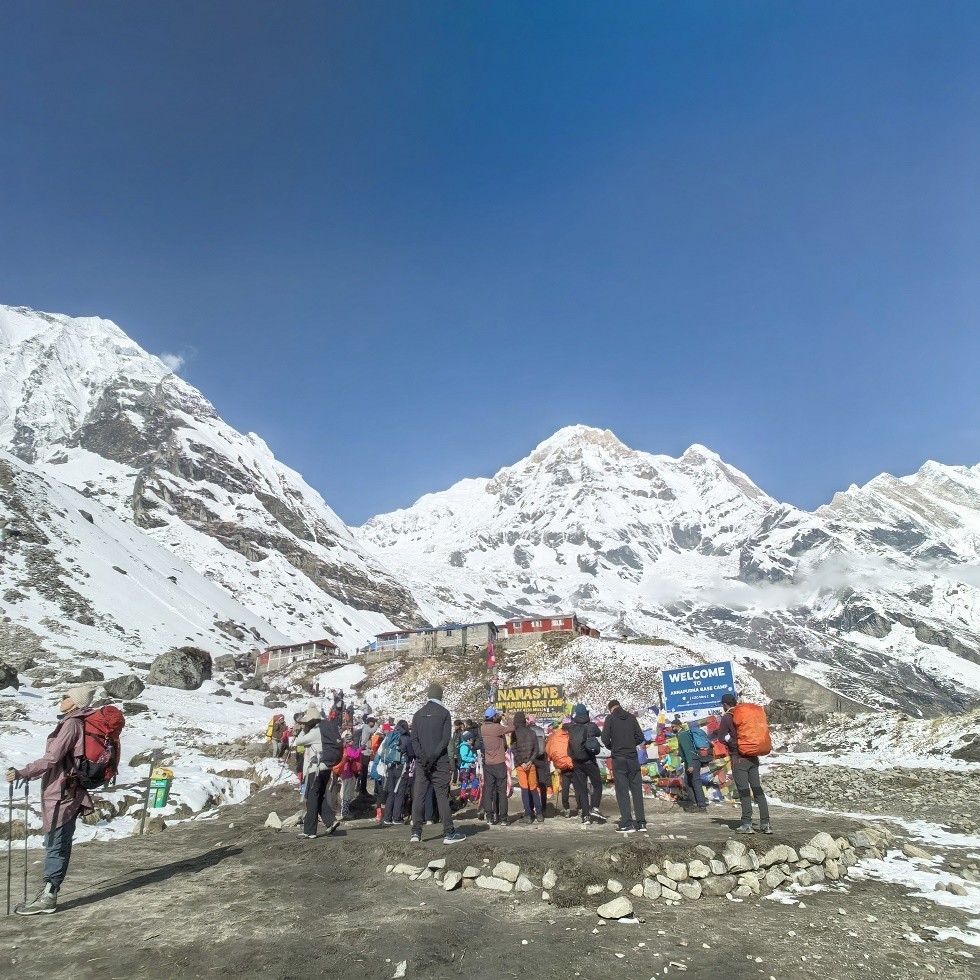
Importantly, Annapurna Base Camp Trek guide fees also include emergency preparedness. Guides carry first-aid kits and provide rescue coordination if needed. Furthermore, they communicate with the helicopter services around Annapurna Base Camp (4,130 m). Therefore, costs from guides meaningfully add to safety in trekking.
Similarly, cultural interpretation forms part of the guide inclusions. Guides interpret Gurung culture in Ghandruk (1,940 m) and local traditions en-route. Furthermore, guides support responsible tourism practices. As a result, guided trekking offers deeper cultural insights.
Further, the guide's cost does not include personal expenses and accommodation. The trekkers pay for the guide's food, lodging, and insurance separately. In addition to that, if porters are needed, their services have to be paid for separately. Thus, transparent cost breakdown helps in realistic budgeting for Annapurna Base Camp Trek.
Finally, the cost of hiring a guide for the Annapurna Base Camp Trek represents value, competency, and safety. Thus, investing in a professional guide pays off with a smoother, safe, and more rewarding trekking experience.
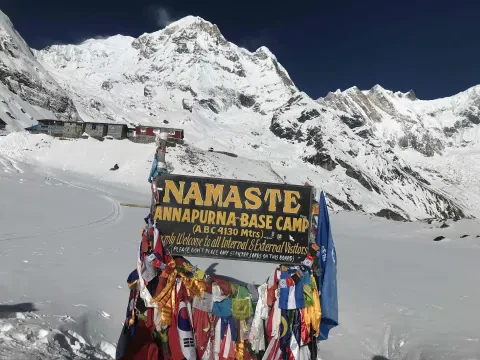
Find out the details that are included while hiring a licensed guide for the Annapurna Base Camp trek in Nepal, including safety, organization, acclimatization, and knowledge.
What a typical trek includes some of the things that a licensed guide:
First of all, when one hires a guide to do the Annapurna Base Camp Trek in Nepal, this is with the benefit of professional leadership from the guide. The Annapurna Base Camp has its starting point from the city of Pokhara, located at 822m above sea level. The base camp is situated at 4130m above sea level.
Secondly, professional guides are responsible for route orientation in villages and high altitude areas. In this regard, guides accompany trekkers to Ghandruk (1,940m), Chhomrong (2,170m), and Deurali (3,230m). In addition, professional guides will often determine the appropriate route in cases of fog, snow, or jungle areas. Therefore, Annapurna Base Camp Treks will not encounter navigation problems.
Furthermore, the tracking of altitudes is also an essential consideration in the recruitment of a licensed ABC guide. The guide will assess health situations at Bamboo (2,310m), Dovan (2,600m), and Machapuchare Base Camp (3,700m). Moreover, they will also alter itineraries to facilitate health acclimatization.
Notably, safety preparedness is an important part of guide services. Guides have first-aid boxes with them, and they know how to deal with emergencies. In addition, they also handle evacuation procedures at Annapurna Base Camp, which lies at an altitude of 4,130 m. Safety preparedness thus enhances trekking experience immensely.
Similarly, the coordination of accommodation is also included in licensed ABC Trek guides. The guides organize teahouse accommodations during peak seasons at Tadapani (2,630 m) and Deurali (3,230 m). In addition, they provide trekkers with secure places to sleep at higher altitudes.
Furthermore, meal advice as well as hygiene education is a consideration for guide inclusion. Meal advice is given by guides regarding food that ought to be consumed when at high altitude. Additionally, guides inform trekkers on how to safely consume water along the route referred to as the ABC Trek. Consequently, nutrition guides trekkers on how to stay healthy by offering advice on nutrition pertinent at high altitude.
Moreover, the cultural interpretation that happens on this trek is greatly appreciated. The guides offer information about the cultural practices of the Gurung community in Ghandruk (1,940 m), in addition to the monasteries. Additionally, the conversations that happen in the villages are translated. Hence, cultural understanding adds to the value of the Annapurna Base Camp Trek.
Finally, using the services of a licensed guide for the Annapurna Base Camp Trek comes with safety, knowledge, and added cultural insight. Consequently, a professional guide service offers a full and dependable experience for a Himalayan trek.
Compare guide vs porter vs porter guide in Annapurna Base Camp trek and select the most suitable option that fits the safety concern, budget, and trekking requirements.
| Role | Main Function | Safety Level |
|---|---|
| Guide | Navigation | safety | culture |
| Porter | Carrying loads only | Low |
| Porter-Guide | Basic guidance and carrying Medium |
Initially, awareness about the difference between a guide, a porter, and a porter-guide will help trekkers take the right decision for the Annapurna Base Camp Trek. Each plays a different part in the trek from Pokhara (822m) to Annapurna Base Camp (4,130m). Further, the service standards are remarkably different among the three.
Secondly, Annapurna Base Camp Trek guides who are licensed give priority to leadership and health and safety. In this regard, guides are responsible for leading trekkers through Chhomrong, which is 2,170 m above sea level, and Deurali, which is 3,230 m above sea level. Additionally, guides check health and weather conditions.
Further, porters are mainly responsible for carrying their loads along with trekking luggage when going for the Annapurna Base Camp Trek. Porters carry loads from Nayapul (1,070 m) to ABC (4,130 m). Furthermore, porters aid in alleviating trekking efforts for trekkers.
Significantly, porter guides are involved in both limited guided and carrying tasks. They help with guidance and basic communication. Additionally, porter guides do not have complete licensing and medical qualifications. The porter guides are suitable for cost-sensitive trekkers with previous trekking experience.
Similarly, cost variations also affect trekking choices. The cost of guides is USD 30-40. The cost of porters is USD 20-25. The cost of porter guides is USD 25-30. In this way, the cost of services matches the service level.
Moreover, the level of safety is remarkably distinct among the three alternatives. Guides ensure altitude health around Machapuchare Base Camp at an altitude of 3,700 m. They do not actively check health conditions for porters. Consequently, guide-led Annapurna Base Camp Trek options remain the safest among the three.
Further, there is a variation in the process of communication and cultural interpretation depending on one’s role, such that porters do not give cultural insights, while guides reveal information about cultural traditions of Ghandruk (1940m) and monasteries along the way. Guides, thus, add to the experience of trek
Finally, whether to hire a guide, porter, and/or porter guide is dependent on experience level, budget constraints, and safety considerations. Hence, the best choice for a secure and productive Annapurna Base Camp Trek is the licensed guide.
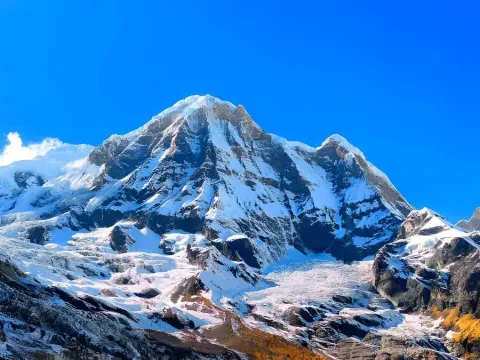
Discover how an experienced guide for the Annapurna Base Camp trek maintains teahouse accommodations during your trek on the ABC trek route.
Key accommodation management roles include:
Firstly, the management by the teahouse accommodation for the Annapurna Base Camp trek is highly experienced and local. The trekking trail starts at Pokhara (822 m) and involves several villages where trekkers stay for the night. Additionally, the availability of accommodation is subject to the weather and trekking seasons. The experienced Annapurna Base Camp trekking guide does the necessary accommodation preparations.
Secondly, guides pre-book teahouses in popular villages such as Ghandruk, situated at 1,940 m, and Chhomrong, located at 2,170 m. These teahouses get filled up during the peak seasons for trekking. Moreover, guides have connections with the teahouse owners.
Further, planning at a higher altitude village requires care. The tea houses at Bamboo (2,310m), Dovan (2,600m), and Deurali (3,230m) are limited in numbers. Further, they are cold, which reduces their effectiveness. Accordingly, guides usually pick teahouses with better heating and dining arrangements.
Here, an important point is that experienced guides look out for healthy accommodations close to the Machapuchare Base Camp (3700m). Good ventilation and a warm place to sleep make a big difference, especially while climbing the mountain. Also, guides make sure that they don’t stay in places that may cause them to get sick due to crowding.
In like manner, trekking guides manage the allocation of rooms in trekking groups effectively. They organize twin-sharing rooms and accommodation sufficiently. In addition, the guides organize early dinner times for recovery. In this way, group comfort increases while trekking on the Annapurna Base Camp Treks.
Moreover, accommodation charges are negotiated by expert guides. The cost of accommodations rises nearing the Annapurna Base Camp as the transport is difficult. Additionally, expert guides assist trekkers in getting a fair deal by speaking Nepali. Thus, trekkers are able to get a fair deal.
Furthermore, guides promote hygiene standards in teahouses. They check the cleanliness of the bedding and the dining areas. Additionally, they advise the trekkers on the use of sleep bags for heating. Consequently, the hygiene awareness prevents illnesses on the ABC trek.
Finally, expert guide handling of the accommodation available at the teahouse helps ensure comfort and safety. This implies that the trek packages offered by Annapurna Base Camp Guides give you the best Himalayan accommodation experience.
Learn about local knowledge related to food, water, and hygiene practices along Annapurna Base Camp Trek and how guides ensure trekkers stay healthy.
In this regard, one may include in the basic necessities the following guidelines:
First, it is essential to have food, water, and hygiene-related knowledge when going on the Annapurna Base Camp Trek. | However, the journey commences from Pokhara, which lies at an elevation of 822 m, and eventually moves into the Himalayas. In fact, food becomes scarce in the higher Himalayas.
Secondly, treks are guided on the right foods to eat at high altitudes. Dal Bhat offers treks a packed source of energy that has digestibility at both Bamboo (2,310m) and Deurali (3,230m). Moreover, treks are advised against consuming excessive meat at Annapurna Base Camp (4,130m). This shows that the right foods are eaten for acclimatization.
In fact, water safety is another significant source of concern on Annapurna Base Camp Trek. Water from the streams near Dovan at 2,600 m seems clear but is full of bacteria. Moreover, the cost associated with bottled water jumps dramatically at Machapuchare Base Camp at 3,700 m.
Importantly, guides for ABC Trek also plan hydration activities properly while trekking through altitude regions. They encourage people to stay hydrated while trekking above Chhomrong, which has a height of 2,170 meters. Moreover, drinking warm fluids will also protect a person’s body from dehydration while trekking through cold regions.
Equally, hygiene awareness lessens risks in contracting ailments of the stomach on the ABC Trek. Leaders inform trekkers on how to wash their hands before eating. In addition, they identify tea houses with cleaner kitchen facilities. Therefore, guided trekking significantly reduces incidents of ailments resulting from eating.
In addition, waste management is practiced in the local hygiene practices. The guide does not advise on the disposal of plastic wastes along the trail. Further, they encourage the use of refillable containers and toilets. Thus, environmental practices continue to be safeguarded in the Annapurna Conservation Area.
Moreover, guides during Annapurna Base Camp Trek are aware about the availability of seasonal food on the trek trail. Vegetables are available in fresh form above the Deurali (3,230 m) points in winter. Additionally, guides modify the trekker's food expectations.
Finally, the local knowledge regarding food, water, and hygiene practices is essential for the preservation of trekkers' health during the Annapurna Base Camp Trek. Thus, employing a local guide for the trek can make trekkers safer regarding nutrition and hygiene.
Recognize the nature of weather changes encountered during the Annapurna Base Camp Trek and how experienced guides modify the itinerary on the fly.
The usual changes to the itinerary:
Firstly, the weather patterns on the Annapurna Base Camp Trek influence the safety, schedule, and overall viability of the trek. The trek begins from the city of Pokhara, which has an altitude of 822 meters. In fact, the weather can change very quickly within the Annapurna Sanctuary. This makes the trek dependent on real-time itinerary planning.
Secondly, there is monitoring of daily weather as the group moves from Nayapul (1,070m) to Ghorepani (2,860m). The sun may be shining in the morning, but it eventually rains in the afternoon. Also, the formation of clouds is an indication that there might be a storm. Therefore, the walking time is adjusted by the guides.
Furthermore, the higher the elevation, the more harsh and unpredictable the weather is during your ABC Trek. In Deurali (3,230m) and Machapuchare Base Camp (3,700m), there is potential snow. Moreover, it becomes difficult to see when there is strong wind in Annapurna Base Camp (4,130m). This causes guides to change plans for camping.
Significantly, temperatures drop considerably after sunset in high altitudes. "Night temperatures are below freezing at Annapurna Base Camp, which has an altitude of 4130m." In addition, "Cold makes a person more tired and more likely to fall ill." Guides reduce the daily hikes when it's extremely cold.
Similarly, during monsoon season, there are weather difficulties in the ABC trek. Heavy rainfall causes landslides in Bamboo (2,310 m) and Dovan (2,600 m). In addition, swollen rivers obstruct trail points. For this reason, guides divert trails or incorporate rest days.
Moreover, ABC Trek winter weather requires dynamic planning of the itinerary. Snowfall here accumulates on trails around Machapuchare Base Camp at 3,700 m. In fact, the duration of daylight reduces considerably. As a result, treks are undertaken at earlier times, and distances are shorter.
Additionally, guides make use of local weather information and predictions always fruitful and perform better in your ABC Trek. They pay attention to the wind direction, cloud flow, and visibility of the mountain range around the summit of Annapurna South (7,219 meters). Additionally, guides interact with lodge owners for information on the path. Thus, the choices depend on current experience.
Lastly, the climatic conditions in the Annapurna Base Camp trek are such that they demand sophisticated decision-making skills. This is where trekking with the right guide makes a world of difference.
Delve into cultural insights for Ghandruk, Chhomrong, and Deurali and learn why having a guide for the Annapurna Base Camp trek is essential.
Some examples of cultural value provided by guides are:
Firstly, cultural awareness adds to the Annapurna Base Camp Trek experience that goes beyond just adventure. The culture of the Himalayan Region is kept alive through the villages that lie along this trekking route. Additionally, cultural practices vary greatly depending on altitude and population.
Secondly, Ghandruk (1,940m) is a model of the traditional Gurung village. The village has stone buildings and community museums. The guides at this place inform trekkers about the history of the Gurung ethnic group. Moreover, the guides translate conversations and rituals that occur in the local language. The trekkers hence get cultural information.
In addition, Chhomrong is the entrance point to the Annapurna Sanctuary. The altitude of Chhomrong is 2,170 m. The cultural background of the people is mixed Gurung and Magar. In addition, guides will assign meaning to the elements of religions and prayer flags. Cultural stories make the ABC Trek more unique.
Significantly, Deurali (3,230 m) provides information about survival culture at a higher altitude. The lodges are functional in adverse climatic conditions. In addition, there are explanations about seasonal migration patterns and challenges related to supplies. Thus, trekkers are informed about survival culture at a Himal.
Similarly, guides translate the spiritual faith regarding the mountains. Annapurna I (8,091 m) and Machapuchare (6,993 m) have religious importance. Additionally, guides describe the reason for the ban on scaling Machapuchare. Thus, cultural appreciation enhances mountain exploration.
Moreover, cultural events and practices also change depending on the season. The trekking guides point out cultural events during the periods of trekking. Moreover, the dressing habits and etiquette are also explained by the trekking guides. Therefore, trekking with a guide avoids cultural errors.
In addition, culinary practices demonstrate cultural identity throughout the journey. At Ghandruk (1,940m), guides discuss dal bhat practices, and high-altitude eating adjustments aware of Deurali (3,230m) altitude. In addition, they teach culinary manners. Hence, cultural immersion will be entirely achieved.
Finally, cultural insights add depth to the Annapurna Base Camp Trek. Hence, organizing this adventure with a guide is always full of education and respect for the Himalayas.
See how professional guides cope with emergency situations at Annapurna Base Camp Trek, ranging from evacuation to rescue services, and issues associated with altitude.
The list of emergency responsibilities for guides is:
First, emergency situations associated with trekking to Annapurna Base Camp involve rapid decision-making and professional skills. The trekking route starts from Pokhara, at 822 m, and proceeds to deep alpine areas. Additionally, lack of easy access due to road difficulties makes the process harder. In this case, a professional guide along the trekking routes to Annapurna Base Camp becomes important during emergency operations.
Second, altitude-related emergencies are common above Chhomrong (2,170 m). Symptoms of Acute Mountain Sickness are known to occur around Deurali (3,230 m). Moreover, the guide carefully observes all individuals experiencing headaches, vomiting, and oxygen saturation. Thus, there are no life-threatening situations.
Additionally, cases of severe altitude sickness occur just near Machapuchare Base Camp, which is at 3,700 m. High-altitude Pulmonary Edema and High-altitude Cerebral Edema require instant descent. Moreover, trekkers are slower to notice these signs compared to guides. Therefore, guides are lifesavers during the ABC Trek.
Notably, emergencies arising from injuries occur as a result of slippery trails and stone staircases. Most of these injuries occur near the region of Ulleri (2,070m) and Bamboo (2,310m). Additionally, first aid and treatment of the injury are offered by the guides. Hence, the problem of injuries is eliminated.
Similarly, natural-emergency situations also await the adventurers at Annapurna Base Camp (4,130 m). Unexpected snowstorms reduce the visibility to a large extent. Furthermore, the risk of hypothermia also starts rising fast. Therefore, the guides take the decision to descend immediately.
Moreover, evacuation coordination is another important role for guides. The guides communicate with helicopter rescue services either from Machapuchare Base Camp (3,700 m) or ABC (4,130 m). Moreover, they handle insurance card check and landing sites. In this case, evacuation effectiveness is significantly reliant on guide knowledge.
In addition, the guides also keep contact with the owners of the teahouses and the relevant authorities. More to that, there is accurate transmission of emergency messages. In addition, guides remain composed when under strain. Consequently, there will be improved survival rates.
Lastly, emergencies that occur on the Annapurna Base Camp Trek also require expert management. For this reason, Annapurna Base Camp trekking with a guide is essential for fast evacuation and maximum safety.
Learn the secrets for choosing a trustworthy and licensed trekking guide for the Annapurna Base Camp trek.
In this regard, to enhance clarity, the important criteria in the selection:
Firstly, hiring a good guide for the Annapurna Base Camp Trek is important for safety and successful trekking. The trek begins at Pokhara (822 m) and ends at Annapurna Base Camp (4,130 m). In fact, having a good guide is crucial to making decisions at high elevations.
Secondly, the first stage of the selection process is the checking of the guide’s license. The certified guide has a government-issued trekking license. In addition, the licensed guides are trained in altitude and first aid. Therefore, certification is an assurance of professionalism.
Furthermore, experience on the ABC Trek trail is quite important. Seasoned and local guides know the villages of Ghandruk (1,940m), Chhomrong (2,170m), and Deurali (3,230m). Moreover, they know how the trail behaves in different seasons.
Notably, communication skills are important indicators of guide reliability. Guides should be able to explain the dangers of high altitudes at Machapuchare Base Camp (3,700 m). Additionally, good English language skills facilitate coordination.
Simultaneously, transparent pricing shows professionalism of guide during ABC Trek. Trustworthy tour guide costs between USD 30 to 40 per day. Apart from that, they clearly state what is included and excluded. Hence, transparent pricing eliminates conflicts.
Also, being affiliated with an agency enhances credibility of the guide during Annapurna trekking. The registered trekking agencies have safety procedures and insurance guidelines to follow. Also, there is support provided by the agencies. This implies that the guides affiliated with the agencies are more reliable.
Moreover, reviews and recommendations assist in the selection process. Feedback from past clients is an indication of the guide characteristics and expertise. Furthermore, consistent positive reviews indicate that the guide is consistent too. Finally, research enhances the decision process.
Finally, engaging a trustworthy and licensed guide for the Annapurna Base Camp Trek is also very important for safety and security reasons. Consequently, the choice of a guide for a trip to the Himalayas ensures the success of the ABC trip.
Learn the advantages of being guided by a registered trekking company for safety, legality, insurance support, and professional services of ABC Trek in Nepal.
In this light, the clear advantages of licensed trekking agencies include the following:
First, engagement with a guide through a registered trekking company in Nepal ensures legality and professional accountability. Besides, the Annapurna Base Camp Trek starts from Pokhara-822 m and leads into protected areas. Additionally, structured trekking operations are regulated by the government. It is here that the registered companies come in to bring forth legitimacy and assurance of safety.
Secondly, only licensed and trained guides are hired in registered trekking companies like Haven Holidays Pvt. Ltd. These guides get valid government certificates and first-aid training, and companies verify their experience about Ghandruk (1,940 m) and Chhomrong (2,170 m) routes. In this respect, professional standards are followed.
Moreover, insurance coverage becomes a major advantage if the booking is made through a registered trekking agency. The guides and porters are covered for accidents by the companies. In addition to this, agencies ensure faster-activating emergency evacuation support. Thus, risk management improves considerably.
Importantly, logistical coordination remains smoother with registered companies. They manage accommodations right from Ghorepani (2,860 m) to Annapurna Base Camp (4,130 m). Furthermore, they handle transportation and emergency backups. Therefore, trekkers avoid operational stress.
Similarly, recognized trekking companies ensure that there is ethical employment. These companies pay their guides and porters decent wages. In addition to this, they also abide by porter load regulations. Because of all these reasons, responsible tourism reinforces local communities.
Also, agencies provide clear contracts, with transparent pricing. Guide costs stay within a range of USD 30–40 per day. Secondly, inclusions and exclusions remain documented. Thus, clarity in the finances protects trekkers.
Here, government authorities also recognize registered agencies in times of emergencies. The rescue coordination becomes quicker compared to Machapuchare Base Camp, which is at 3,700 meters. In addition to that, the companies maintain official channels of communication. Therefore, crisis handling improves.
Finally, hiring guide for Annapurna Base Camp Trek through a registered trekking company guarantees safety, legality, and professionalism. It thus remains the best choice for a successful Annapurna Base Camp Trek.
Understand government rules, TIMS, and permits for the Annapurna Base Camp Trek, and how guides simplify all paperwork efficiently.
| Allow | Purpose | Cover |
|---|---|
| ACAP | Conservation access | Nayapul to ABC |
| TIMS | Trekker tracking | Entire route |
| The government rules, | TIMS, and permits are bearable with the guides. |
Actually, basic regulations through government rules regarding trekking have been in practice on the Annapurna Base Camp Trek. The route actually starts from Pokhara, which is 822 meters above sea level and enters into the Annapurna Conservation Area. Further, permits have also been compulsory for foreign trekkers. As a result, compliance with paperwork can be compulsory.
Secondly, the Annapurna Conservation Area Permit grants permission into protected zones. These range from Nayapul at 1,070 m above sea level to Annapurna Base Camp at 4,130 m above sea level. In addition, this permit is also subject to scrutiny at several checkpoints. As a result, delays are caused by missing documents.
This is, besides, the fact that the TIMS card monitors trekkers for safety and in coordination with rescues. It records the details of the trekkers and route plans. Also, TIMS facilitates emergency response near Deurali (3,230 m). Registration, therefore, has to be accurate.
Importantly, guides simplify permit processing significantly. They arrange paperwork through registered offices. In addition, guides ensure correct documentation submission. Hence, trekkers avoid administrative confusion.
Similarly, guides remain informed about the changes in government regulations along the ABC trail. The rules of permits may sometimes change in a specific season. In addition, guides take care of the renewal of permits, in case such a need arises. Thus, the process of compliance does not get disrupted.
Besides this, there are a lot of language barriers in the way of permit application. The forms need accurate personal information. In addition, guides avoid mistakes at the time of submission. Hence, documentation accuracy improves.
Further, the coordination at checkpoints is easier with guides. There is frequent checking of documents by officials at Chhomrong (2,170 m). In addition to this, guides communicate professionally with authorities. Hence, smooth passage continues.
Therefore, ABC trekking with a guide ensures a smooth trek in terms of paperwork or uninterrupted Annapurna Base Camp Trek travel.
Read on and learn why trekkers going alone or as female trekkers on the Annapurna Base Camp trek should consider hiring a guide.
Reasons why guides are helpful for solo hikers or female hikers:
Firstly, trekkers on their own and female trekkers on the Annapurna Base Camp trek can find themselves in some very challenging circumstances in terms of safety and remoteness. In fact, the trek begins in Pokhara at an altitude of 822 m, but later progresses through a mountainous region that is far from civilization. In fact, mobile phone services are no longer available past Chhomrong at an altitude of 2,170 m.
Secondly, the issue of personal security is a concern for individual trekkers on the ABC Trail. This is owing to the long treks in the forests between Nayapul (1,070 m) and Ghorepani (2,860 m), where one might feel remotely located. Moreover, the weather can quickly alter to reduce visibility.
Furthermore, the problem of navigating also has more of an impact on solo and female trekkers. There are several trails that confuse trekkers around Tadapani (2,630m). Moreover, there is also snow around Deurali (3,230m).
Notably, risks associated with altitude diseases start from Bamboo (2,310 m). Solo hikers might overlook early signs because of a lack of awareness. In addition, trekkers, especially female hikers, might withhold signs of distress.
In a similar manner, teahouse accommodations on a trek are also important for solo and female trekkers during ABC Trek. Teahouses at Machapuchare Base Camp are overcrowded, which affects one’s privacy. In addition, guides can provide better and secure lodging arrangements. Therefore, hiring guides will increase trekking comforts and security.
In addition, there are language and cultural barriers that trekkers may encounter during ABC Trekking. There are language barriers that may occur in villages such as Deurali, which has an altitude of 3,230 meters. Additionally, there may be misunderstandings that may cause stress.
Moreover, handling emergencies is also essential at a high altitude. Injuries and altitude sickness at Annapurna Base Camp (4,130 m) call for immediate actions. In addition, solo adventurers are not aware of rescue coordination. As a result, their evacuation is handled by guides.
Finally, solo or female trekkers will feel ensured, confident, and supported by a guide on ABC Trek. Hence, the role of a guide in ensuring a safe and satisfying Annapurna Base Camp trek experience.
Find out how a female guide helps female trekkers on the Annapurna Base Camp Trek with regard to their safety, comfort, language, and culture.
Positives of a female Guide:
Firstly, female trekkers on the Annapurna Base Camp Trek find it extremely beneficial to trek with a female guide. The trek begins at Pokhara at 822 m and passes into a rural area with conservative populations. In addition, shared adventures help establish trust rapidly. Hence, female guides are an important source of both emotional and practical assistance.
Secondly, communication comfort is better when the guide is female. In fact, female trekkers are more open when it comes to issues of health, hygiene, and personal matters. In addition, addressing matters such as menstruation and the use of toilet facilities becomes comparatively simpler. Therefore, the comfort levels during the entire trail of the ABC Trek will improve.
Further, gender difference in perception related to safety increases with an female guide for women trekkers. Isolated routes around Bamboo (2,310 m) appear less menacing. In addition, guides remain cognizant of their surroundings and group psychology. Therefore, female-led trekking increases self-esteem.
Notably, cultural awareness becomes easier with female guides. Here, the village such as Ghandruk (1,940 m) has women who interact freely. Moreover, there are guidelines on the clothing and manner appropriate for interaction. This makes cultural interaction seem smoother.
In the same way, accommodation facilities are advantageous in terms of female comfort with female guides. Further accommodation requests are made at Chhomrong (2,170 m) and Machapuchare Base Camp (3,700 m). It appears that issues pertaining to privacy are prioritized. Thus, there are safe accommodations while staying.
Also, health at altitude is aided by prudent management. The female guides are keen to notice any health aspects above Deurali (3,230 m). Additionally, they promote relaxation without forcing the issue. Consequently, acclimation to high altitude is enhanced.
Additionally, handling emergencies becomes less stressful when accompanied by a female guide. This is especially true concerning health conditions at the Annapurna Base Camp, which stands at 4,130 m. Moreover, female guides act as a source of comfort when making the decision to evacuate.
The Finally, female trekkers get confidence, safety, and comfort with a female guide on ABC Trekking. Therefore, selection of a female guide is important for getting an Annapurna Base Camp Trek that is supportive and empowering.
If you hire an Annapurna Base Camp Trek guide from Kathmandu or Pokhara, compare the cost, availability, experience, and service quality.
| Factor | Kathmandu Guide | Pokhara Guide |
|---|---|
| Daily Cost (in USD) | 35–45 USD | 30–40 USD |
| Availability | Moderate | High |
| Logistics | More difficult | Easier |
It affects the cost, logistics, and overall trekking experience if one hires a guide from Kathmandu or Pokhara. The Annapurna Base Camp Trek starts after reaching Pokhara (822 m). In addition, both cities have licensed trekking guides. Thus, understanding the location-based differences helps trekkers choose wisely.
Actually, pre-trek coordination and planning for transportation are usually included when hiring guides in Kathmandu. Kathmandu-based guides travel to Pokhara at 822 m elevation before the beginning of the trek. Additionally, traveling increases the overall cost. Therefore, hiring from Kathmandu will increase the total ABC Trek budget.
Moreover, guides based in Pokhara also provide logistical convenience for the Annapurna Base Camp Trek. Pokhara is closer to Nayapul (1,070 m), the starting point of the trek, and guides are already available in the area. Therefore, hiring them locally saves extra and unnecessary costs.
Importantly, cost differences remain a deciding factor for many trekkers. The guide services in Kathmandu charge USD 35–45 per day, including transit days. Furthermore, guides from Pokhara charge USD 30–40 per day, excluding additional travel costs. Thus, guides based in Pokhara offer better cost efficiency.
Similarly, during peak seasons, the factor of availability goes strongly in favor of Pokhara. Many guides of ABC Trek live in the vicinity of Pokhara 822 m above sea level; last-minute hiring also remains easier there. Therefore, the flexibility in hiring increases when done locally.
In addition, quality and experience depend on individual guides rather than the city alone. Experienced guides operate in both Kathmandu and Pokhara. In fact, Pokhara guides often do more ABC Treks each year. Hence, route familiarity remains higher among local guides.
Besides, with guides based in Pokhara, emergency response becomes more efficient. Rescue coordination is possible much more quickly due to proximity. In addition, guides are in direct contact with local authorities. Therefore, the response to safety concerns improves by a great margin.
Finally, hiring a guide from Pokhara results in better cost control, availability, and regional expertise for Annapurna Base Camp Trek. Therefore, Pokhara-based guides suit most Annapurna Base Camp Trek travelers.
Learn the most common mistakes trekkers make while hiring low-priced or unregistered guides for the Annapurna Base Camp Trekking and how to avoid associated risks.
Herewith are some common mistakes:
Firstly, the selection of cheap or unlicensed guides for the Annapurna Base Camp Trek contributes to serious problems. The trek rises from 822 m at Pokhara to 4,130 m at Annapurna Base Camp. Besides, high-altitude risks require professional handling. Therefore, poor guide choices increase danger.
Here, the, the guide for ABC Trek without license on the other hand, gives way to legal and safety issues. Unregistered guides have never undergone training and certification by the government. In addition, permit verification often fails at checkpoints. Thus, it causes trekkers some delays or fines.
Additionally, cheap guides usually lack altitude sickness management skills. Symptoms appear above Chhomrong (2170 m) and aggravate near Deurali (3230 m). Besides that, untrained guides usually ignore early symptoms that show up. Thus, health risks rise alarmingly.
Importantly, emergency handling remains weak with unregistered guides. Helicopter evacuation near Machapuchare Base Camp (3,700 m) requires coordination skills. Furthermore, cheap guides lack insurance and knowledge about communications. As such, delays in evacuations turn fatal.
Similarly, navigation errors rise with guides lacking experience. Heavy forests in proximity to Tadapani at 2,630 meters mislead route finding. In addition, snow conceals trails near Annapurna Base Camp at 4,130 meters. As a result of this, wrong routing is time- and energy-consuming.
Moreover, with cheap guides for ABC Trek, a lot of accommodation problems occur. Teahouses at Deurali (3,230 m) also get filled up very quickly during peak seasons. Moreover, an unregistered guide does not have the contact of a lodge. Thus, the trekkers may have to face an overcrowded or unsafe lodging.
Besides, there are a lot of ethical issues with low-cost guide hiring: guides who are not registered often work without insurance or for low wages. Furthermore, porters are exploited on a regular basis. So, responsible tourism is at stake.
Finally, hiring cheap or unregistered guides for ABC Trek enhances all kinds of safety, legal, and ethical risks. Licensed and registered guides for Annapurna Base Camp Trek will surely promise a safe and responsible trekking experience.
Find out how using a guide can add significantly to the experience of the Annapurna Base Camp Trek.
The advantages for engaging a guide for the ABC Trek include:
Firstly, having a guide for the Annapurna Base Camp trek is an assurance for safety, assistance, and comfort. Secondly, the trekking process involves ascending from the initial point in Pokhara at an elevation of 822 m to the Annapurna Base Camp, which lies at an elevation of 4,130 m. In addition, high-altitude aspects also need attention.
Secondly, guides improve navigation along the ABC trek, especially where there are forests, mountain paths, and snowy routes. Additionally, places such as Ghorepani (2,860m) and Deurali (3,230m) are characterized by confusing junctions. Moreover, guides are also sources of information about trail conditions.
Furthermore, altitude acclimatization and health care are significantly improved with the use of guides. Symptoms of Acute Mountain Sickness are known to emerge around the area of Machapuchare Base Camp, situated at an altitude of 3,700 m.
Worth noting, cultural knowledge enhances the ABC Circuit experience. Prevalent Gurung culture in the village of Ghandruk (1,940 m) and Chhomrong (2,170 m) are described. Additionally, these guides act as a means to communicate between outsiders and villagers. Thus, guided trekking contributes to an appreciation of culture.
Similarly, organizing logistics is also efficiently handled by guides, be it accommodation and meal times. The teahouses at Bamboo (2,310 m) and Deurali (3,230 m) get occupied rapidly. Additionally, the guides also coordinate accommodation, meal times, and hygiene practices. Therefore, the treks experience comfort without burdensome stress.
Moreover, handling the emergency response becomes easier when there is a guide. The injuries or altitude sickness experienced near the Annapurna Base Camp (4,130 m) require rapid action. Moreover, the guide takes care of the evacuation and insurance process for the helicopters. Hence, the danger associated with the treks becomes greatly reduced.
In the same way, hiring a registered adventure company for trekking makes everything legal and professional with realistic prices. The guide charges per day start from USD 30 to 40. In fact, support teams and insurance are also available. Hence, adventure trekking becomes more organized.
Lastly, an experienced guide turns Annapurna Base Camp Trekking into a safe adventure experience with the help of a licensed guide. Thus, the cost associated with hiring a guide for trekking in Nepal ends up providing the best trekking experience in terms of safety and comfort.
1. Why Should I Hire a Guide for the Annapurna Base Camp Trek?
Hiring a guide makes the Annapurna Base Camp Trek safer and more comfortable. They help you find your way, book accommodations and plan each day. They also keep an eye out for altitude sickness and share knowledge. The trail goes up to 4,130 meters so having a guide is really helpful. This way you have an more enjoyable experience in the Himalayas.
2. Is Hiring a Guide Mandatory for Annapurna Base Camp Trek?
Rules can change so it's an idea to check the current ones. Many trekkers hire guides for safety and convenience. Guides help with finding the route getting permits and handling emergencies. They also make the trek more enjoyable by sharing insights. Even if its not required a guide is still really useful.
3. How Does a Guide Improve Safety on the ABC Trek?
A professional guide watches out for altitude sickness and changes in the weather. They know routes if the trail is closed. They also have first-aid knowledge and can get help if needed. Since conditions in the mountains can change quickly having a guide makes the trek safer and more confident.
4. Can a Guide Help Prevent Altitude Sickness on ABC Trek?
Guides keep an eye on your pace and how your body adjusts to the altitude. They spot signs of altitude sickness and tell you to rest. They also encourage you to drink plenty of water and go up the mountain slowly. Since Annapurna Base Camp is 4,130 meters high a guides help reduces health risks.
5. How Much Does It Cost to Hire a Guide for ABC Trek?
The cost of hiring a guide depends on their experience, the season and what they offer. Most guides charge a fee for their help. They also help you save money by planning and recommending local services. So hiring a guide is a value for the safety and convenience they provide.
6. What Is the Difference Between a Guide and a Porter?
A guide leads the way ensures your safety and shares insights. A porter carries your luggage. Guides also help with accommodations, emergencies and communication. If you want support hire a guide. If you just need help with your load, a porter is fine.
7. Can Beginners Benefit from Hiring a Guide on ABC Trek?
Yes beginners benefit a lot from hiring a guide. Guides explain the trail conditions, daily distances and altitude challenges. They make logistics simpler. Help you avoid mistakes. This way you can enjoy the mountains more. Worry less, about the details.
8. How Does a Guide Handle Teahouse Accommodation on the Route?
A guide will book teahouse rooms ahead of time especially when it is busy. They will pick the lodges and talk to the owners to get a good deal when they need to. Guides also make sure the teahouse is clean. This way trekkers have a place to stay and do not have to worry about booking a room.
9. Can a Guide Help with Local Culture and Traditions?
Yes a guide can tell you a lot about the Gurung and Magar communities. They will explain the customs and festivals. Guides will also help you talk to the people in a respectful way. This way you will learn more about the culture. It is not just about the mountains.
10. Is a Female Guide Helpful for Female Trekkers?
Many women like to have a guide because it makes them feel more comfortable. It is easier to talk about things with a female guide. Female guides also make sure the trek is fun and safe for women. So they can help women feel more confident and happy during the trek.
11. Can a Guide Assist During Emergencies on the Trek?
Yes a guide is very helpful in case of an emergency. They will figure out what to do and give you aid if you need it. If it is an emergency they will call for help. Guides also know the people and can get help from them. So a guide is very useful when something goes wrong.
12. Should I Hire a Guide from Kathmandu or Pokhara?
You can hire a guide from either place. Kathmandu has more guide companies. Pokhara is closer to the trek. If you hire a guide in Pokhara you might save money on travel. So it depends on what you want to do and where you are going.
13. How Does a Guide Make Trek Planning Easier?
A guide will plan your day book your hotel and get the permits you need. They will also tell you how far you can walk each day and when to take a break. Guides can solve problems quickly. This way you do not have to worry about the details. You can just enjoy the trek.
14. What Qualities Should I Look for in an ABC Trek Guide?
You should look for a guide who knows the area and has trekked there before. They should be able to talk to you and know what to do in case of an emergency. It is also good if they have reviews and are professional. If you pick the guide your trek will be much better.
15. Is Hiring a Guide Worth the Extra Cost, for ABC Trek?
For people the answer is yes. A guide will keep you safe reduce your stress and tell you about the area. They will also help you with your hotel, emergencies and learning about the culture. So the extra money you pay for a guide is usually worth it. Will make your Annapurna Base Camp Trek more fun.
Our travel experts are ready to assist you with any questions.
Send us a message.Have a question before you book? Send your enquiry below and our travel experts will get back with the required information.