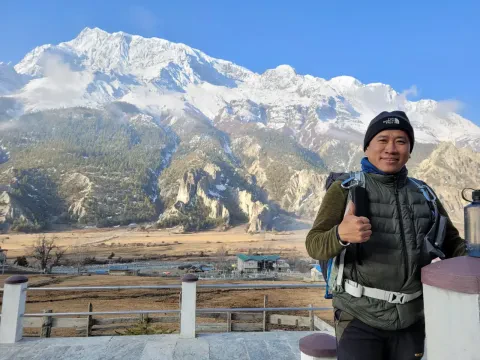
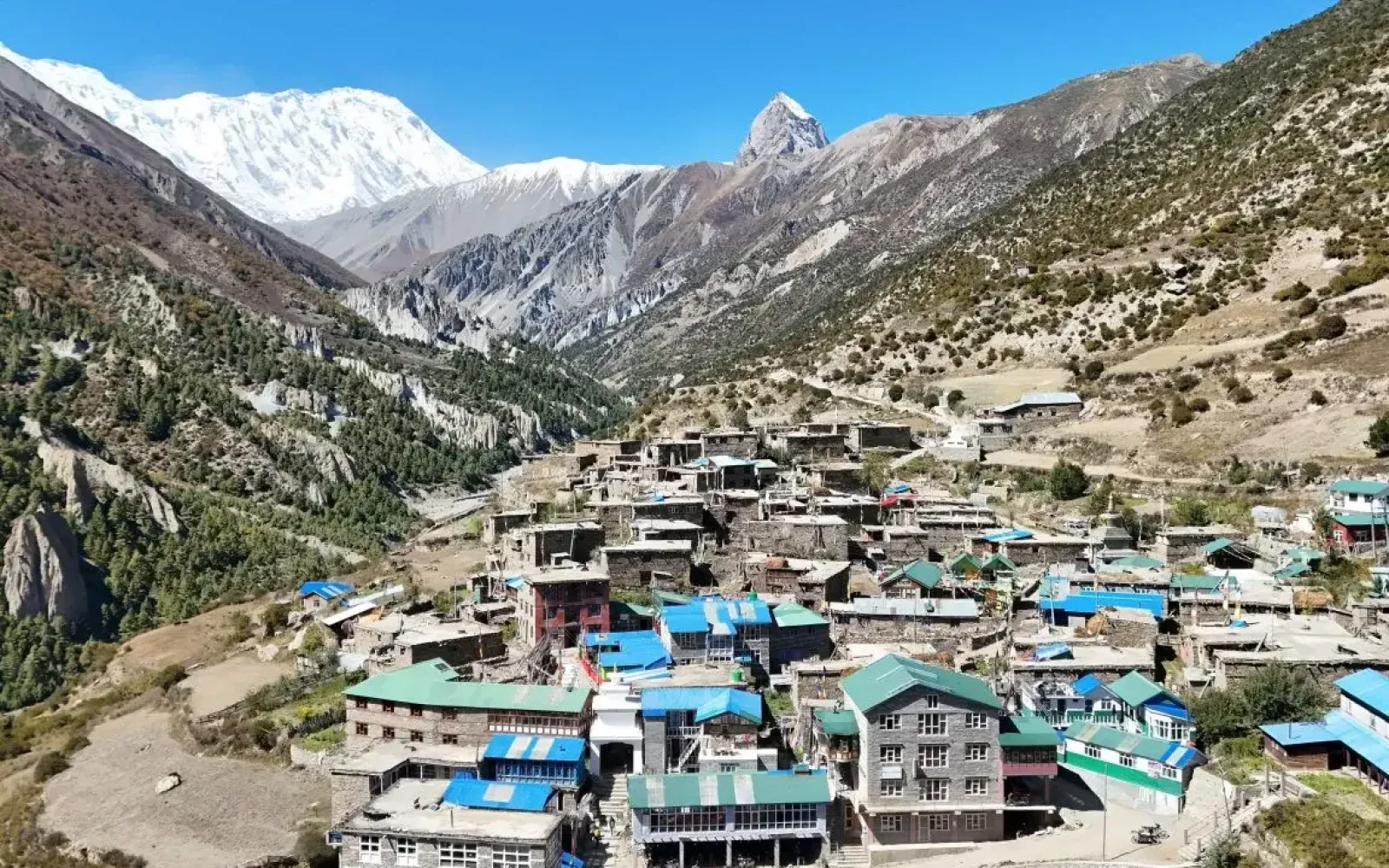
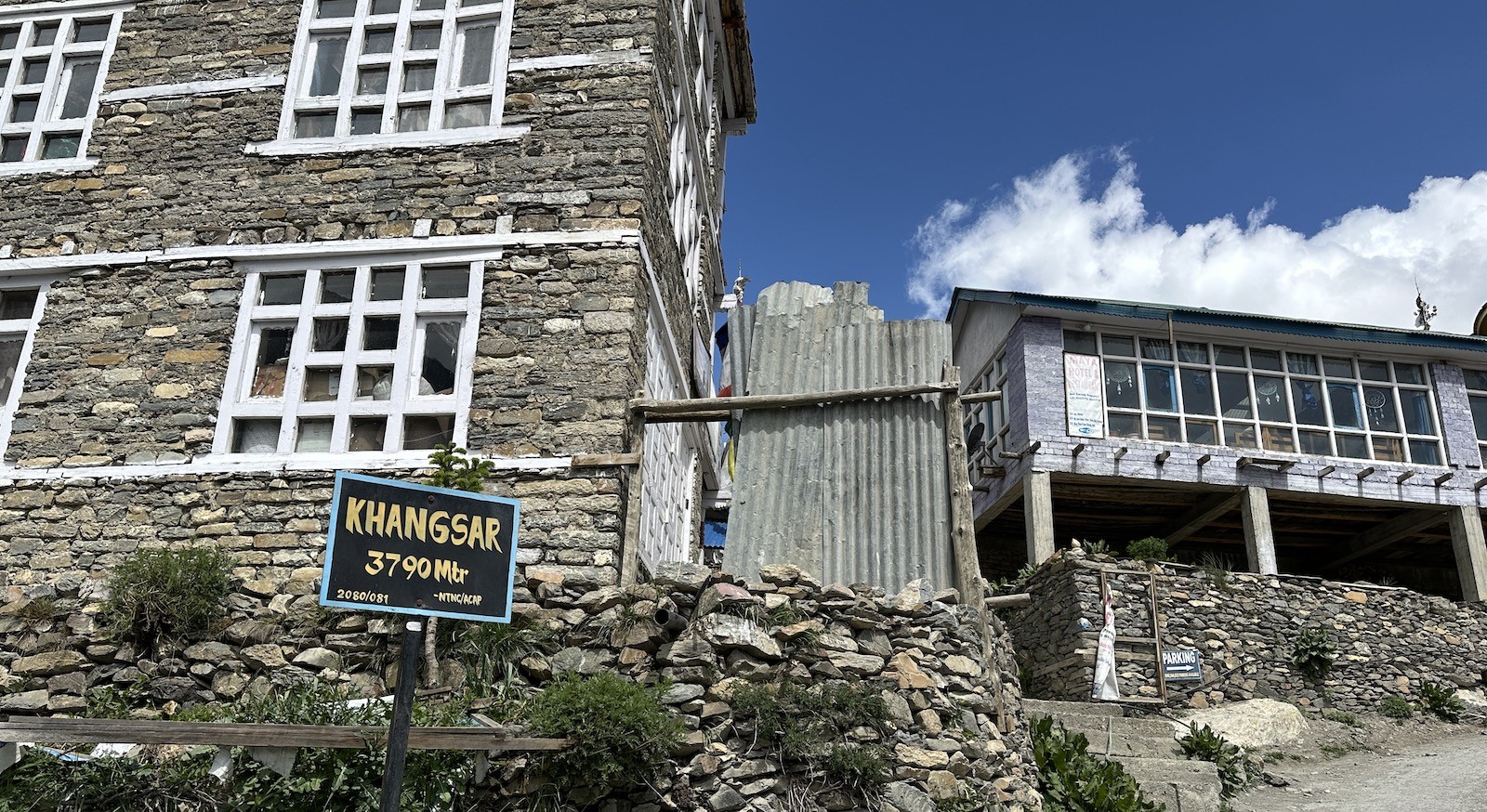
Khangsar Village, located high in the mountains of the Manang district of Nepal, it is a stunning yet isolated village. It acts as the main gateway to the Tilicho Lake and is one of the highest settled villages in the Annapurna range. The village is located at high altitudes of about 3790metres ( 12303 ft ).
Hence, Khangsar is also famous for its authentic Tibetan style housing and the friendly native welcoming atmosphere. Furthermore, its towering summits and spectacular scenery make an excellent rest point for travelers and trekkers. As a result, many travelers come to Kangsar along the Tilicho Lake Trek or the Annapurna Circuit. Additionally, the village has a more serene and less developed atmosphere than other well known destinations.
Likewise, Khangsar provides a authentic introduction to the life in the mountains above 4000m. Here you get to immerse yourself in the culture, sample the local cuisine, and ready yourself for the arduous trek to Tilicho Lake. The warm people and tranquil atmosphere will also ensure it is a highlight of any trek in the area.
Why Visiting Khangsar Village :
Hence, Khangsar Village is not only a short stop but also it makes an extraordinary trip to the heart of Annapurna region. In addition to this, the mixture of culture, nature and the world's highest altitude surroundings, makes the place more special. Hence; it is a memorable time for every travelers.
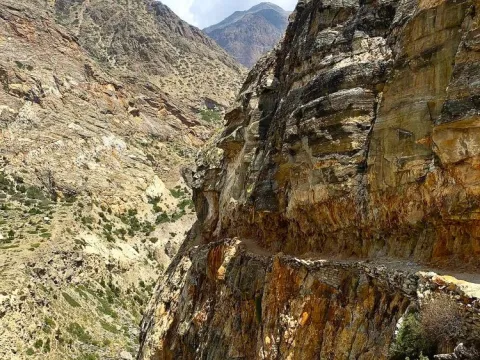
Meanwhile, Khangsar Village is within Annapurna Conservation Area of Manang, Nepal. As a result, the village lies in a high and remote valley and is situated at an elevation of around 3,790 meters (12,303 feet). It is further situated within the shadow of spectacular high peaks and rocky ridges.
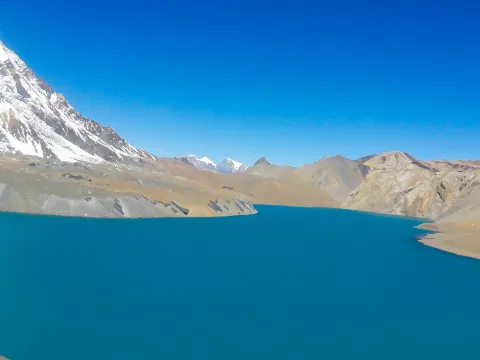
Hence, the surroundings of Khangsar are a beautiful wilderness. And the landscapes consists of high alpine meadows, glacial streams and steep mountain slopes. As a result, the area is wild and pristine and offer fresh mountain air and magnificent views. Moreover, the village lies on the way to Tilicho Lake, and thus is a popular halt for trekkers.
Moreover, Khangsar falls within the historical region of Manang, originally inhabited by old Tibetans, so the inhabitants maintain a set of customs and a way of life suited for high mountain life, supported by a terrain allowing transhumant yak herding with subsistence horticulture in the brief summer times.
| Feature | Details |
|---|---|
| Altitude. | "3,750 meters / 12,303 feet" |
| Location | Manang District, Annapurna Region |
| Surrounding Landscape | Mountain ranges, rocky ridges, pastures |
| Tilicho Lake | 2-3 days trek from the village. |
| Climate | Cold and dry (North East winds in winter). |
Geographical Highlights :
In conclusion, the location and geography of Khangsar Village means it is a unique place to visit. Hence, not only does it have amazing cultural attractions, but it has beautiful natural scenery set amidst the Himalayas as well. In addition, the altitude and breathtaking location provides an extremely memorable experience. Thus, in terms of treks in the Annapurna region Khangsar is significant and unforgettable.
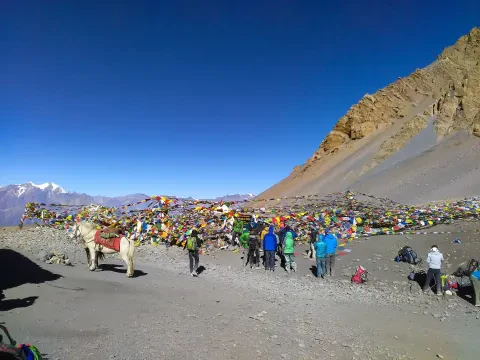
Meanwhile, Khangsar Village has some stunning points of interest which are free-standing and unique, and are reasons why this village is special in the Annapurna area. As a result, the standard of the traditional Tibetan styled stone houses and the calm and tranquil surrounding generally reflect the indubitable character of mountain life. Additionally, the mountain village is populated by truly genuine local inhabitants with a distinctive culture.
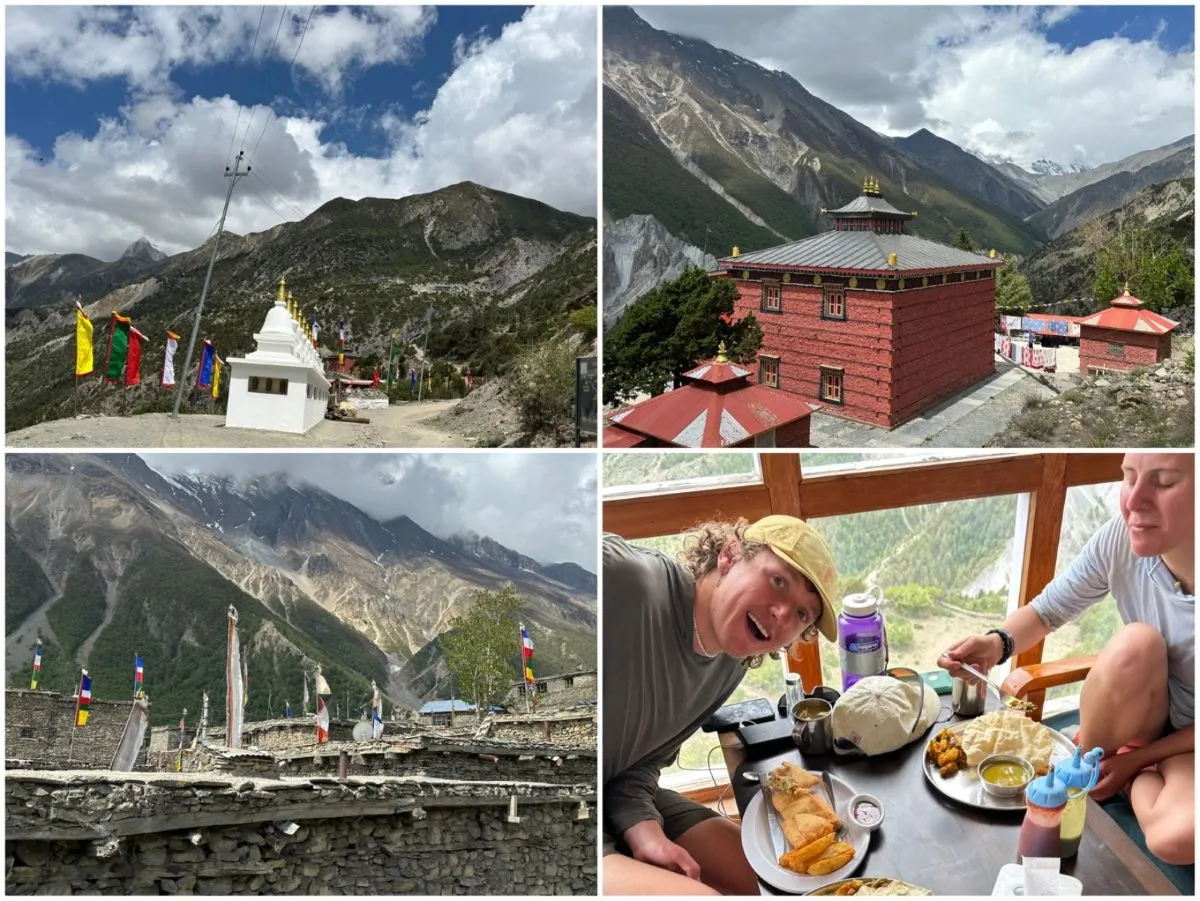
Hence, one of the greatest attractions of Khangsar is the breathtaking scenery of the high peaks. The picturesque setting and fresh air make it an ideal place for photography and inward concentration. Therefore, most number of enthusiast trekkers tries to spend some soul-searching moments in the tranquil environment of Khangsar.
Moreover, Kangsar is the access point to Tilicho Lake. Consequently, trekkers often rest there in order to visit this spectacular lake situated at the highest altitude. Finally, the monks' monastery and the traditional buildings provide a genuine experience of the Annapurna region culture.
Major Highlights of Khangsar Village :
Overall, the major attraction of Khangsar Village reflect both its natural beauty as well as richness of culture. Hence, the village can be part of a trek in Annapurna region. Further, due to the serene environment, beautiful views and warm local people's hospitality, it is a unique destination and has a lot to offer to trekkers and travelers.
Khangsar Village is situated in a very remote area of the Manang district. Therefore, the transportation to reach there is a bit complicated and needs some planning. For this reason, most people, who want to visit the hamlet have it either as a part of the Annapurna Circuit or as an extra trip to Tilicho Lake. Furthermore, the whole trip commonly begins from the Manang, which is less difficult.
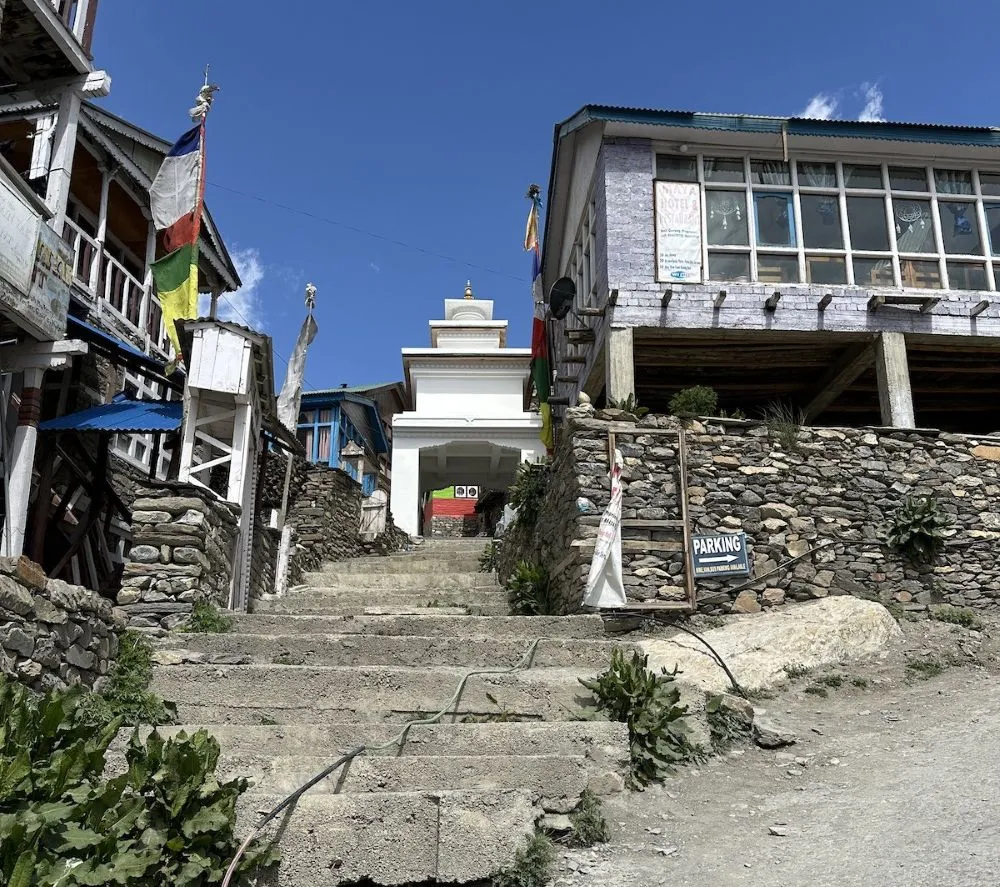
Hence, trek from Manang to Khangsar has a walking time of 1 to 2 days and trail is moderate. There are panoramas of mountains & valleys during trek. Thus, last toward Khangsar is charming with scenic landscapes. Besides, some trekkers want to fly from Kathmandu or Pokhara to Manang and trek to Khangsar for time saving.
Likewise, the village has simple teahouses with limited amenities. Therefore, bring sufficient supplies of food, drink and warm clothing for the trekking. And the best periods are in spring and autumn for the track and weather conditions; reasonably acclimatized and a reliable guide are then recommended.
| Route Option | Duration | Difficulty | Best For |
|---|---|---|
| From Manang | 1-2 days | Moderate | All trekkers. |
| Starting from Annapurna Circuit | A section of the main circuit | Easy| Experienced hikers |
| Helicopter Option | Short flight | Simple | For those who have little time |
Accessibility Tips :
So, I know Khangsar Village is a bit difficult to get to but it's well worth the effort, so with a little planning and preparation you will be able to visit one of the most peaceful and beautiful villages in the Annapurna range. As well as being part of the experience, you will have a great adventure through the breathtaking Himalayas.
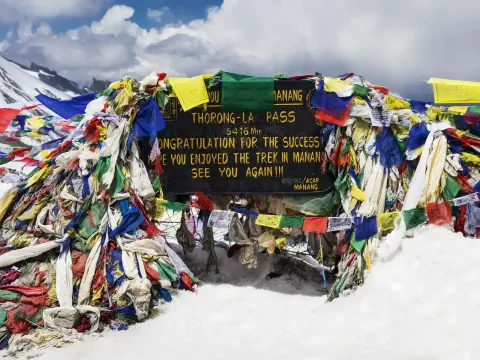
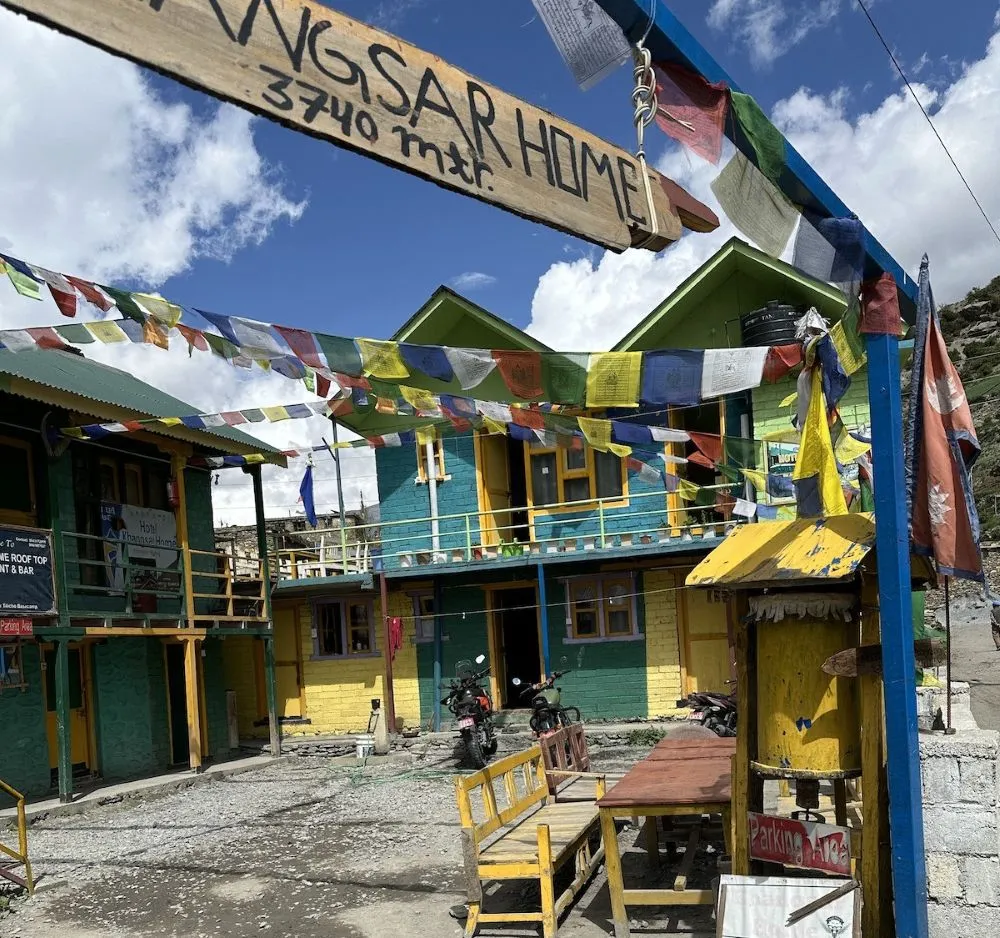
Khangsar Village provides simple yet necessary facilities for trekkers. As a result, it has several relatively simple teahouses which have rooms and meals for visitors. Furthermore, the facilities are limited as a result of the elevation and remoteness.
Accordingly, the teahouses in Khangsar provide simple twin-sharing rooms with no private facilities but shared bathrooms. While, hot vegetarian/full meals, such as dal bhat, noodles and tea, can be enjoyed in the communal dining hall. Therefore, you have a place to relax and resettle after an exhausting trek. In addition, some teahouses also have charging stations and Wi-Fi point that runs on a solar power but these may also charge for it.
Likewise, the village also has one small local shop where you are able to purchase basic snack foods, water, and general trekking supplies. Therefore, it is an ideal location to catch up on any supplies you may need before heading to Tilicho Lake. The welcoming local people are also always more than happy to offer advice and assistance.
| Facility | Availability | Notes |
|---|---|---|
| Basic room types available in teahouse | Accommodation | Twin-share rooms- with communal Bathrooms |
| Composition of meals | Dal bhat, noodle, tea | If warm meal, then at dining. |
| Wi-Fi| Limited | Additional charge | Connection can be unreliable |
| Small Shop | Various snacks and supplies | Suitable for one or two items |
Facilities in Khangsar village Tips :
So, services at the village Khangsar are simple but adequate. During the stopover, trekkers can have a break and rest, and prepare for the next stage of trekking. Besides, the enjoyable mountain life and friendly local people are set to give every tourist a memorable experience at Khangsar.
In terms of weather conditions, the best time for visiting Khangsar Village is in the period from March to May and from September to November. These two seasons thus certainly have the clearest weather as well as safest trail condition. Also, the feeling of the weather is relatively settled with little precipitation of rain and snow.
So, in springtime, you can enjoy the stunning blooming of the rhododendron and lovely weather. And in autumn, you get good visibility with blue sky of the mighty peaks around. Thus, both seasons are perfect for shooting and trekking without uneasiness. Additionally, the village area is not so crowded than the main Annapurna Circuit.
In summer (June- August) the monsoon season is – the trails can be-soiled and cloudy. So this is not allowed for the majority trekkers. In winter (December- February) the trail is so cold and there is also heavy snow there-so it is not easy and also hazardous.
| Season | Months | Typical Weather Patterns | Trail Conditions | Best Time to Visit |
|---|---|---|
| Spring | Mar-May | Warm days | Best Conditions | Excellent |
| Summer/Monsoon | Jun-Aug | Rainy, cloudy | Wet and slippery | Not recommended |
| Autumn | Sep-Nov | Clear stable | Dry clear | 90% |
| Winter | Dec-Feb | Extreme cold snow/ice possible | Frozen and slippery | Cannot be recommended |
Best Time Tips :
In conclusion, selecting the suitable time will enhance your safety as well as the visiting experience to Khangsar Village. As a result, most travelers would consider visiting in spring or autumn to be optimal. Also, good weather and transparent view will ensure you enjoy the gorgeous scenery of this high-crossed village.
Khangsar Village is a nice and quiet village situated at one of the scenic heart of the Annapurna area. As a result, it has a unique blend of natural serenity, culture and true mountain life. Besides, due to its elevation, antique houses and friendly inhabitants, it can be a recalled halt for every trekker.
Either way, Khangsar will stick with you if you either travel by the Tilicho Lake Trek or the Annapurna Circuit. And the mountain scenery, the tranquility, the warm hospitality all combine to make Khangsar a memorable experience. So many trekkers list it as one of the highlights of their trip to Nepal.
And the village itself epitomizes the air of the real Himalayan high-altitude villages. So it will always serve as a reminder for the tenacity and friendliness of the people residing among the towering mountains. And the clear air, spectacular scenery and cultural diversity are worth the trip.
Final Thoughts :
So, Khangsar Village is the real experience of the Annapurna circuit or Tilicho Lake Trek trail. Also, in this village experience contains to greatness. It is wonderful view with nature, culture and in peace. Therefore, Khangsar always gives new experiences with peaceful and elegant environment.
1. Where is Khangsar Village located in Nepal?
Khangsar Village is situated on the upper extent of Manang district in Gandaki Province and has a place within Annapurna Conservation Area. This village is a traditional settlement situated on the river valley of Khangsar Khola which provides a super quiet environment as it is far away from busiest trail.
2. What is the official elevation of Khangsar Village?
The official elevation of Khangsar Village is 3,790 meters (12, 286 feet) above sea level. At this elevation, with high altitude comes thinner air, therefore take your time when exploring and walking around the village as the body takes time to adapt to the conditions.
3. Why is this 'settlement' necessary for the trek route to Tilicho Lake?
This stunning settlement is the last permanent stopping point along the well-known Tilicho Lake trek route. Trekkers Opt for the route because it links to the main Annapurna Circuit to the glacial valley, where you can relax here before making the climb to the higher base camp.
4. Where is the best and cheapest accommodations in Khangsar?
The places to stay in Khangsar are homestays run by families in the village, or comfortable stone mountain lodges. They provide warm twin rooms and local hot food, but the facilities are all fairly basic as the village is so far away, so come prepared with a good sleeping bag.
5. Which mountains are visible from Khangsar Village?
You will be treated with some incredible views of the magnificent Tilicho Peak (7,134m) and Khangsar Kang (7,485m) right from the village. During clear mornings the mountains are picture perfect, so photographers really do love staying in this village as there are no obstructions to take pictures of the snow-capped summits.
6. What are the mode of transportation to Khangsar Village from Manang?
A scenic dirt path starting at Manang and leading to Khangsar Village is easily walkable, and takes around 4–5 hours. The route ascends gradually, passing scenic pine forests, or may be covered by rugged local jeep should weather conditions permit.
7. How is the culture in the area of Khangsar village?
Most of the villagers in Khangsar Village are from the Gurung and the Tibetan-Buddhist ethical groups. They carry on age-old traditions and look after the yaks. Expect to see many prayer flags and old stone houses while making your way through the traditional lanes.
8. Does Khangsar Village has an ancient monastery?
Yes, you are able to go and see the ancient Tare Gumba. This is an old Buddhist monastery located only an hour above the village. Because it is so old, it is a place where religious pilgrims go to pray and look after holy scriptures.
9. How far is Tilicho base camp from Khangsar?
The overall walk length from Khangsar to Tilicho Base Camp ranges from 5 to 6 km. The trek itself is 3 to 4 hr long as the track follows rugged high-altitude overhang ridgelines, so would need to be alert when crossing the unstable scree sections.
10. Is altitude sickness possible while living in Khangsar Village?
Absolutely you can experience altitude sickness. As the village is far above 3,500 meters, well hydrated and rested is the wise advice, which makes an additional acclimatization night in the village of Manang (3,519m.) Redoubtable senior Sherpa guides consider highly advisable.
11. What type of weather can you expect in Khangsar Village during autumn?
The weather in Khangsar Village in fall is generally dry and crisp, making October the best time for mountain views. Ambient temperature in the daytime is between 41 and 54 degrees Fahrenheit while nighttime temperature may be below freezing as the village is situated in a high alpine zone.
12. Are there operational ATMs available inside Khangsar Village?
No there are definitely no operational ATMs in Khangsar Village so you'll need to withdraw sufficient Nepalese cash in Pokhara/Jomsom. You will need cash, as opposite to card, and enough of it, to buy you food, hot showers and power to charge your devices (as most local lodges don't accept credit cards).
13. What kind of foods are available to eat in the Khangsar village.
Khangsar Village you have the option to enjoy healthy Nepalese Dal Bhat and Yak meat dishes from the local teahouses. Teahouses here use fresh products from the local market. Moreover, they offer hot garlic soup which is good for acclimatization and special Tibetan bread during breakfast.
14. Am I required to acquire any special permits for exploring Khangsar Village?
Yes, before you get to Khangsar Village you will need to have secured 2 special permits-since it is classed as a protected area. You require the Annapurna Conservation Area Project (ACAP) permit and Trekkers' Information Management Systems (TIMS) card and these are seen at different trail head stations.
15. Can I charge my devices in Khangsar Village?
Yes, there electricity for to charge your devices in Khangsar Village, where many of the last lodges are powered by solar power panels. Nevertheless can be unstable in overcast days so you will need to travel a power banks with high capacity.
16. How to Prepare the pack on the route through Khangshar Village?
For your packing list for Khangsar Village pack a heavy down jacket. A windproof pair of trousers and thermals are also recommended. A pair of tough trekking poles will be very helpful along the trails that are often very slippery with good sunglasses to protect your eyes from the high altitude sun glare.
17. Can you see Gangapurna Lake from Khangsar Village?
No, you cannot see the Gangapurna Lake (3,540m) directly from the village as the road runs back toward the settlement of Manang. Nevertheless, you will walk across stunning glacial streams supplied by the same mountains, so the path is still immensely rich in and dramatic landscape, water-wise.
18. What is the Estimated duration of the trek from Khangsar to Tillkilo lake?
The trek often takes us around 07 to 09 hours to surpass the distance from Khangsar to Tilicho lake depending upon individual speed, trekker strength and trekker's availability.
Getting to the renowned Tilicho Lake (4,919m) from village commonly takes two days of steady progress. You will trek from Khangsar to base camp in first day and then ascend the last clinging rise in next early morning.
19. Do the lodges in Khangsar Village have internet/Wi-Fi access?
Yes, a few of the newer lodges, located in the Khangsar Village, provide wireless internet access, but the connection will have problems due to the high mountains. Usually, the owners of the lodges charge some optional additional fee for the password, so you can have a genuine off-grid wilderness experience.
20. In which season is it most suitable for trekking Village tour at Khangsar Village?
The best times for a Khangsar Village trekking tour is spring (March-May) and fall (September-November). During these months the weather is bright and the high passes are not snowed in, making travel over these mountain tops the easiest and safest.
Our travel experts are ready to assist you with any questions.
Send us a message.Have a question before you book? Send your enquiry below and our travel experts will get back with the required information.