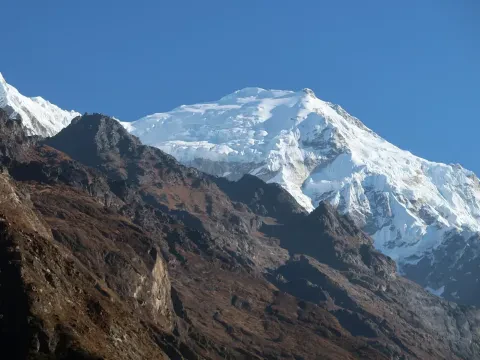
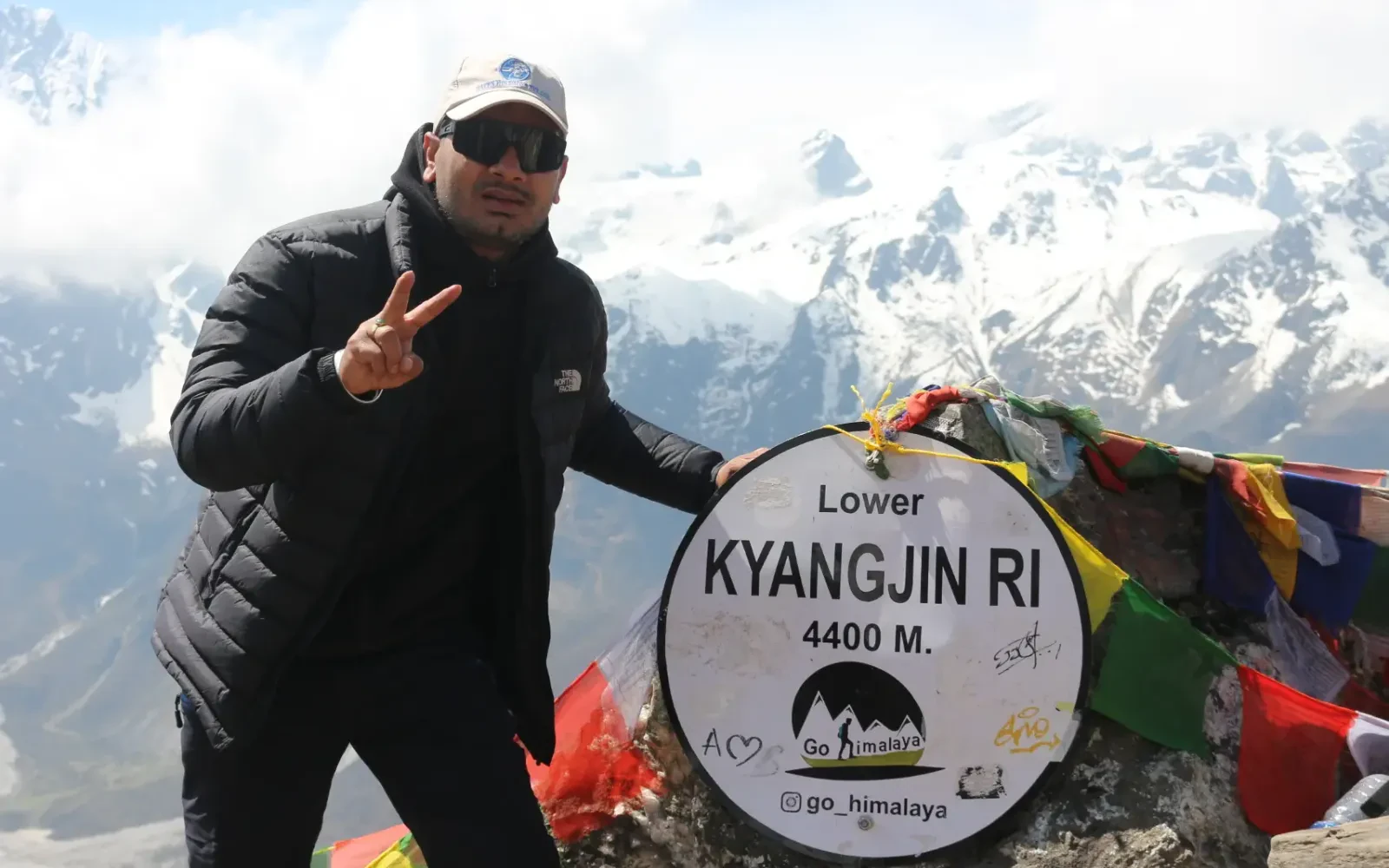
At first glance, reviewing a complete Langtang Valley elevation chart can be a surprisingly pleasant surprise. Unlike the vast, week-after-week trekking into the Everest or Annapurna regions, the altitude profile for the Langtang Valley trek packs world-class mountain scenery, stunning glacier valleys, and cultural experiences into a manageable time-frame. This efficiency makes the Langtang trek an incredibly popular choice for travelers wanting a full taste of the raw high Himalayas without the grueling length of longer Himalayan trips.
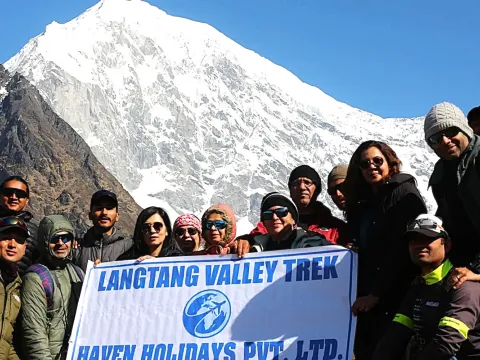
Also, one of the most compelling aspects of this particular Langtang Valley Trek itinerary is its fantastic accessibility from Kathmandu. Just a day's journey north of the capital, you can skip completely any complex travel arrangements, flight delays and expenses that an internal flight to a higher starting altitude would entail. And despite its shorter geographic scope, the Langtang trek elevation changes are still profound, taking you from lush, steamy river gorges into the frozen, air-starved sanctums of the high border peaks.
Dynamics of the Langtang Vertical Journey :
The Advantage of a High Alpine Basecamp: When you arrive at the top of the valley, the terrain flattens out into a high plateau, giving you a great base camp to launch multiple day hikes from, all based from a single teahouse.
| Day | Main Route Landmark | Present Altitude | Present Height | Dominant ecological zone |
|---|---|---|
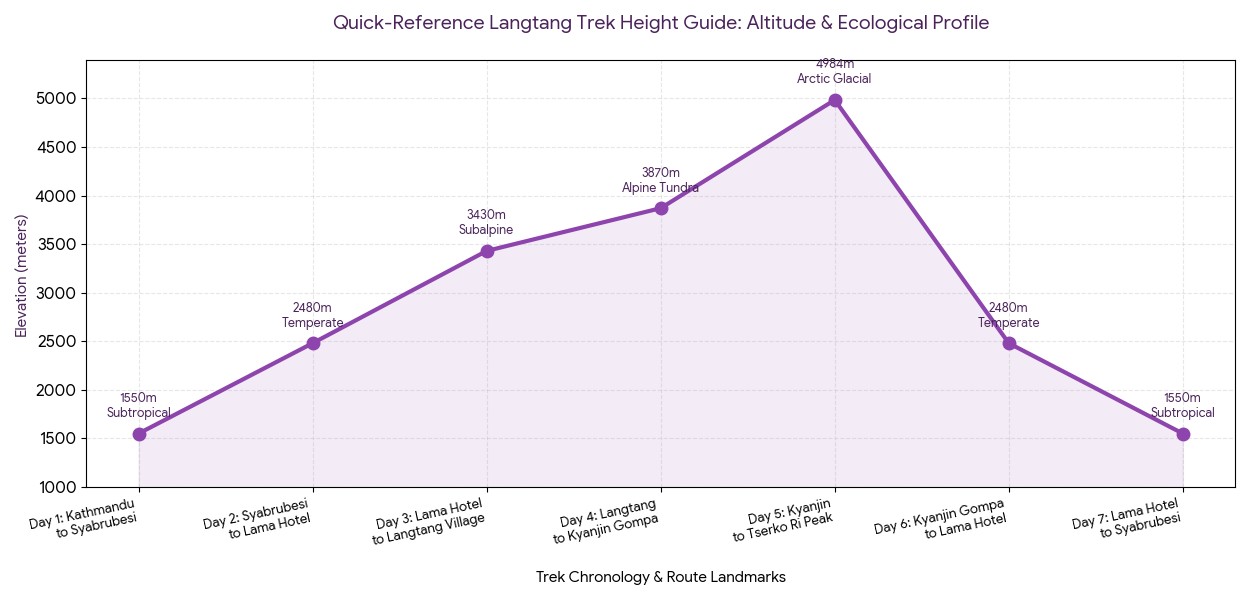
| Day 1 | Overland travel: Kathmandu to Syabrubesi | 1,550 m / 5,085 ft | Subtropical foothills |
| Day 2 | On foot: Syabrubesi to Lama Hotel | 2,480 m | 8,136 ft | Temperate rainforest |
| Day 3 | On foot: Lama Hotel to Langtang village | 3,430 m | 11,253 ft | Subalpine pine forest |
| Day 4 | On foot: Langtang village to Kyanjin Gompa | 3,870 m | 12,696 ft | Alpine tundra valley |
| Day 5 | Day-hike with altitude adjustment: Kyanjin to Tserko Ri peak | 4,984 m | 16,351 ft | Arctic glacial area |
| Day 6 | Quick descending hike: Kyanjin Gompa to Lama Hotel | 2,480 m | 8,136 ft | Temperate rainforest |
| Day 7 | Final descent: Lama Hotel to Syabrubesi | 1,550 m | 5,085 ft | Subtropical foothills |
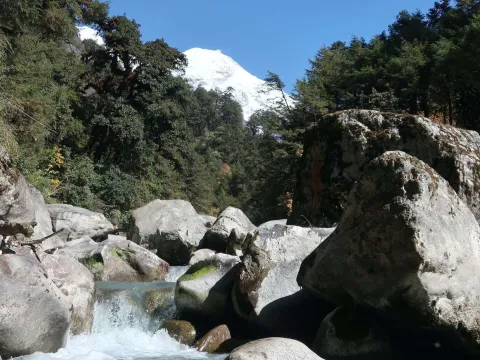
Actually, your journey into the high mountains of Langtang begins with a scenic, albeit sometimes jarring, overland drive. Departing from the fertile valley floor of Kathmandu, you will wind along precarious mountain roads that cling to the sides of deep river gorges, past thriving agricultural terraced farming. The drive from Kathmandu to Syabrubesi takes approximately 7-8 hours along rough, mostly unpaved road, but arriving at the trailhead is stepping into a totally different world of thin, clean air and distant, icy Tibetan peaks.
Upon arriving in the busy starting town, all hikers will need to briefly stop at the Langtang National Park entrance check-point to purchase their park permits. Once they've been verified, you can check into a local teahouse or lodge. With a humble Syabrubesi elevation of 1,550 meters (5,085 ft), the town provides a calm and non-intimidating base camp; spending your first night below the threshold of altitude sickness allows you to recover and build your strength while allowing your lungs and body to fully adapt to being at altitude
Top benefits of starting in Syabrubes :
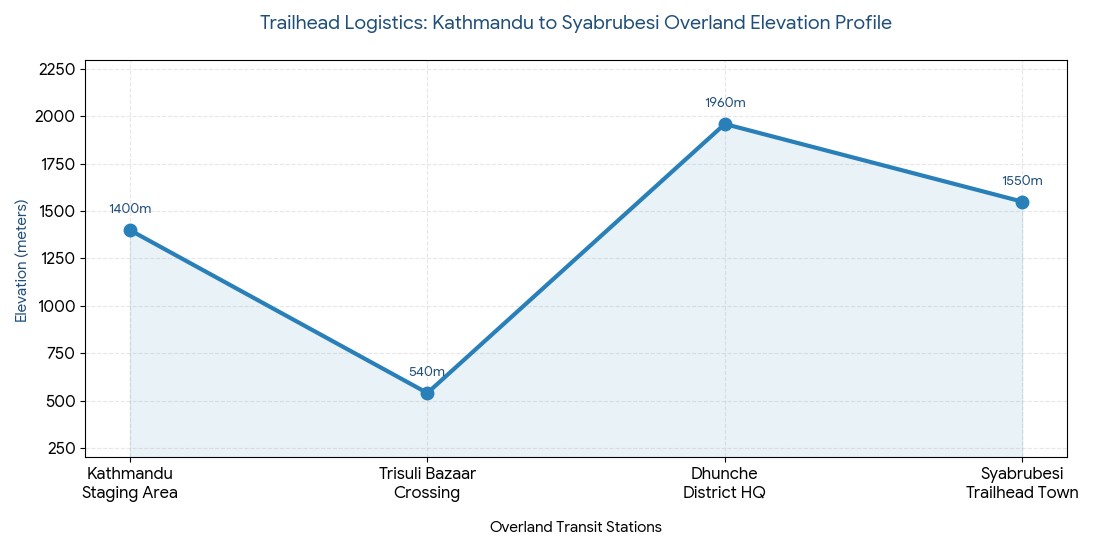
| Trail logistic | Elevation Metric | Elevation Imperial | Path detail and why it's important |
|---|---|---|
| Kathmandu Staging Area | 1,400 m | 4,593 ft | The city valley launching point where packing is finalized. |
| Trisuli Bazaar Crossing | 540 m | 1,771 ft | The lowest point on the route, where you'll find a more tropical environment. |
| Dhunche District HQ | 1,960 m | 6,430 ft | Highest point on the road; also where the military check-point is situated. |
| Syabrubesi Trailhead Town | 1,550 m | 5,085 ft | The Trail Launching point where you'll rest for the night. |
Expert Altitude Guidance: Always remember to Climb high, sleep low. This means that during your acclimatization hikes, you'll go up to higher elevations, and then descend to a lower altitude for your overnight stay to allow your body to recover and adjust effectively.
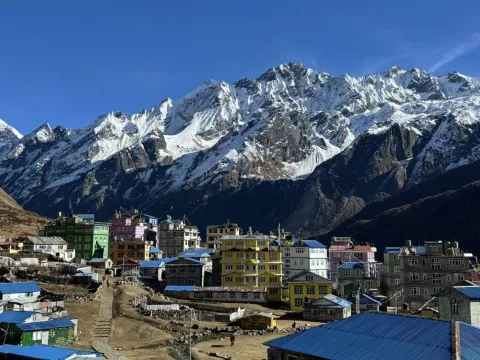
Here, your first official day of putting boot to trail takes you deep into a primordial wilderness-a beautiful, muscle-burning trek to the forested foothills of Lama Hotel. From the moment you cross the suspension bridge over the Bhote Koshi and begin trekking along the roaring Langtang Khola, the path is essentially a vertical ascent river trail that forces you to climb steadily along the floor of a sheer, deep-cut rock canyon.
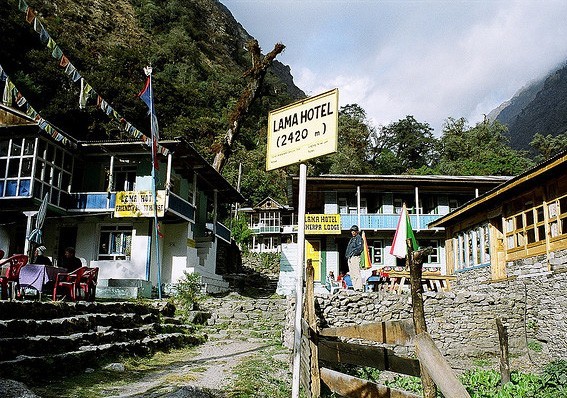
Throughout this grinding ascent, the air is heavy with moisture and the roar of waterfalls tumbling down the canyon walls. You’ll scramble across swinging suspension bridges, navigate slick stone steps, and walk beneath massive granite overhangs as the path zigzags upriver. Given that this challenging first day requires nearly a thousand meters of daily elevation gain, it provides the ultimate wake-up call to your legs and lungs.
Navigating the Subtropical Gorge Environment :
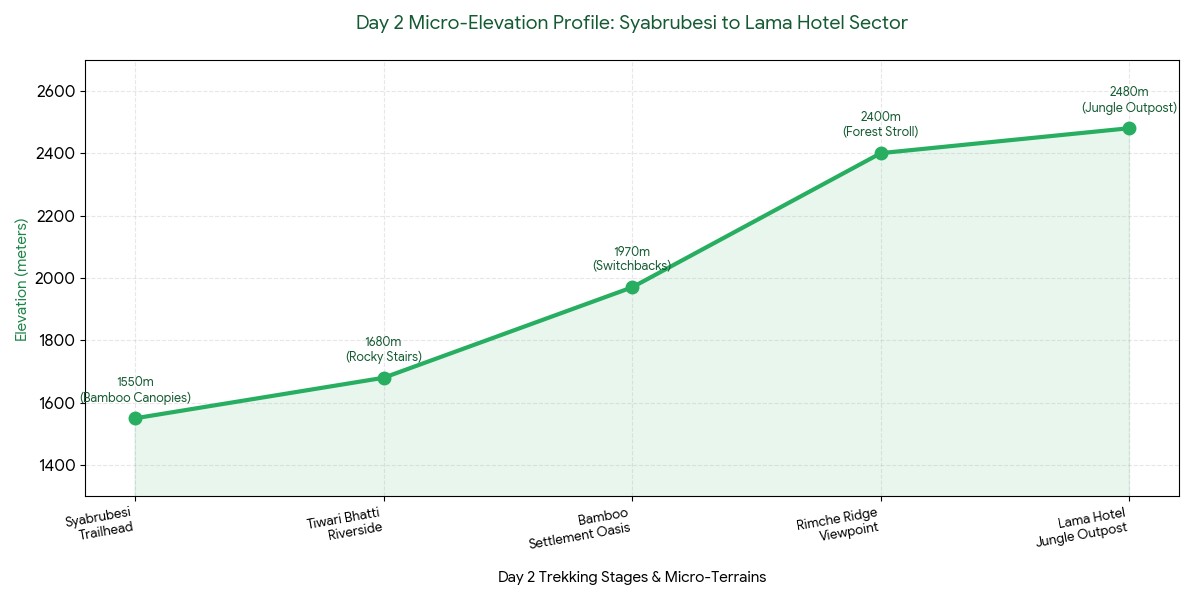
| Trail Station / Landmark | Baseline Elevation (m) | Baseline Elevation (ft) | Height Gain from Last Station | Key Terrain Characteristics |
|---|---|---|
| Syabrubesi Bridge | 1,550m | 5,085ft | Start Point | Rocky dirt tracks; wide valley floor; humid conditions. |
| Tiwari Bhatti | 1,680m | 5,511ft | +130m | Mostly flat; trail hugging the fast-flowing river. |
| Bamboo Settlement | 1,970m | 6,463ft | +290m | Dense bamboo canopy; steep stone steps emerge. |
| Rimche Ridge | 2,400m | 7,874ft | +430m | Steep, switchbacking rock trail; intense climbing section. |
| Lama Hotel Outpost | 2,480m | 8,136ft | +80m | Small clearing; deep forest; cool evening air. |
| Performance Indicator | Daily Metric | Trekker Advice |
|---|---|---|
| Total Horizontal Distance | 11.5km (7.1mi) | Focus on a steady, mechanical pace; resist urge to sprint the initial flats. |
| Net Vertical Elevation Gain | +930 vertical meters | Use trekking poles to offload ~20% of the burden from your knees. |
| Estimated Trekking Time | 5.5-6.5 Hours | Carry ample lightweight, fast-burning carbohydrates for an energy boost. |
Actually, you’ll wake up to a distinct shift in the morning air at Lama Hotel as you begin to climb higher into the valley. The humid jungle gives way to a beautiful transitional zone as the oak and bamboo trees begin to thin out and are gradually replaced by expansive groves of subalpine hemlock, larch and large rhododendrons.
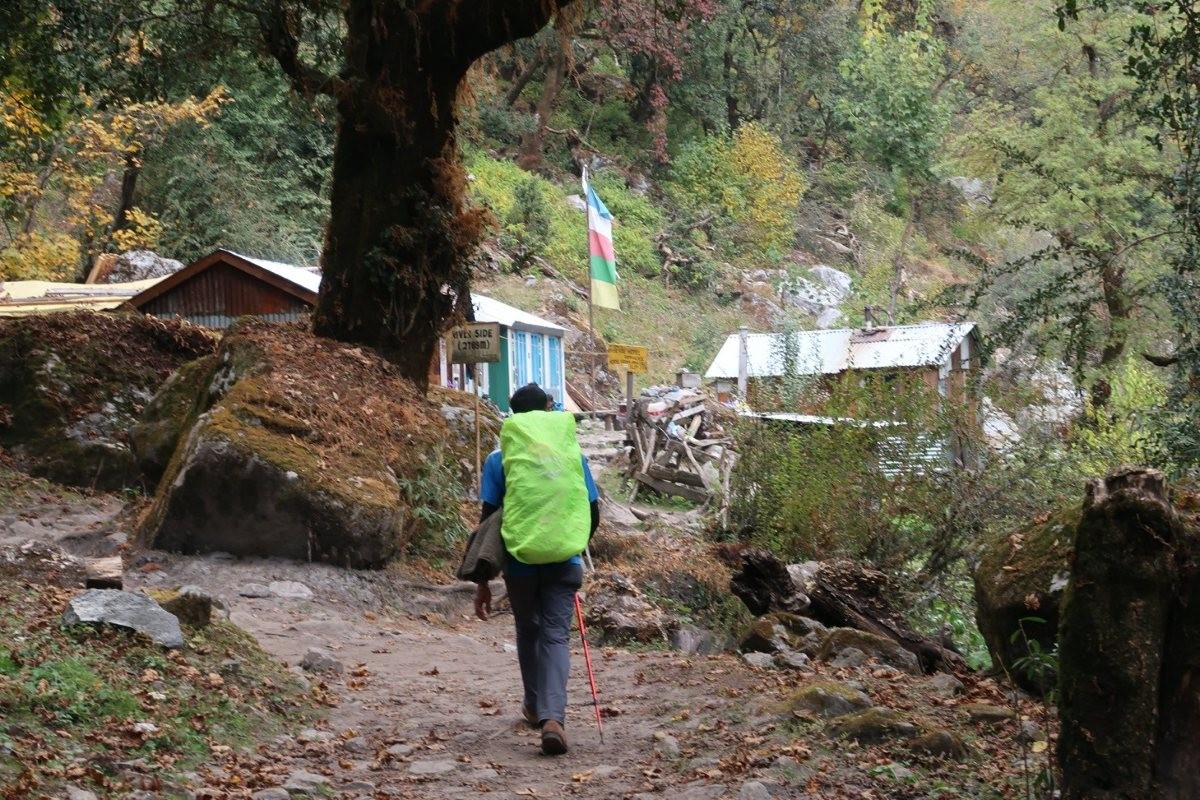
As you walk past the picturesque Riverside tea houses, the gorge starts to open up and the roaring sound of the Langtang Khola recedes as the valley walls grow wider, revealing the first glimpse of the enormous snow-capped peaks of Langtang Lirung (7,234m) against the northern sky.
Crossing the Thinning Air Threshold :
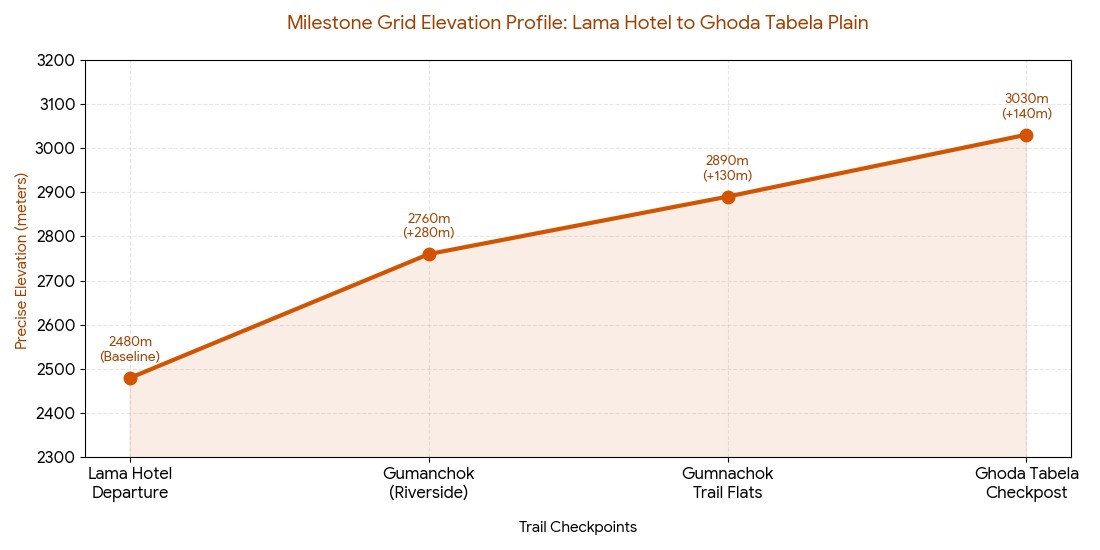
| Trail Checkpoint | Precise Elevation (m) / (ft) | Net Vertical Ascent | Ecological Zone & Flora |
|---|---|---|
| Lama Hotel Departure | 2,480m | 8,136ft | Baseline Elevation | Dense temperate forest; heavy moss & damp undergrowth. |
| Gumanchok (Riverside) | 2,760m | 9,055ft | +280m | Forest canopy thins; riverside tea stop; cool alpine breezes. |
| Gumnachok Trail Flats | 2,890m | 9,481ft | +130m | Pine and hemlock woods dominate; wider, drier trail bed. |
| Ghoda Tabela Checkpost | 3,030m | 9,941ft | +140m | Wide open alpine plain; check-in point for military permits. |
| High-Altitude Metric | Value at 3,030m | Physiological Response & Trekking Plan |
|---|---|---|
| Effective oxygen density | 71% | Expect slightly increased respiratory rate; slow your step rate. |
| Average Daytime Temperature | 10C–14C | (Spring/Autumn) | High UV index; wear sunscreen and polarized sunglasses. |
| Hydration goal | 3.5 Liters minimum | Continue regular drinking to prevent fluid loss due to increased breathing. |
The expert acclimatization rule: The most crucial rule for trekking safely in high altitudes is "climb high, sleep low". Pushing your body to a higher altitude during your afternoon acclimatization hikes helps your body prepare for thinner air while allowing your body to recover and adapt by sleeping at a lower elevation.
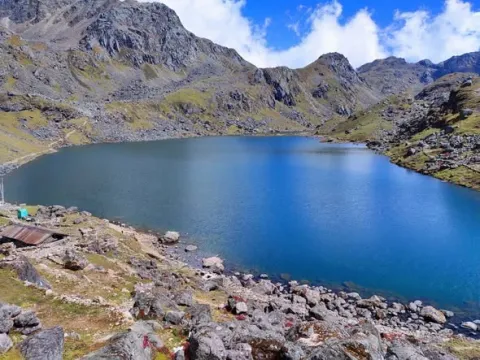
Beyond Ghoda Tabela’s alpine meadows, the trail dips out of the narrow river gorge and begins its long, dramatic rise out onto the wide valley floor. As the terrain opens, the thick forests give way completely to an alpine landscape characterized by short juniper bushes, dry shrubs, and stony yak pastures.
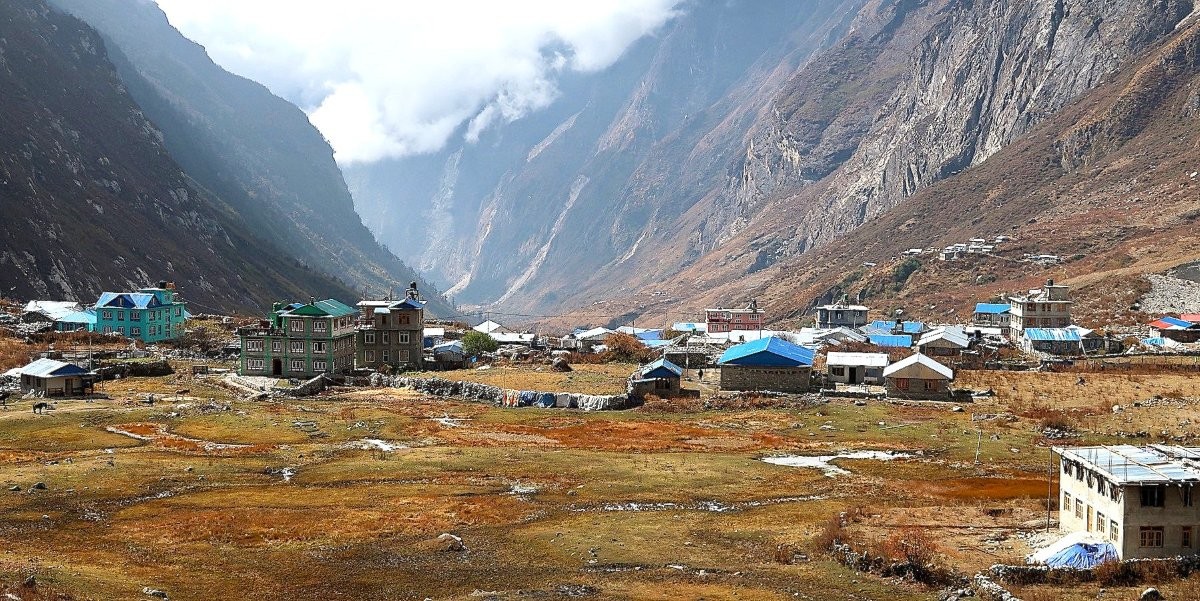
Likewise, you’ll trek past long, prayer-carved stone walls and colorful fluttering prayer flags that catch the crisp mountain breeze. This stretch marks your entry into the Tamang homeland at high altitude, as the immense sky opens up above you to frame the jaw-dropping northern ranges of the Langtang Himal.
Navigating the Upper Valley Terrain :
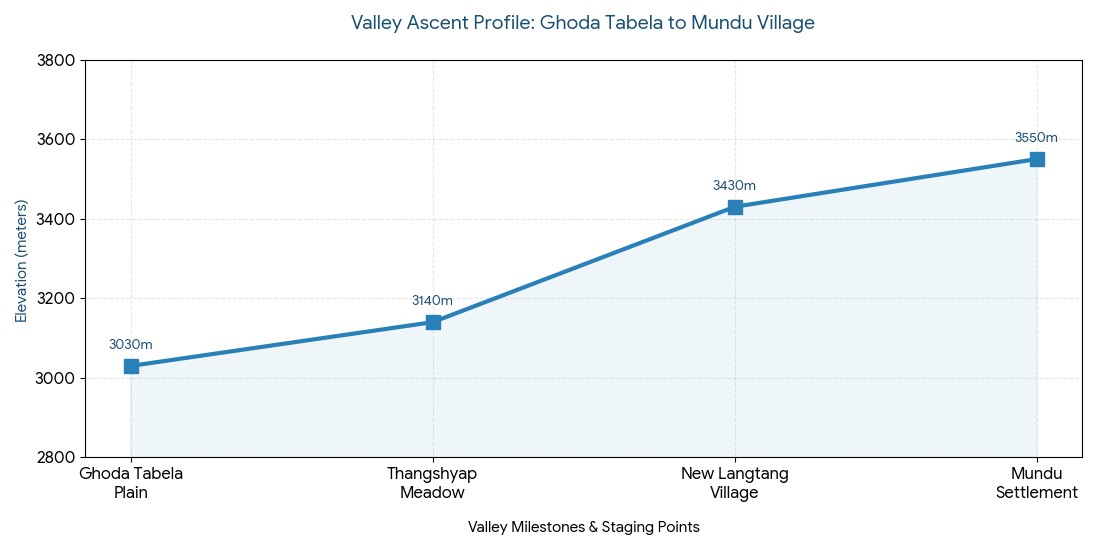
| Trail Station / Landmark | Baseline Altitude (Meters) / (Feet) | Height Gain From Last Station | Landscape & Cultural Features |
|---|---|---|
| Ghoda Tabela Plain | 3,030 m / 9,941 ft | Start Point | Open pastures; military post; wind-exposed trails. |
| Thangshyap Meadow | 3,140 m / 10,301 ft | +110 m | Small cluster of stone teahouses; potato fields. |
| New Langtang Village | 3,430 m / 11,253 ft | +290 m | Main valley hub; completely rebuilt modern lodges. |
| Mundu Settlement | 3,550 m / 11,647 ft | +120 m | Traditional stone houses; spectacular peak views. |
Actually, the geography of the upper valley holds a heartbreaking reminder of Himalayan history, a place that every trekker will pass. The devastating 7.8 magnitude earthquake in April 2015 triggered a catastrophic ice avalanche on the peaks of Langtang Lirung directly overhead. Millions of tons of ice and rock fractured off the mountainside, creating a blast wave that buried the original historic settlement in tons of debris.
Likewise, trekking across the quiet, gray field of rocks and glacial debris at the Langtang avalanche memorial site is a moving experience. The memorial wall bearing the names of those lost-locals, guides, and international trekkers alike-is a solemn tribute. Just beyond this somber expanse, the community's incredible resilience is on full display at the modern, colorful lodges of New Langtang Village, rebuilt on a more secure spot away from the original slide path.
Actually, the last leg of the valley trek brings you to the ultimate prize. Leaving the Mundu village elevation behind, you’ll climb gently across glacial outwash plains and through moraines. As you crest a high ridge that flanks the valley, you’ll be met with the breathtaking sight of a magnificent glacial amphitheater. Colorful rooftops nestle at the base of colossal peaks, welcoming you to a legendary high-altitude village.
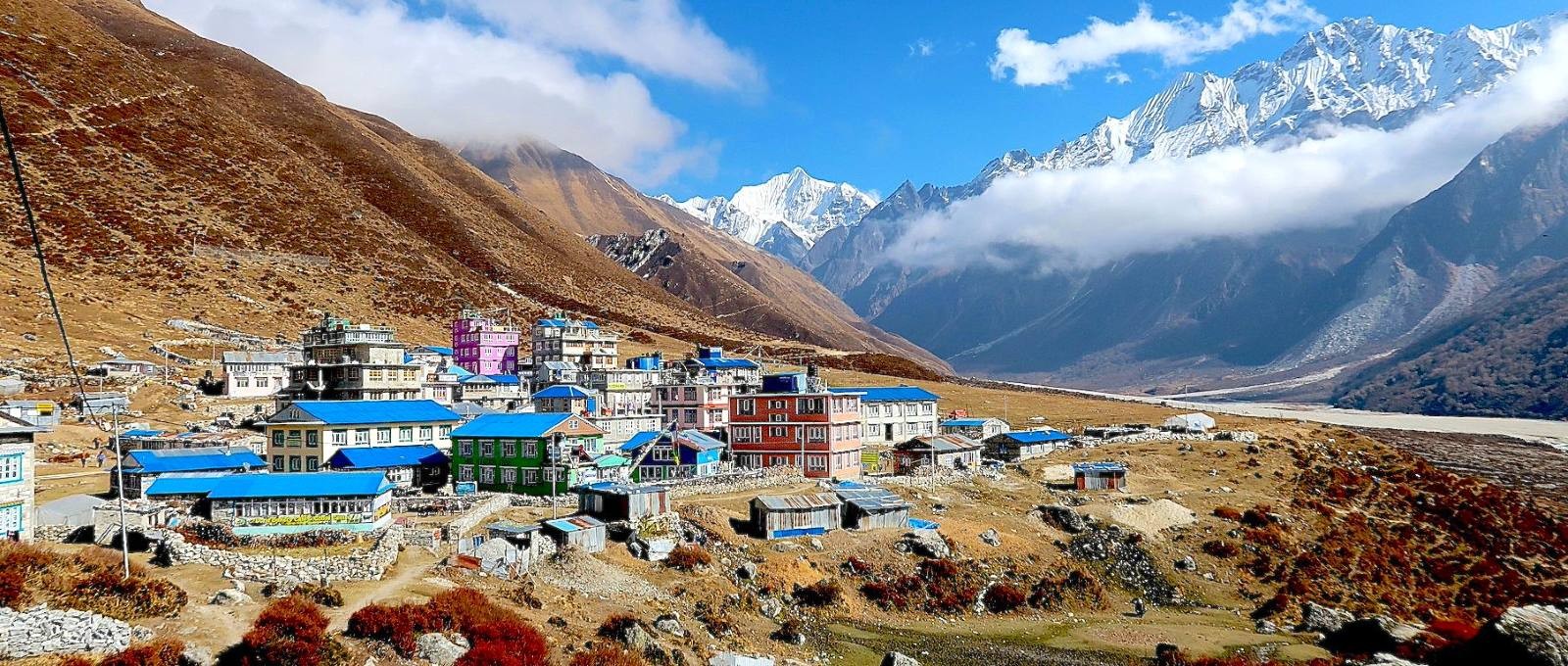
Here, perched at an Kyanjin Gompa elevation of 3,870 meters (approx. 12,696 feet), this vibrant settlement is your ultimate base camp outpost. You are completely surrounded by giants like Langtang Lirung (7,234 m), Ganjala Peak (5,675 m), and Kyanjin Ri (4,773 m). You can even hear the distant thunder of avalanches crashing down the active icefalls from the comfort of your teahouse.
Highlights of the High-Altitude Sanctuary :
| High-Altitude Landmark | Elevation Metric / Elevation Imperial | Connective Terrain Dynamic & Significance |
|---|---|---|
| Mundu Trailhead Exit | 3,550 m / 11,647 ft | The final lowland check point before the upper plateau climb. |
| Kyanjin Gompa Hub | 3,870 m / 12,696 ft | The Central Alpine Base; home to the local cheese factory and lodges. |
| Kyanjin Ri Lower Peak | 4,300 m / 14,107 ft | The nearest acclimatization ridge; a great, easy morning hike. |
| Tserko Ri High Summit | 4,984 m / 16,351 ft | The highest point of the trek; offers incredible panoramic glacial views. |
| Environmental Safety Factor | Metric Value at 3,870m | Physiological Response & Trail Protocol |
|---|---|---|
| Effective Oxygen Density | Approximately 63% | Air is thin; avoid sudden, jarring movements. |
| Freezing Point Baseline | 0C to -8C (Nighttime) | Temperatures plummet after sunset; don warm clothing immediately. |
| Daily Acclimatization Rest | 48 Hours Minimum | Spend at least two full days at this altitude before tackling summits. |
The High-Altitude Fuel Rule: When you pass 3,500 meters, your body's metabolism kicks into high gear to cope with the lack of oxygen. It burns through carbohydrates rapidly, even when you're resting. Keep your energy levels up with hot, easily digestible starch meals such as Dal Bhat (lentils and rice), garlic soup (good for circulation), and abundant hot drinks. Stick clear of heavy meats or alcohol, both of which can make your digestive system work harder and mimic the symptoms of altitude sickness like dehydration.
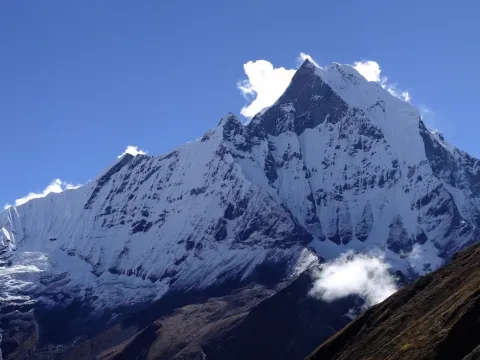
Stepping into the vibrant, high-altitude outpost of Kyanjin Gompa is a feeling of achievement-but it is here where your vertical discipline meets its ultimate challenge. Because the Langtang trail progresses vertically at a brisk pace, ascending rapidly from lowland riverbeds, your body only has forty-eight hours to adapt to a changing barometric pressure. Sleeping at the Kyanjin Gompa elevation of 3,870 meters (~12,696 feet) puts you right at the cusp of the high-alpine zone where available oxygen drops to a measly 63% of sea-level value.
Likewise, any attempts to continue up the valley walls without a structured Langtang acclimatization day strategy will almost certainly result in immediate physiological distress. As your brain registers the blood's diminished oxygen supply, omitting a dedicated adaptation rest period will quickly trigger classic altitude sickness symptoms. To sidestep these initial warning signs and prevent premature trip termination, actively employ day climbs to trigger your circulatory system before settling down for another chilly night in the valley floor.
Implementing the Adaptation Protocol :
| Staging Target Point | Target Elevation (Meters) / (Feet) | Biological Function & Strategy |
|---|---|---|
| Kyanjin Lodge Floor | 3,870 m | 12,696 ft | Baseline sleeping elevation; focus on heavy hydration and warm rest. |
| Langtang Lirung Base | 4,200 m | 13,779 ft | Low-impact moraine walk; ideal for testing early lung expansion. |
| Kyanjin Ri Apex | 4,773 m | 15,659 ft | Moderate alpine challenge; provides excellent vertical conditioning. |
| Tserko Ri Summit | 4,984 m | 16,351 ft | Maximum altitude exposure; ideal preparation for high Himalayan pass routes. |
If your body is feeling comfortable and hydrated after an initial night at the valley floor outpost, the most effective next step in your acclimatization protocol is to tackle the striking black ridge directly behind the village houses. This strenuous, yet rewarding, day hike from Kyanjin Gompa acts as a steep, challenging natural stairway leading you directly to a magnificent vantage point of the upper ice fields.
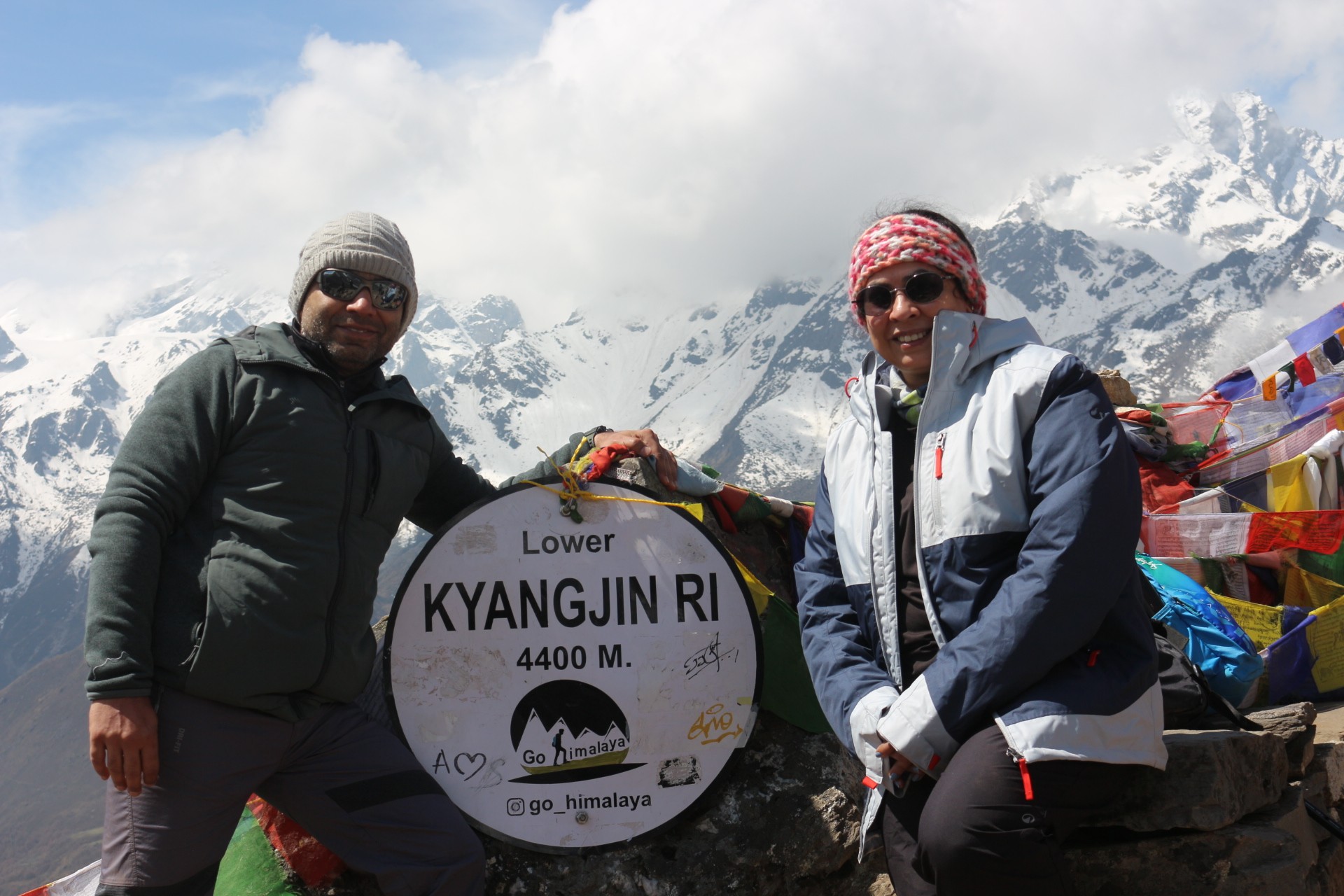
Here, the trail begins right on the edge of the village meadows, immediately launching onto a steep, narrow dirt path winding upwards via tight switchbacks. As the ascent is entirely vertical, developing a slow, steady breathing pattern is absolutely crucial to ward off early fatigue. The path is broken into two main milestones, allowing hikers to determine their maximum ascent point based on current energy levels and blood oxygen readings.
Conquering the Twin Summit Ridges :
The Safe Descent Loop: After spending 20 minutes at the peak absorbing the immense views and allowing your system to adjust to the thinner air, you will descend via a winding, less-steep loop trail, arriving back at your lodge for a much-needed hot lunch.
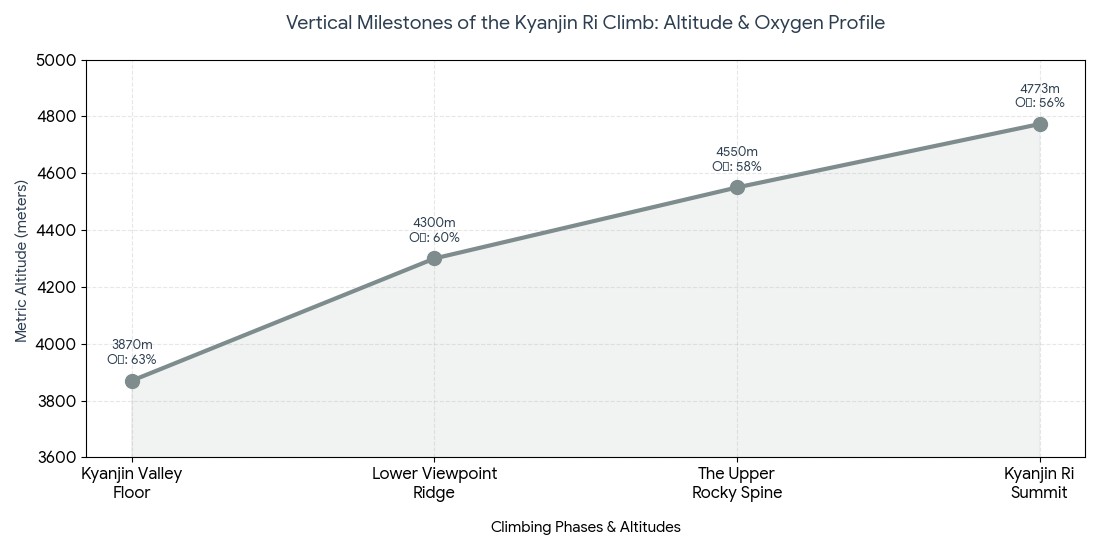
| Vertical Climbing Phase | Metric Altitude | Imperial Elevation | Oxygen Density (% Sea Level) | Trail Conditions & Terrain Realities |
|---|---|---|
| Kyanjin Valley Floor | 3,870 m | 12,696 ft | 63% | Open, flat alpine meadows; secure dirt tracks out of village. |
| Lower Viewpoint Ridge | 4,300 m | 14,107 ft | 60% | Steep, continuous dirt switchbacks; high wind exposure. |
| The Upper Rocky Spine | 4,550 m | 14,927 ft | 58% | Narrow single-track trail; requires careful footing over loose gravel. |
| Kyanjin Ri Summit | 4,773 m | 15,659 ft | 56% | The Apex Peak; marked with prayer flags; sub-zero drafts. |
The Fueling for the Altitude Rule: Above 3,500 meters, your metabolism elevates significantly in an attempt to compensate for lower oxygen levels and will burn carbohydrates at an accelerated pace even during rest. To keep your energy reserves full, consume 3 hot, simple carbohydrate meals per day like Dal Bhat (lentils and rice), garlic soup for increased blood flow, and plenty of hot beverages. Avoid heavier meats or alcohol, as they increase digestive stress and can exacerbate altitude sickness symptoms.
Actually, this is the expedition's peak physical trial, as you set off to reach the highest point of the valley. A climb to this windswept, rocky outpost means departing Kyanjin Gompa before sunrise at 5:00 AM, into the freezing pre-dawn, under a sky full of sharp, clear stars. Early starts ensure stable footing on frozen trails, and guarantee views from the summit before the afternoon fog sets in.
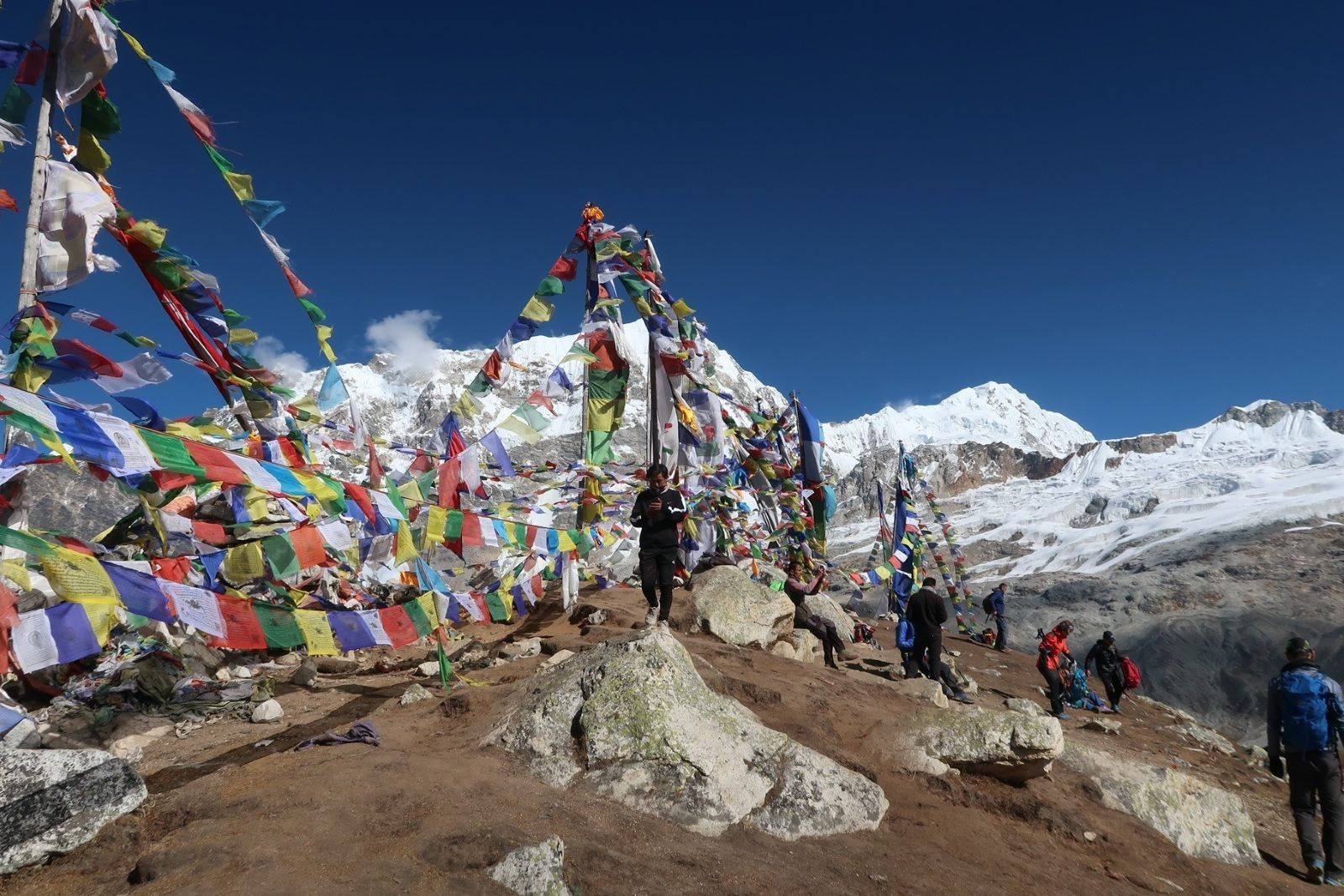
Attempting this tough, high alpine ridge-climb, your strength and determination will be challenged. The trek crosses the dry glacial stream bed before beginning the punishing, steep side of a wind-blasted ridge. Ascending to the Tserko Ri height 4,984 m (16,351 feet), the path turns to a steep, technical scramble across huge, slippery boulder field formations and scree.
Actually, the highest point on Langtang trek, adorned with thousands of colorful prayer flags, offers unparalleled, panoramic views across the entire Central Himalayas. You'll be able to witness the towering beauty of Langtang Lirung, the slender Yala Peak (5,520 m), the formidable Kimshung (6,500 m), and the monumental white monolith of Shisha Pangma (8,027 m) directly across the Tibetan border.
How to Summit: Maintaining Energy and Well-being,
| Phase / Altitude Goal | Exact Elevation (m) | Exact Elevation (ft) | Elevation Gain (m) | Oxygen / Air Composition |
|---|---|---|
| Kyanjin Base Outpost | 3,870 m | 12,696 ft | 0 m | 63% Oxygen; sharp pre-dawn alpine air. |
| Lower Ridge Spine | 4,250 m | 13,943 ft | +380 m | 61% Oxygen; entering steep, consistent tracks. |
| Mid-Way Plateau | 4,600 m | 15,091 ft | +350 m | ~58% Oxygen; entering rocky moraine terrain. High wind areas. |
| Tserko Ri Summit | 4,984 m | 16,351 ft | +384 m | ~54% Oxygen; the ultimate alpine vantage point. Sub-zero conditions. |
Here, returning from the awe-inspiring peaks, the trek back reveals the valley's incredible physical topography. The classic "in-and-out" structure of the Langtang Valley means that as you depart the snow line, you will begin your journey back towards Lama Hotel, retracing your steps. This design allows for a dramatically fast descent that feels both liberating and utterly exhilarating for the body.
A descent of more than 1,400 vertical meters from the higher valley into the dense, tropical rainforest in a single day is a relentless, knee-buckling experience. Your quadriceps will burn as you struggle to control your pace down the rugged switchbacks of gravel, rocks, and scree.
But this dramatic drop in elevation has remarkable benefits for altitude recovery. The higher pressure and increased oxygen content of the atmosphere as you descend restore your muscle tissues, clear your head from any lingering altitude-related discomfort, and lead to a truly deep and restorative night of sleep.
Downhill Strategies: Managing the Descent,
| Target / Milestone | Altitude Drop (m) | Altitude Drop (ft) | Net Descent (m) | Air & Landscape |
|---|---|---|
| Kyanjin Departure | 3,870 m | 12,696 ft | 0 m | Sharp pre-dawn alpine air; open valley vistas. |
| New Langtang Village | 3,430 m | 11,253 ft | 440 m | The rocky grazing village; sub-alpine tundra landscape. |
| Ghoda Tabela Plain | 3,030 m | 9,941 ft | 400 m | Approaching tree line; reducing wind impact. |
| Riverside Tea Houses | 2,760 m | 9,055 ft | 270 m | Deep temperate forest; hemlock and oak tree cover. |
| Lama Hotel Jungle | 2,480 m | 8,136 ft | 280 m | Safe baseline; warm, humid air; oxygen rich jungle climate. |
Fast Recovery Benefit: A wonderful safety factor inherent in the Langtang Valley's physical topography is that the trail serves as a built-in emergency descent route. Because it's a consistent, direct corridor, if you experience even mild altitude-related symptoms at Kyanjin Gompa, descending a short distance below Ghoda Tabela can effect a rapid biological fix. The dense, oxygen-rich air within the lower river gorge immediately mitigates mild altitude sickness, making this a very forgiving route for less-experienced trekkers.
Actually, trekking in the shadow of the world’s highest mountains will surely be an experience unlike any other but requires absolute reverence for invisible changes in atmospheric pressure. As you hike up the valley, air becomes thinner, so with every single breath that you take, your blood will have less and less oxygen. This might result in high altitude sickness in the long run and that you might not know.
[Mild altitude sickness signs]- (headache, slight nausea, poor sleep)
[Step A: Stationary phase]
[Step B: Alarm phase] :
To make your trek safer; every trekker is advised to keep close look on basic vital signs of health. Early identification of symptoms of acute mountain sickness and to decide whether it's time to leave usual trekking routine and implement contingency plan may make all the difference between successful and life threatening journey on the mountain.
Finding the Total Accumulated Altitude Gain for the Langtang Valley Trek-meaning, all the upward segments totaled together-involves a bit more calculation than simply noting your start and end points. Because the route constantly dips down to cross suspension river bridges and then climbs steeply back up again over cliff faces and along ridge lines, the true total vertical distance you'll climb will be much higher than the difference in map elevation.
Below is an exact breakdown of the cumulative elevation gain for both the basic path and the extra ascents to acclimatization peaks.
1. Standard Langtang Valley Trek: Syabrubesi to Kyanjin Gompa
This tracks the main 'in-and-out' route, following the Langtang Khola (river) valley up to the main hub, excluding optional mountain climbs.
(This estimate accounts for about 330 m of small climbs over small ridges, riverbanks, and landslide areas along the way up).
2. Peak Additions (Acclimatization)
Once at the village, most trekkers choose to climb one or both of the famous viewpoints above Kyanjin Gompa for practice and panoramic vistas.
| Trekking itinerary range | Total cumulative elevation gain (meters) | Total cumulative elevation gain (feet) |
|---|---|---|
| Basic Valley Trek only (Syabrubesi to Kyanjin Gompa and back) | 2,650 m | 8,694 ft |
| Valley Trek plus Kyanjin Ri climb (A common itinerary for acclimatization) | 3,553 m | 11,657 ft |
| Peak-bagger's route (Valley trek plus Kyanjin Ri and Tserko Ri climbs) | 4,667 m | 15,312 ft |
So, depending on what your chosen itinerary looks like and whether you are the type who like to climb high to improve acclimatization, your total cumulative vertical distance will be one of the following:
Actually, Langtang Valley trek is the perfect destination to those who wish to venture into the alpine region of Nepal but don't have enough time or are looking for a relatively shorter trek in the Himalayas. Due to the rapid ascent the map of daily elevation gains will be your most essential tool for trekking safely and making a successful itinerary.
By reviewing the Langtang valley daily altitude chart, you can envision the vertical mile markers of the entire trekking route and know precisely where to ascend slower and make important rest days. If you are on a leisure, slow trek, or considering the short trek itinerary Nepal offers for shorter trips, thoughtful pacing and proper acclimatization can allow you to experience the raw grandeur of the Himalayas comfortably.
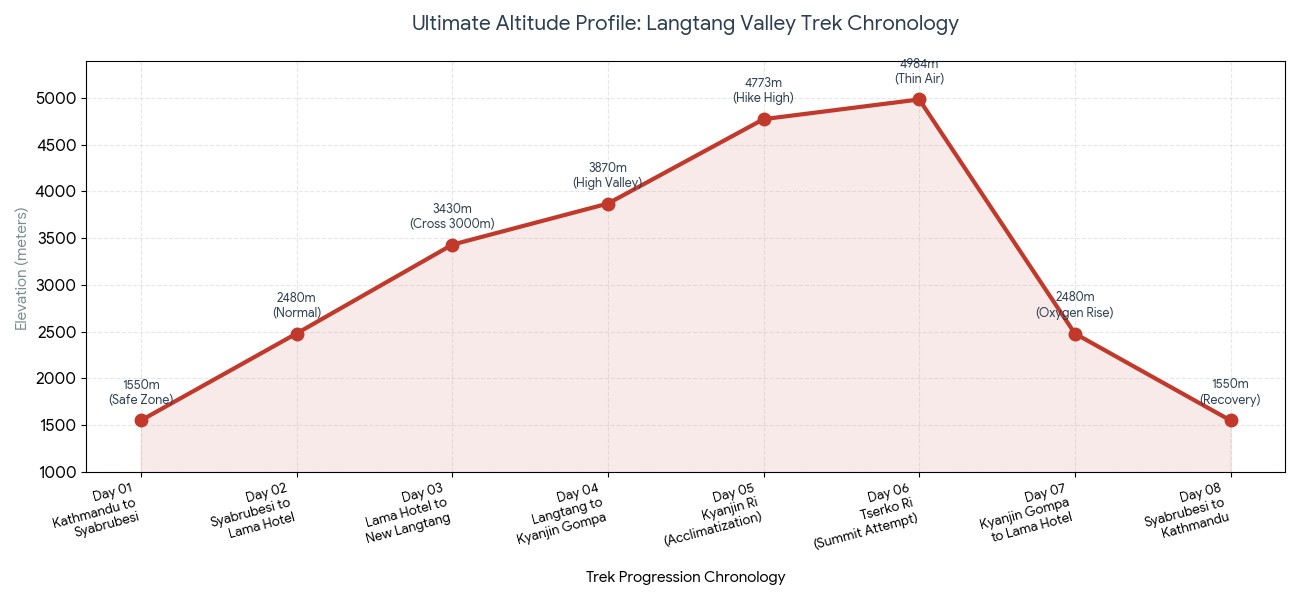
| Itinerary day | Trekking day stages/destination | Daily altitude (m) / (ft) | Normal trek time | Risk profile and adaptation stages |
|---|---|---|
| Day 01 | Drive from Kathmandu to Syabrubesi | 1,550 m | 5,085 ft | 7-8 hours (Drive) | Safe zone: no risk of AMS. |
| Day 02 | Trek from Syabrubesi to Lama Hotel | 2,480 m | 8,136 ft | 5-6 hours | Dense jungle air; normal training with increased effort. |
| Day 03 | Trek from Lama Hotel to New Langtang Village | 3,430 m | 11,253 ft | 5-6 hours | Crossing the 3000m line; take a slower approach. |
| Day 04 | Trek from Langtang village to Kyanjin Gompa | 3,870 m | 12,696 ft | 3-4 hours | The high valley floor reached. |
| Day 05 | Resting/ acclimatization day and exploration hike | 4,773 m | 15,659 ft | 4-5 hours | Day hike to Kyanjin Ri; Hike High Sleep Low principle. |
| Day 06 | Summit attempt to Tserko Ri peak | 4,984 m | 16,351 ft | 7-8 hours | Highest point on Langtang trek; the air is thin here. |
| Day 07 | Descend from Kyanjin Gompa to Lama Hotel | 2,480 m | 8,136 ft | 6-7 hours | Significant drop in altitude; instant oxygen increase. |
| Day 08 | Walk to Syabrubesi, drive to Kathmandu | 1,550 m | 5,085 ft | 4 hours (walk) | Finished trekking; complete recovery. |
Things that matter in the trip:
1. What is the starting point and elevation of the Langtang Valley trek?
The classic Langtang Valley trek elevation profile officially begins in the lively trail town of Syabrubesi, situated at an altitude of 1,550 meters (5,085 feet). This relatively low starting altitude is highly beneficial for beginners, allowing for a gentle first day of walking through verdant, low-altitude forests.
2. What is the maximum elevation reached on the standard Langtang Valley trek?
The highest overnight altitude on a standard Langtang Valley trek itinerary is 3,870 meters (12,696 feet) at the beautiful alpine village of Kyanjin Gompa. This is the final inhabited base lodge settlement on the main trek route before you begin your descent back down the valley.
3. How high can you climb on Langtang Valley trek side excursions?
While the main trail concludes at Kyanjin Gompa, your maximum Langtang Valley trek elevation can actually reach much higher with side excursions, primarily as optional day hikes for acclimatization. Many trekkers ascend the stunning viewpoint peaks of Kyanjin Ri (4,773m) or the more strenuous Tserko Ri (4,985m).
4. What is the total Langtang Valley trek distance covered across this altitude profile?
The entire round-trip Langtang Valley trek distance on foot is roughly 65 to 80 kilometers (40 to 50 miles), depending on which side hikes you opt to incorporate within the upper glacier basin.
5. Is the Langtang Valley trek elevation profile suitable for beginners?
Absolutely. The steady gradient of the Langtang Valley trek elevation profile makes it one of the most beginner-friendly alpine treks in Nepal. It progresses more gradually than routes like Everest Base Camp, significantly minimizing the overall Langtang Valley trek difficulty for inexperienced trekkers.
6. What is the elevation of Lama Hotel and why is it a key stop?
Lama Hotel is perched at an altitude of 2,470 meters (8,103 feet) and serves as an essential overnight stop on any safe Langtang Valley trek itinerary. This is because it marks the culmination of a lengthy, sustained vertical climb of approximately 900 meters from Syabrubesi, allowing your body to safely rest below the 3,000-meter mark.
7. How rapid is the altitude variation on the day you hike to Langtang Village?
The trek from Lama Hotel (2,470m) to Langtang Village (3,430m) involves a substantial altitude change of 960 vertical meters. This day's hike crosses the critical 3,000-meter threshold, and your guide will therefore enforce a slow and steady pace to help manage the increasing Langtang Valley trek difficulty.
8. What is the current elevation of the rebuilt Langtang Village?
The rebuilt Langtang Village now sits at an elevation of 3,430 meters (11,253 feet). Following the devastating earthquake in 2015, this vibrant, traditional Tamang village was reconstructed slightly higher up the valley wall to ensure safety and provide a strategically positioned resting point for acclimatization.
9. Does the Langtang Valley trek elevation profile pose a high risk for altitude sickness?
The risk of Acute Mountain Sickness (AMS) is substantially lower on this trek compared to others at a higher altitude. As the peak overnight Langtang Valley trek elevation does not exceed 4,000 meters, severe altitude illnesses are uncommon, provided you maintain proper hydration and walking pace.
10. What is the altitude variation between Langtang Village and Kyanjin Gompa?
The hike from Langtang Village to Kyanjin Gompa is a gentle ascent, climbing from 3,430 meters to 3,870 meters-an altitude change of only 440 vertical meters. This relatively short and scenic morning walk allows your body to comfortable adjust to the higher alpine environment.
11. How does the available oxygen change across the Langtang Valley trek elevation profile?
At the starting point in Syabrubesi, you will be breathing with the same oxygen saturation as at sea level. By the time you reach the highest overnight point at Kyanjin Gompa (3,870m), the available oxygen will have dropped to roughly 64%, meaning you will notice shorter breaths during ascents.
12. What is the best strategy to handle the Langtang Valley trek difficulty?
The most effective method to overcome the Langtang Valley trek difficulty is to adhere to the "climb high, sleep low" principle. Dedicating an acclimatization day at Kyanjin Gompa (3,870m) to hike up to higher panoramic viewpoints allows your body to safely adapt to the surrounding peaks.
13. How much does a Langtang Valley trek cost in relation to its altitude?
A typical Langtang Valley trek cost ranges between $500 and $900 USD per person. Because this altitude profile is accessed by road transportation from Kathmandu rather than expensive internal flights, it remains one of the most budget-friendly alpine treks available in Nepal.
14. What terrain changes can I expect across the Langtang Valley trek elevation profile?
The terrain undergoes a significant visual transformation as you ascend. You will begin by trekking through a humid, dense sub-tropical river gorge filled with oak and bamboo forests, which gradually gives way past Ghoda Tabela (3,030m) to a wide, exposed, glacier-carved U-shaped alpine valley.
15. Are there high-altitude mountain passes on a standard Langtang Valley trek itinerary?
No, a typical Langtang Valley trek itinerary does not involve crossing any high, technical mountain passes. The trail simply ascends and descends along the main valley floor, avoiding the increased atmospheric and physical challenges associated with high pass crossings.
16. What peaks are visible from the highest points of the Langtang Valley trek elevation profile?
From the highest vantage points like Tserko Ri, you will be treated to an incredible, panoramic view. You'll gaze down upon the massive glaciers of Langtang Lirung (7,227m), Yala Peak (5,520m), Gangchempo (6,387m), and even see across the border into Tibet.
17. Is travel insurance mandatory for the Langtang Valley trek elevation?
Yes, travel insurance is highly recommended and generally required. Even though the standard trail Langtang Valley trek elevation is lower than treks like Everest Base Camp, your policy should explicitly cover emergency helicopter evacuation up to 5,000 meters to provide for any potential high-altitude emergencies or injuries.
18. How does the altitude profile affect nighttime temperatures on the trek?
Nighttime temperatures drop considerably as you climb higher along the Langtang Valley trek elevation profile. While the initial trailheads will be warm, the temperature at Kyanjin Gompa will frequently be below freezing (0°C to -5°C / 32°F to 23°F), necessitating a warm down jacket and a suitable sleeping bag.
19. Can I shorten the Langtang Valley trek distance if I am fit?
If you are in excellent physical condition, you can reduce the return Langtang Valley trek distance by jogging from Kyanjin Gompa down to Lama Hotel in one go, an impressive drop of over 1,400 vertical meters. However, it is not advised to rush the initial ascent as your body needs adequate time to adjust to the altitude changes.
20. What is the success rate for beginners facing the Langtang Valley trek difficulty?
The overall success rate for the Langtang Valley trek is exceptionally high, hovering around 95%. Due to its gradual Langtang Valley trek elevation profile and relatively lower maximum altitude, the trek is very accessible, with the vast majority of participants completing it successfully.
Our travel experts are ready to assist you with any questions.
Send us a message.Have a question before you book? Send your enquiry below and our travel experts will get back with the required information.