[{"name":"Everest Base Camp Helicopter Tour","duration":"1","image_url":"https:\/\/www.havenholidaysnepal.com\/storage\/trip-galleries\/1\/thumb_6cd53005d75a86e373d31419d1b14d78.webp","offer_price":1195,"url":"https:\/\/www.havenholidaysnepal.com\/trips\/everest-base-camp-helicopter-tour"},{"name":"Everest Mountain Flight","duration":"1","image_url":"https:\/\/www.havenholidaysnepal.com\/storage\/trip-galleries\/4\/thumb_3b0b4f1d6f72b0ad224daf4752f2c6e0.jpg","offer_price":285,"url":"https:\/\/www.havenholidaysnepal.com\/trips\/everest-mountain-flight"},{"name":"Everest Short Trek","duration":"9","image_url":"https:\/\/www.havenholidaysnepal.com\/storage\/trip-galleries\/5\/thumb_BXPP3621.JPEG0.02033800 1727957098.webp","offer_price":995,"url":"https:\/\/www.havenholidaysnepal.com\/trips\/everest-short-trek"},{"name":"Gokyo Valley Trek","duration":"12","image_url":"https:\/\/www.havenholidaysnepal.com\/storage\/trip-galleries\/6\/thumb_10bc469b14731f23d3ce84a7092ad53f.jpg","offer_price":1195,"url":"https:\/\/www.havenholidaysnepal.com\/trips\/gokyo-valley-trek"},{"name":"15 days Annapurna Base Camp Trek","duration":"15","image_url":"https:\/\/www.havenholidaysnepal.com\/storage\/trip-galleries\/7\/thumb_87d1533bc45faf070990aef0579e4be4.jpg0.81855100 1728285496.webp","offer_price":785,"url":"https:\/\/www.havenholidaysnepal.com\/trips\/15-days-annapurna-base-camp-trek"},{"name":"Nepal Pilgrimage Tour","duration":"14","image_url":"https:\/\/www.havenholidaysnepal.com\/storage\/trip-galleries\/8\/thumb_02c3bcf2ad2e8a4c1703e90ae747b5f1.jpg","offer_price":1475,"url":"https:\/\/www.havenholidaysnepal.com\/trips\/nepal-pilgrimage-tour"},{"name":"UNESCO World Heritage Site Tour","duration":"10","image_url":"https:\/\/www.havenholidaysnepal.com\/storage\/trip-galleries\/9\/thumb_unesco-world-heritage-site-Lumbani-temple-buddhists-hindus-kathmandu-nepal0.36988600 17347617740.93089500 1737469667.webp","offer_price":715,"url":"https:\/\/www.havenholidaysnepal.com\/trips\/unesco-world-heritage-site-tour"},{"name":"Island Peak Climbing","duration":"16","image_url":"https:\/\/www.havenholidaysnepal.com\/storage\/trip-galleries\/11\/thumb_Island peak0.53947000 1734692503.webp","offer_price":2495,"url":"https:\/\/www.havenholidaysnepal.com\/trips\/island-peak-climbing"},{"name":"Upper Mustang Trek","duration":"18","image_url":"https:\/\/www.havenholidaysnepal.com\/storage\/trip-galleries\/12\/thumb_upper mustang 7 Oct-2024.jpg0.95398900 1728286166.webp","offer_price":2995,"url":"https:\/\/www.havenholidaysnepal.com\/trips\/upper-mustang-trek"},{"name":"Annapurna Circuit Trek","duration":"16","image_url":"https:\/\/www.havenholidaysnepal.com\/storage\/trip-galleries\/15\/thumb_tibetan-flags.jpg0.04843900 1728289138.webp","offer_price":985,"url":"https:\/\/www.havenholidaysnepal.com\/trips\/annapurna-circuit-trek"},{"name":"Gosainkunda Lake Trek","duration":"10","image_url":"https:\/\/www.havenholidaysnepal.com\/storage\/trip-galleries\/16\/thumb_5A8083B3-C007-41A8-853F-D0C37C97D235_1_105_c.jpeg0.52581200 1731845258.webp","offer_price":595,"url":"https:\/\/www.havenholidaysnepal.com\/trips\/gosainkunda-lake-trek"},{"name":"Zip-lining in Pokhara and Dhulikhel","duration":"1","image_url":"https:\/\/www.havenholidaysnepal.com\/storage\/trip-galleries\/18\/thumb_215f765e2ebc995dd5c800b4bfdbacc3.jpg","offer_price":82,"url":"https:\/\/www.havenholidaysnepal.com\/trips\/zip-lining-in-pokhara-and-dhulikhel"},{"name":"Annapurna Heli Tour","duration":"1","image_url":"https:\/\/www.havenholidaysnepal.com\/storage\/trip-galleries\/19\/thumb_d71a6bbb9fd4da8d1b567a5cdbdec85d.jpg","offer_price":555,"url":"https:\/\/www.havenholidaysnepal.com\/trips\/annapurna-heli-tour"},{"name":"Paragliding in Pokhara","duration":"1","image_url":"https:\/\/www.havenholidaysnepal.com\/storage\/trip-galleries\/20\/thumb_de788d2dd9726783431f882c007efae1.jpg","offer_price":65,"url":"https:\/\/www.havenholidaysnepal.com\/trips\/paragliding-in-pokhara"},{"name":"Ultra-Flight in Pokhara","duration":"1","image_url":"https:\/\/www.havenholidaysnepal.com\/storage\/trip-galleries\/21\/thumb_e27a9fb572a5c21611bb2a3c18e4b8f0.jpeg","offer_price":175,"url":"https:\/\/www.havenholidaysnepal.com\/trips\/ultra-flight-in-pokhara"},{"name":"Sarangkot Hiking","duration":"1","image_url":"https:\/\/www.havenholidaysnepal.com\/storage\/trip-galleries\/22\/thumb_100ef822fea19987166c6c1366215f15.jpg","offer_price":55,"url":"https:\/\/www.havenholidaysnepal.com\/trips\/sarangkot-hiking"},{"name":"Mera Peak Climbing","duration":"18","image_url":"https:\/\/www.havenholidaysnepal.com\/storage\/trip-galleries\/24\/thumb_d16ae3895f678cf26ffbf2455f541fb5.jpg0.31883400 1732617790.webp","offer_price":2475,"url":"https:\/\/www.havenholidaysnepal.com\/trips\/mera-peak-climbing"},{"name":"Lower Dolpo Trek","duration":"18","image_url":"https:\/\/www.havenholidaysnepal.com\/storage\/trip-galleries\/26\/thumb_Dolpo Galary - 1.JPG0.37725200 1727939952.webp","offer_price":2995,"url":"https:\/\/www.havenholidaysnepal.com\/trips\/lower-dolpo-trek"},{"name":"Nagarkot Sunrise\/Sunset Tour","duration":"1","image_url":"https:\/\/www.havenholidaysnepal.com\/storage\/trip-galleries\/27\/thumb_5147a5532644283a380f2e86f3857c13.jpg0.17748000 1728488108.webp","offer_price":30,"url":"https:\/\/www.havenholidaysnepal.com\/trips\/nagarkot-sunrise-sunset-tour"},{"name":"16 day Everest Base Camp Trek","duration":"16","image_url":"https:\/\/www.havenholidaysnepal.com\/storage\/trip-galleries\/28\/thumb_IMG_4311.JPG0.64984800 1727942213.webp","offer_price":1695,"url":"https:\/\/www.havenholidaysnepal.com\/trips\/16-day-everest-base-camp-trek"},{"name":"Ghorepani Poon Hill trek with Jungle Safari and Trishuli River Rafting -13 days","duration":"13","image_url":"https:\/\/www.havenholidaysnepal.com\/storage\/trip-galleries\/29\/thumb_Ghorepani Poon hill.jpg0.48460800 1728281439.webp","offer_price":795,"url":"https:\/\/www.havenholidaysnepal.com\/trips\/ghorepani-poon-hill-trek-with-jungle-safari-and-trishuli-river-rafting--13-days"},{"name":"Mardi Himal Trek","duration":"12","image_url":"https:\/\/www.havenholidaysnepal.com\/storage\/trip-galleries\/30\/thumb_s1.jpg0.62112600 1728200721.webp","offer_price":795,"url":"https:\/\/www.havenholidaysnepal.com\/trips\/mardi-himal-trek"},{"name":"Langtang Valley Trekking","duration":"10","image_url":"https:\/\/www.havenholidaysnepal.com\/storage\/trip-galleries\/31\/thumb_IMG_4702.JPG0.84916500 1727958504.webp","offer_price":685,"url":"https:\/\/www.havenholidaysnepal.com\/trips\/langtang-valley-trekking"},{"name":"Real Adventure Tour in Nepal","duration":"9","image_url":"https:\/\/www.havenholidaysnepal.com\/storage\/trip-galleries\/32\/thumb_ebd1b8cc78d90abe8b9003dd9a2f25bf.jpg0.82151300 1728213516.webp","offer_price":695,"url":"https:\/\/www.havenholidaysnepal.com\/trips\/real-adventure-tour-in-nepal"},{"name":"Luxury Tour in Nepal","duration":"10","image_url":"https:\/\/www.havenholidaysnepal.com\/storage\/trip-galleries\/33\/thumb_8574e61b252b18676b042caf30d830df.jpg","offer_price":1675,"url":"https:\/\/www.havenholidaysnepal.com\/trips\/luxury-tour-in-nepal"},{"name":"Luxury Everest Panorama Trek With EBC Heli Sightseeing","duration":"8","image_url":"https:\/\/www.havenholidaysnepal.com\/storage\/trip-galleries\/34\/thumb_URZL2397.JPEG0.01209600 1728027820.webp","offer_price":2395,"url":"https:\/\/www.havenholidaysnepal.com\/trips\/luxury-everest-panorama-trek-with-ebc-heli-sightseeing"},{"name":"13 day Everest Base Camp Trek with Helicopter","duration":"13","image_url":"https:\/\/www.havenholidaysnepal.com\/storage\/trip-galleries\/35\/thumb_IMG_4292.JPG0.70131500 1728029276.webp","offer_price":2095,"url":"https:\/\/www.havenholidaysnepal.com\/trips\/13-day-everest-base-camp-trek-with-helicopter"},{"name":"Manaslu Circuit Trek","duration":"16","image_url":"https:\/\/www.havenholidaysnepal.com\/storage\/trip-galleries\/36\/thumb_Mt Manaslu 03-Oct-2024.jpg0.65804900 1727938470.webp","offer_price":1055,"url":"https:\/\/www.havenholidaysnepal.com\/trips\/manaslu-circuit-trek"},{"name":"Kanchenjunga Base Camp Trek","duration":"21","image_url":"https:\/\/www.havenholidaysnepal.com\/storage\/trip-galleries\/37\/thumb_Kanchanjunga Trek -!.jpg0.54744400 1727938497.webp","offer_price":2275,"url":"https:\/\/www.havenholidaysnepal.com\/trips\/kanchenjunga-base-camp-trek"},{"name":"Ganesh Himal and Sing-La Trek","duration":"14","image_url":"https:\/\/www.havenholidaysnepal.com\/storage\/trip-galleries\/38\/thumb_Ganesh Himal slider-1.jpg0.43764500 1727937722.webp","offer_price":1775,"url":"https:\/\/www.havenholidaysnepal.com\/trips\/ganesh-himal-and-sing-la-trek"},{"name":"Island Peak Climb with Everest Base Camp Trek","duration":"21","image_url":"https:\/\/www.havenholidaysnepal.com\/storage\/trip-galleries\/39\/thumb_2be428730fe83525bc85a010564f99de.jpg","offer_price":2750,"url":"https:\/\/www.havenholidaysnepal.com\/trips\/island-peak-climb-with-everest-base-camp-trek"},{"name":"Students' Adventure Tour in Nepal","duration":"12","image_url":"https:\/\/www.havenholidaysnepal.com\/storage\/trip-galleries\/41\/thumb_a926d22fbfe08cba271c41ac289b3fd2.jpg","offer_price":995,"url":"https:\/\/www.havenholidaysnepal.com\/trips\/students-adventure-tour-in-nepal"},{"name":"7 Day Poonhill Trek","duration":"7","image_url":"https:\/\/www.havenholidaysnepal.com\/storage\/trip-galleries\/42\/thumb_6196bd69036473293a2c24cc21ed57d7.jpg0.10880600 1728205378.webp","offer_price":555,"url":"https:\/\/www.havenholidaysnepal.com\/trips\/7-day-poonhill-trek"},{"name":"7 Days Annapurna Base Camp Trek","duration":"7","image_url":"https:\/\/www.havenholidaysnepal.com\/storage\/trip-galleries\/43\/thumb_IMG_2214.JPG0.08204900 1728202033.webp","offer_price":355,"url":"https:\/\/www.havenholidaysnepal.com\/trips\/7-days-annapurna-base-camp-trek"},{"name":"3 days Poonhill Trek","duration":"3","image_url":"https:\/\/www.havenholidaysnepal.com\/storage\/trip-galleries\/44\/thumb_Poon hill.jpg0.60816600 1731412954.webp","offer_price":165,"url":"https:\/\/www.havenholidaysnepal.com\/trips\/3-days-poonhill-trek"},{"name":"Poon Hill Luxury Trek with Chitwan-12 days","duration":"12","image_url":"https:\/\/www.havenholidaysnepal.com\/storage\/trip-galleries\/45\/thumb_Poom hill.jpg0.52074500 1730180532.webp","offer_price":1175,"url":"https:\/\/www.havenholidaysnepal.com\/trips\/poon-hill-luxury-trek-with-chitwan-12-days"},{"name":"Everest Luxury Trek-7 days","duration":"7","image_url":"https:\/\/www.havenholidaysnepal.com\/storage\/trip-galleries\/46\/thumb_ACRX9330.JPEG0.93236200 1728031275.webp","offer_price":2195,"url":"https:\/\/www.havenholidaysnepal.com\/trips\/everest-luxury-trek-7-days"},{"name":"Hindu Pilgrimage Tour in Nepal-10 days","duration":"10","image_url":"https:\/\/www.havenholidaysnepal.com\/storage\/trip-galleries\/47\/thumb_a94bf96a4d31decb419f6f828a3280d2.jpg","offer_price":995,"url":"https:\/\/www.havenholidaysnepal.com\/trips\/hindu-pilgrimage-tour-in-nepal-10-days"},{"name":"Everest Base Camp Short Trek-12 days","duration":"12","image_url":"https:\/\/www.havenholidaysnepal.com\/storage\/trip-galleries\/48\/thumb_IMG_4311.JPG0.52680100 1727945154.webp","offer_price":995,"url":"https:\/\/www.havenholidaysnepal.com\/trips\/everest-base-camp-short-trek-12-days"},{"name":"Everest Base Camp Hike 12 Days","duration":"12","image_url":"https:\/\/www.havenholidaysnepal.com\/storage\/trip-galleries\/49\/thumb_IMG_4260.JPG0.51729100 1728061234.webp","offer_price":1295,"url":"https:\/\/www.havenholidaysnepal.com\/trips\/everest-base-camp-hike-12-days"},{"name":"11 Days Everest Base Camp Trek","duration":"11","image_url":"https:\/\/www.havenholidaysnepal.com\/storage\/trip-galleries\/50\/thumb_IMG_4249.JPG0.21392500 1727946959.webp","offer_price":1055,"url":"https:\/\/www.havenholidaysnepal.com\/trips\/11-days-everest-base-camp-trek"},{"name":"6 Days Annapurna Base Camp Trek","duration":"6","image_url":"https:\/\/www.havenholidaysnepal.com\/storage\/trip-galleries\/51\/thumb_6 days Abc.jpg0.58185400 1728200798.webp","offer_price":285,"url":"https:\/\/www.havenholidaysnepal.com\/trips\/6-days-annapurna-base-camp-trek"},{"name":"Annapurna Base Camp Trek","duration":"8","image_url":"https:\/\/www.havenholidaysnepal.com\/storage\/trip-galleries\/52\/thumb_IMG_2214.JPG0.29415700 1729487656.webp","offer_price":585,"url":"https:\/\/www.havenholidaysnepal.com\/trips\/annapurna-base-camp-trek"},{"name":"Everest Base Camp Trek with Helicopter Fly Out 10 Days","duration":"10","image_url":"https:\/\/www.havenholidaysnepal.com\/storage\/trip-galleries\/53\/thumb_IMG_4328.JPG0.52056600 1728058444.webp","offer_price":1875,"url":"https:\/\/www.havenholidaysnepal.com\/trips\/everest-base-camp-trek-with-helicopter-fly-out-10-days"},{"name":"Everest Base Camp Trek 14 Days","duration":"14","image_url":"https:\/\/www.havenholidaysnepal.com\/storage\/trip-galleries\/54\/thumb_Everest Base Camp Trek 14 days Oct 3 2024.JPG0.43202700 1727939745.webp","offer_price":1335,"url":"https:\/\/www.havenholidaysnepal.com\/trips\/everest-base-camp-trek-14-days"},{"name":"ABC Trek with Poonhill 11 Days","duration":"11","image_url":"https:\/\/www.havenholidaysnepal.com\/storage\/trip-galleries\/55\/thumb_ABC with fishtail.JPG0.21441100 1728277965.webp","offer_price":555,"url":"https:\/\/www.havenholidaysnepal.com\/trips\/abc-trek-with-poonhill-11-days"},{"name":"Muldai Hill Trek 9 Days","duration":"9","image_url":"https:\/\/www.havenholidaysnepal.com\/storage\/trip-galleries\/56\/thumb_7efee59f0a8c6817c8255bd2b9f3539d.jpeg0.19479300 1728213091.webp","offer_price":675,"url":"https:\/\/www.havenholidaysnepal.com\/trips\/muldai-hill-trek-9-days"},{"name":"Mardi Himal Trek 6 days","duration":"6","image_url":"https:\/\/www.havenholidaysnepal.com\/storage\/trip-galleries\/57\/thumb_slider 1.jpeg0.36909700 1728184981.webp","offer_price":590,"url":"https:\/\/www.havenholidaysnepal.com\/trips\/mardi-himal-trek-6-days"},{"name":"Mardi Himal Trek 7 days","duration":"7","image_url":"https:\/\/www.havenholidaysnepal.com\/storage\/trip-galleries\/58\/thumb_slider1.jpg0.61666600 1728206414.webp","offer_price":620,"url":"https:\/\/www.havenholidaysnepal.com\/trips\/mardi-himal-trek-7-days"},{"name":"Mardi Himal Trek 8 Days","duration":"8","image_url":"https:\/\/www.havenholidaysnepal.com\/storage\/trip-galleries\/59\/thumb_sli1.jpg0.38569100 1728206631.webp","offer_price":695,"url":"https:\/\/www.havenholidaysnepal.com\/trips\/mardi-himal-trek-8-days"},{"name":"14 Days Manaslu Trek","duration":"14","image_url":"https:\/\/www.havenholidaysnepal.com\/storage\/trip-galleries\/60\/thumb_sunrise-mt-manaslu-during-manaslu-circuit-larke-pass-trekking-himalaya-nepal (1)0.81855800 1738673284.webp","offer_price":885,"url":"https:\/\/www.havenholidaysnepal.com\/trips\/14-days-manaslu-trek"},{"name":"Dhampus-Sarangkot Trek with Chitwan 8 days","duration":"8","image_url":"https:\/\/www.havenholidaysnepal.com\/storage\/trip-galleries\/61\/thumb_Sarangkot Bhangyang.jpg0.75461400 1728210333.webp","offer_price":790,"url":"https:\/\/www.havenholidaysnepal.com\/trips\/dhampus-sarangkot-trek-with-chitwan-8-days"},{"name":"7 Days Golden Triangle Tour","duration":"7","image_url":"https:\/\/www.havenholidaysnepal.com\/storage\/trip-galleries\/62\/thumb_311ce1d117ee0ba75402a7c301bcdf830.73532400 1739179809.webp","offer_price":845,"url":"https:\/\/www.havenholidaysnepal.com\/trips\/7-days-golden-triangle-tour"},{"name":"Annapurna Circuit Trek 12 days","duration":"12","image_url":"https:\/\/www.havenholidaysnepal.com\/storage\/trip-galleries\/63\/thumb_IMG_20161024_092237.jpg0.57796600 1728289938.webp","offer_price":695,"url":"https:\/\/www.havenholidaysnepal.com\/trips\/annapurna-circuit-trek-12-days"},{"name":"Everest Base Camp Budget Trek 16 Days","duration":"16","image_url":"https:\/\/www.havenholidaysnepal.com\/storage\/trip-galleries\/64\/thumb_IMG_4423.JPG0.92579200 1728144669.webp","offer_price":958,"url":"https:\/\/www.havenholidaysnepal.com\/trips\/everest-base-camp-budget-trek-16-days"},{"name":"Poonhill Budget Trek 7 Days","duration":"7","image_url":"https:\/\/www.havenholidaysnepal.com\/storage\/trip-galleries\/65\/thumb_5be067852d0c5228d6f3155bc425c6b5.jpg","offer_price":395,"url":"https:\/\/www.havenholidaysnepal.com\/trips\/poonhill-budget-trek-7-days"},{"name":"Annapurna Base Camp Budget Trek 8 Days","duration":"8","image_url":"https:\/\/www.havenholidaysnepal.com\/storage\/trip-galleries\/66\/thumb_Pokhara.jpg0.16188000 1728212001.webp","offer_price":375,"url":"https:\/\/www.havenholidaysnepal.com\/trips\/annapurna-base-camp-budget-trek-8-days"},{"name":"The Real UNESCO Seven World Heritage Tour in Kathmandu 4 days","duration":"4","image_url":"https:\/\/www.havenholidaysnepal.com\/storage\/trip-galleries\/67\/thumb_Baudha Stupa.JPG0.63906900 1728201021.webp","offer_price":380,"url":"https:\/\/www.havenholidaysnepal.com\/trips\/the-real-unesco-seven-world-heritage-tour-in-kathmandu-4-days"},{"name":"Everest Base Camp Jeep Ride with Helicopter Return","duration":"14","image_url":"https:\/\/www.havenholidaysnepal.com\/storage\/trip-galleries\/68\/thumb_788ee5b63a6efb6f3c3d048b4270daca.JPG","offer_price":1995,"url":"https:\/\/www.havenholidaysnepal.com\/trips\/everest-base-camp-jeep-ride-with-helicopter-return"},{"name":"Annapurna Base Camp Jeep Ride with Helicopter Return 7 days","duration":"7","image_url":"https:\/\/www.havenholidaysnepal.com\/storage\/trip-galleries\/69\/thumb_abc jeep.jpg0.10280600 1728204064.webp","offer_price":1455,"url":"https:\/\/www.havenholidaysnepal.com\/trips\/annapurna-base-camp-jeep-ride-with-helicopter-return-7-days"},{"name":"Everest Base Camp Trek","duration":"15","image_url":"https:\/\/www.havenholidaysnepal.com\/storage\/trip-galleries\/70\/thumb_Everest Base Camp Trek 3 oct- 2024.JPG0.58445300 1727941472.webp","offer_price":1375,"url":"https:\/\/www.havenholidaysnepal.com\/trips\/everest-base-camp-trek"},{"name":"7 UNESCO World Heritage Tour Kathmandu 2 days","duration":"2","image_url":"https:\/\/www.havenholidaysnepal.com\/storage\/trip-galleries\/72\/thumb_Bhaktipur 3.jpg0.05559600 1728201496.webp","offer_price":150,"url":"https:\/\/www.havenholidaysnepal.com\/trips\/7-unesco-world-heritage-tour-kathmandu-2-days"},{"name":"Day Tour to UNESCO Heritage Sites","duration":"1","image_url":"https:\/\/www.havenholidaysnepal.com\/storage\/trip-galleries\/73\/thumb_228A1018.jpg0.79892500 1728199793.webp","offer_price":55,"url":"https:\/\/www.havenholidaysnepal.com\/trips\/day-tour-to-unesco-heritage-sites"},{"name":"Golden Triangle Tour in Nepal","duration":"8","image_url":"https:\/\/www.havenholidaysnepal.com\/storage\/trip-galleries\/74\/thumb_f54139cf9100f00015ffe0400687e946.webp","offer_price":588,"url":"https:\/\/www.havenholidaysnepal.com\/trips\/golden-triangle-tour-in-nepal"},{"name":"Everest Base Camp Honeymoon Tour by Helicopter with Pokhara","duration":"7 days","image_url":"https:\/\/www.havenholidaysnepal.com\/storage\/trip-galleries\/76\/thumb_RJTL7517.JPEG0.40261600 1731499989.webp","offer_price":9999,"url":"https:\/\/www.havenholidaysnepal.com\/trips\/everest-base-camp-honeymoon-tour-by-helicopter-with-pokhara"},{"name":"Yoga and Meditation Retreat Tour in Nepal","duration":"10 days","image_url":"https:\/\/www.havenholidaysnepal.com\/storage\/trip-galleries\/77\/thumb_decf8e33-6617-4400-9df0-63bf75509adf.JPG0.51948300 1731574810.webp","offer_price":2575,"url":"https:\/\/www.havenholidaysnepal.com\/trips\/yoga-and-meditation-retreat-tour-in-nepal"},{"name":"Chisapani-Nagarkot Trek","duration":"3","image_url":"https:\/\/www.havenholidaysnepal.com\/storage\/trip-galleries\/78\/thumb_0b64dfceaeab48ac36d685476bdebafb.webp","offer_price":165,"url":"https:\/\/www.havenholidaysnepal.com\/trips\/chisapani-nagarkot-trek"},{"name":"Chitwan Jungle Safari Tour","duration":"2","image_url":"https:\/\/www.havenholidaysnepal.com\/storage\/trip-galleries\/79\/thumb_IMG_1696.JPG0.28467800 1733054554.webp","offer_price":175,"url":"https:\/\/www.havenholidaysnepal.com\/trips\/chitwan-jungle-safari-tour"},{"name":"Kailash Overland Tour","duration":"16","image_url":"https:\/\/www.havenholidaysnepal.com\/storage\/trip-galleries\/80\/thumb_PA2605230.68496700 1735818657.webp","offer_price":2495,"url":"https:\/\/www.havenholidaysnepal.com\/trips\/kailash-overland-tour"},{"name":"4 nights 5 days Bhutan Tour","duration":"5","image_url":"https:\/\/www.havenholidaysnepal.com\/storage\/trip-galleries\/81\/thumb_PB0508470.23069500 1735828937.webp","offer_price":1265,"url":"https:\/\/www.havenholidaysnepal.com\/trips\/4-nights-5-days-bhutan-tour"},{"name":"Everest Base Camp Trek Without Flying","duration":"16","image_url":"https:\/\/www.havenholidaysnepal.com\/storage\/trip-galleries\/82\/thumb_308b054484eddc042e092e1ae2ae5586.webp","offer_price":685,"url":"https:\/\/www.havenholidaysnepal.com\/trips\/everest-base-camp-trek-without-flying"},{"name":"Everest Base Camp Trek by Land","duration":"16","image_url":"https:\/\/www.havenholidaysnepal.com\/storage\/trip-galleries\/83\/thumb_8f0f2784a3ae7343d193b64fe8d47c96.webp","offer_price":675,"url":"https:\/\/www.havenholidaysnepal.com\/trips\/everest-base-camp-trek-by-land"},{"name":"Everest Base Camp Trek by Jeep","duration":"16","image_url":"https:\/\/www.havenholidaysnepal.com\/storage\/trip-galleries\/84\/thumb_f82b3acdfc933bc3e0197624c001b0a6.webp","offer_price":675,"url":"https:\/\/www.havenholidaysnepal.com\/trips\/everest-base-camp-trek-by-jeep"},{"name":"Everest Base Camp Trek without Lukla Flight","duration":"16","image_url":"https:\/\/www.havenholidaysnepal.com\/storage\/trip-galleries\/85\/thumb_2d0acc76dc958e3122a3745074989914.webp","offer_price":675,"url":"https:\/\/www.havenholidaysnepal.com\/trips\/everest-base-camp-trek-without-lukla-flight"},{"name":"Langtang Valley Trek","duration":"7","image_url":"https:\/\/www.havenholidaysnepal.com\/storage\/trip-galleries\/86\/thumb_a845db06c5feada1478e8aed659fce97.webp","offer_price":195,"url":"https:\/\/www.havenholidaysnepal.com\/trips\/langtang-valley-trek"},{"name":"Everest Base Camp Trek with Gokyo Lake","duration":"17","image_url":"https:\/\/www.havenholidaysnepal.com\/storage\/trip-galleries\/87\/thumb_c6aa32f7654f2eda78134bc84ac70b79.webp","offer_price":1885,"url":"https:\/\/www.havenholidaysnepal.com\/trips\/everest-base-camp-trek-with-gokyo-lake"},{"name":"Everest Three Passes Trek","duration":"19","image_url":"https:\/\/www.havenholidaysnepal.com\/storage\/trip-galleries\/88\/thumb_db5364eaab56f5755da55868f8ca4258.webp","offer_price":1735,"url":"https:\/\/www.havenholidaysnepal.com\/trips\/everest-three-passes-trek"},{"name":"Annapurna Base Camp Trek From Pokhara","duration":"5","image_url":"https:\/\/www.havenholidaysnepal.com\/storage\/trip-galleries\/89\/thumb_49c813cf1054ff06108963924a78ee88.webp","offer_price":255,"url":"https:\/\/www.havenholidaysnepal.com\/trips\/annapurna-base-camp-trek-from-pokhara"},{"name":"Sarangkot Sunrise Tour from Pokhara","duration":"1","image_url":"https:\/\/www.havenholidaysnepal.com\/storage\/trip-galleries\/90\/thumb_932d995b8fb702634a23e8f9a0432c6e.webp","offer_price":35,"url":"https:\/\/www.havenholidaysnepal.com\/trips\/sarangkot-sunrise-tour-from-pokhara"},{"name":"Langtang Valley Trek-8 days","duration":"8","image_url":"https:\/\/www.havenholidaysnepal.com\/storage\/trip-galleries\/91\/thumb_81d3d0a6979c9ed01f65d5ade53820b2.webp","offer_price":250,"url":"https:\/\/www.havenholidaysnepal.com\/trips\/langtang-valley-trek-8-days"},{"name":"Manaslu Circuit Trek 12 days","duration":"12","image_url":"https:\/\/www.havenholidaysnepal.com\/storage\/trip-galleries\/92\/thumb_d8251bbef0c8a246a02bda5c150a27c2.webp","offer_price":675,"url":"https:\/\/www.havenholidaysnepal.com\/trips\/manaslu-circuit-trek-12-days"},{"name":"2 Days Poon Hill Trek","duration":"2","image_url":"https:\/\/www.havenholidaysnepal.com\/storage\/trip-galleries\/93\/thumb_9d8fa8f60767538857d6c7cb3a7fee8b.webp","offer_price":135,"url":"https:\/\/www.havenholidaysnepal.com\/trips\/2-days-poon-hill-trek"},{"name":"Upper Mustang Jeep Tour","duration":"6","image_url":"https:\/\/www.havenholidaysnepal.com\/storage\/trip-galleries\/94\/thumb_9a3098a6c860b87ad3339773ef5435b9.webp","offer_price":1095,"url":"https:\/\/www.havenholidaysnepal.com\/trips\/upper-mustang-jeep-tour"},{"name":"Tsum Valley Trek","duration":"11","image_url":"https:\/\/www.havenholidaysnepal.com\/storage\/trip-galleries\/95\/thumb_704a6a1eb293553827633dbd8ad7d22c.webp","offer_price":775,"url":"https:\/\/www.havenholidaysnepal.com\/trips\/tsum-valley-trek"},{"name":"Mardi Himal Trek from Pokhara","duration":"4","image_url":"https:\/\/www.havenholidaysnepal.com\/storage\/trip-galleries\/96\/thumb_c92e9ee49c2564a11c7a9ba593439efc.webp","offer_price":295,"url":"https:\/\/www.havenholidaysnepal.com\/trips\/mardi-himal-trek-from-pokhara"},{"name":"4 Days Poon Hill Trek","duration":"4","image_url":"https:\/\/www.havenholidaysnepal.com\/storage\/trip-galleries\/97\/thumb_c349e182edd0858f3e3409d945f0d2ec.webp","offer_price":215,"url":"https:\/\/www.havenholidaysnepal.com\/trips\/4-days-poon-hill-trek"},{"name":"Poon Hill Sunrise Jeep Tour from Pokhara","duration":"2","image_url":"https:\/\/www.havenholidaysnepal.com\/storage\/trip-galleries\/98\/thumb_509875052b16f6f9156db386e3592eb8.webp","offer_price":260,"url":"https:\/\/www.havenholidaysnepal.com\/trips\/poon-hill-sunrise-jeep-tour-from-pokhara"},{"name":"Muktinath Jeep Tour from Pokhara","duration":"3","image_url":"https:\/\/www.havenholidaysnepal.com\/storage\/trip-galleries\/99\/thumb_1651790cb7422703fe86d472a35d4f90.webp","offer_price":255,"url":"https:\/\/www.havenholidaysnepal.com\/trips\/muktinath-jeep-tour-from-pokhara"},{"name":"Ghorepani Poon Hill Trek from Pokhara","duration":"5","image_url":"https:\/\/www.havenholidaysnepal.com\/storage\/trip-galleries\/100\/thumb_27fa62452af4ea8e08544aaa035cc446.webp","offer_price":295,"url":"https:\/\/www.havenholidaysnepal.com\/trips\/ghorepani-poon-hill-trek-from-pokhara"},{"name":"Ghandruk, Poon Hill, Muktinath and Upper Mustang Tour","duration":"7 days","image_url":"https:\/\/www.havenholidaysnepal.com\/storage\/trip-galleries\/101\/thumb_a7dd15032cd9693005233b1df7dc63d3.webp","offer_price":685,"url":"https:\/\/www.havenholidaysnepal.com\/trips\/ghandruk-poon-hill-muktinath-and-upper-mustang-tour"},{"name":"Nar Phu Valley Trek with Annapurna Circuit","duration":"16 days","image_url":"https:\/\/www.havenholidaysnepal.com\/storage\/trip-galleries\/102\/thumb_21f5af1d6f698a6898b64413bcc19c69.webp","offer_price":1395,"url":"https:\/\/www.havenholidaysnepal.com\/trips\/nar-phu-valley-trek-with-annapurna-circuit"},{"name":"Poon Hill-Jhino Danda Hot Spring Trek","duration":"4","image_url":"https:\/\/www.havenholidaysnepal.com\/storage\/trip-galleries\/103\/thumb_b1a8563edaf102468aab613332282c6c.webp","offer_price":215,"url":"https:\/\/www.havenholidaysnepal.com\/trips\/poon-hill-jhino-danda-hot-spring-trek"},{"name":"Annapurna Base Camp Trek with Helicopter Return","duration":"4","image_url":"https:\/\/www.havenholidaysnepal.com\/storage\/trip-galleries\/104\/thumb_928d650987e2db5f449127b41966da53.webp","offer_price":895,"url":"https:\/\/www.havenholidaysnepal.com\/trips\/annapurna-base-camp-trek-with-helicopter-return"},{"name":"Annapurna Circuit with Tilicho Lake Trek","duration":"10","image_url":"https:\/\/www.havenholidaysnepal.com\/storage\/trip-galleries\/105\/thumb_a8c9d8bf4041c0fa676d6c239abfd24c.webp","offer_price":615,"url":"https:\/\/www.havenholidaysnepal.com\/trips\/annapurna-circuit-with-tilicho-lake-trek"}]
Introduction: Autumn Showdown-When Should You Pack Your Bags for Langtang?
Actually, Langtang Valley Trek is among Nepal's most easily accessible and enjoyable short treks. It rewards you with awe-inspiring mountain vistas, fascinating Tamang culture, and tranquil trails without the brutal altitudes of Everest. If you're planning a trip, the question of whether to trek in October or November is of paramount importance since both are technically autumn but offer decidedly different experiences.
Here, October means warmer weather and bright, lively post-monsoon scenes, while November provides unparalleled clear skies and peaceful trails. Your decision will influence everything from daily comfort to photo ops and the overall ambiance.
Category
October (Peak Autumn)
November (Late Autumn)
Temperature (Kyanjin)
Pleasant days, cold nights
Cool days, frigid nights
Sky Visibility
Excellent
Crystal Clear
Trail Crowds
Moderate to Busy
Low to Moderate
Best For
Comfort and vibrancy
Clarity and serenity
October vs November for Langtang Valley Trek - At a Glance:
In fact, one of Langtang's main advantages is its accessibility; it's a scenic 7-8 hour drive from Kathmandu to Syabrubesi, avoiding the delays and cancellations that often plague Lukla and Ramechhap airports. So both October and November are safe bets without flight concerns.
In short, if you prefer warmer weather and vibrant scenery, go for October. If you're after sharp mountain views and peaceful solitude, November is your best bet. Read on to compare them more closely and choose the perfect time for your Langtang Valley adventure.
Meanwhile, the difference in temperature between October and November is arguably the most noticeable. Both are excellent trekking months, but the transition from autumn into early winter is apparent.
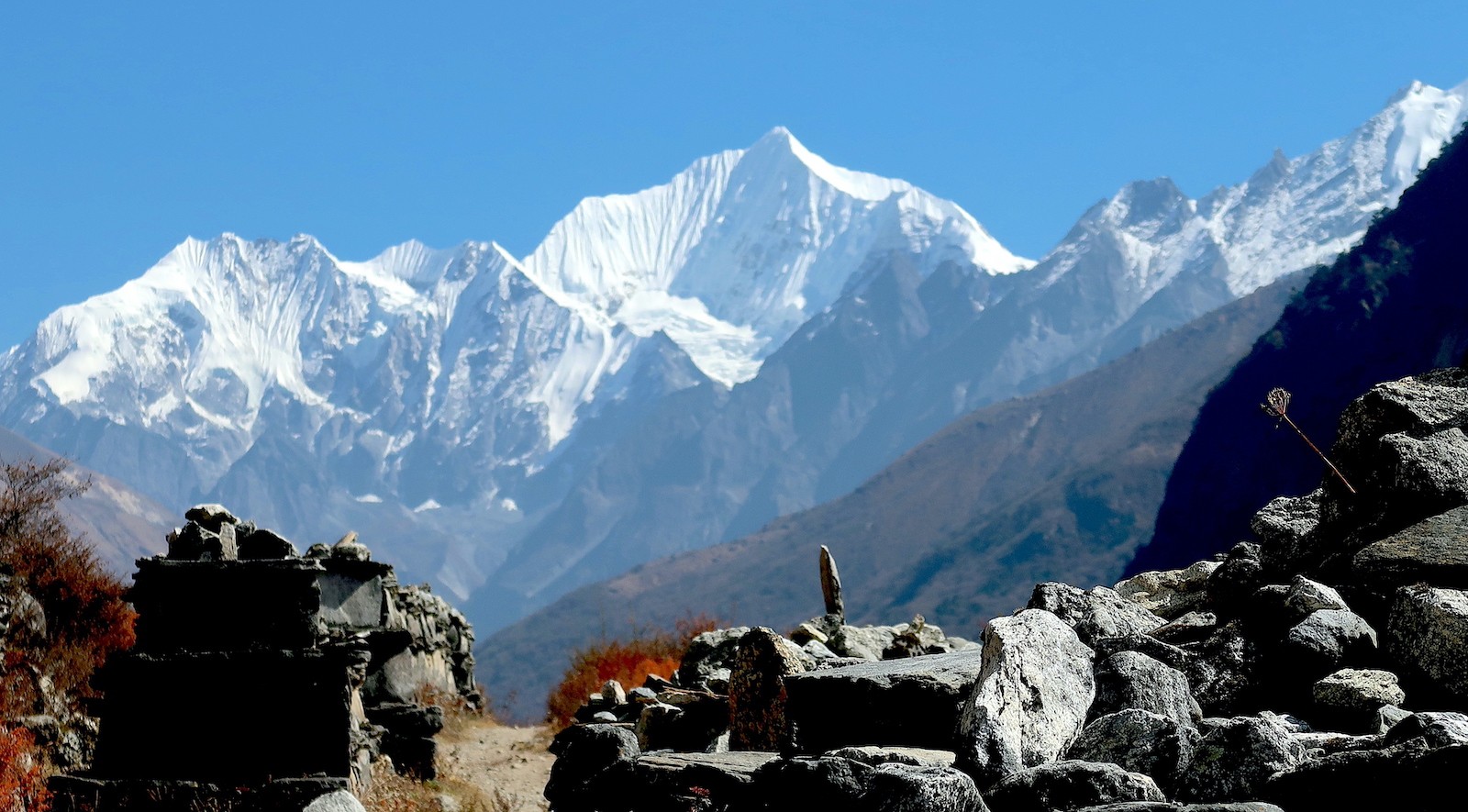
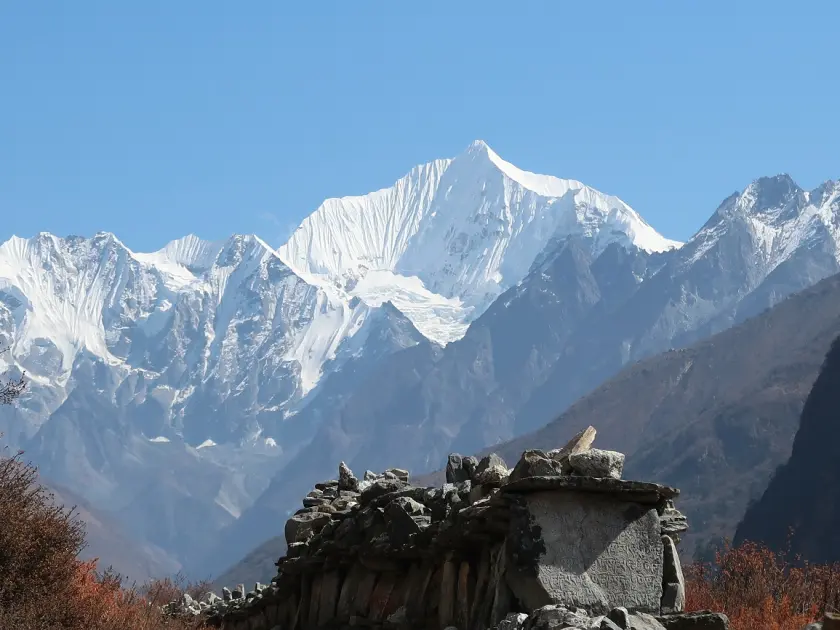
Trekking trail with stunning views of Dorje Lakpa in Langtang Valley.
October Temperatures During the day, the lower trails are warm, while nights are chilly but manageable at higher altitudes. Hiking during the day is comfortable, and evenings are cozy around the teahouse fire.
November Temperatures,
The days are noticeably cooler, and the nights get much colder, especially above 3,000 meters. The crisp air, while beautiful for mountain viewing, means you'll need warmer layers for sleeping and during early morning treks.
Location / Elevation
October Day / Night Temp | November Day / Night Temp
Implications for Trekkers
Syabrubesi (1,550m)
18-22C / 8-12C | 14-18C / 4-8C
Pleasant in both, colder in Nov.
Kyanjin Gompa (3,870m)
8-12C / -3C to -5C | 4-8C / -7C to -10C
Nights are significantly colder in Nov.
Tserko Ri (4,984m)
0-5C (Daytime) | -5C to -8C (Daytime)
Need good layering at all times
A Deeper Look at Temperatures :
Key Points to Remember :
October is more comfortable for beginners and those who dislike cold weather.
November requires a heavier sleeping bag and warm clothing, particularly for nights and mornings.
Both months offer dry and stable weather, but proper gear is essential in November.
An Expert's Insight: A local guide is invaluable in both months, particularly in November. They can predict and react to sudden late-autumn wind changes, find the warmest rooms in teahouses, and ensure you maintain a safe pace in the colder sections of the valley.
Ultimately, October is the winner for comfort, while November shines with its crystal-clear skies. Choose the month that best suits your comfort level and desire for stunning mountain vistas.
Dust vs. Ice: Trail Conditions Fluctuate Between Peak Autumn and Early Winter
Here, as the season transitions from October to November, trail conditions on the Langtang Valley Trek experience significant changes, impacting both safety and walking comfort.
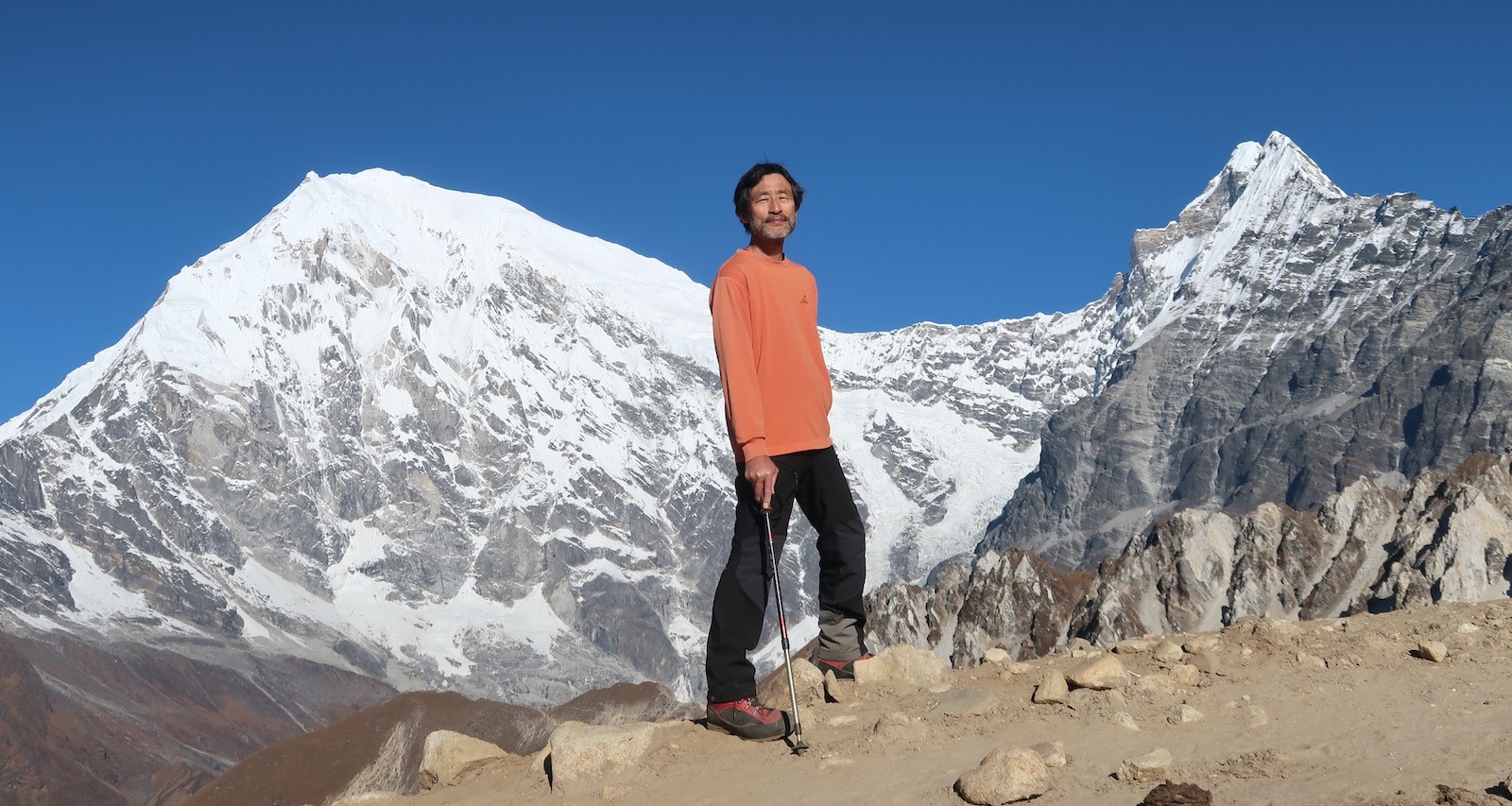
Trekker standing before the majestic Langtang Lirung peak in Langtang Valley.
October Trail Conditions,
In October, you can expect entirely dry, firm, and easily walkable trails. Post-monsoon, the pathways are stable and offer excellent traction, making for a comfortable and low-risk hiking experience on steep and rocky terrain.
November Trail Conditions,
By late November, the early stages of winter begin to set in. On the higher reaches of the trail, such as at the Tserko Ri viewpoint (4,984m / 16,352ft), you may encounter slippery icy patches and a light dusting of snow. Care must be taken when walking, and trekking poles and good grip on your boots will be beneficial.
Factor
October
November | Winner
Trail Surface
Dry, firm, stable
Mostly dry, potential ice at higher elevations | October
Footing & Traction
Excellent
Good to Moderate (risk of ice) | October
Safety on Steep Sections
High
Requires more caution | October
Tserko Ri Viewpoint
Dry and easily accessible
Possibility of snow/ice patches | October
Trail Conditions Comparison :
Practical Advice Here, trekking poles are invaluable in November, providing extra stability on potential icy stretches. Well-gripped hiking boots with deep tread are essential during both months, but they are all the more crucial in late November.
To summarize, October offers the most stable and comfortable trail conditions, whereas November brings the onset of early winter, demanding increased vigilance and appropriate gear. For easy footing, opt for October; for a true early-winter Himalayan adventure, choose November.
Atmospheric Clarity: November Reigns Supreme for Mountain Photography
For photographers and anyone seeking crystal-clear views of the surrounding mountains, November emerges as the top choice in the Langtang Valley.
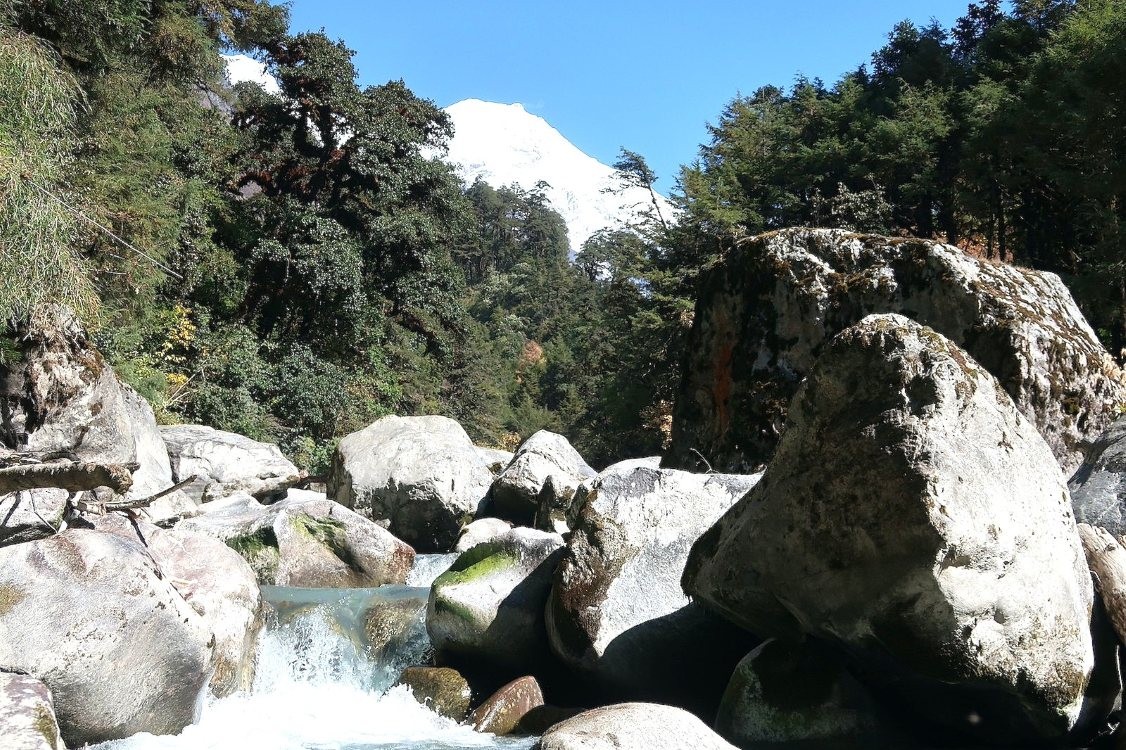
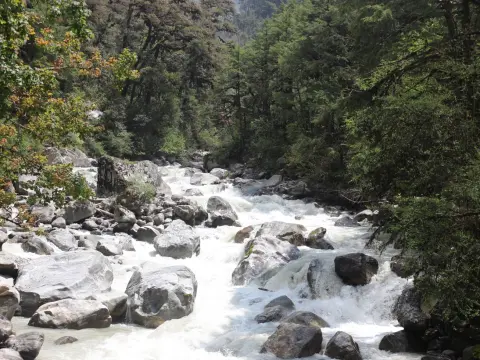
River, forest, and snow-capped Himalayan peaks – a perfect natural blend.
October Atmospheric Conditions October generally boasts very good visibility, with clear mornings. However, a slight humidity in the air can lead to a subtle softness to distant peaks, especially in the afternoon.
November Atmospheric Conditions November offers the lowest humidity of the year, with the air being exceptionally clean and dry. This results in deep blue skies and exceptionally sharp contrasts on the snow-capped mountains such as Langtang Lirung (7,227m / 23,711ft). The clarity is truly breathtaking, making it the best month in the Langtang Valley for mountain photography.
Factor
October
November | Winner
Overall Clarity
Very Good
Outstanding | November
Peak Sharpness
Good
Razor-sharp | November
Blue Sky Quality
Bright
Deep, saturated blue | November
Best Photography Time
Early mornings
All day, especially sunrise/sunset | November
Visibility Comparison
Photography Tip, The sharp, clean, and dry air in November allows for stunningly detailed photographs of the jagged slopes of Langtang Lirung and the other majestic peaks.
In conclusion, while October provides beautiful vistas, November truly excels in terms of atmospheric clarity and its suitability for photography. The clean, dry air provides the sharpest, most impressive mountain images of the year.
The Crowd Reality: Navigating the October Peak Traffic vs. November Solitude
Meanwhile, crowd levels are one of the most striking contrasts when comparing trekking in October and November in the Langtang Valley.
October Crowd Reality As Nepal's most popular trekking month, October sees trails bustling with hikers. You'll share the trails and dining rooms, contributing to a lively and social trekking atmosphere. Popular stops such as Lama Hotel, Langtang Village and Kyanjin Gompa tend to have a busy buzz to them with various international trekkers accompanied by their guides.
November Crowd Reality November is characterized by a sharp drop in trail traffic. The valley is much quieter and this month is by far the best choice for those seeking the silent tranquility of the Langtang National Park. Many a time you may be the only soul trekking through the vastness, the only sounds the river and wind.
Location / Section
October Crowd Level
November Crowd Level | Atmosphere
Syabrubesi to Lama Hotel
Moderate to High
Low | Social vs Peaceful
Kyanjin Gompa
High
Low to Moderate | Lively vs Serene
Tserko Ri Viewpoint
Busy
Very Quiet | Shared vs Personal experience
Overall Trail Experience | Vibrant & social
Tranquil & contemplative
Depends on preference
Crowd Level Comparison
Practical Insight, If you enjoy a good social vibe on your trek, and the idea of meeting other trekkers excites you, then October is definitely the month to be in the Langtang Valley. If solitude and a deeper connection with the mountains, in absolute silence, appeal more, November is your perfect choice.
To summarize, October offers a social, energetic trekking experience, while November brings a serene, peaceful journey.
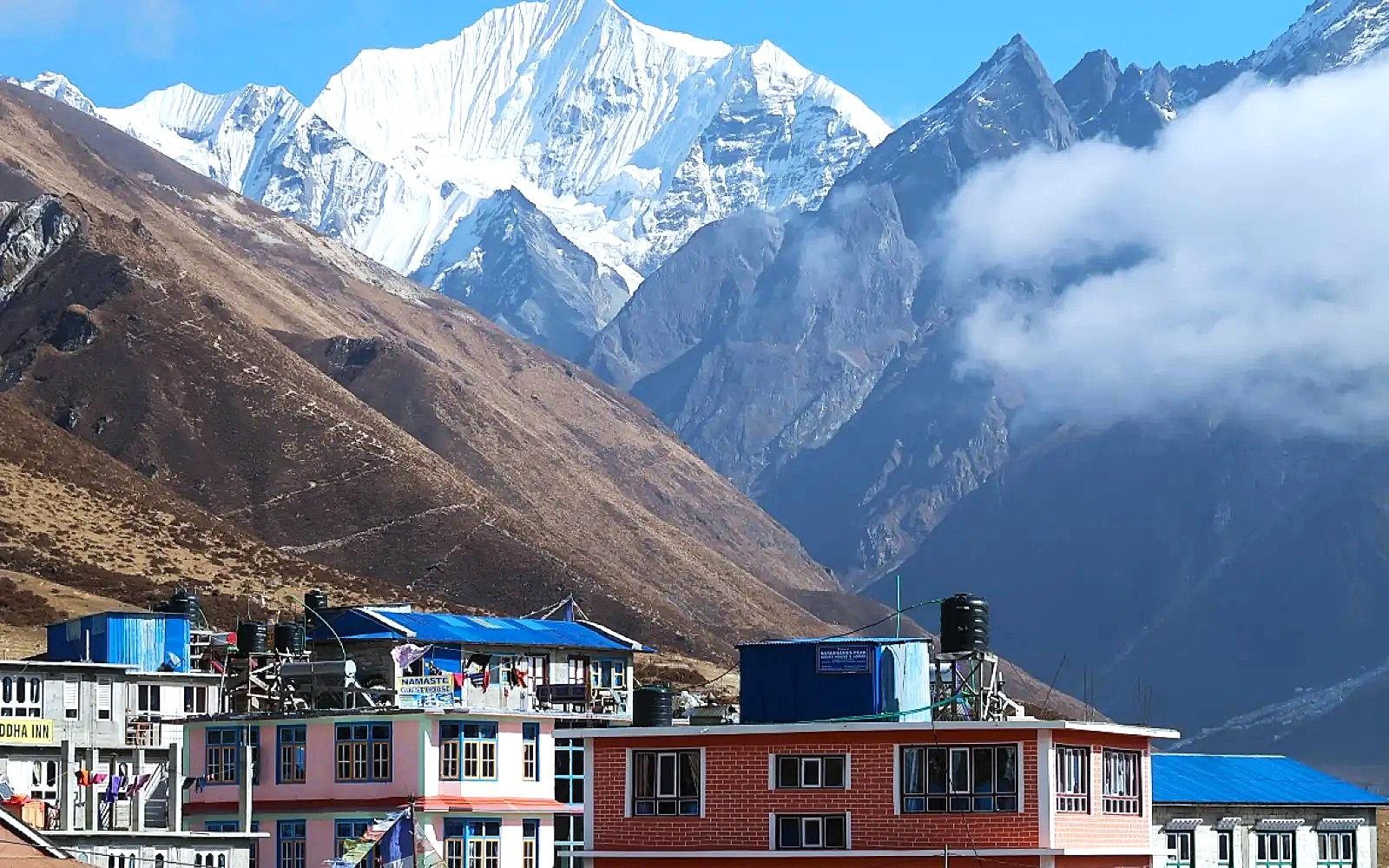
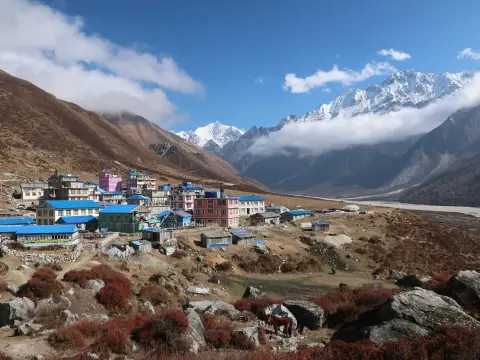
Kyanjin village with stunning Himalayan mountain backdrop in Langtang Valley.
October Teahouse Reality, Given October is peak season, the high-altitude teahouses fill up fast and many can be fully occupied. Some stops, particularly Lama Hotel, can be the first to fill and trekkers who are solo and not booked through an agency may even be relegated to the dining room or be forced to share rooms with complete strangers. Book well in advance in October.
November Teahouse Reality, As the weeks in November wear on, the demand in teahouses falls significantly, and often, in later November, it is perfectly feasible to walk straight into your teahouse of choice, select the best room, a prime corner with views, and to do this without pre-booking. The teahouses are usually much quieter at this time and you receive much more personalized service.
Factor
October (Peak Season)
November (Late Autumn)
Booking Requirement
Advance booking essential
Flexible walk-ins possible
Room Availability
Limited, especially at popular stops
Good availability
Room Quality & Choice
Competitive
Easier to get prime rooms
Teahouse Amenities
Basic but busy
More relaxed service
Teahouse Logistics Comparison
Practical Advice
October: book all your teahouses in advance through an agency.
November: still advisable to book at least a day in advance in the more popular villages.
In conclusion, October demands diligent teahouse planning and November is relaxed and readily accessible accommodation wise.
Budget and Negotiation: The Impact of Seasonal Demand on Your Trekking Costs
Meanwhile, the most practical difference between trekking in October and November in the Langtang Valley lies in budget, dictated by seasonal demand and your negotiation abilities.
October Budget Reality,
October is peak trekking season and teahouse prices, for both rooms and meals, are set in stone, with very little flexibility. This high demand also means that costs are at their peak, particularly at the most frequented lodges such as Lama Hotel and Kyanjin Gompa.
November Budget Reality,
With the decline in the crowds trekking in November, independent trekkers have far more power to negotiate. You are far more likely to secure lower prices for rooms and will find it easier to obtain free or lower-cost hot showers and charging facilities as well as better meal rates by purchasing your breakfast and dinner at the same lodge.
Expense Item
October (Peak Season) | November (Late Autumn)
Notes
Teahouse Room Rate
Higher and inflexible | Negotiable and often lower
Best value for money at this time
Meals (Breakfast + Dinner)
Higher fixed rate | More flexibility in rates
Potential for discounts
Hot Shower / Charging
Higher flat rate | More likely to be free or reduced
Significant cost-saving
Overall Daily Budget
Higher | Lower
Cheaper overall trekking costs
Cost Comparison :
Budgeting Tips for Both Months :
Travel with a small group to split the cost of rooms per person.
In November, ask politely for free or reduced hot showers and charging.
Booking your trekking experience as a small package deal often offers good value.
Overall, October will mean rigid peak season prices and November, a chance for more independent trekkers to negotiate more favorable rates.
The Yak Migration: Observing Moving Pastures and the Kyanjin Cheese Factory
Here, one of the truly unique sights you will witness on your Langtang Valley Trek are the nomadic yak herders and their flocks.
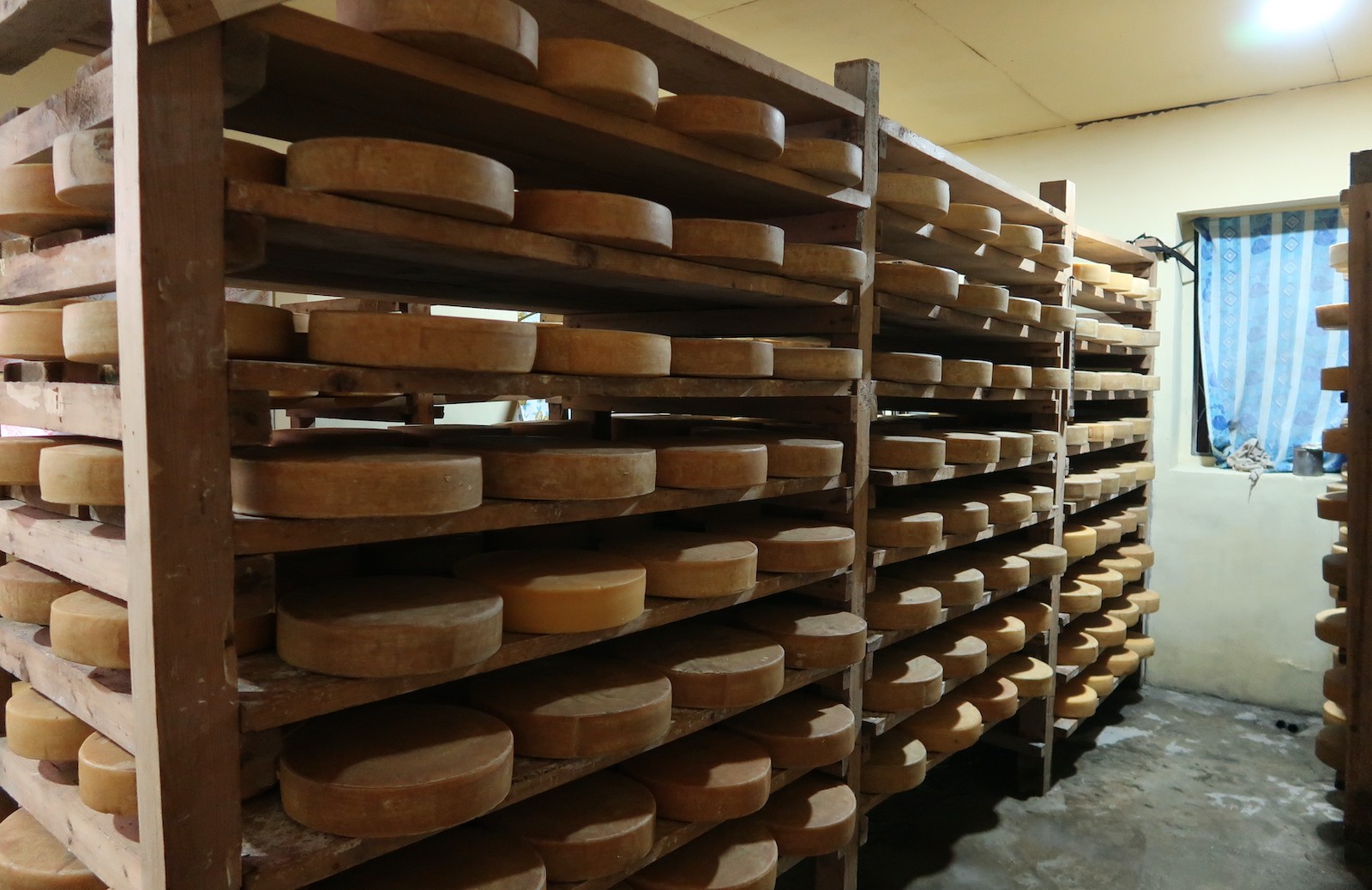
October Experience, In October, the yaks graze happily in the large golden high pastures above Kyanjin Gompa. The famous local cheese factory operates at its peak, producing fresh yak cheese you can sample and purchase. This all leads to a busy alpine experience.
Yak cheese factory in Langtang Valley producing fresh Himalayan cheese.
November Experience, As the autumn progresses to November, herders move their flocks to the sub-alpine zones of lower elevations in preparation for winter. This is when you can observe the traditional transhumance of mountain life.
Season
Yak Activity | Cheese Factory Status
Cultural Experience
October
Grazing in high alpine pastures | Fully operational
Active and productive environment
November
Migrating from high to lower altitudes | Winding down production
Observing the movement and transition
Seasonal Highlights :
In conclusion, both months provide fascinating experiences with the local yak culture; October displays their life in high altitudes, while November illustrates their migratory journey.
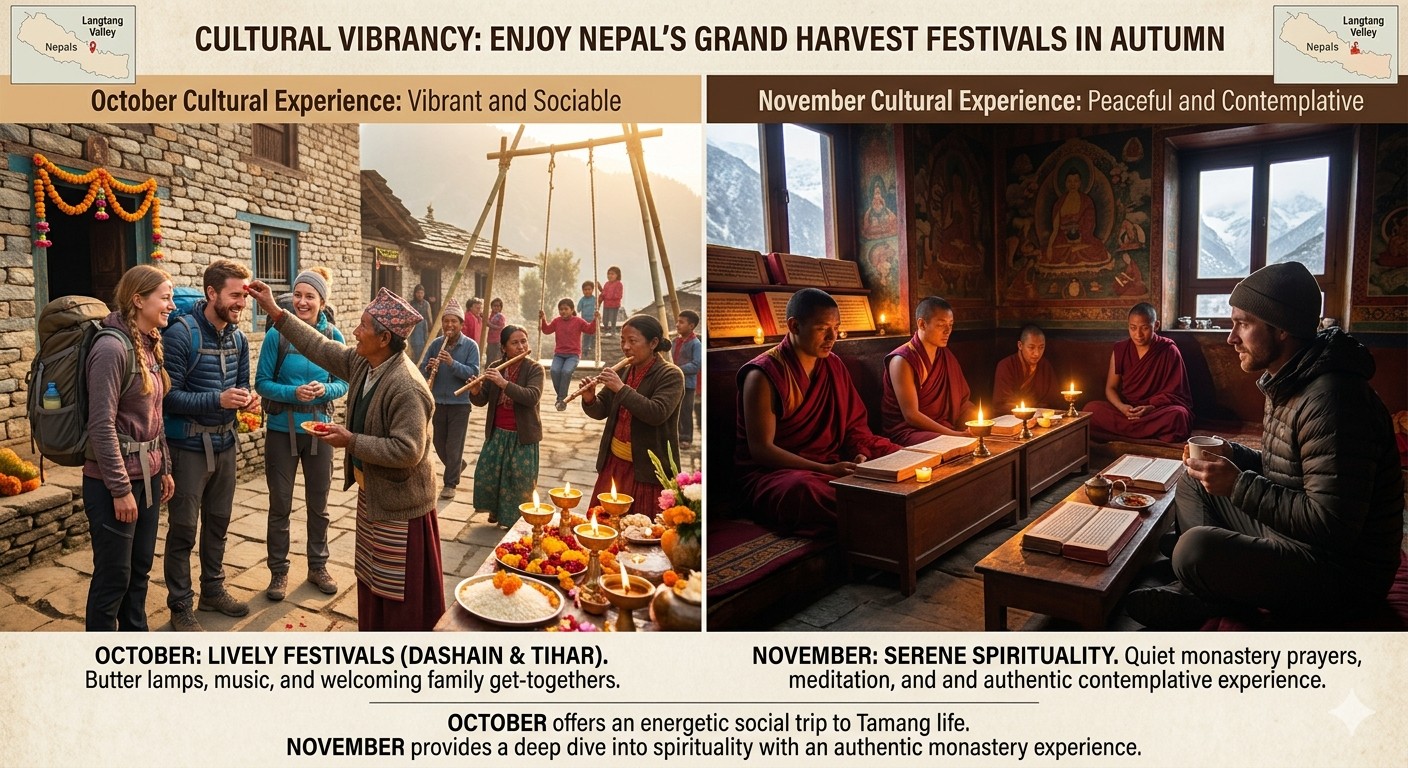
Cultural Vibrancy: Enjoy Nepal's grand harvest festivals in Autumn
Meanwhile, cultural aspects along Langtang Valley Trek beautifully oscillate between Oct and Nov, giving you different experiences of mountain life.
Autumn in Nepal brings vibrant harvest festivals filled with culture, tradition, and celebration
October Cultural Experience, Generally, October is where most of the national big festivals, Dashain and Tihar occur. The Tamang communities in the valley observe butter lamp ritual, receive blessings and hold festive occasions with traditional music along with the family get-togethers. Your trek could include bright ritual observations and a welcoming cultural experience, especially when trekking through the villages like Langtang and Kyanjin Gompa.
November Cultural Experience, By November, the festive spirit fades out, and the valley gains a serene, spiritual feel. Monasteries offer peaceful prayer ceremonies with a reflective atmosphere suitable for a contemplative cultural exposure.
Feature
October
November
Festivals Vibes
Lively, festive (Dashain/Tihar)
Peaceful, contemplative
Social Setup
Family affairs, bustling villages
Tranquil, personal spaces
Monastic Life
Busy, visitor presence
Meditation, deep reflection
General cultural vibe
Vibrant, sociable
Reflective, intimate
Cultural Comparison :
In summary, October offers an energetic and social cultural trip to the Tamang life and Nov provides a deep dive into their spirituality with an authentic monastery experience.
Packing adjustments: Adjust your packing list for the November cold
In fact, packing requires distinct adjustments depending on trekking in Oct or Nov in the Langtang Valley Trek.
October packing needs,
Generally, with a lighter-weight down jacket and 0c sleeping bag, Oct is mild.
November packing needs,
November gets considerably cold. Ensure to carry a sturdy, winter-rated down jacket, and an insulated -10c to 20c sleeping bag as teahouse fires diminish at night.
Item
Oct Recommendation
Nov Recommendation
Down Jacket
Light-weight
High-loft, heavy-duty
Sleeping Bag
0c comfort rating
-10c to -20c comfort rating
Base Layer
Light fabric
Thermal fabric
Hat and Gloves
light pair
warm fleece or wool set
Trekking Poles
recommended
essential in icy trails
Packing essentials adjustments :
Pro packing tip :
Always pack an extra completely dry set of clothing for evening use and sleeping. For Nov, pack for cold mornings and nights.
Overall, the packing lists have to be light for Oct trekking whereas, for the November trekkers, winter trekking gear should be carried.
Daylight Management: Adjusting to the Shorter Days and Quick Sunsets of the Himalayas
When trekking in the Langtang Valley, especially during the shoulder months of October and November, managing daylight hours becomes a significant safety concern. With fewer daylight hours, it’s essential to plan your treks carefully to avoid being caught in darkness in exposed, high-altitude terrain.
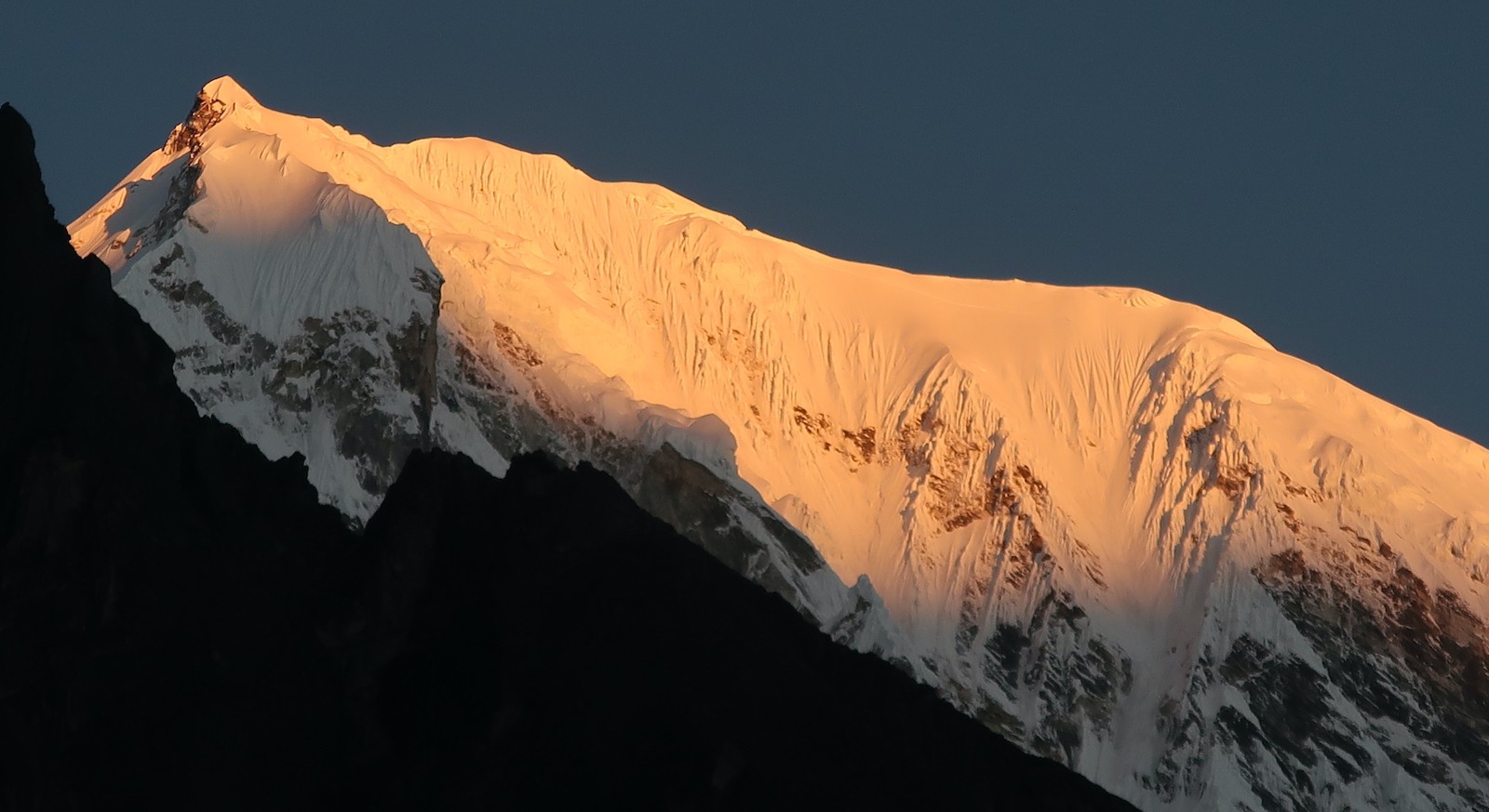
Langtang Himal glowing in golden light – a magical Himalayan sunrise.
Key Differences in Daylight, October: Offers approximately 11-12 hours of usable daylight. The sun sets later in the evening, providing more time for longer trekking days. November: Daylight hours are noticeably shorter, around 10 hours. The sun quickly dips below the ridges by 5:00 PM, resulting in rapid darkness and frigid temperatures.
Safety Precautions for Daylight Management :
Begin your treks at dawn to make the most of the daylight and prevent being caught on the exposed moraines after the sun has set.
Always pack a reliable headlamp with extra batteries – this is a must-have for both months, but especially crucial in November.
Aim for conservative daily distances during November so you can reach a teahouse before the sun sets.
Keep an eye on the weather forecast; early sunsets coupled with sudden cloud cover can quickly reduce visibility.
Feature
October
November
Usable Daylight Hours
11-12 hours
10 hours
Sunset Time
5:30-6:00 PM
4:45-5:15 PM
Risk of Night Trekking
Lower
Higher
Need for Headlamp
Recommended
Essential
Daylght and Safety: A Comparison :
In conclusion, prudent daylight management is paramount. October allows for a more flexible schedule, while November requires disciplined early starts and essential lighting for safety.
Conclusion: Final Decision – Which Autumn Month is Best for Your Trekking Style?
In fact, both October and November are fantastic months for the Langtang Valley Trek, but the ideal choice hinges on your personal trekking style and what you're hoping to get out of the experience.
Choose October if you value:
Warmer daytime temperatures and a more comfortable trekking experience.
Lush green landscapes and vibrant, post-monsoon scenery.
A livelier atmosphere and moderate trekking crowds.
Easier physical conditions, making it a great choice for beginners.
For Festive moods of the people on the trail
Choose November if you value:
Exceptionally clear mountain views and sharp, photogenic conditions.
Quiet, peaceful trails with a greater sense of solitude.
Dry, firm paths that offer excellent footing.
A crisp, serene early-winter Himalayan experience.
Feature
October
November | Winner
Weather Comfort
Warmer & Milder
Cooler, especially nights | October
Mountain Visibility
Very Good
Outstanding | November
Trail Crowds
Moderate to High
Low to Moderate | November
Trail Conditions
Greener, potential mud
Drier & firmer | November
Cultural/Festival Vibe
Festive (Dashain/Tihar)
Quiet & Spiritual | Depends on preference
Overall Recommendation
Best for Comfort & Greenery
Best for Clarity & Solitude | -
Maser Comparison Table: October vs. November
Planning Tip :
For a perfect blend, consider trekking in late October. You’ll get the benefits of good weather, manageable crowds, and beautiful scenery.
Langtang Valley Trek in October Vs. in November-FAQs
1. What is the primary difference between Langtang Valley trek in October and in November? Actually, the most prominent differences include temperature and the size of trek groups. Trekking the Langtang Valley in October means that days are pleasantly mild, the atmosphere on the trail is alive with a festive buzz, and you might even experience one of Nepal's main holidays. Trekkers who choose November get to enjoy significantly colder nights, fewer fellow travelers, and the clearest mountain views available throughout the year.
2. How do the weather conditions for a Langtang Valley Trek in October and November differ? When you go trekking in Langtang Valley in October, you'll encounter comfortable temperatures; the days in the lower areas of the valley can reach as high as 20°C. Meanwhile, a November Langtang Valley trek is quite cold and crisp. Daytime temperatures are likely to range from 10°C to 15°C and then dive below zero as soon as darkness falls at higher altitudes.
3. Is the mountain visibility on a Langtang Valley Trek better in October or November? Both months promise superb views in the post-monsoon period. However, November's dry, crisp air will grant you the very clearest views possible. If you're hoping to photograph Langtang Lirung at its most impressive (with not even a wisp of a cloud in sight), this is why most landscape photographers prefer trekking in November.
4. Are the Langtang Valley trails crowded during October? If it's one of the highest trekking seasons, chances are the trails will be quite busy. October, being the second most popular month for trekking, is no exception. Along the trails from Syabrubesi to Kyanjin Gompa, you'll run into many international as well as domestic trekkers on both sides of the path. In the teahouses, expect lively conversations by the fire.
5. Will the Langtang Valley trails be quiet in November? For those seeking tranquility, a trek in November would be the ideal choice. By the start of November, the majority of trekkers will have already completed their autumn trips. This means you'll likely have the walking trails all to yourself (except for the other trekkers choosing similar dates) and enjoy wide open spaces in the teahouses.
6. What are the nighttime temperatures at Kyanjin Gompa during October? In October, the nighttime temperatures at Kyanjin Gompa (3,870 meters or 12,700 feet) typically drop between -5°C (23°F) and 0°C (32°F). While it's chilly, a standard teahouse blanket and a warm sleeping bag should be enough to keep you comfortable.
7. How cold will Kyanjin Gompa be at night in November during Langtang Valley trek? A December Langtang Valley trek ushers in the true bite of the Himalayas. The temperatures in Kyanjin Gompa are expected to fall between -10°C (14°F) and -5°C (23°F) each night. You can also expect some of the smaller streams to begin to freeze up. Be sure to wear warm clothes at night.
8. What colors can I expect from the autumn foliage during Langtang valley trek in October? A trek through the Langtang Valley in October is a colorful spectacle. The dense forests at altitudes between 2,000 and 3,500 meters explode with a breathtaking array of gold, yellow, red, and orange from the deciduous maple, oak and birch trees that frame the valleys against the deep blue sky.
9. Will I still see autumn colors in the Langtang Valley in November? As November progresses, much of the autumn foliage will have fallen in anticipation of winter. The landscapes in the lower areas of the Langtang Valley will still be lovely but you will probably see mostly deciduous trees. The upper regions will have a more rugged and dramatic alpine setting.
10. Should I book teahouses in advance if I plan to trek the Langtang Valley in October? Yes, booking teahouses well in advance is highly recommended for an October Langtang Valley trek. As this is one of the most popular times for trekking in the region, especially the limited lodges in narrower parts like Lama Hotel and Kyanjin Gompa, they tend to fill up quickly.
11. Will it be easy to find accommodation on Langtang Valley Trek in November? A November trek is significantly less crowded, making it easier to secure comfortable rooms with a view, and even to snag a prime spot next to the warm stove in the dining room! You will not have trouble finding beds in teahouses during this month.
12. Are there major cultural festivals in October to experience? There's a strong possibility of encountering one of Nepal's major festivals in October – either Dashain, the largest Hindu festival, or Tihar, known as the Festival of Lights. You may have the chance to witness the creation of decorative swings and take in some authentic community celebrations in the villages along the lower portions of the trek.
13. What can I expect in terms of cultural interactions on Langtang Valley trek in November? While the biggest national festivals will have passed, a trek in November offers a more authentic connection with the resident Tamang people of the Langtang Valley. You'll be able to engage in quiet, more intimate conversations, as well as get a closer look at their daily lives without the influx of tourists.
14. What is the risk of rain or snow during Langtang Valley trek during October? The month of October offers extremely stable and dry weather in the Langtang Valley, with very little risk of precipitation. Monsoon rains will have already subsided completely, and you can expect clear walking trails free of mud and slippery patches.
15. Can it snow on the Langtang Valley trek in November? November generally has dry weather, making rain highly improbable, let alone snow. However, light snow showers might occasionally fall on the highest viewpoints (e.g., Tserko Ri) at the end of November, which can add to the dramatic beauty.
16. How many daylight hours are available for trekking in October compared to November? October provides you with ample daylight for trekking – typically between 11 and 12 hours a day. This allows for a comfortable, leisurely pace on the trails. November days are shorter, offering about 10 to 11 hours of sunlight, so it’s essential to get an early start on your trekking days.
17. Is it possible to climb Tserko Ri in both months ( October and November? Yes, you can reach the peak of Tserko Ri (4,984 meters or 16,351 feet) in either October or November. In October, the ascent will be warmer, while a November trek to the top will present cold and biting winds, requiring more technical gear to stay warm.
18. What kind of sleeping bag do I need for October vs. November on a Langtang Valley trek? For trekking in October, a sleeping bag rated to at least -5°C (23°F) or -10°C (14°F) should suffice for nights in the teahouses. If you choose to trek the Langtang Valley in November, you'll need a serious winter sleeping bag (-15°C or -20°C / 5°F or -4°F) to contend with the freezing nighttime temperatures.
19. Are treks in the Langtang Valley in the autumn months safe for solo travelers? Yes, treks during the autumn season in the Langtang Valley are generally considered very safe, even for solo travelers. Since this trek does not involve crossing any high mountain passes, and the trails are well-defined, you are less likely to get lost and most importantly there will still be plenty of trekkers around during the busy October season for you to mingle with should you wish.
20. Which month, October or November, would you recommend for trekking the Langtang Valley? Choose October if you prioritize warmer trekking days, the vibrancy of autumn foliage, a social atmosphere, and experiencing Nepal’s lively festive season. Select November if you seek uncrowded, serene trails, absolute solitude, and the crystal-clear, awe-inspiring mountain views that make for unforgettable photography.