[{"name":"Everest Base Camp Helicopter Tour","duration":"1","image_url":"https:\/\/www.havenholidaysnepal.com\/storage\/trip-galleries\/1\/thumb_6cd53005d75a86e373d31419d1b14d78.webp","offer_price":1195,"url":"https:\/\/www.havenholidaysnepal.com\/trips\/everest-base-camp-helicopter-tour"},{"name":"Everest Mountain Flight","duration":"1","image_url":"https:\/\/www.havenholidaysnepal.com\/storage\/trip-galleries\/4\/thumb_3b0b4f1d6f72b0ad224daf4752f2c6e0.jpg","offer_price":285,"url":"https:\/\/www.havenholidaysnepal.com\/trips\/everest-mountain-flight"},{"name":"Everest Short Trek","duration":"9","image_url":"https:\/\/www.havenholidaysnepal.com\/storage\/trip-galleries\/5\/thumb_BXPP3621.JPEG0.02033800 1727957098.webp","offer_price":995,"url":"https:\/\/www.havenholidaysnepal.com\/trips\/everest-short-trek"},{"name":"Gokyo Valley Trek","duration":"12","image_url":"https:\/\/www.havenholidaysnepal.com\/storage\/trip-galleries\/6\/thumb_10bc469b14731f23d3ce84a7092ad53f.jpg","offer_price":1195,"url":"https:\/\/www.havenholidaysnepal.com\/trips\/gokyo-valley-trek"},{"name":"15 days Annapurna Base Camp Trek","duration":"15","image_url":"https:\/\/www.havenholidaysnepal.com\/storage\/trip-galleries\/7\/thumb_87d1533bc45faf070990aef0579e4be4.jpg0.81855100 1728285496.webp","offer_price":785,"url":"https:\/\/www.havenholidaysnepal.com\/trips\/15-days-annapurna-base-camp-trek"},{"name":"Nepal Pilgrimage Tour","duration":"14","image_url":"https:\/\/www.havenholidaysnepal.com\/storage\/trip-galleries\/8\/thumb_02c3bcf2ad2e8a4c1703e90ae747b5f1.jpg","offer_price":1475,"url":"https:\/\/www.havenholidaysnepal.com\/trips\/nepal-pilgrimage-tour"},{"name":"UNESCO World Heritage Site Tour","duration":"10","image_url":"https:\/\/www.havenholidaysnepal.com\/storage\/trip-galleries\/9\/thumb_unesco-world-heritage-site-Lumbani-temple-buddhists-hindus-kathmandu-nepal0.36988600 17347617740.93089500 1737469667.webp","offer_price":715,"url":"https:\/\/www.havenholidaysnepal.com\/trips\/unesco-world-heritage-site-tour"},{"name":"Island Peak Climbing","duration":"16","image_url":"https:\/\/www.havenholidaysnepal.com\/storage\/trip-galleries\/11\/thumb_Island peak0.53947000 1734692503.webp","offer_price":2495,"url":"https:\/\/www.havenholidaysnepal.com\/trips\/island-peak-climbing"},{"name":"Upper Mustang Trek","duration":"18","image_url":"https:\/\/www.havenholidaysnepal.com\/storage\/trip-galleries\/12\/thumb_upper mustang 7 Oct-2024.jpg0.95398900 1728286166.webp","offer_price":2995,"url":"https:\/\/www.havenholidaysnepal.com\/trips\/upper-mustang-trek"},{"name":"Annapurna Circuit Trek","duration":"16","image_url":"https:\/\/www.havenholidaysnepal.com\/storage\/trip-galleries\/15\/thumb_tibetan-flags.jpg0.04843900 1728289138.webp","offer_price":985,"url":"https:\/\/www.havenholidaysnepal.com\/trips\/annapurna-circuit-trek"},{"name":"Gosainkunda Lake Trek","duration":"10","image_url":"https:\/\/www.havenholidaysnepal.com\/storage\/trip-galleries\/16\/thumb_5A8083B3-C007-41A8-853F-D0C37C97D235_1_105_c.jpeg0.52581200 1731845258.webp","offer_price":595,"url":"https:\/\/www.havenholidaysnepal.com\/trips\/gosainkunda-lake-trek"},{"name":"Zip-lining in Pokhara and Dhulikhel","duration":"1","image_url":"https:\/\/www.havenholidaysnepal.com\/storage\/trip-galleries\/18\/thumb_215f765e2ebc995dd5c800b4bfdbacc3.jpg","offer_price":82,"url":"https:\/\/www.havenholidaysnepal.com\/trips\/zip-lining-in-pokhara-and-dhulikhel"},{"name":"Annapurna Heli Tour","duration":"1","image_url":"https:\/\/www.havenholidaysnepal.com\/storage\/trip-galleries\/19\/thumb_d71a6bbb9fd4da8d1b567a5cdbdec85d.jpg","offer_price":555,"url":"https:\/\/www.havenholidaysnepal.com\/trips\/annapurna-heli-tour"},{"name":"Paragliding in Pokhara","duration":"1","image_url":"https:\/\/www.havenholidaysnepal.com\/storage\/trip-galleries\/20\/thumb_de788d2dd9726783431f882c007efae1.jpg","offer_price":65,"url":"https:\/\/www.havenholidaysnepal.com\/trips\/paragliding-in-pokhara"},{"name":"Ultra-Flight in Pokhara","duration":"1","image_url":"https:\/\/www.havenholidaysnepal.com\/storage\/trip-galleries\/21\/thumb_e27a9fb572a5c21611bb2a3c18e4b8f0.jpeg","offer_price":175,"url":"https:\/\/www.havenholidaysnepal.com\/trips\/ultra-flight-in-pokhara"},{"name":"Sarangkot Hiking","duration":"1","image_url":"https:\/\/www.havenholidaysnepal.com\/storage\/trip-galleries\/22\/thumb_100ef822fea19987166c6c1366215f15.jpg","offer_price":55,"url":"https:\/\/www.havenholidaysnepal.com\/trips\/sarangkot-hiking"},{"name":"Mera Peak Climbing","duration":"18","image_url":"https:\/\/www.havenholidaysnepal.com\/storage\/trip-galleries\/24\/thumb_d16ae3895f678cf26ffbf2455f541fb5.jpg0.31883400 1732617790.webp","offer_price":2475,"url":"https:\/\/www.havenholidaysnepal.com\/trips\/mera-peak-climbing"},{"name":"Lower Dolpo Trek","duration":"18","image_url":"https:\/\/www.havenholidaysnepal.com\/storage\/trip-galleries\/26\/thumb_Dolpo Galary - 1.JPG0.37725200 1727939952.webp","offer_price":2995,"url":"https:\/\/www.havenholidaysnepal.com\/trips\/lower-dolpo-trek"},{"name":"Nagarkot Sunrise\/Sunset Tour","duration":"1","image_url":"https:\/\/www.havenholidaysnepal.com\/storage\/trip-galleries\/27\/thumb_5147a5532644283a380f2e86f3857c13.jpg0.17748000 1728488108.webp","offer_price":30,"url":"https:\/\/www.havenholidaysnepal.com\/trips\/nagarkot-sunrise-sunset-tour"},{"name":"16 day Everest Base Camp Trek","duration":"16","image_url":"https:\/\/www.havenholidaysnepal.com\/storage\/trip-galleries\/28\/thumb_IMG_4311.JPG0.64984800 1727942213.webp","offer_price":1695,"url":"https:\/\/www.havenholidaysnepal.com\/trips\/16-day-everest-base-camp-trek"},{"name":"Ghorepani Poon Hill trek with Jungle Safari and Trishuli River Rafting -13 days","duration":"13","image_url":"https:\/\/www.havenholidaysnepal.com\/storage\/trip-galleries\/29\/thumb_Ghorepani Poon hill.jpg0.48460800 1728281439.webp","offer_price":795,"url":"https:\/\/www.havenholidaysnepal.com\/trips\/ghorepani-poon-hill-trek-with-jungle-safari-and-trishuli-river-rafting--13-days"},{"name":"Mardi Himal Trek","duration":"12","image_url":"https:\/\/www.havenholidaysnepal.com\/storage\/trip-galleries\/30\/thumb_s1.jpg0.62112600 1728200721.webp","offer_price":795,"url":"https:\/\/www.havenholidaysnepal.com\/trips\/mardi-himal-trek"},{"name":"Langtang Valley Trekking","duration":"10","image_url":"https:\/\/www.havenholidaysnepal.com\/storage\/trip-galleries\/31\/thumb_IMG_4702.JPG0.84916500 1727958504.webp","offer_price":685,"url":"https:\/\/www.havenholidaysnepal.com\/trips\/langtang-valley-trekking"},{"name":"Real Adventure Tour in Nepal","duration":"9","image_url":"https:\/\/www.havenholidaysnepal.com\/storage\/trip-galleries\/32\/thumb_ebd1b8cc78d90abe8b9003dd9a2f25bf.jpg0.82151300 1728213516.webp","offer_price":695,"url":"https:\/\/www.havenholidaysnepal.com\/trips\/real-adventure-tour-in-nepal"},{"name":"Luxury Tour in Nepal","duration":"10","image_url":"https:\/\/www.havenholidaysnepal.com\/storage\/trip-galleries\/33\/thumb_8574e61b252b18676b042caf30d830df.jpg","offer_price":1675,"url":"https:\/\/www.havenholidaysnepal.com\/trips\/luxury-tour-in-nepal"},{"name":"Luxury Everest Panorama Trek With EBC Heli Sightseeing","duration":"8","image_url":"https:\/\/www.havenholidaysnepal.com\/storage\/trip-galleries\/34\/thumb_URZL2397.JPEG0.01209600 1728027820.webp","offer_price":2395,"url":"https:\/\/www.havenholidaysnepal.com\/trips\/luxury-everest-panorama-trek-with-ebc-heli-sightseeing"},{"name":"13 day Everest Base Camp Trek with Helicopter","duration":"13","image_url":"https:\/\/www.havenholidaysnepal.com\/storage\/trip-galleries\/35\/thumb_IMG_4292.JPG0.70131500 1728029276.webp","offer_price":2095,"url":"https:\/\/www.havenholidaysnepal.com\/trips\/13-day-everest-base-camp-trek-with-helicopter"},{"name":"Manaslu Circuit Trek","duration":"16","image_url":"https:\/\/www.havenholidaysnepal.com\/storage\/trip-galleries\/36\/thumb_Mt Manaslu 03-Oct-2024.jpg0.65804900 1727938470.webp","offer_price":1055,"url":"https:\/\/www.havenholidaysnepal.com\/trips\/manaslu-circuit-trek"},{"name":"Kanchenjunga Base Camp Trek","duration":"21","image_url":"https:\/\/www.havenholidaysnepal.com\/storage\/trip-galleries\/37\/thumb_Kanchanjunga Trek -!.jpg0.54744400 1727938497.webp","offer_price":2275,"url":"https:\/\/www.havenholidaysnepal.com\/trips\/kanchenjunga-base-camp-trek"},{"name":"Ganesh Himal and Sing-La Trek","duration":"14","image_url":"https:\/\/www.havenholidaysnepal.com\/storage\/trip-galleries\/38\/thumb_Ganesh Himal slider-1.jpg0.43764500 1727937722.webp","offer_price":1775,"url":"https:\/\/www.havenholidaysnepal.com\/trips\/ganesh-himal-and-sing-la-trek"},{"name":"Island Peak Climb with Everest Base Camp Trek","duration":"21","image_url":"https:\/\/www.havenholidaysnepal.com\/storage\/trip-galleries\/39\/thumb_2be428730fe83525bc85a010564f99de.jpg","offer_price":2750,"url":"https:\/\/www.havenholidaysnepal.com\/trips\/island-peak-climb-with-everest-base-camp-trek"},{"name":"Students' Adventure Tour in Nepal","duration":"12","image_url":"https:\/\/www.havenholidaysnepal.com\/storage\/trip-galleries\/41\/thumb_a926d22fbfe08cba271c41ac289b3fd2.jpg","offer_price":995,"url":"https:\/\/www.havenholidaysnepal.com\/trips\/students-adventure-tour-in-nepal"},{"name":"7 Day Poonhill Trek","duration":"7","image_url":"https:\/\/www.havenholidaysnepal.com\/storage\/trip-galleries\/42\/thumb_6196bd69036473293a2c24cc21ed57d7.jpg0.10880600 1728205378.webp","offer_price":555,"url":"https:\/\/www.havenholidaysnepal.com\/trips\/7-day-poonhill-trek"},{"name":"7 Days Annapurna Base Camp Trek","duration":"7","image_url":"https:\/\/www.havenholidaysnepal.com\/storage\/trip-galleries\/43\/thumb_IMG_2214.JPG0.08204900 1728202033.webp","offer_price":355,"url":"https:\/\/www.havenholidaysnepal.com\/trips\/7-days-annapurna-base-camp-trek"},{"name":"3 days Poonhill Trek","duration":"3","image_url":"https:\/\/www.havenholidaysnepal.com\/storage\/trip-galleries\/44\/thumb_Poon hill.jpg0.60816600 1731412954.webp","offer_price":165,"url":"https:\/\/www.havenholidaysnepal.com\/trips\/3-days-poonhill-trek"},{"name":"Poon Hill Luxury Trek with Chitwan-12 days","duration":"12","image_url":"https:\/\/www.havenholidaysnepal.com\/storage\/trip-galleries\/45\/thumb_Poom hill.jpg0.52074500 1730180532.webp","offer_price":1175,"url":"https:\/\/www.havenholidaysnepal.com\/trips\/poon-hill-luxury-trek-with-chitwan-12-days"},{"name":"Everest Luxury Trek-7 days","duration":"7","image_url":"https:\/\/www.havenholidaysnepal.com\/storage\/trip-galleries\/46\/thumb_ACRX9330.JPEG0.93236200 1728031275.webp","offer_price":2195,"url":"https:\/\/www.havenholidaysnepal.com\/trips\/everest-luxury-trek-7-days"},{"name":"Hindu Pilgrimage Tour in Nepal-10 days","duration":"10","image_url":"https:\/\/www.havenholidaysnepal.com\/storage\/trip-galleries\/47\/thumb_a94bf96a4d31decb419f6f828a3280d2.jpg","offer_price":995,"url":"https:\/\/www.havenholidaysnepal.com\/trips\/hindu-pilgrimage-tour-in-nepal-10-days"},{"name":"Everest Base Camp Short Trek-12 days","duration":"12","image_url":"https:\/\/www.havenholidaysnepal.com\/storage\/trip-galleries\/48\/thumb_IMG_4311.JPG0.52680100 1727945154.webp","offer_price":995,"url":"https:\/\/www.havenholidaysnepal.com\/trips\/everest-base-camp-short-trek-12-days"},{"name":"Everest Base Camp Hike 12 Days","duration":"12","image_url":"https:\/\/www.havenholidaysnepal.com\/storage\/trip-galleries\/49\/thumb_IMG_4260.JPG0.51729100 1728061234.webp","offer_price":1295,"url":"https:\/\/www.havenholidaysnepal.com\/trips\/everest-base-camp-hike-12-days"},{"name":"11 Days Everest Base Camp Trek","duration":"11","image_url":"https:\/\/www.havenholidaysnepal.com\/storage\/trip-galleries\/50\/thumb_IMG_4249.JPG0.21392500 1727946959.webp","offer_price":1055,"url":"https:\/\/www.havenholidaysnepal.com\/trips\/11-days-everest-base-camp-trek"},{"name":"6 Days Annapurna Base Camp Trek","duration":"6","image_url":"https:\/\/www.havenholidaysnepal.com\/storage\/trip-galleries\/51\/thumb_6 days Abc.jpg0.58185400 1728200798.webp","offer_price":285,"url":"https:\/\/www.havenholidaysnepal.com\/trips\/6-days-annapurna-base-camp-trek"},{"name":"Annapurna Base Camp Trek","duration":"8","image_url":"https:\/\/www.havenholidaysnepal.com\/storage\/trip-galleries\/52\/thumb_IMG_2214.JPG0.29415700 1729487656.webp","offer_price":585,"url":"https:\/\/www.havenholidaysnepal.com\/trips\/annapurna-base-camp-trek"},{"name":"Everest Base Camp Trek with Helicopter Fly Out 10 Days","duration":"10","image_url":"https:\/\/www.havenholidaysnepal.com\/storage\/trip-galleries\/53\/thumb_IMG_4328.JPG0.52056600 1728058444.webp","offer_price":1875,"url":"https:\/\/www.havenholidaysnepal.com\/trips\/everest-base-camp-trek-with-helicopter-fly-out-10-days"},{"name":"Everest Base Camp Trek 14 Days","duration":"14","image_url":"https:\/\/www.havenholidaysnepal.com\/storage\/trip-galleries\/54\/thumb_Everest Base Camp Trek 14 days Oct 3 2024.JPG0.43202700 1727939745.webp","offer_price":1335,"url":"https:\/\/www.havenholidaysnepal.com\/trips\/everest-base-camp-trek-14-days"},{"name":"ABC Trek with Poonhill 11 Days","duration":"11","image_url":"https:\/\/www.havenholidaysnepal.com\/storage\/trip-galleries\/55\/thumb_ABC with fishtail.JPG0.21441100 1728277965.webp","offer_price":555,"url":"https:\/\/www.havenholidaysnepal.com\/trips\/abc-trek-with-poonhill-11-days"},{"name":"Muldai Hill Trek 9 Days","duration":"9","image_url":"https:\/\/www.havenholidaysnepal.com\/storage\/trip-galleries\/56\/thumb_7efee59f0a8c6817c8255bd2b9f3539d.jpeg0.19479300 1728213091.webp","offer_price":675,"url":"https:\/\/www.havenholidaysnepal.com\/trips\/muldai-hill-trek-9-days"},{"name":"Mardi Himal Trek 6 days","duration":"6","image_url":"https:\/\/www.havenholidaysnepal.com\/storage\/trip-galleries\/57\/thumb_slider 1.jpeg0.36909700 1728184981.webp","offer_price":590,"url":"https:\/\/www.havenholidaysnepal.com\/trips\/mardi-himal-trek-6-days"},{"name":"Mardi Himal Trek 7 days","duration":"7","image_url":"https:\/\/www.havenholidaysnepal.com\/storage\/trip-galleries\/58\/thumb_slider1.jpg0.61666600 1728206414.webp","offer_price":620,"url":"https:\/\/www.havenholidaysnepal.com\/trips\/mardi-himal-trek-7-days"},{"name":"Mardi Himal Trek 8 Days","duration":"8","image_url":"https:\/\/www.havenholidaysnepal.com\/storage\/trip-galleries\/59\/thumb_sli1.jpg0.38569100 1728206631.webp","offer_price":695,"url":"https:\/\/www.havenholidaysnepal.com\/trips\/mardi-himal-trek-8-days"},{"name":"14 Days Manaslu Trek","duration":"14","image_url":"https:\/\/www.havenholidaysnepal.com\/storage\/trip-galleries\/60\/thumb_sunrise-mt-manaslu-during-manaslu-circuit-larke-pass-trekking-himalaya-nepal (1)0.81855800 1738673284.webp","offer_price":885,"url":"https:\/\/www.havenholidaysnepal.com\/trips\/14-days-manaslu-trek"},{"name":"Dhampus-Sarangkot Trek with Chitwan 8 days","duration":"8","image_url":"https:\/\/www.havenholidaysnepal.com\/storage\/trip-galleries\/61\/thumb_Sarangkot Bhangyang.jpg0.75461400 1728210333.webp","offer_price":790,"url":"https:\/\/www.havenholidaysnepal.com\/trips\/dhampus-sarangkot-trek-with-chitwan-8-days"},{"name":"7 Days Golden Triangle Tour","duration":"7","image_url":"https:\/\/www.havenholidaysnepal.com\/storage\/trip-galleries\/62\/thumb_311ce1d117ee0ba75402a7c301bcdf830.73532400 1739179809.webp","offer_price":845,"url":"https:\/\/www.havenholidaysnepal.com\/trips\/7-days-golden-triangle-tour"},{"name":"Annapurna Circuit Trek 12 days","duration":"12","image_url":"https:\/\/www.havenholidaysnepal.com\/storage\/trip-galleries\/63\/thumb_IMG_20161024_092237.jpg0.57796600 1728289938.webp","offer_price":695,"url":"https:\/\/www.havenholidaysnepal.com\/trips\/annapurna-circuit-trek-12-days"},{"name":"Everest Base Camp Budget Trek 16 Days","duration":"16","image_url":"https:\/\/www.havenholidaysnepal.com\/storage\/trip-galleries\/64\/thumb_IMG_4423.JPG0.92579200 1728144669.webp","offer_price":958,"url":"https:\/\/www.havenholidaysnepal.com\/trips\/everest-base-camp-budget-trek-16-days"},{"name":"Poonhill Budget Trek 7 Days","duration":"7","image_url":"https:\/\/www.havenholidaysnepal.com\/storage\/trip-galleries\/65\/thumb_5be067852d0c5228d6f3155bc425c6b5.jpg","offer_price":395,"url":"https:\/\/www.havenholidaysnepal.com\/trips\/poonhill-budget-trek-7-days"},{"name":"Annapurna Base Camp Budget Trek 8 Days","duration":"8","image_url":"https:\/\/www.havenholidaysnepal.com\/storage\/trip-galleries\/66\/thumb_Pokhara.jpg0.16188000 1728212001.webp","offer_price":375,"url":"https:\/\/www.havenholidaysnepal.com\/trips\/annapurna-base-camp-budget-trek-8-days"},{"name":"The Real UNESCO Seven World Heritage Tour in Kathmandu 4 days","duration":"4","image_url":"https:\/\/www.havenholidaysnepal.com\/storage\/trip-galleries\/67\/thumb_Baudha Stupa.JPG0.63906900 1728201021.webp","offer_price":380,"url":"https:\/\/www.havenholidaysnepal.com\/trips\/the-real-unesco-seven-world-heritage-tour-in-kathmandu-4-days"},{"name":"Everest Base Camp Jeep Ride with Helicopter Return","duration":"14","image_url":"https:\/\/www.havenholidaysnepal.com\/storage\/trip-galleries\/68\/thumb_788ee5b63a6efb6f3c3d048b4270daca.JPG","offer_price":1995,"url":"https:\/\/www.havenholidaysnepal.com\/trips\/everest-base-camp-jeep-ride-with-helicopter-return"},{"name":"Annapurna Base Camp Jeep Ride with Helicopter Return 7 days","duration":"7","image_url":"https:\/\/www.havenholidaysnepal.com\/storage\/trip-galleries\/69\/thumb_abc jeep.jpg0.10280600 1728204064.webp","offer_price":1455,"url":"https:\/\/www.havenholidaysnepal.com\/trips\/annapurna-base-camp-jeep-ride-with-helicopter-return-7-days"},{"name":"Everest Base Camp Trek","duration":"15","image_url":"https:\/\/www.havenholidaysnepal.com\/storage\/trip-galleries\/70\/thumb_Everest Base Camp Trek 3 oct- 2024.JPG0.58445300 1727941472.webp","offer_price":1375,"url":"https:\/\/www.havenholidaysnepal.com\/trips\/everest-base-camp-trek"},{"name":"7 UNESCO World Heritage Tour Kathmandu 2 days","duration":"2","image_url":"https:\/\/www.havenholidaysnepal.com\/storage\/trip-galleries\/72\/thumb_Bhaktipur 3.jpg0.05559600 1728201496.webp","offer_price":150,"url":"https:\/\/www.havenholidaysnepal.com\/trips\/7-unesco-world-heritage-tour-kathmandu-2-days"},{"name":"Day Tour to UNESCO Heritage Sites","duration":"1","image_url":"https:\/\/www.havenholidaysnepal.com\/storage\/trip-galleries\/73\/thumb_228A1018.jpg0.79892500 1728199793.webp","offer_price":55,"url":"https:\/\/www.havenholidaysnepal.com\/trips\/day-tour-to-unesco-heritage-sites"},{"name":"Golden Triangle Tour in Nepal","duration":"8","image_url":"https:\/\/www.havenholidaysnepal.com\/storage\/trip-galleries\/74\/thumb_f54139cf9100f00015ffe0400687e946.webp","offer_price":588,"url":"https:\/\/www.havenholidaysnepal.com\/trips\/golden-triangle-tour-in-nepal"},{"name":"Everest Base Camp Honeymoon Tour by Helicopter with Pokhara","duration":"7 days","image_url":"https:\/\/www.havenholidaysnepal.com\/storage\/trip-galleries\/76\/thumb_RJTL7517.JPEG0.40261600 1731499989.webp","offer_price":9999,"url":"https:\/\/www.havenholidaysnepal.com\/trips\/everest-base-camp-honeymoon-tour-by-helicopter-with-pokhara"},{"name":"Yoga and Meditation Retreat Tour in Nepal","duration":"10 days","image_url":"https:\/\/www.havenholidaysnepal.com\/storage\/trip-galleries\/77\/thumb_decf8e33-6617-4400-9df0-63bf75509adf.JPG0.51948300 1731574810.webp","offer_price":2575,"url":"https:\/\/www.havenholidaysnepal.com\/trips\/yoga-and-meditation-retreat-tour-in-nepal"},{"name":"Chisapani-Nagarkot Trek","duration":"3","image_url":"https:\/\/www.havenholidaysnepal.com\/storage\/trip-galleries\/78\/thumb_0b64dfceaeab48ac36d685476bdebafb.webp","offer_price":165,"url":"https:\/\/www.havenholidaysnepal.com\/trips\/chisapani-nagarkot-trek"},{"name":"Chitwan Jungle Safari Tour","duration":"2","image_url":"https:\/\/www.havenholidaysnepal.com\/storage\/trip-galleries\/79\/thumb_IMG_1696.JPG0.28467800 1733054554.webp","offer_price":175,"url":"https:\/\/www.havenholidaysnepal.com\/trips\/chitwan-jungle-safari-tour"},{"name":"Kailash Overland Tour","duration":"16","image_url":"https:\/\/www.havenholidaysnepal.com\/storage\/trip-galleries\/80\/thumb_PA2605230.68496700 1735818657.webp","offer_price":2495,"url":"https:\/\/www.havenholidaysnepal.com\/trips\/kailash-overland-tour"},{"name":"4 nights 5 days Bhutan Tour","duration":"5","image_url":"https:\/\/www.havenholidaysnepal.com\/storage\/trip-galleries\/81\/thumb_PB0508470.23069500 1735828937.webp","offer_price":1265,"url":"https:\/\/www.havenholidaysnepal.com\/trips\/4-nights-5-days-bhutan-tour"},{"name":"Everest Base Camp Trek Without Flying","duration":"16","image_url":"https:\/\/www.havenholidaysnepal.com\/storage\/trip-galleries\/82\/thumb_308b054484eddc042e092e1ae2ae5586.webp","offer_price":685,"url":"https:\/\/www.havenholidaysnepal.com\/trips\/everest-base-camp-trek-without-flying"},{"name":"Everest Base Camp Trek by Land","duration":"16","image_url":"https:\/\/www.havenholidaysnepal.com\/storage\/trip-galleries\/83\/thumb_8f0f2784a3ae7343d193b64fe8d47c96.webp","offer_price":675,"url":"https:\/\/www.havenholidaysnepal.com\/trips\/everest-base-camp-trek-by-land"},{"name":"Everest Base Camp Trek by Jeep","duration":"16","image_url":"https:\/\/www.havenholidaysnepal.com\/storage\/trip-galleries\/84\/thumb_f82b3acdfc933bc3e0197624c001b0a6.webp","offer_price":675,"url":"https:\/\/www.havenholidaysnepal.com\/trips\/everest-base-camp-trek-by-jeep"},{"name":"Everest Base Camp Trek without Lukla Flight","duration":"16","image_url":"https:\/\/www.havenholidaysnepal.com\/storage\/trip-galleries\/85\/thumb_2d0acc76dc958e3122a3745074989914.webp","offer_price":675,"url":"https:\/\/www.havenholidaysnepal.com\/trips\/everest-base-camp-trek-without-lukla-flight"},{"name":"Langtang Valley Trek","duration":"7","image_url":"https:\/\/www.havenholidaysnepal.com\/storage\/trip-galleries\/86\/thumb_a845db06c5feada1478e8aed659fce97.webp","offer_price":195,"url":"https:\/\/www.havenholidaysnepal.com\/trips\/langtang-valley-trek"},{"name":"Everest Base Camp Trek with Gokyo Lake","duration":"17","image_url":"https:\/\/www.havenholidaysnepal.com\/storage\/trip-galleries\/87\/thumb_c6aa32f7654f2eda78134bc84ac70b79.webp","offer_price":1885,"url":"https:\/\/www.havenholidaysnepal.com\/trips\/everest-base-camp-trek-with-gokyo-lake"},{"name":"Everest Three Passes Trek","duration":"19","image_url":"https:\/\/www.havenholidaysnepal.com\/storage\/trip-galleries\/88\/thumb_db5364eaab56f5755da55868f8ca4258.webp","offer_price":1735,"url":"https:\/\/www.havenholidaysnepal.com\/trips\/everest-three-passes-trek"},{"name":"Annapurna Base Camp Trek From Pokhara","duration":"5","image_url":"https:\/\/www.havenholidaysnepal.com\/storage\/trip-galleries\/89\/thumb_49c813cf1054ff06108963924a78ee88.webp","offer_price":255,"url":"https:\/\/www.havenholidaysnepal.com\/trips\/annapurna-base-camp-trek-from-pokhara"},{"name":"Sarangkot Sunrise Tour from Pokhara","duration":"1","image_url":"https:\/\/www.havenholidaysnepal.com\/storage\/trip-galleries\/90\/thumb_932d995b8fb702634a23e8f9a0432c6e.webp","offer_price":35,"url":"https:\/\/www.havenholidaysnepal.com\/trips\/sarangkot-sunrise-tour-from-pokhara"},{"name":"Langtang Valley Trek-8 days","duration":"8","image_url":"https:\/\/www.havenholidaysnepal.com\/storage\/trip-galleries\/91\/thumb_81d3d0a6979c9ed01f65d5ade53820b2.webp","offer_price":250,"url":"https:\/\/www.havenholidaysnepal.com\/trips\/langtang-valley-trek-8-days"},{"name":"Manaslu Circuit Trek 12 days","duration":"12","image_url":"https:\/\/www.havenholidaysnepal.com\/storage\/trip-galleries\/92\/thumb_d8251bbef0c8a246a02bda5c150a27c2.webp","offer_price":675,"url":"https:\/\/www.havenholidaysnepal.com\/trips\/manaslu-circuit-trek-12-days"},{"name":"2 Days Poon Hill Trek","duration":"2","image_url":"https:\/\/www.havenholidaysnepal.com\/storage\/trip-galleries\/93\/thumb_9d8fa8f60767538857d6c7cb3a7fee8b.webp","offer_price":135,"url":"https:\/\/www.havenholidaysnepal.com\/trips\/2-days-poon-hill-trek"},{"name":"Upper Mustang Jeep Tour","duration":"6","image_url":"https:\/\/www.havenholidaysnepal.com\/storage\/trip-galleries\/94\/thumb_9a3098a6c860b87ad3339773ef5435b9.webp","offer_price":1095,"url":"https:\/\/www.havenholidaysnepal.com\/trips\/upper-mustang-jeep-tour"},{"name":"Tsum Valley Trek","duration":"11","image_url":"https:\/\/www.havenholidaysnepal.com\/storage\/trip-galleries\/95\/thumb_704a6a1eb293553827633dbd8ad7d22c.webp","offer_price":775,"url":"https:\/\/www.havenholidaysnepal.com\/trips\/tsum-valley-trek"},{"name":"Mardi Himal Trek from Pokhara","duration":"4","image_url":"https:\/\/www.havenholidaysnepal.com\/storage\/trip-galleries\/96\/thumb_c92e9ee49c2564a11c7a9ba593439efc.webp","offer_price":295,"url":"https:\/\/www.havenholidaysnepal.com\/trips\/mardi-himal-trek-from-pokhara"},{"name":"4 Days Poon Hill Trek","duration":"4","image_url":"https:\/\/www.havenholidaysnepal.com\/storage\/trip-galleries\/97\/thumb_c349e182edd0858f3e3409d945f0d2ec.webp","offer_price":215,"url":"https:\/\/www.havenholidaysnepal.com\/trips\/4-days-poon-hill-trek"},{"name":"Poon Hill Sunrise Jeep Tour from Pokhara","duration":"2","image_url":"https:\/\/www.havenholidaysnepal.com\/storage\/trip-galleries\/98\/thumb_509875052b16f6f9156db386e3592eb8.webp","offer_price":260,"url":"https:\/\/www.havenholidaysnepal.com\/trips\/poon-hill-sunrise-jeep-tour-from-pokhara"},{"name":"Muktinath Jeep Tour from Pokhara","duration":"3","image_url":"https:\/\/www.havenholidaysnepal.com\/storage\/trip-galleries\/99\/thumb_1651790cb7422703fe86d472a35d4f90.webp","offer_price":255,"url":"https:\/\/www.havenholidaysnepal.com\/trips\/muktinath-jeep-tour-from-pokhara"},{"name":"Ghorepani Poon Hill Trek from Pokhara","duration":"5","image_url":"https:\/\/www.havenholidaysnepal.com\/storage\/trip-galleries\/100\/thumb_27fa62452af4ea8e08544aaa035cc446.webp","offer_price":295,"url":"https:\/\/www.havenholidaysnepal.com\/trips\/ghorepani-poon-hill-trek-from-pokhara"},{"name":"Ghandruk, Poon Hill, Muktinath and Upper Mustang Tour","duration":"7 days","image_url":"https:\/\/www.havenholidaysnepal.com\/storage\/trip-galleries\/101\/thumb_a7dd15032cd9693005233b1df7dc63d3.webp","offer_price":685,"url":"https:\/\/www.havenholidaysnepal.com\/trips\/ghandruk-poon-hill-muktinath-and-upper-mustang-tour"},{"name":"Nar Phu Valley Trek with Annapurna Circuit","duration":"16 days","image_url":"https:\/\/www.havenholidaysnepal.com\/storage\/trip-galleries\/102\/thumb_21f5af1d6f698a6898b64413bcc19c69.webp","offer_price":1395,"url":"https:\/\/www.havenholidaysnepal.com\/trips\/nar-phu-valley-trek-with-annapurna-circuit"},{"name":"Poon Hill-Jhino Danda Hot Spring Trek","duration":"4","image_url":"https:\/\/www.havenholidaysnepal.com\/storage\/trip-galleries\/103\/thumb_b1a8563edaf102468aab613332282c6c.webp","offer_price":215,"url":"https:\/\/www.havenholidaysnepal.com\/trips\/poon-hill-jhino-danda-hot-spring-trek"},{"name":"Annapurna Base Camp Trek with Helicopter Return","duration":"4","image_url":"https:\/\/www.havenholidaysnepal.com\/storage\/trip-galleries\/104\/thumb_928d650987e2db5f449127b41966da53.webp","offer_price":895,"url":"https:\/\/www.havenholidaysnepal.com\/trips\/annapurna-base-camp-trek-with-helicopter-return"},{"name":"Annapurna Circuit with Tilicho Lake Trek","duration":"10","image_url":"https:\/\/www.havenholidaysnepal.com\/storage\/trip-galleries\/105\/thumb_a8c9d8bf4041c0fa676d6c239abfd24c.webp","offer_price":615,"url":"https:\/\/www.havenholidaysnepal.com\/trips\/annapurna-circuit-with-tilicho-lake-trek"}]
Mardi Himal: Less Crowded Beginners’ trek near Pokhara
Mardi Himal: Less Crowded Beginners’ trek near Pokhara
1. Introduction: Mardi Himal-less crowded beginner's trekking near Pokhara
The Mardi Himal trek near Pokhara is one of the lesser-known trekking adventures in Nepal, offering spectacular Himalayan views with fewer crowds than the more crowded Annapurna Base Camp and Ghorepani Poon Hill trails. Therefore, the Mardi Himal trek is an excellent choice for those who want to enjoy an easy yet enthralling trek through the mountains and authentic mountain villages.
Meanwhile, the trail starts from the charming city of Pokhara (822 m) and gradually gains elevation through the beautiful Annapurna Conservation Area. Thick rhododendron forests, carpeted ridges, and stunning mountain vistas greet you at every step. Additionally, the trail provides breathtaking views of peaks such as Machhapuchhre (Fishtail) (6,993 m), Annapurna South (7,219 m), Hiunchuli (6,441 m), Annapurna I (8,091 m), and Gangapurna (7,455 m).
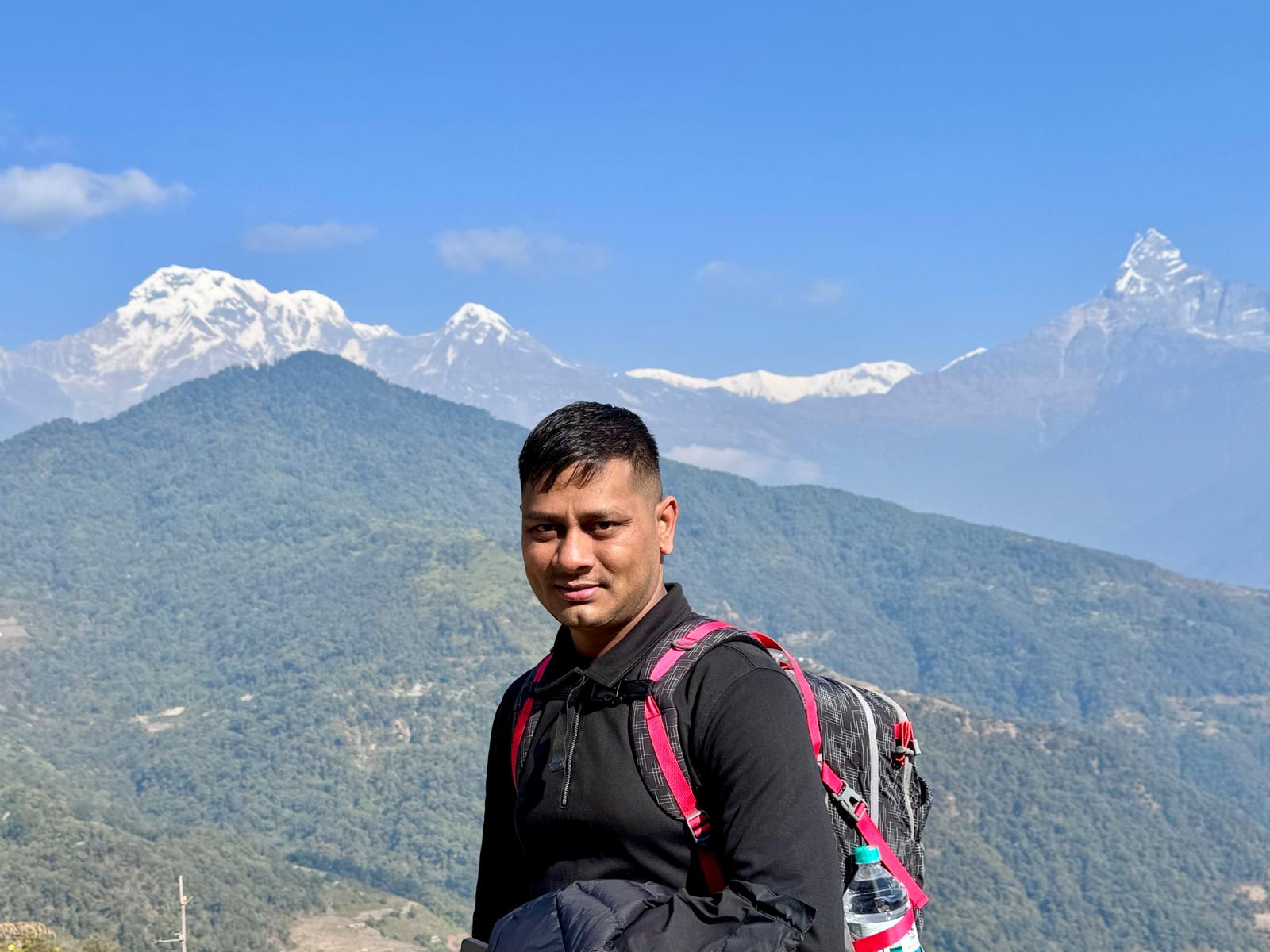
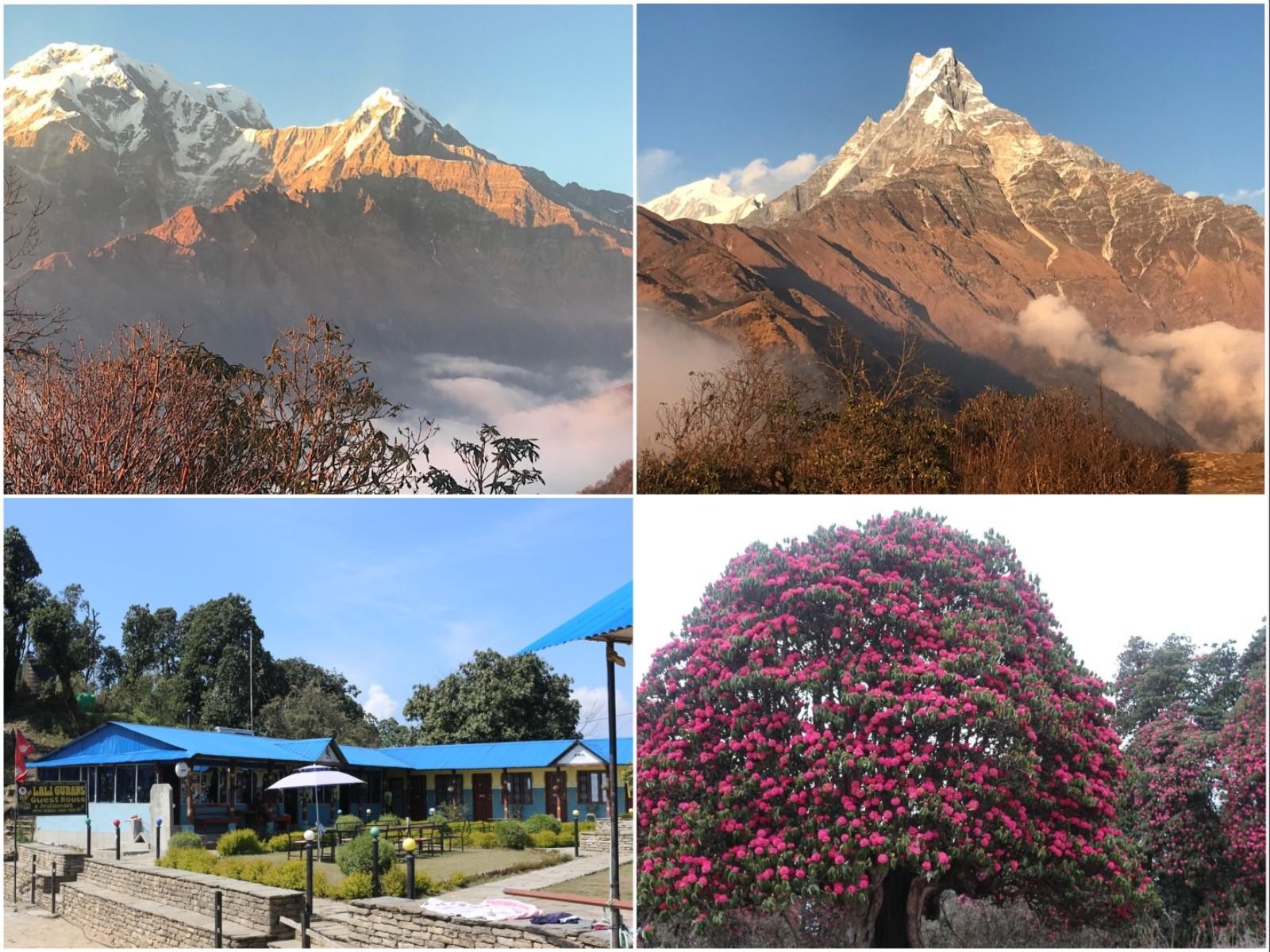
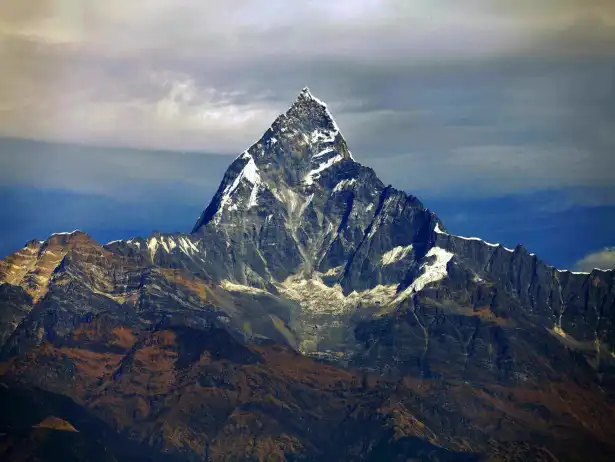
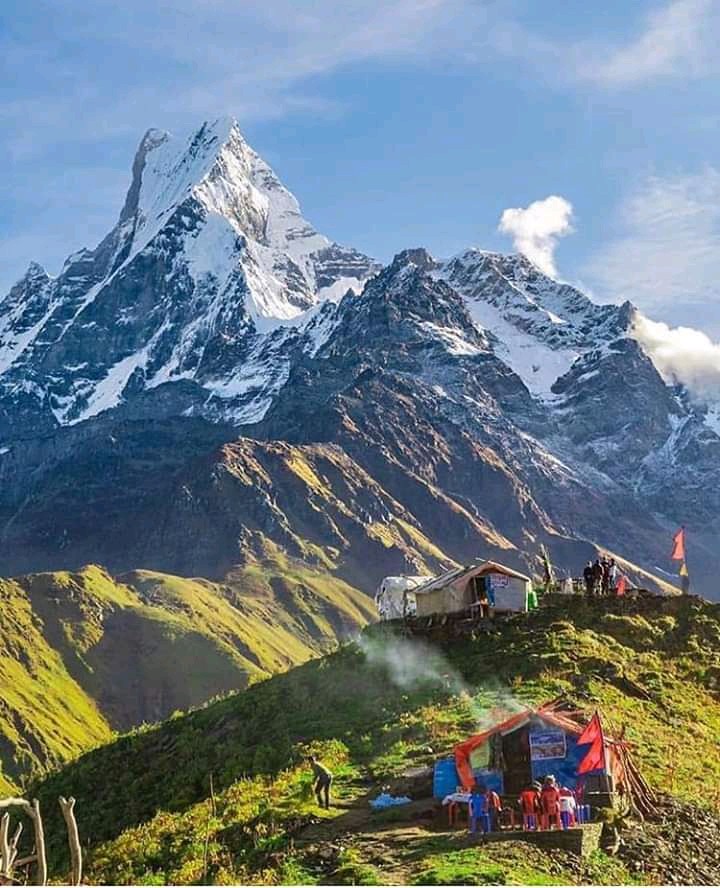
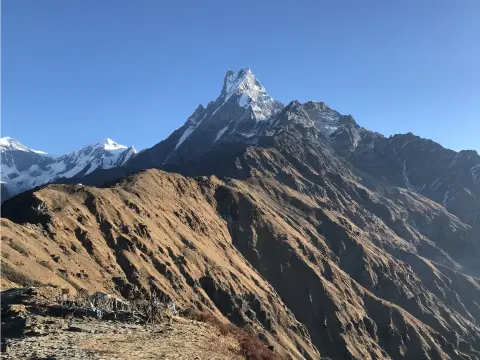
Breathtaking view from the Mardi Himal Viewpoint featuring Machhapuchhre (Fishtail) and the Annapurna Range—one of Nepal's best less-crowded beginner trekking routes near Pokhara.
In fact, the less crowded trek Nepal experience is ideal for capturing amazing Himalayan pictures and enjoying tea house views in peace and quiet. As such, the Mardi Himal trek is a fantastic short and easy option for a Himalayan adventure.
Furthermore, the Mardi Himal trail passes through Kande (1,770 m), Australian Camp (2,130 m), Forest Camp (2,550 m), Low Camp (2,970 m), and High Camp (3,580 m) before reaching Mardi Himal Base Camp (4,500 m). While the trail climbed steadily throughout the trek, most hikers find the Mardi Himal trekking to be a relaxing one since there are no long hikes per day.
Moreover, tea houses along the trail offer traditional local Nepalese dishes, accommodations for hikers, and panoramic Himalayan views. Thus, Mardi Himal is the best trek for first-time trekkers who want to experience a Himalayan trek without pitching a tent in the wild.
Likewise, with its stunning mountain vistas, alpine meadows, forested ridges, and cultural heritage, the short and simple Mardi Himal trek promises to deliver a lifetime Himalayan trekking experience in just four or five days. The trek is beginner-friendly and only requires a good level of fitness, proper walking equipment, and a willingness to explore the Himalayas.
Therefore, with its fantastic value, accessibility from Pokhara, spectacular scenery, and gentle grade, the short Himalayan trek has quickly become one of the most popular short treks in Nepal. In the following blog post, I’ll go over the Mardi Himal trek in detail, including the routes, tea houses, best time to trek, permits, costs, what to carry on the trek, and much more, to help you plan your Himalayan trek adventure.
2. Why is Mardi Himal A Short, Beginner-Friendly Trek?
The short Mardi Himal trek near Pokhara has become one of the most desirable trekking adventures in Nepal for first-time trekkers. The trail reaches Mardi Himal Base Camp (4,500 m) through a well-trodden and minimally challenging route. As such, day-hikers looking to experience the Himalayas without engaging in strenuous hikes can enjoy the spectacular mountainous vistas of the Mardi Himal range without breaking a sweat.
In summary, the trek from Pokhara typically takes four to five days, with five to six hours of hiking per day on reasonably flat trails. As a result, the short Mardi Himal trek is a fantastic alternative for those with limited leisure time but who still want to experience trekking in the Himalayas, enjoy the beauty of nature, and soak in the splendor of the mountains.
Trek Itinerary: Mardi Himal Trek from Pokhara
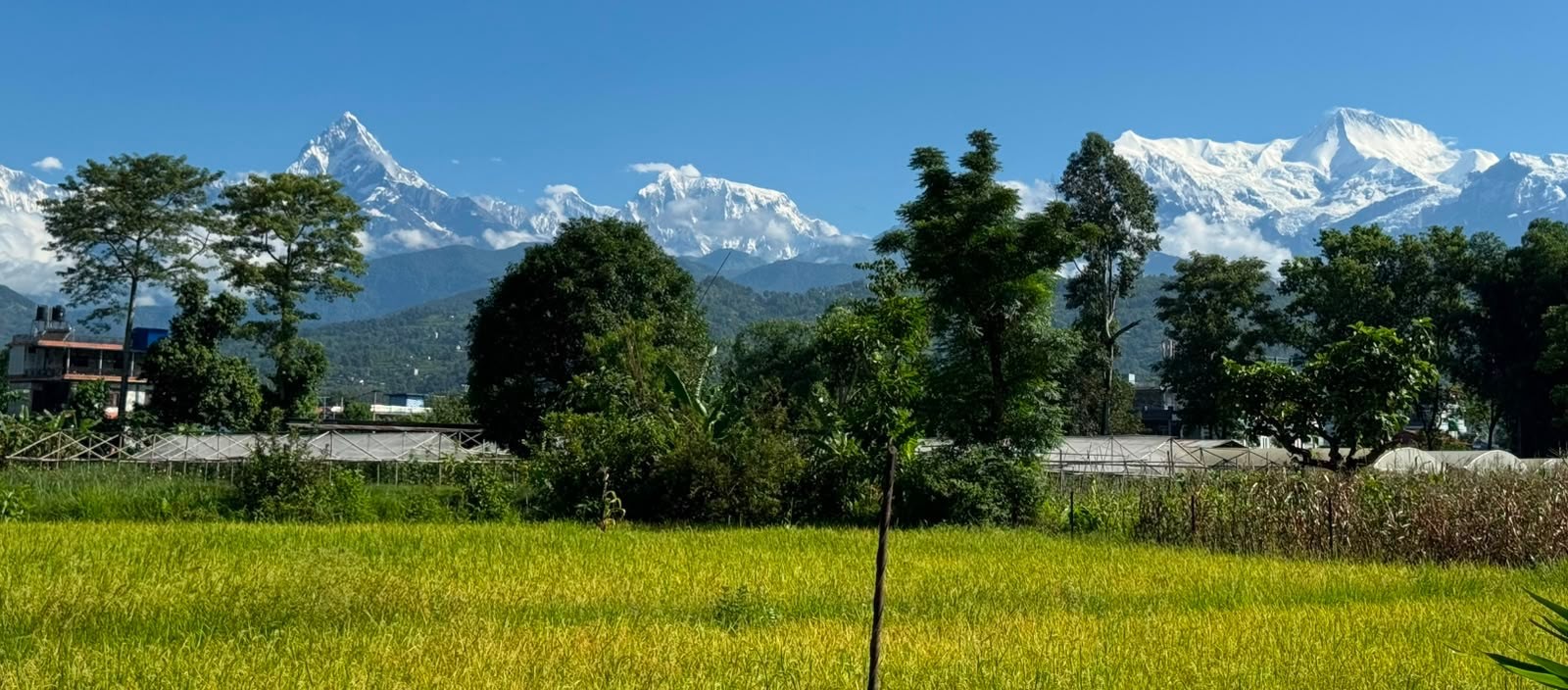
Golden rice fields, green valleys, and the majestic Annapurna and Machhapuchhre (Fishtail) peaks create a spectacular landscape on the less-crowded Mardi Himal Trek near Pokhara.
Here’s an overview of the trail, how many hours of hiking you can anticipate, and how many days of steep climbs, ridge walking, and alpine meadows you may expect during the short Mardi Himal trek.
Trekking Day
Itinerary
Elevation | Walking Hours
Day 1
Pokhara – Kande – Forest Camp
2,550 m | 5-6 hrs
Day 2
Forest Camp – Low Camp – High Camp
3,580 m | 5-6 hrs
Day 3
High Camp – Mardi Himal Base Camp – Low Camp
4,500 m | 6-7 hrs
Day 4
Low Camp – Siding – Pokhara
822 m | 4-5 hrs
Meanwhile, the Mardi trail winds through dense forests of rhododendron and oak before opening up to spectacular alpine ridges and views of Mardi Himal. Thus, the trail provides dramatic contrasts and beautiful Himalayan scenery in a short period.
Likewise, the Mardi Himal trek is an excellent opportunity for first-time trekkers to experience the splendor of the Annapurna Himalayas on reasonably easy trails. Moreover, with the comforts of tea houses throughout the trail, the Mardi Himal trek is the ideal short Himalayan getaway for all types of travelers, including families with children.
Moreover, another advantage of this lovely trail is that it is devoid of any glaciers, ladders, or ropes, making it accessible even to the most inexperienced trekkers. Rather than navigating rocky and uneven terrain, hikers will have the option of taking established, well-trodden trails, which means that trekking poles and a good pair of hiking boots will be sufficient.
Features of A Short Beginner-Friendly Trek :
Easy to moderate grade trekking Trail with fantastic views
Trek Duration: 4-5 Days Suitable for all seasons except Winter
Max. Altitude: 4,500 m Tea house available throughout the trail
No technical climbing required Day walks: 5-7 hrs/day
Compared to other popular Annapurna treks like Annapurna Circuit, the Mardi Himal trek is an easy and short alternative, with no technical climbing or difficult obstacles.
Mardi Himal Trek
Ghorepani Poon Hill
Annapurna Base Camp
Duration 4-5 Days
4 Days
6-9 Days
Max. Elevation / 4,500 m
3,210 m
4,130 m
Crowds / Low
High
High
Difficulty
Easy / Moderate
Moderate
Mardi Himal vs. Other Annapurna Treks :
While Mardi Himal offers spectacular views of towering mountain peaks, its trail is considerably less taxing than other Annapurna-region treks. Thus, the short Mardi Himal trek is an excellent first Himalayan trekking experience, particularly for those unfamiliar with Himalayan trekking. Mardi Himal, on the other hand, provides some of the most spectacular Himalayan vistas with fewer crowds than the more well-known Annapurna and Ghorepani Poon Hill trails. However, it’s critical to keep in mind that while ascending above 4,500 meters is not particularly difficult, hikers should walk slowly and drink plenty of fluids to avoid altitude sickness.
In conclusion, the well-equipped tea houses provide excellent value by giving hikers with cozy accommodations, hot meals, and opportunities to interact with local villagers. Furthermore, trekking with loved ones or taking pictures in this spectacular region is unquestionably something everyone should experience at least once in their life. So, if you’re seeking a simple and short trek into the Himalayas with breathtaking views of the mountains, valleys, and ridges, the Mardi Himal trek is an excellent option.
The Mardi Himal Trek highlights offer one of the most unique Himalayan adventures in the Annapurna region. Compared to the more popular Annapurna Base Camp and Ghorepani Poon Hill hikes, Mardi Himal trail provides a much more peaceful experience with long stretches of ridge walking, dense forests, and spectacular mountain vistas. Not only that, but this trail is also great for beginners as it does not involve exhausting climbs at high altitudes.
Walk through peaceful rhododendron forests, enjoy panoramic ridge trails, and experience breathtaking close-up views of the Annapurna and Machhapuchhre ranges on the Mardi Himal Trek.
Meanwhile, the Mardi Himal Base Camp trek begins in the village of Kande (1,770 m) just outside of Pokhara. The trail winds its way up through the beautiful Annapurna Conservation Area (NRM), with picturesque rhododendron forests, mossy trees, and mountain streams. Higher up, these forests give way to spectacular vistas over the Annapurna Himalayas. In particular, the trail offers some of the closest views of Machhapuchhre (Fishtail) in the entire region (6,993 m).
Additionally, hikers can enjoy unparalleled views of the following peaks from the Mardi Himal Base Camp Viewpoint (4,500 m):
Machhapuchhre (Fishtail)
Annapurna I
Annapurna South
Hiunchuli
Mardi Himal
Gangapurna
Lamjung Himal
Peaceful Rhododendron Forest Trek
Here, the trail passes through one of the most beautiful rhododendron forests in Nepal. While the park is covered in a riot of color during spring, the forest takes on a different charm during autumn, with crystal-clear skies and fresh greenery after the monsoon season. Other highlights include:
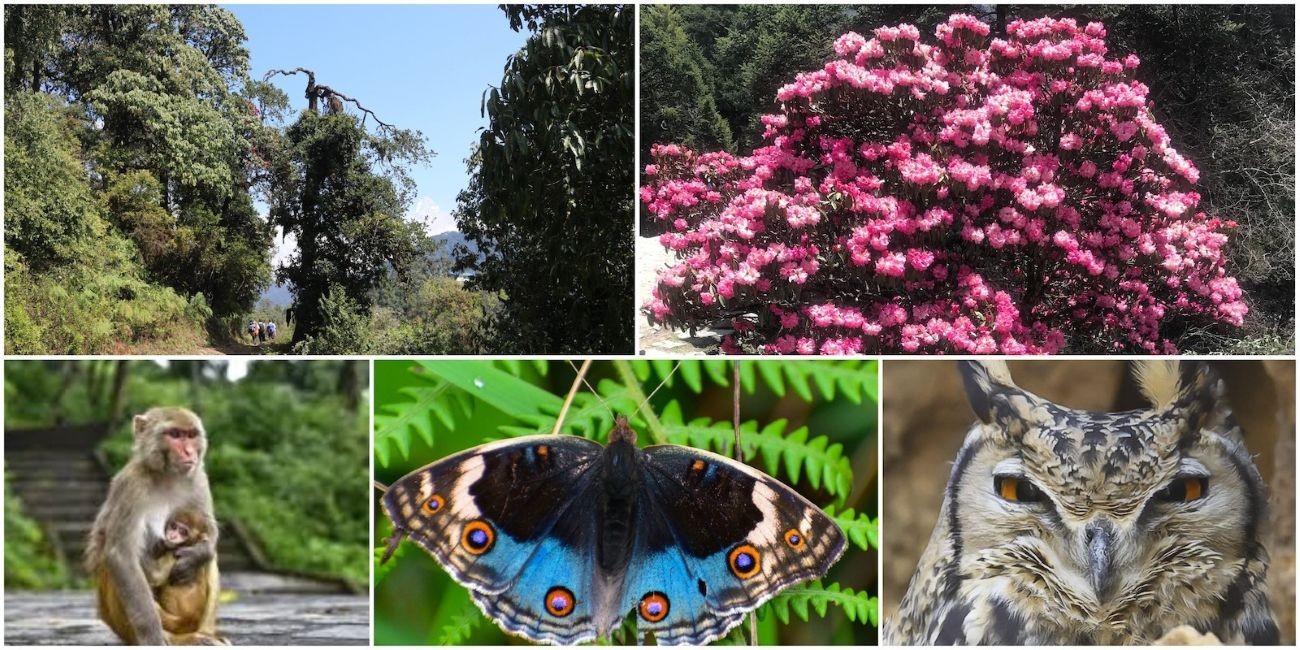
The Mardi Himal Trek offers rich Himalayan flora and fauna, featuring vibrant rhododendron forests, alpine wildflowers, diverse birdlife, and peaceful forests beneath the Annapurna range.
Dense rhododendron forests :
Oak and bamboo woodland
Watersfalls and streams
Wild orchids
Himalayan birds
Calm tea houses
Fresh mountain air
Since the trail is shaded by a thick forest cover, day hikes are particularly pleasant during the autumn season in this region. Similarly, night views are also spectacular from the tea houses located at various points along the trail. Most of these are found at moderate altitudes (up to 3,580 m), so they provide optimal conditions for stargazing and sunrise viewing.
Stunning Ridge Walks Above the Clouds
The trek from Low Camp (2,970 m) to Badal Danda (3,210 m) to High Camp (3,580 m) to Mardi Himal Viewpoint (4,200 m) offers some of the most breathtaking views of any Himalayan trek. In fact, the narrow ridge provides uninterrupted panoramic views over the mountains from end to end. As such, these sections of the trail allow hikers to take in the sheer scale and majesty of the Annapurna Himalayas and the Machhapuchhre massif. Some of the main attractions that can be seen while walking the ridges include:
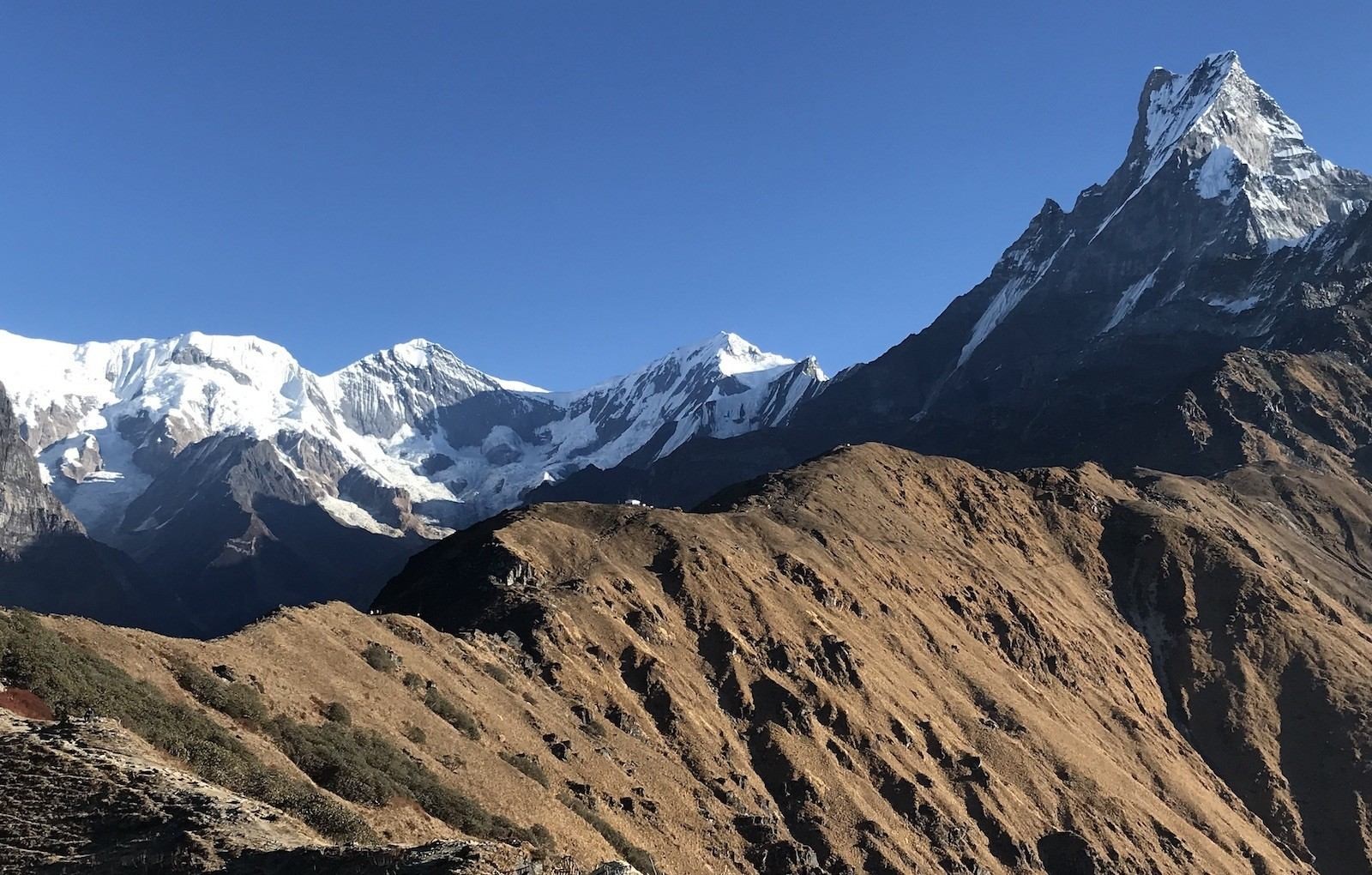
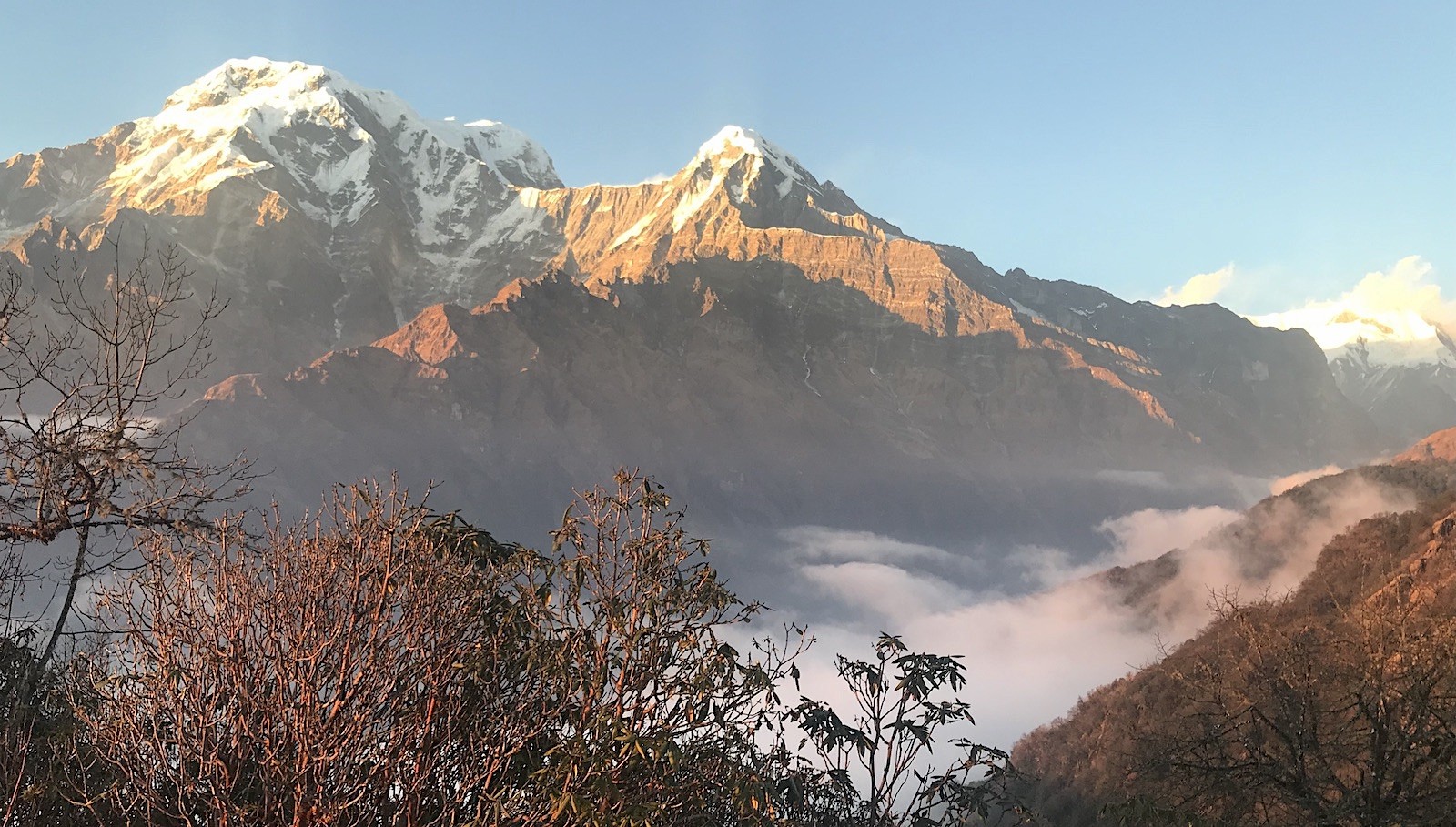
Experience the iconic ridge walk above the clouds on the Mardi Himal Trek, where breathtaking views of Machhapuchhre, Annapurna South, and Hiunchuli surround every step.
Rolling alpine ridges :
Deep valleys
Clouds and cloud inversion
Sunrise viewing
Snow-capped peaks
Waving prayer flags
Traditional yak pastures
Compared to other trekking routes in Nepal like Everest Base Camp, the ridges of the Mardi Himal trail are significantly more sparsely populated. As such, hikers will have uninterrupted long-distance views over the mountains and valleys. This is especially true on clear days without any weather interference. The view of the sunrise from the peaks of the Annapurna Himalayas is particularly spectacular during this time of day. The Machhapuchhre mountain peak is also especially impressive when viewed from the High Camp (3,580 m) region.
In fact, the Mardi Himal trail provides one of the closest views of the sacred Machhapuchhre mountain in Nepal, which is a big draw for many hikers. Overall, the trail provides some of the most dramatic mountain views available in the Annapurna region and is one of the best options for nature lovers and photography enthusiasts. The Mardi Himal trek highlights also include panoramic views of the Himalayas from the Mardi Himal Base Camp Viewpoint (4,500 m). Despite the high altitude, the view is surprisingly accessible and the surrounding mountains have a particularly serene and majestic presence.
In particular, the Mardi Himal Viewpoint offers fantastic long-distance views over the following peaks:
Annapurna South (7,219 m)
Hiunchuli (6,441 m)
Mardi Himal (5,587 m)
Machhapuchhre (6,993 m)
Tea Houses with Mountain Views
It is worth noting that many of the teahouses along the trail boast spectacular mountain vistas and are great places to witness the sunrise.
Overnight Stop
Elevation
Forest Camp
2,550 m
Low Camp
2,970 m
Badal Danda
3,210 m
High Camp
3,580 m
In particular, the following overnight stops offer spectacular views:
Outstanding Mountain Photography
Compared to other trails in the region, the uncrowded Mardi Himal trail offers some truly outstanding photography opportunities. Moreover, most of these opportunities are available to both professional and amateur photographers alike.
The best photography spots on the Mardi Himal trail include:
Forest Camp
Badal Danda Ridge
High Camp Sunrise
Mardi Viewpoint
View of Machhapuchhre
Panoramic View of Annapurna South
Cloud Inversion
Golden Hour Photography
Why These Trail Highlights Matter ?
Overall, the Mardi Himal trek highlights offer a unique combination of accessibility and natural beauty that is hard to find elsewhere in the Annapurna region. Compared to other popular Himalayan trails, Mardi Himal trail provides more opportunities for wilderness immersion and solitude while delivering equally stunning mountain vistas. Additionally, the long ridges provide unmatched panoramic views over the mountains from end to end.
Below are some of the main reasons why the Mardi Himal highlights are worth experiencing:
4. Ideal 4–5 Day Beginner-Friendly Mardi Himal Itinerary From Pokhara
The Mardi Himal 5-day itinerary is one of the best options available for a short trek near Pokhara. Mardi Himal trail provides a great balance between moderate walking days and spectacular Himalayan vistas. In addition, this trek is perfectly suited for less-experienced trekkers and those worried about altitude sickness. Essentially, the trail provides an easy introduction to mountain trekking for those willing to explore the beauty of the Himalayas.
Moreover, the trail is close to Pokhara, making it an ideal option for those with limited time in the region. The trail begins in the village of Kande (1,770 m) and follows well-maintained trails through dense forests, rolling ridges, and alpine meadows on the way to the Mardi Himal Viewpoint (4,500 m). From there, hikers can descend all the way back to the village of Siding before returning to Pokhara. This 5-day Mardi Himal trek itinerary includes all the necessary details for a comfortable and enjoyable experience on the trail. Below is an outline of what a typical 5-day trek would look like:
Day 1: Pokhara → Kande → Forest Camp
Day 2: Forest Camp → Low Camp → Badal Danda → High Camp
Day 3: High Camp → Mardi Himal Viewpoint (4,500 m) → Low Camp
Day 4: Low Camp → Siding Village
Day 5: Siding Village → Pokhara
With regard to the accommodation, it is recommended to stay in tea houses along the trail. This ensures that hikers get enough rest after long days of walking while taking in the breathtaking mountain views. As for food, most tea houses can provide hikers with a healthy meal and warm bedding to help them get through the night.
Below are some more details concerning the 5-day Mardi Himal trek itinerary:
Day 1: Pokhara (822 m) → Kande (1,770 m) → Forest Camp (2,550 m)
The trek begins with a 1-hour drive to Kande. From there, the trail gently ascends through the forest towards Forest Camp. In particular, the day involves walking past:
Staircase trails :
Rhododendron forests
Oak forests
Small streams and waterfalls
Beautiful mountain viewpoints
Meanwhile, the day’s walking takes about 5-6 hours, with an elevation gain of 800 m. Meals: lunch, dinner. Accommodation: tea house. Note: this day’s hiking trail is relatively flat and suitable for all fitness levels. As such, the day should not be taxing for most people. Day 1 Highlights: forest trails, rhododendron trees, and mountain views. Also, most trails are well-maintained and easy to walk on.
Consequently, day 1 is the most accessible day of the trek and can be completed by anyone, regardless of their fitness level. However, it is still crucial to stay hydrated and take periodic breaks throughout the day. This will help the body adjust to higher altitudes and reduce the chances of altitude sickness on subsequent days. Overall, day 1 should be a relatively easy hike with spectacular mountain views and a convenient pace.
Finally, it is essential to pack lightly during day 1 in particular since most of the luggage can be stored at the tea house overnight. Day 1 Summary: gentle trail with beautiful mountain scenery. Great day for taking photos and enjoying the wilderness. Easy pace with no serious elevation gain.
Route
Elevation
Distance
Pokhara → Kande
822 – 1,770 m
18 km
Kande → Forest Camp
1,770 – 2,550 m
10 km
Day 1 Breakdown:
Day 2: Forest Camp → Low Camp → Badal Danda → High Camp (3,580 m)
Day 2 gradually ascends higher up the mountain. In particular, the trail becomes much more picturesque and offers more opportunities for breathtaking mountain views. Moreover, many teahouses have panoramic views of the valley.
The following sights can be seen along the trail:
Mossy forests
Cloud forests
Ridge walking vistas
Machhapuchhre views
Annapurna panorama
The day’s walking takes about 5-6 hours with an additional 2-hour drive on the day of arrival.
Accommodation: High Camp Teahouse.
Meals: breakfast, lunch, and dinner.
Day 2 Highlights: picturesque trail and spectacular mountain views.
Day 2 Summary: Moderate-paced day with no significant elevation gain.
Another day of moderate difficulty with mostly gentle trails. Most of the path is quite well-maintained and only gets steep in certain regions.
Trek Route
Elevation | Distance
Forest Camp → Low Camp
2,550 – 2,970 m | 6 km
Low Camp → Badal Danda
2,970 – 3,210 m | 10 km
Badal Danda → High Camp
3,210 – 3,580 m | 10 km
Day 2 Breakdown:
Day 3: High Camp → Mardi Himal Viewpoint (4,500 m) → Low Camp
The morning will begin before sunrise, with a short walk to the Mardi Himal Viewpoint. In particular, the trail to the viewpoint is about 2-3 hours. During the day, hikers can enjoy spectacular views of :
Machhapuchhre (Fishtail) (6,993 m)
Annapurna I (8,091 m)
Annapurna South (7,219 m)
Hiunchuli (6,441 m)
Mardi Himal (5,587 m) 5,587 m
After reaching the summit and watching the sunrise, hikers can descend to Low Camp. The day’s walking takes about 6-7 hours.
Day 3 Highlights: sunrise viewing and panoramic mountain vistas.
Day 3 Summary: long day with moderate difficulty.
Mostly flat trails with only occasional steep sections.
Although it is by far the longest day of the trek, it is not particularly difficult since only short sections of the trail require steep inclines.
Trek Route
Elevation | Distance
High Camp → Mardi Himal Viewpoint
3,580 – 4,500 m | 10 km
Mardi Himal Viewpoint → Low Camp
4,500 – 2,970 m | 13 km
Day 3 Breakdown :
Day 4: Low Camp → Siding Village (1,750 m)
Day 4 is the last full day of trekking. The trail mostly follows a descending pattern and passes through picturesque forests and local villages.
In particular, the following highlights await hikers on day 4 :
Bamboo forests
Waterfalls
Local farms
Friendly villagers
Beautiful mountain views
The day’s walking takes about 5-6 hours. Accommodation: tea house. Meals: lunch, dinner. Day 4 Summary: pleasant day with mostly gentle trails and spectacular scenery. Again, day 4 is not particularly difficult as most trails are relatively flat and only occasionally steep. As such, most hikers should not have a problem with the day’s difficulties. Finally, the trail on day 4 is much more accessible than most of the other days. This is because it mostly consists of flat paths with only a few steep sections.
Trek Route
Elevation | Distance
Low Camp → Siding Village
2,970 – 1,750 m | 18 km
Day 4 Breakdown:
Day 5: Siding Village → Pokhara
A short walk brings hikers to the road, from where they can return to Pokhara.
The road to Pokhara takes about 2-3 hours to drive.
The trek ends mid-day on day 5.
Day 5 Summary: day 5 is a short day with only a few kilometers of walking.
In particular, day 5 is much shorter than the previous days and involves mostly easy trails. Consequently, most hikers should be able to comfortably manage day 5 without any issues. The day ends right after reaching Pokhara.
Route
Elevation|Distance
Siding → Pokhara
1,750 – 822 m | 4 km (walk)
Distance by Car
N/A | 2-3 hours
Day 5 Breakdown:
Overall Highlights of the Mardi Himal 5 Day Itinerary From Pokhara
This Mardi Himal 5 day itinerary is the ideal option for less-experienced trekkers who want to explore the Annapurna region. It provides a good balance between walking and exploring, with long scenic walks complemented by spectacular mountain vistas.
Moreover, the trail has minimal risks for altitude sickness due to gradual elevation gain. Compared to many other Himalayan trekking routes, the Mardi Himal trail is also comparatively easy on the body. For these reasons, the Mardi Himal 5 day itinerary is particularly well-suited for people with average fitness levels who want to experience trekking in the Annapurna region.
Finally, this version of the Mardi Himal trek has several additional advantages including:
More opportunities for acclimatization
Moderate difficulty
Comfortable tea houses
Fewer crowds during shoulder season
Excellent mountain views
Beginner friendliness
Short travel day from Pokhara
Fantastic photography
The Mardi Himal 5 Day Trek Itinerary From Pokhara
Overview :
Day 1: Pokhara (822 m) → Kande (1,770 m) → Forest Camp (2,550 m)
Day 2: Forest Camp → Low Camp (2,970 m) → Badal Danda (3,210 m) → High Camp (3,580 m)
Day 3: High Camp → Mardi Himal Viewpoint (4,500 m) → Low Camp (2,970 m)
Day 4: Low Camp (2,970 m) → Siding Village (1,750 m)
Day 5: Siding Village (1,750 m) → Pokhara (822 m)
Trek Difficulty
Moderate
Best Time to Trek
Spring and Autumn
Accommodation
Teahouses
Maximum Altitude
4,500 m
Daily Walking Distance
3 to 7 hours (mostly 3-6 hours)
Average Day Duration
6 hours per day
Route Type
Out-and-back
Start
Finish-Pokhara
Trekking Season
March to May, September to November
Highlights :
Machhapuchhre views, sunrise viewing, panoramic mountain vistas, long ridge walks, tea houses with mountain views.
5. Is Mardi Himal Really Suitable For Complete Beginners?
Many beginners get concerned whether the Mardi Himal for beginners trail is beginner-friendly. The good news is yes, this trek is comparatively easier for people with minimal trekking experience. Mardi Himal is a mix of moderate walks, tea house stays, and incredible Himalayan views. Hence, it has become one of the renowned trekking destinations for novice-level trekkers.
Unlike most of the high-altitude Himalayan trails in Nepal like Manaslu Circuit Trek, the Mardi Himal Trek is a well-established trail that offers you an amazing view of forests, ridges, and snow peaks without any technical climbing. Mardi Himal trek does not require any special skills and is categorized as an easy trek. All you need is regular physical activity and time to adjust to the altitude.
A 5-day Mardi Himal trek itinerary is enough for beginners, including gradual acclimatization to help combat altitude sickness.
Let us discuss why Mardi Himal is suitable for first-timers
Why Is Mardi Himal Trek Suitable for Beginners?
Feature
Easy / Moderate
Technical Climbing
No
Maximum Altitude
Mardi Himal Base Camp/Viewpoint 4,500m
Trek Duration
4-5 Days
Walking Hours
3-6 hrs per day
Accommodation
Tea houses
Tracks
Easy and well maintained
Guides
Recommended
Mardi Himal trek is a fantastic opportunity for novice-level trekkers, including teenagers, to experience the Himalayas. The table below shows more details about this trek:
In fact, the trail begins at either Kande (1,770m) or Dhampus (1,650m) and gradually climbs up the mountain. The trail leads to Forest Camp (2,520m) Low Camp (2,970m), Badal Danda (3,250m), High Camp (3,580m), and ultimately Mardi Himal Base Camp (4,500m).
Because of a gradual climb, most fit first-time trekkers complete the trail with comfort.
What Fitness Level Do I Need for Mardi Himal Trekking?
You do not need to be an elite-level athlete or have extensive trekking experience to complete the Mardi Himal Trek.
However, you should be accustomed to walking for 5-6 hours a day and carry a small backpack. You should also be comfortable with:
Walking on uneven mountain paths
Climbing up hundreds of stairs
Walking and running at higher altitudes
Physical exertion for short intervals
Moreover, a proper fitness regime will allow you to relish every moment of the trek. Fitness training should begin at least a month before the scheduled departure. Activities such as stair climbing, walking, jogging, swimming, cycling, and short hikes can be helpful.
Altitude and Its Impact: Will It Be Difficult For Me? The most challenging part of the Mardi Himal Trek is not its extreme altitude but a gradual climb over several days. You must pay special attention during the ascent and give yourself enough time to acclimatize to higher altitudes.
Place
Elevation
Pokhara
822m
Kande
1,770m
Forest Camp
2,520m
Low Camp
2,970m
Badal Danda
3,250m
High Camp
3,580m
Mardi Himal Base Camp
4,500m
Following are the elevations of various places on the trek:
Most hikers feel slightly ill at elevations above 3,000m, so be prepared for minor discomfort. Nevertheless, you should walk slowly, drink plenty of fluids, get a good night’s sleep, and inform the guide if you feel unwell. Remember that altitude sickness is rare on a five-day trekking itinerary.
Are Tea Houses Comfortable along Mardi Trail?
The tea house accommodation system makes the Mardi Himal trek the best for first-timers. Tea houses provide all the necessary amenities for a comfortable stay. These include warm and cozy rooms and twin-sharing beds. Additionally, they offer hot drinks, meals, and charging facilities. Most tea houses have basic Wi-Fi, and the staff is very friendly and helpful. Although, amenities become minimal at higher altitudes.
Is Mardi Himal hard?
It is moderately easy.
Can I do it as a beginner?
Yes, a 5-day itinerary is best suited for first-timers.
Do I need a guide?
Yes, a guide is mandatory.
What is the maximum altitude?
Mardi Himal Base Camp/Viewpoint 4,500m.
How many hours of walking per day?
Around 3-6 hrs
Can teenagers do it?
Yes, if they are physically fit.
Are there any dangerous parts?
There is no technical climbing.
Mardi Himal Trek For Beginners: Frequently Asked Questions
Conclusion Mardi Himal is the most recommended trek for first-time trekkers. This trail offers everything a novice-level trekker needs, including moderate walking, comfortable tea houses, stunning forest views, and Himalayan panorama. Moreover, you can witness beautiful sights of Machhapuchhre (6993m), Annapurna South (7219m), Hiunchuli (6441m), and Annapurna I (8091m). Hence, it is the best choice for first-time trekkers due to its moderate walking and great views.
6. Best Time To Trek Mardi Himal For Fewer Crowds & Perfect Weather
The best time for Mardi Himal trek is very important because it defines your trekking experience. Although the trail is open for most months of the year, Spring and Autumn are the best seasons for visiting the Mardi Himal trekking region. There are fewer crowds of trekkers, and you can enjoy panoramic Himalayan views with clear skies. Moreover, the weather is pleasant during these seasons.
September offer the best weather for the Mardi Himal Trek, with fewer crowds, crystal-clear mountain views, and comfortable trekking conditions near Pokhara.
Nevertheless, if you want to avoid large crowds, then you need to time your tour well within these off-peak seasons.
Season | Months
Weather
Crowds | Recommendation
Spring | March-May
Warm and stable
Moderate | Excellent
Summer (Monsoon) | June-August
Rainy
Very Low | Challenging
Autumn | September-November
Dry and clear
High | Best Overall Option
Winter | December-February
Cold
Very Low | Recommended for Experienced Trekkers
Peak And Off-Peak Seasons For Mardi Himal Trek :
Best Time To Do Mardi Himal Trek: Spring (March-May) Spring is one of the best seasons for hiking. The temperature is moderate and comfortable throughout the trail. Additionally, the entire forest turns into shades of red and pink due to blooming Rhododendrons.
Location
Day | Night
Pokhara (822m)
22-28C | 12-15C
Forest Camp (2520m)
12-18C | 4-8C
High Camp (3580m)
6-12C | -2-3C
Base Camp (4500m)
2-8C | -5-0C
The following table shows average temperatures on the trail:
March is relatively cool and less crowded in Mardi Himal. April is the best month for seeing blooming Rhododendrons in the forest. Finally, May is also a fantastic option for hiking before the rainy season begins.
Best Time To Trek Mardi Himal: Autumn (September-November)
Autumn is the best season to trek Mardi Himal for several reasons. The most significant advantage is that you can see the Himalayas with utmost clarity. It is because the clouds dissipate after the summer rainy season.
In fact, the entire Annapurna range is visible on a clear day, including:
Machhapuchhre (6993m)
Annapurna South (7219m)
Hiunchuli (6441m)
Annapurna I (8091m)
Mardi Himal (5587m)
September is the best time for trekking in the Annapurna region. That is because the temperature is comparatively warm, and the skies are clear. October is the clearest month for spotting the Himalayan panorama. Finally, November is relatively frigid, but the views of the Annapurna range are still extraordinary.
How To Avoid Crowds On Mardi Himal Trek? Even during the off-peak season, you can easily find less crowded trails. Our mountain guides recommend the following tips:
Hike on weekdays instead of weekends.
Avoid the peak seasons like late September and early November.
Try to depart before 7 am.
Stay an extra night at Forest Camp.
Arrive early in the trekking season.
Book the High Camp accommodation in advance.
These few adjustments keep you away from the peak-season crowds and help you enjoy a stress-free trek.
How About Winter (December-February)?
Winters are comparatively colder, but the Mardi Himal trail offers excellent views of the Annapurna range throughout the season. Moreover, the skies are generally clear, and mountain photography turns out to be fantastic.
Location
Day | Night
High Camp
2-7C | -8 to -12C
Base Camp
-2-4C | -12 to -18C
However, the temperature can be freezing at higher altitudes:
Therefore, it is necessary to pack warm clothing. Furthermore, it is essential to note that snowfall can occur during extremely cold months.
Monsoon (June-August): Fewer Visitors,
Monsoon season is the least popular season for trekking in Nepal. Moreover, it has unpredictable weather conditions. Although the trails are washed out by heavy rains, you can witness the most outstanding waterfalls in Kande (1,770m), Forest Camp (2,520m), and Low Camp (2,970m). The morning season is comparatively clear, but be prepared for sudden downpours.
Month | Weather
Crowd | Recommendation
March | Excellent
Low | ★★★★★
April | Excellent
Medium | ★★★★★
May | Good
Medium | ★★★★☆
June | Wet
Very Low | ★★☆☆☆
July | Wet
Very Low | ★☆☆☆☆
August | Wet
Very Low | ★★☆☆☆
September | Improving
Low-Moderate | ★★★★☆
October | Outstanding
High | ★★★★★
November | Excellent
Medium | ★★★★★
December | Cold
Low | ★★★★☆
January | Very Cold
Very Low | ★★★☆☆
February | Cold
Low | ★★★★☆
Summary: Best Time To Trek Mardi Himal For Fewer Crowds
Expert Tips,
For most people, the best season to trek Mardi Himal is from late September to November. These months have spectacular weather and clear skies for amazing views of the Annapurna range. On the other hand, if you want to avoid crowds, try visiting early in September or March.
7. How Difficult Is the Mardi Himal Trek & What About Altitude Sickness?
The Mardi Himal difficulty falls between easy and moderate. It is one of the most beginner-friendly Himalayan treks in Nepal. The trail to Mardi Himal Viewpoint and Base Camp does not involve any technical climbing, glaciers, or rocky mountain passes. Rather, you will follow well-groomed trails, stairways through forests, and ridge walks in the Annapurna Conservation Area.
Meanwhile, this trek is suitable for most people with average fitness levels. In fact, most hikers who complete a short 5-day trekking itinerary experience no altitude sickness. Moreover, you have the option to spend extra days acclimatizing to higher altitudes, reducing the risk of altitude-related illnesses.
Mardi Himal Difficulty at a Glance :
Feature Easy to Moderate Himalayan Trek
Technical Climbing- None
Max. Altitude- Mardi Himal Base Camp (4,500 m)
Trek Duration- 4–5 Days
Walking Hours- 3–6 Hours
Stamina Required- Medium
Trail Type- Forests, ridges, and well-groomed paths
Recommended- For Beginners
Days 1 and 2 are gentle hikes through forests. Then, you begin climbing steep ridges to High Camp. However, the trail is not as challenging as it appears. It only requires steady walking and breaks on narrow ridges above Badal Danda (3,250 m).
Mardi Himal Altitude,
Place
Elevation
Pokhara
822 m
Kande
1,770 m
Forest Camp
2,520 m
Low Camp
2,970 m
Badal Danda
3,250 m
High Camp
3,580 m
Mardi Himal Viewpoint
4,200 m
Mardi Himal Base Camp
4,500 m
The gradual climb to Mardi Himal Viewpoint and Base Camp ensures a lower risk of altitude sickness. Here is a detailed list of elevations in different trailheads:
Since this is an easy moderate trek, it is perfect for first-time Himalayan hikers. It rarely causes altitude-related sickness if your body gets adequate time to adjust to higher altitudes.
Altitude Sickness,
While Mardi Himal trek is suitable for most people with average fitness levels, altitude sickness Mardi Himal is a common concern. When trekking beyond 3,000 m, air pressure drops, reducing the amount of oxygen in the air. Most trekkers begin to feel sick when they ascend above 3,500 m. Therefore, it is essential to pay extra attention to your body to ensure the symptoms of altitude sickness do not develop into severe conditions like HAPE and HACE.
Take your time, stay hydrated, and ascend gradually to reduce the risk of altitude sickness on the Mardi Himal Trek while enjoying spectacular Himalayan scenery.
Symptoms of altitude sickness Mardi Himal include :
Headaches
Fatigue
Loss of appetite
Feeling lightheaded
Trouble sleeping
Fortunately, most altitude-induced illnesses are mild and go away on their own after a day or two.
Acclimatization Tips :
Our certified Mardi Himal trek guides recommend that you:
Hike at a slow pace
Stay hydrated
Limit alcohol consumption
Eat wholesome meals
Get adequate sleep
Wear warm clothing
Notify your guide about your symptoms
If you follow a 5-day itinerary, you can reduce the chances of developing altitude sickness.
Stamina & Fitness,
You do not need to be an elite athlete to complete this trek. However, it helps to have basic stamina and be able to hike for 5–6 hours daily. You must also be able to walk uphill and climb a few hundred stairs. Lastly, you should carry a lightweight backpack that does not weigh more than your body weight.
In fact, it is not mandatory to get into excellent fitness before the trek. Nevertheless, if you want to have an enjoyable experience during the hike to Mardi Himal Viewpoint, a month of walking, jogging, running, or stair-climbing ahead of the trek will do wonders for your body.
Frequently Asked Questions
Is Mardi Himal difficulty high? The trek is easy to moderate. It only involves minimal technical climbing and is suitable for first-time Himalayan trekkers.
Is Mardi Himal easy for a beginner? Yes! The 5-day Mardi Himal trek for beginners is an excellent choice if you want to enjoy stunning Himalayan vistas without breaking a sweat.
Is altitude sickness common during the Mardi Himal trek? Altitude sickness is rare for short Himalayan treks. Moreover, you can avoid it by acclimatizing correctly and hiking at a slow pace.
Do I need technical climbing gear for Mardi Himal? No! The trail involves no technical climbing, glaciers, or steep boulders.
What is the highest point on the Mardi Himal trek? The trek’s highest point is Mardi Himal Base Camp at 4,500 m.
How many hours will I walk per day on the Mardi Himal trek? On average, most people walk for 3–6 hours per day on this trail.
Our Advice, The easy moderate trek to Mardi Himal is an excellent opportunity to try your hand at Himalayan trekking. Since this trail provides a gradual ascent and ample opportunities to acclimatize, it is perfect for first-time trekkers.
Moreover, you can enjoy incredible views of Machhapuchhre (6,993 m), Annapurna South (7,219 m), Hiunchuli (6,441 m), and Annapurna I (8,091 m) while exploring the Annapurna Conservation Area. Following the easy moderate trek itinerary for Mardi Himal and staying hydrated can help prevent altitude sickness and ensure you have a fantastic adventure in the Everest region.
8. Practical Guide: Getting There, Cost, Permits & Packing for a Short Easy Trek
The Mardi Himal trek is an easy moderate adventure that does not require extensive preparations. Thanks to its close distance from Pokhara, minimal permit requirements, and short duration, it is one of the best value treks in Nepal.
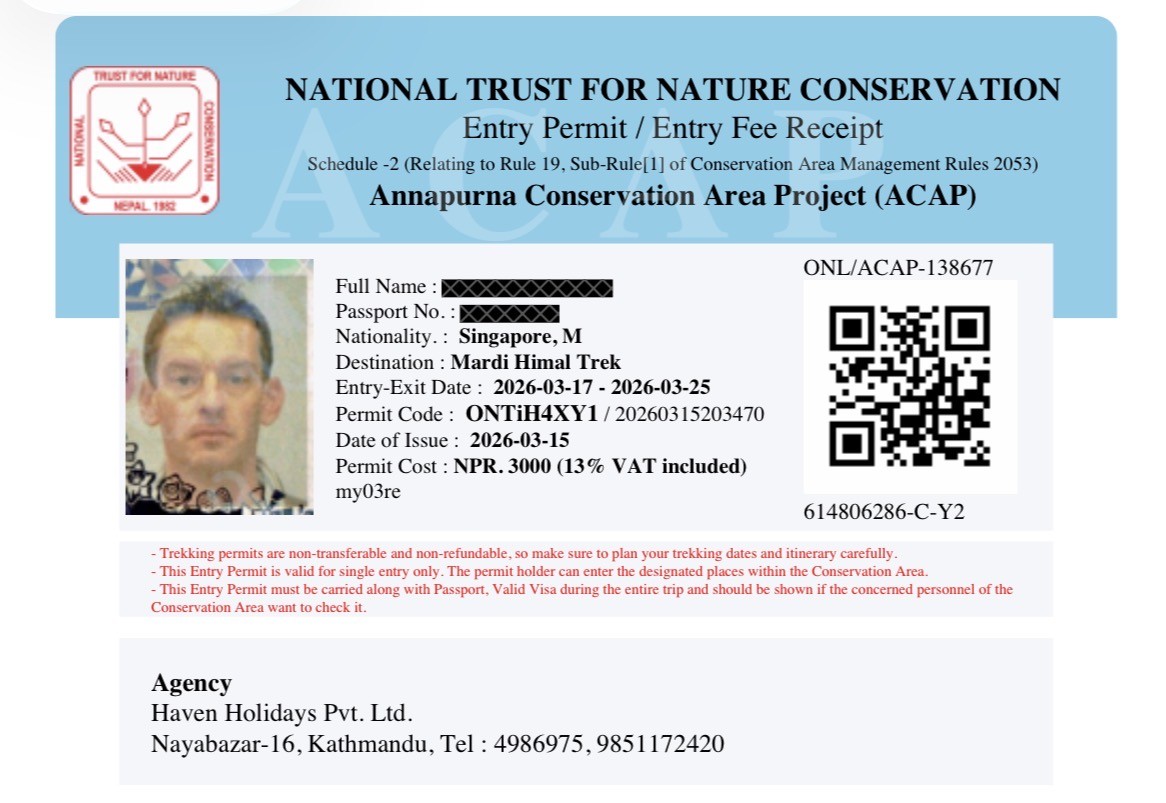
Trekkers need an Annapurna Conservation Area Permit (ACAP) before starting the scenic Mardi Himal Trek near Pokhara.
How to Get There, The Mardi Himal trek starts with a short drive from Pokhara (822 m). The most common trailheads for this adventure are Kande (1,770 m) and Dhampus Phedi (1,130 m), while Siding Village (1,750 m) is an optional endpoint.
Trek Route
Distance
Time
Pokhara to Kande
27 km
45–60 minutes
Pokhara to Dhampus Phedi
20 km
40 minutes
Siding to Pokhara
32 km
2–3 hours
Here, you can commute to Mardi Himal trek trailheads by local bus, shared jeep, private jeep, or taxi. Private vehicles offer comfort and convenience and are a great option for families.
Mardi Himal Trek Cost
Expense
Approximate Cost
ACAP Permit
USD 30
Transportation
USD 10–35
Overnight Tea House
USD 8–15
Meals
USD 20–30
Guide
USD 30–40
Porter
USD 25–30
The Mardi Himal trek cost highly depends on whether you prefer an independent or guided trek. Here is an approximate cost breakdown:
Estimated Total Cost :
Budget Independent Trek- USD 250–350
Guided Trek -USD 450–700
Private Trek- USD 700–1,000+
The prices for guided tours typically include transport, permits, guide assistance, overnight accommodation, and meals.
Mardi Himal Trek Permits,
Permit
Validity
Cost
Annapurna Conservation Area Permit (ACAP)
single entry
USD 25
The Mardi Himal trek only requires one permit:
The Annapurna Conservation Area Permit (ACAP) contributes to the conservation of the region while also helping the local economy. A TIMS card is not required for most independent trekkers. However, if you hire a guide, they will take care of the TIMS card issuance on your behalf.
Mardi Himal Packing List: What to Wear & Bring
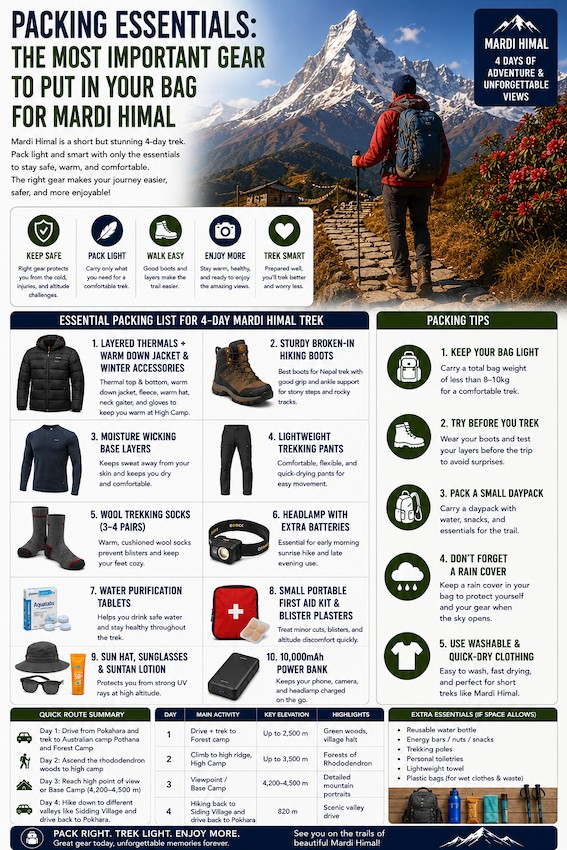
Since the Mardi Himal trek is a short adventure, you will only need to bring a few essentials. Here is a list of recommended clothing:
Pack smart for the Mardi Himal Trek with sturdy hiking boots, layered clothing, a waterproof jacket, trekking poles, and other essentials for a safe and comfortable adventure in the Annapurna region.
Clothing Suggestions :
Moisture-wicking T-shirts
Thermal clothing
Fleece jacket
Sweater or light down jacket
Waterproof rain jacket
Trekking pants or shorts
Warm woolen hat and sun protection gear
Trekking or hiking gloves
Extra socks
Footwear Suggestions :
Comfortable hiking boots
Lightweight sandals
Gaiters (optional, especially during wet seasons)
Equipment :
Day pack (25–35L)
Raincover
Trekking poles
Water bottle or hydration pack (minimum 2L)
Headlamp
Sunglasses
Sunscreen (SPF 50+)
Lip balm
Electronic Devices :
20,000 mAh power bank
Phone charger
Camera and extra batteries
Charging cable
Toiletries and Health :
Toothbrush
Wet wipes
Hand sanitizer
Personal medication
Pain relievers
Anti-inflammatory cream
Water purification tablets
Documents
Passport
Passport-sized photos
Travel insurance
ACAP permit
Cash (Nepalese Rupees)
Mardi Himal Trek Budget Tips,
The expert Haven Holidays trekking guides recommend the following money-saving tips:
Reserve transportation in advance
Carry extra cash from Pokhara
Refillable water bottles are more economical
Split guide costs with fellow trekkers
Trekking during off-peak seasons is more budget-friendly
Light luggage is encouraged since tea houses offer meals and accommodations
Category
Recommendation
Starting Point
Pokhara (822 m)
Trailhead
Kande (1,770 m)
Highest Altitude
Mardi Himal Base Camp (4,500 m)
Duration
4–5 Days
Permit Required Annapurna
Conservation Area Permit (ACAP)
Estimated Cost
USD 250–700
Difficulty
Easy to Moderate
Accommodation
Tea houses
Mardi Himal Trek Essentials: An Overview
In fact, this practical guide highlights why Mardi Himal is one of the best Himalayan trekking destinations in Nepal. The relatively short Mardi Himal trek near Pokhara allows you to enjoy panoramic views of snow-capped mountains without spending a fortune. With minimal preparations and no permits needed, this moderate trek is a fantastic addition to your bucket list.
Moreover, you can choose between independent or family-friendly guided tours. Mardi Himal is an unforgettable adventure that provides incredible value for your hard-earned money.
9. Mardi Himal vs Other Short Treks Near Pokhara: Why Choose the Quieter Option?
The Mardi Himal trek vs Poon Hill debate is common among hikers seeking a shorter Himalayan adventure. In the same way, many people wonder about the Mardi Himal trek vs Annapurna base camp. While all these trails start near Pokhara, they have significant differences. However, if you are looking for a less crowded trail and a more spectacular view of the Himalayas, consider a Mardi Himal trek
Compared to the busy Ghorepani Poon Hill trek and the booming Annapurna base camp trek, hiking Mardi Himal trail complex offers a more leisurely pace and equally fantastic views of the Annapurna range.
Here, Mardi Himal trek lets you witness Machhapuchhre, Annapurna South, Hiunchuli, Annapurna I, and Gangapurna 4,500 meters above sea level.
Why Mardi Himal Trekking is the Best?
1. Significantly Fewer Crowds
The most apparent difference between Mardi Himal and other short treks near Pokhara is the number of hikers. Compared to Poon Hill and Annapurna base camp, few people have chosen the Mardi Himal trail. As a result, you will find fewer crowds at tea houses and viewpoints while trekking Mardi Himal.
2. Incredible View of Mountains
Despite being shorter than the Annapurna base camp trek, Mardi Himal trek offers a spectacular view of Machhapuchhre, Annapurna South, Hiunchuli, Annapurna I, Gangapurna, and Mardi Himal from the viewpoint.
Below are the summits you can witness on a Mardi Himal trek:
Machhapuchhre – 6,993 m
Annapurna South – 7,219 m
Hiunchuli – 6,441 m
Annapurna I – 8,091 m
Gangapurna – 7,455 m
Mardi Himal – 5,587 m
3. Beautiful Ridge Walk
Few Himalayan treks offer a magnificent alpine ridge walk as the Mardi Himal trail. Unlike other short hikes near Pokhara, Mardi Himal trek lets you enjoy fantastic views of the Annapurna range while walking along the ridge. The Low Camp – High Camp – Mardi Himal Viewpoint trek trail (2,970 m – 3,580 m – 4,500 m) lets you experience an unforgettable sunrise and photograph the beautiful landscape.
4. Great for Nature Lovers
Mardi Himal trek is an excellent option for nature lovers who enjoy discovering the diverse forest ecosystem. The trail takes you through Rhododendron, Oak, Bamboo, and mossy forests. Mardi Himal trek also offers you the chance to capture the beauty of blooming rhododendron forests in spring and golden mountain ranges in autumn.
5. Shorter Daily Walks Compared to Annapurna Trek
While the Mardi Himal trek and Ghorepani Poon Hill trek each take four to five days to complete, the Annapurna base camp trek takes six to nine days. In addition, every trekking day on the Mardi Himal trail, as well as Ghorepani Poon Hill trail, is comparatively shorter than the Annapurna base camp trek.
While most people prefer a Poon Hill trek for its spectacular sunrise view and Annapurna base camp trek for a closer view of the mountains, a Mardi Himal trek offers a balance between the two.
Why Mardi Himal Trek is Worth It?
The less crowded Annapurna trek, with its scenic beauty, comfortable tea houses, and stunning Himalayan views, is an excellent short Himalayan adventure for beginners, families, solo travelers, photographers, and those with moderate fitness levels. First of all, a Mardi Himal trek is a brief escape from the city that lets you unwind without sacrificing exciting activities. Secondly, the view from Mardi Himal viewpoint will undoubtedly amaze you.
10. Conclusion: Start Your Peaceful Mardi Himal Adventure
Mardi Himal trek near Pokhara is one of the best short Himalayan adventures in Nepal. Although it is a five-day trek, it can offer you an incredible Himalayan experience. The trail will take you through lovely rhododendron forests, spectacular alpine ridges, and the stunning Mardi Himal viewpoint (4,500 m). The Mardi Himal trail is less crowded, making it a fantastic choice for your family or solo Himalayan adventure.
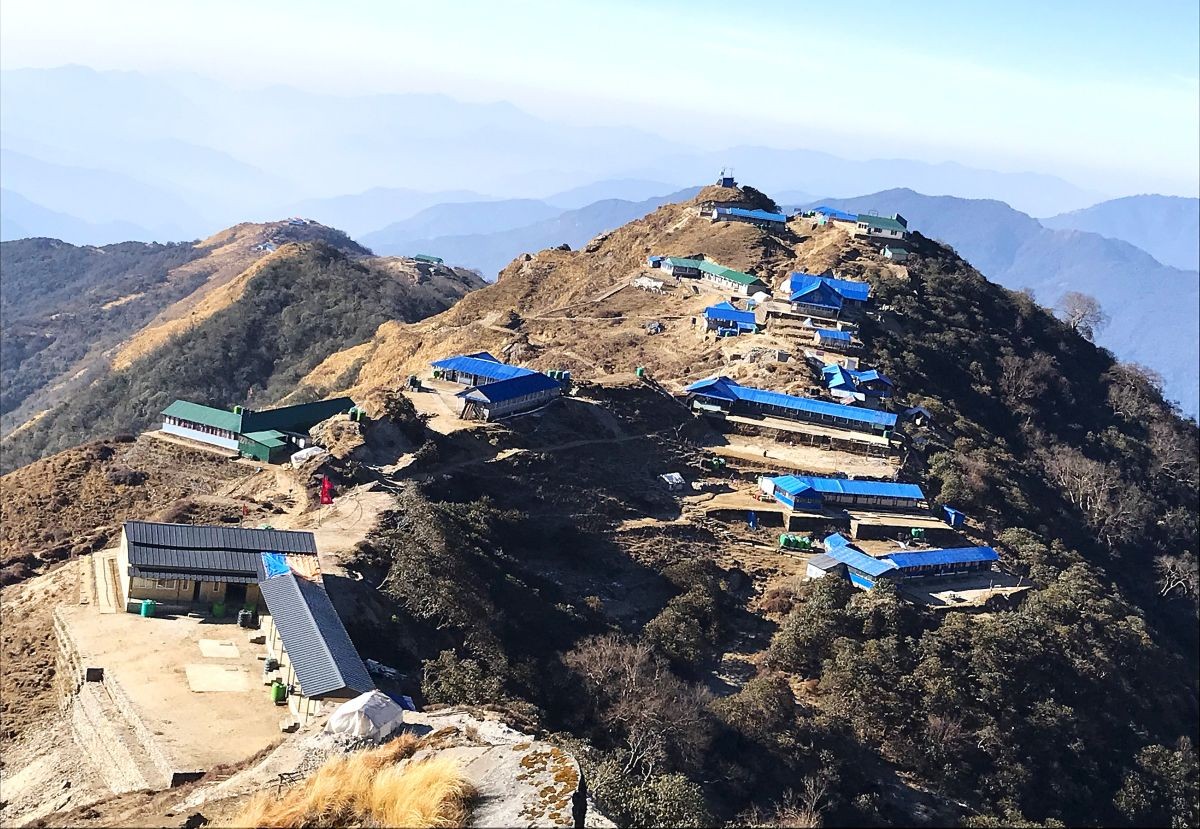
Cozy teahouse lodges at Mardi Himal High Camp provide simple accommodation, warm meals, and unforgettable sunrise and mountain views in the heart of the Annapurna region.
In addition, the trail will surprise you with a spectacular view of Machhapuchhre, Annapurna South, Hiunchuli, Annapurna I, Gangapurna, and Mardi Himal.
Mardi Himal trek is an introductory-level trek that offers fantastic views of the Himalayas to first-time hikers, nature lovers, and photography enthusiasts. Besides that, the trail is not as busy as most hiking trails in Nepal, and the tea houses provide comfortable accommodations for a stress-free Himalayan getaway.
Moreover, the Mardi Himal trek is an easy but thrilling adventure with stunning natural attractions that will keep you captivated throughout the journey. With breathtaking forest views, fantastic sunrise panorama, and an unforgettable viewpoint, Mardi Himal trek lets you experience the true beauty of the Annapurna Himalayas.
So, what are the benefits of going on a Mardi Himal trek?
Short Five Days Trekking Adventure
Best Himalayan Viewpoint
Easy Hike
Suitable for Beginners
Shorter Daily Walking Compared to Annapurna Base Camp
Comfortable Tea House Accommodations
Affordable Cost
Easy Access from Pokhara
Explore Nature and Photography Opportunities Spectacular Sunrise Views
Feature
Detail
Trek Duration
4-5 Days
Starting Point
Pokhara
End Point
Pokhara
Highest Altitude
Mardi Himal Viewpoint (4,500 m) Difficulty| Easy to Moderate
Daily Walking
4-6 Hours
Accommodation
Tea Houses
Best Seasons
March – May; October – November Permits Required| Annapurna Conservation Area Permit (ACAP).
Here is some vital information about the Mardi Himal trek:
Frequently Asked Questions
1. Is Mardi Himal Trek suitable for a beginner trekker?
Yes! A Mardi Himal trek is one of the best options for novice hikers as it is a short and easy trek. A five-day itinerary gives you enough time to adjust to the trail. If you are wondering whether you can do the Mardi Himal trek as a first-timer, the answer is yes.
2. Do I need a guide for the Mardi Himal Trek?
Although it is possible to hike the Mardi Himal trail independently, hiring a local guide can be helpful. Local guides have extensive knowledge of the trail and can assist you throughout the journey, making your trek memorable and safe.
3. Is the Mardi Himal Trek suitable for a family?
Yes, it is! Mardi Himal trek is comparatively easier and can be enjoyed by families with active teenage and younger children who love adventures.
4. What is the best season for a Mardi Himal Trek?
The best time to do a Mardi Himal trek is during the dry seasons – spring (March – May) and autumn (October – November). During these months, the mountain views are crystal clear, and the forest scenery is pleasing to the eye.
5. How challenging is the Mardi Himal Trek?
The Mardi Himal trek is an easy to moderate trek that entails a spectacular Himalayan adventure and exposes you to various alpine challenges. Nevertheless, the hiking trails are not that difficult – an average of 4-6 hours of walking per day. As a result, staying hydrated and having a healthy pace can significantly help.
6. What permits are needed for a Mardi Himal Trek?
To trek in the Annapurna Conservation Area, all hikers must acquire the Annapurna Conservation Area Permit (ACAP). However, note that permit regulations are subject to change, so it is essential to confirm the details before embarking on the trek.
7. Why should I choose Haven Holidays Pvt. Ltd.?
Haven Holidays Pvt. Ltd. offers you an extraordinary Mardi Himal trekking experience through their professional and friendly local guides. They provide customizable packages to suit your preferences and budgets, ensuring you have an enjoyable time exploring the Mardi Himal trail. Their excellent customer support and responsible tourism policies guarantee you a memorable Himalayan adventure. If you are considering a Mardi Himal trek, be sure to contact Haven Holidays Pvt. Ltd.
Let’s Make Your Himalayan Dream Come True!
If you are looking for a less crowded beginner’s trek near Pokhara, Mardi Himal trek is among the best Himalayan short treks in Nepal. It is a fantastic opportunity to enjoy the spectacular beauty of the Himalayas, remote villages, and natural landscapes in just a few days. So, prepare your trekking gears and contact us to explore the Mardi Himal trail.
8. Why is Mardi Himal Trek less crowded in Nepal?
Compared to the more popular Annapurna Base Camp Trek or Everest Base Camp Trek, Mardi Himal Trek is one of the less busy trekking routes in Nepal due to its lesser-known status. Thus, you can discover untouched forest trails, enjoy spectacular Himalayan views, and experience genuine teahouse hospitality without the crowds.
9. Is Mardi Himal Trek for beginners?
Yes, the Mardi Himal Trek for beginners is an amazing opportunity for all the first-time trekkers in Nepal. This trek is famous for easy trail conditions and less challenging itineraries. In addition, gradual elevation gain and shorter walking hours ensure a comfortable experience for the newcomers.
10. How challenging is the Mardi Himal Trek?
Mardi Himal Trek difficulty level is easy to moderate. Daily trekking hours are usually 5-7 hours. While climbing up to Mardi Himal Base Camp (4,500 m), you might find some parts of the trail steep. Nevertheless, Mardi Himal Trek is a fantastic short and easy Himalayan adventure.
11. How long is the Mardi Himal Trek?
The short Mardi Himal Trek generally takes 4-6 days to complete from Pokhara. However, most trekkers prefer a 5-day Mardi Himal Trek itinerary to acclimatize at a higher altitude to avoid altitude sickness. Thus, the Mardi Himal Trek is suitable for short holidays in Nepal.
12. Why is Mardi Himal Trek one of the best short treks in Nepal?
Mardi Himal Trek is a beginner-friendly trek that allows you to complete it in a short period (5 days) while enjoying spectacular Himalayan views. In addition, Mardi Himal Trek provides you with an opportunity to explore beautiful forest trails and alpine ridges in less than a week. Therefore, Mardi Himal Trek is one of the best short treks in Nepal.
13. Which peak sare visible on the Mardi Himal Trek?
Mardi Himal Trek offers you a stunning view of Machhapuchhre (6,993 m), Annapurna South (7,219 m), Hiunchuli (6,441 m), and Annapurna I (8,091 m). During sunrise, you can witness gorgeous views of the mountain from High Camp and Mardi Himal Viewpoint. Thus, Mardi Himal Trek is a highlight of any Himalayan adventure in Nepal.
14. Is Mardi Himal Trek easier than Annapurna Base Camp Trek?
Yes, Mardi Himal Trek vs Annapurna Base Camp Trek is ideal for first-time trekkers. Mardi Himal is less strenuous with short trekking hours and relatively lower altitudes than Annapurna Base Camp (5,916 m). Therefore, Mardi Himal Trek is a fantastic option for budget travelers in Nepal.
15. What is the highest altitude on the Mardi Himal Trek?
The Mardi Himal Base Camp is the highest point on the Mardi Himal Trek reaching 4,500 m. On the other hand, some variations of the Mardi Himal Trek only reach the Upper Viewpoint (4,200 m). Even though the altitude is moderately high, you can minimize the risk of altitude sickness with proper acclimatization and hydration.
16. Can I do Mardi Himal Trek as a beginner without trekking experience?
Mardi Himal Trek is suitable for novice-level trekkers who are enthusiastic about exploring the Himalayas. Most travelers complete the Mardi Himal Trek without prior trekking experience and feel accomplished after finishing the adventure. In addition, you can hire a local guide for better guidance and safety. Thus, you may do the Mardi Himal Trek for beginners with little or no trekking experience.
17. When is the best season for Mardi Himal Trek?
The best months to do Mardi Himal Trek are March-May and September-November. These months provide you with stable weather, clear mountain views, and comfortable temperatures for trekking. As a result, Mardi Himal Trek in spring and autumn is a fantastic option for novice trekkers in Nepal.
18. Is the Mardi Himal Trek family-friendly?
Mardi Himal Trek for families is an incredible experience for active families with teenagers and young children. The trail allows you to enjoy stunning Himalayan views, beautiful forest trails, and authentic teahouse culture. Therefore, Mardi Himal Trek is a fantastic Himalayan trekking option for families.
19. Are there teahouses available on the Mardi Himal Trek?
Yes, there are teahouses available on the Mardi Himal Trek for your convenience. Most teahouses offer you private rooms with spectacular views, traditional Nepali foods, and warm hospitality. However, the teahouse facilities become minimal at High Camp.
20. Do I need a guide for Mardi Himal Trek?
Hiring an experienced and licensed guide for Mardi Himal Trek is advisable to gain valuable insights and ensure your safety during the adventure. Most importantly, a local guide can assist you with necessary arrangements and emergency cases. Thus, a professional guide enhances your Mardi Himal Trekking experience while supporting local communities.
21. Does Mardi Himal Trek cause altitude sickness?
Altitude sickness is uncommon on the Mardi Himal Trek due to its relatively low altitude (4,500 m). However, it is crucial to acclimatize properly at higher altitudes by staying hydrated and avoiding alcohol and sleeping at higher elevations than advisable. Thus, Mardi Himal Trek for beginners minimizes the risks of altitude sickness with its gradual elevation gain.
22. What permits are needed for Mardi Himal Trek?
For Mardi Himal Trek, you will need Annapurna Conservation Area Permit (ACAP). It is necessary to check the most recent permit requirements at the time of travel since the permit regulations for Mardi Himal Trek might change occasionally. In addition, a reliable trekking agency can help you with the necessary permits and documentation for a hassle-free trekking experience.
23. How fit do I need to be for Mardi Himal Trek?
Mardi Himal Trek fitness level is moderate, and you should prepare yourself for a short and easy Himalayan adventure. You can build your stamina by participating in moderate exercises like walking or climbing stairs a month before the trek. In addition, a brief fitness regime before your travel can be beneficial to help you complete the Mardi Himal Trek comfortably.
24. Can I trek Mardi Himal independently?
Yes, Mardi Himal Trek is one of the best independent trekking options in Nepal. Nevertheless, trekking with a local guide is safer and more reliable for a memorable adventure. In addition, a professional guide adds value to your Mardi Himal Trek with local expertise and insights into the region’s culture and history. Most importantly, local guides help you acclimatize faster to the high altitude, minimizing the risks associated with altitude sickness.
25. Why is Mardi Himal Trek famous and popular?
Mardi Himal Trek is growing in popularity among travelers because of its spectacular Himalayan scenery, short and easy trekking trail, and affordable prices. Moreover, you can discover the natural beauty of the Annapurna region while experiencing the authentic Himalayan lifestyle. Mardi Himal Trek’s popularity is increasing daily as the trail attracts more adventure enthusiasts every year.
26. What should I pack for Mardi Himal Trek?
For Mardi Himal Trek, you will need trekking boots, warm clothing, a good sleeping bag, sunglasses, and trekking poles. A decent reusable bottle or water filter is essential to stay hydrated during the trek. In addition, you should carry first-aid supplies and personal medication. Thus, a comprehensive Mardi Himal Trek packing list will keep you prepared and safe.
27. Why is Mardi Himal Trek with Haven Holidays Pvt. Ltd. the best option for first-time trekkers?
Choosing Mardi Himal Trek with Haven Holidays Pvt. Ltd. offers you well-organized itineraries with the best views of the Annapurna range. Moreover, you can enjoy a comfortable stay in cozy teahouses while having access to the support of professional and friendly local guides. Therefore, Mardi Himal Trek with Haven Holidays Pvt. Ltd. is a great opportunity to have a safe and less strenuous short adventure in the Himalayas.