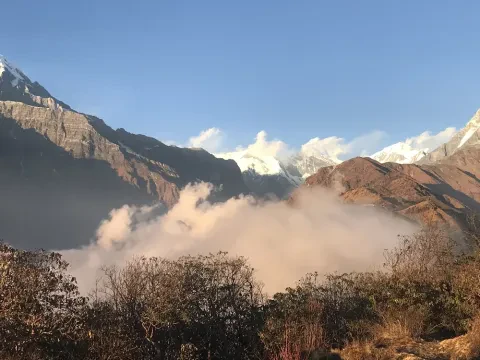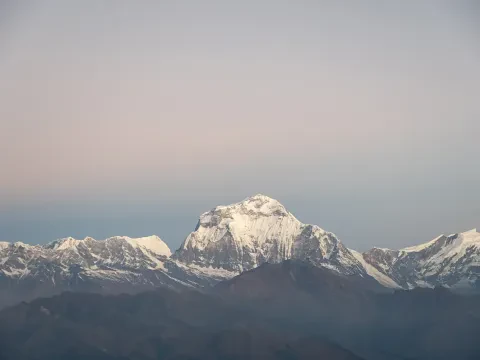
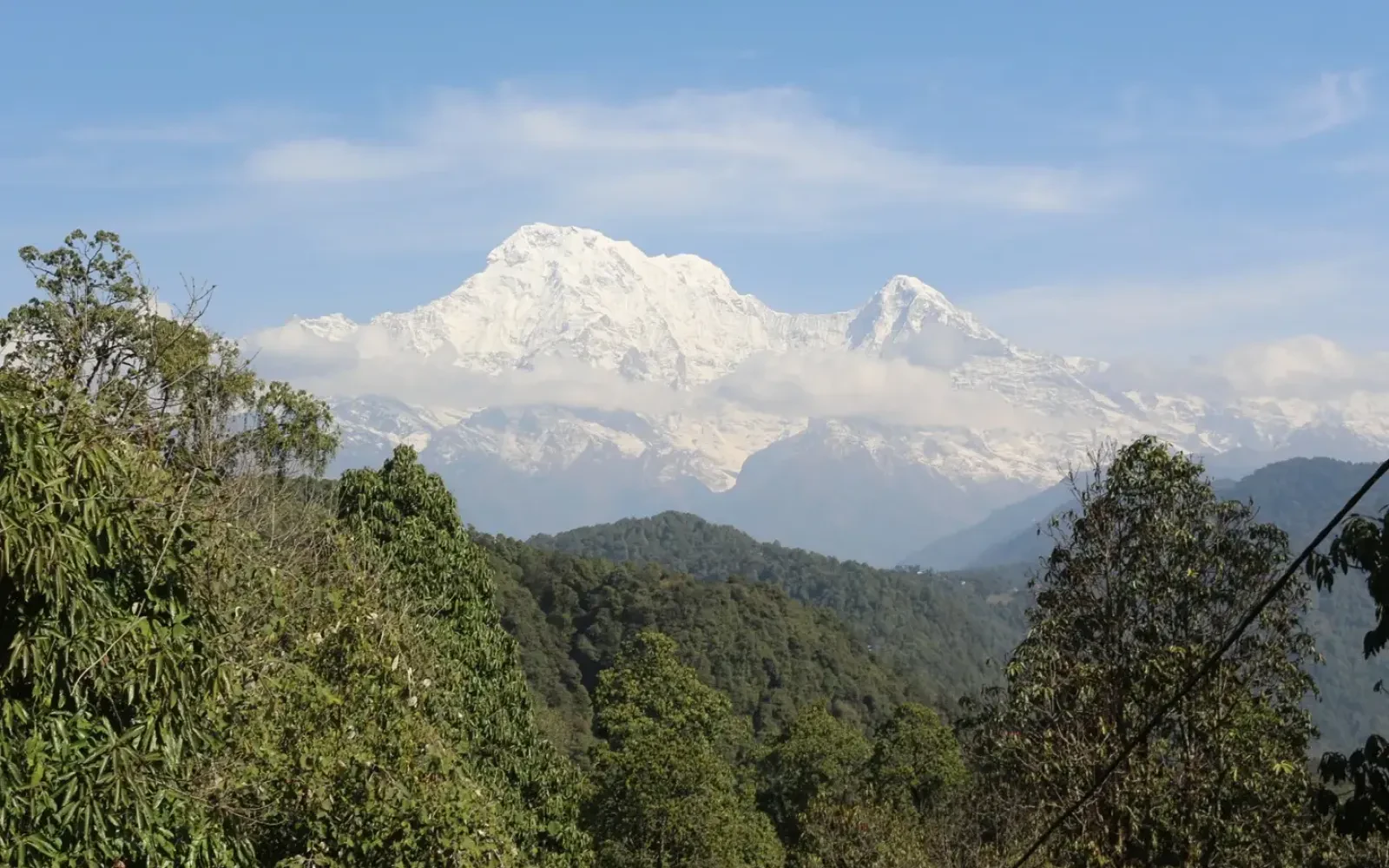
Meanwhile, the Mardi Himal Trek is arguably Nepal’s most beautifully designed top short trek. It’s the ultimate asymmetric loop as it takes you up along a spectacular knife-edge scenic ridge and then down a completely different valley route to the village of Siding. This makes the route design extremely efficient, maximizing on scenery and minimizing repetitive backtracking. In fact, Mardi Himal Trek is one of the most popular short treks near Pokhara for beginners.
Why This Route is a Masterpiece for Beginners :
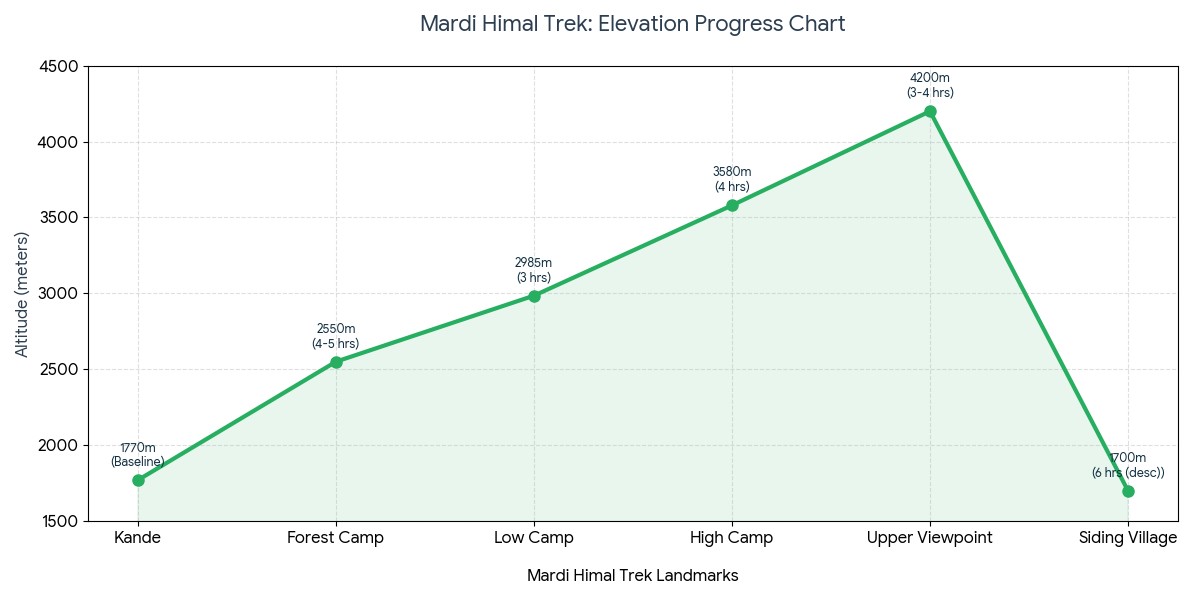
| Trail Landmark | Elevation (Meters / Feet) | Average Trekking Time | Overnight Lodge Type |
|---|---|---|
| Kande (Trailhead) | 1,770 m / 5,807 ft | Drive baseline | Non-stop highway town |
| Forest Camp | 2,550 m / 8,366 ft | 4-5 hours from Kande | Basic timber eco-lodges |
| Low Camp | 2,985 m / 9,793 ft | 3 hours from Forest Camp | Cozy ridge-line teahouses |
| High Camp | 3,580 m / 11,745 ft | 4 hours from Low Camp | Solid stone alpine lodges |
| Upper Viewpoint | 4,200 m / 13,779 ft | 3-4 hours from High Camp | Turning point (No overnight) |
| Siding Village | 1,700 m / 5,577 ft | 6 hours descent from High Camp | Traditional village homestays |
As the elevation progress chart illustrates, the elevation gradient of the Mardi Himal trek rises gradually. The altitude increase of this ridge trek is suitable enough for first-time trekker while maintaining the opportunity to reach extreme heights for spectacular views, making it one of the best ridge loops in Nepal for a first-timer.
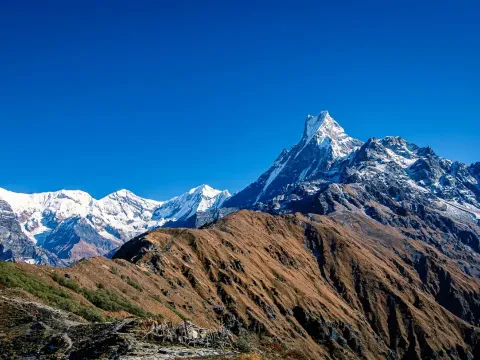
Meanwhile, the Mardi Himal trek starts with a logistical launch that saves your precious energy for the actual hike. The Pokhara to Kande drive is only a short, convenient, 27km ride which takes between 45 minutes and an hour to complete, especially via the private jeep or taxi available at Pokhara airport, Pokhara’s lakeside, or hotel of your choice.
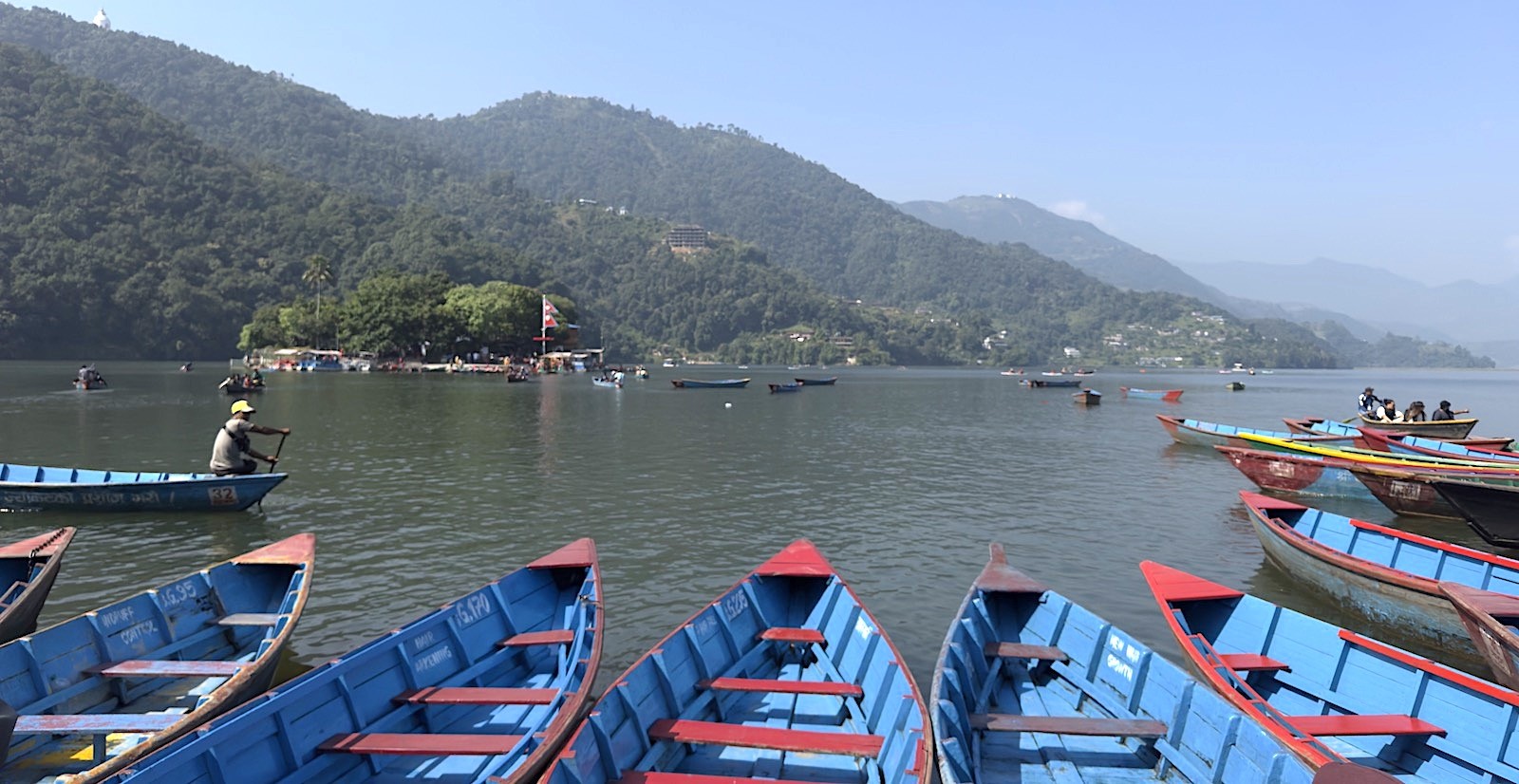
Actually, the drive to Kande along the Pokhara-Baglung highway lifts you from 820m altitude at Pokhara up to a cool, crisp 1,770m (5,807 ft) without the sweaty valley trail. This will save your energy and your leg muscles which are all important for when the trek actually starts at the Kande trail-head.
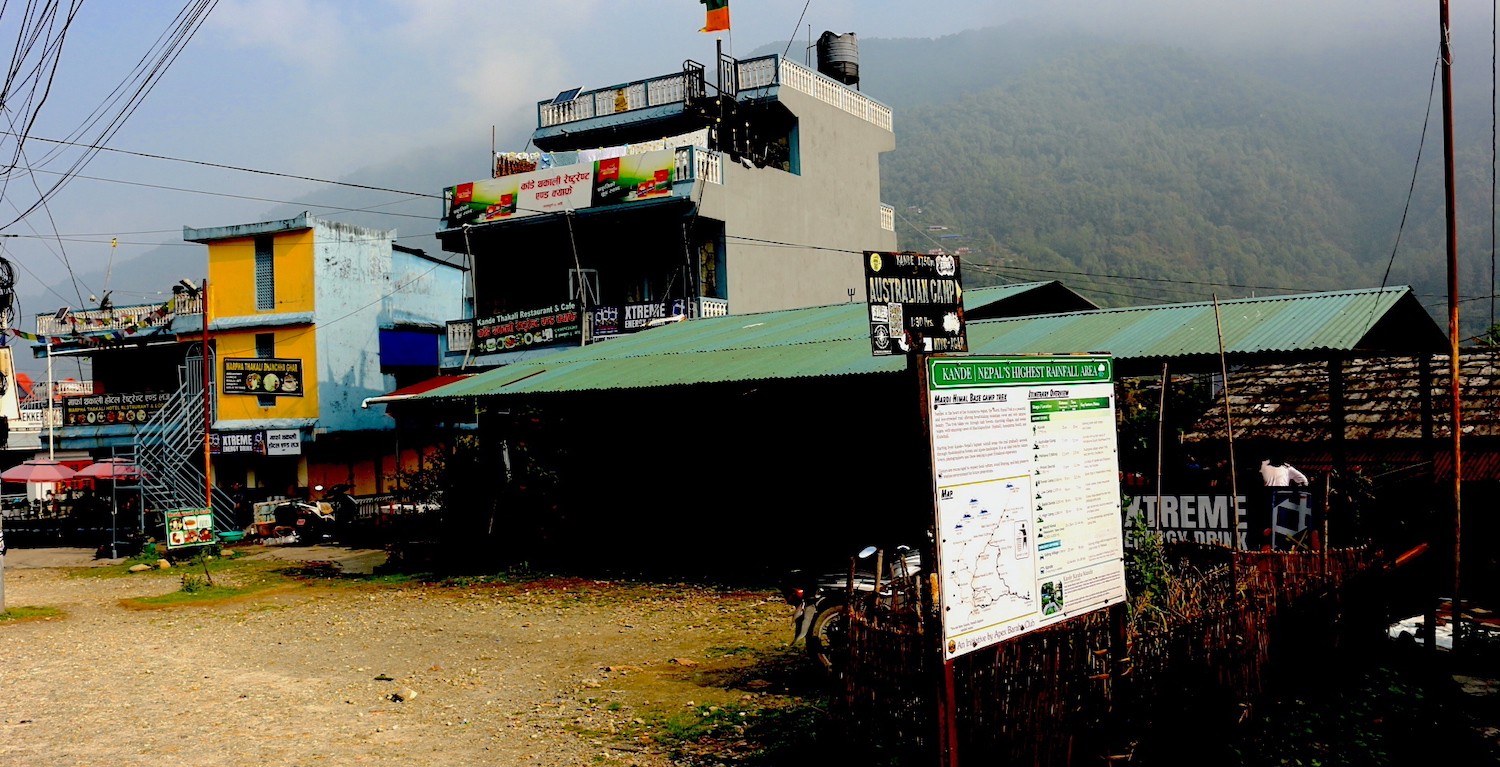
Pokhara to Kande Drive Benefits :
| Stage | Distance | Duration | Benefit for Trekkers |
|---|---|---|
| Pokhara Lakeside to Kande | 27 km | 45-60 minutes | Quick, comfortable start |
| Kande Trailhead | Trekking begins | - | Immediate entry into alpine terrain |
The Siding "Jeep Trap" Warning,
Here, it's important to note that when coming down to Siding, road access out of Siding is an unpaved and bumpy mountainous track and requires high-clearance 4wd vehicle which, depending on conditions, especially if there's been recent heavy rains in the season or late spring snow melts, is sometimes only a 4-wheel-drive jeep accessible during dry conditions and season. DO NOT attempt to hail a regular local taxi from Siding – arrange a proper vehicle with your trekking company in advance.

Actually, your first “climb” on the Mardi Himal Trek is an easy one. After setting out from the Kande trailhead, the trail gains 1,770 meters (5,807 feet) on a 1.5-hour steep climb on stone steps to reach the flat and breezy plateau of Australian Camp at 2,060 meters (6,758 feet).
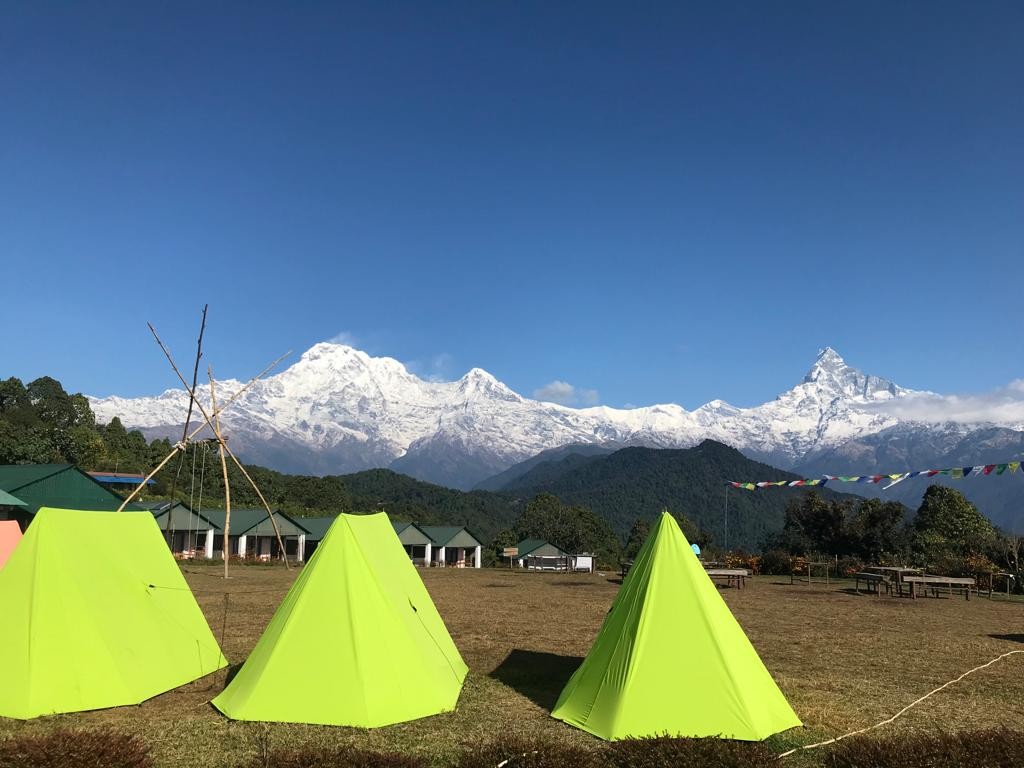
Likewise, this expansive grassy area provides fantastic early views, a welcome breather, and plenty of places to grab a snack. From here, you can leisurely wind down a cool pine-scented trail to the welcoming stone-roofed village of Pothana at 1,890 meters (6,200 feet). This small village is often treated to stunning morning views of Mt. Machhapuchhre (Fishtail Peak) and offers a tranquil introduction to the weeks to come.
First Leg Summary :
| Segment | Distance (km) | Elevation Range (m) | Time (hrs) | Notable Features |
|---|---|---|
| Kande to Australian Camp | 2 | 1770 – 2060 | 1.5 | Steep stone stairs, grasslands |
| Australian Camp to Pothana | 2 | 2060 – 1890 | 1 | Pine trail, mountain views |
So, as you’ll see, this first vertical step of the Mardi Himal Trek is a gentle but satisfying way to get started!
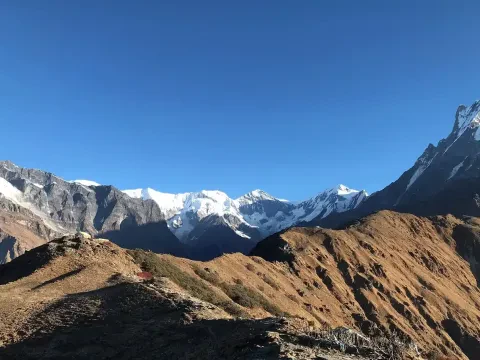
Meanwhile, one of the most exciting aspects of the Mardi Himal Trek is making the split from the main Annapurna Base Camp trekking trail at Pitam Deurali (1,990 meters / 6,528 feet). Once you pass the ACAP permit check point here, you turn right and leave the buzzing throng of trekkers far behind for a far more serene experience.
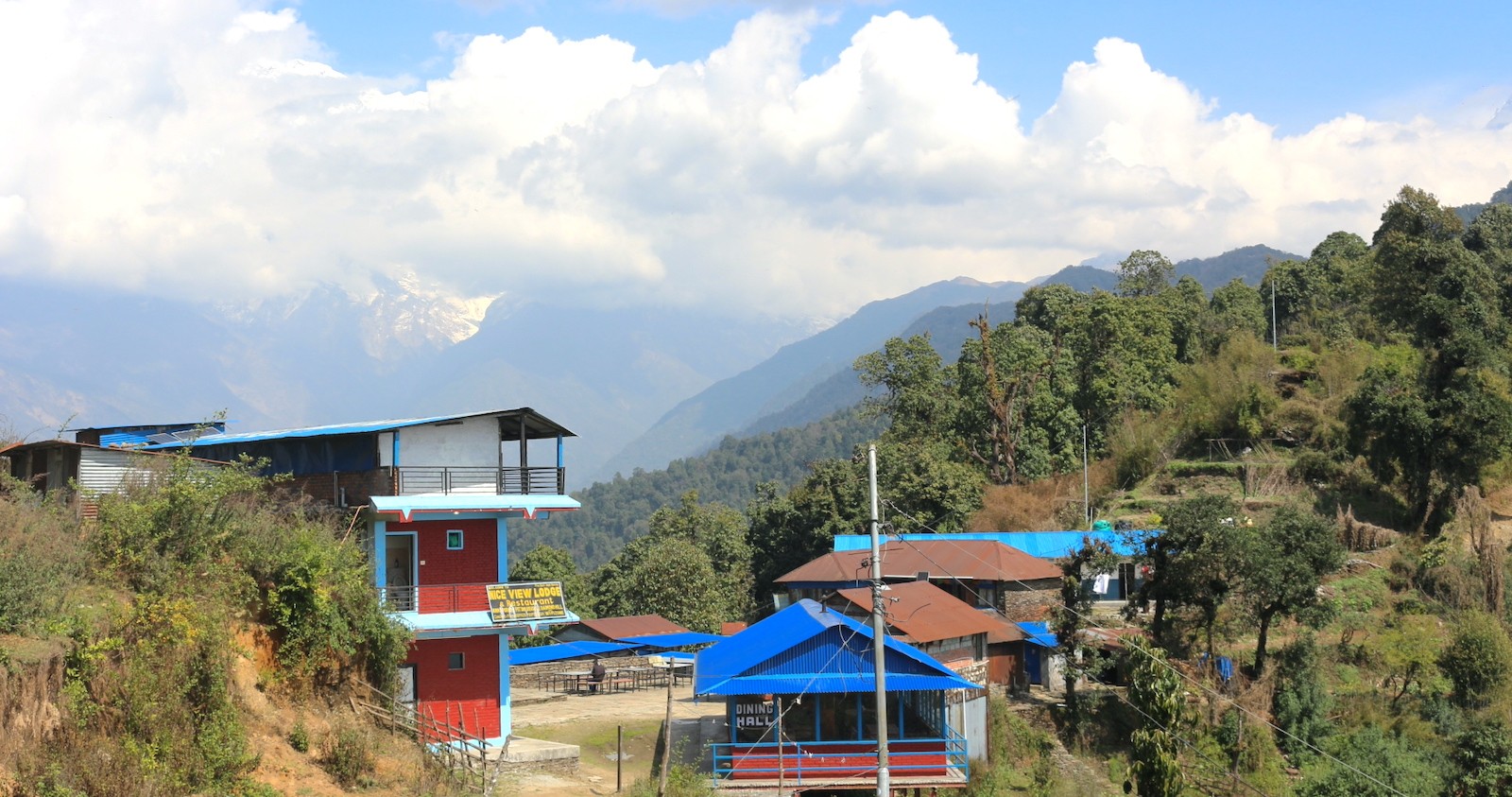
From Pitam Deurali, the route shifts away from the main Annapurna Base Camp trail and embarks on a ridge of its own. The trail becomes noticeably quieter and you enter a much less trodden and altogether more peaceful wilderness. This turn is a very distinct and defining moment on the trek, marking a shift in atmosphere as you transition from a popular and busy trekking corridor to a quiet and beautiful ridge line.
| Detail | Explanation | The Feeling |
|---|---|---|
| Pitam Deurali (1,990 m / 6,528 ft) | Location of the ACAP checkpoint | A clear divergence from the Annapurna Base Camp Trail. |
| The Turn | A sharp right-hand turn into a secluded ridge trail | Escape from the crowd, a sense of peace and solitude. |
| The Transition | Leaving behind the dense traffic for a wilderness trail | An immediate shift to a quieter and more remote feeling. |
Why Is this Turn Significant?
Ultiately, taking the right turn at Pitam Deurali is a key moment that takes you off the well-trodden path and into the peaceful wilderness that defines the Mardi Himal Trek. It is the moment when the real adventure truly begins.
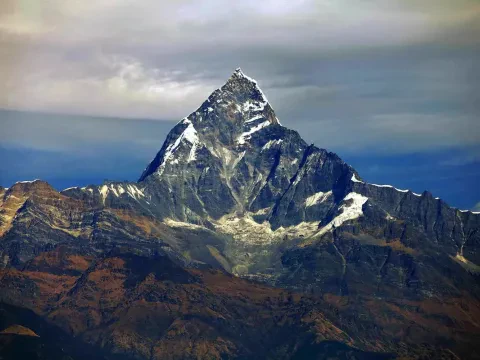
In fact, one of the earliest and most fairy-tale like experiences of the Mardi Himal trek comes in the form of a “magical green tunnel,” a 4-to-5-hour trek from Deurali to Forest Camp. Walking on a soft, dirt path lined with ancient, moss-covered oak and rhododendron trees, this sheltered, shaded section of the trek is a wonderful introduction to the beauty of this region.
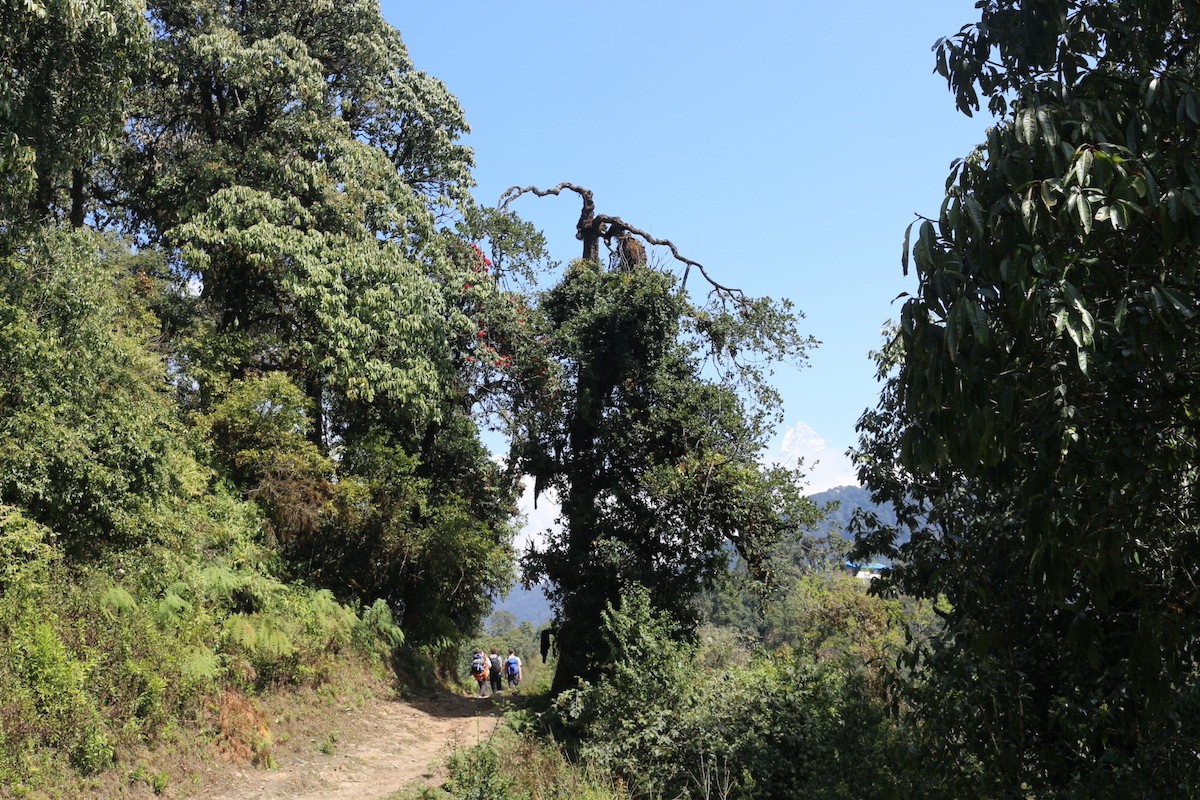
Forest Camp (Kokar) Overview :
| Segment | Distance | Elevation Gain | Walking Time | Feature |
|---|---|---|
| Deurali to Forest Camp | 8-10 km | 1,890 m to 2,550 m | 4-5 hours | Mossy, green forest path with rhododendrons |
Ultimately, this lush, shaded, and magical forest passage from Deurali to Forest Camp is a truly enchanting beginning to the Mardi Himal trek.
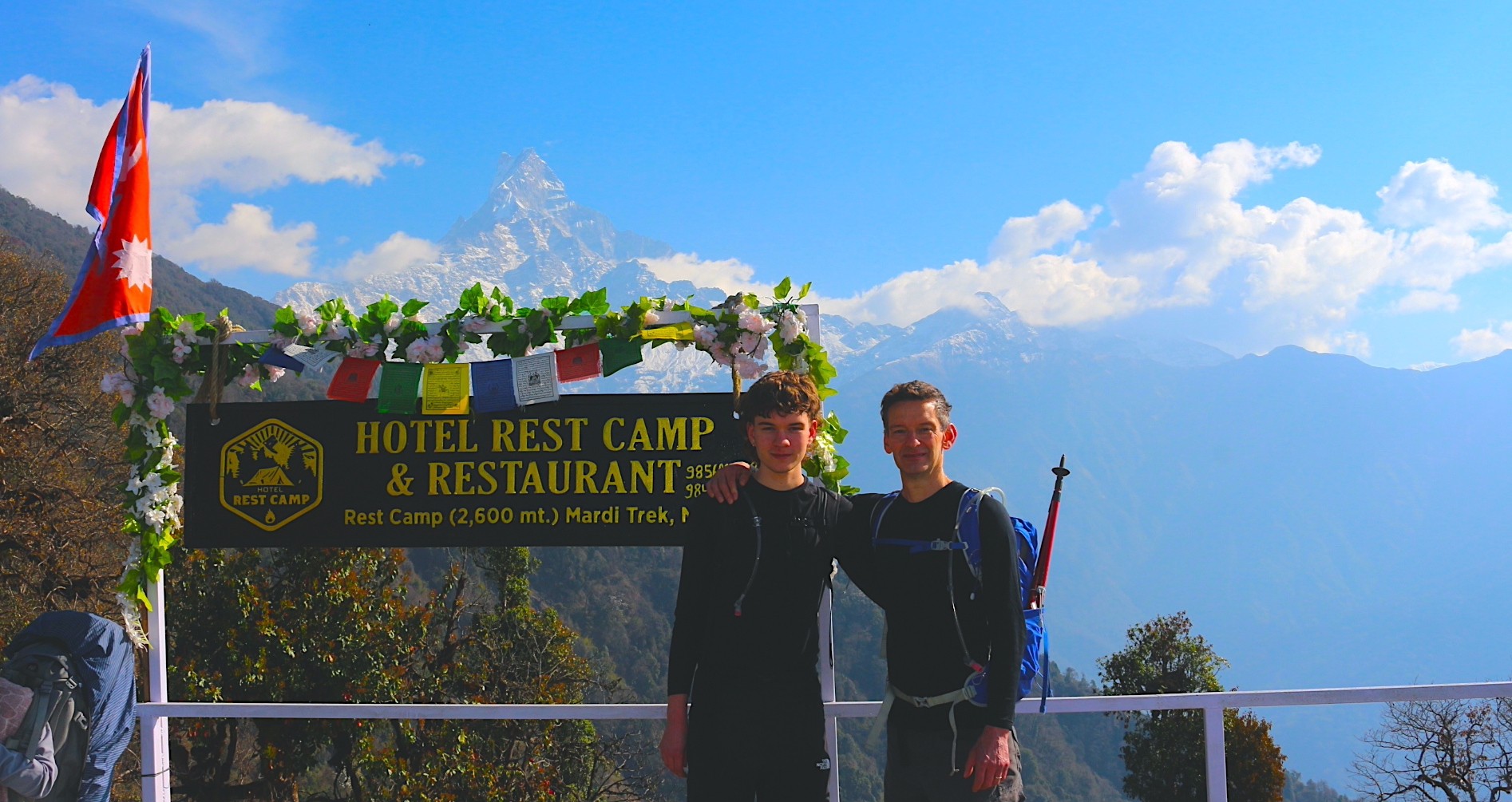
Actually, one of the most striking transitions of the entire Mardi Himal trek occurs as you ascend the 3-hour trek from Forest Camp to Low Camp. As the trail rises, the dense forest gradually thins out, and you will officially emerge from the cloud belt into an open, exposed ridge landscape.
Low Camp Overview :
| Segment | Distance | Elevation Gain | Walking Time | Transformation |
|---|---|---|
| Forest Camp to Low Camp | 6-8 km | 2,550 m to 2,985 m | 3 hours | Forest gives way to exposed ridge |
To summarize, the journey from Forest Camp to Low Camp represents a pivotal moment on the Mardi Himal trek, shifting your experience from a forested hike to an exhilarating journey along a high mountain ridge.
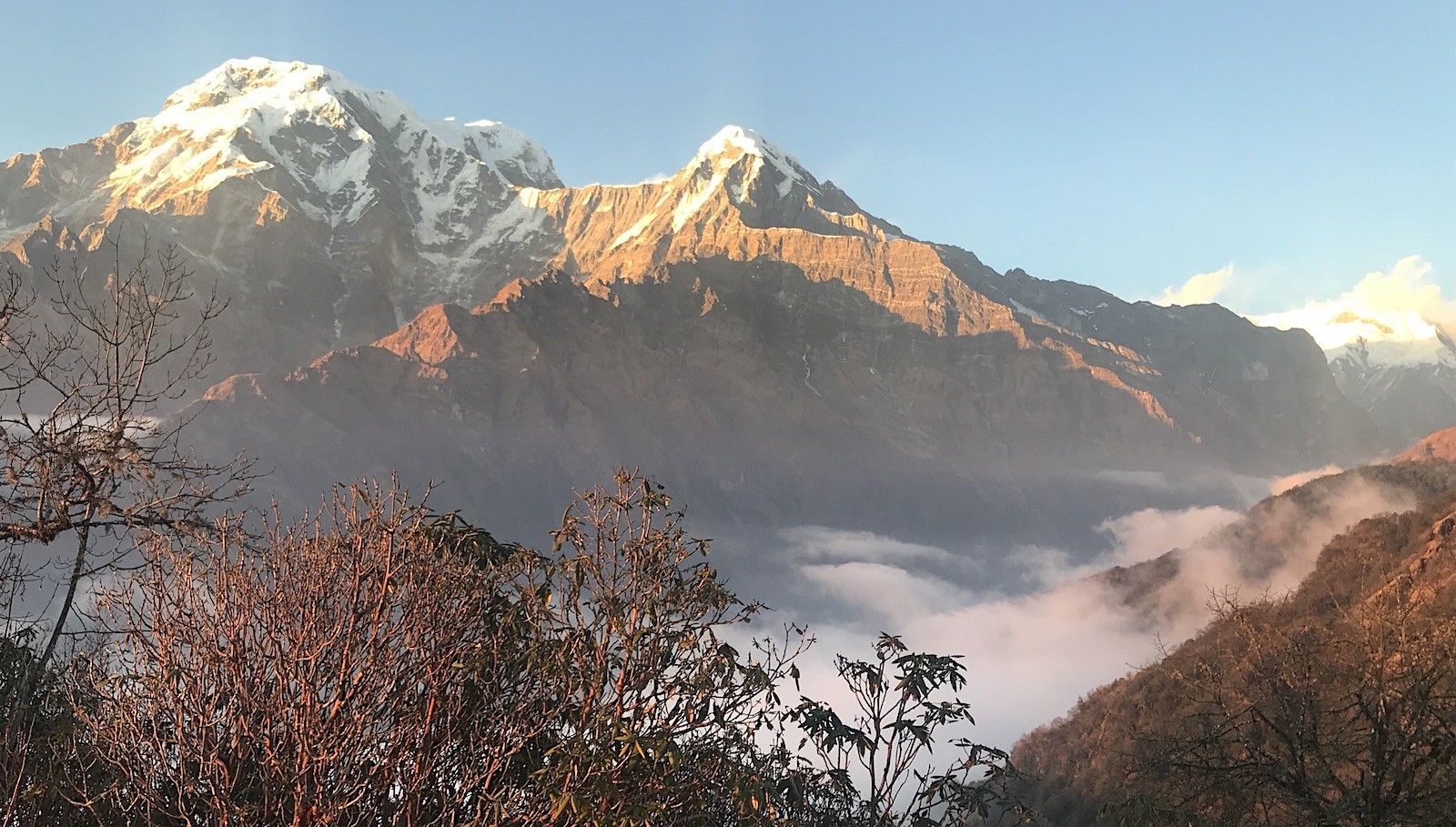
Meanwhile, one of the most magical transitions on the Mardi Himal Trek occurs during the climb to Badal Danda at 3,210 m (10,531 ft). This is the point at which the path officially lifts completely out of the forest belt onto a sweeping, grass-covered ridgeline.
As you ascend, the dense tree canopy opens up, and suddenly you burst into an entirely different world. You find yourself walking on a narrow ridge line with a drifting sea of clouds below your feet on either side. The feeling is exhilarating - you are literally above the clouds, with an expansive panoramic view opening up in all directions.
Key highlights of Badal Danda :
| Segment | Distance | Elevation gain | Walking time | Key sensation |
|---|---|---|
| Low Camp to Badal Danda | 6-8 km| 2,985 m - 3,210 m | 3-4 hours | Entering above the clouds. |
To summarize, the walk above the clouds to Badal Danda marks a truly special moment on the Mardi Himal Trek, a panoramic ridge push into high-alpine territory and an invigorating introduction to the spectacular vistas ahead.
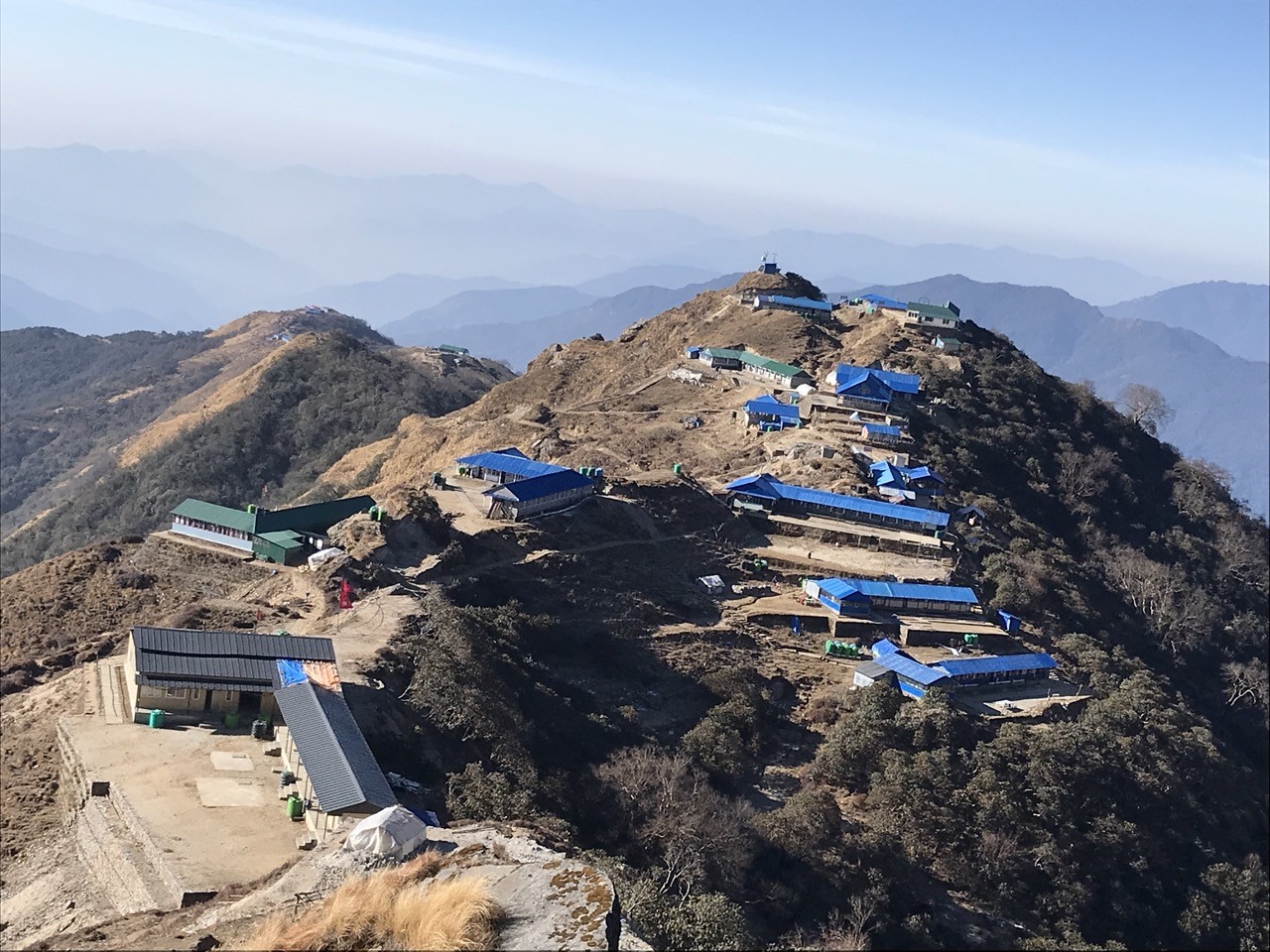
Actually, High Camp at 3,580 m (11,745 ft) is your crucial alpine staging ground for the ultimate destination: the Mardi Himal Viewpoint. This is the place where you'll spend the night prior to your predawn hike up to the viewpoint.
Here, lodge accommodations consist of robust stone buildings with common areas that typically contain central dining rooms heated by either wood or gas stoves. It's cozy, with trekkers congregating to swap stories around the fire. However, with nighttime temperatures dipping below freezing (0°C to -5°C), a four-season sleeping bag is non-negotiable.
High Camp necessities :
High Camp travel advice :
In short, settling into the stone lodges of High Camp provides a unique experience of the Mardi Himal Trek as it serves as your vital alpine staging ground before the final rewarding ridge walk to the viewpoint.
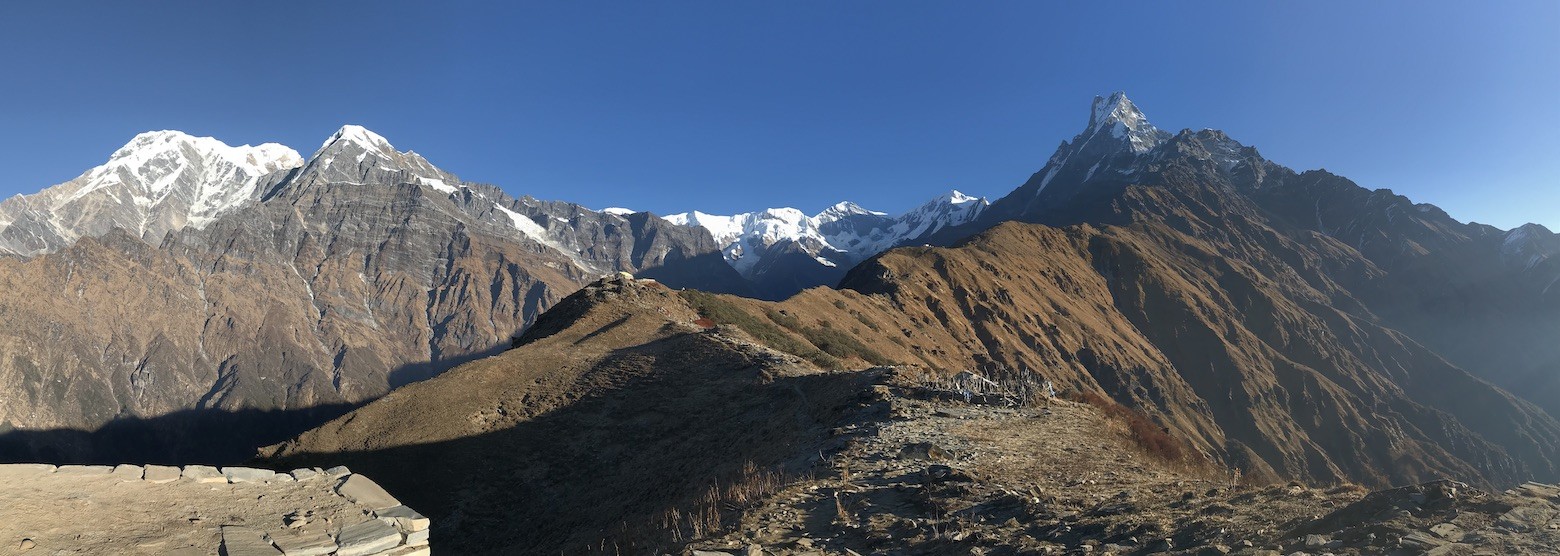
Meanwhile, the grand finale of the Mardi Himal Trek, the pre-dawn hike along the ‘knife-edge’ ridge to the Upper Viewpoint at 4,200 meters (13,779 feet), will live on in your memory. This exhilarating, steep climb lasting 3 to 4 hours from High Camp is a spectacular, otherworldly experience that makes the entire trek worthwhile.
Note: One can go up to Mardi Himal Base Camp that is 4500m if they want.
Step-by-Step guide to the Dawn Ridge Walk :
Ridge Trail Safety Tips :
Mardi Himal Viewpoint Details :
All in all, this early morning climb is a magical and achievable experience for beginner trekkers, a chance to experience something truly special while breathing thin, crisp air. A slow and steady hike will lead to some of the most cherished memories from your time in the Himalayas.
For those who consider themselves fit and energetic enough, the ultimate extension of the Mardi Himal Trek is a trek along the rocky glacier moraine to Mardi Himal Base Camp at 4,500 meters (14,763 feet). While the classic viewpoint offers superb sights, the added challenge of traversing these raw, rugged mountainside fields will bring you even closer to the stunning ice fields lining the Annapurna Sanctuary wall.
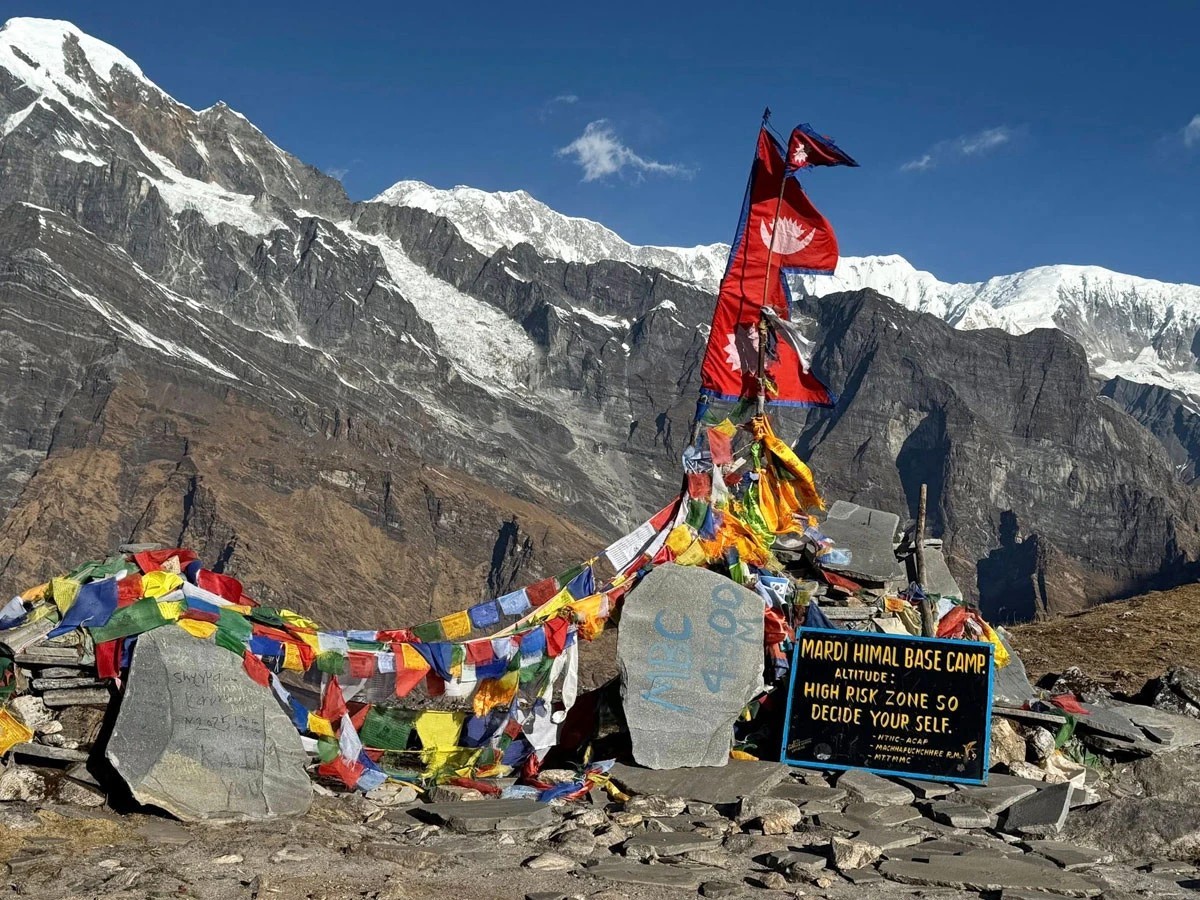
Here, this 2-hour excursion will see you navigating through some of the most raw and rocky moraine that exists, including steep, uneven stretches, to get you to a place where you are truly separated from the surrounding mountains by only a glacial chasm. Your reward: a closer look at the Machhapuchhre peak and all the glory that surrounds it.
Mardi Himal Base Camp Extension :
| Option | Pros | Cons |
|---|---|---|
| Stop at Viewpoint | Easier, satisfactory views of all main peaks Closer peaks, sense of achievement | More difficult terrain |
| Continue to Base Camp | Less of a mountain challenge, further from the peaks of Annapurna Sanctuary | additional effort required |
So, whether you choose to stay at the Mardi Himal Viewpoint or go further, the experience is sure to be a remarkable and rewarding one.
Here, the journey back on the Mardi Himal Trek presents a completely different route, creating a true asymmetric loop. Rather than descending the ridge, you’ll be dropping sharply down the eastern flank from High Camp straight to the traditional Gurung village of Siding Village at 1,700 meters (5,577 feet).
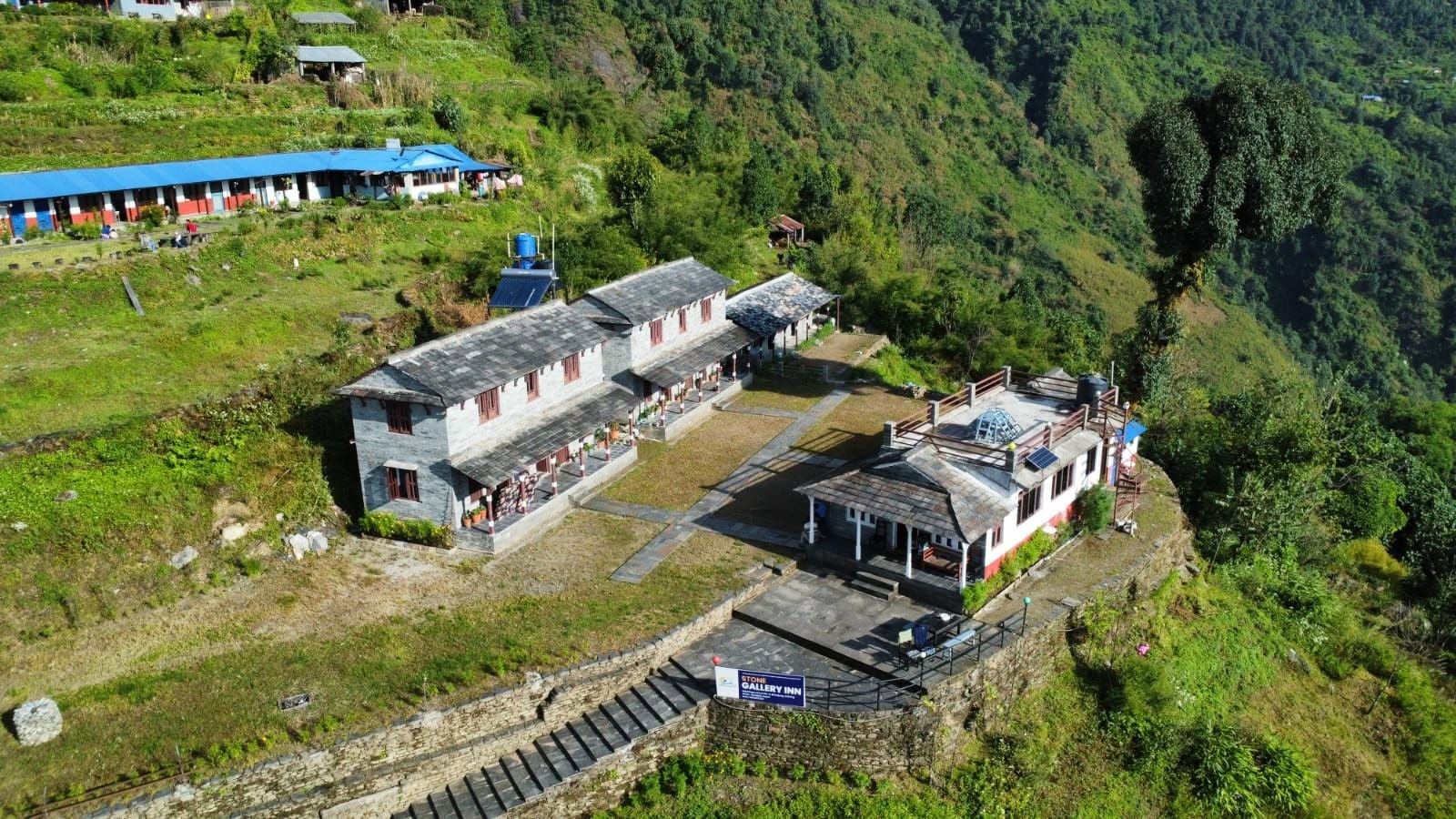
In fact, this steep forest descent avoids the up-route and offers a welcome break for your knees while simultaneously saving time. Your path winds through dense bamboo, oak, and jungle vegetation, providing a lush, shaded descent with beautiful terraced farmland vistas in the lower sections.
Key Features of the Descent :
| Segment | Distance | Elevation Drop | Walking Time | Key Experience |
|---|---|---|
| High Camp to Siding Village | 10-12 km | 3,580 m to 1,700 m | 5-6 hours | Steep forest descent & cultural end. |
Trekking Poles Utility
Trekking poles are highly recommended on this descent to alleviate pressure on the knee joints during the steep, stone-step sections.
In conclusion, the steep forest descent to Siding Village is a smart and highly rewarding way to close the loop of your Mardi Himal trek. It preserves your joints and provides a wonderful cultural conclusion to your adventure.
Here, your final step in the Mardi Himal Trek will be the rewarding ride back from Siding Village to Pokhara Lakeside. Upon reaching Siding, you’ll embark on a rugged but picturesque 2.5-hour jeep ride along the Mardi Khola river basin, concluding a complete 42-km (26-mile) loop.
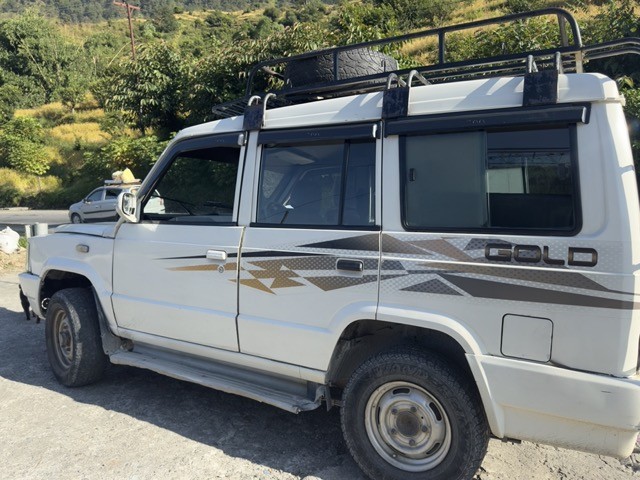
Likewise, this efficient exit enables you to relax after the trek and arrive back in Pokhara with ample time for a much-needed break or celebratory meal. The overall loop distance makes Mardi Himal one of the most efficient and rewarding shorter treks in Nepal.
| Aspect | Details |
|---|---|
| Total Distance | 42 km (26 miles) round-trip |
| Duration | 4-5 days |
| Max Elevation | 4,200-4,500 m (Viewpoint / Base Camp) |
| Difficulty | Easy to Moderate |
| Best For | Beginners & short-trek enthusiasts |
While Mardi Himal is excellent for beginners, the upper ridge, stretching from High Camp to the Viewpoint, presents considerable exposure with sheer drops on either side and quickly shifting cloud banks that can reduce visibility to nearly nothing in a matter of seconds. If possible, traveling with a qualified, licensed local guide is the most advantageous option, allowing you to confidently read the dynamic mountain weather patterns, secure the limited accommodation at High Camp during peak season, and navigate the rocky portions with ease.
In summary, the Mardi Himal Trek offers an ideal balance of accessibility, breathtaking scenery, and accessible adventure, making it a fantastic choice for your first-or next-Himalayan journey with its efficiently designed asymmetric loop.

1. Where does the Mardi Himal Trek route commence?
The common or classic Mardi Himal Trek route commences at the foothills of the Annapurna sanctuary from a settlement known as Kande which is a 1-hour scenic drive away from Pokhara. Other accessible alternate starting points for slightly more challenging climbs include Phedi and Dhampus, with the former traversing dense rhododendron forests.
2. What is the cumulative trek distance of the Mardi Himal trail?
The Mardi Himal Trek route distance for a roundtrip varies between 41-48kms (25-30 miles) on a standard, relatively direct path with a return via Siding.
3. What is the standard Mardi Himal Trek itinerary length?
The standard trek duration for the Mardi Himal Trek route itinerary usually takes up to 5 days of walking from Pokhara to Pokhara, although a comfortable travel itinerary with added buffers for arriving from and departing to Kathmandu can be extended to 7 days for International travelers.
4. Which elevation does the trail ascend to on its uppermost point?
The highest point for the Mardi Himal Trail and Base Camp sits at an elevation of 4,500 meters (14,764 feet). However, most trekkers decide to stop at the Upper View Point, 200 meters lower, at 4,200 meters.
5. What are the resting places on the route?
The Mardi Himal Trek route features teahouse stops at the following significant elevations: Forest Camp (2,600 meters), Low Camp (2,970 meters), and the uppermost stop, High Camp (3,540 meters), prior to the dawn trek to base camp.
6. Can you elaborate on the geographical features of the Mardi Himal route?
The Mardi Himal trek follows forest paths through dense rhododendron woods in the lower altitudes, transforming into a dramatic and exposed narrow ridge with precipitous drops as you reach altitudes of around 3,000m.
7. Why is the Siding village considered an alternate exit route?
The Siding village route (1,600 meters) is a preferred route for the downward trek, offering a distinctive trekking circuit that avoids trekking 12km of the previous ridge path again.
8. What is the normal trekking time per day on the Mardi Himal itinerary?
Average walking time for the Mardi Himal Trek route can range between 4 to 6 hours per day. However, the strenuous section from High Camp to Mardi Himal Base Camp and back, can extend up to 7-8 hours.
9. What is the highest overnight stop on the Mardi Himal Trek route?
The maximum altitude you can sleep overnight on the Mardi Himal Trek itinerary is at High Camp which is 3,540 meters.
10. Is this trekking route suitable for beginners?
The Mardi Himal Trek route difficulty is classified as Moderate and suitable for beginner hikers with adequate physical stamina, requiring no mountaineering expertise or specialized gear.
11. What is the best time to enjoy spectacular views from the Mardi Himal Trek route?
To witness crystal clear views of Machhapuchhre (Fishtail) and Annapurna South mountains on the Mardi Himal Trek route, the best times are in the autumn months (September to November) and spring season (March to May).
12. Is solo trekking allowed on the Mardi Himal trek?
Under the latest trekking regulations of Nepal, solo trekkers are permitted on the Annapurna region trails so far(2026-June 20), but a licensed guide is highly recommended. This is to ensure safety, better trek management, and local compliance with guidelines.
13. What permits do I need to start the Mardi Himal Trek route?
To begin the trek along the Mardi Himal Trek route, you will need two primary permits: Annapurna Conservation Area Project (ACAP) permit and TIMS Card. These will be checked at the trek checkpoints.
14. Can I link the Mardi Himal trek with other popular trails?
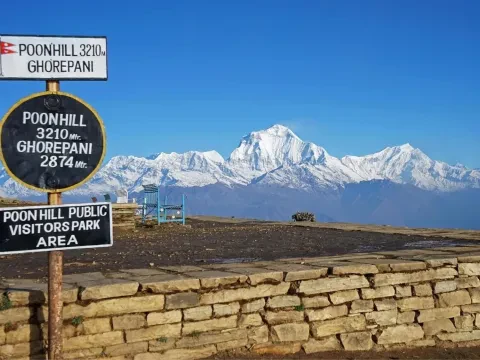
Yes, absolutely. The Mardi Himal Trek route can be combined with treks like Ghorepani Poon Hill for a more varied experience or even connect to the larger Annapurna Circuit.
15. What is the walking duration of the short 3-day Mardi Himal itinerary?
The 3-day Mardi Himal trek itinerary is a sprint that is designed for those who are extremely fit, with the longest walking hours typically around 7 to 8 hours daily, involving considerable elevation gain.
16. How about the phone coverage and internet access on the Mardi Himal trek?
Basic to good 3G mobile phone service can be available on many stretches of the ridge walk. Moreover, almost all high-altitude teahouses in the Mardi Himal Trek route offer Wi-Fi service for an additional charge of NPR 100-300 per day.
17. Is there a power supply to charge electronic devices on the trek?
While most of the lower teahouses on the Mardi Himal Trek route have stable electricity from the grid, those located at higher elevations utilize solar power, and an additional fee of NPR 200-500 might be charged for charging devices.
18. What makes the ridge environment risky during certain hours of the day?
The narrow nature of the ridge means the weather can change suddenly. Clouds usually roll in by mid-afternoon. The best time to reach Mardi Himal Base Camp is in the early morning for views, so starting at 4:30 AM is recommended.
19. What kind of equipment do I need for the high ridge sections on the Mardi Himal route?
Given the cold temperatures that can reach below freezing at High Camp, essential gear includes a warm down jacket, thermal clothing, well broken-in hiking boots, a headlamp for the early start, and trekking poles are highly advisable, especially for the downhill section towards Siding village.
20. What currency do I need on the Mardi Himal Trek route?
You'll need to carry Nepalese Rupees (NPR) for all your expenses along the Mardi Himal Trek route. Banks and ATMs are not available after Pokhara, and credit cards are not accepted in teahouses.
Our travel experts are ready to assist you with any questions.
Send us a message.Have a question before you book? Send your enquiry below and our travel experts will get back with the required information.