Shree Krishna Janmashtami is a Hindu festival that celebrates the birth of Krishna, an incarnation of Lord Vishnu. According to Hindu Mythology, Krishna was born in Mathura in the midnight of the 8th day of the dark half of the month of Bhadrapada. Devaki and Vasudeva were his parents and King Kansa was the cruel ruler of Mathura.
Likewise, his parents had been imprisoned by Kansa because of the prophecy foretold by his guru that Devaki’s eighth child would kill Kansa.
However, Vasudeva and Yashoda managed to save their son Krishna. He was brought to Gokul, brought up by Nanda and Yashoda.
Meanwhile, this festival is popular amongst Indians, Hindus living in Nepal and other nations. The devotees worship Krishna as a baby while the different communities and people across India observe the day by performing rituals in their own ways.
Hindu devotees observe Janmashtami by fasting, praying, singing bhajans, visiting temples, storytelling, and participating in cultural events. They also keep a fast throughout the day and stay awake at night as it is believed that Krishna was born at midnight.
During the midnight, prayers are offered, and devotional songs are sung. Devotees offer flowers, fruits, sweets, milk, curd to the deity.
Meanwhile, a small idol of the baby Krishna is placed in a cradle at temples and people sing devotional songs and gently rock the cradle while offering sweets and fruits.
Moreover, houses and temples are decorated with flowers, lamps, and pictures of Krishna. In some communities, children are dressed up like Krishna and Radha and drama is performed based on Krishna’s life.
Likewise, Dahi Handi is a popular ritual during Janmashtami mostly in Maharashtra where a decorated pot containing curd or other dishes is broken by a group of people forming a human pyramid.
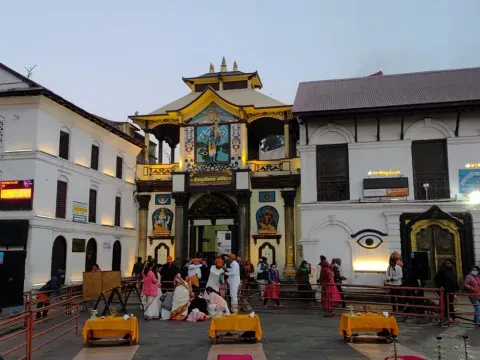
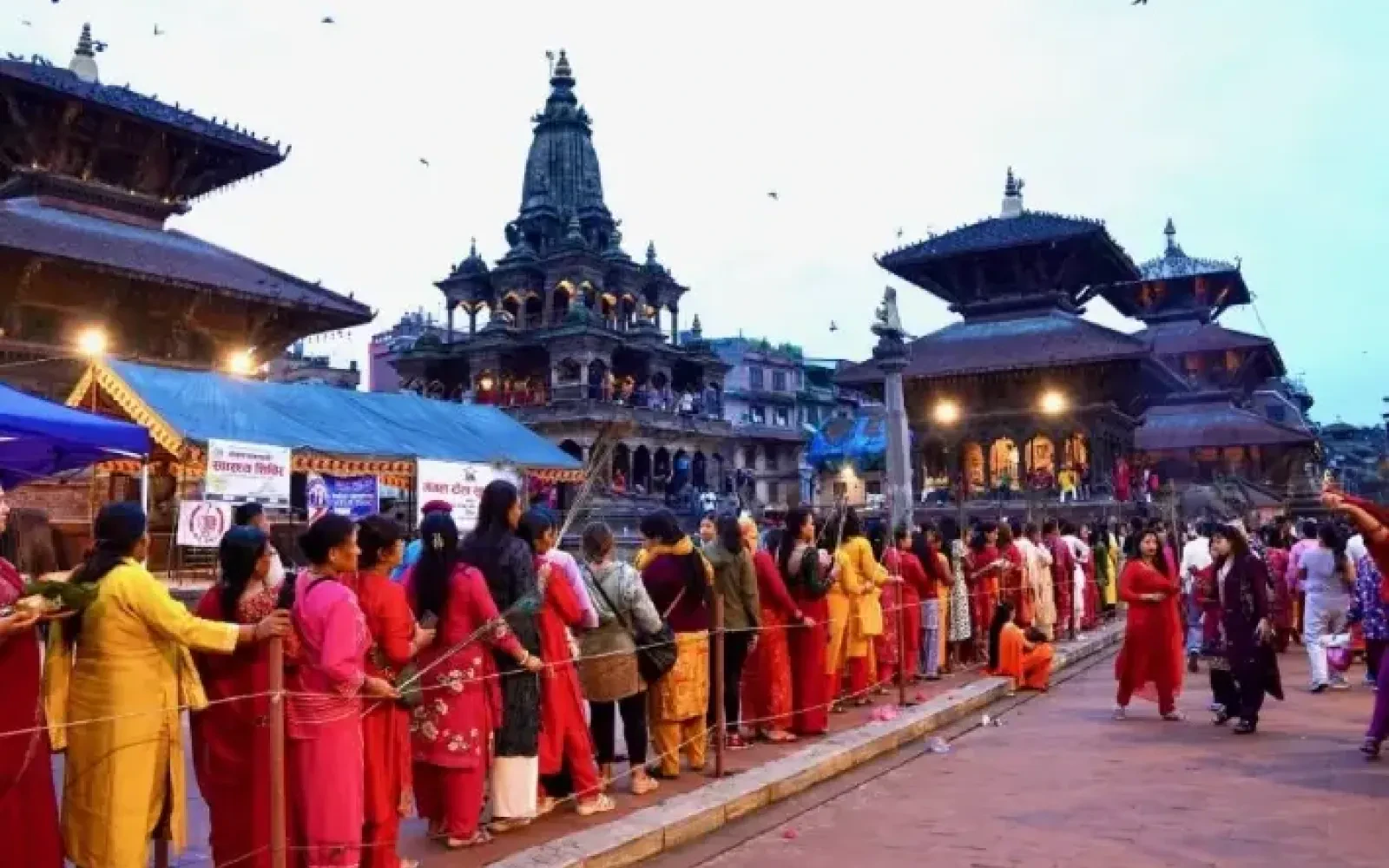
In Nepal, people visit Krishna temples and Krishna Mandir in Patan is a popular Janmashtami destination. Since this festival is a significant event in the Hindu calendar, it is celebrated with great enthusiasm and color throughout India.
In fact, the festival is a combination of devotion and mythology and is considered one of the most important festivals by Hindus.
The lord Krishna is a symbol of supreme love, wisdom, compassion, bravery, and righteousness. Krishna urges people to do their duty and be fearless towards the outcomes.
Similarly, he is also linked with truth and dharma or the path of righteousness. In Bhagavad Gita, he instructs Arjuna about duty, self-discipline, devotion, and the significance of making decisions in times of uncertainty.
Additionally, as a young child, Krishna is a symbol of joy, love, and devotion. The tales of his childhood in Vrindavan, Radha, and Gopinis(Cowherds-Females), and the playful nature in which he lived, are the stories of God’s love.
There are many religious, cultural, and community events in Shree Krishna Janmashtami. Temples and houses are elaborately decorated with flowers, lamps, lights, and colored rangoli. Idols and pictures of the baby Krishna are displayed.
Some of the traditions and customs of Janmastami include the following :
Importantly, the temples in Nepal especially the Krishna Mandir in Panauti Durbhar Square gets busy as people from surrounding areas visit the temple.
In summary, the Janmashtami is a wonderful day filled with devotion, music, community activities, and family gatherings in which people participate in various cultural activities to show their love for Lord Krishna.
It is indeed possible for non-Hindus to participate in Shree Krishna Janmashtami. This festival is especially notable for its openness to all people: those who want to explore Hindu beliefs and learn about Krishna, those who want to experience the culture, those who just want to see festive fun.
Thus, they can attend rituals, events, and processions held in temples or public spaces, where people of different faiths are welcome.
Of course, one must be considerate of the beliefs and rules of the local community, and act accordingly.
In this way, Janmashtami is an excellent opportunity for people of different religions and cultures to learn about a unique way of life.
By attending Janmashtami, one can enrich one’s life with new cultural experiences and perspectives without having to renounce one’s own religion.
Shree Krishna Janmashtami is a great holiday that brings together families, friends, neighbors, coworkers, and entire communities.
Meanwhile, people gather for worship and festive meals; children put on plays and get into costume; everyone sings and dances, tells stories, and eats sweets.
In other words, Janmashtami is a great opportunity for building new social bonds and strengthening old ones through music, dance, art, and love.
Importantly, it also promotes solidarity, tolerance, and non-discrimination through its central and ancillary celebrations. The holiday’s observance reinforces key virtues such as compassion, charity, love, duty, respect, and devotion to others.
Another important aspect of Janmashtami is that it is a family holiday that allows children and young people to become familiar with its cultural and religious traditions.
Through the stories told and the rituals performed, they learn moral values and the basic principles of religious co-existence.
In a global and multicultural world, this is an important part of building solidarity and tolerance between different communities.
Thus, Janmashtami is not only a way to demonstrate one’s faith but also a chance to experience and understand the faith of others.
On a concluding note, Shree Krishna Janmashtami is a wonderful opportunity for people of different faiths to experience a variety of Hindu traditions and learn about the religious and cultural significance of this holiday.
As a cultural phenomenon, Janmashtami fosters positive interactions between different communities through shared activities and mutual understanding.
On a personal level, the holiday encourages spirituality and religious co-existence, as people participate in the events actively and with respect for different beliefs.
Thus, Janmashtami is a beautiful symbol of interfaith acceptance, which is a good premise for building strong and lasting relationships between members of different religious communities.
For a community, this holiday is a great way to have fun together while promoting and reinforcing core values. These values are kindness, love, and respect for others, regardless of status, wealth, appearance, ethnicity, or religion.
In other words, Janmashtami encourages people to treat each other well and support each other no matter what. And this is the most beautiful part of this holiday.
Though thousands of people are missing and homeless from August , 2026 Flood in Nepal, Nepalis observed this occassion by offering the prayers to Lord Krishna to enhance love, humanity and solidarity among the people.
Who observes Shree Krishna Janmashtami?
The Shree Krishna Janmashtami is primarily observed by Hindus, including Krishna’s followers and Vaishnavas. This festival is dedicated to Lord Krishna, a Hindu god.
Meanwhile, Hindus, especially those who live in Nepal, India, and other countries, participate in prayer meetings, fasting, devotional songs, visiting temples, and fairs. Midnight is considered an auspicious time of day when festivals are held.
Can Non-Hindus attend Shree Krishna Janmashtami celebrations?
Non-Hindus are welcome to attend Shree Krishna Janmashtami by participating in events that fit their needs.
However, they must respect the traditions and customs of the local community by asking for permission to enter a house or a temple, taking pictures, and other activities.
Therefore, it is necessary to ask locals about specific rules and regulations.
When and how is Shree Krishna Janmashtami observed?
Shree Krishna Janmashtami is observed on the eighth day of the dark half of Bhadrapada month according to the Hindu calendar. It is a festival of love and humanity, where people keep fasting, visit temples, sing, and tell stories about Lord Krishna. Midnight is an auspicious time of day, so celebrations usually last until then.
Is Shree Krishna Janmashtami observed in India as well?
To a large extent, it is traditional to hold Shree Krishna Janmashtami festivals in India. In particular, Mathura and Vrindavan, the places where Krishna was born and raised, are considered the centers of the festivities.
Here, temples are decorated, and religious services are held. People keep fasting, attend prayer meetings, and participate in various events.
In addition, the festival is celebrated in Maharashtra with the traditional Dahi Handi festival.
What is the most popular site to visit on the occasion of Shree Krishna Janmashtami?
In Nepal, Krishna Temple located in Patan, Lalitpur is recommended to visit on this auspicious occasion of Shree Krishna Janmashtami.
Similarly, Mathura and Vrindavan are the most popular places to visit during the festival of Shree Krishna Janmashtami in India. These are the birthplace of Lord Krishna and his playground, respectively.
In other words, it is a holy place for Hindus, which is why many of them travel there to participate in the celebration.
Notably, the Shri Krishna Janmabhoomi Temple in Mathura is crowded with people during Krishna Janmashtami and is a significant center of related festivities.
Our travel experts are ready to assist you with any questions.
Send us a message.Have a question before you book? Send your enquiry below and our travel experts will get back with the required information.