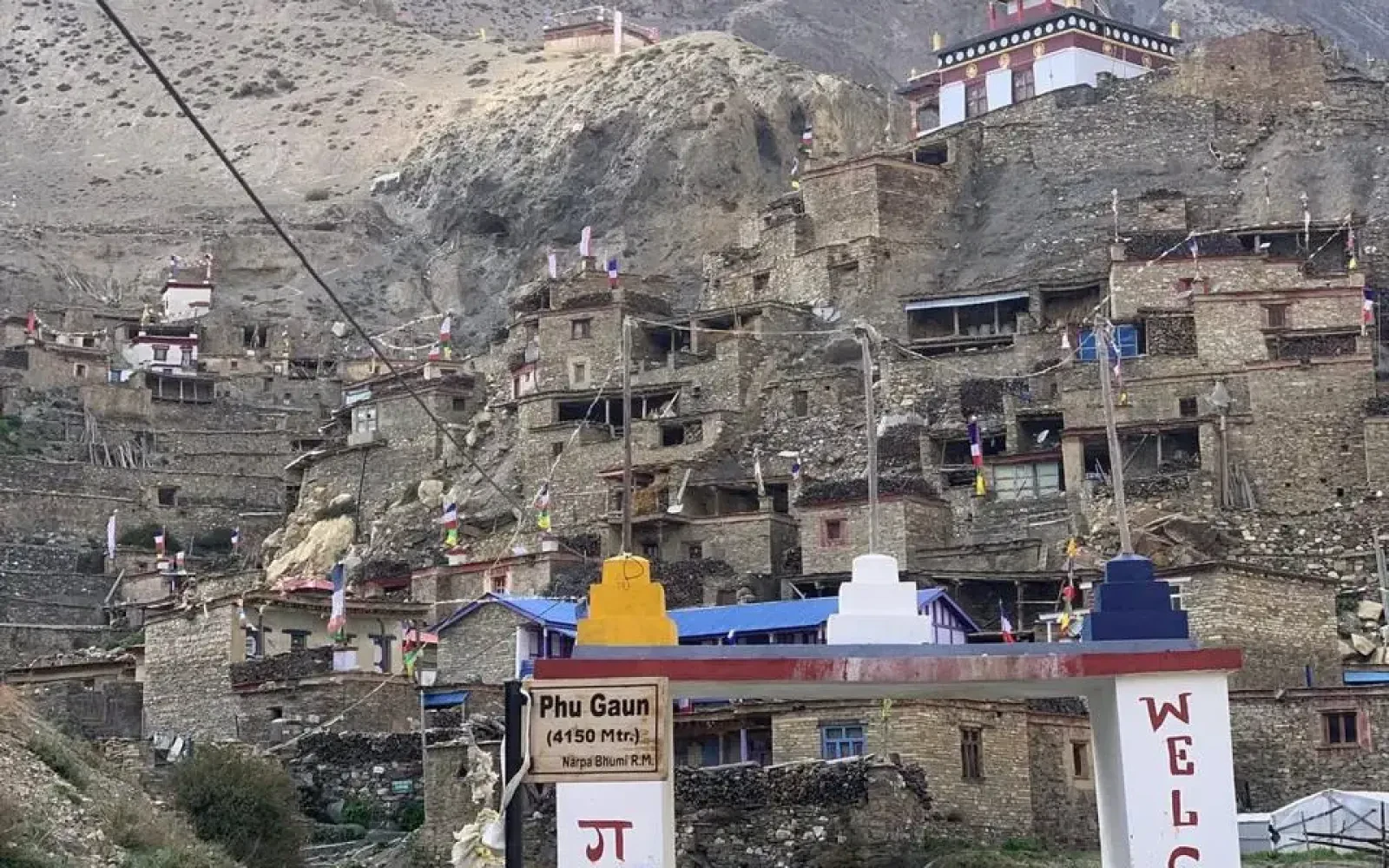
Have you ever craved to escape to a place where time stands still, a place that feels like a relic of an anceint era in Nepal? Phu Village is a place that offers that unique and sought-after experience.
Located at an altitude of 4,250 meters (13,944 feet) in the remote Nar Phu Valley, Phu is considered one of the highest and most traditional settlements in the Annapurna region. The ancient village is precariously built into the side of a steep cliff face, its stone houses resembling a fortress against the rugged mountain terrain. Entering Phu is an immersive experience, like stepping back in time into the heart of Tibetan-Buddhist mountain life.
Key features of Phu Village:
Actually, the village is still relatively untouched by modern civilization due to its status as a restricted area. Hence, a journey to Phu is considered to be one of the most authentic cultural encounters available in the Himalayas today.
Have you ever wondered about the deep-seated history of a remote mountain village nestled high in the Himalayas? Phu Village is a place with a story that is as compelling as its dramatic surroundings.
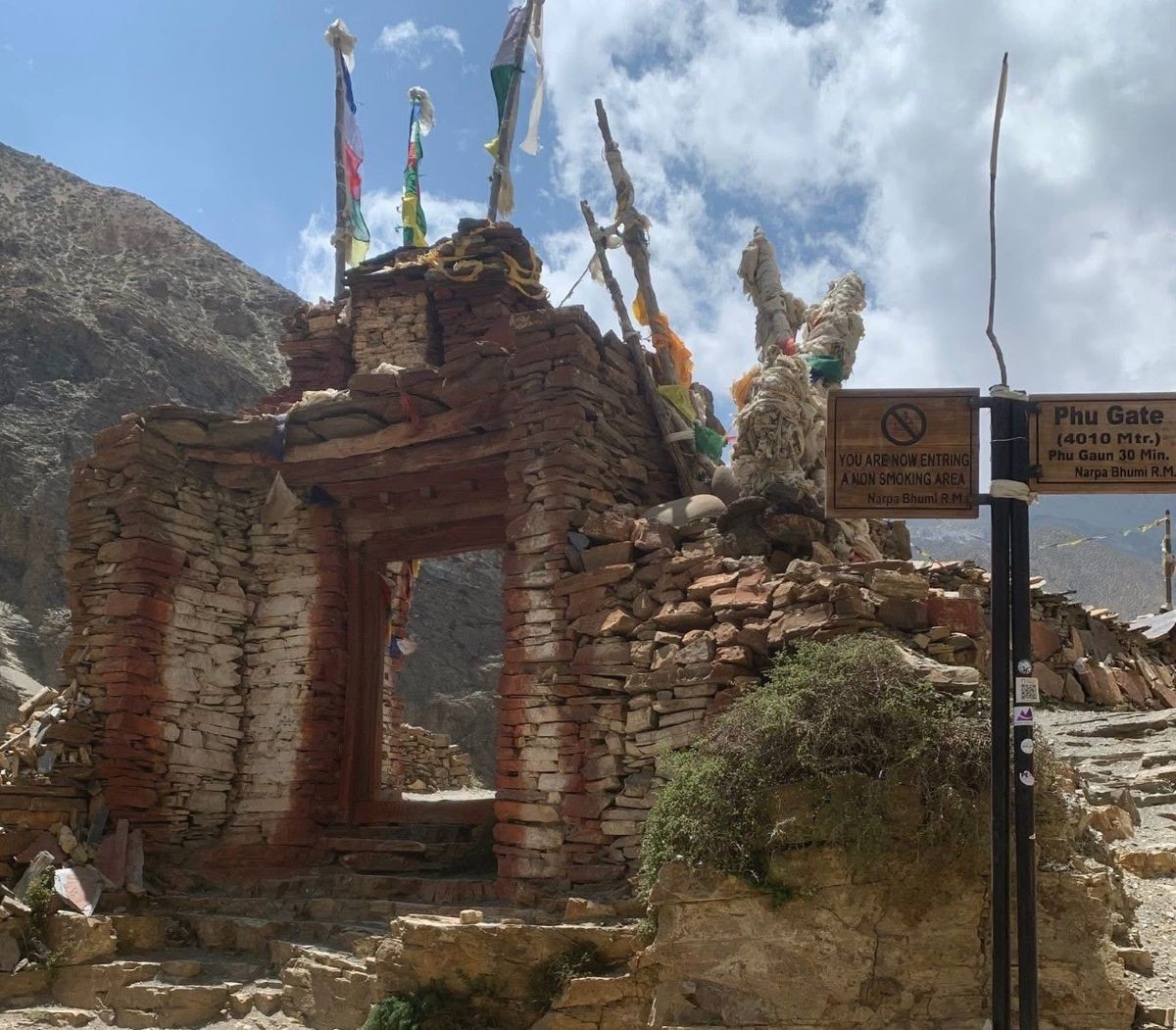
Actually, Phu has been continuously inhabited for several centuries and boasts a long and fascinating history that is intrinsically linked to Tibetan trade routes. Local lore has it that the village was founded by traders as a safe haven and control point along the ancient salt trade routes connecting Nepal and Tibet. Its strategic position allowed them to monitor and command the high passes in the area.
Likewise, the inhabitants of Phu are the Manangi (Nyeshang) people, who trace their roots back to Tibet. They have managed to preserve their unique dialect, customs, and their profound Buddhist faith, despite the challenges posed by the extreme high-altitude environment. The ancient Phu Gompa, an edifice that has stood for hundreds of years, is a testament to their rich spiritual heritage.
Historical significance of Phu Village:
To this day, Phu represents the remarkable resilience and vibrant heritage of Himalayan mountain communities. Visiting this historic village not only offers breathtaking scenery but also a connection to the ancient cultural landscape of Nepal.
you ever imagined what it's like to live in such a severe and remote high altitude region of Nepal? Besides that, the geography of Phu Village is as spectacular as challenging.
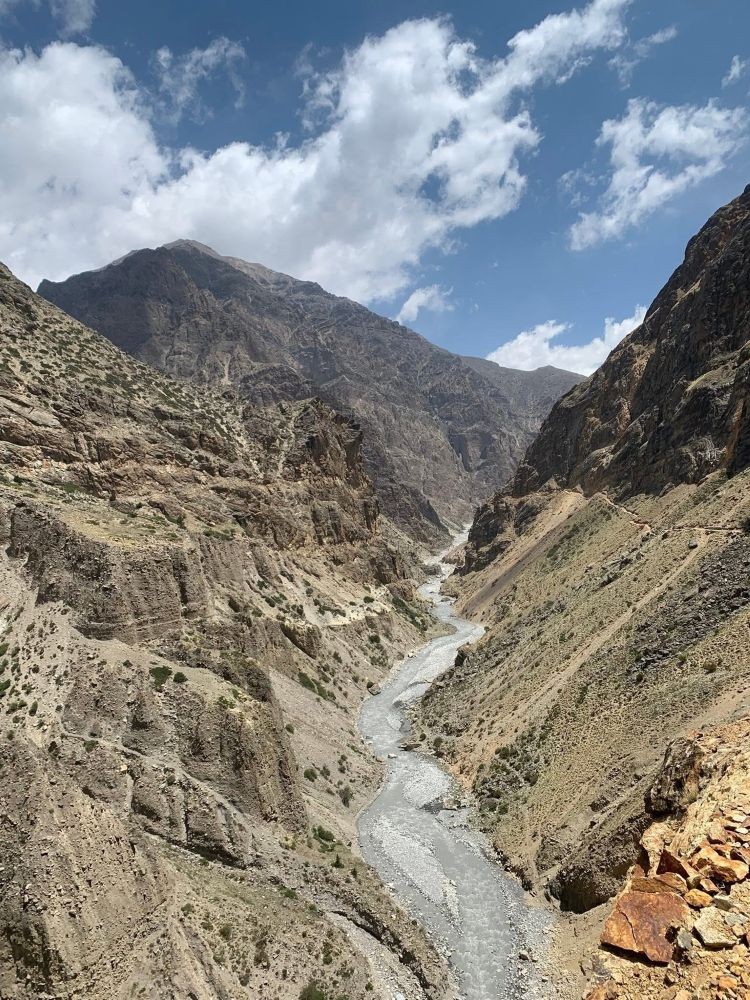
Located at an altitude of 4,250 meters (13,944 feet) in the Nar Phu Valley, Phu lies on a steep cliff overlooking the Phu Khola. It is surrounded by soaring peaks, rocky ridges, and glacial moraines, making up a bleak yet beautiful high altitude desert. The arid climate, harsh winds, and poor quality land are obstacles to living here, however the local inhabitants have adapted very well to this condition throughout generations.
Geography :
The people of Phu mostly belong to the Manangi (Nyeshang) community, with strong Tibetan ancestry. They are characterized by their resilience, generosity and devotion to Tibetan-Buddhism. Even now, they still live in a small population, where families retain their traditional customs for many generations.
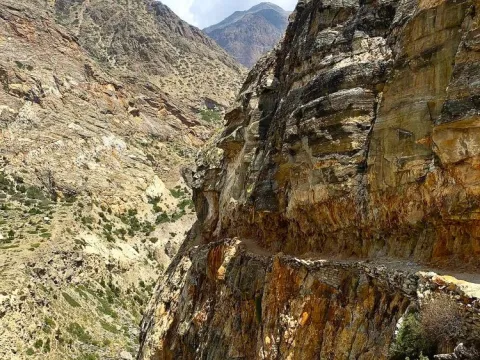
Have you ever thought about how the people make a living in one of the highest continuously inhabited villages of Nepal? Besides that, the occupation and religious life in Phu village are interconnected with the high mountain region.
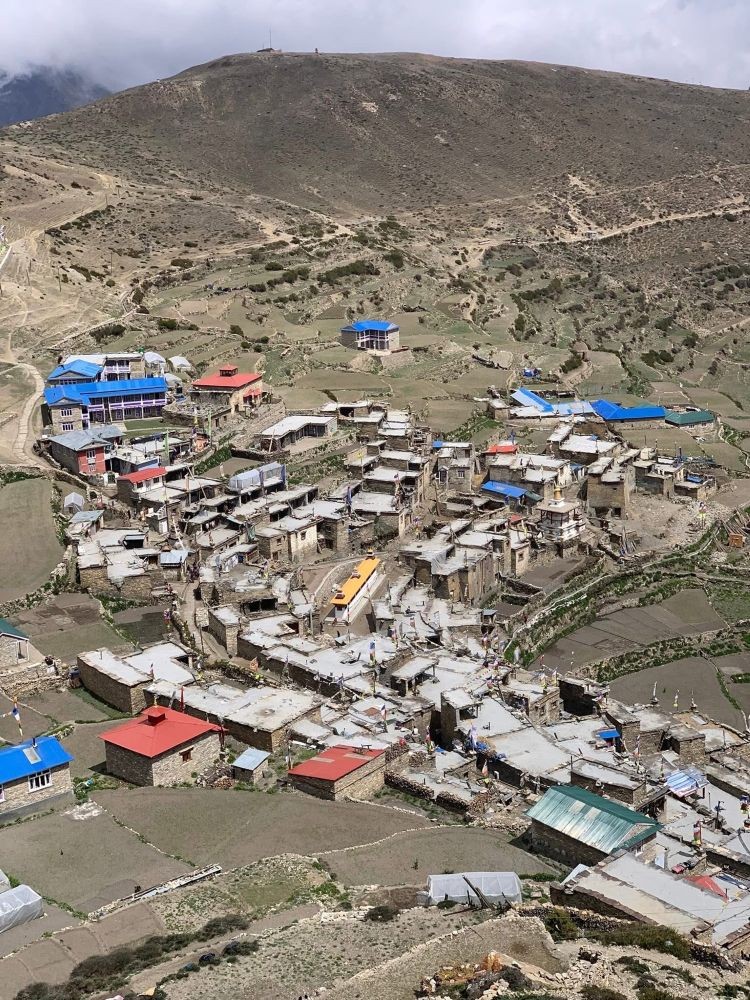
Actually, the locals of Phu make a living primarily by agriculture, herding animals and seasonal trading. They grow potatoes, barley and buckwheat during the short summer months and raise yaks, goats and sheep for wool, milk and meat. They make use of their seasonal migration and travel between regions for business. The village is largely populated by Tibetan-Buddhists, whose religion plays an important part in their life.
Main Activities :
Religion in Phu :
In conclusion, combining occupation with religion forms a harmonious existence suited to high mountain conditions. Phu village has stood out as a living monument of human endurance and spiritual worship in one of the world's most challenging environments.
Have you ever considered the difficulty of access into one of the most remote villages in the Annapurna region? Moreover, accessibility to Phu Village is also the part of the reason why it is so rare and exclusive.
Actually, the village is situated in a restricted area, which requires an special permit. Apart from that, there are no motorable roads. Thus, Phu is reachable by foot trekking for several days from the nearest starting point of Koto (the gate to Nar Phu Valley). Limited access has also helped preserve the village’s authentic feel.
Details on Accessibility :
With such limitations to access, Phu has remained one of the least-visited and most untouched villages high in Nepal, and arriving in the village truly feels like an accomplishment, providing a rare insight into a vanishing lifestyle.
Ever dreamt of visiting a place where time seems to stand still, perched high up in the Himalayas of Nepal? Phu Village is home to some of the most unique and rewarding experiences in the Annapurna region.
Perched at a breathtaking 4,250m (13,944ft) on a dramatic cliff face, Phu Village has often been referred to as a living museum of Tibetan-Buddhist mountain culture. Its ancient stone houses, built tier by tier, form a stunning spectacle against the rugged Himalayan backdrop.
Top attractions in Phu Village :
In conclusion, the remoteness and purity of culture in Phu are unforgettable, and the surrounding high pastures and glacial valleys are ideal for day hikes. Phu Village is truly an experience that will remain with trekkers long after they depart.
Ever wondered about the facilities available at one of Nepal's highest and most remote villages? Phu Village has a basic but adequate selection, in keeping with its traditional and restricted nature.
Because the village is small and remote at a high altitude, luxury is not an option here. This makes the stay a simple but authentic, Himalayan experience.
Available facilities at Phu Village :
| Facility Type | Availability | Quality / Standard | Notes |
|---|---|---|
| Accommodation | Limited guesthouses | Basic but clean | Twin beds, shared bathrooms |
| Food | Guesthouse/teahouse food | Good local / Tibetan and Nepali | Dal Bhat, Thukpa, Yak cheese |
| Electricity | Solar powered | Limited (evenings only) | Power bank highly recommended |
| Internet | Very limited | Occasional weak signal|Best at the main guesthouses |
| Medical / Emergency | Basic first aid available | Nearest proper facilities are at Manang|Travel insurance is strongly advised. |
In conclusion, facilities in Phu may be basic but are more than made up for by the people of the village and the experience they provide.
Thinking of visiting Phu Village and wondering when the best time of year will be? When deciding when to trek to Phu, one must remember that it's a high-altitude village, and so conditions are greatly affected by season and altitude.
Actually, the most appropriate time for trekking to Phu is during spring and autumn when there is stable weather, good visibility, and the trails are safe to trek on.
Best time to visit Phu Village :
| Season | Weather Condition | Trail Accessibility | Scenery Beauty | Recommendation |
|---|---|---|
| Spring | Mild & Clear | Very Good | Excellent | Highly Recommended |
| Autumn | Stable & Dry | Excellent | Outstanding | Best Time |
| Summer | Rainy & Unstable | Moderate | Very Green | Not Recommended |
| Winter| Extreme Cold & Snow | Very Difficult | Snow-covered | Only for Experts |
In conclusion, choosing to visit Phu Village during spring or autumn ensures a safe and incredible trekking experience, with amazing views at a pleasant temperature.
Have you now gained a full appreciation for why Phu Village is truly one of the most spectacular destinations in the entire Annapurna region? This ancient, high-altitude village offers so much more than simply picturesque views.
Actually, the trek to Phu is also a journey into authenticity, resilience, and the living cultural heritage of the Himalayas. Every trekker who reaches this remote cliffside village leaves not only with stunning photos, but also with a deep respect for the resilient people who call it home.
Likewise, Phu Village embodies the spirit of the Himalayas – remote, strong, deeply spiritual and wonderfully beautiful. If an authentic high-altitude experience far away from the crowds is what you seek, put Phu high on your travel list.
Similarly, this trek will be difficult, but the memories you create here, and the people you connect with, will remain with you for life.
1. Where is Phu Village located?
Phu Village is a remote, high-altitude settlement located in the Nar Phu Valley, in the Annapurna region of Nepal, at an elevation of about 4,200 meters (13,780 feet). It's one of the most secluded villages in the well-known Nar Phu side trek of the Annapurna Circuit.
2. What is there to see and do in Phu Village that makes it a must-visit destination?
Phu Village is incredibly unique because of its well-preserved traditional Tibetan heritage, ancient monasteries, beautiful stone houses, and dramatic mountain landscapes. It's one of the most untouched villages in the Annapurna region, so you can experience authentic Himalayan culture away from the usual crowds.
3. How can I get to Phu Village?
You can get to Phu Village by taking a 5 to 7-day detour off the main Annapurna Circuit trek, typically starting from either Koto or Manang. The trail follows the Phu River, leading through narrow gorges and pine forests before finally arriving at the village.
4. What is it that makes Phu Village so special and distinct from other villages?
Phu Village stands out due to its distinct Tibetan-Buddhist culture that has been passed down for centuries, its incredibly old gompas (monasteries), and its unique landscape of stark, dry terrain surrounded by towering peaks. The kindness and welcoming nature of the local people, combined with the feeling of stepping back in time, are what make Phu Village a truly unforgettable place to visit.
5. What is the altitude of Phu Village?
The altitude of Phu Village is approximately 4,200 meters (13,780 feet). Because of the high altitude, it is essential to take precautions and acclimatize properly to avoid altitude sickness. The thin air makes the views of Himlung Himal and other surrounding peaks absolutely breathtaking.
6. Is Phu Village better than Nar Village for trekkers?
A lot of people who have trekked in the region find Phu Village to be even more special than Nar Village. It's located higher up, is more remote, and feels more traditional. While Nar Village is beautiful, Phu offers an even greater sense of isolation and raw natural beauty.
7. What are the main attractions to see in Phu Village?
Once in Phu Village, you'll have the opportunity to explore the ancient Tashi Lhakhang Monastery, traditional flat-roofed stone houses, mani walls, vibrant prayer flags, and terraced fields. The surrounding rugged mountains and deep valleys also create stunning photo opportunities.
8. How much time should I allocate for my visit to Phu Village?
Most trekkers allocate between 5 to 8 days for the full Nar Phu Valley trek, which includes a visit to Phu Village. This duration provides enough time for proper acclimatization, exploration of the village, and for you to really soak in the serene atmosphere.
9. Is Phu Village a good place for photographers?
Phu Village is an exceptional destination for photographers. The combination of ancient monasteries, traditional architecture, prayer flags fluttering in the wind against the backdrop of snow-capped peaks, and the warm smiles of the local people creates incredible, authentic images.
10. What kind of culture can I expect to encounter when I visit Phu Village?
When you visit Phu Village, you'll experience a very strong Tibetan-Buddhist culture. The locals still adhere to age-old traditions and practice Tibetan Buddhism. Life in Phu Village is essentially a semi-nomadic existence, making it one of the most authentic cultural experiences you can have in the Annapurna region.
11. What are the accommodation options available in Phu Village?
Accommodation in Phu Village is very simple, but clean. You'll find a few family-run teahouses that offer basic rooms, shared bathrooms, and home-cooked meals. The experience of staying in Phu Village is rustic and unforgettable.
12. Do I need any special permits to visit Phu Village?
Yes, you do. Phu Village is located in a restricted area, so you will need a special Restricted Area Permit along with an ACAP permit. You will also need to travel with a licensed guide, as these regulations are in place to help protect the unique culture and environment of Phu Village.
13. When is the best time of year to plan my visit to Phu Village?
The most ideal times to visit Phu Village are in the spring (March to May) and autumn (September to November). During these seasons, the weather is stable and the skies are clear, offering fantastic views. Winter snowfall and monsoon rains make the trek to Phu Village challenging and can block access.
14. How difficult is the trek to Phu Village?
The trek to Phu Village is considered challenging because it involves steep ascents, high altitude, and difficult terrain. It is best suited for trekkers who are in good physical shape and have previous high-altitude trekking experience. A guide is mandatory.
15. Can beginners trek to Phu Village?
Beginners can trek to Phu Village if they have excellent physical fitness, are well-prepared, and are accompanied by a professional guide. However, it is generally more suitable for trekkers who already have some experience with high-altitude trekking.
16. What kinds of food can I expect to eat in Phu Village?
In Phu Village, you can enjoy simple but delicious local food, including staples like dal bhat (lentil soup and rice), momos (dumplings), Tibetan bread, thukpa (noodle soup), and yak cheese. The food is prepared fresh by local families using the ingredients available.
17. Why is Phu Village referred to as a "hidden village"?
Phu Village was completely closed off to foreign visitors until the year 2002. Its extremely remote location, hidden behind the Annapurna range, has kept it isolated for centuries, allowing it to preserve its unique traditional way of life and earn its name as the "hidden village."
18. Is Phu Village a safe destination for trekkers?
Yes, Phu Village is generally a safe place to visit, as long as you are trekking with a licensed guide. The local people are friendly and hospitable. Just remember to follow standard high-altitude trekking safety precautions.
19. What wildlife might I see when trekking around Phu Village?
The area around Phu Village is rich in wildlife. You may be lucky enough to spot blue sheep, Himalayan tahr, marmots, and various species of high-mountain birds. This area is part of the Annapurna Conservation Area, known for its diverse fauna.
20. What are the main reasons someone should consider visiting Phu Village?
You should visit Phu Village to experience one of the most remote, authentic, and breathtaking Tibetan villages in all of Nepal. Its dramatic location, vibrant culture, and sense of deep isolation make Phu Village an incredibly special and rewarding destination.
Phu Village awaits, for those willing to make the effort!
Happy and safe travels to Phu Village!!!
Our travel experts are ready to assist you with any questions.
Send us a message.Have a question before you book? Send your enquiry below and our travel experts will get back with the required information.