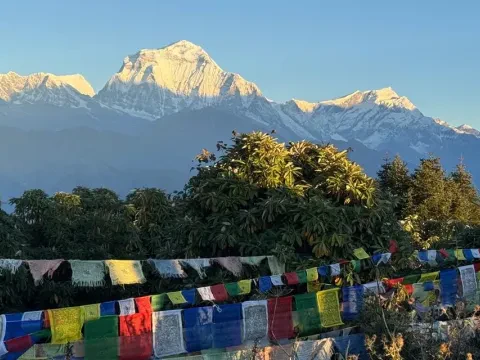
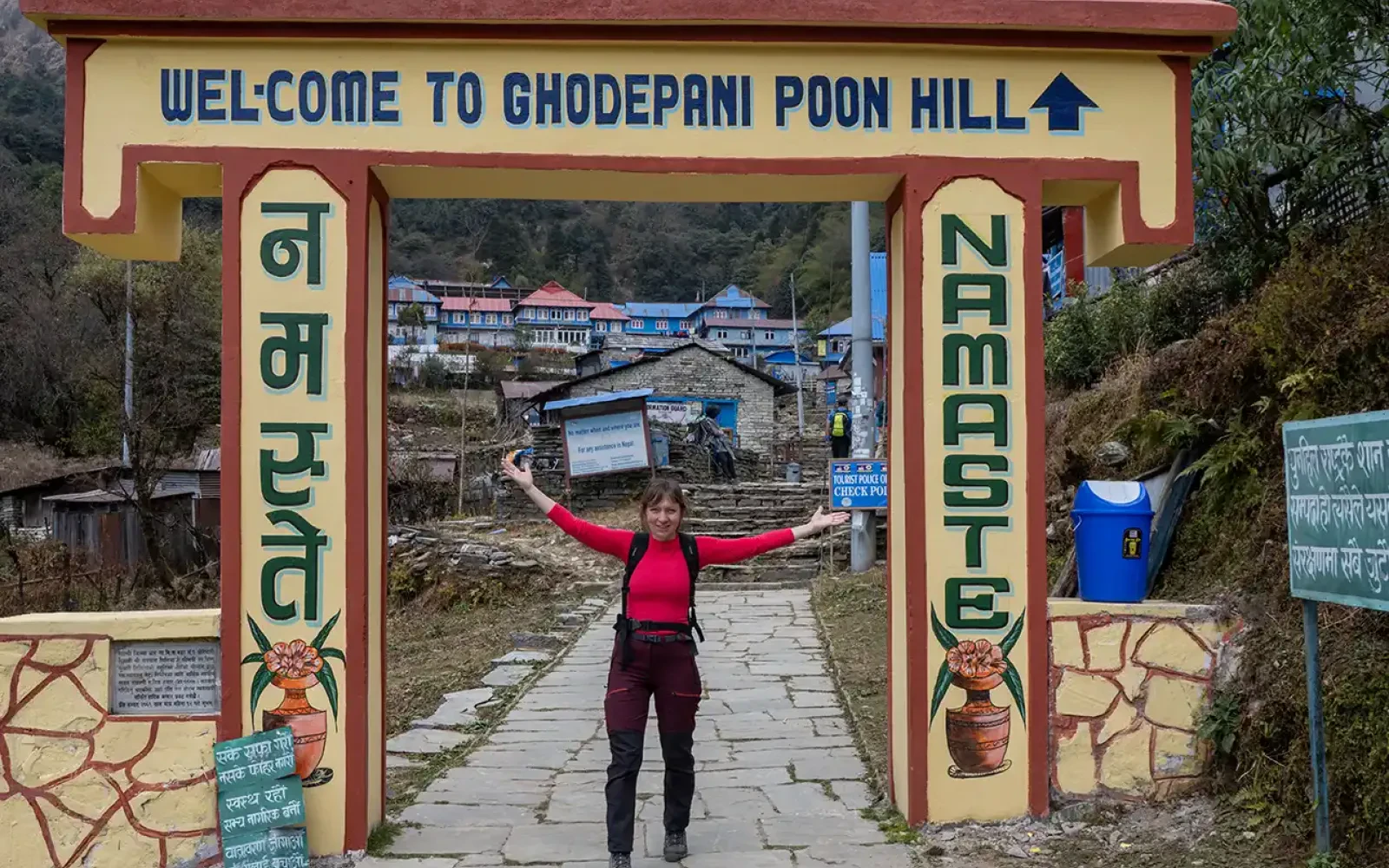
Meanwhile, the Ghorepani Poon Hill trek, renowned as one of the finest "entry-level" treks in Nepal, offers a spectacular view of the massive peaks of the Annapurna massif without the grueling risks of a high mountain pass. Also, Poon Hill Trek is popular as one of the 10 best short treks in Nepal. Essentially, this trek is an asymmetrical loop which quickly ascends through the steeps of the middle hills, then gently descends through deep rhododendron forests.
Terrain layout and Elevation Mechanics:
| Metric | Ghorepani Poon Hill Loop | Annapurna Circuit / Base Camp | Acclimatization Requirement |
|---|---|---|
| Max Elevation | 3,210m (10,531ft) | 4,130m - 5,416m (13,550ft - 17,769ft) | No rest days needed; beginner-friendly. |
| Time Spent Above 3,000m | Under 24 Hours | 3-7 continuous days | Minimal; the body acclimates quickly while moving. |
| Trail Description | Wide stone paths and good walking trails | Glacial moraine, scree slopes and active rockfall | Smooth trail with no special footwear needs (beyond hiking boots) |
| Trail Phase | Vertical Gain/Loss | Key Trail Characteristics | Main Muscle Groups Utilised. |
|---|---|---|
| The Climb | Approx 1,836m (over 2 days) | Stone steps at every elevation; open mountain faces | Glutes and Calves. |
| The Descent | Approx 2,171m (over 2 days) | Shady trails; exposed roots; stone steps | Quads and knees. |
The Step-By-Step Rule: While the Poon Hill trek is generally suitable for beginners, the sudden ascent via the stone steps at Ulleri can cause your heart rate to spike easily. Don't push to try and climb them quickly; slow down and take frequent, short rests to preserve energy.
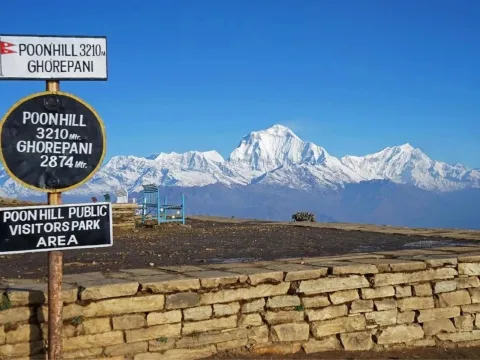
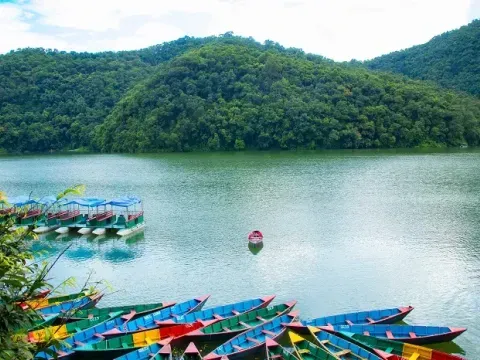
Actually, the journey to the trek itself involves an important change of base from Nepal’s bustling capital to the lakeshore of Pokhara, a transition that brings you down into a valley with an abundance of oxygen.
Transit logistics and elevation changes:
| City | Core Elevation (m) | Core Elevation (ft) | Oxygen Level | Climate |
|---|---|---|
| Kathmandu | 1,400m | 4,593ft | 86% of sea level | Moderate; temperate urban valley |
| Pokhara | 822m | 2,696ft | 92% of sea level | Warm, sub-tropical; humid lakeside valley. |
| Transit Option | Duration | Key Sights | Physical Effect |
|---|---|---|
| Flight | 25-30 mins | Views of Ganesh Himal and Manaslu | Very low impact; saves leg strength. |
| Tourist Bus | 7-8 hours | River gorges, terraced farmlands | Increased fatigue from travel; a full day's transit |
Tip Before You Trek: The humidity in Pokhara is noticeably higher than in Kathmandu. Drink plenty of water and rest in the lakeside city the night before you start the trek to ensure your body is properly rehydrated.
Actually, your trek formally transitions from vehicle to foot at the cusp of the roaring Modi Khola river valley. This entry stage will offer a pleasant introduction to the quintessential Nepalese rural countryside: warm air, oxygen-rich, fragrant with terraced farms and subtropical forest.
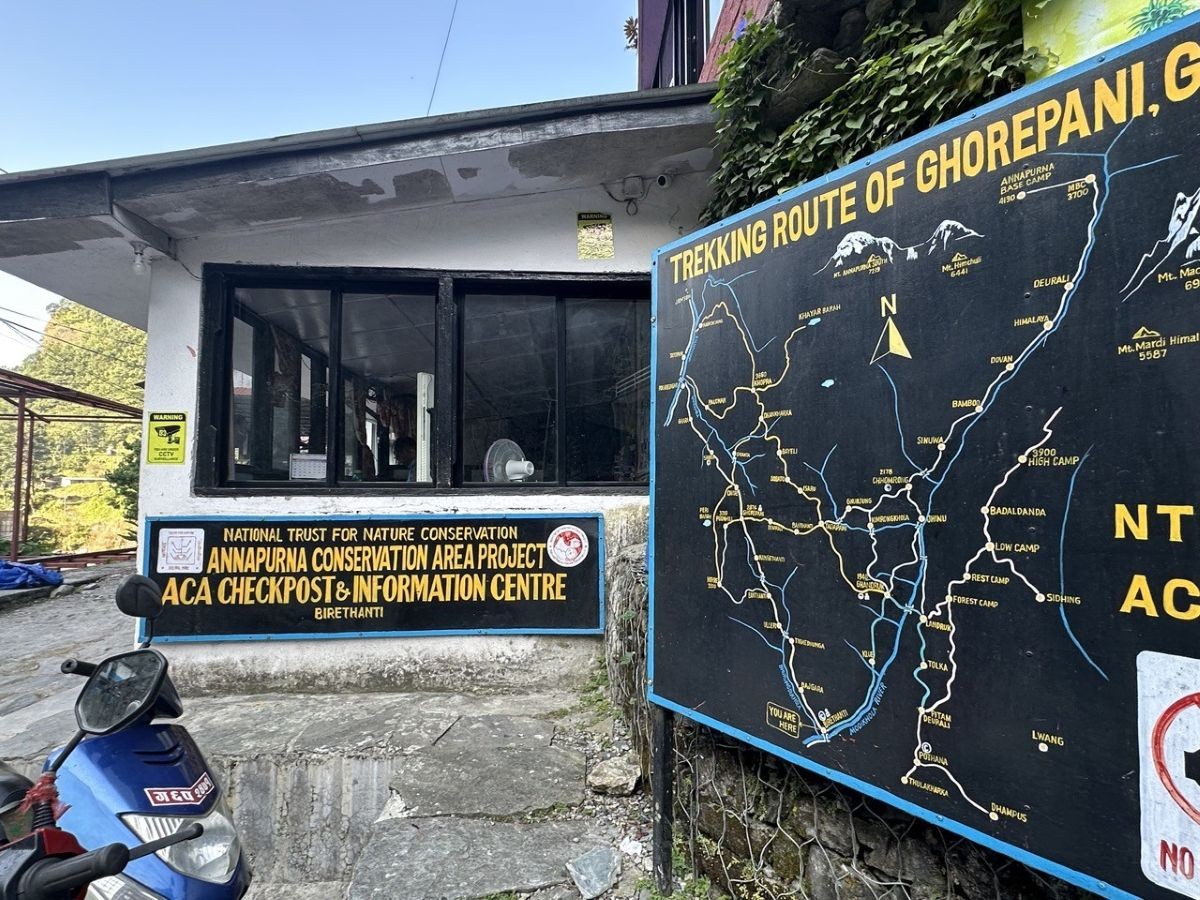
Trailhead Infrastructure & Geography :
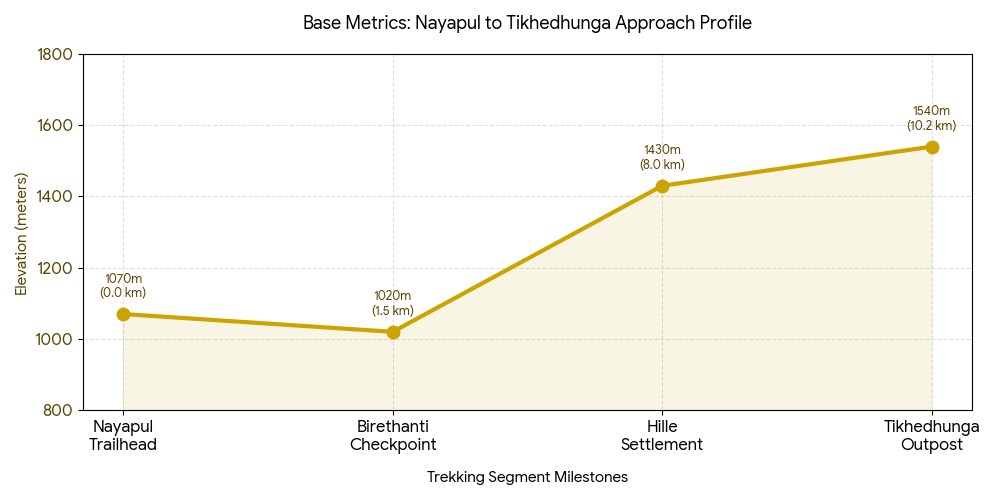
| Trekking Segment Milestone | Precise Elevation (Metric) | Precise Elevation (Imperial) | Net Distance Covered | Average Trekking Time |
|---|---|---|
| Nayapul Trailhead | 1,070 m | 3,510 ft | Baseline | 0.5 Hours (Walk) |
| Birethanti Checkpoint | 1,020 m | 3,346 ft | 1.5 km | 1.5 Hours |
| Hille Settlement | 1,430 m | 4,691 ft | 6.5 km | 2.5 Hours |
| Tikhedhunga Outpost | 1,540 m | 5,052 ft | 2.2 km | 1.0 Hour |
| Environmental Metric | Trailhead Base Conditions | Physiological Impact on Trekkers |
|---|---|---|
| Atmospheric Oxygen | 89-91% of sea-level density | Max lung efficiency; low risk of shortness of breath |
| Ambient Temperature | Warm & humid; 22 C to 28 C (71-82 F) | High perspiration rate; light clothes recommended |
| Water Availability | Bottled water is readily available | High need for hydration due to heat and humidity. |
The Sun Protection Rule: The valley route from Nayapul to Tikhedhunga is very exposed to sun and gets quite hot. Be generous with your high-SPF sunscreen, wear a wide-brimmed hat, and bring an electrolyte powder or tablet to dissolve in your water bottle; this will help replenish the minerals lost during high perspiration along these warm, flat river flats.
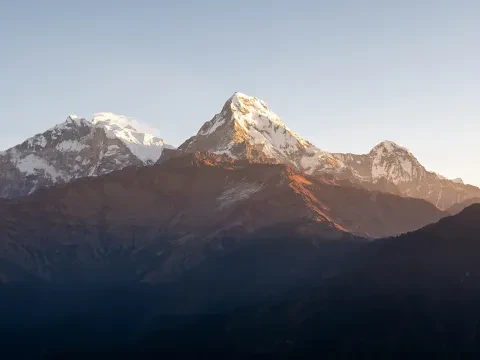
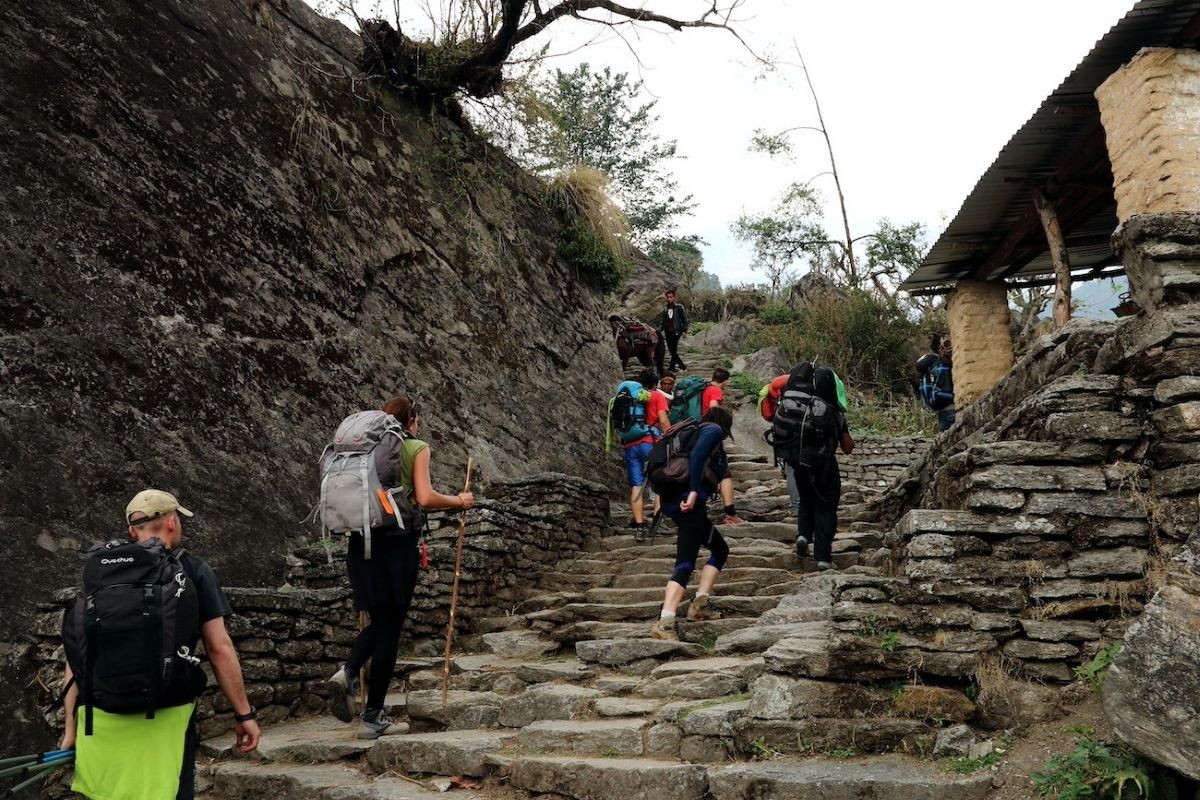
Actually, the gentle river walk quickly escalates into an intense effort as you leave the suspension bridge over the Bhurungdi Khola behind and face one of the most arduous parts of your journey – the massive, stone staircase climbing the side of the hill to Ulleri.
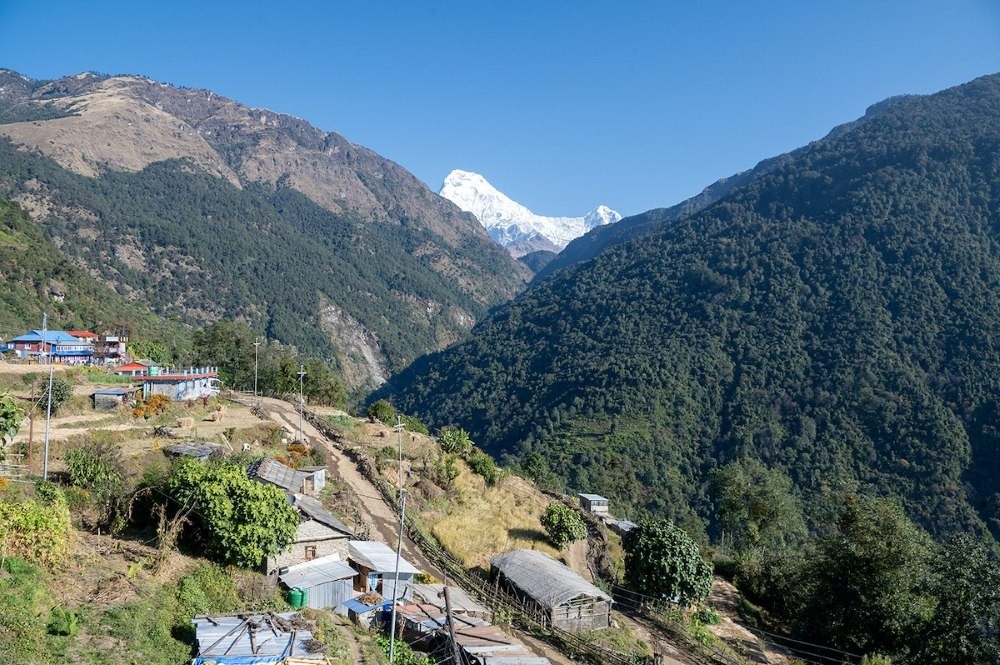
Staircase Mechanics & Elevation Changes:
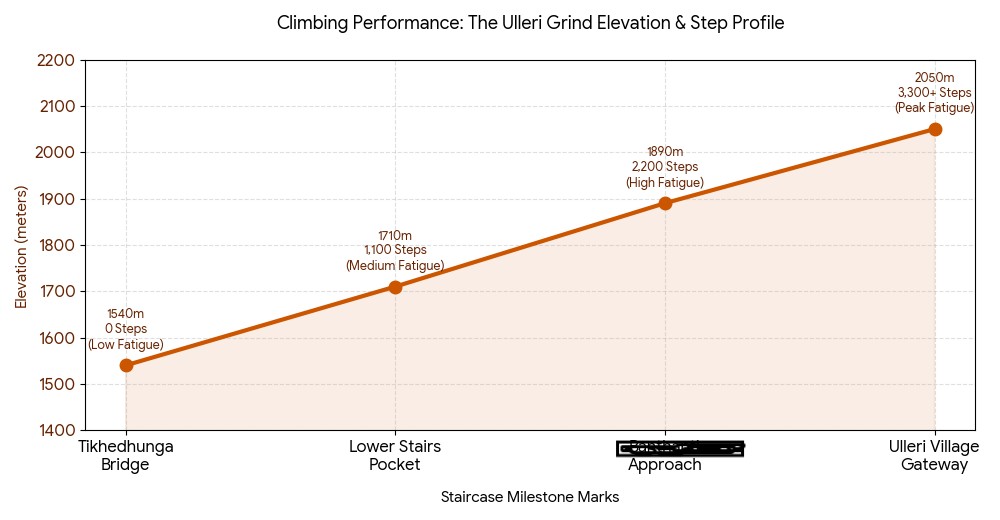
| Staircase Milestone Mark | Current Elevation (Metric) | Current Elevation (Imperial) | Accumulated Step Count (Est.) | Muscle Fatigue Risk |
|---|---|---|
| Tikhedhunga Bridge | 1,540 m | 5,052 ft | Step 0 | Low; muscles fresh |
| Lower Stairs Pocket | 1,710 m | 5,610 ft | 1,100 Steps | Medium; calf tightness |
| Approach View | 1,890 m | 6,200 ft | 2,200 Steps | High; quad burning |
| Ulleri Village Gateway | 2,050 m | 6,726 ft | 3,300+ Steps | Peak exertion; joint strain |
| Biomechanical Factor | Relentless Stone Stair Climb | Standard Dirt Trail Trekking |
|---|---|---|
| Knee and Joint Impact | High concentric pressure on patella tendons | Balanced, low-impact heel-to-toe stride |
| Cardiovascular Strain | Quick spikes into anaerobic heart rate | Steady, manageable aerobic endurance pacing |
| Walking Rhythm | Short, vertical steps; uneven stone heights | Even, continuous forward strides |
The Short-Step Technique: Trying to take large steps or to ascend the stairs quickly will tire your legs in fifteen minutes. Keep your gaze focused a few steps ahead, keep your strides short so your heels touch the stone with each step, and use your glutes rather than your calves for each upward push. Rest for 30 seconds every 100 steps to give your heart rate time to stabilize.
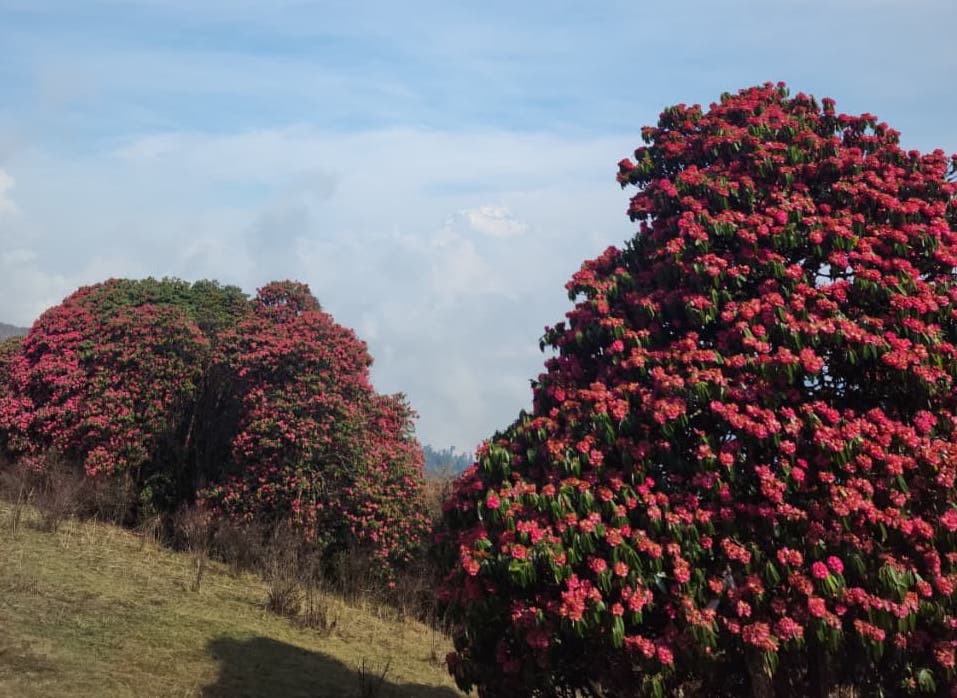
Leaving Ulleri and its demanding stone steps behind you enters a magical, shaded wonderland. The path transitions into a dense canopy of ancient oaks, moss-covered maples, and sprawling rhododendron trees. In the spring, the entire mountainside becomes a vibrant display of deep crimson, pink, and white blossoms.
Actually, this segment provides a much-needed break for your lower joints. While you're still gaining altitude, the sharp, steep staircase gives way to a more forgiving and steady uphill pacing. The heavy forest cover keeps the intense midday sun at bay, lowering the temperature and creating a refreshing, crisp microclimate. This helps conserve energy for the steep final ascent to the ridge.
Landscape Dynamics and Forest Flora :
Solar Radiation Exposure :
Average Air Temperature:
Trail Surface Terrain:
Trekker Hydration Demand:
The Layering Rule: The temperature instantly drops once you enter the dense shade of the rhododendron forest. Don't wait until you're cold to make a change. Shed your sweaty trekking shirt and put on a lightweight, breathable fleece or windbreaker to keep your core warm while hiking through these cooler mountain sections.
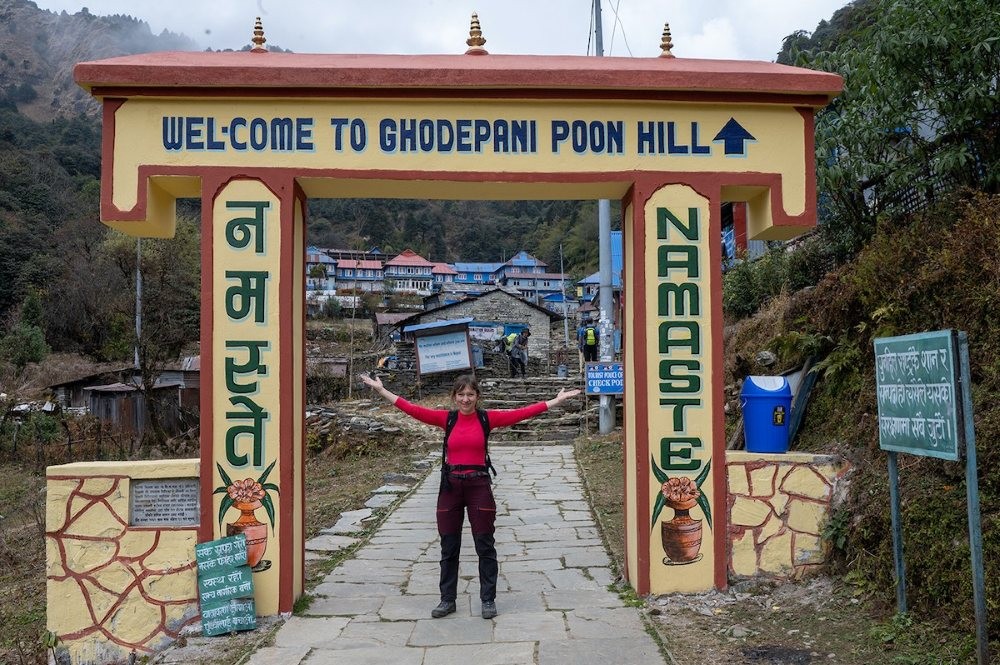
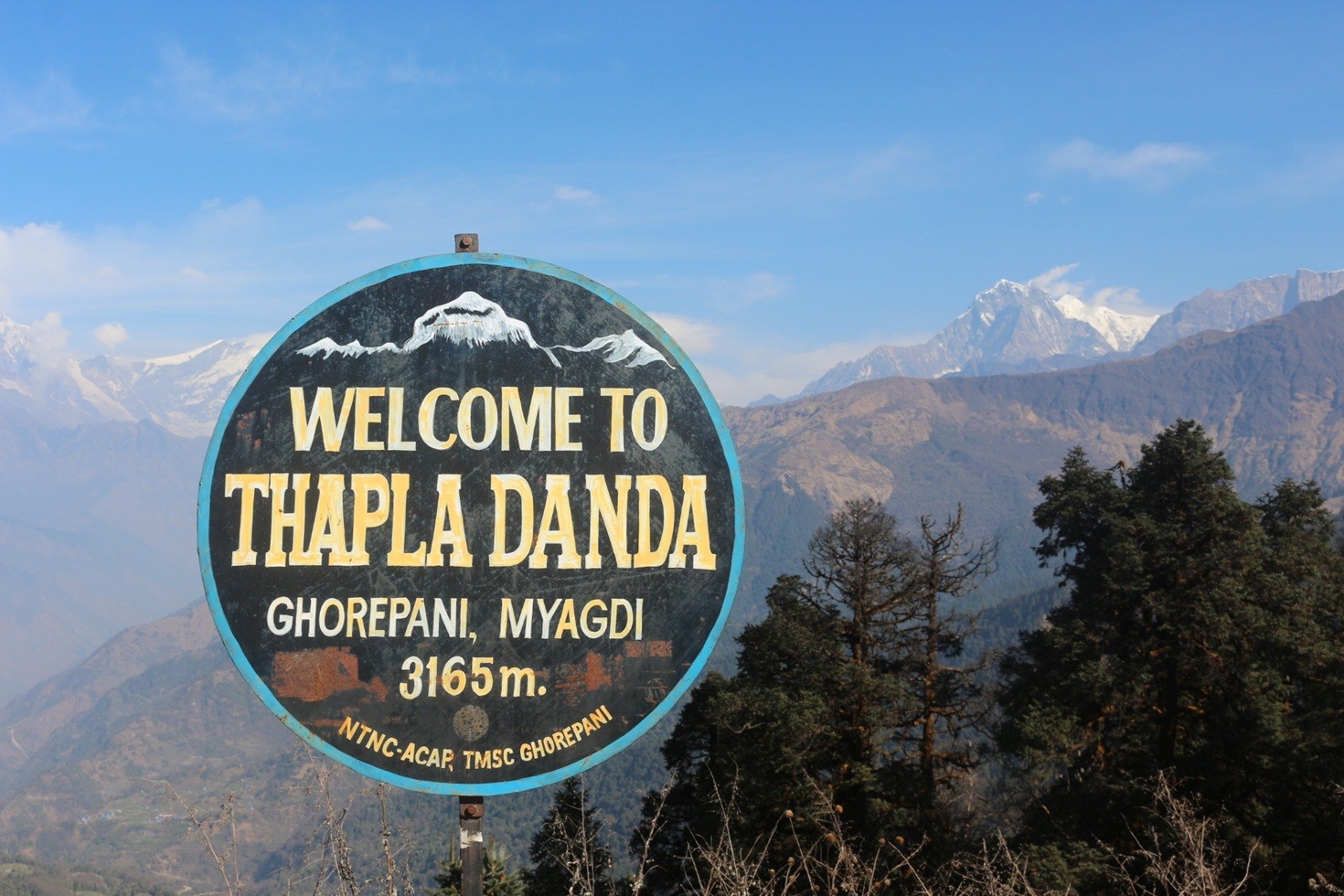
Leaving the deep forest paths, you'll pass through a tiny outpost called Nangethanti before encountering another steep set of stone switchbacks. The trail gradually climbs until you pass under a grand stone archway and enter Ghorepani village, with its distinctive blue-roofed teahouses. The village is nestled in a high mountain saddle and provides stunning views of the Kali Gandaki Gorge-the deepest gorge in the world-and the imposing peaks of the Dhaulagiri and Annapurna ranges.
In fact, this village is strategically located at a significant Ghorepani elevation meters feet milestone of 2,874 m (9,429 ft), marking your highest overnight stay. Resting just below the critical 3,000 m line allows your body to gently adjust to the reduced oxygen density without the serious risks of high-altitude mountain sickness, ensuring you'll wake up refreshed for the early morning ascent to the summit.
Strategic Features of the Staging Hub :
Daily Elevation Step Grid: Banthanti to Ghorepani Base :
Banthanti Forest Stop
Nanggethanti Midpoint
Ghorepani Village Rim
The Overnight Thermal Rule: Don't let the comfortable daytime temperatures trick you. As soon as the sun dips behind the Dhaulagiri range, Ghorepani's temperature plummets. Unpack your heavy down jacket and put on your thermal base layers as soon as you check into your teahouse room to keep your core temperature high before the night chill sets in.
[Trip:poon-hill-jhino-danda-hot-spring-trek]
While longer Himalayan trekking routes, such as the Everest Base Camp and Annapurna Circuit trails, require dedicated 'rest days' in the itinerary to adjust your body to thin air, you’ll see there are no such days included for this particular Poon Hill trek. This isn’t a case of rushing; it’s a structure based on human physiology at high altitude, and the trail's design.
Because your highest overnight resting points during Poon Hill Trek remain safely below the points where major atmospheric pressure losses occur, your body continuously remains a step ahead of the air thinning, allowing a smooth, safe journey without needing to simply sit still for a day to acclimatize.
Physiological Safety & Trail Mechanics :
| Acclimatization Element | Ghorepani Poon Hill Loop | High Alpine Treks (e.g., Thorong La) |
|---|---|---|
| Dedicated Rest Days | 0 Days Required | 1 to 3 Days built into the itinerary |
| Overnight Sleeping Range | 1,540m to 2,874m | 3,500m to 4,900m |
| Primary Physiological Threat | Minor muscle fatigue and mild shortness of breath | Severe AMS, HAPE and HACE risks |
| Oxygen Concentration Level | 74% to 89% of sea-level density | Drops below 55% to 65% at pass summits |
Daily Elevation Climbing Thresholds :
Day 1: Nayapul Base to Ulleri Ridge
Day 2: Ulleri Ridge to Ghorepani Rim
Day 3: Ghorepani to Poon Hill Peak to Tadapani
The Acclimatization Ascent Rule: While very mild symptoms like a headache or dehydration can occur if you overdo it on this route, the risk of severe altitude sickness is virtually nonexistent during Poon Hill Trek. To ensure the continued smooth adaptation of your body, use the "talk test" during your ascents: if you find it difficult to hold a simple conversation with your guide without gasping for air, your heart rate is too high, so ease up on your pace and focus on maintaining an aerobic energy level.
Your journey’s grand finale will be preceded by an early morning start under a starry sky that would be the envy of any astronomer. You’ll leave your Ghorepani lodge before sunrise in the crisp, freezing air and ascend on the winding, stone path illuminated by the dim light of headlamps, weaving through rhododendron trees coated in a layer of frost.
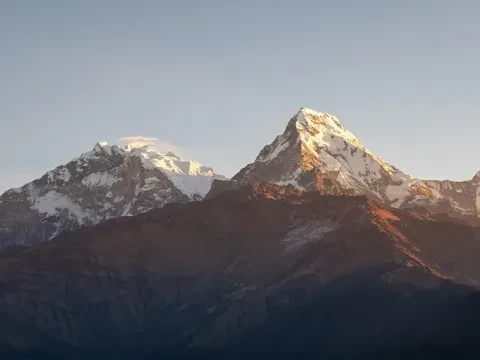
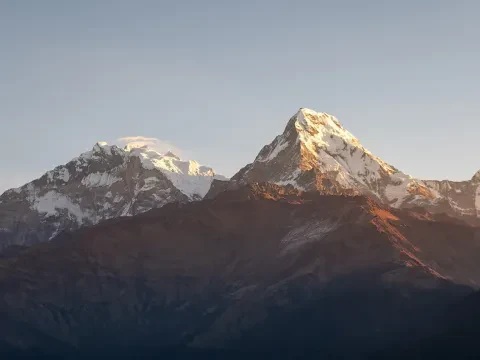
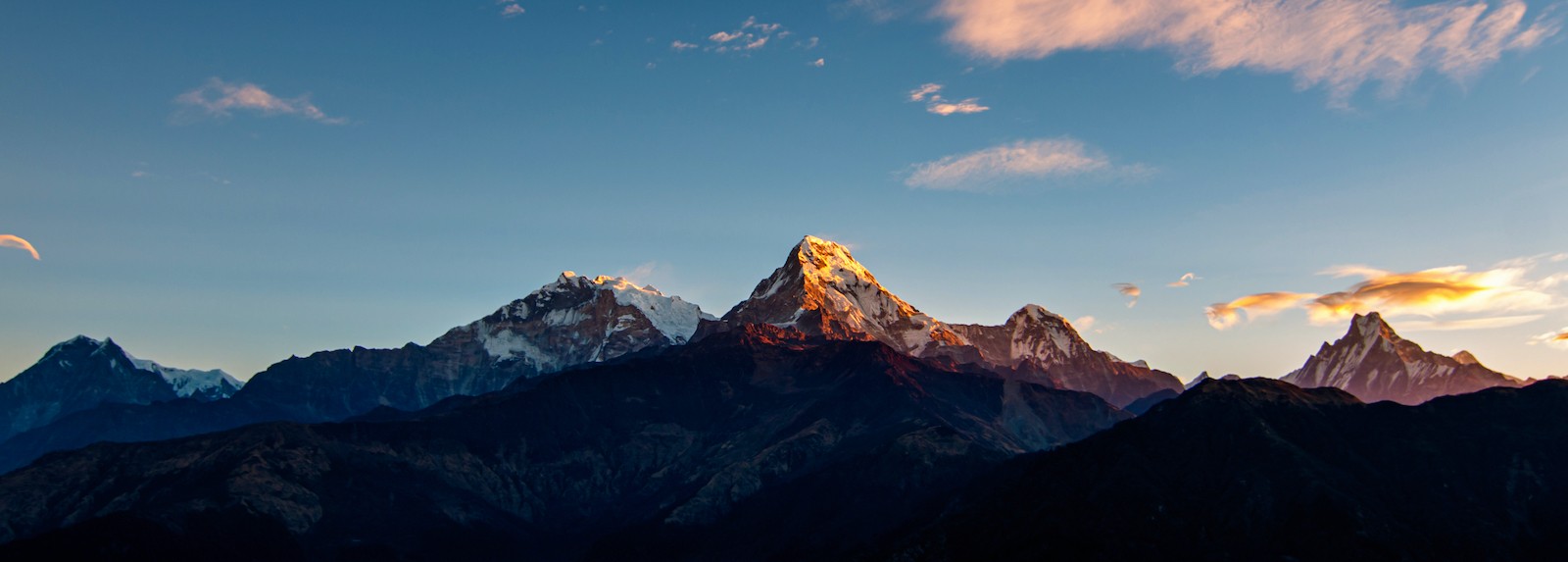
Actually, this steep but short ascent up a ridge is the crowning achievement of your trek. Upon reaching the summit viewpoint at 3,210 meters, the biting cold will be instantly forgotten as the sun crests the horizon, bathing the towering, snow-capped peaks in hues of pink, orange, and gold.
Summit Geography & Mountain Panoramas :
| Mountain Peak Name | Actual Peak Elevation (M) | Actual Peak Elevation (FT) | Cardinal Direction from Hill | Visual Character |
|---|---|---|
| Mt. Dhaulagiri I | 8,167 m | 26,795 ft | Northwest | A massive, imposing isolated block of ice. |
| Mt. Annapurna I | 8,091 m | 26,545 ft | North-Northwest | The vast, high wall of the Annapurna sanctuary. |
| Annapurna South | 7,219 m | 23,684 ft | North | Appears closest, towering with a broad, rocky face. |
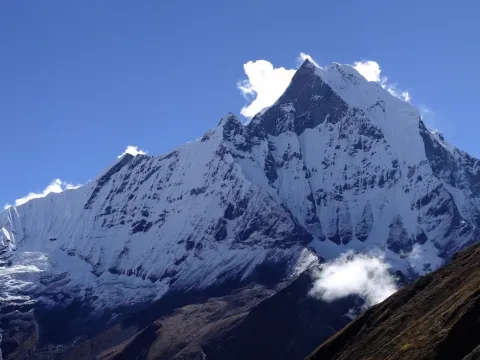
| Machapuchare | 6,993 m | 22,943 ft | Northeast | The distinctive, unclimbed 'Fishtail' peak with its twin points. |
The Staging Lodge Departure
The Mid-Way Ridge Path:
The Panoramic Summit Platform
The Pre-Dawn Freezing Rule: The temperature at the Poon Hill summit tower can feel considerably colder than down in the village due to the combined effect of high altitude and strong morning winds. Avoid hiking up in your down jacket to prevent sweating through your base layers on the climb, which can lead to freezing when you finally reach the exposed summit. It’s better to hike in a lighter fleece and windbreaker and then pull on your warm down jacket as soon as you reach the viewpoint to trap heat while waiting for the sunrise.
Returning to Ghorepani for a quick, warm breakfast, you pull on your boots to face yet another brand of geological challenge. Instead of a quick drop down to the low river valleys, the trail now traverses along a high mountain spine to the east of Ghorepani, on a scale that mirrors that of the Poon Hill ridge line.
In fact, this is perhaps the most varied day of hiking on the whole circuit; the trail does climb briefly back up into thin alpine air, before diving into a deep, moss-covered gorge. Mountain streams have carved steep, dramatic drops through the grey gneiss rock as the path wends its way through ancient trees.
Ridge dynamics and forest trails:
Max. Inclination angles:
Dominant surface features:
Key structural hazards:
Muscle/joint strain:
Ghorepani Ridge base:
Deurali Pass Summit:
Banthanti (East) Gorge:
Tadapani Forest Hub:
Trekking Pole Rule: The steep descent from Deurali Pass down into the shaded gorge places tremendous braking load upon the knees, a heavy demand that can quickly cause injury. Shorten trekking poles by five to ten centimeters (or two to four inches); this will bring the pole’s planted point lower, just ahead of your boot on the step, and utilize arm and shoulder musculature to absorb up to 20% of body weight load, reducing the forces upon your joints.
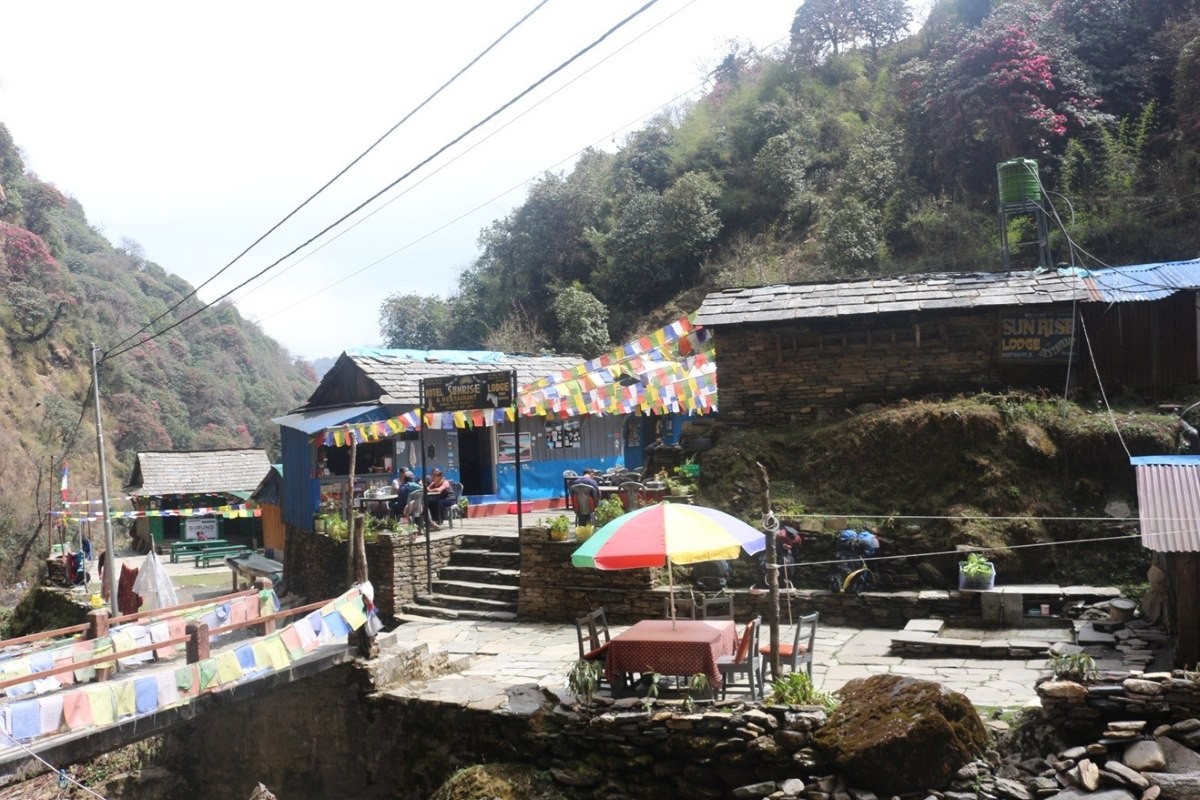
Actually, the descent from the densely rhododendron-forested outposts of Tadapani begins a slow and pleasing decline toward the lower valleys. As the altitude drops, the rough forest trail develops into wide, immaculately maintained flagstone paths that zig and zag through terraced plots of millet, barley, and mustard greens.
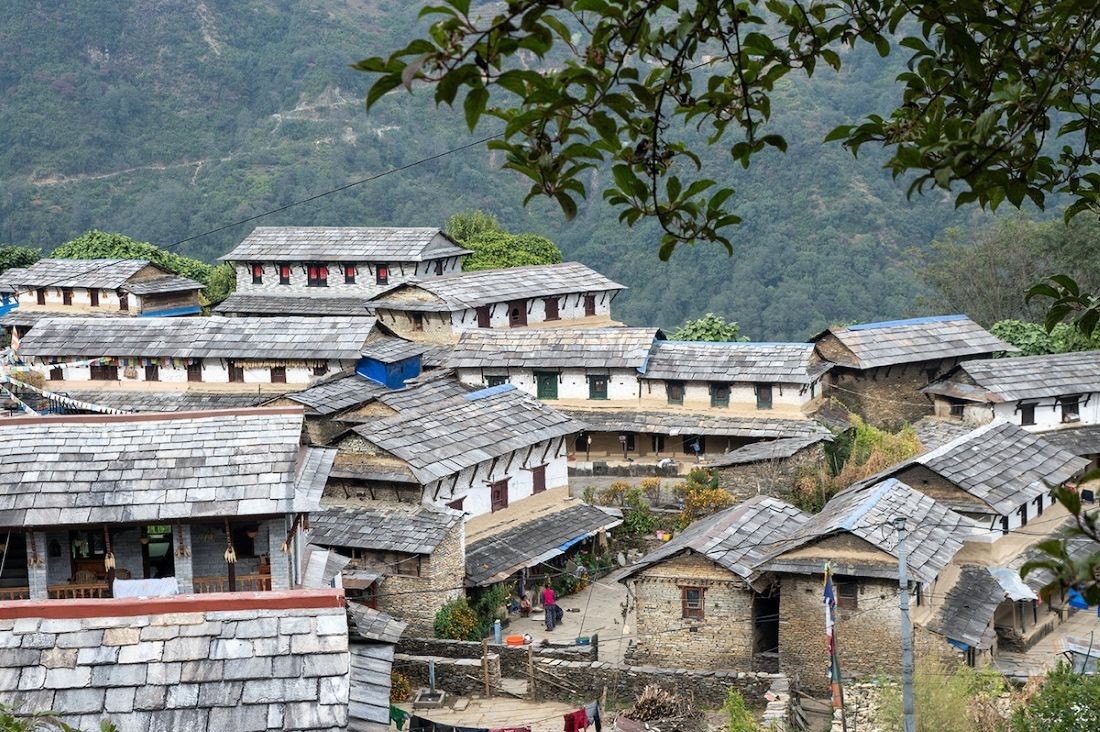
In fact, this segment offers a delightful blend of physical release and cultural insight. As you reach the large settlement of Ghandruk, the tight forest trails widen to expose neat, slate-roofed stone houses, well tended flower gardens and smiling locals; this is arguably the most pleasant overnight stop in the entire circuit.
Village architecture and alpine backdrop:
Atmospheric oxygen density:
Average daily temperature:
Trail environment:
Trekker's load:
The Cultural Exploration Rule: Do not race to your lodge when you arrive in Ghandruk; use the pleasant afternoon temperature and denser air to take an extended ramble through the ancient, paved alleys of the village. Visit the local Old Gurung Cultural Museum to see how traditional farmers worked and lived in days gone by; consider making a small donation to help with the preservation of the local heritage.
While the Annapurna lower loops offer incredible safety compared to high-altitude giants like the Everest Base Camp trek, it's imperative to remember that safety in the mountains must never be taken lightly. True Acute Mountain Sickness (AMS) is unlikely below 3,000m, but the immense physical toll of thousands of stone steps coupled with crisp, freezing pre-dawn air can fool the body easily. Know how to tackle these small changes to ensure a safe, rewarding hike from trailhead to summit.
Alpine Health Safety Checklist :
Headache Baseline :
Respiratory Response:
Sleep Quality :
Nausea & Appetite :
The Golden AMS rule for prevention: If your mild headache and slightest touch of nausea don't improve after drinking a liter of water, taking a pain killer and taking a one-hour break to relax at your lodge, then do not ascend to the higher village. Sleep at your current altitude and observe your symptoms in the morning. If your symptoms do not diminish, then your best, most efficient, and truly only correct approach is a gradual, controlled descent.
Actually, this final master table should be seen as your absolute quick reference guide and pocket itinerary. It maps out the entire geographical structure of the classic 4-day Poon Hill loop; noting each village's precise elevation, gain or loss of altitude, and trail characteristics to assist in your daily trekking planning.
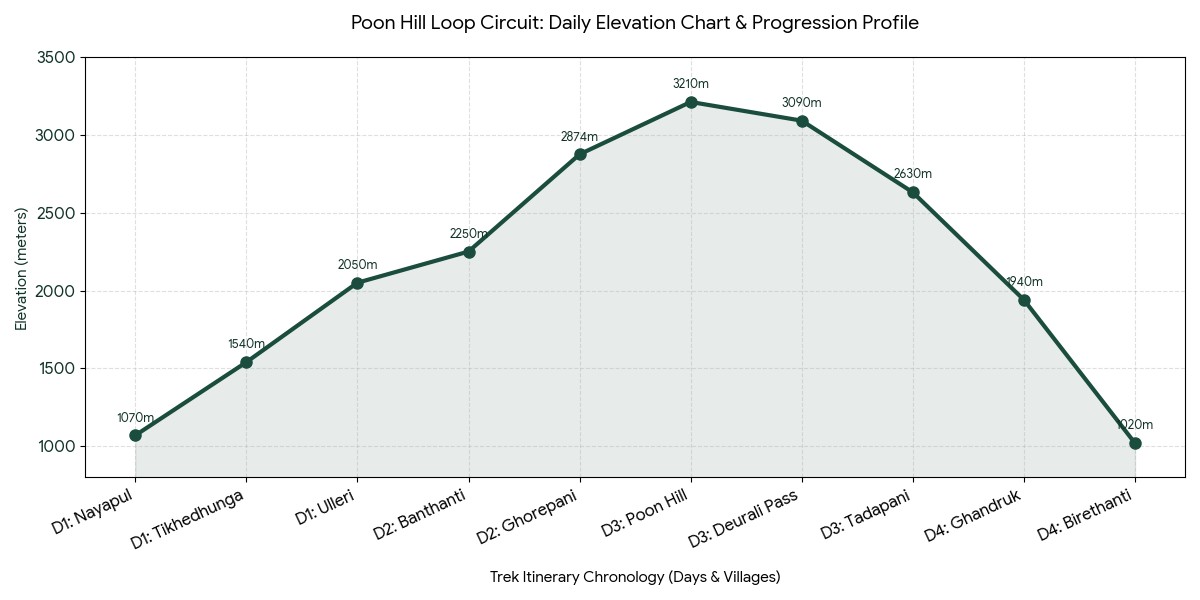
| Trek Itinerary Day and Village | Elevation (Metric) | Elevation (Imperial) | Elevation Difference | Dominant Trail Terrain Profile | Daily Difficulty |
|---|---|---|
| Day 1: Nayapul Trailhead | 1,070m | 3,510ft | +0m | Open riverside paths, wide dirt tracks | Easy / Warming up |
| Day 1: Tikhedhunga Outpost | 1,540m | 5,052ft | +470m | Soft dirt tracks and small stream crossings | Moderate |
| Day 1: Ulleri Ridge Village | 2,050m | 6,726ft | +510m | Steep, relentless, hand-cut stone steps | Strenuous / Brutal |
| Day 2: Banthanti Forest Stop | 2,250m | 7,382ft | +200m | Shaded, muddy forest paths | Moderate |
| Day 2: Ghorepani Base Rim | 2,874m | 9,429ft | +624m | Steady stone switchbacks, open ridge trails | Moderate / Thin air |
| Day 3: Poon Hill Peak Apex | 3,210m | 10,531ft | +336m | Steep pre-dawn stone stairs with frost | Strenuous / Cold |
| Day 3: Deurali Pass Ridge | 3,090m | 10,137ft | -120m | Open mountain ridge, panoramic views | Moderate |
| Day 3: Tadapani Clearing | 2,630m | 8,628ft | -460m | Slippery forest tree roots and stone steps | Moderate / High impact |
| Day 4: Ghandruk Gurung Hub | 1,940m | 6,365ft | -690m | Wide stone village paths, stairs | Easy / Relaxed |
| Day 4: Kimche / Birethanti | 1,020m | 3,346ft | -920m | Neat stone stairs to river bed | Easy / Descending |
The Advantage of "Sleep Low, Hike High": This route's structure offers immense safety advantages for children, the elderly, and first-time trekkers. Because you will spend your highest night at Ghorepani (2,874m / 9,429ft) and will only be at the Poon Hill Summit (3,210m / 10,531ft) for one to two hours of viewing the sun rise, your body is spared significant prolonged high altitude stress and the risk of severe altitude sickness is minimized while you receive the benefit of world class panoramic high Himalayan views.
1. What's the initial elevation on the Poon Hill trek?
The classic Poon Hill trek altitude profile usually starts in Nayapul at an altitude of 1,070 meters (3,510 feet). Some newer trek routes even involve taking a 4x4 drive up to Tikhedhunga at 1,540 meters to avoid the unexciting first day of road walking at a low elevation.
2. What's the highest point reached during the Poon Hill trek?
The most sought-after and highest point of the Poon Hill trek is the legendary Poon Hill viewpoint, which climbs to 3,210 meters (10,531 feet) above sea level. This ridge summit is usually visited in the early morning for the breathtaking sunrise over the imposing Dhaulagiri and Annapurna mountain ranges.
3. What's the total walking distance of the Poon Hill trek altitude profile?
The entire Poon Hill trek distance, measured from one end to the other, is typically about 32 to 50 kilometers (20 to 31 miles). This varies depending on the specific route you follow and if you choose to include Ghandruk village in your itinerary.
4. Is the Poon Hill trek elevation profile suitable for beginners?
Absolutely, the smooth Poon Hill trek elevation profile is ideal for novice trekkers. It's known as the least demanding trek for beginners due to its gentle vertical climbs, posing much less risk of severe altitude sickness compared to higher Annapurna treks.
5. Why are the Ulleri stone stairs infamous for the Poon Hill trek altitude profile?
The stone stairs between Tikhedhunga and Ulleri are the most challenging section of the Poon Hill trek difficulty. You have to ascend over 3,000 stairs, climbing more than 500 vertical meters in just one afternoon; take your time on this steep climb.
6. What is the elevation of Ghorepani village and what is its role in the trek?
Ghorepani is perched at an altitude of 2,874 meters (9,429 feet). It’s a popular teahouse settlement that acts as a central staging post for the trek, sitting just below the ridge leading up to the Poon Hill viewpoint before the pre-dawn sunrise climb.
7. How much does the elevation change daily on the hike to Ghorepani?
The climb to Ghorepani from Ulleri (2,020 meters) only involves a 854 vertical meter ascent. This gradual climb passes through beautiful, cool, and dense rhododendron forests, which contributes to the Poon Hill trek difficulty remaining highly manageable for families and even children.
8. Does the Poon Hill trek elevation profile present significant risks for altitude sickness?
The risk of developing Acute Mountain Sickness (AMS) on this trek is very low. Overnight stays are kept below the critical 3,000-meter threshold, meaning severe altitude issues are extremely rare and making it a perfect introductory trek.
9. What's the vertical distance between Ghorepani and the Poon Hill summit?
The trek from Ghorepani village to the top of Poon Hill is a short but steep 336-meter vertical gain. It takes around 45 to 60 minutes to hike up the stone-paved path in the dark, ascending from 2,874 meters to the viewing platform at 3,210 meters.
10. How does the amount of available oxygen vary throughout the Poon Hill trek altitude profile?
At the start of the trek, you have 100% effective oxygen available, but at the highest point on the Poon Hill trek, 3,210 meters, this drops to roughly 70%. This might cause some breathlessness but rarely leads to severe symptoms.
11. What’s the most effective way to tackle the Poon Hill trek difficulty?
Investing in a good pair of trekking poles is one of the best ways to manage the Poon Hill trek difficulty, especially for protecting your knees on the demanding Ulleri stairs. Maintaining a steady, unhurried pace and staying hydrated will make the climb much smoother.
12. How much does the Poon Hill trek cost, considering its altitude?
An average Poon Hill trek cost ranges from $250 to $500 USD per person. As it's a relatively low-altitude trek reachable by car from Pokhara (unlike more remote treks requiring expensive flights), it remains Nepal's most budget-friendly lodge trek.
13. What kinds of landscapes will I encounter on the Poon Hill trek elevation profile?
The scenery transforms dramatically as you ascend. You’ll start with subtropical river valleys and terraced farmland, move into lush, mossy rhododendron and oak forests, and finally emerge onto alpine ridges with magnificent views of snow-capped peaks.
14. Are there any treacherous high-altitude mountain passes on the standard Poon Hill trek itinerary?
No, a standard Poon Hill trek itinerary bypasses any dangerous high mountain passes. It's a straightforward low-altitude foothills circuit, avoiding the risks of glaciers and thin air found on longer treks like the Annapurna Circuit.
15. What are the most prominent peaks visible from the summit of the Poon Hill trek altitude profile?
From the 3,210-meter Poon Hill summit, you can enjoy views of many towering peaks, including the gigantic Dhaulagiri I (8,167 meters), Annapurna South (7,219 meters), Machhapuchhre (Fishtail, 6,993 meters), and Nilgiri.
16. Is travel insurance required for the low Poon Hill trek elevation?
Even though the Poon Hill trek elevation is not extremely high, it's always wise to have comprehensive travel insurance that covers basic medical needs and emergency evacuation, just in case of unexpected accidents on the remote trail.
17. How does the altitude profile impact night-time temperatures on the trek?
Night-time temperatures can get quite cold as you gain elevation. While Pokhara and Nayapul are warm, the teahouses in Ghorepani (2,874 meters) can dip to near freezing (0°C to 5°C / 32°F to 41°F) during the main autumn and spring trekking seasons.
18. Is it possible to shorten the Poon Hill trek distance?
Yes, if you are fit enough, you can do a shorter 3-day Poon Hill trek itinerary. You can take a jeep to Ulleri or Hile, trek to Ghorepani on day one, visit Poon Hill on day two, and descend to Ghandruk to catch your jeep back.
19. What is the altitude profile of the scenic Gurung village of Ghandruk?
Ghandruk village is located at a pleasant altitude of 1,940 meters (6,364 feet). It's usually the last overnight stop on the traditional loop trek and offers beautiful, up-close views of Annapurna South. The hike down to the riverbed from here involves a long descent on stone stairs.
20. What is the general success rate for those attempting the Poon Hill trek difficulty?
The Poon Hill trek has a remarkable success rate of around 99%. Due to the gradual vertical variations, comfortable teahouse facilities, and generally lower risk of altitude-related problems, it's a trek that almost everyone can complete.
Our travel experts are ready to assist you with any questions.
Send us a message.Have a question before you book? Send your enquiry below and our travel experts will get back with the required information.