
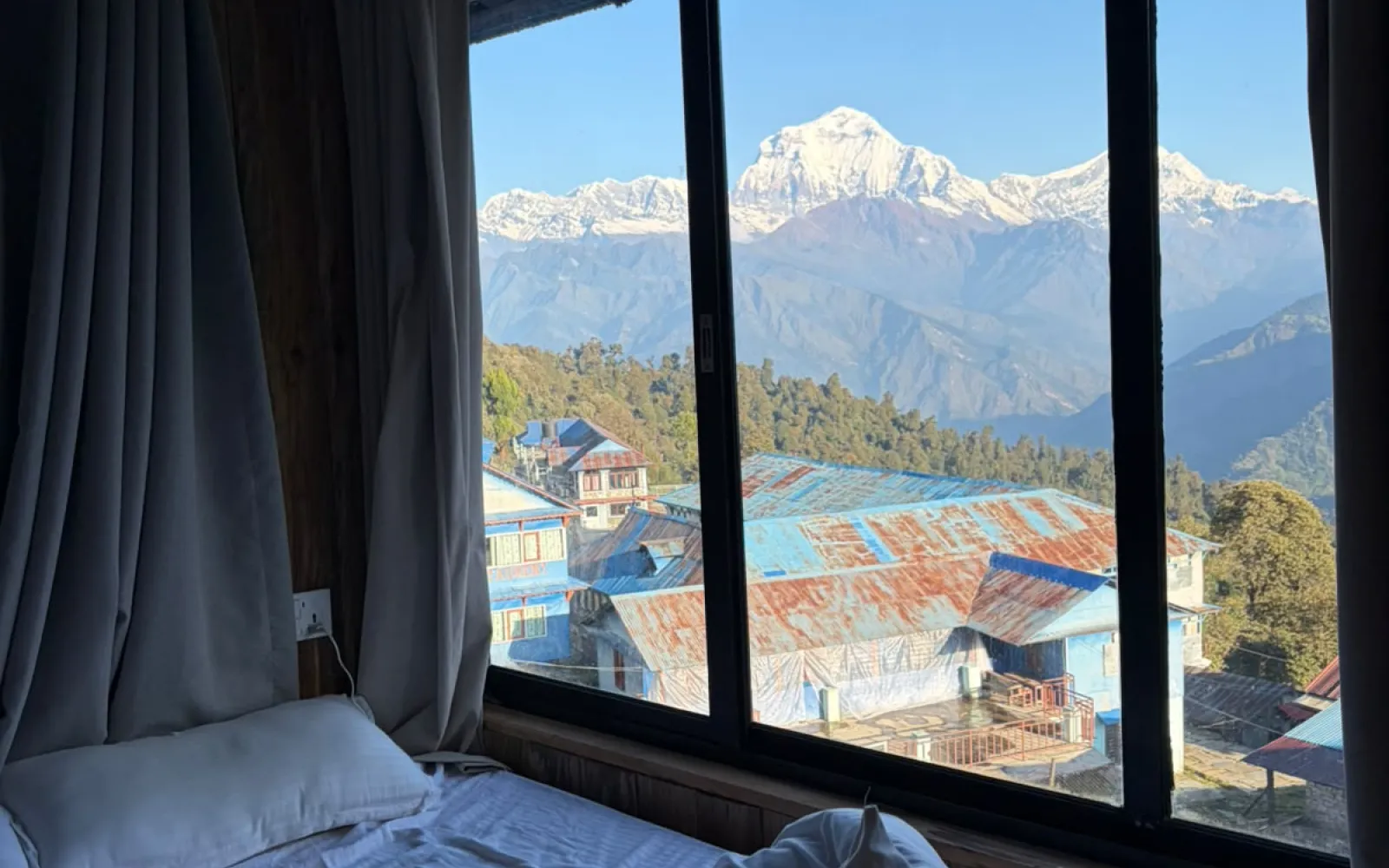
Poon Hill Trek Nepal is one of the best short treks in Nepal near Pokhara city. Actually, Poon Hill is for the beginners, couples, elderly and family for first-attempt in the mountain.
Meanwhile, Nepal Poon Hill Trek offers most incredible sunrise and mountain ranges from the top of Poon Hill(3210m). Annapurna ranges, Dhaulagiri and Machhapuchhre are best mountain views to enjoy during Poon Hill Trek Nepal.
Before you plan your Poon Hill Trek Nepal, you require knowing about Itinerary, Cost, Difficulty and Best Time. In this way, you can enjoy your Poon Hill Nepal Trek in most astoundign way.
Now, let's see all these aspects of Poon Hill Trek Nepal one of one in details.
The Poon Hill Trek in Nepal is a popular short trek in the Himalayas of Annapurna, which leads to the viewpoint of Poon Hill 3,210 m (10,531 ft). The trail combines mountain views, village walks, forest paths, and cultural experiences.
In addition, the Poon Hill Trek is a great option for hikers who want to enjoy the Himalayas without a long and high-altitude trek. Its duration depends on the variation of the route and usually takes 3-5 days with moderate daily stages from Pokhara.
Here, the table below presents an overview of the most common trek to Poon Hill.
Poon Hill Trek Overview
Region- Annapurna, Gandaki Province
Highest Point- Poon Hill 3,210 m (10,531 ft)
Trek Routes- Ghandruk, Nayapul, and Pokhara by road
Common Itineraries- Ghandruk – Tadapani – Ghorepani – Poon Hill
Duration of Trek- 3-5 trekking days
Distance of Trek- Approximately 35-50 km daily
Overnight Spots- 2,850 – 2,900 m (Ghorepani)
Highlights- Sunrise views, mountain scenery, cultural experiences, and forest landscapes
Accommodation- Teahouse guesthouses
Moreover, the Poon Hill Trek offers unique mountain experiences and an insight into the local culture. The main reasons to choose this trail are the following:
A short Himalayan trek for those with limited time in Nepal
Substantial mountain views without high altitude
Sunrise views from Poon Hill on clear mornings
Experiences of local mountain culture in villages
Beautiful rhododendron forests in spring blossom
Flexible itineraries with different variations
In addition to, the Poon Hill Trek is ideal for active travelers who like teahouse lodging with a good view but do not want to endure too long and strenuous stages.
However, the trail has its challenges, such as climbing stone stairs on specific sections.
Therefore, the Poon Hill Trek is an excellent choice for a short Nepal experience that includes mountain scenery and cultural encounters.
The Poon Hill Trek is famous for its sunrise views, mountain vistas, rhododendron forests, villages, and challenging climbs. Every trail section has its highlights, and an overall impression of the Poon Hill Trek can be seen in the following table.
Poon Hill Trek Highlights
Villages, Trails and Viewpoints- Ghandruk, village 1,940 m Tadapani, village 2,630 m Ghorepani, village 2,874 m Poon Hill 3,210 m Ghandruk – Tadapani trail – Ghorepani – Poon Hill trail –
Gurung community mountain views
Stone stairs climbing
Annapurna mountain range
Dhaulagiri mountain range
Machhapuchhre mountain range
Nilgiri mountain peak
Rhododendron forests
Cultural experiences
Teahouse accommodation
Similarly, forest trails, farm fields, and mountain views alternate along the trail and create a diverse landscape.
Additionally, the major highlights of the Poon Hill Trek are the sunrise views from the hill, the mountain views in all directions, and the rhododendron forests that bloom in spring.
At the same time, the mountain vistas depend on the weather and are most prominent on a clear morning.
Moreover, the most significant attraction of the Poon Hill Trek is the sunrise view from the highest point of the trail. Every trekker has their own visual memories of the Poon Hill sunrise.
The following points describe the main highlights of the Poon Hill Trek:
Sunrise views from Poon Hill – The magical mountain sunrise is the highlight of the trail and the major reason why people choose this route. The view is accessible earlier in the morning, after a night spent on the mountain.
Annapurna views from Poon Hill and Ghorepani – On a clear day, the views of the Annapurna ridge from Poon Hill and Ghorepani are outstanding, as several peaks of the mountain range are visible.
Dhaulagiri views from Poon Hill – Dhaulagiri is one of the highest mountains in the world and can be seen in full glory from Poon Hill.
Machhapuchhre views from Poon Hill – The distinctive shape of the fish-tail peak makes the mountain range a prominent highlight of the Nepal Himalayas.
Nilgiri views from Poon Hill – Nilgiri appears among other peaks of the Annapurna mountain range.
Rhododendron blossom in spring – The forests of Nepal’s Himalayas change their colors in spring and create a magical landscape.
Cultural experiences in mountain villages – The trek passes several villages with local hospitality and traditions.
Tea house accommodation – The teahouses in the villages provide comfort and convenience.
In summary, the Pon Hill trail combines rhododendron woods, stone stairs, village streets, and farmlands to form unique Himalayan scenery.
However, the mountain views are often deceiving because they depend on the weather.
Our preferred Poon Hill trek route goes through lower Annapurna foothills and the Gurung and Magar villages.
Here, we avoid the combinations of unrelated Poon Hill treks and prefer the Haven Holidays connections of Pokhara – Ghandruk – Tadapani – Ghorepani – Poon Hill – Ghandruk.
Poon Hill Trek route and elevations
Route section | Approx. elevation | Approx. walking/transport
Pokhara | 822 m |Starting point
Pokhara-Ghandruk | 1,940 m | Jeep (2.5-4 hour drive)
Ghandruk-Tadapani | 2,630 m | Walking (5-6 hours, approx. 11 km)
Tadapani-Ghorepani | 2,874 m Walking | (5-6 hours, approx. 10-12 km)
Ghorepani-Poon Hill | 3,210 m Walking | (approx. 1.5 km, 45-60 min uphill)
Poon Hill-Ghorepani | 2,874 m | Walking (approx. 30-45 min downhill)
Ghorepani-Ghandruk | 1,940 m | Footpath and road connections vary
Ghandruk-Pokhara | 822 m | Jeep (2.5-4 hour drive)
Main Poon Hill Trek villages
Ghandruk – The trek route begins in the foothills of the Himalayas in this traditional Gurung village. Our preferred Poon Hill trek passes through Ghandruk on the way to Tadapani.
Tadapani – From Ghandruk, the trail climbs through forest to this mountain settlement at 2,630 m.
Ghorepani – The trail winds upwards through rhododendron forests to this busy trekking village.
Poon Hill – From Ghorepani, the trail climbs another 336 m to the viewpoint at Poon Hill.
Ghandruk – The return leg of the Poon Hill trek passes again through Ghandruk village and the Annapurna foothills.
Furthermore, the road from Pokhara to Ghandruk changes to a stone track once beyond the edge of the trekking area. It means that you experience both the ride on a jeep and the mountain walk within this 4-day Poon Hill trek.
Although this Poon Hill trek usually includes 3-4 trekking days, depending on transport, and Haven Holidays prefers a 4-day Poon Hill itinerary. It leaves enough time for a leisurely pace and for stopping to enjoy the views and village life.
Preferred 4-day Poon Hill trek itinerary
Day Route | Approx. Elevation | Approx. duration
1 Pokhara-Ghandruk- Tadapani | 1,940 m | 2.5-4 by jeep and 2,630 m | 5-6 hours walking
2 Tadapani-Ghorepani | 2,874 m | 5-6 hours walking
3.Poon Hill sunrise-Ghorepani- Tadapani| 2630m-7-8 hours
4. Tadapani- Ghandruk-Pokhara| 1940m| 5-7 hours jeep ride+ walk
Here, a practical 3-day Poon Hill trek itinerary would see you driving from Pokhara to Ghandruk on day 1, trekking from Ghandruk to Tadapani on day 2, then trekking from Tadapani to Ghorepani on day 3 and climbing Poon Hill before sunrise on the final morning. However, the Poon Hill trek 3-day option means long walking days with little leeway for bad weather.
What makes the 4-day Poon Hill trek preferable?
The added half-day in the Poon Hill trek 4-day itinerary means there is less pressure to complete each day’s trek. On the first morning, you have a short walk from your guesthouse to the village. An extra day also means you have more flexibility if the weather turns bad. Finally, you have the chance to relax a little more in the villages and enjoy the views.
Finally, the daily distances in this Poon Hill trek itinerary are approximate and may vary with the terrain. As a result, your local guide should factor in local conditions, weather, road and walking conditions, and keep the pace of the Poon Hill trek reasonable.
The Poon Hill Trek is generally short and moderately challenging – not technically difficult and not an expedition. However, numerous stone steps, steep climbs and descents make the trail quite strenuous.
Also note that the highest point is Poon Hill at 3,210 m (10,531 ft) and Ghorepani is around 2,874 m (9,429 ft). So, the altitude is not extreme in comparison with longer Himalayan treks, but it is noticeably high.
Poon Hill Trek difficulty factors:
Factor | What to expect
Difficulty level | Short to moderate
Highest point | 3,210 m (Poon Hill)
Walking duration | 5-6 hours per day
Trek surface | Stone steps, dirt, forest paths
Biggest challenge | Steep climbs and descents
Morning climb duration | 45-60 minutes
Technical climbing | Not required
Beginners friendly | Yes (with good fitness)
What makes the trek physically demanding?
Several long staircases made of stone blocks
Steady climb towards Tadapani and Ghorepani
Numerous steep descents (tiring for knees)
Morning ascent before sunrise
Walking several hours per day
Altitude – 3210 m (need to acclimatize)
Moreover, beginners can do the Poon Hill Trek, provided they have a good level of fitness.
Nevertheless, you need to be prepared for steep slopes and frequent descents that require endurance. In other words, regular walking or jogging will suffice, but serious trekking tours require much better training.
Finally, note that the most important distinction is between the physical and altitude challenges. Poon Hill Trek is not an high-altitude adventure, but it certainly requires endurance due to steep slopes and long days.
Thus, fitness training should include stair climbing, walking, running, and long hikes on the weekends.
And most importantly, do not confuse a high altitude with an extreme altitude – the trek is demanding in terms of physical activity, but not altitude-related.
The best season for the Poon Hill Trek is generally considered to be autumn and spring months, i.e., October, November, March, and April.
Here, these are usually the clearest months with the least amount of rain, making them the most popular with trekkers.
Besides, during these months, the flowers are in full bloom, making the views even more spectacular.
In fact, each season has its pros and cons, so the best month for the Poon Hill Trek depends on personal preferences and what one expects from a trek.
Poon Hill Trek seasons:
Season | Months | Weather | Clearness
Spring | March – May | Mild | Good
Autumn | September – November | Dry | Very good
Winter | December – February | Cold | Quite good
Monsoon | June – August | Wet | Not good
Actually, the overall good weather in October and November is associated with long dry seasons with little cloud cover.
Besides, during these months, the rhododendron trees are in full bloom, offering unforgettable views of forests, fields, and mountains.
In addition, the morning temperatures are quite high in these months, which ensures general comfort throughout the days.
Here, March and April are also good months for the Poon Hill Trek, as they offer warm weather and blooming rhododendron flowers.
Moreover, the mountain peaks are often visible during these months due to high pressure and lack of cloud cover during the mornings and evenings.
However, be prepared for warm evenings and occasional rains. These are the most popular months, so prices may be higher, and the trails might be busier.
Meanwhile, December, January, and February are winter months with cold mornings, although not extreme temperatures during the days.
Likewise, there is also snow near the mountain peaks, but it rarely comes down to the lower altitudes. The main advantages of the cold season are the clear sky, mountain views, and less crowded trails. The disadvantage is a colder climate, which may not suit everyone.
Thus, April and October are the most popular months for the Poon Hill Trek.
Likewise, the warm temperatures, clear skies, and blooming rhododendron flowers create the most favorable conditions for sightseeing and photography.
Furthermore, during these months, wildlife is also more active which adds to the charm of the trail.
However, keep in mind that prices during these months may be higher, and the trails can be more crowded.
Finally, the rainy season (June – August) is not recommended for the Poon Hill Trek. There is heavy rainfall during these months, which makes the trail slippery, difficult to pass, and dangerous.
Besides, you can expect leeches and low visibility due to the fog. The mountain peaks are also not visible due to rainy and cloudy conditions.
Here, more details about the trail are covered in the Poon Hill Trek guide page. Here are a few tips and recommendations concerning the best times for trekking:
Check the weather forecast in the evenings for cloud cover.
Arrive at Ghorepani early in the morning (45 min to 1 hour).
Bring warm clothes as it can be cold during the ascent.
Bring a headlamp for walking on the trail before sunrise.
Be prepared for cloudy mornings even during the ‘good’ seasons.
Generally speaking, the best time for the Poon Hill Trek ensures good weather and high chances of seeing mountain peaks without any obstructions.
However, the altitude is still relatively high, so you need to be prepared for some difficulties. The season cannot be the sole factor influencing your experience – rather it should be complemented by your own expectations and plans.
The Poon Hill Trek Cost ranges from around USD 145–235 for budget and standard packages, and USD 385–555 for luxury, with Haven Holidays’ final price varying according to group sizes, accommodation, transportation, guide services, and selected routes.
In addition, budget packages tend to be cheapest if hikers use shared transport and basic teahouses, while standard packages usually include better accommodation and transport, and luxury packages offer upgraded lodging and private 4WD transport.
Estimated Poon Hill Trek Cost
Poon Hill Trek Package| Estimated cost per person| Typical services
Budget | Around USD 145 | Guide, basic accommodation, shared transport
Standard | USD 195–235 | Guide, teahouse, permits, transport
Luxury | USD 385–555 | Upgraded accommodation and private 4WD
Guide |About USD 30–40/day | Licensed trekking guide
Porter | About USD 25–30/day | Porter service, where selected
Shared jeep | About USD 15/person | Depending on route and group
Private | 4WD | About USD 125 Vehicle cost, depending on route
What Affects the Trek Price?
Group size – Larger parties help reduce the cost of shared transport and a guide
Accommodation – Teahouses charge less than upgraded lodging
Transportation – Shared jeeps reduce costs, private 4WD adds to the price
Guide and porter – Their daily wages, meals, accommodation, insurance, and allowances are included in the package
Permits – Conservation-area and applicable trekking documents add to the cost
Here, personal expenses are normally separate from the package cost, so hikers should consider any meals not included, drinks, snacks, hot showers, charging, WiFi, tips, insurance, and shopping.
Meanwhile, it is important to base the choice on inclusions rather than simply the advertised price; these 2027 package estimates/current positioning should be confirmed before booking, as transport and government costs can change.
What Permits, Transportation and Accommodation Do You Need for the Poon Hill Trek?
The Poon Hill Trek permits normally include the Annapurna Conservation Area entry requirements, and applicable TIMS documentation should be confirmed before departure.
Permits and Trekking Documents
Requirement | Current guidance
Annapurna Conservation Area Entry | Required for Annapurna trekking area
ACAP fee | Verify current official rate before travel
TIMS | Requirements can change by route and regulation
Guide | Confirm current mandatory-guide rules before departure
Restricted-area permit | Not normally applicable to standard Poon Hill route
In addition, the current NTB TIMS page specifically lists Poon Hill–ABC Trek among Annapurna routes requiring a licensed guide and agency-issued TIMS, so hikers combining Poon Hill with ABC should confirm the applicable TIMS requirement with a registered trekking agency before departure.
In addition to, transport from Pokhara to the trekking area is normally by jeep, as the road reaches several trailheads; shared jeeps can cost around USD 15/person, and a private 4WD can cost about USD 125, depending on the route, season, and vehicle.
Poon Hill Trek Accommodation
Teahouses and local lodges provide most accommodation on the trek, with rooms typically being simple, having twin beds, blankets, shared bathrooms, and dining areas, but with facilities varying between villages.
Likewise, hot showers may be available at extra cost and attached bathrooms uncommon at higher settlements. Moreover, standards can vary due to availability, season, weather, and village location; hikers should not expect the same standards as city hotels.
Meanwhile, a registered trekking agency can help book suitable accommodation, permits, and transport, hire a licensed guide and porter, and check current regulations before departure.
The Poon Hill Trek requires a packing list that will focus on comfortable walking, changing temperatures, and early mornings.
Besides, there are stone steps, uneven paths, forest trails, and a cold morning ascent to the high point of 3,210 m.
Poon Hill Trek Packing List
Packing Category| Recommended Items| Why you need them
Footwear | Trekking shoes with a good grip | Useful on stone steps, uneven trails
Clothing | T-shirts, fleece, warm jacket | For changing temperatures
Rain protection | Waterproof jacket and trousers | Protection from the rain and wet trails
Daypack | 20-30 liter backpack | To carry day walking essentials
Headlamp | A headlamp with extra batteries | Essential for the early sunrise morning walk
Sun protection | Sunglasses, sunscreen, and a hat | Protection from strong mountain sunrays
Hydration | Water bottle that can be reused | Keeping yourself hydrated
Walking support | Trekking poles | Stability on steep climbs and descents
Personal items | Medication and personal toiletries | Securing personal needs
Documents | Passport, permits, and insurance | Having documents in order
In addition, preparing for the Poon Hill Trek should include developing basic fitness to help you enjoy the mountain views, experience village visits, and have an easy climb.
Likewise, Poon Hill Trek involves several climbs and descents, so the fitness preparations should include walking more, especially stairs. Besides, a good pair of trekking shoes should be worn to break them in before the trek.
Moreover, people should carry their daypack to adjust to walking with a pack. Preparations should also involve developing a healthy habit of drinking water.
Furthermore, extra warm clothing should be packed for the cold mornings on Poon Hill sunrise.
Also, personal travel insurance should cover trekking at altitude to rescue in case of an emergency.
Lastly, a headlamp is essential because the climb starts before sunrise.
Finally, it is important to pack depending on the season. Winter nights and monsoon rains are severe, so one might need to pack according to the weather.
The Poon Hill Trek Nepal is an excellent short trek for those who want to experience the Annapurna region without a lengthy Himalayan hike.
Furthermore, the relatively short distances, magnificent mountain views, friendly villages, and flexible itineraries make the Poon Hill Trek appealing to most people.
Who Can Choose the Poon Hill Trek?
Demographics | Suitable Reason
First-time trekkers | Yes- A perfect Poon Hill trek for beginners to Himalayan trekking
Short-time tourists | Yes- A 3-4 day easy walking Poon Hill trek itinerary
Families | Yes- Active families can opt for this short Poon Hill trek
Mountain Lovers | Yes - Poon Hill offers fantastic views of Annapurna, Dhaulagiri, Machhapuchhre, and Nilgiri
Photographers | Yes- Sunrise views, forests, villages, terraces, and mountains make excellent photo opportunities
Cultural tourists| Yes| Treks through villages like Ghandruk, Tadapani, and Ghorepani offer cultural experiences
On the other hand, some groups of people might prefer other short treks in the Annapurna region.
For instance, the Annapurna Base Camp, Mardi Himal, and longer walks in the Annapurna region cater to specific needs of some backpackers.
Other Trek Options besides Poon Hill Trek
Trekkers preference| Alternative Poon Hill Trek| Why
Short Himalayan experience| Poon Hill trek| Ideal for first-time trekkers
Longer mountain experience| Annapurna base camp| Offers a longer Himalayan experience
Quieter highland experience| Mardi Himal| Provides more seclusion and high-altitude views
More challenging adventure| Long Annapurna trekking routes| Offers more adventure
More exploration and village culture| Annapurna multi-day itinerary| Gives more flexibility to explore
Besides, travelers should consider an established local trekking company to organize their Poon Hill Trek. They should ensure the company offers licensed guides, good porters, and other support services.
Importantly, a reliable trekking company can provide transport, accommodation, and other services depending on the travel itinerary and budget.
Finally, booking the Poon Hill Trek with Haven Holidays can be arranged on a daily basis or a weekly basis.
Also, the itinerary can be stretched depending on the number of people traveling and their physical fitness level.
Therefore, travelers should contact Haven Holidays to request a Poon Hill Trek package depending on a 3-day, 4-day, budget, standard, or luxury tour. The request should also include preferred dates and the number of people in the traveling party.
In addition, the price for the Poon Hill Trek for the year 2027 will depend on the package chosen.
1. How Much Does Poon Hill Trek Nepal Cost?
The Poon Hill Trek Nepal price ranges from USD 215 to 455+ per person for a basic trekking package from Pokhara (depending on the group size, duration, transport, guide, porter and accommodation). A cheaper short trek and a private or upgraded package can be more expensive. Thus, the final cost depends on the selected services.
2. How Many Days Does Poon Hill Trek Nepal Take?
The Poon Hill Trek Nepal usually takes 3-5 days from Pokhara, depending on the selected route and walking days. A 4-day Poon Hill trek is an optimal choice, as it offers enough time for Ghorepani, Poon Hill sunrise, Tadapani and Ghandruk. More days can be added for a relaxing, sightseeing or premium experience.
3. What Is the Best Route for Poon Hill Trek Nepal?
The most popular Poon Hill Trek route begins in Pokhara and includes Ulleri, Ghorepani, Poon Hill, Tadapani, Ghandruk and returns to Pokhara. The trail involves walking up and down the stone stairways, passing rhododendron forests and visiting traditional villages. Thus, this Poon Hill circuit combines mountain views, sunrise, forests, and local culture.
4. How Difficult Is Poon Hill Trek Nepal?
The Poon Hill Trek difficulty grade is easy to moderate, ideal for novice trekkers and families with good fitness. The most challenging parts are the stone stairs around Ulleri and the climb to Poon Hill (early morning). With a maximum altitude of 3,210 meters, altitude sickness risk is moderate compared to high Himalayan treks.
5. Do I Need a Guide for Poon Hill Trek Nepal?
I recommend hiring a guide for the Poon Hill Trek through a trekking agency, as trekking rules and permit regulations change often. A professional guide will also assist with accommodation, navigation, language barriers, safety, and local insights. Thus, a guided tour is the best option for most foreign trekkers.
6. Can I Hire a Porter for Poon Hill Trek Nepal?
A porter can be hired for the Poon Hill Trek to carry your heavy baggage while you have a smaller backpack for daily essentials. Usually, one porter carries the weight for two trekkers. Porter hiring is common on the Poon Hill trail, especially for the Ulleri stone stairs and uphill sections. Thus, consider a porter for better comfort and mobility.
7. What Permits Are Required for Poon Hill Trek Nepal?
Poon Hill is located in the Annapurna Conservation Area, so make sure to obtain the necessary permits for conservation area entry and any special trekking rules in 2027. Fortunately, most travel agencies handle the Poon Hill permit process for you when booking the trek.
8. What Is the Highest Point of Poon Hill Trek Nepal?
The highest altitude on the Poon Hill Trek is the viewpoint at around 3,210 meters (10,531 feet) at Poon Hill. Trekkers climb to the viewpoint early in the morning to enjoy the sunrise view over the Annapurna and Dhaulagiri mountain ranges. The relatively low altitude is one of the reasons why the Poon Hill trek is a favorite among novice climbers.
9. What Is Included in Poon Hill Trek Nepal Cost?
Depending on the travel agency, the Poon Hill Trek cost includes a licensed English-speaking guide, porter, permits, accommodation, Pokhara, guide and porter tips, and other incidentals. Some tour operators may provide additional services such as food, transport, equipment or extra hotel nights. Thus, always double-check what is included in your Poon Hill Trek Nepal price.
10. What Is the Best Time for Poon Hill Trek Nepal?
The best seasons for Poon Hill Trek are spring and autumn (March to May, September to November), when the weather is fine and the mountain views are clear. I also recommend the Poon Hill trek in winter (December to February), for chilly but tolerable temperatures. Summer months (June to August) can be hot and rainy, so a raincoat is a must.
Our travel experts are ready to assist you with any questions.
Send us a message.Have a question before you book? Send your enquiry below and our travel experts will get back with the required information.