
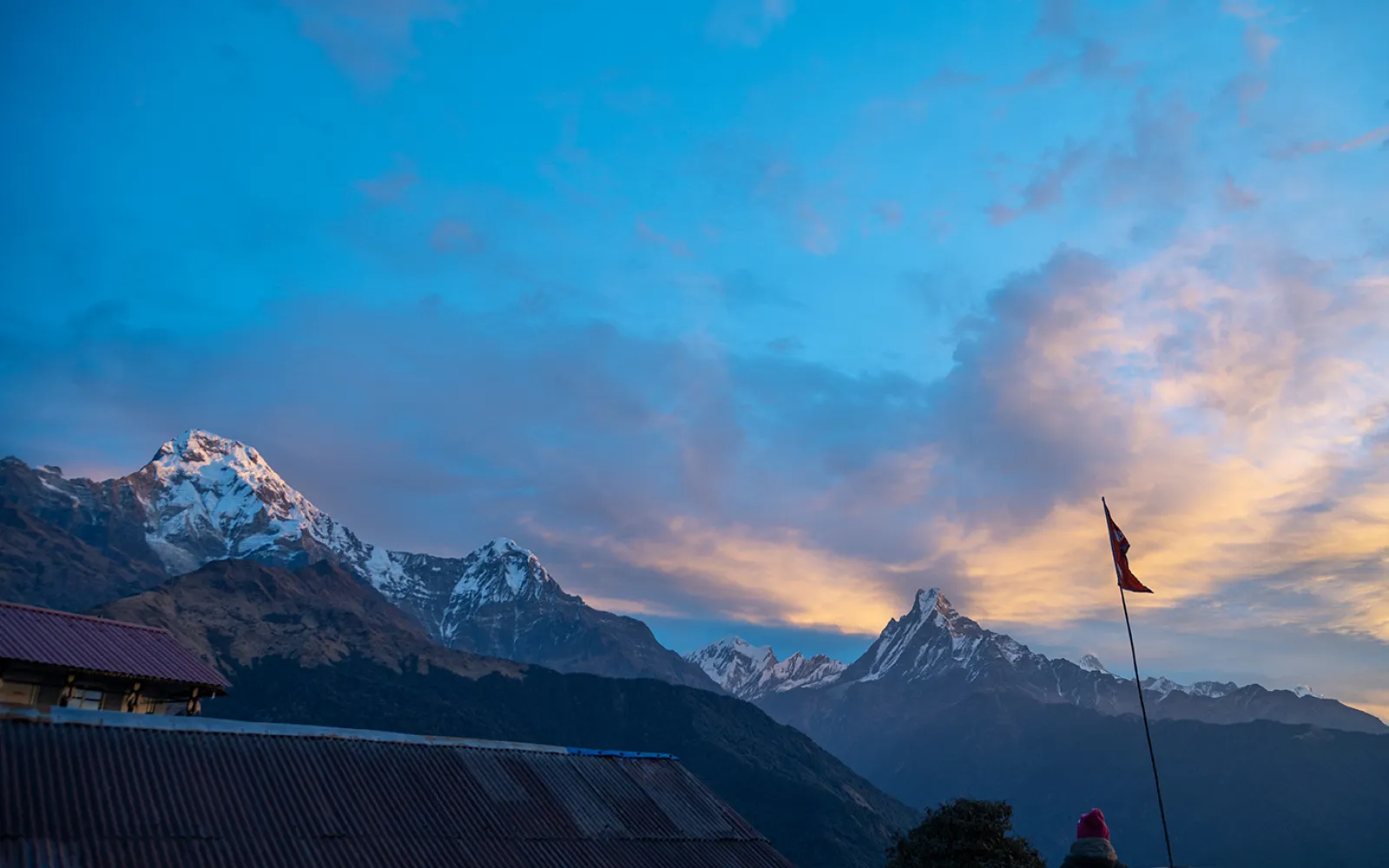
This Ghorepani Poon Hill Trek Guide explains about Ghorepani Poon Hill Trek highlights, Itinerary, Cost, Transportation, Best Time of the year, Difficulty Leave, Required Permits, Preparations and Booking.
If you are planning of doing Ghorepani Poon Hill Trek, you can hugely be benefitted by this blog article. You can finalize the best Ghorepani Poon Hill Trek for your next holiday after reading this article.
Now, let’s see each issue in detail:
Certainly. I’ve added the elevations in metres and feet in brackets straight after the relevant places and mountains whilst keeping the same E-E-A-T, transitions, short and long sentences, two sentences per paragraph, titled tables and bullet points.
The Ghorepani Poon Hill Trek is a short Himalayan trek in the Annapurna region of western Nepal, combining mountain views, natural water falls, flora and fauna in Annapurna Conservation Area, traditional villages, rhododendron forests, terraced hillsides, and the famous Poon Hill sunrise.
Generally, the trek ends at Poon Hill (3,210m / 10,531ft) and the duration depends on the starting and ending points, with most itineraries taking 3–7 days – a good option for travelers with limited time.
Where Is the Ghorepani Poon Hill Trek Located?
The Ghorepani Trek is located in the Annapurna region of Nepal, with the main gateway being Pokhara (822m / 2,697ft). The journey to the trek starts in Pokhara and involves a road transfer to the trailhead, either Ulleri/Tikhedhunga and Ghandruk village and walking through forested hillsides and mountain villages.
Also, the trek passes through regions inhabited by Gurung and Magar people, where traditional farming plays an important role in the local economy. In short, the trek combines Himalayan scenery with mountain village culture.
What Is the Highest Point of the Poon Hill Trek?
The highest point on the standard Poon Hill Trek Nepal is Poon Hill (3,210m / 10,531ft). Notably, although this altitude is not particularly high compared to many Himalayan treks, the route includes long climbs and many stone steps.
Therefore, hillwalking experience and walking boots will help you deal with the long days of trekking and steep sections during the Poon Hill Trek.
Why Is the Poon Hill Trek So Popular?
One of the main reasons for the popularity of the Poon Hill Trek is a combination of a short route with high mountain scenery.
Also, the trek offers forest walks, mountain villages, terraced fields and teahouses, and an unforgettable sunrise view over the Himalayas.
Moreover, another big highlight of the Poon Hill Trek is the sunrise from the viewpoint at Poon Hill (3,210m / 10,531ft).
At dawn, the first rays of light hit the Himalayan peaks, creating amazing views over the Annapurna and Dhaulagiri mountain ranges.
Who Is the Ghorepani Poon Hill Trek Suitable For?
For first-time trekkers, the Poon Hill Trek is a perfect introduction to Himalayan walking due to moderate altitude and teahouse accommodation.
However, it should also be noted that the trek is not an easy walk due to steep steps and constant ups and downs.
In addition, the trek can be suitable for families with older children who are able to walk several hours per day.
Another advantage of this trek is that it can fit into a short travel schedule as it only takes 3–7 days. Thus, it can also be a great option for those who have limited time for travel.
Why Is It Suitable for Travelers With Limited Time?
As mentioned above, the Poon Hill Trek is a good option for those who have a short travel schedule. During only a few days of trekking, you will be able to enjoy fantastic Himalayan views, village experiences, and rhododendron forests.
Additionally, this trek can be combined with exploring other sights in the area. For example, the nearest big town is Pokhara (822m / 2,697ft), which is quite developed and has plenty of accommodation options.
Also, teahouse accommodation allows you to avoid carrying camping equipment and supplies for long hikes.
However, it should also be noted that teahouses on the Poon Hill Trek route can be much simpler in terms of infrastructure and comfort.
Key Features of the Ghorepani Poon Hill Trek
Feature | Practical Information
Region | Annapurna, western Nepal.
Main gateway | Pokhara (822m / 2,697ft).
Main viewpoint | Poon Hill (3,210m / 10,531ft).
Maximum altitude | 3,210m (10,531ft).
Typical duration | 3–7 days.
Trek style | Teahouse trekking.
Main scenery | Annapurna and Dhaulagiri mountain ranges, forests, villages, and terraces.
Famous view | Poon Hill sunrise.
Major communities | Gurung and Magar people.
Suitable for | First-time trekkers, families, and shorter itineraries.
Main Reasons Travelers Choose the Trek
Firstly, short duration: it fits into the tight schedule of a traveler.
Secondly, mountain scenery: offers views of the Annapurna and Dhaulagiri mountain ranges.
Moreover, Poon Hill sunrise: an unforgettable Himalayan sunrise view.
Another reason is Rhododendron forests: full of colours in springtime.
Furthermore, village experiences: an insight into the Gurung and Magar lifestyles.
In addition, teahouse accommodation: no need for camping equipment.
At moderate altitude: The Poon Hill (3,210m / 10,531ft) is not as high as many summits of the Himalayas.
Finally, local culture: travelers can enjoy local food, architecture, and traditions.
Overall, the Ghorepani Poon Hill Trek combines mountain scenery, local village culture, water falls, falora and fauna, rhododendron forests, and sunrise views in a relatively short trekking route.
Therefore, it is a good option for first-time trekkers or those with limited time for travel. However, despite a lower altitude, the trek includes several hours of walking per day and requires adequate preparation.
The Ghorepani Poon Hill Trek combines Himalayan mountain views, forests, villages, and farmland. Thus, the trek offers a wide range of experiences, from enjoying sunrise views over the Annapurna and Dhaulagiri mountain ranges to discovering traditional Gurung and Magar villages.
What Mountain Views Can You See?
Firstly, the Poon Hill Trek provides wide open views of the Annapurna and Dhaulagiri mountain ranges. In clear weather, you can see Annapurna South (7,219m / 23,684ft) and Machhapuchhre (6,993m / 22,943ft) peaks, as well as other high mountains of the ranges.
Please note that Poon Hill (3,210m / 10,531ft) is one of the best viewpoints on the trek, offering panoramic views of the mountains.
However, keep in mind that the mountain view may be limited by cloudy weather and a cold misty season.
Why Is Poon Hill Sunrise Famous?
Another highlight of the Poon Hill Trek is an early morning walk from Ghorepani (2,860m / 9,383ft) to the Poon Hill viewpoint. At sunrise, the Himalayan peaks are gradually outlined in light, offering incredible views of the Annapurna and Dhaulagiri mountain ranges.
However, although the sunrise view is one of the main attractions of the trek, it is not guaranteed due to unpredictable mountain weather.
Consequently, you should pack warm clothes for a cold morning and be prepared for cloudy conditions.
What Are the Rhododendron Forests Like?
Besides the mountain views, the Poon Hill Trek is famous for its rhododendron forests, which can be seen around the trek route. The trees turn into various shades of red and pink in springtime, creating a unique landscape of blooming flowers.
Moreover, the higher altitude of the trail means that the forest is not dense and provides shade over several trekking sections.
Altogether, walks through rhododendron forests are a highlight of the Poon Hill Trek.
Which Villages Can You Experience?
Local villages are another attraction of the trek as they represent Gurung and Magar cultures of the Himalayas.
Depending on the chosen route, several traditional villages can be seen along the trek route, including Ghorepani (2,860m / 9,383ft), Tadapani (2,630m / 8,629ft), and Ghandruk (1,940m / 6,365ft).
Although these Himalayan villages are relatively small, they provide unique experiences of living in the mountainous region of Nepal.
Importantly, note that the trek passes through the territory of these villages, meaning that there is an opportunity to explore village life and culture.
What Can You See Along the Trail?
In addition to the famous Poon Hill sunrise views and rhododendron forests, the trek route includes several interesting observations.
For example, you will see traditional farmhouses, stone steps, waterfalls, streams, suspension bridges, and terraced fields.
Also, a noticeable difference of this trek is that walks themselves become a major attraction of the trek. Hence, on each day of the trek, there is an opportunity to enjoy the beauty of nature on foot.
What Is Teahouse Life Like?
Teahouse accommodation on the Poon Hill Trek is a great experience for those who want to get to know the local lifestyle. Every evening after a long day of walking, you can relax in a teahouse, having a meal and a hot drink.
However, the teahouses on the Poon Hill Trek route vary significantly in terms of comfort, especially in small villages.
Furthermore, the accommodation options on the trek are usually small and do not provide luxury experiences. But, the villages like Ghorepani and Ghandruk villages offer better and more comfortable accommodation facilities with attached rooms with hot shower.
Still, teahouse accommodation allows you to get closer to the local culture and enjoy the mountain hospitality of the local people.
In addition, the menu usually includes local Nepali food such as dal bhat, which makes the meals a unique and enjoyable experience.
Main Mountain and Village Elevations
Place / Mountain| Elevation
Pokhara |822m / 2,697ft
Ghandruk | 1,940m / 6,365ft
Tadapani | 2,630m / 8,629ft
Ghorepani | 2,860m / 9,383ft
Poon Hill | 3,210m / 10,531ft
Annapurna South | 7,219m / 23,684ft
Machhapuchhre | 6,993m / 22,943ft
Dhaulagiri | I 8,167m / 26,795ft
Annapurna | I 8,091m / 26,545ft
Main Experiences on the Poon Hill Trek
Experience | What You Can Experience
Poon Hill sunrise | Early-morning Himalayan panorama from 3,210m / 10,531ft
Annapurna views | Mountain scenery towards Annapurna South (7,219m / 23,684ft)
Dhaulagiri views | Wide Himalayan views towards Dhaulagiri I (8,167m / 26,795ft)
Rhododendron forests | Forest walks and spring blooms
Gurung villages | Local culture experiences in mountain settlements
Magar communities | Traditional settlement visits and experiences
Terraced fields | Farmland observations in the hills
Waterfalls and streams | Himalayan waterfalls and stream observations
Teahouses | Local accommodation in simple mountain lodges
Mountain culture | Food, customs, architecture, and hospitality experiences
Main Highlights of the Trek
First, Poon Hill sunrise: Annapurna and Dhaulagiri mountain panorama from the viewpoint.
Next, Annapurna views: A glimpse of Annapurna South (7,219m / 23,684ft) on clear days.
Moreover, Dhaulagiri panorama: Dhaulagiri I (8,167m / 26,795ft) mountain views from open viewpoints.
In springtime, rhododendron forests: Popular flower viewing on the trek route.
Also, villages along the trail: Visit traditional Gurung and Magar settlements.
Furthermore, traditional terraced farming: Terraced field observations in mountainous terrain.
Additionally, community teahouses: Simple local hospitality and accommodation.
Lastly, waterfalls: Himalayan waterfall experiences along the trek route.
And, cultural experiences: Insights into local customs and mountain life.
Overall, a short trek to Poon Hill offers an amazing variety of experiences, from sunrise views from a high mountain viewpoint to exploring traditional villages and culture.
Hence, unlike a simple sightseeing tour, the trek provides days of varied walks in landscapes of forests, meadows, and hills.
Therefore, the Ghorepani Poon Hill Trek can be a great choice for first-time trekkers or those with a limited time for travel.
Despite a moderate altitude, the route contains several steep sections and requires some fitness.
However, proper preparation and an adequate itinerary will allow you to enjoy the Poon Hill Trek to the fullest.
3. How Many Days Do You Need for the Ghorepani Poon Hill Trek?
As a rule of thumb, the duration of the Poon Hill Trek is 3-7 trekking days (with transportation) from Pokhara (822m / 2,697ft). Having said that, many people find that they want to extend the itinerary to 5-8 days for Ghorepani (2,860m / 9,383ft), Poon Hill (3,210m / 10,531ft) and the villages in between.
Is the Poon Hill Trek Possible in 3 Days?
Yes, it is possible to complete Ghorepani Poon Hill Trek in 3 days. The itinerary follows like this:
Pokhara to Ulleri-Jeep Ride and Trek to Ghorepani- Day 01
Hike Poon Hill and Trek to Tadapani- Day 02
Trek to Ghandruk village and drive back to Pokhara-Day 03
Is the Poon Hill Trek Possible in 4 Days?
Yes, the 4-day Poon Hill trek itinerary is possible if you use transport to get to the start of the trail and manage walking pace.
So, the 4-day Poon Hill trek is a good option for fit backpackers with limited time who still want to enjoy Ghorepani (2,860m / 9,383ft), Poon Hill (3,210m / 10,531ft) and the villages in between.
In fact, the 4-day trip will typically involve driving from Pokhara (822m / 2,697ft) towards Ulleri (2,050m / 6,726ft), then walking through forests and villages to Ghorepani (2,860m / 9,383ft) and Poon Hill (3,210m / 10,531ft) before ending at either Tadapani (2,630m / 8,629ft) or Ghandruk (1,940m / 6,365ft).
Is the Poon Hill Trek Possible in 5 Days?
The 5-day Poon Hill trek itinerary is perfect for most people as a balance between walking and exploring the area.
Meanwhile, the additional day makes a big difference in terms of allowing you to see more of the villages, forests and mountain range while walking at a more leisurely pace.
Here, the 5-day Poon Hill trek usually covers Pokhara (822m / 2,697ft), Ulleri (2,050m / 6,726ft), Ghorepani (2,860m / 9,383ft), Tadapani (2,630m / 8,629ft) and Ghandruk (1,940m / 6,365ft) making the balance between walking and sightseeing a perfect fit for most people.
What's the Difference Between a 4 Day and 5 Day Trek?
Here, the 4-day version of the trek is shorter and generally faster due to using transport to save time, while the 5-day version is longer and slower with more time for exploring the villages in the area.
Trek Type |Style |Pacing | Best For
3-day | Compact | Faster| Fit trekkers with limited time
4-day | Compact | Faster | Fit trekkers with limited time
5-day | Balanced | Moderate | Most first-time trekkers
6-8-day | Relaxed | Slower | Families and those wanting more village time
Which Places Can You Include?
The classic 5-day Poon Hill trek covers Ulleri (2,050m / 6,726ft), Ghorepani (2,860m / 9,383ft), Poon Hill (3,210m / 10,531ft), Tadapani (2,630m / 8,629ft) and Ghandruk (1,940m / 6,365ft), but you can also add extra villages or extend the walking days for those looking for a more extended Annapurna Circuit trek.
Can You Make the Trek Longer?
Yes, you can add an extra night in Ghandruk (1,940m / 6,365ft) or simply extend walking days for those who want to see more of the area.
For those flying into Kathmandu (1,320m / 4,330ft) as opposed to arriving in Pokhara (822m / 2,697ft) itself, you may want to add travel days in Kathmandu to your overall Poon Hill trek itinerary.
In fact, the 4- or 5-day Poon Hill trek can be combined with visiting Pokhara (822m / 2,697ft) and Kathmandu (1,320m / 4,330ft) for a longer Nepal hiking holiday where days are added to account for travel days and sightseeing.
Suggested Poon Hill Trek Durations
4 days: Best for those with limited time and those who like fast-paced treks
5 days: A good balance of pace and walking distance for most people
6 days: A slower-paced trek, maybe with an extra day in a village somewhere
7 or 8 days: For those who want a relaxed walking holiday in Nepal
Want Longer holiday? Combine the trek with Pokhara (822m / 2,697ft) and Kathmandu (1,320m / 4,330ft) Tours.
Which Duration Should You Pick?
It really depends on your fitness level and the amount of walking you are prepared for as well as any time constraints you may have.
For most people, 5 days in Ghorepani and Poon Hill is the perfect balance, while 4 days may be better for those short on time and up for a more intense trek.
4. What Is the Best Ghorepani Poon Hill Trek Itinerary?
The Poon Hill trek is a 4- or 5-day hiking itinerary starting in the lakeside town of Pokhara (822m / 2,697ft) and usually covering Ulleri (2,050m / 6,726ft), Ghorepani (2,860m / 9,383ft), Poon Hill (3,210m / 10,531ft), Tadapani (2,630m / 8,629ft) and Ghandruk (1,940m / 6,365ft).
Day 1: Pokhara to Ulleri and Trek to Ghorepani
Day 1 involves driving from Pokhara (822m / 2,697ft) towards Ulleri (2,050m / 6,726ft) before trekking uphill through villages and forests to Ghorepani (2,860m / 9,383ft) later that day.
While Ulleri (2,050m / 6,726ft) is generally the easiest walking day on the Poon Hill trek itinerary, the sustained climbing on stone steps as you head towards Ghorepani (2,860m / 9,383ft) means this will be quite tiring.
Day 2: Ghorepani to Poon Hill and Trek to Tadapani
Day 2 begins with a short walk to Poon Hill (3,210m / 10,531ft) for sunrise and spectacular views of the mountain range before returning to Ghorepani (2,860m / 9,383ft) for breakfast and heading towards Tadapani (2,630m / 8,629ft) for the remainder of the day.
Meanwhile, the forested section between Ghorepani (2,860m / 9,383ft) and Tadapani (2,630m / 8,629ft) means you can enjoy the views, although the combination of ascending and descending sections throughout the day means that climbing pace is key.
Day 3: Tadapani to Ghandruk
On day 3 you will be trekking from Tadapani (2,630m / 8,629ft) towards Ghandruk (1,940m / 6,365ft), taking around 3-4 hours to complete the walk on a typically enjoyable descent through forests and cultivated slopes.
While Ghandruk (1,940m / 6,365ft) serves more as a place to walk around and experience a traditional Nepalese village, it does provide a good opportunity to unwind after the more intense climbing on day 1.
Day 4: Ghandruk to Pokhara
Day 4 is a drive back towards Pokhara (822m / 2,697ft) with the road taking around several hours to complete depending on traffic and the road conditions.
4-Day Poon Hill Trek Route at a Glance
Day | Route |Elevation |Drive / Walking
1 |Pokhara → Ulleri → Ghorepani | 822m → 2,050m → 2,860m |Drive + 4-5hrs walk
2 |Ghorepani → Poon Hill → Tadapani |2,860m → 3,210m → 2,630m |5-6hrs walk
3 | Tadapani → Ghandruk | 2,630m → 1,940m | 3-4hrs walk
4 | Ghandruk → Pokhara | 1,940 → 822m | Drive
Where Are the Hardest Climbs?
The steepest parts of the Poon Hill trek are typically between Ulleri (2,050m / 6,726ft) and Ghorepani (2,860m / 9,383ft) on day 1 as you walk up the stone steps, with Ghorepani (2,860m / 9,383ft) to Poon Hill (3,210m / 10,531ft) on day 2 being relatively short but steep.
Moreover, you will encounter a mixture of ascending and descending tracks between Ghorepani (2,860m / 9,383ft) and Tadapani (2,630m / 8,629ft) on day 3 through the forests which might throw off your judgement when it comes to assessing the difficulty of the Poon Hill trek itinerary.
5-Day Poon Hill Itinerary Option
Alternatively, you could opt for a 5-day Poon Hill trek by spending an extra night in Ghandruk (1,940m / 6,365ft), although this would be an option for those with extra time looking for a more relaxed pace.
Day | Route |Elevation | Approx. Walking
1 | Pokhara → Ulleri → Ghorepani | 822m → 2,050m → 2,860m | 4-5hrs
2 | Ghorepani → Poon Hill → Tadapani | 2,860m → 3,210m → 2,630m | 5-6hrs
3 | Tadapani → Ghandruk | 2,630m → 1,940m | 3-4hrs
4 | Ghandruk (village exploration) | 1,940m | Short walk
5 | Ghandruk → Pokhara | 1,940 → 822m | Drive
Important Things to Know About the Route
Transport: The road from Pokhara to Ulleri can vary in length depending on the time of year
Ulleri to Ghorepani: This part of the Poon Hill trek itinerary involves climbing on a series of stone steps
Ghorepani to Poon Hill: This short climb is best done early in the morning for sunrise
Poon Hill to Tadapani: This is a mix of ascending and descending tracks through the forest
Ghorepani (2,860m / 9,383ft): The forests on this stretch can be slippery to walk on after rain
Tadapani (2,630m / 8,629ft): Visibility can be low in the mountains in Nepal
Teahouses: There are basic accommodation options at teahouses along the route
Walking: A slower pace generally allows for more photograph opportunities
What Is the Most Practical Itinerary?
The Poon Hill trek itinerary through Ulleri (2,050m / 6,726ft), Ghorepani (2,860m / 9,383ft), Poon Hill (3,210m / 10,531ft), Tadapani (2,630m / 8,629ft) and Ghandruk (1,940m / 6,365ft) offers a good mix of trekking, with 4 days being enough for those on a tight schedule and 5 days providing a more relaxed pace with extra time for seeing the local villages.
Here, it is important to note, however, that walking time suggested above is only a rough guide based on the average fitness level of most trekkers, so a more sensible Poon Hill trek itinerary would account for flexibility rather than strict time limits.
5. How Difficult Is the Ghorepani Poon Hill Trek, and Can Beginners Do It?
Overall, the Poon Hill Trek difficulty level can be classified as easy/moderate for most reasonably fit travelers, however, it also includes long stone steps, steep climbs and descents and multi-day walking.
Does the Poon Hill Trek Difficulty Level Rise Sharply?
Generally, the Poon Hill Trek is less strenuous than many high-altitude treks in the Annapurna region due to the relatively low peak of Poon Hill (3,210m / 10,531ft).
Having said that, continuous steep climbing and descending can be tiring for those unaccustomed to walking.
Most notably, the stone-step climb around Ulleri (2,050m / 6,726ft) should be taken into consideration when deciding whether the Poon Hill Trek is a good option for a beginner.
How Strenuous Is the Ulleri Section?
Especially, the lower trailhead through Ulleri (2,050m / 6,726ft) and Ghorepani (2,860m / 9,383ft) involves a significant number of stone steps and uphill climbs, making this part of the Poon Hill Trek unexpectedly challenging despite the moderate altitude.
Instead of rushing, walkers should maintain a steady pace and take short breaks to avoid exhaustion.
Moreover, trekking poles will support both the uphill climb and the later descent.
How Many Hours Do You Walk on the Poon Hill Trek?
Typically, Poon Hill Trek walking hours are estimated at 4-6 hours per day, but this number can vary depending on the section, fitness level, and weather conditions.
As such, a moderate walking pace should be preferred over any other trekking experience.
Trek Section Approx. Walking Primary Challenge
Trailhead → Ulleri (2,050m / 6,726ft) 2-3 hrs Stone steps, uphill climb
Ulleri → Ghorepani (2,860m / 9,383ft) 4-5 hrs Steady ascent
Ghorepani → Poon Hill (3,210m / 10,531ft) 45-60 min Early morning steep climb
Ghorepani → Tadapani (2,630m / 8,629ft) 5-6 hrs Mixed terrain ascent/descent
Tadapani → Ghandruk (1,940m / 6,365ft) 3-4 hrs Mostly downhill trail
Is the Poon Hill Trek Suitable for First-Time Trekkers?
Yes, the Poon Hill Trek for beginners is possible and realistic for most moderately fit travelers who prepare adequately before departure.
However, it is essential to understand that this is a trekking experience, and not a day walk or a moderate sightseeing tour. Gradual fitness preparations appear to be more beneficial than any last-minute sport training for first-time trekkers.
For instance, some light endurance activities, such as walking, climbing stairs, and hiking on weekends, will support leg muscles and minimize the likelihood of injury during the Poon Hill Trek.
What Makes the Poon Hill Trek Physically Demanding?
First, stone-step climbing: The Ulleri (2,050m / 6,726ft) section is one of the most strenuous parts of the Poon Hill Trek.
Second, walking hours: Multi-day walking is tiring if the walker is not accustomed to such endurance activities.
Third, uneven trails require extra caution and stability. Fourth, alternating uphill and downhill walking demands additional energy and balance.
Fifth, the early morning sunrise walk is an unusual experience that nonetheless requires physical endurance.
Finally, unpredictable weather may affect the difficulty of the Poon Hill Trek: Rain makes stone-step sections and trails slippery and increases the danger of injury.
What Should Beginners Do to Prepare for the Poon Hill Trek?
Before the trek, beginners should build endurance by walking longer distances and exercising. At that, specific training includes walking on uneven surfaces and climbing stairs.
In addition, leg stretches and cardio will support the muscles during the Poon Hill Trek.
During the trek, a moderate walking pace should be preferred to preserve energy, and beginners should take short breaks to avoid exhaustion.
Most important of all, a realistic assessment of the trek is more beneficial than attempting to compete with more experienced hikers on the Poon Hill Trek.
What Equipment Aids the Poon Hill Trek Difficulty Level?
The most critical Poon Hill Trek gear is the pair of comfortable shoes with a good grip since the trek involves stone-step sections and uneven trails.
Other essential equipment includes trekking poles, a day pack for personal belongings and water, weather-dependent layered clothing, a rain cover, and a reusable water bottle. The overall pack weight should be kept to a minimum during the Poon Hill Trek to preserve energy.
When wet weather threatens the Poon Hill Trek, special attention should be paid to the stone-step sections and trail surfaces since they can become slippery.
Similarly, carrying only necessary supplies is recommended, as it reduces the load during the Poon Hill Trek.
Is Poon Hill Trek Difficulty Level Appropriate for Families?
The Poon Hill Trek for families is only possible if children are familiar with multi-day walking, and the whole family is reasonably fit.
Likewise, younger children may struggle with the stone-step section around Ulleri (2,050m / 6,726ft) because of the required endurance and can become exhausted easily. As such, a family-friendly itinerary should involve fewer walking hours per day.
Elderly people should also consider their fitness level and physical capabilities when determining the Poon Hill Trek difficulty for them.
Overall, a private family tour is a better option because the pace of walking and the whole schedule can be adjusted.
Poon Hill Trek Preparation for First-Time Visitors
Walk regularly for a few weeks before the trek
Include stairs climbing and walking in your training
Test the shoes you will wear during the trek
Carry a day pack for your supplies and water
Use trekking poles for additional stability
Keep a steady pace and minimize the risks of overexertion
Take short breaks and rest before your muscles become exhausted
Prepare layers of warm clothes and weather-dependent gear
Drink water regularly during the trek for hydration
Inform the tour guide of any discomfort or unexpected exhaustion
In conclusion, the Poon Hill Trek difficulty is not extremely high for most visitors, yet it demands a certain level of fitness that should not be underestimated.
Above all, the Poon Hill Trek for beginners should not include misconceptions about the supposed easiness of the route.
6. How High Is Poon Hill and Is Altitude Sickness a Concern?
Interestingly, the Poon Hill elevation is 3,210m (10,531ft), and the nearest overnight village is Ghorepani at 2,860m (9,383ft).
Generally, these heights are considered moderate, but unexpected altitude sickness may occur during the Poon Hill Trek.
For this reason, visitors should carefully consider their fitness and health condition before the trek.
What Are the Poon Hill and Ghorepani Elevations?
In particular, the Poon Hill elevation is 3,210m (10,531ft), making it the highest point on the Poon Hill Trek route.
Meanwhile, the nearby Ghorepani overnight village is located at 2,860m (9,383ft) above sea level.
As a result, most visitors will not experience serious altitude-related problems during the Poon Hill Trek.
Nevertheless, individual health concerns and fitness levels should be taken into account when determining if the Poon Hill altitude is dangerous.
Specifically, sudden altitude changes can affect anyone, regardless of age or fitness, which is why altitude sickness during the Poon Hill Trek should not be disregarded.
Is Altitude Sickness Common at Poon Hill?
At this altitude, altitude sickness is possible, but it is unlikely that it will interfere significantly with the Poon Hill Trek experience.
More importantly, the physical activity of climbing the Poon Hill steps can impede one’s judgment about the true cause of discomfort or illness.
For this reason, additional rest and observation are necessary if unusual health sensations occur during the Poon Hill Trek.
How Difficult Is It to Distinguish Between Altitude Sickness and Overexertion?
Generally, most of the discomfort experienced on the Poon Hill Trek is caused by the natural exhaustion from long climbs and descents.
Specifically, the most strenuous part of the Poon Hill Trek is the climbing of Ulleri (2,050m / 6,726ft) stone steps. Similarly, walking on uneven surfaces and multiple days of trekking will contribute to overall exhaustion.
As such, it is easy to mistake physical overexertion for altitude sickness, and vice versa. Either way, unexplained discomfort should not be ignored during the Poon Hill Trek.
What Preventative Measures Can Be Made Against Altitude Sickness?
Pace yourself: Do not try to climb rapidly to Poon Hill (3,210m / 10,531ft)
Hydration: Drink regularly during the walking hours of the Poon Hill Trek
Rest: Do not overexert yourself without appropriate breaks
Nap: Get enough rest/correct sleep during the Poon Hill Trek nights
Avoid overexertion: Especially on the final early morning Poon Hill climb
Communication: Inform your trek guide of any discomfort during the Poon Hill Trek
Why Is Pacing Yourself Important for the Poon Hill Trek?
During the ascent to Poon Hill (3,210m / 10,531ft), the trail gradually gains elevation, which makes it even more tiring before sunrise.
Hence, pacing yourself is the most intelligent Poon Hill Trek strategy to ensure safety and comfort.
After reaching the highest point, one should also take a break to observe the surroundings before continuing on the Poon Hill Trek route.
Another critical note is to preserve energy for the following Poon Hill Trek section.
What Should You Eat and Drink During the Poon Hill Trek?
Primarily, water is vital for any Poon Hill Trek, as dehydration accelerates the onset of altitude sickness. At the same time, eating regular meals and snacks will provide the necessary energy for the long Poon Hill Trek walking hours.
Overall, teahouses along the Poon Hill Trek route will have a supply of food, drinks, and water.
Still, it is vital to follow the basic health and hydration guidelines during the Poon Hill Trek. In particular, individual fluid needs should be prioritized over general recommendations.
As such, consulting one’s personal guide or the staff of the visited accommodations is advised before using their water supply.
When Should You Consult a Doctor During the Poon Hill Trek?
If altitude illness symptoms develop during the Poon Hill Trek, the immediate course of action is to inform one’s trek guide. One should also report any new and unexplained discomfort to the professional staff.
Here, the final measure is to seek emergency medical care if one’s condition does not improve. It is essential to descend to a lower altitude if there is even a slight suspicion of altitude sickness.
Moreover, a crucial point is to remember that altitude sickness is a serious condition, and self-treatment should never be the reason for continuing the Poon Hill Trek.
In other words, the Poon Hill Trek altitude should not be a matter of personal endurance but rather one’s health and comfort.
Poon Hill Trek Altitude Information Table
Place | Elevation | Role in the Poon Hill Trek
Pokhara | 822m / 2,697ft |The main gateway to the Poon Hill Trek
Ghandruk | 1,940m / 6,365ft |Day-trip and overnight option
Tadapani | 2,630m / 8,629ft | Forested night accommodation option/Sunrise and mountain views
Ghorepani 2,860m / 9,383ft |The primary overnight village before Poon Hill
Poon Hill | 3,210m / 10,531ft | The highest point of the Poon Hill Trek, mountain views and sunrise
Practical Guidelines for the Poon Hill Trek Altitude
Before departing from Ghorepani (2,860m / 9,383ft), prepare warm clothes, water, and a torch because the Poon Hill climb starts early in the morning. During the Poon Hill Trek, maintain a steady walking pace, take short breaks, and listen to your body.
After descending from Poon Hill (3,210m / 10,531ft), it is a good idea to have breakfast and let your body adjust to the new altitude level.
Therefore, moderate walking hours and regular rest stops will determine the comfort of the Poon Hill Trek experience.
To summarize, the Poon Hill altitude is not extremely high, but altitude sickness should still be taken seriously during the Poon Hill Trek.
At the same time, visitors should consider that the steepest part of the Poon Hill Trek includes the Ulleri (2,050m / 6,726ft) stone steps and the early morning climb.
7. When is the Best Time for the Ghorepani Poon Hill Trek
As a rule, the best time for Poon Hill Trek is generally considered spring (March to May) and autumn (September to November) for more consistent weather.
However, winter and monsoon may also be an option for those accustomed to lower temperatures and wetter conditions.
What Is the Poon Hill Trek Season Like Throughout the Year
Importantly, Poon Hill Trek season varies significantly across spring, summer monsoon, autumn, and winter due to temperature, rainfall, flowers, and mountain visibility.
As such, the choice of the month depends on whether one values the mountain views, rhododendron flowers, sparse crowds, or milder temperatures.
Season| Months| Weather |Mountain Views| Trail Conditions| Crowds
Spring| March to May| Mild and generally clear| Usually good| Mostly dry| Moderate to high
Monsoon| June to August |Warm, humid, rainy| Often limited| Wet and slippery| Low
Autumn| September to November| Dry and stable| Usually excellent| Mostly dry| High
Winter| December to February| Cold and dry| Often clear| Possible snow and ice| Low
Why is Spring a Good Time for Poon Hill Trek
Importantly, March to May is popular for the Poon Hill Trek because the weather warms up and rhododendron forests around Ghorepani (2,860m / 9,383ft) put on a colorful display.
Moreover, mountain views are often good in clear mornings, although clouds may appear later in the day.
What is Poon Hill Trek in March Like
Generally, March provides cooler mornings at higher altitudes on the Poon Hill Trek, with gradually improving conditions and increased chances of seeing mountain peaks.
Notably, early March may still be cool enough for extra layers, especially as the sunrise climb begins at Ghorepani (2,860m / 9,383ft).
Why is April Popular for the Poon Hill Trek
Furthermore, April is a great month for the Poon Hill Trek as temperatures rise during the day, and the rhododendron forests around Ghorepani (2,860m / 9,383ft) burst into bloom.
As such, April offers colorful views, mild weather, and generally good mountain visibility.
What is Poon Hill Trek in October Like
Likewise, the Poon Hill Trek in October is popular as autumn usually brings stable temperatures and dry conditions.
Moreover, the Annapurna and Dhaulagiri mountain ranges are typically visible, although mid-month can be quite busy at the viewpoint and teahouses.
Is Winter a Good Time for the Poon Hill Trek
Contrarily, December to February is generally colder but drier, with clear mornings at Poon Hill (3,210m / 10,531ft).
However, there is also a risk of snow and ice on higher-altitude passes, and crowds are usually low due to the chilly weather.
Can you do the Poon Hill Trek during Monsoon
During the monsoon (June to August), heavy rains make the trail slippery and reduce visibility of mountain peaks.
However, the Poon Hill Trek is still possible with good rain gear and an understanding that views will most likely be limited due to the weather.
When is the Best Weather for Poon Hill Trek
Generally, the best weather for the Poon Hill Trek is in spring and autumn. However, individual preferences and flexibility will determine the most suitable season and month.
For example, some may prefer the bloom of flowers, while others prioritize good mountain visibility or lower temperatures.
What Months are Best for a Poon Hill Sunrise
Crucially, a good sunrise view at Poon Hill is dependent on clear morning conditions, which cannot be guaranteed in any particular season.
Having said that, autumn and spring are popular for their higher likelihood of sunrise peaks. Overall, the following are some general pointers:
Month | Conditions | Notes
March | Cool to mild | Springtime begins
April | Mild and pleasant | Rhododendron blooms
May | Warmer |Increasing clouds
June | Wet |Monsoon begins
July | Very wet | Frequent rain
August | Wet |Green landscapes
September | Improving | Monsoon ends
October | Dry and stable | Good visibility
November | Cool and clear | Increasing cold
December | Cold and dry |Possible clear days
January | Coldest period | Clear mornings
February | Cold but improving | Overall improvement
Key Seasonal Tips for the Poon Hill Trek
March – May: Blooming rhododendrons and generally good weather
April: Good temperatures and rhododendron display
September – November: Mostly dry conditions and good visibility
October: Excellent trekking conditions but busy
December – February: More cold mornings and snow risks
June – August: Bring good rain gear for unpredictable weather
Sunrise: Flexible scheduling is essential for cloud cover
Similarly, the main trekking seasons are spring and autumn, with winter and monsoon providing different conditions and requiring extra planning.
Moreover, it is wise to check the Poon Hill weather forecast closer to the departure date in order to pack appropriately and set sunrise expectations.
8. What Time Should you Leave Ghorepani for the Poon Hill Sunrise
Generally, Ghorepani (2,860m / 9,383ft) sunrise treks begin around 4:30 – 5:00 AM to allow for a slow climb to the Poon Hill (3,210m / 10,531ft) viewpoint before the sun appears.
However, the exact departure time depends on the season, sunrise, walking speed, weather, and desired position at the viewpoint.
How Long Does it Take to Walk From Ghorepani to Poon Hill
As a rule, the walk from Ghorepani (2,860m / 9,383ft) to Poon Hill (3,210m / 10,531ft) takes around 45 – 60 minutes for most people.
Similarly, the trail is fairly short but steep, and extra time should be built in for those who walk more slowly or have difficulties.
What Time Should you Leave for the Poon Hill Sunrise
Crucially, a departure window of around 4:30 – 5:00 AM allows most people to slowly walk the distance while taking the opportunity to stop and enjoy the views.
Nevertheless, one should consult one’s guide or teahouse host during the evenings as sunrise time varies throughout the year.
Do you Need a Headlamp for the Poon Hill Sunrise Trek
Most importantly, the trail is generally dark before sunrise, and a headlamp or a good source of light is necessary for the Poon Hill sunrise trek.
As such, it is important to keep the light source readily available and not rush too quickly on the trail.
Is the Walk to Poon Hill Difficult in the Morning
Although the distance is fairly short, the Poon Hill sunrise trek is generally more tiring than one might expect. Firstly, it is a steep climb to the viewpoint before breakfast.
Secondly, the cold temperatures and darkness combine to make the early morning trek more challenging than walking at other times of the day. Therefore, it is important to set a steady pace and not try to rush up the trail.
How Cold is Poon Hill Before Sunrise
Temperatures at Poon Hill (3,210m / 10,531ft) before sunrise can be extremely cold, especially outside of spring.
As such, it is essential to bring warm clothing, gloves, a hat, and good insulated boots. Moreover, one may have to wait at the viewpoint before sunrise, so it is important to be prepared for the cold morning conditions.
Why does the Poon Hill Viewpoint Get Crowded
The Poon Hill (3,210m / 10,531ft) viewpoint gets busy at sunrise, mostly due to the large number of visitors that choose the viewpoint for its mountain views.
Notably, most people will leave Ghorepani (2,860m / 9,383ft) around the same time, and the earlier one arrives at the viewpoint, the better one’s position will be.
Can you Always See Sunrise From Poon Hill
Although departing Ghorepani (2,860m / 9,383ft) before sunrise gives a good chance to see the sun appear, one cannot always rely on clear skies at Poon Hill (3,210m / 10,531ft).
Fortunately, if the morning is clear, the expansive views include some of the highest peaks in the region, including Annapurna South (7,219m / 23,684ft), Machhapuchhre (6,993m / 22,943ft), and Dhaulagiri I (8,167m / 26,795ft).
What Should you Carry for the Ghorepani Sunrise
For the sunrise trek, it is best to pack only essential items for the walk to Poon Hill (3,210m / 10,531ft) and back.
Notably, one will return to Ghorepani (2,860m / 9,383ft) after the viewing, and anything unnecessary should be left at the guesthouse or carried in a daypack.
Poon Hill Sunrise Packing Checklist
• Headlamp or flashlight
• Warm jacket and layers
• Gloves and hat
• Comfortable shoes
• Water bottle
• Daypack for carrying items
• Camera or phone for viewing
• Sunglasses for the way back
• Raincoat or waterproof jacket
What is the Typical Poon Hill Sunrise Schedule
Activity | Approximate Time
Wake up in Ghorepani | 4:00 – 4:30 AM
Leave Ghorepani | 4:30 – 5:00 AM
Walk to Poon Hill | 45 – 60 minutes
Reach viewpoint | Before sunrise
Watch sunrise and views | 30 – 60 minutes
Return to Ghorepani | 45 – 60 minutes
Breakfast | After returning
As such, the ideal Poon Hill sunrise schedule allows for a steady but unhurried walk to the viewpoint.
Moreover, checking the weather forecast the previous evening can help set realistic expectations for sunrise views.
Poon Hill Sunrise Packing Checklist
• Headlamp or flashlight
• Warm jacket and layers
• Gloves and hat
• Comfortable shoes
• Water bottle
• Daypack for carrying items
• Camera or phone for viewing
• Sunglasses for the way back
• Raincoat or waterproof jacket
9. How Much Does the Ghorepani Poon Hill Trek Cost?
The general cost for the Ghorepani Poon Hill trek usually depends on trek duration, group size, transportation, guide and porter services, and accommodation standard.
Here, a guided Poon Hill Trek package from Pokhara therefore varies considerably depending on group size and inclusions, while independent trekkers should separately budget for these costs.
What Is the Poon Hill Trek Price From Pokhara?
A guided Poon Hill Trek from Pokhara usually costs around USD 145-275 per person for a standard 4-5 day itinerary depending on group size and services provided, however private arrangements, upgraded accommodation, private transportation, and porter services may affect the final price.
What Is Included in the Haven Holidays Poon Hill Trek Package?
In Haven Holidays, the Poon Hill Trek package covers main trekking expenses in order to ensure budget clarity for the travelers.
In addition, the actual package price normally depends on the selected itinerary, group size, transportation, and services requested at the time of booking.
| Package Cost Category | Haven Holidays Package | Usually Paid Separately |
| Licensed trekking guide | Included | — |
| Trekking permits | Included if stated in package | — |
| Pokhara-trailhead transportation | Included according to itinerary | Private upgrade if requested |
| Trail accommodation | Included | Single room upgrade if available |
| Breakfast, lunch and dinner during trek | Included | Extra meals outside itinerary |
| Porter service | Included as selected | Optional if not included |
| Guide and porter expenses | Included | — |
| Guide and porter insurance | Included according to package | — |
| Hot shower | — | Usually extra |
| Wi-Fi | — | Usually extra |
| Device charging | — | Usually extra |
| Soft drinks and alcoholic drinks | — | Extra |
| Personal snacks | — | Extra |
| Tips | — | Personal choice |
| Travel insurance | — | Traveler's responsibility |
| Personal expenses | — | Traveler's responsibility |
What Does Transportation Cost for the Poon Hill Trek?
Here, transportation is generally one of the main costs since the trail is accessed from Pokhara [822m / 2,697ft]. Shared transportation is also generally lower, while a private jeep provides more flexibility and comfort but at an increased cost.
How Much Does a Guide Cost for the Poon Hill Trek?
A licensed trekking guide commonly costs around USD 25-35 per day although the final rate depends on the services, itinerary length, and whether guide expenses are included.
When comparing the options, therefore, check whether the guide's food, accommodation, transportation, salary, insurance, and other field expenses are included.
How Much Does a Porter Cost?
Porter service is usually an additional expense if not included in the package, with common rates of around USD 20-25 per day depending on the conditions.
In addition, one porter commonly carries the combined luggage of two trekkers within the weight limit.
How Much Does Accommodation Cost on the Poon Hill Trek?
Accommodation generally consists of simple teahouses with twin-sharing rooms, beds, blankets, and shared bathrooms, however rooms with attached bathrooms and hot showers cost more especially during the busy spring and autumn seasons.
How Much Do Meals Cost on the Poon Hill Trek?
Three meals during the trek normally cost around USD 15-25 per person per day depending on your choices and the teahouse, while the common foods are dal bhat, noodles, pasta, momos, soups, eggs, bread, porridge, tea, and coffee.
Do Drinks Cost Extra on the Poon Hill Trek?
Drinks such as tea, coffee, soft drinks, bottled water, and other beverages are normally not included in a package, therefore carrying a reusable bottle and drinking treated, filtered, or boiled water helps reduce daily costs as well as plastic waste.
Do Hot Showers, Wi-Fi, and Charging Cost Extra?
Hot showers, Wi-Fi, and device charging are commonly charged separately at mountain teahouses therefore keep some Nepali cash available since these small services may not be covered by the main package.
How Much Should You Budget for Personal Expenses?
Apart from the package price, it is practical to carry extra money for drinks, snacks, showers, charging, Wi-Fi, tips, souvenirs, and other personal purchases.
Meanwhile, USD 50-100 in additional spending money is a reasonable start budget for a standard 4-5 day trek however actual spending varies.
What Affects the Ghorepani Poon Hill Trek Cost?
The final Poon Hill Trek price normally depends on group size, transportation, trek duration, accommodation, and porter services, therefore, always compare the list of inclusions rather than the advertised package price.
Cost Effecting Factors:
| Factor | Effect on trek cost |
| Group size | Larger groups reduce shared costs per person |
| Trek duration | More days increase guide, porter, food, and accommodation costs |
| Transportation | A private jeep costs more than shared transportation |
| Guide | Required package service adds to the total cost |
| Porter | Optional or package-dependent additional service |
| Accommodation | Better rooms and private bathrooms cost more |
| Meals | More food and drinks increase daily spending |
| Hot shower | Usually an additional teahouse charge |
| Wi-Fi | Usually an additional charge |
| Charging | Usually an additional charge |
| Season | Peak periods affect transport and accommodation availability |
| Personal spending | Snacks, drinks, tips, and souvenirs vary by traveler |
What Is the Estimated Poon Hill Trek Cost Breakdown?
The following ranges provide general guidance for travelers who want to plan their personal expenses.
Estimated Poon Hill Trek Cost:
| Expense | Approximate cost |
| ACAP permit | NPR 3,000 for foreign visitors |
| TIMS, where applicable | NPR 2,000 for non-SAARC applicants |
| Shared transportation | Varies by route and group size |
| Guide | About USD 25-35 per day |
| Porter | About USD 20-25 per day |
| Teahouse room | About USD 3-10 per night |
| Meals | About USD 15-25 per day |
| Tea and coffee | Extra |
| Hot shower | Extra |
| Wi-Fi | Extra |
| Charging | Extra |
| Tips | Personal choice |
| Travel insurance | Separate |
Is the Poon Hill Trek Expensive Compared With Other Nepal Treks?
The Poon Hill Trek is generally more affordable since it does not require a domestic mountain flight or involve an extended trekking period.
In addition, you access the trail from Pokhara [822m / 2,697ft] by road rather than flights which helps keep transportation costs lower.
What Is Not Included in the Haven Holidays Package?
International airfare, Nepal visa fees, travel insurance, alcoholic beverages, personal shopping, tips, and other personal expenses are normally not included unless stated in your booking, therefore travelers should read the final inclusion and exclusion list before making a payment.
Poon Hill Trek Cost Planning Tips
Compare the complete package inclusions, not only the headline price.
Ask whether ACAP and applicable TIMS costs are included.
Confirm whether guide and porter insurance and field expenses are covered.
Check whether transportation from Pokhara to the trailhead and back is included.
Ask whether all three daily meals are included during the trek.
Budget separately for hot showers, Wi-Fi, and charging.
Carry Nepali cash for small purchases along the trail.
Keep extra money for tips and unexpected personal expenses.
Confirm the price before booking because government fees and local service prices can change.
So, the best approach to understanding the Ghorepani Poon Hill Trek cost is to separate the package price from personal expenses and optional services.
In addition, Haven Holidays provides the final price according to your itinerary, group size, transportation choice, and selected services.
10. What Permits Do You Need for the Ghorepani Poon Hill Trek?
The Ghorepani Poon Hill Trek generally starts in the Annapurna Conservation Area so trekkers require the applicable Annapurna Conservation Area Permit (ACAP).
However, TIMS requirements depend on the exact route since the current Nepal Tourism Board list specifically includes the Poon Hill-ABC Trek among routes requiring a licensed guide and agency-issued TIMS, while it does not separately list a standalone Poon Hill itinerary.
What Is the Annapurna Conservation Area Permit for Poon Hill?
Annapurna Conservation Area Permit is required for trekking or visiting the Annapurna Conservation Area, including the Ghorepani and Poon Hill trails.
Currently, the Nepal Tourism Board lists the ACAP fee at NPR 3,000 for foreign visitors, NPR 1,000 for SAARC nationals, and NPR 100 for Nepali visitors. ([Nepal Tourism Board][1])
How Much Is the ACAP Permit for Poon Hill?
The current Nepal Tourism Board listed ACAP fee for foreign visitors is NPR 3,000 per person, while the listed fee for SAARC nationals is NPR 1,000 and Nepali visitors are listed at NPR 100.
Poon Hill Trek Permits and Their Costs
| Visitor category | Current ACAP fee |
| Foreign visitors | NPR 3,000 |
| SAARC nationals | NPR 1,000 |
| Nepali visitors | NPR 100 |
| Children below 10 years | Free according to NTB's table |
Do You Need a TIMS Card for the Poon Hill Trek?
On the current NTB TIMS page, Poon Hill-ABC trek is listed under Annapurna routes where trekkers must be accompanied by a licensed trekking guide and carry an agency-issued TIMS card.
However, since the official list does not separately name a Ghorepani-Poon Hill itinerary, confirm the exact current requirement for your route before departure.
How Much Does TIMS Cost for Poon Hill?
Where TIMS applies, the current Nepal Tourism Board lists NPR 2,000 for non-SAARC applicants and NPR 1,000 for SAARC applicants, therefore the final permit budget should be checked against the exact route and current requirements when the trek is booked.
Permits Summary:
| TIMS applicant | Current listed fee |
| SAARC nationals | NPR 1,000 |
| Other foreign applicants | NPR 2,000 |
Is a Guide Required for the Poon Hill Trek?
A licensed trekking guide and agency-issued TIMS are mandatory on the routes specifically covered by the revised provision on the current NTB TIMS guidance including Poon Hill-ABC Trek.
Importantly, do not assume that an old blog or independent-trekking information applies to a combined Poon Hill-ABC itinerary.
Does a Standalone Ghorepani Poon Hill Trek Have the Same TIMS Rule?
The current official NTB list names Poon Hill-ABC Trek, not simply "Ghorepani Poon Hill Trek", therefore the distinction is important when publishing current permit information.
For a standalone Poon Hill itinerary, confirm the latest route-specific requirement with a registered trekking agency or Nepal Tourism Board before departure.
Who Arranges the Poon Hill Trek Permit?
When you book through Haven Holidays, the company can arrange the required permits and applicable registrations before the trek starts.
In addition, the company handles the paperwork according to the current government requirements so trekkers can focus on the itinerary rather than visiting permit offices themselves.
What Documents Are Needed for the Poon Hill Trek Permit?
Trekkers should provide a valid passport and personal information for permit or TIMS registration, therefore sending a passport copy to your registered trekking agency before departure helps complete the paperwork efficiently.
Where Can You Obtain the Poon Hill Trek Permit?
Applicable permits can be arranged through the authorized tourism system or a registered trekking agency before going to the trekking area.
In addition, agency-arranged permits are convenient because the company can check the current requirements for your itinerary.
Are Poon Hill Trek Permits Included in a Package?
A full-service Poon Hill Trek package usually includes the applicable conservation permit and required trekking registration if clearly stated in the inclusions, therefore check the package details and ask your trekking company whether ACAP and TIMS are included before booking.
What Happens at Trekking Checkpoints?
Trekking permits and registration documents may be checked at designated checkpoints along applicable routes therefore keep your permit information accessible during the trek and follow your guide's instructions if officials request verification.
Poon Hill Trek Permit Checklist
Valid passport
Passport copy or digital passport copy
ACAP permit
TIMS card where applicable
Registered trekking agency when required
Licensed guide where required
Emergency contact details
Permit copies or digital records for backup
Poon Hill Trek Permit Summary
| Permit/requirement | Is it required? | Current information |
| ACAP | Yes | Required for trekking inside Annapurna Conservation Area |
| TIMS | Route-dependent | Current NTB list specifically includes Poon Hill-ABC Trek |
| Licensed guide | Route-dependent | Required on routes covered by the current TIMS provision |
| Restricted-area permit | No | Not applicable to the standard Ghorepani-Poon Hill route |
| National park permit | No | Poon Hill is in a conservation area, not a national park |
The ACAP permit is the primary conservation permit for the standard Ghorepani Poon Hill Trek although TIMS and guide requirements should be checked according to the itinerary.
In addition, trekking regulations change so Haven Holidays checks the current requirements before issuing permits rather than using old information.
11. How Do You Get to the Ghorepani Poon Hill Trek From Pokhara?
Generally, the Pokhara to Poon Hill Trek begins with a road journey from Pokhara [822m / 2,697ft] towards the selected trailhead in the Annapurna region.
However, the starting point can vary according to the road conditions, seasonal access, and whether the itinerary is standard, short, or extended.
How Do You Travel From Pokhara to the Poon Hill Trailhead?
Typically, the journey from Pokhara [822m / 2,697ft] to the Poon Hill trailhead uses private cars, jeeps, shared jeeps, or local transport.
Moreover, the transportation option affects the group size, budget, road conditions, and specific route inclusions.
What Is the Pokhara to Ghorepani Route Like?
Importantly, the road towards Ghorepani [2,860m / 9,383ft] involves hilly terrain, villages, terraced fields, and some stretches of unpaved mountain road.
Therefore, the journey towards the trekking trailhead can be slow, particularly after rain when the road surface is uneven.
Can You Drive Directly From Pokhara to Ghorepani?
Depending on the itinerary, some road access towards Ghorepani [2,860m / 9,383ft] is possible in a vehicle, while other itineraries begin the trek earlier in the journey.
However, travelers should not assume that a vehicle will reach the same distance because the road conditions can change.
Where Does the Poon Hill Trek Usually Start?
Generally, the Poon Hill Trek itinerary uses road-accessible locations such as Nayapul, Birethanti, Ulleri, or other trailheads depending on the specific route.
Moreover, some itineraries include a jeep journey to minimize the walking distance, whereas traditional routes involve more walking and less time in a vehicle.
What Is the Pokhara to Ulleri Drive Like?
For the Poon Hill Trek itinerary that begins trekking at Ulleri [2,050m / 6,726ft], the drive from Pokhara [822m / 2,697ft] is completed by road before starting the uphill trek towards Ghorepani [2,860m / 9,383ft].
Therefore, a private or shared jeep is generally recommended for this version of the trek because the road beyond the lower trailheads is mountainous and occasionally rough.
How Long Does It Take From Pokhara to the Trailhead?
Normally, the road journey from Pokhara to the trailhead takes several hours depending on the selected route, traffic, weather, road condition, and type of vehicle.
However, it is wise to allocate flexible travel time because mountain roads do not always allow the same speed as on a highway.
Route Section | Approximate Elevation | Transportation
Pokhara | 822m / 2,697ft |Starting point
Lower Annapurna road | Varies | Jeep/car/local transport
Ulleri |2,050m / 6,726ft | Road access depending on conditions
Ghorepani |2,860m / 9,383ft | Trekking destination
Can You Use a Local Bus for the Poon Hill Trek?
Similarly, local bus services can be used on sections of the route from Pokhara to Ulleri and Ghandruk, although the frequency, comfort, and road conditions can vary significantly. Therefore, local transportation can be a budget option, but private or shared jeeps are generally more convenient for trekkers with luggage.
Is a Private Jeep Better for Poon Hill Trek Transportation?
A private jeep offers greater flexibility because the departure time can be chosen, and any necessary stops can be included.
Moreover, a private jeep is convenient for families, private groups, and travelers who prefer a more comfortable road journey.
Is a Shared Jeep Available From Pokhara?
Yes, shared jeeps can be used on sections of the road route, although the availability depends on the destination, season, and local transportation schedule.
Therefore, shared transportation is a convenient and economical option for travelers who want to reduce the cost of the Pokhara to Poon Hill Trek.
Can Road Conditions Change the Trekking Starting Point?
Importantly, the road conditions can change due to rainfall, landslides, roadworks, or other local factors.
Consequently, the trekking agency may recommend a different trekking starting point depending on the road accessibility at the time of travel.
What Should You Know Before Starting the Poon Hill Trek?
Before departure, confirm the exact trailhead, type of transportation, estimated driving time, and road conditions with your guide or trekking agency.
Moreover, this is particularly important during the monsoon period because wet mountain roads can slow traffic considerably.
Pokhara to Poon Hill Transportation Options
Private jeep: Flexible and suitable for families or private groups.
Shared jeep: More economical and commonly used by budget travelers.
Private car: Comfortable for suitable road sections.
Local bus: Lower-cost option where available.
Combination transport and trekking: Useful when road access changes.
Agency-arranged transport: Convenient because the operator can monitor local road conditions.
Therefore, how to reach Poon Hill depends primarily on the selected itinerary and road conditions at the time of travel.
Moreover, Haven Holidays confirms the practical trailhead and transportation arrangements before departure so that the itinerary reflects local accessibility.
12. What Are the Accommodation and Food Like on the Poon Hill Trek?
Generally, Poon Hill Trek accommodation consists of family-run teahouses and mountain lodges with simple rooms, beds, blankets, and shared facilities.
However, these are basic mountain accommodations rather than city hotels, so additional facilities and services should not be expected at higher elevations.
But, in Ghorepani and Ghandruk, you will get better accommodation with attached bathroom and hot shower.
What Is Poon Hill Teahouse Accommodation Like?
Typically, a Poon Hill teahouse has small rooms with two or more beds, simple mattresses, blankets, and minimal furniture.
Moreover, twin sharing is the standard arrangement for trekkers traveling together or in a group, whereas single rooms may be available at an additional cost.
Are Rooms Twin-Sharing on the Poon Hill Trek?
Yes, twin-sharing is a common arrangement on organized Poon Hill trekking packages, especially for two travelers sharing a room.
Therefore, expect simple private rooms for two people without the furnishings and facilities of a city hotel room.
Are Bathrooms Private or Shared?
Generally, bathrooms in mountain teahouses are shared, although some lodges provide rooms with attached bathrooms if space permits.
However, attached bathrooms are less common than shared bathrooms, particularly in smaller settlements or during peak trekking seasons.
Are Hot Showers Available on the Poon Hill Trek?
Hot showers are available at many teahouses, but they are usually an additional cost outside of the room or trekking package price.
Moreover, the availability and type of hot shower can vary between teahouses, so it is best to be prepared for more basic facilities than a hotel or guesthouse.
Is Wi-Fi Available on the Poon Hill Trek?
Many teahouses offer Wi-Fi in shared areas such as the dining room, although the signal strength and speed can vary considerably. Therefore, Wi-Fi should not be relied on for high-speed data or online activities.
Can You Charge Your Phone on the Poon Hill Trek?
Most established teahouses provide some form of phone charging, although the availability and cost can vary between lodges.
Consequently, a power bank is always useful because there may not be a convenient opportunity to charge a mobile phone.
Is There a Dining Room in Poon Hill Teahouses?
Most Poon Hill teahouses have a communal dining area where travelers can eat, drink, and socialize.
Moreover, the dining room is often the most comfortable place to sit and relax after completing the daily trek.
What Food Is Available on the Poon Hill Trek?
Generally, food on the Poon Hill Trek includes Nepali, Tibetan-style, Indian, and simpler international dishes.
Therefore, choose from dal bhat, noodles, pasta, momos, soups, rice, eggs, bread, potatoes, porridge, tea, and coffee at most teahouses.
What Is Dal Bhat Like on the Poon Hill Trek?
Dal bhat is a popular and filling meal because it includes rice, lentils, vegetables, and other side dishes. Moreover, the food is often prepared simply using available ingredients at the mountain teahouse.
Can You Get Vegetarian Food on the Poon Hill Trek?
Yes, vegetarian food is widely available because dal bhat, vegetable noodles or pasta, soups, potatoes, eggs, and other meat-free dishes are common.
However, special dietary requirements should be discussed with the guide and teahouse whenever possible.
Can You Get Meat on the Poon Hill Trek?
Meat dishes may be available at some teahouses depending on the available ingredients and transportation links to the mountain lodge.
Therefore, some trekkers prefer simpler freshly prepared meals, particularly at higher altitudes.
What Should You Expect From Food Quality?
Generally, the food quality is appropriate for a trekking holiday, but not comparable with dining options in Kathmandu [1,320m / 4,330ft] or Pokhara [822m / 2,697ft].
Moreover, the choice of food becomes more limited at higher altitudes because of the logistical challenge of transporting ingredients up the mountain.
Poon Hill Trek Accommodation Facilities
Facility| Typical Availability| Important Note
Twin-sharing room| Common| Basic mountain room
Single room| Sometimes available| May cost extra
Private bathroom| Some lodges| Availability varies
Shared bathroom| Common| Standard mountain facility
Hot shower| Common in larger lodges| Usually extra
Electricity| Generally available| Reliability varies
Charging| Common| Usually extra
Wi-Fi |Available in many lodges| Speed and reliability vary
Dining room| Common| Main communal area
Blankets| Usually provided| Bring a sleeping bag if preferred
Heating| Common in dining areas| Not always available in bedrooms
What Food Can You Eat on the Poon Hill Trek?
Meal Category | Common Options
Breakfast |Eggs, porridge, bread, pancakes, Tibetan bread, tea, coffee
Lunch | Dal bhat, noodles, pasta, rice, momos, soup
Dinner | Dal bhat, noodles, pasta, rice, potatoes, soup
Snacks | Biscuits, chocolate, popcorn, local snacks
Drinks | Tea, coffee, hot lemon, soft drinks, bottled or treated water
How Much Should You Expect to Pay for Extras?
Importantly, hot showers, Wi-Fi, and other extras are usually an additional cost beyond the room or trekking package price. Therefore, carry sufficient Nepali cash because card payments may not be accepted at the mountain teahouses.
What Should You Expect From Ghorepani Teahouse Accommodation?
Ghorepani [2,860m / 9,383ft] has several established teahouses and lodges because it is a popular overnight stop on the Poon Hill Trek.
However, due to the peak season crowds, it is advisable to confirm the accommodation and travel arrangements in advance of the trip.
Is Poon Hill Trek Accommodation Suitable for Families?
Yes, the teahouse system is popular with families because the rooms are simple but generally suitable for shorter trekking itineraries. Moreover, families should discuss the room preferences, bathrooms, food, and heating facilities before starting the trek.
What Should You Pack for Teahouse Accommodation?
Warm sleeping clothes
Sleeping bag if preferred
Headlamp
Power bank
Toiletries and small towel
Water bottle
Warm jacket
Comfortable trekking clothes
Basic personal medicines
Small amount of Nepali cash
Therefore, Poon Hill Trek accommodation includes the essential facilities for a comfortable mountain trek, but do not expect the standards of a city hotel.
Moreover, the combination of simple teahouses, communal dining areas, local food, and mountain hospitality is an important part of the trekking experience.
13. What Should You Pack for the Ghorepani Poon Hill Trek?
Generally, the Poon Hill Trek packing list should include comfortable walking gear, warm clothing, rain protection and personal items.
Moreover, the specific clothing requirement changes according to the season and additional warm clothes are essential for the early morning Poon Hill climb [3,210m / 10,531ft].
What Are the Essential Items for the Poon Hill Trek?
A good packing list should include trekking shoes, comfortable clothing, warm clothes, waterproof jacket, headlamp, water bottle, sunscreen and personal medicines.
Furthermore, only pack what you really need to keep your bag light since the trek involves repeated uphill and downhill walking.
What Type of Shoes Should You Wear?
Crucially, choose comfortable trekking shoes with good grip because some parts of the trail have stone steps, uneven ground and can be slippery.
However, the shoes must be well broken in so that blisters do not develop during the trek.
Do You Need Warm Clothes for Poon Hill?
Yes, warm clothes are essential because mornings at Poon Hill [3,210m / 10,531ft] can be very cold especially during the monsoon, autumn and winter seasons.
Moreover, a warm jacket, fleece, thermal layer, gloves and warm hat are useful while waiting for sunrise at the viewpoint.
Do You Need Rain Protection?
During the monsoon and the months of transition, rainy conditions make the trail slippery and wet. For that reason, it is important to have waterproof clothes and gear even when the sky is clear because mountain weather can change rapidly.
Are Trekking Poles Useful on Poon Hill?
Trekking poles are not essential but they can be useful on the stone steps, for descending some parts of the trail and to reduce pressure on the knees during long downhill stretches.
Moreover, trekking poles can help older people walk more comfortably on uneven ground.
Do You Need a Headlamp for Poon Hill Sunrise?
Absolutely, a headlamp is one of the most important items for the Poon Hill sunrise trek. Consequently, remember to bring a headlamp, with spare batteries or ensure the battery is fully charged if it is a rechargeable model.
Here, you will need the headlamp for walking at the Poon Hill sunrise view point [3,210m / 10,531ft] after leaving Ghorepani [2,860m / 9,383ft].
How Much Water Should You Carry?
Generally, it is a good idea to bring a reusable water bottle with a capacity suitable for the day's walking.
Moreover, you may use water purification tablets, a filter or buy water from local teahouses along the trail which reduces the volume of water bottles you need to carry.
Do You Need Sunscreen and Sunglasses?
Yes, you will need sun protection such as sunscreen, sunglasses and lip balm because you can spend several hours outdoors on the mountain trail.
As a result, apply sunscreen before starting the walk and during the day if you expect to be outdoors for a long period.
What First-Aid Items Should You Pack?
A small personal first aid kit should include blister treatment, plasters, antiseptic and pain relief medication you normally take.
However, if you are on regular medication, bring a sufficient supply with you in clearly labelled containers.
What Is the Recommended Poon Hill Trek Packing List?
Category | Item
Footwear |Trekking shoes, comfortable socks, sandals
Clothing | Trekking trousers, T-shirts, thermal layers
Warm clothing | Fleece, down or warm jacket, gloves, warm hat
Rain protection | Waterproof jacket, backpack rain cover
Walking support | Trekking poles
Sunrise gear | Headlamp, warm layers
Sun protection | Sunscreen, sunglasses, lip balm
Hydration | Reusable water bottle, purification method
Health | Personal medicines, blister care, basic first aid
Electronics | Phone, charger, power bank
Bags | Small daypack, duffel if porter service is used
Personal items | Toiletries, towel, tissues, hand sanitizer
Documents | Passport, permits, insurance details
What Should You Pack for the Poon Hill Sunrise?
For the sunrise walk, keep a warm jacket, fleece, gloves, hat, headlamp, water and camera in your daypack.
In addition, you may spend a considerable amount of time at Poon Hill [3,210m / 10,531ft] before and after sunrise so warm clothes are far more important than any other equipment.
What Equipment Can You Avoid Carrying?
Generally, you should avoid bringing heavy technical climbing equipment because the Ghorepani Poon Hill Trek is a trekking route and not a technical mountain climbing route.
Moreover, avoid unnecessary heavy items and concentrate on wearing light clothing, comfortable shoes, weather protection and essential personal items.
What Should You Pack According to the Season?
Season | Extra packing considerations
Spring | Light layers, rain jacket, sun protection
Summer/Monsoon | Waterproof jacket, rain cover, quick-drying clothes, extra socks
Autumn | Warm layers, sun protection, light rain protection
Winter | Heavy warm jacket, gloves, thermal layers, warm hat
How Should You Pack Your Backpack?
Keep water, sunscreen, rainwear, snacks and a headlamp easily accessible in the top of the bag or in a side pocket. Moreover, try to keep the weight close to your body and avoid overloading the daypack with unnecessary items.
Poon Hill Trek Packing Checklist
• Trekking shoes with good grip
• Trekking socks
• Lightweight trekking trousers
• T-shirts and base layers
• Fleece jacket
• Warm or down jacket
• Thermal underwear
• Gloves and warm hat
• Waterproof jacket
• Backpack rain cover
• Headlamp with spare battery
• Trekking poles
• Reusable water bottle
• Water purification tablets or filter
• Sunscreen and sunglasses
• Lip balm
• Personal medicines
• Basic first-aid supplies
• Blister treatment
• Toiletries and small towel
• Phone and power bank
• Passport and travel documents
• Small daypack
• Sleeping bag if preferred or required by your package
In summary, the best equipment for the Poon Hill Trek is light, practical and suitable for changing mountain weather rather than highly technical items.
Moreover, try to bring warm clothing for the Poon Hill sunrise walk because the pre-dawn temperature can be considerably colder than during the daytime walk.
14. Is the Ghorepani Poon Hill Trek Suitable for Families, Seniors and First-Time Trekkers?
Generally speaking, the Ghorepani Poon Hill Trek is suitable for many families, seniors and first-time trekkers because the maximum elevation is not extreme compared to other Himalayan treks.
However, easy does not mean effortless because the trail includes stone steps, uphill climbs, uneven ground and several hours of walking.
Is Poon Hill Trek Suitable for Families?
Yes, the Poon Hill Trek for families can be a good option if children and adults are comfortable with several hours of walking per day.
Moreover, a private itinerary means the guide and the family can set the pace, breaks and overnight stays according to the group's comfort.
Is Poon Hill Trek Suitable for Children?
Many active children enjoy the trek but suitability depends more on fitness, age, preparation and previous outdoor experience than on the child's age.
Consequently, parents or guardians should think about shorter daily stages, regular breaks, comfortable walking accommodation and sufficient time rather than attempting to complete the route as quickly as possible.
Is Poon Hill Trek Suitable for Seniors?
The Poon Hill Trek for seniors can be a good option for older adults who are comfortable with walking on uneven ground and climbing stone steps.
Although, seniors should think about general fitness, walking experience, walking pace and the ability to cope with repeated uphill/downhill walking before choosing this itinerary.
Is Poon Hill Trek Suitable for Beginners?
Yes, the Poon Hill Trek for beginners is a good option because the route does not require technical climbing skills and there are teahouse accommodations.
Nevertheless, beginners should prepare themselves for sustained walking, stone stairs, changing weather and the early morning climb rather than thinking it will be an easy walk.
What Makes Poon Hill Difficult for Families and Beginners?
Crucially, the long staircase near Ulleri [2,050m / 6,726ft] and the early morning climb towards Poon Hill [3,210m / 10,531ft] can be challenging for less experienced walkers.
Moreover, repeated uphill and downhill walking can be more tiring for people who are not used to mountain trails.
How Many Hours Do Families Usually Walk?
Walking hours per day can usually range between 3 and 6 hours depending on the itinerary, trailhead, walking pace and planned stops.
As a result, families and seniors should choose a slower itinerary with enough rest stops rather than thinking about how many hours of walking they can complete.
Can You Make the Poon Hill Trek Easier?
Yes, private transportation reduces unnecessary road driving and a flexible itinerary divides long walking days into more easily managed sections.
Moreover, a guide offers assistance, advice, accommodation support and problem solving when unexpected difficulties arise.
Are Private Transportation and Flexible Itineraries Useful?
Private transportation is particularly useful for families and seniors because the vehicle can follow the accessible road according to the chosen itinerary.
Therefore, families and seniors should think about starting the hike from a suitable trailhead and including an extra day to make the Poon Hill Trek a more relaxing experience.
How Can Guides Help Families and Seniors?
An experienced guide monitors the group's pace, suggests suitable breaks, gives advice about the route and communicates with teahouses about accommodation needs.
Moreover, a guide can help the group deal with unexpected changes in the weather or walking conditions without rushing.
What Fitness Level Is Needed for a Family Trek in Nepal?
A suitable level of fitness helps families complete the route because it includes stairs, uphill/downhill walking and several hours of mountain trekking.
Therefore, regular walking, climbing stairs, hiking and cardiovascular exercise before the trip are useful preparations for the Poon Hill Trek.
Poon Hill Trek Suitability by Traveler Type
Traveler type | General suitability | Important considerations
First-time trekkers | Suitable with preparation | Build walking fitness
Families | Suitable for active families | Choose flexible daily stages
Older children | Often suitable | Consider stamina and pace
Seniors | Suitable depending on fitness | Allow more breaks and time
Regular hikers | Generally manageable | Can choose a shorter itinerary
Travelers with limited time | Possible | Expect longer walking days
Travelers wanting a relaxed trek Suitable Choose a 5-7 day option
What Should Families Pack Differently?
Families should pack suitable layers, rain protection, comfortable shoes, snacks, personal medicines and sufficient water for the walking days.
Moreover, children may appreciate extra snacks, light clothing changes and familiar comfort items during the long walking days.
What Should Seniors Consider Before Booking?
Seniors should consider repeated stone steps, uneven ground, walking duration, weather and rest stops before booking the trek.
Therefore, it is a good idea to discuss the itinerary with a trekking agency to ensure the Poon Hill Trek is a suitable option.
Beginner Preparation Checklist
• Start regular walking several weeks before the trek
• Practice walking uphill and climbing stairs
• Wear your trekking shoes before departure
• Carry a lightweight daypack
• Practice using trekking poles if you plan to use them
• Prepare warm clothing for the Poon Hill sunrise
• Choose a flexible itinerary when possible
• Take regular breaks during the trek
• Maintain a comfortable walking pace
• Inform your guide about any difficulty during the trek
Is the Poon Hill a good family trek in Nepal? Overall, the route can be a good family trek in Nepal if the itinerary matches the group's fitness level and walking ability.
Moreover, families should treat the Poon Hill Trek as a mountain trek and not a simple sightseeing tour because the stone stairs and uneven ground need proper preparation.
Here, the Poon Hill Trek for beginners, families and seniors is realistic if travelers pack suitable equipment and choose a comfortable pace.
However, if you have serious concerns about your ability to complete several hours of mountain walking, consult a professional trekking agency before booking the route.
15. What Should You Know Before Booking the Ghorepani Poon Hill Trek?
Generally, you should confirm the itinerary, transportation, accommodation, meals, guide service, permits, and exclusions before booking the Ghorepani Poon Hill Trek.
Moreover, a confirmation of these items will let the traveler understand the final cost and the expenses they might incur.
How Many Days Should You Book for the Poon Hill Trek?
A Poon Hill trek itinerary usually involves around 4 to 5 trekking days while a longer 6 to 7-day option will give you a more relaxed walking schedule.
Therefore, you should book the shortest trip that suits your fitness level, time availability, and walking preference instead of booking based on the shortest days.
Should You Choose a Group or Private Poon Hill Trek?
You can select a cheaper group Poon Hill Trek with like-minded travelers or book a private tour with more flexibility.
Moreover, a private tour is appropriate for families, seniors, couples, and single travelers who prefer flexible walking hours and sleeping arrangements.
Do You Need a Guide for the Poon Hill Trek?
Notably, the requirement for a guide depends on the selected route and the current government requirements if you intend to combine the Poon Hill Trek with another Annapurna Circuit route.
Therefore, a good Poon Hill Trek agency should advise you on the current permit requirements for your chosen itinerary.
Should You Hire a Porter?
Hiring a porter is optional, depending on personal preferences, but porter service can make the trek more comfortable as the hired individual will carry any additional luggage during the walking days.
Moreover, you should clarify the luggage weight and the ratio of porters to trekkers if the Poon Hill Trek package includes this service.
Are Poon Hill Trek Permits Included?
Usually, a Poon Hill Trek package should state whether it includes the Annapurna Conservation Area Permit and the trekking registration fee.
Therefore, your travel agent should write down every permit and registration fee involved instead of assuming that all costs are included in the advertised price.
What Transportation Is Included?
Ask whether the transportation charge from Pokhara [822m / 2,697ft] to the trailhead and the return journey are included. Moreover, clarify whether the service will be in a private or shared jeep or another vehicle.
What Accommodation Standard Should You Expect?
A Poon Hill Trek usually involves simple teahouse accommodations with twin-sharing rooms, dining area, and shared bathrooms.
However, you should clarify if hot shower, wifi, and charging are available at an extra cost.
What Meals Are Included?
Typically, a Poon Hill package includes breakfast, lunch, and dinner on all trekking days but the meal arrangement might differ depending on the travel operator.
Therefore, clarify if drinks, water, and food outside the meals are an additional expense.
What Should You Check in the Package Inclusions?
Always compare the overall inclusions before finalizing the booking instead of comparing the price of one travel agent against another.
Moreover, a responsible Poon Hill Trek agency will state every detail of the tour, including transportation, accommodation, meals, guide, porter, permits, and insurance for field staff. The table below provides a comprehensive list of what to confirm in your Poon Hill booking.
Table 1: Booking Item Confirmation
Booking Item| What to Confirm
Itinerary| Number of days and walking hours
Group type| Group or private
Guide| Licensed guide and included services
Porter| Availability, ratio, and luggage limit
Permits| ACAP and applicable registrations
Transportation| Vehicle type and trailhead
Accommodation| Teahouse standard and room sharing
Meals| Breakfast, lunch, dinner, and drinks
Hot shower |Included or additional
Wi-Fi| Included or additional
Charging| Included or additional
Insurance |Traveler’s travel insurance and staff coverage
Emergency support| Contact and assistance arrangements
Price| Overall cost and payment terms
Exclusions| Personal and optional expenses
What Is Usually Excluded From a Poon Hill Trek Package?
International airfare, visa, personal insurance, personal shopping, drinks, extra meals, and tips are usually not included in a Poon Hill Trek package.
Therefore, clarify if any item on your quotation is unclear or not included in the main package.
Do You Need Travel Insurance for Poon Hill Trek Nepal?
We recommend having travel insurance that covers mountain trekking, emergency rescue, and emergency medical evacuation.
Moreover, you should compare the policy terms and conditions before finalizing your Poon Hill Trek booking. A good travel insurance should also cover the maximum altitude of the Poon Hill Trek [3,210m / 10,531ft] and all the activities involved in your itinerary.
Should You Check the Weather Before Booking?
Mountain weather is highly unpredictable; therefore, you should avoid booking a rigid itinerary. Instead, you should look for a Poon Hill Trek schedule with a flexible travel window.
Moreover, a Poon Hill Trek travel agency should be ready to reschedule their transportation, walking schedule, and accommodation if rain and bad weather conditions arise.
Why Is Weather Flexibility Important?
The mountain temperature drastically changes depending on the season; therefore, a flexible itinerary is important.
Moreover, rainy seasons can make the trail slippery while the fog makes the mountains illusive. A responsible Poon Hill Trek agency should be prepared to adjust your walking, transportation, and accommodation schedule depending on the weather forecast.
What Should You Check About the Trekking Agency?
You should compare the services of one Poon Hill Trek agency against another before finalizing your booking.
In addition, you should confirm whether the tour operator has an appropriate contact address, an itinerary, and a reasonable price for the services advertised online.
Moreover, you can compare real traveler reviews to ensure that the tour operator will deliver on their promises.
What Questions Should You Ask Before Booking?
How many days does the itinerary include?
Where exactly does the trek start?
Is transportation from Pokhara [822m / 2,697ft] included?
Is the trip private or group-based?
Is a licensed guide included?
Is a porter included?
What is the porter luggage limit?
Are ACAP and applicable trekking registrations included?
What type of teahouse accommodation is provided?
Are rooms twin-sharing?
Are meals included throughout the trekking days?
Are hot showers, Wi-Fi, and charging extra?
What is excluded from the package?
Is travel insurance required?
What happens if weather or road conditions change?
What are the cancellation and postponement terms?
Poon Hill Trek Booking Checklist
Before Booking | Why It Matters
Confirm the itinerary | Prevents confusion about route and walking days
Confirm trailhead | Road access can vary
Compare transportation | Private and shared options have different costs
Check accommodation | Mountain teahouses are basic
Confirm meals | Prevents unexpected food costs
Confirm permits | Ensures required documents are arranged
Check guide service | Confirms who leads and supports the trek
Check porter service | Clarifies luggage arrangements
Review exclusions | Helps calculate your actual budget
Check insurance | Provides protection for unexpected events
Ask about weather flexibility | Mountain conditions can change plans
Read cancellation terms | Clarifies refund and postponement conditions
What Should You Know Before Booking Poon Hill Trek Nepal 2027?
For the Poon Hill Trek Nepal 2027, you should compare the current permits, transportation, accommodation, and government regulations before finalizing the booking. Note that the overall price and regulation might change depending on the season.
Therefore, you should double-check the final quotation and conditions on the day of departure.
Why Is a Detailed Itinerary Important?
A detailed Poon Hill Trek itinerary gives you a clear picture of all the included services for the nights, the elevation, and the walking hours for the days.
Therefore, you should double-check the daily Poon Hill Trek schedule and the overall tour itinerary before making the final payment. The document should also have a comparison chart to help you differentiate between the services included and those not included in your Poon Hill Trek booking.
Final Poon Hill Trek Booking Checklist
Choose a realistic 4 to 7 days.
Decide between group and private trekking.
Confirm the exact trailhead.
Confirm transportation from Pokhara [822m / 2,697ft].
Check guide and porter arrangements.
Verify applicable permits and registration.
Confirm twin-sharing teahouse accommodation.
Check which meals are included.
Ask about hot showers, Wi-Fi, and charging costs.
Review package inclusions and exclusions.
Arrange suitable travel insurance.
Check cancellation and postponement conditions.
Allow flexibility for weather and road conditions.
Confirm the final 2027 price before payment.
Therefore, a good Poon Hill booking checklist should have a clear description of the route, the overall service, and the costs involved. A detailed Poon Hill Trek booking arrangement will help you to plan your actual budget and prepare for the travel.
Ghorepanhi Poon Hill Trek Guide: Frequently asked questions
1. What is the Ghorepanhi Poon Hill trek like?
A Ghorepanhi Poon Hill trek takes us through rhododendron forests, Gurung/Magar villages, and mountains to a sunrise-lit view of Annapurna, Dhaulagiri, and Machhapuchhre. The short Poon Hill trek length suits our schedule, as compared to longer Himalayan hikes, and the hilltops and valley views are spectacular.
2. What is the best Poon Hill trek itinerary?
Our itinerary for Poon Hill trek depends on the travel distance from Pokhara as well as walking pace – we could choose a 3 to 5-day Poon Hill trek package for a balanced mix of walking time, mountain views, accommodation, and transport. The Poon Hill trek 4 days option gives a good coverage of the area around the village of Ghorepanhi and the mountain ranges nearby.
3. How much does a Poon Hill trek cost?
The cost of Poon Hill trek ranges from approximately USD 145 to USD 275 per person for 4-5 day itinerary for those willing to walk the trail from Pokhara, depending on the length of the trip, the size of the group, transport, guide and porter costs, accommodation, and meals. The Poon Hill trek cost is higher for people choosing a private jeep and a private guide.
4. How challenging is the Poon Hill trek?
The Poon Hill trek difficulty is generally easy, but with many stone steps and a few steep sections, although most fit walkers should be able to manage the climb to the viewpoint at Poon Hill (3,210m). We will need to pace ourselves on the steep parts, but there are no serious technical challenges involved.
5. When is the best time for Poon Hill trek?
The best time for Poon Hill trek is during spring (March to May) and autumn (September to November) when the mountain views are clear, and the flower fields are in bloom. We might consider doing the Poon Hill trek during the winter (December to February), but we should bring warm clothes and extra equipment.
6. What is special about sunrise on Poon Hill?
The Poon Hill sunrise view is the major highlight of the trek as we leave our sleeping bags and head out to the viewpoint early in the morning, where the mountains of Dhaulagiri, Annapurna South, Machhapuchhre, and other peaks are unveiled in a sea of clouds at sunrise. The short Poon Hill trek offers one of the best sunrise views in the Annapurna region.
7. How long is the Poon Hill trek from Pokhara?
The Poon Hill trek from Pokhara normally takes 3 to 5 days depending on the Poon Hill trek itinerary we select as part of the Poon Hill trek packages. The road journey from Pokhara to the trailhead takes approximately 2 hours in a private or shared taxi, and the trek itself involves walking through villages like Ulleri, Ghorepanhi, and Ghandruk or following another popular route from the trailhead.
8. What is the best Poon Hill trek 4 days itinerary?
The Poon Hill trek 4 days itinerary could start from Pokhara with transport to the trailhead followed by a day’s walk to the village of Ghorepanhi through forests and farms. The morning of the second day will see us heading to Poon Hill for sunrise views of the mountains before returning to Ghorepanhi for lunch. We then continue to Ghandruk or another village on the way back to Pokhara on the fourth day.
9. Is a 5-day Poon Hill trek better for a relaxing trip?
A 5-day Poon Hill trek would allow us to relax and enjoy the mountain views with fewer daily walking hours as we stroll through the farm and village paths on the way to Ghorepanhi and onwards to Poon Hill and beyond. The extra day adds flexibility to the itinerary if we intend to walk at a relaxed pace or because of delays caused by cold or transport problems.
10. Is Poon Hill trek suitable for beginner trekkers?
Poon Hill trek for beginners is ideal since we do not need to be expert hikers. However, we should build up our walking fitness and stamina to manage the long staircases and the frequent ascent and descent on the trek to Poon Hill. The Poon Hill trek difficulty level is rated as easy to moderate.
11. What should I pack for Poon Hill trek?
Our Poon Hill trek packing list should ideally include a pair of comfortable trekking shoes and clothing that can keep us warm and dry. Layers of clothing are recommended as well as a waterproof jacket, pants, and a pair of warm woolen socks and gloves.
Other items we should not forget include a cap, sun glasses, sun cream, and a bottle of water, medication, and personal items. We might need to carry a sleeping bag during the colder months, and the packing list could change depending on the season and weather forecast.
12. What permits are required for Poon Hill trek?
Poon Hill trek permits include Annapurna Conservation Area Permit (ACAP) and the Trekker’s Information Management System (TIMS) as issued by the Nepal Tourism Board. The Poon Hill – ABC trek is amongst other Annapurna Valley treks that require a guide and permits from a licensed agency. The permits and guidelines are subject to change depending on the government’s regulations, and we should confirm the latest information before finalizing our itinerary.
13. What is Poon Hill trek accommodation like?
Accommodation during the Poon Hill trek consists of teahouses and mountain lodges run by local communities and are mostly available in the villages along the route. These places have simple rooms with beds and blankets, restrooms, and sometimes attached bathrooms. Ghorepanhi and Ghandruk have more options compared to other places along the trail.
14. What should I know before booking a Ghorepanhi trek?
We should know about the Itinerary, transportation, guide and porter, accommodation, meals, permits, insurance, and cancellation policies before booking a Ghorepanhi trek. We should also enquire if the Ghorepanhi trek package uses a shared or private vehicle from Pokhara to the trailhead as transport could significantly affect the comfort level and the overall cost of the trip.
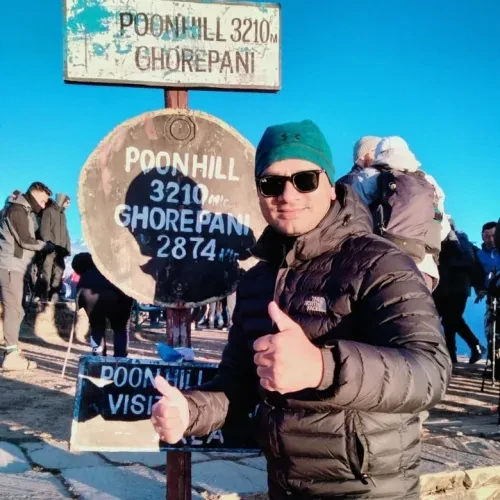
Our travel experts are ready to assist you with any questions.
Send us a message.Have a question before you book? Send your enquiry below and our travel experts will get back with the required information.