[{"name":"Everest Base Camp Helicopter Tour","duration":"1","image_url":"https:\/\/www.havenholidaysnepal.com\/storage\/trip-galleries\/1\/thumb_6cd53005d75a86e373d31419d1b14d78.webp","offer_price":1195,"url":"https:\/\/www.havenholidaysnepal.com\/trips\/everest-base-camp-helicopter-tour"},{"name":"Everest Mountain Flight","duration":"1","image_url":"https:\/\/www.havenholidaysnepal.com\/storage\/trip-galleries\/4\/thumb_3b0b4f1d6f72b0ad224daf4752f2c6e0.jpg","offer_price":285,"url":"https:\/\/www.havenholidaysnepal.com\/trips\/everest-mountain-flight"},{"name":"Everest Short Trek","duration":"9","image_url":"https:\/\/www.havenholidaysnepal.com\/storage\/trip-galleries\/5\/thumb_BXPP3621.JPEG0.02033800 1727957098.webp","offer_price":995,"url":"https:\/\/www.havenholidaysnepal.com\/trips\/everest-short-trek"},{"name":"Gokyo Valley Trek","duration":"12","image_url":"https:\/\/www.havenholidaysnepal.com\/storage\/trip-galleries\/6\/thumb_10bc469b14731f23d3ce84a7092ad53f.jpg","offer_price":1195,"url":"https:\/\/www.havenholidaysnepal.com\/trips\/gokyo-valley-trek"},{"name":"15 days Annapurna Base Camp Trek","duration":"15","image_url":"https:\/\/www.havenholidaysnepal.com\/storage\/trip-galleries\/7\/thumb_87d1533bc45faf070990aef0579e4be4.jpg0.81855100 1728285496.webp","offer_price":785,"url":"https:\/\/www.havenholidaysnepal.com\/trips\/15-days-annapurna-base-camp-trek"},{"name":"Nepal Pilgrimage Tour","duration":"14","image_url":"https:\/\/www.havenholidaysnepal.com\/storage\/trip-galleries\/8\/thumb_02c3bcf2ad2e8a4c1703e90ae747b5f1.jpg","offer_price":1475,"url":"https:\/\/www.havenholidaysnepal.com\/trips\/nepal-pilgrimage-tour"},{"name":"UNESCO World Heritage Site Tour","duration":"10","image_url":"https:\/\/www.havenholidaysnepal.com\/storage\/trip-galleries\/9\/thumb_unesco-world-heritage-site-Lumbani-temple-buddhists-hindus-kathmandu-nepal0.36988600 17347617740.93089500 1737469667.webp","offer_price":715,"url":"https:\/\/www.havenholidaysnepal.com\/trips\/unesco-world-heritage-site-tour"},{"name":"Island Peak Climbing","duration":"16","image_url":"https:\/\/www.havenholidaysnepal.com\/storage\/trip-galleries\/11\/thumb_Island peak0.53947000 1734692503.webp","offer_price":2495,"url":"https:\/\/www.havenholidaysnepal.com\/trips\/island-peak-climbing"},{"name":"Upper Mustang Trek","duration":"18","image_url":"https:\/\/www.havenholidaysnepal.com\/storage\/trip-galleries\/12\/thumb_upper mustang 7 Oct-2024.jpg0.95398900 1728286166.webp","offer_price":2995,"url":"https:\/\/www.havenholidaysnepal.com\/trips\/upper-mustang-trek"},{"name":"Annapurna Circuit Trek","duration":"16","image_url":"https:\/\/www.havenholidaysnepal.com\/storage\/trip-galleries\/15\/thumb_tibetan-flags.jpg0.04843900 1728289138.webp","offer_price":985,"url":"https:\/\/www.havenholidaysnepal.com\/trips\/annapurna-circuit-trek"},{"name":"Gosainkunda Lake Trek","duration":"10","image_url":"https:\/\/www.havenholidaysnepal.com\/storage\/trip-galleries\/16\/thumb_5A8083B3-C007-41A8-853F-D0C37C97D235_1_105_c.jpeg0.52581200 1731845258.webp","offer_price":595,"url":"https:\/\/www.havenholidaysnepal.com\/trips\/gosainkunda-lake-trek"},{"name":"Zip-lining in Pokhara and Dhulikhel","duration":"1","image_url":"https:\/\/www.havenholidaysnepal.com\/storage\/trip-galleries\/18\/thumb_215f765e2ebc995dd5c800b4bfdbacc3.jpg","offer_price":82,"url":"https:\/\/www.havenholidaysnepal.com\/trips\/zip-lining-in-pokhara-and-dhulikhel"},{"name":"Annapurna Heli Tour","duration":"1","image_url":"https:\/\/www.havenholidaysnepal.com\/storage\/trip-galleries\/19\/thumb_d71a6bbb9fd4da8d1b567a5cdbdec85d.jpg","offer_price":555,"url":"https:\/\/www.havenholidaysnepal.com\/trips\/annapurna-heli-tour"},{"name":"Paragliding in Pokhara","duration":"1","image_url":"https:\/\/www.havenholidaysnepal.com\/storage\/trip-galleries\/20\/thumb_de788d2dd9726783431f882c007efae1.jpg","offer_price":65,"url":"https:\/\/www.havenholidaysnepal.com\/trips\/paragliding-in-pokhara"},{"name":"Ultra-Flight in Pokhara","duration":"1","image_url":"https:\/\/www.havenholidaysnepal.com\/storage\/trip-galleries\/21\/thumb_e27a9fb572a5c21611bb2a3c18e4b8f0.jpeg","offer_price":175,"url":"https:\/\/www.havenholidaysnepal.com\/trips\/ultra-flight-in-pokhara"},{"name":"Sarangkot Hiking","duration":"1","image_url":"https:\/\/www.havenholidaysnepal.com\/storage\/trip-galleries\/22\/thumb_100ef822fea19987166c6c1366215f15.jpg","offer_price":55,"url":"https:\/\/www.havenholidaysnepal.com\/trips\/sarangkot-hiking"},{"name":"Mera Peak Climbing","duration":"18","image_url":"https:\/\/www.havenholidaysnepal.com\/storage\/trip-galleries\/24\/thumb_d16ae3895f678cf26ffbf2455f541fb5.jpg0.31883400 1732617790.webp","offer_price":2475,"url":"https:\/\/www.havenholidaysnepal.com\/trips\/mera-peak-climbing"},{"name":"Lower Dolpo Trek","duration":"18","image_url":"https:\/\/www.havenholidaysnepal.com\/storage\/trip-galleries\/26\/thumb_Dolpo Galary - 1.JPG0.37725200 1727939952.webp","offer_price":2995,"url":"https:\/\/www.havenholidaysnepal.com\/trips\/lower-dolpo-trek"},{"name":"Nagarkot Sunrise\/Sunset Tour","duration":"1","image_url":"https:\/\/www.havenholidaysnepal.com\/storage\/trip-galleries\/27\/thumb_5147a5532644283a380f2e86f3857c13.jpg0.17748000 1728488108.webp","offer_price":30,"url":"https:\/\/www.havenholidaysnepal.com\/trips\/nagarkot-sunrise-sunset-tour"},{"name":"16 day Everest Base Camp Trek","duration":"16","image_url":"https:\/\/www.havenholidaysnepal.com\/storage\/trip-galleries\/28\/thumb_IMG_4311.JPG0.64984800 1727942213.webp","offer_price":1695,"url":"https:\/\/www.havenholidaysnepal.com\/trips\/16-day-everest-base-camp-trek"},{"name":"Ghorepani Poon Hill trek with Jungle Safari and Trishuli River Rafting -13 days","duration":"13","image_url":"https:\/\/www.havenholidaysnepal.com\/storage\/trip-galleries\/29\/thumb_Ghorepani Poon hill.jpg0.48460800 1728281439.webp","offer_price":795,"url":"https:\/\/www.havenholidaysnepal.com\/trips\/ghorepani-poon-hill-trek-with-jungle-safari-and-trishuli-river-rafting--13-days"},{"name":"Mardi Himal Trek","duration":"12","image_url":"https:\/\/www.havenholidaysnepal.com\/storage\/trip-galleries\/30\/thumb_s1.jpg0.62112600 1728200721.webp","offer_price":795,"url":"https:\/\/www.havenholidaysnepal.com\/trips\/mardi-himal-trek"},{"name":"Langtang Valley Trekking","duration":"10","image_url":"https:\/\/www.havenholidaysnepal.com\/storage\/trip-galleries\/31\/thumb_IMG_4702.JPG0.84916500 1727958504.webp","offer_price":685,"url":"https:\/\/www.havenholidaysnepal.com\/trips\/langtang-valley-trekking"},{"name":"Real Adventure Tour in Nepal","duration":"9","image_url":"https:\/\/www.havenholidaysnepal.com\/storage\/trip-galleries\/32\/thumb_ebd1b8cc78d90abe8b9003dd9a2f25bf.jpg0.82151300 1728213516.webp","offer_price":695,"url":"https:\/\/www.havenholidaysnepal.com\/trips\/real-adventure-tour-in-nepal"},{"name":"Luxury Tour in Nepal","duration":"10","image_url":"https:\/\/www.havenholidaysnepal.com\/storage\/trip-galleries\/33\/thumb_8574e61b252b18676b042caf30d830df.jpg","offer_price":1675,"url":"https:\/\/www.havenholidaysnepal.com\/trips\/luxury-tour-in-nepal"},{"name":"Luxury Everest Panorama Trek With EBC Heli Sightseeing","duration":"8","image_url":"https:\/\/www.havenholidaysnepal.com\/storage\/trip-galleries\/34\/thumb_URZL2397.JPEG0.01209600 1728027820.webp","offer_price":2395,"url":"https:\/\/www.havenholidaysnepal.com\/trips\/luxury-everest-panorama-trek-with-ebc-heli-sightseeing"},{"name":"13 day Everest Base Camp Trek with Helicopter","duration":"13","image_url":"https:\/\/www.havenholidaysnepal.com\/storage\/trip-galleries\/35\/thumb_IMG_4292.JPG0.70131500 1728029276.webp","offer_price":2095,"url":"https:\/\/www.havenholidaysnepal.com\/trips\/13-day-everest-base-camp-trek-with-helicopter"},{"name":"Manaslu Circuit Trek","duration":"16","image_url":"https:\/\/www.havenholidaysnepal.com\/storage\/trip-galleries\/36\/thumb_Mt Manaslu 03-Oct-2024.jpg0.65804900 1727938470.webp","offer_price":1055,"url":"https:\/\/www.havenholidaysnepal.com\/trips\/manaslu-circuit-trek"},{"name":"Kanchenjunga Base Camp Trek","duration":"21","image_url":"https:\/\/www.havenholidaysnepal.com\/storage\/trip-galleries\/37\/thumb_Kanchanjunga Trek -!.jpg0.54744400 1727938497.webp","offer_price":2275,"url":"https:\/\/www.havenholidaysnepal.com\/trips\/kanchenjunga-base-camp-trek"},{"name":"Ganesh Himal and Sing-La Trek","duration":"14","image_url":"https:\/\/www.havenholidaysnepal.com\/storage\/trip-galleries\/38\/thumb_Ganesh Himal slider-1.jpg0.43764500 1727937722.webp","offer_price":1775,"url":"https:\/\/www.havenholidaysnepal.com\/trips\/ganesh-himal-and-sing-la-trek"},{"name":"Island Peak Climb with Everest Base Camp Trek","duration":"21","image_url":"https:\/\/www.havenholidaysnepal.com\/storage\/trip-galleries\/39\/thumb_2be428730fe83525bc85a010564f99de.jpg","offer_price":2750,"url":"https:\/\/www.havenholidaysnepal.com\/trips\/island-peak-climb-with-everest-base-camp-trek"},{"name":"Students' Adventure Tour in Nepal","duration":"12","image_url":"https:\/\/www.havenholidaysnepal.com\/storage\/trip-galleries\/41\/thumb_a926d22fbfe08cba271c41ac289b3fd2.jpg","offer_price":995,"url":"https:\/\/www.havenholidaysnepal.com\/trips\/students-adventure-tour-in-nepal"},{"name":"7 Day Poonhill Trek","duration":"7","image_url":"https:\/\/www.havenholidaysnepal.com\/storage\/trip-galleries\/42\/thumb_6196bd69036473293a2c24cc21ed57d7.jpg0.10880600 1728205378.webp","offer_price":555,"url":"https:\/\/www.havenholidaysnepal.com\/trips\/7-day-poonhill-trek"},{"name":"7 Days Annapurna Base Camp Trek","duration":"7","image_url":"https:\/\/www.havenholidaysnepal.com\/storage\/trip-galleries\/43\/thumb_IMG_2214.JPG0.08204900 1728202033.webp","offer_price":355,"url":"https:\/\/www.havenholidaysnepal.com\/trips\/7-days-annapurna-base-camp-trek"},{"name":"3 days Poonhill Trek","duration":"3","image_url":"https:\/\/www.havenholidaysnepal.com\/storage\/trip-galleries\/44\/thumb_Poon hill.jpg0.60816600 1731412954.webp","offer_price":165,"url":"https:\/\/www.havenholidaysnepal.com\/trips\/3-days-poonhill-trek"},{"name":"Poon Hill Luxury Trek with Chitwan-12 days","duration":"12","image_url":"https:\/\/www.havenholidaysnepal.com\/storage\/trip-galleries\/45\/thumb_Poom hill.jpg0.52074500 1730180532.webp","offer_price":1175,"url":"https:\/\/www.havenholidaysnepal.com\/trips\/poon-hill-luxury-trek-with-chitwan-12-days"},{"name":"Everest Luxury Trek-7 days","duration":"7","image_url":"https:\/\/www.havenholidaysnepal.com\/storage\/trip-galleries\/46\/thumb_ACRX9330.JPEG0.93236200 1728031275.webp","offer_price":2195,"url":"https:\/\/www.havenholidaysnepal.com\/trips\/everest-luxury-trek-7-days"},{"name":"Hindu Pilgrimage Tour in Nepal-10 days","duration":"10","image_url":"https:\/\/www.havenholidaysnepal.com\/storage\/trip-galleries\/47\/thumb_a94bf96a4d31decb419f6f828a3280d2.jpg","offer_price":995,"url":"https:\/\/www.havenholidaysnepal.com\/trips\/hindu-pilgrimage-tour-in-nepal-10-days"},{"name":"Everest Base Camp Short Trek-12 days","duration":"12","image_url":"https:\/\/www.havenholidaysnepal.com\/storage\/trip-galleries\/48\/thumb_IMG_4311.JPG0.52680100 1727945154.webp","offer_price":995,"url":"https:\/\/www.havenholidaysnepal.com\/trips\/everest-base-camp-short-trek-12-days"},{"name":"Everest Base Camp Hike 12 Days","duration":"12","image_url":"https:\/\/www.havenholidaysnepal.com\/storage\/trip-galleries\/49\/thumb_IMG_4260.JPG0.51729100 1728061234.webp","offer_price":1295,"url":"https:\/\/www.havenholidaysnepal.com\/trips\/everest-base-camp-hike-12-days"},{"name":"11 Days Everest Base Camp Trek","duration":"11","image_url":"https:\/\/www.havenholidaysnepal.com\/storage\/trip-galleries\/50\/thumb_IMG_4249.JPG0.21392500 1727946959.webp","offer_price":1055,"url":"https:\/\/www.havenholidaysnepal.com\/trips\/11-days-everest-base-camp-trek"},{"name":"6 Days Annapurna Base Camp Trek","duration":"6","image_url":"https:\/\/www.havenholidaysnepal.com\/storage\/trip-galleries\/51\/thumb_6 days Abc.jpg0.58185400 1728200798.webp","offer_price":285,"url":"https:\/\/www.havenholidaysnepal.com\/trips\/6-days-annapurna-base-camp-trek"},{"name":"Annapurna Base Camp Trek","duration":"8","image_url":"https:\/\/www.havenholidaysnepal.com\/storage\/trip-galleries\/52\/thumb_IMG_2214.JPG0.29415700 1729487656.webp","offer_price":585,"url":"https:\/\/www.havenholidaysnepal.com\/trips\/annapurna-base-camp-trek"},{"name":"Everest Base Camp Trek with Helicopter Fly Out 10 Days","duration":"10","image_url":"https:\/\/www.havenholidaysnepal.com\/storage\/trip-galleries\/53\/thumb_IMG_4328.JPG0.52056600 1728058444.webp","offer_price":1875,"url":"https:\/\/www.havenholidaysnepal.com\/trips\/everest-base-camp-trek-with-helicopter-fly-out-10-days"},{"name":"Everest Base Camp Trek 14 Days","duration":"14","image_url":"https:\/\/www.havenholidaysnepal.com\/storage\/trip-galleries\/54\/thumb_Everest Base Camp Trek 14 days Oct 3 2024.JPG0.43202700 1727939745.webp","offer_price":1335,"url":"https:\/\/www.havenholidaysnepal.com\/trips\/everest-base-camp-trek-14-days"},{"name":"ABC Trek with Poonhill 11 Days","duration":"11","image_url":"https:\/\/www.havenholidaysnepal.com\/storage\/trip-galleries\/55\/thumb_ABC with fishtail.JPG0.21441100 1728277965.webp","offer_price":555,"url":"https:\/\/www.havenholidaysnepal.com\/trips\/abc-trek-with-poonhill-11-days"},{"name":"Muldai Hill Trek 9 Days","duration":"9","image_url":"https:\/\/www.havenholidaysnepal.com\/storage\/trip-galleries\/56\/thumb_7efee59f0a8c6817c8255bd2b9f3539d.jpeg0.19479300 1728213091.webp","offer_price":675,"url":"https:\/\/www.havenholidaysnepal.com\/trips\/muldai-hill-trek-9-days"},{"name":"Mardi Himal Trek 6 days","duration":"6","image_url":"https:\/\/www.havenholidaysnepal.com\/storage\/trip-galleries\/57\/thumb_slider 1.jpeg0.36909700 1728184981.webp","offer_price":590,"url":"https:\/\/www.havenholidaysnepal.com\/trips\/mardi-himal-trek-6-days"},{"name":"Mardi Himal Trek 7 days","duration":"7","image_url":"https:\/\/www.havenholidaysnepal.com\/storage\/trip-galleries\/58\/thumb_slider1.jpg0.61666600 1728206414.webp","offer_price":620,"url":"https:\/\/www.havenholidaysnepal.com\/trips\/mardi-himal-trek-7-days"},{"name":"Mardi Himal Trek 8 Days","duration":"8","image_url":"https:\/\/www.havenholidaysnepal.com\/storage\/trip-galleries\/59\/thumb_sli1.jpg0.38569100 1728206631.webp","offer_price":695,"url":"https:\/\/www.havenholidaysnepal.com\/trips\/mardi-himal-trek-8-days"},{"name":"14 Days Manaslu Trek","duration":"14","image_url":"https:\/\/www.havenholidaysnepal.com\/storage\/trip-galleries\/60\/thumb_sunrise-mt-manaslu-during-manaslu-circuit-larke-pass-trekking-himalaya-nepal (1)0.81855800 1738673284.webp","offer_price":885,"url":"https:\/\/www.havenholidaysnepal.com\/trips\/14-days-manaslu-trek"},{"name":"Dhampus-Sarangkot Trek with Chitwan 8 days","duration":"8","image_url":"https:\/\/www.havenholidaysnepal.com\/storage\/trip-galleries\/61\/thumb_Sarangkot Bhangyang.jpg0.75461400 1728210333.webp","offer_price":790,"url":"https:\/\/www.havenholidaysnepal.com\/trips\/dhampus-sarangkot-trek-with-chitwan-8-days"},{"name":"7 Days Golden Triangle Tour","duration":"7","image_url":"https:\/\/www.havenholidaysnepal.com\/storage\/trip-galleries\/62\/thumb_311ce1d117ee0ba75402a7c301bcdf830.73532400 1739179809.webp","offer_price":845,"url":"https:\/\/www.havenholidaysnepal.com\/trips\/7-days-golden-triangle-tour"},{"name":"Annapurna Circuit Trek 12 days","duration":"12","image_url":"https:\/\/www.havenholidaysnepal.com\/storage\/trip-galleries\/63\/thumb_IMG_20161024_092237.jpg0.57796600 1728289938.webp","offer_price":695,"url":"https:\/\/www.havenholidaysnepal.com\/trips\/annapurna-circuit-trek-12-days"},{"name":"Everest Base Camp Budget Trek 16 Days","duration":"16","image_url":"https:\/\/www.havenholidaysnepal.com\/storage\/trip-galleries\/64\/thumb_IMG_4423.JPG0.92579200 1728144669.webp","offer_price":958,"url":"https:\/\/www.havenholidaysnepal.com\/trips\/everest-base-camp-budget-trek-16-days"},{"name":"Poonhill Budget Trek 7 Days","duration":"7","image_url":"https:\/\/www.havenholidaysnepal.com\/storage\/trip-galleries\/65\/thumb_5be067852d0c5228d6f3155bc425c6b5.jpg","offer_price":395,"url":"https:\/\/www.havenholidaysnepal.com\/trips\/poonhill-budget-trek-7-days"},{"name":"Annapurna Base Camp Budget Trek 8 Days","duration":"8","image_url":"https:\/\/www.havenholidaysnepal.com\/storage\/trip-galleries\/66\/thumb_Pokhara.jpg0.16188000 1728212001.webp","offer_price":375,"url":"https:\/\/www.havenholidaysnepal.com\/trips\/annapurna-base-camp-budget-trek-8-days"},{"name":"The Real UNESCO Seven World Heritage Tour in Kathmandu 4 days","duration":"4","image_url":"https:\/\/www.havenholidaysnepal.com\/storage\/trip-galleries\/67\/thumb_Baudha Stupa.JPG0.63906900 1728201021.webp","offer_price":380,"url":"https:\/\/www.havenholidaysnepal.com\/trips\/the-real-unesco-seven-world-heritage-tour-in-kathmandu-4-days"},{"name":"Everest Base Camp Jeep Ride with Helicopter Return","duration":"14","image_url":"https:\/\/www.havenholidaysnepal.com\/storage\/trip-galleries\/68\/thumb_788ee5b63a6efb6f3c3d048b4270daca.JPG","offer_price":1995,"url":"https:\/\/www.havenholidaysnepal.com\/trips\/everest-base-camp-jeep-ride-with-helicopter-return"},{"name":"Annapurna Base Camp Jeep Ride with Helicopter Return 7 days","duration":"7","image_url":"https:\/\/www.havenholidaysnepal.com\/storage\/trip-galleries\/69\/thumb_abc jeep.jpg0.10280600 1728204064.webp","offer_price":1455,"url":"https:\/\/www.havenholidaysnepal.com\/trips\/annapurna-base-camp-jeep-ride-with-helicopter-return-7-days"},{"name":"Everest Base Camp Trek","duration":"15","image_url":"https:\/\/www.havenholidaysnepal.com\/storage\/trip-galleries\/70\/thumb_Everest Base Camp Trek 3 oct- 2024.JPG0.58445300 1727941472.webp","offer_price":1375,"url":"https:\/\/www.havenholidaysnepal.com\/trips\/everest-base-camp-trek"},{"name":"7 UNESCO World Heritage Tour Kathmandu 2 days","duration":"2","image_url":"https:\/\/www.havenholidaysnepal.com\/storage\/trip-galleries\/72\/thumb_Bhaktipur 3.jpg0.05559600 1728201496.webp","offer_price":150,"url":"https:\/\/www.havenholidaysnepal.com\/trips\/7-unesco-world-heritage-tour-kathmandu-2-days"},{"name":"Day Tour to UNESCO Heritage Sites","duration":"1","image_url":"https:\/\/www.havenholidaysnepal.com\/storage\/trip-galleries\/73\/thumb_228A1018.jpg0.79892500 1728199793.webp","offer_price":55,"url":"https:\/\/www.havenholidaysnepal.com\/trips\/day-tour-to-unesco-heritage-sites"},{"name":"Golden Triangle Tour in Nepal","duration":"8","image_url":"https:\/\/www.havenholidaysnepal.com\/storage\/trip-galleries\/74\/thumb_f54139cf9100f00015ffe0400687e946.webp","offer_price":588,"url":"https:\/\/www.havenholidaysnepal.com\/trips\/golden-triangle-tour-in-nepal"},{"name":"Everest Base Camp Honeymoon Tour by Helicopter with Pokhara","duration":"7 days","image_url":"https:\/\/www.havenholidaysnepal.com\/storage\/trip-galleries\/76\/thumb_RJTL7517.JPEG0.40261600 1731499989.webp","offer_price":9999,"url":"https:\/\/www.havenholidaysnepal.com\/trips\/everest-base-camp-honeymoon-tour-by-helicopter-with-pokhara"},{"name":"Yoga and Meditation Retreat Tour in Nepal","duration":"10 days","image_url":"https:\/\/www.havenholidaysnepal.com\/storage\/trip-galleries\/77\/thumb_decf8e33-6617-4400-9df0-63bf75509adf.JPG0.51948300 1731574810.webp","offer_price":2575,"url":"https:\/\/www.havenholidaysnepal.com\/trips\/yoga-and-meditation-retreat-tour-in-nepal"},{"name":"Chisapani-Nagarkot Trek","duration":"3","image_url":"https:\/\/www.havenholidaysnepal.com\/storage\/trip-galleries\/78\/thumb_0b64dfceaeab48ac36d685476bdebafb.webp","offer_price":165,"url":"https:\/\/www.havenholidaysnepal.com\/trips\/chisapani-nagarkot-trek"},{"name":"Chitwan Jungle Safari Tour","duration":"2","image_url":"https:\/\/www.havenholidaysnepal.com\/storage\/trip-galleries\/79\/thumb_IMG_1696.JPG0.28467800 1733054554.webp","offer_price":175,"url":"https:\/\/www.havenholidaysnepal.com\/trips\/chitwan-jungle-safari-tour"},{"name":"Kailash Overland Tour","duration":"16","image_url":"https:\/\/www.havenholidaysnepal.com\/storage\/trip-galleries\/80\/thumb_PA2605230.68496700 1735818657.webp","offer_price":2495,"url":"https:\/\/www.havenholidaysnepal.com\/trips\/kailash-overland-tour"},{"name":"4 nights 5 days Bhutan Tour","duration":"5","image_url":"https:\/\/www.havenholidaysnepal.com\/storage\/trip-galleries\/81\/thumb_PB0508470.23069500 1735828937.webp","offer_price":1265,"url":"https:\/\/www.havenholidaysnepal.com\/trips\/4-nights-5-days-bhutan-tour"},{"name":"Everest Base Camp Trek Without Flying","duration":"16","image_url":"https:\/\/www.havenholidaysnepal.com\/storage\/trip-galleries\/82\/thumb_308b054484eddc042e092e1ae2ae5586.webp","offer_price":685,"url":"https:\/\/www.havenholidaysnepal.com\/trips\/everest-base-camp-trek-without-flying"},{"name":"Everest Base Camp Trek by Land","duration":"16","image_url":"https:\/\/www.havenholidaysnepal.com\/storage\/trip-galleries\/83\/thumb_8f0f2784a3ae7343d193b64fe8d47c96.webp","offer_price":675,"url":"https:\/\/www.havenholidaysnepal.com\/trips\/everest-base-camp-trek-by-land"},{"name":"Everest Base Camp Trek by Jeep","duration":"16","image_url":"https:\/\/www.havenholidaysnepal.com\/storage\/trip-galleries\/84\/thumb_f82b3acdfc933bc3e0197624c001b0a6.webp","offer_price":675,"url":"https:\/\/www.havenholidaysnepal.com\/trips\/everest-base-camp-trek-by-jeep"},{"name":"Everest Base Camp Trek without Lukla Flight","duration":"16","image_url":"https:\/\/www.havenholidaysnepal.com\/storage\/trip-galleries\/85\/thumb_2d0acc76dc958e3122a3745074989914.webp","offer_price":675,"url":"https:\/\/www.havenholidaysnepal.com\/trips\/everest-base-camp-trek-without-lukla-flight"},{"name":"Langtang Valley Trek","duration":"7","image_url":"https:\/\/www.havenholidaysnepal.com\/storage\/trip-galleries\/86\/thumb_a845db06c5feada1478e8aed659fce97.webp","offer_price":195,"url":"https:\/\/www.havenholidaysnepal.com\/trips\/langtang-valley-trek"},{"name":"Everest Base Camp Trek with Gokyo Lake","duration":"17","image_url":"https:\/\/www.havenholidaysnepal.com\/storage\/trip-galleries\/87\/thumb_c6aa32f7654f2eda78134bc84ac70b79.webp","offer_price":1885,"url":"https:\/\/www.havenholidaysnepal.com\/trips\/everest-base-camp-trek-with-gokyo-lake"},{"name":"Everest Three Passes Trek","duration":"19","image_url":"https:\/\/www.havenholidaysnepal.com\/storage\/trip-galleries\/88\/thumb_db5364eaab56f5755da55868f8ca4258.webp","offer_price":1735,"url":"https:\/\/www.havenholidaysnepal.com\/trips\/everest-three-passes-trek"},{"name":"Annapurna Base Camp Trek From Pokhara","duration":"5","image_url":"https:\/\/www.havenholidaysnepal.com\/storage\/trip-galleries\/89\/thumb_49c813cf1054ff06108963924a78ee88.webp","offer_price":255,"url":"https:\/\/www.havenholidaysnepal.com\/trips\/annapurna-base-camp-trek-from-pokhara"},{"name":"Sarangkot Sunrise Tour from Pokhara","duration":"1","image_url":"https:\/\/www.havenholidaysnepal.com\/storage\/trip-galleries\/90\/thumb_932d995b8fb702634a23e8f9a0432c6e.webp","offer_price":35,"url":"https:\/\/www.havenholidaysnepal.com\/trips\/sarangkot-sunrise-tour-from-pokhara"},{"name":"Langtang Valley Trek-8 days","duration":"8","image_url":"https:\/\/www.havenholidaysnepal.com\/storage\/trip-galleries\/91\/thumb_81d3d0a6979c9ed01f65d5ade53820b2.webp","offer_price":250,"url":"https:\/\/www.havenholidaysnepal.com\/trips\/langtang-valley-trek-8-days"},{"name":"Manaslu Circuit Trek 12 days","duration":"12","image_url":"https:\/\/www.havenholidaysnepal.com\/storage\/trip-galleries\/92\/thumb_d8251bbef0c8a246a02bda5c150a27c2.webp","offer_price":675,"url":"https:\/\/www.havenholidaysnepal.com\/trips\/manaslu-circuit-trek-12-days"},{"name":"2 Days Poon Hill Trek","duration":"2","image_url":"https:\/\/www.havenholidaysnepal.com\/storage\/trip-galleries\/93\/thumb_9d8fa8f60767538857d6c7cb3a7fee8b.webp","offer_price":135,"url":"https:\/\/www.havenholidaysnepal.com\/trips\/2-days-poon-hill-trek"},{"name":"Upper Mustang Jeep Tour","duration":"6","image_url":"https:\/\/www.havenholidaysnepal.com\/storage\/trip-galleries\/94\/thumb_9a3098a6c860b87ad3339773ef5435b9.webp","offer_price":1095,"url":"https:\/\/www.havenholidaysnepal.com\/trips\/upper-mustang-jeep-tour"},{"name":"Tsum Valley Trek","duration":"11","image_url":"https:\/\/www.havenholidaysnepal.com\/storage\/trip-galleries\/95\/thumb_704a6a1eb293553827633dbd8ad7d22c.webp","offer_price":775,"url":"https:\/\/www.havenholidaysnepal.com\/trips\/tsum-valley-trek"},{"name":"Mardi Himal Trek from Pokhara","duration":"4","image_url":"https:\/\/www.havenholidaysnepal.com\/storage\/trip-galleries\/96\/thumb_c92e9ee49c2564a11c7a9ba593439efc.webp","offer_price":295,"url":"https:\/\/www.havenholidaysnepal.com\/trips\/mardi-himal-trek-from-pokhara"},{"name":"4 Days Poon Hill Trek","duration":"4","image_url":"https:\/\/www.havenholidaysnepal.com\/storage\/trip-galleries\/97\/thumb_c349e182edd0858f3e3409d945f0d2ec.webp","offer_price":215,"url":"https:\/\/www.havenholidaysnepal.com\/trips\/4-days-poon-hill-trek"},{"name":"Poon Hill Sunrise Jeep Tour from Pokhara","duration":"2","image_url":"https:\/\/www.havenholidaysnepal.com\/storage\/trip-galleries\/98\/thumb_509875052b16f6f9156db386e3592eb8.webp","offer_price":260,"url":"https:\/\/www.havenholidaysnepal.com\/trips\/poon-hill-sunrise-jeep-tour-from-pokhara"},{"name":"Muktinath Jeep Tour from Pokhara","duration":"3","image_url":"https:\/\/www.havenholidaysnepal.com\/storage\/trip-galleries\/99\/thumb_1651790cb7422703fe86d472a35d4f90.webp","offer_price":255,"url":"https:\/\/www.havenholidaysnepal.com\/trips\/muktinath-jeep-tour-from-pokhara"},{"name":"Ghorepani Poon Hill Trek from Pokhara","duration":"5","image_url":"https:\/\/www.havenholidaysnepal.com\/storage\/trip-galleries\/100\/thumb_27fa62452af4ea8e08544aaa035cc446.webp","offer_price":295,"url":"https:\/\/www.havenholidaysnepal.com\/trips\/ghorepani-poon-hill-trek-from-pokhara"},{"name":"Ghandruk, Poon Hill, Muktinath and Upper Mustang Tour","duration":"7 days","image_url":"https:\/\/www.havenholidaysnepal.com\/storage\/trip-galleries\/101\/thumb_a7dd15032cd9693005233b1df7dc63d3.webp","offer_price":685,"url":"https:\/\/www.havenholidaysnepal.com\/trips\/ghandruk-poon-hill-muktinath-and-upper-mustang-tour"},{"name":"Nar Phu Valley Trek with Annapurna Circuit","duration":"16 days","image_url":"https:\/\/www.havenholidaysnepal.com\/storage\/trip-galleries\/102\/thumb_21f5af1d6f698a6898b64413bcc19c69.webp","offer_price":1395,"url":"https:\/\/www.havenholidaysnepal.com\/trips\/nar-phu-valley-trek-with-annapurna-circuit"},{"name":"Poon Hill-Jhino Danda Hot Spring Trek","duration":"4","image_url":"https:\/\/www.havenholidaysnepal.com\/storage\/trip-galleries\/103\/thumb_b1a8563edaf102468aab613332282c6c.webp","offer_price":215,"url":"https:\/\/www.havenholidaysnepal.com\/trips\/poon-hill-jhino-danda-hot-spring-trek"},{"name":"Annapurna Base Camp Trek with Helicopter Return","duration":"4","image_url":"https:\/\/www.havenholidaysnepal.com\/storage\/trip-galleries\/104\/thumb_928d650987e2db5f449127b41966da53.webp","offer_price":895,"url":"https:\/\/www.havenholidaysnepal.com\/trips\/annapurna-base-camp-trek-with-helicopter-return"},{"name":"Annapurna Circuit with Tilicho Lake Trek","duration":"10","image_url":"https:\/\/www.havenholidaysnepal.com\/storage\/trip-galleries\/105\/thumb_a8c9d8bf4041c0fa676d6c239abfd24c.webp","offer_price":615,"url":"https:\/\/www.havenholidaysnepal.com\/trips\/annapurna-circuit-with-tilicho-lake-trek"}]
Teahouses on Everest Base Camp Trail: A Quick Guide
When trekking on the Everest Base Camp Trail, you can experience a true trekking atmosphere in the teahouses. These are family-run lodges that provide basic facilities and the warmth of the Sherpa hospitality. This is a quick guide on what you can expect from the facilities, cost, and the evolution of the teahouses on the Everest Base Camp Trail. This is a useful resource for planning your Everest Base Camp trekking package.
Why Teahouses Are the Heart of the Everest Base Camp Trek?
Meanwhile, teahouses form the heart of the Everest Base Camp Trek experience. Every day, trekkers find solace in these family-run teahouses, which provide them with much-needed comfort, stability, and warmth after a day of climbing. The presence of the Sherpa people gives the experience a sense of real, living culture, which is present throughout the trek. Thus, teahouses form a fundamental part of the Everest Base Camp Trek experience.
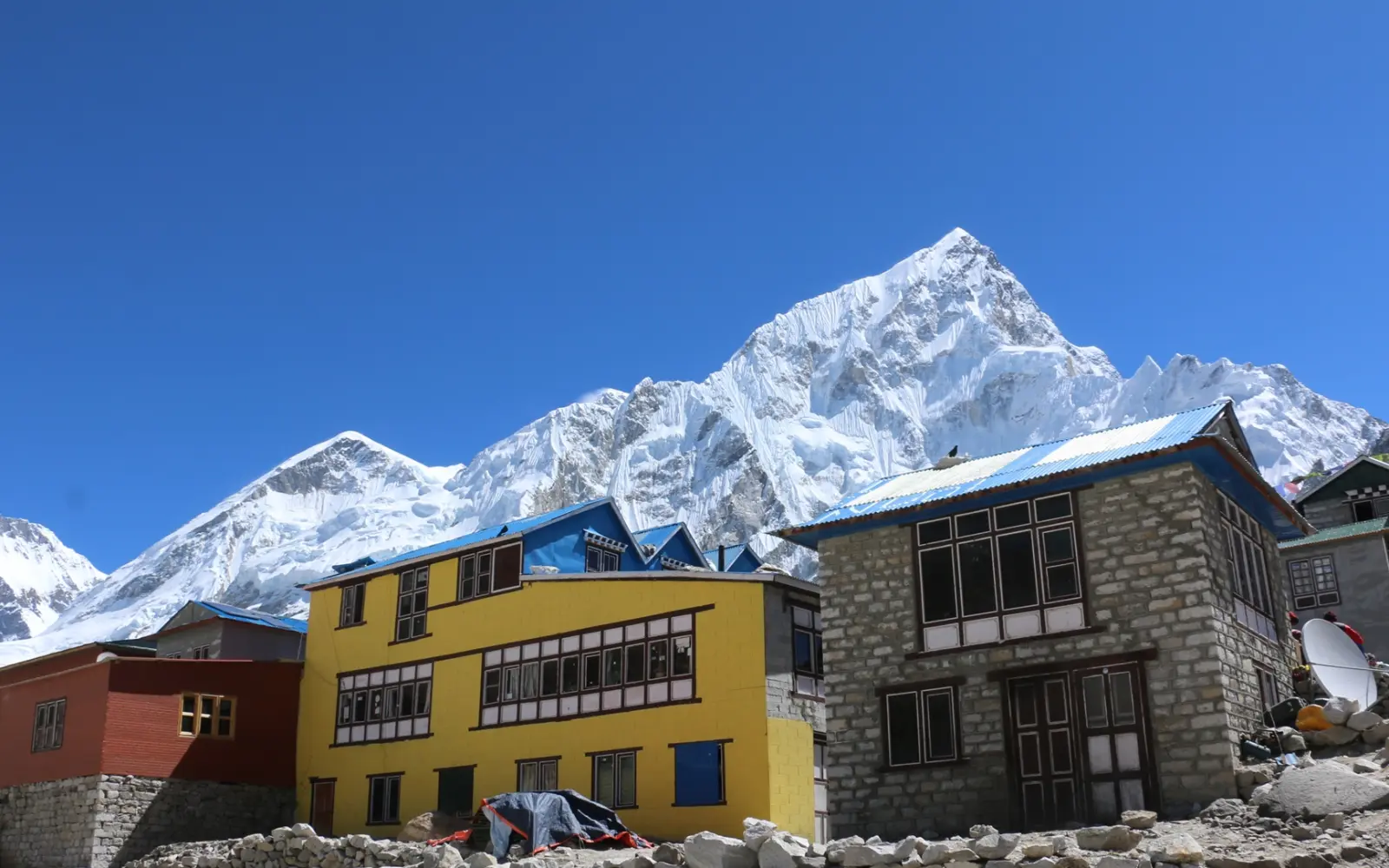
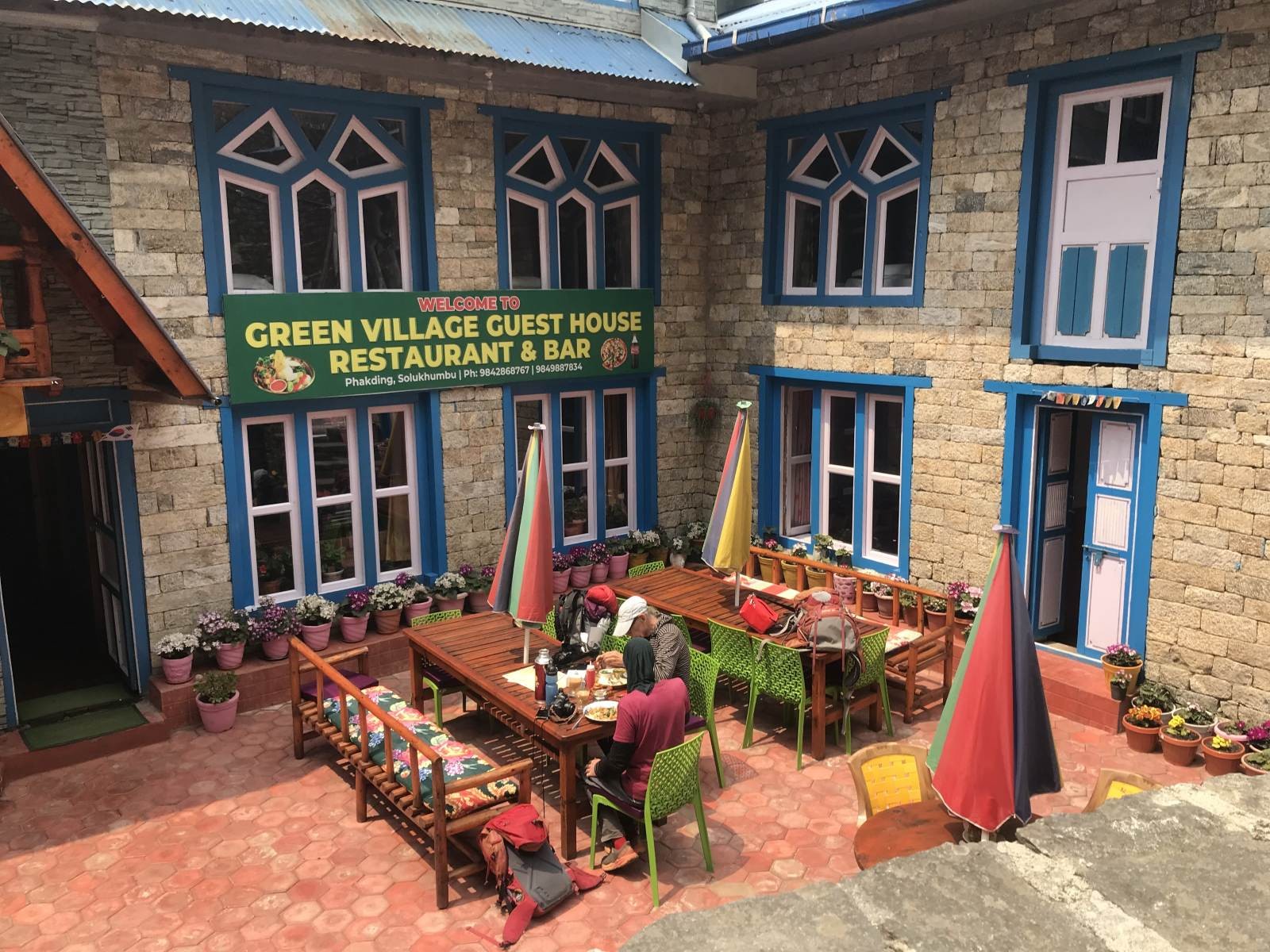
Phakding Lodge – Comfortable teahouse accommodation on the Everest Base Camp Trek with warm meals, cozy rooms, and beautiful mountain views.
What was originally intended to provide tea to porters and locals has now evolved into a system of teahouses that provide trekkers with much-needed accommodation, food, and social interaction. Trekkers have the opportunity to interact with the locals, especially the Sherpa community, in villages such as Namche Bazaar (3440m). This experience is essential to the Everest Base Camp Trek experience.
Actually, there is no need to carry camping gear, thanks to the presence of teahouses along the trekking route, which includes Lukla (2860m) up to Gorak Shep (5164m). Thus, teahouses provide trekkers with a sense of sustainability, especially considering that locals run these teahouses, thus keeping them economically afloat.
Likewise, teahouses provide a sense of stability, especially considering the rugged terrain of Khumbu, where temperatures drop quite low, especially near Mount Everest (8848m). Thus, these teahouses provide trekkers with a sense of comfort, especially with the presence of stoves that provide much-needed heat during cold nights, thus providing trekkers with a taste of real Sherpa hospitality.
There is, of course, the availability of high-end accommodation, especially in lower altitudes such as Namche Bazaar (3440m). However, most trekkers choose to use teahouses, especially considering that these teahouses provide a traditional experience. Thus, teahouses form a fundamental part of the Everest Base Camp Trek experience.
Key Reasons Teahouses Define Everest Base Camp Trek :
Family-run lodges offer warm Sherpa hospitality
Provide essential shelter without camping gear
Enable deep cultural immersion with locals
Support sustainable local economy in Khumbu
Offer communal dining for trekker connections
What Exactly Are Teahouses? A Beginner's Guide
Actually, teahouses on the Everest Base Camp trekking route differ considerably from what you would think of as luxury hotels. Here, trekkers have access to basic accommodation, beds, and shared facilities. Family-run kitchen facilities provide trekkers with daily meals such as dal bhat, making them a budget-friendly option, especially for those choosing to do the Everest Base Campteahouse trek.
In fact, accommodation is basic, with beds, mostly twin beds, foam mattresses, and blankets. Most trekkers use shared facilities, such as communal bathrooms and toilets. Dining rooms have a homely atmosphere, especially in the evenings, with yak dung stoves providing heat. Meals provide a mix of Nepali and Western cuisine, helping new trekkers adjust quickly to teahouse living while trekking to Everest Base Camp.
Here, teahouses on Everest Base Camp have improved considerably following the 2015 earthquake. At lower altitudes, such as Lukla (2860m) and Phakding (2610m), there is more modern accommodation available. Even teahouses such as Namche Bazaar (3440m) and Dingboche (4410m) have bathrooms and hot showers. So, teahouses have improved considerably, providing much-needed comfort to those trekking to Everest Base Camp.
However, if you go higher up, such as near Gorak Shep (5164m), you can expect the basic facilities. There is no heating, thin walls, and electricity is not always available, only through solar power or generators. Even then, teahouses manage to provide all one needs, even if not all those one would want.
And, of course, there is the price, which is always friendly. Rooms cost between $3 to $10 per night, depending on altitude, while meals cost between $20 to $35 per day. So, Everest Base Camp Trek based on teahouses is always accessible to all.
Western-style, hot showers often | Squat/shared, limited hot water
Extra $3–$10 for shower
Heating
Dining hall stove | Yak-dung stove in common area
Included in stay
Electricity/WiFi
Solar/generators, charging available | Limited/solar, expensive charging
$2–$5 per charge
Meals
Diverse menu (dal bhat, pasta) | Simpler options, higher prices
$20–$35 per day
Teahouse Facilities and Costs Overview :
Typical Facilities and Amenities in EBC Teahouses
Here, take a look at the facilities you can expect to encounter while trekking the Everest Base Camp Trek Route, where you'll have overnight stays in EBC teahouses. Well, you'll find that all the basic amenities are available, quite functional, and always reliable. There’s a bit of variation depending on your height, though, with more budget-friendly, cozier options available in lower villages compared to a bit more stringent ones found higher up. So, if you're aware of what to expect, you'll have a much more pleasant teahouse trek to Everest Base Camp.
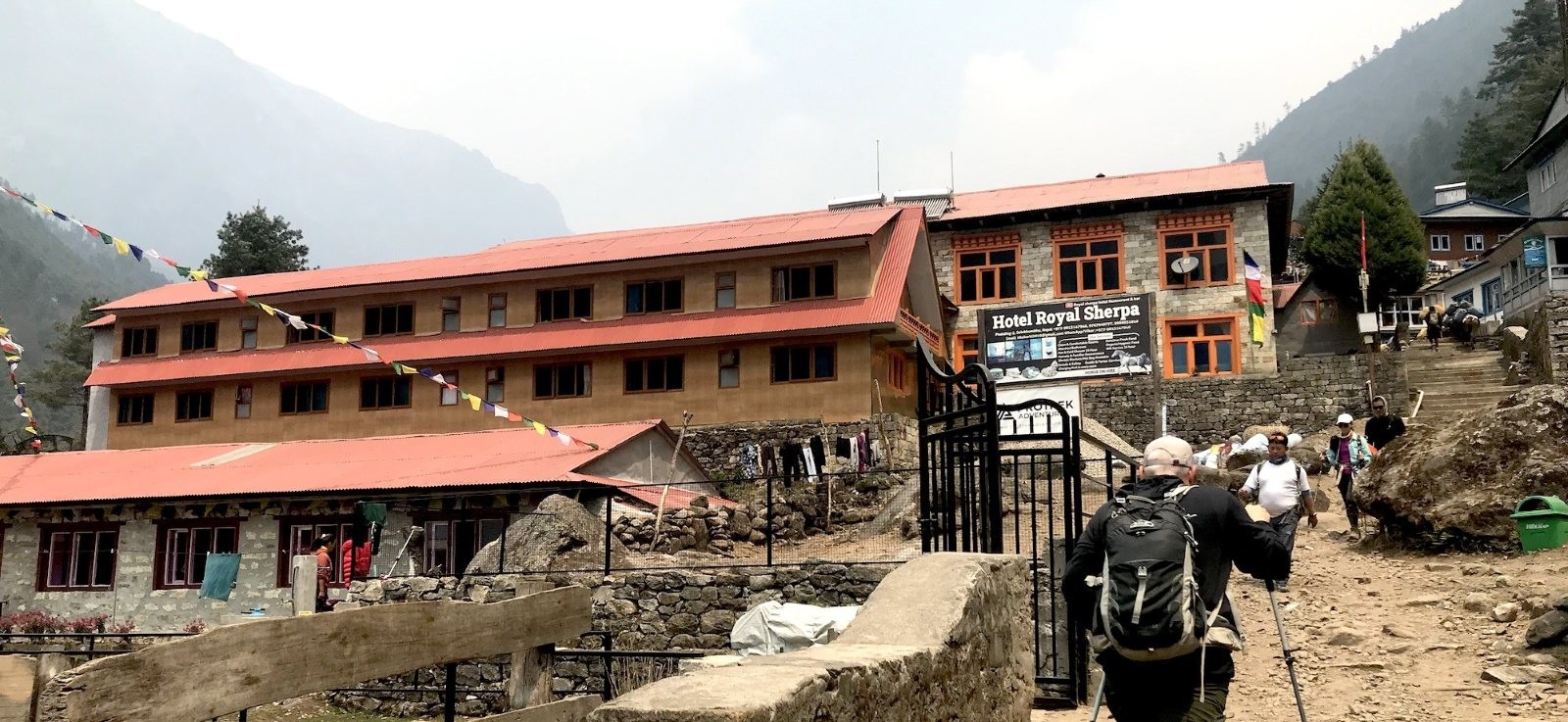
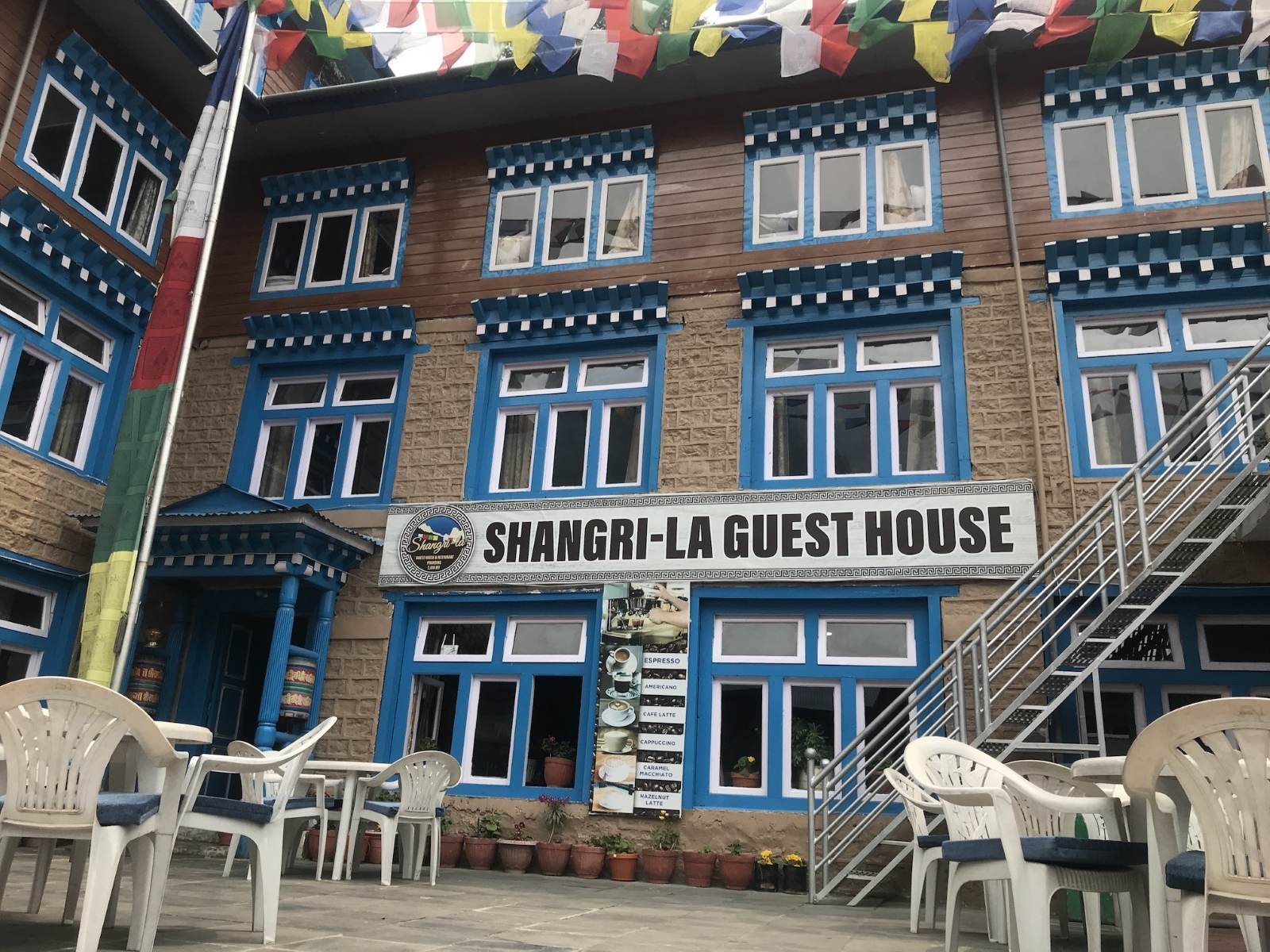
Guest House, Phakding – A comfortable teahouse on the Everest Base Camp Trek, providing cozy rooms, warm meals, and a relaxing stay for trekkers.
Actually, rooms have twin beds, foam mattresses, and thick blankets. Some people use dorm rooms, while others manage to score twin rooms if available. In lower villages, such as Namche Bazaar (3440m), you'll have access to bathrooms with attachments. In higher locations, such as Lobuche (4910m), you'll have shared rooms without any heating facilities. Well, teahouse rooms have remained quite simple, yet sufficiently warm, to ensure you get a good night’s sleep.
Likewise, the dining area is where you'll gather each night, where big rooms with long tables and benches provide seating space around a yak dung stove. Well, you'll always find dal bhat, momos, pasta, and fried rice available, accompanied by a nice cup of ginger tea to help you shake off the cold. So, there’s a sense of community and warmth here.
As you go higher, you'll notice that there’s less availability of electricity and Wi-Fi. Lukla (2860m) and Phakding (2610m) have teahouses with solar charging and Wi-Fi available. However, there’s a charge, and Wi-Fi is not always available higher up. There are hot showers available in lower villages, while you'll have to use buckets higher up. So, facilities have been adjusted according to your height, which is quite practical.
Moreover, toilets have flushes available in lower villages, while you'll have squat toilets available higher up. There are shared facilities, whether inside or outside, depending on your teahouse. Well, these have improved considerably following the rebuilds of 2015. So, EBC teahouse facilities have hit a nice balance between comfort and mountain living.
Everest Base Camp Trek with Helicopter Fly Out 10 Days | 10 days
Altitude-Based Facilities in Everest Base Camp Teahouses :
Lukla (2860m) to Namche Bazaar (3440m): Attached bathrooms common, hot showers available, reliable electricity, Wi-Fi in many lodges, even luxury accommodation is available these days
Tengboche (3860m) to Dingboche (4410m): Mostly shared toilets, limited hot showers, solar charging, stove-heated dining, but local are building modern hotels and cafes these days
Lobuche (4910m) to Gorak Shep (5164m): Basic twin beds, shared squat toilets, no hot showers, charging expensive or unavailable
Common Amenities: Dal bhat meals, thick blankets, communal stove, bottled water for sale
How much do Teahouses Cost? Room Rates, Meals, and Extras
Actually, the cost of Teahouses along the Everest Base Camp Trail is an important piece of information for the practical application of trekking budgets. As the elevation increases, the cost increases as well. In the low villages, the room rates are lower but tend to be the highest around the base. Therefore, the best way to plan an Everest Base Camp Teahike trek is by taking an in-depth look at the cost guides.
At Lukla (2860m) and Phakding (2610m), the basic twin rooms cost $2–$10 per night. At Namche Bazaar (3440m) and Tengboche (3860m), the cost ranges from $10–$20. By the time the trekker reaches Lobuche (4910m) and Gorak Shep (5164m), the cost ranges from $15–$30 per night. Most lodges will give the trekker a free room for dining at the lodge. This way, the cost of Teahouse trekking is minimized by making the smart choice.
Here, the cost of the meals on EBC Trail ranges from $5–$15 per person. The cost of the meals increases with the elevation. Dal bhat ranges $5–$7 in the lower villages and $10–$15 in the higher villages. The cost of hot showers ranges from $3–$10 per shower in the lower villages. The cost of charging a cell phone ranges $2–$5 per hour in the higher villages. On average, the cost of the meals and extras ranges around $20–$40 per day. Dining at the Teahouse where the trekker stays has the highest discount. Bottled water and other snacks tend to increase with the elevation. Wi-Fi also ranges $3–$10 per hour. The loyal diner will benefit the most with the discount.
On average, the cost per person per day on EBC Trek ranges around $30–$60. The cost ranges as the trekker stays in the mid-range lodges. There are no taxes for Teahouse stays. Everest Base Camp Teahike trekking is thus budget-friendly.
Item
Lower (Lukla–Namche) | Mid (Tengboche–Dingboche) | High (Lobuche–Gorak Shep)
Notes
Twin Room (per night)
$5–$10 | $8–$20 | $15–$30
Often free/discounted with meals.
Dal Bhat Meal
$5–$7 | $7–$10 | $10–$15
Staple dish, vegetarian options
Other Meals (pasta, etc.)
$6–$10 | $8–$12 | $12–$18
Prices rise with altitude
Hot Shower
$3–$5 | $4–$8 | $5–$10 or unavailable
Bucket style higher up
Charging Phone
$1–$3 | $2–$5 | $3–$8 or unavailable
Solar power limited higher up
Wi-Fi (per hour)
$2–$5 | $3–$8 | Rarely available
Slow and expensive above Namche.
Everest Base Camp Teahouse Cost Breakdown :
Teahouses in Lukla and Phakding: A Comfortable Kickoff to Your Trek
To start your teahike on the Everest Base Camp Trail, you can start your trekking adventure in a relaxed manner by easing into the teahouses in Lukla and Phakding. In the lower regions, modern amenities are always available, including en-suite bathrooms with hot showers, so these are the easiest, most friendly teahouses on the Everest Base Camp Trail.
Teahouses in Lukla and Phakding – Comfortable mountain lodges with cozy rooms, warm meals, and a perfect start to your Everest Base Camp Trek.
First, there is Lukla, the gateway, with over 30 teahouses available, including attached bathrooms, hot showers, and electricity. Buddha Lodge is a great teahouse with clean rooms and excellent flight connections, while the Yeti Mountain Home adds a touch of luxury to your teahike, so you can start your trek in style, easing your jet lag before your big adventure.
Then there is Phakding, which awaits you after a gentle stroll of 3-4 hours from Lukla, with teahouses offering beautiful views of the river, spacious, comfortable rooms, hot showers, and Western-style toilets, including the excellent Yeti Mountain Home and Sherpa Guide Lodge, so the teahouses in Phakding offer you a peaceful stop with excellent amenities.
Actually, prices vary from $5-$30 per night, depending on the level of amenities, while phone charging and Wi-Fi are available, so you can start your teahike on the Everest Base Camp Trail in style with the teahouses in Lukla and Phakding, with warm Sherpa hospitality in the family-run teahouses, so starting your teahike in Lukla and Phakding adds a great deal of value to your experience on the Everest Base Camp Trail.
Everest Base Camp Trek without Lukla Flight | 16 days
Lukla (2860m): Buddha Lodge (clean rooms, good connections), Yeti Mountain Home (luxury options), Hotel Sunny Garden
Phakding (2610m): Yeti Mountain Home (riverside comfort), Sherpa Guide Lodge (spacious rooms), Hotel Beer Garden (relaxed vibe)
Common Facilities: En-suite bathrooms, hot showers, charging points, Wi-Fi in many
Room Cost Range: $5–$30/night (higher for attached bath/luxury)
Best For: Acclimatization, modern start to Everest Base Camp teahouse trek
Namche Bazaar: The Bustling Hub with the Best Teahouse Variety
Actually, Namche Bazaar sits high at 3440m and is the most vibrant hub in the Everest Base Camp route. It’s home to the highest concentration of teahouses and has some wonderful options that combine comfort with views of majestic peaks. It’s the best place to get some quality facilities before attempting some more serious climbing.
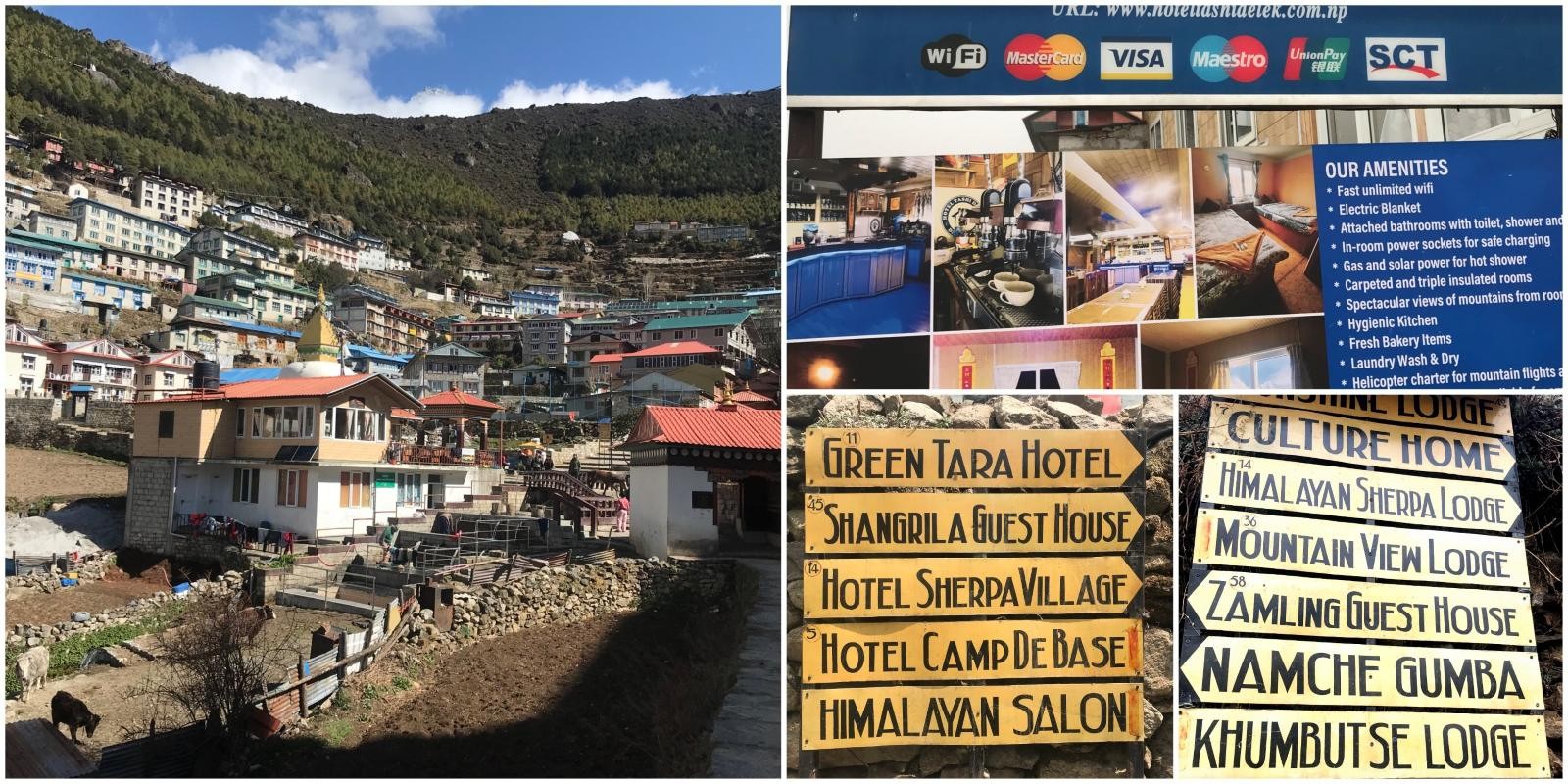
Namche Bazaar – The bustling heart of the Everest Base Camp Trek, offering the widest variety of comfortable teahouses, restaurants, cafés, and essential trekking services.
Likewise, Namche is a Sherpa market town that’s alive with shops, cafes, and bakeries that are all thriving after your acclimatization stays. Teahouses have attached bathrooms with hot showers and reliable Wi-Fi, and charging points are always available so you’re never in the dark. It’s a great place to rest and relax.
In fact, some of the most popular places include Hotel Sherpaland, which has spacious rooms with views and attached bathrooms. Yeti Mountain Home is a combination of cozy luxury and efficiency, and Hotel Namche and The Nest offer tremendous value for some simply spectacular views. In short, teahouses in Namche have it all and offer tremendous value for money.
Likewise, room rates vary between $10 and $30 per night and depend on availability and season. There’s a premium for rooms with attached bathrooms and heating facilities. Staying in your lodge may get you a discount or a free night! There’s a wide variety of food available in the menus, so you won’t go hungry. In short, Namche adds a wonderful dimension to the Everest Base Camp Teahouse Trek.
And to top it off, Thamserku (6608m) and Kongde Ri provide some wonderful views from your rooms! It’s a great place to relax and then head off to Tengboche (3860m), and it’s a culturally rich place that adds depth to your adventure.
Hotel Sherpaland: Large rooms, attached baths, electric blankets option
Yeti Mountain Home: Luxury comfort, great service, mountain views
The Nest / Hotel Namche, Green Tara: Reliable Wi-Fi, charging, good value
Facilities Highlights: En-suite bathrooms common, hot showers, Wi-Fi/charging reliable
Cost Notes: $10–$30/night; meals $10–$20/day; best hub for Everest Base Camp teahouse trek
Tengboche, Debuche, and Pangboche: Monastery Views and Cozy Stays
Meanwhile, there is a touch of magic in the mid-trail as you visit Tengboche, Debuche, and Pangboche in the Everest Base Camp trekking trail. Each day, you will discover beautiful spots for viewing in the vicinity of Tengboche Monastery at an elevation of 3860m. These are peaceful spots in the Everest Base Camp teahike.
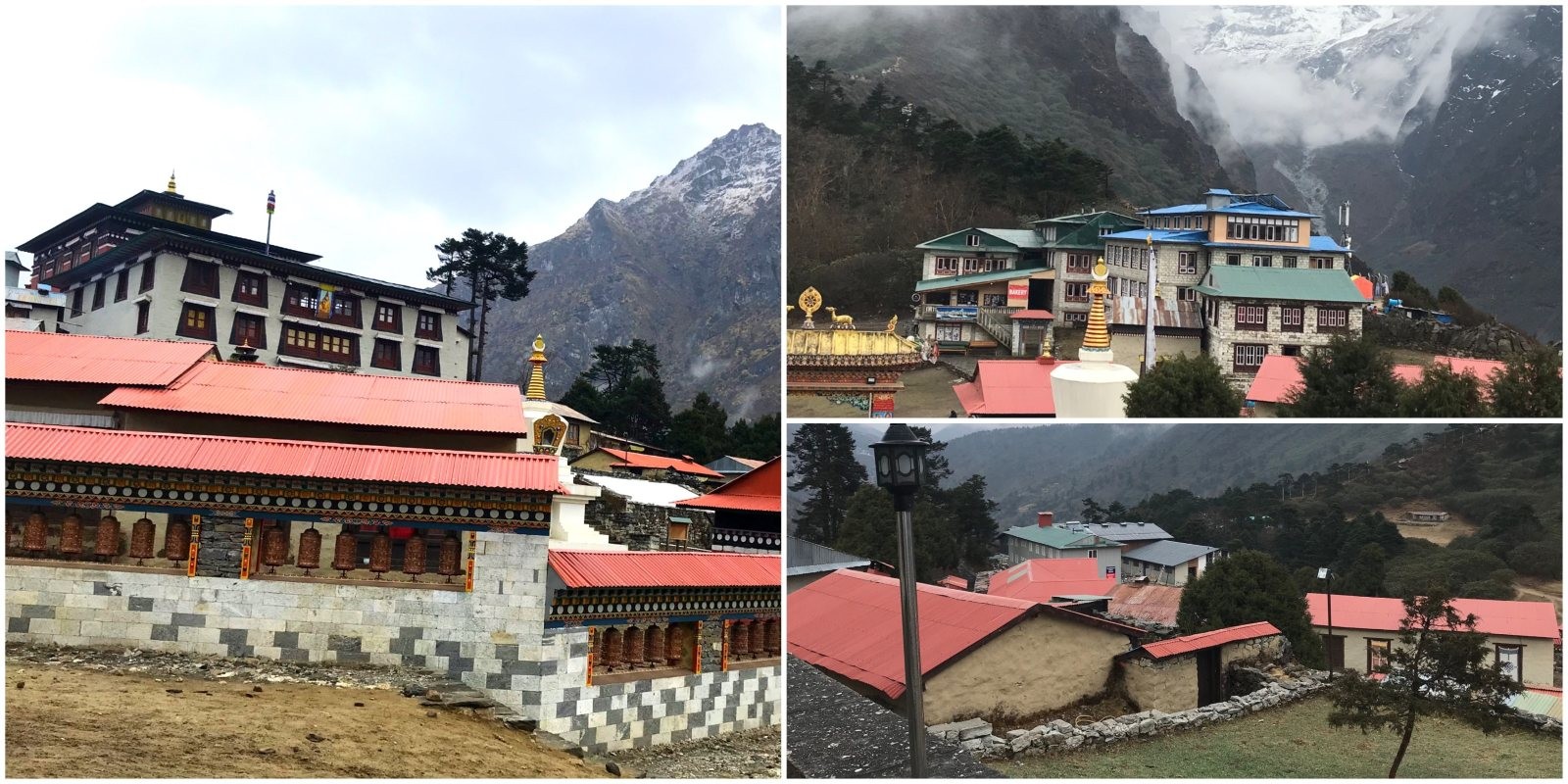
Tengboche,– Cozy mountain teahouses with stunning monastery views, warm hospitality, and breathtaking Himalayan scenery along the Everest Base Camp Trek.
Likewise, Tengboche (3860m) is a captivating spot in the Everest Base Camp trail due to the presence of a world-famous monastery that faces Ama Dablam (6812m). You will have a chance to visit the monastery for prayers in the evenings and enjoy the most spectacular sunsets in the region. The teahouses in Tengboche have simple but cozy stays with blankets and stove-heated dining rooms in the center of the lodges. The rooms have shared squat toilets and limited hot water.
Moreover, Debuche (3770m) is located just below Tengboche in a peaceful environment surrounded by trees. The lodges in this region are fewer, but you will enjoy a peaceful environment in this region as you take a break before proceeding to Dingboche (4410m).
Similarly, Pangboche (3985m) is an attractive region in the Everest Base Camp trail due to the presence of ancient gompas. You may even catch a glimpse of the magnificent Everest (8848m). The teahouses in this region are warm even in the evenings, but you may have to share the facilities and have simple twin beds.
In summary, the cost for mid-trail teahouse stays in this region is about $8-$20. This region is less crowded compared to Namche Bazaar (3440m), but you will have a beautiful backdrop as you stay in the vicinity of Tengboche Monastery.
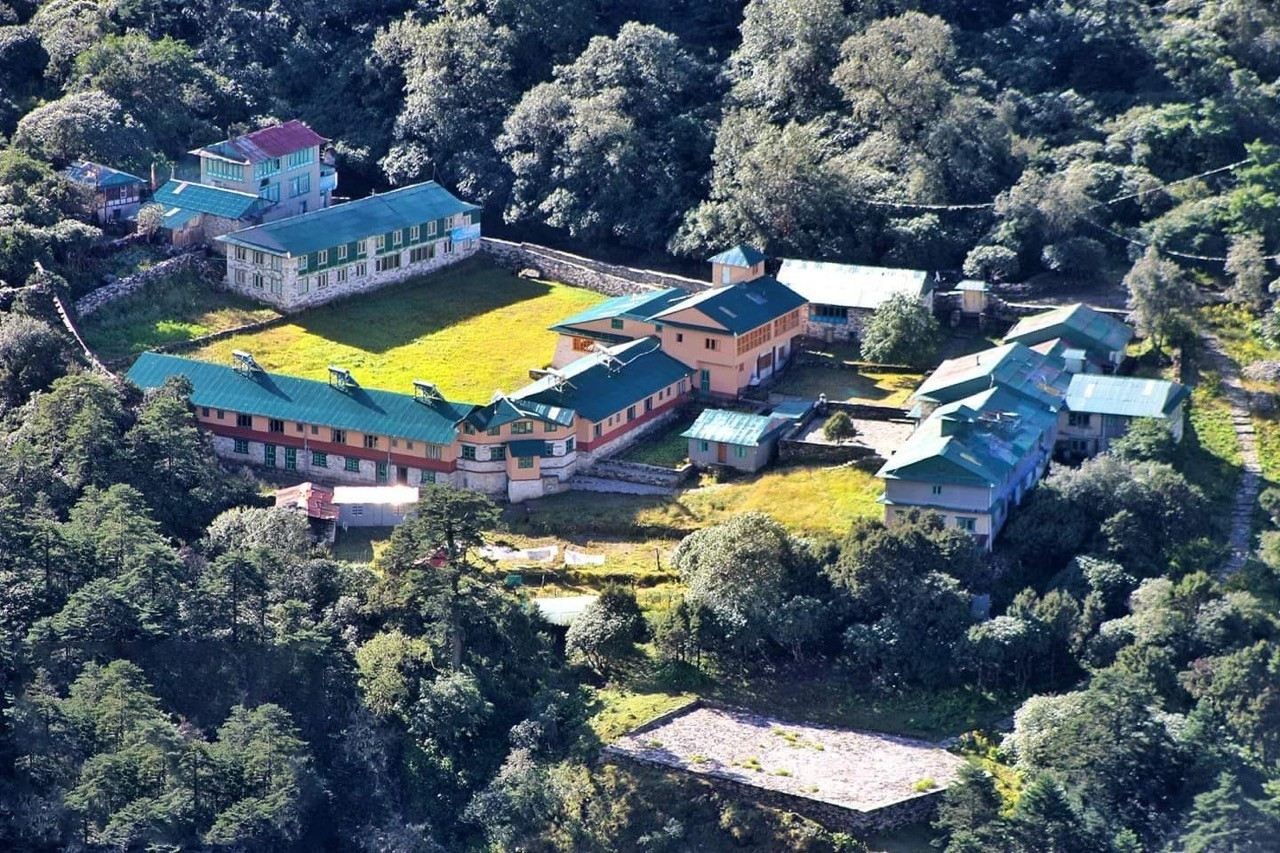
Rivendell Lodge, Debuche – A peaceful mountain lodge on the Everest Base Camp Trek, featuring comfortable rooms, warm meals, and a tranquil forest setting near Tengboche Monastery.
Pangboche (3985m): Authentic Sherpa village, ancient gompas, solid warmth, Everest (8848m) glimpses
Room Cost Range: $8–$20/night
Best For: Spiritual ambiance, mountain panoramas, cozy mid-trail stays on Everest Base Camp Trail
Dingboche: High-Altitude Transition with Solid Options
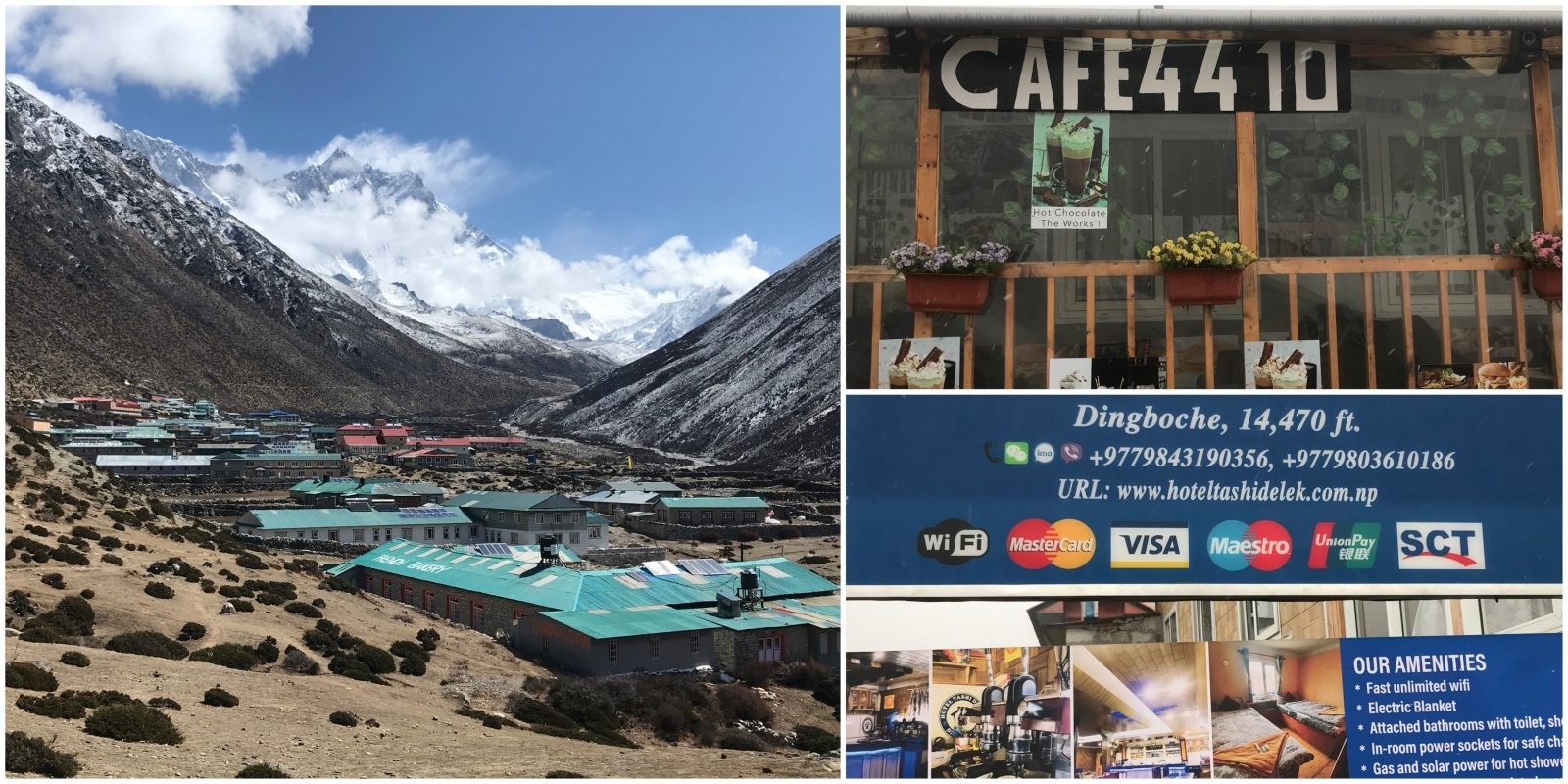
Actually, Dingboche is a prominent high-altitude stop on the Everest Base Camp trail. This is where trekkers take a break for proper acclimatization. There are reliable teahouses providing comfortable basics for the break. This is an essential stop for the teahouse trek to Everest Base Camp.Here, it is advisable to spend two nights in Dingboche for proper acclimatization. There are side excursions to Nangkartshang Peak at an elevation of 5083m for spectacular views of the valleys. The teahouse here, Sonam Friendship Lodge, features spacious dining rooms and warm stoves. Another teahouse in Dingboche is Himalayan Lodge, offering an assortment of meals such as soups and pasta. All in all, teahouses in Dingboche help in proper acclimatization.
Dingboche – A popular high-altitude stop on the Everest Base Camp Trek, offering comfortable teahouses, warm meals, and an ideal place to acclimatize before heading higher.
Similarly, the rooms are basic with twin beds and blankets but shared squat toilets. The temperatures here may fall below freezing at night. Hot showers are also not available or may be in a bucket. This is a basic but essential teahouse for the Everest Base Camp trek.
Likewise, there are charging facilities for electronic devices for $3-$8 per time. Internet connectivity is also available but is poor or unavailable. There are also options for vegetarians and an assortment of hot drinks. Family-owned teahouses also have clean facilities, making them an essential support for the Everest Base Camp trek.
In summary, the room prices vary from $10-$25 per night based on the high-altitude stop. Trekkers also dine in the teahouse for potential discounts. The rewards include stunning views of Ama Dablam at 6812m and Island Peak at 6189m. Dingboche is an essential high-altitude stop.
Teahouse Example
Key Features | Facilities
Room Cost (approx.) | Notes
Sonam Friendship Lodge
Spacious dining, warm stove, good views | Shared toilets, limited hot water
$10–$20/night Popular for acclimatization.
Himalayan Lodge
Variety of food, clean rooms | Bucket showers possible, charging
Acclimatization, solid comfort, food variety | Basic but warm, high-altitude support
— | Key transition before Lobuche.
Teahouses in Dingboche Overview :
Lobuche and Gorak Shep: two rugged destinations along the Everest Base Camp trek
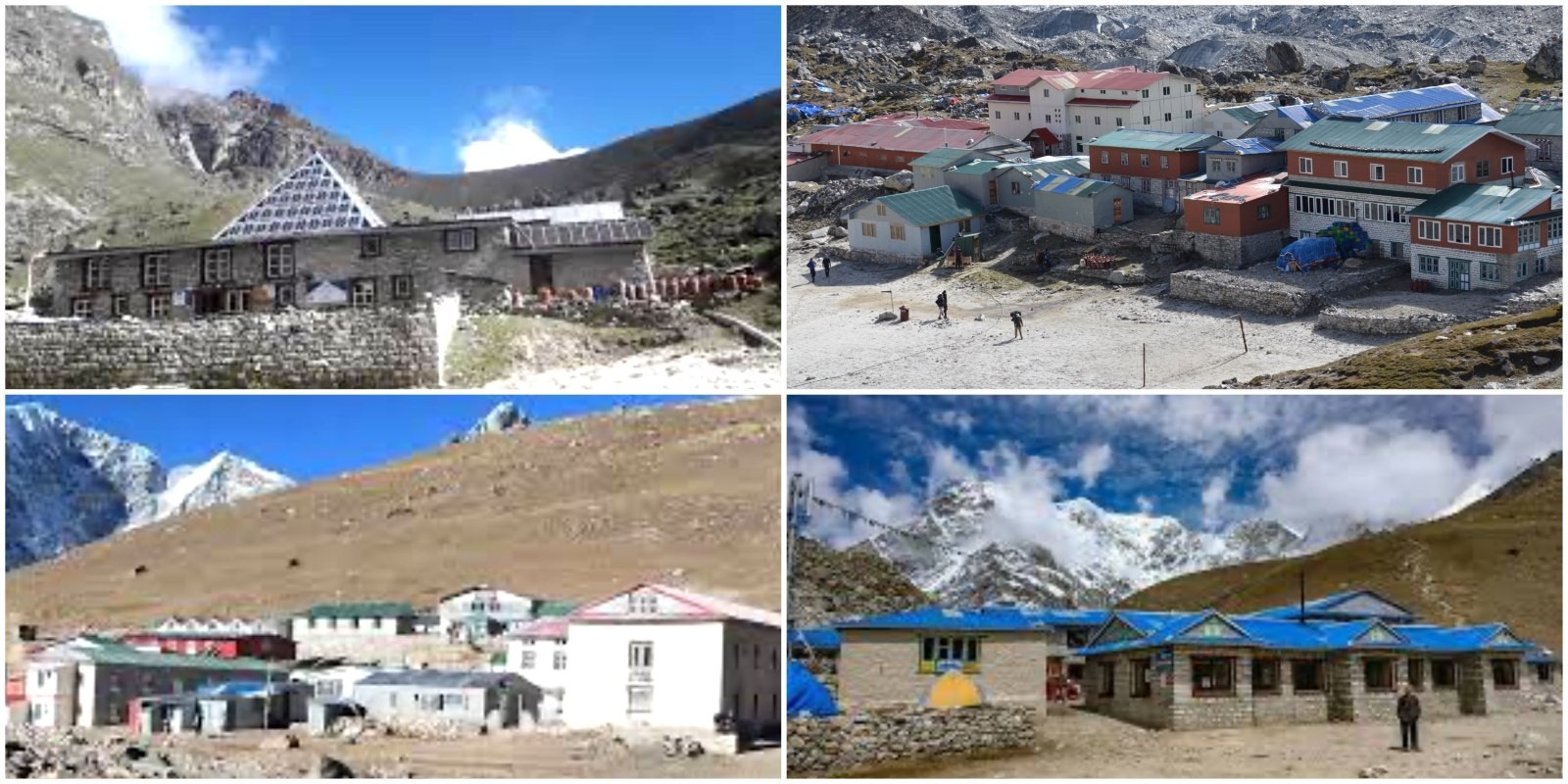
On the way to Everest Base Camp, two places stand out along this stretch due to their raw, bare-bones appeal: Lobuche and Gorak Shep. The teahouses at this point are deliberately spartan, a test of survival as you are high above sea level at 5,364 meters. The bare essentials are a challenge as you are pushed to the limits at this high altitude.Actually, Lobuche stands at 4,910 meters, offering rooms that are double occupancy or dorm rooms with mattresses that are as thin as can be expected. The facilities are shared, including squat toilets, limited washing facilities, and no hot showers at this high altitude. Only yak dung stoves provide warmth at this point. This is a bare-bones affair at Lobuche.
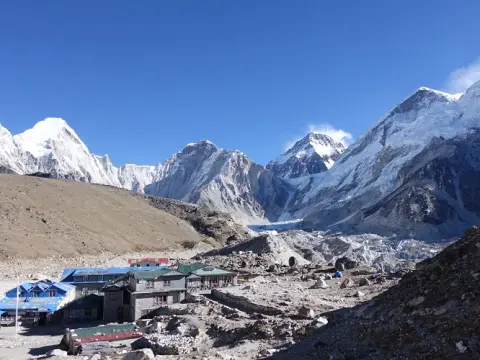
Lobuche & Gorak Shep – Rugged high-altitude lodges on the Everest Base Camp Trek, offering basic accommodation, warm meals, and a final resting place before reaching Everest Base Camp and Kala Patthar.
Likewise, Gorak Shep stands at 5,164 meters, which is the last village before Everest Base Camp. Rooms are spartan, shared dorm rooms, and the cost is high due to it being a remote location and in high demand. Prices start at $20 to $40 a night, which is why most trekkers choose to push on to Everest Base Camp and return on the same day.
In fact, the high altitude is a challenge as people acclimatize at this point before heading out to Kala Patthar at 5,545 meters to watch the sunrise. Toilets are basic but clean due to the efforts of the lodge owners. Soup and Dal Bhat are available, which are enough to sustain life as part of this teahouse trek to Everest Base Camp. This is why teahouses at Gorak Shep are essential to this trek.
Here, nights are freezing, dropping to as low as -15 degrees Celsius, so blankets and sleeping bags are necessary as there is limited electricity to allow people to charge their phones at a high cost. Lobuche and Gorak Shep offer a raw experience that is unforgettable.
Common Features: Limited electricity, expensive charging ($5–$10), simple meals only
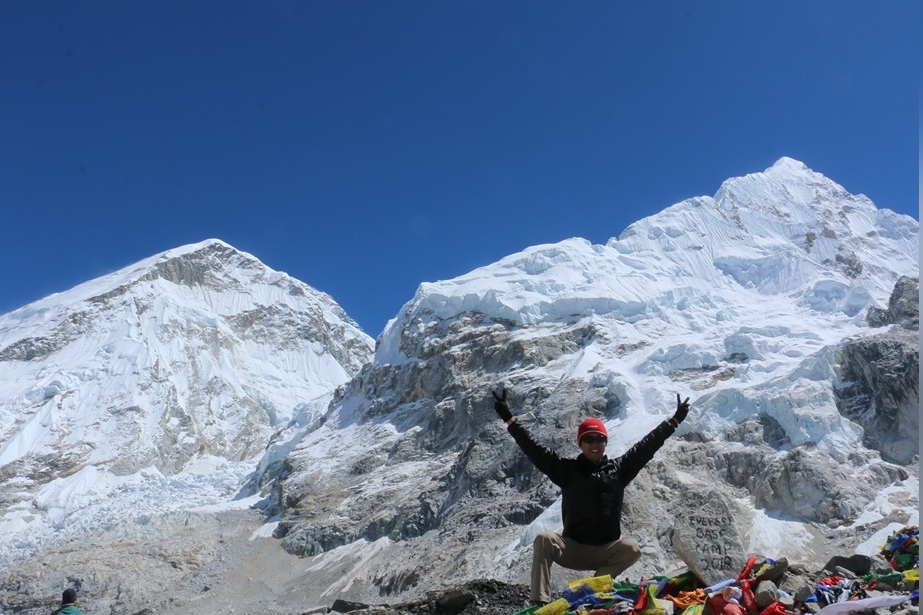
Why Stay: Acclimatization, Kala Patthar (5545m) access, Everest Base Camp (5364m) proximity
Why Push Through: Avoid high costs, minimize cold exposure at altitude
Pros and Cons of Teahouse Trekking on the EBC Trail
Actually, teahouse trekking on the Everest Base Camp (EBC) Trail is an activity that has both advantages and challenges. To start with, teahouse trekking is inexpensive, allowing trekkers to experience real Sherpa life every day. Moreover, teahouse trekking offers a chance to make new friends as there is a lot of socialization between trekkers on the trail. This is perhaps what most people remember as being unique to teahouse trekking on the Everest Base Camp Trail.
In fact, the cost factor also remains low as a night’s accommodation ranges between $3 and $30 depending on altitude. A meal at a teahouse also earns you a discounted room. Overall, teahouse trekking on the EBC Trail is a standout activity due to its socialization factor and low cost.
Likewise, the authentic Sherpa hospitality also allows trekkers to experience real culture as teahouses are family-owned, thus helping to sustain the Khumbu economy. Moreover, teahouse trekking offers a lighter pack as there is no need to carry camping gear, thus allowing trekkers to enjoy their trek while also allowing them to focus on their personal development.
However, there are also challenges associated with teahouse trekking on the Everest Base Camp Trail. For instance, cold nights can be a real challenge, especially at high altitude above 4000 meters, as walls are thin and blankets are rudimentary. Moreover, shared bathroom facilities also pose a challenge as there are concerns regarding privacy, especially at high altitude where hot showers are a problem.
Overall, teahouse trekking on the Everest Base Camp Trail has several challenges, including cold nights and shared bathroom facilities.
Island Peak Climb with Everest Base Camp Trek | 21 days
Pros and Cons of Teahouse Trekking on Everest Base Camp Trail
Pros:
Affordable rooms ($3–$30/night) and meals
Strong social vibe in communal dining areas
Authentic Sherpa hospitality and cultural immersion
No need for heavy camping equipment
Supports local families and Khumbu economy
Cons:
Very cold nights above 4000m
Shared bathrooms and limited/no hot showers higher up
Variable teahouse quality and cleanliness
Expensive extras (charging, Wi-Fi) at altitude
Altitude challenges amplify basic conditions
Essential Tips for Choosing and Staying in Teahouses on EBC Trek
To have a better Everest Base Camp teahouse trekking experience, you should focus on the basics. This means making smart choices for teahouse lodges and planning smartly. This will help you have a smoother and safer experience.
For instance, you should plan smartly during peak season in October or April. This is because teahouses in Namche Bazaar (3440m) and Dingboche (4410m) tend to be booked early in these seasons. You should also wake up early to get good rooms in these lodges before they are booked by other hikers. Moreover, you should inspect the room before booking it. This will help you have a comfortable stay in the lodges.
Likewise, you should also bring a sleeping bag liner for added comfort and hygiene since temperatures may fall below freezing at high altitudes above 4000m. Additionally, you should bring earplugs to help you sleep better in shared rooms or through thin walls. This is essential for a good night’s sleep during the Everest Base Camp trek.
Similarly, it is also important to bring a power bank and a flashlight since electricity is limited in high-altitude lodges. This is important since charging may cost $3 to $10 in Gorak Shep (5164m). You should also have dinner in the teahouse you choose to stay in to get discounted or even free rooms. You should also be considerate and keep noise low after 9 PM to maintain good relations with the owners.
To sum up, you should also maintain a focus on altitude preparation by drinking a lot of water and making smart choices for teahouses with good stoves for warm evenings.
Book popular teahouses early in peak season (Oct–Nov, Mar–May)
Arrive by early afternoon to select better rooms
Bring sleeping bag liner, earplugs, power bank, headlamp
Eat meals at your lodge for room discounts
Practice etiquette: low noise, respect space, drink lots of water
Prioritize altitude prep: slow pace, hydration, listen to body
Final Thoughts: Getting the Most from the Teahouse Experience in Everest Base Camp
Actually, it is clear that the teahouse experience is what makes the Everest Base Camp trek an unforgettable adventure. The teahouse experience is what immerses visitors in the culture of the people in Nepal. At the end of the day, visitors are able to share stories that become lifelong experiences. Thus, the teahouse experience is what makes this adventure worthwhile.
Here, comfort meets rugged beauty in the Himalayan Mountains. The evenings are warm and cozy with thick blankets and the majestic sight of the top of Everest (8848m). Sharing meals and stories lead to the formation of lifelong friendships with people from around the world. Staying in teahouses is what gives this adventure meaning. Thus, the teahouse experience is what makes this adventure worthwhile.
Likewise, it is important to plan ahead in order to have a great teahouse experience. Even in the evenings when the weather is cold and the elevation is above 4000m, the teahouse experience is warm and cozy. Even meals such as dal bhat are delicious after a long day’s climb. Thus, embracing the teahouse experience is what turns this adventure into an unforgettable experience.
In fact, the contrast between the simple facilities and the stunning beauty is what makes this adventure worthwhile. At the end of this adventure, visitors have an immense appreciation for the people in the Khumbu region. The teahouse experience is what makes this adventure worthwhile. Thus, the teahouse is essential in making this adventure worthwhile.
In conclusion, it is important to plan ahead and arrange an Everest Base Camp adventure with a reputable agency. Embracing the teahouse experience is what makes this adventure worthwhile. Thus, the Everest Base Camp teahouse experience is an adventure that is worthwhile.
Final Takeaways: Maximize Your EBC Teahouse Experience :
Teahouses provide authentic Sherpa hospitality and cultural depth
Communal warmth and shared stories create lasting memories
Basic comforts pair perfectly with epic mountain scenery
Preparation (gear, etiquette, booking) unlocks the best stays
Action: Book your Everest Base Camp teahouse trek now
FAQS:
1. What are teahouses on the Everest Base Camp trail? The Everest Base Camp trail has these family-run lodges called teahouses. They are like rest stops where you can get a warm meal and a place to sleep. The teahouses have beds and share bathrooms. They are important for people who are trekking because they provide a welcoming place to rest.
2. Why are teahouses the heart of the Everest Base Camp trek? The teahouses are the heart of the Everest Base Camp trek because they provide a place for trekkers to rest and recover. They serve food and drinks. Have a warm dining area. The teahouses are where trekkers can share stories and get to know each other. They are also where you can experience the hospitality of the people
3. What facilities and amenities do EBC teahouses typically offer? The teahouses on the Everest Base Camp trail usually have beds with blankets and a warm dining hall. Some of them have showers and Wi-Fi especially at lower elevations. The teahouses also serve meals. Have limited electricity. You can charge your devices. Get a warm meal.
4. How much do teahouses cost on the Everest Base Camp trail? The cost of staying in a teahouse on the Everest Base Camp trail varies. At elevations it can cost between $5 and $10 per night. At elevations it can cost between $15 and $30 per night. Meals can cost between $5 and $15 each. You also must pay for showers and charging your devices.
5. What are the best teahouses in Lukla and Phakding? Lukla and Phakding have some good teahouses. They have beds and serve hot meals. The teahouses in Lukla and Phakding are a place to start your trek. They have facilities and strong Wi-Fi. You can get a night’s sleep and a tasty breakfast before you start your trek.
6. Which teahouses are recommended in Namche Bazaar? Namche Bazaar has a lot of teahouses to choose from. Some of them have amenities like bakeries and views of the surrounding mountains. The teahouses in Namche Bazaar are a place to rest and acclimatize. They have rooms and hot showers. You can get a meal and rest before you continue your trek.
7. What teahouses are available in Tengboche, Debuche and Pangboche? The villages of Tengboche, Debuche and Pangboche have some teahouses. They have dining halls and basic rooms. The teahouses in these villages serve meals and have a peaceful atmosphere. You can. Recover before you continue your trek.
8. Are there good teahouses in Dingboche for acclimatization? Dingboche has some teahouses that are suitable for acclimatization. They have rooms and meals. The teahouses in Dingboche also have charging facilities.Recover before you continue your trek to higher elevations.
9. What teahouses can I expect in Lobuche and Gorak Shep? The teahouses in Lobuche and Gorak Shep are more basic. They have rooms and limited amenities. However, they provide shelter and food for trekkers. The teahouses in Lobuche and Gorak Shep are a place to rest before you make your final push to Everest Base Camp.
10. What are the pros of teahouse trekking on the EBC trail? Teahouse trekking is a way to experience the Everest Base Camp trail. It is affordable and convenient. You do not need to carry camping gear. You can enjoy food and warm beds. The teahouses are a place to meet other trekkers and experience the local culture.
11. What are the cons of staying in EBC teahouses? The teahouses at elevations can be very basic. The rooms can be cold. The bathrooms are shared. The power can be. The Wi-Fi can be slow. The cost of staying in a teahouse can also be high at higher elevations.
12. Do I need to book teahouses in advance for EBC? It is an idea to book your teahouse in advance especially during peak season. You can book through a guide or agency. This will ensure that you get a room and do not have to worry about finding a place to stay.
13. Is food safe and varied in Everest Base Camp teahouses? The food in the teahouses is generally safe and varied. You can get dal bhat, noodles, pasta and vegetarian options. It is an idea to stick to vegetarian meals at higher elevations. The menus are extensive. The prices can be high.
14. What should I bring for teahouse stays on the EBC trek? You should bring a sleeping bag, a headlamp and a power bank. You should also bring earplugs, toilet paper and layered clothing. It is an idea to bring a water purification tablet and some snacks.
15. Are hot showers available in EBC teahouses? Hot showers are available in some teahouses at lower elevations. They can be heated or bucket-style. The availability of showers decreases at higher elevations. You should plan accordingly. Bring some wet wipes.
16. Is Wi-Fi and charging possible in Everest teahouses? Wi-Fi and charging are available in teahouses especially at lower elevations. The service can be slow and unreliable at elevations. You should bring a power bank as a backup.
17. How cold are teahouse rooms at night on the EBC trail? The rooms in the teahouses can be very cold at night at higher elevations. You should bring a sleeping bag that is rated to -10°C or lower. The teahouses usually provide blankets, but they can be thin.
18. Can solo trekkers stay comfortably in EBC teahouses? Solo trekkers are welcome in the teahouses. Most rooms are shared so you may have to share with someone else. The teahouses have an atmosphere and are a great place to meet other trekkers.
19. How do teahouses help with altitude acclimatization on EBC? The teahouses help with altitude acclimatization by providing a place to rest and recover. You can get a meal and a good night’s sleep. The teahouses are located at points on the trail such as Namche and Dingboche which are ideal for acclimatization.
20. What tips help maximize the teahouse experience on Everest Base Camp? You should eat at the teahouse where you are staying to get a discounted room rate. You should respect the customs and conserve power. You should stay hydrated. Chat with other trekkers. You should choose a teahouse and be prepared for basic conditions.