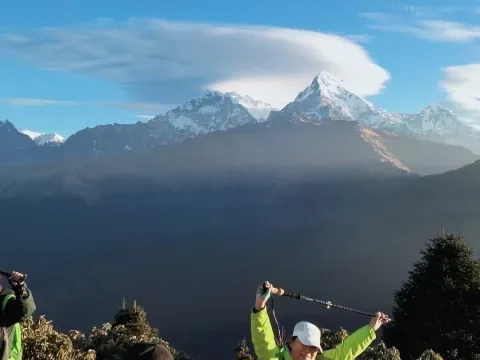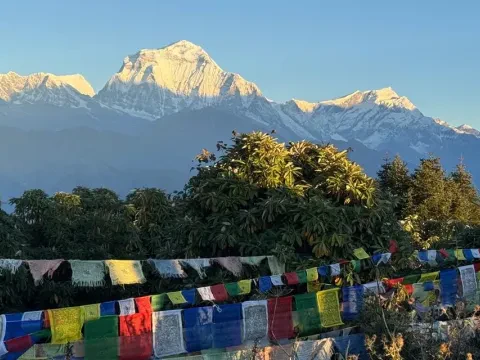
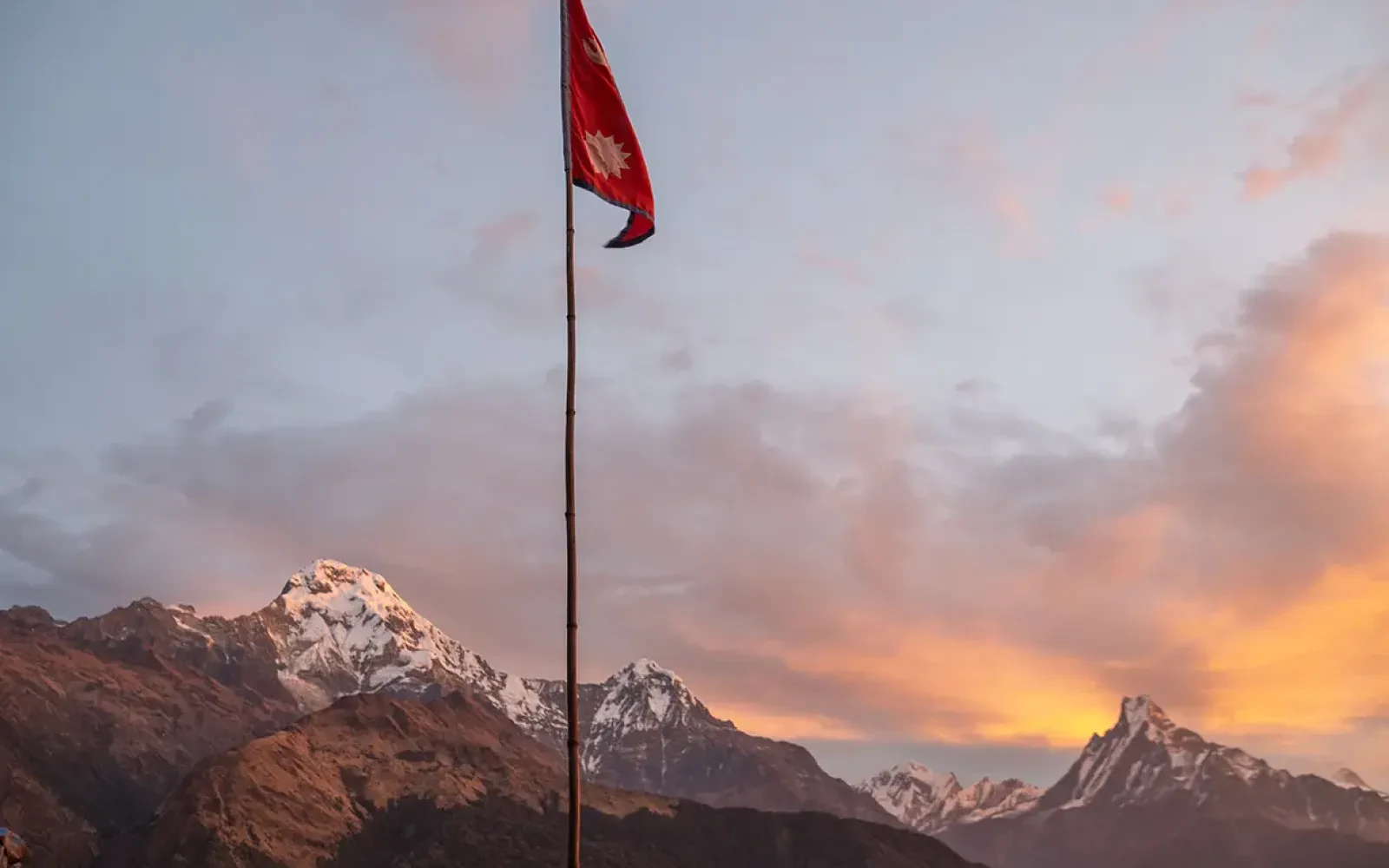
The Ghorepani Poon Hill Trek starts with pleasant mountain breezes and mossy trails. Then, the first Himalayan peaks rise above the forest canopy. At sunrise, the golden glow gently covers the Annapurna and Dhaulagiri ranges.
Meanwhile, this short adventure trek near Pokhara has it all: towering mountains, charming villages, rhododendron forests, and friendly tea house hospitality. Plus, the trek is much shorter than most of the long hikes in Nepal.
Moreover, Poon Hill reaches an altitude of 3,210 meters. That means dramatic views of the Nepalese Himalayas without demanding too much effort from you. This trek is perfect for families, first-timers, and those with limited time.
If you are looking for a short and easy Himalayan trek in Nepal, the Ghorepani Poon Hill trek is the best option. We will share all the details about the route, time, and difficulty. In addition, we will tell you what to pack for the Ghorepani Poon Hill Trek and what to expect on this adventure in this article.
The Ghorepani Poon Hill Trek is a short and thrilling Himalayan adventure in Nepal in Annapurna region. The round-trip hike usually takes three to five days, depending on where you start and how fast you hike.
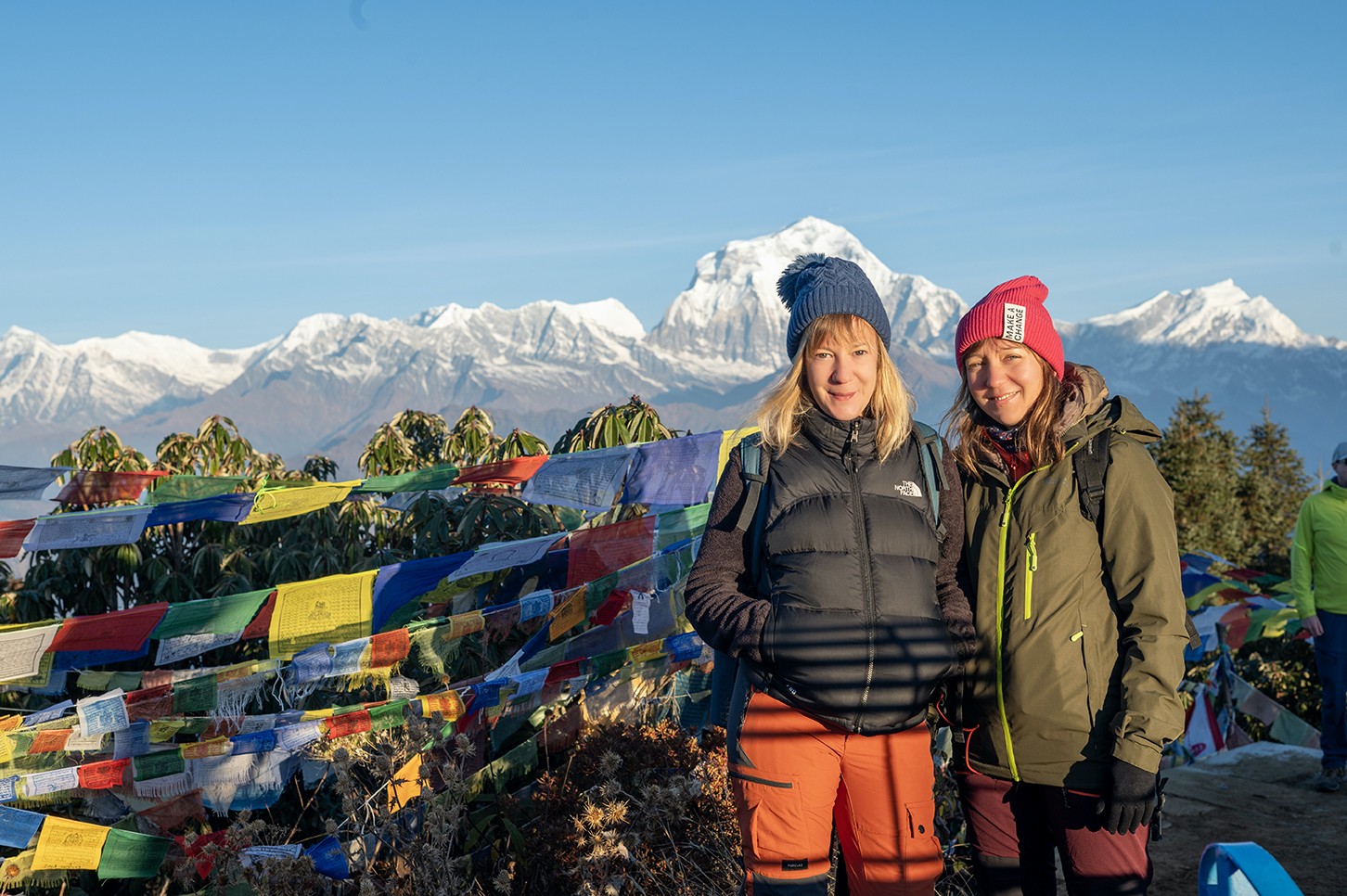
Meanwhile, the trail passes through charming villages, mountain ridges, and dense forests. The most popular way to start the trek is from Pokhara. Then, you can take a short road trip to the trail’s edge.
Quick Overview of the Ghorepani Poon Hill Trek,
Here is a short guide with all the critical information you need to know about the Ghorepani Poon Hill trekking,
Trek Highlights :
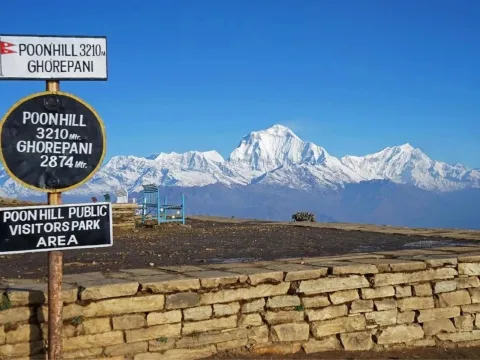
How long does it take to trek Poon Hill? Well, it depends on where you start the trail and how many days you give yourself to complete it. A shorter itineraray usually takes three to five days, while a more relaxed option spans over five days.
Actually, most people prefer a longer Poon Hill trek to enjoy more picturesque villages and mountain views. It is also easier on the body since you have more time to rest between daily treks.
The Ghorepani Poon Hill Trek is generally easy to moderate. However, you will have to navigate plenty of rocky steps as you make your way up the mountainous trail.
Meanwhile, the steep ascent to Ghorepani and the morning hike to Poon Hill might also challenge some people. The long descents can be stressful for your knees and even the most comfortable trekking boots.
If you want to enjoy all the amazing views without stressing your body, be sure to wear proper hiking shoes. Also, consider using trekking poles for extra support.
The amount of altitude you would gain climbing Poon Hill depends on the trail you choose. For instance, the Ulleri trail is much steeper than the one starting from Nayapul. So, if you decide to start your trek from lower altitudes, you will have to gain more elevation.
That is why we advise everyone to take their time hiking up the mountainside. It will give your body a chance to adapt to the changing altitude.
As mentioned, Ghorepani Poon Hill is not that challenging. However, it is crucial to bring the following items with you:
All in all, the Ghorepani Poon Hill Trek is an excellent adventure that will reward you with splendid Himalayan views. It is not too difficult to complete, so it is suitable for most people.
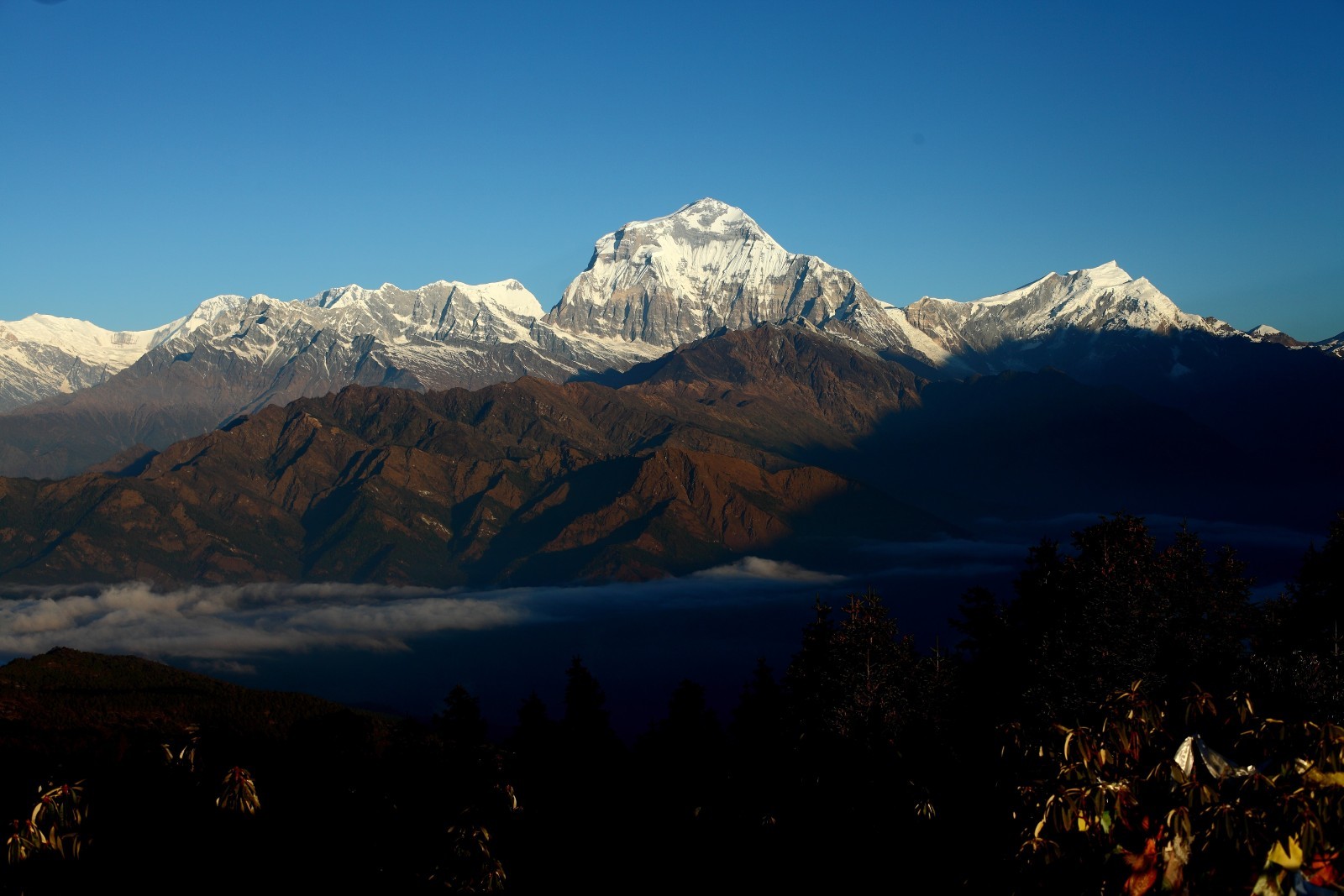
The sunrise on Poon Hill is the highlight of the trek, as it is the most spectacular view in the region. The walk to the viewing point begins before daylight as participants set off from Ghorepani with their headlamps on. Although the cold wind may be a challenge, people are usually excited and ready to experience this unique adventure.
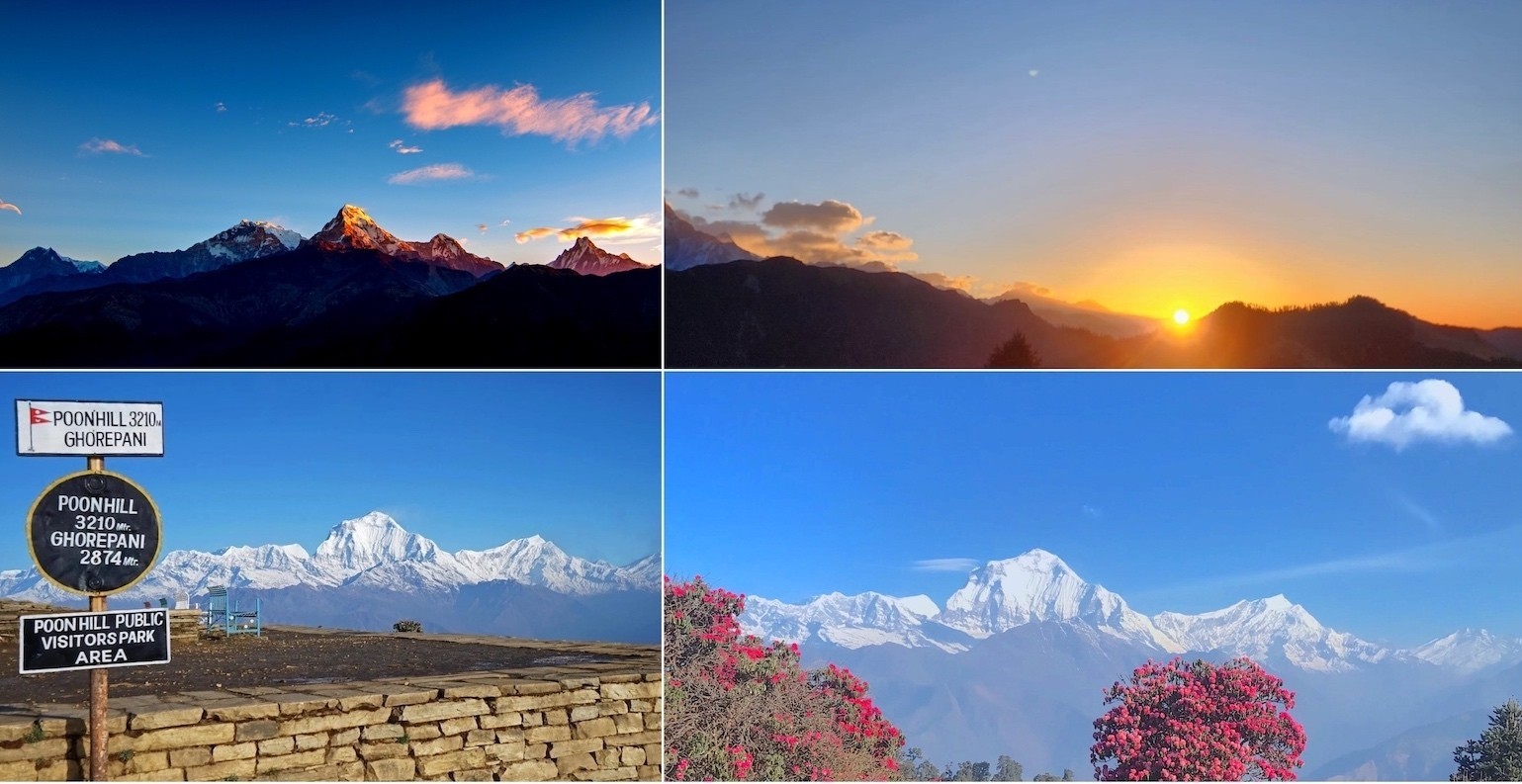
In fact, the walk to the top takes around 45–60 minutes from Gherepani and it is vital to arrive early, as the views are best seen before sunrise. As the eastern horizon begins to lighten, the Poon Hill sunrise unveils the mountains one after another.
What Can You See From the Poon Hill Viewing Point?
| Mountain / View | Approx. Elevation | Photography Appeal |
|---|---|---|
| Dhaulagiri I | 8,167 m | Dramatic Western panorama |
| Annapurna I | 8,091 m | Powerful Himalayan range |
| Annapurna South | 7,219 m | Strong Pyramid |
| Machhapuchhre | 6,993 m | Characteristic Fishtail |
| Nilgiri | 7,061 m | Beautiful Northern peak |
Here, the mountain landscape is especially worth seeing during the golden hour when the snow peaks turn pink. This is the most impressive time after dark night, when the first sunbeams penetrate the valley and paint the rocks in yellow and gold.
What Time Should You Depart for the Poon Hill Sunrise?
| Season | Approx. Sunrise | Recommended Departure Time |
|---|---|---|
| Spring | 5:30 – 6:00 am | 4:45 – 5:15 am |
| Summer | 5:15 – 5:45 am | 4:30 – 5:00 am |
| Autumn | 5:45 – 6:15 am | 5:00 – 5:30 am |
| Winter | 6:30 – 7:00 am | 5:45 – 6:15 am |
Here, the exact time may vary slightly depending on the particular day, so it is a good idea to double-check the local forecast the evening before.
5 Tips for Experiencing the Poon Hill Sunrise :
In conclusion, the cold air may be a problem for some, yet the first glimpse of the mountains will quickly warm any heart. As the rising sun appears on the horizon, the darkness lifts and everything seems to become brighter and more alive. This is perhaps why the Poon Hill sunrise is one of the most popular views over the Annapurna range in Nepal.
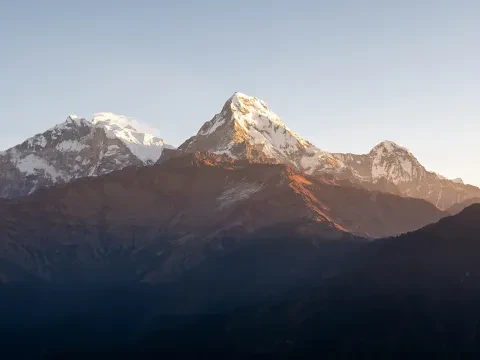
Ghorepani village is a charming blend of Himalayan mountain scenery and mountain village culture with its stone pathways and comfortable mountain lodges. Especially in the evenings, the village is full of a delicious aroma of burning wood.
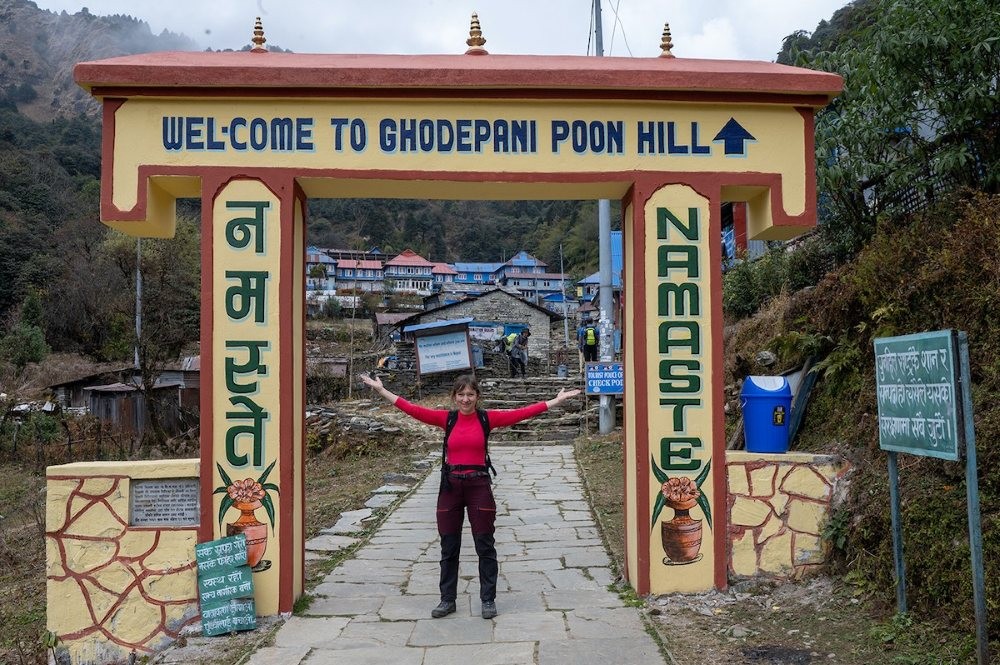
Likewise, Ghorepani village is strategically located at 2,885 m, making it a great place to spend an overnight rest before the morning hike up Poon Hill.
Moreover, the natural beauty of the region is enhanced by the rhododendron forests, which create an unforgettable backdrop for your journey. In spring, the view becomes especially spectacular as the flora blooms in all colors of the rainbow.
The rhododendron belongs to the most popular, national and beloved flowers in Nepal. In fact, it is the country’s official flower.
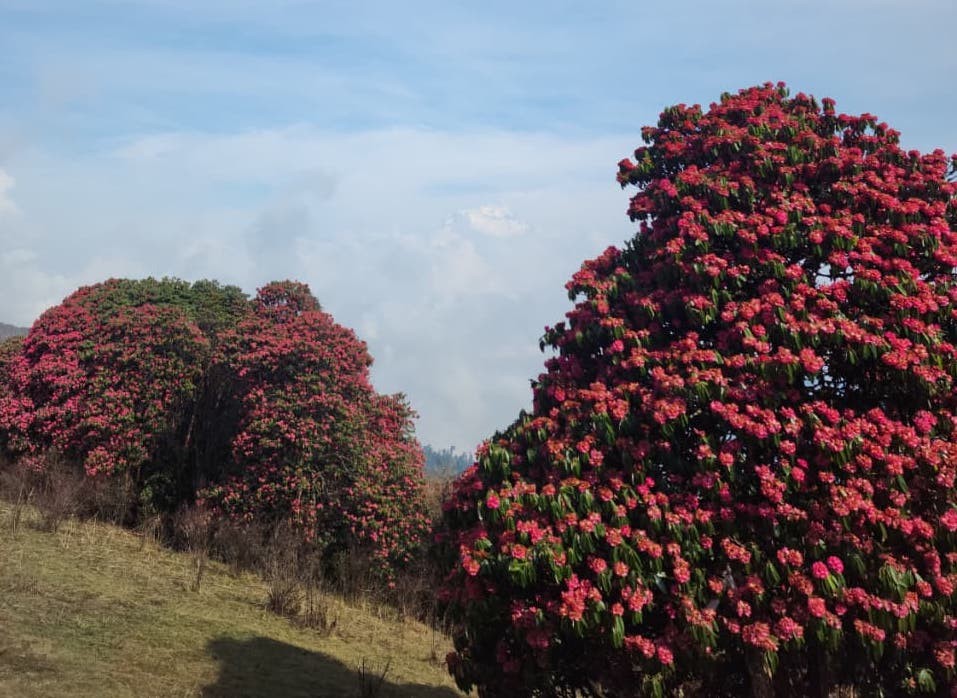
During the blooming season, the forest turns into an impressive riot of red, pink, and white colors. Especially beautiful is the view of the rhododendron against the contrasting green leaves and distant snow-topped peaks.
| Period | Forest Blooming | Photography Appeal | Trekking Appeal |
|---|---|---|
| February | Several buds (in lowlands) | Moderate | Moderate |
| March | More blooms (in lowlands) | Excellent | Good |
| April | Peak seasons (all elevations) | Excellent | Excellent |
| May | Blooming ends in some areas (highlands) | Good | Moderate |
| June | Blooming mostly finished | Moderate | Moderate |
Generally speaking, the best time to see blooming rhododendrons is in March and April. The flowering season varies significantly depending on elevation and weather conditions.
In addition to the natural beauty of the valley, visiting Ghorepani also offers a unique cultural experience. The area is home to fascinating indigenous cultures, lifestyles, traditions, and history.
Here, the mountain village community is also a must-see for those who want to immerse themselves in local traditions. In particular, the following cultural Highlights can be found in Ghorepani :
In fact, local tea houses provide a great opportunity to rest and enjoy the view while enjoying a good meal in a mountain setting. Particularly after a long walk in the forest, it is nice to sit and enjoy a warm meal by the dining-room stove.
Ghorepani village is a perfect opportunity to rest and prepare for the Poon Hill sunrise. Even so, it is worthwhile to spend the night here, exploring this unique mountain village.
Here, take your time wandering through the settlement, listening to the rustling leaves, and looking at the clouds drifting past the mountain peaks. Especially in spring, the blooming rhododendrons add a pop of color to the village. Even in the autumn, the clear blue sky rarely hides the snow-capped mountain peaks.
In fact, these and many other unique Himalayan landscapes are what make Ghorepani village such a truly unforgettable place.
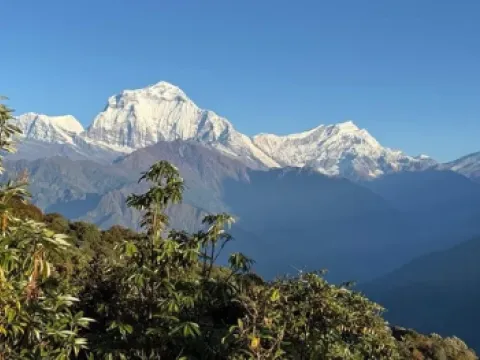
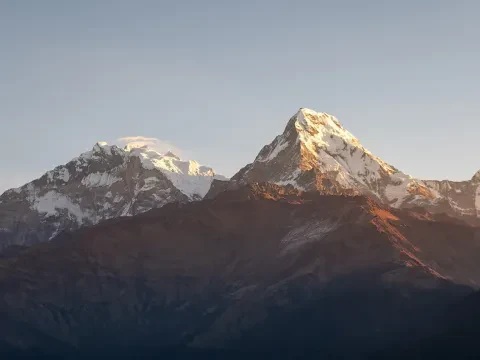
The view of the Annapurna South becomes better as the trail approaches Tadapani. They appear close compared to the distant peaks. The mountains have impressive faces towering over the forest.
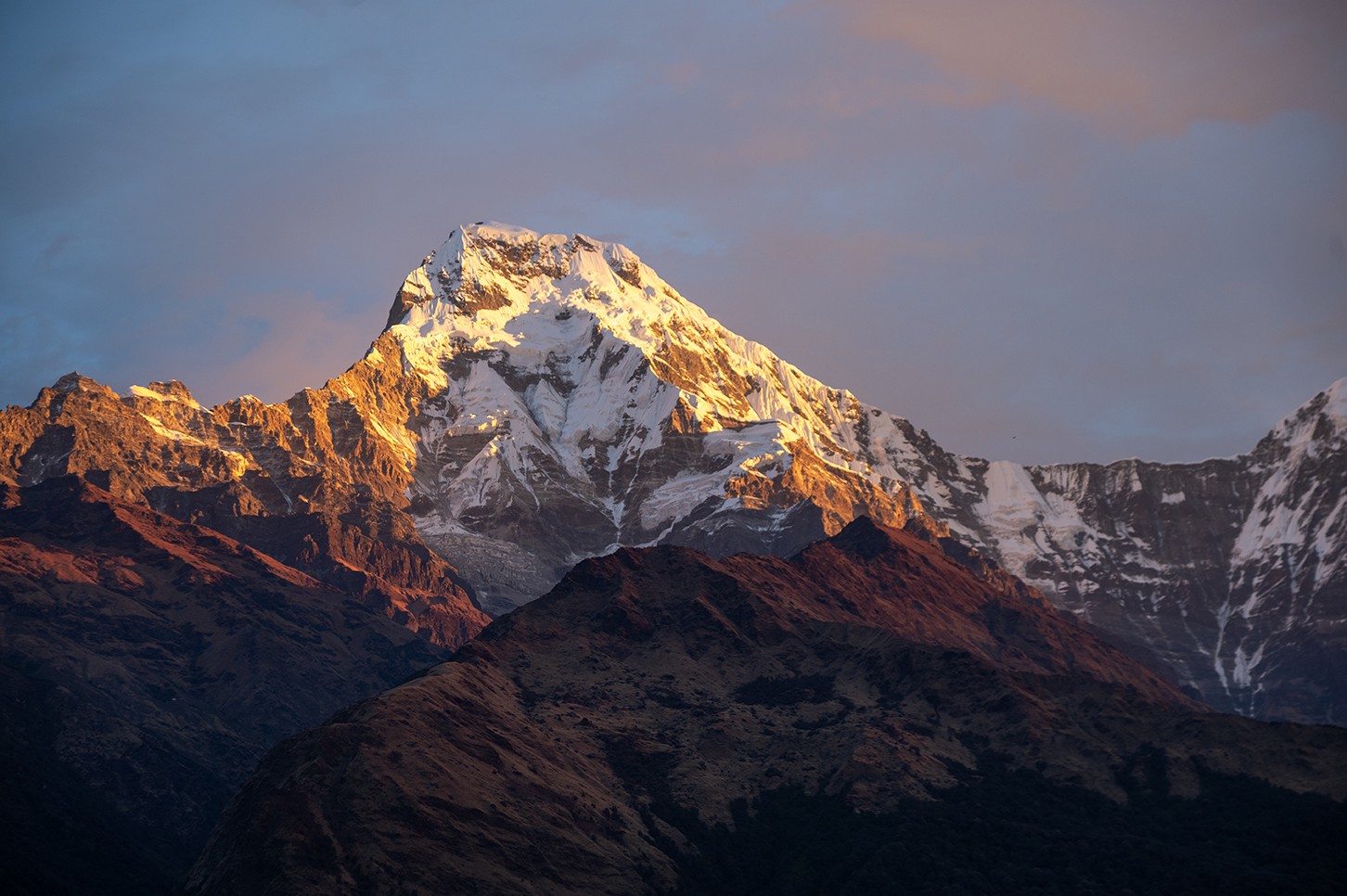
In fact, Annapurna South has a height of 7,219 meters while Hiunchuli reaches 6,441 meters. Both mountains offer a fantastic view, making it one of the best attractions in the trail.
The trail between Ghorepani and Tadapani offers multiple opportunities to enjoy the views. Some trail parts provide sudden insights into magnificent landscapes.
| Trail Section | Main View | Best Photo Opportunity |
|---|---|---|
| Ghorepani | Annapurna and Dhaulagiri range | Sunrise and panorama |
| Deurali | Annapurna South and others | Forest-framed composition |
| Banthanti | Annapurna South & Hiunchuli | Open trail composition |
| Tadapani | Annapurna South, Hiunchuli, and Machhapuchhre | Morning mountain photography |
| Tadapani surroundings | Close Himalayan panorama | Golden-hour shooting |
In summary, the trek through Tadapani is rewarding as mountain views are common. The trail offers dramatic landscapes as the forest of rhododendrons opens suddenly to mountain vistas.
Annapurna South takes center stage offering a magnificent view. The mountain slope covered in snow faces the observer creating amazing shadow effects in the morning.
Meanwhile, Hiunchuli rises majestically on the side of Annapurna South. The two mountains offer an intimate view compared to distant peaks. One can capture fantastic compositions by including mountain ridges, gullies, snowfields, and the forest.
Most often, mountain weather reveals spectacular views during early mornings. The clouds rarely appear at sunrise hours.
Some Tips for Better Photography
Using a telephoto lens is essential to zoom faraway objects. A wide-angle lens is good for the overall mountainous view.
The magnificent view of Annapurna South and Hiunchuli is part of the Ghorepani Poon Hill trail, not an extra. It is easier to experience the beauty of these mountains up-close than from a distance.
In fact, hikers can discover mountain faces framed by trees one moment, then look up to enjoy the distant peaks. Such a view is quite common in the trail leading from Ghorepani to Tadapani.
Ghandruk village and many other interesting settlements do add the highlight to the trail to Tadapani. Unique mountain village culture prevails across the area. The local lifestyle and landscape merge together creating unique Himalayan scenery.
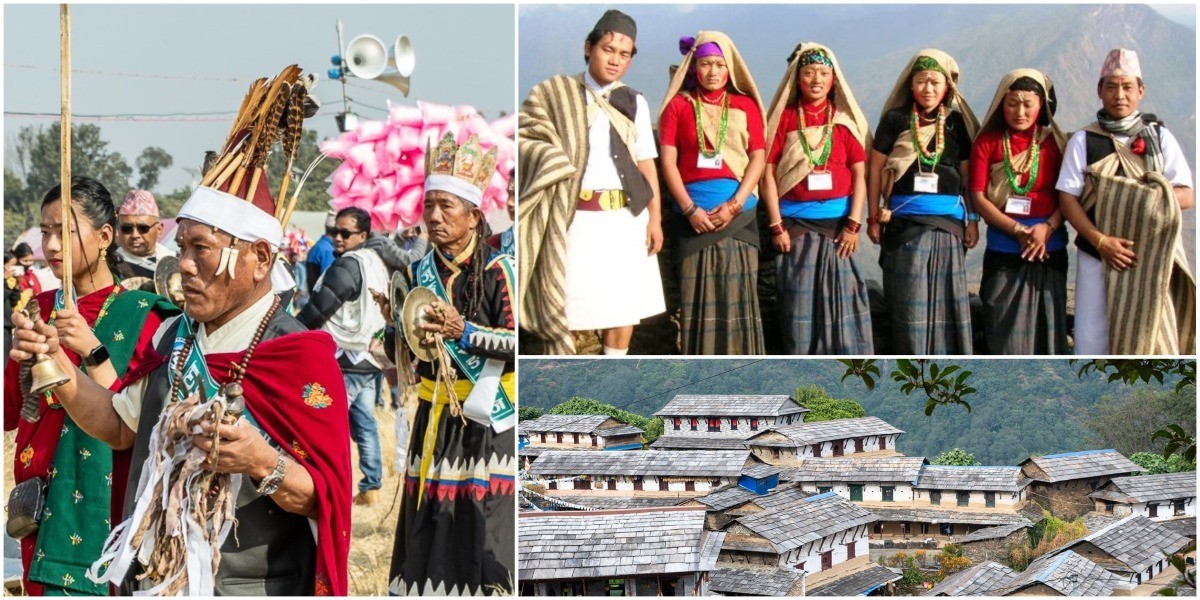
Actually, the area is famous for mountain villagers’ way of life and traditional Magar and Gurung village culture. The local people, terraces, dwellings, and scenery merge to offer unique cultural-hiking experiences.
What Makes Ghandruk and Other Mountain Villages Special ?
| Cultural Feature | What Trekkers Can Experience |
|---|---|
| Stone houses | Traditional mountain dwelling |
| Stone-paved paths | Old trail characteristic of the village |
| Terraces | Traditional farming terraces |
| Local food | Taste dal bhat and other local meals |
| Village teahouses | Experience warm hospitality and conversation |
| Gurung culture | Insight into Gurung lifestyle |
| Mountain museums | Local history and cultural exhibits |
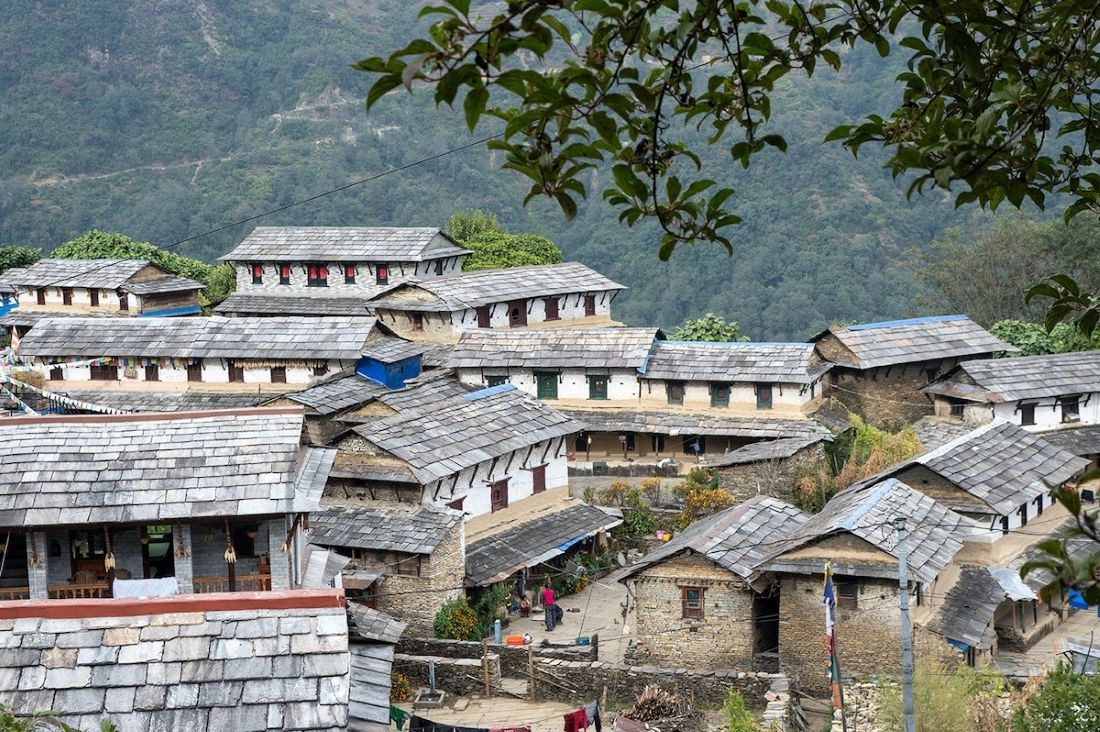
Ghandruk village is one of the highlights of trekking in Annapurna. The settlement provides a great opportunity to enjoy traditional mountain village culture. Dramatic views of the surrounding mountains complement the unique local architecture of Ghandruk.
Meanwhile, Ghandruk offers a spectacular view of the Annapurna Himalayas. Narrow and winding streets characterize Ghandruk village. As the trail meanders through the village, visitors admire mountain views while discovering local life and unique culture.
Likewise, dramatic landscapes surround Ghandruk village making it one of the best photography locations in the valley. However, the village is special by its people and cultural heritage deeply connected with the local mountains and lifestyle.
A cultural hike in Nepal becomes more fascinating with the right attitude. The following suggestions aim to facilitate the interaction with local people.
Try local cuisine!
When offered, accept local food. Taste traditional dal bhat and enjoy mountain specialties. Ask permission before taking pictures of people. Be respectful in local homes and places of worship. Avoid prohibited behavior in sacred sites.
It is advisable to ask permission before taking someone’s picture. This is a sign of respect for local customs. Besides, this consideration helps establish a personal connection with the local people.
Enjoying Local Food in Mountain Teahouses
Simple meals in village teahouses become one of the most memorable experiences in mountain hiking.
Hot, healthy, and hearty food is usually available. Local specialties are vegetable curry, noodles, Tibetan bread, soups, and momos. One also enjoys different types of local tea.
A Cultural Hike Full of Meaningful Experiences
Local mountain village culture adds unique charm to trekking in Annapurna. The villages create a memorable backdrop for a thrilling highland adventure. This area is famous for unique Magar and Gurung village culture. The local people, settlements, and spectacular landscapes attract trekkers worldwide.
As the trail to higher elevations progresses, the landscape changes again. Even so, the unforgettable experience of mountain village culture stays with the trekkers for a long time.
The rhododendron and oak forest is one of the most pleasant areas to explore on the Ghorepani Poon Hill Trek. The trail leads through dense woods around Ulleri, Banthanti, Ghorepani, and Tadapani.
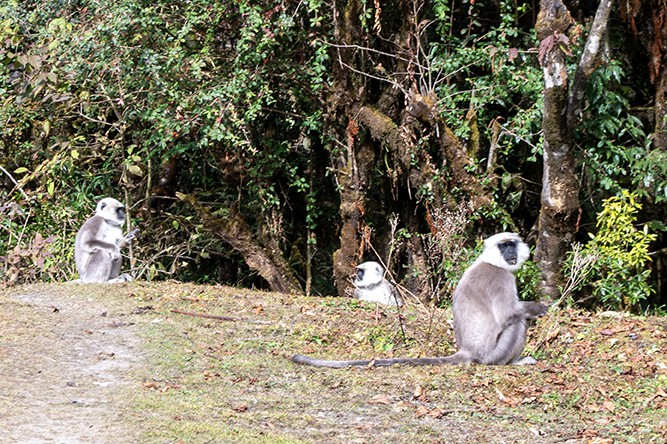
Moreover, tall trees create shady pathways, while mountain birds are heard constantly. In addition, numerous streams wind through the forest, forming beautiful cascades.
| Natural Feature | Where to See | Its Highlight |
|---|---|---|
| Rhododendron forests | Ghorepani-Tadapani section | Most spectacular in spring |
| Oak forests | Trail from Ulleri to Ghorepani | Wide, shady, and beautiful |
| Waterfalls | Ulleri-Banthanti trail section | Frequent along the trail |
| Mountain streams | Along the trail year-round | Freshwater streams |
| Birdlife | Deep in the woods | Himalayan bird species |
| Wildlife | Annapurna Conservation Area | Look out for deer and monkeys |
In fact, it is fun to walk through the forests on a spring morning when blossoming rhododendrons paint the landscape in different colors.
Similarly, the trail through Ulleri is particularly enjoyable as groups of hikers walk up stone stairs that wind through deep woods.
Waterfalls on the Ghorepani Trail:
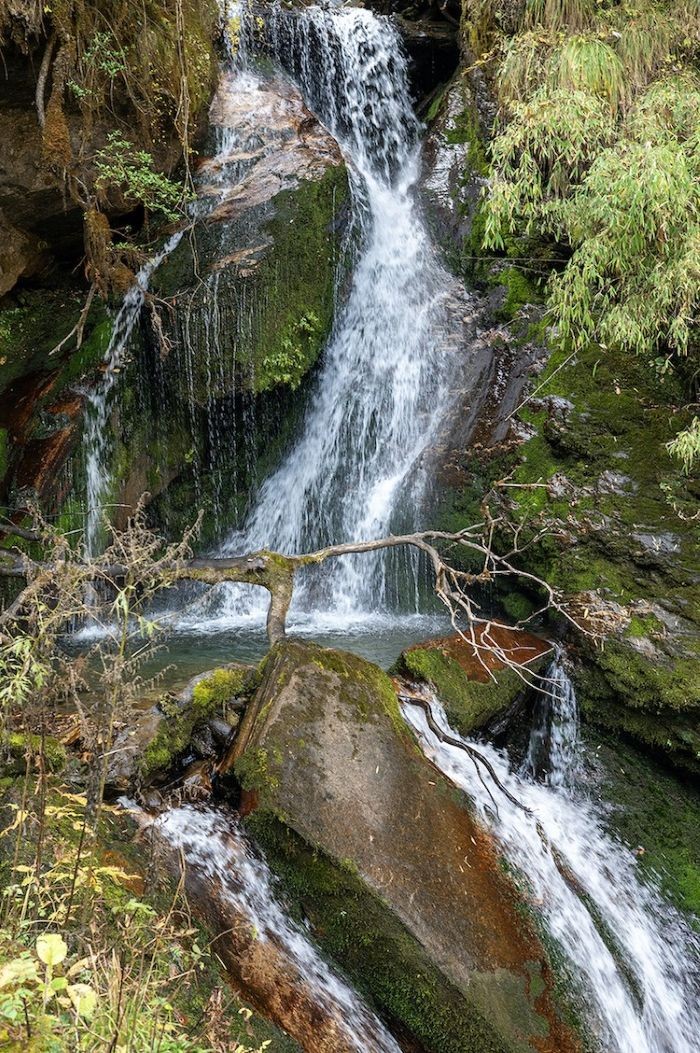
There are plenty of small waterfalls and rivulets near the trail, which flow more heavily after rains. In addition, streams and waterfalls are abundant in the lower parts of the trail (Ulleri-Banthanti).
Actually, waterfalls are at their most spectacular during the rainy season, while the dry season sees them reduced to small cascades.
Even so, the gentle babbling of waterfalls and the occasional cascade provide a pleasant contrast to the challenging climb up rocky steps.
Wildlife and Birdwatching:
Spectacular Views on the Ghorepani Poon Hill Trek:
The best time to do the Ghorepani Poon Hill Trek largely depends on what a visitor wants to see or experience.
For instance, spring is the best season to witness the blooming rhododendrons, while autumn offers the clearest mountainous views.
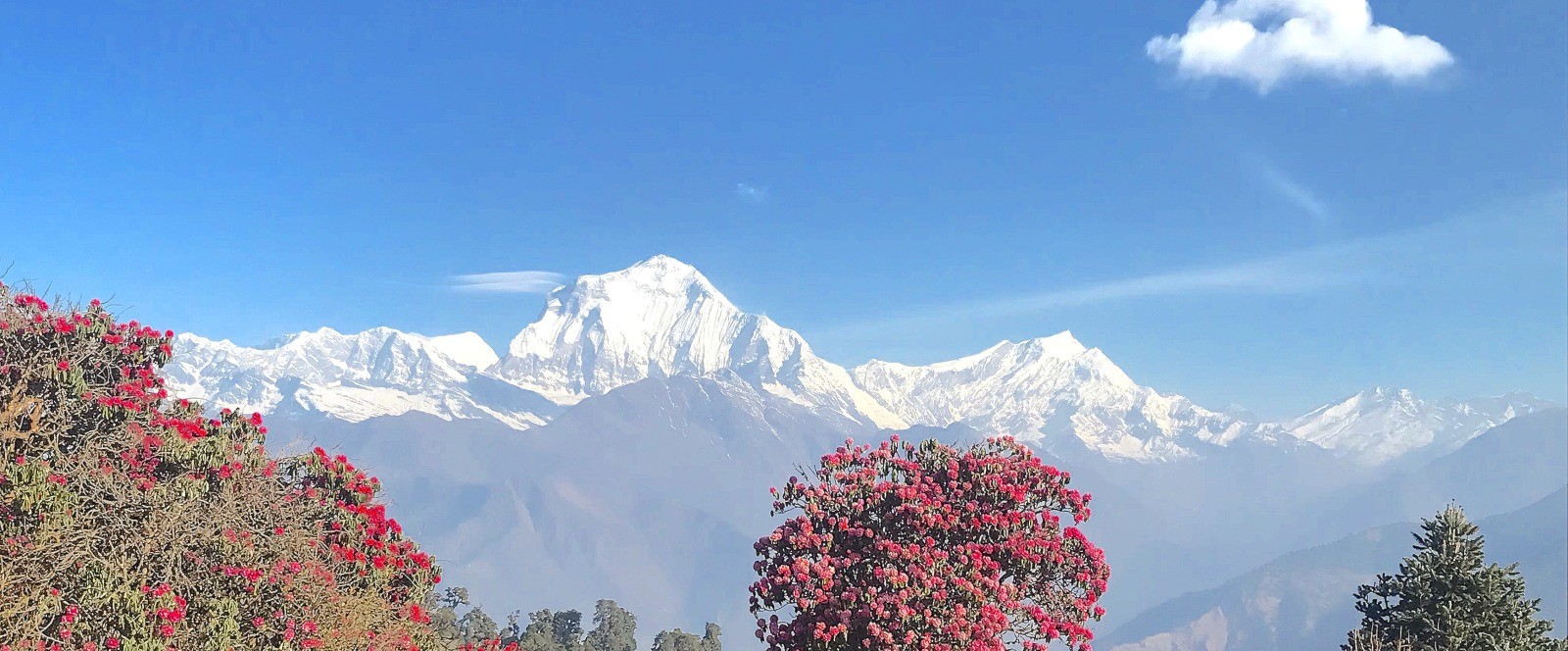
At the same time, winter is the quietest time of the year, with chilly mornings and evenings.
| Season | Poon Hill Sunrise | Rhododendrons | Mountain Views | Forests & Waterfalls | Crowdedness |
|---|---|---|
| Spring | Excellent | ⭐⭐⭐⭐⭐ | Very good | Excellent | Moderate |
| Monsoon | Less Limited | Low | Often cloudy | ⭐⭐⭐⭐⭐ | Low |
| Autumn | ⭐⭐⭐⭐ | Limited | ⭐⭐⭐⭐⭐ | Very good | High |
| Winter | Very good | None | Excellent on clear days | Good | Low |
September to November is generally the best season for hiking and mountain trekking in Nepal. The skies are clear, which means spectacular views of the Annapurna range.
Winter: Quietest Time With Cold Weather
Summer: Great for Vegetation and Lush Landscapes
| Top Priority | Recommended Time of Year |
|---|---|
| Poon Hill sunrise | Autumn or spring |
| Spring views Rhododendron blooms | March–April |
| Clear mountainous vistas | October–November |
| Fewer crowds | Winter |
| Green forests | Summer |
| Photography opportunities | Spring or autumn |
| First-time visitors | Spring or autumn |
A Ghorepani Poon Hill 5 days itinerary is ideal for novice trekkers as it gives a good view of the mountain range, the local villages, and the forest landscape apart from the sunrise view. The trek usually starts from Pokhara and covers the following villages on the way: Ulleri, Ghorepani, Tadapani, Ghandruk before returning to Pokhara.
| Day | Route | Approximate Walking | Overnight | Attractions |
|---|---|---|
| Day 1 | Pokhara to Ulleri to Ghorepani | 5-6 hrs | Ghorepani | Ulleri steps, forests, waterfalls |
| Day 2 | Ghorepani to Poon Hill to Tadapani | 6-7 hrs | Tadapani | Sunrise, Annapurna, Dhaulagiri |
| Day 3 | Tadapani to Ghandruk | 3-4 hrs | Ghandruk | Forests, Gurung culture |
| Day 4 | Ghandruk to Jhinu Danda | 4-5 hrs | Jhinu Danda | Terraces, hot springs |
| Day 5 | Jhinu Danda to Pokhara | 2-3 hrs drive | Pokhara | Modi Khola, Birethanti, Lumle |
Day 1: Pokhara to Ulleri to Ghorepani
Day one commences with a road transfer from Pokhara to Ulleri. This might take a few hours depending on the traffic. From Ulleri, a short walk through the forest begins till Ghorepani which follows the stone steps. The trail goes through beautiful rhododendron and oak forests, crossing various waterfalls and streams.
Day 2: Ghorepani to Poon Hill to Tadapani
Day 3: Tadapani to Ghandruk
Day 4: Ghandruk to Jhinu Danda
Day 5: Jhinu Danda to Pokhara
4: Day Option
| Day | Highlights |
|---|---|
| Day 1 | Pokhara to Ulleri to Ghorepani |
| Day 2 | Poon Hill to Tadapani |
| Day 3 | Tadapani to Ghandruk |
| Day 4 | Ghandruk to Pokhara |
Therefore, the 4-day option is a shorter version of the 5-day trek making the latter a preferred choice.
With minimal preparations, the Poon Hill trek is very straight forward. As much as the Poon Hill trek does not require sophisticated gear, there are some key aspects that need to be considered when planning your adventure in the mountainous terrains of Nepal.
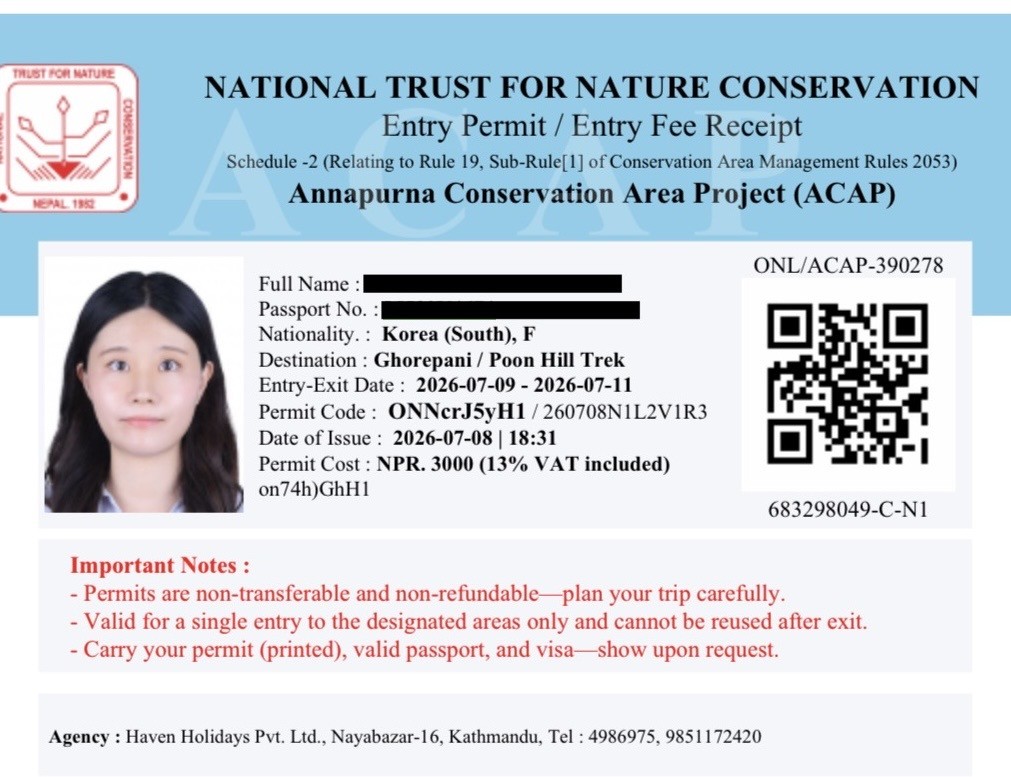
The route to Poon Hill trek runs through the Annapurna Conservation Area.
Therefore, some permits are required to undertake the Poon Hill trek which include:
The permit regulations may change from time to time, therefore, it is advisable to confirm what permits are needed before heading to Nepal.
Those booking Poon Hill Trek with Haven Holidays travel arrangements will have the option to get the required trekking permits processed.
| Gear | Reason |
|---|---|
| Trekking boots | These are necessary to protect your feet |
| Warm jacket | It is cold in the mornings at Ghorepani |
| Base layers | These are useful to regulate body temperature |
| Waterproof jacket | This is recommended as rain is likely |
| Trekking trousers | These should be comfortable to avoid irritation on the legs |
| Warm hat and gloves | These are useful when attending to the sunrise view |
| Headlamp | A headlamp is necessary to navigate in the dark |
| Trekking poles | These help reduce pressure on the knees |
| Water bottle | Hydration is important on the trail |
| Sunscreen | This protects the skin from the harmful UV rays |
| Sunglasses | These prevent eye strain caused by glare |
| Small first-aid kit | This is necessary to deal with minor injuries |
| Power bank | This keeps your devices charged |
| Backpack or daypack | This helps carry personal belongings |
Some of the gear listed above can be hired in Kathmandu or Pokhara. However, trekking boots and comfortable base layers are recommended to be carried from home.
The teahouse trek in Nepal is among the best things about the Poon Hill trek.
Most villages have teahouse accommodations with twin-sharing or private rooms, twin beds, blankets, and communal dining and cooking areas. Hot meals, tea, and coffee are also available. Some teahouses also offer charging facilities for your electronic devices and hot showers.
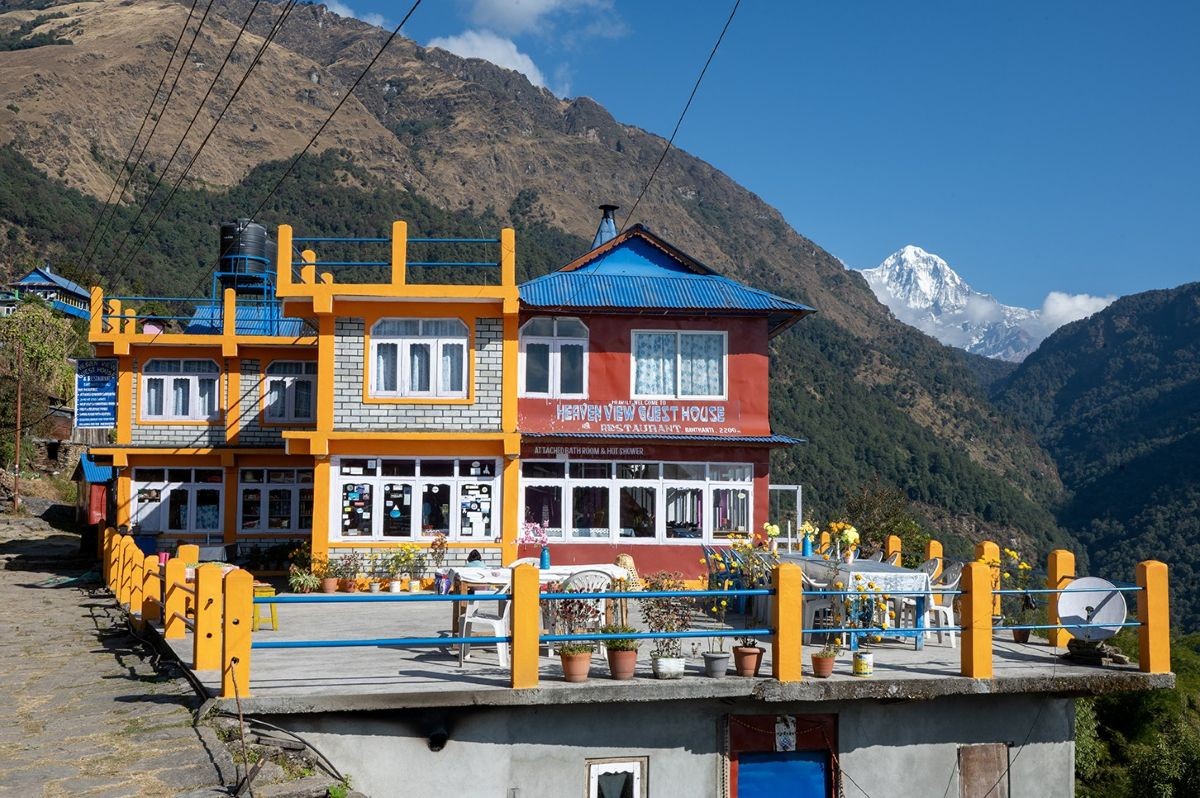
The amenities may become limited at higher altitudes.
| Expense | Approximate Range |
|---|---|
| Teahouse room | US$5-15 |
| Meals | US$20-30 |
| Drinks and snacks | US$5-10 |
| Hot shower | US$2-5 |
| Charging | US$1-5 |
| Miscellaneous | US$5-10 |
In conclusion, the costs indicated in the table above are just an estimate. The actual costs may vary depending on the time of the year and the location.
Practical Tips For First-Time Poon Hill Trekkers :
Most importantly, avoid rushing with the Poon Hill trek as the beauty of the trails, villages, mountainous ranges, and sunrise views await the explorer willing to delve deep into the adventure sport.
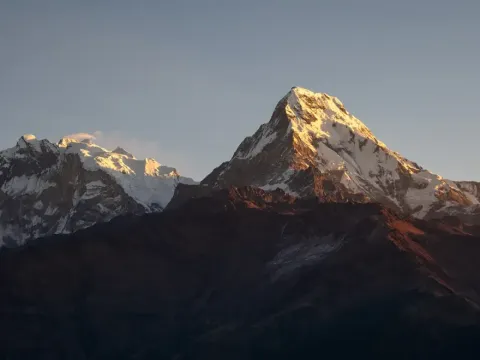
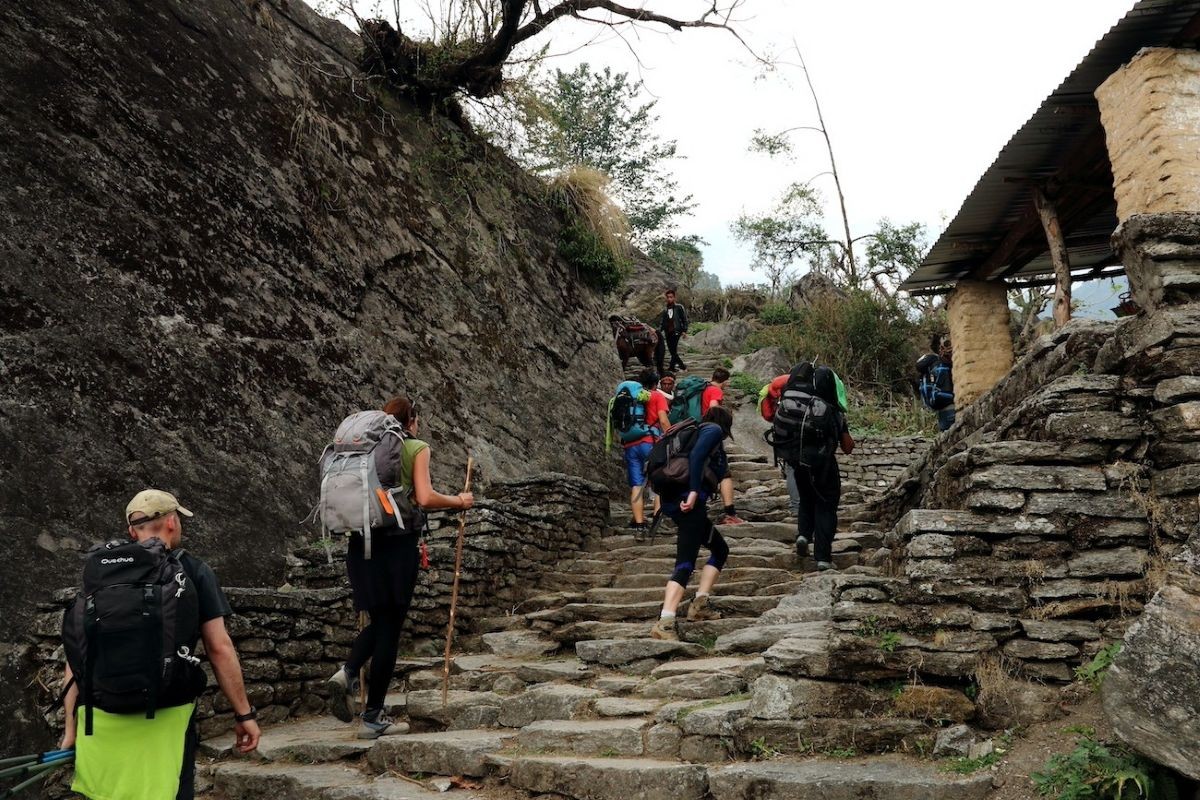
Ghorepani trek difficulty is generally moderate. The challenge is well-suited for first-time trekkers. There are a few steep stretches, but nothing extremely technical that requires special climbing skills. The biggest early surprise for many Ghorepani Poon Hill trekking first-timers is the Ulleri steps. They are numerous and located in the middle of the hillside. So it is important to pace yourself for the first day of hiking.
A Quick Overview of Ghorepani Poon Hill Trek Difficulty :
Here, the Ulleri steps are quite steep and intimidating, but you will surely make it if you take it slow and steady. Walking the stairs is a continuous process, so it is better to enjoy the peace and quiet of the trail and the breathtaking views. Simply set a steady and slow pace for yourself. Do not try to walk at the pace of others since everyone has their own walking rhythm.
In case you are wondering if altitude sickness is a thing to worry about, here is some information for you. Since Poon Hill trail is at an altitude of 3,210 m, altitude sickness is possible, but it is not as severe as the ones you may have heard about on Annapurna mountainous trails.
There is nothing too terrible that you should worry about. You may be surprised to know that altitude sickness may not even occur at all.
However, some people may still experience the following uncomfortable symptoms:
In fact, the easiest way to prevent altitude sickness is by ascending slowly and maintaining a steady pace. It is also a good idea to drink lots of fluids and limit alcohol consumption, especially at higher altitudes.
If your altitude sickness becomes severe or starts bothering you, inform your guide about the situation. He or she may suggest you descending lower.
As for the fitness part of the Poon Hill trek difficulty, you do not have to be an elite fitness trainer to manage. A healthy level of fitness is enough for Ghorepani trek.
However, to be adequately prepared for this adventure, you may want to consider building up your endurance with regular walks before the Poon Hill trek. Try to walk for at least 30 minutes.
As you progress, start adding stair climbing, weekend hikes, strength training, and consecutive walking days to your routine. Having a good fitness level will greatly benefit you on your trip. You do not have to be extremely athletic, but being in shape will help you immensely with your Ghorepani trek.
Absolutely! Slow walking is a perfectly acceptable option. If you think that 10 hours of walking per day is a lot, you can always ask your porter to assist you. In addition to asking for a porter’s help, you can also cut your walking hours with more breaks.
If you want more flexibility, consider a 5-day Poon Hill trekking option. This gives you a more relaxed option than a 4-day Ghorepani Poon Hill trekking schedule. In case you are wondering, your trekking company can also help you organize an alternative transportation option.
Some of the trails are now closed due to landslides and road construction, so it is wise to double-check everything beforehand. The slowest option is the best option when it comes to the Ghorepani Poon Hill trek.
The Ghorepani Poon Hill Trek is well-suited for the following types of trekkers:
The Ghorepani Poon Hill Trek is challenging enough but not too extreme. It is perfect for those who want to have a great trekking experience without getting into anything too serious.
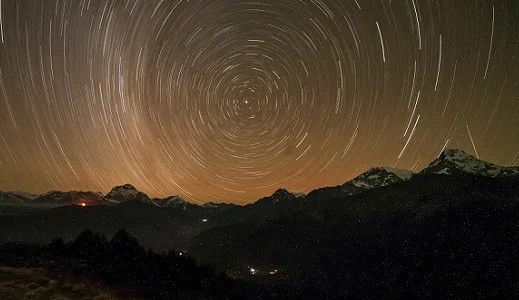
Poon Hill photography is one of the most exciting adventures you can experience on the Ghorepani Poon Hill trek. Everything from sunrise to villages and waterfalls is worth capturing on camera. You do not need fancy equipment to make stunning photos; what you need is good timing and location. Here are some of the best tips and tricks to help you enjoy amazing Poon Hill photography.
| The Best Angle | Main Subject |
|---|---|
| Poon Hill sunrise | Pre-sunrise–morning |
| Face mountains | Golden sunrise |
| Ghorepani forests | Morning |
| Along the trail | Rhododendrons |
| Annapurna South and Hiunchuli | Morning |
| Open viewpoints | Mountain faces |
| Gurung/Magar villages | Morning/evening |
| Eye-level | Culture and architecture |
| Waterfalls | Morning |
| Side angle | Water and vegetation |
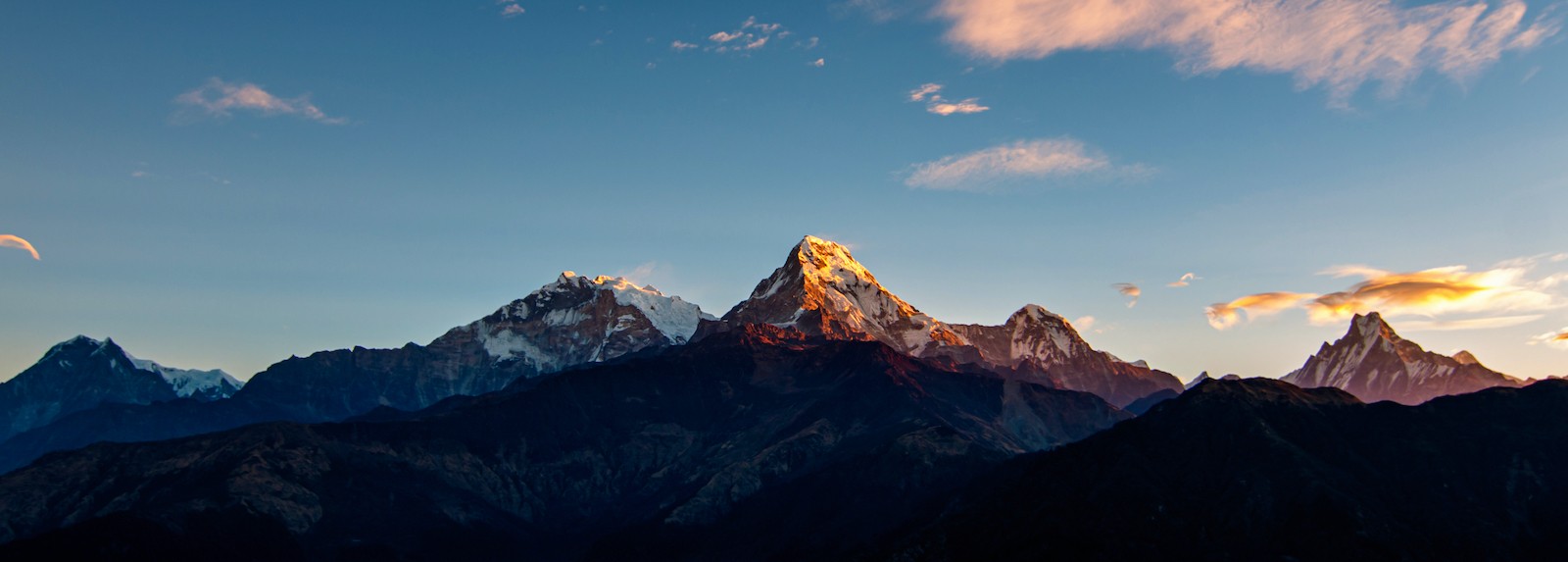
To capture the sunrise on Poon Hill, you need to arrive at least 45–60 minutes before sunrise. That way, you can find a good spot to take photos while having enough time to watch the first light come over the mountains. As for camera settings:
If you have a DSLR camera, you should also bring a tripod.
The first light can be a bit difficult to capture with a camera, so do not pack it away right after sunrise. The sky just gets more colorful with every minute.
A Fun Composition Idea:
Frame the mountains with a person or a flag in the front and the snow-capped peaks in the distance for a nice depth effect.
Ghorepani forests are the place to be for amazing pictures when the rhododendrons are in bloom. There are beautiful red, pink, and white flowers in spring, which provide stunning contrast to the green leaves. We recommend taking pictures along the trail rather than facing right at the blossoms. Make sure to take a lower angle for a more interesting composition.
Some Practical Recommendations:
Soft morning light is great for picture-taking, especially for capturing flowers.
Avoid harsh sunlight if possible.
Ghorepani’s best vantage points for taking pictures of Annapurna South and Hiunchuli mountain ranges tend to be on mostly open ground going towards Tadapani. If you want to frame the mountains more closely, use a telephoto lens to capture them better. In terms of composition:
Important: We recommend taking pictures in the morning for more detail on the mountains.
When it comes to capturing traditional villages, the most important rule is to mind your manners. You can ask the villagers for permission to take photos, but you cannot force anyone. In addition to taking regular pictures of people, make sure to document unique village elements.
We recommend photographing:
Taking pictures at the eye level is a good rule of thumb, but make sure not to turn the locals into objects of a picture. Take photos of what makes the village unique to you.
On Ghorepani Poon Hill trek, you will have plenty of opportunities to capture beautiful streams and waterfalls. Waterfalls are especially spectacular in wet weather. The most important thing when capturing waterfalls is to use a slow shutter to make the water look nice and silky.
If you have a camera and a tripod, you can easily do it! For example:
The right exposure will depend on the amount of light, so play around with the shutter speed. Make sure to keep your camera away from the water as much as possible. A little waterproof cover might come in handy.
A phone is a great tool for capturing all the beauty of the mountains, waterfalls, and traditional villages. It is perfectly suitable for most photography tasks and conditions. It is also much more convenient than a DSLR or mirrorless camera. Your phone is good for sunrise panoramic photos, village shots, and trail selfies. In addition, it also allows you to take short videos and post them on social media.
If you want full control over the settings, a separate camera is a better choice. It offers more flexibility in terms of lighting and shutter speed. You may find it easier to use a separate camera for low-light sunrise photography and taking pictures of faraway objects. If you have a good camera, you may also want to take advantage of its raw processing capabilities.
Some General Tips for Taking Photos with Your Phone:
Most importantly, keep your phone batteries charged in cold weather. It is a good idea to keep your power bank and extra batteries warm inside your body.
Overall, the right equipment is essential, but it is not everything. The location and timing are also crucial for good photography, especially on the Ghorepani Poon Hill trek.
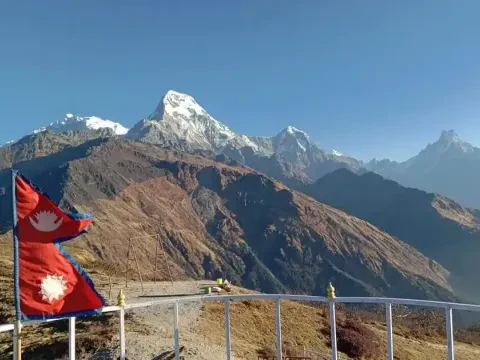
The Poon Hill and Ghandruk route is an excellent mountain trail, but with some additional free time, you can combine it with other activities in the region to make the most of the Annapurna Himalaya trekking.
Below are the suggested options to make your Nepal holiday more exciting and memorable by pairing the Poon Hill trek with some other adventures or leisure activities in the region;
| Combination Suggested | Duration | Best Highlights | Suitable for |
|---|---|---|
| Poon Hill + Ghandruk | 4-5 days | Mountain views and Gurung culture | First-time trekkers |
| Poon Hill + Jhinu Danda | 4-5 days | Sunrise and hot mineral baths | Leisure-seekers |
| Poon Hill + ABC | 8-12 days | Sunrise and Annapurna Sanctuary | Mountain enthusiasts |
| Poon Hill + Mardi Himal | 7-10 days | Two different panoramic views | Experienced hikers |
| Poon Hill + Pokhara | 4-6 days | Trek and lakeside activities | Short holiday makers |
Poon Hill + Ghandruk Combination
If you have a little extra time, you can combine the Poon Hill trek with a visit to the ancient village of Ghandruk. First, the Poon Hill trail offers spectacular mountain vistas, and second, the local traditional village is within walking distance. This combination is good for first-time trekkers as a short and easy route.
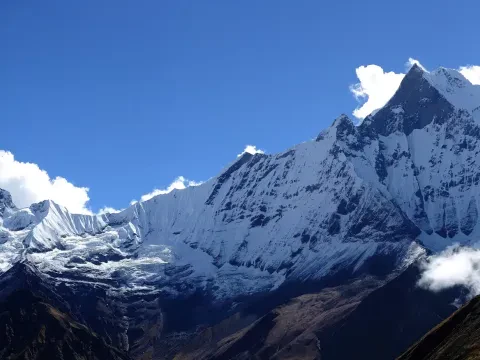
The Jhinu Danda trail is a fantastic option for those who want to enjoy hot water after days of trekking. The natural hot springs are a perfect place to relax and soothe tired muscles while enjoying forest views and mountain landscapes. The Jhinu danda trail is ideal if you are looking to unwind.
Poon Hill + Annapurna Base Camp Combination
You can also combine the Poon Hill trek with a more extended adventure to the Annapurna base camp if you have ample free time. This combination will allow you more extended days of trekking in the Himalayas. While Poon Hill trail is a lower-altitude day-hike, the trail to the Annapurna Sanctuary begins at a higher elevation and takes you through mountainous landscapes towards the 4,130 m Annapurna Base Camp.
However, this combination requires more endurance and fitness, so make sure that you are acclimatized to higher altitudes before embarking on this adventure.
The Mardi Himal trek is a fantastic option for more experienced hikers willing to enjoy panoramic views of the Annapurna range from a different vantage point than Poon Hill. Poon Hill trail + Mardi Himal trail combination requires good transport & itinerary organization, so it is essential to have a conversation with your local trekking agent before finalizing the details.
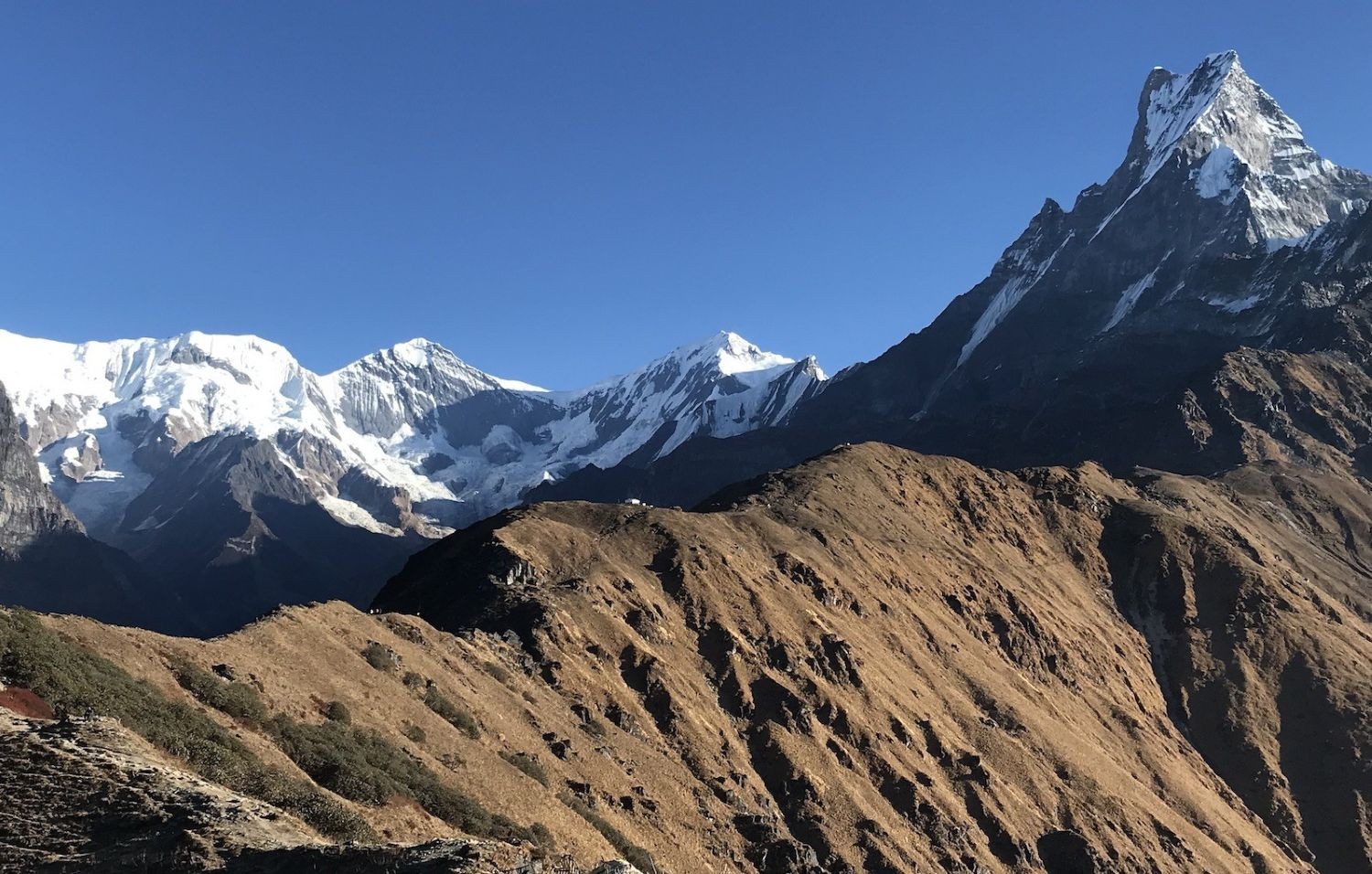
Poon Hill + Pokhara Combination
You can also choose to spend your evenings in the city exploring the beautiful valley around Pokhara. Some of the interesting things to do in Pokhara are;
This combination is an amazing option for inexperienced trekkers who prefer to have an extended hike with exciting days.
If you have four to five days, you can go with the 4-5 day Poon Hill and Ghandruk combination. For the 6-7 day itinerary, you can take an additional one-day side trip to Jhinu Danda and spend your evenings in Pokhara. If you have 8-12 days for your trekking holiday, you can combine the Poon Hill trek with Annapurna Base Camp trek. Finally, if you have a more extended stay, you can also consider taking different shorter trekking adventures in the region. In any case, a shorter and well-managed itinerary is always better as far as trekking in Nepal is concerned.
Now, let’s see how we can leave minimum impact on the trails and the local environment while trekking near Poon Hill.
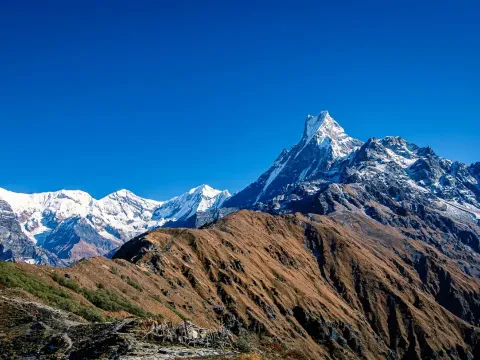
Responsible trekking is the key to enjoying the trails while conserving the natural environment. The Annapurna region is a popular trekking destination offering scenic routes through forests, farmlands, and villages. As a trekker, you can leave the trails as you discover them by following some of the simple and effective leave no trace principles.
Below are the most practical and essential responsible trekking guidelines to help you minimize your impact while being in the mountainous wilderness of Annapurna region.
Leave No Trace Principles :
Carry your trash,
Use less plastic,
Stay on trails,
Respect the wildlife,
Save water,
Avoid littering,
Respect villages,
Maintain the forest,
Use teahouses,
Limit single-use items,
In total, leave no trace is an important ethical code, and responsible trekking follows several guidelines to ensure minimal impact on the trails and the local environment. By adopting some of these practical ways of enjoying the mountain adventures in Nepal, you will make a meaningful contribution to preserving the delicate ecosystems.
Plastic water bottles can cause severe pollution on the trails, so it is essential to minimize such human waste as much as possible. Bring a reusable water bottle and fill it when possible by using water filters or other suitable methods. It is a good idea to carry a water purification pill or a filter to help you treat the water during your hikes.
While there may be tempting short cuts around trail switchbacks, it is essential to stick to the trails to avoid destroying the vegetation and contributing to soil erosion. The trails are designed for the conservation of the natural ecosystem and your overall safety.
The mountainous region of Ghorepani is famous for its indigenous culture. While interacting with the locals, it is important to adopt a responsible trekking behavior such as asking for permission to take photos. It is also advisable to maintain a certain level of dress code modesty while exploring the local villages. Additionally, avoid wandering around inside the houses unless invited.
A simple “Namaste” and responsible behavior will help you earn respect from the locals and enjoy a memorable cultural exchange.
Supporting local teahouse owners is a great way to express your gratitude for their hospitality and convenience. You can also enjoy local delicacies prepared especially for you by the teahouse innkeepers. When possible, buy local products from nearby farmers and shopkeepers as opposed to imported goods.
The Annapurna region is home to some of the most endangered wildlife species. It is essential to follow wildlife conservation rules and regulations to help protect the natural habitat and avoid threatening the ecological system. Do not feed the animals. If you happen to come across any wildlife, it is good to keep a decent distance and avoid making unnecessary noise. After all, you are a guest in their territory!
Simple activities such as bringing a bag to carry your grocery items and switching off the lights when you are done exploring can contribute to environmental conservation. Avoid using more plastic wherever possible.
Make sure that you are not wasteful with your food and water as they are essential needs. In short, try to limit your impact on the environment by acting as a courteous visitor in the region.
Being a responsible trekker does not mean anything difficult or unattainable. By simply carrying your trash, respecting the local culture and wildlife, and supporting the local economy, you can become a responsible trekker. These values contribute immensely to making your adventures sustainable and memorable at the same time. The best souvenir from the Poon Hill trek should be the wonderful memories you create while keeping the trails and local environment free from pollution.
The Ghorepani Poon Hill Trek is a great opportunity to experience the magic of the Himalayas within a short period of time. From the spectacular view of the sunrise from the Poon Hill to the magnificent peaks of Annapurna South and Hiunchuli, this trek has it all. Every turn on the Ghorepani Poon Hill Trek rewards you with new and exciting sightseeing opportunities. The trek through the rhododendron forest, the beautiful waterfalls, and the unique Gurung and Magar villages add to the allure of this adventure.
Mainly, the other added benefit that comes with the Ghorepani Poon Hill Trek is that it is accessible to most novice hikers. The trail is not extremely challenging and you don’t need to have advanced mountaineering skills to complete it. If you are wondering why Poon Hill is such a sought-after trekking destination, the answer is right there in the spectacular view of the Himalayas. With its breathtaking scenery, the Ghorepani Poon Hill Trek is the ultimate short Himalayan adventure.
Now it’s time to start planning for your own Ghorepani Poon Hill Trek. Make sure to check the necessary permits, prepare your packing list, and select the best dates for trekking in the Annapurna region. Get in touch with local tour operators like Haven Holidays Pvt. Ltd. to book your Annapurna trek and begin your Himalayan adventure. Your next short Himalayan getaway can begin from Pokhara.
1. What are the top 5 attractions on Ghorepani Poon Hill Trek?
The top 5 attractions on a Ghorepani Poon Hill Trek include Poon Hill viewpoint, Ghorepani village, Ghandruk village, rhododendron forests, and Annapurna mountain views. In addition, the Poon Hill sunrise, Himalayan landscapes, cultural heritage, and scenic beauty make the trek one of the short Annapurna treks in Nepal.
2. Why is Poon Hill the main attraction of the trek?
Poon Hill is the main attraction of Ghorepani Poon Hill Trek because of the spectacular Himalayan sunrise views. In addition, the viewpoint is located at 3210 meters above sea level. Moreover, the sunrise views at Poon Hill usually offer an opportunity to see the Annapurna South, the Dhaulagiri, and the Machhapuchhre peaks.
3. What can you see from Poon Hill viewpoint?
The Poon Hill viewpoint offers sunrise views of many Himalayan peaks. Some of the summits visible from the viewpoint include the Dhaulagiri, Hiunchuli, Annapurna South, and Machhapuchhre. As such, the sunrise is the best time to capture beautiful panoramic mountain views and enjoy a short mountain trek in Nepal.
4. Why is Ghorepani village an attraction?
Ghorepani village is an attraction because it is a traditional mountain village found en route to Poon Hill. In addition, it has colorful local lodges and provides easy access to the Poon Hill viewpoint. Finally, the village borders vast rhododendron forests forming a part of the best Ghorepani trekking trail from Pokhara. As such, it is one of the best overnight stops on a Ghorepani Poon Hill Trek.
5. What makes Ghandruk village special?
Ghandruk village is special because it offers spectacular Annapurna mountain vistas. In addition, the village boasts traditional homes found along the streets. In addition, Ghandruk village has marvelous views of the Annapurna South and other Himalayan peaks. As such, Ghandruk village is one of the best attractions on a Poon Hill and Ghandruk Trek in Nepal.
6. Why are rhododendron forests an attraction?
The rhododendron forests along the Ghorepani Poon Hill Trek trail are an attraction because of their colorful and spectacular scenery. In addition, the blooming flowers are particularly vibrant during the spring season. In addition, the forests offer a pleasant view of the surrounding mountains and attract diverse bird species. As such, they are one of the best short hikes’ attractions in Nepal.
7. Which mountains can you see during the Poon Hill Trek?
The Poon Hill Trek offers majestic views of the Annapurna and Dhaulagiri mountain ranges. Specifically, the trek provides scenic views of the Dhaulagiri, Annapurna South, Annapurna I, Hiunchuli, and Machhapuchhre peaks. As such, the trek is perfect for nature lovers who want to enjoy the best mountain views in Nepal.
8. Is Poon Hill sunrise worth waking up early?
The sunrise on Poon Hill is worth waking up early to experience and capture its breathtaking beauty with your camera. In addition, the view of the golden sunrise over the mountains is particularly spectacular in the morning. As such, most day hikers and mountain lovers who take a Ghorepani Poon Hill Trek from Pokhara enjoy the Poon Hill sunrise views.
9. What is the cultural attraction of Ghorepani Poon Hill Trek?
The cultural attraction of the Ghorepani Poon Hill Trek includes the Gurung and Magar tribal villages, traditional houses, and warm hospitality. In addition, the Ghandruk village is particularly famous for its Gurung people. As such, a visit to Ghandruk village is one of the best cultural experiences of the Poon Hill and Ghandruk Trek.
10. What is special about the mountain scenery on Poon Hill Trek?
The mountain scenery on the Poon Hill Trek is spectacular as you enjoy the panoramic views of the Annapurna and Dhaulagiri ranges. In addition, the sunrise views over the Himalayas offer a dramatic view of the mountain peaks. As such, the special mountain scenery is among the best short treks in Nepal.
11. Which attraction is the best for photography on Poon Hill Trek?
The best photography spot on the Poon Hill Trek is the Poon Hill viewpoint, which offers magnificent sunrise views. In addition, you can capture excellent panoramic views of the mountainous landscapes from the Ghorepani, Tadapani, and Ghandruk viewpoints, as well as the rhododendron forests. However, landscape photographers need to purchase extra batteries to use on a Poon Hill sunrise trekking trail.
12. Can beginners enjoy the attractions on Ghorepani Poon Hill Trek?
Yes, beginners can enjoy the attractions on a Ghorepani Poon Hill Trek. Even though the Ghorepani trail is a short mountain hike with challenging but not very high altitudes, it requires moderate fitness. As such, you can enjoy a beginner’s trekking trail to experience sunrise views of the Annapurna range.
13. What is the best season to see Poon Hill attractions?
The best season to witness the attractions on the Poon Hill Trek is during the spring and autumn. During the former, the rhododendron forests offer lovely scenery. During the latter, you will witness clear skies and enjoy splendid mountain views. While the winter season can be quite chilly, the monsoon season is not advisable for a Poon Hill Trek.
14. How high is Poon Hill on the Ghorepani Trek?
The height of Poon Hill on the Ghorepani Trek is 3,210 meters above sea level. As such, it is an easy trekking trail perfect for a day hike. In addition, the Poon Hill viewpoint offers spectacular sunrise views of the Annapurna and Dhaulagiri mountain ranges.
15. How many days does it take to explore Poon Hill attractions?
On average, it takes three to five days to explore the various attractions on the Poon Hill Trek. For instance, you can spend one day doing a short trek to Poon Hill and Ghorepani village. With a five-day itinerary and a good walking pace, you can complete the Ghorepani Poon Hill Trek and visit Ghandruk village and rhododendron forests.
16. Is Ghandruk or Poon Hill better for mountain views?
The Ghandruk and Poon Hill viewpoints offer spectacular mountain views. However, Poon Hill is slightly better as a mountain viewpoint as it provides more expansive sunrise views over the Annapurna and Dhaulagiri ranges. In addition to the mountain views, Ghandruk village offers cultural insights into the Gurung tribe. As such, it is always best to visit both attractions if feasible within your schedule.
17. What wildlife can you see on the Ghorepani Poon Hill Trek?
The Ghorepani Poon Hill Trek trail passes through forests offering habitats for various wildlife species. You are likely to spot a wide range of bird species, including colorful birds and butterflies. On the other hand, large animals are rarely seen. Nevertheless, the forests are enjoyable as you witness the scenic mountainous landscapes.
18. Are Ghorepani Poon Hill Trek attractions family-friendly?
Yes, most of the Poon Hill Trek attractions are family-friendly. For instance, the trail offers comfortable mountain accommodations such as family-run guesthouses. You can also enjoy cultural activities in Ghorepani village and panoramic sunrise views from the Poon Hill viewpoint. However, it is crucial to note that the Ghorepani trail involves steep stone steps, making it inaccessible to people with disabilities.
19. What makes Ghorepani Poon Hill Trek different from other Nepal treks?
The Ghorepani Poon Hill Trek is different from other Nepal treks because it offers a variety of cultural, scenic, and wildlife experiences within a short time. For instance, you can enjoy cultural village tours, mountainous landscapes, sunrise views at Poon Hill, and forest walks on a Ghorepani Poon Hill Trek. As such, it is one of the best short treks in Nepal offering an authentic Himalayan experience without the need to reach far or higher altitudes.
20. How to plan a Ghorepani Poon Hill Trek?
You can plan a Poon Hill Trek in several ways, including reserving some extra time, ensuring you have transportation and enough equipment, booking accommodation in advance, and applying for trekking permits if necessary. As such, it is essential to contact a local tour operator for a hassle-free trekking experience. For instance, Haven Holidays Nepal offers excellent travel services to help you have a fantastic time on your Ghorepani Poon Hill Trek.
Our travel experts are ready to assist you with any questions.
Send us a message.Have a question before you book? Send your enquiry below and our travel experts will get back with the required information.