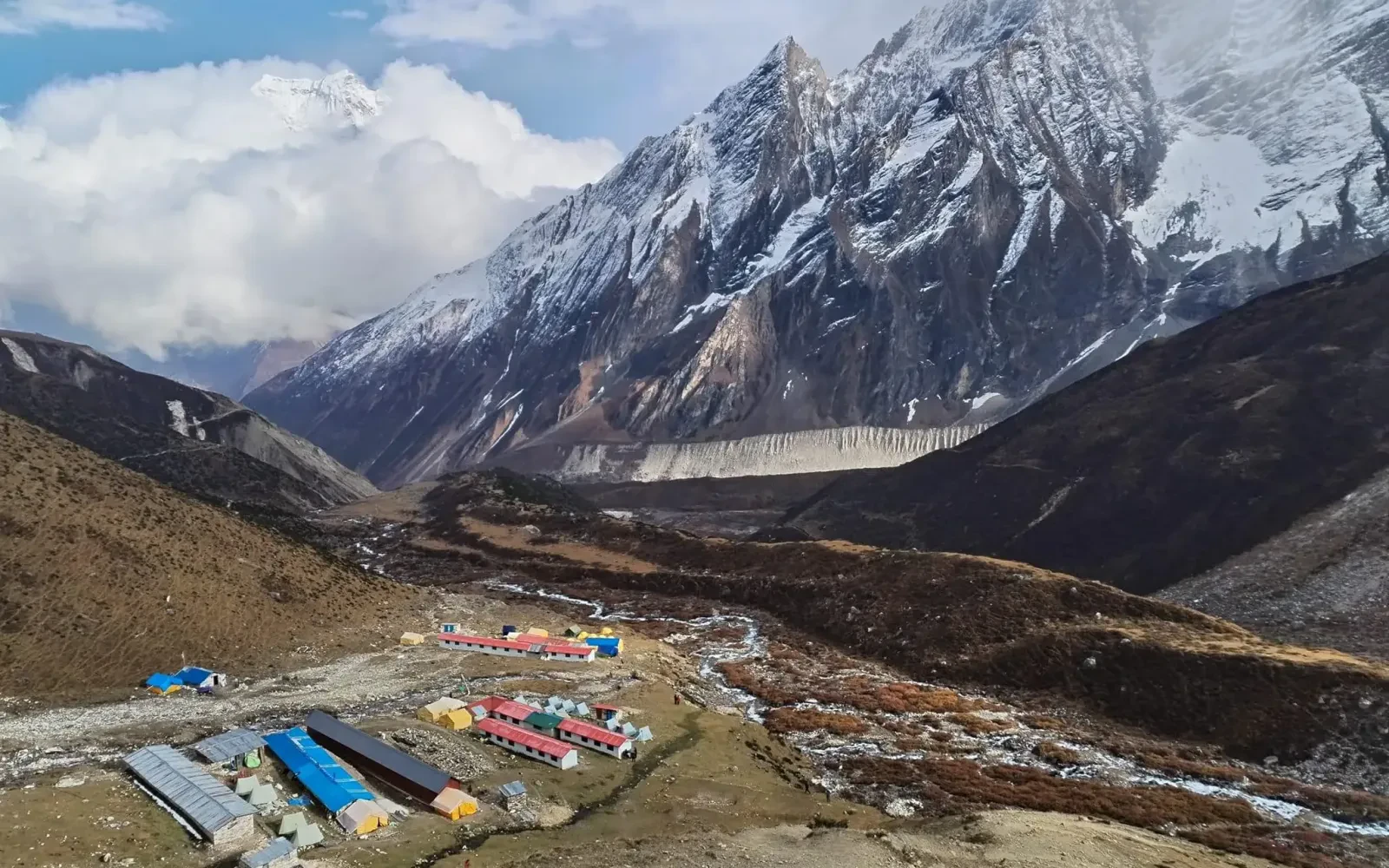
Key Acclimatization Factors:
Actually, the Samagaon to Dharamsala trek is a day for getting used to the altitude of the Manaslu Circuit. We need to be careful with the altitude to stay safe. This day is really important for getting ready to cross the Larkya La Pass on the Manaslu Circuit. The Manaslu Circuit is a trek and the Larke Pass is a tough part of it. So, we have to make sure we are prepared, for the Manaslu Circuit and the Larke Pass.
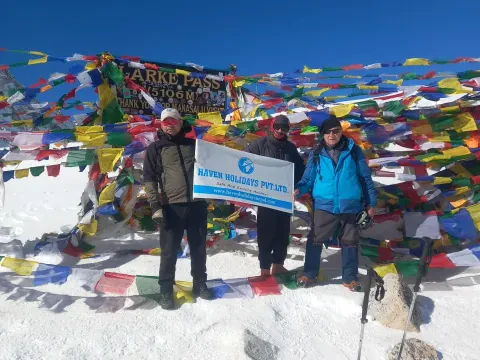
Firstly, the Samagaon (3,530m) to Dharamsala (4,460m) trek day functions as an important acclimatization stage before Larkya La Pass (5,106m).
Here, this day of trekking at altitude gets trekkers ready for high-altitude trekking, with thin air, cold weather and the endurance demands of high-altitude trekking. It is a day that helps people who go on high-altitude trekking to deal with the challenges of high-altitude trekking.
So, this part is really important, for an successful Manaslu Circuit Trek. The Manaslu Circuit Trek is a deal and this section is crucial for the Manaslu Circuit Trek to be completed safely.
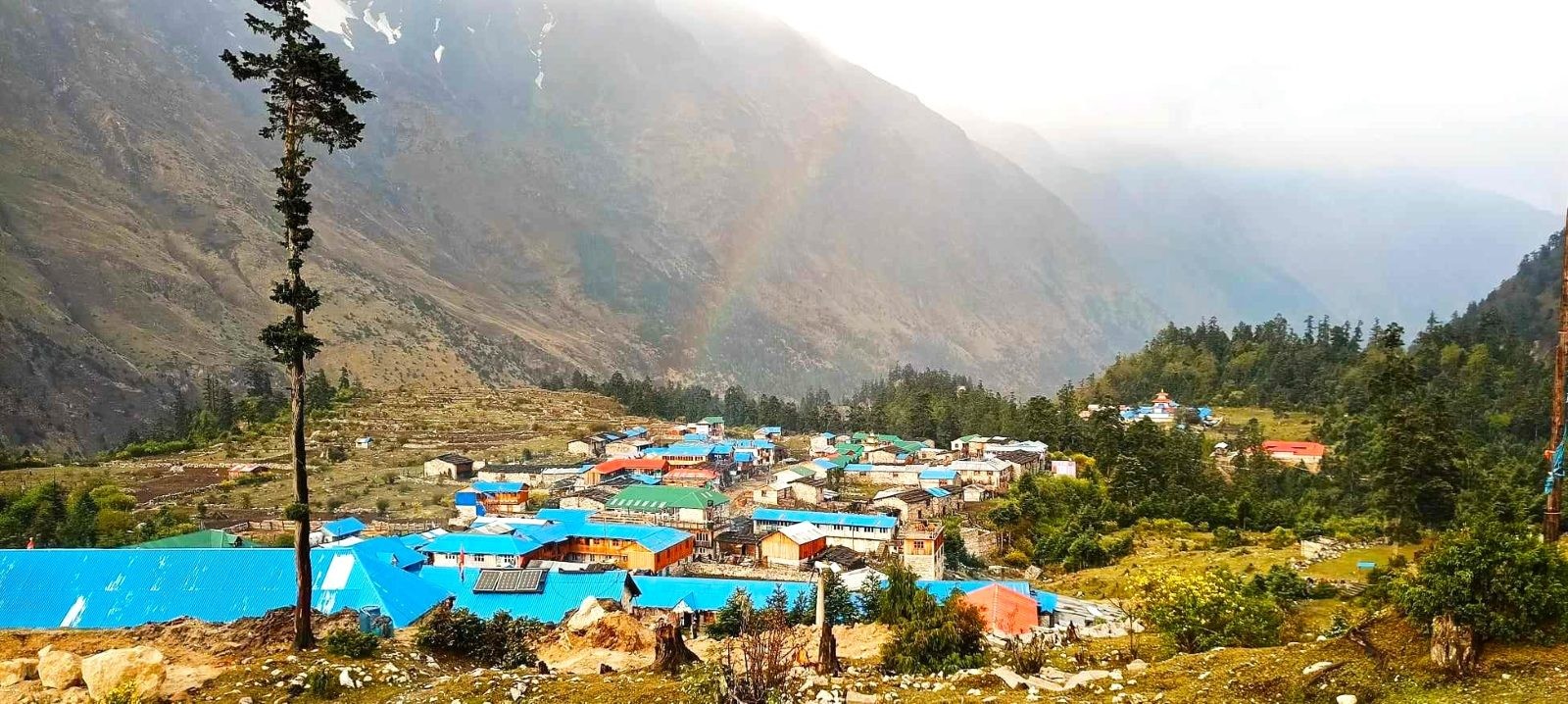
Likewise, this walk helps our bodies get used to the elevation. The elevation goes up slowly which reduces the chance of getting sick from the altitude. This acclimatization walk is really helpful, for people who want to avoid altitude sickness. The acclimatization walk is an idea because it lets people get used to the higher elevation without getting sick.
Likewise, the trail goes up steadily. It does not have parts that are hard to climb. The trail just keeps going up without any tough sections. The hiking is pretty steady, on the trail.
So, the body gets used to having oxygen. The body adapts naturally to reduced oxygen levels. This is something that the body does on its own when it has to deal with oxygen levels.
Further, this day of the trek is also when we move from places where people live all the time to really remote mountain areas. The trek day is important because it marks the transition from settlements to remote alpine terrain, like the remote mountain areas. The trek is going into remote alpine terrain now.
In fact, the village of Samagaon is the big village you will see before you cross the pass. It is at a high point 3,530 meters above sea level so Samagaon is really high up. Samagaon is important because it is the major village before the pass crossing, at Samagaon.
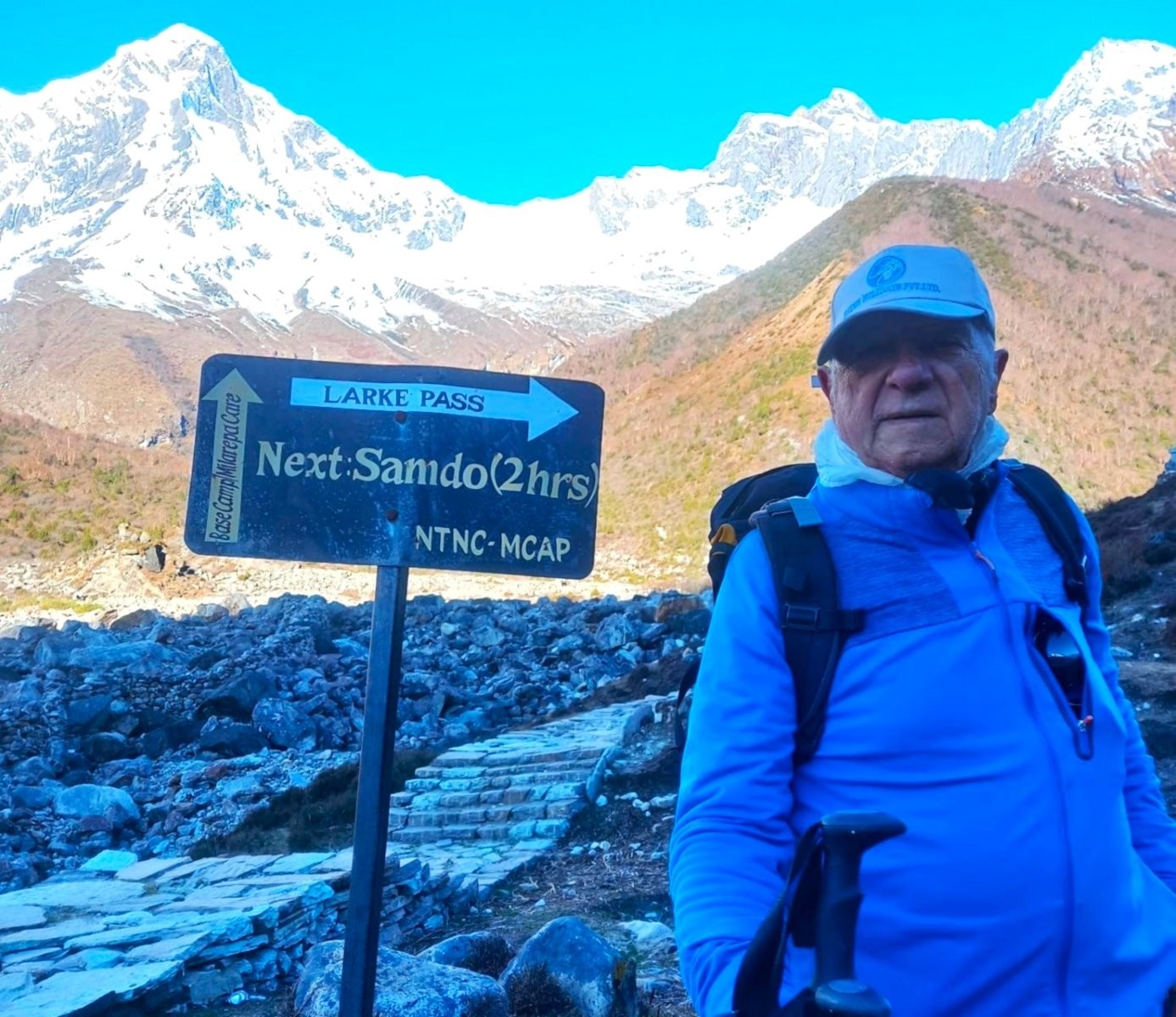
So, trekkers get ready for being alone and not having things they need. They know that when they go trekking they will be away, from people and will not have a lot of facilities. Trekkers have to prepare themselves for this kind of situation. They think about the fact that trekking means isolation and minimal facilities.
Moreover, Dharamsala is a high place it is 4,460 meters above sea level. People also call Dharamsala Larke Phedi. Dharamsala is like a base camp that people use for a time usually during a particular season when they are climbing. Dharamsala is very useful for climbers because of its location. The location of Dharamsala makes it a good spot for Dharamsala to be a camp, during the season.
Likewise, the place gives you a room to stay in not a lot of food options and you have to go to sleep pretty early. The lodging is simple the meals are. The sleeping arrangements are early.
So, trekkers try to save their energy for the climb to the top of the mountain, which is the summit push. The trekkers really need to conserve their energy, for the summit push.
In fact, the weather, sometimes, is getting really bad. It is very windy and very cold. The weather conditions are becoming harsher, with winds and colder temperatures.
Furthermore, snowfall can happen when you are trekking in the spring season. It also happens when you are doing Manaslu trekking in the autumn season. The snowfall is something that people see a lot during these times when they go trekking. Snowfall is a thing that people experience when they go on a trek during the spring or the autumn season.
So you really need to wear clothes in layers. This is very important. Proper layering is something you must do.
Likewise, guides closely monitor acclimatization symptoms throughout the ascent.
This monitoring helps to prevent bad things from happening because of the altitude. It stops emergencies that are related to the altitude. The monitoring of the altitude is very important to prevent these altitude-related emergencies.
So the trek helps build endurance. It does this by using controlled strategies. The trek really helps with endurance through these strategies.
Meanwhile, trekkers walk slowly. They do this using the principle that you should climb high and then sleep low. This is an idea, for trekkers. The principle of climb sleep low is what guides them.
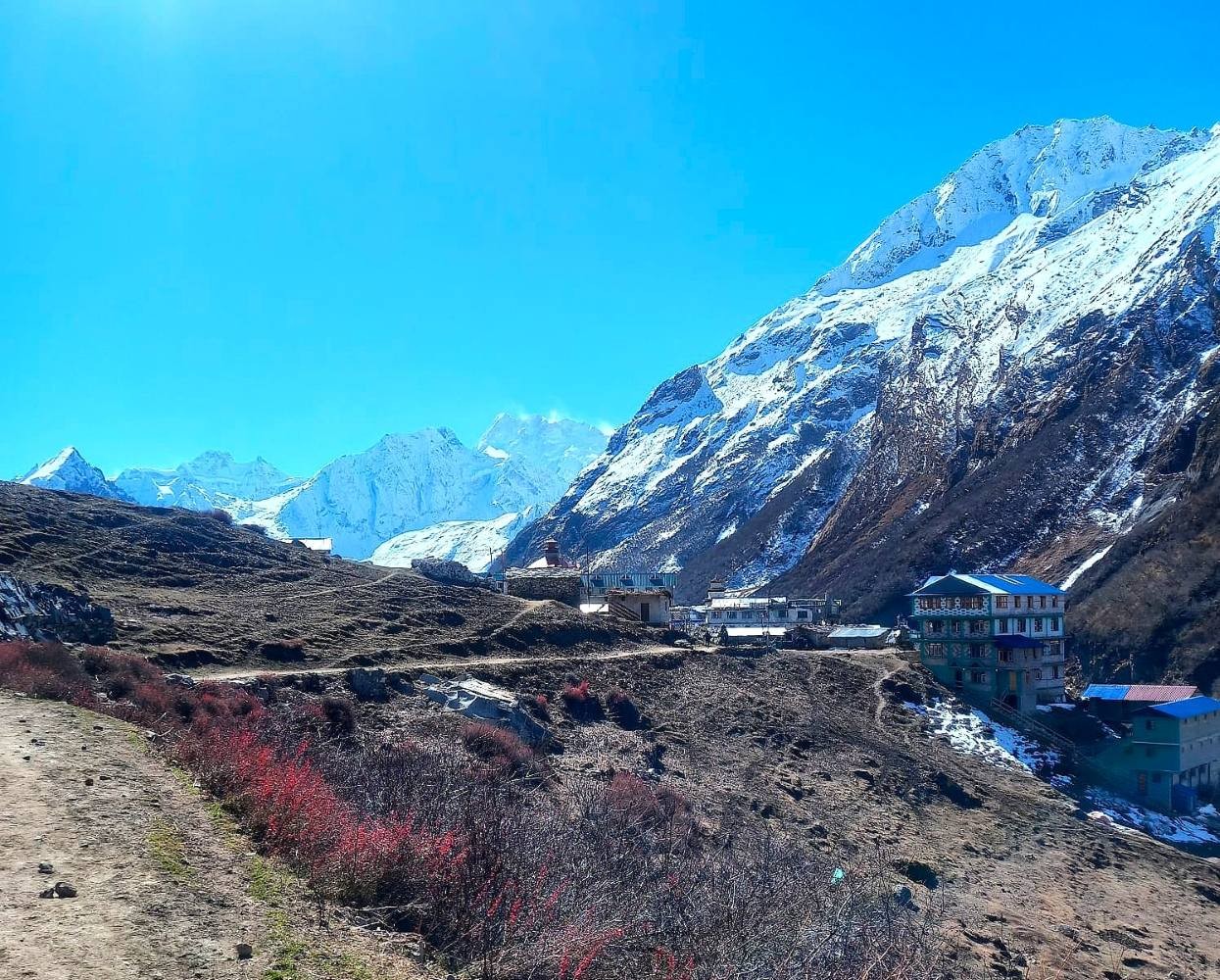
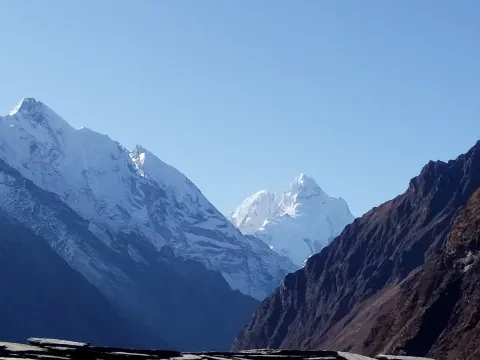
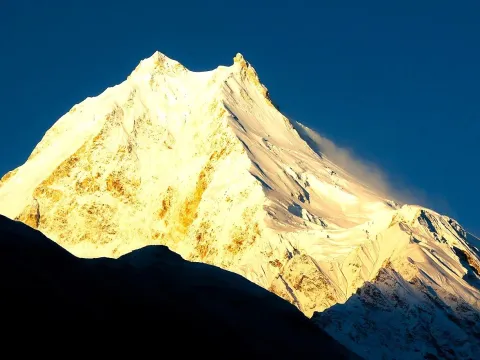
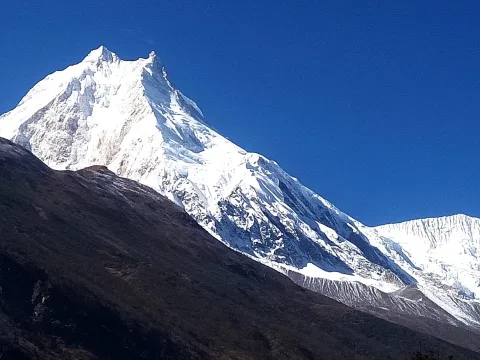
Actually, this method is good because it helps people gain height safely. The method supports elevation gain. The landscape is really beautiful. It offers big views of Manaslu, Naike Peak and Larke Peak. You can see Manaslu which is 8,163 meters high Naike Peak which's 6,211 meters high and Larke Peak which is 6,249 meters high. The views of Manaslu and Larke Peak are really great.
The Himalayan mountain views are really great. They motivate the trekkers to keep going even when they are very tired, from all the walking. The Himalayan mountain views are so beautiful that they make the trekkers want to see more.
The scenery helps balance out the strain. Scenery does a job of balancing physical strain.
More importantly, this day is also about being good at trekking and working well with the trekking group. The trekking discipline is very important. So is the group coordination, during the trekking activity. Trekking requires a lot of discipline. The group has to coordinate with each other while trekking.
Let’s do these reminders before you venture for Dharmasala from Samagaon, “I have to get up early. I also have to drink water at times, which is good, for me.. I have to eat my meals at the same time every day”. Here, early starts and hydration breaks and meal timing are all very important. They follow strict schedules.
Likewise, this kind of setup makes sure the pass crossing is something that the structure's ready, for. The pass crossing is what the structure is prepared to handle.
So the walk to get used to the altitude has a big effect on how successful people are when they try to cross Larke Pass. This walk really helps people get ready, for Larke Pass.
If you do not do the adaptation correctly it can really increase the risks when you have to evacuate a place. Proper adaptation is very important to prevent things from happening during a descent evacuation. Descent evacuation risks go up a lot when you skip the adaptation.
Additionally, this day is really important for people who go on the Manaslu trek. They have to include it in their Manaslu trekking plans. The Manaslu trek is not complete, without this day. So, people who make Manaslu trekking itineraries always put this day in them.
Now, the Samagaon–Dharamsala trek day is really about going up safely. This means the Samagaon–Dharamsala trek day is about taking it slow and easy when you are at a high altitude. The Samagaon–Dharamsala trek day is very important, for people who want to climb mountains because it teaches them how to do the Samagaon–Dharamsala trek safely.
It helps our body get used to things makes our mind stronger. Gets us ready, for what we need to do. It balances the way our body adapts our mental resilience and our logistical preparation.
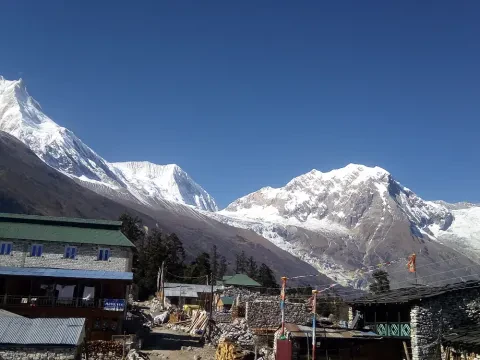
In the morning, we leave Samagaon and the trail is really quiet. We see a lot of yak pastures around us. The air is very thin here. The views of the Himalayas, on the Manaslu Circuit Trek are amazing.
Trail Characteristics :
| Feature | Description |
| Starting Elevation | Samagaon (3,530m) |
| Terrain Type | Alpine meadows and glacial valleys |
| Key Wildlife | Yak herds |
| Major Mountains | Manaslu (8,163m), Himalchuli (7,893m) |
| Trekking Focus | Acclimatization, endurance, pacing |
The trekking day starts early from Samagaon which is at 3,530 meters. It is usually a day, in the Himalayas. In the morning it is an idea to leave because you will not have to deal with the strong winds and snow that come in the afternoon. Morning departures are really helpful for this reason. They reduce your exposure, to afternoon winds and snowfall.
Early starts are really good for trekking because they make the whole thing more efficient and safer for everyone. When you start your trek early you have a chance of staying safe and getting where you need to go. Early starts are very important, for trekking efficiency and safety.
The trail goes away from the farms and the village, after that. It leaves the cultivated land and the village infrastructure behind.
The Stone houses and the monasteries are disappearing into the Stone houses. The monasteries are going into the Budhi Gandaki Valley. The Stone houses and the monasteries are completely going away, into the Budhi Gandaki Valley.
Silence takes over. It replaces the settlement activity really fast. The settlement activity is. Silence is what you have now.
The route also goes through big fields where yaks eat. These fields are used by herders who come to the area for a months every year. The herders bring their yaks to these fields.
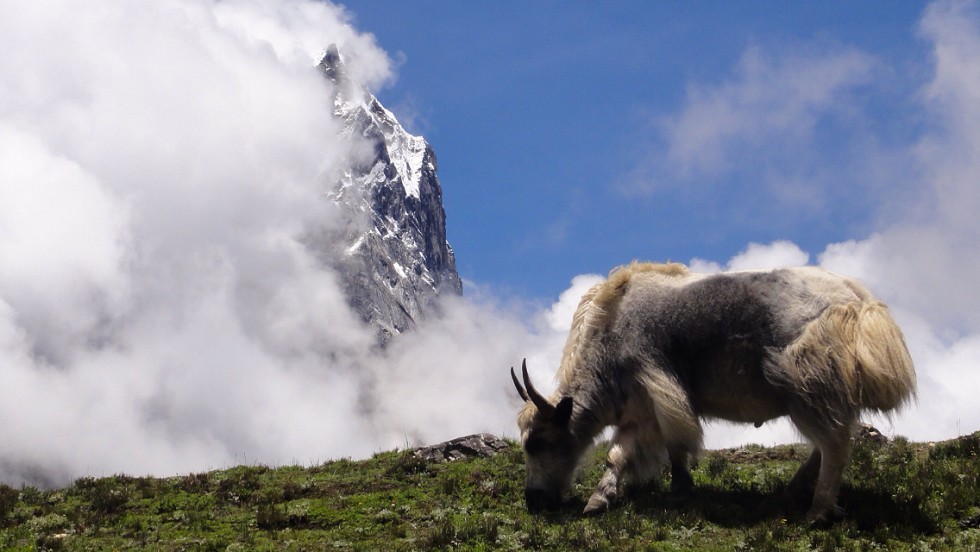
Yaks do well in areas that are very high up where the air is thin, like mountains that are more than 3,500 meters tall. These areas are perfect for yaks to eat and live. Yaks are able to survive in these places because they are used to the thin air and the cold weather. Yaks really, like the high-altitude grazing zones.
The pastures are a part of the way people live in the Himalayas. These pastures show us what it means to live in a way that's good for the Himalayas and the people who live there. The Himalayan people make their living from these pastures in a way that does not hurt the environment. The pastures are very important, for Himalayan livelihoods.
Additionally, mani walls and prayer flags line sections of the trail.
The spiritual things you see here are, from the Tibetan traditions of the Nubri Valley. These spiritual elements are a part of the Tibetan Buddhist traditions of the Nubri Valley.
The people who are helping you offer encouragement, to your mind when you are going up. They give you encouragement during the ascent. This encouragement is very helpful when you are going through the ascent.
The air in the mountains is really thin. You will notice this when you are trekking for one hour. The mountain air is very noticeable, during this time.
When you have oxygen it is harder to walk at a normal pace. You will get tired easily. Your walking pace will be slower. The amount of oxygen you have really affects how you breathe. With oxygen you have to breathe harder and it feels like more of an effort to catch your breath. Reduced oxygen slows down your walking pace. Increases the effort you need to breathe.
So breathing techniques that you can control are really important. Controlled breathing techniques are something that people need to learn about. This is because controlled breathing techniques can help you in ways.
The trail is still really wide and easy to walk on even when you go up. The trail remains wide. The trail is non-technical which is good news, for people who want to keep going because the elevation of the trail is increasing.
When people go on hikes this helps the trekkers focus on the rhythm of their walk of thinking about where they put their feet. The trekkers can just think about the rhythm.
So energy conservation just gets better on its own. Energy conservation is something that people do not really have to think about because it happens naturally. This is because energy conservation is a process that works well when people use things like lights and machines in a way. Energy conservation is important. It helps a lot when people make a habit of turning off lights and machines when they are not using them. This way energy conservation becomes a part of our life and it improves naturally over time. Energy conservation is good, for everyone. It is something that we should all do to help the earth.
The open valley terrain is really nice because it has views all around. These panoramic views are what you see when you look out at the open valley terrain. The open valley terrain is special because of these panoramic views.
The mountain Manaslu, which is 8,163 meters high is really noticeable. So is Manaslu North it is 7,157 meters high. You can also see Himalchuli, the mountain Himalchuli is 7,893 meters high.

These mountains are what make the Manaslu trekking experience so special. The Manaslu trekking identity is really, about the mountains. After we leave Samagaon, which's at 3,530 meters it gets really tough to find water sources. Water becomes very scarce. We have to be careful with the water we have when we are away, from Samagaon.
People who go trekking need to bring clean water with them when they go on a trek. The water they bring must be purified water supplies so that trekkers can stay healthy during their trek. Trekkers should always have purified water supplies.
Drinking water really helps the body get used to high altitudes. Hydration is very important for altitude adaptation. When you are at an altitude hydration plays a big role, in how well your body adapts to the change. So hydration supports altitude adaptation in a way.
Here, the temperature can be really different when you move from a spot to a shady spot. Temperatures go up and, down a lot in these areas the sun zones and the shade zones. This happens because the sun zones and the shade zones have different temperatures.
Wind chill intensifies across exposed ridges and plains.
So wearing clothes in layers is really important. Layered clothing is the way to go because it helps you stay comfortable. Layered clothing is very useful.
Likewise, guides make sure people do not get too tired by having them walk a little and then rest. Guides do this by using walking intervals and rest stops. This way guides can regulate the pace of the people who are walking with the guides.
This pacing strategy is really good because it stops people from getting too tired fast and it also helps with headaches. The pacing strategy is very useful for preventing exhaustion and it is also good, for preventing headaches.
This thing helps to keep the heart rate steady. It does a job of keeping the heart beating at a stable pace. The heart rate is something that this thing really helps to stabilize.
The morning is really quiet when I wake up. It is a great time to get up and start the day. The quiet morning ascent is what sets the tone for the day. It makes the rest of the day feel more peaceful. The quiet morning ascent is very important to me because it helps me to get ready, for the day.
When you get rid of things that distract you your mental focus gets better. You can concentrate on the things that're important to mental focus. Mental focus is, like a muscle that gets stronger when you use it and get rid of distractions.
So, people who go on hikes like the trekkers need to be really careful when they're at high places. The trekkers have to pay attention to what's going on around them when they are at these high altitudes. This is what we call high-altitude awareness mode, for the trekkers.
Ultimately, departing Samagaon (3,530m) represents a psychological threshold. People who go trekking really go for it when they decide to take on the Larke La Pass challenge. The Larke Pass is a deal because it is really high up at 5,106 meters. Trekkers are totally committed, to making it through the Larke Pass.
This moment is really important for people who're serious, about trekking in the Himalayas. The Himalayan trekking is a deal and this moment is a big part of it. It shows how far the Himalayan trekking progression has come.
Gradual Ascent from Samagaon to Dharamsala (4,460m)
Elevation and Distance Overview:
Here, the hike from Samagaon, to Dharamsala is a way. It has a lot of elevation gain and distance to cover. This overview of the Manaslu Circuit tells you about the ascent. You will learn how to adapt to the altitude. The Manaslu Circuit also shows you how effort you need to put into trekking. The elevation gain on the Manaslu Circuit is something to think about. The distance you walk on the Manaslu Circuit is also important.
Actually, the hike from Samagaon to Dharamsala is an one. It goes up and up all the time. The trek from Samagaon to Dharamsala has a lot of walking. The trek from Samagaon to Dharamsala is really steep because the trek from Samagaon, to Dharamsala goes from a point to a very high point.
Furthermore, this part of the trek is really tough because it goes up 930 meters in one day of walking. The trek goes up a lot in one day which is around 930 meters.
So, the slow climb up helps your body get used to the altitude before you reach Larke Pass which is really high, at 5,106 meters. This makes it easier for you to cross Larke Pass.
Here, the distance that people have to walk between Samagaon and Dharamsala is 7-10 kilometers. Samagaon is at a height of 3,530 meters. Dharamsala is at a height of 4,460 meters. So when you walk from Samagaon to Dharamsala you have to cover this distance of 9 kilometers on average on foot. The walking distance, between Samagaon and Dharamsala is really important to know.
Trekkers usually finish the trek in 4 to 5 hours. The trekkers do this by walking at a pace. This means the trekkers complete the distance, within four to five hours.
So the distance is not too bad even though the high altitude is a problem. The distance is something that people can handle because the altitude is not making it too long. The distance and the altitude are two things that affect this situation. The distance remains manageable.
The elevation profile goes up at a pace it does not have any steep drops. The elevation profile is like that all the way it just keeps going up without any descents. The elevation profile is really consistent, like that.
The slope is not too steep so it does not put a lot of strain on your knees and joints. This is really good, for the slope of this thing it helps reduce strain on the knees and joints of people who use it. The gradual slope is very helpful because it reduces strain on knees and joints.
So people who go trekking try to save their energy for the high places they have to climb. Trekkers know that higher elevations are very tough that is why trekkers keep their energy for elevations.
When you are walking and you gain altitude it really affects how oxygen you have to breathe and it also affects your walking rhythm. The altitude gain is something that affects oxygen availability. It also affects your walking rhythm. Altitude gain is a deal because it changes how you walk and how you breathe.
When you are above 4,000 meters your breathing becomes heavier. At elevations like this breathing is harder because the air is thinner. So breathing becomes heavier when you are at these places like, above 4,000 meters.
So when you are flying high it is really important to slow down for the safety of the altitude. The altitude needs pacing to be safe.
When you are going up a mountain guides say it is very important to take breaks. These breaks are called rest intervals. They help your body get used to the higher elevation. Hiring Guides really stress that you should take these breaks when you are climbing up and gaining elevation.
Taking breaks helps to calm down our heart rate and breathing. Short breaks are really good for our heart rate and breathing because they help to keep them stable. When we take breaks our heart rate and breathing get back to normal. Short breaks are very important, for our heart rate and breathing.
This plan makes the entire climb less tiring, for people who do the climbing. The strategy really helps with endurance throughout the climb. It makes people who climb better at dealing with the hard climb. The climb is a lot easier when you use this strategy to improve your endurance throughout the climb.
This climb is also done in a way that follows the rules for hiking at altitudes. The ascent of the mountain follows these guidelines, for high-altitude trekking.
The body makes red blood cells when we gain weight slowly. This is what happens during weight gain. The body produces red blood cells.
So the risk of getting altitude sickness goes down a lot. The risk of altitude sickness decreases significantly when you do things to prevent it. Altitude sickness risk is lower when you take care of yourself.
Here, when people go trekking they feel the cold more and more as they go higher up. The trekking gets colder as the elevation rises. People who go trekking or trekkers will feel this cold as they climb to elevations.
Actually, the temperature drops low near Dharamsala. It is very cold at Dharamsala because it is so high up at 4,460 meters. Temperatures, at Dharamsala drop sharply.
So, the thermal layering is really necessary now. Thermal layering is something that we need to do. This is because thermal layering helps a lot. We have to make sure that thermal layering is done properly. The thermal layering is very important.The route also gives you a view of how far you have gone on the route. This means you can always see how progress you are making on the route.
People who go trekking can see Dharamsala from far away it is, at a height of four thousand four hundred and sixty meters. They see Dharamsala long before they actually get there to visit Dharamsala.
Having this visibility really helps the company keep moving. The visibility is what motivates the company to make progress. This is because the visibility gives the company an idea of what needs to be done and it helps the company to stay on track. The visibility is very important, for forward movement of the company.
The elevation gain is also good because it gets trekkers ready for Larke Pass which is really high, at 5,106 meters.
When people get used to an altitude and it works out well their confidence gets a big boost. This is because they are able to adapt to the altitude successfully. Altitude adaptation is a deal and when it is successful it really helps to increase confidence, in people who are trying to get used to the new altitude.
Mental readiness is really important. It makes a difference. Mental readiness helps people prepare for things. This is why mental readiness proves crucial for people who want to do their best.
So trekking companies make plans for people to climb up slowly. They want people to get used to the altitude that is why trekking companies design itineraries around this gradual ascent. Trekking companies do this to help people climb up the mountain safely. That is why they make these gradual ascent plans.
Skipping this day increases medical evacuation risks.
So this part is really important. It cannot be changed. This stage is something that we have to do no matter what. We cannot skip this stage. Make any deals, about it. This stage is necessary. That is that.
The elevation gain from Samagaon to Dharamsala is really important. We are talking about going from 3,530 meters to 4,460 meters. This is a deal because it helps us figure out if we can make the trip safely. The elevation gain from Samagaon to Dharamsala is what tells us if we are making progress.
The thing that is really important is that it balances the distance you travel the altitude you're, at and how your body gets used to these things. It does a job of balancing distance, altitude and physiological adaptation. This balance of distance altitude and physiological adaptation is what makes it work well.
The right balance is really important for the Manaslu Circuit Trek to be successful. This balance makes sure that people have a time, on the Manaslu Circuit Trek. The Manaslu Circuit Trek success depends on this balance.
Trail Conditions Along the Way: Rocky Paths, Glacial Moraines, and Windy Open Valleys The trail from Samagaon to Dharamsala is really tough, on the Manaslu Circuit Trek. You will walk on paths and glacial moraines. The Manaslu Circuit Trek also has valleys. The Manaslu Circuit Trek is very challenging because of these things.
The trail from Samagaon starts on a big open space with lots of mountains around. It is at a high place Samagaon is, at 3,530 meters.
The footpaths are easy to walk because they are clear but the problem is that the footpaths are not even. This means that the footpaths are not level and that can be a problem, for people who are walking on the footpaths. The footpaths need to be fixed so that they're even and easy to walk on.
The equipment for Manaslu Trekking like poles are really helpful because they give you stability when you are walking. Trekking poles make a difference when you are on a hike. You feel more stable, with trekking poles.
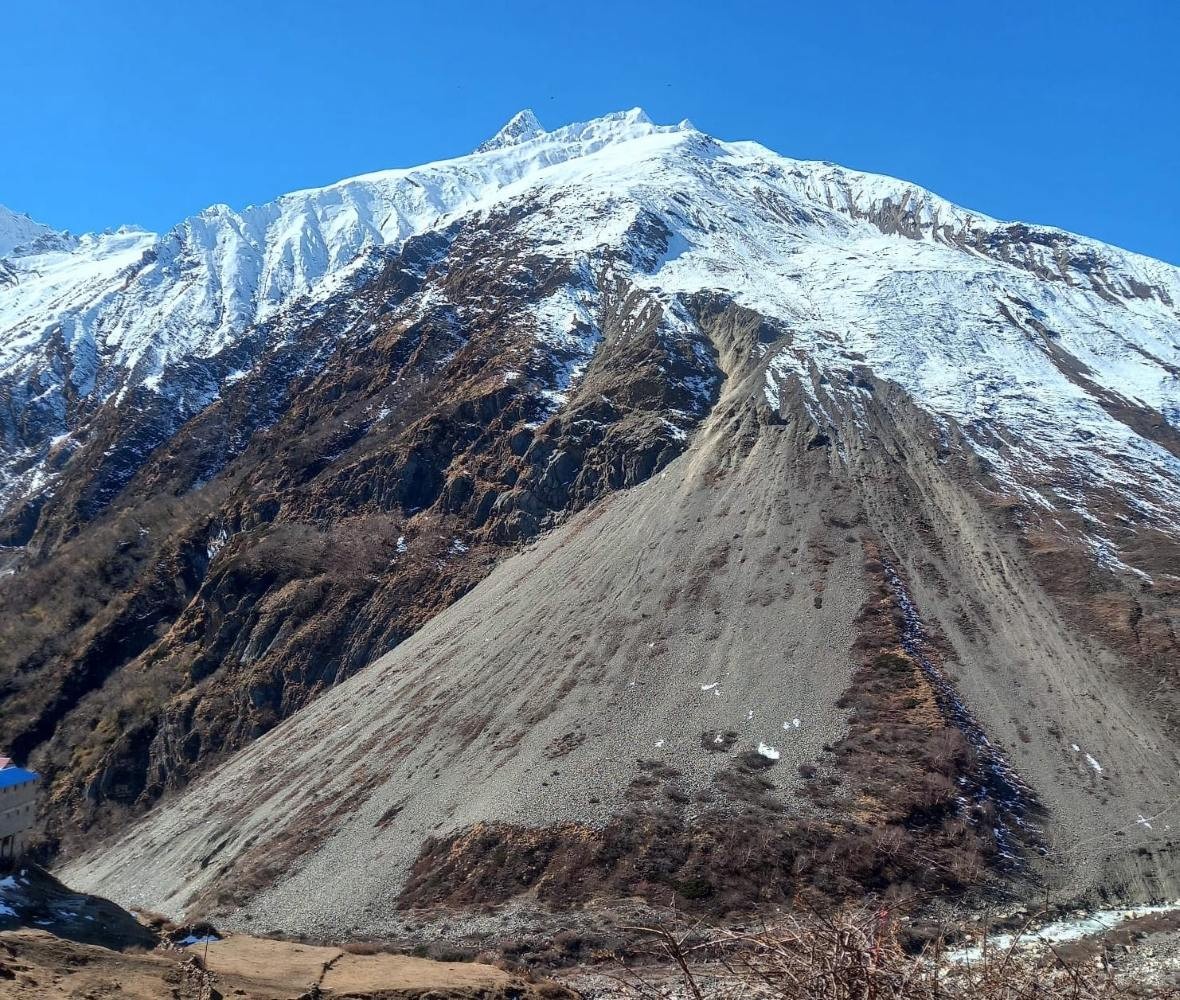
The thing about this hike is that rocky paths are, over the place when you are going up. Rocky paths are really what you see for most of the ascent.
When you are walking on stones you have to be really careful where you put your feet. Loose stones can be very tricky to walk because they can move around under your feet. You have to make sure you place your feet carefully on the stones so you do not slip and fall. Walking on stones requires careful foot placement at all times.
So ankle support is really important. We need to have ankle support to stay safe and healthy. Ankle support is necessary, for our ankles.
The route goes over piles of rocks that were made when old ice moved. This ice was really old. It pushed these rocks into big piles called glacial moraines. The route actually crosses these moraines that were formed by the movement of this ancient ice.
Trekkers really need to keep their balance steady. They have to do this so they can stay safe while they are trekking. The trekkers maintain balance.
The trail does not have trees along it for big parts of the way. This means that the trail lacks tree cover, for stretches. The trail really lacks tree cover for stretches.
When you are, in valleys you can really feel the strong winds. The open valleys make the strong winds hit the trekkers. Open valleys are places where trekkers are exposed to winds.
When you are out in the cold this exposure to the air increases the stress that cold puts on your body. The cold stress is not good for you. It can make you feel really bad. This cold stress is something that happens because of the exposure, to the cold.
The wind intensity gets stronger when you are near Dharamsala. This is because Dharamsala is at a high place it is 4,460 meters, above the ground. The higher you go near Dharamsala the stronger the wind intensity becomes.
In the afternoon the wind can really pick up. It gets very chilly. The gusts of wind that come in the afternoon can make your body temperature drop quickly. When this happens you can feel the air, on your skin and your body temperature goes down fast because of the afternoon gusts.
So windproof layers are really important. They help keep us warm when it's windy outside. Windproof layers remain critical because they stop the wind from getting to our skin.
The trail markings are still easy to see when everything around them looks empty and bare. The trail markings stay visible, like that.
Now, these markers are really helpful because they stop people from getting confused about which route to take. They make sure that people know which way to go so they do not get lost. These markers are very important, for preventing route confusion.
So when spring comes around and when autumn is here you will see snow patches. Snow patches are something that you can see during these times of the year. It is pretty common to see snow patches during spring and autumn seasons. Snow patches are a normal thing that happens during spring and autumn.
These patches get really hard when you leave them alone overnight. The patches will be hard, by the time morning comes around because they harden overnight.
Therefore, careful morning steps matter.
In addition, the trail surface alternates between gravel and compact soil.
When you walk on terrain your feet can get really tired. This is because the ground is not flat and even so your feet have to work to balance and move around. The uneven terrain can cause foot fatigue to increase, which means your feet will feel more tired and sore after walking. Foot fatigue, from terrain is a common problem that many people experience.
So when you wear the shoes it makes your feet feel better. Proper footwear is really important because it reduces discomfort. You see proper footwear is what makes all the difference when you are walking or running. Proper footwear reduces discomfort. That is a good thing.
The trail is really great because it gives you a view of Manaslu, which is a very big mountain that is 8,163 meters tall. You can also see Naike Peak and Larkya Peak from the trail. Manaslu is very beautiful. So are Naike Peak and Larke Peak. The trail is a place to see these mountains, including Manaslu, Naike Peak and Larkya Peak.
The scenery can make physical tasks easier, for people. This is because nice scenery offsets the difficulty that people have to deal with when they are doing something hard.
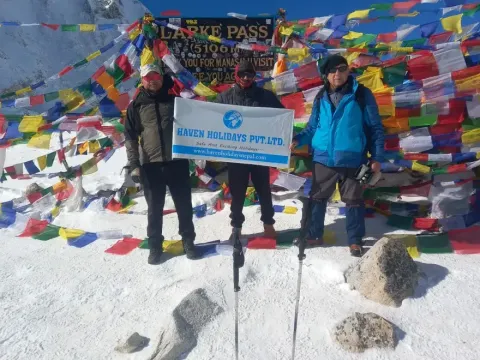
This balance helps people to keep going. It really sustains their motivation. The balance is what keeps the motivation going.
The trekking pace is really slow, on this terrain. It has to be slow and deliberate when you are walking on this kind of terrain. The terrain is tough so the trekking pace remains slow.
When you are in a hurry you are more likely to slip and fall. This is because rushing increases the risks of slipping. So it is very important to be careful when the floor's slippery and you are, in a rush because rushing increases slip risks.
When it comes to getting things done safety is really important. Safety always comes first it always overrides speed. The thing is, safety is more important, than speed. We should remember that safety always overrides speed.
The trail gets really wide near Dharamsala. This happens when you are really high up at 4,460 meters, near Dharamsala.
The valley has these cool seasonal lodges that show up. They are basically these places to stay that you can find in the valley during certain times of the year. The seasonal lodges, in the valley are a thing to see.
This means that the journey is finished for the day. The journey is now complete, for today.
Ultimately, trail conditions test balance, endurance, and preparation.
This stage is, about rocky paths and windy valleys. The rocky paths are really tough. The windy valleys are very hard to walk through. The rocky paths and windy valleys make this stage very difficult.
So having the right gear is really important to get to your destination. The proper gear makes a difference and it helps you arrive safely.
Trail Condition Overview:
| Trail Feature | Description |
| Terrain Type | Rocky paths and glacial moraines |
| Wind Exposure | High in open valleys |
| Technical Difficulty | Moderate, non-technical |
| Key Mountains | Manaslu (8,163m), Larke Peak (6,249m) |
| Safety Requirement | Trekking poles and layered clothing |
Villages and Settlements on the Route: Passing Larke Bazaar and Seasonal Herders’ Camps There are villages and settlements along the way from Samagaon to Dharamsala. The Manaslu Circuit Trek has some interesting places like Larke Bazaar. You will also see herders camps, on the Manaslu Circuit Trek. The Manaslu Circuit Trek is where you will find these villages and settlements.
Actually, the route from Samagaon to Dharamsala is really interesting. It goes through areas where people do not live all the time. The Samagaon to Dharamsala route has few villages that are there all year round. People do not always stay in these places. The route from Samagaon to Dharamsala is like this because it is high up. The Samagaon to Dharamsala route is, at a high altitude.
Now, this part is really like being alone, in the mountains of the Himalayas.
So, people who go on hikes like trekkers have to deal with living in really remote mountains. Trekkers have to get used to these kinds of conditions when they're out, in the mountains. The living conditions that trekkers experience are usually very basic.
When, Larke Bazaar is at 4,100 meters. It is the last place people stop for the season before they get to Dharamsala. Dharamsala is really high up at 4,460 meters. Larke Bazaar is important because it is the stop, before Dharamsala.

Actually, this little market is open when people go trekking. The small bazaar is only open, during the time of year when people're out trekking.
So, people are around, for a little while and they do not stay for very long. The human presence remains temporary. The human presence is also minimal.
Moreover, Larke Bazaar is a place that's really high up it is 4,100m above sea level. Larke Bazaar was very important for people who traded salt and for the yak caravans that passed through. People used to go to Larkya Bazaar to buy and sell salt. Larke Bazaar was like a stopping point, for the yak caravans.
Today the company supports the Manaslu Circuit Trek with its logistics. It helps people who are doing the Manaslu Circuit Trek by providing them with the things they need. The Manaslu Circuit Trek is a trip and the company is there to support the Manaslu Circuit Trek with its services.
So, the thing is, this place is still really important to people even though it is small. This place remains important, to people because of its history. What it means to them. This place is still really important.
The stone huts at Larke Bazaar are really helpful because they give people a place to stay. This place is high up it is at 4,100m. The stone huts, at Larke Bazaar provide basic shelter.
These shelters are really helpful because they keep trekkers safe from the wind and snow. The wind and snow can be very bad for trekkers so these shelters are very important, for trekkers.
The facilities are really not very good. They do not have a lot to offer. The facilities remain very limited.
Seasonal herders have their camps over the place, in the alpine pastures. The camps are really spread out. You can see them here and there. These alpine pastures are where the seasonal herders take their animals to eat and the camps are where the seasonal herders live for a while.
Local herders move the livestock during the summer months. They do this every year when it gets hot outside. The local herders and the livestock are out, in the fields and the local herders take care of the livestock. Local herders make sure the livestock has food and water.
These camps are a part of the transhumance traditions that people have been following for a time. The transhumance traditions are really important, to these camps.
People who take care of animals like herders need yaks and sheep and goats to survive. They really depend on these animals, yaks, sheep and goats for everything.
Animals eat the grass that grows in the highlands. This grass does not have a lot of things in it that the animals need. The highland grass is not very healthy, for the animals. Animals still like to graze on this highland grass.
The pastoral life is really good, at adapting to tough conditions. People who live this kind of life have to deal with weather and other difficult things. The pastoral life adapts to conditions because that is what people have to do to survive.
So people who go on treks see the Himalayan mountain culture. They get to experience it without a lot of tourists. The Himalayan mountain culture is very authentic when you are there trekking.
There are no shops that're there all the time. The place also does not have things, like good roads or buildings.
Similarly, the authenticity of these places really makes the trekking experience more valuable. When you go trekking the authenticity of the place makes it better.
Moreover, settlements that are above Samagaon, which's, at 3,530 meters do not have electricity and they also do not have communication networks.
Solar lamps do not give us a lot of light. They are not very bright. The lighting they provide is limited. I think this is a problem with lamps. Solar lamps are not good, for lighting up spaces.
So going to bed early becomes a thing. People get into the habit of sleeping and it becomes a part of their daily routine. Early rest becomes something that they do every day.
Water sources that are near camps also depend on streams that come from glaciers. These streams from glaciers are very important for the water sources, near camps. The camps need water from these streams to survive.
When it gets really cold outside the water availability is affected by the temperatures. Freezing temperatures can cause water to freeze. That makes it hard to get water when you need it. The freezing temperatures have an impact, on water availability.
People who are guides make sure to use water. Guides have to manage water carefully because water is important. Guides take care of water when they are working. The guides always try to manage water.
So people who go on treks need to bring food and water from Samagaon, which is, at three thousand five hundred and thirty meters.
The prices of things go up a lot at Larke Bazaar which's, at four thousand one hundred meters.
When we have trouble, with transportation it makes things cost more. Transportation problems are an issue because they make transportation cost a lot. The cost of transportation goes up when we have transportation difficulty.
Villages and camps really focus on people being able to take care of themselves and getting ready for things. Villages and camps are all about villages and camps teaching people to be self-reliant and to prepare for things that might happen. People in villages and camps learn to rely on themselves and to get ready for whatever comes which is a big part of what villages and camps are all, about.
The villages and towns, in this area really show how far away the Manaslu region is. The Manaslu region is a remote place.
The Himalayas are what make the trek so special and real. They define the treks Himalayan character. The trek is, about the Himalayas and their raw beauty.
Settlements Overview :
Landscape highlights, like these make the trip very special.
When you leave Samagaon, which's at 3,530 meters the landscape around you changes a lot. Actually, Samagaon has some of the best things to do on Manasli Circuit Trek. The whole area looks really different after you walk away, from Samagaon.
As you go higher up the plants and trees start to get fewer and farther between. The vegetation gets thinner and thinner as the altitude increases. This means that the higher you go, the vegetation you will see. Vegetation really thins out as the altitude increases.
The scenery is much all, about the alpine wilderness. It is really the alpine wilderness that you see when you look around. The alpine wilderness is what makes up most of the scenery.
Here, when you are on the trail you can see the Larke Glacier. The Larke Glacier is really high, up it is 4,800 meters. You can actually see the Larke Glacier from the trail.
In fact, the glacier is really big. It gives water to the valleys, around it. The glacier feeds the surrounding valleys.
Further, the Himalayan mountain range is really big. It shows the power of the earth, in the Himalayas. The size of the Himalayas emphasizes the power of the Himalayas.
People who go trekking get to see the Manaslu North Face which's really high at 8,163 meters. The Manaslu North Face rises up quickly from the icy ground that is made up of glaciers and snow. The Manaslu North Face is an impressive sight, for trekkers.
The face of this place is not photographed much as the southern sides of it. This face is really not seen in pictures unlike the southern aspects of it.
So the thing is, it gives us some unique views that we do not usually see. It is, like the perspectives that it offers are very rare.
Ice-carved valleys are really interesting. They show us what happened a time ago with ice-carved valleys. The ice-carved valleys have signs of glaciers moving around in the ice-carved valleys.
Also, the smooth rock surfaces are really different, from the moraine fields. The smooth rock surfaces have no bumps or sharp edges. The jagged moraine fields are rough and have a lot of sharp points. The smooth rock surfaces and the jagged moraine fields are an interesting combination.
Similarly, the land we are looking at tells us about the earths past. This terrain is, like a storybook that shows us what happened to the earth a long time ago. The terrain really narrates history.
The view is really amazing with Naike Peak and Naike Peak standing at 6,211 meters. Then there is Larke Peak and Larkya Peak which's even taller, at 6,249 meters. These two mountains, Naike Peak and Larkya Peak are what you see when you look around.
The mountains are around the trekking corridor. They make a frame, for the trekking corridor. The mountains are really pretty. They frame the trekking corridor.
These things really make the landscape look deeper. They add a lot of depth to the landscape. The landscape looks more interesting because of them. They make the landscape have depth.
The open valleys make things look bigger because there is not a lot of vegetation. This is what happens in valleys they really amplify how big things look and that is because of the minimal vegetation, in the open valleys.
Things can look closer or farther away than they really're when you are up high in the thin air. The distances appear deceptive in the air. You just cannot tell how far something really is, in the air because distances appear deceptive.
So managing your pace is really important. You have to think about how to manage your pace. Managing your pace is the key, to getting things done.
In fact, the light is always changing fast because the clouds are moving. This is what happens when the clouds move the light conditions change rapidly. The light conditions are changing because of the movement of the clouds.
When the sun shines on the snow the snow reflections make the sunlight feel even stronger. The sunlight exposure becomes more intense because of the way the snow reflects it. This is what happens when snow reflections intensify sunlight exposure.
So you need to protect your eyes. Eye protection is really important. You have to take care of your eyes that are why eye protection becomes necessary.
In addition, glacial melt streams cross sections of the trail.
Also, the water flow is different when the temperature is high and when the temperature is low. This means that the water flow changes, with the temperature. The temperature affects the water flow in a way. When we talk about water flow we have to think about the temperature because the water flow varies with the temperature.
When we have crossings we are safe. Careful crossings are very important, for our safety. We need to make sure that careful crossings are always done to avoid accidents and ensure the safety of people using the crossings.
Likewise, the terrain is not very good for plants that like altitudes. It only supports kinds of plants that can live in these conditions. The terrain does this because it is very specific, about what plants can grow. The high-altitude flora is limited in this area.
The hardy grasses and the mosses can survive when it gets really cold outside. The hardy grasses and the mosses are very strong. They do not die easily when it is freezing.
These plants are very good, for animals that eat grass. The plants help the grazing animals to have food. The grazing animals really need these plants to survive.
So photographers have great chances in this part. Photographers can really make the most of this section because it is full of opportunities, for photographers.
Morning and evening light enhance textures during photography.
Landscape Highlights:
| Feature | Elevation |
| Larkya Glacier | 4,800m |
| Manaslu North Face | 8,163m |
| Naike Peak | 6,211m |
| Larkya Peak | 6,249m |
| Dharamsala | 4,460m |
This place is really beautiful. It is one of the most beautiful areas, around Manaslu. Manaslu has a lot of places but this area is very special.
The way to Dharamsala is really something. It is 4,460 meters high. When you get close to Dharamsala you can see fields of ice. The ice fields, around Dharamsala are very big and wide.
The snow coverage gets bigger during the winter season. This means that the amount of snow on the ground increases when it is winter. The snow coverage is bigger, in the winter because it snows more during that time of the year. So the snow coverage increases seasonally in the winter months when it is cold outside and snows a lot.
We are getting close, to Larkya La Pass which's 5,106 meters high. This means Larkya La Pass is near.
The landscape highlights are what make the peak before you get to the pass. The landscape highlights are really important because they define the peak before the pass. Landscape highlights are what people remember when they think about the peak, before the pass.
Glaciers make an impact, on people. The high peaks are really beautiful. The ice-carved terrain is also very pretty. When you see Glaciers and peaks and ice-carved terrain together they create impressions of the Glaciers and the peaks and the ice-carved terrain.
This part is really, about the mountains and how amazing they are. The Himalayan mountains have an impact here.
Weather Overview:
The weather you will have on the Samagaon to Dharamsala trail is really cold. You will have winds. Sometimes clouds will come suddenly. There is also a risk of snowfall. All these things affect the safety of the Manaslu Circuit Trek. The Manaslu Circuit Trek safety is the thing to think about when you are walking on the Samagaon to Dharamsala trail.
The weather can change fast when you go from Samagaon which is at 3,530 meters to Dharamsala which is at 4,460 meters. This is because the weather conditions at Samagaon and the weather conditions at Dharamsala are very different. The weather at Samagaon and the weather, at Dharamsala can be quite unpredictable.
The climate can be really different in altitude areas and open valleys. This is because these places make the weather change a lot. Altitude and open valleys are the reason for this big change, in the climate.
So, people who go trekking should get ready for the Himalayan weather to be really unpredictable. The Himalayan weather can change a lot and people who trek need to be prepared for that.
Now, the trail has some parts that're really out in the open and these areas are where you will find the cold winds. The cold winds are much, in charge of these sections of the trail.
When we go high up like above 4,000 meters the wind speeds get a lot stronger. The wind speeds increase a lot at these elevations like, above 4,000 meters.
Likewise, the wind chill really makes the temperature feel much colder. The wind chill effect is something that lowers the temperature that we feel. This means that the wind chill makes the air feel colder than it actually is. The wind chill is important because it affects how cold the temperature feels to our bodies.
The temperature in the morning is usually very cold near Dharamsala. It often stays below freezing near Dharamsala, which's 4,460 meters, above sea level.
Frost shows up on surfaces when the night is really clear. It is the frost that appears on these surfaces during the night when the sky is clear.
Further, clothing that keeps you warm is really important. Insulated clothing is what you need to stay warm.
So you know how the sky can be pretty clear, in the morning. Then after lunch time big clouds start to form really quickly. This happens a lot, where these sudden cloud formations show up after midday. The cloud formations can be really big and fluffy. They just seem to appear out of nowhere after midday.
The sun heats up the valleys and that makes the moisture rise up from them. This happens because of the way the suns heat works on the moisture in the valleys. The moisture rises from the valleys.
The process of doing something, like this makes it really hard to see what is going on after a while. This process does that fast.
Meanwhile, cloud cover traps cold air within glacial basins.
When it is really cloudy the temperature drops a lot. This happens because the clouds block the suns warmth. The temperature falls sharply during these overcast conditions. The temperature drops sharply during conditions, like this.
So the trekkers have to deal with the temperature changing fast. The trekkers will feel the temperature changing a lot as they go on their trek. This is because the trekkers are the ones who experience these thermal changes.
In the afternoon the risk of snow gets higher when you are trekking in the spring or the autumn seasons. The spring and autumn trekking seasons are the times when afternoon snow risks really increase.
It builds up fast on the big rocks that the glacier leaves behind. Snowfall does this because it gets cold. The snow does not melt. The snowfall stays on the moraines for a long time.
Getting to the camps early is a thing because it makes everything safer for the camps. This is why early arrival at the camps is important, for the safety of the camps.
The weather really affects how fast you can go when you are trekking. It also affects the decisions you make when you are trekking. Weather patterns have an impact, on your trekking pace and the decisions you make when you are trekking.
People who lead hikes like guides will change how fast they walk because of the wind and how thick the clouds are. The guides do this so that everyone, in the group can keep up with them. The guides adjust their walking speed based on the wind and cloud density.
This ability to adapt really helps keep the group safe. The adaptability of the group is very important, for group safety. Group safety is the thing that this adaptability helps with.
So when we talk about precipitation it usually falls as snow when we are, above 4,200 meters. The precipitation that happens at these places is mostly snow.
It does not rain often at these elevations. Rain is something that rarely happens at these elevations.
When it snows the trail gets really slippery. The snow makes the trail slippery. This is because the snow on the trail increases the trail slipperiness significantly. The trail slipperiness is a problem when there is snow, on the trail.
The temperature is really different between the sun and the shade. It stays very extreme. The temperature differences, between the sun and the shade remain extreme.
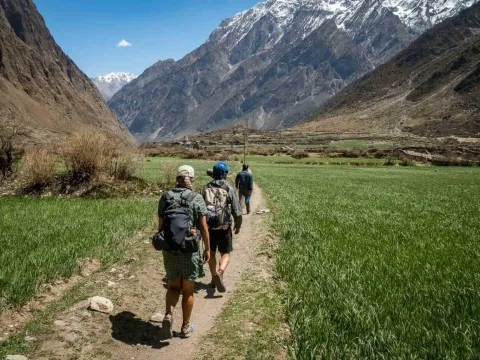
The sunlit areas feel really warm, to me even if it is not warm outside. Sunlit areas can be pretty misleading when it comes to the temperature.
The shaded zones are where you lose heat fast. This happens because the shaded zones do not get any sunlight so they get very cold. The shaded zones are bad, for keeping warm because they cause heat loss.
So layered clothing systems work well when the weather keeps changing. Layered clothing systems are great because they can handle all sorts of conditions. When it is cold and then it gets warm, layered clothing systems are the choice. Layered clothing systems are perfect, for days when the temperature is going up and down.
People who go trekking have to change the clothes they wear times when they are climbing up a mountain. The trekkers adjust the layers of clothing they have on frequently during the ascent. This is something that trekkers do often.
This practice helps to stop people from getting too cold which is called hypothermia. It also stops people from getting too hot which is called overheating. The practice of doing things in a way prevents hypothermia and it prevents overheating.
Nighttime temperatures at Dharamsala fall sharply. The place is at an altitude of 4,460 meters. Temperatures at Dharamsala, which is 4,460 meters above sea level go down a lot when it's nighttime, at Dharamsala.
The sleeping conditions get really cold. They also get very dry. When you are trying to sleep the sleeping conditions are cold. The sleeping conditions are dry too.
Having a sleeping bag is really important because it helps you get a good nights sleep. Proper sleeping bags make sure that you are comfortable and warm which is necessary for rest quality. A proper sleeping bag is essential, for a rest.
Ultimately, understanding weather behavior enhances trekking success.
The weather, in this section is really cold. You get a lot of winds. There are also a lot of clouds.. It snows. Winds, clouds and snow are what you can expect in this section.
So when you are getting ready for something it really makes a difference, for how comfortable and safe you will be. Preparation is what determines comfort and safety. If you prepare well your comfort and safety will be taken care of because preparation determines comfort and safety.
Food and Accommodation Overview:
| Facility Type | Description |
| Accommodation | Dormitory-style shared rooms |
| Bedding | Basic mattresses and blankets |
| Food Options | Dal bhat, noodles, soup |
| Water | Boiled water at extra cost |
| Average Cost | Higher than Samagaon (3,530m). |
Meanwhile, food and accommodation at Dharamsala are pretty simple. You will find teahouses. The menus are limited. There are dormitory rooms on the Manaslu Circuit Trek. The Manaslu Circuit Trek has these options for food and accommodation, at Dharamsala.
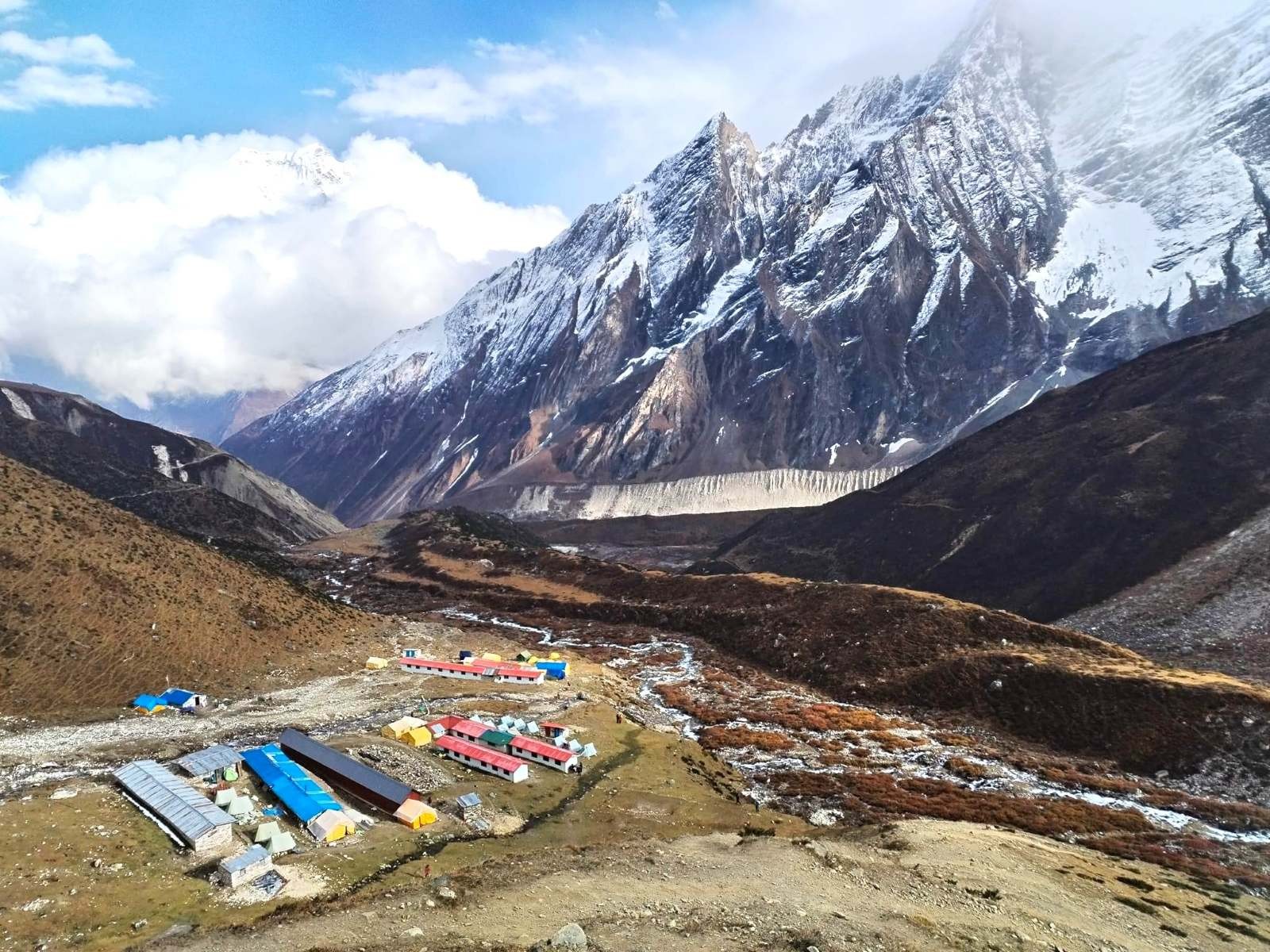
Likewise, Dharamsala is a place that is also known as Larkya Phedi. It is at a height of 4,460 meters. Dharamsala has basic accommodation. You will not find comforts at Dharamsala. The accommodation, at Dharamsala is simple. Dharamsala is a place to stay if you do not need many things.
This camp is really helpful for people who are going to trek before they reach Larkya La Pass. Larkya La Pass is very high, at 5,106 meters. The camp supports trekkers who are getting ready to cross Larkya La Pass.
The facilities are okay to use. They are not really comfortable. The facilities are still. All that, but the facilities do not really make you feel at ease when you are using the facilities.
So the teahouses at Dharamsala, which's really high up at 4,460 meters are only open during certain times of the year. The teahouses, at Dharamsala do not stay open all year round.
The places are open when it is spring and when it is autumn, which's when people usually go trekking. They open during the spring trekking period and the autumn trekking period.
So the services are still really basic.
The sleeping rooms are set up like a dorm. They have a dormitory style layout. This means that the sleeping rooms follow dormitory-style layouts.
Many people who go on treks have to stay in the room together. These treks are usually a lot of fun. The people who go on these treks the trekkers all share this one room.
When you are up this high you do not have a lot of privacy. The privacy at this altitude remains limited. You just have to accept that your privacy is not the same as it's on the ground when you are, at this altitude.
Furthermore, bedding consists of wooden platforms and thin mattresses.
Blankets do not keep us warm. They provide insulation, which means the Blankets are not very good, at keeping the cold out. The Blankets can only do much to keep us cozy.
So, personal sleeping bags are still something you have to bring. Personal sleeping bags are really necessary. You need to have your personal sleeping bags with you.
Food menus are all about meals that're easy to make and give you a lot of energy. These meals are usually simple. That is what food menus focus on which is simple meals that give you a lot of energy, like the food menus do.
Dal bhat, noodles, soup, and porridge dominate offerings.
These foods help people have energy when they are at high altitudes. The foods are important, for altitude energy needs. Altitude energy needs are met by eating these foods.
So, the availability of ingredients also depends on the supply chains of the porters. The ingredients that are needed depend on the porters and their supply chains.
Food gets to Dharamsala, which's really high up at 4,460 meters and it all comes in on foot or, on a mule.
The logistics challenge is a problem because it limits the variety of food that we can have on the menu. This means that the logistics challenge affects what we can eat. The logistics challenge is really limiting when it comes to the menu variety.
So, the price of food goes up a lot when you compare it to Samagaon which's at 3,530 meters. Meal prices are higher in places compared to meal prices, in Samagaon.
The cost of transportation is going up. That makes the price of food go up too. When we have to pay more to get food from one place to another that means we have to pay more for the food itself. So the cost of transportation and the cost of food are really connected. Transportation costs make food expenses higher.
Expect higher trekking package budgets here.
We also have drinks like tea, garlic soup and instant coffee. Hot drinks are things, like tea, garlic soup and instant coffee.
The garlic soup is really good for helping our bodies get used to altitudes. Garlic soup helps people who are traveling to places, like mountains to feel better and not get sick. Garlic soup supports people when they are trying to get accustomed, to elevations.
Drinking water is very important, to me. I always try to stay hydrated because hydration remains a priority.
So the thing is, water needs to be cleaned up before we can drink it. We have to make sure the water is clean before we consume the water. This is really important, for our health when it comes to drinking water.
You can get boiled water at teahouses. You have to pay extra for it. The teahouses will charge you more for the boiled water.
This service helps to make you less likely to get sick. It really reduces the risk of illness. The service is good, for people who want to stay healthy. It reduces illness risk.
So electricity is really hard to come by at Dharamsala because it is high up, at 4,460 meters and that makes it very difficult to get electricity at Dharamsala.
The solar lighting does not give us a lot of light in the evening. We can barely see anything when it gets dark. The solar lighting is, on. The solar lighting is just not enough to light up the place at night.
When you charge your devices it usually costs you money. Charging your devices can be expensive. You have to pay extra for charging devices.
Dinner service usually ends early. This is so people can get some rest. The dinner service is finished early to help people rest.
Trekkers go to bed early so they can get ready, for the day of trekking. They need to be prepared for the day of walking that is ahead of them. The trekkers have to make sure they get a nights sleep so they can tackle the challenges of trekking.
Getting a night of rest before you try to climb a mountain really helps you reach the summit. The rest you get the better you will do when you are trying to get to the top of the mountain. Early rest is very important if you want to have success, on the summit.
Food and accommodation are really important when you are in the mountains. The people there want to help you survive so they provide you with food and accommodation. This is what mountain hospitality is about it is focused on helping people survive. Mountain hospitality is, about providing food and accommodation to people who need it.
To be safe and make things work we have to give up some comfort. Safety and being able to do things easily are very important. This means comfort sacrifices are necessary to ensure that everything is safe and that we can actually do it. We have to think about safety and logistical feasibility when we make decisions and sometimes that means we have to give up some comfort.
Thus, Dharamsala functions as a strategic high camp.
Pacing, Hydration, and Energy Conservation Before the Pass
Preparation Essentials:
To get ready for the trip from Samagaon to Dharamsala you need to prepare yourself mentally.
This is because you will be going over Larkya La Pass. You have to think about how you walk how much water you drink and how you save your energy before you get to Larkya La Pass. The trip from Samagaon to Dharamsala is, about pacing, hydration and energy conservation before you reach Larkya La Pass.
So you want to go trekking from Samagaon to Dharamsala. This is a deal. You have to get your body ready for it.
Physical preparation is really important before you start this trek from Samagaon which's at 3,530 meters to Dharamsala which is, at 4,460 meters. You have to prepare yourself for trekking from Samagaon to Dharamsala.
This day demands controlled movement at high altitude. So trekkers have to be careful and not push themselves hard because they need to respect their own physical limits. Trekkers must remember that they have limits.
Moreover, pacing remains the most important physical strategy on this trek day.
Walking slowly. Steadily is really good for using oxygen in our body in a efficient way. This way of walking helps our body to use the oxygen we breathe in a way. Slow and steady walking is very good, for our health because it preserves oxygen efficiency.
So people who go trekking feel less tired. They do not get out of breath as much. People who go trekking that is trekkers have energy because of this.
So the guides also tell you to take steps in a rhythm. They want you to use something called the rest-step technique. This technique is about taking rhythmic steps. The guides really like the rest-step technique, for steps.
The pacing method is really good for running distances like more, than 4,000 meters it helps with endurance.
So energy really does last longer. This means that the energy, from something will keep going for a period of time. The energy lasts longer.
So water is really important when you are trying to get used to altitudes. Water helps your body get used to the altitude. Altitude adaptation is, about your body getting used to the high altitude and water is a big part of that.
When the air is really dry our bodies lose fluid when we breathe out. This is because dry air takes moisture from our bodies through respiration. So dry air increases loss through the process of breathing.
So people who go trekking need to drink water a lot. They have to make sure they drink water frequently when they are trekking. Trekking is hard and trekkers get thirsty that is why trekkers must drink water frequently.
When you are at an altitude you can get really sick if you do not drink enough water. Not having water in your body makes the bad feelings you get from the high altitude even worse. The high altitude can give you headaches. Make you feel sick to your stomach. Dehydration makes these altitude symptoms like headaches and nausea even worse. Drinking water is very important when you are, at an altitude to avoid dehydration and these bad feelings.
Drinking water every day helps to keep the blood flowing properly in our bodies. Regular water intake is very important, for our circulation.
This habit helps people get used to things and it supports the success of getting used to new places or situations. This habit is really good, for acclimatization success.
Likewise, warm fluids support digestion and body temperature.
Garlic soup and herbal tea improve circulation.
People really like these drinks when they are on the Manaslu Circuit Trek. These drinks are still very popular, with people who do the Manaslu Circuit Trek.
So saving energy is about being in control of how the human body moves. Energy conservation is really important. It requires people to think about how they move their bodies. This means people have to be careful about how they use their bodies when they are moving around because energy conservation is the goal. Saving energy is what it is all, about. People need to remember that energy conservation is key.
People who go trekking try to avoid changing their speed. This is important for trekkers because sudden speed changes can be dangerous, for trekkers. Trekkers need to be careful and walk at a pace so that trekkers can stay safe.
This way of doing things helps to cut down on the amount of acid that builds up in our bodies. The approach is really good, at reducing lactic acid buildup. It is a thing that this approach helps with lactic acid buildup.
Nutrition is also very important for our body and mind. It affects our strength and our mental strength. Nutrition plays a role in keeping our body healthy and our mind strong. So nutrition is really important, for our physical and mental strength.
Food that has a lot of carbohydrates gives you energy that lasts a time. Meals with lots of carbohydrates are really good, for people who need energy from their food. High-carbohydrate meals are a way to get the energy you need.
So simple foods are the ones that work well. Simple foods are usually the choice.
Mental preparation is also very important when you are at an elevation. It is just as important as things, at this elevation. Mental preparation really helps at this elevation.
Things can get to you when they seem to come out of air. Thin air can really amplify the stress and discomfort that you feel. It is, like air is making the stress and discomfort worse.
Having a focus really helps to reduce the feeling of being mentally tired. This is because a positive focus on things can make the mind feel at ease. When we focus on things our mind is not tired as much as when we think about negative things. Positive focus is very good, for reducing fatigue.
So trekkers use pacing to help them and they also use physical pacing. Trekkers really need to have both pacing and physical pacing to make their journey easier. Trekkers have to balance their pacing and physical pacing.
When we think about what we want to do it is better to have goals. These short goals are more helpful than thinking about things that're really far away. Short goals are good because they help us focus on what we need to do. We can make plans for the future. Short goals are important, for getting things done today. Short goals make it easier for us to take action and make progress on the things that're important to us.
Having this mindset stops you from feeling discouraged. This mindset is really good because it prevents discouragement from taking over. It helps you to keep going and that is what this mindset does it prevents discouragement.
When we get rest it helps our bodies feel better and get stronger throughout the day. Rest is very important, for our discipline because it supports our recovery. So rest and discipline go together to help our bodies recover throughout the day.
Trekkers need to stop and stand up every now and then. They take breaks to stand and stretch their legs. The trekkers do this to rest their feet and get comfortable again.
Sitting too long reduces momentum.
Breathing techniques help to keep the oxygen we take in stable. This is because breathing techniques really help with our oxygen intake. So breathing techniques are good, for our oxygen intake.
Breathing deeply through your nose is really good, for you. It makes your body work better. Deep nasal breathing helps you use oxygen efficiently. When you practice nasal breathing it improves efficiency.
This technique helps to calm the system down. It is really good, for the system. The nervous system feels better when you use this technique.
Knowing about altitude symptoms is also very important for safety. It helps people to know what to do when they have altitude symptoms. This way they can stay safe when they are, at altitudes. Awareness of altitude symptoms is really important.
Trekkers say they get headaches or they feel dizzy or they lose their appetite when they first start trekking.
If we find out about a problem early it can stop the disease from becoming really bad. Early reporting is very important because it prevents illness. We should always try to find out about health issues so that we can get help and not have to deal with serious illness.
So the guides will adjust the speed based on how the group's doing. They do this because the guides want to make sure the group is comfortable, with the speed of the tour. The guides adjust the speed based on the group condition. This means that the guides pay attention to the group condition and make changes to the speed as needed.
When people are in a group and they are all moving together the group pacing really helps the members. The group pacing is like a safety net, for the members of the group. Group pacing makes sure that the weaker members are not left behind. Group pacing is very important because it protects the members.
Teamwork is really important because it helps everyone achieve success together. This teamwork ensures that the team has success. When people work as a team they can do things and the team will have success. Teamwork is the key to success, for the team.
Mental resilience is something that gets stronger when we accept that life can be uncomfortable, at times. This is how mental resilience grows. We have to accept that things are not always easy and that is how our mental resilience grows.
You know what to expect when you are out in the cold. The wind is going to blow. It is going to be very cold. After a while fatigue, from the cold and the wind becomes something that you just expect to happen. The cold and the fatigue are things that you have to deal with when the wind's blowing.
When we accept things it really helps to reduce the feeling of frustration that we have. Acceptance is very good at making us feel better when we are frustrated. It is like acceptance and frustration are two things that do not go together. When we have acceptance frustration goes away. Acceptance is very helpful, in reducing frustration.
Motivation gets stronger when we understand what our purpose is. This is because when we know what our purpose is motivation grows. Our motivation becomes stronger when we have an idea of our purpose.
This day gets the body ready for Larkya La Pass. Larkya La Pass is really high at 5,106 meters. The body needs to be ready, for Larkya La Pass.
When we have a purpose it helps us to really commit to something. The purpose is what makes us want to keep going. It reinforces our commitment, to that thing to the purpose itself.
So getting a night of sleep before this day really helps you do better. Sleep is very important for your performance on this day. When you sleep well you will do a lot better on this day. Proper sleep before this day is really important, for performance.
When we get rest our muscle strength comes back. Rest is really good, for our muscles because it helps them get strong again. Our muscles need rest to feel good and work properly. Rest restores our muscle strength.
The quality of our sleep has an effect on how long we can keep going. Sleep quality is really important, for endurance. When we talk about endurance sleep quality is something that plays a role.
People who go trekking will finally get to Dharamsala. It is very high up, at 4,460 meters. The trekkers get to Dharamsala with some energy left because they saved it for the end. The trekkers arrive at Dharamsala.
Successful pacing preserves strength for summit day.
The result shows how well something was prepared. This outcome really defines the quality of the preparation.
Physical preparation and mental preparation are really important, for crossing a pass. The physical preparation and mental preparation you do will determine if you are successful when you cross the pass. Crossing the pass is not easy. It requires a lot of physical preparation and mental preparation.
Pacing and hydration and energy conservation all work together. These things like pacing and hydration and energy conservation are important. They help each other out. Pacing and hydration and energy conservation are key, to doing.
So preparation is more important than being physically fit. Preparation really matters when it comes to getting things done. You can be really strong and healthy. If you do not prepare well you will not do very well. Preparation is the key, to success, not physical fitness.
Importance Summary:
| Factor | Contribution |
| Acclimatization | Reduces altitude sickness |
| Physical Readiness | Preserves energy. |
This day of the trek is really important because it helps our bodies get used to the altitude and makes sure we are ready to cross the Larkya La Pass on the Manaslu Circuit. The Manaslu Circuit is a deal and we need to be prepared for it. This trek day is about getting ready, for the Manaslu Circuit and crossing the Larkya La Pass safely.
The trek from Samagaon to Dharamsala is a part of what makes the Manaslu Circuit successful. This day of the Manaslu Circuit trek is really important. The Manaslu Circuit trek goes from Samagaon, which's 3,530 meters high to Dharamsala, which is 4,460 meters high. The Manaslu Circuit is defined by this trek day from Samagaon, to Dharamsala.
This stage bridges moderate altitude trekking and extreme elevation.
So the importance of this thing is really big. It is very important. We should not forget that. The importance of this thing is something that we need to think about.
This day is really important because it helps our bodies get used to the altitude before we try to cross Larkya La Pass which is 5,160 meters high. We need to be ready, for Larkya La Pass.
Our body gets used to having oxygen over time. The body learns to deal with oxygen scarcity. This is how the body adapts to oxygen scarcity.
The summit readiness gets a lot better. This is because the people who are going to the summit are really prepared for it. The summit readiness is something that people work on. It shows when they are ready, for the summit.
The trek day is really tough because it tests how strong your body is when you are in a place with a lot of stress, on you. The trek day tests endurance under real high-altitude stress.
When you are at elevations you get tired more quickly than you would at lower elevations. Fatigue is something that people experience at these elevations. It happens because the air is thinner at elevations. So fatigue appears earlier than it does, at elevations.
This test really shows if you are ready or not. It tells you the truth about your readiness. The test is honest, about your readiness.
Mental strength gets stronger when we deal with things that make us feel uncomfortable on purpose. This is because mental strength builds up when we face situations and learn to handle them. Mental strength is, like a muscle that grows when we use it to deal with controlled discomfort.
Cold winds and isolation challenge morale.
Overcoming these challenges builds confidence.
Dharamsala is an important place because it is at a high point about 4,460 meters above sea level and that makes Dharamsala a good spot to stop and get ready, for what comes next so Dharamsala serves as a key stopping point.
This thing gives you a chance to rest before the day of trekking. The longest day of trekking is going to be tough. It is good that the longest day of trekking has a rest day, before it.
This timing makes things safer because we have time to do what we need to do. The safety margins are better, with this timing.
The logistics of this trip depend on where we stop. We really need to think about the logistics because our overnight stop's very important, for the logistics.
Food intake, hydration, and sleep align here.
These things affect how well a student does on a test. The factors influence pass performance. When we talk about pass performance these factors play a role. They can. Break the pass performance of a student.
So the weather we see on this day helps us make decisions about what to do. The weather observation during this day is really important because it informs our pass decisions. We look at the weather. Then we decide what to do next. The weather observation is what helps us make these decisions, about our passes.
Guides take a look at the wind and the clouds and the snow to see what patterns they make. They want to know what the wind is doing and what the clouds are, like and how the snow is falling. Guides assess the wind patterns and the cloud patterns and the snow patterns.
Making a judgment, about something helps to prevent people from crossing in a way that is not safe. Accurate assessment is very important to prevent crossings.
This trek day is also good because it helps reduce the risks of having to evacuate people beyond the pass. The trek day really does help reduce evacuation risks beyond the pass.
Proper acclimatization really helps to lower the number of emergencies. When people get acclimatization medical emergencies are less likely to happen. Proper acclimatization is very important to prevent emergencies.
So the descent is safer now. The descent is really safer.
The day also helps to remind people of the trekking discipline they learned before. This discipline is important, for trekking. Trekking discipline is something that people need to remember when they are trekking.
Pacing and rest and hydration are really important. They reach the level of importance. This is because pacing and rest and hydration are crucial for our bodies to function properly. So we need to make sure we get pacing and rest and hydration every day.
These habits carry into the day.
If you skip this day or try to rush through it you will probably fail. Failing is more likely to happen when you do not do things properly on this day. This day is important and rushing this day is not an idea. Skipping this day or rushing through it can make the failure rates of this day go up.
When you go to places the risk of getting altitude sickness is really high if you do not get ready for it. Altitude sickness is a problem because the air is very thin, at high places. If you want to avoid altitude sickness you need to prepare yourself before you go to these places. This way you can reduce the risk of getting altitude sickness.
When we are making travel plans we should always think about what's going to happen. Responsible itineraries never skip this part. We have to consider the itinerary and make sure it is okay. Good travel plans, like itineraries always include this step.
Landscape exposure also helps trekkers get ready for what's coming. It prepares the trekkers psychologically. Landscape exposure is very important, for trekkers.
You see glaciers and ice fields and barren valleys. The glaciers and ice fields and barren valleys are around. The glaciers are really big. The ice fields are very wide. The barren valleys are empty and cold. The glaciers and ice fields make the barren valleys look more empty.
These visuals preview summit conditions.
Teamwork really gets stronger when things get tough. This is because teamwork strengthens during this demanding stage. Teamwork is very important. It helps a lot when the team is going through a tough time, like this demanding stage.
People, in a group help each other on purpose. Group members really look out for each other. They do this because they want to support the group members.
When people work together it makes them trust each other. Shared effort really builds trust, between people.
So the guides do the safety briefings at Dharamsala. This is where they finalize the safety briefings at Dharamsala which's really high up at 4,460m. The guides make sure to do the safety briefings, at Dharamsala.
We do equipment checks to make sure the equipment is ready for use. This way we can be certain that all of our equipment is working properly and that we have everything we need. Equipment checks are very important because they help us to stay prepared and avoid problems, with the equipment. By doing these checks we can fix any issues with the equipment before they become problems. Equipment checks are a part of our routine.
There is nothing that the people, in charge will not check to make sure it is true. They want to verify every thing and nothing is left unverified. The fact that nothing remains means they are being very careful.
So this is where early sleep routines start. We are talking about sleep routines and how they begin here with early sleep routines.
The trekkers will rest before the midnight start of their trek. The trekkers need to get some sleep so they can be ready, for the trekkers big adventure that begins at midnight.
People really need to think about saving energy. Saving energy is very important to everyone. Energy preservation is what we should focus on. We have to make energy preservation a priority because it matters to the energy we use every day. Energy preservation becomes a priority, for all of us.
Mental focus gets sharper before the summit push. This is when your mental focus really gets sharp. You need to have a mind when you are getting ready to make the summit push. Mental focus is very important, at this time.
When you are really high, up things that distract you are not a problem anymore. The high altitude helps you focus on the mountains or the sky. At altitude all the distractions just disappear.
When people learn things their awareness increases naturally. This is what happens with awareness. Awareness just gets bigger and stronger on its own. As people find out more their awareness increases naturally.
Therefore, this trek day functions as a final examination.
People who are really ready to go hiking can do it without worrying. Prepared trekkers are the ones who proceed confidently when they go on a hike.
When you have readiness it takes away the uncertainty. Readiness is what makes you feel more sure about things. It is, like having readiness gives you a mind. You do not have to deal with uncertainty anymore. Readiness is very important because it helps you to be prepared and that replaces uncertainty.
The Larkya La Pass is really high, at 5,106 meters. You can actually make it to the Larkya La Pass. The Larkya La Pass becomes achievable after a while.
When you get ready for something the way it makes a big difference. You can turn something that seems hard into something you can actually do. Proper preparation is the key to making challenges into accomplishments. Proper preparation helps you to stay focused on what you want to achieve. That is really important, for turning challenges into accomplishments.
As you finally achieve something it feels really good because you know you worked hard for it. Success feels earned. It is a feeling to know that your success is something you got because of all the things you did to get there. Success feels. That is what makes it so special.
This day, on the Manaslu Circuit trek is really important. It determines how the whole Manaslu Circuit trek turns out. The Manaslu Circuit outcome depends on this trek day.
Preparation, discipline, and adaptation converge here.
This day is really important. It is a day that matters a lot. This day is something that people should remember. This day is very special. It matters.
Mental strength is really important. It helps you feel good, about yourself and builds confidence. When you have strength you are able to do things that you thought you could not do. Mental strength builds confidence. This confidence helps you to try new things and take risks. Mental strength and confidence go hand in hand. Having one helps you to have the other.
1. What is the Trekking from Samagaon to Dharmasala day on the Manaslu Circuit?
This day is crucial for getting used to altitudes. You trek from Samagaon (3,530m) to Dharmasala (4,460m) which's about 9-11 km with a 930m climb. It takes around 4-5 hours. This trek helps you get ready to cross the Larke Pass (5,106m). You'll see views of Manaslu and other peaks.
2. How difficult is the trek from Samagaon to Dharmasala?
The trek is moderately tough. You climb steadily above 4,000m. Face strong winds. It's not technically hard. You need to pace yourself and be fit. Drink plenty of water walk slowly and use trekking poles if needed. This will help you prepare for the Larke Pass.
3. What is the distance and elevation gain from Samagaon to Dharamsala?
The distance is 9-11 km. You gain 930m in elevation from 3,530m to 4,460m. The trail goes up gradually through yak pastures, valleys and rocky paths. It takes 4-5 hours. This slow gain helps your body adjust to the altitude before the Larke Pass.
4. When is the best time to trek from Samagaon to Dharmasala?
The best times are in the spring (March-May) and autumn (September-November). The weather is stable. The views are clear. If you start early, in the morning you can avoid winds, clouds and snow that often come later in the day.
5. What should I wear for the Samagaon to Dharmasala trek?
Layered clothing is essential: a base layer, a fleece jacket, a jacket gloves, a hat and sunglasses. It can get very cold near Dharmasala with winds. Dressing in layers helps prevent hypothermia. Let’s you adjust to the temperature as you climb towards the Larke Pass.
6. Is acclimatization at Samagaon to Dharmasala necessary before Larke Pass?
Yes, it is highly recommended. This acclimatization day follows the "climb sleep low" principle, which reduces the risk of altitude sickness before crossing Larke Pass, which is 5,106 meters high. A gradual ascent helps your body produce red blood cells and adapt to the thinner air at Larke Pass.
7. What are the accommodation options at Dharamsala?
Accommodation at Dharamsala also known as Larke Phedi is very basic. Teahouses offer dormitory-style rooms, shared wooden platforms, thin mattresses and blankets. You must bring your sleeping bag. The facilities are seasonal and limited with no rooms or reliable electricity at Dharamsala.
8. What food is available at Dharamsala on the Manaslu Circuit?
The food options at Dharamsala are limited to dishes like dal bhat, noodles, soup, porridge, garlic soup and hot drinks. The meals are basic but high in carbohydrates to give you energy. Prices are higher due to the location and logistics of Dharamsala. Many trekkers have a dinner and rest for an early start towards Larke Pass, which is 5106 meters high.
9. How cold does it get on the trek from Samagaon to Dharmasala?
In the mornings temperatures near Dharamsala can be below freezing with winds and wind chill. Afternoon clouds and sudden snowfall are risks above 4200 meters. It is crucial to wear clothing and start early to manage rapid weather changes before crossing Larke Pass, which is 5106 meters high.
10. Can solo trekkers join the Samagaon to Dharmasala trek?
Yes, according to the update for 2026 Nepal has removed the old rule that required two trekkers. Now a single trekker can obtain a Manaslu Restricted Area Permit. However, you must book through a registered trekking agency. Trek with a licensed guide. Independent trekking, without a guide is still not allowed on the Samagaon to Dharmasala trek.
11. Do I need a guide for the trek from Samagaon to Dharmasala?
Yes, you need a guide for this trek. The guide is required for the Manaslu Circuit, including this acclimatization day. Even if you are trekking alone you must arrange the trek through a registered agency with a guide. This is for your safety and to comply with the permit rules before crossing Larke Pass.
12. What are the risks on the Samagaon to Dharmasala trail?
The main risks on this trail are altitude sickness, cold winds, sudden snowfall, dehydration and slippery rocky paths. To avoid these risks, you should take it easy drink plenty of water at 3 liters a day and monitor your bodys response to the high altitude. This day helps you build up your strength for crossing Larke Pass.
13. How long does it take to trek from Samagaon to Dharmasala?
The trek from Samagaon to Dharmasala usually takes 4 to 5 hours. The time it takes depends on your pace and the weather. It is best to start in the morning from Samagaon, which is 3530m to reach Dharmasala, which is 4460m before the afternoon winds get strong. This will give you a rest before you cross Larke Pass.
14. What views can I expect from Samagaon to Dharmasala?
On this trek you will see views of Manaslu, Naike Peak, Larke Peak, Himalchuli and Manaslu North. You will also see yak pastures, mani walls and alpine meadows. These views will keep you motivated as you climb up to the camp before Larke Pass.
15. How to prepare physically for the Samagaon to Dharmasala day?
To prepare for this day you should do some exercises to build up your endurance and leg strength. You should also practice hiking with a daypack use trekking poles and eat well. Drinking water and eating food rich in carbohydrates will help. Also try to be mentally strong, by focusing on goals. This will help you on this acclimatization day.
16. Is there water available on the trek to Dharmasala?
Water gets scarce after Samagaon. Bring purified water at least 3 liters or use water purification tablets/filters. Teahouses in Dharamsala offer boiled water for money. Staying hydrated is crucial before Larke Pass 5106 m.
17. Why is the Samagaon to Dharmasala trek important for Manaslu Circuit?
This trek helps your body get used to the altitude tests how your body reacts, saves energy and builds confidence. It makes crossing Larke Pass 5106 m safer and easier which is a part of completing the Manaslu Circuit.
18. What permit do I need for the Samagaon to Dharmasala trek?
You need the Manaslu Restricted Area Permit, Manaslu Conservation Area Permit and Annapurna Conservation Area Permit. A registered trekking agency must arrange these. As solo trekkers can get the Restricted Area Permit. Still need a licensed guide.
19. What happens after reaching Dharmasala on the Manaslu trek?
After reaching Dharamsala you rest, have a dinner check your gear and sleep early. The next day starts early around 3-4 AM to cross Larke Pass 5,106 m to Bimthang.
20. Can beginners do the trek from Samagaon to Dharmasala?
Beginners who are fit and have experience of trekking can manage this trek. It's best if they have been, to high altitudes before. With a guide pacing and following acclimatization rules it helps prepare for Larke Pass 5106 m.
Our travel experts are ready to assist you with any questions.
Send us a message.Have a question before you book? Send your enquiry below and our travel experts will get back with the required information.