Understand the elevation gain per day on the Manaslu Circuit Trek with expert guidance from Haven Holidays Pvt. Ltd to ensure safe and well-paced high-altitude trekking.
Average Daily Elevation Gain
| Section | Elevation Range | Approx. Gain |
| Machha Khola to Deng | 930 m – 1,860 m, 300–600 m |
| Deng to Lho | 1,860 m – 3,180 m, 600–800 m |
| Lho to Samagaun | 3,180 m – 3,520 m , 300–400 m |
| Samagaun to Dharamsala | 3,520 m – 4,460 m, 500–700 m |
| Dharamsala to Larkya La | 4,460 m – 5, 160 m 600–800 m |
Meanwhile, it helps trekkers to be prepared for a safe and rewarding high-altitude journey in the Manaslu Circuit Trek. Haven Holidays Pvt Ltd sees to it that this preparation is done by expert standards. The route rises from subtropical valleys up to the alpine zone above the Larkya La Pass at 5,160 meters, a transition that calls for careful pacing. Trekkers must be on a structured plan for gradual acclimatization since the ascents differ each day. Ultimately, being aware of the pattern of elevation helps reduce risks associated with altitude.
Moreover, the trek initially starts from the lower region around Machha Khola, which stands at an elevation of 930 meters, with daily ascents of 300-600 meters. This initial part of the trek leads through warm forests and terraced hills; so far, trekkers go through moderate climbs, which orient the body mechanisms for the higher terrain. Besides, although the altitude factor remains manageable, steady pacing would help for comfort. Thus, these initial days lay a very good foundation for the trek ahead.
Actually, elevation gain gradually increases as trekkers head toward Deng (1,860 m), Namrung (2,630 m), and Lho (3,180 m). These days are filled with more noticeable changes in altitude that help ease trekkers into the cooler alpine region. As the air starts to thin, the body begins more deliberately to adjust the lowered oxygen levels. For this reason, hydration and attention to physical changes become increasingly important.
After that, the route goes from Lho 3,180 meters above sea level to Samagaun 3,520 meters and further up to Samdo at 3,875 meters per day in small steps to rest and adapt. The villages serve as acclimatization centers with cultural attractions like monasteries and the stunning views of Mount Manaslu 8,163 meters above sea level. Many trekkers invest additional nights here to reinforce their adaptation. Consequently, these days ensure trekkers remain healthy before entering the high-altitude stretch.
Next, the ascent to Dharamsala, at 4,460 meters above sea level, represents the toughest altitude gain prior to the final assault on the Larkya La Pass (5,106 meters). This section, steep and exposed in many areas, requires strict adherence to the guide's pace. For this elevation presents the highest chance of developing altitude sickness, proper acclimatization becomes non-negotiable. Thus, slow and steady progress ensures a safe ascent.
Finally, the descent from the pass drops sharply toward Bimthang (3,720 m) and Dharapani (1,860 m), easing altitude stress but demanding knee stability. While descents feel easier, trekkers need to take care of their balance and hydration for safety. These downhill stretches complete the elevation cycle of the trek. Haven Holidays Pvt. Ltd ultimately guides trekkers through each elevation stage with expert care to make sure that one has a safe and fulfilling Manaslu Circuit experience.
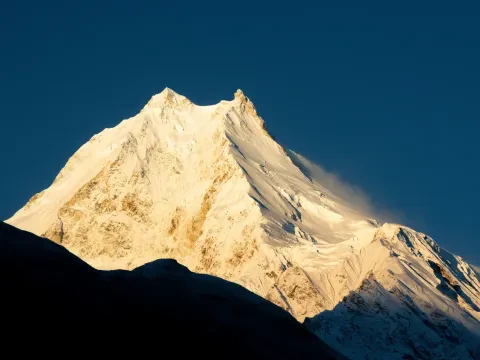
Learn all about Manaslu Restricted Area mandatory permits: RAP, MCAP, and ACAP, with the help of expert guidance from Haven Holidays Pvt. Ltd.
Required Documents:
First of all, understanding the mandatory permits of the Manaslu Restricted Area ensures that trekking is smooth and absolutely legal; therefore, Haven Holidays Pvt. Ltd. arranges this procedure with expert handling. The Manaslu region needs controlled access because it borders Tibet and preserves important cultural zones. Since regulations apply strictly, trekkers must arrange for all the documents before entering the trail. Permit awareness thus serves an essential role in planning.
Above all, the major permit required is the Manaslu Restricted Area Permit, basically covering the area from Jagat (1,340 m) to Samagaun (3,520 m). This permit has seasonal prices: it is higher during autumn and average during other months. As the government wants to safeguard sensitive border areas, solo trekking is not allowed in this area; therefore, trekkers need to travel with a licensed guide.
From here, the route now enters the Manaslu Conservation Area, which requires the Manaslu Conservation Area Permit. This permit supports local conservation projects, forest protection, and wildlife management across the region. Because the fee does not change throughout the year, it is easy for trekkers to budget. Thus, MCAP remains indispensable for every Manaslu itinerary.
Later, trekkers head out towards the Annapurna region via Dharapani at an altitude of 1,860 meters for which the Annapurna Conservation Area Permit is a requirement. This permit keeps the environmental balance in the Annapurna Conservation Area, comprising well-known trails and ecological zones. As Manaslu Circuit naturally shares a linkage with the Annapurna region, ACAP becomes obligatory for all trekkers. Thus, both conservation permits ensure responsible travel.
After that, it is essential for trekkers to fulfill further requirements by the government to obtain restricted permits. The immigration regulations require the presence of at least two trekkers in a group, but agencies can form groups by joining solo trekkers. Since the restricted area involves professional guidance, a licensed guide is still necessary. Thus, trekkers have to communicate with a registered operator.
Next, fees for permission differed according to seasons and days spent inside the restricted zone. The charges in peak months are high compared to other seasons, which have discounted rates. While it may seem detailed, these charges go directly to conservation, security, and developing the local community.
Therefore, this helps the trekker be better prepared. Finally, securing these permits without professional guidance can be confusing to first-time trekkers. Given that trekking companies coordinate documents daily, they guarantee the accuracy and timely processing of the permits. This dependability blocks delays at checkpoints and guarantees complete adherence to regulations.
Finally, Haven Holidays Pvt. Ltd arranges all Manaslu permits accurately for the convenience and enjoyment of trekkers in their safe, smooth, and well-organized Himalayan adventure.
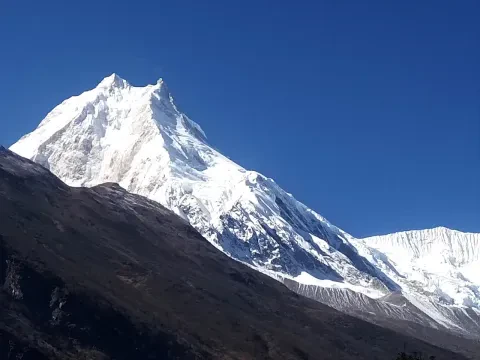
Follow expert planning provided by Haven Holidays Pvt. Ltd. and choose between an exciting start for the Manaslu Circuit Trek from Soti Khola or Machha Khola.
Key Reasons to Choose Each Starting Point:
Actually, the choice between Soti Khola and Machha Khola as the starting point for the Manaslu Circuit Trek shapes your entire experience of trekking, and Haven Holidays Pvt. Ltd. is always there to help trekkers make the best decision. While both entry points offer equally scenic routes, they vary in terms of terrain difficulty, distance, and logistics. Since the first day of trekking affects the comfort and pace, each option should be weighed by the trekkers. Thus, a well-informed choice leads to better trekking results. Nowadays, the trekkers begin their Manaslu Circuit Trek at Machhakhola as there is easy road access from Kathmandu to Machhakhola.
Likewise, the second reason is that it gives a classical start to Manaslu, beginning at Soti Khola (710 m)/ Machhakhola (860m) and offering lush forests, waterfalls, and narrow trails. This route allows trekkers to naturally warm up since the trail rises gradually along the Budhi Gandaki River. As the terrain consists of stone steps and small ridges, trekkers get the much-needed rhythm for the coming days. Therefore, Machha Khola suits the trekkers who prefer a complete and traditional journey.
Next, the next day in Jagat meters, shortens the trek program by one day and offers slightly easier terrain in the beginning. This option avoids the steepest early sections and removes one of the busiest trail segments. Because the elevation sits higher than Machha Khola, trekkers save energy for later days. Hence, Machha Khola becomes a practical choice for trekkers in search of efficiency.
After that, the convenience of transport should be considered while selecting the starting point. The road to Machhakhola Khola is still rugged and bumpy, and hence will take a little more time to travel from Kathmandu. In contrast, the road to Machha Khola has become smoother, thus this route allows traveling in comparative comfort. Therefore, it is often a question of transportation comfort that dictates the final decision.
Then, trekkers have to consider seasonal conditions that affect these two trailheads. During the monsoon, landslides often happen along the route between Arughat and Soti Khola; this usually has the effect of making Machha Khola a better starting point. During winter, as the path gets icy, starting from Machha Khola allows time to ascend gradually. Therefore, seasonal inputs are essential.
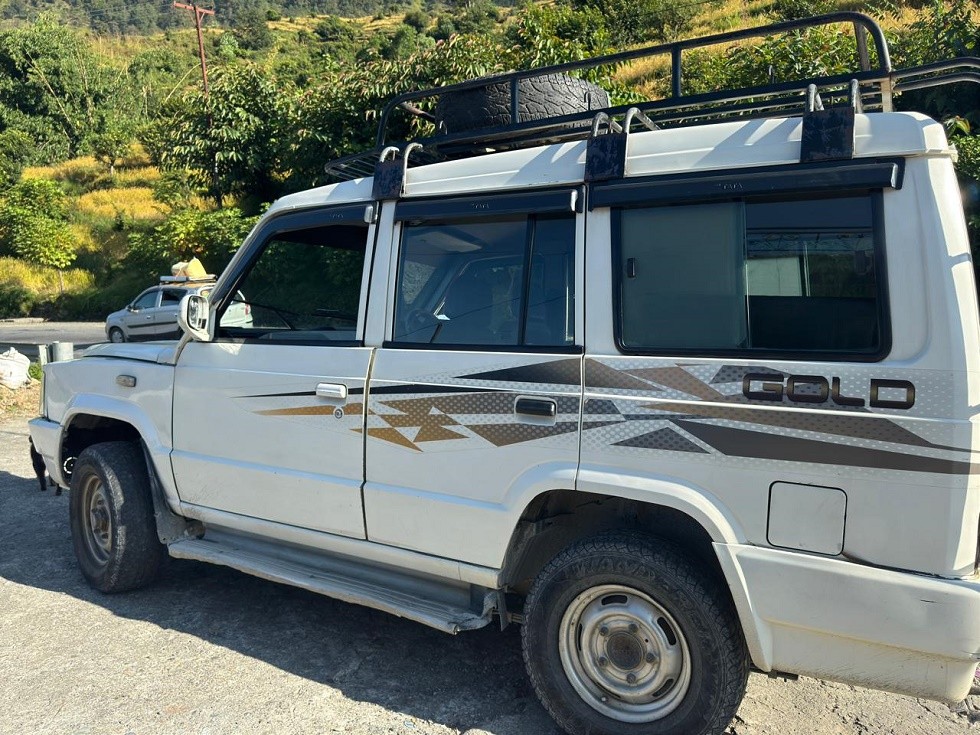
Secondly, budget and itinerary length assessment makes trekkers decide wisely. It could be more budgetary, adding one more night of accommodation and food, starting from Machha Khola. While starting to trek from Machha Khola shortens the trek, which decreases some guided service costs and meal costs. Thus, financial planning also becomes part of the decision.
Both starting points lead into the Manaslu Conservation Area with satisfying experiences and smooth transitions. As the trail becomes more challenging after Jagat (1,340 m), treks from either point naturally flow into the main route. The right starting point enhances comfort, safety, and overall satisfaction. Haven Holidays Pvt. Ltd guides the trekker with expert local knowledge in choosing the right starting point and confidently starting the Manaslu Circuit Trek.
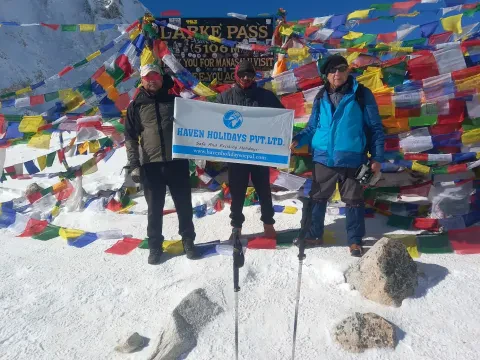
Prepare safely for narrow cliffside trails between Tatopani and Jagat on the Manaslu Circuit with expert guidance from Haven Holidays Pvt. Ltd.
Challenges and Safety Measures between Tatopani and Jagat:
| Challenge | Descriptioin | Recommended Action |
| Narrow trail | Limited walking space | move in single file |
| Cliff exposure | Steep drop toward river | Stay close to rock wall |
| Loose stones | Unstable surface | Wear high-grip boots |
| Mule traffic | Shared path with animals | Allow animals the inner side |
| Wet conditions | Slippery trail | Trek slowly with poles |
First, preparing for the narrow cliffside trails between Tatopani at 990 m and Jagat at 1,340 m helps trekkers stay safe on one of the most challenging sections of the Manaslu Circuit, and Haven Holidays Pvt. Ltd supports trekkers with experienced guidance. The trail cuts its serpentine way through steep rock faces and runs high above the Budhi Gandaki River, creating a dramatic yet demanding terrain because the stretch tests balance and confidence. Thus, knowing the conditions reduces risk.
Then, from Tatopani onwards up to Jagat, the trail suddenly constricts to a pathway with scarce room to walk outside of single file. It is in these cases that trekkers must maneuver carefully and keep their feet sure. Small loose stones sometimes make an appearance on the surface, so footwear that grips well will be necessary. Therefore, gear preparation directly contributes to safety.
Because this section is in almost constant use by mule trains and local porters, trekkers need to remain alert for sudden crowding. Because animals always get the safer inner side of the path, trekkers should step aside toward the cliff wall, not the open edge. The result of this practice is that trekkers are protected from an accidental slip caused by a jolt of unexpected movement. Consequently, active awareness remains important.
Later, the weather conditions change this trail's difficulty rating: rain makes the paths slippery, and fog blinds visibility across the open edges. As monsoon rains raise the force of the river below, trekkers should not take on additional risks in wet conditions. Choosing the right season contributes significantly to safety and comfort.
Next, slow and steady pace helps the trekkers regulate their balance along this exposed trail. Quickened steps increase the chance of slipping, in general, when on narrow corners. As trekking poles provide stability, many trekkers would use them just to keep themselves aligned on uneven surfaces. Therefore, controlled movement supports safe travel.
Next, there is mental preparation for exposure, which might be quite challenging in cases of acrophobia. Deep breathing helps to keep calm, focusing on every step continues to strengthen concentration. As guides know the safest technique for each corner, following instructions guarantees smoother progress.
Hence, mental readiness enhances physical safety. This dramatic section finally rewards the trekkers with breathtaking views of cliffs, hanging bridges, and roaring river currents. Once the trail starts to widen after Jagat at 1,340 meters, the trekkers regain comfort and rhythm. Completing this challenging part instills confidence for the higher altitudes ahead. Haven Holidays Pvt. Ltd. gives full support to every trekker with expert guidance, safety-oriented planning, and reliable local insight to navigate the Tatopani-Jagat cliffside trail.
Enter the Manaslu Restricted Area through a licensed guide for safe entry and enjoy a secure journey with expert support from Haven Holidays Pvt. Ltd.
Key Benefits for Engaging a Licensed Guide:
Meanwhile, using a licensed guide for the Manaslu Restricted Area makes the trekking safe and completely compliant, and Haven Holidays Pvt. Ltd arranges professional guides for each trekker. The restricted zones in the Manaslu region lie between Jagat-1,340 m and Samagaun-3,520 m, where independent trekking is not allowed. Since the government implements strict rules in this border area, trekkers need to follow the procedures accordingly, making the hiring of a licensed guide obligatory.
Also, a licensed guide undertakes the Restricted Area Permit application with accuracy and speed. They prepare passport copies, itinerary details, and group verification documents, assuring timely permits. Due to seasonal pricing and restricted entry conditions on such permits, expert coordination avoids delays. This way, trekkers enjoy a smooth start to the trek.
Next comes guidance for safety on difficult parts of the trail, such as Tatopani (990 m), Jagat (1,340 m), Deng (1,860 m), and Lho (3,180 m). These sections include narrow ridges, river crossings, and rocky staircases that need to be crossed with caution. The licensed guides understand the pattern of the trails and other risks involved, thus leading trekkers along safer trails. End
Thereafter, guides observe altitude reactions and guide trekkers to cope with increased altitudes. Similarly, trekking from Namrung at 2,630 meters to Samdo at 3,875 meters involves a gradual rise in altitude, which calls for critical attention. Because guides easily detect early symptoms of altitude sickness, they make timely decisions on rest, descent, or pace adjustment. Thus, guided approaches minimize risks to health.
Then, cultural interpretation becomes an integral part of the guided journey as villages like Lho (3,180 m), Samagaun (3,520 m), and Samdo (3,875 m) are steeped in rich Tibetan-influenced traditions, monasteries, and life patterns. Licensed guides understand the local customs and language, so they are responsible for helping trekkers interact with their communities in an appropriate way. Cultural experience, therefore, is enhanced with guided interaction.
Then, guides increase safety for the ascend of Dharamsala at 4,460 meters and for crossing Larkya La Pass at 5,160 meters-high areas with steep ascents, cold winds, and unpredictable weather. Guides evaluate the conditions of the snow and manage timing for trekkers to be able to make early morning crossings with maximum safety. Thus, trekkers finish the pass with great confidence.
Finally, trekking with a licensed guide will make it a planned, secure, and culturally meaningful trek. As restricted areas require responsibility, guides communicate with checkpoints and ensure appropriate behavior throughout the journey. Their experience allows trekkers to enjoy the views of every landscape without concern for compliance or navigation. Ultimately, Haven Holidays Pvt. Ltd. supplies trekkers with trained guides licensed by the government to ensure a safe and pleasurable Manaslu Circuit Trek from start to finish.
Make a booking of a porter for the Manaslu Circuit Trek as loads are hefty to carry on steep, rocky portions, and Haven Holidays Pvt. Ltd. focuses on safety-bound services.
Benefits of Hiring a Porter:
| Benefit | Description | Impact on Trekker |
| Lighter pack | Porters carry 15–20 kg | Trekkers walk more comfortably |
| Better balance | No weight on shoulders | Much better stability on rocky trails |
| Faster recovery | Less fatigue each day | Stronger performance at high altitude |
| Cultural interaction | the telling of local stories by porters | gives clients a deeper connection to the region. |
| Safety support | helping in difficult paths | less risk due to slips and strains. |
When one hires a porter to carry luggage for the Manaslu Circuit Trek, walking becomes comfortable in steep and rocky sections, and Haven Holidays Pvt. Ltd provides reliable porters for the journey. The route goes up from Machha Khola (930 m) to Lho (3,180 m) and up towards Samagaun (3,520 m), passing through challenging terrain that requires stability. This is because carrying heavy loads reduces balance, so porters help trekkers to maintain their steadiness. Thus, hiring support improves safety and endurance.
Here, the path from Deng, to Namrung and finally to Lho involves some uneven stone steps and narrow ridge trails; areas that require a great deal of leg control and relatively free movement. Given the weight of the average backpack ranges around 10-15 kgs, these things can be pretty cumbersome to deal with. Therefore, porters ensure that trekkers save on energy for the high altitude days coming along.
In turn, porters travel along these routes quite frequently, knowing every single rise and fall. Familiarity with stony paths enables them to make good speed without sacrificing safety. While they help distribute weight out evenly, trekkers can walk with better balance and confidence. As a result, the porters minimize fatigue and prevent injuries.
In addition, altitude itself adds factors making heavy luggage more exhausting. From Lho to Samagaun and Samdo, the trekking requires slow, controlled movements: 3,180 to 3,520 meters and further on to 3,875 meters, respectively. Since oxygen levels start decreasing at higher altitudes, carrying unnecessary weight is stressful for breathing and overall stamina. Therefore, altitude efficiency can be achieved with the help of porter assistance in carrying luggage.
Then, hiring a porter supports the local economy, which strengthens community-based tourism. Most porters come from villages near the Manaslu Conservation Area and depend on trekking employment. As trekkers hire them, the economic benefits reach families and small settlements. Hence, the hiring of porters contributes to sustainable tourism.
Then, porters help maintain a steady pace during long trekking days. Since they are trained to move at a certain rhythm, trekkers will follow a balanced pattern of walking to improve their endurance. Because uneven terrain demands controlled pacing, guidance from the porter helps the trekkers to maintain consistency.
In that way, trekkers complete daily distances with less strain. Such practice will finally guarantee a more enjoyable and safe Manaslu Circuit. Because trekkers do not walk with heavy backpacks, they can enjoy the beautiful scenery, communicate with locals, and keep themselves with more energy for the Larkya La Pass, which is at an altitude of 5,106 meters. This also keeps porters indispensable on comfort and safety issues during the entire trek.
Finally, Haven Holidays Pvt. Ltd provides trained porters who responsibly assist trekkers in order to make the journey smooth, safe, and unforgettable along steep, rocky Manaslu trails.
Learn what to expect from basic teahouse accommodations in Lower Manaslu and plan a comfortable trek with Haven Holidays Pvt. Ltd for a safe Himalayan journey.
Accommodation for Lower Manaslu:
| Village | Elevation | Room Type | Bathroom | Hot Shower |
| Soti Khola | 700 m | Twin Basic | Shared | Paid |
| Machha Khola | 869 m | Twin Basic | Shared /Attached | Paid |
| Jagat | 1,340 m | Twin Basic | Shared | Paid |
| Deng | 1,860 m | Twin | Basic | Shared | Paid |
Meanwhile, starting with the lower Manaslu region, trekkers quickly notice that teahouse accommodation remains simple yet functional. Secondly, the villages between Soti Khola at 700 meters above sea level and Jagat at 1,340 meters above sea level have basic lodges with only essential services.
Similarly, Haven Holidays Pvt. Ltd sees to it that trekkers enter this section with a clear understanding of what to expect. Thus, knowledge of such facilities enables trekkers to strategize with regard to comfort and hygiene.
Besides, most accommodation structures in Lower Manaslu use wood and stone, reflecting local craftsmanship. In addition, rooms generally contain two single beds with foam mattresses and warm blankets. However, due to lower temperatures at night and for hygienic reasons, trekkers are advised to carry a sleeping bag. In this respect, planning ensures more comfort during cool nights.
Likewise, villages at lower elevations continue to have superior access to supply depots compared to higher elevation settlements. In addition, a limited number of teahouses en route near Machha Khola (869 m) have attached bathrooms. These facilities remain limited and seasonal in nature; it is best that trekkers adopt flexibility to set their expectations accordingly.
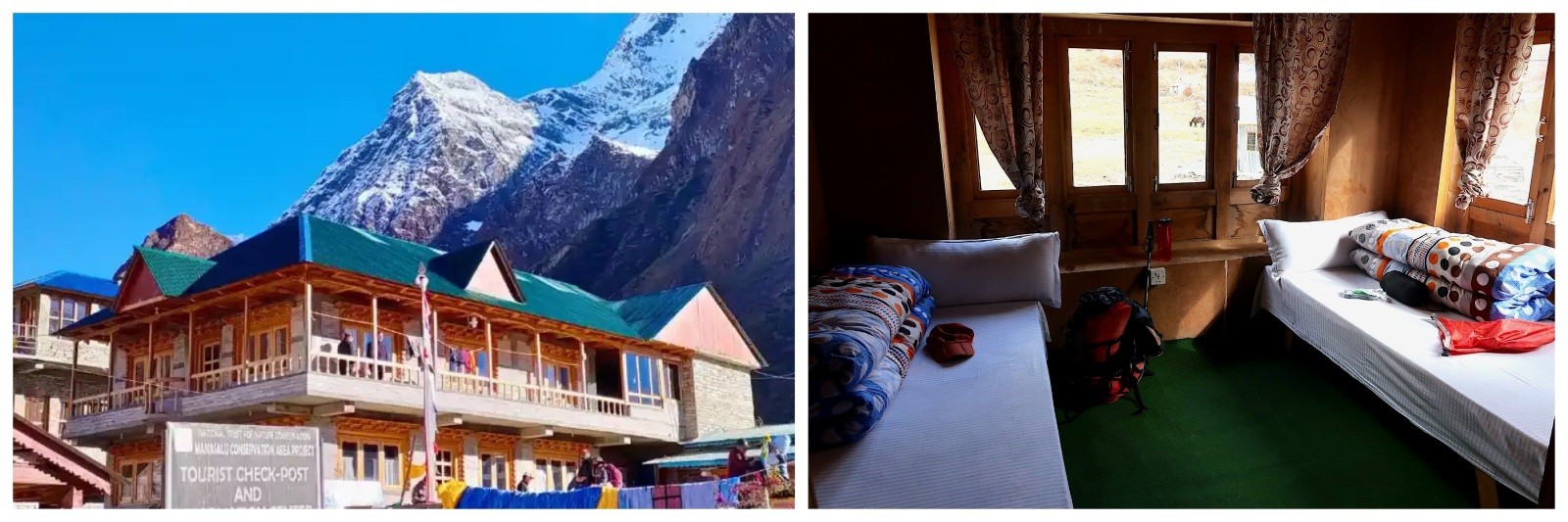
As a result, shared toilets are common on the track due to the fact that teahouses rely on simple water systems. Also, hot showers might require an additional charge at times when fuel is available. Still, hot water is a definite must after long days of walking. Therefore, carrying wet wipes also supports hygiene.
As the trek goes on, dining halls become the most important areas of warmth and social interaction. Indeed, most teahouses heat the dining rooms with a central stove, especially in the evenings. Additionally, menus have dal bhat, noodles, eggs, soups, and tea. Hence, trekkers can keep energy while adapting to limited food choices.
Though the meals are simple, they are still freshly prepared using local ingredients wherever possible. Similarly, hot meal consumption supports acclimatization and comfort. Thus, Haven Holidays Pvt. Ltd recommends avoiding refrigerated or stale food by trekkers. Due to this, fresh cooked meals ensure safety.
Moreover, electricity in Lower Manaslu is majorly drawn from micro-hydropower systems. However, power cuts occur during heavy rains. Hence, trekkers are advised to carry power banks to keep the devices charged. Furthermore, early charging is important as it will last enough during long days.
For communication, teahouses may offer limited Wi-Fi for a very small amount of money, but the network becomes weaker as trekkers head towards Deng at 1,860 m. At best, local SIM cards may work spasmodically; thus, trekkers should not rely entirely on mobile connectivity.
Because prices count, it's important for trekkers to learn that the average prices in a teahouse range from USD 5–8 per room. The cost of food is slightly higher because of transportation challenges. However, paying directly for meals and rooms benefits the locals directly. Thus, opting for local lodges enhances sustainable tourism.
Finally, Lower Manaslu requires flexible expectations due to facilities remaining modest yet welcoming. Hence, Haven Holidays Pvt. Ltd prepares trekkers with the right guidance for comfort. Thus, understanding conditions at teahouses means smoother days of trekking. Therefore, trekkers enter this region with confidence and realistic expectations.
Find out what you could expect from very simple teahouse rooms above Samagaun and Samdo, and prepare smartly with Haven Holidays Pvt. Ltd for a safe Manaslu trek.
What to Expect Above Samagaun and Samdo?
From Samagaun onwards at 3,530 meters, the level of accommodation visibly deteriorates for the trekkers. In addition, lodges here offer basic facilities that emphasize survival rather than comfort. Similarly, Haven Holidays Pvt. Ltd gets the trekkers mentally prepared for very basic facilities in the upper Manaslu region. Thus, realistic expectations avoid probable discomfort.
In addition, rooms above Samagaun become smaller because resources remain limited in these remote villages. Additionally, teahouse owners use simple plywood walls and minimal insulation. However, rooms still provide thick blankets to reduce the cold during nighttime. Hence, a warm sleeping bag becomes vital at these elevations.
Similarly, Samdo at 3,875 metres has even more basic teahouses due to its harsher climate and its more limited supply routes. Besides that, transportation depends on mules and porters, which prohibits lodge expansion. Yet even basic stops mean friendly hospitality for the trekkers. Hence, warmth and friendliness become a substitute for a lack of amenity.
Because of this, there are no more attached bathrooms above Samagaun as water systems freeze at higher altitudes. Teahouses also use shared toilet blocks outside the main buildings. However, trekkers are advised to bring head lamps for safe night-time movement. Hence, early preparation ensures comfortable adaptation.
As trekkers climb higher, water scarcity becomes a major challenge for hot showers. Indeed, showers may not be available because heating water requires expensive fuel. Additionally, cold temperatures make bucket showers uncomfortable. Hence, using wet wipes becomes the most practical option.
Besides, the heating in the dining halls is fully dependent on the stove, which is fueled by yak dung or very limited firewood. Furthermore, dining rooms can be warm only during dinner time. Even so, they remain the best place for socializing with other trekkers. Hence, it is good to stay inside the dining areas to keep warm.
Even though the food choices diminish above Samagaun, meals are still fresh and healthy. Similarly, dal bhat, pasta, fried rice, omelets, and soups are common items on the menu lists. However, trekkers should not order any types of bakery products or meat dishes because the quality changes at high attitude. Therefore, Haven Holidays Pvt. Ltd guides assist trekkers in selecting safe meals.
As above Samdo, electricity becomes so limited; for that, charges may apply. Moreover, the power is provided by small solar panels dependent on sunlight. So carrying two power banks provides convenience during cloudy days. That way, energy planning becomes critical.
Actually, Wi-Fi is rare or unreliable as the altitude increases. Additionally, mobile networks hardly ever work beyond Samdo, which means trekkers need to prepare themselves for total digital disconnection. In addition, guides from Haven Holidays Pvt. Ltd handle communication in case of emergency situations.
Ultimately, accommodation in upper Manaslu remains extremely basic because of the altitude and remoteness. Hence, Haven Holidays Pvt. Ltd ensures that trekkers enter the region with proper gear and guidance. Consequently, understanding the limitations helps trekkers stay warm and safe. Preparedness thus guarantees a more rewarding Manaslu experience.
Acclimatize in safety on the Manaslu Circuit, overnighting in Namrung and Samagaun for good measure. Learn expert tips guided by Haven Holidays Pvt. Ltd.
Acclimatization Chart for Namrung and Samagaun:
| Location | Elevation | Reason for Stop | Suggested Activities |
| Namrung | 2,630 m | Early acclimatization | Rest, village walk |
| Samagaun | 3,530 | major acclimatization | Birendra Lake hike |
| Lho | 3,180 m | Gradual ascent zone | Visit monastery |
| Birendra Lake | 3,650 m | Acclimatization hike | Short altitude gain |
Starting with the ascent into higher Manaslu, trekkers need to acclimatize slowly to avoid altitude sickness. In addition to this, appropriate nights taken for acclimatization in Namrung (2,630 m) and Samagaun (3,530 m) create a safe adjustment pattern.
Similarly, Haven Holidays Pvt. Ltd views these stops as a must for healthy trekking around the Manaslu Circuit. Thus, understanding their essence allows trekkers to cope with altitude accordingly.
Besides this, Namrung is considered the first major acclimatization checkpoint, as the increase in altitude is quite large after Deng (1,860 m). Besides, the trekkers experience cooler and thinner air that requires their pace to be slower. However, it offers cozy teahouses for rest. Thus, Namrung prepares the trekkers for the gradual climb toward the high valleys.
Similarly, Namrung offers good acclimatization as it is situated before the steep ascents to Lihi (2,920 m) and Lho (3,180 m). Besides, night stays here get the body adjusted for the trekking into the Buddhist highland region. However, trekkers must keep themselves hydrated and walk slowly. Thus, proper pacing makes acclimatization smoother.
Consequently, Samagaun will be the second and main acclimatization point on the way. Also, Samagaun lies beneath Manaslu (8,163 m), which forms an amazing mountain amphitheater. Still, its high elevation requires one extra night for safe adaptation. Thus, sleeping well in Samagaun supports the body in the further climb.
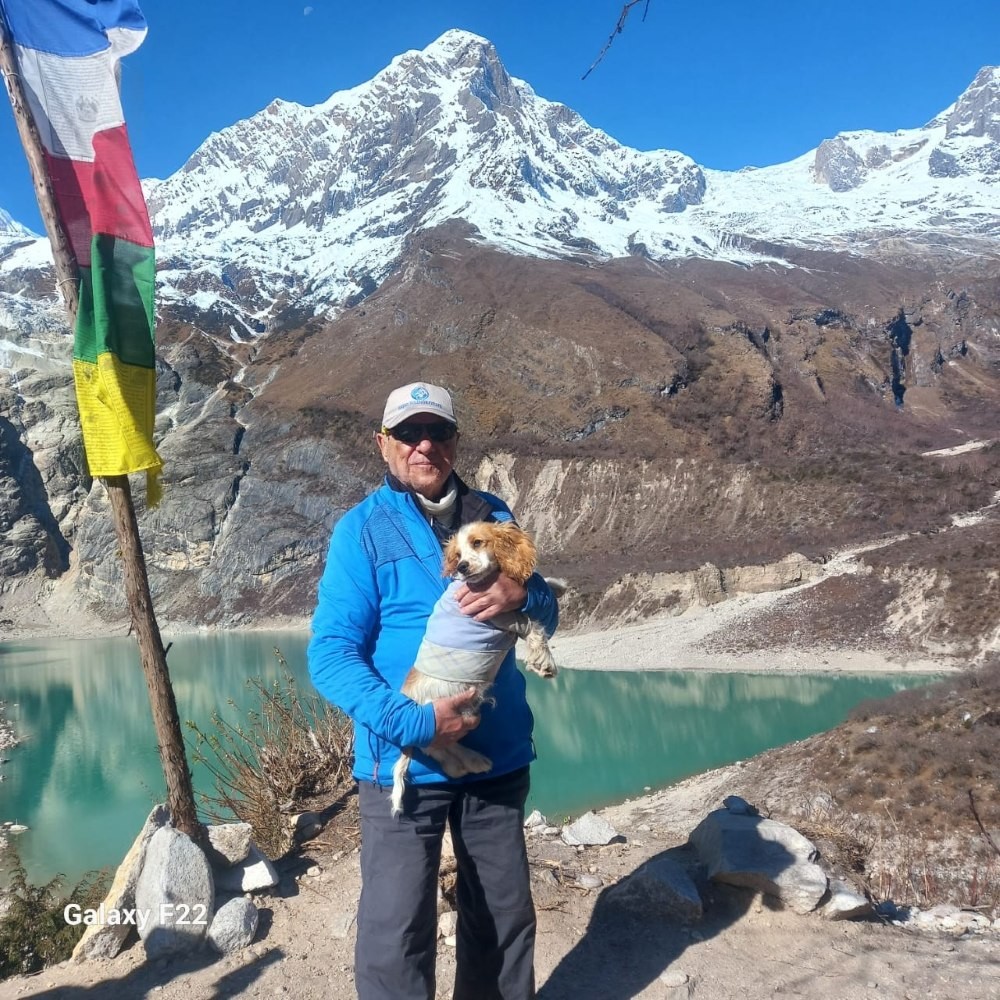
While trekkers rest in Samagaun, short hikes improve oxygen efficiency and quality of acclimatization. Indeed, exploring Birendra Lake-3,650 m offers an excellent acclimatization walk. Besides, Manaslu Base Camp viewpoint-4,400 m helps trekkers strengthen their lungs. Hence, climbing high and sleeping low becomes a key strategy here.
Although acclimatization takes time, it ensures trekkers reach Larke Pass at 5,106 m safely. Similarly, guides in Haven Holidays Pvt. Ltd monitor symptoms carefully to avoid problems due to altitude. Furthermore, they persuade trekkers to drink warm soup and discard the consumption of alcohol. Hence, the expert supervision enhances safety in the higher altitude.
Moreover, Namrung provides green forest surroundings to keep trekkers relaxed before entering the arid highlands. Additionally, it boosts morale due to its warm hospitality after long days of walking. However, trekkers must maintain steady hydration. Hence, good habits reduce altitude stress significantly.
Likewise, Samagaun provides breathtaking mountain scenery that cultivates mental clarity and motivation. Additionally, more rest days ultimately improve one's physical preparation for the high ascent. However, even on acclimatization walks, overexertion must be ruled out for trekkers. Therefore, controlled activity remains necessary.
Finally, acclimatization in Namrung and Samagaun helps trekkers cross Larke Pass with full confidence. Hence, Haven Holidays Pvt. Ltd includes these nights in every itinerary for safety. Consequently, informed preparation supports a rewarding Manaslu adventure. Therefore, proper acclimatization guarantees a safer and more enjoyable trekking journey.
Build in an extra day in Samagaun for acclimatization on the Manaslu Circuit. Here are some expert tips from Haven Holidays Pvt. Ltd to help you adjust to 3,530 meters above sea level.
Advantages of an Extra Acclimatization Day in Samagaun
Starting from Samagaun (3,530 m), trekkers will experience one of the most important altitude changes on the Manaslu Circuit. Additionally, the altitude difference from Lho (3,180 m) to Samagaun itself presents trekkers with rarefied air. Similarly, Haven Holidays Pvt. Ltd highly recommends adding an extra acclimatization day here. Thus, the additional stop builds up the respiration capability of the body before ascending to Samdo (3,875 m).
Besides, Samagaun is in a wide glacial valley; thus, it provides ideal conditions for a full acclimatization day. Secondly, its open landscape offers several short acclimatization hikes. However, trekking too long will lead to fatigue. Thus, the best option is short, steady walks.
Similarly, altitude experts advise resting in Samagaun because the next elevation jump puts trekkers at an increasing risk. Besides, the distance to Samdo has become short but steep. Yet, with proper acclimatization, trekkers complete it comfortably. Thus, Samagaun acts as a protective buffer.
Hence, day hikes strengthen the respiratory system by controlled altitude exposure. The Birendra Lake hike (3,650 m) features ideal elevation gain without causing undue stress to the body. However, trekkers are advised to monitor dizziness and nausea. Thus, the guides will examine symptoms very carefully.
Given this acclimatization day, a visit to the Manaslu Base Camp viewpoint, at an altitude of 4,400 meters above sea level, is a popular option. The hike indeed offers incredible views of Manaslu at 8,163 meters above sea level, with surrounding glaciers. Additionally, strong altitude conditioning is provided by the climb. Hence, sleeping lower increases efficiency in acclimatization.
Even though trekkers have to spend an extra day, the break decreases risks at higher altitudes. Similarly, Haven Holidays Pvt. Ltd incorporates this particular day to enhance health and levels of energy. In addition, the day helps trekkers to get rid of the previous fatigue. As a result, the body becomes more ready for higher altitudes.
Additionally, Samagaun provides cultural experiences that make the trek emotionally enriching. In addition, the trekkers can visit local monasteries to see the Tibetan Buddhist tradition. Activities should not be heavy but light and slow.
Relaxation, therefore, is a must. Likewise, the longer stay enables trekkers to observe daily life in this far-flung mountain village. Above all, conversing with locals enhances this cultural experience. For all that, trekkers must drink sufficient amounts of water to avoid dehydration. Therefore, hydration becomes a part of the acclimatization routine.
Finally, an additional day of acclimatization at Samagaun ensures that the aforementioned destinations, namely Samdo, Dharmasala (4,460 m), and Larke Pass (5,160 m), are safer to scale. Thus, Haven Holidays Pvt. Ltd includes this acclimatization day in every responsible itinerary. Trekkers then get a healthier and more rewarding experience on Manaslu. The proper acclimatization will then make confident and comfortable high-altitude trekking possible.
Walking slowly and steadily from Deng to Namrung for proper acclimatization and enjoying the Manaslu Circuit Trek with Haven Holidays Pvt. Ltd
Best Walking Strategy between Deng and Namrung:
| Walking Strategy | Why It Helps | When to Use |
| Slow, rhythmic tempo | Supports acclimatization | Throughout the trail |
| Short hydration stops | relieves altitude distress | Every 30–40 minutes |
| Light backpack weight | Reduces fatigue | Full day trekking |
| Trekking poles | improves balance | steep forest climbs |
Although the trail from Deng (1,860 m) to Namrung (2,630 m) ascends gradually, you need to walk slowly to control the rate of altitude gain as it ascends without any breaks. This will help your body get accustomed easily and keep your energy level even throughout the day. It will also prevent tiredness and further averts any chances of early exhaustion that may be caused during Manaslu Circuit Trek. In this regard, Haven Holidays Pvt. Ltd always suggests slow and continuous walking for safety and comfort.
Moreover, the track from Deng to Namrung passes through lush forests, rocky stretches, and picturesque villages, which also require balanced steps. Consequently, walking at a slow pace makes it possible to see every detail in the landscapes, including the Budi Gandaki River and terraced fields. One can regulate one's breathing and avoid superfluous stops caused by rapid walking. Thus, such a gradual rhythm will raise your general trekking performance.
In fact, the chances of altitude-related discomfort also become less because, after Ghap and Prok villages, the elevation rises noticeably upwards. This is why a steady walk helps your lungs adapt naturally, and keeps your heartbeat regulated on uphill sections. Moreover, this will give you time to hydrate properly-which remains essential to prevent headaches or dizziness. Consequently, with every passing hour, your acclimatization will grow stronger.
Similarly, a steady gait spares your muscles from sprains of sudden, jerky movements. Therefore, slow walking decreases the possibility of knee pains, ankle twists, or thigh cramps on steep ascents through forests of trees. Moreover, you will be in better command while negotiating stone steps or narrow trails. In this way, your trek is less hazardous and more comfortable.
Along with trekking benefits, slow walking increases the intensity of appreciation regarding cultural meetings in villages like Bihi and Ghap. Thus, you interact calmly with locals, observe their traditional houses, and enjoy the peaceful landscape dominated by Shiringi Himal-7,187 m. Moreover, this pace allows you to be more mindful about your travel and responsible for trekking practices. Hence, you are able to develop deeper connections with the Manaslu region.
To walk efficiently between Deng and Namrung, follow practical pacing guidelines to enhance your walking. Hence, the use of trekking poles ensures better rhythm and balance on uneven paths. Light gear also minimizes pressure on the back and shoulders. You will, therefore, walk comfortably for several hours.
In fact, walking slowly and rhythmically, your journey from Deng to Namrung becomes smooth and safe as well as more memorable. Thus, this pacing protects your physical and mental endurance, creating a positive trekking experience.
Furthermore, Haven Holidays Pvt. Ltd sees to it that each trekker follows a proper way of walking for maximum comfort. As a result, you enjoy the Manaslu Circuit Trek with full confidence and high satisfaction.
Have hot, fresh Dal Bhat every day on the Manaslu Circuit Trek and keep your energy and stamina going with Haven Holidays Pvt. Ltd.
Why Dal Bhat is the Best Trekking Meal?
Although trekking through high-altitude areas requires immense stamina, consuming hot and fresh Dal Bhat every day keeps your stamina level consistent. Hence, this Nepalese traditional meal offers the right amount of carbohydrates, proteins, and minerals for extended hours of walking.
More significantly, Dal Bhat remains hot and nutritious even in cold weather conditions; hence, it is perfect for the Manaslu Circuit Trek. In line with this fact, Haven Holidays Pvt. Ltd recommends trekkers consume Dal Bhat at every main meal.
Moreover, Dal Bhat comprises steamed rice, lentil soup, vegetables, pickles, and often curry or spinach, making it a complete nutritional set. Therefore, this combination provides energy to your body gradually and can prevent midday fatigue during strenuous routes, such as Deng to Namrung or Samagaun (3,520 m) to Samdo (3,875 m).
Further, its hot temperature promotes digestion during altitude when the metabolism slows down. Therefore, your body will absorb the nutrients more adequately.
Likewise, Dal Bhat is also widely accessible from teahouses in Lho (3,180 m), Namrung (2,630 m), Shyala (3,500 m), to Samagaun with no particular food shortage. In this way, you are never concerned about intake of unfamiliar food or discrepancies in hygiene.
Besides, hot Dal Bhat is freshly prepared, comforting and reliable. As a result, the trekkers do not encounter stomach problems from intake of fried or re-warmed foods.
Similarly, Dal Bhat provides unlimited refills in most teahouses, which becomes very useful after long and exhausting climbs. Therefore, you are able to retain enough calories in your body while on the trek, since loss of energy is a continuous process.
In addition, refills enable you to eat as much as your body needs without any additional cost. Thus, Dal Bhat becomes an affordable yet nutrition-rich meal option.
Besides nutrition, hot Dal Bhat connects you to the local culture along the Manaslu Circuit Trail. In that regard, by consuming this dish, you are supporting the locals who prepare it daily with seasonal vegetables and homemade spices.
In addition, the consumption of Dal Bhat supports ways of sustainable tourism practices by consuming locally sourced food. Thus, your meal options become worthy contributions to the region.
The following points elaborate on the clear advantages of Dal Bhat to help trekkers understand why it works best.
Finally, consuming hot, freshly prepared Dal Bhat every day keeps your energy level stable throughout the Manaslu Circuit Trek. Thus, this meal definitely promises strength, comfort, and consistent performance while going through extended trekking days.
Not only that, Haven Holidays Pvt. Ltd suggests Dal Bhat as it guarantees safety, nutrition, and good endurance for all trekkers. As a result, the overall experience becomes easy and satisfactory.
Below is the meta description: Carrying energy-rich snacks is very important, as long, remote sections are present between villages on the Manaslu Circuit Trek.
Recommended Snacks for the Manaslu Circuit Trek:
Although the Manaslu Circuit Trek encompasses glorious landscapes and cultural villages, several sections between settlements are long and isolated. Thus, snacks are a must to keep your energy level stable on difficult walking hours. The snacks also keep you going when you are commuting from one village to another, like Deng at 1,860 meters, Namrung at 2,630 meters, and Lho at 3,180 meters. Hence, Haven Holidays Pvt. Ltd advocates that trekkers should pack smart, light-weight snacks to make every trekking day both safe and comfortable.
Moreover, the altitude increases the distance between villages, and one can find very few stretches with available food. Therefore, having snacks means not relying totally on mealtime schedules during the Manaslu Circuit Trek. Snacks also save you from feeling weak on steep trails leading toward Shyala (3,500 m) and Samagaun (3,520 m). Thus, your trekking pace remains stable without unnecessary fatigue.
Similarly, energy-dense snacks provide immediate calories during steep ascents and long forested paths. Therefore, they serve as reliable sources of quick fuel, particularly during afternoon climbs toward Lihi 2,900 m or Sho 2,880 m. Moreover, they prevent dizziness caused by long gaps between meals. Consequently, you maintain a healthy trekking rhythm throughout the day.
Likewise, snack supplies become vital in unpredictable whether patterns that somehow may slow down the walking speed. Hence, eating nuts, chocolate, or granola bars keeps your energy level consistent even when the trail becomes slippery. In addition to that, snacks will keep you warm as this supports your metabolism in a high level. Thus, your body is active and alert.
Other than for nutritional values, bringing snacks encourages one psychologically during longer days of trekking. In this way, short food breaks tend to create very positive resting moments, especially in areas that are far away and inaccessible, like beyond Ghap at an altitude of 2,165 meters. Additionally, you can drink water and take fresh mountain air. Thus, snack breaks are beneficial for bodily and emotional comfort.
To support your preparation, the following bullet list highlights recommended snacks for the Manaslu Circuit Trek. Hence, this quick guide helps you pack efficiently and avoid unnecessary weight. Additionally, it ensures smart planning for long stretches without food stops. Thus, your trekking experience becomes easier and more enjoyable.
Besides, carrying the right snacks reduces the total food cost along the trail, where prices increase above 3,500 m. Thus, having your own supply prevents unnecessary expenses in these remote areas, such as Samdo at 3,875 m. In addition to that, it ensures food safety because of the hygiene-controlled type of food. Hence, you trek confidently without depending on the limited stock from the shops.
Actually, snacks for long sections between villages ensure uniform energy, safety, and better stamina on the Manaslu Circuit Trek. This prepares you much better to tackle steep ascents, lengthier walks, and shifting weather conditions. Furthermore, Haven Holidays Pvt. Ltd recommends that every trekker carry snacks to maximize comfort and performance. Therefore, this easy plan tremendously improves your success rate and overall experience in trekking.
Haven Holidays Pvt. Ltd. recommends the use of water purification drops on the Manaslu Circuit Trek since there is limited access to appropriate drinking water.
Purification Drops vs Other Methods:
| Method Weight | Effectiveness | Cost | Best For |
| Purification Drops | Very light | Kills bacteria and viruses | Low | All altitudes |
| Filtration Bottle | Heavy | Filters sediments | Medium | Lower regions |
| Boiling Water | Requirefuel | Verye ffective | High Teahouse |
| Bottled Water | Heavy to buy often | Clean | Expensive | Emergency use |
Although the Manaslu Circuit Trek provides access to natural water sources, safe drinking water is very limited throughout most of the high-altitude areas. Thus, the use of water purification drops is highly necessary to avoid waterborne diseases.
Furthermore, purified water will help with your stamina and digestion as you trek from Namrung (2,630 m), Lho (3,180 m), up to Samagaun (3,520 m). Hence, Haven Holidays Pvt. Ltd. highly recommends bringing effective purification solutions for everyday trekking purposes.
Moreover, water purification drops work fast and kill harmful pathogens found in rivers, taps, and communal water tanks. Therefore, they are an effective means of making water drinkable in remote villages. Besides, such drops are lightweight and easy to carry compared with filtration devices. Thus, they would be practical for long days of trekking.
Similarly, water availability in regions like Shyala (3,500 m) and Samdo (3,875 m) becomes inconsistent, which increases the need for proper purification. Therefore, drops allow you to refill your bottle anywhere without having to worry about contamination. In addition, they reduce the need to buy bottled water at exorbitant amounts, a thing that helps minimize plastic waste. Consequently, you contribute to eco-friendly trekking practices.
Likewise, purification drops become indispensable in case of unpredictable delays due to bad weather conditions or altitude factors. Therefore, in case you have drops with you, you can never run out of drinking water supply while negotiating steep climbs or long traverses.
Again, these drops work efficiently with cold water sources or slightly muddy water. Hence, your hydration remains pretty regular even in the interior parts of the trail.
Besides safety, using drops keeps your backpack light, as you only need a little bottle of concentrated solution, hence evading the weight of many water bottles or heavy filtration kits. Above all, this lightweight option gives you good balance and increases your walking endurance. Therefore, drops remain the preferred choice for long-distance trekking.
Here, the following table provides a simple overview to help trekkers realize the benefits of purification drops. Hence, it highlights how drops outshine other methods of purification in the Manaslu region. In addition, the table guides you toward smarter hydration planning. Thus, this allows you to be confident about access to water throughout the entire trek.
Moreover, water purification drops avoid stomach problems and dehydrations resulting from infected water. In this respect, they support consistent hydration, very important for acclimatization in places like Samdo and Dharmasala (4,460 m). In addition, clean water increases your energy and minimizes health problems. Therefore, natural improvements in trekking performance take place.
Finally, purification drops make the hydration process in the Manaslu Circuit Trek safe, inexpensive, and environmentally friendly. They keep your health intact, minimize trash in nature, and allow you to steadily continue your trekking adventure. After all, Haven Holidays Pvt. Ltd always recommends trekkers use purification drops for ultimate safety. Thus, you can expect to be secure and thoroughly prepared during the trek.
Early start after Deng (1,860 m) to safely cross unstable landslide sections on the Manaslu Circuit. Expert tips and support by Haven Holidays Pvt. Ltd.
Main Divisions Beyond Deng (1,860 m):
| Section | Elevation | Risk Level | Best Time to Cross |
| Deng to Rana | 1,860–1,980 m | Moderate | Early Morning |
| Rana to Bih | i1,980–2,130 m | High | Early Morning |
| Bihi to Ghap | 2,130–2,160 m | Moderate | EarlyMorning |
| Ghap to Namrung | 2,160–2,630 m | Low–Moderate | Before Midday |
First of all, you need to start early to do the landslide sections after Deng (1,860 m) because the terrain changes throughout the day. The Manaslu Circuit Trek rises rapidly after Deng, and these unstable slopes get increasingly dangerous as the temperatures rise throughout the day. Hence, you increase safety by starting the trail before the sunlight warms up the cliffs. More importantly, you avoid crowd congestion on narrow cliff paths.
Moreover, early movement helps you cross fragile slopes before strong winds increase the chances of rockfall. The trail from Deng to Rana at 1,980 metres and Bihi at 2,130 metres has exposed sections on loose soil. Therefore, you gain more stability while the ground is firm from the night's coolness. Many trekkers often report that the early hours are quite smooth for traveling.
Besides, morning light provides clear visibility across the Budhi Gandaki gorge. Better visibility helps you identify zones of rockfall and edges that are unstable. Consequently, you make informed decisions with every step. Once the dust rises from late traffic, the visibility goes down.
Similarly, early walking helps you maintain a steady pace towards Namrung (2,630 m). This area has a number of narrow bends where mules and porters are seen passing regularly. This, in turn, helps you avoid queues by getting to these places before the traffic picks up. You also conserve much-needed energy for the climb towards Lho (3,180 m).
Besides that, Haven Holidays Pvt. Ltd guides manage the timing professionally for safer crossings. Their local experts monitor conditions of the trails every day and make necessary changes in their departure schedule. Thus, the trekkers will have more confidence while going through risky segments. The provided support increases the value of the Manaslu Circuit Trek experience by many folds.
Then, an early start allows you to deal with unexpected delays without losing daylight. Some stretches could be susceptible to landslides, which need to be negotiated at a slow and cautious pace. Extra daylight thus provides a factor of safety for all group members, a factor that becomes critical at higher altitude camps.
Similarly, extended sun exposure tends to dislodge rocks from steep walls above the trail. The sun warms the dirt and causes spontaneous movements in loose debris. Therefore, passage earlier in the day reduces the likelihood of a new rockfall. Afternoon crossings are more dangerous.
Finally, the early walking develops a rhythm that is comfortable for subsequent days. You get used to the pattern of transiting through difficult terrain with focus and calmness. This practice helps you with acclimatization as well as mentally preparing yourself. Haven Holidays Pvt. Ltd sees to it that this rhythm is followed throughout the trek.
Here, the bottom line is that an early start after Deng provides stability, visibility, and confidence at each unstable landslide section when crossing. You will get safety, efficiency of energy, and better pace control. For seamless planning and expert guidance, Haven Holidays Pvt. Ltd. remains a dependable partner throughout the Manaslu Circuit Trek.
Get well-prepared for chilly nights from Lho onwards at 3,180 meters on the Manaslu Circuit Trek. Stay warm, stay safe, and be guided with Haven Holidays Pvt. Ltd.
Must-Have Gear for Cold Nights
Firstly, cold nights intensify sharply after Lho (3,180 m) because the trail enters higher Himalayan terrain. Temperatures fall rapidly after sunset, especially from Shyala (3,500 m) to Samagaun (3,530 m). In other words, proper insulation is essential to have on hand for trekkers together with reliable gear. Cold exposure becomes a serious concern at these elevations.
Moreover, the air becomes thinner above Lho, thereby increasing the night chills. Thin air can retain less heat, and high winds push cold further down into the valleys. Therefore, down jackets and thermal layers become highly essential to wear. Proper layering will let your body maintain a steady temperature.
Furthermore, the teahouse rooms above Lho have only limited heating. Most of the lodges use central dining stoves, lit only during evenings. You must, therefore, have sufficient sleeping bags rated for sub-zero conditions to keep you comfortable during the night.
Besides that, cold nights directly impact your acclimatization process. Warm sleep supports oxygen absorption and reduces fatigue. Hence, you do better during the long days to Samdo-3,860 m and Dharamsala-4,460 m. Good rest strengthens your confidence.
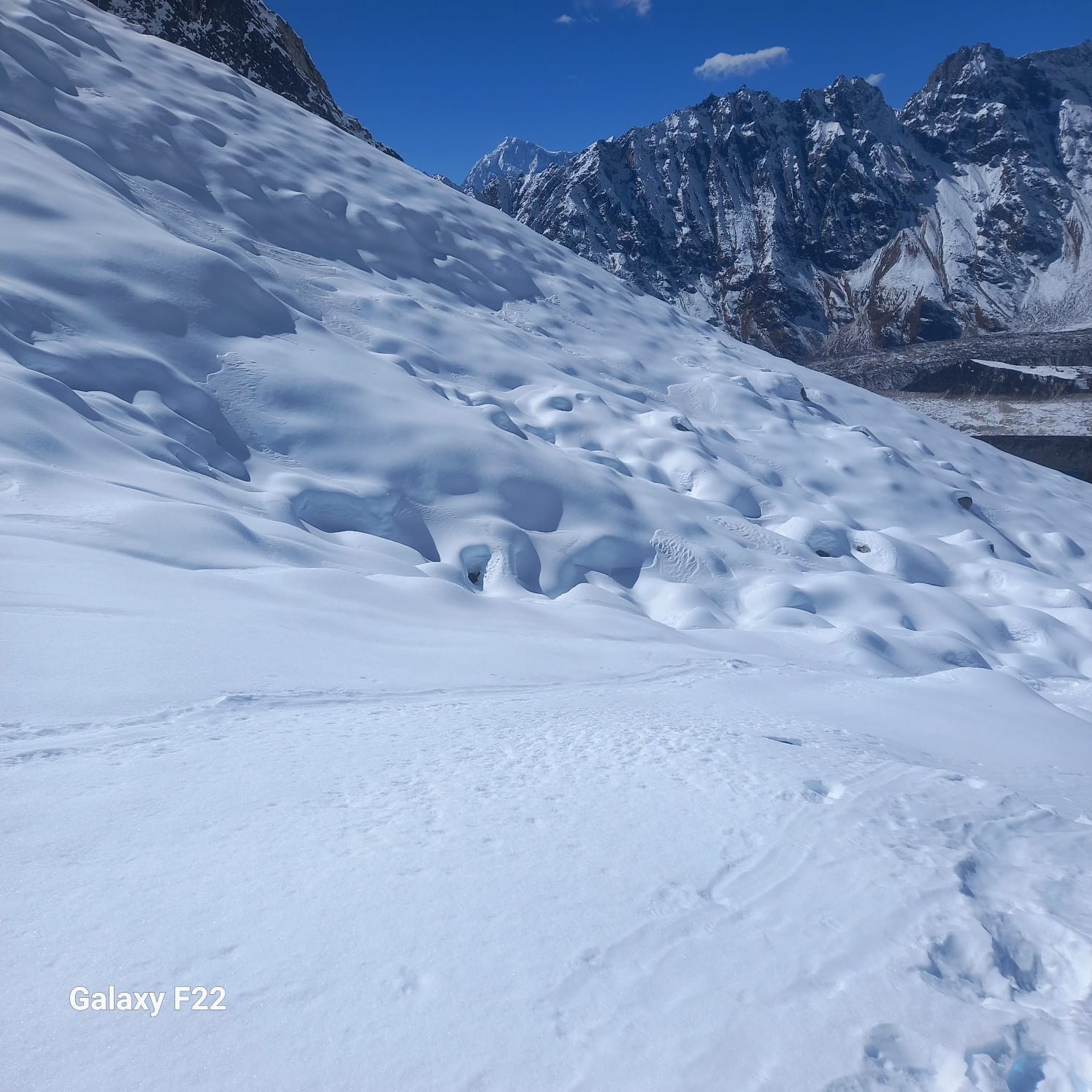
Similarly, Haven Holidays Pvt. Ltd offers trekking crews who track temperature changes intently. They help you make timely layer adjustments and check off early signs of cold stress. Their experience improves comfort during challenging nights. You feel supported and secure.
Then, staying hydrated becomes more important as cold suppresses thirst. Dehydration increases altitude sickness risks and weakens your sleep quality. Therefore, you must drink warm fluids regularly. Trekkers often forget hydration during cold evenings.
Similarly, the cold winds increase at high passes such as Larke La (5,106 m). Preparing your body from Lho onward helps you cope with freezing winds on summit day. This preparation includes headgear, gloves, and windproof shells. Better readiness increases safety.
Finally, warm evenings set a better rhythm for trekking. You sleep harder, recover faster, and look at scenery with more energy. Haven Holidays Pvt. Ltd ensures every trekker is kept warm and well-informed with proper advice. Their support complements the overall journey of Manaslu Circuit.
In this way, preparation for cold nights from Lho onwards guarantees safe, comfortable, and energizing progress on the Manaslu Circuit. Proper attire and hydration protect your health and performance. Guided competently by Haven Holidays Pvt. Ltd., you are assured of warmth, safety, and confidence during the high-altitude journey.
Effective acclimatization en route to Pungyen Gompa at 4,200 meters or Manaslu Base Camp at 4,800 meters on the Manaslu Circuit with guided support from Haven Holidays Pvt. Ltd.
Benefits of These Acclimatization Hikes:
First of all, the side trips to either Pungyen Gompa at 4,200 meters or Manaslu Base Camp at 4,800 meters from Samagaun at 3,530 meters provide great acclimatization opportunities during the Manaslu Circuit Trek. This enables gradual adjustment of trekkers to thinner air. Therefore, climbers reduce risks related to altitude sickness. These kinds of acclimatization days strengthen the body for higher climbs.
Most of all, Pungyen Gompa offers a culturally enriching acclimatization. The trail winds through meadows where the scenery includes unhindered views of Manaslu at 8,163 meters. Because of this, trekkers walk in serene landscapes while gaining essential elevation. This approach ensures both physical preparation and cultural immersion.
Additionally, the trail to Pungyen Gompa remains moderate compared to the direct climb to Manaslu Base Camp. You gain altitude steadily without steep challenges. Consequently, first-time trekkers find the hike manageable. The environment supports calm and steady breathing.
In Addition to, Manaslu Base Camp offers a more challenging yet rewarding acclimatization. This climb requires strong stamina, and proper pacing is demanded. Because of this, trekkers are confident in their higher push to Samdo at 3,860 meters and Dharamsala at 4,460 meters. The experience enhances overall readiness.
Similarly, both the acclimatization hikes are on the basis of the "climb high, sleep low" rule adopted by altitude experts. You ascend higher during the day and return to Samagaun for recovery. Thus, your body is adjusted without overexertion. This method greatly reduces altitude complications.
Then the guides of Haven Holidays Pvt. Ltd assist the trekkers in choosing the right acclimatization route by assessing weather, fitness, and acclimatization needs, hence trekkers feel safe during challenging sections. Their local knowledge is worth much.
Similarly, side hikes are improving circulation and stamina before entering zones that are exposed to wind. Stages further towards Samdo and Dharamsala are easier with proper acclimatization thereafter. Hence, trekkers maintain better walking rhythm. Strong adaptation encourages safer progress.
Then, taking one more day in Samagaun will get you an enriching trekking time. You will have time to explore the cultural sites and snow viewpoint. You also keep your health safe for the high Larke La Pass (5,160 m). It will definitely make comfortable trekking days ahead.
Finally, acclimatization at Pungyen Gompa or Manaslu Base Camp facilitates the success of long-term trekking. Trekkers sleep better and have stronger climbs. Besides, Haven Holidays Pvt. Ltd guarantees safe pacing and expert assistance. Their guidance supports trekkers in enjoying the best of the Manaslu region.
Begin the Manaslu Circuit with expectations of strong winds from Samdo 3,860 m to Dharamsala 4,460 m. Do proper planning with expert advice from Haven Holidays Pvt. Ltd.
Wind Conditions from Samdo to Dharamsala:
| Section | Elevation | Wind Strength | Best Travel Time |
| Samdo to PangbocheKharka | 3,860–4,200 m | Moderate | Strong Early Morning |
| PangbocheKharka to Dharamsala | 4,200–4,460 m | Strong–Very | Strong Early Morning |
| Dharamsala Area | 4,460 m | Very Strong | Before Midday Arrival |
First of all, the trail from Samdo (3,860 m) to Dharamsala (4,460 m) is largely exposed and hence receives strong winds. With the gain in altitude, the valley narrows down, allowing cold air to flow strongly. Thus, even on clear mornings, trekkers can feel strong gusts of wind. These winds, in turn, have their impacts on pace and stability.
Besides, the wind is stronger after noon when temperature changes move pressure areas. The high Himalayan crests around PangbocheKharka funnel the gusts across the trail. Early starts are thus important for the best walking comfort. Such timing improves safety during steep ascents.
Furthermore, body temperature is readily lost with the exposure to wind. Strong gusts draw heat from the skin and reduce comfort. Hence, windproof layers become a necessary item of gear and this protection supports continuous movement at higher elevations.
Besides that, strong winds will hinder the walk toward Dharamsala. On many occasions, trekkers have to adjust steps to maintain balance on uneven surfaces. Because of this fact, the rhythm of walking changes during gusty hours of time. These challenges highlight the importance of proper clothing and strategy.
Similarly, guides at Haven Holidays Pvt. Ltd monitor wind patterns with care. Their local knowledge supports trekkers to choose the safest departure timings. Thus, groups avoid dangerous afternoon exposure. This support adds security on narrow ridges.
Then, hydration becomes important as strong winds accelerate dehydration. Cold winds suppress thirst while increasing moisture loss. Therefore, sipping warm water regularly remains essential. The result will be protection for stamina and focus.
Similarly, winds significantly rise near Dharamsala due to its open and elevated positioning. It lies just below Larke La Pass at 5,160 meters. As such, it is necessary that trekkers arrive early to settle down before temperatures drop. Strong winds continue through evening hours as well.
Afterward, strong winds give reason to proper acclimatization. The trekkers who acclimatize at Samagaun (3,530 m) and Samdo handle the wind-exposed climb quite well. Moreover, they maintain a strong breathing rhythm. This advantage supports safe ascent toward the pass.
Understanding the wind pattern finally prepares the trekkers for the long crossing of the Larke La Pass. Gradually acclimatizing your body earlier will make this climb easier to tackle. Haven Holidays Pvt. Ltd ensures that trekkers are moved safely with proper guidance at the right time. All the support provided makes it very safe and enjoyable.
Sleep early in Dharmasala (4,460 m) for the 2 am Larkya Pass start. Be properly prepared with the safety concern guidance by Haven Holidays Pvt. Ltd. - Manaslu Circuit
Reasons to Sleep Early in Dharmasala:
First of all, sleeping early in Dharmasala becomes a must, as trekkers have to start the climb to Larkya La Pass at an altitude of 5,106 meters around 2 am. At such high altitudes, the body needs proper rest for energy and focus, thus making the high-altitude environment tiring. Therefore, a quiet evening routine in Dharmasala helps your system tune in to the thin air. All this preparation ensures better physical readiness.
Besides, Dharamsala provides very basic accommodation since it is really remote. The rooms remain cold, while facilities remain minimal due to extreme altitude. So sleeping early would help you settle before temperatures drop further. This habit protects your energy for the long ascent.
Additionally, an early sleeping habit ensures that one has regular breathing patterns. High altitude may interfere with your sleep and lower oxygen intake at night. For this reason, going to bed early advances the time taken by the body to adapt to the altitude. It enhances morning alertness.
Moreover, the 2 am start is to help trekkers cross the pass before strong winds begin to intensify. Early movement avoids riskier weather changes around the passes. Consequently, you ensure safer progress across icy areas. This starts to make timing a crucial part of your strategy.
In fact, the guides at Haven Holidays Pvt. Ltd advise trekkers to retire to bed early. They help you manage hydration, clothing, and pacing before going to bed, hence maintaining a good level of warmth inside the lodge. Their guidance supports confidence on tougher nights.
Then, light dinner helps your body get ready for early activity. Heavier meals retard digestion, further disturbing high-altitude sleep. Hence, warm soups and simple carbohydrates remain better choices. This approach helps improve rest quality.
Similarly, early sleep supports mental clarity during the dark approach toward the pass. You start walking under headlamp light, and it is the time when stable concentration becomes so crucial. Thus, mental readiness directly affects your success. Rest plays a central role.
Afterwards, early rest reduces physical exhaustion before entering steep snowy sections. The climb requires continuous effort for several hours. In addition, good rest helps you handle cold temperatures near the top. This stability improves safety.
Finally, retiring to bed early reinforces the overall trek rhythm on the Manaslu Circuit. Energy, hydration, and warmth are balanced ahead of the most strenuous part of the journey. Besides, Haven Holidays Pvt. Ltd. makes a right pre-preparation and skilled timing. Its support creates a safer and smoother experience around Larkya Pass.
Cross Larkya La Pass at 5,160 meters slowly and steadily for safety on the Manaslu Circuit. Expert pacing and guidance by Haven Holidays Pvt. Ltd.
Best Pacing Strategy for Larkya La Pass:
| Section | Elevation | Recommended Pace | Reason |
| Dharamsala to Mid-Climb | 4,460–4,900 m | Slow | Acclimatization and warming steps |
| Mid-Climb to Pass | 4,900–5,160 m | Very Slow | Thin air, icy terrain |
| Pass to Bimthang | 5,160–3,720 m | Steady Long descent | with changing conditions |
Meanwhile, it ensures safety while crossing Larkya La Pass at an altitude of 5,106 m slowly and steadily as the trail goes up steeply. The thin air further reduces stamina and increases fatigue. Hence, slow pacing protects your breathing rhythm. This prevents unnecessary exhaustion.
Besides, slow progress minimizes altitude-related risks. The climb from Dharmasala to the pass, an altitude gain of 4,460 m, requires a very judicious pace. Thus, the steady movement allows the natural adaptation of your body. This natural adaptation supports stable oxygen levels.
Also, the path involves icy patches and slippery snow. Hurrying enhances chances of slipping or loss of balance. Therefore, every step needs consideration of placement. Slow walking will maintain stability on your feet.
Additionally, the weather around Larkya La changes within minutes. The strong winds, sudden cloud build-ups, and rapidly dropping temperatures test the trekkers during the rise. For this reason, slow pacing helps you respond to these incidents with utmost coolness. This approach strengthens safety.
Similarly, steady progress conserves energy for the long descent to Bimthang 3,720 m. Many trekkers underestimate the downhill section after the pass; hence, slow climbing preserves energy for safe descending. In this way, the descent becomes manageable when the energy remains balanced.
Then, the guides of Haven Holidays Pvt. Ltd. maintain a controlled pace for all trekkers, carefully monitoring breathing and hydration during the ascent. Thus, they ensure every trekker makes it to the pass safely. Their expertise enhances confidence on the trail.
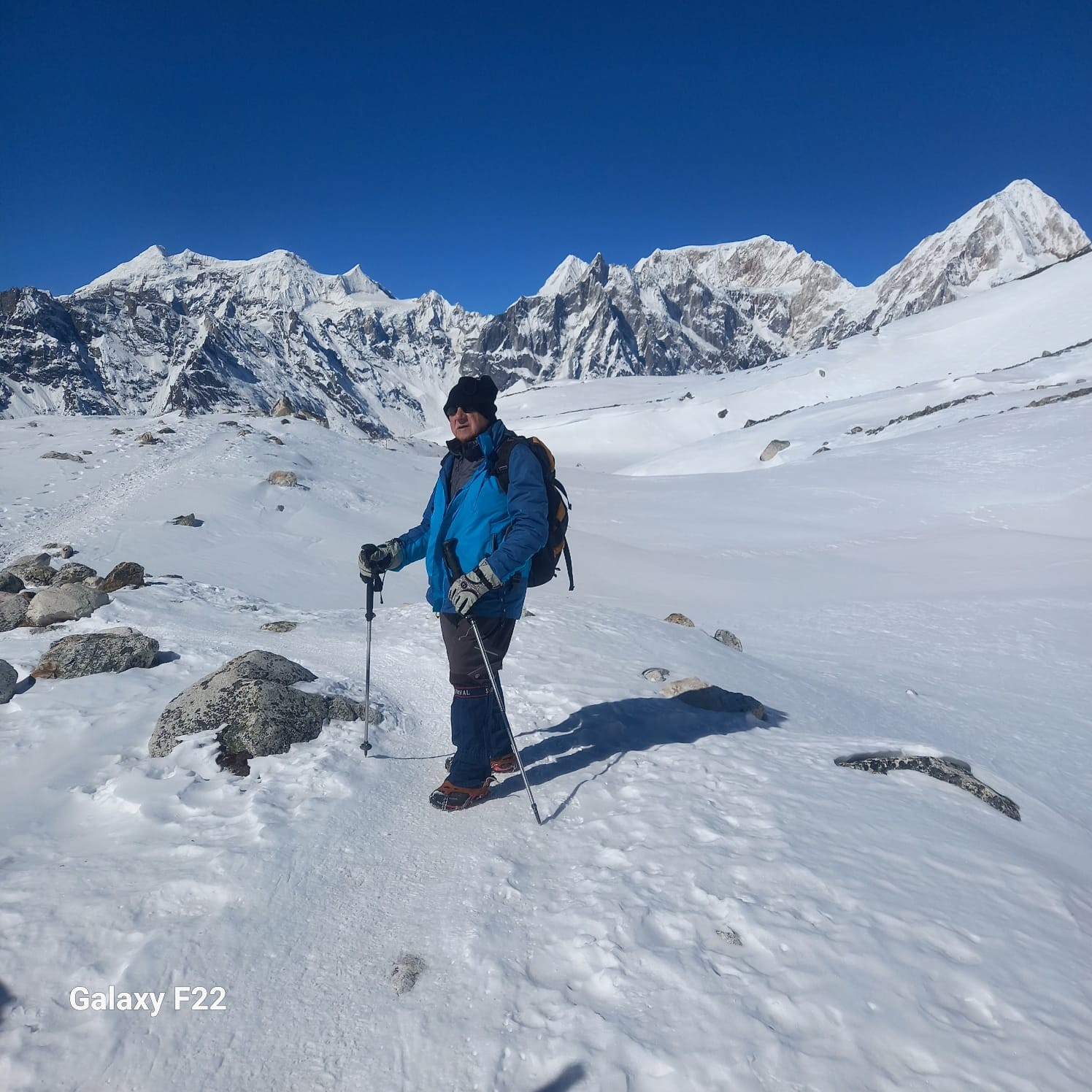
Similarly, slow pacing enhances your ability to take in panoramic views. The pass offers breathtaking sights of Himlung Himal (7,126 m), Cheo Himal (6,820 m), and Kang Guru (6,981 m). Thus, steady walking allows one to rest properly at the viewpoints. This moment becomes unforgettable.
Then, crossing the pass slowly helps maintain group coordination. Trekkers move together with consistent spacing. In addition, controlled pacing enhances emergency response capability. Group unity increases safety.
Overall, slow and steady walking across Larkya La itself promises an enjoyable trekking experience wherein one saves energy, maintains balance, and sees mountain views safely. Besides this, Haven Holidays Pvt. Ltd. supports trekkers with expert leadership and careful planning. Their guidance guarantees the successfulness and memorability of your Manaslu Circuit Trek.
Understand why microspikes on icy trails near Larkya Pass make for safe footing, good balance, and a secure Manaslu Circuit Trek experience with Haven Holidays Pvt. Ltd.
Key Benefits of Microspikes:
Meanwhile, using microspikes becomes essential on icy trails near Larkya Pass at an elevation of 5,106 m to ensure safety while moving around the Manaslu Circuit Trek. This area freezes every night at high elevations, and if there is no other precipitation, then trekkers are in for slippery surfaces that increase the threat of falls and injuries. Thus, microspikes can help one walk confidently while trying to balance on steep, frozen sections.
Likewise, the next advantage of microspikes pertains to powerful traction on ice-covered rocks and packed snow appearing between Dharmasala-4,460 m and Larkya Pass. Because the terrain changes with weather conditions, those metal spikes adjust well to uneven surfaces. Moreover, they attach easily to trekking boots and can keep their stability, thus reducing delays in crucial morning ascents.
After that, microspikes become even more important due to high winds around the pass, because the blowing snow conceals icy patches. Consequently, they depend on the grip to prevent them from slipping as they cross exposed ridges. In addition, guides that have experience from Haven Holidays Pvt. Ltd ensure that trekkers know when to put them on, which improves overall safety.
Besides, microspikes preclude fatigues since you waste less energy trying to stabilize your steps on the slicker grounds. Since every step remains stable, your legs and knees have less stress along the ascent. Finally, this way, you save strength for a long descent toward Bimtang (3,720 m) since stability is of prime importance.
Similarly, carrying lightweight microspikes increases convenience because they weigh just a few hundred grams and can easily fit into the side pockets of your backpack. Since the weather changes very fast above 4,500 m, quick access becomes vital when the trail suddenly freezes. Thus, trekkers recommend keeping them handy rather than packing them deep inside the main bag.
Moreover, because of the stainless steel chains and strong elastomer bindings, microspikes remain durable even at extreme cold. Such resistance to repeated use on rocks, snow, and ice warrants investment in reliable microspikes for long-term trekking safety of Manaslu, Annapurna, or Everest regions.
Furthermore, poor quality microspikes have uneven stretching and may break mid-trail, hence the right pair matters. Select brands that do not compromise on solid steel points with reinforced rubber frames. Also, Haven Holidays Pvt. Ltd. guides assist trekkers in choosing proper gear during the pre-trek briefing in Kathmandu (1,400 m).
Finally, with microspikes, the pace of the group can be maintained because nobody is actually slowing them down due to constant slips. Since every trekker moves steadily over the icy slope, the team reaches Larkya Pass right on schedule. Overall, microspikes ensure confidence, safety, and smooth progress on one of the most demanding sections of the Manaslu Circuit Trek.
Microspikes, thus, are a very important safety means for crossing Larkya Pass during the Manaslu Circuit Trek. As long as everything is duly guided and prepared by Haven Holidays Pvt. Ltd, trekkers will feel comfortable and secure on their crossings over these icy high-altitude trails.
Get ready for the long descent from Larkya Pass to Bhimtang with proper gear, pacing, and guidance for a safe Manaslu Circuit Trek with Haven Holidays Pvt. Ltd.
Descent Breakdown:
| Section | Elevation | Key Terrain | Difficulty |
| Larkya Pass | 5,106 m | Ice, rocks | wind High |
| Glacial Slopes | 4,600–4,300 m | Ice, snow | patches High |
| Kharka Area | 4,300–4,000 m | Roc9k, sand | Moderate |
| Trail to Bhimtang | 4,000–3,720 m | Forest edge | meadows Easy |
Firstly, the preparation for such a long descent from Larkya Pass to Bhimtang-from 5,160 to 3,720 meters-must be focused on the steep, rocky, and icy trail configuration. As the altitude drops rapidly within a few hours, proper steps should be taken not to hurt the knees. In this respect, proper planning ensures comfort and safety during this demanding part of Manaslu Circuit Trek.
Actually, the initial descent is gradual, but soon becomes laborious as one crosses frozen slopes and loose gravel. Since morning temperatures remain low, the upper trail usually remains icy until sunlight reaches the surface. In addition, the trekking poles help maintain your balance and absorb jarring for a more comfortable downward journey.
Afterwards, it opens up into glacial basins where the ice melt forms slippery patches. Consequently, the trekkers have to be watching their step on narrow paths that wind up to DangbocheKharka at 4,450 meters. Moreover, there is a need for microspikes and sturdy boots for grip on these unstable surfaces.
Once you reach below 4,300 m where the route turns into sandy and grassy sections, the descent becomes easier. Moreover, as the air grows warmer and the oxygen level in it increases, your breathing improves. Thus, you can keep good steady pace while seeing the surroundings around you: Himlung Himal at 7,126 m, Cheo Himal at 6,812 m, Larkya Peak at 6,249 m.
Similarly, hydration becomes important, for descending quickly causes dehydration even in cool weather. As your body works hard stabilizing each step, you will lose fluids without noticing anything. Drinking water regularly, with the addition of electrolytes, helps to prevent fatigue during the final stretch.
Besides, it is important to take good care of the knees because the downhill walking lasts for hours without long breaks. Therefore, one should wear knee support bands or make use of trekking poles, which reduces the strain to a minimum. Thus, trekkers finish the route more comfortably and with greater stability.
Similarly, pacing yourself is paramount because hasty movements increase the risk of falls on irregular terrain. You need, therefore, to follow the rhythm dictated by experienced guides from Haven Holidays Pvt. Ltd., who understand the condition of trails. Also, rest stops programmed assist trekkers in stretching their muscles and relax them before continuing further down.
In addition, weather conditions affect trail difficulty as afternoon clouds make snow melt and mud slippery. Since visibility could be poor, it is safer to move downward earlier in the day. Therefore, many groups start crossing Larkya Pass before sunrise to reach Bhimtang around mid-afternoon.
Finally, reaching Bhimtang at 3,720 meters feels rewarding as the descent ends in a broad meadow surrounded by towering peaks. This village has warm food, comfortable lodges, and a scenic view, so trekkers enjoy well-deserved rest. Preparation, proper gear, and expert guidance, in general, make this journey smooth and memorable.
In other words, good preparation for the long descent from Larkya Pass down to Bhimtang itself makes the Manaslu Circuit Trek safer and more enjoyable. With support from expert Haven Holidays Pvt. Ltd., trekkers head confidently through difficult terrain to reach Bhimtang in comfort and safety.
After Bhimtang and Tilije along the Manaslu Circuit, expect better teahouses and meals in improved comfort with a higher quality of food and services, supported by Haven Holidays Pvt. Ltd.
Improvements After Bhimtang and Tilije:
First of all, trekkers can expect better teahouses and meals once the trail reaches Bhimtang at 3,720 meters and Tilije at 2,300 meters, since it gradually enters more accessible lower regions. As this region connects into established routes toward Dharapani at 1,860 meters, local communities have benefited from steady tourism. Therefore, teahouse owners will reinvest in improved facilities, diversified meals, and clean rooms.
After that, the descent from Larkya Pass (5,106 m) leads to Bhimtang, where larger lodges have warmer dining halls and a greater range of meal options. Because the ingredients can travel more easily to this altitude, it includes fried rice, pasta, chapati, eggs, and fresh vegetables on the menu. Furthermore, trekkers enjoy hot soups and better portion sizes that help support energy recovery after a long descent.
Next comes Tilije, which is even more comfortable since it sits close to the Annapurna Circuit trail. Thus, teahouses here stick to higher hospitality standards with attached bathrooms and solar showers, along with comfortable bedding. Also, food becomes more diverse since supplies from Dharapani and Besisahar (760 m) arrive without problems.
Here, these better teahouses make for a relaxed mood among trekkers who come after days of being in remote areas of high altitude. At these lower altitudes, rooms are warmer, and thus trekkers can sleep easily, as the great cold from earlier stages has subsided. Hence, recovery becomes more physical in order to face the final push toward Dharapani.
Similarly, the service quality gets better as the owners train the staff to handle the manifold trekking needs. Since this area receives trekkers related to both Manaslu and Annapurna, the hospitality of locals develops with experience. Thus, guests receive quicker service, cleaner dining areas, and better attention to dietary preferences.
Additionally, after Tilije the fresh vegetable availability noticeably increases due to easy transportation routes. As a result, green vegetables, potatoes, lentils, and seasonal fruits are served in teahouses and taste fresher compared to meals available at higher altitudes. Therefore, the trekkers naturally regain energy while having healthier options for food.
Likewise, Wi-Fi and charging facilities become more reliable toward the lower villages. Therefore, trekkers are in a position to recharge phones, cameras, and GPS devices without paying expensive rates. Also, communication improves because the mobile network becomes stable, which will help trekkers share updates with their family.
Besides, the standards of accommodation increase considering this section's competition, which pushes teahouses to upgrade. Owning to many similar service provisions in several lodges, owners have to improve cleanliness, heating, and dining spaces in order to attract more guests. Therefore, trekkers enjoy a comfortable transition from the remote settings to the lodgings.
Finally, better teahouses and meals after Bhimtang and Tilije add to the overall quality of the Manaslu Circuit Trek experience. Since Haven Holidays Pvt. Ltd ensures smooth logistics and local guidance, comfort and quality services are accorded to trekkers along the whole lower region.
Bring adequate cash for the Manaslu Circuit since there are no facilities of ATMs en route. Plan food expenses, lodging, permits, and extras carefully with Haven Holidays Pvt. Ltd.
Suggested Cash Breakdown:
| Expense Type | Average Cost (NPR) | Notes |
| Daily Meals & Lodging | 2,500–4,000 | VARIES WITH ALTITUDE |
| Wi-Fi & Charging | 300–800 | Higher in Samagaun and Dharmasala |
| Hot Showers | 300–600 | Depends on village |
| Extra Snacks & Drinks | 200–1,000 | Cola chocolates, Tea/water |
| Emergency Buffer | 10,000 – 15,000 | To account for delays or additional services. |
First of all, one has to have enough cash with them while on Manaslu Circuit Trek due to the absence of ATMs along the trail. You enter really remote areas after leaving Soti Khola (710 m) onwards; thus, banking services can not be accessed at all. Therefore, trekkers need to get cash prepared in Kathmandu at 1,400 m before beginning their journey.
After that, cash is required for meal buying, hot showers, snacks, Wi-Fi, and charging services in teahouses. Due to the increase in altitude, prices also increase, which makes all the services more costly between Samagaun (3,530 m) and Dharmasala (4,460 m). Besides, teahouses only take cash, which necessitates proper budget estimation for a stress-free trek.
Then, trekkers should keep some extra money for contingency situations in case they need to replace any gear, buy extra drinking water, or medicines. Thus, carrying a little more than what you have estimated serves its purpose if conditions alter. Besides this, guides from Haven Holidays Pvt Ltd help trekkers to manage expenses judiciously without early overspending during a trek.
Further, carrying smaller-denomination Nepali currency becomes quite practical as the higher villages cannot change large notes. Because the teahouses operate on a relatively small amount of cash, paying with smaller bills speeds things up. Thus, trekkers do not end up getting delayed for lunch or checking into the lodge.
Similarly, understanding average daily expenditures improves financial planning. Given that accommodation and meals cost between NPR 2,500 to NPR 4,000 per day, trekkers should plan for full-board spending. Thus, a 14–16 day Manaslu Circuit Trek usually requires NPR 35,000 to NPR 55,000 per person for on-trail expenses.
Actually, carrying cash safely goes hand in hand because you would want to protect it from moisture and also from loss. Using waterproof pouches or zip-sealed bags keeps money dry in river crossings and rains. Hence, the trekkers will feel a lot more secure throughout the route.
Similarly, exchanging money before leaving Kathmandu is cheaper; the exchange counters in trekking areas have lower rates. Therefore, early conversion gets you good value for your money. Guides also help trekkers find genuine exchange points in Thamel.
In addition, emergency cash is crucial because bad weather conditions may raise delays in flights, transportation, or further treks. Since there are no banking services in remote areas, cash helps with unplanned lodging or food requirements created by extended stays. Because of this, trekkers will not feel any financial stress during such inconveniences or delays.
Finally, taking cash on the Manaslu Circuit ensures smooth travel without any inconvenience, since the whole route does not have ATM access. With proper planning and guidance from Haven Holidays Pvt. Ltd., trekkers embark on the safe and well-organized trek without financial inconvenience.
Keep your electronics charged on the Manaslu Circuit, as higher villages have limited power. Power banks and solar chargers are useful, supported by Haven Holidays Pvt. Ltd.
Best Charging Practices on the Manaslu Circuit:
Meanwhile, Trekkers need to keep their electronics charged on the Manaslu Circuit Trek, as higher villages like Samagaun (3,530 m), Samdo (3,860 m), and Dharmasala (4,460 m) offer limited power. These villages depend on weak solar systems, making electricity unreliable during cloudy days. Therefore, planning energy use accordingly will be necessary in maintaining safety, communication, and navigation throughout the trek.
Secondly, the understanding of how the teahouses provide electricity helps the trekkers to manage expectations in remote areas. Since most of the teahouses use solar panels, charging outlets remain available only in dining halls, and they often close early at night. More significantly, the owners of teahouses impose extra charges for charging the devices; in fact, these charges increase the daily cost of every trekker above Lho (3,180 m).
After that, the use of power banks becomes the easiest option, as they can support multiple charges during long trekking days. Because of this, trekkers rely less on teahouse power availability and, therefore, avoid energy shortages in critical areas. Moreover, high-capacity power banks ensure that phones stay functional for maps, photos, and altitude tracking.
Besides these, solar chargers are another viable option, as they can allow trekkers to generate a lot of power while walking in open valleys. The trail passes through clear landscapes near Shyala (3,500 m) and Samagaun; therefore, sunlight is still strong enough for efficient charging. Thus, solar panels help travellers recharge without dependency on just teahouses.
Also, saving on batteries becomes necessary because the temperature goes down noticeably at higher altitudes. Since cold temperatures quickly drain batteries in Dharmasala, electronics should be kept inside a warm sleeping bag at night. Thus, devices protect battery health and remain functional during long summit days.
Besides, controlling superfluous power consumption makes the battery last longer during the journey. Given that the mobile networks become weaker at higher points, phones spend more energy searching for their signals. Therefore, airplane mode saves power and allows phones to last longer between charges.
Similarly, extra batteries for cameras must be taken by trekkers because cold temperature affects performance in the high-altitude regions. Therefore, photographers must make a plan regarding backup storage to avoid instances of missing important moments near Manaslu (8,163 m) and Naike Peak (6,211 m). In addition, keeping batteries close to a body keeps them warm and workable.
Furthermore, guided tours operated by Haven Holidays Pvt. Ltd are always properly planned because their experience teams assist trekkers in managing the charging schedule. Because guides know which teahouses offer better power supply, they advise trekkers on the best times and locations to charge devices. Thus, travelers are able to avoid unexpected power shortages during demanding stages.
Lastly, properly managing electronics will ensure a smooth and stress-free Manaslu Circuit Trekking in Nepal. With proper planning and trusted support from Haven Holidays Pvt. Ltd., the trekkers stay connected, safe, and well-prepared.
Be careful with yak trains on narrow trails in Lho and Samdo for safe trekking. Learn trail etiquette and safety tips with Haven Holidays Pvt. Ltd.
Yak Safety Guidelines for Lho and Samdo:
| Safety Rule | Reason | Consequence |
| Stand on uphill side | Yaks drift toward downhill edges | Prevent falls |
| Keep a distance | Yaks carry wide loads and | therefore it reduces the risk of impact. |
| Follow the instructions from the guide | Guides are aware of safe stopping points | Guarantees smooth passage |
| Listen for bells Yaks move without stopping | Allows early preparation Stop until yak train passes | Yaks cannot turn easily. Prevents congestion |
First, the trekkers have to be keen on the narrow trails at Lho (3,180 m) and Samdo (3,860 m) for the yak trains since the animals ferry supplies for villages deep in the interior parts of the trekking route. The trails on these parts are still steep and exposed; therefore, yaks need broad space to traverse securely. The trekkers must, therefore, be aware to avoid hazards of trail collision.
Actually, fixed routes followed by yak trains cross ridge lines, forest trails, and hillside paths. As these animals travel in groups, their size calls upon trekkers to move out of the way when they approach. In addition, yaks carry heavy loads, which, during movement, swing and increase the possibilities of accidental contact when pathways are narrow.
Hereafter, trekkers should always be on the uphill side of the trail, as yaks naturally will move towards downhill edges. Thus, staying uphill will keep trekkers from getting pushed off exposed sections along cliffs or slopes. This safety rule is also crucial near the riverbanks around Shyala (3,500 m).
Of equal importance is that recognizing yak behavior helps trekkers to manage safe encounters. Since yaks move steadily without stoppage, they seldom wait for trekkers to pass first. Consequently, yielding priority to them prevents congestion and reduces the risk of falling or slipping on narrow paths.
Likewise, hearing yak bells early makes trekkers prepare for forthcoming encounters. Since the bells echo across the valley, trekkers are able to tell the direction and speed of the animals that are approaching. They, therefore, can step aside well in advance without rushing.
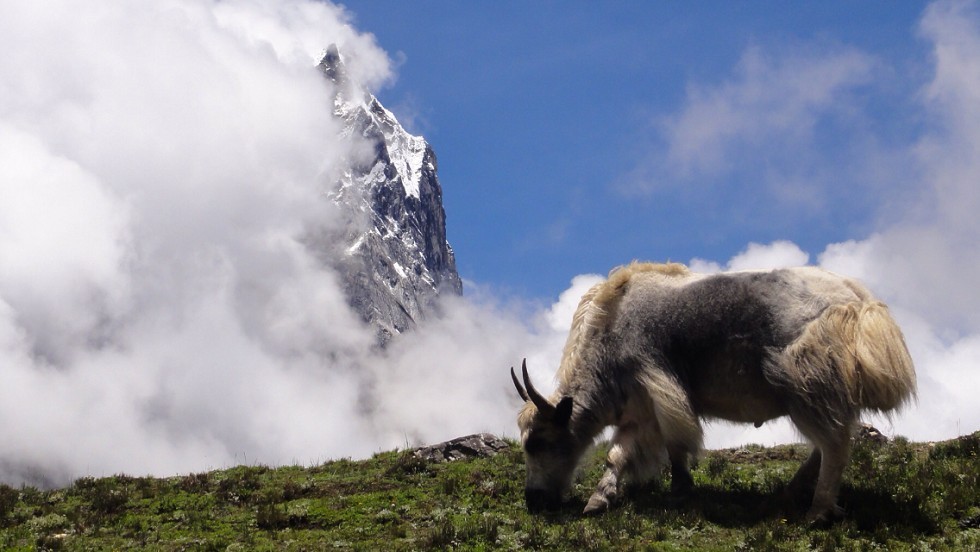
Besides, maintaining distance becomes important because when startled, yaks can behave unpredictably. Hence, trekkers should avoid touching or even walking too close to them. Indeed, giving at least two arm lengths of space insures smoother and safer trail movement.
Similarly, guided treks by Haven Holidays Pvt. Ltd also make the right moves to travel confidently past yak trains since guides understand local trail etiquette. Therefore, guides signal the trekkers as to where to stand, when to pause, and how to avoid risky areas. Also, their communication with yak herders ensures safer passage in crowded trails.
In addition, yak train traffic intensifies around Samdo as this village is near the Tibetan border. Because trade routes are still used throughout the trekking season, yaks often travel between villages with the shipment of goods. Trekkers should, therefore, be ready to deal with several encounters each day on this section of the trail.
Finally, being watchful of the yak trains provides a safe and enjoyable Manaslu Circuit Trek. Haven Holidays Pvt. Ltd supports trekkers in learning the right trail etiquette and confidently facing narrow paths from Lho to Samdo.
Learn why it is so important to respect local culture, monasteries, and Mani Walls in Upper Manaslu for a meaning full Manaslu Circuit Trek with Haven Holidays Pvt. Ltd.
Guidelines on Cultural Respect:
Although the Upper Manaslu region offers fantastic Himalayan sceneries, the entire trek should respect the local culture and traditions. In addition, other places such as Lho (3,180 m), Samagaun (3,530 m), and Samdo (3,875 m) have centuries-old monastic heritage that is integral to the lives of the Nubri people. Haven Holidays Pvt. Ltd also engages in making sure trekkers learn cultural behavior and etiquette before entering villages and monasteries or spiritual sites. Cultural awareness adds more value to the Manaslu Circuit Trek.
Besides, trekkers go through many old monasteries: Ribung Monastery in Lho is 3,180 meters above sea level, and Pungyen Gompa is 4,050 meters. These monasteries keep Tibetan Buddhism alive and are still spiritual places. People are expected to keep quiet, remove their shoes, and not touch religious items. Thus, respectful conduct will continue to keep passengers and villagers together.
Similarly, Upper Manaslu is home to thousands of Mani Walls engraved with sacred mantras, including "Om Mani Padme Hum." These can be found along small trails from Deng (1,860 m) to Namrung (2,630 m). Significantly, trekkers should always pass Mani Walls from the left-hand side, which follows the custom of the Buddhists. Therefore, knowing this rule avoids cultural errors in the trek.
Moreover, the area contains prayer wheels and chortens around most settlements. Locals circumambulate chortens clockwise, which is part of their daily ritual. Similarly, tourists should also take the same direction when walking around these kinds of sacred monuments. In this case, tourists could be respectful while joining in the local custom.
Traditional farming and seasonal herding of yaks are also being practiced in villages like Shyala 3,500 m and Samdo 3,875 m. Trekkers should request permission before taking pictures, especially from the elderly residents and monks. In this way, tourism responsibility protects both privacy and tradition.
Once more, the Manaslu Conservation Area encourages travelers to dress modestly during villages: shoulders and legs should be kept covered, particularly at monastery entrances. Consequently, it is modesty in dress that engenders good interaction with the residents.
Moreover, Haven Holidays Pvt. Ltd. educates short trekkers on greetings, religious etiquette, and traditional customs before embarking on the journey. Thus, travelers learn about all the local norms long before entering villages housing Buddhists. Hence, knowledge ensures a smooth and respectful cultural experience.
Additionally, homestays and teahouses in Upper Manaslu are influenced by Buddhists. For this reason, trekkers should avoid loud conversations during praying hours or early in the morning. Similarly, alcohol consumption near monasteries is frowned upon. Thus, being conscious of the surroundings improves cultural etiquette.
Furthermore, respecting culture preserves the authenticity of the route of the Manaslu Circuit Trek. With tourism growth, responsible trekking makes sure the traditions will be left intact for the next generations. Therefore, Haven Holidays Pvt. Ltd promotes sustainable travel in every group they operate.
Here, the key consequence of this is that respect for local culture in Upper Manaslu provides a meaningful, responsible trekking experience, strengthening relationships between trekkers and the Nubri community. Therefore, Haven Holidays Pvt. Ltd encourages every traveler to follow cultural etiquette for a rewarding Manaslu Circuit Trek journey.
Learn from Haven Holidays Pvt. Ltd. why the utilization of trekking poles on steep downhill parts significantly improves balance and reduces impact, thus increasing safety on the Manaslu Circuit Trek.
Advantages of Trekking Poles:
| Benefit | Description |
| Joint Protection | Reduces knee and ankle pressure on descents |
| Smarter Balance | Stabilizes movement on rocky and uneven terrain. |
| Energy Efficiency | Helps in keeping rhythm and conserves energy |
| Safety in Snow | Prevents slips in icy sections near Larkya La |
Although the Manaslu Circuit Trek offers breathtaking scenery, trekkers face challenging rocky sections and steep descents throughout the route. Besides, areas near Lho (3,180 m), Samagaun (3,530 m), Dharmasala (4,460 m), and the descent from Larkya La Pass (5,160 m) demand stable footing. As a result of this fact, trekking poles play an essential role in maintaining balance and reducing strain on joints. Hence, Haven Holidays Pvt. Ltd recommends poles for every trekker.
Here, downhill trails are steep and, therefore, put a lot of pressure on knees and ankles. Trekking poles distribute body weight more evenly, therefore reducing impact. Similarly, they offer extra stability when descending loose gravel or uneven stair-like sections. This means poles prevent slips that often happen with long descents.
In addition, trekking poles enhance rhythm and efficiency of walking. The poles support natural arm movement hence maintaining tempo. They also reduce fatigue during multi-hour descents to villages like Bimthang 3,700 m and Tilije 2,300 m. Thus, energy is saved for longer trekking days.
Similarly, downhill trails after Larkya La Pass (5,160 m) remain covered with snow and ice in colder months. Trekking poles provide reliable grip when surfaces become slippery. Hence, poles reduce the risk of falls in exposed sections. Consequently, Haven Holidays Pvt. Ltd guides insist on pole usage in snowy seasons.
Actually, poles also help trekkers on rocky streams and narrow suspension bridges on the way to Namrung at 2,630 meters. They increase balance, especially when carrying large and heavy backpacks. Hence, poles add safety during challenging transitions.
First-time trekkers, specifically, will appreciate the stability that poles afford. Poles facilitate maintaining posture, as well as preventing back strain. They also reduce the cumulative fatigue of long days. For these very reasons, poles make any trek far more manageable.
Again, the adjustable poles allow trekkers to change length according to the topography. Short lengths serve uphill climbs, but longer settings enhance downhill control. In this way, adaptable gear ensures comfortable movement throughout the Manaslu region.
In addition, trekking poles are particularly useful in wet conditions. Rain can turn trails into ankle-twisting, slippery patches of mud. Poles increase stability and reduce the chances of slipping. Hence, poles protect in all weather conditions.
Thus, the trekking poles enhance safety and confidence on steep and rocky downhill sections of the Manaslu Circuit Trek and reduce fatigue and protect joints throughout the journey. Hence, Haven Holidays Pvt. Ltd. highly recommends that every trekker should include trekking poles as part of their essential gear.
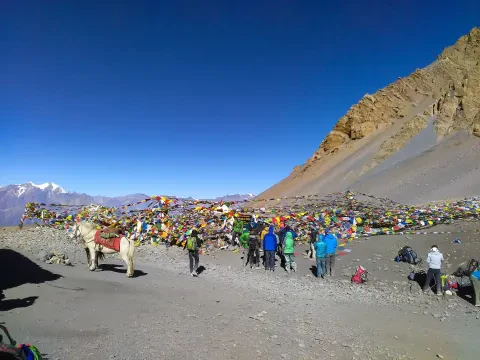
Mental preparation for the long, 7-9 hour trekking days of the Manaslu Circuit Trek will make you enjoy a confident journey with Haven Holidays Pvt. Ltd.
Mental Preparation Tips:
Although the Manaslu Circuit Trek offers breathtaking Himalayan scenery, trekkers must expect long trekking days that often last seven to nine hours. Additionally, routes from Deng (1,860 m), Namrung (2,630 m), Lho (3,180 m), Samagaun (3,530 m), to Samdo (3,875 m) are very mentally demanding. Furthermore, Haven Holidays Pvt. Ltd prepares trekkers for these long walking hours before the journey begins. Thus, the mental preparation automatically becomes crucial for comfortable completion of the trek.
Besides this, long days of trekking test the body and mind. Trekkers often walk through steep ascents, rocky paths, and high-altitude terrain. Similarly, changing topography requires constant attention. Thus, being mentally prepared helps trekkers at every step of the day.
Here, a positive frame of mind likewise makes each trekking hour feel more manageable. Those trekkers who can remain calm and patient handle difficult terrain more effectively. Mental resilience, besides reducing stress if some unexpected obstacles have to be faced en route, is thus very vital. Consequently, the trek feels more rewarding and enjoyable.
Likewise, the trail from Samagaun to Samdo includes a lot of long and gradual ascents that begin at 3,530 meters to 3,875 meters. The trekkers feel at ease and keep a relaxed rhythm while pacing their walks. Similarly, mental pacing avoids early fatigue during the hour-long walking. Hence, stability in the mind gives way to physical endurance.
Again, the weather changes within a very short period at higher altitudes. Trekkers might confront cold winds, snowfall, or fog between Dharmasala (4,460 m) and Larkya La Pass (5,160 m). Maintaining flexibility of the mind helps trekkers cope with such conditions. In turn, the expedition keeps getting safe and easy.
Besides, mental preparation enhances performance in remote areas of limited facilities. It is quite possible that trekkers may face basic facilities of accommodation or simple meals at high-altitude villages. Accepting such conditions beforehand reduces disappointment. Preparation thus helps in keeping expectations realistic and positive.
Moreover, Haven Holidays Pvt. Ltd suggests that trekkers mentally prepare for the journey by training regularly. Regular walking, stair climbing, and hiking develop physical confidence. Similarly, keeping up a good routine provides mental discipline. Thus, the trekkers remain motivated throughout the trek.
Similarly, knowing daily schedules helps to reduce anxiety. Usually, trekkers walk for several hours before lunch and then for a few more hours after lunch. Knowing such a structure helps support the mental focus of trekkers during the day. This is why trekkers generally make steady progress.
Furthermore, being mentally prepared ensures that trekking through rocky or heavy terrain will be much safer. A much more focused trekker tends to make wiser decisions while facing steep descents or narrow trails. Moreover, mental clarity stops one from being in a rush, so they cannot make any steps that would cause slipping. Therefore, safety is directly improved through mental preparation.
In short, the mental preparedness will enable trekkers to efficiently handle long trekking days of seven to nine hours. Additionally, confidence will increase during steep climbs and difficult descents. For this reason, Haven Holidays Pvt. Ltd urges every traveler to be mentally prepared for a gratifying experience in Manaslu Circuit Trek.
Learn how to monitor AMS symptoms above 3,000 m and stay safe during the Manaslu Circuit Trek with expert guidance from Haven Holidays Pvt. Ltd.
AMS Warning Signs and Actions:
| Symptom | AMS | Required Action |
| Headache | Rest, hydrate, monitor |
| Nausea | Stop Ascent, drink fluids |
| Dizziness | Rest | inform guide |
| Breathlessness | slow pace | investigate condition |
| Severe fatigue | Consider descent |
While altitude remains one of the biggest challenges on the Manaslu Circuit Trek, monitoring AMS symptoms becomes indispensable above 3,000 m. Furthermore, villages like Lho (3,180 m), Samagaun (3,530 m), and Samdo (3,875 m) fall within the altitude risk area. Additionally, Haven Holidays Pvt. Ltd guides closely monitor trekkers during those higher stretches. Thus, early detection ensures an easier and more comfortable journey.
Besides, AMS symptoms can even appear in physically fit trekkers. Headaches, dizziness, nausea, loss of appetite, and disturbed sleep often occur above 3,000 m. Similarly, good awareness will help the trekkers understand when the symptoms require rest or descent. Hence, monitoring becomes an important part of high-altitude trekking.
Similarly, acclimatization days minimize the AMS risk. Samagaun (3,530 m) presents excellent opportunities for acclimatization hikes to Pungyen Gompa (4,050 m) or Birendra Lake at an altitude of 3,650 m. These acclimatization hikes allow the human body to get accustomed to low oxygen levels and, as a result, develop strength to tackle higher sections.
Here, hydration also provides healthy acclimatization. Sufficient intake of water maintains energy levels and avoids headaches. In addition, it is good for trekkers to avoid alcohol and smoking at a high altitude. Therefore, hydration and healthy habits prevent unnecessary altitude complications.
Again, AMS symptoms worsen quickly if left unaddressed. Serious forms such as HACE or HAPE necessitate immediate descent. This means trekkers should not hesitate to inform guides about their possible discomfort. In that way, early actions could avoid serious health risks.
Moreover, the climb from Samdo (3,875 m) to Dharmasala (4,460 m) is another test for altitude tolerance. The gradual gain in altitude may cause breathlessness for trekkers. It is during this stage when monitoring of symptoms becomes so crucial. Thus, awareness ensures a successful crossing of Larkya La Pass (5,160 m).
Further, pulse oximeters are used to check oxygen saturation from time to time by guides at Haven Holidays Pvt. Ltd. These readings definitely help to identify early warning signs. Similarly, guides encourage slow-walking to avoid rapid altitude gain. Therefore, monitoring by the guides is extremely important.
Similarly, high altitude sleeps also challenge many trekkers. Light headaches and poor sleeps are common. Monitoring these signs helps determine if an extra rest day is necessary. Consequently, the body adapts more effectively.
Additionally, wholesome meals favor better acclimatization. While trekking, one must consume warm foods such as dal bhat, soups, and porridge. These are easily digested and provide slow-burning energy. Thus, proper nutrition would prevent altitude stress.
Here, this thereby ensures that the monitoring of the symptoms of AMS above 3,000 m will help keep one safe and comfortable during the Manaslu Circuit Trek.
Besides, awareness and timely response reduce serious altitude risks. Therefore, Haven Holidays Pvt. Ltd emphasizes careful monitoring to guarantee a successful and enjoyable high-altitude journey.
Find the critical pieces of advice to make the Manaslu Circuit Trek successful with professional guidance, safety approaches, and local knowledge provided by Haven Holidays Pvt. Ltd.
Essentials for a Successful Trek:
| Element | Importance |
| Acclimatization | Reduces AMS risks |
| Physical training | Enhances stamina |
| Proper packing | Supports comfort |
| Cultural respect | Improves experience |
| Guided support | Ensures safety |
| Weather awareness | prevents risks |
Though one of the most rewarding Himalayan undertakings in Nepal, success on the Manaslu Circuit Trek requires preparation, planning, and awareness. Understand altitude risks, trail challenges, and daily walking demands across the circuit. Haven Holidays Pvt. Ltd. also offers professional support for a safe and memorable journey. Hence, final reflections on these tips help trekkers prepare confidently.
Besides this, the trek requires regular physical fitness. Training regularly would increase the stamina for the long days between villages like Deng (1,860 m), Namrung (2,630 m), and Lho (3,180 m). Similarly, muscular strength enables trekkers to handle steep ascents and rocky trails. Therefore, early training is mandatory for a successful trek.
Likewise, at heights over Samagaun (3,530 m) and Samdo (3,875 m), acclimatization is vital. Herein, trekkers have to rest properly and carry out slow ascent strategies across zones of high altitude. Moreover, the short acclimatization hikes allow your body to be responsive to low oxygen levels. As a result, these activities decrease the possibility of acquiring AMS by a great extent.
Moreover, packing correctly ensures comfort in remote areas with limited facilities. Trekkers should have warm layers, a good pair of trekking boots, headlamps, and quality gloves. Similarly, microspikes and trekking poles support stability on icy or rocky sections. Hence, smart packing enhances daily performance during a trek.
Again, hydration becomes important along the way. Trekkers repeatedly lose a lot of fluid because of cold winds and long walking hours. Proper hydration keeps fatigue lower and energy levels higher. Therefore, consuming water regularly helps trekkers keep themselves strong across challenging sections.
Furthermore, cultural respect makes the trekking experience even more engaging. The villages of Lho (3,180 m) and Samagaun (3,530 m) showcase ancient monasteries with sacred mani walls. It is respectful for trekkers to circumambulate these structures clockwise. Thus, cultural sensitivity promotes quality inter-relationships.
Besides, the weather conditions may change very fast between Dharmasala 4,460 m and Larkya La Pass 5,160 m. Trekkers should be flexible; in the case of storms or snowfall, guides instruct trekkers accordingly. Similarly, early morning starts improve the chances of clear weather at the pass. Hence, understanding climate patterns supports safe trekking.
Likewise, the selection of a proper trekking agency is also a very major decision. Haven Holidays Pvt. Ltd provides qualified guides, adequate logistics, and on-time planning. Their team ensures that the trekkers are safe during high altitude treks and every other arrangement is made. Thus, they are accompanied at every stage of their journey.
Besides, good budgeting prevents unexpected expenses. The price range of the trek usually runs between USD 1,200 and 1,800, depending on services and duration. The trekkers are advised to carry enough cash with them since ATMs are not available along the route. Thus, financial preparedness curbs inconvenience.
Again, mental readiness plays a strong role in completing the trek successfully. Patience, positivity, and maintaining the rhythm of the pace are called for on the long days of walking. In contrast to others, trekkers who remain mentally composed handle the difficult topography much better. Thus, mental strength supports overall performance.
Therefore, these final tips will help trekkers prepare effectively for the Manaslu Circuit Trek and enjoy a rewarding Himalayan journey. Additionally, understanding altitude, logistics, culture, and physical challenges ensures a safe adventure. Therefore, Haven Holidays Pvt. Ltd invites trekkers to join this spectacular trek with confidence and expert guidance.
1. Can I do the Manaslu Circuit Trek as a solo trekker?
Yes, the Manaslu Circuit Trek is open to solo trekkers in 2026. Nepal changed the rules so now you can get the Manaslu Restricted Area Permit on your own. You still have to book with a trekking agency and hire a guide. You cannot do the Manaslu Circuit Trek without a guide.
2. What permits are required for the Manaslu Circuit Trek?
You need to get three permits for the Manaslu Circuit Trek: the Manaslu Restricted Area Permit, the Manaslu Conservation Area Permit and the Annapurna Conservation Area Permit. You have to get all these permits through a trekking agency. They will give you a guide.
3. Is a guide mandatory for the Manaslu Circuit Trek?
Yes, you need a guide for the Manaslu Circuit Trek. Even though you can trek alone now you still need a guide with you. This is for your safety. Because it is the rule.
4. How difficult is the Manaslu Circuit Trek?
The Manaslu Circuit Trek is a trek. You will walk for 7 to 9 hours a day. Climb steep rocks. You will also cross a pass called Larke Pass which is 5,106 meters high. You need to be fit and get used to the altitude before you start.
5. When is the best time to trek Manaslu Circuit?
The best time to do the Manaslu Circuit Trek is in Spring from March to May or in Autumn from September to November. The weather is nice. You can see the mountains clearly. You can also do the trek in Winter. It is very cold. In the monsoon season from June, to August it rains a lot and the trails are slippery.
6. How high is Larke Pass on the Manaslu Circuit?
Larke Pass is really high at 5,106 meters. It is the point of the Manaslu Circuit trek. People usually cross it early in the morning. They start from Dharmasala around 2 am.
7. Do I need to acclimatize properly on the Manaslu Circuit?
Yes, you need to acclimatize. It is very important. You should spend nights in Namrung and Samagaun. Take a rest day at Samagaun, which is 3530 meters high. You can hike to Pungyen Gompa or Manaslu Base Camp. This helps reduce the risk of Acute Mountain Sickness or AMS for short. I will call it Acute Mountain Sickness.
8. What kind of accommodation is available on the Manaslu Circuit?
The accommodation on the Manaslu Circuit is basic. It is like that in the parts. Above Samagaun and Samdo it is very simple. The rooms are small. The toilets are shared. There are better teahouses in Bhimtang and Tilije. They have facilities.
9. Should I hire a porter for the Manaslu Circuit Trek?
It is an idea to hire a porter for the Manaslu Circuit Trek. The trail is tough. It has rocky parts. There are cliffside sections. Carrying a backpack can be hard and risky. If you hire a porter, you can trek safely. You can also enjoy the scenery around the Manaslu Circuit.
10. What should I eat during the Manaslu Circuit Trek?
You should eat Dal Bhat. It is a meal on the Manaslu Circuit. It gives you a lot of energy. You can also eat snacks like energy bars, nuts and chocolate. They help on walks between villages. Hot meals are good too. They help keep your body warm at altitudes, on the Manaslu Circuit Trek.
11. Is there an ATM or cash access on the Manaslu Circuit?
There are no ATMs on the Manaslu Circuit. You have to carry Nepali Rupees in small bills for food, hot showers charging your stuff and tips from the very start of the trek.
12. What are the symptoms of Altitude Sickness I should watch for?
When you are above 3,000 meters check for headache feeling sick, dizziness, not feeling like eating and feeling tired. If you get these symptoms, rest, drink water and tell your guide away. If the symptoms get worse go down to a place.
13. Do I need micro spikes for Larke Pass?
Yes, you need micro spikes for Larke Pass. The Manaslu Circuit has snowy parts near Larke Pass especially in the morning when the trail is frozen. Microspikes or crampons are an idea for the Manaslu Circuit.
14. How long does the Manaslu Circuit Trek take?
The Manaslu Circuit Trek usually takes 12 to 14 days including rest days to get used to the altitude. Some people do the Manaslu Circuit Trek faster starting from Machha Khola and finishing in 10 to 12 days.
15. Is the trail to Manaslu dangerous?
Some parts of the Manaslu Circuit are not safe like the paths between Tatopani and Jagat and after Deng, which have paths and can have landslides. To be safe, on the Manaslu Circuit start your day use trekking poles and listen to what your guide says. The Manaslu Circuit can be safe if you are careful.
16. What should I pack for cold nights on Manaslu Trek?
From Lho (3,180 m) onwards nights get really cold. Bring a sleeping bag that can keep you warm at -10°C or colder a down jacket, warm clothes and a hat to keep your head warm. A hot water bottle or flask is also an idea.
17. Can I charge my phone and camera on the trek?
There is not electricity especially in higher villages like Dharmasala. Bring a power bank that can charge your phone times and a small solar charger to keep your devices working.
18. How should I behave in Upper Manaslu villages?
Be respectful of the Buddhist culture. When you see chortens and mani walls walk around them in a clockwise direction. Dress modestly when you are near monasteries. If you want to take photos ask for permission first. Try to keep the noise down.
19. Is water safe to drink on the Manaslu Circuit?
You should not drink stream and tap water directly. Use water purification drops or tablets during the trek to avoid getting sick.
20. Why should I choose a registered trekking agency for Manaslu Circuit?
A registered agency takes care of all the permits provides a guide handles all the logistics and makes sure you are safe. With the new rule that allows solo travelers to get a permit in 2026 you still cannot trek alone without a professional to support you.
Our travel experts are ready to assist you with any questions.
Send us a message.Have a question before you book? Send your enquiry below and our travel experts will get back with the required information.