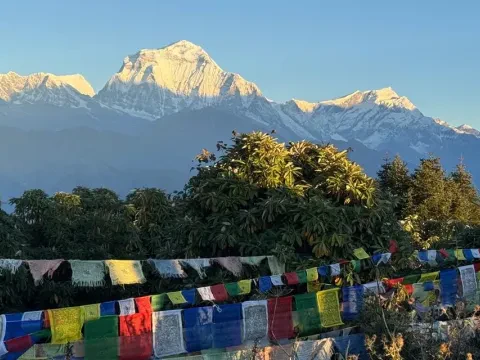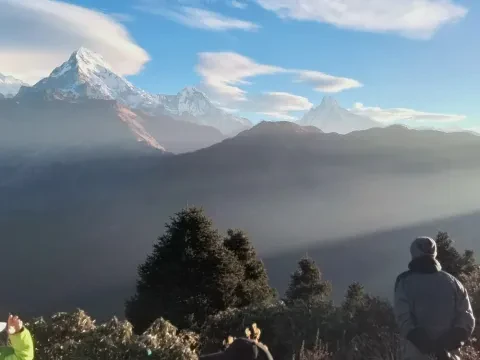
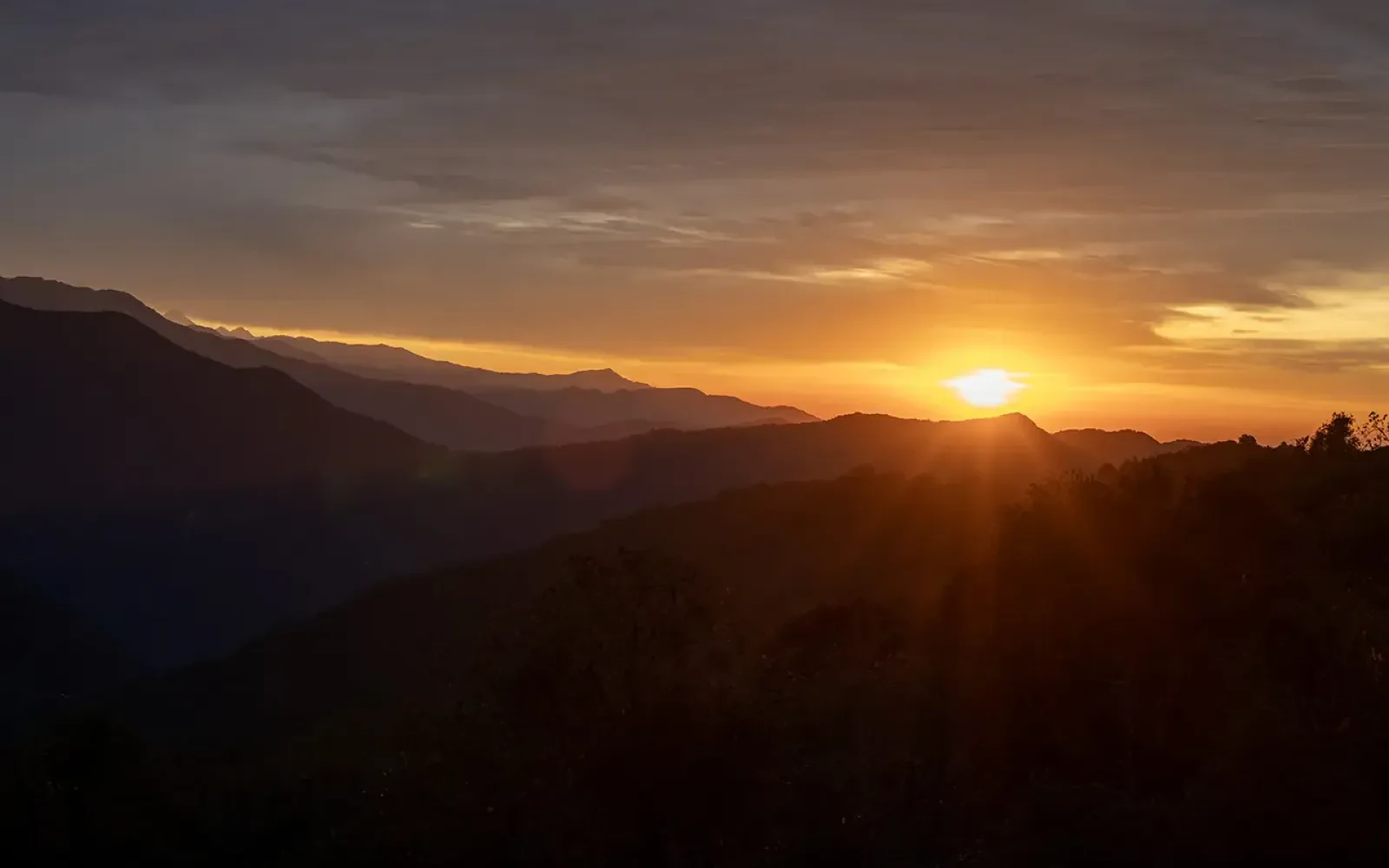
The Ghorepani Poon Hill Trek or Poon Hill Trek is one of the most popular short hikes in Nepal. This is the classic Himalayan trekking experience full of magnificent views of towering peaks, traditional villages, rhododendron forests, stone stairways, and stunning alpine landscapes. This moderate-level trek is a fantastic option for those who want to witness Himalayan views without ascending a high-altitude long-distance trek.
Actually, Poon Hill Trek is one of the 10 best short treks in Nepal and also beginners’ best trek ever.
Moreover, Poon Hill is one of the 5 best short treks Near Pokhara city.
If you have 4-5 day’s time, you can relish the sunrise and mountain views on this short trek.
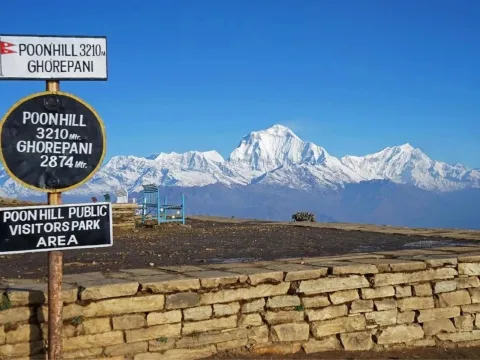
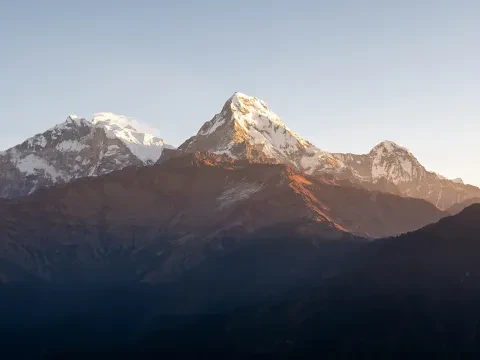
Meanwhile, the highlight of this short trekking in Annapurna region is breathtaking sunrise views from Poon Hill (3210 m) over the Annapurna South, Dhaulagiri, Machhapuchhre, Hiunchuli, and other Himalayan peaks. The standard itinerary usually begins in Pokhara and passes through Ulleri, Banthanti, Ghorepani, Tadapani, and Ghandruk on the return journey. Also, some like to extend it to Jhino Hot Spring.
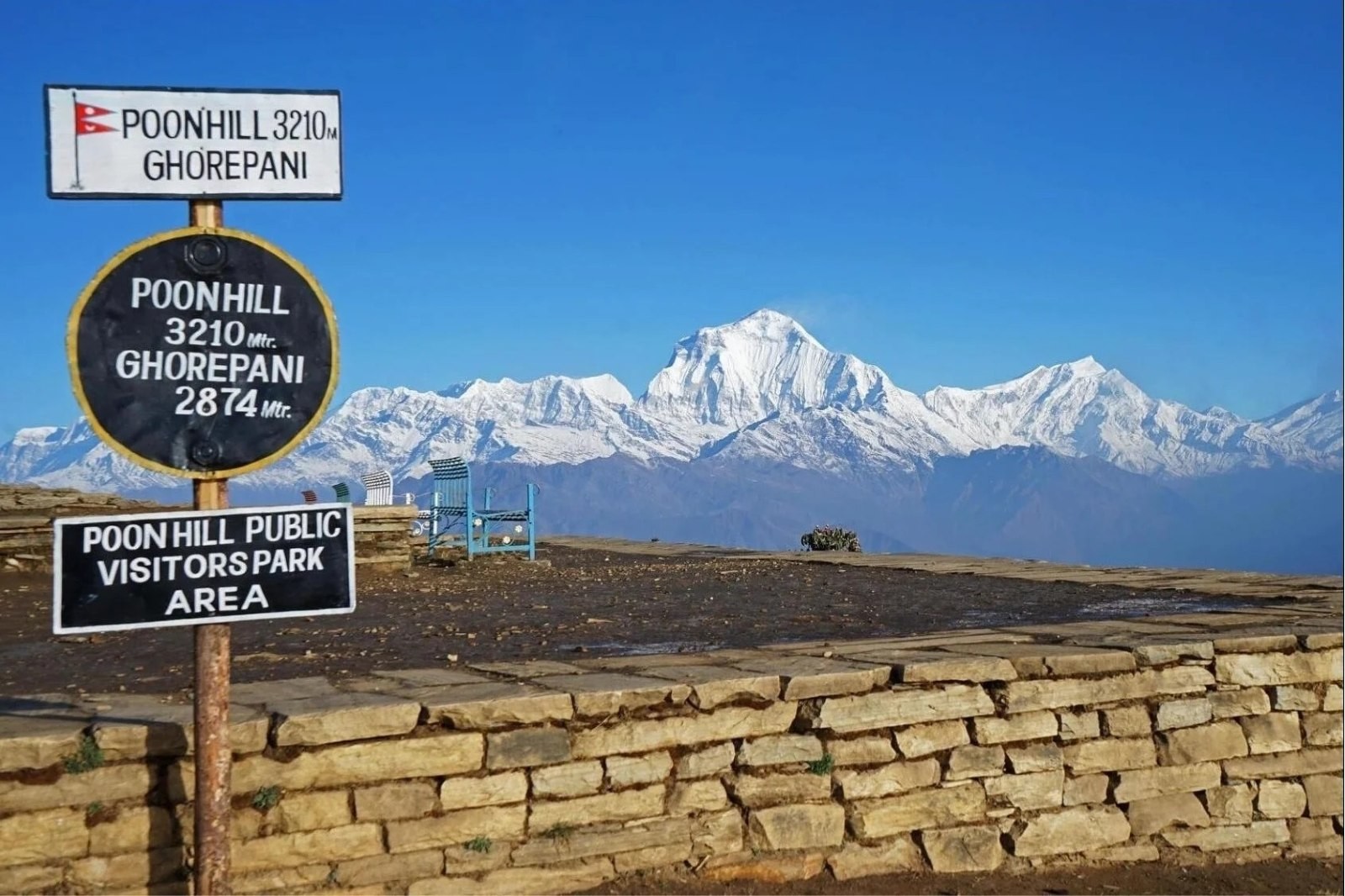
However, you can enjoy a different side of the Ghorepani Poon Hill trek by taking your time on the trail.
Likewise, you can add extra days to visit Poon Hill trekking routes from lesser-known hamlets, take in the forest’s beauty while observing the region’s diverse wildlife, relax in the mountains, and spend a night in the woods.
Poon Hill trek is one of the classic short Himalayan treks of Nepal offering stunning views of towering peaks and beautiful rhododendron forests. The most common itineraries for this trekking route are to get up early and enjoy sunrise views from Poon Hill, then spend the night in either Tadapani or Ghandruk.
Nevertheless, if you have a bit more time, you may want to consider these unique experiences :
| Experiences | Location (suggested) | What makes it special | How to do it |
|---|---|---|
| Stay at Banthanti at least one night | Banthanti area | Less crowded village stay | Stay for one night |
| Wild-honey hunting experience | Around Banthanti area | Local cultural experience | Ask your guide if you can see the local wild-honey hunters. |
| Waterfall stop | Near Nangethanti in the trail to Ghorepani | Escape the busy trail and enjoy the forest silence | Short stop to admire waterfall beauty, take pictures, relax, and sit down for a while |
| Meditation | Nangethanti-Ghorepani trail | Silence and natural beauty | Spending 30-60 min in a calm place for meditation or reading a book |
| Admire Rhododendrons | Ghorepani region | Beautiful Himalayan blooms | Enjoy rhododendron scenery (March to May) |
| Local rock cairn | On the trail to Ghorepani | Good luck cultural experience. | Following local traditions build a small local cairn of stones for good luck, but never take big stones or interfere with religious practices. |
| Local raksi in Ghorepani/Ghandruk | In Ghorepani and Ghandruk village | Local cultural experience | Drink responsibly and politely when offered. |
| Camping night | In selected places (see section below) | A different Himalayan night experience | Arrange with your local guide or operator. |
| Langur watching | Ghorepani-Tadapani trail | Wildlife watching experience | Watch langurs from a distance with your local guide. |
| Muldai Hill experience | In Deurali area (see below) | Less crowded mountain view | Ask your guide to add an extra day in the Muldai Hill region to enjoy the mountain view from Deurali, local cultural experiences, and traditional shepherding with sheep and yaks (see section below). |
| Shepherd watching | In Deurali area (see below) | Local cultural experience | Ask your guide to take you to see local shepherds, and always ask permission to take photos; do not disturb animals. |
| Hot spring in Jhinu Danda | In Jhinu Danda, near Pokhara | Hot spring dip after a challenging trek | Ask your local guide to extend your trek to Jhinu Danda (see below). |
Now, let’s see each activity in detail one by one:
Instead of heading straight from Ulleri toward Ghorepani, spend the night at Banthanti village.
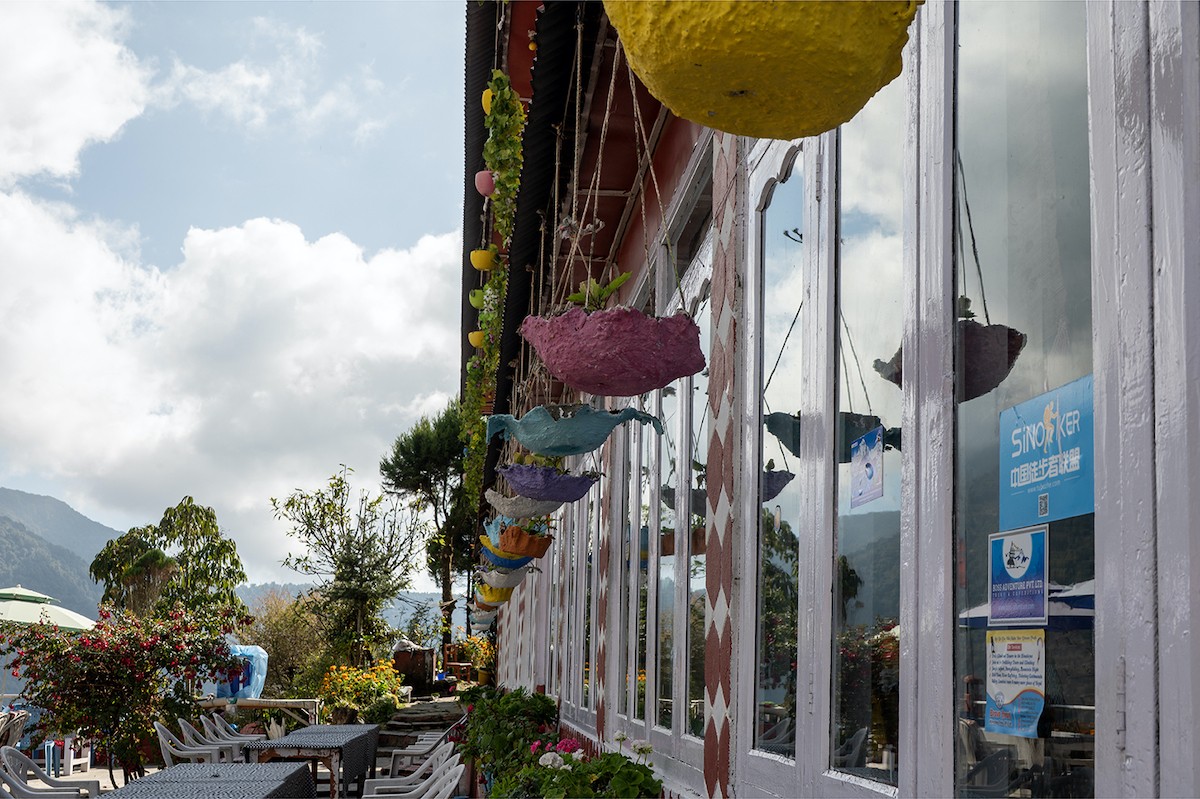
Here, you will not only get to enjoy a less-crowded hiking trail, but you’ll also have the option to start your Banthanti-Ghorepani morning walk earlier the next day. If you prefer not to hike on the same day, you can relax and explore the forest around Banthanti.
Reasons to stay overnight in Banthanti:
The forest area around the Banthanti region is famous for local wild-honey hunting practices. This exciting (but dangerous) activity is usually conducted during specific seasons and requires proper equipment and training.
So, if you are up for this unique mountain experience and your season permits, ask your local guide to show you this local tradition. Always follow your guide’s instructions if you want to witness or participate in this cultural experience.
However, never try to collect wild-honey on your own; this can be extremely dangerous. Also, bear in mind that local wild-honey hunters sometimes sell “mad honey,” which can cause mild hallucination.
So, it is best not to eat any random wild-honey if you are not familiar with local practices.
In fact, this cultural experience should be seen as a learning opportunity rather than an adventurous hunt.
The trail from Banthanti toward Nangethanti and Ghorepani is a fantastic opportunity to experience the local forest landscape. You never know when you might come across a waterfall or stream!
So, don’t walk continuously; instead, take a break and enjoy the beauty around you. Listen to the sound of running water and capture some great pictures. By stopping frequently on the trail, you’ll appreciate the forest uniqueness and give your muscles a rest.
Some waterfall-viewing tips:
In conclusion, a short waterfall adventure can be one of the most significant highlights of your Ghorepani Poon Hill trekking trip.
The trail between Nangethanti and Ghorepani passes through lovely forest and meadow areas. These places can be a fantastic opportunity for meditation or reading a book if you are a nature lover.
If you feel that a short nap in the forest or a morning walk to enjoy alpine meadows and fields sounds like something you would like to do, ask your guide for a recommendation for a good meditation spot. You have plenty of options to sit and gaze at the spectacular valley views while doing some deep breathing.
Some meditation tips:
In fact, this will be a fantastic opportunity to change your usual trekking routine and spend some time doing something you love.
Note: Do not enter the Jungle without asking your guide. Beware of wild animals
Do not overlook the trail patterns on your Ghorepani Poon Hill trek.
Take a closer look at the wonderful forest silence and observe the following:
In summary, this will provide you with a more authentic and immersive trekking experience that goes beyond typical Poon Hill adventures.
Make sure to bring your camera along if you are visiting the region between March and May. The mountainous forests around Ghorepani and Poon Hill are dotted with spectacular rhododendron blooms in spring.
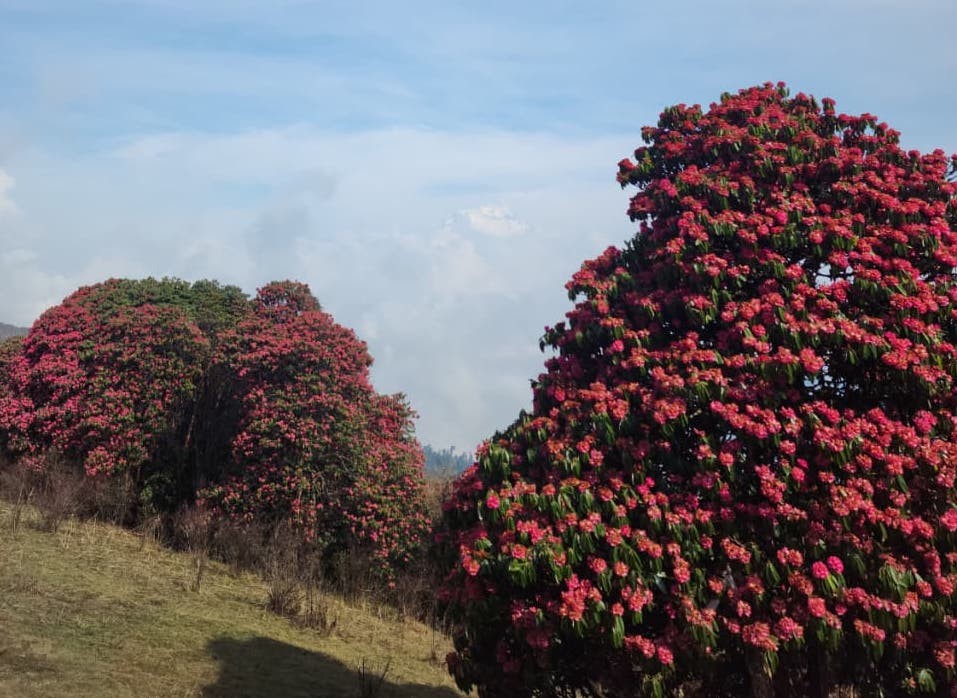
In fact, the Ghorepani-Poon Hill area is famous for its vast variety of rhododendron species. Different species of rhododendrons tend to open at different altitudes and periods.
| Month | Experiences |
|---|---|
| March | Earliest rhododendron blooms at lower altitudes (as you head towards Poon Hill) |
| April | Most rhododendron species are in bloom |
| May | Later rhododendron blooms at higher altitudes (on your way back to Ghandruk) |
Here, the spring season offers two fantastic experiences: spectacular Himalayan mountain views and lovely rhododendron blooms.
If you have noticed small rock piles or cairns along the trail in the Himalayas, it is because they bring good luck to the people who built them. Some hikers and locals also believe in this tradition and, as result, construct small cairns on their way to Poon Hill or other trekking adventures.
So, it is not uncommon to see small rock piles along popular trails in Nepal.
In fact, it is a widespread cultural practice in the Himalayas to build cairns of rocks to mark trails or bring good luck.
Nevertheless, it is best to follow local cultural practices and beliefs and leave stones as you find them. This is a cultural practice that should be respected.
Do not:
If you are a fan of alcoholic beverages, you might want to try local raksi (homemade local liquor) in Ghorepani or Ghandruk village. Raksi is a traditional local spirit that plays an essential role in the social and cultural life of local communities.
If you are interested in trying it, keep in mind that drinking raksi is a unique cultural experience. Ask your local host or guide to share some useful information about this local liqueur.
Some helpful tips for drinking raksi:
Note: Tasting just a little raksi won’t harm you at this elevation.
Here, the unique cultural aspect of sharing a drink with your host is much more important than the drink itself.
If time and logistics permit, we recommend that you spend one night in a tent. This will be a fantastic opportunity to enjoy a unique Himalayan night view in peace and quiet.
| Tea House Stay | Tent Camping |
|---|---|
| More comfort | Less comfort, more adventure |
| Plenty of delicious food | More camp-style meals |
| More amenities | Limited amenities |
| Easy check-in/check-out | Advance arrangements required |
| More social interactions | Quieter experience |
Note that you should not set up a tent just anywhere. Actually, the local lodge owners can set you the tents nearby if you want. Ask your local trekking guide or operator for advice on the best places to set up camp.
The trail between Ghorepani and Tadapani passes through a dense forest area, which is also a great place for wildlife watching.
More specifically, it is not uncommon to see langurs or other wildlife species. Always follow your guide’s instructions if you want to watch these animals up close.
Some wildlife watching tips:
Another option is to spend an extra day in Deurali and enjoy the magnificent mountain views around Muldai Hill. This area is also a great place to witness local cultural heritage and traditions. You may see local shepherds and their flocks of sheep and yaks.
When interacting with local shepherds:
Here, this will be a fantastic opportunity to experience local cultural heritage in the Himalayas.
If you have extra time, you may consider extending your trek to Jhinu Danda. One of the most exciting things about this place is that it has a natural hot spring, which is a great way to enjoy your Himalayan adventure. Here is a suggested itinerary:
Ghorepani → Tadapani → Ghandruk → Jhinu Danda → Pokhara
On your way back to Pokhara, you can take a road back to Pokhara from Jhinu Danda if the road is open.
Some reasons to extend your trek to Jhinu Danda:
| If You Like… | Then You May Want to Consider.. |
|---|---|
| Nature | Spending time in mountain waterfalls and rhododendron forests |
| Culture | Experiencing Banthanti village or Ghandruk, drinking local raksi |
| Meditation | Sitting in meadows in the forest near Nangethanti-Ghorepani trail |
| Wildlife | Watching langurs in the forest |
| Adventure | Overnight tent camping |
| Mountain views | Spending time in the Muldai Hill region |
| Local experiences | Interacting with local shepherds and villagers |
| Relaxation | Visiting Jhinu Danda and enjoying hot springs |
| Cultural experiences | Experiencing wild-honey hunting |
| Photography | Taking pictures in local forests, villages, waterfalls, and mountains |
You do not have to do it all to make your Ghorepani Poon Hill trek different. Just pick two or three interesting options and set aside enough time to explore them.
In summary, the best Poon Hill experiences are the ones where you can take a break and enjoy the amazing local village hospitality, sit in silence in a mountain meadow, watch langurs in the forest, admire rhododendrons in spring, and relax in the hot spring in Jhinu Danda.

Moreover, we are going to see all these tips to make your Poon Hill Trek different and unique in more detailed way.
Please, follow us here:
Staying at Banthanti can be a great addition to your Ghorepani Poon Hill Trek. Banthanti is located at an altitude of around 2,200–2,400 m (depending on the chosen lodge and route).
Instead of continuing your journey from Ulleri straight to Ghorepani, consider spending one night in Banthanti and get to know the local forest, village, and unique wild-honey culture. Here’s a list of highlights and practical details about this local experience.
| Feature | Practical Information | Location |
|---|---|---|
| Banthanti area | Altitude ~2,200–2,400 m | Nearby route- Ulleri → Banthanti → Nangethanti → Ghorepani |
| What to experience | Traditional wild-honey culture | Honey type-Local wild honey; “mad honey”(depending on the season) |
| How to experience | Ask local experts for advice | Avoid harvesting wild honey-Not recommended to try “mad honey”(can be poisonous) |
“Mad honey” contains toxins that can cause dizziness, nausea, decreased blood pressure, and other unpleasant side effects.
Therefore, it is better to view local wild-honey harvesting traditions from a safe distance.
Most importantly, the most valuable aspect of this experience is learning about the local Himalayan wild-honey culture while respecting local customs and safety recommendations.
In this case, the most important goal is not the amount of honey that can be harvested but the opportunity to learn about a unique local tradition.
So, if you are planning to visit Banthanti, ask your local guide about this cultural experience and its safety details.
The trail from Banthanti toward Ghorepani (via Nangethanti) offers incredible views of the forest.
However, there is a particular highlight that is worth stopping for – a beautiful waterfall that can be found along the way.
Here’s a list of reasons why you should not miss this attraction while hiking toward Ghorepani. This area has a lot to offer, so let’s dive into the practical details of this local highlight.
| Feature | Practical Information |
|---|---|
| Starting poin | Banthanti |
| Intermediate villag | Nangethanti |
| Destinatio | Ghorepani (elevation: ~2,885 m) |
| Trail character | Forest, stairs, streams |
| Best view | Spring season (or right after rainfall) |
| Recommended activit | Short rest and photography |
What to Do at the Waterfall :
When it comes to responsible trekking, the value of a local experience is not defined by how many attractions you can visit. Instead, it is about providing useful details about the area and how it can be enjoyed. In this case, the waterfall is a great attraction that can be incorporated into your journey.
However, it is important to understand that its availability depends on the season, so it is best to ask your local guide for more information.
More importantly, the main point is that the trail from Banthanti to Ghorepani (via Nangethanti) has a waterfall that is worth stopping for. The forest scenery and stream are beautiful, so it is a great chance to enjoy a short break, take photos, and refresh yourself.
But again, the most valuable aspect of this experience is the opportunity to slow down between the villages and enjoy the local forest scenery. So, be sure to take a short stop at the waterfall while hiking toward Ghorepani.
The trail between Nangethanti and Ghorepani is a great place to slow down during your Ghorepani Poon Hill Trek.
Here, instead of trying to reach Ghorepani as soon as possible, consider spending at least one extra hour in the forest and meadows and enjoy the local scenery.
Here’s a list of reasons why this stop can be a highlight of your journey. Again, this is a local tip that can help you experience the area in a more authentic way. Let’s take a closer look at the practical details of this break.
| Factor | Recommendation |
|---|---|
| Location | Meadows between Nangethanti and Ghorepani |
| Destination elevation | 2,885 m |
| Extra tim | At least 1 hour (or until you reach Ghorepani |
| What to do | Sit quietly and observe the forest and mountain views |
| Best view | The forest and mountain scenery |
| Other consideration | Not a safe place to rest (do not block the trail) |
| Avoid using your phone for photos/video | Leave no trash behind |
How to Spend Your Extra Hour ?
At around 2,900 m elevation, you are already high enough to enjoy a short break. In this case, the extra hour between Nangethanti and Ghorepani can be a great opportunity to slow down and enjoy the mountain air.
However, it is important to remember that meditation should not be confused with altitude sickness. If you feel any discomfort (e.g., headaches, nausea, extreme tiredness, dizziness), inform your guide and get their advice instead of continuing your meditation session.
This way, you will make the most of your extra hour between the villages.
So, if you are planning to spend an extra hour between Nangethanti and Ghorepani, use this guide as a reference. Actually, the local forest and mountain views are beautiful, so it is a great chance to slow down, sit quietly, and enjoy the local scenery.
Meanwhile, you are not only rewarded with mountain views during the Ghorepani Poon Hill Trek – the forest landscapes between Banthanti, Nangethanti, and Ghorepani also offer a number of insights into the region’s biodiversity. Rather than rushing on the trail, study the trees’ forms, bark patterns, leaf clusters, mosses, and the overall density of growth in the trail’s vegetation.
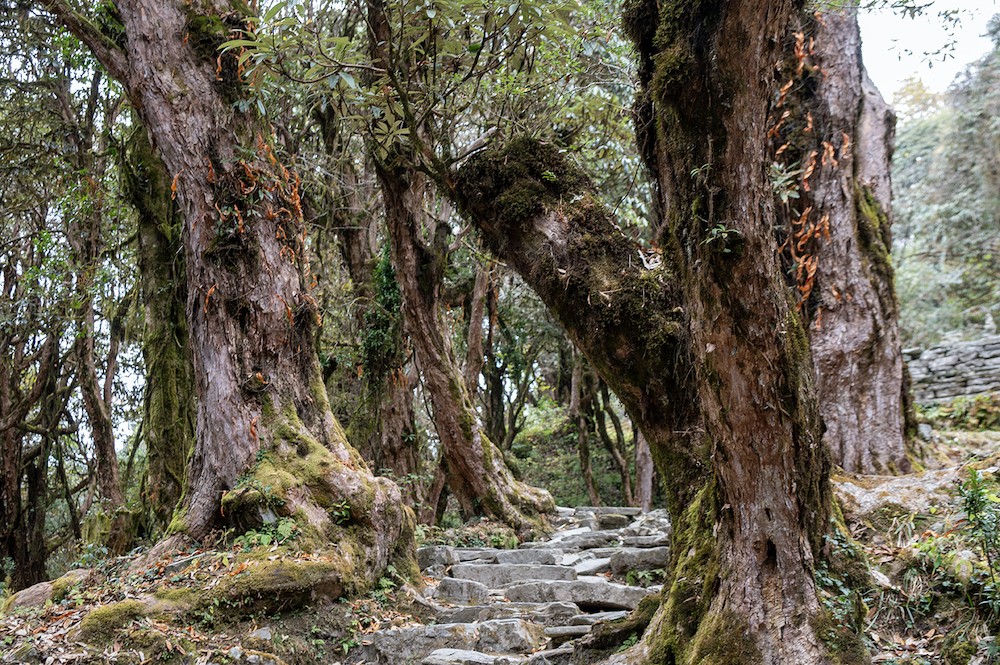
Here, the Ghorepani village reaches around 2885 m, and the forests on the trail are distinctly different from what you would see on your way down in the village.
As you make your way uphill, the forest offers insights into the diverse range of flora, depending on the season in which you make the trip.
| Feature | Description |
|---|---|
| Elevation | Approx. 2885 m – from the trail in Banthanti to Ghorepani |
| Tree shapes | Diverse – growing tall and sprawling, conical, twisted in the wind, etc. |
| Bark Patterns | Also diverse – various shades and patterns |
| Forest floor | Mosses, leaf litter, fungi, and smaller plant growth |
| Canopy Density | Changes greatly – from areas fully covered with foliage to open spaces |
| Best approach | Take your time walking the trail and studying the trees, one step at a time |
Make sure to focus closely on the following:
This will enrich your trekking experience, and you may also ask your local guide about the different types of trees and their benefits to the ecology.
In summary, don’t just read the mountains – read the trees as you make your way towards Ghorepani! These observations will help you to better appreciate the changing scenery as you progress to higher altitudes.
Timing is essential if you want to have a good chance to witness the region’s most iconic floral display – the rhododendrons in bloom. The Ghorepani Poon Hill Trek is a great opportunity to enjoy mountain vistas as well as the views of the rhododendron forests that are abundant around the region.
Not only in Ghorepani and Nangethanti, you can enjoy this beautiful flowers massively between Ghorepani-Tadapani as well.
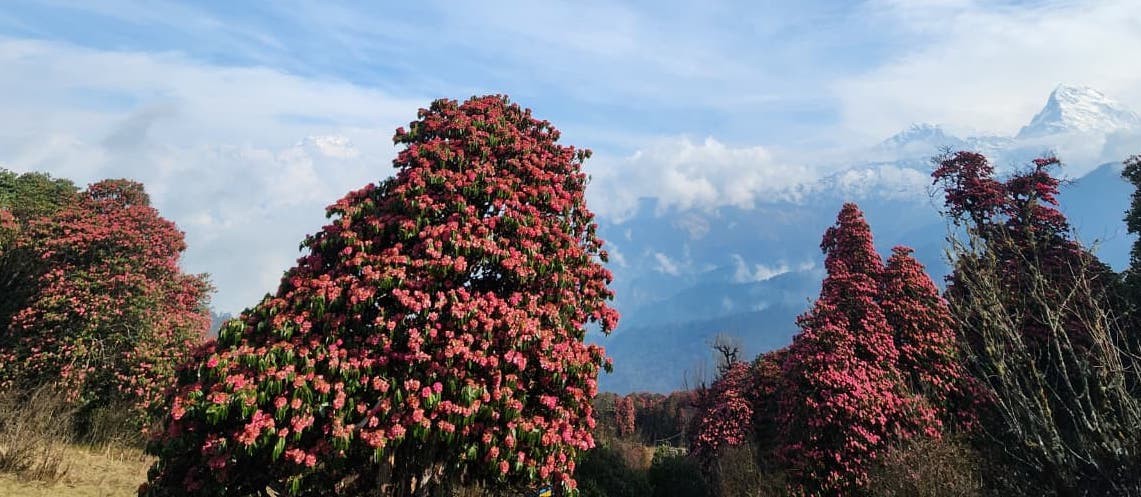
Here, these iconic Nepalese flowers are the country’s official floral symbol, and their blooming season is one of the highlights of visiting the area in spring.
Meanwhile, Ghorepani reaches around 2885 m in altitude, and the timing of the bloom depends on the lower as well as the upper limits of the forest, not to mention the yearly variations in temperature.
So, while the whole forest may not open its blossoms for your private enjoyment in March-May, these months comprise the best season to witness this natural phenomenon.
| Factor | Description |
|---|---|
| Best season | March-May |
| Area | Banthanti-Nangethanti-Ghorepani |
| Ghorepani’s altitude | Approx. 2885 m |
| Color | Depends on the species |
| Main attraction | Rhododendron forests & mountain views |
Responsible Rhododendron Viewing Tips :
In fact, the rhododendron forests comprise a unique aspect of Ghorepani’s natural beauty, but the area has much more to offer.
In fact, the spring season is one of the best times to complete the trek as you have the chance to admire the view over mountains covered with a blanket of wildflowers.
As always when visiting the Nepalese Himalayas in spring, make sure to keep your camera at the ready, but leave the blossoms where they are! Ghorepani Poon Hill Trek in Spring is awesome.
The trail from Banthanti towards Nangethanti and Ghorepani is abundant in rocky terrain, and you may have the chance to see local people using loose stones from the area for various purposes. Some may have built small piles or cairns for good luck on their journey and as a token of appreciation for the mountain.
Here, making your own little pile of rocks is a meaningful Himalayan custom for many locals and visitors, and it may bring you good fortune as well. It serves as a reminder of your journey through the mountains while also wishing you safe travels ahead.
Likewise, Ghorepani is around 2885 m above sea level, and it is always a good idea to take your time when hiking at higher altitudes. However, there is a thin line between making a personal token of good luck and interfering with local beliefs, as well as the local ecology.
Responsible Pile-Making :
How to Make the Pile ?
Here, your little token may bring you good luck on your adventure, and the size is much less important than the meaning behind it. The pile may be a personal reminder of your journey as well as a hope for a safe return back home or further along the trail.
Most importantly, it is a thoughtful idea to make your own little pile of rocks if the local guide allows you to do so.
However, always remember to make it small and respectful of the local ecology and cultural heritage.
A visit to local Nepalese villages may provide you with unique insights into the cultural traditions of the region, and one of them is the local raksi.
Here, you may want to enjoy this traditional spirit as a part of your Ghorepani Poon Hill Trek, especially in the village of Ghorepani or Ghandruk. It may be served during your overnight stay in the village at the home of your local guide or at one of the traditional restaurants.
Likewise, Ghorepani is at around 2885 m, while Ghandruk is at approximately 2000 m above sea level. The higher you go, the more careful you need to be with alcohol consumption. This is important for your wellbeing as well as for managing the acclimatization process.
In addition, you should be aware that drinking alcohol may interfere with your ability to deal with the effects of high altitude. If you are a fan of local liquors, here is what you should know!
Ask your host about the product and its quality. Take only a small sample, and make sure to eat something as you drink. Drink plenty of water as well. Never try drinking the raksi on an empty stomach or before the hiking day begins. Do not use raksi as a remedy for the cold, altitude sickness, or other discomforts. If you start feeling ill, stop drinking and inform your guide.
Do not use alcohol as a means to assist with acclimatization. It will only aggravate the effects of high altitude and dehydrate you.
If you feel ill or your headache, nausea, vertigo, strange tiredness, or other symptoms persist, skip the drink and inform your guide. The best part of enjoying local hospitality is the chat with your host, so make sure to take this into account when you are offered a drink.
If you enjoy trying local liquors, make sure to taste the raksi with caution and respect the local customs.
Here, I recommend adding a tent night to your Ghorepani Poon Hill Trek if you have the time and energy. It's always possible to sleep in a teahouse, of course, but sleeping in a tent lets you fall asleep to the sound of rustling leaves instead of the murmur of other guests
Importantly, do not set up camp yourself along the trail, however; ask your trekking agency about organized camping safaris and where you'll be allowed to set up your tent(s).
Tent-Camping Experience :
Make Your Camping Night Special :
Most importantly, camping is most rewarding for nature lovers who enjoy photography and stargazing. It's also much more difficult: tea houses are generally much more comfortable for a Poon Hill trek than even the fanciest camping gear.
For an authentic wilderness experience, add a single night of carefully planned camping to your Ghorepani Poon Hill Trek. Even the local lodge owners can arrange camping night for you if you really want. Discuss with your guide and plan it for a particular night you want.
The trail from Ghorepani into Tadapani is a great opportunity to see native wildlife. If you're patient and lucky enough to spot some langurs along the trail, taking a few photos of these primates will be time well spent. There's also a good chance to see other wildlife species while looking for langurs.
While the trail itself is relatively short, it's also very pretty – and it offers fantastic photo opportunities of the surrounding snow-draped peaks. Ghorepani village is located at an elevation of 2,885 m, while Tadapani village is even lower at 2,630 m. The trail winds up and through the forest, making for a great wildlife-watching experience.
Tips for Wildlife Photography :
Keep in mind that wildlife viewing is never a certainty - the most important thing is to observe animals respectfully. From an ethical ecotourism perspective, an ideal hiking experience would not interfere with wildlife in any way.
However, if you have the opportunity to see animals on your Poon Hill trek, you should take it!
Here, your guide can help you identify animals and understand their behavior. In the meanwhile, keep your eyes peeled and your camera ready – there are many beautiful creatures to see on the Ghorepani–Tadapani trail! Just remember to take photos quietly and keep a respectful distance from any animals you see.
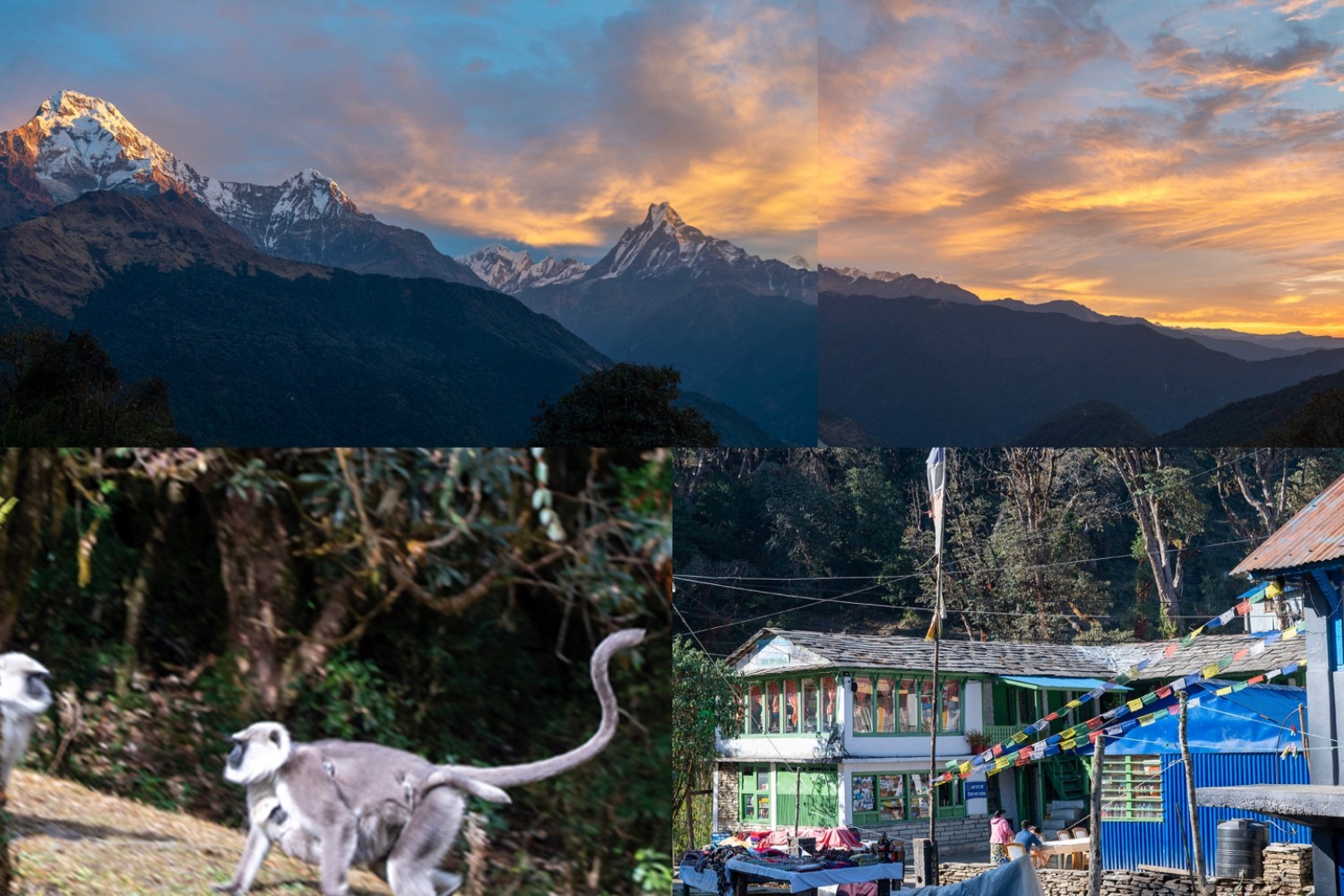
While Poon Hill is the most famous viewpoint on the Ghorepani Poon Hill Trek, I recommend taking some time to enjoy the sunrise views from Tadapani as well. Tadapani's sunrise is equally impressive and a little easier on the legs, since you don't have to scramble up a steep slope as you do for Poon Hill.
Similarly, watching the mountains wake up from the sleepy village of Tadapani is a truly special experience.
Moreover, Tadapani is located at an elevation of 2,630 meters – almost 600 meters below Poon Hill. The two summits offer strikingly different sunrise views, with Poon Hill providing a broader panorama and sunrise views over Annapurna South, while Tadapani is much closer to the peaks in the immediate area.
| Feature | Poon Hill | Tadapani |
|---|---|---|
| Elevation | 3,210 m | 2,630 m |
| Sunrise access | Early uphill walk | Much easier |
| Most famous for | Panoramic sunrise | Close-up sunrise views of the surrounding mountains |
| Atmosphere | Popular viewpoint | More peaceful |
| Peak(s) seen | Annapurna, Dhaulagiri, Machhapuchhre | Annapurna South, Machhapuchhre |
How to Enjoy a Tadapani Sunrise View ?
Most importantly, I think you'll find that the sunrise views from Poon Hill and Tadapani are quite different. You should definitely visit whichever viewpoint interests you most – but if you have the time and energy, I recommend trying to enjoy the sunrise views from both Tadapani and Poon Hill.
Looking to make some changes to your Ghorepani Poon Hill Trek? If you'd like to see something different on your journey to Tadapani than most other tourists on your trail, I highly recommend spending one night at Deurali and exploring the region around Muldai Hill. This is a great chance to get away from the main Ghorepani trail and appreciate the stillness and beauty of the local area.
Equally, the region around Deurali/Muldai Hill is filled with beautiful high mountain scenery and unique opportunities to see local shepherds and their flocks. Many shepherds in the area travel with large groups of sheep and yaks during different times of year. The local shepherd Banbir Buda is particularly well-known for his ability to lead huge flocks of animals.
| Area | Deurali–Muldai region |
|---|---|
| Route Area | Ghorepani to Tadapani |
| Approximate altitude | Approx. 2,900-3,200 m, depending on the area |
| Main attraction | Beautiful mountain scenery and native shepherds |
| Animals | Sheep and yaks |
| Experience | Local shepherd culture |
What You Can Do ?
When taking photos of Banbir Buda, other shepherds, and their animals:
In summary, this unique experience will provide a memorable and authentic insight into the local shepherd culture and mountain scenery.
Instead of hurrying from Ghorepani to Tadapani and missing the chance to see more of this beautiful area, spend one night at Deurali and explore the local Muldai Hill region!
While Ghorepani Poon Hill Trek is usually done in 1 or 2 days, adding an extra night in Ghandruk adds significant value to the trip. Rather than passing through this charming village on the way back to Pokhara, consider staying for at least one night and having breakfast in Ghandruk as well.
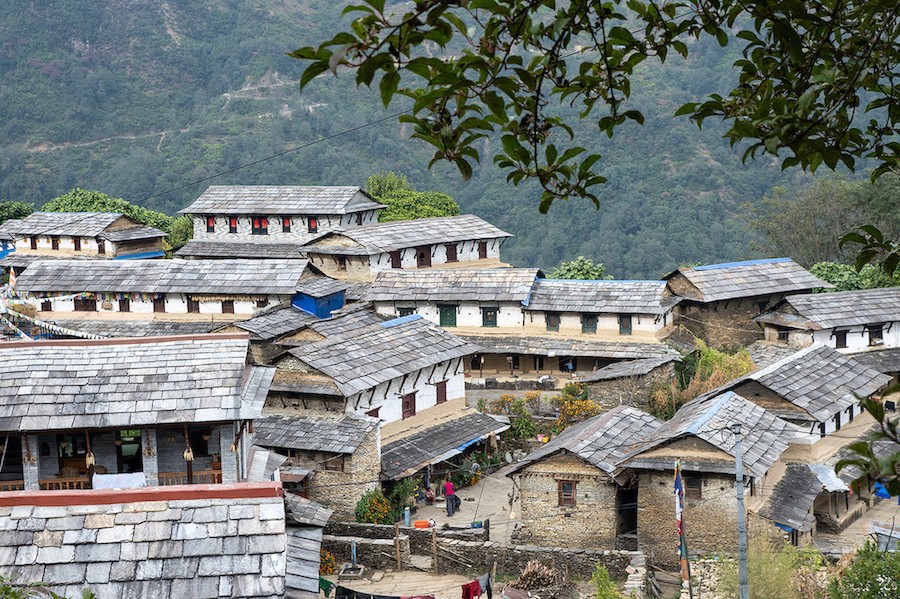
Here, Ghandruk is at around 1940-2000 m and is one of the most renowned Gurung villages in the Annapurna region. Traditional houses, mountain views, and local culture are very different from the forest paths of Ghorepani. Here is what awaits you in an overnight stay in Ghandruk.
| Feature | Detail |
|---|---|
| Village | Ghandruk |
| Elevation | 1,940-2,000 m |
| Community | Gurung People |
| Best experience | Village walk + cultural interaction |
| Mountain views | Annapurna South, Hiunchuli, Machhapuchhre |
| Recommended stay | 1 night or more |
Walk around the traditional village, visit the museum or other cultural sights, explore traditional houses, enjoy local sunrise/sunset views, engage with locals, eat local specialties, take pictures against mountain peaks, relax after several days of trekking.
Actually, staying overnight means you get to spend more time in the village, enjoying mountain life rather than hurrying to reach your next lodge. Ghandruk stays in Ghorepani Poon Hill Trek have a very different flavor compared to the forest treks around Ghorepani and are, therefore, recommended for those who seek cultural experiences as well as mountain scenery.
Furthermore, for those who wish to make a longer tour of the Annapurna region, staying overnight in Ghandruk makes perfect sense as well. Ghandruk is a great place to explore while continuing a tour of the Himalayas.
In short, an overnight stay in Ghandruk should not be missed when you want to make a longer Ghorepani Poon Hill Trek, or you want to see more than just sunrise views from Poon Hill.
Note: Do not miss ACAP Show at its office and German Bakery at Ghandruk
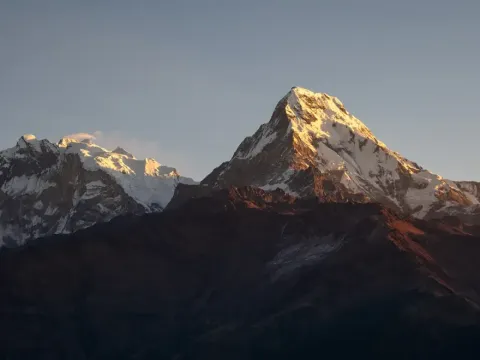
If you have the energy left, consider extending your Ghorepani Poon Hill Trek to Jhinu Danda. The place is famous for its natural hot spring – a great way to recover from days of Himalayan trekking.
Here, Jhinu Danda is at around 1,780 m which is significantly lower than Poon Hill at 3,210 m.
Furthermore, the area is a great place to experience a different kind of hiking trails. Here is an overview of what you can include in your Jhinu Danda extension.
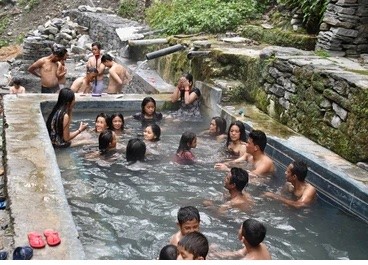
Mainly, you will walk for 3-4 hours from Ghandruk and will get to Jhino Danda.
| Feature | Detail |
|---|---|
| Destination | Jhinu Danda |
| Elevation | 1,780 m |
| Main attraction | Natural hot spring |
| Start from | Ghandruk/nearby trail |
| Experience | Trek + relaxation |
| End | Road transfer towards Pokhara |
Having hot spring views, relax weary muscles, enjoy seeing another Himalayan village, experience different forested landscapes, extend the Ghorepani Poon Hill Trek beyond Poon Hill, and return to Pokhara via road.
A word of safety caution: the trail to Jhinu Danda can involve a number of challenging steps and rocky patches, so it is important not to underestimate the time required for such an extension.
Furthermore, it is important to organize road transportation back to Pokhara since the road is quite a long and tiring one.
Finally, do not forget to inquire about the current road conditions before choosing to include this extension.
Overall, the hot spring is a great way to experience both local culture as well as enjoy some relaxation at the end of your Himalayan adventure. It is not to be seen as a cure for injuries and altitude sickness.
A 4- or 5-day extended Ghorepani Poon Hill Trek offers significantly more flexibility than a short 2-day version.
More specifically, it allows you to include both Jhinu Danda Hot Spring and an overnight stay in Ghandruk without trying to cram everything into one short day. Here is a suggested 5-day version of the long Ghorepani Poon Hill Trek with both Ghandruk and Jhinu Danda extensions.
| Day | Itinerary | Approx. Elevation | Descriptionyh bn |
|---|---|---|
| Day 1 | Pokhara → Ulleri/Banthanti → Ghorepani | Ghorepani ~2,885 m | Day 1: Forests, Water falls and villages. |
| Day 2 | Ghorepani → Poon Hill → Tadapani | Poon Hill 3,210 m | Day 2: Sunrise, mountains + rhododendrons |
| Day 3 | Tadapani → Ghandruk | Ghandruk ~1,940-2,000 m | Day 3: Gurung culture ,bakery and museum |
| Day 4 | Ghandruk → Jhinu Danda | Jhinu ~1,780 m | Day 4: Natural Hot springs |
| Day 5 | Jhinu Danda → Pokhara | Day 5: Road back to Pokhara (3-4 hrs drive by jeep) |
| Day | Itinerary | Additional notes |
|---|---|
| Day 1 | Pokhara → Ulleri/Banthanti → Ghorepani | Day 1: Forest walk |
| Day 2 | Poon Hill sunrise → Tadapani → Ghandruk | Day 2: Sunrise + Gurung village |
| Day 3 | Ghandruk → Jhinu Danda | Day 3: Village scenery + hot spring |
| Day 4 | Jhinu Danda → Pokhara | Day 4: Scenic drive |
Actually, the 5-day version is better for first-time trekkers since it gives you more leeway to explore the local scenery in detail. The 4-day version is best if you seek to rush with these experiences. The extra day can also help if you have any altitude-related issues after reaching Poon Hill.
A guide can be a great addition to a Ghorepani Poon Hill Trek if you want to maximize your adventure and do not mind spending a bit more on the services of a local expert. A competent professional guide will provide you with a wealth of knowledge about the local culture, the forest’s wildlife, mountain geography, local weather, and other important aspects.
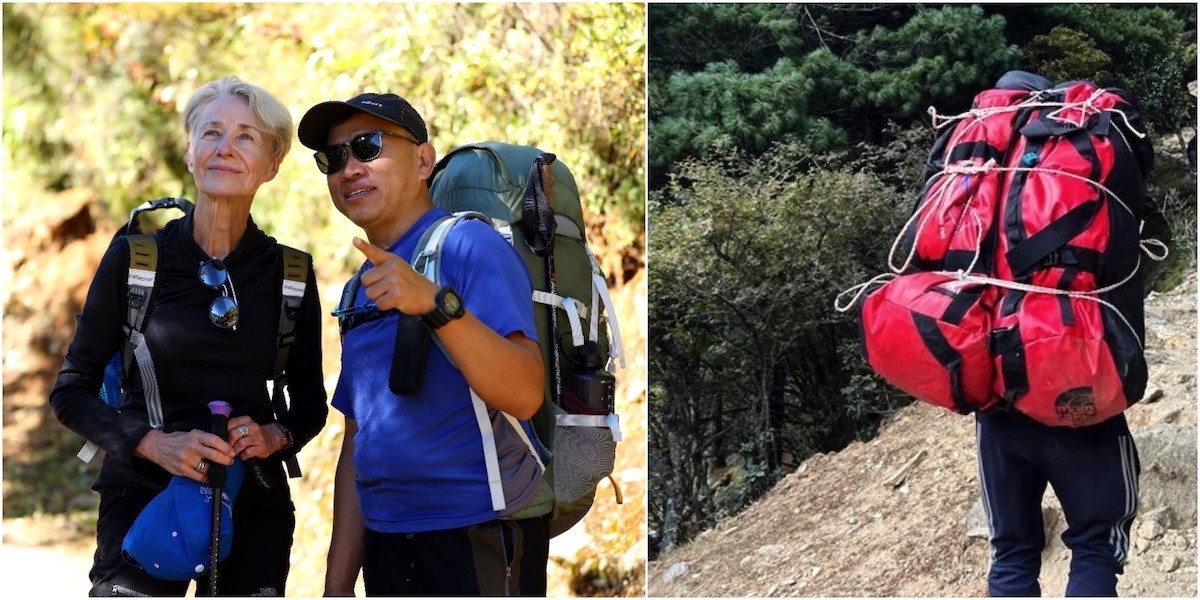
Likewise, a porter can also be a fantastic option if a heavy backpack is putting a strain on your back. You will only have to carry a small daypack with you while the porter carries the rest of your supplies from one lodge to another. Both a guide and a porter can offer their services, but it is essential to know what level of assistance to expect.
| Support Type | What it Entails |
|---|---|
| Professional guide | Navigation + local insights |
| Porter | Carrying your equipment |
| Guide + porter | Full support |
| Self-guided | More responsibility |
First Himalayan trek, traveling with children/groups, limited experience, want local insights, unsure about conditions, want guidance/helpline for accommodation, planning a longer route, etc.
When hiring assistance, it is important to ask questions about the qualifications of a prospective guide, porter welfare, baggage allowance, insurance, accommodations, and payment terms.
Actually, a good guide will offer maximum flexibility within the safety regulations. It is also important to note that a porter should not be overloaded with extra baggage. You should keep valuables, personal documents, money, medication, and anything else you might need close at hand.
In short, when in doubt, it is best to hire a professional guide and/or porter. The purpose of such assistance is not to make your trek too easy but to make it safe, enjoyable, and full of valuable insights.
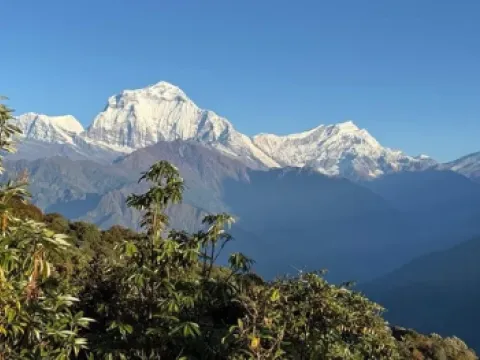
The classical Ghorepani Poon Hill Trek is already fantastic, but even better if you want to take it slow and add some extra experiences. Here are 15 practical tips to help you make your Ghorepani Poon Hill Trek really unique and special.
| Preference | What to Include |
|---|---|
| Cultural experiences | Stay in Banthanti + Ghandruk |
| Nature views | Waterfalls + rhododendrons |
| Wildlife | Langurs and Birds |
| Tranquility | Meadow meditation |
| Adventure | Tent camping |
| Mountain views | Poon Hill + Muldai + Tadapani |
| Local experiences | Shepherds + traditional villages |
| Relaxation | Jhinu Danda hot spring |
| Convenience | Professional guide + porter |
| Time for exploration | 4-5 day itinerary |
It is not necessary to include all these activities to make your Poon Hill Trek special and unique. Pick the ones that you are most interested in and make sure to have enough time to enjoy them.
Here, a 4 or 5-day Ghorepani Poon Hill Trek with an overnight stay in Ghandruk and a stop in Jhinu Danda Hot Spring is a great option if you want to see more than just sunrise views. You can combine sunrise from Poon Hill with cultural experiences, unique nature observations, and mountain vistas within a 5-day itinerary.
Likewise, always try to enjoy the slower pace while exploring different trails, observing wildlife, and visiting traditional villages. Most importantly, it is crucial to respect local traditions and the natural environment. That way, you get to make your Ghorepani Poon Hill Trek Unique while supporting community-based tourism and helping to preserve the region’s cultural heritage and pristine wilderness.
1. What makes your Poon Hill Trek unique from other usual treks?
Apart from being a popular hiking trail, Poon Hill offers you the opportunity to enjoy mountain scenery, cultural heritage, natural beauty, and relaxation in one trip. Staying overnight in Banthanti and Ghandruk, exploring the rhododendron forests and waterfalls, and enjoying the view of Himalayas from Poon Hill, Muldai, and Tadapani make your Poon Hill trekking different.
2. What makes Banthanti stay special during a Poon Hill Trek?
A stay in Banthanti will add peace and comfort to your Poon Hill Trek. Surrounded by forested mountains, it is a perfect place to enjoy the view of villages and experience the local tea house culture.
Besides, it is a good option to have a break on the way to Ghorepani. Thus, a Banthanti stay in your Poon Hill Trek makes it more enjoyable.
3. Why should you spend the night in Ghandruk during a Poon Hill Trek?
Ghandruk is one of the most fascinating villages in Annapurna. The overnight stay in Ghandruk is a great opportunity to explore the beauty of the mountainous village.
Besides, staying in Ghandruk gives you a chance to experience the local Gurung culture. Therefore, it is advisable to include Ghandruk in your Poon Hill Trek itinerary.
4. Can I enjoy the beauty of waterfalls and rhododendron forests on a Poon Hill Trek?
Indeed, you can witness the beauty of nature on a Poon Hill Trek. You will have an opportunity to see waterfalls and rhododendron forests. Waterfalls are seen on many trails along the forest.
Likewise, the rhododendron forests are charming at the beginning of the trek when their pink blossoms appear. Together with mountain views, natural beauty makes your Poon Hill Trek more remarkable.
5. Can I see wildlife during a Poon Hill Trek?
Your Poon Hill Trek itinerary can include the chance to see wildlife. For example, you may see langurs that are often seen in the forest. In addition, there is a good possibility to spot different types of birds.
However, please remember that wildlife is unpredictable, so you need an experienced guide to track and identify animals.
6. Where can I enjoy meditation during a Poon Hill Trek?
You can enjoy meadow meditation on the trail during your Poon Hill Trek. Meadow is a good place for rest and meditation. It is always amazing how beautifully meadow scenery lies between forests and mountains.
Apart from that, it is a great opportunity to enjoy silence and enjoy the Himalayas nature. Meditation in nature is a perfect chance to refresh and renew yourself during a Poon Hill Trek.
7. Is it possible to do tent camping during a Poon Hill Trek?
If you want, you can add tent camping to your Poon Hill Trek. You can ask your guide to organize tent camping depending on the trail and your budget. However, you may need to take care of your belongings when camping.
So, the local lodge owners can organize you camping if you request. Camping makes your Poon Hill Trek more adventurous and exciting.
8. Which mountain viewpoint makes the trek to Poon Hill attractive?
Poon Hill, Muldai, and Tadapani viewpoints offer the best views of the mountain range. Poon Hill is the highest peak in Annapurna, and it is quite easy to reach. From the top of Poon Hill, you get an amazing view of the sunrise over the Annapurna and Dhaulagiri peaks. Muldai Viewpoint is a less-known but magnificent place to enjoy a sunrise view of the mountain range. Similarly, Tadapani offers a beautiful view of forests and mountains.
9. Why is it a good idea to include Muldai Viewpoint in your Poon Hill Trek?
Since Muldai Viewpoint is an option for hikers who want to enjoy the view of the Himalayas, it could be a good idea to include it in your Poon Hill Trek itinerary. Muldai gives an incredible view of sunrise over the mountains. Besides, compared to Poon Hill, Muldai is less crowded. Therefore, including Muldai in your Poon Hill Trek makes it more fascinating.
Muldai Hill and Poon Hill trail are connected each other and it is easy to access on the way from Ghorepani to Tadapani while passing through Deurali.
10. Can I see shepherds during a Poon Hill Trek?
You have a good chance to see shepherds when you explore forests, meadows, and grazing lands. Your guide will tell you about shepherds’ lifestyle and their pastoral culture. Seeing shepherds is a good opportunity for a cultural experience in your Poon Hill Trek. The interaction with local people makes your trek more enjoyable and unforgettable.
11. Can I see traditional villages on a Poon Hill Trek?
Banthanti, Ghorepani, Tadapani, and Ghandruk are traditional villages where you can see mountainous architecture and meet friendly local people. It is a good idea to spend a night in these villages and experience the local culture and hospitality. Moreover, visiting these villages adds authentic flavor to your Poon Hill Trek. Thus, it is advisable to include them in your Poon Hill Trek itinerary.
12. Why should you include Jhinu Danda Hot Spring in your Poon Hill Trek?
Jhinu Danda Hot Springs are a good option for relaxing after days of exhausting hiking on your Poon Hill Trek. Jhinu Danda Hot Spring is a place where you can enjoy dips in natural hot springs and also take beautiful pictures. Including Jhinu Danda Hot Spring in your Poon Hill Trek makes your trip more comfortable and diverse.
13. Can a 4-day Poon Hill Trek itinerary include all the must-see places?
A 4-day Poon Hill Trek can allow you to enjoy all the best views on the trail. Your 4-day Poon Hill Trek can include stays in Banthanti, Ghorepani, and Ghandruk, mountain views from Poon Hill, Muldai, and Tadapani viewpoints, exploring the local culture, and a visit to Jhinu danda hot spring. This 4-day Poon Hill Trek is a great chance to witness the beauty of the Himalayas without spending too much time on the trail.
14. Is a 5-day Poon Hill Trek itinerary a good choice?
A 5-day Poon Hill Trek is a better option to explore the trail. You can spend more time enjoying the view from different mountain viewpoints and get more involved in the local culture. This 5-day Poon Hill Trek will allow you to photograph spectacular scenery and also explore the cultural heritage of the region. Moreover, the extra day will provide you with more rest and reduce the length of daily hikes. Hence, a 5-day Poon Hill Trek is a good choice for an unforgettable adventure in the Himalayas.
15. Why do I need a professional guide for Poon Hill Trek?
A professional guide can make your Poon Hill Trek different from other treks and much more comfortable. He knows the trail, mountain weather, and local culture. The expert guide will customize your 4-day or 5-day Poon Hill Trek and help you choose the most interesting places to explore. Most important, a professional guide will give you valuable information that will make your Poon Hill Trek truly unique.
16. Do I need a porter for a Poon Hill Trek?
A porter will carry your heavy bag and allow you to travel light so that you can enjoy the spectacular views and take pictures without any worries. His help will be especially important on multi-day treks like a 4-day or 5-day Poon Hill Trek. So, hiring a porter is a good idea to have a comfortable and unforgettable Poon Hill Trek.
17. How can I make my Poon Hill Trek less crowded?
To have a less crowded trek, it might be a good idea to choose a 5-day Poon Hill Trek instead of a 4-day trek. This will give you an opportunity to stay overnight in Ghandruk village and enjoy a less crowded view of the mountains from Muldai Viewpoint. Also, the morning start to Poon Hill will allow you to enjoy a less-crowded sunrise view. In addition, a professional guide will find a less-crowded trail for you to enjoy your Poon Hill Trek.
18. What cultural experience makes a Ghorepani Poon Hill Trek special?
A Ghorepani Poon Hill Trek offers you a chance to enjoy not only the beauty of the Himalayas but also the cultural heritage of the local people. Staying in traditional Banthanti and Ghandruk villages, you can see local architecture and lifestyle and also enjoy their hospitality. Experiencing local culture is an important part of a Ghorepani Poon Hill Trek because it makes your adventure even more valuable and remarkable.
19. What natural experience should I include in my Poon Hill Trek itinerary?
Your Poon Hill Trek itinerary should include a number of unique natural experiences like exploring the rhododendron forests, waterfalls, meadows, and viewpoints. The highlight of your Poon Hill Trek will be sunrise views from Poon Hill, Muldai, and Tadapani viewpoints.
As an additional benefit, you can also have a wildlife safari and enjoy a dip in natural hot springs at Jhinu Danda. So, these natural experiences will make your Poon Hill Trek different from other mountain adventures.
20. How can I make my Poon Hill Trek unique?
You can make your Poon Hill Trek unique by choosing a 5-day itinerary that includes an overnight stay in Ghandruk village and a wildlife safari. You can experience local culture by staying overnight in Banthanti and Ghandruk villages. You can also enjoy a fantastic sunrise view from Poon Hill and a less-crowded sunrise view from Muldai viewpoint. Besides, you can spend your time meditating in meadows. Altogether, these unique experiences will make your Poon Hill Trek different.
Our travel experts are ready to assist you with any questions.
Send us a message.Have a question before you book? Send your enquiry below and our travel experts will get back with the required information.