When thinking about an Annapurna Base Camp trek, it's tempting to imagine a simple uphill climb: start low, hike steady to a high pass, then descend. The reality, when looking at an Annapurna Base Camp trek elevation chart, is completely different, geologically speaking. The trail that leads you into the heart of the Annapurna Range takes you through the tight walls of a river canyon before opening up into the vast, lower-pressure amphitheater at its center.
Actually, this area is referred to as the Annapurna sanctuary terrain and, instead of an open valley, this trail leads you between the sheer walls of Hiunchuli and Machapuchare (Fishtail) mountain before you enter a remarkable natural colosseum.
Here, you'll be surrounded by ten of Nepal's highest peaks-all exceeding 7,000 meters in altitude. Because the base camp is situated on the floor of this massive mountain amphitheater instead of high on a pass, the ABC altitude profile consists of extremely rapid vertical ascents interspersed with relatively rapid descents as you make your way up the cliff face. At the end, the terrain flattens out at the center of the sanctuary floor.
Key aspects of the Inverted Funnel Profile
| Elevation Profile Feature | Terrain Characteristics | Physiological Effects |
|---|---|---|
| Footing & Stairways | Thousands of green slate stone steps,hand-cut into the rock | Tremendous impact on the quads and knees; an extremely strenuous form of exercise with rapid pulse fluctuations. |
| Gorge Passageway | A narrow river canyon surrounded by towering walls of Hiunchuli and Machapuchare | Concentrates moisture, air density, and the wind's cold blast. |
| Sanctuary Arena | A flat expanse in the glacial bowl, situated at a base elevation of 4,130m | Low barometric pressure, stable terrain, with reduced effort per foot. |
Before your actual trekking begins, your trekking requires you to transition away from the international airport city of Kathmandu into the foothills of the Himalayas. This initial phase allows your body to adjust and prepares you for the strenuous hikes that lie ahead by dropping you into the warmer, sub-tropical valley environment where you’ll make your trek’s home base.
Likewise, your trekking begins at the capital city altitude of Kathmandu, which sits at Kathmandu elevation Nepal baseline of 1,400 meters (4,593 ft). The first part of your trek will be to travel west, to the lake city of Pokhara.
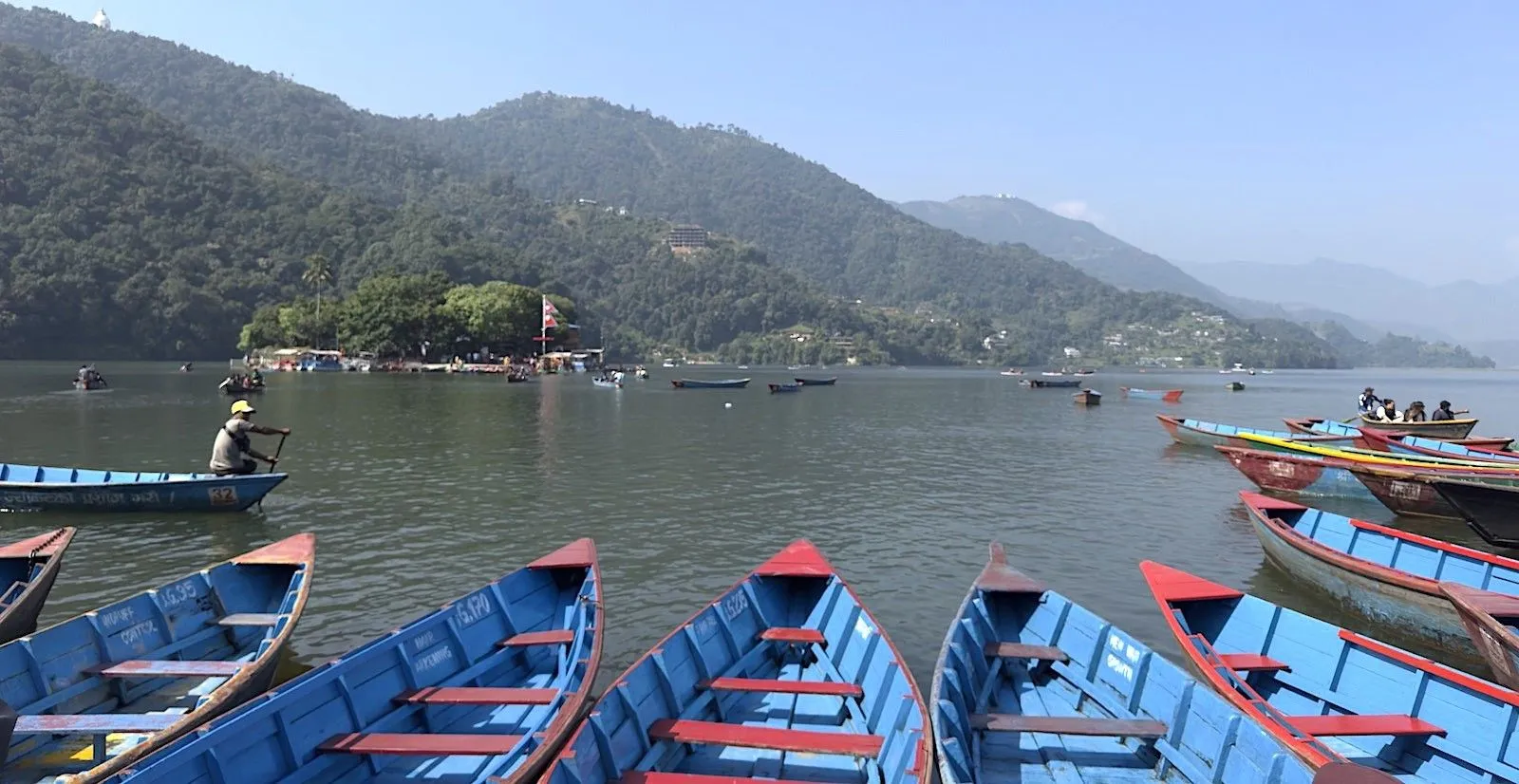
Actually, it's interesting to note that this phase of the trip will take you nearly 600 vertical meters downward. Pokhara is situated at the lower Pokhara lakeside elevation of only 822 meters (2,696 ft), and the oxygen-rich air at this lower altitude makes for an ideal rest spot where you can relax, rehydrate, and organize your gear before you begin your upward trek.
Staging Transit Logistics :
| Staging Station Node | Altitude Metrics | Barometric Pressure | Main Trek Function |
|---|---|---|
| Kathmandu Valley | 1,400m / 4,593ft | 86% of sea level | international travel, outfit acquisition, and group meetings. |
| Pokhara Lakefront | 822m / 2,696ft | 91% of sea level | permit arrangement, porter meeting point, altitude re-adaptation. |
Choosing your route is a very early, key decision. Your layout will determine not only the days you have in the mountain scenery but also the initial, significant vertical gains you’ll have to contend with. There are two basic ways you can go: either climb up the river valley at a faster pace, or head up a west-bound loop for acclimatization purposes.
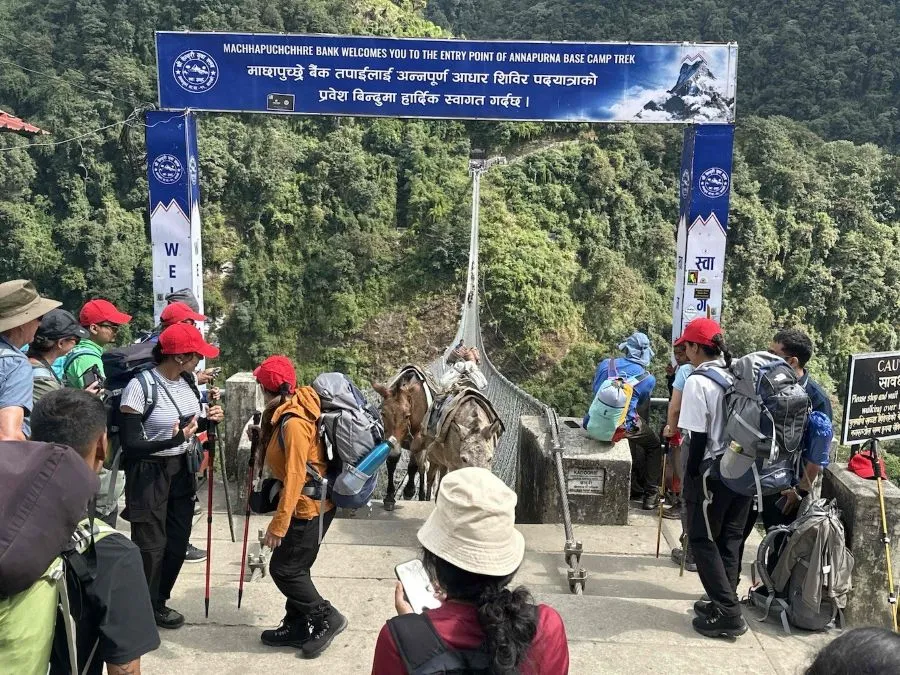
In fact, there's one of two different kinds of entry point variations available and they do far more than simply alter your day by day travel distance; they dramatically affect the altitude profile of your trek. This ABC direct route vs Ghorepani route decision will define how physically challenging the initial few days of the ABC trip actually are and how quickly you’ll need your lungs. A fast track through the valley is good for experienced legs with no time, a loop is the safer bet if your lungs aren't prepared for a very rapid, high gain of elevation.
Comparing Trail Route Choices :
| Path Choice | Hours of Trek to Chhomrong | Altitude of Highest point | Demanding element | Recommended For |
|---|---|---|
| Rapid Ascent Track | 1-2 | 2,170 m / 7,119 ft | Immense vertical gain via stone steps; immense vertical loss | Seasoned trekkers with little time |
| Acclimatizing Loop | 3-4 | 3,210 m / 10,531 ft | Continuous ridge walking over days; requires lung-specific stamina | First-time trekkers; those focusing on views/photography. |
This longer route effectively adds a classic mountain trekking experience to the beginning of your trip through the central hills. The trail passes through incredible deep rhododendron forests and across the villages before dropping back down and re-joining the primary sanctuary trail within the valley.
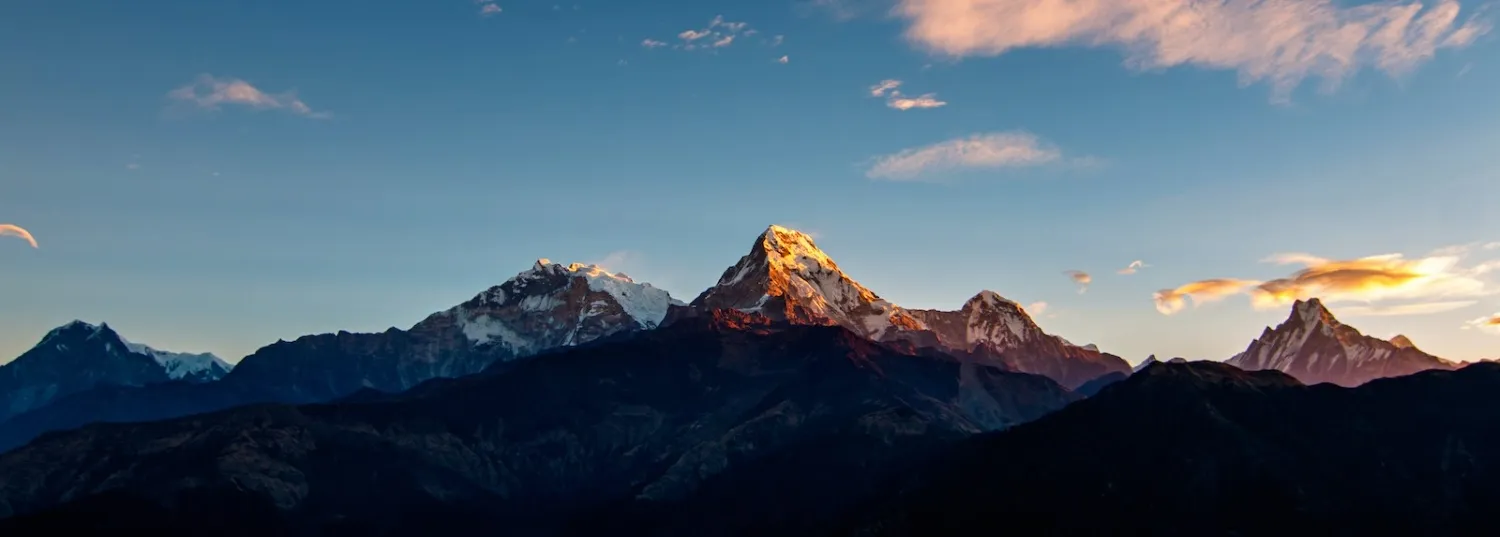
In fact, the most difficult element of the Ghorepani route is its "staircase profile." It will push your muscles with 3000+ hand-cut stone stairs before arriving at the high village of Ghorepani, followed by another sustained climb up to the Poon Hill ridge.
Altitude Break Down on the West-Bound Loop :
| Checkpoint | Altitude | Oxygen Density (% of sea level) | Notable Trekking Challenge |
|---|---|---|
| Tikhedhunga starting point | 1,540 m / 5,052 ft | 84% | Mountain stream treks with the river rushing next to you. |
| Ulleri peak (end of steps) | 2,050 m / 6,725 ft | 79% | A relentless, vertical ascent through over 3,000 stairs. |
| Ghorepani village | 2,874 m / 9,429 ft | 72% | Moderate ridge ascent through dense mountain trees. |
| Poon Hill summit | 3,210 m / 10,531 ft | 69% | A brief, sharp ascent over a dirt track to the scenic overlook. |
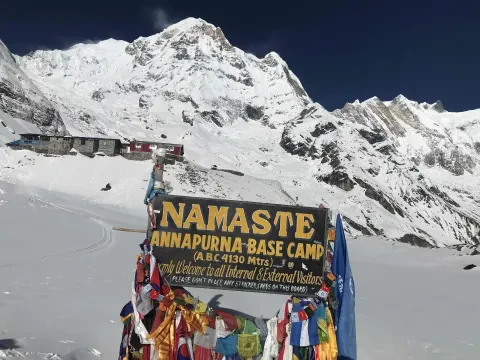
Here, you can choose for a faster, more direct way to get to Annapurna Base Camp with this express route via Matque, Jhinu Danda and Chhomrong. You will have a shorter, more time-efficient profile without sacrificing incredible scenery and cultural experiences. You are driven from Pokhara to the Matque trail-head at 1,500m (4,921 ft). You then begin your hike on fresh legs. The trail rapidly takes you across an immense suspension bridge over the Modi Khola to Jhinu Danda at 1,780m (5,840 ft), where many trekkers choose to relax and soothe muscles in the famous hot springs. From here, the trail steadily ascends steep ridges of terraced fields and forests to the main junction of Chhomrong at 2,140m (7,020 ft).
Matque Trailhead Advantages :
Jhinu Danda and Chhomrong Highlights :
| Segment | Elevation | Key Activity | Walking Time |
|---|---|---|
| Drive to Matque Trailhead | 1,500 m (4,921 ft) | Road Transfer | 2-3 hrs |
| Matque to Jhinu Danda | Ascent to 1,780 m (5,840 ft) | Bridge Crossing | 2-3 hrs |
| Jhinu to Chhomrong | Ascent to 2,140 m (7,020 ft) | Steep Ridge Climb | 3-4 hrs |
Why Choose this Direct Route :
In conclusion, Route Option B through Matque, Jhinu Danda and Chhomrong is a brilliant direct profile for those wanting to make the most of their Annapurna Base Camp trek in the shortest amount of time. Get in touch with Haven Holidays today to customize this fantastic route!
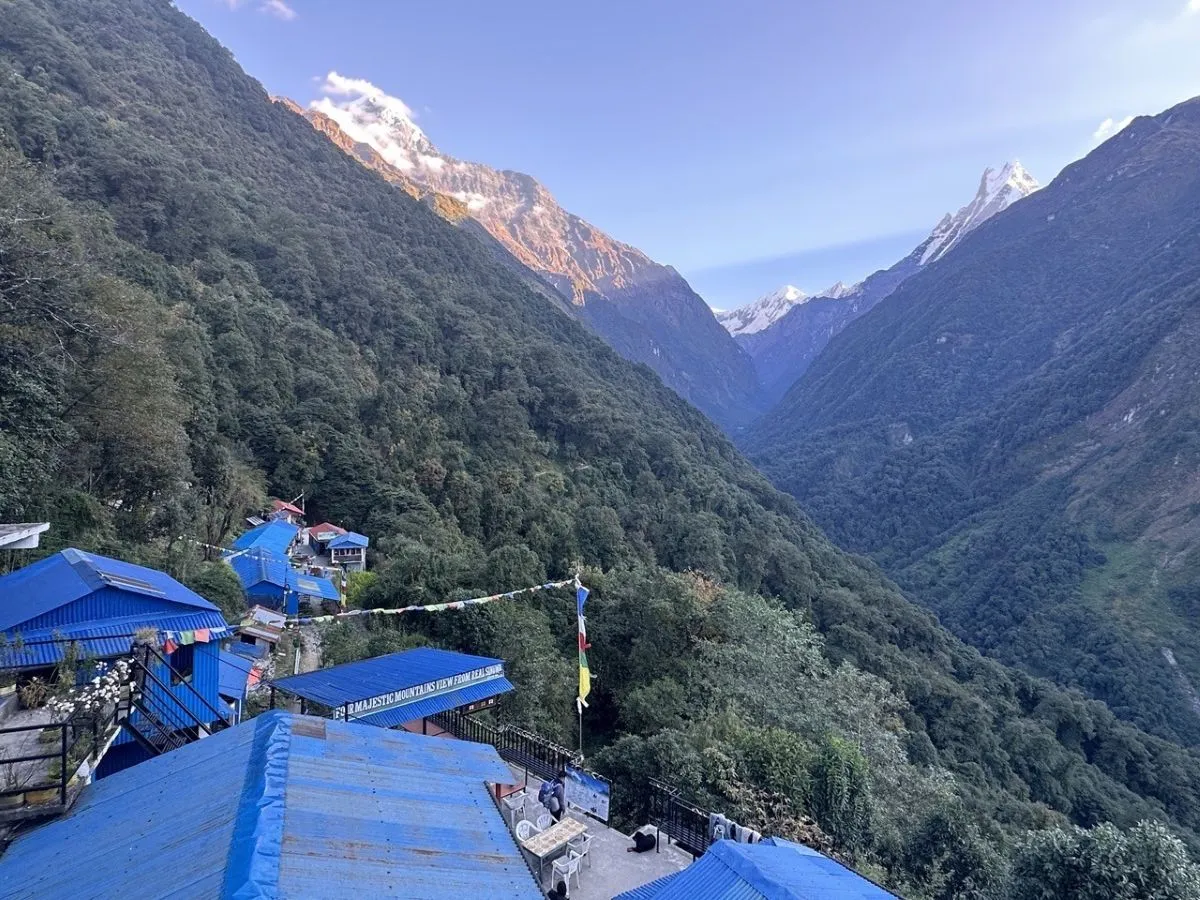
Meanwhile, this stage sees the routes finally merge into a single exhilarating pathway through Sinuwa and Bamboo, introducing the famous "rollercoaster ridges". From Chhomrong at 2,140 m (7,020 ft), you drop sharply down to the riverbed before climbing straight back up to Upper Sinuwa at 2,360 m (7,743 ft). The challenging undulation continues as you plunge down again to the humid, mossy forest of Bamboo at 2,310 m (7,579 ft). Though tiring, this section builds incredible leg strength for the altitudes ahead. The lush valley of the Modi Khola creates an atmospheric environment with numerous waterfalls and dense flora.
Sinuwa Village Altitude Features :
Bamboo Lodge Elevation Highlights :
| Segment | Elevation Change | Terrain Description | Walking Time |
|---|---|---|
| Chhomrong to Riverbed | Descent from 2,140 m (7,020 ft) | Steep downhill, forest trail | 1-2 hrs |
| River to Upper Sinuwa | Ascent to 2,360 m (7,743 ft) | Steep uphill climb | 2-3 hrs |
| Sinuwa to Bamboo | Descent to 2,310 m (7,579 ft) | Descending, damp forest trail | 1-2 hrs |
Challenges and Rewards of This Section :
To sum up, the great convergence over the rollercoaster ridges of Sinuwa and Bamboo is an unforgettable part of the Annapurna Base Camp trek that both challenges and rewards. Book your trek with Haven Holidays to experience these incredible landscapes with expert guides.
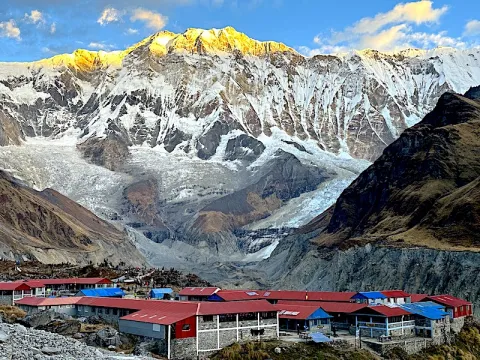
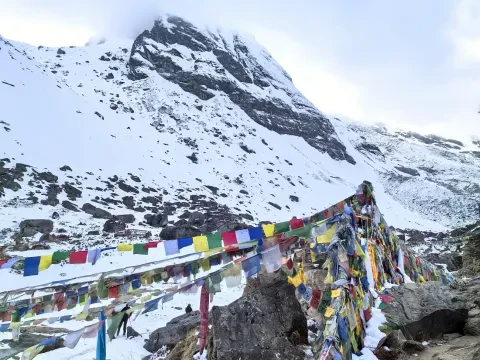
As you break through the forest line on the steady ascent from Dovan to Deurali, the air thins and the scenery opens up. This marks a significant change in your Annapurna Base Camp trek, moving from dense woodland to genuine alpine country. The trek follows a gradual gradient up a narrowing valley gorge. After passing the well-known Himalaya Hotel at 2,920 meters (9,580 feet), you continue your ascent to Deurali at 3,200 meters (10,498 feet)
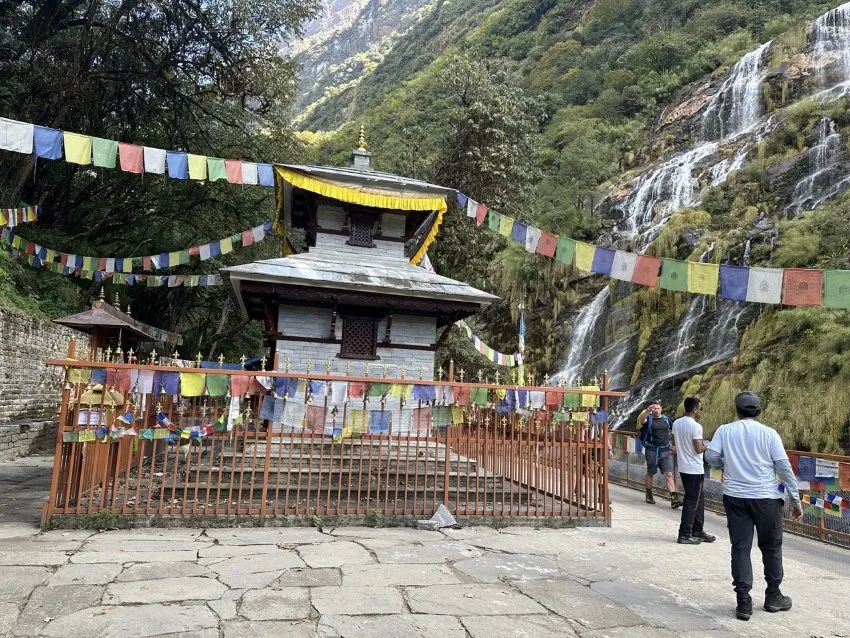
Actually, this is an important section to allow your body to acclimatize slowly to the increasing altitude. You will see the vegetation gradually changing from trees to low-lying shrubs and grasses as you cross the tree line. This stage also provides magnificent views of the sheer rock walls of the surrounding mountains and a clear indicator that avalanche awareness becomes paramount after Deurali. This portion helps prepare you for the exposed sanctuary path ahead both physically and mentally.
Himalaya Hotel Altitude Features :
Deurali Elevation Highlights :
| Trail Section | Elevation | Key Transitions | Time Taken |
|---|---|---|
| Dovan to Himalaya Hotel | Up to 2,920 m (9,580 ft) | Through the wooded valley gorge | 2-3 hours |
| Himalaya Hotel to Deurali | Up to 3,200 m (10,498 ft) | Crossing tree line to the alpine zone | 2-3 hours |
Benefits of Transitioning :
In conclusion, the transition from Dovan to Deurali as you cross the forest line provides a fascinating introduction to the alpine world of the Annapurna Sanctuary. This steady climb prepares you wonderfully for the latter parts of your trek. Contact to Haven Holidays today and let us help you experience this awe-inspiring change on your guided trek to Annapurna Base Camp.
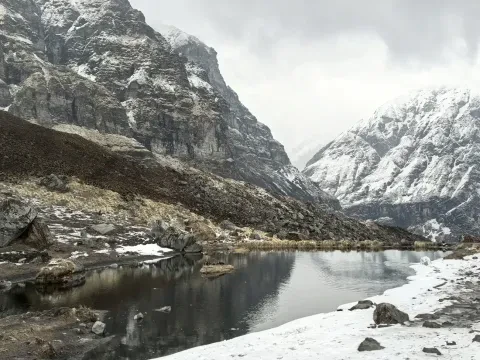
As you enter the stunning Annapurna Sanctuary, you'll reach Machhapuchhre Base Camp, the essential gateway. At 3,700 meters (12,139 feet), this high-altitude station is the perfect place to stop for crucial acclimatization before you make the final ascent to Annapurna Base Camp. The trek from Deurali to MBC takes you through more rugged, rocky terrain, and the imposing peaks seem to press in from every side. Experienced trekkers often spend an entire night here to ensure safe altitude adaptation.
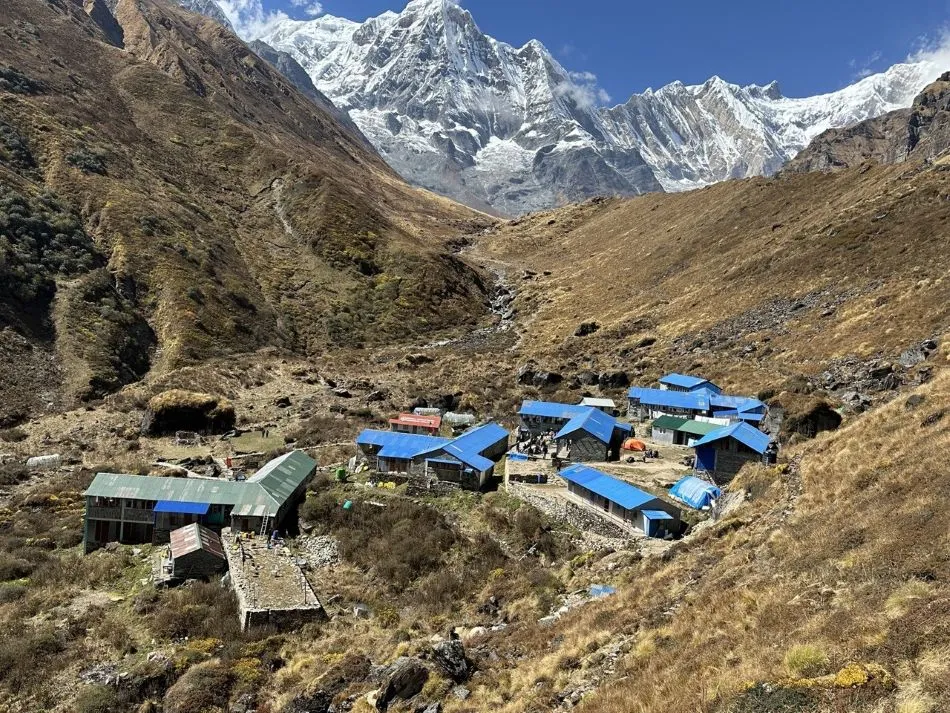
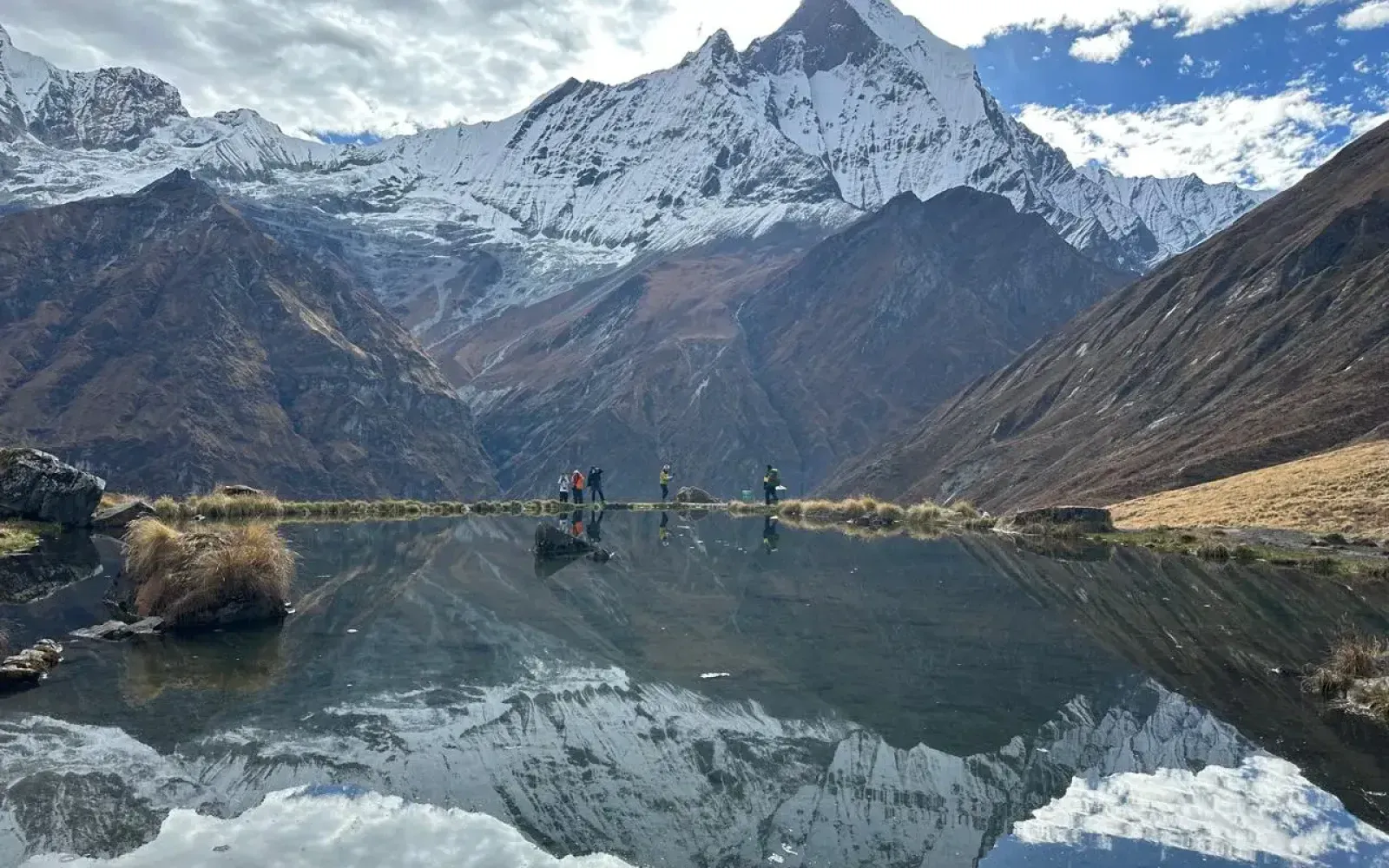
Likewise, the altitude of Machhapuchhre Base Camp offers an ideal balance. While you sleep at 3,700 m (12,139 ft), you are surrounded by the breathtaking views of the iconic fish-tailed summit of Machhapuchhre at 6,993 meters (22,943 feet). An extra night at this altitude dramatically lowers the chance of altitude sickness during your last day of hiking. Machhapuchhre Base Camp truly acts as the gateway to the sanctuary, setting you up for the magical arrival at Annapurna Base Camp.
Machhapuchhre Base Camp Altitude Advantages
Gateway to the Sanctuary Benefits :
| Activity | Elevation | Purpose | Time Duration |
|---|---|---|
| Arrival from Deurali | 3,700 m (12,139 ft) | Reach the gateway and rest | 3-4 hours |
| Evening Acclimatization Walk | Brief excursion around MBC | The principle of climbing high, sleeping low | 1-2 hours |
| Overnight Stay | 3,700 m (12,139 ft) | Safely adapt to the high altitude before ABC | Full night |
Why MBC Staging is Critical :
In conclusion, Machhapuchhre Base Camp serves as a crucial stopping point for acclimatization, making it a vital part of a safe and rewarding Annapurna Base Camp trek. It ensures you are at your strongest and most prepared for your journey to the sanctuary. Let Haven Holidays plan your complete guided trek today and experience this incredible high-altitude milestone for yourself.
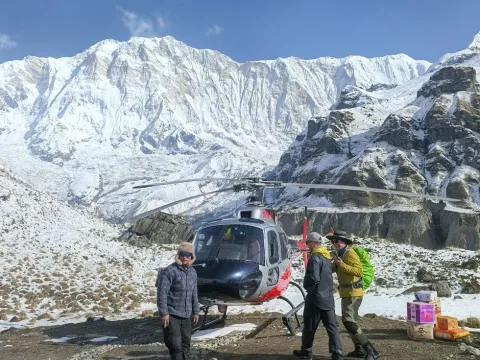
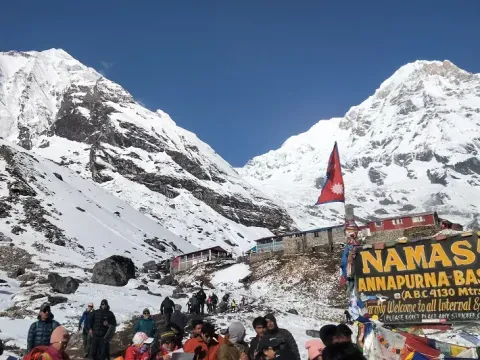
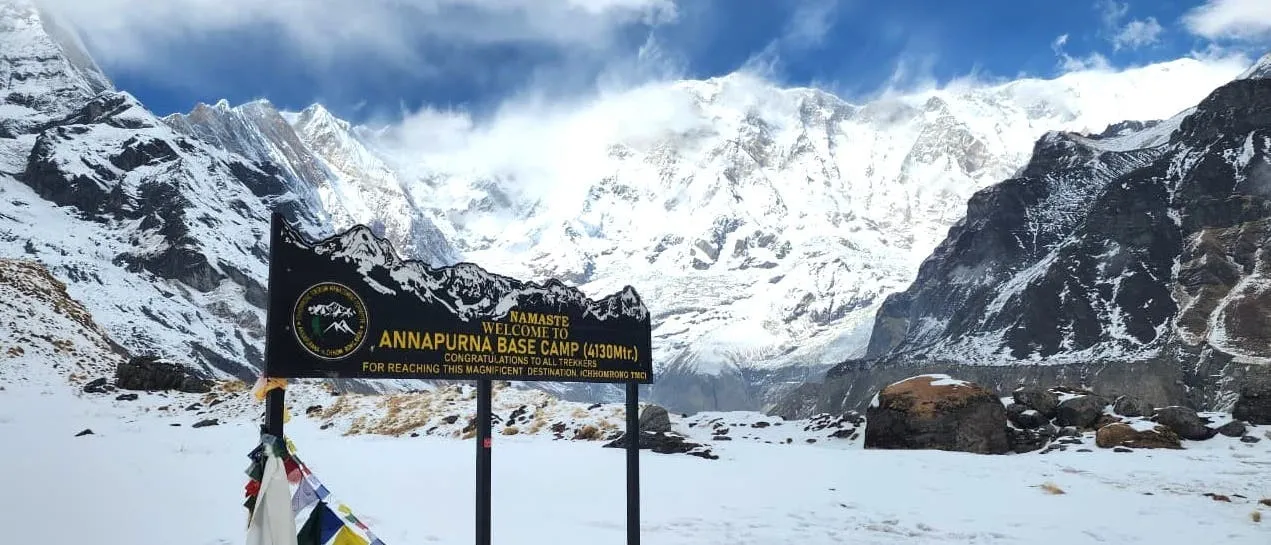
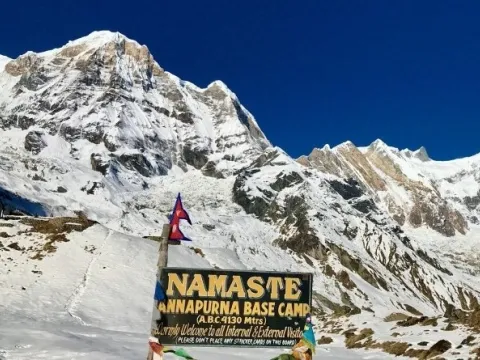
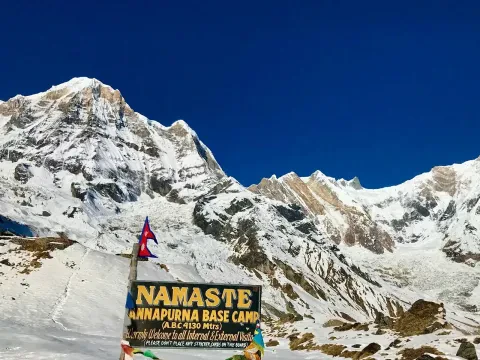
Here, a moment etched in time: arriving in the heart of Annapurna Sanctuary, a bowl of white giants surrounding you. The last morning trek from Machhapuchhre Base Camp takes you triumphantly into this glacial arena. You meander slightly uphill and reach the peak destination of your trek, Annapurna Base Camp, at 4,130m (13,549ft).
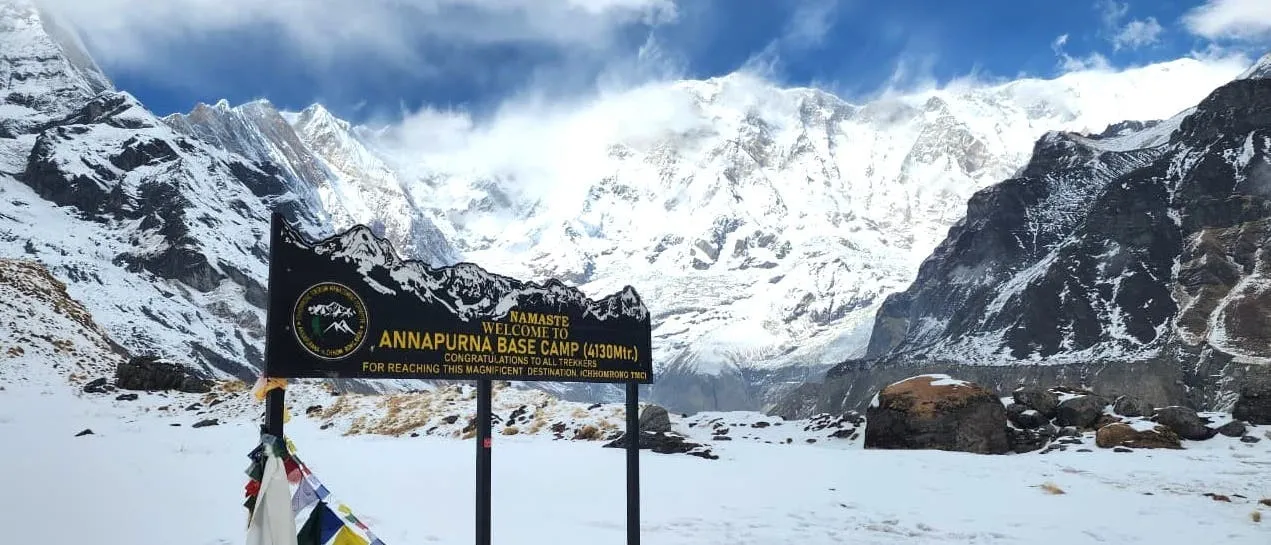
On this sacred high plateau, a 360-degree vista awaits. You are embraced by the immense walls of Annapurna I (8,091m/26,545ft), Annapurna South (7,219m/23,684ft) and Machhapuchhre (6,993m/22,943ft), an intimate dance between man and mountains. Sleeping at base camp offers an almost spiritual communion with these peaks; you feel insignificantly small, yet alive and exhilarated in this amphitheater of ice and rock.
Annapurna Base Camp at its Highest Altitude: Key Points
Final Trek from MBC: A Gradual Ascend
| Segment | Elevation | Experience | Walking Time |
|---|---|---|
| Machhapuchhre BC to ABC | 3,700m - 4,130m (12,139-13,549ft) | Slow climb into a glacial basin | 2-3 hours |
| Time at Annapurna BC | 4,130m (13,549ft) | 360-degree views, celebration | 2-4 hours |
| Overnight Stay at Annapurna BC | 4,130m (13,549ft) | Sleeping at base camp, among the giants | Full night |
Al in all, standing on this sanctuary, Annapurna Base Camp is the culmination of your trekking journey. Its maximum altitude and awe-inspiring setting make every step worthwhile. Contact Haven Holidays today to book your guided Annapurna Base Camp trek and create memories that will last a lifetime. (365 words)
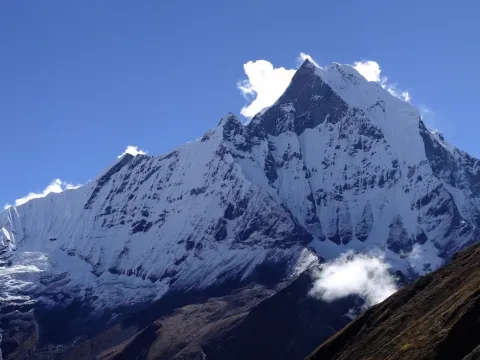
Actually, the Annapurna Base Camp trek is renowned for not featuring a stationary "rest day" like the one you'd typically find on Everest Base Camp treks. This unique approach relies on the inherent power of gradual mountain incline. As you ascend steadily through deep valleys and along ridges, your body naturally adapts physiologically to the altitude. This built-in acclimatization strategy means a dedicated rest day is often unnecessary for healthy trekkers.
Although the Ghorepani- Poon Hill route adds more days of trekking and thousands of stairs, it excels in natural acclimatization. The direct route, on the other hand, is much faster but presents a more aggressive altitude profile. Therefore, vigilant pacing and adequate hydration are crucial for preventing altitude sickness on the ABC trek. Furthermore, the trail's passage through forests and valleys facilitates better oxygen absorption compared to rapid, high-altitude ascents.
Annapurna Base Camp Trek: Altitude Sickness Prevention
Benefits of Gradual Acclimatization:
| Trek Type | Acclimatization Method | Key Advantage | Altitude Sickness Risk |
|---|---|---|
| Ghorepani / Poon Hill route | Excellent natural adaptation | More days + stairs | Low |
| Direct route (via Jhinu Danda) | Aggressive altitude gain | Time-saving, steeper ascent | Moderate |
| Annapurna Base Camp trail | Steady valley incline | Built-in daily adaptation | Manageable |
In summary, the gradual mountain incline on the Annapurna Base Camp trek ensures effective acclimatization without the need for a formal rest day. This intelligent design, coupled with careful pacing, keeps you safe and strong throughout your journey. Contact Haven Holidays today to find the perfect Annapurna Base Camp itinerary for your fitness level.
Here, rejoice in your incredible accomplishment at Annapurna Base Camp, and then start the swift downward journey that will provide much-needed relief to your body. Since the highest sanctuary is at the end of the valley, the journey down is a return to where you began. You will descend a total of over 2,300 meters in only two days. This rapid, but comfortable, descent will provide immediate oxygen and a welcome break to your aching limbs.
Likewise, the trail will lead you back down through Machhapuchhre Base Camp, Deurali, and down the Modi Khola Valley. You'll pass through places like Bamboo, and Sinuwa much more easily this time. More importantly, your knees will bear the greatest load during the trek down. Thus, trekking poles and consistent pace are crucial to avoiding knee pain, and every meter lost allows for faster progress with more abundant oxygen filling your lungs.
Benefits of Natural Hot Springs Recovery :
Tips for a Safe Descent :
| Segment | Elevation Drop | Key Experience | Walking Time |
|---|---|---|
| ABC to MBC / Deurali | 4,130m to 3,200m (13,549ft - 10,498ft) | Oxygen boost, familiar trail | 4-5 hours |
| Deurali to Bamboo / Sinuwa | Continued descent | Forest trek, easier breathing | 5-6 hours |
| Final descent to Jhinu | To 1,780m (5,840ft) | Hot Springs Relaxation | 4-5 hours |
In concluding lines, the swift and restorative journey from ABC to the natural hot springs of Jhinu Danda is a smart way to end your trek. It balances physical recovery with natural beauty, providing a well-deserved treat after reaching the ultimate destination. Plan your full guided ABC trek with safe descent planning by contacting Haven Holidays today!
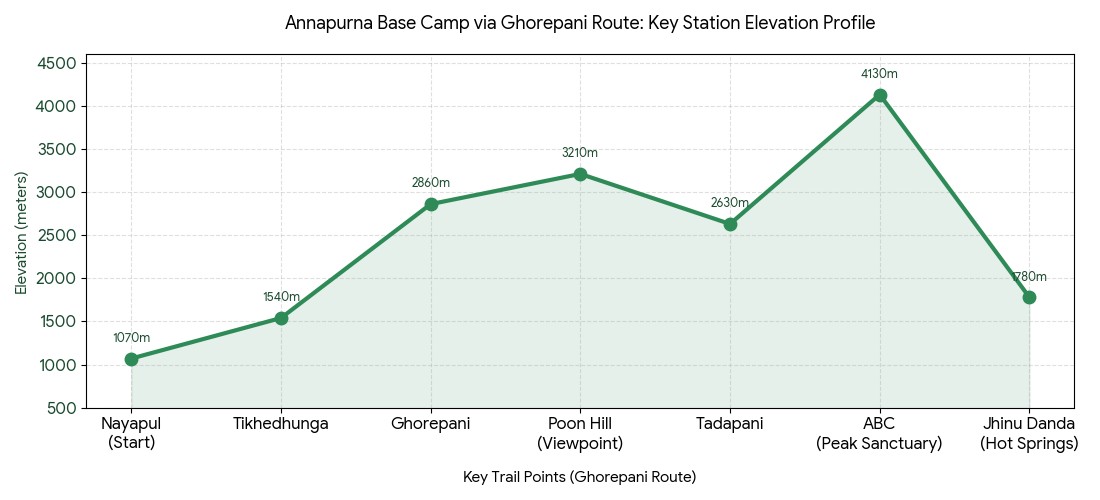
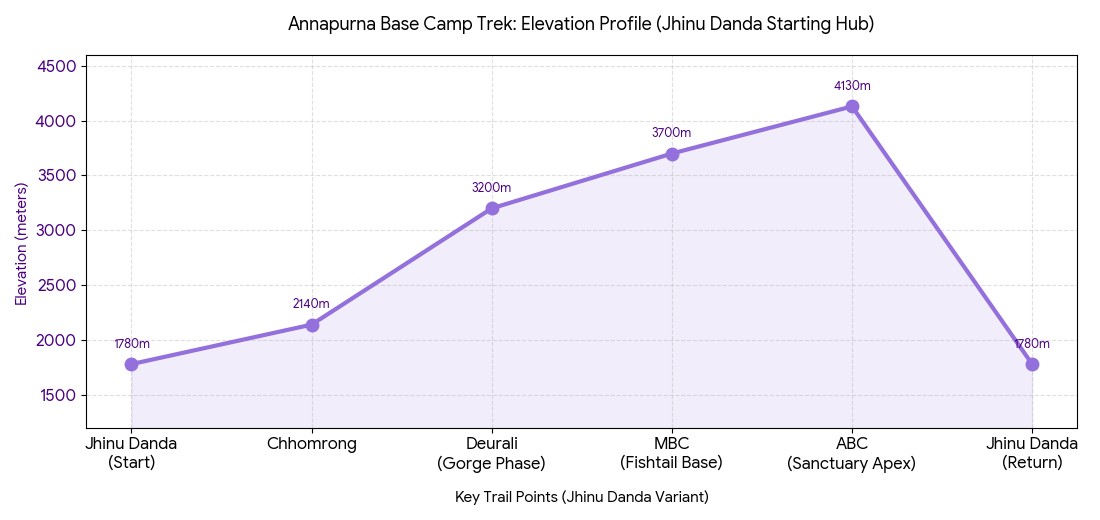
With this quick, practical master altitude summary, you can choose the best Annapurna Base Camp trek for you with complete confidence. Both the classic Ghorepani loop and the direct Jhinu Danda itinerary reach the same majestic destination, but they offer very different hiking and acclimatization experiences. This easy-to-understand quick reference guide will give you the information you need to plan your trek and set your expectations.
Although the Ghorepani route takes several days longer and includes many thousands of stairs, it offers superior natural acclimatization. The faster Jhinu Danda route is much more aggressive on your altitude. In the end, your selection depends entirely upon your current fitness level, available time, and the condition of your knees. This compact itinerary planner simplifies this choice with an easily accessible format.
| Day | Key Point | Elevation | Walking Hours | Distance (approx) |
|---|---|---|
| 1 | Nayapul to Tikhedhunga| 1,070m - 1,540m (3,510-5,052ft) | 4-5 hrs | 8 km |
| 2 | To Ghorepani | To 2,860m (9,383ft) | 6-7 hrs | 10 km |
| 3 | Poon Hill + to Tadapani| 3,210m viewpoint | 6 hrs | 9 km |
| 4-8 | To ABC | Peak 4,130m (13,549ft) | 5-7 hrs/day | - |
| 9-10 | Descent to Jhinu | To 1,780m (5,840ft) | 5-6 hrs | - |
| Day | Key Point | Elevation | Walking Hours | Distance (approx) |
|---|---|---|
| 1 | Jhinu Danda to Chhomrong | 1,780m - 2,140m (5,840-7,020ft) | 5-6 hrs | 10 km |
| 2-3 | Rollercoaster to Deurali | To 3,200m (10,498ft) | 5-6 hrs | 9-11 km |
| 4 | To MBC | 3,700m (12,139ft) | 4-5 hrs | 8 km |
| 5 | Reach ABC | 4,130m (13,549ft) | 2-3 hrs | 5 km |
| 6-7 | Descent to Jhinu | To 1,780m (5,840ft) | 5-6 hrs | - |
In conclusion, this master altitude summary table is your ultimate quick reference guide to planning the ideal ABC trek. Both trekking routes offer a rewarding and unforgettable experience, provided you prepare properly. To customize your perfect Annapurna Base Camp itinerary based on your individual fitness level and schedule, contact Haven Holidays today.
Getting your climb up the Annapurna Base Camp trek altitude profile right is key to a safe and successful expedition. The trek has unique vertical variances as it snakes upward through the depths of a steep river gorge, before reaching a vast glacial amphitheater high up in the Himalayas.
1. What is the starting altitude for the Annapurna Base Camp trek?
The traditional start altitude of the Annapurna Base Camp trek begin in Nayapul, sitting at 1,070 meters. However, modern ABC trek itineraries will often use 4x4 jeeps to reach trailheads like Jhinu Danda or Matque, pushing the initial elevation profile up to about 1,500 meters.
2. What is the maximum Annapurna Base Camp altitude?
The highest altitude point on this trek is the Annapurna Base Camp altitude at 4,130 meters (13,549 feet) above sea level. This high glacial basin is the highest sleep point on the trek, serving as the basecamp.
3. What are the lowest and highest altitude points of the trek?
The range of altitude levels along the entire trek profile is varied, ranging from 1,070 meters on the riverbed near Nayapul, to the ABC altitude of 4,130 meters on its own.
4. What is the average daily altitude gain and loss on the ABC trek?
The altitude gain and loss experienced during the daily hike will be quite pronounced; trekkers gain an average of 400 to 700 meters in elevation per day but this will be paired with extremely steep downhill segments on rocky stone stairs.
5. How does the Annapurna Base Camp altitude compare to Everest Base Camp?
With a peak of 4,130 meters, the Annapurna Base Camp elevation is significantly lower than that of Everest Base Camp (5,364m). Because it stays under 4,500m, the atmospheric conditions at ABC are more favorable with much less severe atmospheric pressure and a significantly easier acclimatization process.
6. How common is altitude sickness on the Annapurna Base Camp trek?
Although the Annapurna Base Camp altitude is considered quite manageable when compared to higher routes, you can still experience symptoms of Acute Mountain Sickness (AMS) once past 3,000 meters. Acclimatization days, slow pacing, and constant hydration are the primary ways to prevent sickness as you trek to the sanctuary.
7. What is the altitude profile of Machhapuchhre Base Camp?
Machhapuchhre Base Camp is high up on the Annapurna Base Camp altitude profile at 3,700 meters (12,139 feet). Often trekkers sleep overnight at Machhapuchhre Base Camp, or it will serve as a lunch stop on the final push to the base camp.
8. How sudden is the altitude variation when climbing to Sinuwa?
The trek to Sinuwa presents a prime example of a sharp daily altitude gain and loss. You must descend hundreds of steps down to the Chomrong River (1,860m) and then immediately climb a steep wall up to Upper Sinuwa (2,360m).
9. What is the altitude profile of Deurali on the ABC trek route?
The highest sleeping point on the ABC trek before Annapurna Base Camp is Deurali (3,200m). This point is key to helping your body acclimatize as you enter the alpine region and is a favorite resting point.
10. Does the forest zone impact the air quality of the ABC trek?
Yes, the rich oxygen in the deep rhododendron and bamboo forests below 3,000 meters offers good quality air. Beyond Himalaya (2,920m), as the vegetation becomes sparser alpine shrubland, the air feels significantly thinner as you move through the higher ABC altitude profile.
11. Is the Annapurna Base Camp trek altitude suitable for beginners?
The Annapurna Base Camp trek is achievable for fit beginners with its gentle climbing profile from a low start altitude and moderate peak, making it one of the safer and more beginner-friendly treks.
12. What is the total distance of a typical ABC trek?
The ABC trek itinerary from start to finish is typically 65 to 80 kilometers, although this can vary depending on starting and ending points. Trekkers manage this distance through a combination of slow upward climbing and continuous downhill shifts on the terrain.
13. How does the steep terrain influence temperature?
The intense climbing profile leads to drastic temperature fluctuations on the trek. While the lodges on the lower portions of the trek with a lower starting elevation enjoy warmer temperatures, night time temperatures at the ultimate Annapurna Base Camp elevation will regularly drop below 0 C.
14. What is the altitude profile of Chomrong village?
Chomrong is a stunning Gurung village set high up in a terraced slope and offers one of the best views of the Annapurna range. Situated at an altitude of 2,170 meters (7,119 ft), this is a very important point as all variations of the Annapurna Base Camp trek converge here before heading down into the gorge.
15. What does "climb high, sleep low" mean on the Annapurna trek?
Guides often employ the 'climb high, sleep low' tactic on the Annapurna trek, whereby trekkers push to higher elevations than their lodging point during the day (to boost red blood cells and acclimatization), before trekking slightly lower for the night. For example, a trekger may climb higher than Deurali (3,200m) then trek down to a lower village profile for sleep.
16. Are there any difficult mountain passes on the standard Annapurna trek?
No, the traditional ABC trek trail does not have high or glaciated mountain passes, nor does it have the treacherous terrain often found when crossing ranges high up in the Himalayas like the Annapurna Circuit or the trek to Thorong La. Instead, you will only have valley floor trails to navigate through.
17. How does the amount of oxygen change at the summit of the Annapurna trek?
While at the valley's starting altitude, trekkers receive 100% oxygen, at the Annapurna Base Camp elevation of 4,130 meters effective oxygen drops to about 60%, leading to a shortage of breath and exhaustion during exercise.
18. Is travel insurance mandatory for the Annapurna Base Camp elevation?
Yes, specialised travel insurance is required for trekking at high altitudes such as the Annapurna Base Camp elevation. Ensure it covers emergency medical expenses and helicopter rescue up to at least 4,500m as protection from serious health issues such as altitude sickness.
19. How quickly will you descend from Annapurna Base Camp?
The descent from ABC is exceptionally fast; in one day, you will drop over 1800 meters in elevation from the Annapurna Base Camp altitude to Bamboo (2,310m) due to breathing thicker air after long term exposure at high altitude. This can make for a challenging return journey.
20. What is the success rate of the Annapurna Base Camp trek?
The Annapurna Base Camp trek has a high success rate of 95-98 percent, due to its relatively gentle climb profile and moderate peak Annapurna Base Camp elevation, making it very accessible and safe to reach the base camp.
Our travel experts are ready to assist you with any questions.
Send us a message.Have a question before you book? Send your enquiry below and our travel experts will get back with the required information.