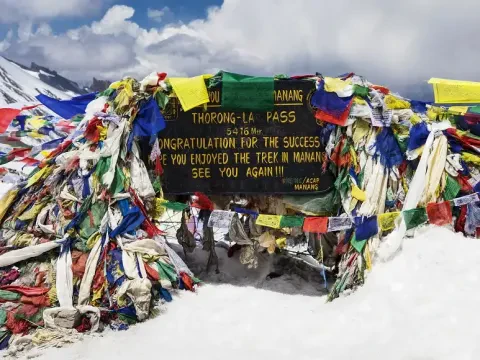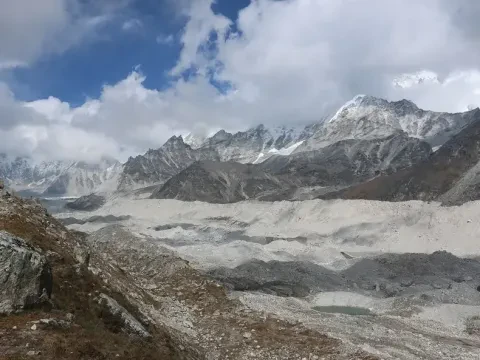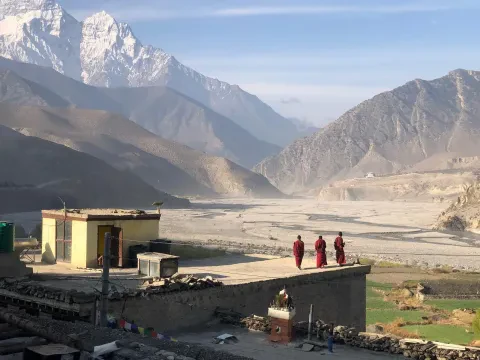
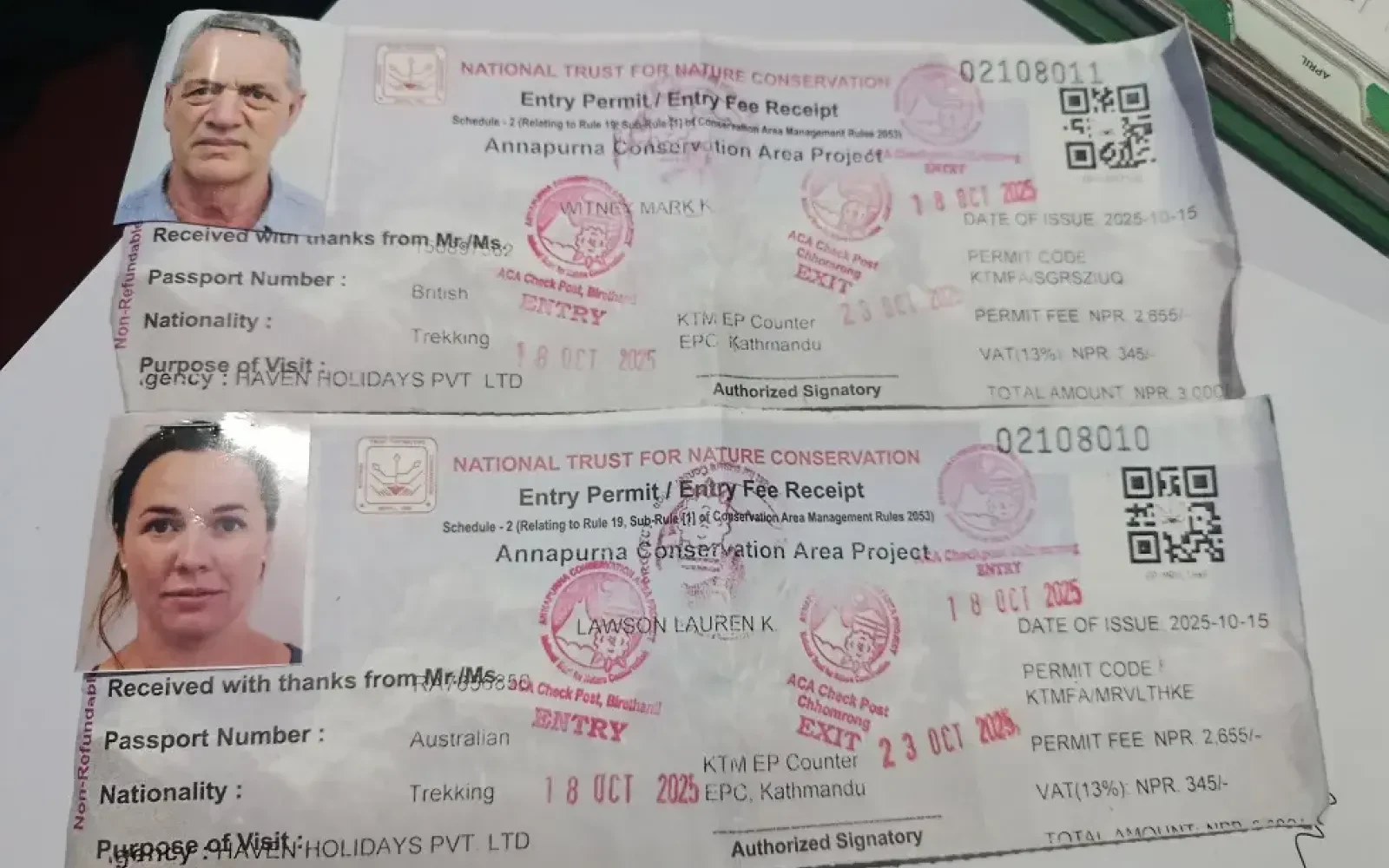
The Annapurna Circuit Trek in Nepal offers a Himalayan adventure that features multiple landscapes and cultural experiences so permits protect safe trekking operations.
Here, the Annapurna Circuit Trek leads trekkers through Nepalese Himalayas as they trek around the stunning Annapurna massif. Trekkers through this area will see different landscapes which include steep mountain plateaus and green tropical valleys while they meet local people. The trek begins at Besisahar which has an elevation of 760 meters and continues to Thorong La Pass which reaches 5416 meters where trekkers can see Annapurna I at 8091 meters and Dhaulagiri at 8167 meters. The system manages visitor access to nature areas which helps sustain ecological balance in protected environments. Permits play a crucial role in this journey.
First, the permits establish a legal pathway which allows people to enter restricted zones that include the Annapurna Conservation Area. The authorities issue them to track trekkers and provide emergency support for their Himalayan adventure. The funds support conservation activities which maintain Nepal trekking routes and protect wildlife habitats. Trekkers must obtain these documents in advance to avoid fines. The permits which people need to access the Annapurna Circuit Trek create safety improvements on the trail.
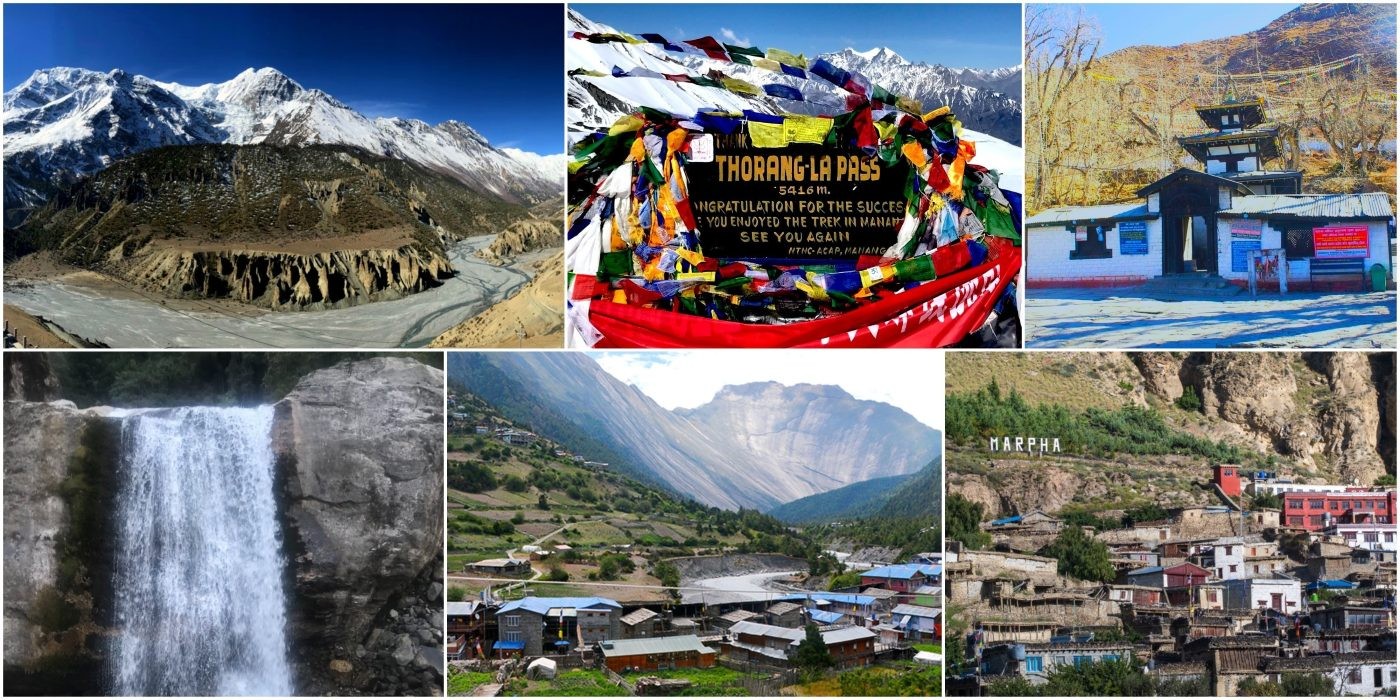
Actually, the local community benefits from permits because they create funding which supports both infrastructure development and educational programs. Nepal trekking regulations require these for all foreign visitors on the Annapurna Circuit Trek. The participants in this Himalayan adventure learn to protect the environment through their activities. The trail includes several locations where officials verify permit ownership. The system promotes responsible tourism through its operational framework.
Likewise, the authorities establish these rules because they want to control the number of visitors who go to Nepalese trekking areas. The first aspect of permits enables authorities to track health problems which occur at high altitudes such as Thorong La Pass (5416m). Trekkers appreciate how they support cultural preservation in villages such as Manang (3540m). The Himalayan adventure becomes both ethical and enjoyable through the use of permits which create a structured framework for exploration.
Moreover, the environmental impact of Nepal trekking requires permits because they operate according to worldwide sustainable tourism standards. The permits protect sensitive areas around Annapurna I (8091m) from people who try to enter those restricted locations. The permits create data which three different organizations use to improve the trail conditions of Annapurna Circuit Trek. The officials use the collected fees to support their path and bridge maintenance operations. The permits create a framework which protects this Himalayan route for future use.
Further, the permits teach trekkers about leave-no-trace principles which they need to follow during their Himalayan journey. Nepal trekking agencies often assist in obtaining them for smooth planning. The facilities at Yak Kharka (4050m) enable rescue operations to occur during emergency situations. Trekkers appreciate how permits protect the Annapurna region's ecological systems. The essential elements create an optimal experience.
More importantly, the Annapurna Circuit Trek depends on permits which maintain the balance between tourist activities and environmental protection. The permits promote respectful behavior by visitors who travel through ethnic villages located along Nepal trekking routes. The permits stop unauthorized guides from operating their businesses while they maintain high-quality Himalayan adventure services. The authorities monitor their regulations through periodic updates which enhance system management. The entire journey becomes better through the use of permits.
Key Features of the Annapurna Circuit Trek
If you’re planning to hike the Annapurna Circuit in 2026, you’ll need two permits: ACAP and TIMS. There’s no way around it—every trekker has to get these. They’re not just paperwork. They keep your journey legal, help Nepal protect the region, and make sure you’re safe out there.
Here’s how it works. Grab your permits in either Kathmandu (1400m) or Pokhara (822m) before heading to Besisahar (760m), where the trek begins. Don’t skip this step. Officials will check for your paperwork at various points, and hiking without it can get you into trouble.
Let’s break down the details. The ACAP permit covers entry into the Annapurna Conservation Area, which wraps around those wild peaks, including Annapurna I (8091m). It costs NPR 3,000 (about $25 USD) for foreigners. That money goes right back into trail maintenance and local projects. Just bring a couple of passport photos and fill out the application at the Nepal Tourism Board office. The permit helps protect the landscape and the communities that call it home.
Then, there’s TIMS. This card isn’t just a formality—it tracks trekkers along the route for safety. The fee is NPR 2,000 (about $20 USD) if you’re trekking on your own. Fill out a quick form with your itinerary when you get it. Authorities use this info to keep tabs on everyone up to high points like Thorong La Pass (5416m), so if anything goes wrong, they know where to look.
If you’re with a group, good news: the TIMS fee drops to NPR 1,000 per person. Both permits last for your whole trek. Keep the originals on you at all times; checkpoints at places like Chame (2670m) and Manang (3540m) will want to see them. Leave them in your guesthouse and you risk fines or worse. Staying organized here really pays off.
Unless you’re heading into restricted zones near the Annapurna Circuit, you won’t need any more permits. Fees have stayed pretty stable for 2026, but it’s smart to double-check with local authorities before you go. Trekking agencies can handle the paperwork for you and usually remind you to bring enough cash for the fees—ATMs aren’t always handy up in the hills.
In the end, these permits aren’t just rules. They keep the region running, support the people in villages like Pisang (3300m) and Muktinath (3800m), and make sure your trek goes smoothly. Get them sorted, and you’re set for a safe, responsible, and unforgettable Annapurna adventure.
| Permit Type Purpose | Cost (2026) | Where to Obtain Required Documents |
|---|---|---|
| ACAP (Annapurna Conservation Area Permit) | Conservation and area access for Annapurna Circuit Trek NPR 3,000 (USD 25) for foreigners | Nepal Tourism Board in Kathmandu or Pokhara - Passport, 2 photos, application form. |
| TIMS (Trekkers' Information Management System) | Safety tracking and data collection for Nepal trekking NPR 2,000 (USD 20) for individuals | Trekking Agencies Association of Nepal offices - Passport copy, itinerary details, photos. |
If you want to trek the Annapurna Circuit in 2026, you’ll need two main permits—TIMS and ACAP. There’s no way around it. These aren’t just bits of paper, either; they actually shape your whole experience out there.
Let’s start with the basics. You can get both permits in Kathmandu or Pokhara, and you’ll need your passport and a couple of photos. The ACAP permit—Annapurna Conservation Area Project—lets you into the protected region around Annapurna I. It costs NPR 3,000 for foreigners. Your money doesn’t just vanish into some black hole; it helps pay for conservation work and trail upkeep, which you’ll definitely appreciate once you’re out there. ACAP’s all about keeping the region beautiful and making sure tourism leaves a positive mark.
Here, the TIMS permit (Trekkers’ Information Management System) is there for your safety. It costs NPR 2,000 and, these days, you have to hire a licensed guide to get it—no more solo adventures. TIMS helps authorities keep track of trekkers, so if anything goes wrong on the trail—especially on those big passes like Thorong La—they know who’s out there and where to look. You apply online, usually through your trekking agency, so it’s not a hassle.
Likewise, don’t even think about skipping these. Checkpoints at places like Besisahar and Manang will ask for your permits, and you’ll get fined without them. Nepal’s strict about this, for good reason. The system keeps things organized, and honestly, it keeps people safe.
Moreover, the money from both permits trickles down to the villages along the route—places like Chame benefit directly. ACAP protects the area’s wildlife and forests, and TIMS keeps trekker info up-to-date for safety. Fees get updated every few years, so always double-check before you go, but for 2026 these are the numbers.
If you book through an agency, they’ll usually sort the paperwork for you. The permits also help prevent overcrowding on the trails, so everyone gets a better experience. And if you ever need a rescue (let’s hope not), having your permits sorted makes everything smoother.
Bottom line: these permits aren’t just bureaucracy—they’re what make the Annapurna Circuit safe, sustainable, and open for everyone. Don’t treat them like an afterthought. Get them sorted, and you’ll have one less thing to worry about once you hit the trail.
| Permit Type Description | Cost (NPR, 2026) | Issuing Authority | Key Requirement |
|---|---|---|
| ACAP (Annapurna Conservation Area Permit) | Entry to conservation area for Annapurna Circuit Trek permits 3,000 (foreigners), 1,000 (SAARC) | National Trust for Nature Conservation/NTB | Passport, photos; children under 10 free. |
| TIMS (Trekkers' Information Management System) | Safety tracking for Nepal trekking permits 2,000 (non-SAARC), 1,000 (SAARC) | Trekking agencies via NTB | Licensed guide mandatory; online registration. |
Let’s break down the TIMS permit for the Annapurna Circuit Trek. If you want to trek the Annapurna Circuit in 2026, you can’t skip this step. The TIMS permit isn’t just a piece of paper—it’s your ticket to a safer, more organized trekking experience in Nepal. Since 2023, the rules have tightened. Now, you can’t hit the trail without a licensed guide and a TIMS permit. The government tracks your journey, from Besisahar at 760 meters all the way up to the dizzying heights of Thorong La Pass at 5,416 meters. It’s all about keeping trekkers safe.
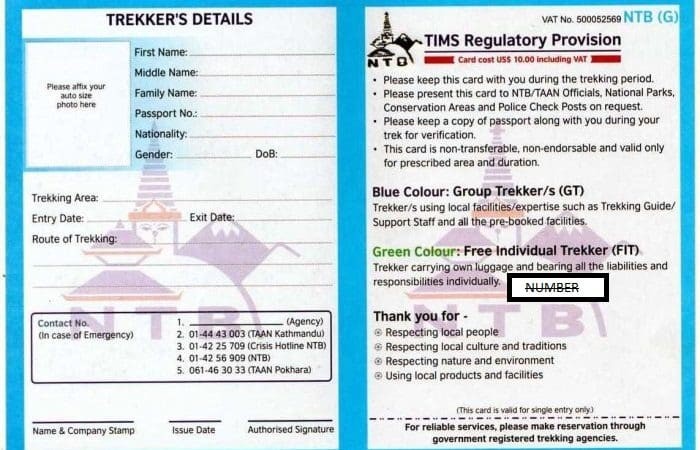
So, what’s the real purpose behind the TIMS permit? Mainly, it’s about monitoring who’s out there in the protected Annapurna region. If something goes wrong—say, altitude sickness or an accident—officials can coordinate a rescue much faster because they already have your details. They’ll know your route, your health status, and your agency. It’s a safety net for everyone on the trail.
Who needs a TIMS permit? Pretty much every foreigner setting foot on the Annapurna Circuit. You have to go through a registered trekking agency—they handle the paperwork. The rules don’t apply to Nepali citizens, but trekkers from SAARC countries get a discount. Kids? They follow the same guidelines as adults. The idea is to make sure everyone gets the same level of protection.
Now, about the cost. For most international trekkers, it’s NPR 2,000 in 2026. SAARC nationals pay half that—NPR 1,000. The agency sorts it out online using your passport info. Once you’ve got your card, keep it with you at all times. It’s not just about rules—it’s about making trekking more accessible without breaking the bank.
There’s another side to the permit, too. The money helps fund Nepal’s trekking infrastructure. It keeps places like Manang safe by discouraging unauthorized entry. At each checkpoint, officials will check your permit and make sure you’ve hired a guide. It keeps things transparent and fair.
If you want to avoid fines or hassles on the trail, sort out your TIMS permit before you leave Kathmandu. It’s just part of the planning, right alongside your ACAP permit. Agencies will walk you through the steps, so you’re not left guessing. Following these rules means you’re trekking responsibly and supporting local conservation.
In the end, the TIMS permit is all about responsible trekking and adapting to new safety standards. Follow the process, and you’ll help keep the Himalayas safe and accessible for everyone. Stick to the rules, and you’ll enjoy the adventure you came for—without any surprises.
If you’re planning to trek the Annapurna Circuit, you’ll need an ACAP permit. This isn’t just a bit of red tape—it’s actually one of the main tools for protecting the region’s wild beauty and helping local communities. The National Trust for Nature Conservation manages it, and the idea is simple: trek here, and you help keep the Annapurna region healthy and thriving.
With the ACAP permit in your pocket, you get access to the protected areas around Annapurna I (8091m). But it’s more than just entry—it’s a promise to trek responsibly. The money from these permits goes straight into conservation. It helps keep forests, wildlife, and even the glaciers near Dhaulagiri (8167m) safe. You’re not just a visitor; you’re part of the effort. Your permit fee funds reforestation and anti-poaching work, so every step you take actually helps maintain the balance of this incredible ecosystem.
Actually, the benefits don’t stop with nature. The ACAP permit also pours resources into villages like Manang (3540m). Thanks to this system, local kids go to better schools, clinics get stocked, and trekking routes see real investment. Locals find more opportunities, tourism stays sustainable, and everyone gets a fair shot at long-term growth. It’s all about making sure people and nature both thrive.
And if you’ve ever worried about waste on mountain trails, the ACAP permit has that covered, too. Money goes into waste management, trail repairs, and bridge building—especially in high-altitude spots like Thorong La Pass (5416m). Because of this, trekkers enjoy cleaner, safer paths, and the environment takes less of a hit.
Also, there’s a cultural side to all this as well. Around places like Muktinath (3800m), the ACAP supports heritage sites and helps keep traditional Gurung and Thakali practices alive. You get to experience the region’s real culture, not just the scenery.
Likewise, ACAP is always updating its approach to match global standards, too. It keeps an eye on visitor numbers around busy spots like Annapurna Base Camp (4130m), runs biodiversity checks, and funds projects that help the area adapt to climate change. So this isn’t just about today—it’s about making sure the Annapurna Circuit stays special for generations.
Bottom line: the ACAP permit isn’t just a requirement. It’s your ticket to meaningful adventure. You get the trek of a lifetime, and you give back to the region every step of the way. It’s the foundation for ethical trekking in Nepal—and honestly, you wouldn’t want it any other way.
ACAP Permit Conservation Benefits:
Here’s what you’ll actually pay to trek the Annapurna Circuit in 2026. The Annapurna Conservation Area Permit (ACAP) costs NPR 3,000 for foreigners, while SAARC nationals pay NPR 1,000. Kids under 10? They get in free. These fees go straight into protecting the region and keeping the trails safe.
There’s also the TIMS permit. If you’re trekking solo, it’s NPR 2,000. If you join a group, it drops to NPR 1,000. For SAARC trekkers, the TIMS fee is NPR 1,000 or less. Agencies handle these permits if you book through them, so it’s one less thing to worry about.
In fact, paying is pretty straightforward. You can pay in cash—Nepalese Rupees only—at the Tourism Board offices in Kathmandu or Pokhara. If you’re going through an agency, you can pay online, but expect a small processing fee. The ACAP permit can be paid in cash or digitally at NTNC offices. Basically, the process is flexible, so you can pick what works best for you.
There’s no extra charge if you stick to the standard Annapurna Circuit route and duration. Just make sure you grab your permits in advance to avoid paying twice. If you’re with an agency, they’ll usually roll the permit costs into your package. It’s smart to exchange your currency at a bank before you head out.
Actually, your permit fees help keep the trails in shape, especially in places like Thorong La Pass and Manang, and keep checkpoints running smoothly. Paying upfront means you won’t get held up at entry points like Besisahar. A little planning makes the whole trip easier.
So, knowing the real costs for Annapurna Circuit Trek Permits lets you budget better for your trek. The permit fees aren’t just red tape—they make the Annapurna Circuit safer and more sustainable for everyone. Whether you pay cash or online, the system’s pretty hassle-free, and you know exactly where your money’s going.
| Permit | Nationality | Cost (NPR, 2026) | Payment Options | Notes |
|---|---|---|
| ACAP (Annapurna Conservation Area Permit) | Foreign Nationals | 3,000 Cash (NPR only), | Online via NTNC epermit (2.9% gateway fee) | Single entry, valid for entire trek |
| ACAP | SAARC Nationals | 1,000 | Cash or Online | Reduced rate for regional visitors |
| TIMS (Trekkers' Information Management System) | Foreign Individuals | 2,000 | Online via agencies, Cash at offices | Guide mandatory for issuance |
| TIMS | Foreign Groups | 1,000 per person | Agency-processed, Online/Cash | Lower for organized groups. |
If you’re planning to trek the Annapurna Circuit in 2026, you’ll need to get a few things together before you can hit the trail. The main permits are ACAP and TIMS, and you can’t get far without them. Here’s what you need to have sorted out so the paperwork doesn’t slow you down.
First up, you need a copy of your passport. It should be valid for at least six months beyond when you plan to leave Nepal. Authorities want a scan or a clear photocopy of the main page—nothing less. Make sure your current visa details are included as well. This is how they check your ID, so don’t skip it.
Here, you’ll also need passport-sized photos. Bring two to four recent ones per person. These are for the ACAP and TIMS permits. Some offices in Kathmandu or Pokhara might offer free photo services, but it’s easier if you arrive prepared. Having photos ready means you won’t be stuck waiting in line or scrambling for a photo booth.
Moreover, travel insurance is non-negotiable. You need a policy that covers high-altitude trekking, including emergencies up to Thorong La Pass (5,416 meters). Helicopter evacuation coverage is a must. Print out your insurance policy and include it with your application. It’s not just a rule—it’s real peace of mind.
Here, you’ll also have to fill out application forms for both permits. These forms ask for your planned route and stops, like Manang and Muktinath. If you’re going with a guide or agency, they usually help with this part. Just be accurate and double-check your info before submitting.
Likewise, don’t forget a copy of your Nepal visa. Your visa must be valid for the entire trek. Officials will compare your visa with your passport, so make sure everything lines up.
Basically, gather all this before you go to the permit office. When you walk in with everything in order, the process is quick and painless. Miss something, and you’ll waste time running around. So, put your documents together early, and you’ll be on your way to the mountains with zero hassle.
Essential Documents Checklist for ACAP and TIMS :
Here’s how you actually get your Annapurna Circuit Trek permits for 2026—no fuss, just the details you need for ACAP and TIMS. Start out in Kathmandu (1,400m) or Pokhara (822m). Both cities have everything you need before heading off to Besisahar (760m), where the trek kicks off. If you want it easy, plenty of agencies will handle the process for you.
First, get your paperwork together. You’ll need a few passport copies, some passport photos, your travel insurance, and your trek itinerary. Have them ready. Agencies will check these right away, so being organized saves time and headaches.
Now, decide how you want to apply. You can go straight to the Nepal Tourism Board office in Kathmandu or Pokhara, or use the NTNC’s online portal for the ACAP permit. For TIMS, registered agencies can do it for you—especially if you’re trekking with a guide, which is required these days. Whether you’re solo or in a group, there’s a method that fits.
Next, fill out the forms. Be accurate—write down all your trek details, up to Thorong La Pass (5,416m). Pay the permit fees: ACAP is NPR 3,000, TIMS is NPR 2,000. You can pay in cash or online. Most of the time, permits get processed pretty quickly.
Once approved, pick up your permits—either physical copies or digital ones with QR codes. You’ll get them stamped at the office in Pokhara or Kathmandu, or your agency can bundle everything together for you. When you have your permits in hand, you’re good to go.
Don’t forget: keep your original permits on you during the trek. Officials will check them at spots like Chame (2,670m) and Manang (3,540m). Show them when asked, and you’ll avoid any unwanted delays.
That’s it. Follow these steps, and you’ll get your permits with no drama. It’s all about being prepared and organized, so you can spend less time on paperwork and more time chasing those Himalayan views.
| Step | Action | Location/Method | Tips for Annapurna Circuit Trek Permits. |
|---|---|---|
| Gather Documents | At home or hotel | Passport, photos, insurance, itinerary for Nepal trekking. |
| Choose Method | NTB/NTNC offices, agencies, online | Agencies for TIMS guide requirement. |
| Submit &Pay | Offices in Kathmandu/Pokhara or portals | Pay NPR 3000 ACAP + NPR 2000 TIMS. |
| Collect Permits | Same offices or agency delivery | Get digital QR for easy checkpoint scans. |
| Carry &Show | Along trail checkpoints | Keep safe; show at Manang (3540m), etc. |
When you hike the Annapurna Circuit, you’ll hit a handful of key checkpoints along the way. These aren’t just for show—authorities check your ACAP and TIMS permits at each stop, making sure everyone’s on track and following the rules. It’s routine. You flash your paperwork, sign a log, maybe get a few tips or updates, and then you’re on your way again. These stops also give you a moment to catch your breath and regroup.
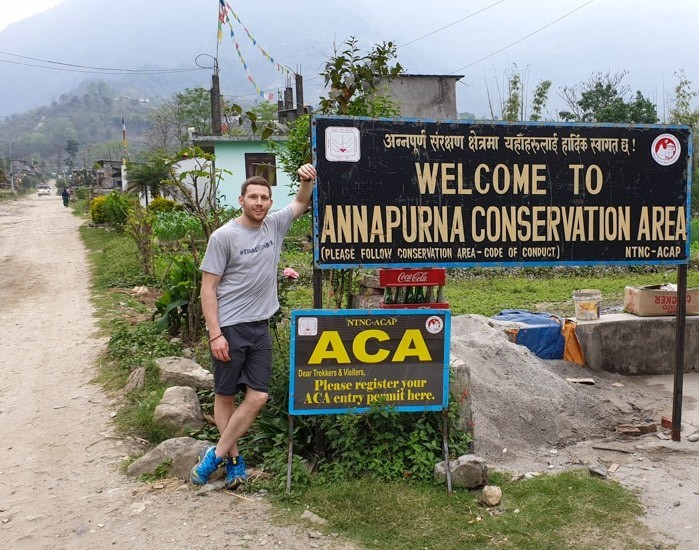
Actually, It all kicks off at Besisahar (760m). This is where the trek truly begins. If you roll in by jeep, officials will scan your permits right there. You’ll sign in, double-check your itinerary, and officially enter the conservation area. Think of Besisahar as the gateway. Once you’re through, you’re playing by the mountain’s rules.
Here, Chame (2670m) is your next big checkpoint. Here, things get a little more serious. Rangers look over your ACAP details and check that you’re healthy enough for what’s ahead. While they’re busy, you can grab some rest at a nearby teahouse. By this point, officials will also make sure you’re traveling with a guide—no shortcuts. After Chame, you’re heading into proper alpine territory.
Likewise, Manang (3540m) really stands out. This checkpoint is all about acclimatization. Officials don’t just check your paperwork—they also talk to you about altitude and how you’re feeling. Most trekkers hang out here for a couple of days, letting their bodies catch up. You might get a health consultation, too. Manang is about keeping everyone safe before the big climbs.
Then, it comes ThorongPhedi (4520m), right before the infamous Thorong La Pass (5416m). This spot is serious business. Authorities check your documents again and make sure the weather’s on your side. They give you one last briefing before you tackle the pass. It’s all about staying safe at high altitude.
Once you’ve crossed the pass, Muktinath (3800m) is where you check in next. Officials will stamp your permits after that tough section. You can visit the temple and just soak in the feeling—you’ve finished the hardest part. From here, you’re dropping down into the lower valleys.
Honestly, these checkpoints do more than enforce rules. They help keep the trek organized, offer support, and protect the environment. As long as you’ve got your documents ready, you’ll move confidently from one point to the next. In the end, these stops are part of what makes the Annapurna Circuit such a memorable adventure.
Major Key Checkpoints on Annapurna Circuit Trek :
Alright, let’s wrap this up with some real-world advice for your Annapurna Circuit Trek in 2026. If you want the journey to go well, a little prep makes all the difference.
First, don’t mess around with acclimatization. High altitude isn’t something you can just power through. Take extra days in Manang (3540m), slow down once you’re above 3000m, and pay attention to any headaches or weird symptoms. It’s a simple thing, but pacing yourself keeps you safe in the Himalayas.
Next up: permits. Keep your ACAP and TIMS permits handy—originals, not just copies. You’ll hit checkpoints, and the last thing you want is a hassle because your paperwork’s buried at the bottom of your pack. Stick to the rules, and your trek stays on track.
When it comes to packing, think layers. The weather’s all over the place, and Thorong La Pass (5416m) gets seriously cold at night. Bring rain gear, solid boots, water, and snacks. It sounds obvious, but good gear makes everything easier.
If you’re on the fence about hiring a guide, just do it. A licensed guide knows the trail, spots trouble before it starts, and helps with logistics. Even if you like hiking solo, a guide’s got your back. It’s one less thing to stress about.
Don’t forget the basics: drink lots of water and eat well. Skip the alcohol, especially at higher spots like Yak Kharka (4050m)—it just makes things harder. Good food and hydration keep your energy up when the trail gets tough.
And one last thing—be responsible out there. Stick to leave-no-trace principles, respect the environment, and remember why you’re there in the first place. You’re trekking through the heart of the Himalayas, with views of Annapurna I (8091m) that you’ll never forget. These tips aren’t just boxes to check—they actually make the whole experience better, start to finish.
1. What Permits Do I Need for the Annapurna Circuit Trek?
For an legal Annapurna Circuit Trek you need two main permits: the Annapurna Circuit Trek Permits, which are the ACAP permit and the TIMS card. The Annapurna Circuit Trek Permits are very important. These Annapurna Circuit Trek Permits ensure your safety, support conservation and allow access to protected areas up to Thorong La Pass. We recommend obtaining the Annapurna Circuit Trek Permits through an agency in Kathmandu or Pokhara. This way you can focus on the landscapes and cultural experiences without worries about the Annapurna Circuit Trek Permits.
2. What Is the ACAP Permit and Why Is It Required?
The ACAP permit is necessary for the Annapurna Circuit Trek. The ACAP permit grants entry into the Annapurna Conservation Area. Funds essential conservation work, trail maintenance and community projects in villages like Manang and Muktinath. The ACAP permit is very important for the Annapurna Circuit Trek. It protects forests, wildlife and cultural heritage while ensuring tourism. You must have the ACAP permit for the Annapurna Circuit Trek. It gives you peace of mind. Contributes directly to preserving the Annapurna Circuit Trek area for future generations.
3. What Is the TIMS Card and Its Purpose for Trekkers?
The TIMS card is another permit for the Annapurna Circuit Trek. The TIMS card tracks trekkers for safety enabling emergency responses along the Annapurna Circuit Trek. The TIMS card records your itinerary and details which's very helpful at high altitudes like Thorong La. We have seen how the TIMS card has helped trekkers in need on the Annapurna Circuit Trek. Since 2023 a licensed guide is required to obtain the TIMS card for the Annapurna Circuit Trek. We always assist our clients with this process ensuring compliance and a worry-free journey on the Annapurna Circuit Trek.
4. How Much Do Annapurna Circuit Trek Permits Cost in 2026?
The cost of the Annapurna Circuit Trek Permits in 2026 is as follows: the ACAP permit costs NPR 3,000 for nationals and the TIMS card is NPR 2,000 for individuals. The Annapurna Circuit Trek Permits cost is stable. Supports vital conservation and safety initiatives. We advise budgeting for cash payments in NPR for the Annapurna Circuit Trek Permits. Agencies often include the Annapurna Circuit Trek Permits in packages for convenience. This way your money directly benefits the Annapurna Circuit Trek area.
5. What Documents Are Required for ACAP and TIMS Permits?
You will need a passport copy, passport-sized photos, a completed application form, your Nepal visa details and travel insurance covering high-altitude trekking for the Annapurna Circuit Trek Permits. Our team ensures clients prepare these documents in advance for processing of the Annapurna Circuit Trek Permits. Accurate documents prevent delays at offices in Kathmandu or Pokhara. We prepare the documents carefully for the Annapurna Circuit Trek Permits. This reflects our commitment to service on every Annapurna Circuit Trek.
6. Where and How Can I Obtain Annapurna Trek Permits?
You can obtain the Annapurna Circuit Trek Permits at the Nepal Tourism Board offices in Kathmandu or Pokhara or through registered trekking agencies. Online options are also available for the ACAP permit. We handle the process efficiently for our clients saving time and ensuring compliance with the Annapurna Circuit Trek Permits regulations. Visit early with your documents for a hassle- experience with the Annapurna Circuit Trek Permits. This way you can start your Annapurna Circuit Trek confidently.
7. Is a Guide Mandatory for the Annapurna Circuit Trek?
Yes a licensed guide is mandatory for the Annapurna Circuit Trek. The guide is necessary for obtaining the TIMS card and trekking the Annapurna Circuit. The guide ensures safety and support on sections like Thorong La Pass. Our team of guides provides insights, cultural knowledge and emergency assistance on the Annapurna Circuit Trek. We have guided hundreds of trekkers on the Annapurna Circuit Trek. Hiring a guide enhances your journey and respects Nepal’s sustainable tourism standards, for the Annapurna Circuit Trek.
8. Can I Get Permits Online for the Annapurna Circuit?
Yes you can apply for the Annapurna Conservation Area Permit (ACAP) online through the Nepal Tourism Boards (NTB) e-permit system. The Trekkers Information Management System (TIMS) card is usually handled by trekking agencies. Make sure to print and carry copies of your permits for checkpoints. We help our clients with both in-person processes. This way you can easily get everything you need before you start your trek on the Annapurna Circuit.
9. How Do Permits Support Conservation in the Annapurna Region?
The permit fees you pay directly help protect the forest conserve wildlife and repair trails in areas like Manang and Pisang. These fees also support waste management and community development. As a result locals get schools, clinics and sustainable livelihoods. Your participation in the Annapurna trek makes a difference for both locals and nature.
10. What Are the Key Differences Between ACAP and TIMS ?
The Annapurna Conservation Area Permit (ACAP) focuses on conservation and area entry. The fees you pay for ACAP support projects. On the hand the Trekkers Information Management System (TIMS) card emphasizes trekker safety and tracking for emergencies. ACAP is managed by the NTNC while TIMS involves trekking agencies and requires a guide. Both permits are essential for an responsible trek on the Annapurna Circuit.
11. When and Where Are Permits Checked on the Trail?
You will need to show your permits at checkpoints like Besisahar, Chame, Manang and before Thorong La Pass. Officials will verify both your ACAP and TIMS card along with your guide. Our experienced teams will prepare you thoroughly so that checks are smooth. Always carry permits to avoid fines and ensure compliance.
12. Do Children or SAARC Nationals Pay Reduced Permit Fees?
Yes SAARC nationals get reduced rates. They pay NPR 1,000 for both permits. Children under 10 often trek for free on the Annapurna Conservation Area Permit (ACAP). We have helped many families navigate these benefits. Always confirm the rules with your agency.
13. What Happens If I Trek Without Proper Permits?
Trekking without permits can lead to fines, delays at checkpoints or being turned back. It also voids your insurance coverage in emergencies. We strongly advise compliance for safety and legality. Proper permits protect you. Contribute to the region.
14. How Long Are the Permits Valid for the Annapurna Circuit?
Both the Annapurna Conservation Area Permit (ACAP) and the Trekkers Information Management System (TIMS) card are valid for the duration of your trek on the route. They cover your planned itinerary. Keep them safe and ready for inspection.
15. Tips for Smooth Permit Process, for Annapurna Circuit Trek.
Prepare your documents early. Work with an agency. Carry cash in NPR. Double-check your insurance. Apply a days before departure. We streamline this process for every client. Early organization ensures you enjoy your journey from day one. Trust our expertise for a unforgettable Annapurna experience.
Our travel experts are ready to assist you with any questions.
Send us a message.Have a question before you book? Send your enquiry below and our travel experts will get back with the required information.