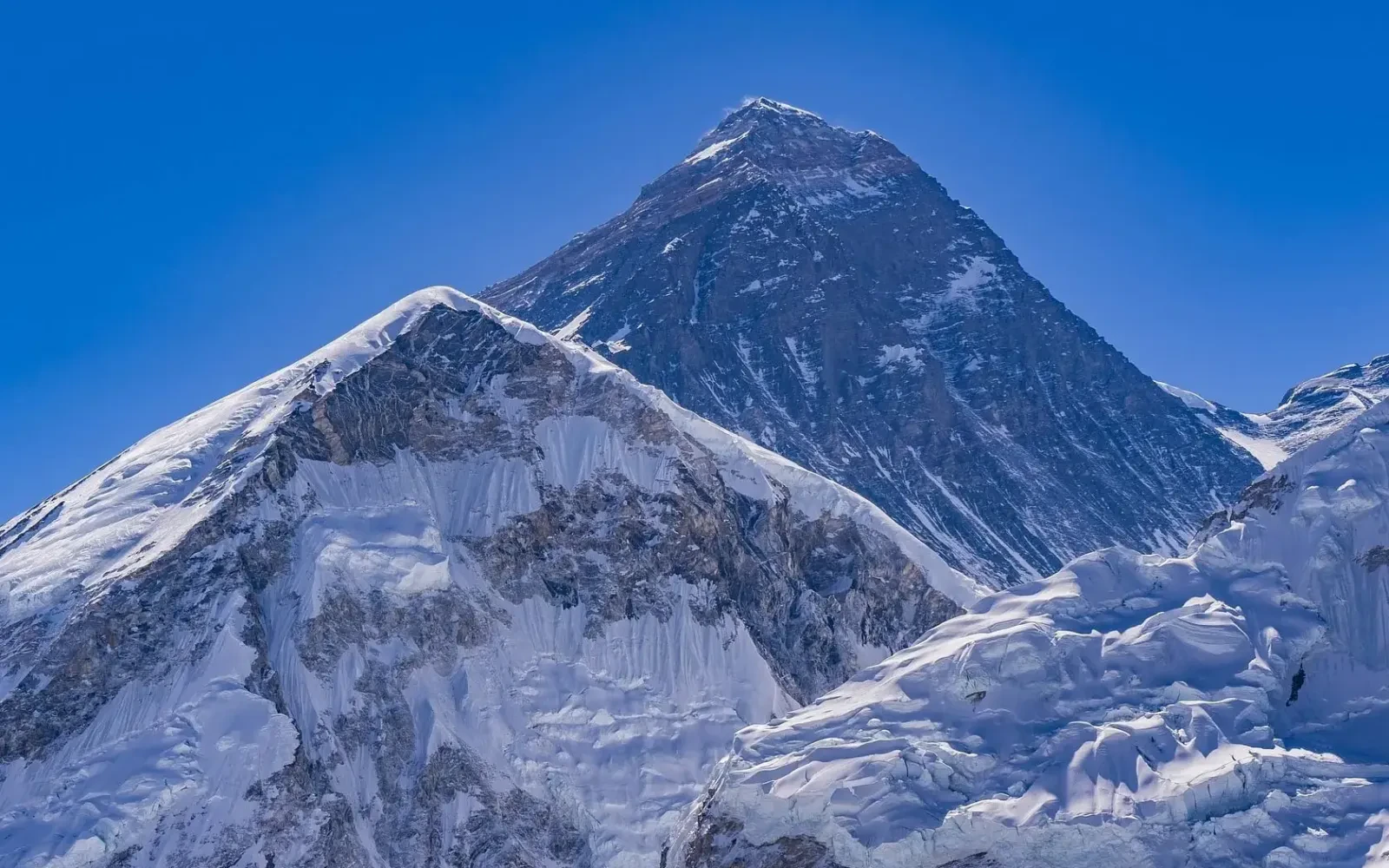
When you have your eyes set on the roof of the world, it's neither the steep gradient of the trail or the weight of your pack that you will have to challenge the most but rather it's the invisible and ceaseless thinness of the atmosphere that you must confront. In relation to the same environmental concern, it can never be taken as an optional step of preparation to scrutinize the detailed Everest Base Camp trek elevation chart as it will serve as the ultimate baseline of your secure and successful excursion.
Besides, the general altitude profile of this legendary trail is a dramatic display of steady elevation gain and hence it means you will have to face a brand new challenge physiologically every single day. Hence it has universally become one of the most important aspects of any journey to base camp with definite prediction and security to closely observe these changes in Khumbu region profile.
Core Altitude Changes of Khumbu Altitude Profile:
| Trail Checkpoint | Elevation (M)| Elevation (ft) | Main Impact of Atmosphere |
|---|---|---|
| Kathmandu Basin | 1,400 m | 4,593 ft | Baseline of your physical status at the sea-level. |
| Namche Bazaar Hub | 3,440 m | 11,286 ft | The designated checkpoint of high-altitude zone. |
| Dingboche Valley | 4,410 m | 14,468 ft | Significant decrease in oxygen levels, causes definite breathlessness. |
| Everest Base Camp | 5,364 m | 17,598 ft | About 50% of the air-density of the sea-level oxygen composition. |
| Kala Patthar Peak | 5,545 m | 18,192 ft | The maximum height you are going to gain on this trek. |
Like all classic Everest treks start at some point, even contemporary trekkers, with the advanced modern infrastructure now present, have an option to decide from where their journey to high alpine would begin. While on one hand flying brings a quick and direct jump, on the other hand the alternative of driving provides a smooth and low-elevation trek.
[Kathmandu Baseline: 1,400m]
Comparisons on Differences on Starting Point :
| Logistics Metrics | Flying route to Lukla | Overland route via Surke | Physiological gain |
|---|---|---|
| Starting elevation | 2,846 m (~9,337 ft) | 2,290 m (~7,513 ft) | 556m difference makes a smoother and more safe start. |
| Air density on the first day | 72% of sea-level | 78% of sea-level | Your lungs are sure to welcome the more dense air with more oxygen at Surke. |
| Immediate Trail dynamics | Direct descent to Phakding | Gradual climb up to valley | The wake up with a proper cardiovascular exercise at the Surke route seems better for your body than the lungs. |
| Weather dependence | Highly dependent | No weather dependence | This is where you make your trek plan and follow it without doubt and uncertainty. |
Rule of thumb for acclimatization: No matter which of these two options you choose; the golden rule that always has to be adhered to is that you always have to climb high during the day and sleep low during the night so that your body always has the chance to get adjusted to the reduced atmospheric pressure when you're high up, and it fully recovers its stamina while resting at the low altitude when you're down again.
All-inclusive package: Take away the stresses of deciding how and when to move from one place to another and planning it according to the acclimatization dynamics. Book your guided Everest Base Camp trek with Haven Holidays Pvt. Ltd. And the skilled local guides of the company are all ready to take care of all the tricky logistics so that you only focus on enjoying the amazing panorama. Contact us to craft your dream adventure to Everest Base Camp today!
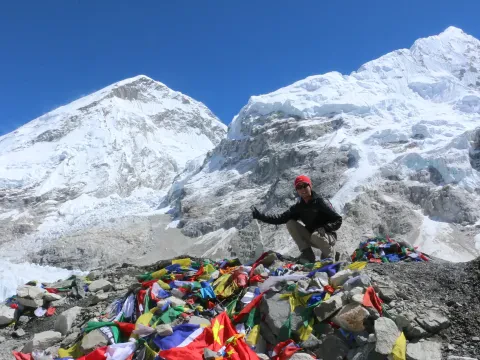
While the first day of your Everest Base Camp trek allows you a relatively easy, downward-going journey beside the rushing Dudh Koshi river, the second day will be the first day you truly feel the challenge of climbing a mountain. That climb is from a low of 2,610 m (~8,562 feet, the altitude of Phakding) to the stunning crescent-shaped market town of Namche Bazaar.
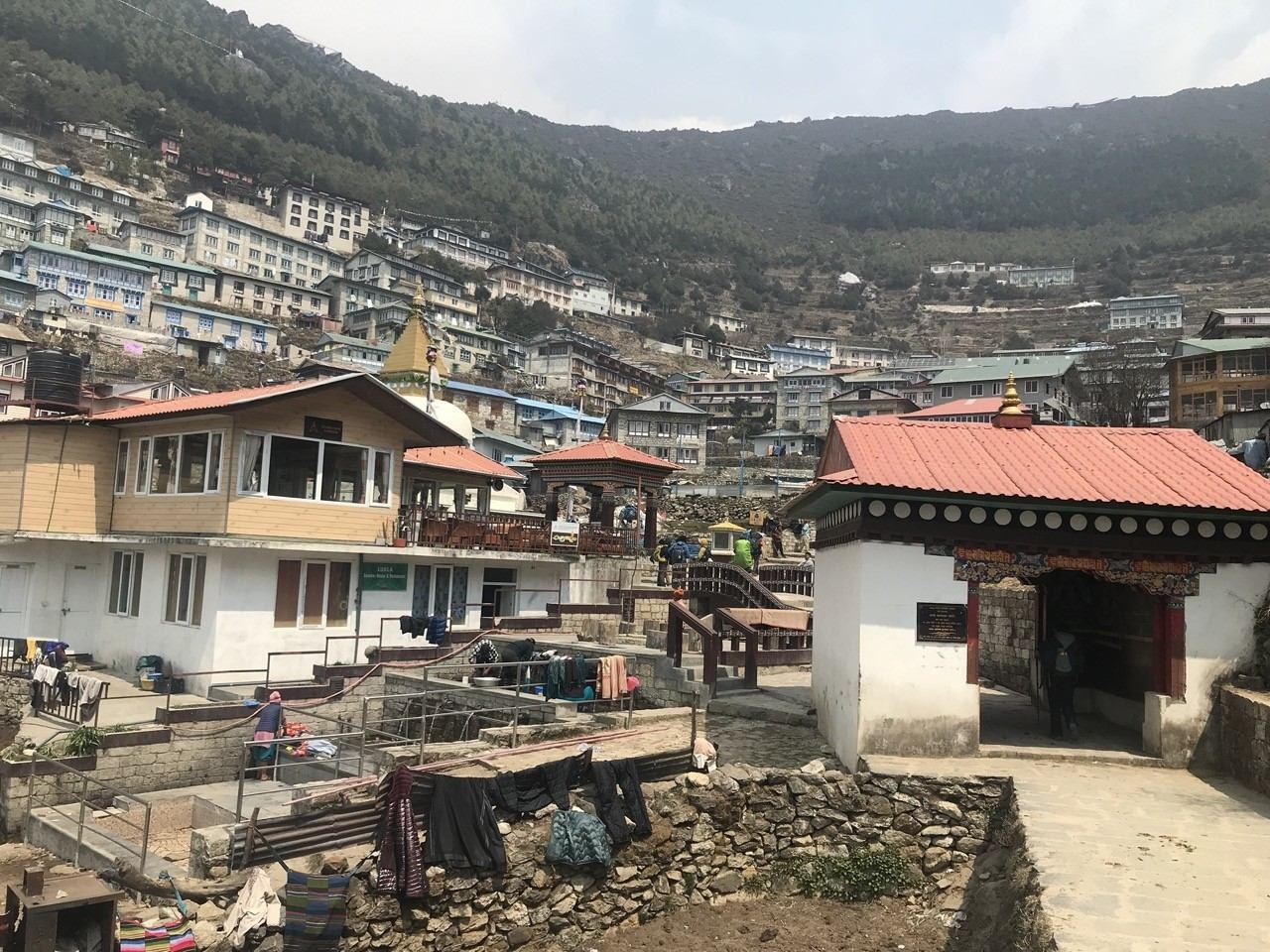
Likewise, for first-time trekkers, this particular segment of the hike is widely known as the steepest climb on the EBC trek as you climb up a sheer wall over the course of one afternoon.
The Challenges of Climbing to Namche Bazaar :
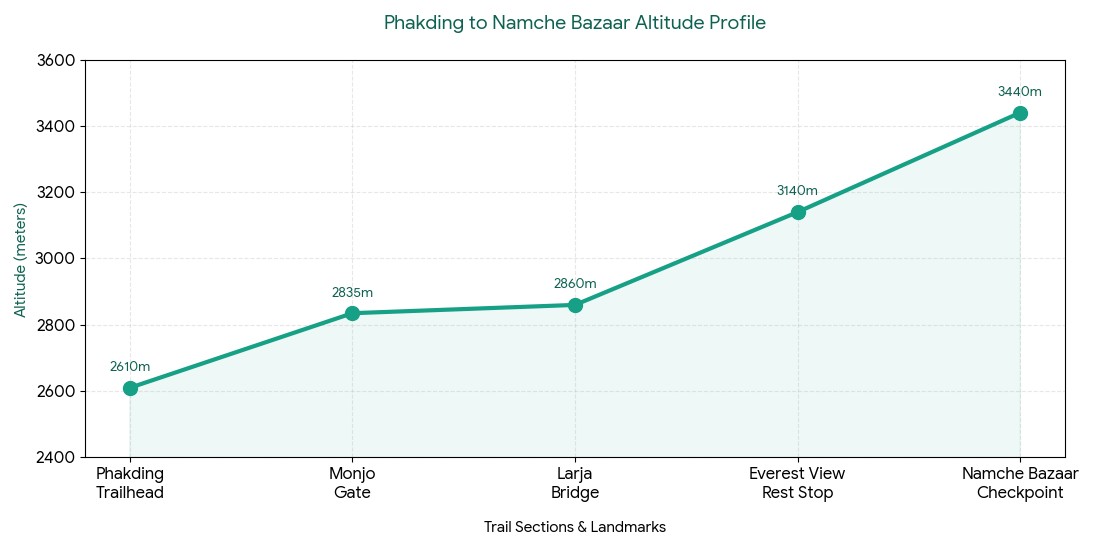
| Trail Section / Landmark | Altitude (m) | Altitude (ft) | Health & Trail Notes |
|---|---|---|
| Phakding Trailhead | 2,610 m | 8,562 ft | Breathable altitude; warm-up your muscles. |
| Monjo National Park Gate | 2,835 m | 9,301 ft | Permit check point; remember to hydrate before the bridge. |
| Larja High Bridge | 2,860 m | 9,383 ft | Your final lower altitude stop before the giant wall. |
| Everest View Resting Point | 3,140 m | 10,301 ft | Stop to catch your breath and view the distant peaks. |
| Namche Bazaar Checkpoint | 3,440 m | 11,286 ft | officially entering the high altitude zone. |
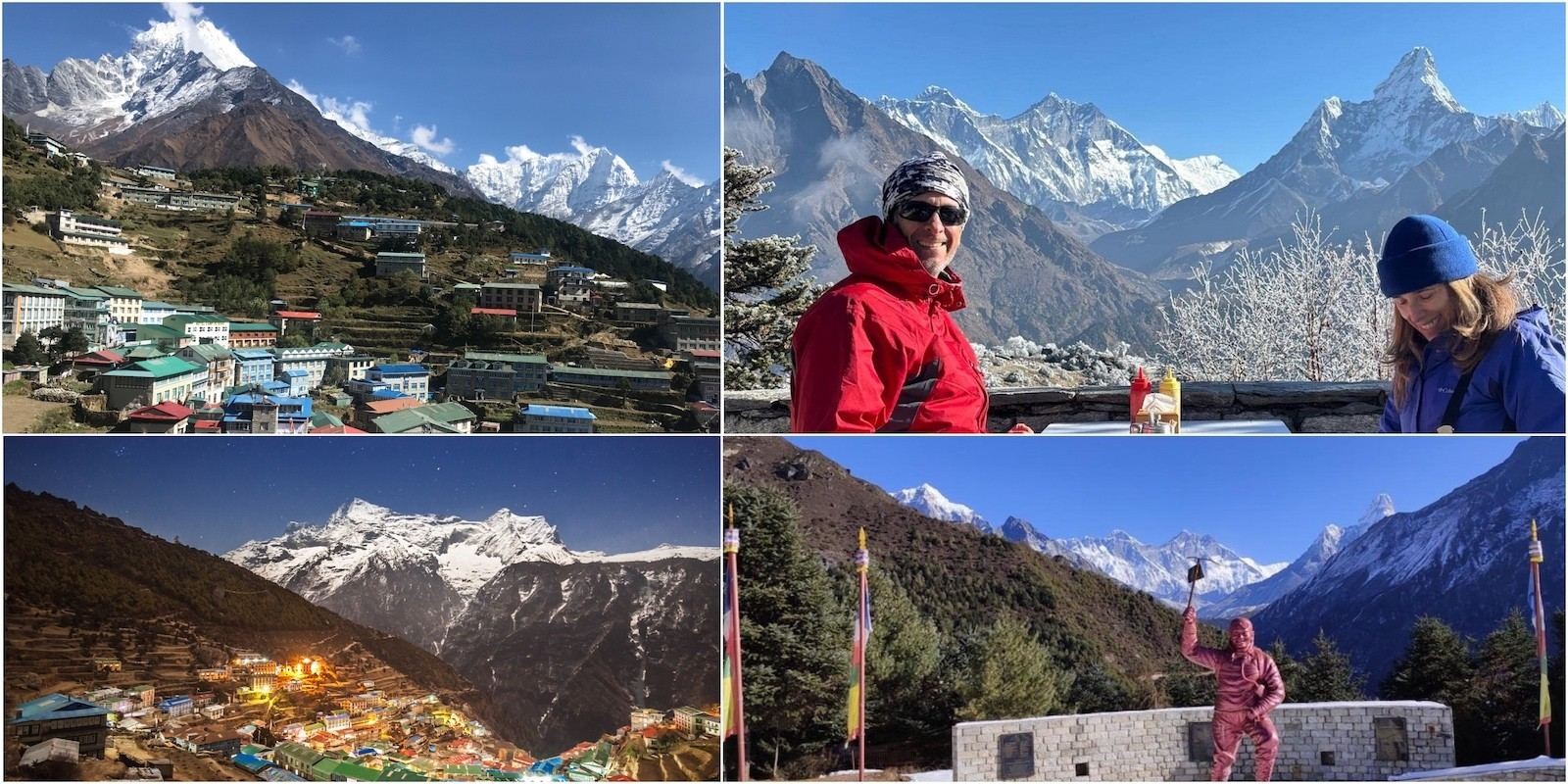
Actually, your body cannot instantly adjust to the lower levels of oxygen at over 3,000 m; charging straight through Namche Bazaar to a higher destination is a recipe for physical disaster. As such, a mandatory Namche Bazaar acclimatization day is not negotiable for beginners. This is the time that your body will secretly boost its oxygen-carrying capabilities by producing more red blood cells, making you that much stronger for the higher altitudes that lie ahead.
The Golden Strategy for Acclimatization :
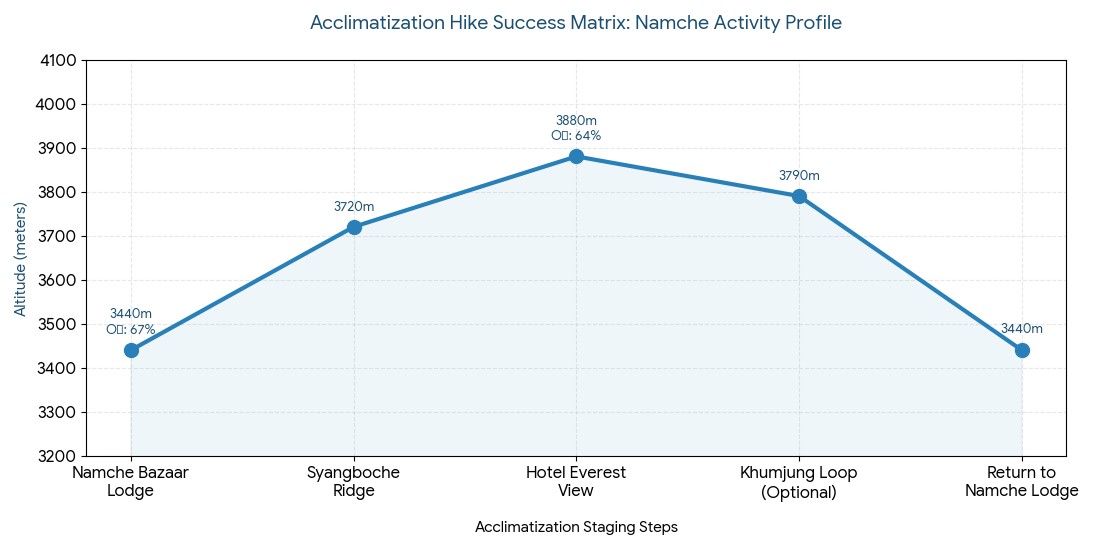
| Hike Destination | Altitude (m) | Altitude (ft) | How It Helps Your Body |
|---|---|---|
| Namche Bazaar Lodge | 3,440 m | 11,286 ft | Base rest zone (67% sea level oxygen). |
| Syangboche Ridge | 3,720 m | 12,204 ft | Initial workout to expand lungs (note: the trail gets very windy here!). |
| Hotel Everest View | 3,880 m | 12,730 ft | Highest altitude of the day (64% oxygen); will boost red cell production. |
| Khumjung Village Loop (Optional) | 3,790 m | 12,434 ft | Pleasant downhill cultural walk to visit the local monastery. |
| Return to Namche Lodge | 3,440 m | 11,286 ft | Effective recovery sleep; heart rate should be nicely stabilized. |
The Rule of Mountain Life: It doesn't matter where you start your Everest Base Camp trek, there is only one fundamental rule you must remember, the "golden rule": hike high sleep low. By making your body work at high altitude and then recuperate at a lower level at night, your cardiorespiratory system is able to function far more efficiently in the rarefied atmosphere of the Himalayas.
The Stress-Free Experience with Haven Holidays Pvt. Ltd.: Planning an adventure trekking to Everest Base Camp of this magnitude involves the complexities of managing your itinerary effectively at altitude. When you book your trip to the Himalayas with Haven Holidays Pvt. Ltd., these concerns will be eliminated. Our guided treks are designed and executed by local Sherpas and knowledgeable guides who possess an intimate understanding of high-altitude logistics, allowing you to fully immerse yourself in the stunning landscapes without worry. Contact our team today to plan your tailor-made Everest Base Camp adventure!
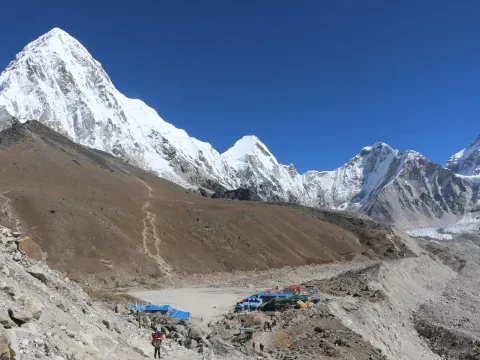
After successfully acclimating your body to the air pressure in the capital of the Sherpas, you will take another upward journey deep into the holy lands of the Khumbu-more precisely, the trail from Namche to Tengboche monastery involves a very dramatic undulating trajectory that begins on a very high, scenic walk far above the Dudh Koshi river, but soon dips steeply into the riverside village of Phunki Tenga (3,250 m / ~10,662 ft), from where you will need to recover everything, plus some, on an extremely tough climb up through lush pine and rhododendron forests
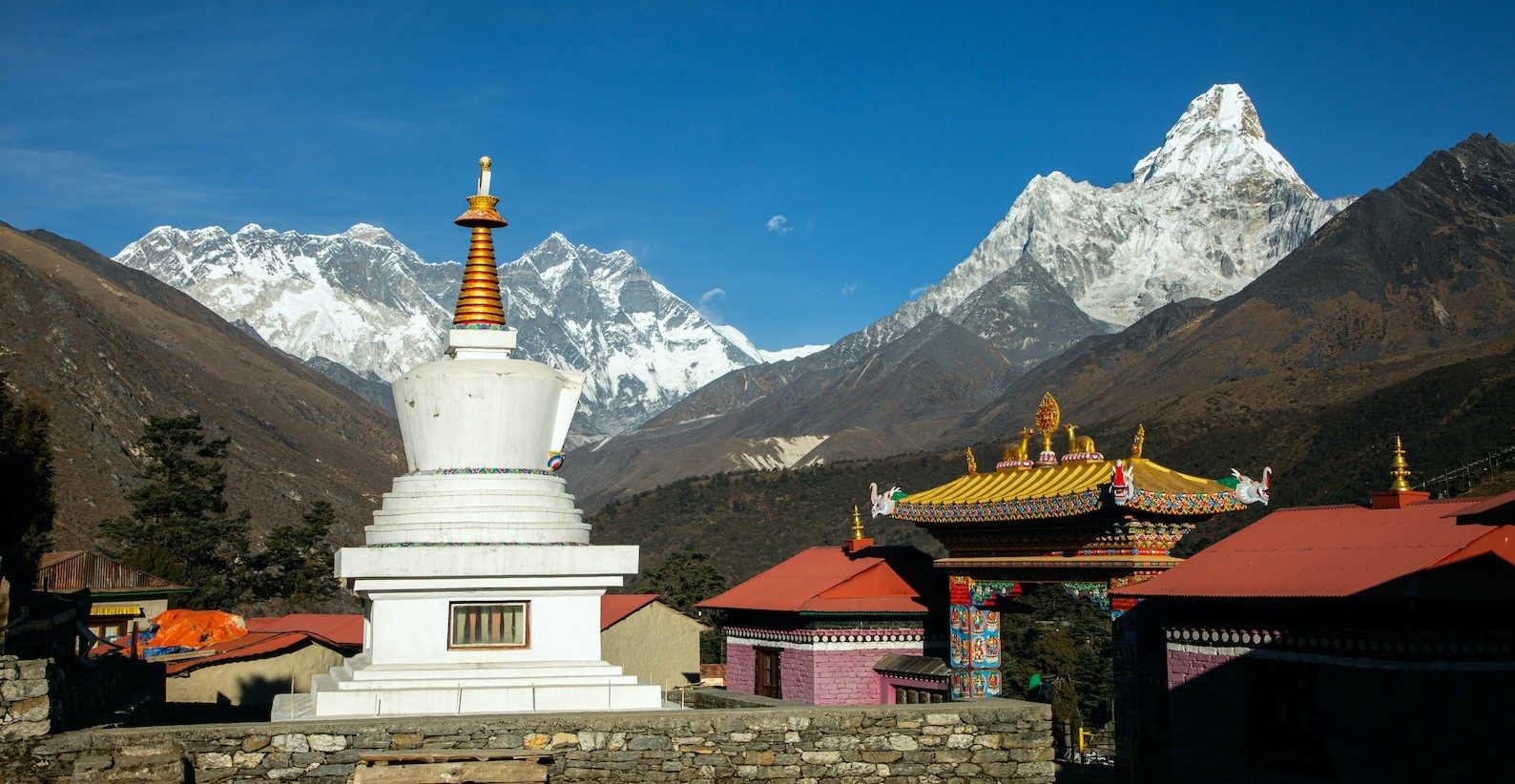
Landmarks of the Tengboche Ridge Ascent :
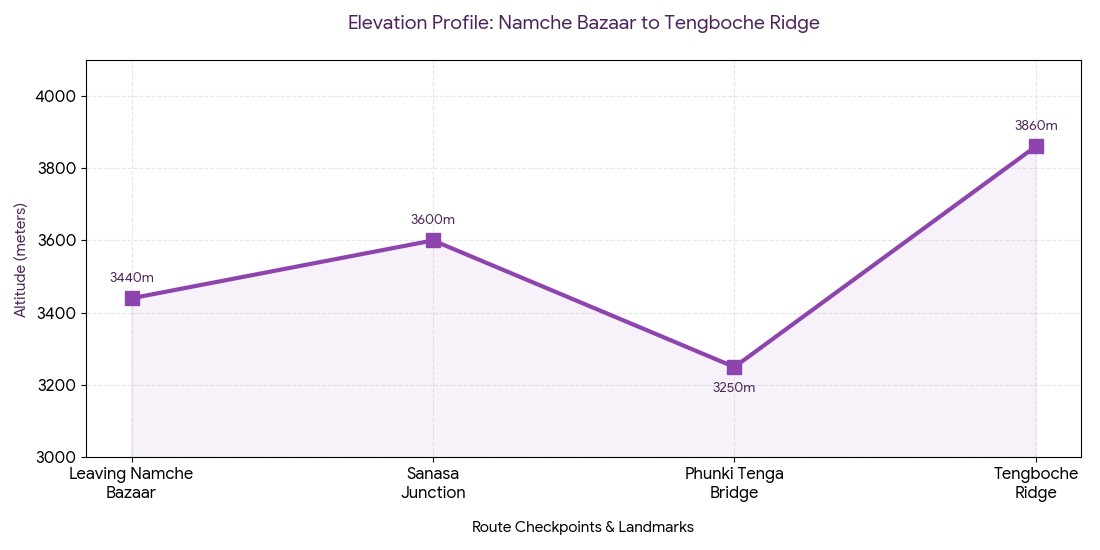
| Route Checkpoint / Landmark | Altitude in Meters | Altitude in Feet | Trail dynamics and tips |
|---|---|---|
| Leaving Namche Bazaar | 3,440 m | 11,286 ft | The trail is mostly a level walking section above a cliff; try to find a steady breathing rhythm. |
| Sanasa Junction | 3,600 m | 11,811 ft | The route diverges toward Gokyo; the path continues to the right toward Everest Base Camp. |
| Phunki Tenga Bridge | 3,250 m | 10,662 ft | the lowest elevation of the trek so far; ideal spot for lunch before starting the steep uphill climb. |
| Tengboche Ridge | 3,860 m | 12,664 ft | High Alpine ridge; put your down jacket on as soon as you reach this point. |
Leaving the trees behind, you will experience a noticeable change in the surroundings the next morning and finally be crossing the 4,000-meter frontier as you tread along the Imja valley trail which clearly demarcates the limit of lush greenery fading away into a stark, wind-swept high-altitude alpine desert. Furthermore, since the elevation of your ultimate destination is 4,410 m (~14,468 ft in Dingboche), this part of the journey requires considerable psychological adjustment as you prepare for several consecutive days above 4000m with no trees in sight.
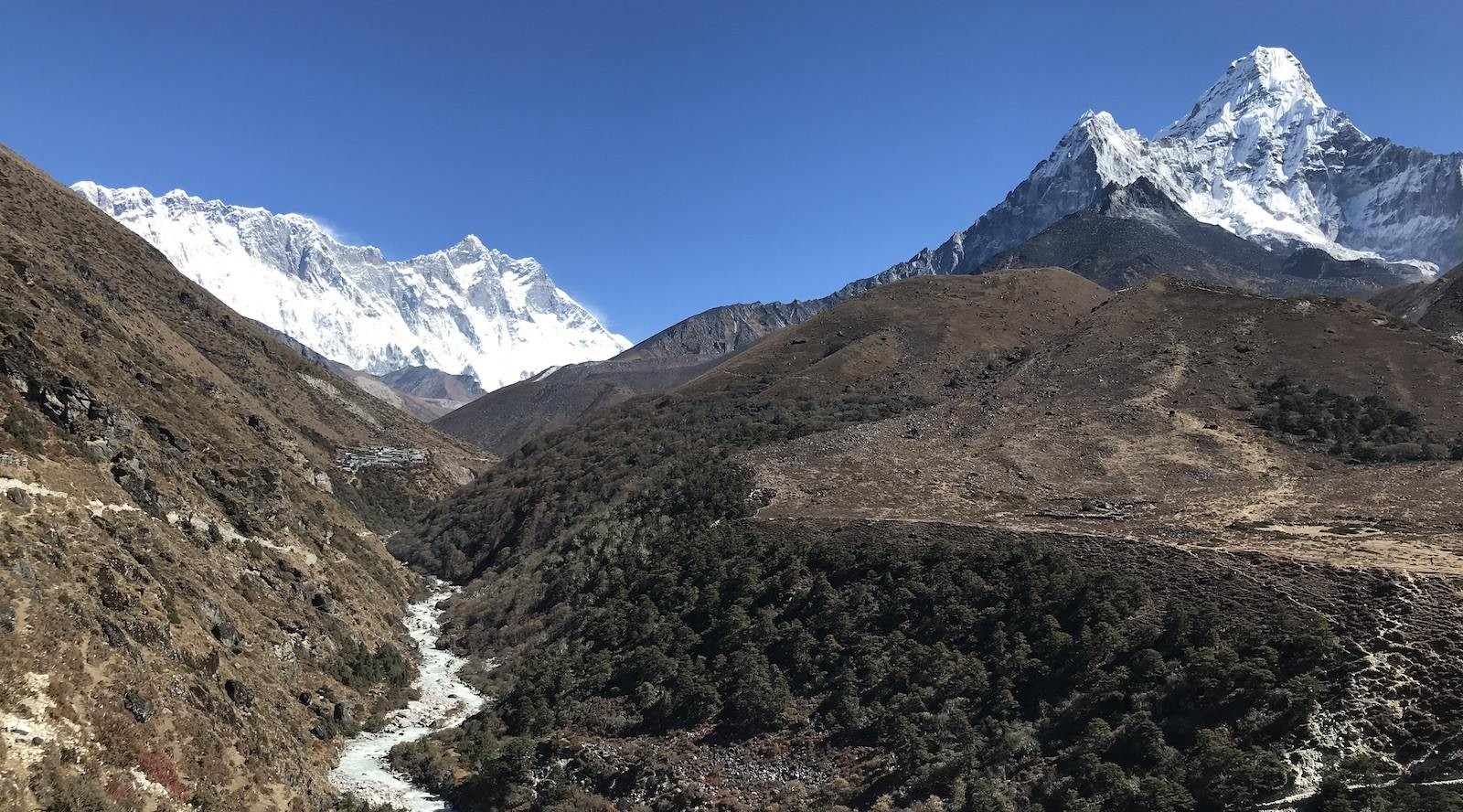
Environmental shifts at high altitude :
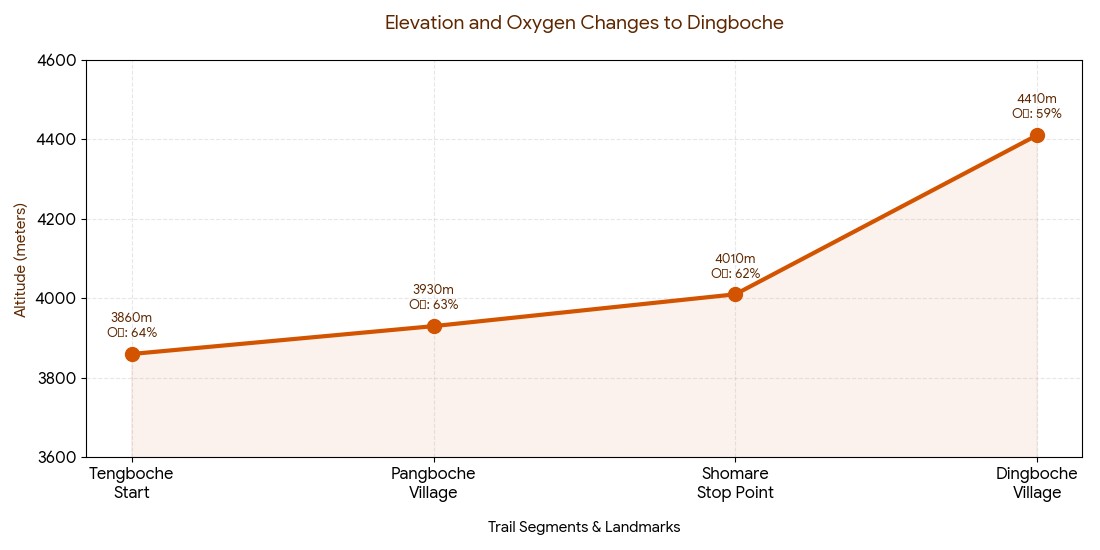
| Trail Segment / Landmark | Meters | Feet | Effective oxygen and surroundings |
|---|---|---|
| Tengboche Exit | 3,860 m | 12,664 ft | last stretch of forest cover before dropping down to cross river. |
| Pangboche Village | 3,930 m | 12,893 ft | last permanently inhabited village along the EBC route. |
| Shomare stop point | 4,010 m | 13,156 ft | official 4000m border crossed; you burn 30% more calories at this altitude. |
| Dingboche village | 4,410 m | 14,468 ft | High mountain valley; 59% of sea level oxygen. |
The Expert Guide to Acclimatization: Whatever route you decide on according to your own travel style, the cardinal rule of safe mountaineering stays unchanged: Climb high, sleep low. By pushing your body to high altitudes during acclimatization walks, you stimulate it to acclimatize to low pressure of oxygen, whereas returning to a lower altitude at night allows it to recuperate and recover.
Your Comprehensive Experience: When you plan your trip to the Himalayas like Everest Base Camp Trek with Haven Holidays Pvt. Ltd. You no longer have to deal with such complex route considerations. All of our itineraries are created by our team of highly experienced Sherpa and local guides who account for the subtleties of high-altitude logistics to guarantee that the route is always clear and safe to travel, thus allowing you to simply take in the magnificent mountain views. Get in touch with our team now to book your dream trip to Everest!
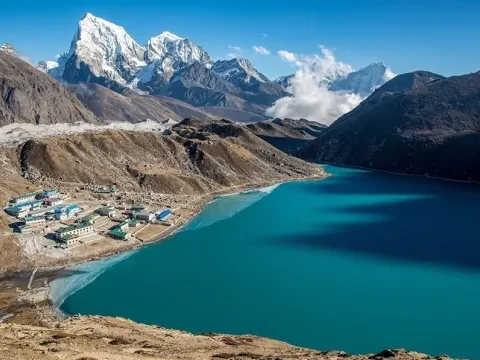
Because the 4,000-meter marker has been crossed, the previous day's rest in Namche is no longer sufficient to safely proceed up the trail. Taking a full Dingboche acclimatization day is essential before embarking upon the stark frozen moraines of the upper Khumbu glacier. During this vital pause, trekkers will ascend a strenuous side summit with the sole purpose of pushing the respiratory system through severe thin-air and initiating an inevitable high altitude adaptation response.
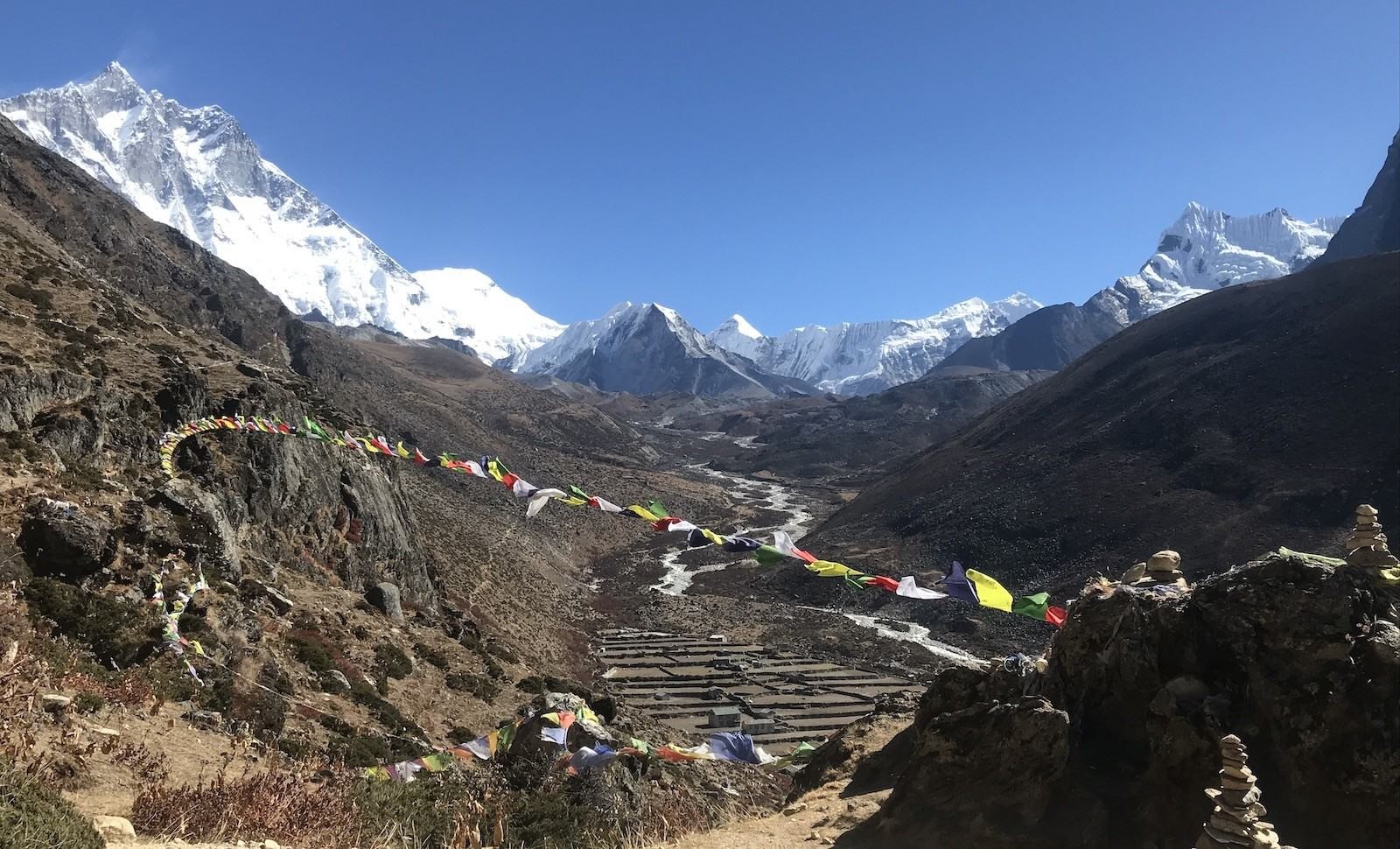
Driving The Physiological Process :
| High Alpine Target Point | Target Elevation(m) |Target Elevation(ft) | Connective Oxygen & Pacing Strategy |
|---|---|---|
| Dingboche Valley floor | 4,410 m | 14,468 ft | Base altitude where you will sleep tonight, remember to drink 4 liters of water! |
| Lower Ridge Viewpoint | 4,650 m | 15,255 ft | First sight of Pheriche valley, strong wind gusts will begin here |
| Mid-Mountain Plateau | 4,850 m | 15,912 ft | Critical zone for high altitude lung expansion; pause for 20 minutes. |
| Nangkartshang Summit | 5,083 m | 16,676 ft | Maximum day elevation; check out Makalu before the downward journey. |
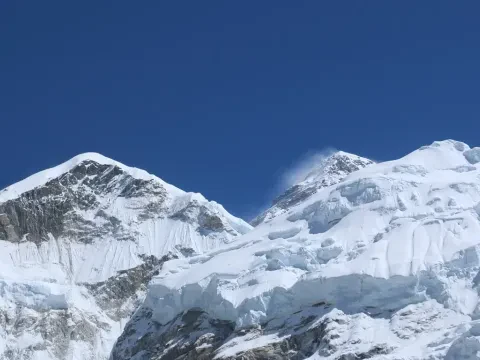
Here, your successful transition to the Dingboche valley altitude will allow you to march directly to the stark world high above the glacier. The path ahead is a wide and gradually increasing plain before spilling down into the river-town of Dughla (Thukla). It's the stretch just past the river crossing, however, where you will have to ascend the punishing and steep wall to the Thukla pass altitude of 4,830m (15,846ft)-an altitude that will simultaneously take your breath away and your mind on a reflective journey.
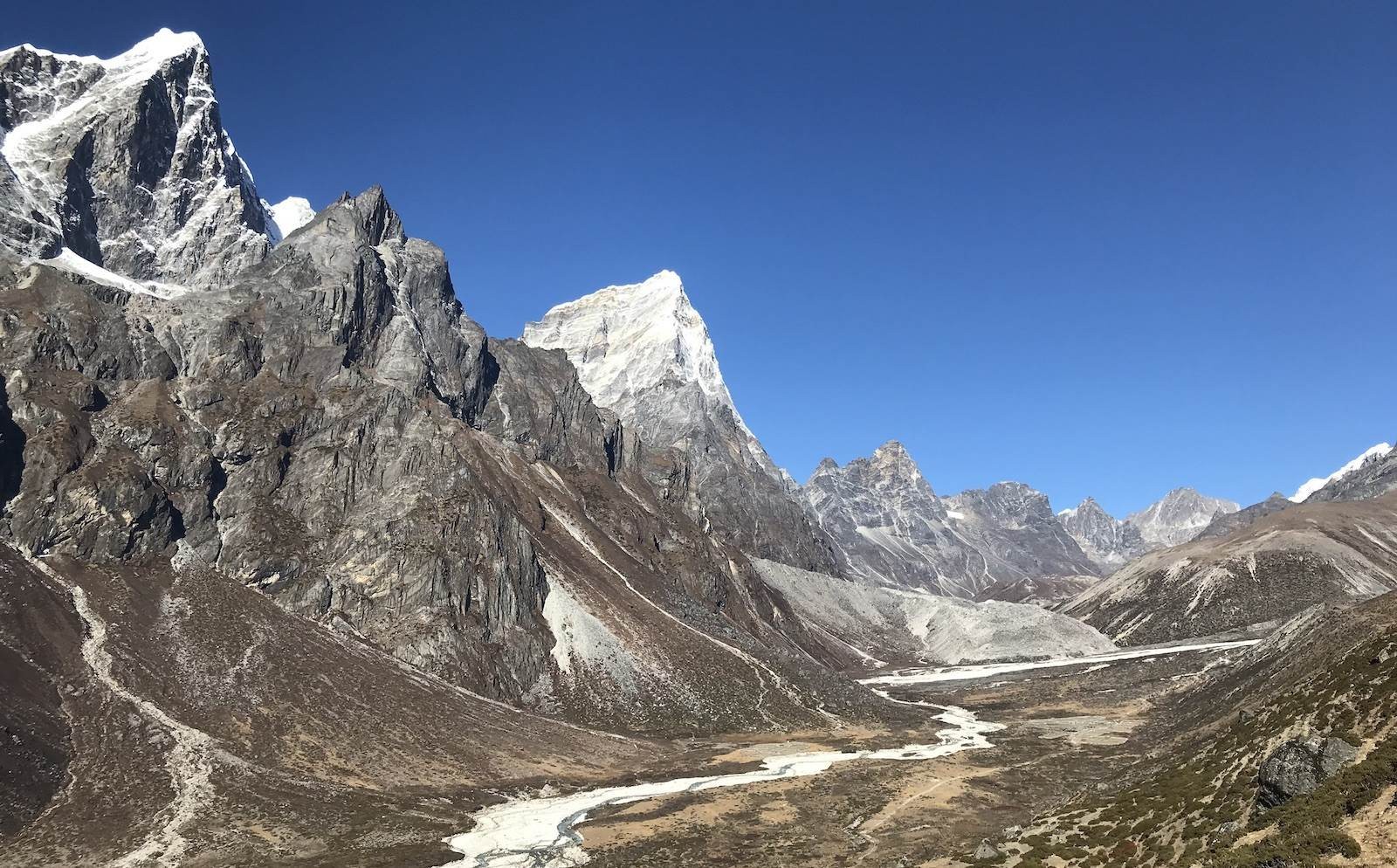
Navigating The High Glacial Moraine :
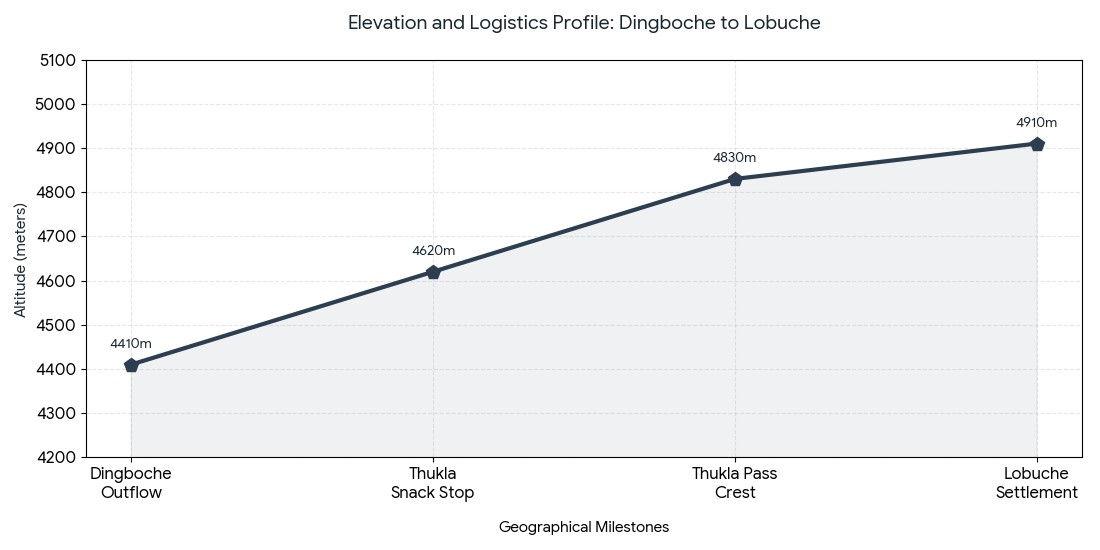
| Geographical Milestone | Precise Elevation(m) | Precise Elevation(ft) | Connective Terrain Challenges & Advice |
|---|---|---|
| Dingboche Outflow | 4,410 m | 14,468 ft | Easy and open path along the valley; use trekking poles for balance. |
| Thukla Snack Stop | 4,620 m | 15,157 ft | This is where the climb up the moraine begins; fuel with carbs. |
| Thukla Pass Crest | 4,830 m | 15,846 ft | The Memorial Zone; be sure to say some words in remembrance and allow your breathing to normalize. |
| Lobuche Settlement | 4,910 m | 16,108 ft | You will feel the severe cold here immediately; pull out your merino base layers for immediate use. |
The Expert Acclimatization Golden Rule: regardless of which starting variations suit your travel style, the golden rule for trekking in the mountains cannot be stressed enough: climb high and sleep low. By taking a rigorous acclimatization hike that sends you to higher elevations during the day your body will naturally acclimatize to thinner air but by returning to lower elevations where your body will repair itself you will build the stamina needed for each successive day in the Khumbu.
The Advantage of Pre-Planned Treks: When traveling with Haven Holidays Pvt. Ltd. You need not worry about the logistics of high altitude travel, as each expedition is guided by seasoned local experts. They create a safe, comfortable trekking experience, while allowing you to completely enjoy your trek; contact us today to plan your Himalayan adventure!
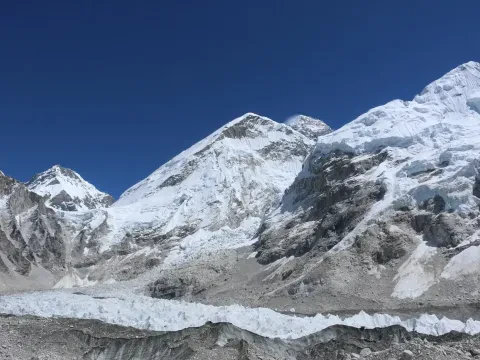
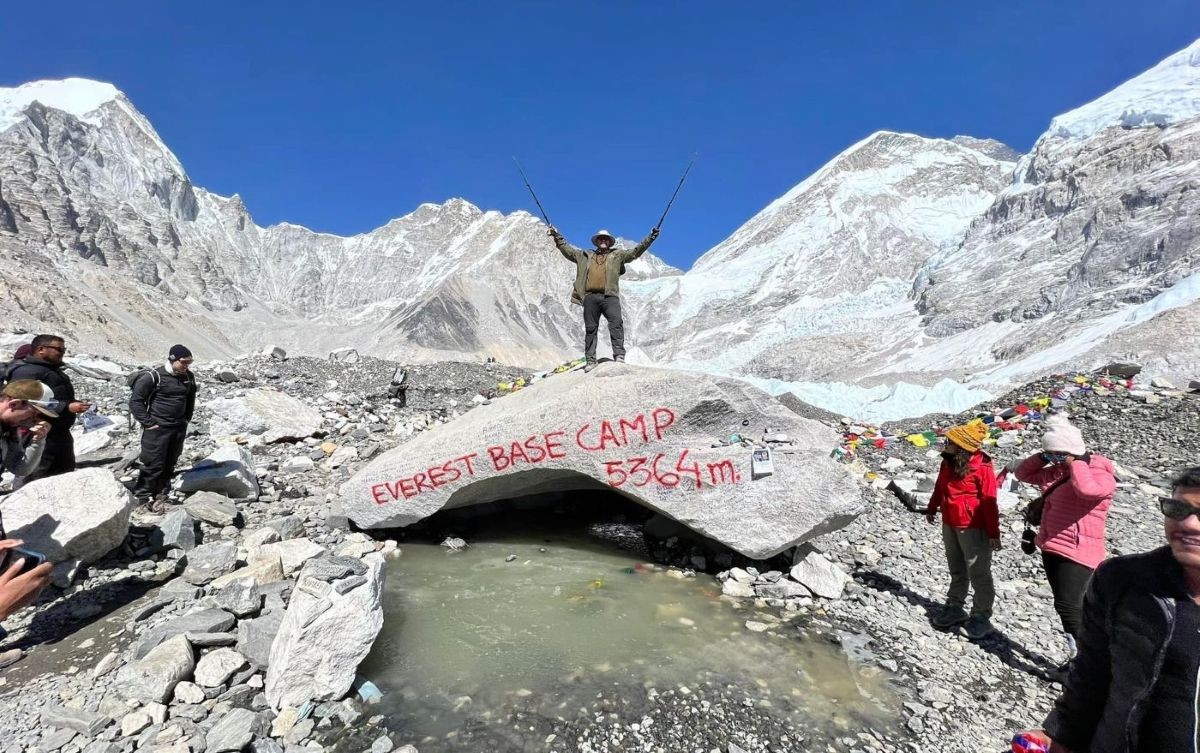
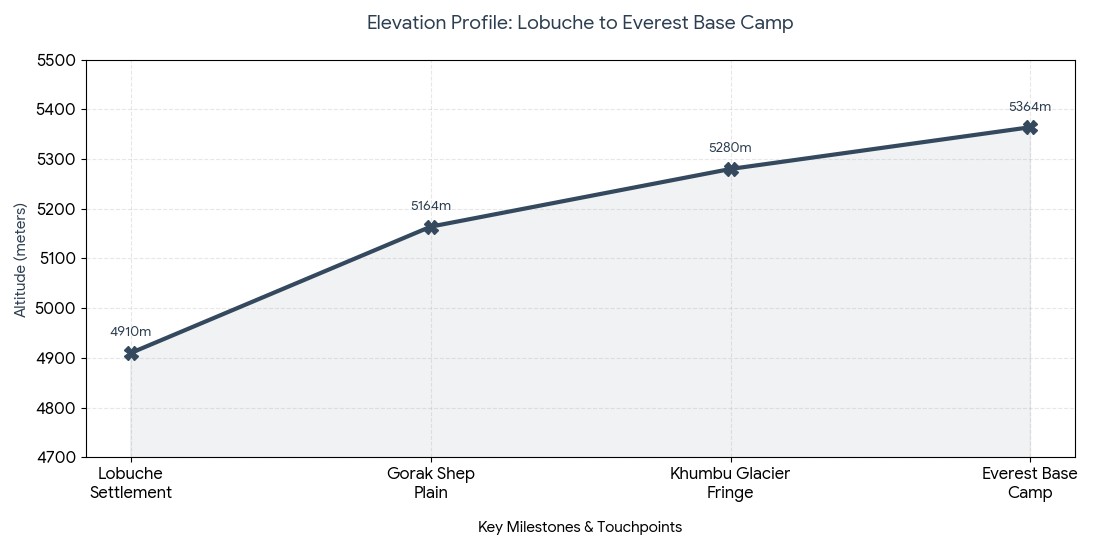
Here, your multi-day adventure trek will reach its climatic peak during an extremely arduous and physically taxing trek across the western edge of the Khumbu Glacier, culminating in Gorak Shep and ultimately Everest Base Camp itself. The section from Lobuche will involve trekking over a broken, rock-laden pathway winding along the side of a moraine, and due to the constant, rapid ups and downs over glacial debris and scree, it's widely regarded as one of the most challenging stretches of the entire trek. For that reason, reaching the barren final settlement of Gorak Shep is as much an emotional high as anything else, but it’s just the starting point for your real destination.
The final trek across the Khumbu moraine :
| Landmark/Point | Elevation (m) | Elevation (ft) | Physiological significance & Status |
|---|---|---|
| Lobuche Settlement | 4,910 m | 16,108 ft | Cold alpine conditions; oxygen density about 53% of sea level. |
| Gorak Shep Plain | 5,164 m | 16,942 ft | Formerly a frozen lakebed; last opportunity to hydrate before Base Camp. |
| Khumbu Glacier Fringe | 5,280 m | 17,322 ft | Unstable ground; be alert for falling rocks and ice. |
| Everest Base Camp | 5,364 m | 17,598 ft | Your Destination; oxygen density 50% of sea level. |
While Everest Base Camp is the main attraction, the camp is nestled within a basin making Everest’s peak entirely hidden behind the imposing bulk of Mount Nuptse. To catch a glimpse of the iconic vista, you'll have to push yourself that much further to climb the steep, black volcanic ridge directly behind Gorak Shep, ideally pre-dawn.
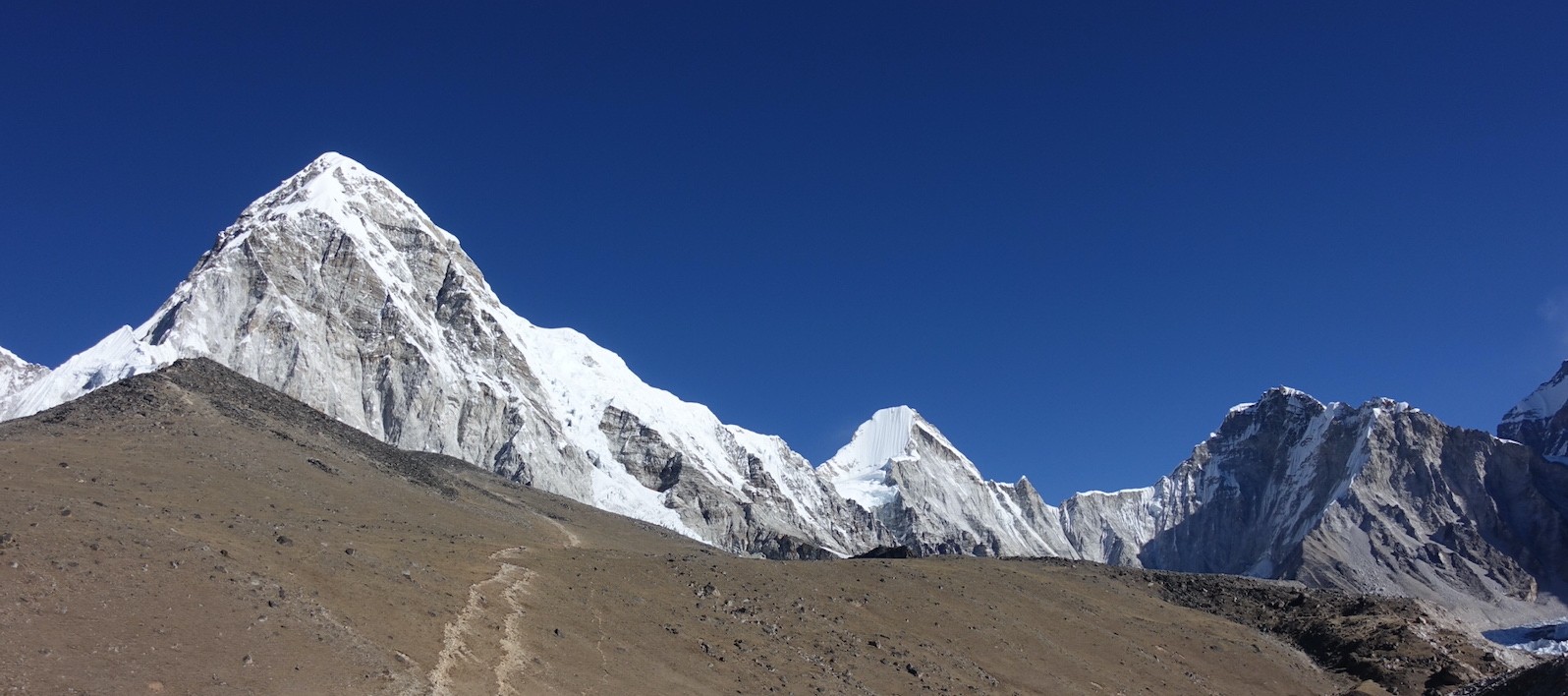
Climbing the highest point of your trek :
The Summit Point: Ascending this windswept ridge will bring you to the Kala Patthar summit at 5,545 m (18,192 ft), the absolute highest point on the EBC trek.
Slow pace up: As the oxygen density is less than half of what it is at sea level, you’ll have to take extremely slow, measured steps all the way up to the summit to avoid dizzy spells.
Sunrise spectacle: Upon reaching the peak as the sun begins to rise, it’s rewardingly spectacular as it bathes Mount Everest in golden hues during an unbelievable sunrise over the mountain.
Khumbu panoramic view: From this vantage point, you’ll have the chance to see the entire geographical profile of the Khumbu Icefall, the massive summit of Lhotse, and Everest’s stark, wind-blasted southwest face.
| Viewpoint on Kala Patthar | Elevation (m) | Elevation (ft) | Oxygen Levels and Tips |
|---|---|---|
| Gorak Shep Start Point | 5,164 m | 16,942 ft | Departure before dawn; temperatures can drop as low as -15 C. |
| Midway Ridge plateau | 5,350 m | 17,552 ft | Strong winds; keep your extremities warm, and your breathing steady. |
| Intermediate Viewpoint | 5,460 m | 17,913 ft | Enjoy the view of Mount Pumori on your left and maintain rhythmic breathing. |
| Kala Patthar Summit | 5,545 m | 18,192 ft | Do not exceed 20 minutes to prevent hypothermia; you have reached the highest point! |
The Law of Acclimatization: No matter which option suits you best, the overarching principle when hiking high mountains is "Climb high, sleep low." By taking hikes to higher elevations throughout your afternoon, you can give your body time to adjust to the lower pressure at higher altitudes, while descending back to sleep at a lower elevation allows your body to rest and recover properly before the next day.
All-Included trekking: With Haven Holidays Pvt. Ltd., planning your trek is easy. Our seasoned guides plan out everything based on the volatile logistics of high-altitude trekking, ensuring that the trip proceeds smoothly and without incident so you can focus solely on the magnificent landscapes of the Himalayas. Contact us today to customize your dream trek to Everest!
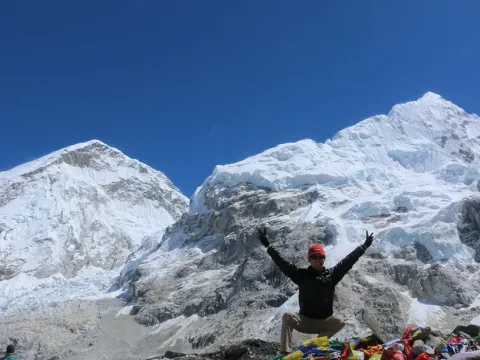
Above 3,000 meters (9,842 feet), your body’s physiological response to the thinning atmosphere becomes a critical issue, essentially a matter of survival. The most important skill any trekker needs to bring to the trail is recognizing the initial altitude sickness symptoms EBC in themselves and their fellow trekkers, because AMS can affect anyone regardless of fitness level.
Here, ignoring the minor warning signals can rapidly lead to a life-threatening condition like HAPE (High Altitude Pulmonary Edema) or HACE (High Altitude Cerebral Edema), making strict adherence to the safety protocols a mandatory practice for everyone on the team.
Initial Symptoms and Advanced Warning Signs :
Standard Medical Interventions :
| Severity Level | Observable Physical Symptoms | Immediate Trail Action Required | Medical / Pharmaceutical Protocol |
|---|---|---|
| Mild AMS | Headache, fatigue, light dizziness, loss of appetite | Halt all upward progress; rest at current teahouse for 24 hours. | Increase hydration (4-5L); consider Diamox (125mg doses). |
| Moderate AMS | Vomiting, severe headache, shortness of breath | Immediate supervised descent (500-1,000 vertical meters) | Supplemental bottled oxygen; Ibuprofen for headache. |
| Severe (HAPE/HACE) | Disorientation, bubbly breath, ataxia | Immediate emergency evacuation to a lower altitude | High-flow oxygen, dexamethasone/nifedipine (if available); call for rescue chopper. |
Understanding and mastering the vertical dynamics of the Khumbu region is the ultimate key to transforming your potentially perilous expedition into a triumphant alpine adventure. Whether you embark on a fast-paced journey via the typical flight or a more leisurely EBC overland route, your success will be entirely determined by your unwavering commitment to ascending slowly and deliberately. By choosing a thoughtful Everest Base Camp itinerary planning guide that respects your body’s biological limitations, you will ensure that your memories of Base Camp are filled with awe and triumph rather than pain and discomfort.
Crafting Your Perfect Vertical Journey :
Comparing Routes: When evaluating your EBC trek altitude breakdown, keep in mind that the overland route from Surke offers two to three extra days of low-altitude trekking, which provides an excellent physiological preparation for the challenging ascent to Namche Bazaar.
The Retention Principle: It is wise to save or screenshot a summary of the elevations, so you can easily compare your daily vertical gain to your pulse oximeter readings.
Professional Guidance: Ultimately, successfully managing these vast vertical shifts relies on the watchful eyes of experienced guides who can monitor subtle changes in your breathing, heart rate, and energy levels.
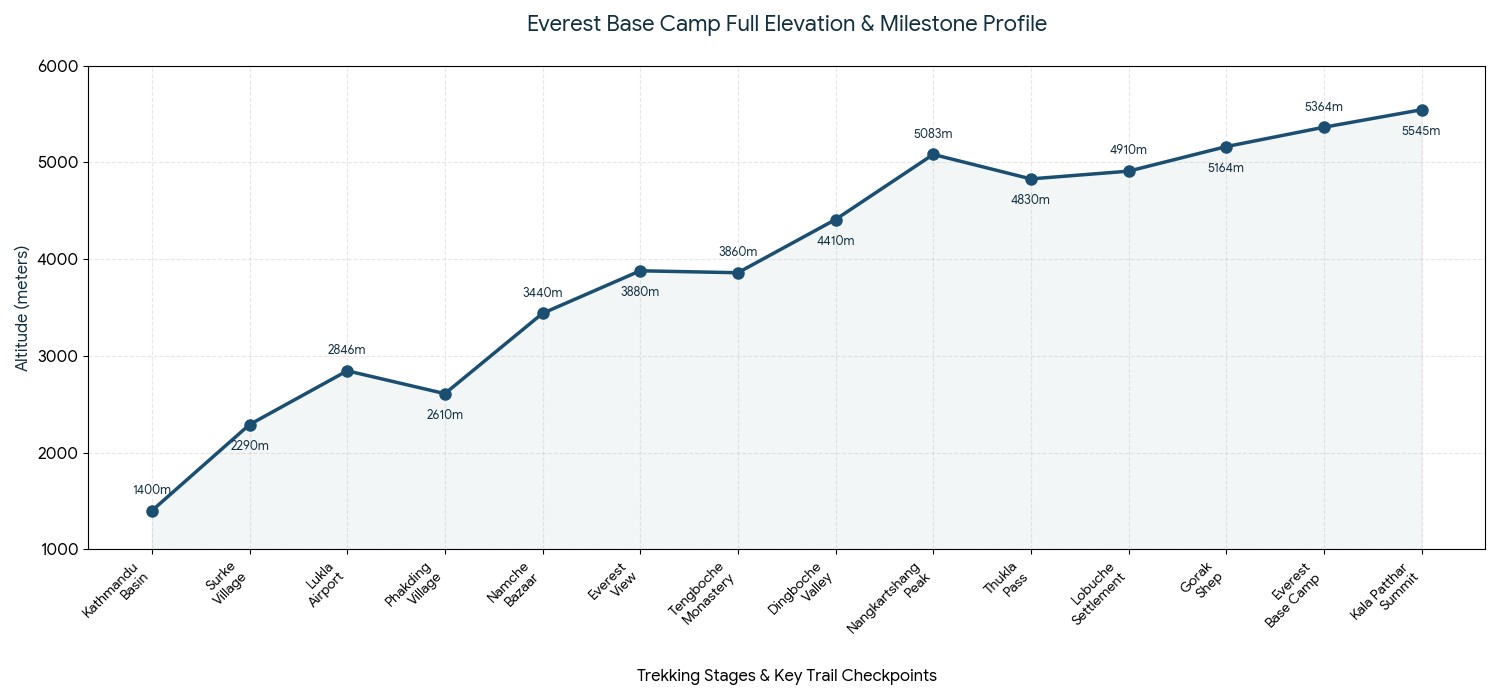
| Trekking Stage / Day | Key Trail Checkpoint | Metric Altitude (m) | Imperial Elevation (ft) | Core Acclimatization Function |
|---|---|---|
| The Baseline Start | Kathmandu Basin | 1,400 | 4,593 | Preparation, gear fitting, routing briefings. |
| Overland Trailhead | Surke Valley Village | 2,290 | 7,513 | Gradual entry, builds red blood cells naturally. |
| Aviation Trailhead | Lukla Airport | 2,846 | 9,337 | Direct flight; significant immediate altitude shift. |
| Lower Valley Stop | Phakding Village | 2,610 | 8,562 | Overnight stay for breathing stabilization. |
| The Alpine Gateway | Namche Bazaar Hub | 3,440 | 11,286 | Entry to high altitude; 48-hour mandatory rest. |
| Active Acclimatization | Hotel Everest View | 3,880 | 12,730 | "Hike High, Sleep Low" excursion. |
| Spiritual Ridge Line | Tengboche Monastery | 3,860 | 12,664 | Ridge crossing above the treeline. |
| The 4,000m Frontier | Dingboche Valley | 4,410 | 14,468 | Alpine desert; second rest period begins. |
| Thin Air Side Summit | Nangkartshang Peak | 5,083 | 16,676 | Acclimatization climb before the glacier. |
| Glacial Gateway | Thukla Pass Crest | 4,830 | 15,846 | Steep ascent past climbers' memorial. |
| The High Outpost | Lobuche Settlement | 4,910 | 16,108 | Final sub-zero camp before the moraine. |
| The Final Base | Gorak Shep Flat | 5,164 | 16,942 | Highest permanent lodge outpost; extremely low oxygen. |
| The Core Destination | Everest Base Camp | 5,364 | 17,598 | The Ultimate Goal; celebration on the glacier. |
| The Maximum Peak | Kala Patthar Summit | 5,545 | 18,192 | Highest point of the trek; panoramic views. |
The Expert Acclimatization Rule: Regardless of your chosen starting route, always remember the cardinal rule of mountain safety: Climb high, sleep low. Your afternoon acclimatization hikes to a higher elevation prompt your body to adjust to lower oxygen levels, while sleeping at a lower altitude allows for optimal recovery and building stamina for the days ahead.
1. What is the beginning elevation on the Everest Base Camp trek?
The classic Everest Base Camp trek altitude profile starts from Lukla airport, an elevation of 2,860 meters (9,383 feet). From Lukla the trail begins to descend steeply to Phakding at 2,610 meters to give trekkers an easier introductory phase to the Khumbu region.
2. What is the maximum Everest Base Camp trek altitude?
The peak altitude on a standard Everest Base Camp trek itinerary is the summit of Kala Patthar at an altitude of 5,550 meters (18,208 feet). The Everest Base Camp viewpoint is slightly lower at 5,364 meters, but Kala Patthar is always chosen as the preferred viewpoint for sunrise due to unobstructed views of Mount Everest.
3. How intense is the altitude variation from Namche Bazaar climb?
The Everest Base Camp trek altitude profile and vertical gradient between Jorsalle (2,740m) and Namche Bazaar (3,440m) causes a huge vertical ascent and is perhaps the first strenuous rise in altitude. You ascend 700 meters up the dusty Khumbu terrain from the riverbed to the village of Namche.
4. Why are rest days essential on Everest Base Camp treks?
An appropriate Everest Base Camp trek itinerary schedules mandatory rest days at Namche Bazaar (3,440m) and Dingboche (4,410m) where trekkers may ascend only 300-500 meters during the day and descend at night. These vertical variations give your body essential time to make more red blood cells and avoid Acute Mountain Sickness.
5. What is the elevation of Tengboche Monastery during an EBC trek?
Tengboche Monastery stands at 3,860 meters (12,664 feet) above sea level. The Everest Base Camp trek altitude profile and its elevations during this section include a dramatic drop down into the Imja Khola valley, followed by a sustained and grueling 600 meter climb up to the monastery through thick rhododendron forests on the ridges.
6. Does the altitude profile flatten after Dingboche?
No, the Everest Base Camp trek altitude profile changes to a noticeably steadier upward incline after Dingboche (4,410m). You will continue to climb to Lobuche (4,910m) and then to Gorak Shep (5,140m) over moraine and the Thukla Pass to eventually arrive at your trek destination, but as you leave the treeline, the climb becomes significantly steeper at every turn.
7. What is the altitude profile for reaching Everest Base Camp?
From the high-altitude glacial lakebed at Gorak Shep (5,140m), you will hike across lateral moraine, loose scree, and undulating glaciers for approximately 3.5 kilometers until you reach Everest Base Camp at 5,364 meters, before hiking back up to sleep in Gorak Shep.
8. What is the change in oxygen levels on an EBC trek?
Oxygen levels decrease with altitude; at sea level you are exposed to 100% oxygen concentration, at Namche Bazaar (3,440m) it will be approximately 67%, and by the time you reach Everest Base Camp (5,364m) you will be exposed to just 50% oxygen.
9. Can altering the Everest Base Camp trek itinerary avoid altitude sickness?
While no journey completely eliminates altitude sickness risks, a slow and methodical Everest Base Camp trek itinerary that prioritizes climbing no more than 500 vertical meters a day over 3,000 meters is essential to let your body adapt to the sharp changes in altitude.
10. What is the elevation gain from Lobuche to Gorak Shep?
The final push from Lobuche (4,910m) to Gorak Shep (5,140m) consists of an additional 230 meters of altitude gain. However, before reaching Lobuche, trekkers are confronted by a steep ascent through the infamous Thukla Pass, contributing greatly to the difficulty of the day.
11. Is Gorak Shep the highest lodging point on the Everest Base Camp trek?
Yes, with a startling altitude of 5,140 meters (16,863 feet), Gorak Shep offers the highest altitude sleeping arrangements on the Everest Base Camp trek. However, the elevation can disturb your sleep, so proper hydration remains crucial.
12. How much is high altitude travel insurance for EBC?
Standard travel insurance policies will not cover incidents related to the extreme elevations involved in an Everest Base Camp trek; you will need specialist high altitude insurance for medical helicopter evacuations up to 6,000 meters, costing approximately $150 to $250 USD in addition to your other trekking expenses.
13. What does the altitude profile look like when descending on an EBC trek?
The return leg of the Everest Base Camp trek altitude profile will feature a steep descent in elevation from Gorak Shep (5,140m) all the way down to Pheriche (4,240m) or Pangboche (3,980m). This will result in a welcome increase in your oxygen levels.
14. What are the symptoms of altitude sickness when trekking?
Failing to adjust to the severe altitudes experienced throughout the Everest Base Camp trek altitude profile will lead to Acute Mountain Sickness. Initial symptoms include loss of appetite, nausea, a throbbing headache, and lightheadedness. The only effective treatment is immediate descent to lower altitudes.
15. What is "climb high sleep low" on the EBC trek?
This core practice of acclimatization during an Everest Base Camp trek itinerary is to deliberately ascend to a higher altitude than where you will sleep, then return. For example, trekking up to the Everest View hotel (3,880m) while sleeping in Namche Bazaar (3,440m).
16. How does altitude variation affect EBC trek difficulty?
The Everest Base Camp trek altitude profile and its severe elevation changes are by far the main cause of its reputation as a difficult hike; hiking 130 kilometers is not challenging enough in itself, but hiking the distance over an altitude variation that climbs to 5,550 meters will challenge anyone's cardio.
17. Are there altitude sickness treatment facilities along the Everest Base Camp trek route?
Yes, there are well established altitude sickness clinics at Pheriche (4,240m) where highly specialized international doctors offer treatment. There is also a rescue station in Manjo, the only facility at a relatively lower elevation which can treat acute sickness.
18. Does drinking water help combat the EBC trek altitude profile?
Drinking a large amount of purified water is vital to overcoming the challenges of the Everest Base Camp trek altitude profile. Losing so much moisture at such high elevations may dry you out rapidly, affecting the volume of your blood, and potentially giving you headaches, so drinking four to five liters of water daily is absolutely necessary.
19. Is it possible to avoid the Everest Base Camp trek altitude profile using a helicopter tour?
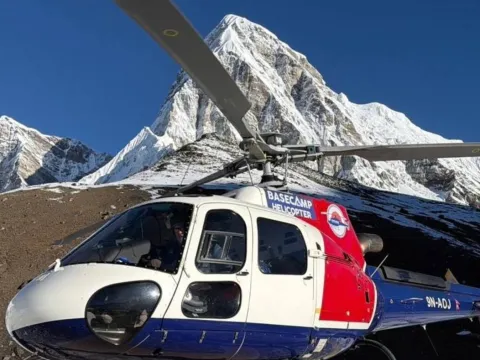
For those who wish to view Mount Everest but are apprehensive about the challenging Everest Base Camp trek difficulty, there are alternative Everest helicopter tours which fly you directly from Kathmandu and provide incredible panoramic views of Everest and surrounding Himalayan peaks while also offering landing on the famous Kala Patthar.
Our travel experts are ready to assist you with any questions.
Send us a message.Have a question before you book? Send your enquiry below and our travel experts will get back with the required information.