[{"name":"Everest Base Camp Helicopter Tour","duration":"1","image_url":"https:\/\/www.havenholidaysnepal.com\/storage\/trip-galleries\/1\/thumb_6cd53005d75a86e373d31419d1b14d78.webp","offer_price":1195,"url":"https:\/\/www.havenholidaysnepal.com\/trips\/everest-base-camp-helicopter-tour"},{"name":"Everest Mountain Flight","duration":"1","image_url":"https:\/\/www.havenholidaysnepal.com\/storage\/trip-galleries\/4\/thumb_3b0b4f1d6f72b0ad224daf4752f2c6e0.jpg","offer_price":285,"url":"https:\/\/www.havenholidaysnepal.com\/trips\/everest-mountain-flight"},{"name":"Everest Short Trek","duration":"9","image_url":"https:\/\/www.havenholidaysnepal.com\/storage\/trip-galleries\/5\/thumb_BXPP3621.JPEG0.02033800 1727957098.webp","offer_price":995,"url":"https:\/\/www.havenholidaysnepal.com\/trips\/everest-short-trek"},{"name":"Gokyo Valley Trek","duration":"12","image_url":"https:\/\/www.havenholidaysnepal.com\/storage\/trip-galleries\/6\/thumb_10bc469b14731f23d3ce84a7092ad53f.jpg","offer_price":1195,"url":"https:\/\/www.havenholidaysnepal.com\/trips\/gokyo-valley-trek"},{"name":"15 days Annapurna Base Camp Trek","duration":"15","image_url":"https:\/\/www.havenholidaysnepal.com\/storage\/trip-galleries\/7\/thumb_87d1533bc45faf070990aef0579e4be4.jpg0.81855100 1728285496.webp","offer_price":785,"url":"https:\/\/www.havenholidaysnepal.com\/trips\/15-days-annapurna-base-camp-trek"},{"name":"Nepal Pilgrimage Tour","duration":"14","image_url":"https:\/\/www.havenholidaysnepal.com\/storage\/trip-galleries\/8\/thumb_02c3bcf2ad2e8a4c1703e90ae747b5f1.jpg","offer_price":1475,"url":"https:\/\/www.havenholidaysnepal.com\/trips\/nepal-pilgrimage-tour"},{"name":"UNESCO World Heritage Site Tour","duration":"10","image_url":"https:\/\/www.havenholidaysnepal.com\/storage\/trip-galleries\/9\/thumb_unesco-world-heritage-site-Lumbani-temple-buddhists-hindus-kathmandu-nepal0.36988600 17347617740.93089500 1737469667.webp","offer_price":715,"url":"https:\/\/www.havenholidaysnepal.com\/trips\/unesco-world-heritage-site-tour"},{"name":"Island Peak Climbing","duration":"16","image_url":"https:\/\/www.havenholidaysnepal.com\/storage\/trip-galleries\/11\/thumb_Island peak0.53947000 1734692503.webp","offer_price":2495,"url":"https:\/\/www.havenholidaysnepal.com\/trips\/island-peak-climbing"},{"name":"Upper Mustang Trek","duration":"18","image_url":"https:\/\/www.havenholidaysnepal.com\/storage\/trip-galleries\/12\/thumb_upper mustang 7 Oct-2024.jpg0.95398900 1728286166.webp","offer_price":2995,"url":"https:\/\/www.havenholidaysnepal.com\/trips\/upper-mustang-trek"},{"name":"Annapurna Circuit Trek","duration":"16","image_url":"https:\/\/www.havenholidaysnepal.com\/storage\/trip-galleries\/15\/thumb_tibetan-flags.jpg0.04843900 1728289138.webp","offer_price":985,"url":"https:\/\/www.havenholidaysnepal.com\/trips\/annapurna-circuit-trek"},{"name":"Gosainkunda Lake Trek","duration":"10","image_url":"https:\/\/www.havenholidaysnepal.com\/storage\/trip-galleries\/16\/thumb_5A8083B3-C007-41A8-853F-D0C37C97D235_1_105_c.jpeg0.52581200 1731845258.webp","offer_price":595,"url":"https:\/\/www.havenholidaysnepal.com\/trips\/gosainkunda-lake-trek"},{"name":"Zip-lining in Pokhara and Dhulikhel","duration":"1","image_url":"https:\/\/www.havenholidaysnepal.com\/storage\/trip-galleries\/18\/thumb_215f765e2ebc995dd5c800b4bfdbacc3.jpg","offer_price":82,"url":"https:\/\/www.havenholidaysnepal.com\/trips\/zip-lining-in-pokhara-and-dhulikhel"},{"name":"Annapurna Heli Tour","duration":"1","image_url":"https:\/\/www.havenholidaysnepal.com\/storage\/trip-galleries\/19\/thumb_d71a6bbb9fd4da8d1b567a5cdbdec85d.jpg","offer_price":555,"url":"https:\/\/www.havenholidaysnepal.com\/trips\/annapurna-heli-tour"},{"name":"Paragliding in Pokhara","duration":"1","image_url":"https:\/\/www.havenholidaysnepal.com\/storage\/trip-galleries\/20\/thumb_de788d2dd9726783431f882c007efae1.jpg","offer_price":65,"url":"https:\/\/www.havenholidaysnepal.com\/trips\/paragliding-in-pokhara"},{"name":"Ultra-Flight in Pokhara","duration":"1","image_url":"https:\/\/www.havenholidaysnepal.com\/storage\/trip-galleries\/21\/thumb_e27a9fb572a5c21611bb2a3c18e4b8f0.jpeg","offer_price":175,"url":"https:\/\/www.havenholidaysnepal.com\/trips\/ultra-flight-in-pokhara"},{"name":"Sarangkot Hiking","duration":"1","image_url":"https:\/\/www.havenholidaysnepal.com\/storage\/trip-galleries\/22\/thumb_100ef822fea19987166c6c1366215f15.jpg","offer_price":55,"url":"https:\/\/www.havenholidaysnepal.com\/trips\/sarangkot-hiking"},{"name":"Mera Peak Climbing","duration":"18","image_url":"https:\/\/www.havenholidaysnepal.com\/storage\/trip-galleries\/24\/thumb_d16ae3895f678cf26ffbf2455f541fb5.jpg0.31883400 1732617790.webp","offer_price":2475,"url":"https:\/\/www.havenholidaysnepal.com\/trips\/mera-peak-climbing"},{"name":"Lower Dolpo Trek","duration":"18","image_url":"https:\/\/www.havenholidaysnepal.com\/storage\/trip-galleries\/26\/thumb_Dolpo Galary - 1.JPG0.37725200 1727939952.webp","offer_price":2995,"url":"https:\/\/www.havenholidaysnepal.com\/trips\/lower-dolpo-trek"},{"name":"Nagarkot Sunrise\/Sunset Tour","duration":"1","image_url":"https:\/\/www.havenholidaysnepal.com\/storage\/trip-galleries\/27\/thumb_5147a5532644283a380f2e86f3857c13.jpg0.17748000 1728488108.webp","offer_price":30,"url":"https:\/\/www.havenholidaysnepal.com\/trips\/nagarkot-sunrise-sunset-tour"},{"name":"16 day Everest Base Camp Trek","duration":"16","image_url":"https:\/\/www.havenholidaysnepal.com\/storage\/trip-galleries\/28\/thumb_IMG_4311.JPG0.64984800 1727942213.webp","offer_price":1695,"url":"https:\/\/www.havenholidaysnepal.com\/trips\/16-day-everest-base-camp-trek"},{"name":"Ghorepani Poon Hill trek with Jungle Safari and Trishuli River Rafting -13 days","duration":"13","image_url":"https:\/\/www.havenholidaysnepal.com\/storage\/trip-galleries\/29\/thumb_Ghorepani Poon hill.jpg0.48460800 1728281439.webp","offer_price":795,"url":"https:\/\/www.havenholidaysnepal.com\/trips\/ghorepani-poon-hill-trek-with-jungle-safari-and-trishuli-river-rafting--13-days"},{"name":"Mardi Himal Trek","duration":"12","image_url":"https:\/\/www.havenholidaysnepal.com\/storage\/trip-galleries\/30\/thumb_s1.jpg0.62112600 1728200721.webp","offer_price":795,"url":"https:\/\/www.havenholidaysnepal.com\/trips\/mardi-himal-trek"},{"name":"Langtang Valley Trekking","duration":"10","image_url":"https:\/\/www.havenholidaysnepal.com\/storage\/trip-galleries\/31\/thumb_IMG_4702.JPG0.84916500 1727958504.webp","offer_price":685,"url":"https:\/\/www.havenholidaysnepal.com\/trips\/langtang-valley-trekking"},{"name":"Real Adventure Tour in Nepal","duration":"9","image_url":"https:\/\/www.havenholidaysnepal.com\/storage\/trip-galleries\/32\/thumb_ebd1b8cc78d90abe8b9003dd9a2f25bf.jpg0.82151300 1728213516.webp","offer_price":695,"url":"https:\/\/www.havenholidaysnepal.com\/trips\/real-adventure-tour-in-nepal"},{"name":"Luxury Tour in Nepal","duration":"10","image_url":"https:\/\/www.havenholidaysnepal.com\/storage\/trip-galleries\/33\/thumb_8574e61b252b18676b042caf30d830df.jpg","offer_price":1675,"url":"https:\/\/www.havenholidaysnepal.com\/trips\/luxury-tour-in-nepal"},{"name":"Luxury Everest Panorama Trek With EBC Heli Sightseeing","duration":"8","image_url":"https:\/\/www.havenholidaysnepal.com\/storage\/trip-galleries\/34\/thumb_URZL2397.JPEG0.01209600 1728027820.webp","offer_price":2395,"url":"https:\/\/www.havenholidaysnepal.com\/trips\/luxury-everest-panorama-trek-with-ebc-heli-sightseeing"},{"name":"13 day Everest Base Camp Trek with Helicopter","duration":"13","image_url":"https:\/\/www.havenholidaysnepal.com\/storage\/trip-galleries\/35\/thumb_IMG_4292.JPG0.70131500 1728029276.webp","offer_price":2095,"url":"https:\/\/www.havenholidaysnepal.com\/trips\/13-day-everest-base-camp-trek-with-helicopter"},{"name":"Manaslu Circuit Trek","duration":"16","image_url":"https:\/\/www.havenholidaysnepal.com\/storage\/trip-galleries\/36\/thumb_Mt Manaslu 03-Oct-2024.jpg0.65804900 1727938470.webp","offer_price":1055,"url":"https:\/\/www.havenholidaysnepal.com\/trips\/manaslu-circuit-trek"},{"name":"Kanchenjunga Base Camp Trek","duration":"21","image_url":"https:\/\/www.havenholidaysnepal.com\/storage\/trip-galleries\/37\/thumb_Kanchanjunga Trek -!.jpg0.54744400 1727938497.webp","offer_price":2275,"url":"https:\/\/www.havenholidaysnepal.com\/trips\/kanchenjunga-base-camp-trek"},{"name":"Ganesh Himal and Sing-La Trek","duration":"14","image_url":"https:\/\/www.havenholidaysnepal.com\/storage\/trip-galleries\/38\/thumb_Ganesh Himal slider-1.jpg0.43764500 1727937722.webp","offer_price":1775,"url":"https:\/\/www.havenholidaysnepal.com\/trips\/ganesh-himal-and-sing-la-trek"},{"name":"Island Peak Climb with Everest Base Camp Trek","duration":"21","image_url":"https:\/\/www.havenholidaysnepal.com\/storage\/trip-galleries\/39\/thumb_2be428730fe83525bc85a010564f99de.jpg","offer_price":2750,"url":"https:\/\/www.havenholidaysnepal.com\/trips\/island-peak-climb-with-everest-base-camp-trek"},{"name":"Students' Adventure Tour in Nepal","duration":"12","image_url":"https:\/\/www.havenholidaysnepal.com\/storage\/trip-galleries\/41\/thumb_a926d22fbfe08cba271c41ac289b3fd2.jpg","offer_price":995,"url":"https:\/\/www.havenholidaysnepal.com\/trips\/students-adventure-tour-in-nepal"},{"name":"7 Day Poonhill Trek","duration":"7","image_url":"https:\/\/www.havenholidaysnepal.com\/storage\/trip-galleries\/42\/thumb_6196bd69036473293a2c24cc21ed57d7.jpg0.10880600 1728205378.webp","offer_price":555,"url":"https:\/\/www.havenholidaysnepal.com\/trips\/7-day-poonhill-trek"},{"name":"7 Days Annapurna Base Camp Trek","duration":"7","image_url":"https:\/\/www.havenholidaysnepal.com\/storage\/trip-galleries\/43\/thumb_IMG_2214.JPG0.08204900 1728202033.webp","offer_price":355,"url":"https:\/\/www.havenholidaysnepal.com\/trips\/7-days-annapurna-base-camp-trek"},{"name":"3 days Poonhill Trek","duration":"3","image_url":"https:\/\/www.havenholidaysnepal.com\/storage\/trip-galleries\/44\/thumb_Poon hill.jpg0.60816600 1731412954.webp","offer_price":165,"url":"https:\/\/www.havenholidaysnepal.com\/trips\/3-days-poonhill-trek"},{"name":"Poon Hill Luxury Trek with Chitwan-12 days","duration":"12","image_url":"https:\/\/www.havenholidaysnepal.com\/storage\/trip-galleries\/45\/thumb_Poom hill.jpg0.52074500 1730180532.webp","offer_price":1175,"url":"https:\/\/www.havenholidaysnepal.com\/trips\/poon-hill-luxury-trek-with-chitwan-12-days"},{"name":"Everest Luxury Trek-7 days","duration":"7","image_url":"https:\/\/www.havenholidaysnepal.com\/storage\/trip-galleries\/46\/thumb_ACRX9330.JPEG0.93236200 1728031275.webp","offer_price":2195,"url":"https:\/\/www.havenholidaysnepal.com\/trips\/everest-luxury-trek-7-days"},{"name":"Hindu Pilgrimage Tour in Nepal-10 days","duration":"10","image_url":"https:\/\/www.havenholidaysnepal.com\/storage\/trip-galleries\/47\/thumb_a94bf96a4d31decb419f6f828a3280d2.jpg","offer_price":995,"url":"https:\/\/www.havenholidaysnepal.com\/trips\/hindu-pilgrimage-tour-in-nepal-10-days"},{"name":"Everest Base Camp Short Trek-12 days","duration":"12","image_url":"https:\/\/www.havenholidaysnepal.com\/storage\/trip-galleries\/48\/thumb_IMG_4311.JPG0.52680100 1727945154.webp","offer_price":995,"url":"https:\/\/www.havenholidaysnepal.com\/trips\/everest-base-camp-short-trek-12-days"},{"name":"Everest Base Camp Hike 12 Days","duration":"12","image_url":"https:\/\/www.havenholidaysnepal.com\/storage\/trip-galleries\/49\/thumb_IMG_4260.JPG0.51729100 1728061234.webp","offer_price":1295,"url":"https:\/\/www.havenholidaysnepal.com\/trips\/everest-base-camp-hike-12-days"},{"name":"11 Days Everest Base Camp Trek","duration":"11","image_url":"https:\/\/www.havenholidaysnepal.com\/storage\/trip-galleries\/50\/thumb_IMG_4249.JPG0.21392500 1727946959.webp","offer_price":1055,"url":"https:\/\/www.havenholidaysnepal.com\/trips\/11-days-everest-base-camp-trek"},{"name":"6 Days Annapurna Base Camp Trek","duration":"6","image_url":"https:\/\/www.havenholidaysnepal.com\/storage\/trip-galleries\/51\/thumb_6 days Abc.jpg0.58185400 1728200798.webp","offer_price":285,"url":"https:\/\/www.havenholidaysnepal.com\/trips\/6-days-annapurna-base-camp-trek"},{"name":"Annapurna Base Camp Trek","duration":"8","image_url":"https:\/\/www.havenholidaysnepal.com\/storage\/trip-galleries\/52\/thumb_IMG_2214.JPG0.29415700 1729487656.webp","offer_price":585,"url":"https:\/\/www.havenholidaysnepal.com\/trips\/annapurna-base-camp-trek"},{"name":"Everest Base Camp Trek with Helicopter Fly Out 10 Days","duration":"10","image_url":"https:\/\/www.havenholidaysnepal.com\/storage\/trip-galleries\/53\/thumb_IMG_4328.JPG0.52056600 1728058444.webp","offer_price":1875,"url":"https:\/\/www.havenholidaysnepal.com\/trips\/everest-base-camp-trek-with-helicopter-fly-out-10-days"},{"name":"Everest Base Camp Trek 14 Days","duration":"14","image_url":"https:\/\/www.havenholidaysnepal.com\/storage\/trip-galleries\/54\/thumb_Everest Base Camp Trek 14 days Oct 3 2024.JPG0.43202700 1727939745.webp","offer_price":1335,"url":"https:\/\/www.havenholidaysnepal.com\/trips\/everest-base-camp-trek-14-days"},{"name":"ABC Trek with Poonhill 11 Days","duration":"11","image_url":"https:\/\/www.havenholidaysnepal.com\/storage\/trip-galleries\/55\/thumb_ABC with fishtail.JPG0.21441100 1728277965.webp","offer_price":555,"url":"https:\/\/www.havenholidaysnepal.com\/trips\/abc-trek-with-poonhill-11-days"},{"name":"Muldai Hill Trek 9 Days","duration":"9","image_url":"https:\/\/www.havenholidaysnepal.com\/storage\/trip-galleries\/56\/thumb_7efee59f0a8c6817c8255bd2b9f3539d.jpeg0.19479300 1728213091.webp","offer_price":675,"url":"https:\/\/www.havenholidaysnepal.com\/trips\/muldai-hill-trek-9-days"},{"name":"Mardi Himal Trek 6 days","duration":"6","image_url":"https:\/\/www.havenholidaysnepal.com\/storage\/trip-galleries\/57\/thumb_slider 1.jpeg0.36909700 1728184981.webp","offer_price":590,"url":"https:\/\/www.havenholidaysnepal.com\/trips\/mardi-himal-trek-6-days"},{"name":"Mardi Himal Trek 7 days","duration":"7","image_url":"https:\/\/www.havenholidaysnepal.com\/storage\/trip-galleries\/58\/thumb_slider1.jpg0.61666600 1728206414.webp","offer_price":620,"url":"https:\/\/www.havenholidaysnepal.com\/trips\/mardi-himal-trek-7-days"},{"name":"Mardi Himal Trek 8 Days","duration":"8","image_url":"https:\/\/www.havenholidaysnepal.com\/storage\/trip-galleries\/59\/thumb_sli1.jpg0.38569100 1728206631.webp","offer_price":695,"url":"https:\/\/www.havenholidaysnepal.com\/trips\/mardi-himal-trek-8-days"},{"name":"14 Days Manaslu Trek","duration":"14","image_url":"https:\/\/www.havenholidaysnepal.com\/storage\/trip-galleries\/60\/thumb_sunrise-mt-manaslu-during-manaslu-circuit-larke-pass-trekking-himalaya-nepal (1)0.81855800 1738673284.webp","offer_price":885,"url":"https:\/\/www.havenholidaysnepal.com\/trips\/14-days-manaslu-trek"},{"name":"Dhampus-Sarangkot Trek with Chitwan 8 days","duration":"8","image_url":"https:\/\/www.havenholidaysnepal.com\/storage\/trip-galleries\/61\/thumb_Sarangkot Bhangyang.jpg0.75461400 1728210333.webp","offer_price":790,"url":"https:\/\/www.havenholidaysnepal.com\/trips\/dhampus-sarangkot-trek-with-chitwan-8-days"},{"name":"7 Days Golden Triangle Tour","duration":"7","image_url":"https:\/\/www.havenholidaysnepal.com\/storage\/trip-galleries\/62\/thumb_311ce1d117ee0ba75402a7c301bcdf830.73532400 1739179809.webp","offer_price":845,"url":"https:\/\/www.havenholidaysnepal.com\/trips\/7-days-golden-triangle-tour"},{"name":"Annapurna Circuit Trek 12 days","duration":"12","image_url":"https:\/\/www.havenholidaysnepal.com\/storage\/trip-galleries\/63\/thumb_IMG_20161024_092237.jpg0.57796600 1728289938.webp","offer_price":695,"url":"https:\/\/www.havenholidaysnepal.com\/trips\/annapurna-circuit-trek-12-days"},{"name":"Everest Base Camp Budget Trek 16 Days","duration":"16","image_url":"https:\/\/www.havenholidaysnepal.com\/storage\/trip-galleries\/64\/thumb_IMG_4423.JPG0.92579200 1728144669.webp","offer_price":958,"url":"https:\/\/www.havenholidaysnepal.com\/trips\/everest-base-camp-budget-trek-16-days"},{"name":"Poonhill Budget Trek 7 Days","duration":"7","image_url":"https:\/\/www.havenholidaysnepal.com\/storage\/trip-galleries\/65\/thumb_5be067852d0c5228d6f3155bc425c6b5.jpg","offer_price":395,"url":"https:\/\/www.havenholidaysnepal.com\/trips\/poonhill-budget-trek-7-days"},{"name":"Annapurna Base Camp Budget Trek 8 Days","duration":"8","image_url":"https:\/\/www.havenholidaysnepal.com\/storage\/trip-galleries\/66\/thumb_Pokhara.jpg0.16188000 1728212001.webp","offer_price":375,"url":"https:\/\/www.havenholidaysnepal.com\/trips\/annapurna-base-camp-budget-trek-8-days"},{"name":"The Real UNESCO Seven World Heritage Tour in Kathmandu 4 days","duration":"4","image_url":"https:\/\/www.havenholidaysnepal.com\/storage\/trip-galleries\/67\/thumb_Baudha Stupa.JPG0.63906900 1728201021.webp","offer_price":380,"url":"https:\/\/www.havenholidaysnepal.com\/trips\/the-real-unesco-seven-world-heritage-tour-in-kathmandu-4-days"},{"name":"Everest Base Camp Jeep Ride with Helicopter Return","duration":"14","image_url":"https:\/\/www.havenholidaysnepal.com\/storage\/trip-galleries\/68\/thumb_788ee5b63a6efb6f3c3d048b4270daca.JPG","offer_price":1995,"url":"https:\/\/www.havenholidaysnepal.com\/trips\/everest-base-camp-jeep-ride-with-helicopter-return"},{"name":"Annapurna Base Camp Jeep Ride with Helicopter Return 7 days","duration":"7","image_url":"https:\/\/www.havenholidaysnepal.com\/storage\/trip-galleries\/69\/thumb_abc jeep.jpg0.10280600 1728204064.webp","offer_price":1455,"url":"https:\/\/www.havenholidaysnepal.com\/trips\/annapurna-base-camp-jeep-ride-with-helicopter-return-7-days"},{"name":"Everest Base Camp Trek","duration":"15","image_url":"https:\/\/www.havenholidaysnepal.com\/storage\/trip-galleries\/70\/thumb_Everest Base Camp Trek 3 oct- 2024.JPG0.58445300 1727941472.webp","offer_price":1375,"url":"https:\/\/www.havenholidaysnepal.com\/trips\/everest-base-camp-trek"},{"name":"7 UNESCO World Heritage Tour Kathmandu 2 days","duration":"2","image_url":"https:\/\/www.havenholidaysnepal.com\/storage\/trip-galleries\/72\/thumb_Bhaktipur 3.jpg0.05559600 1728201496.webp","offer_price":150,"url":"https:\/\/www.havenholidaysnepal.com\/trips\/7-unesco-world-heritage-tour-kathmandu-2-days"},{"name":"Day Tour to UNESCO Heritage Sites","duration":"1","image_url":"https:\/\/www.havenholidaysnepal.com\/storage\/trip-galleries\/73\/thumb_228A1018.jpg0.79892500 1728199793.webp","offer_price":55,"url":"https:\/\/www.havenholidaysnepal.com\/trips\/day-tour-to-unesco-heritage-sites"},{"name":"Golden Triangle Tour in Nepal","duration":"8","image_url":"https:\/\/www.havenholidaysnepal.com\/storage\/trip-galleries\/74\/thumb_f54139cf9100f00015ffe0400687e946.webp","offer_price":588,"url":"https:\/\/www.havenholidaysnepal.com\/trips\/golden-triangle-tour-in-nepal"},{"name":"Everest Base Camp Honeymoon Tour by Helicopter with Pokhara","duration":"7 days","image_url":"https:\/\/www.havenholidaysnepal.com\/storage\/trip-galleries\/76\/thumb_RJTL7517.JPEG0.40261600 1731499989.webp","offer_price":9999,"url":"https:\/\/www.havenholidaysnepal.com\/trips\/everest-base-camp-honeymoon-tour-by-helicopter-with-pokhara"},{"name":"Yoga and Meditation Retreat Tour in Nepal","duration":"10 days","image_url":"https:\/\/www.havenholidaysnepal.com\/storage\/trip-galleries\/77\/thumb_decf8e33-6617-4400-9df0-63bf75509adf.JPG0.51948300 1731574810.webp","offer_price":2575,"url":"https:\/\/www.havenholidaysnepal.com\/trips\/yoga-and-meditation-retreat-tour-in-nepal"},{"name":"Chisapani-Nagarkot Trek","duration":"3","image_url":"https:\/\/www.havenholidaysnepal.com\/storage\/trip-galleries\/78\/thumb_0b64dfceaeab48ac36d685476bdebafb.webp","offer_price":165,"url":"https:\/\/www.havenholidaysnepal.com\/trips\/chisapani-nagarkot-trek"},{"name":"Chitwan Jungle Safari Tour","duration":"2","image_url":"https:\/\/www.havenholidaysnepal.com\/storage\/trip-galleries\/79\/thumb_IMG_1696.JPG0.28467800 1733054554.webp","offer_price":175,"url":"https:\/\/www.havenholidaysnepal.com\/trips\/chitwan-jungle-safari-tour"},{"name":"Kailash Overland Tour","duration":"16","image_url":"https:\/\/www.havenholidaysnepal.com\/storage\/trip-galleries\/80\/thumb_PA2605230.68496700 1735818657.webp","offer_price":2495,"url":"https:\/\/www.havenholidaysnepal.com\/trips\/kailash-overland-tour"},{"name":"4 nights 5 days Bhutan Tour","duration":"5","image_url":"https:\/\/www.havenholidaysnepal.com\/storage\/trip-galleries\/81\/thumb_PB0508470.23069500 1735828937.webp","offer_price":1265,"url":"https:\/\/www.havenholidaysnepal.com\/trips\/4-nights-5-days-bhutan-tour"},{"name":"Everest Base Camp Trek Without Flying","duration":"16","image_url":"https:\/\/www.havenholidaysnepal.com\/storage\/trip-galleries\/82\/thumb_308b054484eddc042e092e1ae2ae5586.webp","offer_price":685,"url":"https:\/\/www.havenholidaysnepal.com\/trips\/everest-base-camp-trek-without-flying"},{"name":"Everest Base Camp Trek by Land","duration":"16","image_url":"https:\/\/www.havenholidaysnepal.com\/storage\/trip-galleries\/83\/thumb_8f0f2784a3ae7343d193b64fe8d47c96.webp","offer_price":675,"url":"https:\/\/www.havenholidaysnepal.com\/trips\/everest-base-camp-trek-by-land"},{"name":"Everest Base Camp Trek by Jeep","duration":"16","image_url":"https:\/\/www.havenholidaysnepal.com\/storage\/trip-galleries\/84\/thumb_f82b3acdfc933bc3e0197624c001b0a6.webp","offer_price":675,"url":"https:\/\/www.havenholidaysnepal.com\/trips\/everest-base-camp-trek-by-jeep"},{"name":"Everest Base Camp Trek without Lukla Flight","duration":"16","image_url":"https:\/\/www.havenholidaysnepal.com\/storage\/trip-galleries\/85\/thumb_2d0acc76dc958e3122a3745074989914.webp","offer_price":675,"url":"https:\/\/www.havenholidaysnepal.com\/trips\/everest-base-camp-trek-without-lukla-flight"},{"name":"Langtang Valley Trek","duration":"7","image_url":"https:\/\/www.havenholidaysnepal.com\/storage\/trip-galleries\/86\/thumb_a845db06c5feada1478e8aed659fce97.webp","offer_price":195,"url":"https:\/\/www.havenholidaysnepal.com\/trips\/langtang-valley-trek"},{"name":"Everest Base Camp Trek with Gokyo Lake","duration":"17","image_url":"https:\/\/www.havenholidaysnepal.com\/storage\/trip-galleries\/87\/thumb_c6aa32f7654f2eda78134bc84ac70b79.webp","offer_price":1885,"url":"https:\/\/www.havenholidaysnepal.com\/trips\/everest-base-camp-trek-with-gokyo-lake"},{"name":"Everest Three Passes Trek","duration":"19","image_url":"https:\/\/www.havenholidaysnepal.com\/storage\/trip-galleries\/88\/thumb_db5364eaab56f5755da55868f8ca4258.webp","offer_price":1735,"url":"https:\/\/www.havenholidaysnepal.com\/trips\/everest-three-passes-trek"},{"name":"Annapurna Base Camp Trek From Pokhara","duration":"5","image_url":"https:\/\/www.havenholidaysnepal.com\/storage\/trip-galleries\/89\/thumb_49c813cf1054ff06108963924a78ee88.webp","offer_price":255,"url":"https:\/\/www.havenholidaysnepal.com\/trips\/annapurna-base-camp-trek-from-pokhara"},{"name":"Sarangkot Sunrise Tour from Pokhara","duration":"1","image_url":"https:\/\/www.havenholidaysnepal.com\/storage\/trip-galleries\/90\/thumb_932d995b8fb702634a23e8f9a0432c6e.webp","offer_price":35,"url":"https:\/\/www.havenholidaysnepal.com\/trips\/sarangkot-sunrise-tour-from-pokhara"},{"name":"Langtang Valley Trek-8 days","duration":"8","image_url":"https:\/\/www.havenholidaysnepal.com\/storage\/trip-galleries\/91\/thumb_81d3d0a6979c9ed01f65d5ade53820b2.webp","offer_price":250,"url":"https:\/\/www.havenholidaysnepal.com\/trips\/langtang-valley-trek-8-days"},{"name":"Manaslu Circuit Trek 12 days","duration":"12","image_url":"https:\/\/www.havenholidaysnepal.com\/storage\/trip-galleries\/92\/thumb_d8251bbef0c8a246a02bda5c150a27c2.webp","offer_price":675,"url":"https:\/\/www.havenholidaysnepal.com\/trips\/manaslu-circuit-trek-12-days"},{"name":"2 Days Poon Hill Trek","duration":"2","image_url":"https:\/\/www.havenholidaysnepal.com\/storage\/trip-galleries\/93\/thumb_9d8fa8f60767538857d6c7cb3a7fee8b.webp","offer_price":135,"url":"https:\/\/www.havenholidaysnepal.com\/trips\/2-days-poon-hill-trek"},{"name":"Upper Mustang Jeep Tour","duration":"6","image_url":"https:\/\/www.havenholidaysnepal.com\/storage\/trip-galleries\/94\/thumb_9a3098a6c860b87ad3339773ef5435b9.webp","offer_price":1095,"url":"https:\/\/www.havenholidaysnepal.com\/trips\/upper-mustang-jeep-tour"},{"name":"Tsum Valley Trek","duration":"11","image_url":"https:\/\/www.havenholidaysnepal.com\/storage\/trip-galleries\/95\/thumb_704a6a1eb293553827633dbd8ad7d22c.webp","offer_price":775,"url":"https:\/\/www.havenholidaysnepal.com\/trips\/tsum-valley-trek"},{"name":"Mardi Himal Trek from Pokhara","duration":"4","image_url":"https:\/\/www.havenholidaysnepal.com\/storage\/trip-galleries\/96\/thumb_c92e9ee49c2564a11c7a9ba593439efc.webp","offer_price":295,"url":"https:\/\/www.havenholidaysnepal.com\/trips\/mardi-himal-trek-from-pokhara"},{"name":"4 Days Poon Hill Trek","duration":"4","image_url":"https:\/\/www.havenholidaysnepal.com\/storage\/trip-galleries\/97\/thumb_c349e182edd0858f3e3409d945f0d2ec.webp","offer_price":215,"url":"https:\/\/www.havenholidaysnepal.com\/trips\/4-days-poon-hill-trek"},{"name":"Poon Hill Sunrise Jeep Tour from Pokhara","duration":"2","image_url":"https:\/\/www.havenholidaysnepal.com\/storage\/trip-galleries\/98\/thumb_509875052b16f6f9156db386e3592eb8.webp","offer_price":260,"url":"https:\/\/www.havenholidaysnepal.com\/trips\/poon-hill-sunrise-jeep-tour-from-pokhara"},{"name":"Muktinath Jeep Tour from Pokhara","duration":"3","image_url":"https:\/\/www.havenholidaysnepal.com\/storage\/trip-galleries\/99\/thumb_1651790cb7422703fe86d472a35d4f90.webp","offer_price":255,"url":"https:\/\/www.havenholidaysnepal.com\/trips\/muktinath-jeep-tour-from-pokhara"},{"name":"Ghorepani Poon Hill Trek from Pokhara","duration":"5","image_url":"https:\/\/www.havenholidaysnepal.com\/storage\/trip-galleries\/100\/thumb_27fa62452af4ea8e08544aaa035cc446.webp","offer_price":295,"url":"https:\/\/www.havenholidaysnepal.com\/trips\/ghorepani-poon-hill-trek-from-pokhara"},{"name":"Ghandruk, Poon Hill, Muktinath and Upper Mustang Tour","duration":"7 days","image_url":"https:\/\/www.havenholidaysnepal.com\/storage\/trip-galleries\/101\/thumb_a7dd15032cd9693005233b1df7dc63d3.webp","offer_price":685,"url":"https:\/\/www.havenholidaysnepal.com\/trips\/ghandruk-poon-hill-muktinath-and-upper-mustang-tour"},{"name":"Nar Phu Valley Trek with Annapurna Circuit","duration":"16 days","image_url":"https:\/\/www.havenholidaysnepal.com\/storage\/trip-galleries\/102\/thumb_21f5af1d6f698a6898b64413bcc19c69.webp","offer_price":1395,"url":"https:\/\/www.havenholidaysnepal.com\/trips\/nar-phu-valley-trek-with-annapurna-circuit"},{"name":"Poon Hill-Jhino Danda Hot Spring Trek","duration":"4","image_url":"https:\/\/www.havenholidaysnepal.com\/storage\/trip-galleries\/103\/thumb_b1a8563edaf102468aab613332282c6c.webp","offer_price":215,"url":"https:\/\/www.havenholidaysnepal.com\/trips\/poon-hill-jhino-danda-hot-spring-trek"},{"name":"Annapurna Base Camp Trek with Helicopter Return","duration":"4","image_url":"https:\/\/www.havenholidaysnepal.com\/storage\/trip-galleries\/104\/thumb_928d650987e2db5f449127b41966da53.webp","offer_price":895,"url":"https:\/\/www.havenholidaysnepal.com\/trips\/annapurna-base-camp-trek-with-helicopter-return"},{"name":"Annapurna Circuit with Tilicho Lake Trek","duration":"10","image_url":"https:\/\/www.havenholidaysnepal.com\/storage\/trip-galleries\/105\/thumb_a8c9d8bf4041c0fa676d6c239abfd24c.webp","offer_price":615,"url":"https:\/\/www.havenholidaysnepal.com\/trips\/annapurna-circuit-with-tilicho-lake-trek"}]
Introduction: The October Crown-Why It's Globally Recognized as the Best Month to Trek in Nepal?
Planning an epic trip to the Himalayas in Nepal but unsure about the right season? Look no further, as October reigns supreme as the universally accepted, indisputably best time to trek in Nepal for everyone from first-time hikers to seasoned mountaineers.
[Monsoon Rains End] > [Atmospheric Washing] > [Perfect October Balance]
In fact, this specific window boasts a perfect mathematical equilibrium; the intense summer monsoon season has just subsided, leaving behind a pristine, dry, and stable trail network. Navigating the famous mountain paths during the October peak trekking season ensures comfortable daytime hiking temperatures between 15°C (59°F) and 20°C (68°F) in the lower regions. By choosing to why trek in Nepal in autumn, you're opting for unparalleled safety, predictable logistical arrangements, and glorious alpine scenery. Book your dream trekking package now with Haven Holidays Pvt. Ltd. And enjoy superior field coordination, experienced certified wilderness guides, and priority reservations for teahouses throughout the country.
The Flawless Pros of October
The On-the-Ground Realities to Plan For
98% Blue-Sky Visibility: World-class photography opportunities are a guarantee
Peak Trail Congestion: Expect to share the trails with many international hiking groups.
Dry, Stable Footing: Minimal chance of snowy paths or muddy slips at high altitudes
High Demand for Teahouses: Rooms at popular lodges will be fully booked in no time.
Mild Hiking Climate: Pleasant balance of warm daytime conditions and crisp nighttime air
Strict Booking Schedules: Flights and guide bookings need to be secured several months ahead.
October Planning: Pros vs. On-the-Ground Realities
Essential Highlights of Autumn Trekking :
Optimal Thermal Comfort: The mild daytime heat won't cause excessive dehydration, and crisp nights will ensure restful sleep.
Minimal Environmental Hazards: Dry trails significantly decrease the risk of landslides or slippery rock steps.
Vibrant Cultural Festivals: You can directly experience major national celebrations like Dashain and Tihar in the mountain villages.
High Flight Reliability: Stable weather patterns in autumn mean fewer commercial twin-otter cancellations at remote airstrips.
Flawless Atmospheric Clarity: Why October Skies Offer 100-Kilometer Visibility
Could you ever imagine snapping a crisp photograph of a towering mountain peak from over one hundred kilometers away? This incredible visual phenomenon is a daily occurrence in October because the summer monsoon washes all dust and pollution from the valley air for three months straight.
In fact, the result is incredibly deep, cloudless blue skies that reveal stunning, unobstructed 360-degree views of the world's loftiest peaks all day. This remarkable Himalayan mountain visibility October offers makes autumn the absolute prime time for professional photography trekking autumn excursions.
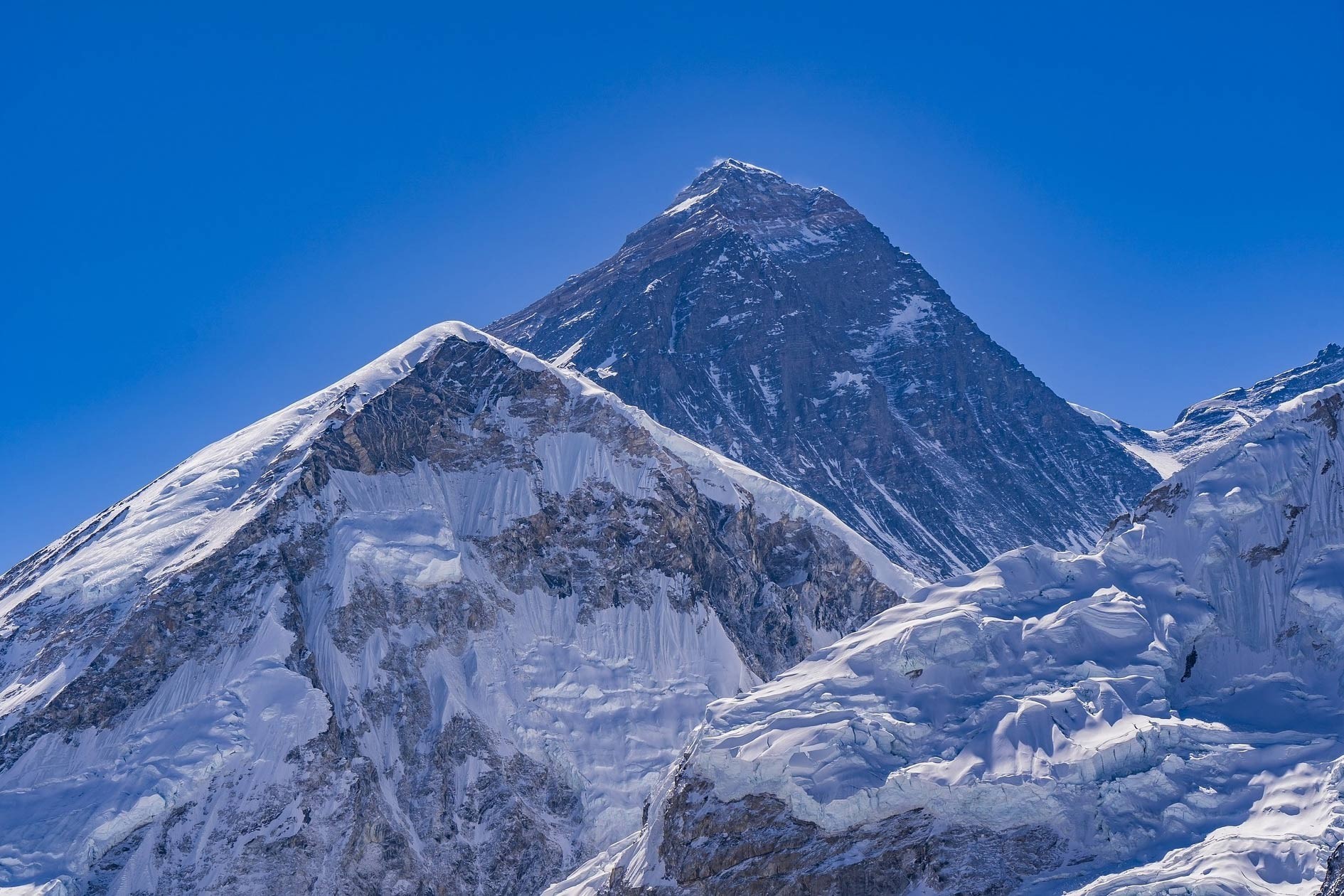
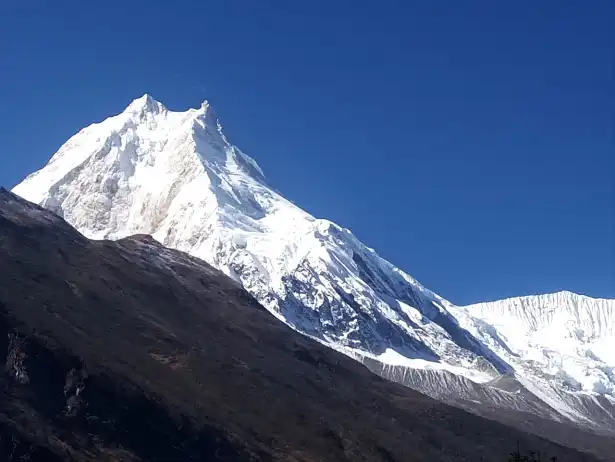
Moreover, you will be amazed by the crystal-clear views of iconic giants such as Mount Everest at 8,848.86 meters (29,031.7 feet), Annapurna I at 8,091 meters (26,545 feet), and Manaslu at 8,163 meters (26,781 feet). Feast your eyes on these massive snowy walls set against crystal clear blue skies Nepal provides so beautifully, and book your autumn adventure today for truly unforgettable panoramic views.
Frequently Asked Questions: Planning for Autumn
Do I need to book a guide in advance for October in Nepal? Yes. October is the pinnacle of the trekking season, meaning the most skilled and English-speaking licensed guides and porters are booked months in advance. Securing your booking with an agency guarantees expert mountain guidance and smooth logistics.
Peak Visibility Targets Across Nepal :
Kala Patthar Ridge: Provides a clear, uninterrupted view of Everest's South Face from an elevation of 5,545 meters (18,192 feet).
Poon Hill Viewpoint: Offers panoramic views of the Dhaulagiri and Annapurna ranges from 3,210 meters (10,531 feet).
Mardi Himal Base Camp: Features close-up perspectives of the sacred Machapuchare's fishtail peak from 4,500 meters (14,764 feet).
Gosaikunda Holy Lakes: Delivers sharp views of the Langtang Himal across the serene lakes from 4,380 meters (14,370 feet).
Iconic Viewpoint Station
Metric Elevation | Imperial Elevation
Key Mountain Vistas Visible
Poon Hill (Annapurna)
3,210 m | 10,531 ft
Dhaulagiri I (8,167 m / 26,795 ft), Annapurna South
Gosaikunda (Langtang)
4,380 m | 14,370 ft
Langtang Lirung (7,234 m / 23,734 ft), Ganesh Himal
Mardi Himal Base
4,500 m | 14,764 ft
Machapuchare (6,993 m / 22,943 ft), Annapurna Base
Kala Patthar (Everest)
5,545 m | 18,192 ft
Mount Everest (8,848.86 m / 29,031.7 ft), Lhotse, Nuptse
Elevation Profile of Key Autumn Viewpoints :
Stunning view of Mount Everest, the world’s highest peak.
Here are the rewritten sections:
The Goldilocks Climate: Tracking Mild Daytime Warmth and Crisp Alpine Nights
Searching for that ideal mountain climate-not too scalding hot, not painfully unbearable? This perfectly balanced thermal sweet spot is precisely why we rave about autumn, with its specially calibrated daytime hiking climate that keeps your physiology operating at its prime.
[Mid-Elevations: 18C to 25C] > [Perfect Physical Output] > [Above 4,000m Nights: 0C to -5C]
Here, at lower and mid-elevations below 3,000 meters (9,842 feet), you'll experience those blissfully pleasant October trekking temperatures Nepal is famous for, consistently ranging from a comfortable 18°C (64°F) to 25°C (77°F). This temperature range helps you avoid both excessive muscular fatigue and profuse sweating during demanding uphill treks, allowing you to conserve precious physical energy effortlessly.
Everest Base Camp Trek with Helicopter Fly Out 10 Days | 10 days
However, the high altitude weather autumn dramatically changes once you push past the 4,000-meter (13,123-foot) mark. Nighttime ambient temperatures often plummet near or just below freezing, fluctuating typically between 0°C (32°F) and -5°C (23°F). A complete layering system, including a high-loft down jacket, is non-negotiable for navigating this extreme temperature shift safely and comfortably.
Essential Layering Systems for Autumn :
Moisture-Wicking Base: Lightweight synthetic or merino wool shirts to wick sweat away from your body during sunny daytime ascents.
Insulating Mid-Layers: Breathable grid-fleece pullovers to trap body heat while traversing windy mountain passes.
Weatherproof Outer Shell: A durable, windproof Gore-Tex jacket to fend off sudden, high-altitude alpine gusts.
Sub-Zero Sleep Protection: A professional five-season sleeping bag to ensure you stay warm inside unheated teahouse bedrooms.
Representative Trail Station
Station Elevation (Meters) | Station Elevation (Feet)
Average Daytime Warmth | Average Nighttime Chill
Lukla Hub (Everest Route)
2,860 m | 9,383 ft
16°C to 19°C | 4°C to 7°C
Namche Bazaar (Sherpa Capital)
3,440 m | 11,286 ft
12°C to 15°C | 1°C to 4°C
Dingboche Village (High Valley)
4,410 m | 14,468 ft
7°C to 10°C | -3°C to -6°C
Gorak Shep (Base Camp Base)
5,164 m | 16,942 ft
2°C to 5°C | -8°C to -12°C
Temperature Profiles by Trekking Elevation during October :
Navigating the Golden Highway: How to Handle the Peak Season Trail Crowds
Are you concerned that packed trails will detract from your personal sense of Himalayan wilderness exploration? To provide a realistic outlook, it's important to note that how crowded is trekking in Nepal in October is answered with "very," as thousands of international adventurers flock here because the weather conditions are absolutely perfect.
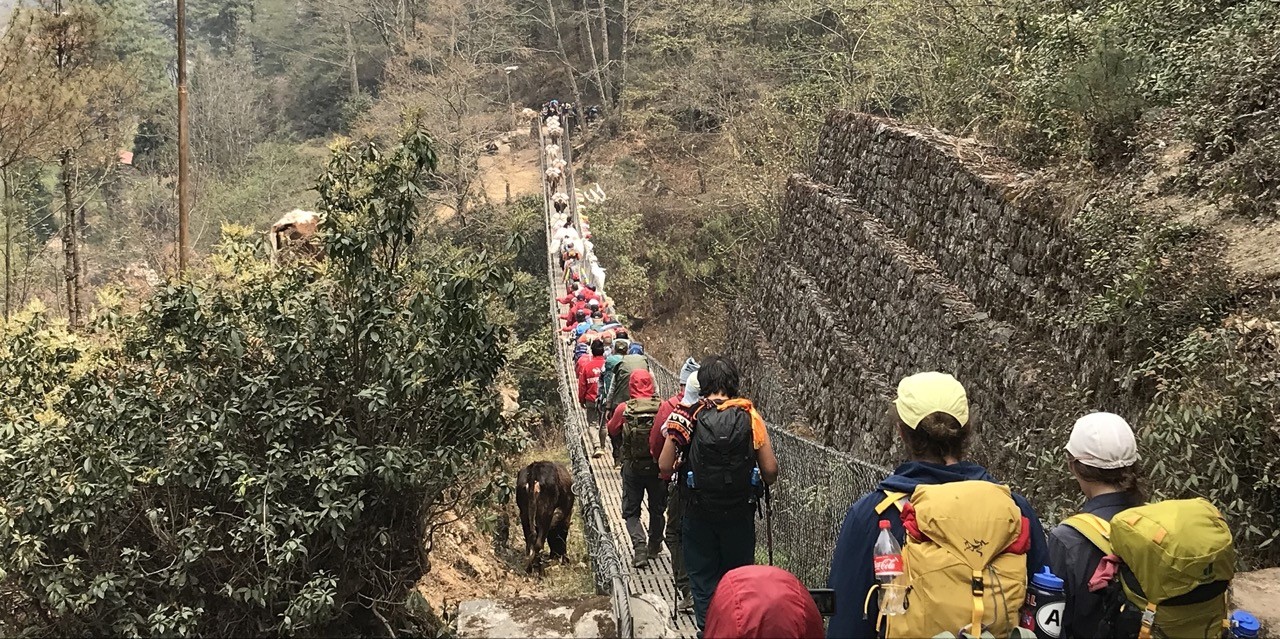
Busy suspension bridge crossing with trekkers in the Himalayas.
[Crowded Alpine Trails] > [Shift to Social Mindset] > [Vibrant Global Meetup Energy]
In fact, the busy Everest Annapurna routes transform into bustling alpine highways filled with like-minded outdoor enthusiasts from across the globe. Successfully managing peak season trails simply requires a shift in your mindset; viewing the journey as a fantastic global meet-up can actually enhance your cultural immersion. You'll share incredible stories and insights with fellow trekkers over communal teahouse stoves, forging unforgettable international friendships.
If you prefer to avoid the heaviest traffic, consider starting your day at dawn before the large commercial groups begin their ascents. Booking your autumn adventure with Haven Holidays Pvt. Ltd. Gives you a significant advantage, as our extensive local network allows us to secure prime rooms and manage crowded trail logistics seamlessly.
Proactive Strategies for Peak Season Trails :
Pre-Dawn Departures: Set out by 6:00 AM to enjoy uncrowded trails and capture the best, undisturbed morning photographs.
Alternative Route Options: Explore less-congested side trails, such as the Gokyo Lakes loop, to escape the dense linear traffic.
Adjusted Dining Schedule: Order your hot evening meals early to bypass the significant two-hour wait times in crowded teahouse kitchens.
Local Cultural Engagement: Take the opportunity to have quiet, authentic conversations with your local Sherpa or Gurung hosts.
Popular Trekking Circuit
Peak Altitude (Meters) | Peak Altitude (Feet)
Crowd Density Status | Prevailing Social Atmosphere
Classic Everest Base Camp
5,364 m | 17,598 ft
Extremely High Density | Highly energetic, international expedition hub.
Annapurna Circuit Trail
5,416 m | 17,769 ft
Moderately High Density | Diverse multi-cultural trekkers and teahouse banter.
Mardi Himal Ridge Route
4,500 m | 14,764 ft
Moderate Density | Cozy, intimate communal dining experiences
Trail Congestion and Social Dynamics Matrix :
The Critical Logistics: How to Secure Teahouses and Flights 3 Months in Advance
Here, one of the most important steps you need to take to make for a successful trek is to book your logistics three months in advance if you are planning an advance trek during the extremely busy autumn peak season. October sees fantastic visibility of the Himalayas, but it is also responsible for vast increases in demand that are far too much for the Khumbu region's facilities. If independent travelers wait too long to book teahouse beds, they may well find they're stranded without accommodation and have to sleep on the floors in dining rooms. Booking arrangements with a reliable, local agent three months in advance guarantees teahouse availability, an experienced porter, and physical space for you on internal flights.
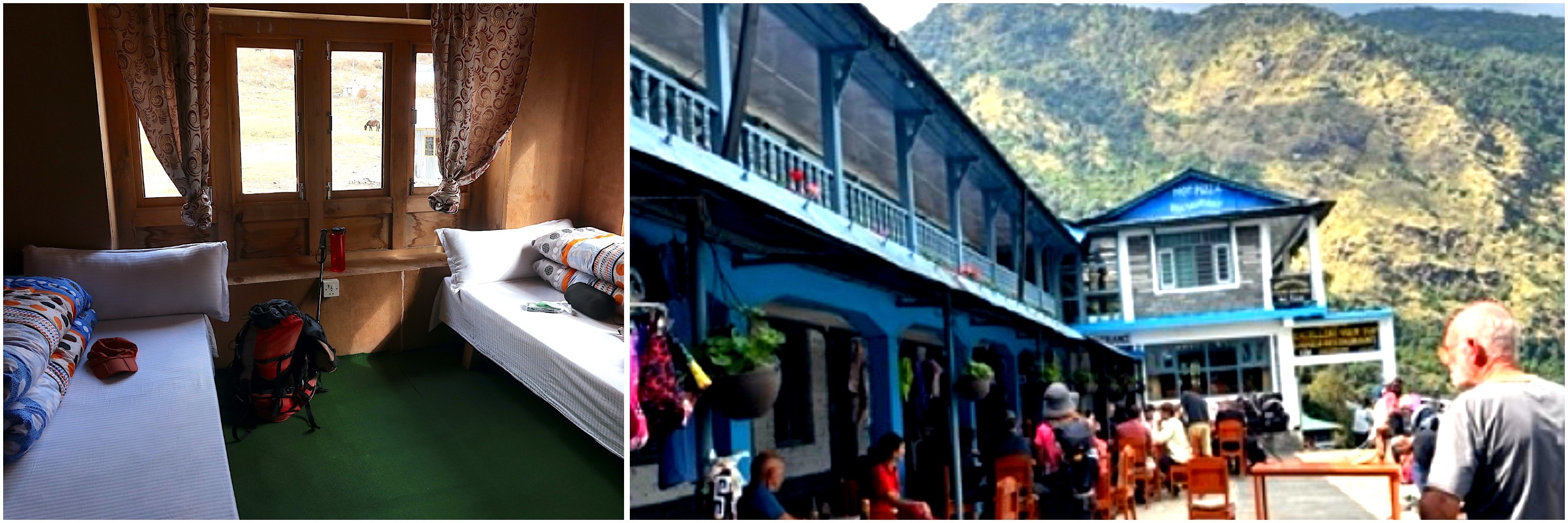
Cozy mountain lodges in the heart of the Himalayas.
Likewise, the number one logistic for all Everest trek is the flight to Tenzing-Hillary Airport. For security and environmental purposes- to ease enormous air traffic in Kathmandu International Airport and maximize the very short morning weather windows available in the mountains-the October flights to Lukla are all rerouted to the Manthali airport in Ramechhap. This means that the trek itinerary includes a road transfer from Kathmandu to Ramechhap and then the Lukla flight. As per Nepali safety and environmental regulations, a government-licensed guide obtained through a licensed agent is required on all protected areas. This agent maintains direct access to flight availabilities and local teahouse networks and works all the many moving pieces for you so that you don’t have to.
In fact, the following structural breakdown clarifies the way early booking takes you from peak-season obstacles to a smooth, predictable trek.
Critical High-Season Logistics :
Flight Seat Inventory: The advance booking ensures your spot on an early morning flight before afternoon winds ground runway operations.
Teahouse Room Security: Confirm your booking in advance to guarantee you a private space and avoid sleeping on the common dining area floors in high-altitude hubs when they fill up.
Licensed Guide Allocation: Early booking connects you with a premium, English-speaking mountain guide with extensive knowledge of the route and emergency medical response training.
Overland Transit Coordination: An early reservation secures a private, comfortable, overnight vehicle transfer from the capital to the Manthali terminal.
Logistical Component
The Peak Season Risk (Late Booking)
The Advance Agency Advantage (3 Months Ahead)
October Lukla Flight Availability
High risk of missed flights and stranded hikers; potential loss of optimal early morning weather windows.
Guaranteed flight tickets from Manthali; pre-selected earliest possible morning departure time.
Peak Season Teahouse Bookings
Lack of private rooms at such lodges as Dingboche and Lobuche; forcing travelers onto common floors.
Private, confirmed room accommodations in locally owned lodges across the entire trekking route.
Porter and Guide Support
A critical deficit in licensed guides; an increased risk to traveler safety due to unregistered guides andporters.
An exclusive booking with highly experienced, licensed trekking guides and highly qualified, insured porters.
Kathmandu to Manthali Transit
Inflated prices and a high chance of missing midnight, Shared-ride taxis; possible unreliability.
Private vehicle transportation booked well in advance with your specific departure schedule; assured reliability.
Logistical Management Matrix: Peak Season vs. Advance Planning
In conclusion, failure to plan for the trek to Everest in October can lead to safety issues, delayed or cancelled flights, and inadequate on-trail accommodations. Trusting an established local trekking agent with all of the critical logistics three months in advance ensures not only your transit but your compliance with all national tracking and permitting regulations and overall comfort from arrival through departure, which lets you focus on the adventure ahead.
Standing in Pure Glory: What to Expect on the Everest Base Camp Line in October
Are you ready to see the world's highest peaks completely denuded of midday cloud cover? The Everest Base Camp trek October weather takes away all the guessing work involved with the seasonal calendar because the post-monsoon air is incredibly dry and stable.
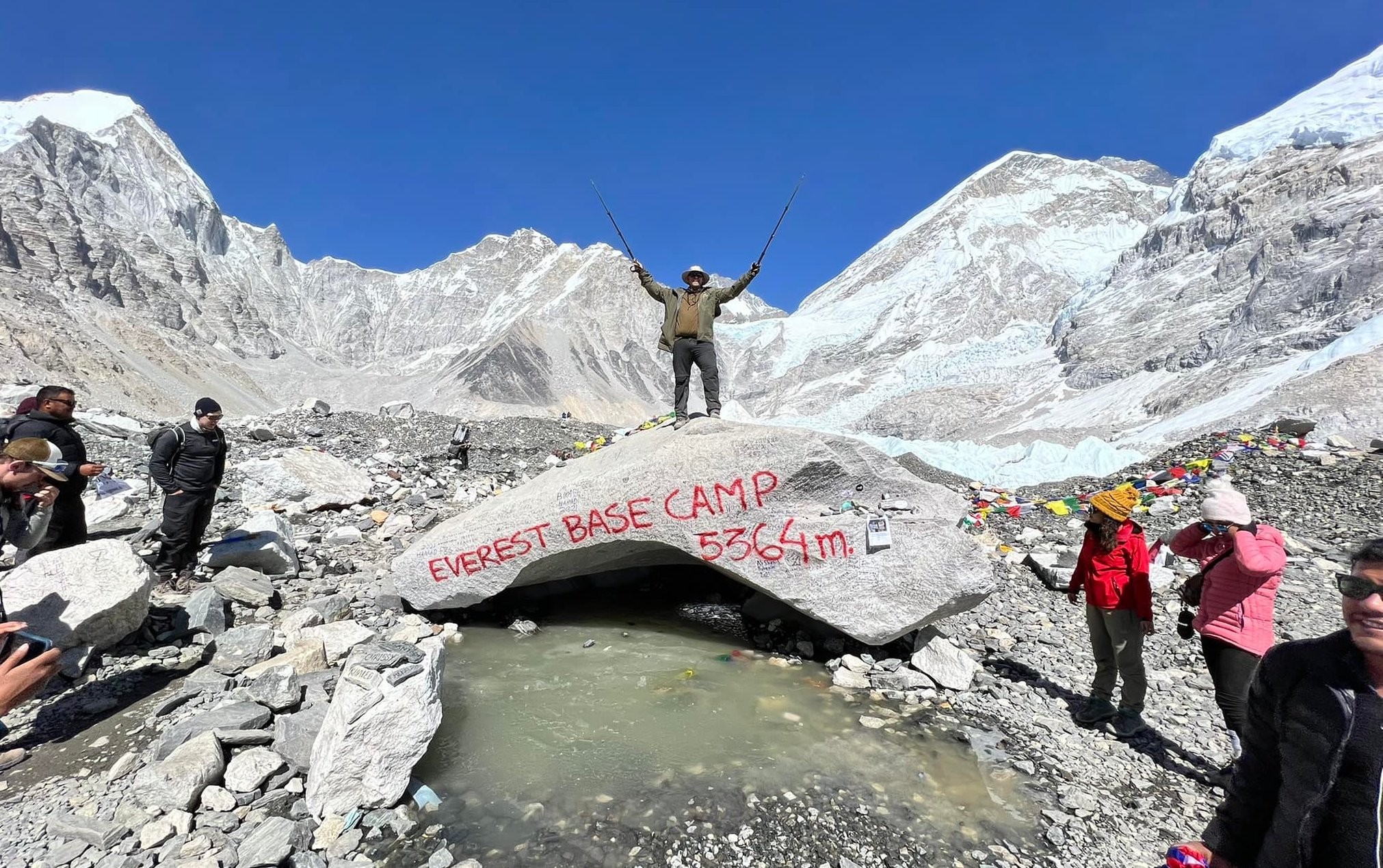
Everest Base Camp – the iconic gateway to the world’s highest peak.
Actually, the journey toward the mountain world kicks off with an electric Namche Bazaar autumn vibe at 3,440m (11,286ft) – the Sherpa capital with hundreds of trekkers crammed into local tea houses sharing their trail logistics. As you reach the trek's terminus of 5,364m (17,598ft), the thin air affords you sharp and clear views of Mt Everest, as well as the ridges of Lhotse and Ama Dablam, with daytime hiking temperatures ranging comfortably between 10°C and 15°C (50-59°F) – enough warmth to avoid heat stroke on the steeper climbs. Book your autumn trek to Everest Base Camp now through Haven Holidays Pvt. Ltd. To enjoy a perfectly managed, highly visible expedition under a vibrant blue sky.
Visual & Cultural Highlights of October :
Vibrant Staging Posts: Namche Bazaar will have bustling evening street markets, specialist gear shops and cafes that are always packed with fellow travelers sharing information on trails.
Sharp Peak Visibility: Autumn air offers crisp, long-range visibility, which is perfect for photographing the iconic Khumbu Icefall.
Enjoyable Daytime Walks: Pleasant sunshine will warmly light the open, high valleys to facilitate comfortable treks, before the temperature plunges below zero.
Sacred Monastery Blessings: Visit the sacred autumn prayer services at the Tengboche Monastery at 3,860m (12,664ft).
2°C / 36°F | Extreme frost; heavy jacket mandatory
Everest Khumbu Trail Temperature and Elevation Profile :
Crossing the High Passes: Thorong La and Larkya La Shine Bright in October
Did you know that traversing a massive, 5,000m+ mountain pass is dramatically safer during autumn? The erratic spring season often produces deep, unstable winter snowpacks, but October provides you with stable, predictable footing.
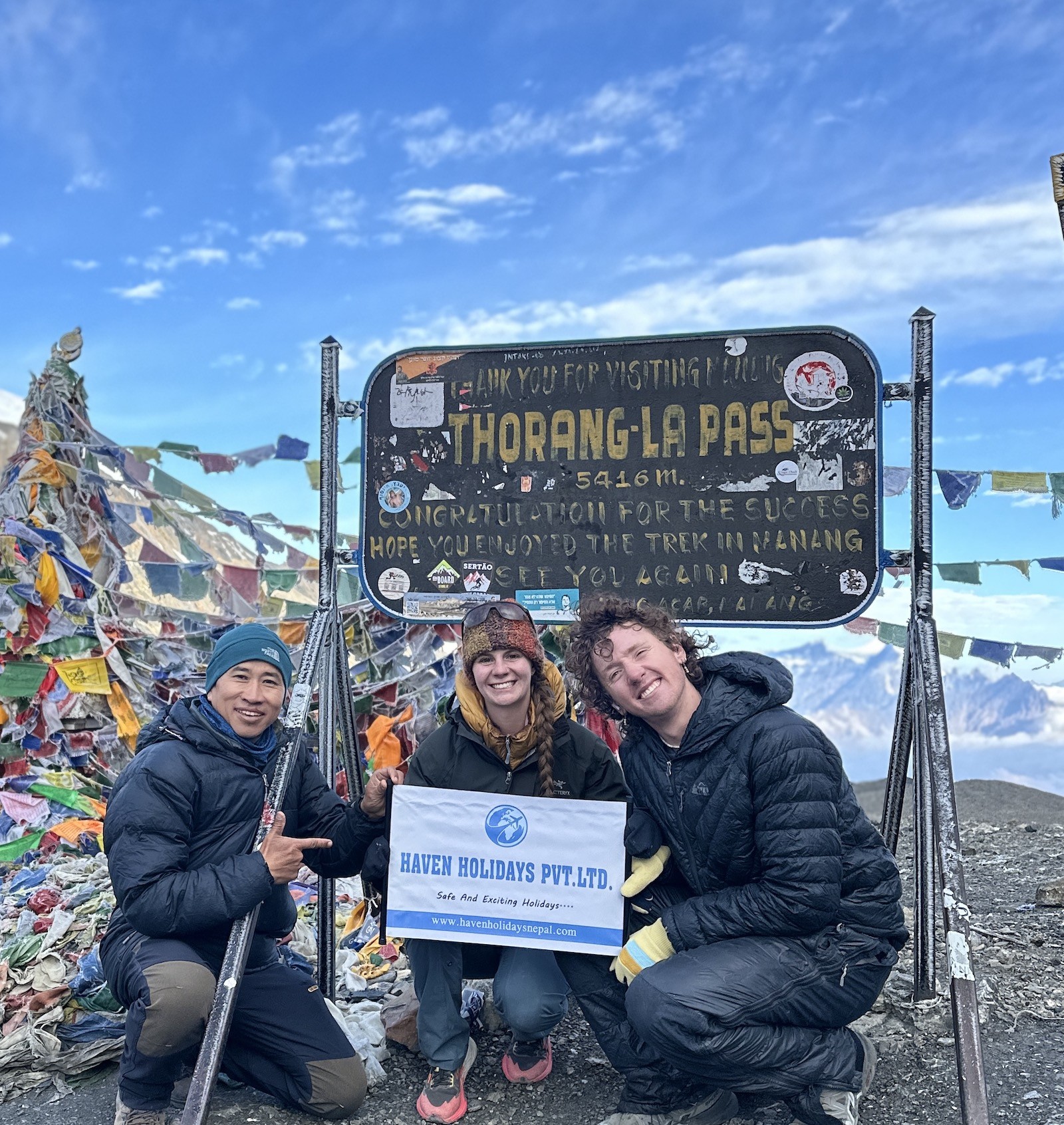
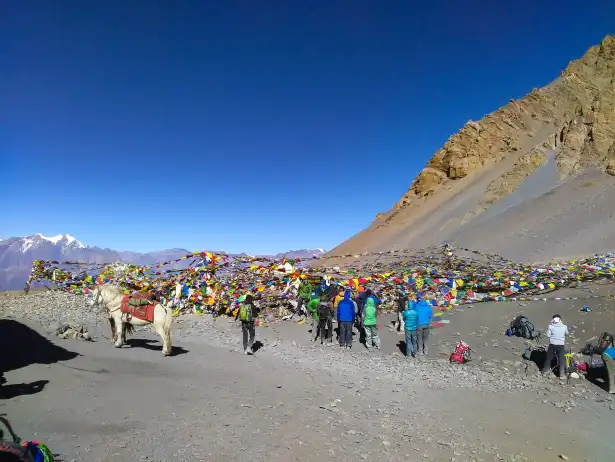
Thorong La Pass – the highest point of the Annapurna Circuit.
[Summer Sun Melts Ice] > [Trails Dry and Compact] > [Safe High Altitude Crossings]
Meanwhile, this fundamental dry quality greatly increases high altitude pass safety by reducing chances of slips on slippery icy sections. Thorong La pass October trail conditions are incredibly solid, as previous trekkers have firmly packed the path across the summit.
In addition, the predictable Manaslu circuit Larkya La weather offers safety from afternoon blizzards and impassable avalanche routes. Trekkers will still be starting out in pre-dawn darkness at 4:00 AM to avoid the powerful afternoon wind at the summit, but the absence of thick snow cover makes autumn the top month for circuit endeavors. Book your high pass trek with Haven Holidays Pvt. Ltd. For fully certified guides, satellite communications, and professional group safety tracking.
Solid Trail Foundation: Lack of deep slush prevents slippage, reducing knee strain and fatigue.
Predictable Storms: October high altitude weather rarely brings unannounced blizzard storms during midday transit.
Clear Route Identification: Busy, well-trodden trails eliminate the need for expert navigation techniques or risky alternative routes.
Optimal Body Temperatures: The crisp morning air keeps you cool, reducing the risk of dehydration during your strenuous three-hour push to the summit.
Mountain Pass
Metric Altitude | Imperial Altitude
Technical Gear | Peak Wind Risk Window
Larkya La (Manaslu)
5,106m | 16,752 ft
Hiking boots | Post 11:00 AM
Thorong La (Annapurna)
5,416m | 17,769ft
Microspikes recommended | Post 10:00 AM.
Cho La (Everest Region)
5,420m | 17,782ft
Basic crampons required on glacier | Post 11:30 AM.
Legendary High Pass Logistics Comparison :
Autumn Colors in the Sanctuary: Trekking Annapurna Base Camp in October
Ready to hike through a landscape ablaze with shifting autumn colors and golden harvest fields? Annapurna Base Camp trekking in October is unparalleled in its ability to display the absolute zenith of Nepal’s agrarian and alpine magnificence.
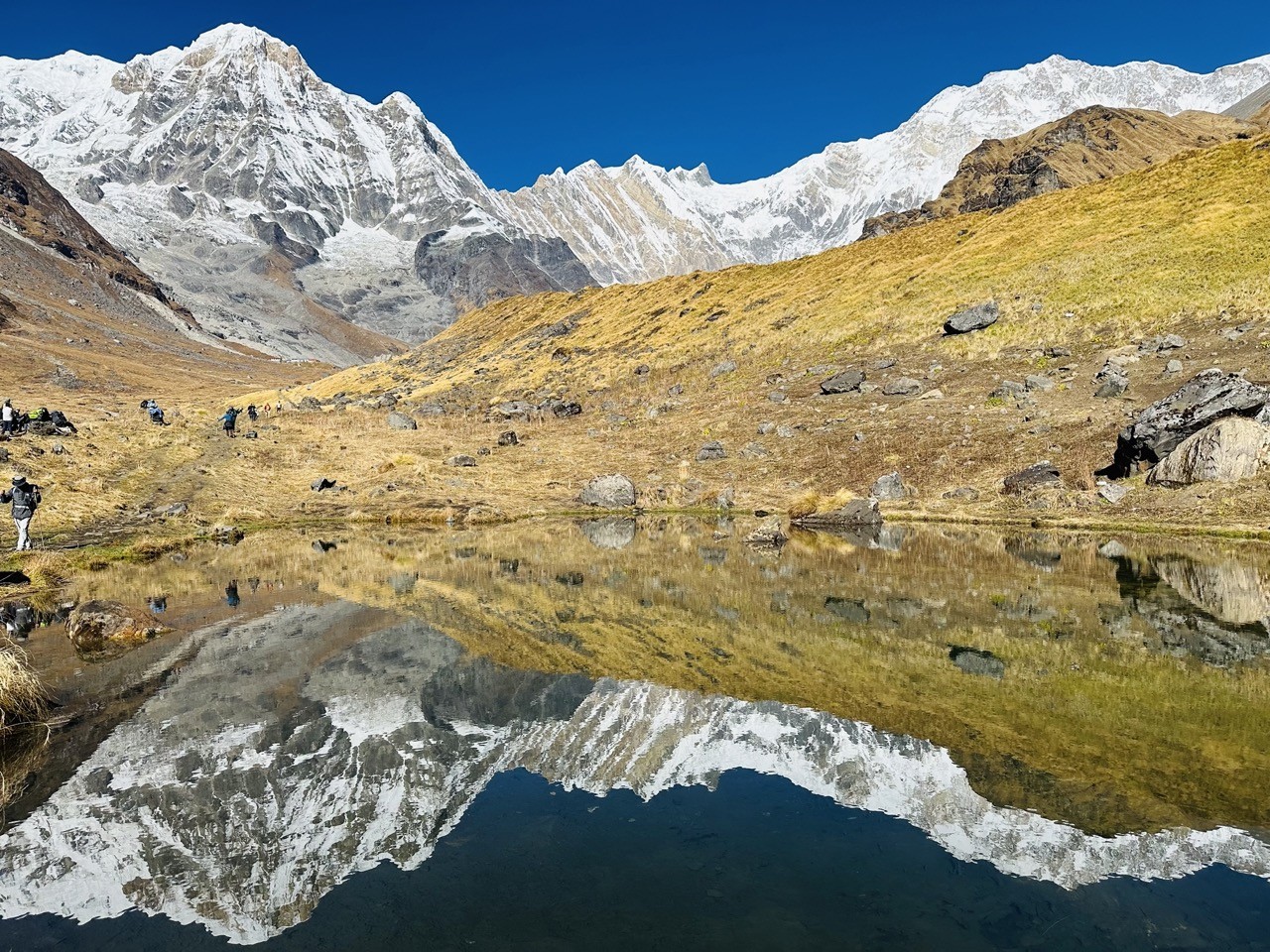
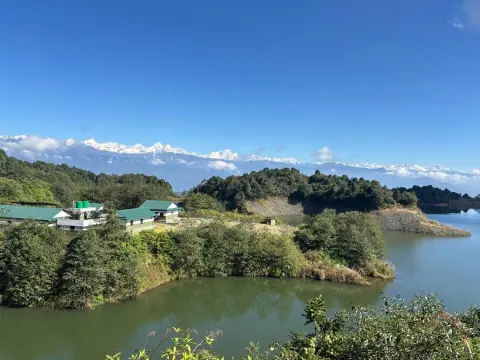
Perfect mountain reflection on a lake en route to Annapurna Base Camp.
As you embark on your journey through the lower foothills, you'll walk beside stunning terraced farmlands that transform into rippling seas of golden millet and ripe rice. The trail then plunges into lush, emerald-green bamboo and rhododendron forests, where crisp, cool air perfectly energizes you for the steady climb upward. Thanks to the clear and dry weather post-monsoon, you'll enter the breathtaking glacial amphitheater of the Annapurna Sanctuary at 4,130 meters (13,550 feet) under perfectly clear skies. Gigantic vertical walls of Annapurna I at 8,091 meters (26,545 feet) soar steeply above the base site, enclosing a 360-degree theater of dazzling ice and rock. Book your autumn trek with Haven Holidays Pvt. Ltd. To secure prime lodge bookings, certified guides, and an ideal pacing through this dynamic mountain terrain.
Visual and Environmental Highlights of the ABC Trail :
Golden Harvest Landscapes: The lower valleys burst with agricultural activity as local farmers harvest their annual crops against a backdrop of snow-capped peaks.
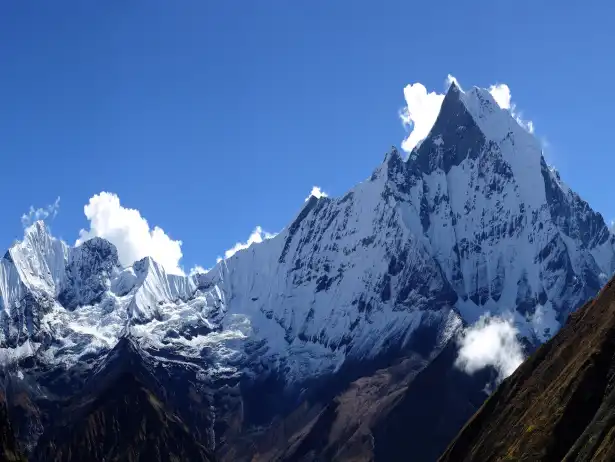
Stable Sanctuary Weather: Crystal-clear blue mornings offer unimpeded, high-definition views of Machapuchare’s sacred fishtail peak at 6,993 meters (22,943 feet).
Comfortable Microclimates: The trail offers an ideal thermal transition from the warm subtropical river valleys to the cool, crisp alpine zone.
Abundant Glacial Waterfalls: Melting high-altitude snow feeds a multitude of dramatic waterfalls that plunge down the sheer vertical cliffs of the Modi Khola gorge.
Trail Station Landmark
Metric Elevation | Imperial Elevation
Average Day Temperature | Night Climate Status
Ghandruk Sherpa Village
1,940 m | 6,364 ft
20C / 68F | Warm and pleasant evenings
Chhomrong Gateway
2,170 m | 7,119 ft
18C / 64F | Mildly crisp past sunset
Deurali Settlement
3,200 m | 10,498 ft
12C / 54F | Freezing risk in deep gorges
Annapurna Base Camp
4,130 m | 13,550 ft
5C / 41F | Drops below 0C / 32F
Elevation and Climate Profile of the Annapurna Sanctuary Route
The Off-Beaten-Path Escape: How Restricted Areas Offer Solitude in Peak Season
Looking to enjoy the perfect peak season weather without sharing the trail with thousands of other trekkers? Avoid the crowded main routes altogether by exploring Nepal's protected restricted zones. Uncrowded treks in October are a reality when you venture into these hidden gems.
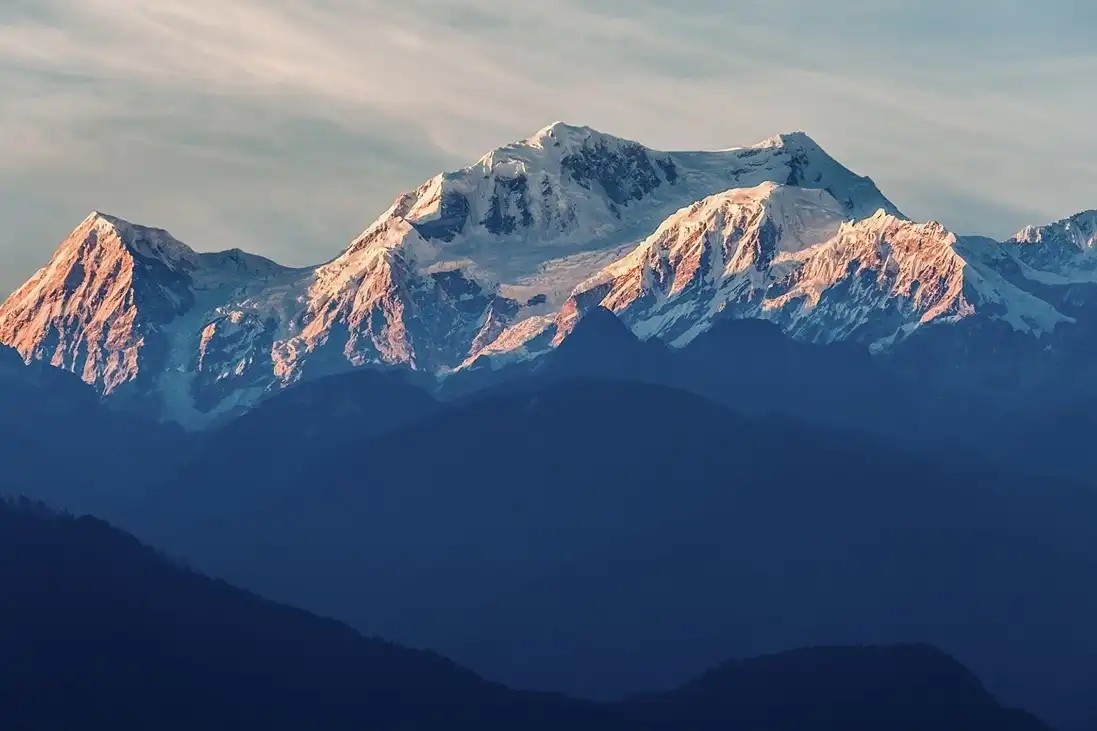
Kangchenjunga – the towering beauty of the eastern Himalayas.
An Upper Mustang autumn trip will transport you to an isolated high-altitude desert kingdom situated safely within the rain shadow of the Dhaulagiri massif. The arid terrain, with its capital city of Lo Manthang at an elevation of 3,840 meters (12,598 feet), offers an incredible blend of ancient Tibetan culture and crystal-clear hiking weather. If raw, untamed wilderness and immense glacial panoramas are more your style, head into the Kanchenjunga remote trekking regions in the far east to discover complete isolation beneath the world's third-tallest mountain at 8,586 meters (28,169 feet). Since special permits and mandatory licensed guides are required for these restricted sectors, the overall number of trekkers is strictly limited. Partner with Haven Holidays Pvt. Ltd. To handle your restricted area logistics, secure government permits smoothly, and guide you through these secluded Himalayan valleys.
Guaranteed Trail Privacy: Strict government permit quotas keep hiker numbers low, ensuring an authentic and quiet wilderness experience.
Preserved Indigenous Culture: Isolated communities in Upper Dolpo and Mustang maintain centuries-old Tibetan Buddhist traditions, untouched by modern mass tourism.
Unique Arid Landscapes: The rain-shadow regions feature spectacular red-rock cliffs, deep wind-carved canyons, and high-altitude desert caves.
Elite Agency Coordination: Group travel logistics are fully managed with private camp setups or priority access to traditional family-run homestays.
Restricted Trekking Zone | Peak Pass / Destination
Culture in the Clouds: Experiencing Nepal's Greatest Festivals on the Trail
Dreaming of combining your high-altitude mountain adventure with the deep spiritual energy of a nationwide celebration? A Dashain festival trekking Nepal tour provides an unparalleled glimpse into the nation's happiest period because October marks the peak of Nepal's biggest festivities.
At this time, the mountain trail becomes a vibrant cultural pathway; local homes are cleaned and decorated with bright marigold garlands, and family members reunite. While the Tihar festival dates autumn period may occasionally spill over into early November depending on the lunar calendar, October is saturated with anticipation, traditional bamboo swings erected in village clearings, and devotional music.
Moreover, hiking through these colorful highland communities gives you an immense feeling of cultural immersion Himalayas paths are not always exposed to. You'll witness local children flying homemade kites against the majestic backdrop of snowy peaks and be greeted with warm smiles from guesthouse owners celebrating family blessings. For deeply engaging cultural experiences with professional guidance, plan your autumn journey with Haven Holidays Pvt. Ltd. Today.
Experiential Pillars of Autumn Trail Festivals :
Traditional Bamboo Swings: Locally known as Ping, these giant, temporary bamboo structures are built in village clearings for public recreation.
Marigold Home Decorations: Orange and yellow marigold wreaths adorn doorways and windows in the Khumbu and Annapurna foothills.
Auspicious Tika Blessings: Travelers often receive welcoming greetings and red rice-tika marks on their foreheads from village elders.
Festive Culinary Platters: Teahouses along the trail often prepare special Sel Roti, a sweet, ring-shaped fried rice bread, during holiday weeks.
National Celebration
Core Spiritual Focus | Typical Calendar Month
Village Decorative Style | Expected Impact on Trail Services.
Dashain Festival
Victory of good over evil forces | Late September to October
High bamboo swings and new clothes | Transport services require advance booking
Tihar Light Festival
Devotion to animals and wealth | Late October to November
Tibetan Buddhist deity rituals | Fixed late autumn dates
Sacred colorful sand mandalas | Tengboche monastery fills with spectators.
Festival Milestones and Trail Atmospheres
Packing for Two Climates: The Definitive October Layering Blueprint
Struggling with what to pack for a single trek that spans warm subtropical valleys to frigid glacial mountain passes? An effective strategy for what to pack for October trek Nepal hinges on selecting lightweight, moisture-wicking clothing that can be layered effectively.
As you'll encounter both intense heat during sun-drenched low-altitude afternoons and temperatures below freezing above 4,000 meters, a static wardrobe won't suffice. Your essential down jacket requirements autumn safety demands a high-loft jacket rated to at least -15C (5) to combat bitter high-altitude nights. During your active daytime trekking hours, you'll rely on breathable merino wool base layers paired with a windproof, breathable hardshell to shield against sudden ridgeline drafts.
Likewise, modular packing allows you to quickly adjust your attire without disrupting your hiking rhythm or causing your muscles to overheat. Ensure your kit meets every requirement with this comprehensive peak season gear checklist from the mountain logistics experts at Haven Holidays Pvt. Ltd.
Core Components of the Modular Layering System :
Merino Wool Base: Next-to-skin layers that wick away sweat during climbs while retaining body heat when resting.
Polar Fleece Mid-Layer: An insulating mid-layer that traps warm air against the body while remaining highly breathable.
Windproof Waterproof Hardshell: A lightweight, packable outer layer that seals out harsh alpine winds on exposed passes and moraines.
High-Loft Down Shield: A heavy-duty jacket packed separately for use only upon arriving at a freezing teahouse.
Mandatory Gear Item
Optimal Material Blend | Minimum Performance Rating
Primary Trail Function | Packing Layer Priority
Thermal Base Top
100\% Pure Merino Wool | 200 grams per square meter weight
Wicks sweat and prevents chill | Next-to-skin base layer
Yes, October is generally one of the most crowded months for trekking in Nepal. It’s when the peak autumn season starts, and many of the popular trails become increasingly busy. That said, the actual level of crowding can differ a lot depending on which trek you choose, which week of October it is, and how "mainstream" the route is.
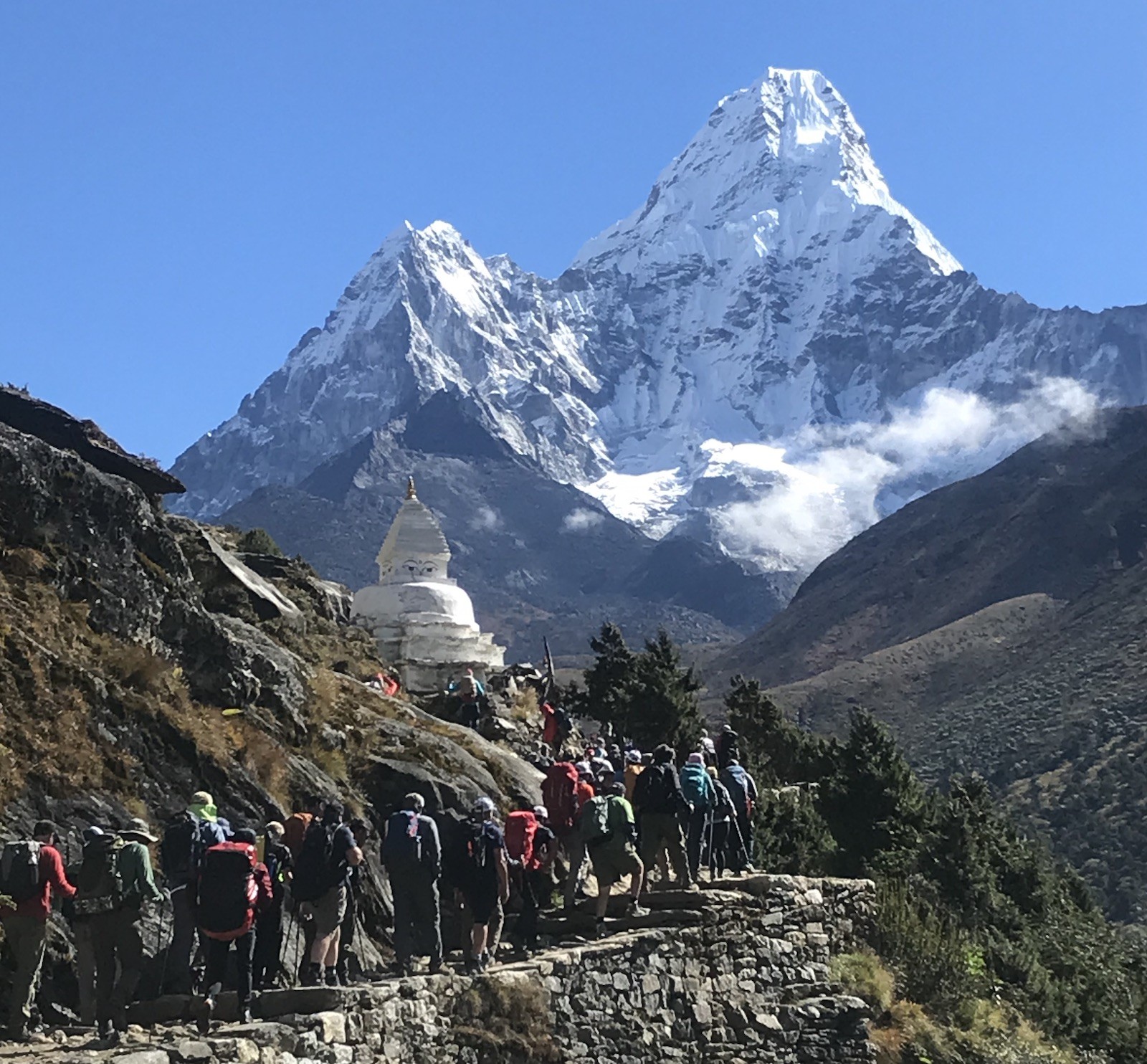
October crowds on the Everest Base Camp trail with stunning Ama Dablam views.
Why October is Crowded :
Monsoon officially over; the weather has stabilized with clear skies and good mountain views.
Travellers from all around the world (Europe, USA, Australia, China, etc.) visit Nepal after summer.
School and college holidays (mostly in the west) are occurring so it’s busy with tour groups.
Many important Nepali festivals (including Dashain) occur in October so Nepal is busy with both Nepalis and tourists alike.
Trek route
October Crowded Level
Notes
Everest Base Camp
Very High
Namche and onward to EBC are especially crowded
Annapurna Base Camp
High
Main trails and Poon Hill are crowded
Annapurna Circuit
High
Main trails are popular
Poon Hill / Ghorepani Trek
Very High
One of the shortest, yet most popular treks
Manaslu Circuit
Moderate
Significantly less busy than Everst / Annapurna
Upper Mustang
Low
Has remained uncrowded in past years
Langtang Valley Trek
Moderate
Less crowded than the Everest Region
Crowded popular treks :
Crowd facts :
Early October is more crowded than late October since many try to avoid the colder conditions in November.
Namche Bazaar, Poon Hill and the trail between Lukla and Namche are generally the most congested trekking areas.
Regions less explored and hence less commercially developed like Manaslu, Tsum Valley, Upper Dolpo and Kanchenjunga are very uncrowded.
Teahouses in popular trekking routes are becoming full quickly in mid-October.
Best advised trek for those seeking a solitary experience: Consider trekking in late September or late October/early November. Trekking routes like Manaslu, Tsum Valley, Upper Dolpo and Kanchenjunga are less busy even in the main trekking season. For the quintessential Everest or Annapurna treks, book your teahouses in advance and be prepared to share the trails with many fellow trekkers!
Conclusion: Is October the Best Time for Your Nepal Trek? The Ultimate Decision Matrix
After considering all the factors, the ultimate October trekking verdict is crystal clear for worldwide mountain lovers. If your top priorities are perfect mountain photography, absolute trail safety, and guaranteed breathtaking mountain panoramas, October stands out as the premier choice.
Here, to take full advantage of this ideal season, it is absolutely crucial to choose a trekking operator with strong local connections, certified high-altitude guides, and confirmed lodge bookings. Since autumn is the busiest season for trekking in the Himalayas, generic booking platforms often suffer from system overloads and poorly assigned rooms.
In conclusion, trusting your day by day Nepal autumn planning to Haven Holidays Pvt. Ltd. Ensures your domestic flights, required permits, and comfortable trail guesthouses are reserved well in advance. Review the decision matrix below, pick your ideal Himalayan route, and book your autumn adventure with us immediately to experience the world's most magnificent mountains at their absolute best.
Strategic Advantages of Booking Your Autumn Trek Early :
Guaranteed Lukla Flights: Booking early secures prime morning flight times, significantly reducing the chances of weather-related afternoon delays.
Premium Teahouse Lodging: Avoid shared dormitories by securing private rooms with attached bathrooms where available.
Elite Wilderness Guides: Reserve the expertise of our most seasoned, first-aid certified mountain leaders and cultural guides.
Seamless Permit Processing: Expedite national park and restricted area entries to circumvent bureaucratic holdups at checkpoints.
Famous Himalayan Trek
Maximum Metric Height | Maximum Imperial Height
Ideal Trait Profile | Recommended Booking Window
Everest Base Camp
5,364 m | 17,598 ft
High alpine drama and iconic peaks | 4 to 6 months advance
Annapurna Circuit
5,416 m | 17,769 ft
Diverse ecosystems and deep passes | 3
Ultimate Himalayan Route Decision Matrix :
Yes, October is generally recognized as the absolute best month of all to trek in Nepal. Directly in the middle of the high autumn trekking season it presents a superb combination of perfect post-monsoon clarity skies, comfortable hiking temperatures and steady mountain weather patterns.
1. Why is October considered the best time to trek in Nepal? October falls in the middle of autumn which marks the peak trekking season. The skies, that were previously obscured by the monsoon rains, are completely clear providing amazing blue skies, absolutely no haze and incredibly crystal clear panoramic views of the mighty Himalayan peaks.
2. What is the weather like when trekking in Nepal in October? The weather during October trekkings in Nepal is extremely stable and pleasant. Daytime trekking is comfortable, warm and sunny, but as evening approaches, and as altitude increases, nights can get considerably cool and crisp. Snow and rain are highly unlikely.
3. What are the average temperatures during an October trek? The average daytime temperature ranges between 15 to 25 degrees C (59 to 77F) at low and mid elevations. At higher elevations (above 4000m profile), the daytime temperatures hover around 10 degrees C, whereas the nighttime temperatures are generally a few degrees below zero.
4. Is the Everest Base Camp trek good to do in October? The Everest Base Camp trek is an excellent choice for the month of October as the weather offers amazing clarity for viewing Everest and neighboring peaks like Lhotse, Nuptse and Ama Dablam. Lodges are open and the trail is energetic.
5. Are mountain flights to Lukla reliable during October? Yes, flights from Kathmandu or Ramechhap to Lukla in October are extremely reliable. Because the clear post-monsoon weather often presents early morning visibility that remains undisturbed throughout the morning and early afternoon, flights are seldom cancelled due to weather.
6. How crowded are the Nepal trekking trails in October? October is peak trekking season, so the popular trails like Everest and Annapurna are incredibly busy with trekkers and their guides. Teahouses are very active but the atmosphere is social with many different nationalities sharing stories each evening over delicious dal bhat and sweet tea. If solitude is preferred, maybe the peak season isn’t ideal for you.
7. Do I need to book my October trek in advance? Yes, booking well in advance is an absolute must if you plan to trek to Nepal in October. The reason is the extreme demand as every tour operator, flight ticket to Lukla and space in popular lodges is booked out months before departure as global adventurers seek to benefit from the ultimate Nepalese trekking month.
8. Can I experience local festivals while trekking in October? Yes! October usually features the most important Hindu festivals in Nepal like Dashain, Nepal's main national holiday where families reunite and celebrate. The end of the month also usually includes the festival of lights, Tihar. This offers incredible insight into local culture and the opportunity to witness local music, singing and dancing.
9. Is the Manaslu Circuit trek accessible in October? The Manaslu Circuit trek is highly recommended during the autumn trekking season, especially October.Crossing the Larkya La pass (5,106m), the highest point on the trail, is much more manageable in stable October weather as the risk of heavy snowfall and blocked trails is very low. The landscape is spectacular and you get great views of Mount Manaslu.
10. What clothes should I pack for an October trek in Nepal? It is advisable to pack layers. Light and quick-drying pants and tops are good for daytime treks in warmer weather, but be sure to include thermal base layers, a fleece jacket, a warm down jacket, and good quality waterproof and windproof outer layers for colder nights at altitude. Don't forget a warm hat and gloves.
11. Are all teahouses open along the trails in October? Yes, as October marks peak trekking season it is highly unlikely that a lodge, teahouse or even the smallest eating place on the trail will be closed for the season. Everywhere will be open, welcoming trekkers, offering full menus and services.
12. Can a beginner trek in Nepal during October? Yes, beginner trekkers will really enjoy Nepal in October. Because the weather is so stable and the trails are mostly clear, it is a lot safer to trek at high altitudes and even through more difficult mountain passes, meaning even beginner trekkers can easily get to their destination without any major risk or danger.
13. How does the post-monsoon landscape look in October? The landscape comes to life again in October with fresh green vegetation everywhere after the heavy monsoon downpours. The rivers are still quite full from the rains which means that their scenic beauty will be highlighted even more.
14. Is the Langtang Valley trek a good option for October? Yes, the Langtang Valley trek is extremely beautiful in October, as all the surrounding mountains are extremely clear and offer brilliant views. This region is more or less free of the masses of people and you can enjoy more solitude in Langtang than in other peak season trekking destinations.
15. Are high-altitude mountain passes safe to cross in October? Yes, crossing high-altitude mountain passes in October is much safer than other months as the passes are typically dry and the snow has already cleared completely from the monsoon rains of August. High-altitude mountain pass treks are very reliable in October and very highly recommended.
16. What is the status of the Mardi Himal trek in October? The Mardi Himal trek has become an extremely popular choice in October with trekkers wanting to get a spectacular close-up view of the commonly called "Fishtail" mountain; Machhapuchchhre, and the Annapurna region. The clear skies provide outstanding and dramatic panoramic views throughout the entire trek.
17. Is independent or solo trekking safe in October? Solo trekking is safe in October and you are never completely isolated on popular trekking routes as there are always other trekkers and their guides nearby. However for restricted treks like Manaslu, a licensed guide is mandatory by government law regardless of the month or how many other people are around.
18. Do I need specialized travel insurance for an October trek? Yes, and high altitude insurance should at the very least cover trekking up to an altitude of 6000m and, for optimum safety, should also include provisions for emergency helicopter evacuation from any location. Medical emergencies due to high-altitude sickness are not solely related to the seasons.
19. How do shorter autumn days affect trekking in October? Days in October are significantly shorter than in the spring so it is important to get an early start when trekking to take advantage of the sunlight. After sunset, the temperature drops rapidly.
20. What is the second-best trekking season if I can't go in October? The trekking season following October is spring (March to May) where you will enjoy a much warmer trekking climate as well as rhododendron forests blossoming with vibrant colors. The main advantage of spring is its warm temperatures whereas with autumn, the crisp weather still provides a chance of freezing nights even at relatively lower elevations.