
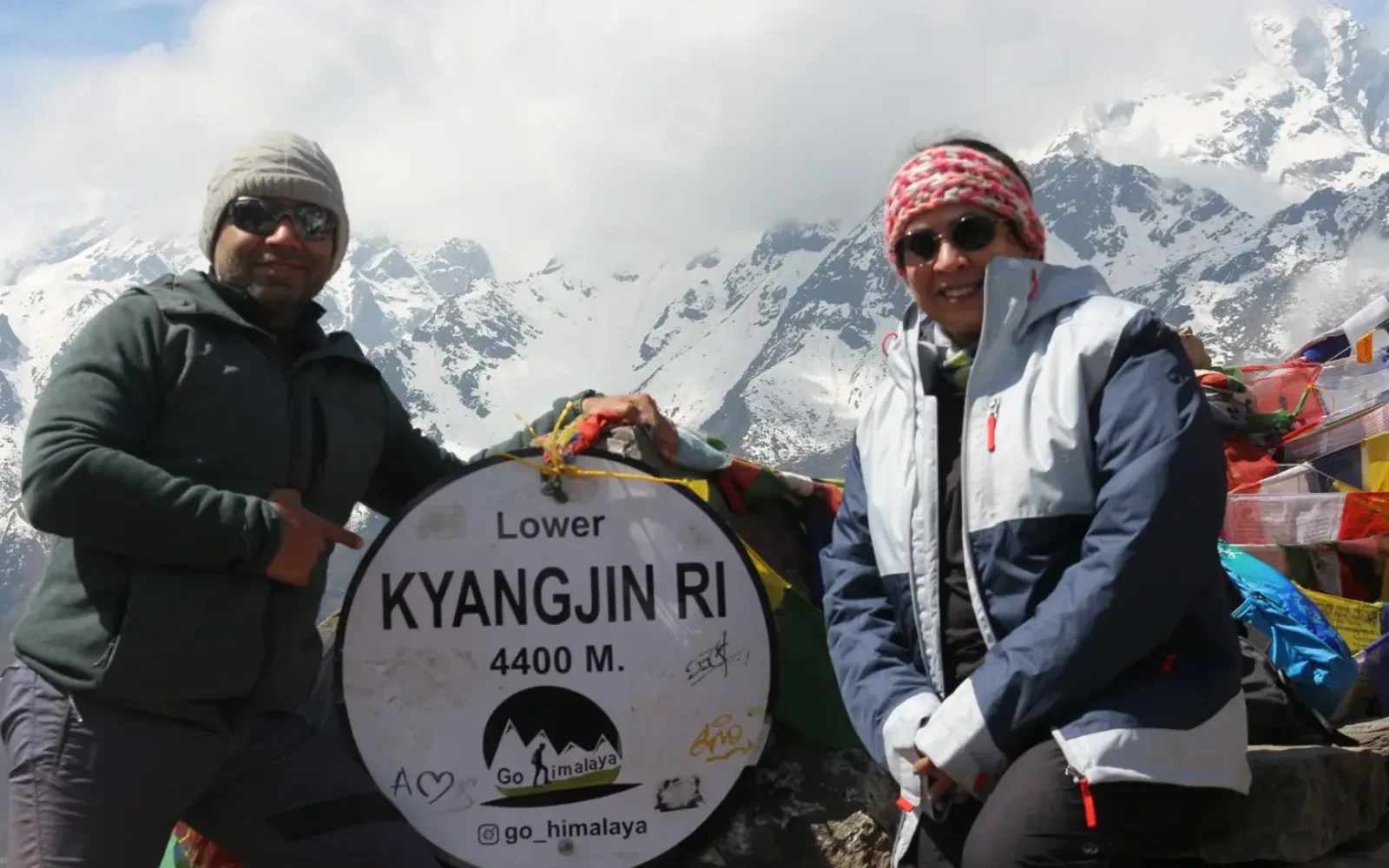
Yes, the Langtang Valley Trek is suitable for beginners with the right preparation. You don’t need prior high-altitude trekking experience, but you’ll have to be fit and respect the mountains’ power.
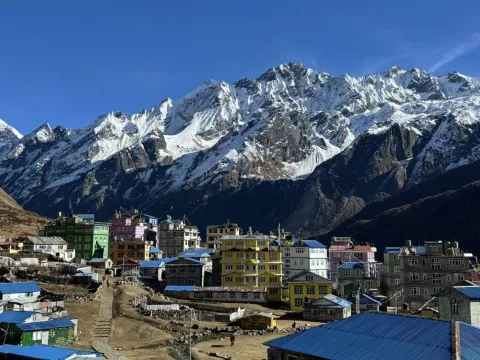
Meanwhile, Langtang Valley Trek passes through beautiful forests and traditional Tamang villages before reaching the breathtaking Langtang Valley.
Likewise, dramatic snow-draped peaks rise impressively over the valley, becoming more prominent as the trail winds its way up to Kyanjin Gompa. However, be prepared that the real challenge of the Langtang Valley Trek is not the climb itself, but rather the altitude and long hikes.
In addition, the pace at which you will have to hike can be slow and steady, making it more tiring than many realize.
Moreover, to get the most out of the Langtang Valley Trek, you will need to consider acclimatizing yourself as you make your way higher into the mountains.
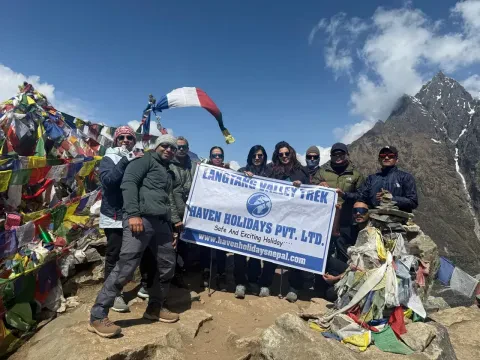
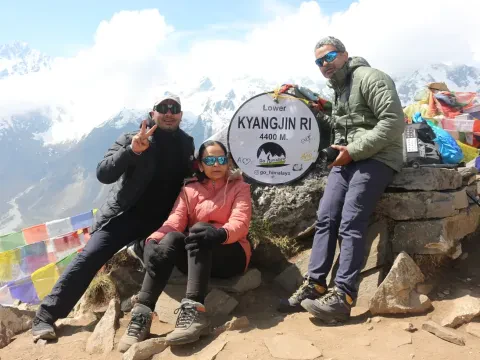
Besides, there are opportunities to take a break from the steep climbs and enjoy the views from another angle, such as from the summit of Kyanjin Ri or Tsergo Ri, but they will require an extra day of hiking to complete.
In this guide, we review the Langtang Trek difficulty for you to decide whether it is suitable for you and explain what to expect on the most popular trail in the region. Therefore, read the following paragraphs to learn everything about the Langtang trek difficulty for a beginner trekker.
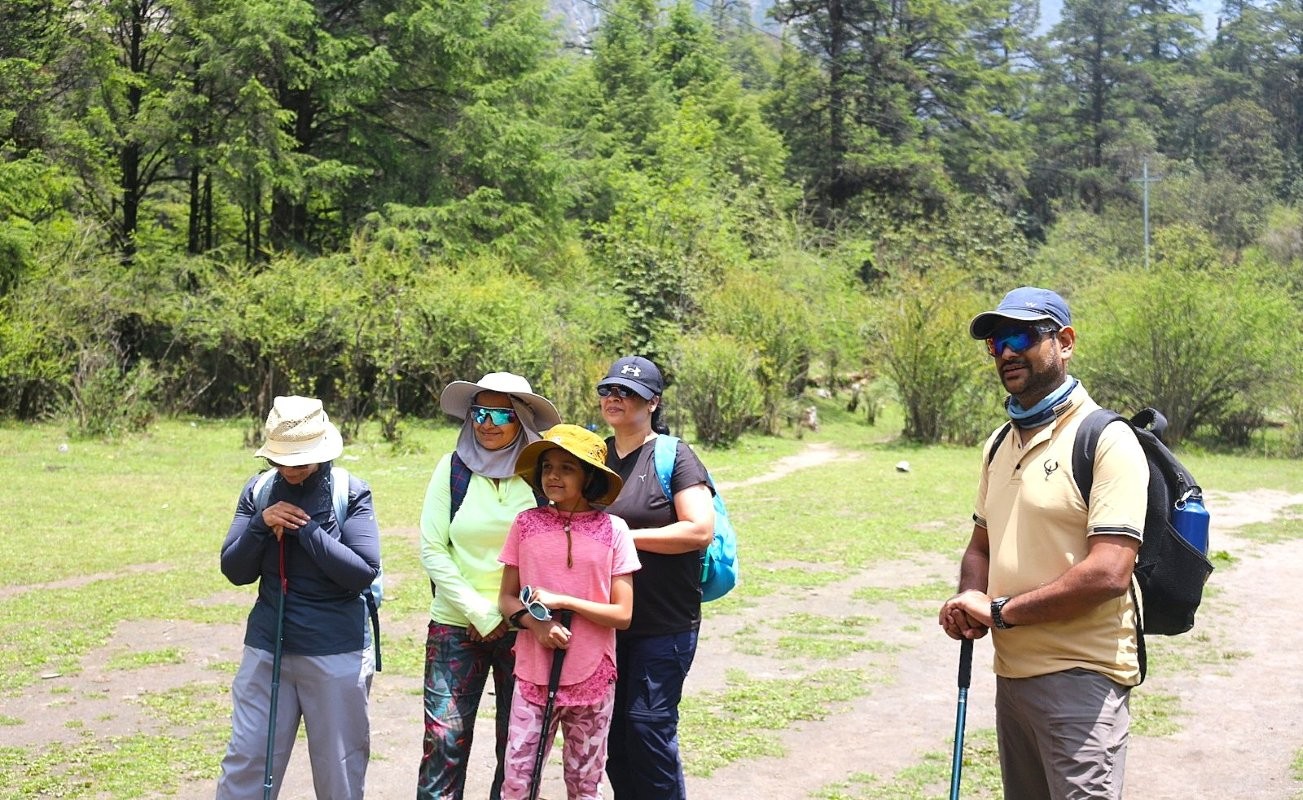
The Langtang Valley Trek difficulty can be categorized as moderate overall. On the easy to challenging scale from 1 to 10, the Langtang Valley Trek rating would be somewhere around 5–6 for a reasonably fit beginner.
Here, this means that although the trail is not exactly for everyone, with the right attitude and preparation, anyone can manage it
However, note that not all aspects of the Langtang Valley Trek are equal in terms of difficulty, so let’s take a closer look at what exactly determines the Langtang difficulty. The table below summarizes the key factors affecting the Langtang Valley Trek difficulty and what a beginner trekker should expect.
Langtang Difficulty at a Glance :
As seen from the above facts, the Langtang Valley Trek combines various aspects of hiking, including multiple aspects rated as moderate, such as trail terrain, walking, and fitness, and the altitude is moderately high.
So, it really depends on what exactly you are asking about the Langtang difficulty. A few words about each of these aspects are given below in brief.
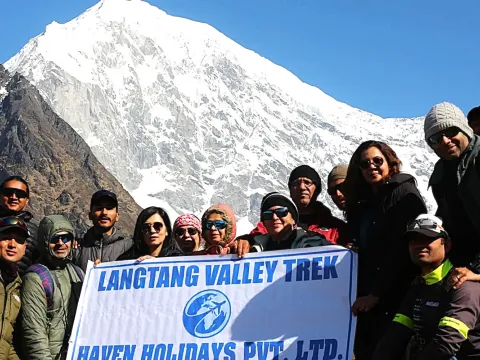
When a trek is rated as moderate, it generally means that you will have to exert yourself while walking on various terrains and hiking up and down the trail. Meanwhile, you may have to walk a few hours at a steady pace or even longer if the group is slow. You will also have to climb up and down the steep parts of the trail and deal with numerous stone steps on the way.
However, remember that you will typically have enough time to complete most tasks at a comfortable pace. Remember also that there is such a thing as bistari-bistari (Tibetan for slowly and steadily), so you should not try to keep up with faster people in your group who are willing to go full speed.
Compared to the Poon Hill trek, the Langtang Valley Trek is generally more demanding. The height to which you will have to climb is also higher – while Poon Hill only reaches 3,210 m above sea level, the Langtang Valley Trek summit is at 3,870 m.
Thus, the altitude is an additional factor to consider when comparing these two treks.
Therefore, if you are just looking for an easy introduction to trekking, Poon Hill is a better option, while the Langtang Valley Trek gives a more substantial Himalayan adventure.
The Langtang Valley Trek difficulty is lower than that of the Everest Base Camp Trek. While the EBC trek reaches about 5,364 m, the Langtang Valley Trek peaks at only 3,870 m, making it much more comfortable for beginners.
In addition, the EBC trek is longer than the Langtang Valley Trek, requiring you to be in good shape to complete it. Nevertheless, using the same comparison framework, the table below shows you how much of an introductory experience the Langtang Valley Trek is for a more significant adventure such as EBC.
| Trek | Approx. Highest Point | Difficulty |
|---|---|
| Poon Hill | 3,210 m | Easy–moderate |
| Langtang Valley Trek | 3,870 m | Moderate |
| Everest Base Camp | 5,364 m | Moderate–challenging |
Therefore, to answer the question, how hard is Langtang Trek for a Beginner: Moderate! The next frequently asked question is, How hard is the Langtang Trek for a Beginner? The answer to which has already been given above.
Therefore, the biggest mistake you can make to have a difficult time on the Langtang Valley trek is to underestimate its moderate difficulty.
So, train, take it slow, stay hydrated, acclimatize yourself, and communicate openly with your guide. Then the Langtang trek difficulty for a beginner will be much more tolerable.
Understanding Langtang trek altitude is very crucial for first-timer trekkers. The trail begins at a modest altitude in Syabrubesi and gains significant height as it progresses through the Himalayan foothills.
In fact, the primary challenge is acclimatizing to Kyanjin Gompa, an elevation of around 3,870 m. While this height is well within the tolerance range for most hikers, it is crucial to take it slow and steady.
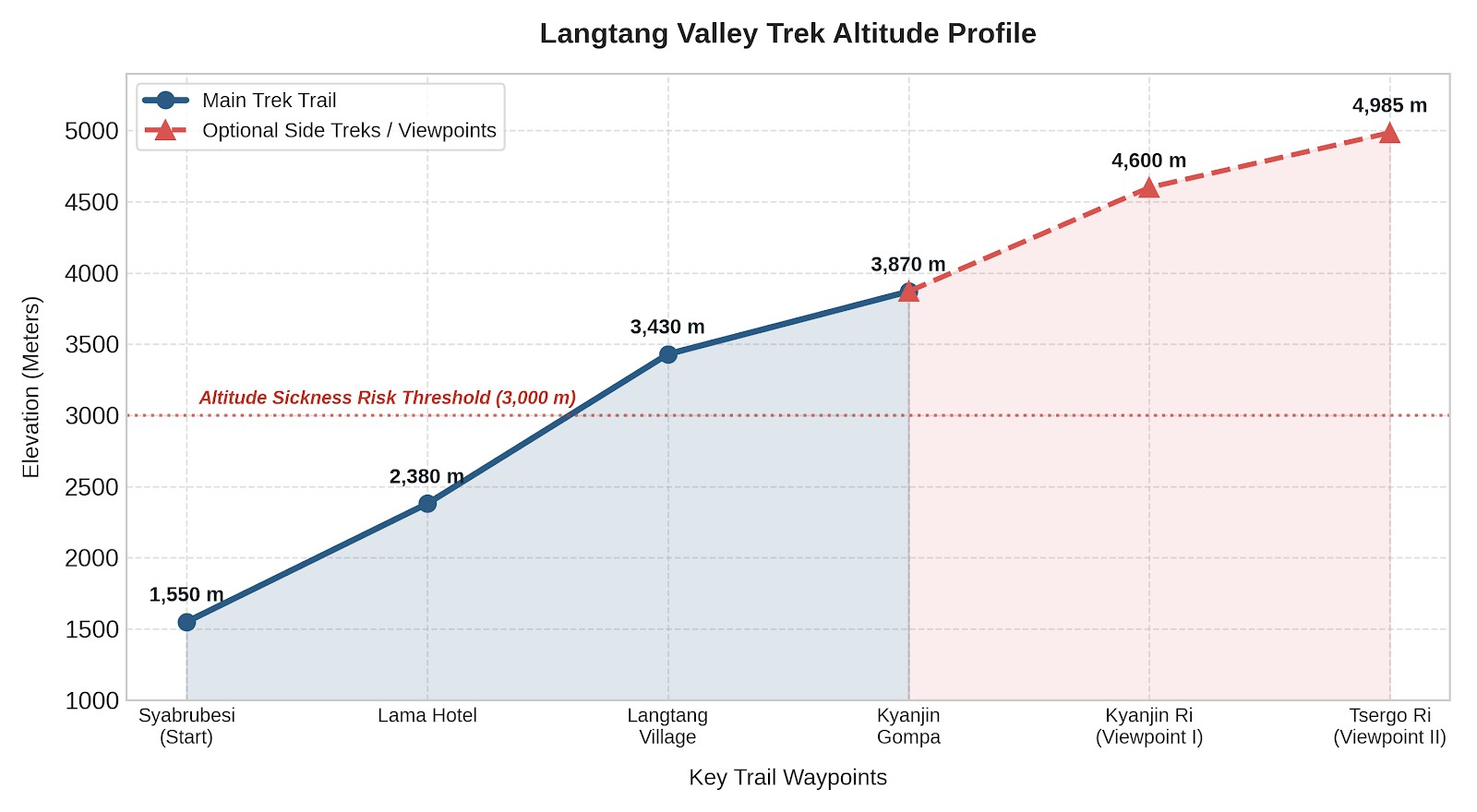
Langtang Trek Elevation Profile,
| Location | Approx. Elevation | Why it Matters |
|---|---|---|
| Syabrubesi | 1,550 m | Trek start |
| Lama Hotel | 2,380 m | First significant gain |
| Langtang Village | 3,430 m | High settlement |
| Kyanjin Gompa | 3,870 m | Primary goal |
| Kyanjin Ri | 4,600 m | Optional viewpoint-I |
| Tsergo Ri | 4,985 m | Optional Viewpoint Challenge-II |
Note that the figures might vary depending on the source.
Sleeping Altitude & Langtang Valley Trek,
It is advisable to pay particular attention to the sleeping altitude when on a Langtang Valley Trek. Essentially, the body needs time to adjust to higher altitudes, and the acclimatization process occurs when sleeping above a specific elevation.
As such, it is more important to reach Langtang Village and Kyanjin Gompa than to attempt the optional viewpoints of Kyanjin Ri and Tsergo Ri. In fact, it is unnecessary to go beyond Kyanjin Gompa as the Langtang Valley Trek does not require it.
If something does not feel right at any stage, it is wise to stop and reconsider. One must remember that Kyanjin Ri and Tsergo Ri are optional, and there is no obligation to complete the Langtang Valley Trek on the same day.
Symptoms of Altitude Sickness and Langtang Valley,
Altitude sickness is prevalent on the Langtang Valley Trek, primarily because of crossing the 3,000-meter barrier.
As such, it is essential to recognize the signs and symptoms of altitude sickness, which include:
Importantly, it is not advisable to dismiss the effects of altitude sickness. If the condition aggravates, the trekker must notify the guide and consider alternative arrangements like taking a rest or going back.
Walk slow, drink often, and leave the racing to the locals means trekking in not a racing and never a competition. The most crucial thing for a beginner on the Langtang Trek is a polite attitude toward altitude. Be humble to the altitude and wilderness.
Importantly, always let the guide know how you feel and the changes he or she should make if necessary.
Moreover, remember, the primary objective should be to enjoy and appreciate the surroundings while completing various tasks within the shortest time.
Likewise, altitude should not be the main concern as long as a trekker takes it slow and steady. If one has sufficient energy in the afternoon or evening to go further, every day and hour on the trail becomes a pleasure. It is always advisable to have a good walking rhythm, short sips, and short breaks to keep energy levels consistent throughout the day.
In conclusion, walking slowly and steadily will be a better strategy than trying to complete the trail as fast as possible. If one can achieve this, the first-timer will undoubtedly enjoy the Langtang Valley Trek.
The Langtang Trek walking distance varies between 10-15 kilometers depending on the day and the location where one is staying. Most days allow for five to seven hours of walking.
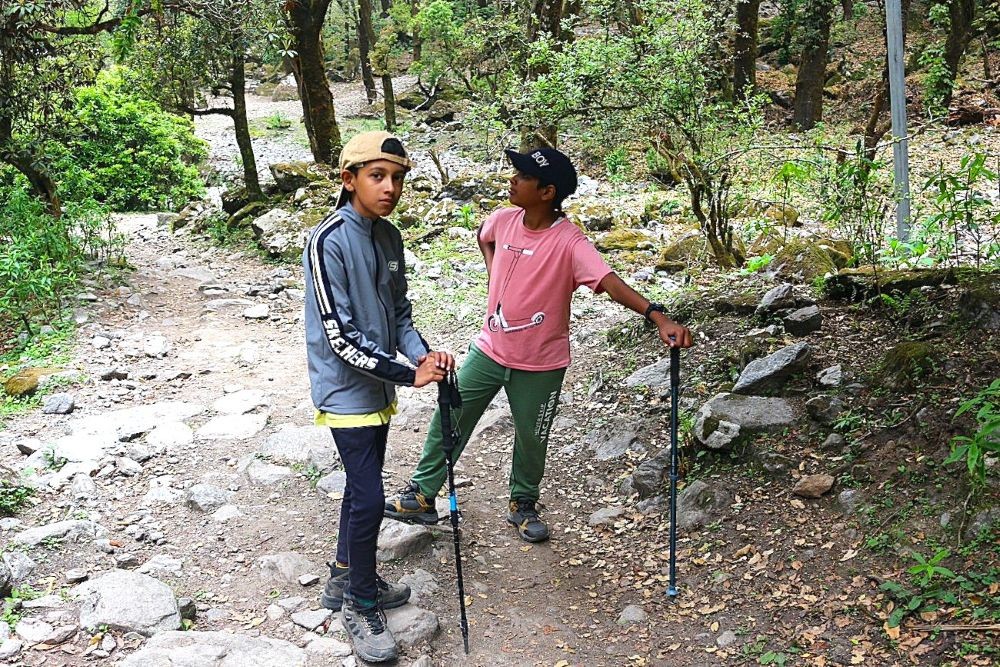
However, these are just approximations, as various aspects can increase or decrease the duration. As such, it is important to look at a general overview before considering specific details.
Langtang Trek Walking Time
| Trekking Day/ Route | Walking Time | Difficulty |
|---|---|
| Day 1 Syabrubesi → Lama Hotel | 5–6 hrs | Moderate |
| Day 2 Lama Hotel → Langtang Village | 5–6 hrs | Moderate |
| Day 3 Langtang Village → Kyanjin Gompa | 4–5 hrs | Moderate |
| Day 4 (Optional) Kyanjin Ri/Tsergo Ri | 5–7 hrs | Challenging |
| Day 5 Kyanjin → Lama Hotel | 6–7 hrs | Moderate |
| Day 6 Lama Hotel → Syabrubesi | 5–6 hrs | Moderate |
Here, the optional day entails an extra walking hour if one is considering Kyanjin Ri or Tsergo Ri viewpoint.
Depending on the individual, some days can feel longer than others due to specific challenges.
However, in general, the longest day on the Langtang Trek is the second day – Lama Hotel to Langtang Village. It is worth noting that the trail is a steady climb most of the way, which adds to the difficulty.
Another contender for the title of the longest day in Langtang Valley Trek is day five, which is a steady descent from Kyanjin to Lama Hotel. After spending several days on the trail, coming back can sometimes feel even more challenging.
In general, one can expect to spend between 5-7 hours walking daily.
However, it is advisable not to measure progress in kilometers for a first-timer; instead, one should focus on time. This is because ten kilometers of steady climbing can be more challenging than fifteen kilometers of walking on flat surfaces.
In fact, several factors can contribute to the walking speed, including the stone steps, altitude, and the general steepness of the trail.
It is essential to have a steady walking rhythm, take short breaks, and maintain a consistent breathing pattern. Likewise, one should also try not to walk too quickly at the beginning of the day since this will only lead to the need for more breaks later. It is also essential to keep one’s energy levels in check throughout the day.
As such, a good strategy for a first-timer is to start slow, maintain a steady pace, take short breaks at regular intervals, and drink plenty of water. This approach should ensure that the final kilometers are not too strenuous.
In addition, the trekker should always let the guide know if a particular day is becoming too challenging to consider adjusting the schedule.
For first-time trekkers, the most critical part of the Langtang Valley Trek is not the walking hours per day but rather enjoying the entire experience.
The hardest day on Langtang Trek tends to vary for different people but for many trekkers the hike from Lama Hotel to Langtang Village stands out as particularly strenuous due to the constant uphill walking.
In fact, Lama Hotel to Langtang Village trail involves gaining over 1000 meters in altitude and walking through the forests along the beautiful Langtang Khola.
Both the Kyanjin Ri and Tserko Ri hikes are even more challenging as they reach substantially higher altitudes. Here are the details:
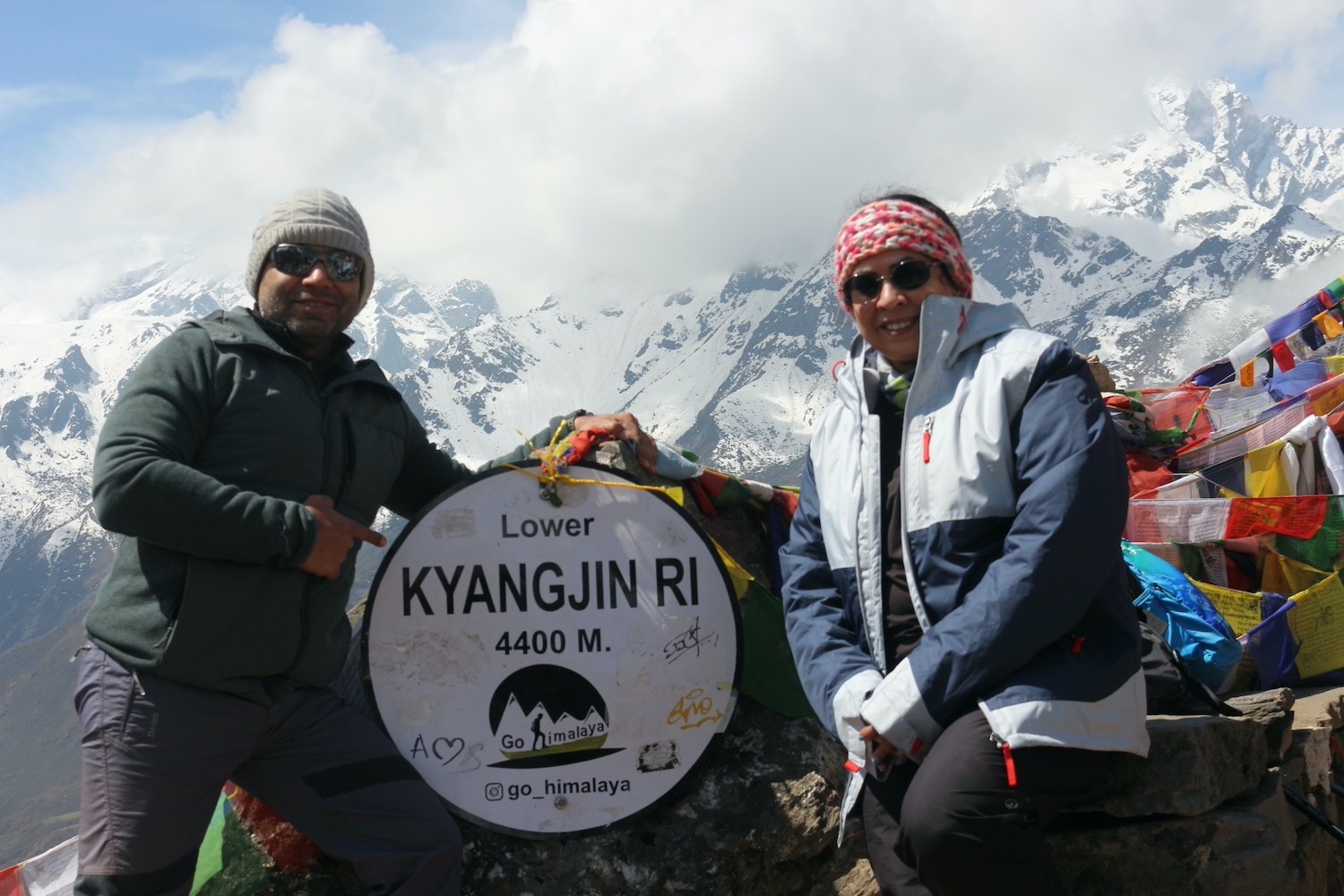
Lama Hotel to Langtang Village
From Lama Hotel (2380 m), the trail gently ascends to Langtang Village (3430 m) crossing the forest along the Langtang Khola.
While this trail is generally easy, it can have some particularly steep and rocky sections. It is not recommended to try and hike this trail too quickly, especially for novice hikers.
How to tackle the longest climb ?
Langtang Village to Kyanjin Gompa :
Kyanjin Ri Difficulty :
In summary, it is not mandatory to do the Kyanjin Ri hike, and it is a good idea to remember that completing the main trek is already an impressive achievement.
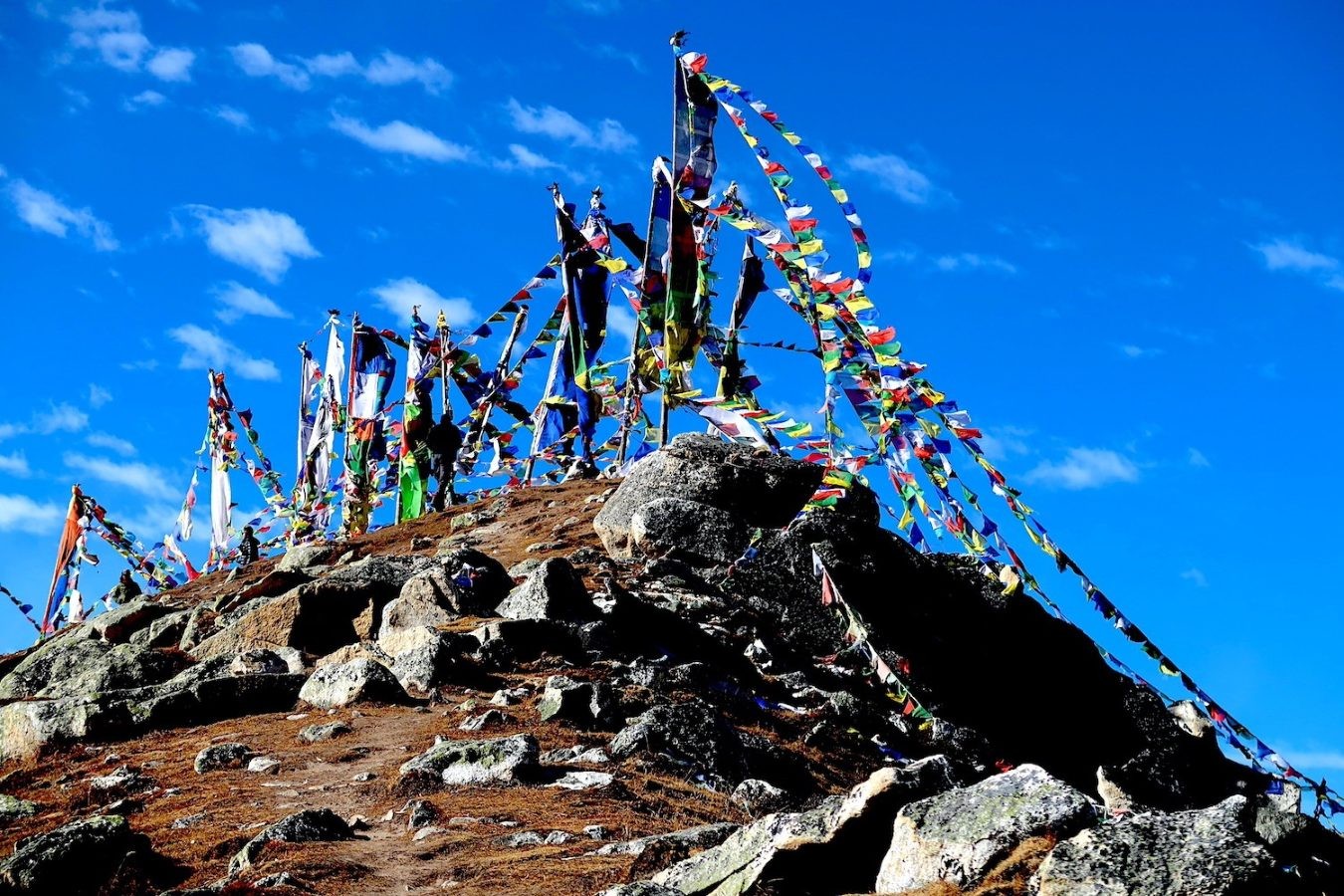
Tserko Ri Difficulty :
| Section | Approx. Elevation | Difficulty | Notes |
|---|---|---|
| Syabrubesi | 1550 m | Easy | Starting point |
| Lama Hotel | 2380 m | Moderate-hard |
| Langtang Village | 3430 m | Moderate-hard |
| Kyanjin Gompa | 3870 m | Moderate |
| Kyanjin Ri | 4600 m | Challenging- Optional peak |
| Tserko Ri | 4985 m | Challenging-hard Optional peak |
The most crucial piece of advice is to be prepared to walk slowly on the main trail and treat the optional peaks as optional.
Minimum Fitness Benchmarks
| General fitness requirements | Notes |
|---|---|
| Walking 5-7 hours/day at moderate pace | Walking for 10-15 km/day |
| Stairs | Hundreds of steps without breaks |
| Hiking | Trails with uphill sections |
| Leg strength | Walking or climbing stairs without fatigue |
| Cardio | 45-60 min brisk walking per day |
| Preparation | Being able to do all the above |
Focus on Leg Training,
Focus on strengthening your:
Exercises such as lunges, squats, step-ups, and calf raises will help you prepare your legs for the challenges of hiking in Nepal.
Stair training is also essential as it simulates the steep aspects of trails in the Himalayas region.
Train Your Cardiovascular System :
Practice Walking With a Backpack :
Altitude Is Not a Fitness Requirement :
When thinking about the fitness requirements for Langtang Trek, there are two critical elements: walking for several hours at a steady pace and being able to walk uphill.
To sum up, here are a few essential pointers:
With those recommendations in mind, preparing for Langtang Valley Trek is not particularly challenging.
No, you do not need previous trekking experience to do the Langtang trek. Previous Himalayan trekking experience is desirable but not necessary
Here, the most important thing is to be in good shape.
In fact, a beginner who regularly walks and exercises has a good chance. A sedentary beginner should train for the Langtang trek before attempting it.
First-Time Himalayan Trek: What Matters Most
You should be reasonably fit and be able to:
Importantly, you do not need to be an expert climber, and you do not need previous experience above 3,000 m. However, you need to pace yourself since you will be climbing up to 3,870 m (Kyanjin Gompa) and up to 4,600 m (Kyanjin Ri) for the optional viewpoint.
More importantly, Langtang trek starts in the village of Syabrubesi at 1,550 m and ends in the village of Kyanjin at 3,870 m. The trail peaks at Langtang village at 3,430 m and then goes up to Kyanjin Gompa at 3,870 m. The optional viewpoints of Kyanjin Ri and Tserko Ri are at 4,600 m and 4,985 m, respectively.
Thus, it is best to leave these hikes for the more experienced trekkers.
Experience vs. Inactivity
In fact, it is essential to distinguish between no experience and a lack of activity. A fit beginner has a much better chance of acclimatizing well than an unfit trekker.
Beginner’s Guide: Trekking in Nepal with No Experience
If you are a beginner trekker with no experience, here are some essential tips:
In summary, your first Himalayan trek should not be a race. It is essential to pace yourself and give your body time to adjust to the altitude. Thus, training before the trek and taking things slow during the hike will be more important than any previous trekking experience you may have.
The choice between the best beginner trek Nepal comparison mostly depends on your fitness, time, and altitude preferences. It is situated between lower-altitude easy treks and higher and more strenuous Himalayan treks.
Meanwhile, it is a bit more demanding than the Poon Hill trek but is generally much easier than the Everest Base Camp trek.
| Trek Feature | Poon Hill | Langtang Valley | Annapurna Base Camp | Everest Base Camp |
|---|---|
| Duration | 3-5 days | 7-10 days | 7-12 days | 12-16 days |
| Highest point| 3,210 m | 3,870 m | 4,130 m | 5,364 m |
| Difficulty | Easy-moderate | Moderate | Moderate | Moderate-challenging |
| Crowds | Moderate-high | Moderate | Moderate-high | High |
Here, the duration also depends on how you get to the trailhead and how you return.
Langtang vs Poon Hill Difficulty,
Langtang vs Annapurna Base Camp,
The Langtang vs Poon Hill difficulty comparison is more straightforward, but the ABC trek is similar to the Langtang trek in terms of the challenge. It reaches 4,130 m, so it is a bit higher than Langtang. Therefore, it is a moderate-level trek with excellent Himalayan views.
Langtang vs Everest Base Camp,
The Langtang vs Everest Base Camp comparison is pretty clear too. EBC is much more strenuous than Langtang. It reaches an incredible height of 5,364 m and takes about 12-16 days to complete.
Thus, it is the most challenging trek among the four, requiring more time and endurance.
Which Trek Is Better for a Beginner?
| Your Goal | Best Trek for You |
|---|---|
| Shortest introduction to trekking | Poon Hill |
| Cultural and mountain experience | Langtang |
| Moderate Himalayan trek | Langtang or ABC |
| Annapurna Sanctuary experience | ABC |
| Everest dream | EBC |
| Lower altitude exposure | Poon Hill |
| First longer Himalayan trek | Langtang |
Final Thoughts,
If you have no previous trekking experience but are generally fit, Langtang is an excellent choice. It is more demanding than Poon Hill, which is suitable for first-time trekkers, and it is generally much easier than ABC and EBC.
For most aspiring trekkers, the Langtang trek is the best option to get a well-rounded Himalayan trekking experience with a moderate level of difficulty and enough cultural and scenic highlights.
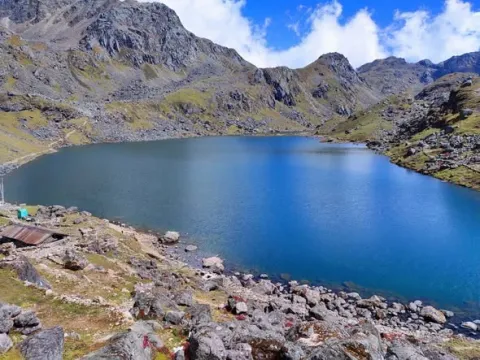
A comprehensive how to train for Langtang Trek program is crucial for a successful adventure. The good news is that you do not need to be an athlete to complete this trek.
Endurance, uphill trekking skills, and balance are more important than strength training, and recovery is key.
The Langtang Trek route is relatively straightforward. From the trailhead in Syabrubesi (1,550 m), you will gradually ascend to Lama Hotel (2,380 m) and then to Langtang Village (3,430 m) and Kyanjin Gompa (3,870 m).
From Kyanjin Gompa, you have the option to climb to Kyanjin Ri (4,600 m) and Tserko Ri (4,985 m).
Therefore, the key is to train for prolonged uphill walking.
6–8 Week Langtang Training Plan,
The following 6–8 week training plan will help you prepare for the trek. Do not forget to have fun!
Cardio Hill / Stairs Strength Weekend Goal :
1. How to Prepare for Langtang Valley: Cardiovascular Endurance
Walking is the foundation of your how to train for Langtang Trek program. Get your comfortable walking shoes and start with short walks.
Then, gradually increase the time and intensity. You can also do other activities to improve your endurance, such as brisk walking, biking, swimming, and running. The goal is to be able to walk for a prolonged period without feeling exhausted.
2. How to Train for Langtang Trek: Stairs and Hills
Stairs are your best friend in preparing for Langtang. The trek involves a lot of walking uphill and over stones.
So, try to do several sets of stairs with gradually increasing time. Do not try to do maximum effort at the beginning. It is better to focus on endurance than intensity.
3. How to Prepare for Langtang Valley: Strength Training
You need to strengthen your lower body to be able to walk long and steep trails. You can do squats, lunges, step-ups, calf raises, glute bridges, and planks. Do two strength training sessions per week.
However, during the last week, you should reduce the intensity.
4. How to Train for Langtang Trek: With a Backpack
You should get used to having a backpack during your training. Moreover, you can add more weight as you progress.
However, during your training, you should not overload your backpack. You should also get used to your trekking shoes.
This way, you will know if they are comfortable or not.
5. How to Prepare for Langtang Valley: Recovery
A Simple Busy-Person Weekly Schedule for How to Train for Langtang Trek
If you are a busy person and do not have much time, you can follow this example:
Acclimatization Langtang Trek is essential, as the trail reaches well over 3,000 m. The Langtang Valley trek usually starts from Syabrubesi (1,550 m) and goes up to Lama Hotel (2,380 m).
From there, you will go further up to Langtang Village (3,430 m) and Kyanjin Gompa (3,870 m). From Kyanjin Gompa, you have an option to climb higher to Kyanjin Ri (4,600 m) and Tserko Ri (4,985 m).
In fact, it is important to note that even the fittest people can experience altitude sickness.
A responsible how to acclimatize for Langtang trek itinerary will include extra days for adjustment, as rapid increases in elevation can cause altitude sickness.
So, it is better to spend an extra day in Kyanjin Gompa (3,870 m) rather than try to reach higher elevations right away. Moreover, spending an extra night at a lower altitude can be helpful if you feel sick.
In general, the climb high, sleep low concept is all about giving your body enough time to recover from the stress of gaining elevation.
So, if you decide to follow the “climb high, sleep low” principle, you can go up to higher altitude during the day and then return to the lower camp for the night.
However, it is important to note that this does not mean that you can rapidly gain elevation.
In general, you should try to follow these practical prevention tips:
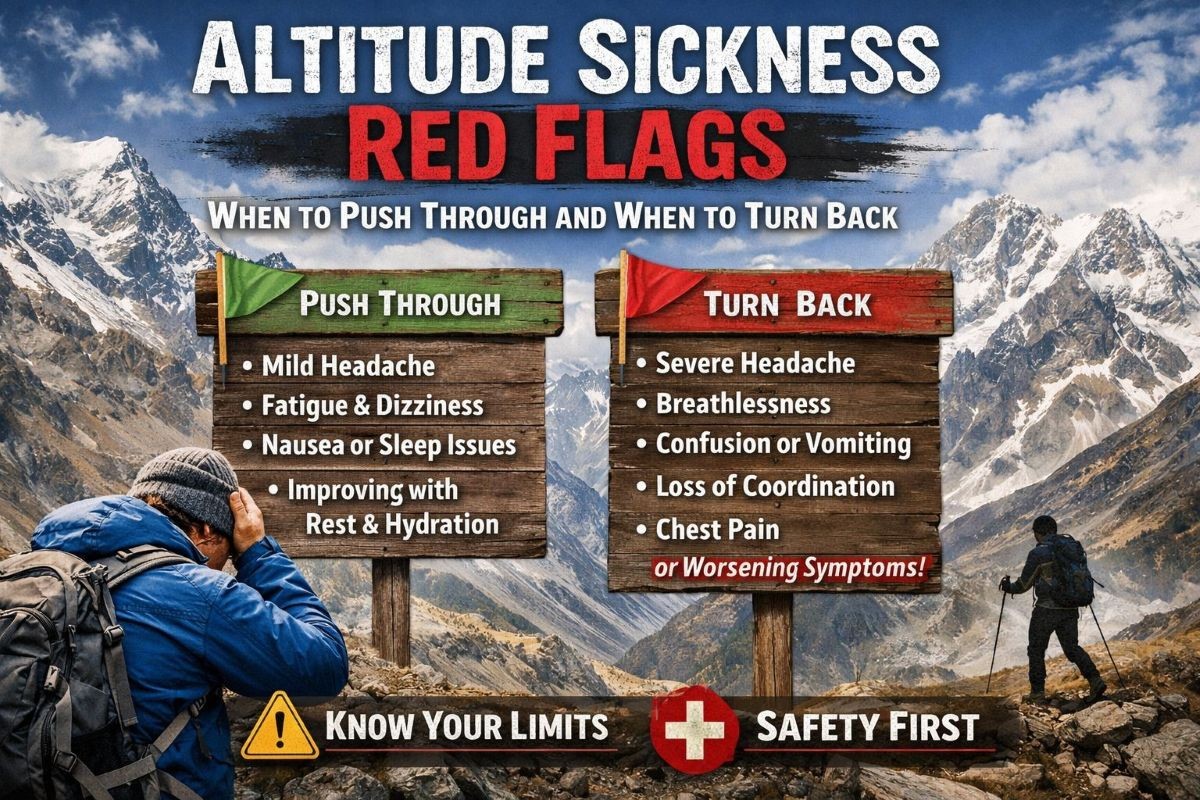
The most common altitude sickness symptoms include:
Moreover, if you feel that your symptoms are getting worse, you should not ignore them.
You should seek medical attention if someone is experiencing:
Moreover, it is essential to remember that the best treatment for altitude sickness is descending to lower elevations. Do not rely solely on medications.
The trail conditions of the Langtang Trek vary with the increase and decrease in altitude.
As a beginner, you should know that on the Langtang Valley trek, you will encounter forest trails, rocky paths, and numerous suspension bridges. The trail is moderately challenging and quite unpredictable so that you have to prepare accordingly.
Actually, the trail begins at Syabrubesi, which is situated at an altitude of 1,550 m. Throughout the lower altitudes, the trail remains fairly pleasant, and the temperature is relatively warm.
However, as you proceed with the trek, you will realize that it gradually climbs up to Lama Hotel, which is at 2,380 m and Langtang village at 3,430 m. Above Langtang village, the trail becomes more challenging.
| Trail Section | Approx. Elevation | Trail Description | Difficulty |
|---|---|---|
| Syabrubesi | 1,550 m | Village paths/dirt trails | Easy–moderate |
| Bamboo | 1,970 m | Forest trails, some stones | Moderate |
| Lama Hotel | 2,380 m | Forest trails, roots, steps | Moderate |
| Langtang Village | 3,430 m | Rocky, stones trails | Moderate |
| Kyanjin Gompa | 3,870 m | Open valley, rocks | Moderate |
| Kyanjin Ri | 4,600 m | Steep rocky trail | Challenging |
| Tserko Ri | 4,985 m | Steep alpine trail | Challenging-hard |
Note: The elevation of different trail sections may vary depending on the maps or specific settlements.
The lower altitude trails of the Langtang Trek pass through charming forests of pine, oak, maple, and rhododendron. The trail is relatively easy and shady but often slippery due to the loamy soil.
Sometimes the trail is obstructed by tree roots, and you may have to maneuver around them. Thus, for forest trails, it is essential to have good trekking shoes.
Additionally, the trail can be quite muddy, making the forest passages challenging for hikers.
On the trails beyond the Langtang Valley, the terrain becomes more exposed. In most cases, the trail above the Langtang Valley and close to Kyanjin Gompa is characterized by rocky and uneven terrain. As you get closer to Kyanjin Gompa (3,870 m), the trail becomes more alpine, and the vegetation cover becomes sparse.
The trail around Kyanjin Gompa is quite different from the heavily forested lower altitude trails. In particular, the landscape changes dramatically.
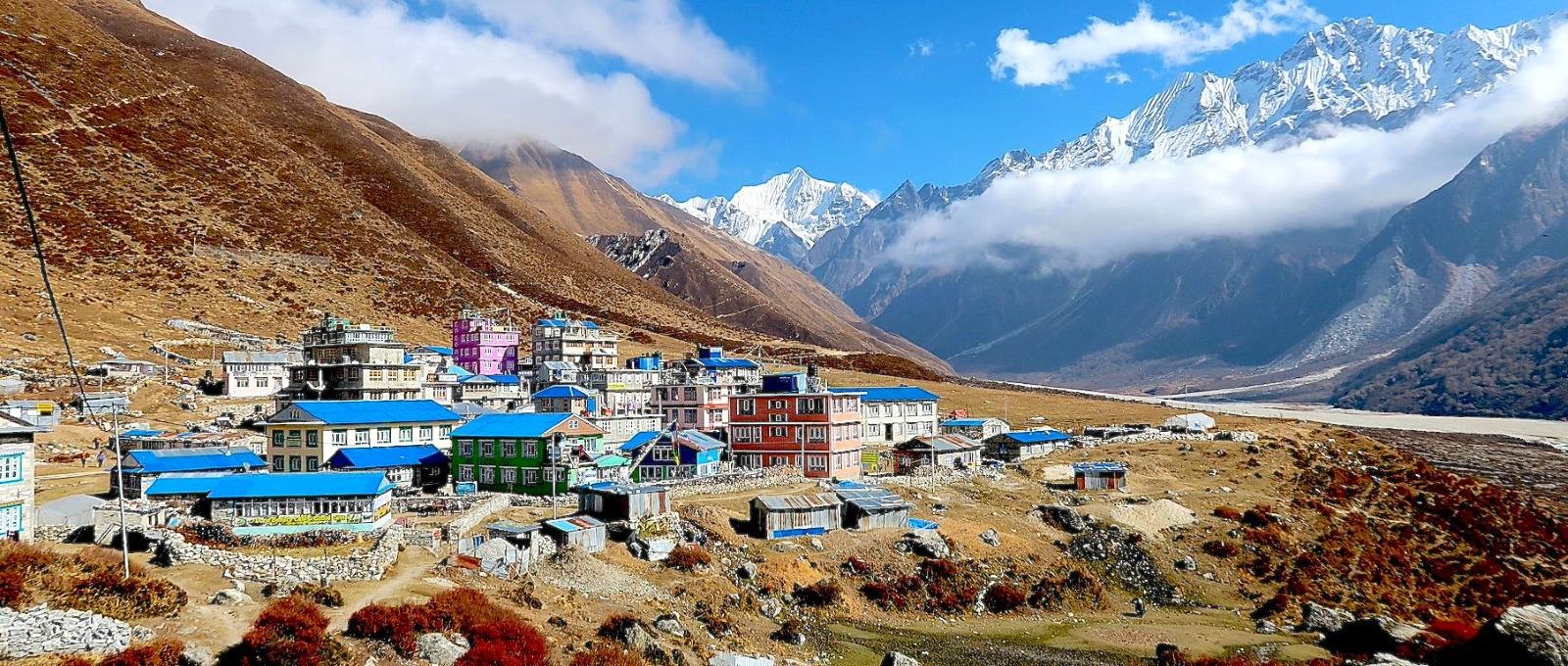
Whereas the lower trails used to pass through dense forests, the ones around Kyanjin Gompa are quite open. This trail section has an abundance of rocky paths leading to the viewpoints around the valley.
Additionally, the climb to the viewpoints is steeper than on many other trail sections. The Kyanjin Ri viewpoint is at 4,600 m, while the Tserko Ri viewpoint is at 4,985 m altitude.
| Season | Trail Conditions |
|---|---|
| Spring | Generally good trail conditions with beautiful rhododendron blooms |
| Autumn | Usually dry and crisp weather |
| Winter | Risk of snowstorms and slippery trails |
| Monsoon | Trails can be slippery with loose stones |
In fact, the monsoon season generally makes the forest trails extremely slippery, and the high altitude trails can be covered with snow in the winter season.
Meanwhile, the trail conditions are usually the best in autumn. Spring is also a wonderful season for trekking in Nepal because it offers beautiful views of the country’s natural landscapes.
Not exactly, the technicality of the Langtang Valley trek mainly comes from the altitude, the distance of the trek, and the moderate number of ascents and descents.
Right gear can make a significant difference in your trekking experience. In particular, it reduces the physical stress of the trip and helps you fully enjoy the adventure.
However, it is also crucial not to overprepare and bring too much gear. Instead, you should prioritize comfort and focus on a few essential items that will help you get through the trek safely and comfortably. Below is a list of gear that you should bring on the Langtang Trek as a novice trekker.
| Gear | Why It Helps | Priority |
|---|---|---|
| Good trekking boots | Offers good grip and prevents injuries | Essential |
| Trekking poles | Makes steep sections easier, reduces stress on knees | Highly Recommended |
| Layered clothing | Helps to stay warm in cold mountain weather | Essential |
| Light daypack | Keeps your belongings organized and within reach | Essential |
| Rain jacket | Protection from rain and wind | Essential |
| Warm fleece | Extra layer of warmth | Essential |
| Down Jacket | Keeps you warm on cold evenings | Highly Recommended |
| Headlamp | Necessary if you decide to camp under the stars | Essential |
| Water bottles | Helps to stay hydrated throughout the day | Essential |
| Sunglasses | Protection from harmful UV rays | Essential |
First and foremost, as a beginner, you should invest in a reliable pair of trekking boots. It is important to choose comfortable boots rather than brand new ones with stiff soles, which might damage your feet on the first day of the trek.
Additionally, your boots should offer a reliable grip to prevent slips and falls on rocky and uneven trails. It is also advisable to choose boots that are comfortable enough to allow you to hike for long hours without feeling exhausted.
Trekking poles are a must-have for Langtang Trek because they reduce the stress on your knees and offer an extra sense of balance, especially on the trail sections with a lot of stones or on steep sections.
Moreover, they can also help you maintain a steady pace and reduce fatigue. Trekking poles are particularly beneficial on the climb up and the descent after reaching the summit.
Moreover, on the Langtang Trek, the trail is often slippery, and trekking poles offer an additional support on such sections.
As the altitude increases, the temperature decreases. In particular, on the lower trail sections starting from Syabrubesi (1,550 m), the trails are relatively warm. Meanwhile, at higher altitudes such as Kyanjin Gompa (3,870 m) it can get quite chilly at night.
Therefore, it is a good idea to use the layering system so that you can add or remove clothing depending on the temperature.
A typical layering system comprises three layers:
Novice Trekker Priorities,
If you are a beginner trekker, it is a good idea to prioritize the following five items:
Langtang Trek is a great first Himalayan trek, but the common mistakes of Langtang Valley beginner trekkers are surprisingly simple. They can be avoided by a better attitude to the challenge, as well as extra preparation.
Likewise, the Langtang Valley trek is a moderate walk, but it reaches considerable altitudes and has long days. This trek goes from Syabrubesi at around 1,550 m to Kyanjin Gompa at 3,870 m, with optional side-excursions reaching to 4,600 m and 4,985 m.
Mistake #1: Walking too fast in the first several days
Mistake #2: Underestimating the altitude
Being fit is not enough for a Himalayan altitude trek. This applies to Langtang as well. Many experienced trekkers get sick on the way due to a lack of proper preparation.
Better option: If you decide to follow the standard itinerary, it is a good idea to spend an extra night acclimatizing in Kyanjin Gompa. Don’t try to reach 4,600 m until you feel ready.
Mistake #3: Wearing inappropriate footwear
Better option: It is a must to break in your hiking boots before the trek. It is also a good idea to select boots with a better grip. Consider using blister plasters and other special bandages.
Mistake #4: Underestimating the downs
Better option: On the descents, it is a good idea to slow down the pace. In addition, you can help yourself by using trekking poles. A good posture and bent knees will reduce the load on your knees.
Mistake #5: Walking with unnecessary gear
Better option: The best option is to only take the gear which is needed every day. Choose a suitable daypack and gear with a good fit. If porters are available, it is a good idea to use them.
Mistake #6: Wearing inappropriate clothes
Better option: It is always a good idea to dress in layers and have warm clothes with you. You may need them at any point of the day.
| Common mistake | Better option |
|---|---|
| Walking too fast in the first few days | Keeping a good pace |
| Underestimating altitude issues | Reporting altitude sickness symptoms right away |
| Wearing inappropriate footwear | Using hiking boots that are broken in |
| Underestimating the downs | Slowing down on the descents and using trekking poles |
| Walking with unnecessary gear | Taking only the gear that is needed each day |
| Wearing inappropriate clothes | Dressing in layers |
| Chasing after extra viewpoints | Skipping viewpoints when tired |
Here, the ultimate point is that you don’t have to try to conquer the trail as fast as possible. Instead, you should enjoy the scenery and take in the sights.
Now, let’s talk about who should choose Langtang Valley as their first Himalayan trek.
Langtang is a great choice for many first-time trekkers. It has a nice mix of Himalayan beauty, cultural heritage, mountain forests, and alpine sights. On the other hand, it is not as strenuous as some other popular treks.
In particular, the Langtang Valley trek is a moderate walk. It reaches relatively high altitudes, but it does not have the extreme heights of more famous Everest Base Camp. The main trail only reaches Kyanjin Gompa at 3,870 m. The optional side tracks are even more challenging, reaching up to 4,985 m.
So, if you want to have an authentic Himalayan trek, but with fewer restrictions, Langtang can be a great option. Let’s discuss who should consider a Langtang Valley trek as a first Himalayan trekking experience.
1. First-time Trekkers Seeking a Moderate Challenge
Langtang Valley trek is a good example of a moderate Himalayan adventure. It is suitable for anyone with some fitness, but no Himalayan trekking experience. You will need to be able to walk several hours a day. In fact, it is a good idea to practice stairs climbing before the trek as well.
2. Travelers Looking to Test Their Fitness
3. Those Who Want to Hike Outside the Peak Season
Another reason to consider Langtang Valley trek is that it can be less crowded than some other popular trails. It offers a great mix of wilderness and cultural heritage. You can enjoy forests, rivers, villages, and alpine views at the same time.
So, if you want a Himalayan trekking experience without the crowds, Langtang Valley is definitely worth considering. On the other hand, it is important to remember that it can still be busy in the peak season.
4. Nature and Culture Lovers
5. First-time Trekkers with Limited Time
Some treks are very long and can last for weeks. Luckily, Langtang Valley trek is not one of them. Instead, it is a relatively short adventure which can be completed within a week.
Actually, the Langtang Valley trek is a good option for those who want to get to know the Himalayas better, but have limited time.
Who Else is a Good Fit for What? Notes
Langtang is a very attractive option as a first Himalayan trek. Actually, it is one of the best treks in Nepal for a novice seeking a real Himalayan challenge, but without the extreme altitude of EBC. At the same time, you will have to prepare for the difficulties associated with mountainous trekking.
Here, make sure that you train before attempting this adventure, even if you are a very fit person. It is also vital to keep a good pace, without rushing. Remember that it is important to acclimatize to higher altitudes and take the necessary precautions.
Therefore, if you are thinking about doing your first Himalayan trek soon, consider Langtang Valley trail. It can be a great way to experience the beauty of the Himalayas while also completing a challenging adventure.
Actually, the trek starts and ends at an elevation of 1,550 m in Syabrubesi, with the summit of Kyanjin Ri being the highest point at 4,600 m.
Along the way, hikers have to reach Langtang Village at 3,430 meters and Kyanjin Gompa at 3,870 m.
Additionally, those who want to view the sunrise over the Langtang Valley can climb Tserko Ri peak at 4,985 m.
However, there are three things that beginner trekkers should remember:
More importantly, it offers spectacular views of the Himalayas, unique Tibetan-style villages, glaciers, and forests without requiring novice hikers to gain much elevation. As a result, making an effort to acclimatize is likely to be rewarding.
Contact us and book Langtang Valley Trek with us for an authentic expereince ever!!
1. Is Langtang Valley Trek difficult for beginners?
Langtang Valley trek is moderate to difficult for beginners as it requires walking or climbing mostly uphill for several hours daily. However, with adequate fitness training, acclimatization, packing, and itinerary, one can complete the Langtang Valley Trekking easily, even as a novice.
2. Can a beginner do Langtang Valley Trek?
Beginners can comfortably do the Langtang Valley Trek if they adequately prepare for the expedition. The trail is well-developed and has many teahouses to provide respite from the fatigue of the journey. Furthermore, the trek has moderate daily distances. However, altitude can be a significant challenge, and it is always advisable to ascend slowly and drink plenty of fluids to avoid altitude sickness.
3. How difficult is the Langtang Valley Trek?
Langtang Valley trek difficulty is moderate to challenging depending on individual fitness levels and trekking experience. The trail often involves navigating rocky stairs, mountain forest trails, and crossing rickety bridges. Moreover, hikers need to climb steep inclines to reach desirable viewpoints like Kyanjin Ri. Altogether, the challenge is exacerbated by the altitude which peaks at 4,773 meters.
4. What is the most difficult part of Langtang Valley Trek?
For most hikers, the most challenging aspects of the Langtang Valley Trek are the steep inclines, rocky stairs, and high altitude. Furthermore, the trail can be tiring, especially for novice trekkers who do not have the stamina of an experienced trekker. Nonetheless, maintaining a slow and steady pace and taking frequent breaks can ease the way.
5. What is the highest altitude on the Langtang Valley Trek?
The highest altitude on the Langtang Valley Trek trail is Kyanjin Ri at 4,773 meters above sea level. Most hikers undertake the side excursion to Kyanjin Ri to enjoy panoramic views of surrounding peaks and valleys. Additionally, another side trek, Tserko Ri, extends to 4,984 meters and is relatively more challenging. Notably, altitude is usually the most taxing aspect of hiking in the Langtang region.
6. Is Langtang Valley suitable for first-time trekkers?
Langtang Valley Trek is suitable for first-time trekkers with adequate fitness training. Although the trail provides a gentle introduction to Himalayan trekking, it is not an easy trail. As a result, hikers must familiarize themselves with some fundamental trekking techniques and prepare physically and mentally for the challenges of the trail. For example, hiking boots, stair climbing, walking, and leg exercises can help novice trekkers.
7. How many hours do you walk on Langtang Valley Trek for a beginner?
For a novice trekker, Langtang Valley Trek involves walking five to seven hours daily. Moreover, the time is spent walking on relatively steep and uneven mountain trails that can be incredibly tiring. As a result, it is always advisable to walk slowly and steadily to conserve energy. The walking hours depend on the altitude, trail type, and weather.
8. Is Langtang Valley Trek harder than Poon Hill Trek?
Compared to Poon Hill trek, Langtang Valley trek is more challenging because it involves steeper ascents and longer hikes. Poon Hill trek is relatively flat and short and is perfect for first-time trekkers. Consequently, Langtang Valley Trek can be tough for novice trekkers, but with the right preparation and gear, it can be an easy walk for anyone.
9. Is Langtang Valley Trek harder than Annapurna Base Camp?
Depending on the route, Langtang Valley trek is as challenging as the Annapurna Base Camp Trek. Both trails require day hikes that involve steep ascents and descents. Nonetheless, the Annapurna Base Camp peaks at 4,130 meters, whereas Langtang Valley peaks at 4,984 meters for Tsirko Ri. Altogether, individual fitness levels largely determine the relative difficulty of the two hikes.
10. Do I need trekking experience for Langtang Valley Trek?
No, one does not need trekking experience for the Langtang Valley Trek. Although the trail can be challenging, it lacks technical difficulties that necessitate prior trekking experience. As a result, with proper fitness training and acclimatization, one can do the Langtang Valley Trek as a novice. Moreover, a well-designed itinerary plays a critical role in this trek. As such, it is essential to select a reasonable route with manageable daily distances and sufficient time for acclimatization.
11. How fit do I need to be to hike Langtang Valley?
To hike Langtang Valley, you need to be at least moderately fit. As a result, it is essential to train for the hike, at least a month before the trek. Training prepares your body for the physical demands of the hike. Some of the most effective training preparations include walking, hiking, and stair climbing. Furthermore, it is crucial to strengthen your leg muscles and do regular cardio workouts.
12. How should I prepare for Langtang Valley Trek as a beginner?
To prepare for the Langtang Valley Trek as a beginner, you need to start training several weeks before the trek. The training should involve walking and hiking as much as possible. The training should also entail stair climbing and strengthening your lower body muscles. Moreover, it is essential to do regular cardio and endurance activities to prepare your body for the physical demands of the trek. Finally, as a novice, it is crucial to carry a lighter backpack and gradually add more weight as time goes.
13. Is altitude sickness common on the Langtang Valley Trek?
Altitude sickness is relatively common on the Langtang Valley Trek because the trail reaches an altitude of 4,984 meters. Symptoms of altitude sickness include headache, nausea, vomiting, fatigue, and sleeping problems. To prevent altitude sickness, it is essential to acclimatize properly and stay hydrated. Moreover, it is always advisable to climb slowly and avoid sleeping at a higher altitude than you are used to. If altitude sickness persists for a long time, it is essential to consult a doctor and descend to lower altitudes.
14. What makes Langtang Trek challenging for a beginner?
Several aspects of the Langtang Trek are challenging for a beginner. The trail often involves navigating steep, rocky stairs and uneven mountainous terrain. Furthermore, the trail involves long hikes that can be incredibly tiring, especially for novice trekkers. Lastly, unpredictable mountainous weather can also make the trail more challenging. Nonetheless, with good preparation and a proper itinerary, one can conquer the Langtang Valley Trek.
15. Is the Langtang Valley Trek physically demanding?
The Langtang Valley Trek is moderately challenging rather than technical. As such, most of the challenges of this trek involve stamina and endurance. For example, hiking this trail often involves walking up and down rocky and uneven mountain trails. Consequently, it is essential to have good stamina and endurance to conquer this trail. However, an easy pace can significantly ease the way.
16. What should a beginner carry for the Langtang Valley Trek?
A beginner should carry Langtang Valley Trek packing essentials such as trekking boots, warm clothing, rain gear, trekking poles, sleeping bag, sun protection, water, and a first aid kit, among others. Most importantly, it is crucial to pack lightly and avoid carrying unnecessary items. Additionally, hikers must carry enough warm clothing to protect themselves from the cold mountainous nights.
17. Is the Langtang Valley Trek safe for a beginner?
The Langtang Valley Trek is generally safe, but it comes with its challenges, such as altitude and unpredictable mountainous weather. As a result, it is essential to prepare adequately and acclimatize to the altitude before heading to higher altitudes. Moreover, it is always advisable to go trekking with an experienced trekking guide. A professional guide can enhance your safety, provide general advice, and assist in case of an emergency.
18. What is the best Langtang Trek itinerary for a beginner?
A 7- to 9-day itinerary is perfect for a beginner on the Langtang Trek. This itinerary allows you to gradually acclimatize to the altitude while enjoying this spectacular trail. Some of the most popular highlights of this tour include Lama Hotel, Syabrubesi, Langtang Village, Kyanjin Gompa, and Kyanjin Ri. Additionally, it is always advisable to have a day or two to acclimatize or rest, especially for first-time trekkers.
19. Can a beginner hike the Langtang Valley Trek without a guide?
A beginner can hike the Langtang Valley Trek without a guide, but it is advisable to hire a professional guide. Although this trail is well-trodden and well-marked, it is always essential to hire a local expert to assist and guide you through this beautiful trail. A professional trekking guide has the necessary skills and experience to lead you safely through this trek. Additionally, a guide can help if you become stranded or injured.
20. Is the Langtang Valley Trek worth it for a beginner?
Yes, Langtang Valley Trek is worth it for a beginner. This beautiful trail offers spectacular views of the Himalayas, glaciers, mountainous peaks, valleys, and the unique Tamang culture. As a result, this trek is an excellent opportunity for novice trekkers to experience the adventure of Himalayan trekking while witnessing the splendor of nature. After all, the Langtang Valley Trek is an easy challenge for any beginner trekker with the right attitude and preparation.
Our travel experts are ready to assist you with any questions.
Send us a message.
Have a question before you book? Send your enquiry below and our travel experts will get back with the required information.