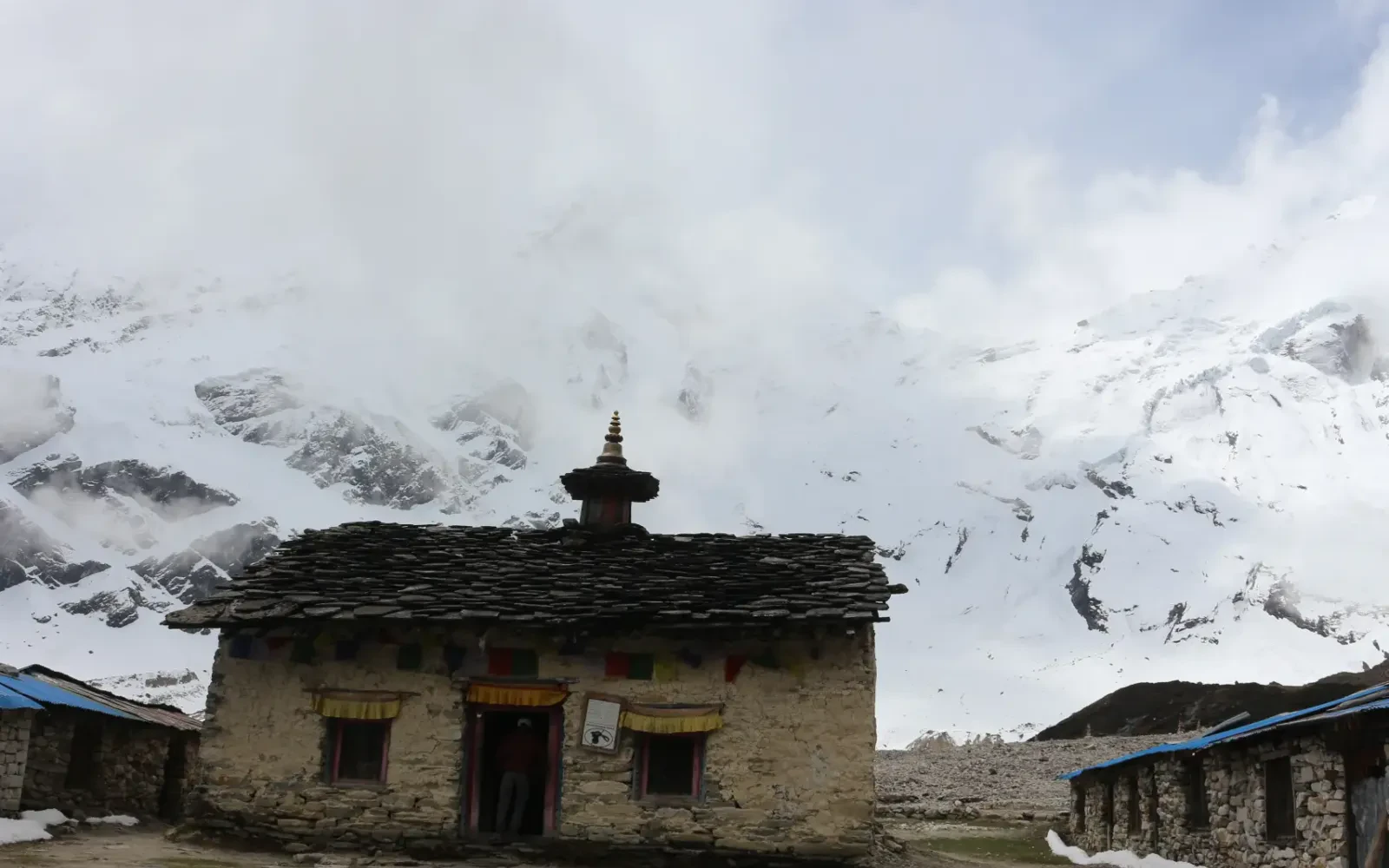
The Manaslu Circuit as a spiritual adventure is a unique combination of high-altitude trekking, cultural immersion, and self-discovery through the Himalayas. Here, this challenging trek takes you around the impressive Mount Manaslu, covers a variety of landscapes and terrain, and gives you insight into the lives and culture of the local people.
In fact, it is worth noting that for a trekker, the opportunity to engage in a mindful experience is often connected to a personal spiritual path. So, how could a journey around Manaslu be considered spiritually fulfilling?
As usual, the trek begins in the village of Machha Khola after a road journey from Kathmandu, at an altitude of about 900 km and leads through the Budhi Gandaki Valley towards higher-altitude hamlets. The Manaslu Circuit crosses many picturesque villages and isolated monasteries while ascending to the high Himalayas. With every village, the trek becomes more elevated and secluded.
Likewise, the path goes through villages of Jagat (1,340 m), Deng (1,860 m), Namrung (2,660 m), Lho (3,180 m) on the way to Sama Gaon (3,500 m) at high altitude.
| Location | Approx. Altitude | Description |
|---|---|---|
| Machha Khola | 900 m | Starting point on the banks of the river |
| Jagat | 1,340 m | Traditional Himalayan village |
| Deng | 1,860 m | Local Houses and monasteries |
| Namrung | 2,660 m | Mountainous village |
| Lho | 3,180 m | Village and Buddhism |
| Sama Gaon | 3,500 m | Ethical and authentic traditions |
| Samdo | 3,875 m | High Himalayan village |
| Dharamsala | 4,450 m | High-altitude hiking village |
| Larke Pass | 5,106 m | High mountain pass |
| Bhimtang | 3,590 m | Alpine valley and high peaks |
When approaching the village of Sama Gaon and Samdo, you will find more signs of Buddhist traditions. It is important to understand that local customs should be respected in the Manaslu region.
In addition to the cultural and environmental aspects, the challenging trek itself is an important ingredient for reflection.
For example, the path to Dharamsala (4,450 m) and the Larke Pass (5,106 m) will test your endurance, while the Descent will take you through the scenic Bhimtang Valley (3,590 m).
For most people, the ability to contemplate is associated with the view from high places, long walks through nature, and the opportunity to be alone with your thoughts. The spiritual side of the Manaslu Circuit trek depends on how the conditions, local culture, and natural surroundings influence the individual.
Therefore, it is important to be considerate and follow local customs during the trek.
Another key factor in the spiritual experience while trekking around Mount Manaslu will be the interaction with people. Remember that you are a guest in local homes and try to support the village economy wherever possible.
Following sustainable tourism principles, you will contribute to preserving the region for future generations while enjoying the spiritual wealth of the Manaslu region.
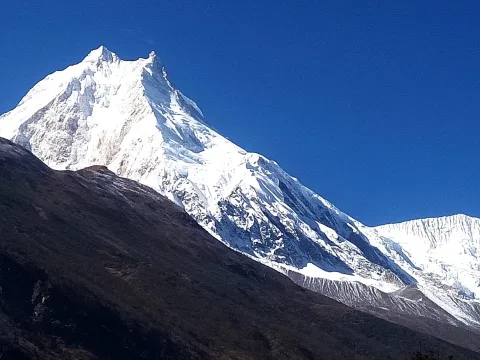
Here, the Manaslu landscape is dominated by high mountains, rivers, forests, villages, and monasteries. In addition, while trekking around Manaslu, you will see the transition from the Budhi Gandaki Valley to a Tibetan village and will notice unique contrasts in the surrounding landscape.
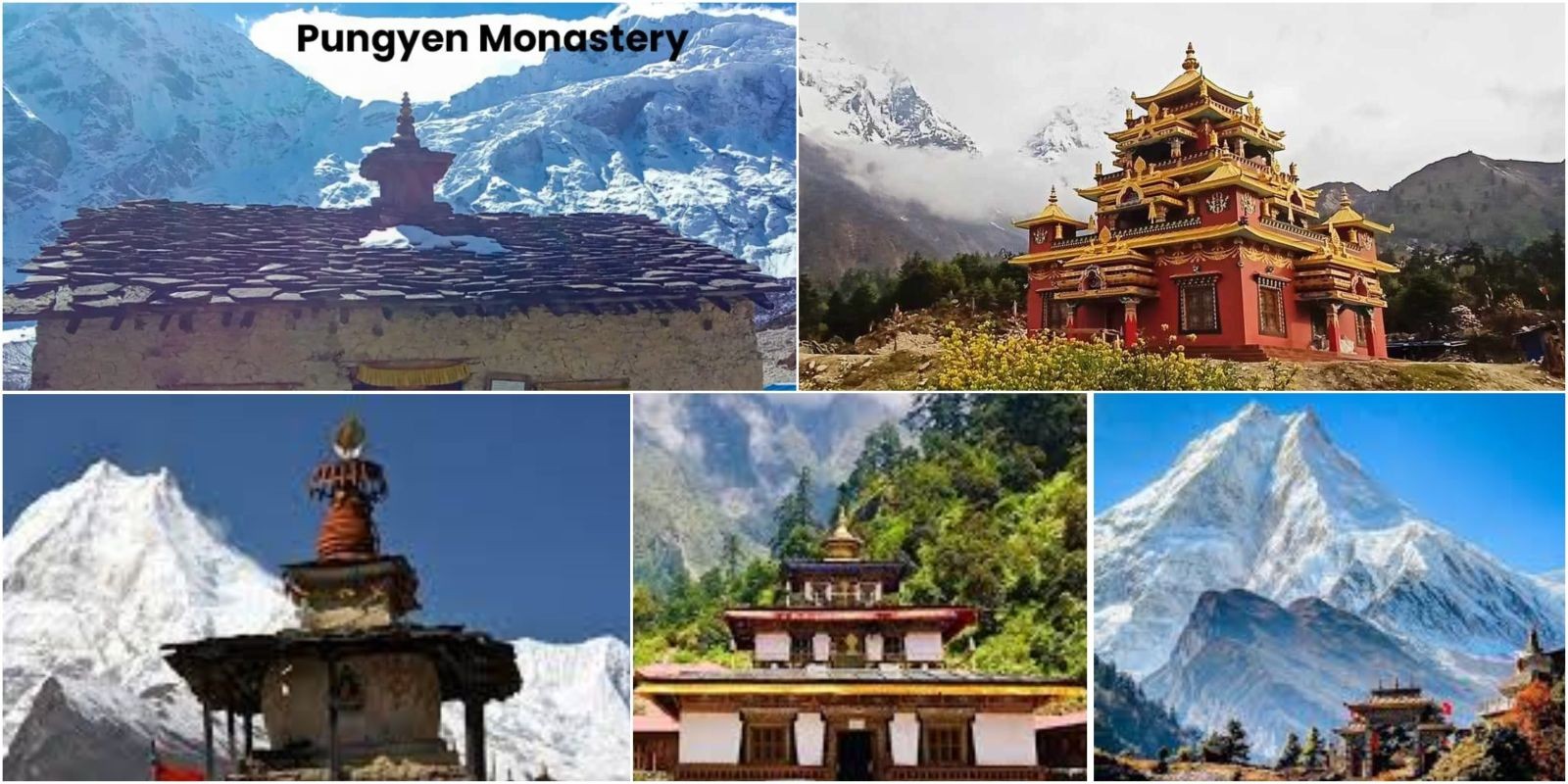
When reflecting on the culture and spirituality of the Manaslu region, it is important to recognize that the mountain range strongly influenced the local cultural and natural history.
At the same time, it is not necessary to romanticize mountains and elevate them to the most sacred place in the universe.
From the starting point in Macha Khola (900 m) and the village of Jagat (1,340 m), green forests and mountain streams open up to view.
Similarly, higher altitudes of Deng (1,860 m) and Namrung (2,660 m) are distinguished by vast forests and towering peaks. When approaching the village of Lho (3,180 m), Sama Gaon (3,500 m), you will see more man-made structures, including monasteries and prayer flags. The landscape becomes more devoid of vegetation at an altitude of 3,875 m in the village of Samdo.
Next, in Dharamsala (4,450 m), the land is characterized by a lack of plant life, while the view is taken over by glaciers and rocky slopes.
From the peak of Larke Pass (5,106 m), you have a view of the entire region. Then, after the Descent, you will find yourself in a mountainous forest at an altitude of 3,590 m in the Bhimtang Valley.
The sacredness of the Manaslu landscape is questionable, as this term seems too absolute when applied to nature. However, mountain trails, long hikes, and exposure to breathtaking views can inspire introspection.
In addition, a trek around Mount Manaslu can be seen as a pilgrimage, which can be spiritually significant to some people. In principle, the perception of nature depends on a person’s philosophy and the experiences he undergoes.
Perhaps for you, the most sacred aspect of the Manaslu Circuit trek will be the chance to contemplate, while others may consider it an educational and adventurous adventure.
Moreover, it is important not to spoil the landscape with trash, disturbing wildlife, or cutting down plants. It is also crucial to respect the local culture and religious practices of the people in the village and the monasteries.
Moreover, you will get authentic experiences and a greater understanding of the Himalayan way of life if you follow sustainable and respectful travel practices.
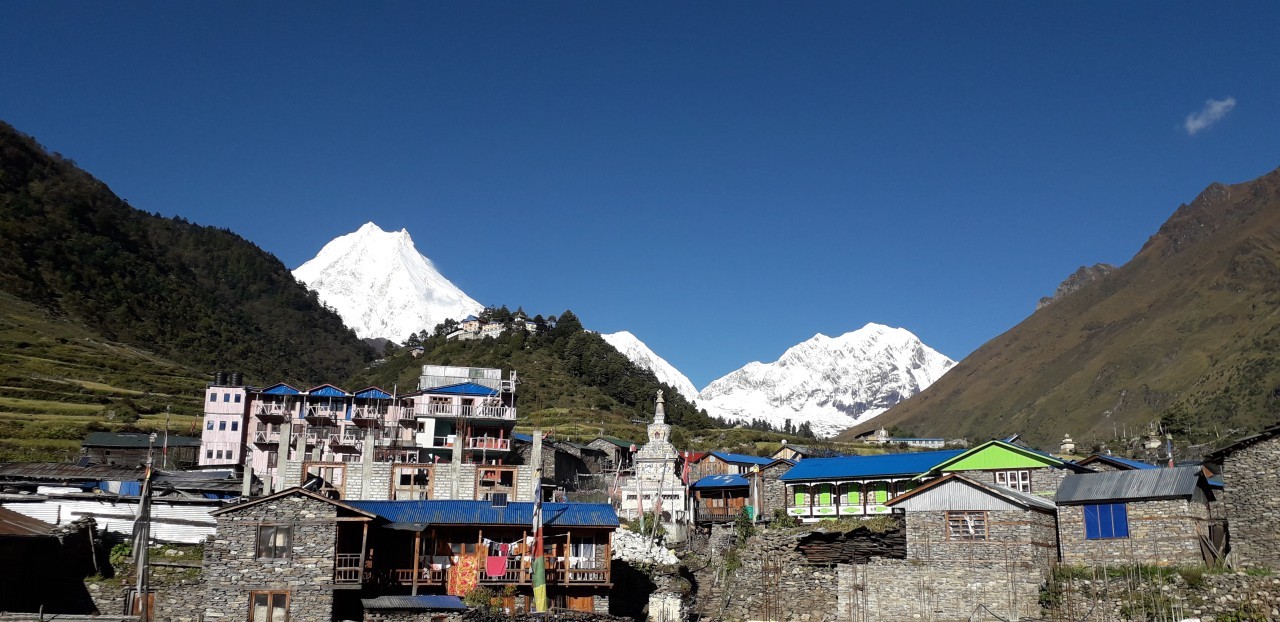
As the Manaslu Circuit trail winds its way up the valley, the Buddhist culture becomes more prominent.
While there are plenty of ethnic and culturally diverse Himalayan hamlets along the lower trail, the ones in the upper part like Lho (3,180 m), Sama Gaon (3,500 m), Samdo (3,875) are more Tibetan-influenced than anything else. This cultural influence is manifested in various ways as the trail passes by local monasteries, prayer wheels, mani walls, chortens, and prayer flags.
Similarly, these cultural artifacts and practices hold both religious and social significance to the locals, with monasteries still playing an important role in regional cultural life. As such, it is important for hikers to be respectful and mindful when visiting religious sites and taking part in local traditions and practices.
Monastery: A monastery is a religious building or complex associated with monks who practice Buddhism. Some of the monasteries along the trail have been turned into hotels or hostels, which means that not all of them are open to visitors.
Before wandering off into a religious building, ask the local villagers or monks if you are welcome and if there are any restrictions.
Mani wall : Mani walls are religious structures made of stacked stones with Tibetan Buddhist scriptures carved on them. They can be found in many traditional villages and along the trail in the upper part of the Manaslu region. Do not climb the mani walls or remove any stones. When walking next to them, make sure to stay on the side that is preferred by the locals. If you are unsure which one that is, simply ask your guide.
Prayer wheel : A prayer wheel is a religious object used by monks and followers of Tibetan Buddhism to help them practice their faith. When encountering a row of prayer wheels on a trail, only turn those that indicate that visitors are allowed.
In addition, always follow the turning direction indicated by the locals or your guide. Turning a broken or blocked wheel should also be avoided.
Chorten / Stupa : Chortens are religious monuments or shrines common for Himalayan Buddhism. There are many variations of chortens, which are usually different in shape and size, but the religious significance and general appearance are similar. Do not climb on top of or otherwise damage the chorten. If you are unsure about the correct way to walk past it, your guide will show you an example.
Prayer flags : In the Himalayan region, prayer flags are a common sight, fluttering above prayer flags can be seen above villages, bridges, homes, and in other places. Do not remove the flags or use them for any personal purposes. These small pieces of fabric play and important role in the local culture and should be treated with respect.
In summary, the culture and history of the Manaslu region are closely linked with various Tibetan Buddhist traditions.
Nevertheless, different communities may have varying degrees of religious practices and traditions. With that in mind, it is best to be mindful and respectful of local customs.
In most cases, the best way to experience religious culture in Manaslu region is by being an observant visitor. When you see locals engaging in ritual practices or visit religious monuments, make sure to keep a polite distance and never interrupt them.
When it comes to taking photos, make sure to ask for permission first, especially when you intend to photograph someone’s religious practices, a monk, a local village, or a temple.
Moreover, some monasteries may have specific rules regarding photographing their interiors, so make sure to follow the instructions given by the monastery staff or your guide.
When visiting religious sites and structures, make sure to treat them with respect. If there are any rules or customs regarding walking around such places, follow them. In some cases, a local guide will have to indicate the direction you should face when passing by a religious building or monument.
Likewise, always avoid climbing on top of chortens and other religious structures or sitting on the mani walls. These practices are considered disrespectful and may cause offense to the locals.
Moreover, the rich cultural and natural history of Manaslu Circuit trek is best experienced through careful observation and respectful engagement. The deeper understanding of the region and its cultural landmarks can be achieved with the help of a professional guide who can explain the significance of different monasteries and village customs without undermining their religious significance.
In general, the most important rule for a trekker who wishes to explore the Manaslu region is to remember that its people, culture, and religion deserve respect.
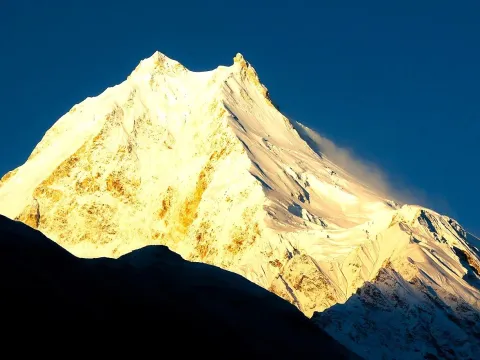
The Manaslu monasteries, prayer wheels, mani walls, chortens, and prayer flags can be seen as an introduction to the trail’s upper part and the Tibetan-influence beyond. Most of the objects and buildings are deeply integrated with the local culture and continue to be an essential part of the region’s cultural heritage.
To better understand and appreciate Manaslu Buddhist symbols and cultural objects, it is important to grasp the significance of each of the observed items.
There are several monasteries in the Manaslu region associated with various cultural practices and customs. While some of them have been adapted for commercial use (hotels or hostels), most of the monasteries are still used by monks and serve their traditional religious function.
Here, many of the monasteries in the higher altitudes of the Manaslu region have their own prayer halls, statues, paintings, and other religious artifacts.
Therefore, it is important to note that many of the monasteries have specific rules regarding visitor access. Always make sure to seek permission from the local villagers, monks, or guides before entering a monastery compound. In most cases, you will receive very straightforward answers to your questions, so do not hesitate to express your interest.
Mani Walls,
Mani walls are a popular cultural monument in the Himalayan region. They consist of stacked rocks with Tibetan Buddhist scriptures carved on them. The Manaslu region has a number of such sacred objects, which can be found both in the villages and along the trails. When exploring the local monasteries and villages, do not sit or climb on the mani walls or remove any stones from them.
When walking alongside the mani walls, always make sure to follow a certain direction, which might depend on the local customs prevailing in that area. If you are ever in doubt, simply consult your local guide, who will be able to explain the situation and help you avoid any possible cultural mistakes.
Importantly, mani walls along the trail are another cultural feature that requires respect and careful consideration. Fortunately, these guidelines are relatively simple and easy to follow.
Chorten :
Chortens are a part of Himalayan Buddhist cultural heritage, which can be found scattered throughout the region.
In the Manaslu area, chortens can be seen both in the settlements and around the monasteries.
In some localities, these sacred structures present a significant part of the built cultural heritage.
When exploring monasteries and mountainous villages in the Manaslu region, make sure to treat local cultural heritage items with respect. Always avoid climbing on the rooftops of local houses or touching any sacred objects. Chortens are considered to be sacred places and should not be disrespected. If you have any questions about the correct behavior around a certain religious monument, consult your guide, who can give you a detailed explanation.
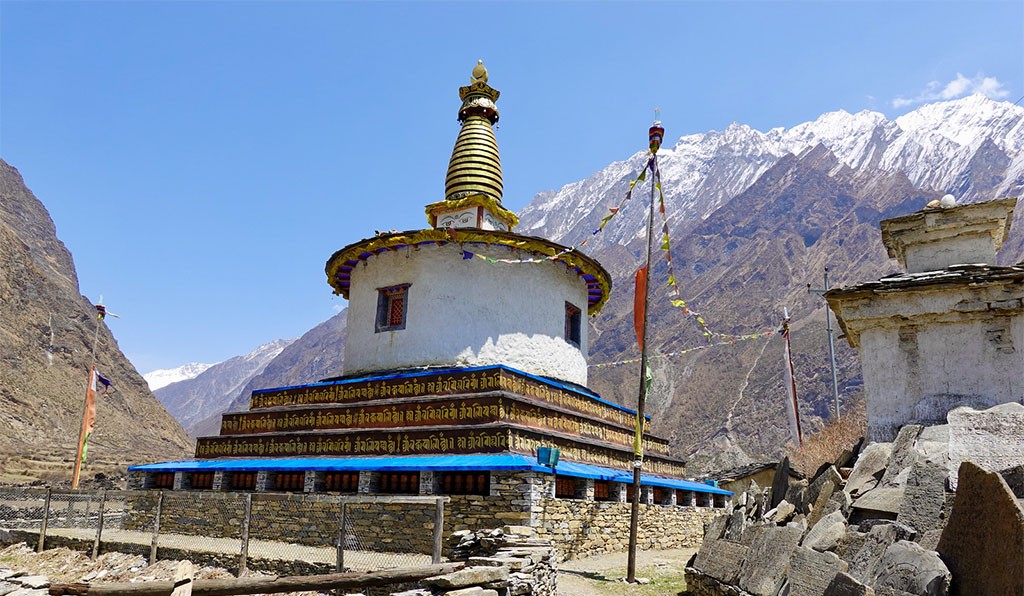
Prayer Wheels,
The Manaslu prayer wheels can be seen along the trail and dotted across the region’s mountainsides, valleys, and villages. The religious artifacts are an important part of the local cultural heritage.
In the Manaslu region, you will often see rows of prayer wheels along the trail. It is believed that they are used to help the faithful in their spiritual practices.
When visiting any prayer wheels in theManaslu region, make sure to observe and respect local customs. If the local people or monks indicate that visitors are allowed to turn the prayer wheels, only turn them in the direction indicated by them. Turning a broken or blocked wheel should also be avoided. It is a better to leave the prayer wheels alone if you are unsure about the appropriate course of action.
Prayer Flags,
Manaslu prayer flags are a common sight across the region, fluttering over villages, bridges, and mountain passes.
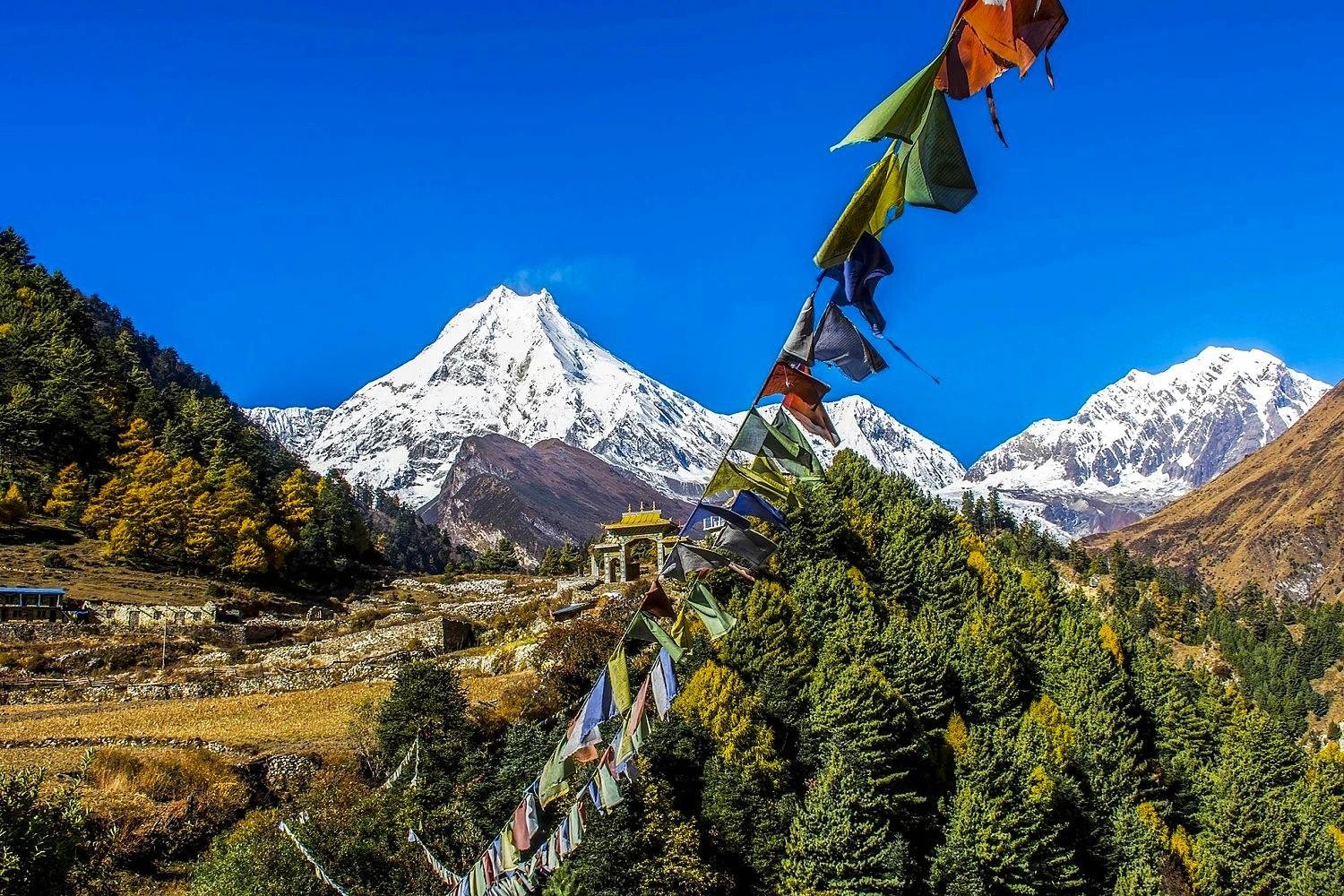
Along with other Manaslu Buddhist artifacts and cultural objects, the flags are a significant element of the local cultural heritage. They should always be treated with respect and never be picked up and taken away as a souvenir.
Places Where You Might See Them and Recommended Behavior :
The Manaslu Circuit trek is set in a culturally vibrant Himalayan region where Buddhism is prominent. Monasteries, village gompas, mani walls, and chortens are a way of life for the local people. The Tibetan Buddhist influence is at its peak in the Manaslu region. It is especially prominent in the Nubri Valley of Samagaun, namely, Lho, Samagaon, and Samdo.
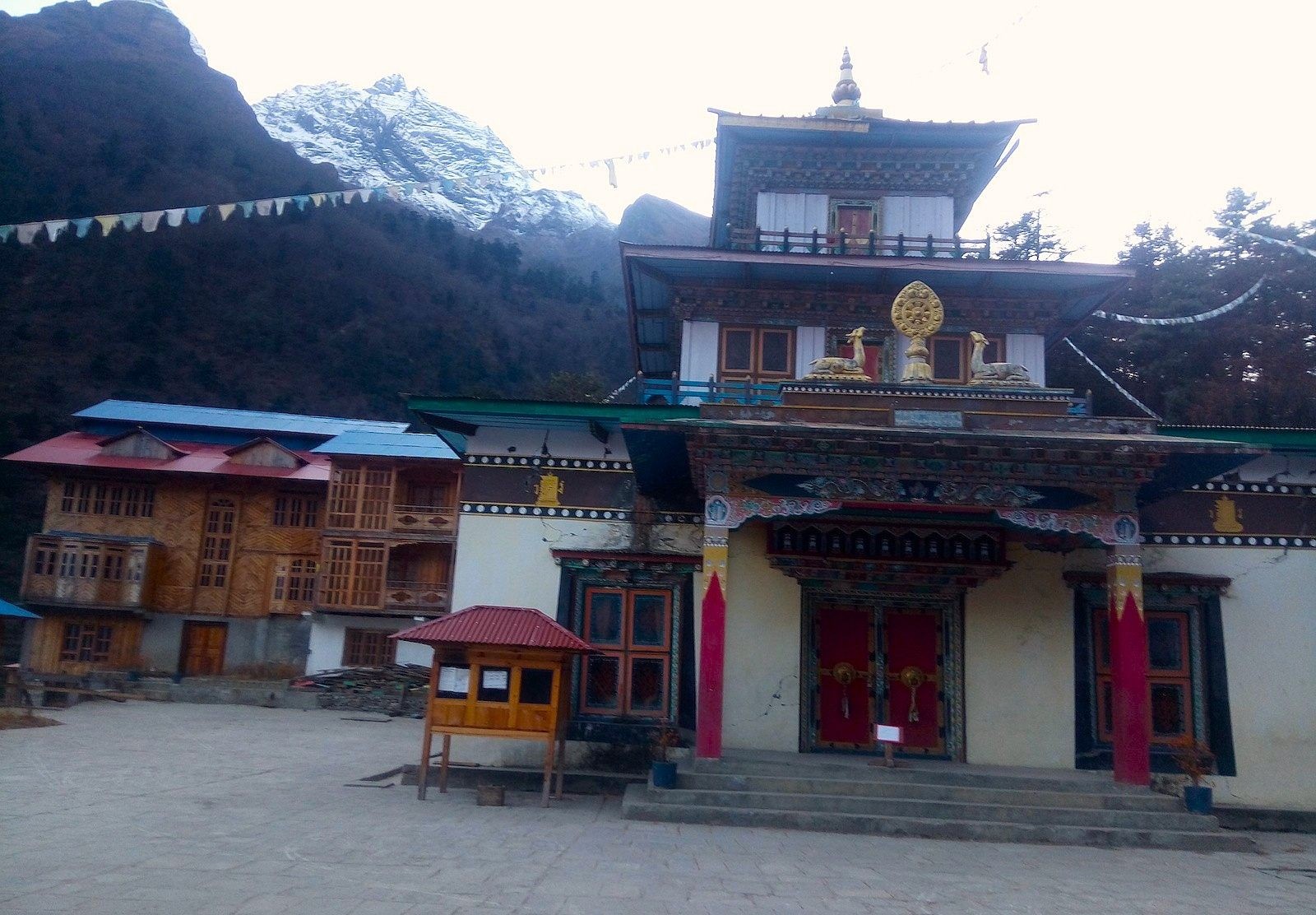
| Monasteries / Gompas along the Manaslu Circuit Trek | Description | Approx. elevation and Notes |
|---|---|---|
| Ghap Monastery | Buddhist cultural heritage in the upper Budhi Gandaki region | 2,160 m |
| Namrung Gompa | An important stop between Deng and Lho | Significant cultural monastery and a good acclimatization opportunity 2,630 – 2,660 m |
| Ribung / Lho Gompa | One of the most notable monasteries in the region | Located above the village of Lho, offers incredible views of the surrounding Himalayas 3,180 m |
| Samagaon Gompa | One of the most important religious sites on the route | Offers incredible acclimatization views 3,500 m |
| Pungyen Gompa | One of the most popular excursions from Samagaon | Inconsistent reports of its elevation; it is 3,800-4,000+ m |
| Samdo Monastery | The last pre-Larkya Pass stop in Manaslu Circuit | 3,875 m |
| Serang Gompa | One of the side trips in the Tsum Valley | 3,800 m |
| Mu Gompa | More Tsum Valley extension | 3,700 m |
| Rachen Gompa | Another Tsum Valley side-trip monastery with a Buddhist nunnery | 3,200 – 3,500 m |
Ghap is a small village at 2,160 m elevation. Otherwise, it is a great place to begin exploring the Buddhist cultural heritage in the upper Budhi Gandaki region. Contemporary accounts describe it as one of the first gompas during the Manaslu Circuit trek.
The village of Namrung is strategically located between Deng and Lho at approximately 2,660 m above sea level. It offers unique insights into the Tibetan Buddhist culture of the upper valley. Notably, there is a local gompa that serves as a great acclimatization aid.
The Lho village is located at around 3,180 m elevation. Its monastery is one of the most notable sights on the Manaslu Circuit. This gompa is perched atop the village with great views of the Manaslu Himalayas in the background. Modern accounts identify it as an active Tibetan Buddhist monastery.
Here, the most crucial thing to note about visiting the Lho monastery is that it is a living religious site. As such, it is necessary to ask for permission to enter the prayer hall and photograph monks.
Samagaun is one of the highest settlements in the Manaslu region, at around 3,500 m elevation. It is also one of the most important stops for both acclimatization and exploring Buddhist culture. Most resources suggest that Samagaon has an active village monastery.
Pungyen is one of the most talked-about monasteries near Samagaun. Its elevation is one of the most heavily disputed figures in the literature on Manaslu Circuit trekking. Some sites report that it reaches over 4,000 m, while others put it at 3,800 m.
Thus, it is best to refrain from specifying an exact elevation in the published article unless the local guide confirms it.
Importantly, this gompa is accessed as an excursion from the village of Samagaon. It can also serve as a valuable acclimatization aid for the following stages of the trek.
Accordingly, the views from Pungyen are excellent, and the monastery is high above the valley.
However, it is crucial to remember that the track to it is much more strenuous than the walks in the Samagaon region.
Additionally, it is vital to look at the Himalayas from this elevation – they are truly magnificent!
Samdo village is dotted with a number of Tibetan-style monasteries. Notably, the local people’s beliefs tend to intertwine with their lives in high altitudes. Therefore, it is a major cultural and acclimatization stop before attempting the 5,106 m Larkya Pass.
Here, the Samdo monastery is relatively small. However, it is a crucial element of this high-altitude village.
Trekking in the Tsum Valley Region: An Additional Note
If you decide to include the Tsum Valley region in your route, there are several other significant Buddhist cultural sights.
However, they should be mentioned as Tsum Valley extensions to the Manaslu Circuit trek.
Here, some of the most noteworthy monasteries in the Tsum region are:
Accordingly, Serang, Mu, and Rachen gompas should be mentioned as side-trip sights in the Tsum region rather than an inherent part of the Manaslu Circuit trek.
Given that we are talking about active religious sites, it is necessary to list some of the most crucial etiquette tips for trekking in these areas:
Most importantly, not treating monasteries in Nepal as photo opportunities. After all, they are living temples where people lead their religious lives and hold ceremonies.
The Manaslu villages are the highlight of the circuit because the trek passes through communities whose lifestyles are inextricably linked to the mountain - agriculture, livestock, trade, religion, and monsoon weather patterns.
Meanwhile, the villages of Namrung (elevation 2,660 m), Lho (3,180 m), Sama Gaon (3,500 m), and Samdo (3,875 m) are progressive stages as the trail winds up through the lower Himalaya into the higher Tibetan reaches.
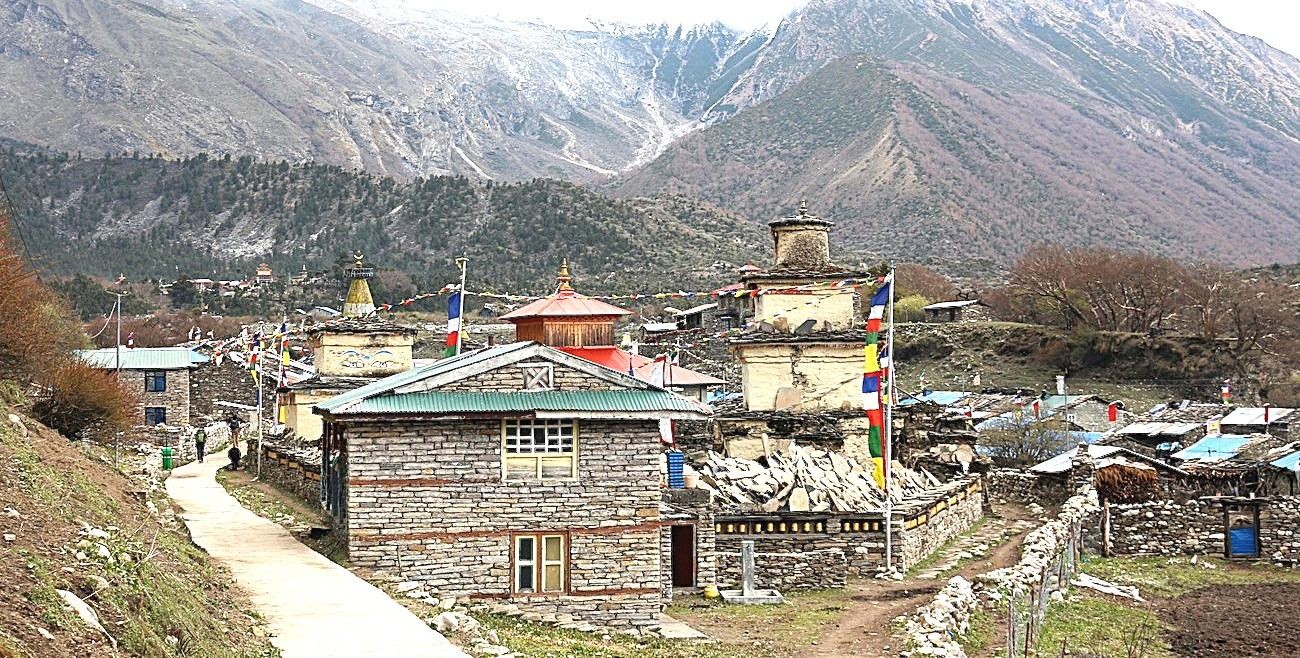
In Namrung, you start noticing more Tibetan-style dwellings, prayer flags, and mani walls, while village life revolves around the mountain.
For Lho and the higher villages, the landscape becomes more alpine, and homes and temples take on a different character.
| Village | Elevation | Cultural Highlight |
|---|---|---|
| Namrung | 2,660 m | Tibetan-type mountain village |
| Lho | 3,180 m | Buddhist culture, traditional homes |
| Sama Gaon | 3,500 m | High-valley Tibetan culture |
| Samdo | 3,875 m | High-altitude village and pastures |
More importantly, the culture of Sama Gaon is arguably the most important to experience on the circuit. Not only is it a large village cluster in the upper reaches of the valley, but it also has a strong Tibetan influence. Traditional homes, farming practices, monasteries, mani walls, and prayer flags characterize this unique high-altitude village.
Further north lies Samdo, a high-mountain village at 3,875 m near the Tibetan border. The people here lead an isolated existence, with subsistence farming and cross-border trade providing their livelihood.
Farming patterns also change with altitude, as do household appliances suitable for use at various elevations. Lower villages have more variety in their crops, and upper hamlets have limited growing seasons.
Similarly, animal husbandry, trade, tourism, and seasonal migration are a few common adaptations to high-altitude living in these Himalayan villages.
Most importantly, a good guide will also help you understand the local culture, explaining the differences in architecture, food, festivals, and other features that you may notice. This helps you connect with the Manaslu local culture on a deeper level and avoid misconceptions.
More specifically, getting meals, accommodation, souvenirs, or other services offered by locals is an excellent way to give back to the communities you visit. Most importantly, remember that these are real people with lives just like yours.
In summary, your most memorable Manaslu cultural experience may well be a simple chat with the locals, observing villagers at work, or learning about how different communities survive at such a high altitude.
The peace and quiet of the Manaslu Circuit can provide the perfect opportunity for hikers to unwind. The trek’s less-traveled routes offer a chance to disconnect from the hustle and bustle of everyday life. The trail takes you from forests, valleys, and mountainous regions through high Himalayan ridgelines, giving you a taste of isolation.
Importantly, mindfulness is a state of consciousness that can only be achieved through practice. For some Manaslu Circuit hikers, it may be helpful to concentrate on their breathing, the movement of their legs, or the rustling leaves as a means of staying in the present moment.
However, others are simply content to put down the mobile phone and free their minds from the constant pressures of daily life.
There are several reasons for choosing this trail that promote a meaningful trekking experience:
The sounds of the forest differ at various altitudes along the trail. In lower regions such as near the Budhi Gandaki, the river is the most common sound, while the forest offers a more diverse mix of chirping birds, rustling leaves, and footsteps.
Higher up the valley, the landscape becomes more open, and the only sounds are the swish of the wind, the occasional stream, and the flutter of prayer flags. In addition, visitors can experience the lifestyle of isolated Himalayan villages.
At higher altitudes, vast stretches of land with minimal vegetation and dramatic views of the mountain can be found at Sama Gaon (3,500 m), Samdo (3,875 m), and along the approaches to Dharamsala (4,450 m).
No. It is always a good idea to keep in mind that the Manaslu mindfulness trek is not as isolated as some of the other circuits. The trails can be fairly busy during the peak seasons of October and November, especially at certain accommodation hubs. The stretch of the trail leading to the Larkya Pass (5,106 m) attracts more hikers than some of the remote regions.
Nevertheless, Manaslu Circuit Trek is less-crowded comparing to the other popular treks like Annapurna Base Camp or Everest Base Camp Trek.
As a result, it is necessary not to expect too much about absolute solitude. Even the most out-of-the-way trails have their share of local inhabitants, porters, guides, mules, and other travelers.
It all comes down to slowing down and becoming more observant. Listening to the forest, the rivers, and the pungent aroma of traditional dwellings made of stone and wooden windows.
In addition to that, taking breaks from the constant chatter, photographs, and selfies can help you appreciate the mountains and the Himalayan village lifestyle.
Likewise, physical exertion might help you reflect, but make sure not to romanticize it as a form of therapy. A steep climb up a rocky ridge, tired legs, and a sudden change in weather can affect your emotions in different ways. Your reactions to Manaslu’s high-altitude trekking and mountainous vistas will be deeply personal and subjective.
For some individuals, the spiritual connection while hiking this trail may come from the Buddhist practices, while for others, it may be found in the solitude and nature. It all depends on personal beliefs and how connected you feel to the environment.
Moreover, the most effective way to practice mindful trekking in Nepal is to avoid the self-indulgence and meaningless philosophizing often associated with it. Instead, focus on respecting the local culture while enjoying the spectacular natural landscape that surrounds you.
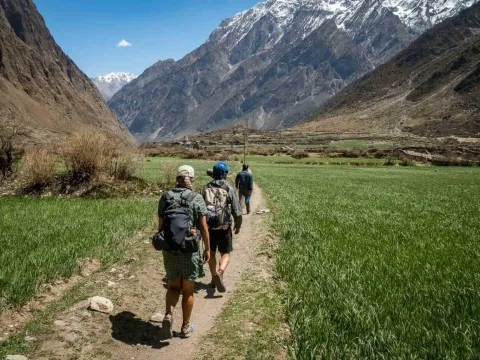
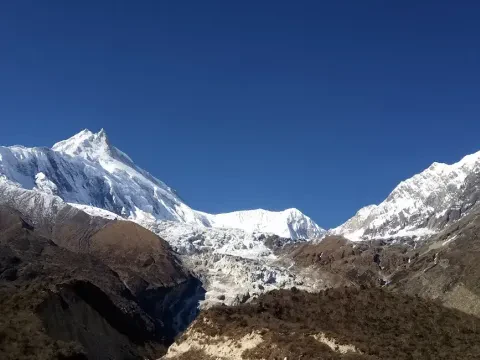
Samagaon (also Sama Gaun or Samagaun) is one of the most important stops on the Manaslu Circuit, both culturally and in terms of acclimatization. Roughly 3,500–3,530 m above sea level, it is located in the upper reaches of the Nubri Valley, beneath the great glaciers and slopes of Mt. Manaslu. The settlement is part of the local Himalayan ecosystem, where agriculture, animal husbandry, tourism, Buddhism, and seasonal rhythms blend with the trekking infrastructure.
For a Samagaon Manaslu spiritual experience, the most important advice is to take your time. Many Manaslu Circuit itineraries include an acclimatization day in Samagaon, which is also an opportunity to explore the surroundings. The next destination after Samagaon is usually Samdo at around 3,875 m, followed by Dharamsala at roughly 4,450–4,460 m and the Larkya Pass crossing at 5,106 m.
| Feature | Approximate information |
|---|---|
| Elevation | 3,500–3,530 m |
| Region | Upper Nubri Valley |
| Major mountain | Mt. Manaslu, 8,163 m |
| Cultural influence | Tibetan/Nubri Buddhism |
| Main trekking role | Acclimatization and cultural stop |
| Nearby excursion | Birendra Lake |
| Higher excursion | Pungyen Gompa |
| Higher trekking destination | Manaslu Base Camp, around 4,800 m |
| Next major settlements | Samdo → Dharamsala |
Meanwhile, the cultural immersion aspect of the Samagaon Manaslu experience is found in the local village life. Stone houses, farms, animals, monasteries, mani walls, and prayer flags are part of this settlement’s character. The Manaslu Conservation Area notes that the region’s cultural heritage is closely linked to Tibet, with traditional lifestyles focused on agriculture and animal husbandry.
Furthermore, in terms of spiritual exploration, it is important to remember that local monasteries and other religious sites are places of worship. Asking for permission, being respectful of sacred objects, and avoiding disruptive behavior are necessary when visiting them. Taking photos of monks, ceremonies, altars, or interiors should also be done only with permission.
One of the most popular excursions in the Samagaon area is the hike to Pungyen Gompa, a monastery located at around 4,300 m. Recent information from trekking companies notes that Pungyen Gompa is an active Buddhist religious site, frequented by the local Nubri people. The climb to this monastery is much more strenuous than a short village hike due to the altitude.
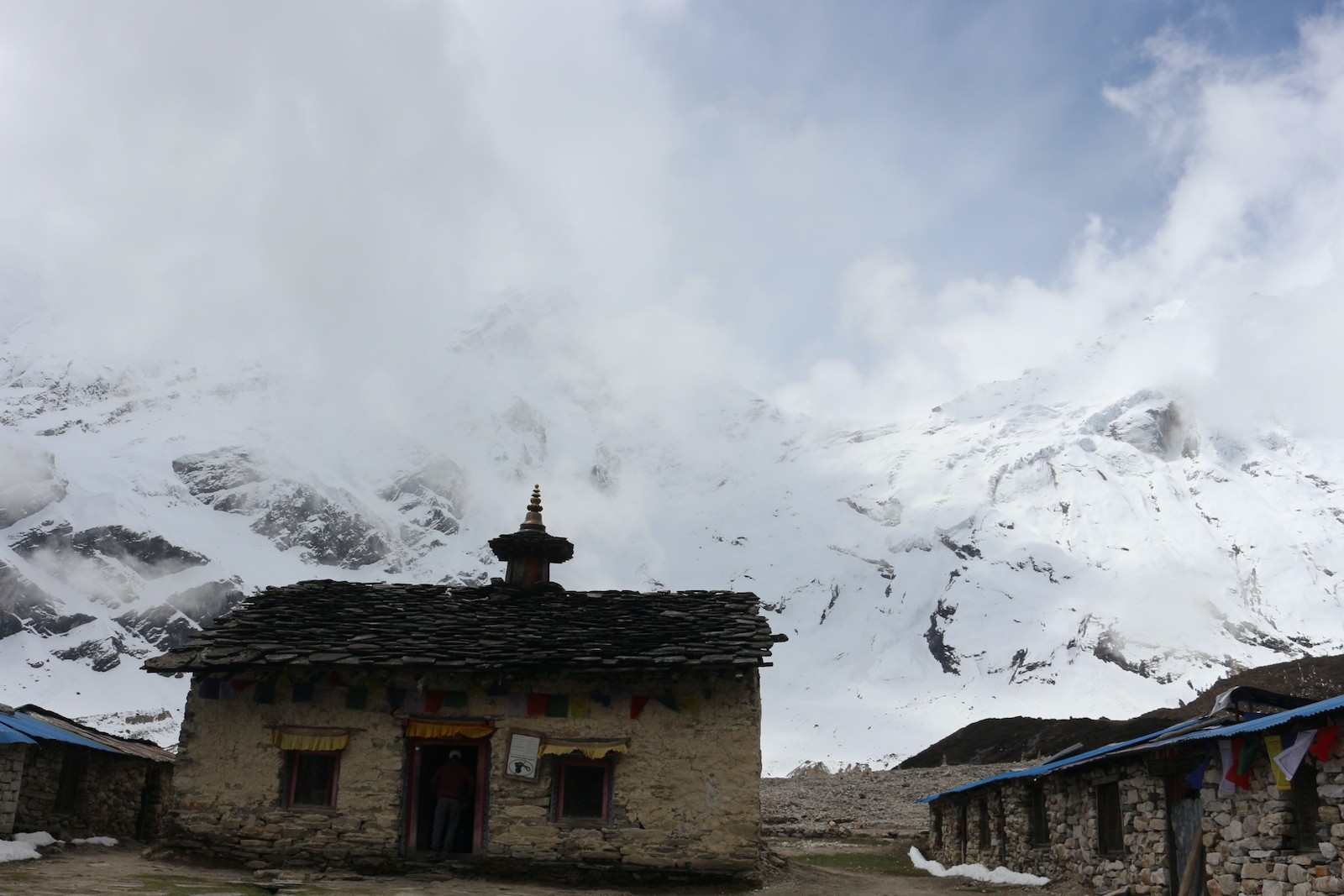
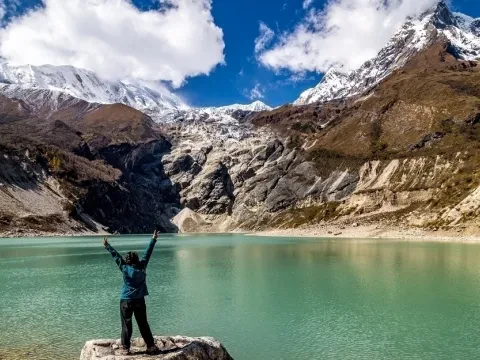
Similarly, a gentler acclimatization excursion is the visit to Birendra Lake, a glacial lake in the Manaslu Conservation Area. The lake is a popular destination among trekkers, who can use the trail to it for a less strenuous alternative to the Manaslu Base Camp trek. Recent Manaslu Circuit guides highlight Birendra Lake and Manaslu Base Camp as two of the best side excursions from Samagaon.
When it comes to the spiritual heart of the Manaslu Circuit, it is important not to feel pressured to see everything. Sitting and observing the village life, talking with locals (with a guide’s help), and taking a break from social media can be a deeply spiritual experience in Samagaon.
The reason why Samagaon is a critical part of the Manaslu Circuit is because of the altitude. The following elevations are typical for the trek after Lho:
With this in mind, the Manaslu spiritual journey around Samagaon can be seen as a two-step process. First are the cultural and religious elements, which include monasteries, Nubri settlements, and their unique traditions. Second, the true Samagaon experience is found in the solitude and altitude of the Himalayas.
Here, the separation between the two is crucial, as the real Samagaon experience is not about finding spiritual answers. Instead, it is about the peace and reflection that come with being in the mountains, away from the hustle and bustle of everyday life. The combination of high altitude, cultural immersion, and challenging terrain can be a revelation for many. However, it is not a guaranteed one, as individual experiences will vary.
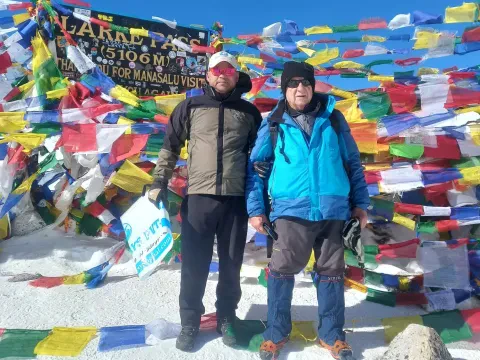
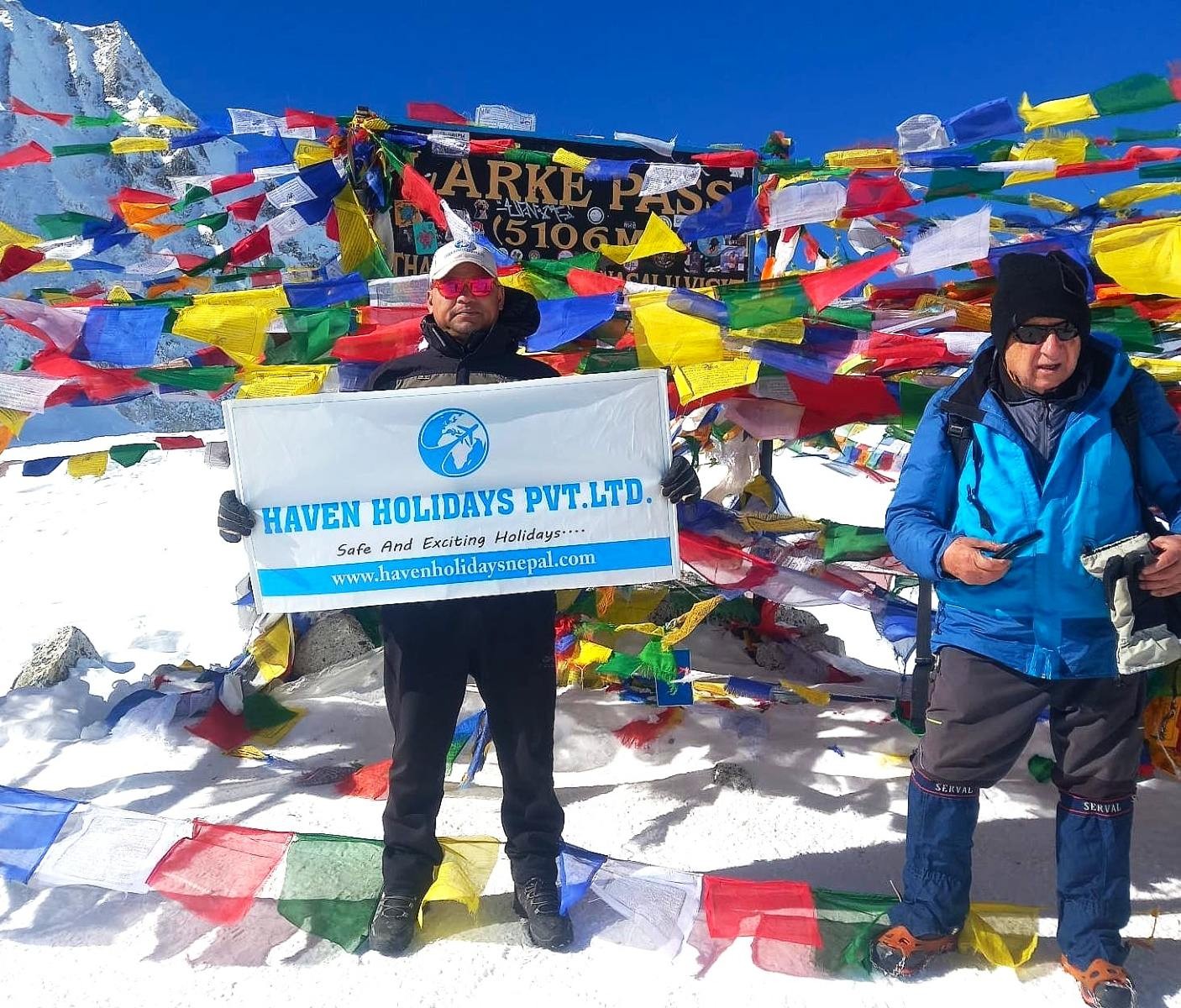
The crossing of Larke Pass at around 5,106 m (16,752 ft) is the ultimate test of the Manaslu Circuit. It connects the high Nubri side of the trek with the Bimthang valley on the other side. The route over the pass is steep and challenging, requiring trekkers to reach the summit from Dharamsala at around 4,450–4,460 m and descend into Bimthang at roughly 3,590 m.
| Stage | Approx. Elevation | What to Expect |
|---|---|---|
| Samagaon | 3,500 – 3,530 m | Acclimatization |
| Samdo | 3,875 m | High Himalayan village |
| Dharamsala | 4,450 – 4,460 m | High camp before crossing |
| Larke Pass | 5,106 m | Highest point of circuit |
| Bimthang | 3,590–3,720 m | Long descent and lower altitude |
The long crossing, cold temperatures, loose ground, and weather conditions all contribute to the challenge. The biggest factor is the altitude, which requires proper acclimatization.
Here, it is also important to start the crossing early, as the trail can be affected by afternoon rains and winds. Recent Manaslu Circuit guides note that the crossing day can last around 9–11 hours for most trekkers, with significant variation between individuals.
Likewise, the slower pace is inevitable at higher altitudes, where the air is thin. Snow and ice can also make the trail more difficult during colder months. Strong winds are common at the pass, where they can make the temperature feel much colder than it actually is.
Practical advice for the Larke Pass crossing includes:
The landscape changes dramatically around Larke Pass, with the terrain becoming progressively rockier and more mountainous. The view from the summit includes glaciers and snow-capped peaks, while the long descent offers a view of the Himalayas. The most striking contrast is found between the barren rocky landscape around Dharamsala and the pass and the valley of Bimthang at around 3,590 m.
Meanwhile, the change in scenery is also reflected in the temperature, with the lower altitude of Bimthang providing a welcome relief from the cold and dry air of the higher reaches. The long crossing over Larke Pass becomes a true test of endurance, which is why many trekkers view it as a highlight of the Manaslu Circuit.
The spiritual journey of the Larke Pass crossing begins with the preparation. There is no magic formula that will make the trek easier, but a steady pace and a positive attitude can make a world of difference. The most important aspect of the Larke Pass experience is its ability to inspire self-discovery.
In fact, the long crossing means that trekkers have plenty of time to contemplate their journey. Many report a mix of emotions as they reach the summit, from triumph to frustration. The most important lesson of the Larke Pass crossing is that it is a personal achievement, regardless of the altitude gained.
Importantly, it is also important not to romanticize altitude sickness, as it can be a debilitating condition. The higher one goes, the more difficult it becomes to breathe, which is why it is crucial to listen to one’s body. Even the most determined trekker must accept that some challenges are beyond their control.
The long crossing of Larke Pass makes it a highlight of the Manaslu Circuit for many. However, it is important to remember that the pass is only one part of a larger journey.
Before reaching it, trekkers must make their way from the lower Budhi Gandaki Valley, through Namrung at around 2,660 m, Lho at 3,180 m, Samagaon at around 3,500 m, Samdo at 3,875 m, and Dharamsala at roughly 4,450 m.
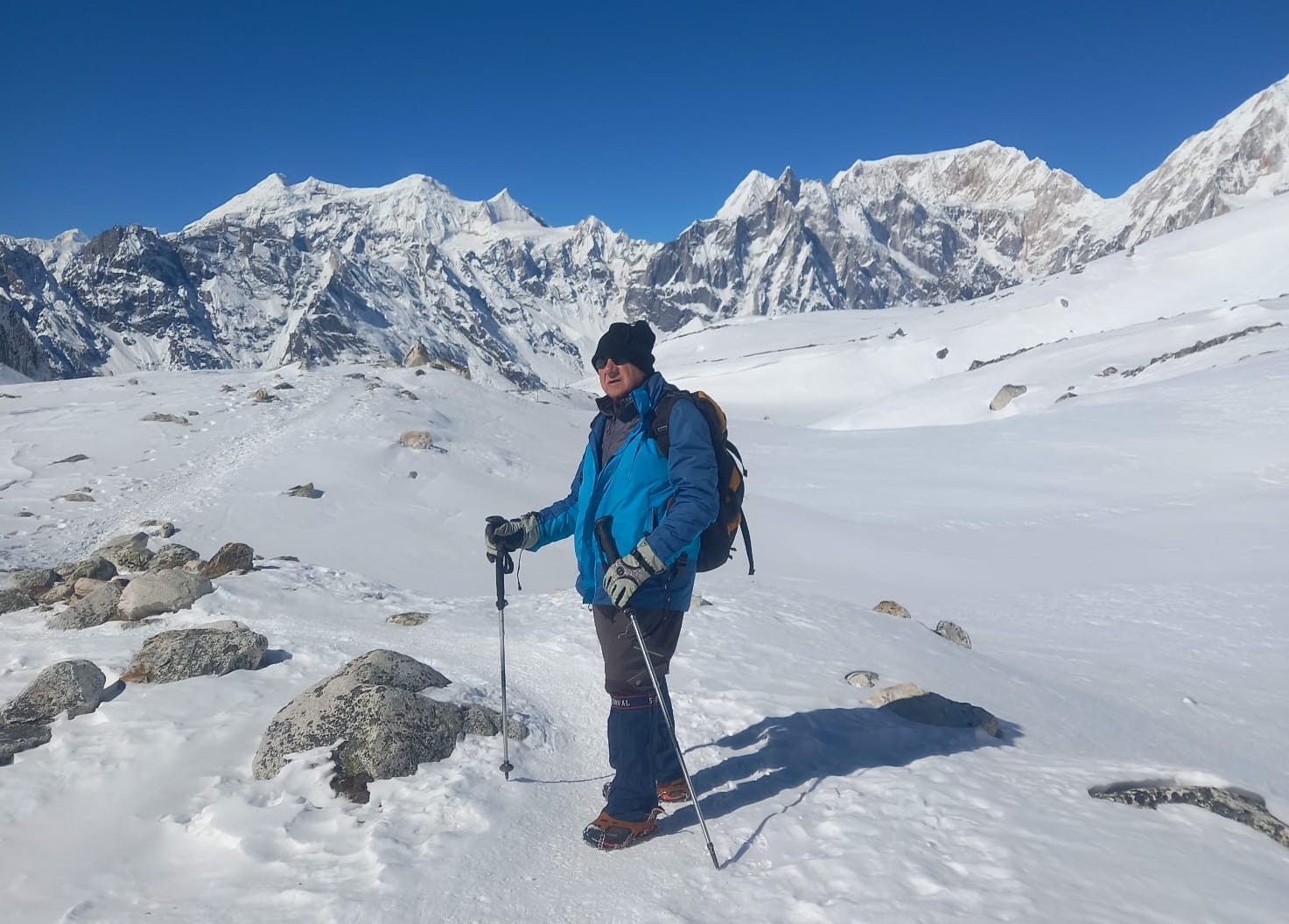
Each of these stages plays a role in preparing the body and mind for the final challenge. The most important lesson of the Larke Pass crossing is found not at the summit, but at the bottom of the long descent. For many, it is a moment of awe and even spiritual inspiration.
Additionally, the view from the top of Larke Pass is spectacular, but it is only one of the many reasons why the Manaslu Circuit is such a unique adventure. Some will find inspiration in the mountains, while others may discover it in the local culture, the peace of the wilderness, or the challenge of the trail itself. The most important part of the Larke Pass crossing is that it allows for personal reflection, which is why it is so meaningful to different people.
Thus, the long and difficult crossing over Larke Pass is only the beginning of the final stage of the Manaslu Circuit. The true test is the descent into Bimthang at around 3,590 m, which is also an acclimatization opportunity before the return to lower elevations. The most important aspect of the Larke Pass crossing is its ability to inspire a sense of accomplishment, which is why it is viewed by many as the ultimate Himalayan adventure.
A responsible Manaslu Circuit spiritual journey begins with respect for the people, culture, religion, and environment of the regions that this trek passes via. This trail covers both culturally rich areas inhabited by various Buddhist traditions, including the upper Nubri Valley, and the Manaslu Conservation Area which protects Nepal’s spectacular Himalayas. As such, being a conscious trekker is essential to making a respectful trip.
Religious sites, from monasteries to chortens and mani walls, are part of the living heritage of the local communities, which means that they deserve respect rather than being used as scenery. The same goes for prayer flags, wheels, and other ritual objects.
To avoid being disrespectful or ignorant, here are some crucial tips:
Do and Don’ts,
The Manaslu Trek cultural rules tend to be quite straightforward. When exploring the region, it is crucial to be a responsible trekker by dressing modestly, keeping noise levels low, and being a respectful visitor rather than trying to experience someone else’s life for fun.
Meanwhile, your local guide can help tremendously with navigating the cultural minefield, explaining the significance of particular customs, identifying acceptable places to take photos, and helping to communicate when language barriers make interaction difficult.
Responsible Practice Why it matters :
Even on a cultural adventure, it is important to remember that local residents have lives just like everyone else. That means asking questions politely, not needing to see everything, and respecting people’s privacy.
Although you might be fascinated by the opportunity to see a village at 2,660 meters, 3,180 meters, 3,500 meters, or even 3,875 meters, this is their home, not an open-air museum.
Manaslu Circuit trek is a Himalayan wilderness experience, which means that it is crucial to minimize your impact on the environment, particularly for the sake of wildlife, forests, rivers, and water sources.
Wherever possible, use your own reusable bottles instead of buying water in plastic. Remember to dispose of trash, especially plastics, responsibly, and consider using eco-friendly toiletries if available.
By following Leave No Trace principles, you will help ensure that the trail is a beautiful place for years to come.
| Responsible Practice | Why it matters |
|---|---|
| Avoid single-use plastics where possible | It helps to keep the region clean. |
| Do not litter in rivers, woods, or other natural areas | It protects wildlife and water sources. |
| Use designated toilets and waste disposal when available | It helps to keep the region clean. |
| Stick to the trails | It helps to prevent erosion and other negative impacts. |
| Do not disturb, annoy, or attempt to take pictures of wildlife | It protects local fauna. |
| Do not pick plants or flowers | It helps to keep the ecosystem healthy. |
| Follow rules and guidelines of conservation areas | They exist for a good reason |
| Respect local rules and regulations concerning forests, trails, and other natural areas | They exist for a good reason. |
In summary, keep in mind that the Manaslu Conservation Area lies within Nepal’s conservation framework, and that local authorities are entitled to set their own rules and regulations regarding conservation, trekking, and permits.
A local guide is an asset to a responsible and respectful trekking adventure. In many ways, a guide is more valuable than a guidebook because they can tell the subtle differences between asking for permission to take photos and demanding to take photos, or between a religious building and a government building. A respectful interaction with local residents and religious sites can make all the difference in between.
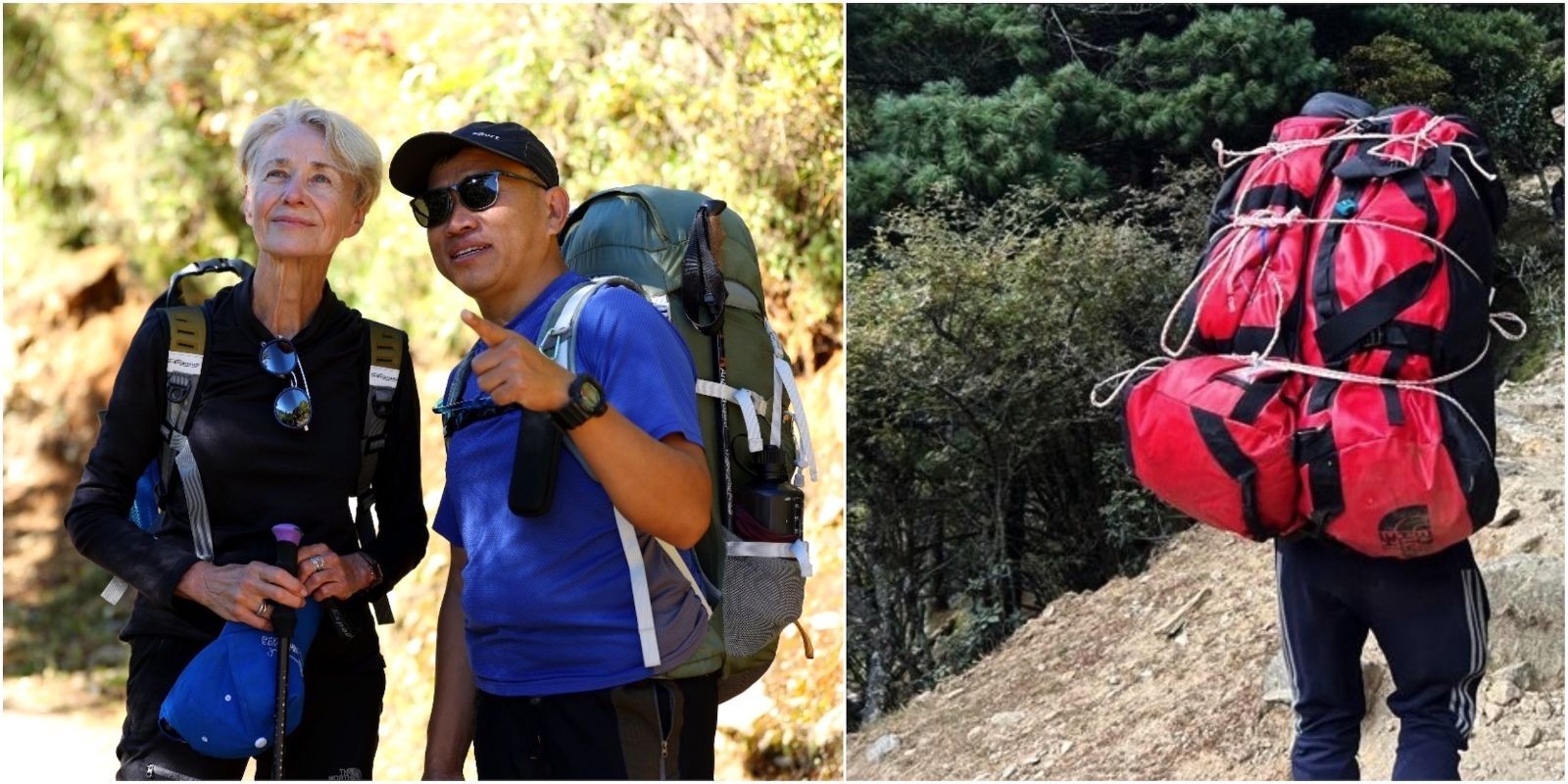
When it comes to cultural and spiritual trekking, you can say that a good guide is worth two pounds of any guidebook. This is especially true for Manaslu Circuit, where a local guide can explain the significance of various local customs and traditions.
Ultimately, a conscious trekker makes it possible to visit religious sites without disturbing local people and wildlife, help the local economy by shopping wisely, and minimize the impact on the environment. With the right approach, every responsible trekker can leave this region a better place than they found it.
The Manaslu Circuit spiritual trek is a multifaceted Himalayan experience that reveals its wonders at a steady pace. It winds up the valley from the lower Budhi Gandaki Valley to the high Himalayan realm of Larkya Pass, encountering forests, rivers, villages, Buddhist temples, and remote highland valleys along the way. The trail gains elevation steadily and challenges hikers to acclimatize in time for crossing the Larkya Pass.
Similarly, the Manaslu Circuit Trek passes through Machha Khola at 900 meters, Jagat at 1,340 meters, Deng at 1,860 meters, Namrung at 2,660 meters, Lho at 3,180 meters, Samagaon at approximately 3,500 meters, Samdo at 3,875 meters, Dharamsala at around 4,450 meters, and ultimately the Larkya Pass at 5,106 meters.
For some, the cultural heritage of the Manaslu region is the most valuable aspect of this trek. Others may enjoy the solitude and majesty of remote Himalayan valleys and high passes best, while some may appreciate the chance to meet and talk with local villagers. The spiritual and cultural trekking aspect of the Manaslu Circuit is deeply dependent on both the landscape and the local people, with each contributing to the unique atmosphere of this region. Some may find the opportunity to explore Buddhist traditions and practices fascinating, while for others, simply being able to disconnect from the modern world for a few days is already a huge benefit. In the end, no one experience has more value than the one you choose.
For many, crossing the Larke Pass at 5,106 meters means achieving something special to them. However, it is important not to romanticize this challenge as an ultimate test of one’s spirit and will.
In reality, weather and trail conditions, as well as your own physical and mental state, should determine whether or not you will make an attempt to cross Larke Pass. It is a wise decision to turn back if the conditions are not suitable.
In the end, the only way to truly conquer the mountain is to respect it and its power, and not try to force your way through in adverse conditions.
After all, the mountains are unpredictable, and the local people are used to dealing with these conditions on a regular basis. Perhaps the true lesson of the Larke Pass is not to struggle with it, but to learn patience and adaptability.
A truly spiritual and cultural Manaslu Circuit Trek begins with your approach to this region. This means listening before assuming, asking for permission before taking photos, respecting religious sites and their rituals, supporting local economies, following Leave No Trace principles, and respecting the local rules and regulations.
Here, our expert guides at Haven Holidays Nepal can assist you in planning a responsible and unforgettable journey according to your time constraints, fitness level and preferences, and cultural interests. A responsible and conscious trekker makes it possible to leave this region better than they found it, both environmentally and culturally.
More importantly, the Manaslu Circuit Trek spiritual journey is a deeply personal and intimate experience that ultimately depends on individual preferences and priorities.
Once you complete the Manaslu Circuit, you may find that you have enjoyed connecting with nature, the local community, or tested and expanded your personal limits.
Either way, every conscious trekker knows that it is not necessary to seek enlightenment or some other profound spiritual experience in order to enjoy the Manaslu Circuit. Explore this wonderful region with respect and keep your own journey in mind!
Contact us and book Manaslu Circuit Trek with us. Let's make it memorable by exploring unique and authentic culture along the trail together.
1. Why is the Manaslu Circuit Trek considered a spiritual adventure?
The Manaslu Circuit Trek is a Himalayan circuit trail offering a spiritual adventure. This trek routes through Buddhist monasteries, prayer wheels, mani walls, chortens, and traditional hamlets. Additionally, you can enjoy serene mountain views while connecting with Himalayan Buddhist culture. Overall, experiencing the natural wonder while walking through remote valleys makes the Manaslu Circuit a unique spiritual adventure.
2. What makes the Manaslu Circuit Trek a spiritual journey?
The Manaslu Circuit spiritual journey is an insight into the Himalayan Buddhist culture as you walk through remote mountainous regions. It is a cultural and wilderness adventure that offers a chance to experience the ancient traditions of the local people. This trek is considered to be a spiritual journey as it provides peace and reflection for those who embark on it.
3. What are the spiritual sites to explore on the Manaslu Circuit Trek?
The Manaslu Circuit Trek takes you through the region rich in spiritual culture and history. The pilgrimage site includes the ancient Buddhist temples or monasteries found in Lho, Samagaon, and Samdo. Other cultural sites include the chortens, mani walls, and prayer wheels to discover as you walk through traditional villages and mountainous landscapes. This trek will surely unveil the spiritual culture of the Manaslu region.
4. How does Buddhism influence the Manaslu Circuit Trek?
Buddhism has a significant impact on the culture and lifestyle of the locals in the Manaslu region. You will come across prayer flags, mani walls, chortens, and monasteries as you trek through the remote mountain trails. Manaslu Circuit offers an insight into the Himalayan Buddhist way of life that is full of tradition and history.
5. Can the Manaslu Circuit Trek be considered a Spiritual retreat?
The Manaslu Circuit Trek can be a mindfulness retreat for nature lovers. As you walk through serene mountain trails and take in panoramic views of the snow-capped peaks, you have plenty of time to reflect on your life. It also offers a much-needed break from the constant hustle and bustle of the cities. And so, it can be your gateway to a mindfulness adventure amidst the Himalayas.
6. What role do monasteries play in a Manaslu spiritual adventure?
Monasteries in Manaslu are a prime Himalayan cultural heritage. This circuit trail passes through various monasteries as it winds through the remote mountainous region of Manaslu. You have a fantastic opportunity to learn about the lifestyle and cultural practices followed by the locals. And so, you can consider this trail a fantastic spiritual adventure in the midst of the wilderness.
7. Is it possible to go on a spiritual trekking adventure in Manaslu?
You can have a spiritual trekking expedition in Manaslu as it presents a perfect blend of wilderness and Himalayan culture. Manaslu Circuit is a remote trail offering a much-needed break from the chaos of the city.
Moreover, this trek lets you explore the rich Buddhist traditions in the Manaslu region. So, if you are keen on having a spiritual Himalayan trekking adventure, then the Manaslu Circuit is an excellent choice.
8. How can one practice mindfulness in Manaslu Circuit Trek?
You can practice mindfulness in a Manaslu Circuit Trek by walking slowly and observing your surroundings. You should take time to admire the beauty of nature as you walk through the remote mountain trails. Manaslu Circuit offers a fantastic opportunity to enjoy the serene forests, clear streams, mountain peaks, and traditional villages found along the trail. All you need to do is be mindful and cherish every bit of this Himalayan wilderness adventure.
9. What spiritual practices can one witness in Manaslu region?
When wandering through the Manaslu region, you can come across various spiritual practices performed by the locals. Some of the most common spiritual practices or customs in Manaslu include Buddhist prayers, mantras, prayer flags, windsocks, chortens, mani walls, and monasteries. You can observe and be a part of these Himalayan spiritual traditions, which vary from one village to another. However, it is essential to be respectful and mindful of the customs being practiced.
10. Why are the prayer wheels an intrinsic part of the Manaslu Circuit?
Prayer wheels are an integral component of the Buddhist traditions. In Manaslu, the prayer wheels can be found at almost every mountainous region, including the villages and remote mountain trails.
As a trekker exploring through the Manaslu range, it would be best to first observe how the locals practice this tradition before attempting to copy their actions. And so, it is essential to be respectful and mindful when encountering this cultural custom.
11. Are there any do’s and don’ts while exploring monasteries in Manaslu?
While exploring the monasteries in Manaslu, it is essential to act respectfully and mindfully. You must not trespass where you are not allowed, take pictures, or touch any religious items. It is vital to be quiet inside the monasteries to avoid disrupting any ongoing activities. If seeking permission to do specific things in the monasteries, such as witnessing particular rituals or capturing photos, you need to ask for the elders’ approval. In addition, if a clockwise direction is required to walk around any sacred sites, it is best to follow their lead.
12. Can one meditate while on the Manaslu Circuit Trek?
You can definitely meditate while on the Manaslu Circuit Trek. The circuit trail is a spiritual and Himalayan wilderness adventure that lets you explore the remote mountainous region in the midst of incredible natural landscapes. You can carve out time to sit and meditate privately at your accommodation or anywhere on the trail that offers a bit of privacy without disrupting the locals’ activities. Alternatively, you can also try morning or evening meditation sessions in the mountains while enjoying the tranquility of this mountainous region.
13. Does the Larke Pass have a significant spiritual meaning?
The Larke Pass is one of the challenging passes on the Manaslu Circuit trail. In addition to the altitude, you will also have to test your endurance and mental strength when trekking through this pass. It is a Himalayan high altitude trek that lets you witness the dramatic landscapes found in the Manaslu region. However, it does not have a direct religious or spiritual meaning attributed to it.
14. How does nature play a part in making the Manaslu Circuit Trek a spiritual adventure?
Nature plays a significant role in making the Manaslu Circuit Trek a spiritual adventure. From towering mountain peaks to cascading waterfalls, beautiful valleys, and serene mountainous trails, every aspect of this trek plays a part in offering a unique wilderness experience. The Manaslu Circuit Trek helps you to discover new parts of nature while enjoying the stillness and majesty of the Himalayas.
Overall, it is an incredible opportunity to enjoy a spiritual and Himalayan trekking adventure amidst unending wilderness.
15. Can the Manaslu Circuit Trek be a path to personal exploration?
The Manaslu Circuit Trek can be an incredible path to self-discovery or introspection. This trek lets you take a break from the constant hustle of modern life as you wander through the pristine wilderness of the Manaslu region. It also has incredibly challenging stretches that ensure you have plenty of time to think and contemplate your life. Therefore, it can be a wonderful chance to explore yourself.
16. What are the ways to show respect for the local culture while having a spiritual Manaslu trek?
If you plan to have a spiritual Manaslu trek, it is essential to show respect for the local customs, particularly the religious beliefs held by the locals. It would be best to avoid being disrespectful, ignorant, or intrusive in any of their practices. You should dress modestly when visiting villages and refrain from taking pictures unless given permission.
In addition, you should also follow their cultural expectations when interacting with religious practices, such as mani walls, chortens, and so on.
17. Is the Manaslu Circuit Trek more of a pilgrimage or a Himalayan trekking adventure?
18. What is the best way to experience the spiritual side of the Manaslu Circuit Trek?
The best way to experience the spiritual side of the Manaslu Circuit Trek is to take your time and be respectful of the local customs and traditions. It would be best to learn more about the Tibetan Buddhist beliefs and practices followed by the locals. You can even spend a day or two on this circuit trail to enjoy the breathtaking views of nature while exploring the ancient temples.
In addition, it would help if you ask your local guide for recommendations on the most meaningful places to visit on the Manaslu Circuit Trek.
19. Why is it essential to embrace responsible tourism while going on a spiritual Manaslu trek?
It is vital to embrace responsible tourism on a spiritual Manaslu trek to ensure that you respect the local customs and culture. Responsible tourism also entails that you are mindful of the conservation efforts being made to protect the delicate Himalayan wilderness.
And so, when going on a spiritual trek in Manaslu, it is essential to avoid damaging any of the natural or human-made resources found in the region.
20. How can the Manaslu Circuit Trek be a transformative spiritual adventure?
The Manaslu Circuit Trek can be a transformative spiritual adventure that lets you witness the dramatic splendor of the Himalayas. This trek offers a much-needed break from the busy modern world while also presenting a chance to embrace the local Tibetan Buddhist traditions. It can also be a meaningful opportunity for self-discovery or introspection as you walk through the rugged mountain trails.
Ultimately, you can come back home with a wealth of incredible memories and lessons after this spiritual Himalayan trekking adventure.
Our travel experts are ready to assist you with any questions.
Send us a message.Have a question before you book? Send your enquiry below and our travel experts will get back with the required information.