[{"name":"Everest Base Camp Helicopter Tour","duration":"1","image_url":"https:\/\/www.havenholidaysnepal.com\/storage\/trip-galleries\/1\/thumb_6cd53005d75a86e373d31419d1b14d78.webp","offer_price":1195,"url":"https:\/\/www.havenholidaysnepal.com\/trips\/everest-base-camp-helicopter-tour"},{"name":"Everest Mountain Flight","duration":"1","image_url":"https:\/\/www.havenholidaysnepal.com\/storage\/trip-galleries\/4\/thumb_3b0b4f1d6f72b0ad224daf4752f2c6e0.jpg","offer_price":285,"url":"https:\/\/www.havenholidaysnepal.com\/trips\/everest-mountain-flight"},{"name":"Everest Short Trek","duration":"9","image_url":"https:\/\/www.havenholidaysnepal.com\/storage\/trip-galleries\/5\/thumb_BXPP3621.JPEG0.02033800 1727957098.webp","offer_price":995,"url":"https:\/\/www.havenholidaysnepal.com\/trips\/everest-short-trek"},{"name":"Gokyo Valley Trek","duration":"12","image_url":"https:\/\/www.havenholidaysnepal.com\/storage\/trip-galleries\/6\/thumb_10bc469b14731f23d3ce84a7092ad53f.jpg","offer_price":1195,"url":"https:\/\/www.havenholidaysnepal.com\/trips\/gokyo-valley-trek"},{"name":"15 days Annapurna Base Camp Trek","duration":"15","image_url":"https:\/\/www.havenholidaysnepal.com\/storage\/trip-galleries\/7\/thumb_87d1533bc45faf070990aef0579e4be4.jpg0.81855100 1728285496.webp","offer_price":785,"url":"https:\/\/www.havenholidaysnepal.com\/trips\/15-days-annapurna-base-camp-trek"},{"name":"Nepal Pilgrimage Tour","duration":"14","image_url":"https:\/\/www.havenholidaysnepal.com\/storage\/trip-galleries\/8\/thumb_02c3bcf2ad2e8a4c1703e90ae747b5f1.jpg","offer_price":1475,"url":"https:\/\/www.havenholidaysnepal.com\/trips\/nepal-pilgrimage-tour"},{"name":"UNESCO World Heritage Site Tour","duration":"10","image_url":"https:\/\/www.havenholidaysnepal.com\/storage\/trip-galleries\/9\/thumb_unesco-world-heritage-site-Lumbani-temple-buddhists-hindus-kathmandu-nepal0.36988600 17347617740.93089500 1737469667.webp","offer_price":715,"url":"https:\/\/www.havenholidaysnepal.com\/trips\/unesco-world-heritage-site-tour"},{"name":"Island Peak Climbing","duration":"16","image_url":"https:\/\/www.havenholidaysnepal.com\/storage\/trip-galleries\/11\/thumb_Island peak0.53947000 1734692503.webp","offer_price":2495,"url":"https:\/\/www.havenholidaysnepal.com\/trips\/island-peak-climbing"},{"name":"Upper Mustang Trek","duration":"18","image_url":"https:\/\/www.havenholidaysnepal.com\/storage\/trip-galleries\/12\/thumb_upper mustang 7 Oct-2024.jpg0.95398900 1728286166.webp","offer_price":2995,"url":"https:\/\/www.havenholidaysnepal.com\/trips\/upper-mustang-trek"},{"name":"Annapurna Circuit Trek","duration":"16","image_url":"https:\/\/www.havenholidaysnepal.com\/storage\/trip-galleries\/15\/thumb_tibetan-flags.jpg0.04843900 1728289138.webp","offer_price":985,"url":"https:\/\/www.havenholidaysnepal.com\/trips\/annapurna-circuit-trek"},{"name":"Gosainkunda Lake Trek","duration":"10","image_url":"https:\/\/www.havenholidaysnepal.com\/storage\/trip-galleries\/16\/thumb_5A8083B3-C007-41A8-853F-D0C37C97D235_1_105_c.jpeg0.52581200 1731845258.webp","offer_price":595,"url":"https:\/\/www.havenholidaysnepal.com\/trips\/gosainkunda-lake-trek"},{"name":"Zip-lining in Pokhara and Dhulikhel","duration":"1","image_url":"https:\/\/www.havenholidaysnepal.com\/storage\/trip-galleries\/18\/thumb_215f765e2ebc995dd5c800b4bfdbacc3.jpg","offer_price":82,"url":"https:\/\/www.havenholidaysnepal.com\/trips\/zip-lining-in-pokhara-and-dhulikhel"},{"name":"Annapurna Heli Tour","duration":"1","image_url":"https:\/\/www.havenholidaysnepal.com\/storage\/trip-galleries\/19\/thumb_d71a6bbb9fd4da8d1b567a5cdbdec85d.jpg","offer_price":555,"url":"https:\/\/www.havenholidaysnepal.com\/trips\/annapurna-heli-tour"},{"name":"Paragliding in Pokhara","duration":"1","image_url":"https:\/\/www.havenholidaysnepal.com\/storage\/trip-galleries\/20\/thumb_de788d2dd9726783431f882c007efae1.jpg","offer_price":65,"url":"https:\/\/www.havenholidaysnepal.com\/trips\/paragliding-in-pokhara"},{"name":"Ultra-Flight in Pokhara","duration":"1","image_url":"https:\/\/www.havenholidaysnepal.com\/storage\/trip-galleries\/21\/thumb_e27a9fb572a5c21611bb2a3c18e4b8f0.jpeg","offer_price":175,"url":"https:\/\/www.havenholidaysnepal.com\/trips\/ultra-flight-in-pokhara"},{"name":"Sarangkot Hiking","duration":"1","image_url":"https:\/\/www.havenholidaysnepal.com\/storage\/trip-galleries\/22\/thumb_100ef822fea19987166c6c1366215f15.jpg","offer_price":55,"url":"https:\/\/www.havenholidaysnepal.com\/trips\/sarangkot-hiking"},{"name":"Mera Peak Climbing","duration":"18","image_url":"https:\/\/www.havenholidaysnepal.com\/storage\/trip-galleries\/24\/thumb_d16ae3895f678cf26ffbf2455f541fb5.jpg0.31883400 1732617790.webp","offer_price":2475,"url":"https:\/\/www.havenholidaysnepal.com\/trips\/mera-peak-climbing"},{"name":"Lower Dolpo Trek","duration":"18","image_url":"https:\/\/www.havenholidaysnepal.com\/storage\/trip-galleries\/26\/thumb_Dolpo Galary - 1.JPG0.37725200 1727939952.webp","offer_price":2995,"url":"https:\/\/www.havenholidaysnepal.com\/trips\/lower-dolpo-trek"},{"name":"Nagarkot Sunrise\/Sunset Tour","duration":"1","image_url":"https:\/\/www.havenholidaysnepal.com\/storage\/trip-galleries\/27\/thumb_5147a5532644283a380f2e86f3857c13.jpg0.17748000 1728488108.webp","offer_price":30,"url":"https:\/\/www.havenholidaysnepal.com\/trips\/nagarkot-sunrise-sunset-tour"},{"name":"16 day Everest Base Camp Trek","duration":"16","image_url":"https:\/\/www.havenholidaysnepal.com\/storage\/trip-galleries\/28\/thumb_IMG_4311.JPG0.64984800 1727942213.webp","offer_price":1695,"url":"https:\/\/www.havenholidaysnepal.com\/trips\/16-day-everest-base-camp-trek"},{"name":"Ghorepani Poon Hill trek with Jungle Safari and Trishuli River Rafting -13 days","duration":"13","image_url":"https:\/\/www.havenholidaysnepal.com\/storage\/trip-galleries\/29\/thumb_Ghorepani Poon hill.jpg0.48460800 1728281439.webp","offer_price":795,"url":"https:\/\/www.havenholidaysnepal.com\/trips\/ghorepani-poon-hill-trek-with-jungle-safari-and-trishuli-river-rafting--13-days"},{"name":"Mardi Himal Trek","duration":"12","image_url":"https:\/\/www.havenholidaysnepal.com\/storage\/trip-galleries\/30\/thumb_s1.jpg0.62112600 1728200721.webp","offer_price":795,"url":"https:\/\/www.havenholidaysnepal.com\/trips\/mardi-himal-trek"},{"name":"Langtang Valley Trekking","duration":"10","image_url":"https:\/\/www.havenholidaysnepal.com\/storage\/trip-galleries\/31\/thumb_IMG_4702.JPG0.84916500 1727958504.webp","offer_price":685,"url":"https:\/\/www.havenholidaysnepal.com\/trips\/langtang-valley-trekking"},{"name":"Real Adventure Tour in Nepal","duration":"9","image_url":"https:\/\/www.havenholidaysnepal.com\/storage\/trip-galleries\/32\/thumb_ebd1b8cc78d90abe8b9003dd9a2f25bf.jpg0.82151300 1728213516.webp","offer_price":695,"url":"https:\/\/www.havenholidaysnepal.com\/trips\/real-adventure-tour-in-nepal"},{"name":"Luxury Tour in Nepal","duration":"10","image_url":"https:\/\/www.havenholidaysnepal.com\/storage\/trip-galleries\/33\/thumb_8574e61b252b18676b042caf30d830df.jpg","offer_price":1675,"url":"https:\/\/www.havenholidaysnepal.com\/trips\/luxury-tour-in-nepal"},{"name":"Luxury Everest Panorama Trek With EBC Heli Sightseeing","duration":"8","image_url":"https:\/\/www.havenholidaysnepal.com\/storage\/trip-galleries\/34\/thumb_URZL2397.JPEG0.01209600 1728027820.webp","offer_price":2395,"url":"https:\/\/www.havenholidaysnepal.com\/trips\/luxury-everest-panorama-trek-with-ebc-heli-sightseeing"},{"name":"13 day Everest Base Camp Trek with Helicopter","duration":"13","image_url":"https:\/\/www.havenholidaysnepal.com\/storage\/trip-galleries\/35\/thumb_IMG_4292.JPG0.70131500 1728029276.webp","offer_price":2095,"url":"https:\/\/www.havenholidaysnepal.com\/trips\/13-day-everest-base-camp-trek-with-helicopter"},{"name":"Manaslu Circuit Trek","duration":"16","image_url":"https:\/\/www.havenholidaysnepal.com\/storage\/trip-galleries\/36\/thumb_Mt Manaslu 03-Oct-2024.jpg0.65804900 1727938470.webp","offer_price":1055,"url":"https:\/\/www.havenholidaysnepal.com\/trips\/manaslu-circuit-trek"},{"name":"Kanchenjunga Base Camp Trek","duration":"21","image_url":"https:\/\/www.havenholidaysnepal.com\/storage\/trip-galleries\/37\/thumb_Kanchanjunga Trek -!.jpg0.54744400 1727938497.webp","offer_price":2275,"url":"https:\/\/www.havenholidaysnepal.com\/trips\/kanchenjunga-base-camp-trek"},{"name":"Ganesh Himal and Sing-La Trek","duration":"14","image_url":"https:\/\/www.havenholidaysnepal.com\/storage\/trip-galleries\/38\/thumb_Ganesh Himal slider-1.jpg0.43764500 1727937722.webp","offer_price":1775,"url":"https:\/\/www.havenholidaysnepal.com\/trips\/ganesh-himal-and-sing-la-trek"},{"name":"Island Peak Climb with Everest Base Camp Trek","duration":"21","image_url":"https:\/\/www.havenholidaysnepal.com\/storage\/trip-galleries\/39\/thumb_2be428730fe83525bc85a010564f99de.jpg","offer_price":2750,"url":"https:\/\/www.havenholidaysnepal.com\/trips\/island-peak-climb-with-everest-base-camp-trek"},{"name":"Students' Adventure Tour in Nepal","duration":"12","image_url":"https:\/\/www.havenholidaysnepal.com\/storage\/trip-galleries\/41\/thumb_a926d22fbfe08cba271c41ac289b3fd2.jpg","offer_price":995,"url":"https:\/\/www.havenholidaysnepal.com\/trips\/students-adventure-tour-in-nepal"},{"name":"7 Day Poonhill Trek","duration":"7","image_url":"https:\/\/www.havenholidaysnepal.com\/storage\/trip-galleries\/42\/thumb_6196bd69036473293a2c24cc21ed57d7.jpg0.10880600 1728205378.webp","offer_price":555,"url":"https:\/\/www.havenholidaysnepal.com\/trips\/7-day-poonhill-trek"},{"name":"7 Days Annapurna Base Camp Trek","duration":"7","image_url":"https:\/\/www.havenholidaysnepal.com\/storage\/trip-galleries\/43\/thumb_IMG_2214.JPG0.08204900 1728202033.webp","offer_price":355,"url":"https:\/\/www.havenholidaysnepal.com\/trips\/7-days-annapurna-base-camp-trek"},{"name":"3 days Poonhill Trek","duration":"3","image_url":"https:\/\/www.havenholidaysnepal.com\/storage\/trip-galleries\/44\/thumb_Poon hill.jpg0.60816600 1731412954.webp","offer_price":165,"url":"https:\/\/www.havenholidaysnepal.com\/trips\/3-days-poonhill-trek"},{"name":"Poon Hill Luxury Trek with Chitwan-12 days","duration":"12","image_url":"https:\/\/www.havenholidaysnepal.com\/storage\/trip-galleries\/45\/thumb_Poom hill.jpg0.52074500 1730180532.webp","offer_price":1175,"url":"https:\/\/www.havenholidaysnepal.com\/trips\/poon-hill-luxury-trek-with-chitwan-12-days"},{"name":"Everest Luxury Trek-7 days","duration":"7","image_url":"https:\/\/www.havenholidaysnepal.com\/storage\/trip-galleries\/46\/thumb_ACRX9330.JPEG0.93236200 1728031275.webp","offer_price":2195,"url":"https:\/\/www.havenholidaysnepal.com\/trips\/everest-luxury-trek-7-days"},{"name":"Hindu Pilgrimage Tour in Nepal-10 days","duration":"10","image_url":"https:\/\/www.havenholidaysnepal.com\/storage\/trip-galleries\/47\/thumb_a94bf96a4d31decb419f6f828a3280d2.jpg","offer_price":995,"url":"https:\/\/www.havenholidaysnepal.com\/trips\/hindu-pilgrimage-tour-in-nepal-10-days"},{"name":"Everest Base Camp Short Trek-12 days","duration":"12","image_url":"https:\/\/www.havenholidaysnepal.com\/storage\/trip-galleries\/48\/thumb_IMG_4311.JPG0.52680100 1727945154.webp","offer_price":995,"url":"https:\/\/www.havenholidaysnepal.com\/trips\/everest-base-camp-short-trek-12-days"},{"name":"Everest Base Camp Hike 12 Days","duration":"12","image_url":"https:\/\/www.havenholidaysnepal.com\/storage\/trip-galleries\/49\/thumb_IMG_4260.JPG0.51729100 1728061234.webp","offer_price":1295,"url":"https:\/\/www.havenholidaysnepal.com\/trips\/everest-base-camp-hike-12-days"},{"name":"11 Days Everest Base Camp Trek","duration":"11","image_url":"https:\/\/www.havenholidaysnepal.com\/storage\/trip-galleries\/50\/thumb_IMG_4249.JPG0.21392500 1727946959.webp","offer_price":1055,"url":"https:\/\/www.havenholidaysnepal.com\/trips\/11-days-everest-base-camp-trek"},{"name":"6 Days Annapurna Base Camp Trek","duration":"6","image_url":"https:\/\/www.havenholidaysnepal.com\/storage\/trip-galleries\/51\/thumb_6 days Abc.jpg0.58185400 1728200798.webp","offer_price":285,"url":"https:\/\/www.havenholidaysnepal.com\/trips\/6-days-annapurna-base-camp-trek"},{"name":"Annapurna Base Camp Trek","duration":"8","image_url":"https:\/\/www.havenholidaysnepal.com\/storage\/trip-galleries\/52\/thumb_IMG_2214.JPG0.29415700 1729487656.webp","offer_price":585,"url":"https:\/\/www.havenholidaysnepal.com\/trips\/annapurna-base-camp-trek"},{"name":"Everest Base Camp Trek with Helicopter Fly Out 10 Days","duration":"10","image_url":"https:\/\/www.havenholidaysnepal.com\/storage\/trip-galleries\/53\/thumb_IMG_4328.JPG0.52056600 1728058444.webp","offer_price":1875,"url":"https:\/\/www.havenholidaysnepal.com\/trips\/everest-base-camp-trek-with-helicopter-fly-out-10-days"},{"name":"Everest Base Camp Trek 14 Days","duration":"14","image_url":"https:\/\/www.havenholidaysnepal.com\/storage\/trip-galleries\/54\/thumb_Everest Base Camp Trek 14 days Oct 3 2024.JPG0.43202700 1727939745.webp","offer_price":1335,"url":"https:\/\/www.havenholidaysnepal.com\/trips\/everest-base-camp-trek-14-days"},{"name":"ABC Trek with Poonhill 11 Days","duration":"11","image_url":"https:\/\/www.havenholidaysnepal.com\/storage\/trip-galleries\/55\/thumb_ABC with fishtail.JPG0.21441100 1728277965.webp","offer_price":555,"url":"https:\/\/www.havenholidaysnepal.com\/trips\/abc-trek-with-poonhill-11-days"},{"name":"Muldai Hill Trek 9 Days","duration":"9","image_url":"https:\/\/www.havenholidaysnepal.com\/storage\/trip-galleries\/56\/thumb_7efee59f0a8c6817c8255bd2b9f3539d.jpeg0.19479300 1728213091.webp","offer_price":675,"url":"https:\/\/www.havenholidaysnepal.com\/trips\/muldai-hill-trek-9-days"},{"name":"Mardi Himal Trek 6 days","duration":"6","image_url":"https:\/\/www.havenholidaysnepal.com\/storage\/trip-galleries\/57\/thumb_slider 1.jpeg0.36909700 1728184981.webp","offer_price":590,"url":"https:\/\/www.havenholidaysnepal.com\/trips\/mardi-himal-trek-6-days"},{"name":"Mardi Himal Trek 7 days","duration":"7","image_url":"https:\/\/www.havenholidaysnepal.com\/storage\/trip-galleries\/58\/thumb_slider1.jpg0.61666600 1728206414.webp","offer_price":620,"url":"https:\/\/www.havenholidaysnepal.com\/trips\/mardi-himal-trek-7-days"},{"name":"Mardi Himal Trek 8 Days","duration":"8","image_url":"https:\/\/www.havenholidaysnepal.com\/storage\/trip-galleries\/59\/thumb_sli1.jpg0.38569100 1728206631.webp","offer_price":695,"url":"https:\/\/www.havenholidaysnepal.com\/trips\/mardi-himal-trek-8-days"},{"name":"14 Days Manaslu Trek","duration":"14","image_url":"https:\/\/www.havenholidaysnepal.com\/storage\/trip-galleries\/60\/thumb_sunrise-mt-manaslu-during-manaslu-circuit-larke-pass-trekking-himalaya-nepal (1)0.81855800 1738673284.webp","offer_price":885,"url":"https:\/\/www.havenholidaysnepal.com\/trips\/14-days-manaslu-trek"},{"name":"Dhampus-Sarangkot Trek with Chitwan 8 days","duration":"8","image_url":"https:\/\/www.havenholidaysnepal.com\/storage\/trip-galleries\/61\/thumb_Sarangkot Bhangyang.jpg0.75461400 1728210333.webp","offer_price":790,"url":"https:\/\/www.havenholidaysnepal.com\/trips\/dhampus-sarangkot-trek-with-chitwan-8-days"},{"name":"7 Days Golden Triangle Tour","duration":"7","image_url":"https:\/\/www.havenholidaysnepal.com\/storage\/trip-galleries\/62\/thumb_311ce1d117ee0ba75402a7c301bcdf830.73532400 1739179809.webp","offer_price":845,"url":"https:\/\/www.havenholidaysnepal.com\/trips\/7-days-golden-triangle-tour"},{"name":"Annapurna Circuit Trek 12 days","duration":"12","image_url":"https:\/\/www.havenholidaysnepal.com\/storage\/trip-galleries\/63\/thumb_IMG_20161024_092237.jpg0.57796600 1728289938.webp","offer_price":695,"url":"https:\/\/www.havenholidaysnepal.com\/trips\/annapurna-circuit-trek-12-days"},{"name":"Everest Base Camp Budget Trek 16 Days","duration":"16","image_url":"https:\/\/www.havenholidaysnepal.com\/storage\/trip-galleries\/64\/thumb_IMG_4423.JPG0.92579200 1728144669.webp","offer_price":958,"url":"https:\/\/www.havenholidaysnepal.com\/trips\/everest-base-camp-budget-trek-16-days"},{"name":"Poonhill Budget Trek 7 Days","duration":"7","image_url":"https:\/\/www.havenholidaysnepal.com\/storage\/trip-galleries\/65\/thumb_5be067852d0c5228d6f3155bc425c6b5.jpg","offer_price":395,"url":"https:\/\/www.havenholidaysnepal.com\/trips\/poonhill-budget-trek-7-days"},{"name":"Annapurna Base Camp Budget Trek 8 Days","duration":"8","image_url":"https:\/\/www.havenholidaysnepal.com\/storage\/trip-galleries\/66\/thumb_Pokhara.jpg0.16188000 1728212001.webp","offer_price":375,"url":"https:\/\/www.havenholidaysnepal.com\/trips\/annapurna-base-camp-budget-trek-8-days"},{"name":"The Real UNESCO Seven World Heritage Tour in Kathmandu 4 days","duration":"4","image_url":"https:\/\/www.havenholidaysnepal.com\/storage\/trip-galleries\/67\/thumb_Baudha Stupa.JPG0.63906900 1728201021.webp","offer_price":380,"url":"https:\/\/www.havenholidaysnepal.com\/trips\/the-real-unesco-seven-world-heritage-tour-in-kathmandu-4-days"},{"name":"Everest Base Camp Jeep Ride with Helicopter Return","duration":"14","image_url":"https:\/\/www.havenholidaysnepal.com\/storage\/trip-galleries\/68\/thumb_788ee5b63a6efb6f3c3d048b4270daca.JPG","offer_price":1995,"url":"https:\/\/www.havenholidaysnepal.com\/trips\/everest-base-camp-jeep-ride-with-helicopter-return"},{"name":"Annapurna Base Camp Jeep Ride with Helicopter Return 7 days","duration":"7","image_url":"https:\/\/www.havenholidaysnepal.com\/storage\/trip-galleries\/69\/thumb_abc jeep.jpg0.10280600 1728204064.webp","offer_price":1455,"url":"https:\/\/www.havenholidaysnepal.com\/trips\/annapurna-base-camp-jeep-ride-with-helicopter-return-7-days"},{"name":"Everest Base Camp Trek","duration":"15","image_url":"https:\/\/www.havenholidaysnepal.com\/storage\/trip-galleries\/70\/thumb_Everest Base Camp Trek 3 oct- 2024.JPG0.58445300 1727941472.webp","offer_price":1375,"url":"https:\/\/www.havenholidaysnepal.com\/trips\/everest-base-camp-trek"},{"name":"7 UNESCO World Heritage Tour Kathmandu 2 days","duration":"2","image_url":"https:\/\/www.havenholidaysnepal.com\/storage\/trip-galleries\/72\/thumb_Bhaktipur 3.jpg0.05559600 1728201496.webp","offer_price":150,"url":"https:\/\/www.havenholidaysnepal.com\/trips\/7-unesco-world-heritage-tour-kathmandu-2-days"},{"name":"Day Tour to UNESCO Heritage Sites","duration":"1","image_url":"https:\/\/www.havenholidaysnepal.com\/storage\/trip-galleries\/73\/thumb_228A1018.jpg0.79892500 1728199793.webp","offer_price":55,"url":"https:\/\/www.havenholidaysnepal.com\/trips\/day-tour-to-unesco-heritage-sites"},{"name":"Golden Triangle Tour in Nepal","duration":"8","image_url":"https:\/\/www.havenholidaysnepal.com\/storage\/trip-galleries\/74\/thumb_f54139cf9100f00015ffe0400687e946.webp","offer_price":588,"url":"https:\/\/www.havenholidaysnepal.com\/trips\/golden-triangle-tour-in-nepal"},{"name":"Everest Base Camp Honeymoon Tour by Helicopter with Pokhara","duration":"7 days","image_url":"https:\/\/www.havenholidaysnepal.com\/storage\/trip-galleries\/76\/thumb_RJTL7517.JPEG0.40261600 1731499989.webp","offer_price":9999,"url":"https:\/\/www.havenholidaysnepal.com\/trips\/everest-base-camp-honeymoon-tour-by-helicopter-with-pokhara"},{"name":"Yoga and Meditation Retreat Tour in Nepal","duration":"10 days","image_url":"https:\/\/www.havenholidaysnepal.com\/storage\/trip-galleries\/77\/thumb_decf8e33-6617-4400-9df0-63bf75509adf.JPG0.51948300 1731574810.webp","offer_price":2575,"url":"https:\/\/www.havenholidaysnepal.com\/trips\/yoga-and-meditation-retreat-tour-in-nepal"},{"name":"Chisapani-Nagarkot Trek","duration":"3","image_url":"https:\/\/www.havenholidaysnepal.com\/storage\/trip-galleries\/78\/thumb_0b64dfceaeab48ac36d685476bdebafb.webp","offer_price":165,"url":"https:\/\/www.havenholidaysnepal.com\/trips\/chisapani-nagarkot-trek"},{"name":"Chitwan Jungle Safari Tour","duration":"2","image_url":"https:\/\/www.havenholidaysnepal.com\/storage\/trip-galleries\/79\/thumb_IMG_1696.JPG0.28467800 1733054554.webp","offer_price":175,"url":"https:\/\/www.havenholidaysnepal.com\/trips\/chitwan-jungle-safari-tour"},{"name":"Kailash Overland Tour","duration":"16","image_url":"https:\/\/www.havenholidaysnepal.com\/storage\/trip-galleries\/80\/thumb_PA2605230.68496700 1735818657.webp","offer_price":2495,"url":"https:\/\/www.havenholidaysnepal.com\/trips\/kailash-overland-tour"},{"name":"4 nights 5 days Bhutan Tour","duration":"5","image_url":"https:\/\/www.havenholidaysnepal.com\/storage\/trip-galleries\/81\/thumb_PB0508470.23069500 1735828937.webp","offer_price":1265,"url":"https:\/\/www.havenholidaysnepal.com\/trips\/4-nights-5-days-bhutan-tour"},{"name":"Everest Base Camp Trek Without Flying","duration":"16","image_url":"https:\/\/www.havenholidaysnepal.com\/storage\/trip-galleries\/82\/thumb_308b054484eddc042e092e1ae2ae5586.webp","offer_price":685,"url":"https:\/\/www.havenholidaysnepal.com\/trips\/everest-base-camp-trek-without-flying"},{"name":"Everest Base Camp Trek by Land","duration":"16","image_url":"https:\/\/www.havenholidaysnepal.com\/storage\/trip-galleries\/83\/thumb_8f0f2784a3ae7343d193b64fe8d47c96.webp","offer_price":675,"url":"https:\/\/www.havenholidaysnepal.com\/trips\/everest-base-camp-trek-by-land"},{"name":"Everest Base Camp Trek by Jeep","duration":"16","image_url":"https:\/\/www.havenholidaysnepal.com\/storage\/trip-galleries\/84\/thumb_f82b3acdfc933bc3e0197624c001b0a6.webp","offer_price":675,"url":"https:\/\/www.havenholidaysnepal.com\/trips\/everest-base-camp-trek-by-jeep"},{"name":"Everest Base Camp Trek without Lukla Flight","duration":"16","image_url":"https:\/\/www.havenholidaysnepal.com\/storage\/trip-galleries\/85\/thumb_2d0acc76dc958e3122a3745074989914.webp","offer_price":675,"url":"https:\/\/www.havenholidaysnepal.com\/trips\/everest-base-camp-trek-without-lukla-flight"},{"name":"Langtang Valley Trek","duration":"7","image_url":"https:\/\/www.havenholidaysnepal.com\/storage\/trip-galleries\/86\/thumb_a845db06c5feada1478e8aed659fce97.webp","offer_price":195,"url":"https:\/\/www.havenholidaysnepal.com\/trips\/langtang-valley-trek"},{"name":"Everest Base Camp Trek with Gokyo Lake","duration":"17","image_url":"https:\/\/www.havenholidaysnepal.com\/storage\/trip-galleries\/87\/thumb_c6aa32f7654f2eda78134bc84ac70b79.webp","offer_price":1885,"url":"https:\/\/www.havenholidaysnepal.com\/trips\/everest-base-camp-trek-with-gokyo-lake"},{"name":"Everest Three Passes Trek","duration":"19","image_url":"https:\/\/www.havenholidaysnepal.com\/storage\/trip-galleries\/88\/thumb_db5364eaab56f5755da55868f8ca4258.webp","offer_price":1735,"url":"https:\/\/www.havenholidaysnepal.com\/trips\/everest-three-passes-trek"},{"name":"Annapurna Base Camp Trek From Pokhara","duration":"5","image_url":"https:\/\/www.havenholidaysnepal.com\/storage\/trip-galleries\/89\/thumb_49c813cf1054ff06108963924a78ee88.webp","offer_price":255,"url":"https:\/\/www.havenholidaysnepal.com\/trips\/annapurna-base-camp-trek-from-pokhara"},{"name":"Sarangkot Sunrise Tour from Pokhara","duration":"1","image_url":"https:\/\/www.havenholidaysnepal.com\/storage\/trip-galleries\/90\/thumb_932d995b8fb702634a23e8f9a0432c6e.webp","offer_price":35,"url":"https:\/\/www.havenholidaysnepal.com\/trips\/sarangkot-sunrise-tour-from-pokhara"},{"name":"Langtang Valley Trek-8 days","duration":"8","image_url":"https:\/\/www.havenholidaysnepal.com\/storage\/trip-galleries\/91\/thumb_81d3d0a6979c9ed01f65d5ade53820b2.webp","offer_price":250,"url":"https:\/\/www.havenholidaysnepal.com\/trips\/langtang-valley-trek-8-days"},{"name":"Manaslu Circuit Trek 12 days","duration":"12","image_url":"https:\/\/www.havenholidaysnepal.com\/storage\/trip-galleries\/92\/thumb_d8251bbef0c8a246a02bda5c150a27c2.webp","offer_price":675,"url":"https:\/\/www.havenholidaysnepal.com\/trips\/manaslu-circuit-trek-12-days"},{"name":"2 Days Poon Hill Trek","duration":"2","image_url":"https:\/\/www.havenholidaysnepal.com\/storage\/trip-galleries\/93\/thumb_9d8fa8f60767538857d6c7cb3a7fee8b.webp","offer_price":135,"url":"https:\/\/www.havenholidaysnepal.com\/trips\/2-days-poon-hill-trek"},{"name":"Upper Mustang Jeep Tour","duration":"6","image_url":"https:\/\/www.havenholidaysnepal.com\/storage\/trip-galleries\/94\/thumb_9a3098a6c860b87ad3339773ef5435b9.webp","offer_price":1095,"url":"https:\/\/www.havenholidaysnepal.com\/trips\/upper-mustang-jeep-tour"},{"name":"Tsum Valley Trek","duration":"11","image_url":"https:\/\/www.havenholidaysnepal.com\/storage\/trip-galleries\/95\/thumb_704a6a1eb293553827633dbd8ad7d22c.webp","offer_price":775,"url":"https:\/\/www.havenholidaysnepal.com\/trips\/tsum-valley-trek"},{"name":"Mardi Himal Trek from Pokhara","duration":"4","image_url":"https:\/\/www.havenholidaysnepal.com\/storage\/trip-galleries\/96\/thumb_c92e9ee49c2564a11c7a9ba593439efc.webp","offer_price":295,"url":"https:\/\/www.havenholidaysnepal.com\/trips\/mardi-himal-trek-from-pokhara"},{"name":"4 Days Poon Hill Trek","duration":"4","image_url":"https:\/\/www.havenholidaysnepal.com\/storage\/trip-galleries\/97\/thumb_c349e182edd0858f3e3409d945f0d2ec.webp","offer_price":215,"url":"https:\/\/www.havenholidaysnepal.com\/trips\/4-days-poon-hill-trek"},{"name":"Poon Hill Sunrise Jeep Tour from Pokhara","duration":"2","image_url":"https:\/\/www.havenholidaysnepal.com\/storage\/trip-galleries\/98\/thumb_509875052b16f6f9156db386e3592eb8.webp","offer_price":260,"url":"https:\/\/www.havenholidaysnepal.com\/trips\/poon-hill-sunrise-jeep-tour-from-pokhara"},{"name":"Muktinath Jeep Tour from Pokhara","duration":"3","image_url":"https:\/\/www.havenholidaysnepal.com\/storage\/trip-galleries\/99\/thumb_1651790cb7422703fe86d472a35d4f90.webp","offer_price":255,"url":"https:\/\/www.havenholidaysnepal.com\/trips\/muktinath-jeep-tour-from-pokhara"},{"name":"Ghorepani Poon Hill Trek from Pokhara","duration":"5","image_url":"https:\/\/www.havenholidaysnepal.com\/storage\/trip-galleries\/100\/thumb_27fa62452af4ea8e08544aaa035cc446.webp","offer_price":295,"url":"https:\/\/www.havenholidaysnepal.com\/trips\/ghorepani-poon-hill-trek-from-pokhara"},{"name":"Ghandruk, Poon Hill, Muktinath and Upper Mustang Tour","duration":"7 days","image_url":"https:\/\/www.havenholidaysnepal.com\/storage\/trip-galleries\/101\/thumb_a7dd15032cd9693005233b1df7dc63d3.webp","offer_price":685,"url":"https:\/\/www.havenholidaysnepal.com\/trips\/ghandruk-poon-hill-muktinath-and-upper-mustang-tour"},{"name":"Nar Phu Valley Trek with Annapurna Circuit","duration":"16 days","image_url":"https:\/\/www.havenholidaysnepal.com\/storage\/trip-galleries\/102\/thumb_21f5af1d6f698a6898b64413bcc19c69.webp","offer_price":1395,"url":"https:\/\/www.havenholidaysnepal.com\/trips\/nar-phu-valley-trek-with-annapurna-circuit"},{"name":"Poon Hill-Jhino Danda Hot Spring Trek","duration":"4","image_url":"https:\/\/www.havenholidaysnepal.com\/storage\/trip-galleries\/103\/thumb_b1a8563edaf102468aab613332282c6c.webp","offer_price":215,"url":"https:\/\/www.havenholidaysnepal.com\/trips\/poon-hill-jhino-danda-hot-spring-trek"},{"name":"Annapurna Base Camp Trek with Helicopter Return","duration":"4","image_url":"https:\/\/www.havenholidaysnepal.com\/storage\/trip-galleries\/104\/thumb_928d650987e2db5f449127b41966da53.webp","offer_price":895,"url":"https:\/\/www.havenholidaysnepal.com\/trips\/annapurna-base-camp-trek-with-helicopter-return"},{"name":"Annapurna Circuit with Tilicho Lake Trek","duration":"10","image_url":"https:\/\/www.havenholidaysnepal.com\/storage\/trip-galleries\/105\/thumb_a8c9d8bf4041c0fa676d6c239abfd24c.webp","offer_price":615,"url":"https:\/\/www.havenholidaysnepal.com\/trips\/annapurna-circuit-with-tilicho-lake-trek"}]
Annapurna Base Camp Trek in October Vs. in November
Annapurna Base Camp Trek in October Vs. in November
The Autumn Showdown: Which Month Will you pick for your Annapurna Base Camp adventure?
If you're dreaming of an autumn trek in Nepal, chances are you're stuck with the burning question: should you opt for October or November to Annapurna Base Camp Trek (ABC)? Both months fall within the ideal post-monsoon trekking season and promise breathtaking views of the mighty Himalayas, but they are suited to quite different trekking types.
While October is brimming with the fresh, green afterglow of the monsoon, boasting warmer temperatures and abundant flora, November offers the absolute crispest air, sharpest clarity, and driest trails that you'll find all year. What you pick will influence everything from how comfortable you feel day-to-day and the quality of your photos, to how busy the trails are and the general trekking vibe.
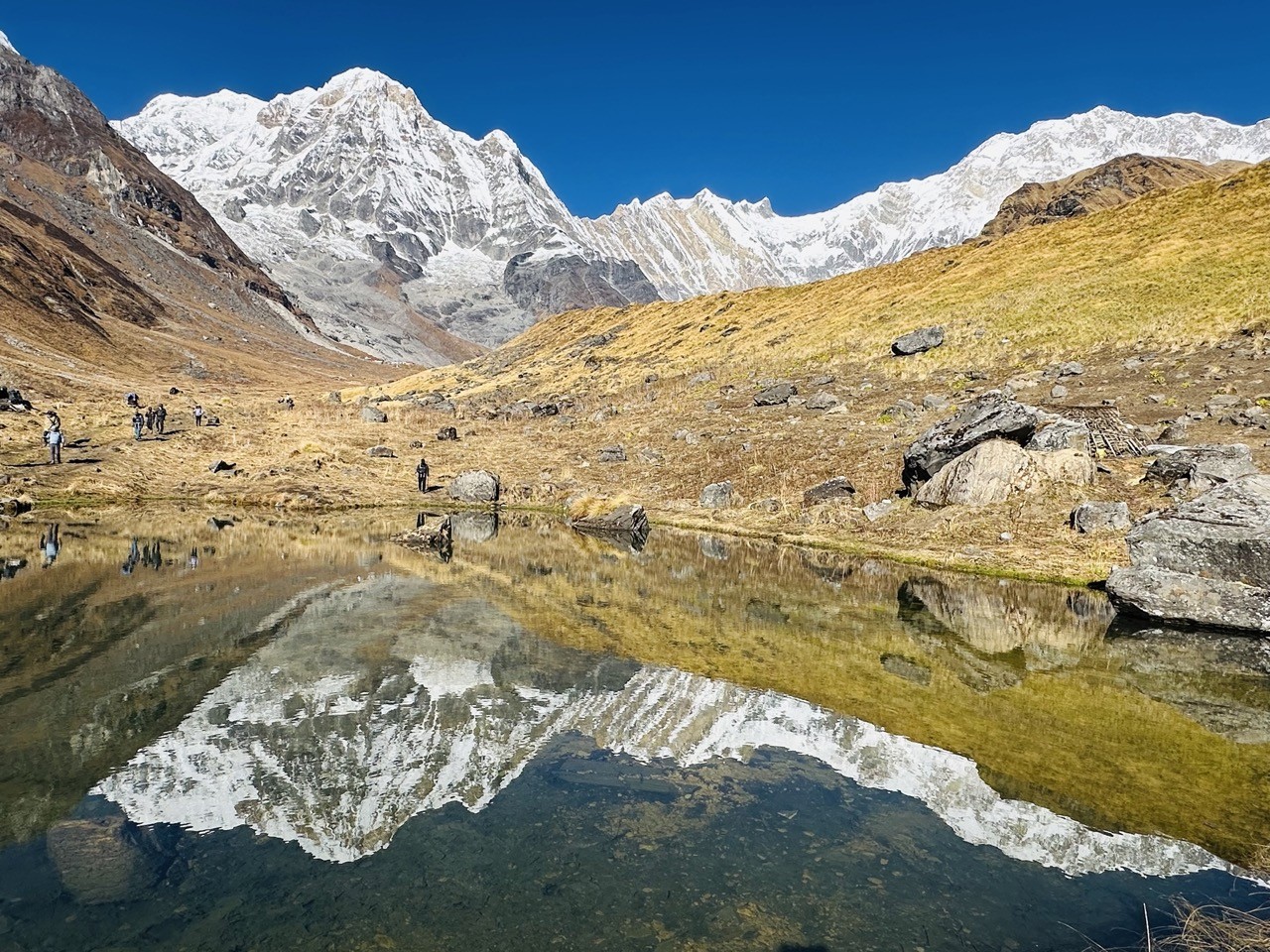
Stunning mountain reflection on a lake en route to Annapurna Base Camp.
Factor
October
November
Day Comfort
Warm & Pleasant
Cool & Crisp
Sky Clarity
Very Good
Outstanding
Trail Busyness
Moderate to High
Low to Moderate
Scenery Vibe
Lush Green & Vibrant
Dry, Golden Autumn Hues
Best For
Comfort & Fresh Scenery
Clarity & Solitude
Annapurna Base Camp Trek in October vs November – At a Glance :
In fact, this side-by-side comparison is designed to help you decide which season best suits your ideal ABC trekking experience. So, if you're after warmth and verdant landscapes, or crystal-clear views and quiet paths, read on to discover which time of year will make your trek unforgettable.
Atmospheric Nuances: The Contrasting Weather of October and November
Actually, the most critical difference between trekking to ABC in October versus November lies in the weather. The atmospheric nuances between the two months are distinct.
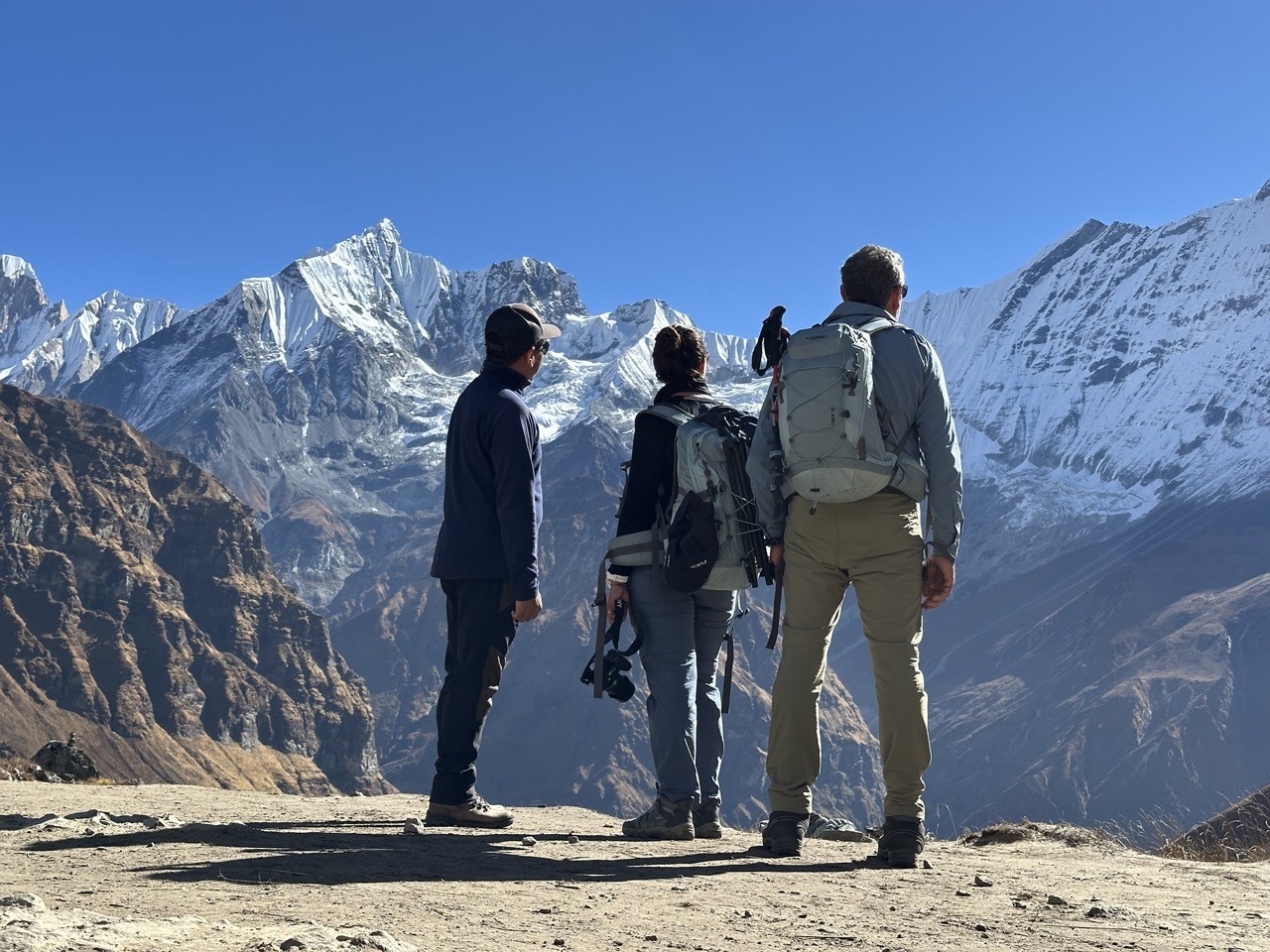
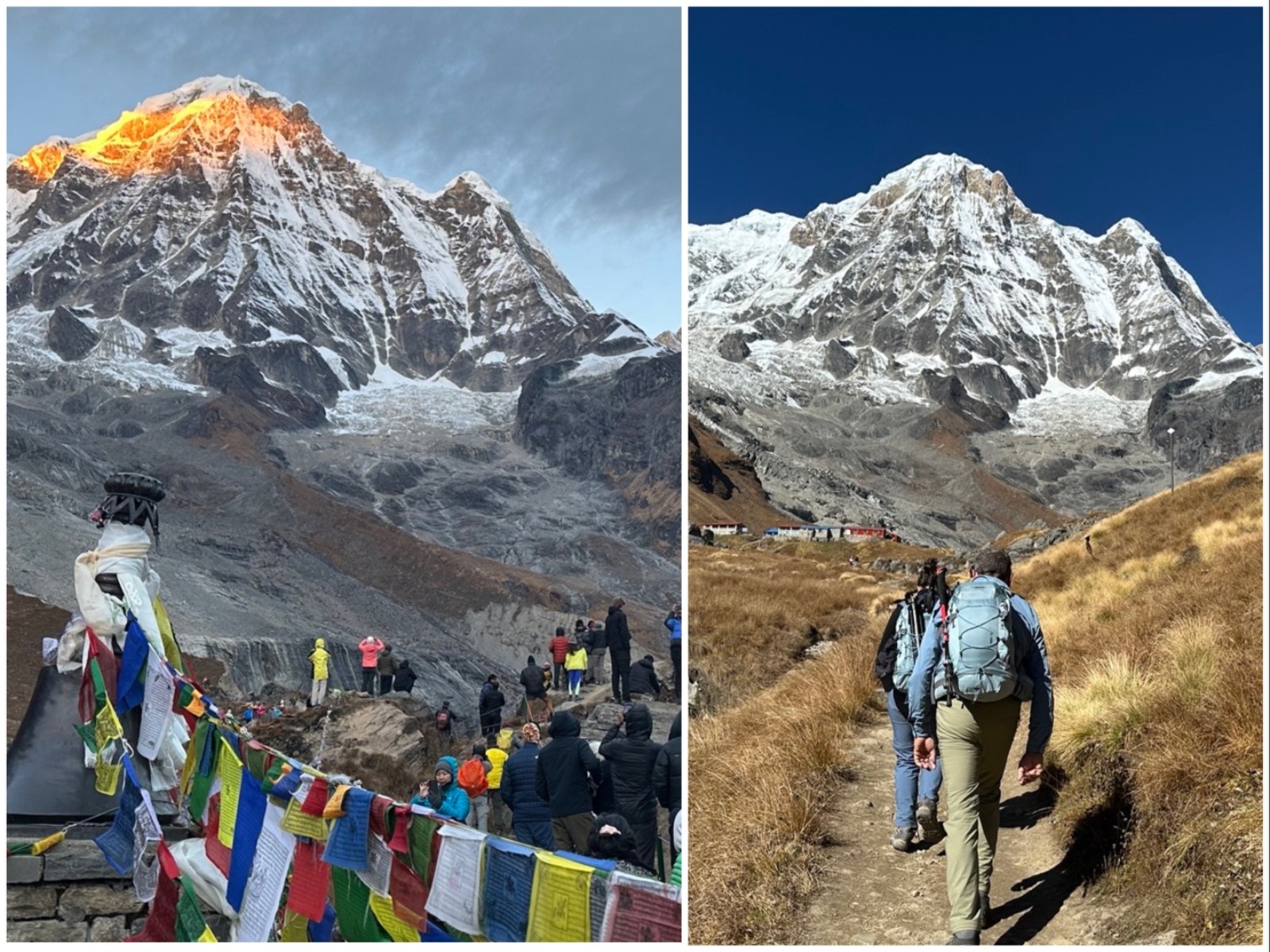
Trekking with stunning Himalayan mountain views.
Weather Profile for October, Here, the warm, comfortable days of October are a direct gift from the receding monsoon. The air still carries a trace of humidity, creating vibrant green landscapes and lively waterfalls. While mornings are usually clear, you might experience occasional afternoon showers or cloud buildup, especially in early October.
Weather Profile for November, In fact, November is all about shedding any lingering humidity and embracing incredibly sharp, piercingly clear, dry blue skies. The risk of rain is virtually nonexistent, and the air is notably cleaner and drier, offering exceptional visibility of the mountains. The evenings grow significantly colder, particularly at higher altitudes.
Metric
October
November | Winner
Day Temp
Warm
Cooler | October
Night Temp
Mild
Significantly Colder | October
Rain Chance
Low to Moderate
Very Low | November
Clarity/Visibility
Very Good
Outstanding | November
Stability
Good
Excellent | November
Detailed Weather Comparison :
Expert Tip If you prefer warmer weather and more beginner-friendly conditions, October is the ideal choice. Photographers and those seeking the absolute best visibility and most stable dry trails will find November to be the superior option.
Ultimately, October wins for comfortable conditions and lush scenery, while November takes the prize for outstanding clarity and weather stability. The ultimate decision hinges on your tolerance for cooler temperatures.
Chasing the Thermometer: Daytime Warmth versus Freezing Base Camp Nights
Actually, perhaps one of the most immediately noticeable differences between trekking Annapurna Base Camp in October versus November will be temperature. There is a distinct difference between the leftover warmth of the post-monsoon months and the approaching early winter chill that will impact your packing needs and overall comfort during the day.
October Temperatures,
During October, you can expect pleasant, mild temperatures on the lower trails of Annapurna Base Camp, typically falling in the range of 20°C to 25°C. Temperatures at teahouses at night will still be mild. Higher up the mountain, at Annapurna Base Camp itself (4,130m), nights will be chilly, but manageable with your standard hiking layers.
November Temperatures,
By November, temperatures will be noticeably cooler both day and night. Highs on the trails will be lower, and at night, the real cold will set in. At Annapurna Base Camp, by the end of November, after the sun goes down, you can expect the temperature to dip to -5°C to -10°C or below, which is truly biting.
Location / Elevation
October Day/Night Temp | November Day/Night Temp
Practical Effect
Lower Trails (1000-2500m)
20-25°C / 10-15°C | 15-20°C / 5-10°C
October has warmer days.
Manang (3540m)
12-18°C / 2-5°C | 8-14°C / -2°C to -5°C
Noticeable temperature drop at night in November.
Annapurna Base Camp (4130m)
5-10°C / -3°C to -7°C | 0-5°C / -8°C to -12°C
Significant drop at night in November.
Temperature Comparison
In Short,
October will feel considerably warmer, especially on the trails, and might be a bit more forgiving if you're traveling with beginner hikers or have low tolerance for the cold. November requires cold-weather gear for nights, particularly higher up the mountain. Both months are typically dry and sunny.
Overall, October will be more pleasant for daytime trekking, but be prepared for colder nights. If you can handle the freezing temperatures at night and want a potentially more serene hiking experience, November might be the better choice for you.
Dealing with the Human Traffic: Full Trails of October versus Less Crowded November
Actually, crowds on the Annapurna Base Camp Trek vary significantly between October and November, and will greatly impact the nature of your trek each day.
October brings full trails, while November offers quieter Himalayan trekking routes.
October Crowds, In fact, this is the single most popular month for trekking the Annapurna Sanctuary, and you should expect the trails to be crowded, especially from Nayapul up through Ghorepani and on to Poon Hill for the sunrise. The teahouses will also likely be full, which creates a more communal and vibrant atmosphere on the trail.
November Crowds, After the main October tourist season ends, the trekking crowds thin out considerably. The trails become noticeably less crowded and will feel more peaceful and serene. You will often be alone on ridges or have to share viewpoints with only a few people.
Segment / Location
October Crowd Level | November Crowd Level
Trekking Atmosphere
Lower Trails (to Ghorepani)
High | Moderate
Lively and social versus more relaxed
Poon Hill Sunrise
Very High | Moderate
Bustling versus calm
Annapurna Sanctuary (to ABC)
High | Low to Moderate
Energetic and social versus peaceful and solitary
Overall Trek Experience
Vibrant, active, and social | Tranquil, personal, and peaceful
Dependent on what you’re looking for
Crowd Comparison :
What This Means for You, Actually, October will be a much more lively experience that will provide opportunities for meeting many different kinds of people. November will have fewer people to share the trail with and a much more contemplative trekking experience.
So, if you love the hustle and bustle of popular trails, then book for October. If you prefer peace and quiet and a chance to really commune with the mountains, then November is the way to go.
The Teahouse Hustle: Bed and Room Realities at 4,000m
When tackling the Annapurna Base Camp trek in October, one of the most practical day-to-day considerations will be securing beds and rooms in high-altitude teahouses, particularly at popular spots like Machhapuchhre Base Camp (MBC) and ABC. This is because accommodation is very limited and can easily make or break your night's rest.
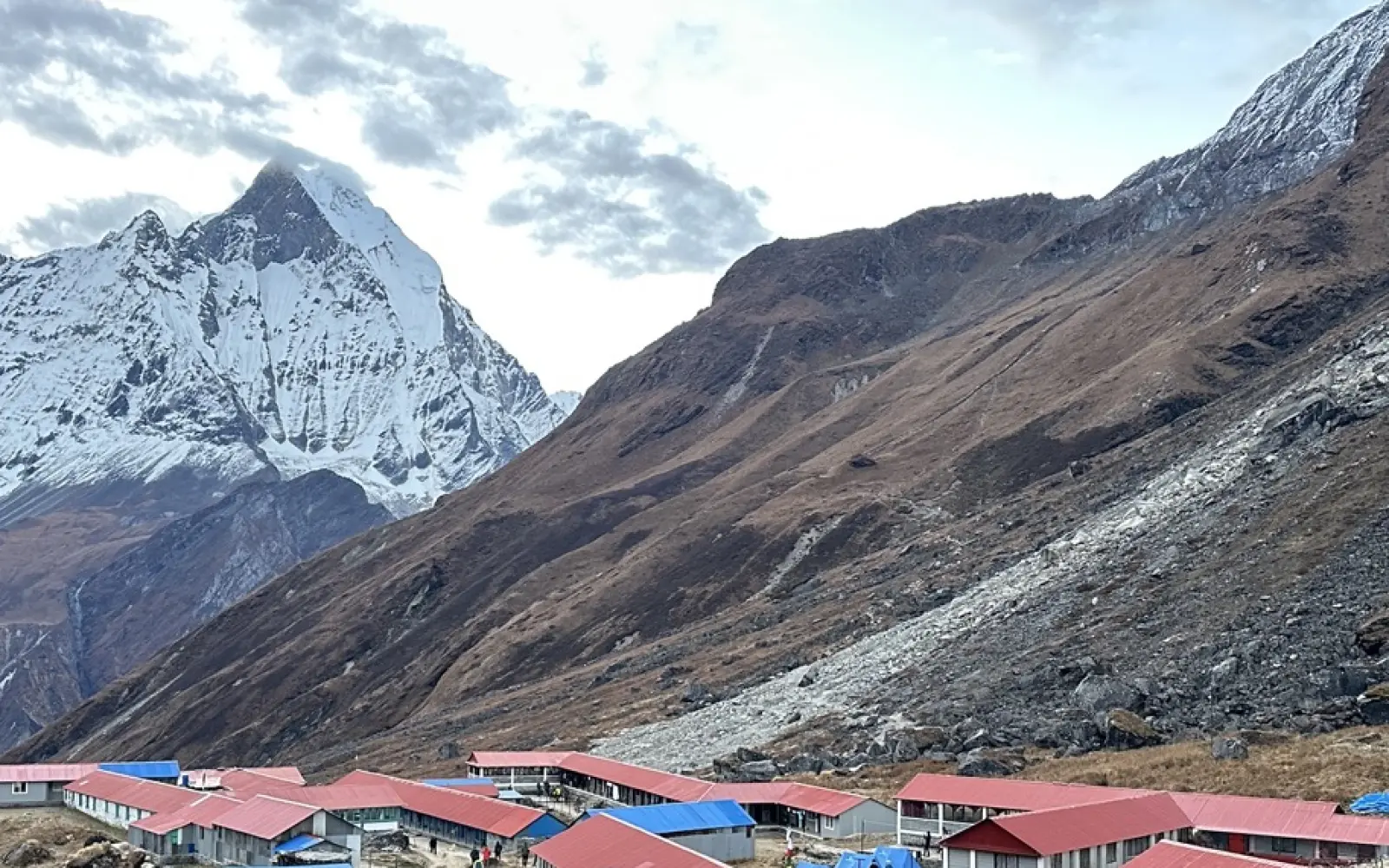
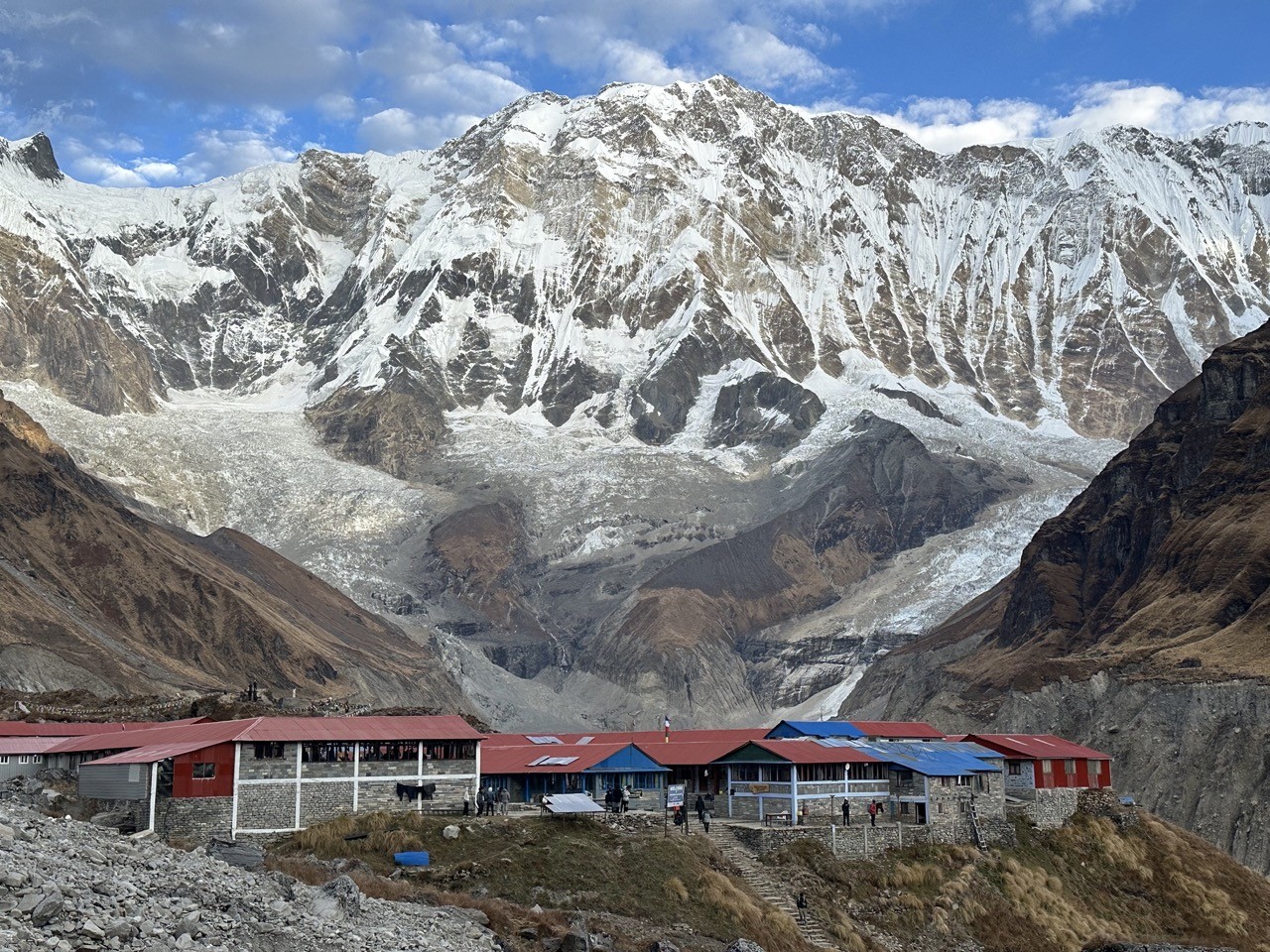
Annapurna Base Camp lodge with breathtaking Himalayan mountain views.
October Teahouse Reality, Because October is the high season, beds and rooms at MBC and ABC are highly sought after. Trekkers who haven't booked ahead often find themselves sleeping on the floor of the dining hall or in shared rooms. Large groups tend to book out the prime corner beds many weeks in advance.
November Teahouse Reality, In fact, the competition for beds significantly eases in November. You'll find greater flexibility and will likely be able to secure a private room or a warmer corner bed much more easily. Teahouse owners are generally more willing to accommodate solo travelers.
Factor
October (Peak Season
November (Late Autumn)
Room Availability
Very Limited
Good to Excellent
Booking Necessity
Advance booking essential
Flexible walk-ins possible
Room Quality & Choice
Competitive; best rooms go fast
Easier to get prime locations
Overall Experience
More stressful
More relaxed & comfortable
Teahouse Booking Comparison
Practical Advice for Both Months :
If trekking in October, pre-booking teahouses through a reliable trekking agency is essential.
In November, it's easier to be spontaneous, but confirm your bed the day before for popular spots.
Always carry a sleeping bag liner for added warmth and hygiene.
In summary, October requires strong planning for teahouse logistics at altitude, whereas November provides much greater ease and comfort.
The Wallet Workout: Budgets and Teahouse Prices
In fact, your budget for Annapurna Base Camp Trek will feel different depending on whether you trek in October or November. The local committee sets prices for basic food, but extras and the total cost can fluctuate based on demand.
October Pricing Reality, As the high season, expect to pay more for extras like hot showers, charging devices, and Wi-Fi in October. The room rates are fairly fixed with little room for negotiation, particularly at the higher base camps.
November Pricing Reality, As the demand drops, the leverage shifts more to the budget-conscious trekker. You'll find that teahouses are more open to negotiating on accommodation and services in November, as they are more eager to fill their rooms.
Expense Item
October (Peak) | November (Late Autumn)
Notes
Teahouse Room Rate
Higher & fixed | More negotiable
Better deals in November
Meals (Breakfast + Dinner)
Standard peak rates | Slightly flexible
Discounts possible
Hot Shower / Charging
Premium pricing | Often reduced or free with meals
Significant saving in November
Overall Daily Budget
Higher | Lower
November more budget-friendly
Cost Comparison Breakdown
Budget Tips :
If you have a smaller group, the per-person costs will naturally be lower.
In November, be polite and ask about negotiation for extras like a hot shower.
Booking a small package tour may be better value overall.
In conclusion, while October's prices reflect peak demand with fixed rates, November offers more budget flexibility and room for negotiation. Considering these seasonal price differences can significantly help your Annapurna Base Camp Trek finances.
The Lens and the Landscape: Autumn's Golden Glow Versus Winter's Silver Realm
For photographers, those of you who love to capture moments, the distinction between Annapurna Base Camp Trek in October and November is enormous. The very palette of your images will differ.
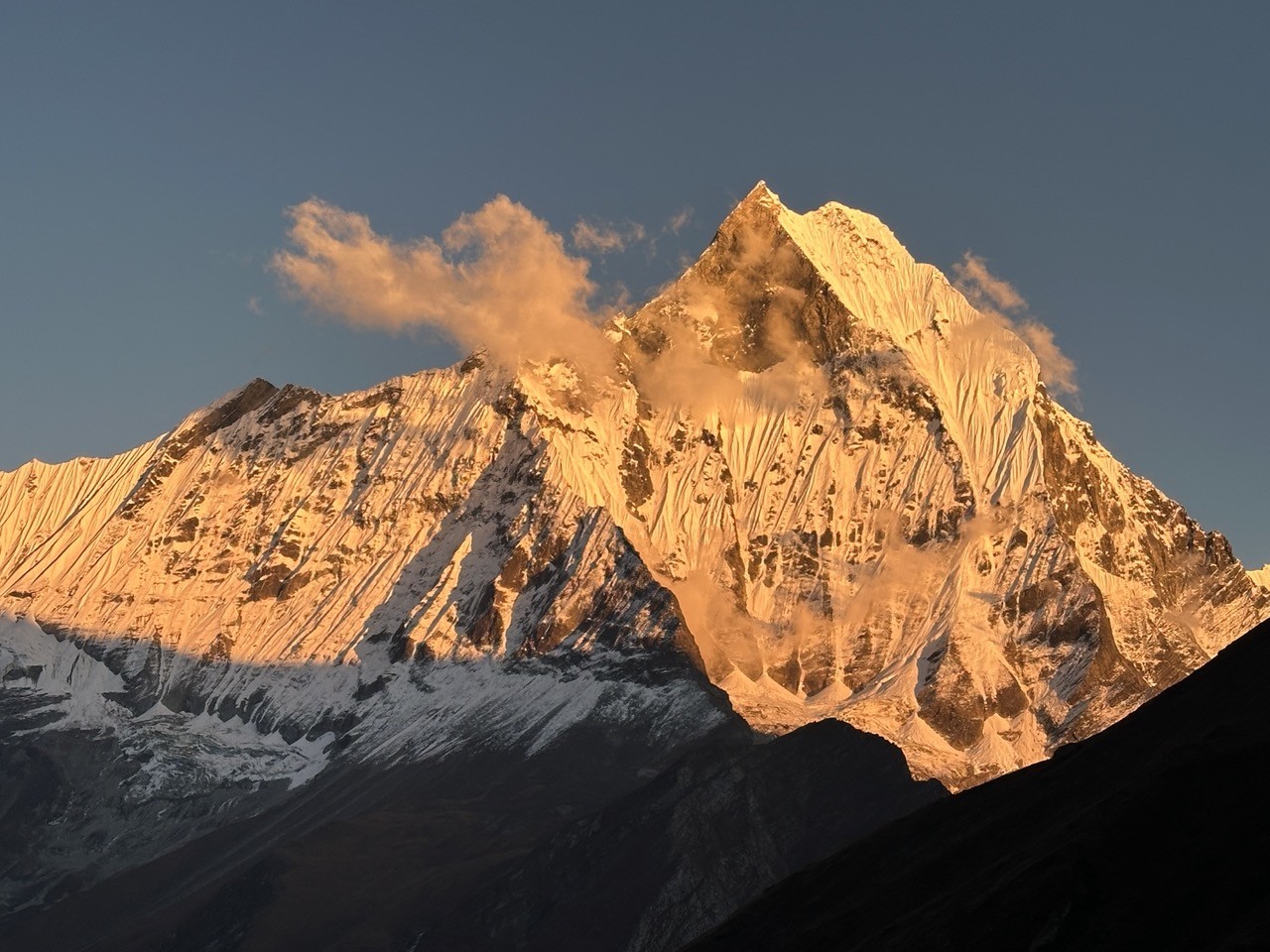
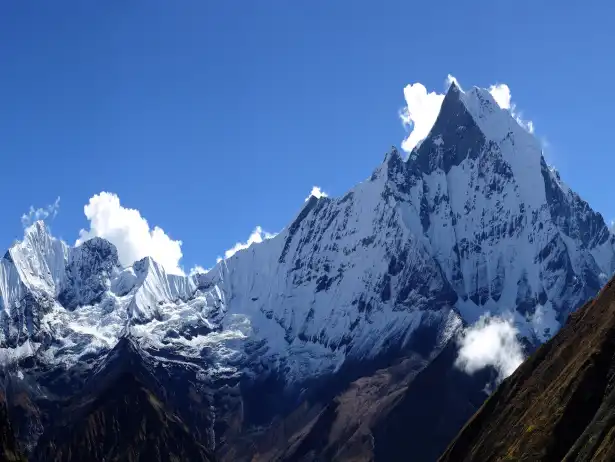
Golden light over Machapuchare (Fishtail Mountain) in the Himalayas.
The October Image, October on the ABC trek means deep green valleys giving way to golden-amber hillsides, while magnificent waterfalls rage down the ravines following the monsoon. The air, especially in the morning light around Machhapuchhre Base Camp and on towards ABC itself, is softly lit and rich with vibrant color; the landscapes seem alive.
The November Image, ABC Trek in November, then, is no longer a landscape dominated by greenery; instead, you're looking at rich golds, browns, and the bright, stark white of newly fallen snow at the base camp amphitheater. The air is clearer and sharper in November, the mountains stand out like they've been carved with precision, especially against the brilliant blue sky.
Image Detail
October | November
Which one for your photos?
Landscape tones
Verdant green with gold accents | Tawny brown with white snow
October for vivid and green
Mountains
Sharp | Crystal sharp
November for razor-edge clarity
Waterfalls
Powerful and abundant | Present but less so
October for nature's fury
Sunsets & sunrises
Warm and diffused | Crispy and high-contrast
November for the drama
Overall feel
Energetic | Peaceful and grand
It's a matter of taste!
Photo Feature Comparison :
Photography tip for the experienced trekker :
A polarizing filter in November works magic against snow and blue sky. Wide-angle lenses are ideal for the broad valley panorama in October.
In summary, for the bright and vivid greens of autumn, it's October. For the clarity and dramatic white of winter's arrival, choose November for Annapurna Base Camp Trek.
The average trekker will find a 3-season layering system sufficient, with lighter thermal wear you can comfortably trek in during the day.
What to pack in November for ABC Trek :
November definitely requires you to think serious winter wear; insulated gloves, heavy down jackets and microspikes for the icy stretches around Deurali on towards MBC, in particular, are non-negotiable.
Gear Item
October | November
What's changed?
Base Layers
Quick-dry synthetics | Thermals
Lower temperature
Mid-layer
Lightweight or mid-weight fleece | Heavy fleece and down jacket
Colder nights
Outer layer
Standard hard shell | Same (but a stronger outer shell)
Windier conditions, need more protection against it
Footwear & traction
Waterproof boots | Same, plus microspikes
Ice on the trail
Sleeping bag
Zero C temperature | Minus ten to fifteen degrees
Much colder at camp
What you'll need to pack – a comparative overview :
Essential trekking accessories :
Always pack a torch with spare batteries in your main bag-you’ll need it in the mornings!
A woolly hat, warm gloves and a neck-warmer are critical for November’s cold starts.
A good quality liner for your sleeping bag will help to keep it cleaner and warmer on your journey.
To put it plainly, the trekking in October will require lighter, more comfortable clothes; November, however, will necessitate well-thought-out winter gear, which will be an aid not a burden throughout your adventure.
Domestic Flights: Navigating Lukla, Pokhara and Kathmandu Transit in Autumn
Meanwhile, domestic flights are an integral logistical component of many Annapurna Base Camp treks. Whether you're flying into or out of Pokhara, or attempting to combine Annapurna with a trek starting from Lukla, flight reliability is crucial and is affected by weather patterns differently in October and November.
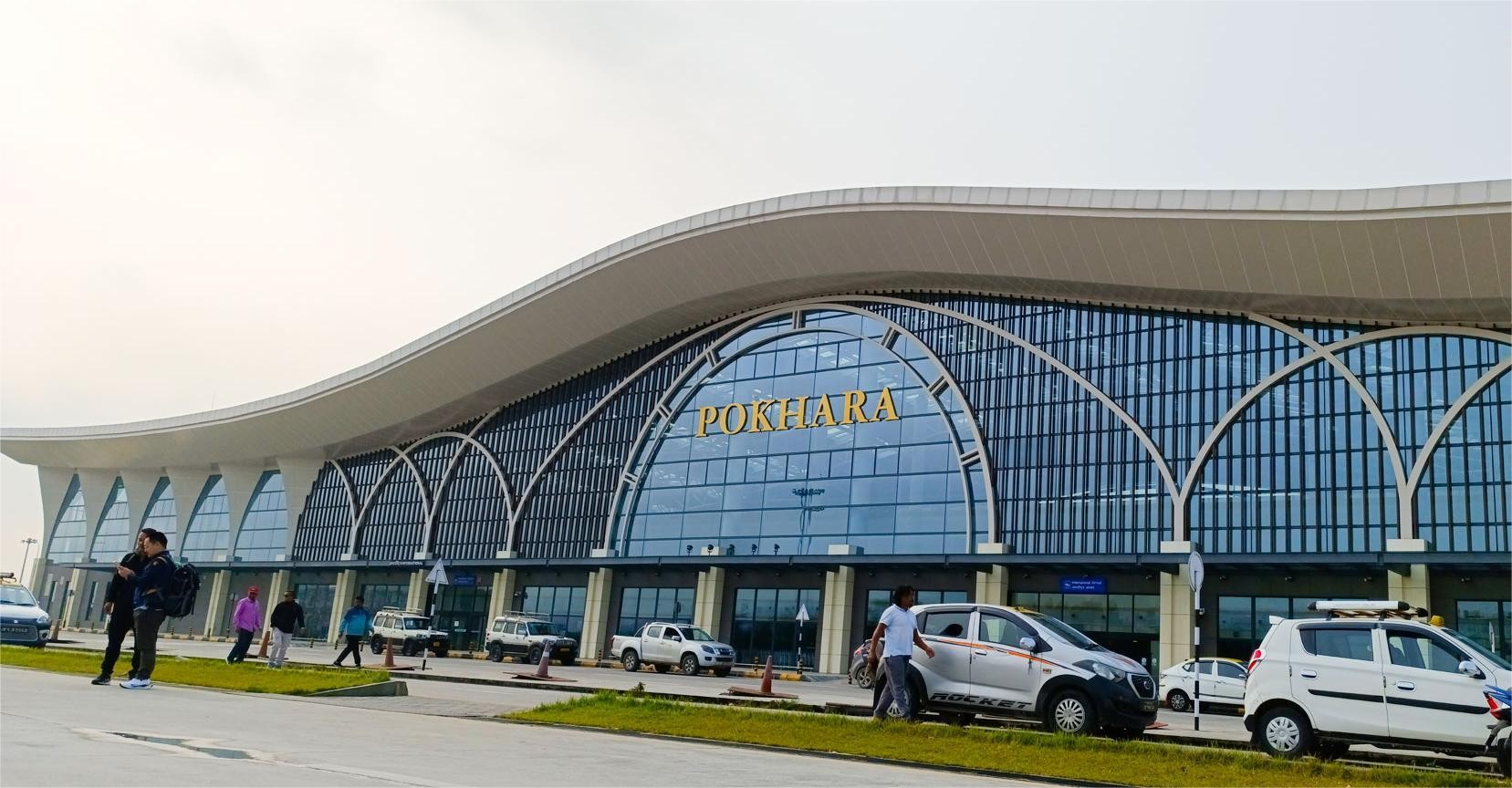
Pokhara Airport gateway to the Annapurna region of Nepal.
October Flight Conditions, General Stability: October offers the most stable weather. The warmer, drier air and lack of heavy mist make morning flights in Kathmandu and Pokhara valleys more reliable. Flight Scheduling: Flight schedules are typically smoother across the board for domestic as well as mountain flights.
November Flight Conditions, Reliability remains high, but: Morning fog can start to creep into the valleys of Kathmandu and Pokhara, especially later in November. This can lead to occasional minor delays. Clearer Skies at Altitude: Despite potential ground delays, once airborne at higher altitudes, visibility and flight conditions generally remain excellent.
Route / Airport
October Reliability
November Reliability | Key Advice
Kathmandu to Pokhara
Excellent
Very Good | Aim for morning flights.
Pokhara to Jomsom/Muktinath
High
Good | Monitor the weather closely before your flight.
Lukla Flights (if applicable)
Very Good
Good | Consider building at least one buffer day in November.
Flight Reliability Comparison :
Practical Logistics Tips :
Morning Flights are King: Whenever possible, book morning flights. They're generally less susceptible to afternoon weather deteriorations.
Buffer Day: Always incorporate at least one buffer day into your itinerary, especially in November, to account for potential flight delays.
Reputable Agency: Work with a reputable trekking agency. They have better relationships with airlines and can help rebook flights or arrange alternative transport (like private jeep/bus) if necessary.
In summary, October boasts exceptional domestic flight reliability, while November remains very reliable but requires slightly more diligence due to potential early morning fog. Proactive planning with buffer days ensures your journey to the Annapurna Base Camp is smooth from start to finish.
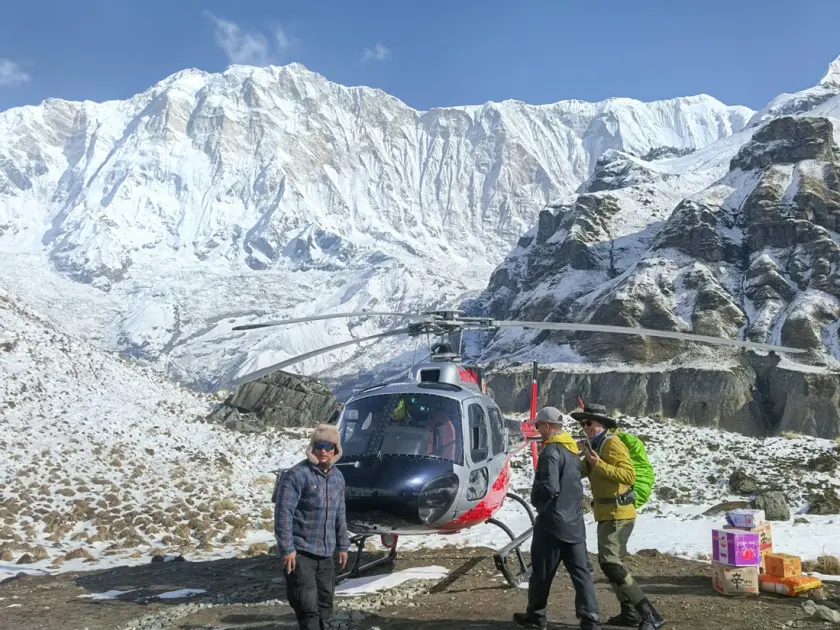
Annapurna Base Camp Trek with Helicopter Return | 4 days
Cultural Immersion: Experiencing Nepal's Grand Autumn Festivals
Actually, the rich cultural vibrancy of Nepal during October and November is a significant advantage of Annapurna Base Camp Trek during these months. Both periods coincide with the country's most cherished festivals, adding an extra dimension to the experience.
October Cultural Highlights, Festival Frenzy: October frequently encompasses Nepal's two largest festivals: Dashain (the festival of lights and family) and the beginning of Tihar (the festival of sisters, dogs, and cows).
Vibrant Atmosphere: You can witness streets adorned with marigold garlands, children playing on traditional swing sets (Changa), and locals engaging in festive rituals and family gatherings, especially in the lower reaches of the trek.
November Cultural Highlights, Post-Festival Calm: By November, the main festivities of Dashain and Tihar are largely over. Serene Immersion: The trails settle into a more peaceful, contemplative rhythm. This offers a deeper immersion into the everyday life and traditions of Gurung and Magar villages.
Aspect
October
November
Festival Atmosphere
High (Dashain & Tihar)
Calm & post-festival
Village Life
Festive & lively
Peaceful & traditional
Local Interactions
Warm & celebratory
More personal & reflective
Overall Cultural Feel
Energetic
Serene & authentic
Festival & Cultural Comparison :
Cultural Immersion Tips :
Local Spirituality: Visit local monasteries (Gumbas) and if possible, participate in or observe the small, daily rituals.
Culinary Delights: Sample traditional Nepali cuisine like dal bhat and the famous Annapurna apple pie in teahouses.
Respectful Engagement: Always ask permission before taking photographs of people or ceremonies, and be mindful of local customs.
In conclusion, October offers an energetic and celebratory cultural experience alongside your ABCC trek, while November provides a serene and intimate encounter with the soul of the mountain villages. Both months offer profound cultural immersion for your Annapurna Base Camp adventure.
Safety and Acclimatization: Adapting to Seasonal Trail Risks
Actually, October is the least variable weather period in the Annapurna range, but safely navigating the high-altitude terrain involves being mindful of evolving trail conditions as the season progresses. October trails are bone-dry and clearly-marked and easy to follow. As November rolls around however, it’s the shorter days, cold afternoon winds and cold that will begin to take their toll.
[October Base] Warm dry trails. More daylight than at any other time of year, the paths are predictable.
[November Shift] Decreasing daylight hours, strong biting afternoon winds, cold impacts on speed and comfort.
Deurali choke point: Freezing runoff makes this notoriously tricky icy patch more of an invisible peril.
CRITICAL ZONE: Deurali Choke point: Freezing runoff can create invisible sheets of ice at steep inclines of stairs and loose scree. Localised avalanche risk also remains, so stay updated if an early snow storm blows through. Slow walking pace, careful step placement, and intensive AMS prevention is crucial to reaching the sanctuary in safety.
Here, it's crucial to know where these geographical 'choke points' are. On the steep, rocky ascent up to the high passes, beyond the narrow Deurali valley, morning runoff can instantly freeze into hidden, impossibly smooth and invisible sheets of ice on the rocks and steep steps. While there's less risk than in Spring, hikers also need to monitor the localized Deurali avalanche risk in the event of an early winter snowstorm. Walking slowly, paying careful attention to where each step lands, and closely adhering to ABC AMS prevention practices will ensure that you reach the sanctuary in safety.
Do I need a sleeping bag for ABC in November? Yes. Even though there are blankets provided at tea-houses, the night time temperatures at this altitude will fall well below zero C, and there's generally no heating, so a -10 C rating down bag will keep you warm and comfortable.
The Final Verdict-Which Month Wins Your Annapurna Trek?
When planning your itinerary for Annapurna Base Camp Trek, the decision between October or November will depend entirely upon what experience you seek. October hikers appreciate the sociable trail and the warm weather, while those opting for November, do so to escape crowds, enjoy crisp mountain views, and quiet tea-houses.
Trekking Attribute
October (The Peak Wave)
November (The Crisp Solitude)
Avg. Daylight Hours
Max. Daylight, long trekking day
Shorter daylight, limited hiking window
avg. Afternoon Temperature
Pleasant, 12 to 18 deg. C at mid-altitudes
Brisk, 5 to 12 deg. C and cold as day goes on
avg. Night Temperature
Cool to Freezing, between 0-3 deg. C
Very Cold, down to -10 deg. C
Trail Conditions & Crowds
Packed trail, and very sociable. Expect busy communal tea-houses.
Moderate to no trail use, tranquil. Expected to be the most peaceful month of the year.
Teahouse room occupancy
Limited, often sharing rooms or very small shared common spaces
plenty available and individual room options are common
Visibility & Views
Extremely clear and predictable morning weather window. Incredible day long visibility, albeit maybe not as consistently sharp as Nov.
Green, vibrant lower valleys and roaring water falls and cascades.
Deep gold, fiery autumn forests, early winter snow appears on peaks.
Autumn Trekking: Attributes Compared
Book your trekking journey with trusted field experts from Haven Holidays and make it safe and exciting during October and November.
In conclusion, your Annapurna Base Camp trekking experience in Autumn (October and November) will depend on the reliable support and logistics you have on the ground. Booking with local trek specialists is essential for a stress-free journey. In October, when accommodations are scarce, an experienced guide, backed by robust local ties, will be indispensable in helping you snag those coveted rooms and meals at busy teahouses. November trekking specialists, on the other hand, have a keen eye for shifting weather patterns, can help you navigate early ice on the trail and adjust your trekking pace according to decreasing daylight. Contact us for any other helps if needed.
Annapurna Base Camp trek in October Vs. November-FAQs
1. Is October or November better for the Annapurna Base Camp trek? October is the peak month for the Annapurna Base Camp trek; it offers warmer walking temperatures, a post-monsoon festive air and it's generally the best month for the ABC hike in general. The month of November is the “sweet spot” – while it provides equally crisp and unadulterated views of the peaks, you’ll be much fewer in number on the trail, provided that you are OK with the colder temperatures.
2. How does the weather vary between October and November on Annapurna Base Camp? The Annapurna Base Camp trek weather is quite remarkably similar between October and November. October provides warmer day time temperatures with the possibility of virtually zero snowfall, and it’s mostly this weather that provides it the label of being peak autumn trekking season. November provides the same crisp, cloudless blue skies, but with cooler daytime temperatures, shorter daylight hours, and occasional early winter dusting of snow on the high altitude pass sections.
3. What are the average daytime temperatures on Annapurna Base Camp Trek in October? During Annapurna Base Camp trek in October, lower altitude temperatures will range from 20°C to 25°C while walking, and when you're higher in the sanctuary region of the trek, temperatures will be closer to 8°C-16°C while daytime.
4. How cold do November nights get at Annapurna Base Camp? During the Annapurna Base Camp trek in November, nights get very cold. At Annapurna Base Camp (4130m), October temperatures are between -1°C to -6°C, while November nights typically dip below -10°C, freezing the inside of your water bottles.
5. Which month has better mountain visibility for the ABC trek? October and November provide equally sharp, non-hazy mountain views of the Annapurna range. Air quality is at its highest in October with the end of the monsoon season, but November’s clear blue skies also give stunning photographic opportunities for Annapurna I, Machhapuchhre and Hiunchuli at 360 degrees with virtually no cloud cover.
6. Are ABC trails more crowded in October or November? October will see almost 35% of the whole year's trekkers trekking Annapurna. So if a wild, less-trodden trail feel is your priority, the quiet side of November makes for an extremely pleasant and tranquil wilderness experience, without you even having to fight for a bed in the small tea houses at ABC and Machhapuchhre Base Camp.
7. Do I need to book teahouses in advance for Annapurna Base Camp Trek in October? You will need to book accommodation at Machhapuchhre Base Camp and Annapurna Base Camp weeks, if not months, in advance for October trekking in Annapurna. Both tea houses become full and booked well into the afternoon, forcing you to take common dining hall space on many occasions if you do not book early.
8. Is teahouse accommodation on ABC Trail easier to secure in November? Yes, if you book during November you have far more of a luxury for accommodation options. Most teahouses in Nepal only close at the highest elevations such as Machhapuchhre Base Camp and ABC. So at these higher locations you will find comfortable single/twin private rooms still available and plenty of space.
9. Can I experience local festivals on the ABC trail in October? Yes, most trekkers find that the Annapurna Base Camp trek in October aligns with some of the greatest Hindu festivals in the country including Dashain and Tihar, two of the most significant cultural experiences on Nepal. Smaller Gurung villages like Ghandruk and Chhomrong are particularly festooned with traditional swing installations, dancing and welcoming local people.
10. Do festival closures affect guide availability in October for Annapurna Base Camp Trek? Yes, some local trekkers may travel back home for Dashain celebrations during October and so there are high demands for trekking staff during the high trekking season. For this reason, you will want to arrange your trekking crew (guides and porters) well in advance when booking your trek during October.
11. What are the Annapurna Base Camp trail conditions like during October? The trail to Annapurna Base Camp in October is the best it will be, especially as the path is still fairly firm from the dry season. The infamous flight of stairs from Tikhedhunga to Ulleri would not be as slick and dangerous as they could have been and so the overall walking condition will provide for smooth trekking for an Annapurna Base Camp trek in October.
12. Are there leeches or bugs on the ABC trail in November? The climate at high altitudes above 3000m becomes a total quarantine of pests. Leaches, mosquitoes and all other insects will have disappeared by October and so you will find that even for an Annapurna Base Camp trek in November, you will be comfortable hiking in shorts through the bamboo forest where the trail to Annapurna Base Camp is steepest and lowest.
13. What extra gear is required for a November ABC trek? Because the Annapurna Base Camp trek in November is subject to extremely cold temperatures, you should pack at least a -20C rated sleeping bag, thermals for every day you are trekking, fleece gloves, and a warm down jacket. A pair of micro-spikes or crampons are recommended for the icy passes towards ABC in late November, and it can get surprisingly cold after the sun goes down.
14. How long does the Annapurna Base Camp trek take? A standard Annapurna Base Camp trek takes 7-12 days to complete with a round-trip hike starting and finishing at Pokhara. For shorter journeys of just 8 days, you can cut through the heart of the Modi Khola valley, forgoing the optional climb up Poon Hill.
15. What permits are required for autumn trekking in Annapurna? Both the ACAP (Annapurna Conservation Area Permit) and the TIMS card (Trekkers' Information Management System card) are required for every trekker visiting the Annapurna region and it doesn't matter which month of autumn you choose to travel with for your Annapurna Base Camp trek.
16. Is altitude sickness common on the ABC trek profile? The risk of developing Acute Mountain Sickness (AMS) is not particularly high for an Annapurna Base Camp trek profile of moderate altitude but is still a concern to take into consideration. Altitude acclimatization along the trail is vital; and drinking four liters of water per day on the trek will prevent you from experiencing any issues.
17. How does the flora change between October and November on Annapurna Base Camp Trail? In October, the lush green foliage comes into its full glory and the landscape will still be green, while the plants begin to take on their golden and red hues. In November, this landscape slowly starts to turn to barren winter colours and the tall, wild grasses are more dried and shriveled with an autumnal hue; especially at higher elevations where it will start to get colder.
18. Are domestic flights to Pokhara reliable during October and November? Yes, October and November are the two best months for domestic flights to Pokhara and from Kathmandu; with very few if any disruptions due to fog or clouds throughout this time. These periods have by far the clearest and most stable skies in Nepal for travelling by air.
19. Is a guide mandatory for the Annapurna Base Camp trek? Yes, and in order to provide for your safety on the trail and within the Annapurna region, a local guide is required when trekking Nepal. Hiring one can be particularly beneficial during the month of October as you will be guaranteed accommodation during the peak season and a trustworthy escort throughout the difficult December weather conditions during your Annapurna Base Camp trek.
20. Which month should a first-time trekker choose for ABC Trek? If you want to go on a first time trekker’s Annapurna Base Camp trek then I would recommend October because of the warmer climate and greater social environment on the trails. If you, however, are happy with the cold temperatures and want to explore more solo, then November is perfect for an Annapurna Base Camp trek.