[{"name":"Everest Base Camp Helicopter Tour","duration":"1","image_url":"https:\/\/www.havenholidaysnepal.com\/storage\/trip-galleries\/1\/thumb_6cd53005d75a86e373d31419d1b14d78.webp","offer_price":1195,"url":"https:\/\/www.havenholidaysnepal.com\/trips\/everest-base-camp-helicopter-tour"},{"name":"Everest Mountain Flight","duration":"1","image_url":"https:\/\/www.havenholidaysnepal.com\/storage\/trip-galleries\/4\/thumb_3b0b4f1d6f72b0ad224daf4752f2c6e0.jpg","offer_price":285,"url":"https:\/\/www.havenholidaysnepal.com\/trips\/everest-mountain-flight"},{"name":"Everest Short Trek","duration":"9","image_url":"https:\/\/www.havenholidaysnepal.com\/storage\/trip-galleries\/5\/thumb_BXPP3621.JPEG0.02033800 1727957098.webp","offer_price":895,"url":"https:\/\/www.havenholidaysnepal.com\/trips\/everest-short-trek"},{"name":"Gokyo Valley Trek","duration":"12","image_url":"https:\/\/www.havenholidaysnepal.com\/storage\/trip-galleries\/6\/thumb_10bc469b14731f23d3ce84a7092ad53f.jpg","offer_price":1195,"url":"https:\/\/www.havenholidaysnepal.com\/trips\/gokyo-valley-trek"},{"name":"15 days Annapurna Base Camp Trek","duration":"15","image_url":"https:\/\/www.havenholidaysnepal.com\/storage\/trip-galleries\/7\/thumb_87d1533bc45faf070990aef0579e4be4.jpg0.81855100 1728285496.webp","offer_price":785,"url":"https:\/\/www.havenholidaysnepal.com\/trips\/15-days-annapurna-base-camp-trek"},{"name":"Nepal Pilgrimage Tour","duration":"14","image_url":"https:\/\/www.havenholidaysnepal.com\/storage\/trip-galleries\/8\/thumb_02c3bcf2ad2e8a4c1703e90ae747b5f1.jpg","offer_price":1475,"url":"https:\/\/www.havenholidaysnepal.com\/trips\/nepal-pilgrimage-tour"},{"name":"UNESCO World Heritage Site Tour","duration":"10","image_url":"https:\/\/www.havenholidaysnepal.com\/storage\/trip-galleries\/9\/thumb_unesco-world-heritage-site-Lumbani-temple-buddhists-hindus-kathmandu-nepal0.36988600 17347617740.93089500 1737469667.webp","offer_price":715,"url":"https:\/\/www.havenholidaysnepal.com\/trips\/unesco-world-heritage-site-tour"},{"name":"Island Peak Climbing","duration":"16","image_url":"https:\/\/www.havenholidaysnepal.com\/storage\/trip-galleries\/11\/thumb_Island peak0.53947000 1734692503.webp","offer_price":2495,"url":"https:\/\/www.havenholidaysnepal.com\/trips\/island-peak-climbing"},{"name":"Upper Mustang Trek","duration":"18","image_url":"https:\/\/www.havenholidaysnepal.com\/storage\/trip-galleries\/12\/thumb_upper mustang 7 Oct-2024.jpg0.95398900 1728286166.webp","offer_price":2995,"url":"https:\/\/www.havenholidaysnepal.com\/trips\/upper-mustang-trek"},{"name":"Annapurna Circuit Trek","duration":"16","image_url":"https:\/\/www.havenholidaysnepal.com\/storage\/trip-galleries\/15\/thumb_tibetan-flags.jpg0.04843900 1728289138.webp","offer_price":985,"url":"https:\/\/www.havenholidaysnepal.com\/trips\/annapurna-circuit-trek"},{"name":"Gosainkunda Lake Trek","duration":"10","image_url":"https:\/\/www.havenholidaysnepal.com\/storage\/trip-galleries\/16\/thumb_5A8083B3-C007-41A8-853F-D0C37C97D235_1_105_c.jpeg0.52581200 1731845258.webp","offer_price":595,"url":"https:\/\/www.havenholidaysnepal.com\/trips\/gosainkunda-lake-trek"},{"name":"Zip-lining in Pokhara and Dhulikhel","duration":"1","image_url":"https:\/\/www.havenholidaysnepal.com\/storage\/trip-galleries\/18\/thumb_215f765e2ebc995dd5c800b4bfdbacc3.jpg","offer_price":82,"url":"https:\/\/www.havenholidaysnepal.com\/trips\/zip-lining-in-pokhara-and-dhulikhel"},{"name":"Annapurna Heli Tour","duration":"1","image_url":"https:\/\/www.havenholidaysnepal.com\/storage\/trip-galleries\/19\/thumb_d71a6bbb9fd4da8d1b567a5cdbdec85d.jpg","offer_price":555,"url":"https:\/\/www.havenholidaysnepal.com\/trips\/annapurna-heli-tour"},{"name":"Paragliding in Pokhara","duration":"1","image_url":"https:\/\/www.havenholidaysnepal.com\/storage\/trip-galleries\/20\/thumb_de788d2dd9726783431f882c007efae1.jpg","offer_price":65,"url":"https:\/\/www.havenholidaysnepal.com\/trips\/paragliding-in-pokhara"},{"name":"Ultra-Flight in Pokhara","duration":"1","image_url":"https:\/\/www.havenholidaysnepal.com\/storage\/trip-galleries\/21\/thumb_e27a9fb572a5c21611bb2a3c18e4b8f0.jpeg","offer_price":175,"url":"https:\/\/www.havenholidaysnepal.com\/trips\/ultra-flight-in-pokhara"},{"name":"Sarangkot Hiking","duration":"1","image_url":"https:\/\/www.havenholidaysnepal.com\/storage\/trip-galleries\/22\/thumb_100ef822fea19987166c6c1366215f15.jpg","offer_price":55,"url":"https:\/\/www.havenholidaysnepal.com\/trips\/sarangkot-hiking"},{"name":"Mera Peak Climbing","duration":"18","image_url":"https:\/\/www.havenholidaysnepal.com\/storage\/trip-galleries\/24\/thumb_d16ae3895f678cf26ffbf2455f541fb5.jpg0.31883400 1732617790.webp","offer_price":2475,"url":"https:\/\/www.havenholidaysnepal.com\/trips\/mera-peak-climbing"},{"name":"Lower Dolpo Trek","duration":"18","image_url":"https:\/\/www.havenholidaysnepal.com\/storage\/trip-galleries\/26\/thumb_Dolpo Galary - 1.JPG0.37725200 1727939952.webp","offer_price":2995,"url":"https:\/\/www.havenholidaysnepal.com\/trips\/lower-dolpo-trek"},{"name":"Nagarkot Sunrise\/Sunset Tour","duration":"1","image_url":"https:\/\/www.havenholidaysnepal.com\/storage\/trip-galleries\/27\/thumb_5147a5532644283a380f2e86f3857c13.jpg0.17748000 1728488108.webp","offer_price":30,"url":"https:\/\/www.havenholidaysnepal.com\/trips\/nagarkot-sunrise-sunset-tour"},{"name":"16 day Everest Base Camp Trek","duration":"16","image_url":"https:\/\/www.havenholidaysnepal.com\/storage\/trip-galleries\/28\/thumb_IMG_4311.JPG0.64984800 1727942213.webp","offer_price":1475,"url":"https:\/\/www.havenholidaysnepal.com\/trips\/16-day-everest-base-camp-trek"},{"name":"Ghorepani Poon Hill trek with Jungle Safari and Trishuli River Rafting -13 days","duration":"13","image_url":"https:\/\/www.havenholidaysnepal.com\/storage\/trip-galleries\/29\/thumb_Ghorepani Poon hill.jpg0.48460800 1728281439.webp","offer_price":795,"url":"https:\/\/www.havenholidaysnepal.com\/trips\/ghorepani-poon-hill-trek-with-jungle-safari-and-trishuli-river-rafting--13-days"},{"name":"Mardi Himal Trek","duration":"12","image_url":"https:\/\/www.havenholidaysnepal.com\/storage\/trip-galleries\/30\/thumb_s1.jpg0.62112600 1728200721.webp","offer_price":795,"url":"https:\/\/www.havenholidaysnepal.com\/trips\/mardi-himal-trek"},{"name":"Langtang Valley Trekking","duration":"10","image_url":"https:\/\/www.havenholidaysnepal.com\/storage\/trip-galleries\/31\/thumb_IMG_4702.JPG0.84916500 1727958504.webp","offer_price":685,"url":"https:\/\/www.havenholidaysnepal.com\/trips\/langtang-valley-trekking"},{"name":"Real Adventure Tour in Nepal","duration":"9","image_url":"https:\/\/www.havenholidaysnepal.com\/storage\/trip-galleries\/32\/thumb_ebd1b8cc78d90abe8b9003dd9a2f25bf.jpg0.82151300 1728213516.webp","offer_price":695,"url":"https:\/\/www.havenholidaysnepal.com\/trips\/real-adventure-tour-in-nepal"},{"name":"Luxury Tour in Nepal","duration":"10","image_url":"https:\/\/www.havenholidaysnepal.com\/storage\/trip-galleries\/33\/thumb_8574e61b252b18676b042caf30d830df.jpg","offer_price":1675,"url":"https:\/\/www.havenholidaysnepal.com\/trips\/luxury-tour-in-nepal"},{"name":"Luxury Everest Panorama Trek With EBC Heli Sightseeing","duration":"8","image_url":"https:\/\/www.havenholidaysnepal.com\/storage\/trip-galleries\/34\/thumb_URZL2397.JPEG0.01209600 1728027820.webp","offer_price":2395,"url":"https:\/\/www.havenholidaysnepal.com\/trips\/luxury-everest-panorama-trek-with-ebc-heli-sightseeing"},{"name":"13 day Everest Base Camp Trek with Helicopter","duration":"13","image_url":"https:\/\/www.havenholidaysnepal.com\/storage\/trip-galleries\/35\/thumb_IMG_4292.JPG0.70131500 1728029276.webp","offer_price":2095,"url":"https:\/\/www.havenholidaysnepal.com\/trips\/13-day-everest-base-camp-trek-with-helicopter"},{"name":"Manaslu Circuit Trek","duration":"16","image_url":"https:\/\/www.havenholidaysnepal.com\/storage\/trip-galleries\/36\/thumb_Mt Manaslu 03-Oct-2024.jpg0.65804900 1727938470.webp","offer_price":955,"url":"https:\/\/www.havenholidaysnepal.com\/trips\/manaslu-circuit-trek"},{"name":"Kanchenjunga Base Camp Trek","duration":"21","image_url":"https:\/\/www.havenholidaysnepal.com\/storage\/trip-galleries\/37\/thumb_Kanchanjunga Trek -!.jpg0.54744400 1727938497.webp","offer_price":2275,"url":"https:\/\/www.havenholidaysnepal.com\/trips\/kanchenjunga-base-camp-trek"},{"name":"Ganesh Himal and Sing-La Trek","duration":"18","image_url":"https:\/\/www.havenholidaysnepal.com\/storage\/trip-galleries\/38\/thumb_Ganesh Himal slider-1.jpg0.43764500 1727937722.webp","offer_price":2975,"url":"https:\/\/www.havenholidaysnepal.com\/trips\/ganesh-himal-and-sing-la-trek"},{"name":"Island Peak Climb with Everest Base Camp Trek","duration":"21","image_url":"https:\/\/www.havenholidaysnepal.com\/storage\/trip-galleries\/39\/thumb_2be428730fe83525bc85a010564f99de.jpg","offer_price":2750,"url":"https:\/\/www.havenholidaysnepal.com\/trips\/island-peak-climb-with-everest-base-camp-trek"},{"name":"Students' Adventure Tour in Nepal","duration":"12","image_url":"https:\/\/www.havenholidaysnepal.com\/storage\/trip-galleries\/41\/thumb_a926d22fbfe08cba271c41ac289b3fd2.jpg","offer_price":995,"url":"https:\/\/www.havenholidaysnepal.com\/trips\/students-adventure-tour-in-nepal"},{"name":"7 Day Poonhill Trek","duration":"7","image_url":"https:\/\/www.havenholidaysnepal.com\/storage\/trip-galleries\/42\/thumb_6196bd69036473293a2c24cc21ed57d7.jpg0.10880600 1728205378.webp","offer_price":555,"url":"https:\/\/www.havenholidaysnepal.com\/trips\/7-day-poonhill-trek"},{"name":"7 Days Annapurna Base Camp Trek","duration":"7","image_url":"https:\/\/www.havenholidaysnepal.com\/storage\/trip-galleries\/43\/thumb_IMG_2214.JPG0.08204900 1728202033.webp","offer_price":355,"url":"https:\/\/www.havenholidaysnepal.com\/trips\/7-days-annapurna-base-camp-trek"},{"name":"3 days Poonhill Trek","duration":"3","image_url":"https:\/\/www.havenholidaysnepal.com\/storage\/trip-galleries\/44\/thumb_Poon hill.jpg0.60816600 1731412954.webp","offer_price":165,"url":"https:\/\/www.havenholidaysnepal.com\/trips\/3-days-poonhill-trek"},{"name":"Poon Hill Luxury Trek with Chitwan-12 days","duration":"12","image_url":"https:\/\/www.havenholidaysnepal.com\/storage\/trip-galleries\/45\/thumb_Poom hill.jpg0.52074500 1730180532.webp","offer_price":1175,"url":"https:\/\/www.havenholidaysnepal.com\/trips\/poon-hill-luxury-trek-with-chitwan-12-days"},{"name":"Everest Luxury Trek-7 days","duration":"7","image_url":"https:\/\/www.havenholidaysnepal.com\/storage\/trip-galleries\/46\/thumb_ACRX9330.JPEG0.93236200 1728031275.webp","offer_price":2395,"url":"https:\/\/www.havenholidaysnepal.com\/trips\/everest-luxury-trek-7-days"},{"name":"Hindu Pilgrimage Tour in Nepal-10 days","duration":"10","image_url":"https:\/\/www.havenholidaysnepal.com\/storage\/trip-galleries\/47\/thumb_a94bf96a4d31decb419f6f828a3280d2.jpg","offer_price":995,"url":"https:\/\/www.havenholidaysnepal.com\/trips\/hindu-pilgrimage-tour-in-nepal-10-days"},{"name":"Everest Base Camp Short Trek-12 days","duration":"12","image_url":"https:\/\/www.havenholidaysnepal.com\/storage\/trip-galleries\/48\/thumb_IMG_4311.JPG0.52680100 1727945154.webp","offer_price":995,"url":"https:\/\/www.havenholidaysnepal.com\/trips\/everest-base-camp-short-trek-12-days"},{"name":"Everest Base Camp Hike 12 Days","duration":"12","image_url":"https:\/\/www.havenholidaysnepal.com\/storage\/trip-galleries\/49\/thumb_IMG_4260.JPG0.51729100 1728061234.webp","offer_price":1295,"url":"https:\/\/www.havenholidaysnepal.com\/trips\/everest-base-camp-hike-12-days"},{"name":"11 Days Everest Base Camp Trek","duration":"11","image_url":"https:\/\/www.havenholidaysnepal.com\/storage\/trip-galleries\/50\/thumb_IMG_4249.JPG0.21392500 1727946959.webp","offer_price":985,"url":"https:\/\/www.havenholidaysnepal.com\/trips\/11-days-everest-base-camp-trek"},{"name":"6 Days Annapurna Base Camp Trek","duration":"6","image_url":"https:\/\/www.havenholidaysnepal.com\/storage\/trip-galleries\/51\/thumb_6 days Abc.jpg0.58185400 1728200798.webp","offer_price":285,"url":"https:\/\/www.havenholidaysnepal.com\/trips\/6-days-annapurna-base-camp-trek"},{"name":"Annapurna Base Camp Trek","duration":"8","image_url":"https:\/\/www.havenholidaysnepal.com\/storage\/trip-galleries\/52\/thumb_IMG_2214.JPG0.29415700 1729487656.webp","offer_price":585,"url":"https:\/\/www.havenholidaysnepal.com\/trips\/annapurna-base-camp-trek"},{"name":"Everest Base Camp Trek with Helicopter Fly Out 10 Days","duration":"10","image_url":"https:\/\/www.havenholidaysnepal.com\/storage\/trip-galleries\/53\/thumb_IMG_4328.JPG0.52056600 1728058444.webp","offer_price":1875,"url":"https:\/\/www.havenholidaysnepal.com\/trips\/everest-base-camp-trek-with-helicopter-fly-out-10-days"},{"name":"Everest Base Camp Trek 14 Days","duration":"14","image_url":"https:\/\/www.havenholidaysnepal.com\/storage\/trip-galleries\/54\/thumb_Everest Base Camp Trek 14 days Oct 3 2024.JPG0.43202700 1727939745.webp","offer_price":1235,"url":"https:\/\/www.havenholidaysnepal.com\/trips\/everest-base-camp-trek-14-days"},{"name":"ABC Trek with Poonhill 11 Days","duration":"11","image_url":"https:\/\/www.havenholidaysnepal.com\/storage\/trip-galleries\/55\/thumb_ABC with fishtail.JPG0.21441100 1728277965.webp","offer_price":555,"url":"https:\/\/www.havenholidaysnepal.com\/trips\/abc-trek-with-poonhill-11-days"},{"name":"Muldai Hill Trek 9 Days","duration":"9","image_url":"https:\/\/www.havenholidaysnepal.com\/storage\/trip-galleries\/56\/thumb_7efee59f0a8c6817c8255bd2b9f3539d.jpeg0.19479300 1728213091.webp","offer_price":675,"url":"https:\/\/www.havenholidaysnepal.com\/trips\/muldai-hill-trek-9-days"},{"name":"Mardi Himal Trek 6 days","duration":"6","image_url":"https:\/\/www.havenholidaysnepal.com\/storage\/trip-galleries\/57\/thumb_slider 1.jpeg0.36909700 1728184981.webp","offer_price":590,"url":"https:\/\/www.havenholidaysnepal.com\/trips\/mardi-himal-trek-6-days"},{"name":"Mardi Himal Trek 7 days","duration":"7","image_url":"https:\/\/www.havenholidaysnepal.com\/storage\/trip-galleries\/58\/thumb_slider1.jpg0.61666600 1728206414.webp","offer_price":620,"url":"https:\/\/www.havenholidaysnepal.com\/trips\/mardi-himal-trek-7-days"},{"name":"Mardi Himal Trek 8 Days","duration":"8","image_url":"https:\/\/www.havenholidaysnepal.com\/storage\/trip-galleries\/59\/thumb_sli1.jpg0.38569100 1728206631.webp","offer_price":695,"url":"https:\/\/www.havenholidaysnepal.com\/trips\/mardi-himal-trek-8-days"},{"name":"14 Days Manaslu Trek","duration":"14","image_url":"https:\/\/www.havenholidaysnepal.com\/storage\/trip-galleries\/60\/thumb_sunrise-mt-manaslu-during-manaslu-circuit-larke-pass-trekking-himalaya-nepal (1)0.81855800 1738673284.webp","offer_price":885,"url":"https:\/\/www.havenholidaysnepal.com\/trips\/14-days-manaslu-trek"},{"name":"Dhampus-Sarangkot Trek with Chitwan 8 days","duration":"8","image_url":"https:\/\/www.havenholidaysnepal.com\/storage\/trip-galleries\/61\/thumb_Sarangkot Bhangyang.jpg0.75461400 1728210333.webp","offer_price":790,"url":"https:\/\/www.havenholidaysnepal.com\/trips\/dhampus-sarangkot-trek-with-chitwan-8-days"},{"name":"7 Days Golden Triangle Tour","duration":"7","image_url":"https:\/\/www.havenholidaysnepal.com\/storage\/trip-galleries\/62\/thumb_311ce1d117ee0ba75402a7c301bcdf830.73532400 1739179809.webp","offer_price":845,"url":"https:\/\/www.havenholidaysnepal.com\/trips\/7-days-golden-triangle-tour"},{"name":"Annapurna Circuit Trek 12 days","duration":"12","image_url":"https:\/\/www.havenholidaysnepal.com\/storage\/trip-galleries\/63\/thumb_IMG_20161024_092237.jpg0.57796600 1728289938.webp","offer_price":695,"url":"https:\/\/www.havenholidaysnepal.com\/trips\/annapurna-circuit-trek-12-days"},{"name":"Everest Base Camp Budget Trek 16 Days","duration":"16","image_url":"https:\/\/www.havenholidaysnepal.com\/storage\/trip-galleries\/64\/thumb_IMG_4423.JPG0.92579200 1728144669.webp","offer_price":958,"url":"https:\/\/www.havenholidaysnepal.com\/trips\/everest-base-camp-budget-trek-16-days"},{"name":"Poonhill Budget Trek 7 Days","duration":"7","image_url":"https:\/\/www.havenholidaysnepal.com\/storage\/trip-galleries\/65\/thumb_5be067852d0c5228d6f3155bc425c6b5.jpg","offer_price":395,"url":"https:\/\/www.havenholidaysnepal.com\/trips\/poonhill-budget-trek-7-days"},{"name":"Annapurna Base Camp Budget Trek 8 Days","duration":"8","image_url":"https:\/\/www.havenholidaysnepal.com\/storage\/trip-galleries\/66\/thumb_Pokhara.jpg0.16188000 1728212001.webp","offer_price":375,"url":"https:\/\/www.havenholidaysnepal.com\/trips\/annapurna-base-camp-budget-trek-8-days"},{"name":"The Real UNESCO Seven World Heritage Tour in Kathmandu 4 days","duration":"4","image_url":"https:\/\/www.havenholidaysnepal.com\/storage\/trip-galleries\/67\/thumb_Baudha Stupa.JPG0.63906900 1728201021.webp","offer_price":380,"url":"https:\/\/www.havenholidaysnepal.com\/trips\/the-real-unesco-seven-world-heritage-tour-in-kathmandu-4-days"},{"name":"Everest Base Camp Jeep Ride with Helicopter Return","duration":"14","image_url":"https:\/\/www.havenholidaysnepal.com\/storage\/trip-galleries\/68\/thumb_788ee5b63a6efb6f3c3d048b4270daca.JPG","offer_price":1895,"url":"https:\/\/www.havenholidaysnepal.com\/trips\/everest-base-camp-jeep-ride-with-helicopter-return"},{"name":"Annapurna Base Camp Jeep Ride with Helicopter Return 7 days","duration":"7","image_url":"https:\/\/www.havenholidaysnepal.com\/storage\/trip-galleries\/69\/thumb_abc jeep.jpg0.10280600 1728204064.webp","offer_price":1455,"url":"https:\/\/www.havenholidaysnepal.com\/trips\/annapurna-base-camp-jeep-ride-with-helicopter-return-7-days"},{"name":"Everest Base Camp Trek","duration":"15","image_url":"https:\/\/www.havenholidaysnepal.com\/storage\/trip-galleries\/70\/thumb_Everest Base Camp Trek 3 oct- 2024.JPG0.58445300 1727941472.webp","offer_price":1355,"url":"https:\/\/www.havenholidaysnepal.com\/trips\/everest-base-camp-trek"},{"name":"7 UNESCO World Heritage Tour Kathmandu 2 days","duration":"2","image_url":"https:\/\/www.havenholidaysnepal.com\/storage\/trip-galleries\/72\/thumb_Bhaktipur 3.jpg0.05559600 1728201496.webp","offer_price":150,"url":"https:\/\/www.havenholidaysnepal.com\/trips\/7-unesco-world-heritage-tour-kathmandu-2-days"},{"name":"Day Tour to UNESCO Heritage Sites","duration":"1","image_url":"https:\/\/www.havenholidaysnepal.com\/storage\/trip-galleries\/73\/thumb_228A1018.jpg0.79892500 1728199793.webp","offer_price":55,"url":"https:\/\/www.havenholidaysnepal.com\/trips\/day-tour-to-unesco-heritage-sites"},{"name":"Golden Triangle Tour in Nepal","duration":"8","image_url":"https:\/\/www.havenholidaysnepal.com\/storage\/trip-galleries\/74\/thumb_f54139cf9100f00015ffe0400687e946.webp","offer_price":588,"url":"https:\/\/www.havenholidaysnepal.com\/trips\/golden-triangle-tour-in-nepal"},{"name":"Everest Base Camp Honeymoon Tour by Helicopter with Pokhara","duration":"7 days","image_url":"https:\/\/www.havenholidaysnepal.com\/storage\/trip-galleries\/76\/thumb_RJTL7517.JPEG0.40261600 1731499989.webp","offer_price":9999,"url":"https:\/\/www.havenholidaysnepal.com\/trips\/everest-base-camp-honeymoon-tour-by-helicopter-with-pokhara"},{"name":"Yoga and Meditation Retreat Tour in Nepal","duration":"10 days","image_url":"https:\/\/www.havenholidaysnepal.com\/storage\/trip-galleries\/77\/thumb_decf8e33-6617-4400-9df0-63bf75509adf.JPG0.51948300 1731574810.webp","offer_price":2575,"url":"https:\/\/www.havenholidaysnepal.com\/trips\/yoga-and-meditation-retreat-tour-in-nepal"},{"name":"Chisapani-Nagarkot Trek","duration":"3","image_url":"https:\/\/www.havenholidaysnepal.com\/storage\/trip-galleries\/78\/thumb_0b64dfceaeab48ac36d685476bdebafb.webp","offer_price":165,"url":"https:\/\/www.havenholidaysnepal.com\/trips\/chisapani-nagarkot-trek"},{"name":"Chitwan Jungle Safari Tour","duration":"2","image_url":"https:\/\/www.havenholidaysnepal.com\/storage\/trip-galleries\/79\/thumb_IMG_1696.JPG0.28467800 1733054554.webp","offer_price":175,"url":"https:\/\/www.havenholidaysnepal.com\/trips\/chitwan-jungle-safari-tour"},{"name":"Kailash Overland Tour","duration":"16","image_url":"https:\/\/www.havenholidaysnepal.com\/storage\/trip-galleries\/80\/thumb_PA2605230.68496700 1735818657.webp","offer_price":2495,"url":"https:\/\/www.havenholidaysnepal.com\/trips\/kailash-overland-tour"},{"name":"4 nights 5 days Bhutan Tour","duration":"5","image_url":"https:\/\/www.havenholidaysnepal.com\/storage\/trip-galleries\/81\/thumb_PB0508470.23069500 1735828937.webp","offer_price":1265,"url":"https:\/\/www.havenholidaysnepal.com\/trips\/4-nights-5-days-bhutan-tour"},{"name":"Everest Base Camp Trek Without Flying","duration":"16","image_url":"https:\/\/www.havenholidaysnepal.com\/storage\/trip-galleries\/82\/thumb_308b054484eddc042e092e1ae2ae5586.webp","offer_price":685,"url":"https:\/\/www.havenholidaysnepal.com\/trips\/everest-base-camp-trek-without-flying"},{"name":"Everest Base Camp Trek by Land","duration":"16","image_url":"https:\/\/www.havenholidaysnepal.com\/storage\/trip-galleries\/83\/thumb_8f0f2784a3ae7343d193b64fe8d47c96.webp","offer_price":675,"url":"https:\/\/www.havenholidaysnepal.com\/trips\/everest-base-camp-trek-by-land"},{"name":"Everest Base Camp Trek by Jeep","duration":"16","image_url":"https:\/\/www.havenholidaysnepal.com\/storage\/trip-galleries\/84\/thumb_f82b3acdfc933bc3e0197624c001b0a6.webp","offer_price":675,"url":"https:\/\/www.havenholidaysnepal.com\/trips\/everest-base-camp-trek-by-jeep"},{"name":"Everest Base Camp Trek without Lukla Flight","duration":"16","image_url":"https:\/\/www.havenholidaysnepal.com\/storage\/trip-galleries\/85\/thumb_2d0acc76dc958e3122a3745074989914.webp","offer_price":675,"url":"https:\/\/www.havenholidaysnepal.com\/trips\/everest-base-camp-trek-without-lukla-flight"},{"name":"Langtang Valley Trek","duration":"7","image_url":"https:\/\/www.havenholidaysnepal.com\/storage\/trip-galleries\/86\/thumb_a845db06c5feada1478e8aed659fce97.webp","offer_price":199,"url":"https:\/\/www.havenholidaysnepal.com\/trips\/langtang-valley-trek"},{"name":"Everest Base Camp Trek with Gokyo Lake","duration":"17","image_url":"https:\/\/www.havenholidaysnepal.com\/storage\/trip-galleries\/87\/thumb_c6aa32f7654f2eda78134bc84ac70b79.webp","offer_price":1885,"url":"https:\/\/www.havenholidaysnepal.com\/trips\/everest-base-camp-trek-with-gokyo-lake"},{"name":"Everest Three Passes Trek","duration":"19","image_url":"https:\/\/www.havenholidaysnepal.com\/storage\/trip-galleries\/88\/thumb_db5364eaab56f5755da55868f8ca4258.webp","offer_price":1735,"url":"https:\/\/www.havenholidaysnepal.com\/trips\/everest-three-passes-trek"},{"name":"Annapurna Base Camp Trek From Pokhara","duration":"5","image_url":"https:\/\/www.havenholidaysnepal.com\/storage\/trip-galleries\/89\/thumb_49c813cf1054ff06108963924a78ee88.webp","offer_price":255,"url":"https:\/\/www.havenholidaysnepal.com\/trips\/annapurna-base-camp-trek-from-pokhara"},{"name":"Sarangkot Sunrise Tour from Pokhara","duration":"1","image_url":"https:\/\/www.havenholidaysnepal.com\/storage\/trip-galleries\/90\/thumb_932d995b8fb702634a23e8f9a0432c6e.webp","offer_price":35,"url":"https:\/\/www.havenholidaysnepal.com\/trips\/sarangkot-sunrise-tour-from-pokhara"},{"name":"Langtang Valley Trek-8 days","duration":"8","image_url":"https:\/\/www.havenholidaysnepal.com\/storage\/trip-galleries\/91\/thumb_81d3d0a6979c9ed01f65d5ade53820b2.webp","offer_price":250,"url":"https:\/\/www.havenholidaysnepal.com\/trips\/langtang-valley-trek-8-days"},{"name":"Manaslu Circuit Trek 12 days","duration":"12","image_url":"https:\/\/www.havenholidaysnepal.com\/storage\/trip-galleries\/92\/thumb_d8251bbef0c8a246a02bda5c150a27c2.webp","offer_price":675,"url":"https:\/\/www.havenholidaysnepal.com\/trips\/manaslu-circuit-trek-12-days"},{"name":"2 Days Poon Hill Trek","duration":"2","image_url":"https:\/\/www.havenholidaysnepal.com\/storage\/trip-galleries\/93\/thumb_9d8fa8f60767538857d6c7cb3a7fee8b.webp","offer_price":135,"url":"https:\/\/www.havenholidaysnepal.com\/trips\/2-days-poon-hill-trek"},{"name":"Upper Mustang Jeep Tour","duration":"6","image_url":"https:\/\/www.havenholidaysnepal.com\/storage\/trip-galleries\/94\/thumb_9a3098a6c860b87ad3339773ef5435b9.webp","offer_price":1095,"url":"https:\/\/www.havenholidaysnepal.com\/trips\/upper-mustang-jeep-tour"},{"name":"Tsum Valley Trek","duration":"11","image_url":"https:\/\/www.havenholidaysnepal.com\/storage\/trip-galleries\/95\/thumb_704a6a1eb293553827633dbd8ad7d22c.webp","offer_price":775,"url":"https:\/\/www.havenholidaysnepal.com\/trips\/tsum-valley-trek"},{"name":"Mardi Himal Trek from Pokhara","duration":"4","image_url":"https:\/\/www.havenholidaysnepal.com\/storage\/trip-galleries\/96\/thumb_c92e9ee49c2564a11c7a9ba593439efc.webp","offer_price":295,"url":"https:\/\/www.havenholidaysnepal.com\/trips\/mardi-himal-trek-from-pokhara"},{"name":"4 Days Poon Hill Trek","duration":"4","image_url":"https:\/\/www.havenholidaysnepal.com\/storage\/trip-galleries\/97\/thumb_c349e182edd0858f3e3409d945f0d2ec.webp","offer_price":215,"url":"https:\/\/www.havenholidaysnepal.com\/trips\/4-days-poon-hill-trek"},{"name":"Poon Hill Sunrise Jeep Tour from Pokhara","duration":"2","image_url":"https:\/\/www.havenholidaysnepal.com\/storage\/trip-galleries\/98\/thumb_509875052b16f6f9156db386e3592eb8.webp","offer_price":260,"url":"https:\/\/www.havenholidaysnepal.com\/trips\/poon-hill-sunrise-jeep-tour-from-pokhara"},{"name":"Muktinath Jeep Tour from Pokhara","duration":"3","image_url":"https:\/\/www.havenholidaysnepal.com\/storage\/trip-galleries\/99\/thumb_1651790cb7422703fe86d472a35d4f90.webp","offer_price":255,"url":"https:\/\/www.havenholidaysnepal.com\/trips\/muktinath-jeep-tour-from-pokhara"},{"name":"Ghorepani Poon Hill Trek from Pokhara","duration":"5","image_url":"https:\/\/www.havenholidaysnepal.com\/storage\/trip-galleries\/100\/thumb_27fa62452af4ea8e08544aaa035cc446.webp","offer_price":295,"url":"https:\/\/www.havenholidaysnepal.com\/trips\/ghorepani-poon-hill-trek-from-pokhara"},{"name":"Ghandruk, Poon Hill, Muktinath and Upper Mustang Tour","duration":"7 days","image_url":"https:\/\/www.havenholidaysnepal.com\/storage\/trip-galleries\/101\/thumb_a7dd15032cd9693005233b1df7dc63d3.webp","offer_price":685,"url":"https:\/\/www.havenholidaysnepal.com\/trips\/ghandruk-poon-hill-muktinath-and-upper-mustang-tour"},{"name":"Nar Phu Valley Trek with Annapurna Circuit","duration":"16 days","image_url":"https:\/\/www.havenholidaysnepal.com\/storage\/trip-galleries\/102\/thumb_21f5af1d6f698a6898b64413bcc19c69.webp","offer_price":1395,"url":"https:\/\/www.havenholidaysnepal.com\/trips\/nar-phu-valley-trek-with-annapurna-circuit"},{"name":"Poon Hill-Jhino Danda Hot Spring Trek","duration":"4","image_url":"https:\/\/www.havenholidaysnepal.com\/storage\/trip-galleries\/103\/thumb_b1a8563edaf102468aab613332282c6c.webp","offer_price":215,"url":"https:\/\/www.havenholidaysnepal.com\/trips\/poon-hill-jhino-danda-hot-spring-trek"},{"name":"Annapurna Base Camp Trek with Helicopter Return","duration":"4","image_url":"https:\/\/www.havenholidaysnepal.com\/storage\/trip-galleries\/104\/thumb_928d650987e2db5f449127b41966da53.webp","offer_price":895,"url":"https:\/\/www.havenholidaysnepal.com\/trips\/annapurna-base-camp-trek-with-helicopter-return"},{"name":"Annapurna Circuit with Tilicho Lake Trek","duration":"10","image_url":"https:\/\/www.havenholidaysnepal.com\/storage\/trip-galleries\/105\/thumb_a8c9d8bf4041c0fa676d6c239abfd24c.webp","offer_price":615,"url":"https:\/\/www.havenholidaysnepal.com\/trips\/annapurna-circuit-with-tilicho-lake-trek"}]
Annapurna Circuit Trek in September: What to Pack?
Annapurna Circuit Trek in September: What to Pack?
Packing smart for the September Annapurna Circuit: Your hybrid gear strategy and temperature breakdown
The September during Annapurna Circuit trek: green valleys and cold peaks-but why is your gear strategy unique?
As fall approaches, the Annapurna Circuit offers a unique advantage: trekking under post-monsoon waterfalls while the crisp, clear skies dominate at higher elevations, and, crucially, skipping the frenzied October crowds. But this comes with a caveat; September is a shoulder season, a climatic in-between that requires a thoughtful, hybrid packing approach. Think from steamy rice paddies to icy alpine air-your attire needs to perform everywhere.
Starting from the balmy environs of Besisahar (760 m) and ascending toward the dizzying heights of Thorong La Pass (5,416 m), the trail presents a drastic and rapid change in temperature. This means you can't go all-warm or all-light; a balance is essential. In September, with significantly fewer trekkers than the peak season, you're rewarded with more serene trekking days and an increased likelihood of securing a decent bed in the teahouses.
Cool, dry, chilly nights | Down jacket, thermal base layers, warm hat
Thorong La Pass to Muktinath
5,416 - 3,760
Freezing, high winds, possible snow | Windproof shell, warm gloves, headlamp, tinted sunglasses
The Lower vs. Upper Trail Packing Matrix for September:
Do you need crampons for the Annapurna Circuit in September? Generally, no; the Thorong La Pass trail is typically dry scree by late September. However, a light pair of microspikes in your backpack is a wise contingency if you encounter an early snow flurry.
The ultimate safety net? Hiring a licensed local guide or booking with a reputable trekking agency. These experts will provide vital, up-to-the-minute weather updates for the pass, keep you informed of changes in local conditions in the lower valleys, and ensure you snag the coziest room available at high-altitude teahouses.
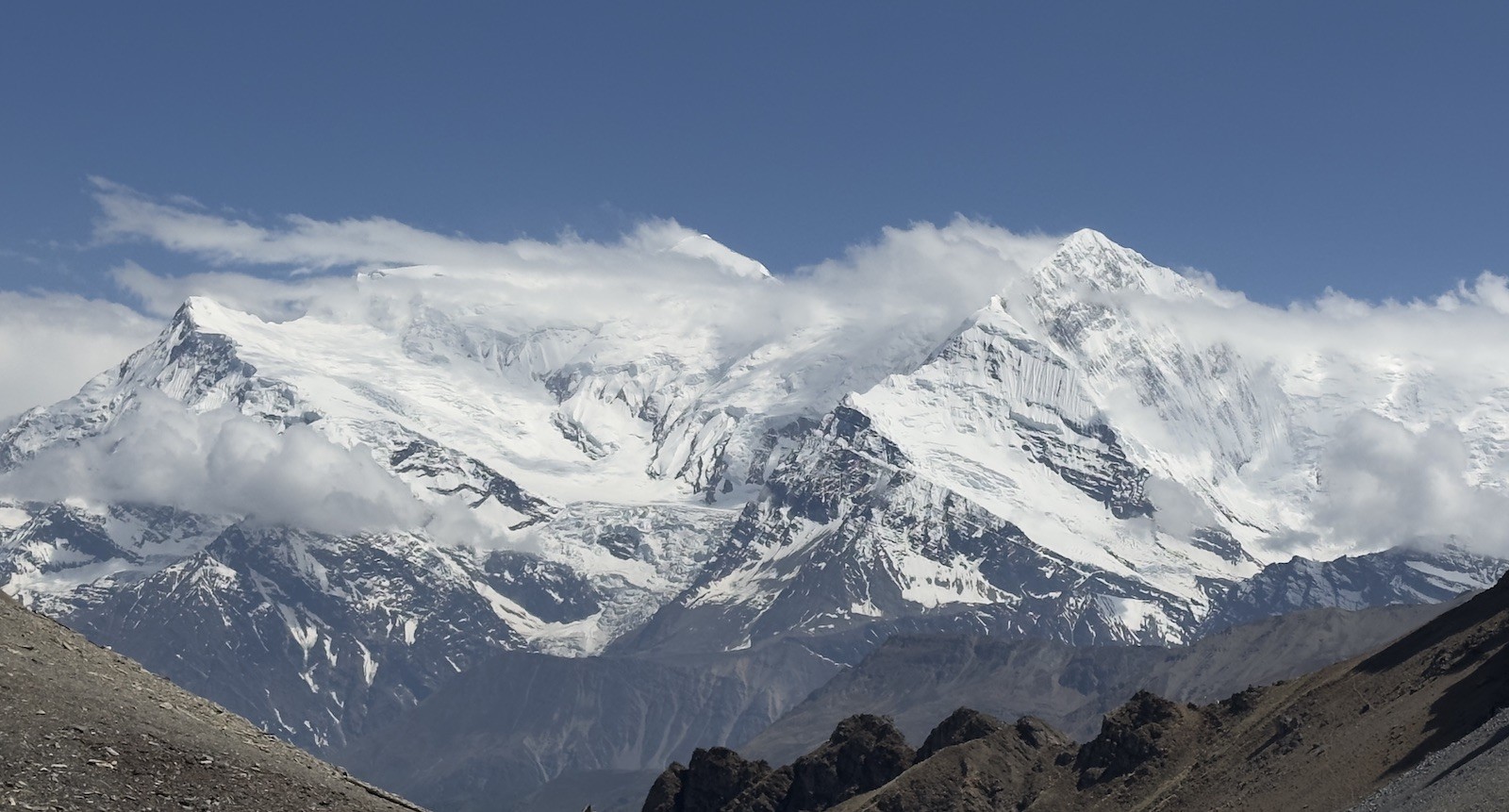
The Annapurna range from High Camp – breathtaking Himalayan panoramas above the clouds
In summary, the Annapurna Circuit in September offers a spectacular combination of verdant landscapes and tranquility. Just be sure to pack a hybrid set of clothing and gear that can effortlessly transition from the warmth of the lowlands to the biting cold of the high passes for a safe, comfortable, and unforgettable adventure from Besisahar to Thorong La and beyond.
The Annapurna Microclimate Blueprint: Navigating September's temperature fluctuations with smart layering.
Actually, the sheer verticality of the Annapurna Circuit translates to drastically different weather patterns at each altitude, making a height-aware packing strategy paramount in September. You must master the temperature profile and assemble a layering system that can perform from the hot lowlands to the bone-chilling highlands. September's transitionary nature means temperatures plummet noticeably with each meter gained.
Lower Sections: As you ascend from Besisahar (760 m) to Chame (2,670 m), expect warm, sticky conditions. Lightweight, quick-drying clothing is your best friend here, designed to combat significant sweating.
Mid-to-High Sections: Between Manang (3,540 m) and Thorong Phedi (4,540 m), the air begins to cool and dry out considerably. Nights turn genuinely cold, demanding warmer outer layers.
Very High Sections: Prepare for the brutal cold, which can drop well below freezing, particularly at the formidable Thorong La Pass (5,416 m). Intense wind amplifies the cold, necessitating robust insulation.
Trekking Section | Elevation Range (m)
Day Temperature (°C) | Night Temperature (°C)
Key Packing Focus
Besi Sahar to Chame | 760 - 2,670
18 - 25 | 10 - 15
Light, quick-dry top; rain jacket.
Manang to Thorong Phedi | 3,540 - 4,540
8 - 15 | 0 - 5
Fleece; warm down jacket .
Thorong La Pass Area | 5,416
-5 to 5 | Well below 0
Heavy insulation; wind protection.
Temperature Profile by Elevation in September:
Given the rapid elevation changes on the circuit, meticulous layering is key. Start with moisture-wicking base layers for the warm initial days. Introduce a versatile fleece as you climb, and then top it off with a high-quality down jacket as you approach the higher passes. Since September afternoons can still deliver unexpected showers, always keep a rain jacket readily accessible in your daypack.
For a seamless and safer experience, enlist the help of a licensed local guide. They are invaluable for real-time weather monitoring, adjusting your pace, and ensuring you are adequately prepared for the constantly shifting conditions.
In essence, the microclimate blueprint provides the essential roadmap for tailoring your September packing strategy for the Annapurna Circuit. With a well-constructed layering system capable of handling the spectrum from tropical humidity to alpine frost, your trek from Besisahar to Thorong La and onward to Muktinath will be a comfortable and profoundly memorable one.
From Wet Lowlands to the Dry Rain-Shadow: Geography Dictates Your Gear Change
As the Annapurna Circuit spans two vastly different climate regions, you must anticipate gear changes with the changing landscape. Understanding this geography is crucial. While the beginning of your trek from Besi Sahar (760m) to Tal remains under the influence of the summer monsoon, characterized by mist, sporadic drizzle, and humid conditions, carrying ample rain protection from the outset is non-negotiable.
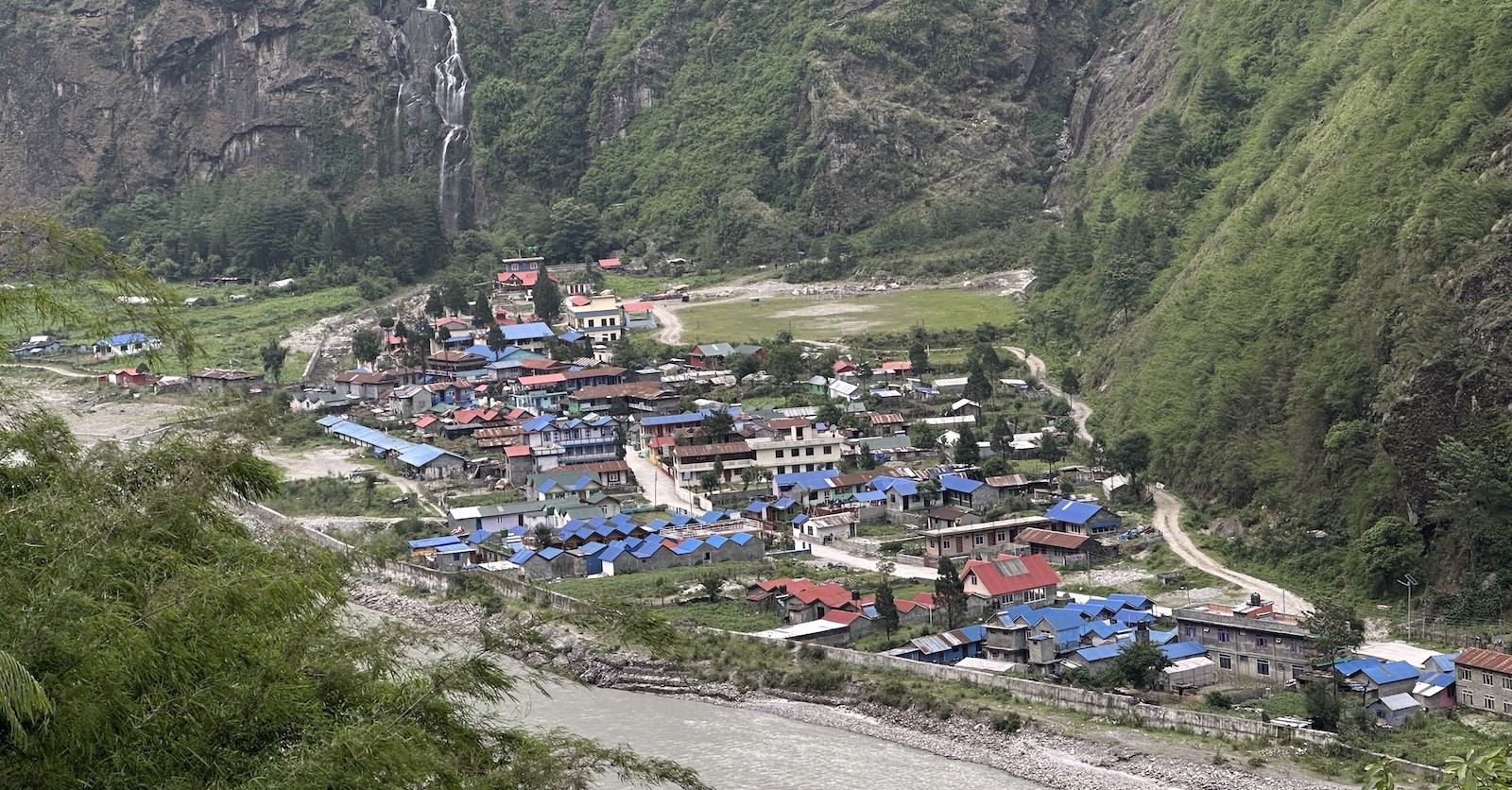
Tal Village – a beautiful riverside settlement and a memorable stop on the Annapurna Circuit.
However, upon entering the dry rain-shadow zone, beyond Chame (2,670m) and Pisang, the formidable mountain ranges form a natural barrier to rainfall.
Here, the weather transforms into a crisp, clear climate, allowing you to shed heavy rain gear and bask in sunshine with breathtaking mountain vistas. This transition is not only more comfortable but also significantly enhances the overall beauty of the upper sections of your trek.
Transition, becoming cooler and drier | Lightweight fleece, shell jacket
Manang to Thorong La
3,540 - 5,416
Dry, frigid, intense winds | Down jacket, insulating layers
The Geography-Gear Connection :
Due to the dramatic landscape shift, ensure your rain jacket is readily accessible in a pocket during the initial days. In the sun-drenched, dry upper terrain, the breathtaking mountain views come without the burden of downpours. You’ll feel lighter and more joyful as you ascend into the higher altitudes.
In essence, the transition from the humid lowlands to the dry rain-shadow is one of the Annapurna Circuit’s unique September marvels.
In conclusion, beginning with rain protection for the humid valleys, you transition to pleasant, dry conditions in the high alpine zone. With carefully selected gear for each segment, your journey from Besi Sahar (760m) to the windswept Thorong La Pass (5,416m) will be a comfortable and safe adventure.
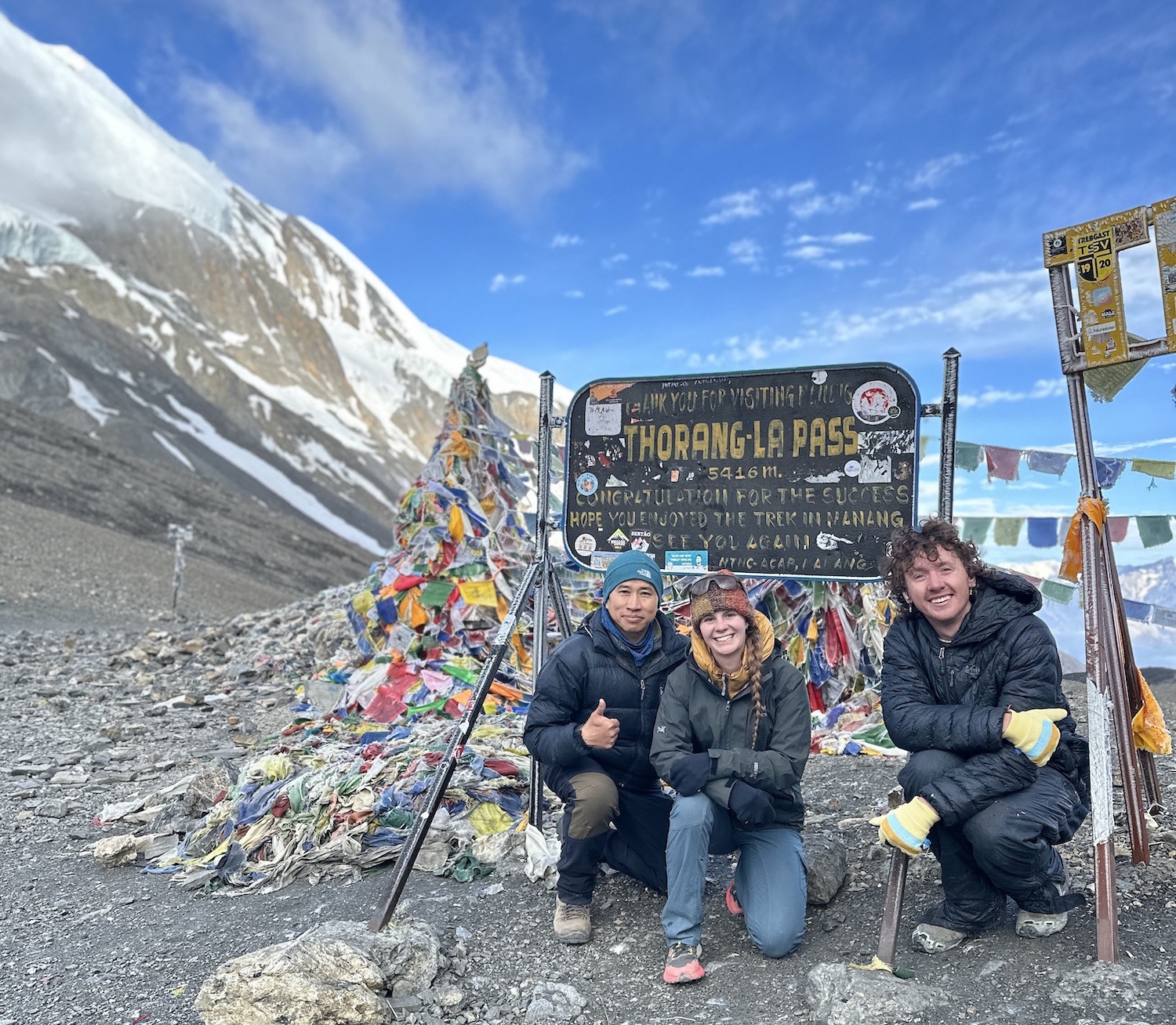
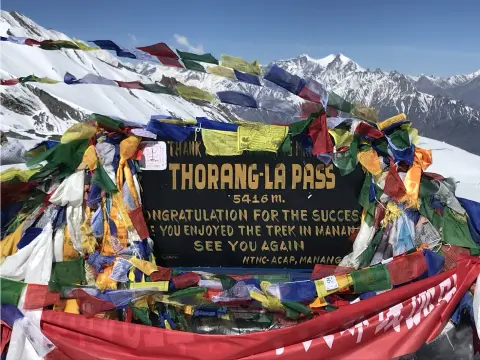
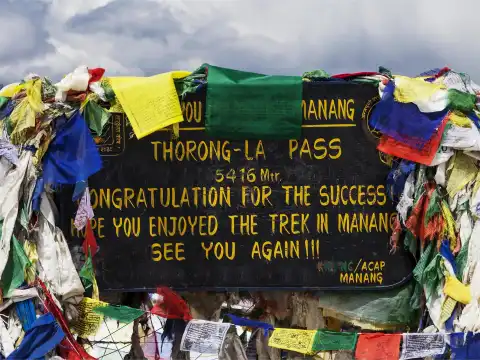
Thorong La Pass – freezing temperatures demand the right gear for a safe and comfortable crossing.
The Art of Upper Body Layering: Managing Sweat in the Valleys vs. Cold at the Pass
Actually, the Annapurna Circuit’s significant temperature fluctuations demand a smart upper body layering system to efficiently manage perspiration in humid lowlands and guard against the biting cold at higher altitudes. This simple approach is your key to staying comfortable from sunrise to sunset. First and foremost, discard all cotton attire.
In the humid valleys, cotton absorbs sweat and retains moisture, leaving you feeling chilled as soon as a breeze passes.
Always opt for synthetic or merino wool base layers, which wick moisture away from your skin and dry rapidly, ensuring you remain comfortable and fresh even during strenuous ascents. Supplement this with a breathable fleece jacket as your mid-layer; this provides adaptable warmth for cooler segments or during rest stops, without adding excessive bulk or causing you to overheat.
For the extreme cold and winds encountered at the pass, a high-loft down jacket is indispensable. It’s your shield against frostbite and a crucial element for safety at higher elevations where temperatures plummet rapidly.
Layer
Component
Benefit in September
Base Layer
Synthetic or merino wool shirt
Excellent moisture management, quick drying
Mid Layer
Breathable fleece jacket
Provides warmth and insulation without overheating
Outer Layer
High-loft down jacket
Essential for extreme cold, wind protection
A Simplified Upper Body Layering Framework :
Here, this layering system allows for easy adjustments throughout your trek, ensuring optimal comfort in varying conditions. It’s a principle that many overlook, yet adherence to it can drastically improve your experience, preventing you from feeling either uncomfortably hot or excessively cold.
To sum up, mastering the Annapurna Circuit’s upper body layering system in September – using effective moisture-wicking base layers, a versatile fleece mid-layer, and a reliable down jacket – allows you to expertly handle sweat in the valleys and warmth at the pass, making your journey from the lush lowlands to the majestic Thorong La Pass (5,416m) a remarkably comfortable and enjoyable one.
Nar Phu Valley Trek with Annapurna Circuit | 16 days days
Rain Protection for the First Leg: Defeating Landslide Zones and Valley Showers
Actually, the initial part of your Annapurna Circuit trek from Besisahar (760m) to Chame (2670m) still presents a fair chance of rain in September. That's where top-notch rain protection becomes indispensable. Lush forests in lower sections and narrow river valleys are notorious for sudden, drenching afternoon showers, while the treacherous trails lining the Marsyangdi River are just waiting to turn slippery as soon as the heavens open.
The undeniable significance of excellent rain gear:
Brief, heavy afternoon downpours are a common spectacle in early September.
Post-rain trails transform into hazardous, slick surfaces, a true challenge to your footing.
Being prepared prevents a debilitating bout of hypothermia and ensures your comfort amidst the elements.
Likewise, you’ll need a rugged, impermeable hardshell jacket that can stand up to a torrent – a rating of 20,000 mm is a minimum standard. This isn't just about staying dry; breathability is crucial to prevent you from overheating on strenuous climbs, and its lightweight nature makes it an easy addition to your daypack. Don't underestimate the power of a solid backpack rain cover either. This small, often-overlooked item shields your belongings within, ensuring your electronics and clothing remain pristine.
What You Need
Why It’s Essential
How to Maximize its Effectiveness
Waterproof Hardshell Jacket
Guards you from rain and sharp winds
Slap it on the moment you feel the first hint of precipitation.
Reliable Backpack Rain Cover
Keeps everything you’re carrying bone dry.
Stash it in an easily accessible exterior pocket for quick deployment.
Essential Rain gear suggestions for Annapurna Circuit Trek in September :
Smart Tips for navigating wet trail conditions:
Act proactively; deploy your rain jacket before you get drenched.
Kick off your day's trekking early to conquer significant distances before afternoon showers typically descend.
Make your backpack rain cover readily available.
Tread cautiously on slippery stone steps after a rain event.
As you traverse the lower trails, where the risk of landslides looms after heavy rainfall, having excellent rain protection not only keeps you dry and comfortable but also offers an added layer of security. Revel in the verdant beauty of valleys and waterfalls without the dread of being soaked through and shivering.
To conclude, superior rain protection is paramount for the first phase of your Annapurna Circuit trek during September. Equipped with a high-performance waterproof hardshell jacket and a trustworthy backpack rain cover, you’ll navigate from Besisahar (760m) all the way to Chame (2670m) dry and safe, paving the way for a successful climb towards higher camps.
Footwear Strategy: Grip for Muddy Lower Trails and Scree-Covered High Passes
Actually, your trek along the Annapurna Circuit will expose you to diverse trail conditions – from the slick, muddy paths of the lower reaches to the unforgiving, scree-choked slopes of the higher passes. Hence, the right footwear is your most critical ally, demanding a balance of exceptional grip and protection from the elements.
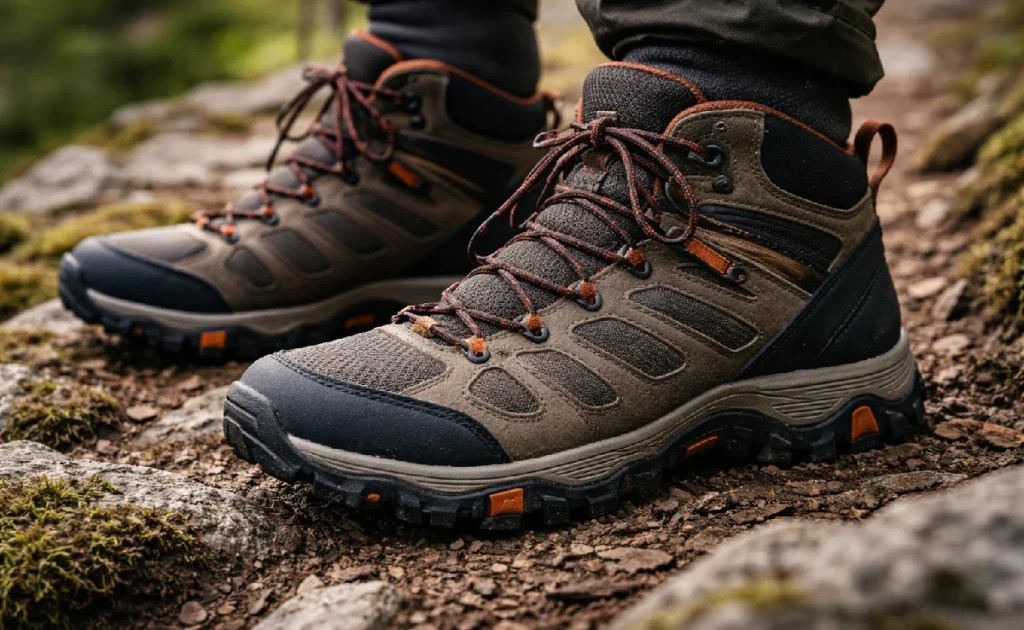
Trekking boots – your most important gear for comfort, stability, and confidence on Himalayan trails.
Why your hiking boots are so critically important:
Wet, muddy stone steps are a veritable minefield for even the most seasoned hikers.
Steep, rocky ascents call for aggressive lug patterns on boot soles for vital traction.
Sturdy ankle support is your defense against debilitating twists and strains on treacherous terrain.
Item
Key Characteristics
Trail Benefits
Waterproof Hiking Boots
High ankle support, sealed seams (Gore-Tex often a plus)
Keeps feet snug and dry, whether navigating muddy sloughs or crossing streams.
Deep Rubber Lugs (Vibram-style)
Aggressive pattern designed to bite into surfaces
Provides unparalleled traction on slippery rock faces and loose scree.
Merino Wool Hiking Socks
Excellent moisture-wicking and cushioning properties
Prevents blisters, regulates temperature, and adds comfort on long hikes.
Recommended footwear for the circuit :
Tactical footcare tips for the journey:
Ensure your boots are "broken in" before you even set foot in Nepal to avoid nasty blisters from day one.
Pack at least 2 to 3 pairs of moisture-wicking merino wool socks and swap them out as they become damp.
Lean on trekking poles, particularly during descents, to save your knees and enhance stability.
Make it a ritual to clean your boots each evening to maintain their optimal condition for the next day's trek.
In fact, the path from Besisahar (760m) to Chame (2670m), especially after recent rain, can be surprisingly challenging with its muddy sections. Waterproof boots boasting deep lugs instill confidence and security, while on the desolate scree fields surrounding Thorong La Pass (5416m), firm grip remains absolutely essential, despite the dryness. With the correct footwear and a good supply of merino socks, your feet will thank you throughout the trek, allowing you to focus on the spectacular vistas rather than any foot-related discomfort.
In conclusion, a carefully planned footwear strategy is paramount for a successful Annapurna Circuit adventure in September. Waterproof hiking boots featuring aggressive deep rubber lugs, coupled with breathable merino wool socks, equip you to confidently conquer both the muddy lowlands and the scree-covered peaks of the journey. This proactive approach will fortify your feet from Besisahar (760m) to the lofty Thorong La Pass (5416m) and make every step of your trek more enjoyable.
High-altitude Alpine Gear: Packing for the Cold Reality of Manang (3,540 m)
As soon as you set foot in Manang, which is at 3,540 meters (11,614 feet), the weather takes a turn. Air thin. Evenings cool. So your trip to Manang, the quintessential acclimatization hub, necessitates that you layer up for extra warmth because you'll spend a significant part of your days here - at least a day or two, so it’s crucial you stay as cozy as possible.
Packing for Manang (3,540 m) – high-altitude alpine gear is essential for staying warm, comfortable, and prepared in the cold Himalayan environment.
Manang Essentials to Stay Toasty :
Heavy-weight thermal underwear (both the top and bottom halves) are absolutely vital for body warmth.
A warm woolen beanie to completely cover your head and ears from chilly gusts.
Fleece gloves to keep your hands toasty.
What's the deal?
Temperature dips steeply as soon as the sun goes down.
You'll be exploring the charming village and doing short walks for acclimatization purposes.
Adequate warm layers will help your body acclimate better to the extreme altitude.
Item
Reason you need this
How to use it
Heavy Thermal Underwear
Traps body heat in freezing air
Worn under regular trekking clothes.
Warm Beanie
Prevents cold wind from striking your head and ears
Used primarily during the evening and morning
Fleece Gloves
Shields hands against the biting cold
Essential when wandering through the village
A Lean Packing List for Manang :
Upon your arrival in Manang, swap into something dry and cozy. Don those thermal layers, slide your warm beanie over your head, and relax. That way, when you're resting, feasting, or taking in the village's atmosphere, you remain comfortably warm. It's amazing how quickly it gets cold in these parts; packing these basics can literally make the difference between comfort and misery.
Practical Tips:
Pour a steaming mug of hot tea as the sun dips below the horizon to warm yourself from the inside out.
Keep your warm clothing easily accessible in your backpack.
Ensure adequate rest; Manang's acclimatization rest is more important than you may realize.
In conclusion, the take-away is that your high-altitude alpine gear becomes especially significant when you hit Manang (3,540 m). Investing in heavy thermal underwear, a warm beanie, and fleece gloves will drastically improve your comfort level, particularly during those biting evening hours. With these small additions to your packing list, you'll navigate your acclimatization days in peace and significantly enhance the safety and overall experience of your journey towards the daunting Thorong La Pass (5,416 m).
Teahouse Survival Essentials: Staying Warm in Uninsulated Mountain Lodges
Actually, teahouses across the Annapurna Circuit trail are primarily made of wood and stone, boasting absolutely no central heating whatsoever. As a direct consequence, when the temperature plummets at the higher reaches of the trek, your teahouse room becomes unbearably frigid, making a comfortable night's sleep a distant dream.
Don't Skip These Sleeping Staples
A sleeping bag rated to at least -10C (14F) will offer critical warmth beyond the thin blankets provided by the teahouses.
Carry a lightweight sleeping bag liner for added insulation and hygiene.
Lightweight camp sandals (think Crocs!) for walking around inside your room to give your feet a well-deserved break.
Item
Rationale
How to use it
Sleeping Bag
Crucial for staying warm in unheated rooms
Slip it over the standard teahouse blankets
Sleeping Bag Liner
Provides an extra layer of warmth and maintains cleanliness
Use this inside your sleeping bag
Camp Sandals
Offer comfort and rest for your tired feet
wear them when in your teahouse room
Your Go-To Teahouse Sleeping Setup :
Here, the moment you enter your teahouse, change out of your trekking gear into something dry and toasty. Climb into your sleeping bag on top of the local blankets and settle in. This small ritual helps your body recover and prepares you for the day ahead. So many people skimp on this crucial piece of gear, but your sleeping bag can significantly influence how you feel in the morning.
Tips and Tricks:
ALWAYS layer your sleeping bag over the teahouse blankets-don’t just rely on your sleeping bag itself.
Keep warm socks and a beanie near your sleeping bag, ready for immediate use.
Sip a cup of hot tea before bed to help keep your body temperature elevated.
Whenever possible, try to let your sleeping bag air out during the day.
Ultimately, Teahouse Survival Essentials are non-negotiable on the Annapurna Circuit trek in Sepyember. Investing in a solid -10C sleeping bag and a pair of comfortable camp sandals means the difference between chattering teeth and a blissful slumber in unheated mountain lodges. Equip yourself with these essentials and you’ll wake up feeling refreshed and ready to conquer those challenging trails, all the way from the heart of Manang (3,540 m) to the formidable Thorong La Pass (5,416 m).
The Thorong La Summit Pack: What Goes in Your Daypack for the 5,416 m Push
Wow !!!The Annapurna Circuit’s pinnacle! Thorong La Pass at 5,416 meters makes for an intense day. Pre-dawn departures from Thorong Phedi (4,540 m) dictate a streamlined yet comprehensive daypack. Think essentials: safety, light, and balance in the cold, dark ascent.
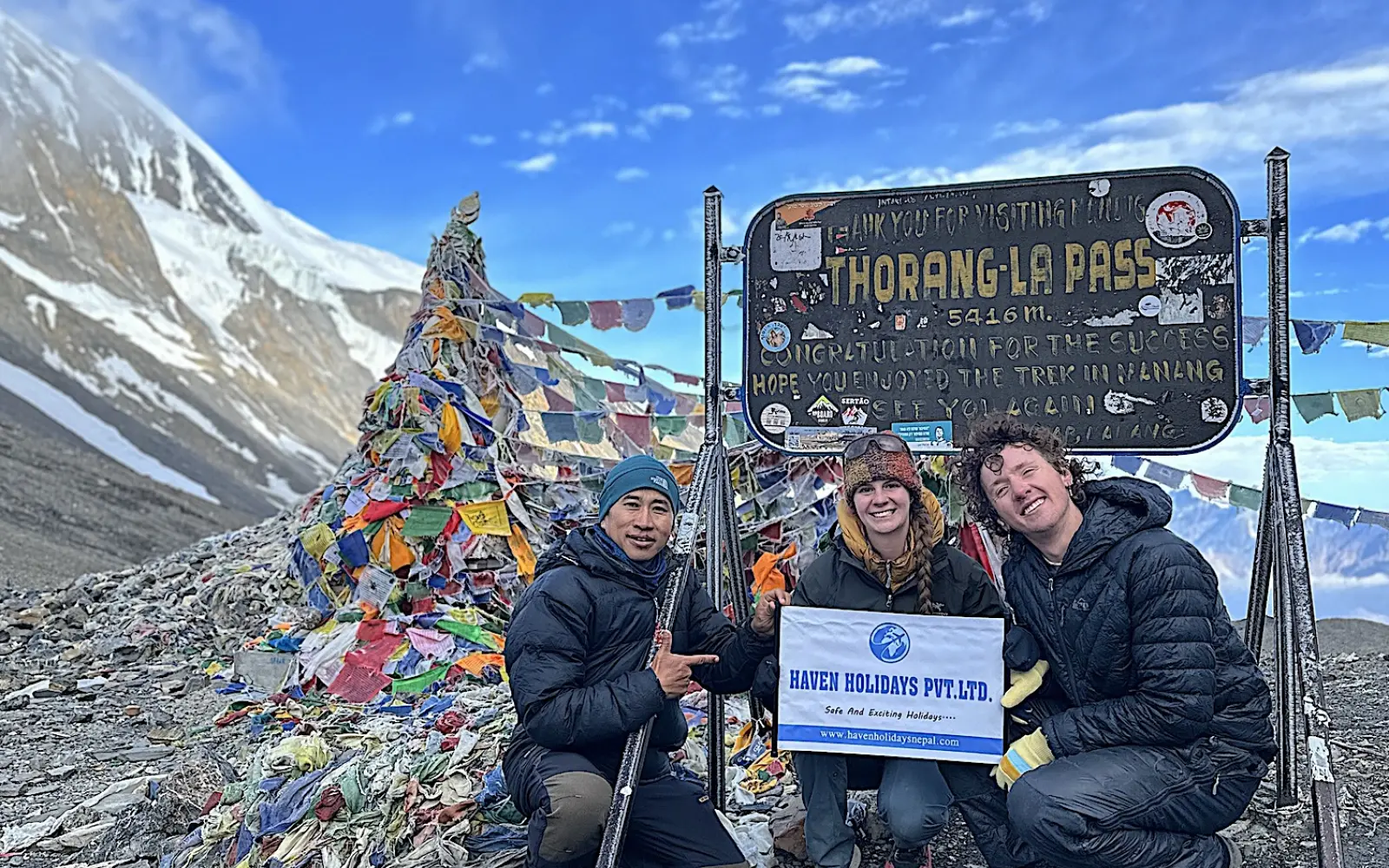
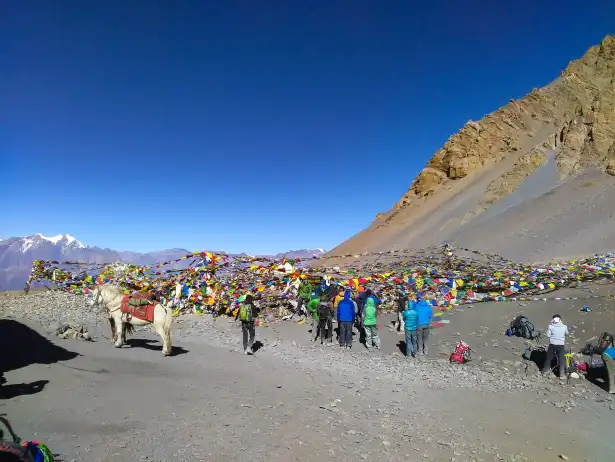
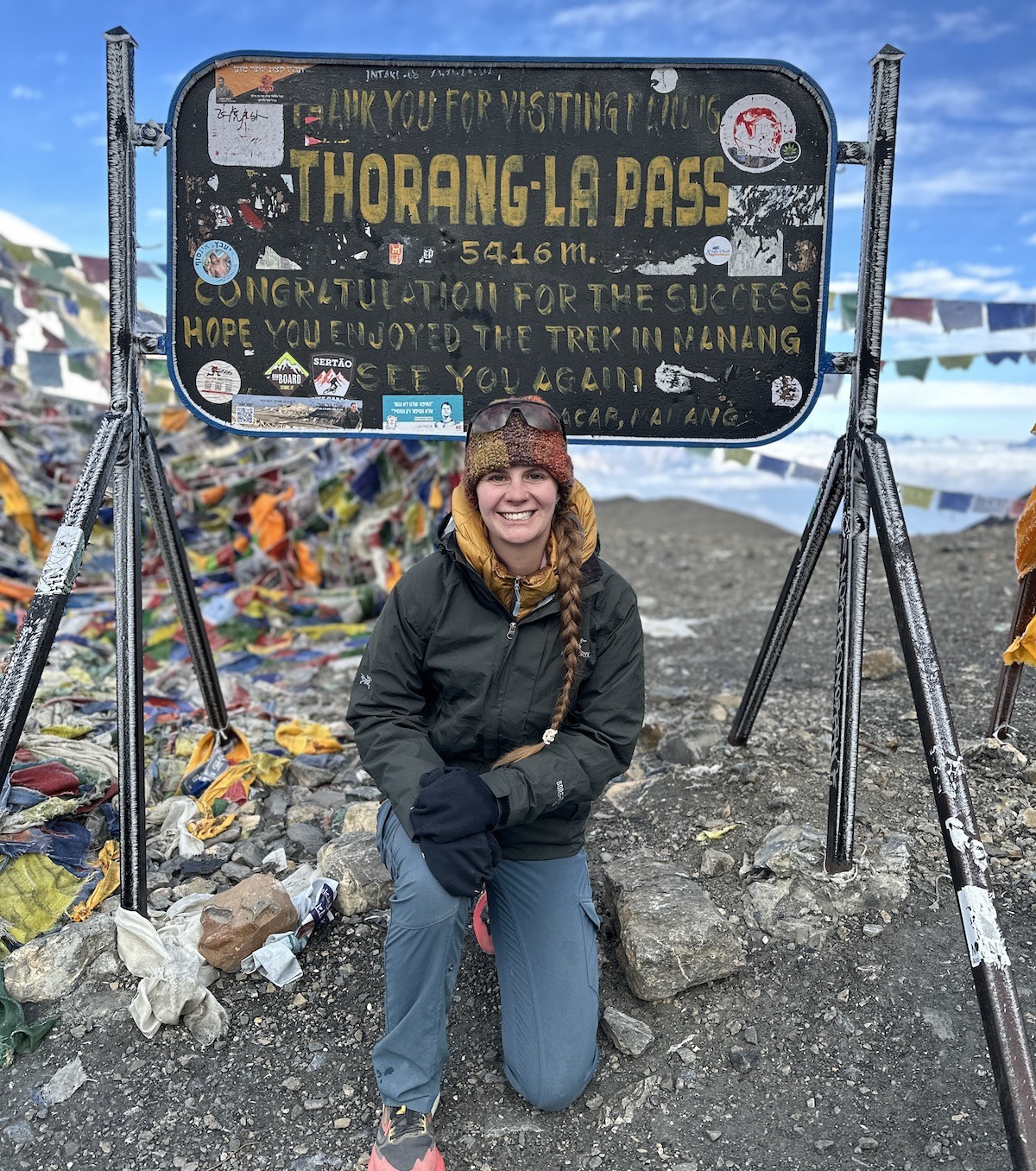
Thorong La Pass – the iconic 5,416 m high point of the Annapurna Circuit Trek.
Must-Haves:
A powerful headlamp with spare batteries-dark and steep are the descriptors.
Technical windproof gloves: crucial for a grip on trekking poles.
Sturdy trekking poles: non-negotiable for balance on the loose terrain.
Category 3 or 4 UV sunglasses: snow blindness is real as the sun crests.
Item
Purpose
Pro-Tip
Headlamp + Spare
Illuminate the dark, steep trail
Test before bedtime!
Windproof Gloves
Deflect biting winds, maintain dexterity
Wear from the beginning
Trekking Poles
Aid balance, reduce knee impact
Adjust height uphill
UV Sunglasses
Prevent sun/snow-glare blindness
Wear as the sun rises
Must-Haves Gear:
In fact, the clock starts ticking around 4 AM. It’s frigid. That headlamp becomes your lifeline; those trekking poles, your stabilizing force. Reaching the summit at 5,416 meters feels monumental before the significant descent to Muktinath (3,800 m).
Pass Day Perks:
Keep water/snacks easily accessible.
Layer up from the get-go.
Maintain a steady rhythm, follow your guide.
Short, brisk breaks are better than extended ones.
The Thorong La summit pack is simple but critical for a safe crossing. A reliable headlamp, warm windproof gloves, stable trekking poles, and sun-smart sunglasses equip you for the challenges ahead, ensuring a safe descent into Muktinath after the spectacular summit views.
Off-Grid Electronics: Keeping Batteries Alive Across the Trans-Himalayan Trail
Actually, the frigid mountain air on the Annapurna Circuit decimates phone and camera battery life. Smart power management is essential, especially since teahouses often levy hefty charges for electricity, making a personal power bank a cost- and time-saver.
Recommended Gear:
A robust 20,000mAh power bank: provides ample juice for multiple charges.
A dependable headlamp with spare batteries: for those early morning departures.
Nighttime storage: tuck your phone and power bank into your sleeping bag to mitigate extreme cold drain.
Item
Function
Smart Tip
Power Bank
Multiple device charges
Aim for 20,000mAh for added peace of mind.
Headlamp + Spares
Navigating dark trails safely
Test functionality before sleeping.
Dry Bag for Devices
Protection from cold/humidity
Nestled in sleeping bag for nighttime charging
Recommended Gear: Electronics :
At altitude, like Thorong Phedi (4,540 m), where temperatures plummet, these tactics are game-changers, ensuring you can document those breathtaking Himalayan vistas and trek with confidence even before sunrise. Climbing to Thorong La Pass (5,416 m) is made much easier with reliable power.
To sum it up, effective off-grid electronics management is vital for trekking the Annapurna Circuit, particularly in September. A quality power bank coupled with strategic sleeping bag charging preserves battery life and saves you money, keeping your devices ready to capture every memorable moment without the charging hassle.
Water & Trail Health: Hydration Logistics Beyond the Treeline
Meanwhile, water is a fundamental element of any trek, especially on the Annapurna Circuit, where purchasing bottled water is often discouraged in the conservation area to protect the environment. Thus, it's essential to carry water purification methods, ensuring you can treat the local water supply at each lodge and teahouse. This becomes critically important when you're above the treeline, from Manang (3,540m) up to Thorong La Pass (5,416m), where water sources become less common.
The Necessity of Water Purification :
You'll need to carry either purification tablets or a compact UV water purifier. These devices effectively make lodge water or spring water safe to drink. This practice helps you stay well-hydrated throughout your trek without having to buy expensive bottled water.
Must-Have Medical and Health Supplies :
Rehydration salts are indispensable for replenishing essential minerals lost through sweat and exhalation, particularly in the dry mountain air.
Bring plenty of blister tape (moleskin) as the extensive stone steps can wreak havoc on your feet.
Diamox (if recommended by your doctor) for altitude adjustment and prevention.
Item
Why You Need It
How to Use It
Water Purification Tablets
Makes local water safe to drink
Follow package instructions
Rehydration Salts
Replaces electrolytes and minerals
Mix in water after strenuous days
Blister Tape (Moleskin)
Protects feet from the painful stone steps
Apply immediately to hot spots
Basic First-Aid Kit
Treats minor ailments and injuries
Keep easily accessible in daypack
Water and Trail Health Essentials :
Here, aim for 3-4 liters of water daily. On days when you're climbing to higher altitudes, you may need to consume even more. The thin, dry air at higher elevations causes rapid water loss. Staying hydrated is one of the most crucial steps in preventing altitude sickness, which can spoil an otherwise fantastic journey from Besisahar (760m) all the way up to Thorong La Pass (5,416m).
Most importantly, consider hiring an experienced local guide. They have invaluable experience monitoring the early warning signs of altitude sickness and know exactly when to encourage you to rest or even turn around.
To sum up, staying healthy on your Annapurna Circuit trek in September comes down to being well-prepared in terms of water and health. With purification tablets, rehydration salts, blister tape, and essential medicines in your pack, you’ll navigate the incredible landscapes, from the lush valleys to the towering pass, with greater comfort and fewer worries.
Conclusion: The Master Packing Checklist to Keep Your Duffle Under 15 kg
Actually, September provides an ideal climate for the Annapurna Circuit Trekking, with vibrant green landscapes and manageable crowds. The key to a successful September trek is packing light and efficiently. If you're hiring a porter, there's a strict weight limit of 12 to 15 kg per trekker for their duffel bag. Staying within this limit ensures your porter isn't overburdened and contributes to your overall comfort.
Crampons? You Probably Don't Need Them in September
Typically, no. The scree trail over Thorong La Pass is generally clear in late September. However, it's prudent to carry a lightweight pair of microspikes just in case of an early seasonal snow shower over the pass.
Here, the most important item on this checklist, and arguably the ultimate safety gear, is a licensed local guide or an experienced trekking company. They’ll provide up-to-the-minute weather updates for the pass, keep track of trail and road conditions in the lower sections, and ensure you get the warmest rooms at higher-altitude lodges.
Gear Category
Essential Items
Target Weight (approx.)
Base Layers
3-4 moisture-wicking shirts
1.0 - 1.5 kg
Mid & Outer Layers
Fleece jacket, hard-shell jacket, down jacket
2.5 - 3.5 kg
Bottoms & Footwear
Convertible pants, waterproof boots, wool socks
2.0 - 2.5 kg
Rain & Trail Gear
Rain cover for pack, gaiters, trekking poles
1.0 - 1.5 kg
Sleep System
-10°C rated sleeping bag & liner, camp shoes
1.5 - 2.0 kg
Electronics & Health
Power bank, headlamp, water purification tablets, first aid
1.0 - 1.5 kg
Total Pack Weight
Ensure it's under 15 kg
< 15 kg
The Ultimate September Packing Checklist (Under 15kg) :
To conclude, packing light and smart is key to a memorable September trek on the Annapurna Circuit. Utilize this checklist, focus on versatile layers, and keep your duffel bag under 15 kg to enjoy the stunning journey from Besisahar (760m) through the mountains and down to Muktinath (3,800m). Actually, most of the trekkers take bus from Kathmandu to Besisahar to begin their Annapurna Circuit Trek.
1. Is September a good month for the Annapurna Circuit trek? Yes, September is a great month as it’s a shoulder season between the monsoon and the crystal-clear trekking period of autumn. Early September can sometimes experience residual rainfall down at Besisahar (760m) but from the middle of the month onward, the skies generally clear up, offering stunning and crisp views of the Annapurna range.
2. What rain gear do I need for an Annapurna Circuit trek in September? Since there can be some lingering rain in early September particularly down at lower elevations such asbesisahar (760 m), it’s essential to pack a quality waterproof jacket and waterproof pants. Also bring a good pack cover and possibly a small, sturdy umbrella to keep your belongings dry when hiking before the village of Chame (2,670m) .
3. What footwear should I pack for the Annapurna Circuit trek in September? Trekking boots that are waterproof, well-worn, and have good ankle support are critical. The trail especially through dharapani (1,860 m) can get muddy in September due to occasional rain, so make sure your soles have good traction. A pair of comfortable sandals to wear inside your teahouse each night are also a good addition.
4. Do I need cold weather clothing for Thorong La Pass in September? Definitely yes. Despite the often pleasant and warm temperatures down at the beginning of the trail, the temperature on the summit of Thorong La Pass at 5,416 meters can drop well below freezing, even as low as -5°C (23°F) or lower. Pack a warm down jacket, thermals, and gloves.
5. What kind of sleeping bag should I pack for September? You should pack a 4-season sleeping bag rated to at least -10°C (14°F). While blankets are available in teahouses, rooms in villages such as Manang (3,540m) and Thorong Phedi (4,450m) are unheated and can be extremely cold during the September nights.
6. How should I layer my clothes for the changing elevations? Employ a three-layer clothing system to effectively manage the varying temperatures along the trek. Start with a moisture-wicking base layer, followed by an insulating middle layer (like a fleece jacket), and finish with a waterproof and windproof outer shell. This allows you to adapt to the conditions from the humid Syange (1,100 m) to the freezing highs.
7. Should I pack microspikes for the Thorong La Pass crossing in September? It’s highly recommended to carry a pair of lightweight microspikes, especially if trekking towards the end of September. While snow is not typical during the month, the high altitude of the Thorong La Pass (5,416 meters) can sometimes experience early snow flurries, which can make the icy and steep trails treacherous.
8. What type of backpack is best for the Annapurna Circuit? If you plan on hiring a porter, a durable duffel bag of 50 to 80 liters is suitable. However, you will need a comfortable 30-liter daypack to carry your essentials such as your jacket, water, snacks, camera, and valuables while walking. Ensure your daypack fits well, even when near pisang (3,200 m).
9. How many pairs of socks should I pack for September trekking? Aim for 4 to 5 pairs of high-quality merino wool trekking socks along with a few pairs of liner socks. Merino wool socks wick away moisture, prevent blisters, and offer warmth even if they get damp from any morning dew or September showers near villages like tal (1,700 m).
10. What headwear should be on my packing list? Pack two different types of hats. A wide-brimmed, sun-protecting hat is essential to Shield your face from the intensely bright, high-altitude sun around Yak Kharka (4,050 m). Also, carry a warm, fleece beanie to conserve body heat during cold nights and early morning ascents.
11. Do I need trekking poles for the Annapurna Circuit trek? Trekking poles, especially adjustable ones, are invaluable for reducing strain on your knees, particularly on the steep and descent from the summit of the Thorong La Pass (5,416 meters) all the way down to the sacred temple village of muktinath (3,760 m).
12. What water purification gear should I pack? It’s best to have water purification tablets, a water filter (such as a squeeze filter or a UV water purifier). Many places along the trail, including those around Manang (3,540 m), strongly discourage the use and sale of single-use plastic water bottles, making purification essential to both save money and the environment.
13. What sun protection items do I need to pack? Due to the thin atmosphere at high altitudes, the sun is extremely potent. Pack high-quality sunglasses that provide UV protection to prevent snow blindness (even if no snow is present near peaks at this elevation). Don’t forget a sunscreen (SPF 50+) and a lip balm with SPF to protect your skin from the harsh rays and dry mountain air.
14. Should I pack a first-aid kit for the Annapurna Circuit? Yes, you absolutely must carry a comprehensive personal first-aid kit. Include blister remedies, pain relief medication, antibacterial wipes, and any necessary prescription medicines, as well as medication for altitude sickness likeDiamox (Consult your doctor before using Diamox, even if it seems harmless in lower regions). Basic medical supplies might be available in larger villages like Manang (3,540 m), but are not consistently available at higher altitudes.
15. What electronics and charging gear should I bring? A portable power bank with a good capacity (10,000-20,000 mAh) is a lifesaver, as charging your phone or camera can be expensive or impossible. High altitude can rapidly drain batteries, so spare camera batteries are also wise. Many teahouses at higher elevations (above Chame, 2,670m) charge for electrical outlets, and use may be on solar power.
16. What toiletries are essential for the Annapurna Circuit trek? Be sure to pack all personal toiletries in a small kit. Biodegradable soap, a quick-dry towel, hand sanitizer, and an ample supply of toilet paper are necessities –teahouses often do not provide toilet paper. Wet wipes are especially useful for keeping clean in places where proper sanitation is challenging.
17. How much cash should I pack for the September trek? Carry a sufficient amount of Nepali Rupees (NPR) with you, ideally around NPR 4,000 to NPR 5,000 per day. ATMs are virtually non-existent between Besisahar (760m) and Jomsom (2,720m). You will need this cash for Wi-Fi, hot showers, snacks, and any other purchases along the route.
18. Do I need to pack quick-dry trekking pants? Yes, pack at least two pairs of lightweight, quick-drying trekking pants. Convertible pants that zip off into shorts can be very versatile. They’re ideal for the warm, humid lower elevations like Bhulbhule (840m) and dry quickly should you encounter any afternoon September rain showers.
19. Should I pack snacks or high-energy food for the trail? It's a good idea to bring high-energy snacks like energy bars, nuts, dried fruit, or chocolate. These are incredibly useful for a quick boost when trekking between settlements or for the physically demanding trek from Thorong Phedi (4,450 m) to the summit of the Thorong La Pass (5,416 m), which can take 6-8 hours and involve over 1,000m of elevation gain from Phedi alone.
20. What documents must I carry in my daypack? Ensure that your passport (and visa, if applicable), multiple passport-sized photographs, your original TIMS card, and your ACAP trekking permits are all securely stored, preferably in a waterproof bag or document protector, within your daypack at all times. You’ll need to present these to authorities at checkpoints along the trail, such as at Kagbeni (2,800 m).