Here, turning a classic culture trek into an a-graded adventure trip, the Annapurna Circuit with Tilicho Lake takes trekkers higher and more remote, and in the process creates an epic dual-challenge trip. Adding one of the highest lakes in the world to this famous loop trail gives a more wild, alpine experience to the trek, without interrupting the classic flow of the trek. Because it completes a loop, every day you are seeing a new part of the landscape, without seeing anything twice.
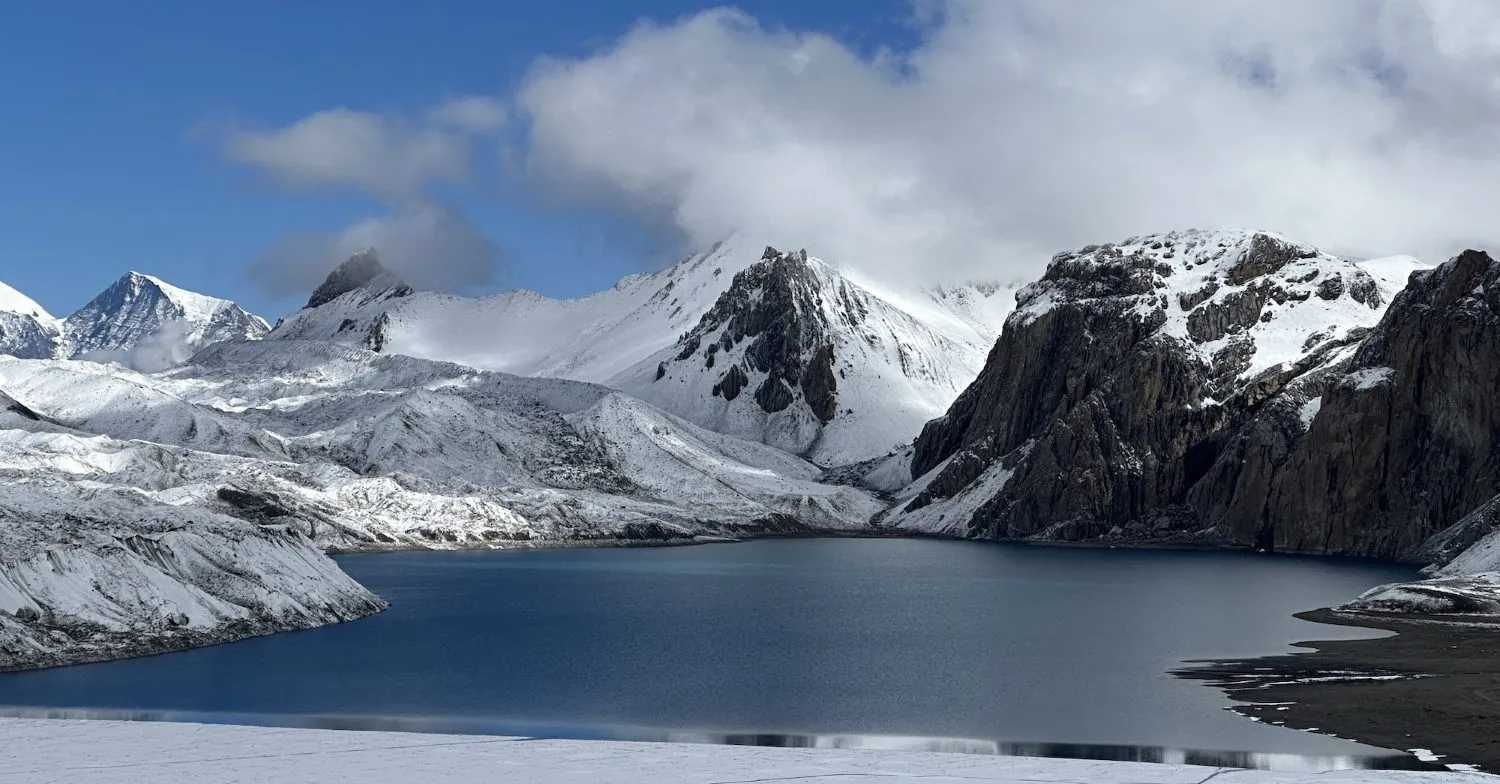
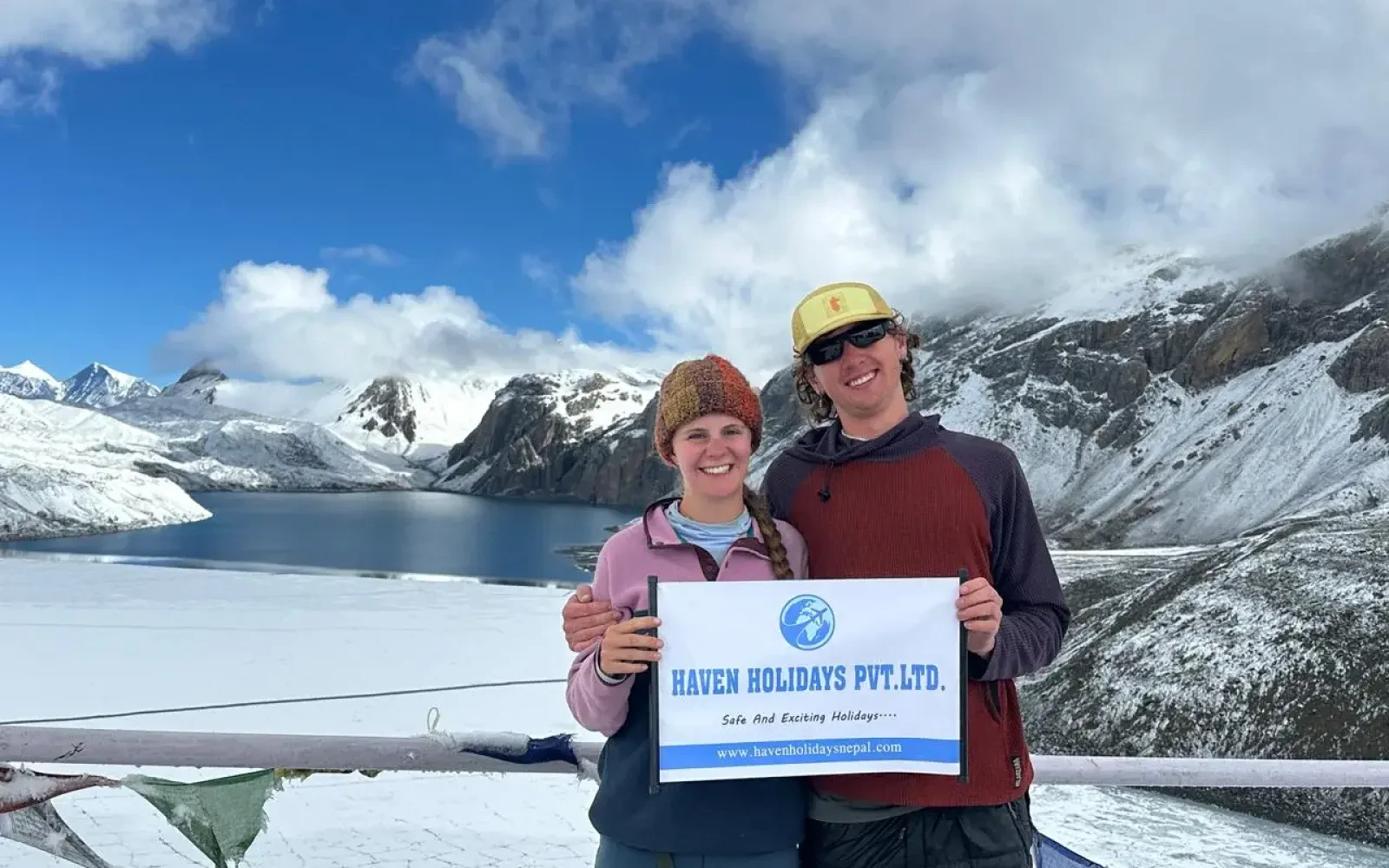
In fact, the standard Annapurna Circuit itself is incredible in its variety, and with a side trip up to Tilicho Lake (4,919m/16,138ft), this trek gains a whole new wild and acclimatized level. You walk through high passes, traditional villages, remote deep gorges and arrive at Tilicho Lake before continuing your circuit toward the famous Thorong La pass. This final loop is what we believe to be the ultimate trek that most hikers aspire to take, and do not want the difficulty of the even more arduous Three Passes Trek.
Importantly, at Haven Holidays, we've made Annapurna Circuit Trek itineraries which balance safety, with pushing boundaries.
Why do trekkers go to Tilicho Lake?
| Trek Name | Distance | Time needed | Trekking level |
|---|---|---|
| Standard Annapurna Circuit | 160-180km | 14-16 days | Moderate |
| Annapurna Circuit with Tilicho Lake | 190-210km | 17-20 days | Moderate-Strenuous |
Overall the Annapurna Circuit with Tilicho Lake is a fantastic final loop. Contact Haven Holidays to tailor an Annapurna Circuit with Tilicho Lake Trek for you.
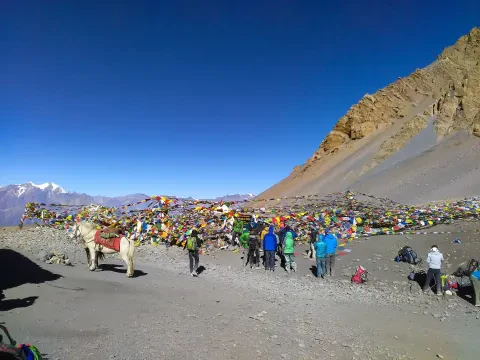
If you want to trek the Annapurna Circuit with Tilicho Lake, you need to take a hard look at your own fitness levels before starting this journey. The trek is a Moderate-Strenuous level of trekking. The standard Annapurna Circuit is challenging but accessible to almost any reasonably fit person, the Tilicho trek requires a greater level of sustained cardiovascular endurance to overcome the steep landslide moraines, successive nights above 4000m/13,123ft and the longer days.
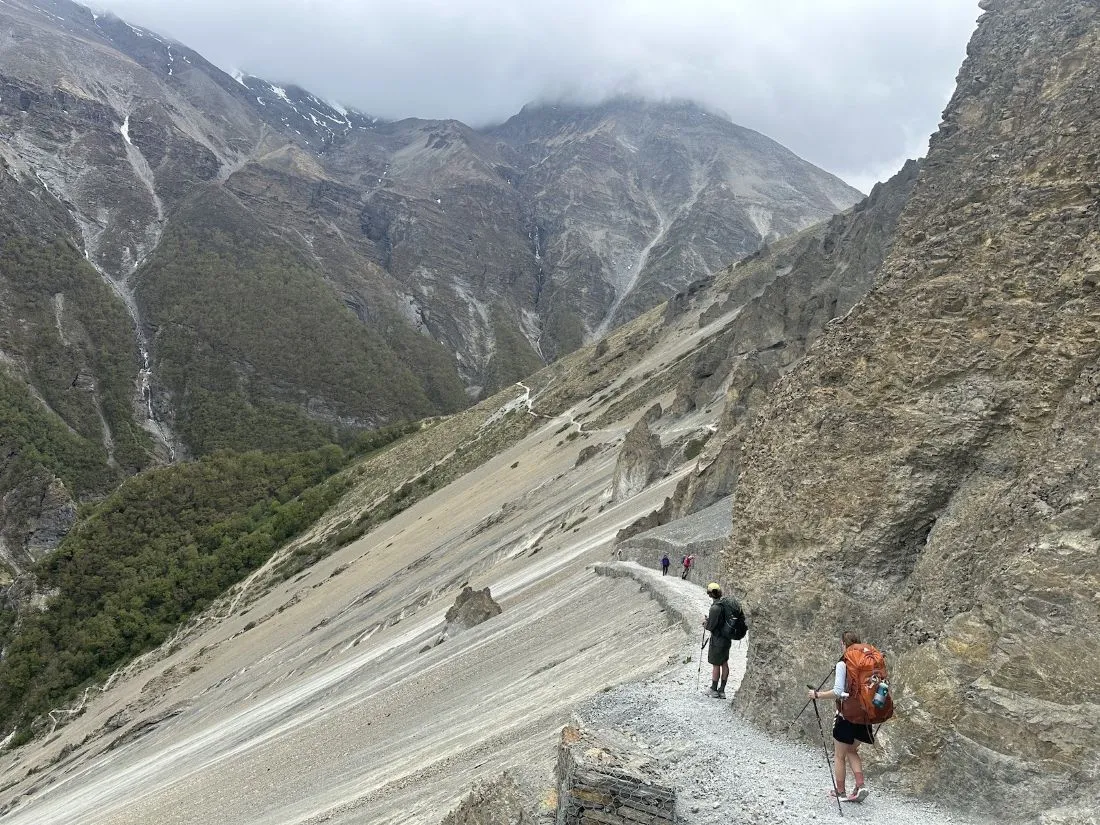
Here, starting with the trek to Tilicho Base Camp and then up to Tilicho Lake, at a huge 4919m/16138ft, this is one of the biggest and most rewarding climbs you'll do in Nepal without ropes. It’s a demanding trek on the lungs and requires a great level of mental determination to conquer loose scree/snow and the effects of the thin air. However, by gradually walking the high parts of the circuit and including acclimatization days, this difficult trek is well within reach for most individuals who can withstand good aerobic training and have at least basic high altitude trekking experience.
Tilicho Trekking Demands:
Fitness Tips for the Annapurna Circuit with Tilicho Lake Trek:
At Haven Holidays, we assess the fitness level of each client. If the Annapurna Circuit with Tilicho Lake Trek is within your ability, your guide will keep you safe by including acclimatization days to prevent altitude sickness.
In conclusion, the Annapurna Circuit with Tilicho Lake is only moderately strenuous but is one of the most rewarding treks on the planet and highly recommended for fitness conscious trekkers. Contact Haven Holidays today for a quote on an Annapurna Circuit with Tilicho Lake Trek.
Understanding the distances you’ll cover on the Annapurna Circuit with Tilicho Lake will help you prepare physically and mentally for the grand trekking experience you’re about to have. The complete circuit covers an area that can range between 180-185 kilometers of active walking and road transfers (if you opt for jeep sections occasionally). It is also worth noting that these distance figures can vary according to where your trek terminates, with option for longer treks, to further shorten with use of jeep travel.
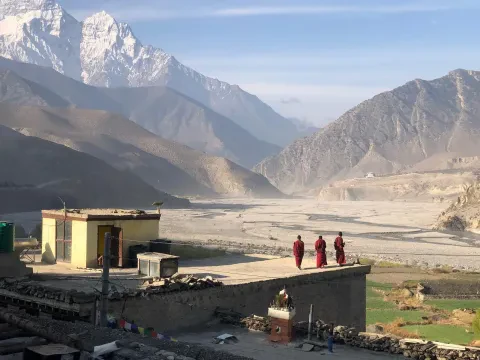
Actually, the combined trail of Annapurna Circuit and Tilicho Lake provides one of the most all-inclusive and well-rounded trekking experiences one can find in the region. You’ll traverse a huge range of terrains – the subtropical valleys and forests of rhododendrons in lower altitudes gradually changing to high alpine moraines and dramatic terrains of Tilicho area, eventually taking you across the famous Thorong La Pass.
Annapurna Circuit with Tilicho Lake Distance highlights :
| Phase of the trek | Distance | Key features | Duration (trekking days) |
|---|---|---|
| Lower Circuit (Besisahar) | 35-40 km | Marsyangdi valley and associated terrain | 3-4 days |
| Tilicho Lake extension | 35-40 km | Trail connecting Manang to Tilicho Lake & returning to Manang | 4-5 days. |
| Upper Circuit and Thorong La pass | 45-50 km | Manang to Muktinath via the Thorang La pass | 4-5 days |
| Descent from the circuit to Jomsom / Tatopani | 50-60 km | The dry and sandy rain-shadow terrain | 5-6 days |
| Grand Total | 180-185 km | Full circuit with Tilicho extension | 17-20 days |
Here, Haven Holidays takes into consideration every meter of the trail while planning a trekking itinerary and ensures that the trekking distance is well balanced with rest periods so that you enjoy your journey.
Therefore, to sum up, the Annapurna Circuit with Tilicho Lake presents a substantial 180-185 kilometers trek providing variety at its best, which is an ideal choice for trekkers looking for an authentic Himalayan experience. Contact Haven Holidays today to craft an itinerary best suited for you with all the professional guidance and support required.
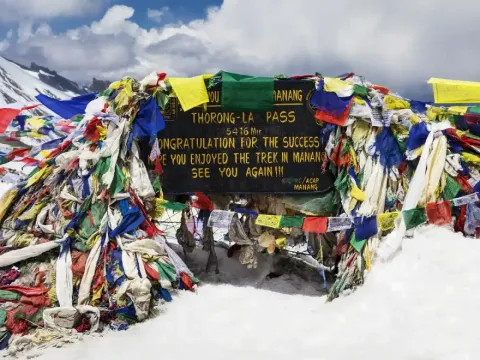
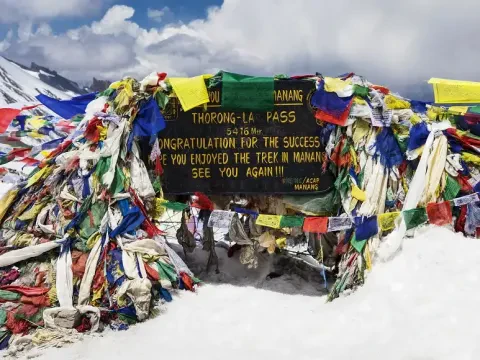
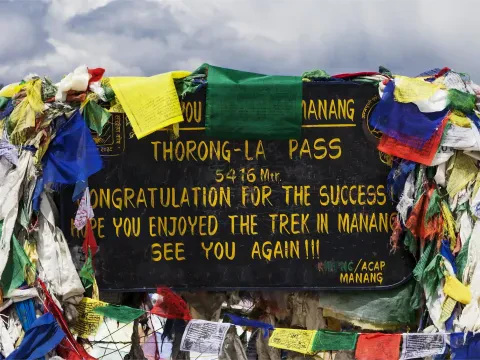
One of the most stunning attributes of the Annapurna Circuit with Tilicho Lake trail lies in its dramatic altitude range. The trekking journey starts at about 900m to 1,300m (2,953ft to 4,265ft) in the lower subtropical valleys and eventually culminates at 5,416m (17,769ft) at Thorong La Pass, the highest point in the entire trekking region. It is important to note that Tilicho Lake sits as the second highest lake in Nepal at an altitude of 4,919m (16,138ft).
Likewise, this sheer vertical range brings about varied ecology in the region and thus, the trek from lush green rice terraces and bamboo forests to the pines and rhododendron groves in higher altitude, and finally to the desolate, arid alpine landscapes below and above the tree line creates a unique and diverse environment for the trekker. While the Tilicho Lake's altitude presents itself as quite a challenge at 4,919 meters, a systematic and gradually rising profile to this lake facilitates efficient acclimatization at these altitudes.
Altitude Profile of Annapurna Circuit with Tilicho Lake :
| Stage of the trek | Altitude range | Key challenge to overcome | Acclimatization benefits |
|---|---|---|
| Lower valleys | 900-2,500 meters | Hot and humid forest sections and river crossings | Easy warm up |
| Tilicho Lake and its surrounding region | 3,500-4,919 meters | Extremely steep terrains and moraines surrounding the lake | Promotes the principle of hiking high, sleeping low. |
| Thorong La Pass | 4,000-5,416 meters | Dealing with extreme cold and thin air at the highest point | Peak altitude achievement |
| Descent from the circuit | from 5,416 meters all the way down to 1,000 meters. | Sustained long descents can tire out legs | Rapid regaining of breath as oxygen level increase. |
Actually, the gradient throughout the trek has been engineered to be favorable to the trekking experience. The gradual rise in altitudes as and when necessary makes the altitude sickness less prominent and more manageable on this trail. Haven Holidays takes special measures to include dedicated acclimatization days in every trekking itinerary for you.
To conclude, the Annapurna Circuit with Tilicho Lake trail offers an inimitable trekking experience with a dramatic altitude range to be experienced in Nepal, which showcases the best of natural variety. Come experience a Himalayan Odyssey with us, contacting Haven Holidays today for best support and professional service.
Here, selecting the right dates is crucial to your safety and overall experience of the Annapurna Circuit with Tilicho Lake. The best times to trek Annapurna are generally the Spring (March-May) and Autumn (September-November) months. The weather in both seasons is generally stable, the skies are clear and visibility of the high mountains is at its best.
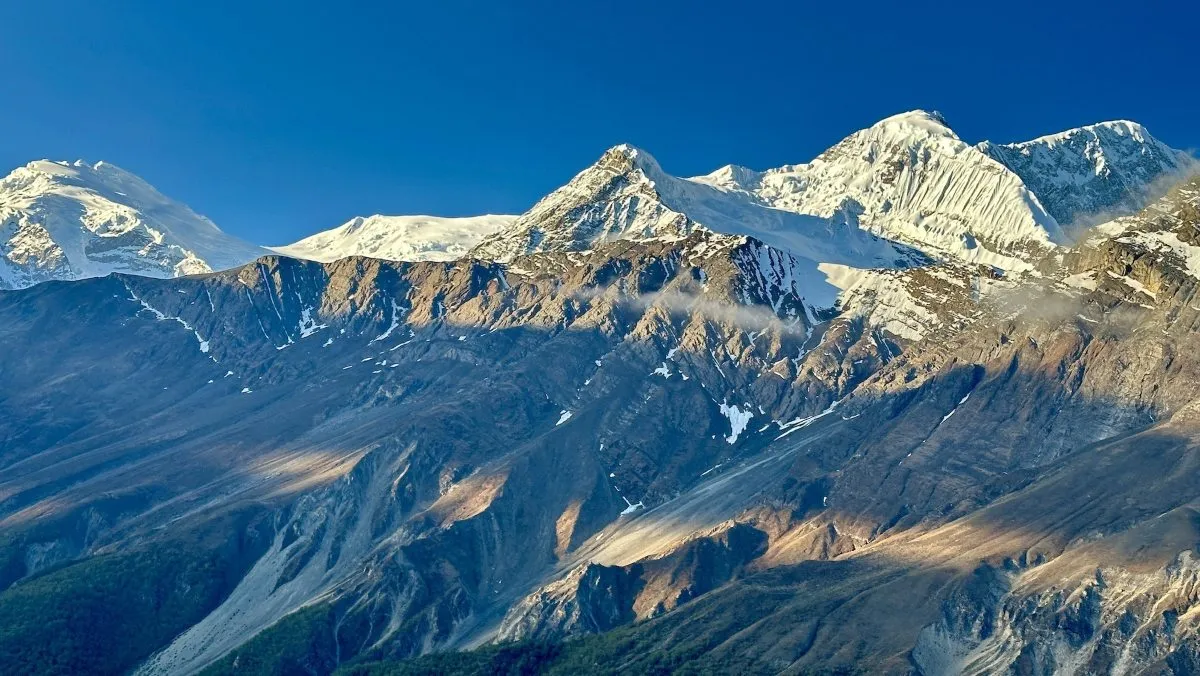
Actually, Spring is famous for its spectacular Rhododendron blossoms that can light up the lower trekking routes in dazzling reds and pinks. Autumn is known for crisp, clear air and sharp, clean mountain vistas with few clouds. Both seasons offer pleasant daytime temperatures and low chances of snow on Thorong La or Tilicho Lake. In contrast, the monsoon months (June-August) are completely un-trekkable due to rain which can cause both low route landslides as well as a completely unsafe and highly dangerous Tilicho section.
Recommended Trekking seasons :
| Season | Visibility | Trail Conditions | Rhododendron Bloom | Risk Level |
|---|---|---|
| Spring | Excellent | Dry & blooming | Peak | Low |
| Autumn | Outstanding | Crisp & stable | None | Lowest |
| Monsoon | Poor | Crisp & stable | None | High |
Importantly, the advice at Haven Holidays is to book either a Spring or Autumn trek if you want a secure and more rewarding experience trekking to Tilicho Lake on your Annapurna Circuit trek.
To conclude, choosing to trek Annapurna with Tilicho Lake when the skies are clear makes both a safer and a far more pleasant experience. The monsoon months should be avoided due to obvious risk from landslides on Tilicho side trail. Haven Holidays is readily available and excited to help you book your fully equipped Annapurna Circuit with Tilicho Lake trek to ensure excellent timing for the best weather.
When planning your Annapurna Circuit with Tilicho Lake Trek, understanding the cost implications can significantly help your budgeting process. If you choose an independent budget, expect roughly $900-$1500 per person for basic teahouses, food, permits, and transportation, but this demands self-sufficiency and previous experience on similar treks.
Conversely, opting for a full inclusive agency package with Haven Holidays, the estimated cost will fall between $1,100 and $2,200 per person (depending on group size, teahouse type and what's included), offering guides, logistics support and emergency evacuation in one clear cost. The Tilicho section is particularly treacherous so professional support is highly recommended for anyone tackling it.
| Expense Category | Independent Budget | All-inclusive Package |
|---|---|---|
| Permits & TIMS/ACAP | $50-80 | Included |
| Teahouses & Meals | $400-700 | Included |
| Guide & Porter (recommended) | $300-500 | Included |
| Transportation & Flights | $150-250 | Included |
| Total Estimated Cost | $900-1,500 | $1,100-2,200 |
As illustrated in the table above, most trekkers will benefit from an all-inclusive package as it removes the stress of logistically managing their trek, particularly with the complexities surrounding the high Tilicho route. Haven Holidays assures their quotes have absolutely no hidden extras and the price will vary slightly depending on your specific group needs.
Key price affecting factors :
In conclusion, the Annapurna Circuit with Tilicho Lake trekking package will represent excellent value whether you decide on an individual budget or a fully inclusive approach. Contact Haven Holidays today for a precise quote for your trekking party.
Meanwhile, a well planned schedule is key for success on the Annapurna Circuit with Tilicho Lake. The suggested 15-day itinerary (which is adjustable between 14 and 16 days) combines the classic circuit and the Tilicho extension logically with the necessary safety precautions built-in. The 14 to 16 day window is a required duration in order to complete the Tilicho Lake section and Thorong La Pass without compromising on acclimatization.
| Day | Route Segment | Distance | Walking Hours | Elevation (m) | Highlights |
|---|---|---|
| 1 | Besisahar to Ngadi / Jagat | 12-15 km | 5-6 hrs | 1,000 - 1,300 | River valley warm-up |
| 2 | Jagat to Dharapani | 14-16 km | 6 hrs | To 1,860 | Marshyangdi Gorge |
| 3 | Dharapani to Chame | 15-16 km | 5-6 hrs | To 2,670 | Pine forests & first peaks |
| 4 | Chame to Pisang | 16-18 km | 6-7 hrs | To 3,310 | High route via Ghyaru/Ngawal |
| 5 | Pisang to Manang | 12 km | 5 hrs | To 3,540 | Acclimatization arrival |
| 6 | Manang Rest + Ice Lake | 8-10 km | 5-6 hrs | To 4,600 | Active acclimatization |
| 7-8 | Manang to Tilicho Base Camp & Lake | 18-22 km | 6-8 hrs | To 4,919 | Tilicho Lake highlight |
| 9 | Tilicho Base Camp to Yak Kharka | 12 km | 5-6 hrs | Descent | Return to main circuit |
| 10 | Yak Kharka to Thorong Phedi | 10 km | 5 hrs | To 4,450 | Pre-pass staging |
| 11 | Thorong La Pass to Muktinath | 16-18 km | 8-10 hrs | 5,416 m Pass | High pass crossing |
| 12 | Muktinath to Jomsom / Kagbeni | 15-18 km | 5-6 hrs | Rain shadow | Temple & apple orchards |
| 13 | Jomsom to Tatopani | 20-25 km | 6-7 hrs | Descent | Hot springs recovery |
| 14 | Tatopani to Ghorepani | 15-17 km | 7-8 hrs | Steep ascent | Rhododendron forests |
| 15 | Ghorepani - Poon Hill - Nayapul | 16-20 km | 6-7 hrs | Final descent | Sunrise & circuit completion |
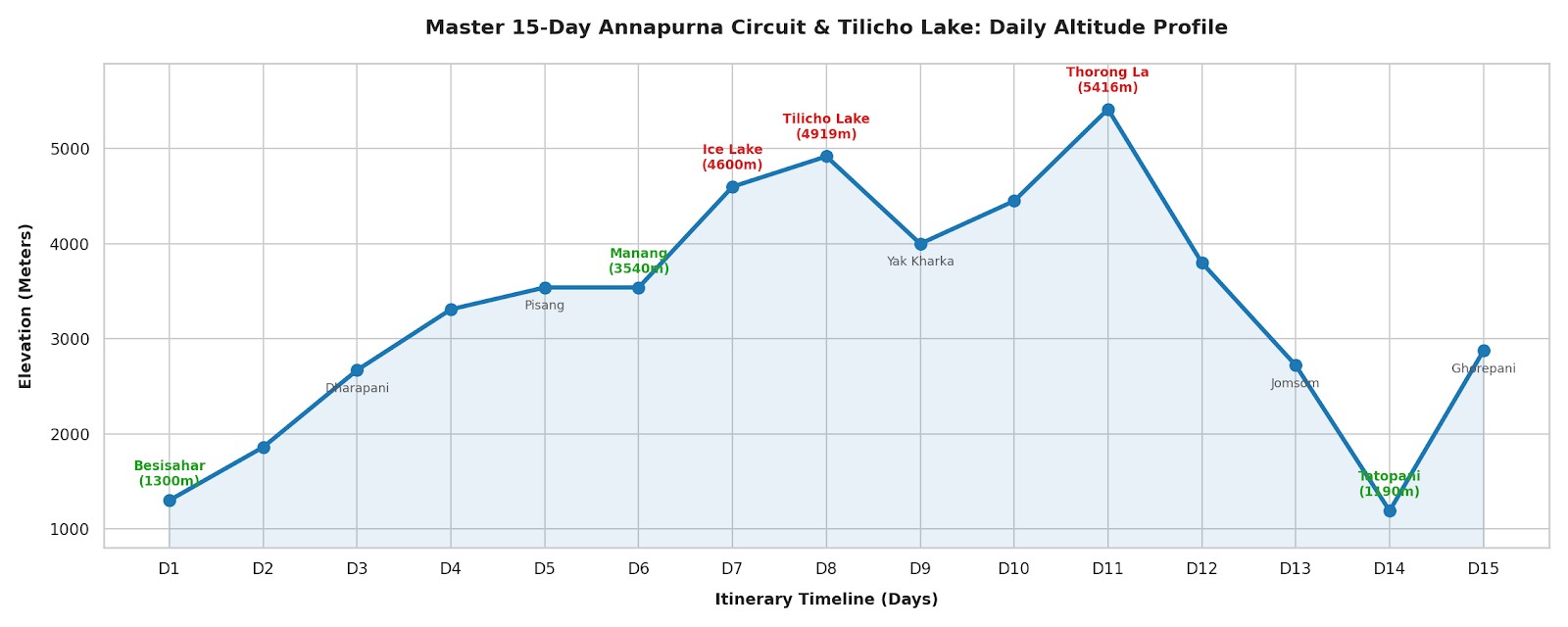
In fact, this master 15-day itinerary balance the Tilicho detour with ample rest and acclimatization days for a high chance of success.
In conclusion, this step-by-step trail blueprint assures a safe trek through both the classic circuit and the stunning Tilicho Lake. Contact Haven Holidays today to customize this 15-day Annapurna Circuit with Tilicho Lake itinerary to your own pace and preferences.
Here, your Annapurna Circuit with Tilicho Lake adventure begins with the gateway approach – the rugged road transfer from Kathmandu to the Besisahar trailhead. This land journey spans approximately 180 kilometers and will take you 8-9 hours via private jeep on local tracks, passing through scenic rural valleys.
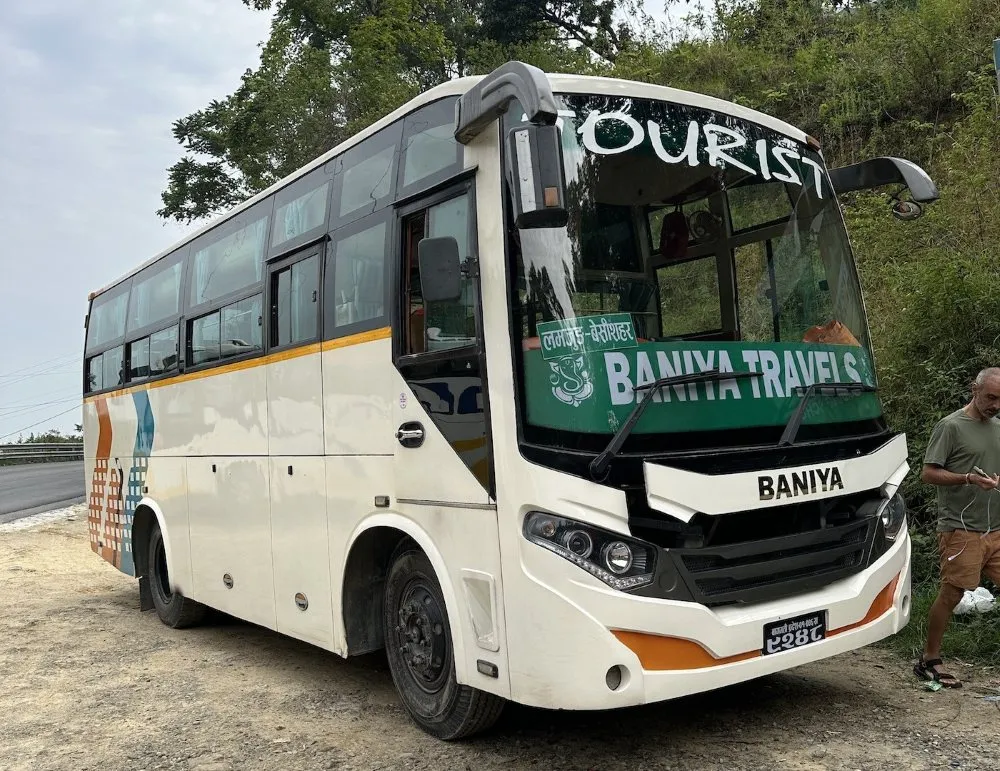
In fact, you’ll drive past terraced hillsides, local villages, and the mighty Marsyangdi River before reaching Besisahar, and then continuing on to Jagat or Ngadi where the bulk of your trekking journey will begin. This drive provides the perfect introduction to the Himalayas and the rural environment you are about to explore, as well as offering the opportunity for a final briefing with your guide.
Kathmandu to Besisahar Road Transfer Highlights :
| Stage | Distance | Duration | Experience |
|---|---|---|
| Kathmandu to Besisahar | 170 km | 6-7 hours | Highway with river views. |
| Besisahar to Jagat/Ngadi | 10-15 km | 1-2 hours | Rugged mountain road. |
| Total | 180 km | 8-9 hours | Gateway to the Annapurna Circuit. |
Importantly, Haven Holidays arranges for safe and comfortable private jeeps with expert drivers and all required permits, so you will be all set to reach the trailhead in an organized and safe manner.
In conclusion, the gateway approach from Kathmandu to Besisahar is a solid and organized first step for your Annapurna Circuit with Tilicho Lake Trek. Contact Haven Holidays today to schedule your seamless transfer and entire guided tour from day one.
Here are the rewritten sections:
Meanwhile, your rest day in Manang should not be underestimated. At an elevation of 3,540m (11,614ft), it's the medical heart of the whole Annapurna Circuit with Tilicho Lake Trek. Failing to acclimatize properly here is one of the leading causes of AMS further along the route.
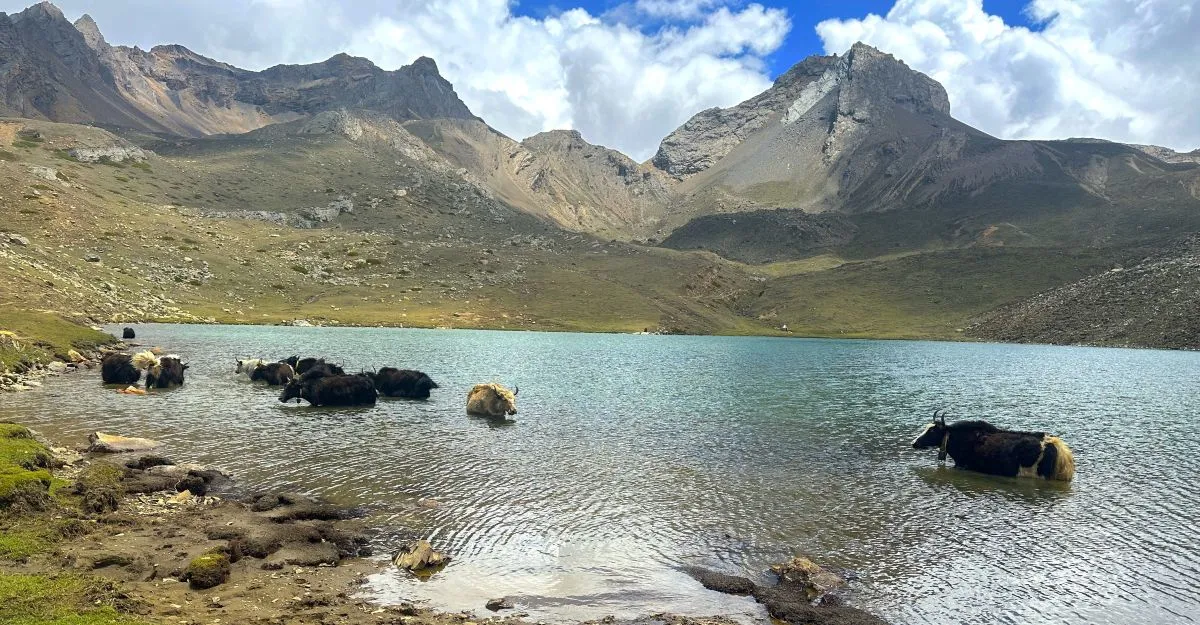
In fact, this should not be an 'active' rest. Instead of a full rest day, engage in 'hiking high, sleeping low'. Hike to local viewpoints, ancient monasteries, or the beautiful Gangapurna glacier to acclimatize actively in Manang. These short but rewarding hikes prepare your body to produce more red blood cells to survive the 4,000m+ regions ahead, particularly for the Tilicho Lake and the Thorong La Pass.
Key Manang acclimatization day rules :
| Destination | Round trip distance | Maximum elevation | Purpose |
|---|---|---|
| Gangapurna Glacier viewpoint | 3-5km | 3,700m | An easy scenic hike |
| Ice Lake | 10km | 4,600m | Proper altitude training |
| Ancient monasteries | 4-6km | 3,800m | Culture and light acclimatization |
Importantly, the team at Haven Holidays incorporates ample acclimatization time in the itinerary and conducts regular health check-ups to ensure your safety.
Overall, a rest day in Manang is indispensable for avoiding acute mountain sickness and ensuring the rest of the trek is enjoyable and successful. Contact Haven Holidays today to book your Annapurna Circuit with Tilicho Lake Trek with properly paced, safe arrangements.
Here, you reach a major trail junction just before Manang where the trail diverges from the main Annapurna Circuit and heads towards the direction of Tilicho Lake. You then turn west and enter a wilder, less developed part of the Annapurna range. The walk towards Siri Kharka at 4,060m (13,320ft) goes through narrow, rocky, and loose scree channels as well as through wind-exposed, unstable landslide slopes.
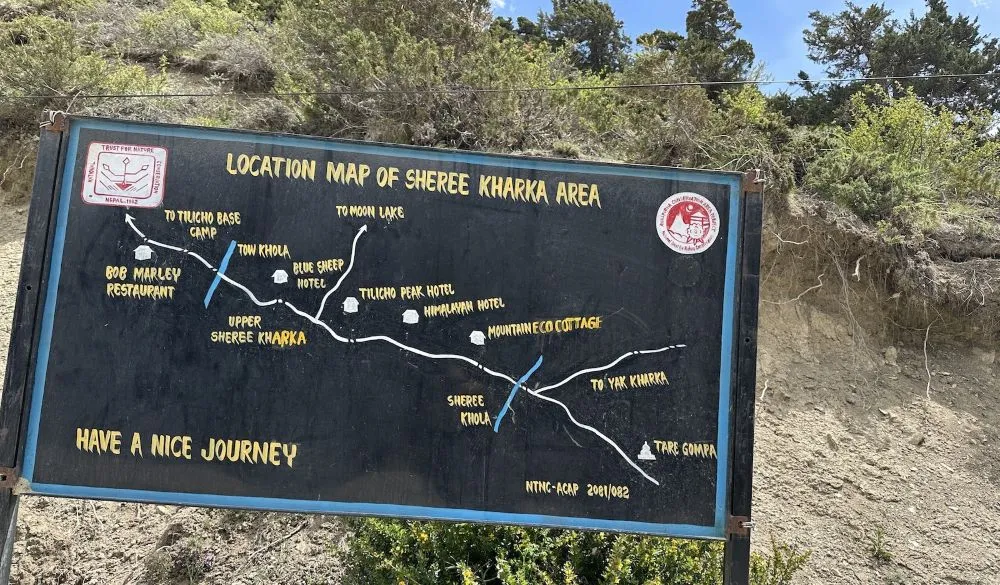
In fact, this section of the trek requires your full concentration as the trail gets narrow and loose scree stones are likely to slide and roll down. Hikers should always move quickly through landslide areas without stopping to take photos and thus minimizing the risk of being hit by falling stones. The trail takes a sharp turn towards the northern face of the Annapurna range; the surrounding mountainous terrain is stunning in its raw beauty.
Key Manang to Siri Kharka trek features :
Important safety tips for the Tilicho route :
Most importantly, the guides at Haven Holidays are seasoned on the Annapurna range and place paramount importance on the safety of trekkers while ensuring that they have an enjoyable experience traversing this unique wilderness.
Ultimately, splitting the path from Manang to enter the Siri Kharka scree zone signals your ascent into the wild Tilicho range. This portion of the trek, taken with measured steps and a respect for the environment, is among the most rewarding experiences. Contact Haven Holidays to embark on this extraordinary route with expert guides and comprehensive safety measures.
Actually, this adventure trekking to one of the world's highest alpine lakes is an obvious visual highlight of your trip, but also an immense physical feat. For this side trip, you'll have to scale a sustained, steep moraine wall that bounds the northern edge of the valley. Since you are traversing high up in the alpine zone, managing your temperature and breathing is the key to reaching the lake waters safely.
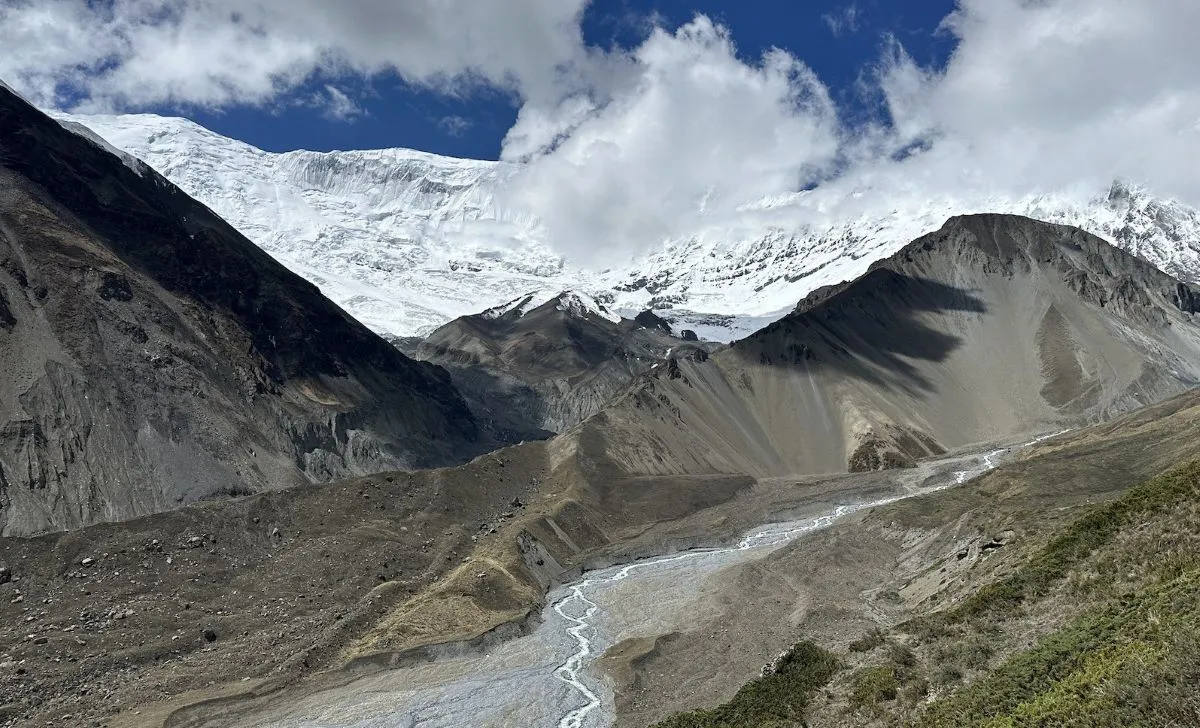
To make this journey a manageable endeavor, you need to ensure you begin this trip well before dawn; ideally, leaving the Tilicho base camp elevation 4,150m no later than 5:30 AM to arrive at the pass before the freezing afternoon ridge winds really set in. Pacing yourself properly up the arduous, sheer 769m vertical climb will allow you to reach the famous shores of this lake, renowned as the highest alpine lake on Earth.
Survival Strategies for the Lake Ascent :
| Ascent Trail Segment Node | Elevation Metric | Oxygen Availability | Avg. Walking Time | Trail Quality & Footing |
|---|---|---|
| Tilicho Base Camp | 4,150m / 13,615ft | 60% of sea level | Departure | Hard-packed dirt paths on the valley floor. |
| The Great Slope Crest | 4,680m / 15,354ft | 56% of sea level | 2.0 - 2.5 Hours | Loose gravel and steep shale and scree switchbacks. |
| Tilicho Lake Rim | 4,919m / 16,138ft | 54% of sea level | 1.5 - 2.0 Hours | Open snowy plains and some icy rock patches. |
Following your return from Tilicho Lake to Base Camp, you now rejoin the main Annapurna Circuit trail, rather than trekking back all the way down to the Manang valley floor and walking back uphill for kilometers with unnecessary repetitive scenery. The route you take crosses the valley over the higher ridge directly into the Jarsang Khola valley.
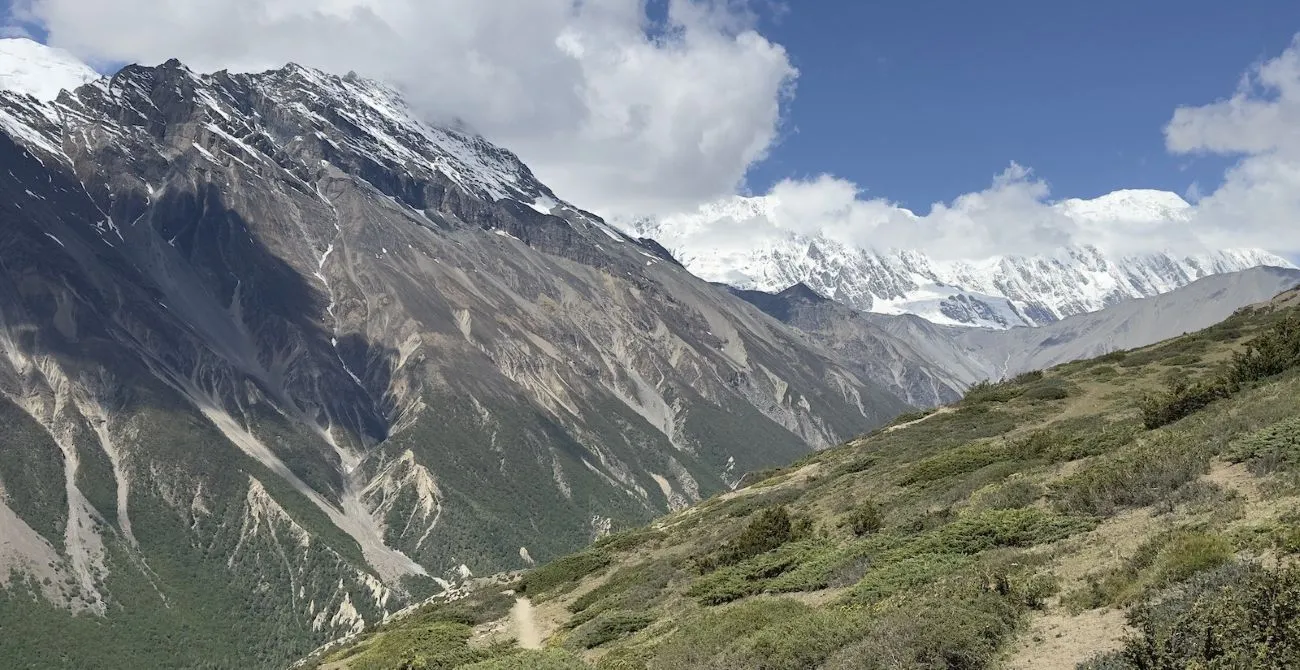
Actually, this leg serves as an important link in your high-alpine route and you will follow the Siri Kharka to Yak Kharka bypass via the old, almost abandoned village of Old Khangsar, to seamlessly rejoin the circuit loop in the Jarsang Khola valley just below Yak Kharka or Ledar, and continue your high-altitude progress toward Thorong La Pass.
High-Altitude Connection Practices :
| Connector Trail Checkpoint | Target Elevation | Inter-Station Distance | Est. Walking Duration | Landscape & Exposure Level |
|---|---|---|
| Siri Kharka Outpost | 4,060m / 13,320ft | 0.0km / 0.0 miles | Departure | Soft dirt tracks through open scrub hills. |
| Old Khangsar Ruins | 4,110m / 13,484ft | 4.5km / 2.8 miles | 2.0 - 2.5 Hours | Abandoned dry-stone buildings and stone wall fragments. |
| Thorong River Bridge | 3,960m / 12,992ft | 7.5km / 4.7 miles | 1.5 - 2.0 Hours | A narrow suspension bridge over a narrow river gorge. |
| Village Yak Kharka | 4,050m / 13,287ft | 10.2km / 6.3 miles | 1.0 - 1.5 Hours | The wide and popular Annapurna Circuit path. |
Actually, this is THE ultimate challenge of the entire Annapurna Circuit – a cold, high altitude mountain pass that tests your physical endurance, mental fortitude and degree of acclimatization. You will depart in the depths of the pre-dawn morning from the frost-chilled lodges in the upper valley and venture into a harsh, alpine wonderland to scale the enormous col which separates the Khatung Kang and Yakawa Kang peaks.
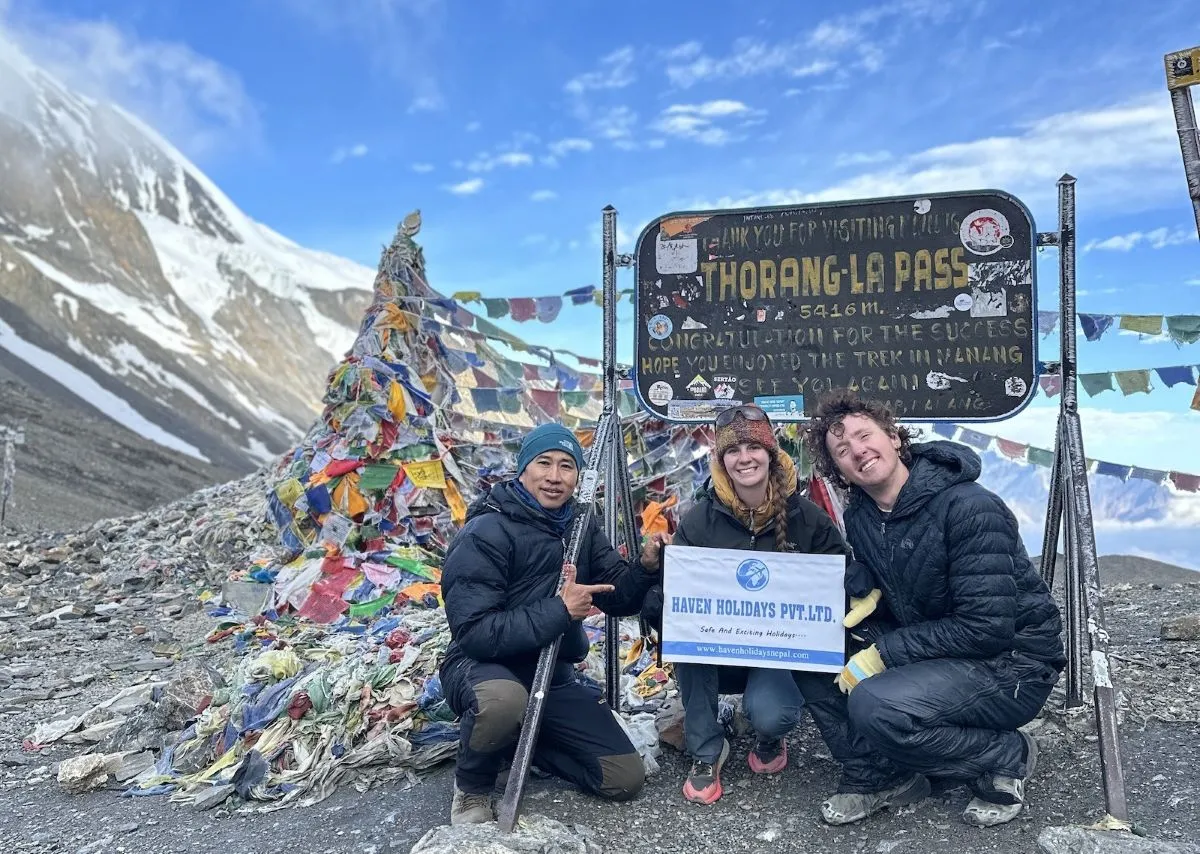
Here, you begin this demanding trek from the wind-battered shacks of Thorong Phedi High Camp long before sunrise. At an elevation of 4,850 meters (16,000ft) you are already on the fringes of true alpine, where simple movements require concerted effort. Venturing through frozen terrain you push over the lip to the official crossing Thorong La pass height of 5,416 meters (17,769ft), a sheer mountainous col that requires strict adherence to extreme high altitude adaptation techniques and slow progress.
Facts of the summit climb :
| Pass Crossing Phase Node | Target Elevation | Oxygen Level Metric | Cumulative Distance | Primary Physical Strain Type |
|---|---|---|
| Thorong High Camp | 4,850 m / 15,912 ft | ~55% of sea level | 0.0 km / 0.0 mi | Strenuous cardiac exertion straight after rising. |
| Thorong La Pass Summit | 5,416 m / 17,769 ft | ~51% of sea level | 5.0 km / 3.1 mi | Intense endurance effort across snowy, open terrain. |
| Chabarbu Resting Point | 4,190 m / 13,746 ft | ~59% of sea level | 11.5 km / 7.1 mi | Excessive joint stress on scree and slate trails. |
| Muktinath Shrines | 3,760 m / 12,335 ft | ~64% of sea level | 15.0 km / 9.3 mi | Muscular fatigue at the end of the walk toward the valley floor. |
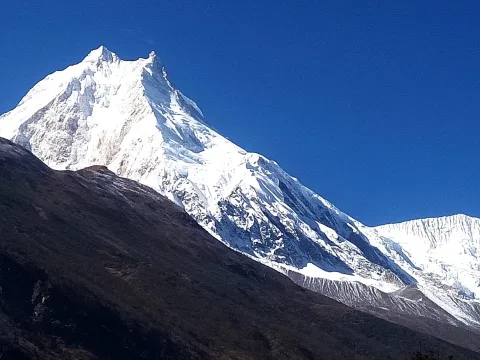
Meanwhile, high passes in the mountains, like Thorong La, are cold at any time of year and require appropriate cold-weather gear and clothing that responds readily to extreme variations in the weather. As soon as you get above the tree-line your everyday hiking gear won't be enough to keep you warm and toasty. The main focus of your Annapurna Circuit packing list will be creating a series of layers to trap your body's heat, yet still effectively shed the perspiration generated by trekking through steep and rugged terrain.
In fact, being adequately prepared for the high pass will be a priority and will need careful thought ahead of time. To beat the freezing temperatures of the morning you will need to pack high quality merino wool base layers, warm insulating jackets, trekking poles to aid stability on steep slopes, and most importantly an unheated lodge room at Thorong High Camp makes an extremely high quality sleeping bag for sub-zero temperatures essential. A minus ten degrees Celsius rating is the minimum to guarantee a decent night's sleep the night before you summit.
Essential high altitude inventory :
| Equipment Category | Minimum required specification | Best choice of material | Primary safety benefit |
|---|---|---|
| Sleeping Bag | minus ten to minus fifteen degree centigrade comfort | 700+ fill power of Goose Down or good quality Synthetic fill | This will prevent your body from succumbing to hypothermia within your cold bedroom |
| Insulating Jacket | A warm Down jacket with a minimum fill power of 700 and a Hood | Box Baffled Down | this jacket should ensure your core is well warmed during the cold early morning walk. |
| Trekking Poles | Aluminium construction with durable lever locking | Lightweight but robust aluminium or high strength carbon fibre | they add an extra dimension of stability to your walking, preventing trips on snow and ice. |
| Sunglasses | Category 3 or 4 UV Rated with scratch and anti-fog resistance | high impact, anti-scratch polycarbonate lenses | Your eyes are extremely vulnerable at high altitude to both the reflection of sun-light from snow, and the intensity of the sun’s rays at high altitude. |
| Spikes for your Boots | Flexible rubber based microspikes | stainless steel to give extra durability to the spiked sections | to prevent yourself from slipping and injuring yourself on steep snow and icy trails. |
Doing the Annapurna Circuit, with the extra adventure to Tilicho Lake, presents one of the greatest, most rewarding wilderness trekking experiences in the Himalayas. From the lush, sub-tropical river valleys to the windswept, glacier-fed lake at high altitude, this trek delivers an incredible variety of terrain and scenery, pushing your physical and mental capabilities all while granting you vistas of the planet's tallest mountains.
For your safe and seamless trekking experience in this stunning high-altitude environment, two elements are of the utmost importance. First, ensure you obtain your mandatory permit requirements ACAP TIMS (Annapurna Conservation Area Project and Trekkers' Information Management Systems) in Kathmandu or Pokhara before heading off on your trek. Secondly, in this region with volatile weather conditions and unstable ground underfoot in high scree fields, it is highly advised to book with licensed guides. They offer not just vital local knowledge but also provide a support system that is indispensable for a challenging journey such as this.
Key to Safe Mountain Travel :
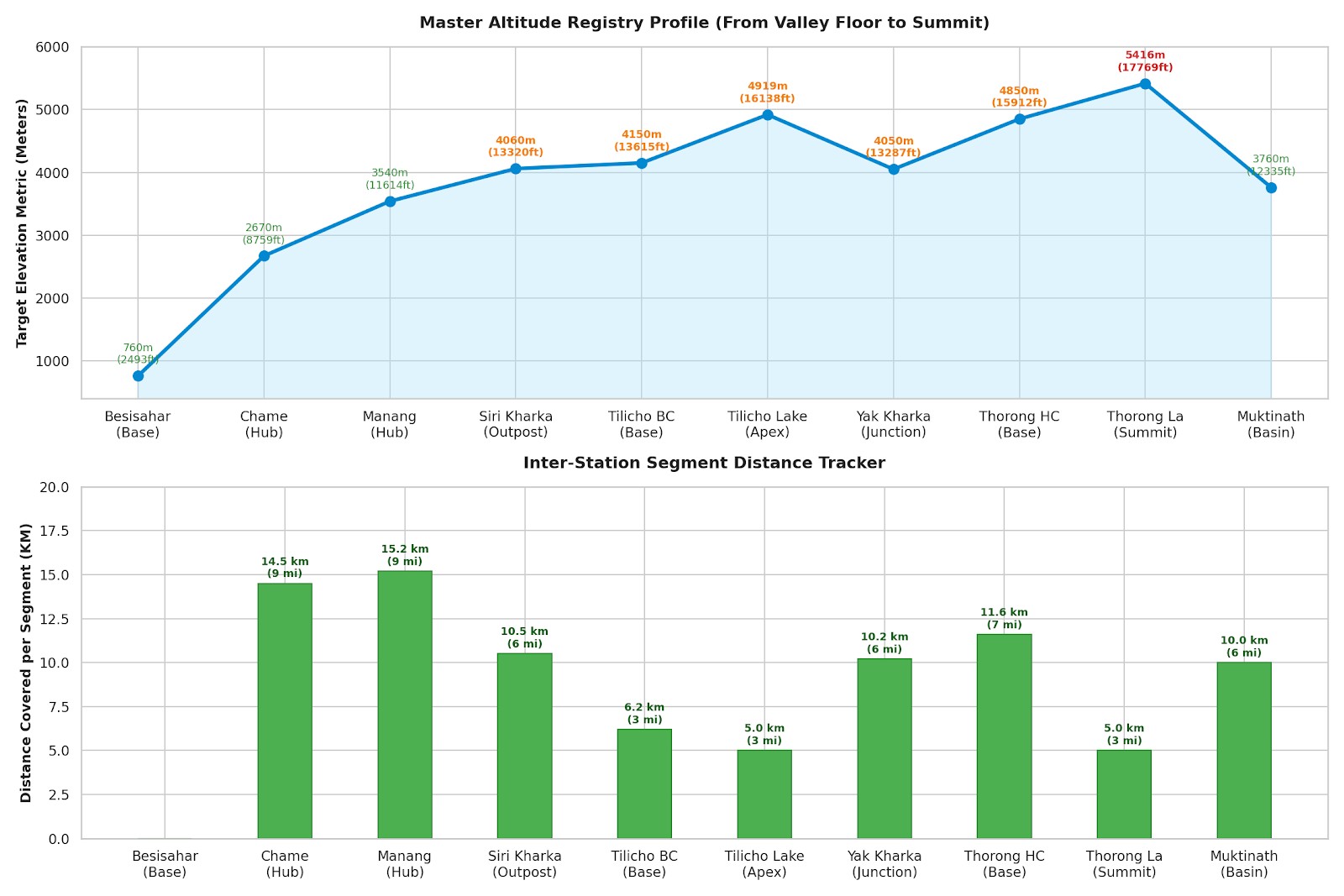
Master Distance and Altitude Milestone Registry
| Core Route Milestone Station | Target Elevation Metric | Inter-Station Distance | Average Hiking Duration | Terrain & Safety Environment |
|---|---|---|
| Besisahar Trailhead Base | 760m / 2,493ft | 0.0km / 0.0mi | Drive Day | Starting point and a check point, situated in the sub-tropical valley floor. |
| Chame District Hub | 2,670m / 8,759ft | 14.5km / 9.0mi | 5-6 Hours | Hiking through pine forests alongside the rocky Marsyangdi River. |
| Manang Acclimatization Hub | 3,540m / 11,614ft | 15.2km / 9.4mi | 5-6 Hours | A high alpine valley offering an ideal place to rest and adjust to the altitude. |
| Siri Kharka Outpost | 4,060m / 13,320ft | 10.5km / 6.5mi | 4-5 Hours | Upper valley singletrack winding its way to the Tilicho lake trail. |
| Tilicho Base Camp | 4,150m / 13,615ft | 6.2km / 3.8mi | 3-4 Hours | Low altitude valley located below a section of active scree slopes. |
| Tilicho Lake Rim Apex | 4,919m / 16,138ft | 5.0km / 3.1mi | 3-4 Hours | A high altitude, glacial lake plateau; typically wind-swept snow paths. (Return to Siri Kharka). |
| Yak Kharka Bypass Junction | 4,050m / 13,287ft | 10.2km / 6.3mi | 4-5 Hours | High alpine trail diverting off the main path, bypassing the Manang Valley. |
| Thorong High Camp Base | 4,850m / 15,912ft | 11.6km / 7.2mi | 4-5 Hours | A very stark, barren plateau providing the final stopping point before the pass. |
| Thorong La Pass Summit | 5,416m / 17,769ft | 5.0km / 3.1mi | 3-4 Hours | High mountain pass; a challenging crossing due to extremely low oxygen levels. |
| Muktinath Shrine Basin | 3,760m / 12,335ft | 10.0km / 6.2mi | 4-5 Hours | A steep descent into the arid Mustang valley and a religious shrine. |
Final Word on Safety: The timings and distances mentioned above are intended as guides and may vary depending on numerous environmental and personal factors. Prioritize your health and safety over reaching your daily targets, especially at such high altitudes, for a truly unforgettable Himalayan experience.
In final words, an incredible journey that combines the world's most varied long-distance mountain loop with a trek to the highest lake of its size, the Annapurna Circuit with Tilicho Lake trek demands careful planning when it comes to trail lengths, elevations, and routing options.
1. How many days does it take to do the Annapurna Circuit with Tilicho Lake trek?
A typical Annapurna Circuit with Tilicho Lake trek itinerary is 15 to 18 days long. This duration accounts for the vital Tilicho Lake side trip, standard acclimatization days and the completion of Thorong La Pass in safe conditions.
2. How much will the Annapurna Circuit with Tilicho Lake trek cost?
The average Annapurna Circuit with Tilicho Lake trek cost can be between $900 and $1,500 per person. The final total will depend heavily on whether you book a full inclusive agency trip, hire a personal porter, or trek self-sufficiently with personal teahouse payments.
3. What is the total length of the Annapurna Circuit with Tilicho Lake trek?
Doing Annapurna Circuit with Tilicho Lake trek distance is approximately 180-220 kilometers (111-136 miles). This can vary depending on which vehicle ride you take at the trailheads and end points.
4. What is the maximum altitude on the combined Annapurna Circuit with Tilicho Lake trek?
The highest point the Annapurna Circuit with Tilicho Lake trek altitude profile can reach is the Thorong La Pass, at 5,416m (17,769ft). The Tilicho Lake side trek culminates at a spectacular 4,919m.
5. Is the Annapurna Circuit with Tilicho Lake trek challenging for first-time hikers?
Overall, the Annapurna Circuit with Tilicho Lake trek difficulty is strenuous. Although it is a purely walking trail, the week-long duration, high-altitude conditions and possible landslides do not make it the best trek for first-timers.
6. From which village is the side trek to Tilicho Lake normally branched off from the circuit?
The common Annapurna Circuit with Tilicho Lake trek route splits from the main trail at the village of Manang (3,540m). Instead of heading towards Yak Kharka, walkers will take the western fork through Siri Kharka to reach the lodge at Tilicho Base Camp.
7. How many extra days does a detour to Tilicho Lake add to the Circuit?
A side trek to Tilicho Lake trek adds approximately two to three days to a typical Annapurna Circuit itinerary. This period includes walking to Tilicho Base Camp, the early morning trip to the lake and return journey to the main route to Thorong La Pass.
8. How high is Tilicho Base Camp located?
Tilicho Base Camp is situated at a high altitude of 4,150m (13,615ft). This serves as a mandatory lodging point for trekkers prior to the final ascent to the lake where accommodation facilities are basic but functional and drinking lots of water is mandatory.
9. Is there a risk of danger on the landslide on the Tilicho Lake trek?
A section of the path from Siri Kharka to Tilicho Base Camp crosses a widely known landslide. This is the most significant factor contributing to the Annapurna Circuit with Tilicho Lake trek difficulty, with a thin track having to be negotiated between rolling stones and loose scree.
10. Can you do the Annapurna Circuit with Tilicho Lake trek alone without a guide?
Although it is permitted to trek independently in the Annapurna region, a guide is strongly advised. The Annapurna Circuit with Tilicho Lake trek difficulty and unpredictable mountain weather conditions are not a good combination for any unaccompanied trekking experience.
11. What permits do you need for the Annapurna Circuit with Tilicho Lake trek?
You are required to obtain two primary passes to access the Annapurna Circuit with Tilicho Lake trek route. These are the Annapurna Conservation Area Project (ACAP) permit and the TIMS card, both of which will be inspected at various locations along the path.
12. How is accommodation on Annapurna Circuit trek?
The available accommodation is in locally owned mountain lodges called teahouses. The amenities on the main circuit are of a decent standard, with bathrooms on offer. However, the conditions at Tilicho Base Camp (4,150m) are somewhat more rudimentary. Shared facilities will have to be used by the trekkers with shared bedrooms also a feature.
13. Do food and drink costs change along the Tilicho Lake route?
Prices are highest on the higher altitude sections of this trek due to the difficulty of transporting supplies up the mountains via mules and porters. A bottle of water or meal, which costs very little at the start of the trek, could cost double or even triple the amount at Tilicho Base Camp or Thorong Phedi.
14. What are the best times to go on the Annapurna Circuit with Tilicho Lake trek?
Autumn (September to November) and Spring (March to May) are the ideal times to complete this Annapurna Circuit with Tilicho Lake trek itinerary. The trails are clear and dry during both periods and safe conditions for crossing Thorong La Pass are expected.
15. How much cash do you need for the Tilicho Lake trek side trip?
You should carry approximately NPR4000-NPR6000 per day on this trek. Credit cards are generally not accepted along the high trail or at the remote teahouses on the Tilicho route, so you need cash to pay for hot showers and charging points etc.
16. What is the probability of crossing Thorong La Pass after Tilicho Lake?
Going to Tilicho Lake will improve your chance of crossing Thorong La Pass. Staying for a number of days at high altitude (4,919m) ensures that your body gets used to the altitude and helps your respiratory system adjust.
17. Is travel insurance a requirement for the Annapurna Circuit with Tilicho Lake trek?
Yes, a specialized travel insurance is mandatory for the high altitude nature of the Annapurna Circuit with Tilicho Lake trek altitude profile. It needs to cover medical treatment and rescue transport up to 6,000m.
18. How long does the hike from Tilicho Base Camp to the lake take?
The trek from Tilicho Base Camp to the lake takes between 5 and 6 hours. You will experience a 800m gain in elevation from Base Camp up to the lake and a subsequent descent back down again.
19. Are helicopter rescues possible on Tilicho Lake Trek?
Yes, it is possible for helicopter rescues to occur in this region if a trekkers health deteriorates to severe levels on account of AMS. Flat areas are present near Tilicho Base Camp that could act as landing sites for evacuation transport. Descent is the ultimate treatment though.
20. How do I prepare for the physical demands of the Annapurna Circuit with Tilicho Lake trek difficulty?
A preparation period of 8-12 weeks is recommended to develop sufficient cardio and endurance levels. You should focus on exercises for your legs such as loaded hill climbing and long-distance runs.
Our travel experts are ready to assist you with any questions.
Send us a message.Have a question before you book? Send your enquiry below and our travel experts will get back with the required information.